Category: Sports

  • Penn State’s Midwest migration is failing, Temple rides the rush, and Eastern is dominant, yet again

    Penn State’s Midwest migration is failing, Temple rides the rush, and Eastern is dominant, yet again

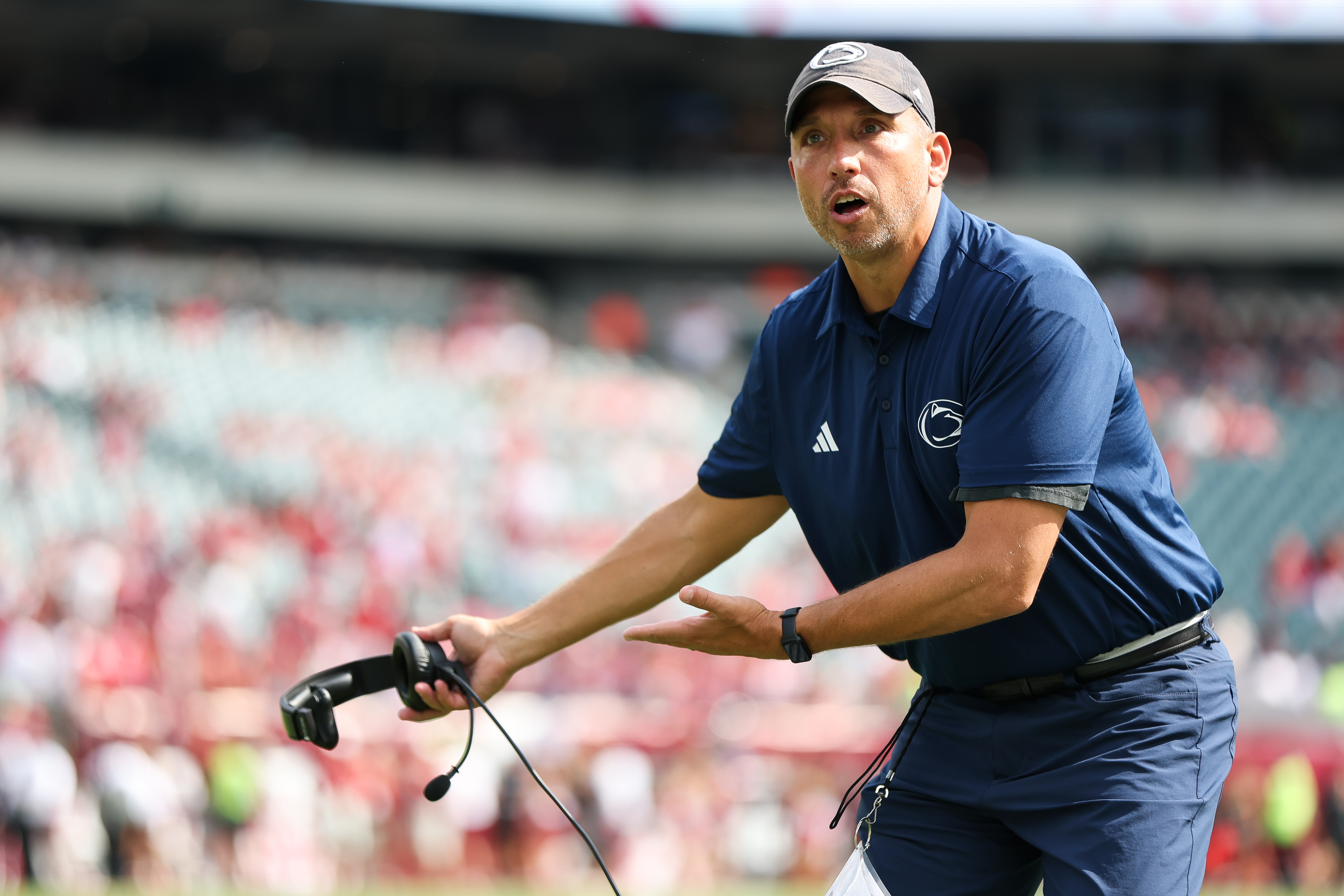
    It would appear that the Great Iowa State migration to Penn State hasn’t exactly been a seamless transition. When Nittany Lions coach Matt Campbell arrived in Happy Valley in December, he brought 14 of his starters from the Cyclones with him.

    In fact, in a sweep of Penn State’s 112-man roster, 24 came from Iowa State, headlined by quarterback Rocco Becht, who was so dedicated to helping Campbell that the fifth-year quarterback is taking just one class this fall, and it’s online.

    That familiarity was supposed to help Campbell get Penn State off on the right foot, and it did, against nonconference opponents Marshall, Temple, and Buffalo. But in the Big Ten, the Nittany Lions have struggled, being upended by Wisconsin and routed by Northwestern last week, in what historically has been a gimme game for Penn State.
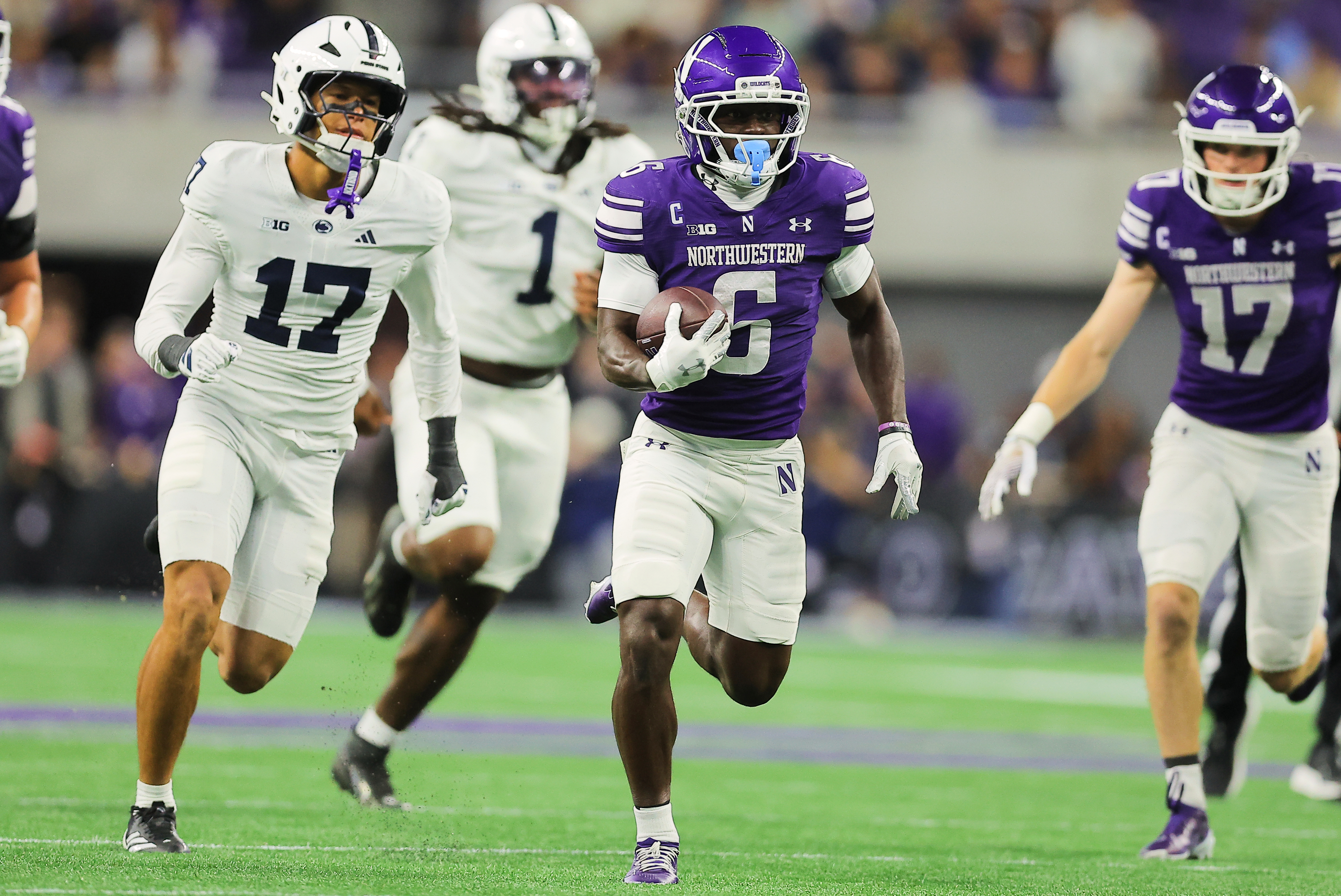
    Northwestern running back Joseph Himon II (center) runs away from Penn State defenders during the Wildcats’ 34-13 win over the Nittany Lions last Friday. Melissa Tamez

    Campbell told media members Tuesday that his roster lacks an “identity” at the moment and he’s still trying to find out what ails it. What’s apparent is a lackluster offense that has seen Becht throw just one touchdown pass in the last two games compared to three interceptions.

    It doesn’t get any easier for a Penn State team that faces No. 19 USC on Saturday (7:30 p.m., NBC10) in the team’s annual White Out game. Ticket prices for the game have plummeted with fans knowing that a win is destined to be an uphill climb and a loss effectively ends any chance of qualifying for the College Football Playoff —assuming that ship hasn’t already sailed.

    But Campbell remains hopeful. Right now, hope is all the Nittany Lions seem to have.

    “The reality of it is, we have to be better, and it starts with my leadership of making sure we get better,” Campbell said. “But, I got great belief in the humans that we have; we’re just not there right now.”
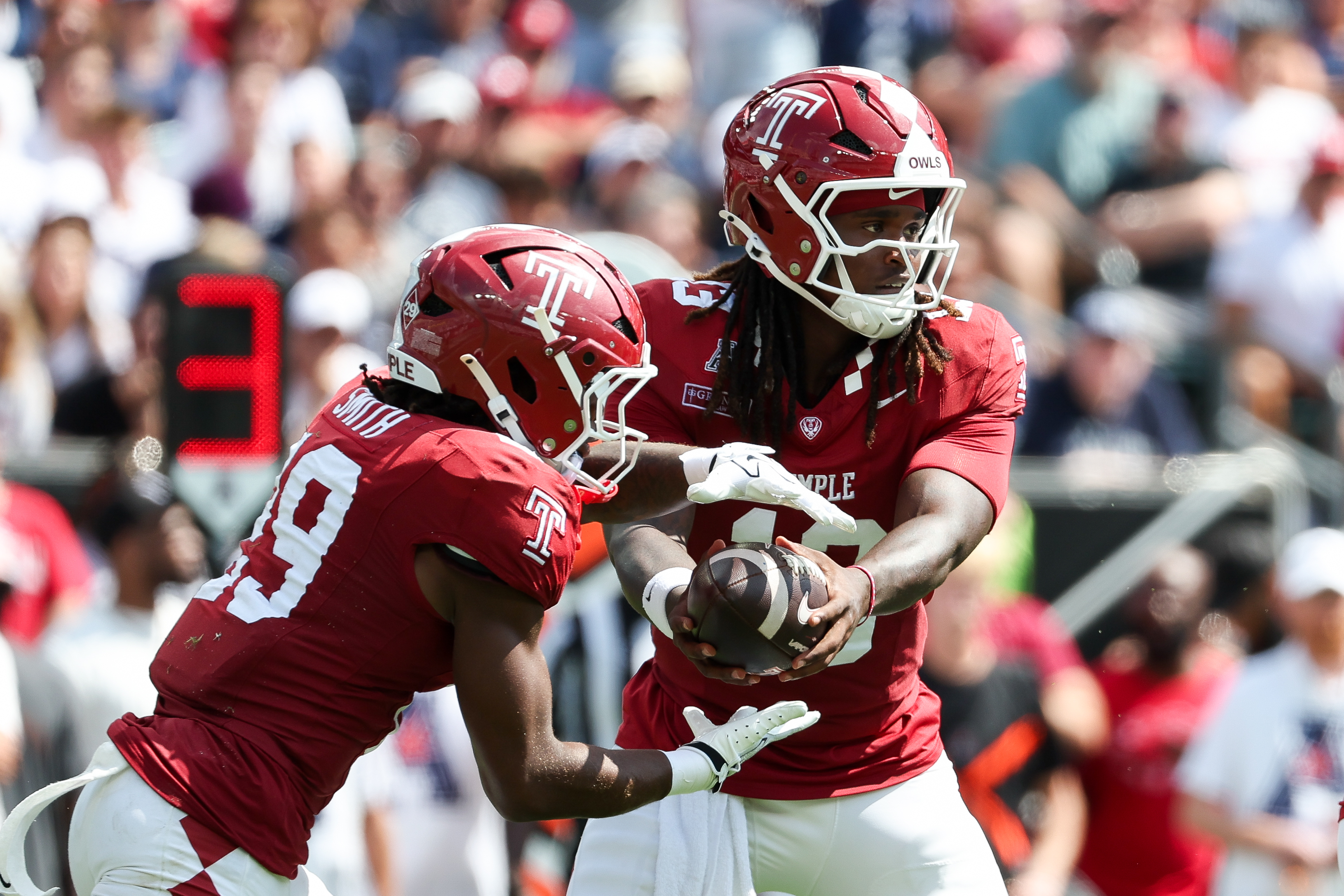
    Temple quarterback Ajani Sheppard (right) and running back Hunter Smith (29) have been the one-two punch of a potent Owls rushing attack. Isaiah Vazquez / For The Inquirer

    The BIG number: 212.6

    That’s the number of rushing yards Temple has averaged on the ground through five games, courtesy of dual-threat quarterback Ajani Sheppard and a shifty running back room . In the win against South Florida last Saturday, the Owls ran for 182 yards, with Sheppard accounting for the bulk of the carries (14). Now, Temple will look to get to .500, welcoming UConn to Lincoln Financial Field on Saturday (3:45 p.m., ESPNU).

    Cracks in the fortress

    Last season, one could almost place a wager on a prediction market that Villanova would be taking a win away from Villanova Stadium and cash out. The Wildcats celebrated a 23-game winning streak at their stadium along the Main Line dating back to 2022 and finished with a 12-3 record last season, getting to the FCS semifinal before its streak was snapped by then-No. 17 Illinois State. This season, the Wildcats are 0-3 at home, with their most recent loss a nail-biter last Saturday to Morgan State.
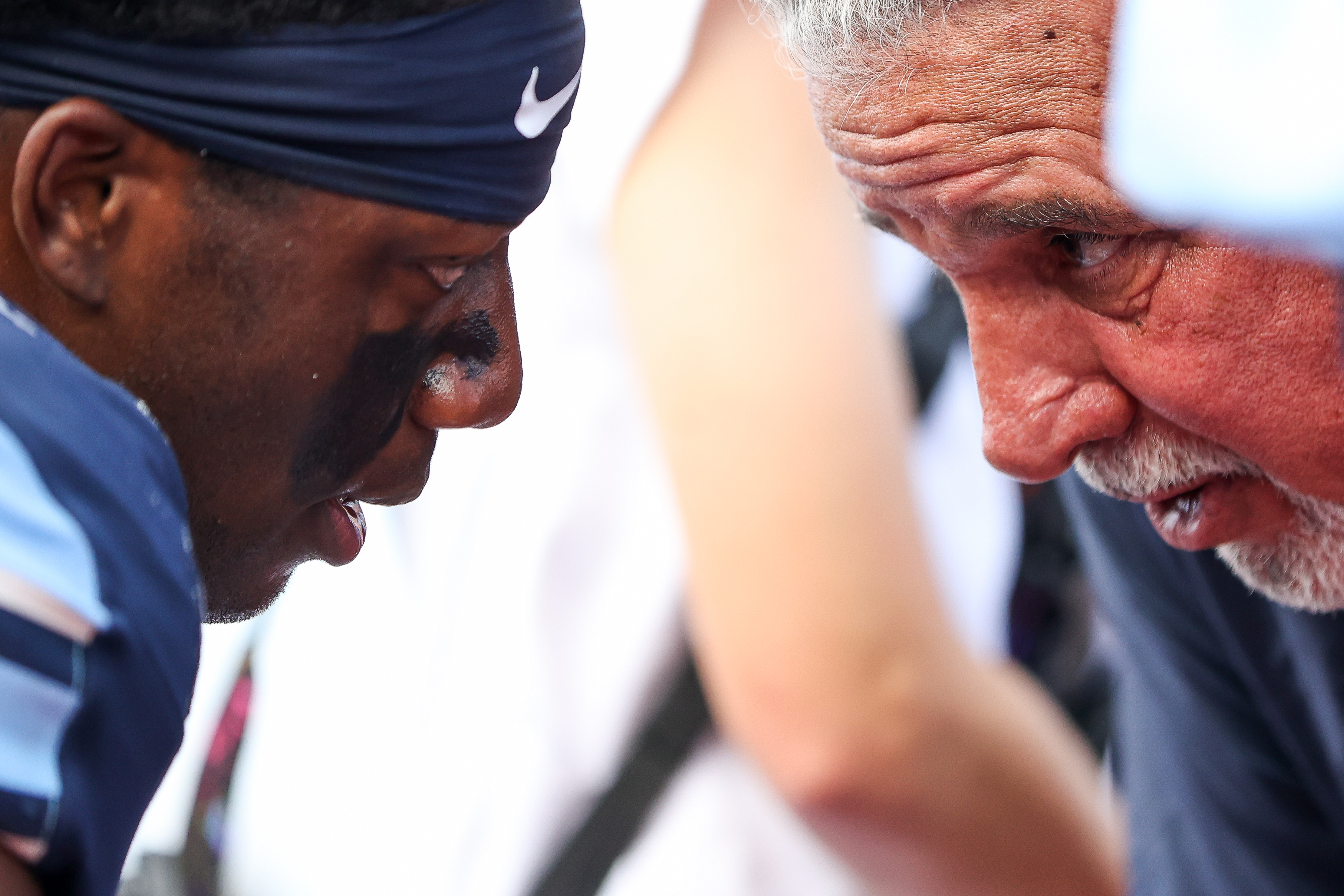
    Villanova coach Mark Ferrante (right) talks to running back Ja’briel Mace during the Morgan State game last Saturday.Isaiah Vazquez / For The Inquirer

    Where do the Wildcats (2-4) go from here? Well, nowhere just yet given they have a much-needed bye week before a trip to New York to play Fordham on Oct. 17 (3:30 p.m., ESPN+). But as coach Mark Ferrante noted, there will be a bit of soul-searching during this week of reflection.

    “Yeah, we’ll see how our guys respond,” Ferrante said when asked about the upcoming week off. “I mean, they’re still in class next week, so it’s not like they have a week ‘off.’ And then we have an extra week to prepare for the next opponent, which is Fordham. So we’ll clean this up tomorrow, just like we do on every Sunday.”
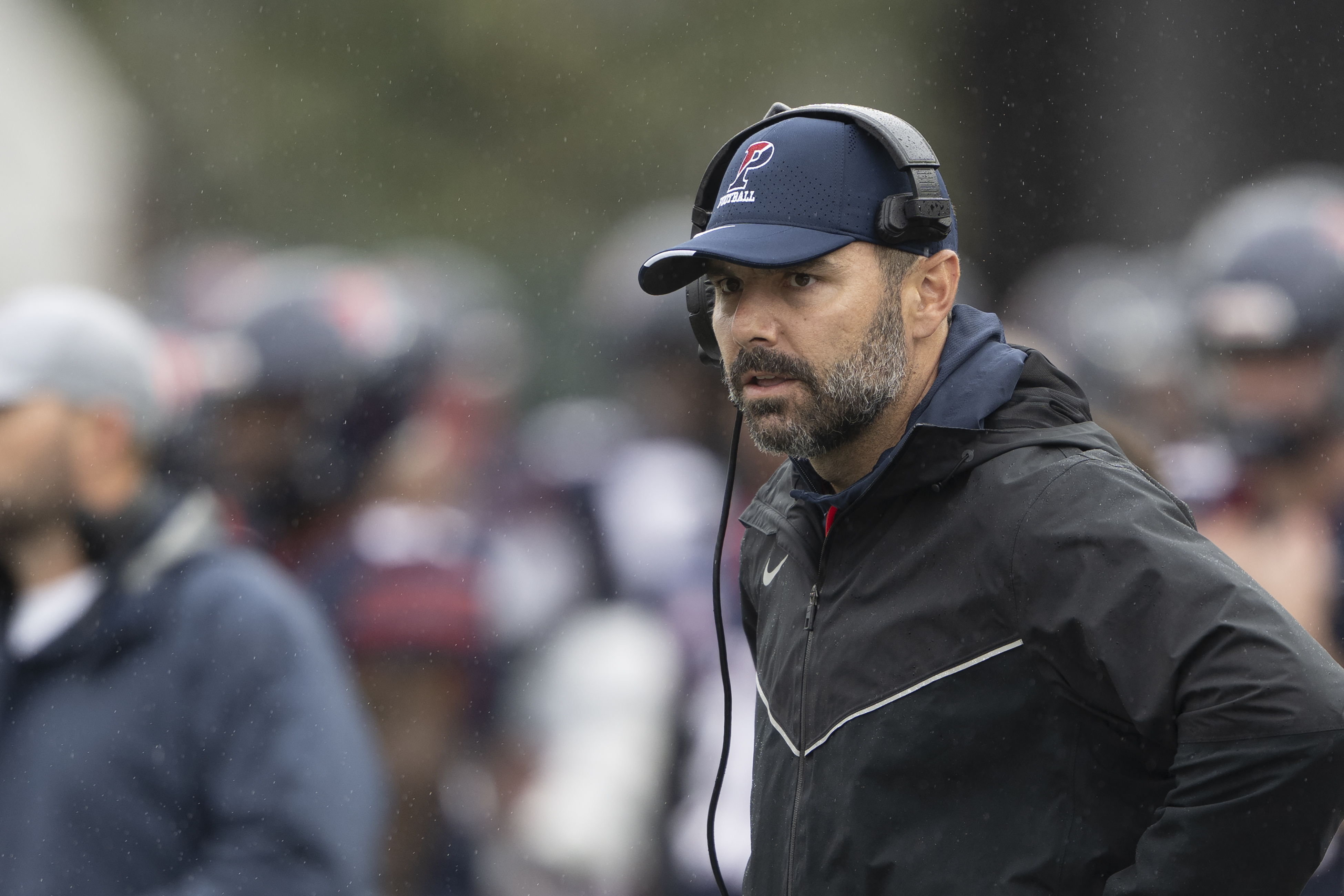
    Penn coach Rick Santos will look to get back to winning ways when the Quakers host Howard on Saturday.Jose F. Moreno / Staff Photographer

    Three questions

    🏈 How long will it take Penn freshman quarterback Miles Teodecki to get up to speed with the rigors of college football? A good test arrives when Penn hosts Howard at Franklin Field on Saturday (1 p.m., ESPN+). It will be the first time the Quakers play the Bison in their 150-year history.

    🏈 What was behind the turnaround for an Eastern football team that, after losing its season opener, has launched out to a 3-1 start? They have outscored opponents 80-28, including a 32-0 rout at home of Lebanon Valley College. Just like last season when the Eagles finished with a 10-2 record, this will certainly be a team to watch. Up next, a game against King’s College at home on Saturday (12:30 p.m., watch live).

    🏈 Will D’Anton Lynn’s knowledge of USC as its former defensive coordinator serve as an advantage to Penn State? Lynn, a former Penn State player himself, has no allegiance to the school in Southern California, and is a coach for a team that is watching its College Football Playoff hopes dwindle by the day.
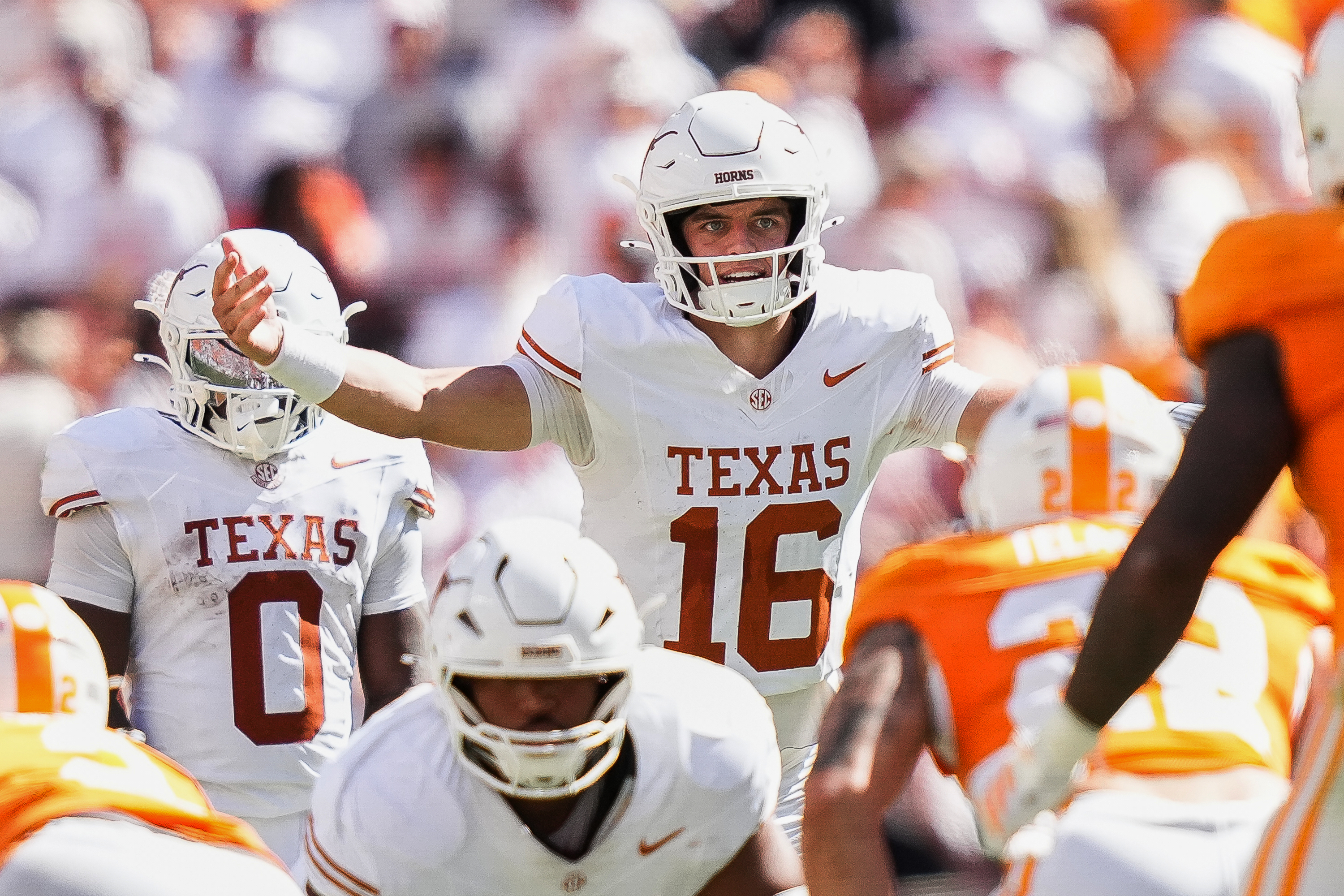
    Texas quarterback Arch Manning (center) looks to lead the No. 1 Longhorns at home against SEC (and former Big 12) rival Oklahoma. Sara Diggins

    Game(s) of the week

    No. 2 Georgia at No. 6 Alabama (Saturday, 7:30 p.m., 6ABC)

    This is a game that will test the Bulldogs’ status as the second-best team in college football. Conversely, it could expose the Crimson Tide as not being worthy of being considered a top-10 team if they lose. However, oddsmakers like Alabama enough to make it a 1.5-point favorite given the game is in Tuscaloosa, Ala.

    Prediction: Georgia 27, Alabama 21

    Oklahoma at No. 1 Texas (Saturday, 3:30 p.m., 6ABC)

    Usually this space is reserved for just one game, but this matchup is a channel flipper for those also interested in Temple’s game against UConn. Oklahoma is unranked, but the Sooners are looking to prove their 24-point loss to Georgia last week was a fluke, and what better way to do it than to chase down the red-hot Longhorns offense, which is led by quarterback Arch Manning. Clearly, this is the thinking of oddsmakers who only have the Longhorns as 7.5-point favorites at home in this storied rivalry.

    Prediction: Texas 38, Oklahoma 28
  • Best of unCovering the Birds: Why the O-line transition matters

    Best of unCovering the Birds: Why the O-line transition matters

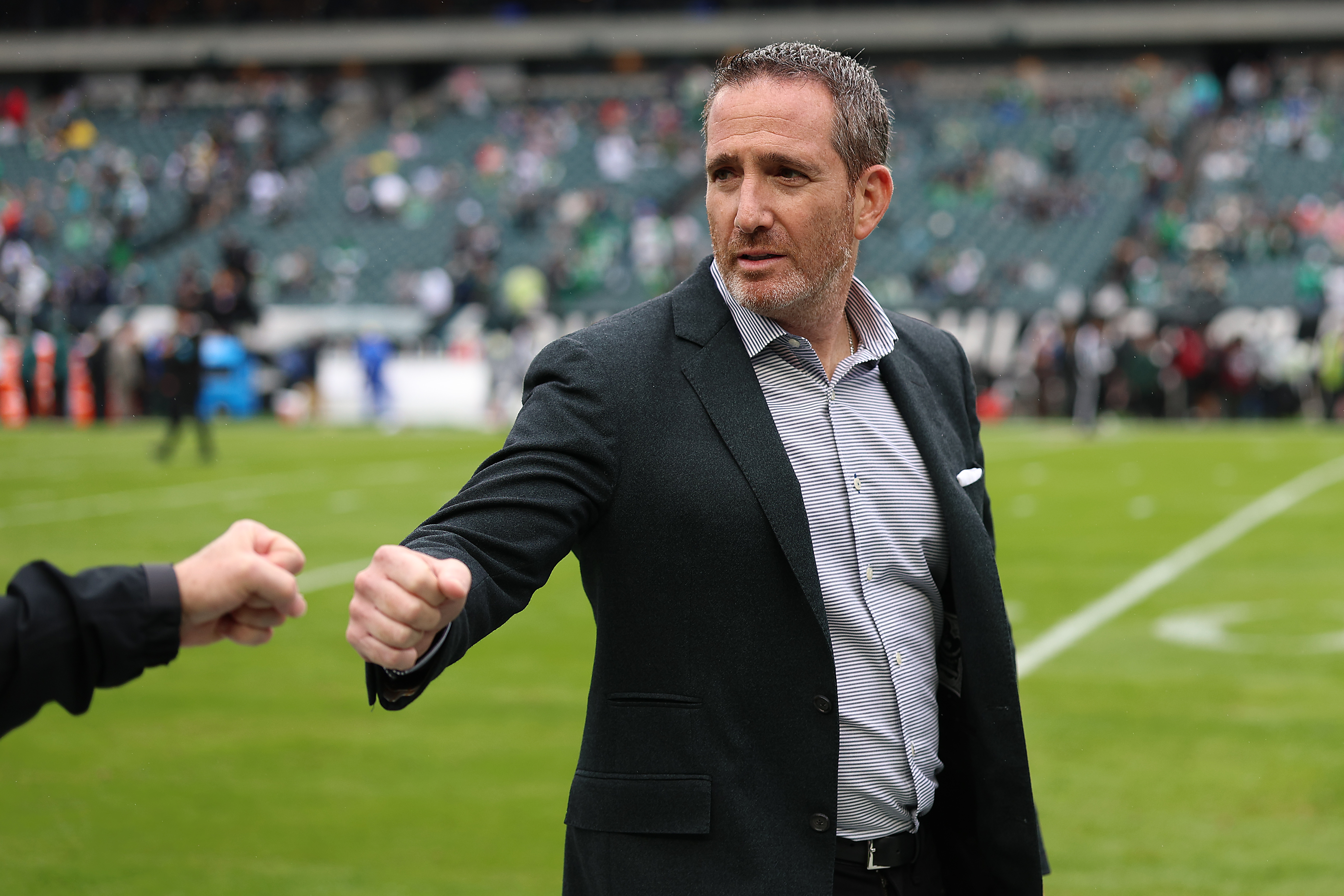
    This is what Howie Roseman told a group of reporters Wednesday:

    “Nothing has changed in terms of our goals. We’re trying to win this year.”

    Based on everything that’s gone down this week, it would be fair to doubt the Eagles’ chances.

    Injuries continued to pile up after the brutal loss to the Rams.

    The most important piece of the Eagles’ offensive line abruptly retired Tuesday.

    Then, less than 24 hours later, Roseman traded another starter from the beleaguered group.

    These are developments that might not point to optimism.

    Here’s something else Roseman said:

    “You want to have an extended run. My job is to look at how we can have sustained success for a long period of time.”

    I actually don’t disagree with Roseman — there are ways for the Eagles to salvage this rocky start to the season, even if it feels a little grim.

    But how did the Eagles get here?

    We have to really take a close look at the decisions that brought them to this point … and how it seemingly represents a departure from the organizational philosophy that’s guided them for nearly two decades.

    Watch the full episode below and subscribe to the audio podcast.

    The Eagles’ success for the last decade, and really since the start of the millennium, has been based on the core philosophy that former Eagles coach Andy Reid and team president Joe Banner fostered more than 25 years ago, and that was to build your roster through the trenches. Yes, getting a quarterback is of the utmost importance, but protecting him and pressuring opposing quarterbacks was foundational.

    Reid and Banner fell short of realizing their goal, but three of the four core linemen who brought championships to Philly were drafted during their tenure. Roseman continued that tradition by drafting Lane Johnson and others who would be instrumental in the 2017 and 2024 Super Bowl runs.

    But Roseman might have lost sight of what helped the Eagles reach those pinnacles, especially when it came to replacing Johnson and the battered Landon Dickerson and Cam Jurgens. Johnson had been on the brink of retiring for years. Dickerson and Jurgens played through various injuries that needed offseason surgery in 2025. They were obvious lesser versions of themselves that season, and last offseason they each went to Colombia for stem-cell treatment.

    And yet, Roseman didn’t expend a pick on an O-lineman in the first two rounds of four straight drafts from 2023-26. Many expected Roseman to draft Johnson’s replacement in this year’s draft.

    Roseman eventually took Markel Bell in the third round. Bell will continue to start in place of Johnson. Roseman also drafted guard Micah Morris in the sixth round, so he did address the O-line needs, but was it too late? The jury is out on Bell and Morris, just as it is on all the first-round tackles who were taken, but it was somewhat surprising that Roseman didn’t do anything more in free agency or the trade market to cover himself in case the youngsters weren’t ready. He brought back tackle Fred Johnson and he signed unknowns to futures contracts in January and undrafted rookies in May, but none made the 53-man roster.

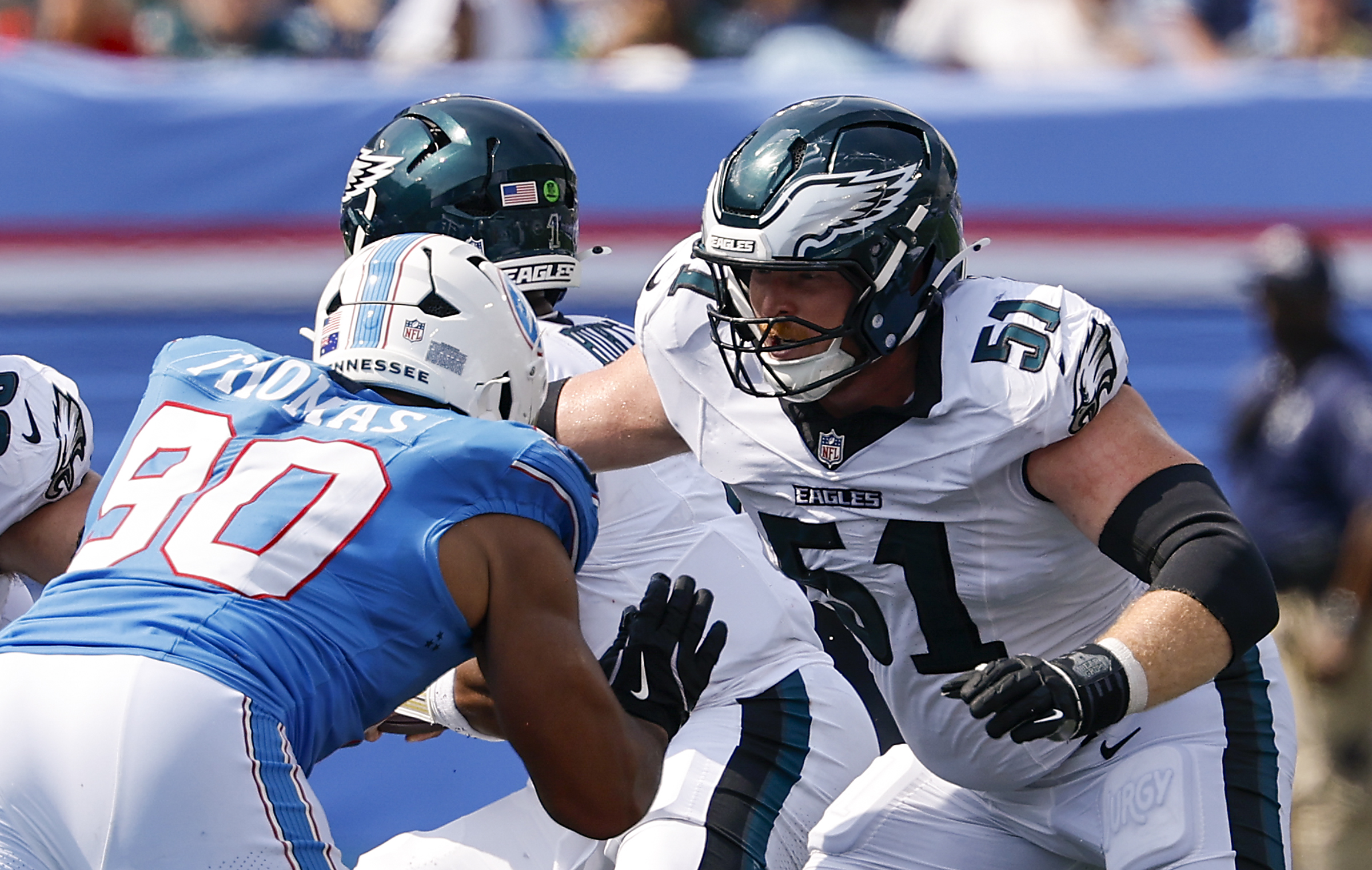
    Center Drew Kendall and interior lineman Willie Lampkin had promising offseasons, which gave Roseman depth he admitted he wasn’t quite sure he had entering training camp. But it seemed only a matter of time until Dickerson would break, and it came in the first game when he had one of the worst performances of his career. He later said he suffered a bone bruise in his knee before the season, but the Eagles seemed ill-prepared to replace him.

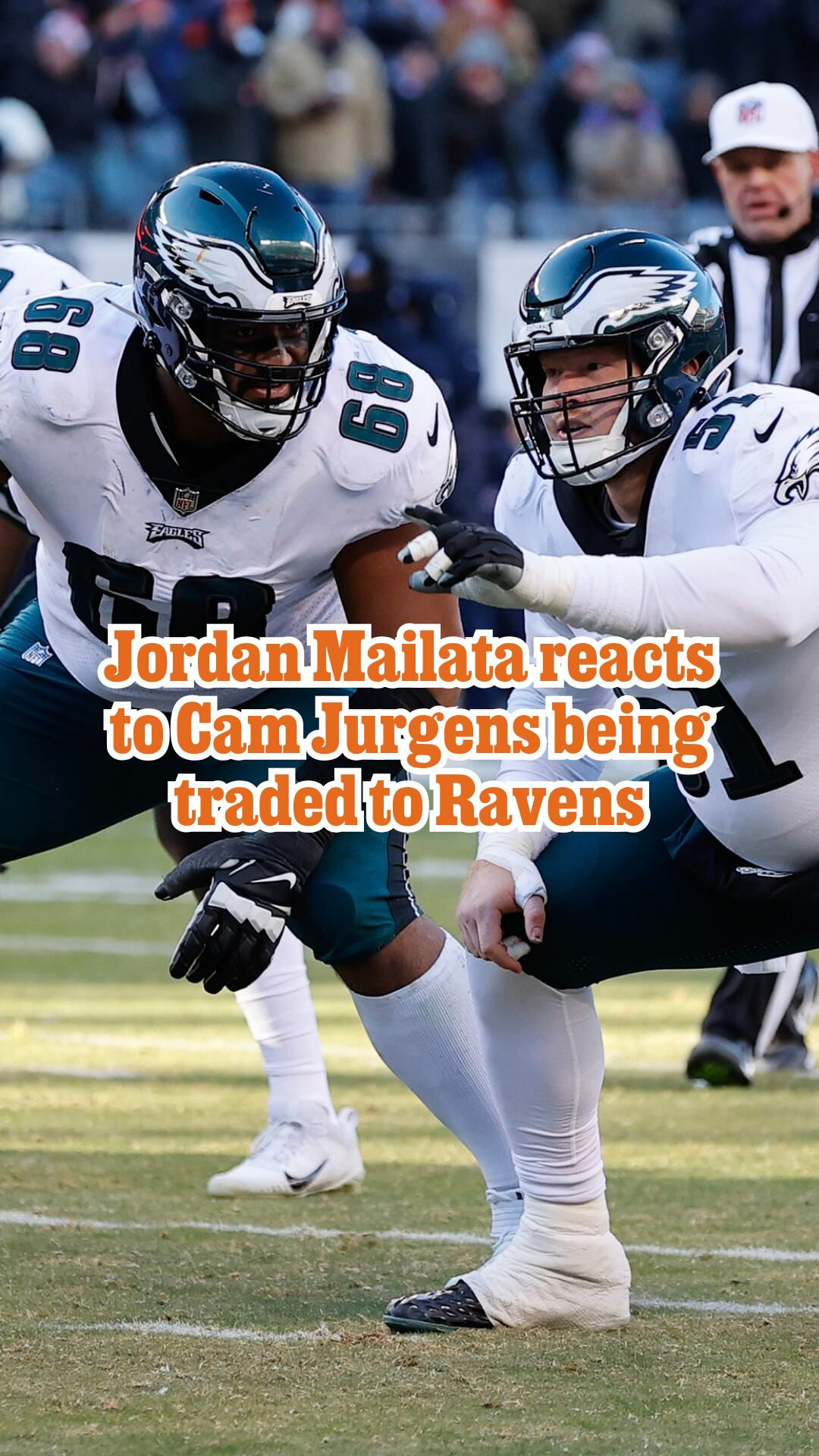
    Jordan Mailata reacts to Cam Jurgens being traded to Ravens
    Video: Jordan Mailata reacts to Cam Jurgens being traded to Ravens

    Rather than promote Kendall or Lampkin into his spot, they moved Jurgens from center to left guard and promoted Kendall to center, Their rationale was that Jurgens had played a season at right guard in 2023 and that Kendall was more naturally suited to center, a position he exclusively played in college.

    Kendall showed his potential in each game since starting, but Jurgens struggled mightily. His confidence had already been tested the year before, following back surgery, and now he lost his spot and was playing a position where he had never even practiced. If this was the Eagles’ plan all along, why didn’t they ever train in that configuration?

    Dickerson said he felt bad for putting Jurgens in that spot and that he didn’t think the switch was fair to the fifth-year O-lineman.

    “Cam is a center. I do hate that we made that decision to move him to left guard,” Dickerson said on 94 WIP. “Because you never want to mess up — if one person goes down, you don’t want to mess up two people just to fix it. Obviously I don’t have a say when it comes to personnel stuff, but I think it was just a moment where we don’t have the depth that you would ideally like to have across the board. That was the way to get the best five guys onto the field.”

    Jeff Stoutland’s philosophies on personnel changes differ from the current regime’s. Yong Kim / Staff Photographer

    Jeff Stoutland always avoided moving two players if he only had to move one. There were myriad reasons why the Eagles lost their last two games, and why quarterback Jalen Hurts’ protection hasn’t been sound, but Jurgens had clearly become the weakest link on the line.

    Coach Nick Sirianni said he was pleased with his play the day after the Rams loss, but two days later, Jurgens was traded to the Ravens. At the moment it might have suggested that Roseman was punting on the season the day after Johnson retired, but the return said otherwise. The Eagles got back a 2028 second-round draft pick and a 2027 fifth-rounder for Jurgens and a 2027 seventh-rounder. There’s almost no way Roseman could have turned that down, especially with Kendall showing signs that he can at least be a stopgap.

    Quite frankly, I was shocked the Ravens agreed to the deal. They were desperate for a center after injuries, and maybe Jurgens just needed a change of environment, but the film of him even at his natural position dating back to last season isn’t great. And back injuries can be chronic, especially for offensive linemen.

    I also think Roseman could reload at the position. A couple NFL sources told me he was shopping for a starting-caliber offensive lineman as of Wednesday. The Eagles’ outlook may look dire right now, but they were just a play or two from being 3-1 despite all their injuries. It’s far too early to pack the bags.

    That said, Roseman is keeping an eye toward the future. He’s always juggling the short-term with the long-term, and while he may have fallen short in preparing for the carnage on the O-line this season, one of his greatest strengths is moving on from a mistake and working to correct it.

    This is nuanced stuff. There are a lot of factors that can get in the way of building the roster as you envision, but if you slip on the thinnest of margins it can all go sideways. And that may be how the season unfolds. In my years on the beat, the Eagles’ worst seasons often included multiple injuries on the offensive line — 2012, 2015, and 2020.

    If the quarterback doesn’t have time to operate in the pocket, it usually spells disaster. I asked Hurts how he felt about his offensive line after the changes:

    “I feel good about it. Feel good about the guys that we have,” Hurts said. “I feel good about the work we’re putting forward. And the week will tell how much that’ll improve.”

  • Chicago Bears coaching legend Mike Ditka dies at 86; played two seasons with the Eagles

    Chicago Bears coaching legend Mike Ditka dies at 86; played two seasons with the Eagles

    CHICAGO (AP) — Mike Ditka, who won NFL titles as a player and coach with the Chicago Bears, has died. He was 86.

    Ditka’s family announced the death on Friday in a statement.

    “It is with profound sadness that we announce the passing of our beloved husband, father, grandfather, and friend, Mike Ditka,” The family said. “While the world knew Mike as a Hall of Fame football player, legendary coach, and leader of the Chicago Bears’ Super Bowl XX championship team, we knew him as the heart of our family. Mike will be missed beyond measure and remembered forever.”

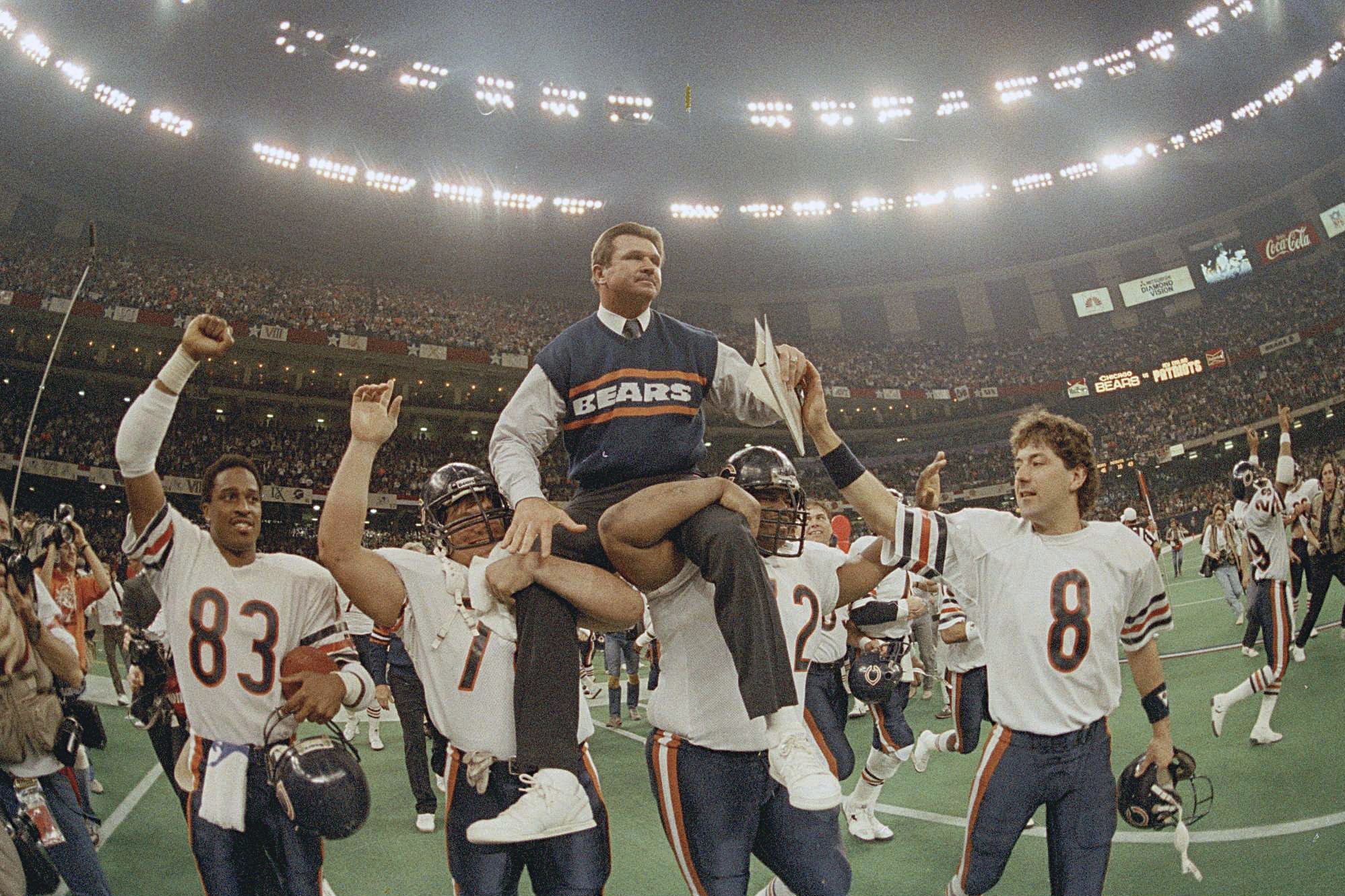
    Nicknamed “Iron Mike” as a player, Ditka helped revolutionize the tight end position, then moved to the sidelines and took over as Chicago’s coach. His 1985 team featured one of the game’s most dominant defenses ever. It also had enough outsized personalities to record a rap video, “The Super Bowl Shuffle,” and back up their boasting in the championship game three months later.

    After retiring as a coach, Ditka became a restaurateur, pitchman and TV personality, as well as a forceful advocate for improved medical and retirement benefits for former players.

    Ditka was tough and gruff, the quintessential Chicago Bear. He did everything from order off the menu to knock defensive backs on their butts with a growl. His adopted hometown reveled in every minute.

    Still revered as “Da Coach” and ringmaster of the 1985 Bears, one of the most dominant and perhaps the zaniest Super Bowl-winning team in league history. Ditka was enshrined in the College and Pro Football Halls of Fame and the Bears said during a ceremony in 2013 that his “No. 89” jersey will be the last one retired by the team.

    He was born in Carnegie, Pennsylvania, the son of a welder who changed the family name from Dyczko. He grew up in nearby Aliquippa, close to the coal-mining and steel-manufacturing plants that dotted the western part of the state, a big, talented, three-sport athlete and All-American at Pitt whose bruising style made his first nickname, “Iron Mike,” a good fit.

    Selected fifth overall by flinty Chicago owner George Halas in the 1961 draft, Ditka went on to Rookie of the Year honors, multiple Pro Bowl trips and the 1963 NFL Championship. In the bargain, he and Baltimore’s John Mackey changed the tight end position and offensive schemes forever. He was a battering ram of a blocker, but Ditka was just as likely to catch a short pass and pinball through an entire secondary or outrace a lone safety on a deep touchdown throw.

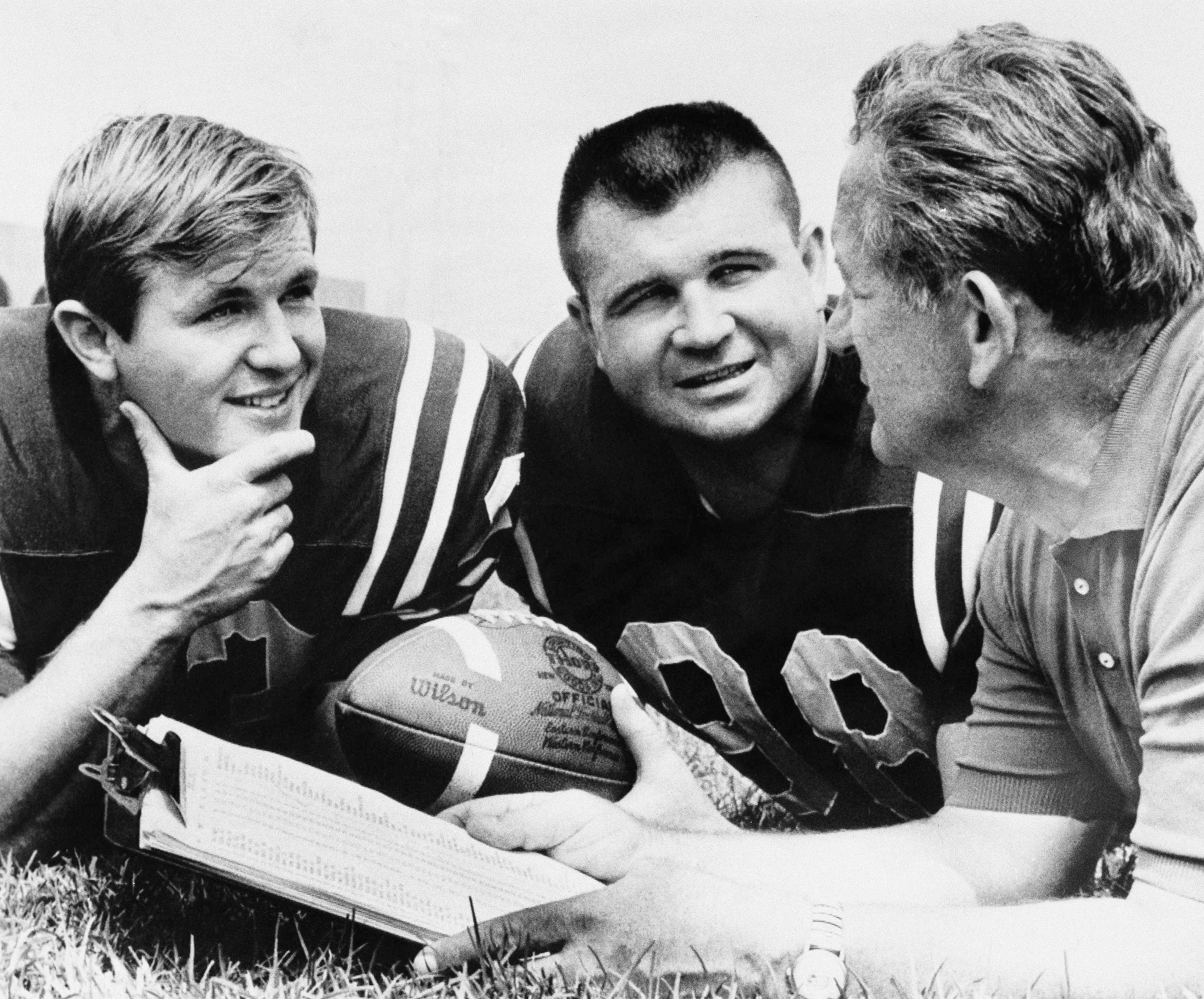
    Mike Ditka’s stop in Philly, where he played for unpopular coach and general manager Joe Kuharich (right), was not a happy one. Paul Vathis

    He left Chicago in 1966, playing briefly for the Eagles and Dallas. His two seasons in Philly (1967-68) were unhappy ones for Ditka, who was traded to the Cowboys for split end David McDaniels after vowing publicly not to play for coach and general manager Joe Kuharich. Ditka caught just 39 passes in two seasons in Philly.

    After concluding his playing career, he moved to the sideline in 1973 as an assistant to the revered Tom Landry and stayed with the Cowboys for eight seasons, before returning to a hero’s welcome in Chicago as head coach in 1982.

    Ditka’s return to the Bears lasted 10 tumultuous years, including five straight NFC Central titles, the Super Bowl win, a DUI conviction, a heart attack, a long-running feud with defensive coordinator Buddy Ryan and, finally, a new nickname — “Da Coach.”

    To Hall of Fame linebacker Mike Singletary, the seeds of what was to come were planted in Ditka’s first meeting with the team. He laid out his vision, saying Chicago would be in the Super Bowl in three years — and many of the players in the room would not be around for it.

    “When I first heard him when he walked in the room, to me Coach Ditka had the opportunity to be the greatest coach of all time because he had the fire,” Singletary said at the Bears’ 100th anniversary celebration in June 2019. “I don’t know George Halas coached. But I can imagine that the fire and intensity and passion that Coach Ditka exuded that first day set the tone for exactly what he said: ‘Three years from now, we’re going to be in the Super Bowl.’ And that was 1982. In ’85, we were there and it was because of that vision.”

    The public beefs with Ryan mirrored the behind-the-scenes battles that Ditka waged trying to contain a team bristling with outsized personalities.

    “It was more than a team,” Ditka once said. “It was a team of characters that had character that played for a crazy man, who let him be crazy and had fun doing it and don’t apologize for it ever. I wouldn’t want to be one of these suits walking around on the sideline today.

    “I have no desire to be that. I was what I was and they were what they were and, damn, it was fun.”

    It wasn’t until two dozen players recorded “The Super Bowl Shuffle” — an audacious rap-styled video released three months ahead of the 1986 title game — that the rest of the football world wondered whether Ditka was losing his grip.

    His players never did.

    “We call him ‘Sybil’ after that girl in the movie,” quarterback Jim McMahon once explained. “You know, the one that had all those personalities. Mike will be calm one minute, then throw a clipboard the next. People don’t understand that, but we do.”

    The Bears demolished the New England Patriots 46-10 in the Super Bowl, but Ditka often said he regretted having McMahon and defensive tackle William “The Refrigerator” Perry run for touchdowns instead of Walter Payton, Chicago’s loyal and long-suffering running back.

    Ryan departed for a head coaching job in Philadelphia soon after. While the Bears continued to be a contender for most of the next five years, a 5-11 season prompted Ditka’s departure in 1992.

    After a five-year absence, he returned to coaching with the New Orleans Saints, but failed to revive the franchise. After a miserable 1999 season ended with a 3-13 record — Ditka’s worst as either a player or coach — he left the sidelines for good.

    His face and demeanor were so familiar by then that a second act became an easy segue. Ditka began building a stable of restaurants and appeared as himself in TV sitcoms from “Cheers” to “Third Rock from the Sun,” as well as shows such as “L.A. Law” and “Saturday Night Live.”

    He also stayed close to the game as an NFL analyst and game-day show personality at ESPN. Ditka’s high-profile status also made him an effective advocate to secure improved health and retirement benefits for former players.

    His name also circulated for years in Illinois political circles. Though he never ran for office, Ditka described himself as a staunch conservative and was mentioned several times as a possible Republican candidate, including a congressional race against then state Rep. Barack Obama for the U.S. Senate.

  • Ahead of London game, Eagles owner Jeffrey Lurie announces major donation to support autism research in the UK

    Ahead of London game, Eagles owner Jeffrey Lurie announces major donation to support autism research in the UK

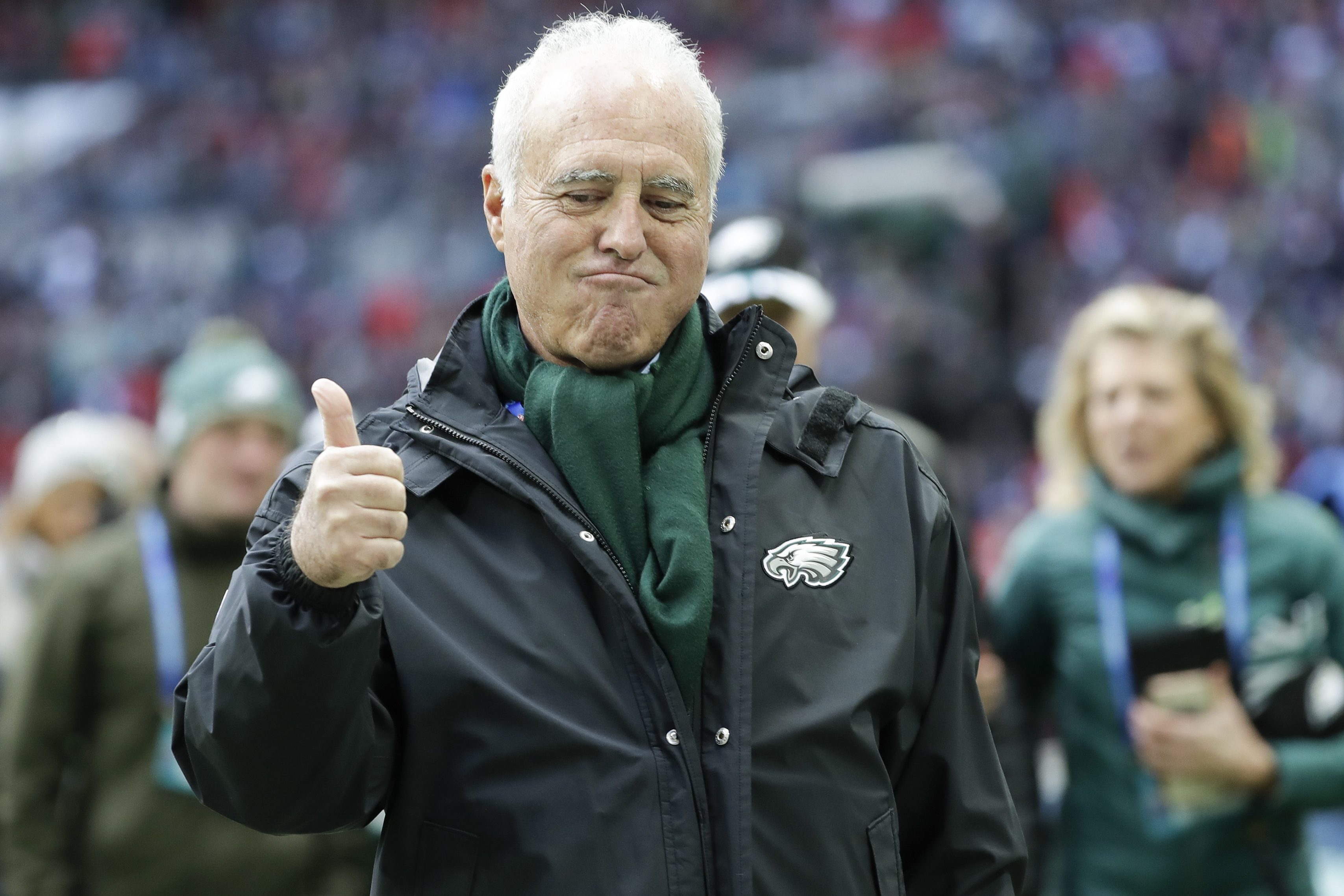
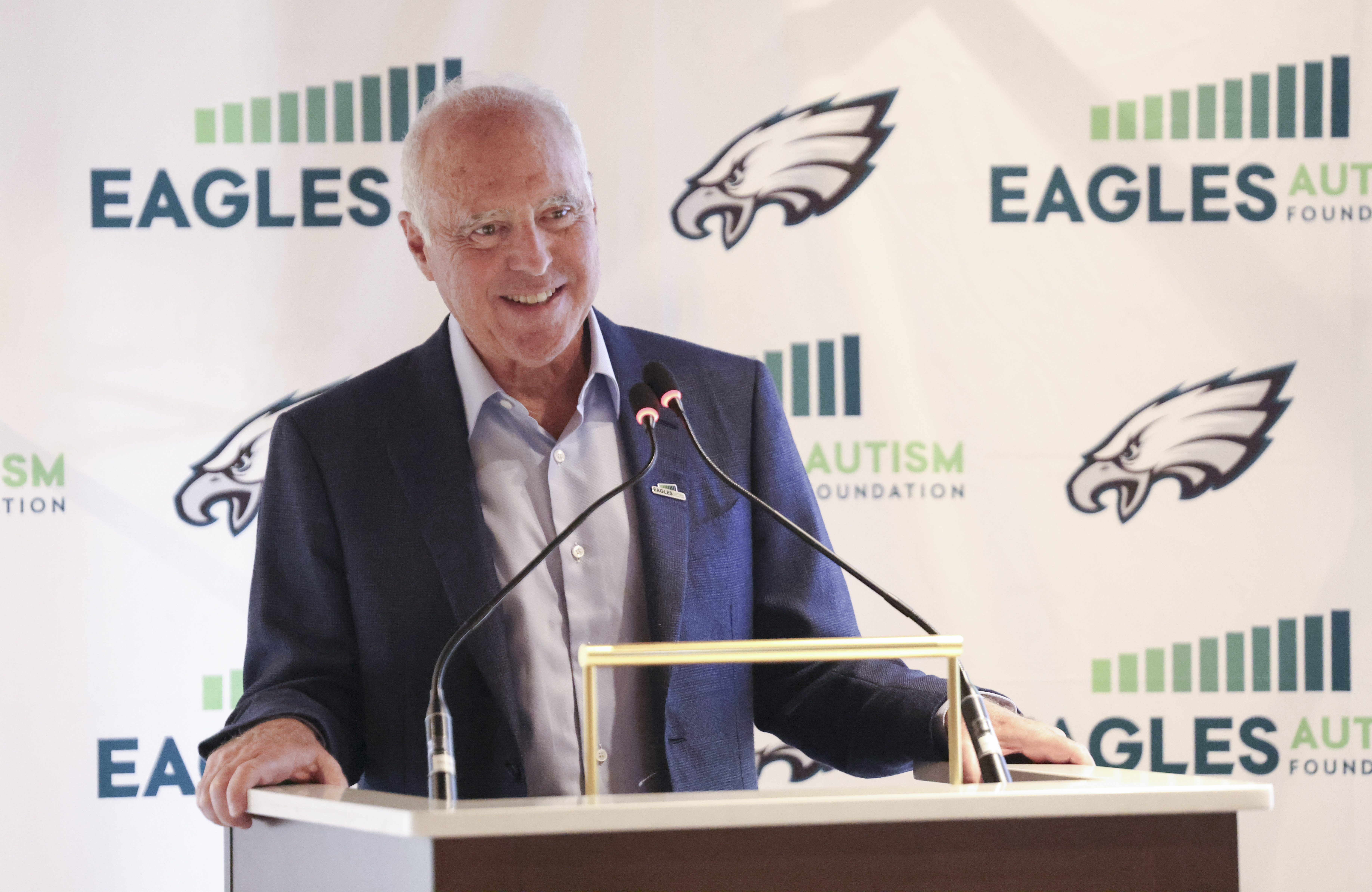
    As the Eagles travel to London to take on the Jacksonville Jaguars at Tottenham Hotspur Stadium, they’re bringing more than American football and Philly culture to the United Kingdom. Eagles owner Jeffrey Lurie and the Eagles Autism Foundation also brought their work with them internationally.

    During a symposium on Friday in London, Lurie announced a donation totaling $670,000 to support London-based autism research. The donation includes a $500,000 pilot grant as well as a $170,000 two-year postdoctoral fellowship that will fund research at the Lurie Autism Institute in Philadelphia.

    The symposium featured panel discussions, which included two researchers on the autism spectrum. The second half of the day was led by the Lurie Autism Institute.

    Ryan Hammond, the Eagles Autism Foundation’s executive director, said the foundation’s international work is about meeting the communities where they are and addressing their needs as necessary. The NFL’s initiative to expand globally gives the Eagles Autism Foundation an opportunity to mobilize its mission, whilealso exemplifying Lurie’s goals of excellence on and off the field, Hammond said.

    “I think the important thing is it’s about legacy,” Hammond said. “It’s about, when we have these moments of time where we’re playing abroad, and a big stage and in a new country, and we have the chance to amplify what’s important to the team, that we really are intentional in a way that we make sure that not just are we bringing our team and our fans, but we’re bringing our mission and we’re able to elevate and have this conversation.”

    When the Eagles opened their season in São Paulo, Brazil, in September 2024, the groundwork for this international expansion was laid. The foundation hosted a similar program, and Lurie donated a $400,000 two-year pilot grant for Brazil-based autism research and care.

    Eagles owner Jeffrey Lurie hosts an NFL and Science in Brazil event in São Paulo, Brazili in 2024.Greg Payan

    Hammond and her team had to adapt to working with researchers who have cultural differences in their methodology in Brazil and again in the U.K. Hammond said they’ve been working since June to identify cultural differences in approach and have built the symposium accordingly.

    Differences include the ethics of data sharing and technology in the U.K. as well as how families and self-advocates can determine what scientists are researching in the U.K., compared to the United States, where the scientists themselves are frequently setting themes and researching accordingly. Hammond said learning about and acknowledging these differences allows her to look at the applications from a new perspective. The application process will begin in spring 2027. Approved projects will be announced in February 2028.

    “The fact that we can invest in an up-and-coming researcher from the U.K. and bring them to Philadelphia, I don’t know any other way that you want to leave a lasting mark,” Hammond said. “So we’ll have on-the-ground support to advance someone who’s further along in their career, and then we’ll have a new investigator who’s energized by this day, energized by this conversation and an opportunity to come to Philadelphia and study with what we consider some of the best scientists in autism.”

    The Eagles Autism Foundation’s work in the U.K. included more than Friday’s symposium. An all-abilities clinic welcomed around 80 participants ranging from young children to young adults on Wednesday and offered the opportunity to learn about and play American football.

    Hammond said the volunteers and leaders in the clinic were trained over Zoom ahead of the event as part of regular meetings between the London-based and United States-based groups. For some of the researchers, it also was their first time working hands-on in the community they’ve been working to serve.

    Hammond said the Eagles Autism Foundation’s work offers anopportunity to bring more people into the Eagles fandom.

    “Everyone left saying ‘Go Birds,’” Hammond said. “So my hope is not just the fact that everyone loves and bleeds green, but I think seeing what we do off the field is definitely a driver for engagement and more importantly connection and fandom.”

  • The most imaginative changes the Phillies can make begin with moving Trea Turner off shortstop

    The most imaginative changes the Phillies can make begin with moving Trea Turner off shortstop

    Dave Dombrowski put his arm around Bryce Harper and took a few steps down a hallway outside the clubhouse after a July 31 loss in Baltimore.

    Three days later, the Phillies got creative.

    Harper volunteered (again) to move back to right field, paving the way for Dombrowski to pivot from his annual trade talks involving platoon outfielders and pull off a deadline swap for a three-time batting champion.

    It represented uncommon outside-the-box thinking from the front office. Instead of chucking money at a problem, or plugging a round hole with an ordinary round peg, Dombrowski uprooted three-quarters of the infield to add Luis Arraez to a lineup that’s been together so long it could’ve been carved on the Rosetta Stone.

    OK, so it didn’t go quite as well as the Phillies planned. After an initial sprinkle of contact-hitting spice, Arraez hit too many popups and not enough line drives, then sprained his ankle in the final week of the season and missed the wild-card series against the Braves.

    But the trade should inspire Dombrowski to be only more inventive in the offseason given the intractability of an aging core that has backslid for four consecutive postseasons, $236.5 million in luxury tax commitments for 2027, and uncertainty over baseball’s financial rules after the looming work stoppage.

    And the most imaginative changes that Dombrowski can make all begin with one thing: moving Trea Turner off shortstop.

    It’s not like the Phillies can move Turner anywhere else. Not with seven years and $190.9 million left on his contract. And not after the worst season of his career.

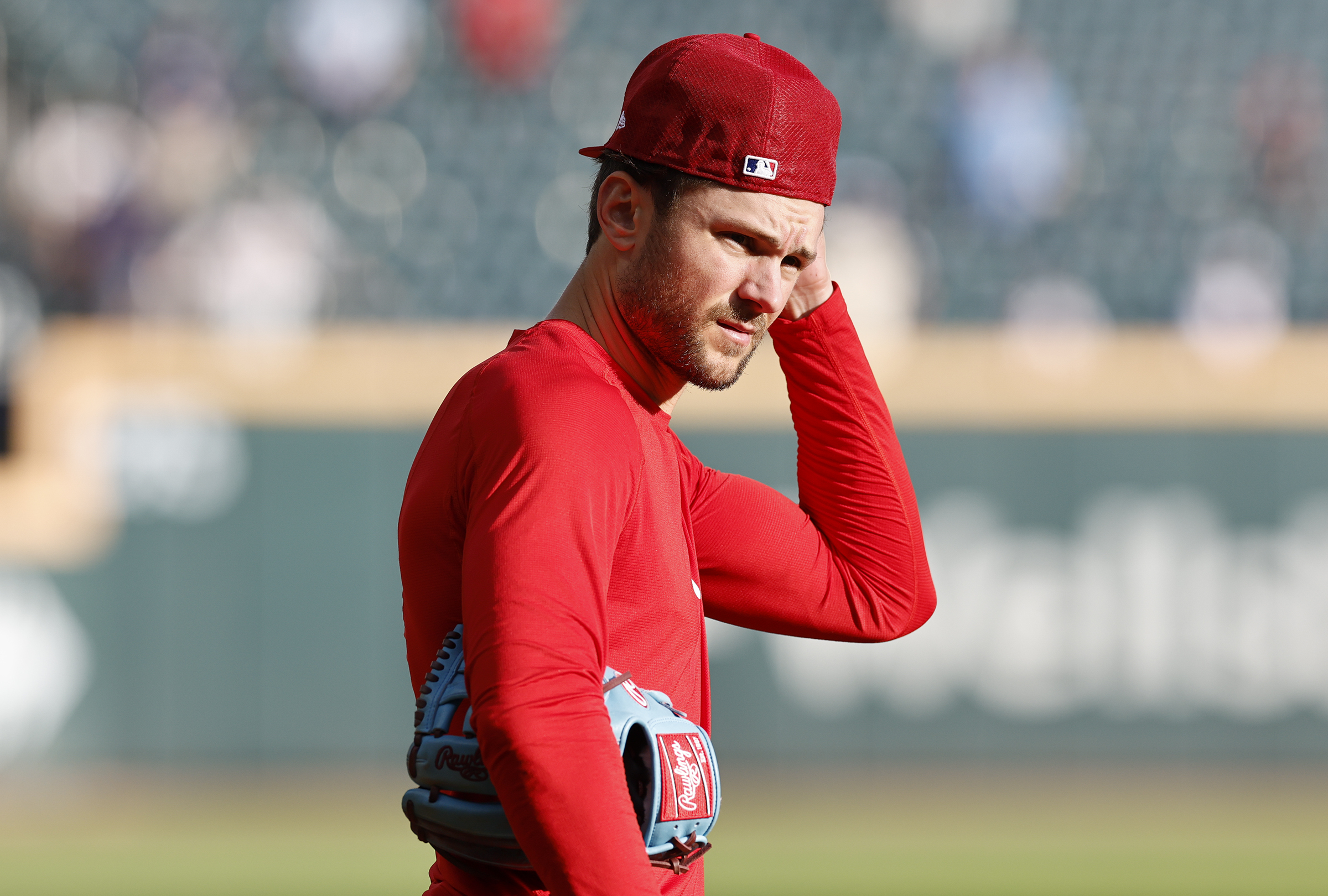
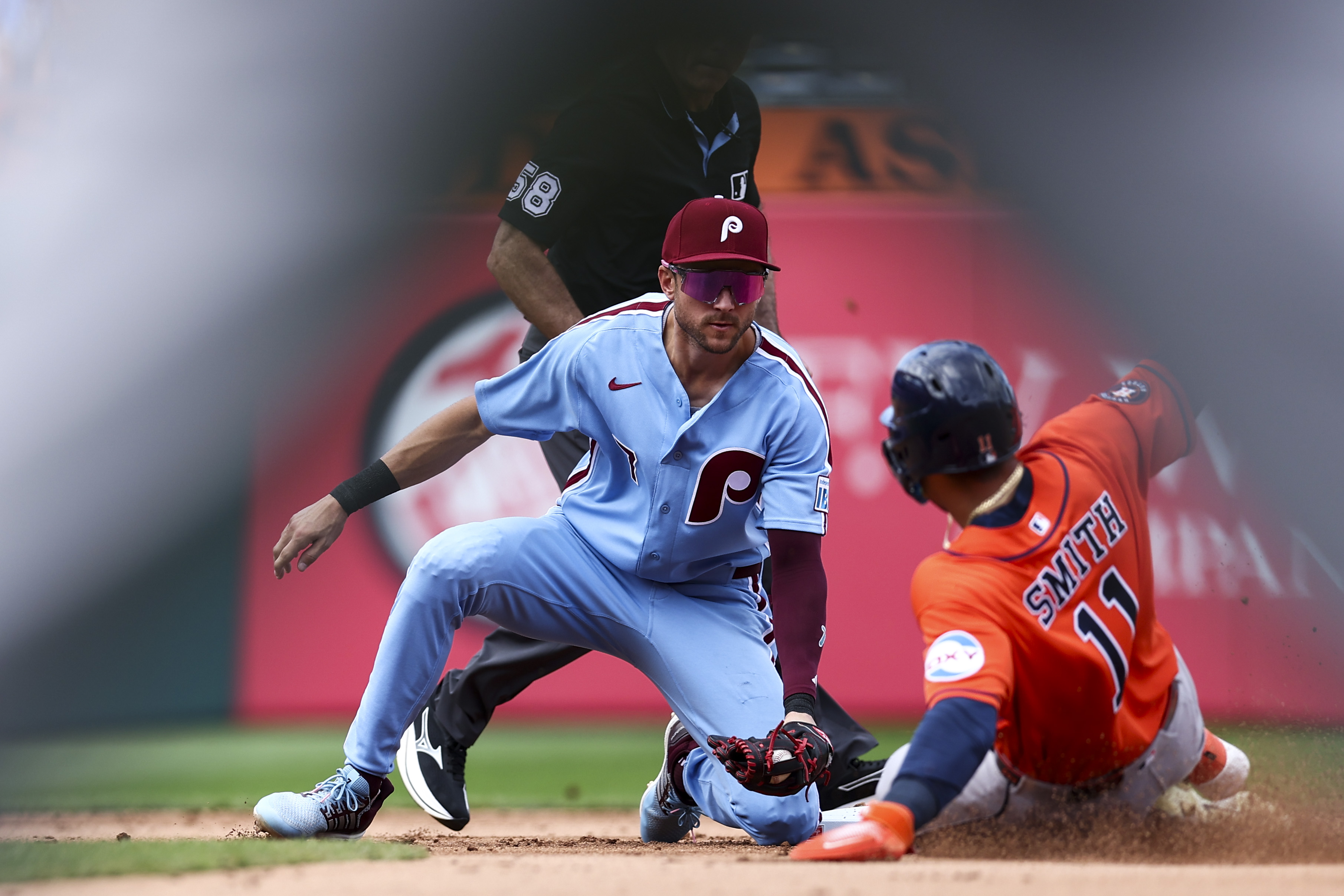
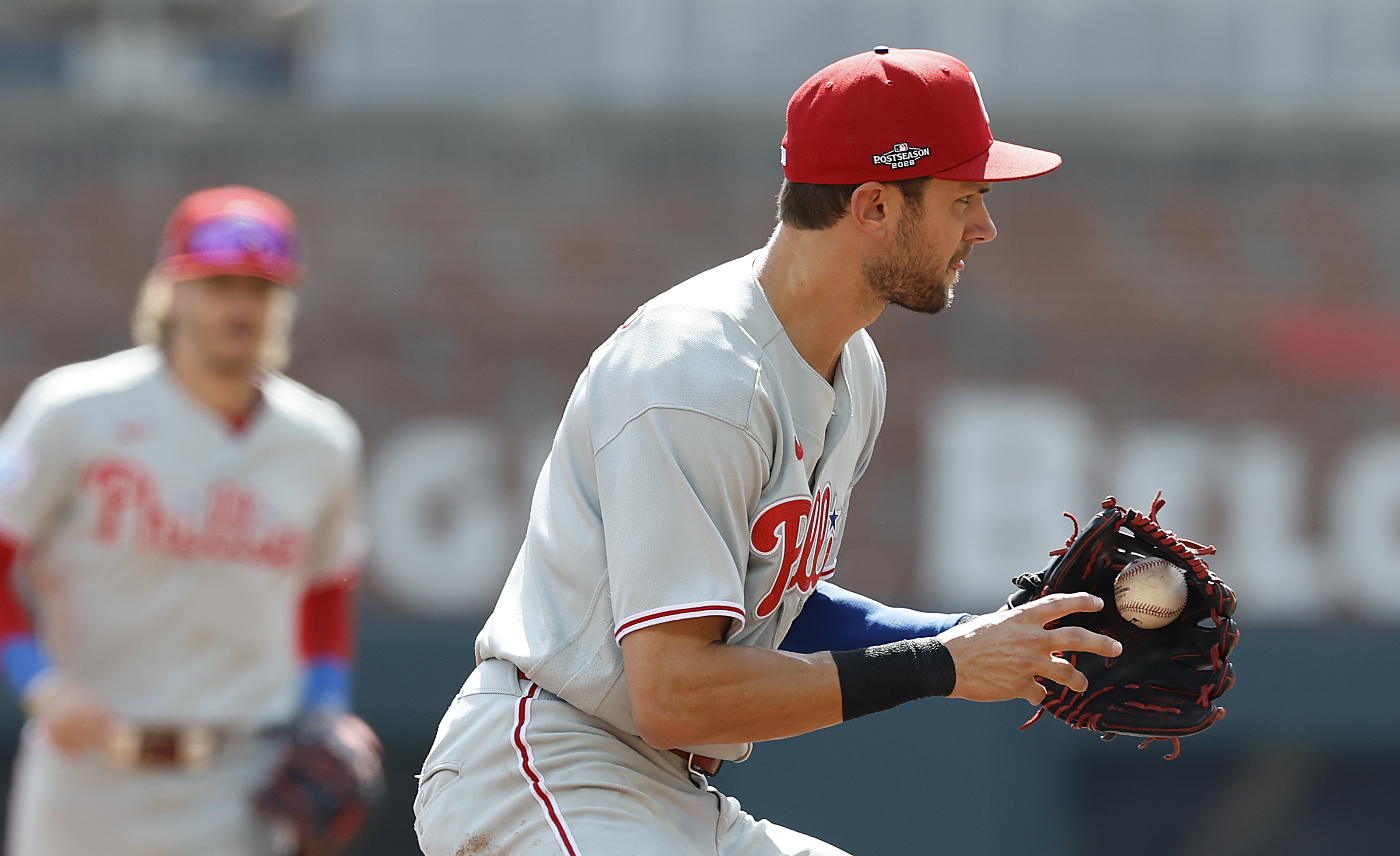
    Trea Turner made 21 errors this season, tied with Marlins shortstop Otto Lopez for most in the majors by any player at any position.Monica Herndon / Staff Photographer

    Besides, it would be unwise to sell low on a three-time All-Star who, at age 33, is one year removed from a fifth-place MVP finish.

    Dombrowski has not yet held his season-ending news conference, in which he typically sketches an offseason plan. The Phillies also don’t have a manager after Don Mattingly finished the season on an interim basis. Alex Cora, Dombrowski’s choice for the job, informed teams that he won’t manage in 2027.

    Until that situation is resolved, Turner’s status won’t be.

    But Arraez and Alec Bohm are headed to free agency; Harper is expected to return to first base. The Phillies were last in the majors with an 89 OPS+ (100 is league average). The offense is overly dependent on Harper and Kyle Schwarber.

    Dombrowski’s solution can’t be to simply sign a righty-hitting free-agent right fielder (Randy Arozarena or Seiya Suzuki) and call it a day. Aside from being unimaginative, it may not be practical if the owners get their desired salary cap.

    If the Phillies move Turner to another position, it could put them in the market for four shortstops who were available at the trade deadline and may be again: Jeremy Peña (Astros), Zach Neto (Angels), CJ Abrams (Nationals), and Otto Lopez (Marlins).

    Dombrowski said the Phillies “didn’t even discuss” a position change with Turner at the deadline. They didn’t have to. Harper set everything in motion for the Arraez trade by raising his hand to go back to the outfield.

    But the owners expect to lock out the players upon the expiration of the collective bargaining agreement on Dec. 1, at which point team officials won’t be allowed to communicate with players.

    It’s time, then, to have the conversation.

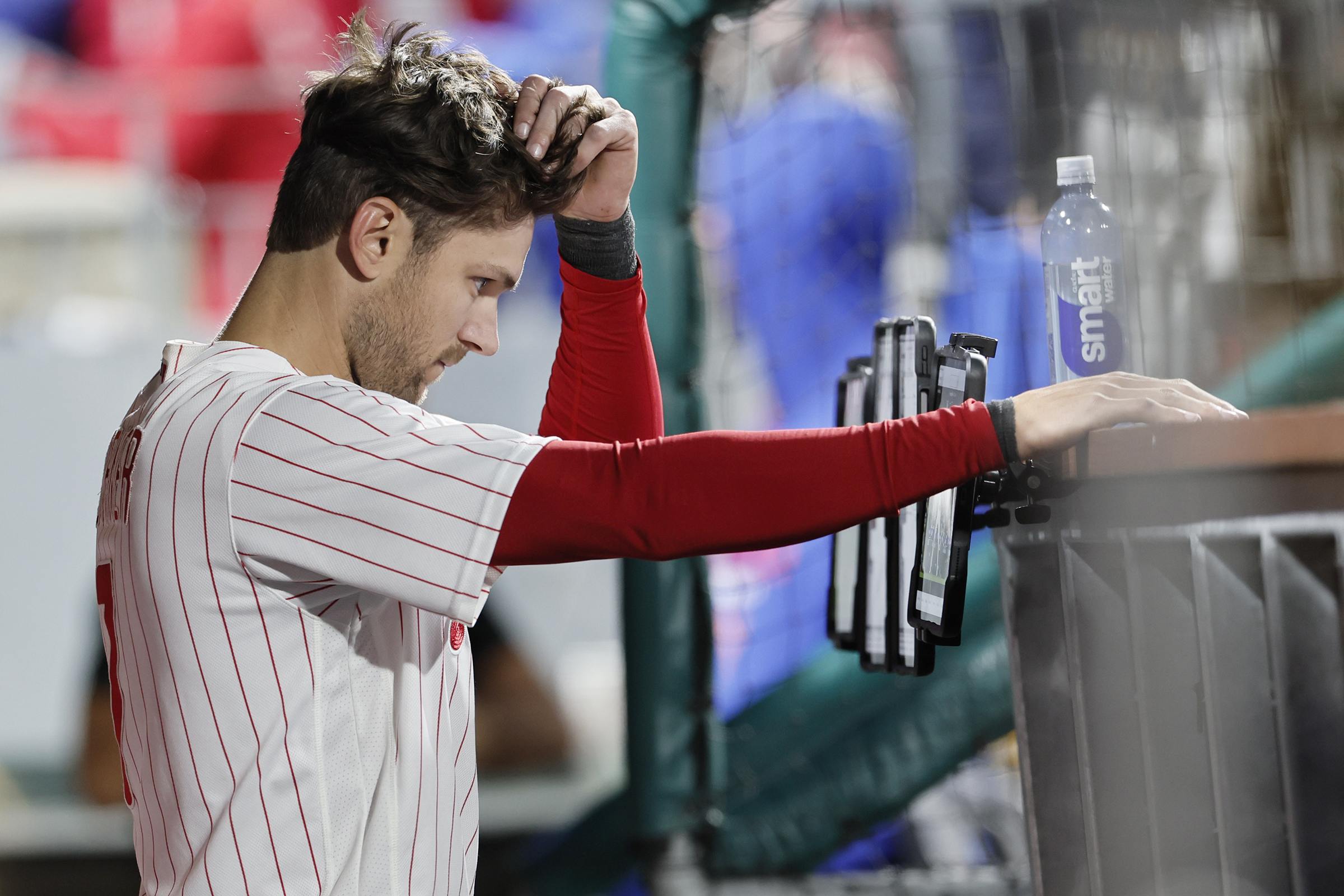
    In the midst of the worst season of his career, Trea Turner often replayed at-bats on a tablet in the dugout.Elizabeth Robertson / Staff Photographer

    A short stop at second

    Say this for Turner: He’s a thinker.

    Intelligent and self-aware, he often buries his head in a tablet in the dugout to rewatch at-bats. He asks to see breakdowns of proliferating swing metrics and wants information about his defense.

    Believe Turner, then, when he says he plans to get to the bottom of how a .291 career hitter with an .810 OPS and two batting titles can bottom out at .242 with a .675 OPS over 700 regular-season plate appearances — and go 1-for-11 in the wild-card series.

    “I’ve got to just go over everything and just figure out as much as I can, find answers, see what I did bad,” he said. “This year was the biggest question mark for me offensively in a long time. I’ve got to figure that out.”

    Sometimes, though, it’s too much.

    “The more scientific he is, the more he locks himself up,” infield coach Bobby Dickerson said in July on The Inquirer’s Phillies Extra podcast. “He does think a lot, and he puts a lot of pressure on himself. He wants answers scientifically a lot of times, and he starts to search for that more than actually play the game, which is what he does well.”

    But there’s reason to believe, based on Turner’s age and track record, that this year was an outlier for him at the plate.

    Defense is another story.

    Upon signing Trea Turner before the 2023 season, the Phillies said they believed he could stay at shortstop for several years.Yong Kim / Staff Photographer

    Turner made 21 errors, tied for most in the majors, and was nine runs below average among shortstops in fielding run value, Statcast’s all-encompassing defense metric. It was a stark regression from last season, when he made eight errors and ranked 10 runs above average.

    If anything, it seems like last year was the outlier. Since 2016, he’s 11 runs below average in fielding run value.

    Turner has always been a “hit-first shortstop,” noted one team official, who suggested Turner’s problems at the plate affected him in the field.

    Upon signing him to an 11-year, $300 million contract in December 2022, the Phillies expressed more confidence than other teams in his long-term ability to stay at shortstop.

    “We’re betting on just elite athleticism and a desire to be really, really good for the entirety of his contract, the entirety of his career,” then-general manager Sam Fuld said at the time. “We see him as a shortstop for a long, long time.”

    The Phillies were correct about Turner’s athleticism. It hasn’t diminished. His average sprint speed this season was 29.9 feet per second, 11th in the majors and only a tick slower than his rookie-year average from 10 years ago (30.0), according to Statcast.

    If anything, Turner’s elite athleticism should serve him well in moving to a new position. He has experience at second base and in center field, though he hasn’t played the outfield since 2016 with the Nationals. At his age, left field might make more sense than center.

    Regardless, after Dec. 1, the Phillies won’t be able to send coaches to work with Turner in the outfield. And depending on how long the lockout lasts, spring training could be shortened.

    Turner also makes sense in left field only if he rebounds at the plate. Across the sport, left fielders slugged .401 with a .724 OPS this season. There was less production among shortstops (.390, .703), even less from second basemen (.381, .698).

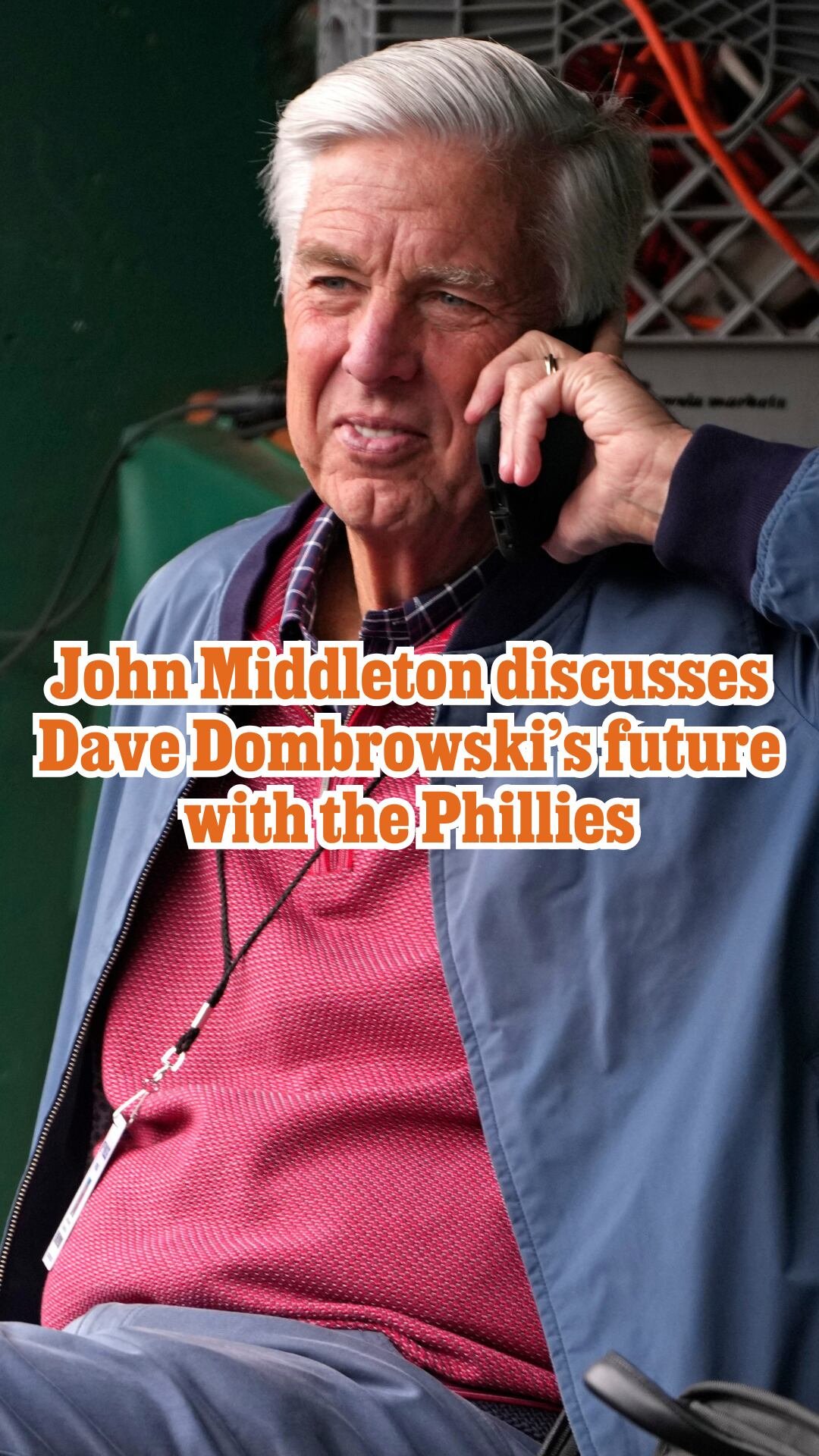
    John Middleton discusses Dave Dombrowski's future with the Phillies
    Video: John Middleton discusses Dave Dombrowski’s future with the Phillies

    The simplest move would be to second base, where Turner played well after getting traded to the Dodgers in 2021. In that scenario, Bryson Stott could play third base.

    It would allow Turner more time to train in the outfield, similar to when Harper learned to play first base while coming back from elbow surgery as a designated hitter in 2023. It would also give top prospect Aidan Miller additional time in triple A after a low back condition sidelined him for most of this season.

    And it would enable Dombrowski to shop for a shortstop.

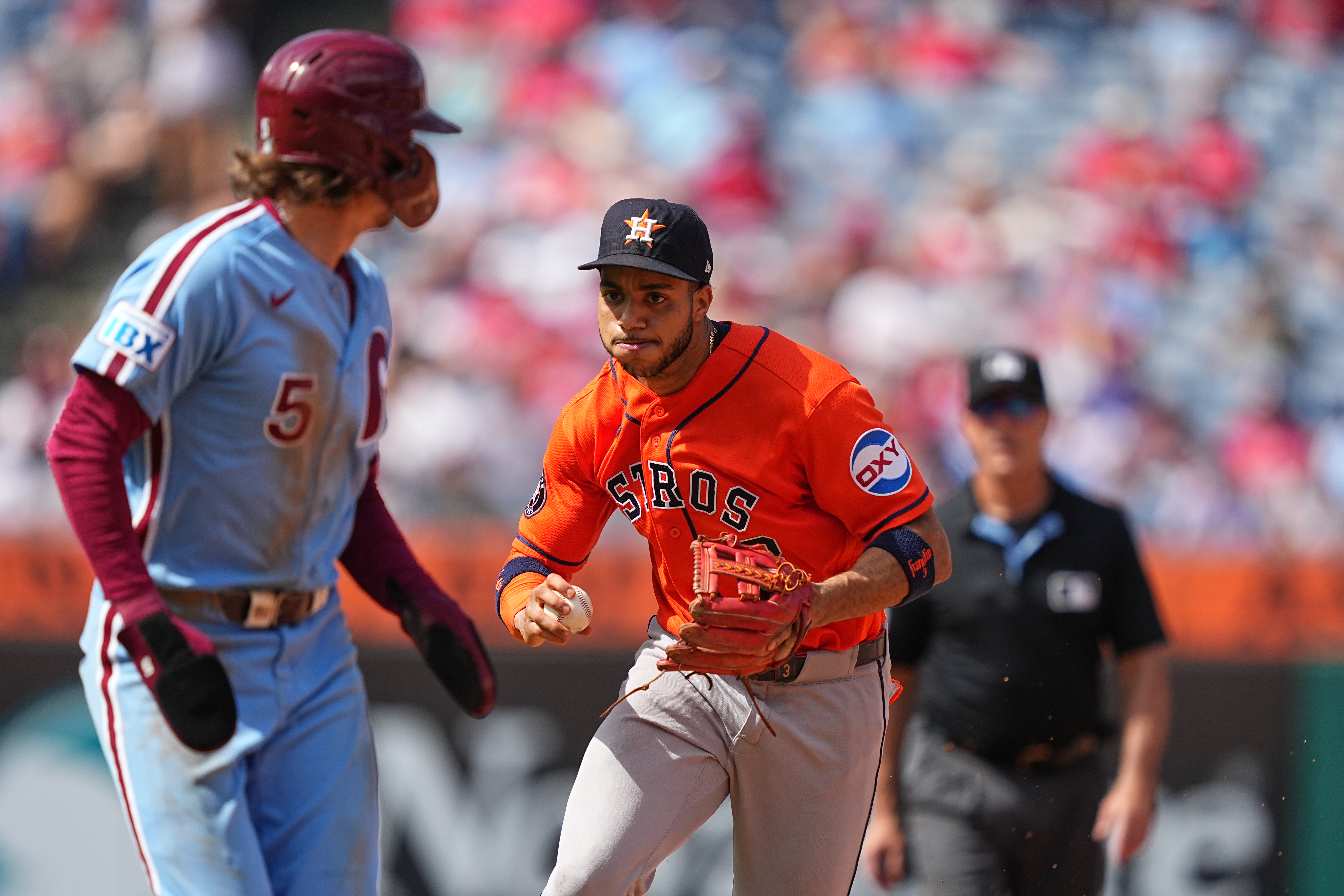
    Astros shortstop Jeremy Peña could be available in a trade this offseason.Matt Rourke

    Deal, or no deal?

    Two winters ago, with Kyle Tucker entering his walk year and little chance of re-signing him, the Astros traded the veteran outfielder.

    They’re in a similar situation now with Peña.

    Under owner Jim Crane, the Astros have been to the playoffs in 10 of 12 years, including this season despite going 81-81, their worst mark since 2014. Crane fired general manager Dana Brown in August, leaving the organization in flux.

    Peña’s future in Houston hangs in the balance. The 29-year-old batted .277 with 22 homers and an .802 OPS, solid numbers despite a strikeout rate that rose to 24%. Defensively, the 2022 World Series MVP was better than Turner but still below average (minus-5 fielding run value).

    Crane resisted rebuilding over the last few years, so the new GM figures to have a mandate to contend in the AL West. Houston also could replace Peña or third baseman Isaac Paredes with Carlos Correa.

    The Astros flipped Tucker to the Cubs for two major leaguers (Paredes and pitcher Hayden Wesneski) and a top-100 prospect (Cam Smith). It’s likely they would seek a comparable return for Peña, who is projected to make $13.1 million next year, according to MLB Trade Rumors.

    Neto, 25, has big right-handed power (23, 26, and 27 homers in the last three seasons) but high strikeout rates (30.5% this year after 26.9% last year). He also has three years of club control, with a projected 2027 salary of $9.8 million.

    The Angels sold more actively at the deadline before owner Arte Moreno sold the team. But Neto stayed put, at least until this winter when they could conceivably cash in.

    A package from the Phillies would probably have to start with Miller or top pitching prospect Gage Wood, maybe both. But Neto would represent the the middle-of-the-order righty thump that the Phillies lack.

    The Angels’ Zach Neto was fourth among all shortstops this season with 27 homers.Eric Christian Smith

    Abrams, 26, was one of three players with at least 30 homes and 30 steals. He bats left-handed, which makes him less of a fit for the Phillies. There are also questions about his defense. He made 11 starts at second base in September after committing 20 errors at shortstop.

    Lopez, 28, led the majors with 191 hits in addition to his elite defense (plus-12 fielding run value), just in time to be eligible for salary arbitration.

    It’s unclear if the Nationals would move Abrams (two years of club control; $10.2 million projected salary next year) or the Marlins would trade Lopez (three years of control, $5.4 million) within the division. In both cases, it’s worth finding out.

    But just as they couldn’t have traded for Arraez without Harper’s willingness to switch positions, the Phillies can’t consider an outside-the-box move without moving Turner, who may be best suited to play somewhere else anyway.

  • Merion joins Pebble Beach and others as the USGA’s fourth U.S. Open anchor site

    Merion joins Pebble Beach and others as the USGA’s fourth U.S. Open anchor site

    Merion Golf Club will continue to host historic USGA championships for decades to come after the United States Golf Association announced Thursday that the club has been designated as the fourth U.S. Open anchor site.

    The announcement comes just months after Merion hosted the 126th U.S. Amateur, which drew an estimated 20,000-plus fans and marked the most-attended U.S. Amateur on record.

    The new designation is meant to strengthen the long-term partnership between golf’s governing body and one of the sport’s most iconic venues, the USGA said in a news release.

    “Merion has long been one of the defining venues in championship golf,” said John Bodenhamer, chief championships officer of the USGA. “Its history, architecture, and ability to consistently identify the game’s greatest champions make it a place where every player dreams of winning. The anchor site designation is about more than just semantics. It represents a shared commitment between the USGA and Merion to plan further in advance, make strategic investments, and continually elevate the championship experience.”

    The other three U.S. Open anchor sites are: Pebble Beach Golf Links in California, Pinehurst Resort & Country Club in North Carolina, and Western Pa.’s Oakmont Country Club, which is located on the Allegheny River in the Pittsburgh suburbs.

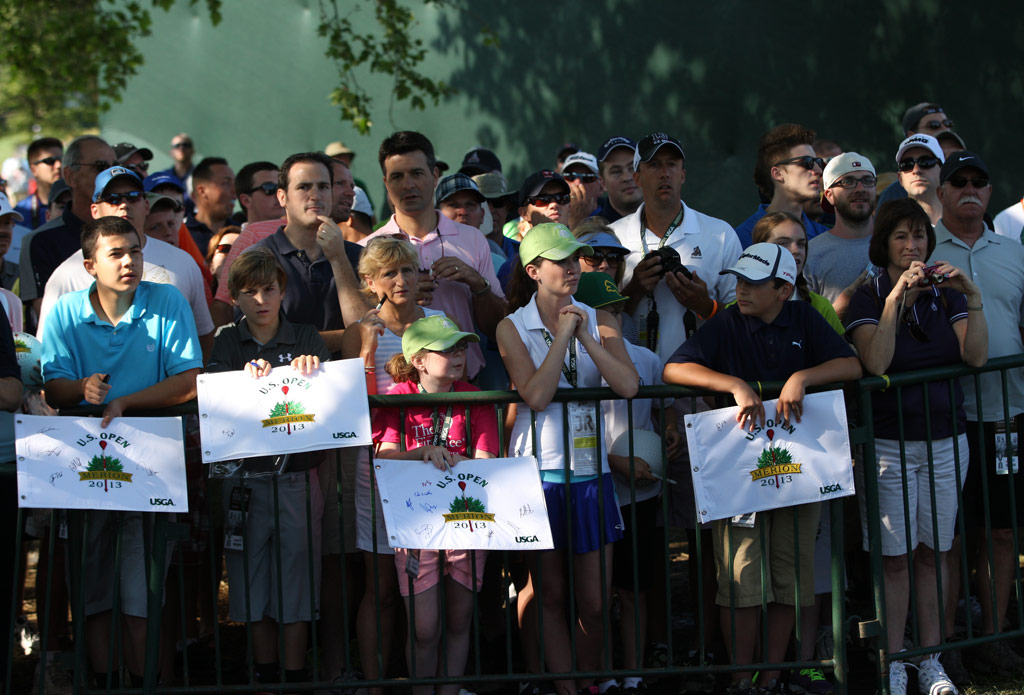
    Fans packed into Merion during the 2013 U.S. Open.

    The purpose of the anchor sites is to create long-term partnerships with historic venues. Knowing that major championships will be regular occurrences at Merion — nearly every five years through 2050 — will allow the USGA and the club to “better invest in infrastructure, improve the player and fan experience, and enhance relationships with local communities and volunteers,” according to the USGA.

    Merion will host the U.S. Open in 2030, 2040, and 2050 and the U.S. Women’s Open in 2034 and 2046. It will be the first time Merion has hosted the U.S. Women’s Open.

    The USGA believes that the game’s most iconic championships should be played at the most respected venues.

    “For more than a century, Merion has been the home for some of the most memorable moments in championship golf,” Merion Golf Club president Topper Ray said.

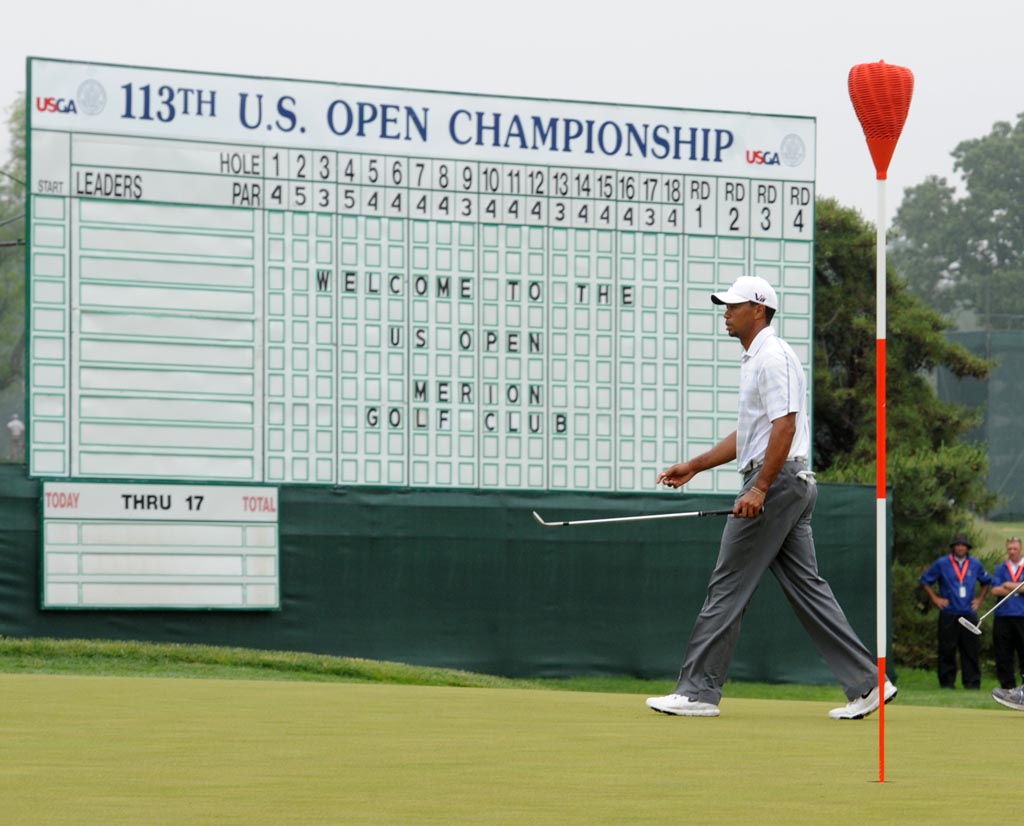
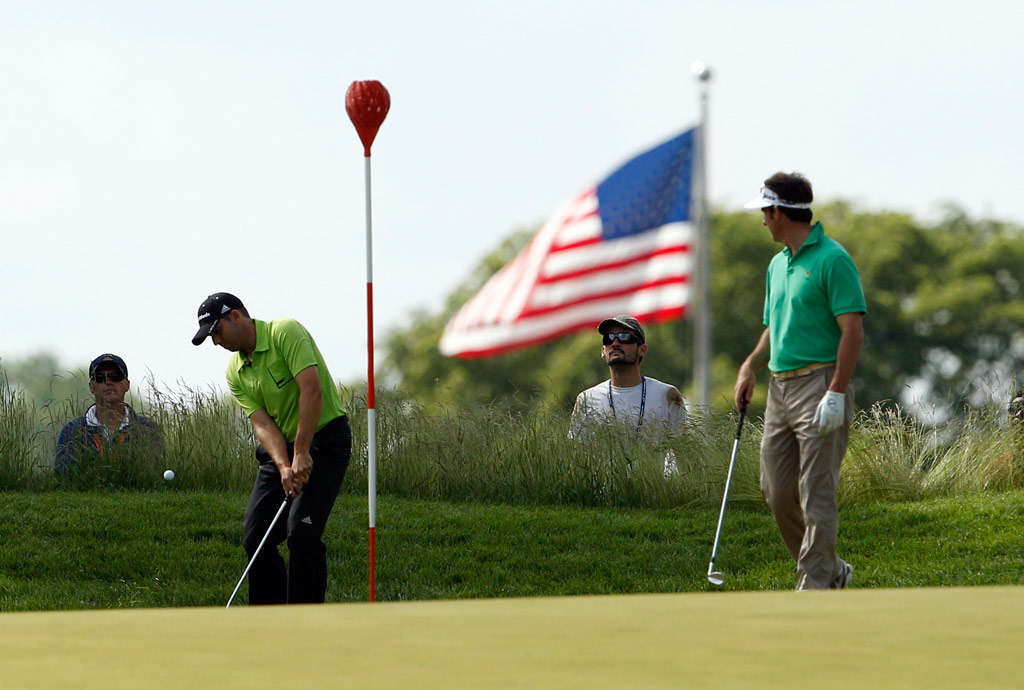
    Merion — with its famous wicker basket flagsticks — last hosted the U.S. Open in 2013.Staff Photographer

    Some of those memorable moments include Bobby Jones completing the Grand Slam in 1930, Ben Hogan sticking his famous 1-iron shot on the final hole of the 1950 U.S. Open, and Lee Trevino beating Jack Nicklaus in a playoff to capture the 1971 U.S. Open. Most recently, the club hosted the 2013 U.S. Open, which didn’t see a single player finish at par or better and was won by Justin Rose.

    “The Anchor Site designation reflects not only that remarkable history, but a shared commitment between Merion and the USGA to the future of the game,” Ray said. “It also recognizes generations of Merion members whose stewardship, volunteerism, and love of the game have made this club one of golf’s great championship venues.

    “As we look ahead, this partnership allows us to continue stewarding Merion for our members, while giving the next generation of champions the opportunity to add to our remarkable championship story.”

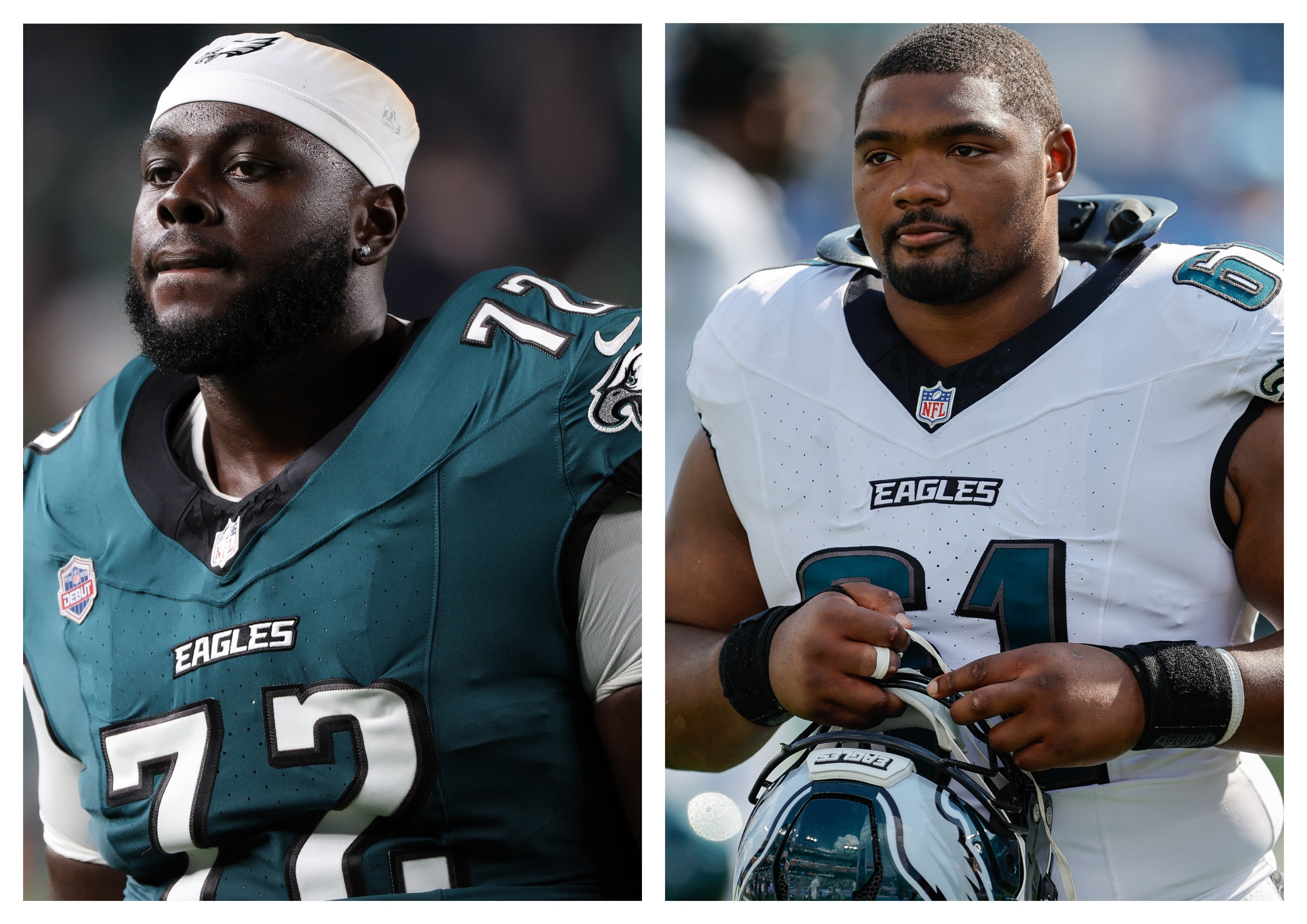
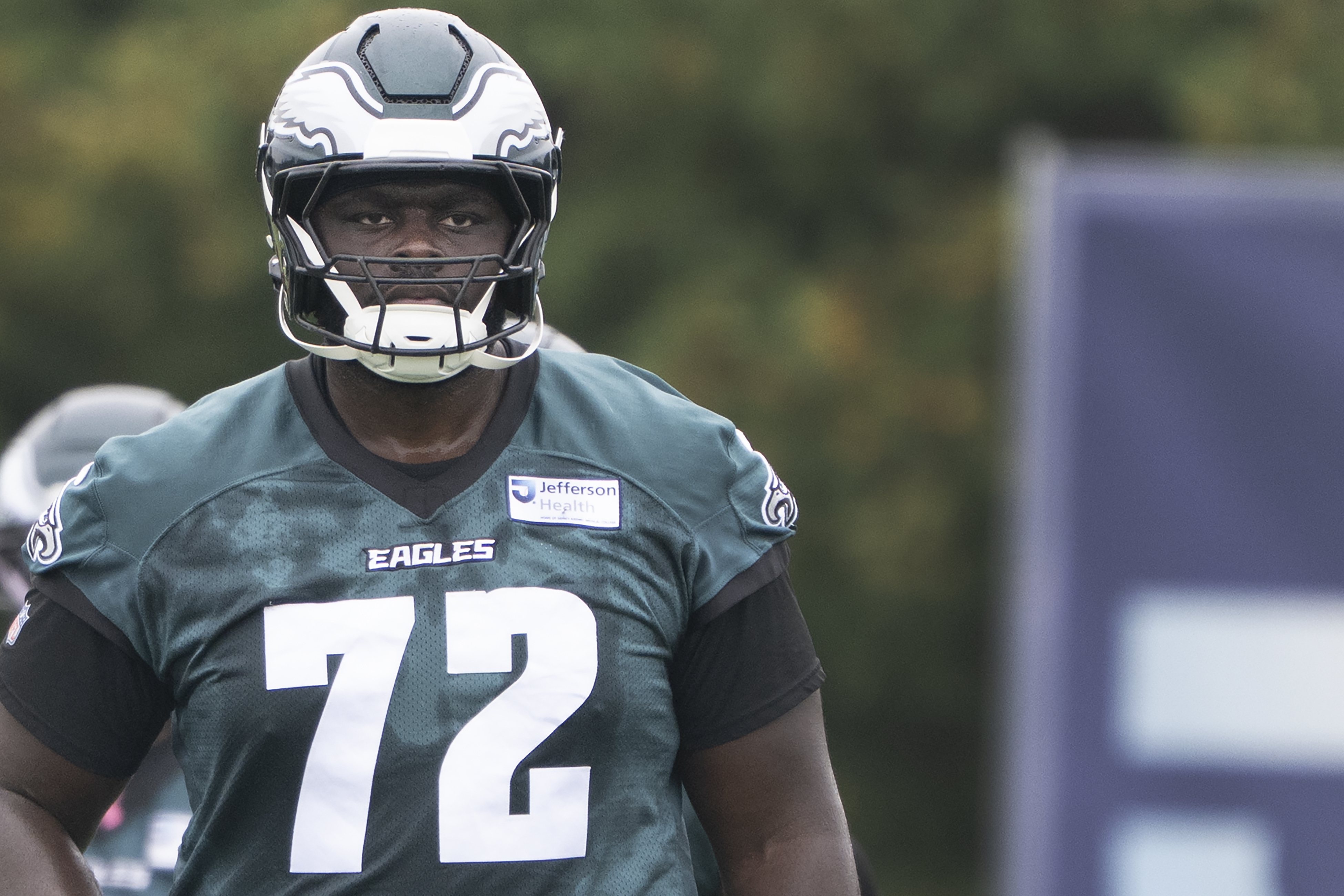
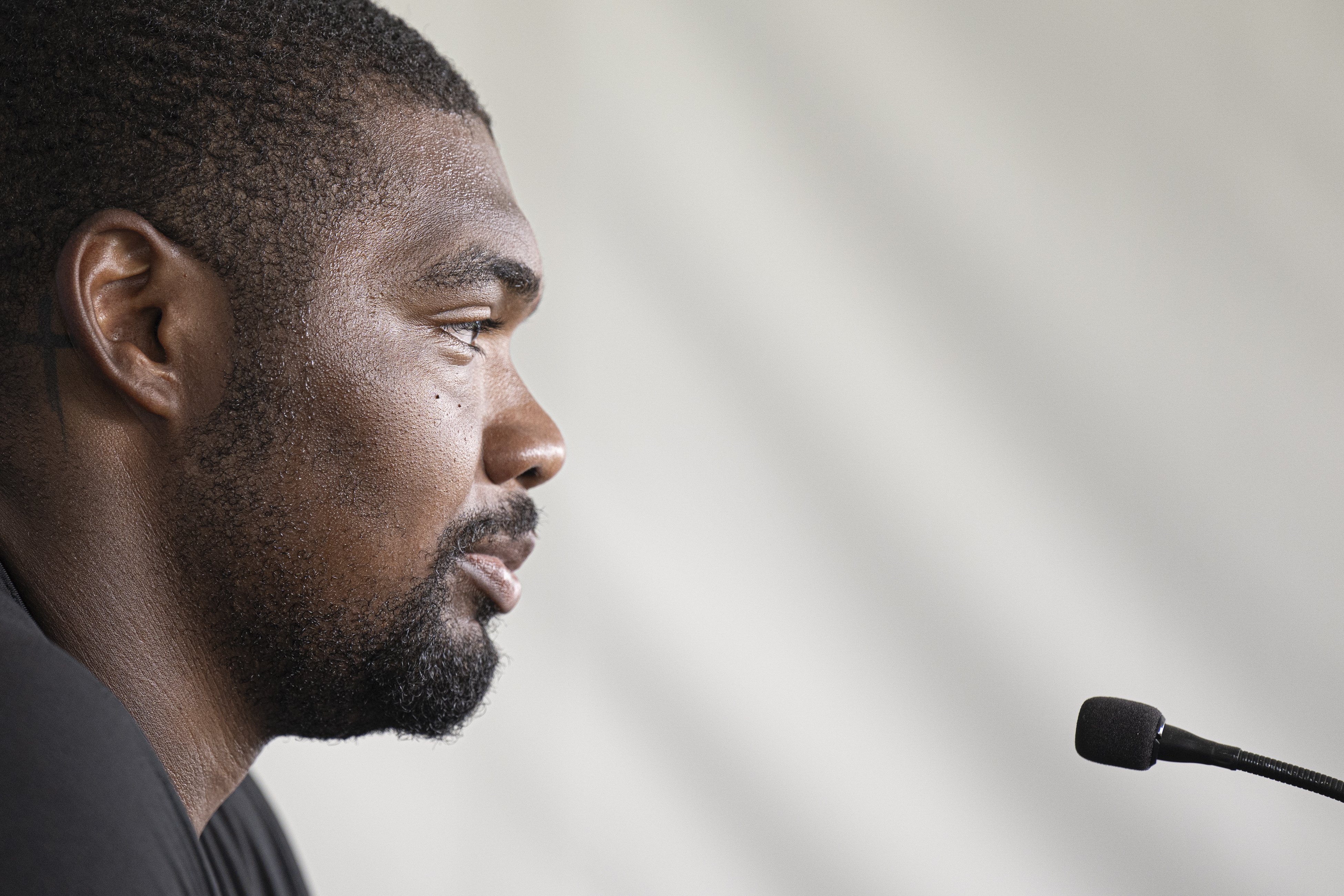
  • There’s almost a foot between Markel Bell and Willie Lampkin. But they’ve become ‘brothers’ as O-Line careers take off.

    There’s almost a foot between Markel Bell and Willie Lampkin. But they’ve become ‘brothers’ as O-Line careers take off.

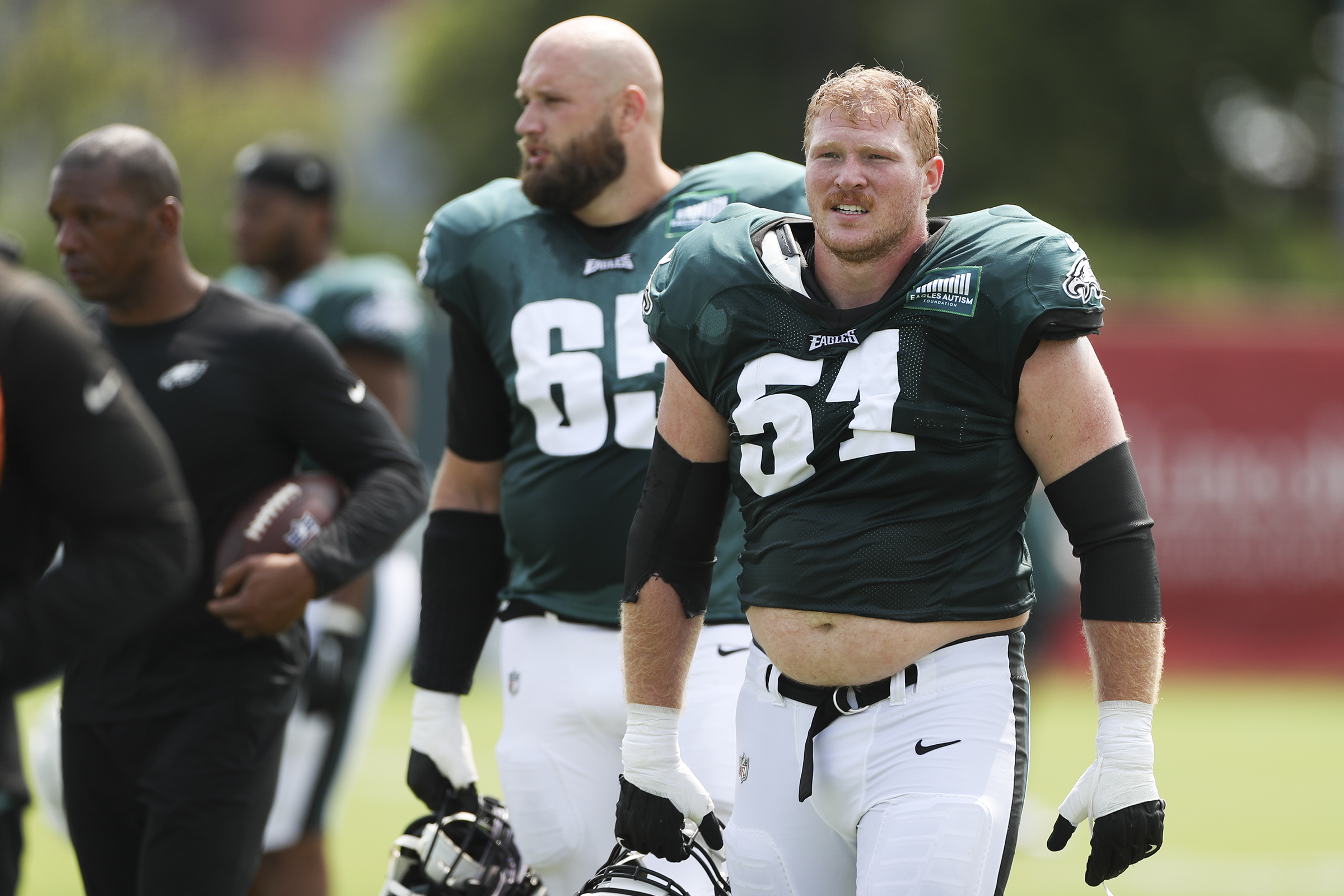
    When Willie Lampkin stands next to Markel Bell, it’s hard to notice anything but the gap between them. Bell, the tallest player in franchise history, is listed at 6-foot-9, 346 pounds.

    Lampkin, the league’s shortest offensive lineman, is pint-sized in comparison, at 5-11, 290. The near-foot of separation has led to some quips from both fans and media.

    On Aug. 10, for example, during training camp, a reporter posted a video of Lampkin and Bell during a team drill. Someone took a screenshot of them walking off the field. The image went viral on X, evoking more than a few Manute Bol-Muggsy Bogues comparisons.

    The right tackle and the left guard found it funny. But in a way, their greatest difference — their height — is rooted in a fundamental similarity.

    Lampkin will never know what it’s like to tower above his teammates, just as Bell will never know what it’s like to peer up at them. But both linemen know what it’s like to be underestimated.

    And they both use that to motivate themselves — and each other.

    “We’re kind of cut from the same cloth,” Bell said. “We’ve both been doubted our whole lives. And now it’s just time to make people pay for it.

    “I went to JUCO. He went undrafted. Of course, with his stature, people look at him and say, ‘Hey, he’s too small.’ And people look at me and say, ‘Hey, he’s too big.’”

    For Bell, who was selected in the third round of the 2026 draft, the knock was his ability to get low, or play alongside shorter players. He said that being from small-town Mississippi didn’t help, either.

    Markel Bell was drafted as a possible heir apparent to Lane Johnson at right tackle, and his time has come sooner than expected. Jose F. Moreno / Staff Photographer

    The future Eagle was a zero-star recruit who received only low-level Division I interest coming out of high school. He enrolled at Holmes Community College, in the hopes of attracting more attention, before transferring to Miami in January of 2024.

    For Lampkin, it was that he couldn’t compete with those larger than him. Like Bell, he started his college football career in relative obscurity, leveraging three strong seasons at Coastal Carolina to earn a spot at the University of North Carolina.

    In the lead-up to Lampkin’s pro day in 2025, some NFL scouts and coaches said he’d be better suited to a backfield role, even though he’d spent his college career at guard and center. His size, relative to his position, was a factor in him going undrafted before the Los Angeles Rams signed him in April of 2025.

    The Eagles claimed Lampkin in August of last year, and put him on injured reserve two days later.

    When the two players first met, over the summer, they realized they shared a resilient spirit. Before long, they were inseparable; “always together” at the practice facility and at the stadium, in Lampkin’s telling.

    “He’s like my brother, man,” the guard said of Bell. “He’s like a humble beast.”

    Willie Lampkin parlayed a strong training camp into a 53-man roster spot in 2026. Jose F. Moreno / Staff Photographer

    Like any brothers would, they began to engage in some good-natured ribbing, mostly about the ACC rivalry between UNC and Miami. They never faced each other, but Lampkin will never let Bell forget about the Tar Heels’ 41-31 win over the Hurricanes in October of 2023.

    “I always tell him that we beat them,” Lampkin said. “I got my dub over Miami.”

    He also gave Bell a nickname (which appears to have been borrowed from reality TV personality Alexis Radcliff).

    “I call him ‘Big ‘Kel not the Little One,’” Lampkin said. “He hates when I say that. I’ve heard it online and I always just say it to him. I don’t even know, I just heard it. I always be like, ‘Big ‘Kel not the Little One.’”

    Added Bell: “He just be trollin’, he just be trollin’. I laugh and I tell him to get out of my face.”

    Bell said that as backups, they’d talk about what it would be like when their opportunities finally came. In that moment, it felt distant.

    Lane Johnson was entrenched at right tackle. Jurgens was at center, and Landon Dickerson at left guard. But the linemen tried to keep each other motivated.

    “We were like, ‘Bro, our time will come,’” Bell said. “‘And when it does come, we’re going to get on the field, and we’re going to stay on the field.’”

    Gameday Central: Is it time for the Eagles to start Willie Lampkin?
    Video: Gameday Central: Is it time for the Eagles to start Willie Lampkin?

    It came more quickly than anyone anticipated. Dickerson was placed on injured reserve on Sept. 14. Johnson retired earlier this week. Jurgens was traded on Wednesday, and his replacement, Drew Kendall, didn’t practice all week and was ruled out Friday with a knee injury.

    To say this is a big opportunity for the two linemen would be an understatement. Bell has started one NFL game (abruptly, after Johnson bowed out last week less than two hours before kickoff due to a personal matter). Lampkin has never started in his pro career.

    On Sunday against the Jacksonville Jaguars in London, they’ll likely join the huddle together, to prepare for the Eagles’ first offensive play of the game. Their vantage points will be vastly different.

    But inside, their perspective will be the same.

    “We’ve been doubted our whole lives,” Bell said. “The time is now. So just go out there and seize it.”

  • The Eagles are doing something scarier than tanking, rebuilding, or going all in. They’ll be better for it.

    The Eagles are doing something scarier than tanking, rebuilding, or going all in. They’ll be better for it.

    You’d rather a general manager do what Howie Roseman did than refuse to do it on principle.

    I’ve been searching for something more definitive to say about one of the more discomfiting weeks in recent Eagles history. But all I have are first principles.

    • It is better to be a year early than to be a year late.
    • It is harder to get unstuck than it is to avoid getting stuck in the first place.
    • Never let a crisis go to waste.

    All three of these principles apply to the Eagles’ decision to trade starting offensive lineman and one-time long-term fixture Cam Jurgens to the Ravens. What really matters, though, is how these principles apply to all of Roseman’s decisions and in the preceding six months. That framework will tell you a lot about where the Eagles think they are, and their mindset for the rest of the 2026 season.

    It would be easy to look at the events of the last six months and wonder if anybody in the Eagles’ building knows what they are doing. Turbulent does not begin to describe the current state of play at One NovaCare Jefferson Way. Even for a team that has spent close to a decade riding a zero-sum yo-yo between Super Bowl and complete dysfunction, the 2026 season is off to a hell of a start.

    Just this week, the Eagles had seen:

    • Their second-most important offensive player ruled a surprise inactive an hour before kickoff.
    • Their starting running back suffer a potential multiweek hamstring injury and his backup suffer a multiweek core muscle injury.
    • Their starting quarterback complete 12 passes for 93 yards in a game.
    • Their second-most important offensive player retire.

    And that was all before Tuesday.

    The Eagles dealt former stating center Cam Jurgens to the Ravens in a trade this week.Yong Kim / Staff Photographer

    So it says something that the real stunner came on Wednesday. Just four weeks into the season, the Eagles traded one of the two remaining starters from one of the best offensive lines in NFL history. Not only that, but they traded him to a fellow Super Bowl hopeful that was more than willing to part with a second-round pick for a two-time reigning Pro Bowl center who just turned 27 years old.

    In less than five years, Cam Jurgens went from a rookie Super Bowl starter and heir apparent to franchise legend Jason Kelce, to a Super Bowl winner with a fat contract extension, to a Baltimore Raven. You could call it a fall from grace, except the Ravens are currently the third betting favorite to win the Super Bowl. The Eagles are 16th.

    The move is almost entirely without precedent. The Eagles’ return for Jurgens — a 2028 second-round pick and a move up from the seventh to fifth round in 2027 — has been unanimously heralded as significant. One factoid making the round is that Jurgens is the first interior lineman traded for a first- or second-round pick since 2011, per Spotrac.

    The framing is doing a lot of work. After all, it’s been nearly three years since a quarterback was traded for a first- or second-round pick. One can just as easily say the Eagles are the first team since 2011 to trade an interior lineman who was worth a first- or second-round pick. Reality is, good interior linemen tend to play for good teams, and good teams tend not to be interested in trading away established offensive line talent for draft picks.

    All of which leads to a rather obvious question: Do the Eagles no longer view themselves as a good team? At least, one that’s good enough to prioritize present value over future value?

    Are they tanking? Rebuilding? Packing it in?

    Not according to the bossman.

    “We’re trying to win this year,” Roseman told reporters. “I think, from my perspective, just looking at what is the ultimate goal, which is to win the last game of the year, and then to have a run like we’ve had.”

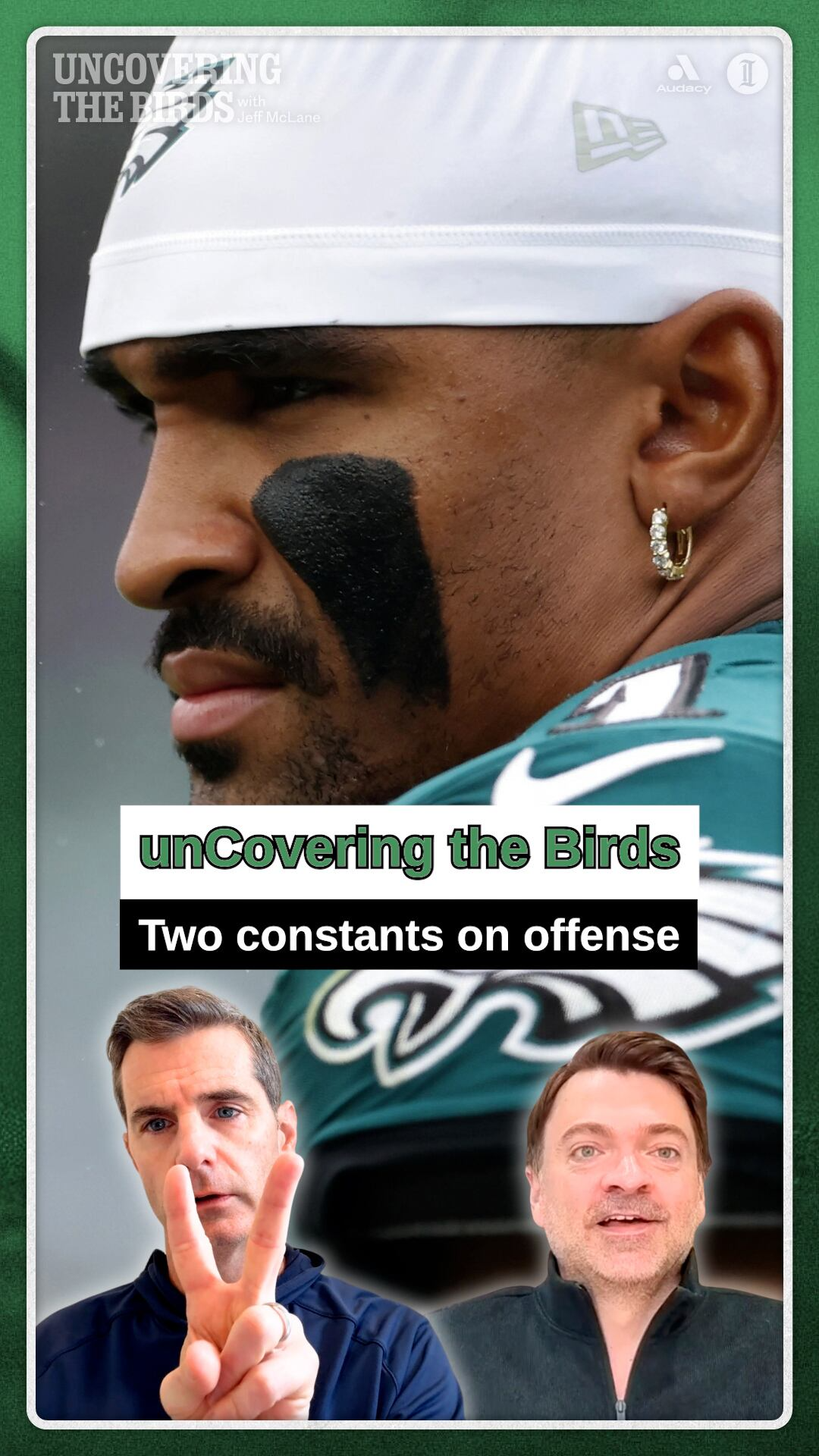
    unCovering the Birds: What is ailing the Eagles' offense
    Video: unCovering the Birds: What is ailing the Eagles’ offense

    Except, there are different levels of “trying.” And “trying” is not something that a good organization can limit to one season. Ask any personnel executive in any sport about time horizons and you’ll get a different answer. The bad executives are the ones who look at you cross-eyed and say nothing. The good ones all phrase things differently, but the basic common goal is to maximize championships per year between here and infinity. The longer your time horizon, the tougher the task. Achieving it in the NFL requires transcending the natural four- to five-year talent cycle created by its draft and contract structures. The hardest thing isn’t to go from bad to good or from good to great. It’s to remain in that space between good and great.

    Doing so requires first and foremost a keen understanding of oneself. You need to evaluate who you are, and also what you are going to need in order to be who you want to be. Those two things often come into conflict. The best decision-makers are those who know which to prioritize in any given moment.

    The Chiefs have done it better than anybody. They traded Tyreek Hill in a deal that helped them draft Trent McDuffie and now they’ve traded McDuffie. In between they traded Joe Thuney and L’Jarius Sneed. They are now 4-0 with a team that includes three defensive contributors (Nohl Williams, Ashton Gillotte, Peter Woods) and one offensive contributor (Rashee Rice) they acquired using the draft capital they acquired. They gave running back Kenneth Walker III the contract and the role he desired.

    For more than a year, the Eagles have been telling us both where they think they are and where they think they need to go. Their decision to trade A.J. Brown. Their decision to let Milton Williams and then Jaelan Phillips walk. Their decision to keep four quarterbacks on the roster. Their decision to fill out their offensive skill positions with short-term, low-risk deals. The goal is to transcend the notion of rebuilding. There are windows. And there are transitions. If you do it right.

    The important thing for Eagles fans is that Roseman’s head is in the right place. The unprecedented nature of the Jurgens move is a sign that the process is sound.

    There is a time element involved in good decision-making. It’s why good quarterbacks are so few and far between. Life moves slower on film. There is a pause button. Accuracy and arm strength would be the only differentiators if each play were a take-home test. The game isn’t knowing the right read. It’s knowing the right read before the opportunity window closes. The Eagles saw Drew Kendall as their center. They saw Jurgens as replaceable at guard. They had a chance to sell high. They took it. Which is exactly what you need to do in a time of diminishing resources.

  • Cardinal O’Hara is using a ‘next class up’ mentality to ‘close the gap’ on other top Catholic League football programs

    Cardinal O’Hara is using a ‘next class up’ mentality to ‘close the gap’ on other top Catholic League football programs

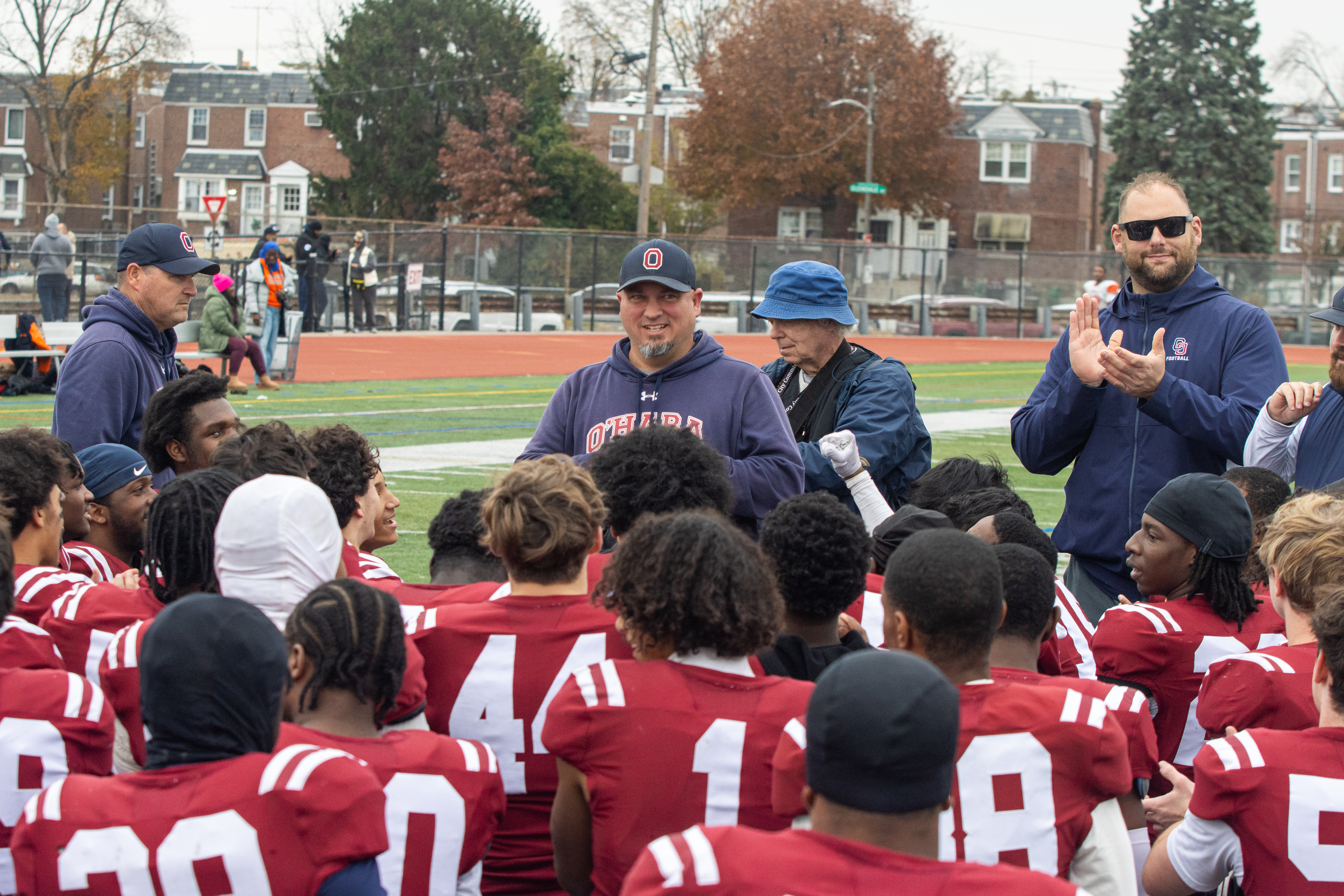
    Mike Ewing knew winning football games couldn’t be the first thing he fixed at Cardinal O’Hara when he took over the high school football program in 2022.

    “The first thing you have to start with is culture,” Ewing said. “You have to bring your culture, and it has to be tangible.”

    That meant the weight room. It meant changing how O’Hara practiced. It meant establishing standards and refusing to move them when players tested how much the new coaching staff would tolerate.

    “You have to demand certain things,” Ewing said. “You just have to be consistent with the message and consistent with your expectations of them.”

    Four years later, Ewing is confronting a different challenge.

    After last season produced 10 wins, a District 12 championship and the program’s first state-playoff victory, Ewing is trying to make sure the Lions’ breakthrough becomes an expectation rather than an exception.

    “We don’t expect a down year,” Ewing said. “We don’t want a down year. We’re not planning for a down year. It’s just the next class up. It’s their turn next.”

    This season is providing an early test.

    O’Hara, who replaced several veteran starters, opened the season with a 4-0 record. Consecutive losses to Smyrna and St. Joseph’s Prep followed as the Lions entered the heart of their Catholic League schedule.

    Ewing has never confused improvement with arrival.

    O’Hara’s breakthrough last season came when the Lions beat Bonner-Prendergast, their biggest rival, in the playoffs. The Friars won a state championship the previous season, and O’Hara had not beaten them in nine years.

    For Ewing, the 24-3 victory provided the clearest indication that what his staff had been building might finally be taking hold.

    “That was kind of like, ‘OK, we might have something special here,’” Ewing said.

    The result was years in the making.

    When Ewing arrived, he said changing the program meant creating standards players could feel daily. If players weren’t participating in a winter or spring sport, they were expected in O’Hara’s weight room. Speed and change-of-direction training became part of the routine.

    Senior linebacker Max Brown remembers returning to practice after suffering an injury during a seven-on-seven competition as a sophomore. Brown assumed the coaching staff might ease him back in.

    When he made a mistake, coaches immediately corrected him.

    Brown became frustrated until Ewing found him afterward and explained why he had been so demanding. Ewing believed Brown could become a good player, so he was going to coach him accordingly.

    “They don’t pick favorites,” Brown said. “They play whoever the best players are.”

    Brown said that approach still defines practices. Whether it is a full-pads session or a lighter Thursday, Ewing and his staff emphasize arriving on time, working in the weight room and treating the details seriously.

    “They try to emphasize the small things that will lead to big accomplishments,” Brown said.

    Ewing hopes those standards eventually become enforced by players as much as coaches.

    “If the coaches lead, we’re going to be good,” Ewing said. “If the players lead, we’re going to be great.”

    Beyond Friday nights. Ewing wants teammates correcting each other in the classroom and hallways and stepping in when someone is about to make a poor decision.

    For Ewing, player ownership is evidence the culture is becoming self-sustaining. So is the way players now describe O’Hara’s reputation.

    When senior running back Isaac Day, a team captain, first joined the program, he remembers opponents reacting casually when they saw the Lions on their schedule.

    “Oh, we’re playing O’Hara.”

    Now, Day said, the reaction is different.

    “Now it’s, ‘Oh, we’re playing O’Hara. We’ve got to lock in because they’re coming to play,’” Day said.

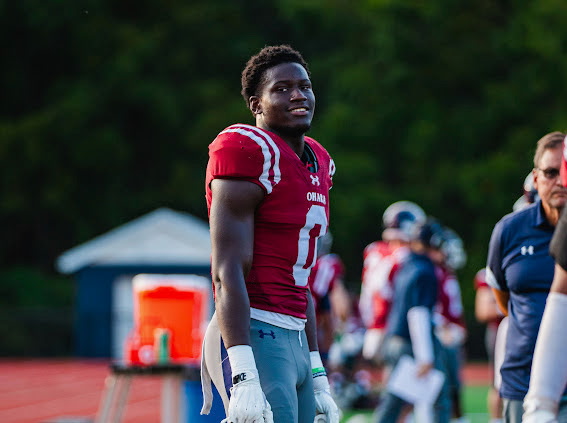
    Sammy Dantonka had 83 tackles as a defensive end with Cardinal O’Hara last season.Cardinal O'Hara Athletics

    Senior edge rusher Sammy Dantonka remembers a similar starting point. O’Hara was coming off a 1-9 season when his group arrived.

    “Then we shocked everybody,” Dantonka said.

    Winning seasons followed, and expectations rose. Dantonka said this year’s goal is no longer having another successful season. The Lions want to “win it all.”

    That ambition has not changed Ewing’s assessment of where the program stands.

    O’Hara cleared one major hurdle by beating Bonner last year. It has not yet won against St. Joe’s Prep, La Salle or Roman Catholic since Ewing took over. They will get a chance to knock off Roman Catholic when they play Saturday.

    “We’re trying to close the gap,” Ewing said. “Those are the teams we’re striving to get to.”

    The largest obstacle, he believes, is depth.

    Some of O’Hara’s PCL opponents have hundreds more boys in their schools. Ewing believes his top players can compete with anyone, but injuries, academic absences or other losses expose the gap between O’Hara and other top local programs.

    “Our ones can play with anybody,” Ewing said. “But if we have an injury, or somebody is out because of academics, that’s where you start to see the falloff.”

    That makes sustaining success more complicated.

    Ewing has already watched the first major class of his tenure move on. Many were three- and four-year starters who were there while the program’s new identity was being formed.

    The question now is whether the next group inherited more than their positions.

    Ewing wants every class entering O’Hara to understand what comes with playing for the program — training throughout the year, taking academics seriously, practicing with a purpose and maintaining the standards established by the players who came before them.

    Brown has watched that evolution up close.

    “When I first got here, you had some kids taking it seriously and some who weren’t,” Brown said. “Everybody needs to be part of it for the whole thing to work.”

    That is ultimately what Ewing is trying to build: A program where the standard remains after the players who established it are gone.

    “Now there are expectations,” Ewing said.

    And he has no plans to lower them.

  • Eagles should treat London like a ‘scheduled loss,’ leave Quinyon Mitchell, Jalen Carter, et al in Philly

    Eagles should treat London like a ‘scheduled loss,’ leave Quinyon Mitchell, Jalen Carter, et al in Philly

    Where’s Doc Rivers when you need him?

    The Eagles are a team in disarray. They are reeling after a slew of injuries; the sudden retirement of right tackle Lane Johnson; and the stunning trade of Cam Jurgens, the center they were misplaying at guard.

    If ever there was a moment for a scheduled loss in football, this is it. If they beat the Jaguars in London on Sunday, great, but there are more important concerns for the season.

    Sometimes, you’ve got to wave the white flag and accept the scheduled loss.

    You might recall that term was coined by Glenn “Doc“ Rivers, the condescending, unpopular, and unsuccessful 76ers coach. In late November of 2022, Rivers referred to a game in Cleveland as a ”Schedule Loss.“ It was the team’s sixth game in nine days, and James Harden and Tyrese Maxey were injured, and the Cavs were pretty good.

    In Rivers’ estimation, the Sixers had little real chance of winning that game. They lost by 28 points, and Doc gave us another in a long list of his infamous utterances.

    This is exactly the situation the Eagles face Sunday. Resistance is futile. They should rest every injured player. If it turns out to be a scheduled loss, so be it.

    Better to rest, reset, and regroup for next Sunday when the Panthers visit, and beyond. Unlike the Jaguars, the Panthers are a conference opponent, and conference records are a significant tiebreaker. The three games after the Panthers are all divisional opponents. Those are more important games. This game is not only less important, it is unwinnable.

    The Eagles are dropping like flies in a cloud of Raid.

    Fourteen of the top 24 players on the roster are either definitely out, markedly limited, recently retired, or stunningly traded:

    Both Dontayvion Wicks (center) and DeVonta Smith (right) could miss the Eagles’ game on Sunday with hamstring injuries.Yong Kim / Staff Photographer

    Johnson, Jurgens, Saquon Barkley (hamstring), DeVonta Smith (hamstring), Quinyon Mitchell (knee), Jonathan Greenard (ankle), Dallas Goedert (knee), Jihaad Campbell (knee), Zack Baun (concussion), Marcus Epps (groin), Dontayvion Wicks (hamstring), and Drew Kendall (knee). Backup running back Tank Bigsby landed on injured reserve on Monday; he needed core muscle surgery. He joined former Pro Bowl left guard Landon Dickerson, who’s landed on injured reserve after Game 1 with a lingering knee issue.

    What’s more, defensive tackle Jalen Carter, perhaps the best player on the team, has been playing with a fractured wrist, and he has been playing poorly. That makes it 15.

    Some of these players will be ruled out by the time the Eagles’ charter takes off Friday night, but, really, none of the wounded should get on the plane bound for England.

    The Eagles are faced with a red-eye flight Friday that will move them five time zones to the east (which is a bizarre decision; they should’ve been there for three days now). They will play a game Sunday with a start time that their body clocks will believe is 9:30 a.m. They will play a Jaguars team that won the AFC South last year and is 3-1, with three good wins.

    They’re 8-point underdogs on some sportsbooks.

    For now.

    Carter and Mitchell fully participated in practice Thursday. So what. Why not give Carter a week to get healthier? Why risk further injuring Mitchell’s knee?

    There is no point.

    They have no chance.

    The Eagles are too beaten up. Too thin.

    Willie Lampkin will likely make his first career start at left guard.Monica Herndon / Staff Photographer

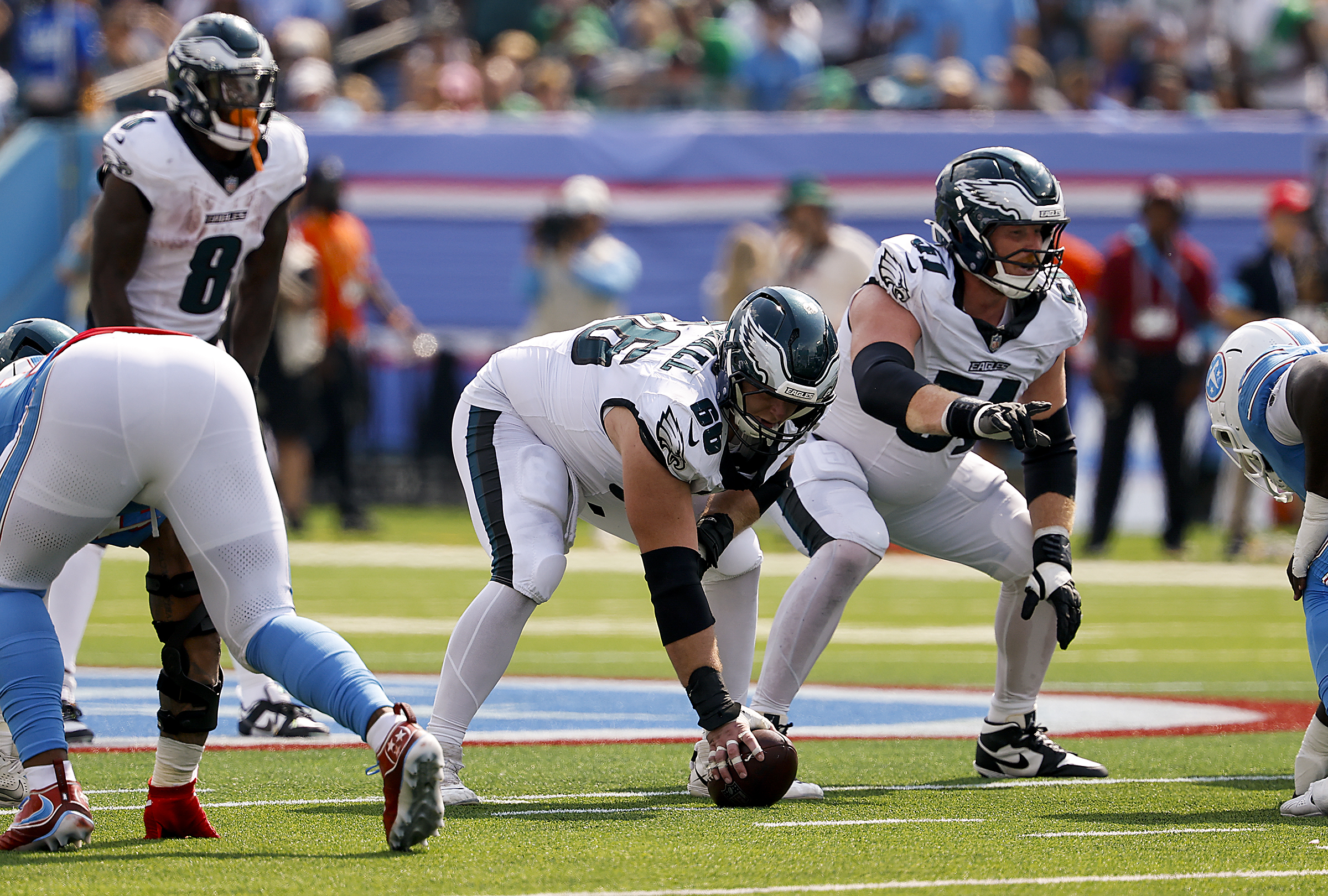
    The offensive line, the worst unit on the team, will be reshuffled again: Undrafted, 5-foot-11, second-year center Willie Lampkin will get his first NFL start left guard next to Kendall, if Kendall plays. If Kendall does not play then Lampkin will start next to undrafted second-year center Jake Majors, who will be making his NFL debut.

    They will be key cogs in a newly installed offense that remains a mystery to everyone, including the Eagles themselves.

    It seems unlikely that Barkley will play. Smith already missed the last game. Wicks popped up on the report Thursday. If you’re going to war with backup receiver Darius Cooper and ancient tight end Zach Ertz as Jalen Hurts’ most dangerous weapons, then it’s time to negotiate a truce.

    It gets worse. Receiver Hollywood Brown (ankle), offensive lineman Fred Johnson (knee) are also hurt, and they’re front line backups.

    The best player on the roster right now is probably kicker Jake Elliott. Hope he’s on your fantasy team this week.

    Denuding your roster of hobbled players when you’re at .500 and floundering is a tough pill to swallow, but medicine isn’t supposed to taste good. It’s supposed to make you better.

    This is a game where a lot of guys can get a lot better … as long as they stay in the good ol’ U.S. of A.