Category: Sports

  • Eagles 53-man roster projection 4.0: A few changes — and a trade — after another preseason game

    Eagles 53-man roster projection 4.0: A few changes — and a trade — after another preseason game

    It’s just about last call for roster hopefuls as Eagles training camp enters its final week.

    The team plays its last preseason game Friday night at home vs. Cincinnati, and the initial 53-man roster is due Sunday by 6 p.m.

    Only a few practices and one last audition separate those vying for a spot from knowing their fates.

    A second preseason game — this one a 24-21 Eagles loss in New England — brought a few changes to our latest 53-man roster projection. Who’s in, and who’s out?

    (Note: This is our fourth 53-man roster projection of the summer. Our first way-too-early look at the roster came in June, and we published another after one week of training camp before Volume 3 went live after the first preseason game.)
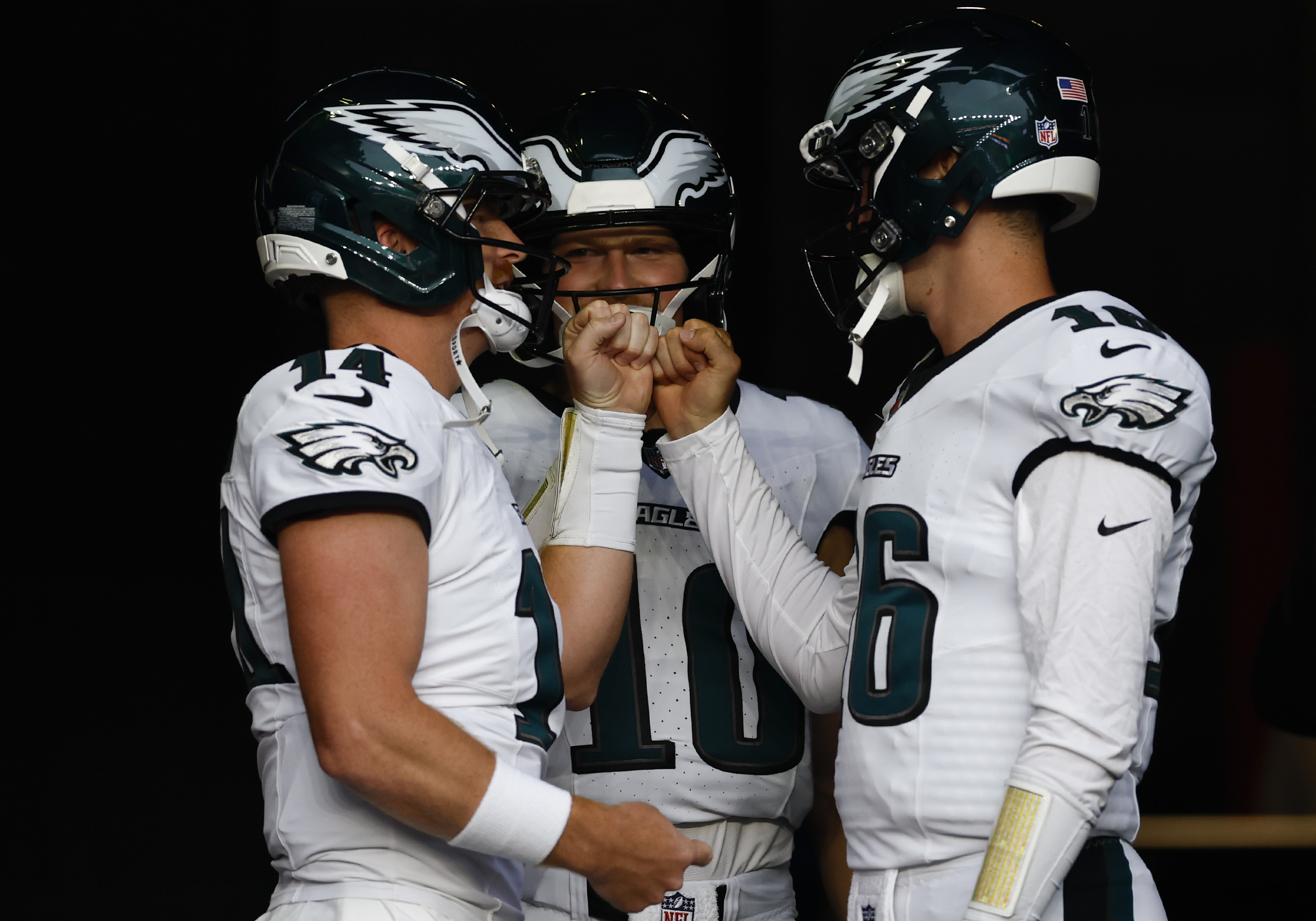
    Eagles quarterbacks (from left to right): Andy Dalton, Cole Payton and Tanner McKee prepare for Saturday’s preseason game against the New England Patriots. We don’t expect all three to be on the Eagles roster by next week.Yong Kim / Staff Photographer

    Quarterbacks (3): Jalen Hurts, Tanner McKee, Cole Payton

    Traded: Andy Dalton

    We’re sticking with the idea that one of the two quarterbacks hunting for the No. 2 job eventually will be traded, but for the first time this summer, Tanner McKee is in and Andy Dalton is out.

    McKee outperformed Dalton Saturday night in New England, and while the Eagles certainly value Dalton’s experience and his practice film much more than two shaky, shortened preseason starts, it’s hard to argue that the 38-year-old looks more viable to back up Hurts than McKee does right now.

    That being said, it actually might be Dalton who has more trade value than McKee. Will the Eagles end up flipping Dalton for the same price they paid for him (a seventh-round pick)? Maybe. This time of year, a team looking for a backup may be more likely to want Dalton as an experienced starter who may even mentor a young quarterback than they are to need McKee.

    Cole Payton hasn’t wowed, and it remains possible the Eagles keep both Dalton and McKee and cut Payton, their fifth-round pick. But for now, Payton gets the roster spot and doesn’t get exposed to waivers.
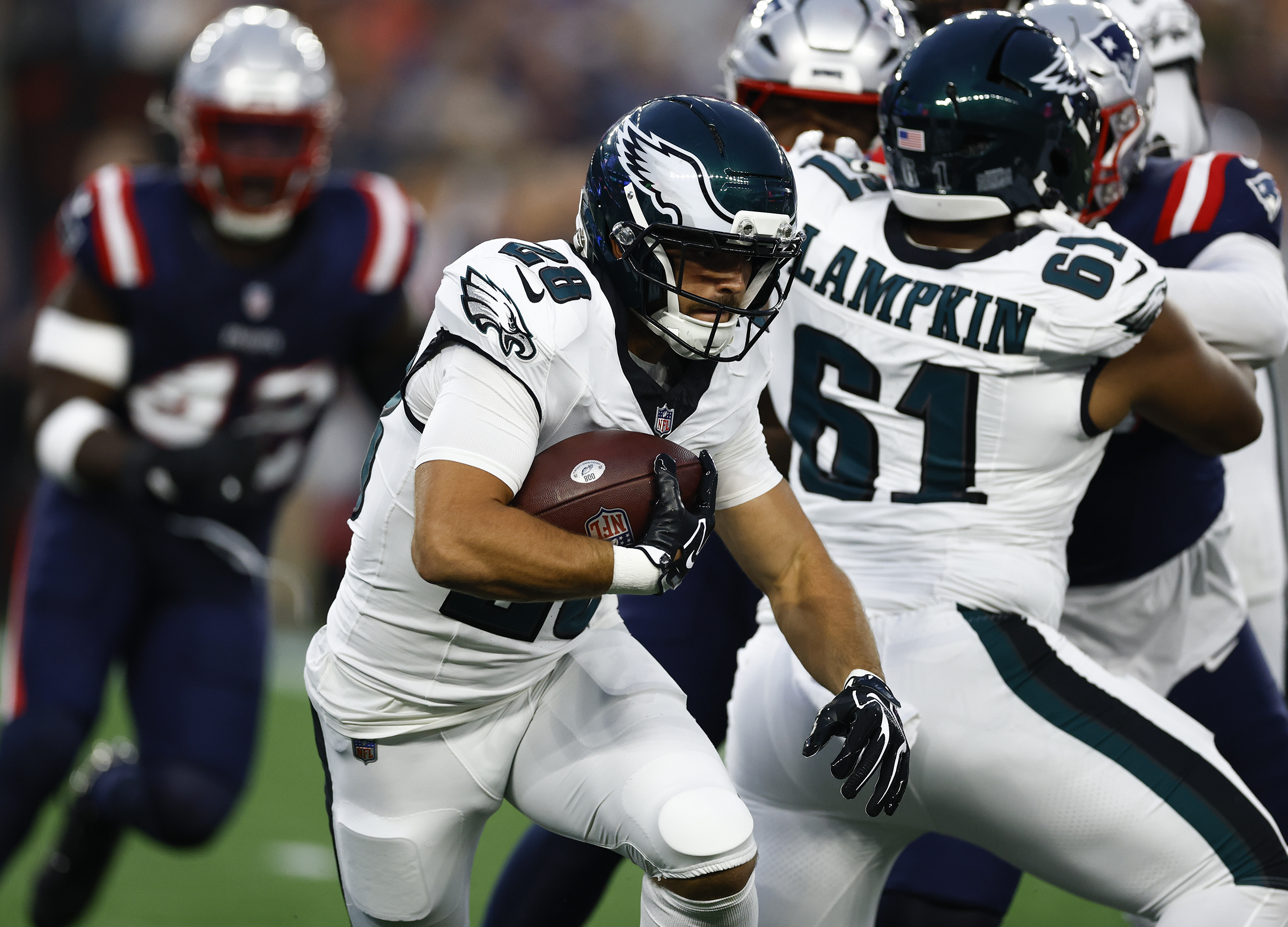
    Eagles running back Will Shipley carried the ball 11 times for 56 yards against the Patriots. We expect him to make the team’s initial roster.Yong Kim / Staff Photographer

    Running backs (3): Saquon Barkley, Tank Bigsby, Will Shipley

    Cut: Dameon Pierce, Carson Steele, Ja’Quinden Jackson

    No changes here, despite Carson Steele going full Saquon Barkley and hurdling defenders on more than one occasion Saturday night. Steele played like a guy pushing for a roster spot, but the Eagles don’t have the luxury of keeping four running backs with the way their roster is shaped.
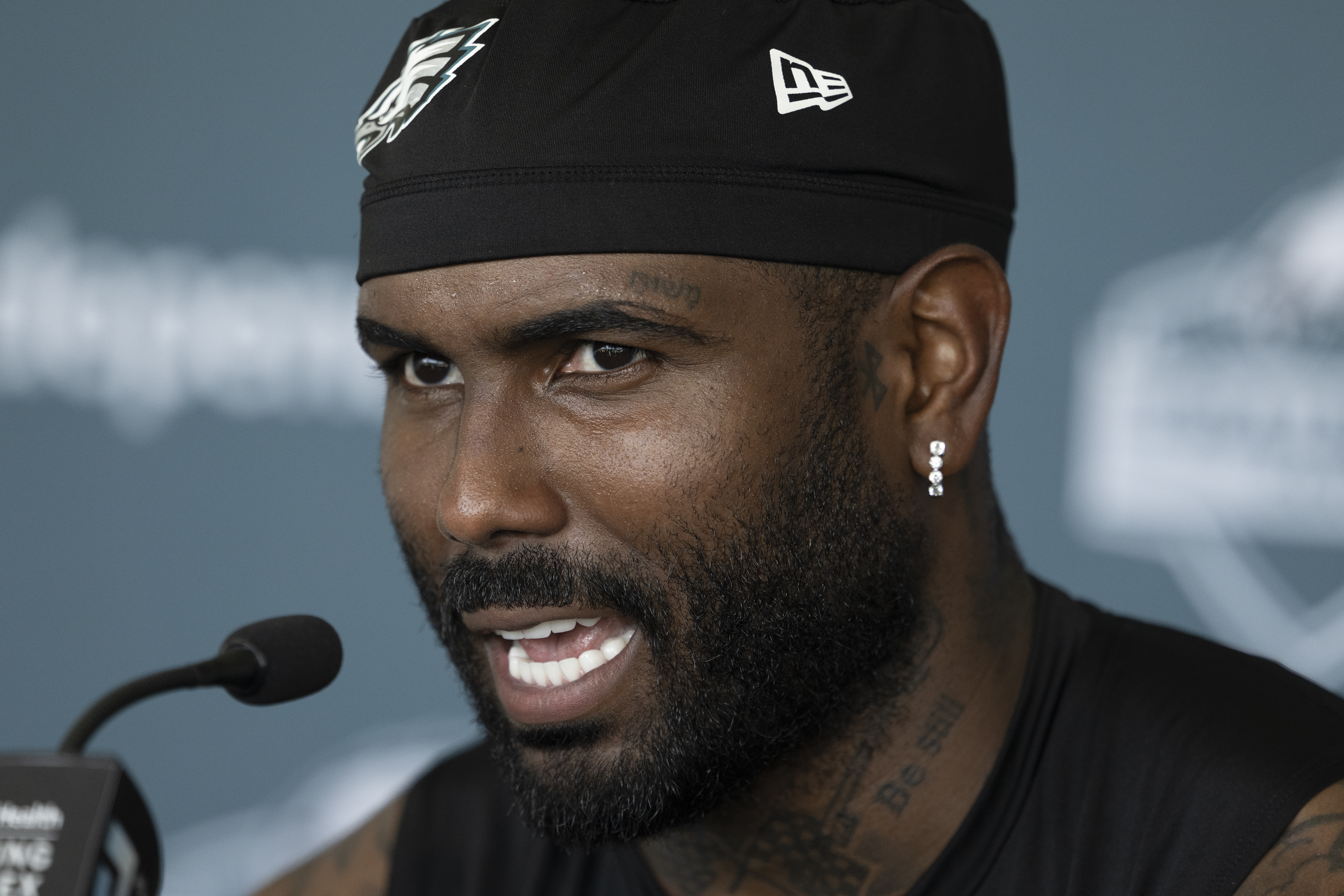
    Eagles wide receiver Elijah Moore is on the roster bubble.Jose F. Moreno / Staff Photographer

    Wide receivers (6): DeVonta Smith, Dontayvion Wicks, Makai Lemon, Darius Cooper, Hollywood Brown, Elijah Moore

    Cut: Danny Gray, Britain Covey, Quez Watkins, Erik Ezukanma, Samori Toure, Brandon Hayes

    Could Elijah Moore get cut and come back on the practice squad with the promise to be elevated on game day? It’s possible. He’s a vested veteran and doesn’t need to pass through waivers (though he’d be free to sign with any team). But Moore has done enough to make the roster and should be rewarded for having a better camp than Hollywood Brown, the guy the Eagles gave $5 million guaranteed.

    Perhaps the Eagles use one of the two as a trade chip in the final week of camp, but they may want some extra insurance at the position considering Makai Lemon’s first NFL training camp has been marred by a hamstring injury.
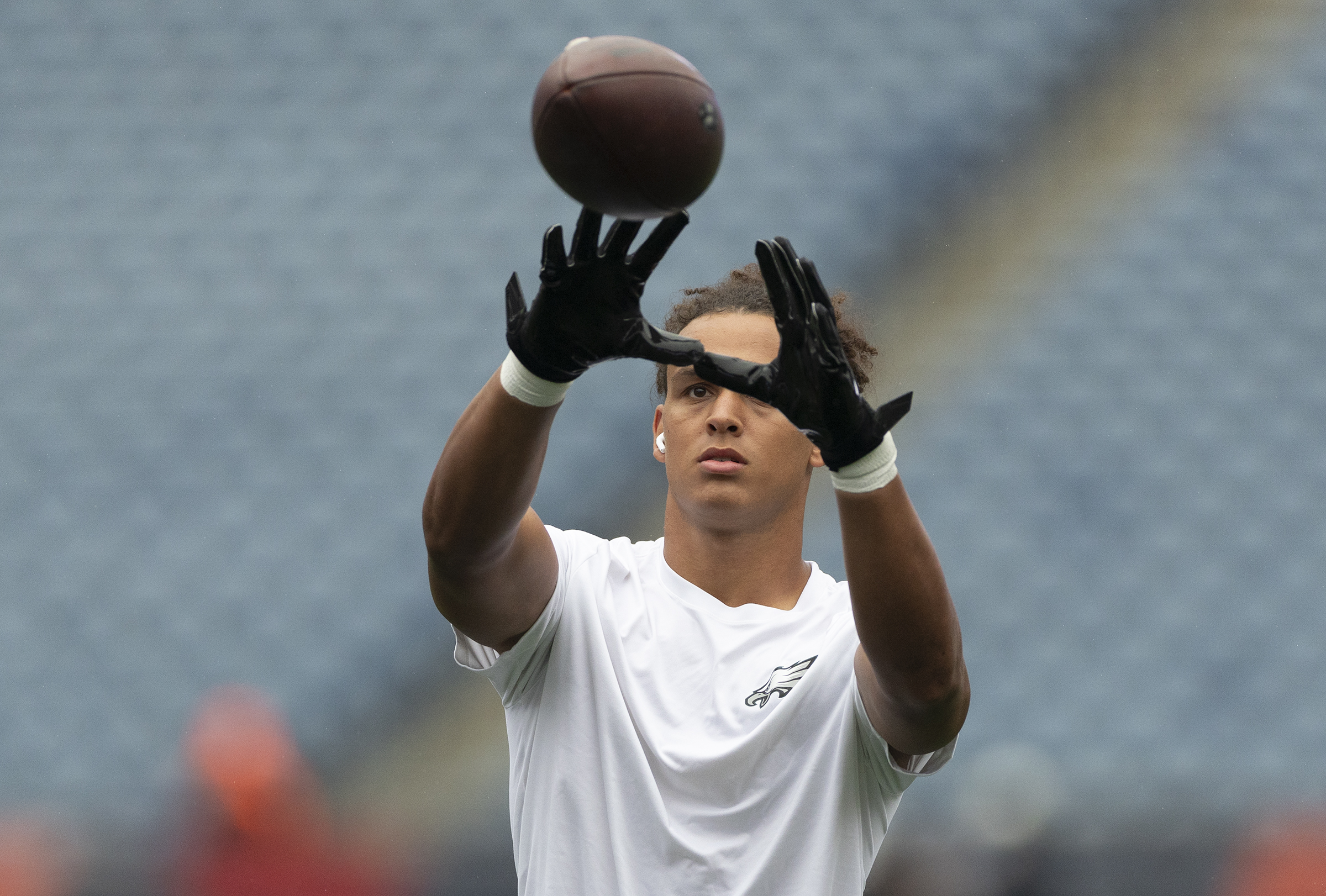
    The Eagles selected tight end Eli Stowers in the second round of April’s NFL draft.Yong Kim / Staff Photographer

    Tight ends (3): Dallas Goedert, Johnny Mundt, Eli Stowers

    Cut: Cameron Latu, Grant Calcaterra, Stone Smartt, E.J. Jenkins

    Cameron Latu is the roster casualty of the Eagles keeping Moore. Latu would need to pass through waivers, but he’s done so before, and the Eagles shouldn’t have trouble getting him through to the practice squad and elevating him for Week 1.

    Eli Stowers has had a rocky camp, but the second-round pick isn’t going anywhere. His need for more seasoning, though, makes it pretty important to have a strong fourth option in the building. That could work in Latu’s favor come Sunday evening.
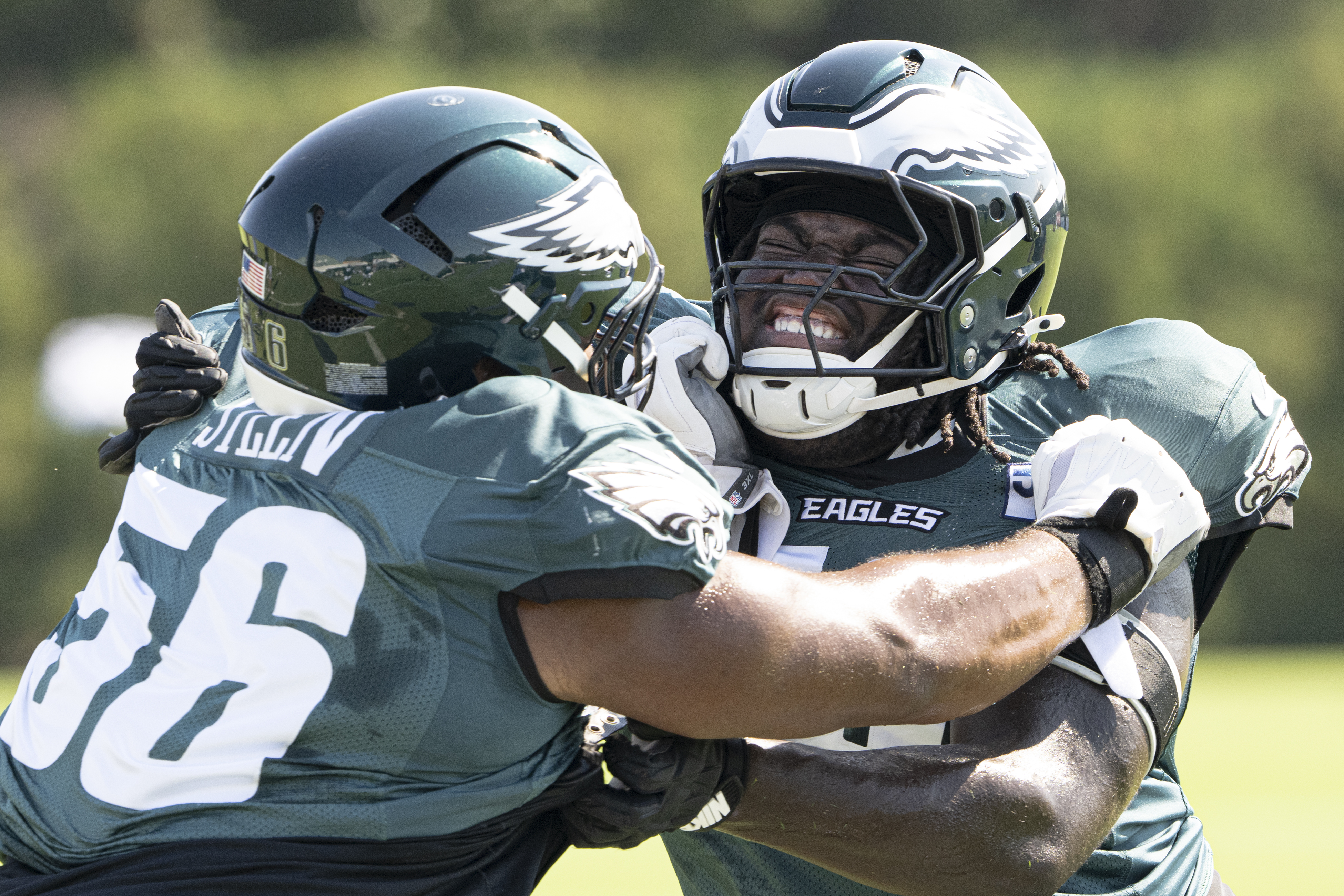
    Offensive lineman Tyler Steen, left, is pretty much a lock to return, but Micah Morris’ fate could be determined in the coming week.Jose F. Moreno / Staff Photographer

    Offensive line (10): Jordan Mailata, Landon Dickerson, Cam Jurgens, Tyler Steen, Lane Johnson, Fred Johnson, Markel Bell, Drew Kendall, Willie Lampkin, Micah Morris

    Cut: Jake Majors, Michael Jordan, John Ojukwu, Myles Hinton, Cameron Williams, Zeke Correll

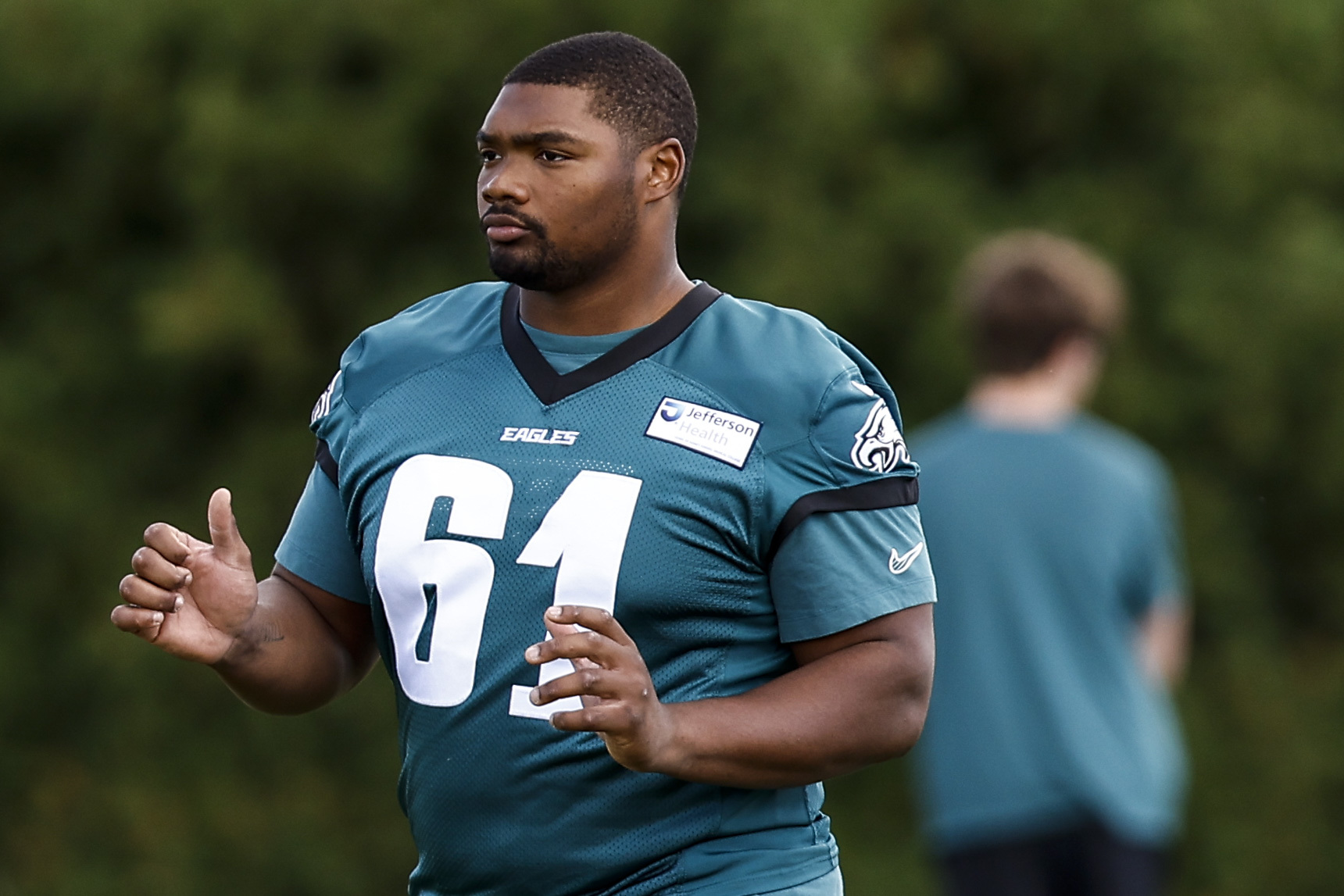
    Willie Lampkin’s spot on the 53-man roster might be a lock at this point. The center/guard had another strong performance Saturday. Micah Morris, meanwhile, has shown some athletic traits that should keep the sixth-round pick on the initial roster.

    Jake Majors played the entire game Saturday (63 snaps) and had some good moments. Like Lampkin and Drew Kendall, he has the ability to play center and guard. But Morris beats out the 2025 undrafted free agent who landed on the Eagles’ practice squad after training camp last year.
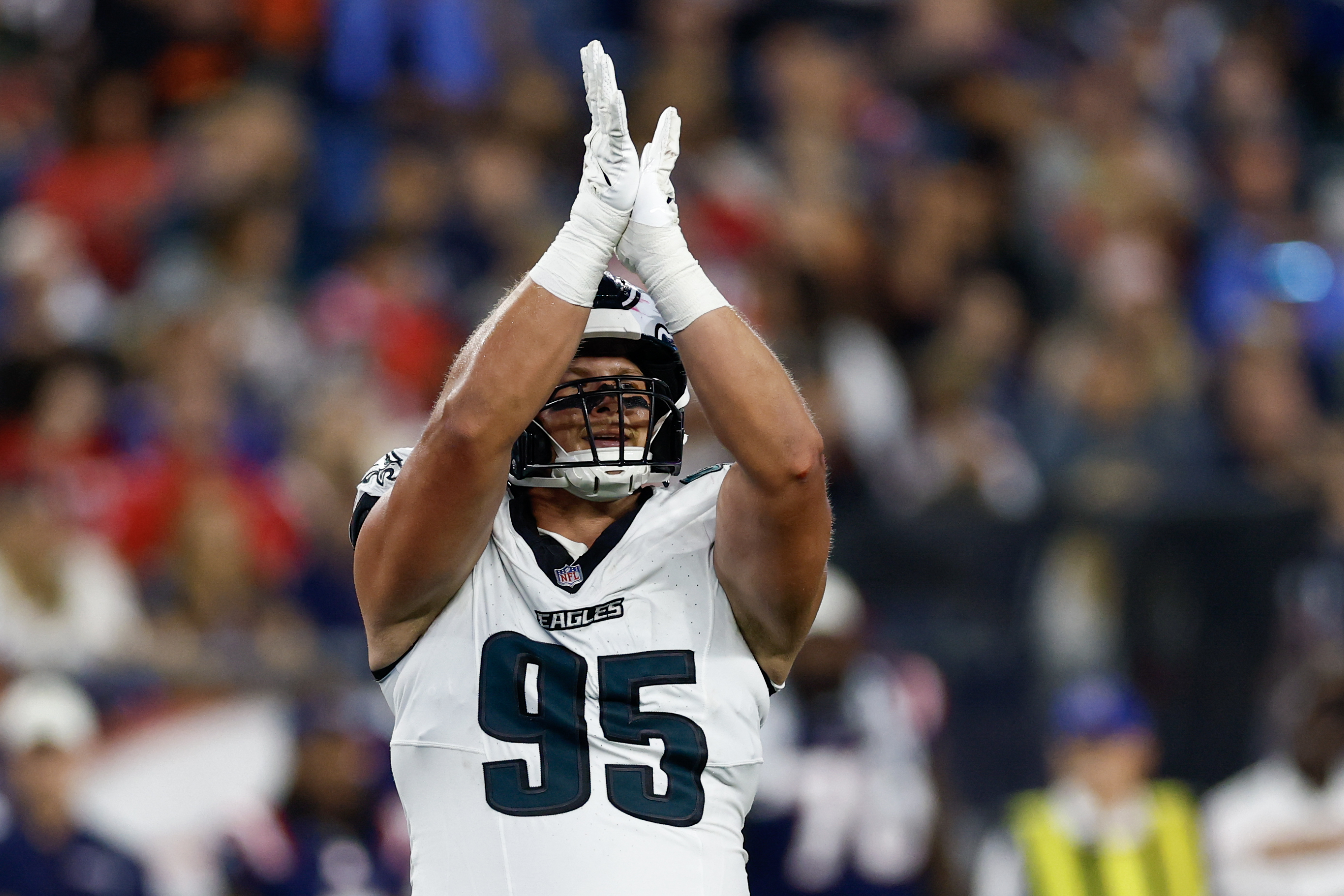
    Eagles defensive tackle Ty Robinson had a pair of sacks in Saturday’s preseason game against the Patriots.Yong Kim / Staff Photographer

    Defensive tackles (6): Jalen Carter, Jordan Davis, Moro Ojomo, Byron Young, Ty Robinson, Uar Bernard

    Cut: Gabe Hall, Zion Wilson, David Blay

    No changes here other than Ty Robinson pulling himself off life support (Vic Fangio’s words) and pretty much locking up his roster spot.

    The 2025 fourth-round pick had two sacks Saturday and has had a strong last two weeks after working with the developmental group at the beginning of camp.

    Uar Bernard played in his second football game Saturday and notched his first tackle. He’s improved throughout his first football camp, and it remains a risk for the Eagles to expose him to waivers even though he won’t play meaningful snaps this season.
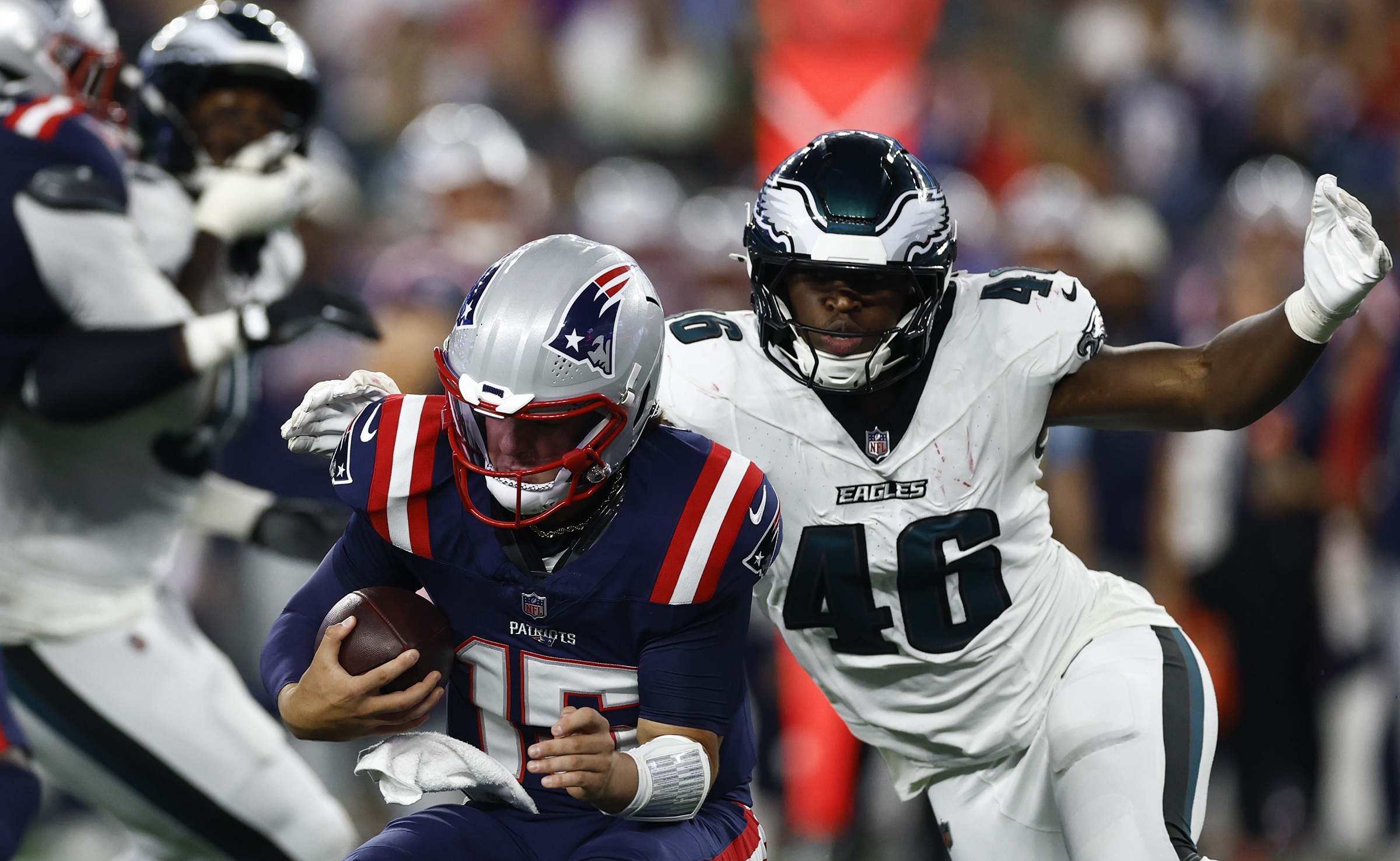
    Eagles linebacker Joshua Weru got his first sack against New England Patriots quarterback Behren Morton Saturday night.Yong Kim / Staff Photographer

    Edge rushers (6): Jonathan Greenard, Jalyx Hunt, Nolan Smith, Arnold Ebiketie, A.J. Epenesa, Joshua Weru

    Cut: Tarron Jackson, Keyshawn James-Newby, Jose Ramirez

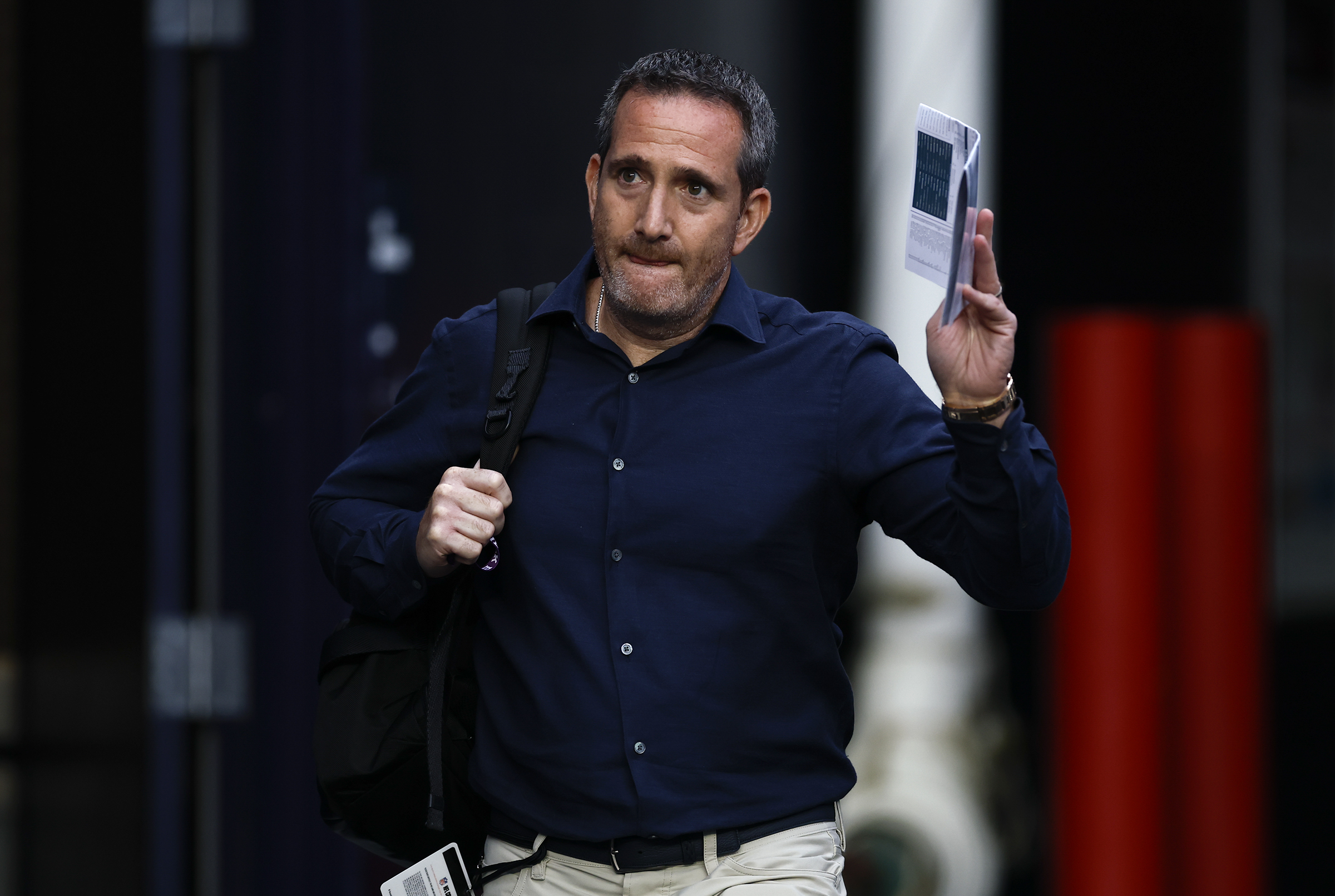
    The decision on Joshua Weru will be a fascinating one for Howie Roseman next weekend. The former rugby player one-upped his padded football debut last weekend, when he had a quarterback hit, with his first sack during Saturday’s game. He’s a flashy athlete, and there may be enough on tape out there for one of the 31 other NFL teams to make him their own project and sign him to their 53-man roster if the Eagles decide to cut him.

    Fangio expressed some concern Jonathan Greenard might not be ready to return from his pectoral injury for Week 1, though that’s still three weeks away.
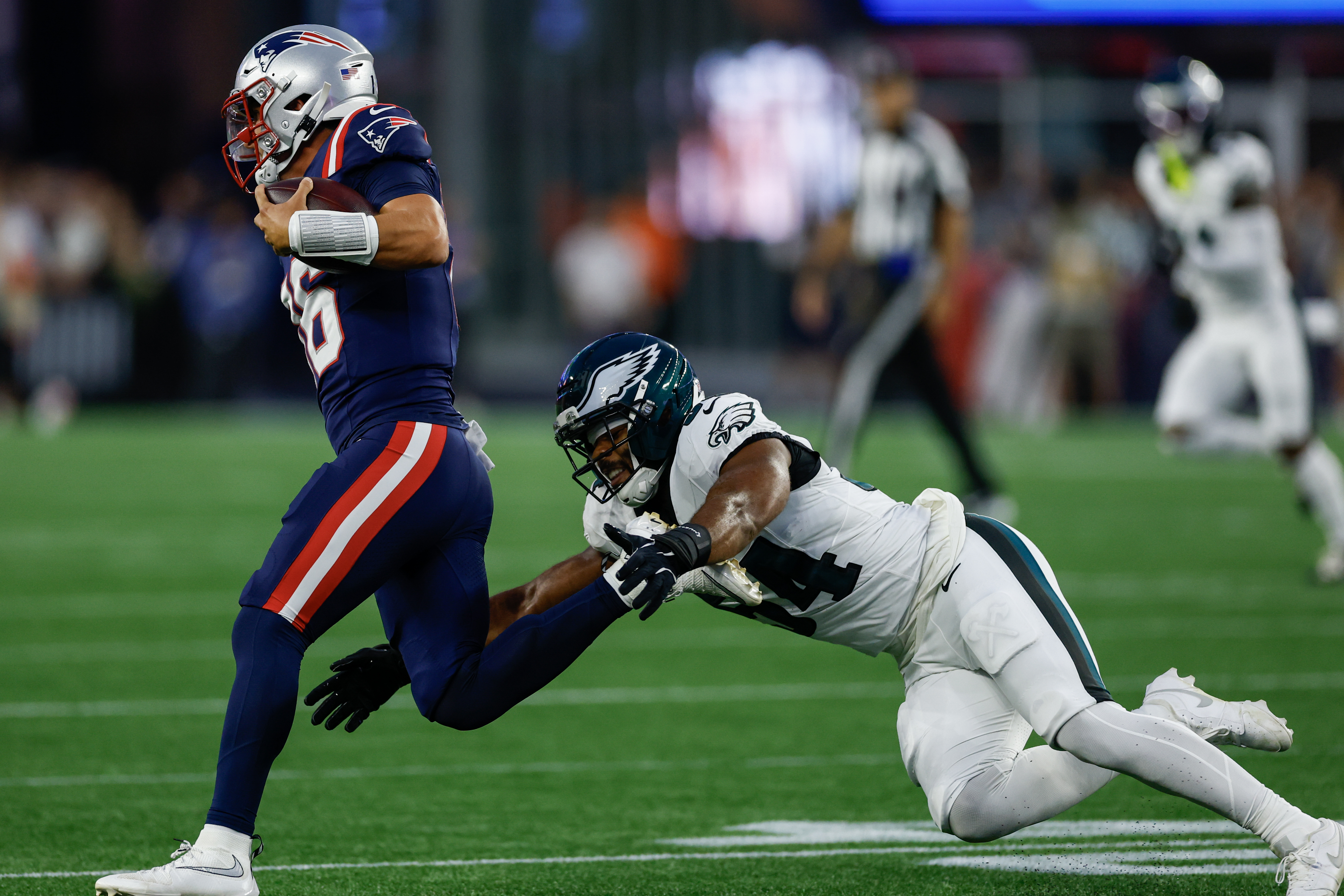
    Eagles linebacker Jeremiah Trotter Jr. could be a starter on several NFL teams. Will that make him attractive in a potential trade?Yong Kim / Staff Photographer

    Linebackers (4): Zack Baun, Jihaad Campbell, Jeremiah Trotter Jr., Smael Mondon Jr.

    Cut: Chance Campbell, Deontae Lawson, Brandon George

    The Eagles have an abundance of talent here. It’s probably a toss-up between off-ball linebacker and interior defensive line in terms of which position group is their best.

    The top four are locks, though Fangio likes Chance Campbell a lot. Still, as we’ve written before during this exercise, the need for a fifth linebacker given this roster construction makes it hard to keep the former Titan.

    Could Roseman pull off a trade to make room for him? Smael Mondon Jr. has looked capable, and Jeremiah Trotter Jr. could start on some teams.
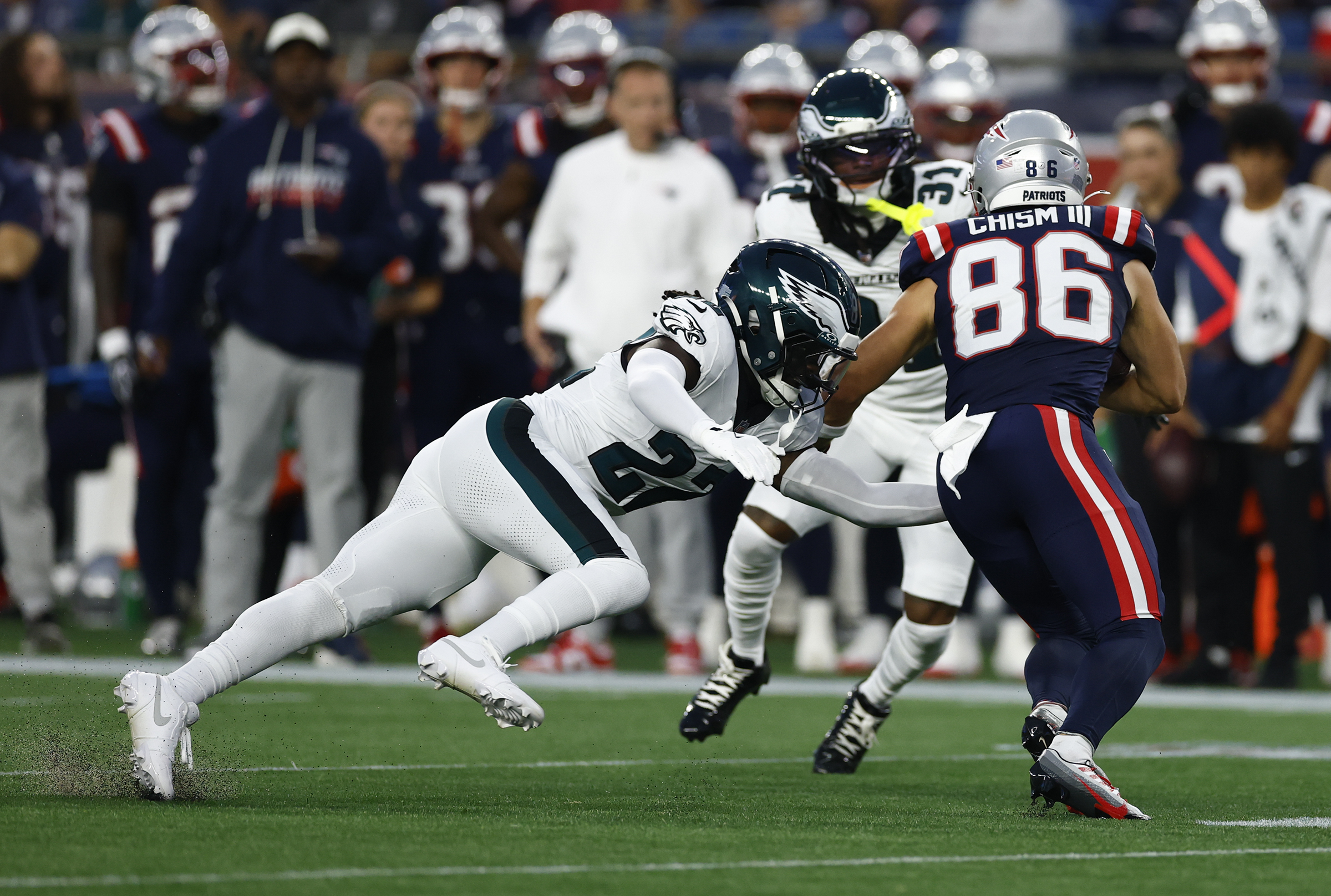
    Mac McWilliams (left) is battling Kelee Ringo for the final cornerback spot.Yong Kim / Staff Photographer

    Cornerbacks (5): Quinyon Mitchell, Cooper DeJean, Riq Woolen, Jonathan Jones, Mac McWilliams

    Cut: Kelee Ringo, Jakorian Bennett, Ambry Thomas, Shaun Wade, Tariq Castro-Fields, Isaiah Bolden

    Another spot with no changes, though there was more pause before typing Mac McWilliams over Kelee Ringo than last week. Ringo had a decent showing on the road trip to New England, while McWilliams hasn’t had the best couple of weeks.

    Ringo’s value on special teams has been well-documented, but is it worth a roster spot? We’ll see.
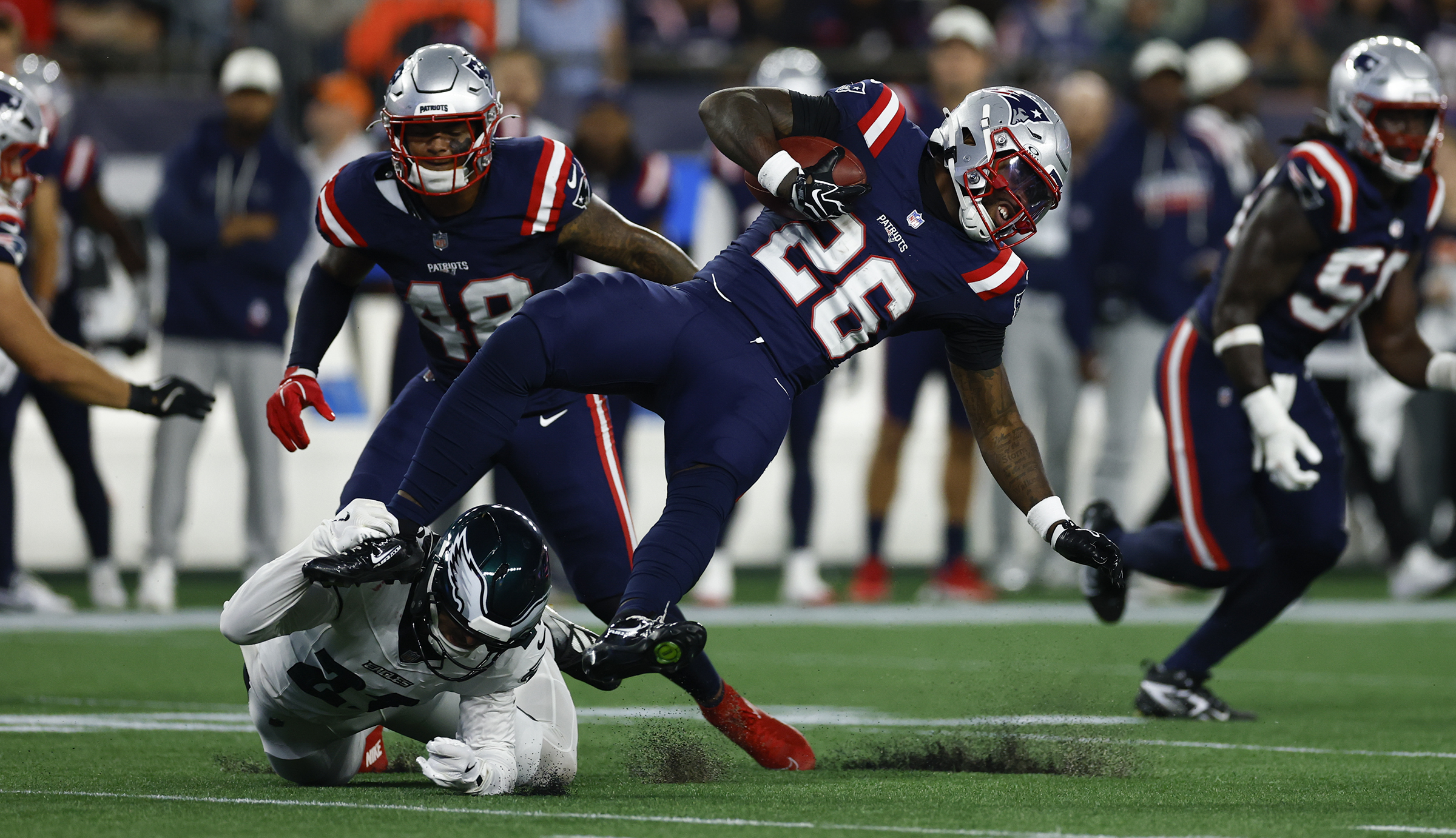
    We have Eagles safety Cole Wisniewski (bottom) making the roster, but that could change this week.Yong Kim / Staff Photographer

    Safeties (4): Drew Mukuba, Marcus Epps, Michael Carter II, Cole Wisniewski

    Cut: Kapena Gushiken, Andre Sam, J.T. Gray, Max Pulley

    The fourth spot here still feels like a bit of a dart throw. Cole Wisniewski returned to the practice field and saw his first game action. He had a nice tackle on special teams, which he’ll need to make a big part of his game if he’s on the roster.

    Kapena Gushiken and Max Pulley have had nice camps, Andre’ Sam has been around the team for the last few seasons, and J.T. Gray is an elite special teamer. You can make a worthy argument for any of them to get the fourth spot.

    But it’s possible the Eagles go light here and go with three safeties, especially with Cooper DeJean playing on the back end in the base package. That route probably would be good news for Ringo.
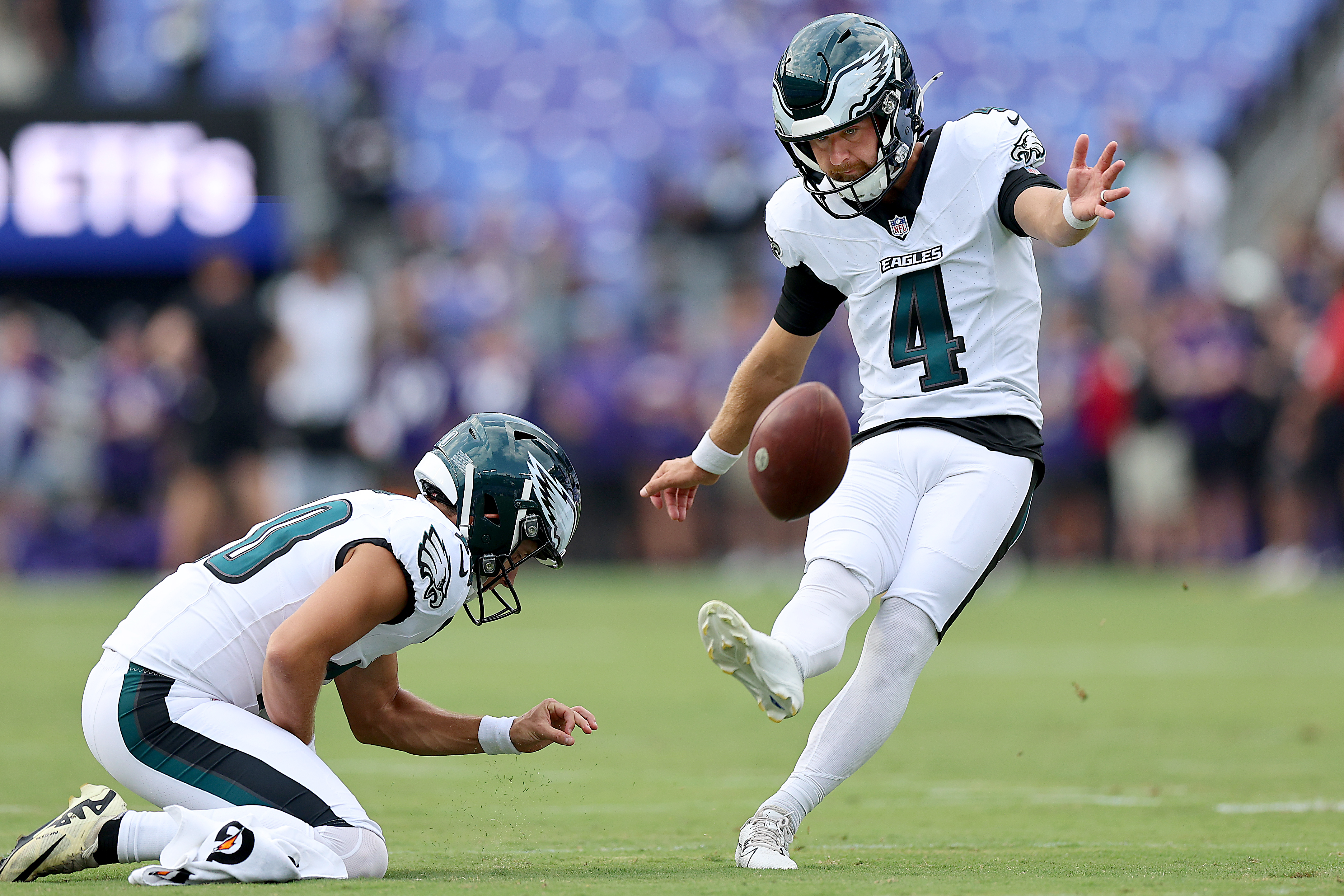
    Philadelphia Eagles place kicker Jake Elliott (right) and punter Braden Mann (left) are locks.David Maialetti / Staff Photographer

    Special teams (3): Jake Elliott (kicker), Braden Mann (punter), Rocco Underwood (long snapper)

    These are the only three specialists on the roster. It’s possible the Eagles punt — excuse the pun — on a bubble decision and cut Rocco Underwood. The team only kept Jake Elliott and Braden Mann on the initial 53-man roster last season before bringing Charley Hughlett back to the active roster a day later during a series of roster moves after initial cuts were made around the league.
  • Willie Lampkin made his name as a wrestling champion. For his next act, he’s become one of the Eagles’ best camp stories.

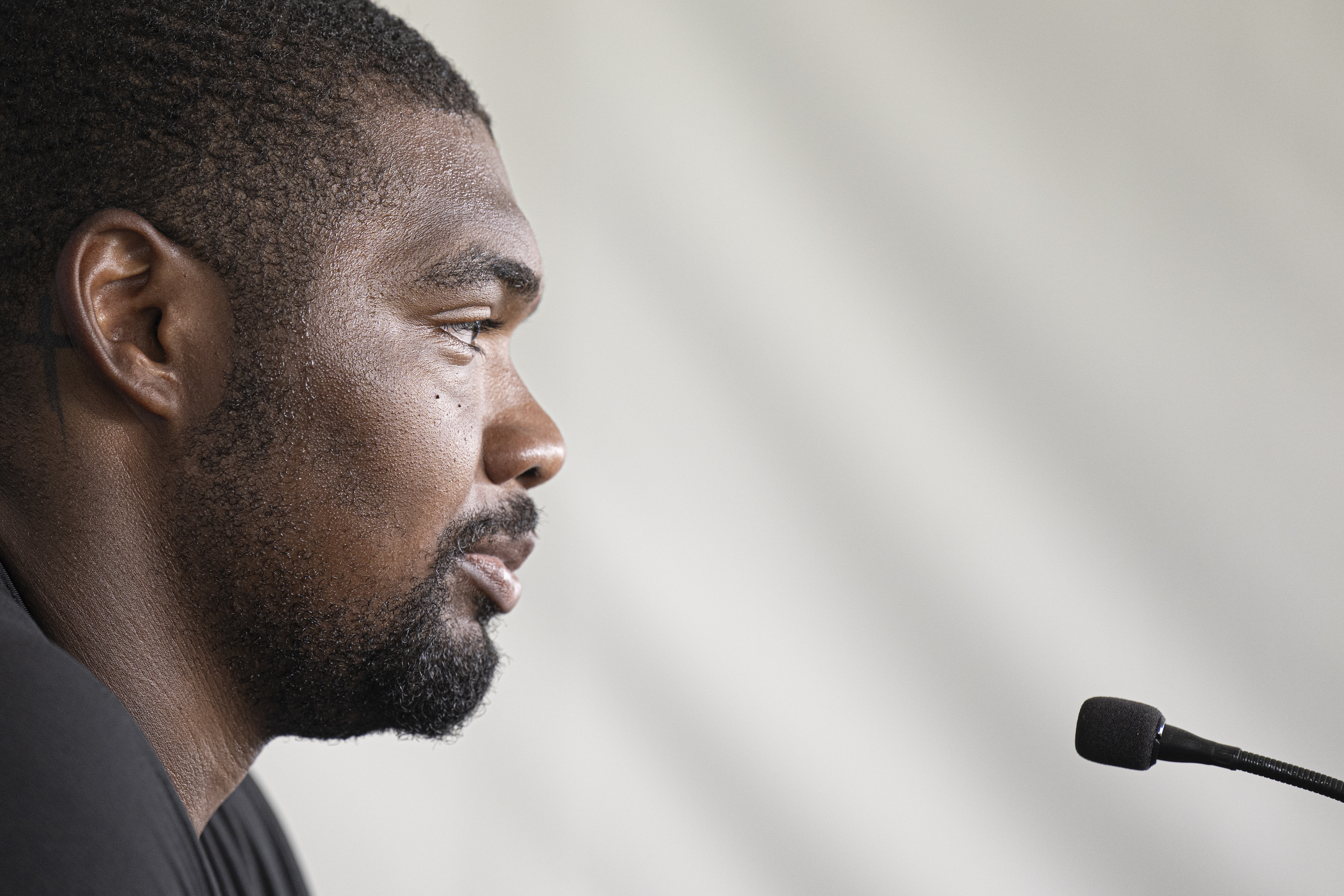
    Willie Lampkin made his name as a wrestling champion. For his next act, he’s become one of the Eagles’ best camp stories.

    Five plays into the Eagles’ preseason opener against the Baltimore Ravens, Willie Lampkin introduced Ravens defensive tackle Broderick Washington’s backside to the grass — and, in turn, re-introduced himself to the NFL.

    Lampkin, 24, had been hidden in plain sight for the past year. The Eagles claimed him off waivers at the end of camp from the Los Angeles Rams, who cut the 2025 undrafted free agent out of North Carolina with an injury designation due to knee and ankle injuries he suffered in their second preseason game. Two days later, the Eagles placed Lampkin on injured reserve for the remainder of the season.

    The 5-foot-11, 290-pound interior offensive lineman returned to game action for the first time in 364 days like a wrecking ball, and Broderick was his first victim.

    After snapping the ball at center, Lampkin quickly latched on to the 6-2, 315-pound defensive tackle and blocked him 10 yards downfield in pass protection before disposing of him into a pile of bodies.

    Later at right guard, he sealed off 6-foot, 300-pound Aeneas Peebles on a Tank Bigsby run, taking him for a ride five yards downfield until the whistle before patting him on the helmet. That love between whistles never lasts longs, as his Eagles teammates know. Lampkin’s preseason excellence, which continued Saturday night against the New England Patriots, has been an extension of the effort they’ve witnessed in training camp this summer.

    “I call him a bowling ball of knives, ’cause he’s so short, he’s so small, he’s so stubby, but he is so quick and powerful and precise with his hands that for a taller guy like me, it gives me a lot of trouble,” Jordan Davis said. “It gives me a lot of fits. That’s one of the things that keeps me up at night with Willie.

    “He has a certain tenacity about him when he goes and plays a game.”

    That tenacity, according to Lampkin, is rooted in his wrestling background.

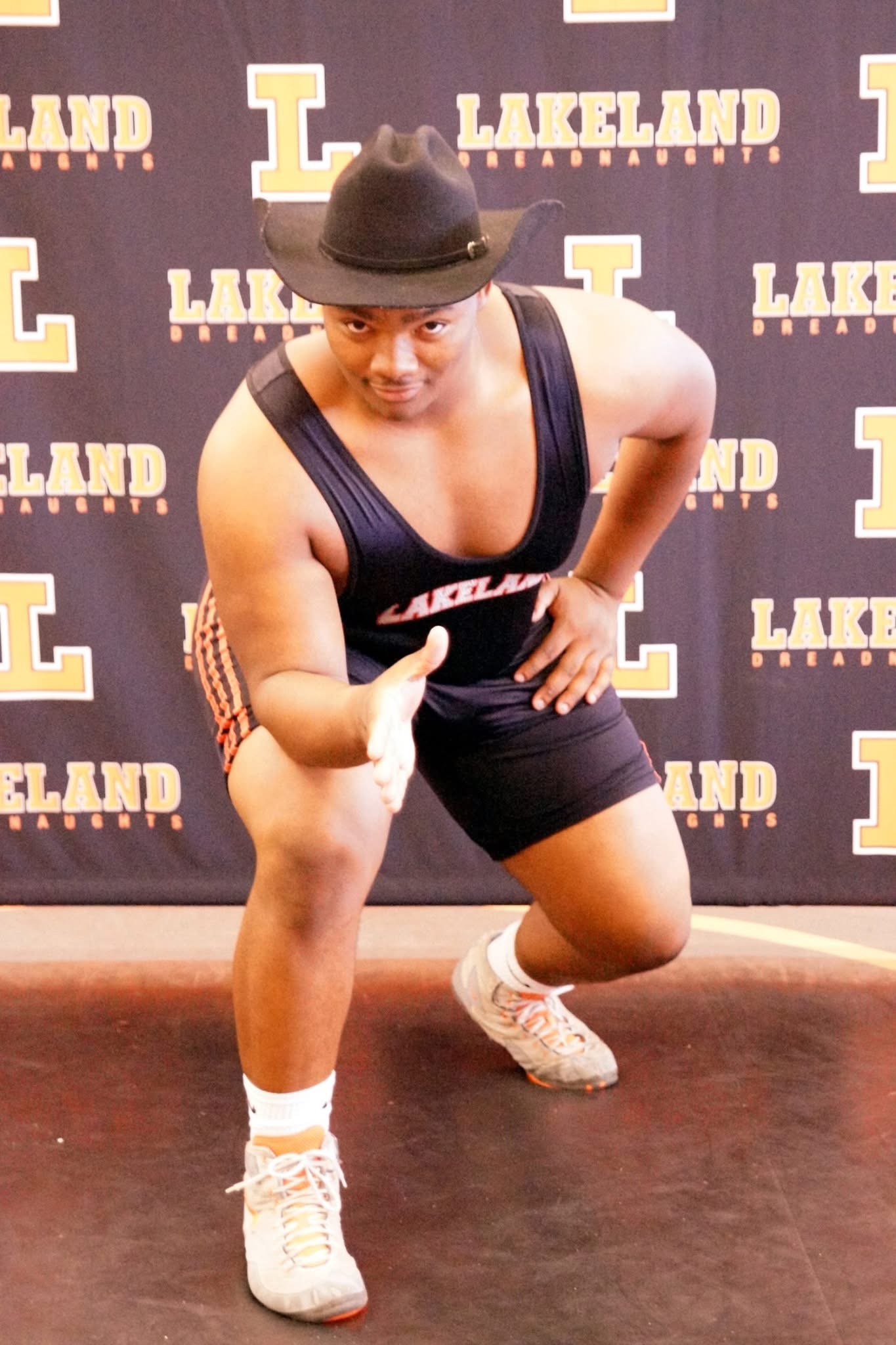
    Willie Lampkin was a star wrestler at Lakeland High School in Florida.Courtesy of Winston Phan

    Lampkin began wrestling as a freshman at Mulberry High School in Mulberry, Fla., a city in central Florida with a population of roughly 4,000. Within three years, he was the state tournament runner-up at heavyweight, and within four, he was a champion.

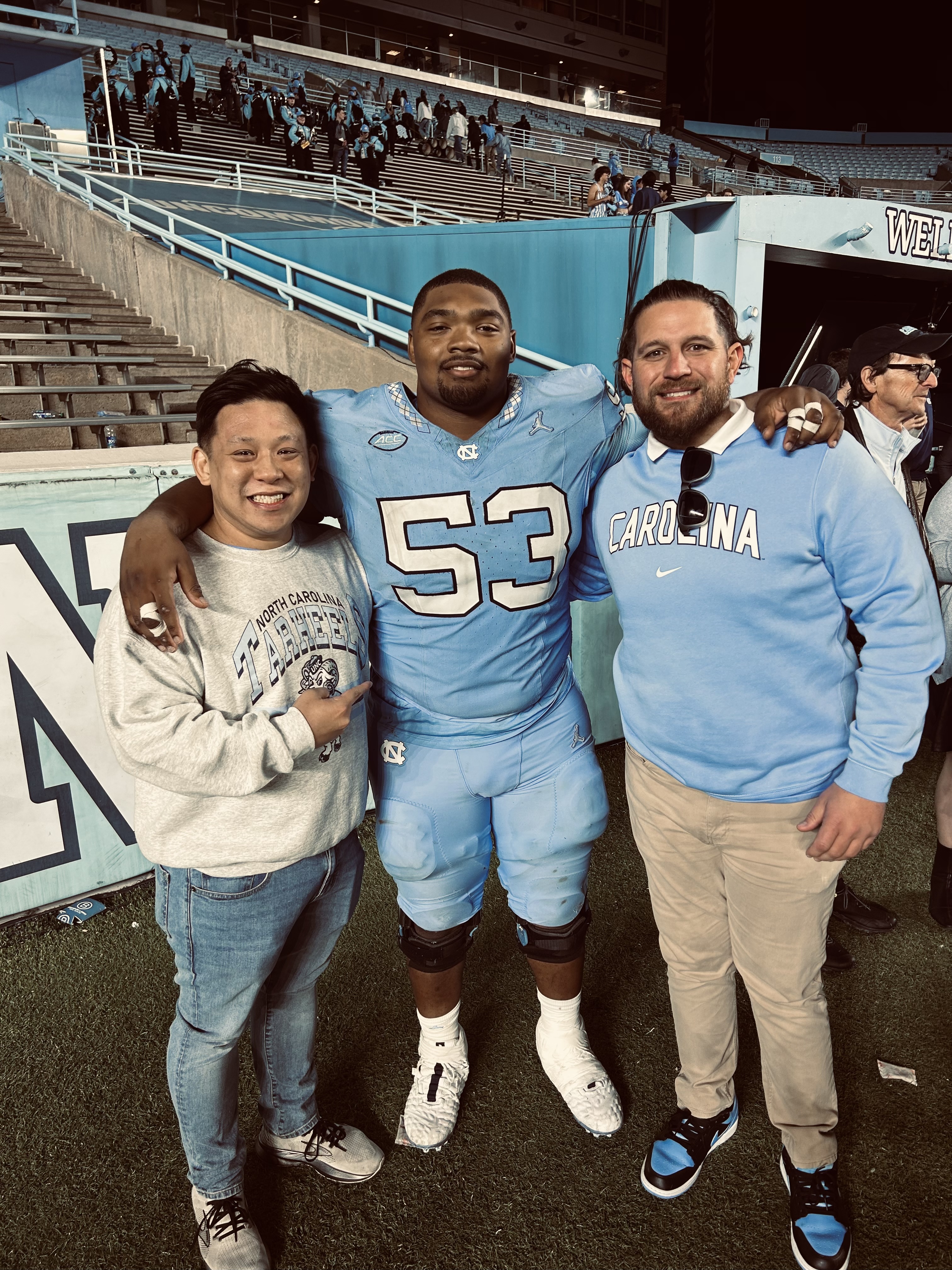
    He ultimately chose to pursue football over wrestling in college, playing three seasons at Coastal Carolina and two at UNC before moving on to the NFL as an undrafted free agent. But as he vies for a depth spot on the Eagles’ initial 53-man roster as an undersized, undrafted interior offensive lineman, Lampkin continues to channel the mentality and the skill set he cultivated through wrestling.

    “I feel like wrestling just helped me to be more gritty and just try to get after everybody,” Lampkin said.

    Wrestlers the ‘ultimate combatants to deal with misery’

    Former Mulberry wrestling coach Anthony Cerullo learned about Lampkin from Kyle Jones, one of the assistant football coaches at the school. Jones, who once wrestled for Cerullo in addition to playing football, wanted Lampkin to start wrestling, too.

    Cerullo also played both sports. He understood that wrestling taught its athletes about balance, hand usage, and body positioning — all of the fundamentals that apply to sound play in the trenches.

    He figured that Lampkin, a varsity starter on the offensive line as a freshman, was a 6-5 “behemoth” who grew faster than his peers. When he met him in line at the concession stand at a junior varsity football game, he quickly learned he was mistaken.

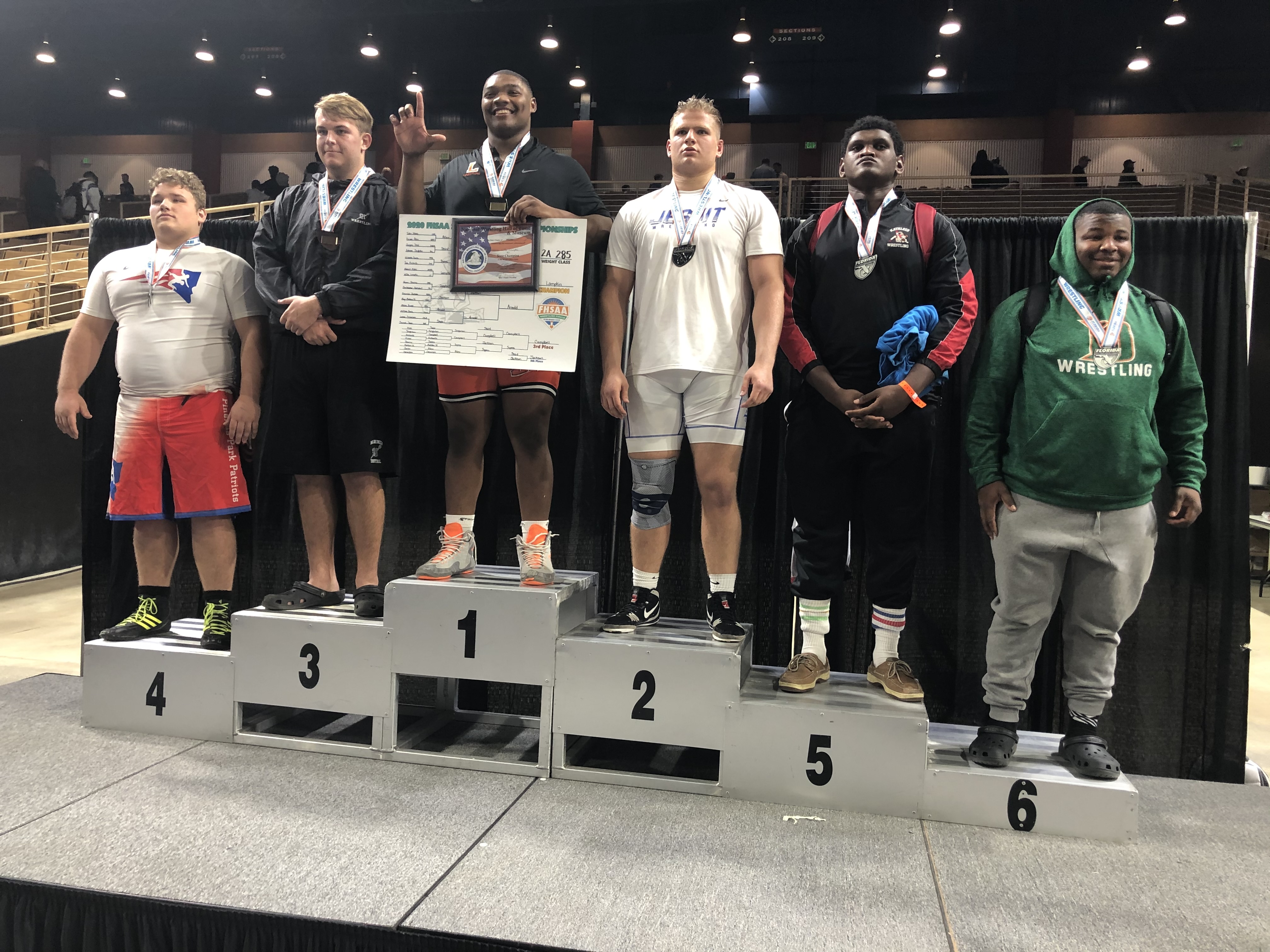
    Willie Lampkin stands atop the podium after winning the 2020 2A state wrestling championship as a heavyweight.Courtesy of Winston Phan

    He still made his recruiting pitch.

    “Coach Jones says you’re going to be on the wrestling team, and I’m the wrestling coach,” Cerullo said.

    “Ah, I don’t know about that,” Lampkin said. “He hasn’t said anything to me about it.”

    At the end of the football season, Lampkin had his exit interview with his coaches. Afterward, Cerullo grabbed Lampkin as he was leaving for the school bus. Wrestling season was already underway.

    “Hey, the wrestling room is not on the bus,” Cerullo said.

    Lampkin obliged and followed Cerullo, even though he wasn’t entirely sure why he was there. Early on, Lampkin said he stuck with wrestling because a few of his football teammates had also decided to try it out. Plus, he didn’t want to just go home at the end of the school day in the football offseason.

    Cerullo had a plan for Lampkin. In addition to the fundamentals of wrestling that would translate to football, he said he knew the O-lineman would benefit from draining practice sessions on the mat in the long term.

    “Wrestlers are the ultimate combatants to deal with misery, right?” Cerullo said. “So we have a saying as wrestlers called ‘embrace the grind.’ So that means that it’s going to suck, it’s going to be hot, it’s going to be sweaty, it’s going to be nasty. You have another person acrossfrom you for two-and-a-half hours a day that’s trying to kill you, and you have to embrace that lifestyle to be great.”

    Willie Lampkin has brought wrestling principles to the Eagles practice field. Monica Herndon / Staff Photographer

    Cerullo ensured that Lampkin got that work in by serving as his practice partner. He learned firsthand of Lampkin’s athleticism. Lampkin, a heavyweight at roughly 230 pounds as a freshman, wasn’t going to run a 4.4 40-yard dash or jump over a building. But Lampkin was ultra-competitive, which drove his desire for improvement as he figured out how to use his hands and his body to his advantage.

    He hated giving up a takedown. He hated not getting an escape. He hated losing. After all, Cerullo said, one person holding another down against their will is something to be taken personally, and Lampkin took every win for his opponent as a slight.

    At the beginning, wins in practice were hard for Lampkin to come by against Cerullo, who was 20 years his senior and approximately the same size. Lampkin would ask Cerullo to stay after practice every day to work on different sequences, takedowns, and escapes. Those requests were particularly prevalent if Lampkin didn’t get an escape during practice.

    Cerullo never went easy on Lampkin.

    “So we sat there for an hour-and-a-half one practice, and me just breaking him down to his stomach and to his face until he finally exploded up and was able to get an escape,” Cerullo said. “And then to his credit, he’s like, ‘OK, I want to do it twice before I leave.’

    “‘Like, Willie, I’ve got to go to work in the morning, buddy. I love you. I’ll see you tomorrow.’”

    It took about three weeks for Lampkin to embrace wrestling and the pain that came with it, Cerullo said. Pain turned to pride when he began to win his matches. According to Cerullo, there is something euphoric about the referee grabbing the winning wrestler’s hand at the end of the match and raising it for everyone to see.

    Willie Lampkin was unfamiliar with wrestling but embraced the grind it took to become a champion. Courtesy of Winston Phan

    Lampkin chased that feeling. He won 50 matches as a freshman, but he was one win shy of qualifying for the state tournament. That shortcoming fueled his offseason development. For the first time, he was lifting with intention to improve at both wrestling and football. He worked in the wrestling room to sharpen his skills, especially his hands.

    “Willie has very large hands, and he learned how to make an impact when he put them on you going into that sophomore year,” Cerullo said. “When he would grab you, he had intention behind it. Where before, he was kind of just placing them and being … I’d say a big baby about it to some degree. Not understanding how strong he was. Sophomore year, he definitely knew what to do with his hands and when he put them on you, he meant to put them on you.”

    Cerullo estimates that Lampkin took him down his freshman year twice in practice. In the summer leading up to his sophomore year, Lampkin took Cerullo down four times in one practice.

    “He started moving his feet much better,” Cerullo said. “I think that he understood some more of the nuances of wrestling and not to put himself in those negative positions.”

    From novice to state champion

    That year, Lampkin would qualify for the state tournament, but he was eliminated early after being pinned. He transferred from Mulberry to nearby Lakeland High School the following year, helping the football team win a state championship as a junior. But leaving Mulberry didn’t mean he was leaving wrestling behind.

    After the football season, Lampkin would lose weight quickly as he got in wrestling shape. He may have been the biggest wrestler on his team, but according to Lakeland assistant wrestling coach Winston Phan, he was a relatively light heavyweight compared to his peers. That weight class can be very one-dimensional, Phan said.

    “A lot of times, they fall on top of each other, and whoever lands on top wins, right?” said Phan, who is now the head coach of the program. “But what Willie had going for him was his technique and his ability to learn all [this] new stuff that we were able to give him and allow him to use in his matches.

    “Because people will tell you he didn’t wrestle like a heavyweight. They said he wrestled like somebody that was 106 pounds the way he knew how to do moves and the way he knew how to control somebody on top.”

    Lakeland wrestling coaches Winston Phan (left) and Michael Farley visited Willie Lampkin while he was playing college football at North Carolina in 2023.Courtesy of Winston Phan

    Phan and the other coaches would teach Lampkin a little bit of everything, even moves that weren’t typically performed by heavyweights. Among them were leg attacks, Phan said. One of Lampkin’s favorite moves that he honed in practice was a single-leg sweep. He kept it in his back pocket until he reached the first-place match at the 2A state championship his senior year.

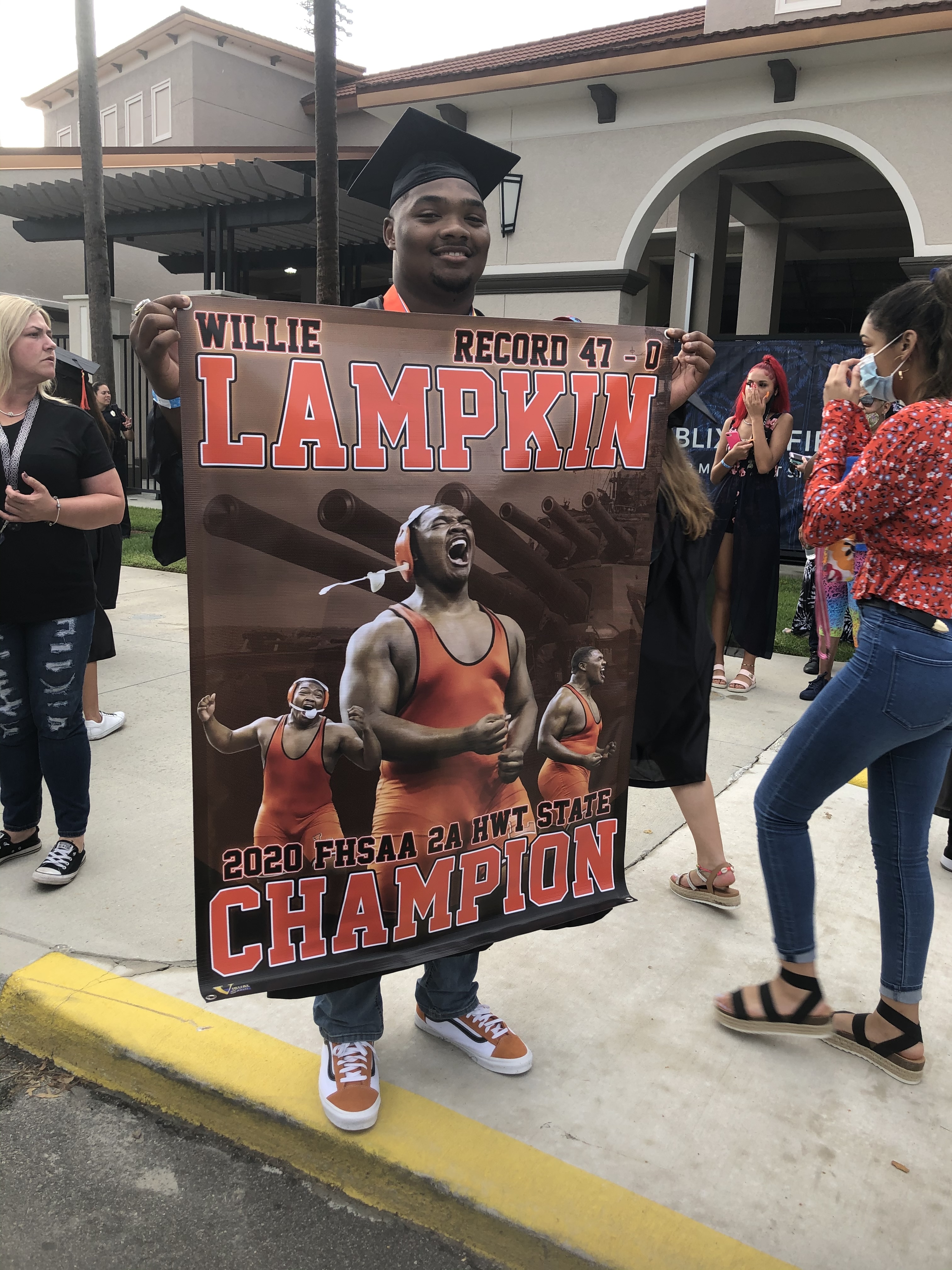
    The prior year, Lampkin lost the state final in sudden-death overtime. He wouldn’t lose it twice. After he went 47-0 during the regular season, Lampkin faced Mason Arnold of Tampa Jesuit in the heavyweight state championship match. They were tied, 1-1, toward the end of the third period.

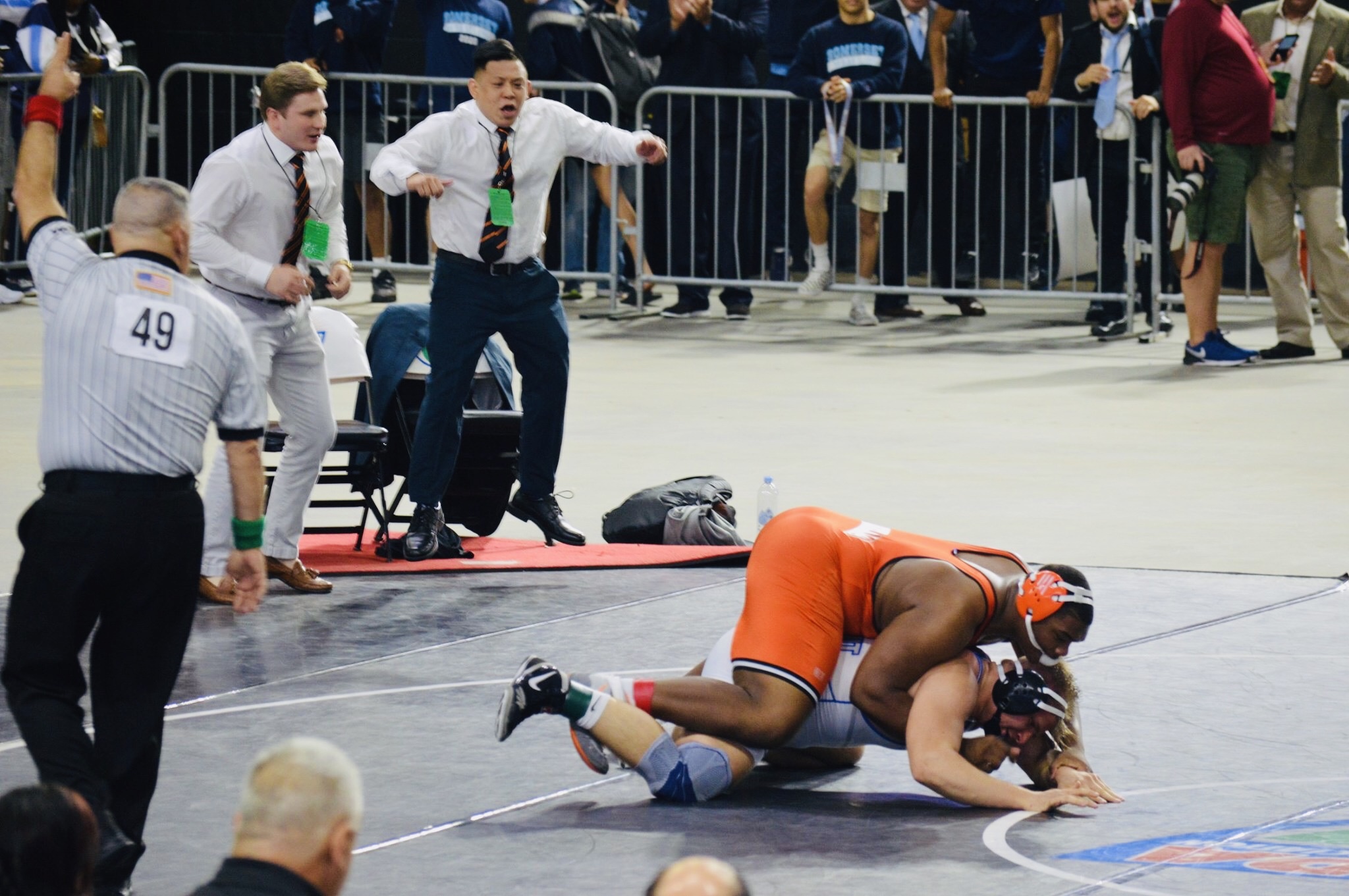
    With 34 seconds remaining, Lampkin pulled out the single-leg sweep. Lampkin swung his body around his opponent’s leg, then flung him onto his back, switching off to a double leg to take him down and go up, 3-1. Lampkin rode Arnold out until time expired. He popped up, his headgear askew, and let out a roar before pouncing on top of Phan and assistant coach Chad Kirkman near the corner of the mat.

    “It was like a potato jumping on a toothpick,” said Michael Farley, former Lakeland head wrestling coach.

    That match marked the end of Lampkin’s wrestling career. His wrestling coaches still kept in touch with Lampkin as he continued on to college and attended his games when they could.

    In some ways, the two sports couldn’t have been any different. Lampkin is one of 11 on the football field. In wrestling, he was alone against his opponent on the mat. A play in football lasts a matter of seconds within an hourslong game, while a wrestling match lasts at least six minutes over three periods. But whether Lampkin was wrestling or playing football, Phan saw the same athlete.

    “He’s not doing anything differently,” Phan said. “They call the moves different things, but in the sense of it, the name of the game is manhandling your opponent, right? And he knows that that’s what his job is, and that’s what he’s looking to do every time he steps on the line, whether it’s on a wrestling mat or on the football field.”

    Willie Lampkin took down Mason Arnold in the 2020 2A heavyweight state championship within the final seconds of the match to win.Courtesy of Winston Phan

    In both sports, he used his relatively small size to his advantage. Both Cerullo and Phan said Lampkin’s best asset was his brain, as he was capable of understanding leverage and positioning. Combine that with fast feet in a small area of space on the gridiron, and Lampkin can get his leverage and change direction quickly to seal off bigger, taller defensive tackles.

    He never lets up, either, whether he’s mustering a takedown in the waning seconds of the state title match or he’s blocking a defensive tackle into the next zip code through the whistle.

    “It doesn’t matter who’s in front of him,” Phan said. “He’s ready to take their heads off and protect the quarterback and do what he has to do to be successful on the line.”

    Farley had seen the headlines coming out of Eagles camp about Lampkin. Those labels about his size are nothing new.

    “‘Five-11′ or ‘little secret weapon,’” Farley said. “But we know that for Willie, it’s real when the pads come on, and that’s when he can show his true value.”

    After two standout preseason performances, the Eagles’ so-called little secret weapon might not be so secret any more.

  • There’s one big reason to think that Andrew Painter’s transformation is for real

    There’s one big reason to think that Andrew Painter’s transformation is for real

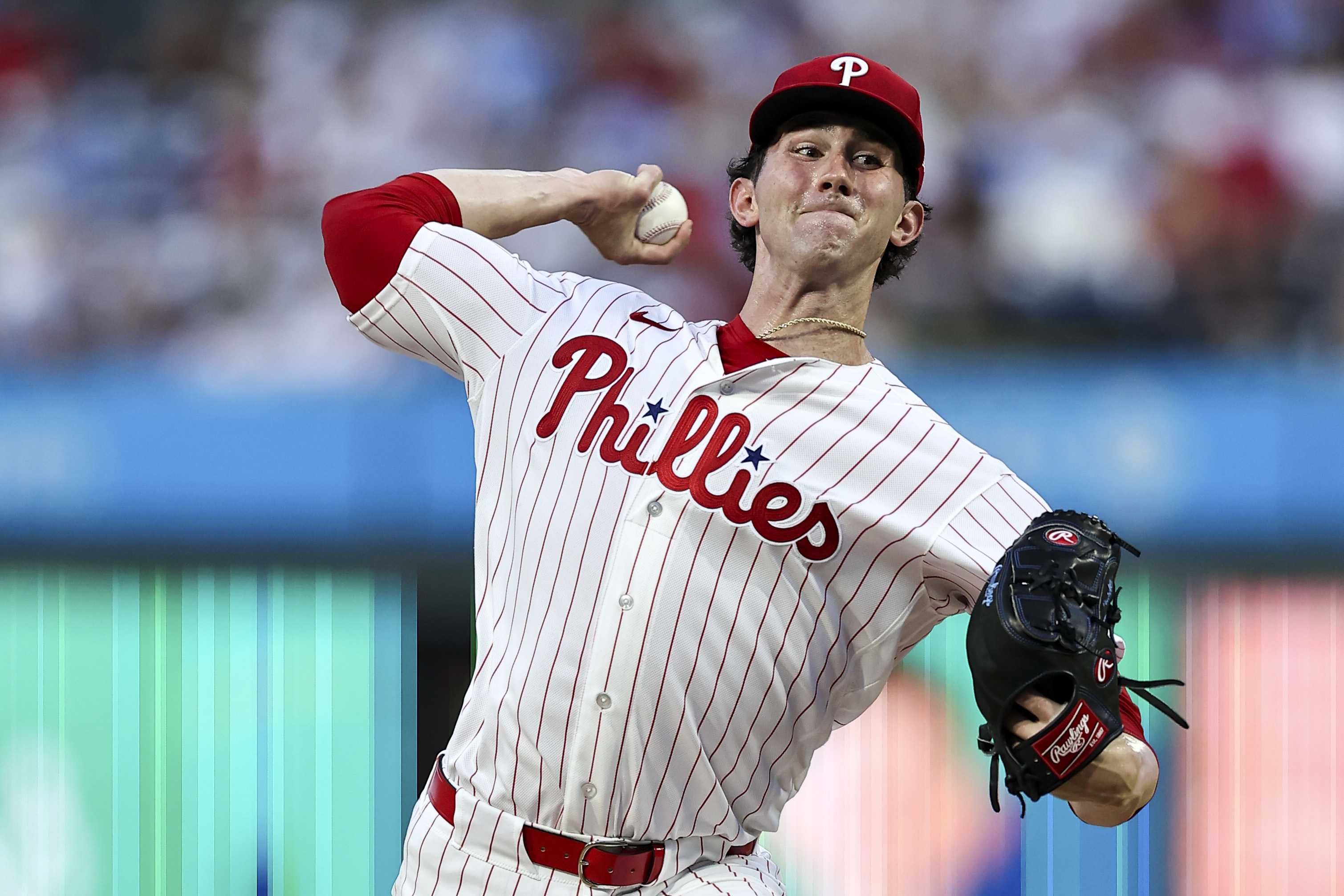
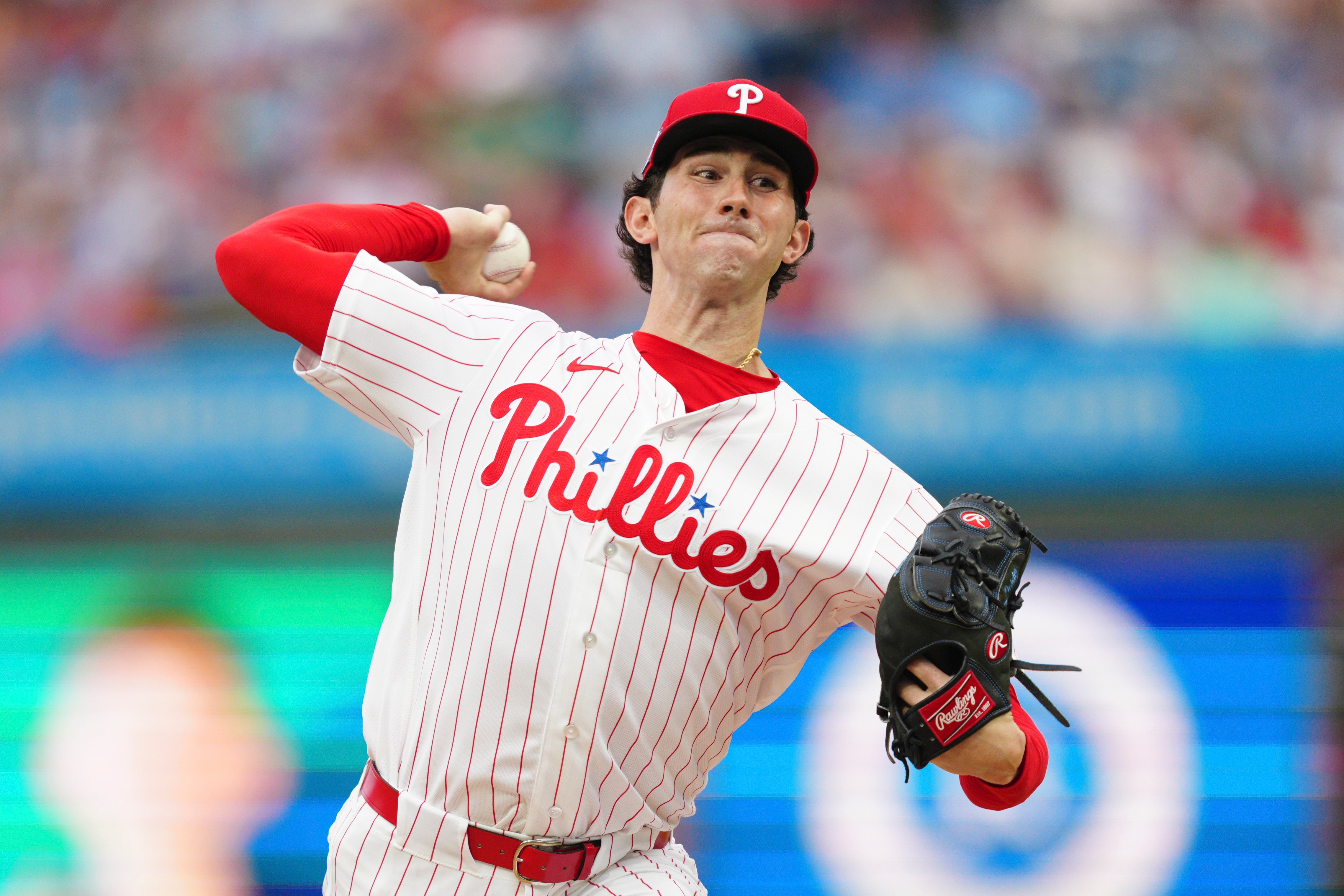
    A little past 6 o’clock on Saturday evening, Andrew Painter delivered a couple of pitches that could have some serious implications for the Phillies. Both of them were four-seam fastballs that registered 97 mph on the gun and crossed home plate at the sternum of Cardinals leadoff hitter JJ Wetherholt. The important thing is where those pitches ended up: inside the mitt of Phillies catcher J.T. Realmuto, rather than in play, or in the seats. Wetherholt swung at both. He did not make contact with either.

    That two-pitch sequence may sound like a small thing. It mostly was, at least within the context of the game. But it was a very big thing with regard to the futures of both the Phillies and their prized pitching prospect. It was a reason to believe.

    The top-line numbers suggest that Painter is a young man in the midst of a renaissance. Since returning from a six-week stint in the minors on July 31, the 23-year-old righty has posted a 3.62 ERA with 26 strikeouts, 10 walks, and two home runs allowed over 27⅓ innings. His most recent start was his finest yet: 103 pitches, seven innings, one run allowed, eight strikeouts, no walks.

    That his season-long ERA is still 6.02 speaks to the extent of the struggles he endured during the first 14 starts of the season. It also warrants a skeptical eye. Yet the deeper you pore through the entrails of Painter’s recent performances, the more evidence you’ll find that suggests the rookie really is in the midst of a radical transformation.

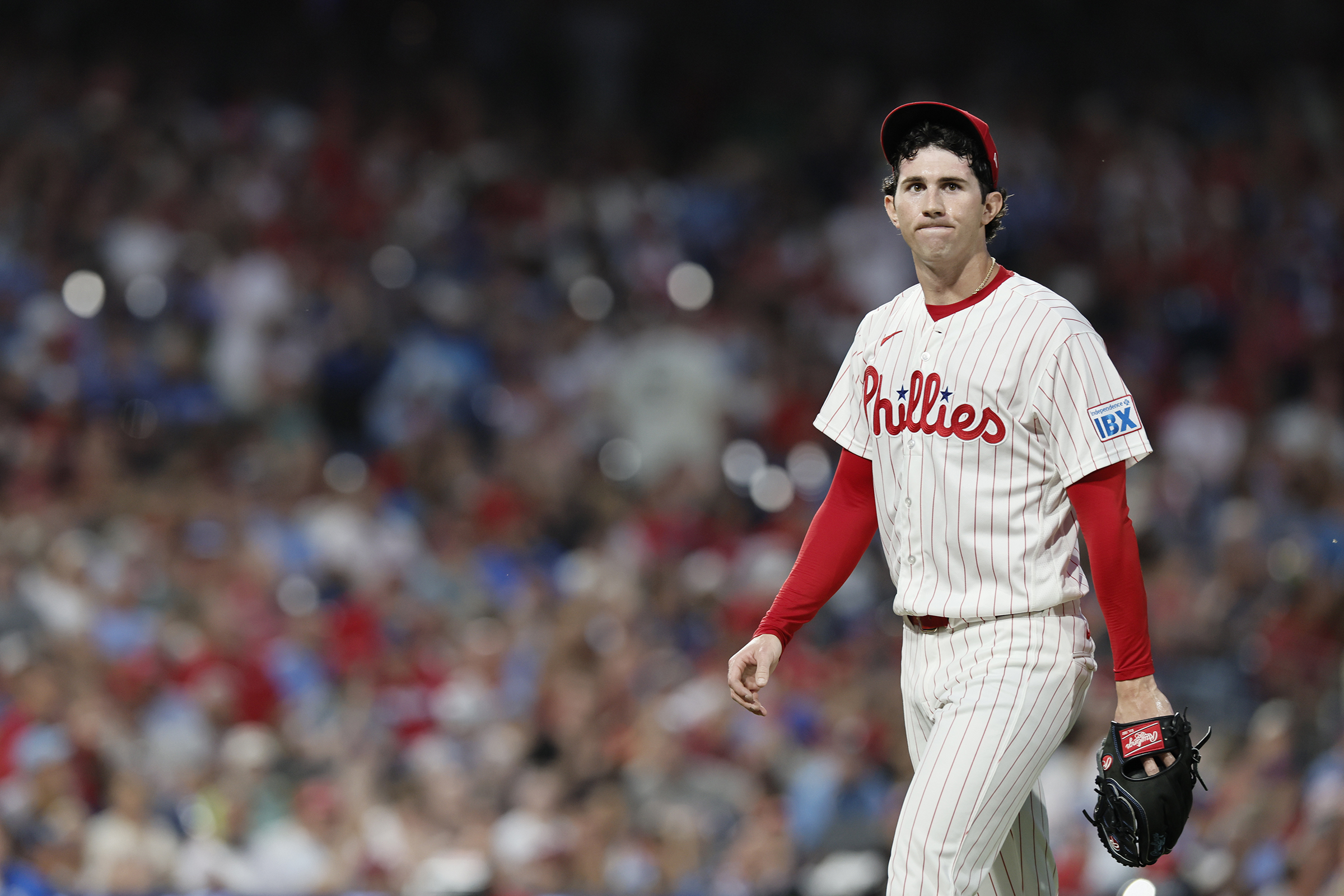
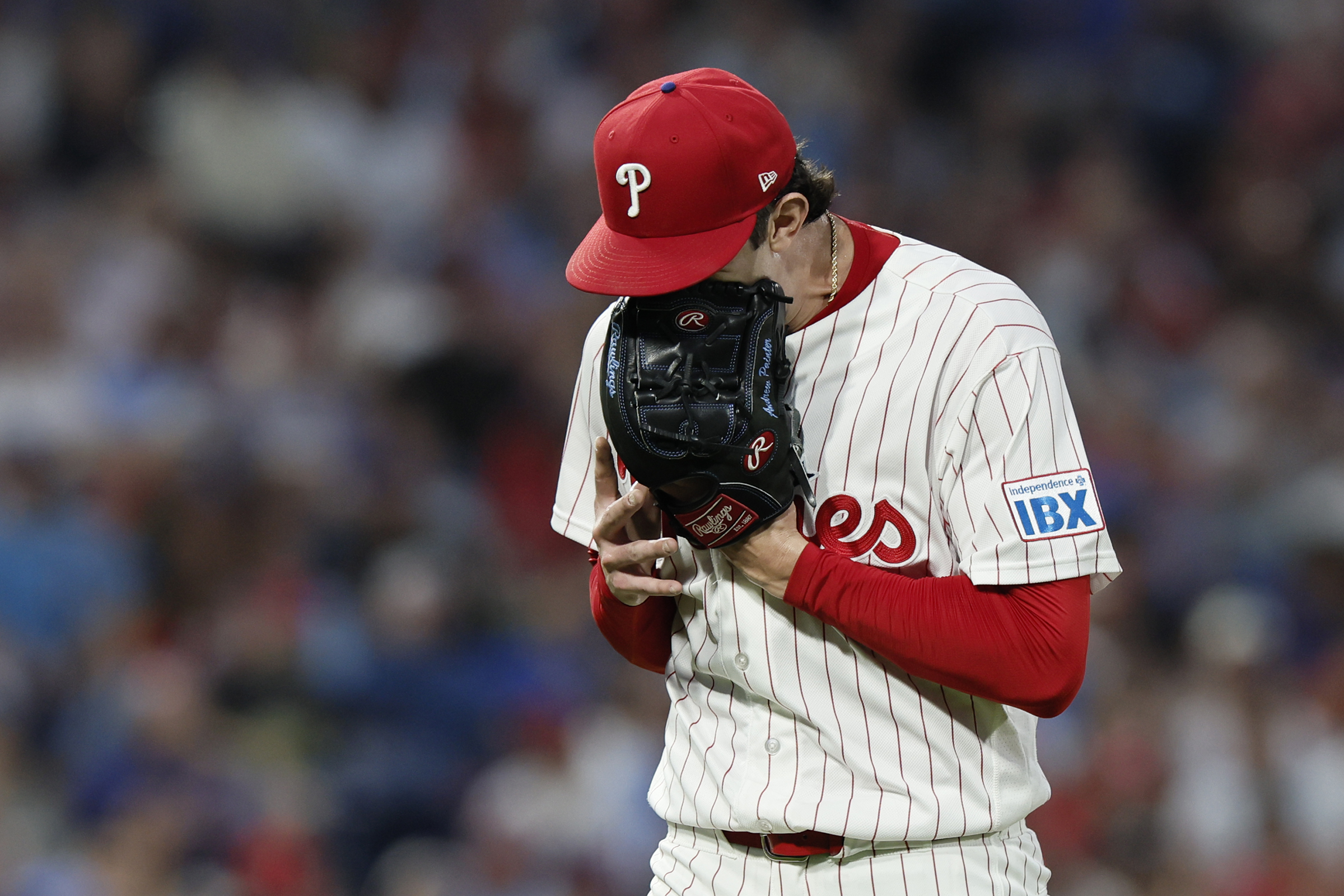
    Phillies pitcher Andrew Painter yells into his glove after striking out Cardinals slugger Jordan Walker for the final out of the sixth inning Saturday.Elizabeth Robertson / Staff Photographer

    It all starts with four-seam fastballs like the ones that prompted Wetherholt’s whiffs in the first inning on Saturday. By the end of the game, Cardinals hitters had failed to make contact on five of their 15 swings against Painter’s four-seamer. That may not sound like a lot, but consider this: In Painter’s last two starts before his demotion in June, he generated just three whiffs on 23 swings at his fastballs.

    The numbers are staggering. When the Phillies sent Painter down to the minors in June, his four-seam fastball ranked as one of the least effective in the sport. He wasn’t missing bats with it: His whiff percentage ranked 276th out of 278 pitchers who’d thrown at least 200 pitches. Opponents had 38 hits against the pitch in just 12 starts. Their .404 batting average against Painter’s four-seamer was higher than against any other pitcher’s. He ranked among the bottom 4% in slugging percentage (.763), strikeout percentage (7.65%), and wOBA (.481). Only one pitcher in the majors had a four-seamer rated lower than Painter’s per FanGraphs’ Pitch Value metric.

    Now, suddenly, Painter’s four-seamer has become one of baseball’s most difficult to hit. Of the 84 pitchers who have thrown at least 100 four-seamers since July 31, only seven have a higher whiff percentage inside the strike zone than Painter’s. Opposing hitters are making contact with just 78% of his fastballs in the strike zone. That’s lower than even Brewers fireballer Jacob Misiorowski. It is a massive difference from Painter’s 93.2% zone contact percentage in his first 14 starts. Painter isn’t generating out-of-zone swings-and-misses on the level of the Miz, but his overall contact rate still ranks in the top 25% of pitchers since July 31.

    Andrew Painter’s four-seamer has gone from liability to strength in his return to the Phillies.Monica Herndon / Staff Photographer

    It’s a lot easier to believe in real change when there is a logical explanation for it. With Painter, the four-seamer is the thing. His spin rate is up by about 6%. In his last two starts, the induced vertical break on his fastball was better than in any previous start, with an increase of about 10% over his predemotion baseline. Against the Cardinals on Saturday, he threw nine pitches at 98-plus mph, two of them at 99-plus. Sixteen of his 33 sinkers and four-seamers clocked at 97-plus mph. Compare that to his last start before his demotion, when Painter didn’t touch 98 and only reached 97 on five pitches.

    “There’s a presence out there,” Phillies interim manager Don Mattingly said. “He’s on the attack. He looks confident. Obviously, the stuff has to be good, or all that doesn’t matter if you’re not getting anybody out.”

    You saw it on Saturday. In the third inning, Jose Fermin struck out on a foul-tipped four-seamer. In the fifth, Jimmy Crooks swung and missed at a 1-2 four-seamer that registered 98.2 mph on Statcast. In the sixth, Alec Burleson swung and missed at another 98 mph four-seamer.

    Painter still has plenty of work to do to reach the level of dominance many envisioned when he was rated as one of the top pitching prospects in the sport. But the improvement is very real. Make no mistake about that.

  • A stint in Lehigh Valley allowed Andrew Painter to work ‘freely’ on mechanics and his mind. Here’s what he learned.

    A stint in Lehigh Valley allowed Andrew Painter to work ‘freely’ on mechanics and his mind. Here’s what he learned.

    When Andrew Painter was optioned to triple-A Lehigh Valley in June, he received something he sorely needed: space. Seventy-seven miles north of Citizens Bank Park, far from the scrutiny of Philadelphia, the right-handed pitcher was able to work and think.

    He could try grips, mechanical tweaks. In three straight games with the Iron Pigs, he threw three different changeups. This is not the type of thing Painter would be able to do in the big leagues, especially not in the midst of a playoff push.

    But in triple A, it was encouraged.

    “You’re able to go down there, and games don’t really mean much,” Painter said. “Obviously you’re playing to win, but it’s about development. There’s obviously a lot less stress, and you’re able to kind of freely work on things.”

    “Freely” is an apt description. Before Painter was sent down on June 18, he looked anything but free. The 23-year-old labored through each start. He struggled with command. His fastball lacked its signature rise.

    By June 17, his ERA had ballooned to 7.06 ERA.

    The monthlong hiatus to Allentown appears to have helped. It allowed the highly touted rookie to take a hard look at what worked and what didn’t, and make changes without fear of failure.

    Andrew Painter has a 3.62 ERA in five starts since being recalled from triple-A Lehigh Valley.Derik Hamilton

    The Phillies’ pitching coaches dove deep into his mechanics and unearthed some telling data points. Chief among them was the way Painter moved his lower half.

    Before, he was standing more upright, almost as if his back leg was completely straight.

    The coaches suggested that he hinge his back hip, and bend his back knee more. What might seem like a small tweak has produced notable results.

    Now, Painter is driving more toward the plate, which has improved his command. He’s moving more efficiently, which has helped him sustain velocity deeper into games.

    In the rookie’s outing on Saturday, his fastest pitch of the night — and of his young career — was his 100th. It clocked in at 99.6 mph.

    “To me it feels like it’s less effort, and I think that kind of goes to … now when I’m in the sixth inning, there’s a little bit more energy,“ he said. ”Whereas before it was kind of [like] I was reaching for everything, and those were 94s, 95s.”

    He added: “I think everything’s good when I’m just synced up, right? I feel like some guys try to throw it as hard as they can, and it ends up being slow, because they’re not in as powerful of a position.

    “For me, the moves that we worked on with the lower half, kind of allows me to just be behind the ball a little more.”

    Andrew Painter has 26 strikeouts in 27 1/3 innings since rejoining the Phillies.Elizabeth Robertson / Staff Photographer

    Another suggestion from the Phillies pitching corps was to adjust his fastball grip. Painter widened his fingers slightly, and shifted them more diagonally, so they aren’t right on top of the seams.

    “Because when I was throwing fastballs in the first half, the seams were almost taking it down, so it was killing vertical [break],” Painter said. “Whereas [my fastball] has always risen.”

    The changes haven’t just been mechanical. Those who work with Painter believe he has a different energy about him, more of a self-assured confidence. Lehigh Valley pitching coach Phil Cundari said they’ve focused on staying present; to not dwell on an inning, or even a pitch.

    Cundari is uniquely qualified to help with this. Before he joined the Phillies organization in 2023, he was a licensed psychotherapist and had his own clinical practice.

    Harvey Dorfman, the legendary mental skills coach who helped transform Roy Halladay’s career, was one of Cundari’s mentors. Halladay was introduced to Dorfman in 2001, in the midst of his lowest point in professional baseball.

    Halladay had been demoted to the minor leagues after posting a 10.64 ERA through 67⅔ innings in 2000. He was at single-A Dunedin in the Blue Jays organization when Halladay’s wife, Brandi, bought him Dorfman’s book, The Mental ABC’s of Pitching.

    That, coupled with some mechanical tweaks, guided Halladay back to the big leagues and onto a path toward the Hall of Fame. No one knows what path Painter will take, but he finds himself at a similar crossroads; humbled, at 23 years old.

    From what Cundari can see, the rookie has responded well.

    “The experience and the path that he’s had, both of those things are pretty challenging to try and overcome,” Cundari said. “But I think he’s done a great job. I think what you’re seeing right now is someone who’s much more in command. Not just of his stuff, but of his emotions, and who is in command, mentally.

    “And you’re seeing a really confident young man up there. So, outings like [Saturday] night, hopefully we’re going to see more of those.”

  • Is Ariel Hukporti ready to become the Sixers’ backup center? A Knicks reporter weighs in.

    Is Ariel Hukporti ready to become the Sixers’ backup center? A Knicks reporter weighs in.

    A wild 76ers offseason has finally settled, after they stunningly signed LeBron James and traded for Jaylen Brown to vault into championship contender status.

    To help Sixers followers get acquainted with the newcomers on this revamped roster, The Inquirer reached out to reporters who covered those players on their previous teams.

    First up is The Athletic’s James Edwards III, who covered reserve center Ariel Hukporti during his first two NBA seasons with the New York Knicks.

    Gina Mizell: Hukporti obviously did not get much playing time during his first two NBA seasons behind Karl-Anthony Towns and Mitchell Robinson. So how would you describe his game, and where did he most develop (or not develop) behind the scenes?

    James Edwards III: Hukporti is your typical “traditional” center. He runs the floor hard. He goes after loose balls. He attempts to be active defensively. I think he’s improved as a screener from Year 1 to Year 2. It’s really nerdy stuff, but a good screener does positively impact offenses.

    He isn’t unskilled, but his skills haven’t revealed themselves on the court. He doesn’t really do anything off the dribble. He isn’t a great finesse finisher right now. And while he doesn’t shoot threes, I’ve watched him shoot threes behind the scenes and the shot doesn’t look bad. I could see him trying to add the three-ball to his game with more opportunities and reps.

    GM: Were you surprised Hukporti left the Knicks in free agency? Or did you think there was a chance he would stay given Robinson’s departure?

    JE: I was surprised because I didn’t think other teams would have interest, let alone give him more than the minimum. He didn’t play many significant minutes for New York. He’s going into his third NBA season, but he’s 24. He’s had a couple knee injuries over the last few seasons. I wouldn’t have been surprised if the Knicks wanted to keep him around as the third center, but, yeah, I was surprised he got the deal he did from another team.

    GM: Simply put, is Hukporti ready to be a backup center — and a spot starter when Joel Embiid is injured or resting? He will be competing with Adem Bona for that job.

    JE: To be honest, I don’t think so, not for where the Sixers want to go. If a rebuilding team or a team without championship aspirations this season wanted to see him in that role, that would make more sense.

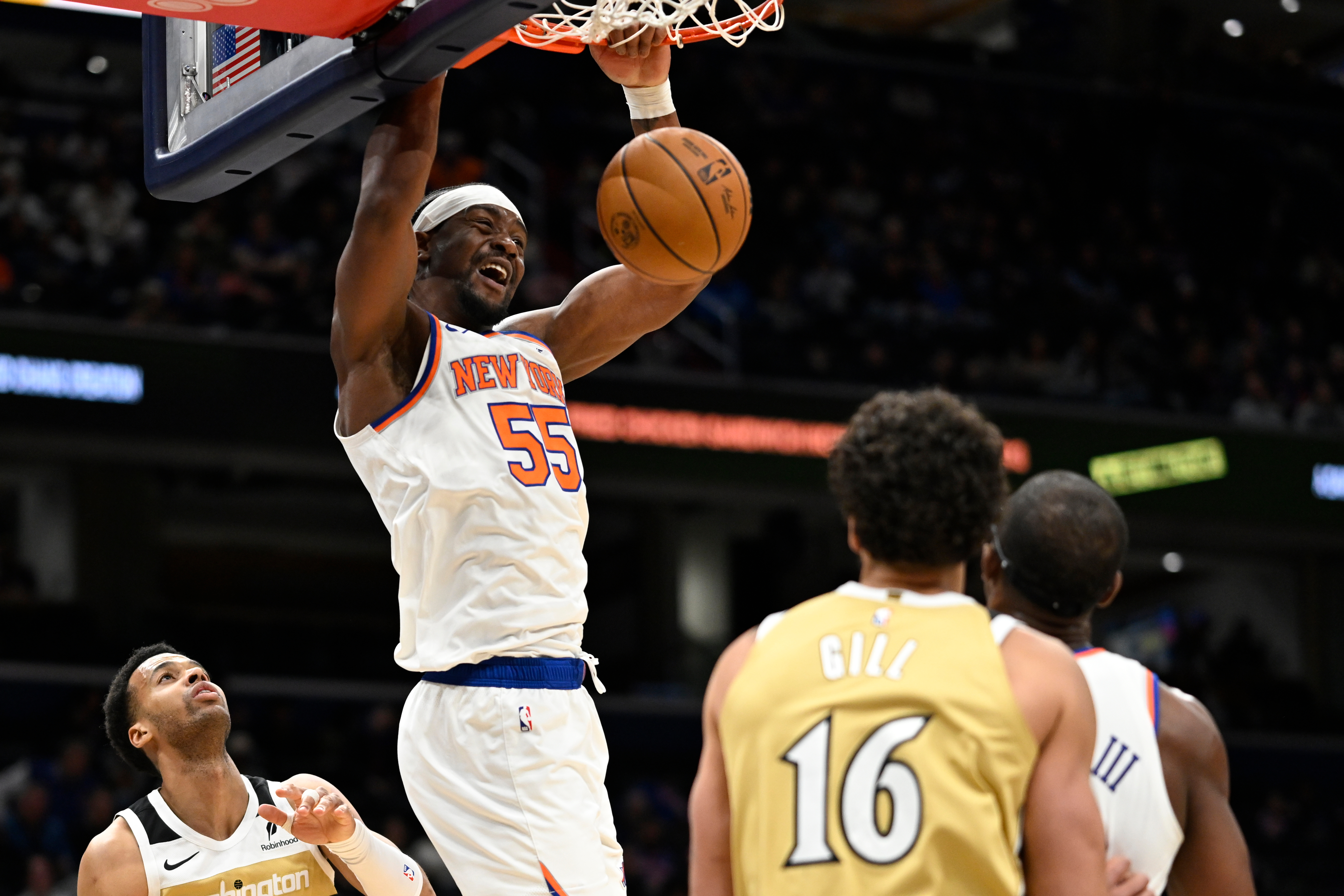
    Ariel Hukporti (55) will compete for the backup center spot behind Joel Embiid. John McDonnell / AP

    Philadelphia giving him 10-plus minutes a night … I just haven’t seen enough from him to believe that he can immediately be a reliable backup option every single night. I’m not saying that he can’t do it, but I haven’t really seen anything to suggest that he can right now. I’m rooting for him because he’s a good guy and works hard. I hope I’m wrong.

    GM: Despite the sparse playing time, what do you think Hukporti most gained/learned (on or off the floor) from being immersed in the Knicks’ championship run?

    JE: He got to be around great players and [learned] what makes them tick, how they work. He learned about standards. Hukporti played for two disciplined coaches in Tom Thibodeau and Mike Brown, both of whom had high standards.

    I also think it helps that all Hukporti knows at the NBA level is winning, which can’t be said for many Knicks draft picks between the late 1970s and today. At the very least, he’s been around a positive program and understands the inner workings of winning.

    GM: How would you describe Hukporti as a teammate and locker-room presence?

    JE: Great guy. His teammates — both veterans and youngsters — loved him, and so did his coaches. He’s not afraid to show his personality, and that was in New York where the franchise pushes players not to show their personalities. Funny guy, too. I never had a bad interaction with Hukporti and I don’t know anyone who did.

  • Enes Kanter Freedom ejected from Fever-Sky game after he was confronted by Sky’s Cloud

    Enes Kanter Freedom ejected from Fever-Sky game after he was confronted by Sky’s Cloud

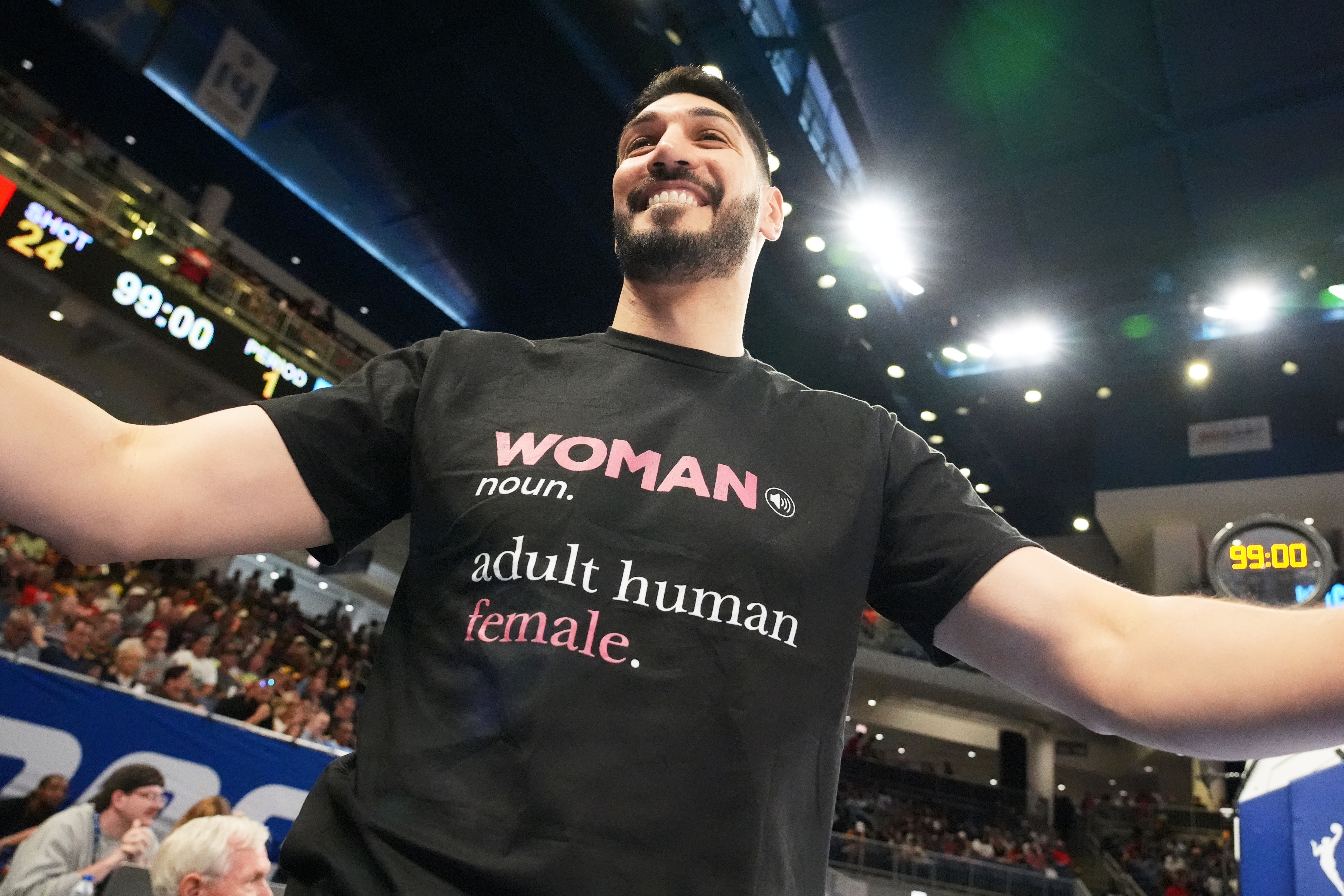
    CHICAGO — Former NBA center Enes Kanter Freedom was ejected from Sunday night’s Indiana-Chicago WNBA game after Sky guard Natasha Cloud yelled and pointed in his direction late in the third quarter.

    Freedom was sitting along the baseline. He had on a black shirt that read “WOMAN noun. adult human female.”

    The Fever called for a timeout after Cloud scored inside with 1:22 left in the third. Cloud then went to confront Kanter, who held his arms and took one step on the court. Security and a handful of Sky players stepped in between the two before the dispute escalated.

    Freedom was then escorted from the court area. He displayed his shirt as he walked toward the lobby. He had a conversation with a group of police officers before departing Wintrust Arena.

    Freedom and Royce White, another former NBA player, declared themselves eligible for the WNBA draft this month, saying they identify as women.

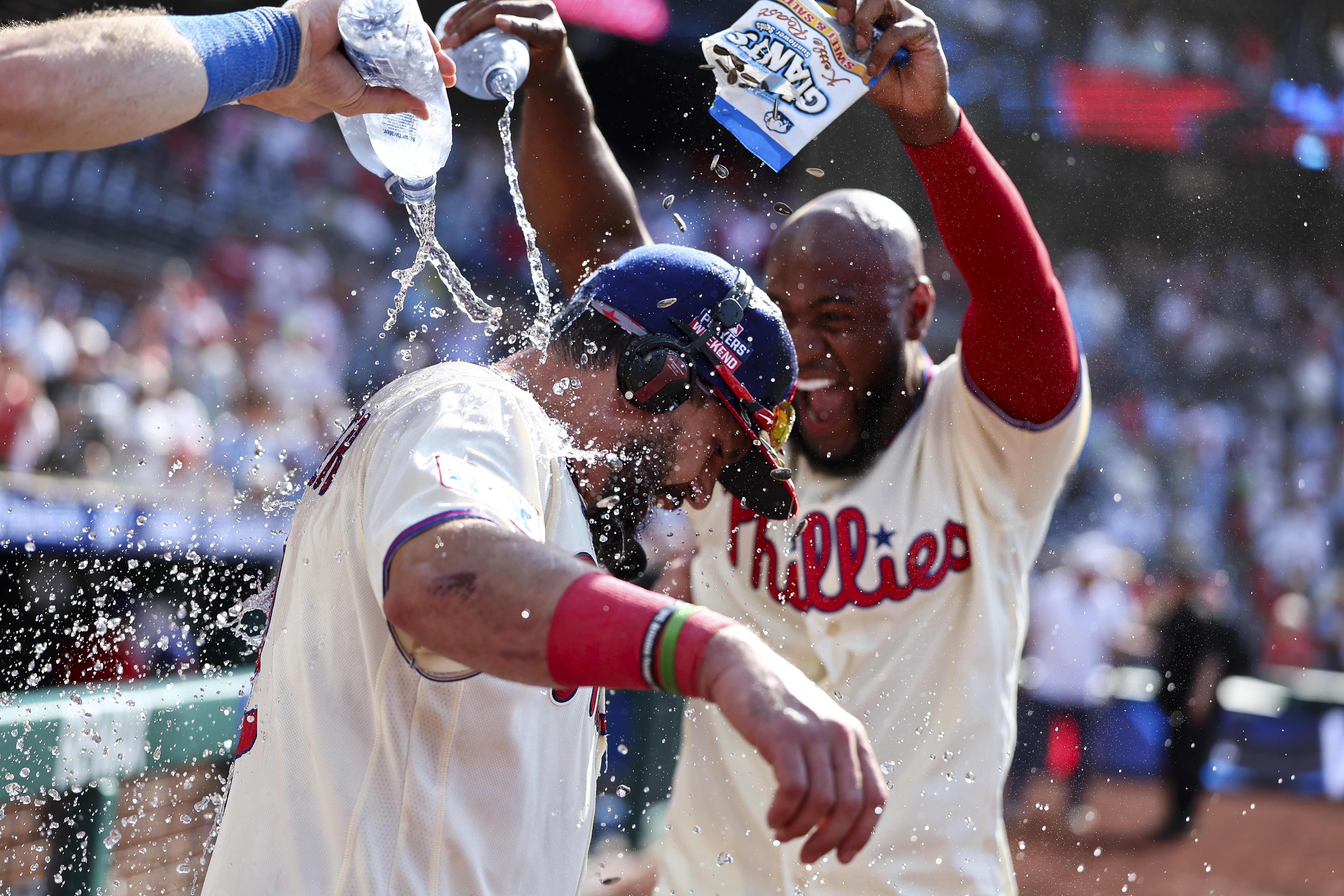
  • Kyle Schwarber caps dramatic comeback with walk-off home run as Phillies sweep Cardinals

    Kyle Schwarber caps dramatic comeback with walk-off home run as Phillies sweep Cardinals

    Edmundo Sosa walked up to the plate in the bottom of the ninth inning on Sunday afternoon. The bases were loaded with two outs. The Phillies faced a four-run deficit against the Cardinals.

    These aren’t circumstances that normally lead to success (let alone a six-run rally, en route to a 6-4 walk-off win). But Sosa wasn’t afraid. He looked to his teammate, Bryce Harper, standing on third base, 90 feet away.

    Harper gave him a knowing glance. “Like, ‘Yes, you got this,’” Sosa recalled. Then the utility infielder turned toward the dugout. His teammates wore the same expression.

    Momentum in the ballpark was starting to build. Kyle Schwarber could feel it from the moment Harper hit his line-drive double to lead off the inning.

    Luis Arraez and Brandon Marsh recorded back-to-back flyouts, but J.T. Realmuto singled, and Justin Crawford walked to give the Phillies a chance for a victory.

    Schwarber leaned over to Trea Turner, who was beside him, and joked that Sosa would “hit a grand slam somehow.” He didn’t do that. But the infielder did something nearly as good; roping a double to left field double that just stayed fair, to drive in all three runners.

    Momentum continued to build; the infield dirt vibrated, the crowd began to rumble. Schwarber stood in the on-deck circle as Bryan De La Cruz worked a six-pitch at-bat against Cardinals closer Riley O’Brien, fouling off a two-strike pitch before taking two balls, then finding a hole up the middle for a game-tying single.

    Then, it was Schwarber’s turn. He said he went up to the plate looking to pass it on Turner; instead, on a 2-2 count, the slugger launched a 459-foot home run to center field to give the Phillies their ninth straight win.

    When Schwarber saw St. Louis’ center fielder turn around in resignation, he knew it was over. He flipped his bat, flipped his helmet, and started jogging around the bases.

    “I think it was just more just shock, disbelief,” he said. “I didn’t know what to do there. I’m not trying to be disrespectful to them. But it was just a little bit of disbelief.”

    Anyone watching in the moment wouldn’t begrudge his reaction. For eight innings, the Phillies offense looked lifeless, recording only four hits, with no runs off the Cardinals’ pitching staff. And St. Louis had brought in O’Brien, who led the National League with 33 saves, to start the ninth.

    It seemed like the eight-game winning streak would come to an unceremonious, muted end, and a strong, scoreless showing from the bullpen would be squandered.

    Instead, that streak is alive and well, as the Phillies head to the West Coast for a nine-game road trip. Since the Field of Dreams Game in Iowa, they’ve made up five games against the Cubs in the National League wild-card race, sitting in second place at 73-58, only a game-and-a-half behind Chicago.

    Over that span, they’ve also made up seven games against the NL East-leading Braves, who led the Phillies by 2½ games going into their night game at Milwaukee.

    “I feel like it’s a lot of really good baseball,” Schwarber said. “It’s a lot of complete baseball. It’s not like we’re out there just hitting homers and relying on that, I feel like there’s a lot of different things we’re doing well.

    “I feel like the defense is playing really well. Our pitching obviously is our pitching, our starters set the tone for us, they’re attacking the zone, they’re trusting the defense, getting their punch outs.

    “And our offense just from top to bottom feels like they’re doing what they need to do with their plans, and staying aggressive to their plans, and whatever individual approach they need to have.”

    One person who was not surprised was Cristopher Sánchez, who took in the six-run rally from the TV in the clubhouse. The left-handed starter said he felt good about his outing, but conceded that there were a few routine plays he could’ve made, which proved costly.

    He allowed stolen bases to Jordan Walker and JJ Wetherholt, both of whom ended up scoring for runs.

    “Usually I control the runners pretty well,” he said. “I was bothered a little bit because they took those two bases quite easily.”

    Sánchez fanned seven Cardinals across 6 2/3 innings, allowing four runs on nine hits with no walks. It wasn’t as dominant as his other showings, but on Sunday afternoon, that didn’t seem to faze him.

    “Incredible, incredible,” Sánchez said of his teammates’ come-from-behind effort. “But this is who we are. This is who we are.”

    window.addEventListener(“message”,function(a){if(void 0!==a.data[“datawrapper-height”]){var e=document.querySelectorAll(“iframe”);for(var t in a.data[“datawrapper-height”])for(var r,i=0;r=e[i];i++)if(r.contentWindow===a.source){var d=a.data[“datawrapper-height”][t]+”px”;r.style.height=d}}});

    Bryson Stott injury scare

    In the bottom of the sixth, Bryson Stott took a foul ball off his right foot in the midst of his at-bat; the trainers visited him at home plate briefly. He remained in the game but was later removed in the eighth inning, with a right foot contusion. Arraez replaced him at second base.

    Interim manager Don Mattingly said after the game that X-rays on Stott’s foot were negative and they’ll see how he feels tomorrow.

    “I kind of expect him to be in there,” Mattingly said. “Honestly, a lot of the foot things, if it’s not a fracture, they bounce back decent. Not a lot of area to get swollen up in there. So I expect him to be able to play.”

  • Tanner McKee outperforms Andy Dalton in the Eagles’ confounding backup QB competition. Will it matter?

    Tanner McKee outperforms Andy Dalton in the Eagles’ confounding backup QB competition. Will it matter?

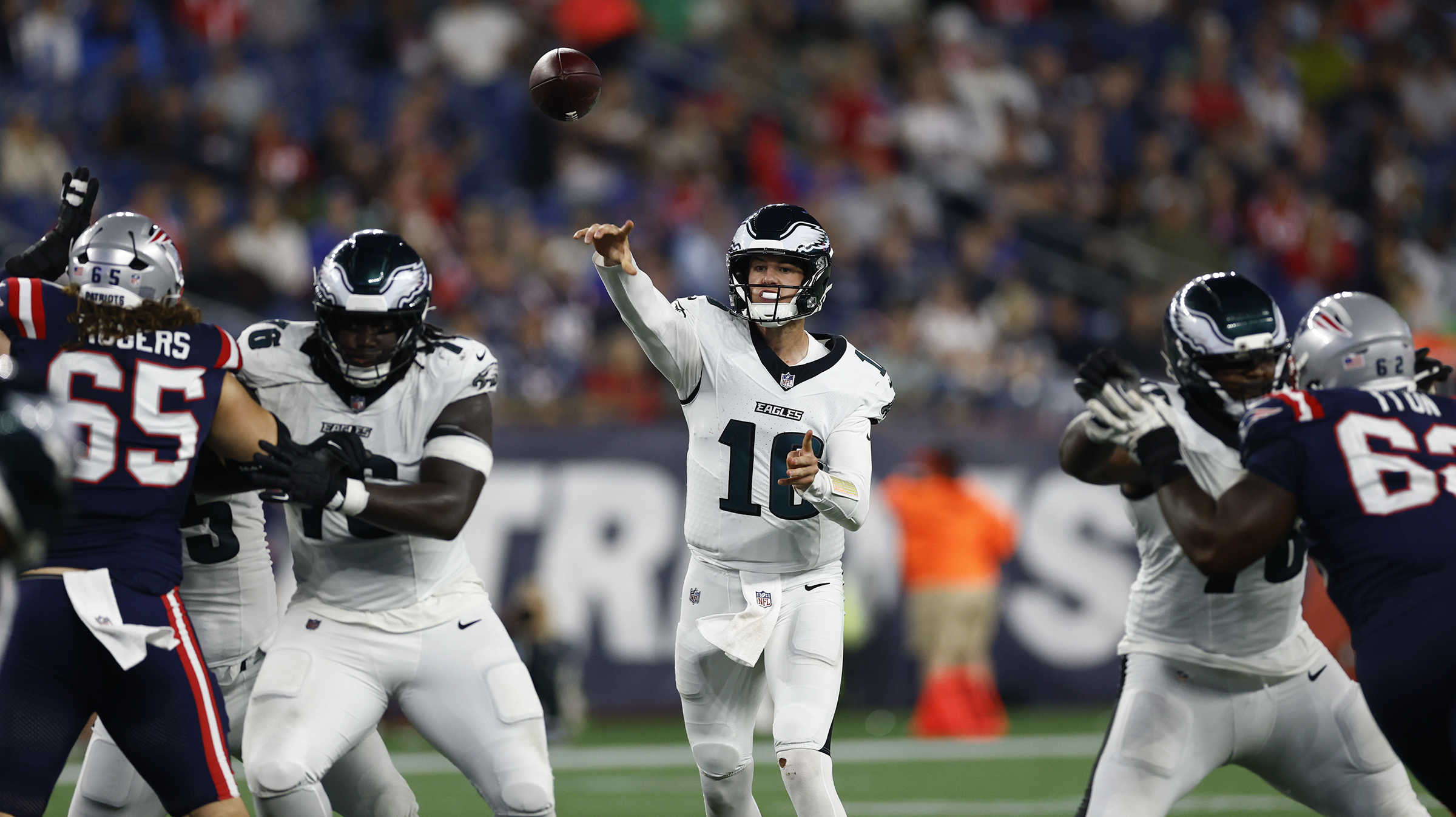
    FOXBOROUGH, Mass. — Tanner McKee outplayed Andy Dalton despite having to work with the Eagles’ mostly third-string offensive line and skill position players.

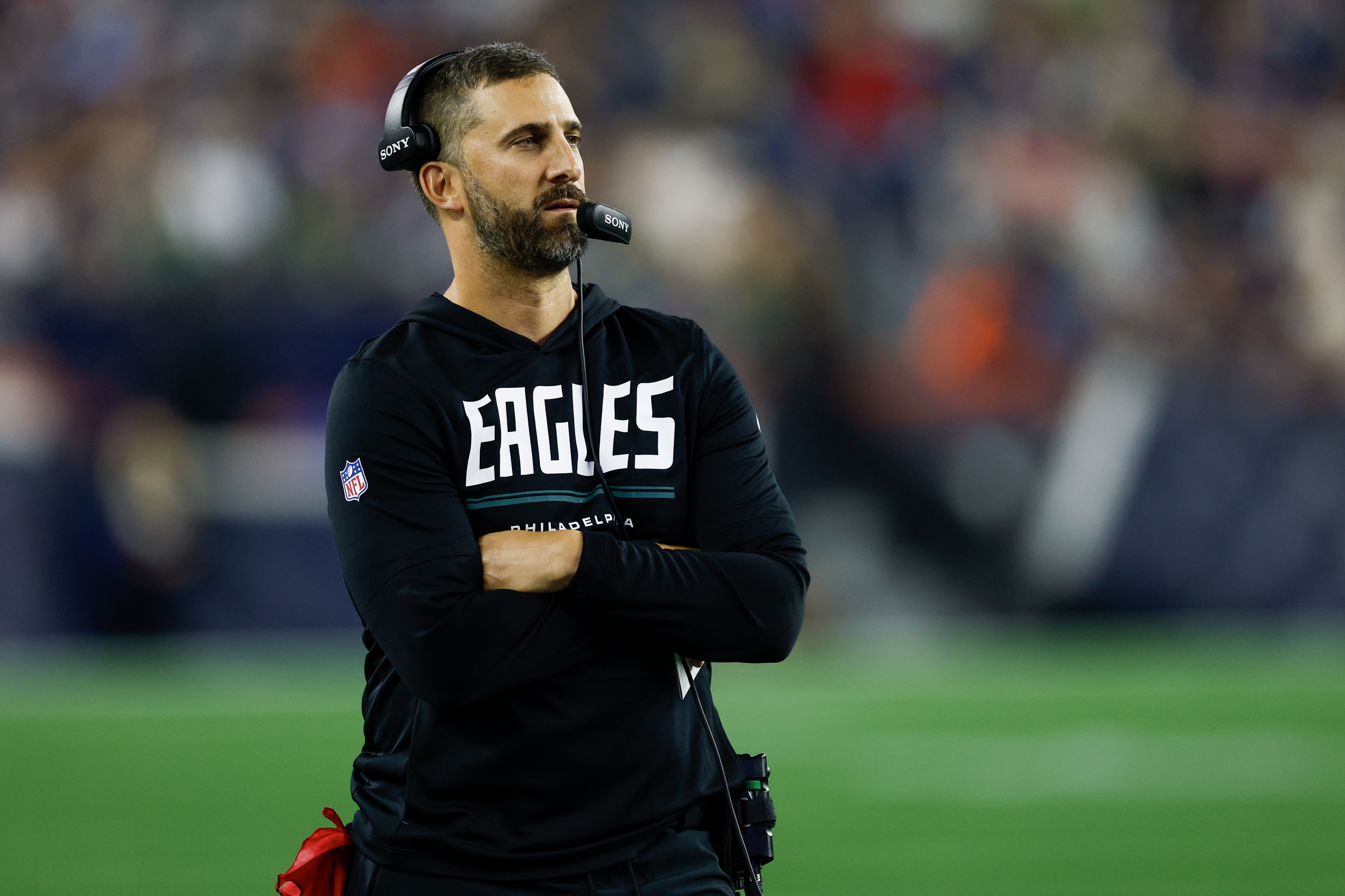
    Nick Sirianni may claim that there has been a fair competition for the No. 2 quarterback spot, and that Dalton has started both preseason games only because he has more experience. But McKee hasn’t had the benefit of performing with players who will actually make the Eagles’ 53-man roster.

    And yet, he looked like a far more viable backup to Jalen Hurts than Dalton did in the Eagles’ 24-21 loss to the New England Patriots on Saturday night. McKee wasn’t without his faults. He missed throws from the pocket and struggled at times when pressured.

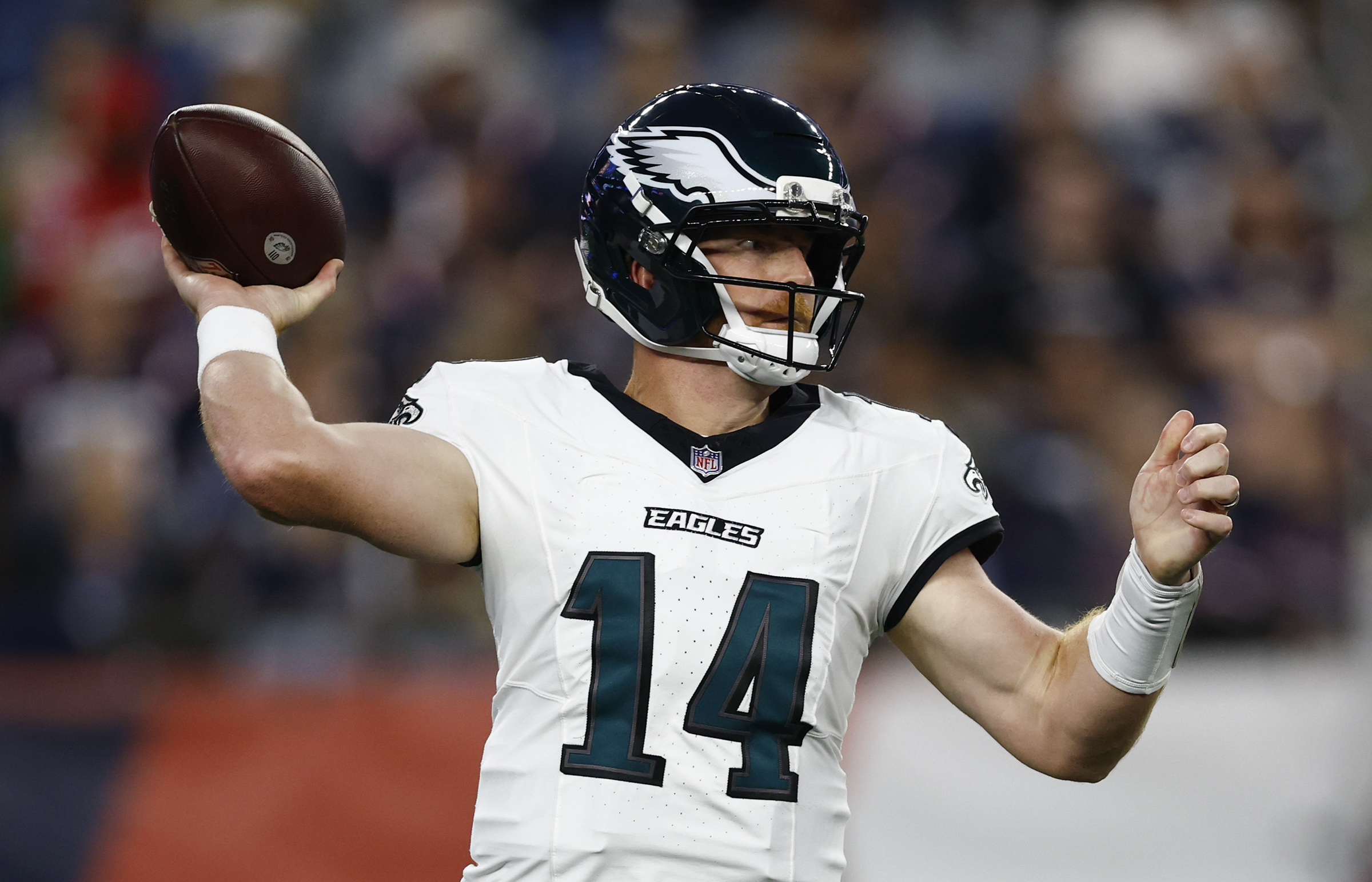
    But it is worth questioning how Dalton could end up winning the job, let alone entice some quarterback-needy team into trading for him. There’s still another preseason game and a week until the roster deadline, but time is running out on the 38-year-old veteran.

    “We’ve got to continue to give both of them opportunities within practice and potentially games,” Sirianni said. “See how next week goes. Obviously, I’m not there yet.”

    While neither quarterback impressed in the preseason opener vs. the Ravens, McKee inched ahead of Dalton in practices over the last few weeks. Not necessarily because he’s been sharp.

    But he was more effective in joint practices with the Patriots last week, and even more so in the game two days later. McKee completed 16 of 22 passes for 173 yards and two touchdowns in a little over two quarters of action.

    “I know stat-wise he came out having a pretty good game, but obviously for all of us there will be corrections within it,” Sirianni said. “But, yeah, thought he did some good things. Made some nice plays. Had a couple fourth downs that we would have liked to convert.

    “Not saying those are his fault in that situation, but those fourth downs hurt us, not converting there.”

    While it’s true that McKee’s pass numbers were inflated by yards after the catch, particularly from running back Carson Steele, he got the ball into the hands of his schemed-up outlets when “hot” vs. the blitz.

    One such play came late in the game when a defender rushed off the edge and Steele ran a wheel route rather than staying in to block. McKee simply lofted the ball to his open receiver and the tailback did the rest: running 20 yards into the end zone, but not until he hurdled another Patriot.

    “He found his shots on a couple when they brought one more than we could protect,” Sirianni said of McKee. “I thought Sean [Mannion] did a good job giving them answers there.”

    Tanner McKee (16) put together the sharpest QB performance for an Eagle in two preseason games. Yong Kim / Staff Photographer

    Mannion dipped a little deeper into his playbook than he did in Baltimore to combat New England’s more exotic pressures. The Eagles’ new coordinator got a better outing from his offense than he did a week ago, but his game plan was still mostly banal.

    He didn’t have to dial up some of the more sophisticated concepts from the Kyle Shanahan-Sean McVay scheme because the Eagles had a decided advantage up front. The second-unit O-line, especially guards Willie Lampkin and Drew Kendall and rookie tackle Markel Bell, moved bodies and opened lanes for running back Will Shipley.

    Shipley’s 11 carries for 56 yards did most of the lifting on the Eagles’ first touchdown drive. Dalton did convert a fourth down with a 13-yard strike to wide receiver Darius Cooper.

    “That was one where [you] kind of get all the way back to No. 4 in the progression, and for me, felt like just the timing and rhythm of it was right there,” Dalton said. “Coop was in the right spot and just gave him a chance.”

    Cooper also had a reception in which he turned a short crossing route into a 25-yard gain. But Dalton continued to overthrow open receivers and look out of sync in executing an offense that is similar to ones he’s quarterbacked in before.

    He’s now completed just 6 of 16 passes for 64 yards in two games. It’s a small sample. And maybe 179 starts and 84 wins over 15 seasons buys the longtime Bengal some patience with Sirianni.

    But the 26-year-old McKee showed more upside. He was drafted and developed by the Eagles for a reason. It would be uncharacteristic to give up on him, even if organizational assertions about his future as a possible starter were hyperbolic.

    Eagles quarterback Andy Dalton throws the football against the New England Patriots during a preseason game at Gillette Stadium in Foxborough, Mass on Saturday, Aug. 22, 2026.Yong Kim / Staff Photographer

    There’s nothing wrong with competition. But if the Dalton experiment was just to get more in return than the seventh-round draft pick the Eagles originally surrendered in acquiring him, they’ll only have themselves to blame if the eventual backup is called upon early in the season and fails.

    “I play when the coaches put me in,” McKee said. “Obviously, put my best foot forward, try to do all the extra things, whether that’s in the film room or on the practice field, staying late, talking with the guys, bonding, whatever that is. I let them decide all that.”

    Eagles general manager Howie Roseman may end up getting equal value or more for Dalton. The Patriots don’t exactly have an attractive backup in Tommy DeVito, although he looked better than either Eagles quarterback.

    It’s difficult to bring in someone new so late in the process, especially if there’s a new system to learn. The Eagles may keep all their quarterbacks, with rookie Cole Payton as the developmental fourth option — at least until they’re forced to do otherwise.

    But Dalton seems to be the only potential bait.

    “I think we’re focusing on the here and now,” Dalton said when asked about a trade. “All that other stuff is not what we’re worried about.”

    Nick Sirianni has not tipped his hand on a final decision for the backup QB role. Yong Kim / Staff Photographer

    The Eagles are running out of chances to showcase him. They could have allowed McKee to come out for the final series and drive the offense to a comeback win. But Sirianni said his quarterbacks were on a rep count and he wanted to give Payton a shot.

    The rookie was sacked and fumbled the ball to end the game, however, on his third drop.

    “We knew Cole made some nice plays the last game he was in,” Sirianni said. “Has to protect the ball better in that situation.”

    It’s been an interesting summer for the Eagles’ quarterback factory, with Hurts obviously at the front of the assembly line. He’s had good days. He’s had rough ones. He took his lumps in the joint practices and delivered a few, as well.

    But there remains a lot of uncertainty about how he’ll adapt to Mannion’s overhaul. Answers will start to come on Sept. 13 against the Washington Commanders. Until then, the backup competition will have to suffice.

    “I think that’s one thing that there is not much been said,” Dalton said when asked the final decision. “Every day is a new day, and so we’ll see how it all ends up.”

    Maybe it will come down to the wire. It probably shouldn’t.

  • Neil Pierre plays another huge game for the Union in Austin to keep the team’s unbeaten run going

    Neil Pierre plays another huge game for the Union in Austin to keep the team’s unbeaten run going

    As the Union and Austin FC traded wayward scoring chances down the stretch Saturday night, both teams’ fans probably assumed the other would find the net and take away a win.

    The number of opportunities that piled up was in part a reflection of the 98-degree heat at the 8 p.m. kickoff in central Texas. But the fact that neither team found a winner reflected that for all Austin’s firepower and all the Union’s momentum, they both entered the night with 5-10-5 records.

    You read here heading into the weekend that the Union still aren’t a good team quite yet, and that still stands for the moment. A game where substitutes Ezekiel Alladoh and Agustín Anello had more impact on defense than offense is proof.

    But that doesn’t mean the night was all bad for Ryan Richter’s squad, which now stands 5-10-6 (21 points) and three points below the playoff line. It ended in a 1-1 tie, and the unbeaten streak is now six games heading into Saturday’s visit to Red Bull New York (7:30 p.m., Apple TV).

    “It got a little wild at the end both ways,” Richter said afterward. “I think both teams could have probably gotten a goal, but the way they pushed through and were able to get a point in this game — we’re always going for the win, but for a week like this, two games on the road [and] home to Miami, to come without losing a game and and five points, that’s OK.”

    Two players stood out above the rest: Andre Blake and Neil Pierre. Blake made five saves, including a spectacular one in each half to deny what looked like certain Austin goals.

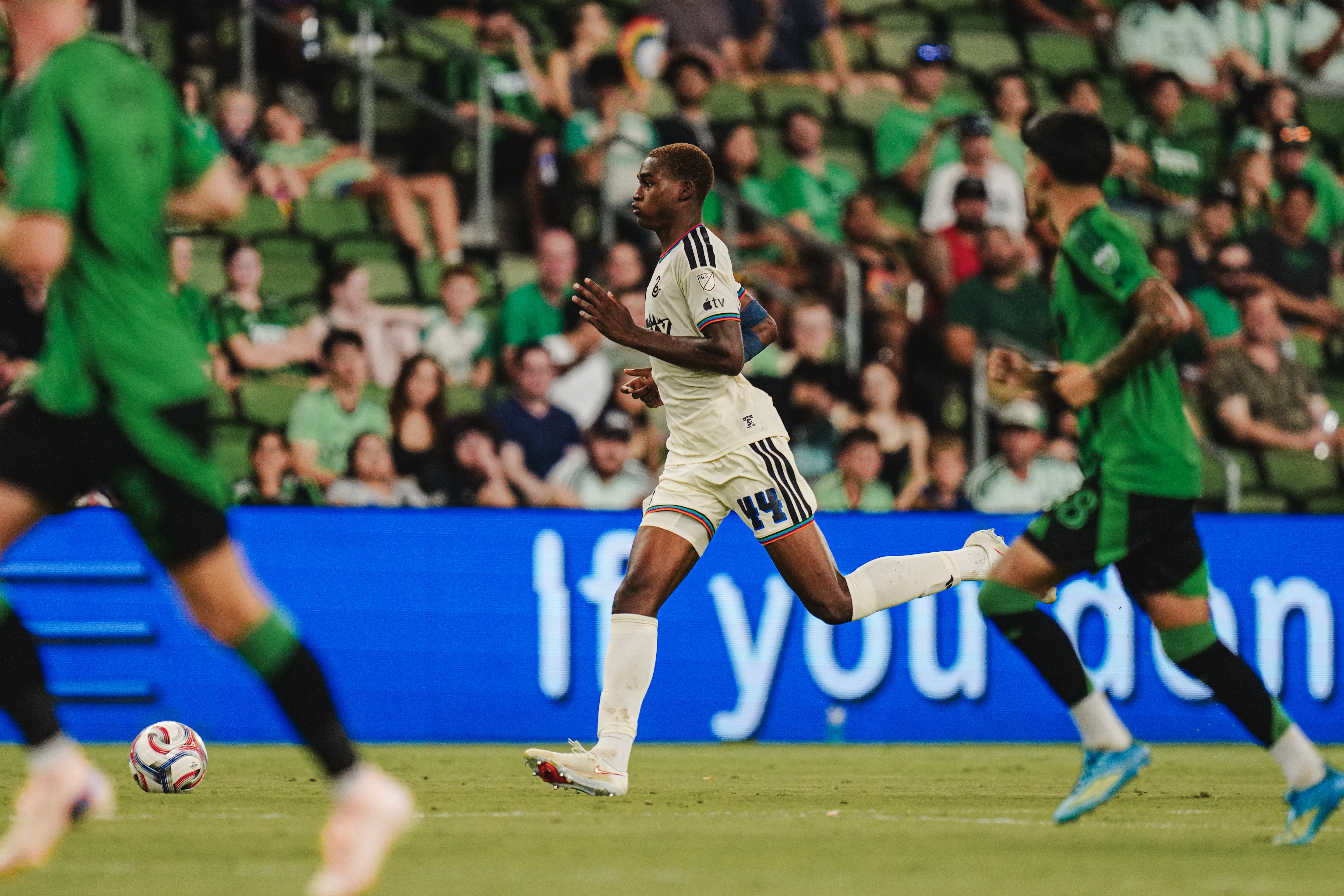
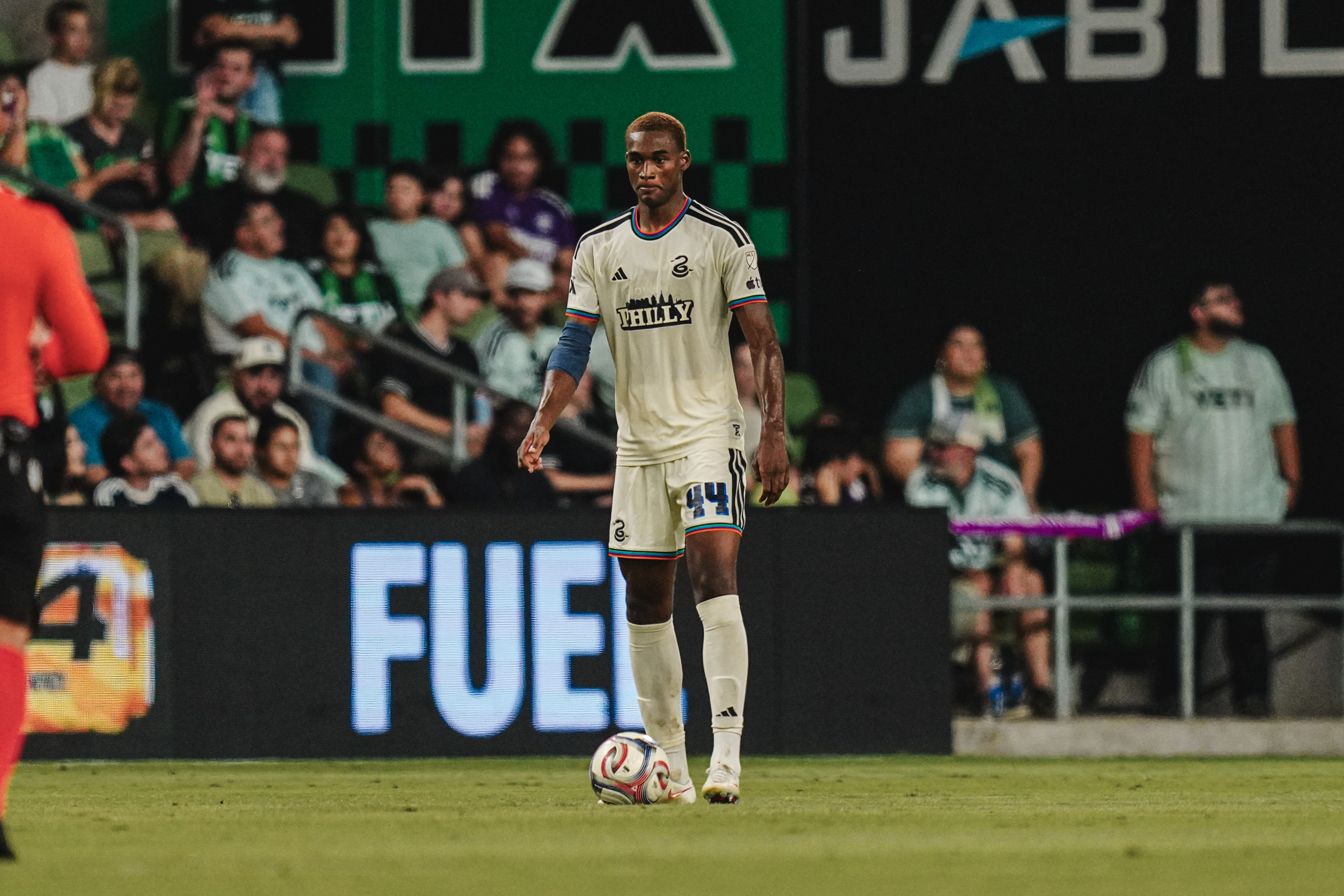
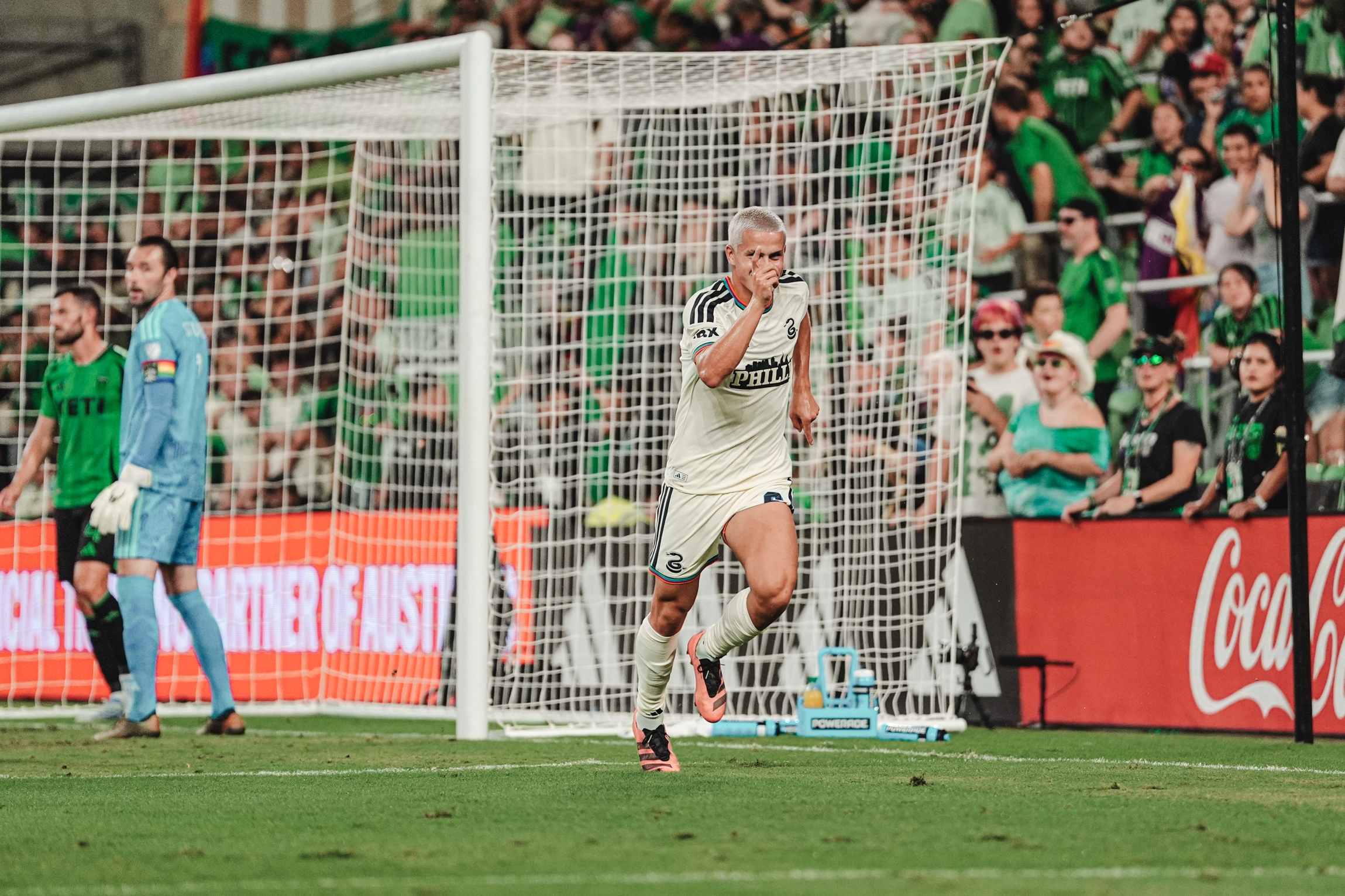
    Pierre took the headlines even from Cavan Sullivan, who scored his fifth goal of the year with a rare header. While the 5-foot-7 Sullivan jumped for his goal, the 6-foot-7 Pierre rarely had to leave his feet to stuff the box score: five clearances, three tackles, three blocks, three interceptions, 10 defensive recoveries, five duels won from seven contested, and 38-of-41 passing.

    The scouts who’ve been watching Pierre, whether from European club suitors or the U.S. national team, will feast on all that.

    Neil Pierre on the ball during Saturday’s game.Philadelphia Union

    “I thought he was our best player,” Richter said of the 18-year-old centerback. “The amount of shots that he blocked, times he stepped out of the [defensive] line, big clearances that he made, some of the interceptions that he had, he had a really solid game. So it was another good step for him.”

    Everyone knew how hot it was, even fans who watched from air conditioning on their couches. MLS made a smart decision in advance to delay the kickoff by half an hour, but even that only moved the thermometer from 101 to 98.

    It also put a spotlight on Richter’s decision to start the same lineup that started against Miami on Wednesday, and 10 of the 11 who started the previous Sunday at New York. He knew that was a risk, even if it’s becoming increasingly clear that at a lot of positions, the Union’s starters are a lot better than the backups.

    “It made it a hard decision, definitely,” Richter said. “I couldn’t sleep between Wednesday and today, trying to think what was the right decision to go with. But I decided to trust the guys to turn around again, and I think they did a good job in that.”

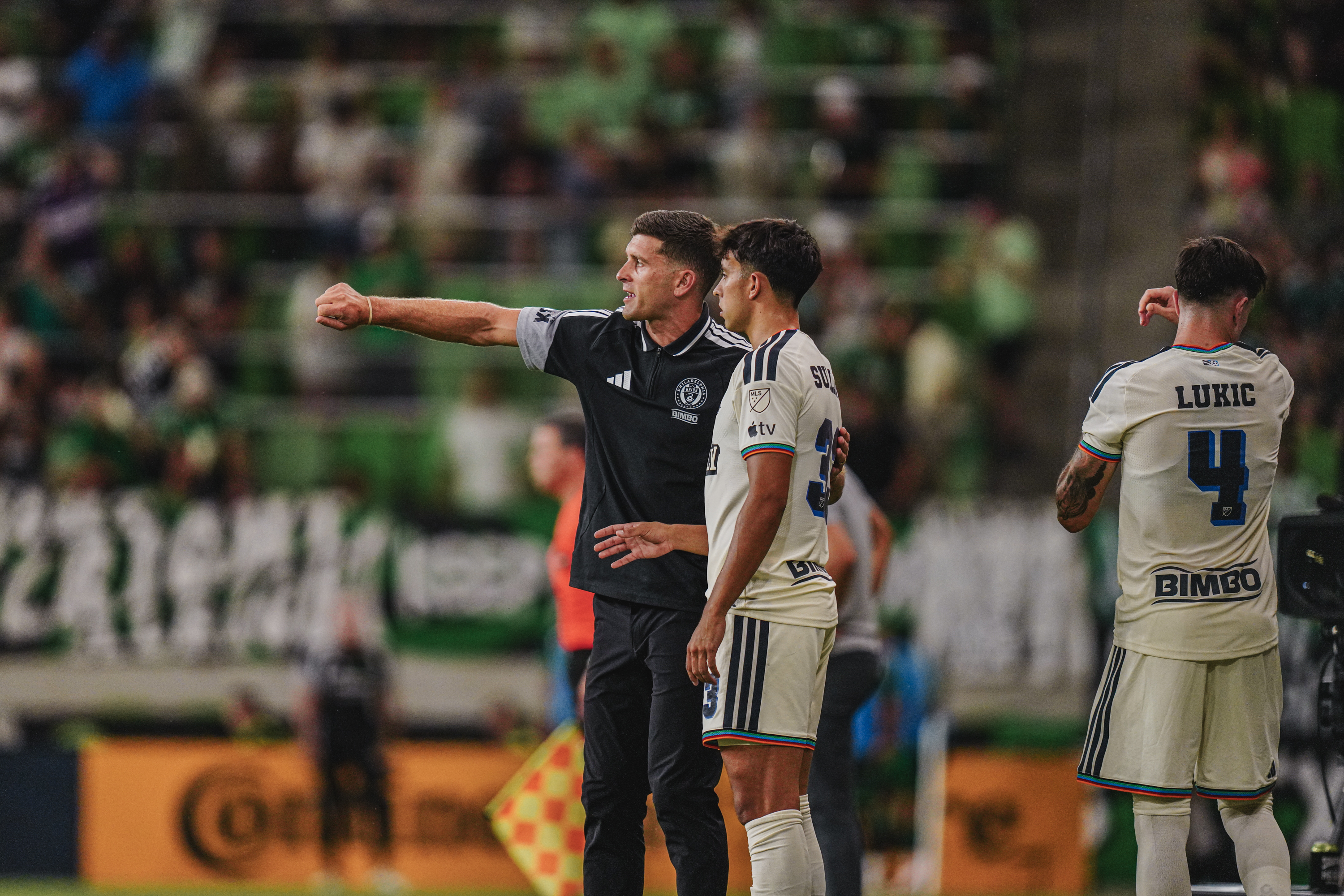
    Ryan Richter (left) talking on the sideline with Quinn Sullivan, who was one of the Union’s substitutes in the game.Philadelphia Union

    He was satisfied with the subs, too, including Anello and Alladoh. The defensive plays in question came in the closing minutes: a risky but successful sliding tackle by Anello, and Alladoh’s bodying of former U.S. national team striker Brandon Vázquez on a break into the box.

    “That was a pretty key play in the game,” Richter said of Alladoh. “I have to look exactly where he started when he started that run, but to make it all the way back … that’s all you can ask, is this kind of commitment. Anything to do to win a game, that’s what these guys did on this play.”

    Both Union strikers also had scoring chances that they didn’t convert, including Anello’s shot off a last-minute free kick that was blocked. But two players who don’t get much playing time were able to offer something from the opportunity they got.

    “‘Augie’ has been really patient with his role so far, you know, and tonight he came in and and he did a really good job,” Richter said. “This is what you can do, is make a case for yourself by being dangerous in these moments and looking like you can be the difference.”

    Asked if he wants to see more from Anello, Richter dialed things back a bit.

    “It’s not always going to come, of course,” he said. “When you sub in and play 20 minutes, you shouldn’t expect a goal every single week. But if you look dangerous, you’re getting opportunities, getting into the positions, putting the work in defensively, the goals will come.”

    If they do between now and November, this Union team could be even more interesting down the stretch.

  • Cavan Sullivan’s early goal earns the Union a 1-1 tie amid brutal heat in Austin

    Cavan Sullivan’s early goal earns the Union a 1-1 tie amid brutal heat in Austin

    The Union couldn’t make the most of Cavan Sullivan being allowed to play against Austin on Saturday, but they at least made something out of it.

    Sullivan scored in the 18th minute of a 1-1 tie, in a game played amid 98-degree temperatures in Texas’ capital city. It had been 107 during the day, and the kickoff was pushed 30 minutes later to try to mitigate things a little.

    It did, but only some. At the originally scheduled 7:30 p.m. local time, the thermometer read 101 degrees.

    Union interim manager Ryan Richter decided to send out the same starting lineup that started Wednesday against Miami at Subaru Park — and 10 of those same 11 also started in New York last Sunday.

    The man who blew the opening whistle was also of interest. Referee Rodrigo Albuquerque was working just his second MLS game. His first was in mid-May. Albuquerque has spent the rest of this year officiating on a wide range of other American circuits, including the NWSL and second-tier men’s USL Championship.

    Fortunately, he didn’t need to get too involved in the early stages. The teams took care of themselves, each scoring off a corner kick play. Sullivan opened the scoring with a header in the 18th minute, and Brendan Hines-Ike responded by beating Frankie Westfield on a jump in the 21st.

    That would have been for the lead if not for a brilliant Andre Blake save on Myrto Uzuni’s attempt in the 14th minute, followed by Jon Gallagher shooting the rebound across Blake but hitting the far post.

    Albuquerque did get involved twice in the first half, booking Jesús Bueno and Neil Pierre.

    Richter made the night’s first substitutions, subbing in Jovan Lukić and Quinn Sullivan for Bueno and Indiana Vassilev in the 57th minute.

    Austin counterpart Davy Arnaud went for it in the 63rd, sending veteran strikers Brandon Vázquez and Facundo Torres in to seek a winner. They had been rested to start since Austin (5-10-6, 21 points) plays a Leagues Cup quarterfinal against Mexican power Toluca on Wednesday in northern New Jersey.

    Richter made another double-sub in the 74th, Agustín Anello and Ezekiel Alladoh for Cavan Sullivan and Bruno Damiani. That shifted Quinn Sullivan to the right attacking midfield spot, and he promptly took advantage with a 21-yard smash that Austin’s Brad Stuver leapt to palm away.

    The home team was inches from the lead in the 83rd when Blake made a rare fumble of a bouncing ball, but Pierre made one of his many clutch plays on the night with a clearance.

    Alejandro Bedoya was the last Union substitute, replacing Milan Iloski in the third of six minutes of second-half stoppage time.

    Blake came up huge again in the 94th with a diving save on Uzuni, who had broken past a tiring Nathan Harriel. Then the Union (5-10-6, 21 points) went the other way, got a free kick, and Anello’s shot in the box was blocked.

    That was finally the end of a long night, and a long week.