Category: Sports

  • Halloween is spooky season, but this last month in Philly sports has been way scarier

    Halloween is spooky season, but this last month in Philly sports has been way scarier

    Around this same time last year, The Inquirer’s sports team relived the scariest moments in Philly sports history over the past 25 years.

    But who needs to look back a quarter century? Philly sports over this last month has had plenty of pearl-clutching, hide-in-the-closet, afraid-to-show-face moments.

    What if we told you that the bulk of them have occurred over the spooky season of September and October, in which we saw the heart of the Eagles offense go down with catastrophic injuries, watched a nine-game losing streak unfold on the ice, and saw the Phillies postseason dreams last about 72 hours from start to finish.

    In no particular order, here’s a look at some pretty terrifying moments in Philly sports over the last month, in a year with two months still to go.
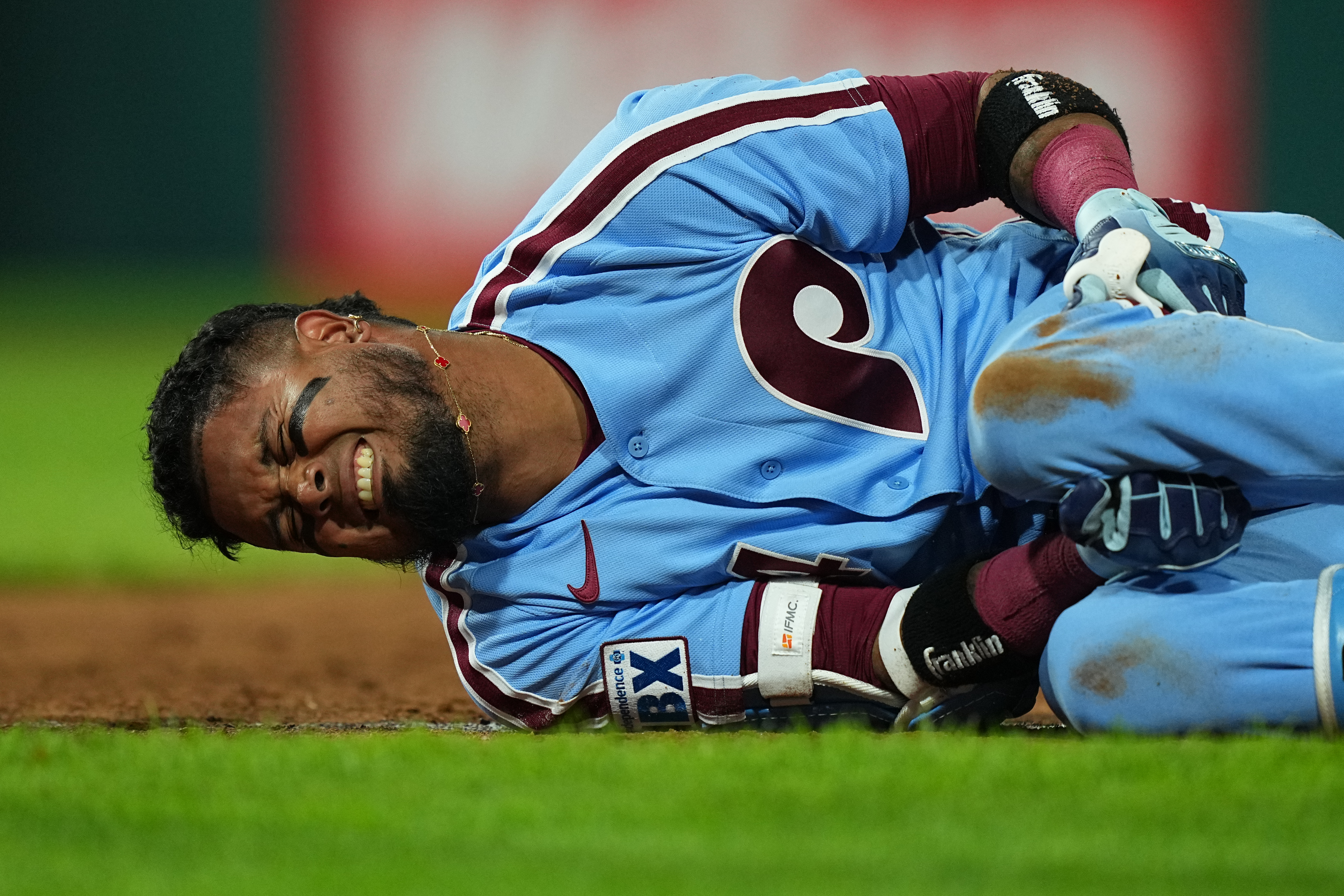
    Phillies’ Luis Arraez reacts to an injury after being thrown out at first base during the sixth inning of their game against the Milwaukee Brewers on Sept. 24. Matt Rourke

    Luis Arraez’s season-ending play at first

    It might’ve been one of the biggest vibe killers for the Phillies heading into the postseason. Remember, Arraez’s arrival felt like the reprieve this team needed, with Bryce Harper hitting spotty at best and Kyle Schwarber’s signature Schwarbombs having cooled off.

    But then Arraez suffered a season-ending ankle injury against the now-World Series champion Milwaukee Brewers in a play at first that was just weird. It was scary because we’re talking about a player who was hitting .312 with 64 RBIs. And while it wasn’t the same injury, it did have shades of Ryan Howard’s Achilles tear in Game 5 of the National League Division Series on a … play at first, circa 2011.
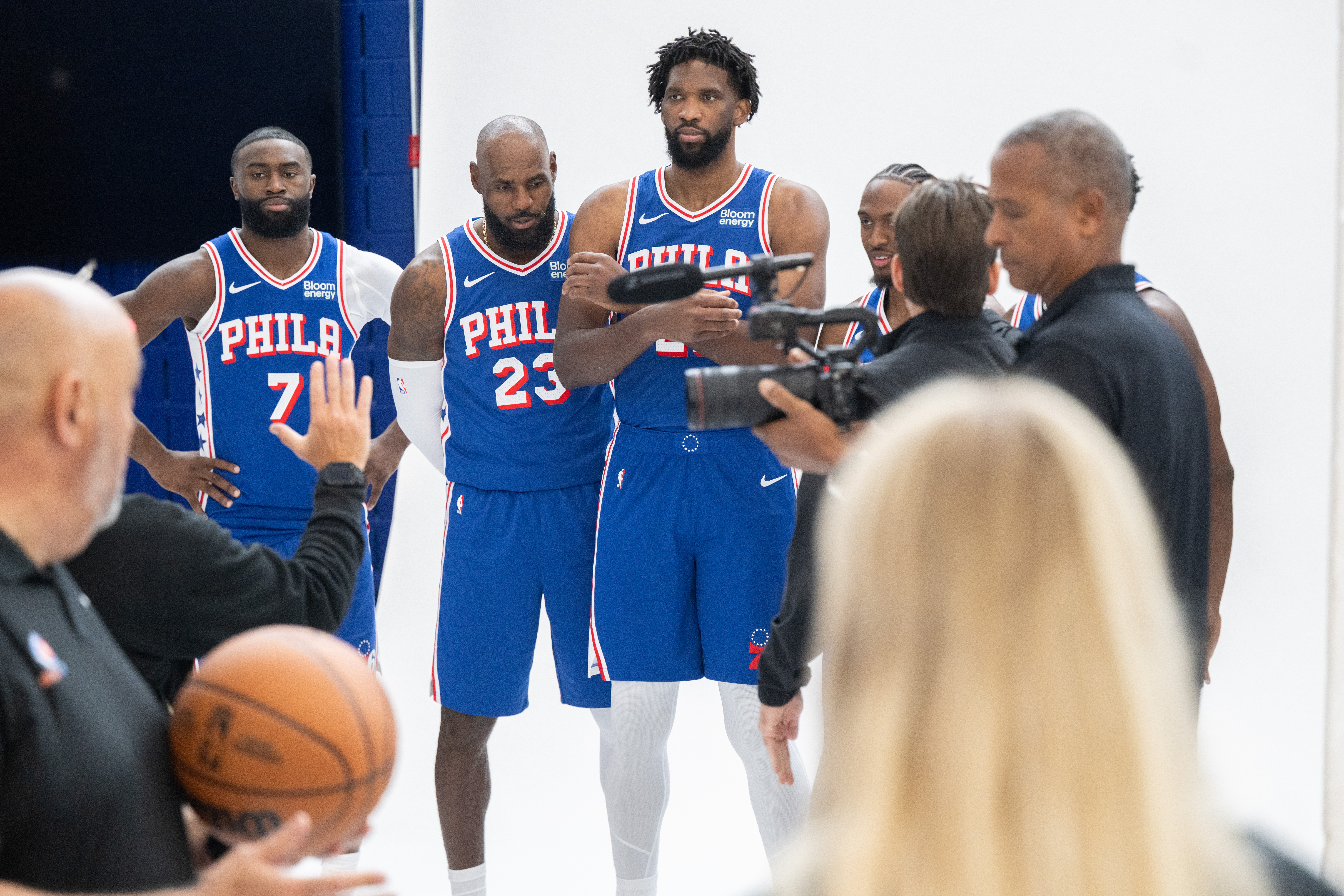
    The Sixers are the hottest team in the Eastern Conference, but there were some moments this season that threatened to derail that.Jessica Griffin / Staff Photographer

    Manufactured basketball beef

    As the city collectively hopes and wishes that “The Process” finally comes to fruition, early season reports of friction within the Sixers camp did create cause for concern. Fans have seen how locker room beef can derail a season (recall the Ben Simmons saga), so when there was a report that LeBron James got into it with longtime Sixers center and 2022-23 NBA MVP Joel Embiid over Embiid allegedly showing up late to practice, the “here we go again” alarm definitely sounded.

    Follow that up with the report that Jaylen Brown and former Celtics teammate Jayson Tatum had an issue after Tatum recalled his surprise at Brown being traded. , Brown took to Instagram and dropped a cap emoji on the report, internet slang to show that the take was a lie. The issue continued when an ESPN report suggested that Brown “demanded a trade,” another point he later refuted as Sixers fans watched this unfold, assuredly while breathing into a brown paper bag.
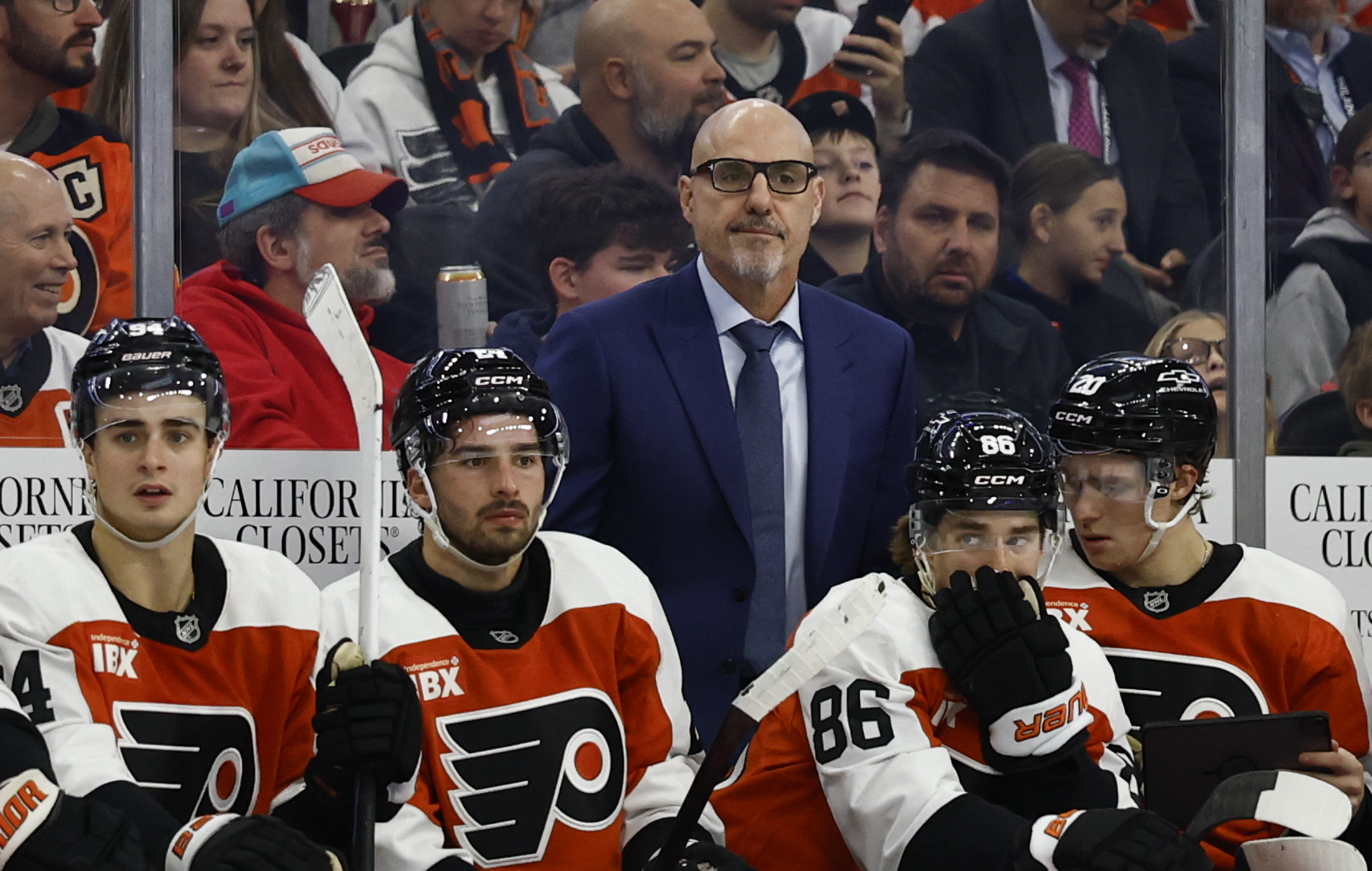
    Flyers head coach Rick Tocchet looks on dejectedly during a recent game against the Colorado Avalanche. Yong Kim / Staff Photographer

    ‘Soft’ Flyers have just three wins in 15 games

    This was supposed to be a season in which a young, hungry Flyers team was ready to take the NHL by storm. They had an engaged coach in Rick Tocchet, a front office fully behind him, a young phenom in Porter Martone, and another wunderkind in Matvei Michkov boasting about offseason weight loss that made him faster on the ice.

    But it’s a scary thought that after 15 games, the Flyers have only three wins to show for it. It prompted a good deal of finger-pointing that on Thursday led to captain Sean Couturier calling the team’s play “soft” — and Tocchet not necessarily refuting that claim. It’s been a long time since the Flyers were a legitimate NHL threat. This was thought to potentially be the year, but it’s somewhat frightening to learn, even early on in the season, that they might be anything but.
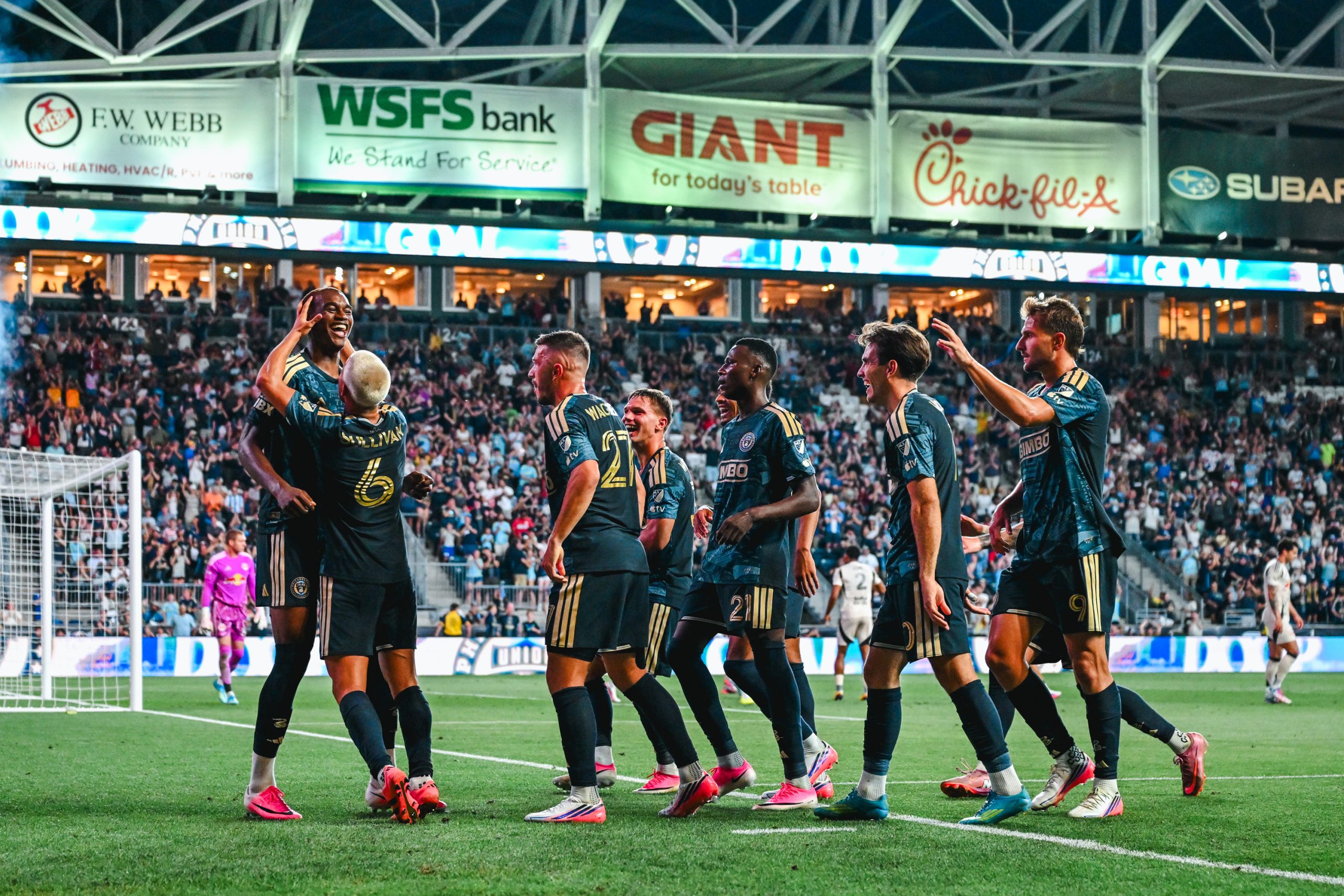
    Neil Pierre (left) celebrates with teammates after scoring one of his four goals on the season for the Union, who rattled off a franchise-record 15-game unbeaten streak.Philadelphia Union

    Soaring Union are spread thin

    The Union arguably have become the best story in Major League Soccer this season. An overhaul in leadership following just one win in 15 games has led to an unprecedented run complete with qualifying for the upcoming MLS Cup playoffs.

    But lurking under the surface is the fact that there are multiple players with significant injuries, notably leading goal-scorer Milan Iloski. They’ve played six games in a month, with three games over a weeklong period twice since mid-September. Whether this team will power through or limp into the postseason is a real concern. It’s already been a remarkable season, but how long it can continue at this rate is a legitimate fear.
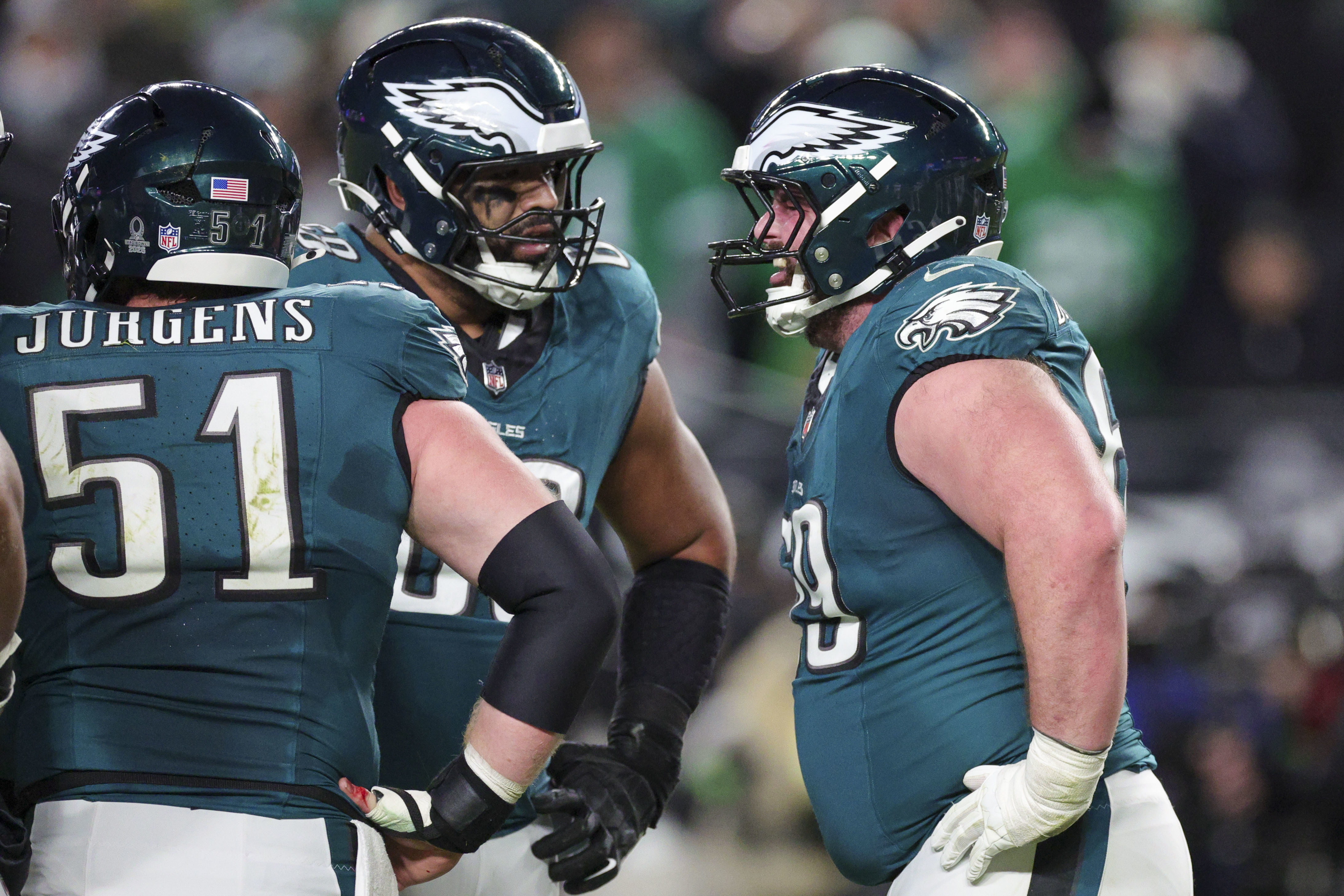
    Within the span of a month, the Eagles saw the departure of guard Landon Dickerson (right), and Cam Jurgens (left). David Maialetti / Staff Photographer

    Breakdown of the Birds’ offense

    It’s frightening just how fast everything changed, and a good chunk of it happened over the last month or so. In the span of four weeks, the team bid farewell to longtime guard Lane Johnson, who announced his retirement on Oct. 6, and Cam Jurgens, who was traded to the Baltimore Ravens, just one day later.

    Wide receiver DeVonta Smith is set to miss his second straight game because of a hamstring injury, and running back Saquon Barkley is doing his best to play through back and hamstring pain, including giving us his best Boobie Miles impression on the sideline in Monday’s loss to the (gasp) Dallas Cowboys. It’s even scarier when you realize that’s not even the worst of it.

    That, of course, would be …
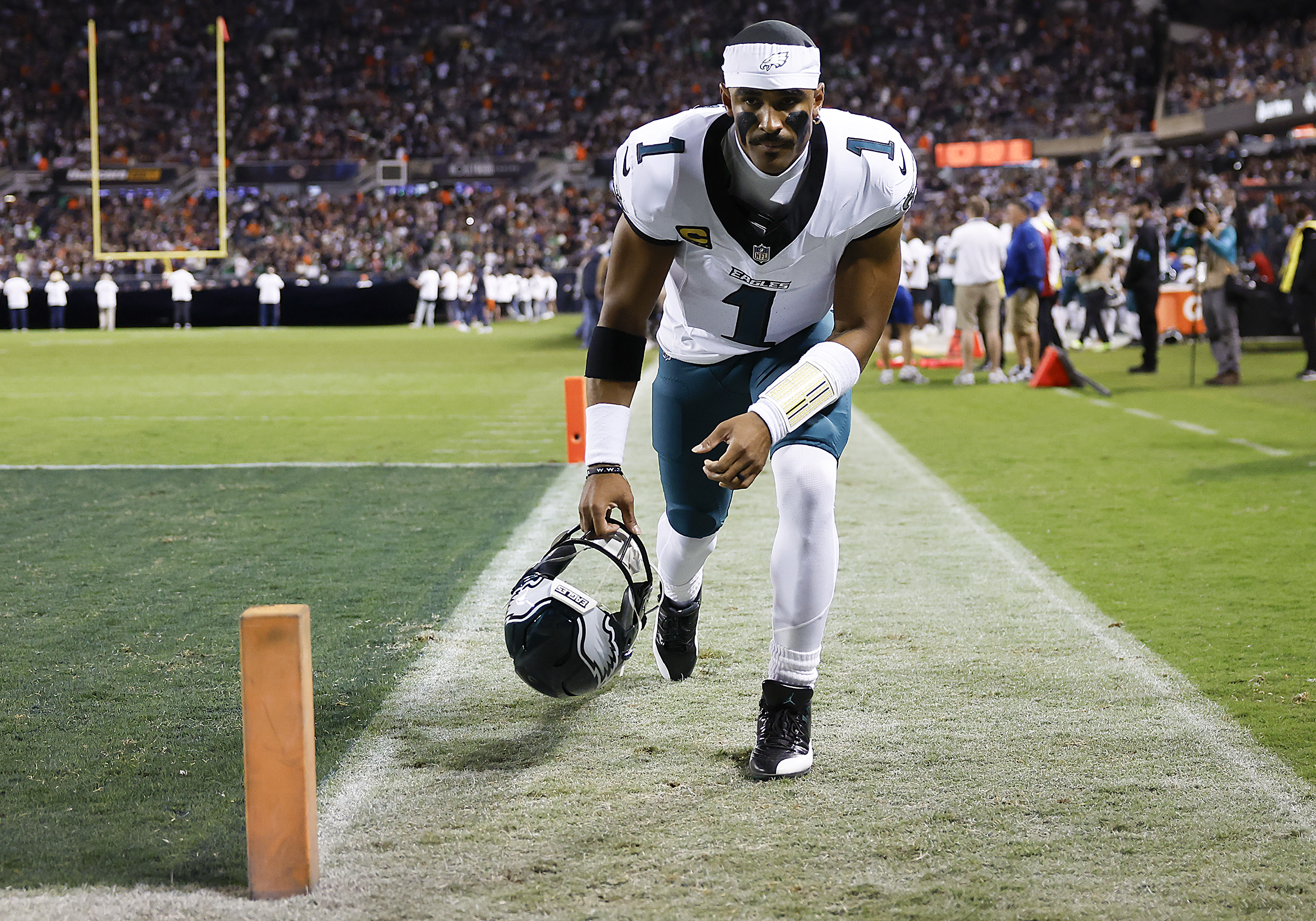
    Eagles quarterback Jalen Hurts likely is out for the rest of the season because of blood clots that spread to his lungs. Yong Kim / Staff Photographer

    The severity of Jalen Hurts’ blood clots

    It’s a miracle that we’re not having an even more serious conversation about Eagles quarterback Jalen Hurts, who was found to have trained and played with a blood clot in his leg that later migrated to his lungs. To recap: He flew on a transatlantic flight to London and played four quarters against the Jaguars with the injury.
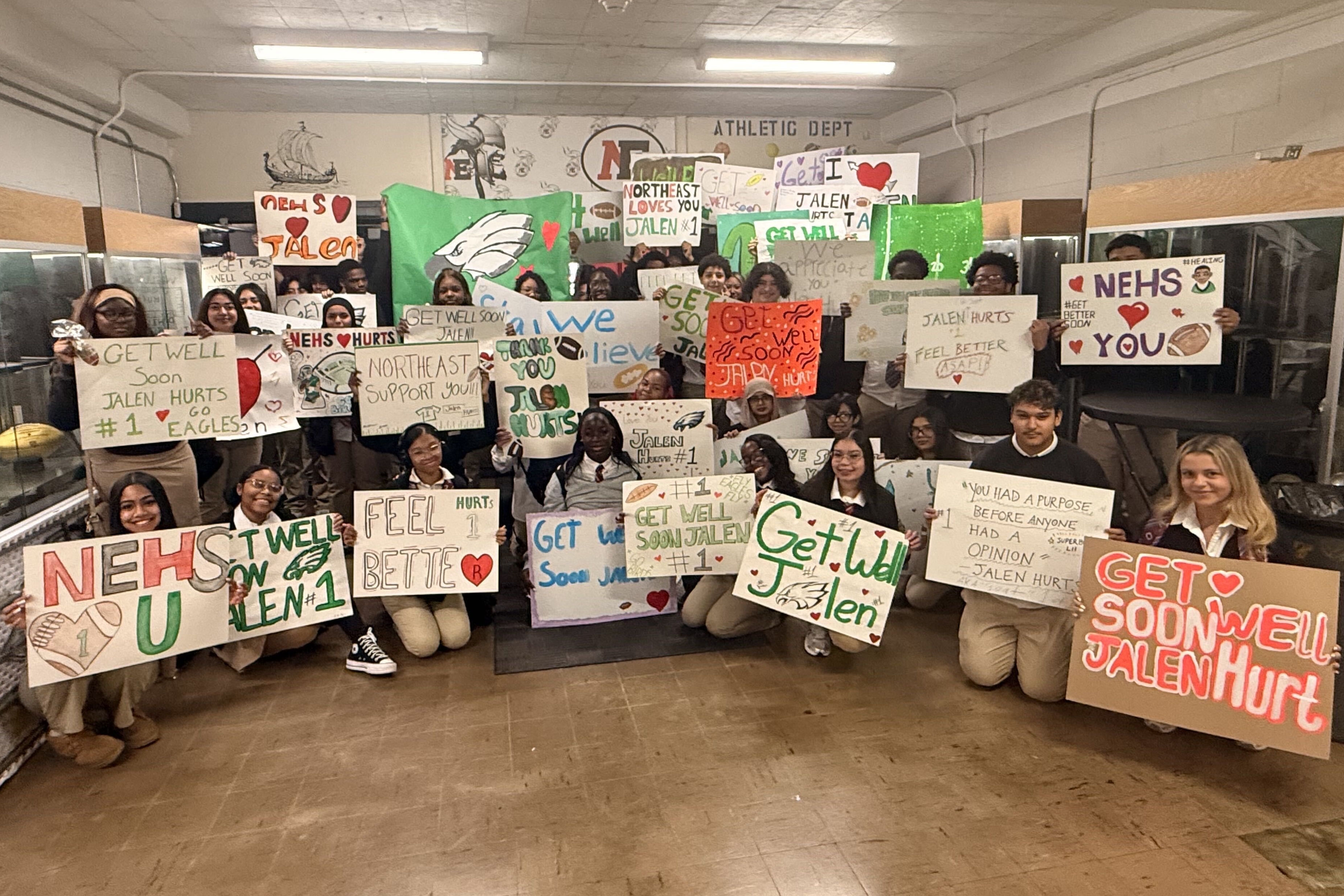
    Northeast High School students made posters to support Jalen Hurts. They also created “QB1” in a giant formation on their football field.Steph Gaunay

    And yet, all of this seems to have dissipated after the NFL said it found no wrongdoing, despite an ongoing independent investigation by the league’s player’s association into how team officials handled the situation. The team largely has remained mum, aside from a few comments by head coach Nick Sirianni.
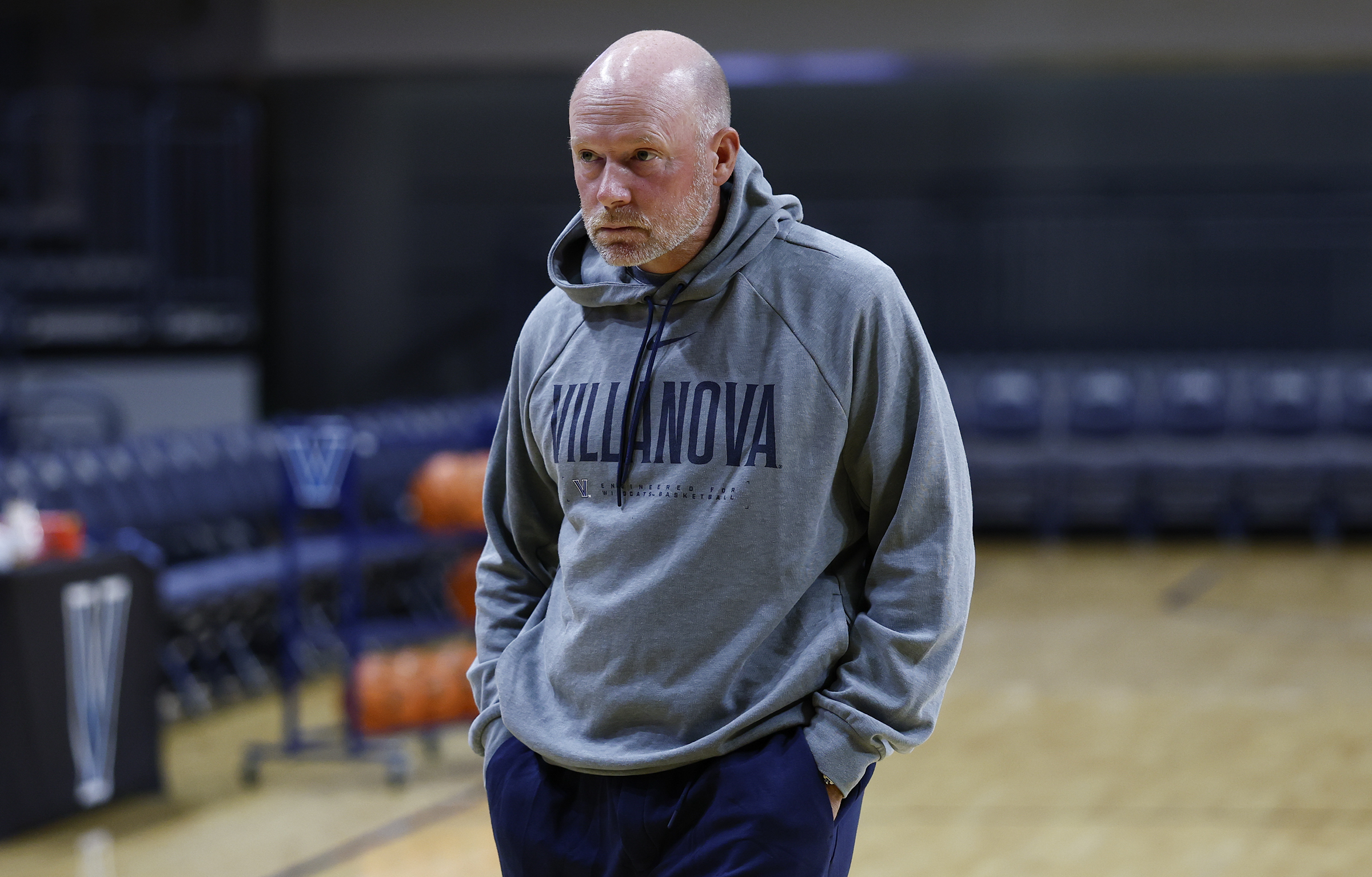
    Kevin Willard and Villanova will opt out of the Big 5 Classic under its current format beginning next season. Yong Kim / Staff Photographer

    Kevin Willard attacks fledgling Big 5

    For the city’s old basketball guard, there’s already a real fear that the Big 5, which has been losing mass appeal in the city despite changing its format, might sail off into the sunset. In fact, it’s been a fear for a while, with some even drawing conclusions that it could be a matter of time.

    That’s all it was, until last week, when, ahead of the team’s season-opening trip to Rome, Villanova announced its intent to pull out of the Big 5 under its current format next season. The move effectively removes the one blue blood the other five mid-majors held themselves up to and gave fans a must-watch moment.

    The notion was further realized with men’s basketball coach Kevin Willard called the current format “stupid,” all while throwing other Big 5 programs under the bus in the process and lambasting an Inquirer reporter despite nothing being inaccurate in his report.
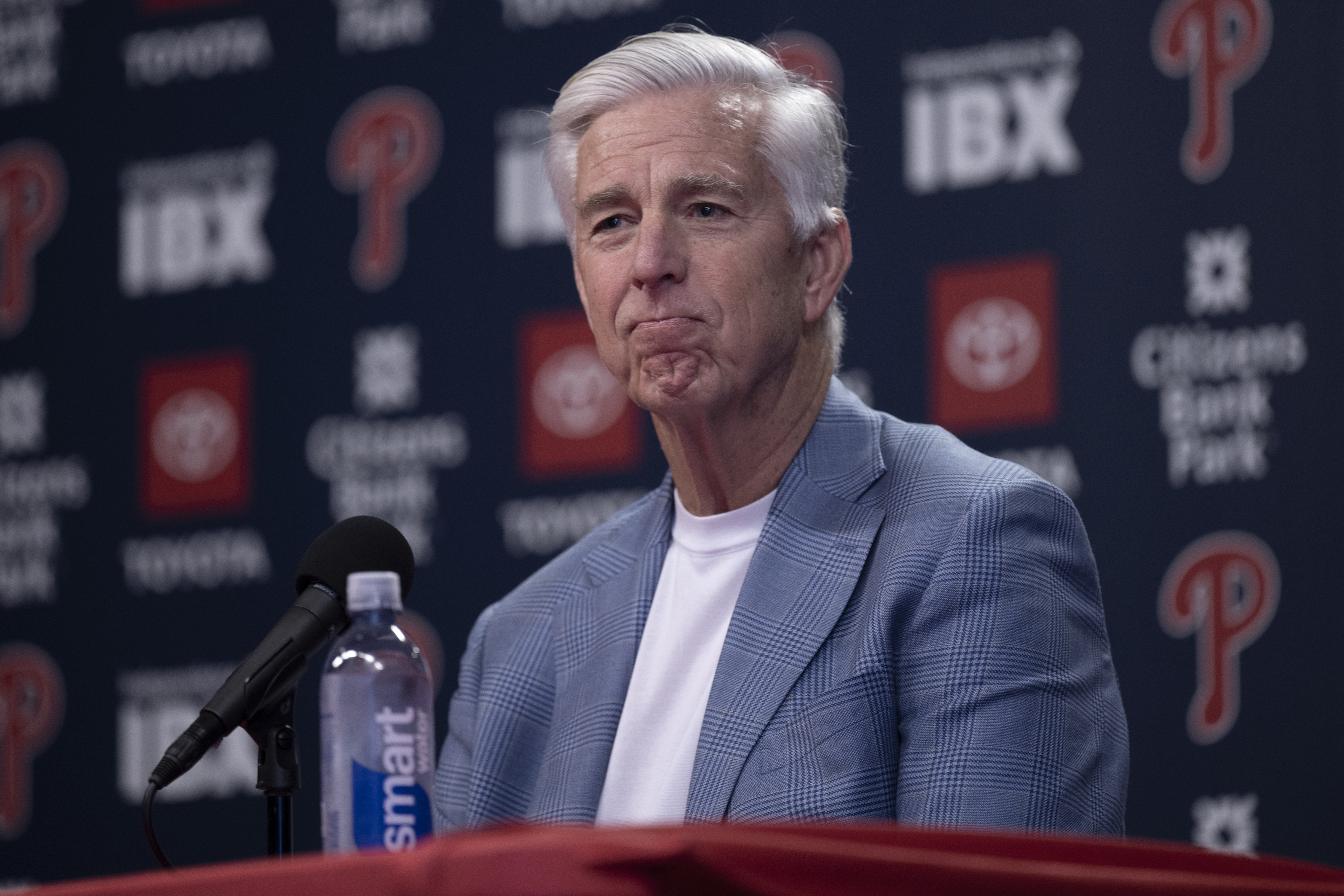
  • Hot stove season begins. Will Dave Dombrowski make more mistakes like Pete Alonso, Trea Turner, José Alvarado?

    Hot stove season begins. Will Dave Dombrowski make more mistakes like Pete Alonso, Trea Turner, José Alvarado?

    With the Brewers’ five-game World Series win, it’s the offseason again, which means Dave Dombrowski gets to make more mistakes.

    It’s been a rough calendar year for Dealin’ Dave.

    Since the 2025 season ended, Dombrowski has insulted the franchise player; constructed a catastrophically bad bullpen; and, for the second straight season, failed to acquire a dependable right-handed power hitter to protect Bryce Harper, who might actually return to eliteness if he had a little help.

    This harsh critique might not be totally fair, considering Dombrowski probably will wind up in the Hall of Fame, but he has not exactly covered himself in glory since he became Phillies president in 2020. After all, he inherited Harper, ace Zack Wheeler, and dominant lefty Cristopher Sánchez, along with most of the team’s other top contributors, and he has failed to properly augment them.

    Granted, Dombrowski has hit a few home runs, but for every Jesús Luzardo there is a Taijuan Walker, for every Kyle Schwarber a Nick Castellanos. Talent evaluators with bottomless pockets need to have an average better than .500. In fact, all of their decisions need to be generally sound: who they sign, who they retain, and who plays which positions.

    Dombrowski has come up wanting in several of those categories.

    In the interest of full disclosure, I publicly criticized one of those decisions; idiotically agreed with another; and pondered the other one, offering no opinion, but only because my colleague, David “Hot Stove” Murphy, beat me to the punch.

    Let’s start there.

    The Pete Alonso Whiff

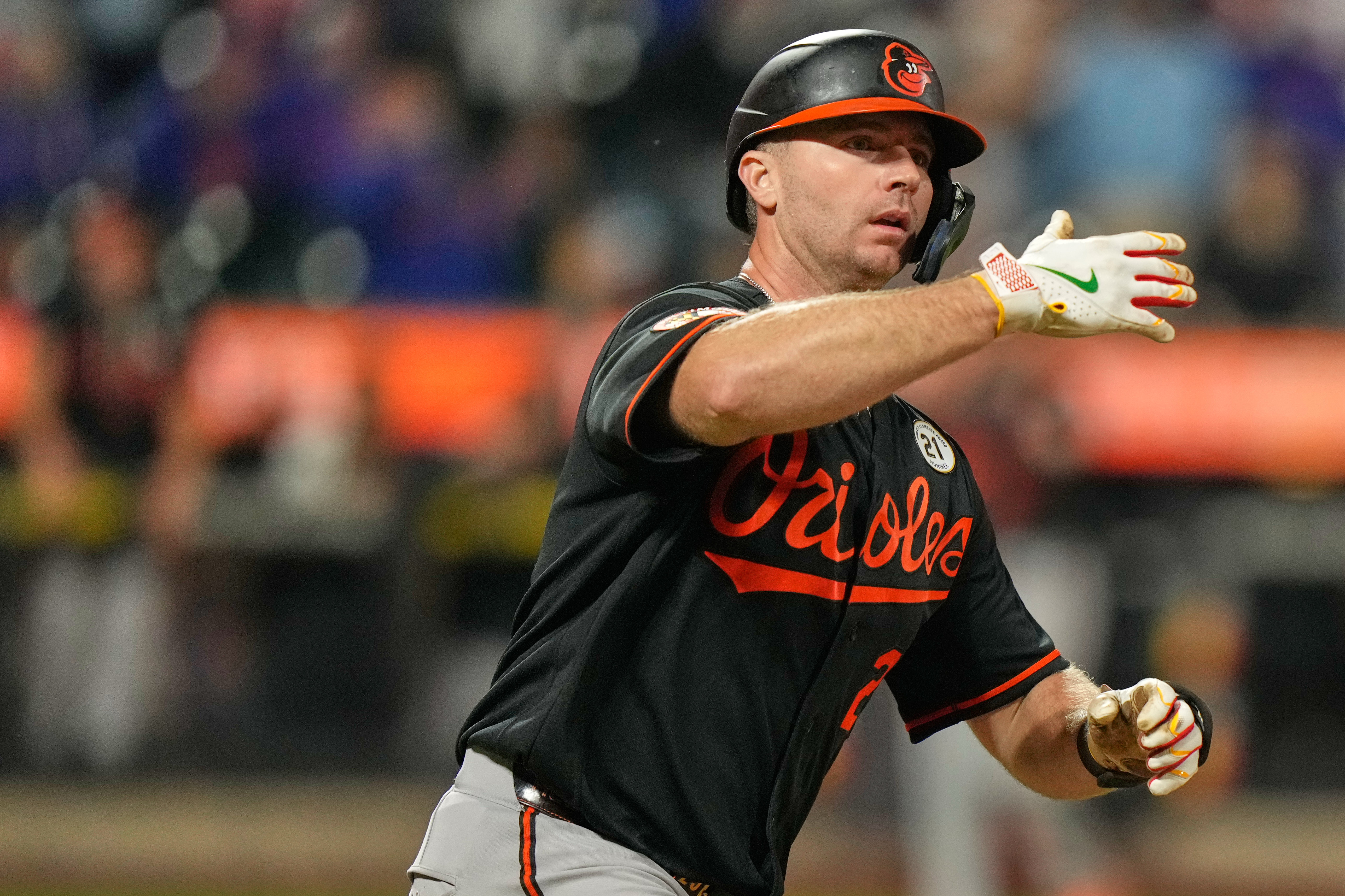
    Alonso, who holds the Mets’ record for career home runs, left New York as a free agent and signed with the Orioles in the second week of December for five years and $155 million.

    The Phillies sniffed around Alonso, but, for whatever reason, they were never serious.

    “There was a little bit of dialogue, very, very early, more of a ‘Hey, how you doing?’ type of thing,” Alonso told NBC Sports Philadelphia during spring training.

    That’s because the Phillies had earmarked that money for Kyle Schwarber, whom they re-signed for five years and $150 million the day before Alonso went to Baltimore.

    Either-or, right?

    No.

    That makes no sense.

    That’s because, in January, the Phillies offered Bo Bichette $200 million over seven years. He leveraged that offer into a three-year, $126 million deal with the Mets, which infuriated the Phillies but also made obvious the fact that Dombrowski had the money if he’d wanted to sign Alonso.

    Signing Pete Alonso would have provided the Phillies the exact power bat needed to protect Bryce Harper.Seth Wenig

    Alonso was 31, and if he’d signed in Philly, he would have been 36 at the contract’s end. Bichette was 28 at the beginning of the 2026 season and would have been 35 at the contract’s end.

    Alonso had made four consecutive All-Star teams, his WAR in those seasons was 13.5, and his OPS was .838. Bichette’s WAR was 11.5 and his OPS was .786.

    Yes, Harper would have had to move back to right field from first base, but if he’s no longer elite, as Dombrowski contended after 2025, then why should Harper be able to dictate what position he plays? Besides, if Harper, at 33, can play all 165 games (including playoffs) in 2026 at first base, right field, and designated hitter, then he could have played 120 in right, 20 at first, and 10 as DH, with a dozen games off.

    Harper moved back to the outfield for the last two months of 2026 anyway, when Dombrowski traded a pitching prospect for contact lefty Luis Arraez.

    As for the money, well, Dombrowski gave 33-year-old right-handed free agent Adolis García $10 million for 67 games of .599 OPS. Who could have seen that coming? After all, Garcia’s OPS the previous two seasons was a whopping .675.

    Would Alonso have been worth $20 million more?

    Well, Alonso led the American League with 43 home runs and 113 RBIs and had his best season since he was a rookie in 2019. Not only did he have a better year than Bichette, who was a massive disappointment, Alonso had a better year than every other Phillies hitter.

    Whiff.

    Trea Turner to the outfield

    In June 2024, Turner arguably was the worst shortstop in baseball and, inarguably, was the worst shortstop for the money in baseball. That’s when I suggested he move to the outfield. Immediately. Put bench man Edmundo Sosa at shortstop or move Bryson Stott over from second, just get Turner out of the infield before it was too late. He played some outfield in the past, he was just 31, and he was the best athlete on the team.

    Nobody listened. Turner, prideful, didn’t want to do it. The Phillies laughed at the suggestion. In 2025, when Turner won the National League batting title and had his best defensive season in years, they laughed even harder.

    Who’s laughing now?

    Turner in 2026 again was the worst defensive shortstop in baseball. After the Phillies exited the playoffs, Dombrowski called Turner back to Philadelphia from his home in Florida for a two-hour meeting to tell Turner that he had to win the shortstop job at spring training.

    “I told him that is mandatory,” he said. “I told him he cannot play shortstop like he did in 2026, going into 2027.”

    Yes, well, I told them all 2½ years ago that Turner and the Phillies would be better off with him standing on grass rather than dirt.

    Turner will be 34 in June.

    Rest assured, by then he no longer will be the Phillies’ shortstop.

    José Alvarado? Seriously?

    Ebenezer Scrooge blamed “an undigested bit of beef” for what he believes is the hallucination of the ghost of Jacob Marley.

    Perhaps I suffered the same root of delirium when I endorsed the retention of a wild and shamed left-handed reliever.

    In 2025, Alvarado was suspended for 80 games and the playoffs for using PEDs. He also finished the season injured. Nevertheless, Dombrowski picked up his $9 million option.

    Which I cheered.

    Yes.

    Well.

    Of the 86 pitchers who made at least 60 appearances, Alvarado ranked dead last with a 5.86 ERA and had the third-worst WHIP. The Phillies did not use him in the playoffs.

    For an experienced pitcher with 100-mph stuff making $9 million, Alvarado was a huge bust.

    So shame on me.

    But then, unlike Dombrowski, I’m not making millions of dollars to make mistakes like this.

    Far greater shame on him.

  • Eagles vs. Commanders: Predictions, odds, injury updates, and what everyone is talking about heading into Week 8

    Eagles vs. Commanders: Predictions, odds, injury updates, and what everyone is talking about heading into Week 8

    It’s Halloween, but the Eagles have been experiencing it for five weeks now. It’s been a season reminiscent of a haunted house, with new horrors at every turn. From clock management mishaps to a frenzy of injuries, the latest scare has surrounded the culture in Eagles locker room and the conversations about it.

    Those conversations also include questions about if there is an effort problem in Philly. Head coach Nick Sirianni was quick to shut those conversations down.

    Instead, the message this week has been on focusing on the details that may have been lacking and putting the Eagles in the best position to win throughout the week.

    “What you do throughout the week is going to put you in positions. It guarantees nothing,” Sirianni told reporters Friday in a news conference. “But that’s what you need to do to be able to put yourself in the best positions to win.”

    Looking toward the rest of the season, the Eagles aren’t in much of a position to win anything substantial. With just a 3% chance of making the playoffs, according to The Athletic’s NFL playoff simulator, the 2-5 Eagles will take on the 1-4-1 Commanders in a rematch of one of the only games the Eagles won this season.

    A win has the potential to shake off some of the cobwebs for the Birds. A loss will only make this season scarier.

    — Mia Messina

    If someone forwarded you this email, sign up for free here.

    How to watch Eagles vs. Commanders

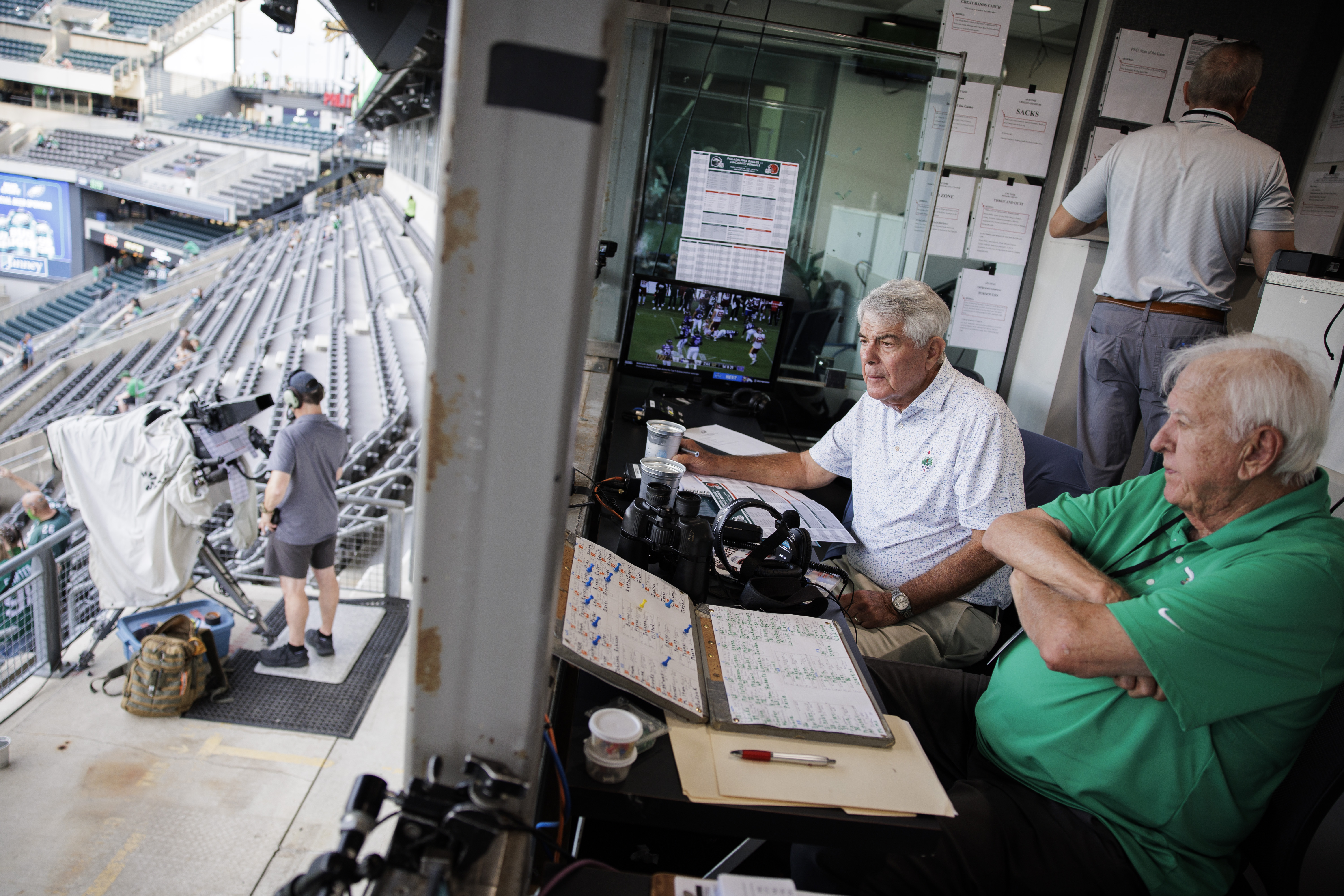
    As usual, Merrill Reese (left), here with spotter Bill Werndl, will be on the call when the Eagles take on the Washington Commanders on Sunday.Monica Herndon / Staff Photographer

    Despite some talk that they may get flexed out of prime time, the Eagles and Commanders will sill play on Sunday Night Football on NBC, with kickoff at 8:20 p.m. The game also will be available to stream on Peacock. Mike Tirico (play-by-play), Cris Collinsworth (analyst), Melissa Stark (sideline) and Terry McAulay (rules analyst) will be on the call for the game.

    Merrill Reese and Mike Quick will have the radio call on WIP (94.1-FM).

    Final injury report

    Running back Saquon Barkley admitted he wasn’t fully healthy for Monday’s game against the Cowboys as he returned from a hamstring injury. And then he suffered a back injury during the loss. Still, Barkley has been cleared to play on Sunday.

    Eagles

    Out

    • WR DeVonta Smith, hamstring
    • WR Dontayvion Wicks, ankle
    • WR Britain Covey, knee
    • LB Jihaad Campbell, hamstring/quad
    • CB Jonathan Jones, hamstring

    Questionable

    • CB Jakorian Bennett, knee

    Commanders

    Three of the five players on the Commanders injury report are a part of Washington’s defensive unit. The defense, under first-time play caller Daronte Jones, currently ranks 25th in the NFL in yards allowed per game, giving up 354.5 total yards on average.

    Out

    • DT Javon Kinlaw, knee

    Questionable

    • TE John Bates, shoulder
    • WR Treylon Burks, foot
    • DT Jer’Zhan Newton, pectoral
    • DT Daron Payne, foot

    Latest Week 8 odds

    The Eagles are the 5½-point underdogs against the Commanders, according to FanDuel. This is the fifth consecutive week the Eagles have been underdogs, and they’ve gone on to lose in each of those games. Back in the good old days, the Eagles were the underdog six times during the 2024 and 2025 regular seasons, and went 6-0 against the line.

    Check out more odds and player props for this week here.

    Storylines to watch

    Eagles running back Saquon Barkley and his availability will be among the biggest storylines on Sunday.Monica Herndon / Staff Photographer

    Barkley’s status ahead of Sunday was a big question throughout the week. That’s since been answered.

    Now, it raises a new question: How much can Barkley contribute on Sunday night? While you shouldn’t expect Barkley to be hurdling backward and rushing for 200 yards, he said Friday that he still hopes to provide a “spark” on offense.

    “One day, I’m not going to be playing football,” Barkley said. “Whenever that is, and I’m going to look back, I don’t want to look back and be like, ‘I could have given it a chance and I didn’t.’”

    Our Eagles Week 8 preview show

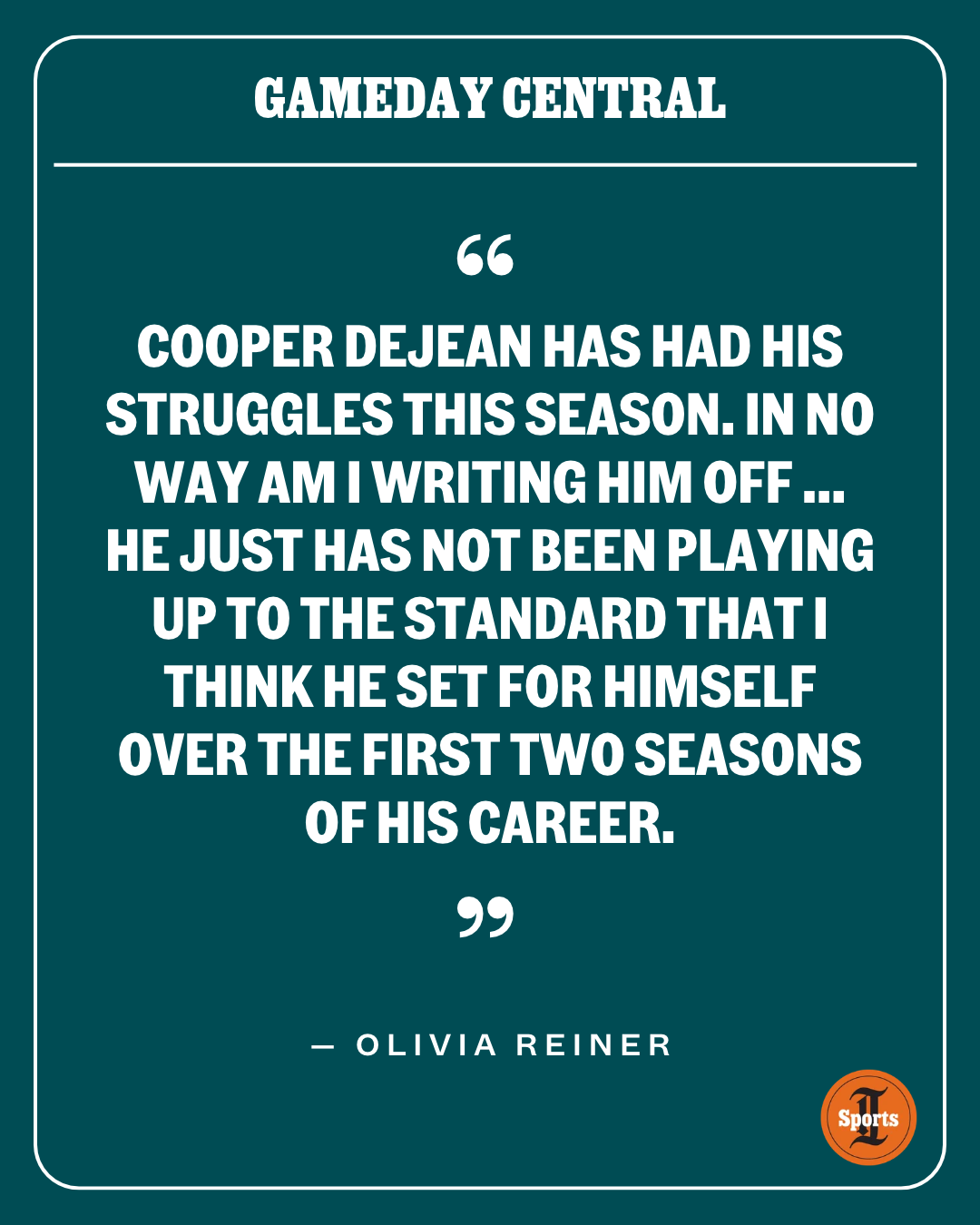
    Olivia Reiner discussing Cooper DeJean on the Week 8 episode of our Eagles preview show.Matt Mullin / Staff

    Olivia Reiner and Ryan Novozinsky discussed the contract statuses of a few of the team’s young stars and outlined some of the keys to Sunday night’s NFC East clash on this week’s Gameday Central preview show.

    Win or lose, Ryan will be back reacting to the game immediately following the final whistle.

    Eagles-Commanders predictions

    Jeff McLane: Commanders 20, Eagles 16

    Jeff Neiburg: Eagles 20, Commanders 16

    Olivia Reiner: Commanders 24, Eagles 20

    Ryan Novozinsky: Eagles 21, Commanders 7

    You can also check out the reasoning behind our writers’ picks and McLane’s keys to the game. As for the rest of the country, here’s a look at the national media predictions for Sunday.

    What we’re saying about the Eagles

    Here’s what our columnists are saying ahead of Week 8, starting with Mike Sielski, who looked at the many “what if” scenarios surrounding the season.

    Sielski: “It’s not so simple as saying, Everything would be better if Stout were still here. The Eagles wanted to change offensive systems, which necessitated changing their blocking schemes, and as terrific as Stoutland was, as tight as his relationships with the players under him were, the O-line was not the dominant force in 2025 that it had been in 2024.” Read more.

    Marcus Hayes: “Eagles coach Nick Sirianni, hopeful of retaining his $17 million job, insists he doesn’t have problems with his locker room. Well, Jalen Carter is a problem in his locker room. He’s not the only problem, but he’s the biggest problem.” Read more.

    David Murphy: “Eagles general manager Howie Roseman is smart enough to know that he must capitalize on whatever future benefit exists from the disposability of 2026. He is also smart enough to understand the limits of the potential draft capital available to him even with a forward-thinking philosophy. It is much more limited than a lot of Eagles fans like to think.” Read more.

    What the Commanders are saying

    Washington Commanders head coach Dan Quinn doesn’t exactly have fond memories of the Week 1 matchup with the Eagles.Jed Jacobsohn

    For the Eagles, there have been very few highs this season. Beating the Commanders in the season opener by spoiling their two-point conversion attempt was one of them. But for Commanders head coach Dan Quinn, it was one of his least favorite moments of the season.

    “This is a great rivalry of games,” Quinn said. “We love battling them. I’m hoping they feel the same on their side. A lot of the games we’ve had with them have been tight, and those are the moments that you want as a competitor.”

    Quinn on playing a banged up Eagles squad: “Matchups are matchups, and sometimes that goes all the way up until in the coach’s locker room. … But as far as our planning, based on them, a good bit, especially early in the week, is our plan, how we go about attacking the system.”

    What the national media is saying

    Even with an interception and a misthrow late in the second half against the Cowboys, Jason Kelce thought backup quarterback Tanner McKee’s performance on Monday was a lot better than the previous week’s. And as McKee settles into the role and the Eagles get used to a season without Jalen Hurts, Kelce said this is when everyone will get to see what Philly is truly made of.

    “That’s when it gets hard to keep things on rail and keep it together,” Kelce said. “And it’s not even just the players. It’s like everything, man. Because everybody starts questioning everything, and you should because you’re losing games. But this is where great coaches, leaders, this is where you get tested as a ballclub and how you weather this.”

    What else we’re reading and watching

    Hopefully the Eagles will put the Halloween festivities behind them for their first game in November and move on to giving fans something to be grateful for ahead of Thanksgiving.

  • The Vet was almost a dome. Would public sentiment for the next Eagles stadium be different if it had been?

    The Vet was almost a dome. Would public sentiment for the next Eagles stadium be different if it had been?

    It was March 1966, when Philadelphia City Council president Paul D’Ortona, arguably the biggest proponent of putting a roof on the new stadium being proposed for the Eagles and Phillies in South Philadelphia, met some resistance from Ed Snider during a Council meeting.

    Before Snider became the longtime owner of the Flyers and the chairman of Comcast Spectacor, he was a vice president with the Eagles, and during the mid-’60s, there were few topics in local sports bigger than the new stadium project that eventually became Veterans Stadium.

    To dome, or not to dome was the key question.

    “Fans might not like it,” Snider said, according to a story in The Inquirer. “In nice weather, they want to be outside.”

    At that point, the Eagles, according to Snider, had not taken a position.

    “We would have to take the time to find out what the public wants,” he said. “We would have to look into it long and hard. Conceivably, a permanent dome could bring another white elephant to Philadelphia.”

    Sixty years later, the city is on the precipice of another stadium debate. The Eagles are in what Jeffrey Lurie earlier this year called their “exploratory research” phase when it comes to their future home. They could renovate the 23-year-old Lincoln Financial Field, or they could build a new stadium altogether. The Eagles’ lease at the Linc does not expire until 2032, but a discussion about the future certainly will play out long before then.

    There will be plenty of D’Ortonas, probably as many devil’s advocates like Snider, and others like the 1966 editorial staff of The Inquirer, which wrote that “there is still something to be said for fresh air and sunshine.”

    One present-day reader commented on a recent Inquirer story about why the Eagles would be paying close attention to Tottenham Hotspur Stadium in London and said “Philadelphia should pass a law that Eagles home games must be played outside.”

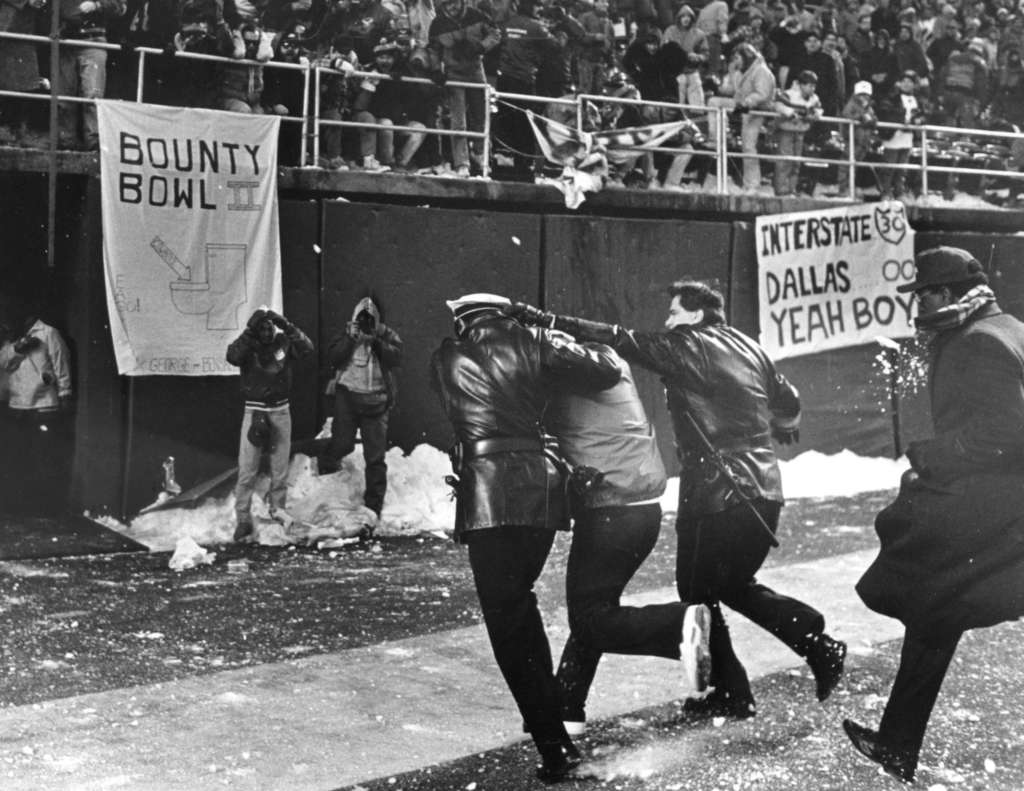
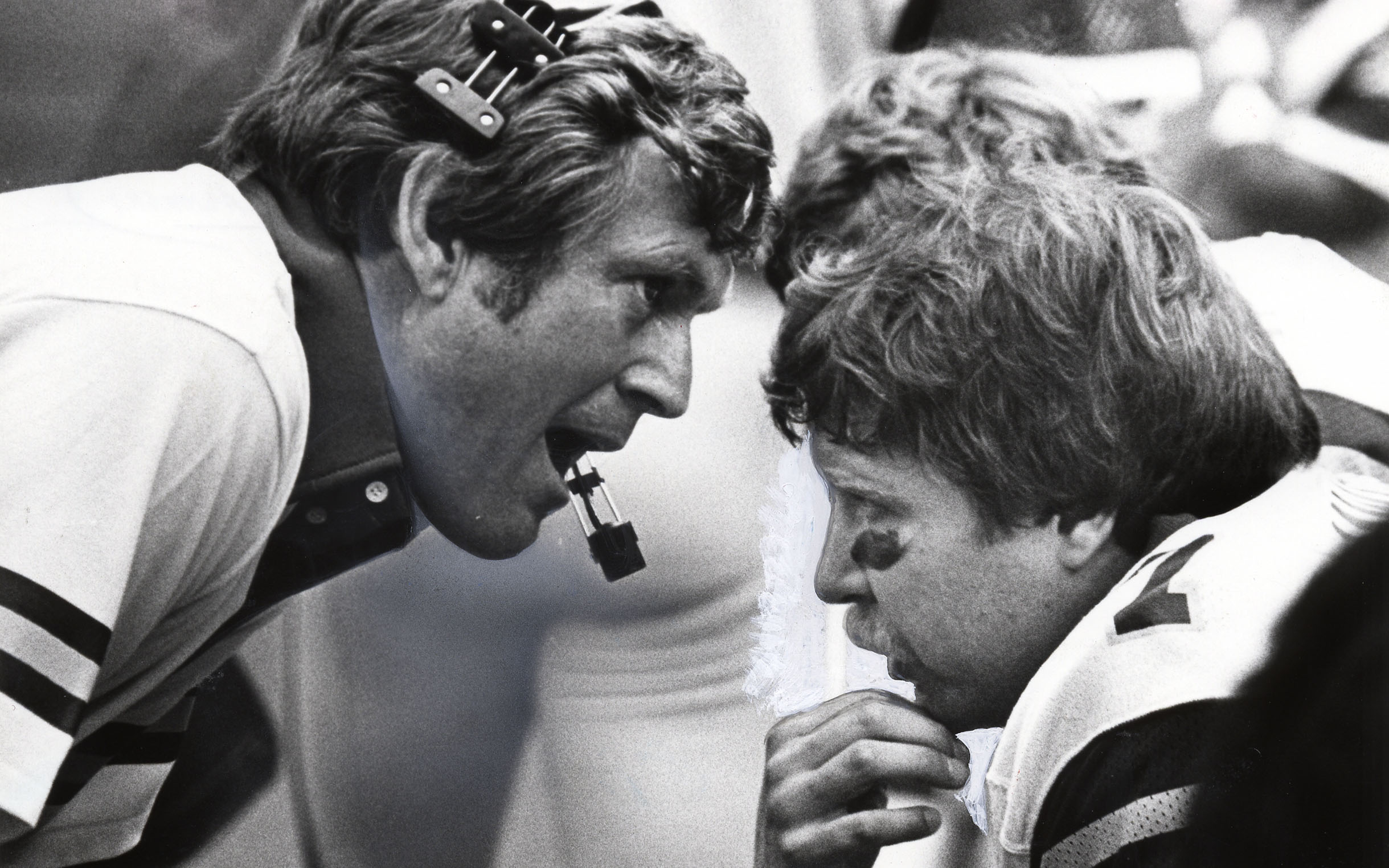
    Cowboys coach Jimmy Johnson (center) dodges snowballs as he’s escorted off the Veterans Stadium field following a 1989 game. Inquirer File Photo

    In response to a July article that said extreme weather during the World Cup at Lincoln Financial Field would be useful data to Lurie that, a reader emailed that “the blue collar element of Philly wants outdoor football.”

    The reader reminded the author that the NFL doesn’t play in the summer. And while that’s mostly true, the roof, no-roof, or retractable roof conversation will center on the things the stadium can be used for outside of the normal course of a regular football season. Things like hosting a Super Bowl, a Final Four, and year-round concerts.

    Which is why it’s fair to wonder, had things gone differently 60 years ago, if public sentiment on the topic would be different.

    The Eagles play on Christmas Eve later this year, which probably will invite way too many tired references to snowballs being hurled at Santa Claus. Events like that never would have happened in a dome, but it provided thousands of fans with a lifetime of memories.

    And what if the Eagles, already playing in a dome for decades, built a stadium with a roof in the early 2000s? How attached to football in the elements would the people of the Delaware Valley really be?

    How close was the Vet to having a roof?

    Philadelphia voters in 1964 approved a $25 million bond issue for a new stadium.

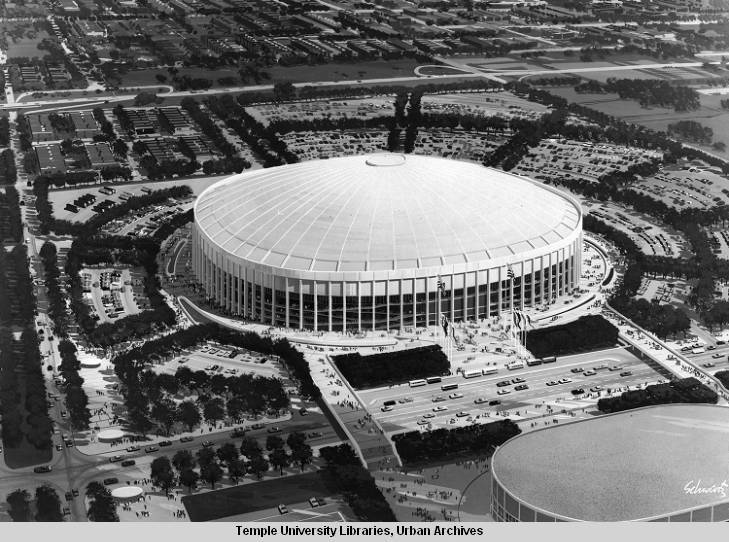
    The Astrodome was being built at the same time in Houston, and Philadelphia leaders thought they needed to follow the trend.

    A Daily News editorial in 1965 fully endorsed putting a roof on the building in an effort to keep up with the neighbors in New York, where officials were considering putting a roof over Shea Stadium.

    “There is an understandable reluctance to let New York get ahead of us in any area,” commentary from the Daily News read.

    No, the $25 million would not be enough to cover the costs of a roof, but provisions needed to be put in place to build a cover at a later date, according to the Daily News.

    “If the domed stadium in Houston is the success that its backers expect it to be and there are no major problems, domes will be a ‘must’ on stadiums of the future.”

    One of D’Ortona’s arguments at the time was that the cost of the dome would be offset by the added uses an indoor stadium could provide as well as the elimination of financial losses if events were canceled because of weather.

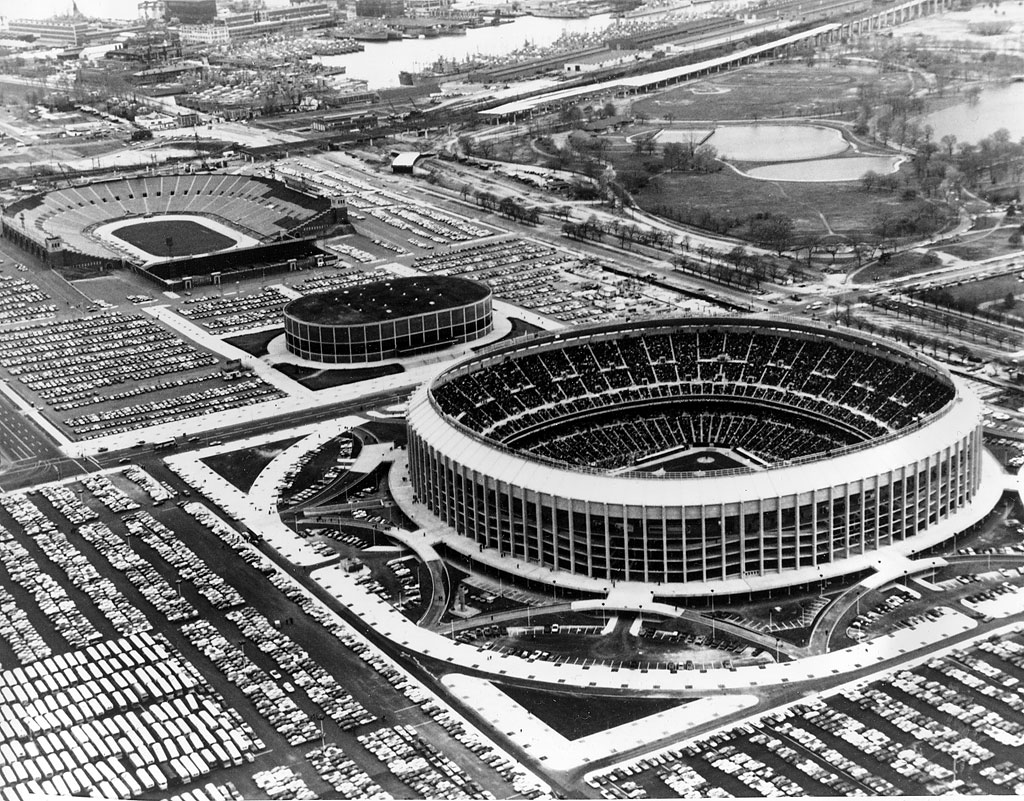
    This aerial photograph showed Veterans Stadium on its first opening day in 1971, flanked by the Spectrum and JFK Stadium.AP file photo

    D’Ortona spoke publicly in 1965 that building a stadium without a dome would quickly make it obsolete. A year later, he argued that Philadelphians wanted it. One resident wrote in a letter to the editor to The Inquirer that a domeless stadium would be outdated in a period of five years and that “a retractable dome is the ticket!”

    A retractable roof was discussed back then, too, but mostly in the hypothetical. In August 1966, five months after D’Ortona and Snider gave counterpoints during a Council meeting, architect Hugh A. Stubbins touted the advantages of a removable roof vs. a retractable roof, but he did not explain the difference between the two.

    Details of a possible removable dome would remain “a trick up my sleeve,” he said.

    The original estimates on how much it would cost to build Veterans Stadium proved to be far too low. Voters approved another $13 million bond in 1967 to help cover the rising costs of building a stadium that eventually ended up costing more than $50 million.

    Alas, putting a roof on the stadium proved too costly.

    What’s next?

    If the forward-looking conversations about the future home of the Eagles sound hypothetical right now, it’s because they are. The lease at Lincoln Financial Field doesn’t expire until 2032, and the exploratory phase the Eagles are going through is only an initial portion of what will be a lengthy process.

    How much will fans be involved in the decisions?

    The Eagles last year sent season ticket holders a survey about the potential for a new stadium. It asked fans to rank five options in order of preference: open air, open air (but covered), canopy, fixed (natural light/glass), fixed (fully closed).

    The results of said survey haven’t been made public, and it’s unclear how much the Eagles will weigh those preferences.

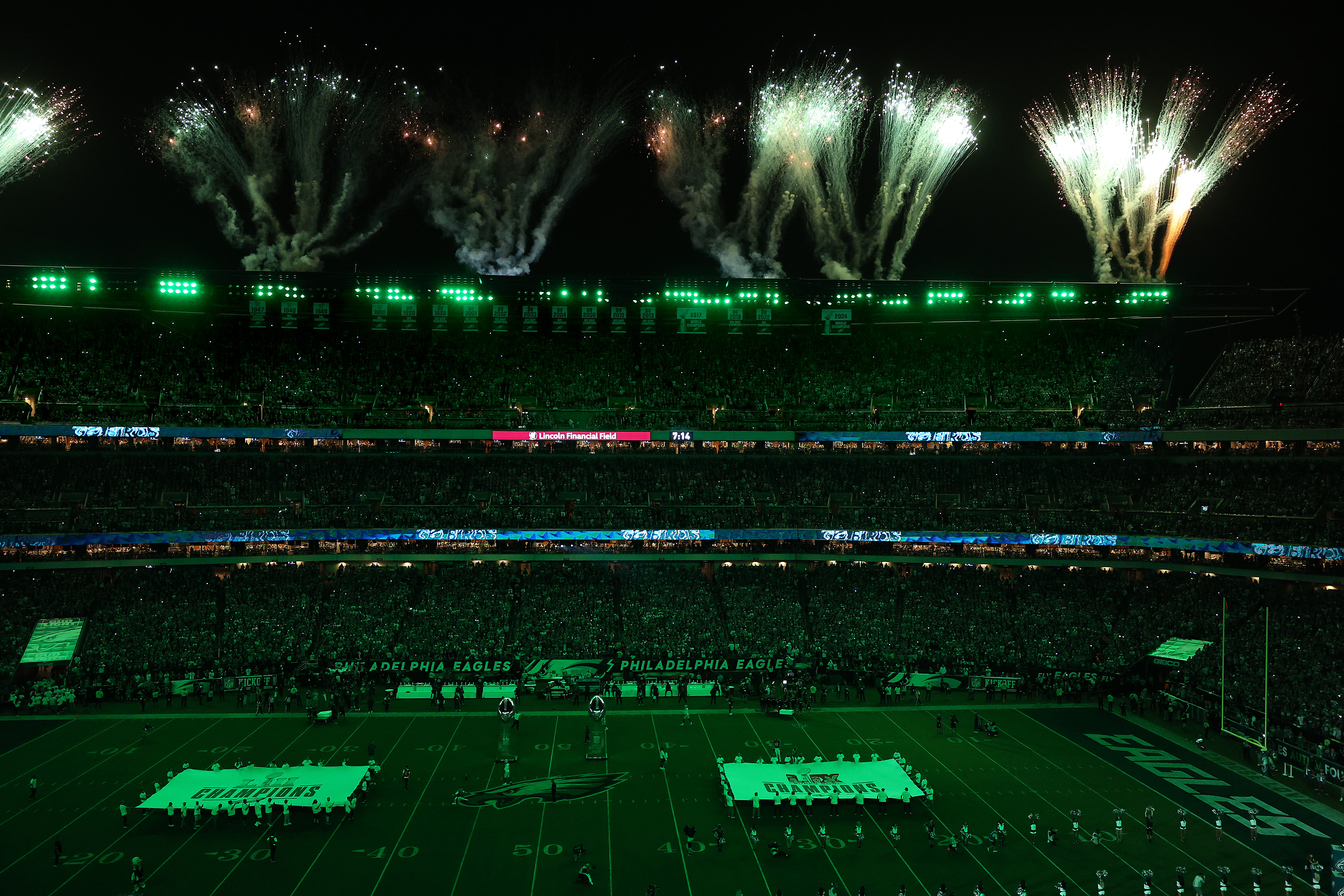
    Fireworks explode before the Eagles play the Cowboys at Lincoln Financial Field on Sept. 4, 2025.David Maialetti / Staff Photographer

    For some Eagles fans, there’s almost a resignation that the future home of the team will include some sort of roof.

    Outside Lincoln Financial Field on a scorching hot Fourth of July, Mount Laurel’s Graig Weidinger, tailgating before a World Cup game, lamented a future where LeSean McCoy doesn’t dash through the snow for 217 yards on a day when the snow accumulation outpaced the predictions. Or a future where Saquon Barkley isn’t running through a snow globe-like scene pushing the Eagles to the NFC championship game two seasons ago.

    “It gives you the memories,” Weidinger said. “You’re not going to have that.”

    But the reality of what may happen is hard to escape. Covered stadiums are on the way in NFL markets including Cleveland, Chicago, Denver (retractable), Kansas City, Tennessee, and Washington. By the time those projects come to life, the number of teams playing home games indoors will outnumber those playing in the elements.

    “For the city, with what they can do, you see the college playoffs going places, the Super Bowl,” Weidinger said. “If you’ve got a roof, you can do it all.”

  • When the Sixers needed him, LeBron James came to the rescue and delivered a win over the Knicks

    When the Sixers needed him, LeBron James came to the rescue and delivered a win over the Knicks

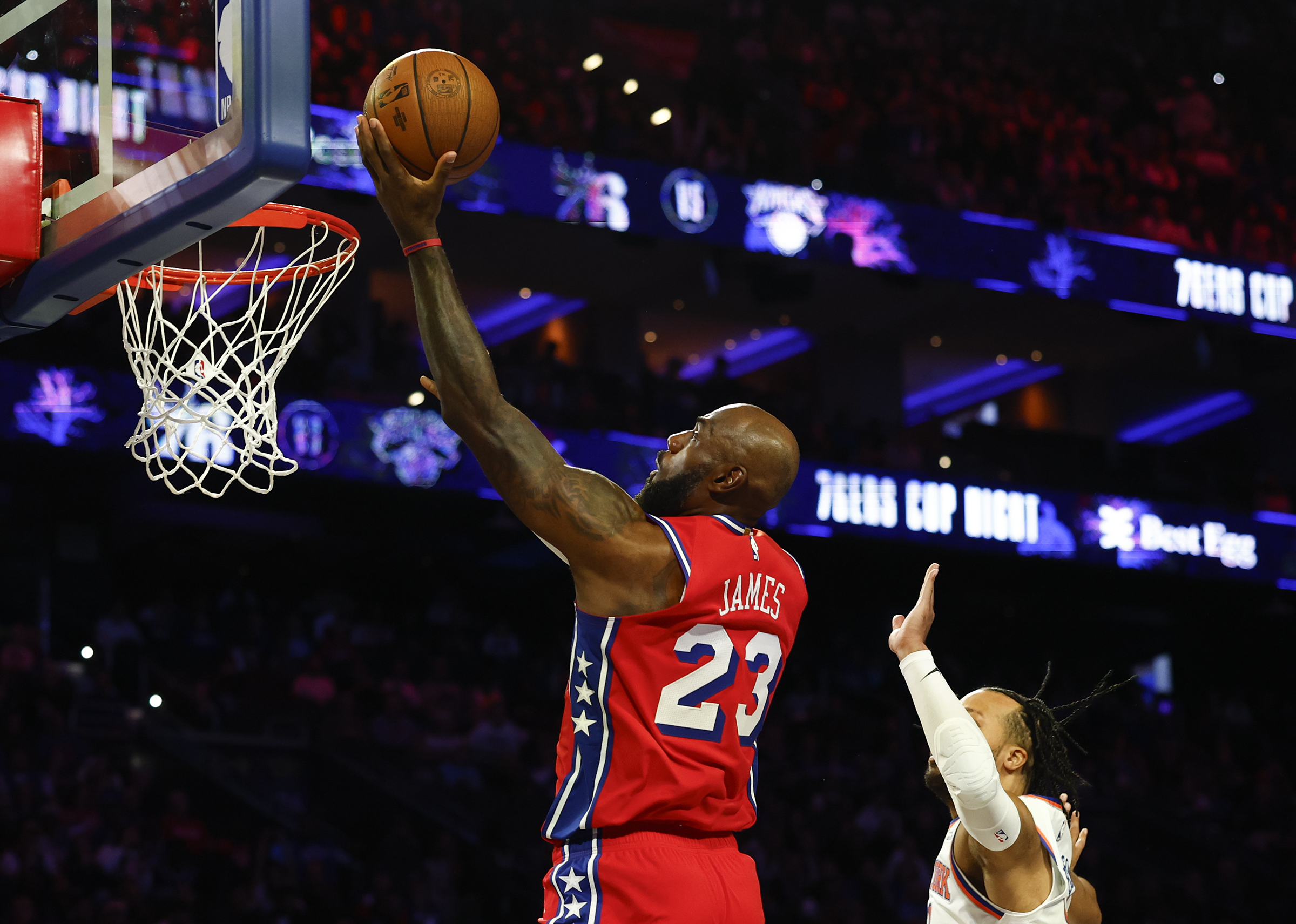
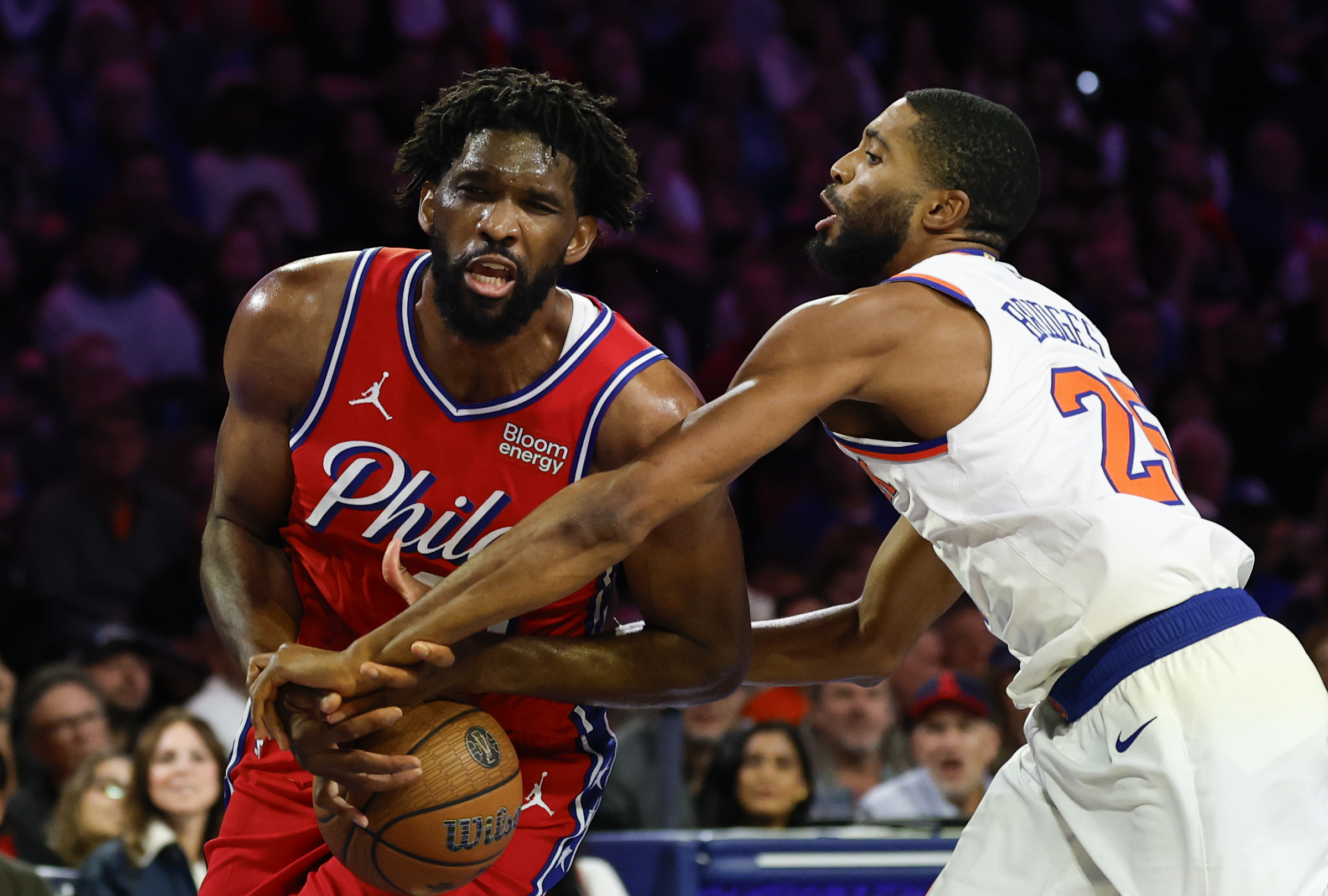
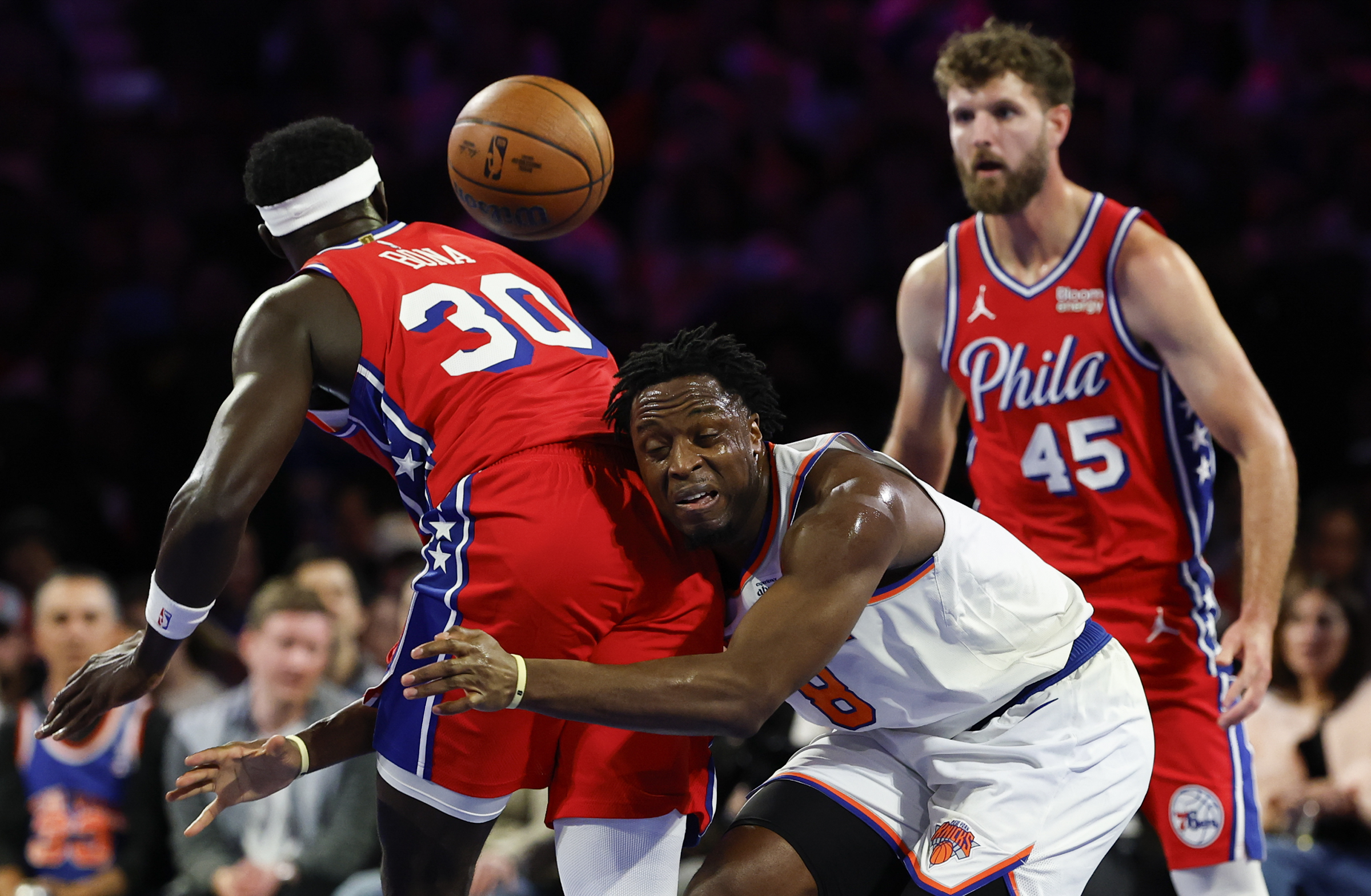
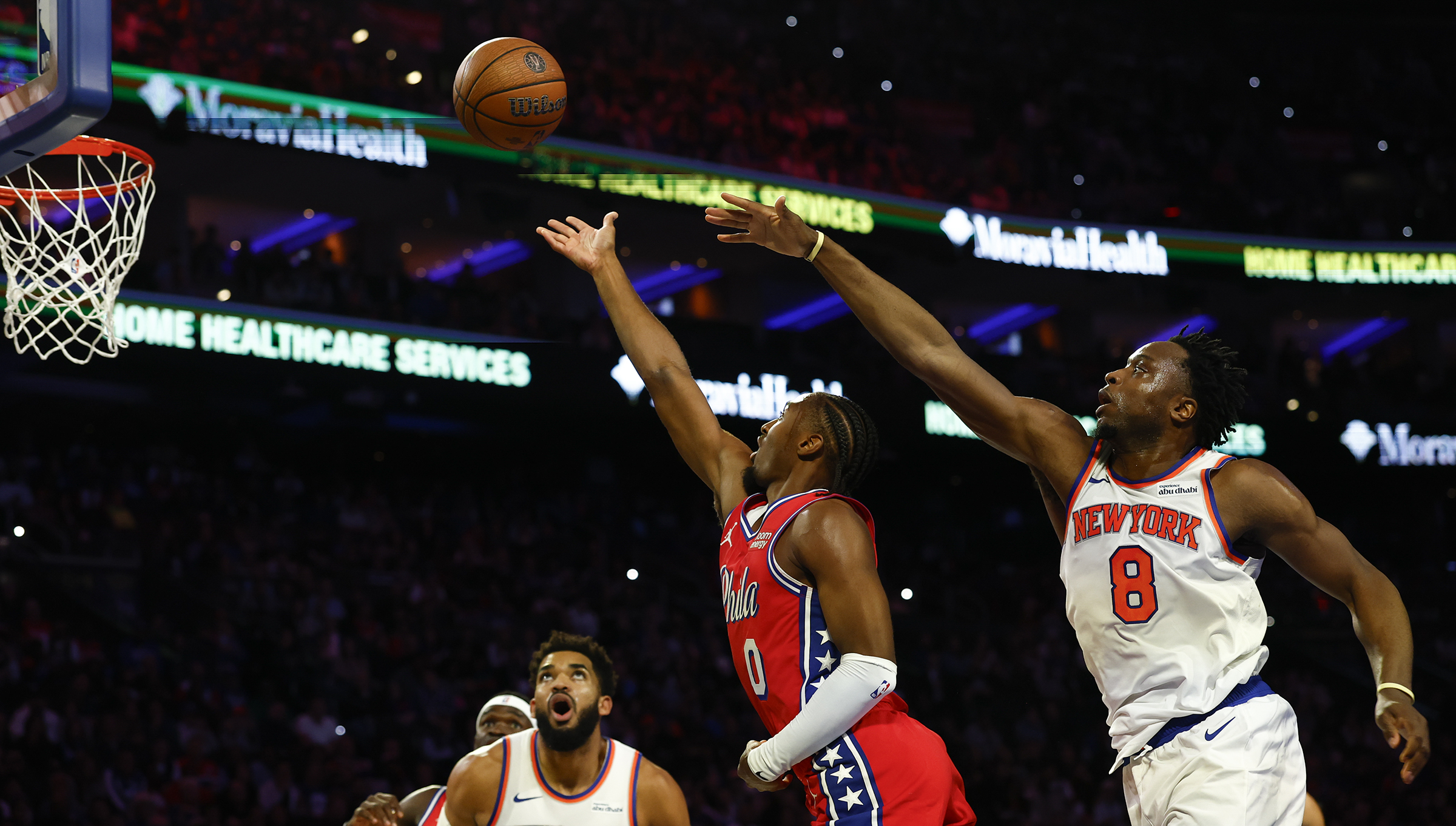
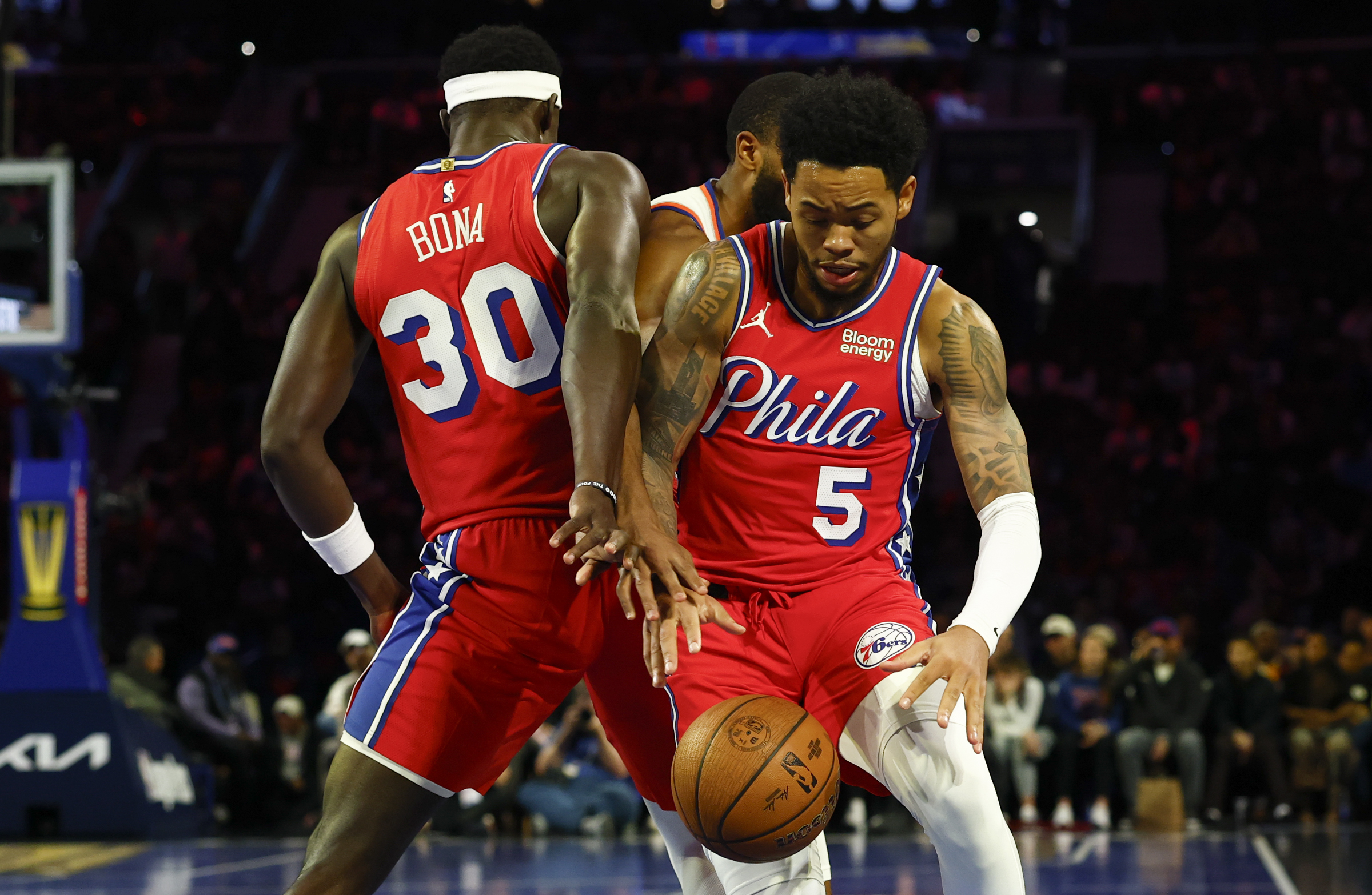
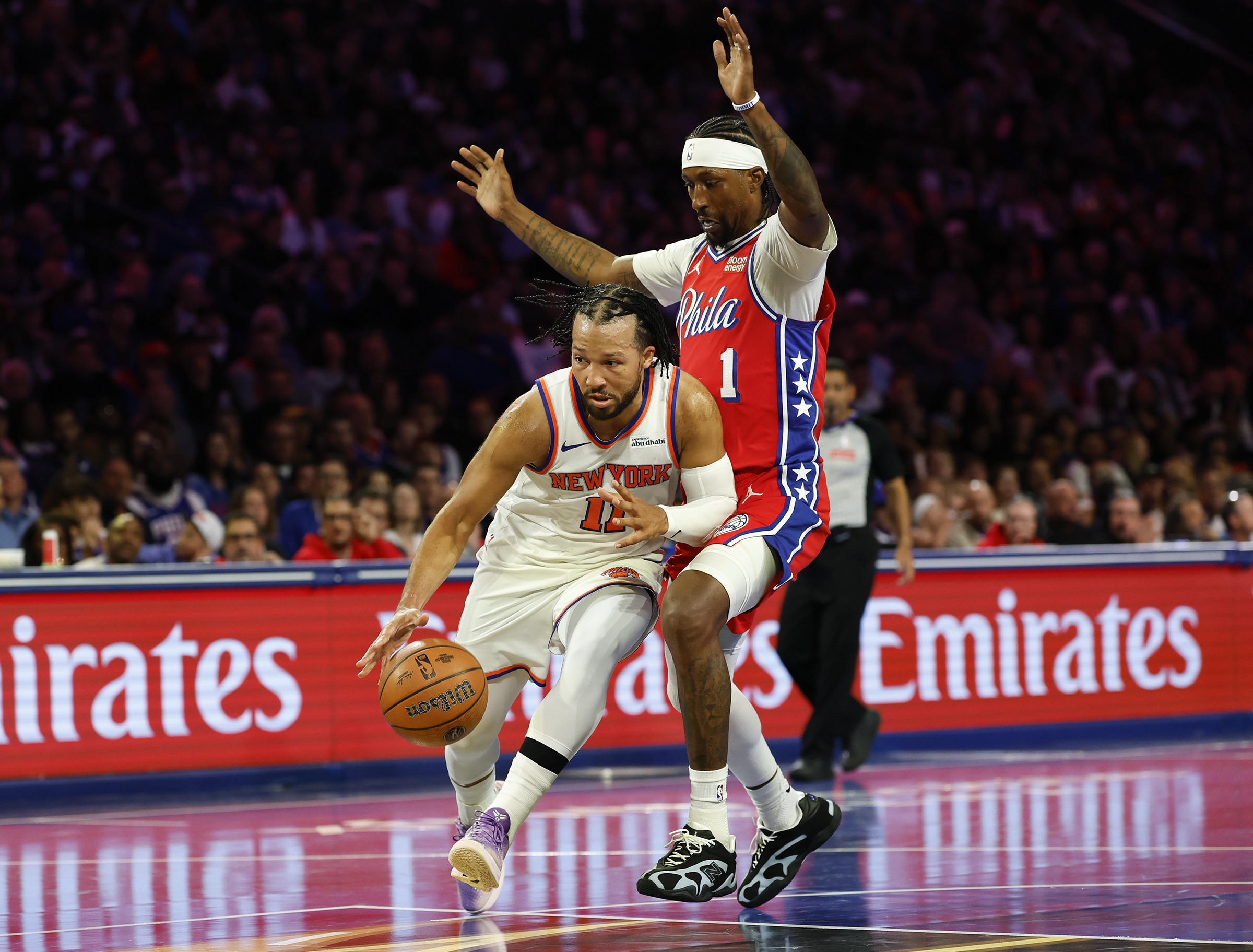
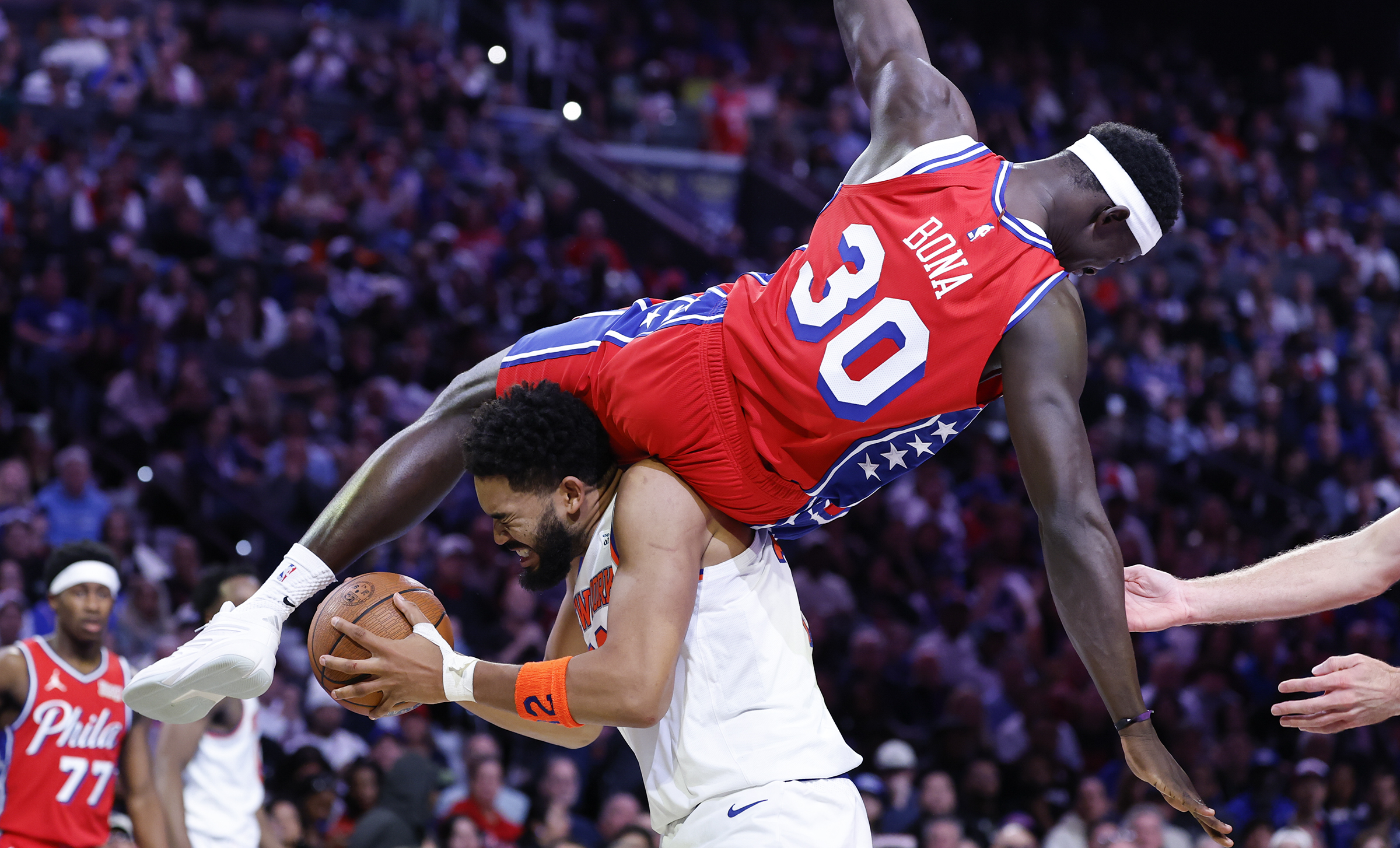
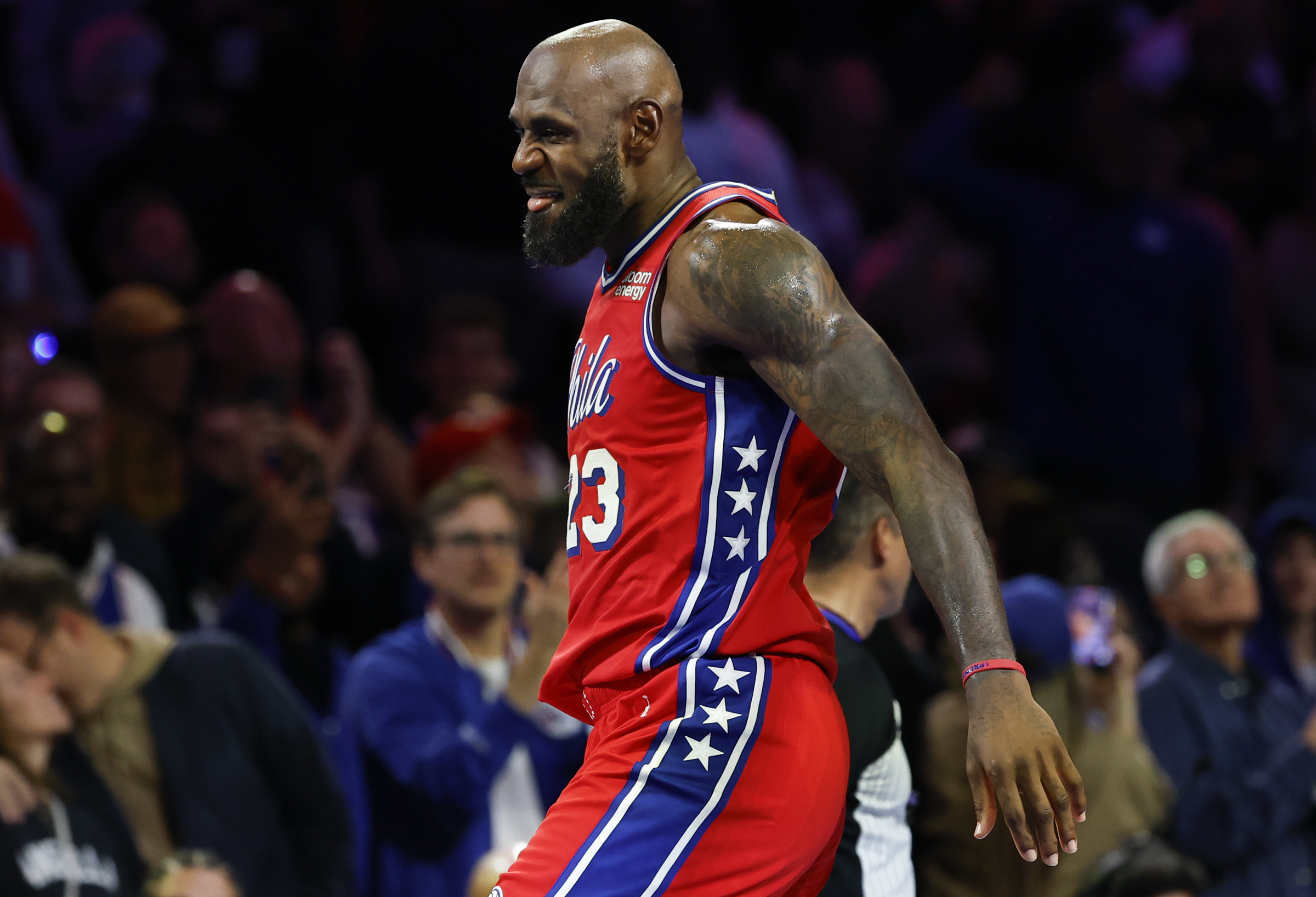
    Time and again in the 76ers’ 98-93 win over the New York Knicks, LeBron James came to the rescue when the Sixers needed him.

    He did it late in the game, as the Knicks finally chipped all of the Sixers’ lead away and grabbed a one-point advantage of their own. He did it earlier in the second half, when the Sixers needed to calm down some Knicks runs. Add it up with his 20 points, nine rebounds, and eight assists, and Friday was James’ “best game, for sure” with the Sixers, according to coach Nick Nurse.

    “I’m just trying to get more and more comfortable with what we’re running offensively,” James said. “I think every game, every week that I’m here, my body will continue to ramp up and ramp up and I’ll feel better. So, that played a part.”

    There were moments, big and small, in which James contributed to winning, especially when the Sixers were punching air in an attempt to get anything going. Among those plays:

    • A cross-court pass with his body turned away from Kentavious Caldwell-Pope, who buried a corner three that put a temporary stop to one of the many Knicks second half runs.
    • A rebound putback that put the Sixers up five with 11.9 seconds remaining.
    • A jumper that put the Sixers ahead, 91-90, with 1:10 left after a Jalen Brunson three had given the Knicks the lead for the first time in the fourth quarter.

    The first of those plays was James’ basketball IQ and court vision on full display. Tyrese Maxey dumped it down to James in the post, and, with his back to the basket, he spied Brunson coming over to help off Caldwell-Pope, then zoomed the pass to the opposite corner, and Caldwell-Pope buried the shot at the 6:58 mark.

    That moment stopped a 7-0 Knicks run, but James had more in store for the final minutes.

    When asked what James has brought to clutch moments for this Sixers team, Maxey said: “leadership. Calming presence.”

    “He’s going to get a lot of rebounds, maybe go get the ball and calm us down,” Maxey said. “At the end of the day, it’s LeBron James. He can do the stuff like he did tonight. He got a couple of big buckets.”

    Knicks fans in the arena were making plenty of noise after Brunson hit a three to put the Knicks ahead, 91-90. The Sixers’ last few possessions had been a bit disorganized. James got the ball a few feet outside the right block, and he dribbled to the middle of the lane for a fadeaway over Knicks forward OG Anunoby to give the Sixers the lead right back.

    “For me to be able to be a calming factor for our team late game, just the experience that I have, and if it’s me with the ball, me without the ball, being able to put guys in the right position, just trying to talk them through,” James said of his mindset late in games. “If the other team makes a run, we come to the sideline, are we good? Let’s move on to the next play. Let’s figure out how we can be better for this play and the rest of the game. So it’s something I want to continue to pour into the team.”

    It’s not a given that teams will be good in late-game situations, even teams with as much talent as the Sixers. Every team has to feel its way through those moments, especially if players are going through those tense moments together for the first time.

    But James is constant in his communication and his encouragement. That has helped the Sixers win five of their six games, most of which have come in clutch situations.

    “He’s seen a bunch of different end-of-game situations, so he’s composed, he’s relaxed,” VJ Edgecombe said. “But he’s also just so vocal, that kind of helps us. That helps us all the time … just gives us the confidence to guard, just expects certain actions, or he calls out something before it happens.”

    Like he knew that Caldwell-Pope was going to be open for that three, or what exactly he wanted to do when Anunoby was guarding him late.

    That’s where the basketball mind of James has had a hidden value for the Sixers, and they might not be 5-1 without it.

    “The fact that we’ve been in some close games this year,” James said, “we’ve actually prevailed — and teams have made runs, teams have gotten up on us, we’ve got up on teams and them come back and we kept our cool — it’s very encouraging. And we will try to continue that trait going forward.”

  • Sixers are playing grown man hoops. LeBron James and Tyrese Maxey were again the adults against the Knicks.

    Sixers are playing grown man hoops. LeBron James and Tyrese Maxey were again the adults against the Knicks.

    Tyreese Maxey was a man in search of a shirt.

    The Sixers superstar glanced toward his locker on the opposite side of the room. A throng of media members clogged his passage. He glanced back toward the training room but found little help there. After a few more moments of deliberation, a nearby teammate tossed him a sleeveless black T-shirt. Maxey slipped it on and stepped in front of the cameras. There was only one problem: LeBron James’ shirt size is a heck of a lot bigger than his own.

    “This shirt,” Maxey said with a rueful smile at the shirt’s gigantic armholes, his biceps suddenly reduced to a formless prepubescence.

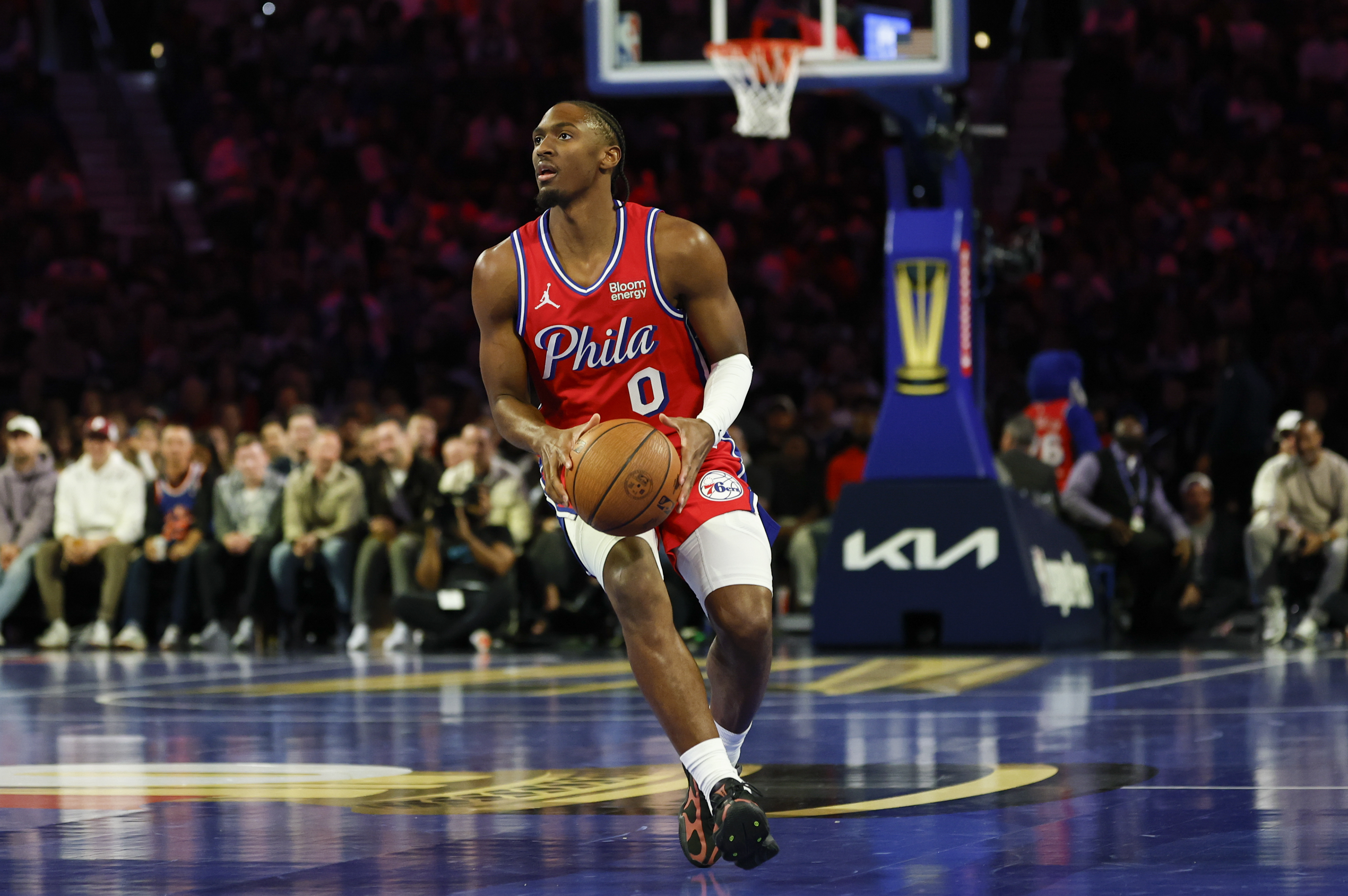
    Some nights, it would be a funny story. On this particular night, it was a metaphor. Less than an hour earlier, Maxey and James had led the Sixers to a 98-93 win over the Knicks, their second victory over the defending NBA champs in 10 days. The decisive bucket had come with 11.9 seconds left, Sixers up three, Maxey driving to the rim late in the shot clock, James crashing to put back the miss. The points were James’ 19th and 20th of the night, and the rebound his ninth. It was a fitting end to a night on which the Sixers, again, were the biggest, baddest adults in the room.

    We are past the point of revelation. The continuation is the story. Six games in, five of them wins, the Sixers have an identity. They have out-Knicksed the Knicks. They have out-Pacered the Pacers. They have done to the Cavaliers what good teams do when the Cavaliers analytically win a game. They are winning in ways that teams must win when the sum of their parts is lacking. And, well, they have the parts.

    Except, they didn’t have all of them on Friday. That was a big part of the story. Earlier in the day, Jaylen Brown’s name popped up on the injury report. An hour before tipoff, he was downgraded to doubtful with what the team has called “jumper’s knee.” It was a potentially fatal blow, as reflected in a Vegas line that jumped a couple points in the Knicks’ favor. Brown’s physical two-way prowess played a big role in the Sixers’ season-opening 106-100 win over the Knicks at Madison Square Garden. Team president Mike Gansey said on draft night that a team can never have too many guards. However true, it certainly can have too few wings of a certain size.
    And yet …

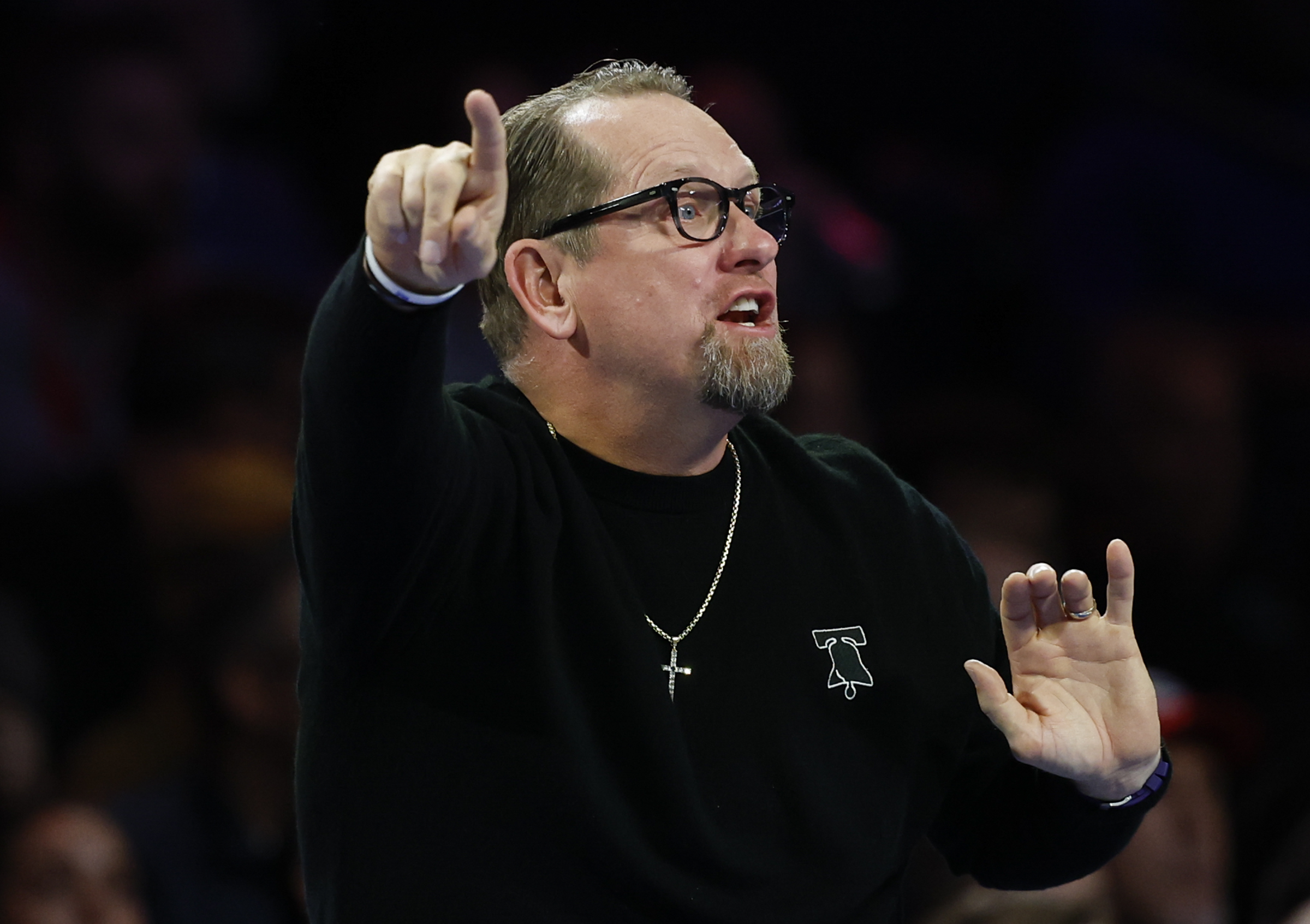
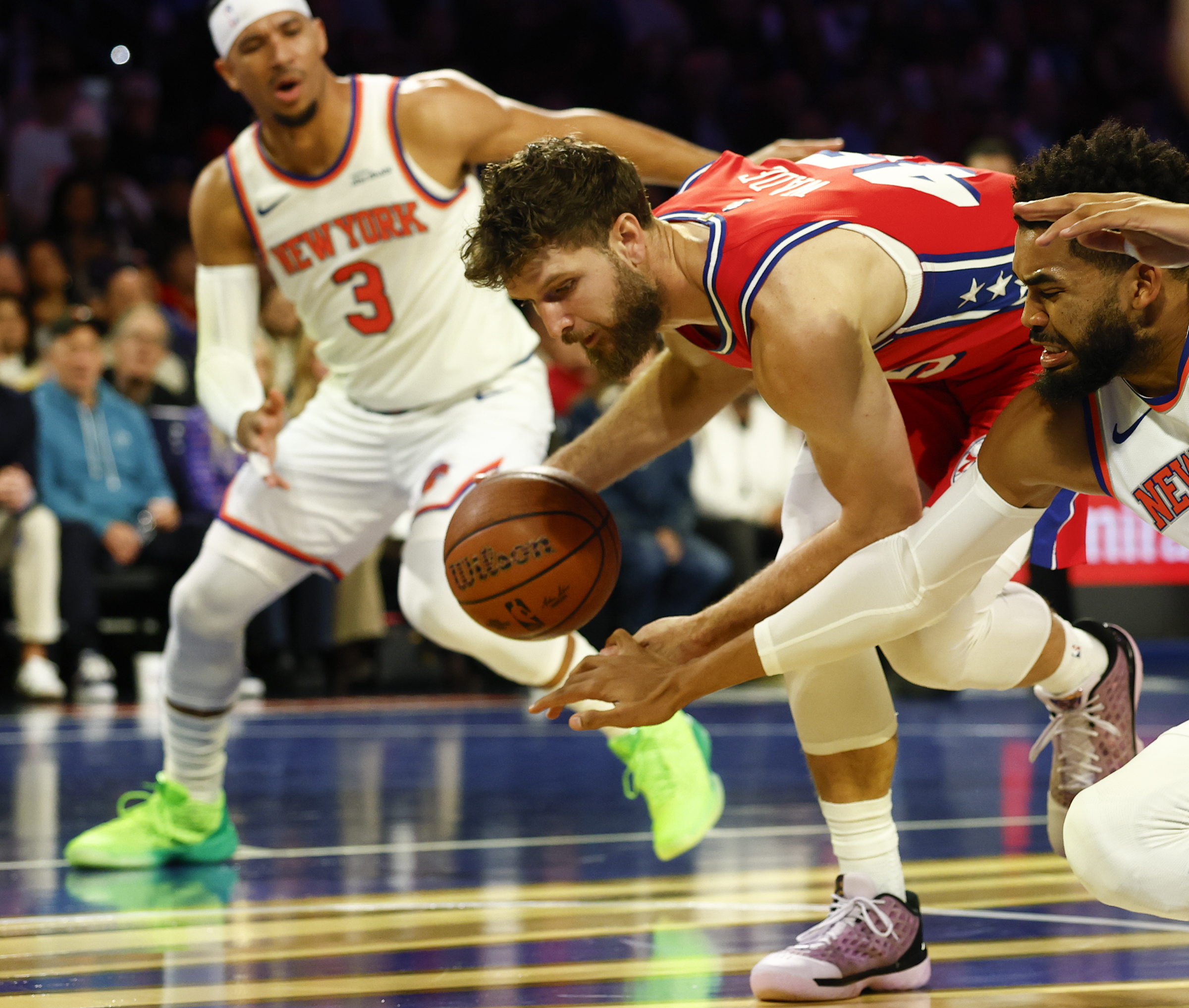
    Nick Nurse knew what he was doing when he inserted Dean Wade into the starting lineup in place of Brown. A 6-foot-9, 228-pound defensive force masquerading as yeoman, Wade almost single-handedly derailed the Knicks early on by preventing them from doing what they thought they’d be able to do. The Sixers jumped out to a 29-19 lead and basically held it until the latter stages of the second half. They did it with a possession-to-possession intensity on the defensive end. Credit Maxey and VJ Edgecombe and even Anfernee Simons for their on-ball defense against Knicks dynamo Jalen Brunson. Credit Joel Embiid, who is moving as easy and controlled as he ever has, in conjunction with his usual physical presence in the middle.

    But credit Wade, too.

    “You can always be in every game when you defend at a high level,” James said.

    Wade’s front-line defense on OG Anunoby, combined with his ability to switch and his nose for the ball, were everything the Sixers needed to make up for Brown’s absence on the defensive end. That he scored zero points is the kind of thing a team like the Sixers can live with. Let’s not forget: There was a brief moment in time when Wade was the team’s marquee offseason signing.

    “When you have that many good defensive possessions, it’s going to take you a long way,” head coach Nick Nurse said.

    Nobody expected this. The defense. The intensity. The exertion of possession-to-possession competitiveness that inevitably coalesces into an outcome that feels like the natural order of things. When the Sixers traded for Jaylen Brown and then signed James, the potential outcomes were presumed to range from the early-ish 2000s Miami Heat-les to a late-stage casino act whose original lead singer passed away decades beforehand.

    Turns out, the Sixers are the bouncers.

    “We definitely know it’s going to be a physical battle when you play those guys,” said Maxey, who scored 27 points on 10-of-19 shooting. “If you’re going to play them, and you’re going to try to win a basketball game against them, you’re going to have to get into a physical battle. That’s just how it is.”

    Maxey played a big role in that. Before the Sixers’ home opener, Cavaliers coach Kenny Atkinson was asked what he’d seen on film from his opponent. His first reaction: Maxey has somehow gotten better. Before Friday night’s game, Nurse explained it as Maxey’s natural-born maturity manifesting in a self-understanding that he is the best player on the court. It has been most evident in Maxey’s strength and confidence at the rim, along with his readiness and willingness to pull it from deep.
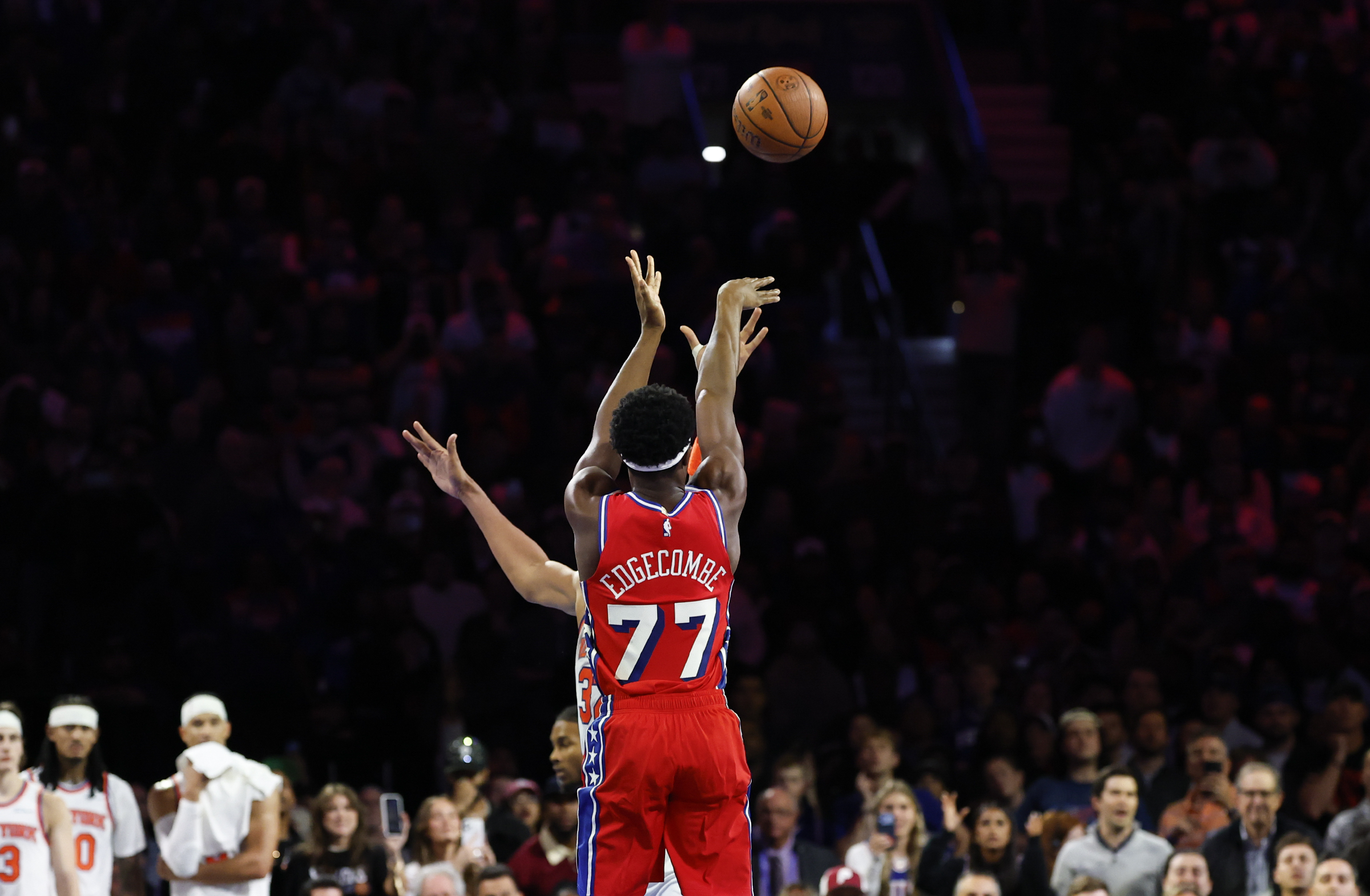
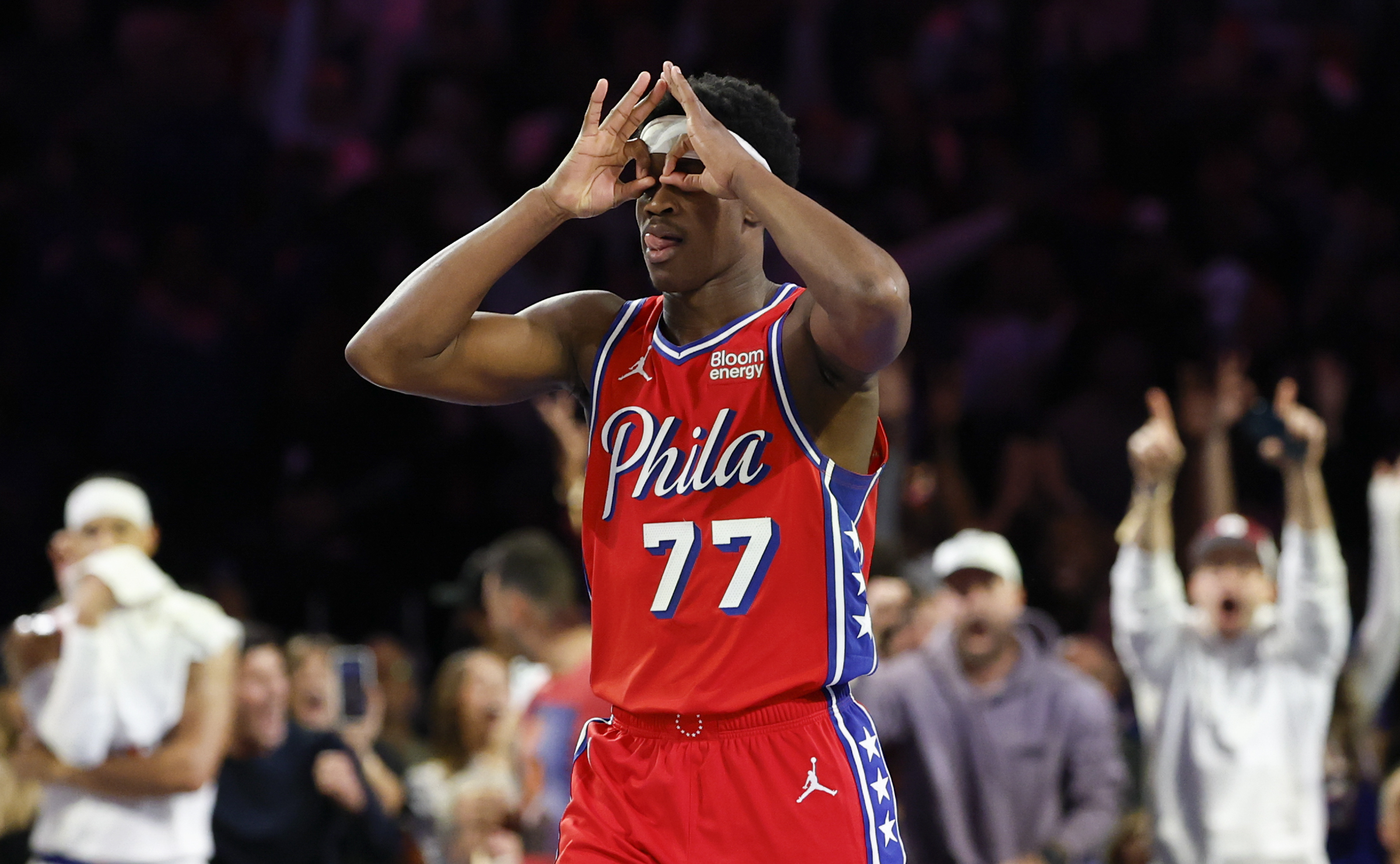
    On Friday, you saw it in the way he commanded through deference. The Knicks stormed back to take a 90-89 lead, which the Sixers quickly answered. Then, with 33.6 seconds left, Maxey passed out of a double team to Edgecombe, who drilled a three-pointer from the top of the arc to put them up by two possessions.

    More than anything, though, this was a night when you saw James’ presence manifest itself. He has always been a shape-shifting superstar, capable of being whatever he needs to be, given the setting and circumstance. Here, we saw what that looks like with five games under his belt. His 20 points, nine rebounds, eight assists somehow understate his involvement. They do not give him credit for speed and decisiveness of his passing as a connector on the perimeter, nor do they illustrate the intentionality of each of his buckets, from his off-ball back-cuts to his bully-ball drives against Mikal Bridges.

    Know who you are. Know who those around you need you to be. These are the hallmarks of adulthood. The Sixers suddenly look like a bunch of guys who know what it means.

  • A celebration for Dick Vermeil, the Sixers make a deal, and other thoughts

    A celebration for Dick Vermeil, the Sixers make a deal, and other thoughts

    First and final thoughts …

    On the night before he turned 90, Dick Vermeil took hold of a microphone, stood at the front of a packed banquet room Thursday at Downingtown Country Club, and looked out at the faces looking back at him.

    There were more than 200 of those faces. Several members of his 1980-81 Eagles Super Bowl team were on hand: Ron Jaworski, Wilbert Montgomery, Roynell Young, Keith Krepfle, coaches, team employees, their family members, and more. Herm Edwards was in town from Monterey, Calif. Former Eagles head coach Doug Pederson flew in from South Florida. Dante Hall, who with the Kansas City Chiefs in the early 2000s had been the NFL’s most dynamic kick returner while playing for Vermeil — he called Hall “my Black son” — made the trip. Vermeil’s friends and former players and business partners filled the room. His wife, Carol — they’ve been married 70 years — and their three children and 10 of their 11 grandchildren took up a couple of tables.

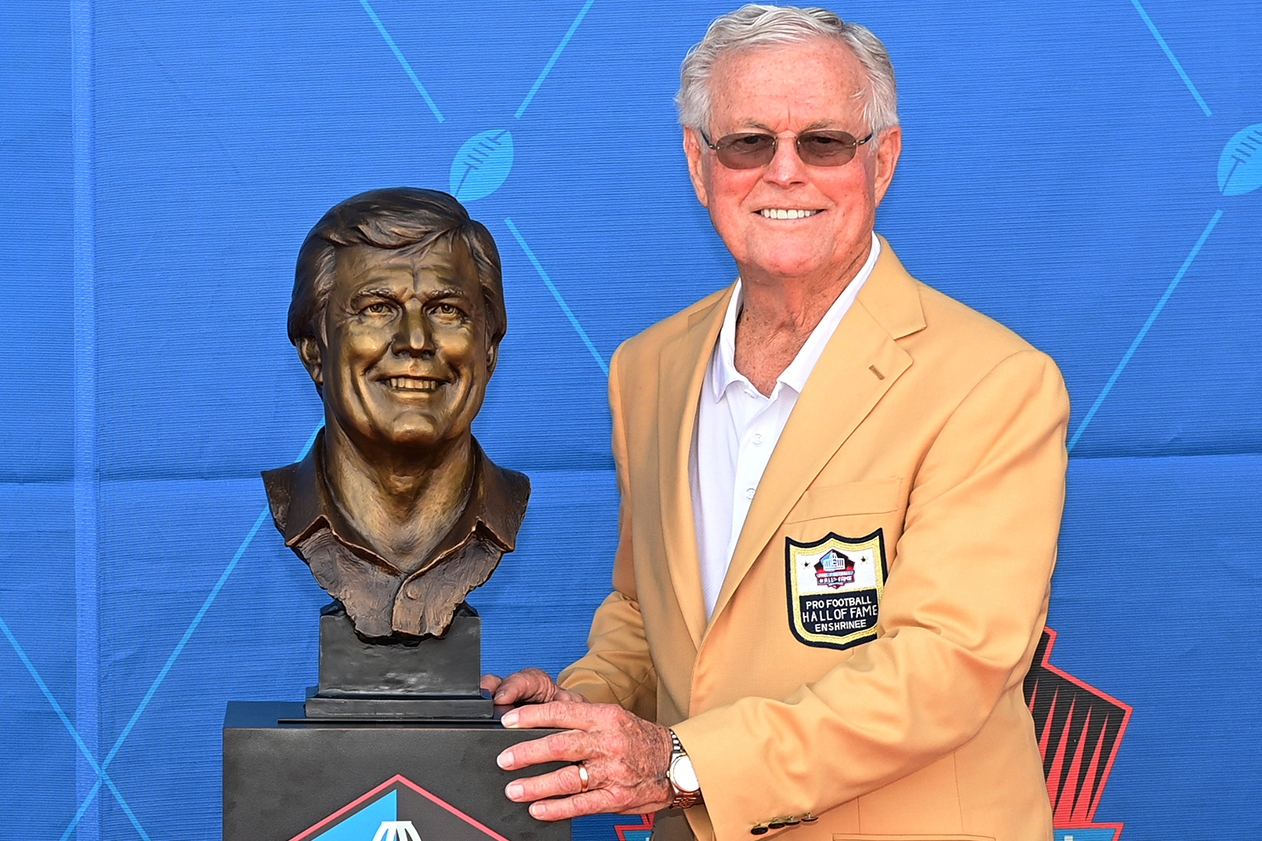
    Former NFL coach Dick Vermeil poses with his bust during an induction ceremony at the Pro Football Hall of Fame in Canton, Ohio in 2022. David Dermer / AP

    He wore his gold Pro Football Hall of Fame blazer. He started with a single word, “Wow,” and continued speaking for 45 minutes, and the most surprising part of his remarks was not that he acknowledged one person after another in the crowd, not that his recall of his connections to those people was perfect, but that he did not cry. Vermeil is famously emotional, but not Thursday night. He could have been hosting a dinner party or delivering a locker-room speech to one of his teams or motivating a group of executives at a sales conference. He was that engaged and engaging and joyful.

    A birthday party for a 90-year-old man might seem a pre-death wake, a commemoration of a life soon to end while the subject is still around to savor and appreciate it. This was not that. This was a celebration of a still-vigorous man, a coach who in his way still is coaching, a teacher who in his way still is teaching, a husband and father and friend as open-hearted as he has always been.

    “There is nothing more important than my family,” Dick Vermeil said Thursday night, as if he were speaking of everyone in the room, which he was. It was a remarkable night for a remarkable man. Happy Birthday, Coach.

    Don’t bet on it

    The 76ers announced Friday that they had reached a sponsorship deal with the predictions market company Kalshi, less than two months after LeBron James reached a sponsorship deal with the predictions market company Polymarket. Professional sports keeps opening its arms to snuggle betting and gambling and all their obvious ethical issues in its warm embrace, and neither these leagues nor their athletes appear to care about the cynicism they’re fostering.

    As more of these unholy partnerships form, more people might start wondering whether everything they see on the field or the court is on the level, if they haven’t already. As one example, it now will be fair to examine the dates, the circumstances, and the frequency of the games that James misses this season because of “load management” or a “coach’s decision.” And it will be fair to ask why a man who already was a multibillionaire chose to align himself with such a problematic industry for the sake of a few more bucks.

    The trend the Phillies missed

    The Milwaukee Brewers’ charge to the first World Series title in their history and the Tampa Bay Rays’ run through the American League proved just how far the Phillies were from competing for a championship. And for all the rightful complaints about the flaws within the 2026 Phillies — a top-heavy lineup, bad defense, a lousy bullpen — the Brewers and Rays also showed that Dave Dombrowski and his staff made a giant miscalculation that has loomed over not just this season but this entire era of Phillies baseball.

    It’s not a coincidence that Milwaukee and Tampa Bay, which didn’t just reach the World Series but were the best teams in their respective leagues, were tied for the major league lead in batting average (.258). Ahead of the 2023 season, MLB implemented several rules changes, including a ban on the kinds of infield and outfield shifts that had transformed hundreds of ground balls and line drives from hits to outs.

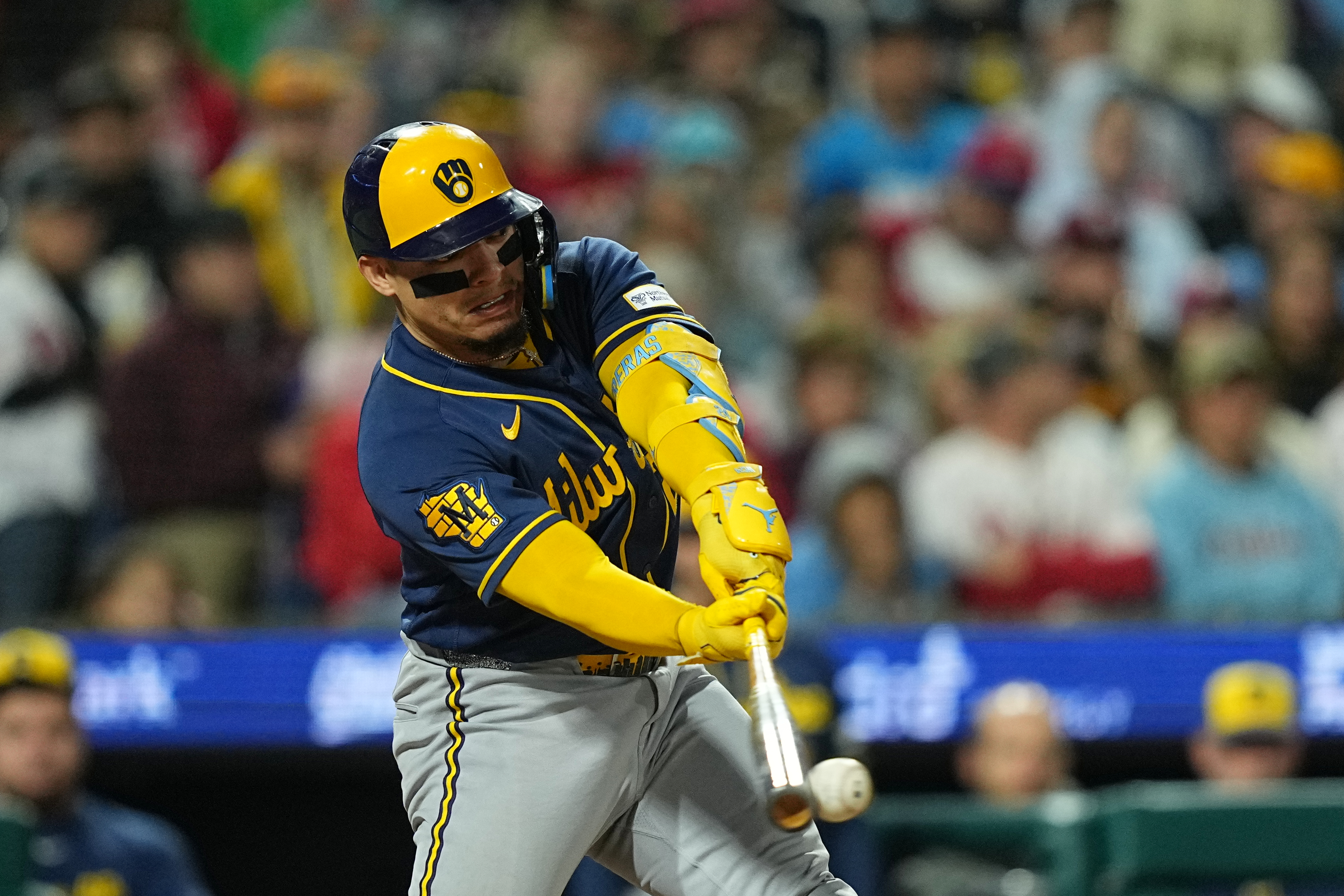
    Brewers catcher William Contreras had 19 hits in the playoffs for a team that was about way more than the longball. Matt Rourke

    The discussion about the need for such legislation had been swirling around the sport for years. There was a groundswell of fans and people within baseball who understood that widespread emphasis on the “three true outcomes” — home run, walk, strikeout — was making the sport boring. The pendulum was bound to swing back toward creating more action, encouraging more athleticism, and incentivizing teams to put the ball in play more often.

    The Brewers and Rays got ahead of that. The Phillies didn’t. With Bryce Harper and Rhys Hoskins already here, Dombrowski leaned into constructing a team that could hit the ball over any shift and out of any ballpark. To a roster that already had Harper and Hoskins, he added Kyle Schwarber, Nick Castellanos, and Trea Turner, all of whom were, or have become, swing-from-the-heels hitters and subpar fielders (at best). One of the undermentioned aspects of Turner’s underwhelming tenure is that, even though he has averaged more than 20 home runs over his four seasons with the Phillies, he actually had a higher home-run percentage over his four previous seasons (3.7%) than he has here (3.2%).

    Put simply, Dombrowski and the Phillies adjusted too late to what was coming. Now they’re not built for what baseball once was and has become again.

  • Ed Hastings played at Villanova, became a priest, and now helps athletes find the joy in losing

    Ed Hastings played at Villanova, became a priest, and now helps athletes find the joy in losing

    It’s been more than 50 years but Ed Hastings can still feel the sting of leaving the Palestra in March of 1969 after losing in the Catholic League playoffs.

    “That’s a long time ago,” Hastings said of Monsignor Bonner’s overtime loss in the semifinals to North Catholic. “But I can go over certain things and where it took place on the Palestra floor.”

    And Hastings can still feel the comfort of his uncle, who was waiting for the teenager at his home in Drexel Hill. Bob Devine played at West Catholic and captained the hoops team at Notre Dame before becoming a priest. He told Hastings he knew how he felt — “I was hurting,” Hastings said — but promised that the loss would prove beneficial.

    “He was giving me perspective and he was also giving me hope,” Hastings, 75, said. “There would be more challenges to come but also maybe I would respond better the next time after I’ve gone through this kind of loss. I took that with me.”

    That loss at the Palestra prepared Hastings for what was to come: a knee injury at Villanova that cost him the chance of playing for the 1971 national title, 16 years as an Augustinian priest, and now a trip to Rome to speak to a sold-out crowd a day before Villanova opens its season there.

    Hastings, who left the priesthood in 1999 and now teaches theology at Villanova, will focus his talk on what athletes can learn from losses. He might even mention that afternoon against North Catholic — Hastings hit a go-ahead shot with 12 seconds left before North forced OT — and the lesson he learned.

    “I did a lot of winning, but certain losses stick and they can inform us perhaps more than anything,” Hastings said. “Spirituality has since informed me that the necessary suffering can help us more than anything. Winning is great. I promise you, I never went on a field or in a gym being content with losing. But through the hard times, I’ve learned that losing — if we use it well — can be the very thing that helps us develop the most spirituality.”

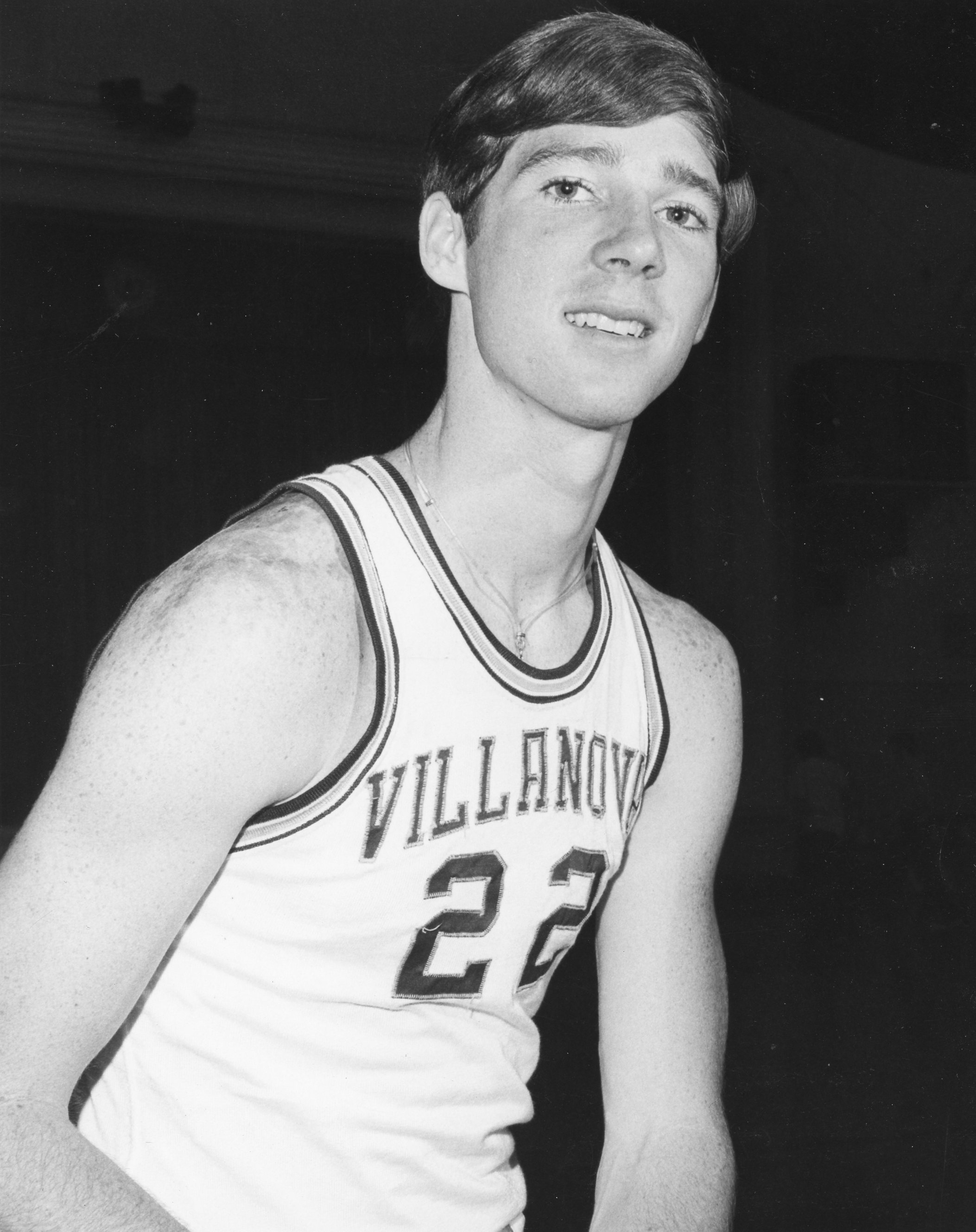
    Ed Hastings during his playing days at Villanova.Villanova University Athletics

    Dealing with losses

    Jack Kraft knew Hastings wasn’t happy to sit after injuring his knee weeks earlier, so the Villanova coach inserted Hastings late in a blowout game in Hawaii.

    “I brought the ball up court,” Hastings said. “I planted my foot, and my knee went one way and my body went the other way. I tore my ACL.”

    His sophomore season — and his role as the team’s sixth man — was over. Hastings didn’t go to practice or travel with the team to road games. His roommate was fellow guard Tom Inglesby, who is now his brother-in-law, but Hastings struggled to find his place with the team without being able to play.

    “My community at Villanova was the basketball team,” Hastings said. “That was really hard.”

    He was allowed to travel with the team to Houston for the Final Four. He watched them beat Western Kentucky and then give UCLA enough trouble in the national championship that John Wooden slowed down his up-tempo offense to force Villanova to come out of Kraft’s famed “ball defense.” Hastings could only watch as the Wildcats lost by six. It was another loss to learn from.

    “That was exciting,” Hastings said. “But I thought, ‘Wow, I could be playing in the national championship against John Wooden, of all people.’”

    Hastings played two more seasons at Villanova and co-captained the squad as a senior. He wanted to be a basketball coach, so he stayed at Villanova after graduating in 1973 to be a graduate assistant under new coach Rollie Massimino. He was a character, Hastings said. One season was enough for Hastings to find a new calling. He entered the seminary.

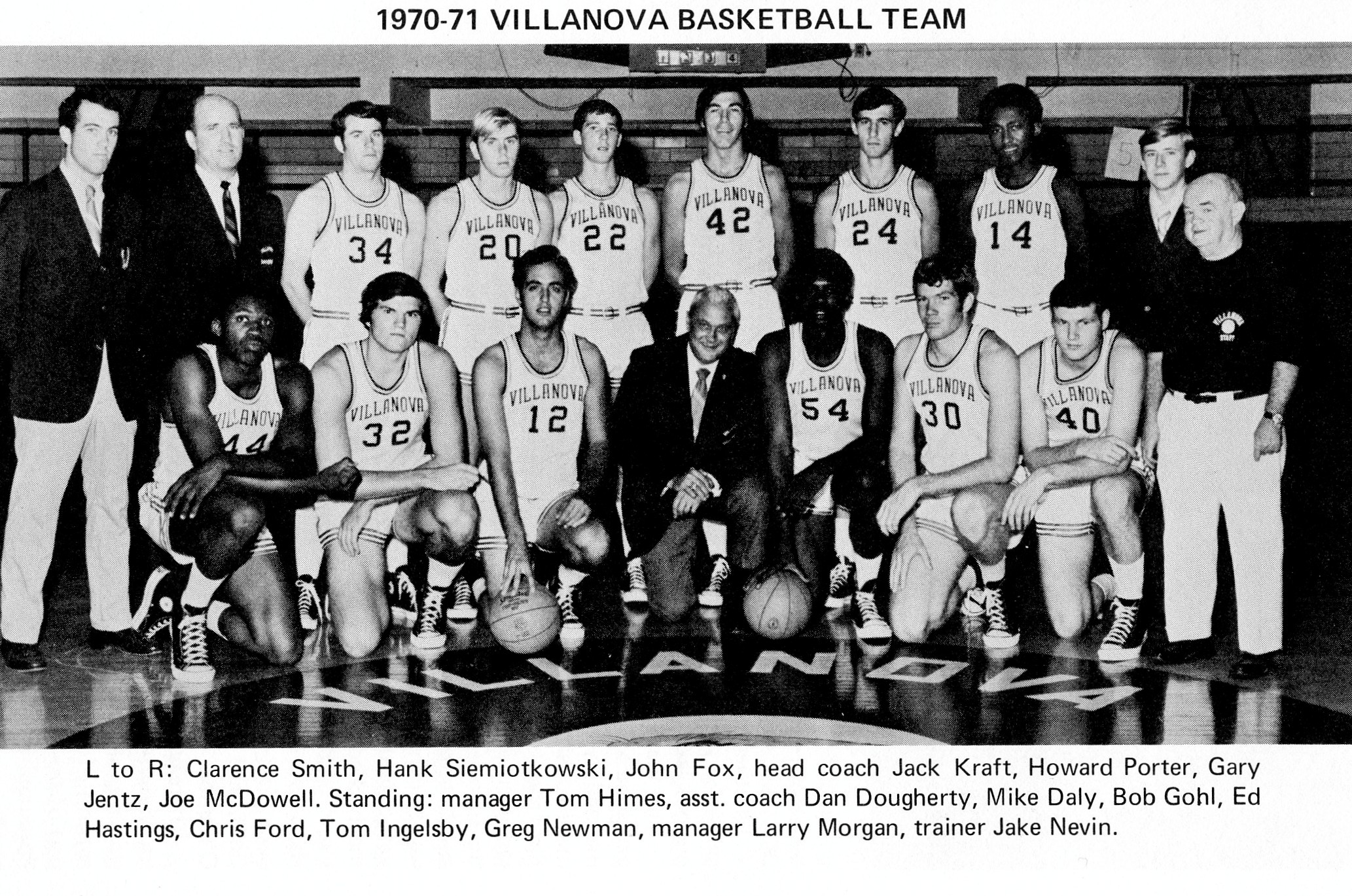
    The team photo for the 1970-71 Villanova Final Four Four team.Villanova University Athletics

    ‘Sports and Spirituality’

    Hastings graduated from Villanova a few months before Pope Leo XIV arrived on the Main Line. But Hastings knew him when they were both in the seminary.

    “I asked a couple people, ‘How are we going to refer to him?,’” Hastings said. “Because to me, he was Bob Prevost. But I guess it’s ‘Your Holiness’ or something like that. It’s honestly hard to believe. When we first heard this, it was like, ‘This is amazing.’ It gave me great hope for the church that he was elected.”

    It was a relief, Hastings said, that the pope won’t be in attendance for his speech in Rome as the former Villanova guard didn’t need any more pressure. Hastings said the vow of celibacy pushed him out of the priesthood and he now lives in Haverford with his wife, Kathy. He will be joined in Rome by Villanova’s minister for sport and spirituality David Walsh and Notre Dame’s assistant vice president of campus ministry Rev. Peter M. McCormick. Their talk is titled “Win or Lose, Be Fully Alive” and will focus on what Hastings has spent most of his life centered on: finding spirituality in sports.

    Hastings founded Neumann University’s Center for Sport, Spirituality and Character Development in 1999 shortly after leaving the priesthood. He shows his Villanova students examples of “spirituality in the sports page,” and thinks back to how impactful the pickup games were in Delaware County. He learned how to shoot by watching Herb Magee, Jim Lynam taught him how to play point guard, and Fran Dunphy was stiff competition. More so, they showed Hastings how to carry himself while they played at places like the Aronimack Swim Club.

    “I looked up to them,” Hastings said. “These people are classy people. They were really good people. So I became involved with them and saw how they treated others. I could see something going on there.”

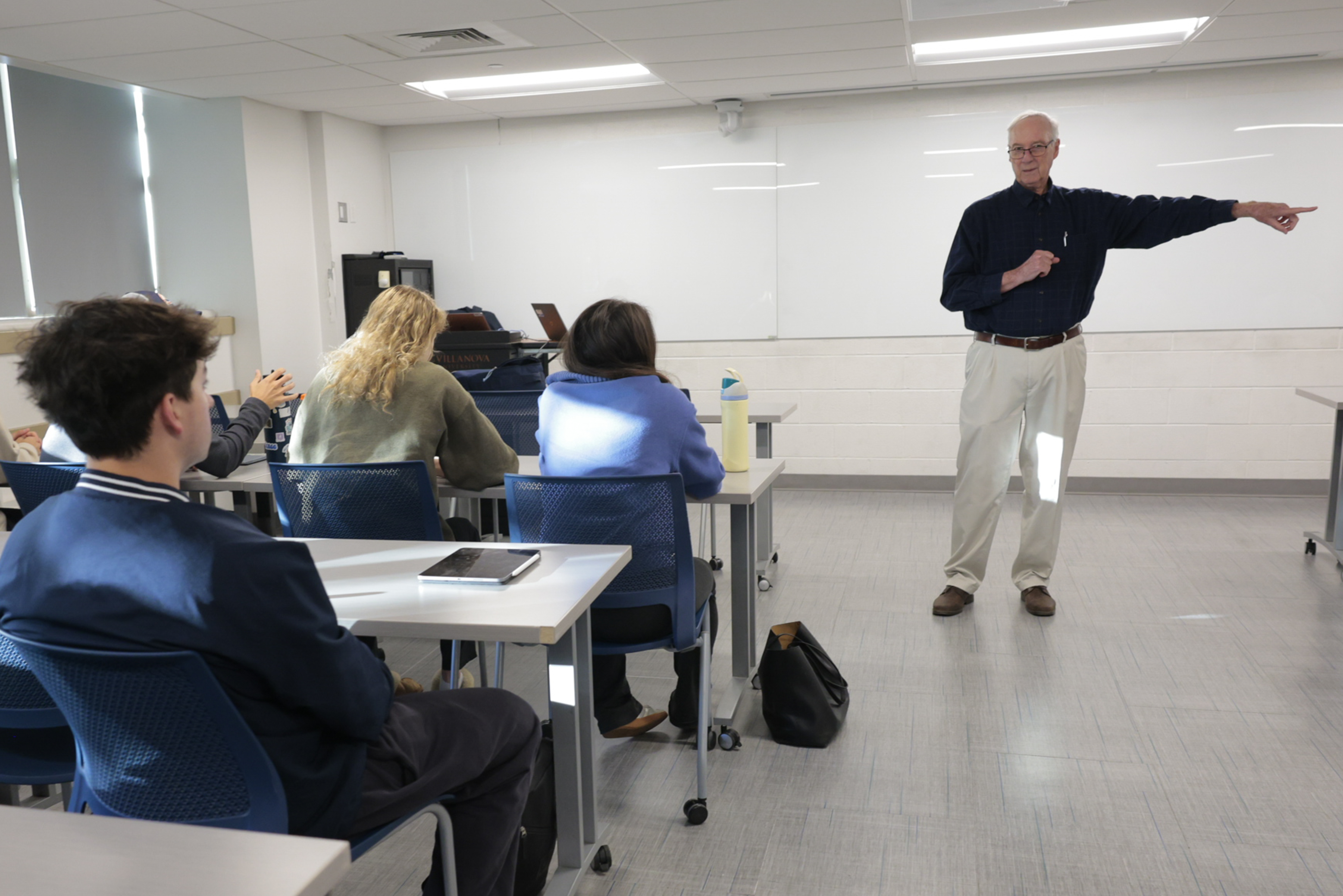
    One of Hastings’ classes at Villanova is titled “Sports and Spirituality.” Sports, he said, is the hook to get students to sign up.

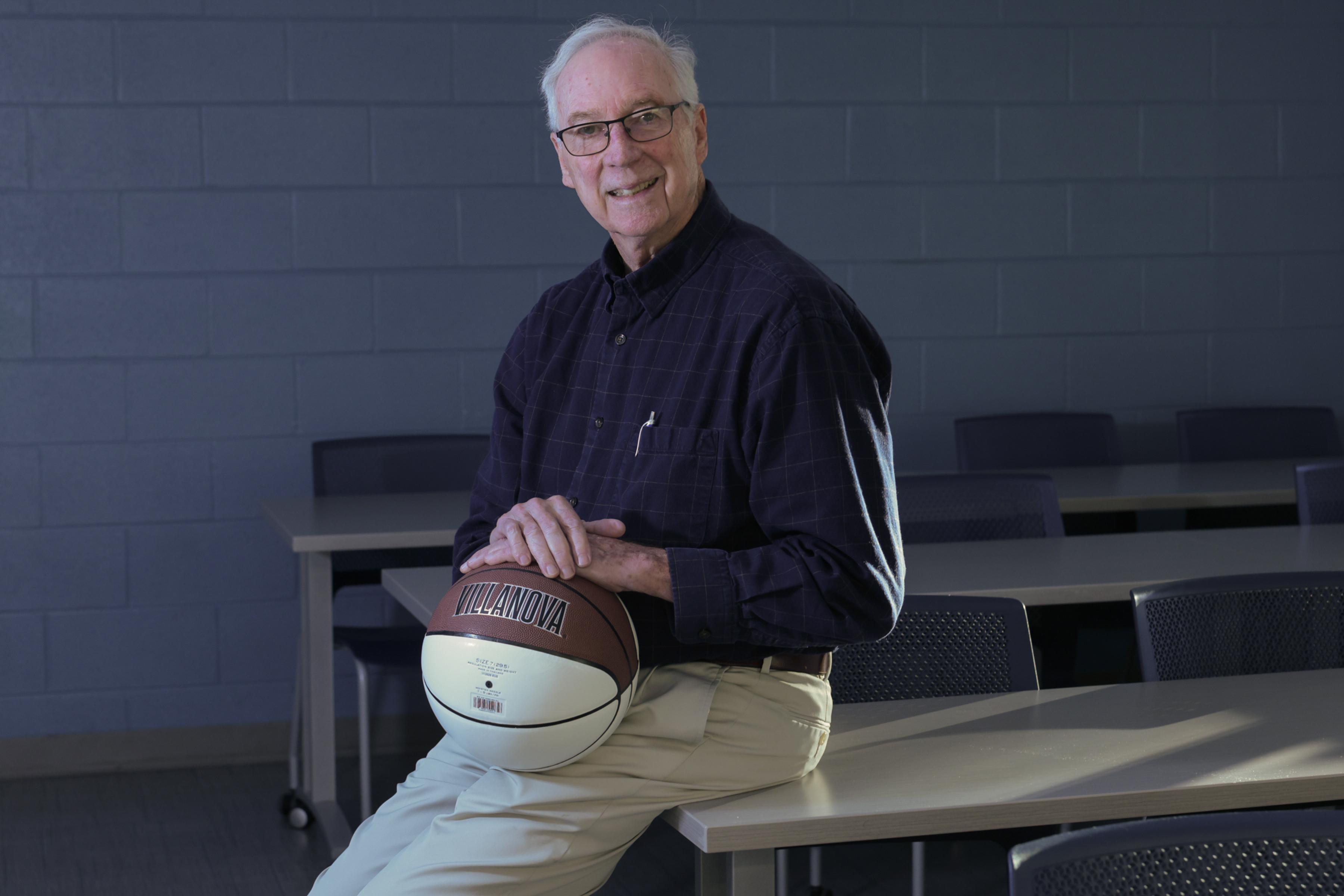
    Ed Hastings, who was on the 1970-71 Villanova Final Four team, is a theology teacher at the school.Steven M. Falk / For The Inquirer

    “But then I’m sneaking in spirituality and teaching them spirituality through the experience of playing sports,” Hastings said. “That’s what I’m doing. My expertise is spirituality. It’s how we can look at sports and see spirituality.”

    He teaches his class at Villanova like his uncle taught him that night years ago in Drexel Hill. He was crushed about losing in the Catholic League playoffs. But his uncle saw a chance to use sports as a way to guide the teen’s spirituality. Yes, he still remembers the disappointment of losing to North Catholic. But he also remembers the hope his uncle gave him. And that’s what he’ll carry to Rome.

    “Winning is great and everyone wants it and I’m for it,” Hastings said. “But it’s losing that can really teach us about life. That’s what I want to talk about.”

  • Homecomings, step shows, and more highlights kick off Philly’s HBCU weekend

    Homecomings, step shows, and more highlights kick off Philly’s HBCU weekend

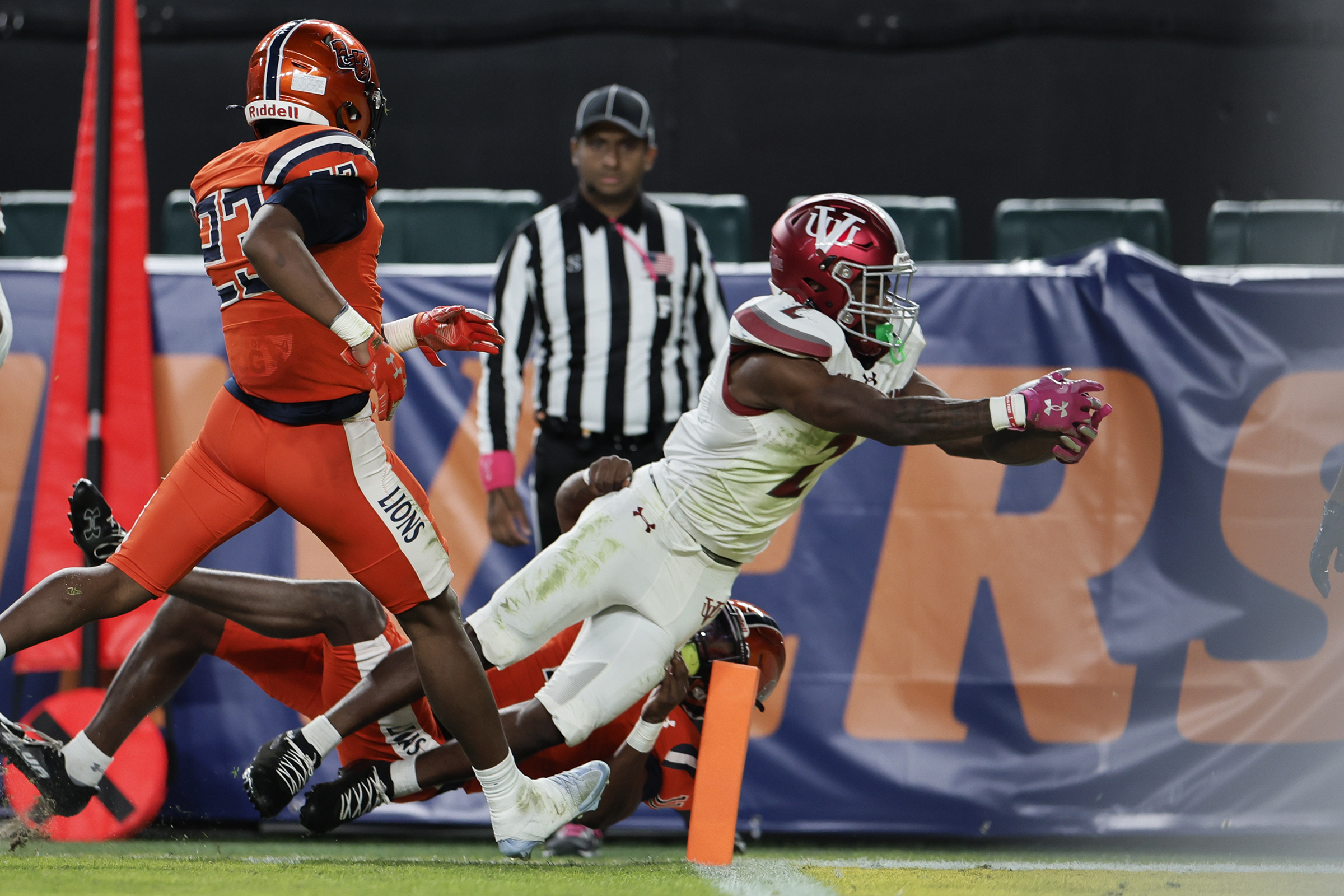
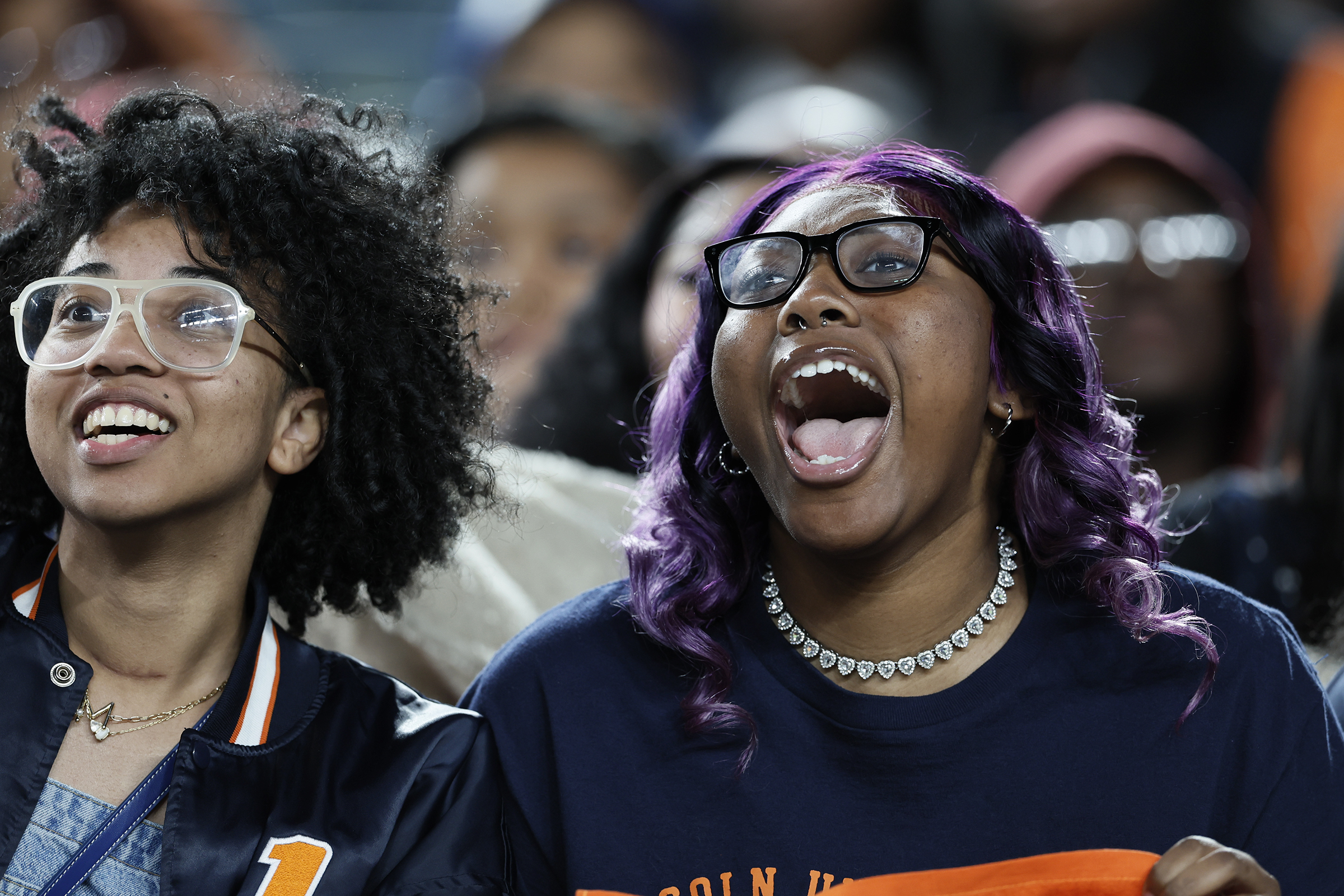
    For Virginia Union linebacker Christian Aiken, the Panthers’ 62-0 victory over Lincoln “means everything.”

    Aiken, a South Jersey native, helped spearhead a defensive effort that shut out the Division II Lions at Lincoln Financial Field on Friday. The game kicked off this year’s One Philly HBCU Week, hosted by the City of Philadelphia and the Eagles. Aiken, the Central Intercollegiate Athletic Association’s leader in sacks, rushed to the stands following the game. He went to greet his family, some wearing custom No. 44 gear.

    “Being a Philadelphia Eagles fan, getting an opportunity to come out here, play with my teammates, and just enjoy this stage,” Aiken said. “One Philly HBCU week, get out of here, come out and put on a showcase. It’s amazing. … I got my whole family out here, man. I got cousins, everybody.”

    Despite the outcome, the moment was not lost on Lincoln either. The Chester County college was invited to participate in this year’s festivities, in part because the program participated in the first HBCU Classic in 1919. That game, played against Howard, was also played in Philadelphia.

    “It’s an unbelievable experience,” said Lincoln linebacker Charles Thompson, a Chester native. “Riding past the stadium anytime I have to go to Philly, its about 15 minutes from my house, so it was awesome.”

    Virginia Union’s Raphael Tucker dives into the end zone for a touchdown against Lincoln University on Friday.Elizabeth Robertson / Staff Photographer

    ‘A historical moment’

    Prior to kickoff, the Lincoln and Virginia Union faithful held joint tailgates outside the Linc. Along with their school colors, many of the fans sported their Greek letters.

    “HBCUs, it’s a vibe,” said Lincoln alum Chris Barnes. “It’s almost like a homecoming. Anytime we get a chance to get together, watch the game, do some cooking, share stories about when we were on campus — It’s just a really, really good atmosphere. … See some folks we probably haven’t seen in a couple days.”

    Added Virginia Union graduate Raynee Doweary: “We were at Union last week … To be able to see them back-to-back in our neck of the woods, it’s that Panther pride, that Panther love, as simple as that.”

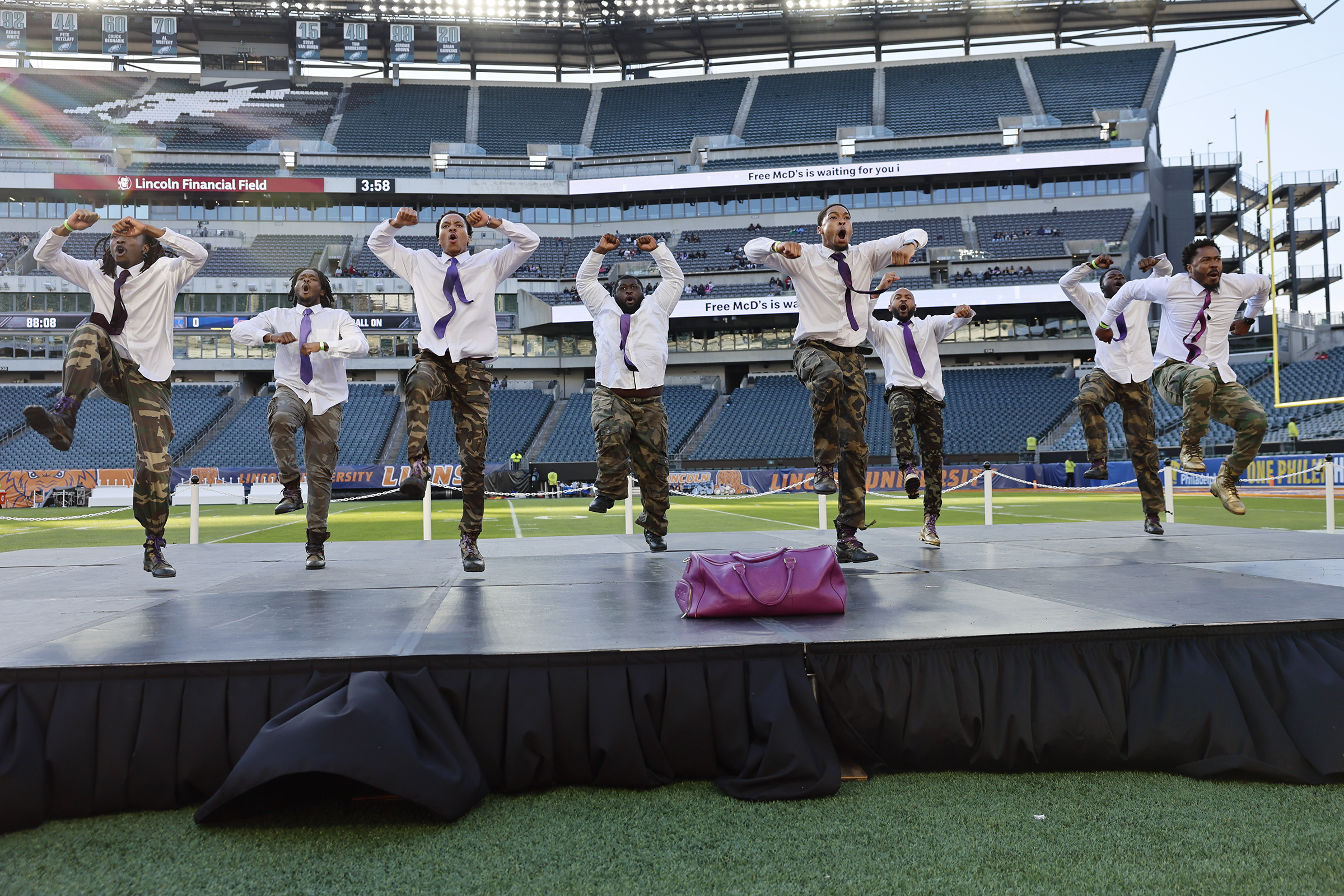
    Before the game kicked off, fans who got to the Linc early were treated to a step show. Step is a type of dance where performers use their bodies to create a beat through stomping and clapping. It was popularized on HBCU campuses in the early 1900s and is still a major part of campus culture today.

    “I feel like it’s really a historical moment,” said Jasir Jeffcoet, a member of Lincoln’s Kappa Alpha Psi chapter. “This is our second step show win within a week, so we make history day by day. Great to be at the HBCU Classic doing our thing. We appreciate everybody here that gathered to make sure everything got right today.”

    Friday’s step show is part of the six day celebration of HBCUs. Earlier in the day, the city held a college and career fair.

    The week’s events kicked off on Tuesday at West Philadelphia High School, where various community cheer groups and marching bands put on elaborate performances. For Halloween, West Philadelphia’s Marching Orange & Blue performed Michael Jacksons’ “Thriller” — complete with zombie makeup.

    “We had the cheerleaders and the young bands, the school bands, and they’re competing [in the Battle of the Bands],” said Mayor Cherelle L. Parker. “ … Temple was there. Father Judge was there. — That’s what ‘One Philly’ is, right?”

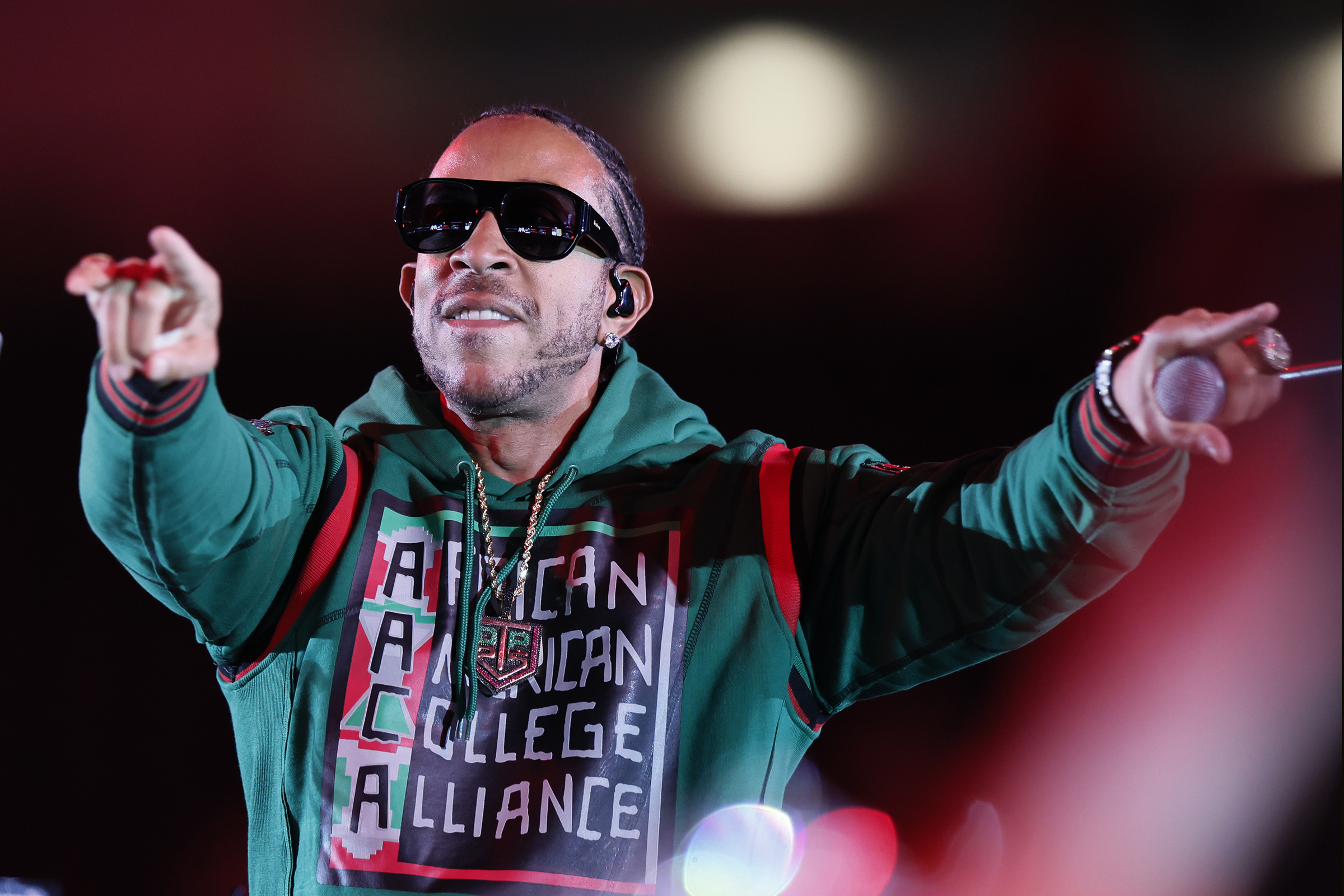
    On Friday, the Marching Orange & Blue were the opening act for rapper Ludacris, who played a melody of his hits at halftime. Jamire Boyer, a member of the Marching Orange & Blue, was nervous when he first heard his high school band would perform at the Eagles’ stadium.

    Participants perform during the step competition on Friday.Elizabeth Robertson / Staff Photographer

    However, after being around all the various performers this week, his apprehension turned to excitement.

    “It makes me inspired to do it more and more often,” Boyer said.

    Devin Jackson contributed to the reporting of this story.

  • Bringing Lincoln University to Philadelphia for HBCU football was ‘personal’ for Mayor Parker

    Bringing Lincoln University to Philadelphia for HBCU football was ‘personal’ for Mayor Parker

    Mayor Cherelle L. Parker began fanning the tears that were starting to form in her eyes inside the northeast tunnel of Lincoln Financial Field, two hours before her alma mater played in the Eagles’ home stadium on Friday night.

    A 1994 graduate of Lincoln University, the first degree-granting historically Black college or university, Parker was attempting to put into words what it meant to see the school’s colors, orange and blue, written in the north end zone and wrap the walls of the stadium.

    “I’m filled with a lot of excitement right now, but it’s also very personal for me,” Mayor Parker, wearing an orange jumpsuit with orange boots that was an unmistakable homage to Lincoln, told The Inquirer. “I wouldn’t be the mayor without a public education, K through 12, here in Philly, and that foundation I got at an HBCU, which was Lincoln University. They told me I could be anybody.

    “It didn’t matter that I started behind the starting line. It wasn’t the same for me as it was for other people. But [Lincoln] said, ‘No excuses.’ I’m never satisfied, and it’s never good enough because [Lincoln] planted those seeds in my head, and so, I’m just grateful.”

    A few hours later, Mayor Parker, watched near the southwest tunnel in the Linc, when Lincoln’s football team took the field with Meek Mill’s “Dreams and Nightmares” blaring with an orange and blue light show illuminating the stadium. And she was there, too, at midfield, conducting the pregame coin toss between Lincoln and Virginia Union, donning her half orange, half blue Lincoln jacket, with the Lion emblem on the left side.

    “[Mayor Parker] gave me a hug [before the game],” Lincoln’s football coach Frank Turner said postgame. “She told me that she was proud of me, proud of of the program, and things like that, and [to] keep pushing.”

    Participants perform during the step competition on day one of the HBCU Classic on Friday.Elizabeth Robertson / Staff Photographer

    The “Orange Crush,” Lincoln’s band, played the national anthem pregame. “Lift Every Voice and Sing” was performed afterward. The various colors of the Divine Nine — historically Black fraternities and sororities — performed at the step show on the east side of the stadium from 3 p.m. to 5 p.m. Mayor Parker was especially excited to watch chapters from Delta Sigma Theta sorority, for whom she became a member of in the Spring of 1994 at Lincoln, perform.

    This was all what Mayor Parker had envisioned when she first thought of bringing HBCU football back to the city. A staff member from the mayor’s office says this dream of Mayor Parker’s has been formulating in her mind for at least 18 years, if not longer, and long before she became Philly’s mayor in 2024. She recalls telling the Philadelphia City Council, for whom she was member of, several years ago, “Man, I want to do a classic HBCU Classic here in Philly.”

    And though her school, Lincoln, were shutout by Virginia Union, 62-0, on Friday night, dropping them to 1-8 on the season, the game marked the first time the school played in Philly in 16 years. Back then, Lincoln played Cheyney University, the oldest HBCU in the country, annually in the city.

    Lincoln has a deep history playing football games in Philadelphia. Mayor Parker admitted she hadn’t previously known that in 1919, Lincoln and Howard (based in Washington, D.C.) played in Philadelphia, which became the earliest known use of the term “Classic” to describe an HBCU football game. That game 107 years ago was played at the Baker Bowl, which was then the home of the Phillies, and a series was held for the next decade, alternating at the home of each city’s professional baseball stadium.

    Friday night’s game between Lincoln and Virginia Union, which will be followed by DeSean Jackson’s Delaware State facing Michael Vick’s Norfolk State, two former Eagles, playing on Saturday (3 p.m., ESPN+), is a microcosm of the week. There was a Battle of the Bands earlier this week and another to be held on Saturday featuring several HBCUs, along with a job fair and choir show as highlights of One Philly HBCU Week, turning what was a solo HBCU game last year into a full week of celebrating HBCUs and Black culture.

    “It showed the range of One Philly [HBCU Week],” Mayor Parker said about the week. “It’s the One Philly and the HBCU Divine Nine fraternal organization culture. So I’m just proud that this excellence, this Black excellence, is on full display. Wow! Wow!”

    Mayor Parker reached back into her memory bank, 36 years ago to be exact, to recount when she began her college journey on Lincoln’s campus. In her own words, she practiced with the track team, was a cheerleader, and became the “first female president of the Lincoln University Student Government Association” during the 1993-94 school year.

    She spoke of David Haines, a fellow Lincoln graduate who was Will Smith’s photo double in the movie Ali and several other Smith films, Christoper Curry, a minister in Wilmington, among several others for helping her become SGA president.

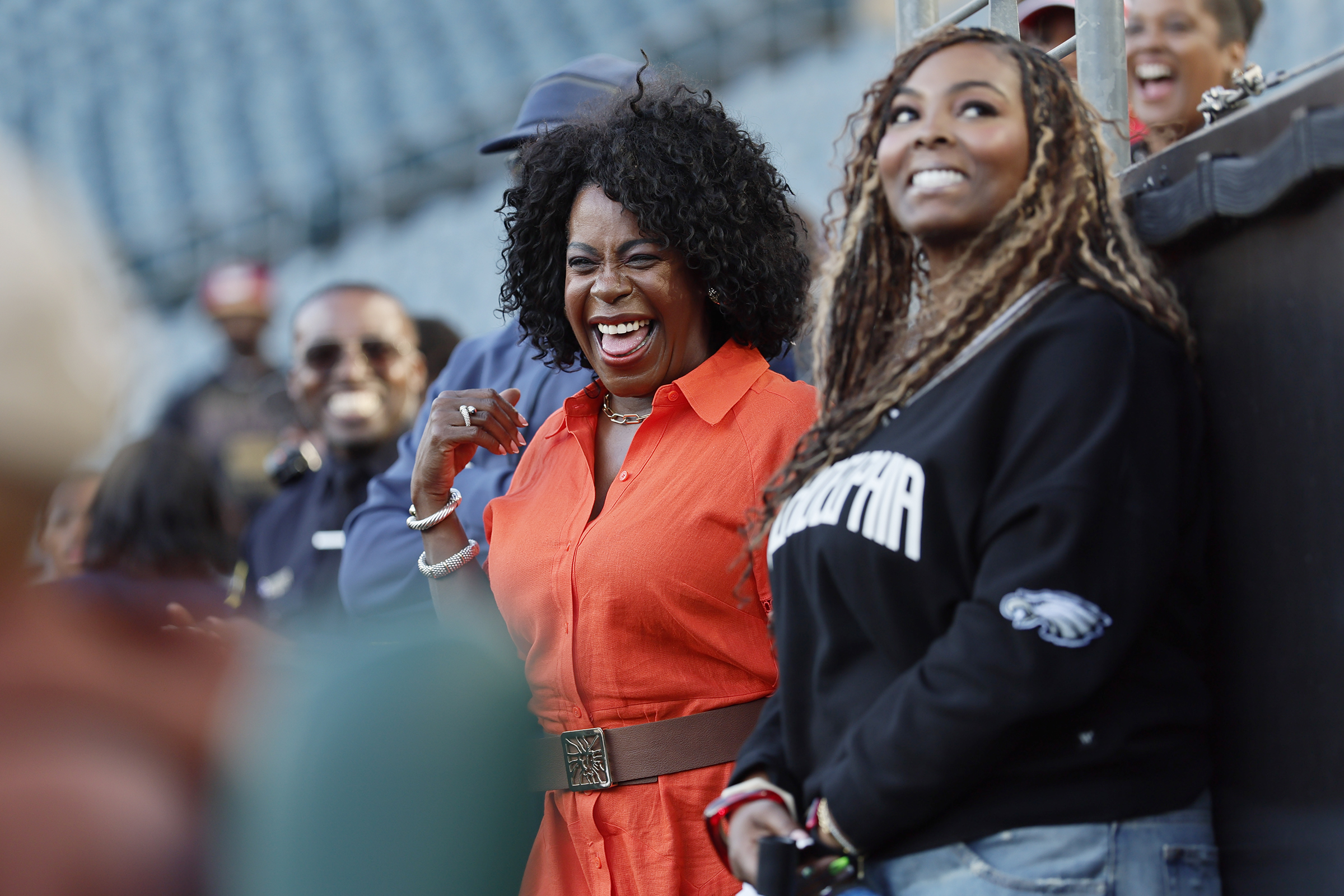
    Dr. Tony B. Watlington Sr. (left), superintendent of the School District of Philadelphia, and Mayor Parker look into the crowd on Friday.Elizabeth Robertson / Staff Photographer

    Mayor Parker became the first person in her family to graduate from college and earned her Lincoln degree in English Education.

    “When you go to an HBCU, it’s the football, the bands,” Mayor Parker said, “but it’s [also] the culture in the [Divine Nine]. I’m a Delta. It’s just part of that sense of hope and pride and dignity.”

    She added: “If you don’t tell the story about who you are and continue the legacy, you don’t know when somebody will come around and intentionally try to erase you and your community and your contribution and your story and your legacy.”

    The night’s festivities continued with three-time Grammy Award winner Ludacris performing hit songs like, “How Low” and “Stand Up” along with his verses in “Yeah!” and “All I Do Is Win” with a gaggle of Lincoln and Virginia Union students watching him up close on midfield, while others danced from the stands.

    Ludacris performs at halftime on day one of the HBCU Classic featuring Lincoln University and Virginia Union University on Friday.Elizabeth Robertson / Staff Photographer

    The announced crowd of 21,854, many of which were pro-Lincoln, didn’t have many moments on the field to cheer about. But this was bigger than football. It was a night to celebrate the long history of HBCUs.

    “It’s only going to get bigger,” Mayor Parker said. “And listen — the hope is that if we do it right, I’ll be dead. But Philly will still have a HBCU Classic.”