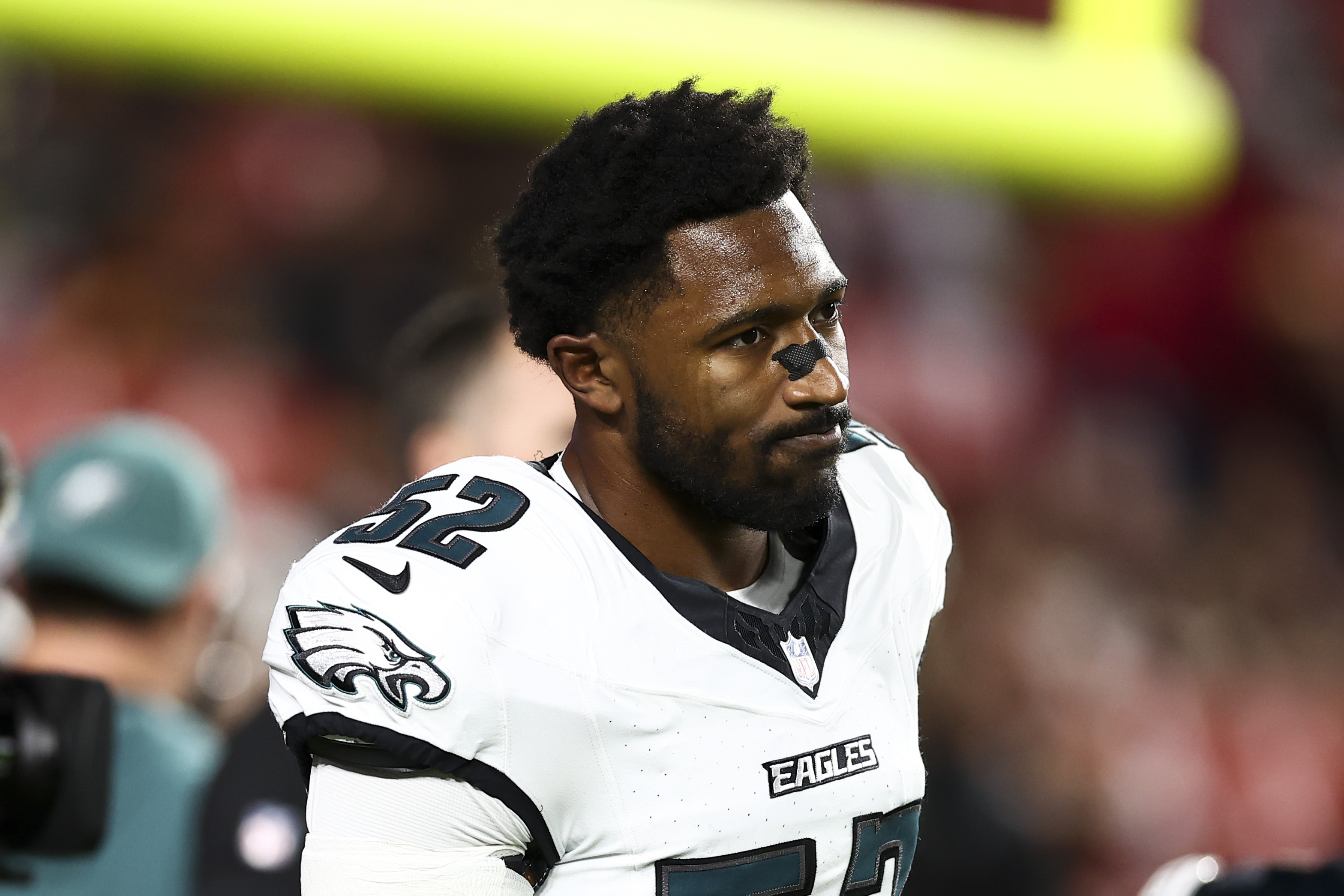
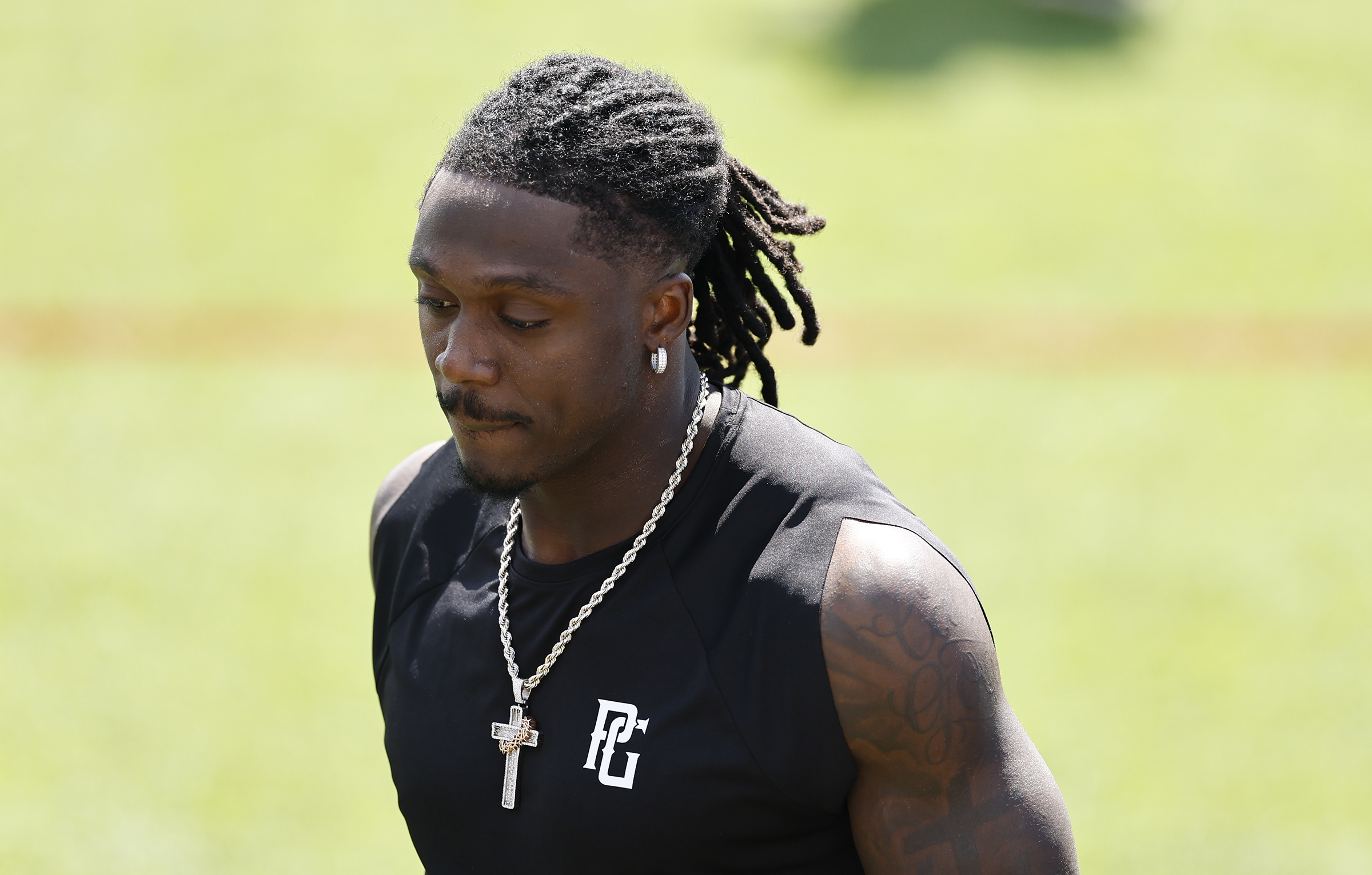
Jonathan Greenard played 47% of the defensive snaps in the Eagles’ 27-10 loss to the Washington Commanders on Sunday.
It was the highest percentage of snaps Greenard has played this season, a fact that on its own is a disappointment for a team that traded two third-round picks on draft weekend to acquire the edge rusher and then signed him to a four-year deal worth nearly $100 million.
But the facts get worse.
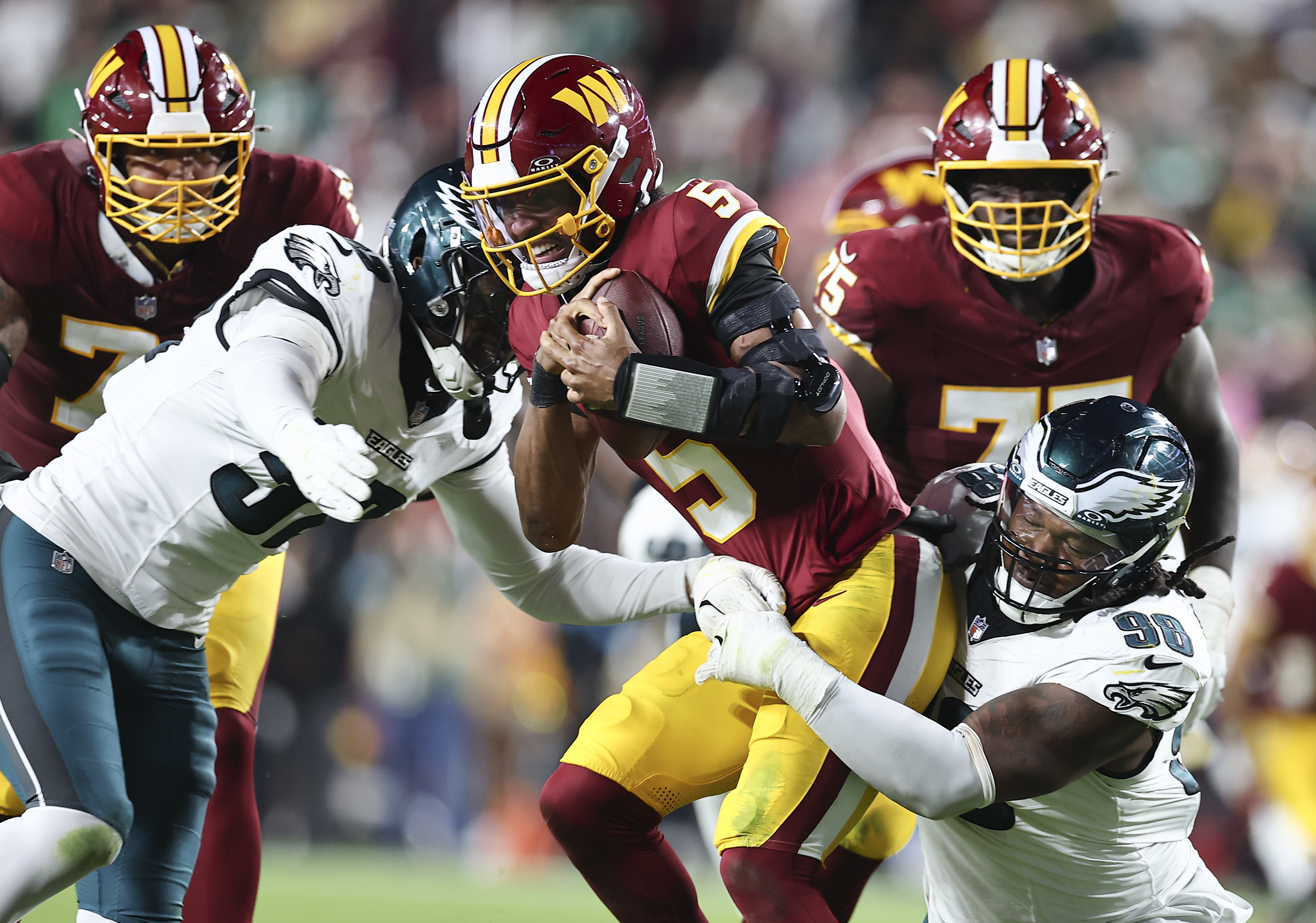
Of Greenard’s 28 snaps Sunday, 18 were pass rushes, and he had little impact on the game. Pro Football Focus credited him with zero pressures, and Next Gen Stats gave him one, on Jalen Carter’s third-quarter sack.
Greenard’s pressure rate Sunday was 5.9%, according to Next Gen, and his season-long pressure rate fell to 9%, down more than six points from his 15.4% rate in Minnesota last season. He has yet to register a sack, and all five games he has played in have resulted in Eagles losses.
Missed time explains a lot of what has been a woeful start to the 29-year-old’s Eagles tenure. A pectoral injury suffered while lifting weights before camp led to Greenard missing all of training camp and the first two games. Then he suffered an ankle injury in Week 4 that kept him out of Week 5 and has limited his ability to play more snaps over the last three weeks.
Eagles defensive tackle Jalen Carter (right) and linebacker Jonathan Greenard (left) sack Washington Commanders quarterback Jayden Daniels during the third quarter on Sunday.Monica Herndon / Staff Photographer
What gives? Eagles defensive coordinator Vic Fangio was talking about practice on Tuesday.
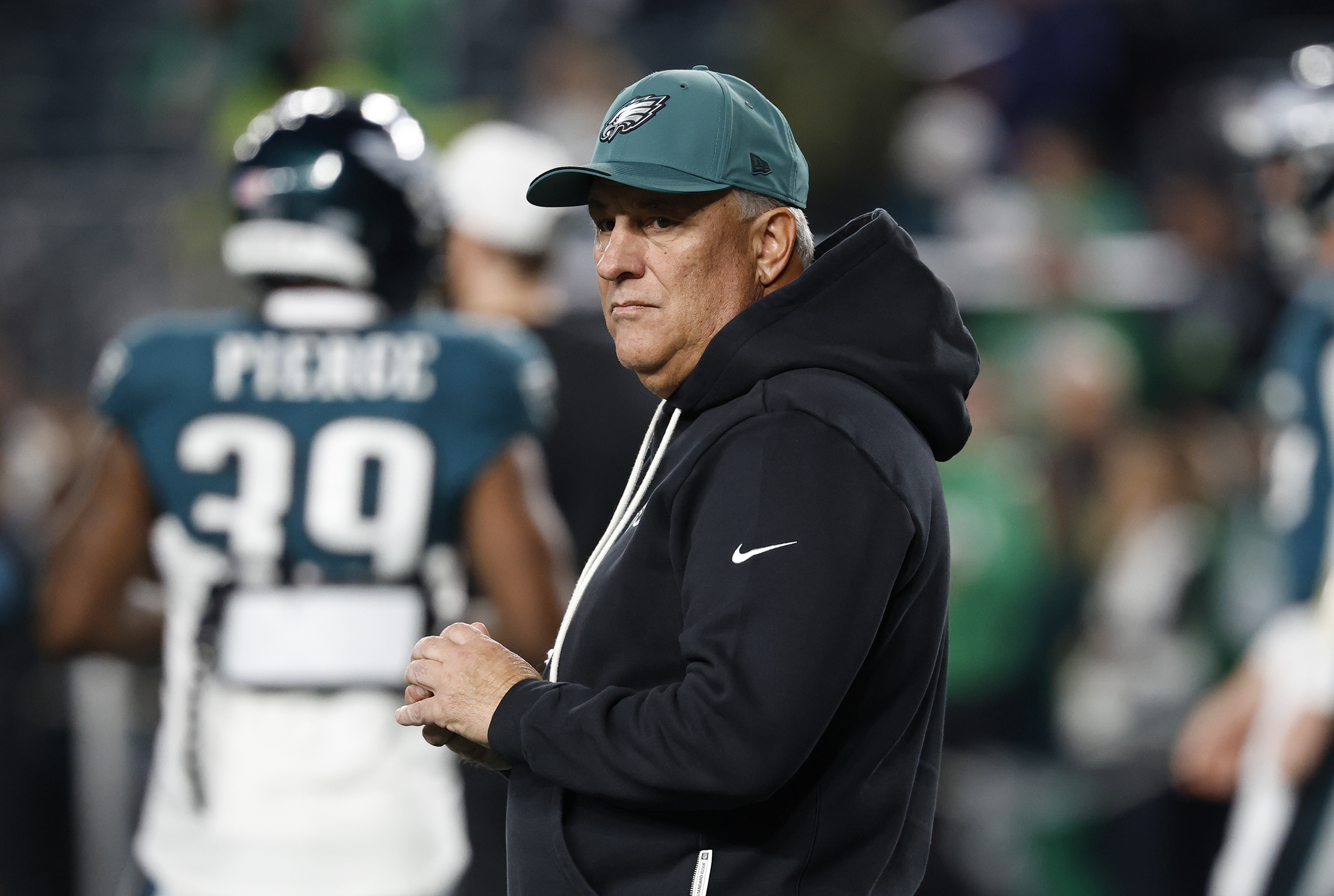
“What I see is a guy that has had very, very little practice,” Fangio said. “When I say very little — minuscule. He missed all of training camp, missed the first two weeks of the season — no practice. Started practicing, was on pitch count, played 19 plays. Was going to increase the next week, got hurt early in that game. Didn’t finish that game. Didn’t play the next game, and he’s been limited in practice. Contrary to some people’s popular belief, practice is important. And he has had next to none.”
“Practice,” Fangio said. “There’s no pill, there’s no magic potion. You can watch all the tape you want. You can sit in meetings all you want. You can do walkthroughs all you want. Guys got to practice.”
Even a veteran pass rusher with six-plus seasons under his belt?
“Practice is important for everybody,” said Fangio.
“He’s just not into a groove. He’s not comfortable in our system totally and what we want him to do. And it’s not because he doesn’t know or doesn’t want to, it’s just [he] hadn’t executed it. Walkthroughs are an assignment check. It’s not an execution. I don’t know if I’ve had a guy that’s had so little practice.”
Greenard has been listed as a full participant in just six Eagles practices so far this season.
Eagles defensive coordinator Vic Fangio emphasized the importance of practice on Tuesday. Yong Kim / Staff Photographer
Commanders quarterback Jayden Daniels was pressured just eight times on 33 dropbacks (24.2%), according to Next Gen. That’s his lowest rate of the 2026 season.
The Eagles rank 29th in pressure rate (31.5%) and in total sacks (10), according to Next Gen.
“It’s been there some, and some it hasn’t been,” Fangio said. “Like all of us, it could get a little better.”
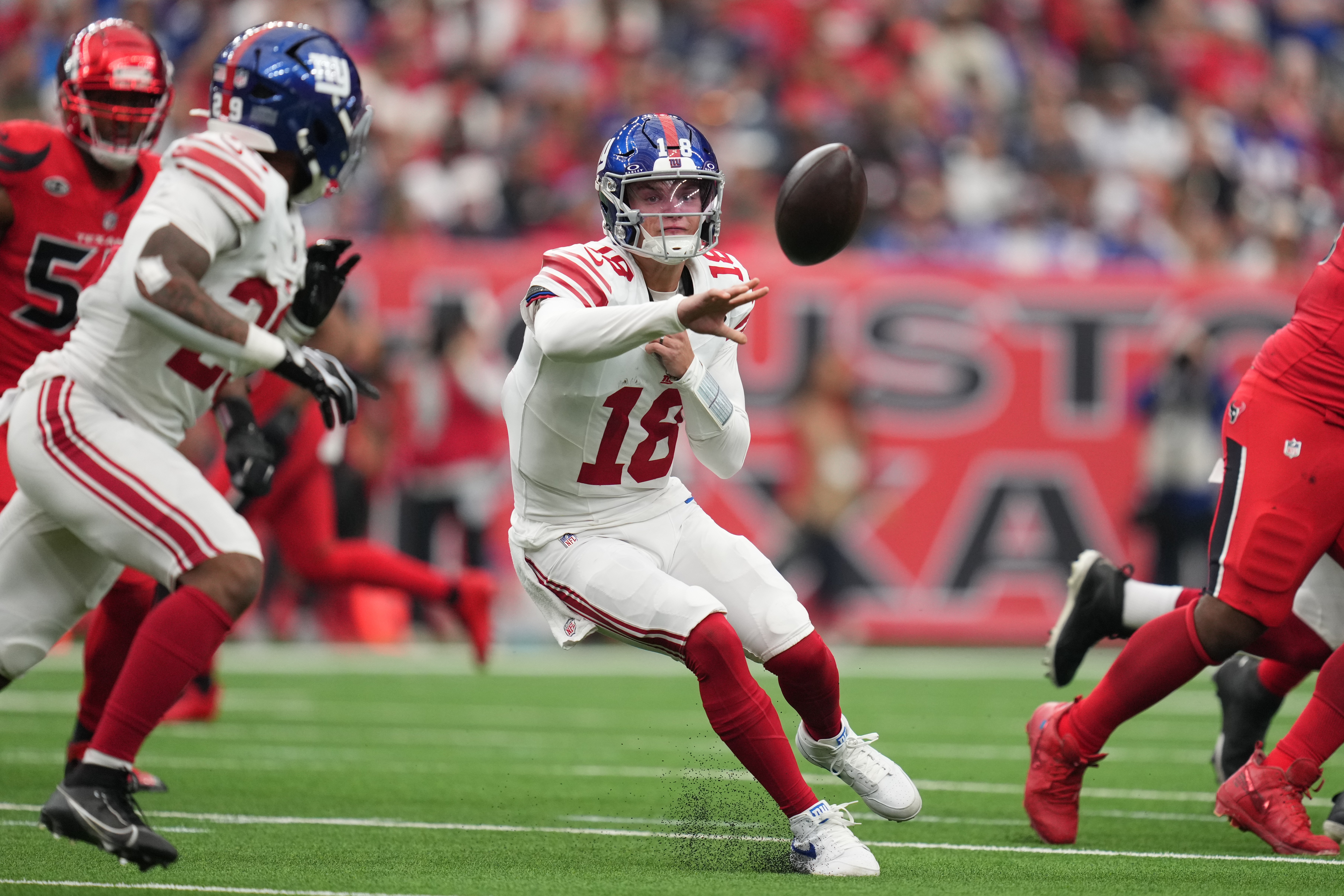
The New York Giants are coming off their bye week and should feel pretty good about their offense after pulling off a 27-21 overtime victory in Houston before the break.
The division leader at 4-2-1 lost starting quarterback Jaxson Dart in Week 2, turned to Jameis Winston, then handed the keys to J.J. McCarthy after acquiring the 2024 10th overall pick in a trade from Minnesota.
The Eagles will see J.J. McCarthy at the controls for the Giants in Week 9. Eric Smith
Fangio said he sees a blend of what the Baltimore Ravens used to run when Greg Roman — now an offensive assistant with the Giants — ran the show for John Harbaugh in Baltimore and what offensive coordinator Matt Nagy used to run in Kansas City.
“They’ve got it going right now,” Fangio said. “They’ve got good wideouts, good tight ends, two good backs, and the quarterback has come in in a short period of time and really done a nice job. For them to get him for a [fifth]-round pick is a steal.”
David Blitzer always has an eye on sports properties as the managing partner of the 76ers and New Jersey Devils, and as the only person with equity in five major sports leagues. What got his attention recently was youth, specifically golf, with participation levels soaring.
“Good business doing excellent things for kids is a wonderful combination,” Blitzer said.
That combination — along with partnering with the most trusted name in golf — has led to the creation of the Arnold Palmer Junior Golf Tour. It launches in January with 400 tournaments planned across the country, including events at RiverWinds in West Deptford and at Seaview in Galloway, with an emphasis on accessibility.
The new junior tour is a partnership among Bolt Ventures (the family office of Blitzer), Arnold Palmer Enterprises and the Arnold & Winnie Palmer Foundation. The idea is to lean on Palmer’s timeless name to help develop juniors for college scholarships and beyond.
“Our goal with the Arnold Palmer Junior Golf Tour is simple — to create more opportunities for young people and their families to experience the positive benefits of golf, both on and off the course,” Blitzer said. “This is an incredible opportunity to build on the legacy of one of the sport’s greatest global icons and carry Mr. Palmer’s mission forward through the next generation.”
The golf ball got rolling before Blitzer’s group connected with Arnold Palmer Enterprises and the foundation. Bolt Ventures earlier this year acquired the Florida-based Hurricane Junior Golf Tour and the Texas Junior Golf Tour, a circuit that partners with the Rocky Mountain Junior Golf Tour.
Now those junior tours are under one umbrella — the colorful Palmer umbrella, the King’s famous logo seen at the Arnold Palmer Invitational at Bay Hill and the Palmer Cup college matches.
“We are hyper-protective of the brand and cautious, for sure,” said Brodie Waters, president of Arnold Palmer Enterprises. “We’re also focused on Mr. Palmer’s legacy, making sure we can share that legacy with the next generation. He really cared about giving opportunity to youth.
“We had these conversations, and it became pretty clear quickly their passion and vision aligned with what we were wanting to do.”
The Arnold Palmer Junior Golf Tour figures to complement, not so much compete, with the more established American Junior Golf Association, which has been around for some 50 years and has captured golf’s growth coming out of the COVID-19 pandemic.
The AJGA has about 150 tournaments around the country this year and has been using some of its many alumni, such as Jordan Spieth and Justin Thomas and Billy Horschel, to either support or lend their name to tournaments, often with corporate partners
Also key to the Arnold Palmer Junior Golf Tour was accessibility and affordability. The “Palmer Foundation Player Access Award” is being designed to help family cope with financial obstacles that can limit participation.
“It’s a mechanism of giving to the right people,” said Josh Press, CEO of the new tour. “We want to provide kids that need assistance and give them a path.”
Temple opened its women’s basketball season similarly to how it closed 2025-26.
The Owls lacked depth and defense last season, and they didn’t make much progress at George Mason on Monday night. Temple crumbled to the Patriots, who went on a 22-0 run in the second quarter to seal the Owls’ 91-71 loss..
Guard Kaylah Turner led Temple with a team-high 21 points, but the same problems from last season persisted.
Next, Temple will host Navy in its home opener on Nov. 7 (2 p.m., ESPN+).
A short rotation
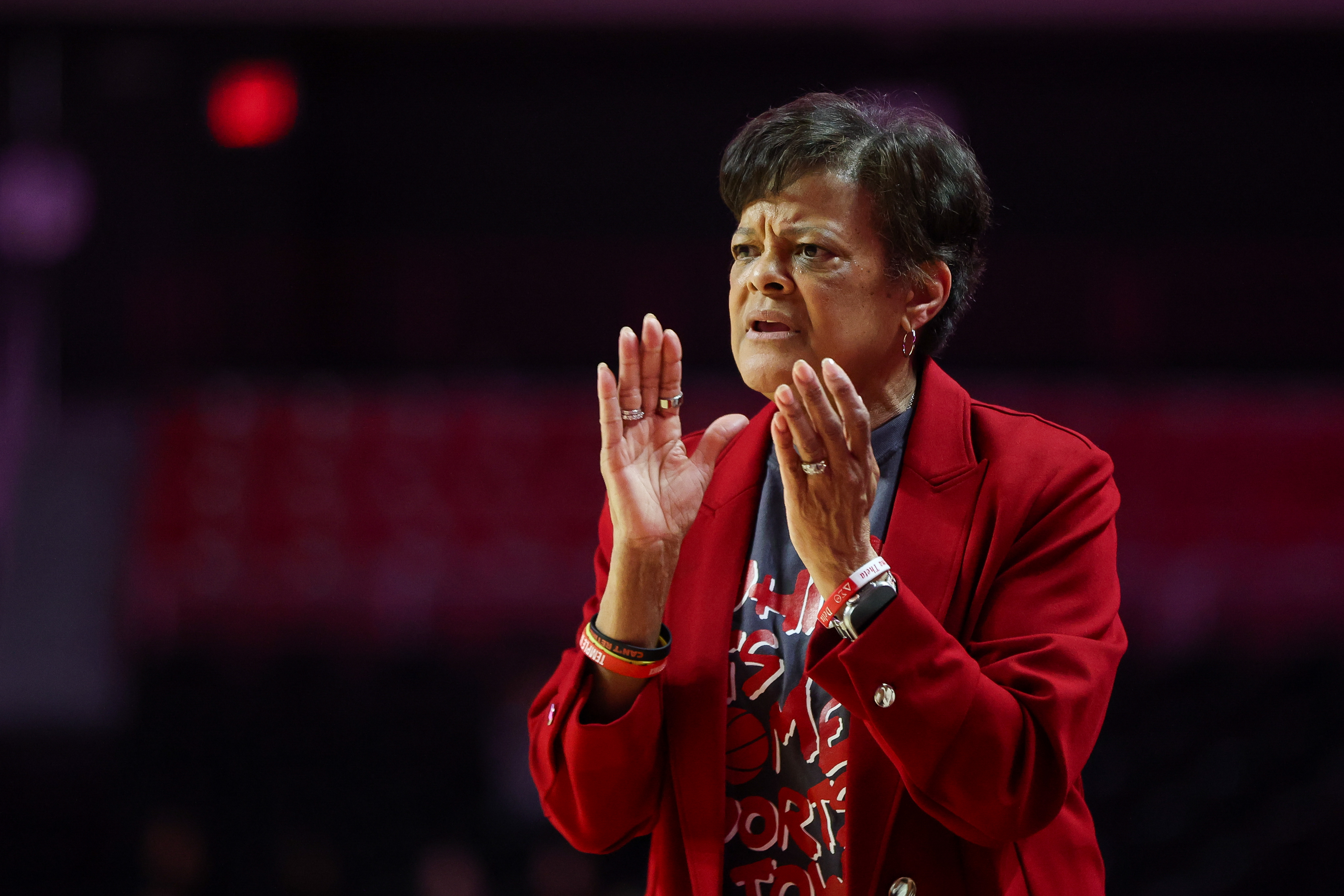
Temple coach Diane Richardson attributed last year’s shortcomings to a lack of depth. Progress was made Monday night, but not nearly as much as Temple would like.
The Owls’ bench scored 15 points to the Patriots’ 27. Richardson made it a point to give the reserves more playing time. Four of them logged more than 10 minutes, though production from the bench didn’t follow, as the second-stringers shot just 25%.
Transfer guard Taliyah Logwood, who played for Texas Southern last year, showed promise. She scored eight of her nine points in the third quarter.
It still wasn’t enough. Temple’s only double-digit scorers were starters, including Turner, Tristen Taylor (12), and Saniyah Craig (10).
Troubles on the glass
The Owls showcased their full-court defense that Richardson emphasized in the offseason. Directly under the basket, however, they faltered.
Temple conceded 18 offensive rebounds that led to 21 second-chance points. Four of those boards came in the first five minutes. When shots went up, the Owls lost their assignments and let George Mason grab rebounds.
The Patriots shot 54.2% on two-pointers and scored 34 points in the paint. In the fourth quarter, George Mason scored nine second-chance points, while Temple tallied zero.
You can measure Cavan Sullivan’s popularity in a lot of ways.
On Tuesday, MLS offered another one.
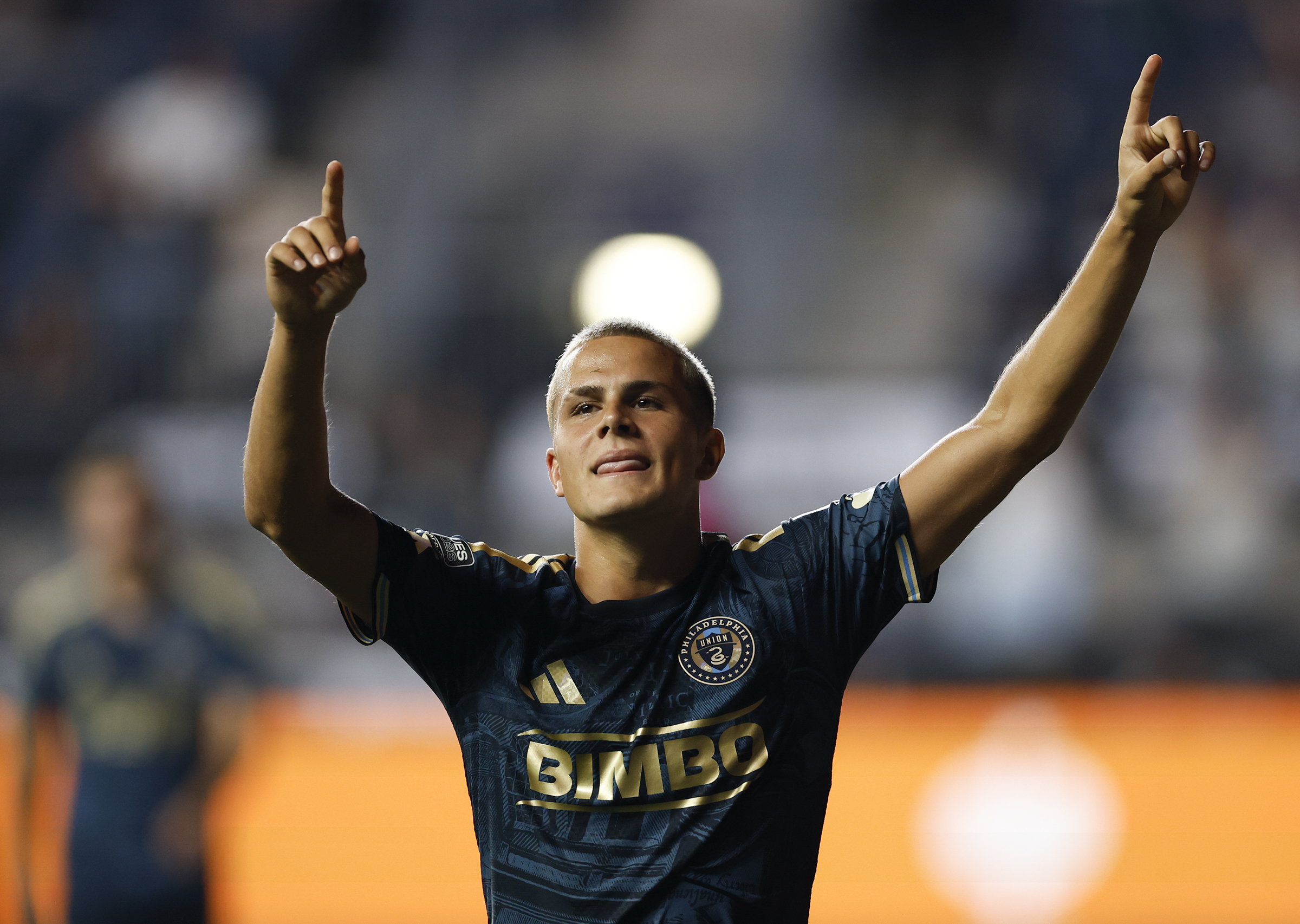
The Union’s teen phenom is No. 6 for player jersey sales this year, the league announced. That is the first spot behind the league’s big five international stars: Miami’s Lionel Messi, Los Angeles FC’s Son Heung-Min, Vancouver’s Thomas Müller, Chicago’s Robert Lewandowski, and Orlando’s Antoine Griezmann.
Rounding out the top 10 are LAFC’s Denis Bouanga, Miami’s Luis Suárez, Nashville’s Hany Mukhtar, and Miami’s Rodrigo De Paul.
You’ll notice that Sullivan is the only U.S. player in the top 10. If that feels like a sign that MLS doesn’t have big-name Americans, it’s a fair point. But there might be two caveats.
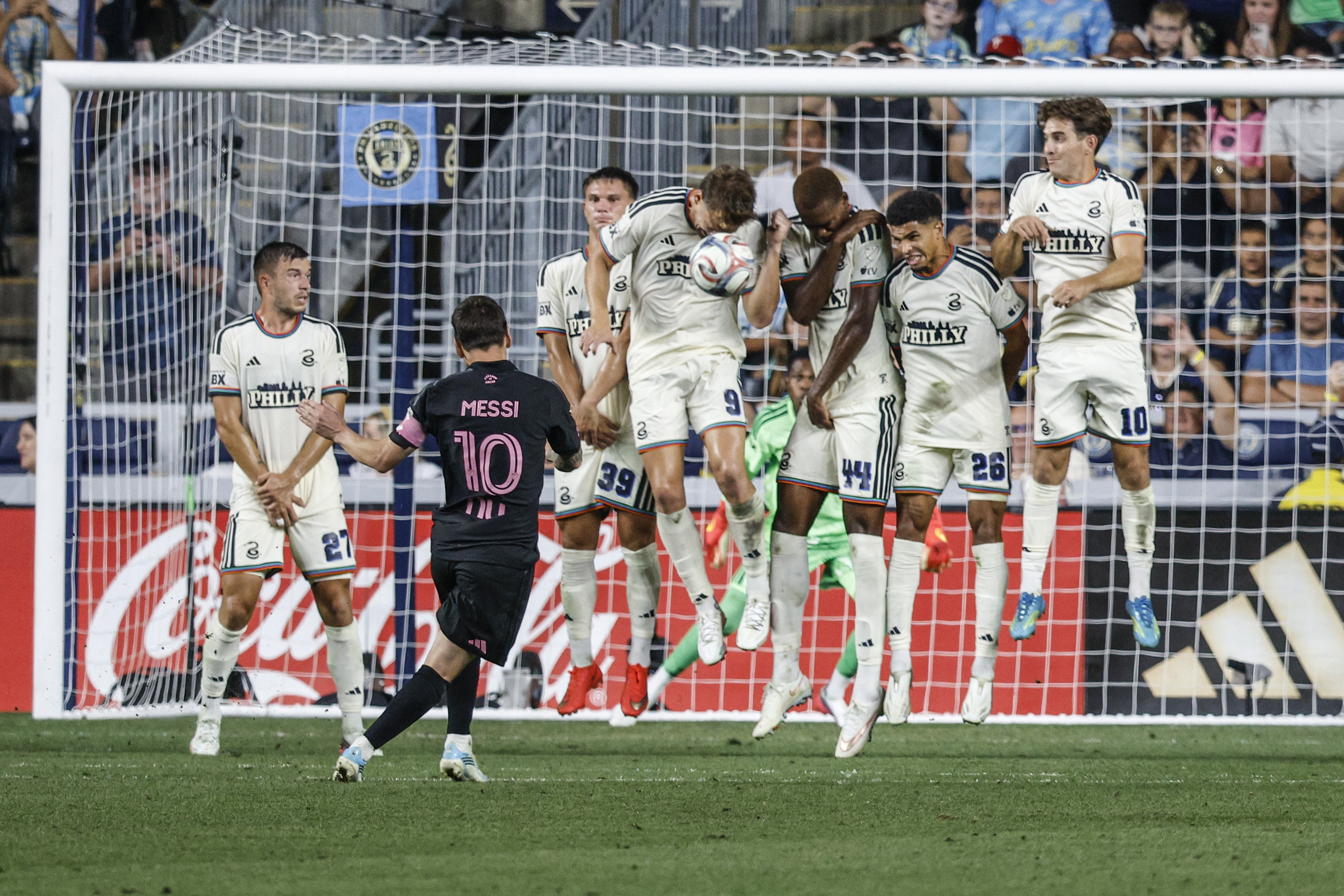
It’s no surprise that Inter Miami’s Lionel Messi continues to have the best-selling jersey in MLS.Steven M. Falk / For The Inquirer
The first is that the league doesn’t lack for rising young U.S. stars. Red Bull New York’s Julian Hall and Adri Mehmeti, Orlando’s Justin Ellis, and New England’s Peyton Miller all reach that bar, as they showed by making the national team earlier this fall.
Hall and Ellis were just as big-time as Sullivan in those games, while Mehmeti and Miller have earned their national hype.
But it isn’t Ellis’ fault that Griezmann came to the World Cup as a 2018 World Cup winner and 2022 finalist, along with club stardom at Spain’s Atlético Madrid and Barcelona. That draws international wallets, not just domestic ones.
Nor is it any of the prospects’ fault that the Fire finally landed Lewandowski after years of dreaming of bringing the Polish superstar to the city with the world’s largest Polish expat population. Now, with eight goals in 22 games, he has the hottest-selling jersey of anyone since the summer.
What it does mean is Hall and Mehmeti haven’t yet broken through in the New York market. The Red Bulls’ failure to make the playoffs this year despite their talents will hurt that effort.
The second caveat is about the MLS players on the U.S. World Cup squad. Sebastian Berhalter was a breakout player, but he left the Vancouver Whitecaps days after the league resumed. Columbus’ Max Arfsten soon joined him at England’s Middlesbrough.
Cincinnati’s Miles Robinson was a reserve, and Charlotte’s Tim Ream bowed out of the national team after the tournament at 39. Anyone who was going to buy Ream’s jersey probably already had it.
Seattle’s Cristian Roldan suffered the same fate. He’s been in top jersey sales rankings before, as a longtime star in that soccer-crazed city. But there was no pop this year, as the World Cup stung him unfairly. Though the U.S. played two World Cup games in Seattle, Roldan missed the first by manager Mauricio Pochettino’s choice and the second due to an injury.
It might also help that the Bridesburg native is playing for his hometown team, in a place that’s one of the most sports-obsessed in the nation. The Union haven’t had many stars in their history, and now they have the homegrown one they’ve dreamed of for years.
That they’ll only have Sullivan for one more year before he heads to Europe is a subject for another day. Right now, there’s a playoff stage to prepare for after Saturday’s regular-season finale against Toronto FC at Subaru Park (4 p.m., Apple TV). If he can take the team on an upset run, his star will grow even more.
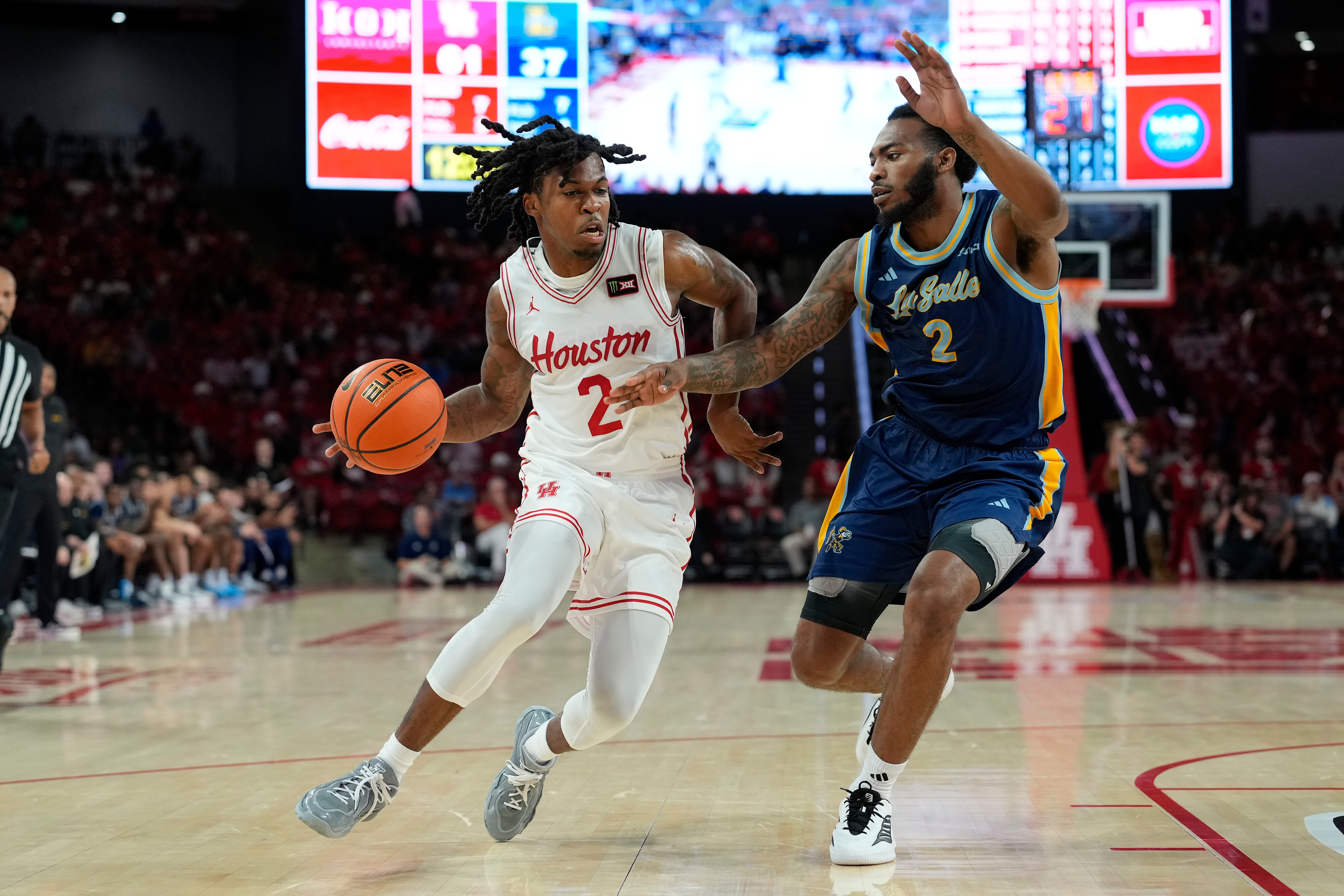
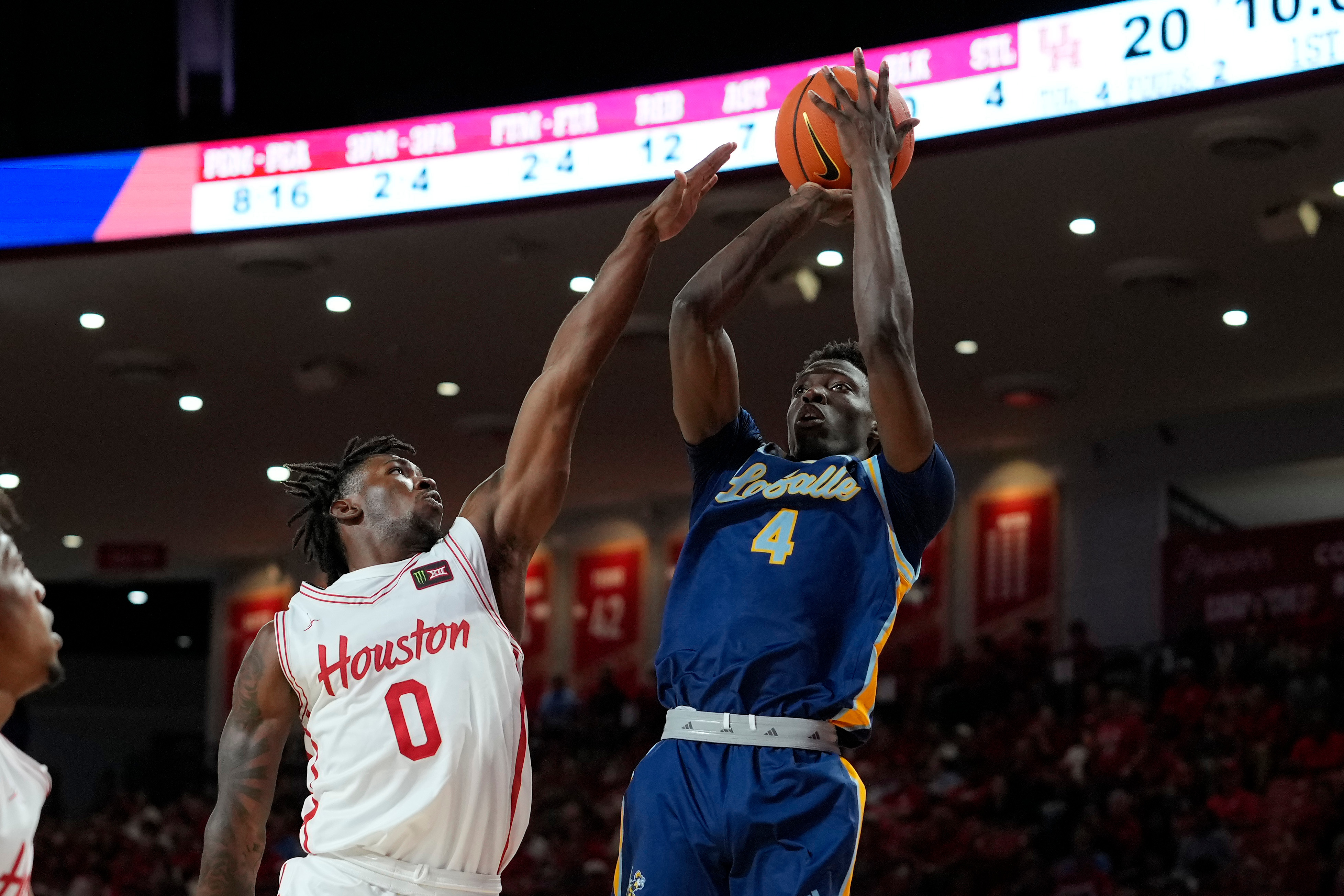
To upset Houston, La Salle needed to be at full strength for 40 minutes. Early fouls made that impossible.
On Monday, La Salle dropped its season opener at No. 10 Houston, falling to the Cougars 94-55. The Explorers (0-1) did not hold a lead, trailing Houston (1-0) from the tipoff. With La Salle in foul trouble, the Cougars came out to a 20-point halftime lead that only ballooned after Explorers’ standout guard Rob Dockery fouled out in the second half.
La Salle senior guard Kam Burton logged a team-high 15 points, two rebounds, and one steal in his hometown of Houston. Meanwhile, five Cougars scored in double-digits. Senior guard Dedan Thomas Jr. led the way with 16 points and five assists.
Here’s what we saw from La Salle’s season opener:
Foul trouble
In the first half, four Explorers picked up two or more fouls, forcing coach Darris Nichols to reach further into his bench.
Dockery, who was named to the Atlantic-10’s preseason second-team, expects to be La Salle’s most dominate player this season. However, Monday did not provide much of a preview of how the 6-foot-6 guard could look alongside La Salle’s revamped roster.
In seven minutes, Dockery finished with one point and three rebounds. He also committed a game-high five turnovers. La Salle turned the ball over 19 times.
Transfers in
Five of La Salle’s seven transfers saw game action.
Anthony Finkley, a key reserve for St. Joseph’s over the past three seasons, got the start for the Explorers and looked aggressive early. The Roman Catholic graduate scored the team’s first six points. However, in 23 minutes, he failed to find the basket again.
Burton, a Stephen F. Austin transfer, was the most consistent player for La Salle, but his night did not come without faults. After converting a 26-footer in the first half, Burton gestured toward a Houston defender. He was assessed a technical foul and was promptly sent to the bench by Nichols. The ensuing free throws extended Houston’s lead to 13 points.
La Salle guard Devin Booker scores past Houston guard Kordel Jefferson on Monday.Kevin M. Cox
George Mason transfer Devin Booker, who starred at Cristo Ray, trailed Burton in the box score with 12 points.
Threes galore
Last season, La Salle ranked 350th out of 364 programs in three-pointers made per game. Nichols prioritized shooting in the portal, and it showed in terms of sheer volume on Monday.
The Explorers attempted 39 three-pointers — more than double the team’s 17.9 attempts per game last year. However, La Salle converted just 21% of its attempts from deep. Booker shot 1 of 7 from beyond the arc while freshman RJ Smith missed all six attempts.
The Explorers’ barrage of three-point attempts was a product of their inability to convert down low. The Cougars outscored La Salle 44-10 in the paint.
‘Fight on Speedy’
During Monday’s broadcast on CBS Sports Network, it was announced that the La Salle men’s and women’s basketball teams will sport a pin in honor of former coach Speedy Morris. The pin will read “Fight on! Speedy” and will be worn for the rest of the season.
CBS play-by-play commentator Tom McCarthy, who is also the voice of the Phillies for NBC Sports Philadelphia, explained that Morris has been “battling some illness back in Philadelphia.” Morris, La Salle’s all-time winningest coach, has lived with Parkinson’s disease since 2017.
NEW: La Salle men's and women's basketball will sport a jersey patch for former coach Speedy Morris this season.
The patch was announced on tonight's @CBSSportsCBB broadcast, and the school just confirmed it to me.
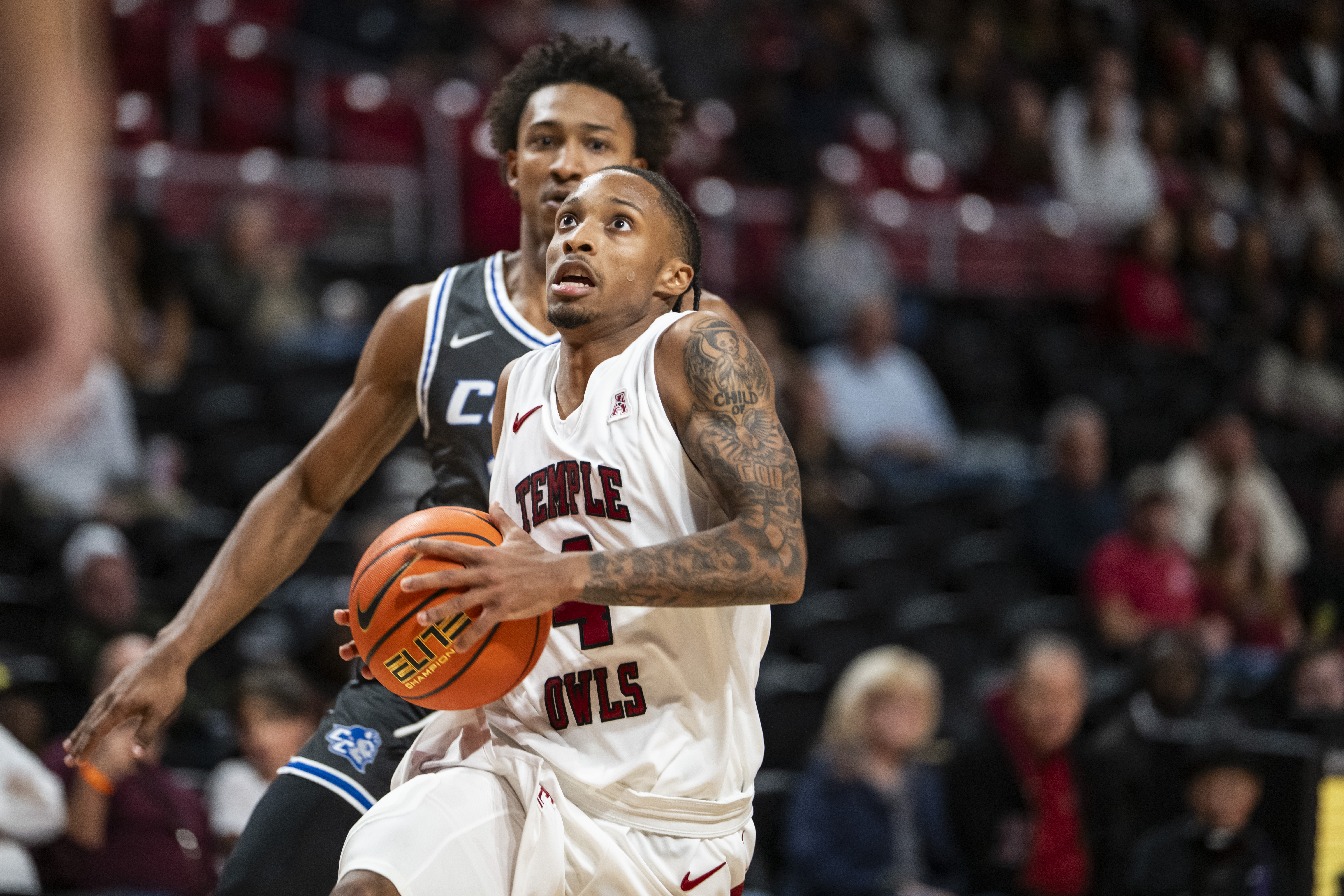
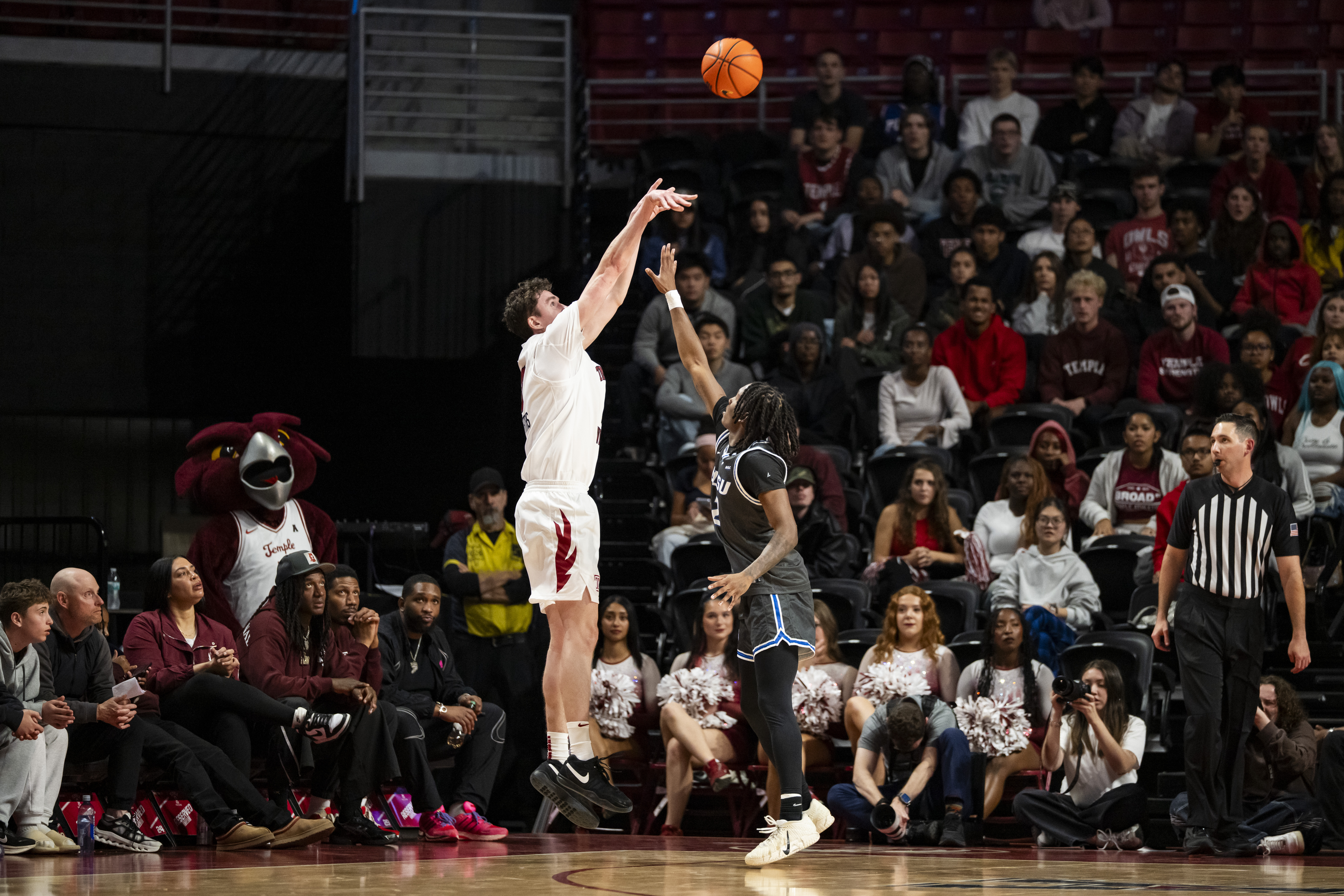
Temple’s nonconference schedule will provide opportunities to measure how far coach Adam Fisher’s rebuilt men’s basketball program has come. Monday night’s season opener against Central Connecticut State offered the first glimpse.
The Blue Devils entered the season following an 18-12 campaign and a second-place finish in the Northeast Conference. Picked to finish tied for third in the league’s preseason poll, Central Connecticut State presented an early test for Temple’s new-look roster.
With nine incoming transfers, an emphasis on defensive pressure and a deeper rotation surrounding returning standouts Derrian Ford and Gavin Griffiths, the Owls had plenty to evaluate.
Temple opened on a 17-0 run, held Central Connecticut State to 20% shooting before halftime, and earned a 68-56 victory at the Liacouras Center.
However, the Blue Devils outscored Temple, 40-32, after halftime, exposing some of the challenges facing Fisher’s revamped team.
“We’ve got to figure out, again, [how] to attack and finish out games the right way and play Temple basketball for 40 minutes,” Fisher said.
The Owls return to action Sunday at 5 p.m. against Richmond at the Palestra.
Griffiths provides versatility
Griffiths finished with 11 points, eight rebounds, and three assists, providing a steady presence as Temple experimented with different rotations.
The 6-foot-7 senior made two three-pointers and finished 4-for-11 from the field in 29 minutes.
His performance built on a productive first year with the Owls, when he averaged 10.1 points and 4.9 rebounds after transferring from Nebraska.
Griffiths also made 63 three-pointers and blocked 53 shots last season, becoming the only Division I player to record at least 60 threes and 50 blocks.
Gavin Griffiths finished with 11 points, eight rebounds, and three assists.Allie Ippolito / For The Inquirer
His combination of perimeter shooting and interior defense gives Temple flexibility on both ends.
“Because I’m tall and I have a quick release, it affects defenses a lot because they have to pull over to my side,” Griffiths said before the season. “That allows our guards to really get downhill and make plays.”
Fisher wants Griffiths to become a more consistent rebounder and embrace a larger leadership role as the newcomers adjust.
“I thought Gavin Griffiths was really steady,” Fisher said.
A deeper rotation
Fisher’s new approach this season emphasizes defensive pressure, faster play, and frequent substitutions to maintain intensity.
Temple started Griffiths alongside transfers Jordan Marsh, Cam Scott, Dez White, and Christian Beam.
Marsh, who transferred from Southern California, opened the scoring with consecutive three-pointers and helped establish Temple’s early advantage.
He finished with a team-high 16 points, four assists, and two steals, repeatedly creating opportunities with his speed and defensive activity.
“He’s electric,” Fisher said. “The speed he has with the basketball. He makes the defense have to put on a lot of pressure.”
Jordan Marsh finished with a team-high 16 points, four assists, and two steals.Allie Ippolito / For The Inquirer
Temple forced 12 turnovers, converted them into 17 points, and scored 21 fast-break points.
The frontcourt also demonstrated its versatility. Beam, a 7-1 center, started and provided early rim protection, while UTSA transfer Baboucarr Njie contributed eight points, 12 rebounds, and three blocks off the bench.
Ford, Temple’s leading scorer last season, entered with 16 minutes remaining in the first half. Fisher revealed afterward that Ford had practiced about three days over the previous three weeks and was being eased back into action.
Deuce Drake provided another spark off the bench, scoring 11 points in 15 minutes, including five consecutive points during a crucial second-half stretch.
Second-half concerns
Despite leading 36-16 at halftime, Temple struggled to maintain its defensive intensity.
Central Connecticut State improved to 50% shooting after the half, while Temple made three of 16 second-half three-point attempts.
The Owls led by 23 points with 11:19 remaining, but the Blue Devils repeatedly cut into the advantage, reducing the deficit to 11 with 1:26 left.
Fisher criticized Temple’s stagnant offensive possessions and tendency to settle for perimeter shots rather than attacking the basket.
Adam Fisher said his team “settled in the second half offensively” on Monday night.Allie Ippolito / For The Inquirer
“I thought we really settled in the second half offensively,” Fisher said. “You’ve got to attack more.”
Marsh attributed the late struggles to a lack of attention to detail.
Still, the opener demonstrated Temple’s potential to pressure opponents with its depth and athleticism.
For the last half-year, the Flyers have been teasing a new Liberty Bell logo. The front office teased it back at the NHL draft, featuring the logo prominently in a photo posted to their social media.
So, in anticipation of the “Hometown Remix” jersey campaign, a lot of fans speculated the Flyers might, for the first time ever, use a new crest on the front of the jersey, or use the Liberty Bell logo on the shoulder pads.
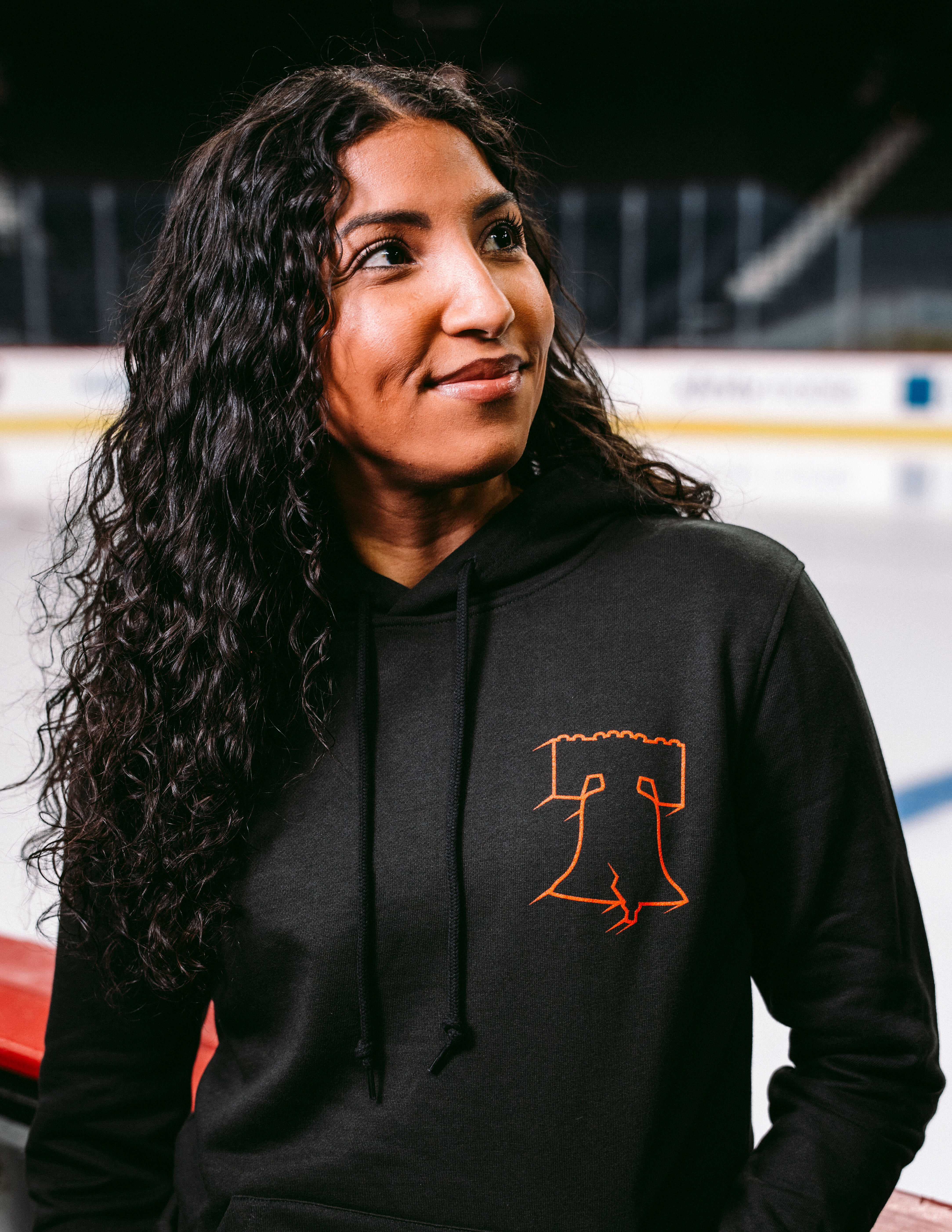
That’s not happening — the Flyers are sticking with their traditional crest — but the jersey is Liberty Bell-inspired. The team wanted to use the newly developed Liberty Bell logo to support the campaign, featuring motion lines to mimic the iconic “Flying P” logo, in some way.
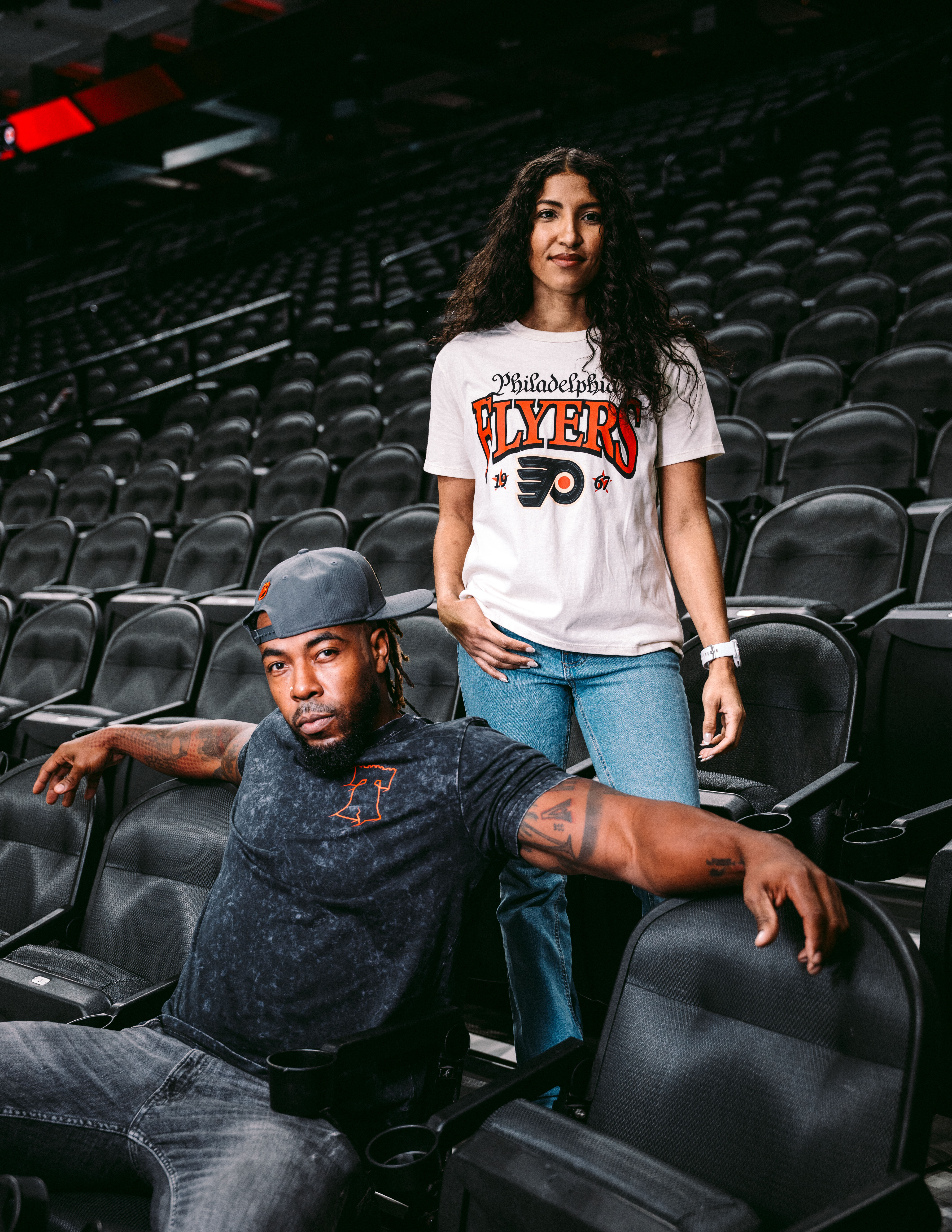
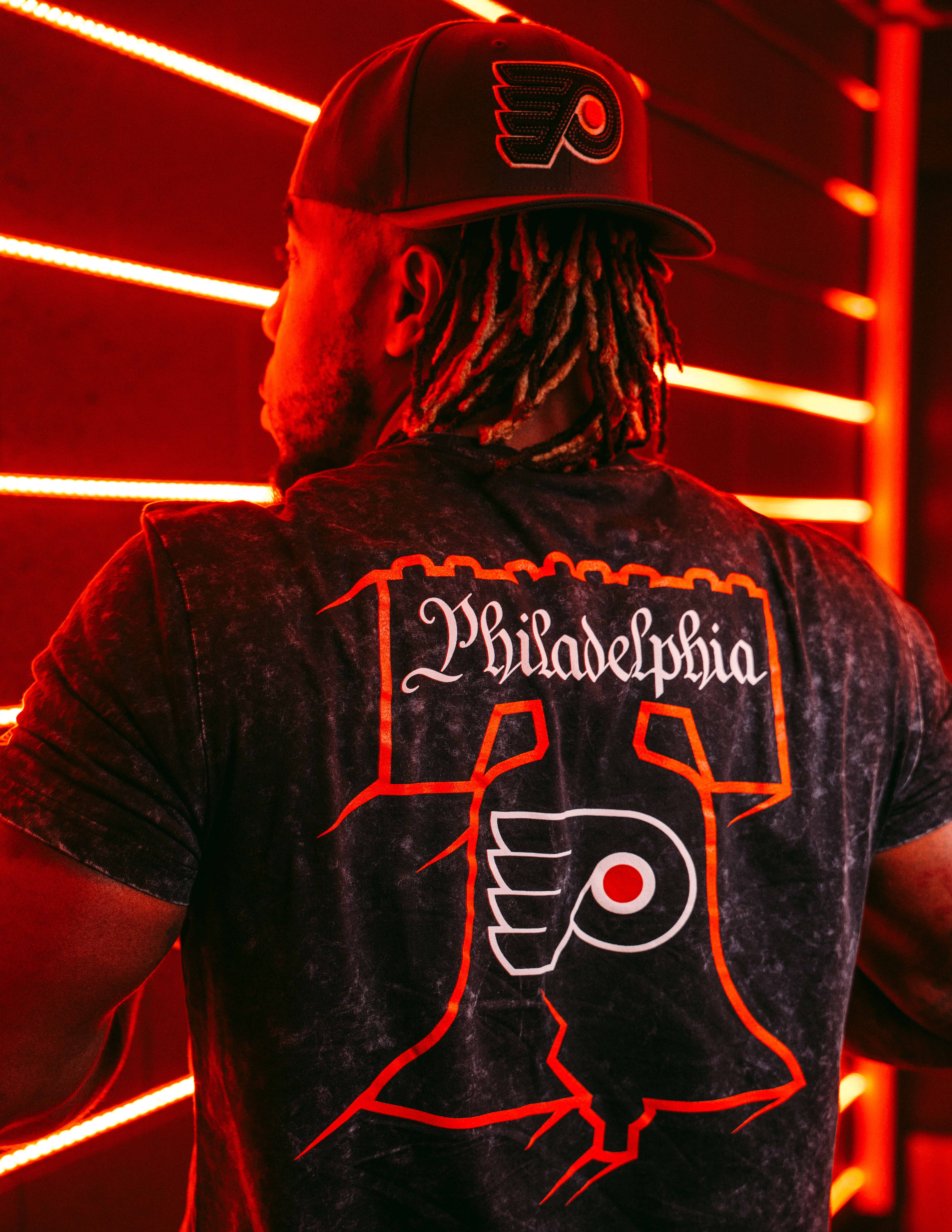
In honor of that campaign and the country’s 250th anniversary celebration, the Flyers are releasing an Independence Edition merchandise collection, with the new Liberty Bell logo at the center.
“We’re excited to showcase some incredible storytelling elements with our new campaign to support our Hometown Remix uniforms,” said Todd Glickman, Comcast Spectacor’s chief business & revenue officer, in a release.
The Flyers’ new “Independence Edition” collection went on sale Tuesday.Courtesy of F
“The Independence Edition is an opportunity for us to expand our brand while honoring our city’s legacy by carrying it forward through the next generation. We wanted to find ways to portray our true Philadelphia identity in a way that is also authentic to the Flyers brand — one that embodies boldness, defiance, and resilience. We’re proud to introduce a number of interactive elements for fans to experience and engage with during Independence Edition games and to showcase their fandom through our extensive retail collection.”
The logo, which also is featured on a small sticker on the back of the helmets, will be available on everything from hats to T-shirts and sweatshirts. The collection makes use of a Philadelphia wordmark in a Declaration of Independence-inspired font.
The initial collection will be available online and at the Flyers team store starting with Tuesday’s Hometown Remix jersey debut. Later collections will follow around the holidays and in the spring.
The Flyers’ new merchandise collection features the new Liberty Bell logo they’ve teased over the past few months.Courtesy of Flyers
LeBron James chucked a slick pass to VJ Edgecombe, who stood nearly a full court away as he picked the ball up off one bounce and threw down the one-handed dunk.
It was another highlight moment for this star-studded 76ers roster, this time as part of an early push-the-pace strike against the overmatched Chicago Bulls. Yet in a season already full of immense attention, tangibly supercharged arena environments at home and on the road, and a slew of comebacks and down-to-the-wire finishes, this felt like the closest thing to a “normal” Monday night in the NBA for the Sixers.
They handled business against an inferior opponent in a 126-107 victory at Xfinity Mobile Arena, putting it in that category coach Nick Nurse refers to as “professional wins.”
“A lot of these teams play a way that’s a little scary,” Nurse said of such on-paper mismatches. “It’s fast and it’s furious and lots of threes. … They’re not easy games, and I’m glad we handled it professionally tonight.”
Monday was a sharp contrast to the bulk of the Sixers’ first two-plus weeks, a mostly dizzying road that has yielded a 7-1 record. Six of their first seven games fell into the “clutch” category, when the scoring margin was within five points with five minutes or less to play. The Sixers won all six, doubling the total of any other team in the league entering Monday. Their only loss so far was to the Detroit Pistons, on the second night of a back-to-back, in a game played without former NBA Most Valuable Player Joel Embiid and Edgecombe.
Remembering the quality of Monday’s opponent is critical. The 1-6 Bulls, with a first-year coaching staff and front office, are now in a full rebuild and expected to finish near the bottom of the Eastern Conference. The development of fourth overall draft pick Caleb Wilson, who totaled 24 points and four steals Monday, and Matas Buzelis, who had four points and five turnovers, is far more important than win total.
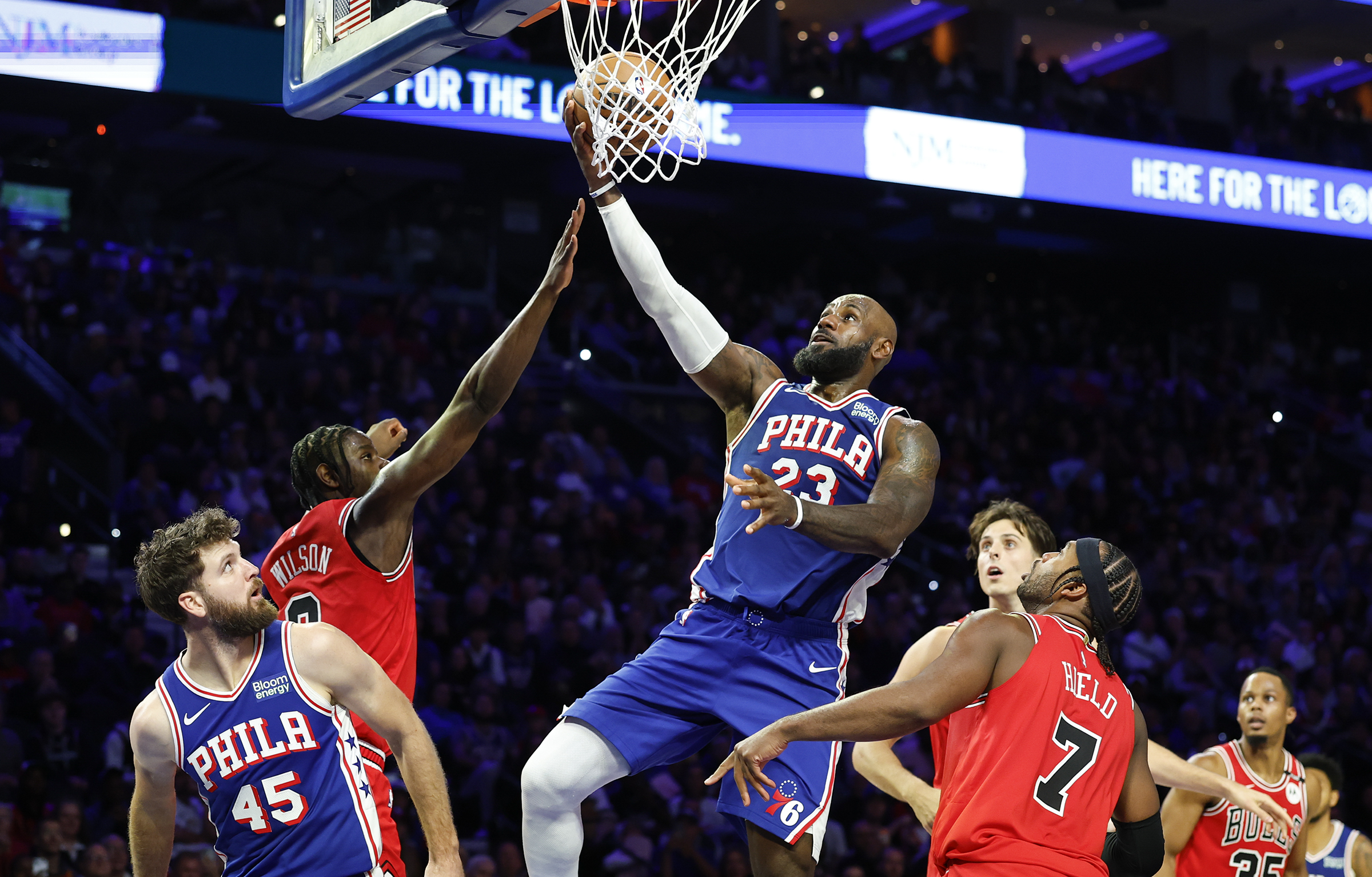
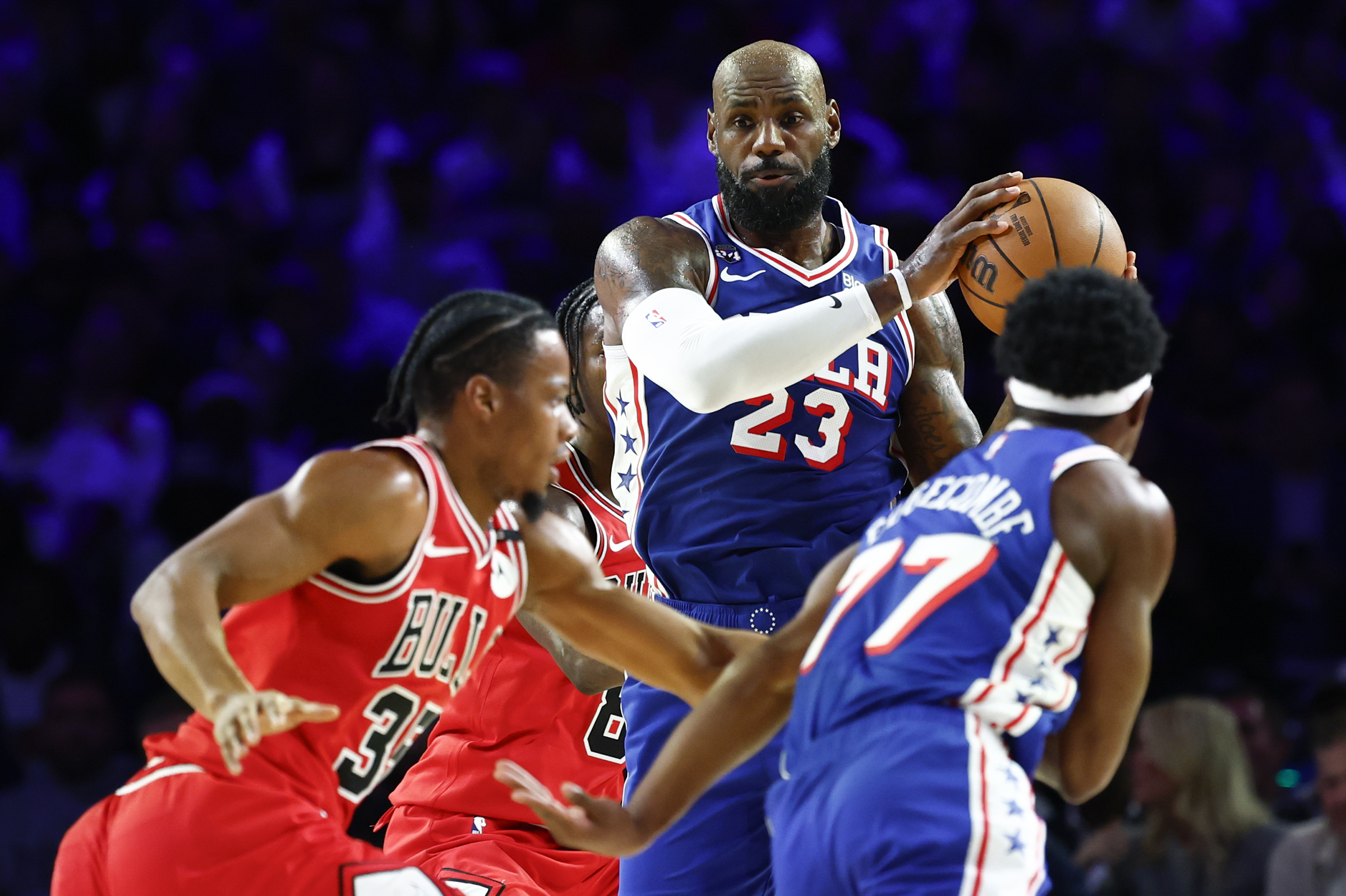
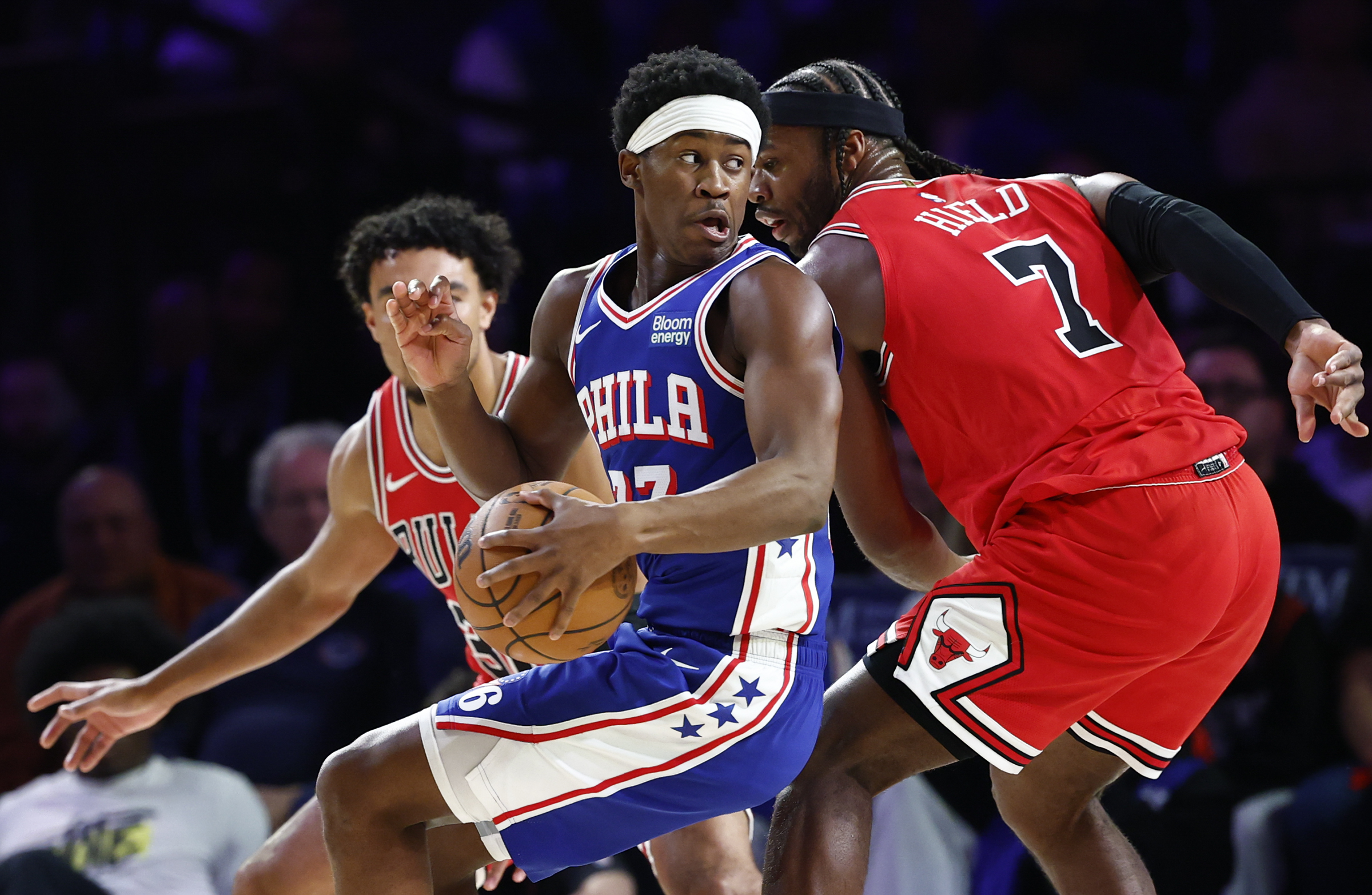
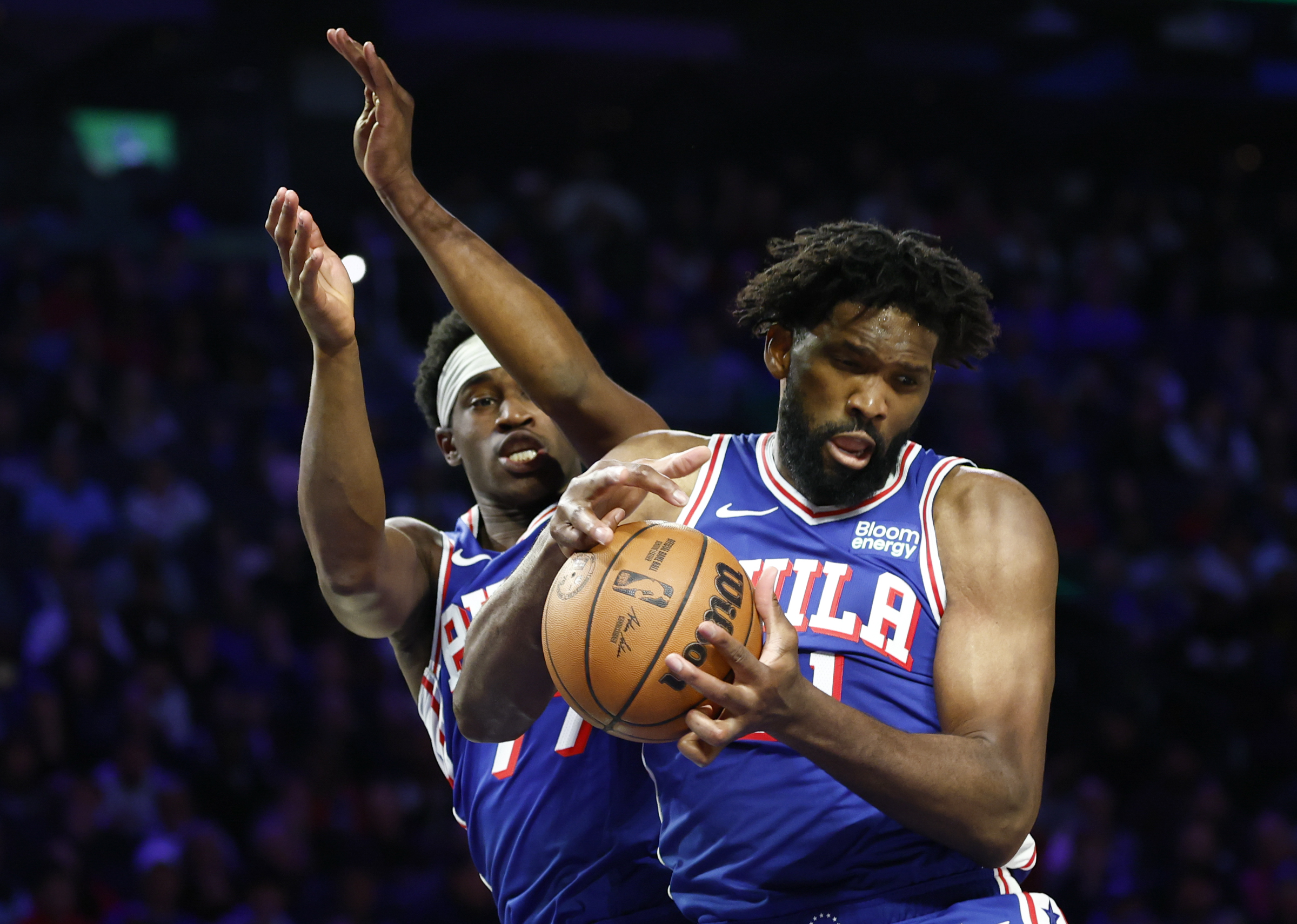
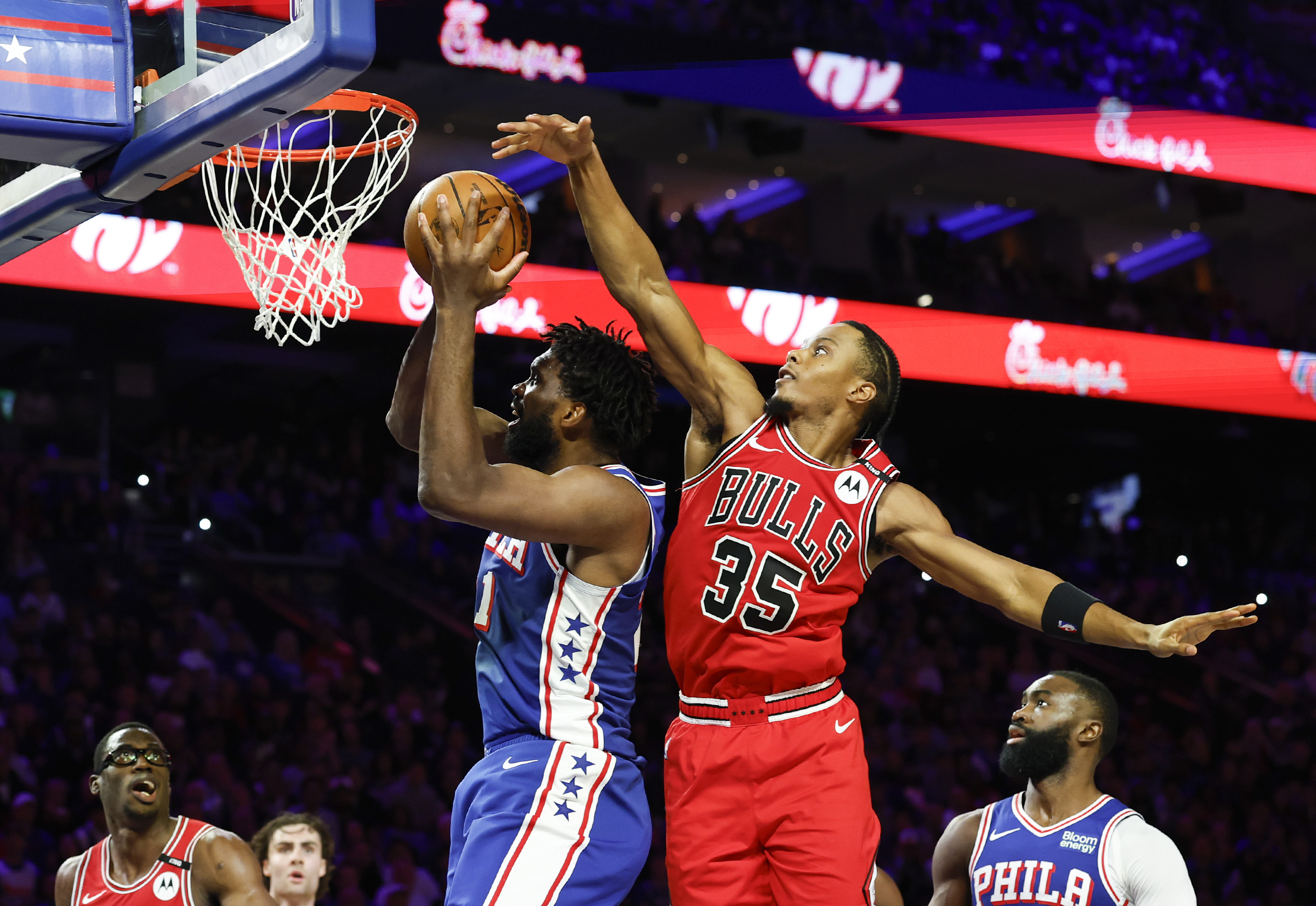
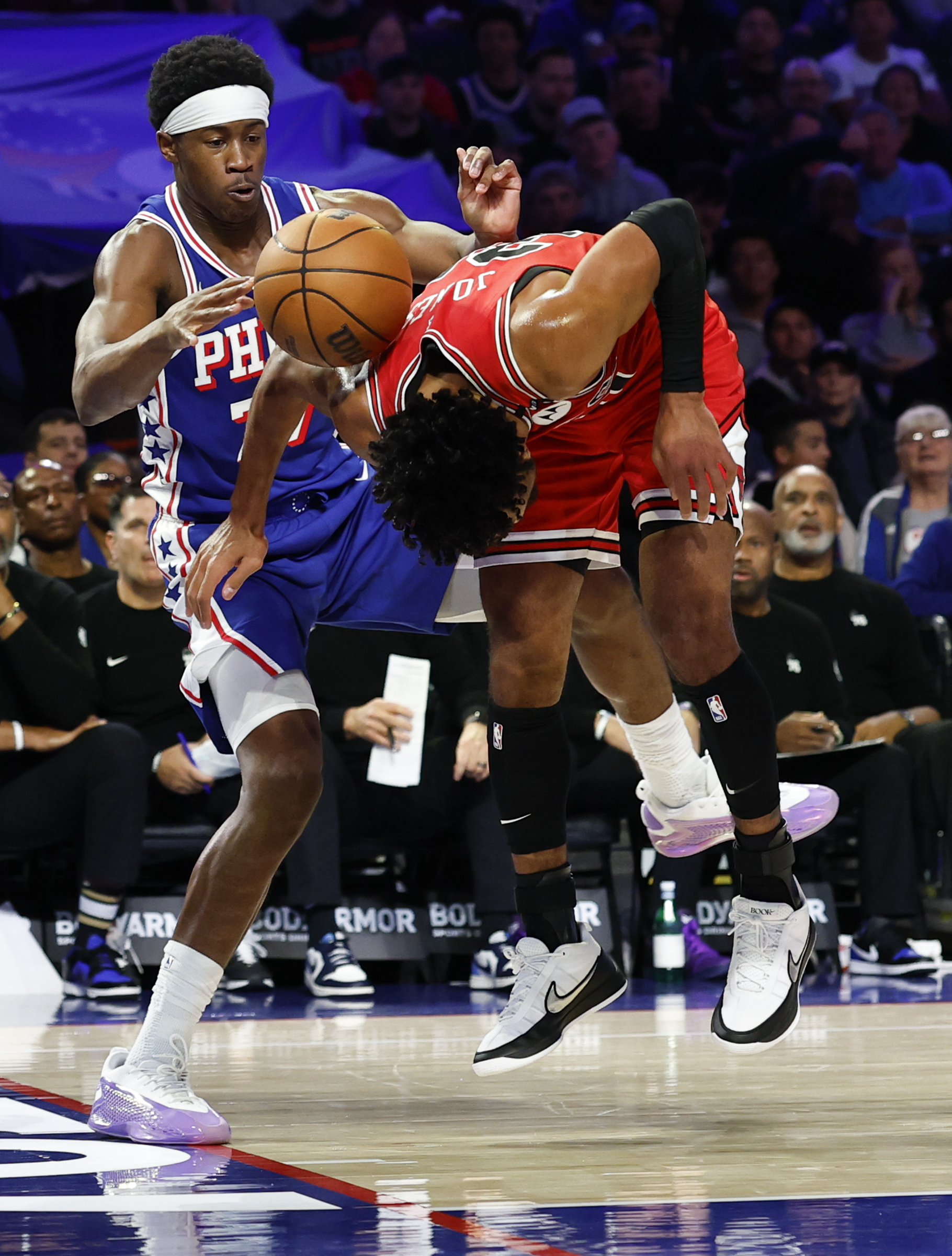
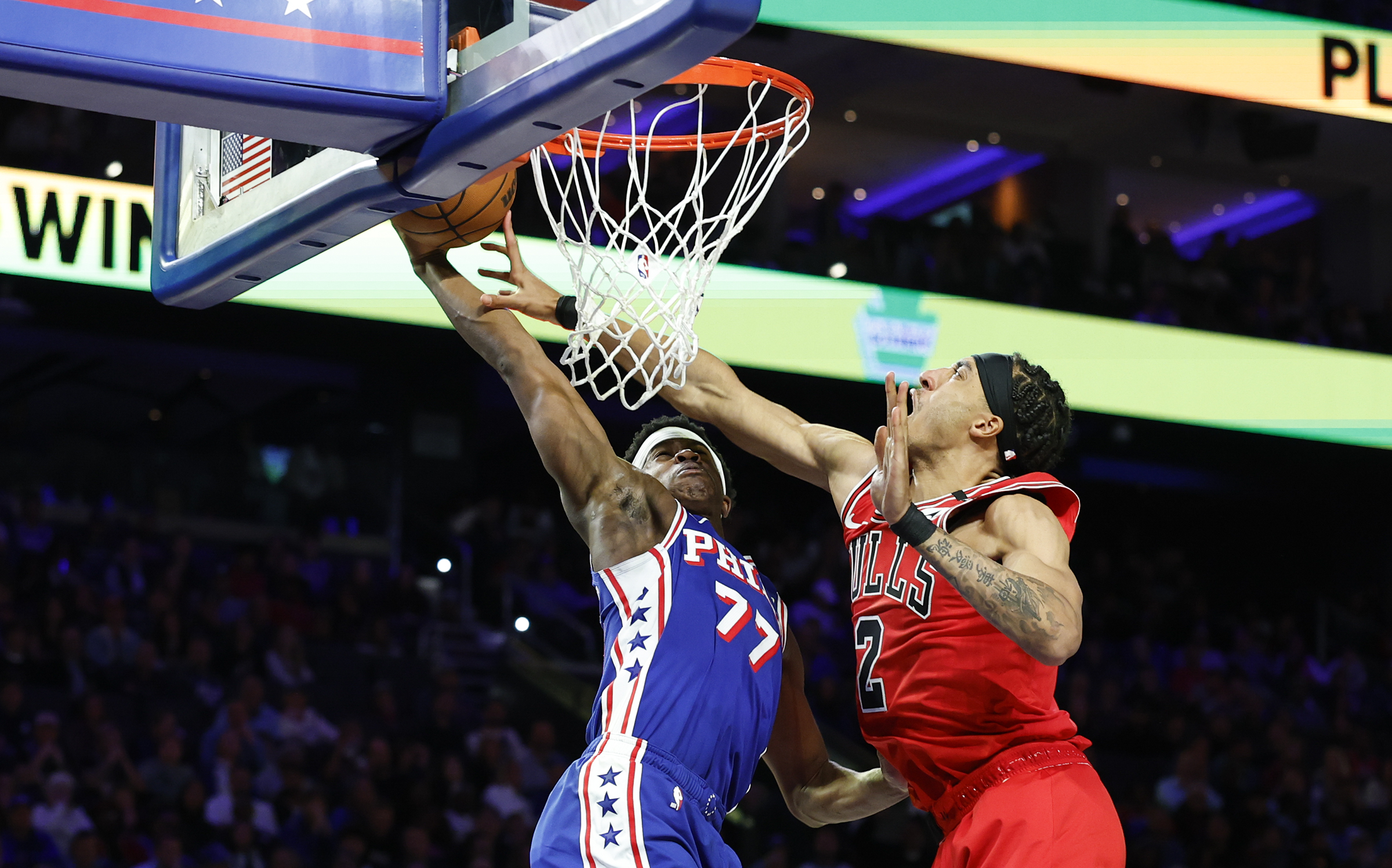
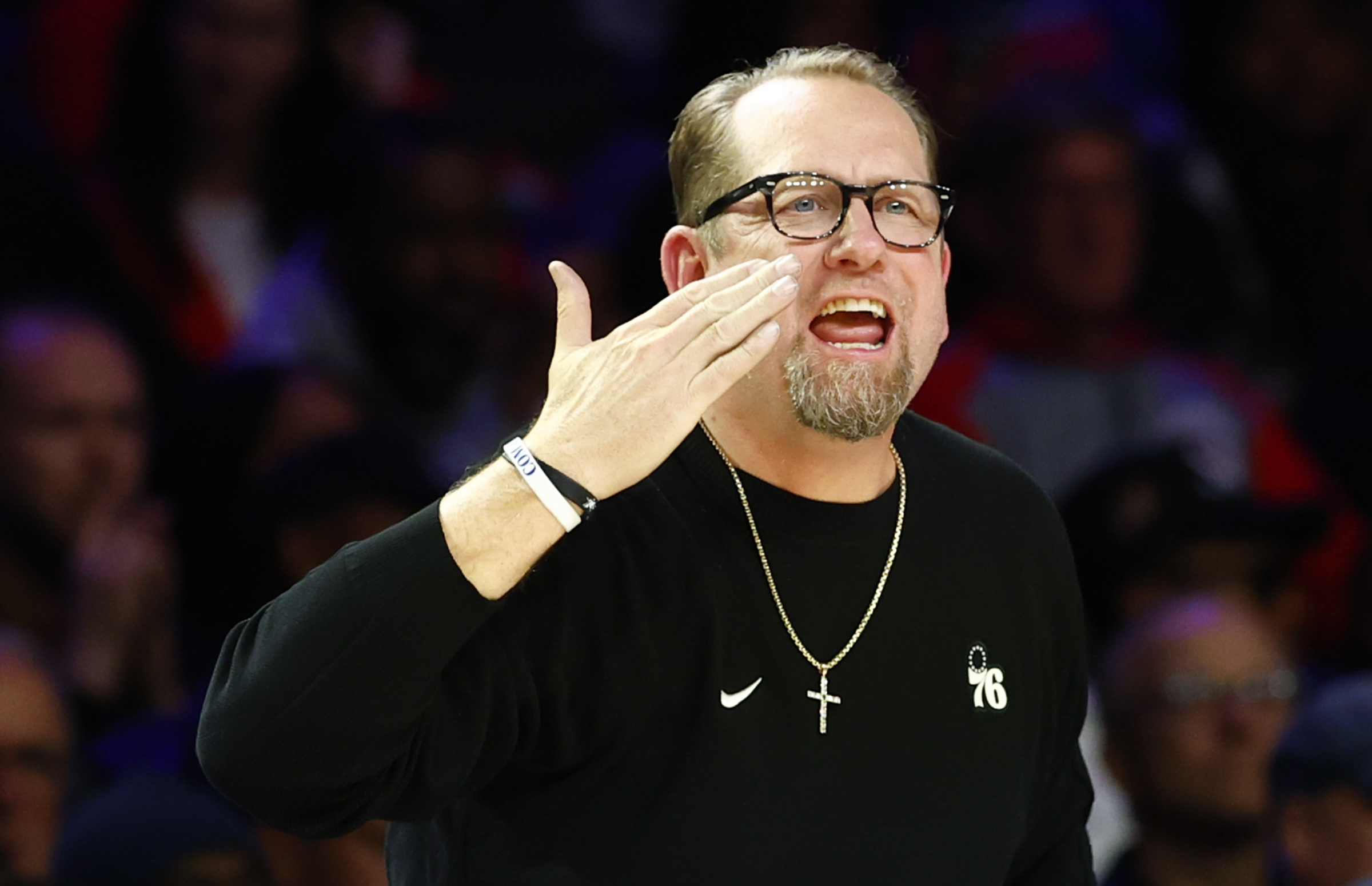
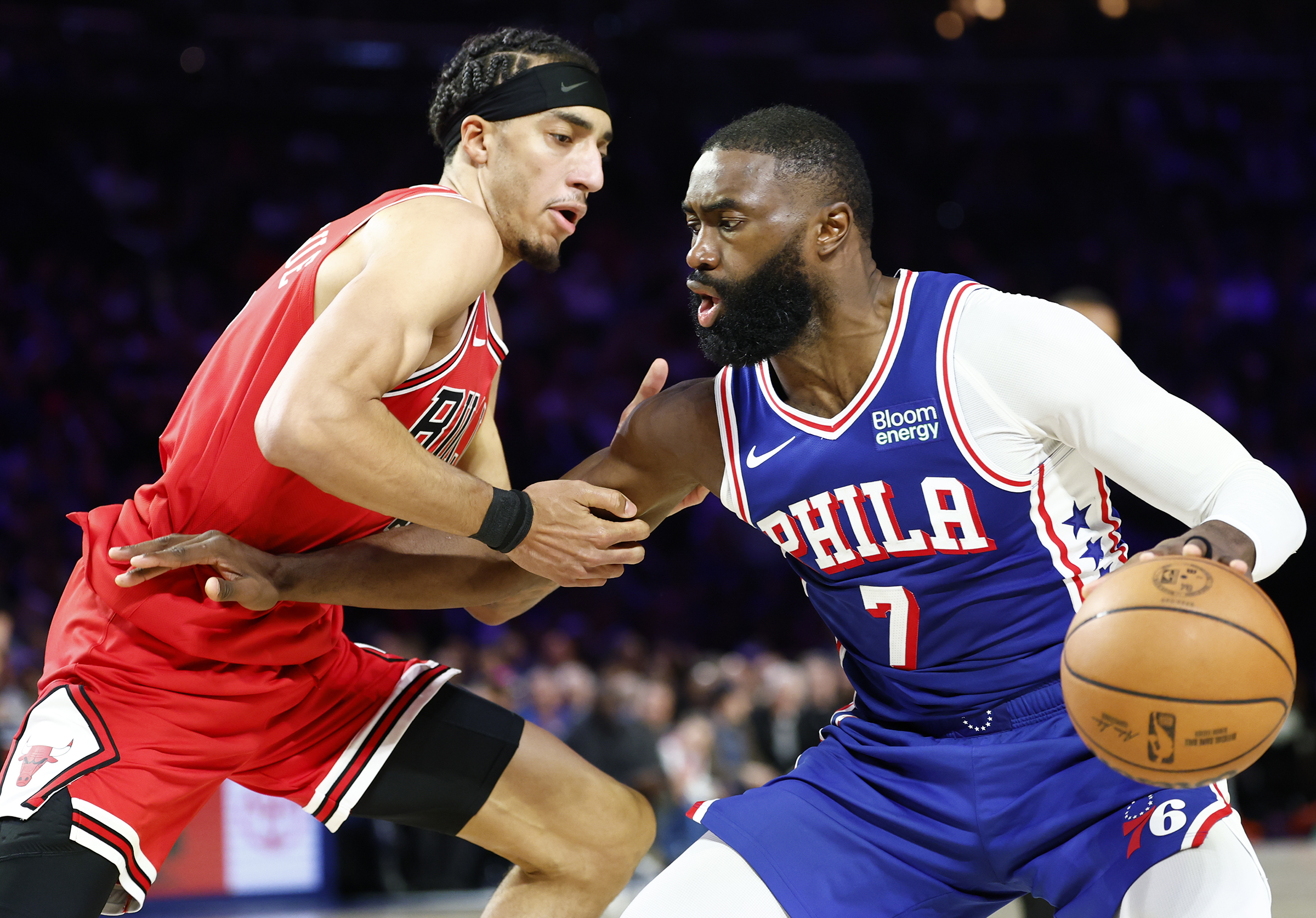
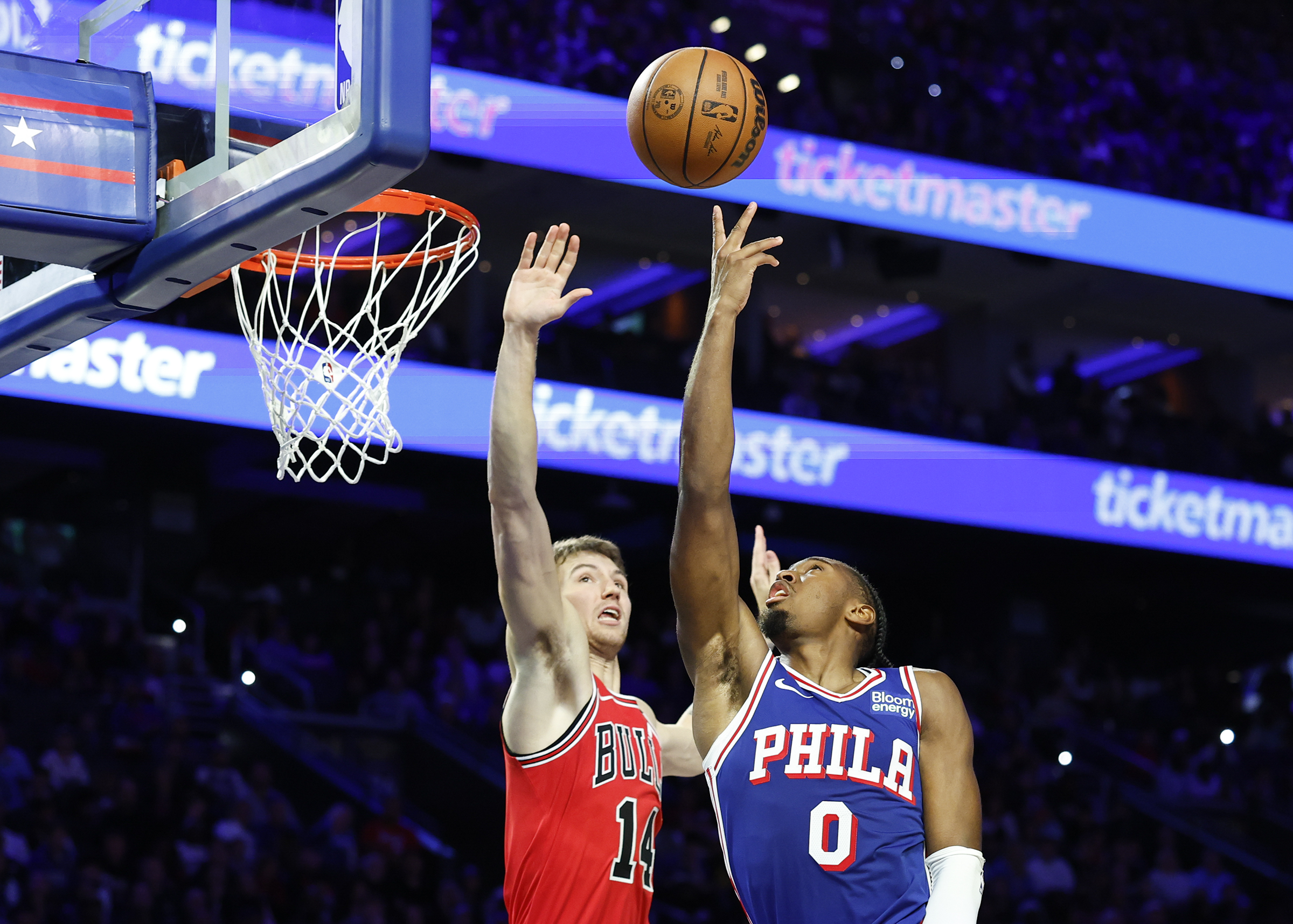
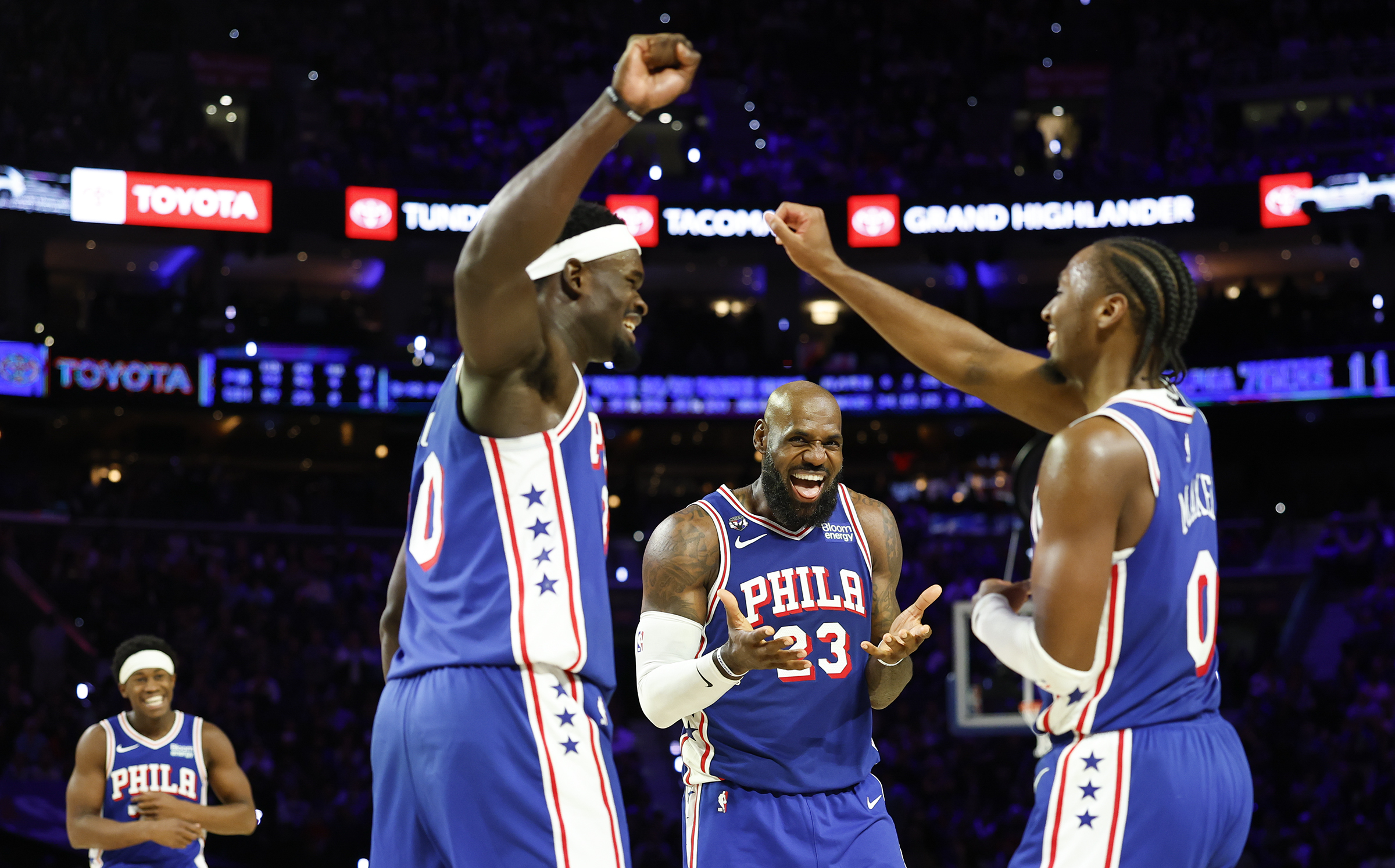
Sixers forward LeBron James catches the basketball during the first quarter.Yong Kim / Staff PhotographerSixers guard VJ Edgecombe drives to the basket against Bulls guard Buddy Hield and guard Tre Jones during the second quarter.Yong Kim / Staff PhotographerSixers center Joel Embiid grabs a rebound past teammate guard VJ Edgecombe during the second quarter.Yong Kim / Staff PhotographerSixers center Joel Embiid drives to the basket past Bulls forward Isaac Okoro in the third quarter.Yong Kim / Staff PhotographerSixers guard VJ Edgecombe throws the basketball off of Bulls guard Tre Jones in the third quarter.Yong Kim / Staff PhotographerSixers guard VJ Edgecombe gets fouled attempting to dunk the basketball against Bulls forward Noa Essengue in the third quarter.Yong Kim / Staff PhotographerSixers forward Dean Wade watches teammate forward LeBron James lay-up the basketball against Bulls forward Caleb Wilson and guard Buddy Hield in the third quarter.Yong Kim / Staff PhotographerSixers head coach Nick Nurse call to his team in the fourth quarter.Yong Kim / Staff PhotographerSixers guard Jaylen Brown dribbles the basketball against Bulls forward Noa Essengue in the fourth quarter.Yong Kim / Staff PhotographerSixers guard Tyrese Maxey lays-up the basketball past Bulls forward Matas Buzelis in the fourth quarter.Yong Kim / Staff PhotographerSixers forward LeBron James watches teammates guard Tyrese Maxey and center Adem Bona celebrates during the fourth quarter.Yong Kim / Staff PhotographerChicago Bulls forward Caleb Wilson reacts after a foul call on his team in the fourth quarter.Yong Kim / Staff Photographer
So the Sixers deliberately and immediately kicked the ball ahead in transition, with the dynamic Edgecombe accounting for a significant portion of their 29 fastbreak points. They recorded 23 assists on their first 25 baskets and finished the night with a season-high 26 helpers, propelling all five starters to record at least 15 points. They soundly squashed the Bulls’ mini push at the start of the third quarter, eventually increasing their lead to 22 points in garbage time. And Tyrese Maxey, the NBA’s third-leading scorer, amassed 15 of his 26 points in the fourth quarter.
The Sixers’ sample size remains small.
Embiid lamented that the Sixers “haven’t been as good as we should be” offensively — they exited Monday ranked 19th in the NBA in efficiency (110.6 points allowed per 100 possessions) — but maintained the “intent” to efficiently blend has been sound, with four players with vast experience as their team’s leading scorer. Backup center remains a glaring issue, with the Bulls’ second-quarter surge aligning with Adem Bona’s minutes and Dean Wade replacing Bona after he picked up his fifth foul with about five minutes remaining.
Even the most routine night was not completely free of a couple eyebrow raises, with Embiid and All-NBA wing Jaylen Brown discussed playing through discomfort in their foot and knee, respectively. And the road makes another challenging shift later this week, on the season’s first true road trip. That begins with rematches against the Pistons and Cavaliers, whom the Sixers rallied from 29 points down to beat in their Oct. 22 home opener.
Still, the Sixers are 7-1. The hot start runs counter to when James has typically switched teams, and the clunkiness of the figuring-it-out process was reflected in the early-season record.
And in a deep East, every win matters.
The thrilling comebacks in front of a wild crowd.
And the professional win that felt most like a “normal” Monday in the NBA.
“It feels kind of good to just kind of blow a team out,” Embiid said. “It’s good for guys’ legs. It’s good for the morale of the team.”
In identifying where the Phillies fell short in the lowest-scoring season of the Bryce Harper era, the team’s new hitting coach suggests looking at one metric.
“At the team level,” Pete Fatse said, “you could make it as simple as OPS.”
OK, let’s not overcomplicate it then. The Phillies ranked 22nd with a .707 on-base plus slugging percentage, their lowest mark since 2018. Dig deeper and find they were 26th in OPS from their outfielders (.686), 29th out of the cleanup spot (.645), and 30th from the right side of the plate (.658).
Given the lack of an in-house solution, and based on his history with the Phillies, Dave Dombrowski might be expected to throw money at the problem. And amid a middling free-agent market that opened for business Tuesday, there happen to be two righty-swinging outfielders who profile as No. 4 hitters.
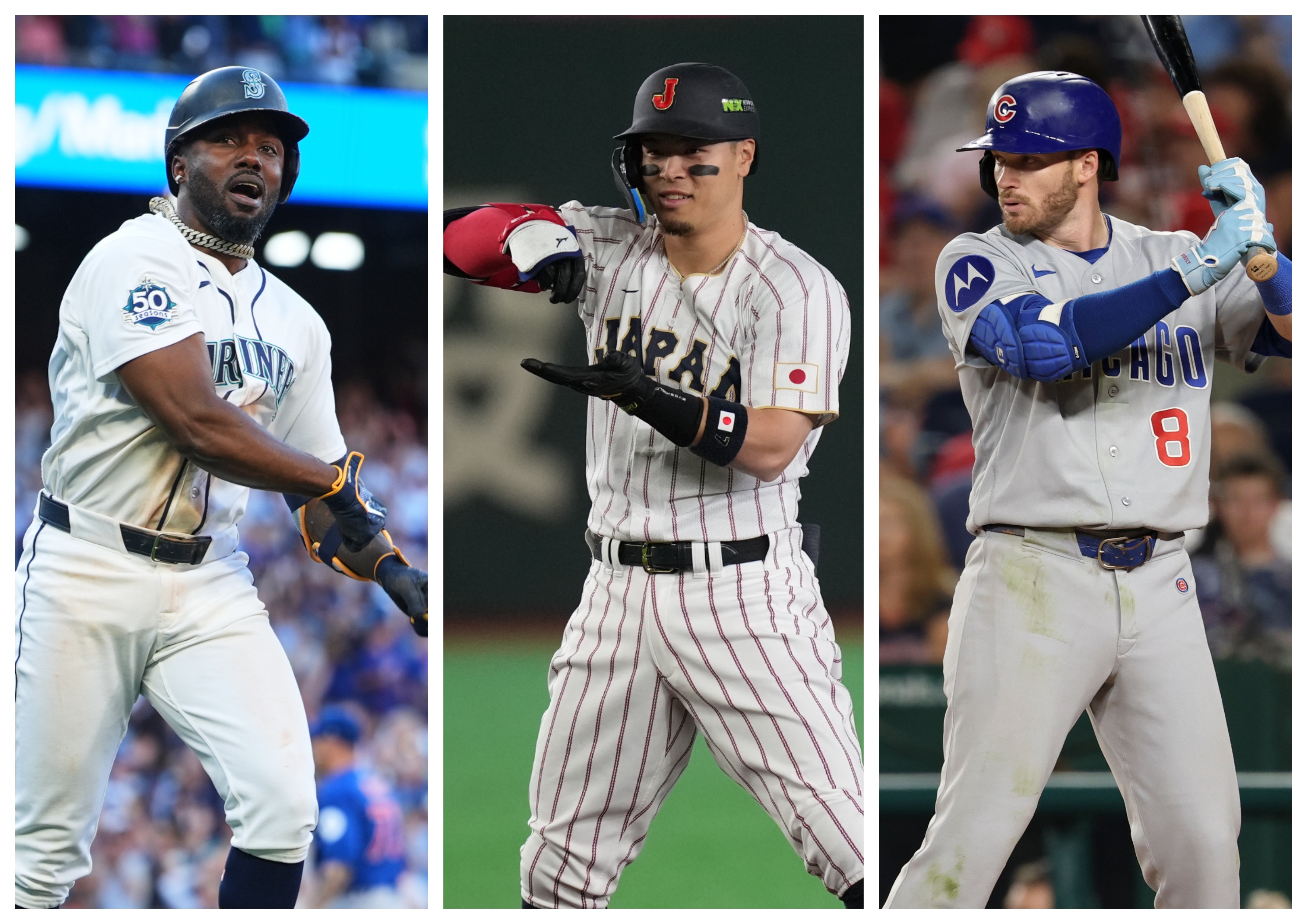
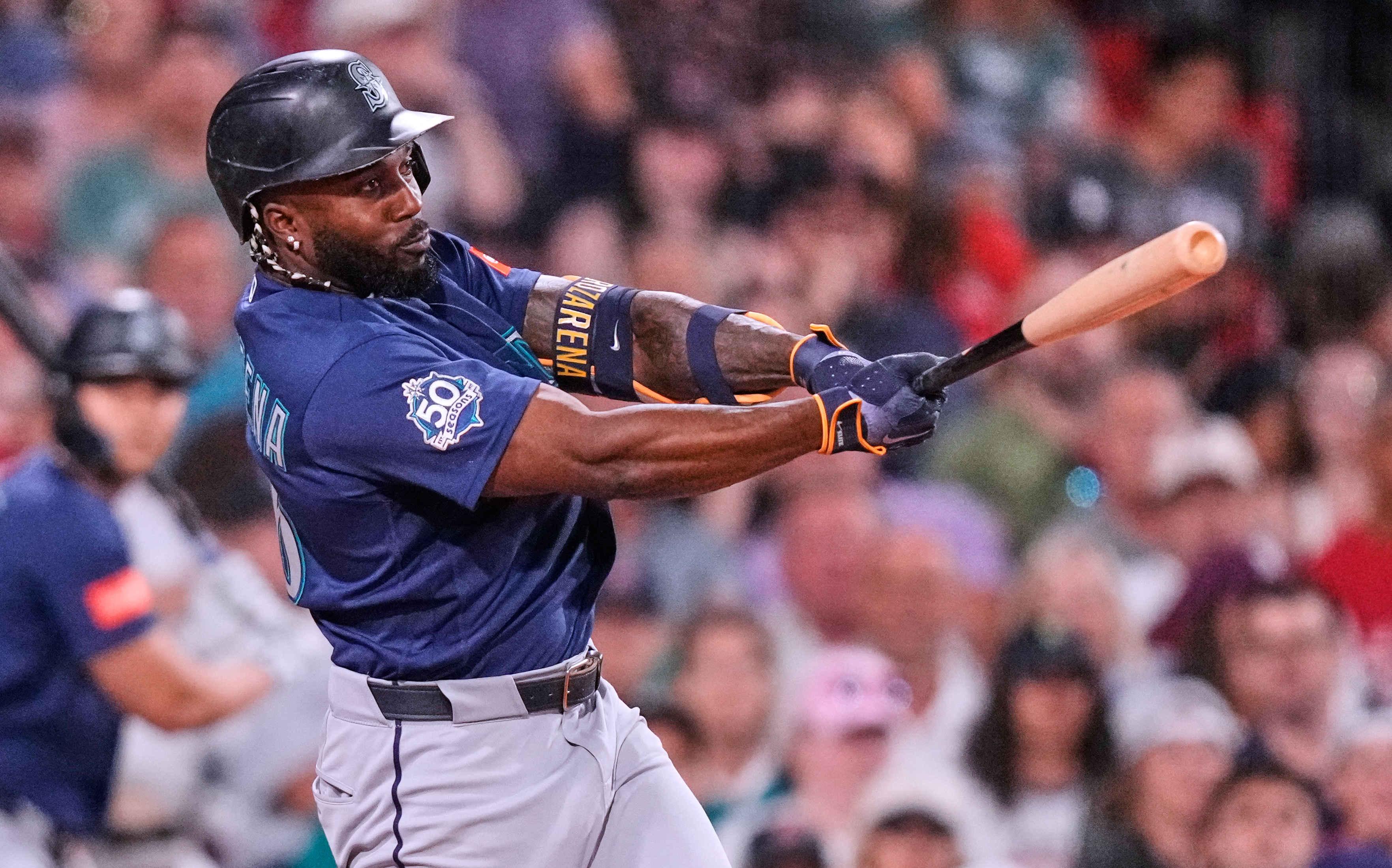
Come on down, Randy Arozarena.
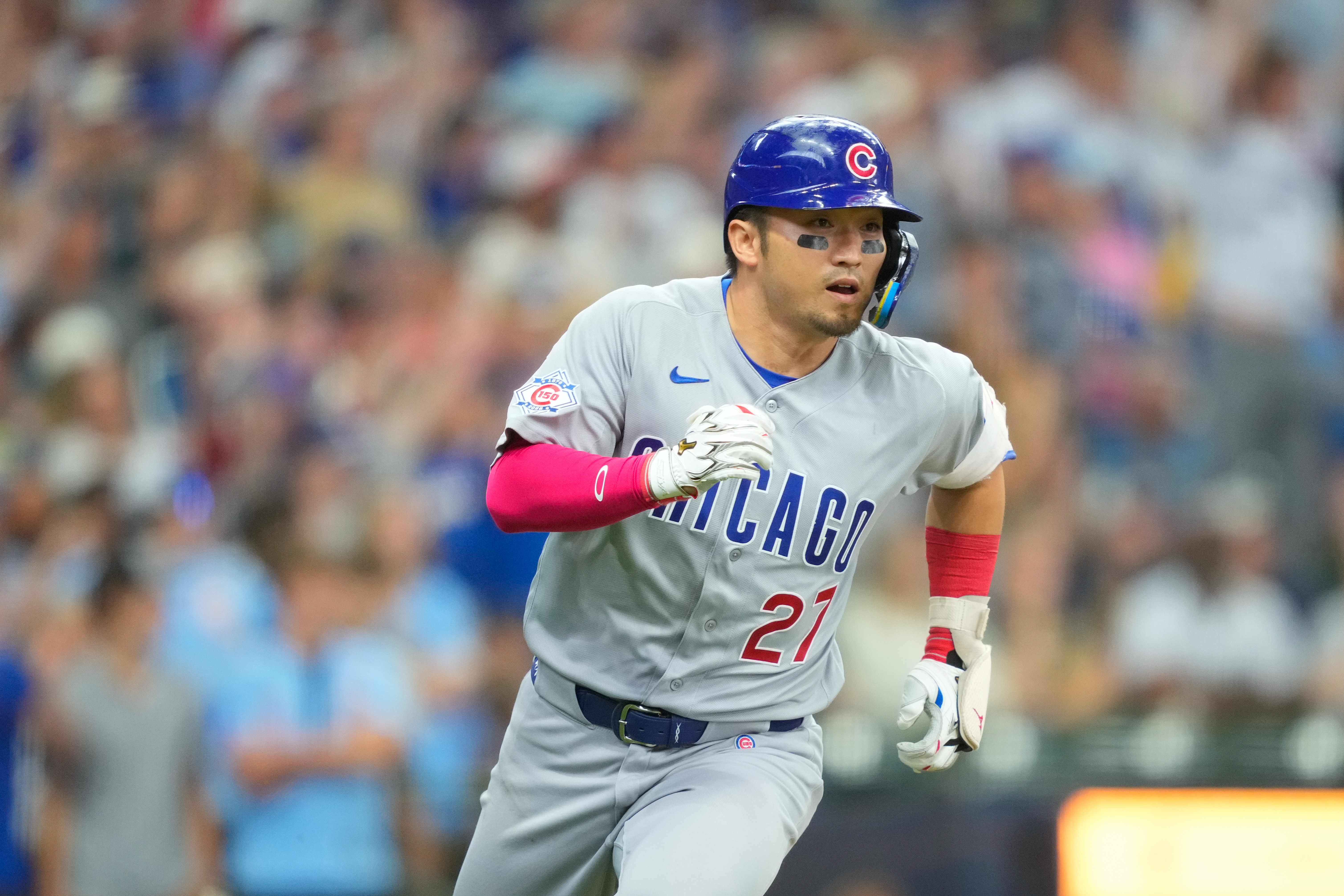
Or Seiya Suzuki.
In 2022, Dombrowski beefed up the offense by signing Nick Castellanos (five years, $100 million) and Kyle Schwarber (four years, $79 million). A year later, in need of a shortstop, he landed Trea Turner with an 11-year, $300 million contract. The year after that, he re-signed Aaron Nola to keep the top of the rotation intact and still pursued Japanese righty Yoshinobu Yamamoto.
Arozarena and Suzuki received qualifying offers Monday, so signing either would cost draft-pick compensation. Under Dombrowski, that hasn’t stopped the Phillies.
Phillies president of baseball operations Dave Dombrowski has decisions to make before the owners are expected to lock out the players on Dec. 2.Yong Kim / Staff Photographer
But before everyone assumes there’s a red-pinstriped jersey on a hanger in Citizens Bank Park waiting for Arozarena or Suzuki, remember this isn’t a typical offseason. Not with the owners poised to lock out the players on Dec. 2, setting the stage for the sides to go 12 rounds (and maybe more) over a salary cap.
As Dombrowski put it recently: “I don’t know what the rules are.”
Even if there isn’t a salary cap at the other end of this work stoppage, there almost certainly will be harsher penalties on the teams with the highest payrolls. And after carrying the sport’s fourth-highest payroll this year, the Phillies have approximately $239 million in luxury tax commitments for 2027 before they consider signing another $20 million-plus free agent.
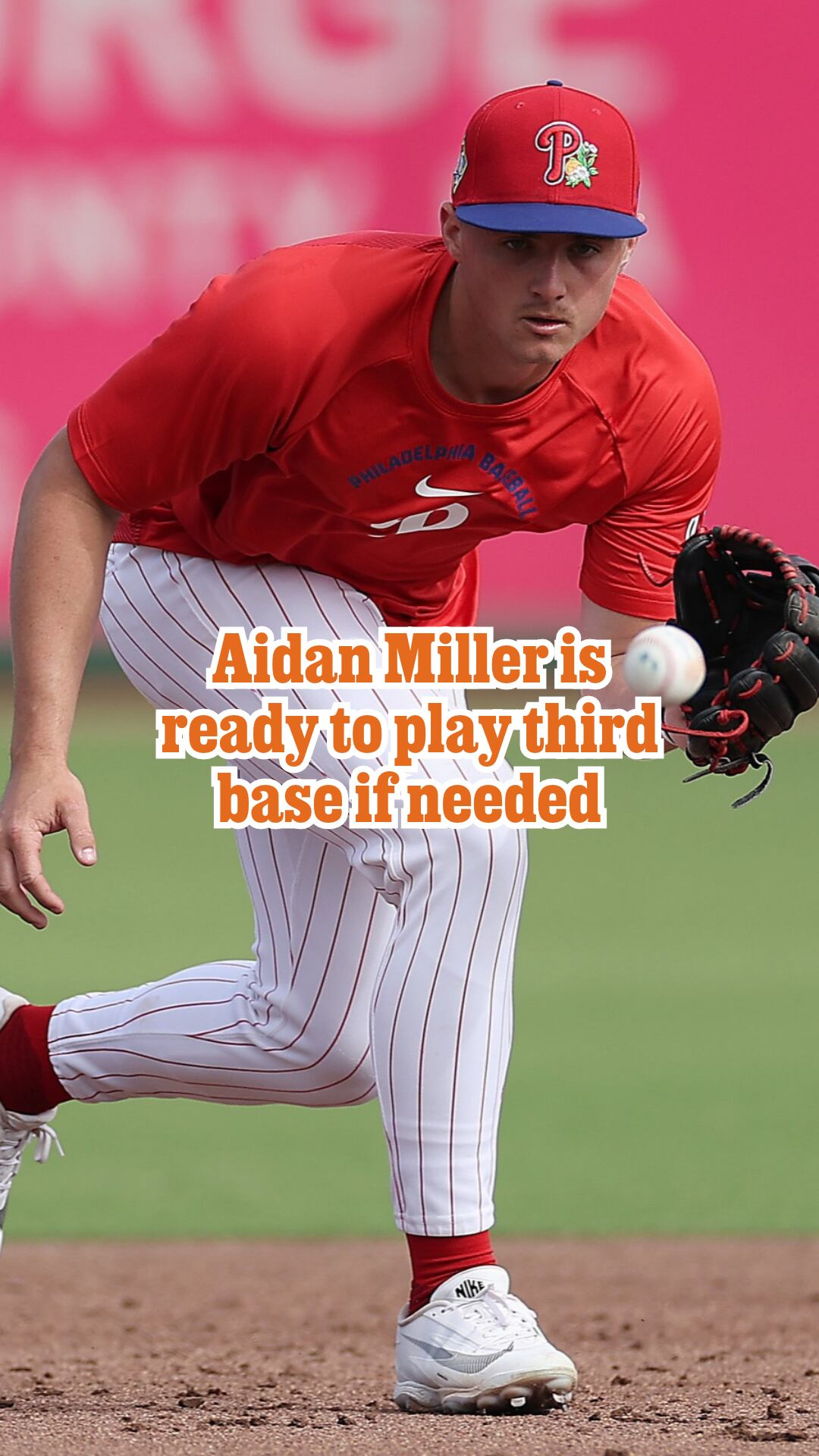
Video: Phillies Extra: Aidan Miller is ready to play third base if needed
Top prospect Aidan Miller almost certainly will be a low-cost addition to the offense. After missing almost the entire season with a low back condition, the 22-year-old infielder was healthy and tearing up the Arizona Fall League (14-for-39, 1.154 OPS) through the weekend.
Miller won’t be impacted by the lockout. If opening day is delayed, he could begin the season in triple A and be ready whenever MLB resumes play.
The Phillies expect more from 23-year-old outfielder Justin Crawford in his second major league season. And they could attempt to fix the outfield by finding a solid defender and/or more productive righty-hitting platoon partner for Brandon Marsh.
(Last winter, Dombrowski overrated Otto Kemp’s impact in that role. A year later, Tyrone Taylor is a free-agent option; the Astros designated Jake Meyers for assignment on Monday; the Guardians could trade or nontender Jo Adell later this month.)
But none of that would mitigate the need for middle-of-the-order thump behind Schwarber and Harper. And the best way to find it, short of trading a prospect, might be to spend money in free agency, damn the consequences.
Let’s take a quick spin around the free-agent options:
Free-agent outfielder Randy Arozarena hit 26 homers last season for the Mariners.Charles Krupa
Randy Arozarena
Timing is everything, and he’s arriving on the market after the best year of his career: .281 average, 26 homers, 26 steals, and an .865 OPS with the Mariners.
But if you believe in Arozarena entering his age-32 season, it’s because you think he can sustain this year’s 4.2% reduction in his strikeout rate over his previous career mark.
Arozarena’s defense in left field has deteriorated. But he was a high performer in the postseason with the Rays. And he checks all the boxes for the Phillies as a righty-hitting outfielder who bats in the middle of the order.
Seiya Suzuki, a right-handed batter, has hit 58 home runs over the past two seasons.Kayla Wolf
Seiya Suzuki
Like Arozarena, he just had his best season: .270 average, 31 doubles, 26 homers, and an .841 OPS for the Cubs. He’s also 32 and bats right-handed. And he has been more consistent than Arozarena. Suzuki’s year-by-year OPS since coming to the majors in 2022: .770, .842, .848, .804, .841. His defensive metrics in right field were much better this season.
Two potential concerns: a right knee issue that hampered him early in the season and a 38.9% hard-hit rate that was well off his 45.4% career mark.
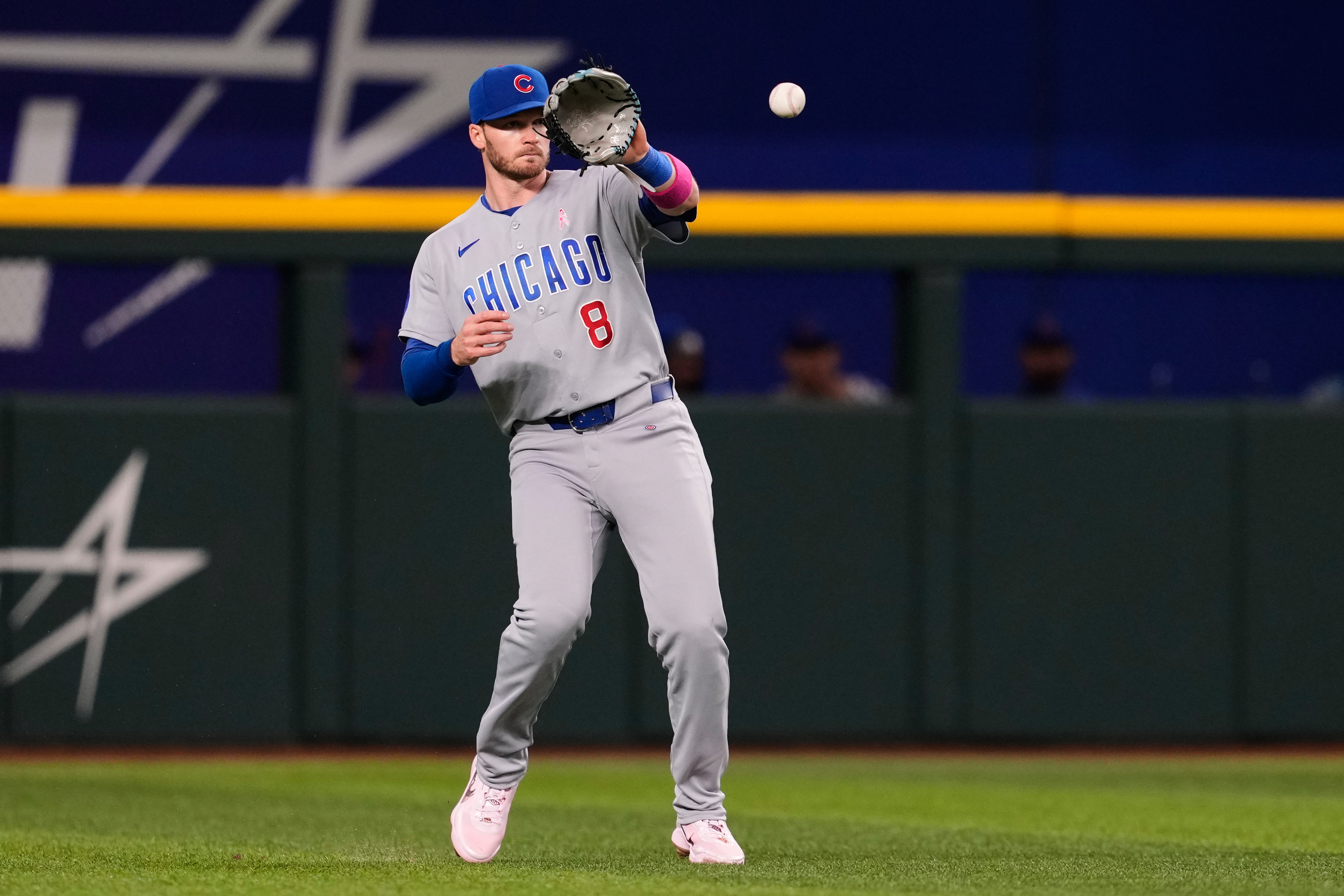
Left fielder Ian Happ’s streak of four straight Gold Gloves ended this year.Tony Gutierrez
Ian Happ
The 32-year-old switch-hitter has always been more productive from the left side of the plate (.815 OPS) compared to the right side (.683), making him an imperfect fit. He’s also coming off a tough year at the plate: .218 average, 28 doubles, 24 homers, and .738 OPS for the Cubs.
But he has topped 20 homers in five of the last six seasons, including four in a row, and is a solid defender in left field.
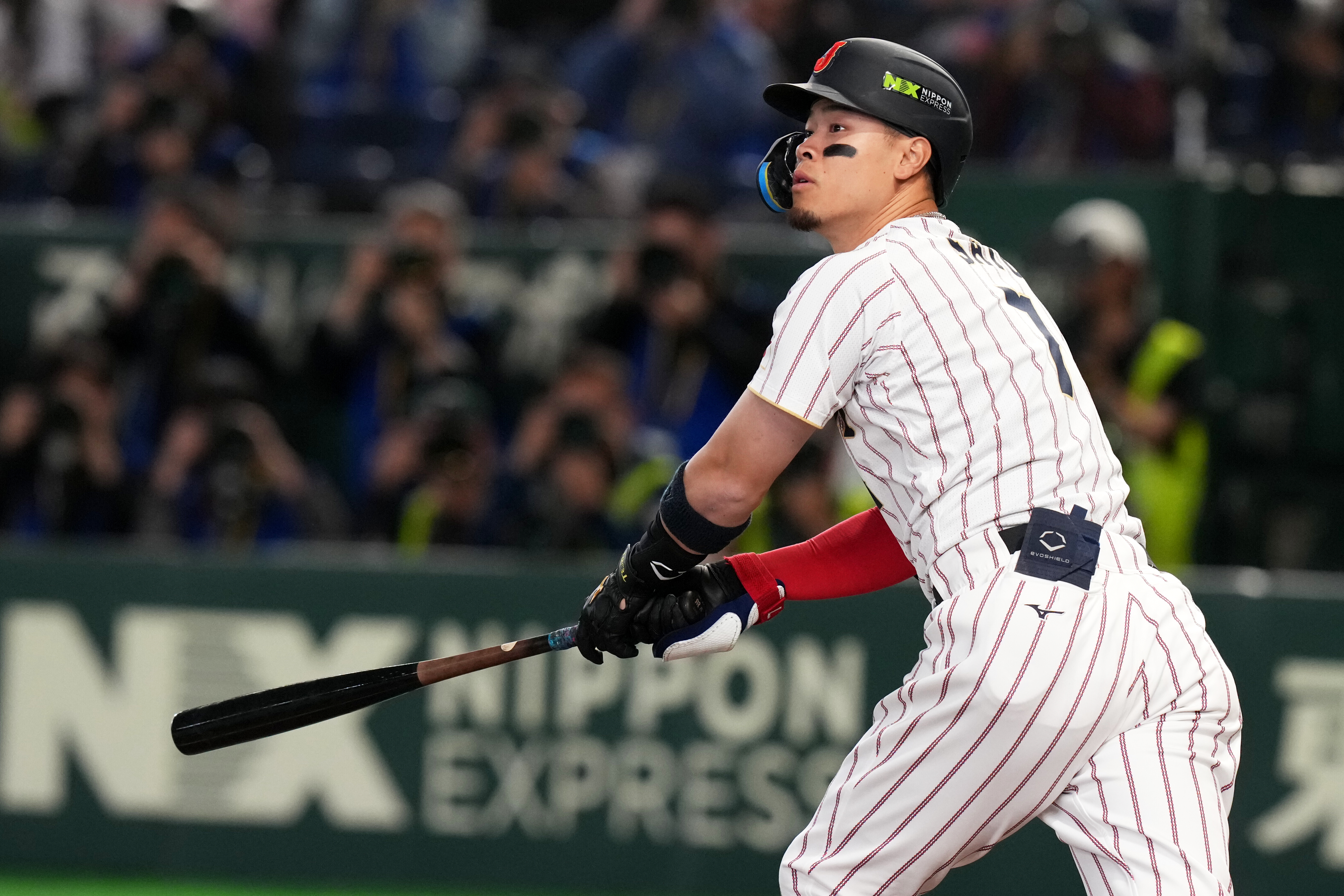
Teruaki Sato won the triple crown in Nippon Professional Baseball this season.Eugene Hoshiko
Sato was a third baseman in Japan, where he won the triple crown in Nippon Professional Baseball, but some scouts project he will move to first base or a corner outfield spot in the majors. It’s unclear how the Phillies feel about his positional fit.
He also bats left-handed, like Schwarber and Harper. His power — 39 homers, .609 slugging percentage this year; 40 homers, .579 slugging in 2025 — is reminiscent of Munetaka Murakami, who made a smashing major league debut this season with the White Sox.
Sato is also entering only his age-28 season, which may make him a better upside play than the 32-year-old outfielders.
After their 27-10 loss to the Washington Commanders on Sunday night, the Eagles (2-6) now sit in last place in the NFC East. Their playoff window is all but slammed shut.
Does that mean a fire sale is looming ahead of the Nov. 10 trade deadline?
Like anything, it isn’t that simple. A confluence of factors determine what makes a trade worth executing, including the return, the cost of replacing that player, and the potential salary cap implications.
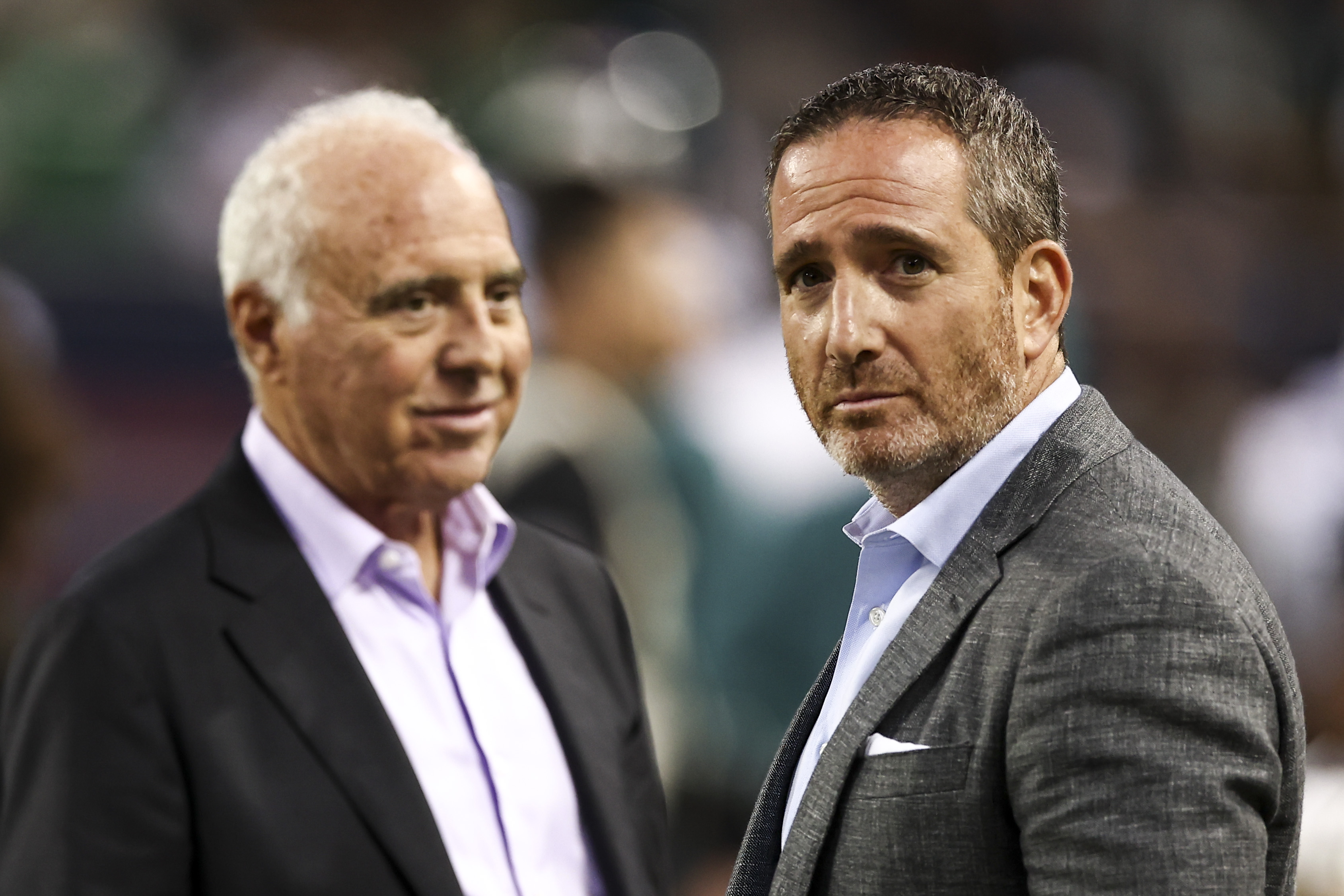
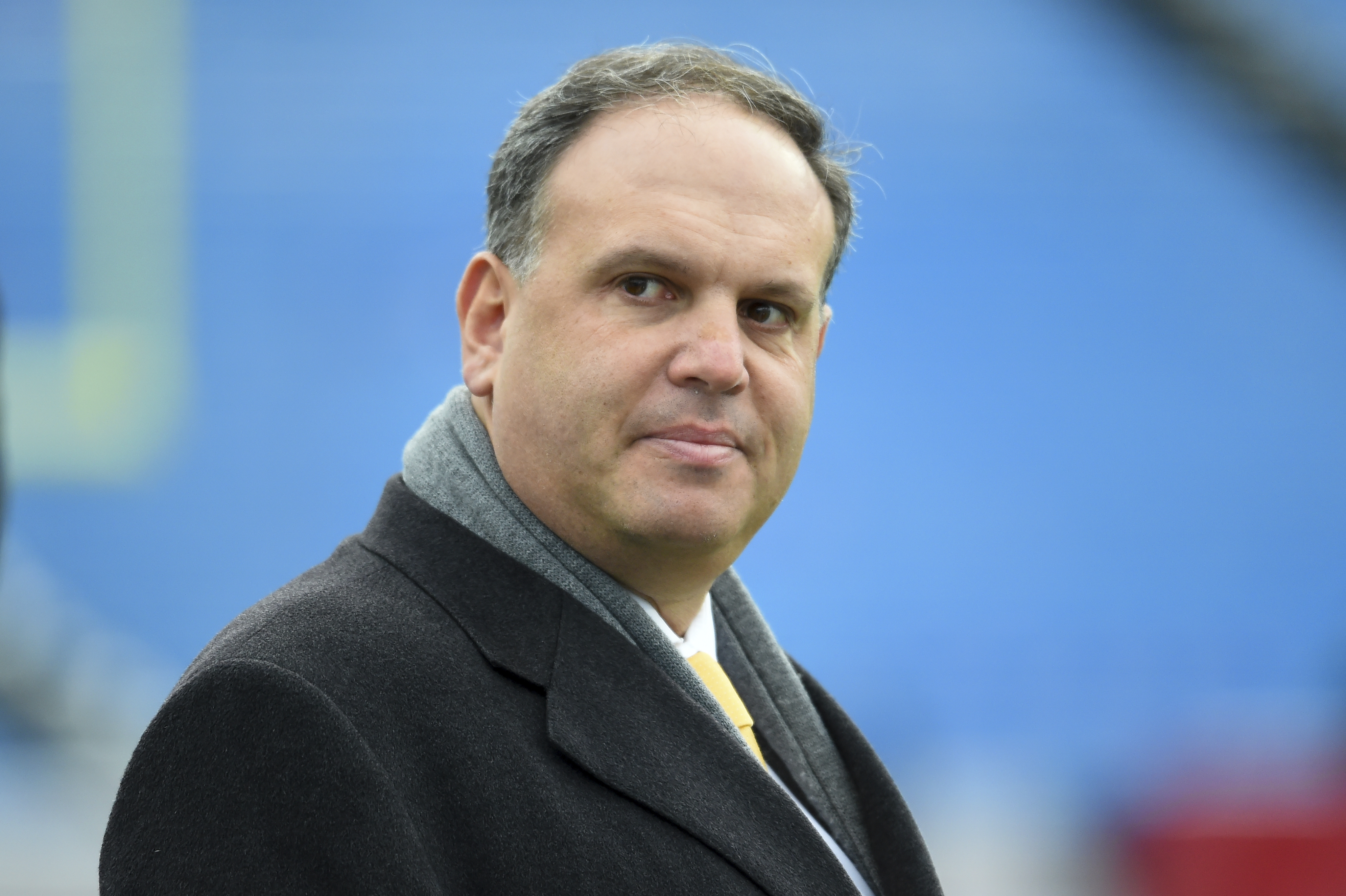
Regardless of whether the Eagles opt to buy or sell at the trade deadline, general manager Howie Roseman will likely keep the same objective in mind — sustained success into the future, believes former New York Jets general manager and current ESPN analyst Mike Tannenbaum, who once faced similar questions in his own front office role.
“I think any year, it’s a juxtaposition of what’s good for the organization, short-term and long-term, and obviously [the Eagles have] done a very good job of having sustained success,” Tannenbaum said. “So I think it’s just more of those continued evaluations of if and when there’s opportunities to either add a quality player for the long-term or get good return in the future. You always balance those competing thoughts.”
A.J. Brown will cost the Eagles $27.1 million against the cap in 2027. Yong Kim / Staff Photographer
Mounting dead cap an issue?
“Out of sight, out of mind” isn’t necessarily an expression that applies to NFL players who are released or traded.
That concept is especially relevant to Roseman and the Eagles as the trade deadline looms. When players on veteran contracts depart the team, they can still leave salary cap charges over the years that follow, in the form of dead money. Major forms of dead money typically come from prorated bonuses spread out over the duration of contracts.
Those prorated bonuses are paid to players as lump sums up front, but instead of the full amount counting against the salary cap in a single year, teams can account for them over multiple years.
This allows teams to spend cash over cap — a player may be paid more in cash than is actually charged to the salary cap in any given year. The Eagles take this strategy a step further, adding voidable years onto veteran contracts to push those prorated cap hits into the future, beyond the years those players are actually under contract with the team.
The Eagles can do this because of owner Jeffrey Lurie’s willingness to spend, especially as it relates to rewarding homegrown stars with lucrative contracts. According to Over The Cap, the Eagles rank sixth in the league in total cash spending in 2026 at $364.2 million. Their cash-to-cap ratio is 1.63, the second-highest in the league this year.
But when a player is cut or traded before June 1, any prorated bonuses pushed out to the future will hit the present salary cap as dead money. A player traded at the deadline is considered a post-June 1 transaction, meaning any proration in future years accelerates on to the salary cap as dead money in the next league year.
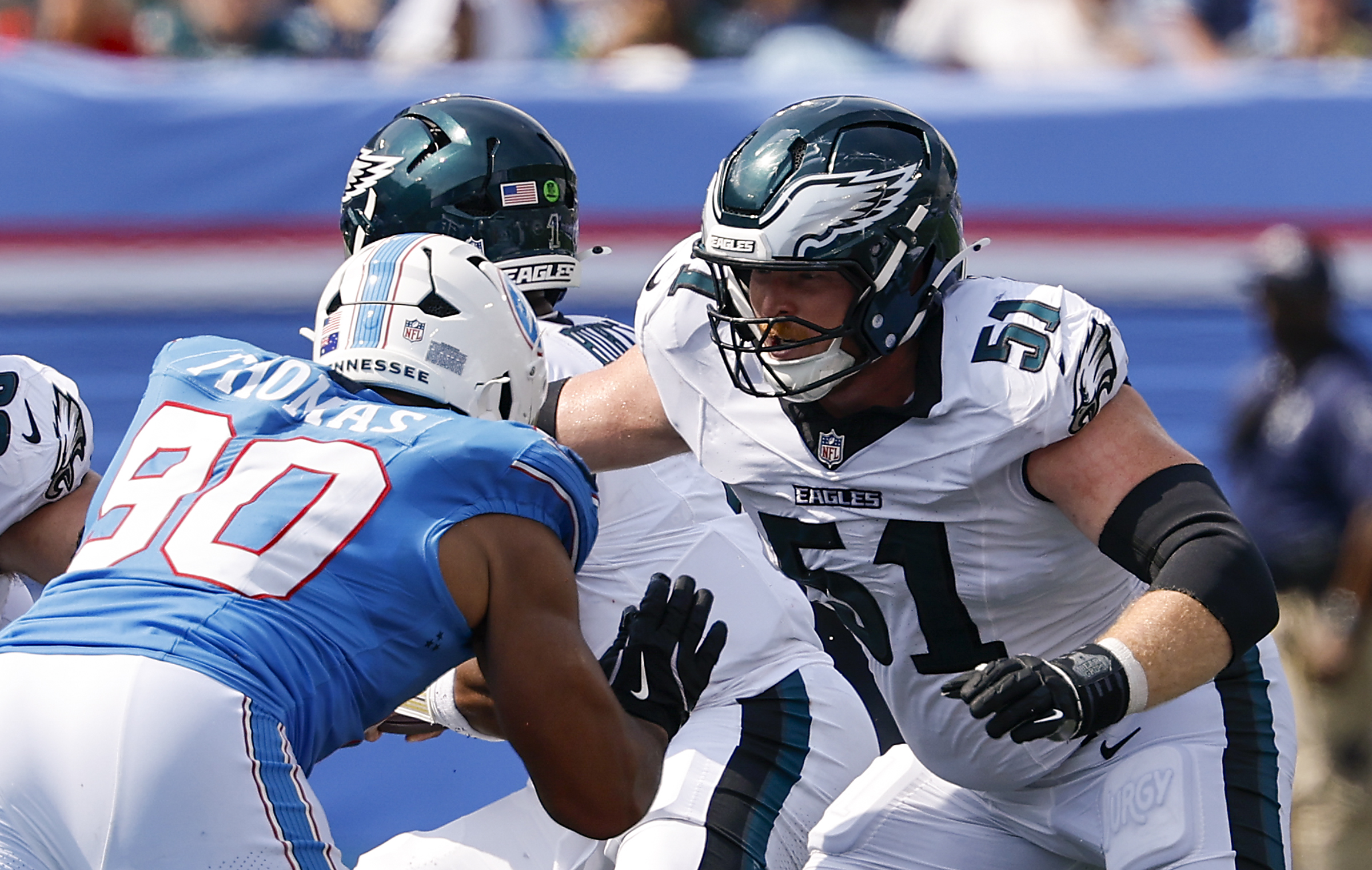
For example, when the Eagles traded Cam Jurgens to the Baltimore Ravens on Oct. 7 in exchange for a 2028 second-round pick and a 2027 fifth-rounder, he remained on the books in 2027 in the form of a $14.9 million dead cap charge. A.J. Brown still counts against the cap, too, to the tune of $27.1 million. The Eagles waited to trade him to the New England Patriots until after June 1 earlier this year so they could split up his dead cap charge over two seasons, instead of taking it all on this year.
Cam Jurgens (51) has a $14.9 million cap charge for the Eagles in 2027. Yong Kim / Staff Photographer
The Eagles already rank third in the league in dead money for 2027 at $43.7 million, according to Over The Cap. That estimation is incomplete, though. When Lane Johnson’s retirement is processed after June 2, his dead cap charge will be spread out over the next two years, with $16.6 million coming in 2027 and $26.3 million in 2028, per Over The Cap. That would currently put the Eagles at $60.3 million of dead money in 2027, which would lead the league.
That total for 2027 could grow even more in the coming days if Roseman decides to sell off certain veterans at the trade deadline.
ESPN reported Sunday that the Eagles will not trade Saquon Barkley at the trade deadline. Beyond his contributions on and off the field, though, there would be salary cap implications next year if the Eagles traded him before the deadline. According to Over The Cap, Barkley would leave a dead cap hit of $26.5 million in 2027 if traded, which is roughly $13.4 million more than his current cap charge for 2027 if he remained on the team.
Dallas Goedert would leave a $18.3 million dead cap charge in 2027 if traded, an $8.7 million increase over his currently scheduled cap hit. Zack Baun would have a $22.5 million dead cap hit next year if he’s moved, an increase of $10.6 million. Meanwhile, a trade of Landon Dickerson would leave a $12.1 million dead cap charge in 2027, resulting in a cap savings of $1.9 million.
A fire sale at the deadline could compound those dead cap charges next year, depending on who is traded. Even so, their total dead money must be considered within the context of the rising salary cap in that year. Since the NFL introduced the salary cap in 1994, it has risen every year except for one — the 2021 COVID-19 year.
The salary cap eclipsed $300 million for the first time in league history in 2026. Over The Cap projects a $327 million base salary cap in 2027, which would be an 8.6% increase over the 2026 cap of $301.2 million. The league typically sets the official base salary cap in late February ahead of the start of the new league year.
When the cap goes up, a team’s dead money takes up a smaller percentage of it. This is why Tannenbaum said he doesn’t believe the acceleration of dead money would necessarily prohibit a team from dealing a veteran at the deadline.
“If you trade a player unexpectedly and they have a larger acceleration than expected, it could impact the structure of another transaction,” Tannenbaum said. “But I just think the way the cap has grown, it’s just rare to hear or to put a scenario together where it’s going to prevent you from doing something fundamentally.”
Mike Tannenbaum knows the range of factors that go into a GM’s calculus at the trade deadline. Rich Barnes
Even those so-called unexpected trades don’t come out of left field. Tannenbaum explained that teams run through different scenarios of potential trades and how those prospective transactions would impact the structures of other player contracts.
“If we trade player X and we have to accelerate a payment, where is that coming from?” Tannenbaum said. “If we [were] going to structure a different player on an extension, we always were looking at literally to the day of, like, OK, this scenario or that scenario.
“I just think the way the system has evolved, you typically have enough levers — the cap’s upward of $300 million now — that you could figure out solutions to most cap questions you have.”
Tannenbaum says he isn’t overly concerned about the Eagles’ annual dead money charges against their salary cap, so long as the leaguewide base salary cap continues to rise.
“Every year, you’ve heard of other teams, these doomsday scenarios, and then the cap goes up another $20, $30 million, and now all of a sudden, those dead money charges are accounted for,” Tannenbaum said. “I don’t think there’s any reason to think that the cap won’t continue to go up, and I think that has to be a big factor when you look at that analysis.”
Revisiting the Jurgens trade
There are other considerations at play when deciding if a trade helps a general manager such as Roseman achieve his goal of fielding a competitive roster on a yearly basis. For example, Roseman remarked in the aftermath of the Jurgens trade that the Eagles were getting “four players for one” in the deal.
The picks (including premium draft capital in a second-rounder) account for two of those players. Drew Kendall, who took over at center for Jurgens, accounts for another, a reflection of the importance Roseman places on having a viable replacement for the traded player (especially a replacement on a rookie contract).
Howie Roseman has suggested that the Cam Jurgens deal offered the Eagles too much value to pass up. David Maialetti / Staff Photographer
Roseman can reallocate the money that was set to be due to Jurgens to a fourth player, so to speak, especially as talented players on rookie contracts become eligible for extensions.
“You have to look at, hey, if we move on from a player that maybe we can’t afford or can’t extend, and we can get a good premium pick, there’ll be a little short-term sacrifice, but long-term we’re going to feel really good about this decision,” Tannenbaum said.
But these trades don’t exist in a vacuum. Even if a trade makes sense on paper, Tannenbaum stressed the importance of considering the impact a move could have on the culture of a team. General managers must lean on others within the organization to compensate for their blind spots as it relates to roster building.
“I think it’s really important if you’re in the front office to sit there, talk to ownership, talk to your coaches, and say, ‘Hey, what am I missing here?’” Tannenbaum said. “Here’s great value to get multiple picks in the future, which is great for us. But what are we losing in the locker room? And if player A graduates, who’s replacing him, not only on the field, but from a leadership standpoint?”