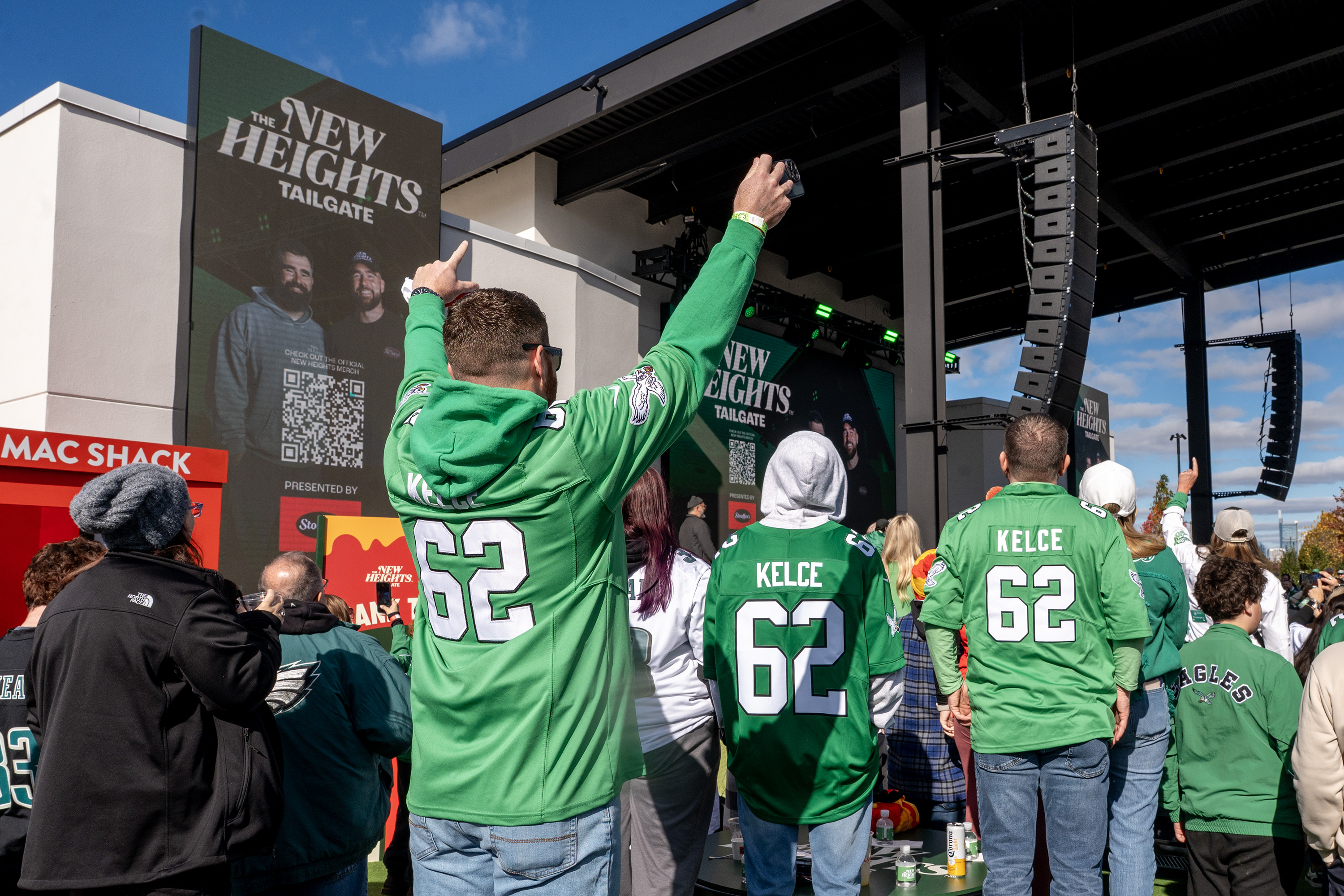
If you think 8 a.m. is too early to eat mac and cheese, the New Heights tailgate at Stateside Live! was not for you.
Jason Kelce brought his New Heights podcast back to Philly for another year on Sunday ahead of the Eagles-Giants game at Lincoln Financial Field after hosting one in Kansas City, Mo., earlier this season. His cohost and brother, Travis Kelce, wasn’t in attendance because his Chiefs team was hosting the Jets at Arrowhead Stadium.
The many activities around Stateside Live! included free samples of three types of Stouffer’s mac and cheese for attendees to try and rank.
Beth Thomas, a Giants fan, and Heather Englander, an Eagles fan, might not agree on which team they were rooting for on Sunday, but they both agreed that the “Hail Mary Mac”— classic Stouffer’s mac and cheese topped with extra cheese and bread crumbs — was their favorite. The other two options, the “Buffalo Blitz Mac” and “The 92%er Mac,” were too spicy for the pair, who were heading to the game.
“I would harass [Thomas] all the time because she was the assistant principal, and I’m a teacher, and I would always go into her office and show off my Eagles stuff, especially when they won, [and] the Giants were never winning,” Englander said.
When Englander saw that the tailgate was happening the same weekend they were finally going to a game together, she told Thomas they had to go.
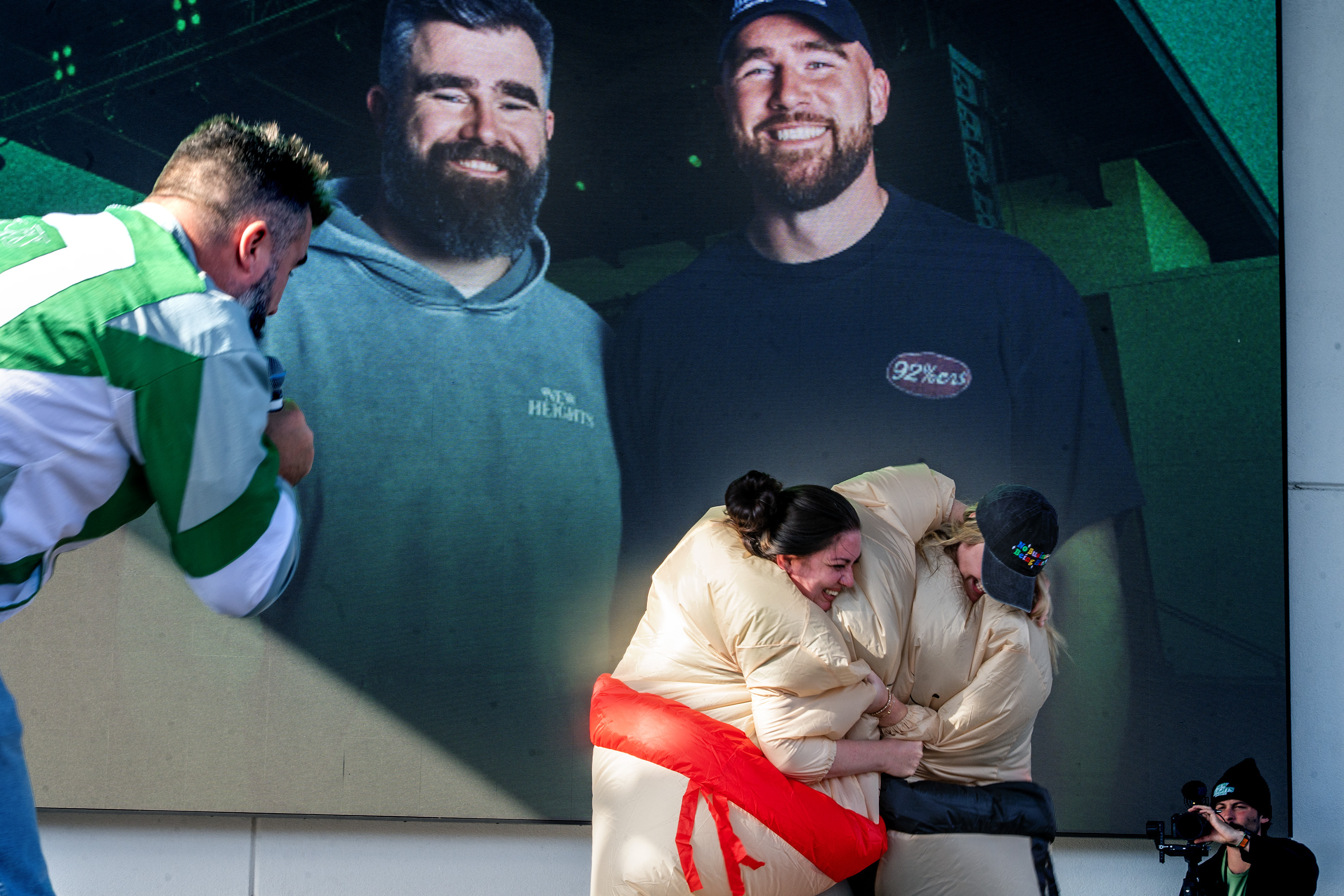
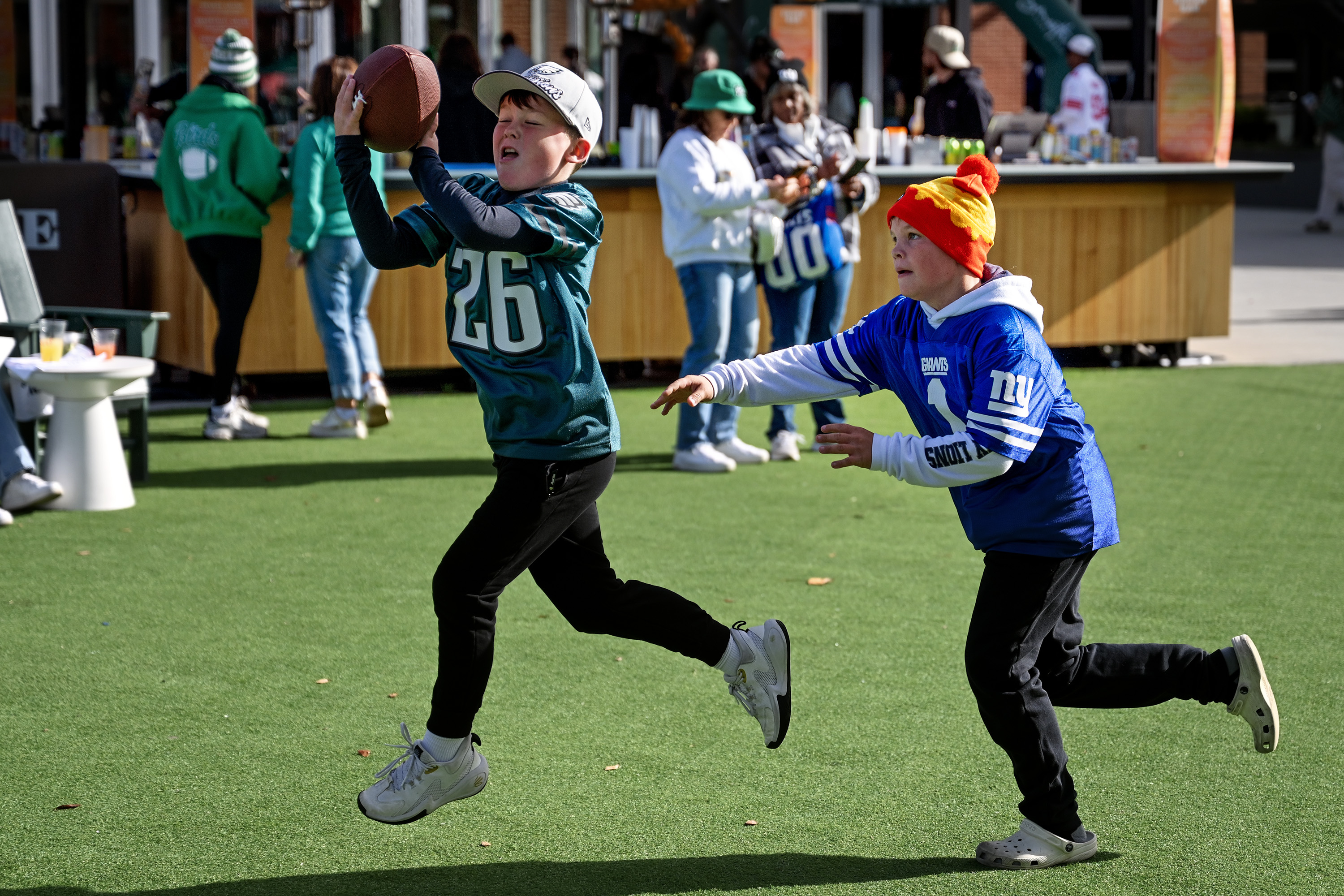
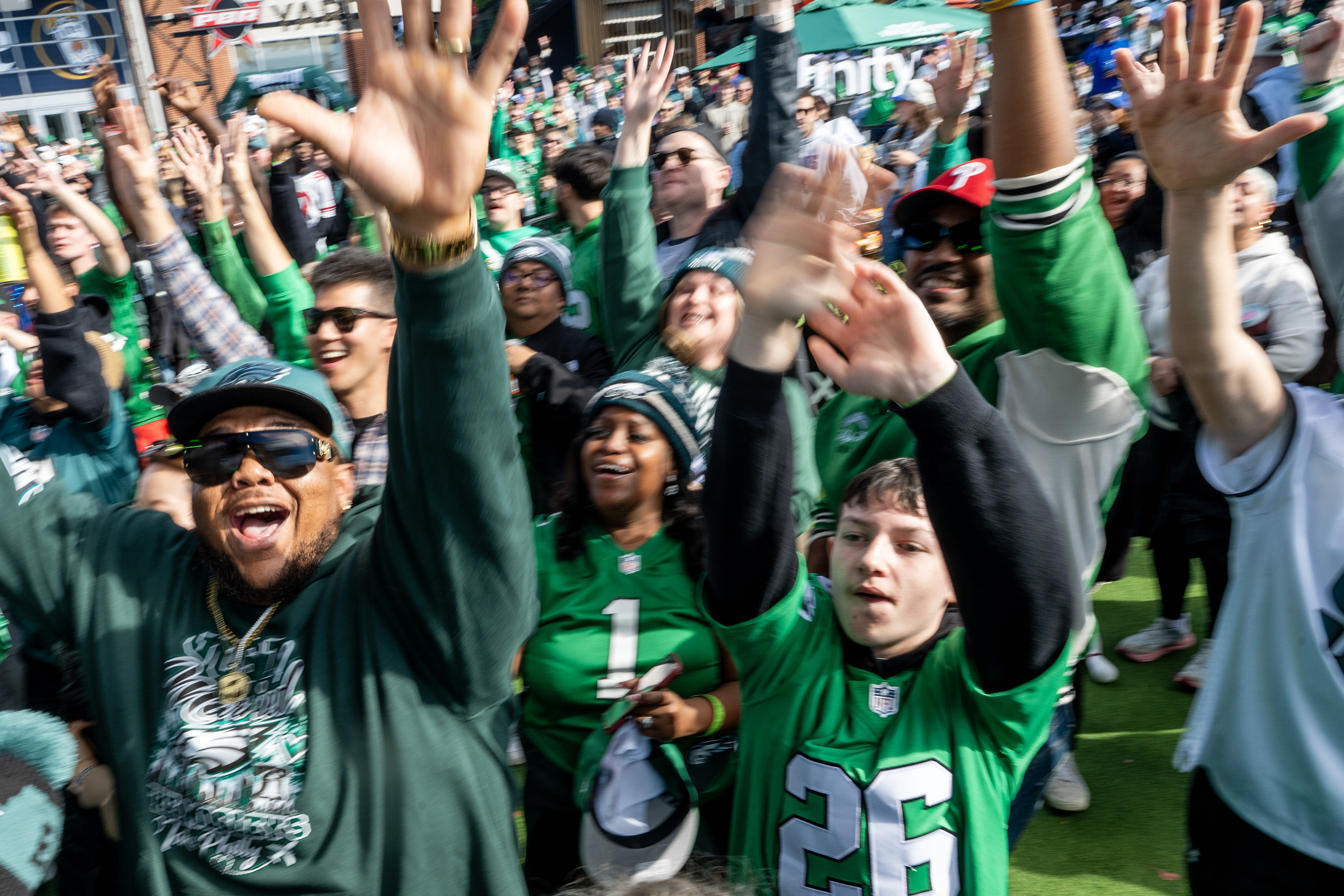
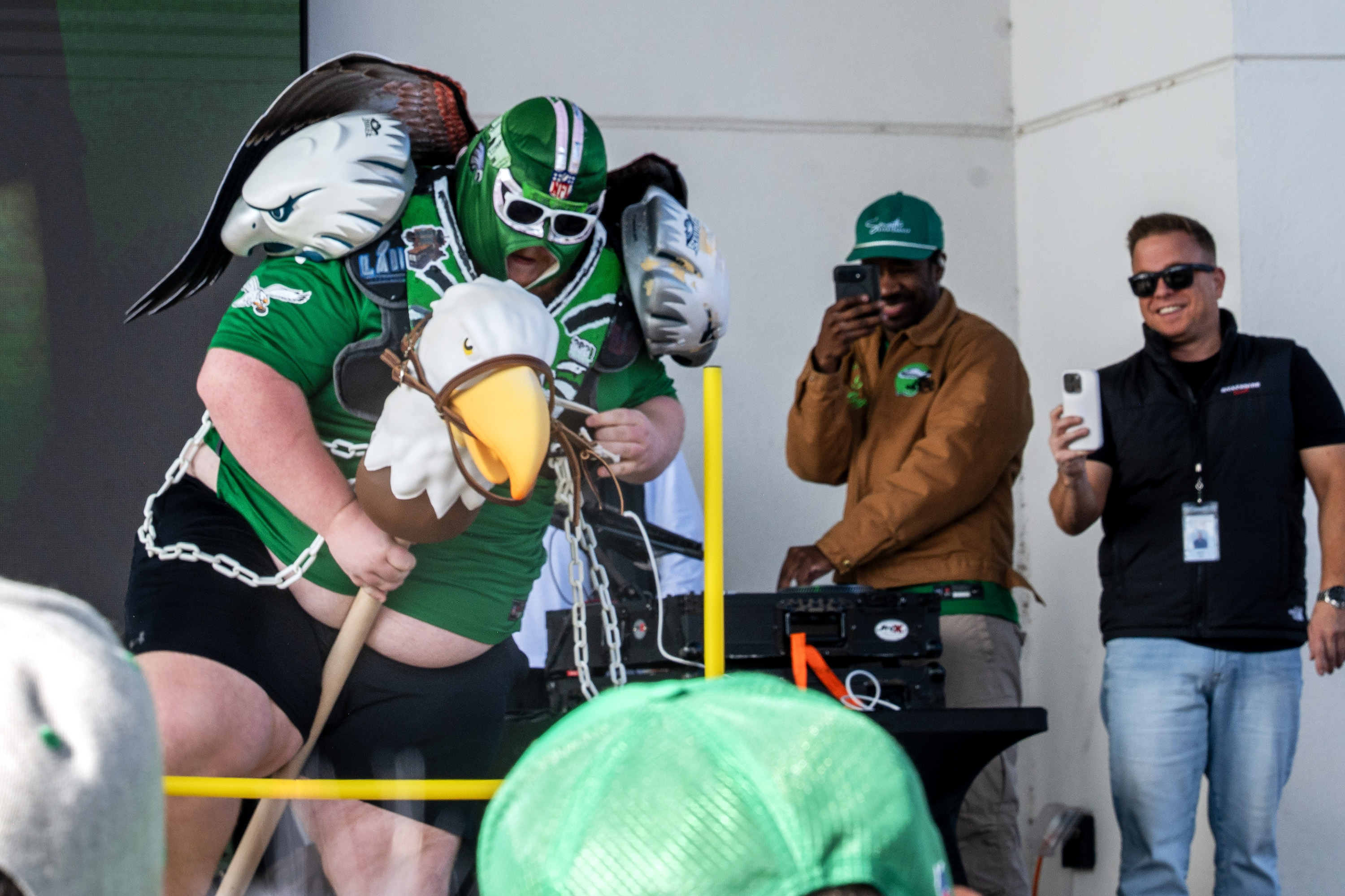
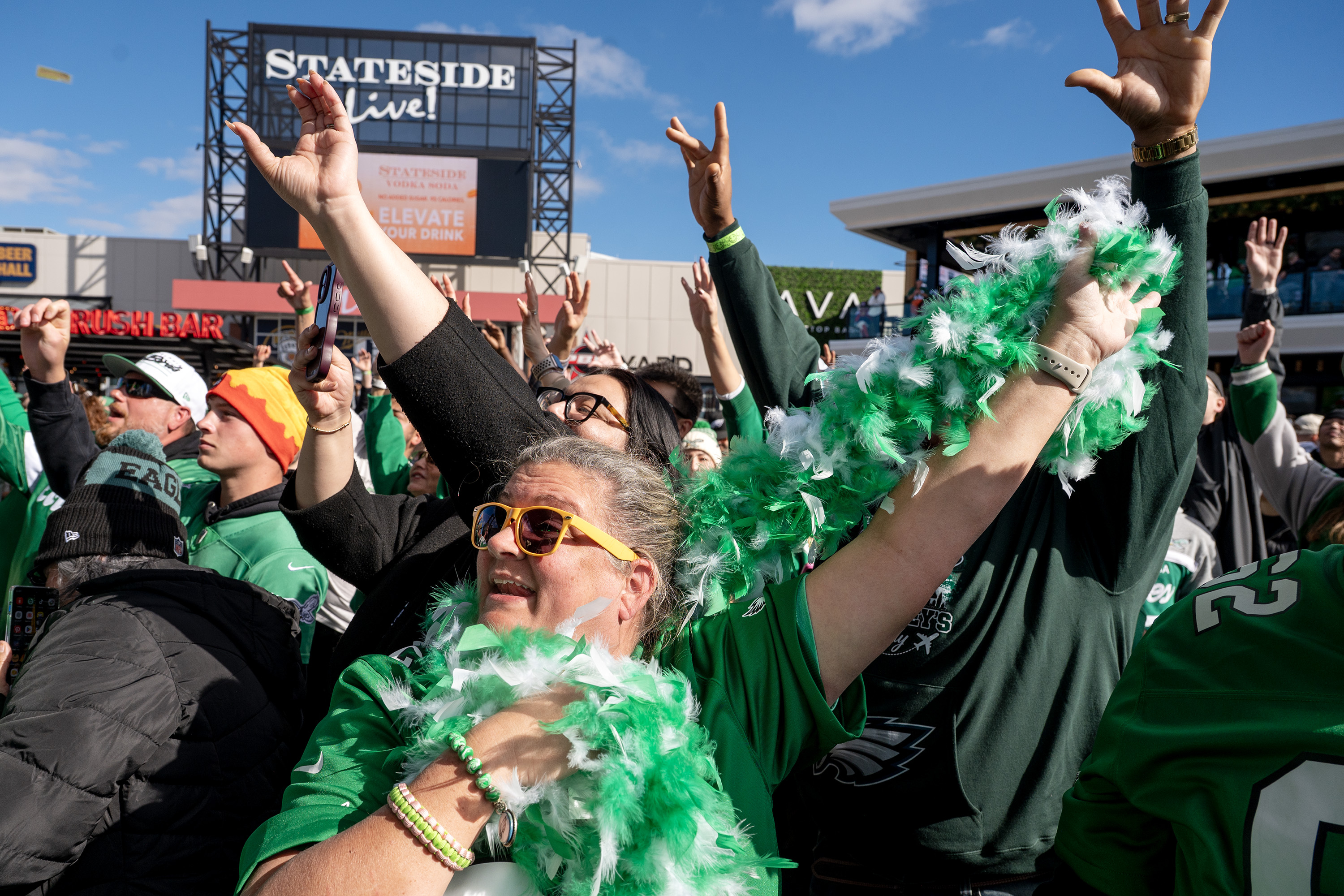
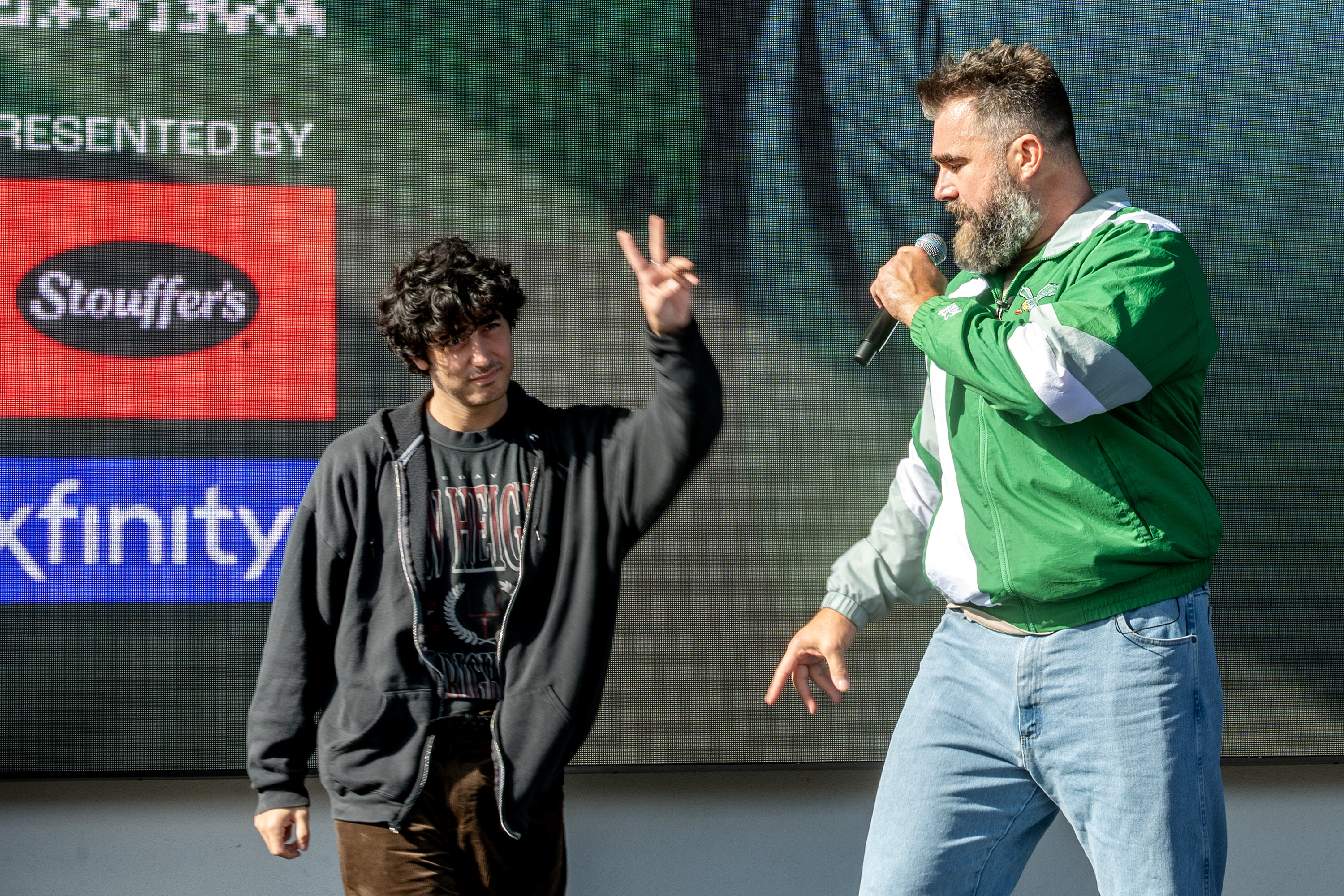
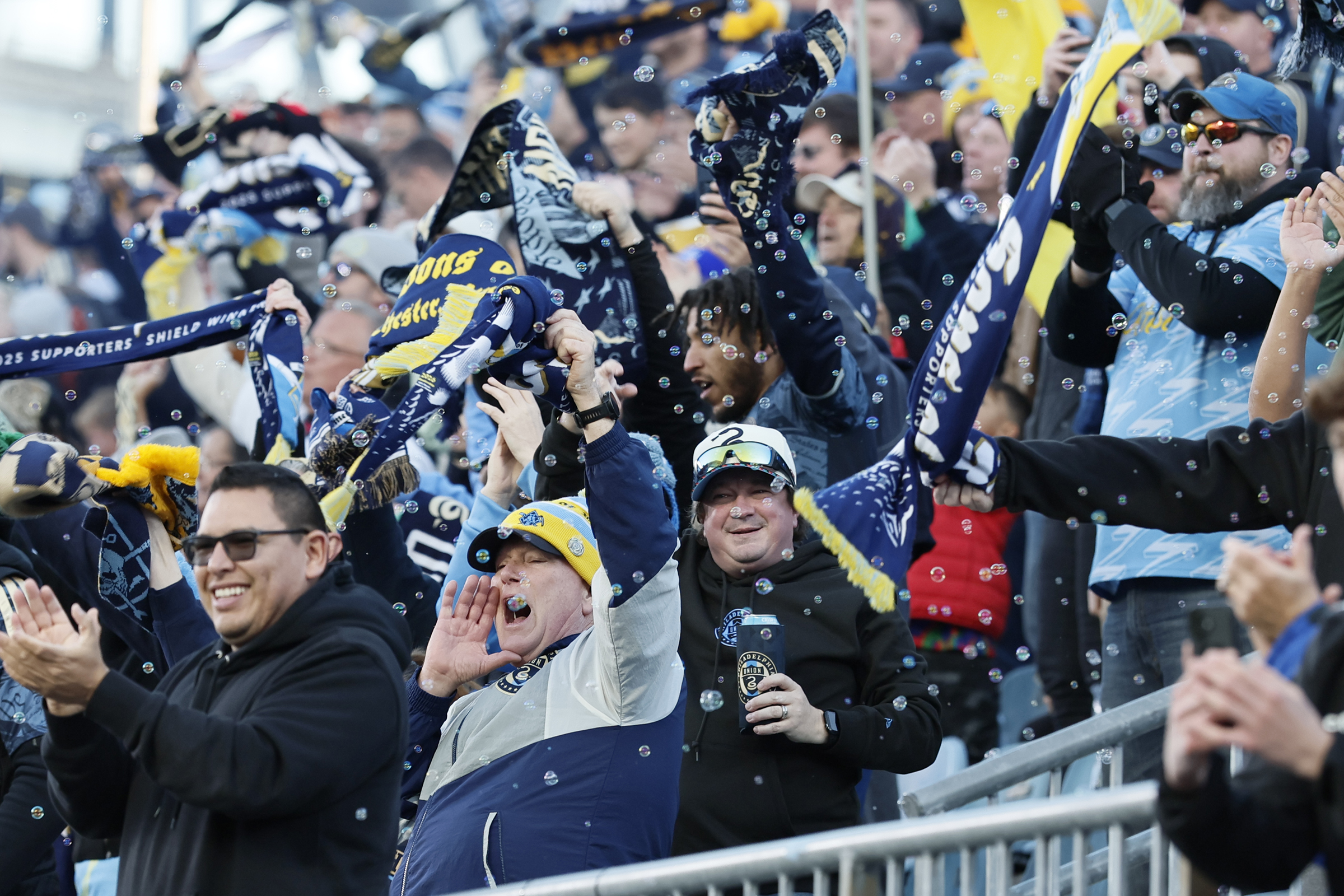
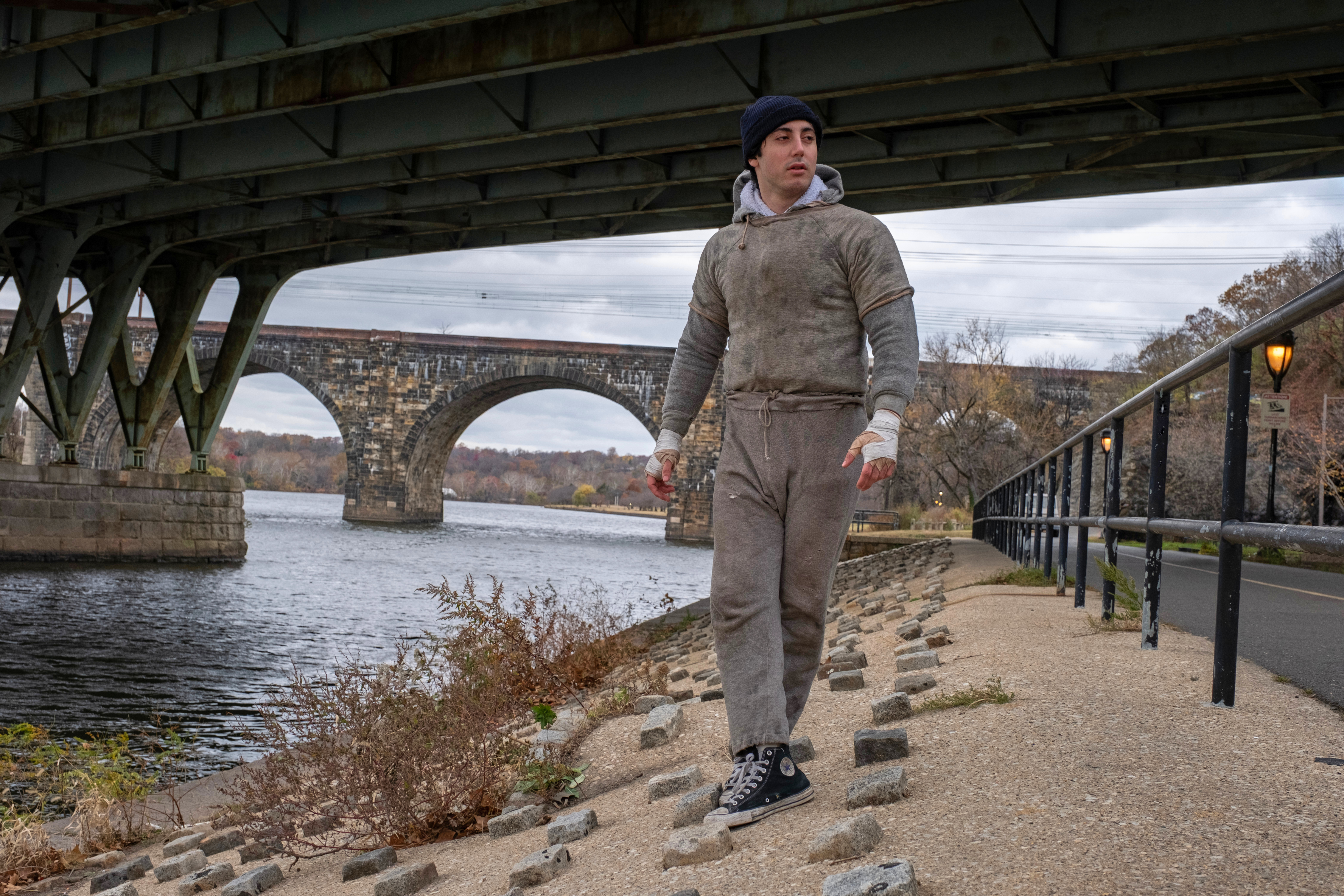
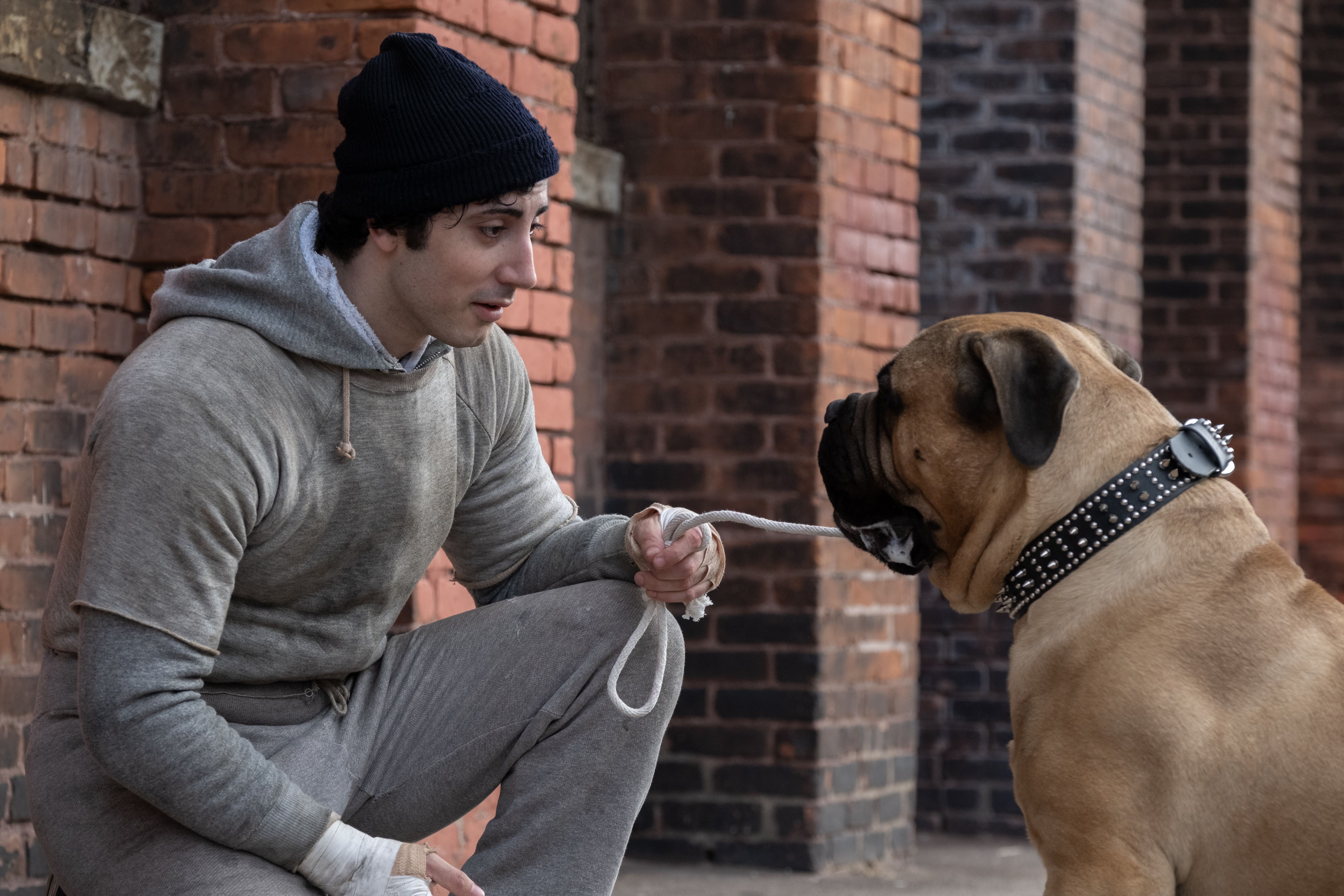
Jason Kelce officiates a sumo match between two attendees of his “New Heights” tailgate on Sunday.Tom Gralish / Staff PhotographerBrothers Shep (left, 10), and Reed Braunwarth, 11, play out their own Eagles-New York Giants game while waiting for Kelce to appear. Their older brother Jack Talbot, 18, was quarterbacking. They came with their mother from Lancaster County.Tom Gralish / Staff PhotographerFans cheer as Jason Kelce hosts his New Heights Tailgate podcast Sunday, Nov, 8, 2026. Tom Gralish / Staff PhotographerA fan from the crowd competes in a hobby horse or, rather, hobby eagle, race onstage.Tom Gralish / Staff PhotographerLisa Dickson of Bridesburg waves her feather boa.Tom Gralish / Staff PhotographerKelce brings out actor Anthony Ippolito (left) who plays Sylvester Stallone in the new movie “I Play Rocky.” Tom Gralish / Staff Photographer
There also was a “Kelce Clubhouse” section selling merch and a photo-op station.
Despite the strong gusts of wind that kept knocking over the bowling pins, the conditions were fine for the other activities set up, including cornhole, foosball, or just throwing a football around.
Luckily for fans, the main events of the day weren’t weather-dependent. When Kelce took the stage around 11 a.m., he threw beers into the crowd, led the festivities, and, naturally, led a few Eagles chants, too.
The first event was a sumo wrestling tournament inspired by Kelce’s new appreciation for the sport and his desire to teach fans “the art of sumo.” The winners in both the men’s and women’s division received a $5,000 prize.
Sumo wrestling was followed by a hobby horsing, or, rather, hobby eagling. Participants “rode” a hobby horse — with an eagle head — around a circuit. Jason also promised “$5,000 of Travis Kelce’s money” to the winner of this event, Becca from Colorado. She was in town with her mom, celebrating her retirement with the first stop on their quest to see all 30 NFL stadiums.
Kelce’s final surprise was bringing out actor Anthony Ippolito from the new I Play Rockymovie to discuss the film with Kelce.
At the front of the stage to witness it all was Larry McTighe, a 70-year-old who has been listening to New Heights for about three years. McTighe, who was wearing one of the only “Kelce” jerseys for Travis instead of Jason, said he enjoys the show’s football insight and variety of guests as a Chiefs fan, football fan, and Swiftie.
“They will give you insight that even I, that’s been a football fan since 1958, can relate to, and you can get some inside information you’re not going to get anywhere else,” McTighe said.
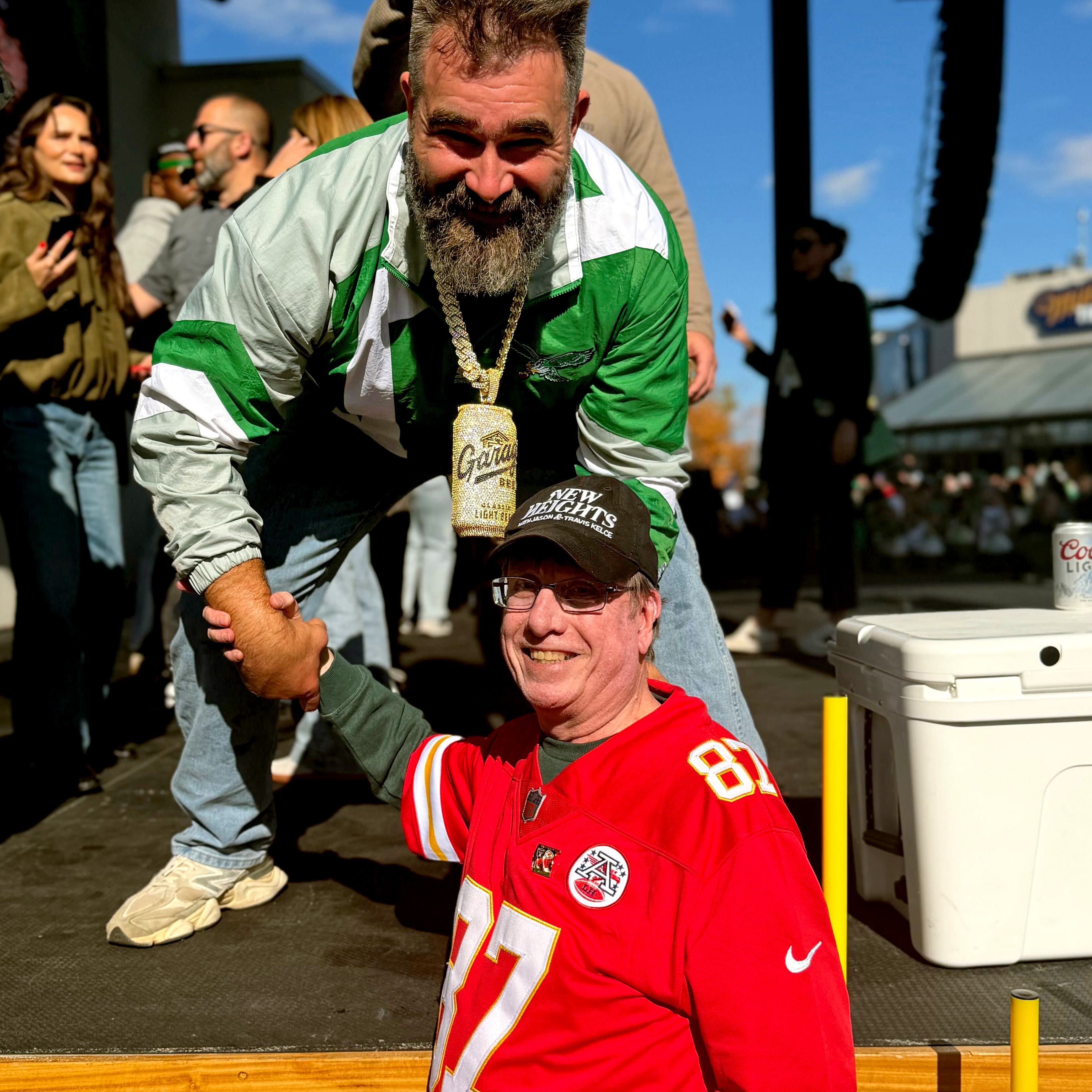
Larry McTighe gets a selfie with Jason Kelce after at the “New Heights” podcast and gave the former Eagle a commemorative coin from 9/11.Courtesy of Larry McTighe
Along with being a huge fan of New Heights, McTighe also had a goal in mind when he drove up from Selbyville, Del.: give Kelce a gift.
McTighe was in the Pentagon during 9/11, working in the affected area. He hoped to give Kelce one of his commemorative coins. McTighe also wanted to witness the environment and send some photos back to the women who run the Kelce Brothers’ Facebook page.
With the help of “Jets Jake” and “Intern Brandon,” two behind-the-scenes personalities for New Heights, McTighe gave the coin to Kelce and took a picture with him.
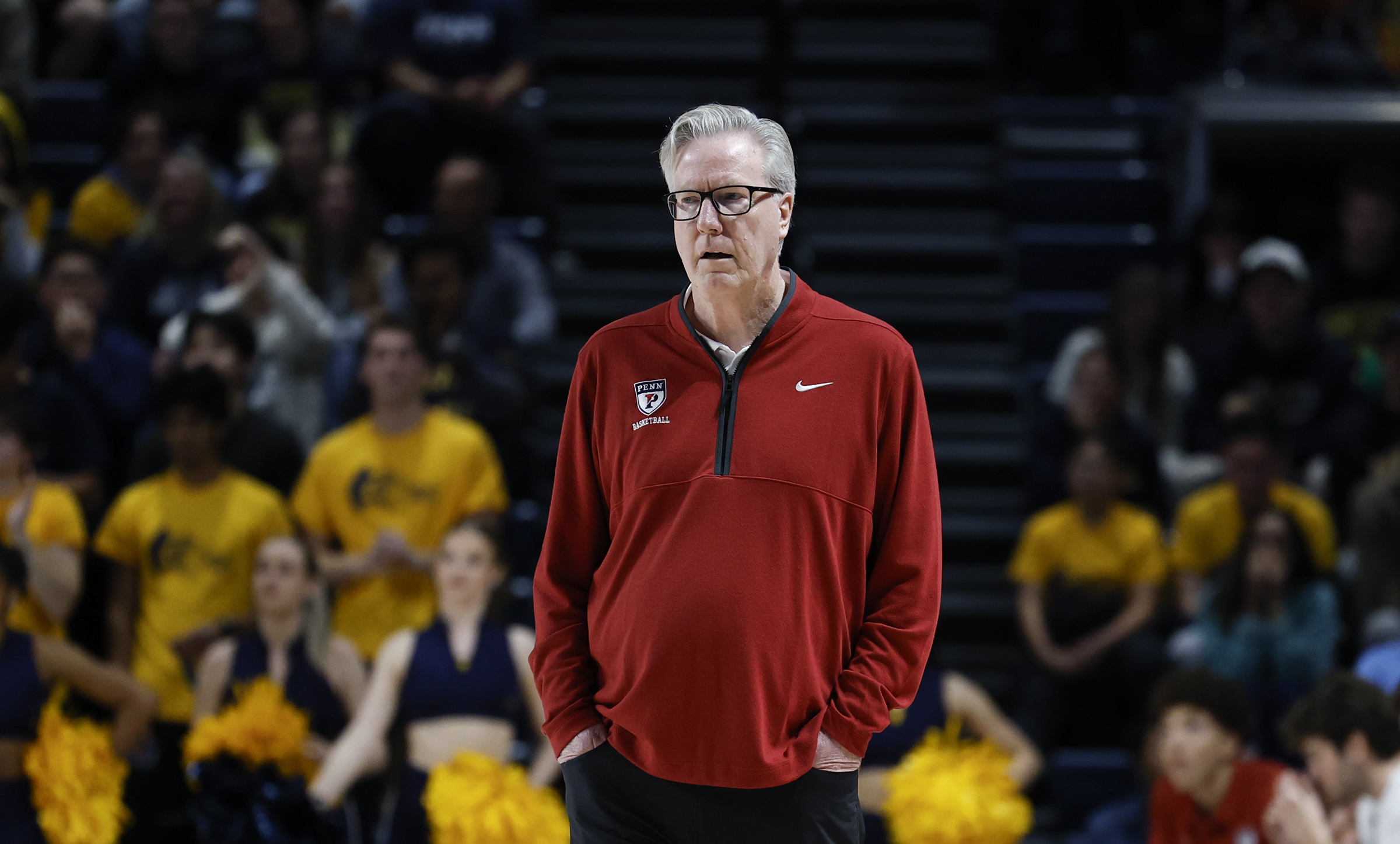
Jack McCaffery, son of Penn coach Fran McCaffery, has been diagnosed with Hodgkin’s lymphoma.
McCaffery, a sophomore on the Richmond basketball team, is taking an indefinite leave of absence. He is receiving treatment at the Hospital of the University of Pennsylvania.
“We are grateful to the Richmond coaching staff and medical team for their prompt response, and to Kevin Mahoney and the doctors and nurses here at the Hospital of the University of Pennsylvania,” Fran McCaffery said in a statement. “He is in great hands and our family feels blessed to be here, where Jack’s care is directed by this world-class care team.”
Fran McCaffery’s second-oldest son, Patrick McCaffery, was diagnosed with thyroid cancer at 14 years old. Patrick’s cancer was treated at the Adolescent and Young Adult Cancer Program at the University of Iowa Stead Family Children’s Hospital.
Fran, who coached at Iowa at the time, later helped raise $1.25 million for the program. In 2015, he was awarded the Coaches vs. Cancer Champion Award for his fundraising work. Since taking over the Quakers, McCaffery has contributed to Philadelphia’s Coaches vs Cancer chapter.
Jack McCaffery started his collegiate career at Butler, averaging 2.8 points and 1.6 rebounds in nine games played in 2025-26 before his season ended in December due to what his Richmond bio described as “an illness and complications from having his wisdom teeth removed.”
McCaffery received a medical redshirt before transferring to play for Archbishop Ryan and Princeton graduate Chris Mooney at Richmond this season.
When the Union looked across the field at Subaru Park on Saturday, they saw a Toronto FC team that looked every bit like one already out of the playoff race. The hosts treated their guests the right way, racing them off the field in a 4-1 rout.
That won’t be possible anymore this year.
Yes, the Union went 13-2-4 in league games after Ryan Richter took over during the World Cup break. But only when the playoffs kick off later this month will fans finally know the depth of all that success.
Twelve of those wins and two of the ties came against teams that finished the regular season below the Union in the leaguewide standings. The one win against a team ranked higher, at Chicago last month, came with a man advantage in the second half that turned the game.
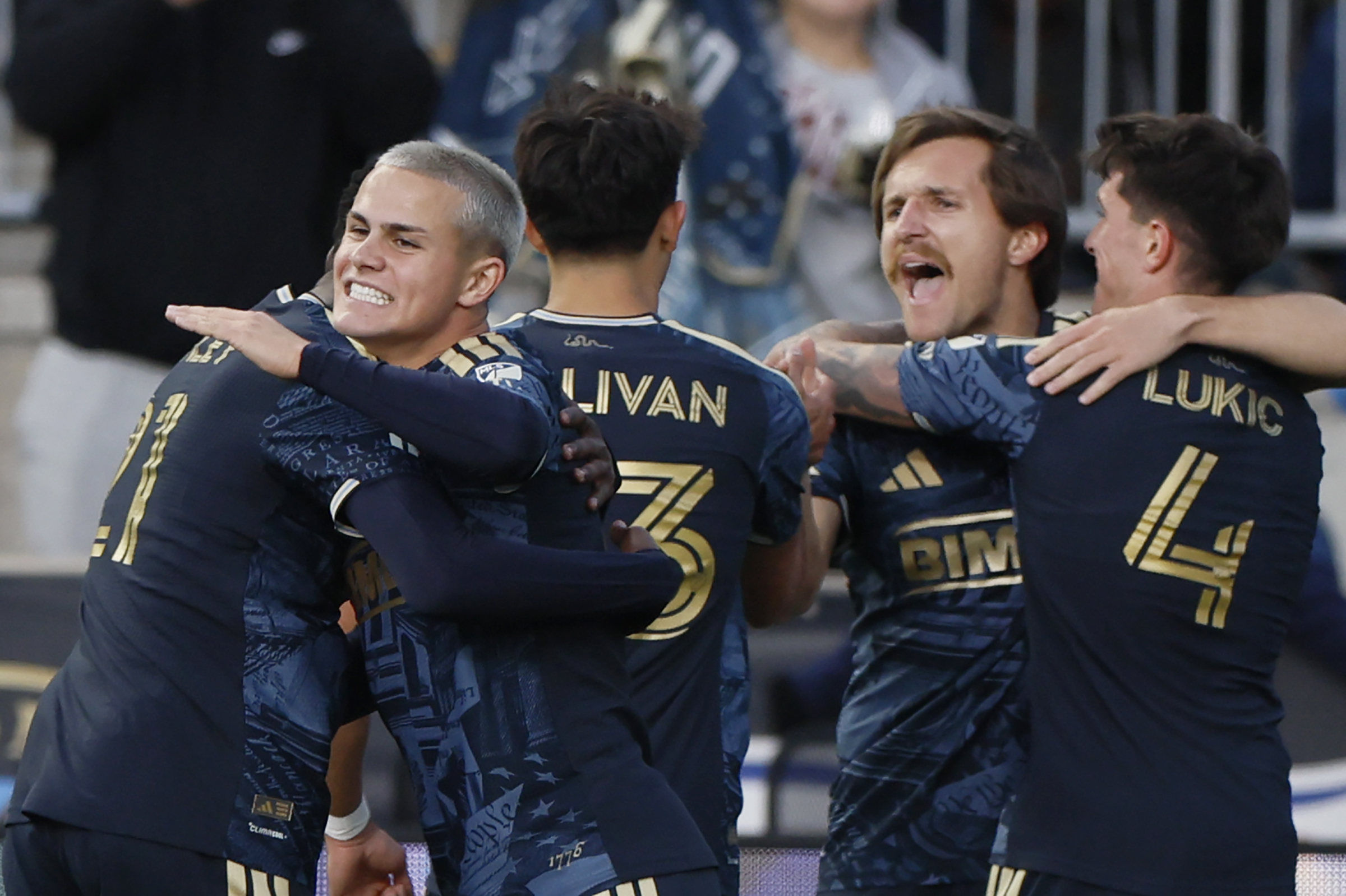
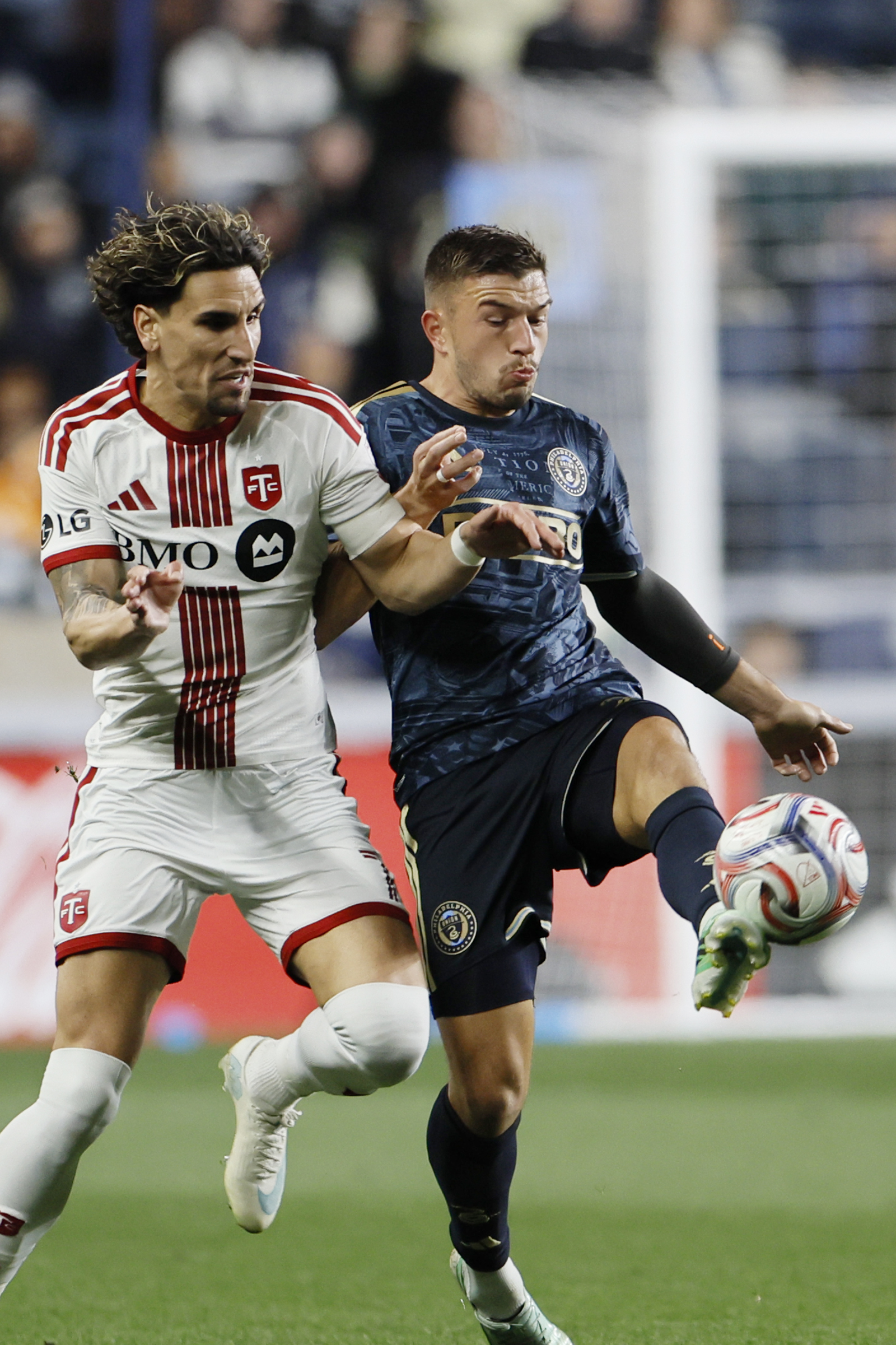
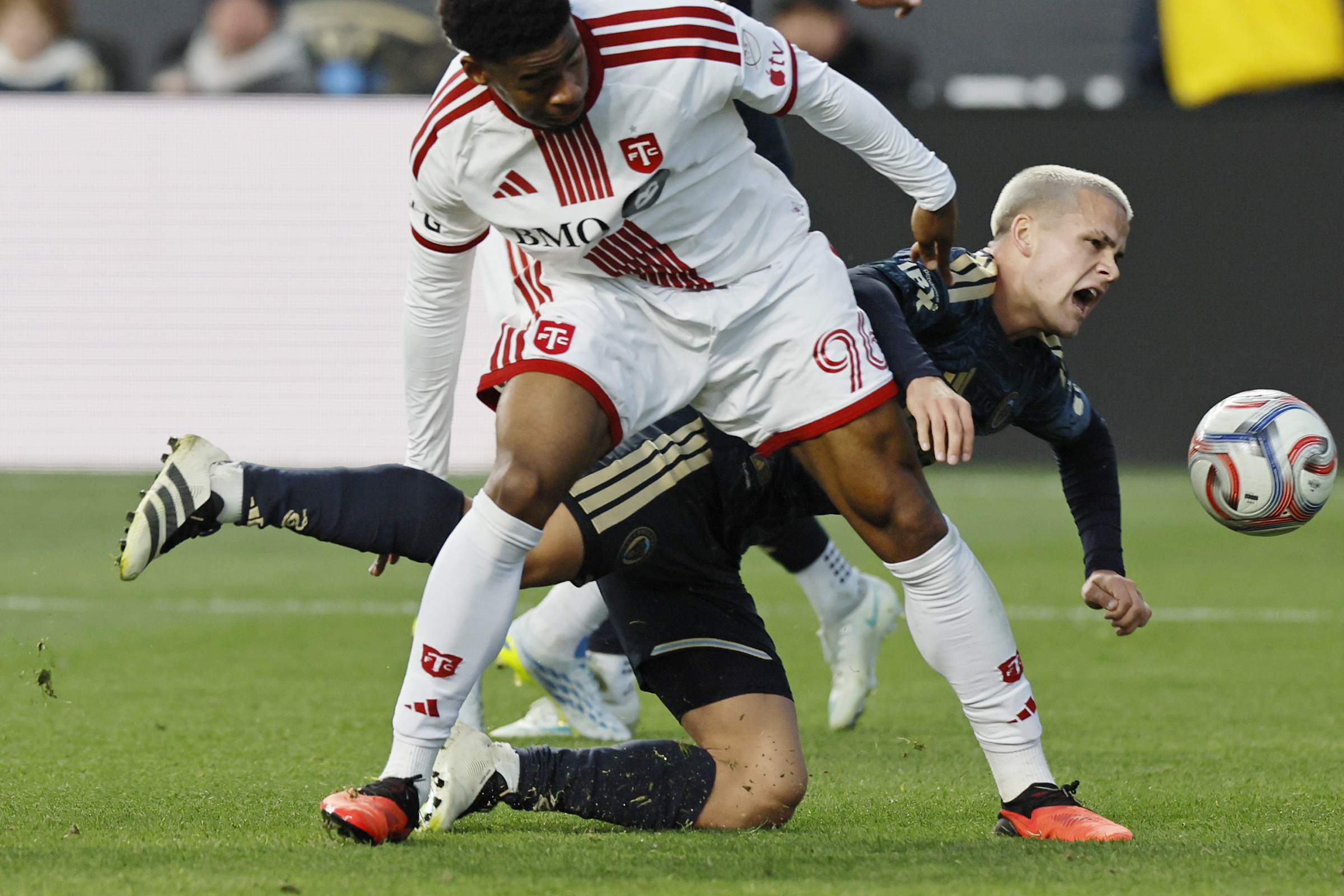
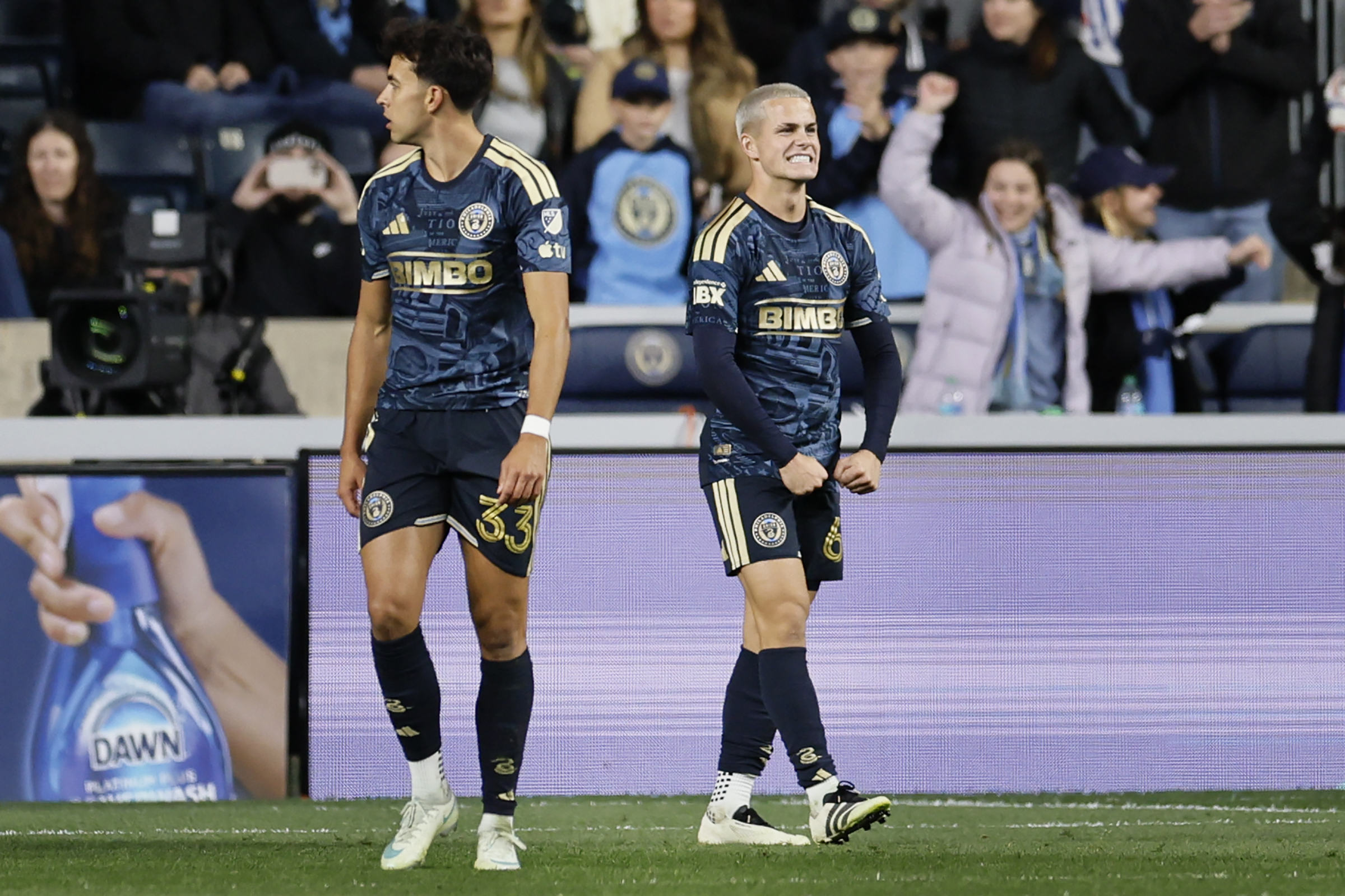
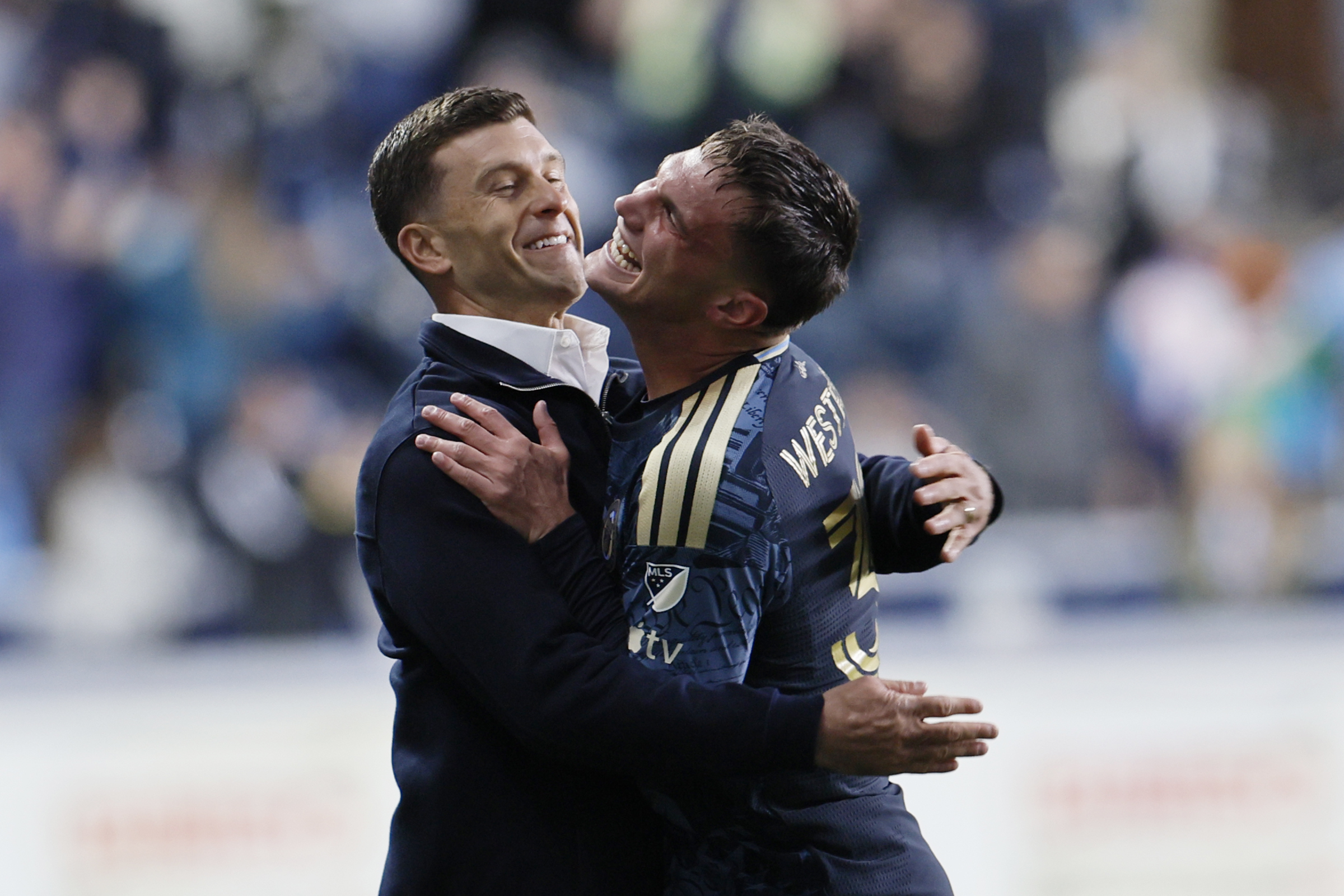
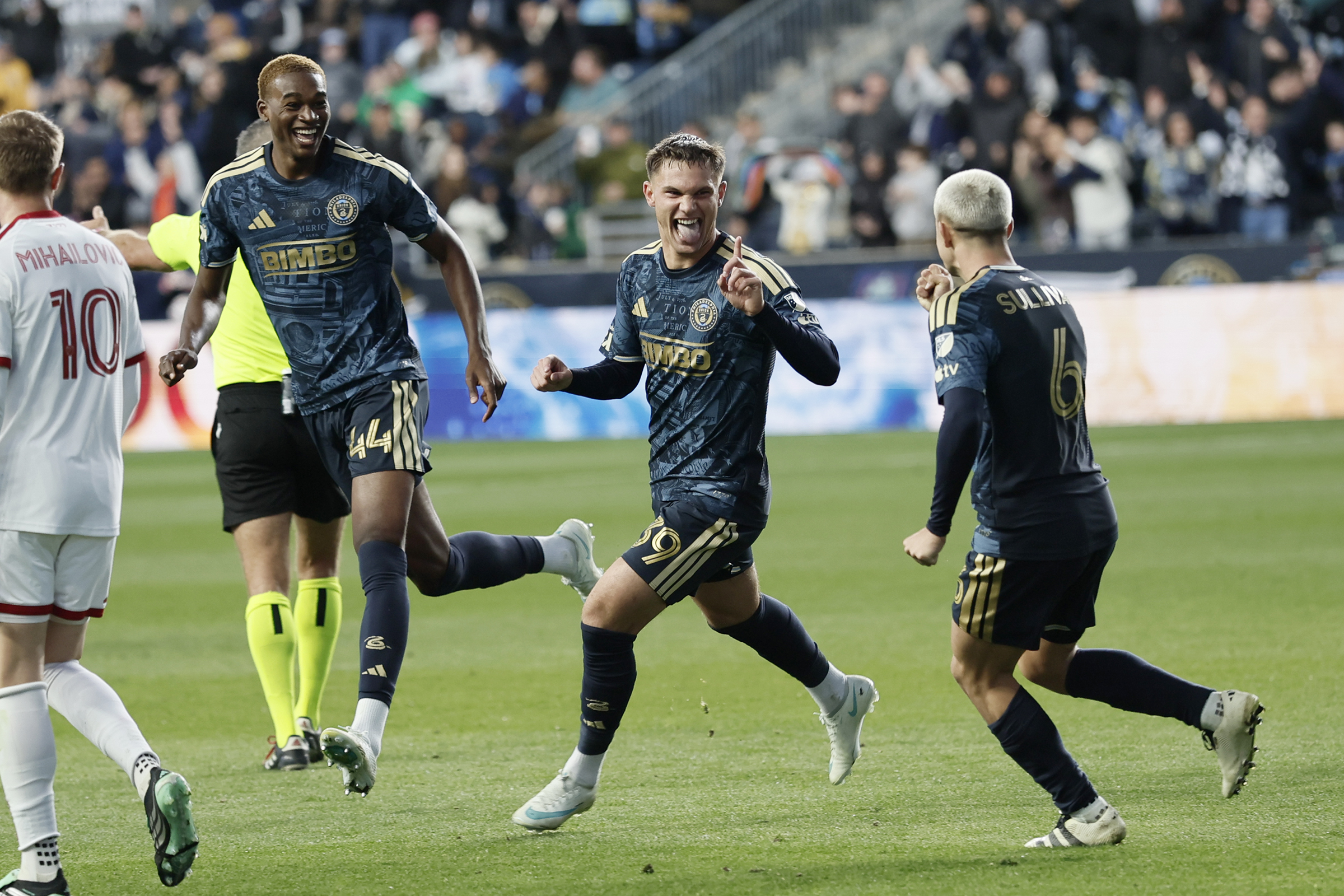
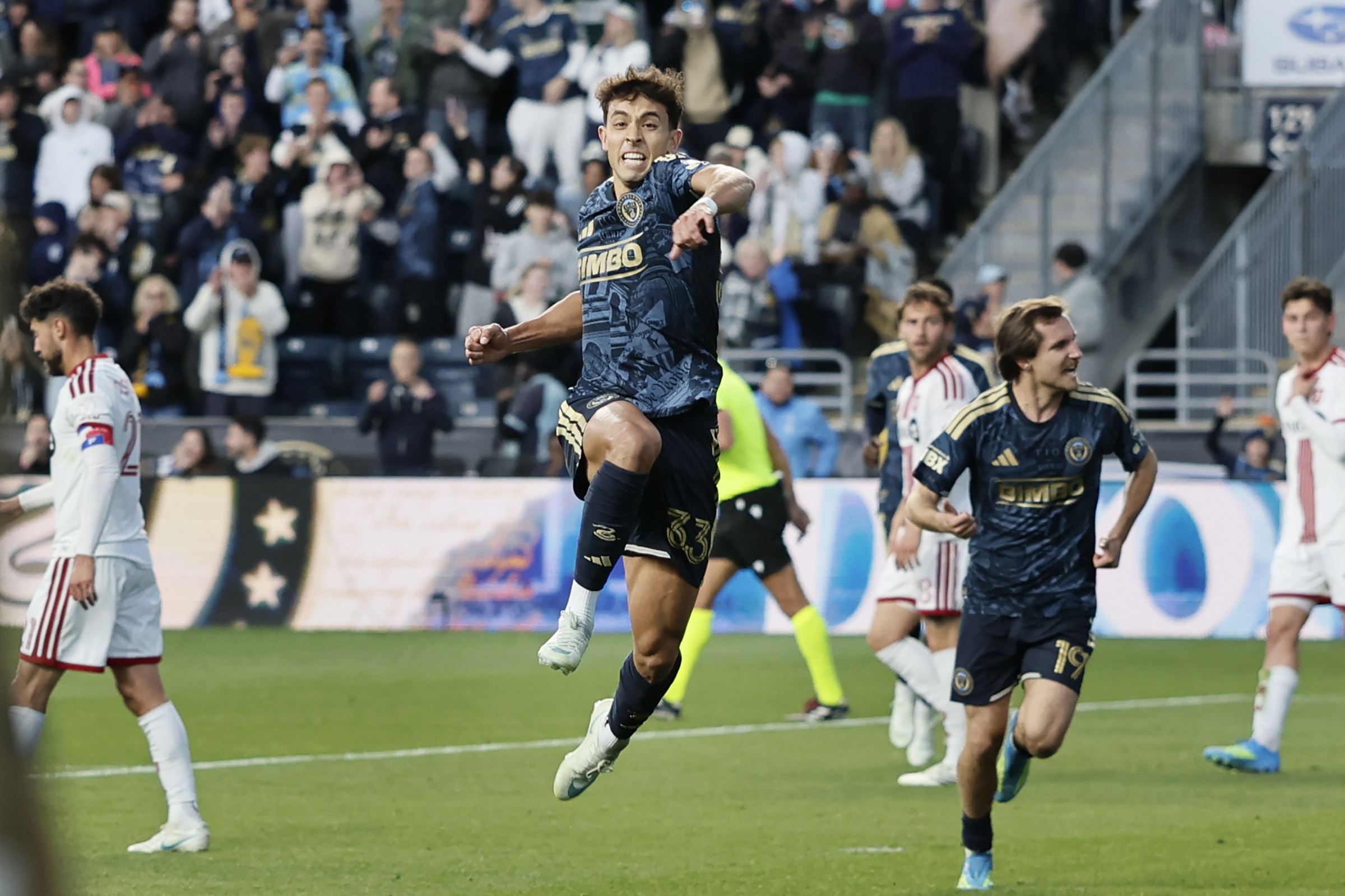
Union’s # 27 Kai Wagner gets to the ball before Toronto’s # 7 Theo Corbeanu during the Union vs. Toronto FC soccer match at Subaru Park in Chester on Saturday, November 7, 2026.Elizabeth Robertson / Staff PhotographerToronto’s # 96 Richard Chukwu downs Union’s # 6 Cavan Sullivan in the first half of the Union vs. Toronto FC soccer match at Subaru Park in Chester on Saturday, November 7, 2026. The play gave the Union a penalty kick which Qujnn Sullivan turned into a goal.Elizabeth Robertson / Staff PhotographerUnion fans cheer after a Union goal during the Union vs. Toronto FC soccer match at Subaru Park in Chester on Saturday, November 7, 2026.Elizabeth Robertson / Staff PhotographerUnion’s # 33 Quinn Sullivan walks away as brother # 6 Cavan Sullivan flexes his muscles after a second half play during the Union vs. Toronto FC soccer match at Subaru Park in Chester on Saturday, November 7, 2026.Elizabeth Robertson / Staff PhotographerUnion’s Frankie Westfield (right) jumps into the arms of Union interim manager Ryan Richter after a Westfield goal that was eventuallly called off in the first half of the Union vs. Toronto FC soccer match at Subaru Park in Chester on Saturday, November 7, 2026.Elizabeth Robertson / Staff PhotographerUnion’s Cavan Sullivan (left) and Indiana Vassilev (right) celebrate Sullivan’s first half goal during the Union vs. Toronto FC soccer match at Subaru Park in Chester on Saturday, November 7, 2026.Elizabeth Robertson / Staff PhotographerUnion’s # 44 Neil Pierre, # 39 Frankie Westfield and # 6 Cavan Sullivan celebrate a goal by Westfield that was eventually called off for offsides in the first half of the Union vs. Toronto FC soccer match at Subaru Park in Chester on Saturday, November 7, 2026.Elizabeth Robertson / Staff PhotographerUnion’s Quinn Sullivan celebrates after scoring the Union’s second goal of the game in the first half of the Union vs. Toronto FC soccer match at Subaru Park in Chester on Saturday, November 7, 2026.Elizabeth Robertson / Staff Photographer
Among those losses was a 2-1 home defeat to New England, the same team that now awaits the Union in the first round. The score matched that of a loss in Foxborough, Mass., back in May — when Bradley Carnell was in charge, Kai Wagner was in England, and Quinn Sullivan was two months from full health.
They know this in the River End stands, where the fans suspected for a few weeks that they’d need to make time for a Thanksgiving weekend home game. Now that’s a certainty.
They know it in the Union’s locker room, too, and it did not spoil the mood to bring it up after Saturday’s game.
“It’s going to be a big step up,” Richter said. “And what we have to make sure that we do. And even a lesson we can learn from tonight [is]: we can’t be conceding goals in set pieces like this. We have guys that are too good at their man-marking, too good attacking the ball, too good in the air.”
That was a reference to Toronto’s goal just before halftime, a header by former U.S. national team striker Josh Sargent off a corner kick. Along with being a badly defended set piece, it came shortly after what should have been the Union’s third goal, ultimately ruled out on a controversial offside call.
“There’s going to be games, and in the playoffs you’re playing against quality teams and quality players, that sometimes you clap your hands and say, ‘Well done’ if a great player pulls off a great moment and makes a goal, or [there’s] a great team goal, and good teams can score like this,” Richter said. “But what we can’t have is lapses in focus on our end. Make sure that we’re at our best in every game if we’re going to want to go on the kind of run that we think that we can.”
Of course, it’s Richter’s job to believe that his team can beat New England, and his message about that is just as clear.
“Let’s not make it now like, ‘Guys, good second half of the season, this is a positive story for the year, and now it’s over,’” he said. “Like I’ve said over the last few weeks, when we have competed against the best teams in the Eastern Conference, I think that’s exactly where we belong. We can beat any team, and we’re going to approach the playoffs in that way.”
Ryan Richter (left) embraces Frankie Westfield after the right back scored a goal that was disallowed for a controversial offside call.Elizabeth Robertson / Staff Photographer
But it’s everyone else’s job to understand that winning the series would be an upset, and not just because of the seed numbers. A matchup with Miami would have seen wide-open play, not just the star matchup of Lionel Messi and Cavan Sullivan. This one will be much more of a grind, with the extra annoyance of Gillette Stadium’s artificial turf.
The motto has been said here a few times now, and it’s still true. If the Union don’t win, don’t say you weren’t warned.
Bruno Damiani’s penalty kick goal wasn’t just the game’s icing on the cake. His 13th tally of the season was also his first since earning his first invitation to Uruguay’s senior national team.
La Celeste’s attack isn’t as star-studded as it used to be, but Damiani still gets to be companions with some big names: former Liverpool striker Darwin Nuñez, current Liverpool (and longtime Barcelona) centerback Ronald Araújo, Tottenham Hotspur centerback Rodrigo Betancur, and Real Madrid midfield general Federico Valverde.
Lista definitiva de Diego Forlán para los amistosos con Argentina y República Dominicana por Fecha FIFA 📋 pic.twitter.com/hUkNrSRGfi
“It’s a dream come true,” Damiani said. “It’s going to be an amazing experience. I wish I get some minutes, but everything else is going to be great, to play with top players.”
Uruguay’s program also has a history of respecting players from MLS, from Real Salt Lake’s Juan Manuel Sanabria right now to Nicolás Lodeiro, Facundo Torres, Brian Rodríguez. That tradition is continuing under new manager Diego Forlán.
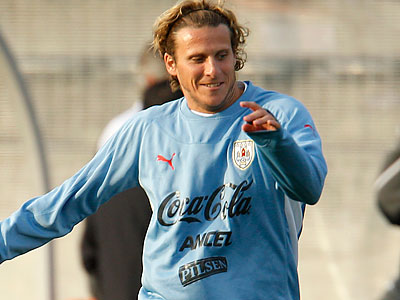
If you’ve followed world soccer for a while, you instantly know that name. Forlán was a superb striker for his country and for huge European clubs including Manchester United, Atlético Madrid, and Inter Milan.
Before becoming the coach of Uruguay’s men’s national team, Diego Forlan was one of its greatest players.
Even though Uruguay will only play friendlies in this window, at eternal rival Argentina and home vs. the Dominican Republic, for Forlán to pick Damiani in just his second FIFA window in charge is a real compliment.
“Forlán is, for the Uruguayans of my age, the first idol we had in the 2010 World Cup. He was our best player,” Damiani said. “It means a lot that someone like him values the work that I put in, and MLS. He’s showing that he is watching the league and cares about the players here, and that’s a good sign for sure.”
Roster continuity is hard to find in college athletics, but for St. Joseph’s women’s basketball, that’s never really been a problem.
However, bringing in some reinforcements doesn’t hurt.
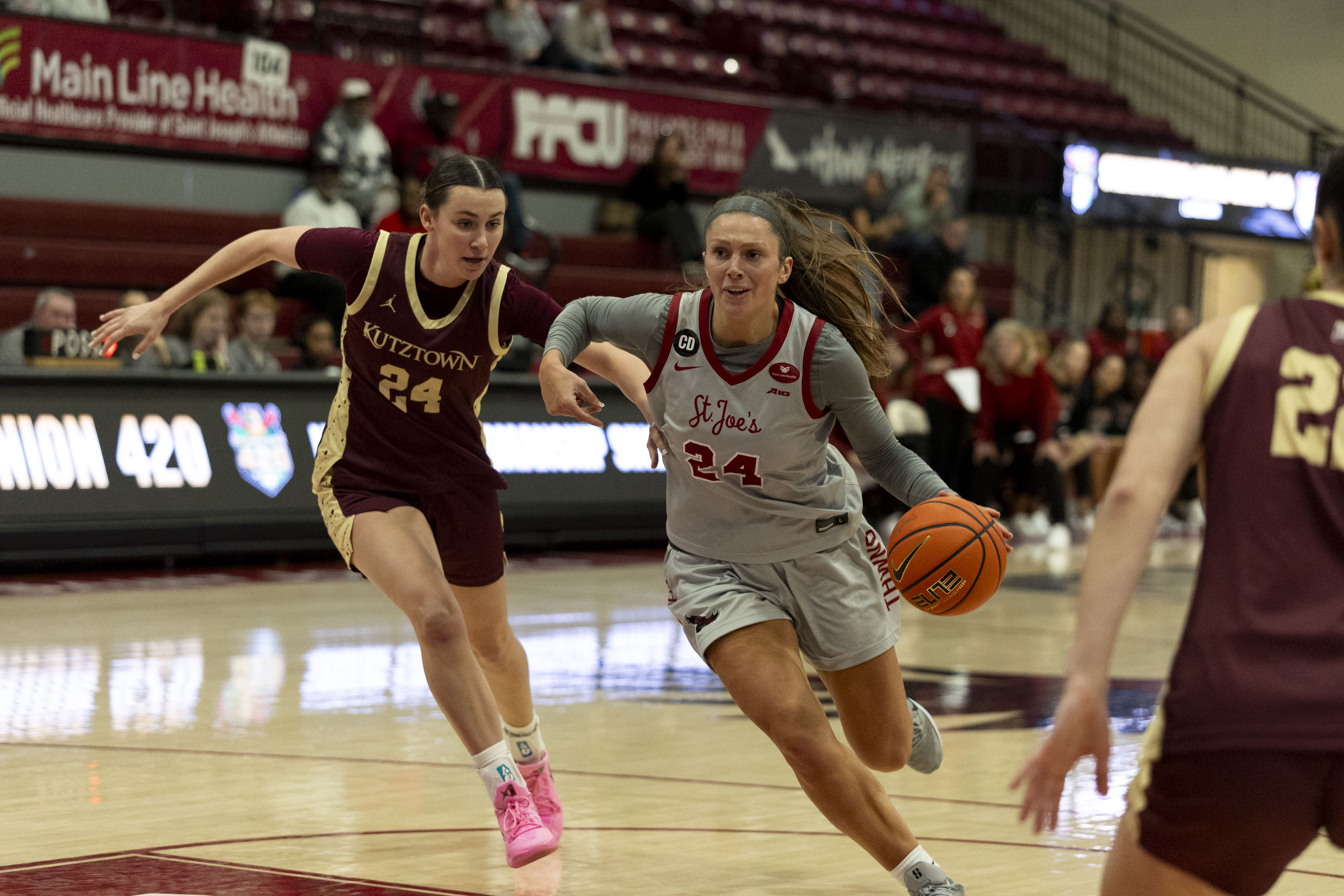
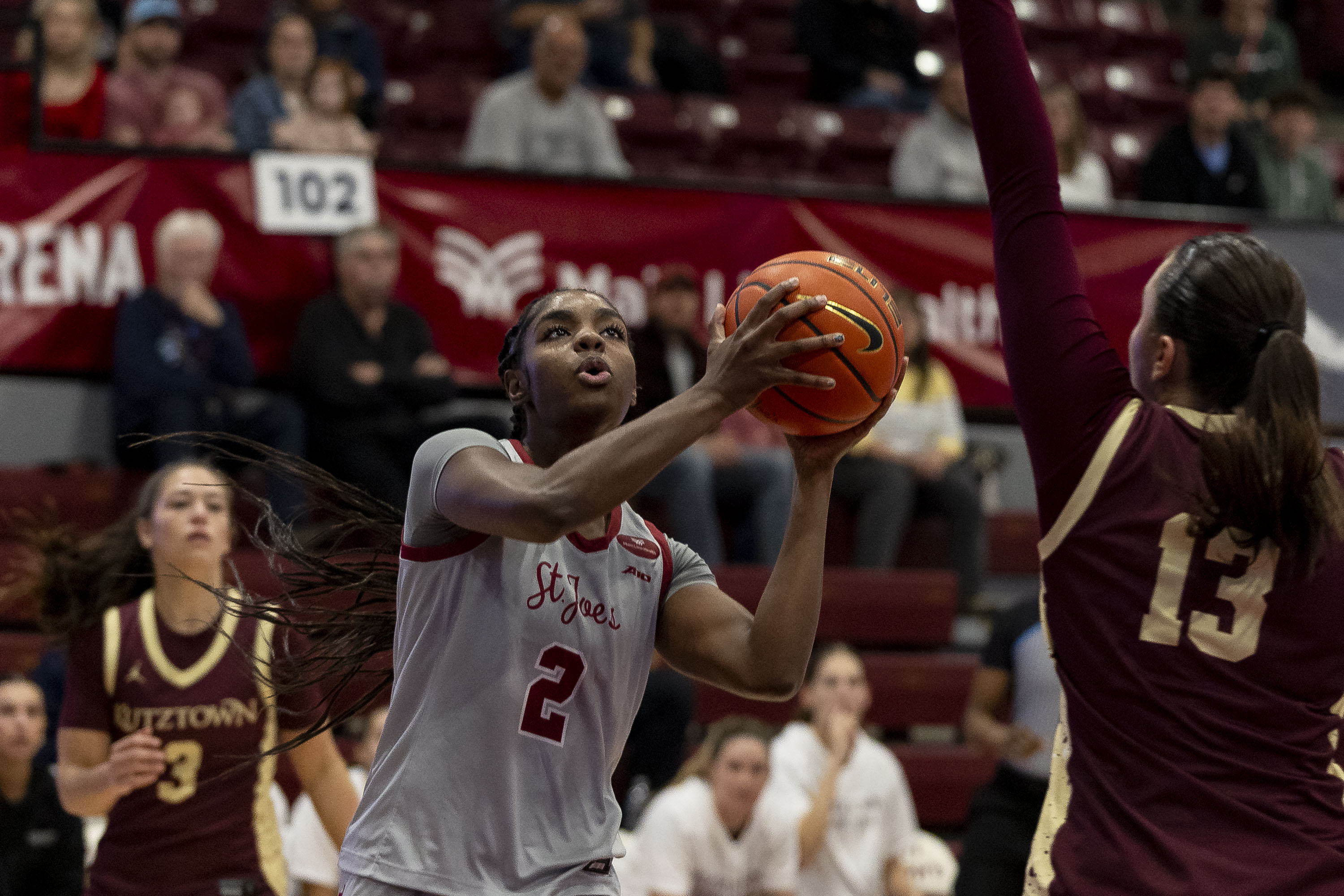
With a mixed effort from returning veterans and new faces, St. Joe’s routed Kutztown, 95-27, in its season opener at Hagan Arena on Saturday.
Transfer Deja Evans scored 16 points in her Hawks debut, all in the first half. The senior forward shot a perfect 8-for-8 from the field.
The Hawks, the unanimous preseason favorites to finish first in the Atlantic 10, returned 10 players from last year’s roster, including eight of their nine top scorers.
Among the returners were seniors Gabby Casey (game-high 19 points and six steals), and Aleah Snead (eight points).
Head coach Cindy Griffin said the addition of Evans and junior transfer Maddy Potts has worked well for the Hawks because of the maturity that they bring.
Saint Joseph’s Aleah Snead goes up for a shot against Kutztown University on Saturday.Tyger Williams / Staff Photographer
“You have that going for you, plus, you also have the continuity of the group that was already here,” Griffin said. “So I don’t think we really missed the beat.”
Evans, a Conshohocken native, had familiarity with St. Joe’s. The Archbishop Wood alumna spent her freshman season at Albany, before transferring to another Big 5 school, Drexel, for her sophomore and junior seaons. She faced the Hawks twice with the Dragons.
Evans said it made for an “amazing transfer process,” which allowed her to learn the plays and be “aggressive on the court” right away.
“It’s definitely helped me understand a lot,” Evans said. “Just knowing the girls, they’ve made it easier for me. Being able to go talk to them, Aleah and Gabby, they’re leaders for me as well, even though we’re in the same grade. But they’re definitely big leaders on the court.”
Evans and the other starters were pulled in the third quarter when the Hawks were up by over 40 points, giving the younger players a chance to play.
Among them was Jahzara Green, a freshman forward from Gloucester Catholic, who scored nine points in 18 minutes. She also contributed eight rebounds for St. Joe’s, making “an impact right away,” Griffin said.
“She’s again another spark off the bench,” Griffin said. “She’s aggressive. She’s assertive. She’s strong. She rebounds. Great communicator. So really pleased.”
The Hawks finished with 21 assists on 38 field goals and had 18 steals. Still, as the Hawks hit the road for their next game against Cincinnati, Griffin said she wants them to focus on being a great road team as well as at home. That comes with staying focused and getting the right shots, something she wants to see her team improve.
“We got some really great shots, but sometimes maybe we rushed it a little bit,” Griffin said. “I think we got a little bit ahead of ourselves sometimes, but that that’s going to come. I thought we did a nice job taking care of the ball, but, I think the continuity of continuing to share the ball and see the open person.”
Up next…
The Hawks’ first road trip will be to face the Cincinnati Bearcats on Wednesday (6:30 p.m., ESPN+).
In this excerpt from his new book, “Going the Distance: Stallone, Philly, and the Story of ROCKY,” Inquirer sports columnist Mike Sielski describes the stakes and risks that Sylvester Stallone faced as he, the cast, and the crew began filming the movie. “Going the Distance” will be available Tuesday, Nov. 10, wherever books are sold.
Sometime before he climbed aboard a train for the cross-country trip from Los Angeles to Philadelphia in December 1975, crowding into a tiny car with his pregnant wife and his rambunctious bull mastiff, Sylvester Stallone had decided to stop eating bread.
He had written a screenplay that, by a combination of serendipity and his sheer will, was about to be made into a movie, Rocky, the filming of which would begin in just a matter of days — a matter of hours, really — once the train pulled into 30th Street Station. Stallone had more at stake in the project than anyone else involved in it, including the producers who were on the hook for some of the film’s funding. They stood to lose money. He stood to lose his entire career, to destroy his reputation, to make himself into a fool, to cast himself as a cautionary tale to all the young Hollywood aspirants in his wake, to have his name become synonymous with failure. You don’t want to be another Stallone, do you? All that risk, so much riding on a chance he might never have again, all because he had remained resolute that he and he alone — not James Caan, not Burt Reynolds, not Ryan O’Neal, not any actor who, unlike Stallone, was at all familiar to America’s mainstream moviegoing public in the mid-1970s — would play the title character: Rocky Balboa, a lovable, lunkhead boxer who gets an improbable shot at the heavyweight title, falls in love, and earns some self-respect.
His insistence on playing Rocky, his intractable belief that only he could, had compelled him to turn down several lucrative and potentially life-changing offers for the rights to the script. Just step out of the way, Sly, and you’ll be a quarter million dollars richer. No. It had to be him; he would accept less money and greater risk for the freedom to do justice (as he saw it) to the film and its protagonist, to oversee the process of creating Rocky and Rocky, to ensure they would turn out as he and no one else envisioned them. It was the only way, he believed, that the movie would succeed … and the only way that he could live with himself afterward. His efforts on the project had to be all-encompassing.
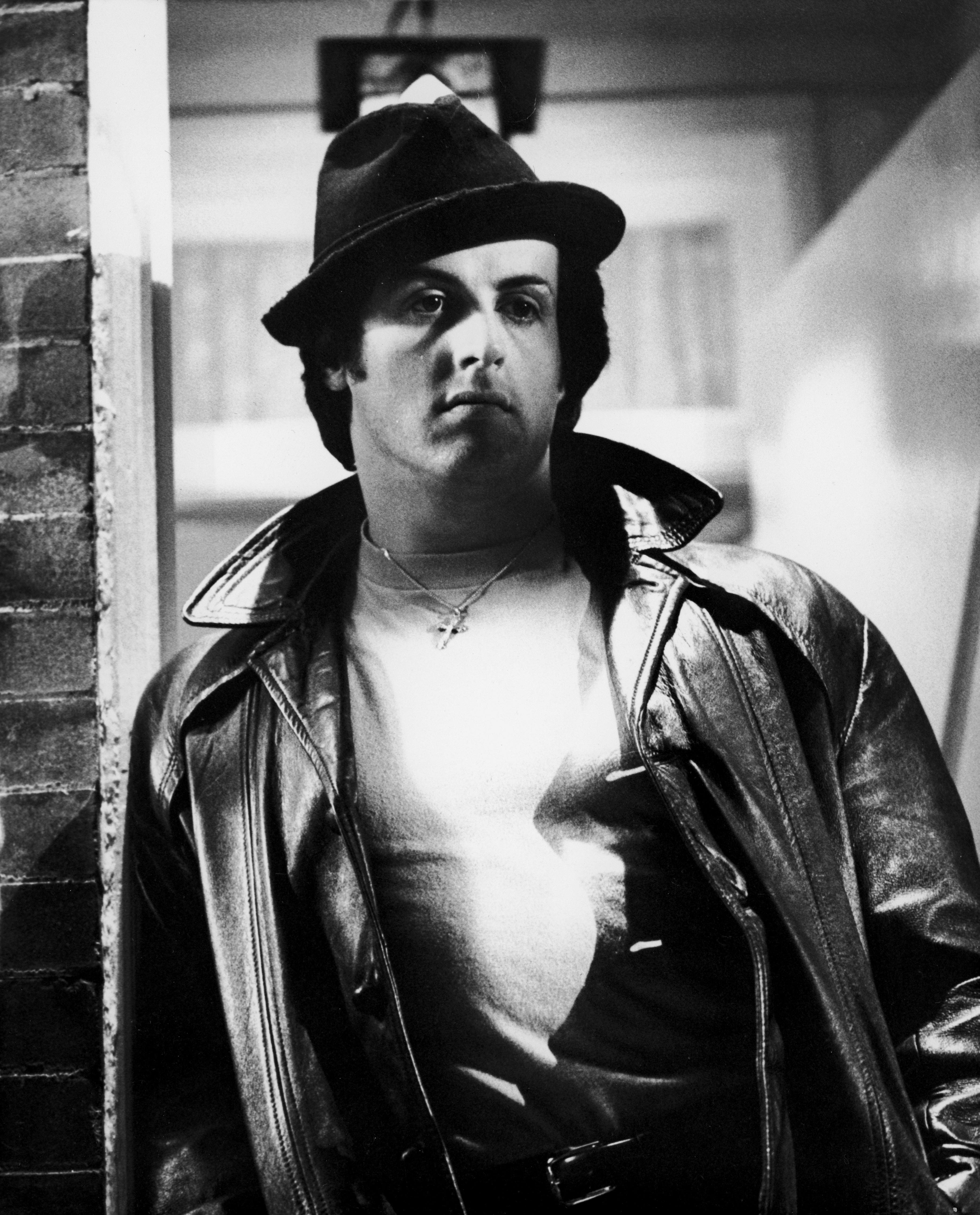
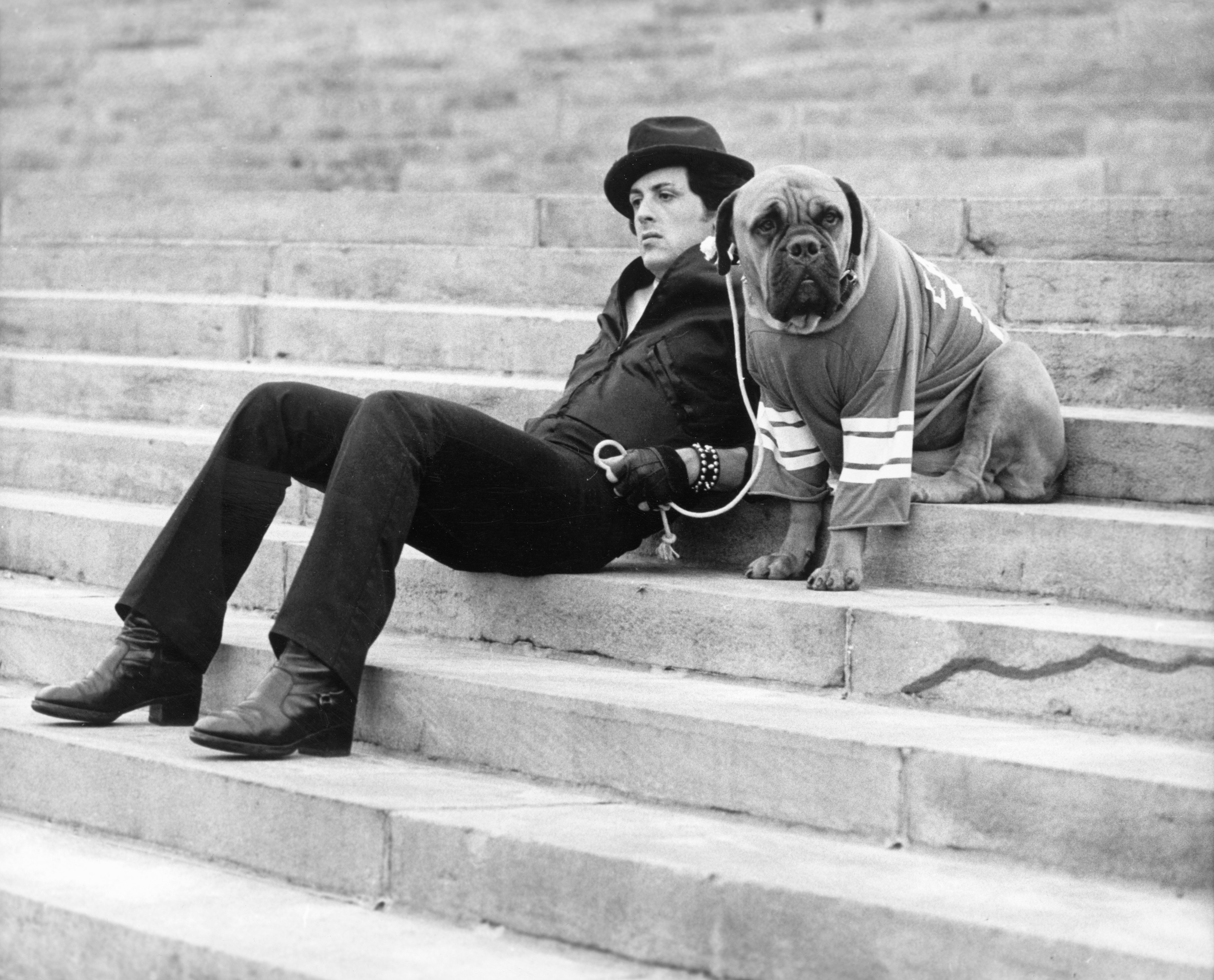
American actor Sylvester Stallone leans against a doorway in a hat and a leather jacket in a still from the film, ‘Rocky,’ directed by John G. Avildsen, 1976.Getty Images
To prepare for the role, for instance, he had put himself on a strict diet: all shrimp and other shellfish, no carbohydrates. Carbs, Stallone had read, stimulated brain activity. So he reasoned that, by depriving himself of them, he would lower his intelligence level — that he would literally make himself dumber — and make it easier not merely to play Rocky, but to become him.
Already he was walking and talking like Rocky, spontaneously breaking into fits of shadowboxing like Rocky, sniffing like Rocky, as if his nose was always running. Now he would think like Rocky, too … or, more accurately, not think. And even if all his theorizing was bunk, even if his seafood-based attempt at method acting was nonsense, it would at least help him to get into the proper frame of mind for the part. Stallone was confident, though, that his unorthodox diet was working, that he was actually transforming himself into a different person. His evidence? He had, out of nowhere, developed a strange and sudden fondness for country music.
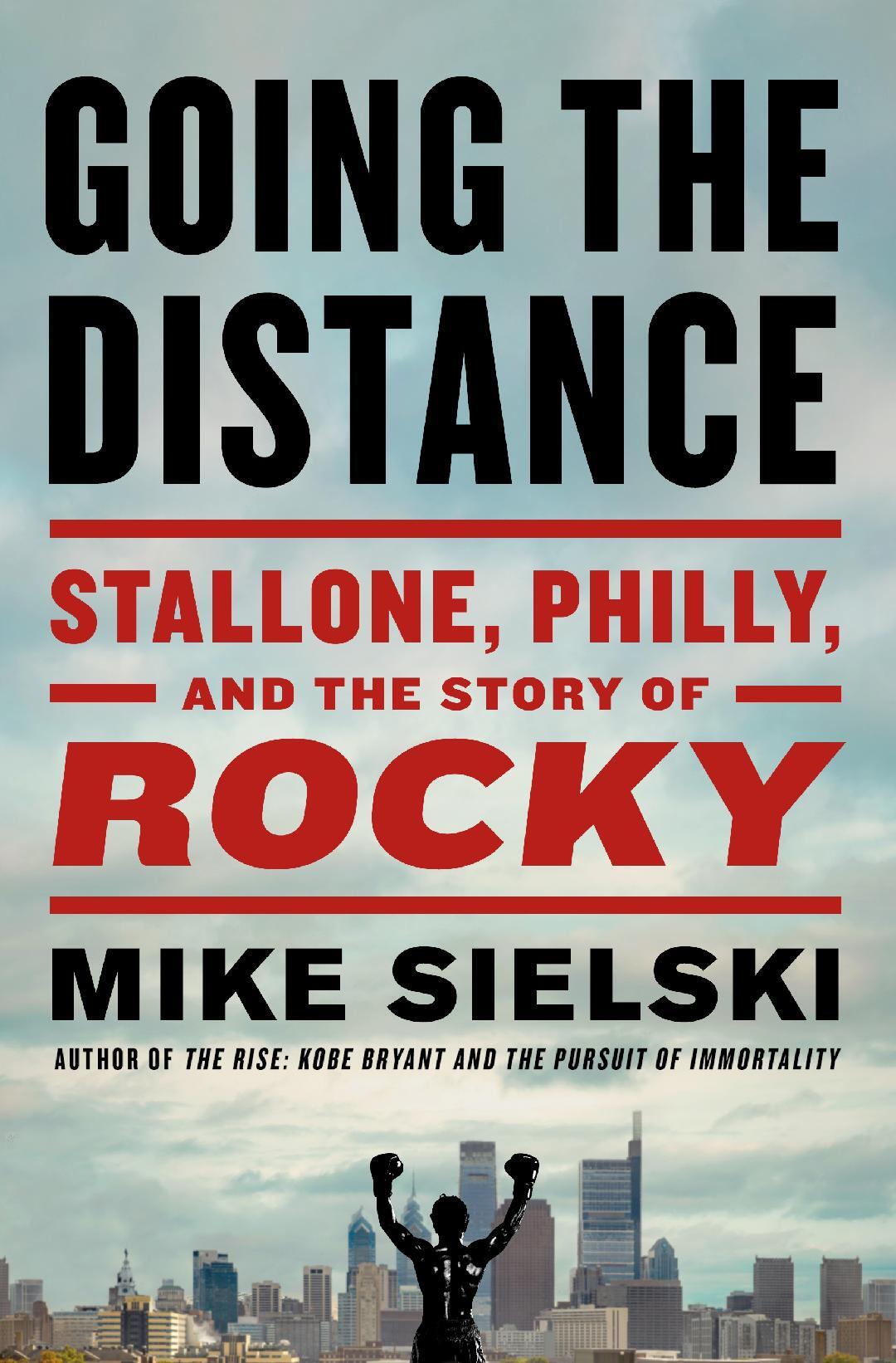
Going the Distance: Stallone, Philly and the Story of Rocky is available Nov. 10 wherever books are sold.Courtesy: St. Martin's Press
Stallone was 29, and he had been virtually anonymous in the film industry for years. Five talent agencies in New York had signed him. All five had dumped him. The others in town hadn’t bothered with him in the first place. A unique case. That was the term he’d hear describing him upon each moment of rejection, upon each decision that the decision-makers made once they heard him deliver his lines and slur his words so badly that they assumed he had a speech impediment, which he did. He was accustomed to bouncing from one audition to another, to having a door shut behind him after four minutes and knowing it would never open for him again. He took whatever acting work he could get, and there wasn’t much of it … if he was lucky to be cast at all. They were bit parts and nothing more: the mugger on the subway, the sidekick who doesn’t say much, the guy in the background. He’d even done a porno film.
Within a year, he would tell a journalist at The New York Times that he and his wife, Sasha, had just $106 in their bank account when they were on that train. It made sense that he would tell someone at The New York Times this, because The New York Times had the readership and reach and credibility to spread the legend of Rocky’s making far and wide. The information in Judy Klemesrud’s profile would be lifted by other writers and media members, repackaged in smaller newspapers and on television stations, and carried from coast to coast on the wire services and even on the wind. The notion that the man behind this beloved movie had just $106 in his bank account when he made the beloved movie was a juicy and dramatic detail, so specific, so telling.
And yet … maybe … in the end, the actual dollar figure was irrelevant, because no matter how much money Sylvester and Sasha Stallone had in their back account as they rode that train, this much was undeniable: Sylvester Stallone was the worst thing to be in Hollywood or in Manhattan or anywhere in the creative arts or anywhere else. He was a man without power.
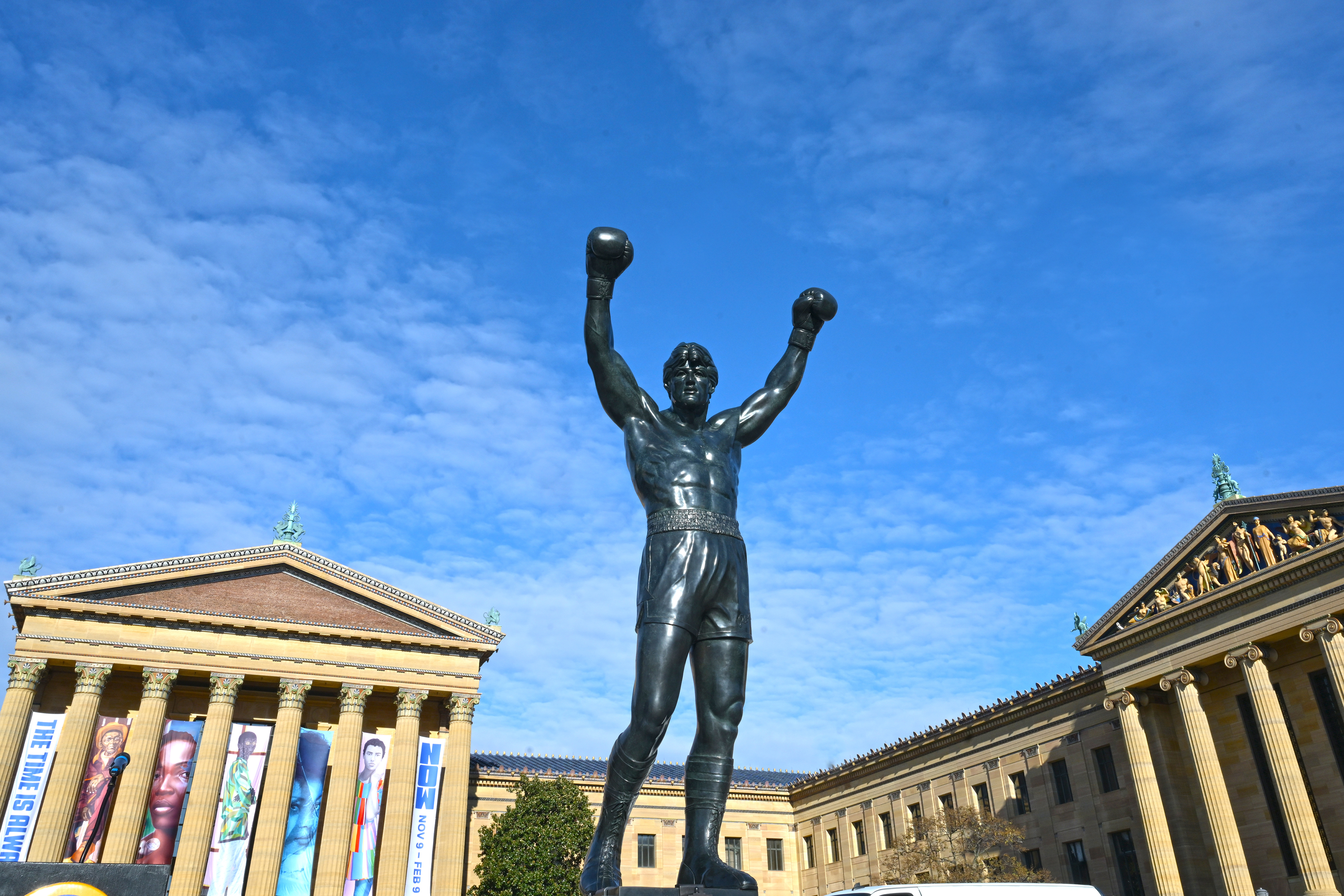
Philadelphia was an essential character in Sylvester Stallone’s, and Rocky’s, story. Jose F. Moreno / Staff Photographer
Rocky’s world
His selection of Philadelphia as Rocky’s home was no accident. Throughout the 1960s and into the early 1970s, the city embodied the windswept emptiness and gritty industrial decay of a post-modern wasteland: construction machinery idling near high mounds of tan dirt, factory buildings and warehouses once essential and vibrant now abandoned into nothing more than giant stone cubes, skeletal metal bridges bisecting neighborhoods. This was Rocky’s world. This was a world Stallone, who had lived in the city as a youth, knew well. This was a world and a man Stallone could study and place at the center of a compelling story.
Back when he was thirteen, fourteen years old, living in Northeast Philadelphia, Stallone had admired Rocky Marciano — “I had written this with Rocky Marciano in mind, 100%,” he said in an email — and had hung around with a kid named Johnny Robert. Johnny Robert had a hair-trigger temper, got into his share of scuffles. These experiences were formative for the greatest product of Stallone’s imagination. The character’s official name, as would be revealed in the film’s first sequel, was “Robert Balboa.” His nickname was a throw-in, a byproduct of his intrinsic traits, an indication of his toughness. As far as Stallone was concerned, there was no such thing, could be no such thing, as a smooth, gifted fighter named Rocky.
This was a character, Stallone thought from the beginning, who could be used for social commentary — put him in particular situations, see how he acts and reacts, see how viewers react to the reaction, how they might see themselves in the character, how they might see who they are and, more importantly, who they want to be. This was a character who could fall in love — and that’s how Stallone saw Rocky, not as a boxing movie, not as a sports movie at all, but as a love story between Rocky and Adrian — and who, more importantly, would have the people in the studio rooting for him to fall in love. A character who connected with that audience, with any audience, with every audience, because every audience wanted to believe in miracles, wanted to be inspired or moved or transported to a setting that felt raw and real.
“If there was ever a predesigned miracle to take place in this country,” Stallone once theorized, “I think the city it would choose would undoubtedly be Philadelphia. It has that aura of sitting there, waiting patiently for some great cataclysmic event that’s going to rock the nation.”
A character who was out of sync with the era in which he appeared, “a twentieth-century gladiator in a pair of sneakers and a hat,” as Stallone called him. A character who represented a city whose residents believed that few people outside that city, few people anywhere in the country, gave a damn about them. A character who could be the centerpiece of not just this script, not just this film, but a second film, a third, a fourth, more. A character with a backstory that Stallone could flesh out, add to, mold. He could reveal aspects of that backstory to the audience, and he could keep aspects to himself; he once told a friend that he had “a bible in his head about Rocky, from the day he’s born until the day he dies.” This was a character who would endure.
“Rocky isn’t based on me,” he told The New York Times in November 1976, a week after the film had opened. “But we both went the distance.”
The bet Sylvester Stallone made on himself in respect to the Rocky film would pay lifelong dividends. Getty Images
A moment of truth and transformation
Stallone rose before dawn on December 5 in South Philadelphia to temperatures that were below freezing. The first day of shooting promised unseasonably warm weather, sunny, in the fifties, but not at 4 a.m., when Mike Westmore, the film’s makeup artist, knocked on Stallone’s door at the Hilton Inn to do him up for the first scene: Rocky’s first true training session, the run from City Hall to the steps of the Art Museum that would leave him exhausted and aching.
Soon, the trailer, the cast and crew’s only trailer, was slowing to a stop at a curb near the shoot site. Inside, Stallone asked everyone to go outside and give him a few minutes alone. He stared at himself in a mirror hanging near the door — a stocking cap on his head, a dirty sweatshirt covering his chest, the makeup blending so fully into his face that it appeared his eye really did have a scar jutting across it, that he no longer knew where he ended and the underdog hero he had made began.
All right. This is it, Sylvester. You’ve bluffed and bullied and badgered your way here. Are you going to do it? Or are you going to sit here and become a bum for the rest of your life?
One of the assistant directors knocked on the trailer’s door. OK, Sly, we’re ready.
Stallone turned away from the mirror. You got the wrong guy. Sly’s in California. Rocky. Call me Rocky.
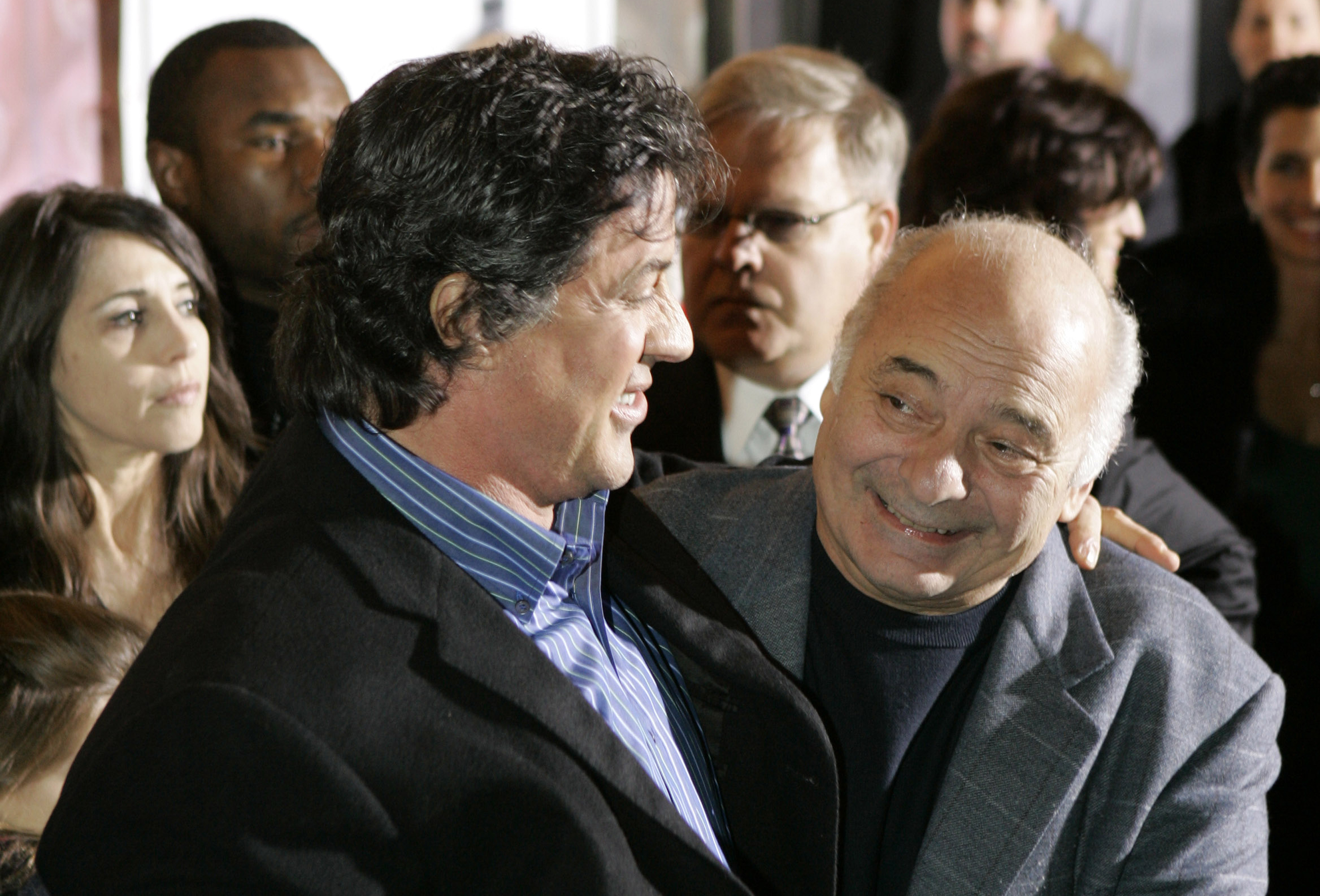
Actor Burt Young (right), pictured with Sylvester Stallone in 2006, was considered a vital piece of the film’s casting. Matt Rourke
Outside the trailer, John Avildsen, the film’s director, lay in a nearby gutter, the wind picking up trash and specks of dust in its swirl, and peered through a viewfinder to line up the shot. Burt Young, who was playing Paulie — Rocky’s friend and Adrian’s brother — watched Stallone step out of the trailer and take a fragile sigh. Young had been the one cast member, above any of the others, whom Stallone, Avildsen, and the producers had to have in the movie, a respected character actor so perfect as Paulie that Rocky would have been a dud with anyone else in the role. Young admired Stallone, thought the script he had written was a piece of urban poetry, eloquent and blunt. The two of them shared a silent glance. “He remembers it as I remember it,” Young said later. “‘Let’s cut out the talk. Now it has to happen.’ Then he went on like a soldier.”
One of the most remarkable stories in American film history was about to enter its next chapter. Nothing was secure. Everything might yet be lost. Sylvester Stallone strode toward the set. The clock atop City Hall shone like a sun amid the last remnants of night.
I’ve never had an experience at a movie theater like the one I had last Monday, when I attended a screening of I Play Rocky, and I don’t know that I’ll ever have such an experience again.
There were the expected wrinkles. I’d never been to a “special” or “advance” screening of any kind, and this one — at the Philadelphia Film Society in Center City, for a movie about the making of the quintessential Philadelphia movie — promised to feature the same cheering, euphoria, and civic pride that Rocky inspired 50 years ago.
Anyone familiar with Philadelphia’s culture and community knows what that movie means to the city’s collective identity, and I Play Rocky, by telling the story of how Sylvester Stallone and those involved in the film brought Rocky Balboa to life, presented an opportunity to savor it all again. Sure enough, the theater was full, and the movie, as I suspect it will throughout its run in theaters, pleased the crowd. Anthony Ippolito didn’t portray Stallone as much as embody him, and while the movie slows down a bit in the second half, it was fun from the first frame to the last. It’ll do gangbuster business around here.
My perspective on I Play Rocky, though, was unlike that of everyone else in the theater. The screening was held eight days before the publication of my book Going the Distance: Stallone, Philly, and the Story of ROCKY. (It hits stores Tuesday and will make a great holiday gift. Trust me.)
To answer the obvious question: No, there was no direct connection between the movie and the book. Peter Farrelly, who produced and directed I Play Rocky, did not purchase the book’s option rights, and screenwriter Peter Gamble didn’t base his screenplay on GTD. (But hey, Petes, call me! There’s still time. Let’s do lunch!) It just so happened that the soil they tilled for their movie was the same ground that I mined for my book.
Mostly.
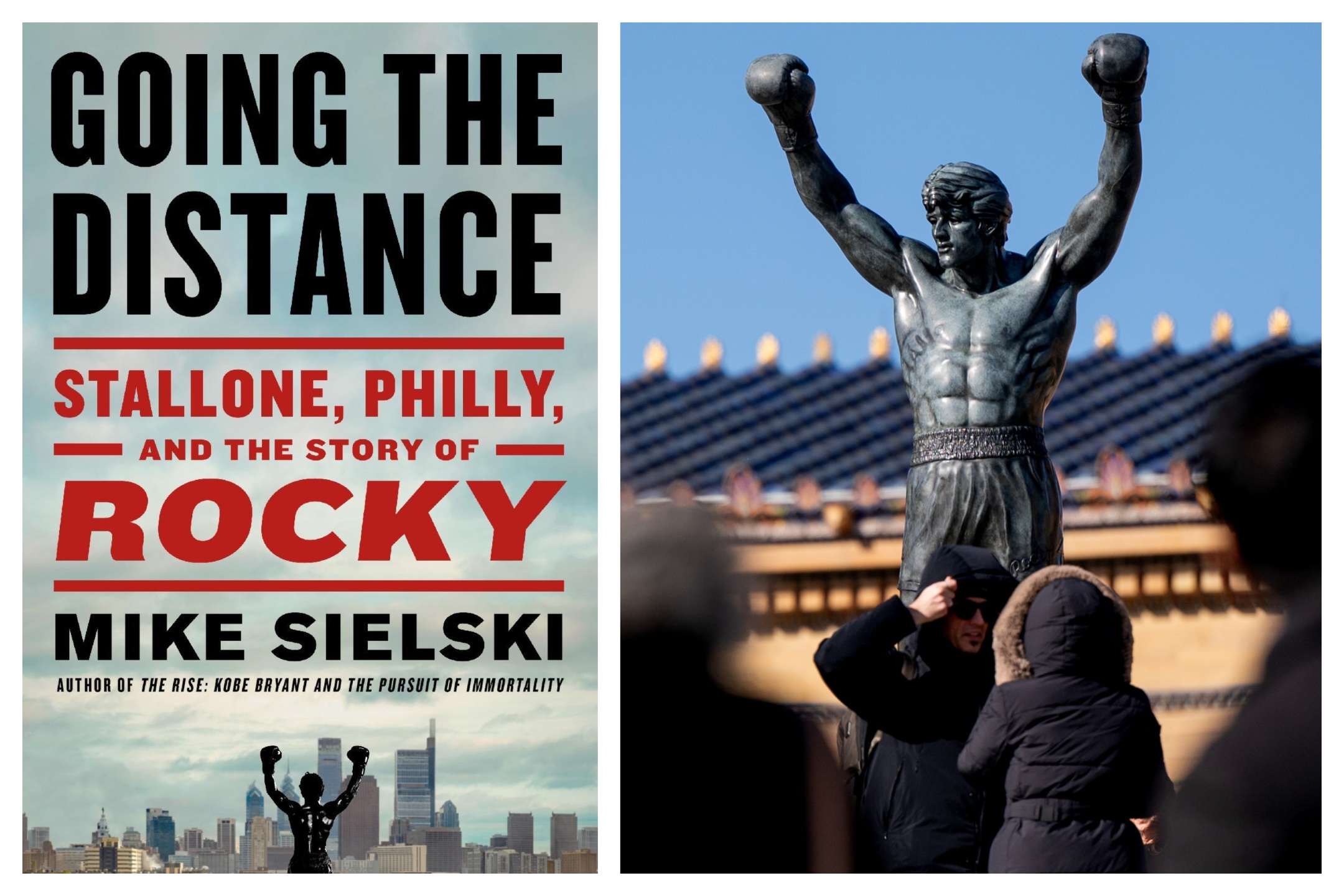
Mike Sielski’s ‘Going the Distance: Stallone, Philly, and the Story of ROCKY’ is available Nov. 10 wherever books are sold. Courtesy of St. Martin's Press and Tom Gralish / Staff Photographer
A Hollywood movie and a nonfiction book have different aims. The movie’s creators aren’t necessarily bound by fact (which is why five of the most important words in Hollywood are “based on a true story”). Their mission is to make an entertaining, dramatic film, just as mine is to write an entertaining, dramatic book. But everything in the book, if it is to be considered nonfiction and trusted as such, has to be the truth … or at least the truth as best as the author can determine or discern it. Sitting in the darkness, I couldn’t help but compare and contrast the story that I Play Rocky’s cast and crew had decided to tell with the one I had.
It is a strange thing, to be fact-checking a film while watching it, but that’s pretty much what I did. So without giving away too much of the movie’s plot or the book’s narrative threads and big revelations, here are three key differences between I Play Rocky and Going the Distance:
Sly was no pushover
If there’s any flaw in Ippolito’s performance — it’ll be a shock if he doesn’t earn an Academy Award nomination for best actor — it’s that he softens Stallone a bit too much. In this way, he falls into the same trap that so many fans of the original film do: They presume Stallone and Balboa were the same person, and they weren’t.
Stallone did not merely star in the film and make cautious recommendations to director John Avildsen and carry himself with humility and gratitude. He was so assertive and resolute in his opinions that he came into frequent conflict with Avildsen, producers Irwin Winkler and Bob Chartoff, and others — disagreements, shouting matches, the works.
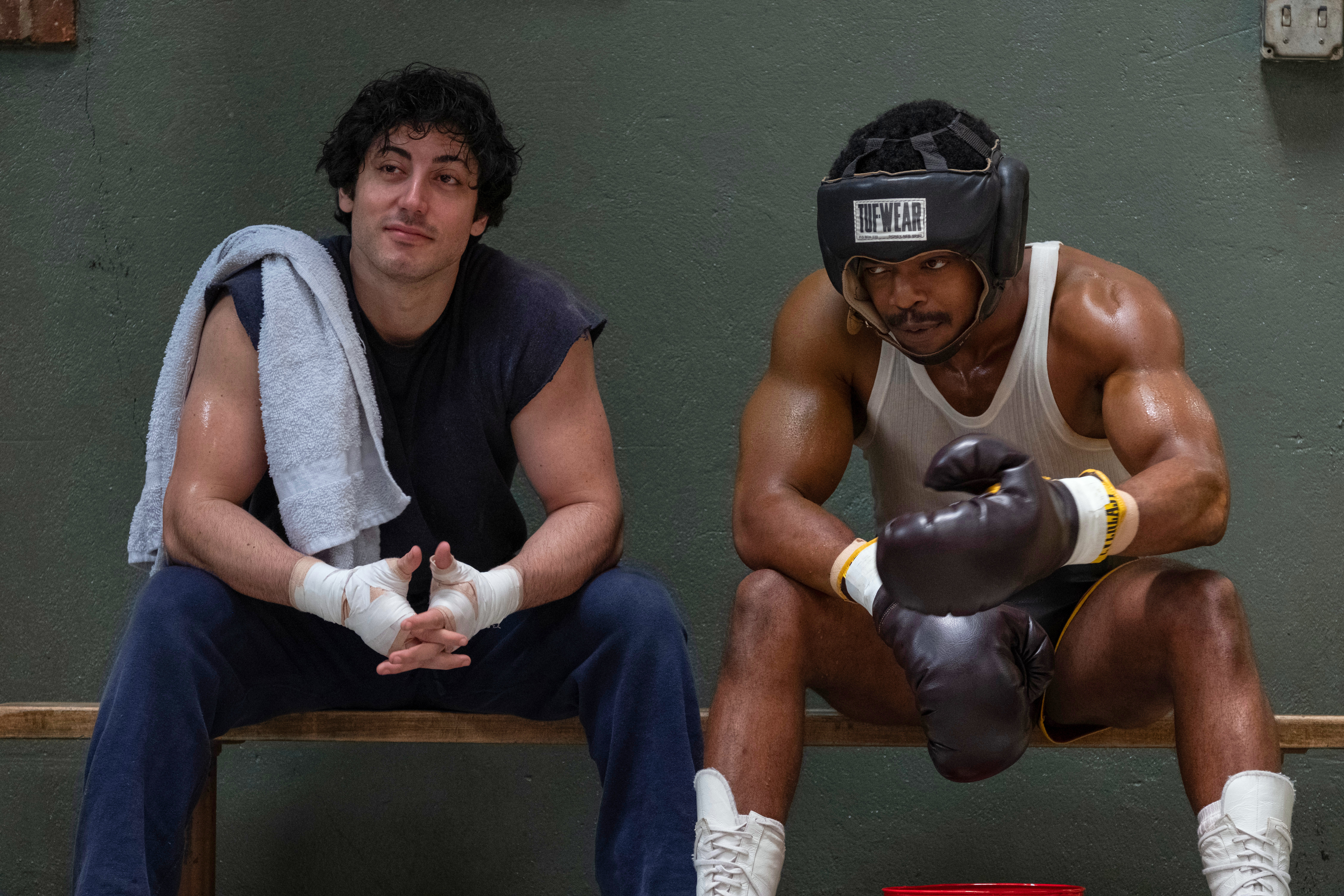
This image released by Amazon MGM Studios shows Anthony Ippolito as Sylvester Stallone in a scene from “I Play Rocky.” Claire Folger
One night, for instance, as Avildsen and editors Richard Halsey and Scott Conrad lounged in the editing room — “Lit up a doobie,” Conrad told me — a security guard at the lot’s front gate called to tell them Stallone was on his way to check on their progress. Avildsen wanted the editors’ work to be free from Stallone’s interference. So when Stallone got to the room’s door, Avildsen tried to gather up his papers and slip out, only to have Stallone pick him up off the floor, tell him with tension in his voice, I wanna see some of the film, and plop him back down in the room.
Multiple studio execs in one
The veteran actor and Pulitzer Prize-winning playwright Tracy Letts delivers one of the strongest performances in I Play Rocky as studio executive Sandy Maddox. He also was at the center of my moment of greatest anxiety about the film.
When I first saw that Letts was playing “Sandy Maddox,” I panicked. I knew who the studio execs involved in Rocky had been. None of them was named “Sandy Maddox.” Oh, no, I thought, did I write a whole book and miss this pivotal figure?
I didn’t. “Sandy Maddox” is a composite character based on those United Artists executives. Whew.
Anthony Ippolito as Sylvester Stallone and the bull mastiff who plays Stallone’s dog, Butkus, in the new making-of movie ‘I Play Rocky.’Claire Folger / Courtesy Amazon Content Services LLC
Rocky’s good boy
Butkus — Stallone’s and Rocky Balboa’s lovable bull mastiff — gets plenty of screen time and cute scenes in I Play Rocky. But the film includes a tale that Stallone has told for decades now: Broke and down on his luck, he had to sell Butkus to make ends meet. Then, upon getting the deal for Rocky, he found the owner, who demanded a huge cash payment before giving Stallone the dog back.
That story is, to put it gently, inaccurate, and it has cast a key figure in the making of Rocky in a terrible and unfair light for a long time. If you want to find out what really happened, I’ll give you two words: Page 166.
ANNAPOLIS, Md. — Temple rallied from a 28-point deficit against Navy, but it wouldn’t be enough, as the Owls found themselves on the losing end of a 42-35 final at Navy-Marine Corps Memorial Stadium.
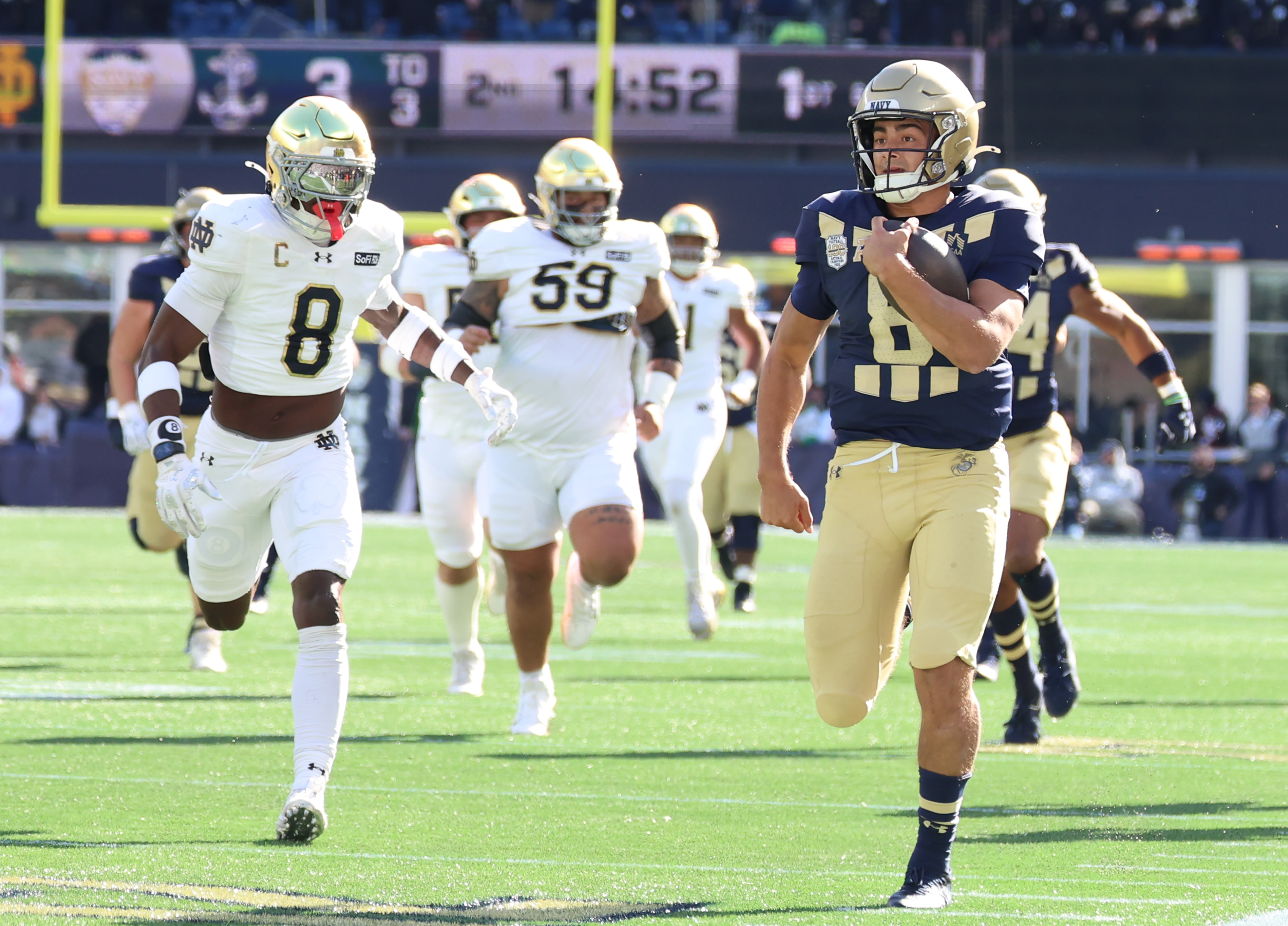
In the fourth quarter, Temple (2-7, 1-4 American) trailed by just seven points, but Jackson Gutierrez, Navy’s (3-6, 2-4) versatile quarterback, who rushed for five touchdowns and threw for one, put the nail in the proverbial coffin with a minute remaining.
“Digging yourself out of a hole is more about execution than anything else,” said coach K.C. Keeler after the loss. “We battled; they’re starting to understand the concept of playing just one snap at a time… so disappointed for the kids because that was an amazing comeback.”
Gutierrez was the focus entering Week 9. He ranked No. 4 in the nation with 13 rushing touchdowns.
The Owls gave him a helping hand to start. Temple received the kickoff, but Avery Powell muffed the return for Gage Leonard to bring it to Temple’s 23-yard line. Gutierrez finished the job six plays later with a one yard rush, capitalizing on Navy’s first fumble recovery of the season.
Owls quarterback Jaxon Smolik was sacked on third down on Temple’s ifirst full drive. Navy would capitalize after Jordan Collins caught a 63-yard bomb from Gutierrez, leaving Temple’s secondary in the dust. Gutierrez slowly brought it home with another 1-yard run.
Smolik threw for 131 yards in the second half after just 42 in the first. He found Jojo Bermudez once and Jayce Freeman twice in the game’s final 30 minutes.
Navy quarterback Jackson Gutierrez, right, seen here in action against Notre Dame, rushed for five TDs in a win over Temple on Saturday. Mark Stockwell
Gutierrez added three more rushing touchdowns and floated a 49-yard touchdown pass to Collins. Gutierrez totaled 358 all-purpose yards and Smolik threw three touchdowns on a 46% completion rate.
“I need to start faster,” Smolik said. “Football is start fast, finish strong, and I need to start a lot faster and be more comfortable.”
Rushing takeover
Temple has built its reputation on rushing. Navy easily outpaced it with running back Michael Barrow’s help.
The Owls’ defense couldn’t contain his sweeps across the scrimmage line, halfback tosses, or his blockers. Barrow stuck to the Midshipmen’s slow and methodical approach on carries, but he still threw together multiple big plays.
One of his second quarter carries broke Temple’s lid.
At its 23-yard line, Temple forced Navy to kick a field goal on fourth-and-6. But linebacker Curly Ordonez was flagged five yards, allowing Navy to go for it. Barrow rushed 12 yards which led to Gutierrez’s third touchdown.
Owls’ revival
Temple was almost blanked in the first 30 minutes until wide receiver Jojo Bermudez received a punt, and with 10 seconds left, he dashed past 11 guys for a 78-yard return and touchdown.
“Jojo Bermudez put us on his shoulders,” Keeler said. “That play he made at the end of the half, you could just feel the energy in the locker room. Like, we were gonna come out and get this thing done.”
His next score took two seconds less. Smolik connected with Bermudez at Navy’s 43-yard line, who split the defense before trimming the deficit to 14.
SEATTLE — Husky Stadium looked beautiful on Saturday afternoon, with Mount Rainier visible among the fall foliage and Lake Washington full of “sailgaters” ahead of Penn State’s first trip to Seattle since 1921.
But the sea of purple in attendance went home disappointed, as the Nittany Lions celebrated a 28-25 road win over Washington despite not scoring a point in the second half.
The Huskies tried to mount a comeback, scoring 19 points in the second half after trailing 28-6 at halftime, but Penn State (5-4, 2-4 Big Ten) held on to stay undefeated (5-0) against Washington, now needing just one win to reach bowl eligibility.
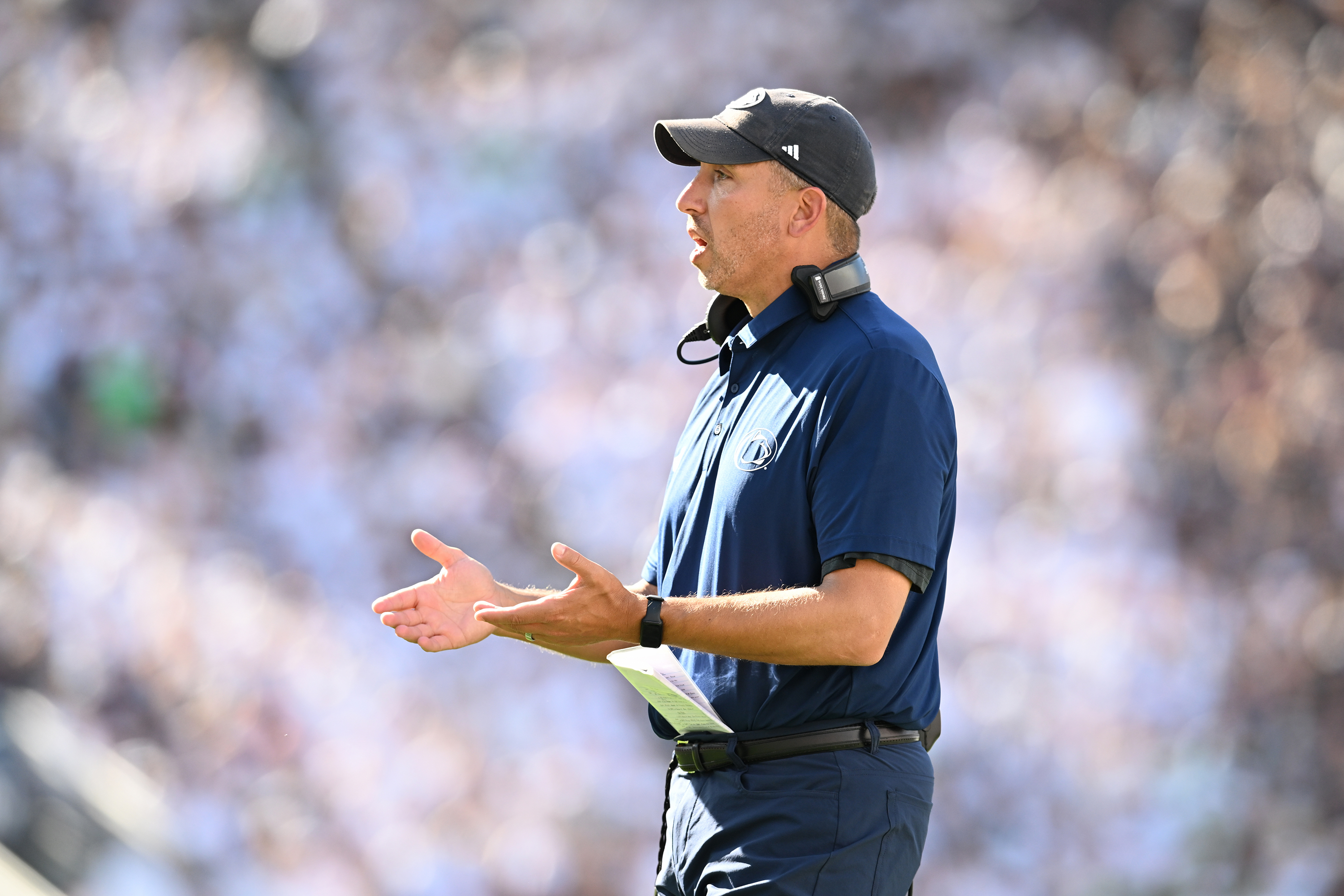
“I think days like today, being this far away from home and having such a great crowd being there, and to watch our football team keep going forward the way we believe this program needs to go forward, those are real positives for us,” said head coach Matt Campbell, postgame.
Everything clicked for Penn State in the first half. The Nittany Lions scored four touchdowns in five possessions with a mix of strong runs and good passing from quarterback Rocco Becht. Additionally, Penn State’s defense had Washington completely out of rhythm, while quarterback Demond Williams Jr. struggled.
Penn State was so content with its 28-6 halftime lead that it took all three first-half timeouts into the break despite having the ball with 50 seconds left.
The second half looked like a completely different game. The Huskies scored 11 points in the third quarter and pulled within three after Williams found wide receiver Dezmen Roebuck wide open in the end zone. Washington also converted a pair of two-point conversions.
“There were some things I really didn’t like in the second half,” Campbell said. “I’ll be honest with you.”
Penn State head coach Matt Campbell, seen here earlier this season, noted that he was concerned with the performance of his Penn State team, particularly in the second half. Barry Reeger
But Penn State put together a crucial scoring drive with about 7 minutes left in the fourth quarter, helped by a targeting call against the Huskies. Running back Carson Hansen broke free for a 36-yard gain into Washington territory, and while the Nittany Lions didn’t reach the end zone, they picked up a first down to ice the game.
“To be able to end it on our terms when everything was going against us, and have the poise and some betterness about ourselves to reset ourselves and win the moment, that was awesome to see,” Campbell said.
Welcome back, Chase Sowell
Penn State missed Chase Sowell dearly in the passing game last week, with Becht throwing for just 175 yards without him. With Sowell back in the lineup, the passing game was humming.
“That guy just was going out there and making plays, doing what he does, and to put that guy on an island like that is crazy to me,” Becht said. “So for him to go out there and just make those plays, it was incredible, and it was awesome to have him back.”
Sowell had a 45-yard touchdown in the second quarter to put the Nittany Lions up, 21-3, and ended as Penn State’s leading receiver with four catches for 125 yards. He also had an unreal one-handed catch for 36 yards in the third quarter.
The fifth-year wide receiver has topped 90 yards in each of his last three games and has 635 this season. Sowell is looking more and more like a potential early-round NFL draft pick.
Becht, meanwhile, delivered another inconsistent performance, following a stellar first half with a disappointing second. He threw for 193 yards and two touchdowns before halftime but managed just 47 yards and no scores after the break while taking two sacks.
With a comfortable lead, Penn State took a more conservative approach after halftime, but Becht and the offense struggled to find success.
JACK HAM UPDATE, from Penn State coach Matt Campbell:
"…Steve Jones and the heroic effort that he did for someone he loves dearly. If not for Steve and what he did, I don't know if we would have as good of news as we have right now. …Jack is in stable condition right now." https://t.co/LMcWC8mUvo
Prior to kickoff, NFL Hall of Fame linebacker and former Nittany Lion great Jack Ham had a medical emergency and was taken to the University of Washington Medical Center.
Shortly after, Penn State released the following statement: “Penn State Sports Network analyst Jack Ham experienced a medical emergency earlier [Saturday] and was transported to the University of Washington Medical Center, where he is being treated. We do not have further information at this time.”
Campbell confirmed postgame that Ham was in “stable condition” and gave credit to Penn State Sports Network play-by-play announcer Steve Jones for a “heroic effort,” saying “if it’s not for Steve, you know, and what he did, I don’t know if we would have as good a news as we do right now.”
He also thanked Washington and its athletic director Pat Chun and the Huskies’ staff for helping Ham.
“It was awesome to be able to go win the football game for him and his family, and we’re really our thoughts and prayers will continue to be with him on a full recovery,” Campbell said.
Ham has been an analyst for Penn State Sports Network since 2000.
Up next
Penn State returns home to face Minnesota on Saturday at 7 p.m. The Nittany Lions last faced the Golden Gophers in 2024, escaping with a 26-25 win on the road.
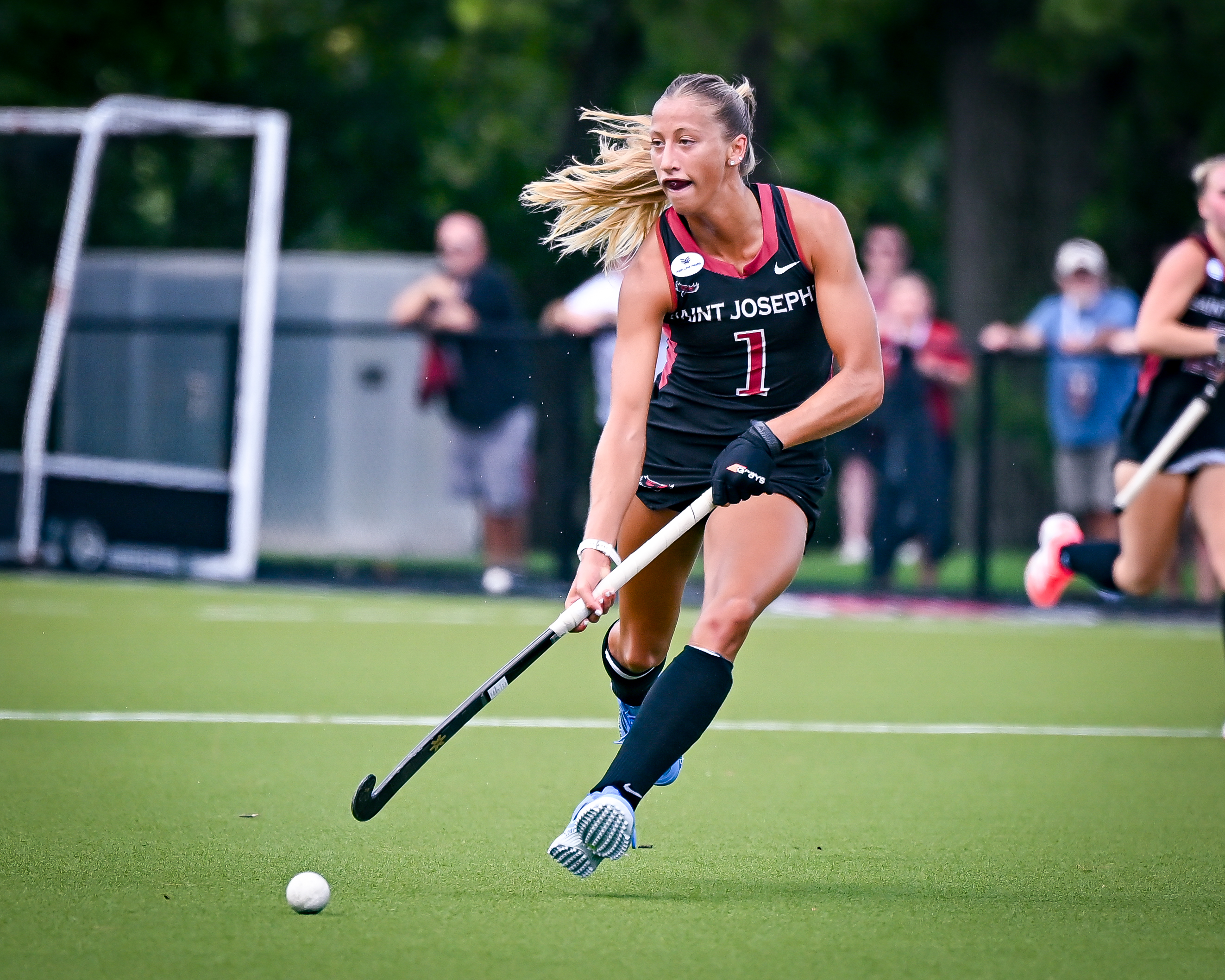
St. Joseph’s field hockey won its sixth consecutive Atlantic 10 championship with a 2-1 shootout win over Richmond on Saturday. The conference tournament title is its ninth in the past 10 years.
Senior forward Erika Culp scored the Hawks’ only regulation goal in the second quarter to tie the game. That tie held through overtime and into seven rounds of a shootout before Culp once again found the back of the cage in the eighth round.
Junior goalie Avianna Wagner followed with a save on Richmond’s attempt. Wagner, who finished the day with six saves, was named the tournament’s Most Outstanding Player.
The Hawks entered the tournament as the top seed, after winning the regular season title with an undefeated season under first-year head coach Sam Brown. Brown was also named conference Coach of the Year.
With this sixth consecutive win, St. Joe’s ties the conference record set for most consecutive conference championships, which Massachusetts set between 1996 and 2001. The Hawks were previously tied with Richmond for the most consecutive Atlantic 10 championships for a program that is still an active member of the conference.
St. Joe’s will find out their seeding and opponent for the NCAA tournament during Sunday night’s selection show. The opening round of the tournament starts Wednesday, followed by first round games on Friday.
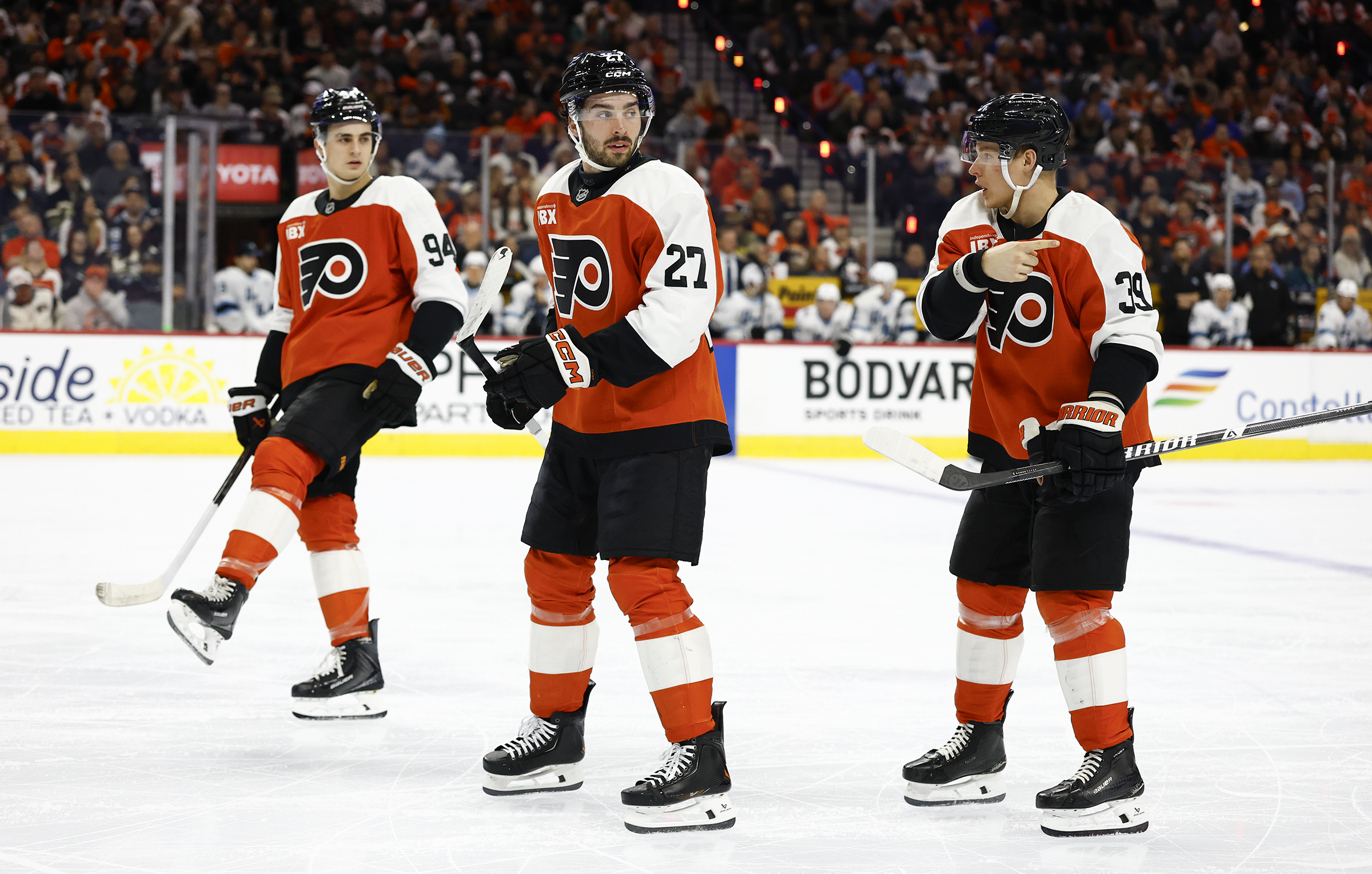
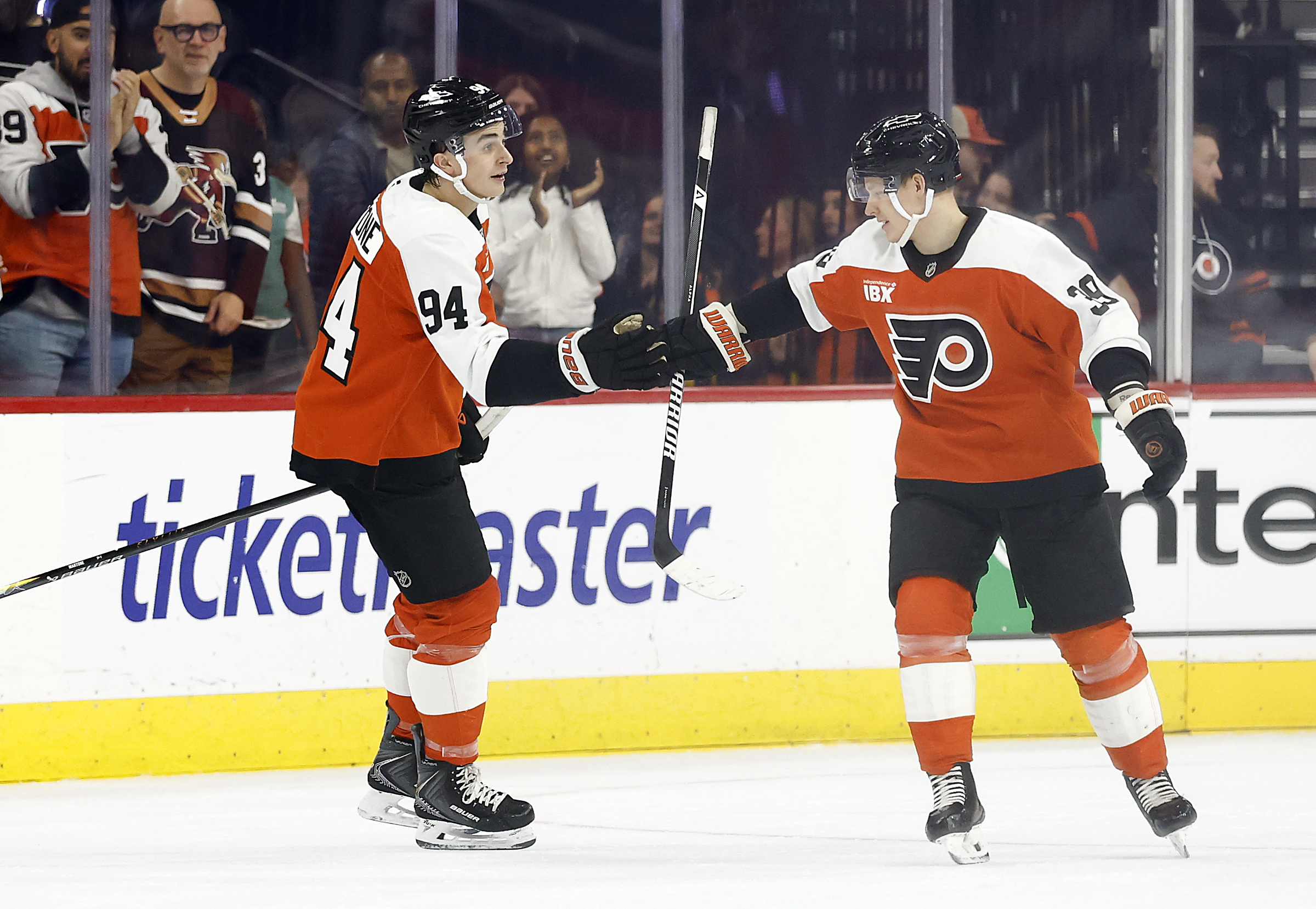
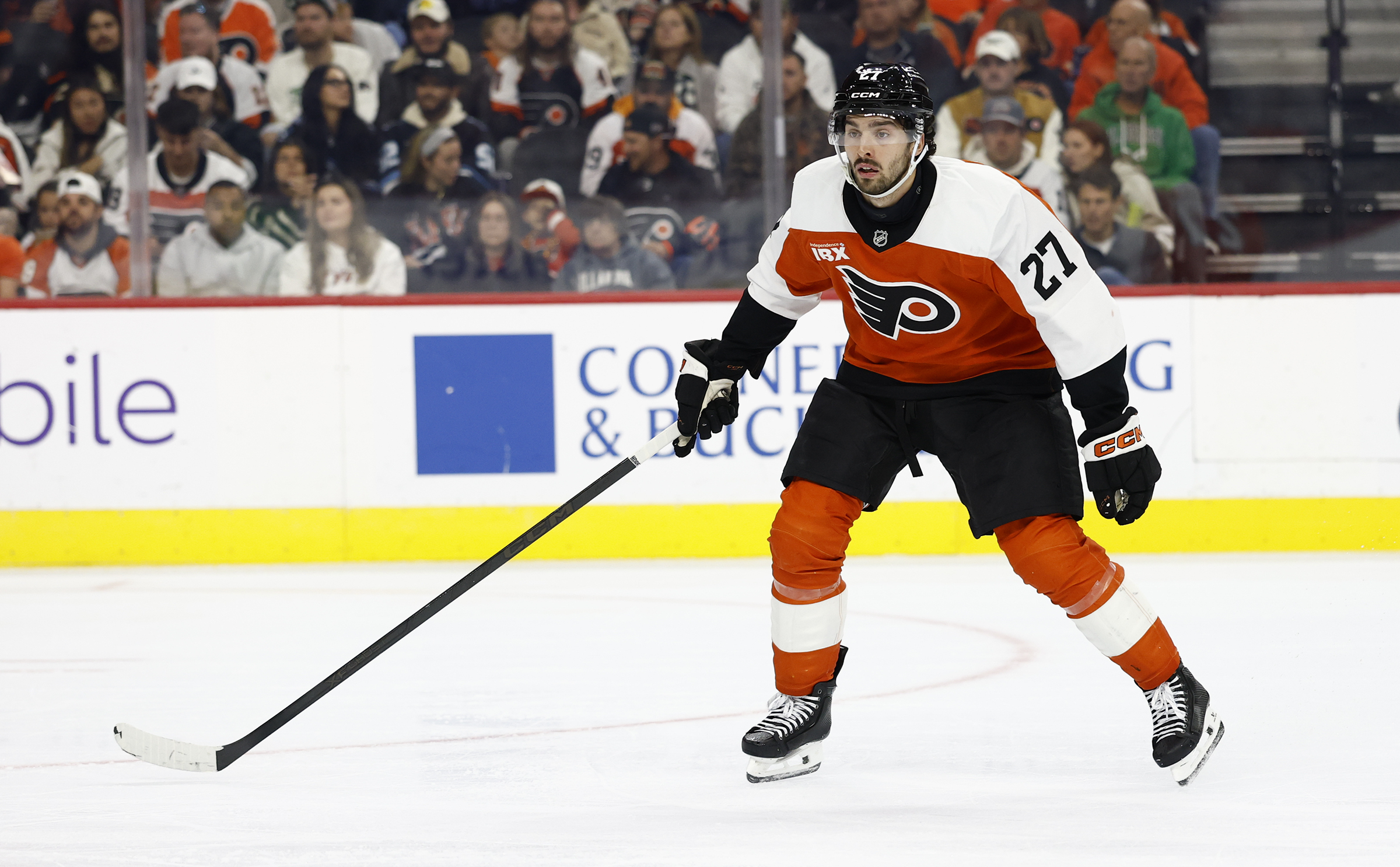
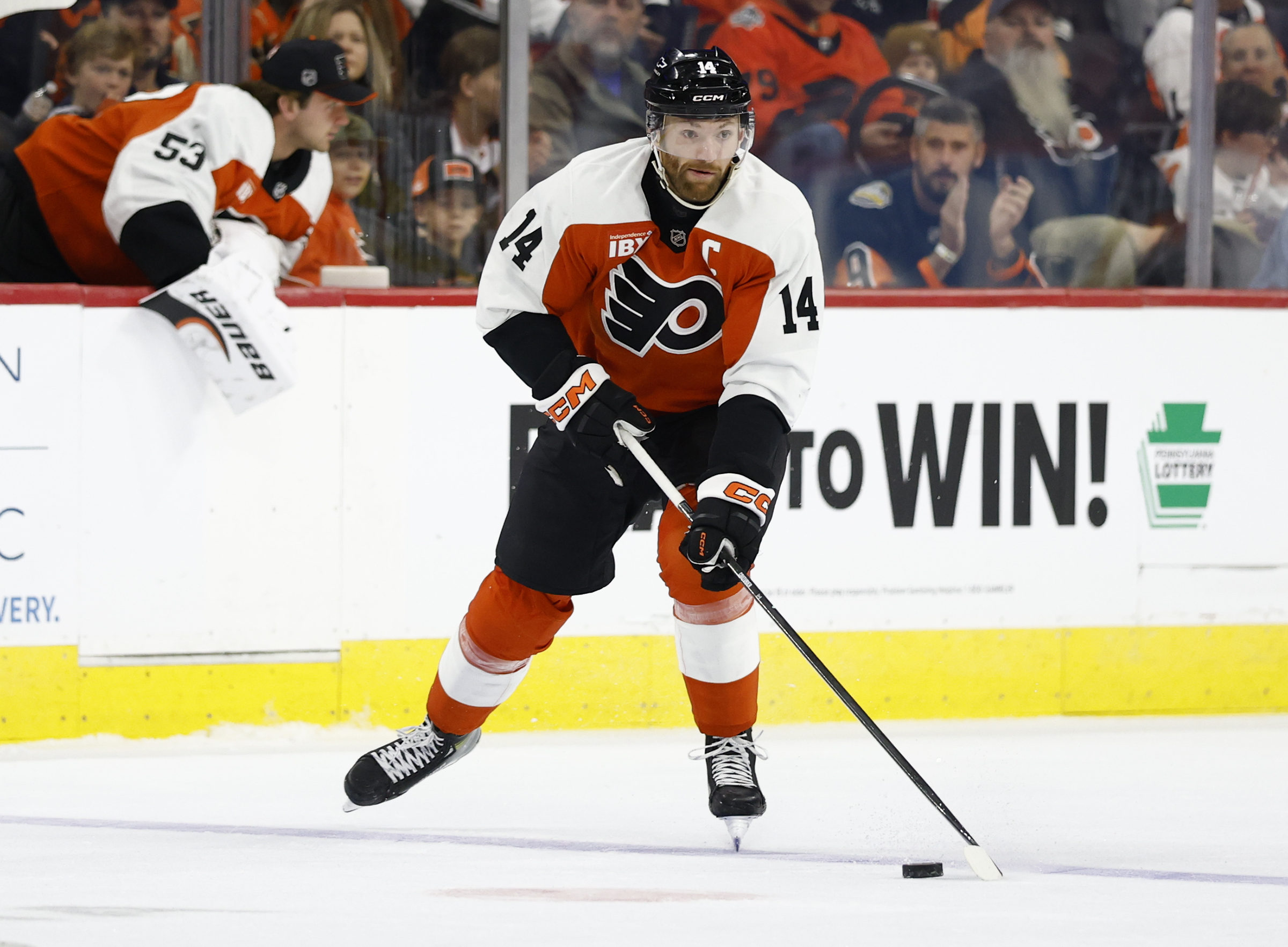
After splitting up on Thursday in New York, Porter Martone returned to the left wing of Matvei Michkov and Noah Cates during Saturday’s Flyers practice at the Scotiabank Saddledome.
“I just wanted to switch it up,” coach Rick Tocchet said about the breakup that saw Tyson Foerster move to Martone’s spot in Thursday’s 3-2 loss to the Rangers.
“When you’re losing, you want to try different things and take a little pressure off. I think the game before [against the Minnesota Wild], I thought they got little [pinned] in our defensive end a little bit. But they’ve been playing really well all year, and they’re getting a lot of offense for us, so that’s good, and they’ve got some good chemistry. So sometimes it’s good to give everybody a break every once in a while and try different things.”
That’s the thing: It’s a give-and-take. While the line can struggle defensively, it is also producing offense.
According to Natural Stat Trick, while the opposition has more shots, the Flyers trio has more scoring (29-27) and high-danger chances (11-8). They have allowed five goals but have also scored five. It is the most goals by any line on the Flyers and is 20.8% of the team’s goals at five-on-five.
Head coach Rick Tocchet and forwards Matvei Michkov and Cole Knuble met with the media following Saturday's practice in Calgary. pic.twitter.com/4WMdHbv2RM
“Yeah, we [played] a good couple games, and I like [to] play together with Porter and Catesy,” Michkov said. “And we play all good and … we play together, support every time on hockey and in life, and yeah, I’m so happy today [to] play with Porter and with Catesy.”
Cates and Michkov were a pair down the stretch last season, and into the playoffs, and in Game 1 this season, Michkov and Cates skated together without Martone. The trio formed on Oct. 13 against the Seattle Kraken and quickly found their game, with a 2.45 expected goals for.
Although four of his goals and five of his points were on the power play from that first game on, Michkov has notched 11 of his 13 points and eight of his 10 goals in the 10 games from Oct. 13 to Nov. 4. Martone has seven of his eight points (four on the power play) and all five of Cates’ points.
Needless to say, they have chemistry.
Porter Martone (left) is a firm believer in the chemistry he’s building with linemates like fellow winger Matvei Michkov (right). Yong Kim / Staff Photographer
“Honestly, I think just because we all have a little bit of differences [in our game],” Martone said about why it works. “Catesy’s a hard 200-foot center; he can be relied on. I think he really helps out me and Mich just because we’re two younger guys still learning, so he’s always there to make sure we’re doing it the right way.
“And then, I mean, Mich is just himself, the way he plays, and I think for me, just kind of bring that bigger body on the line, gets to the net, but still be able to make plays.”
With Martone having just turned 20 and Michkov turning 22 in December, the old man on the line, Cates, 27, knows his role. He focuses on being a smart F3, or third forward in the offensive zone, or a defensive-minded center; after all, he was 11th in Selke Trophy voting last season as the NHL’s top defensive forward.
“Let them do their thing and be comfortable making plays, taking chances,” Cates said of his wingers. “Obviously, we want to limit risks and stuff, but they’ve got that skill set and the vision and all the things to make plays and score goals. You can’t take that away from them. So I just got to be a factor in helping them feel comfortable, creating space, getting to the net, everything like that.”
Flyers left wing Noah Cates says the last thing he wants to do is disrupt the creativity of the wingers on his line. Yong Kim / Staff Photographer
Feeling comfortable is paramount, and Michkov is feeling more and more comfortable off the ice — notably in his grasp of the English language — and on with his improved defense, as noted by Tocchet.
“One hundred percent,” Tocchet said. “A lot of his goals, if you look, he’s coming in as the third guy. He’s in the middle of the ice more than he was last year, and he’s reaping the benefits. He’s scoring off those rebound goals, so yeah, he’s reaping the benefits of a lot of the stuff he’s taken from last year to this year.”
And while there have been questions about long shifts for Michkov — a longer shift by one player on a line impacts deployment of the next line, creating a cascade effect — he is averaging almost 16 minutes a night; his total five-on-five ice time ranks fifth among forwards (210 minutes, 49 seconds).
“I’m feeling so comfortable on ice,” Michkov said. “I want to play more, and this not my mentality when I play 10 minutes, I like when all maximum, all shifts, all lifetime. I want 60 minutes. And I want lots of goals, lots of points, [but] first option is this team wins. When [the] team wins, I’m so happy but right now, no good situation. We’re [third from] last in the league, and this is so bad.
“And I want more playing [time]; I want [to give] more support. I know this is so important for me. Hockey is my life. Yeah, I’m so emotional sometimes, and this is my mentality and hard work.”
It appears Flyers center Sean Couturier will remain on a line with Denver Barkey and Noel Acciari.Yong Kim / Staff Photographer
Breakaways
Owen Tippett and Trevor Zegras are back together, with Cole Knuble in between at center. Tippett and Zegras have played more than 600 minutes together the past two seasons, and when they are on the ice, the Flyers have 59.6% of the goal share, 53.1% of the scoring chances, and 17 high-danger goals to eight against. “I think he sees the ice well,” Tippett said of Zegras. “He slows the game down a lot. He can give me time to kind of maybe grab a step or two on a guy, and he’s going to make those plays. We like playing with each other, and we communicate well out there.” … Tyson Foerster was moved onto the wing with Travis Konecny and Christian Dvorak. … The fourth line of Sean Couturier between Denver Barkey and Noel Acciari remains intact. … The Flyers will not have a morning skate on Sunday, which means defenseman David Jiříček could sit for an eighth straight game as he was paired with Rasmus Ristolainen at practice. Ristolainen remains on injured reserve with an upper-body injury.