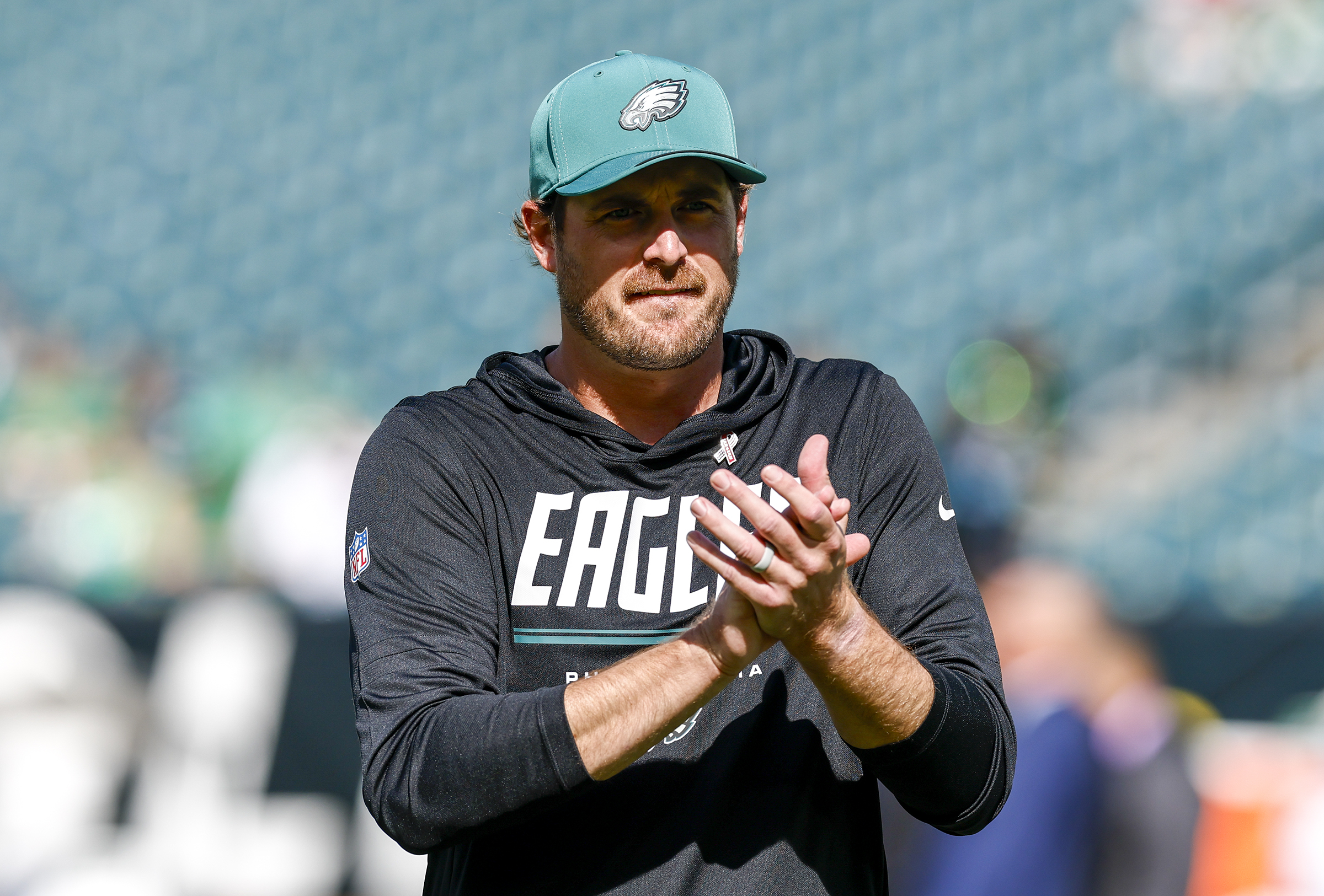
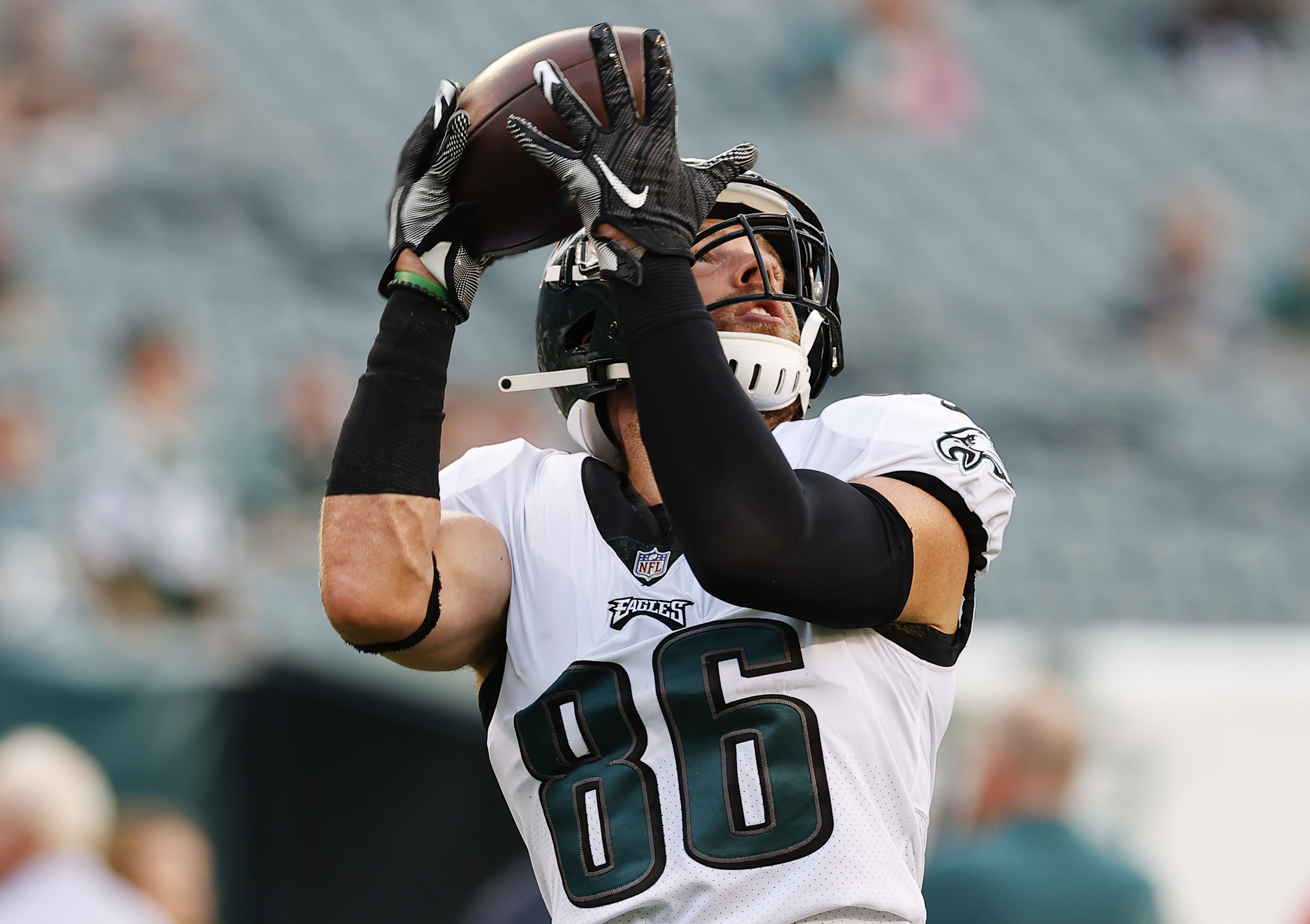
Sean Mannion knows his offense is still a work in progress.
There have been positive signs, no doubt — like the team’s strong third-down conversion rate (53%) — but their track record in one particular area ranks near the bottom of the league:
Early downs.
According to Sportradar, the Eagles have an offensive success rate of 37% on first and second downs, which ranks last in the NFL. They’ve converted a first down on first down just one time and they’re tied for the most negative plays on offense through two weeks.
So, what gives? Mannion tried to explain this bizarre early- vs. late-down stat discrepancy during his Wednesday news conference.
“There’s always going to be things to clean up each week,” the first-year offensive coordinator said. “We’re really close on a lot of our things on first and second down. Just some fundamental things to clean up, corrections to make. We’re always looking as a staff to put everyone in the best possible position to succeed. Not to make it coachspeak or anything like that, but I think we’re really close there.”
Improvement in the run game would be a big first step. Eagles running backs averaged just 3.7 yards per carry in the first two weeks. They averaged 2.8 yards per carry in the last-minute win at Tennessee last Sunday.
Coach Nick Sirianni didn’t offer much of an update Monday on Saquon Barkley, who missed the majority of the first half against the Titans, but he did finish the game so that could bode well for his Week 3 status. What does Mannion think of the current state of the run game?
“We’re close,” he said. “A few little things fundamentally, just some of the smaller details that, if we attack those, it’ll really come to life for us. But the guys are bought in. I think what we’re doing, being able to stay on schedule on first and second down, allows you to call more runs. You never know when those are about to pop … I feel that, moving forward, those are going to start to break through.”
Sean Mannion lauded Zach Ertz’s skills as a pass catcher. YONG KIM / Staff Photographer
What will Ertz’s role be?
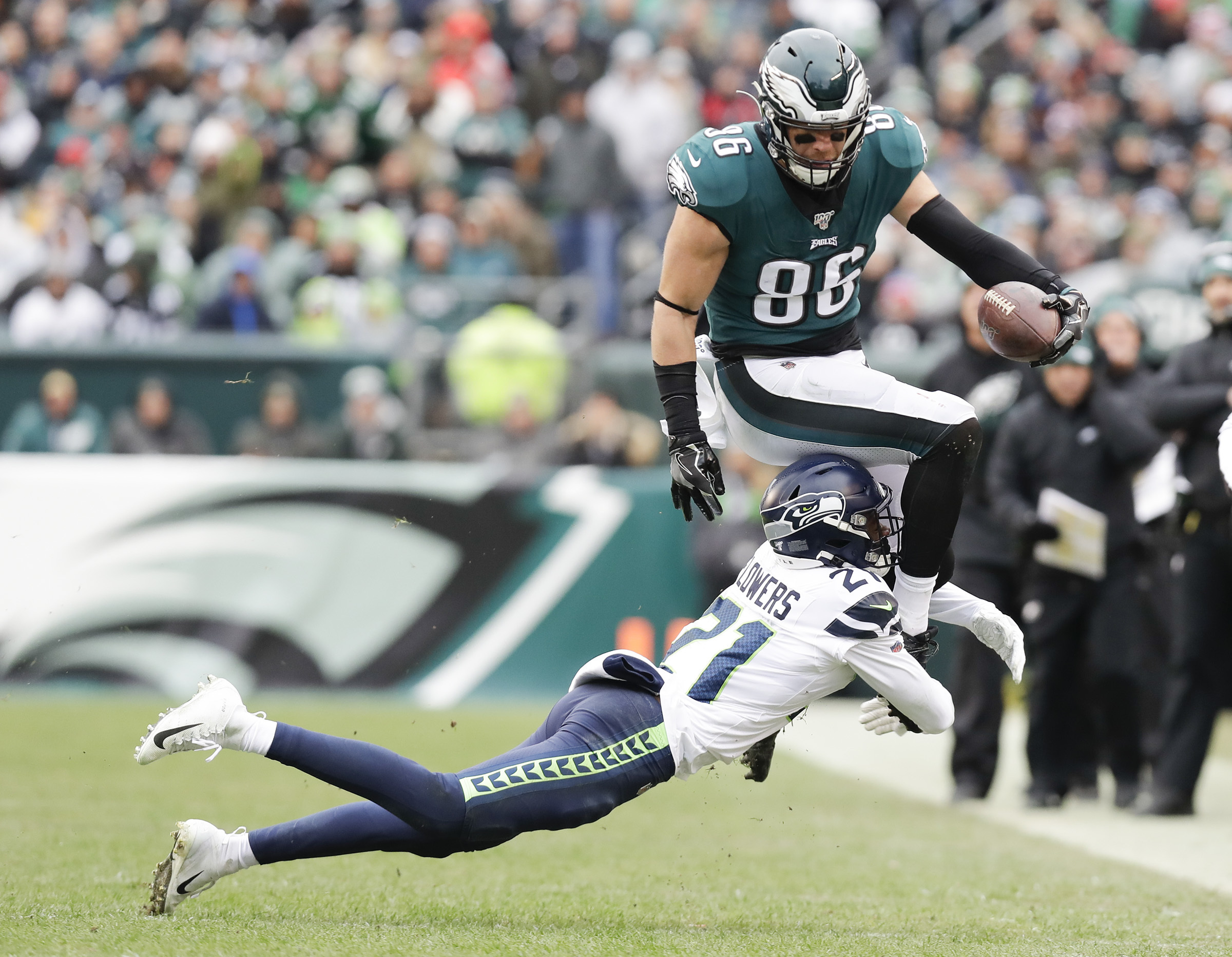
The Eagles signed tight end Zach Ertz — who spent the first eight-plus years of his career in Philadelphia — to their practice squad Tuesday. The franchise legend will help fill the void left by Dallas Goedert, who is likely out several weeks due to a sprained MCL.
The offense Mannion runs leans heavily on tight ends. So how, exactly, does he plan on using the 35-year-old Ertz?
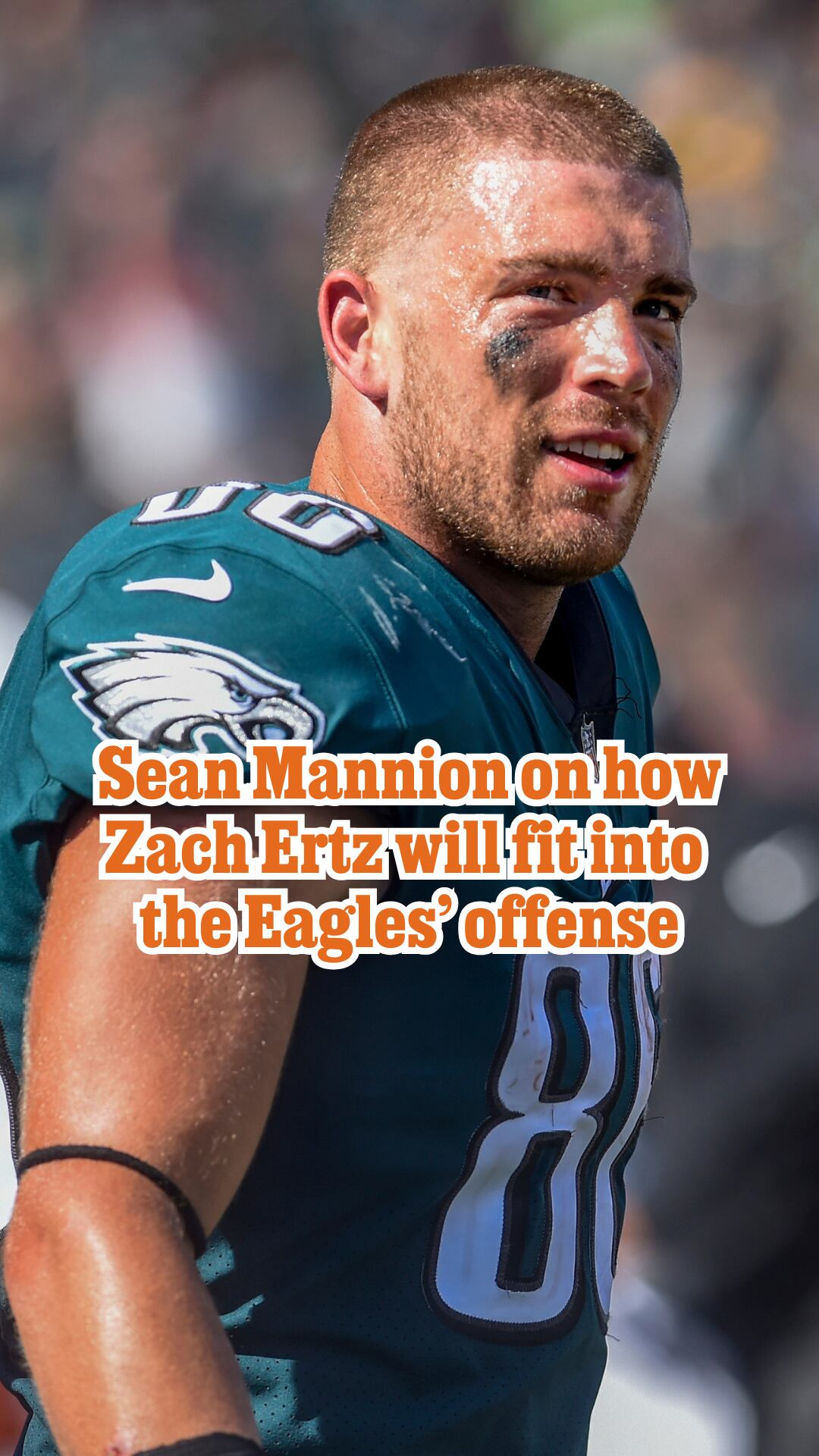
“He’s a very comfortable pass catcher,” Mannion said. “He’s had a really strong track record in that area. When you look at the tight end group, it’s really about the composite of everyone’s skill sets together. It’s what makes that position specifically unique — it’s about complementary skill sets and how they play off one another… We’ll use the week to evaluate and see what Zach’s role looks like.”
Video: Offensive coordinator Sean Mannion on how Zach Ertz will fit into the Eagles’ offense
With second-round pick Eli Stowers (quad/hamstring) and Grant Calcaterra (back) on injured reserve, Johnny Mundt and E.J. Jenkins are the only healthy tight ends on the Eagles roster. They’re both blocking tight ends. That could mean targets are coming Ertz’s way (he’s only 11 receptions shy of breaking Harold Carmichael’s franchise record of 589).
“We’ll use this practice week and see what it looks like moving forward with us,” Mannion said. “Excited to add him. I know [we’re] a little dinged up at the position… But Zach has a lot of history with the organization. Excited to bring him in and use the week to see what his role may or may not look like.”
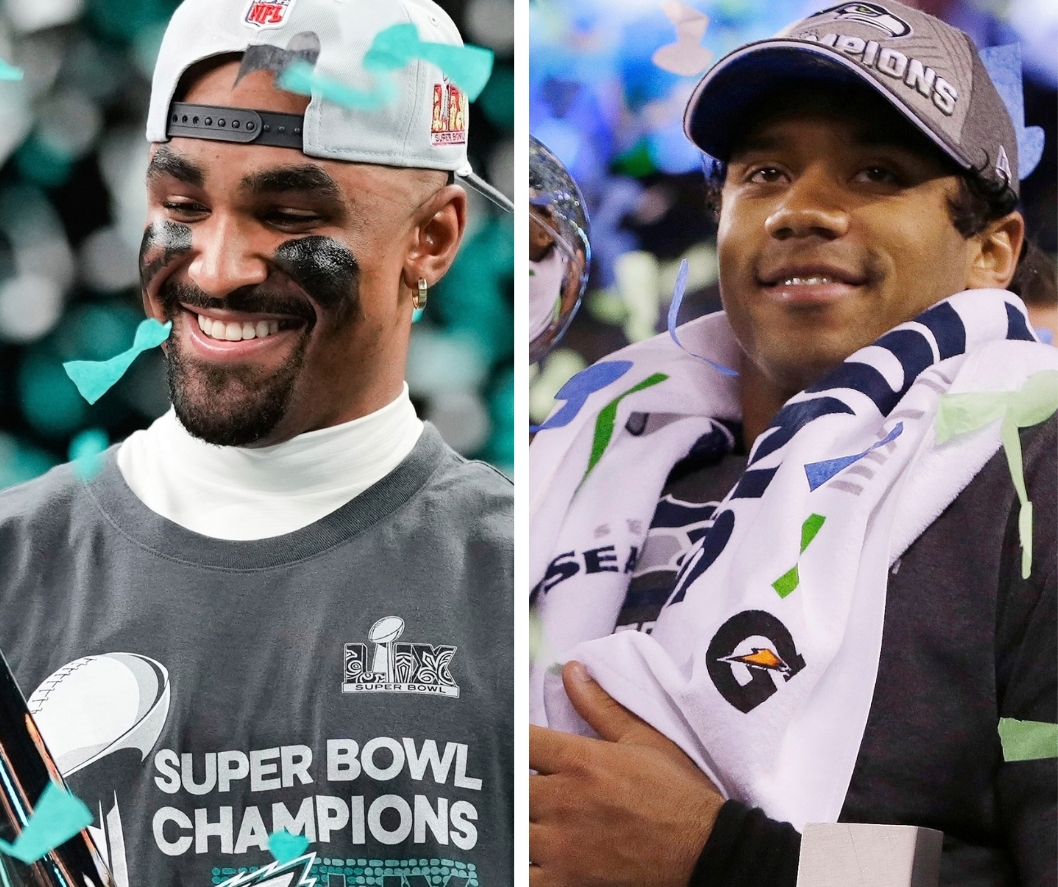
Russell Wilson watched Jalen Hurts throw two interceptions against the Tennessee Titans on Sunday, then lead the Eagles to a last-minute victory.
To Wilson, Hurts’ response looked familiar.
“I think Jalen Hurts and I are very similar,” Wilson said Tuesday on CBS Sports’ Set, Hut!
The comparison predates Wilson’s remarks. In 2021, then-Eagles cornerback Darius Slay likened Hurts to a young Wilson on a CBS Sports podcast. Slay pointed to the running games that supported both quarterbacks early in their careers and to Wilson’s development as a passer. He believed Hurts could make a similar progression.
Russell Wilson says that Jalen Hurts is very similar to him and reveals that they share the same mental coach. pic.twitter.com/2l6AF08xw7
Wilson said the connection goes beyond their ability to run and throw. The quarterbacks have talked often over the years, he said, and both worked at different points with mental conditioning coach Trevor Moawad.
Moawad met Wilson at IMG Academy in 2012, as Wilson prepared for the NFL draft. He became Wilson’s longtime coach, mentor, and friend. After Moawad died of cancer in 2021, Wilson recalled how he had helped him through both winning a Super Bowl and losing one the following year.
Wilson said Moawad taught him an approach he called “neutral thinking.” A quarterback has to deal with the play in front of him, Wilson explained, rather than carry an interception into the next series or dwell on a successful drive. Some teammates thought Wilson’s steady demeanor was an act. He said it was how he stayed present, and he sees that same steadiness in Hurts.
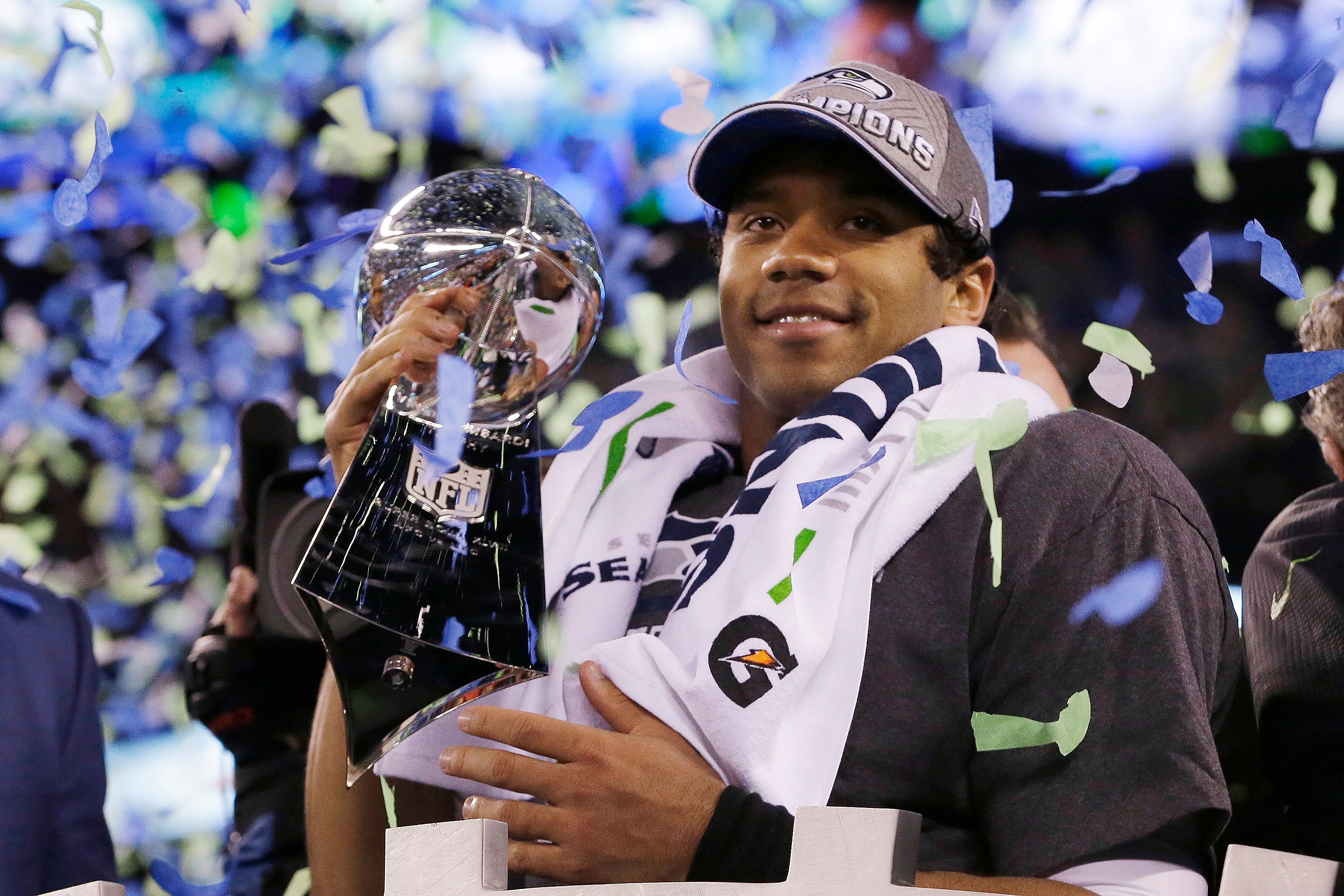
Former Seattle quarterback Russell Wilson holds the Lombardi Trophy after winning Super Bowl XLVIII on Feb. 2, 2014.Julio Cortez
Wilson did not overlook the turnovers. He called Hurts’ first interception a bad throw and described the second as an attempt to take a shot against a Titans defense that was making the game difficult.
What impressed Wilson was Hurts’ response after both mistakes.
The first interception ended the Eagles’ 15-play opening drive. Tennessee safety Amani Hooker picked off Hurts in the end zone and returned the ball 92 yards, setting up a Titans touchdown.
With the game tied at 17 and about six minutes remaining, cornerback Marcus Harris intercepted an underthrown pass intended for DeVonta Smith. Tennessee later took a 20-17 lead on a field goal with 1 minute, 56 seconds left.
Hurts answered by completing a 20-yard pass to Dontayvion Wicks on third down, later finding Smith for 19 yards on another third down to reach the Titans’ 3-yard line. His next pass went to Darius Cooper for the winning touchdown with nine seconds remaining. The nine-play, 65-yard drive gave the Eagles a 24-20 victory and gave Wilson a clear example of the composure he had been describing.
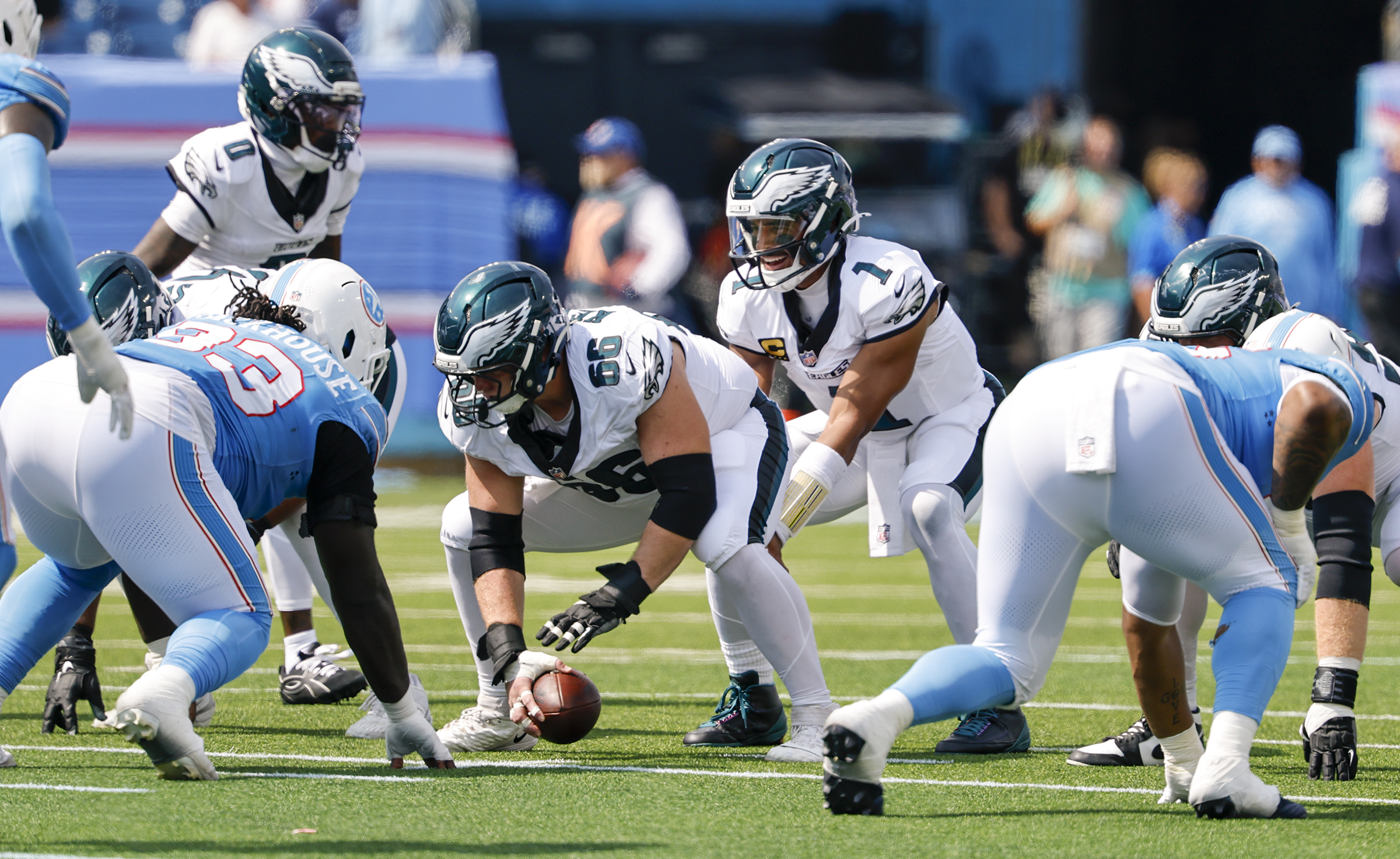
Eagles quarterback Jalen Hurts in action against the Tennessee Titans last Sunday in Nashville.Yong Kim / Staff Photographer
“He never gets flustered. And that’s not fake. That’s who he is,” Wilson said.
Hurts described that responsibility in similar terms after the win, saying a quarterback has to manage the weight of the position without losing focus.
“You’ve got to keep your poise and keep your focus,” Hurts said. “Today we were able to do that.”
Wilson also reflected on what their Super Bowl victories mean beyond the field. He was the second Black starting quarterback to win one, following Washington’s Doug Williams in 1988. Wilson called Williams an inspiration and said he valued seeing Patrick Mahomes and then Hurts join them.
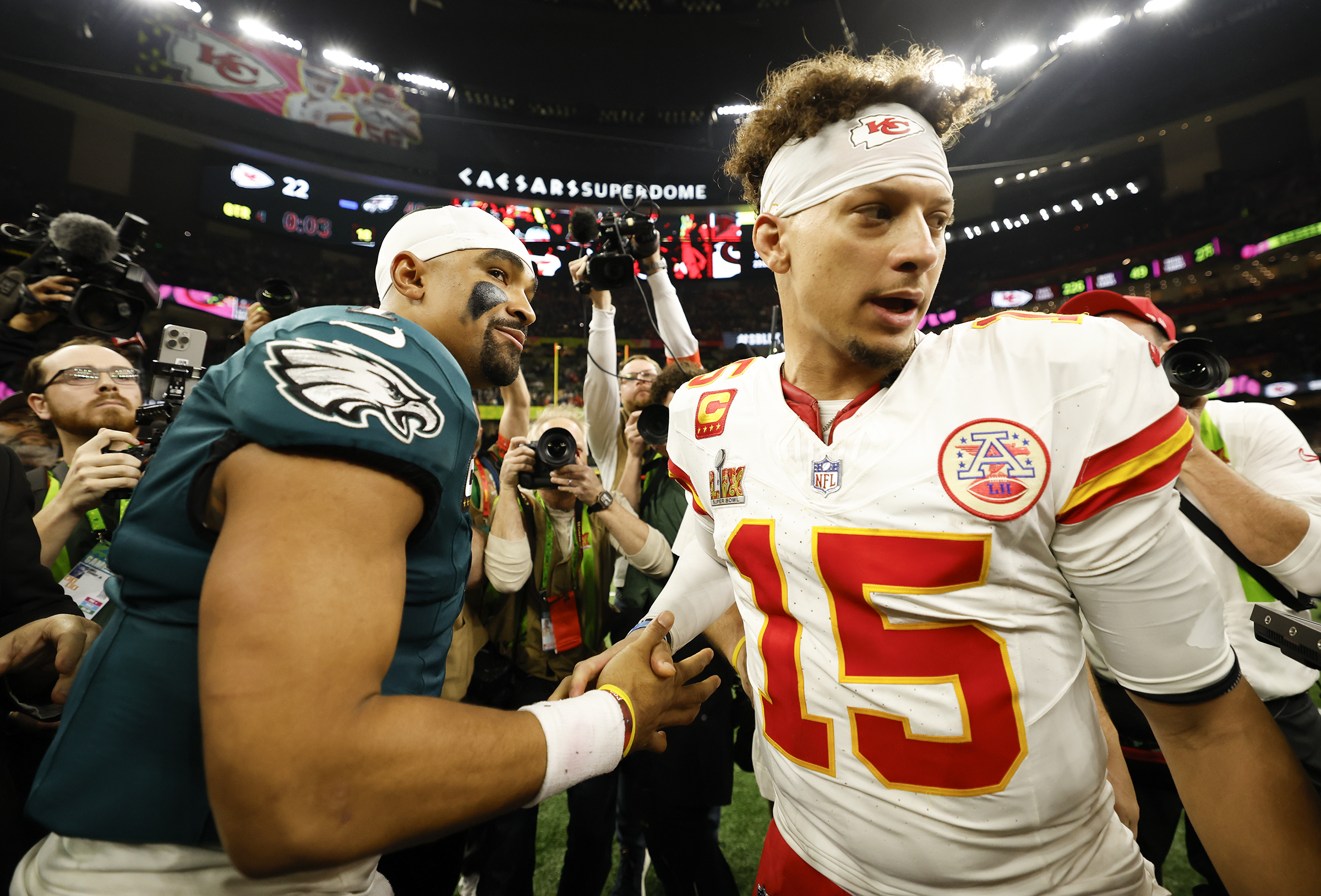
Eagles quarterback Jalen Hurts (left) and Kansas City Chiefs quarterback Patrick Mahomes are two of just four Black quarterbacks to win a Super Bowl as QB1. Yong Kim / Staff Photographer
Their paths also intersect in Eagles draft history. Philadelphia considered taking Wilson in 2012 but hoped he would still be available in the third round. Seattle selected him 75th overall; the Eagles took Nick Foles 13 picks later.
That missed opportunity influenced how general manager Howie Roseman approached Hurts in 2020. The Eagles selected Hurts 53rd overall, in the second round, while Carson Wentz was still their starter. Roseman later explained that the 2012 draft had taught him to take a quarterback he valued when he had the chance, rather than risk waiting another round.
After the Eagles beat Wilson’s Steelers in December 2024, Hurts told him on the field that he had watched him throughout childhood. Hurts later explained what Wilson had meant to him.
“He’s paved the way for a ton of guys, including myself,” Hurts said.
Temple released its men’s and women’s basketball nonconference schedules on Wednesday.
The women’s team opens its 13-game slate at George Mason on Nov. 2, while the men will play 10 of their 14 nonconference games in Philadelphia. Both will host Villanova on Dec. 1.
Here’s a look at the rest of the games.
Women’s schedule
After it’s nonconference opener on Nov. 2, the women’s team returns to the Liacouras Center to host Navy on Nov. 7. George Mason is one of Temple’s three opponents that reached last season’s NCAA Tournament. Temple will also host Ball State on Nov. 24 and face Sweet 16 participant Ole Miss at the West Palm Beach Classic on Dec. 20.
Temple shares a Big 5 pod with La Salle and Villanova. The Owls visit the Explorers on Nov. 11 and host the Wildcats on Dec. 1. Those results will determine whether Temple plays for first, third or fifth place in the Dec. 6 tripleheader at the Palestra. The women’s Big 5 Classic will be held there for the first time during the arena’s 100th anniversary season.
Between its Big 5 games, Temple will visit George Washington on Nov. 17 and host Georgetown on Nov. 22 before facing Ball State two days later. The Georgetown and Ball State matchups give the Owls two home games in three days before they meet with Villanova.
After the Big 5 Classic, Temple hosts Binghamton on Dec. 8, visits St. John’s on Dec. 13 and welcomes Cheyney on Dec. 17. The Owls finish in West Palm Beach, Fla., facing Ole Miss on Dec. 20 and North Dakota State the following day.
Men’s schedule
Six of Temple’s games in Philadelphia are at the Liacouras Center, two are at the Palestra, one is at Xfinity Mobile Arena, and one is on the road at La Salle. Temple opens against Central Connecticut State on Nov. 2 before facing Richmond at the Palestra on Nov. 8 as part of the arena’s 100th anniversary season.
The Owls host Charleston on Nov. 11 and visit La Salle on Nov. 15 for their first Big 5 game. Their first trip outside Philadelphia comes five days later, when they open the three-game Paradise Jam against Middle Tennessee in St. Thomas, U.S. Virgin Islands. Temple will play either Indiana State or Stephen F. Austin next, with its final opponent determined by the tournament results.
Temple returns to the Liacouras Center to face Villanova on Dec. 1. It will be the Wildcats’ first visit to North Broad Street since the 2022-23 season, when the Owls beat Villanova, 68-64. On Dec. 5, Temple will face Drexel, Penn or St. Joe’s in the Big 5 Classic at Xfinity Mobile Arena, depending on the pod results.
The Owls host Cheyney on Dec. 9, bringing together two programs once led by the late John Chaney. He won the 1978 NCAA Division II championship at Cheyney before taking over Temple in 1982. Temple then faces former Atlantic 10 rival St. Bonaventure at the Palestra on Dec. 12, the programs’ first meeting since 2013.
The final home games are against Dartmouth on Dec. 16 and Wright State on Dec. 19. Dartmouth has not faced Temple since the Owls beat Big Green in the 1958 NCAA Tournament on their way to the Final Four. Wright State won the Horizon League regular-season and tournament titles last season. Temple closes its nonconference schedule at Princeton on Dec. 22.
Game times, along with the full American Conference schedules, have yet to be announced.
They say bad luck runs in threes. If you’re superstitious, maybe you think Philadelphia is finished with its streak of misfortune.
Strike One: On Sept. 11, the Phillies announced that All-Star lefty Jesús Luzardo had a sore shoulder. He landed on the injured list four days later.
Strike Two: On Sept. 14, the Eagles placed three-time Pro Bowl left guard Landon Dickerson on injured reserve with a bone bruise to his twice-repaired right knee.
Strike Three: In a preseason game Tuesday night, Dan Vladař, the Flyers’ goalie and linchpin, left after absorbing a glancing blow from Bruins forward Tanner Jeannot.
Vladař appeared to take a skate to the back of his right arm, which he also appeared to injure last spring. He was uninterested in retrieving his stick and the Bruins scored. After that, Vladař got his stick back, but he could not manipulate it. Before play resumed, he skated off the ice, bent over in pain.
Did the Flyers’ hopes of relevance skate off with him?
The Flyers have offered no update. Maybe they were shell-shocked. They have every right to be shell-shocked.
After the last 11 days, so do Philly sports fans.
Repercussions
You could argue that losing Vladař is not catastrophic, especially if his absence is brief. The season doesn’t start for a week. The Flyers upgraded their goalie stable in June when they shed Sam Ersson and traded for Joseph Woll, and the rest of the team is pretty good.
If Dan Vladař’s injury is serious, the Flyers will turn to new backup Joseph Woll.David Zalubowski
This is short-sighted.
Vladař was the team MVP last year. At the age of 28, and in his first chance as a full-time starter after four full seasons in the NHL, Vladař, despite being a goalie, was the de facto captain of the team last year. He was its spirit and its soul. He led a team with no power play and a bunch of skittish kids through a wild stretch run, into an unlikely playoff berth, and past the rival Penguins in the franchise’s first series win since 2020.
He might not have been the best Flyer — that was probably defenseman Travis Sanheim if it wasn’t leading scorer Travis Konecny — but he certainly was the most valuable.
Vladař’s absence will be felt more than Dickerson’s, or even Luzardo’s.
After he dealt his first complete-game shutout Sept. 7, “Zeus” had, against all odds, earned the undisputed right to be the Game 1 pitcher in the Phillies’ expected postseason run. This, in a year in which Zack Wheeler and Cristopher Sánchez both should get Cy Young Award votes (as should Luzardo).
The ability to sandwich Wheeler — perhaps the best pitcher in Phillies history, when you include playoff effectiveness — between two elite left-handers is the sort of advantage managers dream of. What’s more, the Braves’ trio of Ronald Acuña Jr., Matt Olson, and Ozzie Albies are a combined 15-for-73 against Luzardo all time, with 19 strikeouts and only six walks.
The Phillies would have strongly considered starting Jesús Luzardo in Game 1 of the NLDS. Now, they must wait to see if he’s even available.David Maialetti / Staff Photographer
Luzardo is able to come off the IL on Saturday, and he threw on flat ground for the first time Monday and Tuesday with no immediate ill effects. But a gentle game of catch is wildly different from throwing an adrenalized 97 mph 70 times, off a mound, in a playoff game. If the Phillies use Luzardo at all, it probably won’t be until the end of the NLDS, if they get that far.
Going left-right-left with their starters was the Phillies’ only real hope to beat the likes of the Dodgers, Brewers, or Braves, the latter their most likely opponent as things stand. And while Aaron Nola’s last 10 starts have been encouraging, Acuña (1.037 OPS) and Olson (1.075 OPS) own him.
The Phillies’ bullpen lacks a dependable piece outside of closer Jhoan Duran. The lineup is maddeningly inconsistent, and one-third of it is utterly undependable: the No. 2 spot, with Trea Turner; No. 7, with Brandon Marsh; and No. 8, with J.T. Realmuto.
In 2024, when Saquon Barkley won Offensive Player of the Year with 2,005 rushing yards, more than half of his runs went to the left side, where he averaged 4.0 yards before first contact from a defender. Not coincidentally, Dickerson enjoyed his best season in 2024, according to Pro Football Focus, which, nonetheless, criminally under-graded him, but that’s a different discussion.
The discussion here is: If Dickerson isn’t healthy, then the Eagles’ run game simply won’t work. Not like it did in 2024, when the run game was the chief factor on their path to winning Super Bowl LIX.
Eagles guard Landon Dickerson has suffered a litany of injuries in both college and the pros. His loss is a major hit to the team’s run game.Yong Kim / Staff Photographer
It’s only been two games but the Birds are having lots of trouble running the ball. If you subtract Jalen Hurts’ rushing totals, most of which have come on scrambles, they’re averaging 81.5 rushing yards per game. In 2024 they averaged 179.3 rushing yards. In 2025, their rushing average fell by 62.4 yards.
Why? Partly because of injuries all along the line, including the seven-game absence of right tackle Lane Johnson. That was not the entire reason.
In 2025, Dickerson fought through pain in his surgically repaired knees and ankles that was so bad he got stem-cell injections in all four joints in March. He played so badly that sources say he contemplated retirement (which he now denies).
This season, after Dickerson limped through Game 1 with the bone bruise, Cam Jurgens replaced Dickerson at guard in Game 2. Jurgens was, somehow, even worse in Week 2 than Dickerson was in Week 1. To be fair, Jurgens is a former Pro Bowl center with some experience at guard — but at right guard. Jurgens moved from center to guard last game. Fifth-round pick Drew Kendall, in his second year, started at center. It was a mess.
An underlying effect here concerns the play of left tackle Jordan Mailata. He was the best offensive lineman in football in 2024, when, perhaps not coincidentally, Dickerson had his best season playing next to him. Mailata was still very good, though appreciably worse in 2025. So far, he’s playing even worse in 2026.
Does this mean Dickerson made Maliata? Or vice versa? No: It means that the pair of them together is far greater than the sum of the parts.
That pair doesn’t seem likely to reunite any time soon.
Watching Vladař leave Tuesday’s game, he seems like a long-term loss, too.
At least the luxury of time provides hope in both of those situations.
For the Phillies and Zeus, time just might run out.
In his four seasons as an advisor in the Brewers’ front office, Milwaukee has won four consecutive National League Central crowns. This year, the Brew Crew has the best record in baseball and is closing in on the top seed in the NL playoffs.
As the Brewers came to town this week, Klentak, 46, joined Phillies Extra, The Inquirer’s baseball podcast, to discuss his time with the Phillies and the Brewers’ success.
Watch the full interview below and subscribe to the Phillies Extra podcaston Spotify or Apple Podcasts.
Q: The Brewers were probably the runner-up in the Tarik Skubal derby at the trade deadline. Can you describe the actuarial exercise of determining the level of risk that you might have been willing to take on for a great pitcher while also being wary of giving up too much?
A: I think just about every general manager, front office person would tell you that in just about every decision you’re making, there is some degree of balancing the present and the future. And how you balance that may differ based on a variety of factors. … For the nature of our market and the way we build our rosters, we typically put a lot of focus on the future because we know that for this franchise to be successful in the way that we have been, the way that we want to be in the future, we need to continue to have that pipeline of young players come into the big leagues year after year. So we know that.
Having said that, we very much recognized that this was somewhat of a unique year for us, given where we were in the standings, given the construction of our roster, given the strength of the farm system, and given how hard it is to reach the World Series and win the World Series. We did recognize that … and that’s frankly the reason that we went right down to the wire in the trade discussions for Tarik Skubal.
Why the Tigers opted to go with a different package of players vs. ours vs. any other teams, we may never know the answer to that. Was it frustrating in the moment? Sure. The thing was, in looking back on it, it was actually helpful for us was that trade took place several days before the actual [Aug. 3] deadline, so we had time to recover and pivot, and we ended up making the trade with the Cardinals [for starter Dustin May], making a trade with the Rockies [for reliever Antonio Senzatela]. We did a few things afterwards, not to add Tarik Skubal but to bolster our pitching in other ways. … But I think there are some years where it calls for a little bit more aggression and maybe a little bit more focus on the present. And there are other times when it probably is not as prudent to sink a lot of resources into the present and make sure you’re protecting your future a little bit, and that’s going to change from year to year.
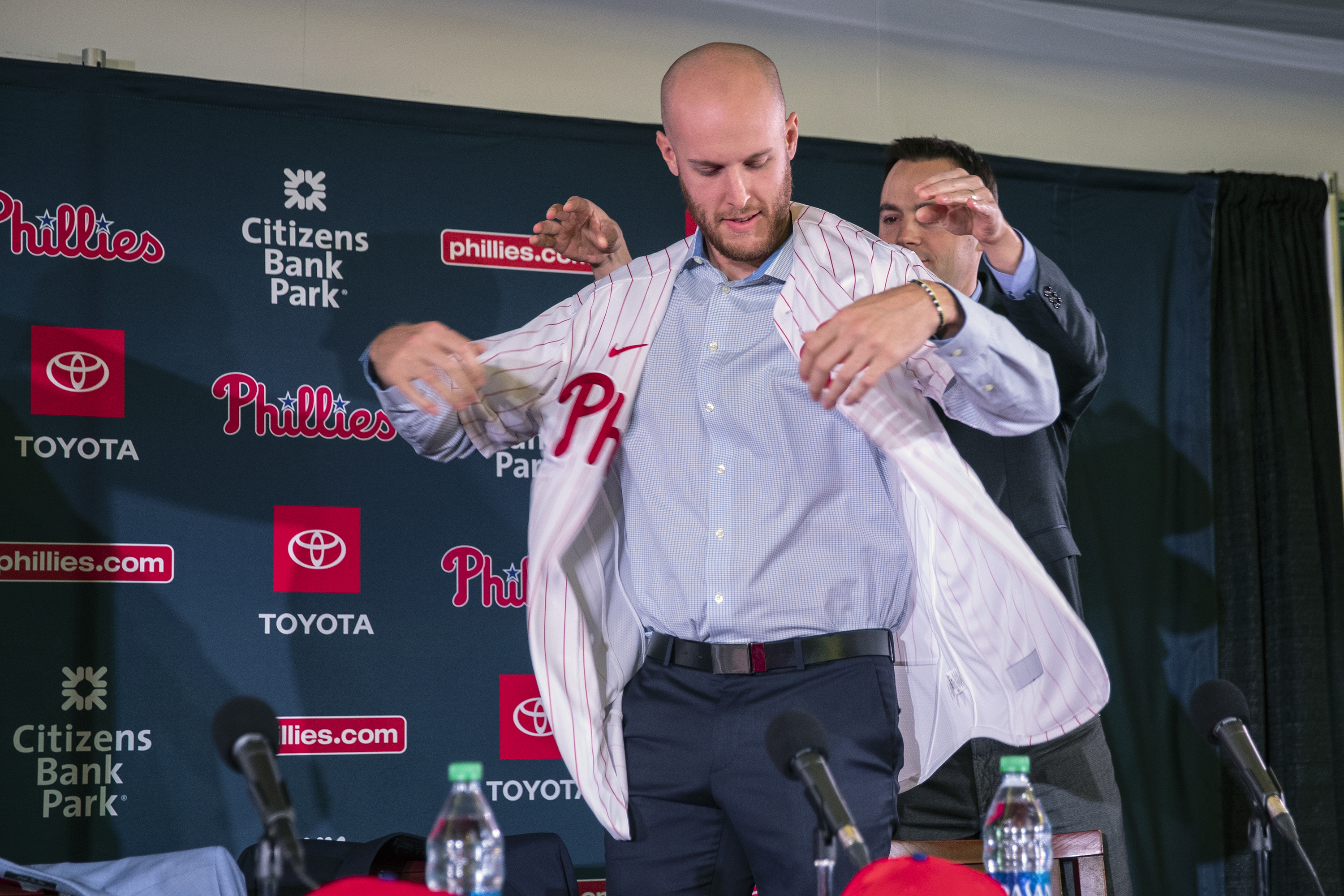
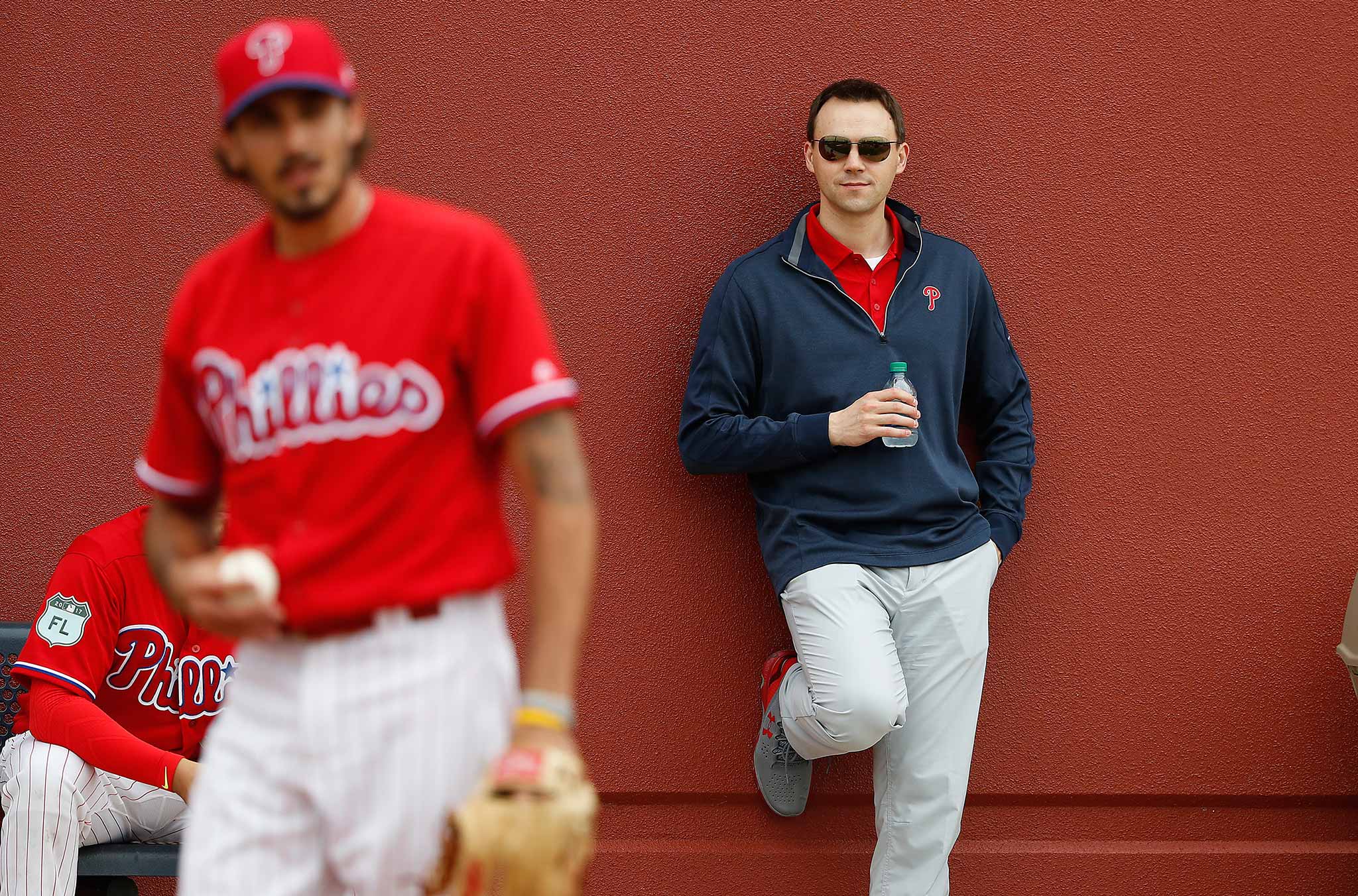
Matt Klentak spent five years as Phillies general manager.
Q: As the Phillies close in on a fifth year in a row in the playoffs, I wonder how you feel about the success that they have, and whether you feel at all a part of that?
A: With each passing year, there are fewer and fewer players on the roster that I overlapped with. … I was in Pittsburgh for our clincher and ended up running into [reliever] JoJo Romero and spending a bunch of time with JoJo Romero, who was drafted when I was with the Phillies and came up. So, there are still quite a few players throughout the league from my Phillies time.
But yeah, there’s only whatever a small handful that are still on the club. Mostly, I’m happy for that group, that specific group of players you’re talking about, but also for the organization. Because that was always the goal was to build something that would … be good and that would stay good for a long time. And I happened to be a part of the first part of that, helping to build the roster and I’m not there now as the sustained winning has taken place over the last few years. But I’m just happy that has worked out as well as it has for the players, some of whom have really seen their careers advance to another level, which has been great. But also for ownership and fans and all the people in the front office that I worked with that are still there. It’s a hell of a lot more fun to win than to go through the rebuild like we did for a few years, and I’m glad for the organization that everybody’s getting to enjoy these winning seasons like this.
One of Matt Klentak’s best moves with the Phillies was trading for an unheralded pitching prospect named Cristopher Sánchez.Jose F. Moreno / Staff Photographer
Q: Is the Zack Wheeler signing and the Cristopher Sánchez trade the two moves that you are most proud of from your time with the Phillies?
A: I appreciate you calling out the good ones and casually omitting some of the ones that didn’t work out. Any time whether you’re sitting in the GM chair in Philly or more of an advisory chair like I am in Milwaukee, but any time that we make decisions, you’re trying to use the information you have to make the best decision you can in the moment based on the information and the resources that you have. So, in virtually all instances, whether the transaction works out really well or OK or not well at all, in the moment, you probably felt good about making the decision. And I would say that about those two transactions you brought up. … They themselves were very different transactions. Wheeler was [$118 million] free-agent signing, which was not one of the bigger free-agent signings in that offseason. There were some bigger ones for sure, but nonetheless, $100 million for a pitcher is still a big investment.
Whereas Sánchez was a pretty unrecognizable name outside of the scouting community. He was not on top 100 lists, and neither was Curtis Mead, who we traded for Sánchez. So they were very different in terms of profile. These were two very different types of transactions.
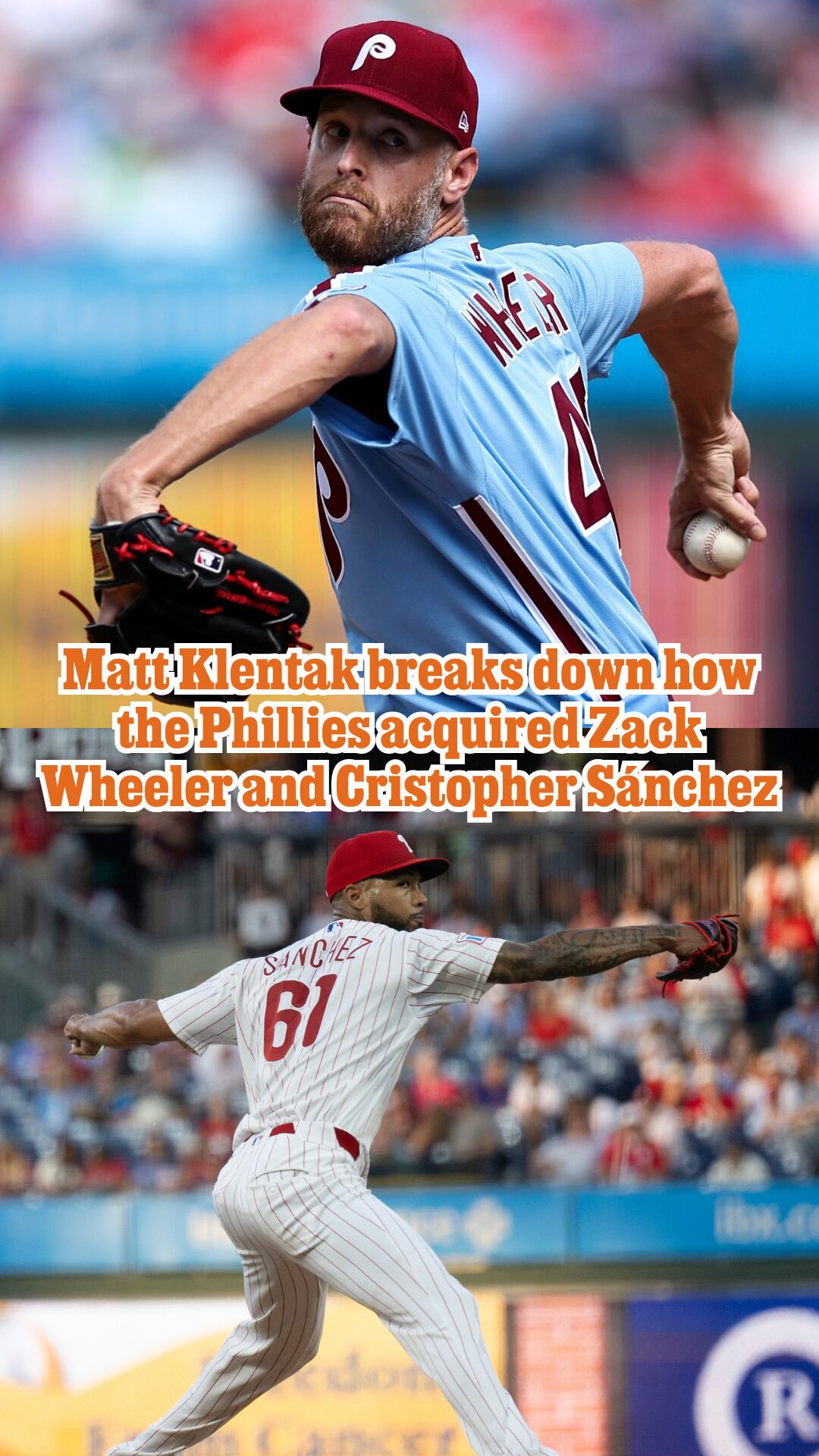
Video: Matt Klentak breaks down how the Phillies acquired Zack Wheeler and Cristopher Sánchez
… Wheeler had been in the big leagues for six years. A few of those were injury years, but he had been in the big leagues. He had more of a track record, but the prevailing thought was that there was more in that tank. We hadn’t quite seen him peak yet, and maybe because he had missed the amount of time that he had with injury, that maybe there are fewer innings on his ledger, and there might be more upside there in the future.
And with Sánchez, it was more of taking a chance on a gangly young lefty that doesn’t always know how all the parts are going to fit together. But if you squint, you can see that coming together. And in both cases, give a ton of credit first to the players for their work habits — they’re the ones throwing the pitches. So you always have to start with that. But behind the scenes … I think you have to give a lot of credit to the pitching coaches and analysts and those that are helping these players through, in Zack’s case, coming off of a … very significant surgery, and in Sanchez’s case, going from a true unknown to one of the best pitchers in the league. There are a lot of twists and turns along the way in both of those journeys, and the support those guys have received from various members of the organization should be recognized as well.
It’s all but inevitable now. But until the Phillies actually clinch a wild card, they will insist every game is akin to the postseason, in terms of significance and urgency.
In case you’re wondering, then, how Mattingly will run a game next week — and beyond, if the Phillies move on — consider the sixth, seventh, and eighth innings Tuesday night in a 6-4 victory over the majors-leading Brewers that pushed them to the verge of a sudsy celebration.
After Zack Wheeler became the 96th pitcher ever to record 2,000 career strikeouts but also fumbled a three-run lead, the Phillies broke a tie by scoring three runs with two out in the eighth inning. Bryson Stott delivered the big hit, an RBI double, and the Brewers kicked around the ball to allow another run to score.
The Phillies lowered their magic number to clinch a wild card to two over the Diamondbacks, who defeated the Colorado Rockies late Tuesday. They can spray champagne as soon as Wednesday night with a victory and an Arizona loss.
NL wild-card standings
window.addEventListener(“message”,function(a){if(void 0!==a.data[“datawrapper-height”]){var e=document.querySelectorAll(“iframe”);for(var t in a.data[“datawrapper-height”])for(var r,i=0;r=e[i];i++)if(r.contentWindow===a.source){var d=a.data[“datawrapper-height”][t]+”px”;r.style.height=d}}});
“That’s what we show up for and grind every single day for,” said Brandon Marsh, who interrupted a dreadful second-half slump with his first homer since Aug. 13 and a tack-on RBI double in the eighth inning. “Obviously it’s to win at the end of the day, but to end up holding that trophy at the end of the year.”
Actually, Alex McFarlane already has. Sort of.
While the rookie right-hander was getting five outs in a game for the first time in the majors — central to Mattingly’s plan for managing the late innings in the postseason — his minor-league teammates until the All-Star break were winning the Eastern League championship for double-A Reading.
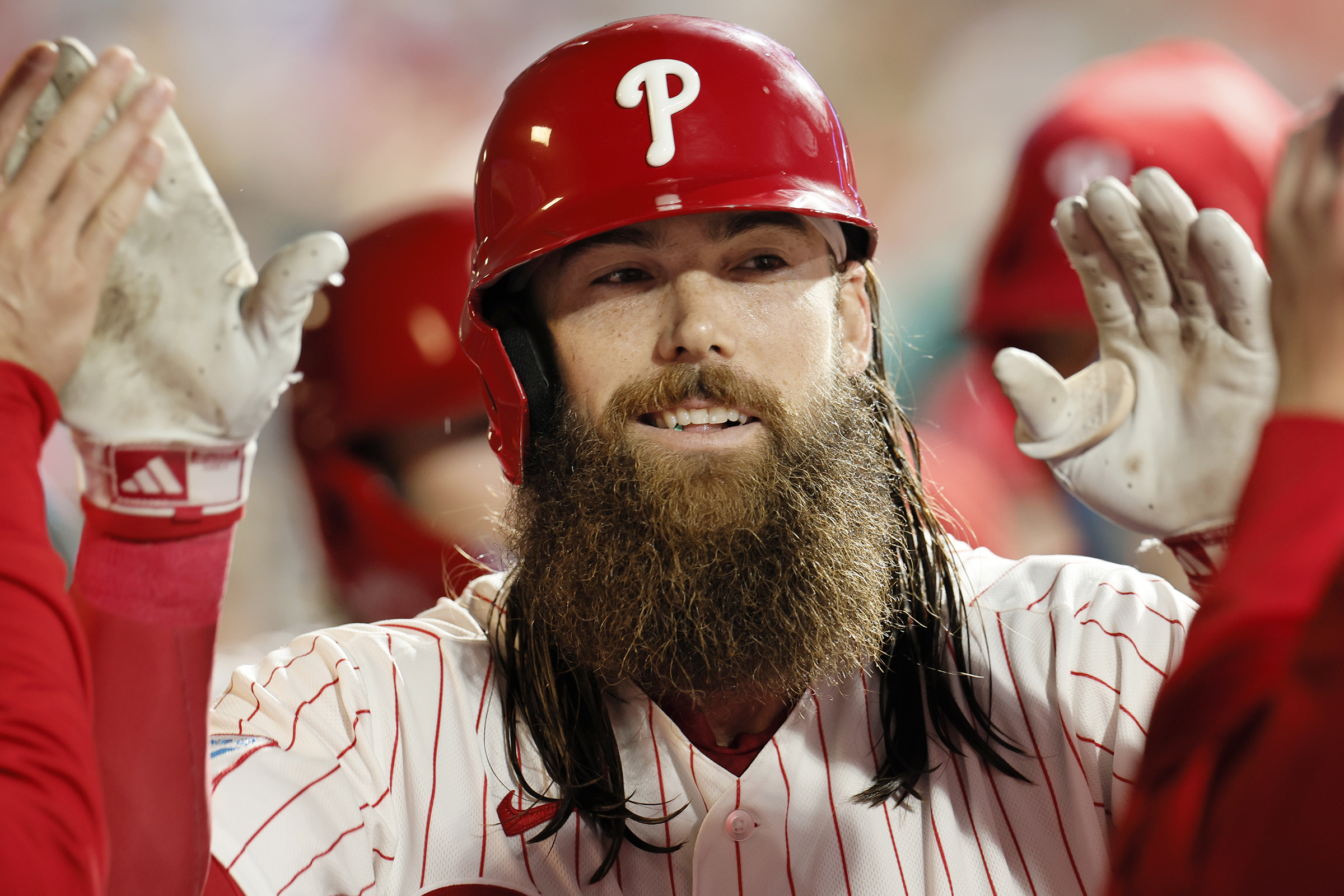
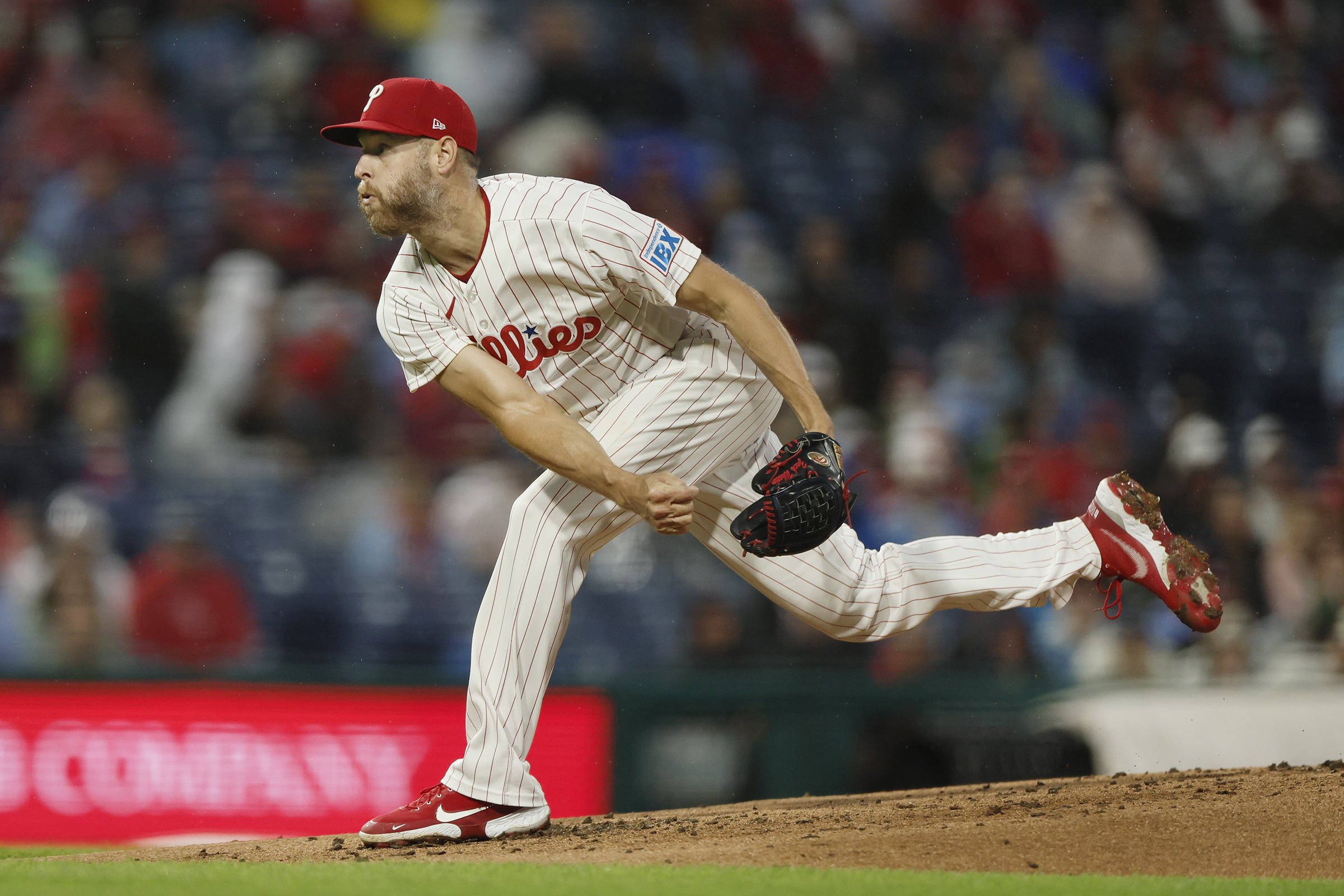
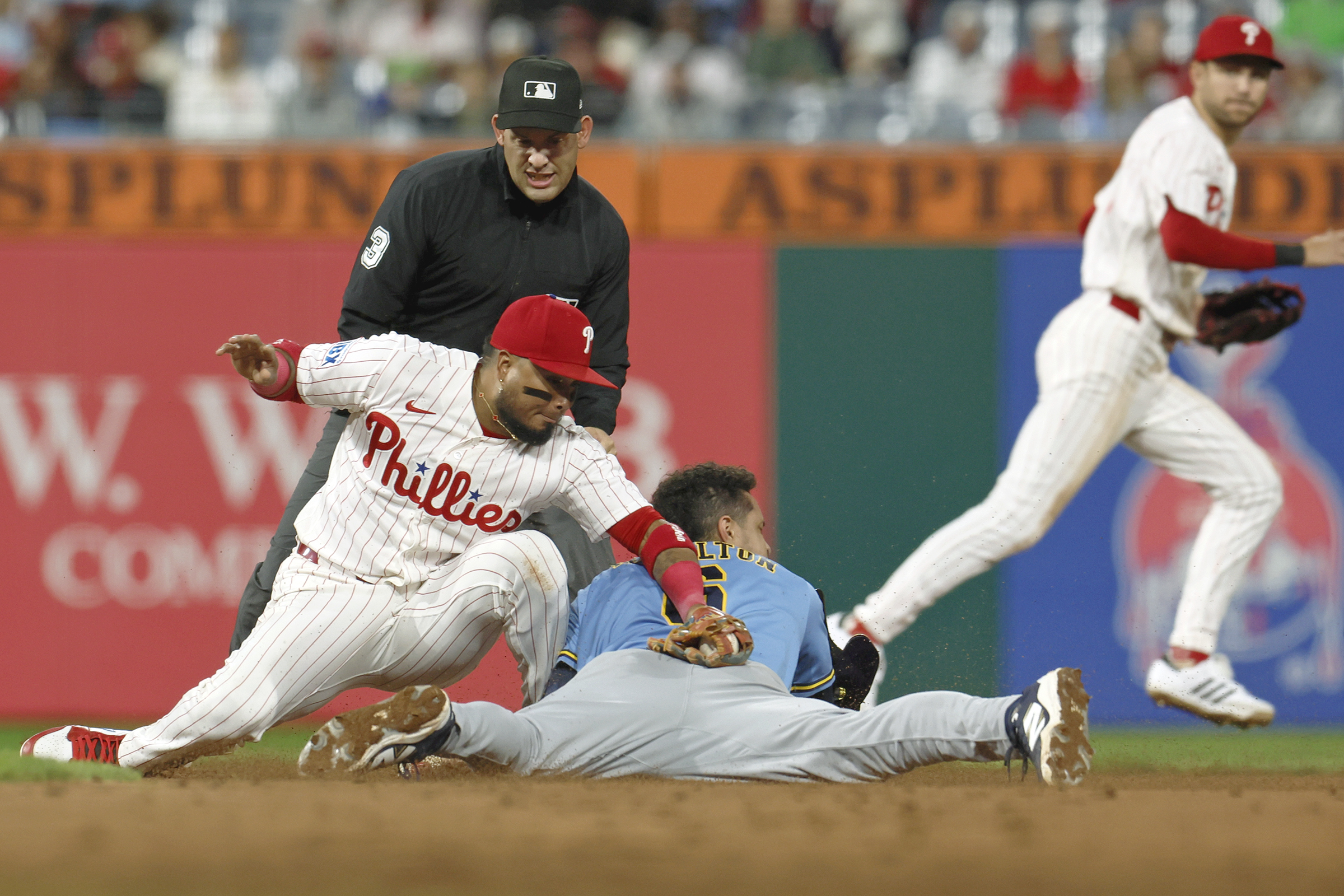
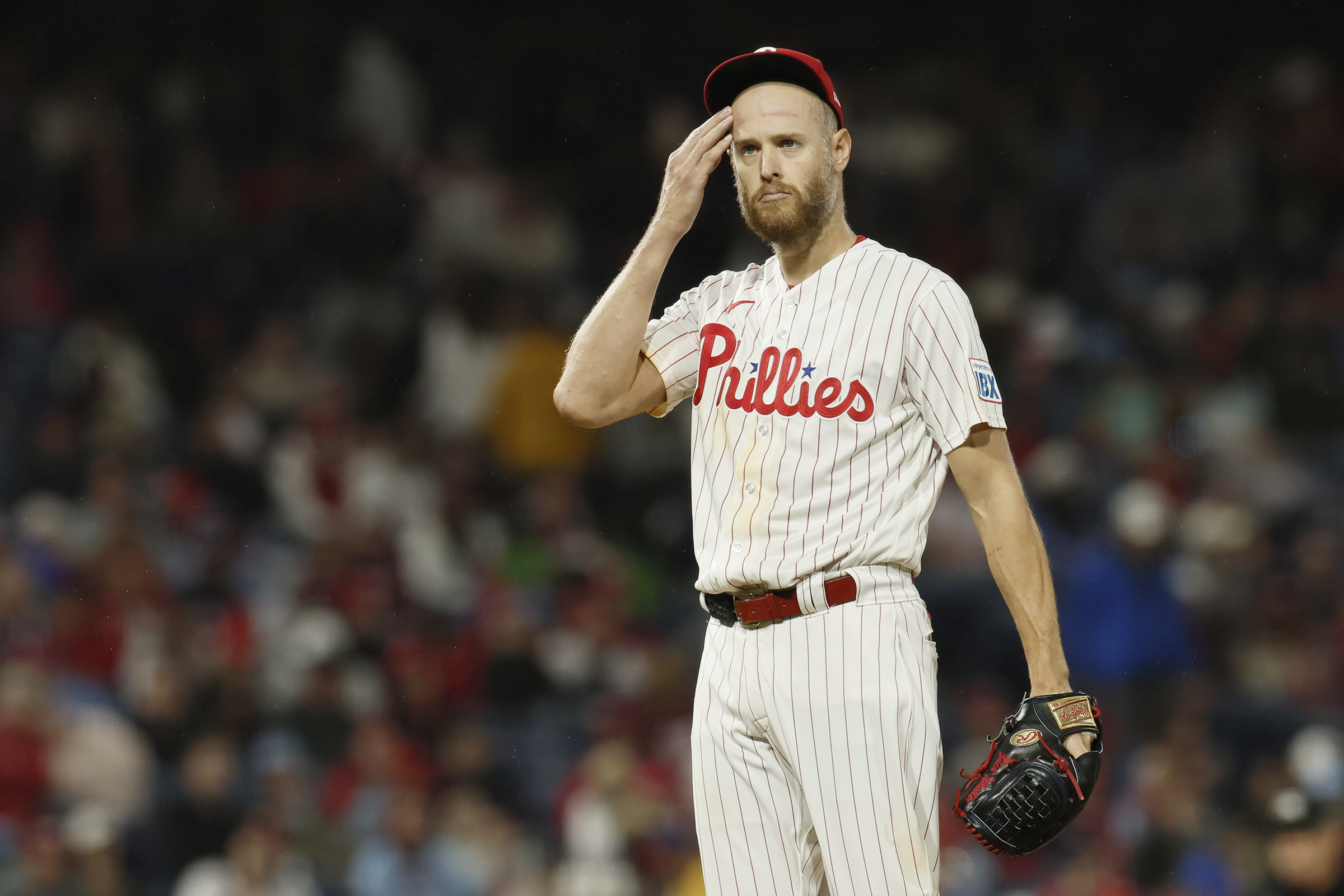
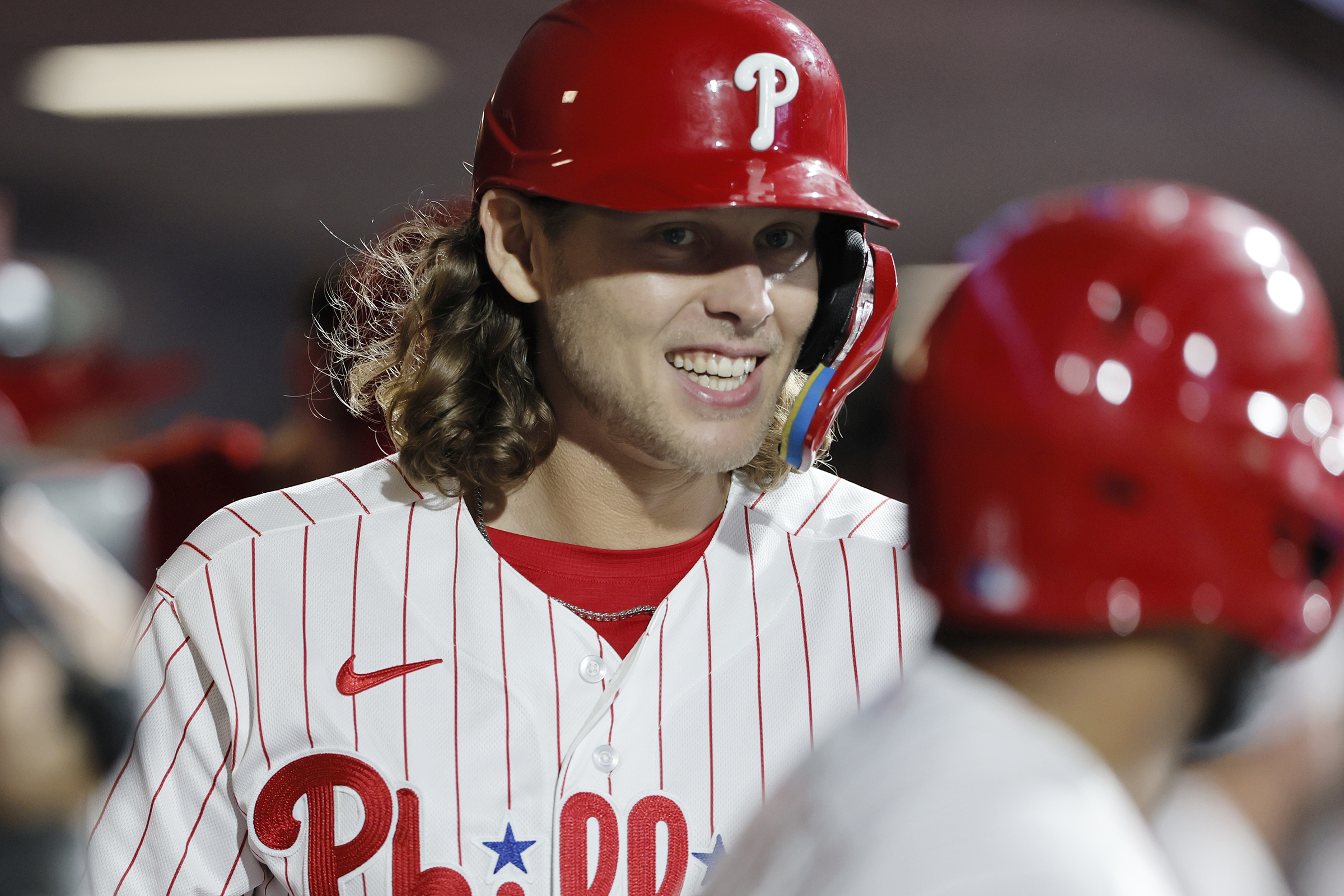
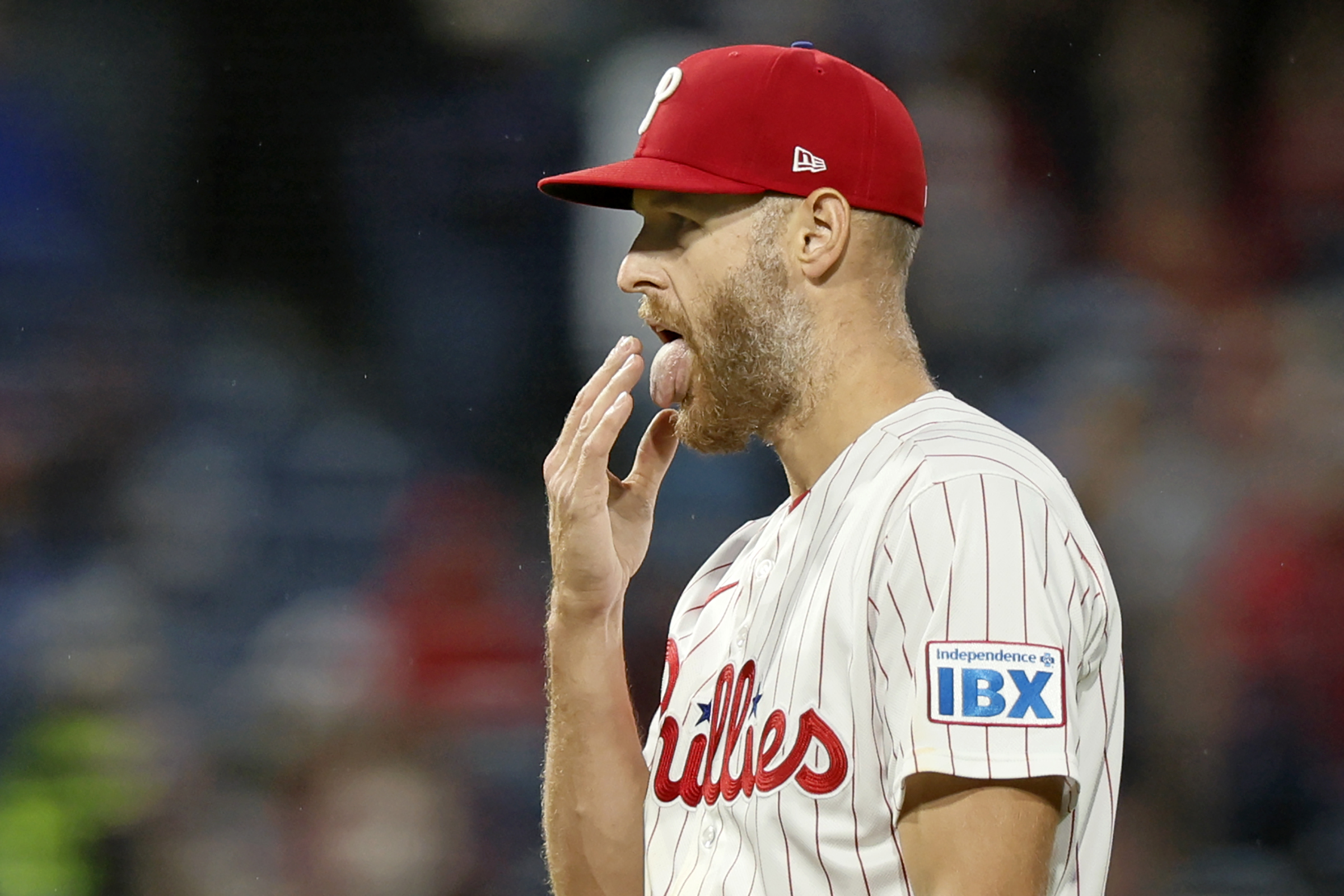
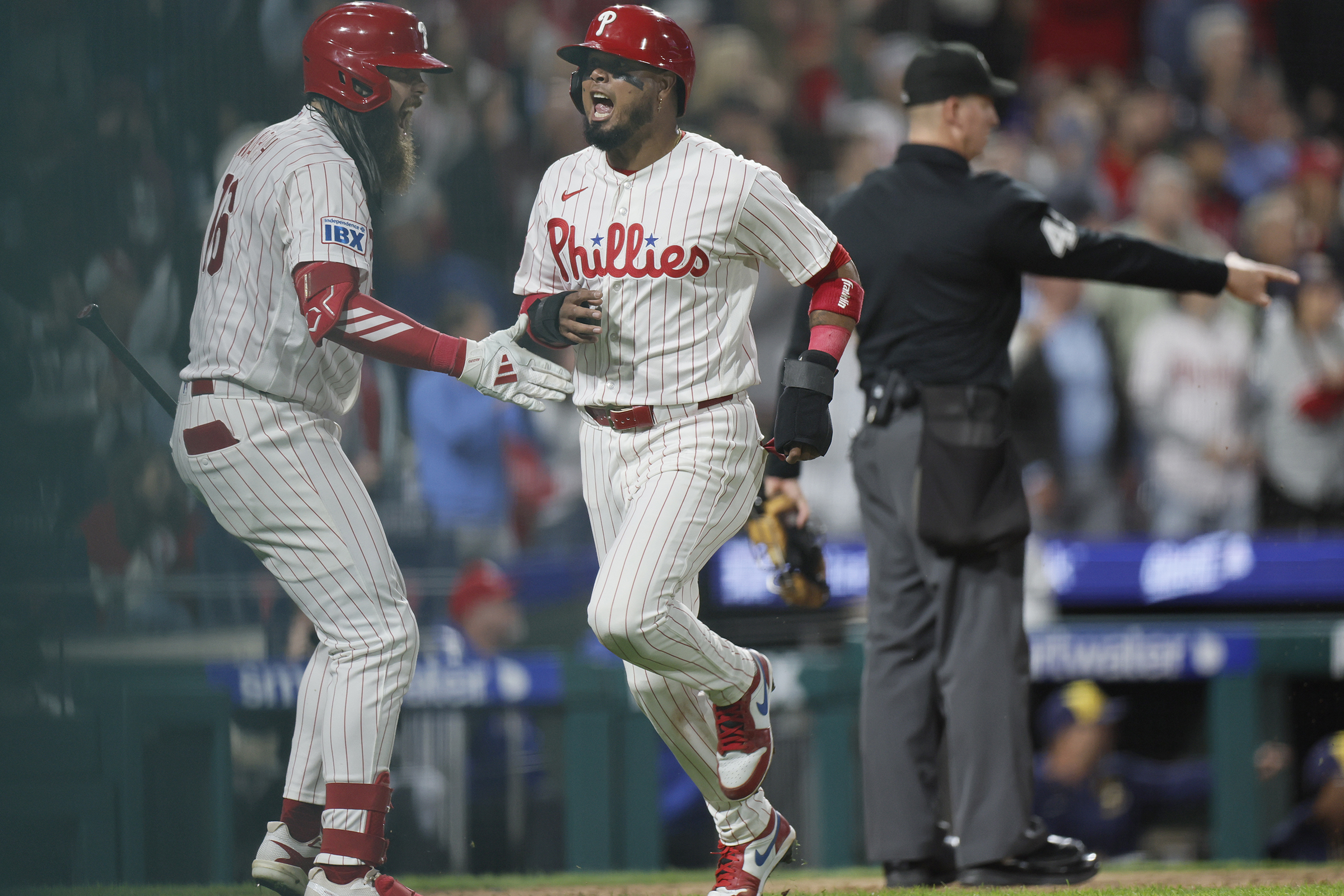
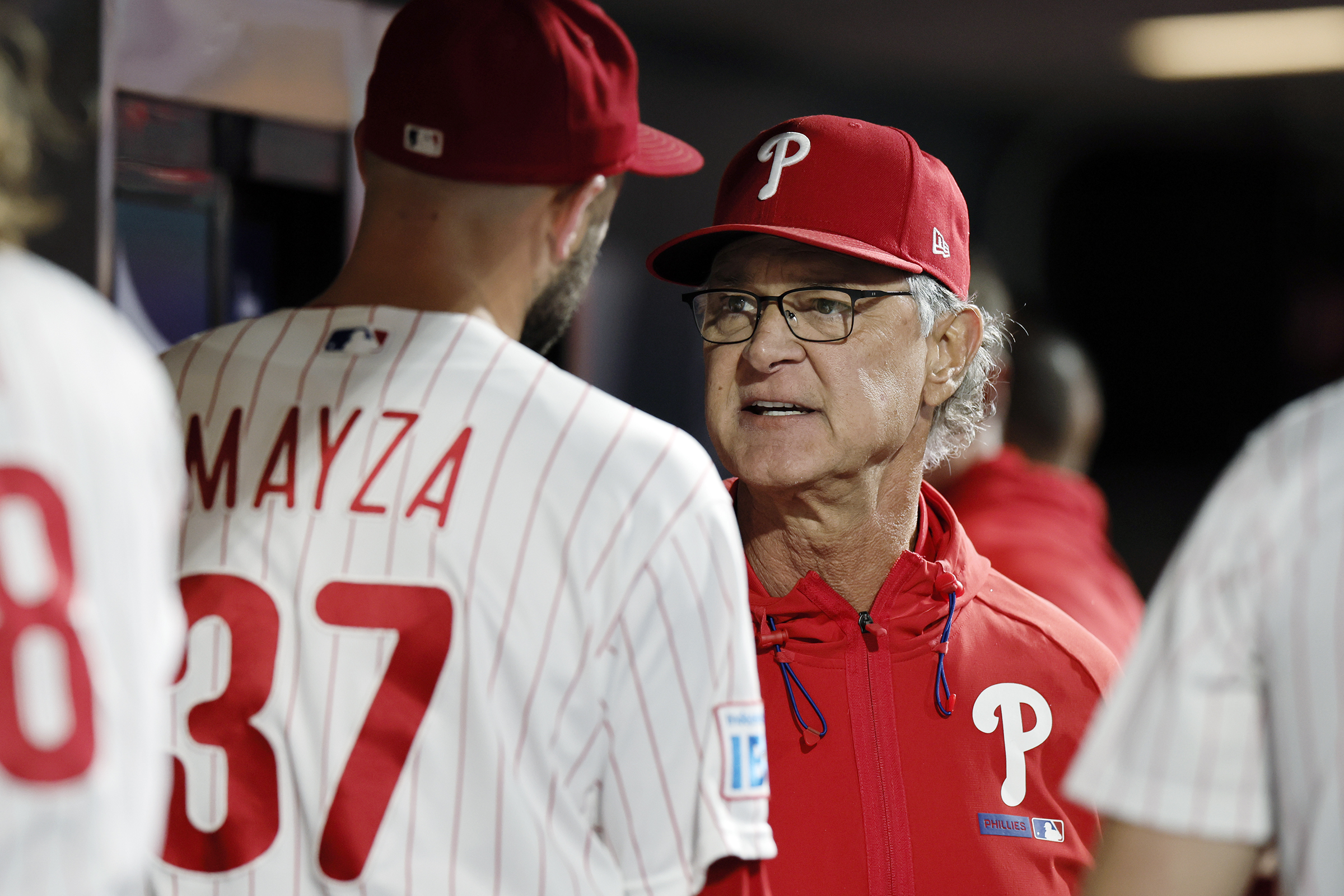
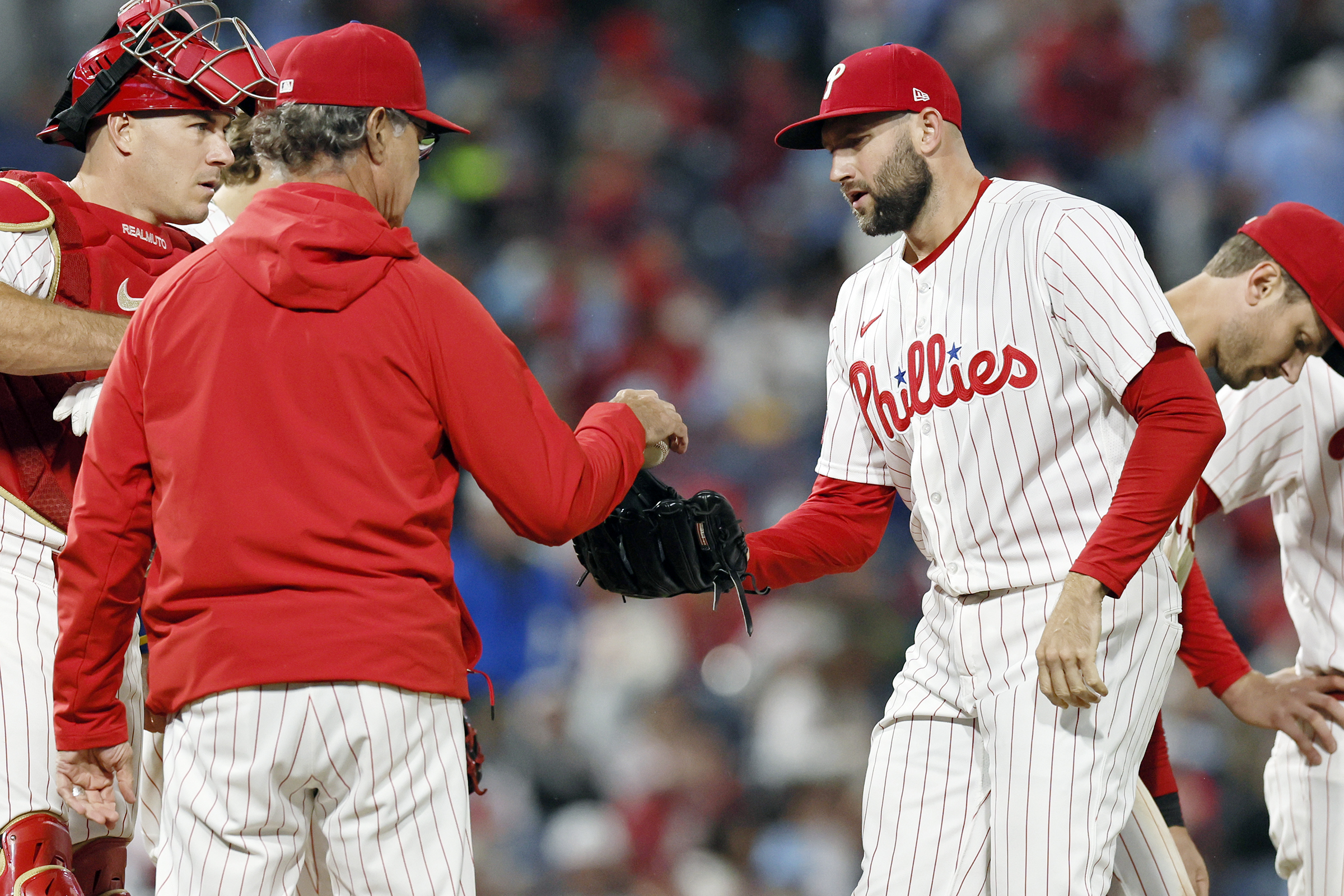
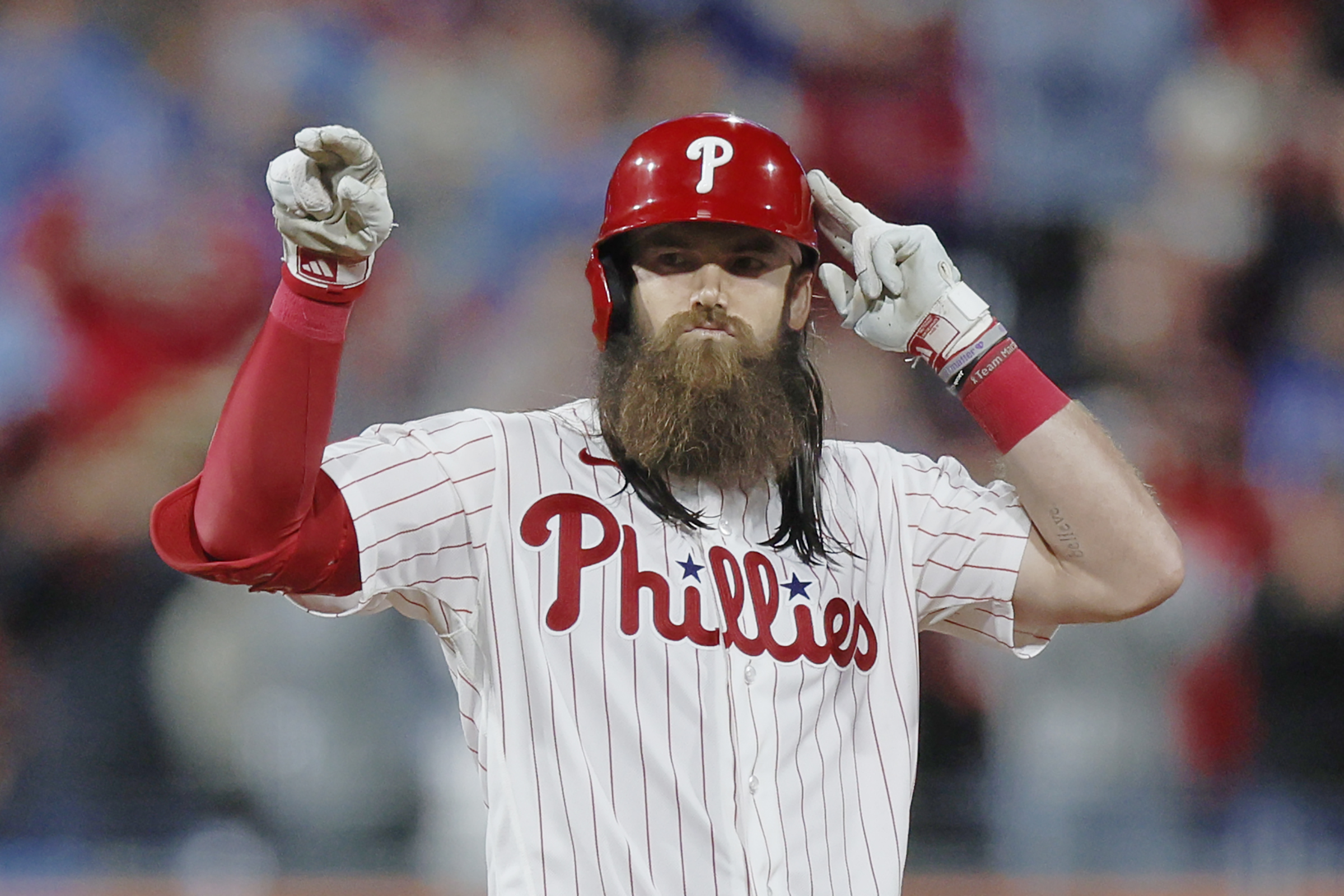
Phillies pitcher Zack Wheeler pitches in the second inning of the Milwaukee Brewers vs. Philadelphia Phillies MLB baseball game at Citzens Bank Park in Philadelphia on Tuesday, September 22, 2026.Elizabeth Robertson / Staff PhotographerDespite the tag by Phillies Luis Arraez Brewers David Hamilton is called safe at second with a stolen base in the sixth inning of the Milwaukee Brewers vs. Philadelphia Phillies MLB baseball game at Citzens Bank Park in Philadelphia on Tuesday, September 22, 2026.Elizabeth Robertson / Staff PhotographerPhillies Zack Wheeler before coming out of the game in the sixth inning of the Milwaukee Brewers vs. Philadelphia Phillies MLB baseball game at Citzens Bank Park in Philadelphia on Tuesday, September 22, 2026.Elizabeth Robertson / Staff PhotographerPhillies Alec Bohm and Luis Arraez (right) after scoring in the eighth inning of the Milwaukee Brewers vs. Philadelphia Phillies MLB baseball game at Citzens Bank Park in Philadelphia on Tuesday, September 22, 2026.Elizabeth Robertson / Staff PhotographerPhillies pitcher Zack Wheeler licks his fingers while pitching in the second inning of the Milwaukee Brewers vs. Philadelphia Phillies MLB baseball game at Citzens Bank Park in Philadelphia on Tuesday, September 22, 2026.Elizabeth Robertson / Staff PhotographerPhillies Brandon Marsh greets Luis Arraez at home plate after Arraez scored on a single by Bryson Stott in the eighth inning of the Milwaukee Brewers vs. Philadelphia Phillies MLB baseball game at Citzens Bank Park in Philadelphia on Tuesday, September 22, 2026.Elizabeth Robertson / Staff PhotographerPhillies coach Don Mattingly speaks with pitcher Tim Mayza after Mayza replaced Zack Wheeler in the sixth inning of the Milwaukee Brewers vs. Philadelphia Phillies MLB baseball game at Citzens Bank Park in Philadelphia on Tuesday, September 22, 2026.Elizabeth Robertson / Staff PhotographerPhillies interim manager Don Mattingly hands the ball to pitcher Tim Mayza after making a pitching change in the sixth inning of the Milwaukee Brewers vs. Philadelphia Phillies MLB baseball game at Citzens Bank Park in Philadelphia on Tuesday, September 22, 2026.Elizabeth Robertson / Staff PhotographerPhillies Brandon Marsh signals to the dugout after hitting a one run double in the eighth inning of the Milwaukee Brewers vs. Philadelphia Phillies MLB baseball game at Citzens Bank Park in Philadelphia on Tuesday, September 22, 2026.Elizabeth Robertson / Staff PhotographerPhillies Brandon Marsh after hitting a two run home run in the second inning of the Milwaukee Brewers vs. Philadelphia Phillies MLB baseball game at Citzens Bank Park in Philadelphia on Tuesday, September 22, 2026.Elizabeth Robertson / Staff Photographer
Does McFarlane expect to receive a ring?
“I hope so,” he said, laughing.
McFarlane will factor into the Phillies’ chances, too. Mattingly turned to him in a tie game in the seventh inning, and instead of shaking his hand after a scoreless 15-pitch frame, he sent him back out for more.
In total, McFarlane recorded five outs — on 21 pitches — and kept the game tied.
“Obviously he’s been really good,” Mattingly said after McFarlane’s ERA dipped to 2.12 in 17 appearances since getting called up. “His stuff’s really, really good. But more than anything, he’s handled everything. Just his demeanor around the clubhouse, the way he’s able to get himself ready, he can check himself and not throw a ton of pitches down there, so he stays fresh. He’s been huge.”
It’s a lot of responsibility to place on the right shoulder of a 25-year-old who left Reading only in mid-July. But what choice does Mattingly have?
Setup reliever Brad Keller was lost to season-ending elbow surgery in July. The Phillies didn’t make meaningful additions to the bullpen at the trade deadline. And Keller’s replacement, Jonathan Bowlan, is trying to make it back from a right groin strain that would’ve landed him on the injured list if the playoffs weren’t starting next week.
It was McFarlane, then, who got the ball to lefty José Alvarado against lefty-hitting Brice Turang for the final out of the eighth inning.
“I’m prepared for anything until [Mattingly] tells me I’m done,” McFarlane said. “I just went out there with that mentality. It felt great to go out there, come out in the eighth inning, and try to get the team into the ninth.”
But while Mattingly plans to use McFarlane as the main link in the bridge to closer Jhoan Duran, it’s also clear he will ride his starters — Wheeler and Cristopher Sánchez, in particular — longer than most managers typically do in October.
Consider the sixth inning against the Brewers. Clutching a 3-1 lead, as lefty Tim Mayza loosened in the bullpen and Wheeler gave up a leadoff single and a one-out walk, Mattingly stuck with his ace righty against dangerous William Contreras with the tying run in scoring position.
Wheeler’s first pitch of the at-bat — his 96th of the game — was a low-and-inside sinker. Contreras hit it off his shoe tops and into left field for a two-run single to tie the game.
Wheeler is the 10th active pitcher with 2,000 strikeouts. Also: Verlander, Scherzer, Sale, Cole, Gausman, Darvish, Gray, deGrom, Nola. pic.twitter.com/CaQORiN5Y0
“I wanted to go in, but it was down,” Wheeler said. “I wanted it kind of more up, you know? Down’s a little easier to hit than up. That’s probably what I was most upset about tonight — and probably the pitch I hate the most so far this season.”
Otherwise, there was a lot to like about what may be Wheeler’s final regular-season start. He’s lined up to start Sunday, but the Phillies almost certainly will skip him to line him up for Game 1 or 2 of the wild-card miniseries Tuesday or Wednesday.
Wheeler struck out the first seven batters, surpassing by one Brandon Duckworth’s 24-year-old club record for whiffs to begin a game. Wheeler’s third strikeout of the game was the 2,000th of his career.
Zack Wheeler threw 101 pitches in his start on Tuesday.Elizabeth Robertson / Staff Photographer
“It’s really cool, special,” Wheeler said. “Some of the guys asked me in here, ‘Would you have ever thought [of reaching 2,000 strikeouts]? The answer is no. Getting into the league, trying to get your feet under you, trying to last, game to game early on. Just trying to stay up in the big leagues and trying to figure out how to throw strikes. That was hard for me. Just being where I am now, it’s pretty special.”
All that’s missing is a World Series championship.
As the Phillies close in on a playoff spot, their pitching plan — heavy on the starters and an impressively calm rookie reliever — is taking shape.
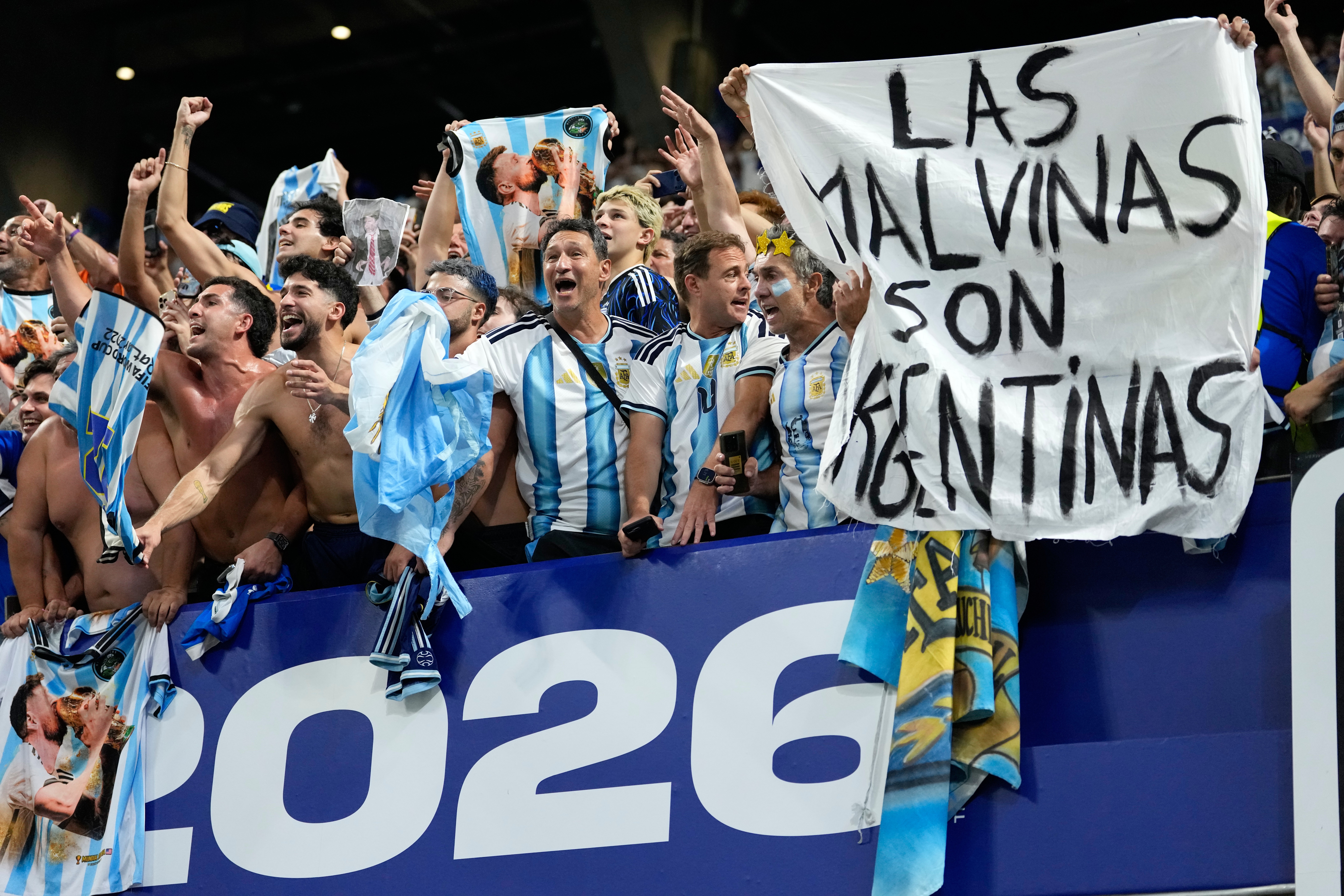
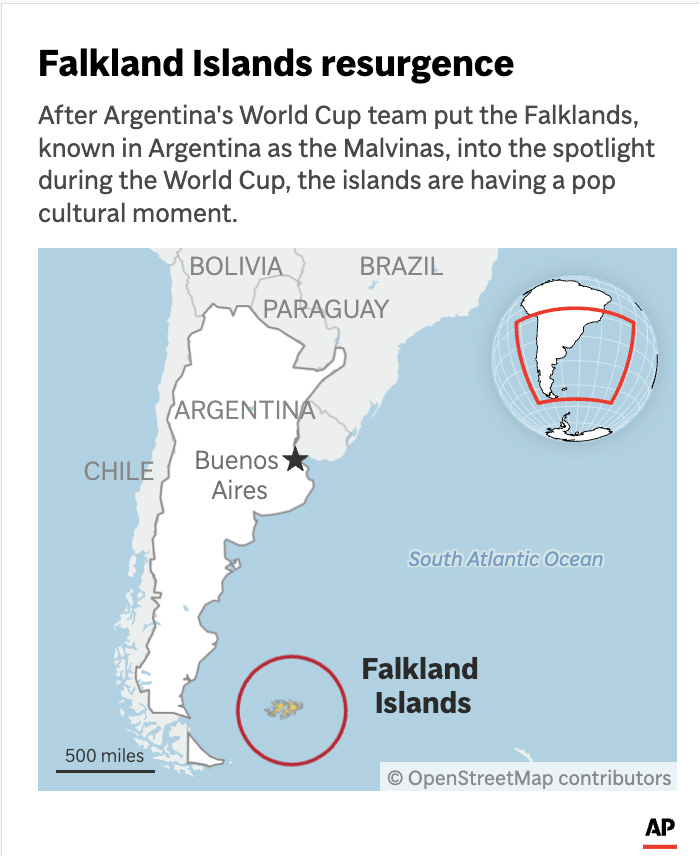
In July, Argentina defeated England 2-1 in the 2026 World Cup semifinal. Argentine players celebrated the victory on the field, unraveling a banner that read, “Las Malvinas son argentinas” [The Malvinas are Argentine].
The slogan invoked Argentina’s longstanding claim to the South Atlantic islands, over which the country had gone to war with the United Kingdom in 1982. The UK refers to this territory as the Falkland Islands, but Argentina disputes this name in favor of Malvinas.
The gesture drew criticism from the UK, and Argentina’s President Javier Milei demanded that his countrymen not mix football with politics. “We shouldn’t fall for cheap, populist, nationalist, and rancid slogans,” he announced on Radio Mitre.
Just months later, Milei made the slogan his own.
“The Malvinas are Argentine, by history and rights,” he declared in a televised address on Sept. 3. He announced plans to sanction foreign companies involved in oil exploration around the islands and proposed measures to strengthen Argentina’s ability to defend its national sovereignty.
The president’s reversal on the Malvinas is striking but falls into a broader political pattern. Facing political tension at home, nationalist leaders often turn to territorial disputes to project strength and rally patriotic support. Vladimir Putin’s invasion of Ukraine, Donald Trump’s aspirations to Greenland, and Xi Jinping’s claims over Taiwan all fit this playbook. In Argentina, presidents have long turned to the islands as a source of national unity, particularly when confronted with domestic problems.
The Malvinas took on new political urgency in the 1960s, when the United Nations recognized the sovereignty dispute within its broader decolonization framework.
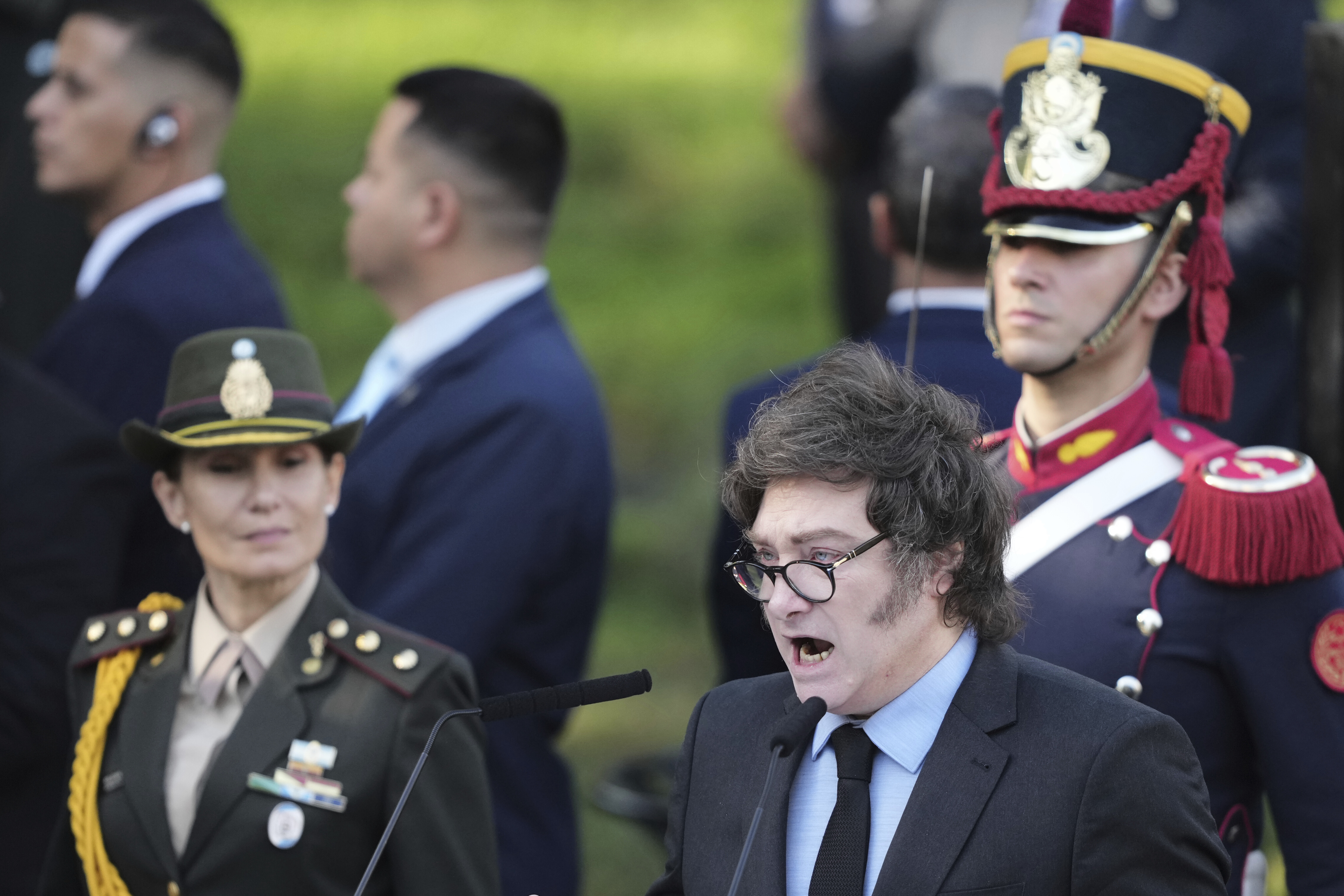
Argentine President Javier Milei speaks during a ceremony commemorating the 43rd anniversary of the conflict between Argentina and Great Britain over the Falkland Islands, known as the Malvinas Islands, at a war memorial in Buenos Aires, Argentina, April 2, 2025.Natacha Pisarenko
The UN’s call for peaceful negotiations between the UK and Argentina coincided with the military’s growing influence in Argentine politics. Throughout much of the 20th century, the armed forces repeatedly overthrew democratic governments. This cycle culminated in progressively longer and more violent dictatorships. After Juan Perón’s death in 1974, escalating violence between rival Peronist factions paved the way for a 1976 coup, amid a wave of U.S.-backed military regimes across Latin America.
The 1976 dictatorship promised to restore order and economic stability but failed to deliver. Over the next six years, the junta’s economic policies led to deindustrialization, rising unemployment, and deepening poverty. Inflation remained in the triple digits every year except 1980, and Argentina’s foreign debt surged from $8 billion to $45 billion. Alongside these austerity measures, the junta’s political repression resulted in thousands of deaths and disappearances.
By 1982, the military’s hold on power had weakened as the economy plunged into a deep recession. Strikes and protests became more frequent as Argentines denounced soaring inflation and massive human rights abuses. On March 30, the General Confederation of Labor called a general strike — the first since 1975 — and thousands gathered in Buenos Aires to demand “peace, bread, and work.” Federal police responded by arresting more than 2,000 protesters.
To bolster popular support for an increasingly fragile regime, military dictator Leopoldo Galtieri invoked the Malvinas. On April 2, the junta invaded the islands, which Britain had controlled since 1833. The regime framed the invasion as a “recovery” of Argentine territory and urged citizens to rally behind the national cause. The generals hoped to redirect public anger toward a longstanding territorial claim and to unite Argentines behind the dictatorship.
The Argentinian cruiser General Belgrano sinks amid orange life rafts holding survivors in the South Atlantic Ocean, May 1, 1982, after being torpedoed by the British Royal Navy.Uncredited
For a time, the strategy worked. Argentines gathered in Plaza de Mayo to celebrate the invasion, transforming the space where police had violently suppressed protesters only days earlier into a scene of patriotic celebration.
However, the junta had badly miscalculated, and Britain retook the islands in June. The swift defeat exposed the Argentine generals’ inability to coordinate planning and action and left more than 600 dead and over 1,600 wounded. The Malvinas War weakened the regime and ultimately accelerated its collapse. Within months, the military announced democratic elections for 1983.
The Malvinas defeat discredited the junta but did not diminish Argentines’ patriotic fervor for the islands. Instead, the return to democracy created space for Argentine governments to distinguish the legitimacy of the sovereignty claim from the illegitimate junta that had pursued the invasion.
In 2012, President Cristina Fernández de Kirchner turned to the Malvinas amid soaring inflation, rising capital flight and a growing energy deficit. After she won reelection with 54% of the vote in 2011, her second term marked a shift toward more explicitly nationalist politics. In April 2012, Fernández de Kirchner expropriated a controlling stake in the Spanish-owned oil company, YPF. She directly linked this move to the renewed claim to the Malvinas and posters declaring, “The Malvinas and YPF are Argentine” littered the streets.
A map showing the locations of Argentina and the Falkland Islands, known in Argentina as the Malvinas.Peter Hamlin
Speaking on the 30th anniversary of the Malvinas War, Fernández de Kirchner explicitly rejected the junta’s 1982 actions while venerating the veterans’ sacrifices. The junta had been wrong to attempt “to perpetuate itself in power,” she argued. Yet she framed Argentina’s sovereignty claim over the islands as part of her own administration’s efforts in support of memory, truth, and justice for the dictatorship’s crimes. Those efforts included reopening trials against those responsible for torture, disappearances, and other human rights abuses committed during the dictatorship.
Adopting the language of the human rights movement, Fernández de Kirchner identified British control of the islands as an enduring colonial injustice. This discourse allowed her to claim the Malvinas as a national and patriotic cause while disavowing the dictatorship that had waged the war. The Malvinas thus offered a powerful symbol to connect territorial sovereignty, economic independence and a democratic reckoning with the past.
In September 2026, President Milei has drawn similar connections between sovereignty and resource extraction as Argentina clashes with Britain over the planned Sea Lion oil project.
The project, operated by British company Rockhopper and Israel’s Navitas Petroleum, could begin producing oil as early as 2028, turning the longstanding territorial dispute into a more immediate struggle over access to valuable natural resources. As Fernández de Kirchner did with YPF, Milei has framed control over natural resources as inseparable from national sovereignty.
Made By History sponsors. FOR USE ON MADE BY HISTORY STORIES ONLY.Inquirer Staff
Milei’s shifting approach to the Malvinas accompanies his bid for reelection in 2027. Since his election in 2023, inflation has fallen dramatically, but his administration’s economic record remains deeply contested. Unemployment has grown and real wages have weakened, driving discontent with the government’s austerity measures. The president’s approval ratings have fallen to 38% in recent months.
As domestic tensions rise, the Malvinas once again offers a patriotic cause capable of rallying support across political divides. Various governments have pursued radically different strategies to recover the Malvinas, yet each found in the territorial dispute a powerful language of national sovereignty and anti-colonialism.
When Argentina’s players held up a banner after defeating England, they were not pushing a foreign-policy agenda. They were drawing on a decades-old expression of national identity that has come to encompass Argentine sovereignty, resistance to colonialism, and perhaps most importantly the memory of los pibes de Malvinas, the young men sent to war in 1982.
The Malvinas remain politically useful not because Argentines have forgotten the war or its devastating consequences, but because those memories have become part of what the islands represent. The players’ banner resonated for the same reasons: the fight for the Malvinas has become part of what it means to be Argentine.
Gabrielle Esparza is a historian of Latin America, specializing in transitional justice and democratization in Argentina.
Made by History takes readers beyond the headlines with articles written and edited by professional historians. Opinions expressed do not necessarily reflect the views of The Inquirer.
It’s kind of hard to believe that it’s been five years since Zach Ertz was traded away midseason. (That also means that Jalen Hurts has been the Eagles’ full-time starting quarterback for five years. Time flies, doesn’t it?)
Ertz is back in the flock, and now we’ll see how much he can wind the clock back as he steps in for the injured Dallas Goedert.
His receiving prowess isn’t in doubt. But Goedert played a big role in new offensive coordinator Sean Mannion’s scheme — as a receiver and a blocker.
Even in his prime, Ertz, now 35 and coming off a torn ACL, wasn’t known for his blocking. It’ll largely be on the likes of Mannion to figure out the personnel side of things. The question for Ertz is if he can be the player the Eagles need now.
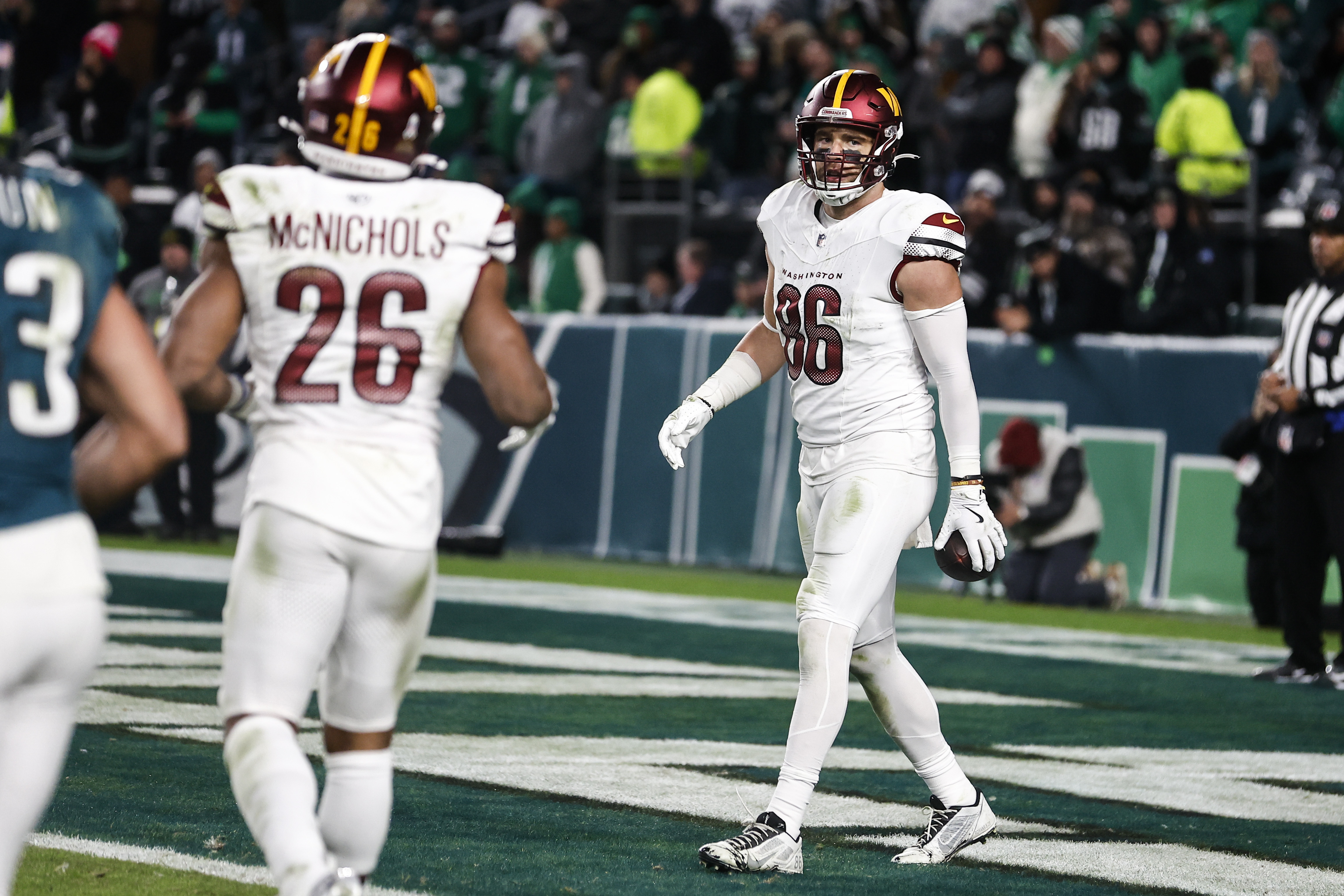
Washington Commanders tight end Zach Ertz stands in the end zone during a 2024 matchup with the Eagles.Monica Herndon / Staff Photographer
Ertz finished with 50 catches for 504 yards and four touchdowns in 13 games for the Washington Commanders last season before tearing both the anterior cruciate ligament and lateral collateral ligament in his right knee.
But history has not kind to 36-year-old tight ends, and Ertz turns 36 in November. Ertz’s best traits are well known to the Eagles. But Father Time might be the biggest hurdle for the Birds’ tight end legend to be effective.
And after Week 2, here’s how the national media ranks the Eagles.
Next: The Eagles are back on the road for a Monday Night Football clash with the Chicago Bears (8:15 p.m., 6abc, ESPN).
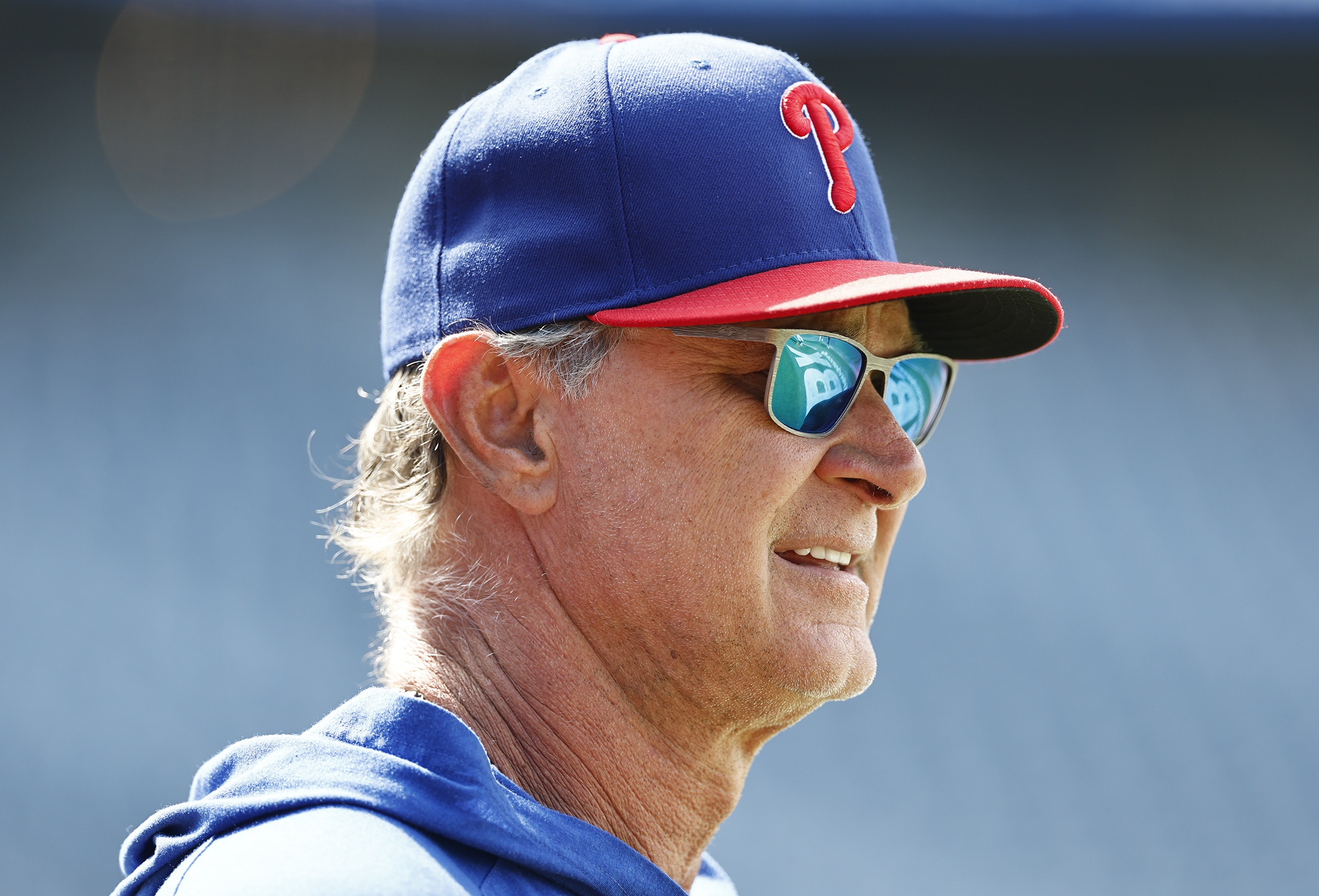
Don Mattingly said in July that he’d be open to returning as manager in 2027.Yong Kim / Staff Photographer
Don Mattingly is now the only interim manager in baseball after the Mets and Red Sox announced Tuesday that they will keep Andy Green and Chad Tracy, respectively, at the helm of their clubs.
With the Phillies on the verge of a fifth straight trip to the postseason, is Mattingly next?
Mattingly gave a glimpse of how he may manage in the playoffs as the Phillies used a three-run eighth inning to beat the Brewers, 6-4, and moving one game closer to a wild-card berth.
Next: The Phillies return to action tonight against the Brewers (6:40 p.m., NBCSP). Aaron Nola (7-10, 4.49 ERA) takes the mound against Brewers righty Logan Henderson (10-3, 2.51).
Neil Pierre (right) is in his first senior national team camp.Elizabeth Robertson / Staff Photographer
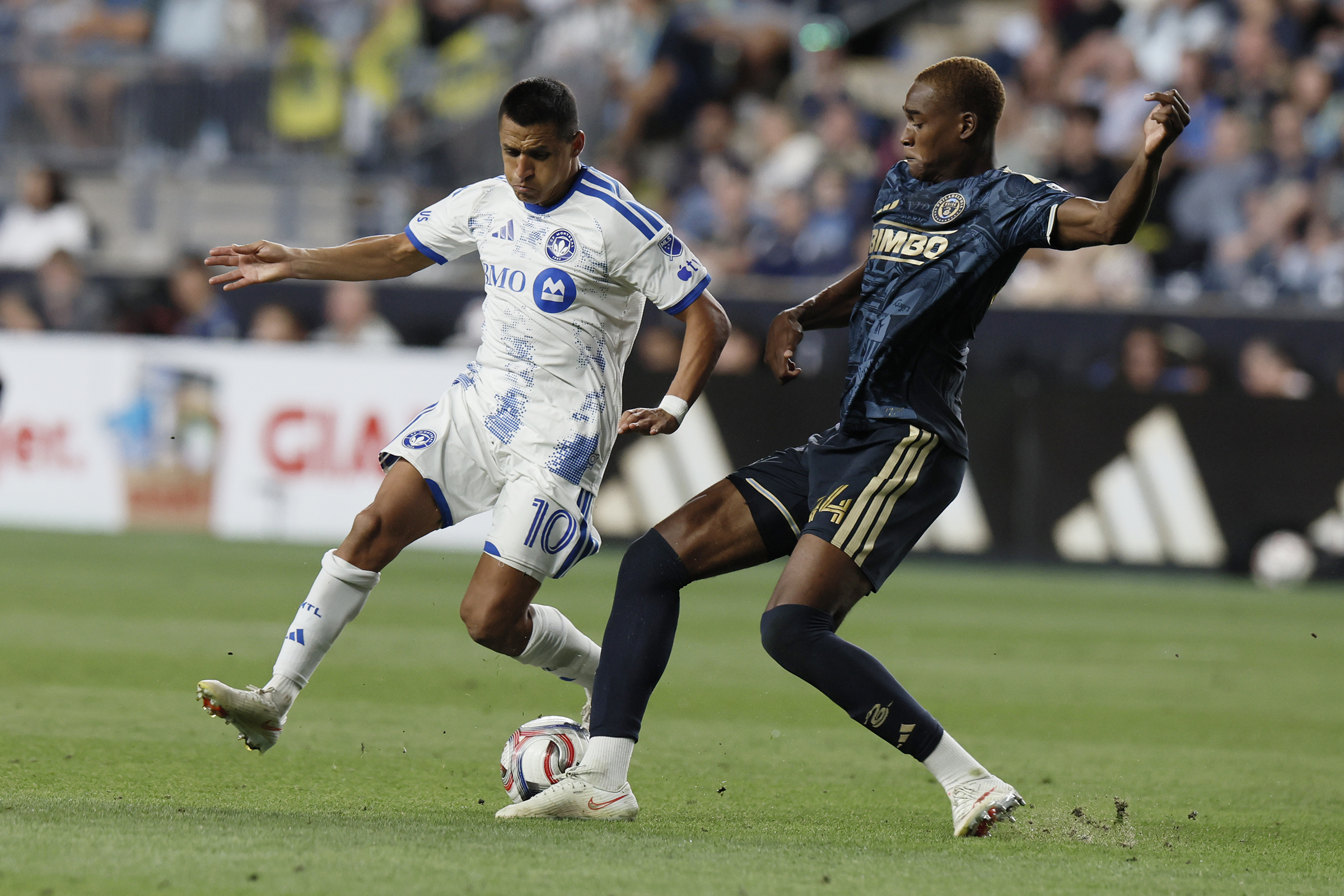
Neil Pierre is well-known to Union fans who’ve watched his rapid rise this summer and soccer aficionados.
But he could be getting a whole lot more popular soon. Pierre, 18, is one of three young Union standouts who were called into this U.S. men’s national team camp, and he admitted some nerves, but he’s already impressed at least one veteran in camp.
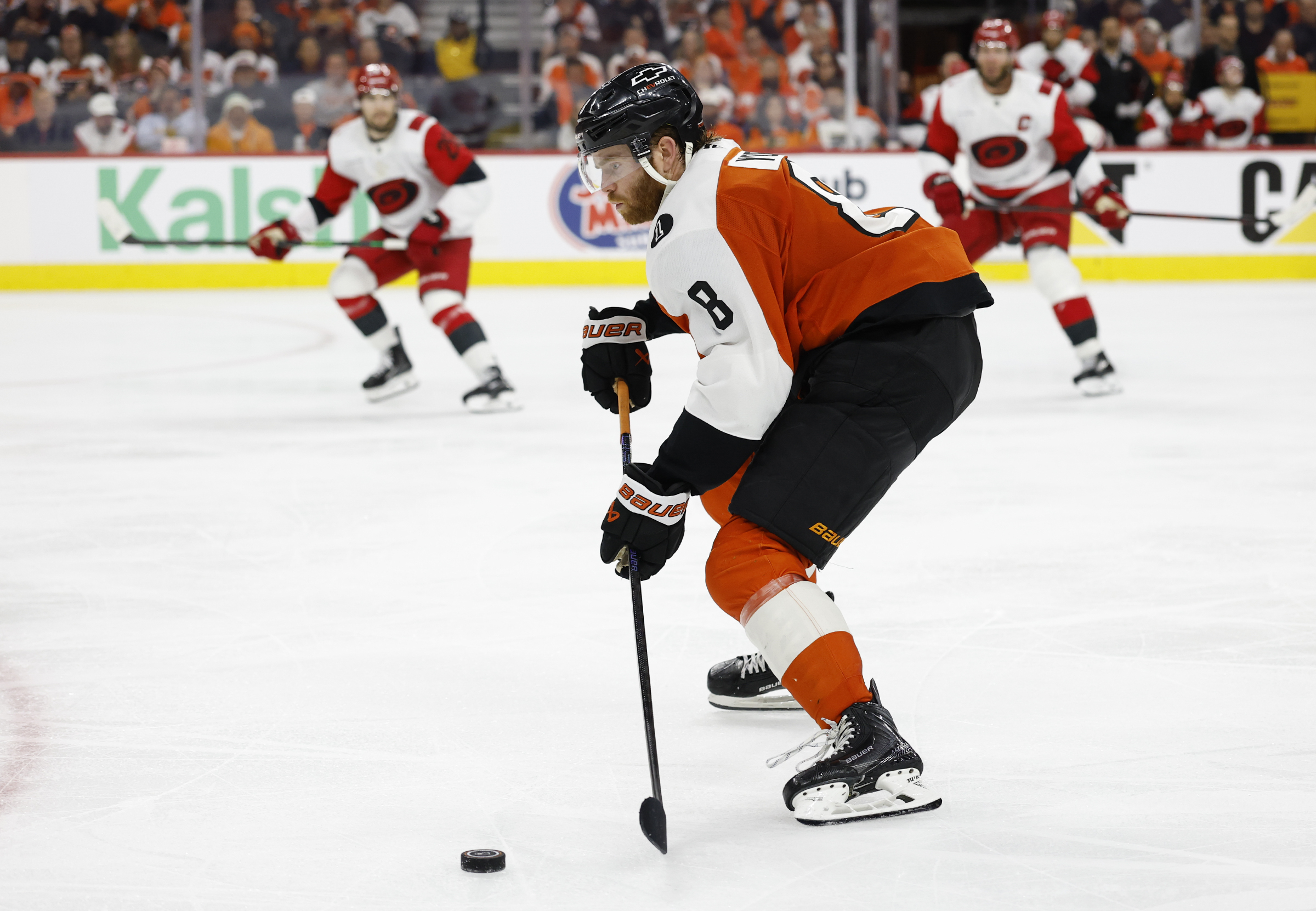
Flyers defenseman Cam York is working on his offensive game.Yong Kim / Staff Photographer
Cam York always wants to work on his defensive game, but if his offense can take a step forward — without sacrificing or cheating the game in the Flyers’ end — it could be huge for his game and the team’s success.
The Californian has 23 goals and 103 points in 309 career regular-season points, but his 103 career points rank third all-time among defensemen in U.S. National Team Development Program history.
After a spirited practice on Tuesday, his defensive partner and friend Jamie Drysdale fed him puck after puck as he fired one-timers from the point — after taking time to refine puck retrievals and outlet passes.
It was just another layer added to what the defenseman worked on over the summer to have an effective shot.
Next: The Flyers will take the ice in Philly for the first time this preseason tomorrow, when they host the Boston Bruins (7 p.m., NBCSP+).
Sports snapshot
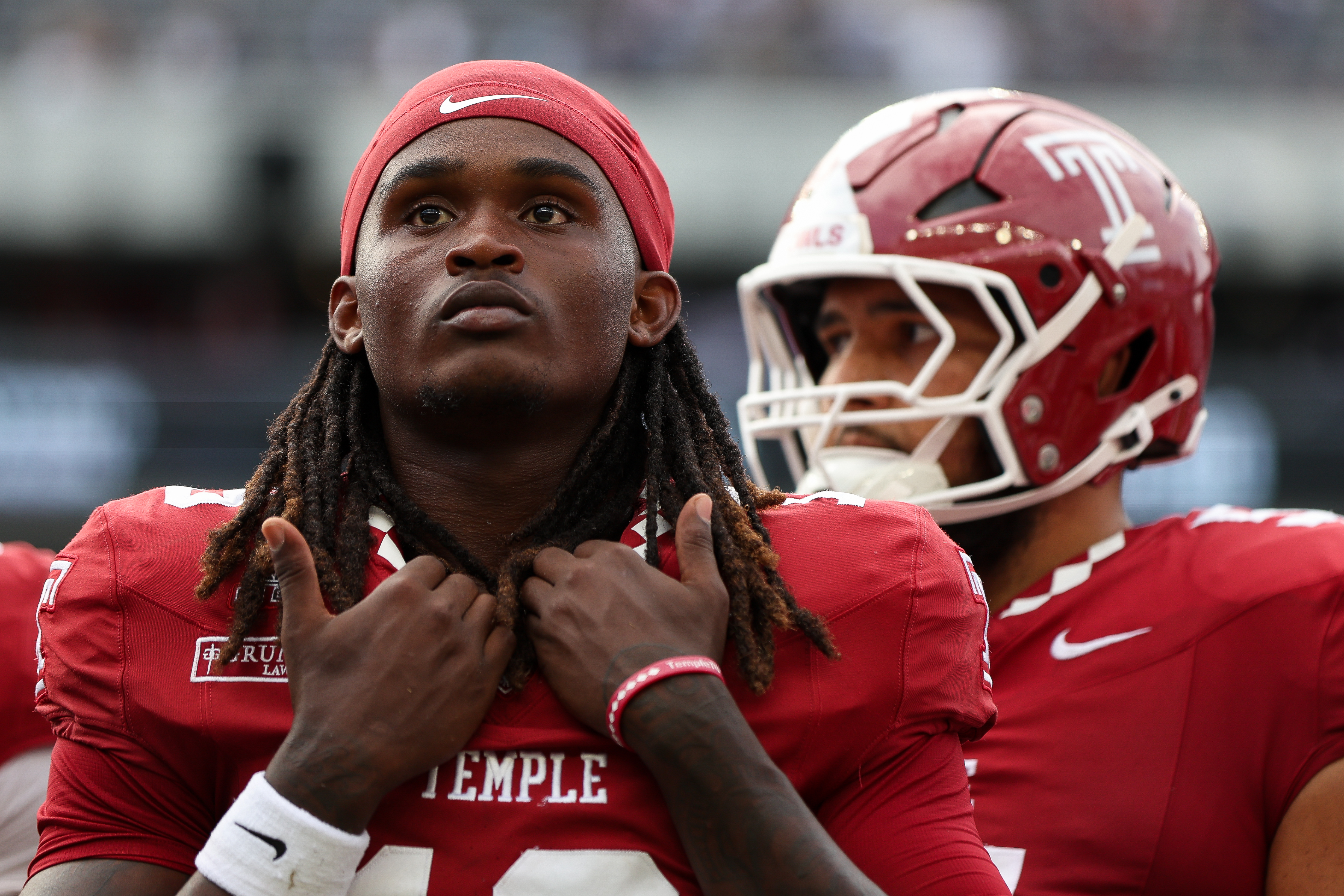
Ajani Sheppard is getting all of Temple’s first-team quarterback reps ahead of Friday’s game.Isaiah Vazquez / For The Inquirer
Sheppard’s flock: Temple will turn to quarterback Ajani Sheppard against Army.
From Eagles to Hawks: St. Joseph’s men’s basketball coach Steve Donahue is a familiar face for one Hawks recruit.
🧠 Trivia time answer
We asked you: Which tight end holds the record for the most single-season receiving yards in Eagles history?
Answer: C: Pete Retzlaff. Retzlaff, who played for the Eagles from 1956 to 1966, had 7412 career yards — the second-most receiving yards by any Eagle — on 452 catches with 47 touchdowns.
What you’re saying about Zach Ertz
We asked: What is your reaction to the Eagles signing Zach Ertz?
I always liked, respected and rooted for Zach, even after he was traded by the Eagles. Zach, and his wife Julie, truly embraced the culture of the team and the city. I’m glad that he will get a chance to end his career back in Philadelphia and I wish him good health and much success on the field. —Jim V.
Hopefully he’s not past his time being an effective target. His experience should help. — Tom G.
Fantastic! Welcome home Zach! The best tight end in Eagles history! — Bob A.
Good decision. Other two tight ends are blockers, Ertz always could catch. — Bill M.
To grab a guy from out of nowhere there could not be a better choice than Zach. An Eagle hero and who can ever forget that 11 yard crucial SB TD from Foles that must have been reviewed 20 times. And also his 6 other catches for a total of 67 yards. You have to assume that he is in great shape if the Eagles are seriously going to bring him back. No tight end would we rather have than Zach. — Everett S.
I was very disappointed when Ertz left for Arizona. He has always been an elite tight end as well as a positive influence in the clubhouse. Never a negative word was attributed to him. While sorry that Goedert went down with his injury, I look forward to seeing Zach on the field again. — Nick S.
While a feel-good story, reunions with players past their prime rarely work out. Zach will be new to the system, did not participate in any training camp and is coming off a serious injury. No YAC (yards after catch) Zach will be challenged in this new system, whereby the tight end will be counted on to both block and take passes across the middle. Hope this works out, and Dallas Goedert isn’t out long-term. Troubled that Howie could not find a younger journeyman. — Bob C.
What a GREAT pick up. Love to see to see to old boy back home. —Nathaniel G.
The signing of Zach Ertz to the Eagles roster doesn’t just mean a bandaid while Dallas Goedert is out. It is the addition of a future Hall of Fame tight end who started a Super Bowl winning career right here in Philadelphia as a draft pick from Stanford back in 2013.
Thirteen years later — he’s still a force at the position with excellent hands, size, and speed. He isn’t just a reliable option at the position — he’s also a veteran presence that can mentor younger talent like Eli Stowers. And did I mention that he is a Super Bowl LII champion? One with the Eagles, that is. — Michael L.
We compiled today’s newsletter using reporting from David Murphy, Devin Jackson, Mia Messina, Scott Lauber, Jonathan Tannenwald, Finn Courtney, Jackie Spiegel, Mike Livingston, and Conor Smith.
By submitting your written, visual, and/or audio contributions, you agree to The Inquirer’s Terms of Use, including the grant of rights in Section 10.
Thanks for reading along! I’ll be back in your inboxes tomorrow. — Maria
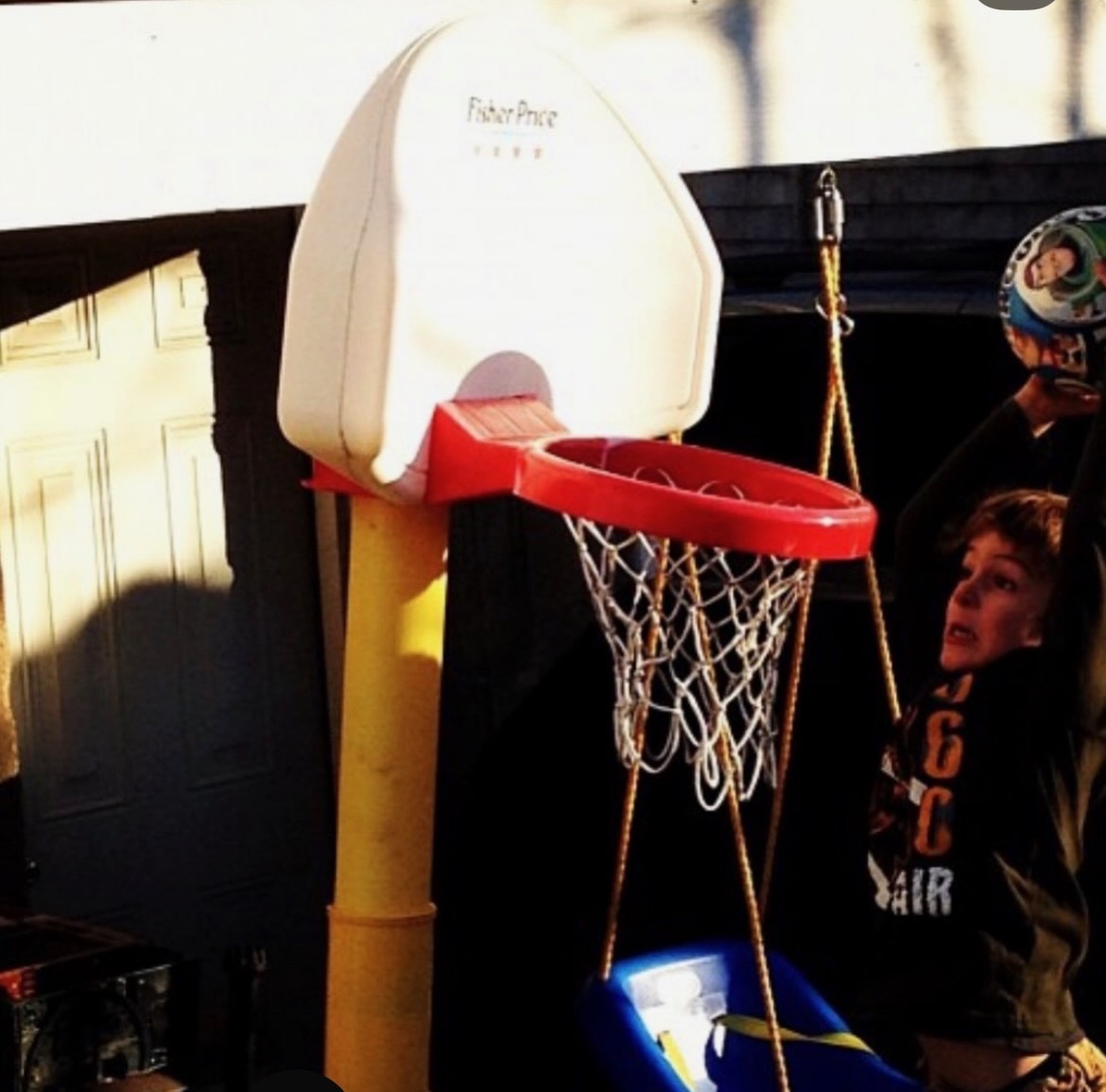
Silas Graham’s first basketball memory came from the inside of a penalty box.
His father, Nat Graham, was an assistant coach for Boston College at the time. Along with hosting basketball games, the Eagles’ Conte Forum doubles up as a hockey arena. When the hardwood is placed over the rink, the penalty box remained, and it was the perfect place to put a rambunctious toddler.
It was easier to keep Silas contained when he couldn’t walk, Nat remembers. Silas would crawl by his father’s feet while Nat ran drills as an assistant at Cornell — one of his first coaching stops. With Nat on the staff, the Big Red made March Madness appearances in 2008, 2009, and 2010. In diapers, Silas attended all three tournaments.
“It was such a part of his life at that stage,” Nat said. “He idolized the guys. By the time he was walking and talking, I can remember him playing in the living room and pretending to be the guys on the team.”
After a four-year stint at Boston College, Nat coached at Penn as an assistant from 2014 to 2025. Coaching alongside his father at Cornell, Boston College, and Penn was Steve Donahue. Silas and Donahue, now the head coach at St. Joseph’s, developed a strong relationship, and it continued once Silas picked up basketball.
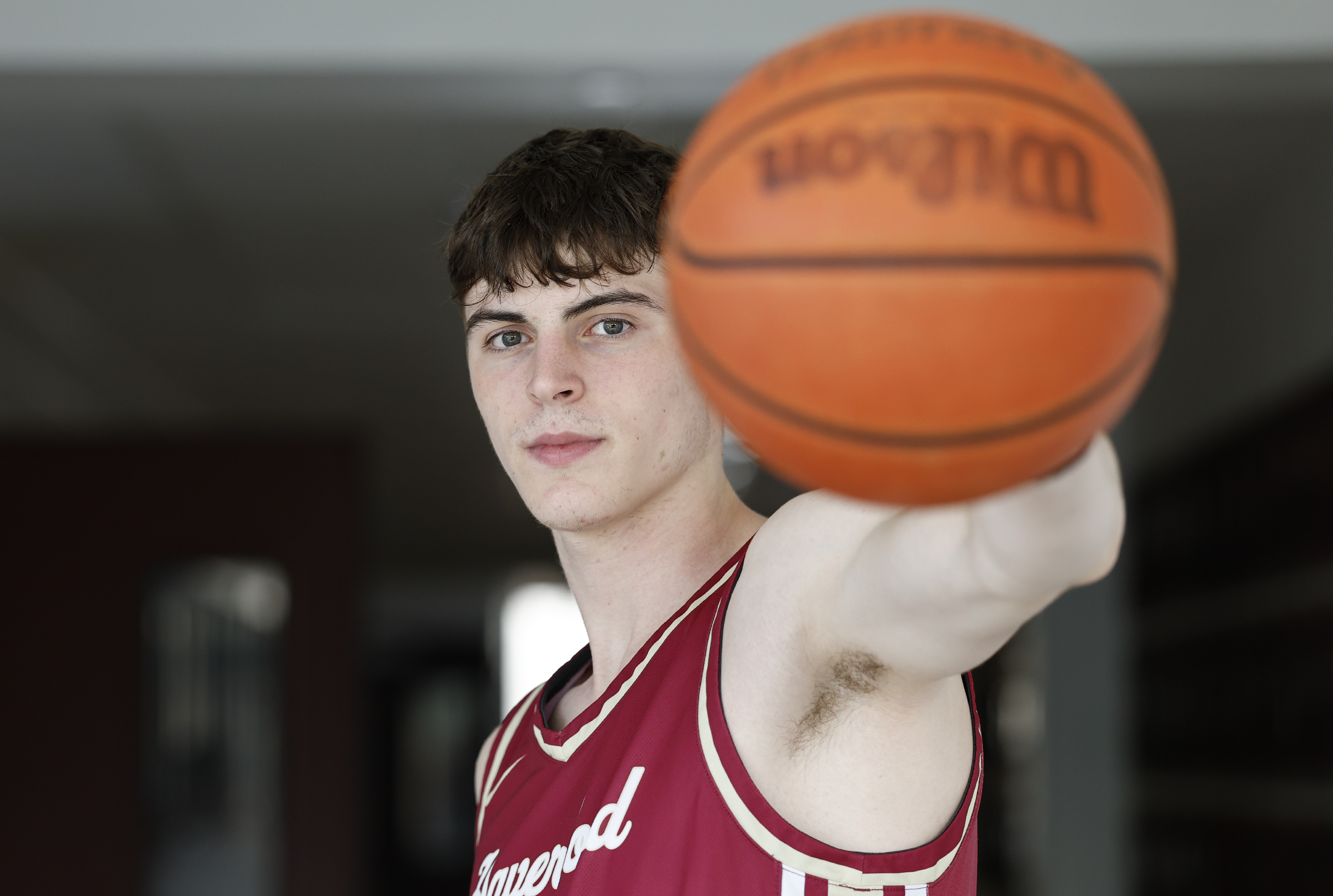
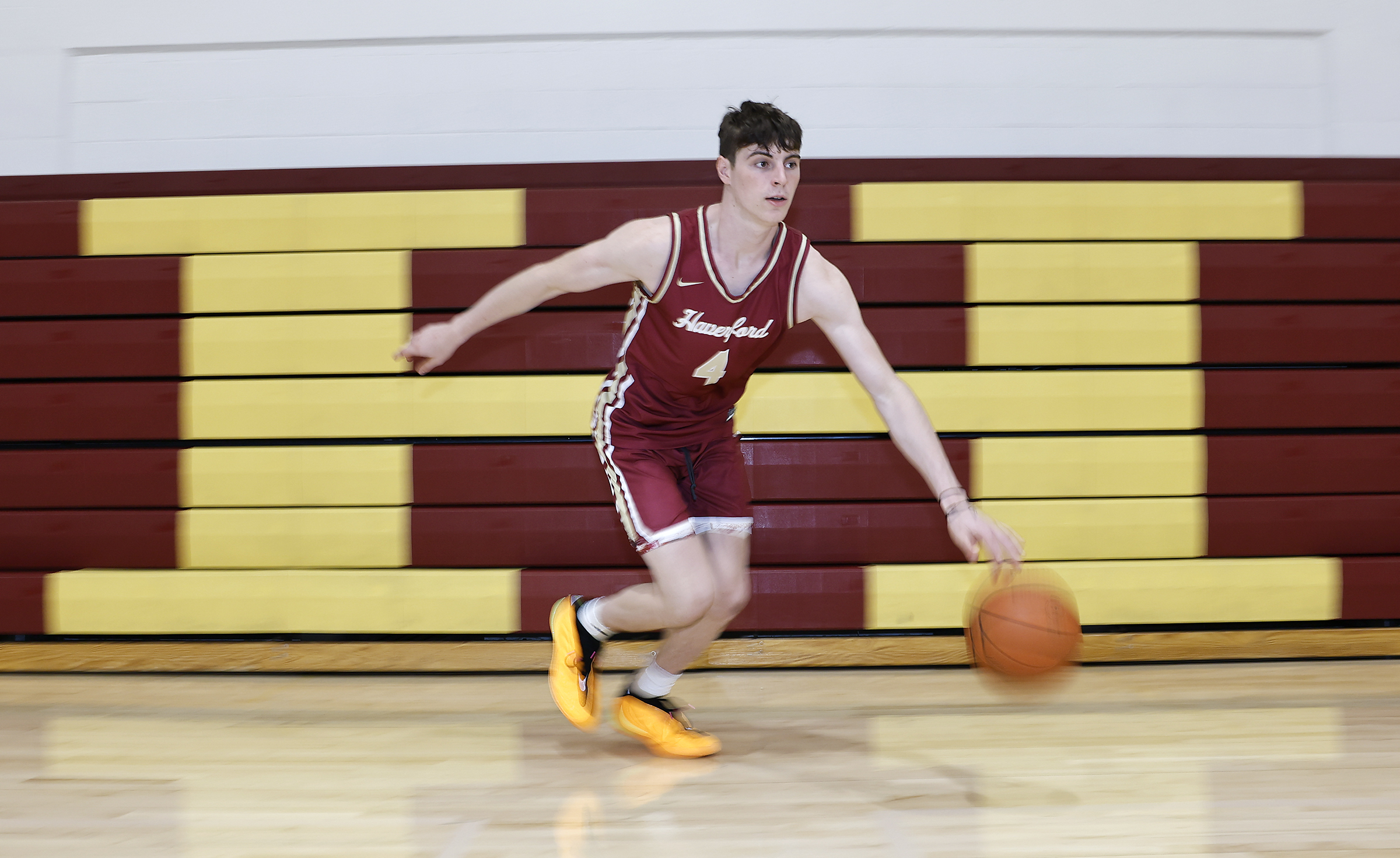
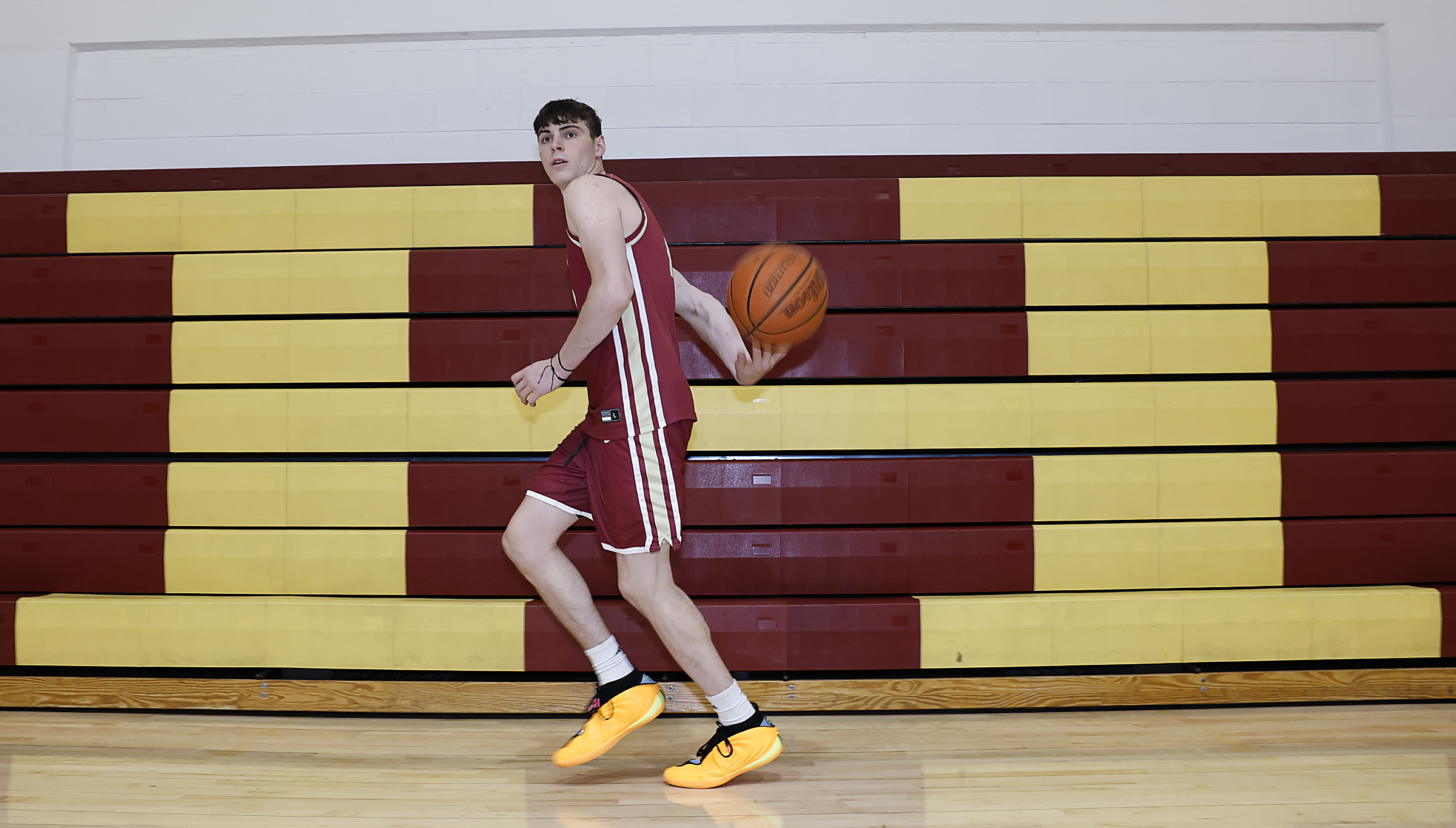
Last year, Silas — now a 6-foot-4 senior guard at the Haverford School — received scholarship offers from Notre Dame and Stanford. However, he gravitated toward Hawk Hill because of his familiarity with the program’s head coach. He announced his verbal pledge to St. Joe’s on Aug 4.
“I don’t need to build a relationship with Coach Donahue,” Silas said. “He can coach me, and I’m going to understand that it’s not the same relationship that it was before, and that he’s going be tougher for me, and I have to be prepared for that.”
Silas Graham committed to play basketball for St. Joseph’s.Yong Kim / Staff Photographer
Silas enters his senior year as the Fords’ all-time leading scorer. Last season, he averaged 20.7 points, 9.1 rebounds, and 3.1 assists. 247Sports ranks Graham as the second-best player in Pennsylvania, trailing just Archbishop Wood’s Jaydn Jenkins in the class of 2027.
“I never take it for granted how coachable he is and what a joy [Silas] is to coach,” said Fords coach Bernie Rogers. “Forget all the points and the wins. He’s enjoyable to coach every day and we don’t take that for granted.”
‘Seeing how he operates’
Sitting in the Haverford School bleachers following a team workout, Silas wore a pair of red Cornell basketball shorts. After being dismissed by Penn following the 2024-25 season, Nat returned to Ithaca to serve as an assistant last season.
But just like Donahue, Nat found himself back in the Big 5. This summer, Nat was hired by Drexel to coach on Zach Spiker’s staff. In the near future, Nat will likely see his son on the opposing sidelines of a Big 5 matchup. In the meantime, he has enjoyed coaching Silas during summer runs at Drexel’s Daskalakis Athletic Center.
“We would play with some Haverford kids,” Silas said. “My dad [has] never really been a coach on one of my teams, so it was kind of cool to see that. Obviously he likes to give me pointers about myself, but even him just telling other guys what to do and seeing how he operates basketball-wise is nice.”
Silas Graham grew up around basketball with his father coaching at the college level.Courtesy of Nat Graham
As a child, Silas rarely responded well to his father’s postgame pointers — and Nat offered plenty.
“I have a friend who’s a trained musician,” Nat said. “He says when he goes to concerts or he goes to a small bar with live music, it’s hard for him to enjoy it because he’s always looking at it critically, and I think the same is true for coaches.
“I can’t turn the coach off. There’s things I see that no one else here sees, and I can’t not tell you. But that process was very difficult. I think in the long run, it may have been beneficial, but it’s not easy as a kid.”
Eventually, Nat broke through. Silas no longer brushes off his father’s criticism and welcomes the additional coaching. Last season, Nat attended two Haverford games while living in Ithaca. Silas is looking forward to having him back in the bleachers during his final high school season.
‘Want them to be well-rounded’
With the recruiting process behind him, Silas is exploring who he is outside of basketball. Nat has long given Silas and his two other children the support to so.
“As much as I love basketball and I can be on them about basketball stuff, I want them to be well-rounded, thoughtful [people],” Nat said. “More developed overall humans than sometimes can happen with sports people.”
Silas has watched his father develop himself outside of basketball.
Off the court, Nat is a committed racial justice advocate. He has written about several racial justice topics including white allyship and police brutality. In 2021, as a member of Penn’s staff, Nat sat during the national anthem to bring attention to institutional racism. Silas is taking an African American studies class, where he noted he is one of two white students.
“It’s cool to see another part of history,” Silas said. “Haverford, we say we’re like ‘woke’ and diverse, we don’t really like to go super deep into all that stuff. We kind of stay surface level, so this is the one class gets intense and emotional, but I think I like it. I think it’ll be interesting for me.”
One area of importance for Silas is wanting to help Philadelphia’s homeless population. This, too, is because of Nat. Growing up, Silas would regularly drive through West Philadelphia with his father to Penn’s campus. From his booster seat, Silas saw how homelessness affected the area.
Silas Graham averaged 20.7 points, 9.1 rebounds, and 3.1 assists last season at the Haverford School.Yong Kim / Staff Photographer
“That’s actually another big thing for my dad,” Silas said. “People don’t understand why people are homeless and they blame it all on them. There’s so many other factors that go into that, but like that’s something I took an interest in.”
Silas is looking forward to his future at Hawk Hill, where he expects to play early. He’s also proud to stay in Philadelphia.
“I love the Big 5,” Silas said. “I grew up around it, and I love like the history behind it. So many Philly guys leave now. Even in high school, Philly guys leave now. So l I think it’s cool that I’m one of the guys that stays.”
The Eagles’ depth at tight end was tested early when Eli Stowers and Grant Calcaterra both landed on the injured list before the season began. Two weeks in, the Eagles now are also down starting tight end Dallas Goedert, who suffered a sprained medial collateral ligament in his right knee during Sunday’s win over the Titans.
An old friend, Zach Ertz, reunited with the Eagles on Monday, signing with the team’s practice squad. Before suffering a season-ending injury last year, Ertz, in his age-35 season, finished with 50 catches for 504 yards and four touchdowns in 13 games for the Washington Commanders.
But does Ertz, who turns 36 in November, still have the skills to contribute in an offense that needs production from its tight ends? Here’s what his film over the last two years with the Commanders — and NFL history — says about Ertz, who is 11 receptions away from becoming the Eagles’ all-time leader.
Manning the middle
For the past 13 seasons, Ertz has thrived on targets over the middle of the field, including his last two seasons with the Commanders. According to Next Gen Stats, 90 of his 116 receptions and 919 of his 1,158 receiving yards over the last two years have come between the numbers.
A route the Eagles are familiar with is his in-breaking route that is somewhere between a slant and dig route, and often mirrors a running back angle route out of the backfield. Ertz sets up the route by widening his route to the outside and sharply cutting upfield at an angle, allowing him to break open vs. both man and zone coverage.
The route was especially effective in the red zone, where he scored all 11 of his receiving touchdowns with Washington. On this specific angle route, he scored five of those touchdowns, including against the Eagles in their Week 11 matchup in 2024.
Most common route I saw from Zach Ertz's film the last 2 years is this TE angle/in-breaking route that's in between a dig and slant route. Often when he's isolated on a linebacker or safety, and uses his body to shield off defenders. pic.twitter.com/N2Cp6h2kcc
The big-bodied tight end (6-foot-5, 250 pounds) also thrived on traditional in-breaking routes, where he occupied the middle of the field, finding soft spots in zone coverage.
About a third of his production in Washington came from in-breaking routes: According to Next Gen Stats, Ertz finished with 385 yards on 37 catches on those routes over the last two seasons, including eight of his 11 touchdowns.
Over the last two years, Zach Ertz has had 385 of his receiving yards and 37 catches on in-breaking routes, per @NextGenStats. Was often relied on in such scenarios on third and fourth downs. Uses stair step technique in man coverage to create subtle separation at the top of… pic.twitter.com/OFM1wf0RTe
Though his speed to stretch the field vertically and athleticism to create after the catch are not what they were when he was last in an Eagles jersey in 2021, there is some route-running savvy he brings to his old team. Specifically, Ertz still showed the ability to break open on corner routes downfield, when matched up with safeties or linebackers.
He uses his size to outmuscle smaller defenders and creates bigger target areas to throw the football. He takes his corner routes a few steps toward the middle of the field and breaks out toward the sideline at a sharp angle to allow the quarterback to throw him open. When he generated big gains over the last two years, they specifically came on those corner routes.
Zach Ertz still showed some really good tempo on corner routes with the Commanders. Not going to be a substantial vertical or seam threat for the #Eagles but knows how to create more space with how he stems and sticks these routes. pic.twitter.com/l0GHNASx7O
While Ertz still can thrive as a receiver, he does not bring much as a blocker, an area where the Eagles have struggled through two weeks. Much of his time in Washington was spent as a detached slot receiver on run-pass option plays or as a lead blocker on the perimeter for zone-read runs with Jayden Daniels.
He has not had an in-line blocking role for the majority of his career, and that is unlikely to change in this reunion. But with Goedert missing time, Ertz’s contributions as a pass catcher seemed to be what the Eagles are seeking in the franchise legend.
Aging like fine wine?
According to StatMuse, which has NFL data that goes back to 1932, only three tight ends eclipsed 500 yards in their aged-36 season: Tony Gonzalez (930), Travis Kelce (851), and Antonio Gates (548). Gonzalez repeated the feat at 37 and 38, Kelce appears on track to do so in 2026 at 37, and Gates failed to reach that marker again over his last two NFL seasons.
If you widen the scope, two other players reached 500 receiving yards after their age-35 seasons, and one of those circumstances relates directly to Ertz. Jason Witten, who finished with more than 500 receiving yards in 2017 at 35 years old (560), retired in 2018, returned to Dallas in 2019 at 37, and finished with 529 yards in 2019. He did not reach 500 yards with Las Vegas in 2020.
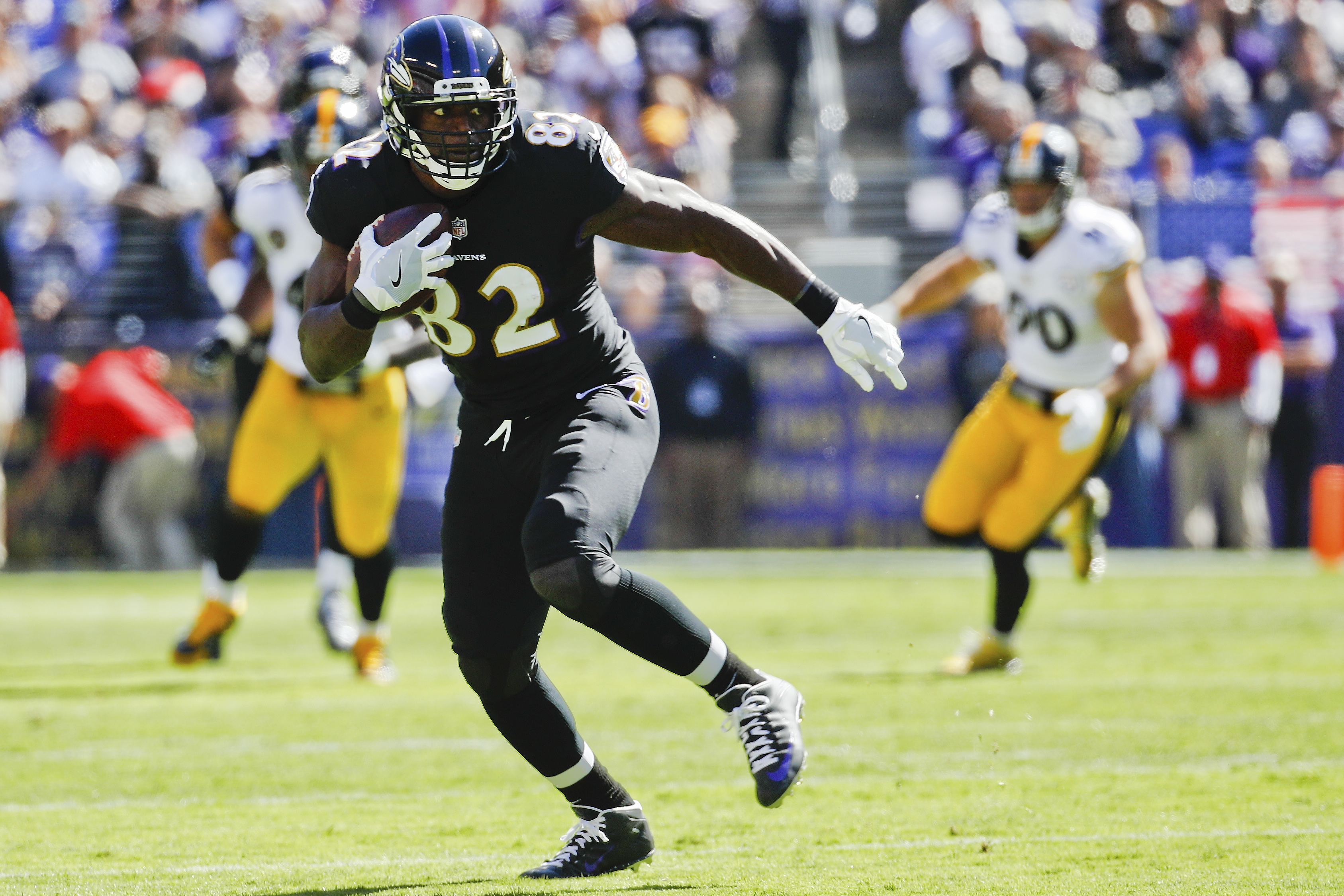
Benjamin Watson (82) had a late-career renaissance but like Zach Ertz, battled injuries in the twilight of his career. Patrick Semansky
The other player in that category was Benjamin Watson, who had a career-best 825 yards at age 35 in 2015 with the Saints, but missed all of 2016. After returning at age 37, Watson finished 2017 with 522 yards on 61 catches, but he did not cross that threshold with the Saints in 2018 or Patriots in 2019.
Injuries in 2022 and 2023 with the Cardinals prevented Ertz from reaching that marker, but Ertz played 17 and 13 games over his last two years, his most games in a two-year span since 2020 with the Eagles and 2021 split between Philly and Arizona.
Gonzalez, Kelce, Gates, Witten, and Watson stayed remarkably healthy, though the latter faced injuries late in his career. With the exception of Kelce, they were two-way players as blockers and receivers. Ertz has missed time with injury in nine of his 13 seasons, suffering season-ending injuries in three of them, and does not offer much in the blocking department beyond doing so in space.
Previous Goedert replacements
When Goedert has been out of the lineup over the last four seasons, the Eagles have traditionally not relied on the backups for heavy receiving workloads. In 2022, when Goedert missed Weeks 10 through 14 with an injury, Jack Stoll caught seven passes for 74 yards in that time frame, while Calcaterra caught four passes for 41 yards.
In 2023, when Goedert missed Weeks 10 through 12, Stoll had two receptions for 17 yards, and Calcaterra was inactive for two of those three games.
In 2024, when Goedert missed Weeks 6 through 8, then 13 through 16 with injuries, Calcaterra had an increased role, catching 14 passes for 165 yards and one touchdown
And last season, when Goedert missed only one meaningful game, Calcaterra had one catch for 6 yards in a Week 2 game in Kansas City.
Some stats from Zach Ertz as his return to the #Eagles becomes a reality:
— All 11 TDs with the Commanders over the last 2 years have come in the red zone. — Has caught 71% of his targets in the last 2 years. — His +25.0 receiving EPA in 2024 ranked ninth among all TEs (per…
This offense under Sean Mannion requires more from tight ends than previous iterations of Eagles offenses, which made Ertz’s signing necessary, though learning the scheme could take time for the 13-year veteran to make a significant impact on the passing game.
Expectations should be set low for Ertz, considering his age and return from a significant injury. But if the tight end can look somewhat like he did as a receiver last season, when he contributed a throwback performance against the Broncos one game before his injury (10 catches, 106 yards) the Eagles may get more than a feel-good story.