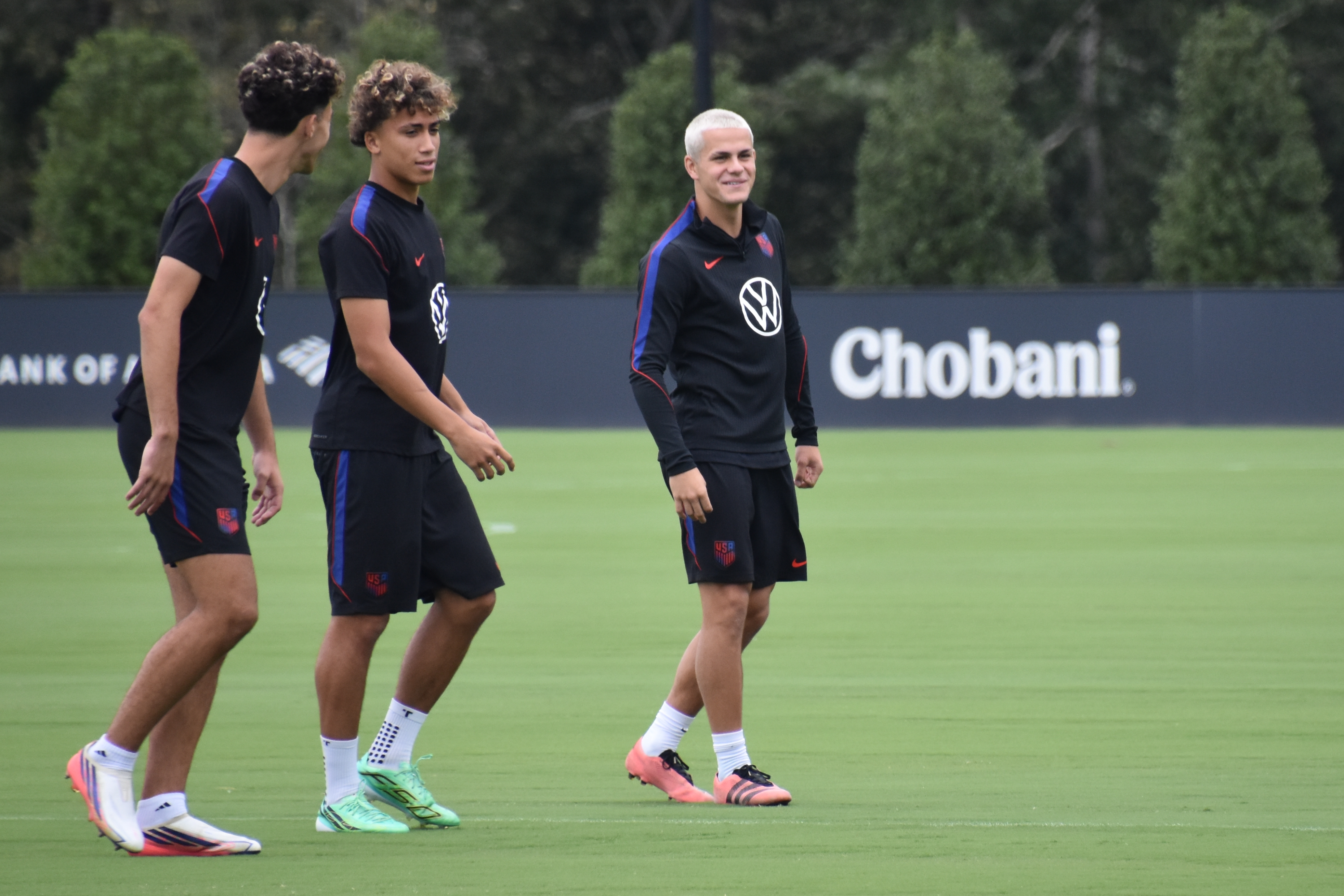
Category: Sports

  • A Bridesburg basement and three older brothers helped Cavan Sullivan become the future of U.S. Soccer

    A Bridesburg basement and three older brothers helped Cavan Sullivan become the future of U.S. Soccer

    The basement on Almond Street didn’t have much, but it had one of those old couches that every basement needs.

    “The one that you know is comfy just by looking at it,” Quinn Sullivan said.

    The Bridesburg basement, half of which was unfinished, became a clubhouse for the four Sullivan brothers. The miniature soccer net was all Quinn, Declan, Ronan, and Cavan needed to fill an afternoon. Cavan, the youngest of the four, did whatever he could to keep up as he played in a diaper and learned to volley a ball with both feet when he was just 18 months.

    It was impossible to know that the seeds of Cavan’s career — perhaps the most promising in the history of American soccer — were being planted on Almond Street where Brendan and Heike Sullivan never told their sons that there was “no ball in the house.”

    The boys caromed soccer balls off the living room radiator, played football in the kitchen, broke light bulbs in the basement, and got into some scraps. The parents were just letting their boys play, their mom said.

    But there was something different about the toddler who knew how to catch a football.

    “Like you throw it at him and he has his hands up,” Brendan said. “He’s not catching with his chest. He’s catching it with his hands. He caught a baseball with his glove. So you know but you don’t know the extent to how different it is.”

    The soccer world soon saw what the Sullivans saw in their basement.

    Cavan was deemed a prodigy when he was 6 years old and European powers scouted him before he was a teen. He signed his Philadelphia Union contract when he was 14, giving him the chance to play professionally alongside Quinn. He has an agreement to join England’s Manchester City next year when he turns 18, and is training this week for the first time with the senior U.S. men’s national team.

    Even more? He’s a safe bet to play for the U.S. in the 2028 Olympics and then the 2030 FIFA World Cup.

    The kid from Bridesburg could be the future of American soccer. It started on Almond Street.

    “My dad would be in the net and we would just shoot on him all day, whenever we got the chance,” Cavan said of that old basement. “You fall in love with the game in moments like that.”
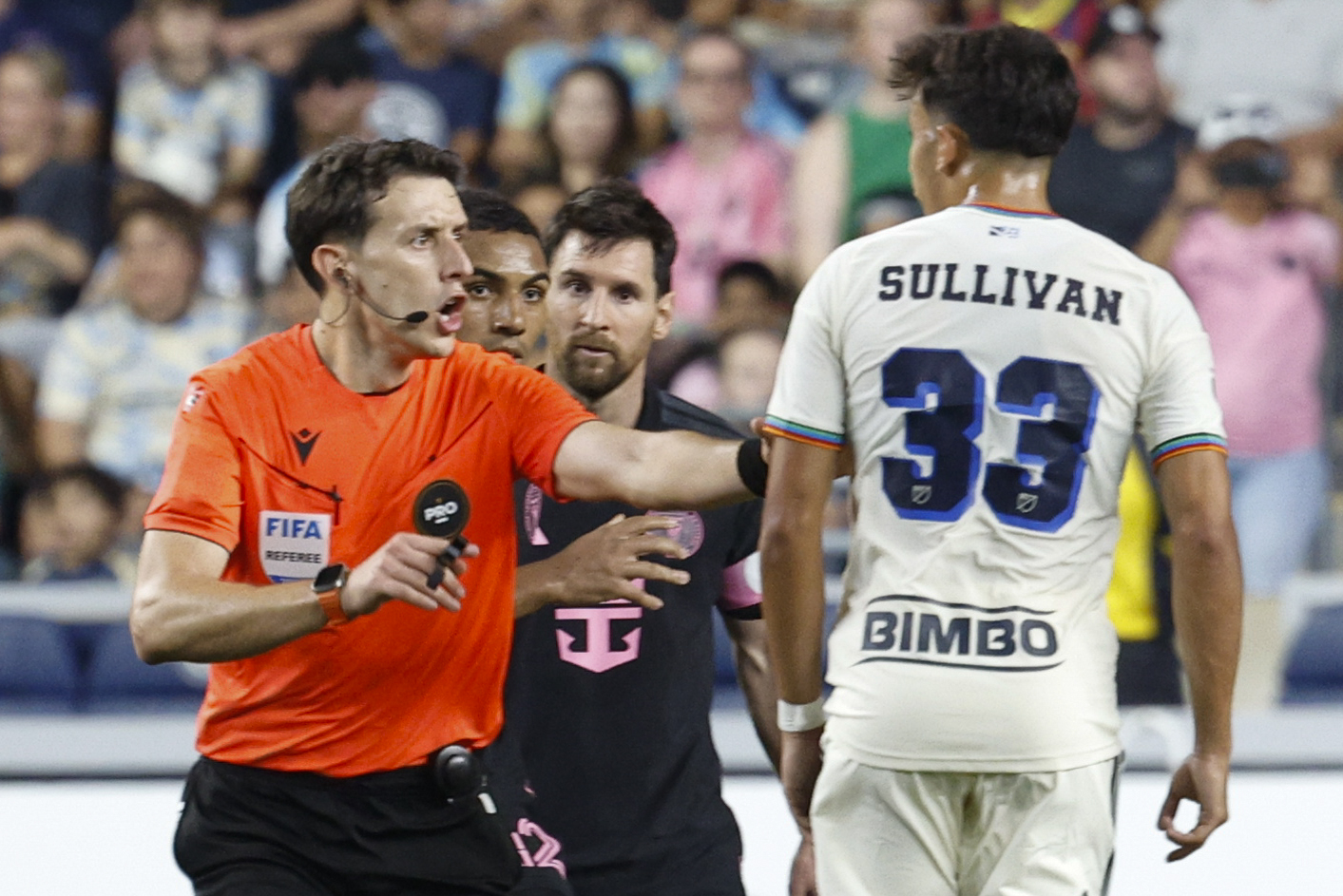
    The Union’s Quinn Sullivan has words with Miami’s Lionel Messi during their match on Aug. 19 at Subaru Park.Steven M. Falk / For The Inquirer

    No fear

    It happened so fast that the Sullivans couldn’t really tell what happened from their seats at Subaru Park. Did Cavan get punched? Did Quinn just go nose-to-nose with Lionel Messi?

    Then they watched the replay of the fracas between the Union and Inter Miami, a skirmish that felt like the ones the parents — who met as college soccer players at Penn — used to break up in the backyard.

    A Miami player tried to step over a fallen Quinn — “You got the wrong guy, buddy,” his dad said — before Quinn hooked his leg and took him to the ground like a UFC fighter.

    A swarm of Miami players gathered around Quinn as Cavan sprinted across the field like his brother’s tag-team partner. Quinn used to spend hours on his computer cutting up Cavan’s game tapes and posting the highlights to YouTube. That was support, Quinn said. So of course the little brother had his back last month.

    “It’s like ‘You better go in,’” said 18-year-old Ronan, who plays at St. Joe’s with his twin brother, Declan. “He would’ve gotten s— if he didn’t. It’s a lot about where we came from. That’s Northeast Philly right there.”

    Cavan squared up against a 25-year-old foe who tried to throw a punch at the 16-year-old boy. Both players were sent off and Messi then slapped Sullivan in the head, appearing to reprimand him for taking down the Miami player. Quinn Sullivan, who grew up idolizing Messi, charged his hero and pushed his face against his.

    “I was raised in Philly and you don’t take disrespect,” Quinn, 22, said. “It might sound corny to some people or cliche, but I didn’t like him touching my face and I’m not going to be the guy who falls down. I had to make sure he knew that I didn’t think it was cool.”
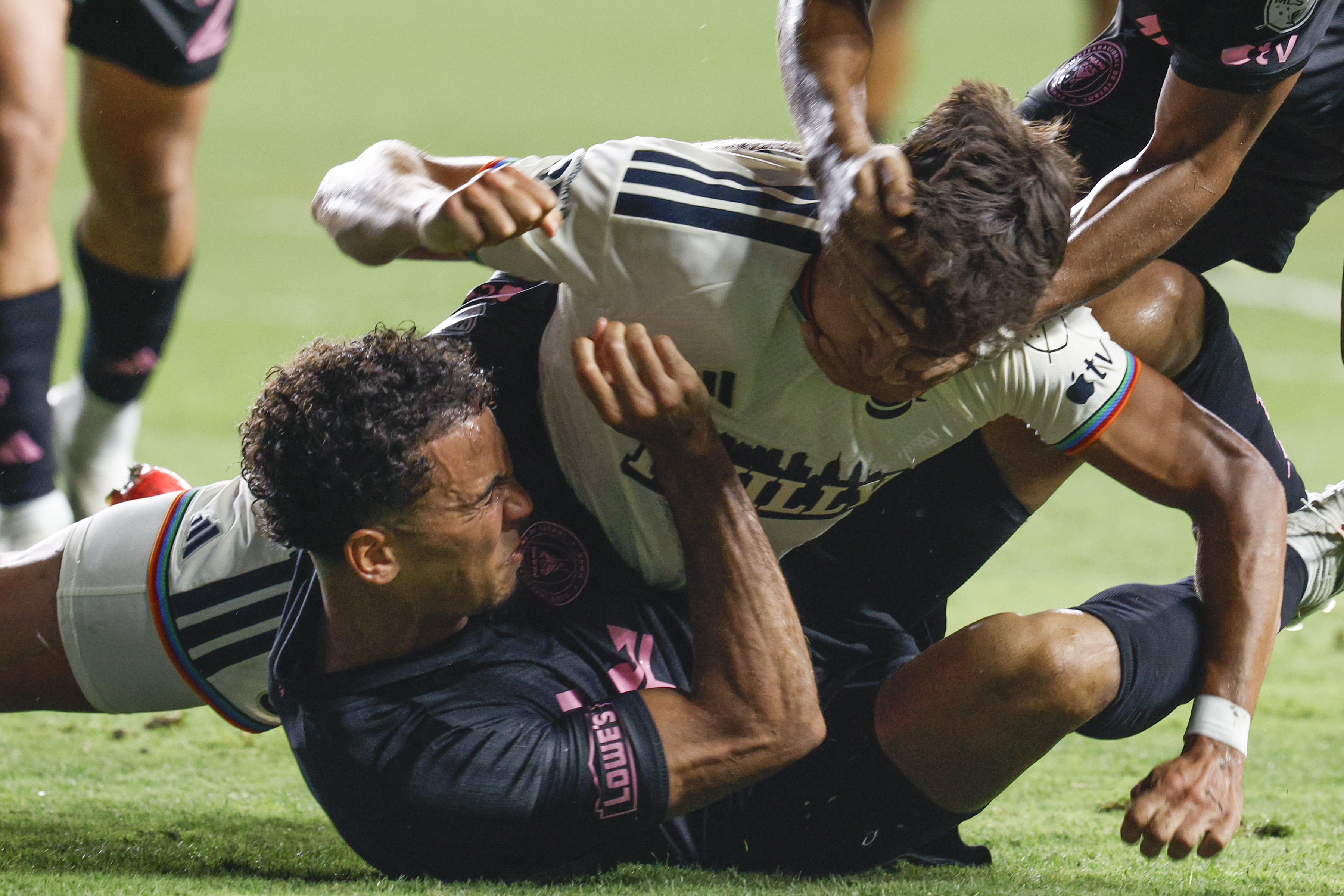
    The Union’s Quinn Sullivan wrestles with Miami’s Ian Fray on Aug. 19 at Subaru Park.Steven M. Falk / For The Inquirer

    It was Cavan’s footwork, speed, and skill that drew the world’s attention. But it is his fearlessness — the mentality that allowed a 16-year-old to run last month toward the fire — that sets him apart.

    “There’s a little bit of a flair, a confidence, an arrogance,” said Taylor Twellman, the former U.S. player who now broadcasts MLS games on Apple TV. “But there’s also a real urgency to win, to compete. For a 16-year-old kid, I can see that there’s a little bit of a dog in him. You know what I mean?”

    And it’s all about where he’s from. His grandfather, Larry, grew up in Kensington and played at North Catholic. His dad grew up in Juniata Park and played at St. Joe’s Prep. His uncle John Albright played at Frankford and his cousin Chris Albright went from Northeast Philly to the World Cup. Those guys were as tough as the cinders they often played on and they passed that grit down like an heirloom.

    For generations, soccer was the sport in the Northeast Philly neighborhoods. And there was only one way to play.

    Cavan always played two years ahead of his age group, which teamed him with the twins and allowed his parents to be at just two games every weekend instead of three. He held his own, just like he did in the basement.

    Eventually, they figured, his age would catch up to him. It never happened, which is what allowed YSC Academy — the school connected to the Union Youth Academy — to see if Cavan could skip two grades and start seventh grade with his brothers. He handled that, too.

    “We never really thought of him as younger,” Declan, 18, said. “I feel like because he was always in our circle, hanging with our friends, he was always like our age in our head. He’s mature for his age and part of that is because he was always around kids who were older than him.”
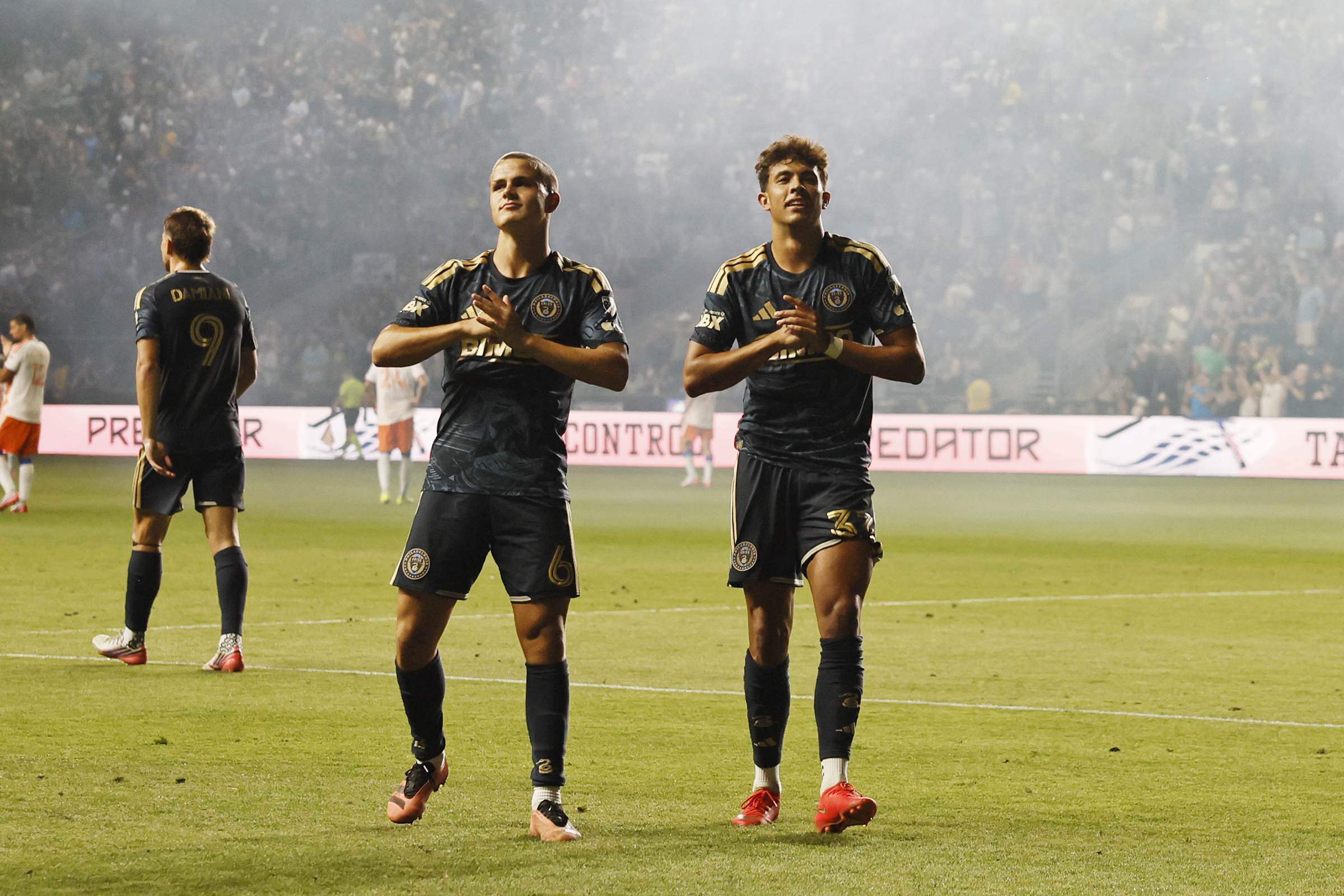
    The Union’s Cavan (left) and Quinn Sullivan celebrate Quinn’s goal on Sept. 9 at Subaru Park.Elizabeth Robertson / Staff Photographer

    Brendan coached Cavan’s first team at Lighthouse, which the son described as a group of “aggressive and eager kids” who just went out and played. They didn’t have private training but Cavan had a dad who was committed to teaching them the things he learned from his dad.

    Brendan drilled his sons in Ocean City, often turning two-hour sessions into four-hour slogs while Heike waited to go to the beach. They played games their dad invented like “Gauntlet” and “Thirty Seconds of Hell” and debate what was worse: the burning of your quad muscles or the ringing in your ears from the fiery coach.

    Cavan Sullivan, front, with his brothers Declan, Quinn, and Ronan and their father Brendan at Newt’s Field in Fishtown.Heike Sullivan

    They practiced more on the beach and the boys remember being the last ones to leave travel tournaments while their dad gave instruction long after the final whistle. He was intense, but the boys learned to love it. Quinn said his dad always told his sons he loved them, even when they fell short. He taught his sons to play hard.

    And that’s why the brothers from Almond Street weren’t afraid of Messi and Co.

    “I love that Quinn didn’t back down in the face of Messi, a guy he has tremendous respect for,” Brendan said. “But you’re still just a dude on the field, same as me. We laced our boots up the same way today. I’m not backing down.

    “The old saying goes, ‘If you’re looking for a fight from someone from Philadelphia, you’re more than likely going to get it.’ That’s how we’re raised here. You don’t back down. Stand your ground.”
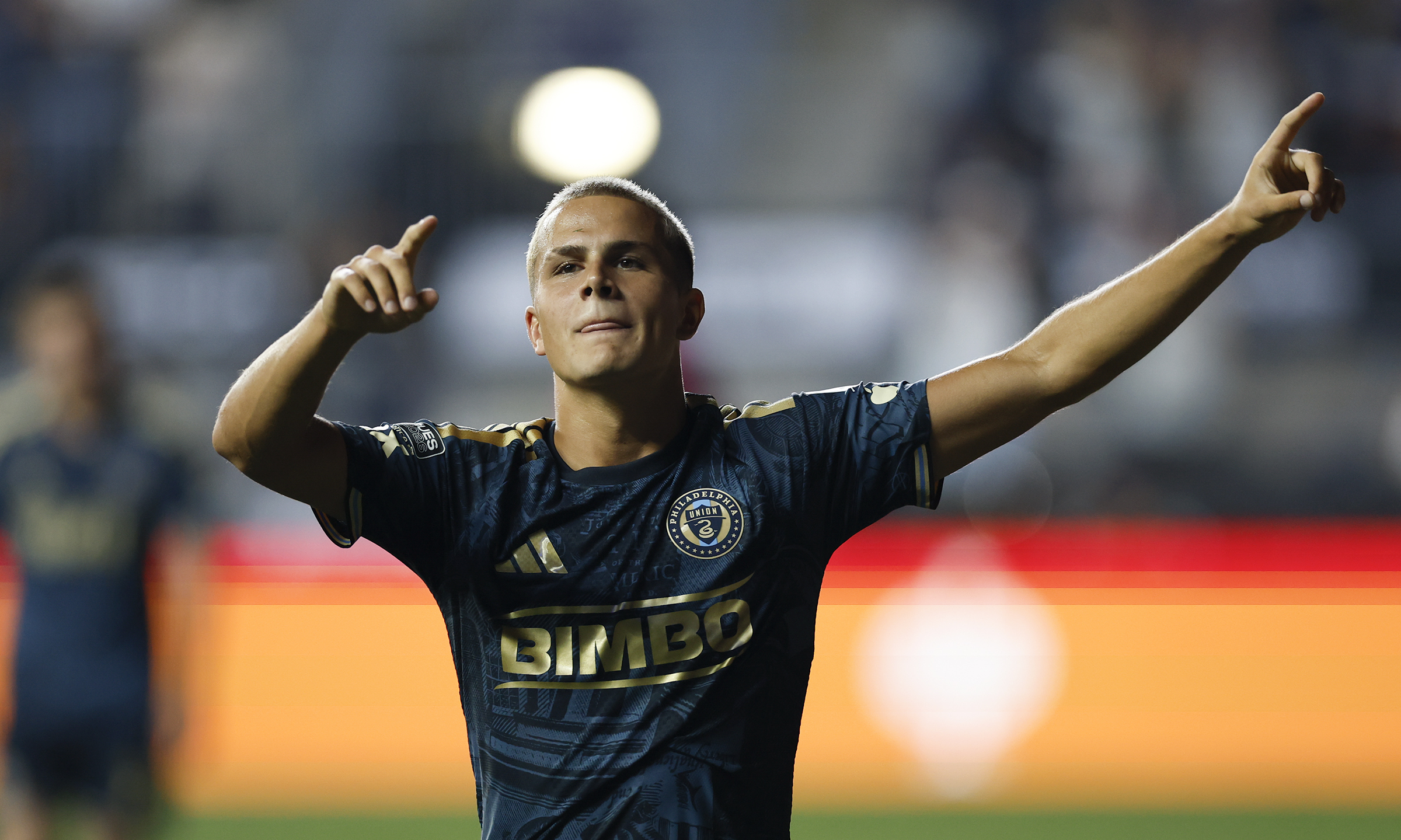
    The spotlight on Cavan Sullivan has become in recent months as bright as his bleach blonde hair.Yong Kim / Staff Photographer

    Bleached super star

    Cavan left Sunday for Atlanta, where he’s training for the first time with the U.S. team and beginning a journey that could make him the star of the next World Cup. He’ll likely earn his first national team appearance before returning to the Union.

    But before he boarded his flight, Cavan needed to get his hair right. So his mom, who used to bleach her husband’s hair in the 1990s when he played pro soccer in New York, got to work.

    “I looked like a Duracell battery,” Brendan said as his old hair was more copper than blonde. “Cavan gets the extra love.”

    Cavan looks the part of a star with his bleached hair, eyebrow slit, and gold chains. He breezes through interviews like he beats defenders as no question seems to trip him up. He’s been in modeling campaigns for non-soccer brands, was photographed this summer by Annie Leibovitz, and has more than 400,000 followers on Instagram.

    He plays the game like a showman and often tops goals with choreographed celebrations like the time he threw chalk in the air as an homage to LeBron James.

    “That’s him,” said Union teammate Frankie Westfield, who grew up in Morrell Park and is with Cavan with the U.S. team. “That’s how he performs. Even in the locker room and in training, he’s dancing around. I don’t want to say he doesn’t care because he cares so much, but I think just playing loose and free makes him what he is. He brings a whole new vibe.”

    Cavan has the makings to be more than just a soccer star.
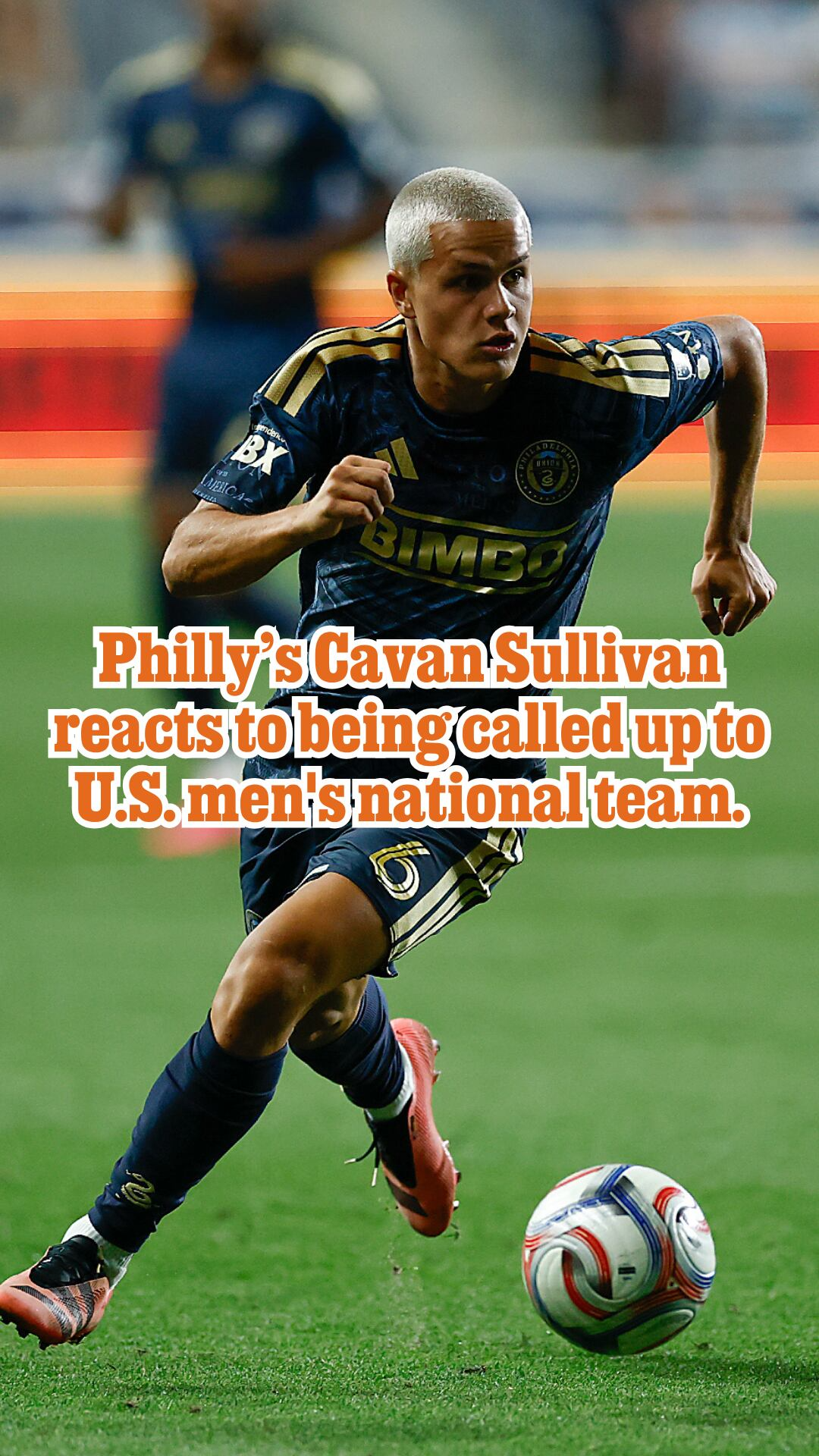
    Philly's Cavan Sullivan reacts to being called up to U.S. men's national team.
    Video: Philly’s Cavan Sullivan reacts to being called up to U.S. men’s national team.

    The spotlight on Cavan has become in recent months as bright as his hair. But the kid seems comfortable in it, managing the attention with ease despite being just 16.

    “I think I just understand that I haven’t really done anything yet,” he said. “There hasn’t been anything major that I’ve done. I’m still trying to prove myself and make my mark on the city and on the club. I always want more. I always want to be the best. When you focus on it that way, it’s natural to just avoid all the other stuff.”

    Quinn remembers driving Cavan home from their Union practice and how the younger brother would be breaking down footage from the session and sending clips to his dad for feedback. He’s always thinking about the game.

    He doesn’t count his social media likes or chase clout and even remarked to his brother how he couldn’t get his latest ridiculous goal — a beautiful backheeled tip — off his timeline.
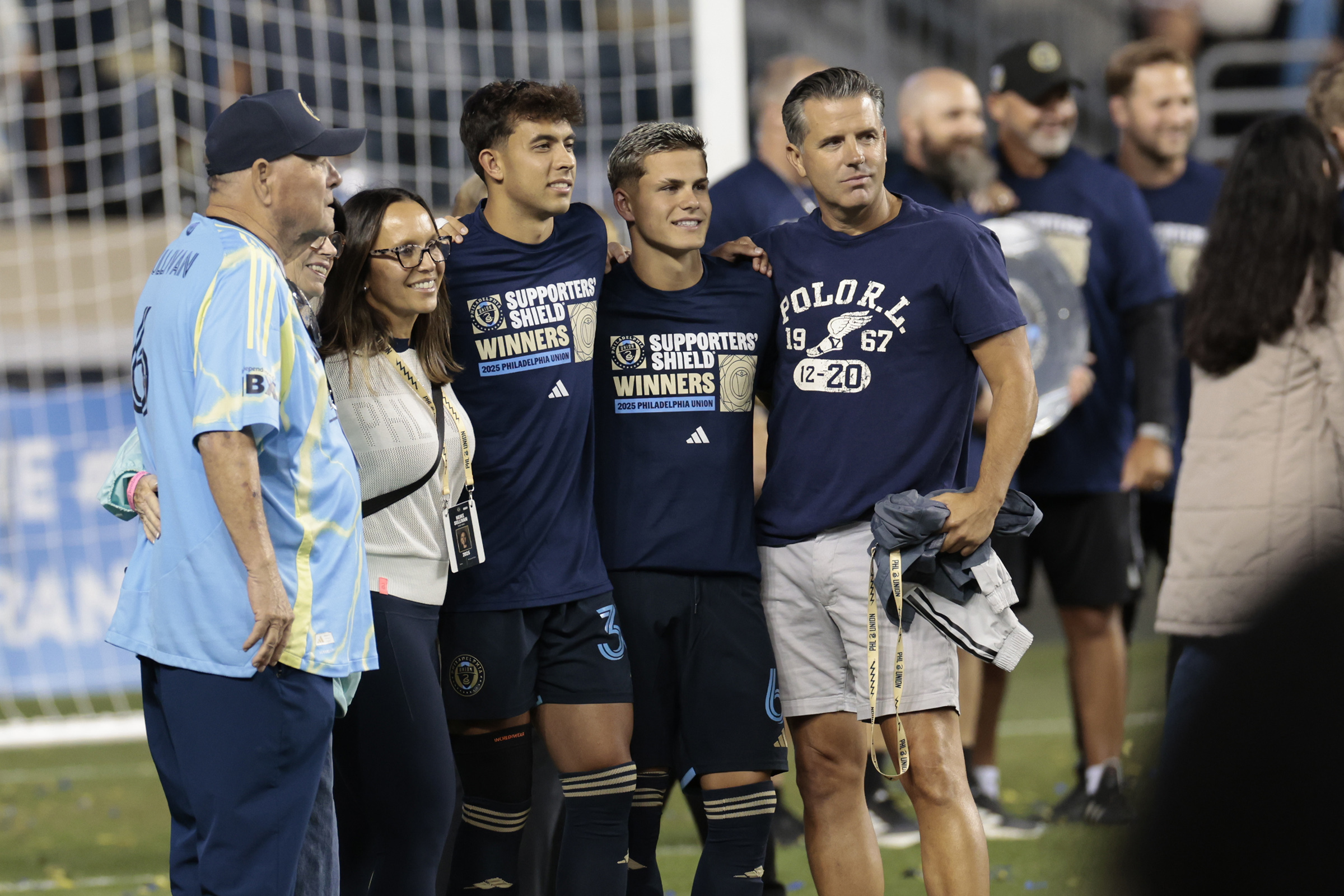
    Quinn and Cavan Sullivan pose for a photo after a Union victory over New York City FC last season.Elizabeth Robertson / Staff Photographer

    “I was like ‘Dude, you have to hit the not interested button,’” Quinn said. “But he deals with it well. It comes with the game. It comes with being the type of player he is.”

    Perhaps Cavan’s ability to shrug at attention goes to how his parents treated him and his brothers. They talked to their kids about the games on the way home and then treated them like kids when they walked in the front door.

    Cavan could be playing next year in Europe, but he still has chores at home. And the Sullivans never posted — “I did a couple times,” Heike admitted — about their children on social media.

    “Why would you?” Brendan said. “There’s no need to talk about how you won a tournament or had a hat trick. You don’t brag about anything. This is his normal. It’s not normal to us, but he looks at it as his normal. So it’s weird for him if this is his normal. But then again, we don’t talk a whole lot about it. We never gave him media practice. He just knows, ‘Don’t sound like a jerk.’”

    Cavan never played the game for attention or accolades. He became a child star, but he wasn’t groomed for it. His parents declined interviews over the years and other media projects.

    The Sullivans knew they had a phenom, but they didn’t publicize him, not even on Facebook. They treated him like a kid, his mom said, because he was a kid. It was that simple.

    “This wasn’t something we were seeking out,” Heike said. “And maybe that attitude prepared him to not make a big deal out of it.”
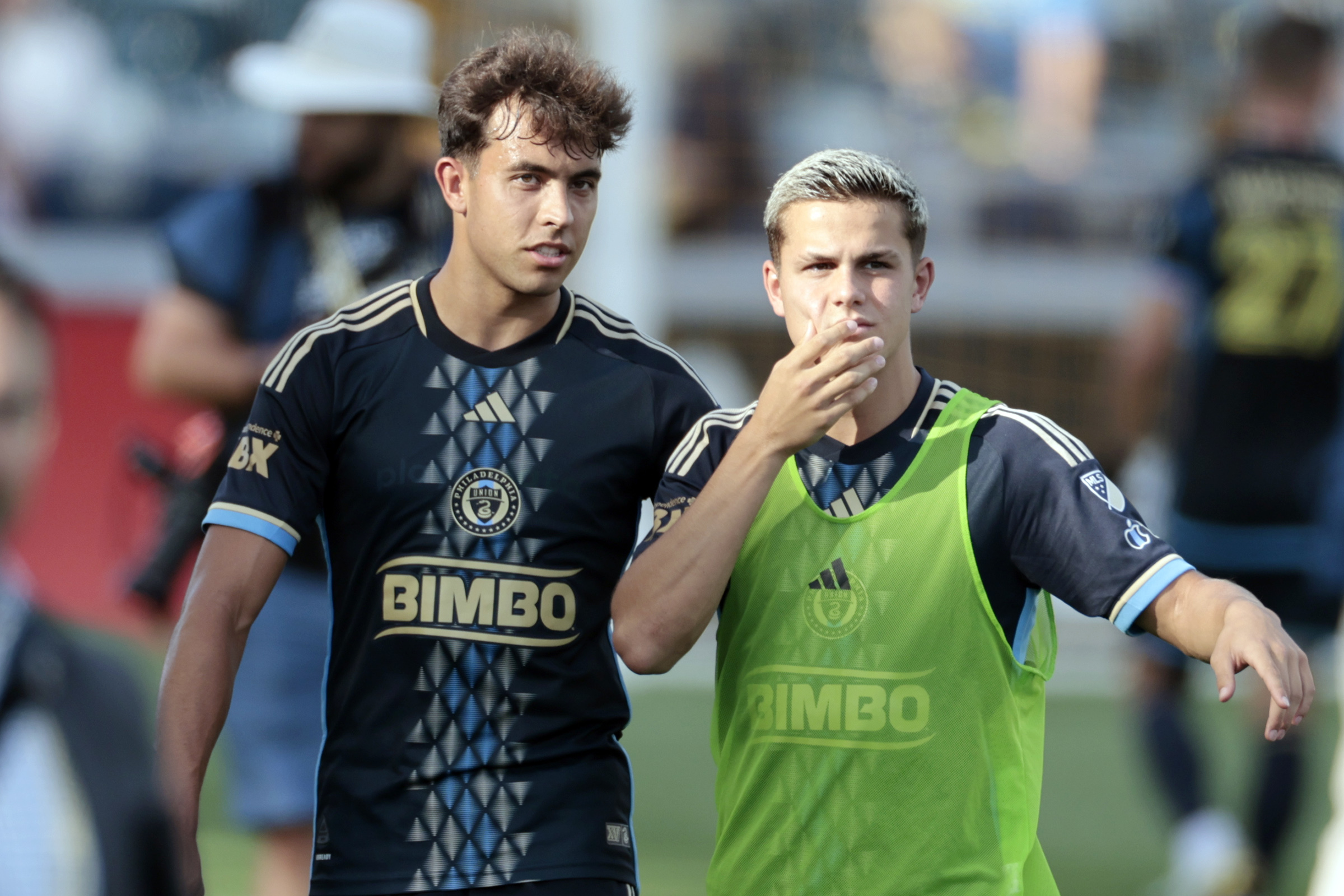
    Older brother Quinn (left) has Cavan Sullivan’s back on and off the pitch.Elizabeth Robertson / Staff Photographer

    Shaped by Philly

    The Sullivans left Almond Street in 2018 for Norristown and the allure of a driveway, a backyard, and extra bedrooms. There’s not much to complain about. But they still miss things about the old neighborhood.

    There was a corner store where a dollar was enough to score a handful of candy. Brendan can still taste the polish kielbasa and his sons remember the fear they felt as a 4-year-old walking alone around the corner to their grandparents and the pride of making it there safely. There was Wiffle ball and basketball with the neighbors, riding bikes through the cemetery, and playing for hours on the sidewalk.

    “Simple stuff,” Brendan said.

    Philadelphia’s soccer scene was born in neighborhoods like Bridesburg, where European immigrants brought the game decades ago when they came to work in factories along the Delaware River. Rowhouses — just like the one on Almond Street — produced pioneers like Walter Bahr and Benny McLaughlin. The Northeast is where Chris Albright and Bobby Convey, teammates on the 2006 U.S. World Cup squad, grew up. The cinder fields was where Don D’Ambra and Dave MacWilliams made their mark.

    The same neighborhood that shaped Sullivan is what powered Philadelphia soccer for generations. He’s only 16 years old and he soon could be the face of a sport. But he was not an overnight sensation. Cavan’s emergence was generations in the making. Just the ones who came before him, he’s a kid from the neighborhood.

    The Sullivans left Bridesburg years ago. The basement now belongs to someone else. But the memories? They’ll always belong to the four brothers.

    “Northeast Philly sort of shaped me in a way,” Cavan said. “It was just a great place to be.”
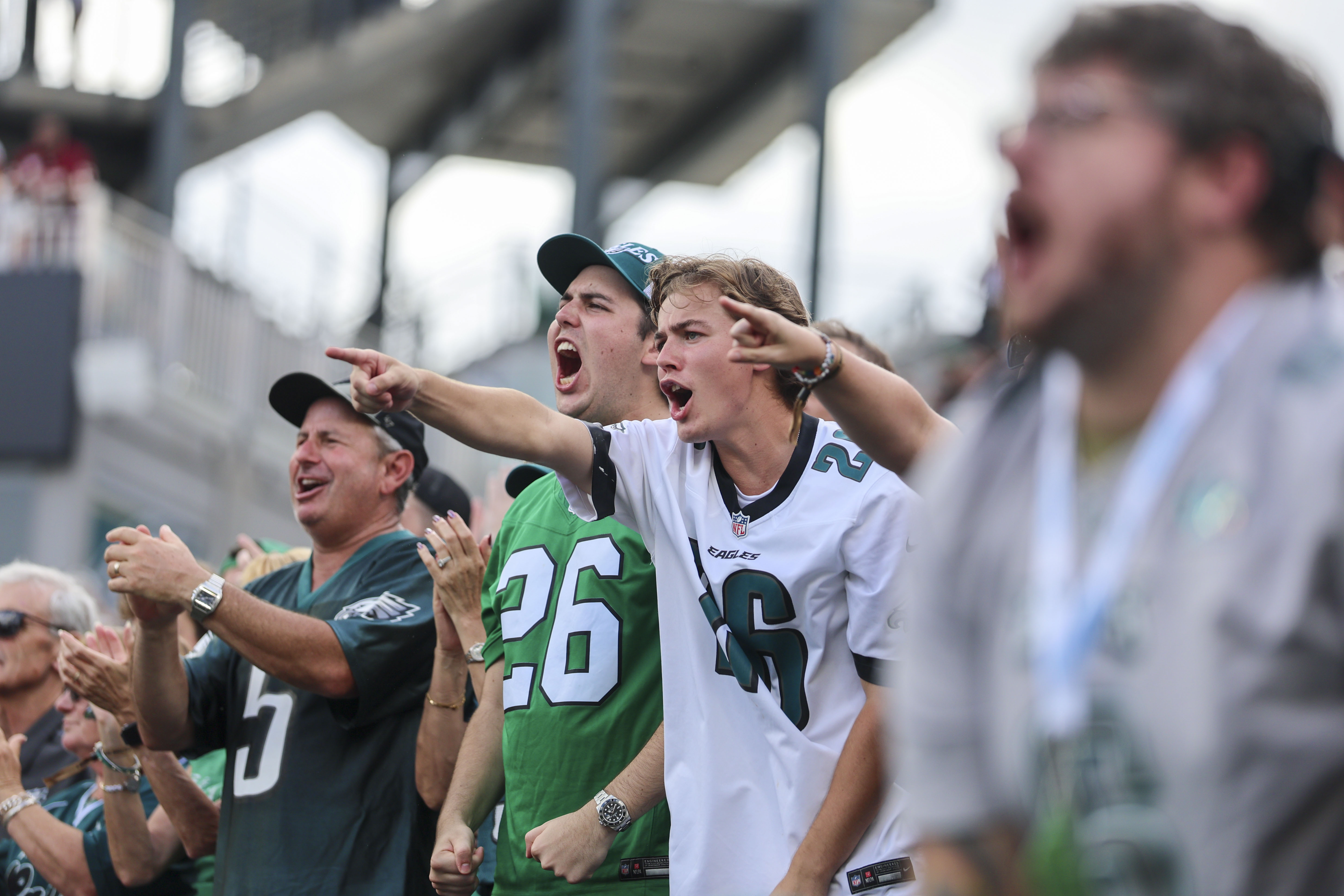
  • From hangouts with former Eagles players to ‘The Bean,’ here’s a guide to Chicago for Birds fans

    From hangouts with former Eagles players to ‘The Bean,’ here’s a guide to Chicago for Birds fans

    The Eagles are headed to Chicago, and Birds fans are expected to follow.

    If you are flying into Midway (or O’Hare if you’re unlucky) for the game, here’s everything you need to know about the Windy City:

    Where do I find fellow Birds fans?

    You are bound to bump into some fellow Eagles fans this weekend by coincidence.

    However, you also can plan to see them at one of the many events held by Eagles fan groups. The Green Legion, which hosted events last weekend in Nashville, is now coming to the Windy City. On Sunday, the group is holding a pep rally at Hopsmith Tavern from 7-10 p.m. The pep rally will feature an open bar and light food. Before kickoff on Monday, the group is hosting a tailgate at Fatpour McCormick: Ultimate Chicago Sports Bar at 2:30 p.m. Tickets are limited for both events and can be found on the Green Legion’s website.

    Philly Sports Trips is also hosting two meetups. From 4-7 p.m. on Sunday, Birds fans can enjoy an open bar and a live DJ at Rebel & Rye restaurant. Former Eagles Hollis Thomas, Todd Herremans, Tra Thomas, and Clay Harbor are slated to attend. On Monday, the group is holding a tailgate at 1914 S. Wabash Ave. — a short walk from Soldier Field. Tickets can be purchased on Philly Sports Trips’ website.

    Are there any Philly spots?

    There are several Philly-themed bars and restaurants in Chicago. A fan-favorite of the Inquirer staff is Philly’s Best — a cheesesteak spot which one sports editor frequented after graduating from college. Philly’s Best is open until 1 a.m. on Monday, so you can get a cheesesteak to celebrate the Birds’ win (or to indulge in your sorrows).

    If you are looking for a bar, The Reveler in Roscoe Village is a popular gathering spot for Birds fans living in Chicago. The bar hosts Eagles watch parties every weekend and even plays the team’s fight song after each score. Of course, they also have a cheesesteak on the menu.

    Where can I see the whole city?

    If you’re scared of heights, skip this part.

    Consider checking out CloudBar — Chicago’s highest bar. CloudBar is located on the 94th floor of the 360 Chicago Observation Deck. The building, which was previously named the John Hancock Center, is located in Chicago’s Magnificent Mile district.

    Unlike Philadelphia’s swanky SkyHigh bar on the 60th floor of the Four Seasons Hotel, CloudBar is not high end. The bar has no dress code, so feel free to wear that old Zach Ertz jersey you dug out of the closet. Tickets for CloudBar can be purchased on their website.

    What if I want to go to a Bears bar?

    If you want to venture into enemy territory before or after the game, consider The Staley.

    The bar is owned and operated by former Bears defensive end Israel Idonije and is within walking distance of Soldier Field. Like it does every week, the bar is hosting a watch party before and during Monday night’s game.

    Another member of The Inquirer’s staff suggests to have a pint at Black Barrel Tavern located in the West Loop neighborhood. At either spot, just be prepared for some comments on your choice of kelly Green attire. Also, get ready to hear lots about “Da Bears.”

    What are the classic tourist spots?

    Everyone loves the idea of not being a tourist. Sometimes, it’s OK to be one. Here are the top tourist spots in Chicago:

    • It wouldn’t be a visit to Chicago if you did not visit Millennium Park and take a selfie with “The Bean.” The statue, which actually is called Cloud Gate, was finished in 2006 and quickly became one of the landmarks synonymous with the city.
    • If you have some spare time hopping from bar to bar with fellow Birds fans, take a scenic stroll down the Chicago Riverwalk. The path spans multiple neighborhoods and even offers kayak rentals. The architecture boat tours are really cool, too.
    • Like Ferris Bueller, have an afternoon at The Art Institute of Chicago. The museum currently has an exhibition on the art of Mary Cassatt. The painter, who lived from 1844 to 1926, actually received her formal training in Philadelphia. Maybe she’d be a Birds fan, too.
    • Unfortunately, the Cubs are in Boston this weekend, but still check out Wrigleyville. The neighborhood surrounding the famed ballpark boasts famous bars and restaurants like Murphy’s Bleachers, Sluggers, and The Cubby Bear.
  • In 2020, a hemorrhagic stroke robbed Joe Mihalich of his voice. La Salle has helped him find it again.

    In 2020, a hemorrhagic stroke robbed Joe Mihalich of his voice. La Salle has helped him find it again.

    Joe Mihalich loves coffee. Dunkin’, specifically. For years, it has been part of his morning routine: picking up a large decaf, hot, with cream, en route to a basketball arena.

    Employees at his home Dunkin’, in Mt. Airy, call him by name (“Mr. Joe”). One server, in Flourtown, gave him a black beanie hat with the company’s logo stitched in, as a modest token of appreciation.

    Mihalich would usually order ahead on the app, but sometimes, he’d go to the counter, and stick around for refills. He’d often do this before heading to the gym at Hofstra, where he once worked as a head coach.

    It was a simple task that gave him joy. Until it wasn’t.

    On Aug. 15, 2020, the former La Salle point guard was standing in his Long Island driveway, when he suffered a hemorrhagic stroke in his brain.

    He underwent an emergency craniectomy; a surgery in which part of the skull is removed to relieve pressure. He came home in a wheelchair, wearing a helmet, unable to say anything but “yes” or “no.”

    Mihalich was 64 years old and leading a Hofstra team that had won back-to-back CAA titles. He was on pace for 600 career wins, with likely a decade of basketball ahead. In an instant, that trajectory ceased. How can you coach if you can’t talk? If your right hand is no longer able to draw up plays?

    Joe Mihalich was robbed of his voice while coaching at Hofstra… if only temporarily. Nick Wass

    Every routine, big and small, was disrupted. Instead of going to practice, Mihalich went to speech, physical, and occupational therapy. Those daily trips to Dunkin’ became infrequent; he couldn’t drive himself, or dictate what he wanted to drink.

    Compounding this was the fact that the stroke didn’t affect his cognition. Mihalich was as sharp as he was before. He could still draw up schemes in his mind. He still preferred zone defense over man, and a four-out, one-in offense over three-out, two-in.

    He just couldn’t say it. Doctors expressed skepticism that the coach would ever walk or talk at length again. The likelihood of him returning to even a modicum of independence was slim.

    But Mihalich decided to throw himself into the challenge, as if he were preparing for a big game. He started working with a speech language pathologist twice a week.

    He took his physical therapy seriously, so much so that he was able to go from a wheelchair to a walker, and from a walker to unassisted walking in just over a month.

    He gradually began to visit his old haunts. The coach can still remember the day he went back to Dunkin’. It was 2021, in the Garden City location on 7th Street.

    Joe Mihalich cries as he recalls his wife and family’s support for his recovery, in a conversation with The Inquirer last month. Isaiah Vazquez / For The Inquirer

    Mihalich walked up to the counter with trepidation. What if the attendant couldn’t understand him? What if he was holding up a line? To prepare, he memorized five words that deep down, he knew by heart: “Large decaf, hot, with cream.”

    “I had to repeat it twice,” Mihalich said, “but it was OK.”

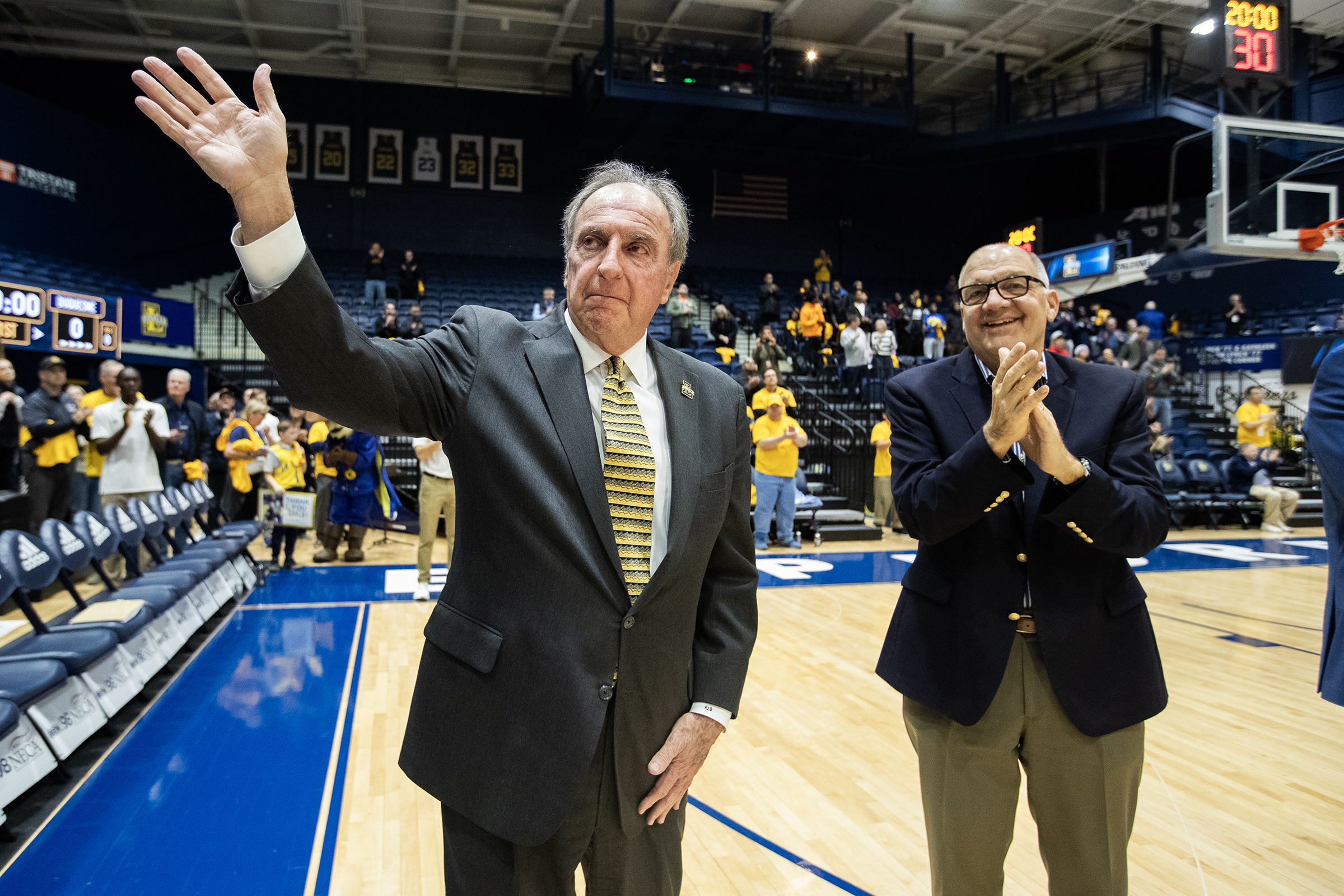
    In 2021, after taking a medical leave, he returned to Hofstra as a special adviser to the athletic director so the basketball program could transition to Mihalich’s assistant, ex-Sixer Speedy Claxton.

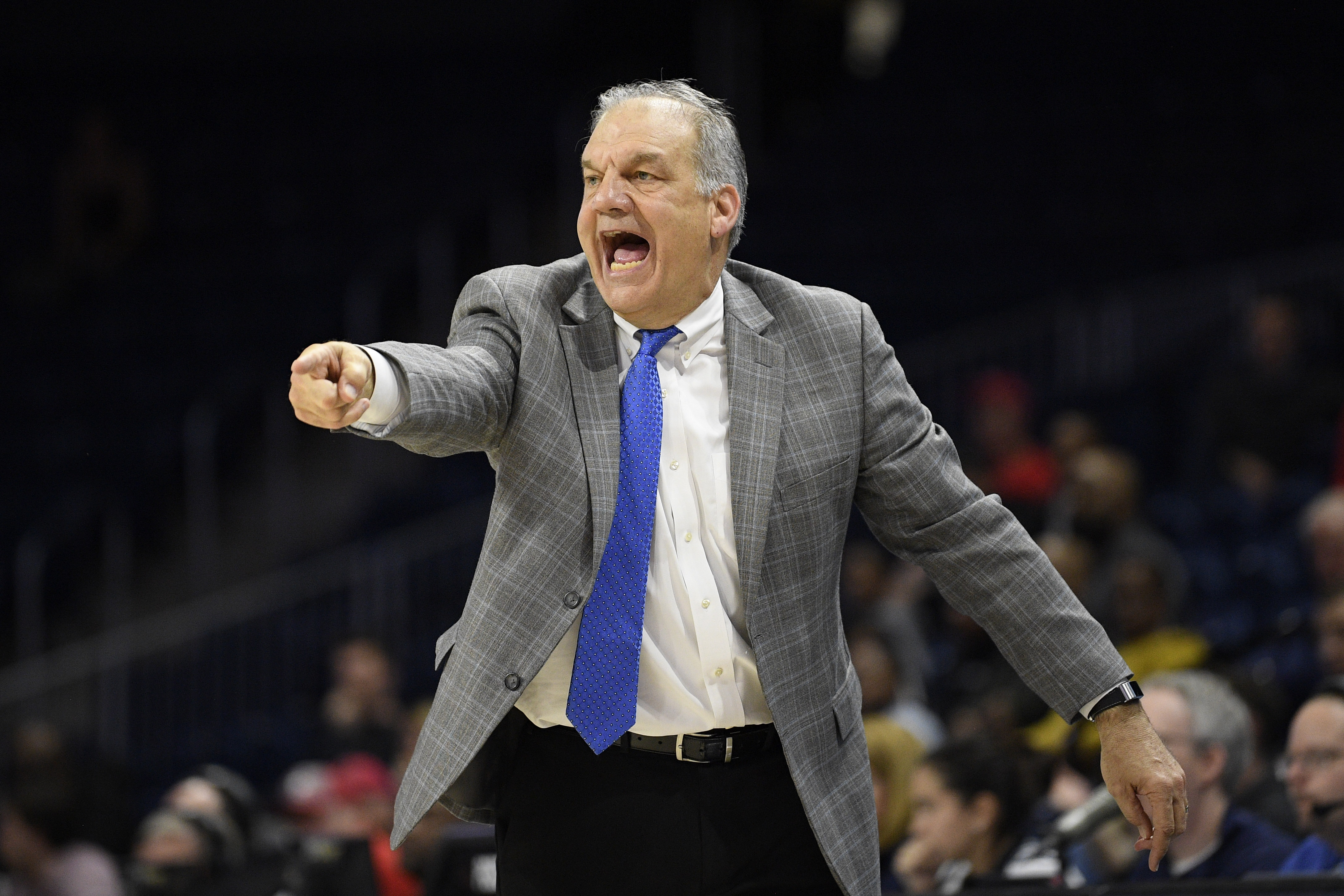
    In 2022, La Salle offered Fran Dunphy its head coaching job. He said he wouldn’t take it without Mihalich, a lifelong friend and former Explorers player with whom Dunphy had worked when both were assistant coaches in the 1980s.

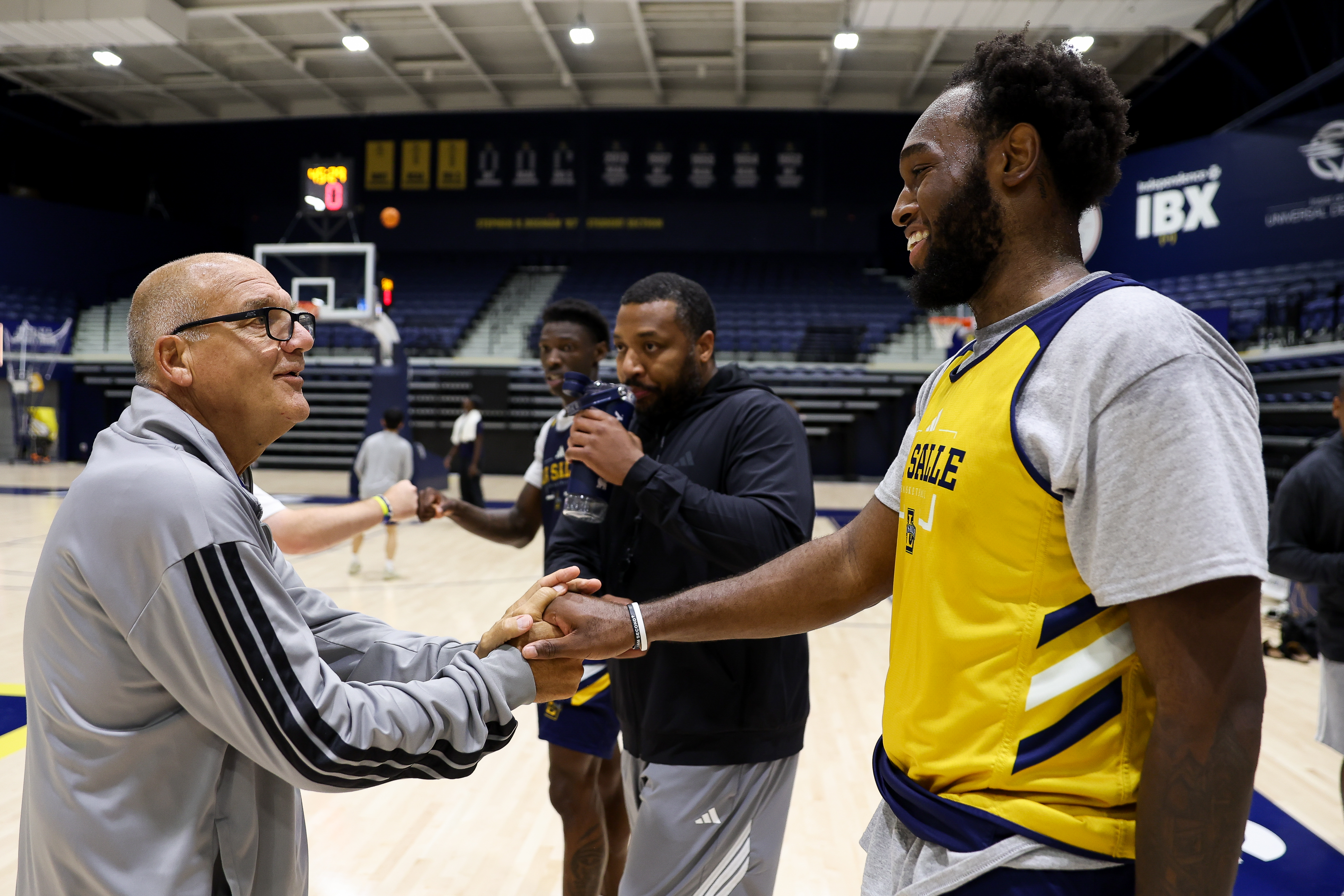
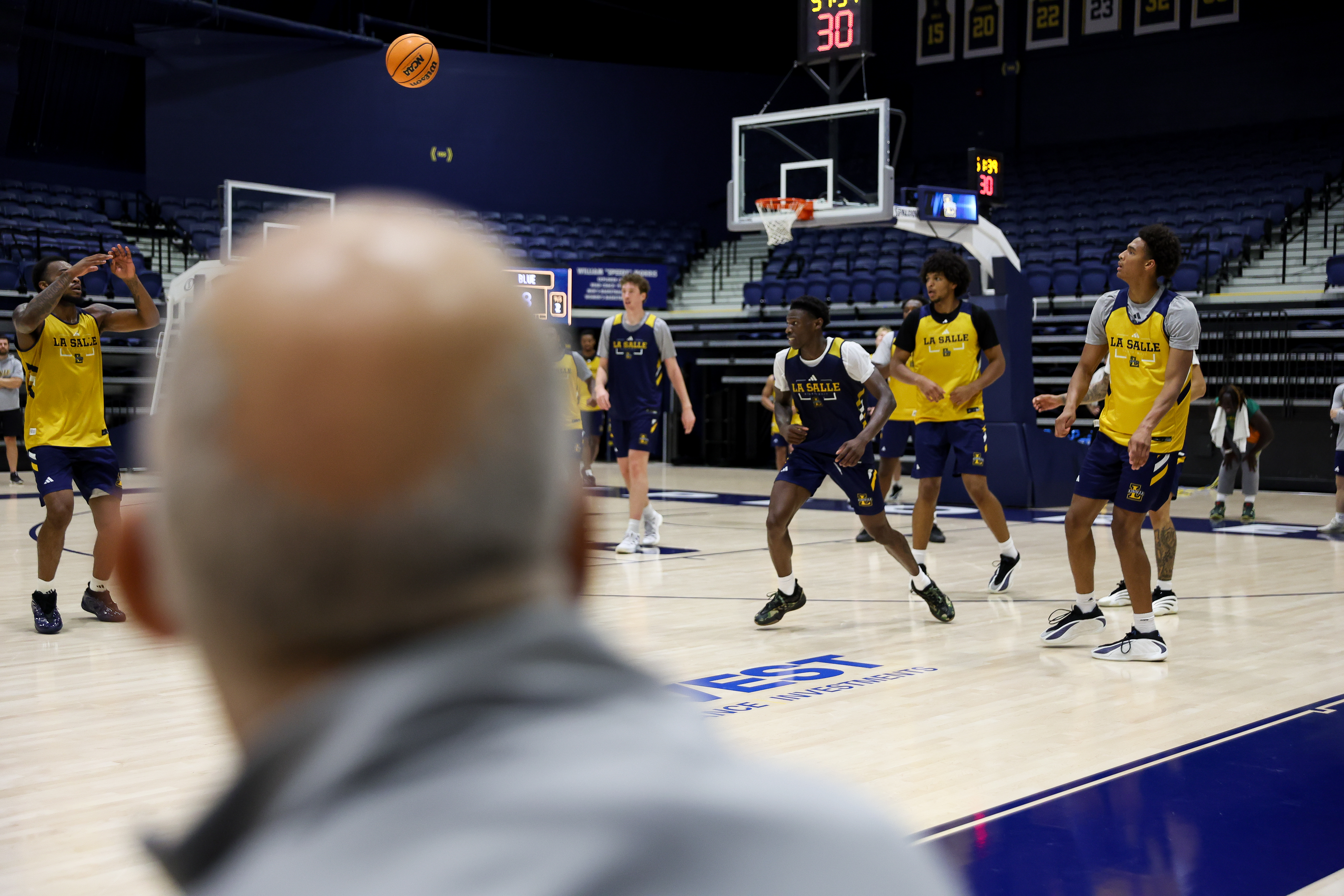
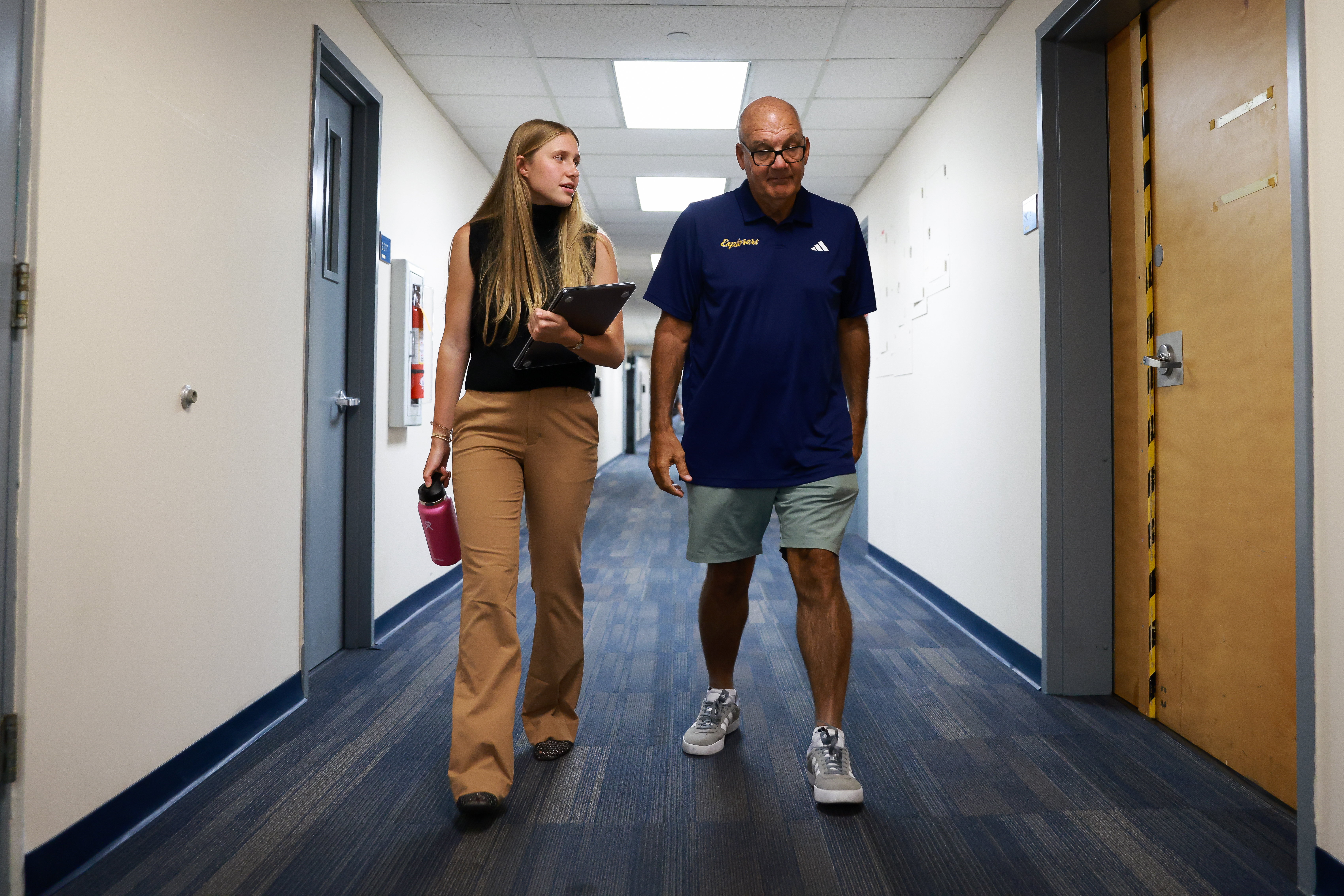
    Mihalich has been with the university since Dunphy brought him aboard. He’s at all of La Salle’s home games and practices, doesn’t skip a coaches’ meeting, and is always unafraid to share his thoughts.

    After his day is done, typically around 6 p.m., Mihalich heads to the school’s speech therapy clinic. Those who’ve worked with him say the progress he’s made is rare, given the severity of his brain injury.

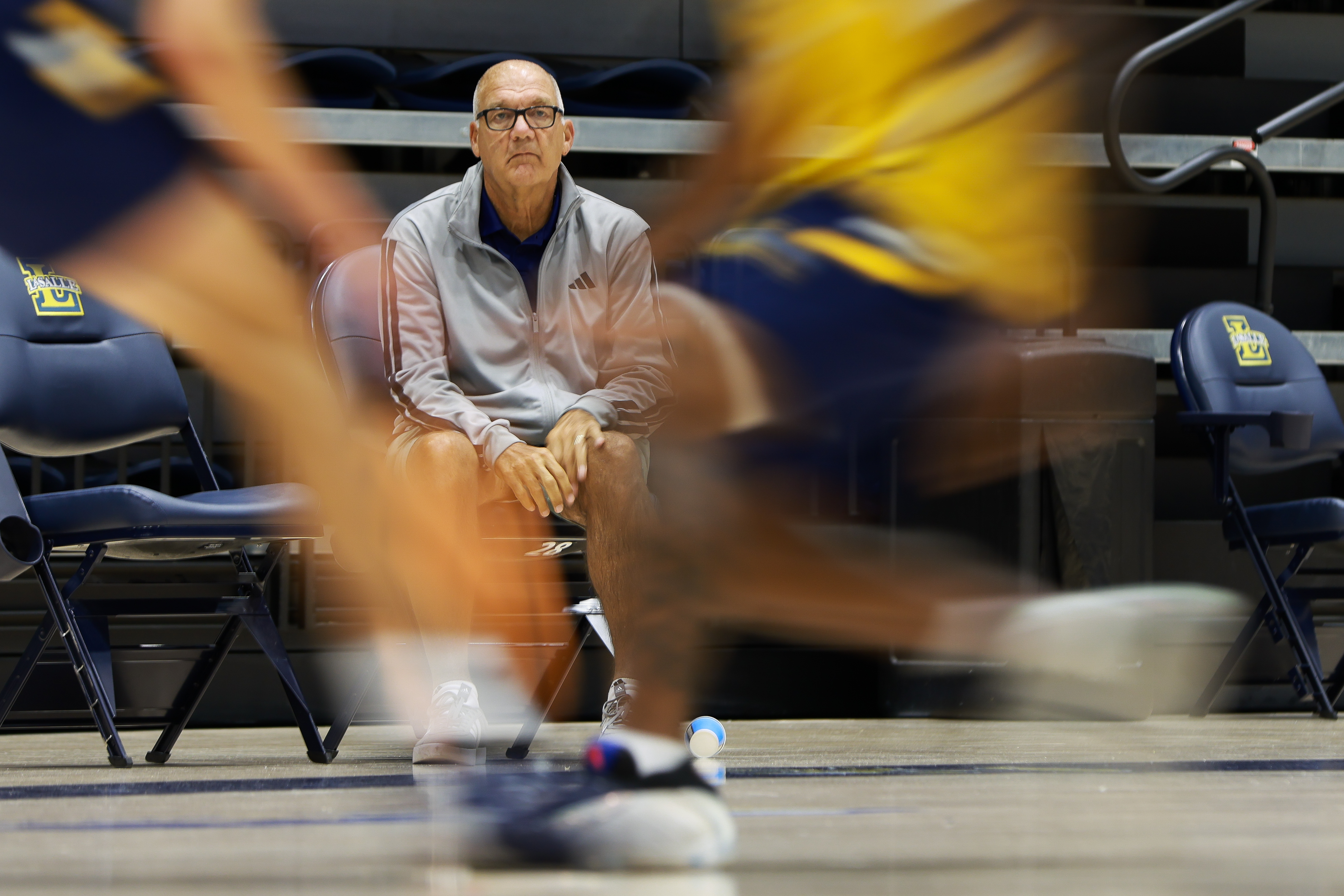
    Joe Mihalich looks on from the bench during a La Salle practice earlier this month. Isaiah Vazquez / For The Inquirer

    And he’s not finished yet.

    “It’s kind of like, ‘You can’t do this?’“ Mihalich said. ”Well, watch me. Watch me.”

    Born to be an Explorer

    Mihalich was introduced to 20th and Olney at 2 weeks old. His father had gotten a job as a philosophy professor, moving the family from Washington, D.C., to Philadelphia.

    They lived on Chew Street in Mt. Airy, a short drive from La Salle. As a child, Mihalich spent most of his time on campus. This remained true until he graduated from the university in 1978.

    Four of his six siblings were students at La Salle; so was Mary, who would become Joe’s wife, and worked as a water girl for the men’s basketball team.

    Before Mihalich joined that team, he followed it religiously. The La Salle College High School student regularly attended games at the Palestra. His favorite player was Dunphy, a fellow point guard who made smart decisions and played steady defense.

    Mihalich joined the Explorers in 1974 as a walk-on, receiving a basketball scholarship the following semester. After graduating, he took a coaching job at DeMatha Catholic High School in Maryland, where he served under future Hall of Famer Morgan Wootten.

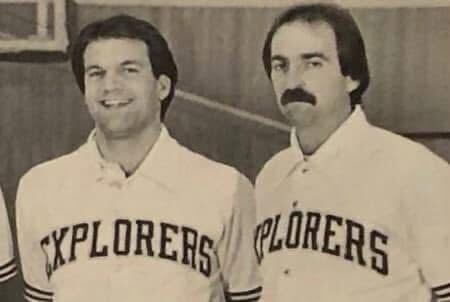
    Joe Mihalich (left) and Fran Dunphy were La Salle alums who bonded as members of the Explorers’ coaching staff.provided by La Salle University

    In 1981, Mihalich was hired as an assistant for Lefty Ervin at La Salle. Dunphy joined him in 1985, and both men stayed on when Speedy Morris became head coach in 1986.

    Together, the two young assistants worked 10- to 12-hour days out of the second floor of Hayman Hall, watching film and meeting with recruits.

    They embarked on long road trips to evaluate high school players in Pittsburgh, where the Five-Star Basketball Camp was held. This gave them ample time to get to know the Pennsylvania Turnpike and each other.

    Over those 300-plus mile drives, Dunphy and Mihalich mused about someday leading a Division I men’s basketball program.

    “I wonder what it’s like,” Dunphy said. “I wonder what kind of pressure the head coach is under, that we’re not seeing. We had great faith in both Lefty and Speedy, when we were together.

    “But also knowing that if we ever got that opportunity, we might do it our own way.”

    They eventually earned their chance, hundreds of miles apart. Dunphy was named head coach at Penn in 1989, and Mihalich was hired by Niagara University in 1998.

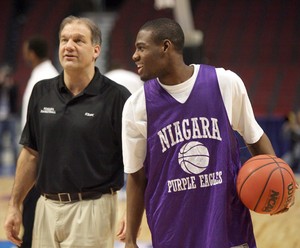
    Joe Mihalich (with guard Tyrone Lewis, a product of Truman High in Bucks County) imported an exciting brand of offense when he arrived at Niagara.

    The Mt. Airy native immersed himself in the community, going so far as to become a diehard Buffalo Bills fan. He developed a quick-paced, efficient offense, which frequently ranked among the top 75 in the country in offensive rating, according to KenPom.

    But even from Western New York, Mihalich never lost touch with his roots. He’d recruit primarily from where he was born (D.C.) and where he was raised (Philadelphia), often targeting kids who were overlooked by the Big 5.

    At Niagara, they flourished.

    “He would develop them like crazy, from their freshman year to their senior year,” Mihalich’s former assistant Colin Curtin said. “And they would look like totally different players.”

    Curtin, a former student manager for Morris at St. Joe’s Prep, has worked with Mihalich for 17 years. When the head coach left Niagara for Hofstra in 2013, he brought Curtin with him, as an assistant.

    Mihalich became the second-winningest coach in the school’s history with a record of 154-102. His greatest season there was his last.

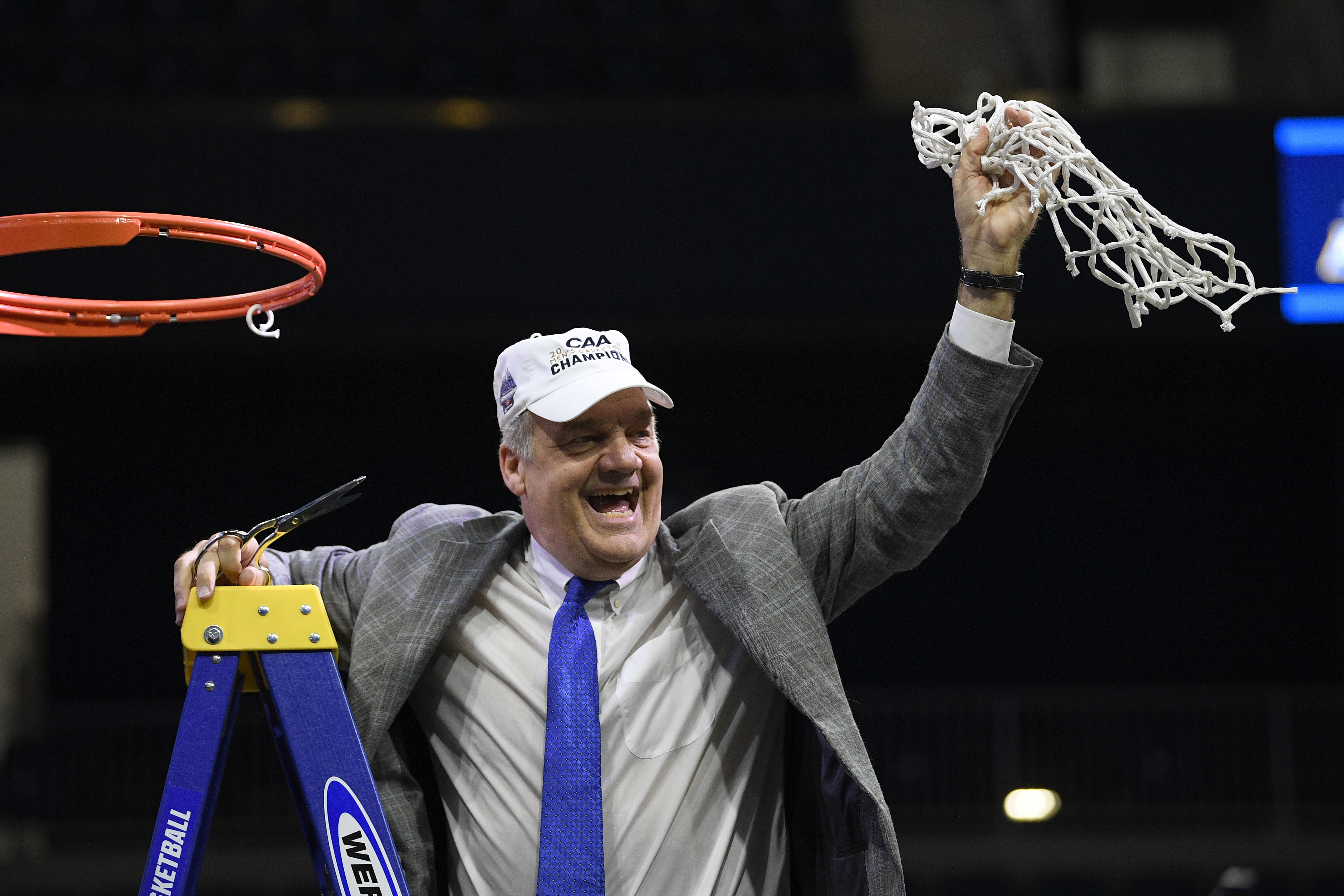
    In 2020, Mihalich led Hofstra to its first NCAA Tournament berth since 2001. After winning the CAA title, he climbed high atop a ladder with a pair of scissors, making the final cut of the net.

    Hofstra coach Joe Mihalich holds up the net after cutting it down following the team’s win over Northeastern in the 2020 CAA final. Days later, the world shut down because of the COVID-19 pandemic and the Pride would miss out on a chance to compete in the NCAA tournament. Nick Wass

    But Hofstra never got its moment. Two days later, the tournament was canceled due to the pandemic. Five months after that, Mihalich was at home when he got a call from Mary, who was traveling to Ocean City.

    He tried to speak but wasn’t able to. The line went dead. She called Curtin, who found the coach standing in his driveway.

    He asked if Mihalich was alright.

    “I said, ‘Shake your head, yes or no,’” Curtin recalled. “And he shook his head no.”

    An unexpected homecoming

    While his team embarked on remote summer workouts, Mihalich was placed on a medical leave. He connected with a local speech language pathologist, Alison Durkin, and began to meet with her in the fall.

    The coach had been diagnosed with both aphasia, a language disorder, and apraxia, a motor speech disorder. He also lost some mobility on his right side, which prevented him from writing with his right hand.

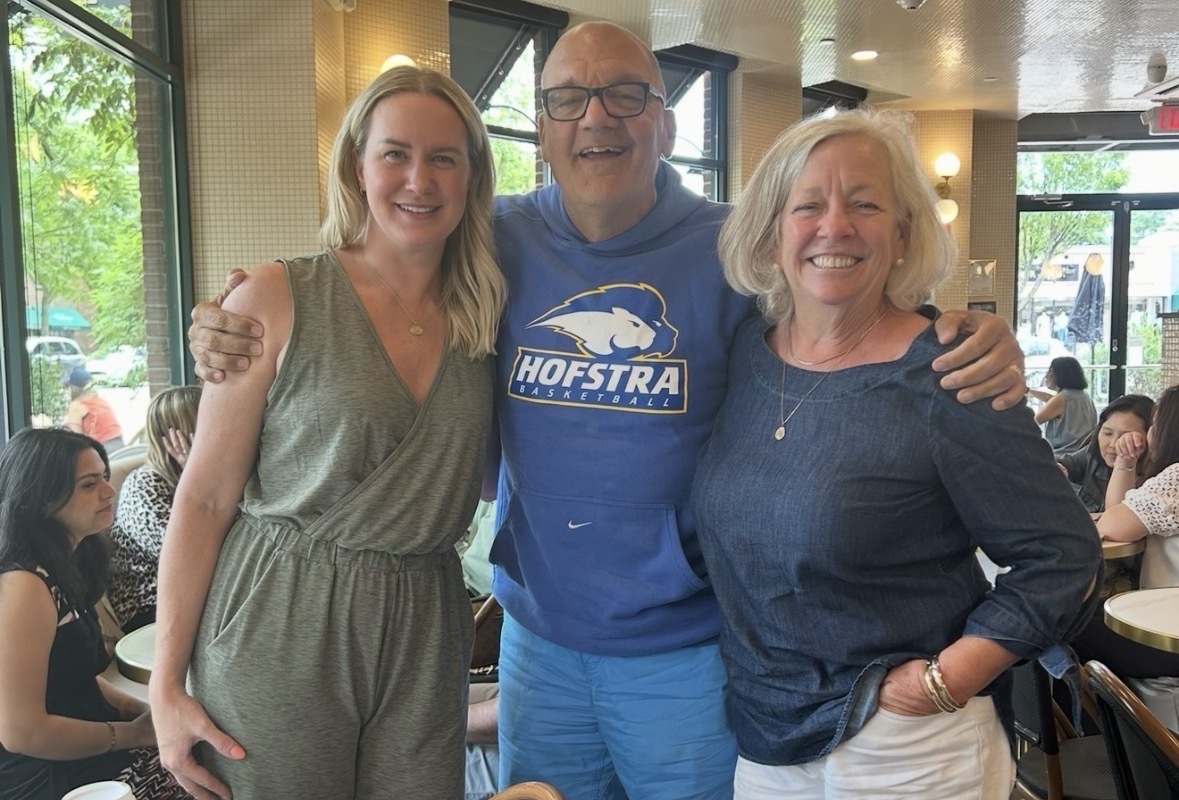
    Alison Durkin (left) with Joe Mihalich and his wife, Mary.Courtesy of Alison Durkin

    Mihalich had spent the last four decades amid a symphony of sneakers and basketballs and whistles. In environments that were exciting and fast-paced and energetic.

    Now, life was quiet and slow, in the most literal sense. He and Durkin started their sessions with simple, binary questions. Then, they’d count numbers, recite days of the week, and months of the year.

    When Mihalich did speak, he was encouraged to over-enunciate. Buffalo Bills became “Bu-fa-lo Bills.” Niagara Falls became “Ni-ag-a-ra Falls.”

    They had some initial discussions about a return to his previous role at Hofstra, but decided that was not an option.

    “Not only was the job itself linguistically demanding, because you’re producing language on a stage,” Durkin said. “You’re yelling at people. You have seconds to speak. I mean — very demanding.

    “And then on top of that, there’s really no reasonable accommodations that could be implemented to make that feasible. So it was definitely not an easy thing.”

    Mihalich wasn’t involved in the day-to-day in his AD advisory role, and didn’t interact with players and staff; a choice he’d made himself, to ensure he wouldn’t overstep.

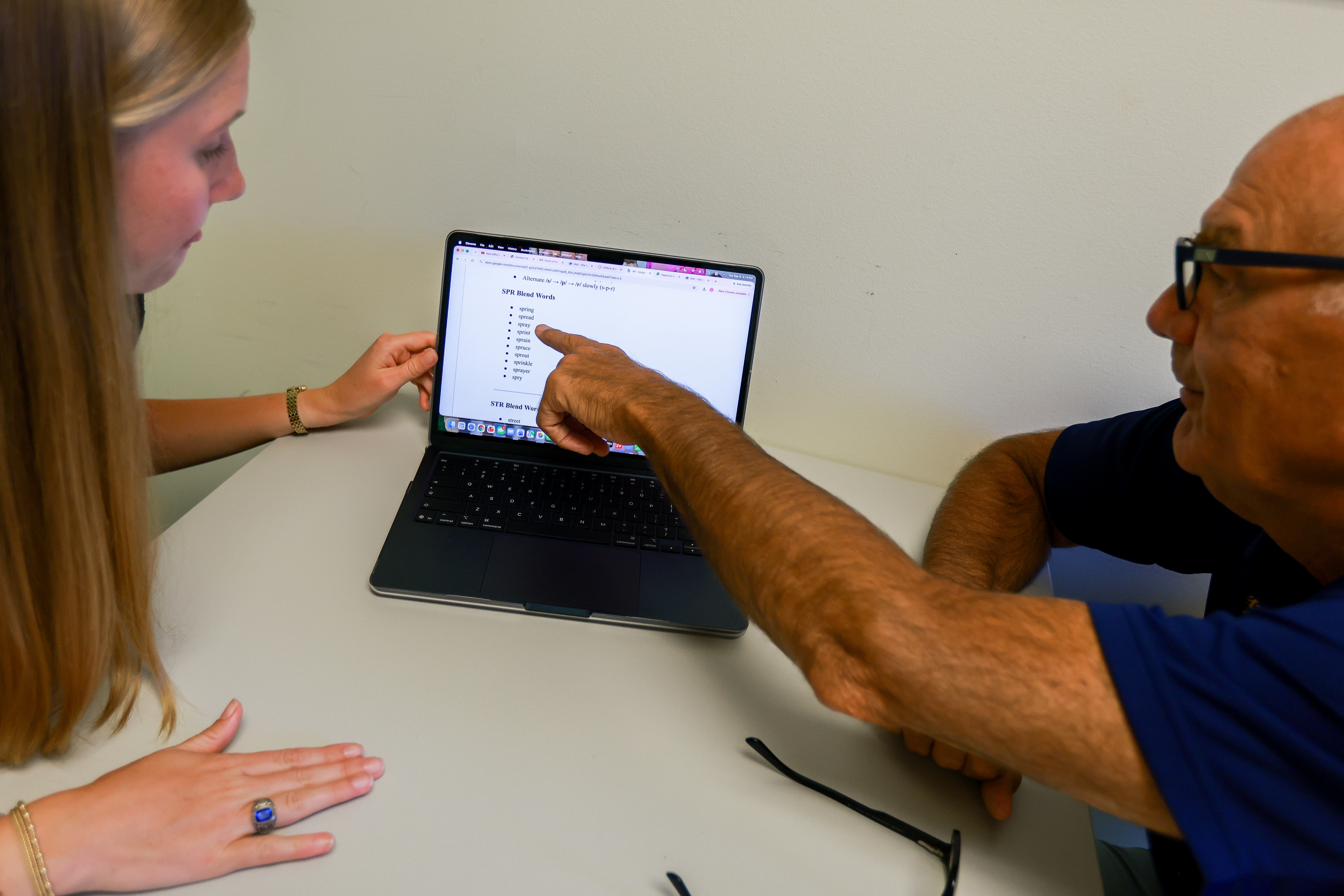
    Joe Mihalich goes through a speech therapy session with La Salle student and speech-language pathologist Ella Verello earlier this month. Isaiah Vazquez / For The Inquirer

    The coach described those years as “horrible.” He sorely missed the rhythms of his previous life. But he and Durkin kept working, unaware of whether he’d ever grace a court again.

    The speech language pathologist introduced basketball terminology to keep her pupil engaged. Instead of reciting “three-pointer” or “rebound,” Durkin would have Mihalich describe exactly what those activities were.

    “He knows what boxing out is,” she said, “but could he produce the language to explain it to someone who did not know? That’s a hard task.”

    The exercise inadvertently set him up for an opportunity to come. In April 2022, Dunphy called Mihalich to ask if he’d be his assistant at La Salle.

    Mihalich was limited in what he could say. But one word came through.

    “‘Wow,’” Dunphy recalled. “And he repeated it dozens of times.”

    Mihalich returned to campus that summer, with an iPad in hand, to jot down thoughts during practice. Dunphy’s staff quickly learned that they wouldn’t need to actually talk to communicate.

    Joe Mihalich (right) was by Fran Dunphy’s side when Dunphy coached his 1,000th game in 2025. Charles Fox / Staff Photographer

    One of the assistant coach’s first suggestions was to implement a continuity offense, with players starting in the same spots, and flowing to different set plays.

    Mihalich couldn’t vocalize this. So, he picked up a marker with his less dominant, left hand, and started scribbling on the white board in the men’s basketball office, using a language any coach could understand: Xs and Os, dotted and zigzagged lines.

    Then he directed his cohorts to the gym, to demonstrate.

    “And he goes, ‘Come on, upstairs! Upstairs!’” recalled former La Salle assistant coach Mike Doyle. “‘Alright, let me put my basketball shoes on.’”

    If there was one aspect of the sport Mihalich emphasized less, it was defense. His teams at Hofstra and Niagara were known to run and gun. The former head coach didn’t want players expending too much of their energy by guarding an opponent.

    Dunphy was much more defensive-minded. So, every now and then, Mihalich would yell “Zone!”

    “And then, as soon as we’d go zone, somebody would make a three-point shot, immediately,” Dunphy said, “and I’d say, ‘All right, that’s it. That’s enough.’”

    Joe Mihalich’s work on his speech continued at La Salle, where speech-language pathologist Ella Verello (left) is among the team assisting the coach’s therapy. Isaiah Vazquez / For The Inquirer

    Not long after Mihalich joined the Explorers’ staff, Wendy Silverman, who ran Hofstra’s speech-language hearing clinic, reached out to La Salle on the coach’s behalf.

    Mihalich began to take weekly sessions with graduate students at La Salle’s clinic, while working with Durkin remotely, on Zoom. The strategies he learned — speaking slowly, over-enunciating — he’d then bring to the court.

    By the end of the 2022-23 season, staff and players could hear a marked difference.

    Christine Cahill, the school’s director of academic support for student-athletes, sat next to Mihalich during practice.

    “And I told him, it went from like 0 to 70%,” she said, “that first year.”

    ‘A reason to live’

    When Dunphy retired in February 2025, Mihalich was unsure of what he would do next. He initially told Curtin that he wanted to get out of coaching.

    But after Darris Nichols was hired at La Salle, his calculus changed. Mihalich had worked with Nichols’ brother, Shane, at Niagara and Hofstra. Curtin would be joining the Explorers’ staff, too.

    Joe Mihalich had a connection to coach Darris Nichols and was kept on when Nichols was forming his La Salle staff in 2025. Isaiah Vazquez / For The Inquirer

    So, Mihalich decided to give it another go, and Nichols was more than receptive. He saw the former head coach not just as a connector between generations, but someone he could learn from.

    “Coming into a new program, he’s helped me navigate it,” Nichols said. “It’s great to have him around.”

    Mihalich became an active participant in scouting and recruiting meetings. Just as he had with Dunphy, he started recommending offensive strategies (and of course, more zone).

    His speech has progressed to the point where he can now work one-on-one with players. Last year, Mihalich developed a bond with junior guard Rob Dockery, who led La Salle in points, rebounds, and steals.

    Dockery’s weakness was his jump shot. His mechanics weren’t consistent, mainly because he wasn’t practicing it enough. Throughout the offseason, the former head coach would routinely text him, reminding the guard to get back in the gym.

    “Repeating that same shot, over and over again,” Dockery said. “That’s what he told me. Stick to the same shot.”

    Mihalich is still going to speech therapy every week, both at La Salle and with Durkin, and the sessions can be laborious. There are moments when he needs to repeat himself one, or two, or even three times to get his point across.

    “But I am here,” he said. And his life is starting to look like it once did. The former head coach wakes up every morning, and drives to the Mt. Airy Dunkin’, where he’s greeted as “Mr. Joe.”

    Joe Mihalich has reconnected with basketball and remained a presence at his alma mater for the past four years. Isaiah Vazquez / For The Inquirer

    He picks up his coffee — large decaf, hot, with cream — and brings it to the arena, leaving behind a trail of Styrofoam cups.

    And for two hours, he sits and watches from his chair, as basketball chaos unfolds around him. A lesser man might see a career cut tragically short. But Mihalich sees something entirely different.

    “A reason to live,” he said.

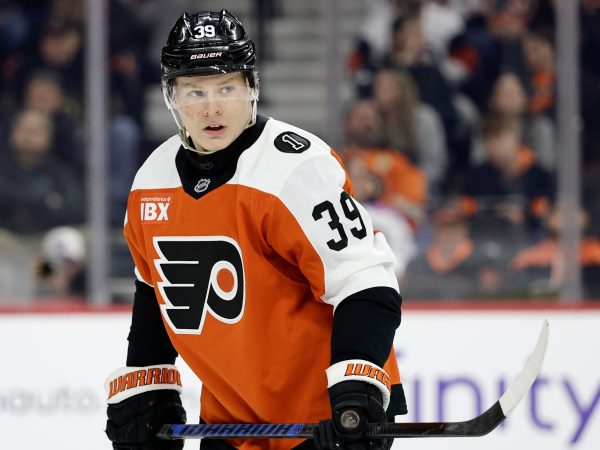
  • Matvei Michkov symbolizes the steps forward the Flyers can take in 2026-27

    Matvei Michkov symbolizes the steps forward the Flyers can take in 2026-27

    One day last spring, just after the Flyers had finished an off-day practice in Raleigh during the Eastern Conference semifinals against the Carolina Hurricanes, Matvei Michkov lingered in the locker room, the only player there.

    Two or three media members were hanging out, too, chatting with him about soccer, Michkov chatting back in splintered English. There was no tension. He was not sullen. If anything, he was effervescent: smiling, happy to engage. He did not in any way appear to be shattered by the hard but necessary treatment he had been receiving from head coach Rick Tocchet — limited ice time, often on the team’s third line — and would continue to receive. In just a few days, Tocchet would bench him for Game 4 of the Hurricanes’ series, the overtime loss that ended the Flyers’ season.

    Now here we are, on the precipice of a Flyers season unlike any in the franchise in at least a decade, and Michkov is a reason, maybe the primary reason, for the welcome-if-unfamiliar atmosphere around the team. After the progress that the Flyers made last season — qualifying for the playoffs and winning a series for the first time since 2020, reassuring their fans that the team was, in fact, improving — they’re back to being a team on the rise again. It probably goes too far to say that expectations are or should be high for them, but there is certainly cause for cautious optimism.

    Michkov is at the core of both that caution and those good feelings. His struggles, the fits and starts in his maturation, have been well documented. Considering how long it has been since the Flyers have drafted and developed a bona fide superstar, how often their fans and followers have been sold or were eager to buy bills of goods that turned out to be worthless, it was understandable that people might be concerned that Tocchet was hindering Michkov’s growth, if not stopping it altogether.

    The subsequent four months, and some perspective, should have tempered that worry. Michkov had acknowledged that he was out of shape throughout last season; over the offseason, he said, he improved his diet and lost 29 pounds. And for all the complaints that Tocchet should have just thrown Michkov on the ice more often to sink or skate, for all the tongue-holding that the head coach did and failed to do, in 81 games Michkov still scored 20 goals and put up 51 points, the third-most on the team. If that measure of production constitutes a disastrous season, then the Flyers will happily take their chances on a lighter, presumably faster, revitalized Michkov. He is 21. Nothing is settled or ruined for him.

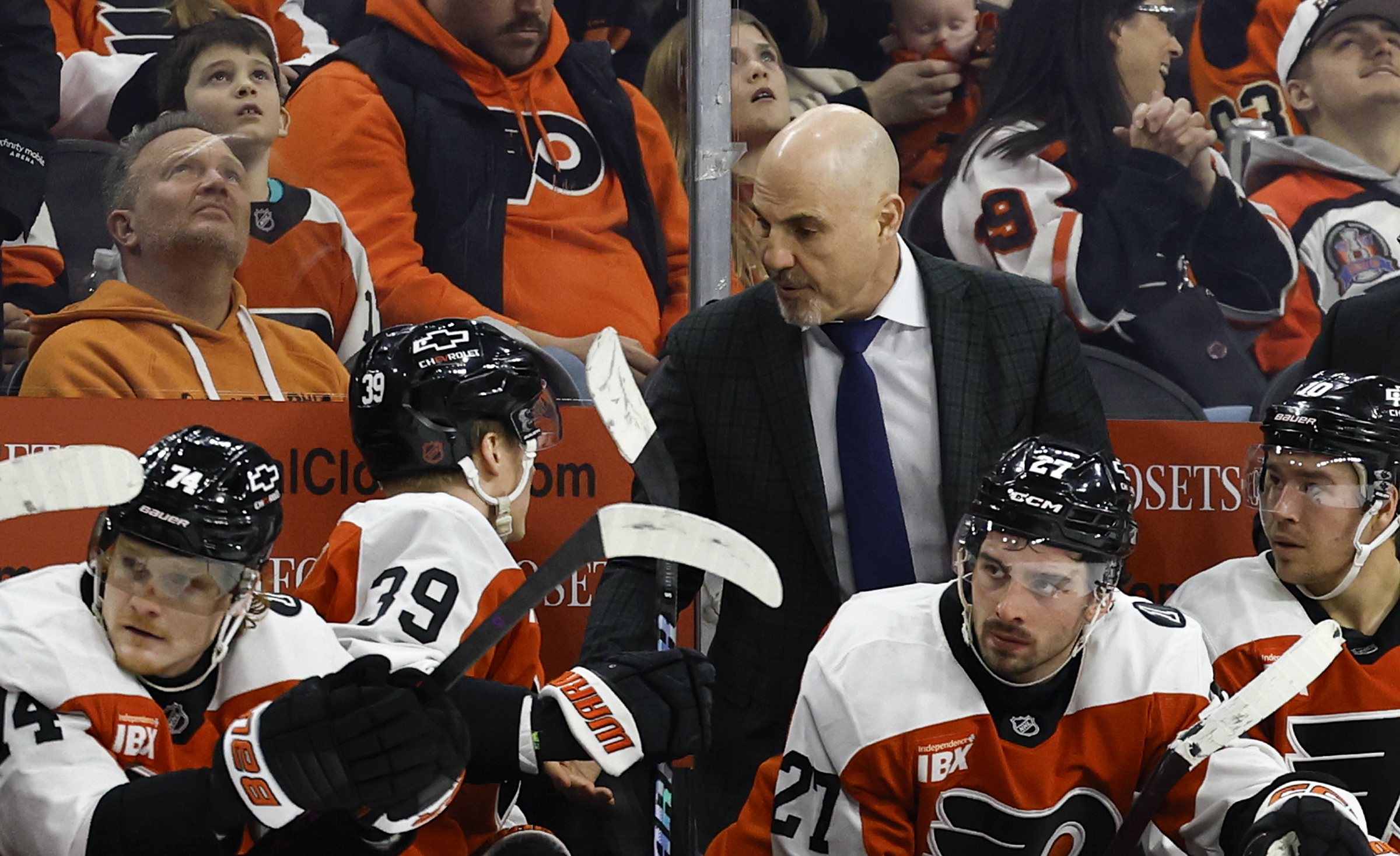
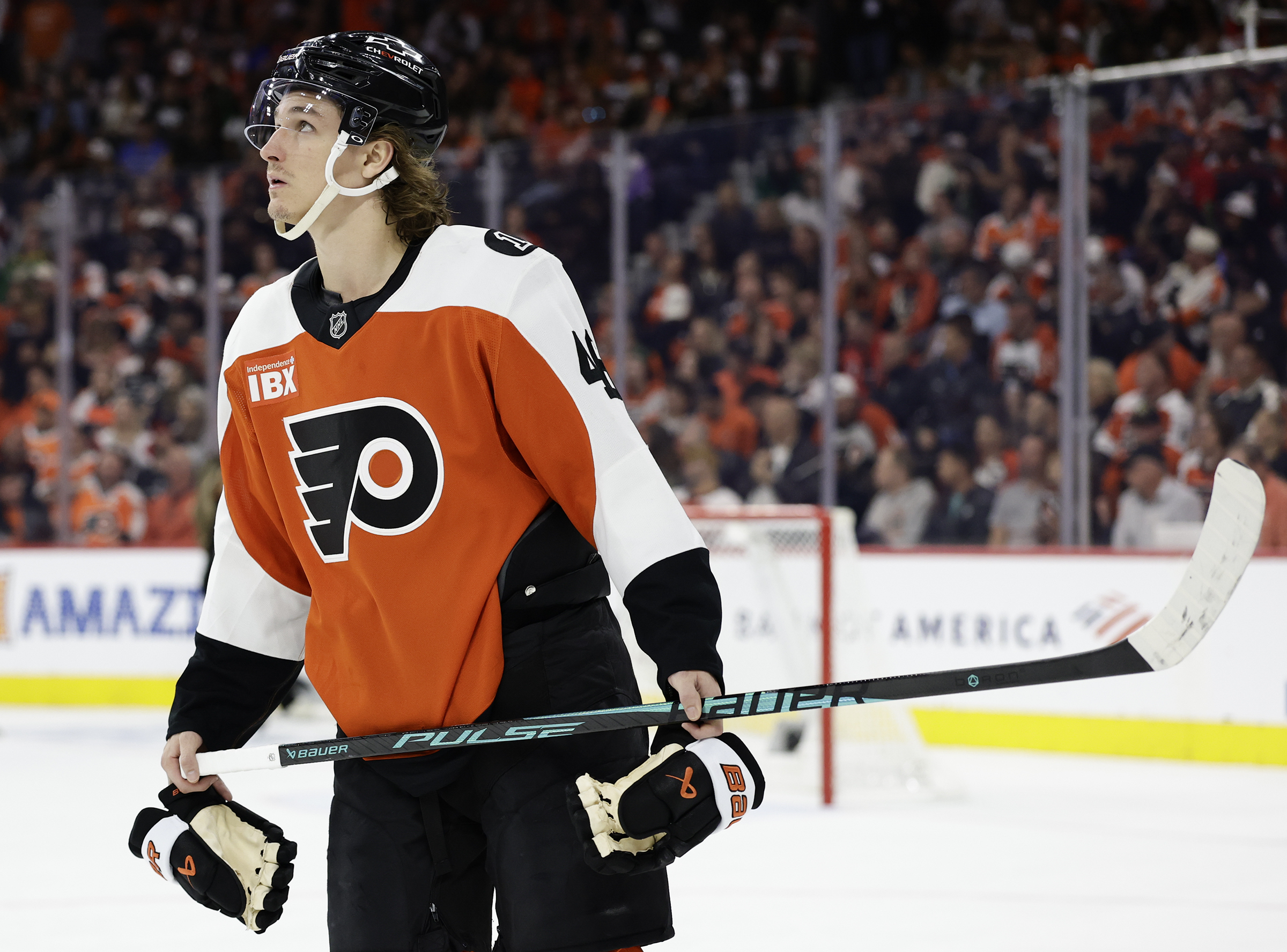
    Flyers head coach Rick Tocchet and star Matvei Michkov didn’t always see eye to eye last season.Yong Kim / Staff Photographer

    That relative gamble (what, were they really going to give up on another highly drafted player and trade him after one suspect season?) is emblematic of the approach that the Flyers took all offseason. Yes, they shocked the NHL with their eye-popping offer sheet to Leo Carlsson, but if you focus on the moves that they made (not the one they couldn’t quite pull off), it’s easy to see that they’ve made similar bets up and down their roster.

    They re-signed Tyson Foerster to an eight-year, $56.8-million contract on the belief that an excellent two-way player who hasn’t scored more than 25 goals in a full season can be the kind of player who scores 40. They re-signed Trevor Zegras to a four-year, $36.5-million contract on the belief that he can tap even deeper into his well of skill and creativity. They re-signed Jamie Drysdale to a four-year, $26-million contract on the belief that he can be more than a solid No. 2 or No. 3 defenseman, more than just a coping mechanism for the departure of Cutter Gauthier.

    Those players and others like them — Michkov, Foerster, Zegras, Drysdale, Porter Martone — will chart the course of this Flyers season and the franchise’s future, in the near and the long term. What the Flyers are banking on, really, is a factor that so many who work in, cover, and follow sports often forget: that athletes can and do get better with time, that a player won’t remain the same from his second year to his third and his third to his fourth, that a lengthy period of regression or stagnancy — like Michkov’s — doesn’t mean that player won’t return to form or make a great leap. It might even have been a necessary wake-up call.

    Who makes that leap? Who shuffles just a few steps forward? Who seems stuck in place? The answers to those questions will define the ‘26-27 Flyers and will make them fascinating to watch. One player in particular.

  • Pope John Paul II grad Kevin Heywood overcame an ACL tear to become Wisconsin’s starting OT

    Pope John Paul II grad Kevin Heywood overcame an ACL tear to become Wisconsin’s starting OT

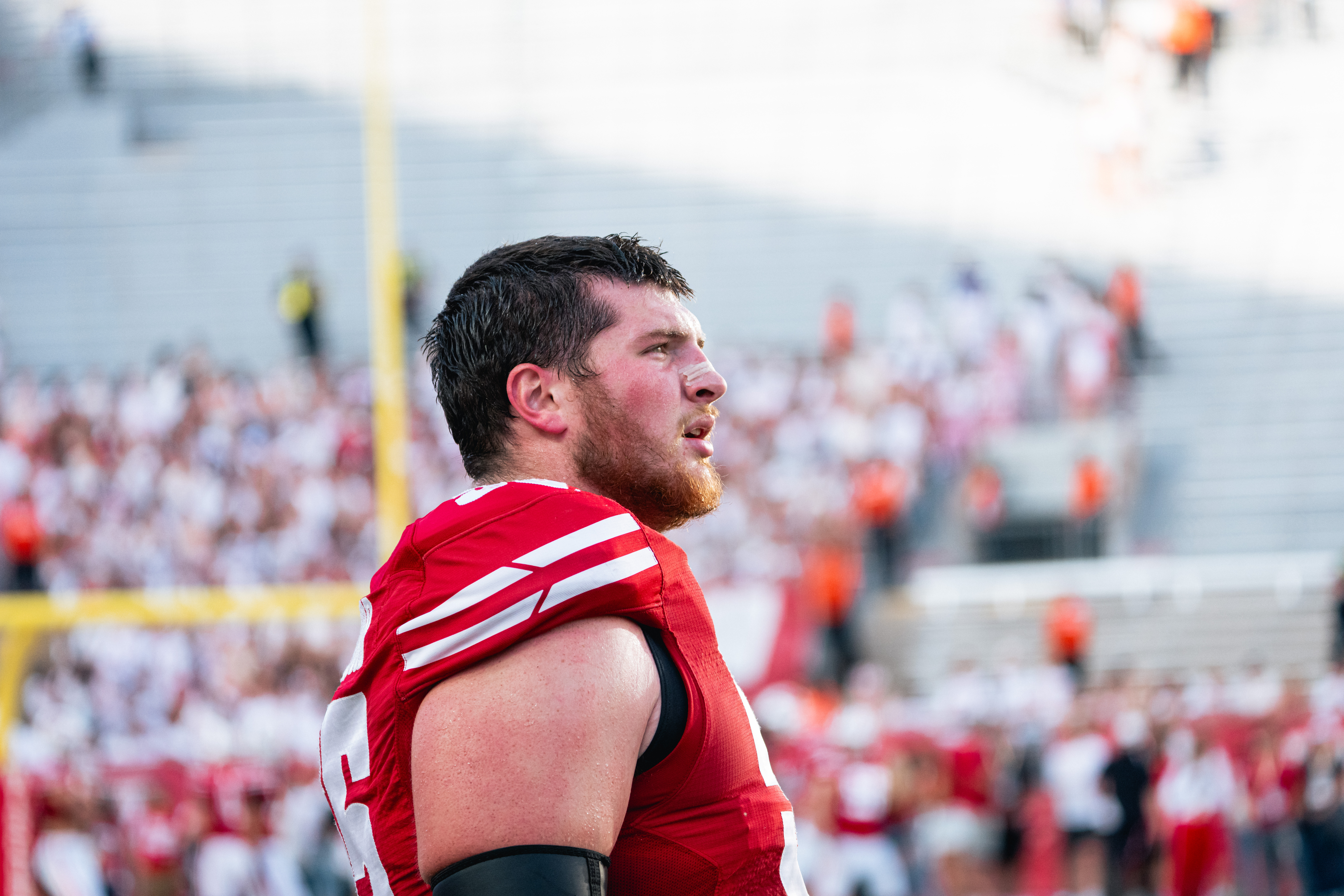
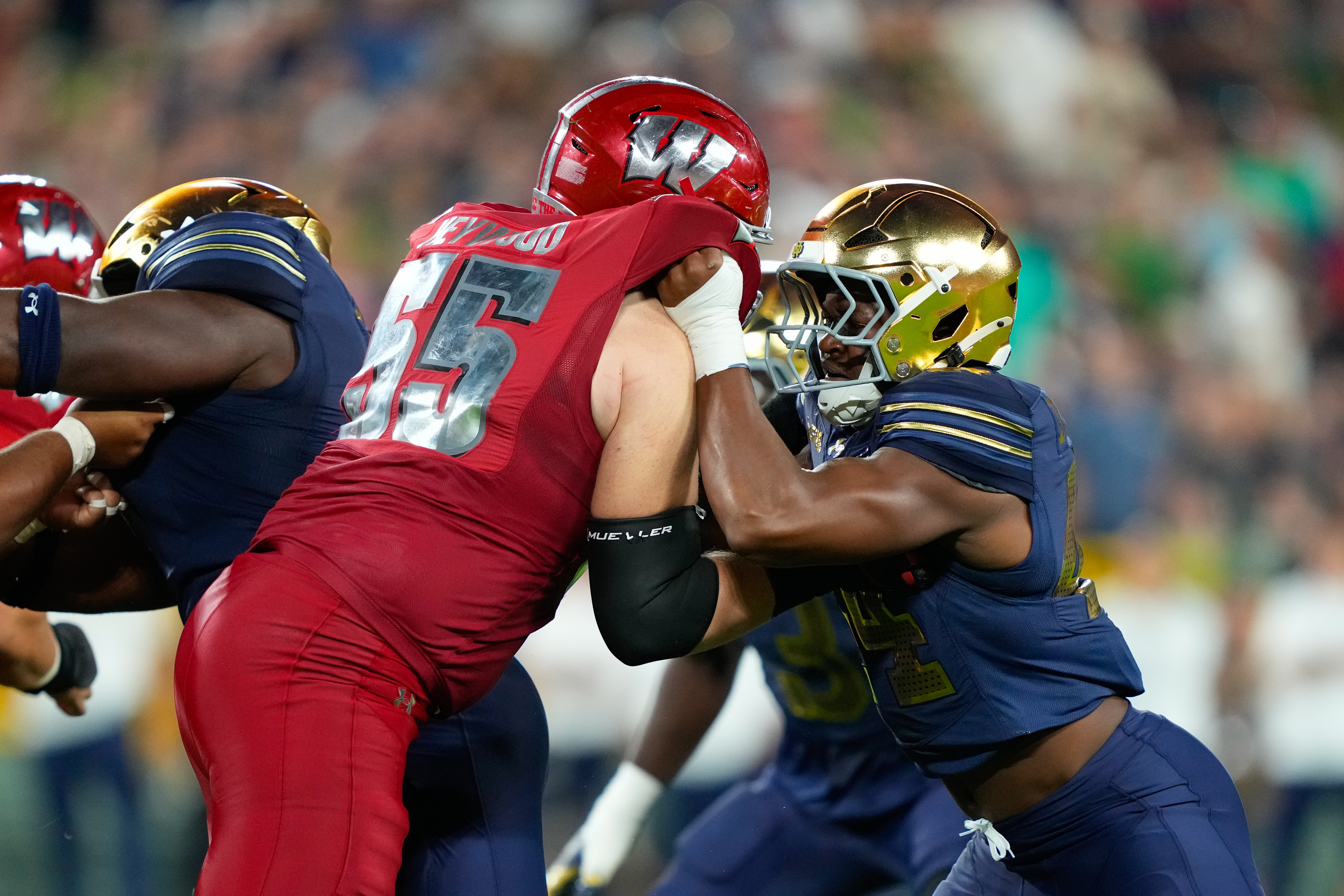
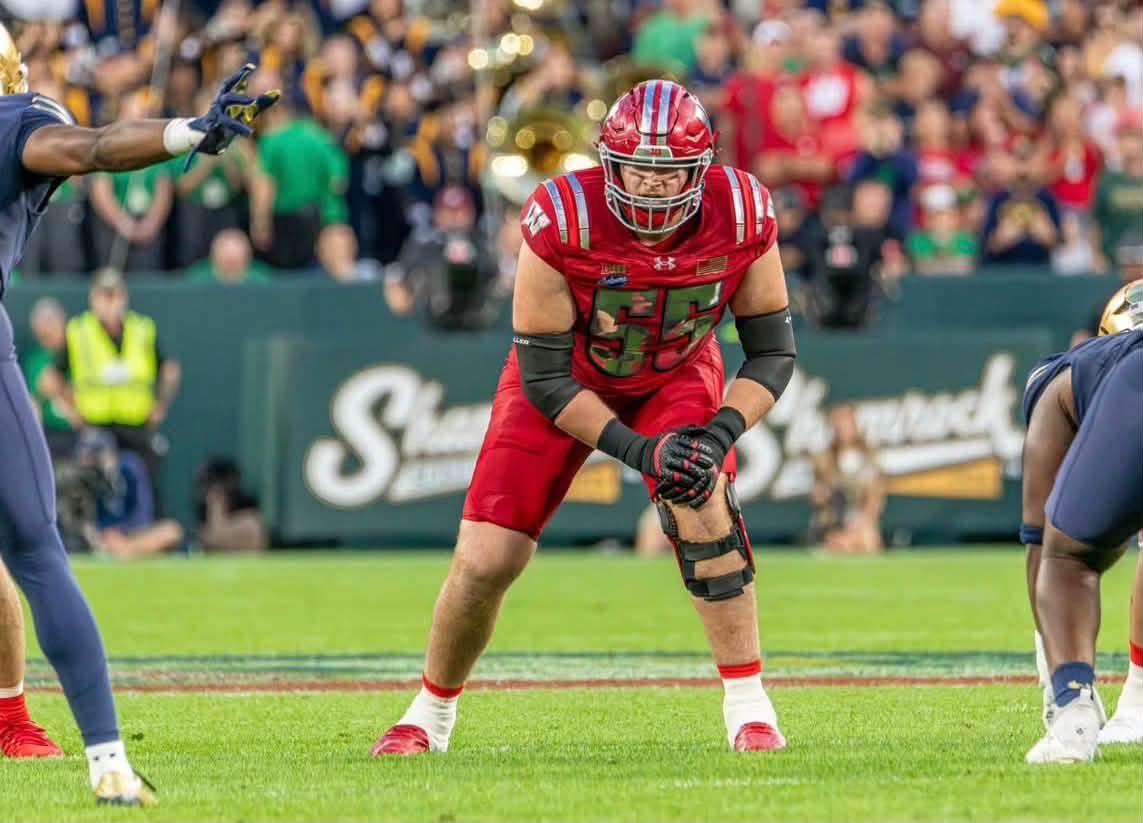
    MADISON, Wis. — Kevin Heywood ran onto the field, in a stadium filled with fans donning the blue and green of Notre Dame and the white and red of Wisconsin. For the second time in school history, the Wisconsin Badgers made the two-plus hour trip to face Notre Dame on Sept. 6 at Lambeau Field, home of the Green Bay Packers for the last 69 years.

    Nearly three weeks since the junior made his first collegiate start at right tackle for Wisconsin, the Pope John Paul II graduate, who stands at 6-foot-9, 320 pounds, looked beyond the Camp Randall Stadium stands after Tuesday’s practice with the vivid memory he’ll keep with him for a while.

    “It was crazy,” Heywood told The Inquirer, as he shook his head in disbelief of the experience. “It was really cool. Just running out, look up. It’s just like 50/50 [between the two fan bases] in the stands. … Wish [we] came out with the dub, but learned a lot from that game, [grew] from that game, and just got to keep rolling.”

    Rolling from Lambeau Field to now Beaver Stadium, in fact. Wisconsin (2-1) opens Big Ten play three hours west of his hometown Royersford, in a place he knows well. Penn State runs in the family.

    His older sister, Claire, graduated from Penn State in May, and Heywood had deeps ties with the program when James Franklin was still the head coach. Deion Barnes, the North Philly native who was the D-line coach at Penn State and now coaches at South Carolina, was Heywood’s former trainer and developed a close relationship with the lineman.

    But Heywood ultimately chose Wisconsin, and his journey will come full circle for Saturday’s game at Beaver Stadium (5 p.m., Peacock).

    “Just being a kid from Pa., going on a bunch of visits [at Penn State] in high school, it was cool,” Heywood said. “I think it’s a really cool atmosphere for us to play in and [it’ll] be a fun environment for sure.”

    Wisconsin offensive lineman Kevin Heywood blocks against Eastern Michigan on Sept. 19.Courtesy of Wisconsin Athletics

    Bouncing back from injuries

    Getting to this point wasn’t always as clear-cut. Heywood early enrolled at Wisconsin in 2024 and mostly played on special teams as a freshman.

    Last year, heading into his sophomore season as a projected starter at left tackle, Heywood tore the anterior cruciate ligament in his knee during spring practice, ending his 2025 season.

    Heywood returned this spring and once again went into this season as a projected starter, but the setbacks continued when he got injured on the second day of fall camp. His starting debut against Notre Dame seemed in doubt, but he was cleared to play a few days before the season opener.

    “I’m so proud of how he’s buckled down and fought through the adversity of all the injuries,” said his father Erik Dougherty. “He’s taking everything and [running] with it. We put a lot of stuff in front of him, had him with a lot of people to get him to where he’s at now, but he utilized all those people — and it’s just awesome.”

    Added Heywood: “I think the trainers and the strength staff made it very easy. If you’re motivated to come back, you got every tool, every resource to do to get healthy. And I feel better than I did before.”

    As he battled his ailments, Heywood also had to endure a coaching change at offensive line. Eric Mateos, who previously coached at Arkansas, was hired last winter to be the new Wisconsin offensive line coach.

    The Royersford native says Mateos has taught him to “never be satisfied” and appreciates how “hard he is on us.”

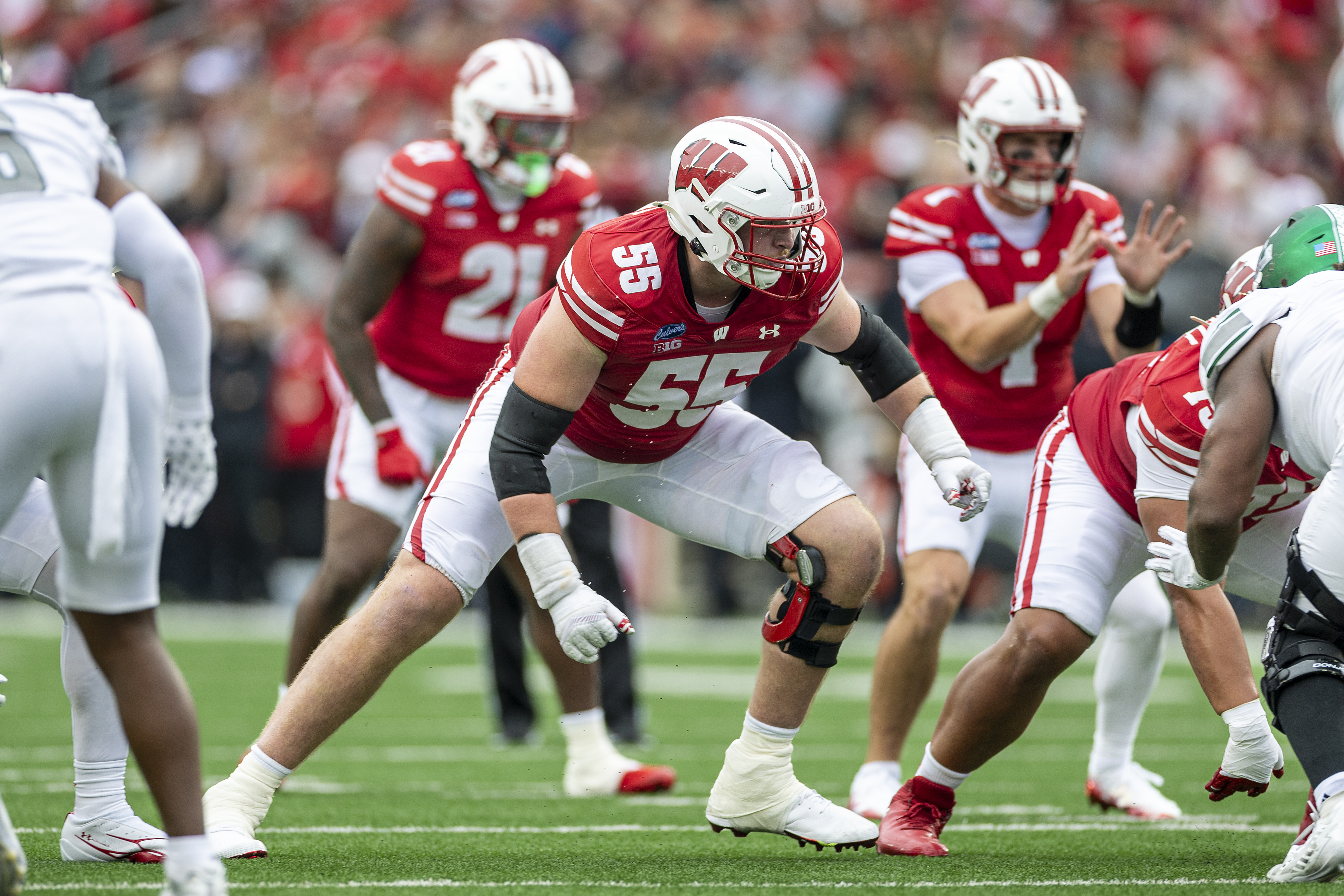
    Notre Dame defensive lineman Rodney Dunham (44) against Wisconsin offensive lineman Kevin Heywood (55) on Sept. 6.Kayla Wolf

    “He’s pushing everyone in a different way every day,” Heywood said. “There’s always time to clean up on a rep. It’s never going to be perfect. Even when you win a game, you still have to correct yourself and be better and be very hard on yourself.”

    Facing the wall

    Every time Heywood walks into the team meeting room, he sees the faces of the past Wisconsin All-American linemen. From Joe Thomas to Ryan Ramczyk to Tyler Biadasz, Heywood is reminded of the standard set before him to play on the offensive line.

    Thomas and former Rams tackle Rob Havenstein are among the former Badgers linemen who come through to visit, Heywood says.

    “Starting is the start of all of it, so I got that down,” Heywood said. “Just got to keep working on my fundamentals and techniques. I have that nastiness. I just need to clean up everything around it, and I’ll be right there with them.”

    Heywood learned from other professionals, too, this summer. Heywood and four offensive linemen attended the OL Masterminds summit, which Eagles right tackle Lane Johnson is the cofounder of. Wisconsin’s starting center, Austin Kawecki, grew up in Frisco, Texas, where the summit is held, and hosted Heywood and his teammates after the sessions.

    “I’d say the biggest thing I took away is just at the end of the day, it’s still a nasty game up front,” Heywood said, while noting he learned some techniques specifically from Johnson as a fellow right tackle. “You can be taught all the techniques in the world, but if you don’t have that edge to you, if you don’t have that nastiness, like, you’re never going to go where you want to go. And I think that’s the main thing I took from it.”

    Kevin Heywood played at Lambeau Field for his first career start.Courtesy of Wisconsin Athletics

    Doughtery and his wife, Amy, have attended every Wisconsin game so far this season, and will be in the stands on Saturday, along with Claire, and a few of Heywood’s friends from high school.

    It is “nerve-racking” watching Heywood play at this level, Doughtery admits, but seeing his son’s dream come to fruition has “filled our hearts.”

    “We just have to trust in everything that we instilled in him as a young kid, and he’s taken that and run with it,” Doughtery said. “It’s all him. We just sit back and watch how hard he’s worked and the things that he’s endured.

    “He’s got his mind right and he’s focused on what his goals are, and we’re just extremely proud of him.”

  • Can Anfernee Simons provide the Sixers with bench scoring punch? A Trail Blazers reporter weighs in.

    Can Anfernee Simons provide the Sixers with bench scoring punch? A Trail Blazers reporter weighs in.

    A wild 76ers offseason is nearing its end, after they stunningly signed LeBron James and traded for Jaylen Brown to vault into championship contender status. Media day is Monday, with training camp beginning Tuesday prior to an Oct. 20 opener at the defending champion New York Knicks.

    To help Sixers followers get acquainted with the newcomers on this revamped roster, The Inquirer reached out to reporters who covered those players on their previous teams.

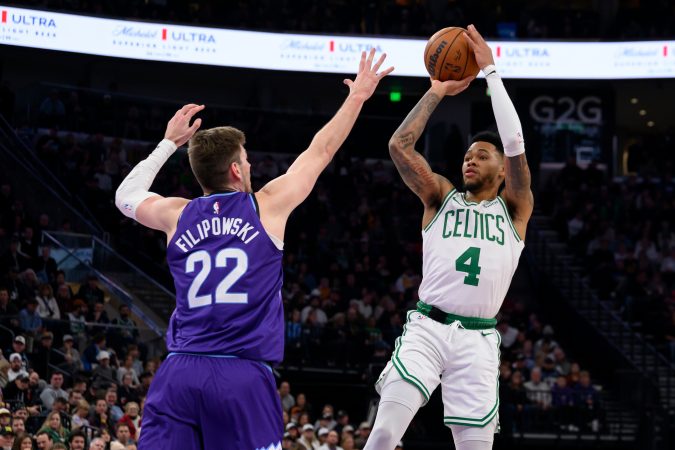
    Next up is Rose Garden Report’s Sean Highkin, who covered Anfernee Simons’ tenure with the Portland Trail Blazers.

    Gina Mizell: Simons’ three-point shooting is obviously what initially sticks out about his skill set. How did he develop into such a dangerous, high-volume threat?

    SH: A combination of his own work ethic and some osmosis. In the same way that CJ McCollum picked up a lot of parts of Damian Lillard’s game from playing next to/behind him early on, and eventually developed into a reasonable facsimile of that type of player, that’s what a lot of Simons’ offensive development has been.

    GM: How big of an issue is his defense, especially when he could spend time playing alongside fellow small guards Tyrese Maxey and/or Labaron Philon Jr. with the Sixers?

    SH: The defense is definitely a liability, but the role and expectations are very different in Philly than they were here. In Portland, he was making big money and expecting to start and be the veteran on a young team and play over 30 minutes a game, so his deficiencies on that end were a lot more noticeable. He’s going to be a bench player making less than mid-level money in Philadelphia whose job is to come in and score, so the defense is something you can live with a little more.

    GM: Where did Simons’ game most progress during his Blazers stint? Were there any aspects that did not progress as much as you expected?

    SH: The bones of what his game became were there when he was drafted. The difference has been his confidence and efficiency as a scorer improving as he got bigger opportunities.

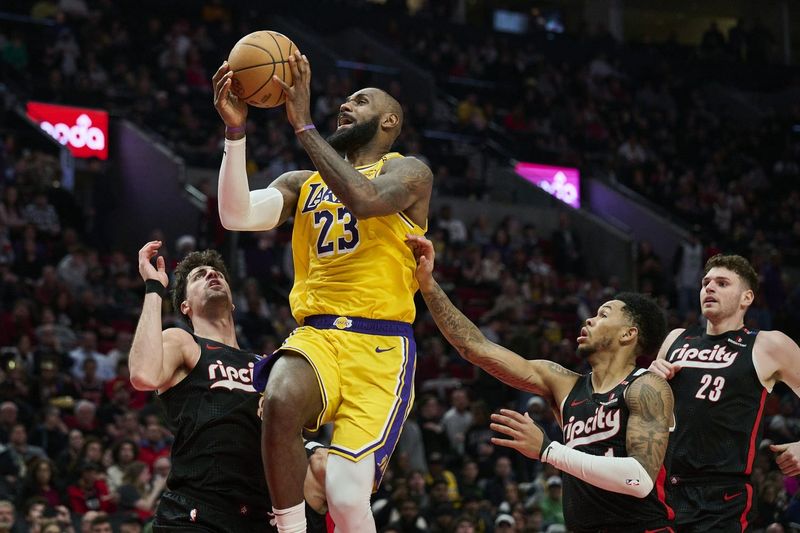
    LeBron James, center, and guard Anfernee Simons, right, are now both members of the Sixers. Troy Wayrynen, Troy Wayrynen-Ima
    GM: What did you observe from afar in how his game has translated since leaving Portland, particularly while fitting into that terrific Celtics regular season?

    SH: He’s the same player that he was in Portland, but his role in Boston (which will presumably be the same in Philly) is a lot closer to what he should be than what he was expected to be here. Is he a starting lead guard on a contending team? No. Is he a great bench scorer on a team with those expectations? Absolutely.

    GM: What’s he like as a teammate and locker-room personality?

    SH: He’s a really good guy, very low-maintenance. Not the most vocal leader, but someone everybody respects because they know the work he puts in, and he’s become much more comfortable being vocal as he’s gotten older. He’ll fit right in. On a team with so many voices that command so much attention like LeBron, Jaylen, Embiid and Maxey, he doesn’t have to do any of the “leader” stuff.

  • Trevor Zegras becomes first victim of NHL’s emphasis on jersey tuck rule vs. Bruins

    Trevor Zegras becomes first victim of NHL’s emphasis on jersey tuck rule vs. Bruins

    The biggest storyline coming out of the Flyers’ 2-0 preseason win against the Boston Bruins on Thursday at Xfinity Mobile Arena should have been that the majority of the main roster got some action or Joseph Woll looked good again — reminder: last season the team’s first shutout came in the playoffs — or that Matvei Michkov’s skating looks like he is floating now.

    Instead, the Flyers went viral after Trevor Zegras got a minor penalty for delay of game due to his equipment in the second period. The issue? His jersey was tucked into his pants before the shift started.

    “I started the game with it tucked; that’s how I usually play,” Zegras said. “Must have just went back down the bench and came out and forgot.”

    Zegras likes to play with jersey tucked into his pants; he’s done that for years. It is reminiscent of Hall of Famer Wayne Gretzky, who famously tucked the corner of his jersey into his pants; former Flyers forward Jaromir Jagr, who tucked his whole jersey; and the NHL’s all-time leader in goals, Alex Ovechkin, who tucks in his jersey, exposing the back plate of his pants.

    But according to coach Rick Tocchet, the Flyers were told recently that the league would be cracking down on this exact equipment issue, specifically that players are not allowed to start the shift with their jerseys tucked.

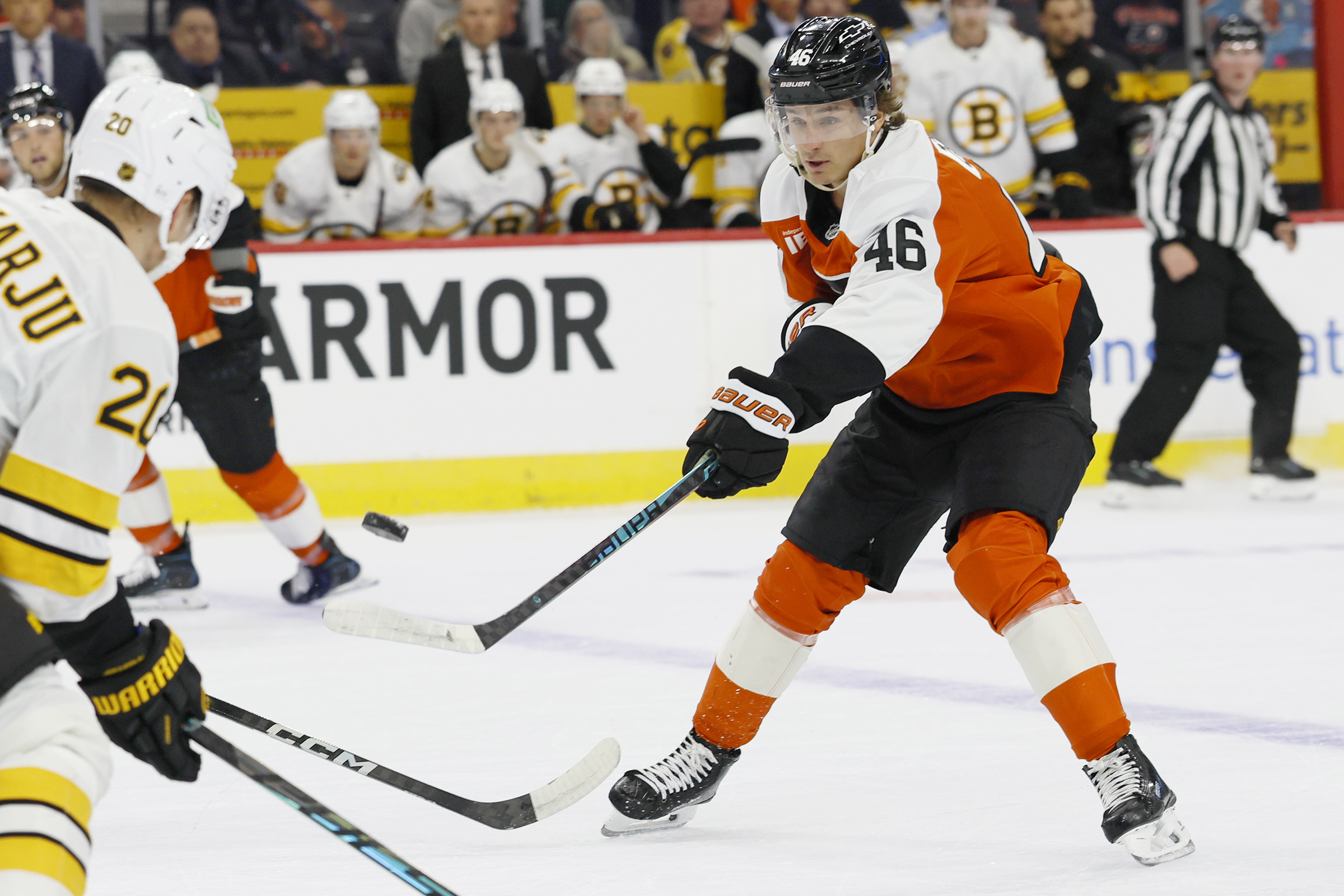
    Trevor Zegras on the puck during Thursday’s preseason game.Elizabeth Robertson / Staff Photographer

    Although no language in the 2026-27 rule book states that jerseys must not be tucked into pants, Rule 9.5 states:

    “All protective equipment, except gloves, headgear, neck protection, and goalkeepers’ leg pads must be worn under the uniform. Should it be brought to the attention of the Referee that a player is wearing, for example, an elbow pad that is not covered by his jersey, he shall instruct the player to cover up the pad and a second violation by the same player would result in a minor penalty being assessed.

    “Whenever it is deemed by the Referee that a player is wearing any equipment that does not meet with League regulations, he shall instruct the player to change or remove the piece of equipment. If the player refuses he shall be assessed a minor penalty for delay of game and if he returns to the ice without making the change he shall be assessed a misconduct penalty. Should this happen a third time, the player shall be assessed a game misconduct penalty.”

    Zegras was warned in the first period, and he and teammate Travis Konency, who is an alternate captain, were seen speaking with referee Jon McIsaac at the end of the period about it.

    “TK came over and explained, ‘Hey, Trevor’s got a warning,’” Tocchet said.

    “Obviously he can’t do it anymore,” Tocchet continued, speaking on Zegras. “He’s got to put a tie-down because the regular season starts; we can’t have a penalty like that for a tucked-in jersey.”

    A tie-down, which is also called a fight strap, secures the jersey to the pants. It was initially created to stop players from removing jerseys during an altercation. “I actually had to put [Matvei Michkov’s] down. I made him put a tie-down on the bench. We’ll have tie-downs,” Tocchet said.

    It reminded many of the time former goalie Ivan Fedotov was spotted pulling players’ jerseys down as they came to the bench two seasons ago.

    The Flyers look to be still working out the kinks in more ways than one this preseason.

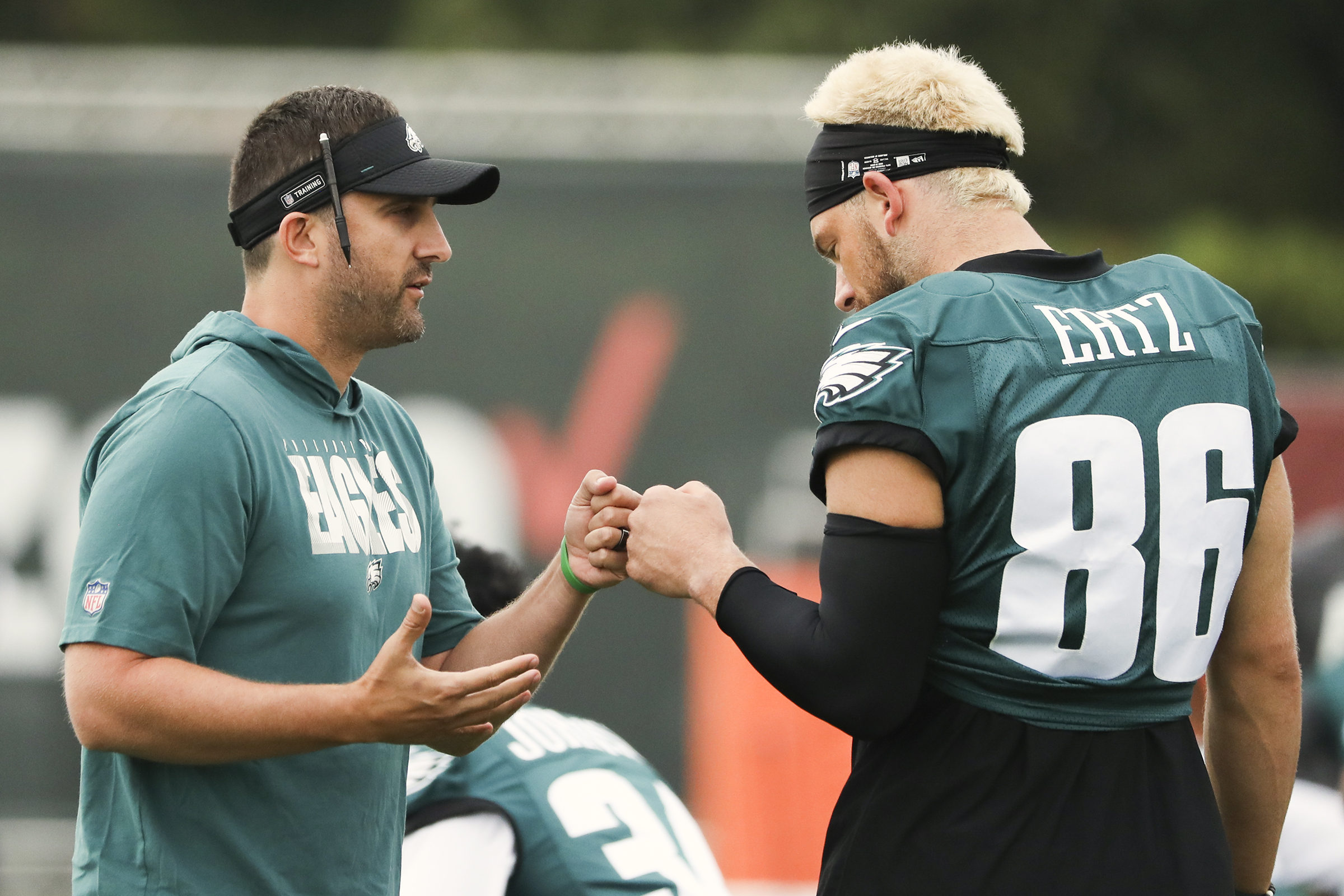
  • Zach Ertz was ‘nervous’ for his first practice back with the Eagles. The next stage of his football life is underway.

    Zach Ertz was ‘nervous’ for his first practice back with the Eagles. The next stage of his football life is underway.

    Zach Ertz has played 181 career regular season NFL games and another 11 in the playoffs. He has made three Pro Bowl teams and has 57 career touchdowns. He is 35 years old and 13 years removed from being a rookie second-round pick with the Eagles.

    But he experienced something a little bit different on Thursday.

    “I don’t know if I’ve ever been more nervous for a walkthrough than today,” Ertz said after his first practice back with the Eagles, who signed him to their practice squad earlier this week. “Obviously the past nine-and-a-half months have been tough. A lot of emotions going through today, a lot of prayers going through today, just to try to center myself.”

    The knee injury that ended his 2025 season could have ended his career. There were times he thought it would. Call Thursday, then, the first day of what could be the last stage of his NFL career.

    There was a full-circle feel to it. Ertz said it was “special” to be back on a practice field with Lane Johnson, whom the Eagles selected a round earlier than Ertz in 2013. He’s probably a little envious of Johnson, who still is with the Eagles without any detours to Arizona and Washington. Ertz reiterated Thursday that he never wanted to leave.

    “This is a place that I’ve always called home,” he said. “This is a place that when everyone asks where my favorite place to play is, everyone knows it’s here. There are so many memories when you’re in a place for nine years so it’s special to be back.”

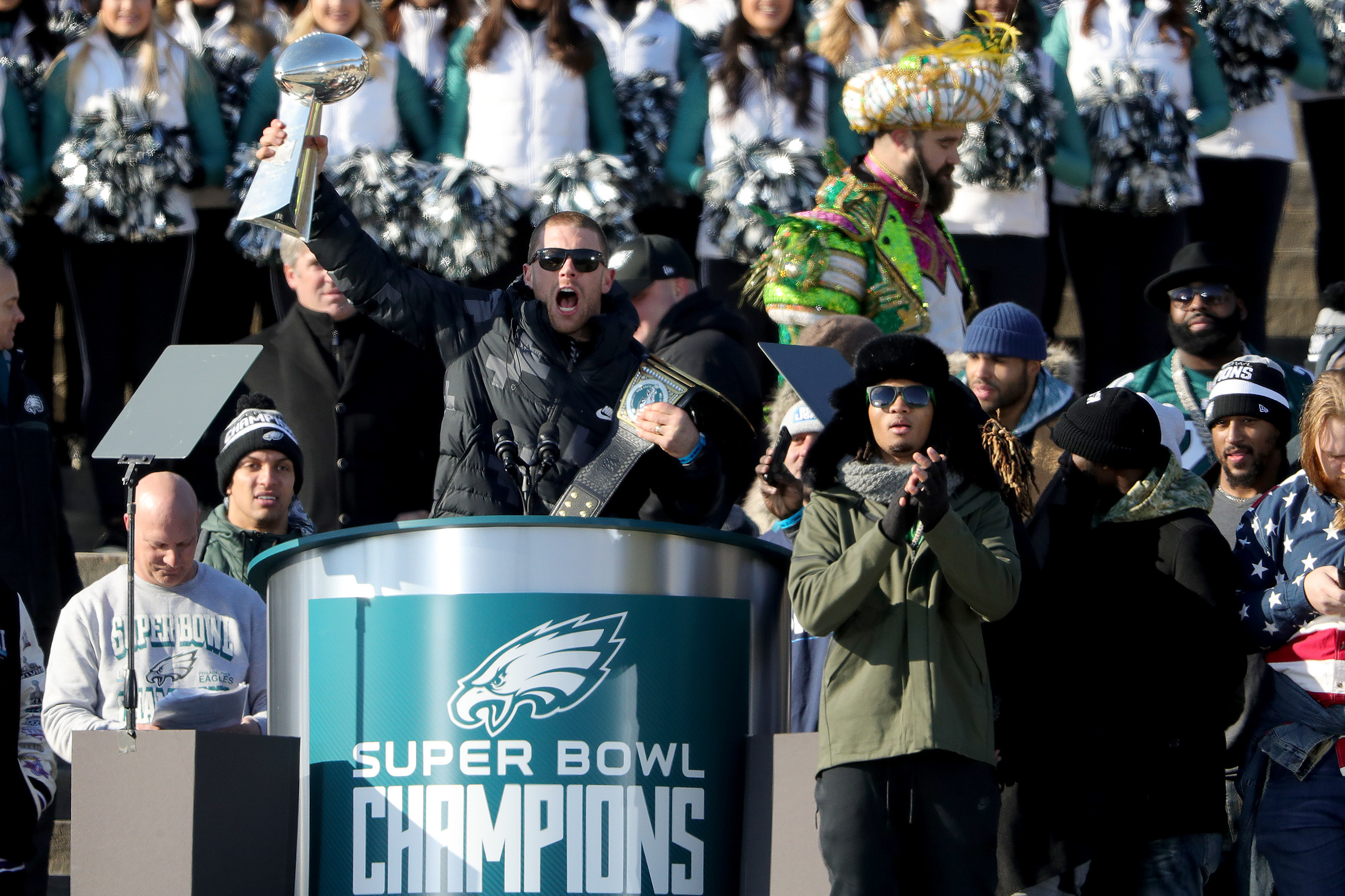
    Eagles tight end Zach Ertz holds up the Lombardi Trophy during the Eagles’ Super Bowl celebration on Feb. 8, 2018.DAVID MAIALETTI / Staff Photographer

    He reconnected with Jeffrey Lurie and Howie Roseman. He liked the expanded locker room and the bigger training room. He also caught up with cafeteria staff and others in the building.

    Ertz and his wife, Julie, left here five years ago childless. He returns now as the father of three boys and armed with new perspective. His football future was up unknown after his injury, but he told himself he wanted to give himself every chance he could to play football again, in part because he wanted to show his sons a tangible example of overcoming adversity.

    “I couldn’t live with the fact that I just gave up and there was a what-if hanging over my life for the rest of my life,” Ertz said.

    The Eagles need all of this to be more than ceremonial, as Inquirer columnist David Murphy wrote earlier this week. More than about him reeling in 11 more catches to become the franchise leader in receptions. The team will be without top tight end Dallas Goedert likely for a few weeks with a sprained MCL. Behind Ertz are a few blocking specialists. Ertz, for now, is on the practice squad, but he could be elevated or signed to the active roster and make his debut Monday.

    “It’s up to the coaches,” Ertz said. “I’m not even on the active roster right now. For me it’s about going out there and proving that I can make a difference in the game. If I can’t make a difference in the game then I shouldn’t be out there.”

    His knee, he said, “feels great,” but he will see how it feels Friday morning. He’s been “cramming,” he said, trying to learn a new offense that he’s never played in. Ertz said there were two or three pass plays left over from when Nick Sirianni installed his first offense in 2021. Routes are routes, but there is a lot of new terminology to learn.

    “We’ll see where he is,” Sirianni said Thursday before practice. “It’s too early to say in my mind where he is, but we will quiz him and figure out where he is on different things.”

    Eagles head coach Nick Sirianni (pictured in 2021) reunited with tight end Zach Ertz on the practice field for the first time since the two parted ways five years ago. HEATHER KHALIFA / Staff Photographer

    Ertz was having another productive season before he suffered his injury in December. He had 11 touchdowns in 30 games over his last two seasons in Washington, where he fell “back in love with the game again” and helped a young quarterback, Jayden Daniels, find his way.

    Ertz admitted Thursday that he wasn’t always good with young players earlier in his career, but now he sees working with them as part of his duties. His locker stall at the Jefferson Health Training Complex tells a story. When he first got here a few days ago, it was in a different spot, but as the practice week got underway, Ertz’s stall was next to that of rookie second-round pick Eli Stowers, who is on injured reserve with a hamstring injury after a training camp where he didn’t really stand out.

    “I don’t think it’s an accident that they put me here,” Ertz said. “I’m excited to work with him. We have the same agent so I’ve heard a lot about his story, a lot about the talent that he has. Not many tight ends can jump 44 inches and run a 4.5. Everyone has a superpower in this league and he’s got to play to his superpower. I’m looking forward to helping him kind of unlock that mentally, physically, to be at his best.

    “I really embrace that role in my later stages of life … football life I should say.”

    It was a good correction. As of Thursday, Zach Ertz’s football life was officially revived.

    Injury report

    The Eagles had a lengthy first practice report of the week ahead of their Monday night game in Chicago.

    Most notably, Saquon Barkley (stinger) practiced in a limited fashion. But the other two running backs on the active roster did not.

    The following players did not practice: Tank Bigsby (abdomen), Goedert (knee), Will Shipley (foot), and wide receiver DeVonta Smith (hamstring).

    The Eagles listed Barkley, Jalen Carter (wrist), Jonathan Greenard (pectoral), and Andrew Mukuba (knee) as limited participants.

    Tyler Steen (shoulder) was a full participant.

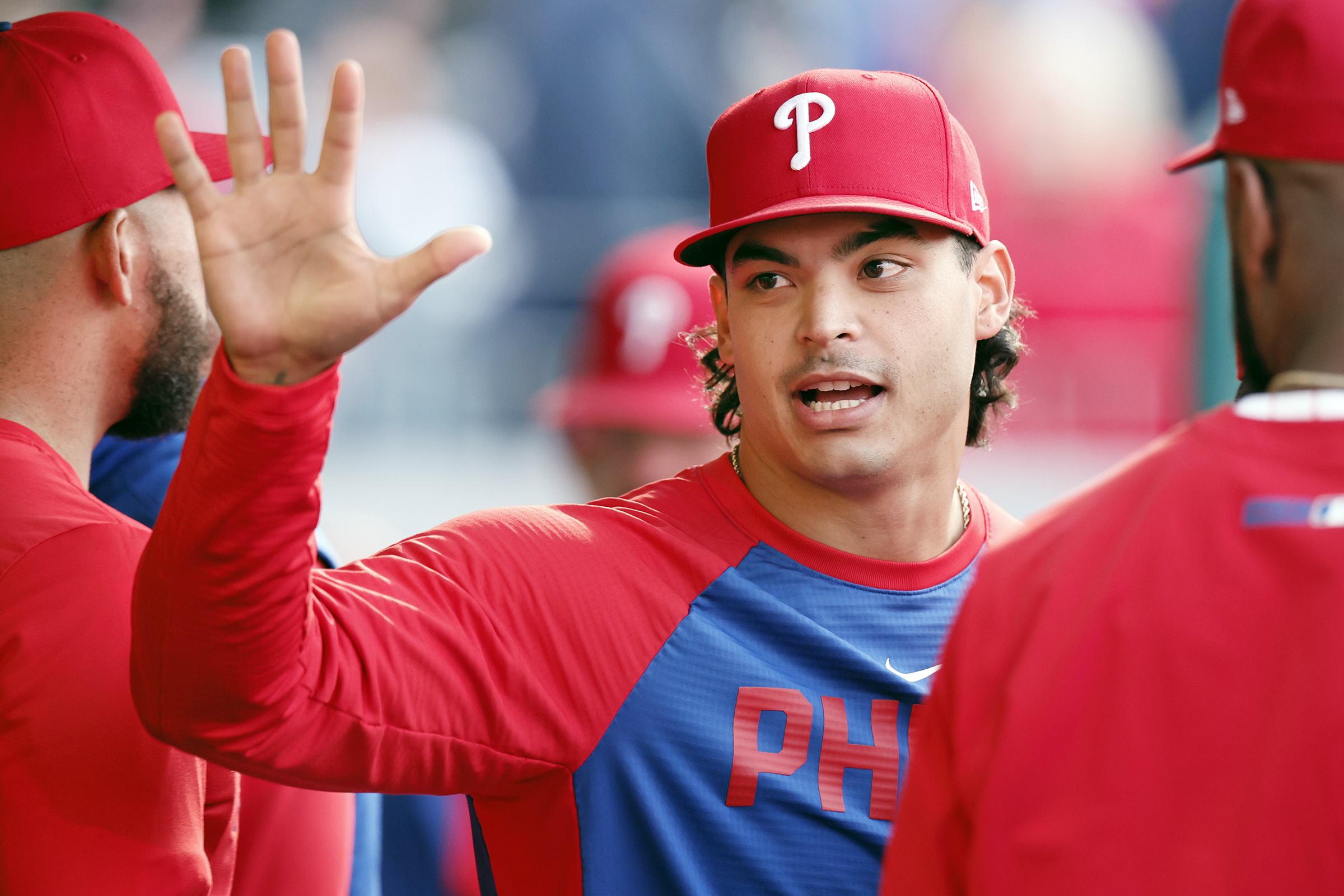
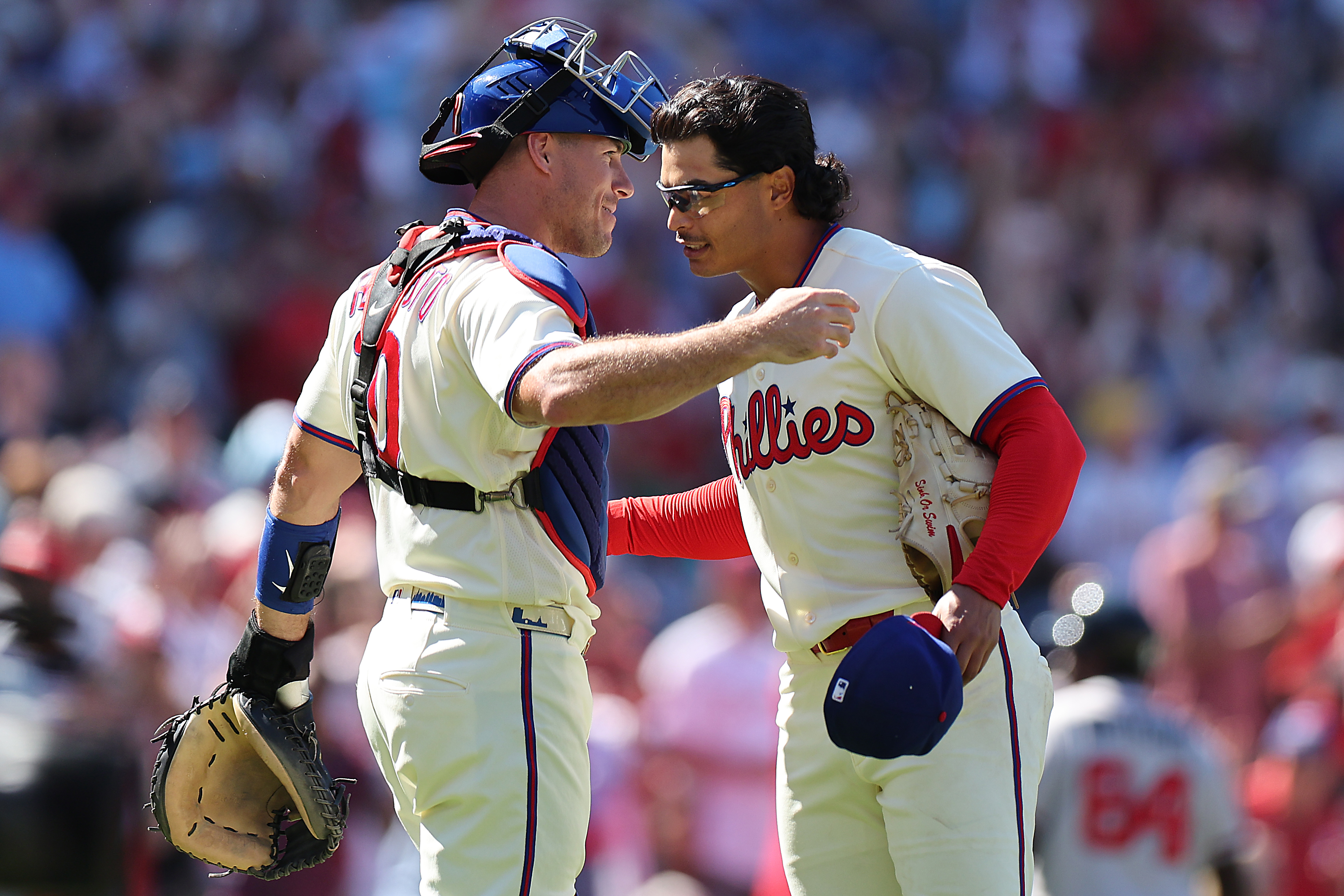
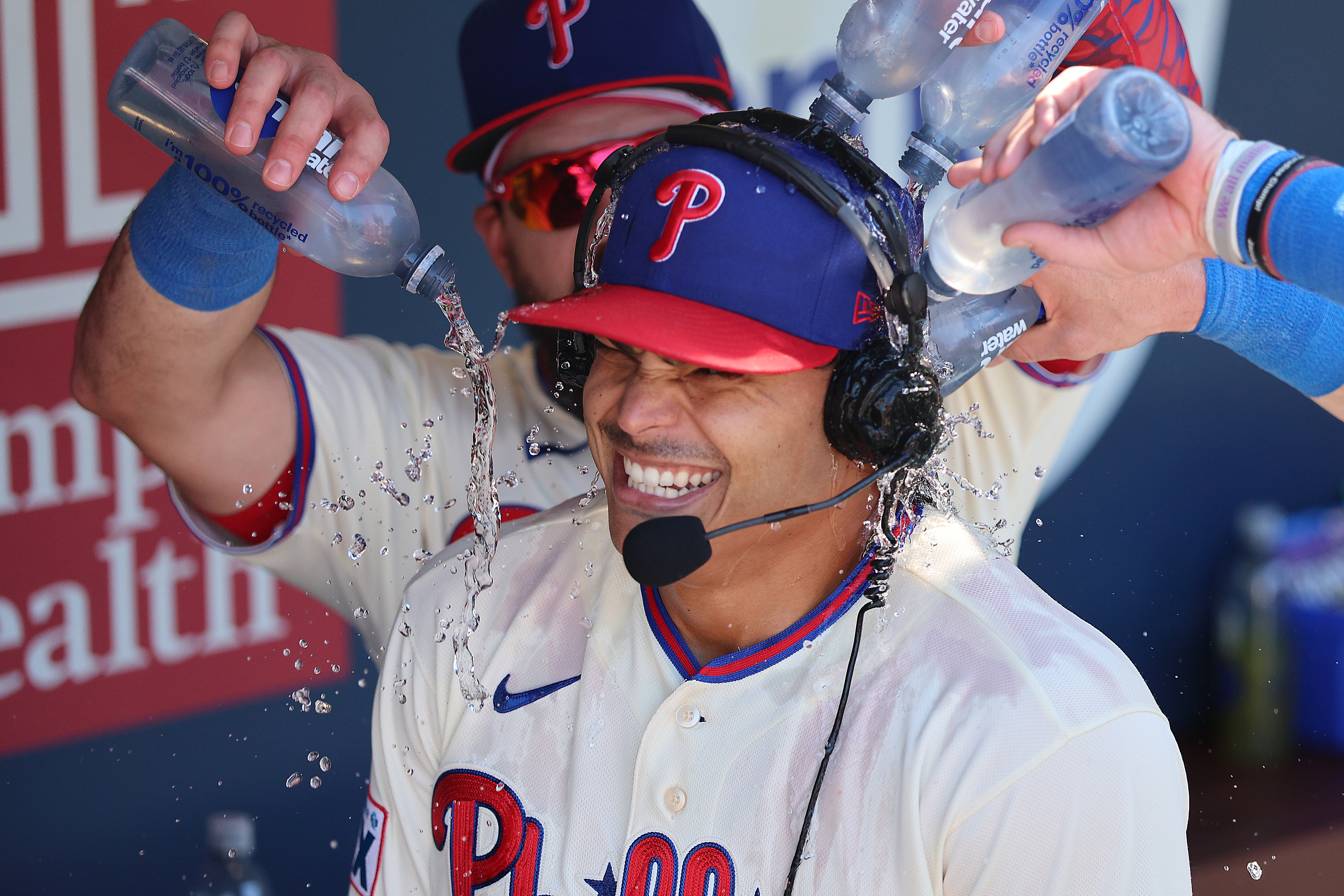
  • Jesús Luzardo feels good after bullpen session, ‘chances are good’ he will return for the playoffs

    Jesús Luzardo feels good after bullpen session, ‘chances are good’ he will return for the playoffs

    Don Mattingly tried to downplay it at first, but even he was unable to hold the poker face.

    “I mean,” he said, “it was a regular bullpen.”

    Everyone knew there wasn’t anything “regular” about the 30-ish pitches that Jesús Luzardo threw in the Phillies’ bullpen Thursday, the first time he pitched from a mound in 13 days because of inflammation in his left shoulder.

    And it couldn’t have gone much better.

    Luzardo wasn’t about to make any declarations, noting that Friday is “a big day to see how I bounce back.” But all signs point to the All-Star lefty being ready to pitch in the postseason, with the Phillies on the precipice of locking up a National League wild card.

    “I feel really good, healthy,” Luzardo said. “Everything keeps trending in the right direction, so I think the chances are good.”

    Barring a setback, Luzardo is expected to face hitters, likely in a simulated game setting, over the weekend. He’s eligible to come off the injured list Sunday before the regular-season finale.

    It’s unclear whether Luzardo will be ready to start a game in the best-of-three wild-card series. He hasn’t appeared in a game since a 109-pitch shutout of the Braves on Sept. 7. But the Phillies are hopeful that he will at least be able to come out of the bullpen.

    Jesus Luzardo’s last start was a 109-pitch complete-game shutout of the Braves on Sept. 7.David Maialetti / Staff Photographer

    “Whatever role they need me at,” Luzardo said. “If they need me [for] one inning, two innings out of the bullpen, three innings, I could start, I could be the bat boy. Whatever they ask of me, I’ll do. I just want to win, so it doesn’t matter.”

    Just having Luzardo available at all would be a relief.

    “I think it’s realistic,” Mattingly said. “If everything keeps going good, yes.”

    The Phillies’ strength is their trio of ace starters: Zack Wheeler and lefties Cristopher Sánchez and Luzardo. The team is 63-25 in their starts, including 21-8 with Luzardo on the mound.

    Luzardo has been among the best pitchers in the sport for five months. Only the Brewers’ Jacob Misiorowski, favored to win the Cy Young Award, has a better ERA than Luzardo’s 1.93 mark since May 11.

    Overall, Luzardo has a 2.87 ERA and 221 strikeouts in 178⅔ innings.

    But Luzardo was unable to get loose during a bullpen session Sept. 11 in Atlanta, and the Phillies scratched him from a start the following night. He was hopeful of playing catch Sept. 15 in Washington but instead went on the injured list. It wasn’t until last Sunday that he resumed throwing.

    Even Luzardo wasn’t sure he would progress so rapidly.

    “I feel like I’m a pretty optimistic thinker, so I think this was the plan in my head,” he said, crediting physical therapist Alex Plum, strength coach Morgan Gregory, and the athletic training staff. “Obviously, injuries are hard to really tell where they’re going to go and how your body’s going to react. But I was pretty optimistic the whole way, and I was hoping that it would go as it is now.”

    Mattingly doesn’t typically oversee bullpen sessions. But he stood alongside pitching coach Caleb Cotham to observe Luzardo, who threw every pitch in his repertoire in the bullpen with his normal intensity.

    Jesus Luzardo has a 1.93 ERA since May 11.David Maialetti / Staff Photographer

    “I don’t think he was out there just like tossing the ball trying to get it to the plate,” Mattingly said. “The strikes felt good. He’s feeling good. He wasn’t shaking his shoulder during the bullpen or anything like that, so all signs are going in the right direction.”

    Said Luzardo: “I was letting it go like a normal bullpen, kind of treating it as if we were ramping up for a normal start. It was coming out well, nice and easy, and I definitely wasn’t soft-tossing it up there. There was some intent behind it.”

    Wheeler and Sánchez, in some order, are expected to start Game 1 and 2 of the wild-card series. Aaron Nola would be lined up for Game 3. Luzardo could continue to build stamina during the wild-card round while aiding a bullpen that lacks dependable setup options for closer Jhoan Duran.

    “I already had 180 innings and built up to 100 pitches a lot of times this year,” Luzardo said. “I think it was six days off from throwing. So, I don’t think it creates that much rest.

    “Definitely the last two weeks have been pretty stressful. I want to compete and be there for the guys, so it was frustrating at times. But definitely a relief just feeling good.”

    Matt Klentak breaks down how the Phillies acquired Zack Wheeler and Cristopher Sánchez
    Video: Matt Klentak breaks down how the Phillies acquired Zack Wheeler and Cristopher Sánchez

    Extra bases

    Setup reliever Jonathan Bowlan (groin) played catch after a light bullpen session Wednesday. Bowlan hasn’t appeared in a game since Sept. 17, but Mattingly said he would be comfortable using the big righty in a postseason game even if he doesn’t pitch over the weekend. … Double-A shortstop Bryan Rincon, who received the Phillies’ Paul Owens Award as the top position player in the farm system, credited major-league hitting coach Kevin Long for “a couple of tips” in spring training. Rincon finished with 26 homers and 30 steals and led Reading to the Eastern League championship. … Sánchez (18-6, 2.93 ERA) is lined up to start at 6:40 p.m. Friday against Rays righty Freddy Peralta (9-11, 4.56).

  • Union alum Auston Trusty embraces being a USMNT role model for Cavan Sullivan and Neil Pierre

    Union alum Auston Trusty embraces being a USMNT role model for Cavan Sullivan and Neil Pierre

    FAYETTEVILLE, Ga. — When Auston Trusty turned pro with the Union a decade ago, the club’s youth academy was just starting to find its footing.

    Now everyone knows about it, and the waves of players it has produced for the club and the U.S. national team. Trusty knows better than most, as the Media native is on the academy’s board.

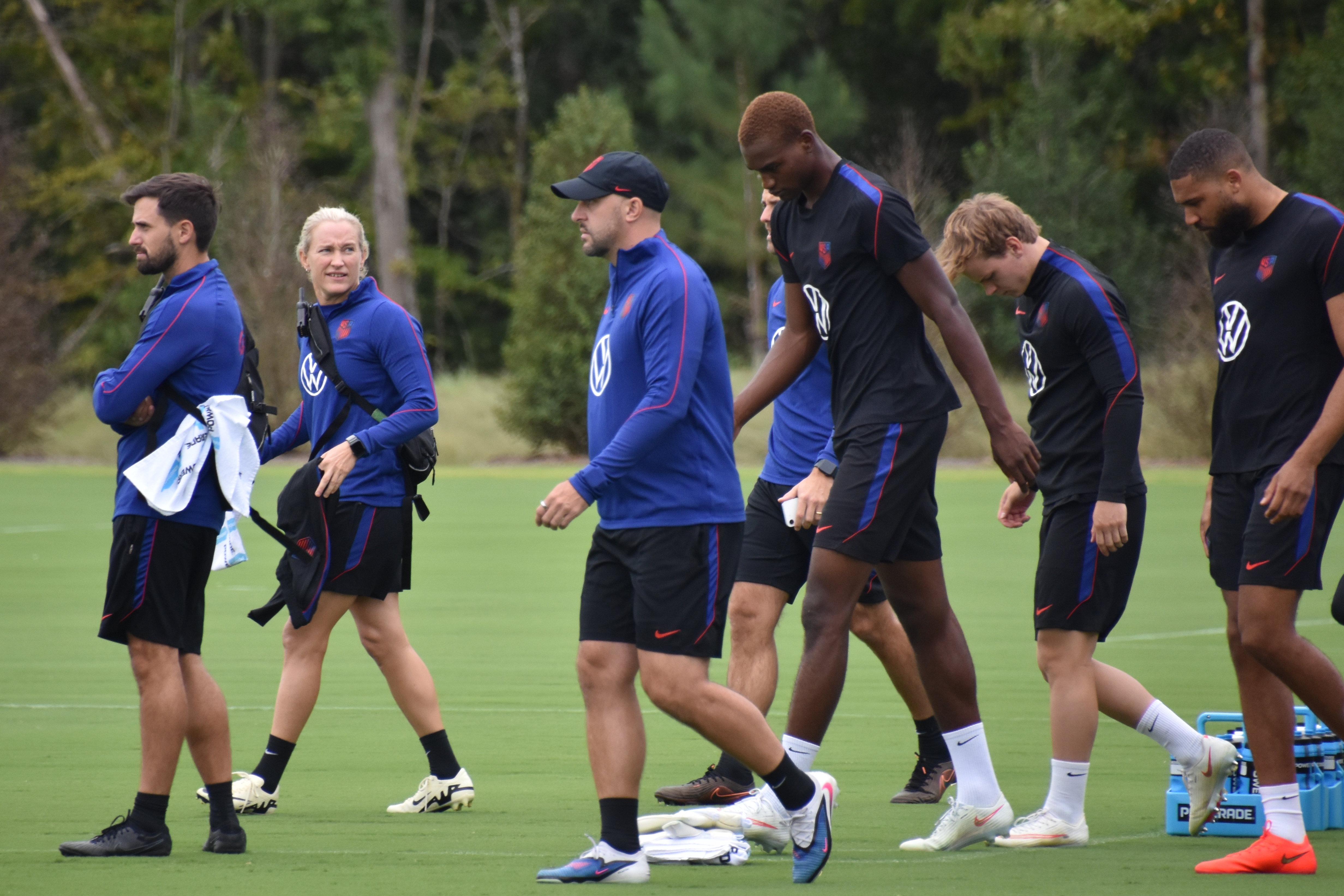
    But the scale of how far things have come in less than a decade has hit especially hard this week. The 28-year-old is sharing the field with the newest Union youngsters to break through: Cavan Sullivan, Neil Pierre, and Frankie Westfield.

    “Yeah, it’s crazy. I still think of myself as the young kid from Philadelphia, but now these guys are,” Trusty told The Inquirer on Thursday in an interview at U.S. Soccer’s national training center, before the team headed to Orlando to prepare for Saturday’s game against Peru (4:30 p.m., TNT, Telemundo 62).

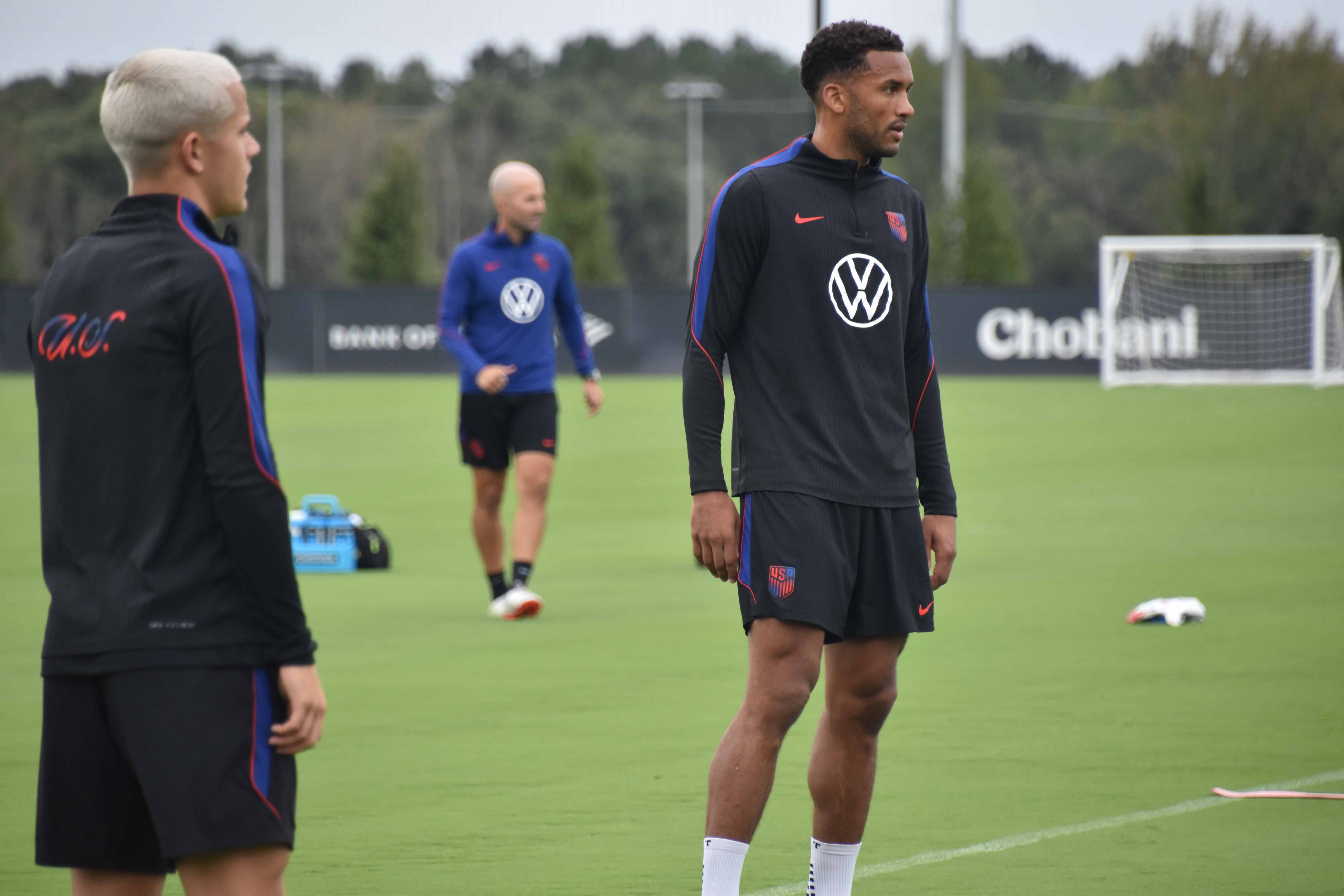
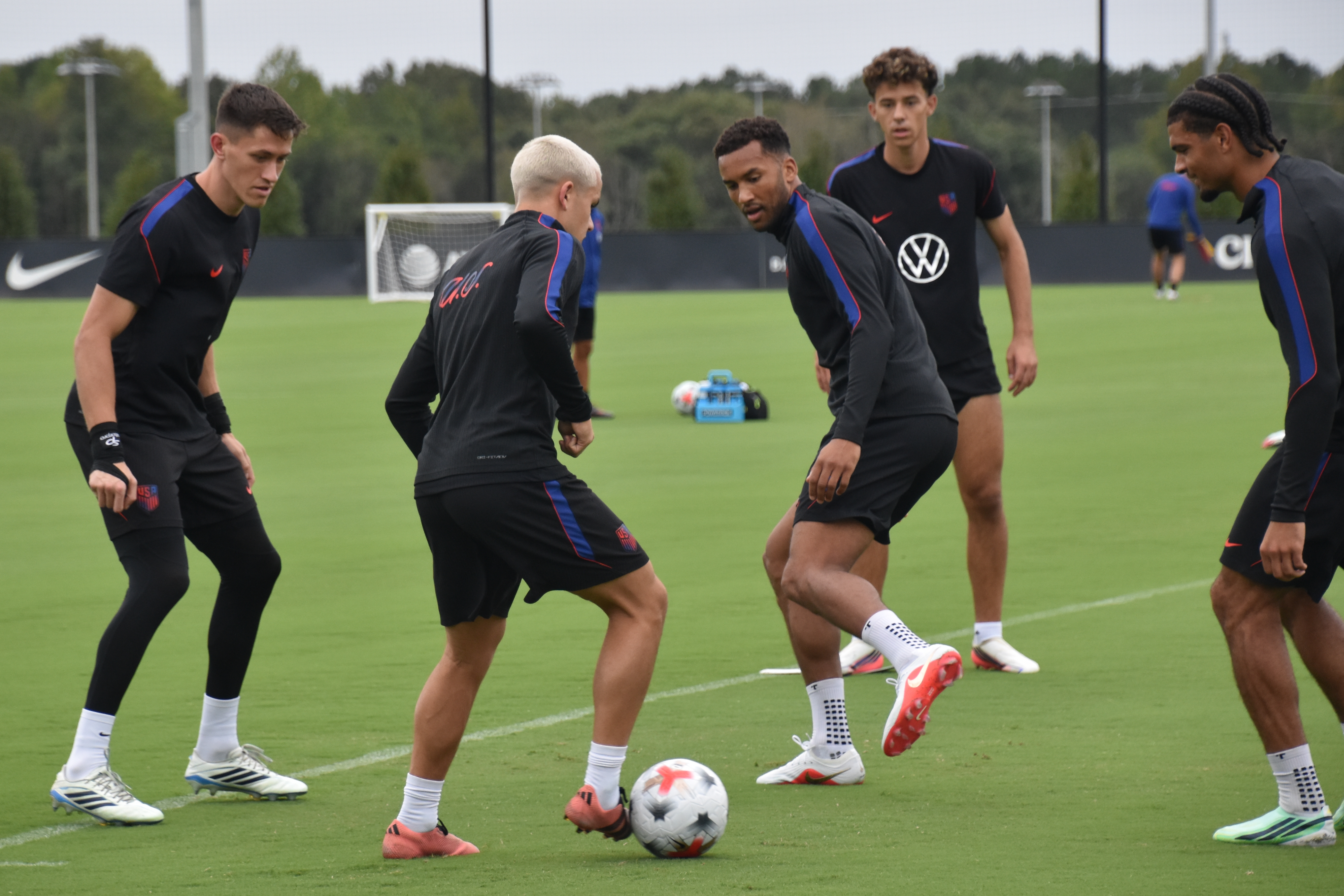
    Cavan Sullivan (second from left) on the ball in front of Auston Trusty during a drill at Thursday’s practice.Jonathan Tannenwald

    “The way they look at me, they all know my history,” he said. “They all know where I came from, how I came from it, and I’ve been that person they’ve been trying to aspire to be. I’m really appreciative, I’m really grateful, and it’s a blessing that I’m able to be that person for them.”

    It feels long ago, at least in soccer terms, that Trusty turned down a scholarship offer to the University of North Carolina in the summer of 2016. He signed with the Union just days before he’d have headed to Chapel Hill. Back then, such a move was seen as unusual.

    “College, at the time, was probably the smarter move to other people,” he recalled. “To me, signing pro, I was taking a risk for myself. So it kind of opened that pathway for all these kids to come after me, and it’s pretty cool.”

    A year after Trusty’s move, Mark McKenzie left Wake Forest following his freshman season, and Brenden Aaronson backed out of a verbal commitment to Indiana.

    Auston Trusty (left) and Mark McKenzie together during their playing days with the Union.

    The tide had turned, and there was no going back. By the time Frankie Westfield turned pro in 2024 instead of going to Penn State, no one batted an eye.

    On Thursday, Trusty and Westfield had lunch together after teaming up in one of the morning’s training drills.

    “From what I’ve known from him, and from what I’ve heard, he’s a great player [with a] great mindset,” Trusty said. “Him, along with the other players from [the] Union, it’s really cool to see how far they’ve come, together and individually, and also their mindsets. … It’s their first time, so maybe they’d be hesitant, but they have great mindsets, and that’s what I really want to see.”

    It was obvious to ask about Pierre, a fellow centerback with so much potential. Trusty hadn’t talked with him much yet as of Thursday, mainly due to travel delays coming over from his club home at Celtic in Glasgow, Scotland. But Trusty has seen highlights, including of Pierre’s four goals for the Union this year, and is happy to have another Union centerback with the national team.

    Neil Pierre (third from right) is always easy to spot in a crowd thanks to his 6-foot-6 frame.Jonathan Tannenwald

    “He seems [like] a really good guy, seems good as a person, as a player, seems like he has a lot of talent,” Trusty said. “Obviously, his physical attributes — he’s really tall, and I think a lot of times people can focus on physical attributes. I’m really excited to see how he is on the ball, how he is as a player.”

    And of course, there’s Sullivan. Trusty has known the 16-year-old and his family for a while, so he hasn’t just seen the player through Union games.

    “He’s a humble kid, and he’s a grinder,” Trusty said. “He has that Philadelphia Union mindset where you know you don’t take it for granted, you go out there and grind, and you make the most of it. But he’s a humble kid, and he comes from a good family as well.”

    It will strike some people that Trusty focused on Sullivan’s humility. To outsiders, the talk is of cockiness and a hype train. But Trusty knows the difference between that and the right kind of confidence.

    Cavan Sullivan (right) cracking a smile at the start of Thursday’s practice.Jonathan Tannenwald

    “You see him off the pitch, see how he approaches a game, how he starts a game, how he approaches his transactions with teammates and coaches, and the game itself with his own play,” he said. “But during it, if someone’s going to do stepovers, someone’s scoring goals, and they’re celebrating, or if they show confidence on the pitch, that is exactly what you want to see. I don’t want an attacker, or any player, on the pitch that’s not confident.”

    Given that, he concluded: “So if someone’s feeling themselves, someone’s confident in their ability and backs themselves, all power to him.”

    Now the time has come for Sullivan and the other newcomers to make their first marks at a new level.

    “It’s for the more veteran, more established players to lead the young guys, and guys who could possibly get their first caps, to make sure they know what this team’s about,” Trusty said. “When you wear this crest, you’re not just representing yourself. You’re representing your teammates, your coaches, but everyone that’s ever believed in you, and an entire nation that’s behind you. So it really means a lot.”