CHICAGO — The big crowd was buzzing, the fireworks were rising, and local legend Jim Cornelison was belting out the national anthem in his famous way.
But the mood lasted barely 43 seconds after the U.S. men’s soccer team’s last World Cup tuneup kicked off.
That’s what the clock read when midfielder and longtime locker room leader Tyler Adams tripped up Felix Nmecha just outside the Americans’ 18-yard box. Joshua Kimmich of German club superpower Bayern Munich took the free kick, then Kai Havertz of newly crowned English Premier League champion Arsenal raced past Miles Robinson for an open header past a frozen Matt Freese.
Just like that, the good vibes were down the drain.
“I think we all looked at each other and said, ‘Well, it just got a lot more difficult, but we need to battle,’” Adams said.
“I think instantly, it was frustration,” said left back and fellow locker room leader Antonee Robinson, who scored the equalizer later in the half. “You could see that we don’t know how we’ve let quality players and quality opposition just get a free header in our box — that shouldn’t really be possible.”
U.S. manager Mauricio Pochettino was upset, too. But he quickly realized that he had a measuring-stick moment on his hands, and he started to relish it.
“I was thinking that we were lucky,” he said. “Because to face a situation — conceding a goal against a team [like] Germany is, with top players, was an amazing challenge for us. To see how we react, how we show character, how we show togetherness, how we start to play under pressure.”
More than a few recent U.S. teams might have folded. This one, though, took the game right back to the four-time World Cup champions and had the better play for much of the rest of the first half. The payoff came in the 37th, when Antonee Robinson belted in a highlight-reel strike from just outside the 18-yard box.
“The reaction was amazing, was really positive,” Pochettino said. “And that’s why it’s good, you know, that something not so good happened: to see the reaction and to create that atmosphere that we can deal with this type of situation that we can find in the future, and during the competition in the World Cup.”
Antonee Robinson added: “I think that response shows that when things are going against us, which in tournament football is bound to happen, that we can come back from anything.”
Germany ended up winning, 2-1; Leroy Sané scored the winner just before both managers started making mass substitutions. For the casual fans just tuning in before the World Cup, the final score might be all that matters. But if you’re one of them, know that many U.S. diehards were pleased with the performance.
“I don’t think any of us are fazed by playing Germany,” Adams said. “To play a top team like that though, going into the World Cup. I think increased our confidence tenfold. I think for us, we already have a confident team, but to go toe-to-toe with one of the best teams in the world, [it] shows that we’re ready and capable.”
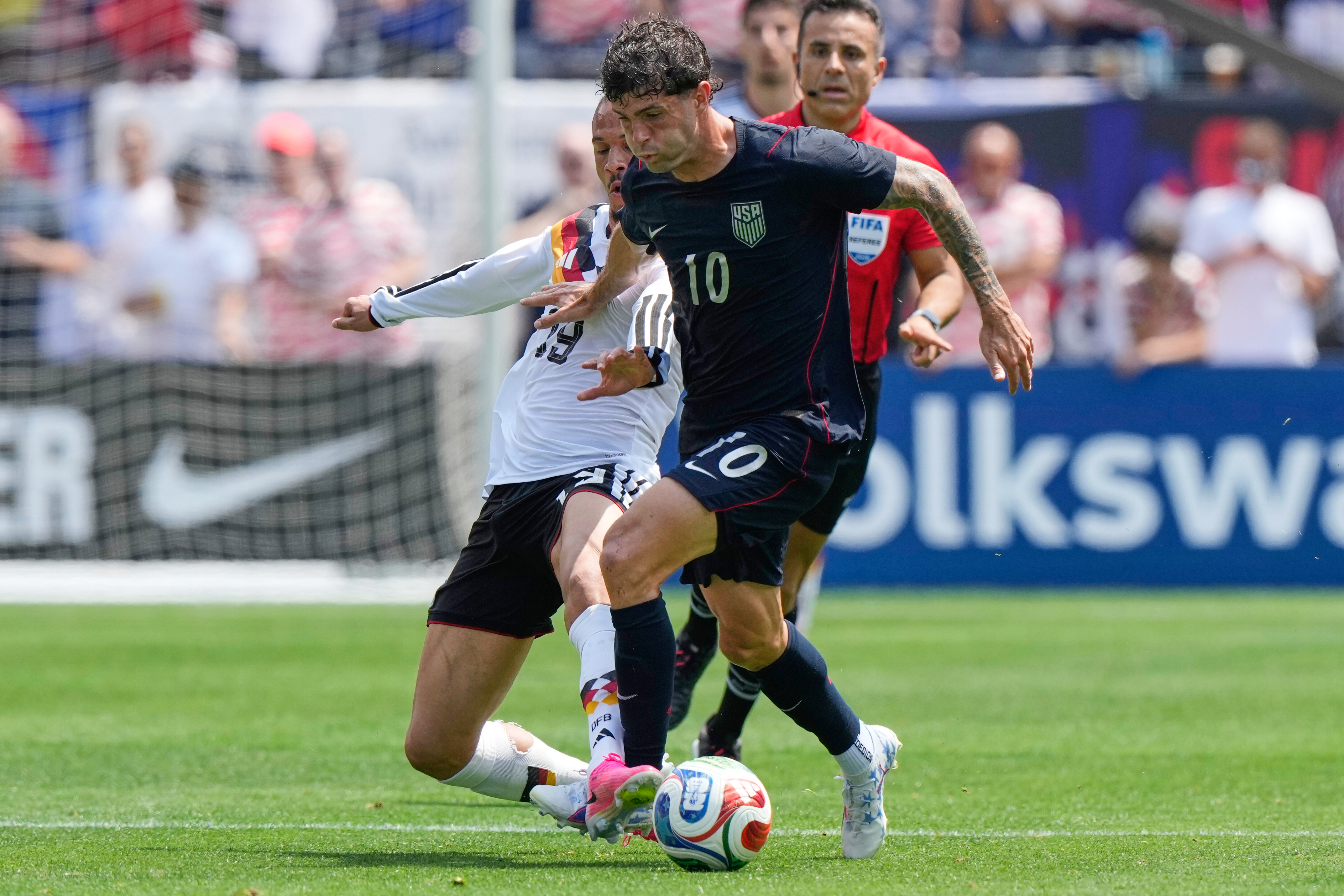
The stats and the eye test backed that up. The Americans outshot their star-studded opponents, 16-12, with both teams registering four shots on target. Christian Pulisic had a double chance in the 48th minute that he should have converted, and Brenden Aaronson forced a big save out of Oliver Baumann in the 87th.
“I don’t think this game is about the result,” Adams said. “This game is about again showing the character, the mindset, what we’re trying to be, what we’re trying to become.”
Perhaps if the U.S. had tied or pulled off an upset, Adams would have said something different. This was a moment for big-picture thinking, though, and he provided some.
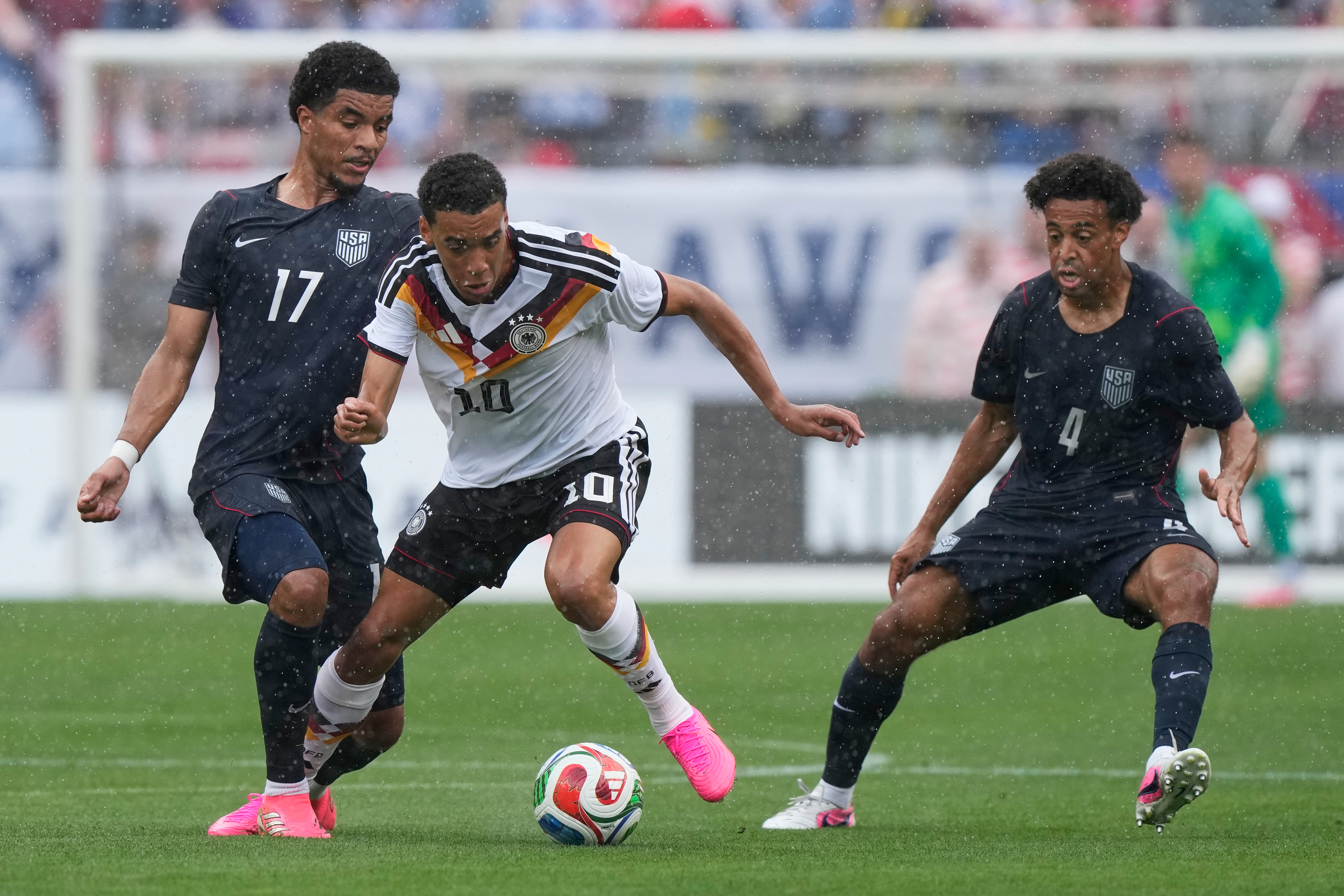
Germany and Bayern Munich star midfielder Jamal Musiala (center) dribbling between the U.S.’ Malik Tillman (left) and Tyler Adams during the first half.Nam Y. Huh
“The final product and the result matters next week, obviously first and foremost,” he said. “But that being said, we showed our character. And we showed that we’re able to create a high volume of chances [and] not concede a high volume of chances against a really good team.”
With all due respect to Paraguay and Australia, the first two teams the U.S. will face at the World Cup, their attacks don’t have the firepower of Germany’s. Havertz scored in the Champions League final the previous weekend, and the starting playmakers behind him were Florian Wirtz of England’s Liverpool, Jamal Musiala of Bayern Munich, and Sané of Turkey’s Galatasaray (and formerly Bayern and England’s Manchester City).
If that quartet clicks in the World Cup, they can carry the Mannschaft a long way — including a potential round-of-16 game in Philadelphia, which a lot of local fans hope for.
The U.S., meanwhile, will have to have everyone clicking to make that round, and to a quarterfinal that is the bar for a successful run. These two warmup games have shown that they can do it, but the requirements are clear.
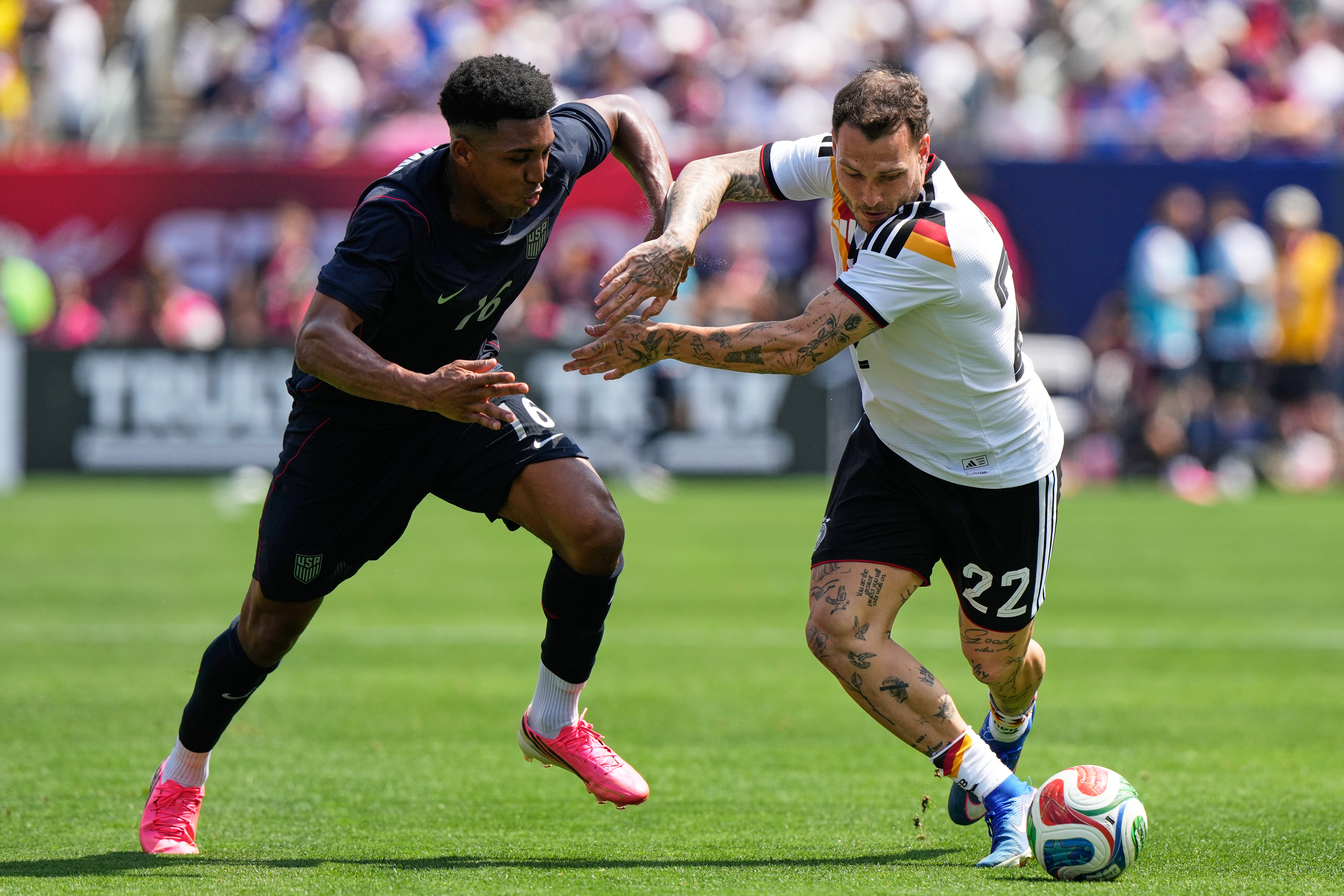
U.S. defender Alex Freeman (left), who’s been one of the team’s best players in the last two games, dueling with German counterpart David Raum.Nam Y. Huh
“We have to do it when it comes down to it for sure, when the World Cup starts and we have the big games,” Pulisic said. ”But it definitely helps us and makes us feel good. I feel like the last performances have been really good and absolutely it should keep us in high spirits.”
One of them is the return of centerback Chris Richards. Pochettino picked what might be 10/11ths of his World Cup starting lineup on Saturday, with the remaining one, Miles Robinson. It didn’t take long to see how that turned out.
Still, the signs are there overall. If they were not, you’d see that said here.
Now it’s on to California, where the U.S. team’s World Cup base camp opens Monday with the lone open practice of the run in Irvine. The moment really has arrived, and at last, it really feels that way.
The national anthem ahead of the USMNT-Germany sendoff match.
Diane McGraw was never a sports person. As a young girl in Ridley Park, she dreamed of being an actress, and paid far more attention to the film industry than she ever did to the Phillies or Eagles.
This ethos applied to her day-to-day life, as well. In the late 1960s, McGraw slipped and fell while playing field hockey forNotre Dame High School in Moylan, Pa.
It would be the end of her short-lived athletic career, but she was unbothered and quickly found a way to occupy her time.
“I was the athletic rep for my class,” she said, “that helped organize the intramurals.”
Little did McGraw know, the role would become a precursor to her future profession.
Over the coming decades, she’d organize celebrity tennis tournaments and national and international sporting events, from NCAA volleyball championships to the Ryder Cup to the MLB All-Star Game.
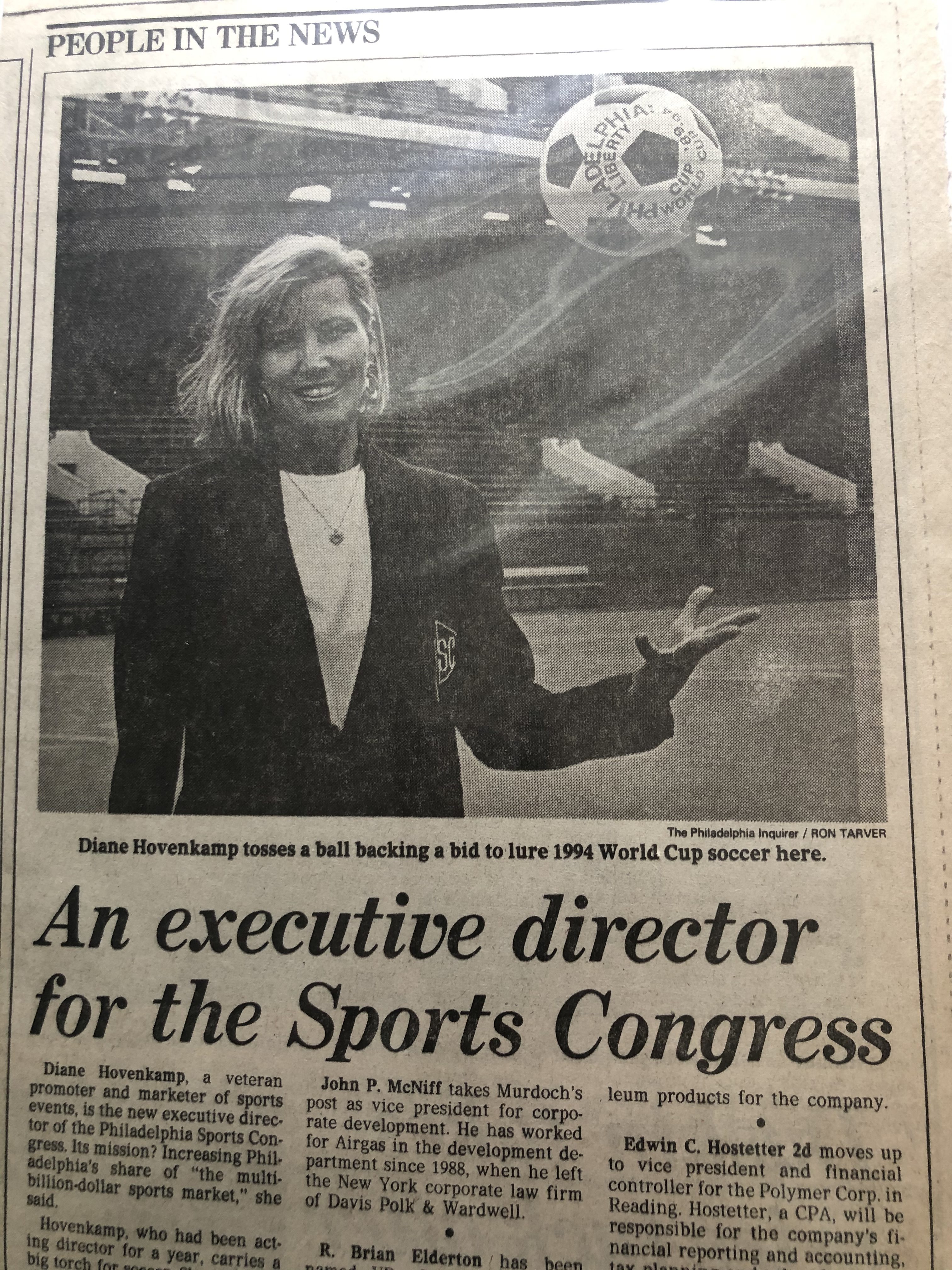
As executive director of the Philadelphia Sports Congress, Diane McGraw (née Hovenkamp-Robertson) was instrumental in trying to bring the 1994 FIFA World Cup to Philadelphia.Courtesy / Diane McGraw
McGraw would find herself atop sports and entertainment commissions in four U.S. cities — Philadelphia, Los Angeles, Louisville, and Orlando — and in 1995 married longtime Phillies reliever Tug McGraw.
The aspiring actress went from having no casual interest in sports to living a life full of them. And among her most fulfilling projects was one that never came to be.
Under McGraw’s leadership, Philadelphia became one of the first major U.S. cities to host international soccer matches throughout the late 1980s and 1990s. They drew well, often with attendance numbers as high as 45,000.
In the early 1990s, she was put in charge of Philadelphia’s bid to host the 1994 World Cup. The bid was unsuccessful, but McGraw did prove something in the process.
Major corporate sponsors like Aramark and Blue Cross helped fund the bid. It was clear that there was local interest in the sport. The timing just wasn’t right.
Now, it is. As Philadelphia hosts its first World Cup this month, McGraw is grateful to have played a small part.
“I was thrilled [to hear] that it was coming here,” she said. “Finally. We deserve to have it here. And I’m just sorry we missed out on it back then.”
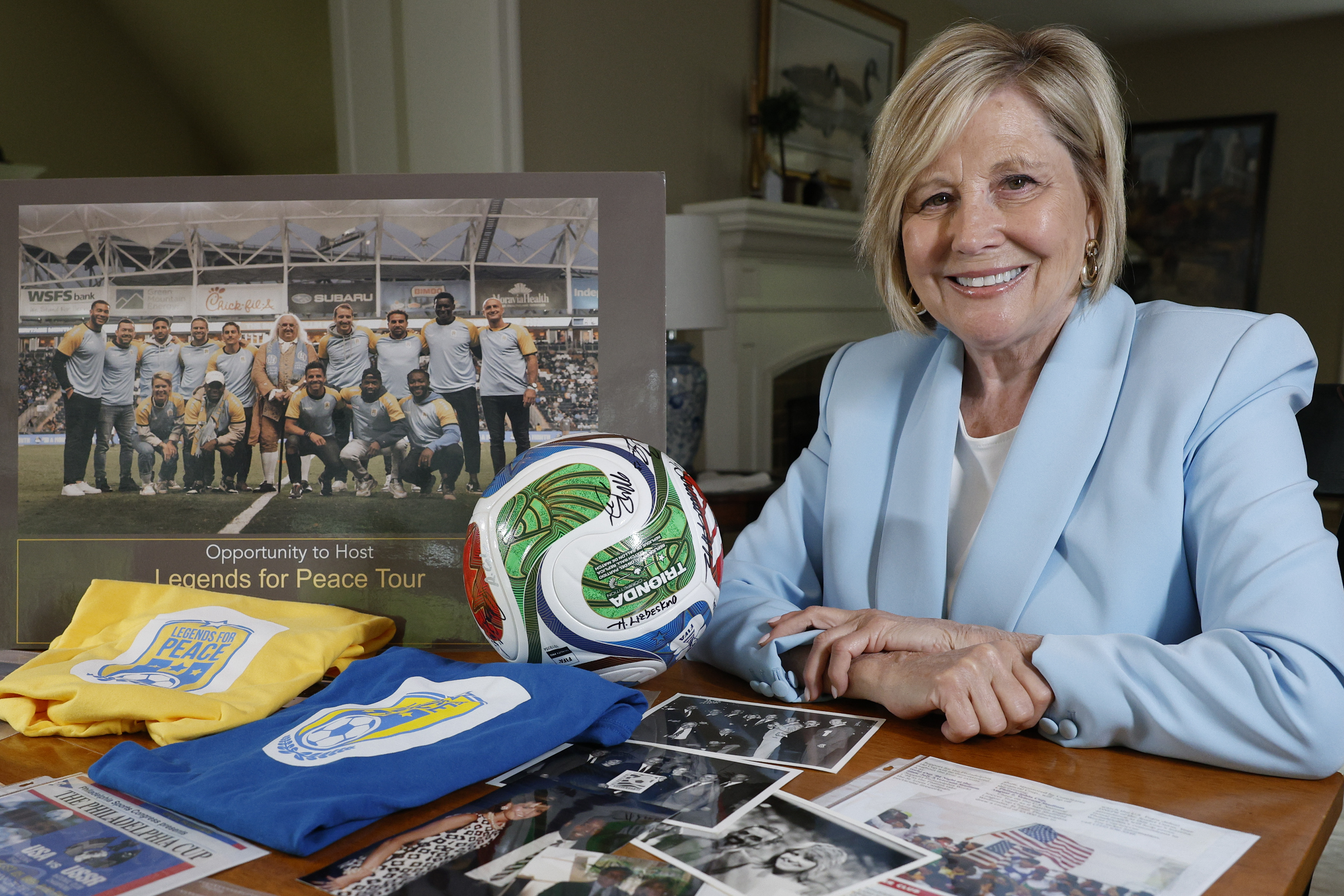
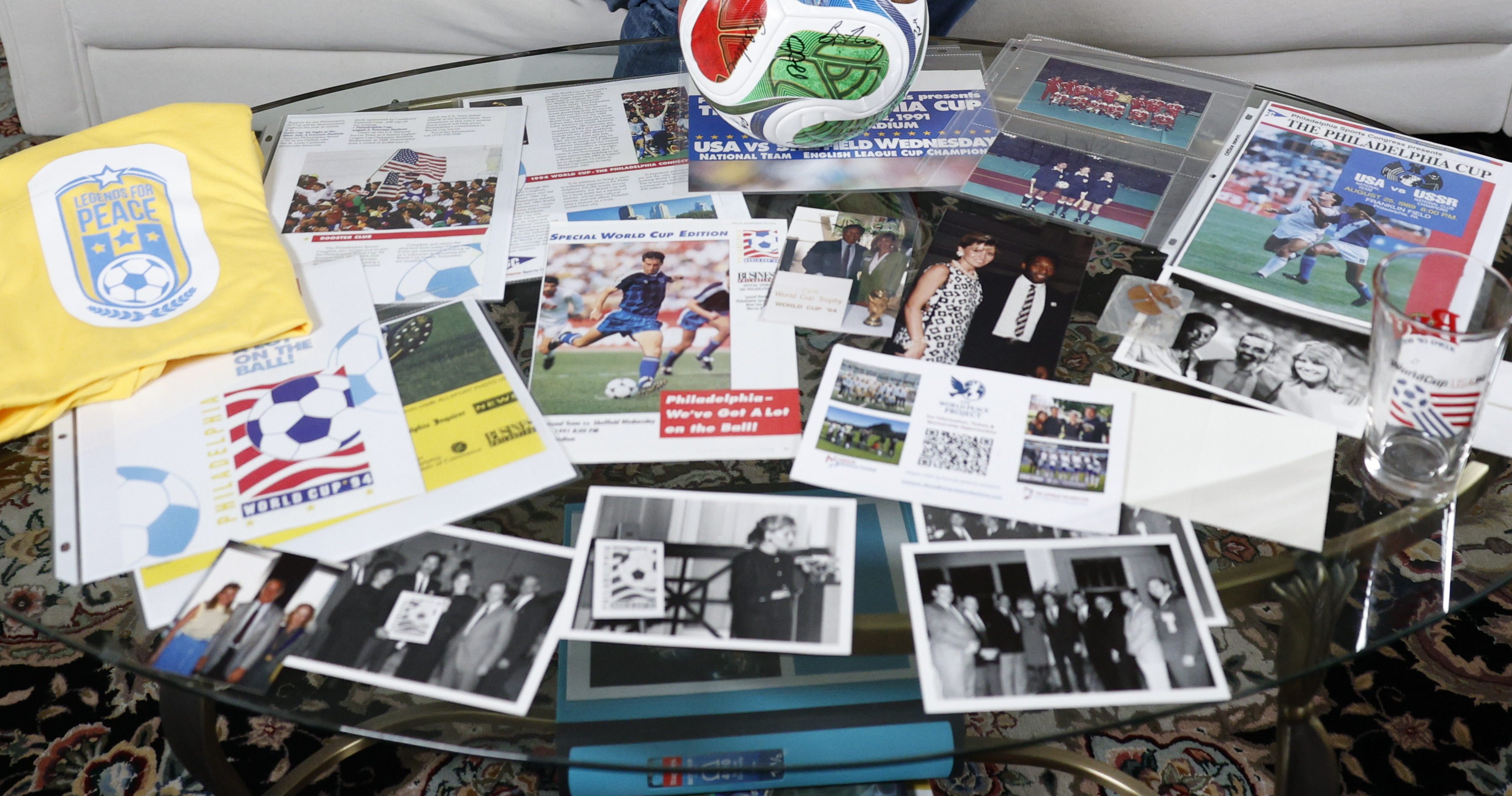
A look at materials that became Diane McGraw’s memorabilia from Philly’s 1994 World Cup bid.Steven M. Falk / For The Inquirer
From acting aspirations to a life in sports
McGraw’s entry into sports was unconventional. After graduating from high school, she worked part-time as a model, which landed her a few appearances on local daytime talk shows.
In1977, she moved to New York, determined to fulfill her acting aspirations. McGraw had no job and only a little money, but continued picking up modeling gigs here and there and was eventually hired as a personal assistant to the president of Sassoon Jeans.
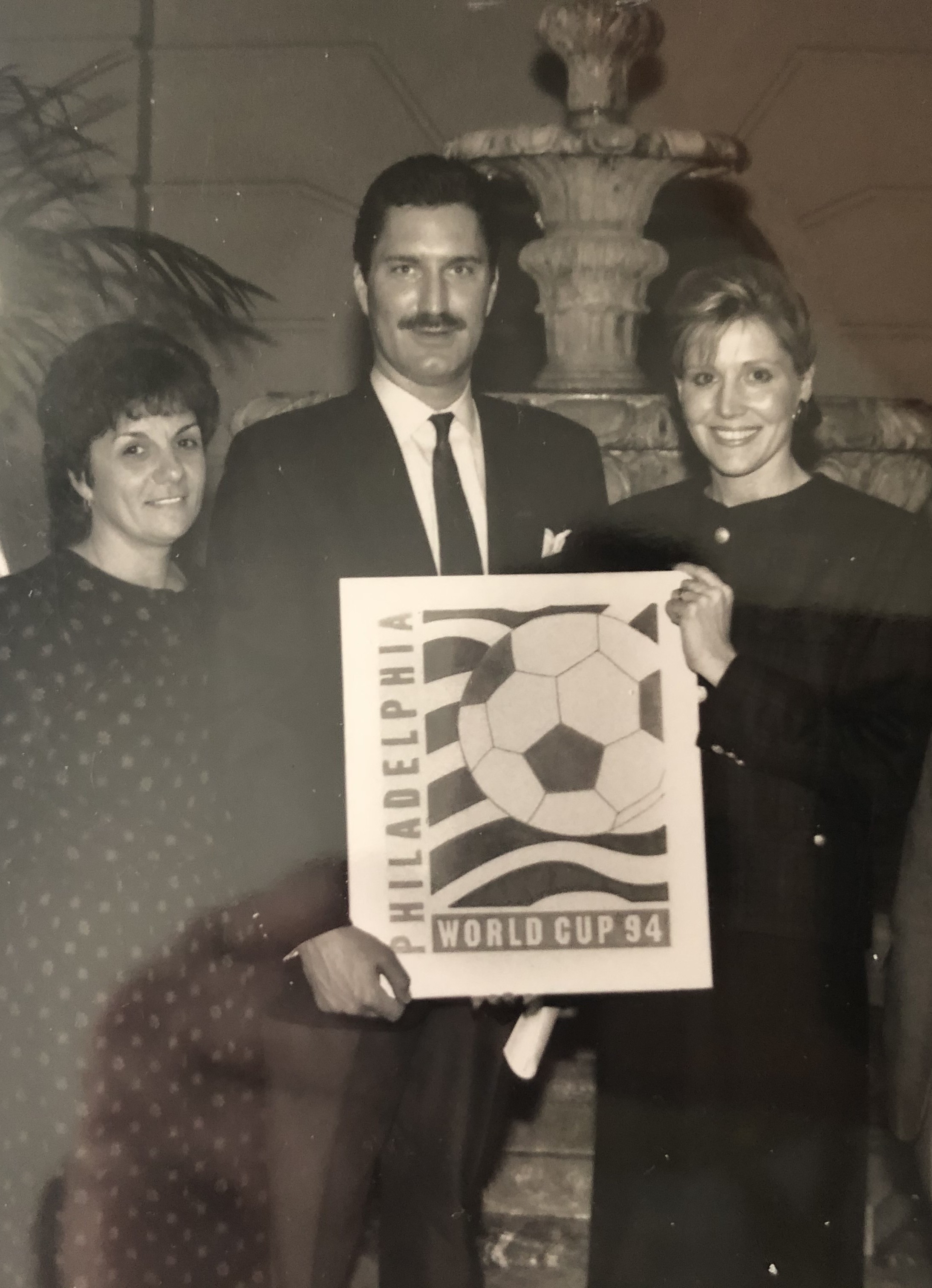
Diane McGraw (right) shows the graphic for Philly’s 1994 bid for the World Cup at Veterans Stadium. Courtesy / Diane McGraw
Two years later, she left for a position at the Screen Actors Guild, thinking she could parlay it into a career in entertainment. That did not pan out, but the role did open some doors.
Not long after McGraw began her new job, she attended a networking event at East River Tennis Club. The pros, well aware that the SAG assistant had contacts, asked if she’d be open to organizing a pro-celebrity tennis tournament.
It was the first of many sporting events to come. McGraw started her own business, under her maiden name, Robertson Productions — of which she was the only employee — and taught herself everything she could about the industry.
She began with tennis, but quickly broadened her scope to other sports. This meant spending a lot of time with sponsors, and one day, while on the sidelines of a New York Cosmos game, McGraw had an encounter she’d never forget.
A small, athletically built man with a warm smile approached her and asked for an autograph. English wasn’t his first language, and McGraw realized that what he actually wanted was her phone number.
She demurred, giving him the business card for Gaylord’s Restaurant, one of the sponsors of the Cosmos game. The man walked away.
A few minutes later, Gaylord’s owner, Jati Hoon, returned with the same suitor.
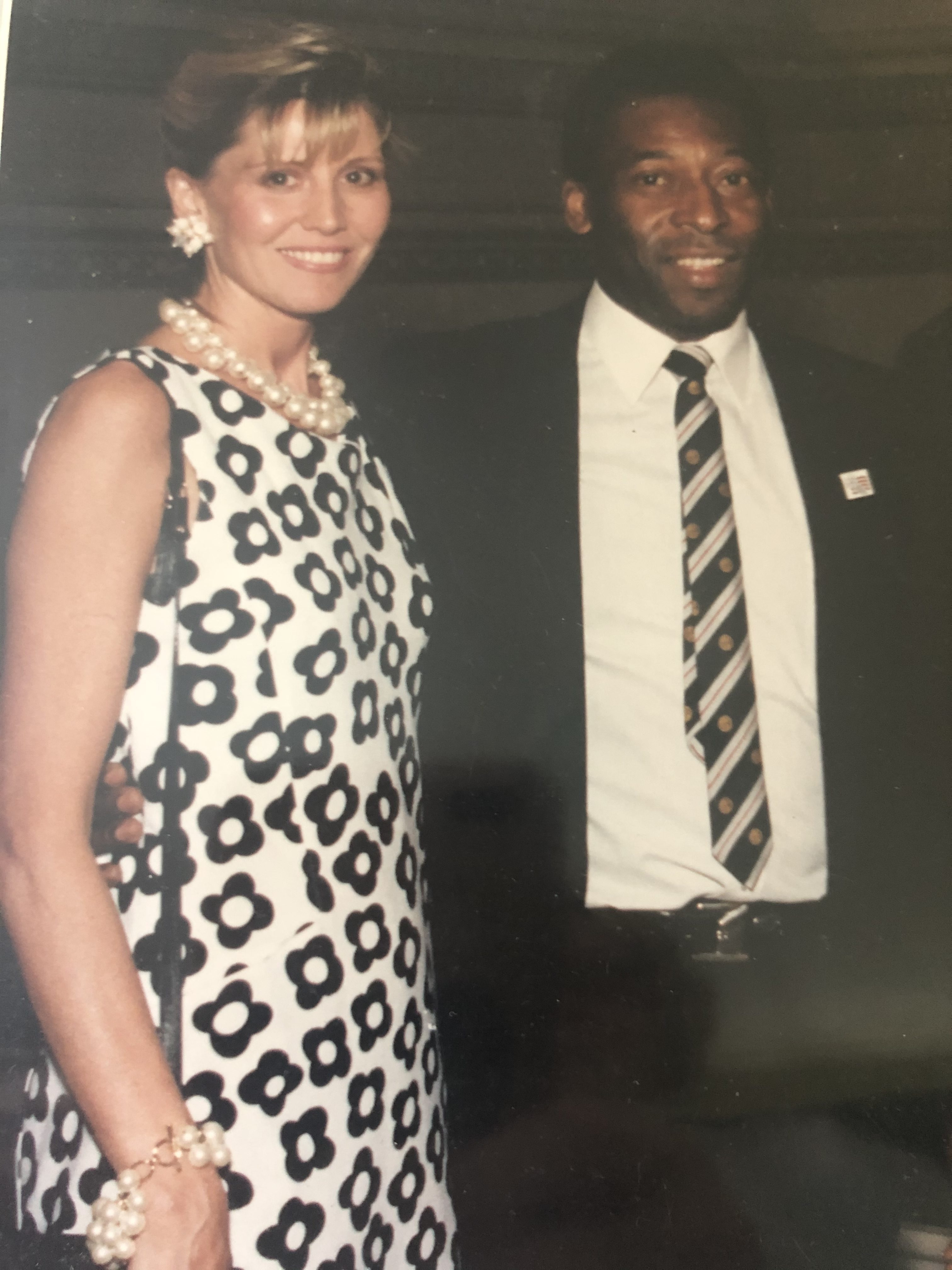
Diane McGraw with soccer legend Pelé.Courtesy / Diane McGraw
“He says, ‘Diane, I want you to meet Pelé,’” she recalled. “I had no idea who he was.”
By that point, McGraw was fairly used to meeting world-class athletes. Through the tennis community, she’d gotten to know John McEnroe and Björn Borg, among other stars of the game.
But her run-in with the soccer phenom was different, in that it would come to a serendipitous conclusion decades later.
After a few more years of star-studded galas and tournaments, McGraw married her first husband, Jan Hovenkamp. He was a native of Holland, and the young couple moved to the Netherlands in1983.
She continued to plan celebrity tennis events, and at one of them, she met the president of AFC Ajax, a professional football club in Amsterdam. He suggested that McGraw bring “real football” to the United States and offered to help provide a team from Holland and Brazil.
When McGraw returned to Philadelphia in 1986, she kept this in mind and reached out to the general manager of Veterans Stadium about renting it.
It was a short conversation.
“He said, ‘Diane, we don’t like soccer here,’” McGraw said. “‘We’re the Philadelphia Eagles. We’re only football.’”
He directed her to the group that ran Franklin Field, which directed her to the Philadelphia Sports Congress. They agreed to support the project, if McGraw could find the sponsors.
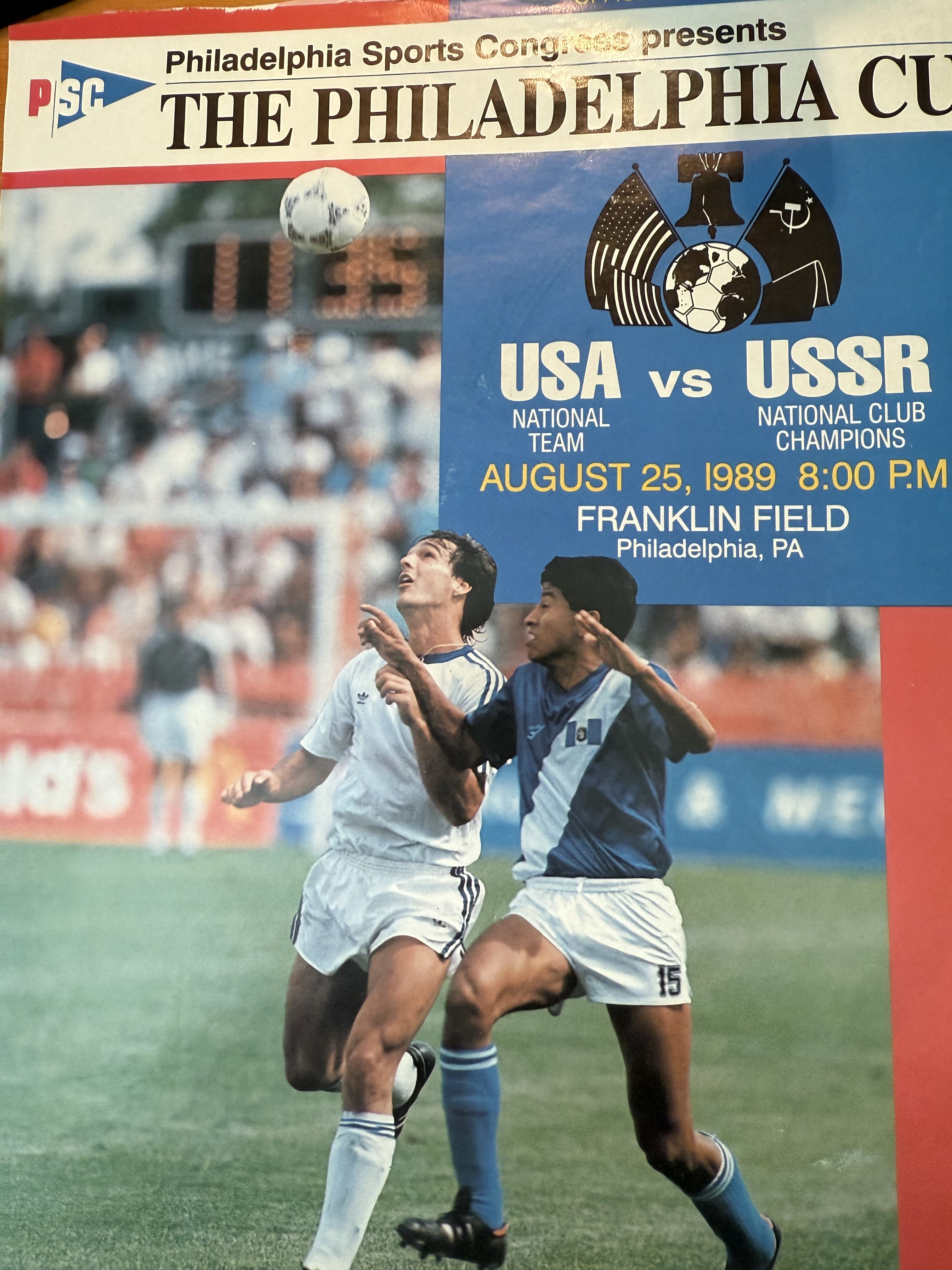
She did, and in 1989, McGraw brought the first international soccer match to the Delaware Valley. Dubbed the Philadelphia Cup, thegame between the U.S. and the U.S.S.R. drew 43,000 people and was broadcast on WIP (94.1-FM), which at the time was on AM radio as SportsRadio WIP. (Holland and Brazil were unavailable due to scheduling conflicts).
The program for the 1989 Philadelphia Cup, which at the time was the first soccer match between the two nations. Courtesy / Diane McGraw
A year later, in 1990, McGraw organized another match, this time between Sheffield Wednesday and the USMNT. Forty-five thousand fans showed up.
The two matches netted over $500,000 and earned McGraw a job as executive director of the Philadelphia Sports Congress — as well as a new unofficial title.
“I ended up becoming the World Cup person,” she said.
A fortuitous encounter with Pelé
Because McGraw had successfully convinced two European soccer teams to travel to the City of Brotherly Love, the Sports Congress decided to have her lead their efforts to bid for the 1994 World Cup.
This was a daunting task, as Philadelphia had never hosted an international soccer tournament. But McGraw felt strongly that they had a case, and not just because of the attendance numbers from the 1989 and 1990 matches.
The congress had collected data from the Eastern Pennsylvania Youth Soccer Association, which showed that more than 100,000 local families were actively engaged in the sport.
McGraw couldn’t offer state-of-the-art facilities. But she did have an audience: a city full of passionate fans, who had shown they’d pack a stadium for events beyond American football.
It was a grueling process. The Sports Congress had to dole out $250,000 just to submit a bid. Once Philadelphia was approved, McGraw spent the next three years finding sponsors, mapping out hotels and security, as well as transportation and venue options.
As fate would have it, this role reunited her with a familiar face. In 1991, a group of soccer supporters testified in front of Congress.
Their goal was to convince the federal government to mint a commemorative coin as a means of fundraising for the World Cup.
Among those who testified? Pelé.
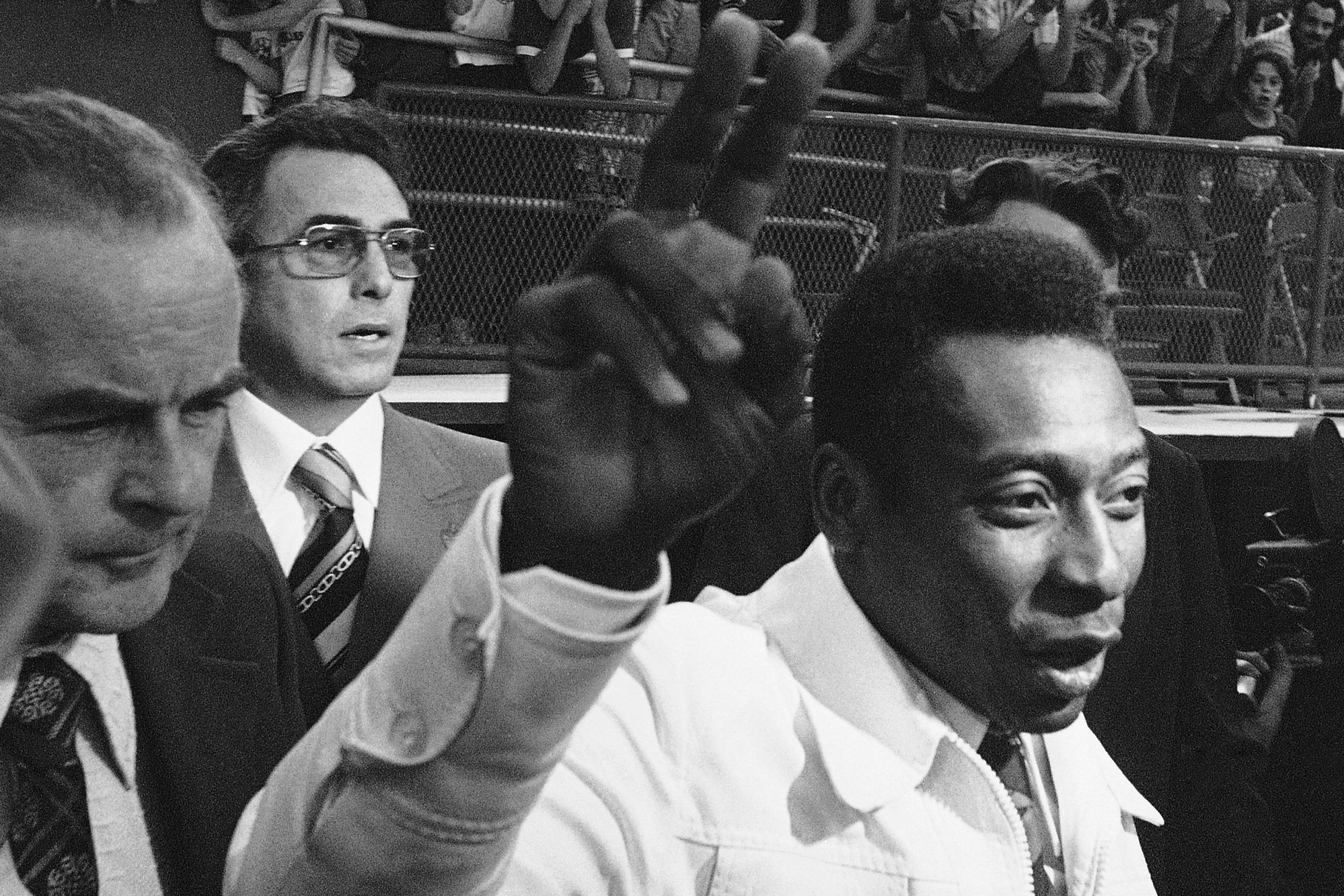
Pele, then with the New York Cosmos, waves to the crowd at Veterans Stadium in June 1975.Bill Ingraham
McGraw reintroduced herself and explained what she was trying to achieve. The three-time World Cup winner was on his way to a dinner, but before he left, he reached for his wallet and gave McGraw a gift.
It was a four-leaf clover.
“He said, ‘Diane, I’m going to help you get the World Cup to Philadelphia,’” she said with a laugh. “And then we got out of the car and I never saw him again.”
For a while, McGraw was optimistic — and not just because she had Pelé on her side.
The event organizer seemingly had an answer for every problem, even those as granular as the surface the athletes would play on.
(Astroturf wasn’t going to cut it.)
“We came up with a formula from a company here in Pennsylvania,” McGraw said. “They were going to grow the grass outside the stadium in trays, and bring it in, and let them fit it together. We had it all planned out.”
But there was one quandary she couldn’t solve. FIFA wanted control of the local stadiums for roughly two months. That ruled out the Vet; Major League Baseball was not about to send the Phillies on a road trip for six to eight weeks.
The congress didn’t have any other location to offer. The bid failed.
“I’ll never forget sitting in the boardroom of the convention and visitors bureau, with FIFA on the phone, saying, ‘These are our host cities,’” McGraw recalled. “‘We’d like to thank Boston. We’d like to thank so and so.’ They never mentioned Philadelphia.”
Diane met former Phillies reliever Tug McGraw in 1992. They were married three years later.
A full-circle moment
Diane met Tug in 1992. She was in the Sports Congress office, and the former Phillies reliever was picking up tickets for an ice skating event at The Spectrum.
He invited her to the opening of Oriole Park at Camden Yards in Baltimore. A day before they were supposed to leave, McGraw gave her a call.
“He goes, ‘I want to take you out to dinner first so we can have a predate, before our regular date,’” she said. “We went to some restaurant on South Street, just to get to know each other.”
They were married three years later. Diane’s job took her all over the country — from Florida to California — but Tug accompanied her every step of the way.
In 2003, their lives took a devastating turn, when Tug was diagnosed with a brain tumor. He died 10 months later at his son’s home in Tennessee. With two teenagers from her previous marriage and a 7-year-old to raise, it was an extremely challenging time.
But the widow saw it through. She immersed herself in motherhood and work, moving to Kentucky to lead the Louisville Sports Commission before returning to Philadelphia in2009.
Now, McGraw plans on enjoying the soccer tournament she almost brought here all those years ago. She isn’t on the host committee, but has found a way to take part in the festivities.
The organizer will be holding a watch party in South Philly on June 12 to stream the U.S. vs. Paraguay match. All proceeds will go toward the World Peace Project (an initiative McGraw started last year) to fund a youth sports summitin a few months.
It’s McGraw’s way of giving back. Her life has taken some difficult, unexpected turns, but she is grateful for the journey and will continue to savor it — four-leaf clovers and all.
“I want to thank Pelé,” McGraw said with a laugh. “Even though it all came [true] 30 years later.”
A.J. Brown now is a Patriot, an ironic misnomer since he’s such an obvious traitor.
Philadelphians generally seem relieved that Brown’s diva act no longer will be a distraction for a perennial title contender. That’s just A.J. fatigue. What he has done is no better than what Carson Wentz did five years ago: hamstrung his franchise, dissed the fan base, and hung his teammates out to dry.
After Brown signed a three-year, $96 million contract extension in April 2024, he spent most of the next two years complaining. His main complaint: His skills were being wasted in an Eagles offense designed by Nick Sirianni and quarterbacked by Jalen Hurts, even though it was potent enough to win Super Bowl LIX.
During the 2025 season, Brown reportedly requested to be traded. He greased the rails to that end, continually whining, culminating in a midseason social media post in which he called the offense a “[bleep]-show.”
That prompted owner Jeffrey Lurie to publicly meet with Brown, after which Brown refrained from further criticism. However, at that point, it became inevitable that Brown would be traded.
And that, inevitably, would hurt the team.
Before the draft in April, sources say Howie Roseman asked for a first-round pick in 2026 or, at worst, in 2027. Nobody bit. On June 1, the first day of a new league year, when a salary cap hit would be spread over two years, Roseman settled for a first-round pick in 2028 and a 2027 fifth-round pick.
It will hurt the fans, now deprived of supporting the best receiver in franchise history.
It will hurt the front office, since Brown’s departure will dent the salary cap $43 million, the fourth- (or fifth, depending on how you look at Daniel Jones and the Giants)-highest amount of dead money ever absorbed and the most dead money of a non-quarterback.
More than anyone, though, it will hurt his teammates.
Why?
Because the Eagles cannot immediately fill the talent void left by Brown. This is partly because Brown has cost them so much money against the cap, so the Eagles would not be able to sign a player of his caliber. Which means there is a massive drop off in total roster talent.
This leaves the rest of the players in a difficult spot.
Every player has a finite window in which he can win. Over the past few seasons many of the current Eagles had a choice of where to play, and many chose the Eagles because the Eagles had an elite roster, and no skill player on that roster was more elite that Brown.
His 14.8 yards per reception rank first among receivers with at least 275 catches since 2022. His 5,034 receiving yards rank fifth. He is different.
When Brown signed his extension, Eagles in the locker room, Eagles in the coaches’ offices, and Eagles in the executive suites reasonably expected at least four more seasons of this sort of production from Brown.
Instead, they have a $43 million hole on the ledger over the next two years. In the short term, at least, this could be catastrophic.
It was nearly so last time.
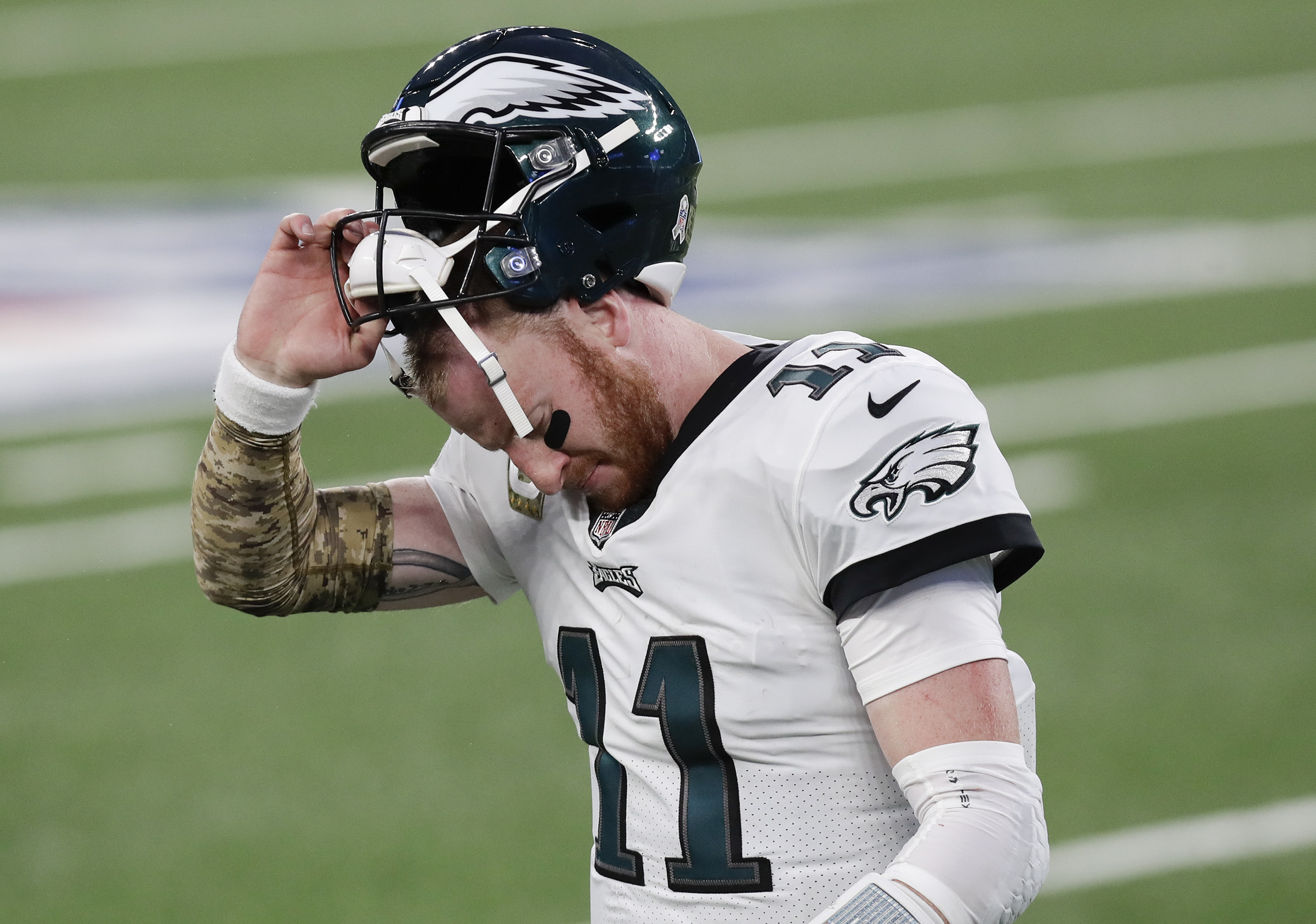
Carson Wentz sulked, then struggled, then forced his way out of Philly. YONG KIM / Staff Photographer
Carson Wentz
The reason Ginger Jesus went Judas on the Birds differs from Brown’s, but it is no less shameful.
Wentz resented that the Eagles took Hurts in the second round of the 2020 draft. This, despite their stated intent to use Hurts as a long-term insurance policy against Wentz’s frequent injuries. In the meantime, Hurts would be used as a gimmick player, in the manner of Saints utility man Taysom Hill.
Wentz then was outraged when he was benched late in the 2020 season after throwing 15 interceptions and taking 50 sacks, numbers that would lead the league at the season’s end despite Wentz playing in just 12 games. After the season, after getting coach Doug Pederson fired, Wentz still forced a trade.
That carried a $33.8 million cap hit, which was the NFL record at the time. Hurts took over as a second-year project quarterback of a team in disarray coached by a relative unknown in Nick Sirianni.
He rebounded with 27 touchdown passes with seven interceptions and rebounded with a 94.6 passer rating in 17 starts for the Colts, who, with an inferior team, matched the Eagles’ 9-8 record but missed the playoffs. Hurts threw 16 TDs with nine picks (but added 10 rushing scores) and was horrid in a playoff loss.
It began something great. Wentz’s career fizzled as Hurts led the Eagles to two Super Bowls. But, in 2021, it wasted a prime year for such players as Lane Johnson, Fletcher Cox, Brandon Graham, Jason Kelce, Darius Slay — players who chose to remain Eagles with the understanding that Wentz would be their quarterback.
Why would they expect that?
Because in June 2019, Wentz had signed a four-year, $128 million contract extension … that didn’t kick in until 2021.
That’s right.
Wentz took a $66 million bonus to play for the Eagles from 2021 to 2024, but he didn’t take a snap for the team in that span.
Not bad work if you can get it.
Howie Roseman found a path out of the Carson Wentz quagmire and history may reflect that he did the same with A.J. Brown. Yong Kim / Staff Photographer
No pain, no gain?
Fate, genius, and effort combined to make lemonade from Wentz’s sour grapes.
Fate, in that Wentz stayed healthy enough to convert the conditional pick in 2022 into a first-rounder.
Genius, in that Roseman used the first- and third-round picks from the Wentz trade as part of the capital to add DeVonta Smith, Jalen Carter, Jordan Davis, and, yes, even Brown. Can he do the same with the less valuable haul from Brown’s trade?
Effort, in that no player in the NFL has worked harder at becoming the best player he can be than Hurts. He has his limitations, but Hurts is a Super Bowl MVP with three Pro Bowl nods.
If you’d like more irony, then you might like this:
If Hurts doesn’t produce in the offense of new coordinator Sean Mannion, then Roseman might have to use the first-round pick he got by trading Brown to draft Hurts’ replacement.
You know who’d help Hurts produce in the new offense?
“Philly needs to understand, New York is the king‚” Louis Cretella, the owner of Dario’s Pizza in West Hempstead, told the tabloid.
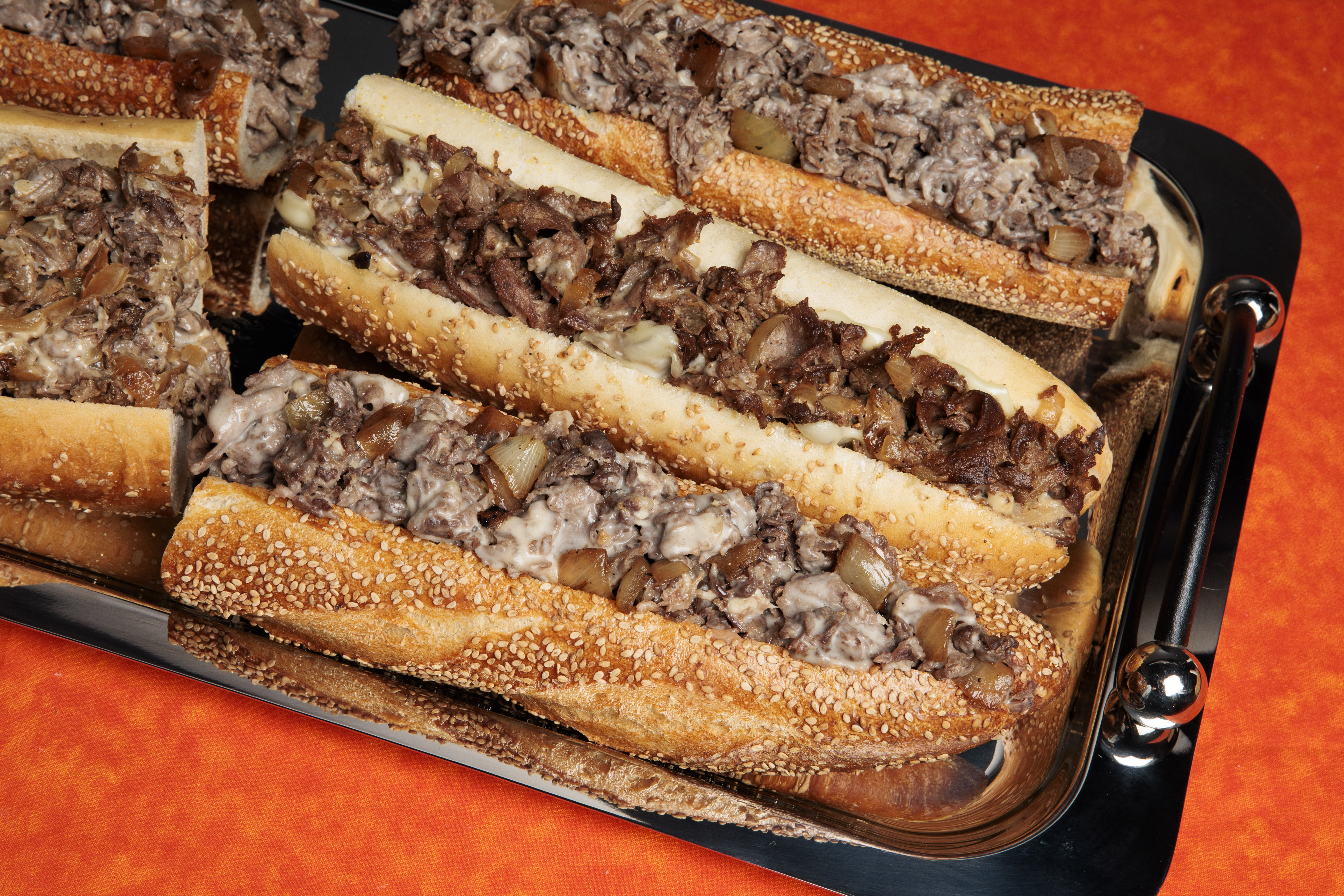
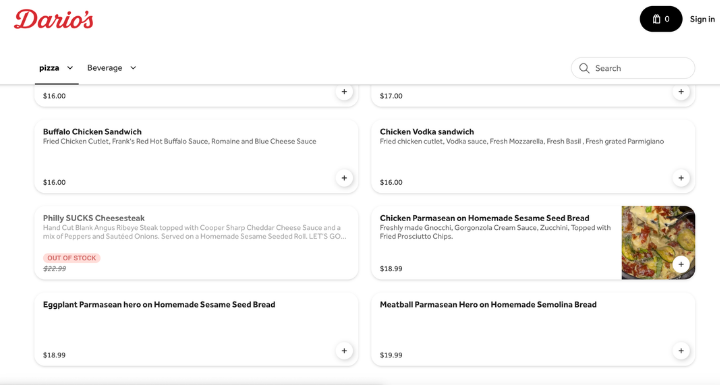
The restaurant — which purportedly sells 2,500 cheesesteaks a week — is rebranding the sandwich as the “Philly SUCKS” cheesesteak for the duration of the series. For hard copy menus, Cretella reportedly instructed staff to scribble “F— Philly” in black marker over the item.
The online menu at Dario’s Pizza in West Hempstead, NY. The Long Island restaurant is sold out of “Philly SUCKS” cheesesteaks.Scree
This is exactly the sort of over-the-top behavior expected from the bridge-and-tunnel crowd. Y’all want to prove you’re NYC tough so badly that you forget how to act.
Still, the whole gimmick raises a couple of questions: Why are you bragging about selling Philly’s signature sandwich if you hate us so much? And is your ego really that fragile?
Other New York City area restaurants have joined in. At Birdie Bar in Northport, it’s now the Big Apple Cheesesteak. At G’s Cheesesteaks in Manhattan’s Lower East Side, their entire livelihood now revolves around whatever a New York Knicks cheesesteak is.
And at Wogies — a traitorous Philadelphia-themed bar with locations in the Financial District and the West Village — it’s now called the Appendix Burster. It’s an homage to the appendectomy that kept Joel Embiid out of the first three games of the Sixers’ playoff series against the Boston Celtics.
To this, I say: Our culture is not your costume.
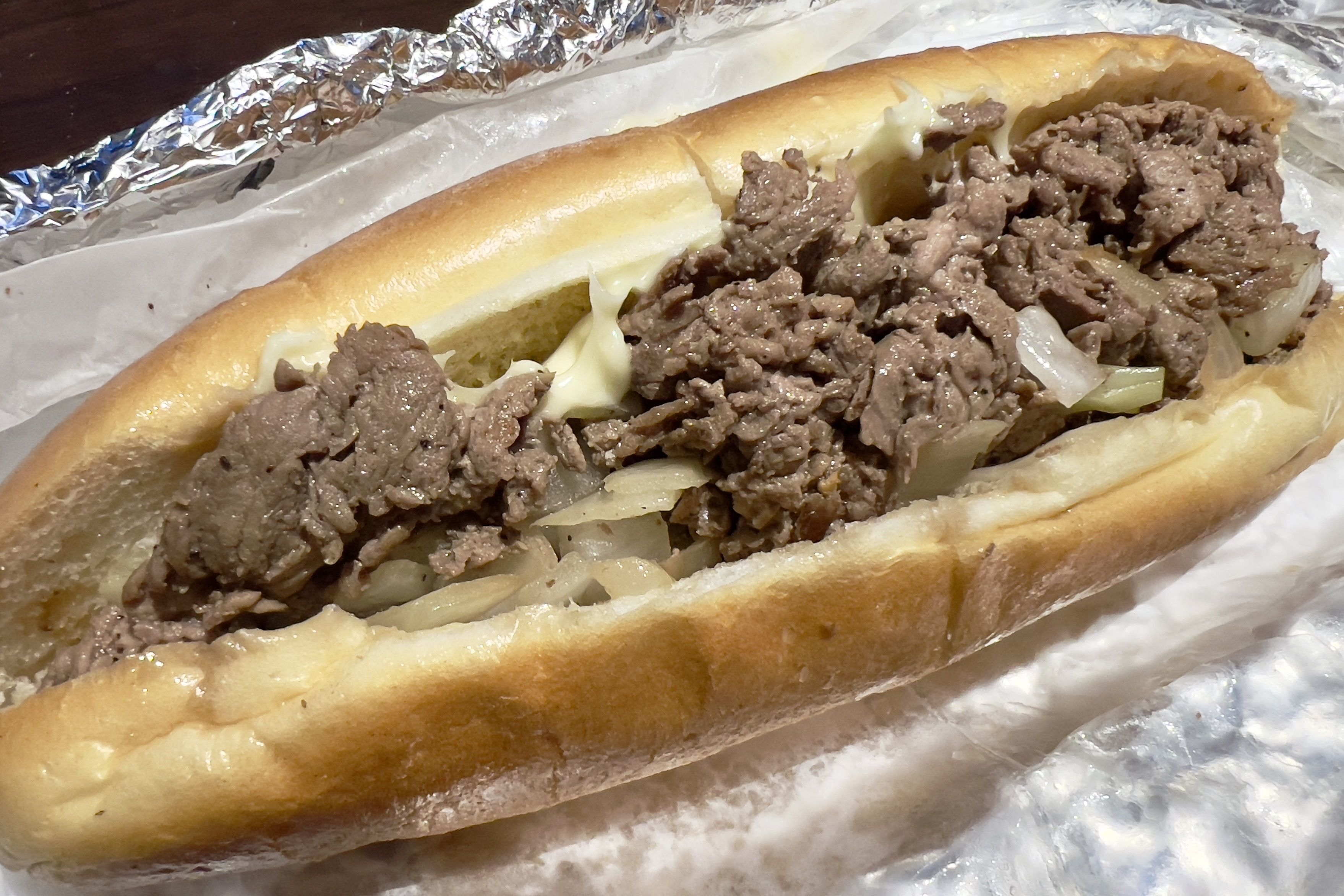
A sad-looking Philly cheesesteak from Wogies in FiDi, 44 Trinity Place, New York City.Michael Klein / Staff
Perhaps this is all just an eye for an eye. Still, this trend smacks of one thing: fear.
“We just sat around, and all of a sudden we see the word ‘Philly’ there, and we’re like, ‘ugh!’ Teeth are grinding, and we didn’t want anything Philly. That’s weak,” Lure Group CEO Aristotle “Telly” Hatzigeorgiou told the New York Post. At the restaurant group’s lounge Slate and bar Clinton Hall, “Knicks” has been added to the front of each establishment’s cheesesteak empanadas and sliders, respectively.
What’s weak is the mere mention of a city making your teeth grind. Might as well just stand on business and pull cheesesteaks from your menu entirely at this point.
After all, it’s not like Philly restaurants are wiping the words “New York” from our menu — mostly because we have no need. You don’t see people lining up at Pat’s or Geno’s and demanding a chopped cheese. There’s plenty of hoagies and real cheesesteaks to go around.
Still, if erasing the word “Philly” is what it takes for Jalen Brunson to actually play to his potential, go for it. Cope harder.
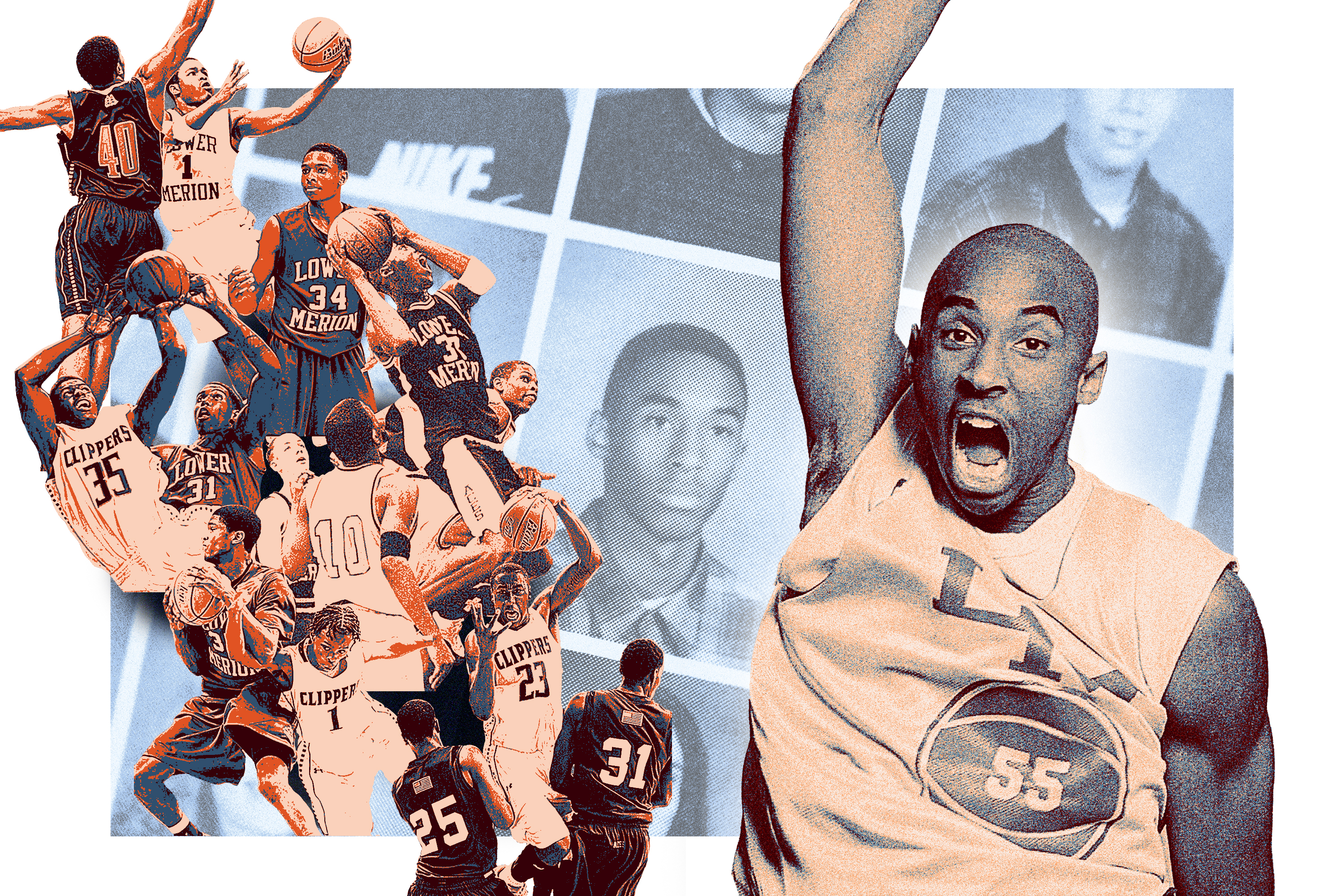
John Linehan and Kobe Bryant used to talk. A lot. This would not have been unusual for other AAU teammates, but these two were fierce high school rivals.
Linehan was a scrappy point guard for Chester. Bryant was a relentless shooting guard for Lower Merion. Both were competitive, almost to a fault, and in the days leading up to big games, they’d get chippy.
The week before the 1996 PIAA Class AAAA District 1 title game, for example, the players talked every day on bulky landline phones, with Bryant often calling Linehan at his home in Chester.
“I just said, ‘You know, John, I haven’t won a championship yet, and you have,’” Bryant told The Inquirer in 1996.
Linehan knew what his friend was doing. The future NBA star did the same thing a few weeks later, on March 19, a day before the teams met again in the state semifinal.
“He was trying to get me to trash talk,” Linehan said. “I think he needed a little edge. I didn’t want to give him too much. I was like, ‘Man, you crazy.’”
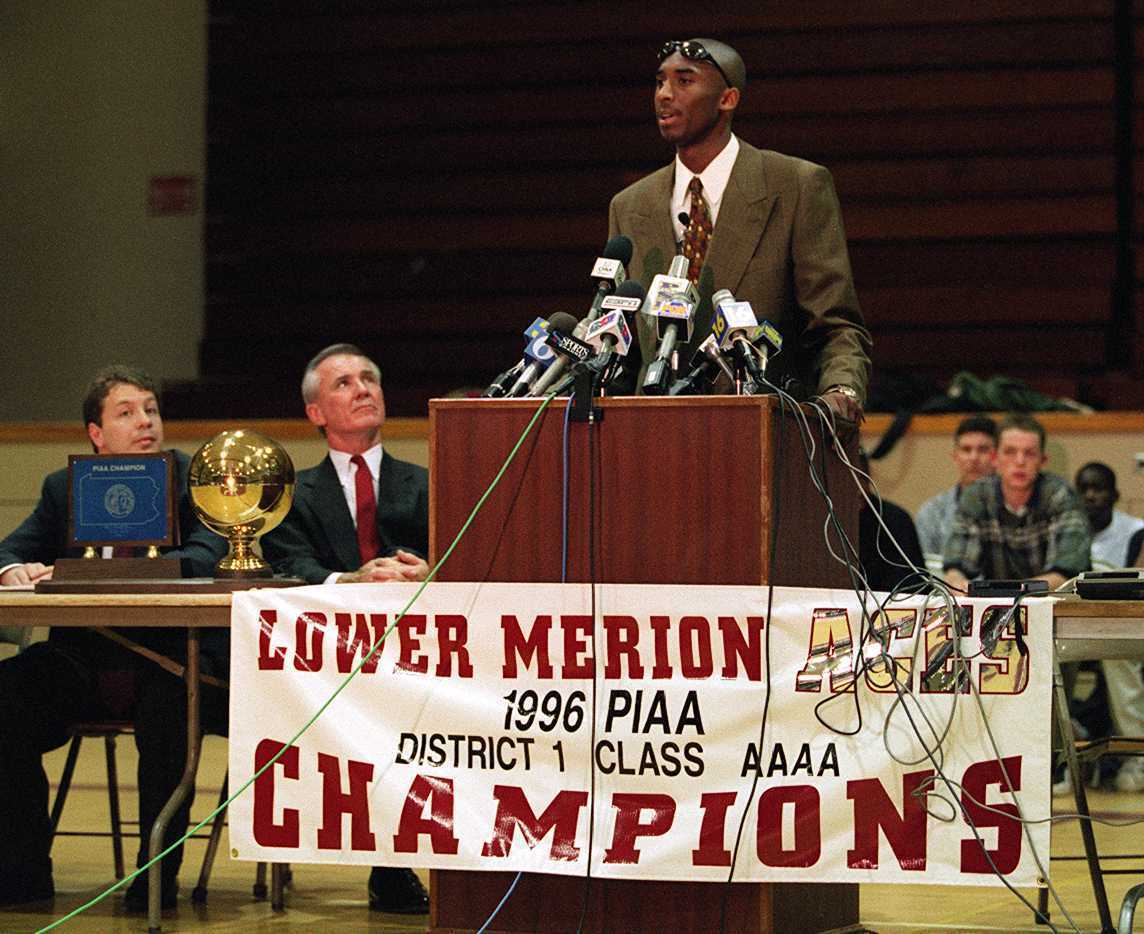
The late Kobe Bryant, a former Lower Merion basketball star, announcing he will go directly into the NBA draft out of high school.ALEJANDRO A. ALVAREZ / Staff Photographer
Lower Merion wasn’t a basketball school when Bryant arrived in the fallof 1992. It paled in comparison to the local powerhouses like Simon Gratz, Coatesville, and Chester.
But Bryant changed that. Even in his freshman year, a season in which the Aces went 4-20, he brought a new standard, working out before class and introducing a level of toughness that was foreign to his teammates.
Bythe mid-1990s, Lower Merion was among the best high school teams in the Philadelphia area. Its players were more confident, celebrating after big shots, and talking loud on the court.
The Aces didn’t play as many games against Coatesville, a rising power led by Rip Hamilton. They couldn’t consistently measure themselves against Gratz, which didn’t participate in the PIAA playoffs untilthe 2004-05 season.
But they could against Chester. And so, a decades-long rivalry was born.
From 1996 through the mid-2010s, Chester and Lower Merion put on some of the greatest high school basketball games in the area. They’d often sell out venues like the Palestra and Villanova’s Pavilion. Some fans would even scalp tickets.
Their communities were almost diametrically opposed. Chester was predominantly Black; Lower Merion was predominantly white. Chester was plaguedby poverty; Lower Merion was considered affluent.
Chester, with its Biddy League, had a legacy of basketball greatness, and a steady pipeline of talent. Lower Merion had nothing comparable. But these differences melted away on the court.
And while the rivalry is not what it once was, it lives on today.
“The pride and the intensity and the history will never fade,” said Lower Merion coach Gregg Downer. “I mean, if we played them tomorrow night, that would be an intense game.”
The Bryant-Linehan era
When Downer was named head coach in 1990, he already was well-aware of Chester’s tradition. He’d played youth basketball growing up in Media and had heard about the stars who’d come out of the Biddy League.
It was obvious that his team would have to go through the Clippers to win any sort of accolade. But it wasn’t until Bryant’s arrival that Downer’s aspirations became a real possibility.
The shooting guard, who was the son of former 76er Joe “Jelly Bean” Bryant, was mature for his age. He’d demand more, mentally and physically, of older teammates. Doug Young, a former Lower Merion forward, remembered seeing Bryant leaving the locker room at 7 o’clock one September morning in 1993.
He’d been at the high school gym since 5 a.m., working out by himself. To the Lower Merion basketball team, this was a “crazy” concept, so Young and his cohorts decided to join him.
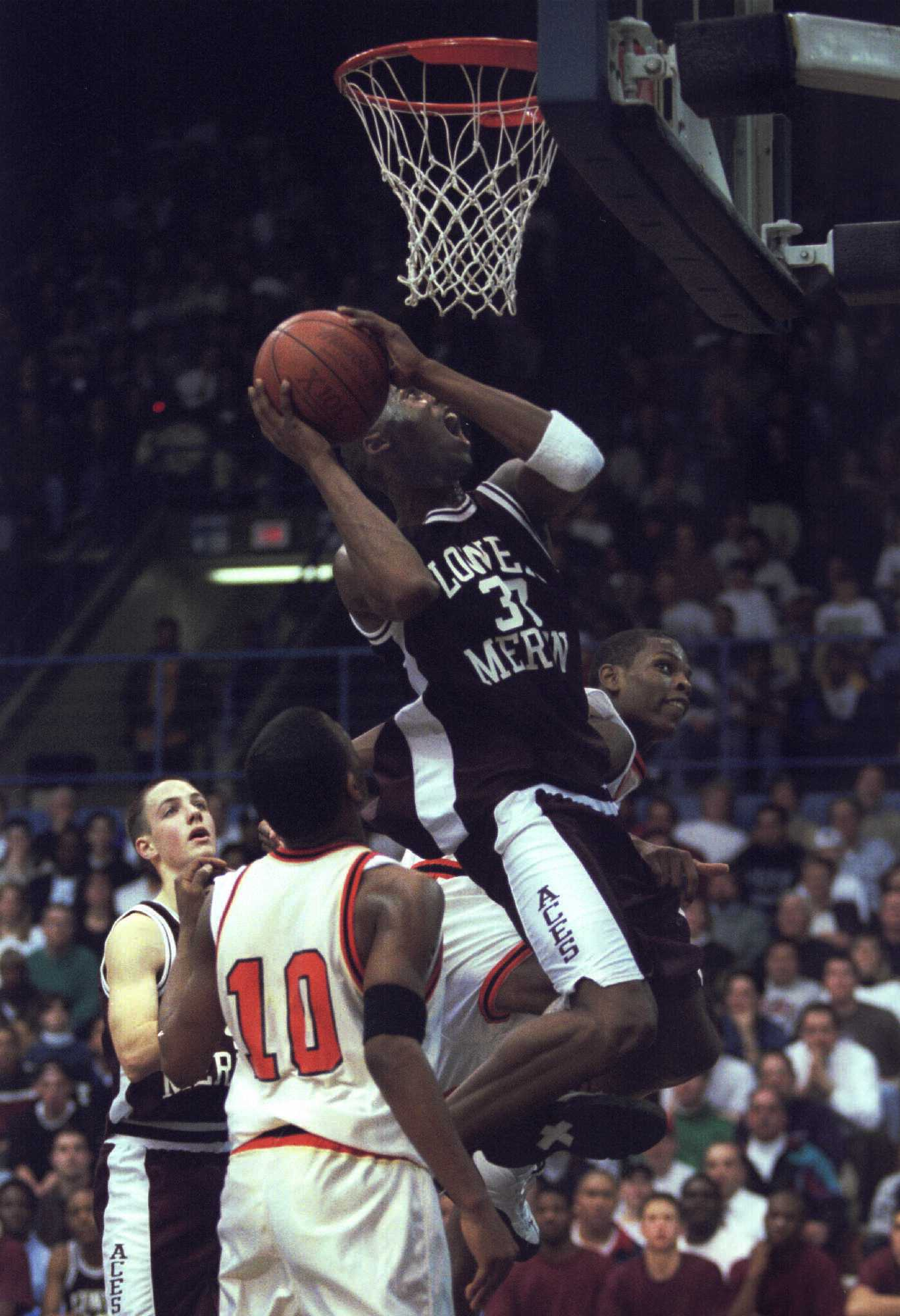
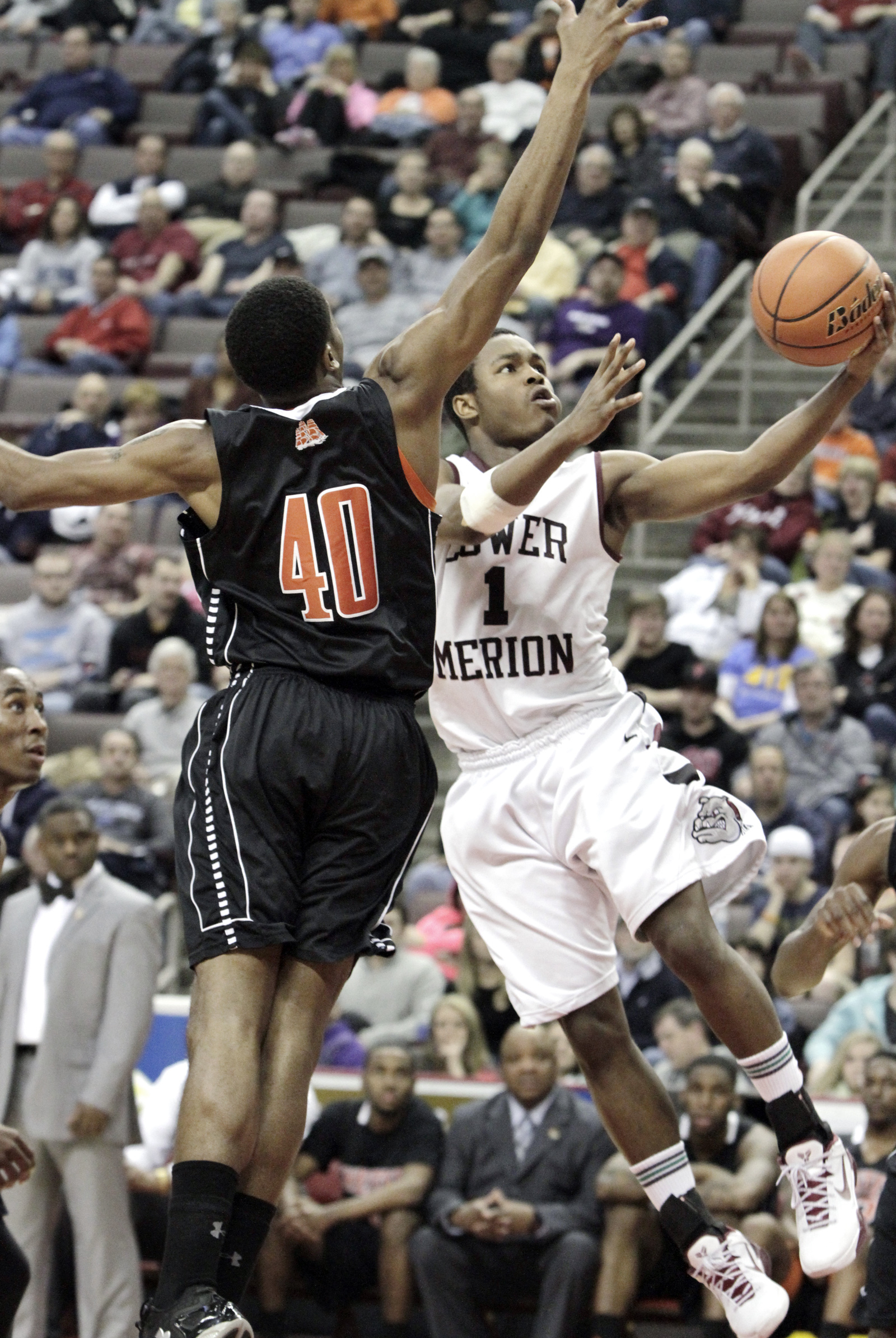
In the District 1 championship game against Chester, Kobe Bryant goes to the hoop over the Clippers’ John Linehan.Jay Gorodetzer / Staff Photographer
They arrived the next day at 5:06 a.m. The players knocked on the door. Bryant didn’t answer.
“He wouldn’t open it,” said Young, who graduated in 1995. “You’re either there or you’re not. We were six minutes late.”
His teammates waited outside until 6:30 a.m., when the school opened. They made sure to show up before 5 a.m. from that day on.
Downer was wired the same way. The coach — and his NBA-bound pupil — would push the team in practice. Losses were particularly tough. The players would go through endless sprints and rebounding drills that sent them running to the trash can.
It wasn’t fun. But over time, the method created a newfound tenacity.
“No one walked into high school saying, ‘Oh, yeah, I want to win a state championship,’” Young said. “But [Kobe] knew what that was. He was like, ‘I don’t know any other way. If we’re not going to win a championship, what the heck are we playing for?’”
Chester was always going to be an obstacle, so Downer tried to play into the battle. He’d use analogies for the tough, hard-nosed team, comparing it to an animal stalking its prey.
The coach began to screen movies to underscore this point. Together, in a Lower Merion classroom, Downer’s players watched Jaws and other tales of survival, like The Edge, a 1997 thriller about a plane that crashes in the Alaskan wilderness.
“This bear is stalking them, and the couple is saying, ’What are we going to do about this bear?’” Downer said. “And one of them says, ‘The only thing we can do is kill the bear.’
“And I remember being like, ‘We can do this.’ But the only solution is to — not to be overly graphic — but to kill them.”
(The bear in this analogy was Chester.)
He added: “We tried everything humanly possible to get through to this team.”
The first few games were ugly. In 1995, Lower Merion met the Clippers in the District 1 championship, only to lose by 27 points. But they came back with a renewed focus the following year, in 1995-96, going 25-3 in the regular season to earn a district final rematch against Chester.
The Aces showed up at the arena with “27″ printed on their warmup shirts. Bryant, armed with fresh bulletin board material from Linehan, dropped 34 points against the Clippers en route to a 60-53 Aces win.
The shooting guard scored 39 points later that month — with a broken nose — in a 77-69 state semifinal win over Chester. Lower Merion went on to beat Erie Cathedral Prep, 48-43, to win its first state championship since 1943.
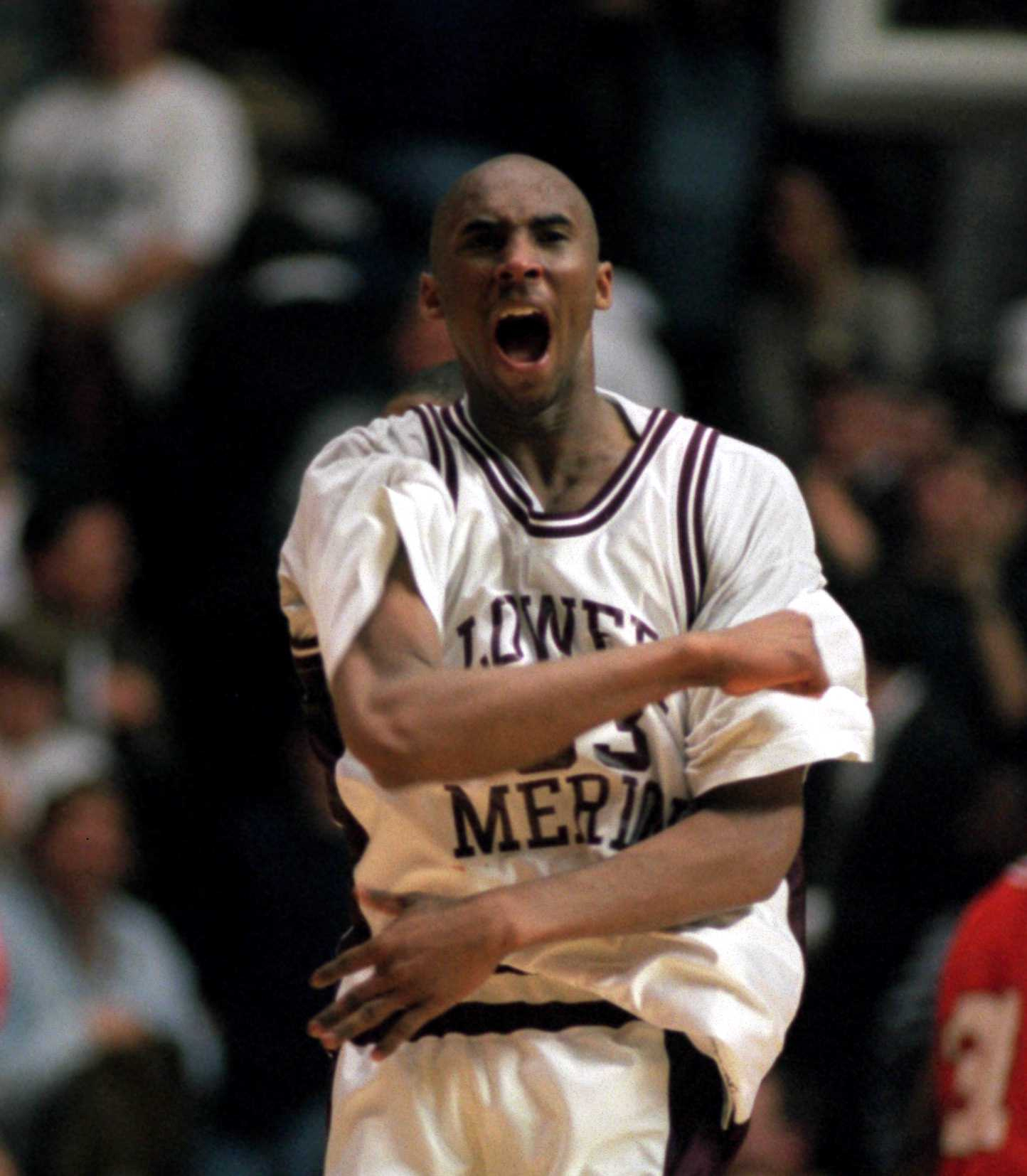
Kobe Bryant celebrates after defeating Chester at the Palestra in 1996 to advance to the state final.Ron Cortes / Staff Photographer
To Linehan, the difference Bryant made was obvious. He joked that he’d “never heard of Lower Merion” before his friend arrived. But once he did, Chester realized it would have to go to great lengths to prepare for the phenom.
Ahead of a big game against Lower Merion in the mid-1990s, the coaching staff reached out to Clippers alumnus Zain Shaw. He played at West Virginia and in Europe and possessed some of the same characteristics as Bryant — a tall frame and an athletic build with strong ballhandling skills.
The Clippers invited Shaw to practice, where he played the role of Bryant (to the best of his ability).
“Kobe was so special, we had to bring in a pro to help us prepare,” said Linehan, who later starred at Providence.
But there was another impact the future Lakers star had, one that had nothing to do with his own prowess. Linehan noticed that Bryant’s Lower Merion teammates started to take on some of his qualities. Suddenly, they were playing brash, confident basketball.
“We didn’t have reason to believe, until Kobe got there, that we belonged on the court with Chester,” Young said. “The fear was real. Teams were afraid of Chester because they’d run you out of the building.
“The idea of Lower Merion being on the court in a meaningful game against [them] was such a crazy thought. But then, you started to believe.”
The buzzer-beater heard ’round Chester
Bryant never got over the rivalry, even after he embarked on his Hall of Fame NBA career in 1996. Sometimes, he’d call the coaching staff before big games against Chester, leaving expletive-laden voicemails to use as motivation.
The Lakers shooting guard also created an incentive structure for his former team.
“You couldn’t get a pair of Nike sneakers unless you qualified for the playoffs,” Young said. “If you don’t earn it, you don’t get it.”
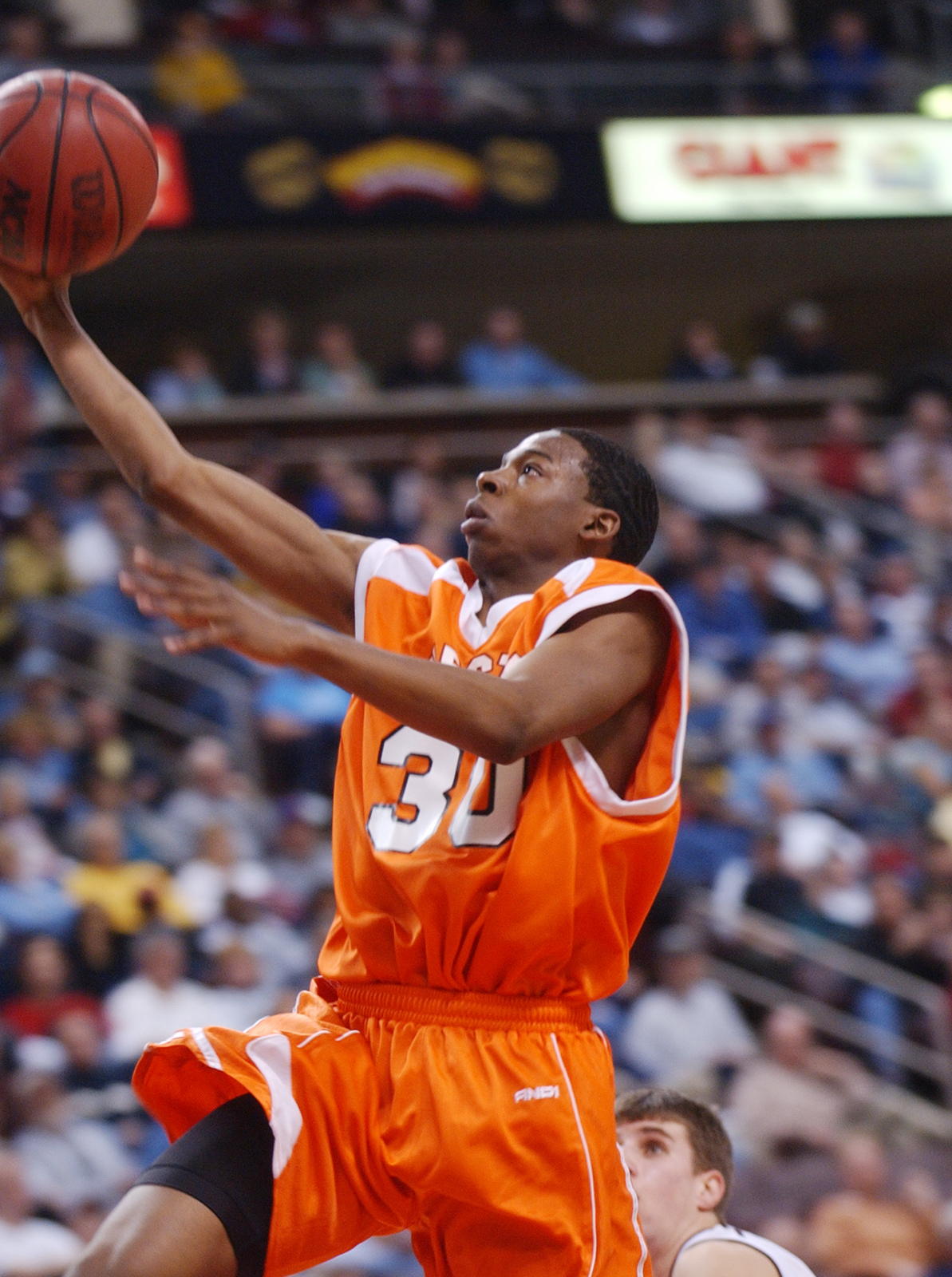
He became especially involved in 2005-06. After a lull in the early 2000s, Chester and Lower Merion found themselves neck-and-neck again. The Aces were led by the duo of Ryan Brooks and Garrett Williamson, and the Clippers boasted a deep roster, headlined by Darrin Govens. All of them eventually played in the Big 5.
(Chester was so stacked that it brought a 1,000-point scorer off the bench in Noel Wilmore.)
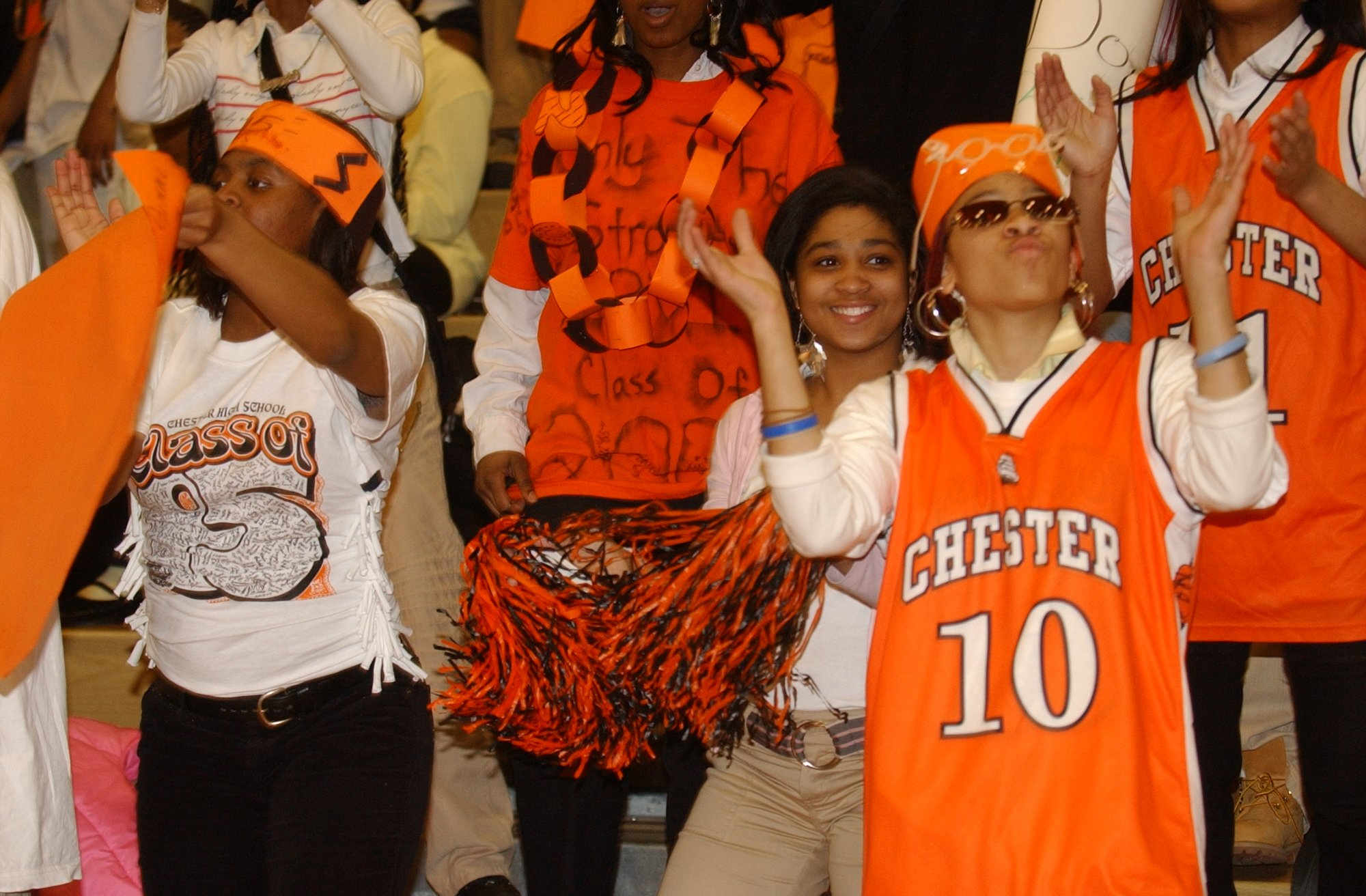
Students from the class of 2005 show their support as Chester and Lower Merion play in the state final. Hinda Schuman / Staff Photographer
The rivals met in the state championship on March 19, 2005. Despite strong performances from Williamson and Brooks, the Clippers pulled away in the second half thanks to a dominant third quarter from Govens. Chester won, 74-61.
The teams reconvened the following season with their competitive spark fully reignited. They faced each other three times that year. Chester took Round 1, a one-point regular-season victory on Dec. 27.
Round 2 was in the district final on March 3. Before the game, in front of a packed crowd at the Pavilion, Chester sophomore Karon Burton walked up to the layup line.
Lower Merion’s student section caught his ear with a chant about coach Fred Pickett’s stout stature.
The dig didn’t intimidate Burton. If anything, it fueled him. He grew up playing street ball in Chester and always loved trash talk.
Instead of cowering, like the crowd hoped, the sophomore delivered an unforgettable outing. The game went into overtime, and was tied at 80 with only a few seconds remaining.During a timeout, assistant coach Keith Taylor pulled Burton aside.
“He was like, ‘Hey, listen,’” Burton said. “They’re going to double Darrin. If you get that ball, do your thing.’”
Taylor’s words proved prescient. As Lower Merion’s defenders swarmed Govens, the Clippers inbounded the ball to Burton.
He took a pull-up jumper from beyond the arc and drilled it for an 83-80 win. The Chester fans stormed the court. Burton, who later joined Wilmore in the 1,000-point club, said he felt like a celebrity in his hometown.
“It was like watching a buzzer-beater in the NBA,” he said. “I just ran to my teammates, they picked me up. It was a crazy feeling.
“I’m a big Kobe fan, too. Kobe’s my favorite player ever. So when I came and I hit the game-winner on that team …”
Round 3 took place a few weeks later, in a state semifinal rematch at the Palestra on March 22. Bryant called Lower Merion’s coaches before the game.
“I don’t remember specifically what he said, but I’m sure there were a lot of [expletives] dropped,” said Young. “Like, ‘Don’t call me back if you don’t beat those [expletives].’ That was a line we heard from him a couple times.”
This one didn’t go Chester’s way. After trailing the Clippers, 47-37, at the end of the third quarter, the Aces came roaring back in the fourth and put up 33 points to eke out a 70-65 win.
The celebration in the locker room was cathartic. Water sprayed into the air. Players sat atop each other’s shoulders and turned the showers into a slip ‘n slide. Bryant called in, again, as other members of the 1996 team filtered through.
Darrin Govens scored his 1,000th point for Chester against Lower Merion in the state championship in 2005.Hinda Schuman / Staff Photographer
This was not how Govens wanted to end his high school career. And a few months later, when he arrived at St. Joseph’s on a basketball scholarship, he saw a familiar foe.
It was Williamson, his new Hawks teammate.
“We were sitting on the opposite side of the bench,” Govens said. “I didn’t want to sit next to him; he didn’t want to sit next to me. We’d kind of avoid each other and just head nod.
“Even in running drills, it was a competition. He looked to the left. I looked to the right. We tried to beat each other in sprints. But then we realized, ‘All right bro, we’re teammates now.’”
‘Hero status’
Chester had always rallied around its high school basketball team. Linehan said it was akin to playing for the Sixers. The teenagers were treated like professional athletes — especially those who had been a part of big wins.
The Clippers’ public address announcer, James Howard, called this “hero status.”
“All of a sudden, your money’s no good,” he said. “Barbers take care of you, make sure your hair looks nice before games. Free food. Little kids look up to you and ask for your autograph. That’s how it is.”
In Chester, there were plenty of heroes to draw from. There was Linehan, but also Jameer Nelson, who met a young Burton in the late 1990s. Nelson, a friend of Burton’s cousin, gave the aspiring basketball player a gift before he left for St. Joe’s: his MVP medal from the Chester summer league.
“He was one of the biggest guys in our city,” Burton said, “so it’s definitely something that I’ll always remember.”
By the early 2010s, when the rivalry was reignited for a third time, Lower Merion had built more of a basketball tradition. Aces guard Justin McFadden said he’d get stopped in Wawa before big games against the Clippers.
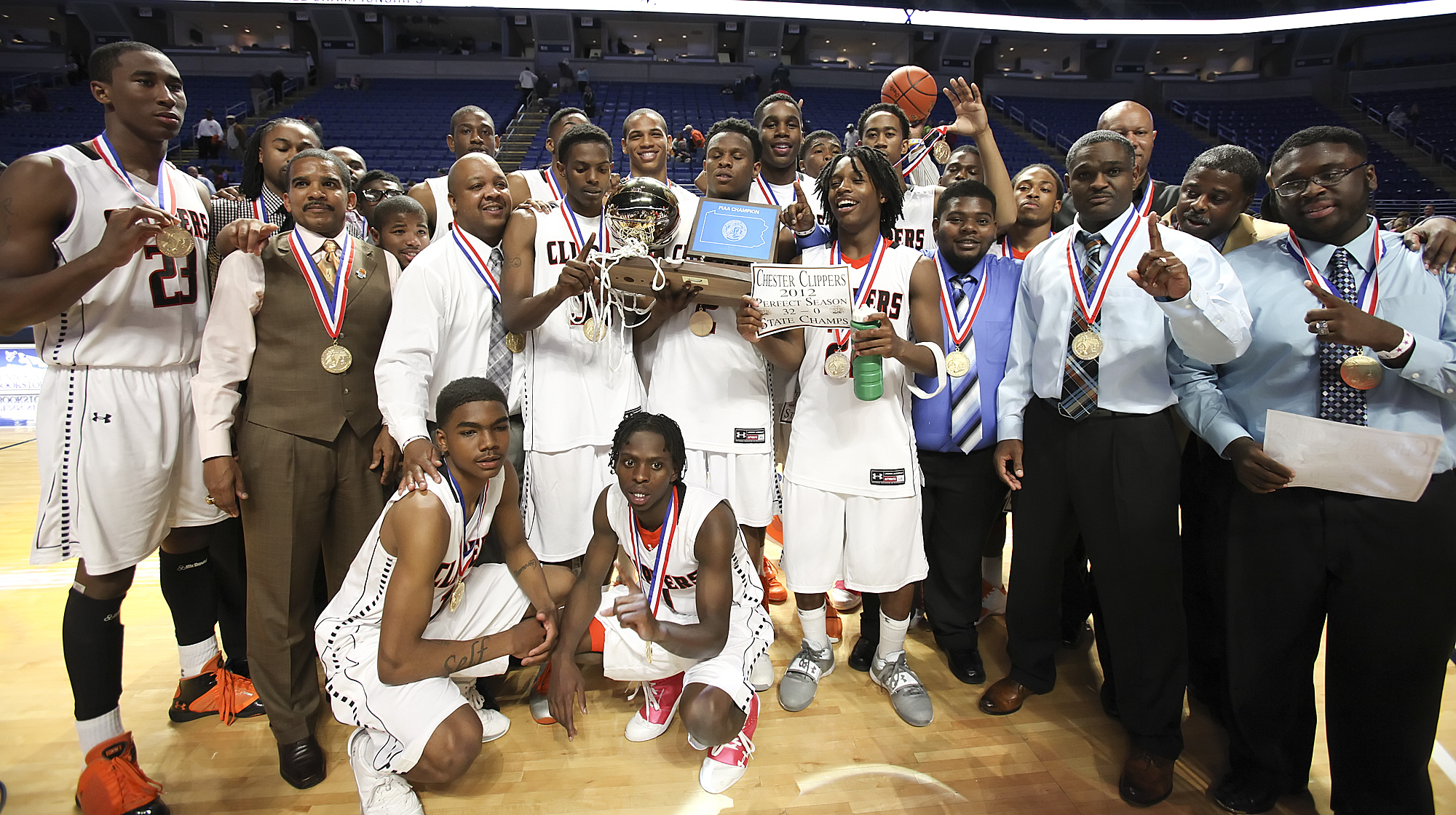
Chester celebrates its win over Lower Merion for the state championship in 2012. Steven M. Falk / Staff Photographer
“It became a community thing,” he said. “People would be asking, ‘What do you guys think about Chester? Do you think we can get it done?’”
In 2012, the schools met in the state championship for the first time since 2005. Junior forward and future NBA starter Rondae Hollis-Jefferson put up a double-double to lead the Clippers to a resounding 59-33 win over the Aces. It was their second straight title and their 58th straight victory.
A year later, after going 17-0 in the Central League, the Aces met the Clippers in the state final again. Chester had won 78 straight games against in-state opponents. Snapping that streak would be daunting, but Downer had a plethora of motivational tactics at his disposal.
Just as they had in the 1990s, The Aces again spent pockets of the season watching Jaws, The Edge, as well as an addition: Al Pacino’s “Inch by Inch” speech in Any Given Sunday.
“He would have that fired up on YouTube, ready to go,” McFadden said. “Looking back, [your reaction] is a chuckle, but in the moment, it worked. We knew that this was the hill that needed to be climbed.
“And every time they played that speech, we got goose bumps. We were ready to fire.”
Chester got out to an early lead, but Lower Merion rallied behind a 22-point, 11-rebound performance from B.J. Johnson, who later starred at La Salle. The Aces snapped the streak and won their seventh state title with a 63-47 victory.
Lower Merion’s Jaquan Johnson goes to the net as Diamonte Reason guards him in the Chester-Lower Merion state championship game in 2013.Elizabeth Robertson / Staff Photographer
The Clippers then were coached by Larry Yarbray. Pickett, who was diagnosed with cancer in2010, was in declining health. Just before he died in 2014, Downer decided to say goodbye.
He and his former assistant coach Jeremy Treatman drove out to Pickett’s home in Chester. They went to his bedside.
“And we talked,” Downer said. “And we held hands. It was a really touching moment for me. This is a man that carried Chester on his back. That tried to carry Lower Merion on his back. And I knew it was the last time I was going to see Fred.
“We walked out the door, and we told each other that we loved each other. And I never thought he would say that to me, or vice versa. But it was just kind of like, ‘You know what? We’ve had some amazing battles, and there’s a lot of respect there.’”
Keeping the tradition alive
In recent years, the Chester-Lower Merion rivalry has diminished.
There was a brief period when the teams were in different classifications. Both programs have lost players to private schools that can recruit, and the addition of the Philadelphia Catholic League to the PIAA has made the state playoffs more competitive.
One place the Aces and Clippers could meet is in the district tournament, where they reunited in 2024. But they haven’t played each other since. And Howard says the contests don’t have the same feel.
“Both teams have lost D-I talent,” he said. “It’s not as high-flying, above the rim, as it was in the past. But still a great game. Sold out at Lower Merion, and at Chester, same thing.”
The history will always be there, though, and Burton is doing his best to keep it alive. His 8-year-old son, Karon Burton Jr., is playing in the Biddy League. His father is his coach.
Sometimes, they go on YouTube and watch old Clippers games. Junior’s favorite, of course, is the 2006 district final.
Burton believes that his son has a promising future, but isn’t sure of where he’ll go to high school yet. He doesn’t want Karon Jr. to feel obligated to follow his father’s path.
But if it worked out that way, what a story that would be.
“I’d love to be the first father and son to have 1,000 points,” Burton said. “With the same name? That would be crazy.”
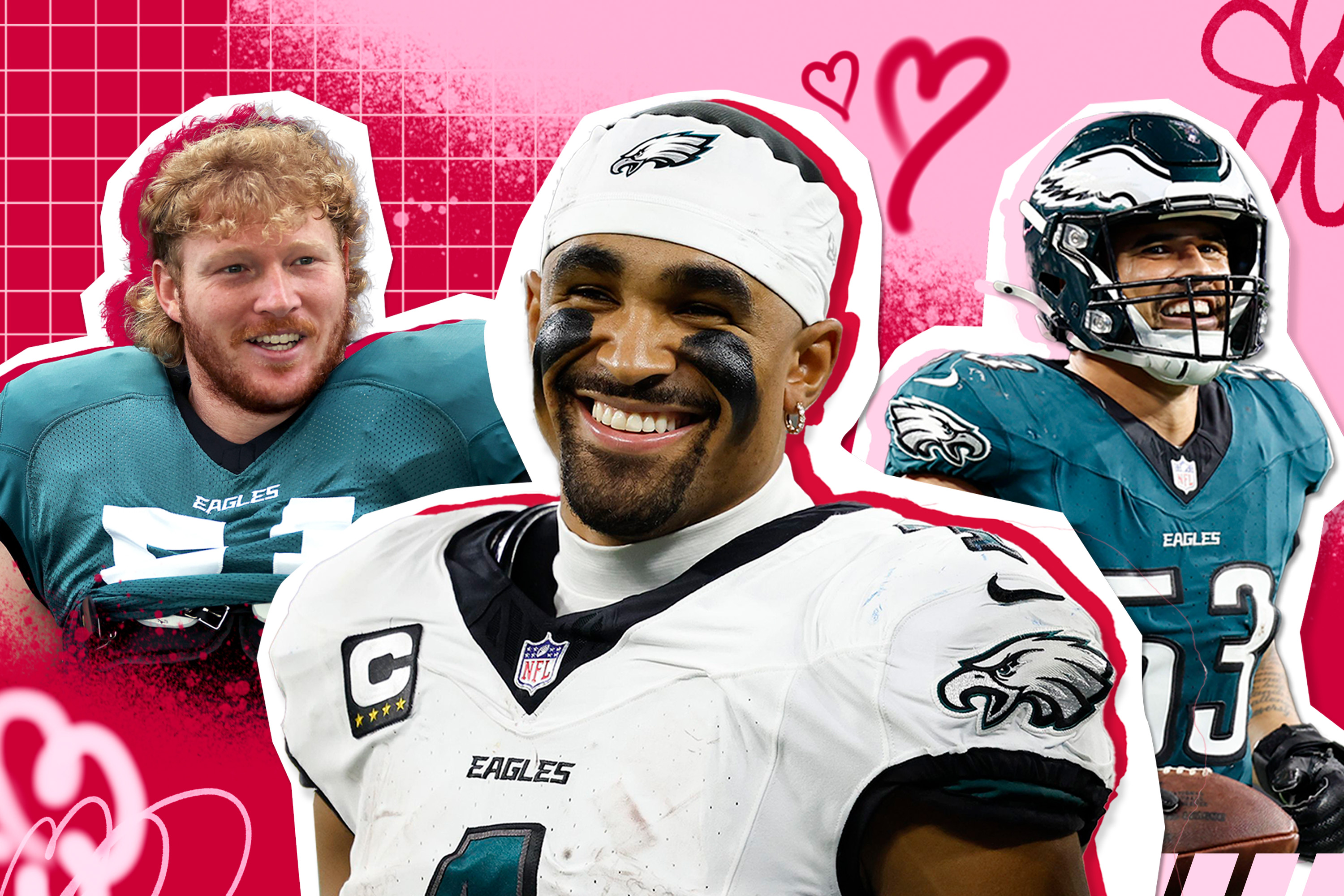
Roses are red, violets are blue, today is the Eagles parade — and Valentine’s Day too. Express your true love with our Eagles Valentine card maker.
A Valentine's Day photo collage of Eagles players Cam Jurgens, Jalen Hurts, and Zack BaunJulia Duarte / Staff Illustration, Photography by The Inquirer
There’s no passion quite like that of the Eagles’ fan base, and with the Birds’ Super Bowl championship victory parade coinciding with Valentine’s Day on Friday, love — brotherly and otherwise — is most certainly in the Philadelphia air.
So, whether you love the Birds or are just a lovebird, take this quiz to find the perfect Super Bowl champ valentine for you.
How long have you been with your valentine?
Where can you and your valentine be found on game day?
Which Eagle reminds you of your valentine?
Your Results
You have skipped .
A Jalen Hurts Valentine
An Eagles themed valentineJulia Duarte / Staff Illustration, Photography by Yong Kim, for the I
Saquon Barkley Valentines
An Eagles themed valentineJulia Duarte / Staff Illustration, Photograph by AP An Eagles themed valentineJulia Duarte / Staff Illustration, Photography by Monica Herndon, For the Inquirer
AJ Brown, DeVonta Smith, and Zack Baun Valentines
An Eagles themed valentineJulia Duarte / Staff Illustration, Photography by Steven M. Falk, forAn Eagles themed valentineJulia Duarte / Staff Illustration, Photography by APAn Eagles themed valentineJulia Duarte / Staff Illustration, Photography by Monica Herndon, for the Inquirer
Cooper DeJean and Cam Jurgens Valentines
An Eagles themed valentineJulia Duarte / Staff Illustration, Photography by Yong Kim, for the InquirerAn Eagles themed valentineJulia Duarte / Staff Illustration, Photography by David Maialetti
Super Bowl Champions Valentines
An Eagles themed valentineJulia Duarte / Staff Illustration, Photography by Jessica Griffin, for the Inquirer An Eagles themed Valentine's Day cardJulia Duarte / Staff Illustration, Photography by Monica Herndon
A Mayor Parker Valentine
An Eagles themed valentineJulia Duarte / Staff Illustration, Photography by AP
Advertisement
Staff Contributors
Art Direction: Julia Duarte
Creative Direction: Suzette Moyer
Editing: Matt Mullin
Development: Charmaine Runes
(()=>{var X=(e,t)=>()=>(t||e((t={exports:{}}).exports,t),t.exports);var N=X(s=>{var ne={0:”Jan.”,1:”Feb.”,2:”March”,3:”April”,4:”May”,5:”June”,6:”July”,7:”Aug.”,8:”Sept.”,9:”Oct.”,10:”Nov.”,11:”Dec.”};function T(e){return e===void 0&&(e=new Date),ne[e.getMonth()]}var oe={0:”Jan”,1:”Feb”,2:”Mar”,3:”Apr”,4:”May”,5:”Jun”,6:”Jul”,7:”Aug”,8:”Sep”,9:”Oct”,10:”Nov”,11:”Dec”};function k(e){return e===void 0&&(e=new Date),oe[e.getMonth()]}function a(e){return e==null}function O(e){return typeof e==”number”&&isFinite(e)}function f(e){return O(e)&&Math.floor(e)===e}var ie=[“one”,”two”,”three”,”four”,”five”,”six”,”seven”,”eight”,”nine”],se=[“million”,”billion”,”trillion”,”quadrillion”,”quintillion”,”sextillion”,”septillion”,”octillion”,”nonillion”,”decillion”],q=[“th”,”st”,”nd”,”rd”,”th”,”th”,”th”,”th”,”th”,”th”],re=[11,12,13];function E(e){if(a(e))return””;var t=+e;return f(t)?re.indexOf(t%100)>-1?q[0]:q[t%10]:””}var ae=[“first”,”second”,”third”,”fourth”,”fifth”,”sixth”,”seventh”,”eighth”,”ninth”],ce=new RegExp(/s+([^s]*)s*$/);s.apdate=function(e){return e===void 0&&(e=new Date),T(e)+” “+e.getDate()+”, “+e.getFullYear()},s.apdatetab=function(e){return e===void 0&&(e=new Date),k(e)+” “+e.getDate()+”, “+e.getFullYear()},s.apmonth=T,s.apmonthtab=k,s.apnumber=function(e){if(a(e))return””;var t=+e;return f(t)?t=10?e.toString():ie[t-1]:e.toString()},s.aptime=function(e){e===void 0&&(e=new Date);var t,n,o=e.getHours(),i=e.getMinutes(),r=i===0;if(r){if(o===0)return”midnight”;if(o===12)return”noon”}return o0?o:12):(t=”p.m.”,n=o===12?o:o-12),r?n+” “+t:n+”:”+(i<10?"0"+i:i)+" "+t},s.capfirst=function(e){if(a(e))return"";var t=String(e);return""+t.charAt(0).toUpperCase()+t.slice(1)},s.intcomma=function(e){if(a(e))return"";var t,n=+e;return O(n)?((t=n.toString().split("."))[0]=t[0].replace(/B(?=(d{3})+(?!d))/g,","),t.join(".")):e.toString()},s.intword=function(e){if(a(e))return"";var t=+e;if(!f(t))return e.toString();var n=Math.abs(t);if(n<1e6)return e.toString();var o=Math.ceil(Math.log(n+1)/Math.LN10)-1,i=o-o%3,r=t/Math.pow(10,i);return(r=Math.round(10*r)/10)+" "+se[Math.floor(i/3)-2]},s.ordinal=function(e,t){if(t===void 0&&(t=!1),a(e))return"";var n=+e;return f(n)?t&&n{document.querySelectorAll(“.js-hover”).forEach(e=>{e.addEventListener(“click”,()=>{x(e)}),e.addEventListener(“mouseenter”,()=>{x(e)}),e.addEventListener(“mouseout”,()=>{M(e)})}),window.addEventListener(“scroll”,()=>{u!==null&&te()})},te=()=>{(u>window.scrollY+100||u{M(e)})},x=e=>{e.classList.add(“is-visible”),u=window.scrollY},M=e=>{e.classList.remove(“is-visible”),u=null},j={init:()=>{ee()}};var Fe=N();var p=e=>{if(e)return e.trim().toLowerCase().normalize(“NFD”).replace(/[u0300-u036f]/g,””).replace(/[^A-Z0-9 ]/gi,””).replace(/ /g,”-“)};var P=()=>/Android|webOS|iPhone|iPad|iPod|BlackBerry|IEMobile|Opera Mini/i.test(navigator.userAgent);var v=(e,t=null,n=null)=>{n||(n=document.querySelector(“head”));let o=document.createElement(“script”);o.type=”text/javascript”,o.src=e,t&&(o.onload=t),n.appendChild(o)},D=()=>(window.PMNdataLayer?.[0]!==void 0&&window.PMNdataLayer[0])?.analytics?.user?.state===”Subscribed”,H=()=>{let t=(window.PMNdataLayer?.[0]!==void 0&&window.PMNdataLayer[0])?.analytics?.user?.state;return window.location.host.includes(“zzz-systest”)||window.location.host.includes(“pmn.arcpublishing.com”)||window.location.host.includes(“stage.fusion.inquirer.com”)||typeof t>”u”},$=()=>{let t=(window.PMNdataLayer?.[0]!==void 0&&window.PMNdataLayer[0])?.analytics?.user?.hasAdsFreeReading;return!!(t&&t==1)},y=()=>window.location.host.includes(“localhost”);var le=()=>{$()&&document.querySelectorAll(“.js-ad”).forEach(t=>{t.classList.add(“is-hidden”)})},I={init:()=>{le()}};var m,de=(e,t)=>{m=m||window.PMNdataLayer,m?m.push({event:”misc_event”,eventAction:e,eventLabel:t}):window.location.hostname.includes(“localhost”)?console.log(“Analytics event:”,e,t,”(not actually being sent due to localhost)”):console.log(“Failed to push analytics event”,e,t)},C={event:(e,t)=>{de(e,t)}};var B=async(e,t)=>(await fetch(`https://inq-junto.herokuapp.com/${e}`,{method:”POST”,headers:{“Content-Type”:”application/json”},mode:”cors”,body:JSON.stringify(t)})).json(),S=()=>{let t=document.querySelector(“.js-inno”).dataset.junto;if(t)return t;throw new Error(“no junto id found”)},F={getDefaultId:()=>S(),vote:(e,t=S())=>{B(“vote”,{poll:t,ballot:e})},results:async(e=S())=>await B(“results”,{poll:e})};var b=new Object,h=new Object,z=e=>Object.values(b).filter(t=>t==e).length,ue=()=>{document.querySelectorAll(“.js-assessment”).forEach(e=>{b[e.dataset.id]=!1})},J=()=>{let e=z(!1);document.querySelector(“.js-outcome-skipped-count”).textContent=`${e} question${e!==1?”s”:””}`},pe=(e,t)=>{b[e]=!0,t=JSON.parse(t),Object.keys(t).forEach(o=>{h[o]||(h[o]=0);let i=parseInt(t[o]);h[o]+=i}),z(!1)==0?(fe(),me()):J()},fe=()=>{document.querySelector(“.js-outcome-skipped”).classList.add(“is-hidden”)},me=()=>{let e=p(we()),t=document.querySelector(`.js-outcome-result[data-id=”${e}”]`);t&&t.classList.add(“is-reader”)},he=e=>{for(let t=e.length-1;t>0;t–){let n=Math.floor(Math.random()*(t+1));[e[t],e[n]]=[e[n],e[t]]}return e},we=()=>{let e=Object.assign({},h),t=new Object;for(let o=1;Object.keys(e).length!==0;o++){let i=Object.keys(e).filter(r=>e[r]==o);t[o]=i;for(let r of i)delete e[r]}return he(t[Object.keys(t).length])[0]},w={init:()=>{ue(),J()},update:(e,t)=>{pe(e,t)}};var ge=()=>{document.querySelectorAll(“.js-assessment-answer”).forEach(e=>{e.addEventListener(“click”,()=>{ve(e)})})},ve=e=>{let t=e.closest(“.js-assessment”);t.classList.add(“has-answered”),e.classList.add(“is-chosen”),F.vote({[t.dataset.id]:p(e.textContent)}),C.event(“answer_question”,`${t.dataset.id} | ${p(e.textContent)}`),w.update(t.dataset.id,e.dataset.values);let n=document.querySelector(“.js-assessment:not(.has-answered)”);n&&window.scrollTo({top:window.scrollY+n.getBoundingClientRect().top-200})},V={init:()=>{ge()}};var c,W,ye=()=>{c=document.getElementById(“js-inno-toast”)},Se=e=>{if(!c)return;c.innerHTML=e,c.classList.add(“inno-toast–active”);let t=()=>{c.addEventListener(“transitionend”,be,{once:!0}),c.classList.remove(“inno-toast–active”)};clearTimeout(W),W=setTimeout(t,5e3)},be=()=>{c.innerHTML=””},l={init:()=>{ye()},showToast:Se};var g,Le=async()=>new Promise(e=>{setTimeout(()=>{console.log(“simulating createShareLink for localhost”),e(“https://inquirer.com/interactives”),Ae()},100)}),Ae=()=>{let e=document.querySelector(“.js-gift-toast-receiver”);!e||!(e instanceof HTMLElement)||setTimeout(()=>{let t=e?.querySelector(“span”);t&&(t.innerHTML=”Gift link copied to clipboard“)},20)},xe=()=>{let e=window.services?.createShareLink;e&&(g=e),y()&&(g=Le),g&&Me()},Me=()=>{document.querySelectorAll(“.js-gift”).forEach(t=>{(D()||y()||H())&&t.classList.add(“is-available”)}),document.querySelectorAll(“.js-gift-button”).forEach(t=>{t instanceof HTMLButtonElement&&t.addEventListener(“click”,async()=>{if(t.classList.contains(“disabled”))return;t.dataset.state=”loading”;let n=await g(window.location.pathname);if(n)try{setTimeout(()=>{navigator.clipboard.writeText(n)}),l.showToast(“Gift link copied to clipboard!”),t.dataset.state=”complete”}catch{l.showToast(“Couldn’t copy to clipboard, try again?”),t.dataset.state=”error”}else t.dataset.state=”error”,l.showToast(“Hmm, we couldn’t generate a gift link…”);setTimeout(()=>{t.dataset.state=”ready”},2e3)})});let e=document.querySelector(“.js-gift-toast-receiver”);!e||!(e instanceof HTMLElement)||je(e)},je=e=>{new MutationObserver(n=>{for(let o of n){let i=[…o.addedNodes].at(0);if(!(i instanceof HTMLElement))return;l.showToast(i.outerHTML)}}).observe(e,{subtree:!0,childList:!0})},R={init:()=>{xe()}};var Te=()=>{window.addEventListener(“message”,e=>{if(e.data[“datawrapper-height”]){let t=e.data[“datawrapper-height”];for(let n in t)document.querySelector(`#datawrapper-chart-${n}`).setAttribute(“height”,t[n])}})},ke=()=>{document.querySelectorAll(“.js-datawrapper-graphic”).forEach(e=>{v(`https://datawrapper.dwcdn.net/${e.dataset.id}/embed.js`,null,e)})},qe=()=>{window.addEventListener(“message”,e=>{let t=e.data;document.querySelectorAll(`iframe[src*=”${t.id}”]`).forEach(o=>{o.style.height=`${t.height}px`})},!1)},Ee=()=>{document.querySelectorAll(“.js-pym-graphic”).forEach(e=>{if(typeof window{new window.pym.Parent(e.id,e.dataset.iframe)};typeof window.pym>”u”?v(“https://pym.nprapps.org/pym.v1.min.js”,t):t()}})},Y={init:()=>{Te(),ke(),Ee(),qe()}};var Oe=()=>{},G={init:()=>{Oe()}};var d,L,A=!0,Ne=()=>{d=document.querySelectorAll(“.js-video-autoplay”)},Pe=()=>{window.addEventListener(“resize”,()=>{_()}),window.addEventListener(“scroll”,()=>{_()}),d.forEach(e=>{e.addEventListener(“volumechange”,t=>{e.muted!==A&&!P()&&(A=e.muted,De())})})},_=()=>{let e;d.forEach((t,n)=>{let o=t.getBoundingClientRect(),i=o.height/2;o.y-i&&(e=t)}),e!==L&&(L=e,d.forEach(t=>{t.pause()}),e?e.play():L=null)},De=()=>{d.forEach(e=>{e.muted=A})},U={init:()=>{Ne(),d&&Pe()}};var Z={init:()=>{j.init?.(),I.init?.(),V.init?.(),R.init?.(),Y.init?.(),w.init?.(),G.init?.(),U.init?.(),l.init?.()}};var He=()=>{},K={init:()=>{He()}};var $e=document.querySelector(“.js-inno”),Q=()=>{Z.init(),K.init()};$e?Q():new MutationObserver((t,n)=>{if(document.querySelector(“.js-inno”)){n.disconnect(),Q();return}}).observe(document,{attributes:!0,childList:!0,subtree:!0});})();