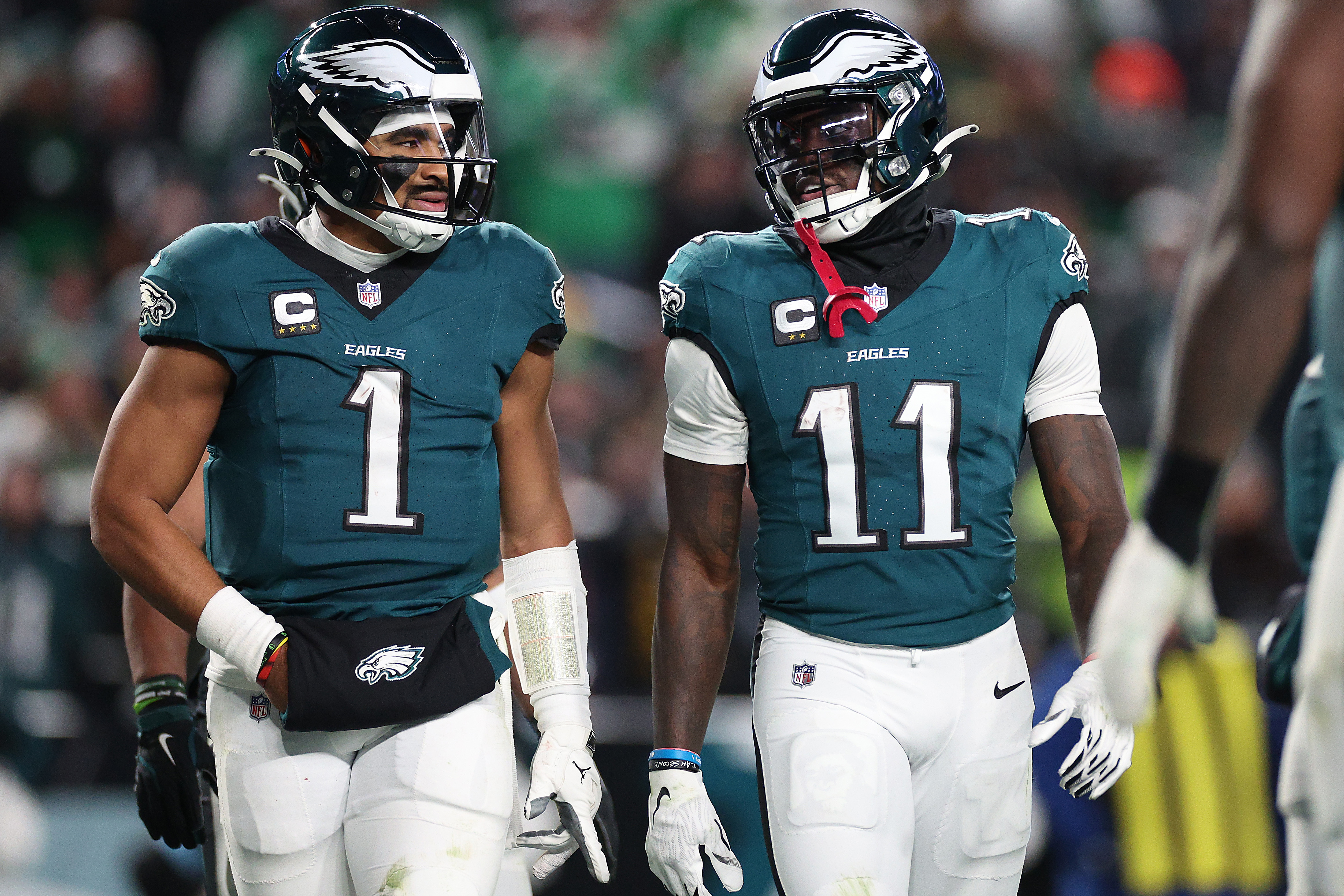
A.J. Brown now is a Patriot, an ironic misnomer since he’s such an obvious traitor.
Philadelphians generally seem relieved that Brown’s diva act no longer will be a distraction for a perennial title contender. That’s just A.J. fatigue. What he has done is no better than what Carson Wentz did five years ago: hamstrung his franchise, dissed the fan base, and hung his teammates out to dry.
After Brown signed a three-year, $96 million contract extension in April 2024, he spent most of the next two years complaining. His main complaint: His skills were being wasted in an Eagles offense designed by Nick Sirianni and quarterbacked by Jalen Hurts, even though it was potent enough to win Super Bowl LIX.
During the 2025 season, Brown reportedly requested to be traded. He greased the rails to that end, continually whining, culminating in a midseason social media post in which he called the offense a “[bleep]-show.”
That prompted owner Jeffrey Lurie to publicly meet with Brown, after which Brown refrained from further criticism. However, at that point, it became inevitable that Brown would be traded.
And that, inevitably, would hurt the team.
Before the draft in April, sources say Howie Roseman asked for a first-round pick in 2026 or, at worst, in 2027. Nobody bit. On June 1, the first day of a new league year, when a salary cap hit would be spread over two years, Roseman settled for a first-round pick in 2028 and a 2027 fifth-round pick.
It will hurt the fans, now deprived of supporting the best receiver in franchise history.
It will hurt the front office, since Brown’s departure will dent the salary cap $43 million, the fourth- (or fifth, depending on how you look at Daniel Jones and the Giants)-highest amount of dead money ever absorbed and the most dead money of a non-quarterback.
More than anyone, though, it will hurt his teammates.
Why?
Because the Eagles cannot immediately fill the talent void left by Brown. This is partly because Brown has cost them so much money against the cap, so the Eagles would not be able to sign a player of his caliber. Which means there is a massive drop off in total roster talent.
This leaves the rest of the players in a difficult spot.
Every player has a finite window in which he can win. Over the past few seasons many of the current Eagles had a choice of where to play, and many chose the Eagles because the Eagles had an elite roster, and no skill player on that roster was more elite that Brown.
His 14.8 yards per reception rank first among receivers with at least 275 catches since 2022. His 5,034 receiving yards rank fifth. He is different.
When Brown signed his extension, Eagles in the locker room, Eagles in the coaches’ offices, and Eagles in the executive suites reasonably expected at least four more seasons of this sort of production from Brown.
Instead, they have a $43 million hole on the ledger over the next two years. In the short term, at least, this could be catastrophic.
It was nearly so last time.
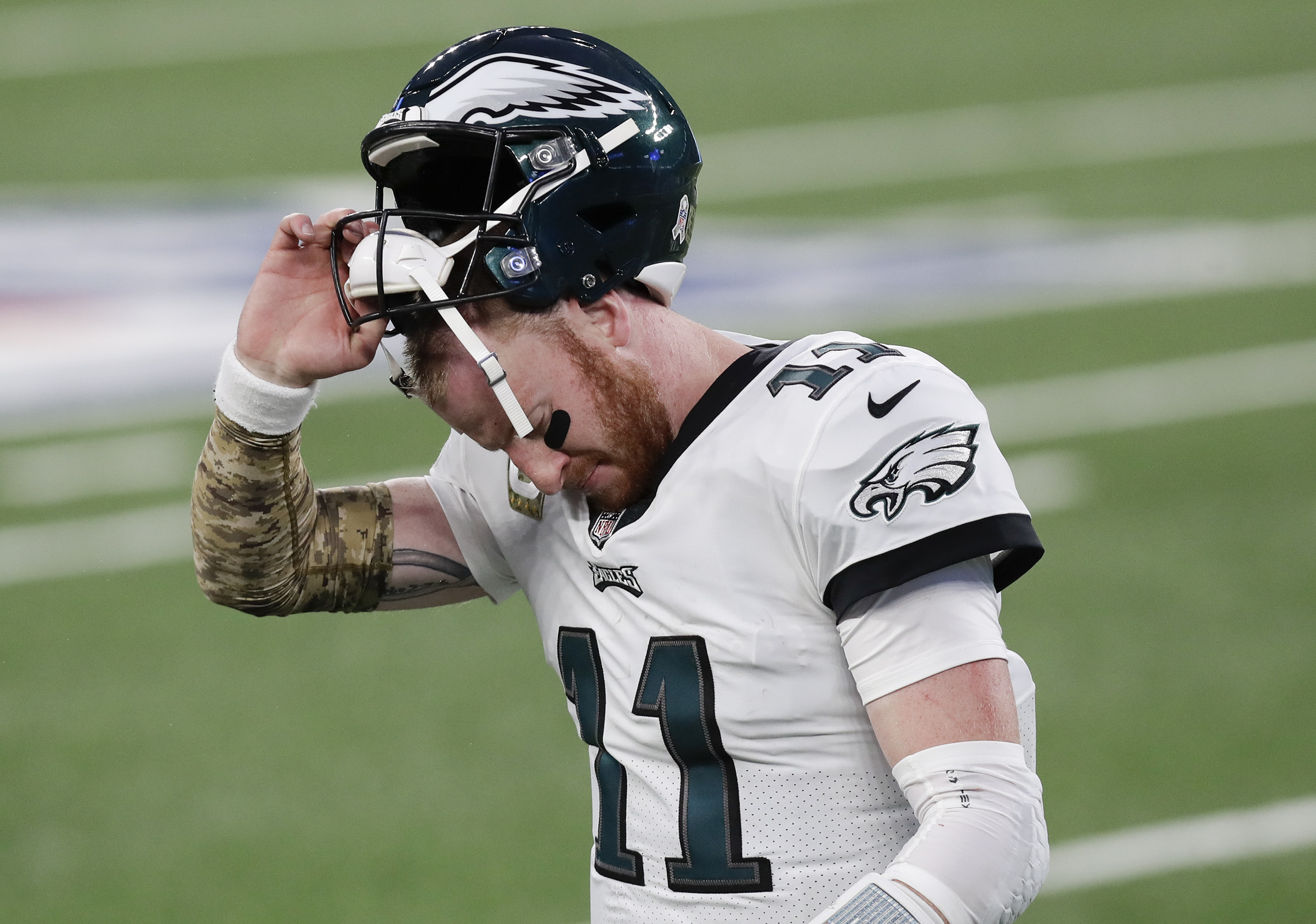
Carson Wentz sulked, then struggled, then forced his way out of Philly. YONG KIM / Staff Photographer
Carson Wentz
The reason Ginger Jesus went Judas on the Birds differs from Brown’s, but it is no less shameful.
Wentz resented that the Eagles took Hurts in the second round of the 2020 draft. This, despite their stated intent to use Hurts as a long-term insurance policy against Wentz’s frequent injuries. In the meantime, Hurts would be used as a gimmick player, in the manner of Saints utility man Taysom Hill.
Wentz then was outraged when he was benched late in the 2020 season after throwing 15 interceptions and taking 50 sacks, numbers that would lead the league at the season’s end despite Wentz playing in just 12 games. After the season, after getting coach Doug Pederson fired, Wentz still forced a trade.
That carried a $33.8 million cap hit, which was the NFL record at the time. Hurts took over as a second-year project quarterback of a team in disarray coached by a relative unknown in Nick Sirianni.
He rebounded with 27 touchdown passes with seven interceptions and rebounded with a 94.6 passer rating in 17 starts for the Colts, who, with an inferior team, matched the Eagles’ 9-8 record but missed the playoffs. Hurts threw 16 TDs with nine picks (but added 10 rushing scores) and was horrid in a playoff loss.
It began something great. Wentz’s career fizzled as Hurts led the Eagles to two Super Bowls. But, in 2021, it wasted a prime year for such players as Lane Johnson, Fletcher Cox, Brandon Graham, Jason Kelce, Darius Slay — players who chose to remain Eagles with the understanding that Wentz would be their quarterback.
Why would they expect that?
Because in June 2019, Wentz had signed a four-year, $128 million contract extension … that didn’t kick in until 2021.
That’s right.
Wentz took a $66 million bonus to play for the Eagles from 2021 to 2024, but he didn’t take a snap for the team in that span.
Not bad work if you can get it.
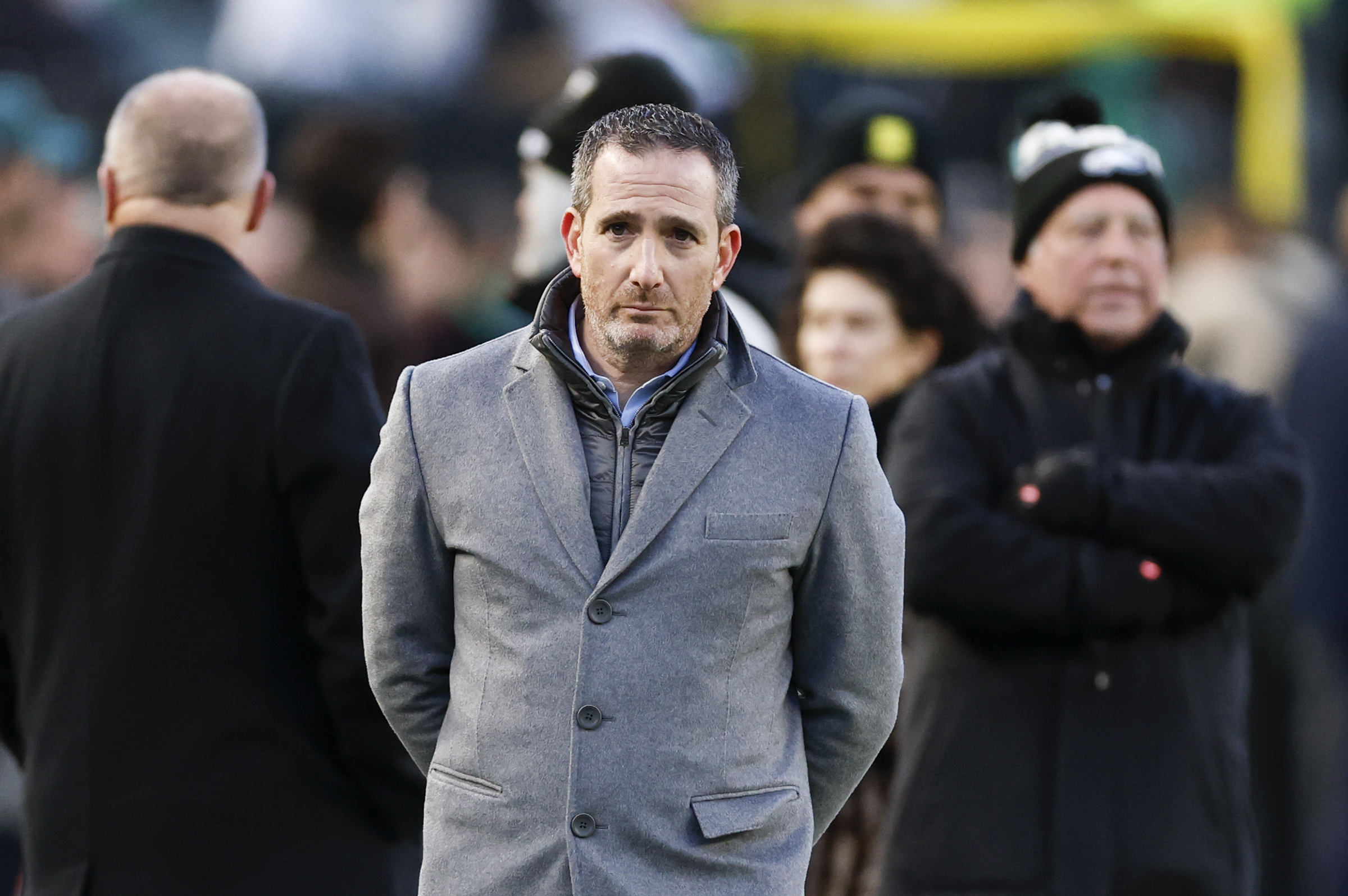
Howie Roseman found a path out of the Carson Wentz quagmire and history may reflect that he did the same with A.J. Brown. Yong Kim / Staff Photographer
No pain, no gain?
Fate, genius, and effort combined to make lemonade from Wentz’s sour grapes.
Fate, in that Wentz stayed healthy enough to convert the conditional pick in 2022 into a first-rounder.
Genius, in that Roseman used the first- and third-round picks from the Wentz trade as part of the capital to add DeVonta Smith, Jalen Carter, Jordan Davis, and, yes, even Brown. Can he do the same with the less valuable haul from Brown’s trade?
Effort, in that no player in the NFL has worked harder at becoming the best player he can be than Hurts. He has his limitations, but Hurts is a Super Bowl MVP with three Pro Bowl nods.
If you’d like more irony, then you might like this:
If Hurts doesn’t produce in the offense of new coordinator Sean Mannion, then Roseman might have to use the first-round pick he got by trading Brown to draft Hurts’ replacement.
You know who’d help Hurts produce in the new offense?
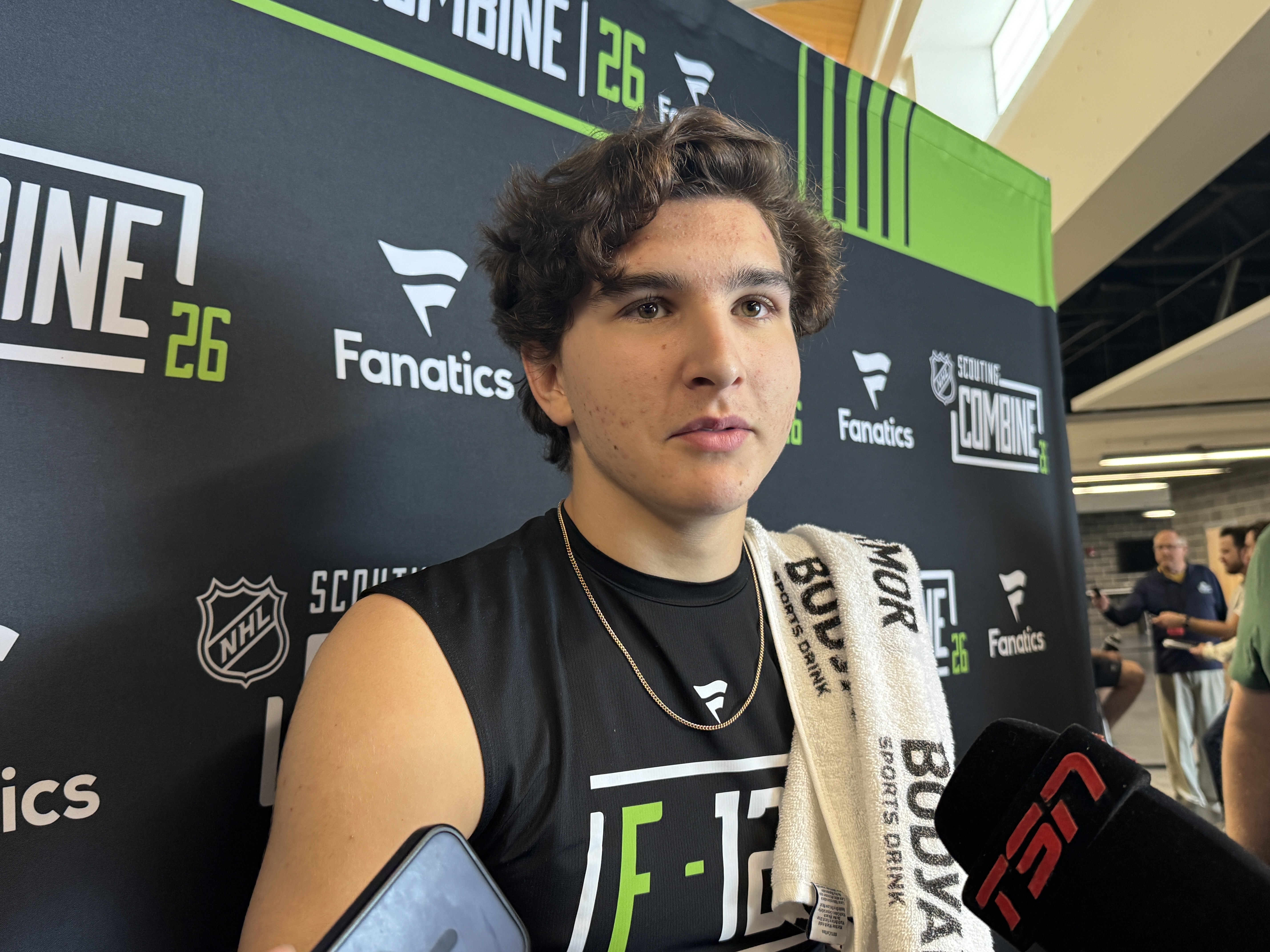
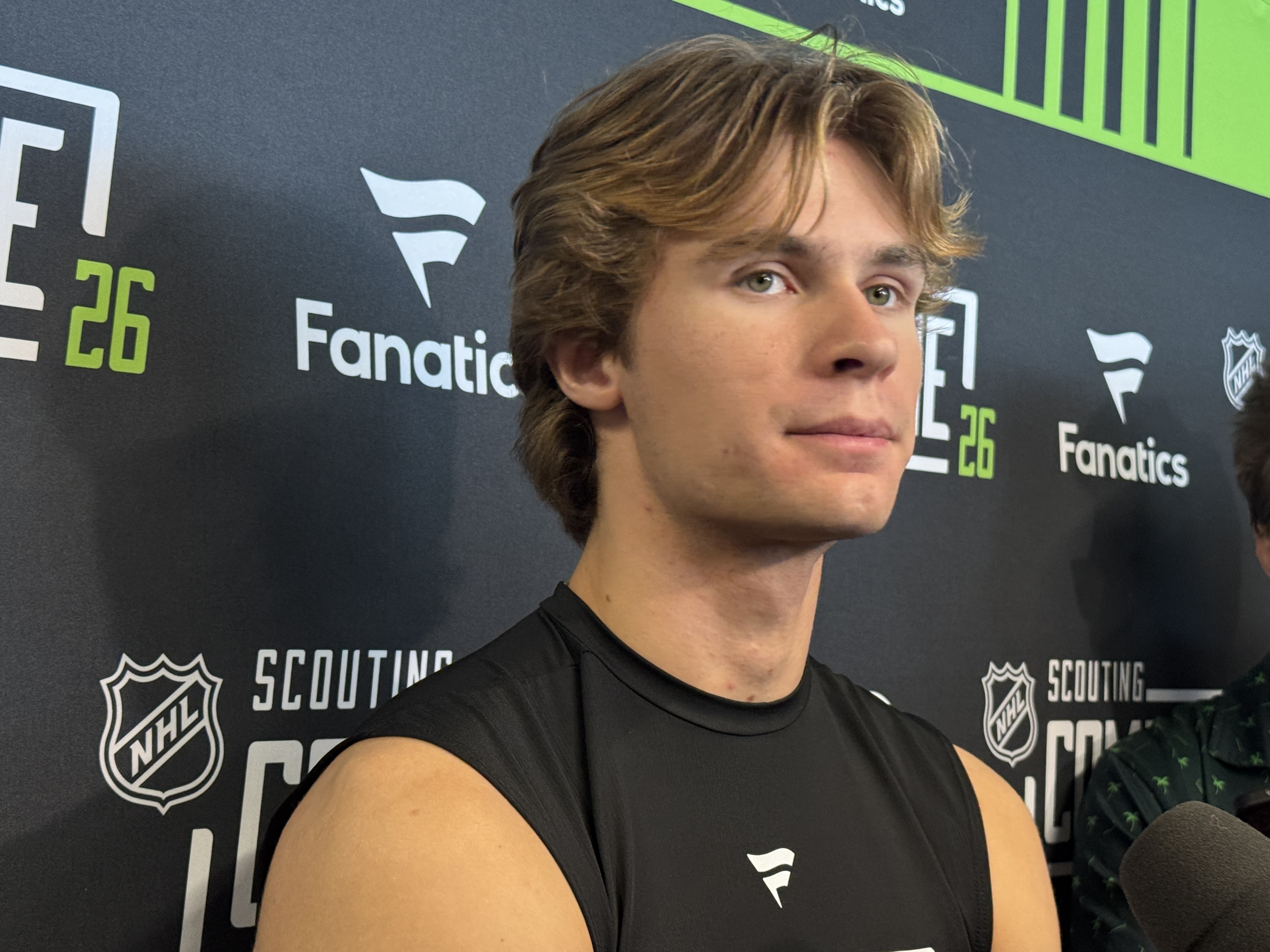
BUFFALO — Alexander Command sat down in front of the media after finishing his twirl through the fitness testing on Saturday at LECOM HarborCenter.
The Swedish center looked relaxed and rosy cheeked for someone who said he had just vomited.
It’s not an unheard-of result for the Wingate test, in which players at the NHL scouting combine ride the bike for 30 seconds as hard as they can with no clock in view to see when the end is coming and trainers shouting to keep going.
“I’d say the Wingate was better than I thought, and pretty fun,” Command said with a smile before revealing how it really went.
Command, who could be available when the Flyers select at No. 21 overall in the NHL draft on June 26-27, and has met with the team, finished tied for 11th in the peak power output test that concluded the combine for each player. He also finished tied for 17th in VO2 max, a test completed Friday in which a player rides a bike with the resistance increasing and keeps riding until they cannot keep up the required revolutions per minute.
The consensus was that the Wingate test, which also provides a fatigue index result, was the hardest but, oddly, the most fun. Ryder Cali, a center with whom the Flyers met, said the VO2 drained him and he couldn’t move for 25 minutes after, but he felt the Wingate was his best test as it showed his power. He also said the screaming the trainers do as the players pedal actually made him angry, which, in turn, made him go harder.
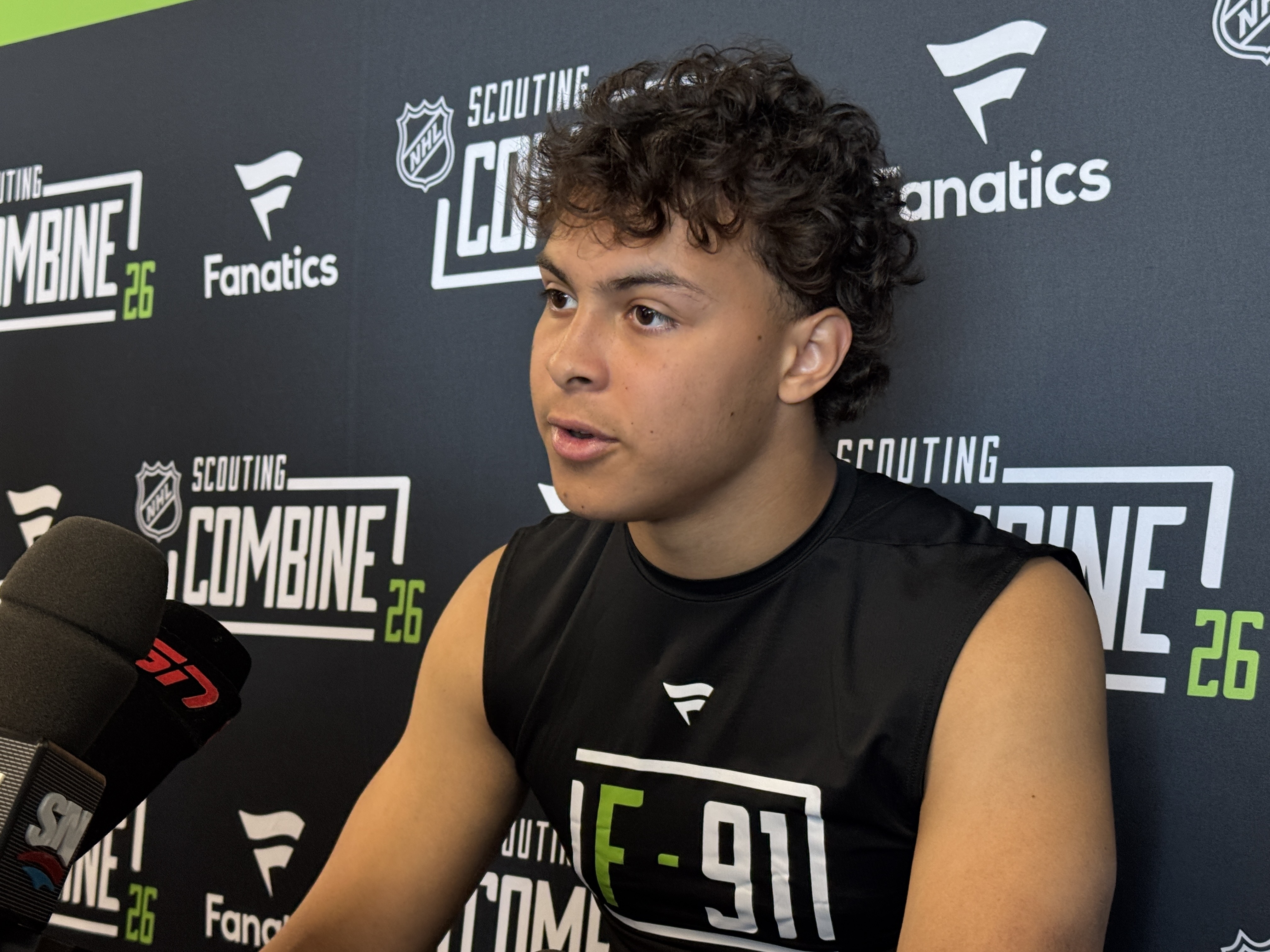
Said Jaxon Cover, a right winger who met with the Flyers and will head to Penn State in the fall of 2027: “I wish that I could see the time while I was doing it because I couldn’t believe that I had more time to go while I was on it, but it was a lot of fun, and it’s a great experience overall.”
Layne Gallacher, a center who went to Guelph of the Ontario Hockey League in the trade that sent Flyers prospect Jett Luchanko to Brantford, finished atop the Wingate test’s peak power output while consensus No. 1 pick Gavin McKenna was the best in VO2, joking long shifts helped him in his career. The Penn State winger finished in the top 25 for several tests, including third in the new isokinetic squat strength test, which was “performed on a motorized resistance device [1080 Cable] to assess lower extremity strength,” according to the NHL.
McKenna gave his team and NCAA hockey’s weekend-heavy schedule some of the credit for his strong performance, as it helped him spend a considerable amount of time in the gym at the beginning of each week. He also was training in Kelowna, British Columbia, with Markus and Liam Ruck — Markus tweaked his back on the vertical jump and could not continue — and Mathis Preston since the end of his season.
“Obviously, you want to do your best at everything, so I wanted to prepare hard for this,” said McKenna, who measured 5-foot-11¼ and 170 pounds.
“I think sometimes my frame’s not the biggest, so [I] just wanted to show that I can compete out there and I can work hard off the ice,” he said. “I think that’s a big key to carry through the next level.”
Gavin McKenna is the consensus top overall pick in this summer’s NHL draft.Jackie Spiegel
Among the 90 prospects at the combine, many just wrapped up their first year in college, are heading there in the fall, or are going in two years.
In addition to McKenna, Beckham Edwards and Cole Zurawski, who will be teammates at Notre Dame in September, dominated the tests. The pair tied Norwegian Niklas Aaram-Olsen for No. 1 in the pro agility test to the left. The test is a 5-10-5 yard shuttle that evaluates multidirectional speed, agility, and whole-body reaction plus control. Aaram-Olsen and Edwards tied for the lead to the right, and Edwards was No. 1 in force plate no jump.
Gavin McKenna officially finished the NHL Draft Combine as the NUMBER ONE ATHLETE in testing 👀
McKenna finished in the top 8 in 4 different categories, including:
🔹 VO₂ Max Aerobic Fitness (1st) 🔹 Isokinetic Squat (4th) 🔹 Pull-Ups (T-6th) 🔹 Force Plate No-Arm Jump (8th)… pic.twitter.com/jMumXO6qsc
Zurawski finished atop the leaderboard for the new 10-meter sprint test, which showed how off-ice linear sprint performance is a good predictor of on-ice speed. And Aaram-Olsen led the way in the horizontal jump, landing 118.0 inches, almost two inches more than second place.
“I like the explosive,” said Aaram-Olsen, a winger who is a teammate of Command with Örebro HK U20 in Sweden’s top junior league.
Pierce Mbuyi is off to Penn State in 2027, but first he topped the isokinetic squat test, came in second on the bench press power test — behind UMass’ Landon Nycz — and finished tied with several players for sixth in pullups (14). Mbuyi, a winger and captain of Owen Sound of the OHL is listed at 5-foot-9 and 177 pounds. Fellow under-6-foot winger Victor Plante, the son of former Flyer Derek Plante who is heading to the University of Minnesota-Duluth, was atop the fatigue index.
Two centers had the best grip strength. Cali, who recently flipped his commitment to Providence, tied for first in right-hand grip strength, and Ilia Morozov, 17, who was the youngest player in college hockey this past season at Miami (Ohio), had the best left-hand grip strength. Both met with the Flyers and could be right in their wheelhouse on draft night.
Pierce Mbuyi is heading off to Penn State in 2027.Jackie Spiegel
Breakaways
Winger Adam Novotný said he had a good meeting with the Flyers. He mentioned that his head was still spinning when he spoke with the media after riding the bike. The Czech winger, who played for Peterborough of the OHL, did the most pullups (18). … Goalie Michal Oršulák slipped doing the shuttle. He was OK but said “I think not too much good,” afterward about his overall performance. His Prince Albert squad finished its season on May 16, losing to Flyers prospect Luke Vlooswyk and Everett in the Western Hockey League final. He said he did not have much time to prepare for the testing. … Two top prospects, Ivar Stenberg and Carson Carels did not do physical testing at the combine.
While the six World Cup games at Lincoln Financial Field from June 14 to July 4 will certainly get top billing, the city will be humming with soccer-related programming, offering numerous ways for residents and visitors to feel connected to the action.
“Not everyone in our city, unfortunately, is going to get to go to the games,” said Elizabeth Clinton, development manager at Safe-Hub, a Kensington-based youth soccer organization and a board member for the CASA Soccer Leagues. “But there are going to be so many ways we as a community can enjoy the World Cup.”
From watch parties to soccer camps to a LEGO World Cup trophy replica, here’s how to feel the energy when the world’s largest sporting event comes to town.
The city’s biggest gathering spaces
Lemon Hill will no doubt be the beating heart of the city’s soccer action this summer, with a high-profile fan fest running from June 11 to July 19 in East Fairmount Park. But there are plenty of places that are likely to see fan gatherings throughout the city.
At Union Yards and Reaney Street, outside of Subaru Park, the Philadelphia Union will host what the team is calling “Soccer Celebration.” There, you’ll find dedicated viewing areas for select World Cup matches, interactive fan activities, giveaways, and live music — while food offerings will rotate to include menu items specific to competing nations. Entry is free with advanced registration.
Additionally, the Union will offer a pair of chances to watch the Côte d’Ivoire men’s national team up-close during its preparations for the World Cup tournament — first in a friendly match against Union II on June 8 at 7 p.m., and again during a community training session on June 12 at 6:30 p.m. Both events are free but require advance tickets, which can be secured at the Union website.
For the theatrically inclined, select AMC Theatres locations — including Cherry Hill and Bensalem — will be showing Telemundo’s live Spanish-language broadcasts of certain games, with advance tickets available through the AMC website.
Officials are also expecting various neighborhoods across the city to be hubs of action depending on the matchups. When Brazil plays on June 19, for instance, there figures to be a good amount of energy along Castor Avenue in Northeast Philadelphia, home to a sizable Brazilian population.
Where to play, not just watch
If you feel like pulling on a pair of boots and hitting the pitch yourself, you’ll find no shortage of options.
CASA Soccer Leagues — the region’s largest independent amateur soccer league — will host a World Cup-style adult soccer tournament from May through July at various sites across the city, from South Philadelphia to the campuses of Temple University and Drexel University.
The group also hosts regular pickup games, as well as beginner programs for those hoping to learn the sport.
“Adults who want to try a new sport and get involved and learn a little bit,” said Clinton. “Every week, you’ll come, a coach will kind of teach the group the basics of soccer, [and] you can just come in your sneakers.”
(For those looking to socialize without all the running, the organization is also planning a slew of watch parties.)
Down the road in Chester, the WSFS Bank Sportsplex boasts a number of playing fields and is a regular hive of activity.
“There’s soccer there almost every day of the week,” said Mike Blankemeyer, travel director for Sons of Ben, an independent supporters group for the Philadelphia Union. “I go over the bridge a lot for work, and there’s always somebody out there on the pitches.”
The Kensington-based organization, which uses soccer to create safe spaces to the community, is planning a number of youth-focused events throughout the course of the World Cup festivities — among them, the Grassroots Cup on June 13-14, a youth tournament featuring more than 300 kids.
“We really want to use the World Cup as a way to get kids in the door,” said Clinton. “To experience a love of the game and be in a safe space that’s really soccer-centered.”
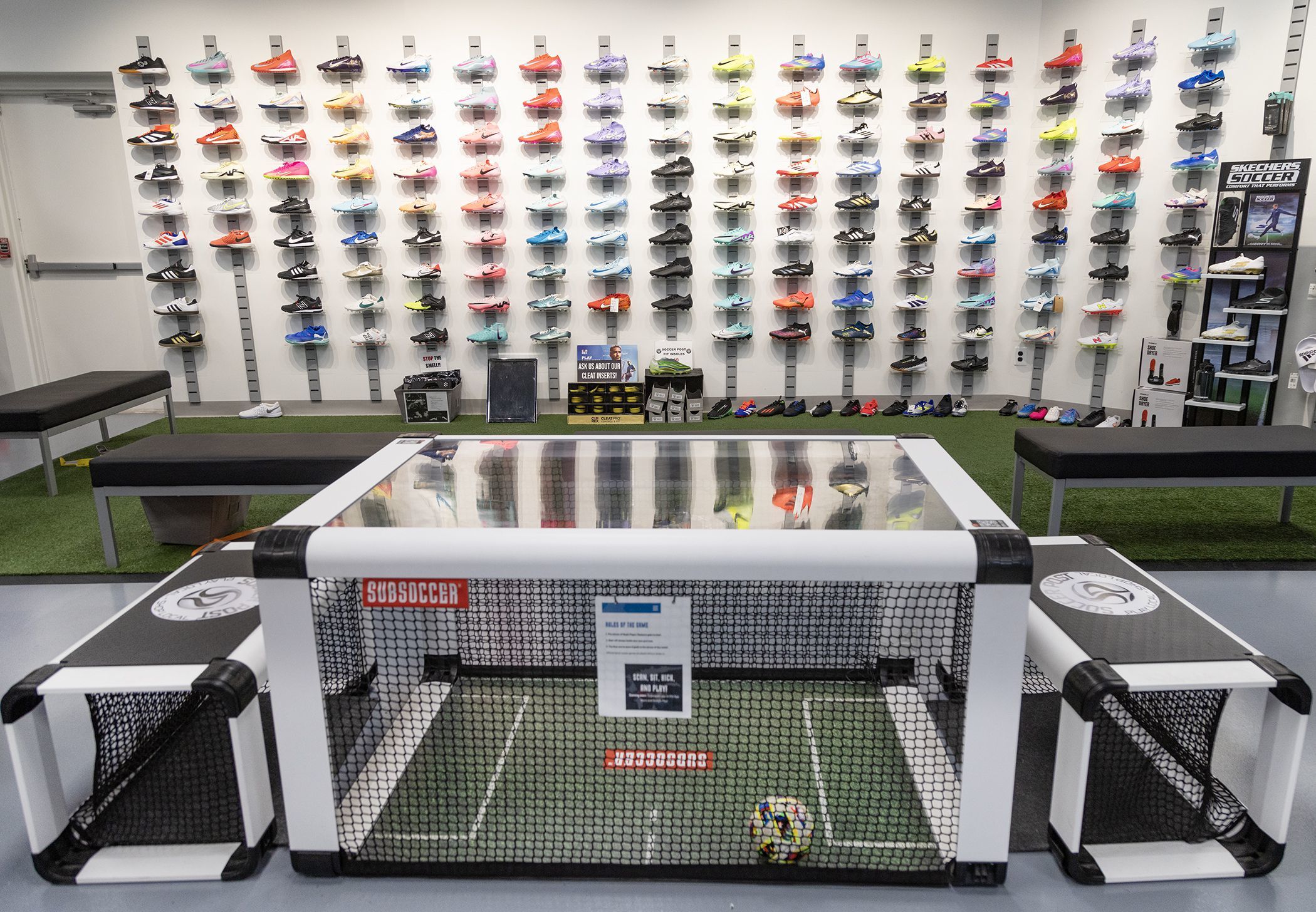
In addition to being a mecca of soccer gear and merchandise — including a LEGO replica of the World Cup trophy — Soccer Post Cherry Hill has seven TVs that will be tuned to the World Cup.
The site will also host a four-day soccer camp for kids ages 8-11, running from Aug. 24-27, that will include various forms of training and conclude with a mock-World Cup tournament.
The wall of cleats at Soccer Post Cherry Hill, which will be hosting a World Cup-themed youth soccer camp this summer.Photo courtesy of Soccer Post Cherry Hill
And for the more bookish young fan, the Free Library of Philadelphia is slated to offer soccer-themed programming throughout the spring and summer.
Choose your own adventure
If being on the fringes of the action isn’t quite enough, there’s always the option of simply wading into the eye of the storm.
“Even if I don’t get tickets, I’ll probably head down to the [Lincoln Financial Field], just to experience what it’s about,” said Chris Turk, 54, of Fairmount, a contributor to the Philly Soccer Page, a website devoted to the city’s soccer scene.
“I think Philadelphia is really gonna put on an awesome showing,” he added. “[And] I think people who come here this summer for soccer are going to be amazed by how cool Philadelphia is.”
The Flyers need a first-line center. Everyone knows this. Everyone acknowledges this, even the Flyers themselves. Most of their best and most promising forwards — Travis Konecny, Porter Martone, Owen Tippett, Matvei Michkov — are wingers. They have salary-cap room on their roster and players and prospects and picks they can trade.
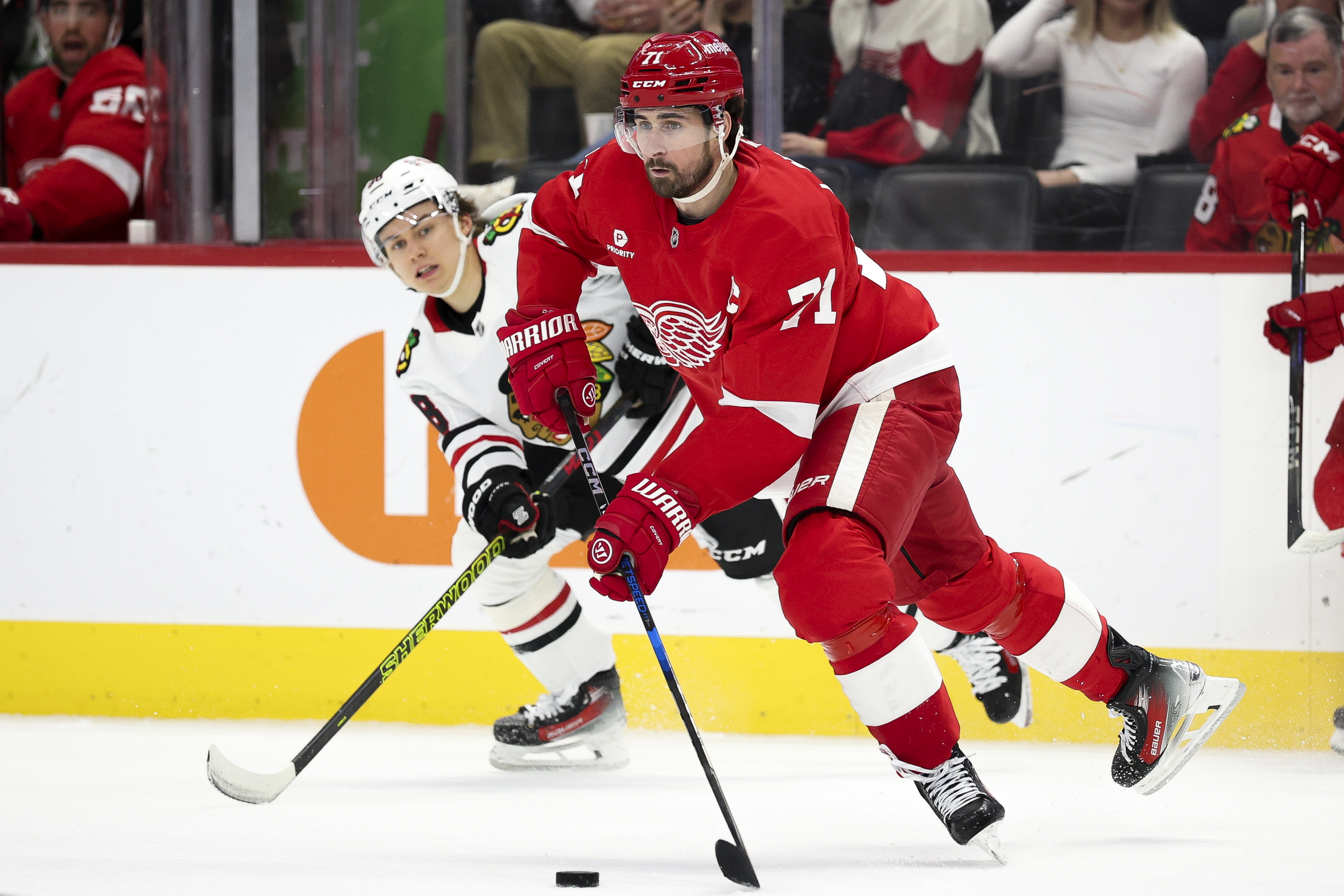
Dylan Larkin is a first-line center. Everyone knows this. Everyone acknowledges this, even the Detroit Red Wings, the only team Larkin has known over his 11-year career in the NHL. He turns 30 on July 30. Six-foot-one and 204 pounds, he has scored 30 goals or more in a season six times, including each of the last five, and is the Red Wings’ captain and a conscientious defensive player. He is amid an eight-year contract that runs through the 2030-31 season and counts $8.7 million annually against the cap.
You don’t have to be hockey’s answer to Howie Roseman to see where we’re going here. A deal for Larkin — depending on what they’d have to give up to get him — would make a lot of sense for the Flyers. It would fit general manager Danny Brière’s broad plan of being open to moves that had the potential to help the team in both the short and long terms.
“We’re in a good spot, as far as the salary cap goes, as far as our picks go, as far as our prospects go,” Brière said last month. “There’s a lot of upside there. If there’s an opportunity to jump on something that could help us, yeah, it’s my job to look at everything. But I don’t feel that I’m forced to make a move just to make a move because we’ve made it into the playoffs this year.”
The Flyers do have interest in Larkin, two team sources confirmed. But it’s believed that they are not currently among his top preferred destinations, and he has plenty of leverage in the form of a full no-trade clause.
He reportedly wants out of Detroit because of his frustration over the franchise’s direction under GM and former Red Wings great Steve Yzerman. The Red Wings have missed the playoffs for 10 consecutive seasons and have not won a postseason series since 2013, and Larkin was critical of the organization for failing to make any significant moves at this year’s trade deadline.
“We didn’t gain any momentum … and guys were kind of down about it,” he told reporters in April. “It’d be nice to add something and bring a little bit of a spark on the ice and maybe a morale boost as well.”
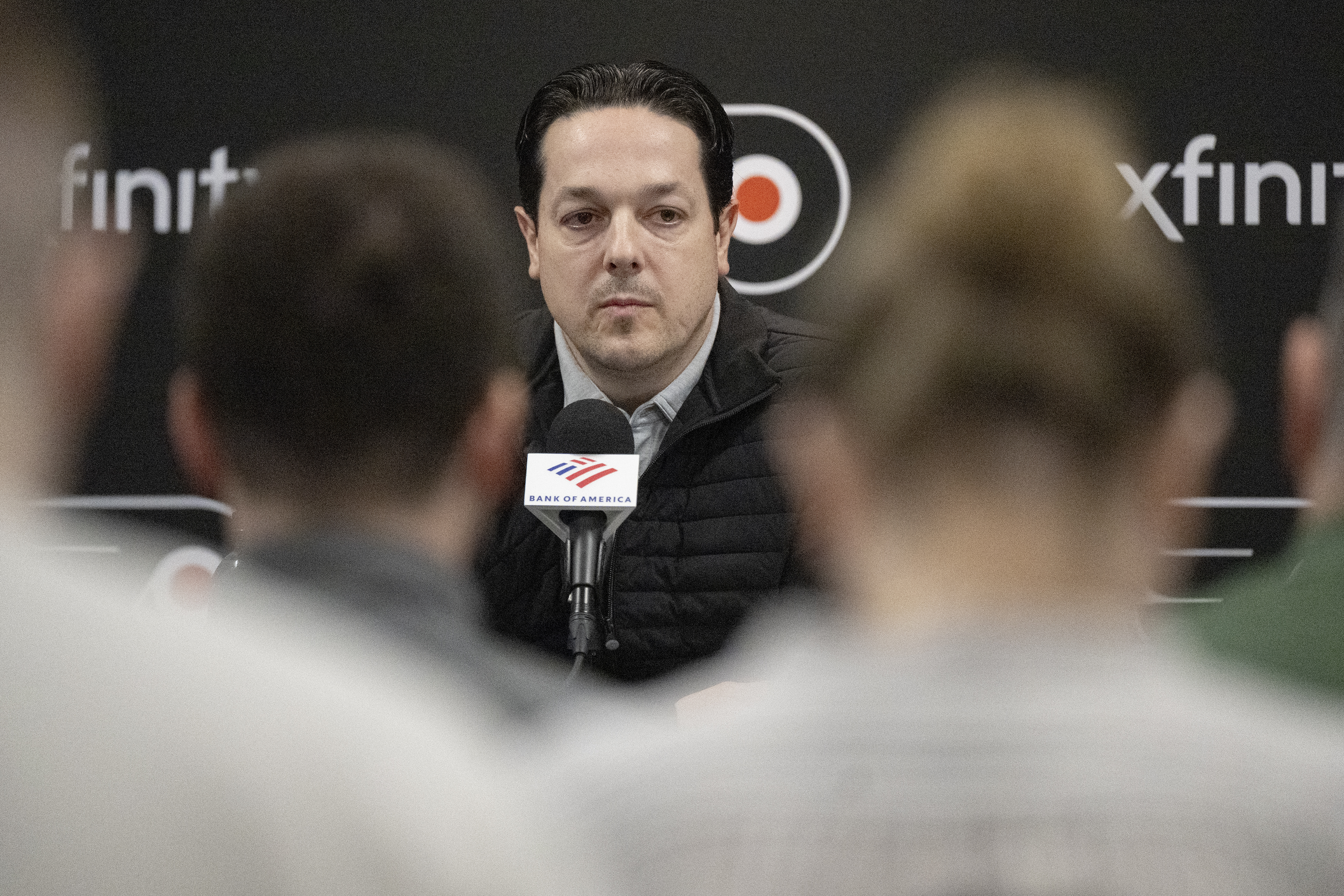
Danny Brière conveyed at his end-of-season news conference that he would exhibit pragmatism in making a young and promising team better. Jose F. Moreno / Staff Photographer
The Flyers generated that kind of spark this season by qualifying for the playoffs for the first time in six years, beating the Pittsburgh Penguins in the first round, and rejuvenating a dormant but still-loyal fan base. They are perceived as a team on the rise, and the expectation around the NHL, among their fans, and within their own locker room will be that they’ll not just return to the playoffs but be capable of going deeper once they get there.
Though Brière has maintained for a while now that he has no problem being patient and waiting for the Flyers’ young talent to develop further, that atmosphere will put some pressure on him to improve the roster as soon as he can.
“I know all the players are going to come back, and that’s definitely going to be their goal,” he said. “I don’t want to lower expectations, either. I think they believe they can make the playoffs again. They want another taste of it.”
It’s plausible that Larkin will come around to the idea that the Flyers can scratch his itch for meaningful springtime hockey, and it’s difficult to imagine a hungrier, more motivated player than a star in his prime who has been on just one playoff team in his 11 years in the league.
The question that Brière and his brain trust will have to answer, of course, is, what might it take to get Larkin, and will he be worth it? Would it take, say, Tippett, Jett Luchanko, and a couple of draft picks? Would it take more? Less? Which player or players on the current roster would the Flyers be willing to sacrifice for a player who would be as fine a fit as Larkin?
The Flyers’ offseason just went from interesting to fascinating, fast.
“Philly needs to understand, New York is the king‚” Louis Cretella, the owner of Dario’s Pizza in West Hempstead, told the tabloid.
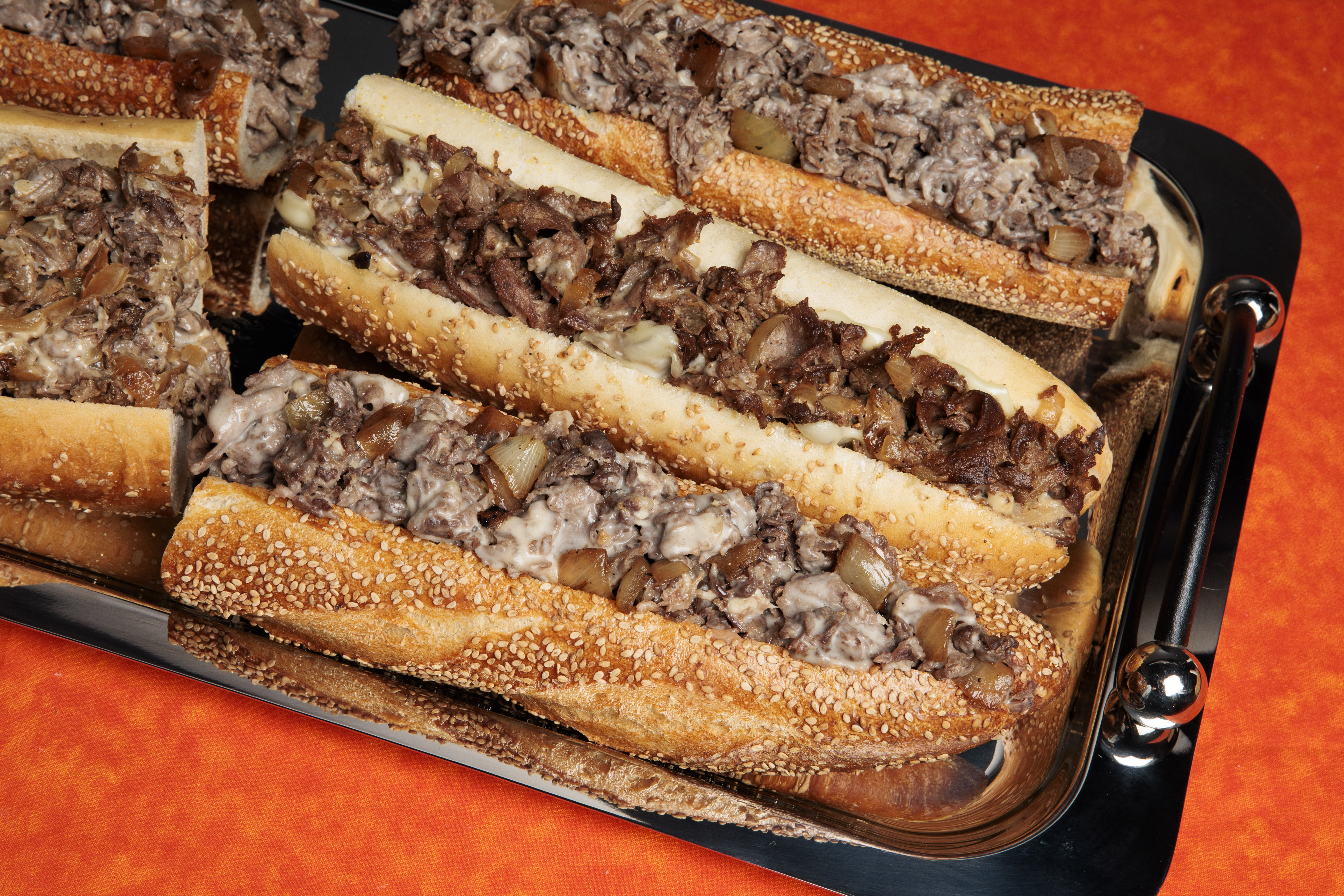
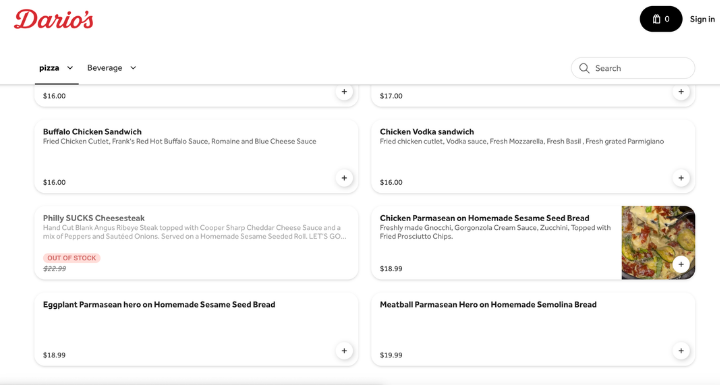
The restaurant — which purportedly sells 2,500 cheesesteaks a week — is rebranding the sandwich as the “Philly SUCKS” cheesesteak for the duration of the series. For hard copy menus, Cretella reportedly instructed staff to scribble “F— Philly” in black marker over the item.
The online menu at Dario’s Pizza in West Hempstead, NY. The Long Island restaurant is sold out of “Philly SUCKS” cheesesteaks.Scree
This is exactly the sort of over-the-top behavior expected from the bridge-and-tunnel crowd. Y’all want to prove you’re NYC tough so badly that you forget how to act.
Still, the whole gimmick raises a couple of questions: Why are you bragging about selling Philly’s signature sandwich if you hate us so much? And is your ego really that fragile?
Other New York City area restaurants have joined in. At Birdie Bar in Northport, it’s now the Big Apple Cheesesteak. At G’s Cheesesteaks in Manhattan’s Lower East Side, their entire livelihood now revolves around whatever a New York Knicks cheesesteak is.
And at Wogies — a traitorous Philadelphia-themed bar with locations in the Financial District and the West Village — it’s now called the Appendix Burster. It’s an homage to the appendectomy that kept Joel Embiid out of the first three games of the Sixers’ playoff series against the Boston Celtics.
To this, I say: Our culture is not your costume.
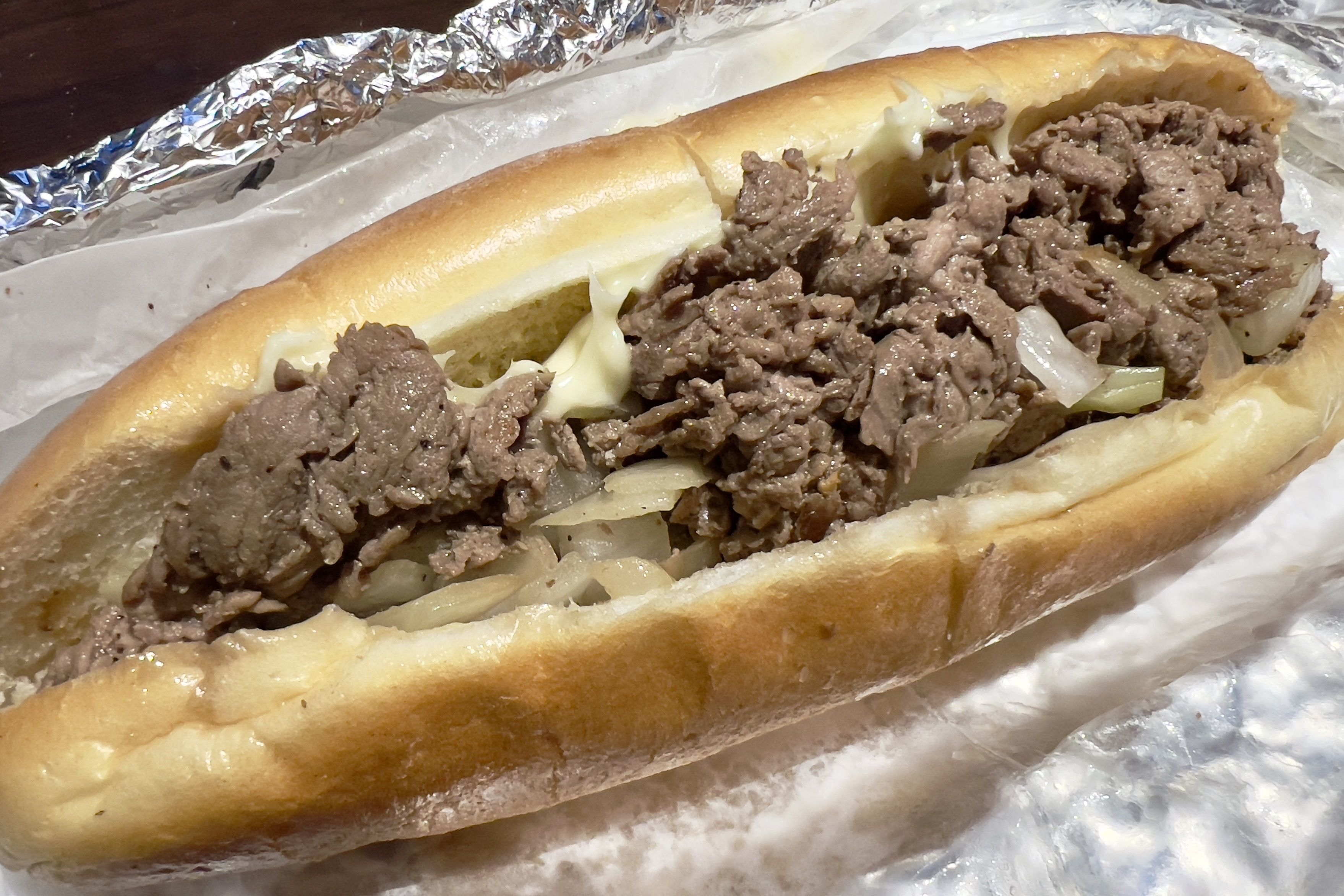
A sad-looking Philly cheesesteak from Wogies in FiDi, 44 Trinity Place, New York City.Michael Klein / Staff
Perhaps this is all just an eye for an eye. Still, this trend smacks of one thing: fear.
“We just sat around, and all of a sudden we see the word ‘Philly’ there, and we’re like, ‘ugh!’ Teeth are grinding, and we didn’t want anything Philly. That’s weak,” Lure Group CEO Aristotle “Telly” Hatzigeorgiou told the New York Post. At the restaurant group’s lounge Slate and bar Clinton Hall, “Knicks” has been added to the front of each establishment’s cheesesteak empanadas and sliders, respectively.
What’s weak is the mere mention of a city making your teeth grind. Might as well just stand on business and pull cheesesteaks from your menu entirely at this point.
After all, it’s not like Philly restaurants are wiping the words “New York” from our menu — mostly because we have no need. You don’t see people lining up at Pat’s or Geno’s and demanding a chopped cheese. There’s plenty of hoagies and real cheesesteaks to go around.
Still, if erasing the word “Philly” is what it takes for Jalen Brunson to actually play to his potential, go for it. Cope harder.
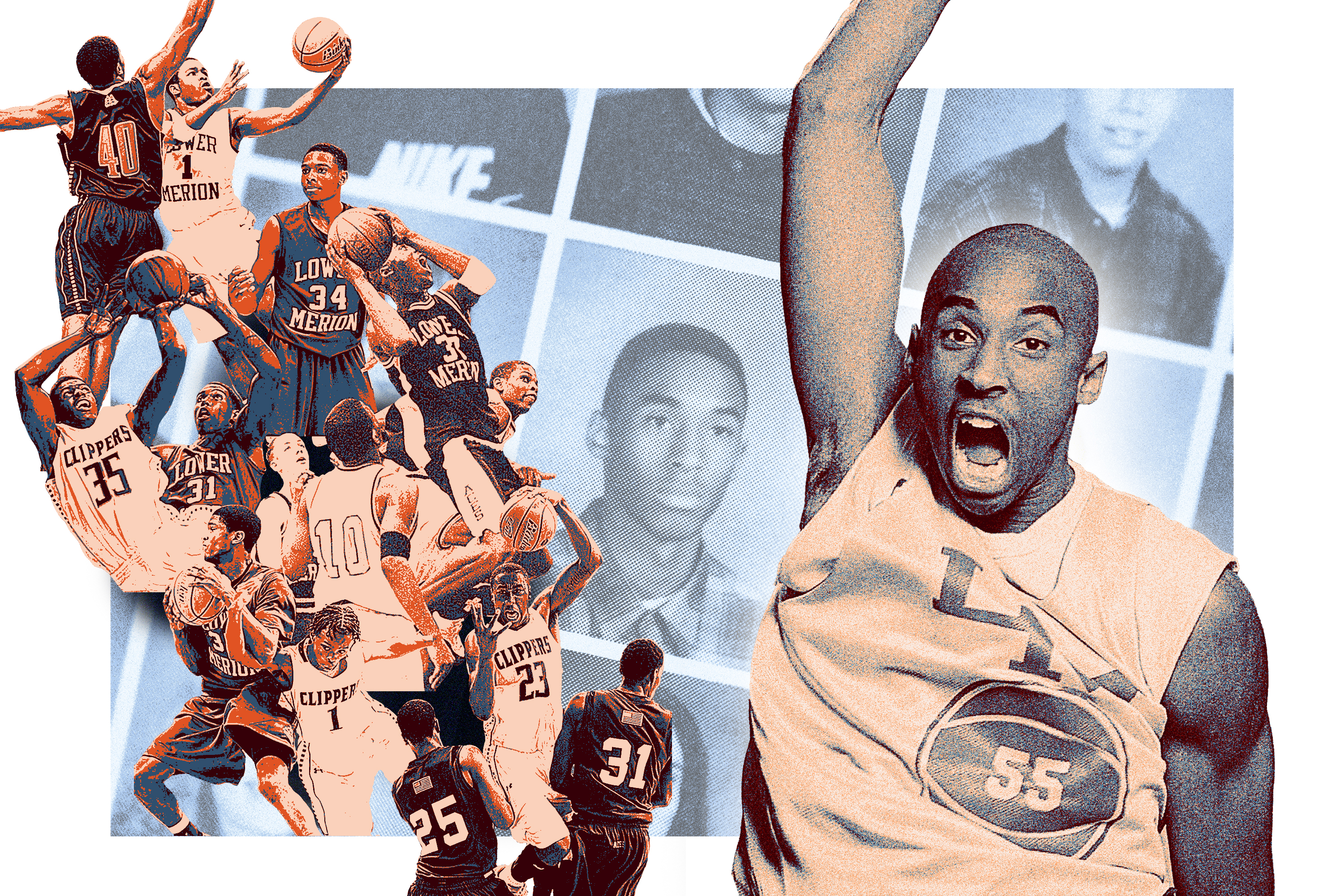
John Linehan and Kobe Bryant used to talk. A lot. This would not have been unusual for other AAU teammates, but these two were fierce high school rivals.
Linehan was a scrappy point guard for Chester. Bryant was a relentless shooting guard for Lower Merion. Both were competitive, almost to a fault, and in the days leading up to big games, they’d get chippy.
The week before the 1996 PIAA Class AAAA District 1 title game, for example, the players talked every day on bulky landline phones, with Bryant often calling Linehan at his home in Chester.
“I just said, ‘You know, John, I haven’t won a championship yet, and you have,’” Bryant told The Inquirer in 1996.
Linehan knew what his friend was doing. The future NBA star did the same thing a few weeks later, on March 19, a day before the teams met again in the state semifinal.
“He was trying to get me to trash talk,” Linehan said. “I think he needed a little edge. I didn’t want to give him too much. I was like, ‘Man, you crazy.’”
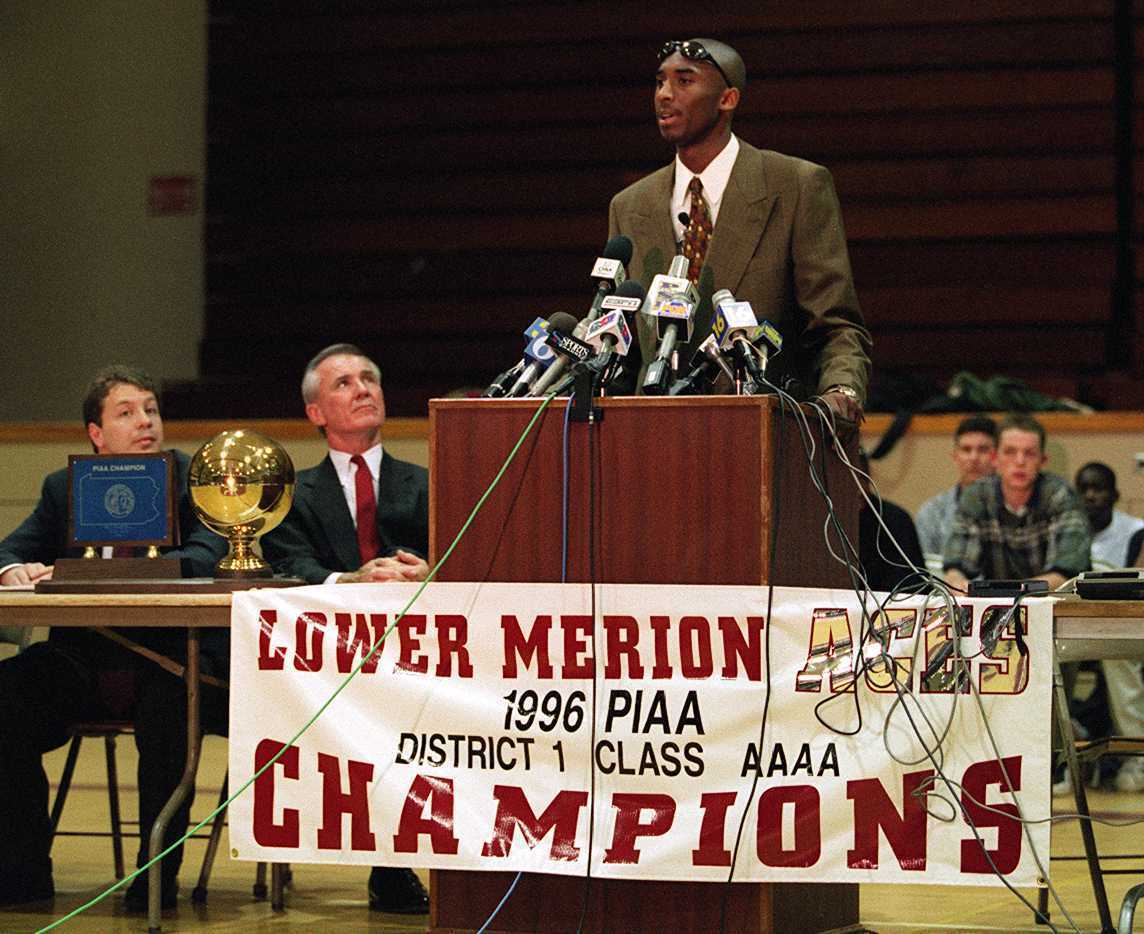
The late Kobe Bryant, a former Lower Merion basketball star, announcing he will go directly into the NBA draft out of high school.ALEJANDRO A. ALVAREZ / Staff Photographer
Lower Merion wasn’t a basketball school when Bryant arrived in the fallof 1992. It paled in comparison to the local powerhouses like Simon Gratz, Coatesville, and Chester.
But Bryant changed that. Even in his freshman year, a season in which the Aces went 4-20, he brought a new standard, working out before class and introducing a level of toughness that was foreign to his teammates.
Bythe mid-1990s, Lower Merion was among the best high school teams in the Philadelphia area. Its players were more confident, celebrating after big shots, and talking loud on the court.
The Aces didn’t play as many games against Coatesville, a rising power led by Rip Hamilton. They couldn’t consistently measure themselves against Gratz, which didn’t participate in the PIAA playoffs untilthe 2004-05 season.
But they could against Chester. And so, a decades-long rivalry was born.
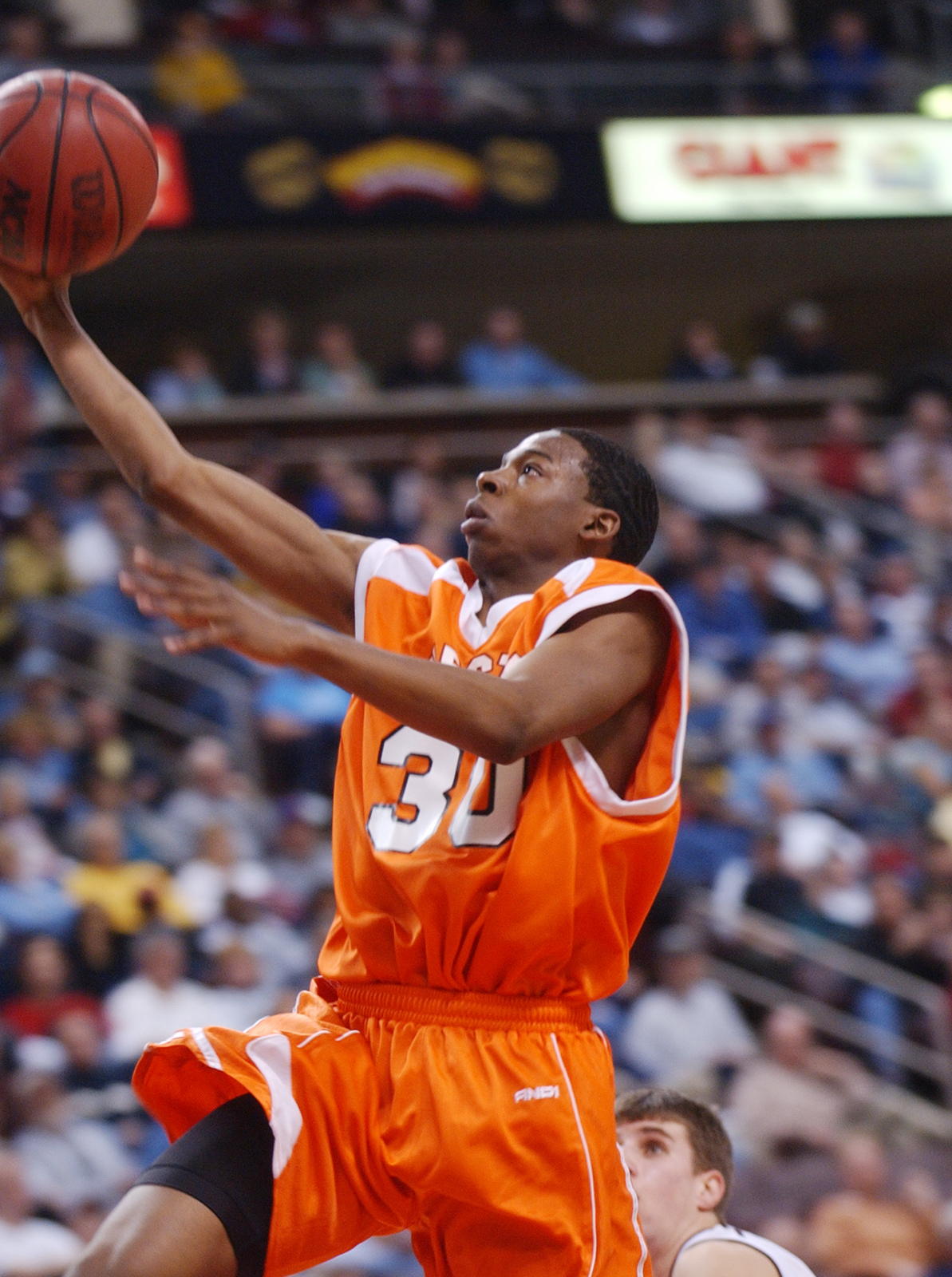
From 1996 through the mid-2010s, Chester and Lower Merion put on some of the greatest high school basketball games in the area. They’d often sell out venues like the Palestra and Villanova’s Pavilion. Some fans would even scalp tickets.
Their communities were almost diametrically opposed. Chester was predominantly Black; Lower Merion was predominantly white. Chester was plaguedby poverty; Lower Merion was considered affluent.
Chester, with its Biddy League, had a legacy of basketball greatness, and a steady pipeline of talent. Lower Merion had nothing comparable. But these differences melted away on the court.
And while the rivalry is not what it once was, it lives on today.
“The pride and the intensity and the history will never fade,” said Lower Merion coach Gregg Downer. “I mean, if we played them tomorrow night, that would be an intense game.”
The Bryant-Linehan era
When Downer was named head coach in 1990, he already was well-aware of Chester’s tradition. He’d played youth basketball growing up in Media and had heard about the stars who’d come out of the Biddy League.
It was obvious that his team would have to go through the Clippers to win any sort of accolade. But it wasn’t until Bryant’s arrival that Downer’s aspirations became a real possibility.
The shooting guard, who was the son of former 76er Joe “Jelly Bean” Bryant, was mature for his age. He’d demand more, mentally and physically, of older teammates. Doug Young, a former Lower Merion forward, remembered seeing Bryant leaving the locker room at 7 o’clock one September morning in 1993.
He’d been at the high school gym since 5 a.m., working out by himself. To the Lower Merion basketball team, this was a “crazy” concept, so Young and his cohorts decided to join him.
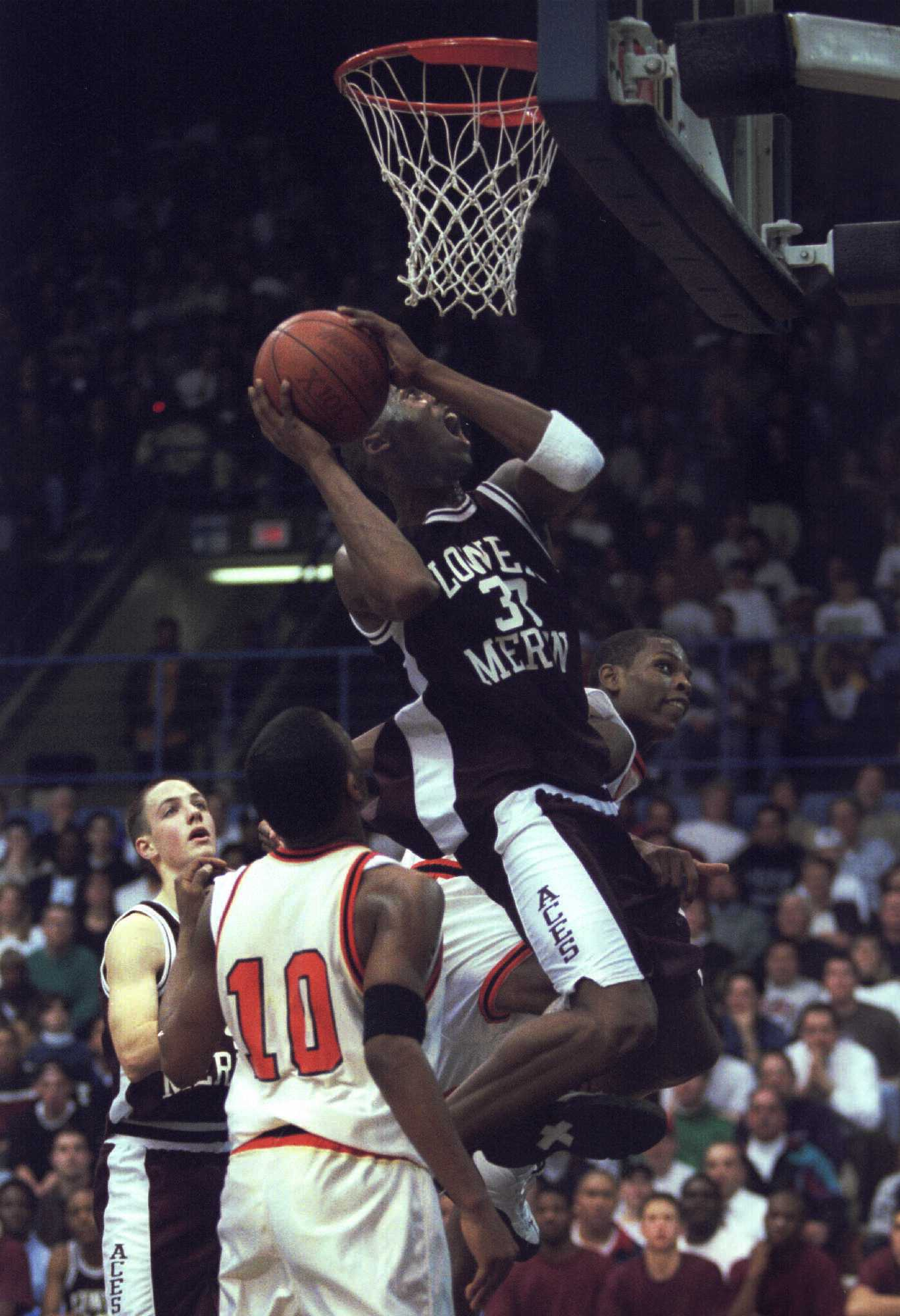
In the District 1 championship game against Chester, Kobe Bryant goes to the hoop over the Clippers’ John Linehan.Jay Gorodetzer / Staff Photographer
They arrived the next day at 5:06 a.m. The players knocked on the door. Bryant didn’t answer.
“He wouldn’t open it,” said Young, who graduated in 1995. “You’re either there or you’re not. We were six minutes late.”
His teammates waited outside until 6:30 a.m., when the school opened. They made sure to show up before 5 a.m. from that day on.
Downer was wired the same way. The coach — and his NBA-bound pupil — would push the team in practice. Losses were particularly tough. The players would go through endless sprints and rebounding drills that sent them running to the trash can.
It wasn’t fun. But over time, the method created a newfound tenacity.
“No one walked into high school saying, ‘Oh, yeah, I want to win a state championship,’” Young said. “But [Kobe] knew what that was. He was like, ‘I don’t know any other way. If we’re not going to win a championship, what the heck are we playing for?’”
Chester was always going to be an obstacle, so Downer tried to play into the battle. He’d use analogies for the tough, hard-nosed team, comparing it to an animal stalking its prey.
The coach began to screen movies to underscore this point. Together, in a Lower Merion classroom, Downer’s players watched Jaws and other tales of survival, like The Edge, a 1997 thriller about a plane that crashes in the Alaskan wilderness.
“This bear is stalking them, and the couple is saying, ’What are we going to do about this bear?’” Downer said. “And one of them says, ‘The only thing we can do is kill the bear.’
“And I remember being like, ‘We can do this.’ But the only solution is to — not to be overly graphic — but to kill them.”
(The bear in this analogy was Chester.)
He added: “We tried everything humanly possible to get through to this team.”
The first few games were ugly. In 1995, Lower Merion met the Clippers in the District 1 championship, only to lose by 27 points. But they came back with a renewed focus the following year, in 1995-96, going 25-3 in the regular season to earn a district final rematch against Chester.
The Aces showed up at the arena with “27″ printed on their warmup shirts. Bryant, armed with fresh bulletin board material from Linehan, dropped 34 points against the Clippers en route to a 60-53 Aces win.
The shooting guard scored 39 points later that month — with a broken nose — in a 77-69 state semifinal win over Chester. Lower Merion went on to beat Erie Cathedral Prep, 48-43, to win its first state championship since 1943.
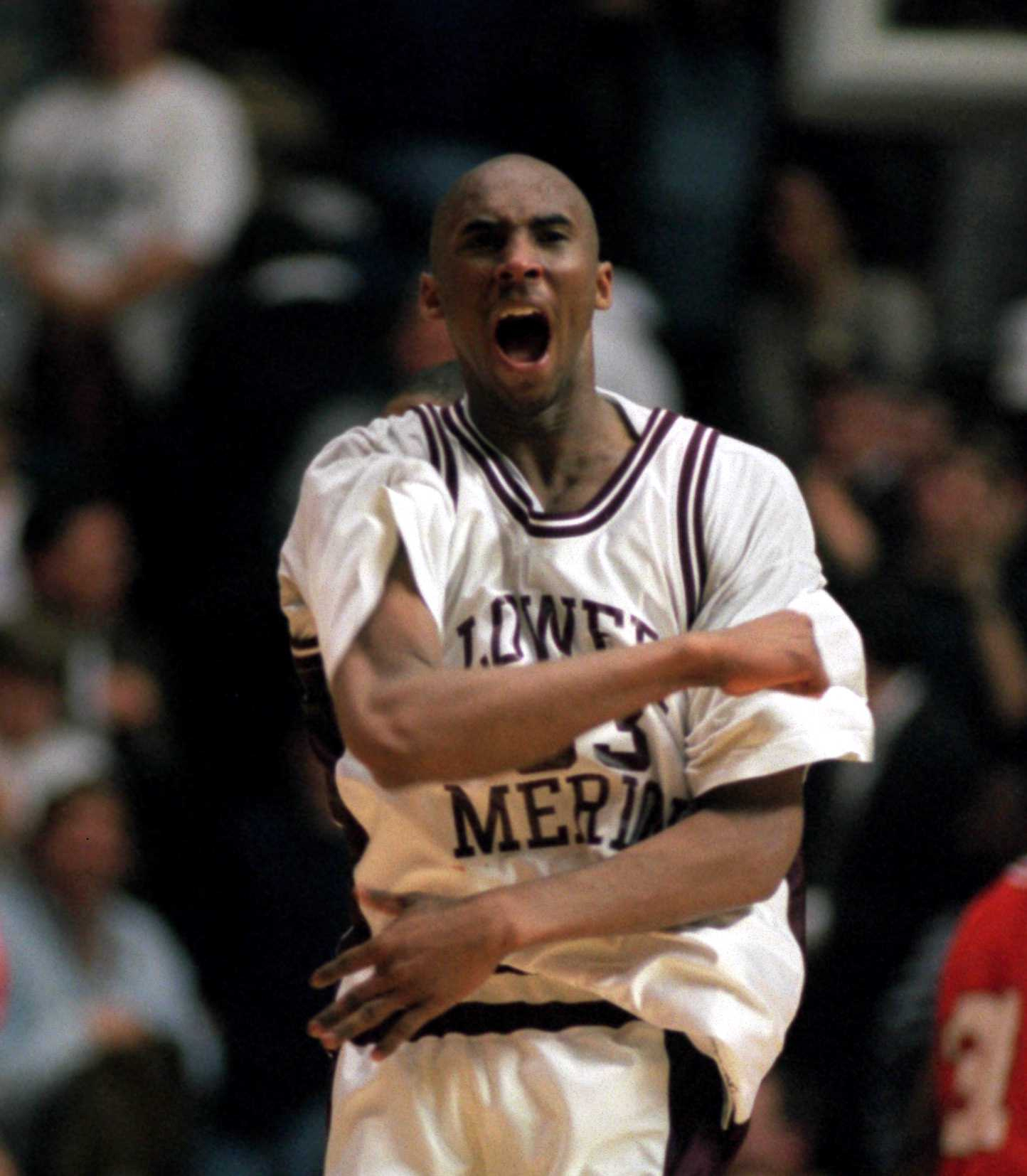
Kobe Bryant celebrates after defeating Chester at the Palestra in 1996 to advance to the state final.Ron Cortes / Staff Photographer
To Linehan, the difference Bryant made was obvious. He joked that he’d “never heard of Lower Merion” before his friend arrived. But once he did, Chester realized it would have to go to great lengths to prepare for the phenom.
Ahead of a big game against Lower Merion in the mid-1990s, the coaching staff reached out to Clippers alumnus Zain Shaw. He played at West Virginia and in Europe and possessed some of the same characteristics as Bryant — a tall frame and an athletic build with strong ballhandling skills.
The Clippers invited Shaw to practice, where he played the role of Bryant (to the best of his ability).
“Kobe was so special, we had to bring in a pro to help us prepare,” said Linehan, who later starred at Providence.
But there was another impact the future Lakers star had, one that had nothing to do with his own prowess. Linehan noticed that Bryant’s Lower Merion teammates started to take on some of his qualities. Suddenly, they were playing brash, confident basketball.
“We didn’t have reason to believe, until Kobe got there, that we belonged on the court with Chester,” Young said. “The fear was real. Teams were afraid of Chester because they’d run you out of the building.
“The idea of Lower Merion being on the court in a meaningful game against [them] was such a crazy thought. But then, you started to believe.”
The buzzer-beater heard ’round Chester
Bryant never got over the rivalry, even after he embarked on his Hall of Fame NBA career in 1996. Sometimes, he’d call the coaching staff before big games against Chester, leaving expletive-laden voicemails to use as motivation.
The Lakers shooting guard also created an incentive structure for his former team.
“You couldn’t get a pair of Nike sneakers unless you qualified for the playoffs,” Young said. “If you don’t earn it, you don’t get it.”
He became especially involved in 2005-06. After a lull in the early 2000s, Chester and Lower Merion found themselves neck-and-neck again. The Aces were led by the duo of Ryan Brooks and Garrett Williamson, and the Clippers boasted a deep roster, headlined by Darrin Govens. All of them eventually played in the Big 5.
(Chester was so stacked that it brought a 1,000-point scorer off the bench in Noel Wilmore.)
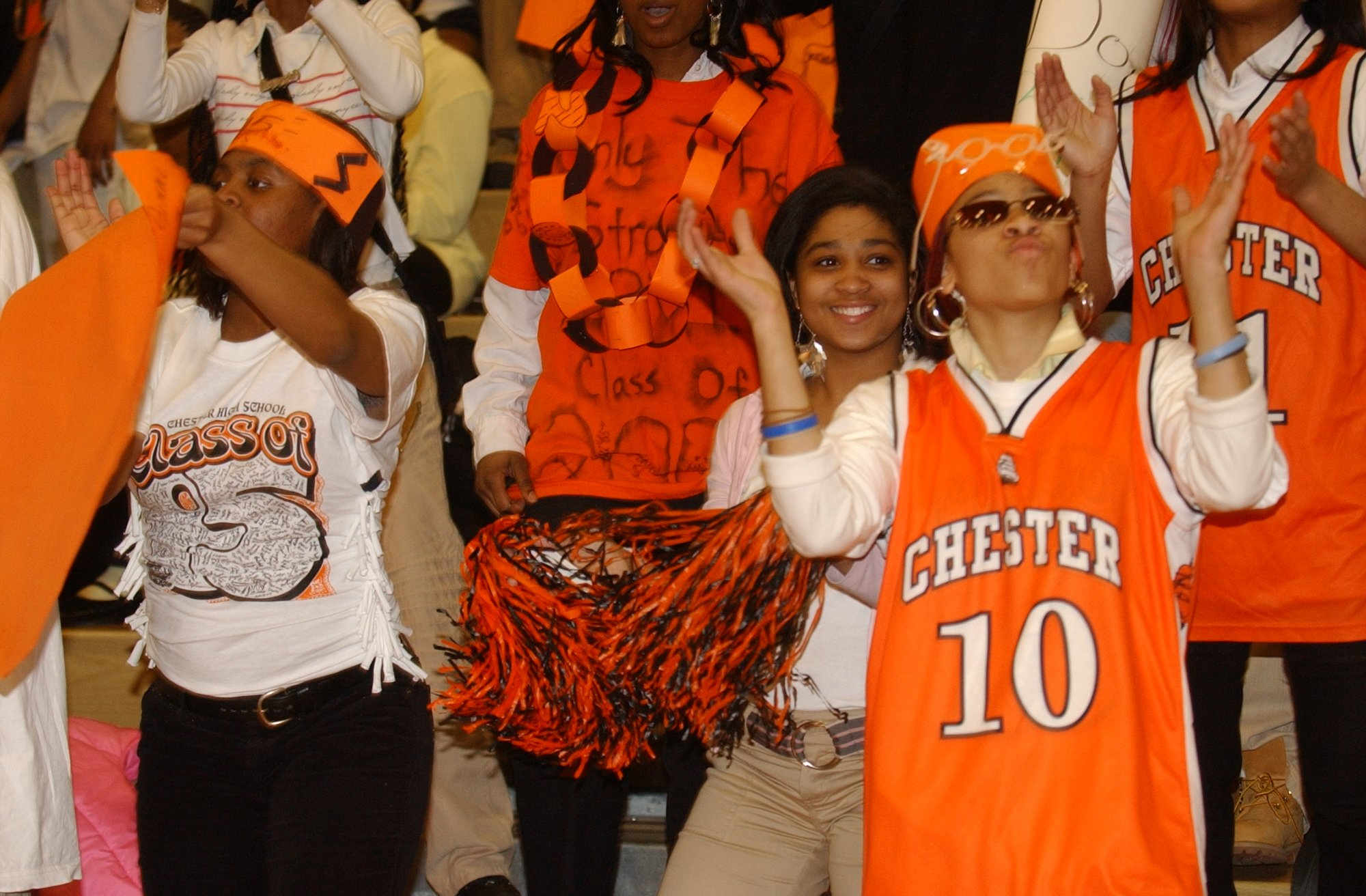
Students from the class of 2005 show their support as Chester and Lower Merion play in the state final. Hinda Schuman / Staff Photographer
The rivals met in the state championship on March 19, 2005. Despite strong performances from Williamson and Brooks, the Clippers pulled away in the second half thanks to a dominant third quarter from Govens. Chester won, 74-61.
The teams reconvened the following season with their competitive spark fully reignited. They faced each other three times that year. Chester took Round 1, a one-point regular-season victory on Dec. 27.
Round 2 was in the district final on March 3. Before the game, in front of a packed crowd at the Pavilion, Chester sophomore Karon Burton walked up to the layup line.
Lower Merion’s student section caught his ear with a chant about coach Fred Pickett’s stout stature.
The dig didn’t intimidate Burton. If anything, it fueled him. He grew up playing street ball in Chester and always loved trash talk.
Instead of cowering, like the crowd hoped, the sophomore delivered an unforgettable outing. The game went into overtime, and was tied at 80 with only a few seconds remaining.During a timeout, assistant coach Keith Taylor pulled Burton aside.
“He was like, ‘Hey, listen,’” Burton said. “They’re going to double Darrin. If you get that ball, do your thing.’”
Taylor’s words proved prescient. As Lower Merion’s defenders swarmed Govens, the Clippers inbounded the ball to Burton.
He took a pull-up jumper from beyond the arc and drilled it for an 83-80 win. The Chester fans stormed the court. Burton, who later joined Wilmore in the 1,000-point club, said he felt like a celebrity in his hometown.
“It was like watching a buzzer-beater in the NBA,” he said. “I just ran to my teammates, they picked me up. It was a crazy feeling.
“I’m a big Kobe fan, too. Kobe’s my favorite player ever. So when I came and I hit the game-winner on that team …”
Round 3 took place a few weeks later, in a state semifinal rematch at the Palestra on March 22. Bryant called Lower Merion’s coaches before the game.
“I don’t remember specifically what he said, but I’m sure there were a lot of [expletives] dropped,” said Young. “Like, ‘Don’t call me back if you don’t beat those [expletives].’ That was a line we heard from him a couple times.”
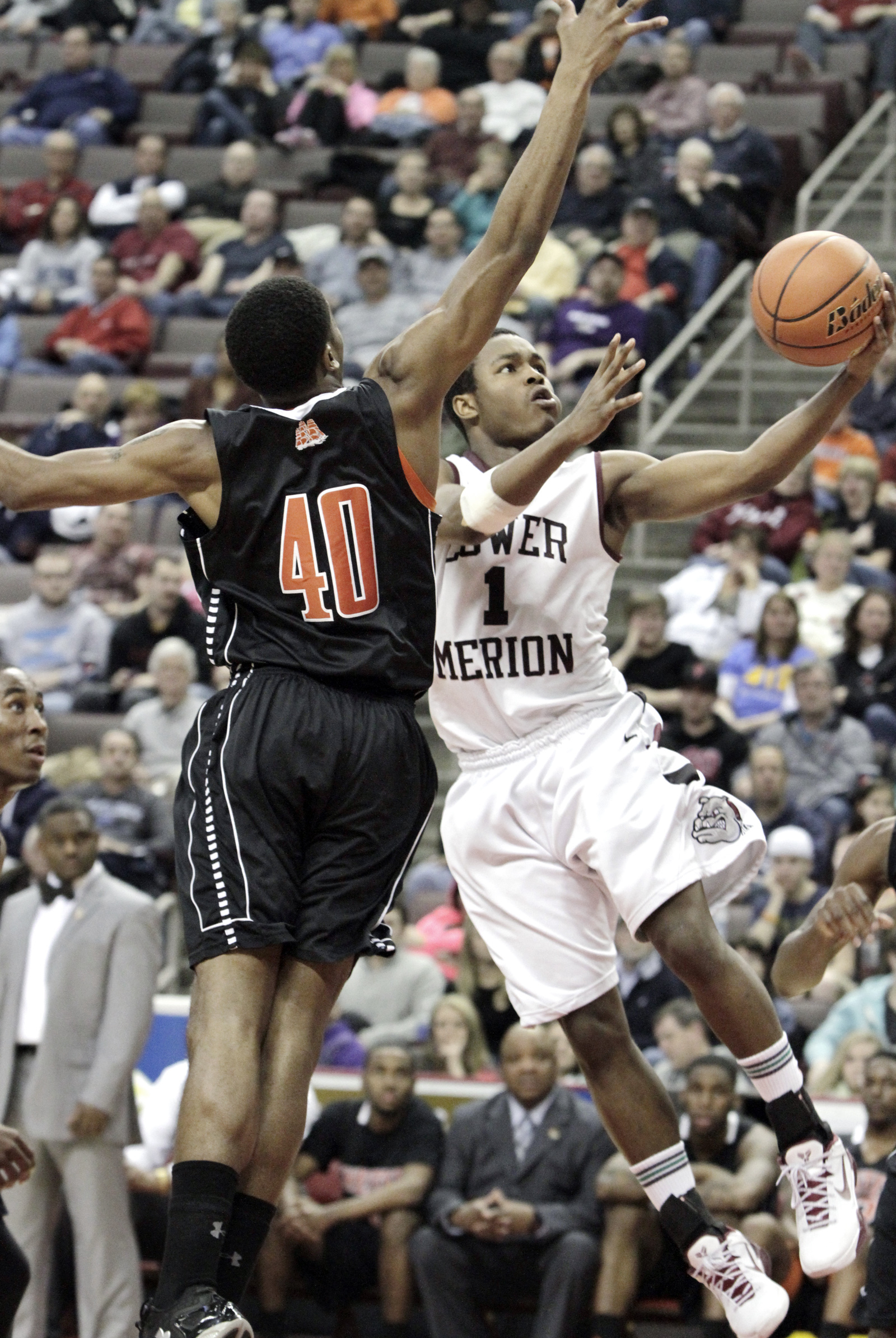
This one didn’t go Chester’s way. After trailing the Clippers, 47-37, at the end of the third quarter, the Aces came roaring back in the fourth and put up 33 points to eke out a 70-65 win.
The celebration in the locker room was cathartic. Water sprayed into the air. Players sat atop each other’s shoulders and turned the showers into a slip ‘n slide. Bryant called in, again, as other members of the 1996 team filtered through.
Darrin Govens scored his 1,000th point for Chester against Lower Merion in the state championship in 2005.Hinda Schuman / Staff Photographer
This was not how Govens wanted to end his high school career. And a few months later, when he arrived at St. Joseph’s on a basketball scholarship, he saw a familiar foe.
It was Williamson, his new Hawks teammate.
“We were sitting on the opposite side of the bench,” Govens said. “I didn’t want to sit next to him; he didn’t want to sit next to me. We’d kind of avoid each other and just head nod.
“Even in running drills, it was a competition. He looked to the left. I looked to the right. We tried to beat each other in sprints. But then we realized, ‘All right bro, we’re teammates now.’”
‘Hero status’
Chester had always rallied around its high school basketball team. Linehan said it was akin to playing for the Sixers. The teenagers were treated like professional athletes — especially those who had been a part of big wins.
The Clippers’ public address announcer, James Howard, called this “hero status.”
“All of a sudden, your money’s no good,” he said. “Barbers take care of you, make sure your hair looks nice before games. Free food. Little kids look up to you and ask for your autograph. That’s how it is.”
In Chester, there were plenty of heroes to draw from. There was Linehan, but also Jameer Nelson, who met a young Burton in the late 1990s. Nelson, a friend of Burton’s cousin, gave the aspiring basketball player a gift before he left for St. Joe’s: his MVP medal from the Chester summer league.
“He was one of the biggest guys in our city,” Burton said, “so it’s definitely something that I’ll always remember.”
By the early 2010s, when the rivalry was reignited for a third time, Lower Merion had built more of a basketball tradition. Aces guard Justin McFadden said he’d get stopped in Wawa before big games against the Clippers.
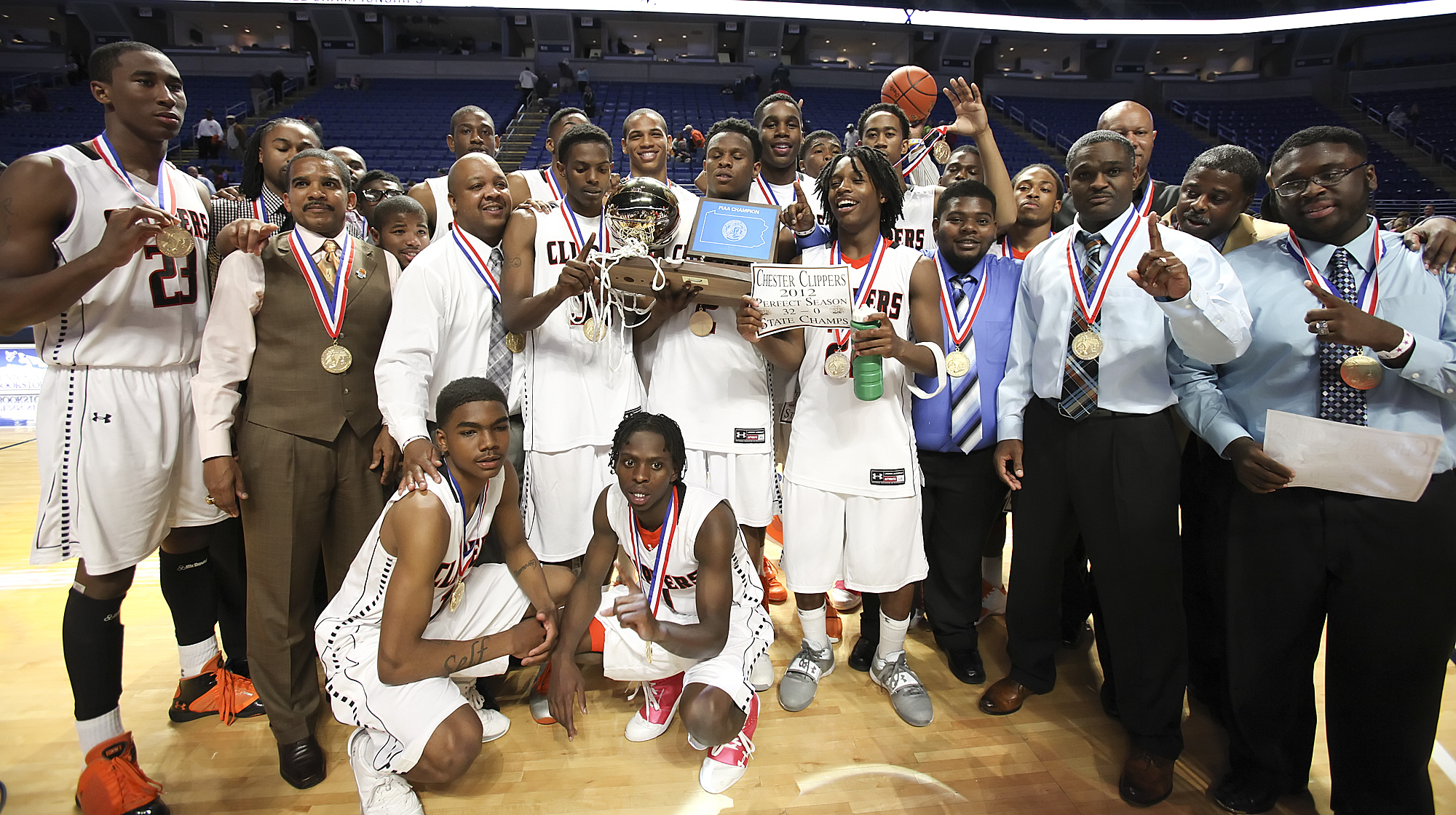
Chester celebrates its win over Lower Merion for the state championship in 2012. Steven M. Falk / Staff Photographer
“It became a community thing,” he said. “People would be asking, ‘What do you guys think about Chester? Do you think we can get it done?’”
In 2012, the schools met in the state championship for the first time since 2005. Junior forward and future NBA starter Rondae Hollis-Jefferson put up a double-double to lead the Clippers to a resounding 59-33 win over the Aces. It was their second straight title and their 58th straight victory.
A year later, after going 17-0 in the Central League, the Aces met the Clippers in the state final again. Chester had won 78 straight games against in-state opponents. Snapping that streak would be daunting, but Downer had a plethora of motivational tactics at his disposal.
Just as they had in the 1990s, The Aces again spent pockets of the season watching Jaws, The Edge, as well as an addition: Al Pacino’s “Inch by Inch” speech in Any Given Sunday.
“He would have that fired up on YouTube, ready to go,” McFadden said. “Looking back, [your reaction] is a chuckle, but in the moment, it worked. We knew that this was the hill that needed to be climbed.
“And every time they played that speech, we got goose bumps. We were ready to fire.”
Chester got out to an early lead, but Lower Merion rallied behind a 22-point, 11-rebound performance from B.J. Johnson, who later starred at La Salle. The Aces snapped the streak and won their seventh state title with a 63-47 victory.
Lower Merion’s Jaquan Johnson goes to the net as Diamonte Reason guards him in the Chester-Lower Merion state championship game in 2013.Elizabeth Robertson / Staff Photographer
The Clippers then were coached by Larry Yarbray. Pickett, who was diagnosed with cancer in2010, was in declining health. Just before he died in 2014, Downer decided to say goodbye.
He and his former assistant coach Jeremy Treatman drove out to Pickett’s home in Chester. They went to his bedside.
“And we talked,” Downer said. “And we held hands. It was a really touching moment for me. This is a man that carried Chester on his back. That tried to carry Lower Merion on his back. And I knew it was the last time I was going to see Fred.
“We walked out the door, and we told each other that we loved each other. And I never thought he would say that to me, or vice versa. But it was just kind of like, ‘You know what? We’ve had some amazing battles, and there’s a lot of respect there.’”
Keeping the tradition alive
In recent years, the Chester-Lower Merion rivalry has diminished.
There was a brief period when the teams were in different classifications. Both programs have lost players to private schools that can recruit, and the addition of the Philadelphia Catholic League to the PIAA has made the state playoffs more competitive.
One place the Aces and Clippers could meet is in the district tournament, where they reunited in 2024. But they haven’t played each other since. And Howard says the contests don’t have the same feel.
“Both teams have lost D-I talent,” he said. “It’s not as high-flying, above the rim, as it was in the past. But still a great game. Sold out at Lower Merion, and at Chester, same thing.”
The history will always be there, though, and Burton is doing his best to keep it alive. His 8-year-old son, Karon Burton Jr., is playing in the Biddy League. His father is his coach.
Sometimes, they go on YouTube and watch old Clippers games. Junior’s favorite, of course, is the 2006 district final.
Burton believes that his son has a promising future, but isn’t sure of where he’ll go to high school yet. He doesn’t want Karon Jr. to feel obligated to follow his father’s path.
But if it worked out that way, what a story that would be.
“I’d love to be the first father and son to have 1,000 points,” Burton said. “With the same name? That would be crazy.”
Roses are red, violets are blue, today is the Eagles parade — and Valentine’s Day too. Express your true love with our Eagles Valentine card maker.
A Valentine's Day photo collage of Eagles players Cam Jurgens, Jalen Hurts, and Zack BaunJulia Duarte / Staff Illustration, Photography by The Inquirer
There’s no passion quite like that of the Eagles’ fan base, and with the Birds’ Super Bowl championship victory parade coinciding with Valentine’s Day on Friday, love — brotherly and otherwise — is most certainly in the Philadelphia air.
So, whether you love the Birds or are just a lovebird, take this quiz to find the perfect Super Bowl champ valentine for you.
How long have you been with your valentine?
Where can you and your valentine be found on game day?
Which Eagle reminds you of your valentine?
Your Results
You have skipped .
A Jalen Hurts Valentine
An Eagles themed valentineJulia Duarte / Staff Illustration, Photography by Yong Kim, for the I
Saquon Barkley Valentines
An Eagles themed valentineJulia Duarte / Staff Illustration, Photograph by AP An Eagles themed valentineJulia Duarte / Staff Illustration, Photography by Monica Herndon, For the Inquirer
AJ Brown, DeVonta Smith, and Zack Baun Valentines
An Eagles themed valentineJulia Duarte / Staff Illustration, Photography by Steven M. Falk, forAn Eagles themed valentineJulia Duarte / Staff Illustration, Photography by APAn Eagles themed valentineJulia Duarte / Staff Illustration, Photography by Monica Herndon, for the Inquirer
Cooper DeJean and Cam Jurgens Valentines
An Eagles themed valentineJulia Duarte / Staff Illustration, Photography by Yong Kim, for the InquirerAn Eagles themed valentineJulia Duarte / Staff Illustration, Photography by David Maialetti
Super Bowl Champions Valentines
An Eagles themed valentineJulia Duarte / Staff Illustration, Photography by Jessica Griffin, for the Inquirer An Eagles themed Valentine's Day cardJulia Duarte / Staff Illustration, Photography by Monica Herndon
A Mayor Parker Valentine
An Eagles themed valentineJulia Duarte / Staff Illustration, Photography by AP
Advertisement
Staff Contributors
Art Direction: Julia Duarte
Creative Direction: Suzette Moyer
Editing: Matt Mullin
Development: Charmaine Runes
(()=>{var X=(e,t)=>()=>(t||e((t={exports:{}}).exports,t),t.exports);var N=X(s=>{var ne={0:”Jan.”,1:”Feb.”,2:”March”,3:”April”,4:”May”,5:”June”,6:”July”,7:”Aug.”,8:”Sept.”,9:”Oct.”,10:”Nov.”,11:”Dec.”};function T(e){return e===void 0&&(e=new Date),ne[e.getMonth()]}var oe={0:”Jan”,1:”Feb”,2:”Mar”,3:”Apr”,4:”May”,5:”Jun”,6:”Jul”,7:”Aug”,8:”Sep”,9:”Oct”,10:”Nov”,11:”Dec”};function k(e){return e===void 0&&(e=new Date),oe[e.getMonth()]}function a(e){return e==null}function O(e){return typeof e==”number”&&isFinite(e)}function f(e){return O(e)&&Math.floor(e)===e}var ie=[“one”,”two”,”three”,”four”,”five”,”six”,”seven”,”eight”,”nine”],se=[“million”,”billion”,”trillion”,”quadrillion”,”quintillion”,”sextillion”,”septillion”,”octillion”,”nonillion”,”decillion”],q=[“th”,”st”,”nd”,”rd”,”th”,”th”,”th”,”th”,”th”,”th”],re=[11,12,13];function E(e){if(a(e))return””;var t=+e;return f(t)?re.indexOf(t%100)>-1?q[0]:q[t%10]:””}var ae=[“first”,”second”,”third”,”fourth”,”fifth”,”sixth”,”seventh”,”eighth”,”ninth”],ce=new RegExp(/s+([^s]*)s*$/);s.apdate=function(e){return e===void 0&&(e=new Date),T(e)+” “+e.getDate()+”, “+e.getFullYear()},s.apdatetab=function(e){return e===void 0&&(e=new Date),k(e)+” “+e.getDate()+”, “+e.getFullYear()},s.apmonth=T,s.apmonthtab=k,s.apnumber=function(e){if(a(e))return””;var t=+e;return f(t)?t=10?e.toString():ie[t-1]:e.toString()},s.aptime=function(e){e===void 0&&(e=new Date);var t,n,o=e.getHours(),i=e.getMinutes(),r=i===0;if(r){if(o===0)return”midnight”;if(o===12)return”noon”}return o0?o:12):(t=”p.m.”,n=o===12?o:o-12),r?n+” “+t:n+”:”+(i<10?"0"+i:i)+" "+t},s.capfirst=function(e){if(a(e))return"";var t=String(e);return""+t.charAt(0).toUpperCase()+t.slice(1)},s.intcomma=function(e){if(a(e))return"";var t,n=+e;return O(n)?((t=n.toString().split("."))[0]=t[0].replace(/B(?=(d{3})+(?!d))/g,","),t.join(".")):e.toString()},s.intword=function(e){if(a(e))return"";var t=+e;if(!f(t))return e.toString();var n=Math.abs(t);if(n<1e6)return e.toString();var o=Math.ceil(Math.log(n+1)/Math.LN10)-1,i=o-o%3,r=t/Math.pow(10,i);return(r=Math.round(10*r)/10)+" "+se[Math.floor(i/3)-2]},s.ordinal=function(e,t){if(t===void 0&&(t=!1),a(e))return"";var n=+e;return f(n)?t&&n{document.querySelectorAll(“.js-hover”).forEach(e=>{e.addEventListener(“click”,()=>{x(e)}),e.addEventListener(“mouseenter”,()=>{x(e)}),e.addEventListener(“mouseout”,()=>{M(e)})}),window.addEventListener(“scroll”,()=>{u!==null&&te()})},te=()=>{(u>window.scrollY+100||u{M(e)})},x=e=>{e.classList.add(“is-visible”),u=window.scrollY},M=e=>{e.classList.remove(“is-visible”),u=null},j={init:()=>{ee()}};var Fe=N();var p=e=>{if(e)return e.trim().toLowerCase().normalize(“NFD”).replace(/[u0300-u036f]/g,””).replace(/[^A-Z0-9 ]/gi,””).replace(/ /g,”-“)};var P=()=>/Android|webOS|iPhone|iPad|iPod|BlackBerry|IEMobile|Opera Mini/i.test(navigator.userAgent);var v=(e,t=null,n=null)=>{n||(n=document.querySelector(“head”));let o=document.createElement(“script”);o.type=”text/javascript”,o.src=e,t&&(o.onload=t),n.appendChild(o)},D=()=>(window.PMNdataLayer?.[0]!==void 0&&window.PMNdataLayer[0])?.analytics?.user?.state===”Subscribed”,H=()=>{let t=(window.PMNdataLayer?.[0]!==void 0&&window.PMNdataLayer[0])?.analytics?.user?.state;return window.location.host.includes(“zzz-systest”)||window.location.host.includes(“pmn.arcpublishing.com”)||window.location.host.includes(“stage.fusion.inquirer.com”)||typeof t>”u”},$=()=>{let t=(window.PMNdataLayer?.[0]!==void 0&&window.PMNdataLayer[0])?.analytics?.user?.hasAdsFreeReading;return!!(t&&t==1)},y=()=>window.location.host.includes(“localhost”);var le=()=>{$()&&document.querySelectorAll(“.js-ad”).forEach(t=>{t.classList.add(“is-hidden”)})},I={init:()=>{le()}};var m,de=(e,t)=>{m=m||window.PMNdataLayer,m?m.push({event:”misc_event”,eventAction:e,eventLabel:t}):window.location.hostname.includes(“localhost”)?console.log(“Analytics event:”,e,t,”(not actually being sent due to localhost)”):console.log(“Failed to push analytics event”,e,t)},C={event:(e,t)=>{de(e,t)}};var B=async(e,t)=>(await fetch(`https://inq-junto.herokuapp.com/${e}`,{method:”POST”,headers:{“Content-Type”:”application/json”},mode:”cors”,body:JSON.stringify(t)})).json(),S=()=>{let t=document.querySelector(“.js-inno”).dataset.junto;if(t)return t;throw new Error(“no junto id found”)},F={getDefaultId:()=>S(),vote:(e,t=S())=>{B(“vote”,{poll:t,ballot:e})},results:async(e=S())=>await B(“results”,{poll:e})};var b=new Object,h=new Object,z=e=>Object.values(b).filter(t=>t==e).length,ue=()=>{document.querySelectorAll(“.js-assessment”).forEach(e=>{b[e.dataset.id]=!1})},J=()=>{let e=z(!1);document.querySelector(“.js-outcome-skipped-count”).textContent=`${e} question${e!==1?”s”:””}`},pe=(e,t)=>{b[e]=!0,t=JSON.parse(t),Object.keys(t).forEach(o=>{h[o]||(h[o]=0);let i=parseInt(t[o]);h[o]+=i}),z(!1)==0?(fe(),me()):J()},fe=()=>{document.querySelector(“.js-outcome-skipped”).classList.add(“is-hidden”)},me=()=>{let e=p(we()),t=document.querySelector(`.js-outcome-result[data-id=”${e}”]`);t&&t.classList.add(“is-reader”)},he=e=>{for(let t=e.length-1;t>0;t–){let n=Math.floor(Math.random()*(t+1));[e[t],e[n]]=[e[n],e[t]]}return e},we=()=>{let e=Object.assign({},h),t=new Object;for(let o=1;Object.keys(e).length!==0;o++){let i=Object.keys(e).filter(r=>e[r]==o);t[o]=i;for(let r of i)delete e[r]}return he(t[Object.keys(t).length])[0]},w={init:()=>{ue(),J()},update:(e,t)=>{pe(e,t)}};var ge=()=>{document.querySelectorAll(“.js-assessment-answer”).forEach(e=>{e.addEventListener(“click”,()=>{ve(e)})})},ve=e=>{let t=e.closest(“.js-assessment”);t.classList.add(“has-answered”),e.classList.add(“is-chosen”),F.vote({[t.dataset.id]:p(e.textContent)}),C.event(“answer_question”,`${t.dataset.id} | ${p(e.textContent)}`),w.update(t.dataset.id,e.dataset.values);let n=document.querySelector(“.js-assessment:not(.has-answered)”);n&&window.scrollTo({top:window.scrollY+n.getBoundingClientRect().top-200})},V={init:()=>{ge()}};var c,W,ye=()=>{c=document.getElementById(“js-inno-toast”)},Se=e=>{if(!c)return;c.innerHTML=e,c.classList.add(“inno-toast–active”);let t=()=>{c.addEventListener(“transitionend”,be,{once:!0}),c.classList.remove(“inno-toast–active”)};clearTimeout(W),W=setTimeout(t,5e3)},be=()=>{c.innerHTML=””},l={init:()=>{ye()},showToast:Se};var g,Le=async()=>new Promise(e=>{setTimeout(()=>{console.log(“simulating createShareLink for localhost”),e(“https://inquirer.com/interactives”),Ae()},100)}),Ae=()=>{let e=document.querySelector(“.js-gift-toast-receiver”);!e||!(e instanceof HTMLElement)||setTimeout(()=>{let t=e?.querySelector(“span”);t&&(t.innerHTML=”Gift link copied to clipboard“)},20)},xe=()=>{let e=window.services?.createShareLink;e&&(g=e),y()&&(g=Le),g&&Me()},Me=()=>{document.querySelectorAll(“.js-gift”).forEach(t=>{(D()||y()||H())&&t.classList.add(“is-available”)}),document.querySelectorAll(“.js-gift-button”).forEach(t=>{t instanceof HTMLButtonElement&&t.addEventListener(“click”,async()=>{if(t.classList.contains(“disabled”))return;t.dataset.state=”loading”;let n=await g(window.location.pathname);if(n)try{setTimeout(()=>{navigator.clipboard.writeText(n)}),l.showToast(“Gift link copied to clipboard!”),t.dataset.state=”complete”}catch{l.showToast(“Couldn’t copy to clipboard, try again?”),t.dataset.state=”error”}else t.dataset.state=”error”,l.showToast(“Hmm, we couldn’t generate a gift link…”);setTimeout(()=>{t.dataset.state=”ready”},2e3)})});let e=document.querySelector(“.js-gift-toast-receiver”);!e||!(e instanceof HTMLElement)||je(e)},je=e=>{new MutationObserver(n=>{for(let o of n){let i=[…o.addedNodes].at(0);if(!(i instanceof HTMLElement))return;l.showToast(i.outerHTML)}}).observe(e,{subtree:!0,childList:!0})},R={init:()=>{xe()}};var Te=()=>{window.addEventListener(“message”,e=>{if(e.data[“datawrapper-height”]){let t=e.data[“datawrapper-height”];for(let n in t)document.querySelector(`#datawrapper-chart-${n}`).setAttribute(“height”,t[n])}})},ke=()=>{document.querySelectorAll(“.js-datawrapper-graphic”).forEach(e=>{v(`https://datawrapper.dwcdn.net/${e.dataset.id}/embed.js`,null,e)})},qe=()=>{window.addEventListener(“message”,e=>{let t=e.data;document.querySelectorAll(`iframe[src*=”${t.id}”]`).forEach(o=>{o.style.height=`${t.height}px`})},!1)},Ee=()=>{document.querySelectorAll(“.js-pym-graphic”).forEach(e=>{if(typeof window{new window.pym.Parent(e.id,e.dataset.iframe)};typeof window.pym>”u”?v(“https://pym.nprapps.org/pym.v1.min.js”,t):t()}})},Y={init:()=>{Te(),ke(),Ee(),qe()}};var Oe=()=>{},G={init:()=>{Oe()}};var d,L,A=!0,Ne=()=>{d=document.querySelectorAll(“.js-video-autoplay”)},Pe=()=>{window.addEventListener(“resize”,()=>{_()}),window.addEventListener(“scroll”,()=>{_()}),d.forEach(e=>{e.addEventListener(“volumechange”,t=>{e.muted!==A&&!P()&&(A=e.muted,De())})})},_=()=>{let e;d.forEach((t,n)=>{let o=t.getBoundingClientRect(),i=o.height/2;o.y-i&&(e=t)}),e!==L&&(L=e,d.forEach(t=>{t.pause()}),e?e.play():L=null)},De=()=>{d.forEach(e=>{e.muted=A})},U={init:()=>{Ne(),d&&Pe()}};var Z={init:()=>{j.init?.(),I.init?.(),V.init?.(),R.init?.(),Y.init?.(),w.init?.(),G.init?.(),U.init?.(),l.init?.()}};var He=()=>{},K={init:()=>{He()}};var $e=document.querySelector(“.js-inno”),Q=()=>{Z.init(),K.init()};$e?Q():new MutationObserver((t,n)=>{if(document.querySelector(“.js-inno”)){n.disconnect(),Q();return}}).observe(document,{attributes:!0,childList:!0,subtree:!0});})();