Category: Sports

  • The latest on Dylan Larkin’s trade market, and how some experts believe the Flyers fit: ‘It’s probably the ideal spot for him’

    The latest on Dylan Larkin’s trade market, and how some experts believe the Flyers fit: ‘It’s probably the ideal spot for him’

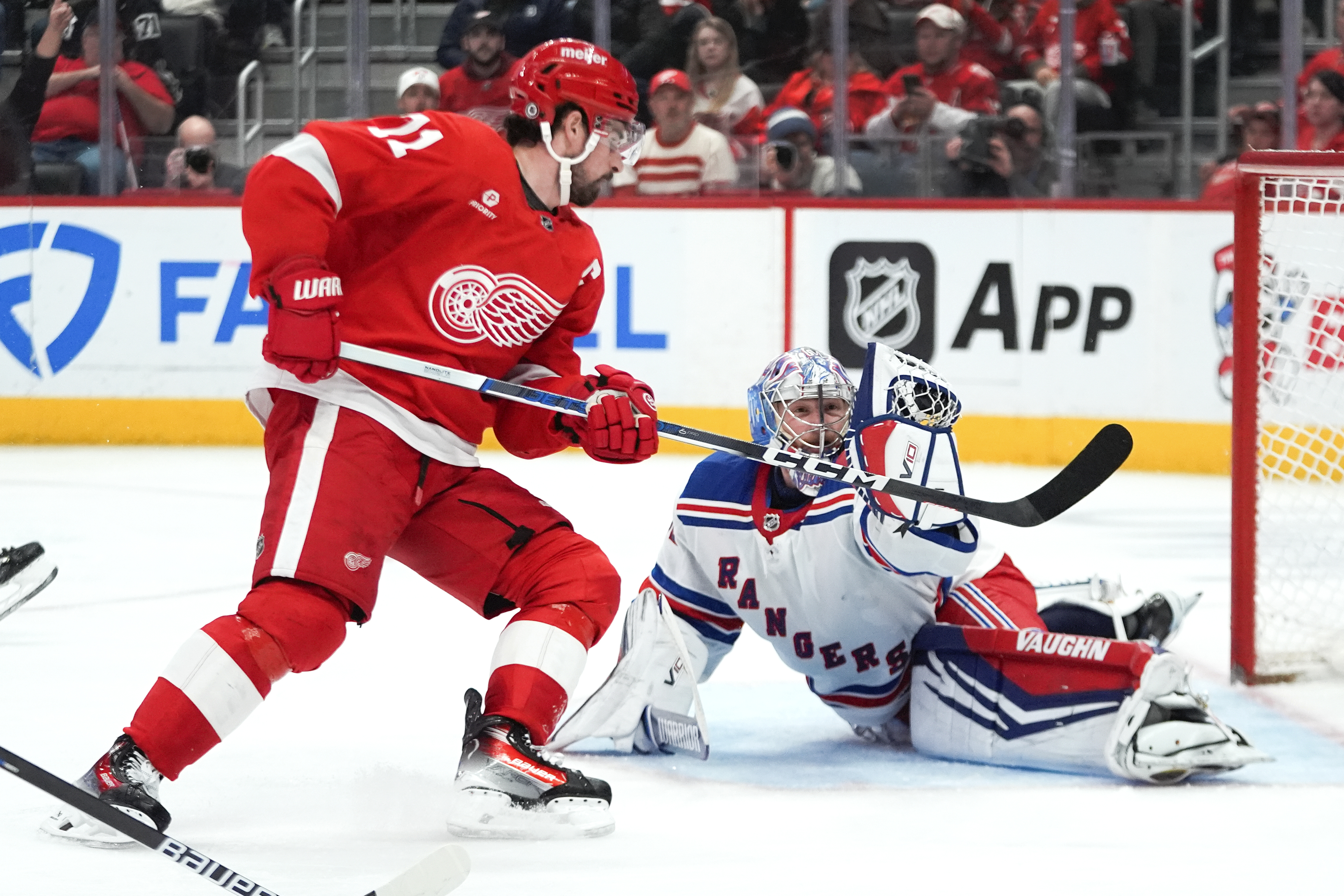
    Word began to spread quickly around the NHL scouting combine on June 4. It started as whispers and then grew to a roar as everyone heard about Sportsnet insider Elliotte Friedman’s report that Detroit Red Wings captain Dylan Larkin wanted a trade.

    A week on from that report, here’s what we know.

    What is the latest on the Dylan Larkin trade request?

    Larkin is set to begin Year 4 of an eight-year contract he signed in March 2023, with a cap hit of $8.7 million. The contract makes his trade request sticky, as according to Puckpedia he has a full no-trade clause until July 1, 2028. At that time, it becomes a modified no-trade clause with a 10-team trade list.

    On Tuesday, the Detroit Free Press reported that Larkin submitted three teams to general manager Steve Yzerman for which he was willing to waive his no-trade clause. The three teams — the Minnesota Wild, Florida Panthers, and Vegas Golden Knights — are all Stanley Cup contenders, with Vegas currently in the Final against the Carolina Hurricanes, and each team has some of his closest buddies on the roster.

    Friedman added on his “32 Thoughts: The Podcast” on Wednesday that there are two more teams possibly in the running — the Tampa Bay Lightning and Dallas Stars — that are also considered 2026-27 Cup contenders.
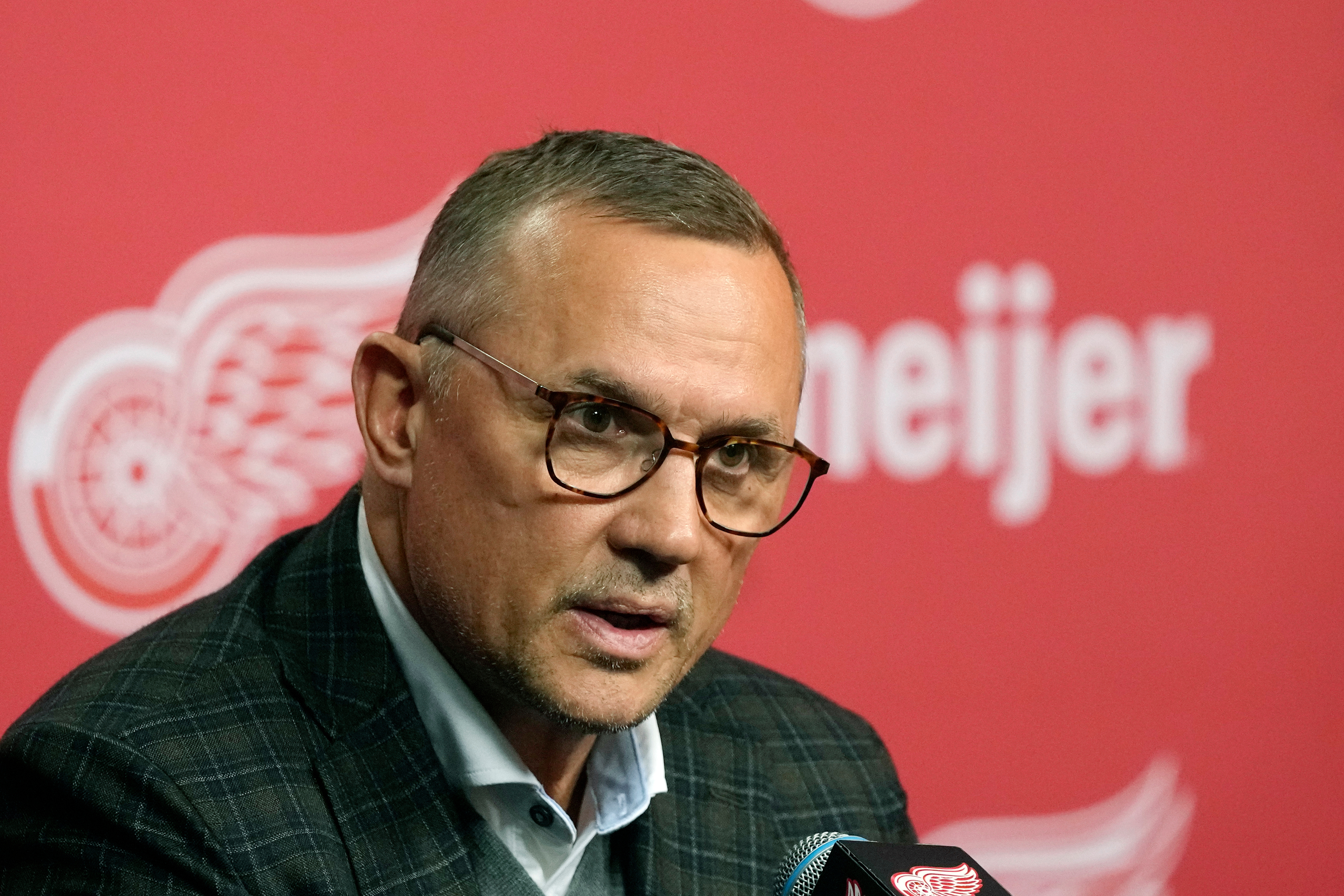
    Red Wings GM Steve Yzerman is believed to have a tense relationship with Dylan Larkin. Carlos Osorio

    How and why is Larkin suddenly available?

    Larkin grew up in the Detroit suburb of Waterford, Mich., played for the U.S. National Development Team in nearby Plymouth, and was drafted 15th overall in 2014 by his hometown team before heading to the University of Michigan for a season. Larkin has never played hockey outside of his home state, skating in 808 games and ranking 10th all-time in points (643) on a list littered with Hockey Hall of Famers like Gordie Howe, his general manager Yzerman, and Sergei Fedorov, for the winged-wheel club.

    For the captain of the Red Wings, who will turn 30 at the end of July, maybe it’s time to leave the comforts of home? Or maybe it’s a breakup that has been brewing for some time.

    Last year, Larkin hinted that he wasn’t too thrilled with how the trade deadline came and went without much action as the Red Wings were in the hunt for a playoff spot for the second straight year. “We didn’t gain any momentum from the trade deadline, and guys were kinda down about it,” Larkin told reporters last April. “It’d be nice to add something and bring a little bit of a spark on the ice and maybe a morale boost as well.”

    That came a little more than a year after his friend Tyler Bertuzzi was traded — Larkin had inked his extension the day before — and Larkin was visibly emotional when addressing the media. Frustration had to be mounting for Larkin, who enters next season with just one playoff appearance — as a rookie — in Detroit. But the GM put the onus on the players, stating at his end-of-season availability, “I’m counting on our best players, our leaders, to give us a bit of a morale boost. That’s what they’re paid for, and that’s the expectations for them.”

    The relationship has officially gone cold. According to Elite Prospects reporter Sean Shapiro, who is based in Michigan, an agent recently told him that Larkin and the GM are not on the same page:

    “They don’t speak unless they’ve had to, they haven’t for a while,” he quoted the agent. “That’s kind of become common knowledge about the situation in Detroit. Steve and Larkin coexisted, but they didn’t get along at all, and that’s kind of been known by others for a bit now.”
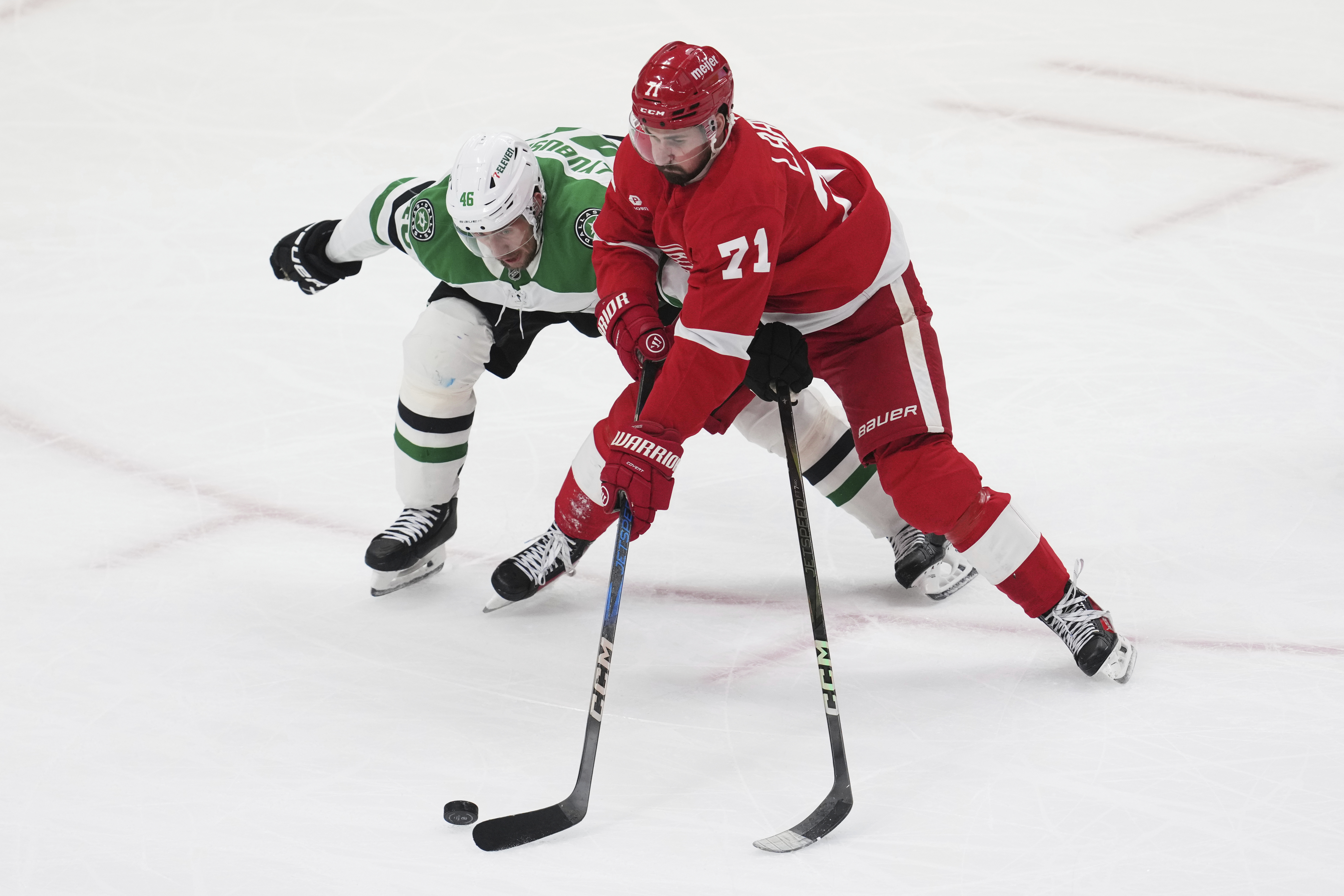
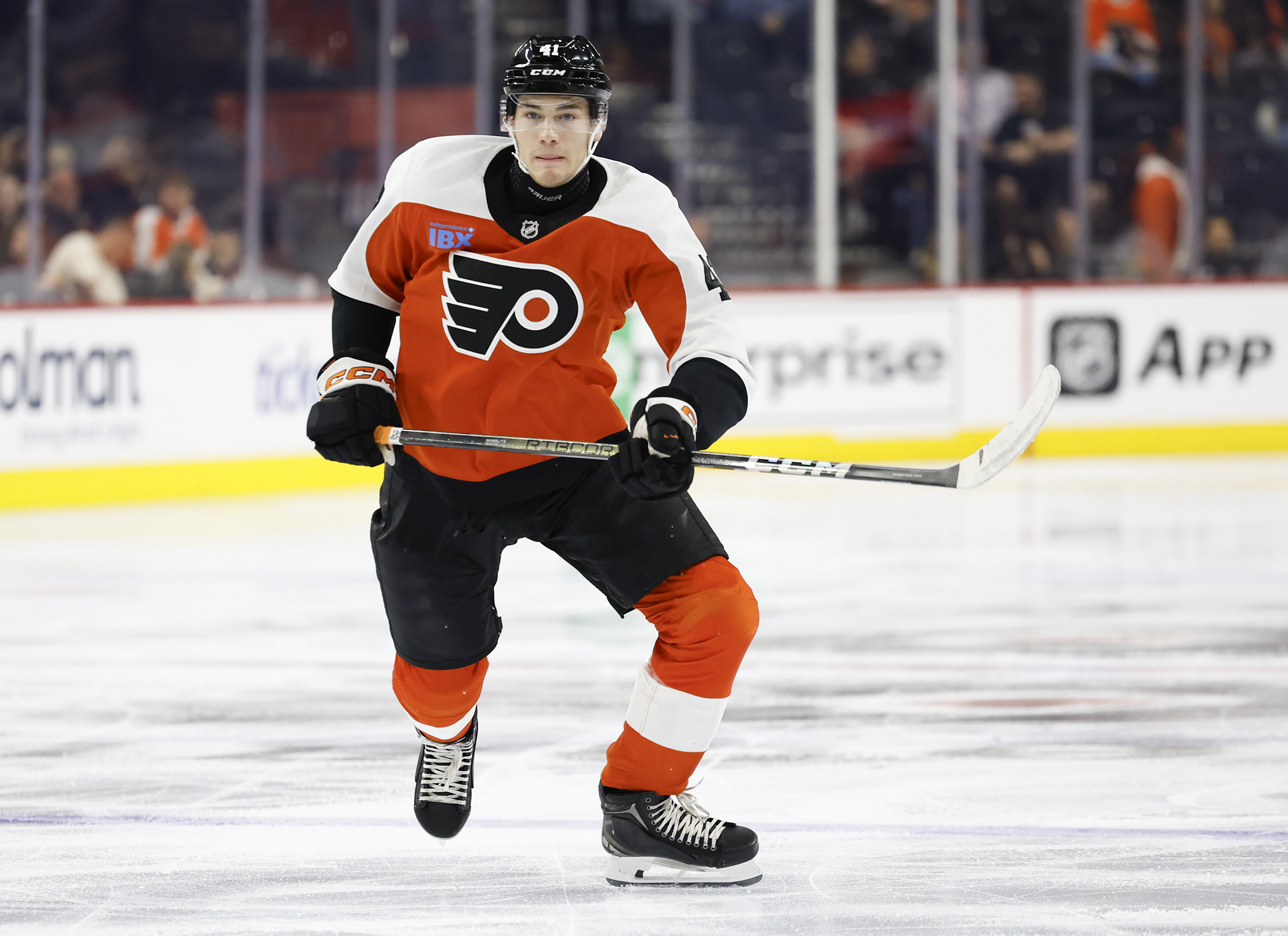
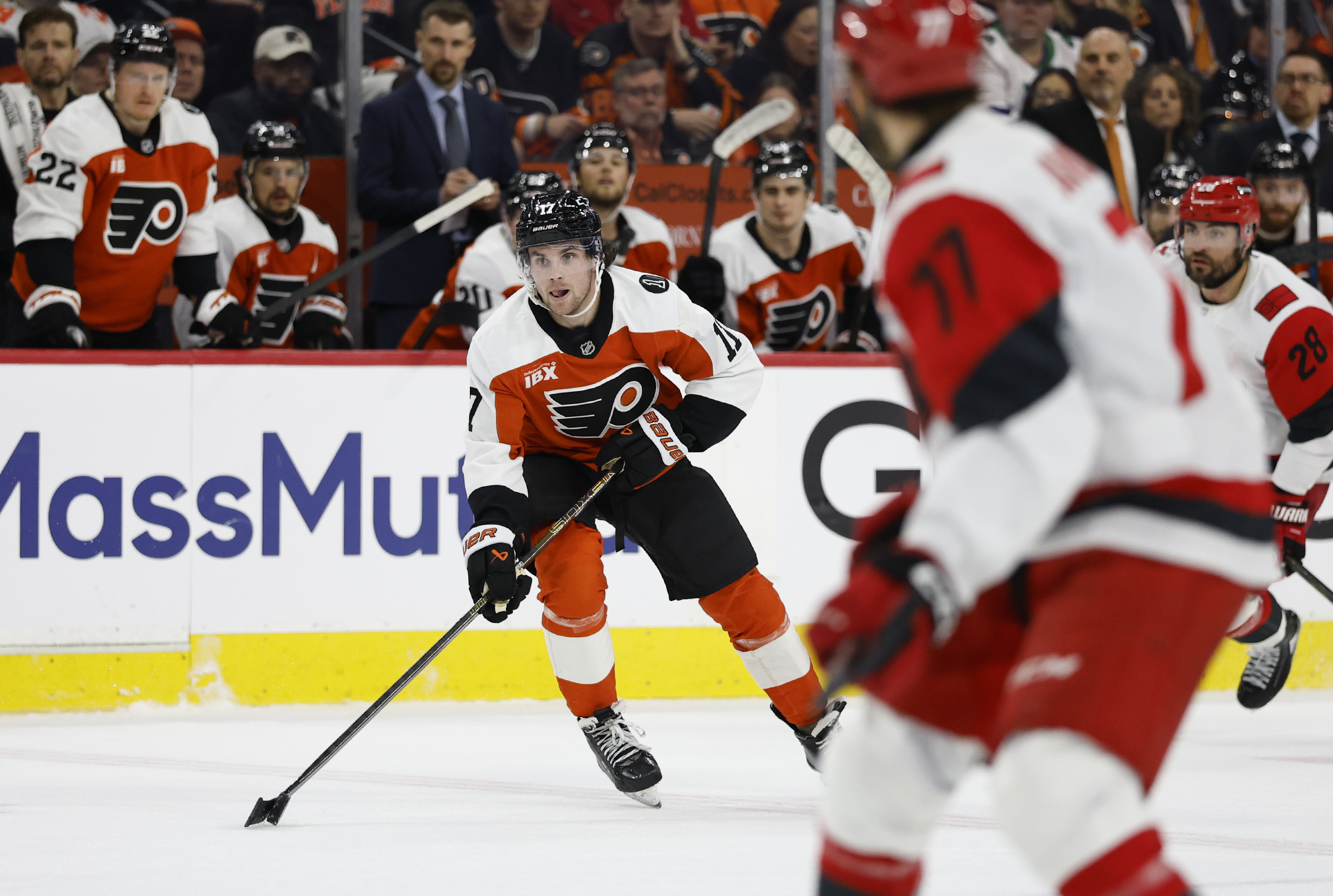
    Dylan Larkin (71) is a prolific goal scorer with much-coveted power-play skills.Paul Sancya

    What kind of player is Larkin, and what has he accomplished?

    Larkin is a perennial 30-goal scorer, having hit the mark for the past five seasons and in six of his 11 NHL seasons. His 34 goals this season would have landed atop the Flyers leaderboard, along with his 14 power-play goals — something the Flyers desperately need help with — and nine game-winners. His 67 points would have finished tied with Trevor Zegras for second, behind the 68 points Travis Konecny dropped.

    And the best part? He’s a center — a No. 1 center.

    “I think the thing about Dylan is that he is a bona fide, top-six center. He can be the number one center who — the rare thing about him is that he really embraces the head-to-head shutdown role part of it,” Shapiro told The Inquirer at the NHL scouting combine.

    “ … When Colorado comes to town, he wants the Nathan MacKinnon matchup, he wants the Connor McDavid matchup. And he’s one of the few players that has the foot speed to actually go into those battles and limit those guys. I think the reason he’s an $8.7 million player, and those guys are $12 million players, is because [while] he could be that offensive guy, he puts so much energy into kind of that defensive end.

    “And I think that’s what makes him a little bit rare, is he’s someone who has that ability to be that offensive guy, but has kind of embraced more of that defensive role.”
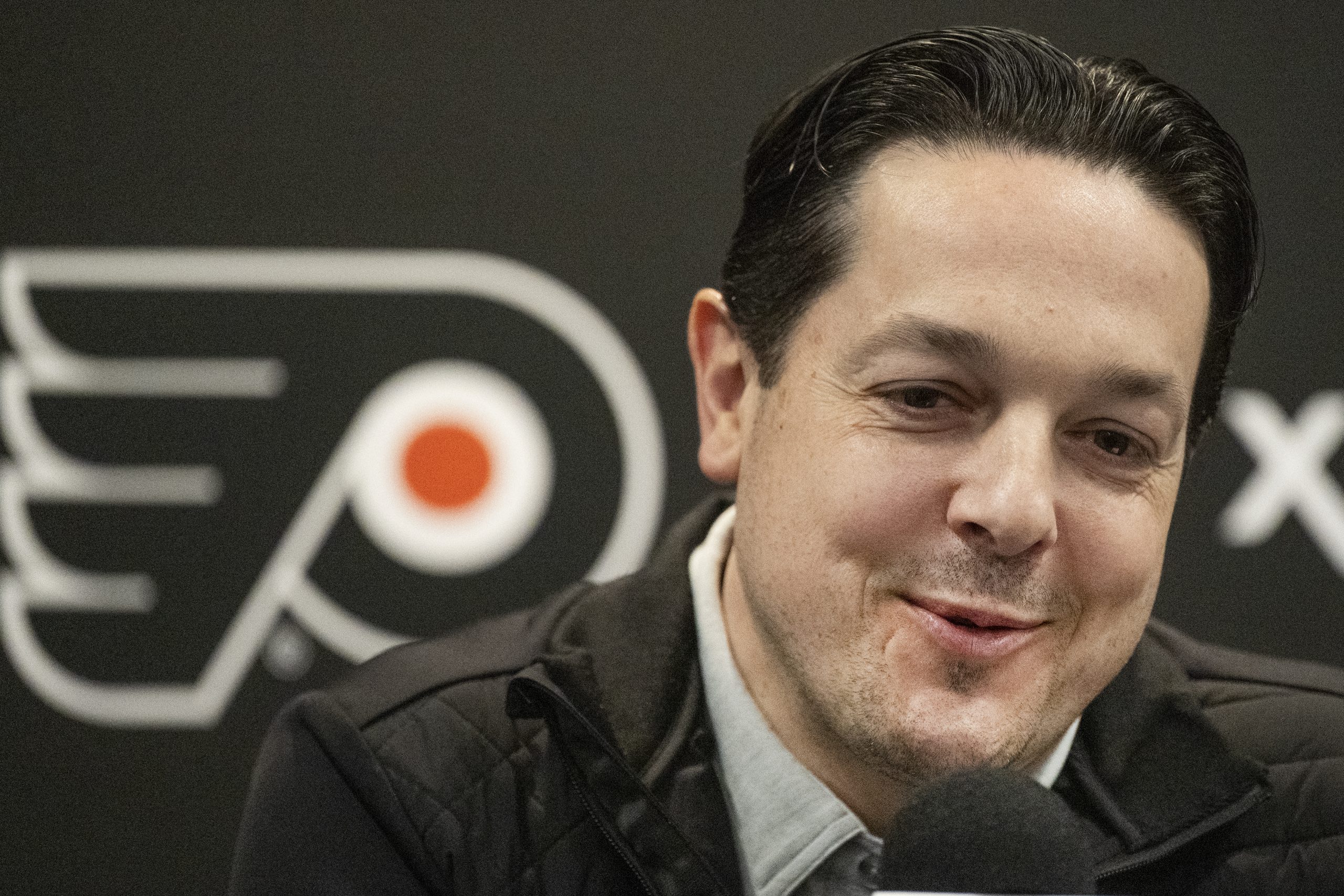
    Danny Danny Brière has explicitly cited an emphasis on the center position within the team’s offseason checklist. Jose F. Moreno / Staff Photographer

    Would the Flyers be interested, and at what cost?

    Multiple sources have confirmed to The Inquirer that the Flyers are interested in the center. And why wouldn’t they be? He brings the speed, can attack down the middle of the ice, and has that scoring touch — and he could be put into that 1C spot — that the organization has desperately needed for years.

    And as general manager Danny Brière told The Inquirer during the NHL scouting combine, they are searching high and low for that player.

    “I think the greatest need is a top-six center,” he said. “And we have guys that have really stepped up; Trevor [Zegras] has played center at times, and he has the skill to play in that role.

    “We’ve asked a lot out of Noah Cates, Christian Dvorak, and Sean Couturier to play some heavy minutes, and we’ve asked them to play in that role for a big part of the season. But looking at our team, that would probably be the one area that we could improve on.”

    Larkin checks that box, whether as a 1C or, as Shapiro said, in a 1A/1B tandem where you run Larkin in a strength-on-strength system where he plays against the other team’s top lines. But the Flyers also need a game-changer. Is he that guy too?

    “I think he can be,” Shapiro said in Buffalo. “I think we’ve seen it in stints in Detroit, and I thought last year at 4 Nations was a good example of — I know the U.S. lost at 4 Nations — but he kind of was someone who raised his game in that big element, and then he was really good at the Olympics. He’s done it in those moments.

    “I’ve always been curious about Dylan Larkin, just because we’ve only seen him play five playoff games in his career. He feels like he has kind of that ability that can break games in the playoffs, where you have those tight-checking chess-match games, and it’s a bit muddy, and everything like that, but he has that [ability] where he can break things open there.”

    But there is also the timeline part. The Flyers are not a true Cup contender just yet and, as noted by the teams Larkin is picking, that’s a high priority for the center. He’s also set to be 30 and the Flyers youngsters, like rookies Porter Martone, Denver Barkey, and Oliver Bonk, are still raising their games. Would he be willing to wait?

    “It’s funny because he is 29, but he’s never played a playoff game [since his rookie season]. His season has ended April 18 every single year for the last nine years,” Shapiro said. “I’m not going to pretend to know the physical limitations of age [but] I do think, for what is left on his current contract … I think his game is still going to age well, because it’s not like he’s someone who’s played an extra 20 games in the playoffs.

    “If you’re looking for a guy who’s a little bit older, who’s going to come in and set a bit of the tone of being willing to turn defense into offense, which is kind of my understanding of the way the Flyers want to do a lot of things, [then] yeah, Dylan is very open; that’s something that he’s all about. I think the fit is there stylistically. … [And] I think for him the next fit is going to be somewhere where he doesn’t have to lead the marquee. … If there’s talk about Philly, and you talk about a bunch of the guys they’re already trying to build around, and if he can be the third or fourth guy you mentioned, and you’re kind of building around this core, it’s probably the ideal spot for him.”

    It doesn’t sound like Larkin agrees, but if the Flyers come with the right package, maybe he could be swayed? Shapiro thinks the package needs to include a combination of prospects — especially center depth — an NHL player, and draft picks.

    Could that mean a Jett Luchanko or a Jack Nesbitt, who is off to play college hockey at Michigan in September? The Red Wings were reportedly interested in landing Rasmus Ristolainen at the trade deadline. And Detroit does not have a first-round pick this June after trading it to St. Louis for Justin Falk, so could the team take the Flyers’ top pick this year or that first-rounder they have from the Toronto Maple Leafs in either 2027 or 2028?
    Could Teddy Blueger (left) be a Plan B at center for the Flyers? ETHAN CAIRNS

    If not Larkin, what other centers could the Flyers target?

    The free agent market is thinner than thin this year, especially when it comes to top-six centers, which is why acquiring someone via trade makes the most sense.

    Yes, Claude Giroux and Scott Laughton are unrestricted free agents, but neither fit the top-six and would be short-term stopgaps, not the long-term projection the Flyers need. Giroux has also been playing wing in Ottawa.

    But if they want to add depth, someone like Teddy Blueger, whom Flyers coach Rick Tocchet had in Vancouver, could be an option.

    The other option is the good old offer sheet. Brière told The Inquirer an offer sheet is something the Flyers would consider, but “I would say it’s probably not likely with the cap going up; a lot of teams have extra dollars to spend.” If they do go that route, it needs to be done smartly, but options include centers Leo Carlsson, Adam Fantilli and his teammate Cole Sillinger, Cole Perfetti, Mavrik Bourque, and Kirby Dach.

    If they go the trade route, Robert Thomas of the St. Louis Blues is the most obvious name out there, although recent reports suggest they are not planning on trading the centerman. Matty Beniers of the Kraken has also been mentioned, as has his teammate Shane Wright; however, The Inquirer has learned that Wright may not be considered a fit by the Flyers, and, per a league source, there is no indication that Beniers is available.

    Mathew Barzal’s name has popped up, but sources say that is premature. The Athletic’s Pierre LeBrun has reported Auston Matthews is fine sticking around Toronto, and centers like Vincent Trocheck, Blake Coleman, and Nazem Kadri are all over 30 and do not fit the timeline.
  • Jhoan Duran wants to pitch every game. And that requires listening to his body and a short memory.

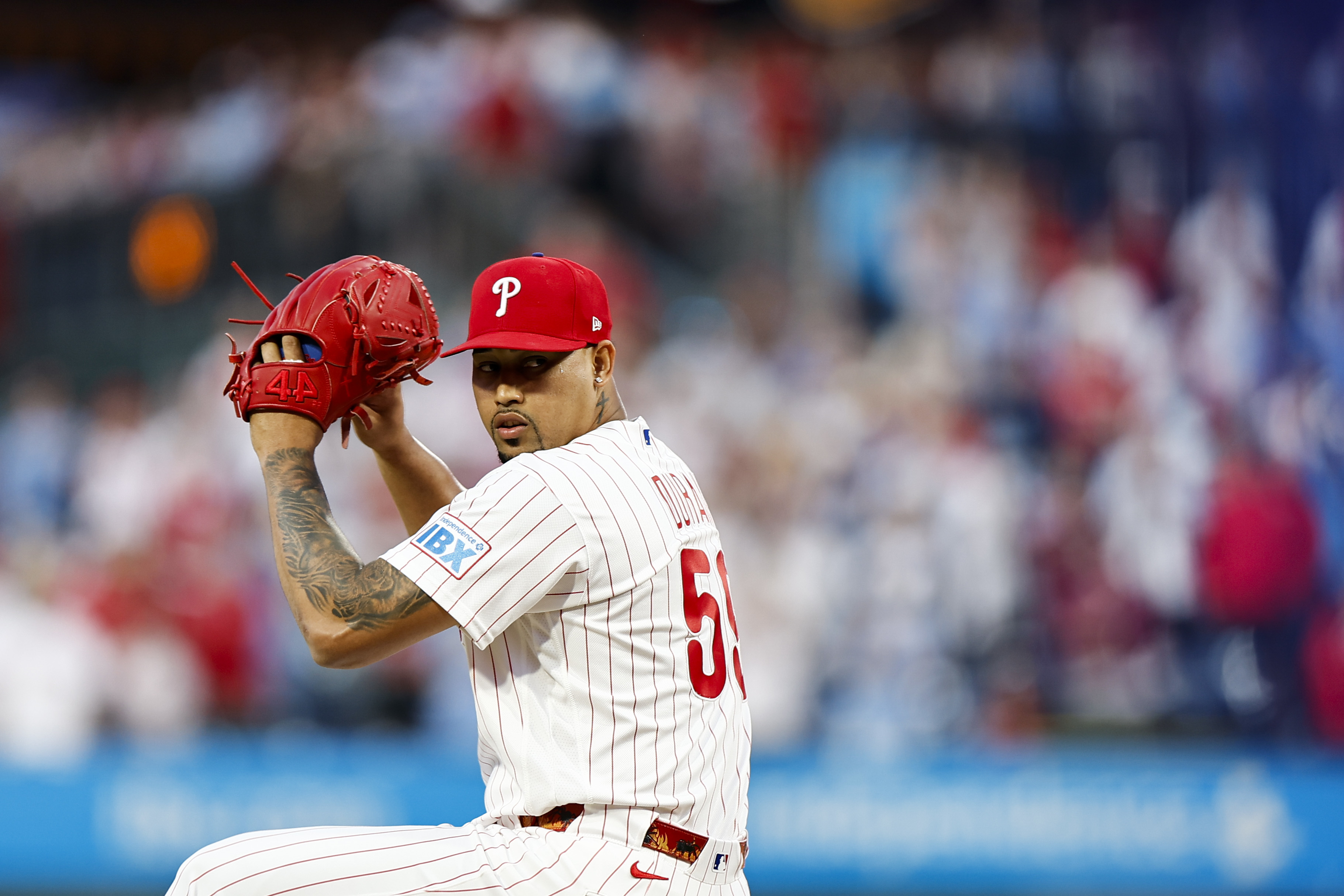
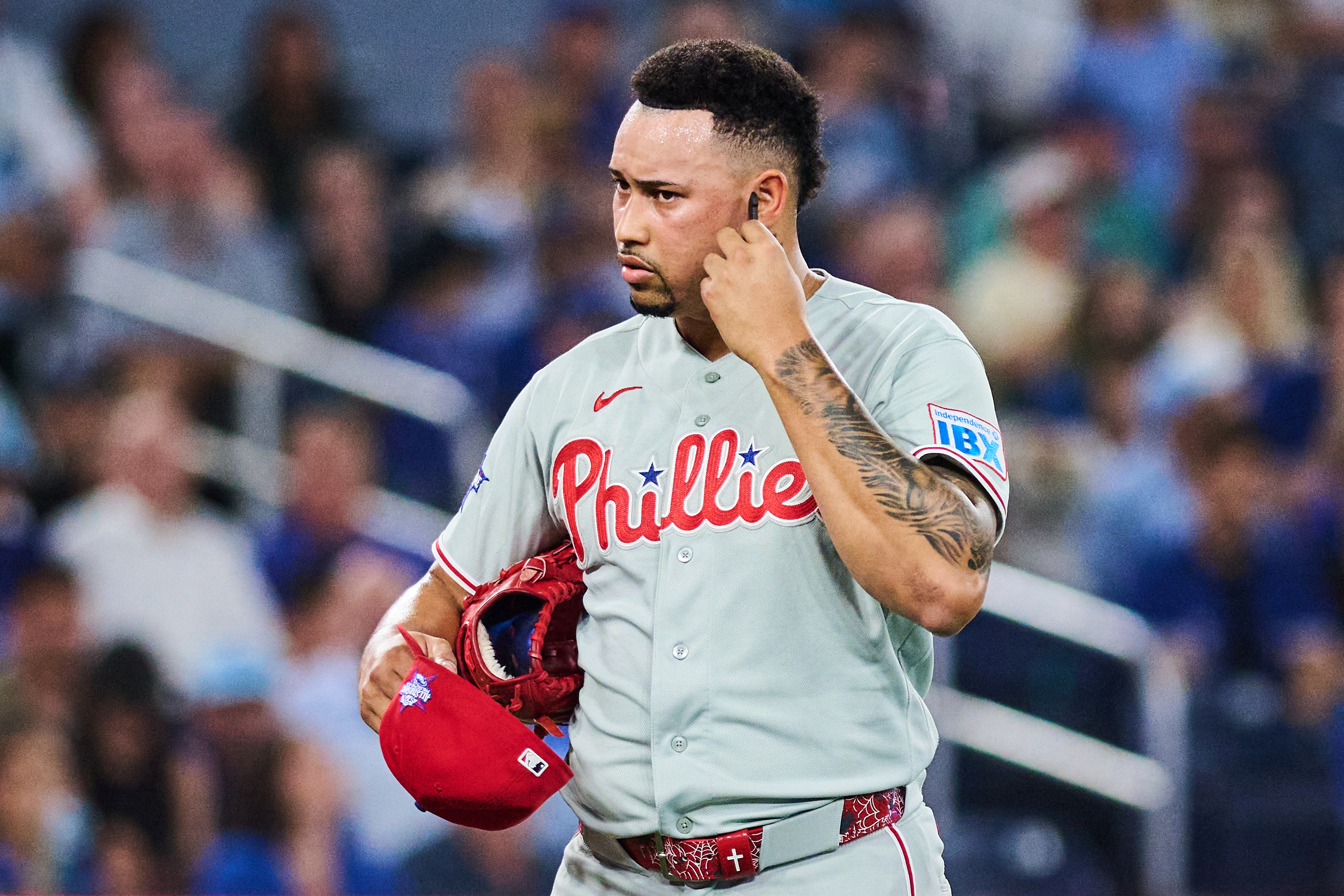
    Jhoan Duran wants to pitch every game. And that requires listening to his body and a short memory.

    TORONTO — Jhoan Duran wants the ball every night.

    It’s a good thing for the Phillies that he does, because they have leaned on their closer a lot this season. Even though Duran was on the injured list for 17 days this year with an oblique injury in his left side, he still ranks fourth in baseball in save opportunities.

    “I need to be on the mound every day,” Duran said.

    But in this week’s series against the Blue Jays, the Phillies asked even more of Duran than usual, when interim manager Don Mattingly used him three nights in a row. The last time Duran had made three appearances on three consecutive nights was from July 14-16, 2023, when he was a member of the Minnesota Twins.

    “If I feel good, I want to be in the game,” Duran said. “So that’s me. The more I throw in the game, I feel more comfortable. I feel way better.”

    Duran needed just nine pitches to record a save in Monday’s series opener against the Blue Jays. He threw eight pitches on Tuesday but blew his first save of the season as Toronto walked him off. On Wednesday, he rebounded with a 10-pitch save, his 17th of the season.

    Mattingly said the process this season for determining Duran’s availability largely has been following the reliever’s lead. He plays catch pregame each day and then informs the coaches how he feels.

    Jhoan Duran blew his first save of the season on Tuesday against the Blue Jays but closed out their win the following night to take the series.Sammy Kogan

    “Jho’s been pretty good about telling us,” Mattingly said. “There’s been times when we thought he’d be available, and he says he needed a day. [Wednesday] was not one of those days, and he was adamant, and we kind of go with that.”

    The “blown save” on the box score doesn’t capture the whole story of what happened Tuesday night. With the Phillies clinging to a one-run lead, things unraveled quickly: a broken-bat single (.070 expected batting average by Statcast) and another ground ball single (.150 expected batting average) put runners on the corners.

    The Blue Jays used two pinch-runners, and after a wild pitch brought the tying run home, all they needed to do to end it was to get the ball out of the infield. Brandon Valenzuela delivered with a single, and Duran no longer had a perfect season.

    Mattingly said he wanted to get Duran into another game quickly after that. But for Duran, what happened the day before made no difference. Like every day, he just wanted to pitch.

    The flame-throwing right-hander has always had a short memory, and regardless of the result, he turns the page quickly. When Duran walked out on Wednesday, he wasn’t thinking about Tuesday at all.

    “Yesterday is yesterday,” Duran said. “I was focusing on today, not yesterday. Yesterday is just the past for me.”

    His teammates felt the same.

    “We got all the confidence in the world in him,” Kyle Schwarber said.

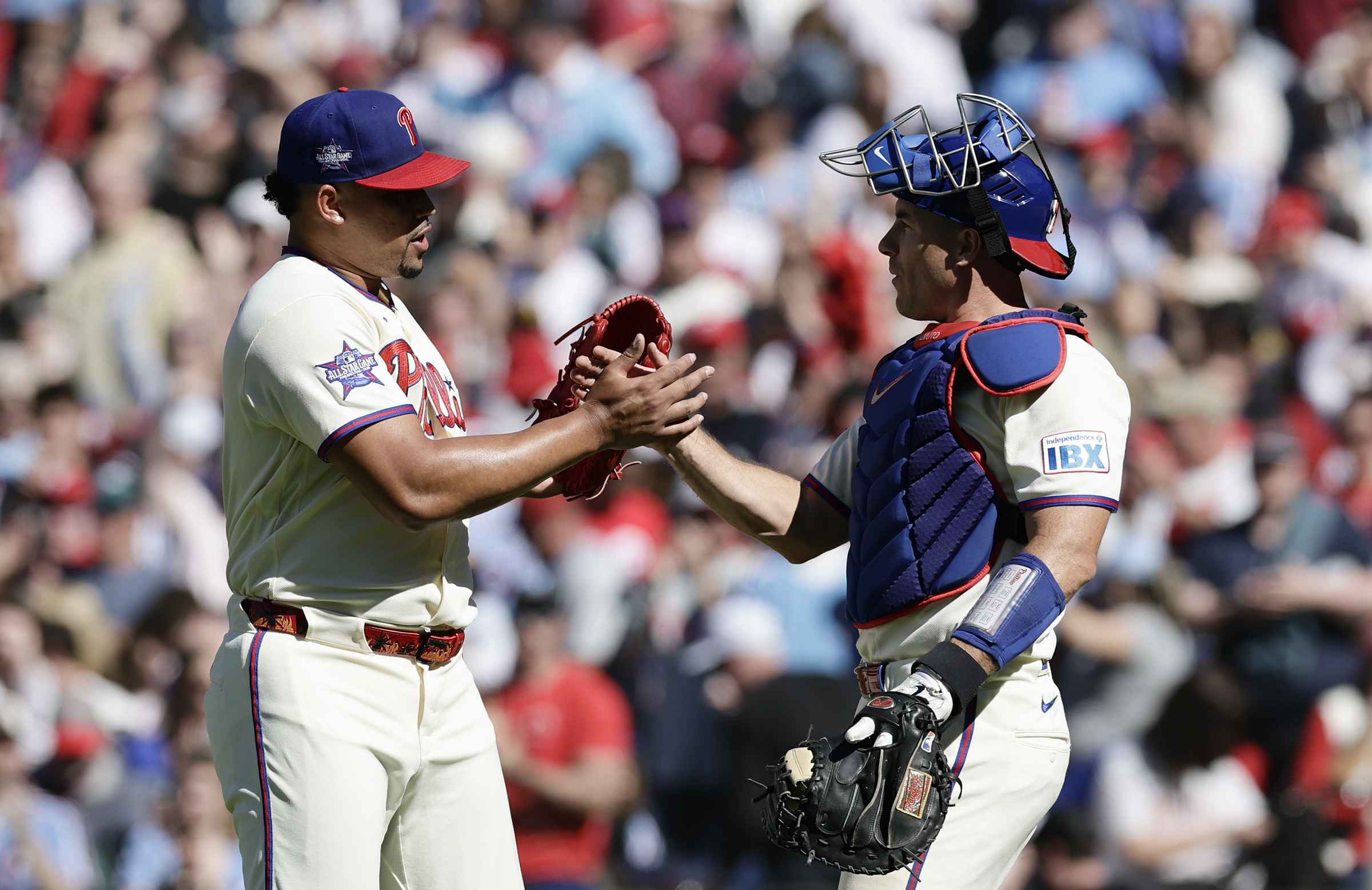
    Jhoan Duran and catcher J.T. Realmuto celebrate a victory in April.Yong Kim / Staff Photographer

    Duran threw 27 pitches in three games, not including what he needed to warm up each night in the bullpen. While that total might not seem like much, for a reliever like him who can top 100 mph on the radar gun, each pitch is thrown at a high intensity.

    Duran said he handles his workload and recovery by listening to his body.

    “I do a lot of recovery in the training room,” he said. “I do it [in] the hotel, too. I always have my recovery machines with me.”

    On Wednesday — this time with a three-run cushion — Duran let the leadoff man aboard with a single, but got Vladimir Guerrero Jr. to ground into a double play on the next pitch.

    Ernie Clement poked a soft single, just 60.4 mph off the bat, but Duran struck out Kazuma Okamoto on three pitches to seal the win and record another save.

    “Insanely [impressive]. His stuff is always elite, and he’s a workhorse, so we love having him in our corner,” said starter Jesús Luzardo. “Seeing him bounce back after [Tuesday] night, which I would call it unfortunate.

    “His stuff is second to none. And I think that that’s why he’s the best closer in the game.”
  • First up for the U.S. men’s national team? Paraguay. Here are our predictions for America’s World Cup opener.

    First up for the U.S. men’s national team? Paraguay. Here are our predictions for America’s World Cup opener.

    America getting out of its group on American soil.

    In this World Cup, that is the first goal — and the road begins Friday when the U.S. men’s national team kicks off against Paraguay (9 p.m., Fox29, Telemundo).

    Paraguay is the first of three matches for the United States in Group D, where they’ll also face Australia (June 19, 3 p.m.) and Turkey (June 25, 10 p.m.).

    It’s a group from which many feel the U.S. can emerge, and a recent pair of tuneup matches against Senegal and Germany provided additional validation.

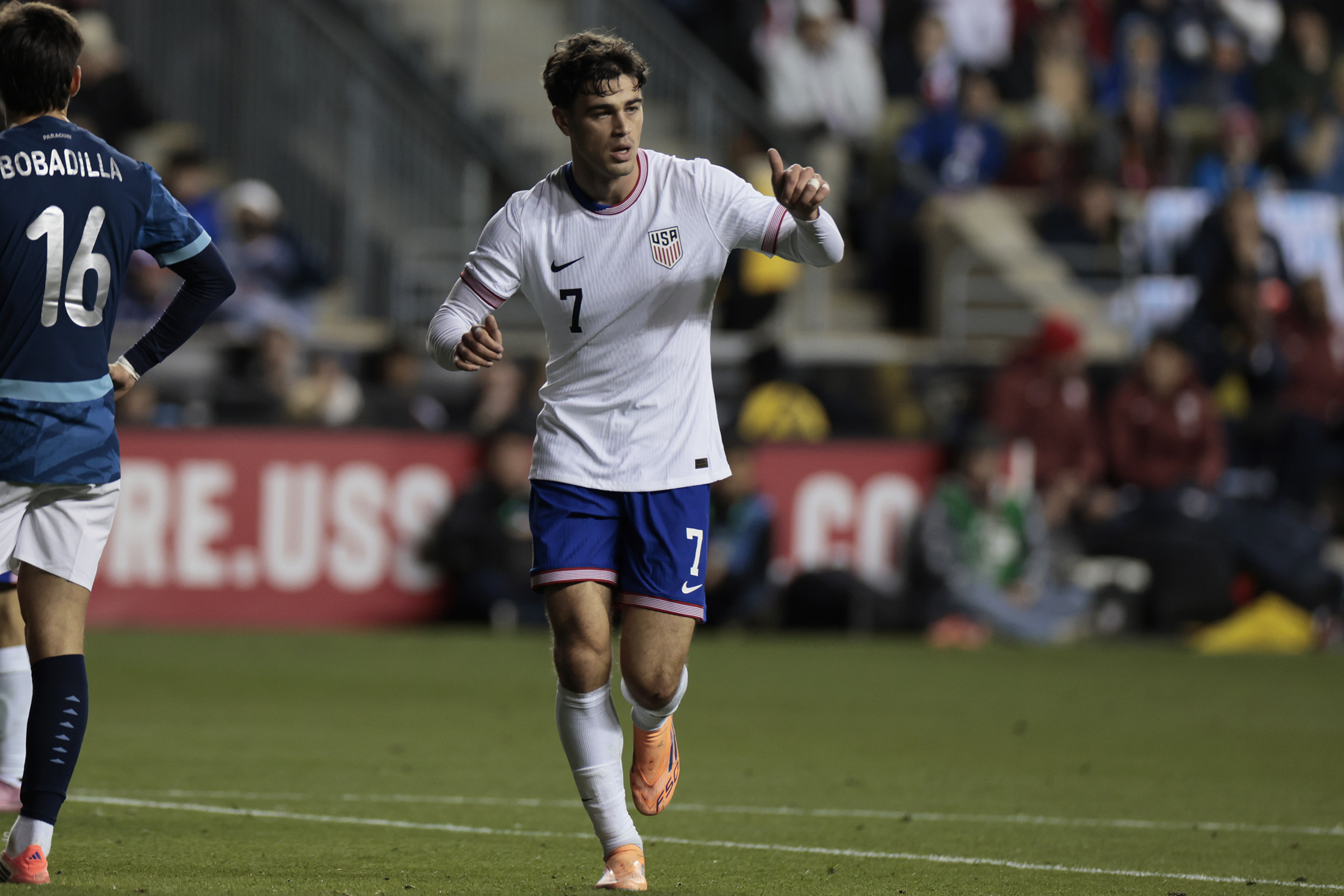
    Gio Reyna was the goalscorer the last time the U.S. men played Paraguay in November at Subaru Park in Chester.Elizabeth Robertson / Staff Photographer

    Paraguay is also a team the U.S. defeated 2-1 at Subaru Park in Chester just eight months earlier, with a sizable contingent of players who qualified for head coach Mauricio Pochettino’s World Cup roster.

    We’ve been watching since the beginning of qualifying cycles, which, as the host nation, the U.S. didn’t need to qualify for. Along the way, we analyzed a wide pool that over two years competed in a Concacaf Nations League third-place game and a Gold Cup final in the lead-up.

    This roster, which features its strongest Philly accent in over 90 years, is complete with some of the most talented players America has to offer — and a few who noticeably were left off the list. But this is Pochettino’s team.

    The Inquirer’s soccer crew will offer up game-by-game prediction for each match, starting with Paraguay …

    Jonathan Tannenwald

    The hope and expectation around this team are mostly justified. Because of that, I’m going to be a contrarian for a moment. Dating back to the first World Cup in 1930, the U.S. men have played 37 games on soccer’s biggest stage. They’ve won just nine, lost 20, and tied eight; and they haven’t won more than one group game in a tournament since that inaugural edition.
    This team doesn’t face the pressure of world powers like Argentina and England, but it still faces plenty as a co-host desperate to give the sport a lasting legacy here. Paraguay, meanwhile, loves playing defense — and will likely play even more without injured star forward Julio Enciso.

    It’s good for the U.S. that they beat Paraguay last November in a friendly at Subaru Park. But this game will be a lot harder, and I’m not at all sure the home team will have a big home advantage from the L.A. crowd. I think the U.S. wins it close.

    Prediction: United States 1, Paraguay 0.

    Kerith Gabriel

    One of the great things about being so deeply entrenched in this sport is the freeing feeling that wins and losses in tuneup matches offer very little insight into how good a team is. Win over Senegal? Somewhat ecstatic. Loss to Germany? Somewhat expected.

    I think it comes down to a few things, but what I mainly look for in this first match against Paraguay is who Pochettino puts out there. He beat this nation with a group largely comprised of the same guys, and has an even stronger cast in this go-around. I think this is the perfect first match to get acclimated and one the U.S. takes three points in.

    Prediction: United States 2, Paraguay 0.

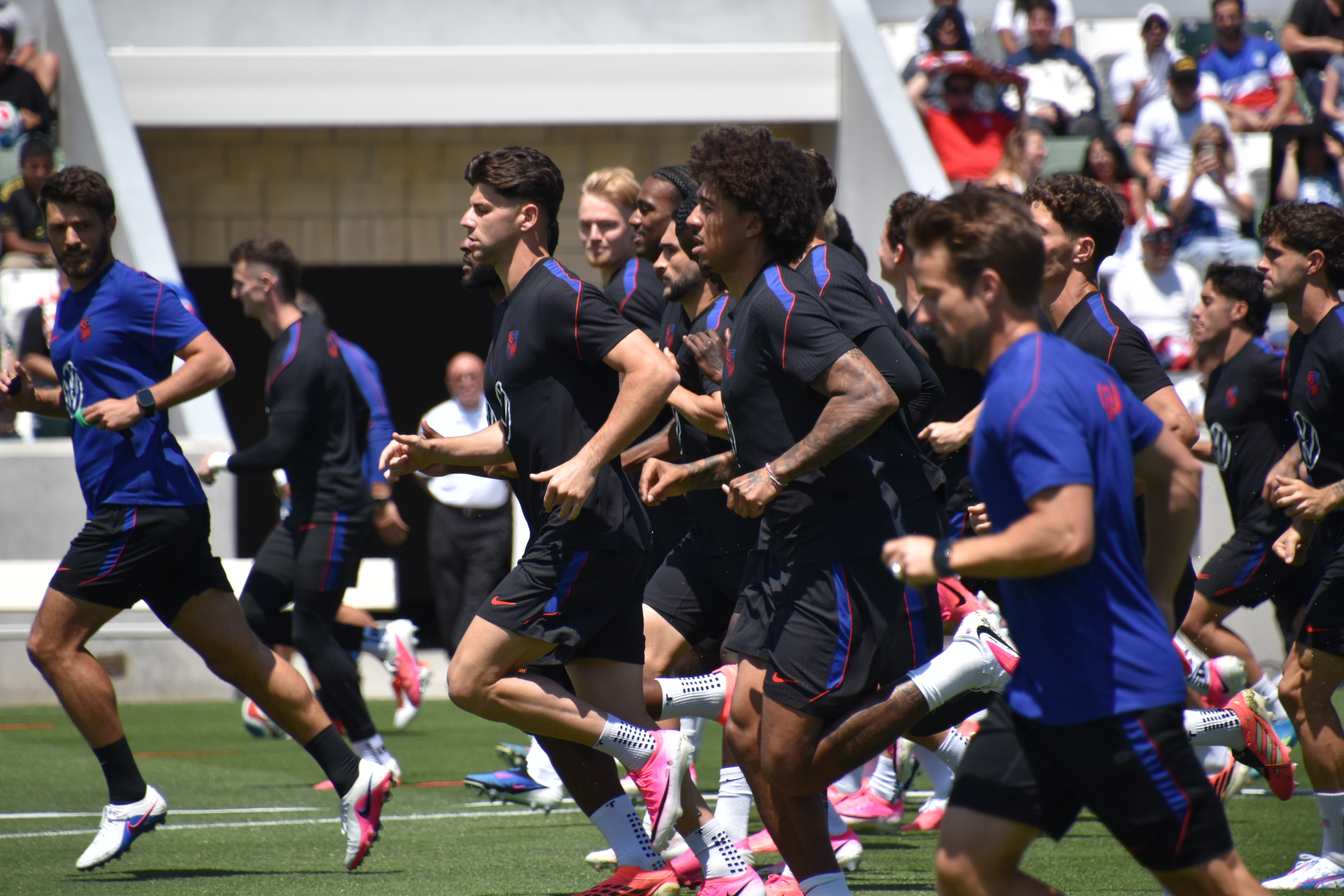
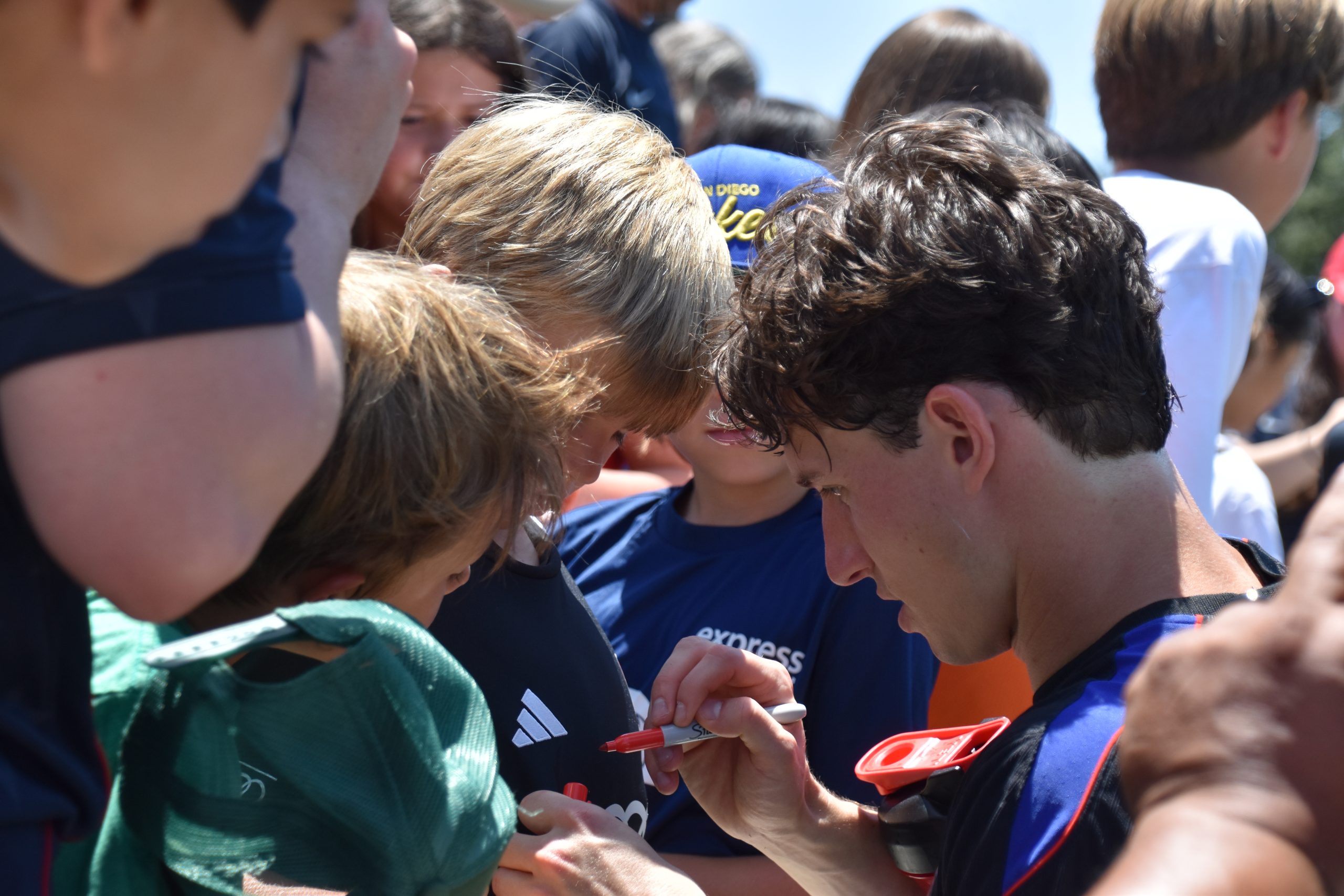
    Medford native Brenden Aaronson (right) signs an autograph for a fan during a U.S. men’s national soccer team practice on Monday.Jonathan Tannenawld

    Matt Breen

    Who will be the U.S. face of the U.S. World Cup? Easy. Christian Pulisic, Captain America, who gets America’s biggest soccer party started with a signature goal in the opener. Pulisic, whose goal in a friendly last month was his first goal for club or country in five months, brought the energy in the opening minutes of the 2022 opener before finally breaking through — and perhaps risking his future generations — for a goal against Iran.

    The U.S. should win their group, and the path starts with a win on Friday. The Americans will take care of business against Paraguay and the country’s biggest soccer star will shine bright in L.A.

    Prediction: United States 2, Paraguay 0.

    Owen Hewitt

    There’s no way that arguably the most talented team America has ever sent to a World Cup loses its first match on home soil … right? Doubts about the goalkeeper situation and the health of Chris Richards aside, this match is too big for the U.S. to lose.

    Fortunately for the Americans, the U.S. will get the lowest-ranking member of Group D to start their World Cup campaign. They have already beaten Paraguay in a friendly during Pochettino’s tenure with a less talented squad, and there’s nothing that suggests that the Americans won’t be able to replicate that result on Friday on the big stage in Inglewood.

    Prediction: United States 3, Paraguay 1.

  • A history of Philadelphia and the Union at the World Cup

    A history of Philadelphia and the Union at the World Cup

    Some people might be surprised to realize that the United States has been part of the World Cup tournament since the very first edition in 1930 — and Philadelphia has been a part of that as well. The Philadelphia area has contributed players, coaches and administrators to the United States men’s national team for all that time.

    Here’s a look at the World Cups the U.S. men’s team has participated in, the pepople in them with Philadelphia connections, and the Union connections to soccer’s biggest stage over the team’s history.

    Uruguay, 1930

    Players: A Penn graduate who played soccer and football and ran track in his time there, James Gentle signed as a striker with the Philadelphia Field Club and later coached at Haverford School.

    Born in Scotland, Bart McGhee moved to Philadelphia as a child and played for numerous area teams. Against Belgium, McGhee scored the first-ever U.S. World Cup goal (the second overall World Cup goal) en route to a 3-0 win.

    Jimmy Douglas, the USA’s goalkeeper, is credited with the first-ever World Cup shutout. He also played briefly for Philadelphia Field Club in his pro career.

    The debut tournament of the World Cup was where the U.S. had its best-ever finish, reaching the semifinals. Host Uruguay won the tournament.

    Italy, 1934

    Players: Bill Fiedler was born, raised, and played his entire pro career in Philadelphia for the Philadelphia German-Americans and the Philadelphia Passon. He didn’t enter the one game the U.S. team played in the 1934 tournament.

    Neither did Al Harker, who also had a long career for the Philadelphia German-Americans, playing for them for well over a decade.

    Peter Pietras was born in Trento and played for five years with the Philadelphia German-Americans. He played in the game against Italy.

    German-born Herman Rapp, appropriately enough, also played for the Philadelphia German-Americans when he went to Italy as part of the World Cup team, but he saw no action in the one game.

    Francis “Hun” Ryan, born and raised in Philly, was the first World Cup player to have played for the still-active Lighthouse Boys Club team. He also played for the Philadelphia German-Americans and in the match against Italy.

    Administration: Elmer Schroeder, who was the first American-born director of the U.S. Soccer organization, was previously the director at Lighthouse, starting at the age of 19.

    David Gould, appointed as team manager by Schroeder, played for years in the area and also coached Penn soccer for 27 years.

    The 1934 tournament was entirely single-elimination. The U.S. lost its one game to Italy, 7-1, which still remains a record for both countries at the World Cup, since that is the most goals Italy has ever scored in the competition. The score also remains the most goals the U.S. has ever conceded at the World Cup. Italy, the host country, went on to win the tournament.

    Walter Bahr is one of seven National Soccer Hall of Famers who started at the Lighthouse in Kensington.

    Brazil, 1950

    Players: Walter Bahr was born, lived, and played professionally in the area with the Philadelphia Nationals. Bahr captained the team in all three group games the Americans played at the World Cup, including the stunning 1-0 upset of England. He provided the assist on the winning goal.

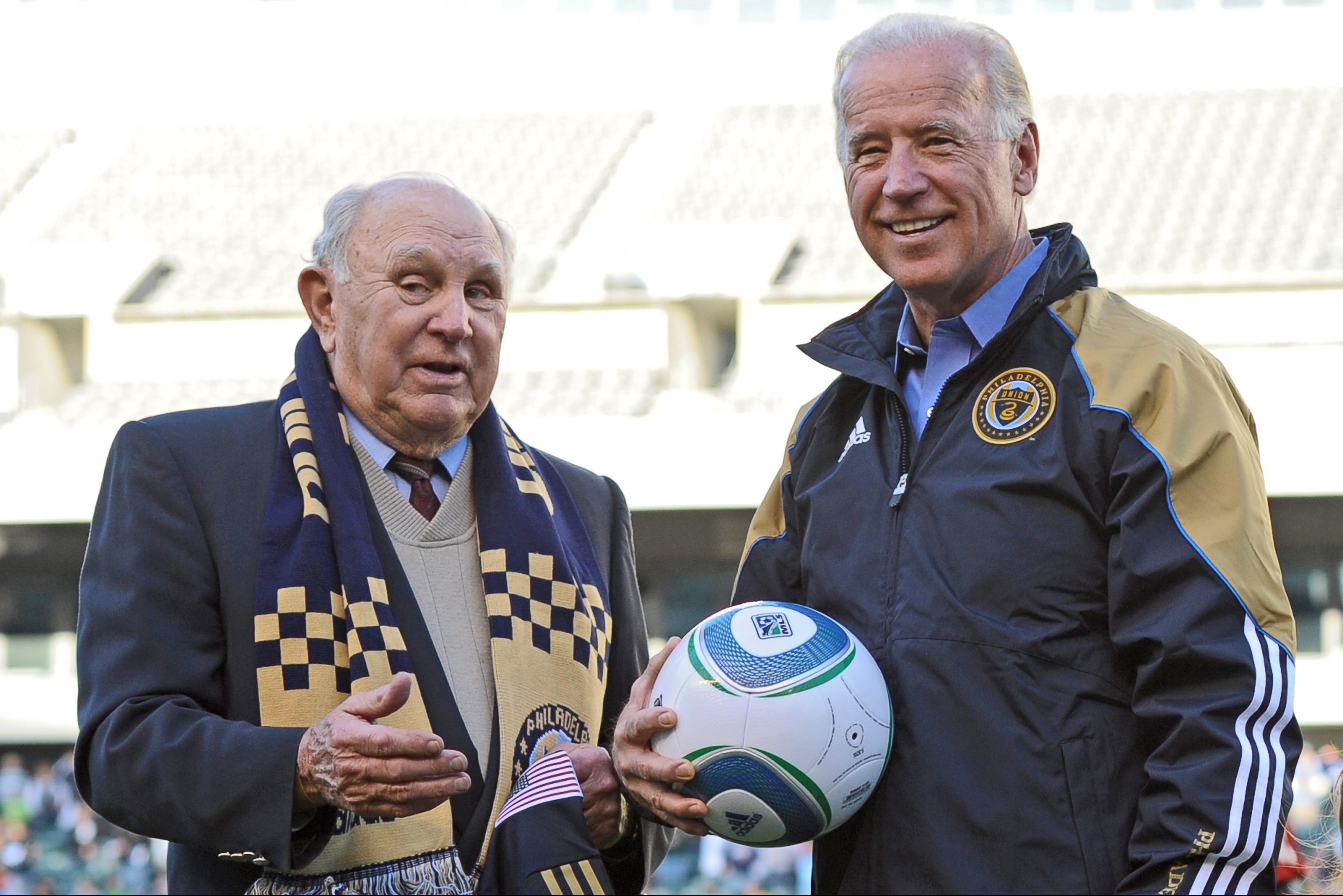
    Sixty years later, he bridged the generations when he stood on the sideline with then-U.S. Vice President Joe Biden at the first home game in Union history.

    Ed McIlvenny, who briefly played for Wrexham in Wales (now owned partly by Philly’s own Rob McElhenney), was a Scot who immigrated to the Philadelphia area. He became a teammate of Bahr’s on the Philadelphia Nationals and won a league title before returning to Britain for a short stint with Manchester United.

    Administration: William Jeffrey was the manager of the U.S. team. Another native Scot, he coached Penn State for 26 seasons.

    The United States lost their group games against Spain, 3-1, and Chile, 5-2, and did not advance to the knockout stage. The champion was Uruguay, which claimed its second title.

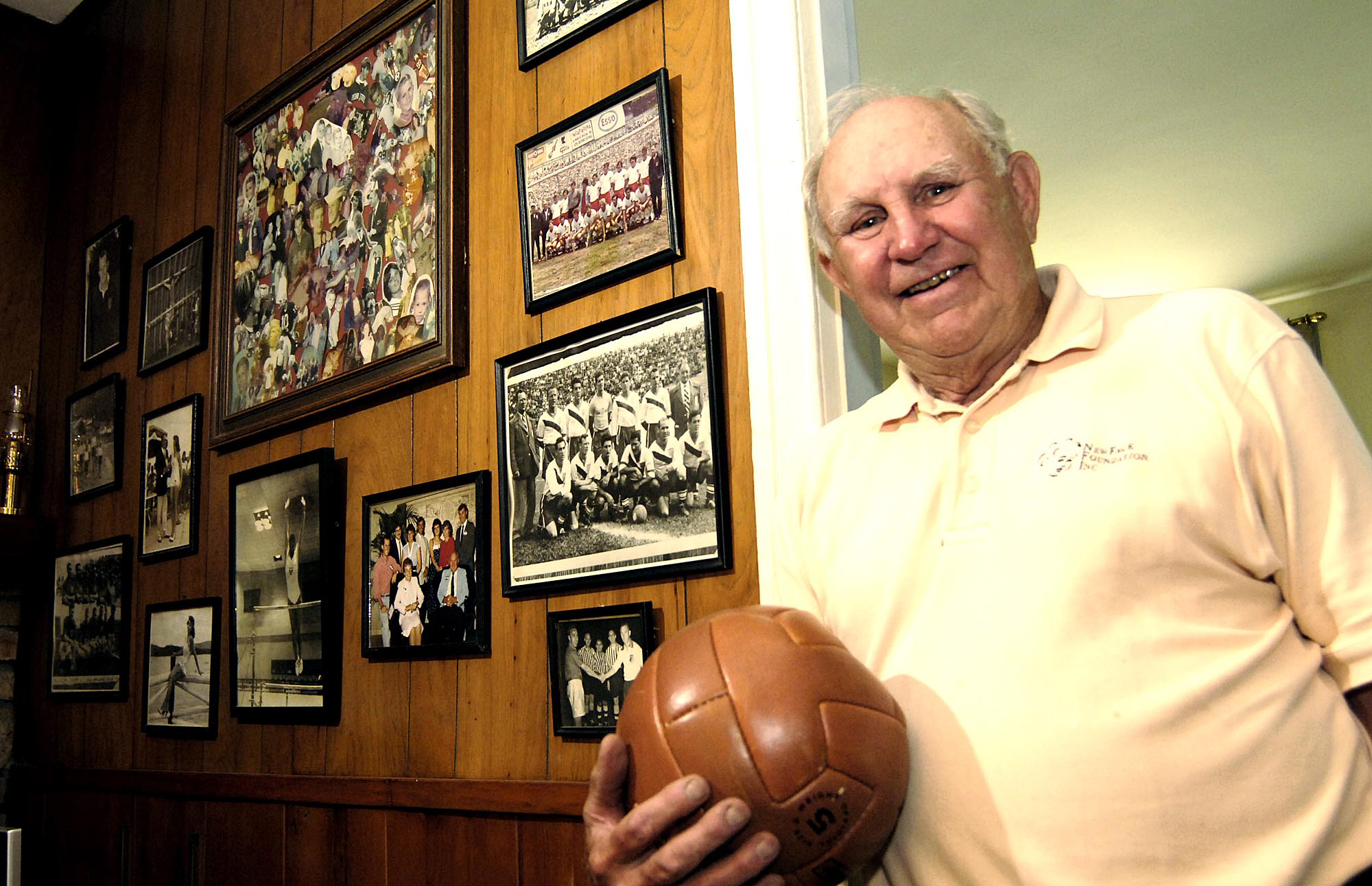
    Walter Bahr at his home in Boalsburg, Pa., in 2006. Bahr kept lots of memorabilia from his days as a U.S. national team player.

    Italy, 1990

    Players: Peter Vermes, who grew up in Delran, played college soccer at Rutgers. He went on to earn 66 caps with the U.S. men’s national team and played in every group game at the World Cup.

    The U.S. lost to Czechoslovakia, 5-1, Italy, 1-0, and Austria, 2-1. The champion that year was West Germany.

    United States, 1994

    Players: While the Dutch American former midfielder Earnie Stewart was raised abroad, his connection to Philadelphia was established when he arrived to take on his first stateside job in 2015 as sporting director of the Union. Now Stewart serves as sporting director of the United States Soccer Federation.

    In 1994, Stewart helped the American team advance from group play. He scored a goal in the team’s 2-1 win over Colombia, and played in the other group games, a 1-1 draw with Switzerland and a 1-0 loss to Romania.

    The U.S. was eliminated in a 1-0 loss in the next round against Brazil, the eventual champion.

    USSF sporting director Earnie Stewart previously held a similar role with the Union.

    France, 1998

    Players: Stewart also took part in this World Cup, where the U.S. lost to Germany, 2-0, Iran, 2-1 and Yugoslavia, 1-0. Host country France claimed the title for the first time.

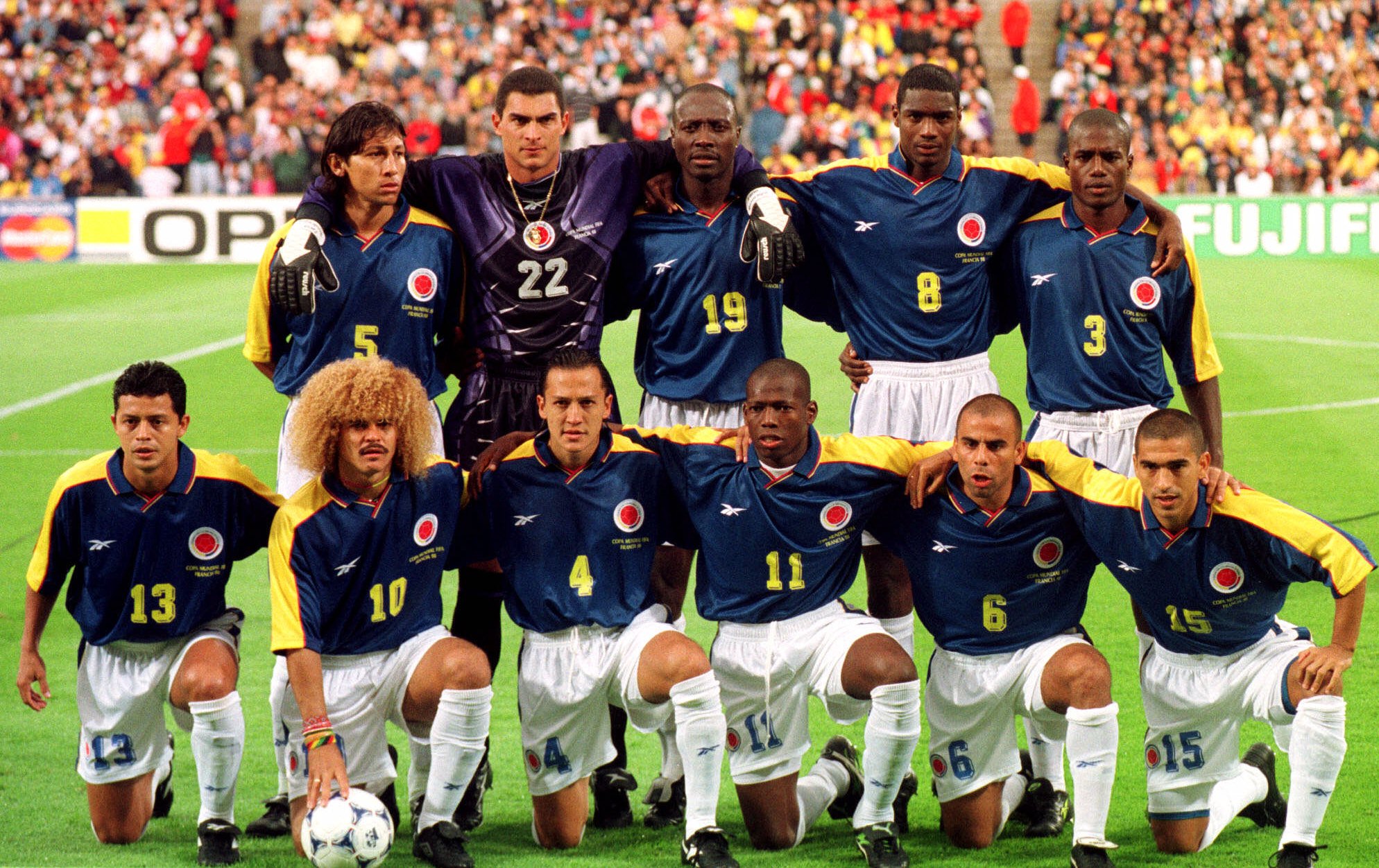
    A future Union player was in this tournament, 12 years before the Union launched and a decade before Philadelphia even was announced as a future expansion market. (In fact, it was just the third year of MLS’s existence.) Goalkeeper Faryd Mondragón started all three of Colombia’s group games in net.

    Faryd Mondragón stands second from left in the back row of Colombia’s team photo before its 1998 World Cup game against Romiania.

    South Korea/Japan 2002

    Players: Stewart again participated, playing in every game of the tournament for the U.S. and helping the team to its greatest tournament success since 1930. The Americans advanced out of the group stage after defeating Portugal, 3-2, losing to Poland, 3-0, and drawing with South Korea, 1-1.

    The United States then advanced to the knockout rounds and defeated Mexico, 2-0. In the quarterfinals, the Americans played a tough match against Germany, but were eliminated, 1-0.

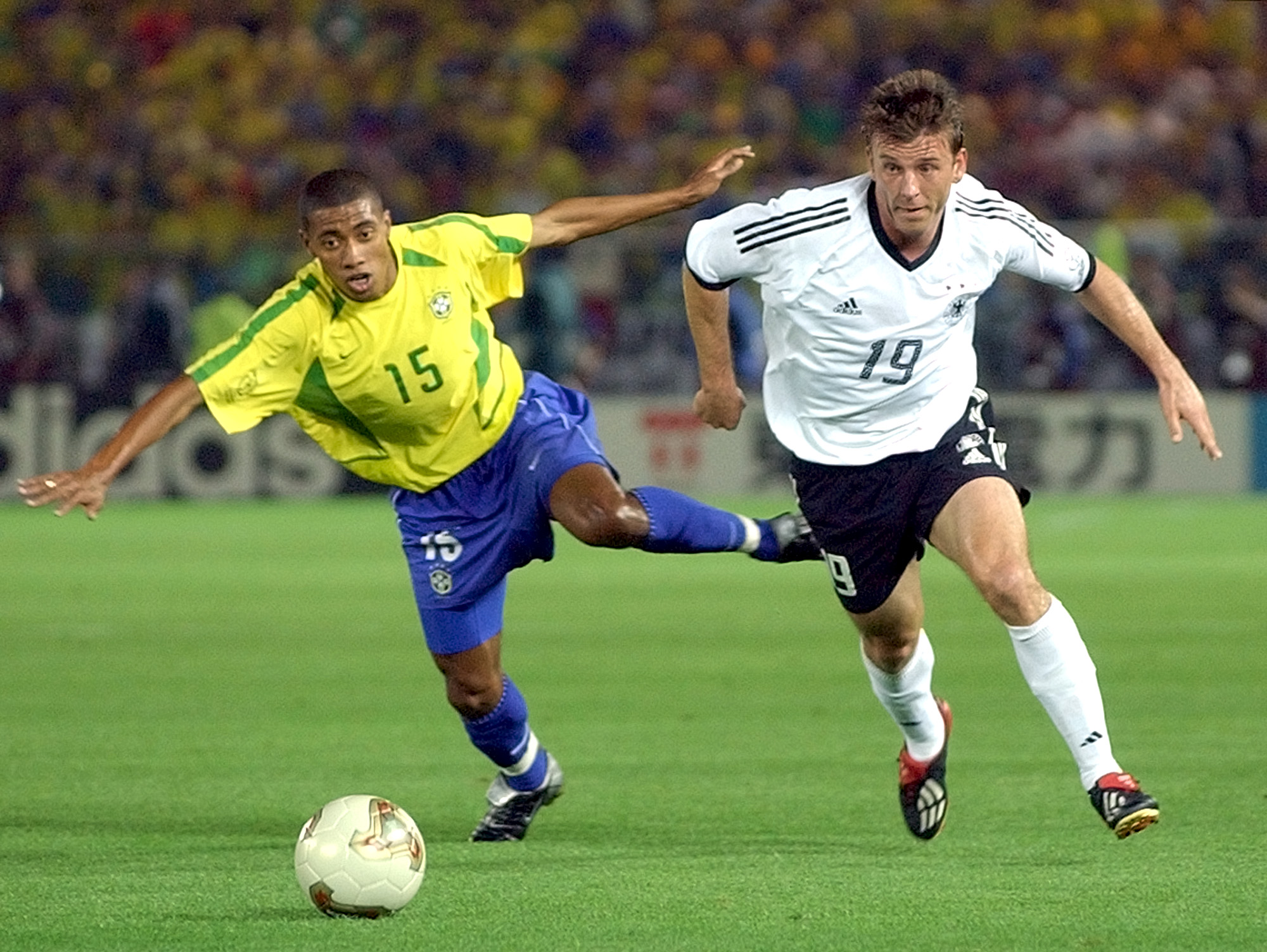
    A future Union player was one of the stars of Brazil’s championship squad. Kléberson had two assists in the tournament, including on the goal in the final that sealed a 2-0 win and the Seleçao’s record fifth title.

    Kléberson (left) in action during the 2002 World Cup final.

    Germany, 2006

    Players: Chris Albright, born and raised in Philadelphia, also played professionally for the Union and served on the team’s technical staff. He did not play in the tournament.

    Bobby Convey, born and raised in Philadelphia, a former Penn Charter student, did play in all three group games, a 3-0 loss to the Czech Republic, a 1-1 draw with Italy, and a 2-1 loss to Ghana. Convey’s free kick helped create the own goal against Italy for the draw.

    Middletown native Ben Olsen, who played for FC Delco, a local soccer powerhouse, played as a substitute against Ghana after Claudio Reyna was injured.

    Future Union player Oguchi Onyewu started all three games of the tournament. The centerback signed with the club in 2017, his final professional season before retirement.

    The Americans failed to advance. Italy won the tournament.

    Philly native Bobby Convey played multiple games in the 2006 World Cup for the United States.

    South Africa, 2010

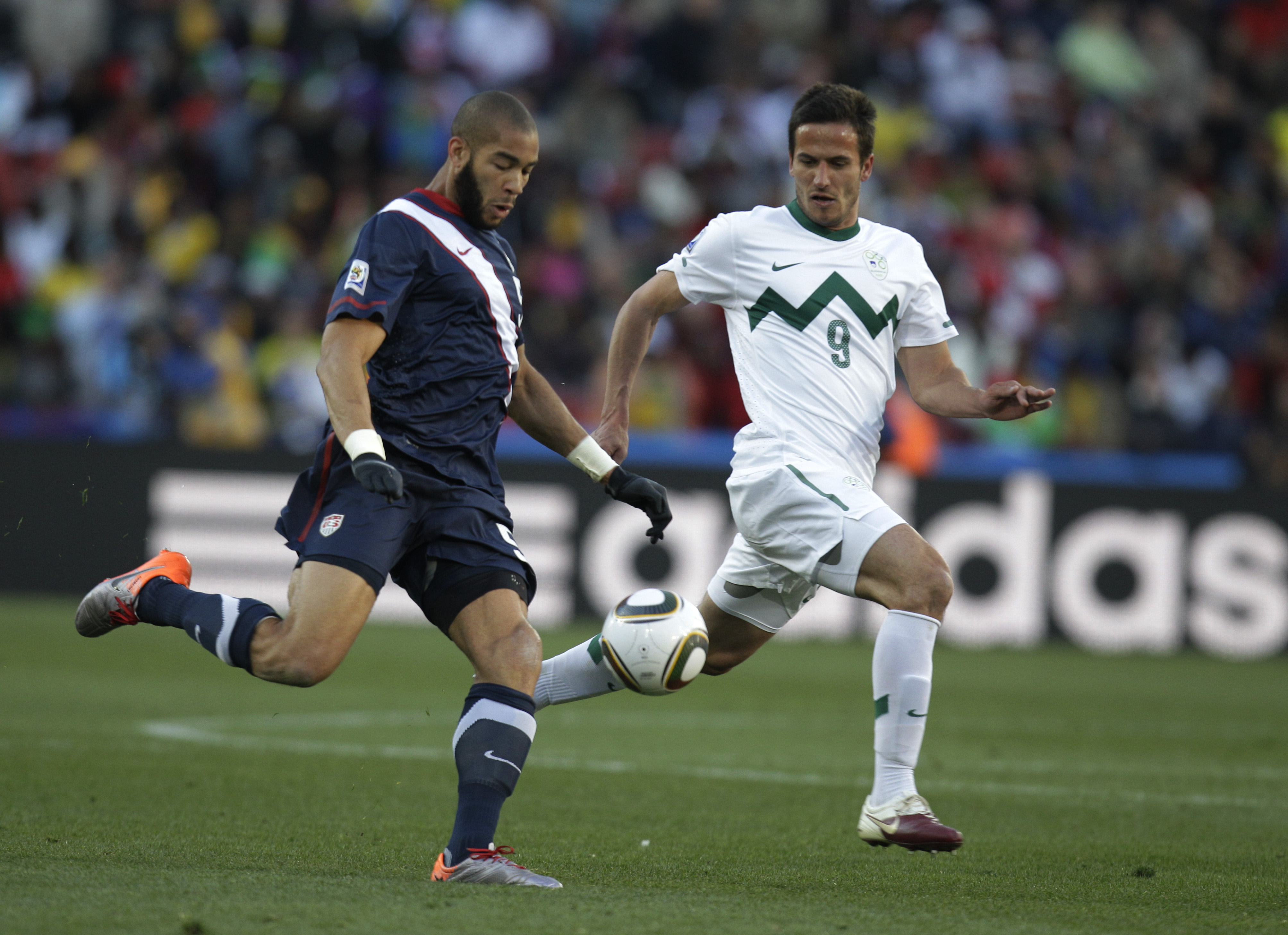
    Players: Maurice Edu, who would go on to become one of the premier signings for the Union in 2015, played in the two games of the group stage following the 1-1 draw with England. He volleyed in a shot against Slovenia in the 2-2 draw that would have been the winning goal if it had not been waved off for a foul. He also played in the 1-0 win over Algeria.

    Onyewu played in the first two games of the tournament.

    A pair of future Union players featured for other countries: Tranquillo Barnetta for Switzerland and Kléberson for Brazil.

    The United States advanced to the knockout stage but lost there to Ghana, 2-1, in added extra time.

    Spain won its first title at this World Cup.

    Oguchi Onyewu (left) in action at the 2010 World Cup.

    Brazil, 2014

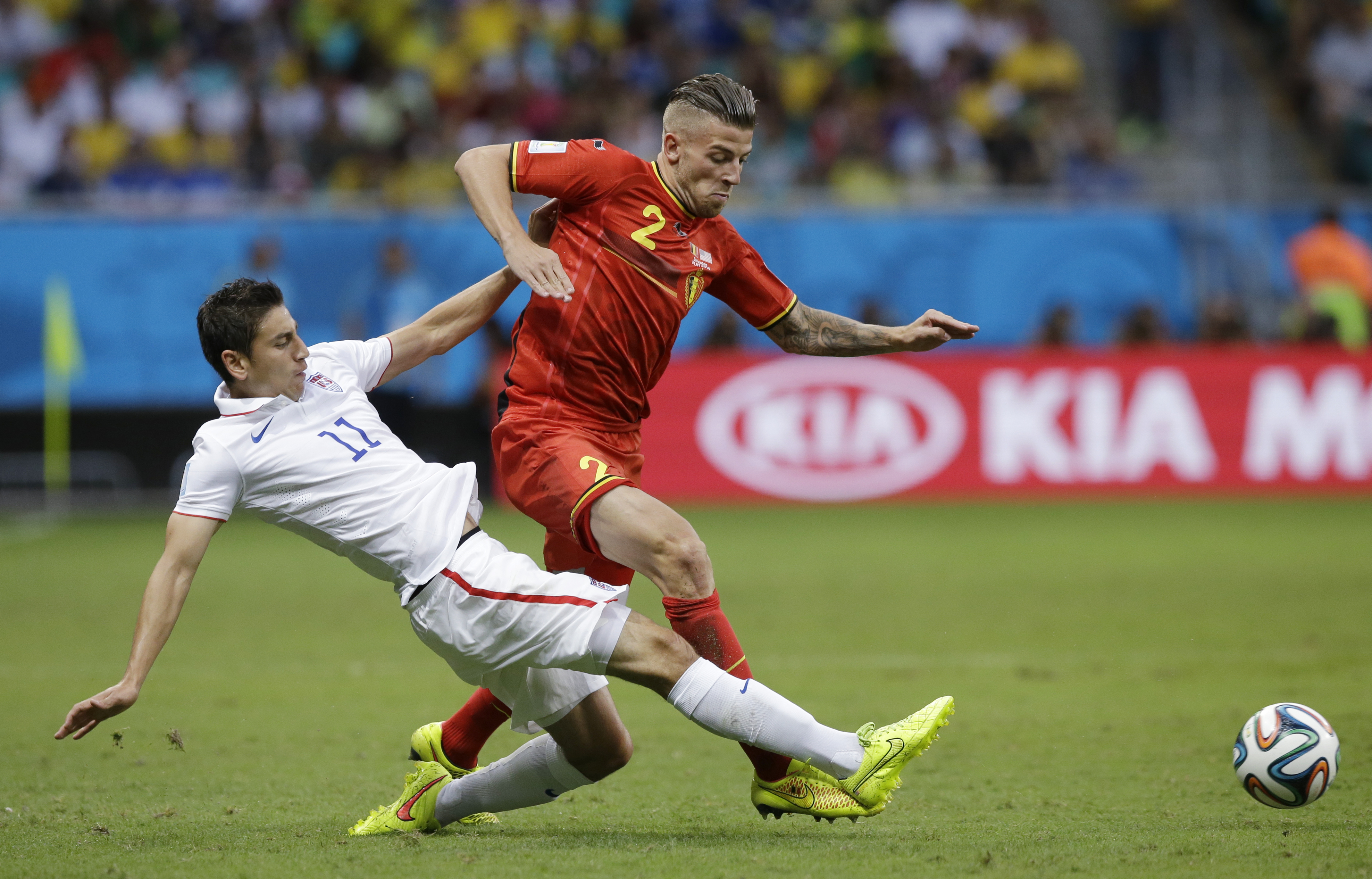
    Players: Alejandro Bedoya, the Union’s longtime captain, played in all four U.S. games at the tournament. The Americans defeated Ghana, 2-1, drew Portugal, 2-2, and lost to Germany, 1-0. That was good enough to advance to the round of 16, where the U.S. lost in added extra time to Belgium.

    Union centerback Carlos Valdés played for Colombia, though at the time he was on a string of loans away from the team. He’d asked for them because the Cafeteros’ coach at the time, José Pékerman, didn’t rate MLS. So Valdés tried to get elsewhere to make an impression (and he wasn’t alone).

    Mondragón was also on Colombia’s squad, two years after his roller-coaster tenure in Chester ended.

    Haris Medunjanin played for Bosnia, memorably getting Lionel Messi’s jersey after facing Argentina in the group stage. And David Myrie, who was on the Union’s inaugural season squad in 2010 (but didn’t last long), was on Costa Rica’s team.

    Germany won the tournament, claiming its fourth title.

    Alejandro Bedoya (left) in action for the U.S. during the round of 16 battle with Belgium.

    Russia, 2018

    Players: The U.S. infamously failed to qualify, which obviously put a big dent in things. But a former Union player and a future Union player took part for other countries. Gabriel Gómez played for Panama six years after his one season in Chester, and Marco Fabián played for Mexico eight months before he joined the club.

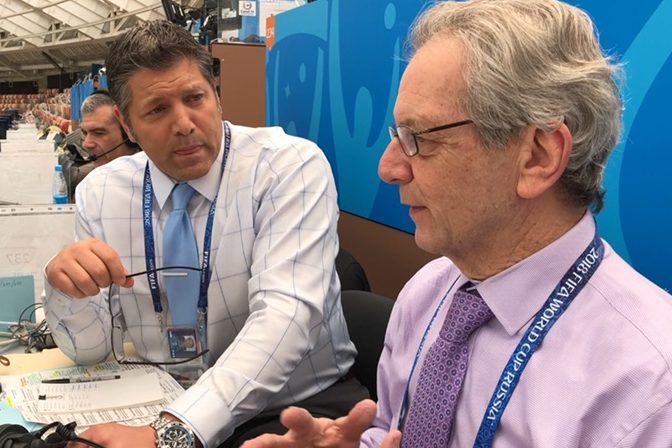
    Broadcasting: Philly fans also heard a familiar voice on Fox’s TV coverage. This was the 13th World Cup of longtime Union play-by-play voice JP Dellacamera’s Hall of Fame career, including the eighth men’s tournament.

    France won the title, led by Kylian Mbappé’s emergence as the sport’s new superstar.

    JP Dellacamera (right) with his broadcast partner at the 2018 World Cup, former U.S. goalkeeper Tony Meola.

    Qatar, 2022

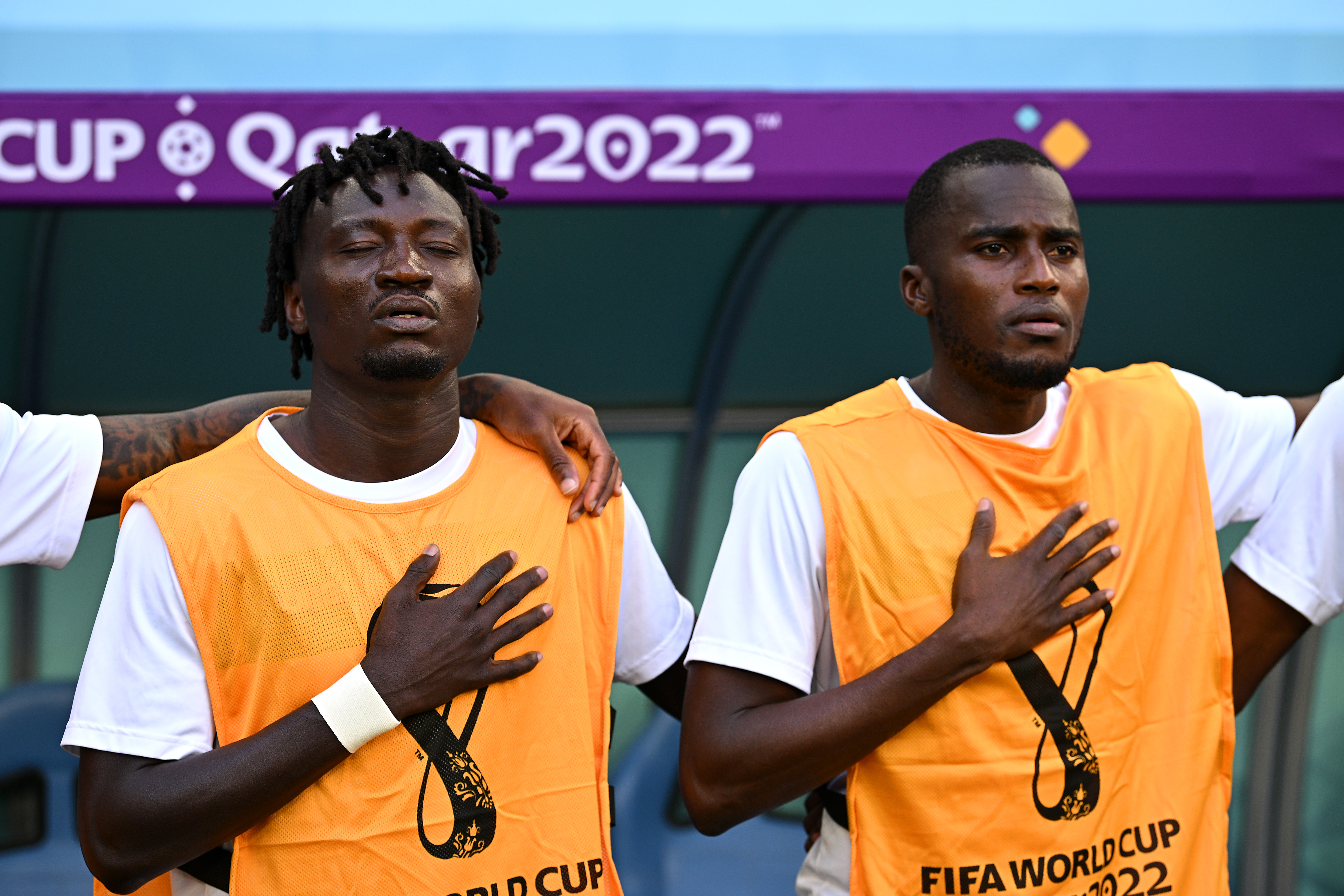
    Players: Olivier Mbaizo became the first active Union player to make a World Cup roster, with Cameroon. He never got on the field, though if the Indomitable Lions had advanced from the group stage he’d likely have played in the round of 16 due to a teammate’s suspension.

    Union alum Brenden Aaronson made his first U.S. World Cup team, two years after moving to Europe. The Medford native was at England’s Leeds United then, his second club after initially going from Chester to Austria’s Red Bull Salzburg for $6 million. The later move to Leeds commanded a $30 million transfer fee, and the Union banked $5 million of it in a sell-on fee.

    Hershey’s Christian Pulisic was also on the U.S. squad, scoring the winning goal against Iran and finally fulfilling his promise as a superstar. The Americans advanced to the round of 16, then lost to the Netherlands.

    Steven Vitória played for Canada seven years after his one season in Chester.

    Administration: This was Stewart’s World Cup as U.S. Soccer’s sporting director.

    A coach: Ventnor City native and Ursinus grad B.J. Callaghan was one of U.S. manager Gregg Berhalter’s top assistants.

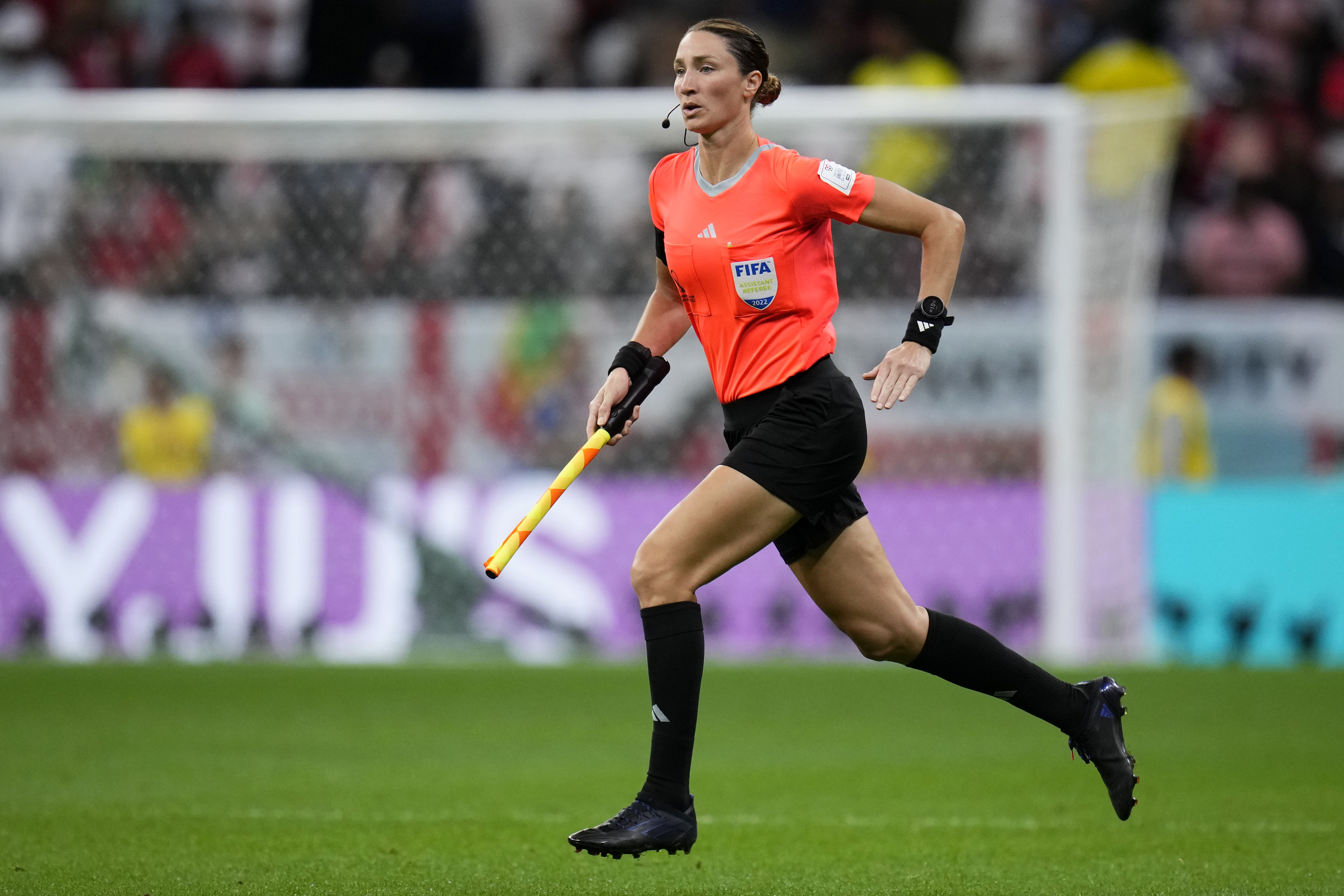
    A referee: Though Kathryn Nesbitt wasn’t born in Philadelphia, the assistant ref had lived in the city since 2019 when she was appointed to her first World Cup.

    Broadcasting: Dellacamera was in Fox’s booth again, while former Union captain Maurice Edu and Delran’s Carli Lloyd joined the network as analysts. Fox reporter Tom Rinaldi spent part of his college years at Penn, and was another familiar voice from plenty of trips to Philly for other sports.

    Argentina won the tournament, finally giving Lionel Messi the biggest trophy and crowning him as men’s soccer’s greatest player of all time.

    Olivier Mbaizo (left) on Cameroon’s bench at the 2022 World Cup.

    USA/Canada/Mexico, 2026

    Players: The Union’s Danley Jean Jacques and Olwethu Makhanya made the rosters of Haiti and South Africa, respectively. Jean Jacques was a stalwart of Les Grenadiers, and had the bonus of Haiti getting a group stage game in Philadelphia against Brazil. That was one of six tournament games in the city, as the men’s World Cup finally came here for the first time.

    Makhanya’s inclusion, meanwhile, was surprising at the time.

    Haiti’s squad also included Penn alum Duke Lacroix, who made the big stage over a decade after his college years with the Quakers.

    Four Union alums made the U.S. squad: Aaronson, Wayne’s Matt Freese, Media’s Auston Trusty, and Bear, Del.’s Mark McKenzie. It was the most players from the Philadelphia region on a U.S. team since 1934. (Pulisic could count as an honorary fifth.)

    Brenden Aaronson (center) made his second straight World Cup team in 2026.

    Former Union midfielder Jamiro Monteiro made Cape Verde’s squad for its first ever World Cup. So did Philadelphia native CJ dos Santos, who had played for U.S. youth teams but switched to the nation of his father’s roots. He was in the Union academy for a while before leaving to Portugese club Benfica, then returning to MLS in 2022 with Inter Miami. In 2024, he moved to San Diego FC, and that was his club at the time of the World Cup.

    A referee: Nesbitt was selected to her second straight men’s World Cup on the sidelines. Since 2022, she had been selected for the 2023 women’s tournament, and was part of the first American refereeing team to officiate a women’s World Cup final. (It hadn’t happened before because of how many times the U.S. made the final.)

    Broadcasting: Dellacamera, Lloyd and Edu were back with Fox, this time joined by Philadelphia resident and former Independence and U.S. women’s team player Lori Lindsey. She and Dellacamera called some games together, including Ivory Coast vs. Ecuador.

    Kathryn Nesbitt at the 2023 World Cup. The 2026 tournament was her third between men and women combined.
  • FIFA’s yearslong effort to woo Trump culminates with the World Cup

    FIFA’s yearslong effort to woo Trump culminates with the World Cup

    For the past year, FIFA, the governing body of international soccer, has leased an office on the 17th floor of New York’s Trump Tower that has sat all but empty. The rent goes to President Trump’s family business, but soccer officials say the space sits largely idle.

    Paying rent to the Trumps was the choice of Gianni Infantino, FIFA’s president, who has made being close to Trump a top priority. He has lavished the president with praise, trophies and a medal. He has made pilgrimages to Mar-a-Lago, the Trump National Doral golf club and even the “Melania” documentary premiere.

    Infantino has publicly boosted the president through impeachments and plummeting poll numbers.

    It was all in service, Infantino’s supporters say, of ensuring that the World Cup, which begins this week, goes off without a hitch. Trump could disrupt the games in any number of ways. Infantino, allies say, is handling a volatile president who responds to praise and gifts.

    “He’s straightforward in terms of what you need to do to manage the relationship,” said Majed Al Sahib, a soccer official from Saudi Arabia who said that Infantino was being pragmatic.

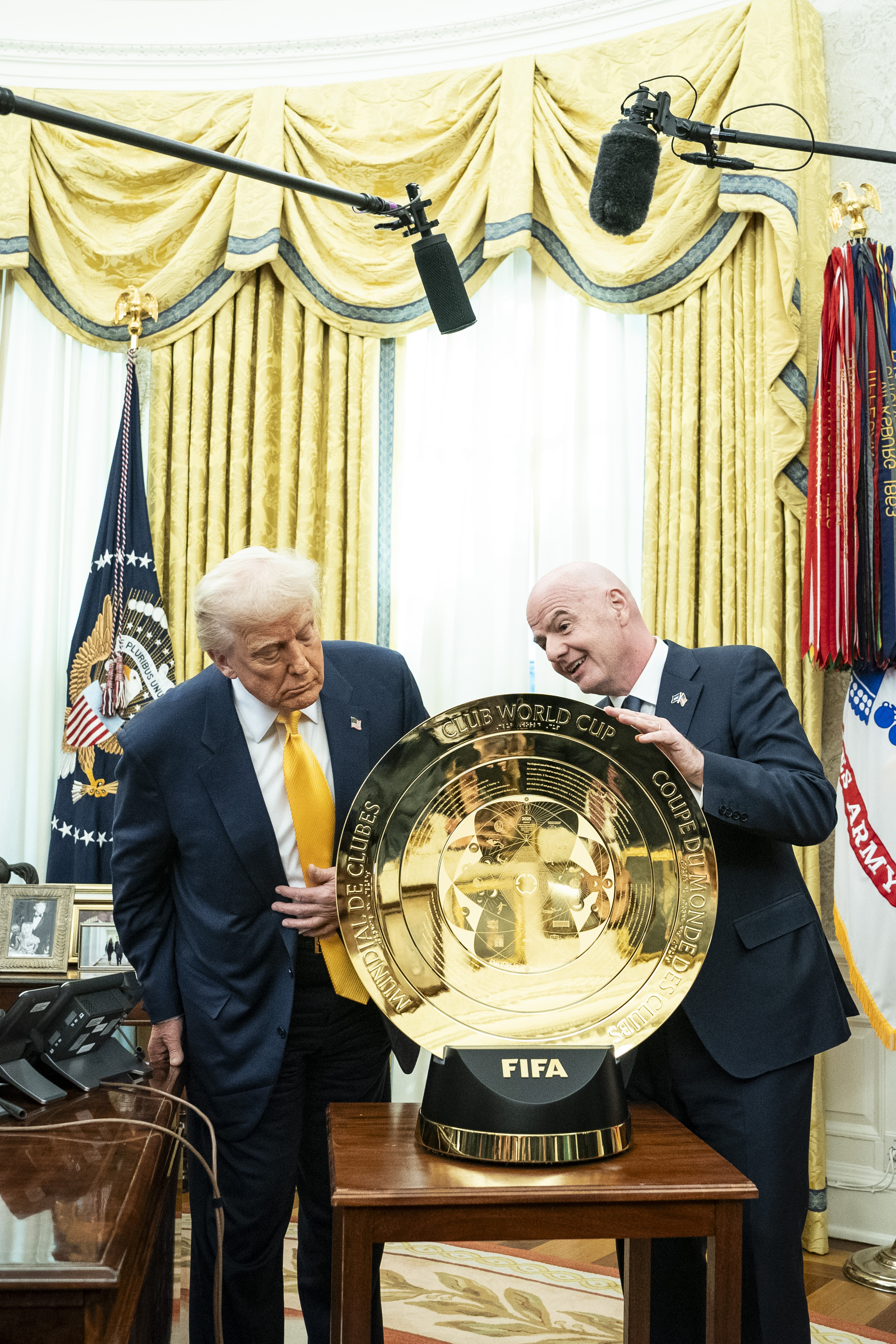
    President Trump and Gianni Infantino at the White House in 2025 with a trophy intended for the winner of the Club World Cup competition. Trump kept it, and FIFA commissioned another.Haiyun Jiang / The New York Times

    FIFA officials are clear about what they want from the World Cup. They want a higher profile in the United States and more growth in the world’s biggest consumer market. They also want to shed the reputation for corruption and cartoonish excess that led to Justice Department prosecutions.

    Infantino failed to woo the Biden administration, former government officials said. But he found a receptive ear in Trump, who calls him “the king of soccer.” A decade ago, soccer executives were terrified to travel to the United States, fearing they’d be arrested. Now, Infantino is an Oval Office regular.

    Infantino presided over the previous two World Cups, in Russia and Qatar, and drew criticism for cozying up to autocrats in both countries. His amity with Trump has him once again defending his way of operating in what is supposed to be a politically neutral position.

    “I think it is absolutely crucial for the success of a World Cup to have a close relationship with the president, with the government,” Infantino said last year. “I have a lot of friends.”

    This World Cup will be a test of whether that friendship pays off.

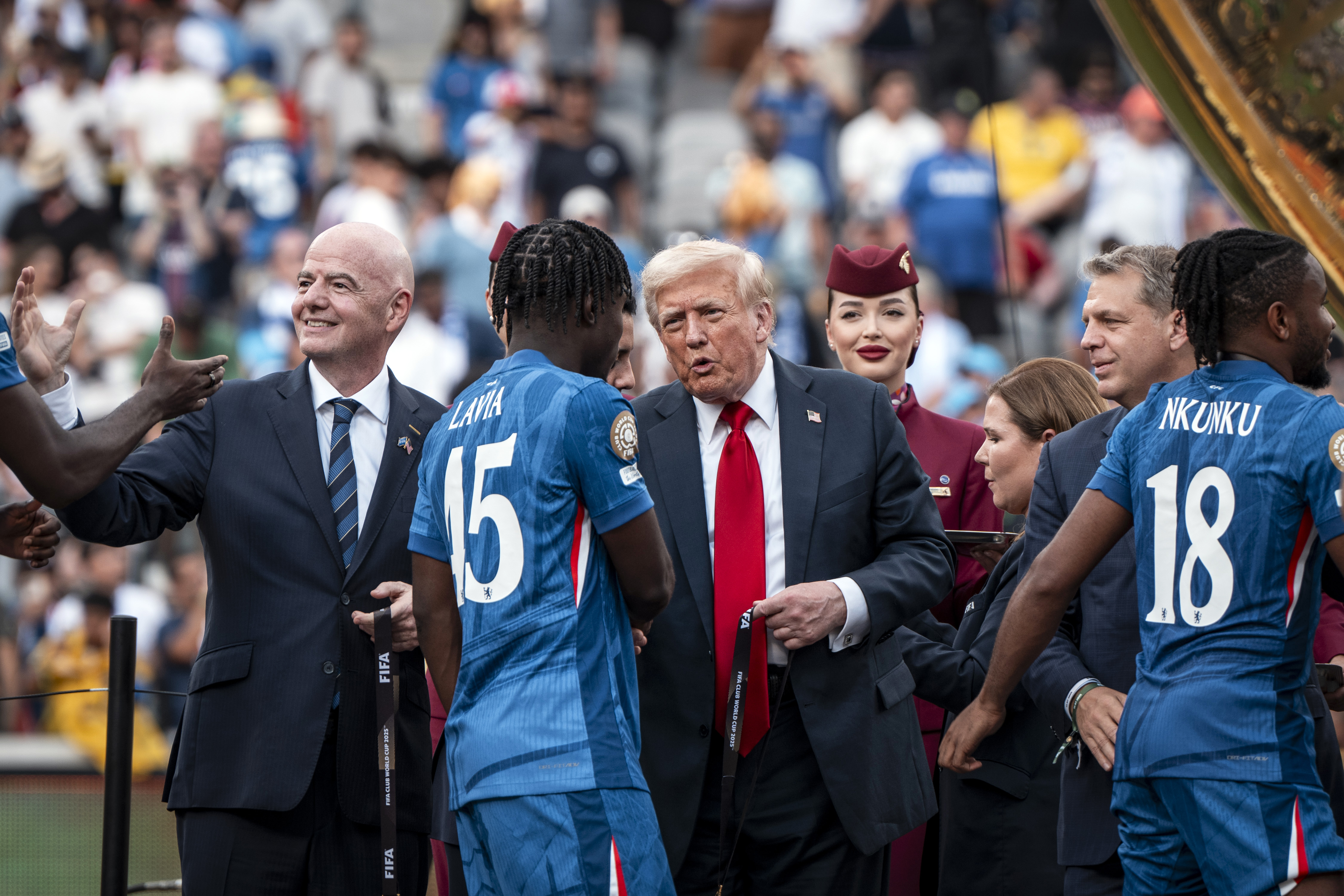
    Infantino and President Trump onstage during the Club World Cup final in New Jersey last year.Haiyun Jiang / The New York Times

    A top FIFA official says he believes there is an unofficial understanding that the authorities will not conduct immigration enforcement outside of stadiums. (A FIFA spokesman denied any deal and said enforcement was up to the government. The Department of Homeland Security did not address the question.)

    The Justice Department also recently dismissed long-running criminal charges as part of its FIFA investigation. Prosecutors said the case “doesn’t fit within the administration’s priorities.”

    And Trump seemed to defer to Infantino this spring on allowing Iranian players to come to the United States. “If Gianni said it,” the president said, “I’m OK.”

    Still, Trump undercut Infantino recently by criticizing the high cost of tickets. And whatever reassurances may have been made on immigration, support staff for Iran’s national team was denied visas, along with a Somali referee.

    Infantino’s coziness with the president also appears to be influencing FIFA in Trump-like ways that could outlast the tournament.

    FIFA is exploring hotel deals that would license its name just as the Trump family has long done, according to three people familiar with the discussions. He has also expressed interest in launching a FIFA cryptocurrency, just as the Trumps have done.

    A FIFA spokesman said the organization was paying “market rent” in Trump Tower and that the office would be used during the World Cup.

    Inside FIFA, many officials privately question whether this has all been in service of Infantino himself. He has accompanied Trump on state visits, sat center stage at the inauguration and has attended diplomatic events.

    What does any of that, his critics ask, have to do with soccer?

    Infantino declined to be interviewed. His yearslong campaign to curry favor with Trump, and the hand-wringing it has prompted, was described in dozens of interviews with FIFA insiders and others close to the two men. Some spoke on condition of anonymity to describe private conversations.

    “Infantino thinks he’s the leader in the relationship,” said Sepp Blatter, the former FIFA president whose ouster at the height of the corruption scandal paved the way for Infantino’s ascension. “But nobody can lead Trump.”

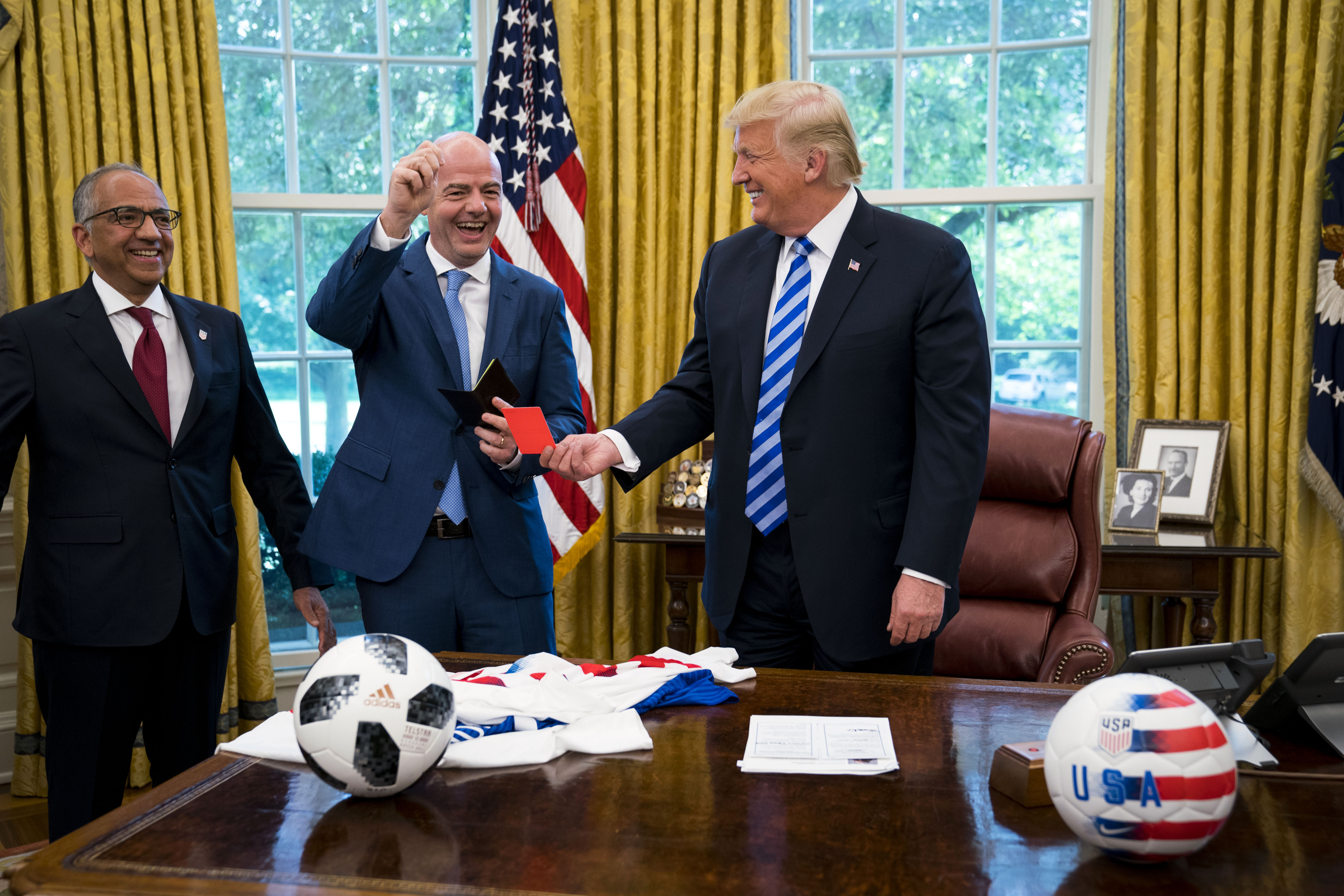
    Infantino meets with Trump for the first time in the Oval Office and jokes about penalty cards.Doug Mills / The New York Times

    The first meeting

    The men first met in the Oval Office in the summer of 2018. The United States had just won the right, along with Canada and Mexico, to host the World Cup, and the mood was celebratory.

    “You’re pretty famous, right?” Trump asked. “Pretty important and pretty famous.”

    “Yeah,” Infantino replied. “It looks like it.”

    Infantino, a lawyer and the son of an Italian immigrant who worked on Switzerland’s railways, had secured the FIFA presidency the same year that Trump was elected.

    In that first White House meeting, he presented the president with a Trump jersey and a set of penalty cards that the men joked could be used on the news media.

    “You are part of the FIFA team now,” Infantino said.

    It was a remarkable turnabout. Three years earlier, the Justice Department had unveiled an indictment detailing corruption in world soccer. Major brands did not renew their sponsorship deals, and the organization suffered financial losses.

    But if Infantino was eager to welcome the president onto FIFA’s team, he quickly found himself on the Trump Team — a pretty important, pretty famous endorser of a president in the middle of an impeachment inquiry.

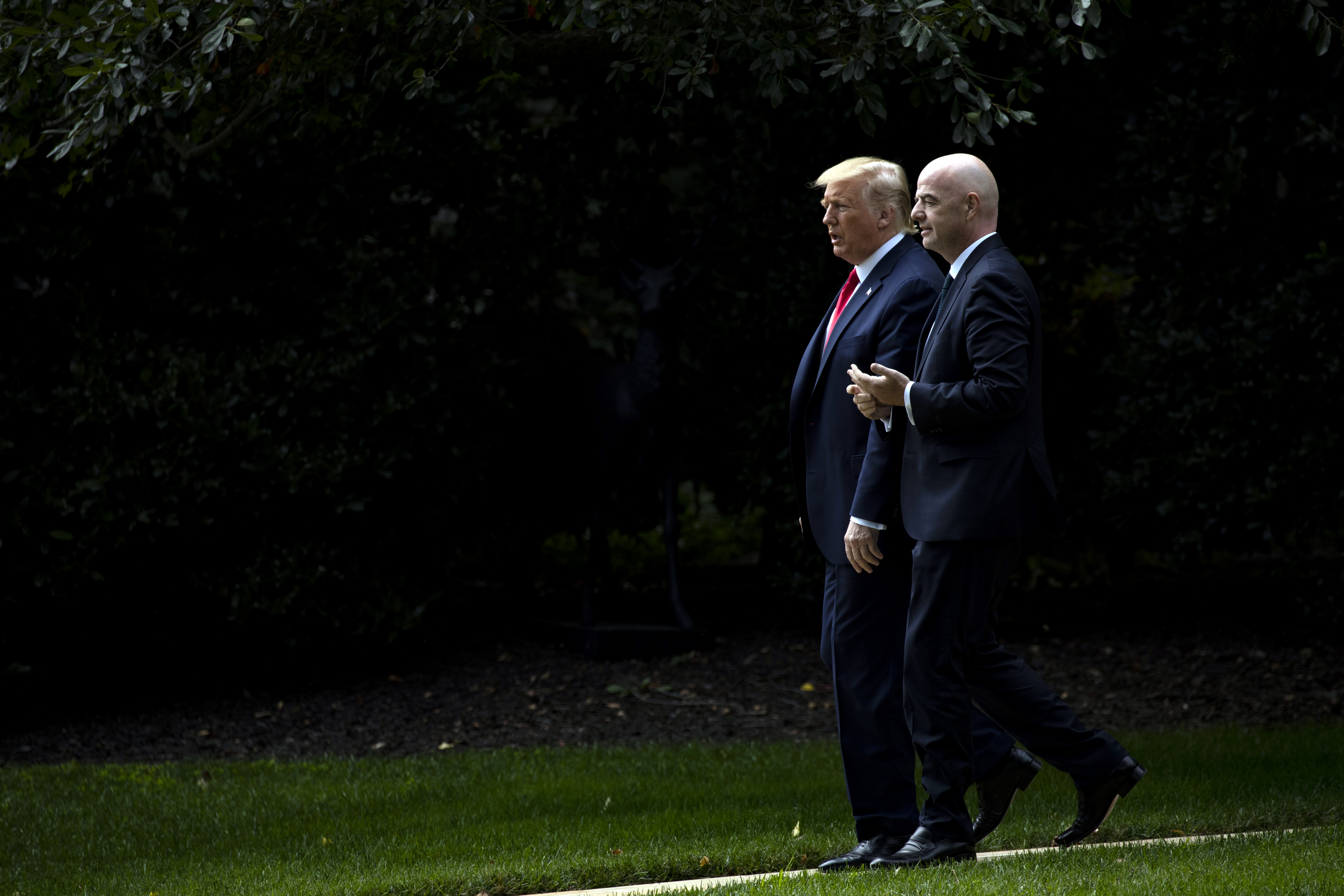
    “Gianni, we’re going to have to extend my second term,” Trump said on the South Lawn in September 2019, as Infantino smiled beside him.

    Months later, as lawmakers debated charges of obstruction and abuse of power against Trump, Infantino praised him before business leaders in Davos, Switzerland.

    “You might wonder why the president of FIFA is introducing the president of the United States of America,” Infantino said. He joked that it had been suggested that the two of them might be the most important people in attendance.

    Soon, Infantino was back at the White House, this time as an unusual guest for the signing of the Abraham Accords, which established diplomatic ties between Israel and some Arab nations. He also arranged a “courtesy visit” with the attorney general, who was overseeing the FIFA cases.

    “I am fully convinced,” Infantino said after that meeting, “that the credibility and reputation of FIFA is being restored at the highest level.”

    Then came the 2020 election, and Infantino’s fortunes changed.

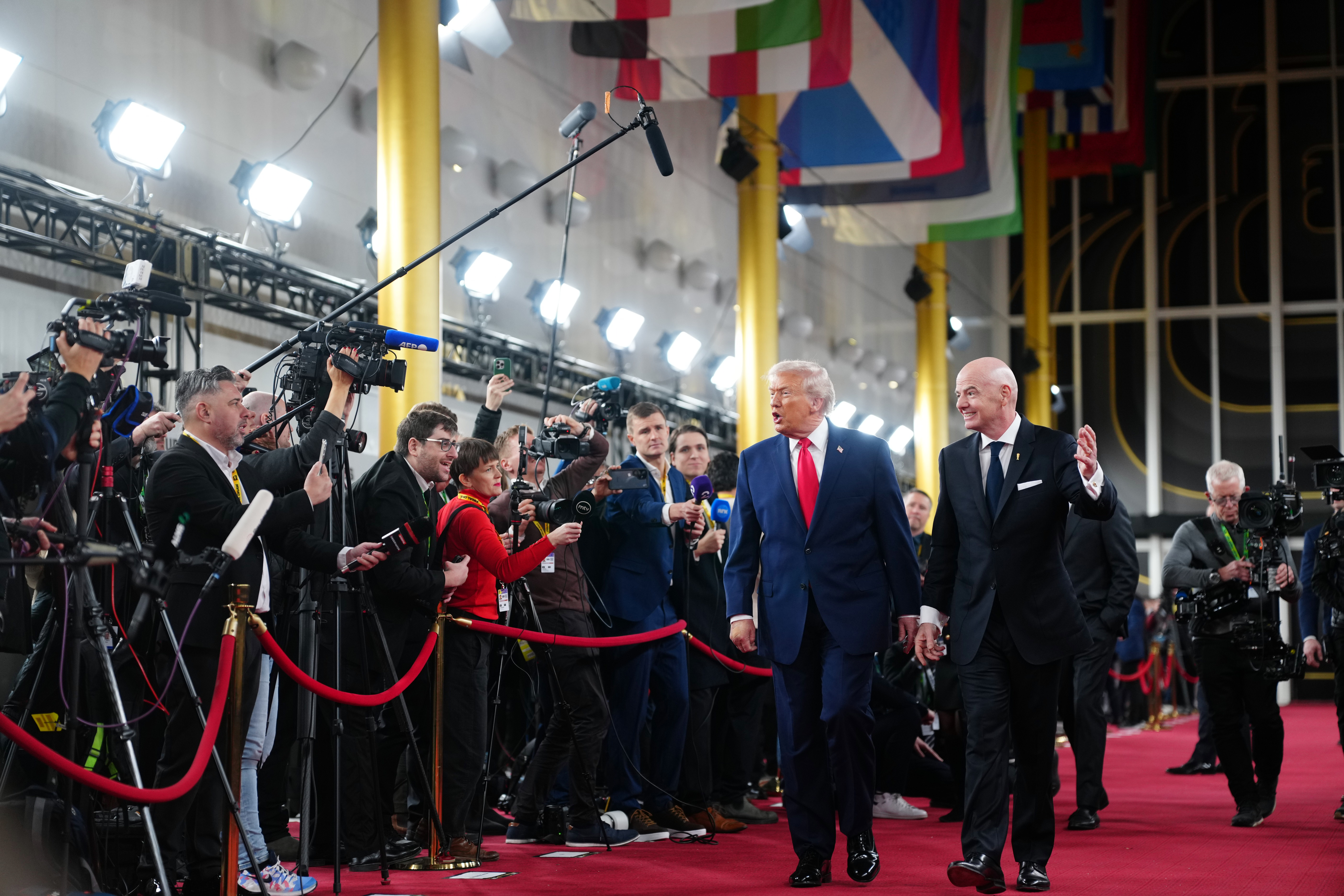
    President Trump and Infantino attended the World Cup draw at the John F. Kennedy Center for the Performing Arts last December. FIFA had planned to have the event in Las Vegas but moved it to Washington.Tierney L. Cross / The New York Times

    A chilly reception, and then a thaw

    President Joseph R. Biden Jr. proved to be less welcoming to FIFA than his predecessor. There were no Oval Office greetings.

    Administration officials said they had been wary of getting too close to a scandal-tainted organization. They saw no benefit in putting the president alongside Infantino.

    “There was definitely a hands-off, keep-them-at-a-distance approach at the White House,” said Caitlin Durkovich, a former National Security Council official who helped oversee World Cup planning. She said FIFA repeatedly tried to arrange meetings with top officials.

    In interviews, FIFA officials said that Infantino had been trying to raise FIFA’s profile. More practically, they said, he wanted people, when they Googled “FIFA,” to find anything but stories about bribery and kickbacks.

    But even an attempt to meet formally with Secretary of State Antony J. Blinken at the 2022 World Cup in Qatar fell flat, according to three people familiar with FIFA’s efforts to arrange a meeting. Infantino’s few interactions with American officials were mostly perfunctory and private, like a half-hour meeting with the national security adviser to address security and visa wait times.

    So when Trump won re-election in 2024, there was an opportunity to build on Infantino’s foundation. And Trump seemed eager to pick up where they had left off.

    Days before Trump’s second inauguration, the men convened at Mar-a-Lago, the president’s private club in South Florida, and flashed thumbs-up signs for a photo that Infantino posted to Instagram.

    Trump thanked him by name at a victory rally. And Infantino had an elevated seat behind Trump at the inauguration.

    Infantino eagerly promoted all of it, sounding at times like Trump’s campaign partner. “Together we will make not only America great again, but also the entire world,” he said.

    Infantino, it seemed, had achieved everything he wanted: accolades, endorsements and a World Cup task force, proposed by Infantino himself, that gave FIFA a formal place among Trump’s inner circle.

    But soon it was clear that such closeness had drawbacks.

    ‘Private political interests’

    When the world’s top soccer officials gathered in Paraguay for their annual meeting in May 2025, Infantino was on the other side of the globe, tagging along on Trump’s state visit to Persian Gulf countries.

    The trip had little to do with soccer, and when he finally arrived at the FIFA meeting, he was several hours late. European soccer officials walked out, protesting his prioritization of “private political interests.”

    “I felt that I needed to be there to represent football and all of you,” Infantino told them.

    It was then that behind-the-scenes grumbles exploded into view. FIFA is an unusual amalgam of 211 countries and territories, each with its own politics. Infantino’s closeness to Trump had impressed some constituencies and alienated others.

    “It’s a matter of priorities, and at that moment Trump was the priority for Infantino,” said David Goldblatt, author of “The Ball Is Round: A Global History of Football.”

    But Infantino was undeterred.

    One of his signature innovations was a 32-team tournament for the world’s best professional teams: the Club World Cup. But when he plugged the event from the Oval Office, he suddenly credited Trump as a co-creator. (After Trump kept the original Tiffany & Company trophy, FIFA presented the winners with another.)

    Then, on the eve of the tournament, U.S. Customs and Border Protection announced that agents would be “suited and booted ready to provide security for the first round of games.”

    Tournament officials panicked, terrified that immigration agents would arrest fans, according to three people who participated in planning discussions. Such a spectacle could deter attendance at the 2026 World Cup and potentially lead to a global backlash against FIFA.

    By then, Infantino was living in Miami, in the president’s orbit. His advisers strategized about asking Trump for a moratorium on immigration actions, both during the club matches and the World Cup.

    While no one close to either man has indicated what, exactly, they discussed privately, FIFA officials said that Infantino pressed the immigration matter. Whether for that reason or not, the government’s social media post was removed and ICE raids never materialized.

    Soccer officials said they believed there was a similar understanding for the World Cup. But, as is often the case with Trump, nobody can say for sure.

    The Department of Homeland Security, which oversees Immigration and Customs Enforcement, did not acknowledge any such agreement.

    “U.S. Customs and Border Protection, in coordination with D.H.S. and other agencies, is dedicated to ensuring the safety and success of the FIFA World Cup,” a D.H.S. spokesperson said.

    By some measures, the club tournament represented a win for Infantino’s strategy. He got an Oval Office platform, Ivanka Trump participated in the draw, immigration agents stayed away, and Trump attended the final match.

    But it was also a reminder that when there is a limelight, Trump often seizes it for himself.

    Appearing onstage after the final whistle, Trump lingered longer than planned, upending meticulous choreography, confusing the winning team and standing squarely before the cameras during the trophy presentation. FIFA and Secret Service officials were alarmed, and fireworks were delayed because of the president’s presence.

    It went viral, with Trump basking in FIFA’s moment.

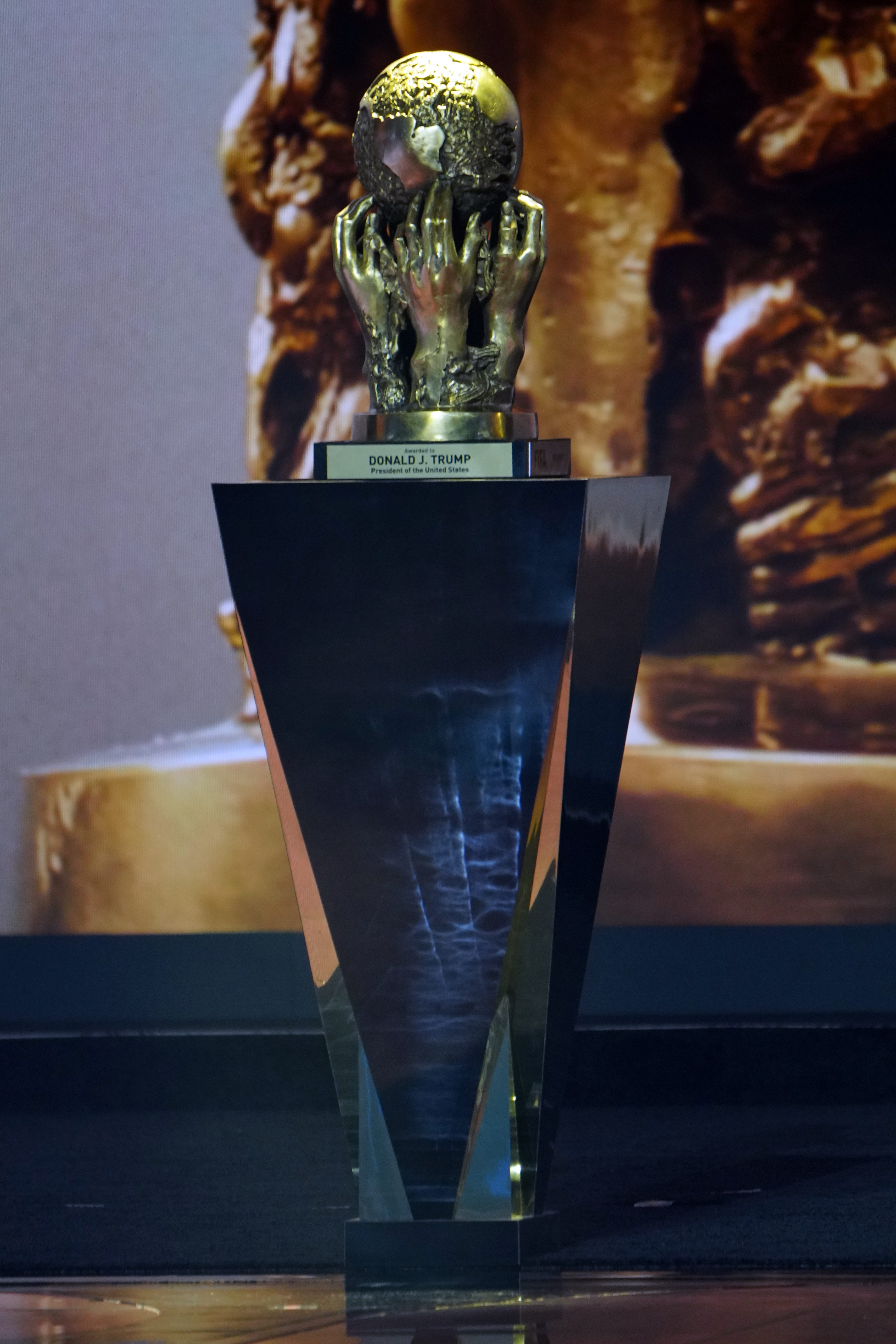
    The FIFA Peace Prize awarded to President Trump. The trophy, co-produced by a FIFA employee’s father, was spontaneously sourced from miscellany in FIFA’s possession.Tierney L. Cross / The New York Times

    The FIFA Peace Prize

    Oval Office visits are now routine for Infantino.

    “Always happy to be here, at home, if I can say that,” he said last year.

    “You are home,” Trump replied.

    When Trump assembled dignitaries and business titans for a state dinner for Crown Prince Mohammed bin Salman of Saudi Arabia, Infantino was there.

    “I think we should all support what he’s doing,” Infantino said at a business conference in Miami. “Because I think it’s looking pretty good.”

    Infantino has sought to capitalize on access to Trump allies. Under his watch, FIFA discussed with former Treasury Secretary Steven Mnuchin an investment in a streaming service, according to a senior FIFA official. Nothing materialized, only because the venture was put on hold, according to a person who was part of the talks.

    More recently, FIFA has explored hotel licensing deals with a prominent South Florida developer who is poised to develop the waterfront opposite Mar-a-Lago.

    Infantino also lobbied for Trump to be awarded the Nobel Peace Prize, which the president has craved. When the award went to the Venezuelan politician María Corina Machado, Infantino had an idea.

    Three weeks after the Nobel announcement, senior FIFA officials were told that Infantino wanted to announce a peace prize of his own. How long, they asked, did they have to work out the details — the criteria, for example, or the makeup of the nomination committee? Those questions went unanswered.

    Some of the most senior officials were told straightaway whom the first honoree would be, according to a person with direct knowledge of the plans, who learned about the prize and its recipient on the same day.

    FIFA did not have time to consider what its prize would look like. But luckily, the father of an employee was a sculptor, and FIFA had in its collection of miscellany a miniature version of one of his pieces, according to two soccer officials. The trophy was in hand.

    The FIFA Peace Prize was announced Nov. 5, with the award to be bestowed at the World Cup tournament draw a month later.

    FIFA had planned to have that event in Las Vegas. But Paolo Zampolli, a longtime Trump ally serving as a presidential envoy, encouraged Infantino to reconsider.

    “To move the president of the United States is a big process,” he recalled saying. Last-minute events might prevent a trip to Las Vegas, he said, but a local venue would better assure his attendance. “You know how important FIFA is for us,” Zampolli added. (FIFA said Zampolli had no influence over the choice.)

    Infantino moved the event to the John F. Kennedy Center for the Performing Arts in Washington, teasing that the site might be called the Trump-Kennedy Center. Trump attended and, to nobody’s surprise, was the first recipient of the FIFA Peace Prize. He received a certificate, a medal and the repurposed trophy.

    Trump called it “truly one of the great honors of my life.”

    The award angered many soccer officials, who said that it had embarrassed FIFA and cast the organization as partisan.

    Lise Klaveness, the president of Norway’s soccer federation and a human rights lawyer, said the prize breached FIFA’s rules on political neutrality. She announced that Norway would back an ethics complaint against Infantino.

    Ms. Klaveness said in an interview that she recognized that FIFA needed “friendly relations” with the governments hosting World Cup games. But she said there needed to be “checks and balances,” to keep FIFA from being used for political purposes.

    Infantino, though, has worn his friendship with the president on his sleeve. And his head. At one public meeting, world leaders and delegates were given red “USA” baseball caps. Infantino happily donned his, emblazoned with the numbers 45-47, signifying the Trump presidencies.

    This winter, as Infantino marked a decade in the job, he celebrated with a party at a Four Seasons hotel in Miami. Ivanka Trump and her husband, Jared Kushner, attended.

    The celebration carried into spring, when Infantino announced at a soccer meeting in Vancouver that he would run for a third term. He argued that the organization had repaired its reputation and played a slide show that included Trump.

    “We have definitely come a long way these last 10 years,” he told soccer officials. FIFA, he said, was now “sitting at the top tables, in every aspect.”

    This article originally appeared in The New York Times.

  • Could the FIFA World Cup reduce U.S.-South African tensions?

    Could the FIFA World Cup reduce U.S.-South African tensions?

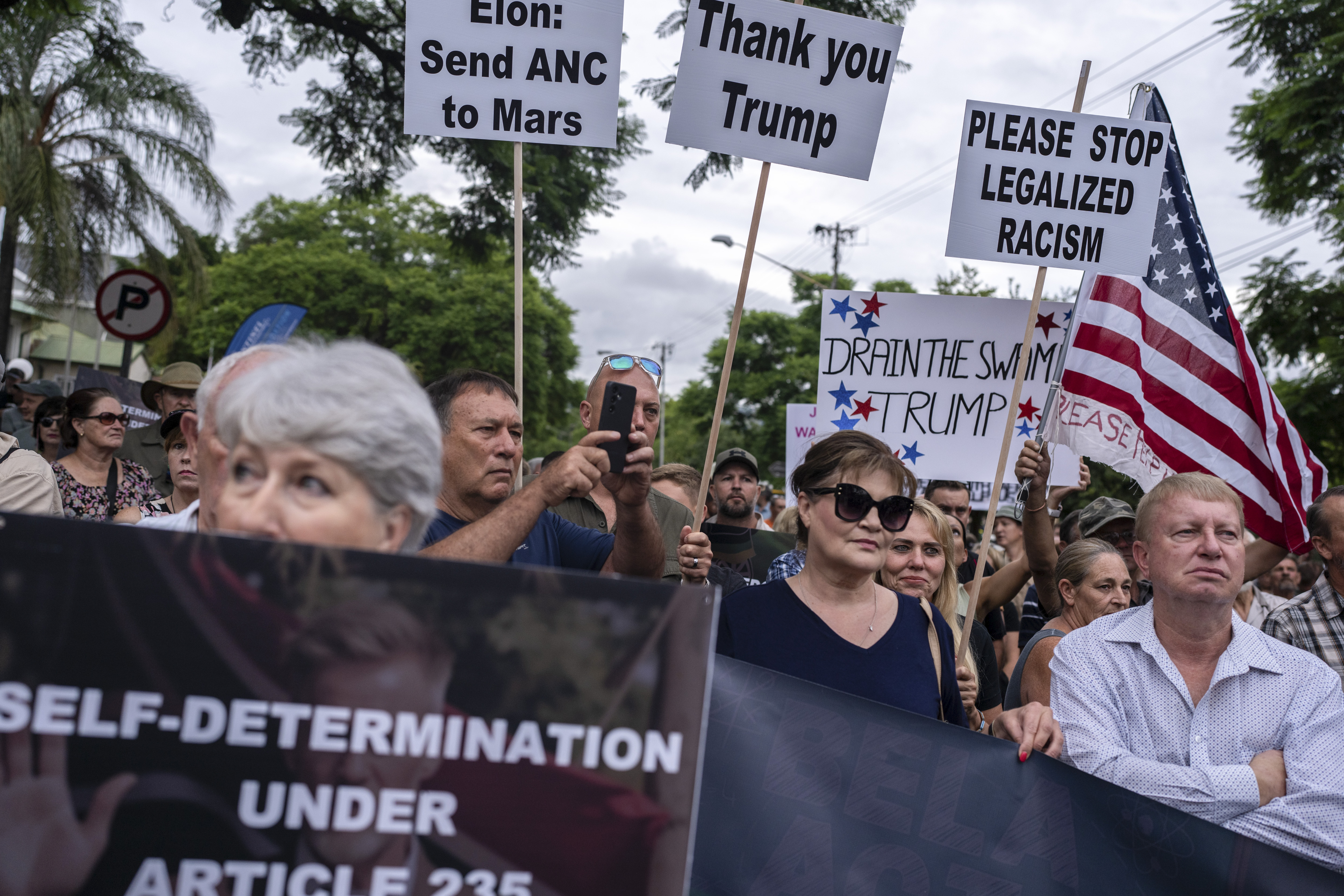
    The Trump administration has adopted a confrontational approach toward long-time ally South Africa. Washington has spent the past year spreading falsehoods about “white genocide,” cutting crucial HIV funding and blocking South Africa from the G20 while threatening its trade relationships. The United States has also made a point of resettling white Afrikaners as refugees, while excluding nearly all other refugees around the world.

    With the FIFA World Cup approaching, some may hope for a new chapter of “sports diplomacy” to relieve tensions between the countries. When South Africa’s national football team takes the field this summer, it marks Bafana Bafana’s first World Cup appearance in 16 years. But U.S. visa policies initially threatened South Africa’s ability to travel. At nearly every turn, the Trump administration is sending a clear message: it is hostile to a Black-led South Africa and sympathetic to its white minority. The domestic politics of race and white supremacy, long an undertone of U.S.-South African ties, animate the current bilateral relationship.

    The Trump administration’s embrace of white South Africans and the tensions with the African National Congress (ANC), the liberation movement-turned-political party that currently governs South Africa as part of a coalition, are not without historical precedent. Throughout the Cold War, Washington maintained close ties with apartheid South Africa’s white minority regime. Race was always part of the equation, but it was camouflaged in the language of anticommunism and strategic interest. Today, with the Cold War long over, racial politics are more exposed.

    From the early years of the Cold War, anti-Communism and race were entangled features of the U.S.-South African relationship. For Washington, South Africa’s white minority government was a reliable ally: rich in strategically important natural resources, home to a crucial shipping route and a bulwark against the Soviet Union in southern Africa.

    This relationship continued despite the formal consolidation of apartheid in 1948. The Afrikaner-led National Party systematically implemented apartheid, a draconian patchwork of racial segregation policies that stripped Black South Africans of their land and citizenship while blunting Black mobility. Despite this odious lack of democracy, Washington actively encouraged friendly relations with the white-minority-ruled South Africa. Cold War objectives overpowered moral arguments against apartheid.

    But the Cold War also shaped racial politics in unexpected ways. Just as Washington tolerated apartheid abroad, it was contending with its own system of racial segregation under Jim Crow. The Cold War created a powerful incentive for the United States to manage its image on race at home and abroad. The Soviet Union eagerly broadcast U.S. racial violence to newly decolonizing nations across Africa and Asia, undermining U.S. claims to lead the free world. This exposed Washington’s liability and motivated federal policymakers, becoming a key driver of civil rights victories and landmark decisions, such as school desegregation.

    These dynamics had the potential to threaten U.S. support for South Africa. After all, how could the self-proclaimed leader of the free world maintain its alliance with a government built on white supremacy? The answer, for most of the Cold War, was to turn a blind eye. And in the early Cold War years, domestic pressure campaigns to halt support for apartheid South Africa faced charges of communist subversion, severely blunting their impact and reach. While the Cold War opened the door to domestic civil rights gains, its politics in the early years also stymied avenues of resistance that could force Washington’s hand.

    Yet cracks eventually began to show. The rising tide of decolonization further exposed the hypocrisy of U.S. support for South Africa. In 1960 alone, 17 African nations gained independence from European colonial rule. Another turning point was the 1960 Sharpeville massacre, in which South African police killed 69 Black protesters, shocking international opinion and placing the evils of the apartheid state on full display. In turn, African leaders frequently criticized apartheid at the United Nations, placing Washington on the defensive. South Africa faced mounting international isolation, and Washington had to decide between its Cold War alliance with white-led South Africa on the one hand and its credibility with the decolonizing world on the other.

    The Nixon and Ford administrations resolved that tension by drawing Washington ever closer to South Africa’s white minority in the 1970s. Even as demands mounted from groups like the Congressional Black Caucus and the blossoming anti-apartheid movement for mandatory economic sanctions and a formal severing of U.S. ties to the regime, Washington remained steadfast. They concluded that gradual, constructive change, which they claimed to desire, could only come from white South Africans themselves not from U.S. pressure. It was an argument that conveniently absolved Washington of any responsibility to pressure Pretoria—and revealed U.S. policymakers’ views that Black South Africans were not credible leaders of their own liberation. Washington’s continued support became more exposed when, in 1974, South Africa was expelled from the United Nations General Assembly.

    Following the June 1976 Soweto massacre, where South African police killed over a hundred protesting students, international opinion grew more outraged, adding urgency to calls for sanctions. Winds of change arrived, albeit briefly, when the Carter administration initially took an aggressive approach to apartheid, aligning U.S. foreign policy with an interest in promoting human rights abroad. That agenda changed in the 1980s. President Reagan rejected calls for economic sanctions, instead endorsing “constructive engagement,” the argument that crippling the South African economy would hurt rather than liberate Black South Africans. Critics such as Desmond Tutu rejected this logic, arguing that Black South Africans had repeatedly called for sanctions. The U.S. Congress was also unconvinced. On October 2, 1986, a bipartisan majority overrode Reagan’s veto of the Comprehensive Anti-Apartheid Act, imposing economic sanctions and severing Washington’s formal ties to the regime.

    Made By History sponsors. FOR USE ON MADE BY HISTORY STORIES ONLY.Inquirer Staff

    Following decades of pressure, South Africa held its first multiracial elections in April 1994, bringing the ANC and Nelson Mandela to power. Washington warmly welcomed a democratic South Africa, which it now saw as a model for a peaceful transition to majority rule. In a post-Cold War world, the strategic rationale for supporting white South Africa largely disappeared; the U.S. no longer needed its defense against Soviet expansion.

    But the Trump administration’s hostile stance today is a signal that the Cold War relationship with South Africa was never purely animated by military necessity; a willingness to accept white minority rule undergirded the U.S.-South African relationship and was consistently reflected in policy. Now, those racial politics have become far more visible. The “white genocide” myth, Afrikaner refugee exception and hostility toward South African diplomats are driven by racial politics and a consistent willingness to privilege the concerns of South Africa’s white minority, unmediated by Cold War necessity.

    Whether or not the U.S.-South African relationship can be improved remains to be seen. Sport, which often reaches audiences that diplomacy cannot, also serves as a potential arena for reconciliation. The history of democratic South Africa suggests that sport has, more than once, progressed more rapidly than politics. The 1995 Rugby World Cup was perhaps the most celebrated example, when Mandela used the tournament to signal reconciliation, a moment immortalized in the Clint Eastwood film Invictus.

    South Africa’s first participation in the World Cup since it hosted in 2010, on American soil no less, symbolizes that potential. And yet, until Washington reckons with the racial politics driving its relationship with South Africa, both past and present, the World Cup is more likely to highlight the divide than to heal it.

    Mattie Webb, PhD, is an assistant professor of history at the Virginia Military Institute (VMI) and a Nonresident Fellow with the Institute for Global Affairs at Eurasia Group.

    Made by History takes readers beyond the headlines with articles written and edited by professional historians. Opinions expressed do not necessarily reflect the views of The Inquirer.

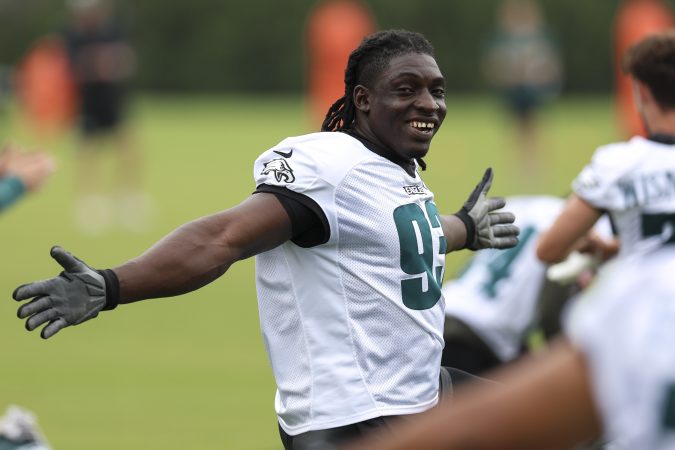
  • ‘Freakishly strong, freakishly fast’ Uar Bernard is relishing the ‘learning process’ of his NFL transition

    ‘Freakishly strong, freakishly fast’ Uar Bernard is relishing the ‘learning process’ of his NFL transition

    Uar Bernard has been in Philadelphia — a world away from his small village in Nigeria — for nearly seven weeks now. He visits restaurants, goes sightseeing, and even took in a Sixers playoff game.

    But nothing compares to his favorite spot:

    The Eagles’ practice facility.

    “I hardly go out,” Bernard said after Day 2 of Eagles mandatory minicamp on Wednesday at the Jefferson Health Training Complex. “I just focus on my playbook and my teammates, so coming into the building is fun for me and I love it here. I want to grow every day, so I keep my focus in the building and keep the main thing the main thing.”

    On the rare occasions he does go out, Eagles fans typically flock to the novice defensive tackle who, up until last month’s rookie minicamp, had never participated in a football practice. The towering 6-foot-4, 306-pounder became an instant fan favorite when the Birds drafted him in the seventh round in April. His impressive physical traits and status as a player from the international pathway program — from which the Eagles have greatly benefited with tackle Jordan Mailata — make fans bullish about his potential.

    So, how is he adjusting to life in the NFL? Off the field, Bernard said it’s a “home run” to be in such a passionate football city.

    “The fact that I can’t even go out without taking pictures with the fans outside, it’s amazing,” Bernard said with a smile. “Being here is like a dream come true to me because I’ve never experienced that before. I just came into the town from Nigeria and it’s amazing.”

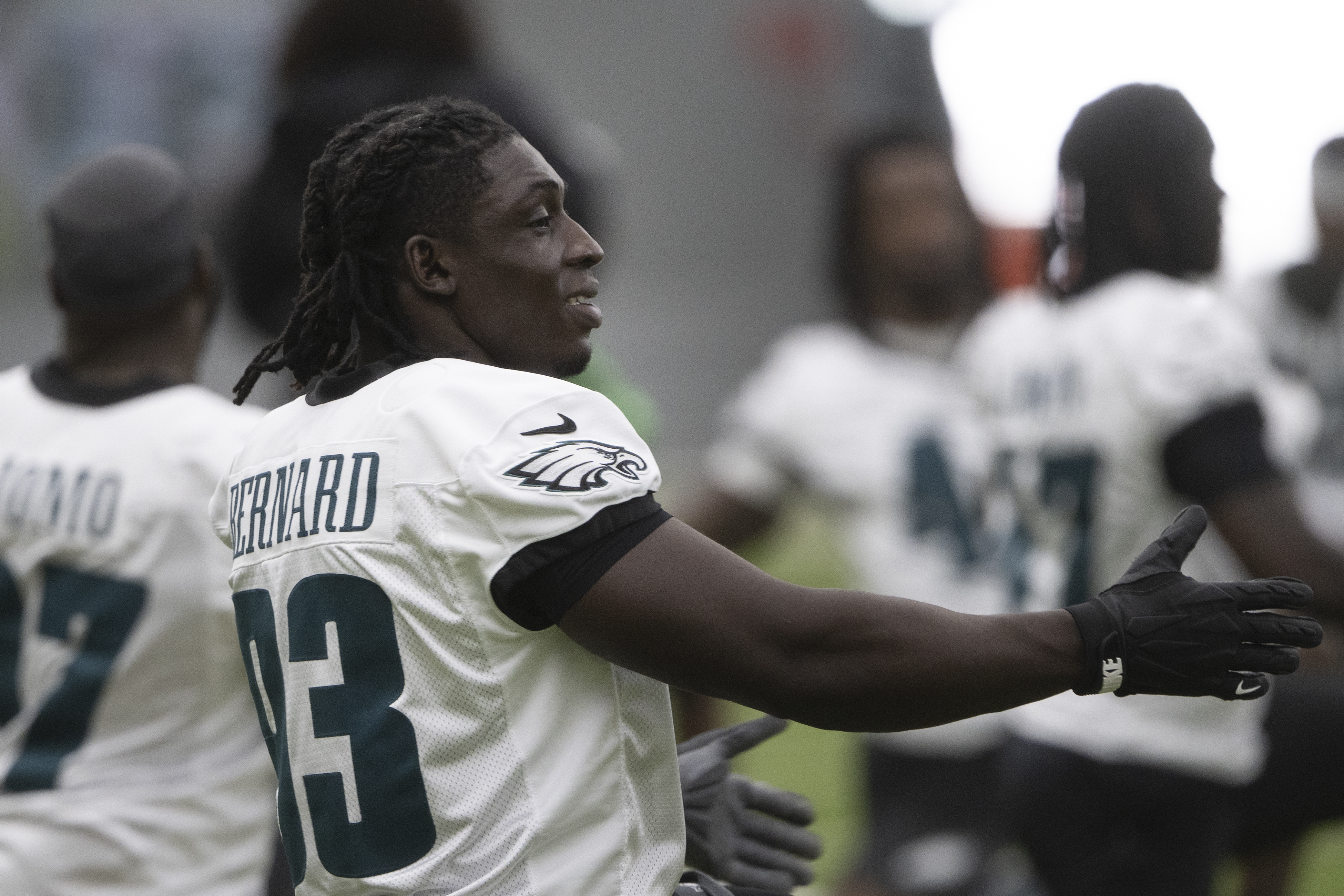
    Uar Bernard says so far that his NFL transition “is going smoothly.”Jose F. Moreno / Staff Photographer

    As for life on the field, Bernard called it a “learning process” — which makes sense given he went from not playing football to the NFL.

    “It’s good,” Bernard said. “I don’t see anything hard if you keep working out. If you have passion for what you do, you’re going to progress every day. So, I believe that the process is going smoothly.”

    His teammates and coaches agree. Speaking with reporters last week, Mailata — who had a relationship with Bernard before the draft thanks to their IPP ties — called him a “freak of nature.”

    “He’s just freakishly strong, freakishly fast,” Mailata said. “And I can’t even compare him to me just because he’s just again, not of this world just by like metrics and numbers-wise. … Once he puts it all together, I think it’s a wrap.”

    Defensive line coach Clint Hurtt, who nudged general manager Howie Roseman to draft Bernard, has been “like a father” to Bernard. Like Mailata, Hurtt believes that, if the team is patient enough with him, he can become a force in the league.

    “I’m not putting my stamp on everybody,” Hurtt said last week. “If you don’t have a great work ethic, if I don’t believe in your character and who you are as a person, I’m not putting my family’s well-being in anybody’s hands.

    “But when I saw the kid’s work ethic and character, he’s an unbelievable human being. I know as people get a chance to spend some time with him, he’s a great kid. So I felt good about doing that.“

  • Flyers Q&A: Danny Brière on the NHL draft and the progression of Jett Luchanko

    BUFFALO — In the second installment of our interview with Danny Brière at the NHL’s scouting combine, we talked with the Flyers general manager about the upcoming draft, his fourth with the team, and who has impressed him in the organization the most.

    This interview has been edited and condensed for clarity. It was conducted on June 3, before it was revealed that Dylan Larkin wanted a trade out of Detroit.

    Q: Does how the year went, especially because of the postseason, change your strategy or impact your outlook at the draft?

    A: It does not, no. It’s a different animal. We know that what happened was great — the stretch, and then the playoffs were awesome. Expectations are going to grow; we’re aware of that, but we want to try to be careful with the expectations, too. A lot of time it’s not a straight line up. We see it individually with the players, and we see it with teams as well. There’s going to be ups and downs along the way. So we’re trying to be careful with managing the expectations going forward. It’s not going to change our approach. We still feel that we’re in a growth stage of our rebuild, and we don’t want to deviate from that too much, unless it really makes too much sense.

    Q: It is a slightly different setup for you this year compared to your previous drafts. By picking at No. 21, does that change your mindset?

    It doesn’t change the mindset, as far as the approach, where we’re still looking to pick the best player, especially at the higher-end level. You want to make sure that you have someone who can be a difference-maker, not just a filler, hopefully; never have a guarantee, but that’s the goal. But, yeah, obviously we have to dig in a little bit more on more players, because the range or the amount of players changes a little bit. When you’re picking [at] six, usually you know who’s going one and two, and even when we were at 13, it’s a small group of players who are going to be there. At 21, it can start to go sideways usually after pick 10 or 11; it can go in many different directions, so we have to be prepared that way and try to know more players this year.

    Matthew Gard is one of several center prospects in the Flyers system. He is heading back to the Western Hockey League next season.Alejandro A. Alvarez / Staff Photographer

    Q: Since assistant general manager Brent Flahr was hired, the Flyers have drafted nine centers — eight of those since you became GM. Is there still a need to draft a center?

    A: Absolutely. You can never have enough centers, and it’s a lot easier to move a center to the wing than the other way around. When I talk to other GMs, nine out of 10 GMs are looking for centers. It’s a position that is tough to fill, and part of it is because when a player is usually not able to make it down the middle or doesn’t fulfill what they’re looking for down the middle, they move them to the wing. So wingers are a lot easier to find. Every team is looking for centers, so that’s not a problem to have a surplus of centers. We have one in Cole Knuble who played a lot of the center position, and then last year played mostly on the wing. Well, we know that he can play both, and he played both in Lehigh Valley. So it’s a nice luxury to have too many centers.

    Before I arrived, there were some centers who didn’t hit, like Nolan Patrick, German Rubtsov, and Jay O’Brien. So there have been a few that they just didn’t pan out. I think the organization was trying to draft centers, the players didn’t pan out or didn’t develop the way the organization expected, and that’s why all of a sudden we came up and we didn’t have very many centers.

    So hopefully now the players that are in place will keep developing. We believe in Jett Luchanko. We believe in Jack Nesbitt, the way he’s developed. Jack Berglund has really stepped up. We think Heikki Ruohonen is trending in the right direction, and hopefully the guys we signed, Riley Thompson and Knuble, at the end of the year could really help us there. Matthew Gard is also in there. So it’s a nice luxury to have, and if we have the chance to jump on a center, we won’t hesitate to get.

    Q: It feels like it’s either defensemen or centers in this draft.

    A: It seems to be a lot, but you look at last year, there were all these centers. There was one winger in the top 10, I think; who drafted the winger? We did — which we don’t regret, by the way. Porter Martone has been amazing. But we went with what we felt was the best player on the board, not considering the position at that time. So it’s going to be the same approach. But, yeah, there seem to be a lot of defensemen and centers in this draft.

    Q: Is there any update on the first-round pick from Toronto, acquired in the Scott Laughton trade, in regards to which year?

    A: No, I haven’t heard from the NHL on that yet.

    Q: Hunter McDonald is a restricted free agent. Where do things stand in his contract negotiations? Where do you see him projecting long-term, and is he ready for the NHL?

    A: Hunter took a big step last year in his development, and that’s why he played that game late in the season. I think our coaching staff was really impressed on how he took a step forward this year. He put in the work and really elevated his game, earned that NHL game at the end, and he was around the team when we played in the playoffs as well.

    Really exciting to see him have growth to his development. It’s a big summer for him, but we’re excited about him. A big, physical defenseman like that is not easy to find, and we hope he’s going to be one of those guys, eventually. But he’s going to have to beat someone at some point to earn those minutes.

    Flyers defenseman Hunter McDonald is one of several players expected to push for an NHL job come September.Yong Kim / Staff Photographer

    Q: Do you foresee Emil Andrae, also an RFA, having long-term success in Philadelphia?

    A: What we love about Emil is his compete level. I was really impressed with him after training camp when we sent him down to go work on his game — he wasn’t happy about it — but he went down and didn’t pout and decided to show everybody that he didn’t belong in the American [Hockey] League anymore. So that part is what you love about him. He’s going to compete; he’s going to give you everything he has. But, again, now you’ve got to beat someone in the top six to play on a regular basis. That’s not easy to do. We do have some good defensemen, and that’s going to be the same challenge for him moving forward.

    When you’re at that stature, and I lived it myself, you almost have to be perfect, and that’s the tough part. We’re asking a lot out of him for him to be able to be in the lineup, and I think he’s getting better at it. Making fewer big mistakes, he has gotten better, but that’s the reality that he’s dealing with, and he knows that, and he’s good with it, and he’s really working hard on his game to become a very, very efficient and effective defender.

    Q: Do you like that there might be all this internal competition now?

    A: Absolutely. I think it’s great. I think it’s great that we have an internal rivalry to beat each other out for minutes. That’s the great part too, with our veterans. They understand, they respect it, because they did it at one point, they beat someone out. So I think our guys realize, and that’s great, that it also pushes our veterans to stay on top of their game and keep getting better.

    Q: Is there anyone in the system who impressed you?

    A: Ty Murchison had a great [year], and that’s why he got some games early, before his injury; that was an impressive year. I think Oliver Bonk, after dealing with some injuries early in the season, built up his game and got better as the season went on. David Jiříček will be a very interesting one because he had a really good, strong finish to the season in Lehigh Valley. So that’s just been in the [AHL]. Up front, you saw Porter Martone, Alex Bump, and Denver Barkey; they earned it. Nothing was given for free; they earned their minutes, they earned playing more and more because they were competitive, they were ready to go. So that’s really exciting.

    Q: Who is the player who needs to take the biggest step next year?

    A: I can’t really pinpoint one. I think we expect that from every player. There are expectations. It’s not just hoping if you want to make it. And that’s a little bit of the tough part with our guys — we do have a lot of players and a lot of good, young players, so you have to earn your way. You have to push yourself, and you have to be willing to commit to a regimen to get ready for next season that is probably out of your comfort zone. That’s just the reality. You want to be an NHL player, you’re going to have to do that.

    Flyers forward Jett Luchanko skated in four regular-season games and one playoff game this season.Yong Kim / Staff Photographer

    Q: Jett Luchanko had a little bit of an up-and-down year. Where do you see him fitting in as his career progresses? And what do you need to see from him next season?

    A: We’re excited to see him turn [fully] pro. I think that’s great. For Jett, it’s been tough, and he’s been on so many teams. Just last year alone, from Flyers to Guelph [of the Ontario Hockey League] to Brantford to World Juniors, back to Brantford, to the Flyers. There’s been bouncing around, and that’s two years in a row that he’s kind of done that. Stability will probably be a good thing for him.

    We expect a big summer out of him, and he’s got to get ready. The big thing with Jett is, he has an elite skill in skating that is almost unmatched from anyone in the organization, other than maybe Owen Tippett. So that’s always going to have a lot of value for anybody to have a player like that. Now it’s our job to try to help him and round out his game to make it in the NHL. But what I would expect, I would say, is probably for him to play a year in Lehigh Valley.

  • This Havertown resident is 90 and still competes in track and field. What’s his secret?

    This Havertown resident is 90 and still competes in track and field. What’s his secret?

    People in John Durning’s circle have come to know him as “Superman,” which makes sense, given his growing collection of gold medals.

    At 90 years old, the Irish immigrant and Havertown resident competed in the 36th annual Delaware County Senior Games on Thursday. He competed in several events, including a 100-, 200-, and 400-meter run, a softball and football throw, and, Durning’s favorite, the long jump.

    Last year, as the sole 89-year-old in the 85-89 age division, Durning still had some competition. He may be one of the few in the 90-plus age category this year, but Durning doesn’t mind if he wins gold by default.

    “This week brings the total to 230 medals,” Durning said before Thursday’s Games. “I have nine more silvers than I do gold, so I’m trying to beat that.”

    He came away with 10 golds and one silver, winning each of his track and field events as well as singles and doubles bowling, miniature golf, and shuffleboard over the course of the Games, which ran from June 1-12. His silver came in team bowling.

    Durning began competing in the games when he was a spry 56-year-old after hearing about them from a friend. The games are meant to keep folks active as they age and retire. Spending his retirement on the couch, however, was never a concern for Durning’s friends and family.

    John Durning added to his medal collection at the Delaware County Senior Games.Tyger Williams / Staff Photographer

    Changing plans

    Durning was born in 1935, the second-youngest of 10 children, and raised on a farm in Donegal, Ireland. He learned to play Gaelic football with his five older brothers at an early age. Needing to find a job, he immigrated to the United States at 21, where an aunt and cousins lived.

    “I came through New York City on April 17, 1957, and I saw the lit-up Statue of Liberty,” Durning said. “It was beautiful.”

    He planned to stay for only three years. The plan was to work and save up to open a sporting goods store back in Ireland. However, after 16 months in the United States, he was drafted into the U.S. Army, where he went on to become a paratrooper with the 101st Airborne.

    The Army saw his athletic potential, and he was recruited to compete on the U.S. Army soccer and track teams. He competed against other military branches and colleges while he was based at Fort Lee in Virginia.

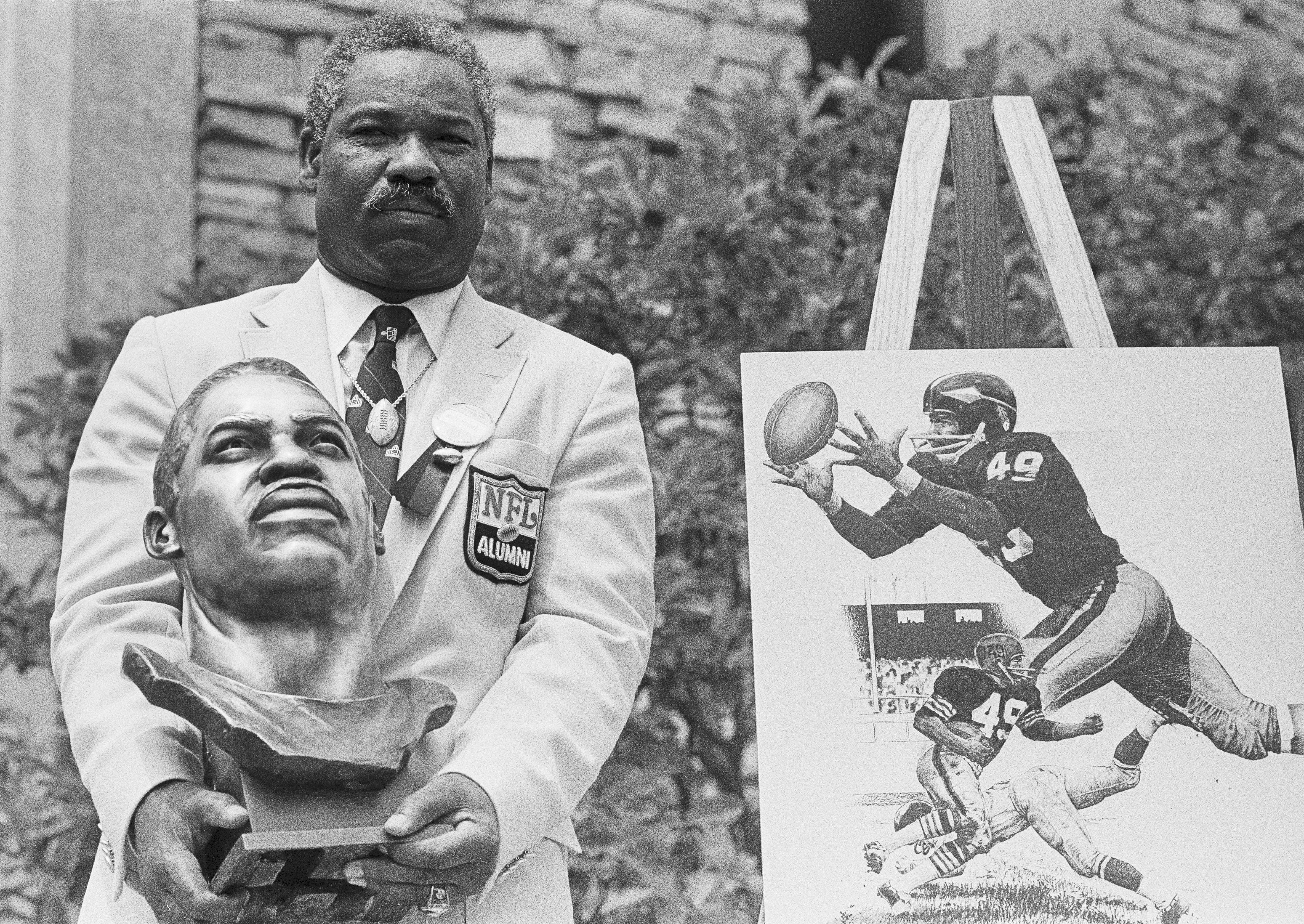
    “I’ve rubbed shoulders with some great athletes when I was in the Army,” Durning said. “Like Bobby Mitchell, who was a wide receiver for the Cleveland Browns.”

    John Durning says he crossed paths with Bobby Mitchell, a Hall of Fame halfback and wide receiver, during his time in the Army.Gus Chan

    Unlike many of his teammates, John had no thoughts of going pro after he left the military in the early 1960s. Besides, he soon had a family to support.

    He met the love of his life, Helen, at a dance, and they married in 1962 and had the first of their four sons a year later. Durning worked night shifts at Acme Baking Co. and coached his sons’ soccer and track teams in the afternoons.

    “He has always had a sense of humor about our sports,” said Brian Durning, the second-oldest of the Durning sons. “I remember he would take us to the Haverford High School track on the weekends to practice baton handoffs and understand what we were doing better, and help us ahead of time not make a mistake.”

    Over the years, Durning coached a multitude of sports for local teams, including soccer and track at Malvern Prep, Waldron Mercy Academy, and the Haverford School. The number of kids he has coached is innumerable.

    “I have people here and there who tell me, ‘You were my coach,’” he said. “They are teaching their own kids now and ask me to come and watch … coach them on coaching.”

    A large part of Durning’s legacy is the founding of two soccer clubs. The first, when he was only 17, was the St. Michael’s GAA Club in Donegal. He played on the team and served as treasurer and secretary in the club’s early years. The club recently honored Durning for his 90th birthday by placing a bench engraved with his name outside the clubhouse.

    In 1974, he helped found what became Haverford Soccer Club, where he remained involved for years, helping the organization grow from just 68 boys to more than 2,000 players and coaches.

    Durning retired from coaching at age 75 after the Haverford School won the 2011 Pennsylvania Independent Schools Athletic Association state championship.

    “After that, I knew it was time to step away,” he said.

    Staying active

    Between the annual Senior Games, Durning stays on his feet. Heavily involved in the Donegal association of Philadelphia and the local Irish Center, he is an athlete in many ways — including dance.

    “At the Irish Center, he’s known as the best waltzer in the Irish community,” said Pari Livermore, Durning’s best friend. “He’s like dancing with air. He can still dance with about 15 to 20 girls. No one can move like him anymore. That’s why they call him Superman.”

    Durning and Livermore make it a habit to dance as much as they can.

    “We met at an Irish dance,” Livermore said. “We sat down next to each other, and I asked, ‘Would you like a drink?’ He said, ‘No, I don’t drink’ … so that’s one reason why I think he is so healthy and so active.”

    Added Durning: “At one point I was a bartender, and I’ve still never had a drop. I sold cigarettes in my father’s shop, and not once did I ever smoke.”

    John Durning makes it a point to stay active in retirement.Tyger Williams / Staff Photographer

    The Irishman adds to his regimen by stretching every morning and walking around the neighborhood most evenings. Even Durning, though, has had his hardships.

    “I’ve had three back surgeries and two hip replacements,” he said. “And I’m still running and doing the long jump. A lot of people have back surgeries, knee replacements, and all, but they never continued with physical therapy exercises, which is key. It just takes 20 minutes a day.”

    Durning has encouraged others to continue staying active. Once a coach, always a coach, he now helps friends with their Senior Games performances. Despite being an accomplished athlete, his community remembers him for more than his medals.

    “If you were to go around his friends and say, ‘Can you describe John with one word?’” Livermore said, “they would all probably say he is a gentleman, not an athlete. They would say he is a gentleman.”

    Durning plans to stay active and “compete until I am physically unable to,” but not without warning.

    “You know, I’ve been told to slow down,” Durning said. “‘You could get a heart attack and drop dead on the track,’ they say, and I just said, ‘Well, we have the long jump pit and the shovels out. You can just throw me in and do it dirt cheap.’”

    Durning has a plan for his medals when the time inevitably arrives. It’s somewhat of a tradition, he explained, to hand out the silver, gold, and bronze awards one received in the Senior Games at their funeral. Durning will have more than 230 medals to share — a physical reminder of the zest he has for life.

    “I say you’ll never, ever be too old,” he said. “If you want something, as long as you’re healthy enough to do it, you should be doing it.”

  • Kyle Daukaus will show President Trump his ‘dad strength’ as he reps Philly at UFC’s White House ‘spectacle’

    Kyle Daukaus will show President Trump his ‘dad strength’ as he reps Philly at UFC’s White House ‘spectacle’

    In two months, UFC will be making its highly anticipated return to Philadelphia.

    UFC 330, which is set for Aug. 15 at Xfinity Mobile Arena, will be the company’s first major championship event held in the city in 15 years. With its return, plenty of Philly fighters are already eyeing the card for the opportunity to fight in front of their hometown crowd, including 33-year-old Kyle Daukaus.

    “It would be amazing to be on that card,” Daukaus, a Father Judge graduate, said. “Growing up 25 minutes from the stadiums, going to all of them when I was a kid — it was really amazing to kind of grow up here and be a fan of these sports. But to go out there and perform in front of fans at that stadium would be amazing.”

    Before he can cross that off his bucket list, Daukaus has one obstacle in his way: former Penn State wrestler — and three-time NCAA champion — Bo Nickal. Daukaus will face Nickal Sunday in a middleweight bout at UFC Freedom 250, on the South Lawn of the White House on President Donald Trump’s 80th birthday.

    Being included on the much smaller card — this weekend’s event will feature seven bouts, compared with about a dozen on a normal card — was an honor for Daukaus.

    “Obviously fighters want to be on the card because of the spectacle that it is, and how amazing it is and how crazy it is,” Daukaus said. “I knew that they were only going to have like six to eight fights on the card, and I really didn’t think I would have been one of them. Finding out that I was one of them shows that they have belief in me to go out there and have the performance that can get more eyes on the sport.”

    Daukaus (17-4) was originally scheduled to fight Vicente Luque at UFC 327 in April. But a day after signing the contract, he got the call to fight against Nickal (8-1) at the White House event. The card also includes a pair of title bouts and names like Ilia Topuria, Justin Gaethje, Alex Pereira, Sean O’Malley, Michael Chandler, and Derrick Lewis.

    Daukaus, who co-owns The Forge MMA gym on Academy Road in the Northeast with his brother and former UFC fighter Chris, is currently riding a two-fight win streak. Daukaus was released by UFC in 2022. Since his return, he’s picked up a pair of first-round wins, knocking out Michel Pereira and beating Gerald Meerschaert by submission.

    The Philly native was 4-4 in his first UFC stint. Following his release, he fought in Atlantic City-based Cage Fury Fighting Championships, where he won four consecutive matches before re-signing with UFC in April 2025.

    So, what’s different this time around? “Dad strength” — and a new perspective.

    “I have two kids now, so dad strength is something that has been brought to me,” Daukaus said. “But just my maturity levels. I feel like ever since I had my first son, I’ve been more mature with myself.

    “I’ve realized there’s a lot more to this game than me. I’m doing this for them as opposed to just me. So I feel like that is a little bit extra motivation. These last two fights have been something. I’ve had good performances and it showed that I can kind of take on any challenge they put against me.”

    His next challenge comes with an elite pedigree on the mats and is fresh off a head-kick knockout win over Rodolfo Vieira. Heading into the matchup, Daukaus is cautious of Nickal’s wrestling ability, but believes his own jujitsu skills can hold up on the ground.

    “I’m not afraid,” Daukaus said. “Obviously, if it was a straight wrestling match, I would be screwed. He’s a good wrestler, but with jujitsu and everything like that, there’s a lot of things that I can [use to] counter. But I’m not solely focused on being defensive against him. I have to be offensive to make sure he worries about me.”

    Kyle Daukaus will face Bo Nickal at UFC Freedom 250 on the South Lawn of the White House.Yuki Iwamura / AP

    What can fans can expect from his White House performance? Daukaus thinks it’ll be his best yet.

    “I feel like I need these opponents that kind of push me to get me up early to make sure that I’m training where I can train,” he said. “I’m going to go out there and put on the best performance that I possibly can to make sure the fans are excited.

    “And obviously, being at the White House, we can’t have any of these lazy performances. We got to go out there and make sure we can showcase some skills and get the fans’ eyes on the event.”

    If he does that — and doesn’t suffer any major cuts or bruises along the way — Daukaus will begin to turn his attention toward a possible UFC 330 fight.

    “I would be a liar to say that it wasn’t in the back of my mind,” Daukaus said. “I know it’s about nine weeks after [Sunday’s fight]. So I can take that week off as long as there’s no injuries or anything like that and then get back right back into camp.

    “Would it be a lot on myself? Yes, it would be a lot going back to camp like that. But it would be something super special.”