“Smokin’” Joe Frazier is finally in his new home, just in time for the 250th birthday of the United States.
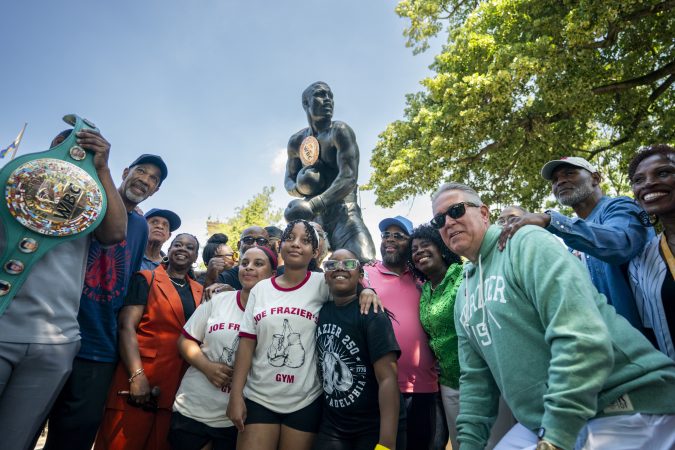
City officials, alongside Frazier’s family, friends, and fans, on Monday unveiled the real-life heavyweight boxing champion’s statue at the base of the Philadelphia Museum of Art. Intended to be the statue’s new location in perpetuity, the spot was occupied by a monument to fictional boxer Rocky Balboa for two decades.
“During this 250th celebration in the birthplace of democracy, we will forever remember that the city got right what it had gotten wrong for a long, long time,” Mayor Cherelle L. Parker said. “Now, Joe Frazier is attached, and connected to, and will permanently be here at our Philadelphia Museum of Art.”
Monday’s unveiling was the culmination of months of planning. The Philadelphia Art commission in February approved a plan to move the statue from by Creative Philadelphia, the city’s office for the creative sector. Chief cultural officer Valerie V. Gay said Monday’s event was something of a “soft launch” for the statue’s new home, as a granite base will be installed in the future, along with more formal interpretive panels.
Mayor Cherelle L. Parker speaks at the unveiling of the statue of former heavyweight boxing champion Joe Frazier at its new home outside the Art Museum. Jessica Kourkounis / For The Inquirer
“Today, we did not want to wait,” Gay said.
Frazier’s statue, after all, lived at the South Philadelphia sports complex for more than 10 years. Created by sculptor Stephen Layne, the statue was unveiled outside what is now Stateside Live! in 2015, four years after Frazier’s death in 2011 following a battle with liver cancer. Frazier, the undisputed heavyweight champion in 1970-1973, is probably best remembered for his three battles against Muhammad Ali in the 1970s.
The city’s statue of Rocky had called the base of the Art Museum’s famed steps home since 2006. The monuments’ moves are part of a larger shuffling of statues at the Art Museum that began in March, when the Rocky statue was moved inside the museum for the first time as part of the ongoing exhibition Rising Up: Rocky and the Making of Monuments.
That Rocky statue will be installed at the top of the Art Museum steps in the fall, when the statue of the Italian Stallion currently there will be returned to actor Sylvester Stallone’s private collection. Stallone, Parker said, was supportive of the Frazier statue’s new location.
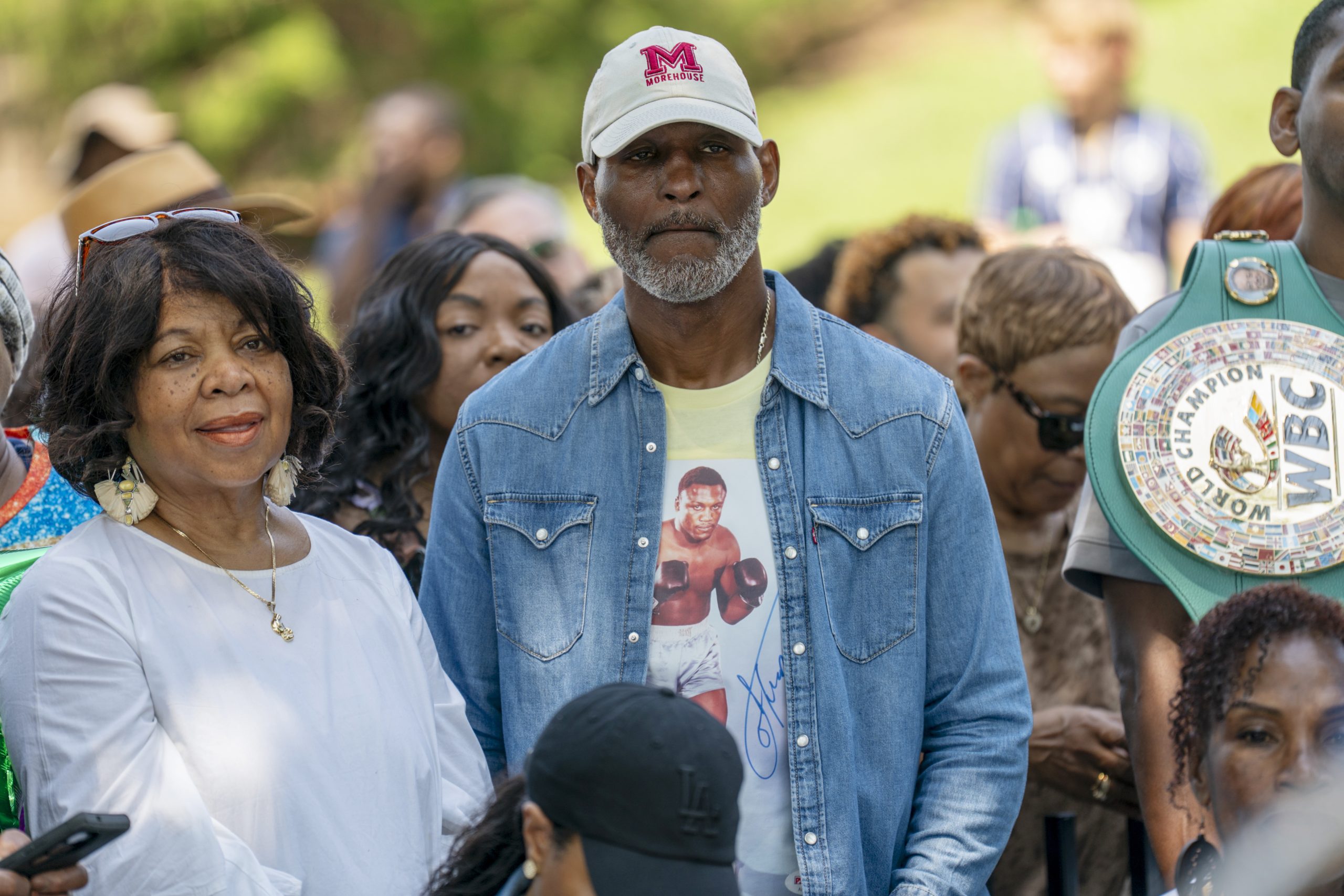
Dozens of the boxer’s supporters attended on Monday, including Philadelphia boxer Bernard Hopkins who held world championships in two weight classes, promoter Joe Hand Jr., and Frazier’s daughter Jacqueline Frazier-Lyde. Frazier-Lyde, a retired boxer and current Municipal Court judge, said the the color of the shroud covering her father’s statue — green —was fitting.
“My mother’s favorite color was green, because we’re from the South and we love green, because it represents life,” she said. “My father, Joe Frazier, liked it because it was the color of money.”
Boxing legend Bernard Hopkins at the unveiling of the new home for the statue of heavyweight boxing champion Joe Frazier.Jessica Kourkounis / For The Inquirer
To the end, the statue’s new location wasn’t the end of efforts in the boxer’s memory. Parker also announced plans for a capital campaign to restore the former Joe Frazier’s Gym on Broad Street above Glenwood Avenue in North Philadelphia. Now a discount furniture store, the building is a legendary location in Philadelphia boxing history, having served as a training location for not just Frazier but other famed fighters and community members.
Parker said plans were underway to establish a way to accept donations for that effort via the Philadelphia City Fund. The amount of funds targeted be raised was not immediately clear.
“It’s important to show the world who we are,” Gay said. “Joe Frazier was a humble underdog whose determination and grit inspires us all. What could be more [a] more Philadelphia story than that?”
The Flyers selected six players during the 2026 NHL draft, — three defensemen, two goaltenders, and one forward.
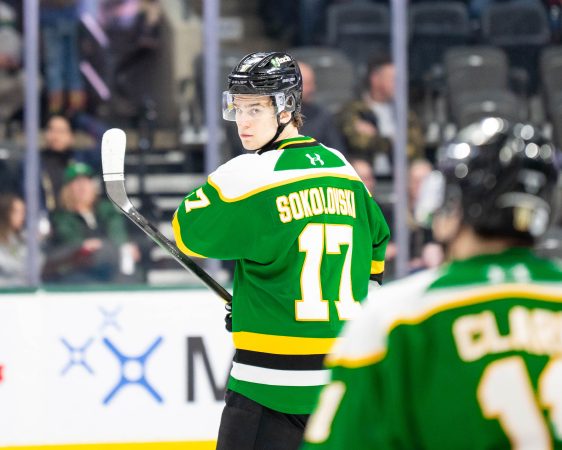
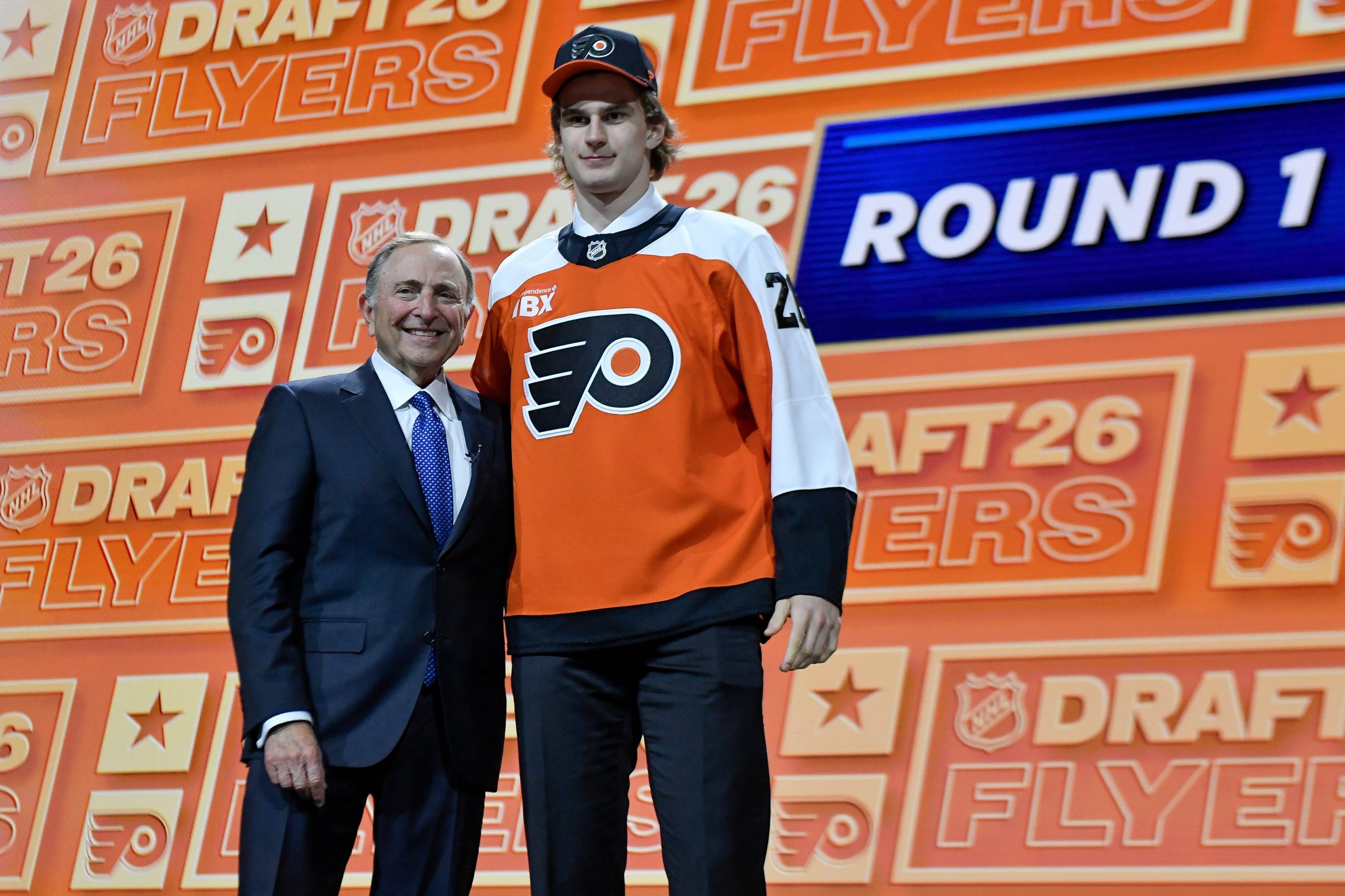
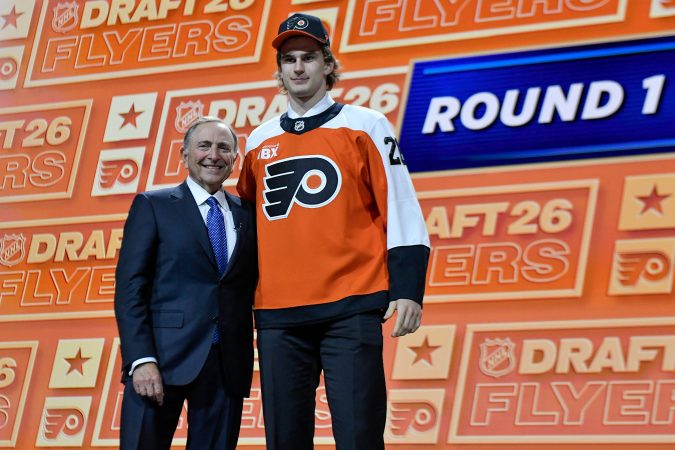
After trading down from No. 21 to No. 27, the Flyers selected Maksim Sokolovskii, a 6-foot-7, 240-pound defenseman from the Ontario Hockey League, with their first-round pick.
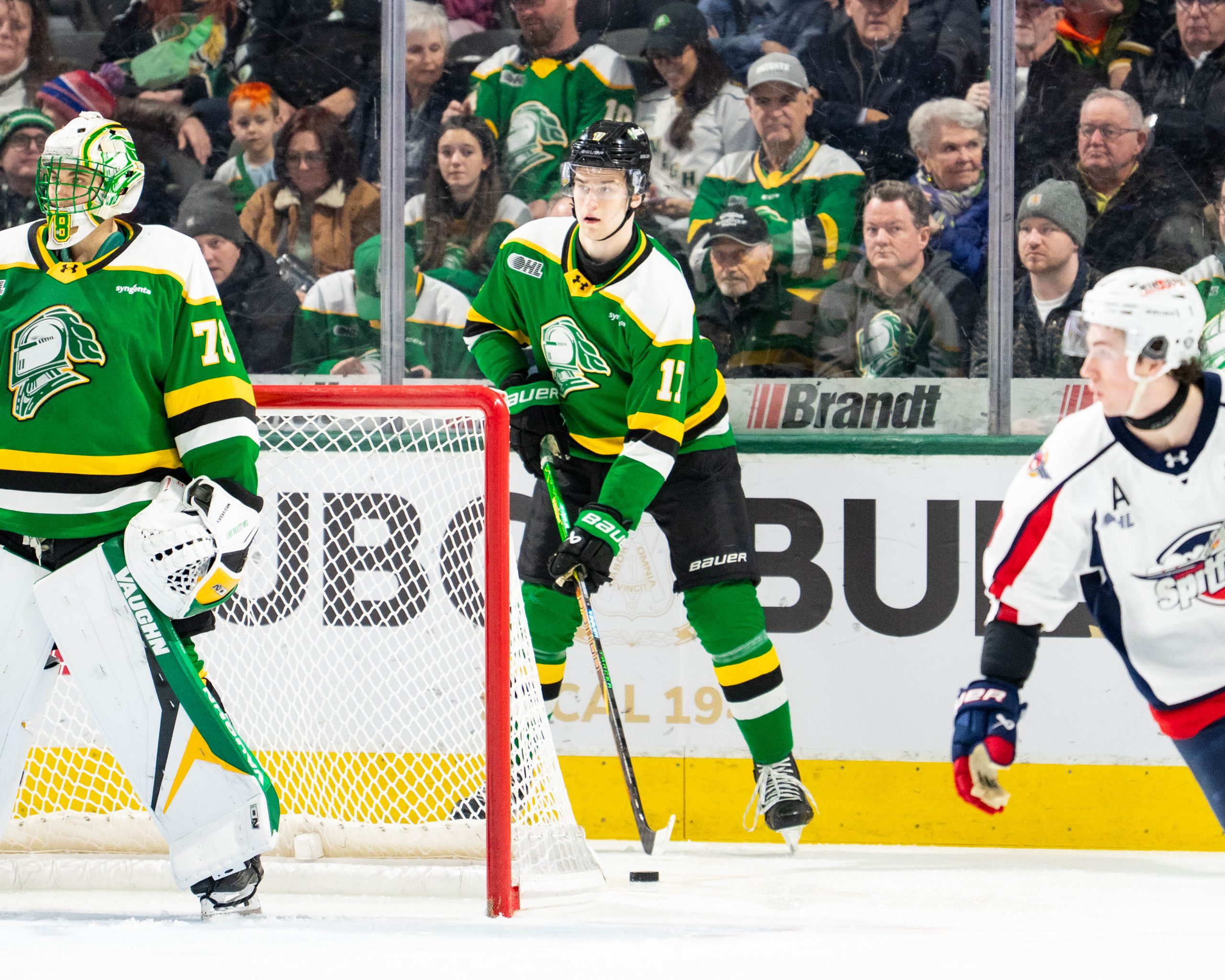
The 17-year-old is not expected to play anytime soon in the NHL — he’s returning to the London Knights for the 2026-27 season before playing for the University of Maine the following year.
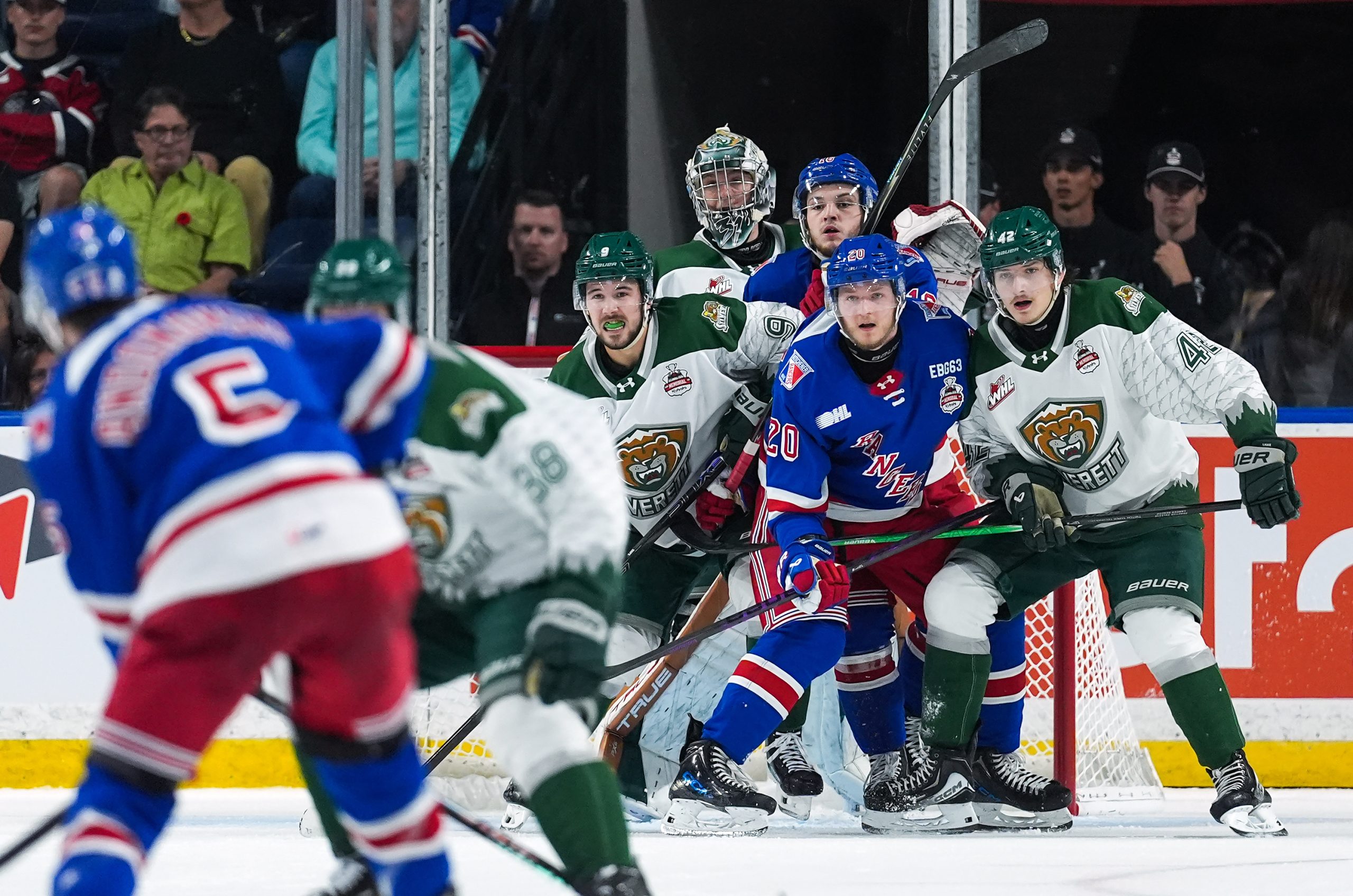
In the second round, the Flyers selected Western Hockey League defenseman Brek Liske with the 53rd overall pick. The team also added goalies Martin Psohlavec (62nd overall pick) and Marek Sklenička (120th overall pick).
And with their last two picks in the draft, the team selected Minnesota high school standout Kent Sauer (136th overall pick), a 6-foot-3, 202-pound center, and 17-year-old defenseman Max Laatikainen (213th overall pick), the youngest player in this year’s draft class.
Here’s how experts are grading the Flyers’ 2026 NHL draft class …
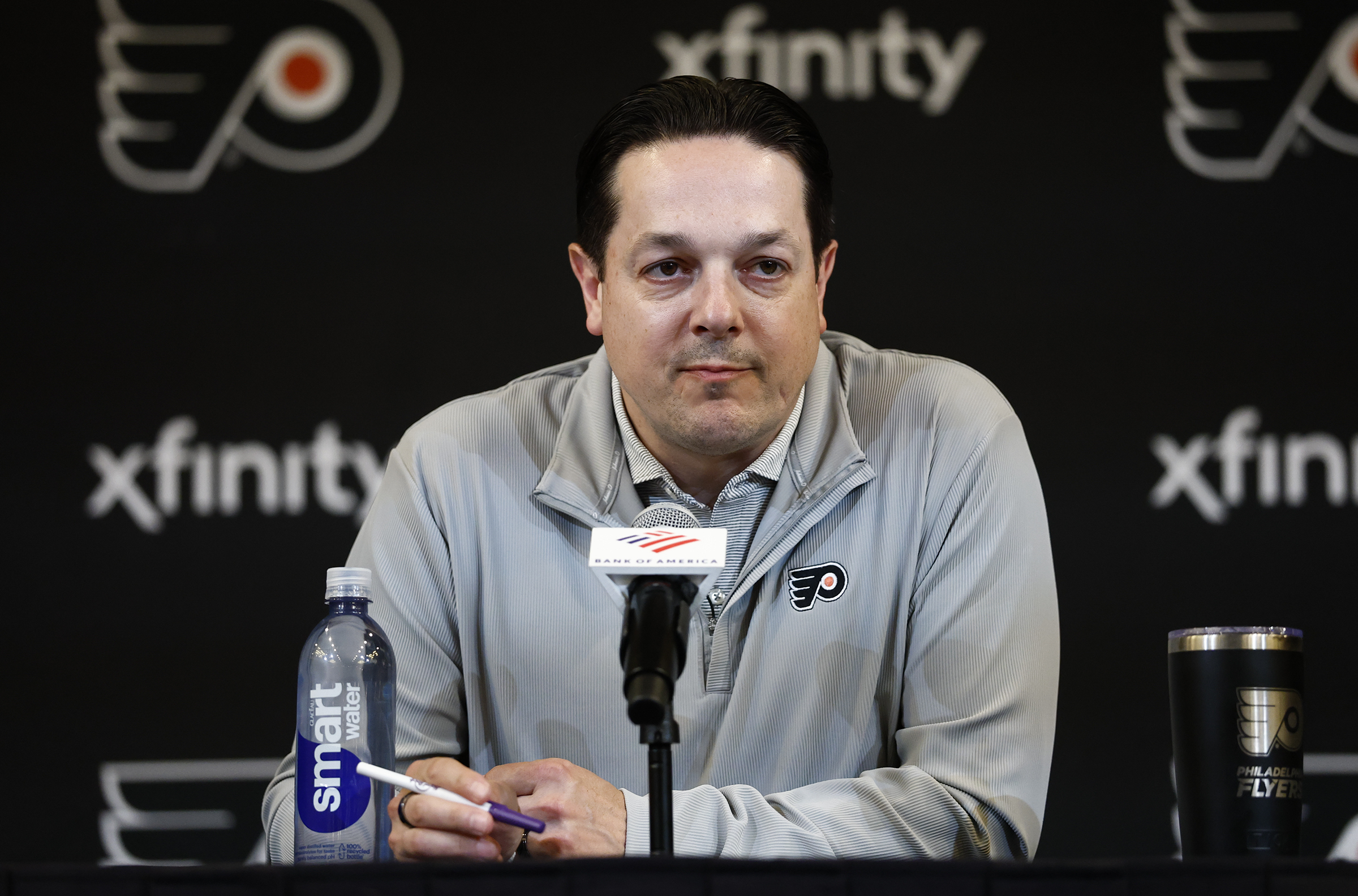
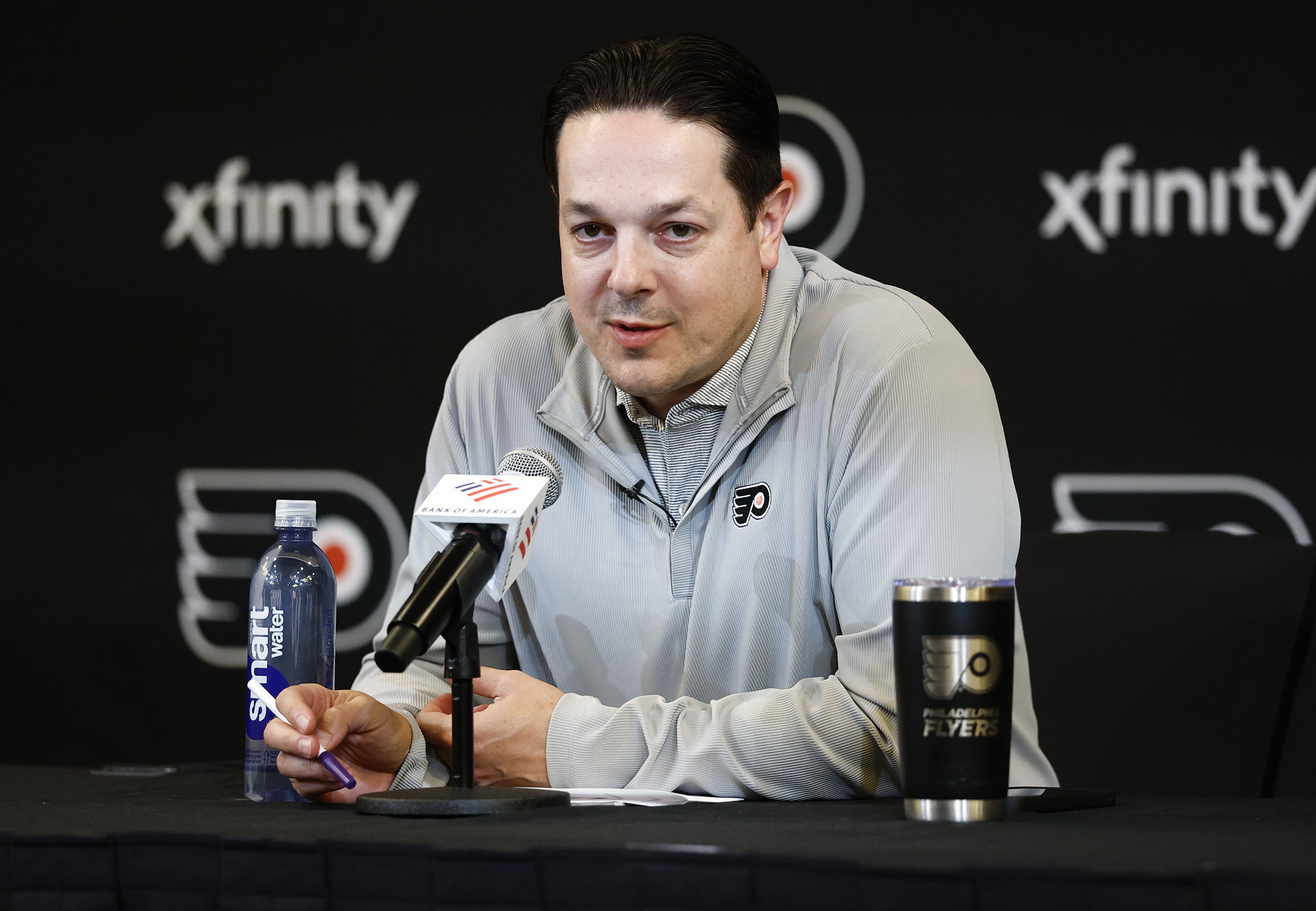
Flyers general manager Daniel Brière meets with the media after picking defenseman Maksim Sokolovskii with the 27th overall pick in the 2026 NHL draft.Yong Kim / Staff Photographer
Inquirer: B
We start with our own Flyers writer Jackie Spiegel, who gave the team the highest grade among the outlets listed, although her grade was reflective of only the team’s first-round pick and not the team’s draft as a whole.
“Sokolovskii, who was born in Kazakhstan and grew up in Russia, brings meanness and physicality, and considers himself a shut-down defenseman who likes to hit,” Spiegel wrote. “Daily Faceoff’s Jeff Marek called him the hardest hitter in the draft class. Some have even compared his physicality and nastiness to that of fellow 6-7 blueliner Nikita Zadorov of the Boston Bruins.
“There’s definitely some boom-or-bust volatility with Sokolovskii, but the Flyers hope they have added a massive defenseman who plays playoff-style hockey, can kill plays defensively, and strike fear into opponents with his physicality.”
Maksim Sokolovskii, right, stands with NHL commissioner Gary Bettman, left, after being drafted by the Flyers with the 27th pick in the draft.Adrian Kraus
ESPN: C+
ESPN made its grades based on “what the teams did with their selections, how they maneuvered the draft board and how much value they gained or left on the board where they picked.”
The Flyers were among six teams to get a C+, ranking alongside the Boston Bruins, Edmonton Oilers, New York Rangers, Ottawa Senators, and Washington Capitals.
“Kudos to the Flyers for trading back, understanding they could be patient and accumulate pick value,” Rachel Kryshak wrote. “They left some value on the board in favor of drafting for organizational fit, but got decent value with the Brek Liske pick. Max Laatikainen is an excellent bet in the seventh round as the youngest player in the draft and a prospect with potential.
“At the end of the day, you need to draft high-end talent to compete. The Flyers passing on upside for players who fit the style their coach wants to play is risky business and certainly costs them some grading points.”
The outlet gave the San Jose Sharks the best grade (an A++), saying they had one of the best first rounds in draft history.
Brek Liske (42) was the Flyers’ second-round choice. DARRYL DYCK
The Athletic: C
The Athletic handed out Cs to 14 different teams, including the Flyers.
“The Flyers went with big, toolsy defenseman Maksim Sokolovskii at 27, who moves incredibly well for his size and plays very hard, although he has no offence,” Corey Pronman wrote. “Defenseman Brek Liske and goalie Martin Psohlavec have chances to play in the NHL. I would guess one regular comes from this class for Philadelphia.”
The lowest grade handed out was a C-, and only five teams received a grade lower than the Flyers: the Vegas Golden Knights, the Tampa Bay Lightning, the Capitals, the Oilers, and the Dallas Stars. The Toronto Maple Leafs topped the list with the only A+ grading.
Bleacher Report gave the Flyers a C for the team’s selection in the 2026 NHL draft grades.
“Maksim Sokolovskii (27th overall) is a 6′7″ defenseman who moves well. The appeal should already be obvious,” Adam Herman wrote. “And he does play as big as he appears. He’s probably the most physical defenseman in the draft. He knocks players over with the ease of a house of cards, and he has the mobility to do it consistently. If he makes it, and that seems fairly likely, there will be few players in the NHL like him.
“I just don’t see too much upside. He isn’t very good with the puck, and while his skating is good for his size, it’s not an active plus. I think the best-case scenario is a No. 4 defenseman who can’t be used in any offensive situations. The Flyers need upside, and Sokolovskii doesn’t provide it. I would have liked this a lot better if it had been 37th overall.”
The Lightning received the worst grade of the draft, getting the only D ranking. Meanwhile, the Sharks received the only A+ grade from the outlet.
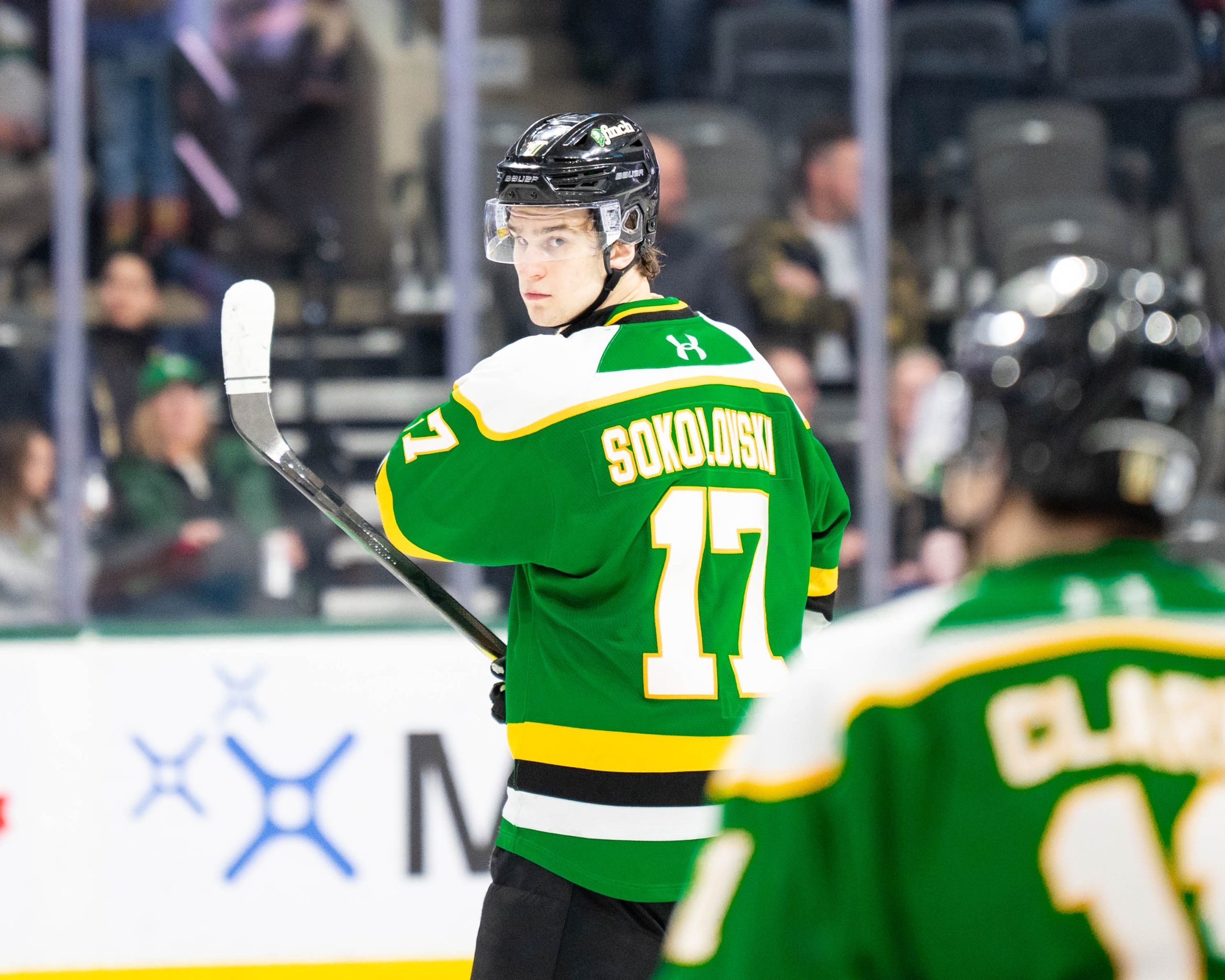
Maksim Sokolovskii (No. 17) tied forward Brooks Rogowski for the tallest players measured at this year’s combine.Courtesy of London Knights
Yahoo! Sports: C
Yahoo! Sports also gave the Flyers a C, saying that Sokolovskii may not have neither been the best available player at the time nor the best organizational fit.
“Standing at 6-foot-8, weighing 240 pounds, Sokolovskii has drawn comparisons to Nikita Zadorov as a physical, shutdown, defensive defenseman,” Eric Cruikshank wrote. “There’s definitely value in that, but with little upside, it would be a much more justifiable selection in the second round rather than the first. Adding a two-way blueliner in Brek Liske and one of the top goaltending prospects in Martin Psohlavec helps elevate their class, but it was certainly a rough start.”
The Sharks, Maple Leafs, and Vancouver Canucks top the list with an A+ grade.
Sporting News: C-
The Sporting News gave the Flyers the lowest grade on the list when it came to the team’s first-round pick.
“Maksim Sokolovskii is a giant, standing 6-foot-7. He’s a shut-down defender who understands how to use his size to separate his opponents from the puck,” Julian Gaudio wrote. “It does fill a need for the Philadelphia Flyers, as they need size on their blueline, but Sokolovskii is a project and is like five years away from becoming an NHL player.”
The Maple Leafs, Sharks, and Seattle Kraken top the Sporting News’ list with an A+ grade.
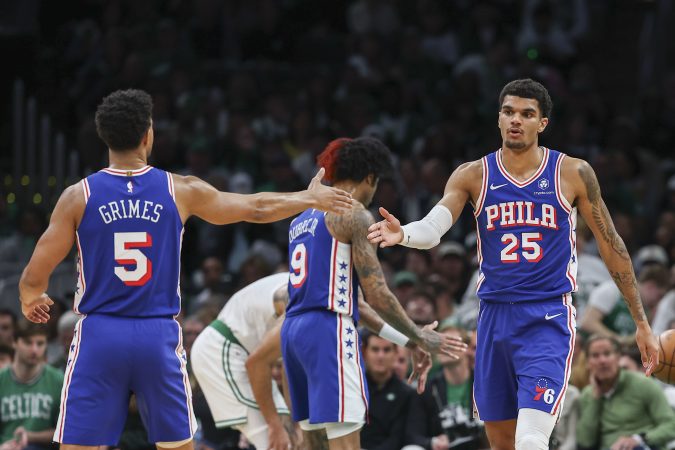
The 76ers have picked up the team options in the contracts of Dominick Barlow ($3.4 million) and Dalen Terry ($2.6 million) for the 2026-27 season, the team announced Monday evening.
Also, the team has declined the 2026-27 option for Trendon Watford ($2.8 million), making him an unrestricted free agent when the negotiation period opens Tuesday evening.
Barlow was one of the Sixers’ biggest success stories last season. The 23-year-old initially joined the team on a two-way contract, then ascended to a starting forward spot and had his deal converted to a standard contract in February. He averaged 7.7 points, 4.8 rebounds, and 1.2 assists in 71 games, and excelled at important complementary traits such as offensive rebounding and cutting while playing off star center Joel Embiid.
Terry, whose salary is nonguaranteed until Jan. 10, was a late addition to the Sixers’ roster last season, averaging 4.1 points and 1.6 assists in 14 games. The fourth-year guard initially signed a two-way contract in February, then was converted to a standard deal in April when Cameron Payne was released after sustaining a hamstring injury.
Watford, a versatile forward who recorded a triple-double last season, averaged 6.5 points, 3.3 rebounds, and 2.5 assists in 53 games. Injuries, though, impacted his ability to stick in the Sixers’ rotation. Watford is a close friend of Tyrese Maxey, the Sixers’ All-NBA guard and franchise cornerstone.
These are the next roster-building steps in Mike Gansey’s first offseason as new president of basketball operations.
The Sixers drafted Alabama guard Labaron Philon Jr. 22nd overall last week. Next, they enter free agency with positional and skill set deficiencies to address yet have limited financial flexibility. Embiid, Paul George and Maxey all remain on max contracts for multiple seasons, and the first two players are considered difficult to trade because of their age and recent health issues.
The Sixers finished last season seventh in the Eastern Conference (45-37), then upset the Boston Celtics in the playoffs’ first round before being swept by the eventual NBA champion New York Knicks.
Philadelphia Catholic League basketball was a fixture for Kevin Grugan — a mild obsession, even — throughout his childhood. Growing up in Rhawnhurst, he had deep and natural ties to Father Judge’s program in particular. His uncle, Ron Zawacki, was an assistant under legendary head coach Bill Fox, and Grugan competed in Judge’s summer basketball camps, went to the Crusaders’ games on Friday nights and Sunday afternoons in the winter, and graduated from the school in 1996.
“I would watch the games,” he said, “and be enthralled.”
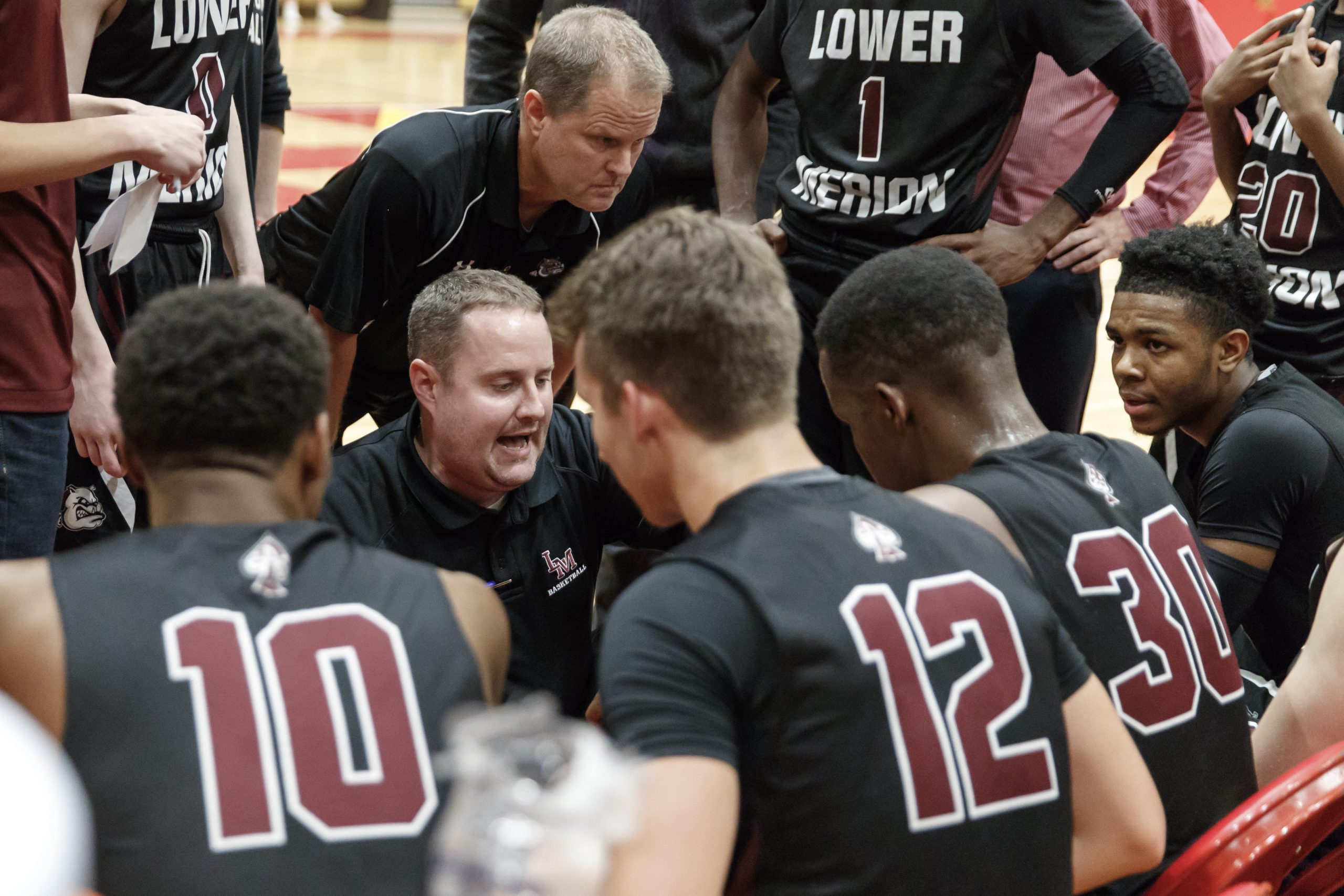
His fascination had faded by 2007, when Lower Merion High School’s administration hired him to teach math and assist Gregg Downer, the school’s longtime boys’ basketball coach. The subsequent years have not reignited his nostalgia for the old days of Northeast Philly hoops. In fact, in his role as a coach at a suburban public school, Grugan has come to resent what he perceives as an uneven playing field throughout Pennsylvania sports. Parochial, private, and charter schools, after all, don’t have borders; they can draw their students, and their student-athletes, from anywhere. Public schools can’t.
Kevin Grugan is a longtime boys’ basketball assistant at Lower Merion.Courtesy of Kevin GruganHe believes competing against private schools has presented an uneven playing field throughout Pennsylvania sports: “High school athletics is about building a team, building a culture.”Courtesy of Kevin Grugan
“High school athletics is about building a team, building a culture,” Grugan said recently. “You’re devising competition. You’re learning from that competition. You’re trying to improve on the next game. But you go into those events, and suddenly standing across from you are multiple if not five Division I athletes. You can’t watch enough film to find that very secret flaw that nobody else has found.”
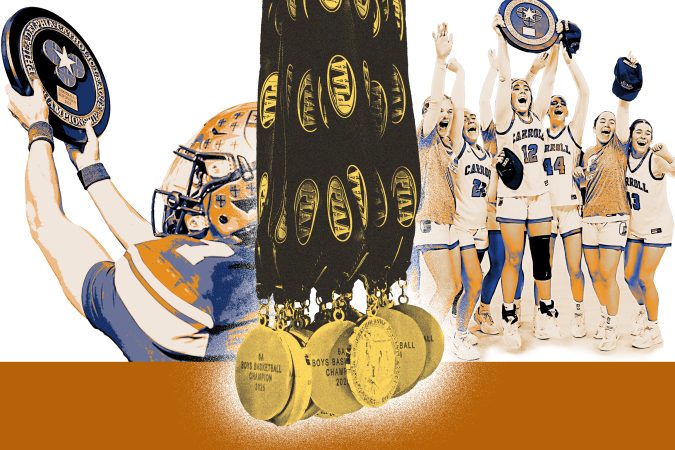
Grugan’s complaints have become common among Pennsylvania’s public school coaches, administrators, parents, and players since the Catholic League and Public League moved under the jurisdictional umbrella of the PIAA in the fall of 2008. And that fierce debate about fairness could soon be cast in stark relief.
In April, the Pennsylvania State House of Representatives passed, by a 178-23 vote, House Bill No. 41, which would allow the PIAA to “establish separate playoffs and championships for athletics for boundary schools and non-boundary schools.” The Pennsylvania Senate can vote on the bill at any time but has not yet. A spokesperson for Gov. Josh Shapiro said that “the Shapiro administration is monitoring the bill as it moves through the legislative process” but did not have a position on it.
Shapiro and his aides might be the only people connected to Pennsylvania’s high school sports who don’t have a position on the bill or the public-private divide.
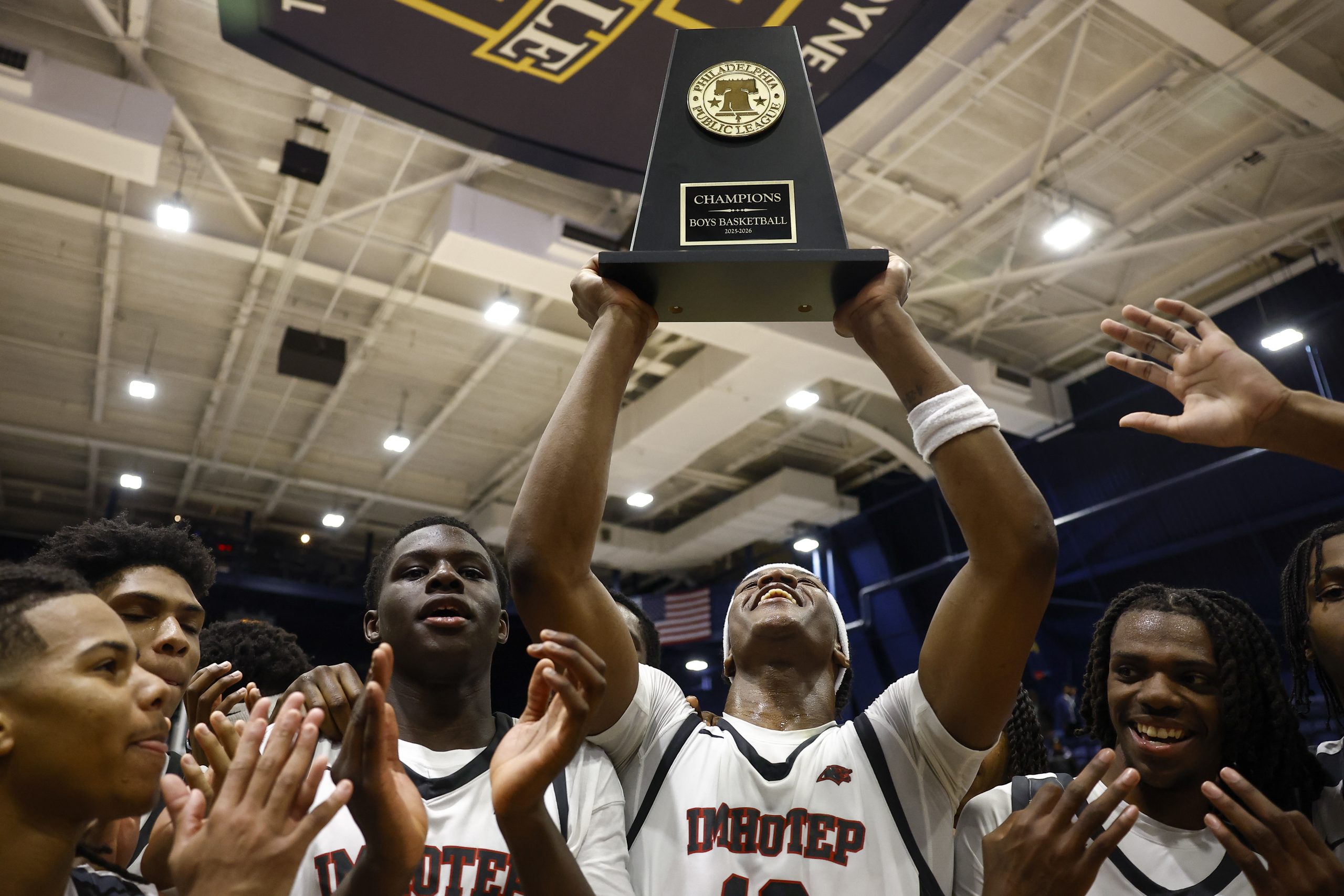
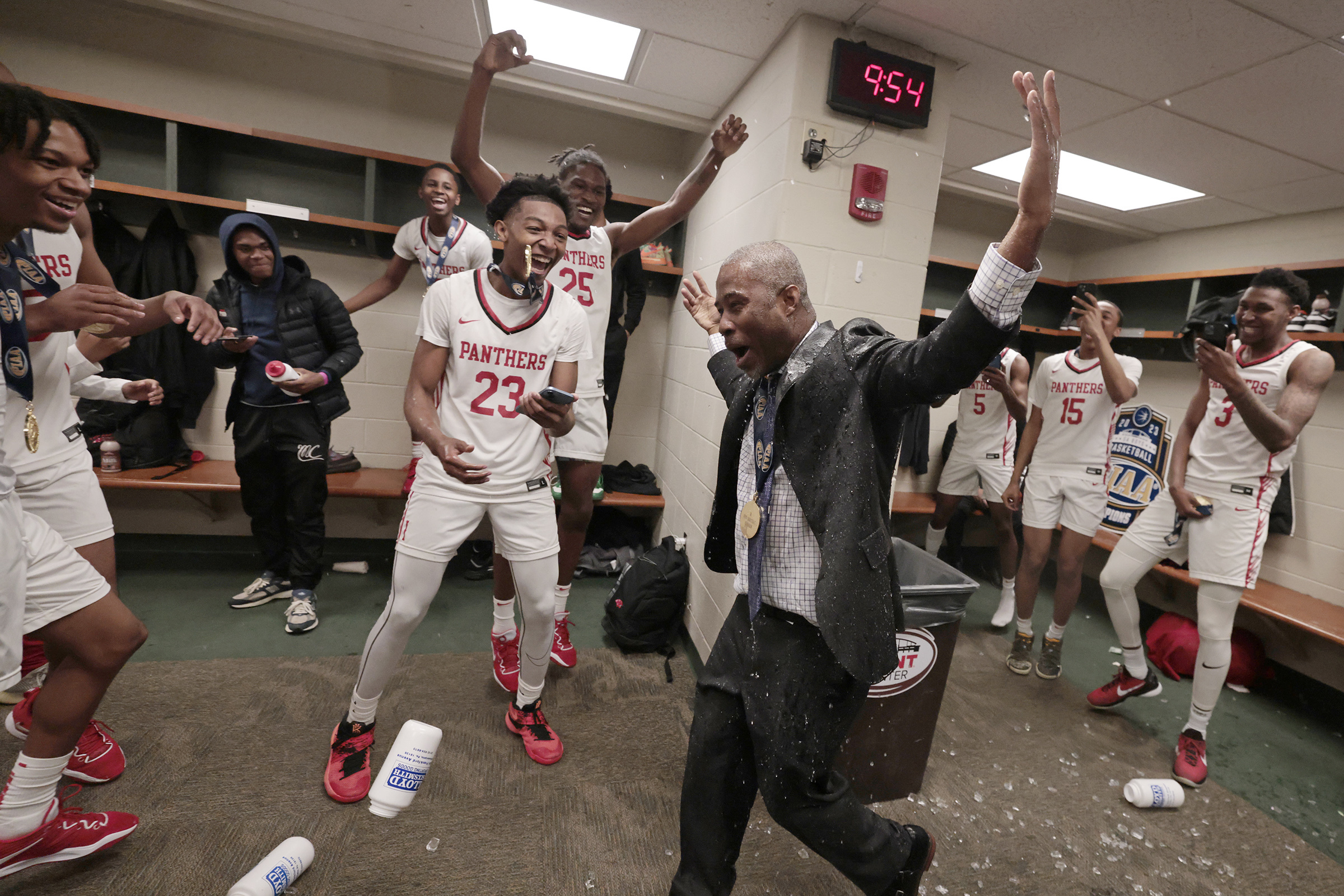
Imhotep Charter has won six consecutive Public League boys’ basketball titles. Monica Herndon / Staff Photographer
It’s difficult to find a state issue that provokes such strong viewpoints and often-strident opinions. And this issue has plenty of big-picture and hyper-local tentacles, including the professionalization and commodification of high school sports, the question of athletics’ appropriate purpose and role in secondary education, and accusations that some non-boundary schools violate PIAA bylaws by recruiting student-athletes for the sole purpose of having them play sports.
“All we’re trying to do is say that part of high school sports is teaching kids how to play a fair game,” Rep. Scott Conklin (D), who introduced House Bill No. 41 and represents the 77th district, in State College, said in a phone interview. “It’s something they can use for the rest of their lives. We don’t want to teach them that there are two sets of rules: one set for a boundary school, one for a non-boundary school.”
The traditional city and neighborhood rivalries within the Catholic League mean more to some coaches, players, and fans than the district and state tournaments do. Elizabeth Robertson / Staff Photographer
Conklin cited player safety, particularly within football, as a primary reason for House Bill No. 41, arguing that non-public schools can attract more athletes — and more athletes who are bigger, stronger, and faster — than their public opponents can.
“The boundary school may have 18 really good players; they play offense and defense,” he said. “By the second quarter, those kids are tired, and that’s when children get hurt: when they’re gassed.”
He did not provide any statistical evidence to support this claim, and in a Dec. 3, 2024, memo he circulated to state House members to introduce the bill, he made it clear another factor was just as important, if not more so.
“When it comes to competition in team sports, especially football and basketball,” Conklin wrote, “the private, charter, and parochial schools have been dominant in state playoffs in recent years.”
Among the highest-profile sports, that dominance hasn’t been quite as severe as Conklin suggested. Consider these results since the beginning of the fall 2008 sports season:
Boundaryschools have won 54of the 92 football state championships.
Non-boundary schools have won 63 of the 86 boys’ basketball state championships, including 16 of the last 18.
Non-boundary schools have won49 of the 86 girls’ basketball state championships.
(function(){function e(){window.addEventListener(`message`,function(e){if(e.data[`datawrapper-height`]!==void 0){var t=document.querySelectorAll(`iframe`);for(var n in e.data[`datawrapper-height`])for(var r=0,i;i=t[r];r++)if(i.contentWindow===e.source){var a=e.data[`datawrapper-height`][n]+`px`;i.style.height=a}}})}e()})();
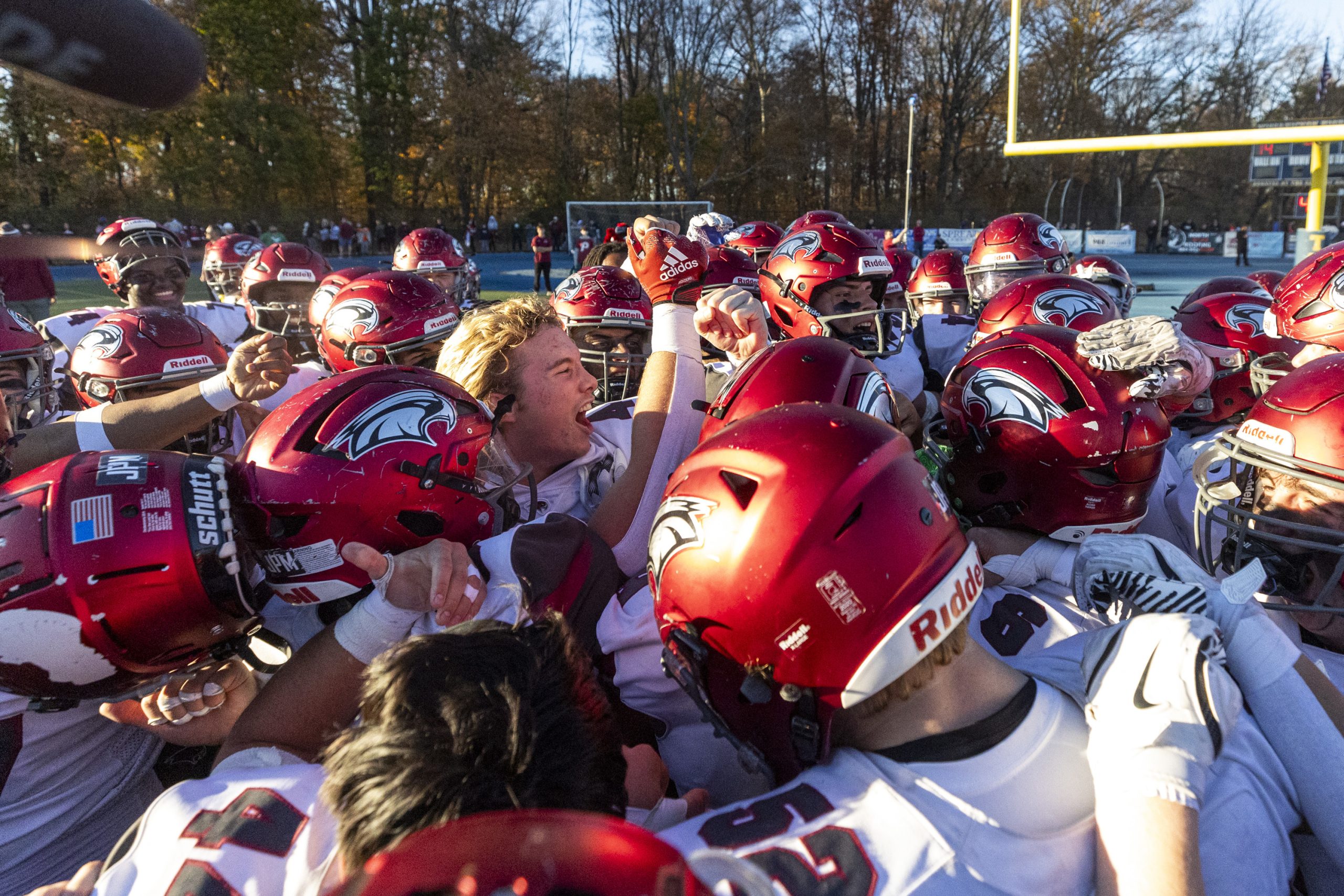
In an attempt to achieve and maintain competitive balance, the PIAA does use a formula, based on non-boundary schools’ success and the number of transfer students they accept, that can allow teams to move up in enrollment classification. Still, St. Joseph’s Prep, with an all-male enrollment of roughly 900 and without a football stadium on its North Philadelphia campus, has won seven PIAA Class 6A championships in the last 10 years while competing alongside the state’s biggest public schools, including North Penn, which has more than 3,000 students. What’s more, a recent donation of $74 million from Prep alumnus and billionaire entrepreneur Nick Howley is likely to help the Hawks separate themselves further from the 6A field.
“They’re just two different structures,” Prep president John Marinacci said. “All our student-athletes, whether it be football or anything else, come from the same geographic locations that our whole student body comes from. I know there are allegations out there that we have students from all over America. You know where the Prep is. It’s 15 minutes from Jersey. Do we have kids who play football who come from Jersey? We do. We also have a lot of kids who play other sports or don’t play sports who come from Jersey. The geographic reach of the school is what it is. We’re a regional school.”
St. Joe’s Prep has won seven PIAA Class 6A football championships in the last 10 years.Tyger Williams / Staff Photographer
‘We’re coming’
Intrastate athletic competition among different types of Pennsylvania high schools is nothing new. In 1972, the state legislature amended the Public School Code to allow non-public schools to participate in postseason and championship events with public schools, and some private and parochial institutions have been members of PIAA leagues and conferences for years. When eight Delaware Valley schools came together to found the Pioneer Athletic Conference in 1985, for example, two of them were Lansdale Catholic and St. Pius X, and the members of the all-girls Catholic Academies League have long competed against suburban Philadelphia public schools within PIAA District One.
The issue took on increased salience both in the region and throughout Pennsylvania, though, when the Catholic and Public Leagues entered the PIAA 18 years ago. At the time, association members who might have raised questions about competitive fairness were cautioned against making any such case, according to a source who was directly involved in negotiating and implementing the expansion. If they did, the legislature would take steps to strip the PIAA of much of its power, oversight, and relevance.
The Public League has 73 member schools. But nearly half of them — 34 — are charters, including football and boys’ basketball powerhouse Imhotep.Elizabeth Robertson / Staff Photographer
“Almost every legislator’s child went to a non-public school,” the source said, “and everybody wants to have that state-championship medal. … They said, ‘Don’t try us, ’cause we’re coming.’”
So the Catholic and Public Leagues formed District 12, and the inclusion of the Public League counterbalanced the injection of private-school strength into the association only so much. The Public League today has 73 member schools. But nearly half of them — 34 — are charters, among them football and boys’ basketball powerhouse Imhotep, and the School District of Philadelphia’s open-enrollment policy can allow exceptional athletes to attend just about any high school and compete for any coaches or programs they want.
For the two leagues, the ostensible reasoning that justified joining the PIAA still stands up. It would lead to more fulfilling experiences for student-athletes: better (or at least more diverse) competition, travel outside the limits of the city and the suburbs that ring it, perhaps more exposure to and interaction with recruiters — and, of course, the opportunity to call themselves state champions.
(function(){function e(){window.addEventListener(`message`,function(e){if(e.data[`datawrapper-height`]!==void 0){var t=document.querySelectorAll(`iframe`);for(var n in e.data[`datawrapper-height`])for(var r=0,i;i=t[r];r++)if(i.contentWindow===e.source){var a=e.data[`datawrapper-height`][n]+`px`;i.style.height=a}}})}e()})();
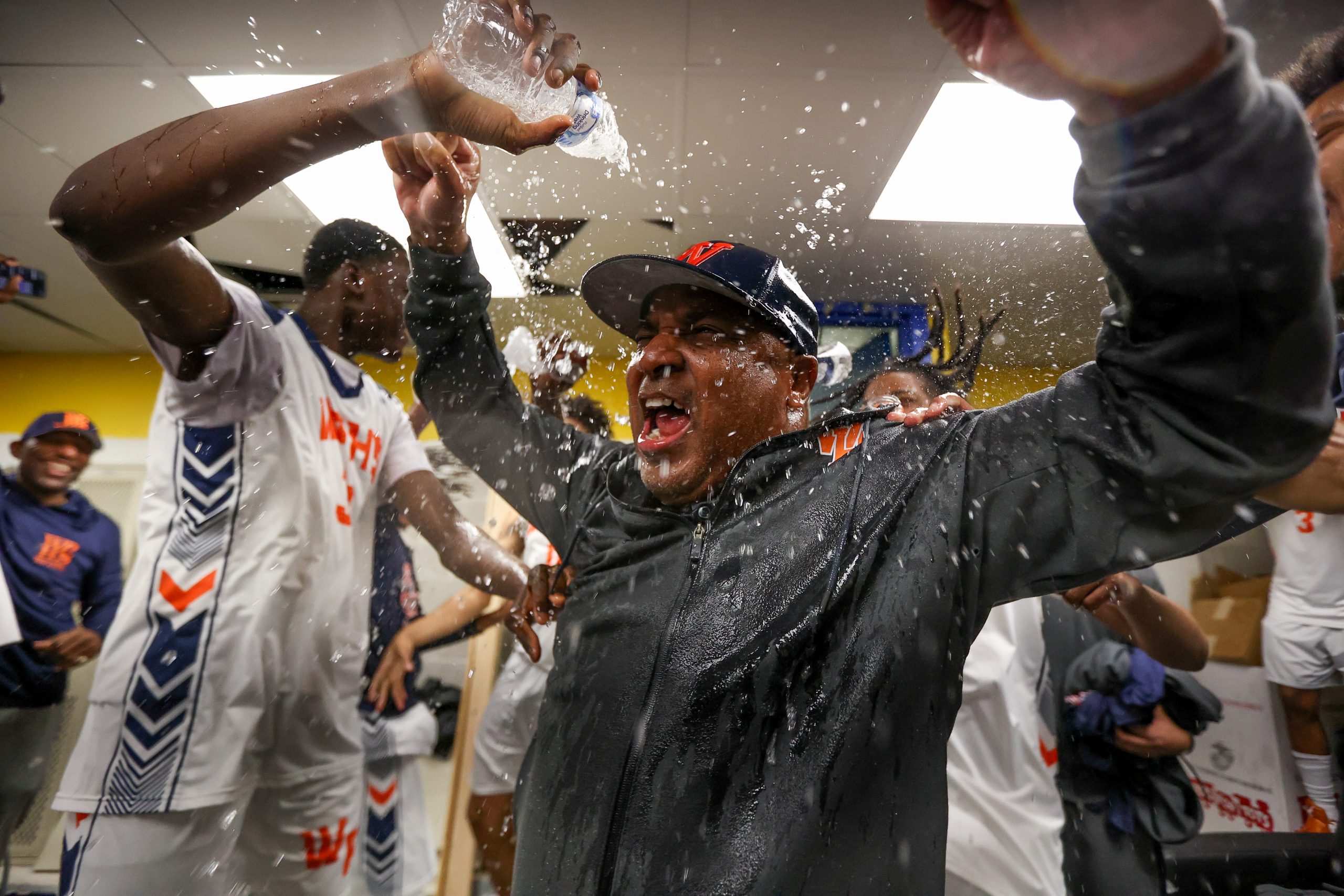
“I’d go to college and hear somebody say, ‘We beat Neshaminy in a state championship game,’” said Father Judge basketball coach Chris Roantree, who won a Catholic League boys’ championship as a player with the Crusaders in 1997 before guiding them to back-to-back PCL titles and a PIAA Class 6A championship over the last two years. “I’d be like, ‘We played Neshaminy and beat them by 50. Are you really a state champion?’
“Here’s the thing: Philly is Philly. So if you want all the Philly kids to go to public schools, they’re still going to dominate. There’s so much talent in Philadelphia that it doesn’t matter where it goes. That’s a disadvantage for us. There are six, seven, eight, 10 good teams in the Catholic League. If they’re in the playoffs, they’re going to make some noise in the states. There’s a lot of good players spread out. I laugh at it sometimes, but we can only control what we can control.”
The Catholic and Public Leagues, loaded with student-athletes who have chosen to attend and play for their respective schools, have another advantage over the publics: They are in alignment with the generational shifts and trends throughout youth sports, as young athletes and their parents crave more freedom and place greater importance on AAU, club, and travel teams.
“We need to be looking at increasing the opportunities for kids,” District One chairman Mike Barber said. “If not, they’re going to find other places to play.”
It’s difficult to deny that, in this modern landscape, the PIAA benefits from the presence of private, parochial, and charter schools, that these programs infuse the association’s competition with more talent and prestige.
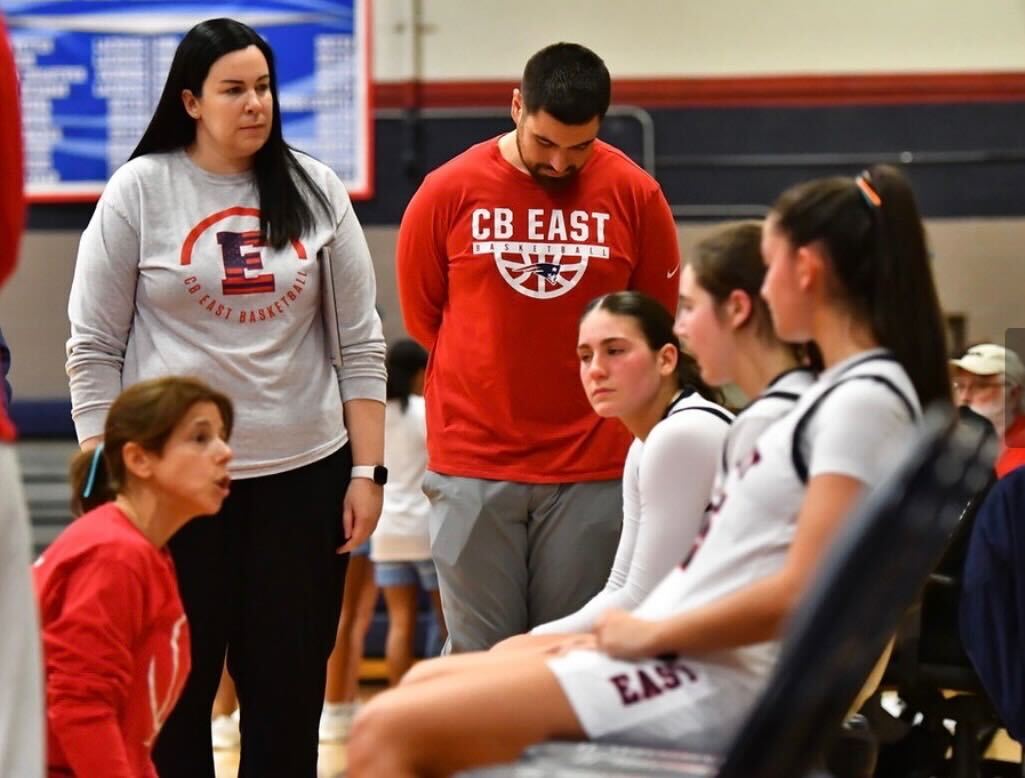
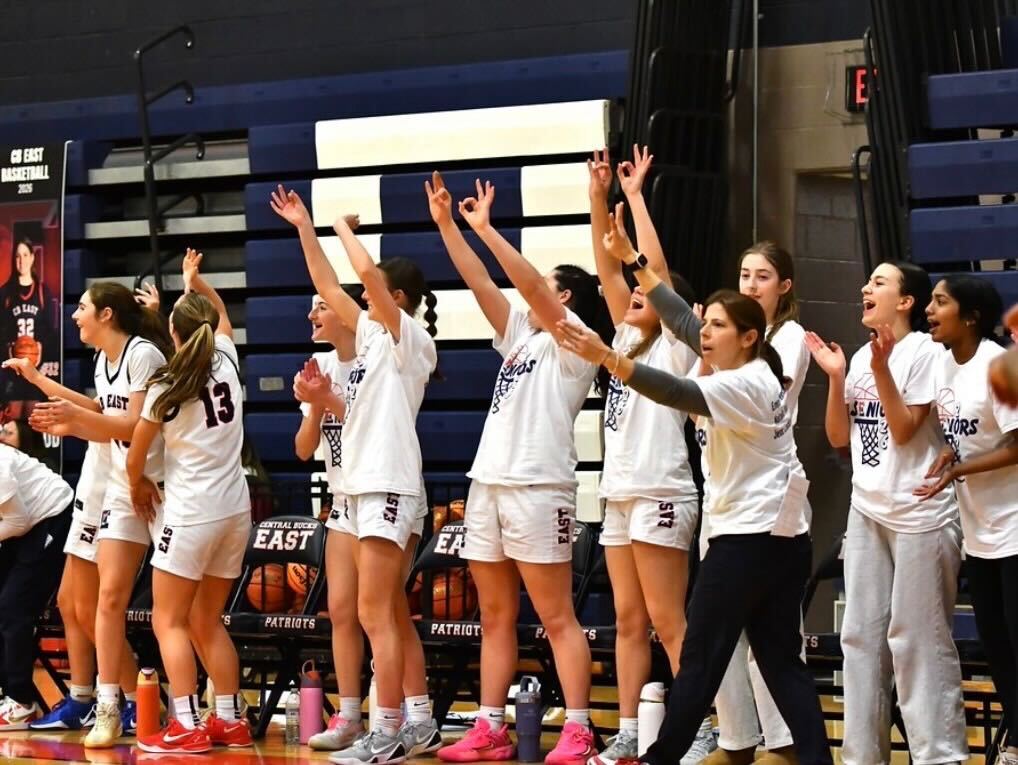
Liz Potash is the Central Bucks East girls’ basketball coach.Courtesy of Diane BarryShe says “when I have to compete for the same championship [as a private school], there’s a disparity there, and I think obviously everyone is aware of that.”Courtesy of Diane Barry
“What they do is unbelievable,” former Central Bucks East girls’ basketball coach Liz Potash said. “We played Archbishop Carroll in our Christmas tournament, and you watch that scout film, and you’re like, ‘Oh, my gosh! This is unbelievable.’ I have all the respect in the world for those programs. Where it gets me is in the postseason, when I have to compete for the same championship. Then it’s just not a level playing field. … I’ll play them in-season. I have no issue with that. But when I have to compete for the same championship, there’s a disparity there, and I think obviously everyone is aware of that.”
The reality that non-boundary schools can and do pull students from New Jersey, Delaware, and the suburbs that feed District One’s public schools has stoked plenty of us-vs.-them tension. Potash herself admitted to rooting for Perkiomen Valley during its run to the 2025 Class 6A girls’ hoops championship, and when CB East beat Germantown Academy — a private, non-PIAA program — last season, one of Potash’s fellow public school coaches called to tell her, Man, there’s nothing I like to see more than when one of us knocks off a team like that.
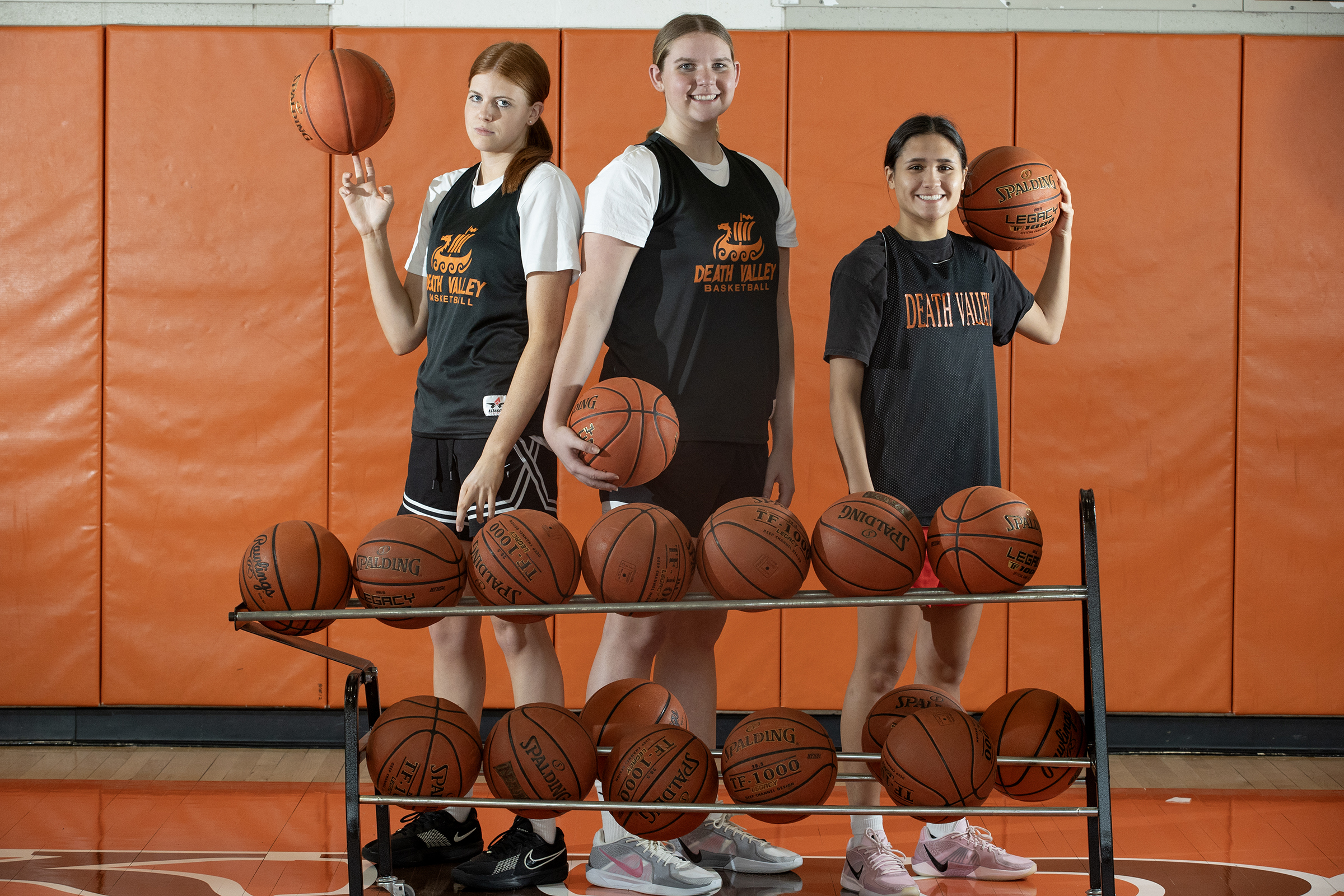
In 2025, Grace Galbavy, Quinn Boettinger, and Bella Bacani led Perkiomen Valley girls’ basketball to its first state title. The Vikings beat Archbishop Carroll to get there.Charles Fox / Staff Photographer
“District One and District 12 hate each other,” one area athletic director said, though Starr Davenport, the Philadelphia School District’s director of finance for athletics, tried to soften that assertion by drawing on a familiar rivalry as an analogy.
“You can compare it to almost Dallas vs. the Eagles,” she said. “We don’t really hate them. It’s a healthy, quasi-toxic athletic approach to, ‘We’re better than District One.’ It’s the proximity. It’s the ongoing battles that are close. It gets to the point where it’s one vs. the other, but I think there’s harmony and respect across both districts.”
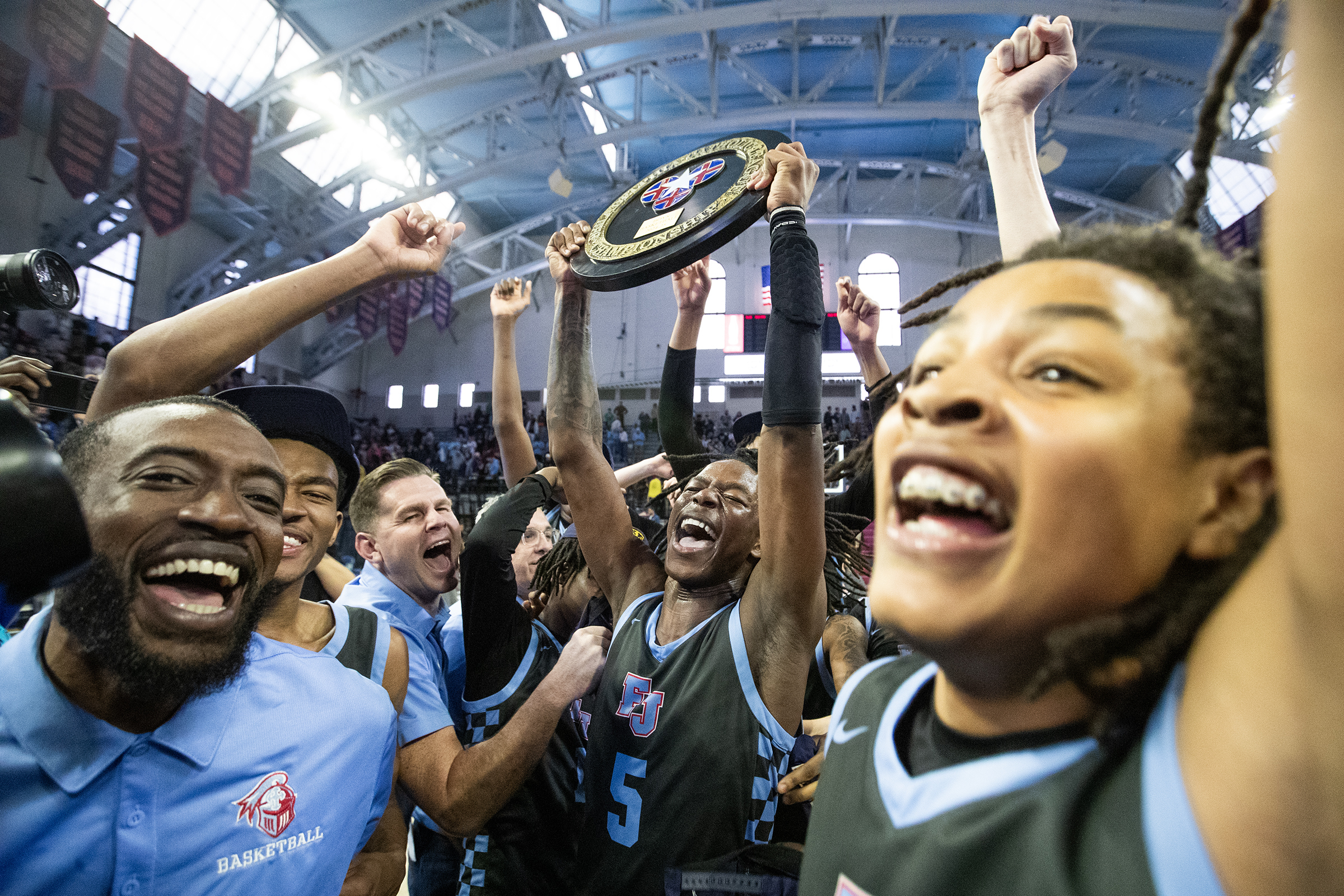
The irony — and, for many public school coaches, the frustration — is that the traditional city and neighborhood rivalries within the Catholic and Public Leagues mean more to some coaches, players, and fans than the district and state tournaments do. The rollicking sellout crowds filling the Palestra every year for the PCL boys’ basketball semifinals and the boys’ and girls’ championship games have been just the most obvious example.
West Philadelphia coach Adrian Burke values the history of the Public League, and winning the title carries more weight compared to other championships.Isaiah Vazquez / For The Inquirer
“We want to win the Pub,” West Philly High boys’ basketball coach Adrian Burke said in February, before his team lost to Imhotep in this year’s Public League championship game. “It’s legendary. You’re talking about some of the greatest basketball players ever. You’re talking about Wilt Chamberlain, Gene Banks. I could [go] on and on and on. When you think about the Public League, you think about all those guys who paved the way for us to play.
“We don’t care too much about districts. States is good. But we want to win the Pub.”
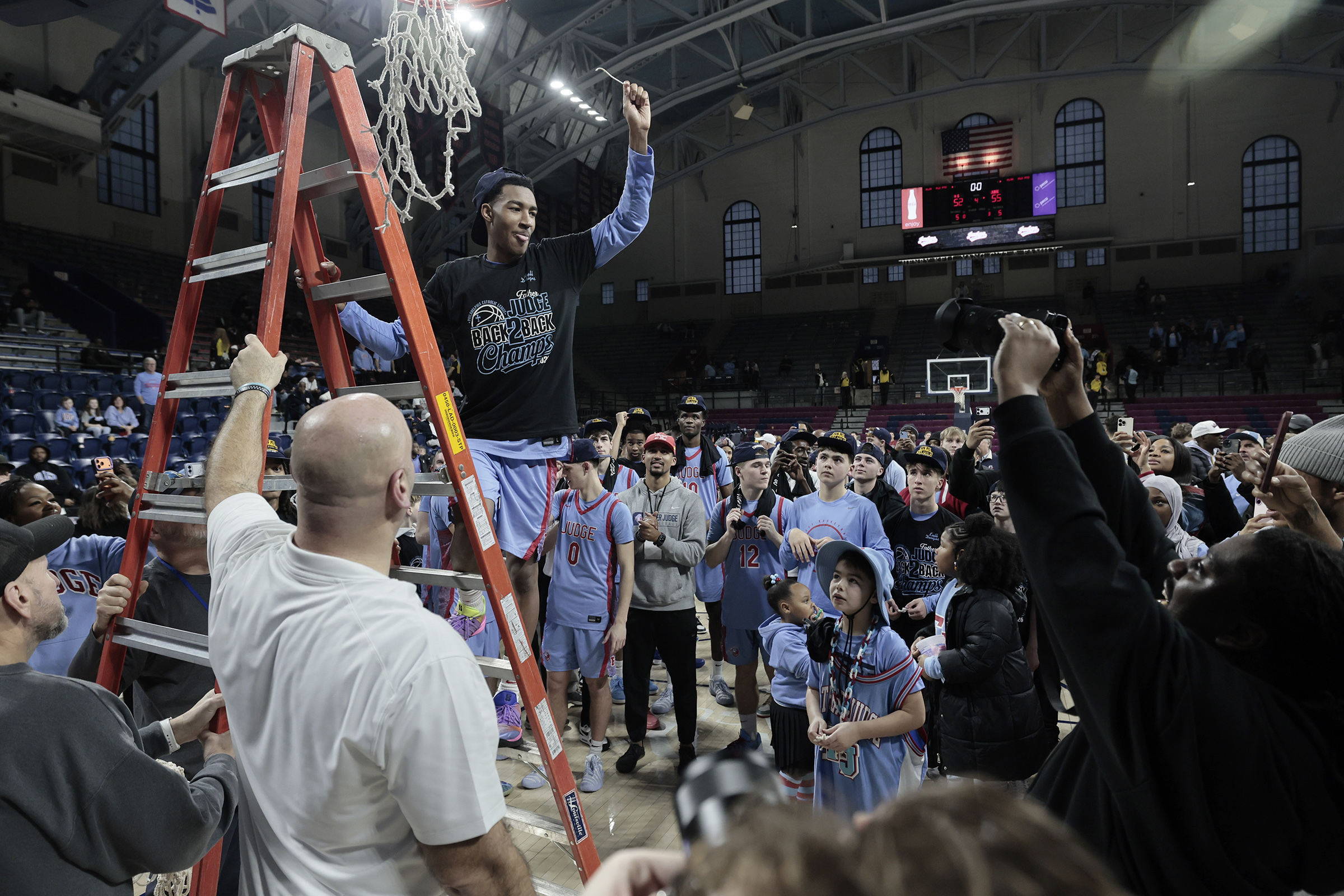
Father Judge won back-to-back PCL boys’ basketball titles and a PIAA Class 6A championship over the last two years.Charles Fox / Staff Photographer
A solution?
Splitting the PIAA playoffs into boundary and non-boundary brackets would not be unprecedented, but it would be unusual. New Jersey is one of four states that allows public and private schools to compete during regular seasons but keeps them separate for postseasons, according to a survey conducted earlier this year by the USA Today Network. Another four states, including Maryland, don’t permit boundary and non-boundary schools to play against each other.
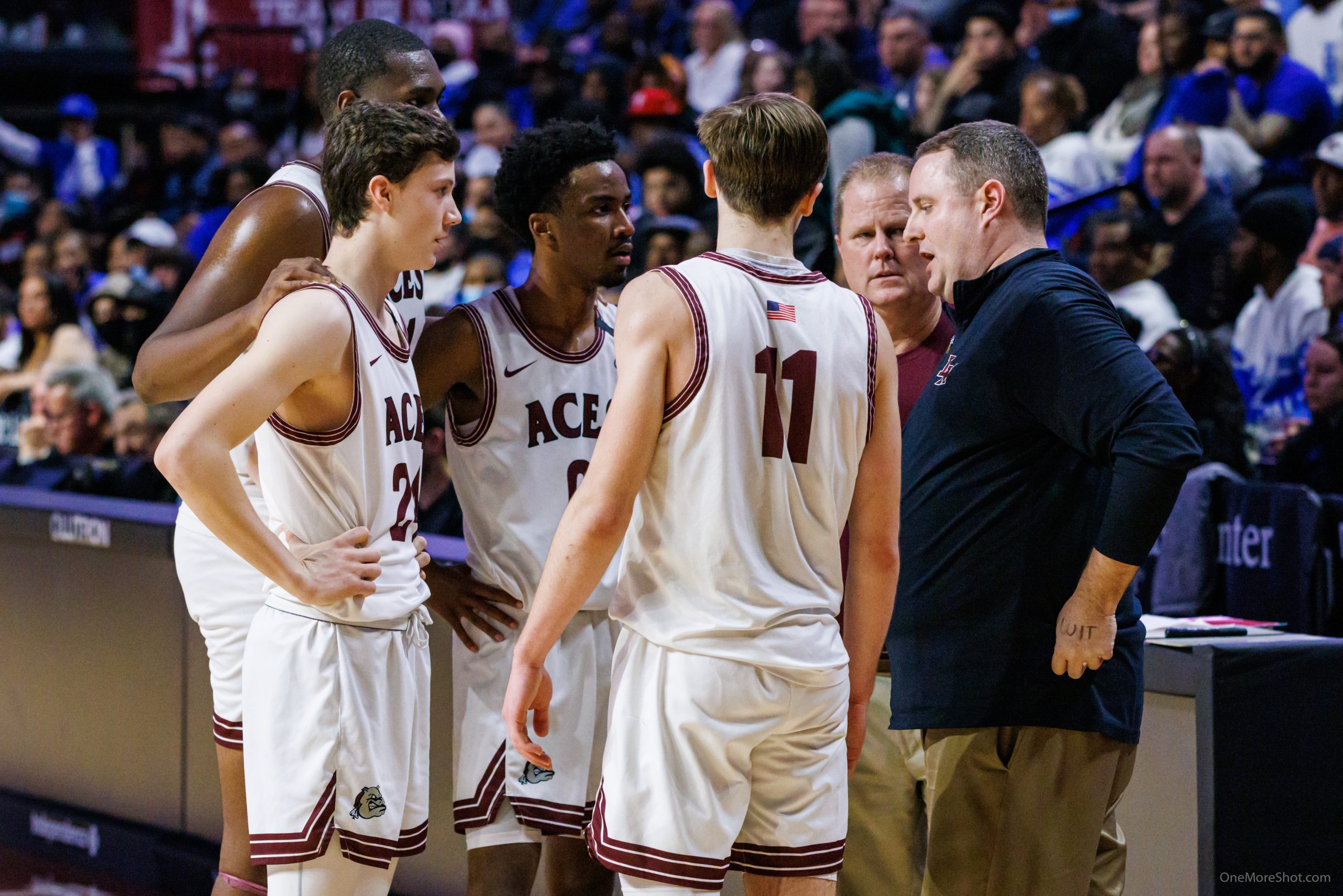
Grugan wouldn’t mind such a measure, wouldn’t mind seeing House Bill No. 41 signed into law and put into effect. Lower Merion won its last state title in 2013, and in 2019 and every year from 2021 through 2025, it lost in the state playoffs to either Roman Catholic or Archbishop Wood. The question that he, Rep. Conklin, and everyone involved or interested in Pennsylvania high school sports has to ask and answer is this: Is it better to have lost to these non-boundary teams or never to have played them at all?
“We keep making these decisions based on the idea that all high school athletes are performing at this high Division I level,” Grugan said, “and my thing is, most of the high school athletes you’re coaching are going to have a high school basketball experience and that’s it. And by the way, that’s a great thing. That is going to teach them so many lessons, and they’ll be able to thrive in other situations in their lives with amazing memories. We still celebrate big games by getting pizza. That’s as good a moment as anything we’re going to produce on the court.”
Staff news developer Chris A. Williams contributed to this article.
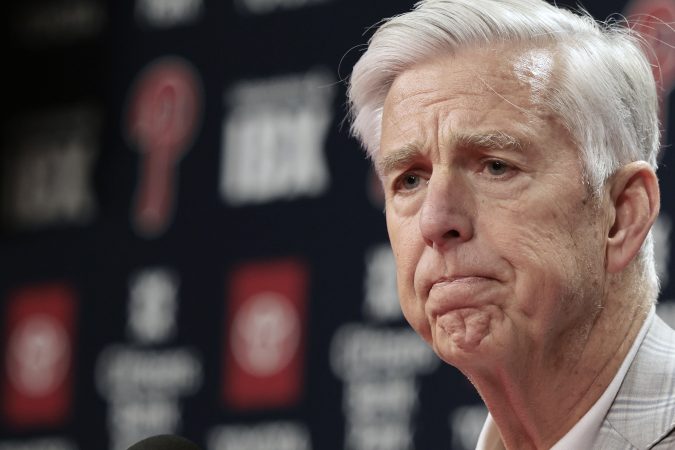
The funny thing about Bryce Harper’s 2026 world-wrecking tour is that he has somehow managed to both vindicate his boss and hang him over the dunk tank. There isn’t an executive in Major League Baseball that should be feeling more pressure than Dave Dombrowski now that Harper has answered fully and satisfactorily the infamous question that the Phillies president posed this offseason.
“Can he rise to the next level again?‚” Dombrowski asked about Harper after the Phillies’ postseason loss to the Dodgers. “I don’t really know that answer.”
Eight months later, Dombrowski should know it better than anyone. The Phillies’ personnel boss has spent 84 games watching Harper bail him out of another failure of an offseason. One year after the Phillies’ superstar posted an .844 OPS that was his lowest since 2016, his current .915 OPS would be his best since 2021, when he hit .309/.429/.615 with 35 home runs en route to winning his second MVP.
Harper’s 19 home runs in his first 83 games were his second-most as a member of the Phillies. His .391 wOBA ranked eighth in the major as of Saturday. His .278/.379/.536 batting line is pretty much exactly his career baseline. It is a lofty baseline. You might even call it elite.
While Harper might argue that retribution is a dish best served raw (like milk), his performance this season actually lends some credence to his boss’ offseason critique. Harper isn’t proving Dombrowski wrong. He is proving him right.
Fact is, Harper wasn’t an elite player in 2025. Between 2021 and 2024, Harper was one of five players in the majors with a wOBA of .390+. The other four were Aaron Judge, Shohei Ohtani, Juan Soto and Yordan Alvarez. Add in Ronald Acuña Jr., Freddie Freeman, and Mookie Betts, and those were the truly elite hitters in Major League Baseball.
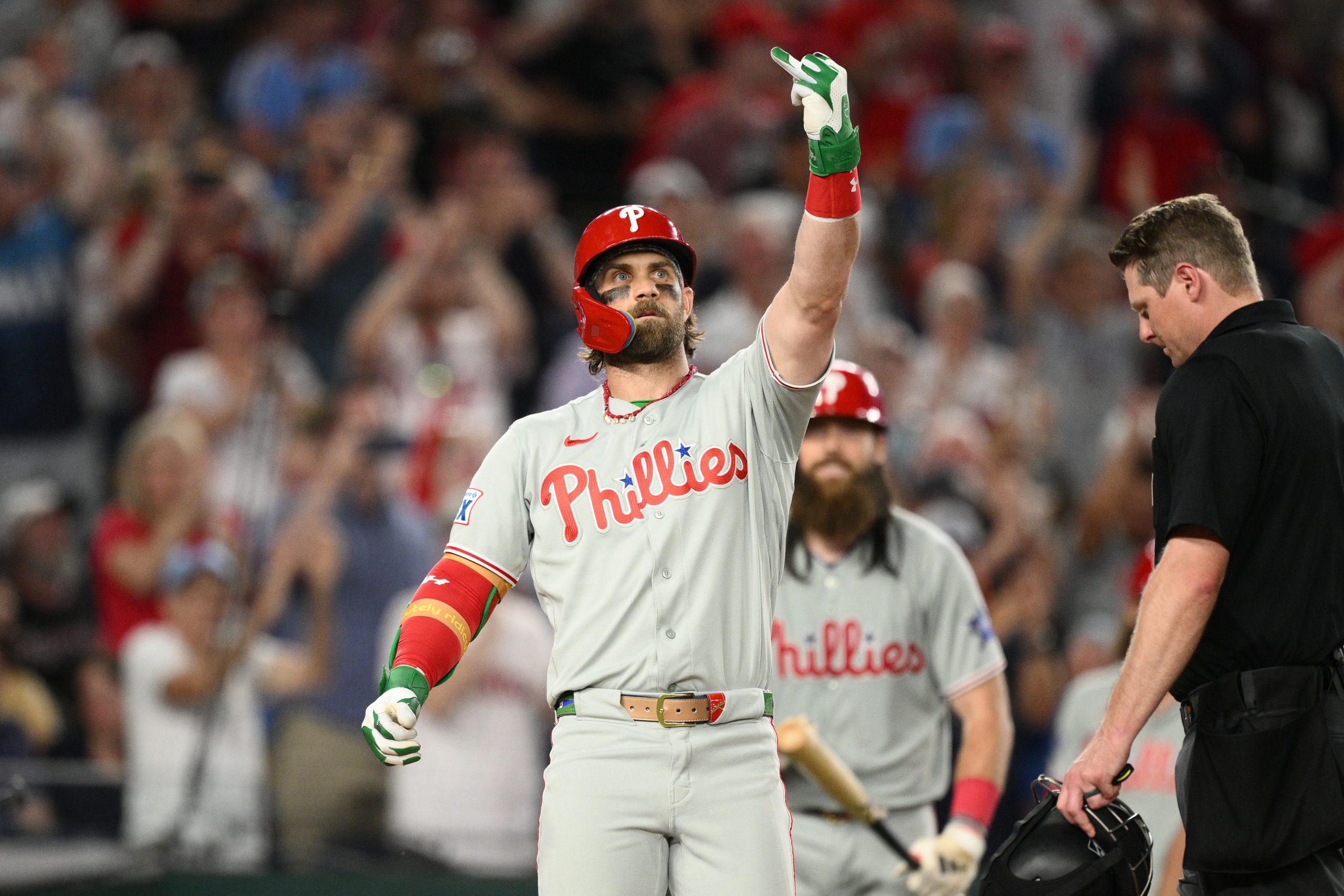
Bryce Harper has hit 19 home runs this season.Nick Wass
In 2025?
Harper’s .361 wOBA ranked 25th, behind guys like Ramon Laureano (.364), Pete Alonso (.368) and Geraldo Perdomo (.370). That was Dombrowski’s whole point. You can certainly question whether it was an appropriate one to make. The under-the-hood numbers suggested that Harper’s “down” year was mostly attributable to chance.
There weren’t any significant dips in his hard hit rate or his strikeout rate or his bat speed. He showed fewer signs of regression than most 32-year-old hitters. The Phillies could not have hoped for a better return on the first seven years of the 13-year, $330 million contract that Harper signed in 2019. As the old saying goes, don’t look a gift horse in the mouth and tell him he isn’t elite.
At the same time, Dombrowski’s assessment was correct. In 2025, Harper’s production wasn’t in the same realm as a Judge or a Soto or an Ohtani. It just wasn’t. He was still a very, very good player. He just wasn’t a singular one.
Here in 2026, Harper is reminding us just how much of an impact he can make when he is elite. The Phillies have been the best team in baseball since the beginning of May despite a lineup that has five regulars who have been 30% worse than league average as measured by OPS+. Harper’s 146 OPS+ is more than twice as high as those of four of the six guys who hit behind him in the lineup.
The onus is now on Dombrowski to do his part.
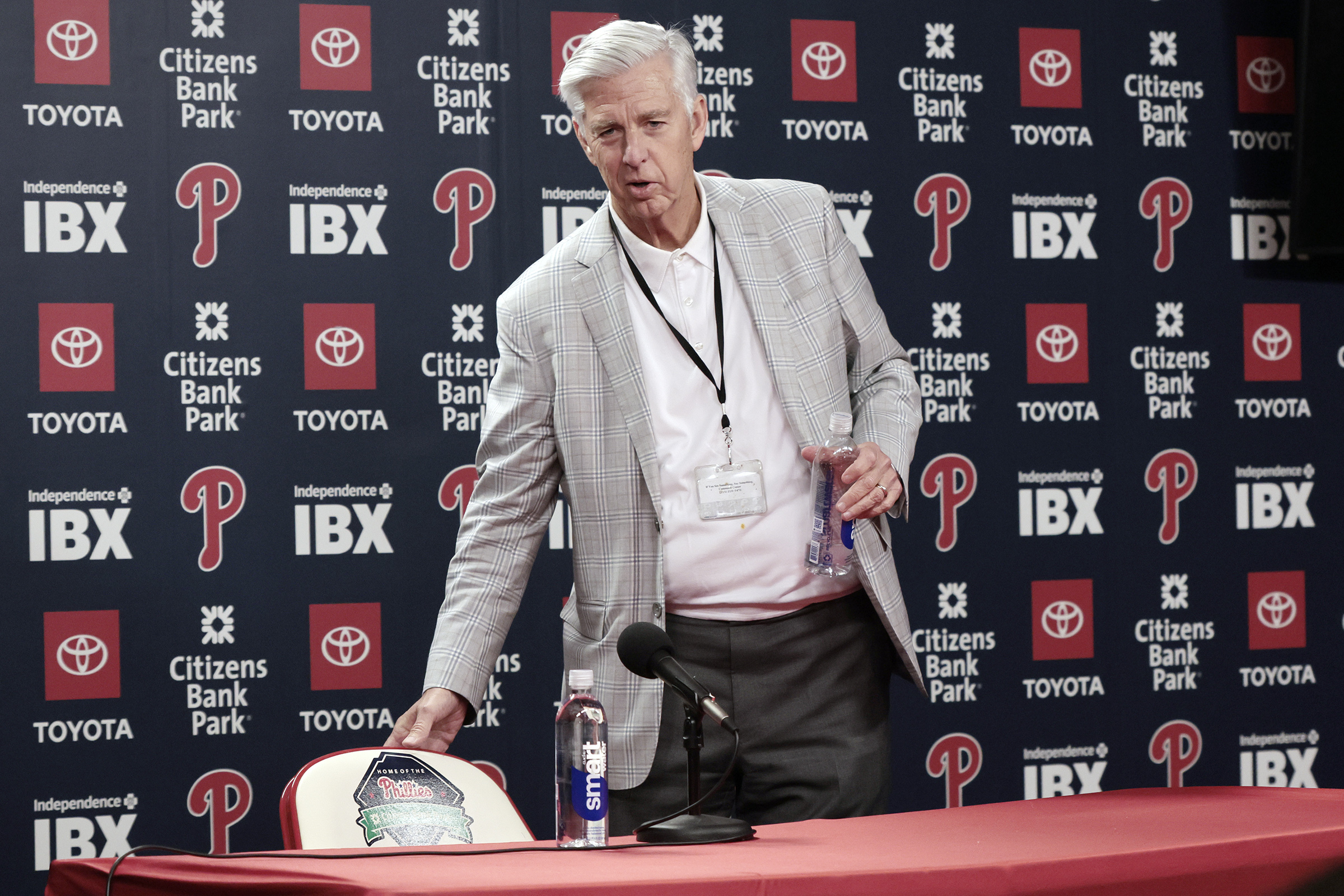
How active will Dave Dombrowski and the Phillies be at the MLB trade deadline?Elizabeth Robertson / Staff Photographer
As good as the Phillies have been since replacing Rob Thomson with Don Mattingly, any realist should wonder how good they’d be with a roster that wasn’t completely reliant on two MVP seasons at the plate, two Cy Young seasons in the rotation, and one of the best closers in the game … and Brandon Marsh. It would be foolish for anybody to think that formula can carry them through a month of playoff baseball.
With just over a month to go until the trade deadline, Dombrowski and his front office better have a serious plan for broadening the team’s potential contributors for a postseason series against the Dodgers or Braves.
window.addEventListener(“message”,function(a){if(void 0!==a.data[“datawrapper-height”]){var e=document.querySelectorAll(“iframe”);for(var t in a.data[“datawrapper-height”])for(var r,i=0;r=e[i];i++)if(r.contentWindow===a.source){var d=a.data[“datawrapper-height”][t]+”px”;r.style.height=d}}});
Even with Marsh’s All-Star-worthy season, the Phillies’ outfield entered Sunday with the sixth-worst collective OPS in the majors. At catcher, theirs is the second-worst OPS. They rank in the bottom five at third base and shortstop and are 23rd at third base. But, hey, other than that they’ve been great.
Right now, Dombrowski’s offseason looks like a near-total failure. Adolis García, J.T. Realmuto, Andrew Painter, Brad Keller, Justin Crawford — all received his stamp of approval as he tinkered with a roster that had suffered three straight playoff disappointments.
Even if you are willing to credit Crawford with being a perfectly adequate bottom-of-the-order hitter at a premium position in center field, the aggregate output of the offseason maneuvering still qualifies as a man-made disaster.
It may not be now or never. But it is getting close. The Phillies owe it to Harper, Schwarber, Zack Wheeler, Cristopher Sánchez and Jhoan Duran to aggressively address the holes that threaten to undermine one of the greatest efforts we’ve ever seen from five superstars in one season.
KNOXVILLE, Tenn. —With Tennessee’s Candace Parker among the eight inductees in the 28th class of the Women’s Basketball Hall of Fame, the site of Tennessee Theatre, which opened in 1999, seemed perfect.
But Philadelphia could have worked equally well as a magnet attraction, considering the number of people at the Women’s Basketball Hall of Fame with ties to the area.
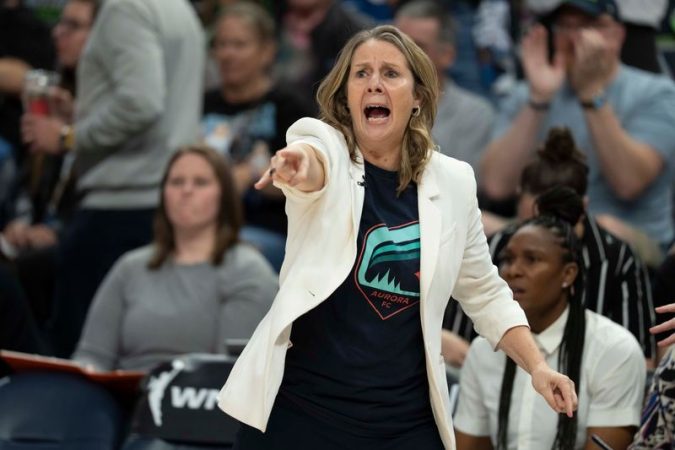
South Jersey native and former La Salle star Cheryl Reeve, longtime coach of the Minnesota Lynx who, with 379 victories, is one away from being the all-time league leader in a 17-year career, became the second WNBA mentor to gain induction.
She already is the combined leader when playoff appearances are factored.
Reeve is tied with former Houston Comets coach Van Chancellor at four WNBA titles and is in the hunt again this season. She also guided the 2024 USA Olympic team in Paris to its eighth straight gold medal.
The former high school hoops star at Washington Township was presented by one of her assistants, former Lynx great Lindsay Whelan. Among her supporters were recently retired Northwestern coach Joe McKeown, a Father Judge graduate who had Reeve as an assistant at George Washington, and Taj McWilliams-Franklin, who played for her in Minnesota and was also on the ABL Philadelphia Rage.
“She always treated everyone the same,” McWilliams-Franklin said of playing for Reeve.
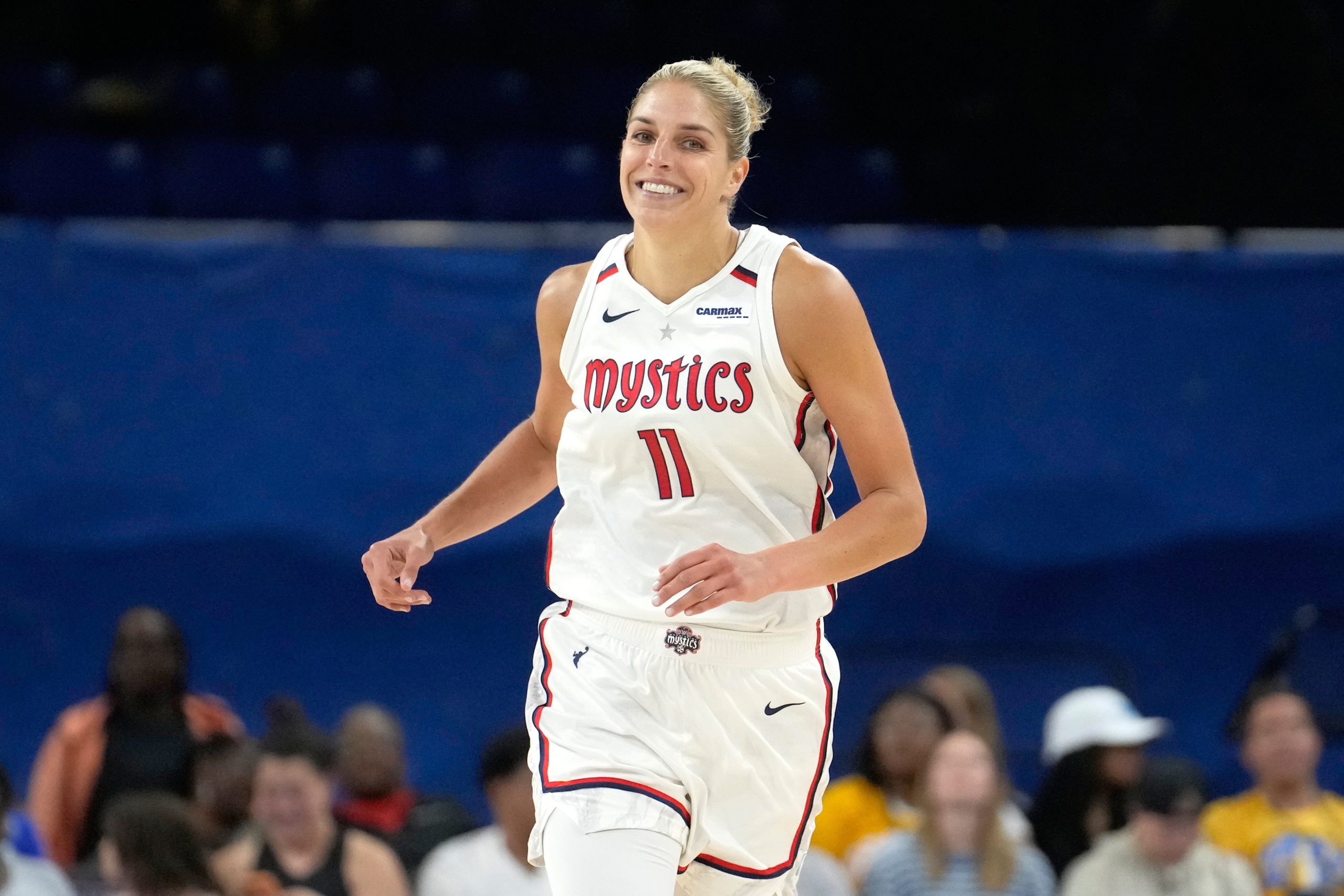
Delaware grad Elena Delle Donne, out of Wilmington, now retired and the first managing director of USA 3×3 women’s national team, was also in the class and was introduced by former Immaculata star Marianne Stanley, who was an assistant coaching her on the Washington Mystics’ 2019 WNBA championship team.
Delle Donne was the No. 2 draft pick by the Chicago Sky in 2013, earning WNBA Rookie of the Year that season. She was twice league MVP and was the first member of the 50/40/90 club in 2019, shooting 51.5% from the field, 43% from three-point range, and 97.4% from the line.
“That’s a whole season,” Stanley said of Delle Donne’s shooting accuracy.
Elena Delle Donne was a two-time WNBA MVP and Olympic gold medalist. She retired after the 2023 season.Charles Rex Arbogast
Acclaimed ESPN broadcaster Doris Burke, who could not attend but earned induction as a contributor, has lived in Ardmore since 2018. She has been a pioneering woman on NBA broadcasts besides having done WNBA and NCAA national women’s games earlier in her career as an analyst.
The late Barbara Kennedy-Dixon out of Clemson, whose husband accepted the award on her behalf, was presented by all-time Kentucky great Val Still, who lives in Palmyra, N.J.
Kennedy-Dixon, one of eight players in NCAA history with 3,000 points and 1,000 rebounds, still holds a slew of ACC single season marks. and in 1982 playing against Penn State, she scored the first basket in the inaugural NCAA women’s tourney.
Meanwhile, taking over as the Hall’s executive director this year is former Tennessee star Michelle Marciniak, known as “Spinderella” in her high school days as a point guard in Allentown, and who also played on the Philadelphia Rage at the same time as Dawn Staley.
Parker and Delle Donne are also headed for Springfield, Mass., in August as part of the Naismith inductee class as is former Tennessee notable Chamique Holdsclaw, who was Parker’s presenter.
“She changed the game,” Holdsclaw said of Parker, who then saluted likewise in her acceptance speech.
The other inductees Saturday night were Amaya Valdemoro, a former WNBA star in Houston and the first Spanish star inducted here, former Colorado star Isabelle Fijalkowski, the first French player into the WNBA, drafted in the inaugural 1997 season and whose daughter 6-foot-7 Alicia Tournebize now plays for Staley at South Carolina, and recently retired Kirkwood Community College coach Kim Muhl, who is the NJCAA leader with a 1,108-178 record and nine titles. He holds the NJCAA D-II women’s record of 39 straight wins.
One of the more opinionated individuals in the WNBA, Reeve during Friday’s media session got emotional, shedding a few tears talking about playing for Speedy Morris at La Salle and how much of his coaching she has taken with her to her career.
Taking about her high school coach Dawn Schilling, later married to Eagles star John Bunting, Reeve, who also played softball, credited Schilling for steering her to continue basketball “with more opportunities.”
In Saturday’s speech, she made references on working Immaculata coach Cathy Rush’s camps and mentioned John Miller, who also coached her at La Salle.
Reeve, who was taking a 5 a.m. flight Sunday to rejoin the Lynx at Dallas, has had her share of controversy with WNBA officials and talking about seeing some listed as inductees here, quipped “I can’t wait to get one.”
Talking about her first WNBA job as an assistant to Anne Donovan at a $5,000 salary and later with Dan Hughes and Bill Laimbeer before hired with the Lynx, Reeve said, “From 2001 until today, I ate, drank, and slept everything WNBA. I experienced teams folding, I collected unemployment, and hearing my dad wonder when I was going to get a real job.
“This game has given me a fulfilling lifetime of joy. To share the Hall with so many women’s basketball greats makes me glad I never got a real job.”
Marciniak, doing her first welcome, noted her number was retired.
“I had No. 3 before Parker, so yes my number is retired.”
Delle Donne, who had a short commitment at UConn before landing home at Delaware to be closer to her sister Lizzie, who was born deaf, blind and cerebal with cerebral palsy, brought the house down in her opening remarks, expressing the warmth she felt from Knoxville.
“I’m not sure if it’s because of this Hall of Fame honor or because I left UConn after 24 hours.”
Saluting her sister, Delle Donne was emotional, saying, “Although you can’t hear me, I hope you can feel the impact you made on me. For the challenges most people couldn’t begin to understand … you’ve shown me that the hardest battles are met head-on without self-pity.”
On her recent retirement after dealing with back issues late in her career, dealing with the pain, she decided it was time and was at peace with herself.
She described her career as “a love story, that even had a brief divorce for volleyball until I came back.”
Parker wore a suit designed as a tribute to her coach, the legendary Pat Summitt, who 10 years ago Sunday, died from complications of early-onset Alzheimer’s disease.
“My continued desire to imitate Pat and how she attacked life every day proves there’s nobody like her,” Parker said. “Though she’ll be gone 10 years ago tomorrow, she’s still leaving a lasting impact that we all can and should draw from.”
“This draft, I’ll be honest with you, there’s layers, and especially early on, our layers got cleaned out quickly. And I’ve never seen it like that before,” he said. “Even as the draft went along, but we were able to move back in the first, and then we’re able to move around and get players we’re happy with, so it worked out fine.”
Maybe that’s it. It was fine.
Yes, it’s too early to tell where this draft will land because 99% of the time, players need time to develop and grow. And there may have been something in the air because while the gambling floor of the Hard Rock Hotel & Casino had people testing their luck with the press of a button on a slot machine, on each spin of the roulette wheel, and every roll of the dice, that appears to have permeated upstairs to the Flyers’ draft room as they selected their next generation in the 2026 NHL draft.
The Black and Orange opted for long-term wait-and-see projects. (They love projects, don’t they?) And, to be fair, they have some time with the past few draft classes finally bearing fruit.
Maksim Sokolovskii, the Flyers’ first-rounder who Flahr called “a unicorn,” is a big, mean defenseman who needs to continue building his defensive game while also trying to add some offense. Goalies Martin Psohlavec and Marek Sklenička looked great at the U18s for Czechia — another Flyers trademark — but are still raw. And second-rounder Brek Liske, probably the best story of the draft, just for the fact that his dad is a diehard Flyers fan, has a solid foundation, but does have to work on his skating — where have we heard that before?
The Flyers were higher than most on Maksim Sokolovskii. They view him as a defensive “unicorn.”Yong Kim / Staff Photographer
Center KJ Sauer missed most of this past season after tearing his posterior cruciate ligament the year prior and compared his style of play to that of Brady Tkachuk. Flahr said last week the Flyers could add a small, dynamic defenseman — but in the later rounds — and they got Max Laatikainen, a small Finnish defenseman they are hoping still can grow.
Whether they actually see an NHL game is truly a crapshoot anyway. But that’s always the case. In 2020, DobberProspects did a study showing that 60 NHL players from a draft class eventually make it to the NHL, which is less than 27%. TSN director of scouting Craig Button recently told NBC Sports Philadelphia that “approximately 45 players from any draft will play 350 games or more in the NHL.” That’s not a whole lot.
Entering this draft, since Flahr has been at the helm, the Flyers have drafted 50 players. Not counting the two previous classes, although Porter Martone and Jett Luchanko have already played NHL games, 44% have played at least one NHL game. Will this class make it? Who knows.
Now it does feel like they stayed the course and went down the path of previous drafts with a slight twist.
They again drafted for size — even though Flahr said Saturday it wasn’t a focus — with only Laatikainen of the six picks under 6 feet. In the process, they left players like dynamic but risky small defensemen Ryan Lin, Tommy Bleyl, and Xavier Villeneuve on the table in the first round and talented forwards like the Ruck Twins, Jack Hextall, J.P. Hurlbert and Brooks Rogowski.
But Flahr and general manager Danny Brière did stress that players drafted today will not help the team in the near future — so drafting a power-play specialist would not have made the atrocious power play better in the here and now — and they needed goaltending and defensive depth.
It just felt like maybe there were better options?
But who is to know today what tomorrow brings?
Rugged defenseman Maksim Sokolovskii was the second-biggest player drafted this past weekend.Courtesy of London Knights
For years, there’s been a rift between Pennsylvania’s public high schools competing against private schools in state playoffs.
Since the Catholic League and Public League moved under the jurisdictional umbrella of the PIAA in the fall of 2008, complaints have become common among public school coaches, administrators, parents, and players about issues of fairness.
But this fierce debate could soon be cast in stark relief, writes Mike Sielski.
Back in April, Pennsylvania State House of Representatives passed a bill that would allow the PIAA to “establish separate playoffs and championships for athletics for boundary schools and non-boundary schools.”
However, it has yet to be voted by the state’s senate. In the meantime, local coaches share their thoughts on the divide between public and private schools in the PIAA.
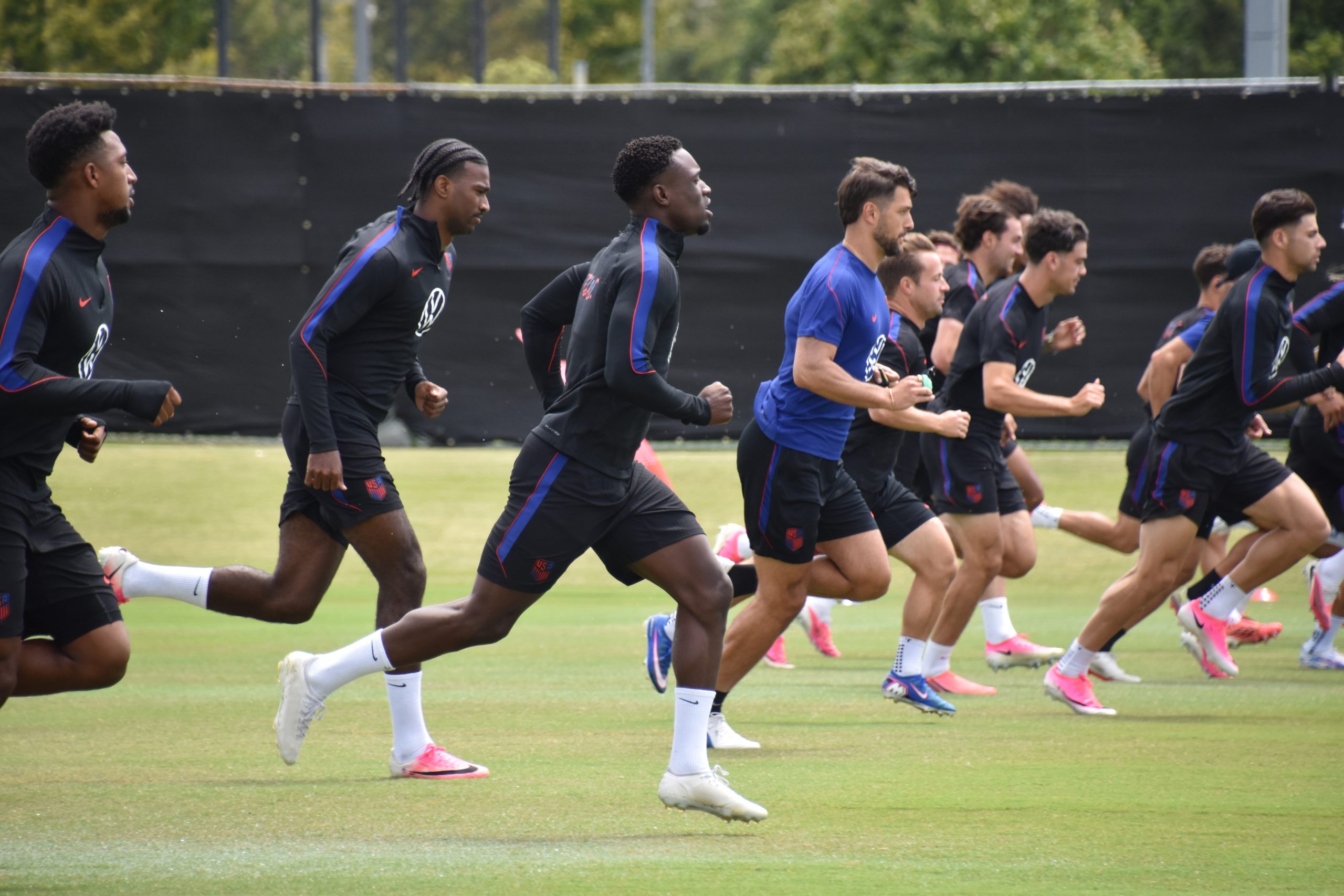
Folarin Balogun (center) running with teammates during a United States men’s national soccer team practice at Great Park in Irvine, California on Sunday.Jonathan Tannenwald
Leading up to Wednesday’s round of 32 contest with Bosnia & Herzegovina, it’s good to remember that the U.S. men’s soccer team has won just one World Cup knockout game ever.
So while it may feel cliché to say this is one of the biggest moments in U.S. men’s history, it’s also true.
And now that the World Cup knockout bracket is set, let’s take a look at the 32 games left to go between now and the July 19 final.
What we’re…
⚽ Reminiscing: The best moments from Philly’s World Cup group stage matches, which ended Saturday night.
🥊 Learning: Philly’s Jaron Ennis knocked out Xander Zayasto become junior middleweight champ at the Barclays Center on Saturday.
Kyle Schwarber reached the 30-homer mark on Sunday in the Phillies’ 84th game, faster than any player in franchise history. His 408-footer to right-center field against Mets righty Kodai Senga in the seventh inning also gave the Phillies the lead to power a 5-4 victory that drew them to within three games of first place in the NL East.
After a wildly successful road trip, the Phillies’ flaws still bubbled to the surface: they’re vulnerable to left-handed pitching; the middle relief can be exposed when the starter doesn’t go six innings; the defense isn’t good. Ideally, the Phillies will address a few areas before the Aug. 3 trade deadline, writes Scott Lauber.
Also, Andrew Painter made his first start for triple-A Lehigh Valley on Sunday. While Don Mattingly is counting on having the 23-year-old back, the interim manager doesn’t have an outlined timetable for Painter’s return.
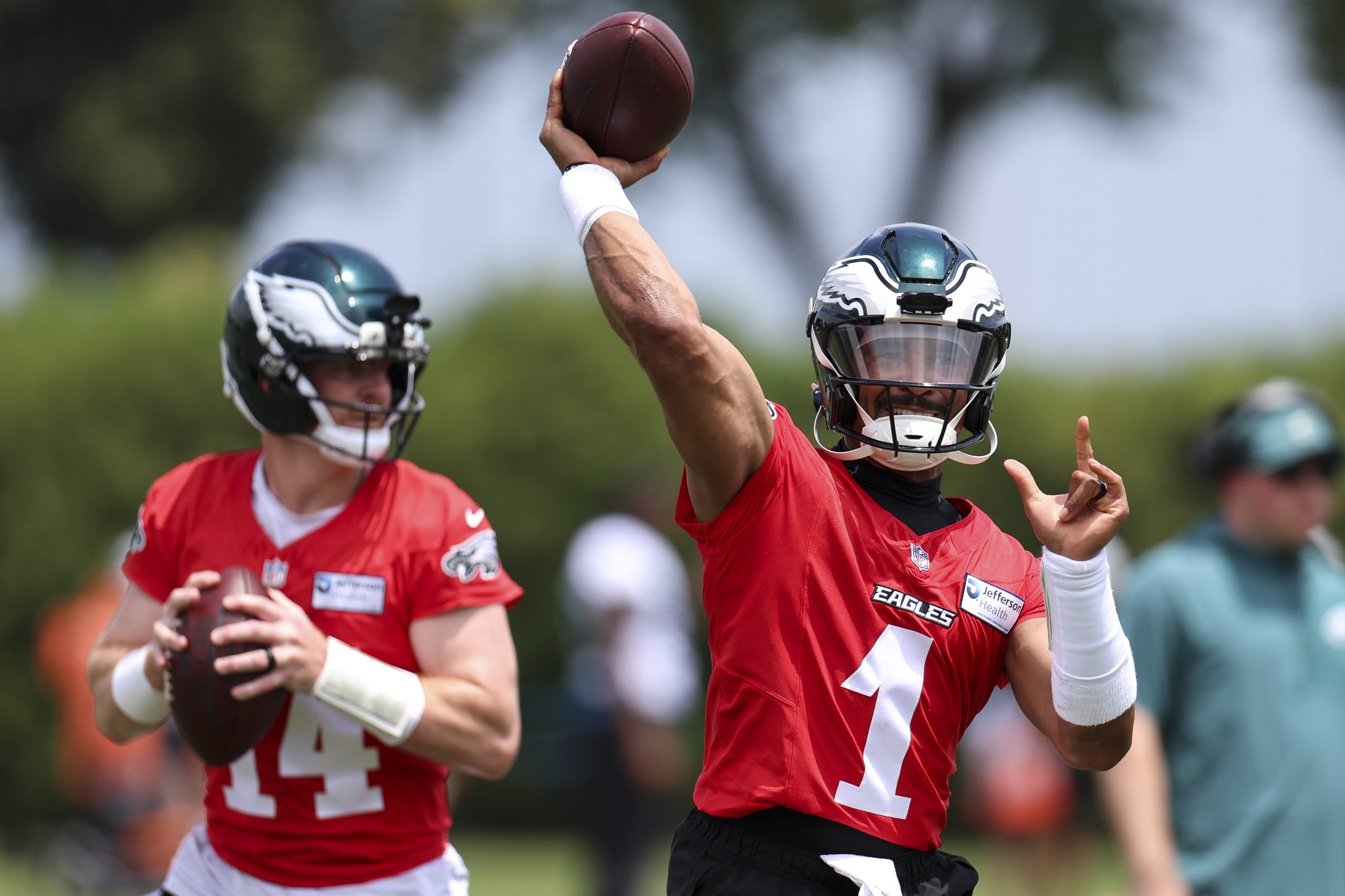
Eagles quarterback Andy Dalton (left) was brought in to compete for a role behind Jalen Hurts. Will he emerge as QB2 during training camp and preseason?Monica Herndon / Staff Photographer
With the Eagles training camp on the horizon, let’s take a closer look at the more than three-dozen new faces who are expected to report along with the rest of the team on July 28.
Our writers will roll out two players per day in a mostly unscientific order that balances offense and defense, bigger names with mysteries, and locks with longer shots to be chosen for the 53-man roster — starting with Andy Dalton and a lesser-known name, defensive back Kapena Gushiken.
Maksim Sokolovskii, right, stands with NHL commissioner Gary Bettman, left, after being drafted by the Flyers with the 27th pick in the draft.Adrian Kraus
The feelings after the Flyers’ 2026 draft doesn’t feel fantastic. It doesn’t feel terrible. It just feels there.
The Flyers did, however, stick to their usual script of prioritizing size and two-way responsibility over offensive flash. It will take a few years before we know if that was the right course.
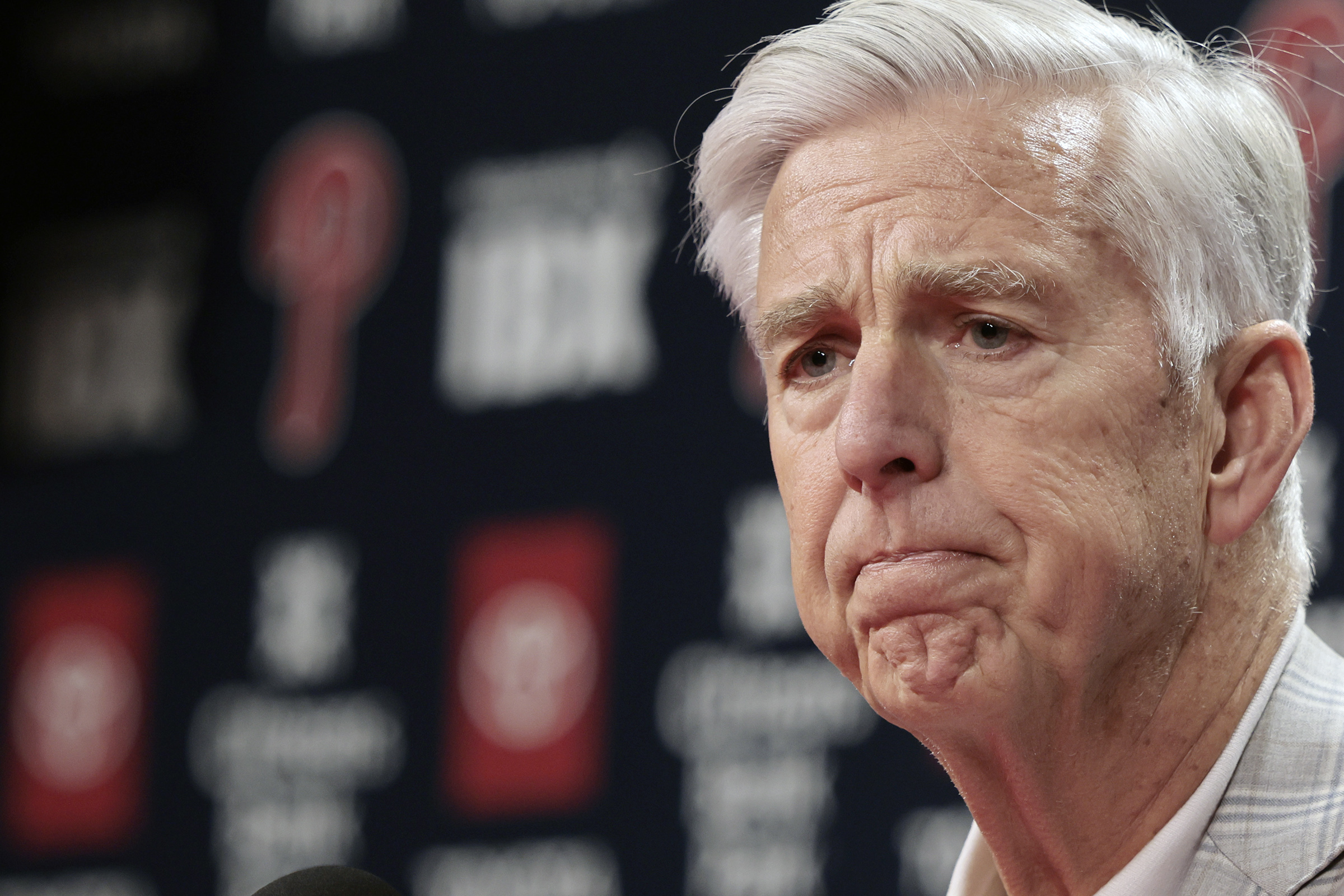
Right now, Dave Dombrowski’s offseason looks like a near-total failure.Elizabeth Robertson / Staff Photographer
There isn’t an executive in Major League Baseball that should be feeling more pressure than Dave Dombrowski now that Bryce Harper has answered fully and satisfactorily the infamous question that the Phillies president posed this offseason.
“Can he rise to the next level again? I don’t really know that answer.”
With just over a month to go until the trade deadline, Dombrowski and his front office better have a serious plan for broadening the team’s potential contributors, writes columnist David Murphy.
We compiled today’s newsletter using reporting from David Murphy, Mike Sielski, Jonathan Tannenwald, Matt Breen, Mel Greenberg, Jackie Spiegel, Scott Lauber, Olivia Reiner, and Kerith Gabriel.
By submitting your written, visual, and/or audio contributions, you agree to The Inquirer’s Terms of Use, including the grant of rights in Section 10.
Thanks for getting your morning started with me. Have a wonderful Monday, we’ll be back in your inbox tomorrow. — Bella
With Eagles training camp drawing nearer on the horizon, The Inquirer is taking a closer look at the more than three-dozen new faces who are expected to report along with the rest of the team on July 28. Whether a 2026 draft choice, a veteran addition or a rookie free-agent hopeful, we’re telling you more about each player’s potential role this season. We’re rolling out two players per day in a mostly unscientific order that balances offense and defense, bigger names with mysteries, and locks with longer shots to be chosen for the 53-man roster.
Player: Andy Dalton
Position: Quarterback
Age: 38
Previous experience: Dalton has the most NFL experience on the 2026 Eagles — unless Brandon Graham returns. The veteran quarterback is going into his 16th NFL season. Dalton began his career with the Cincinnati Bengals, the team that drafted him in the second round, 35th overall in the 2011 draft out of TCU.
He started 133 games over nine seasons with the Bengals and reached the playoffs in five straight years (2011-15). Although Dalton was successful during the regular season, the three-time Pro Bowler has not won a postseason game in his career.
Andy Dalton’s best NFL years came in a Bengals uniform. Frank Victores
The Bengals eventually moved on from Dalton in favor of 2020 first-overall pick Joe Burrow, marking the beginning of the veteran’s journeyman career. Dalton has spent time primarily as a backup with the Dallas Cowboys (2020), the Chicago Bears (2021), the New Orleans Saints (2022), and the Carolina Panthers (2023-25).
He has started 36 games since 2020 (14 wins, 22 losses), completing 65.1% of his passing attempts while throwing 50 touchdowns and 33 interceptions. In his seven starts over the last three seasons with the Panthers (one win, six losses), Dalton completed 64.7% of his passes, throwing 10 touchdowns and seven interceptions.
Path to a roster spot: Seeing as the Eagles tend to carry three quarterbacks on the active roster, Dalton is essentially a lock to make the team out of training camp. But in the aftermath of the offseason program, bigger questions linger about his role on the team.
Dalton and Tanner McKee split reps with the second-team offense behind Jalen Hurts, while Nick Sirianni did not commit to McKee as the backup for the upcoming season. Could Dalton have a chance to usurp the incumbent McKee for the QB2 role in training camp? And does Dalton’s contention for the job indicate that McKee could be a candidate for a trade ahead of the start of the regular season?
Alternatively, if teams aren’t willing to take a chance on the inexperienced McKee (who has started just two games over the last two seasons), could Dalton eventually be on the move before the November trade deadline? The Eagles seem to have options with their depth quarterbacks depending on their preseason performances and the team’s start to the season.
Fun fact: In addition to having zero career playoff wins, Dalton has thrown just one touchdown pass in the postseason. His lone passing touchdown — a 4-yard completion to tight end Jermaine Gresham — came in the Bengals’ 27-10 wild-card loss to the San Diego Chargers during the 2013 season.
Random Obscure Moments in Bengals History: Dalton throws a playoff TD
Andy has a passer rating of 57.8 with 873 yards, 1 touchdown and 6 interceptions in 4 games in the playoffs in his career
His lone playoff TD Pass was to Gresham in a loss @ home to SD in the 2013 WC Round pic.twitter.com/OfJ7OgS5xq
Since 1970, 83 quarterbacks have played at least 10 NFL seasons and started at least four playoff games, according to Stathead. Dalton has the fewest passing touchdowns in the postseason among them.
Quotable: “Any time you’ve got a guy that’s got experience, different types of experiences, you lean on that. Having a relationship with him, I was with him in Carolina, so being with him prior, [I] knew that he had that wealth of knowledge, that he’s open to helping other guys as well … he’s a great resource for all of us to be able to lean on, just a guy that’s played a lot in the NFL successfully.” — Eagles quarterbacks coach Parks Frazier on Dalton
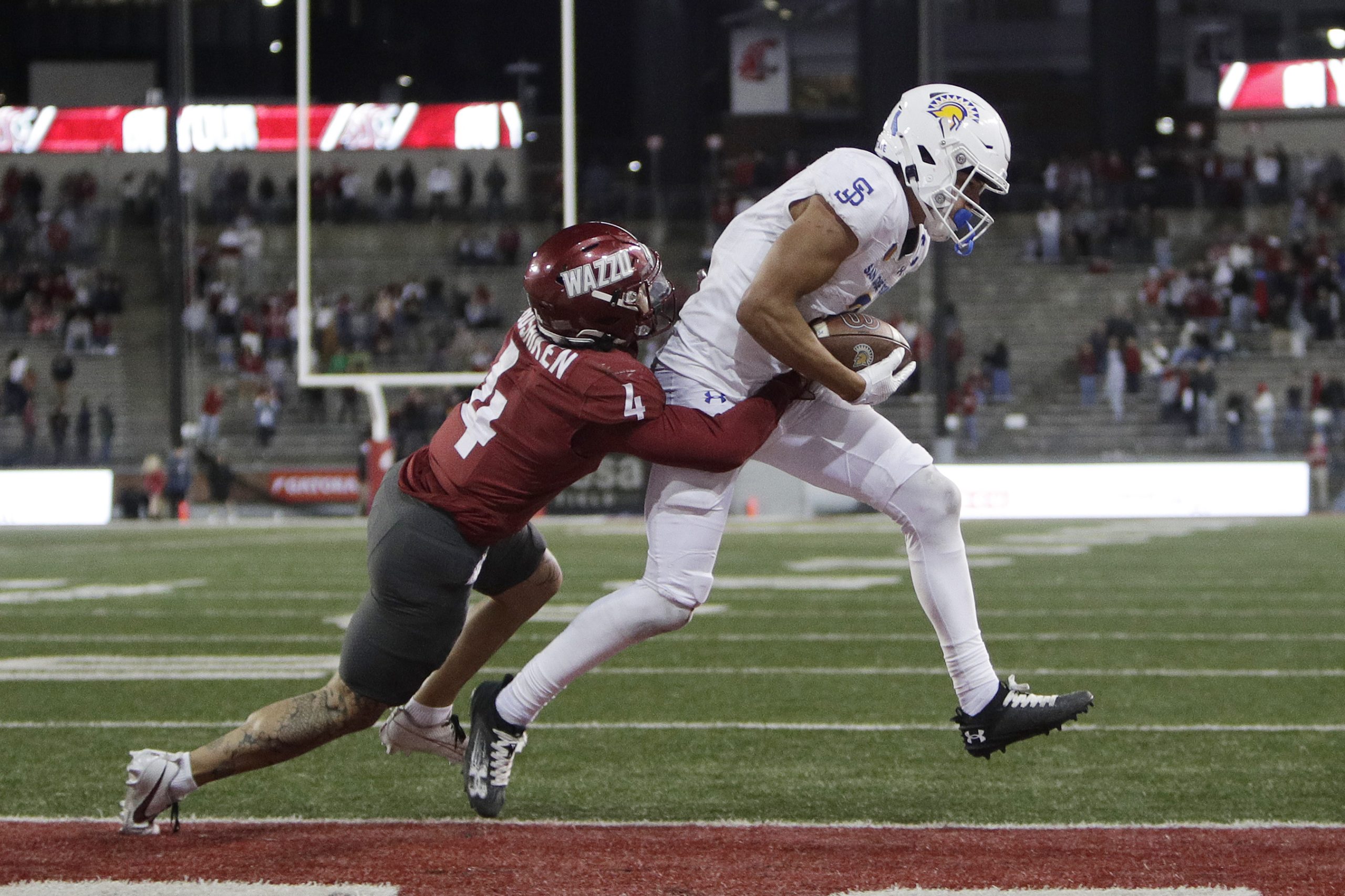
Kapena Gushiken (4), then at Washington State, attempts to defend a potential touchdown against San Jose State in 2024. Young Kwak
Player: Kapena Gushiken
Position: Defensive back
Age: 23
Previous experience: As an undersized defensive back at 5-foot-8, 160 pounds, Gushiken wasn’t highly recruited coming out of high school in Maui, Hawaii, according to The Seattle Times. But his coach at Kamehameha High School knew the coach at Saddleback College, a community college located in Mission Viejo, Calif, a connection that would lead to the first stop in his college football career.
He spent two years at Saddleback and became a starter in his second season. As a sophomore, Gushiken posted 22 tackles (one for a loss), six pass breakups, one interception, and one forced fumble in nine games. His strong JUCO performance earned him opportunities at the Division I level, first at Washington State (2023-24) and then at Ole Miss (2025).
Through 40 games (28 starts) over his final three seasons, Gushiken racked up 143 tackles (5½ for a loss), 20 pass breakups, four interceptions (including one returned for a touchdown), two fumble recoveries, and a sack. Gushiken has played every spot in the secondary, from outside cornerback at Saddleback to nickel cornerback at Washington State to safety at Ole Miss.
Gushiken, now listed at 5-9, 189 pounds, signed with the Eagles as an undrafted free agent this offseason.
Path to a roster spot: Special teams and safety depth. Gushiken is a long shot to make the initial 53-man roster, but he has a chance to carve out a role on the team, especially on the practice squad. Still, in May, Vic Fangio called the starting safety spot vacated by Reed Blankenship “open,” acknowledging that Marcus Epps, Michael Carter, Andrè Sam, J.T. Gray, and “Gush” will each get a look in the competition when the Eagles are in nickel. Cooper DeJean will start at safety alongside Drew Mukuba in base.
Special teams will be Gushiken’s most likely path to a role on the Eagles in 2026. His overall athleticism, as evidenced by his 4.35 40-yard dash at his pro day, makes him a strong candidate for the unit.
Fun fact: In high school, Gushiken lettered in football, track, volleyball, and basketball. As a junior in 2019, he ran a personal best of 11.17 seconds in the 100-meter dash at the Hawaii High School Athletic Association Track and Field Championship.
Quotable: “He’s really versatile. He can play a bunch of spots, a really savvy player. Hoping he can be [former Ole Miss safety] Trey Washington-ish for us. He’s really smart. So it’s really good to have him.” — former Ole Miss coach Lane Kiffin on Gushiken, via 24/7 Sports.
Just a guess, but when you’ve hit as many homers as the Phillies’ star slugger — 30 this season, more than any player in baseball; 370 in his career, tied fittingly with 1969 Miracle Mets manager Gil Hodges for 87th all-time — you probably know it when you feel it.
And so, with one swing, Schwarber covered up another Phillies wart.
“What he’s doing,” left fielder Brandon Marsh said after Schwarber’s two-run homer in the seventh inning here Sunday brought the Phillies back — again — in a 5-4 victory that drew them to within three games of first place in the NL East, “is off the charts.”
With his 408-footer to right-center field against Mets righty Kodai Senga, Schwarber reached the 30-homer mark in the Phillies’ 84th game, faster than any player in franchise history. He didn’t hit No. 30 until the 94th game last season en route to finishing with 56, a career-high.
“After last year, I didn’t think it was easily topped,” said starter Jesús Luzardo, who gave up one run but lasted only five innings. “But I mean, he just keeps making it seem easy.”
In this case, Schwarber got four consecutive forkballs, Senga’s signature pitch, and fouled off the last two to keep the at-bat going. Eventually, Senga had to throw a fastball, and when he did, well, kaboom.
“You’re just trying to get a pitch in the zone and put it in play,” Schwarber said. “There’s no real, look for this, look for that. It’s more just trying to really simplify the approach, and whenever that ball does come, try to put it in play.”
Said Marsh: “I wouldn’t say it was a bad idea for [Senga] to try to sneak a heater in after throwing the 80-mile-an-hour forkball, which is a crazy pitch, by the way. But Kyle just really stayed on that heater and got one in a good spot.”
And just like that, the Phillies had the lead again after Chase Shugart turned a 3-1 lead into a 4-3 deficit in the sixth inning. José Alvarado stranded two runners in the seventh inning and Orion Kerkering tightrope-walked through a bases-loaded jam eighth before Jhoan Duran locked it down in the ninth.
It feels nitpicky after a wildly successful road trip in which the Phillies went 5-2 in Washington and New York and moved to within three games of the division-leading Braves, but their flaws bubbled to the surface last week. They’re vulnerable to left-handed pitching; the middle relief can be exposed when the starter doesn’t go six innings; the defense isn’t good.
But all’s well that ended well, and the Phillies scored 26 runs in the seventh inning or later in the seven games to make sure most of them ended well.
“Well, I don’t know what it tells us, honestly,” interim manager Don Mattingly said. “But it’s good to see that we keep going, like even losing the lead there and coming right back, getting it back.”
Said Schwarber: “I don’t know if I’ve ever been part of a road trip quite like that. I don’t think I saw as many [comebacks] as we did in our previous series against Washington. You don’t see those games very often, but really cool. And then to be able to come here and have some one-run wins. Those are the things that it’s going to take as we keep moving forward through the season.”
Ideally, the Phillies will address a few areas before the Aug. 3 trade deadline. But they can also tighten up their performance in others.
Just ask their manager.
“There’s going to be times where the bullpen’s carrying us, and the starters,” Mattingly said. “There’s going to be times where we score some runs. Hopefully, there’s going to be times we’re catching the ball and making plays.”
And there’s going to be times when the Phillies jump on Schwarber’s back.
Everyone knows he can carry them.
“I don’t know if I’ve seen anybody quite like him,” Mattingly said. “He’s a little different than guys I’ve played with. It’s a different time with more strikeouts, damage, walks. But he’s amazing in what he does, and it’s obviously good to see.”
Schwarber is on pace for 59 homers, which would not only break Ryan Howard’s single-season franchise mark of 58 but also leave Schwarber one homer shy of 400 at the end of the season. It’s a race to 400 between him and Bryce Harper, who has 382 career homers.
“I think it’d be cool, just knowing that it’s going to happen one day, right?” Schwarber said. “To see someone of [Harper’s] caliber be able to reach 400 will be really cool. Whenever that day comes for me, it’ll be another cool milestone.”
In the meantime, he can keep making the Phillies’ issues vanish with one swing.
“I’m just trying to soak it all in and learn,” Marsh said. “Because years down the road from now, it’s going to be one of those where, God willing, I’ll get to tell my family, ‘I got to watch this.’ It’s pretty special.”