The 76ers are just over two weeks away from opening training camp on the most anticipated season for perhaps any team in the league this season. Usually, the NBA takes a pause in August and September, but with the excitement from Jaylen Brown and LeBron James coming to Philadelphia, there’s been plenty to talk and write about to fill the space while everyone waits for the games to get going opening night, Oct. 20 at Madison Square Garden against the New York Knicks.
As for me, I’m Chris Hine, the Inquirer’s new Sixers beat writer who will be covering the team in tandem with my good friend Gina Mizell. I spent the last eight seasons covering the Minnesota Timberwolves for the Minnesota Star Tribune, and I wrote a biography of their franchise player, Anthony Edwards.
I’m a Pennsylvania native who grew up in West Pittston, which is close to Scranton. So I’m really excited to be moving back closer to home and excited to cover what promises to be an entertaining and potentially historic Sixers season. Let’s get to your questions!
Q: What’s the Sixers’ single biggest issue heading into the season?” — (Bryan, @btoporek on BlueSky)
A: To me, it’s having the combination of health and availability with this roster to play enough minutes together to develop the necessary chemistry to become a championship contender. That talent is there. That’s step one in building a title winner. But I’ve learned, in covering the Timberwolves up close through two conference finals runs, that identity, reps and chemistry matter a lot during the regular season. The habits and characteristics a team develops, or doesn’t, show up in April. It’s one reason why the Knicks won the title last year. That team knew each other, it played together, it had an identity it could lean on when things got tough deep into the playoffs. That came after playing together through multiple playoff runs.
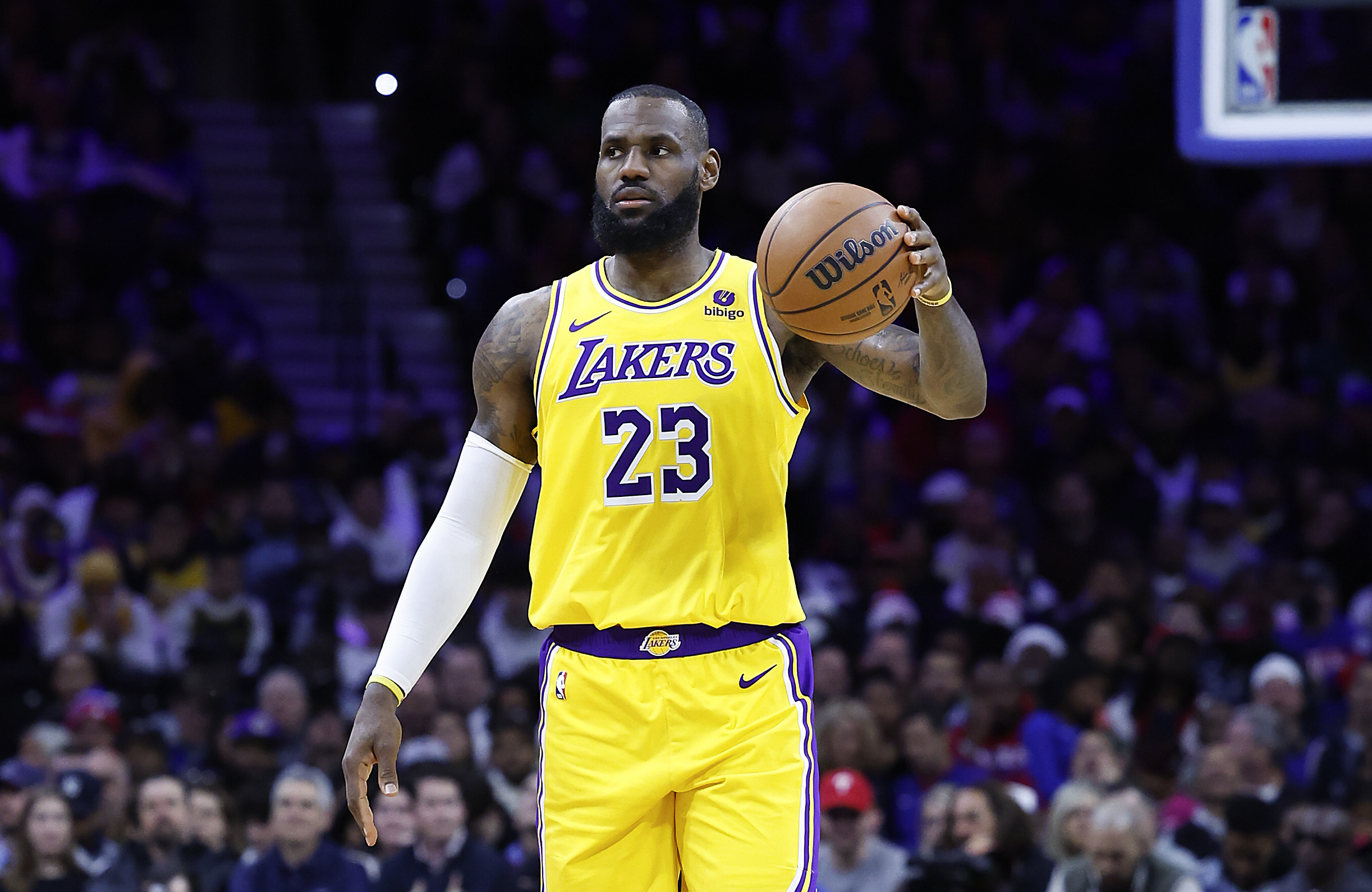
Getting LeBron James and his teammates enough regular season reps will be key come playoff time.
The Sixers will have to figure things out in one season, which is doable, but they’ll need their projected starting five to play together as much as possible. Of course, in back-to-back games, nobody is expecting James or Joel Embiid to play many, if any, of those. But I really feel that getting enough repetition as a five-man unit is paramount to what this team will or won’t accomplish in April, especially against some Eastern Conference opponents who have had the benefit of continuity year over year, like the Knicks, Detroit Pistons and Cleveland Cavaliers.
Q: What will the bench minutes look like? Will Nick [Nurse] go more than six deep in the playoffs? (@frantheman200 on BlueSky) and “Is there a role for Justin Edwards on this team?” — (@joephelan13 on Bluesky)
A: I’ll take these two together since they’re related in my eyes. Let’s start with Edwards. One of the butterfly effects of James deciding to sign with the Sixers is more than a few people on the team’s pecking order, in terms of minutes and role, went down a tick. Dean Wade, who I think could be a huge part of this team’s success, went from projected starter to the bench. And now with the other newcomers, including Anfernee Simons, Kentavious Caldwell-Pope and Labaron Philon Jr., the numbers just aren’t adding up in Edwards’ favor. That’s already nine potential players in the rotation — and those names don’t include any backup centers. It seems like he’ll be swimming upstream for rotation minutes as of now. With anyone looking to crack NBA rotations, defense is the way to the floor. Defend well, and coaches will usually find a way to get you out there.
As for the first part of this question, it’s hard to say as of now, and I imagine that’s something we’ll piece together as we get to speak with Nurse in training camp and hear his vision for some of the blended lineups he may have in mind with the starters. Wade should and will likely play a big role, Simons can provide microwave scoring, Caldwell-Pope has the championship pedigree and familiarity with James from their time in Los Angeles, along with the motivation that he still has something left in the tank at 33 years old.
In the playoffs, it’s going to be tempting for Nurse to stick with a tightened rotation, though, especially if the starting five can defend at a higher level than some analysts anticipate. Even coaches with supposedly deep teams sometimes get a little tense in going multiple guys into their bench when everything is on the line.
Q: In 1986, the Celtics made the always injured center Bill Walton the sixth man. He helped win a title and he won the sixth man award. Instead of wondering what nights Embiid can play, why not move him to sixth man? This way your starting five knows their roles, and he gives you instant offense off the bench. — (@tomg18 on Bluesky)
A: This is the kind of outside-the-box thinking we like in mailbag questions! Well, let’s start off by saying that this is an unrealistic scenario for someone like Embiid. Another thing I’ve learned in eight seasons covering the NBA, starting matters to players. It’s a source of pride and a sign of status, essentially, to say you’re a starter. Suggesting someone move to the bench can be a massive blow to that player’s ego, and a coach has to handle any such move with care.
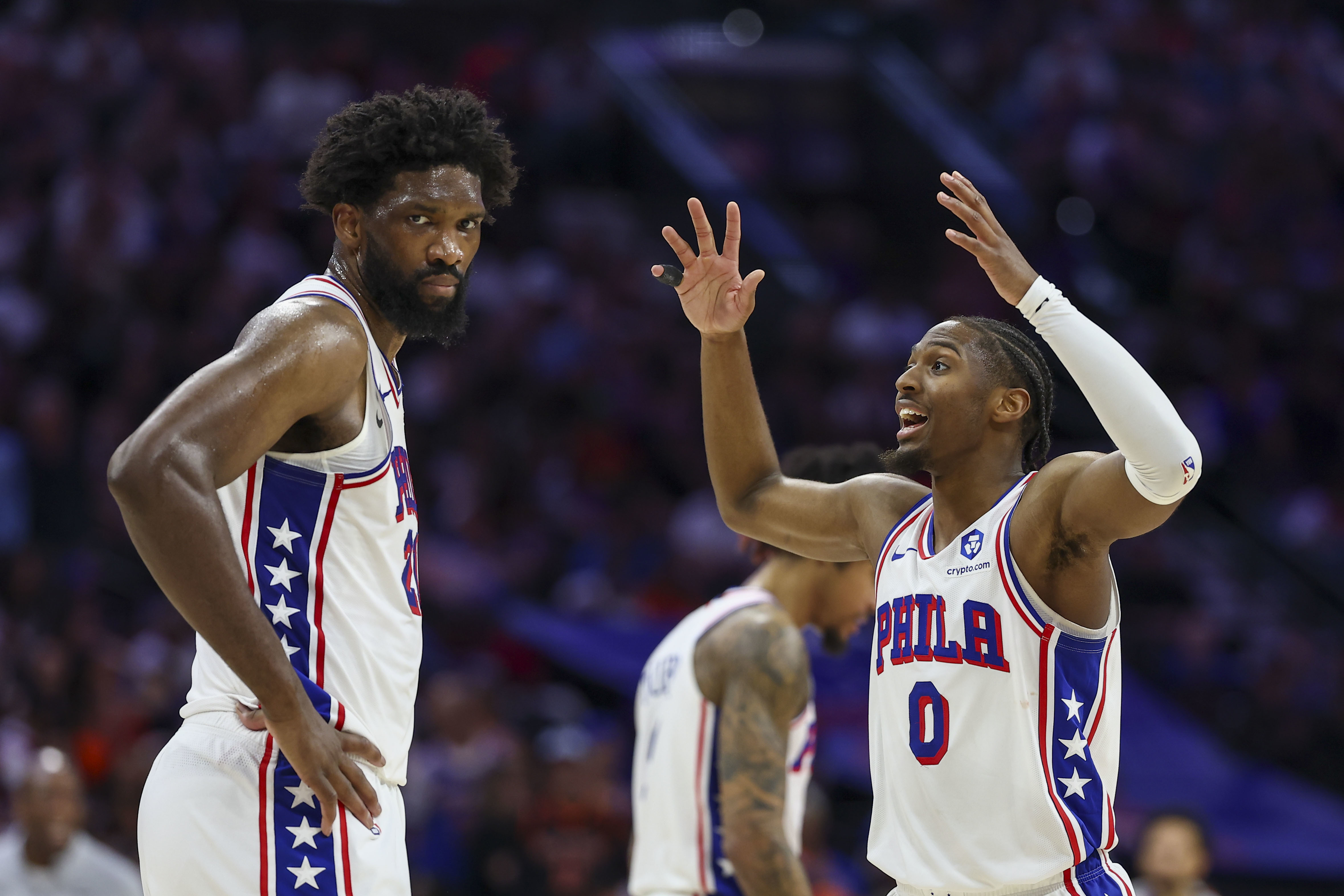
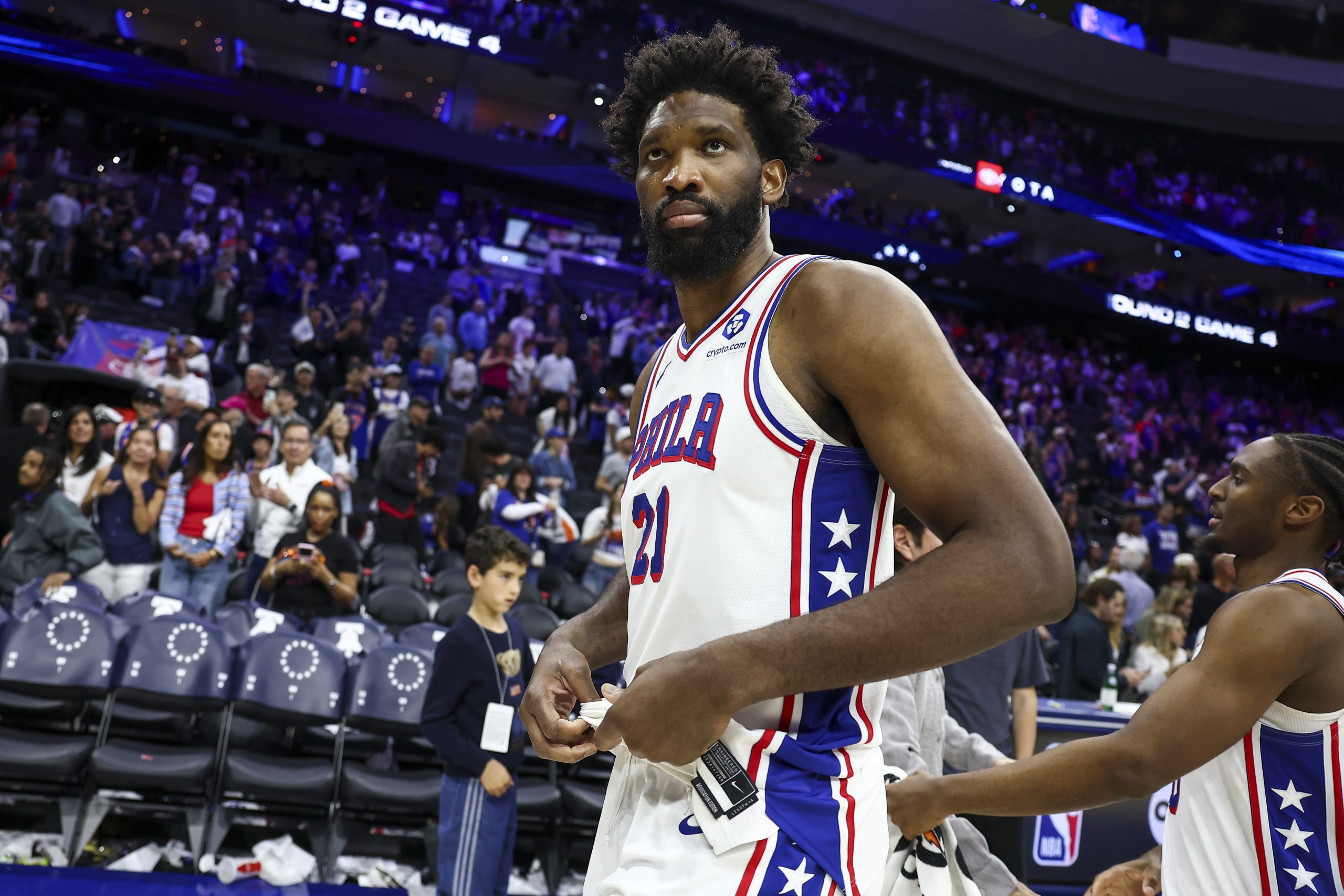
Sixers center Joel Embiid could be asked to make major changes to his game to make room for LeBron James and Jaylen Brown.
If this ever happened with Embiid and the Sixers, it’d be the top story on all the ESPN talk shows for two weeks. But I think what you’re getting at here is Embiid taking on a reduced role, while not coming off the bench. That’s something that could make sense given the roster construction and efforts to preserve Embiid for the long haul. Having him play 25-30 minutes per night — especially if those minutes are with the other starters — and having him available for more games, is better than playing him a usual complement of minutes that risks wearing him out or injuring him. Better to cut back his minutes a bit first before ever considering asking him to come off the bench.
Q: Who are the best candidates for low usage glue guys with the new roster? Someone like KCP or one of the younger guys? — (@bremerdangorst on BlueSky)
A: Wade fits this. He hasn’t had a usage rate above 12.9% in his career, according to Basketball Reference. He can be a defensive contributor who cedes usage to those main scorers on the floor with him at the same time. As you said, KCP can also be this model of player (career-high usage rate of 19.5%). They seem to fit the profile of the exact kind of bench contributors a team like this needs.
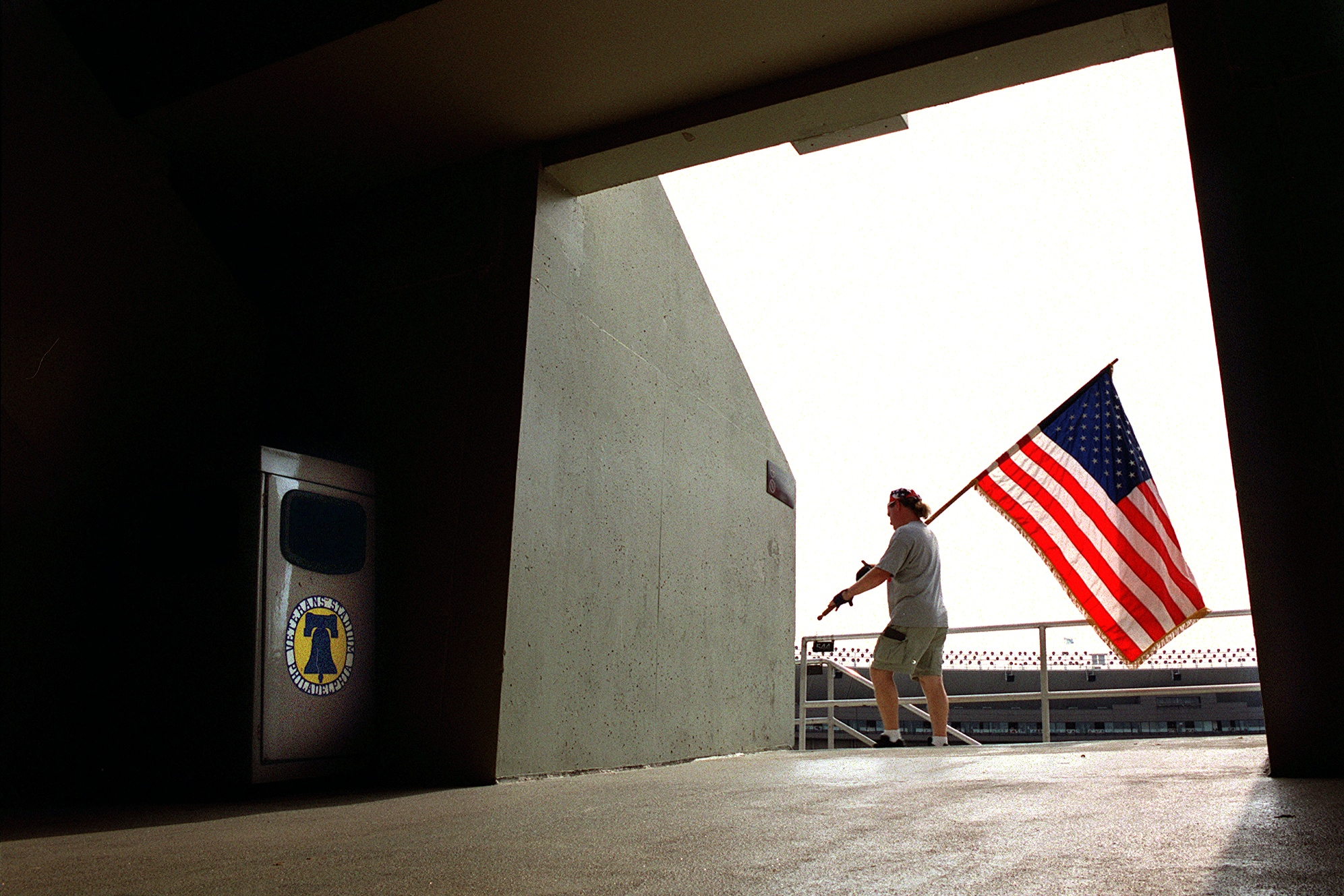
It was Sept. 17, 2001, and the Phillies were back at Veterans Stadium as one of the first MLB games since the terrorist attacks on Sept. 11.
Dillon Minacci, then in fourth grade, was set to go with his dad, Jim, who grabbed a big American flag on a wooden pole and brought it with him.
“It was embarrassing, right?” said Dillon, who was just old enough to roll his eyes at his parents. “I was like, ‘What are you doing? Why are you bringing a flag to the park? What are we doing?’”
No one questioned it. The elder Minacci began his march around the stadium as fans chanted. He became known as Flag Man. Twenty-five years later, Dillon reflects on his dad’s “unifying visual.”
Hugh Douglas and Doug Glanville played for the Eagles and Phillies in 2001, and Larry Bowa was the Phils manager. They reflect on their memories from 9/11.
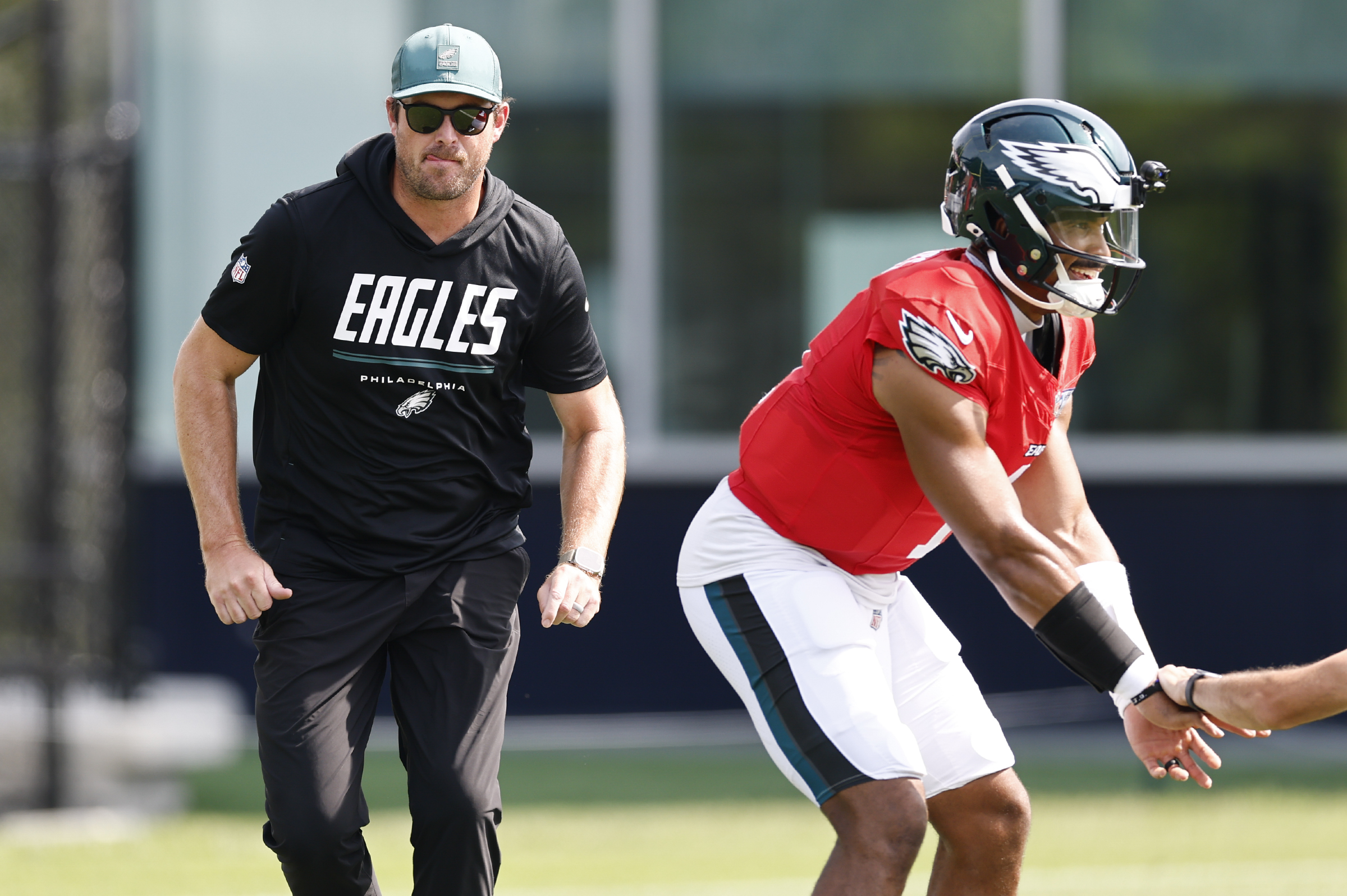
Eagles offensive coordinator Sean Mannion runs in motion with Eagles quarterback Jalen Hurts during team drills before a joint practice with the New England Patriots on Aug. 20. Yong Kim / Staff Photographer
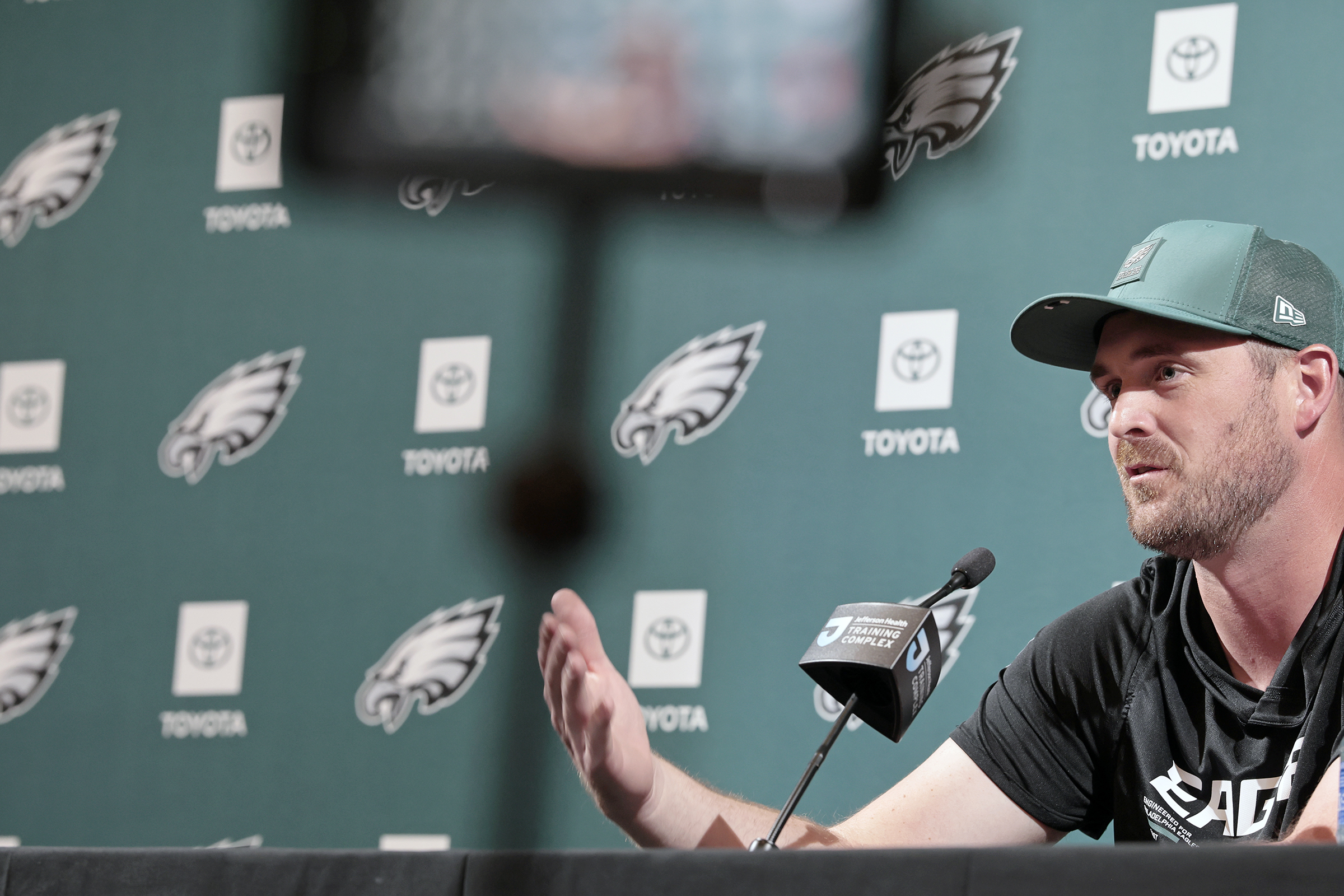
On Sunday, Sean Mannion will make have his close up in a new role. Mannion is just 34 years old and only three years removed from his playing career. He has never called plays in the NFL before and now is tasked with turning around an Eagles offense that was too stagnant in 2025.
In many ways, Mannion, the son and grandson of football coaches, has been preparing for this job for most of his life.
“His thing was, he wanted to play as long as he could,” his father said. “The unsaid part was that when those days were done that he would turn his attention to coaching.”
Jonathan Greenard, who practiced in a limited capacity on Thursday, is unsure but hopeful that he’ll be ready for Week 1 after missing all of training camp with a pectoral strain.
“I feel good, though. I will say, I feel I’m in a good spot,” Greenard said. “Just know that. I know that I’m working every day to continue to try to get this thing stronger. We’re close, I know that.”
Next: It’s almost here — the Eagles kick off the 2026 season vs. Washington on Sunday (4:25 p.m., Fox29).
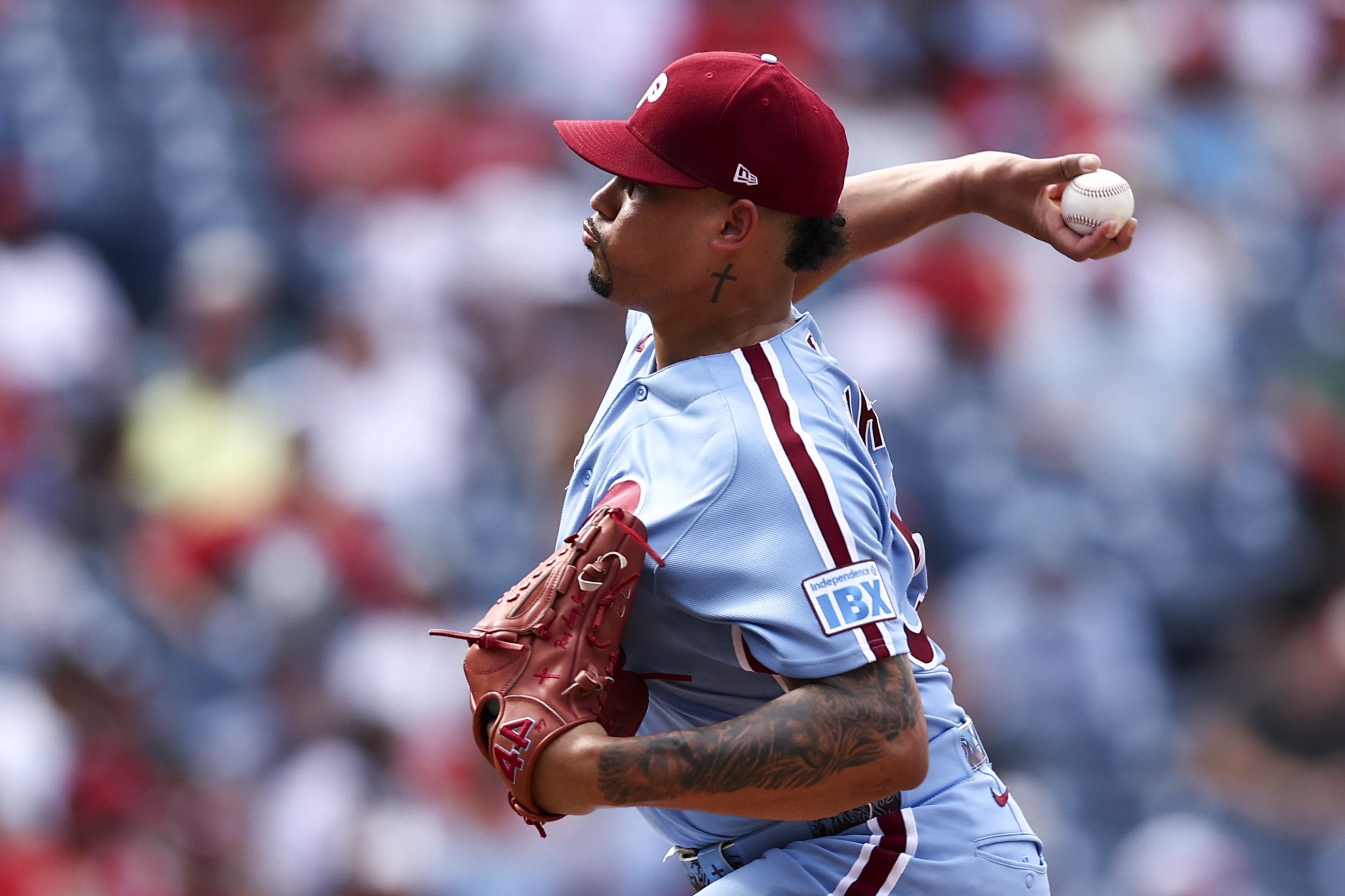
Phillies pitcher Jhoan Duran gave up a tiebreaking home run on Wednesday.Monica Herndon / Staff Photographer
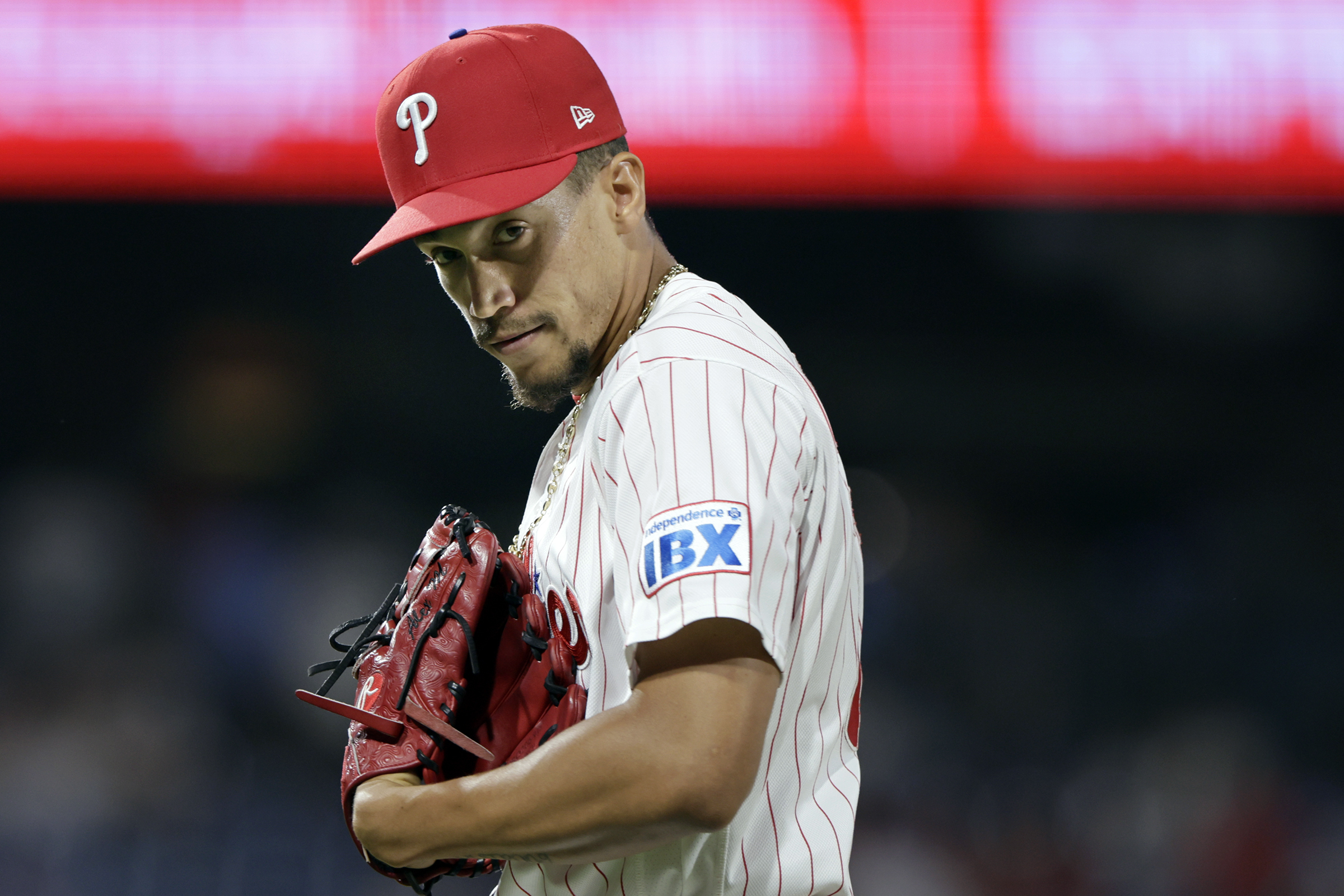
When Zack Wheeler started to run into trouble Wednesday, it would’ve made sense for interim manager Don Mattingly to go to his bullpen, maybe a leverage arm like Alex McFarlane.
It seemingly would’ve been an easy call in the postseason — assuming the Phillies make it — but Mattingly opted to stick with the veteran starter this time. And Wheeler got out of it, only to watch Jhoan Duran give up a tiebreaking homer in a 2-1 Phillies loss.
The Phillies still hold a one-game lead for the top wild-card spot, but they slid to four games behind the Braves in the NL East. And if they do make the playoffs, Mattingly has a simple strategy for catcher J.T. Realmuto, since he’s so good at challenges.
Next: The Phillies are gearing up for another huge series vs. the Atlanta Braves, this time at Truist Park. Aaron Nola (6-10, 4.76 ERA) is scheduled to face Chris Sale (14-9, 2.10) on Friday (7:15 p.m., NBCSP).
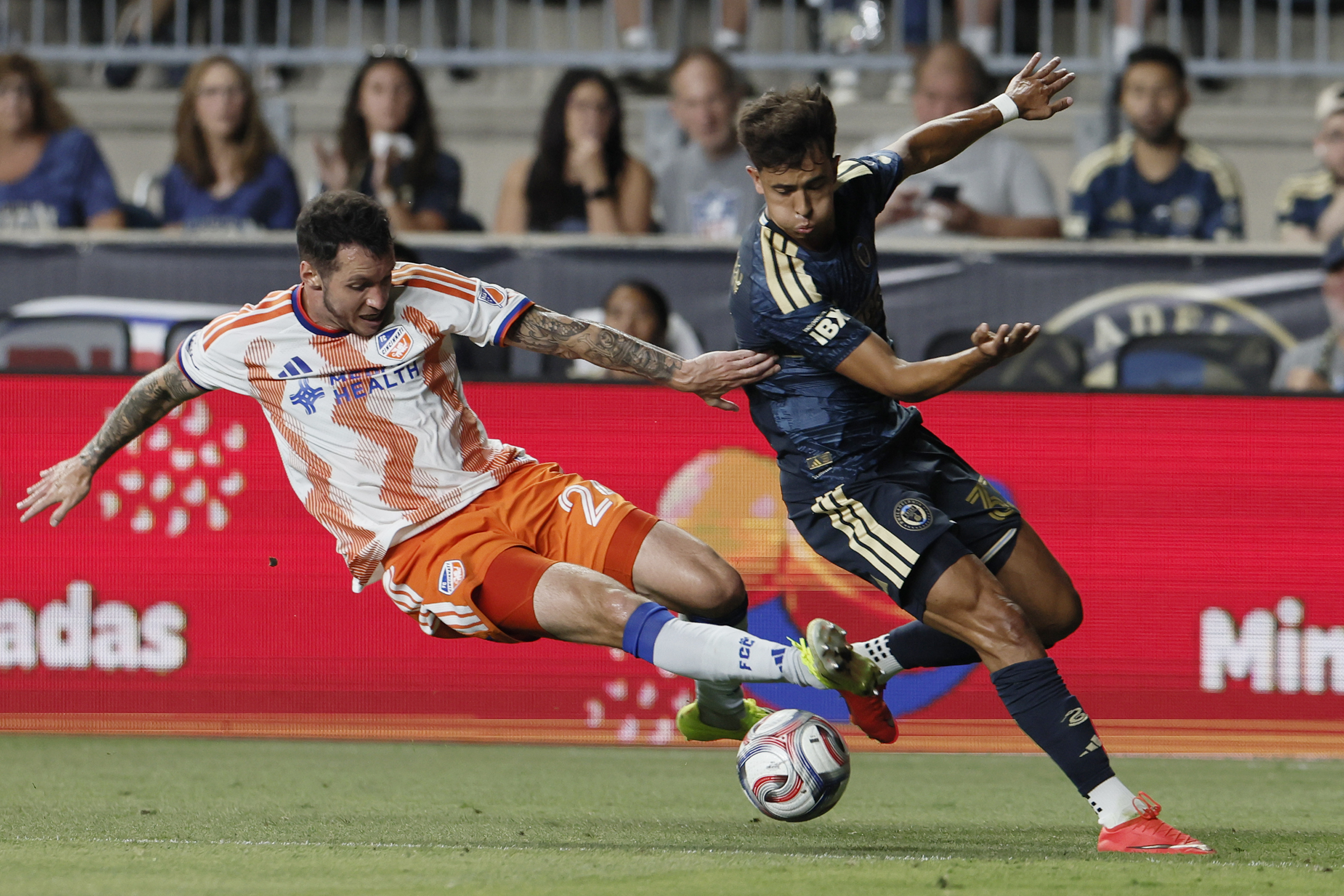
Quinn Sullivan (right) battles Cincinnati’s Kyle Smith for the ball. Sullivan and his younger brother, Cavan, were big factors in Wednesday’s win. Elizabeth Robertson / Staff Photographer
Union teen phenom Cavan Sullivan continues to dominate the spotlight. On Wednesday, he and his older brother, Quinn, shared it as they started a regular-season game together for the first time.
The Sullivans became the Union’s playmaking engine when interim manager decided to start Ezekiel Alladoh at striker with Bruno Damiani amid a three-game week.
And, with his mother and brother in the stands, Damiani delivered a hat trick as part of a 5-0 rout of Eastern Conference foe FC Cincinnati. Jonathan Tannenwald offers his insight into the big midweek win.
Next: It’s a quick turnaround for the Union, who head across the country to face San Diego on Sunday (9 p.m., Apple TV).
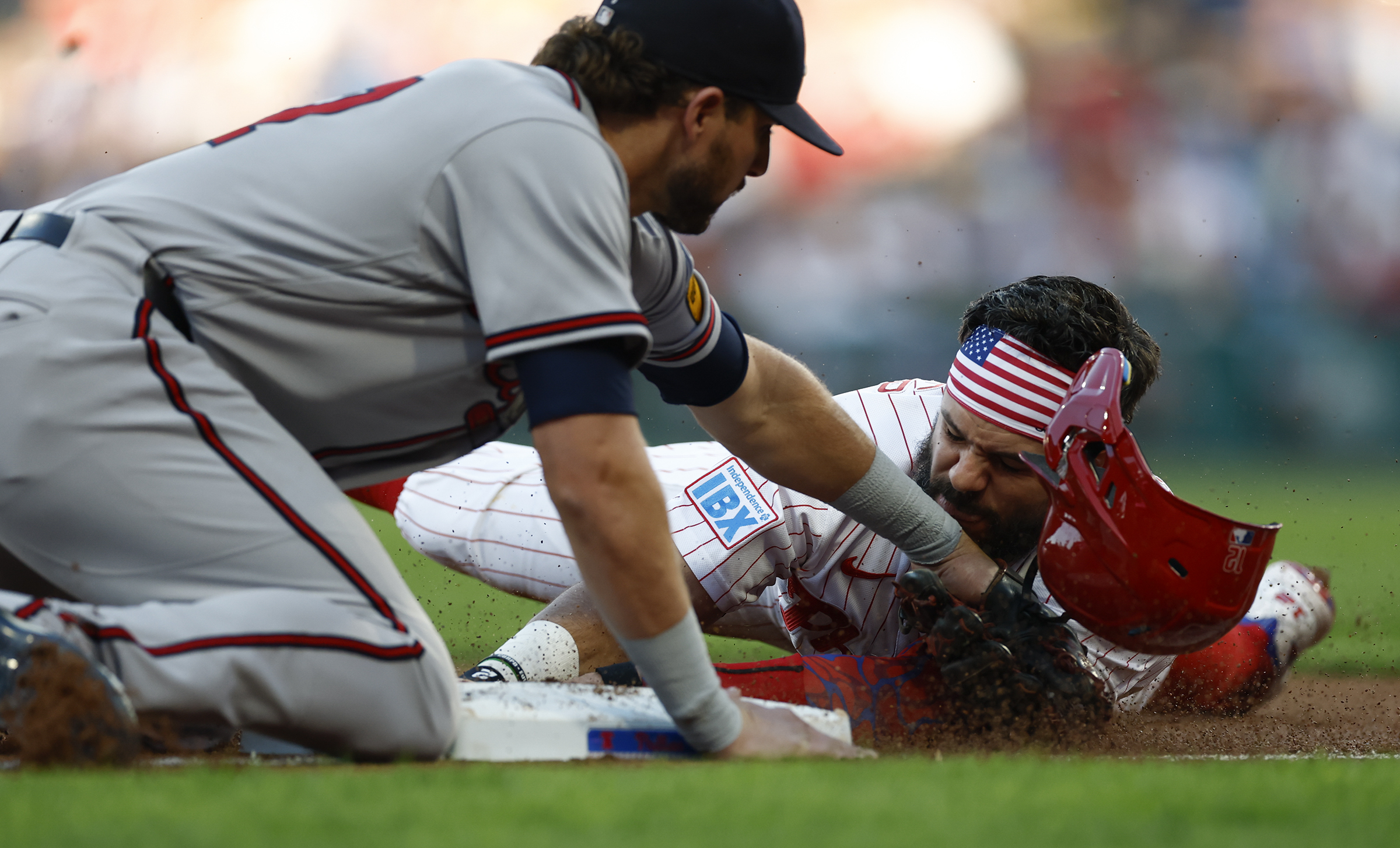
Phillies designated hitter Kyle Schwarber avoids a tag by Atlanta Braves third baseman Austin Riley on Saturday.Yong Kim / Staff Photographer
We’re days from the start of Eagles season, but Philly’s summer sports teams — the Phillies and Union — are still going strong as they head down the stretch. As they do each Friday, Inquirer photo editors picked the best sports images from the last seven days to bring you this week’s Big Picture.
What you’re saying about titles
We asked: If you could win any major sports title, what would you pick and why?
Even though I’m a huge fan of the major sports I would be most proud to win either Wimbledon or the Tour de France. Both of these sports require tremendous personal sacrifice and training and winning at the ultimate challenge against the best in the world would be an accomplishment I would be extremely proud of. —Bob A.
Even though I am in no way a boxer or fighter I would wish to be the the welterweight and middleweight champion of the world like my boyhood boxing idol Sugar Ray Robinson. In truth though today I don’t like boxing at all, but as a kid I was a big fan. —Everett S.
No doubt it is World Series. The organized baseball season begins in February and those fortunate enough concludes with a championship in late October (or even early November). It is a grind for the players and coaching staff. Playing in cold conditions in April, the scorching heat in summer and cold (and sometimes) snowy fall. It is a marathon and only the focused and durable few will survive. — Nick S.
Winning any sports title in Philly is an exhilarating prospect — whether it’s the Phillies World Series, a Flyers Stanley Cup, or a Sixers NBA Championship. But Philly is football. Whether talking about the 1926 Frankford Yellow Jackets or the University of Penn Football dynasty of the late 1800s — we live for the autumn season.
When the Eagles won a Super Bowl in 2018 — it didn’t just feel like their first. It felt like the culmination of excitement that we had waited nearly a century to savior. When it comes to a which title that I’d like most to experience on a sideline as a player — whether in 2018, 2025 (and possibly 2027) — it’s all Eagles. — Michael L.
World Series Champion! The culmination of a long 162 game season and 4 rounds of playoffs. Starting in late March, ending in early November, baseball is the ultimate grind. — Bob C.
We compiled today’s newsletter using reporting from Matt Breen, Marcus Hayes, Jeff Neiburg, Ryan Novozinsky, Olivia Reiner, Scott Lauber, Gabriela Carroll, Jonathan Tannenwald, Mia Messina, Mike Livingston, and Jackie Spiegel.
By submitting your written, visual, and/or audio contributions, you agree to The Inquirer’s Terms of Use, including the grant of rights in Section 10.
Thanks for reading along! We’ll have a special edition of Sports Daily in your inboxes tomorrow to get you ready for the Eagles’ season opener. Jeff Neiburg will take you through everything you need to know, from odds to the injury report and how to watch. — Maria
We’re days from the start of Eagles season, but Philly’s summer sports teams — the Phillies and Union — are still going strong as they head down the stretch. From Citizens Bank Park to Chester, it was a busy week for the two clubs, with the Phillies hosting the Braves and Astros and the Union hosting Cincinnati and Montreal. And at some point along the way, Temple opened its season with a win over Rhode Island at Lincoln Financial Field. The Owls will be back there Saturday when they host No. 16 Penn State, a day before the Eagles kick off against the Washington Commanders.
As they do each Friday, Inquirer photo editors picked the best sports images from the last seven days to bring you this week’s Big Picture …
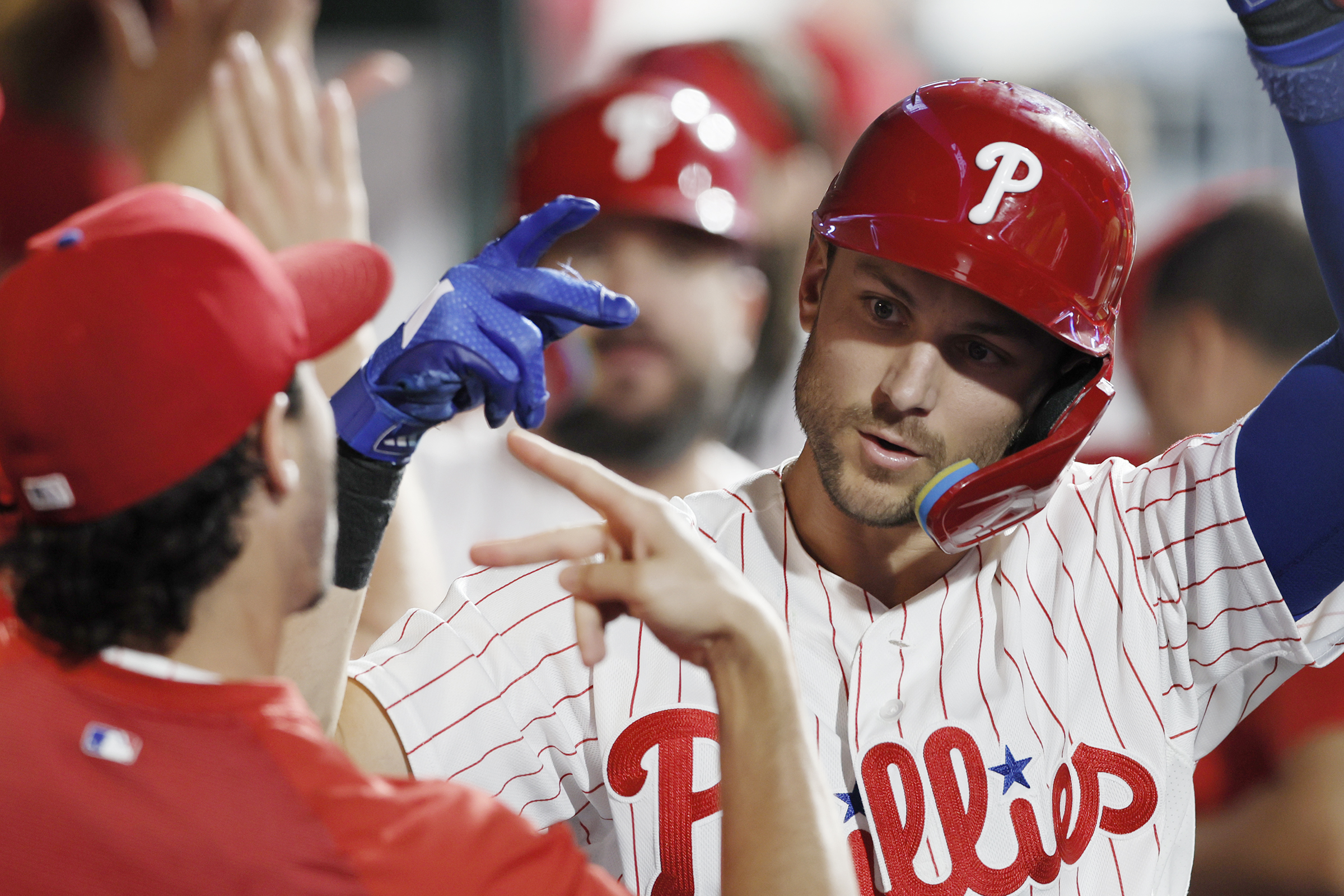
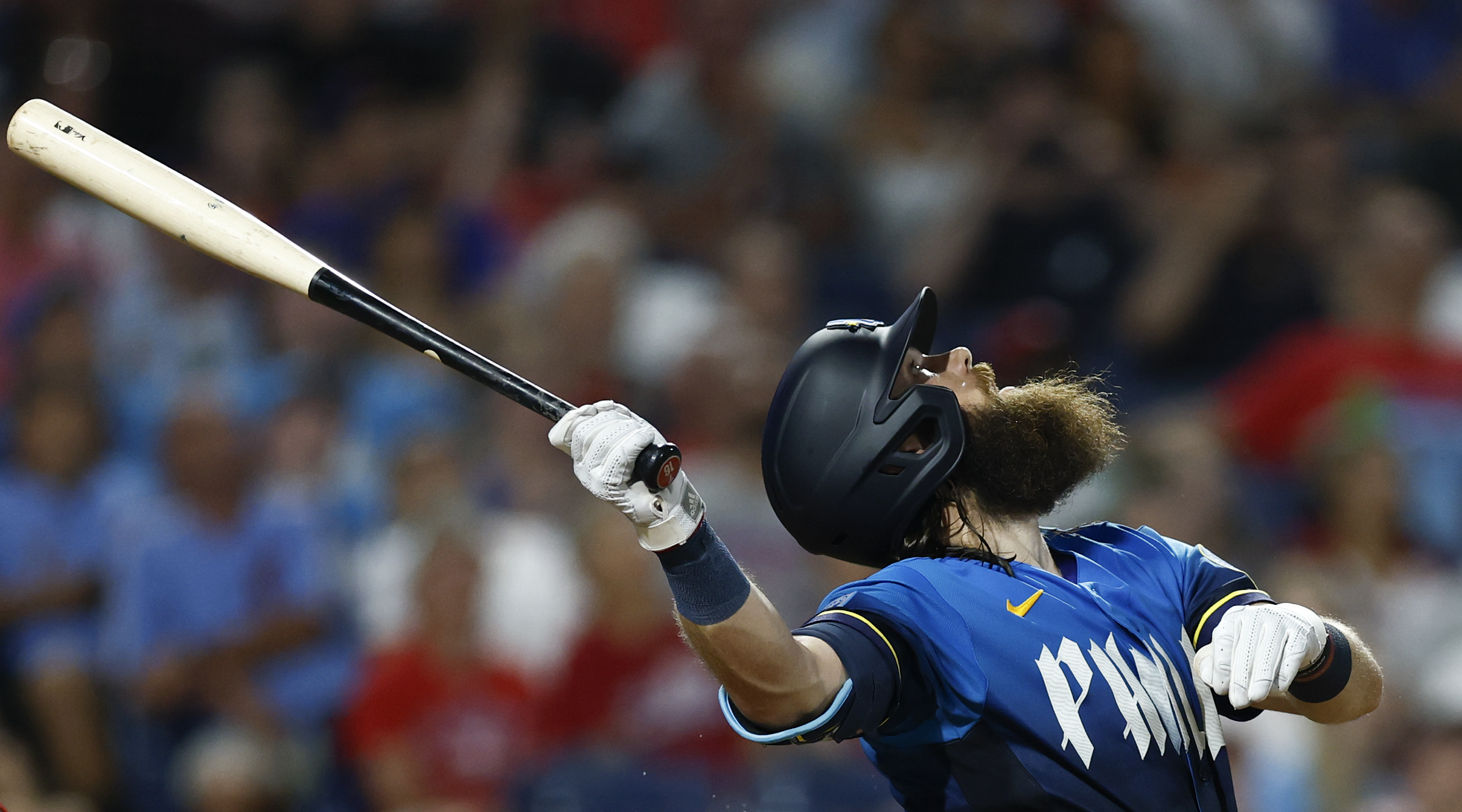
Trea Turner hit a two-run home run in the sixth inning against the Houston Astros on Tuesday, but it wasn’t enough as the Phillies dropped the series opener, 6-5.Elizabeth Robertson / Staff Photographer
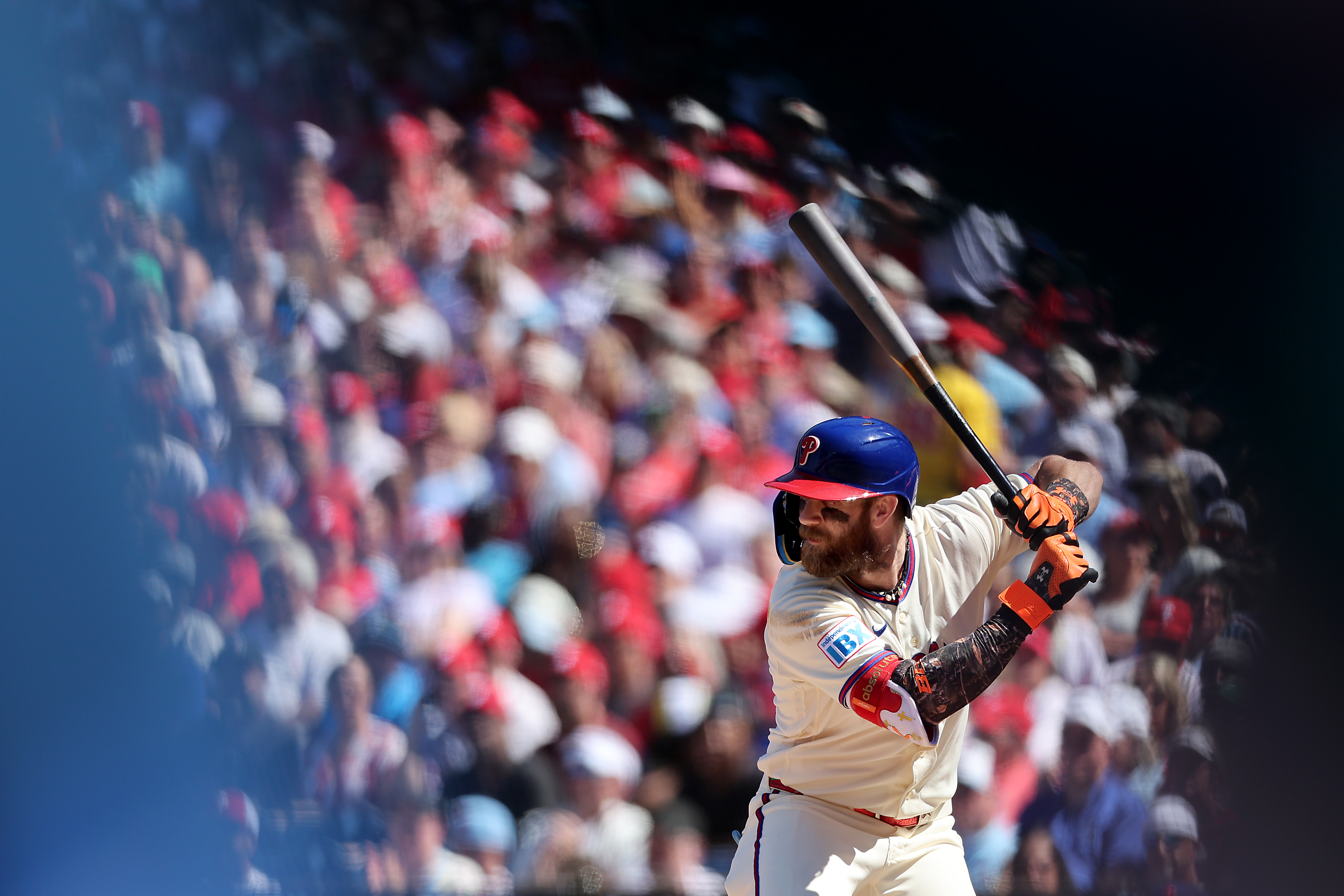
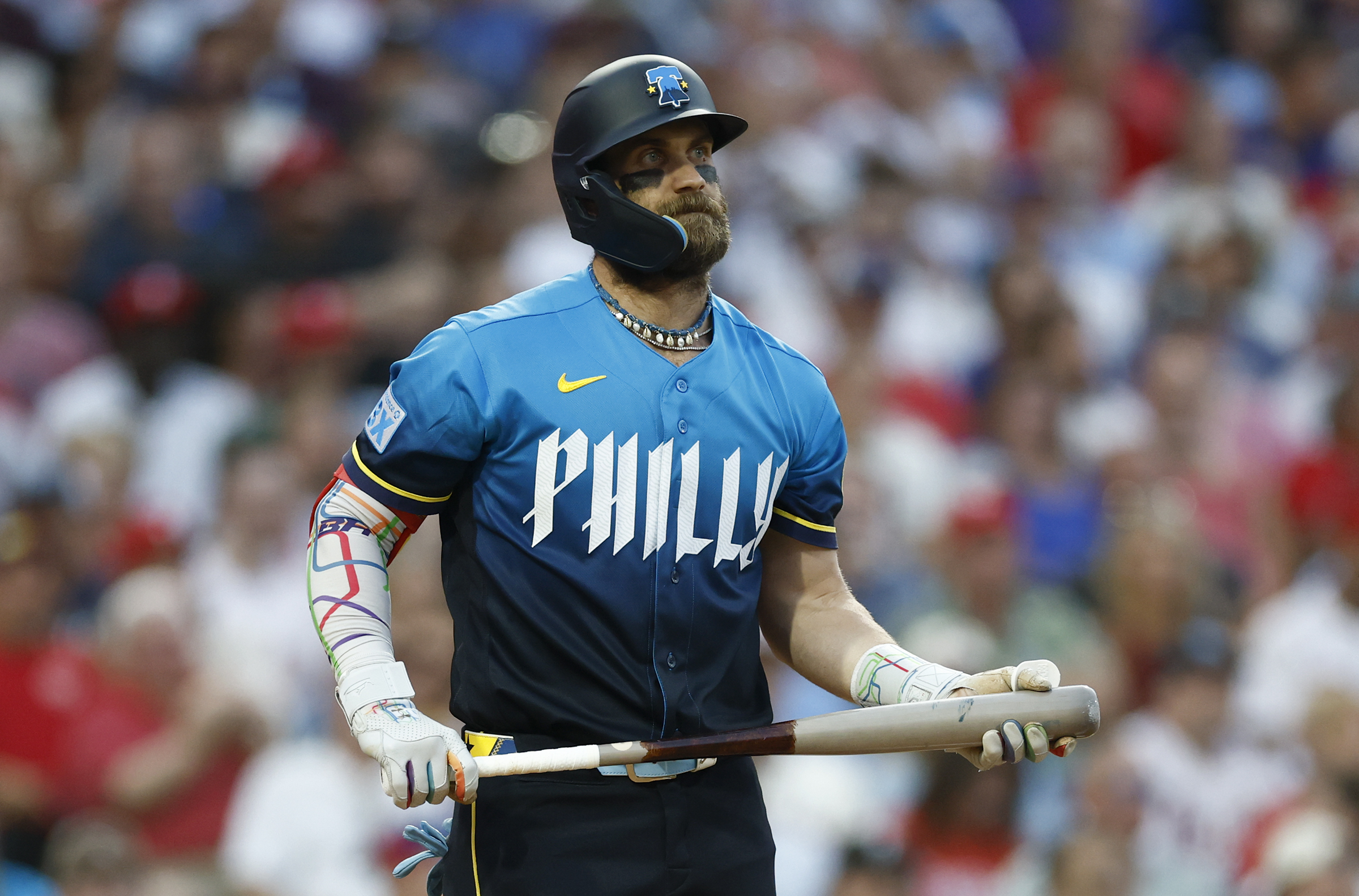
Phillies outfielder Bryce Harper waits for a pitch during Monday’s series finale against the Atlanta Braves. The Phillies won, 1-0, to split the series with their division rivanl.David Maialetti / Staff Photographer
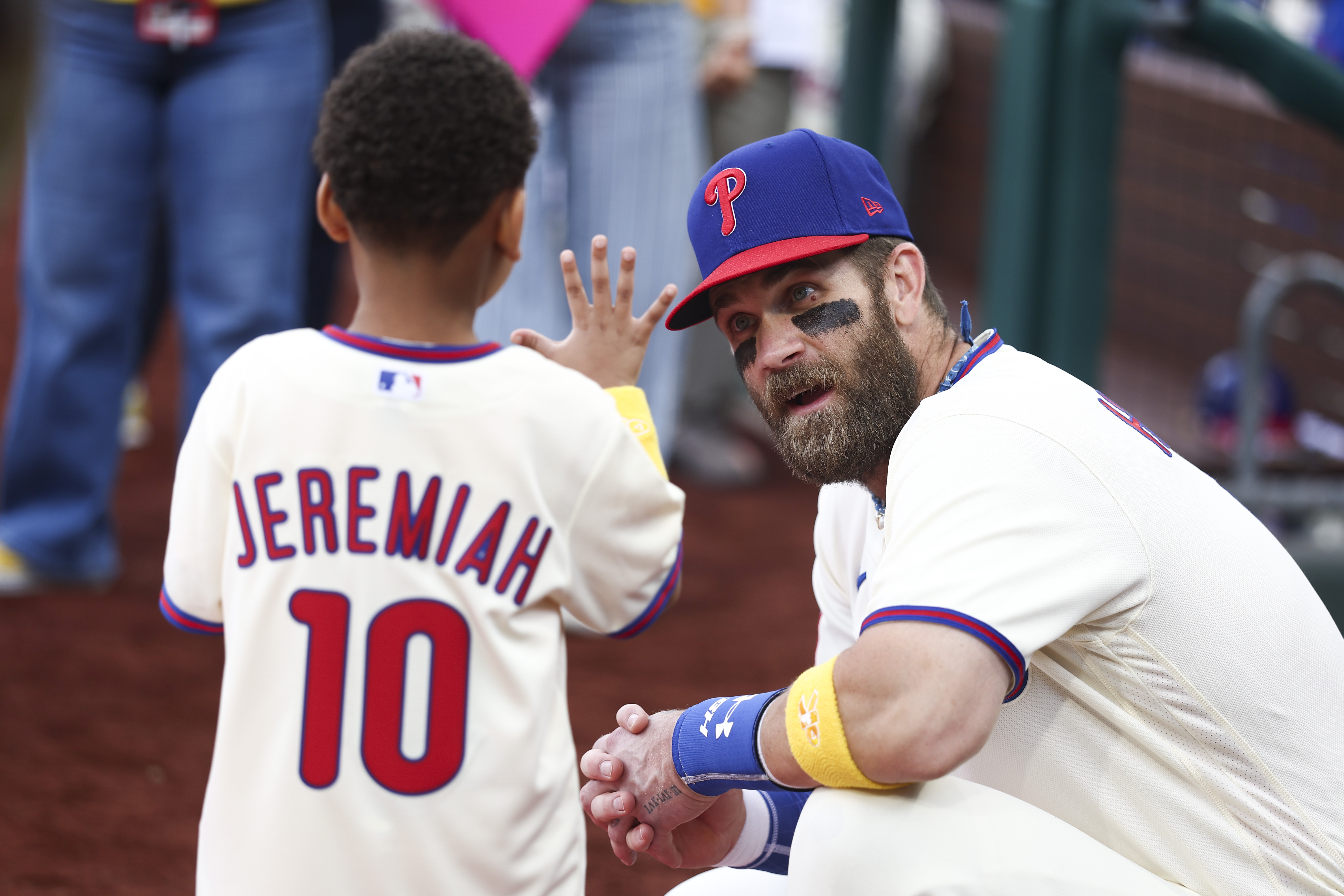
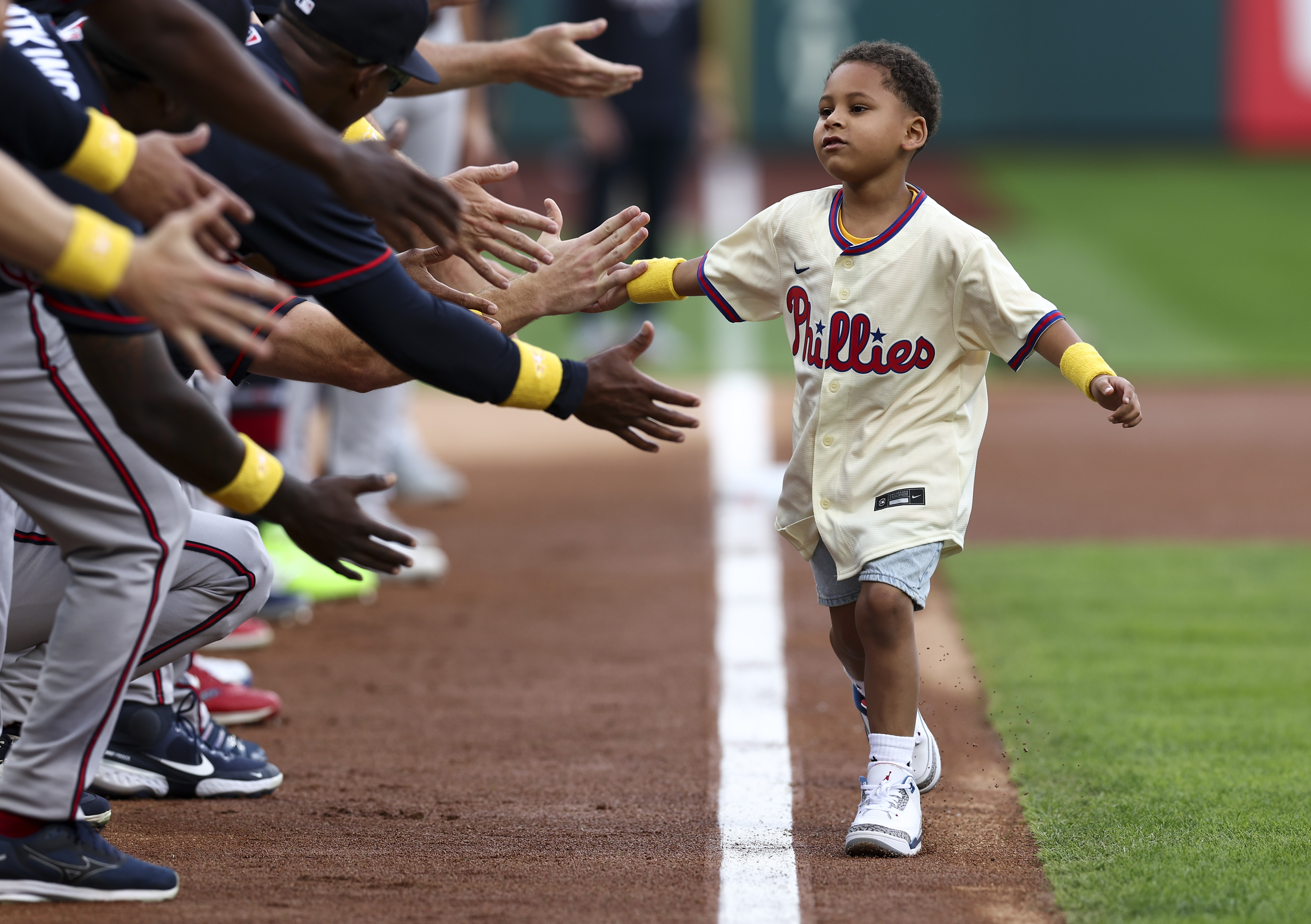
Jesus Luzardo pitched his first complete-game shutout in the Phillies’ 1-0 win over Atlanta on Monday.David Maialetti / Staff PhotographerA young fan named Jeremiah talks with Bryce Harper before Sunday’s game against the Braves at Citizens Bank Park, where the Phillies and Nemours Children’s Health hosted their Childhood Cancer Awareness Day.Monica Herndon / Staff Photographer
Jeremiah rounds the bases after hitting an honorary home run before Sunday’s game. The Phillies could’ve used Jeremiah, as they lost to the Braves, 5-4. Monica Herndon / Staff Photographer
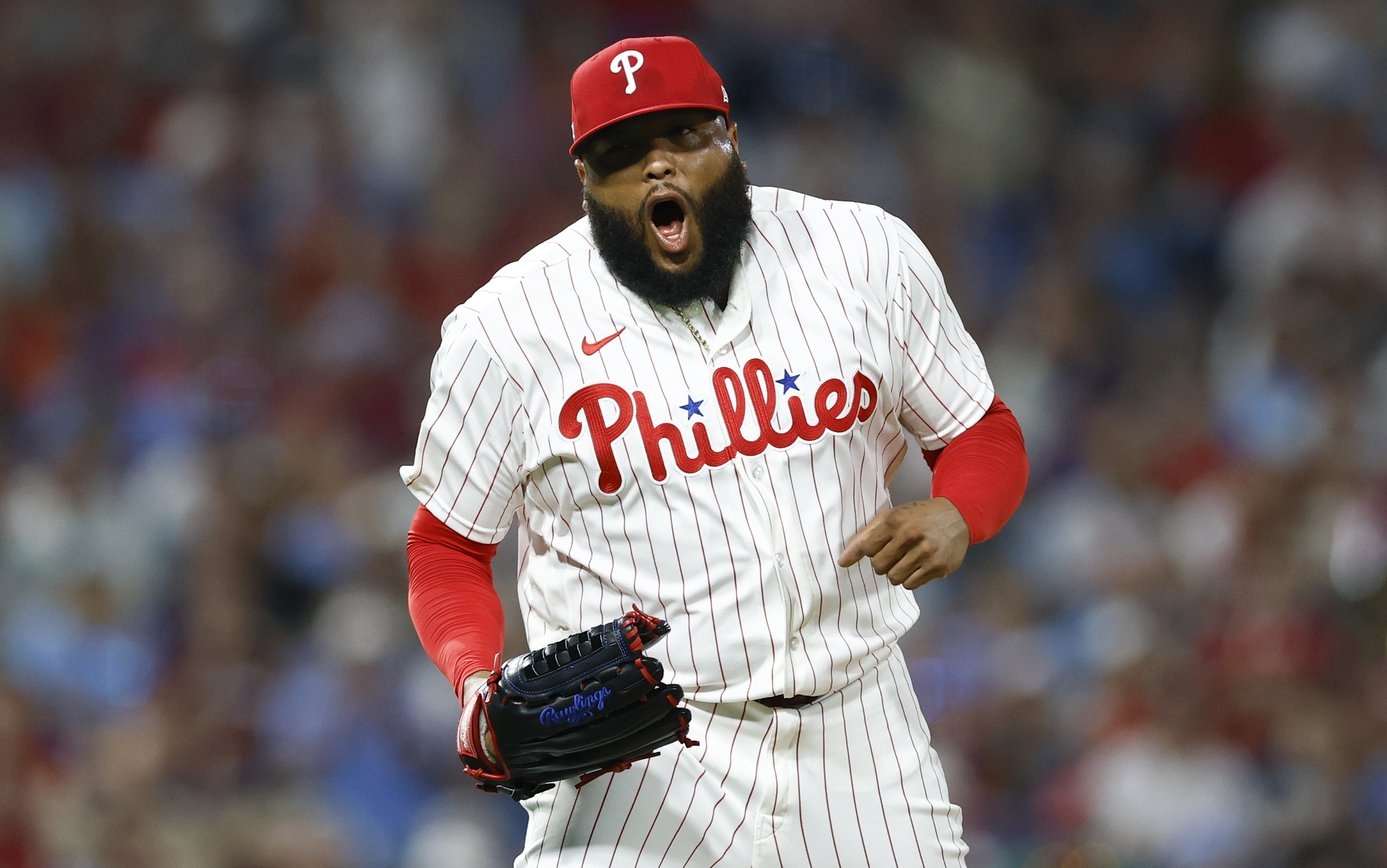
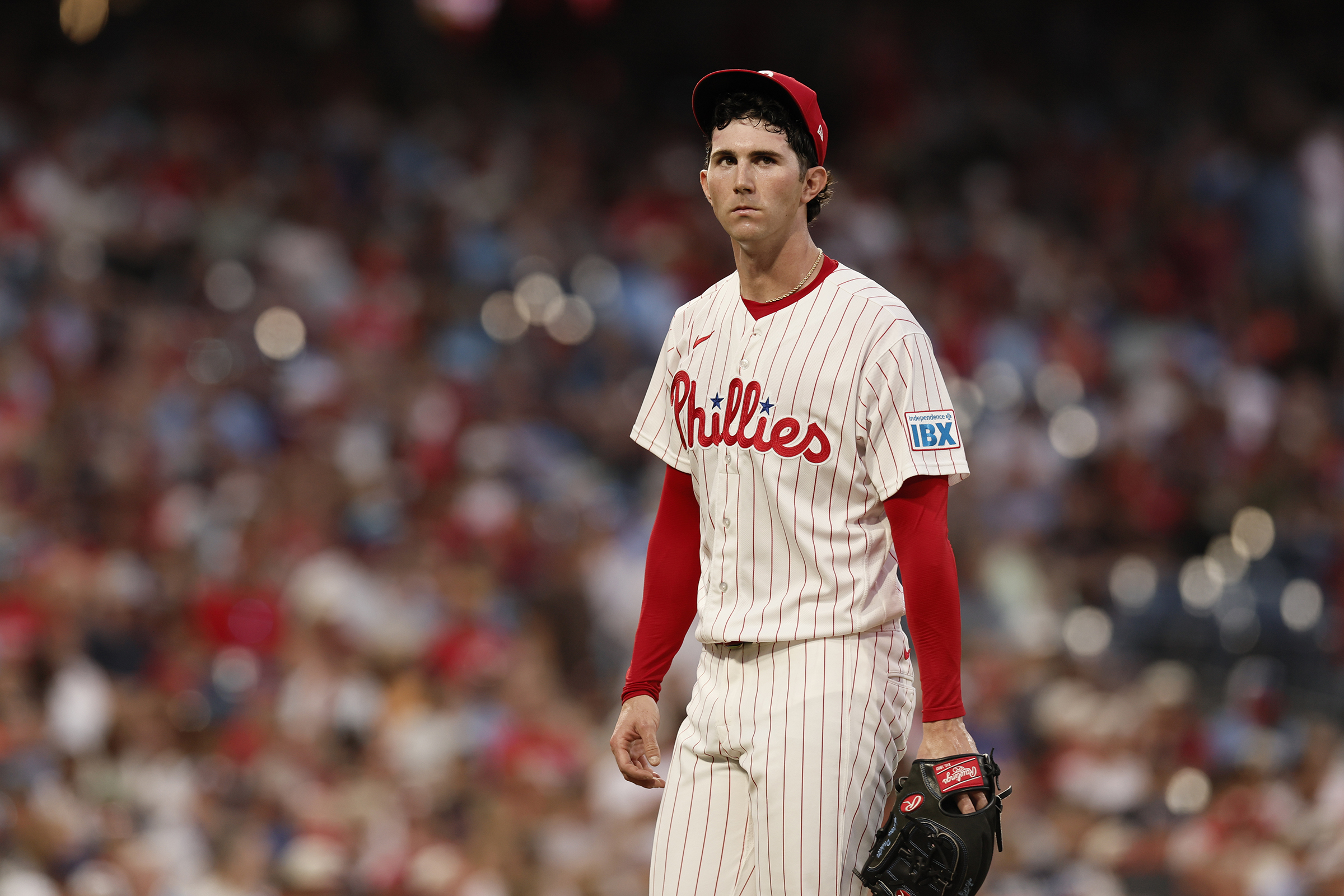
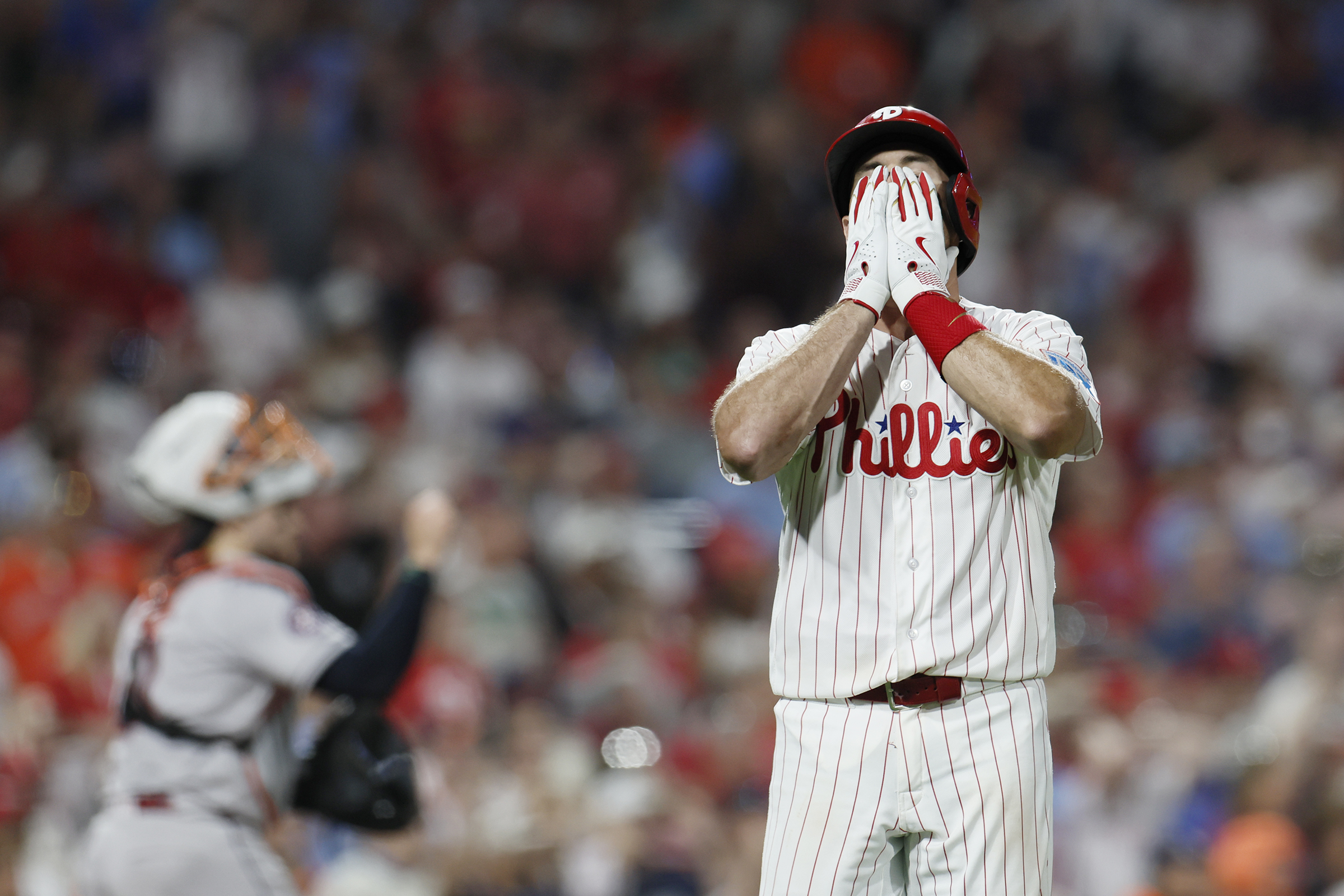
José Alvarado reacts after striking out Braves first baseman Matt Olson to end the eighth inning of Saturday’s 4-2 Phillies’ win.Yong Kim / Staff PhotographerPhillies pitcher Andrew Painter walks off the field after giving up four runs in the second inning against the Houston Astros on Tuesday. The Phillies rallied but their comeback attempt fell short, 6-5.Elizabeth Robertson / Staff PhotographerCatcher J.T. Realmuto reacts after he lining into a crucial double play in the seventh inning of Tuesday’s loss.Elizabeth Robertson / Staff Photographer
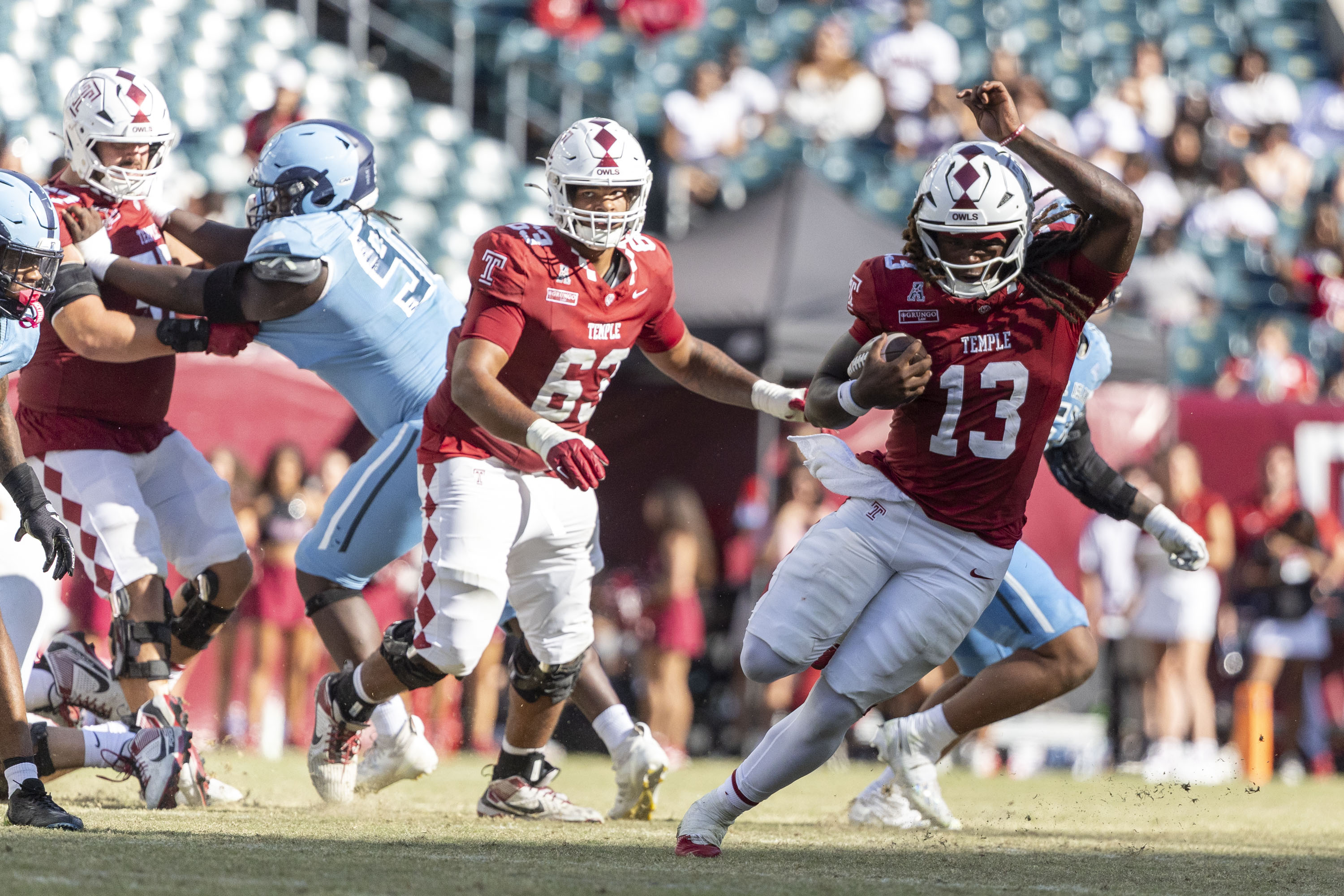
Temples quarterback Ajani Sheppard (right) cuts through Rhode Island’s defensive line during the second half of the Owls’ season-opening win.Tyger Williams / Staff Photographer
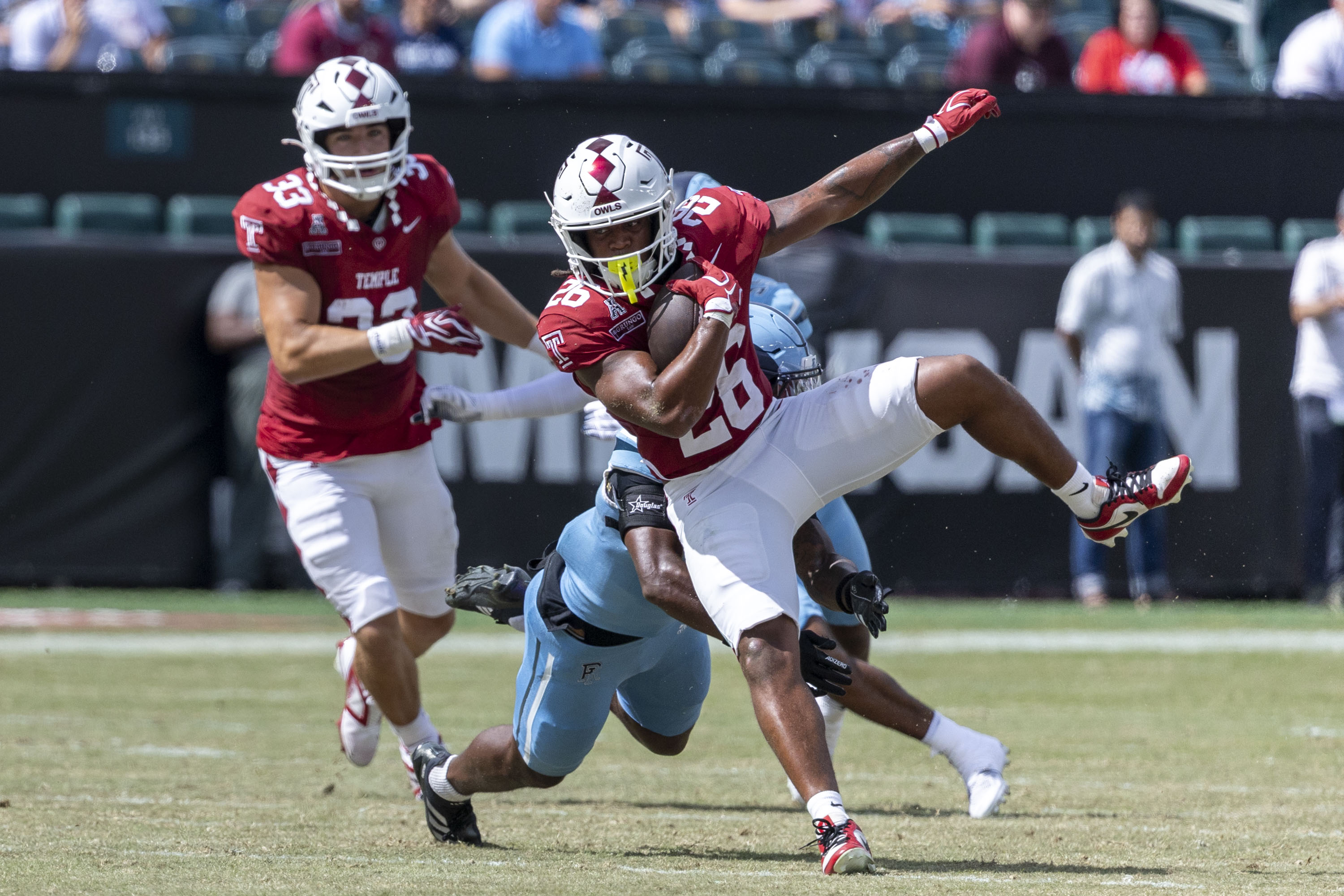
Temple running back Keveun Mason carried the ball 20 times for 158 yards and a pair of touchdowns in the Owls’ win.Tyger Williams / Staff PhotographerCincinnati’s Kyle Smith (left) and the Union’s Quinn Sullivan battle for the ball during Philly’s big 5-0 win on Wednesday.Elizabeth Robertson / Staff Photographer
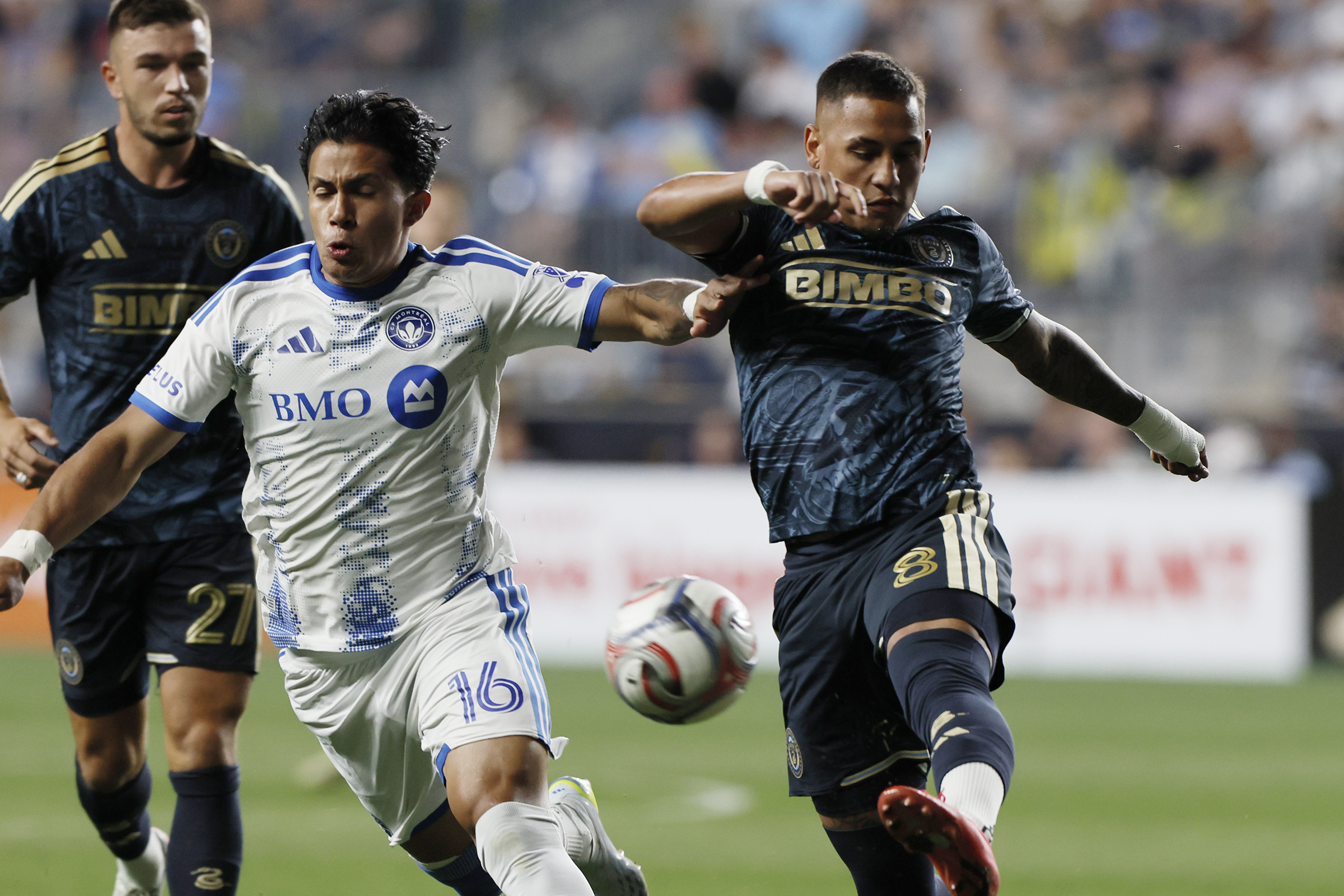
CF Montréal’s Wikelman Carmona (left) and the Union’s Jesús Bueno (right) chase after a ball on Saturday. The Union have won three straight.Elizabeth Robertson / Staff Photographer
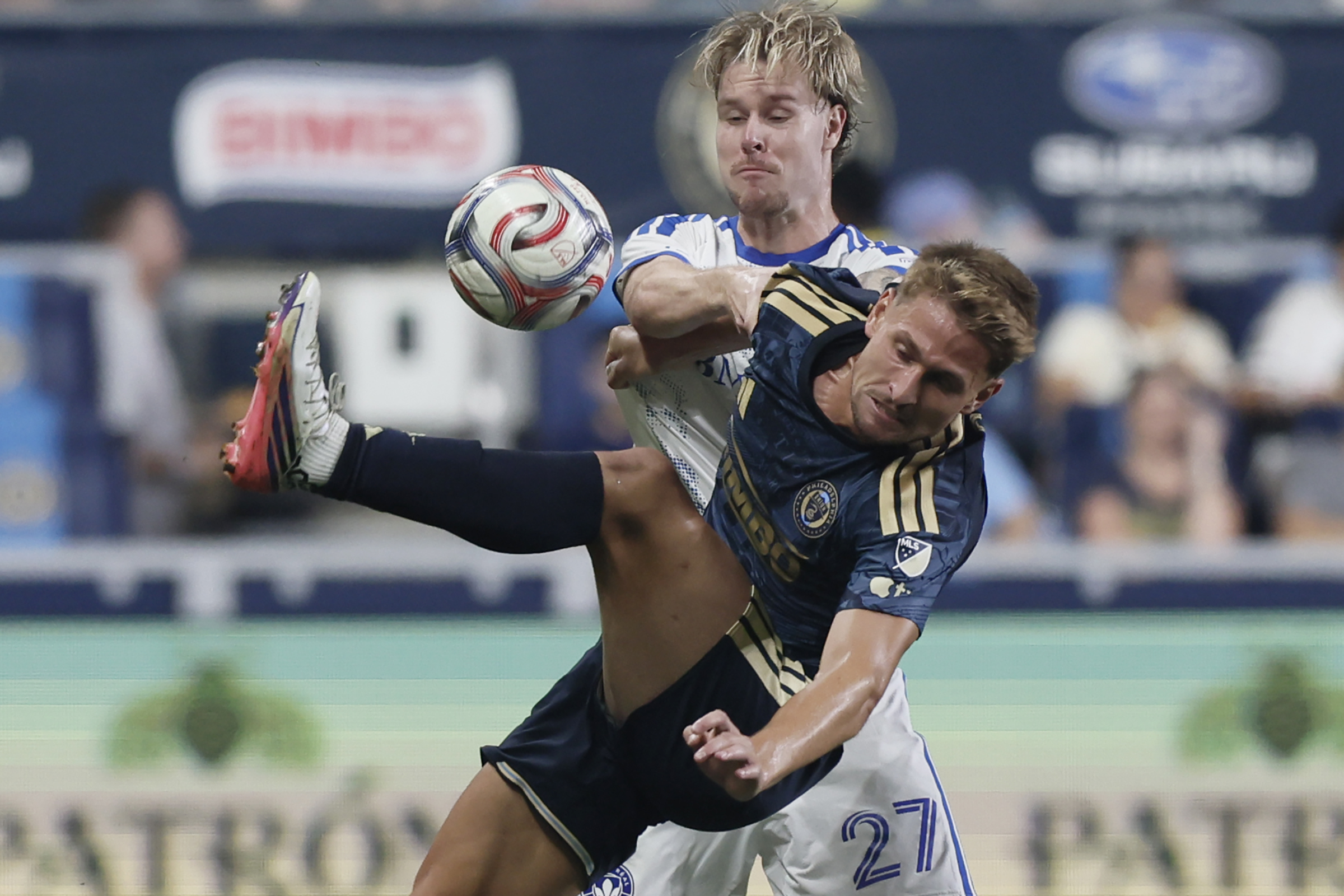
The Union’s Bruno Damiani (front), seen here tangling with CF Montréal’s Dawid Bugaj, netted a hat trick in Wednesday’s win over Cincinnati.Elizabeth Robertson / Staff Photographer
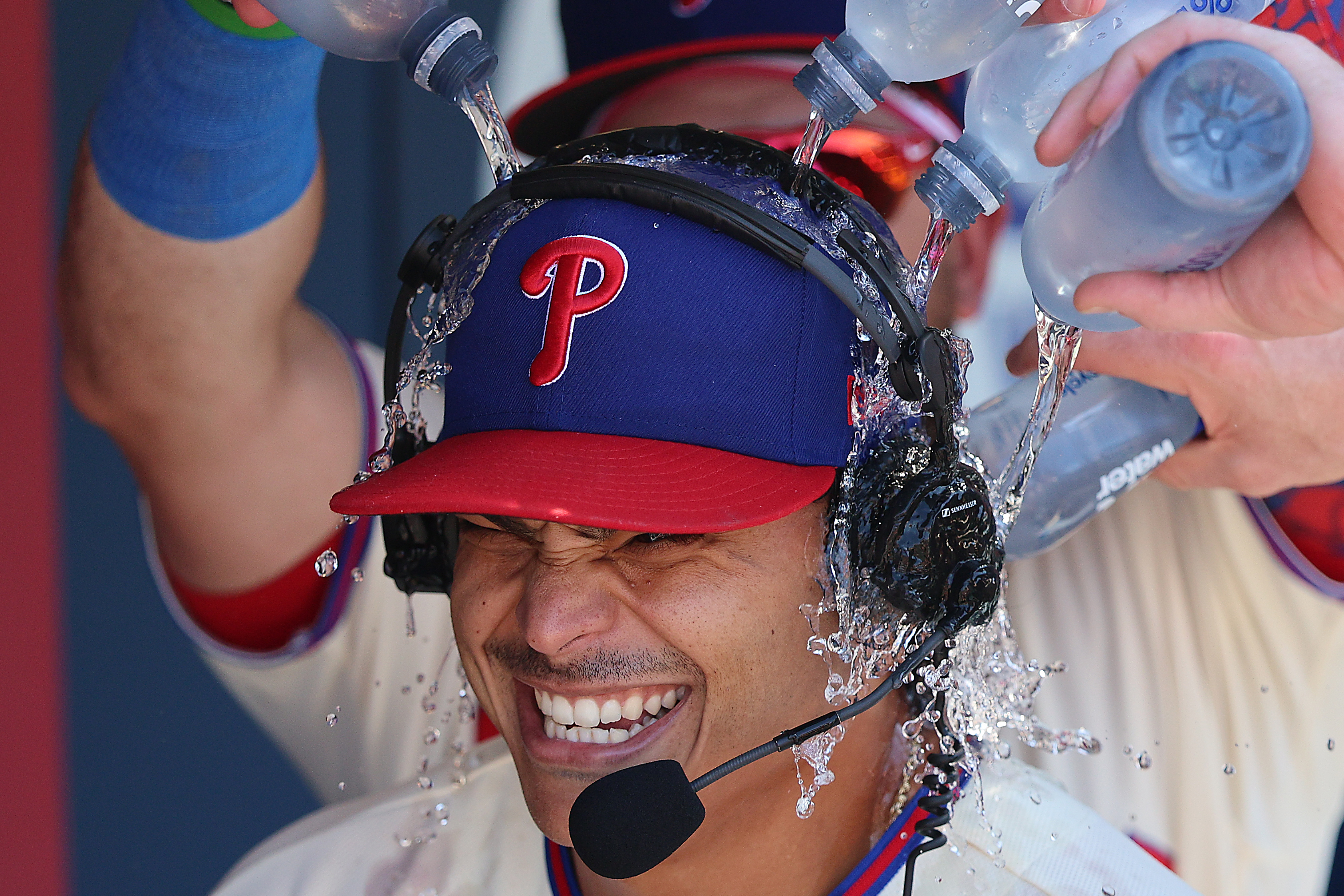
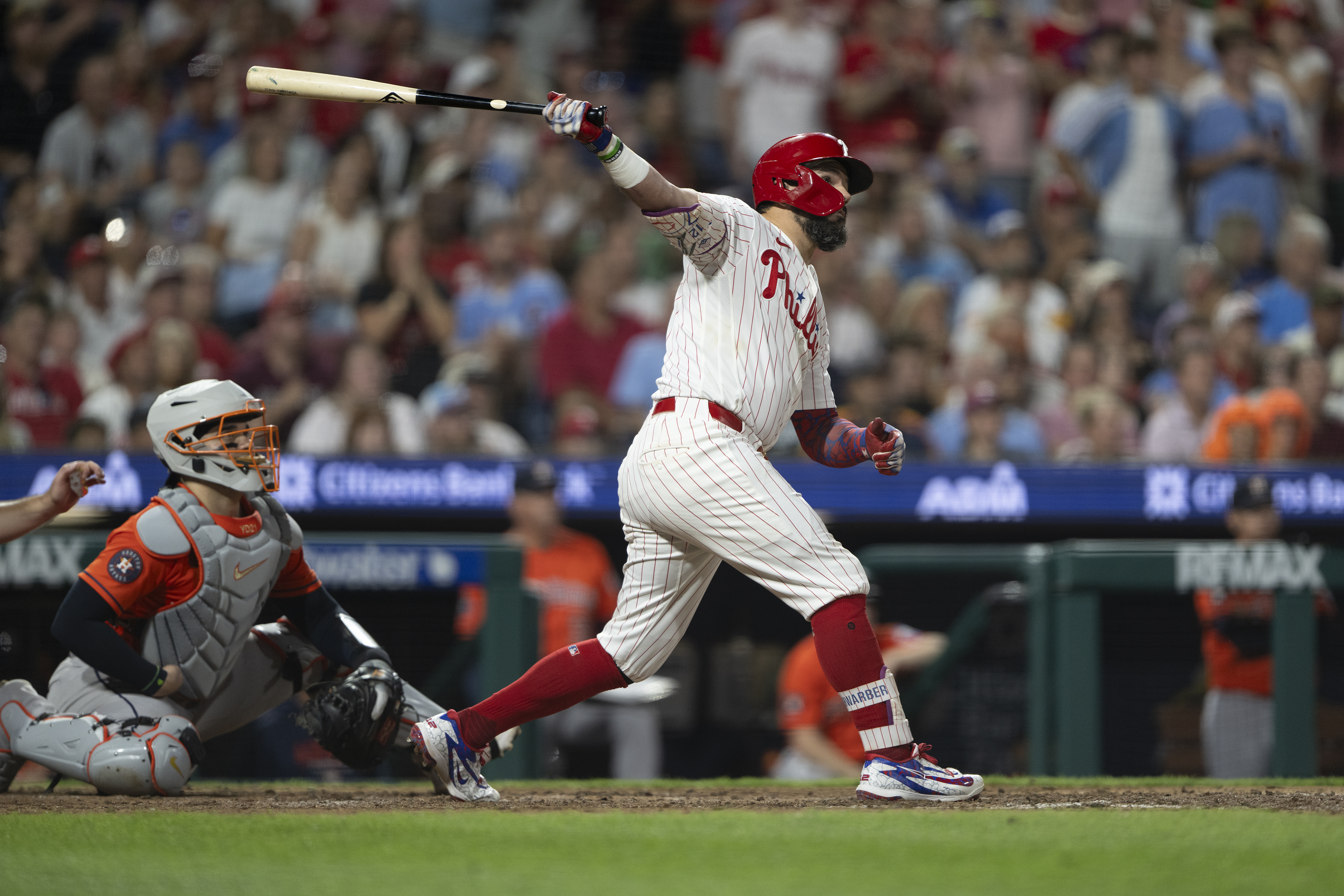
Kyle Schwarber’s sixth-inning grand slam helped the Phillies to their only win of the series against the Astros on Wednesday.Jose F. Moreno / Staff Photographer
Brandon Marsh and the Phillies have cooled off, but are still in a wild-card spot with just over two weeks left in the season.Yong Kim / Staff Photographer
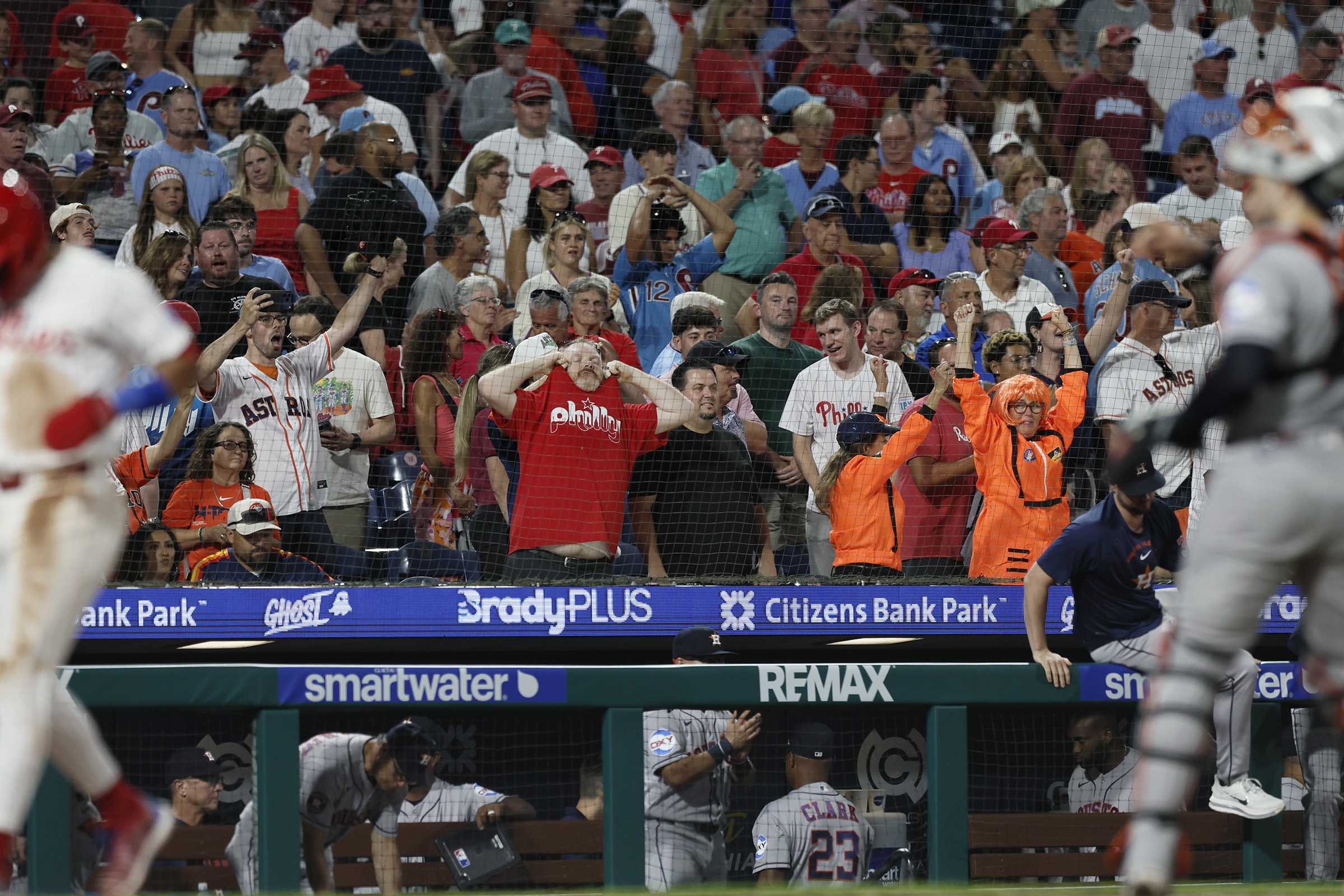
Houston fans behind the Astros dugout celebrate their team’s win, while a Phillies fan in a red T-shirt shows his frustration over Tuesday’s loss.Elizabeth Robertson / Staff Photographer
The Phillies are exactly where we probably should have expected them to be, which is exactly where they were a week ago. That is, four games behind the Braves with 15 to play heading into this weekend’s three-game series in Atlanta. That’s not necessarily a bad thing, believe it or not. Treading water is as important as making up ground.
Right now, the Phillies number one goal shouldn’t be winning the National League East. It should be avoiding the Braves in the wild-card round. The NL playoff picture has changed considerably with the Dodgers winning seven straight and the Braves losing four of six.
Now that L.A. has a 3½-game lead over Atlanta for the NL’s second bye, it’s looking increasingly likely that the eventual NL East division champs will end up hosting a best-of-three series against the No. 6 seed. Which means the Phillies should be just as focused on maintaining or growing their current 3½-game lead over the Padres, who entered Friday with a half-game lead over the Diamondbacks for the NL’s final playoff spot.
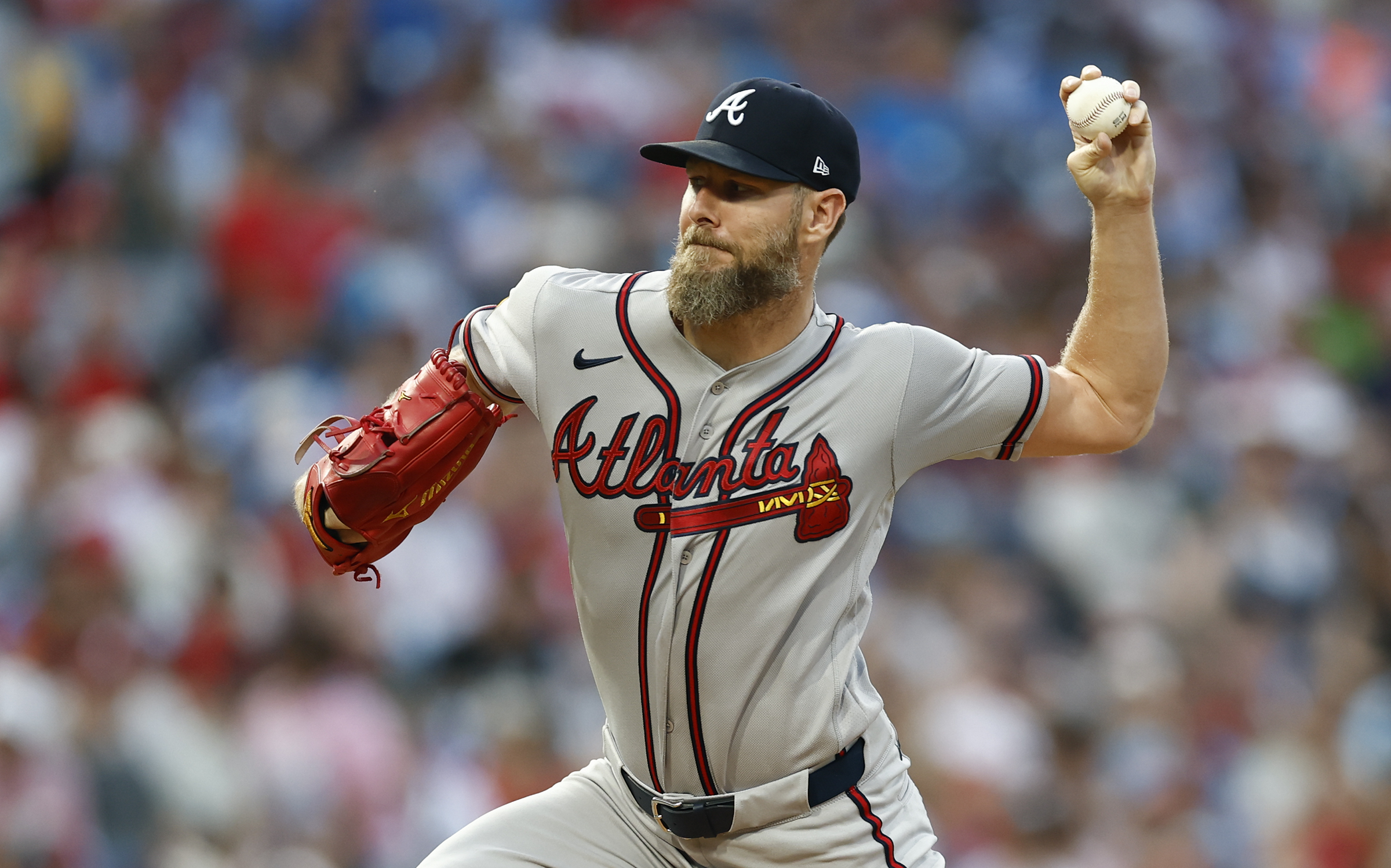
Some folks will scoff at the idea of the Phillies fearing the Braves in an October series. But best-of-three is barely a series. This isn’t about fearing the Braves. It’s about fearing Chris Sale.
Last weekend, the Phillies took their latest dose of medicine from one of the game’s all-time greats when Sale held them to two runs in six innings of a 5-2 Braves win. Atlanta’s presumptive Game 1 starter is not a problem the Phillies are magically going to solve just because the leaves are falling off trees.
The Braves are 3-0 in Sale’s three starts against the Phillies this season and they’ve won five of his seven since joining the team in 2024. His numbers should make you gulp. In his last five starts against the Phillies dating back to May of last season, Sale has allowed a grand total of four runs in 31 innings. He has struck out 40 of the 118 batters he has faced. That’s 33.9%.
Bryce Harper is one of the Phillies with bad career numbers against Chris Sale. He has just two hits in 18 at-bats against the lefty (.111).Yong Kim / Staff Photographer
In a longer series, the Phillies would have a clear starting pitching advantage over the Braves. Grant Holmes and Tyler Mahle have both had some success against the Phillies, most recently holding them to a combined two runs in 12 innings of last weekend’s series. Holmes has allowed just five runs in 20⅔ innings against the Phillies over the last two seasons, while Mahle held them scoreless in seven innings and 5⅔ innings in two of his three starts prior to last weekend (albeit dating back to 2021). Regardless, the Phillies would have a significant advantage in three of the first four games of a five-game series.
In a three-game series, Sale in Game 1 is a monumental equalizer of the odds. They’d much rather take their chances against the Cubs, who would presumably start Clay Holmes and Shota Imanaga, followed by a spin of the roulette wheel in Game 3.
A sigh of relief
Now, about that bullpen …
Give interim manager Don Mattingly credit for getting Alex McFarlane back on the mound in the eighth inning on Wednesday. The 25-year-old right-hander got ground balls from three of the four Astros batters he faced to deliver an 11-7 lead to Jhoan Duran in the ninth. McFarlane didn’t record a strikeout but threw strikes on 12 of his 15 pitches. This wasn’t exactly a high-leverage situation, at least not compared to the last time he walked off the mound. But it was a situation where a true set-up man gets the ball, and Mattingly gave it to him. Which is exactly what the Phillies manager should be doing.
Despite the homer he surrendered to Ronald Acuna Jr. last weekend, Alex McFarlane remains the Phillies’ greatest hope in the eighth inning.Elizabeth Robertson / Staff Photographer
The underdiscussed aspect of McFarlane’s welcome-to-the-bigs moment against Ronald Acuna Jr. and the Braves on Sunday was the fact that he was on the mound at all. Mattingly easily could have pivoted after McFarlane allowed a one-out single to Mike Yastrzemski and a double to Drake Baldwin to bring Acuna up as the tying run in a 4-1 game with a base open. He had a lefty warming and Braves lefties Matt Olson and Michael Harris due up after Acuna. Conventional baseball wisdom says you don’t put the tying run on base. Still, it said something about the Phillies’ estimation of McFarlane that he both remained on the mound and challenged Acuna Jr. throughout the seven-pitch at-bat.
It also says something that Mattingly didn’t flinch after McFarlane allowed a three-run, game-tying home run to Acuna.
“I don’t think you learn anything yet,” Mattingly said after the Phillies’ eventual 5-4 loss. “I think we see how he responds. I feel about the way he’s going to respond. When everything’s going good it’s pretty smooth sailing. Everybody’s going to struggle, what happened to him today is going to happen to everybody if you play long enough. So we’ll see. I think he’ll be fine. He’s been a kid that’s handled everything. The disposition’s been good.”
The Phillies are doing exactly what they should be doing with McFarlane. The first goal is to get to the postseason with an eighth-inning option that is something better than a flip of the coin. The second goal is to get there with somebody who actually gives them a significant advantage like the one they have in the ninth inning with Duran. On both counts, McFarlane is their best hope. Overwhelmingly so. There is nothing like exposure therapy for a big-league reliever. There will be plenty of big spots in October. The Phillies need McFarlane to become a guy who thrives in them.
Mike Riley and Sean Mannion were having one of their catch-up calls when Mannion, who played quarterback at Oregon State under Riley, told his former coach the latest project he was working on during the nascent days of his own coaching career.
Mannion, the most prolific passer in Oregon State history, told Riley that he was putting together and digitizing all of the passing concepts he could find dating back to the 1960s.
“This is what he does in his spare time,” Riley explained recently.
Mannion is just 34 years old and only three years removed from his playing career. He has never called plays in the NFL before and now is tasked with turning around an Eagles offense that was too stagnant in 2025 under another first-year coordinator and first-time play caller Kevin Patullo. Nick Sirianni said in February that he was looking for someone who was detailed and had “conviction in what they believed and why they believed in it, and the vision and conviction of how they went about it.”
Those traits seem to describe Mannion, whose father, John, called him “a saver” who took and saved detailed notes at every stop along his football path and even has comprehensive notes on concepts that pre-date his own life by some 30 years. Eagles quarterbacks coach Parks Frazier raved recently about Mannion’s attention to detail and his ability to recall and reference something he has learned along the way.
“He remembers every detail about all of those things and he’s constantly applying it to what he’s doing moving forward,” Frazier said. “He has extreme, detailed, categorized notes and film of everything he’s been through.”
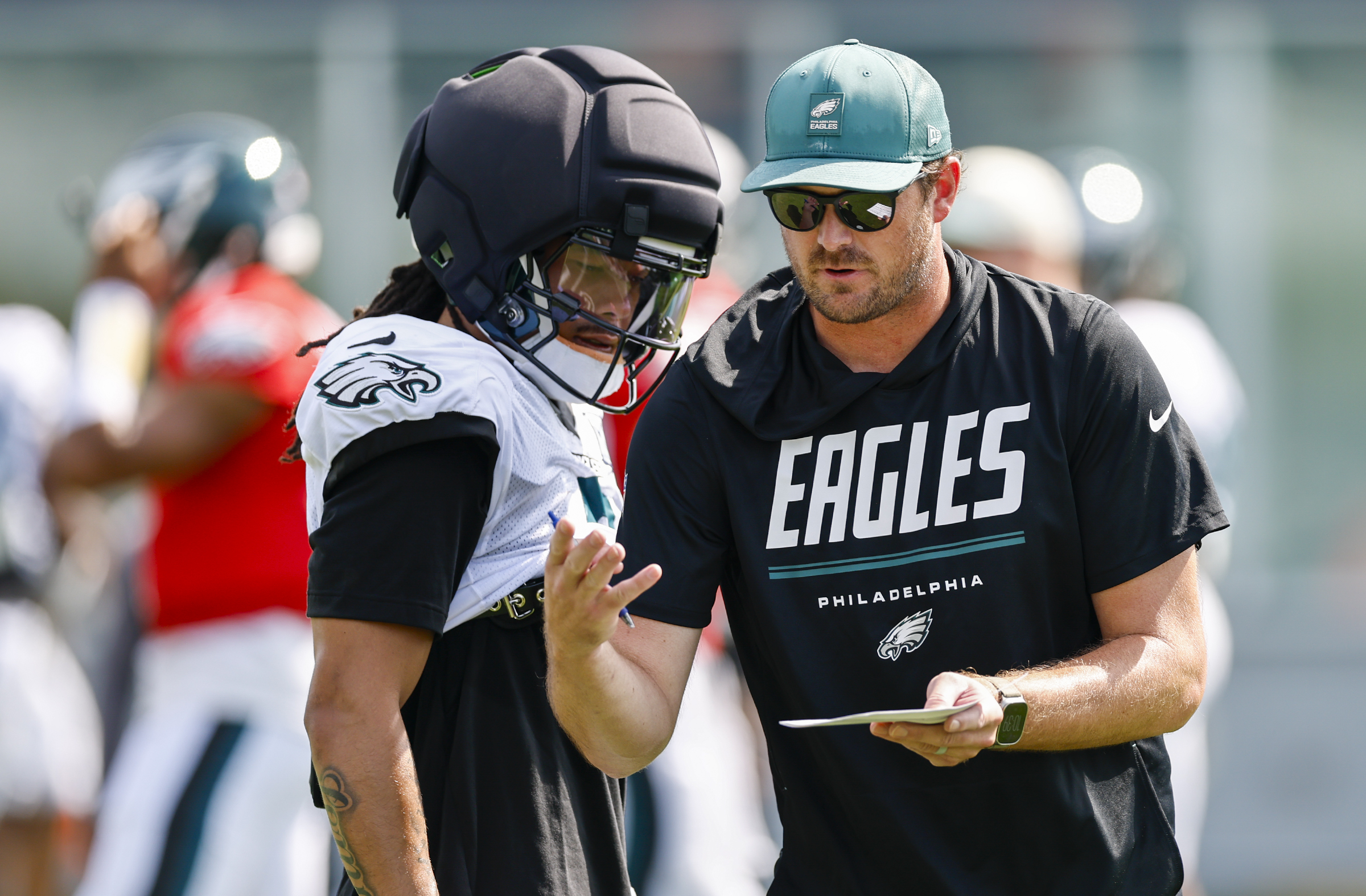
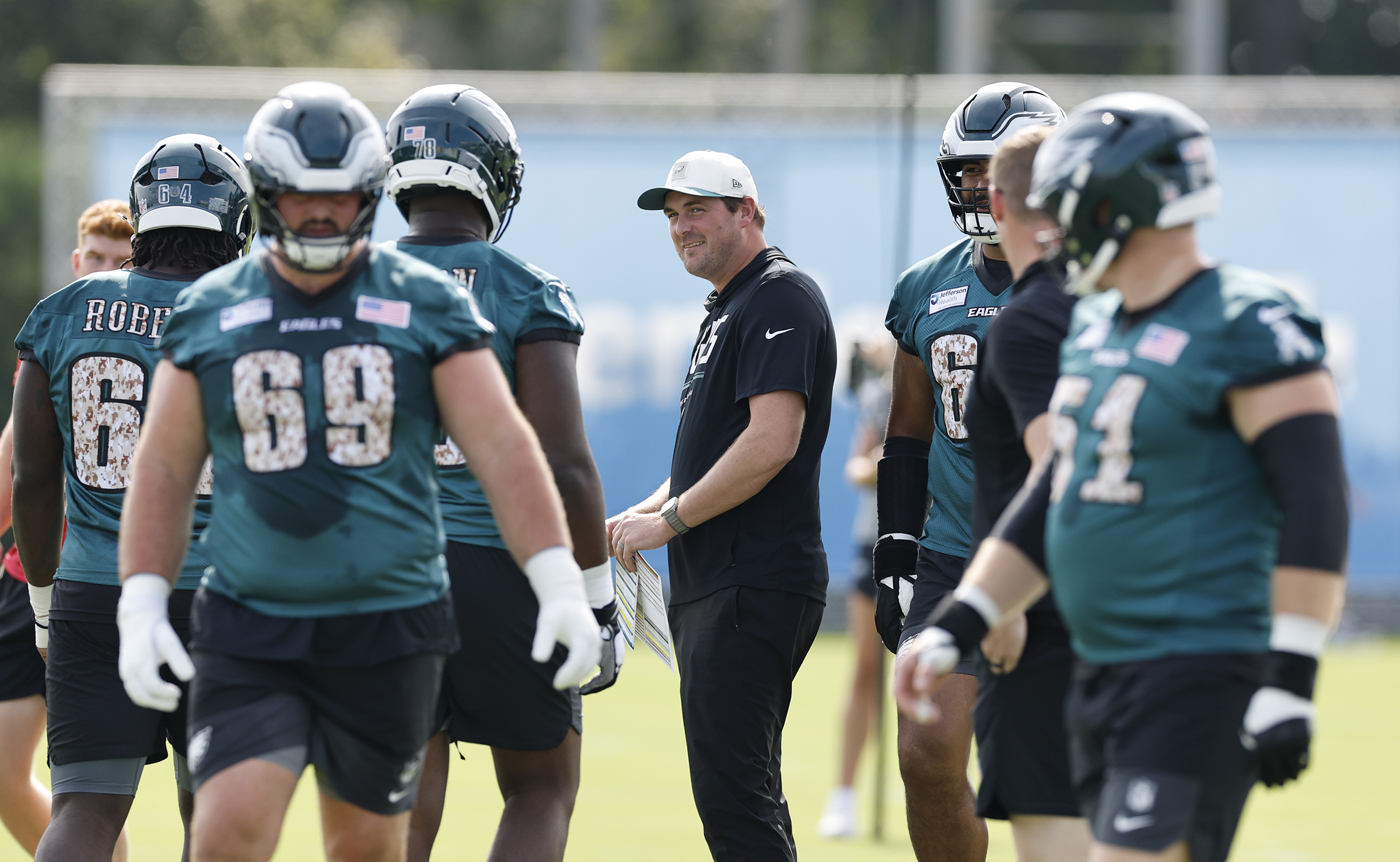
Eagles offensive coordinator Sean Mannion talks with wide receiver Makai Lemon during team drills last month. Yong Kim / Staff Photographer
Mannion is installing a new offense for Jalen Hurts and the Eagles, one rooted in the flavors of the trendy Kyle Shanahan-Sean McVay scheme. But Mannion’s history and influences suggest a style that ultimately will pull from every resource imaginable as he guides the Eagles offense into the future.
Sirianni and Howie Roseman took a calculated risk on a young and fast-rising offensive coach when they landed on Mannion, who spent two years on the staff in Green Bay, most recently as quarterbacks coach, before his big promotion. But a lack of experience doesn’t necessarily mean Mannion is any less equipped to succeed than a more experienced candidate. In many ways, Mannion, the son and grandson of football coaches, has been preparing for this job for most of his life.
“His thing was, he wanted to play as long as he could,” his father said. “The unsaid part was that when those days were done that he would turn his attention to coaching.”
Like father, like son
At its roots, coaching is teaching. In that sense, Sean isn’t just the son of a football coach; he is the son of two teachers, and his earliest influences can be traced to the classroom. He’d mess around in a playpen while his mother, Inga, an elementary school teacher, finished work in her classroom after school.
He was around his father’s football teams as much as he could be, too. One Saturday, John, who also has been a teacher for 36 years, was going to scout an upcoming opponent with a coaching friend and Sean wanted to tag along. He was around 7 years old and an inquisitive kid at the time, so he brought with him a yellow legal pad. While he watched the game next to the two adults, he doodled and drew notes and observations from the field.
“He spent a lot of time doing what we were doing,” John said of his son’s early days. “That notepad probably was a byproduct of all that time spent.”
Sean grew up in Pleasanton, Calif., Alameda County, about 20 miles east of the San Francisco Bay in a household that valued education. He was a good student who also excelled in sports. Football was his main sport, but he also played baseball and basketball.
When Sean was a rising sophomore at Foothill High School, John, a former assistant, was given the job as the school’s head football coach. He was nervous, though, about any appearance of nepotism, so from the outset of that season he had Sean playing on the JV team. Foothill was 12-1 the previous season and had two upperclassmen ahead of Sean on the depth chart. A week before the season, the senior quarterback hurt his ankle and was on crutches. Later that week, after throwing at least four touchdowns in a scrimmage, the junior quarterback showed up on Labor Day, the first practice of the first game week of the season, and complained about a back injury that eventually forced him to miss the season.
John called home right away. Sean had to get to the field and get to practice.
Sean’s freshman coach at Foothill was Mike Madden, the son of Hall of Fame coach John Madden. Mike approached John Mannion that first week and asked him if he was nervous for Sean.
“Gosh, I hadn’t thought about it,” John said. “I’m nervous for myself at this point.”
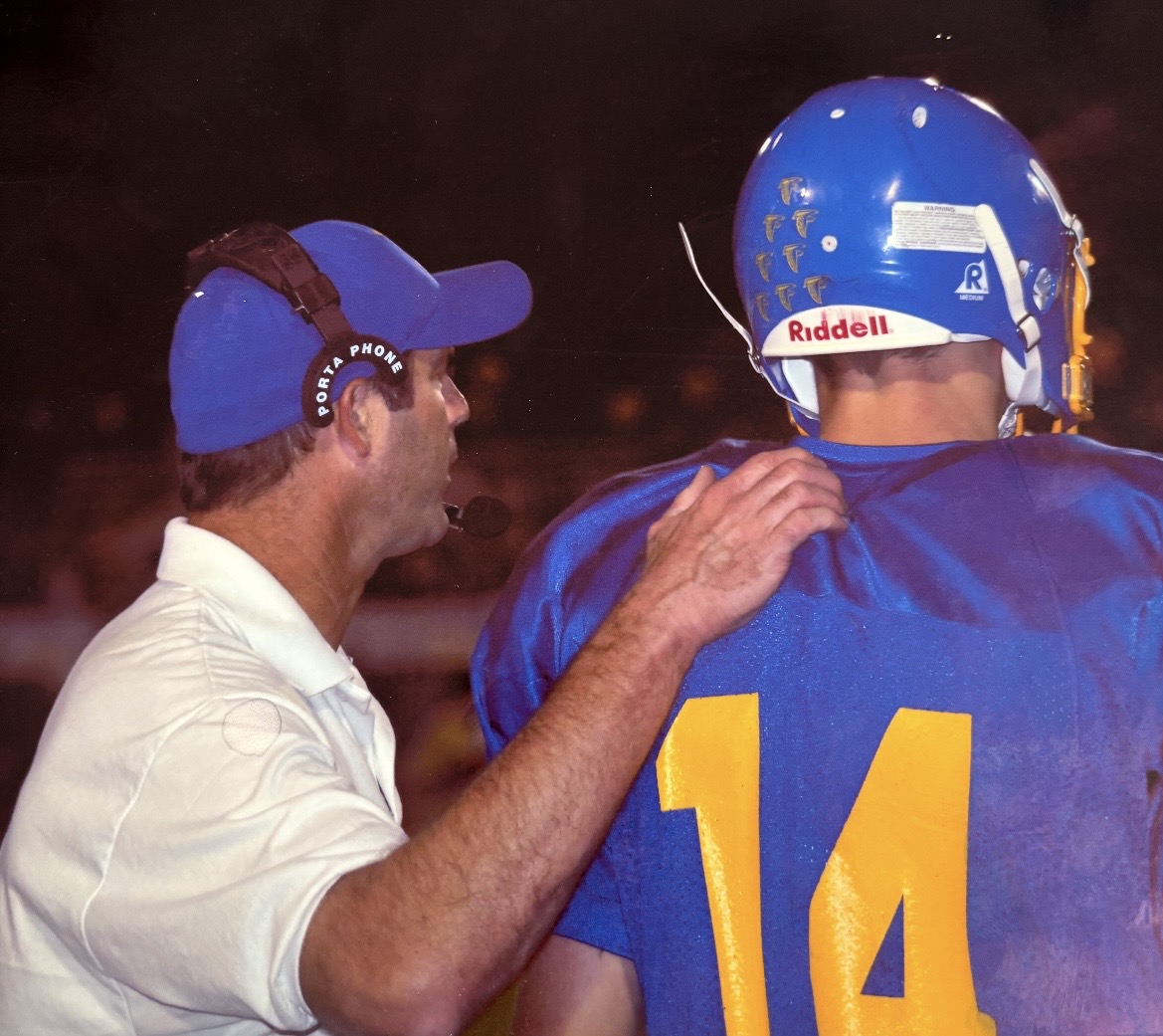
John Mannion (left) coached Sean (right) in high school.Photo courtesy of John Mannion
John’s first game as varsity head coach was also Sean’s first game as varsity starting quarterback. Asked if he remembered it well, John responded the way many coaches would, and the way the father of a detailed note-taker would: “Oh yeah,” he said. “Of course I do, yeah. We lost, 26-21, and Sean did really well. It was a really hot day and there was a lot learned by me.”
The team they lost to went to the state playoffs, but so did Foothill. Sean “knew the offense from all those years growing up around it” and “really absorbed a lot of things along the way,” John said.
“We kind of went through it together,” John said. “There was no plan of him ever being on the team that first year, but sure enough there he was. There’s challenges in there but I think it was a great experience for us to be able to do that.”
Sean finished his high school career as Foothill’s all-time leading passer and, after throwing for 3,521 yards and 27 touchdowns as a senior, was off to Oregon State.
That yellow legal pad Sean doodled on during that football scouting trip was part of a full-circle moment some 25 years later.
“When I got my first coaching job with the Packers, as a gift, he framed it for me,” Sean said. “So I still have it in my house. It’s pretty cool. The scheme has evolved since then, I will say, but it was a really cool, special gift that he kept.”
Riley’s favorite word to describe Sean is “diligent.” How many coaches born in the 1990s are digitizing passing concepts from the 60s?
Sean was the top quarterback Oregon State pursued in the class of 2010, and Riley and his staff were thrilled when he committed and later signed. The program had produced top quarterbacks like Derek Anderson and Matt Moore, and Riley thought Sean would be the next great one to come through Corvallis.
The diligence showed up right away. Sean was supposed to redshirt during his first season on campus, but the summer before his first camp with the Beavers, Sean got the keys to the facility from the graduate assistants to go in early and watch film.
“That was him the whole time,” Riley said. “He could really throw the football and he was a very hard worker physically, and then he was a very hard worker off the field. He wanted to know and learn and he’s one of the most diligent people that I’ve ever been around.”
That part of Sean made it easier when, during the second half of the first game the following season, Riley put Sean in the game over a junior who started. He was just a redshirt freshman, but he was Oregon State’s starter from that point until graduation.
“That was one of the first times probably in my career that I actually had the faith in a redshirt freshman to insert him sometime early in the year as a starter,” Riley said. “I think that said a lot about what we felt about his early development and what we thought he could do on the field.”
Eagles offensive coordinator Sean Mannion has worked diligently on offensive concepts dating back to his career as a player.
Sean became a captain the following season. He is soft-spoken by nature, those closest to him say, but his leadership showed up in the way he carried himself and how he approached the game. By senior year, he had a nickname: “The Machine.” That year’s offensive coordinator, John Garrett, referred to Sean by that moniker during a film session one day and it stuck, much to Sean’s chagrin. Oregon State’s offensive linemen sometimes walked robotically around Sean.
“That is a pretty appropriate nickname because he was just like that,” Riley said. “He just went to work and put in the work and everybody knew that about him. I think he’s one of the most probably respected teammates that I saw through all my years of coaching.”
Sean exited college as Oregon State’s all-time leader in passing yards and ranked in the top 10 in college football history. He’s still 19th.
The quarterback and coach have stayed in touch over the years. Riley, who left Oregon State for Nebraska after Sean’s senior year, is now retired, though he’s still on the College Football Playoff selection committee. Sean isn’t the most recent Mannion whom Riley had talked to as of a few weeks ago, though. John, who no longer coaches, now writes a newsletter on Substack called “John Mannion’s Coaching Playbook,” and recently interviewed Riley.
Sean’s most recent catch-up call with his college coach came after OTAs this season and just before camp.
“He sounded excited and he sounded like he would be because he’s always prepared — he sounded confident,” Riley said. “And I could also tell he was having a lot of fun.”
‘A 30,000-foot view’
Sean has described his father and Riley as his two biggest influences along the way. But his most relevant football influences when it comes to his current job came into his life in 2017, when Sean was backing up Jared Goff with the Los Angeles Rams and the team brought in a new coach, McVay, who hired a new offensive coordinator, Matt LaFleur. Both had been schooled under Shanahan and brought to the Rams a new style of offense that Sean took to.
“I just felt like I was learning so, so much,” Sean said. “It was such an exciting way to match the run and pass. They had such a way about teaching the game where we could feel ourselves challenging a defense, but it felt simple to us.
“Those are the things that really stood out to me going through that experience that really resonated with me as a player and certainly resonate with me as a coach. That was a very exciting point in my football life, just the exposure to that type of teaching, that type of scheme. I know Matt, obviously a mentor of mine, getting to play for [McVay]. I learned so much from those people. It’s certainly a big part of molding me into the type of coach I am now.”
Eagles offensive coordinator Sean Mannion with members of the offensive line during training camp last month. Yong Kim / Staff Photographer
How the Eagles offense will look come Sunday still remains a sort of mystery. There certainly will be more motion, more snaps from under center, and more play-action. But the Eagles ran a bland offense during the preseason in an effort to hide most of their playbook, and the first-team offense was rarely fully healthy during training camp and also had to go against one of the best defenses in the league.
The Eagles have a new style of running the ball, which will be a key to unlocking the passing game and play-action. The base of the Shanahan-McVay offense is outside, wide-zone runs that stretch the defense horizontally. The Eagles and longtime offensive line coach Jeff Stoutland parted ways this offseason, and new offensive line coach Chris Kuper has been in charge of implementing the new blocking scheme.
Kuper was the offensive line coach in Minnesota when Sean spent part of the 2023 season with the Vikings.
“He sees the game from a 30,000-foot view as well as being on the sideline and being into it with the players,” Kuper said. “I think it speaks volumes, his experience as a quarterback in this league and being able to connect people and become a glue guy has been incredible.”
There may be a misconception that Sean, a quarterback by trade, just focuses on the quarterbacking. But Kuper described a coach who is involved in every facet of the offense.
“What I love about Sean is how much he loves the run game,” Kuper said.
Kuper said part of Sean’s responsibilities in Green Bay when he was an offensive assistant in 2024 was to draw some runs. The Eagles do have a run-game coordinator in tight ends coach Ryan Mahaffey, but Kuper is confident Sean could handle it all.
“Sean could game plan and call a game all on his own, I think, if he wanted to,” Kuper said.
First-time play caller
The Mannions relocated to Oregon when Sean was in college, and one spring after John had taken over as the head coach at Mountainside High, he needed help.
The 2021 football season came together rather late in the midst of the COVID-19 pandemic, and a shortened spring season was on the table. Sean was home in Oregon doing remote OTAs with the Vikings when John asked him to be the offensive coordinator that season.
Sean’s younger brother, Brian, was the starting quarterback. It was a family affair.
On the day of the first practice, John walked out on the field and handed Sean his handwritten practice plan.
“You know there’s software for this, right?” Sean quipped.
John was calling plays, but after Mountainside was shut out in the second of their six games, John made a change.
“I handed the torch to him. It was fun,” John said.
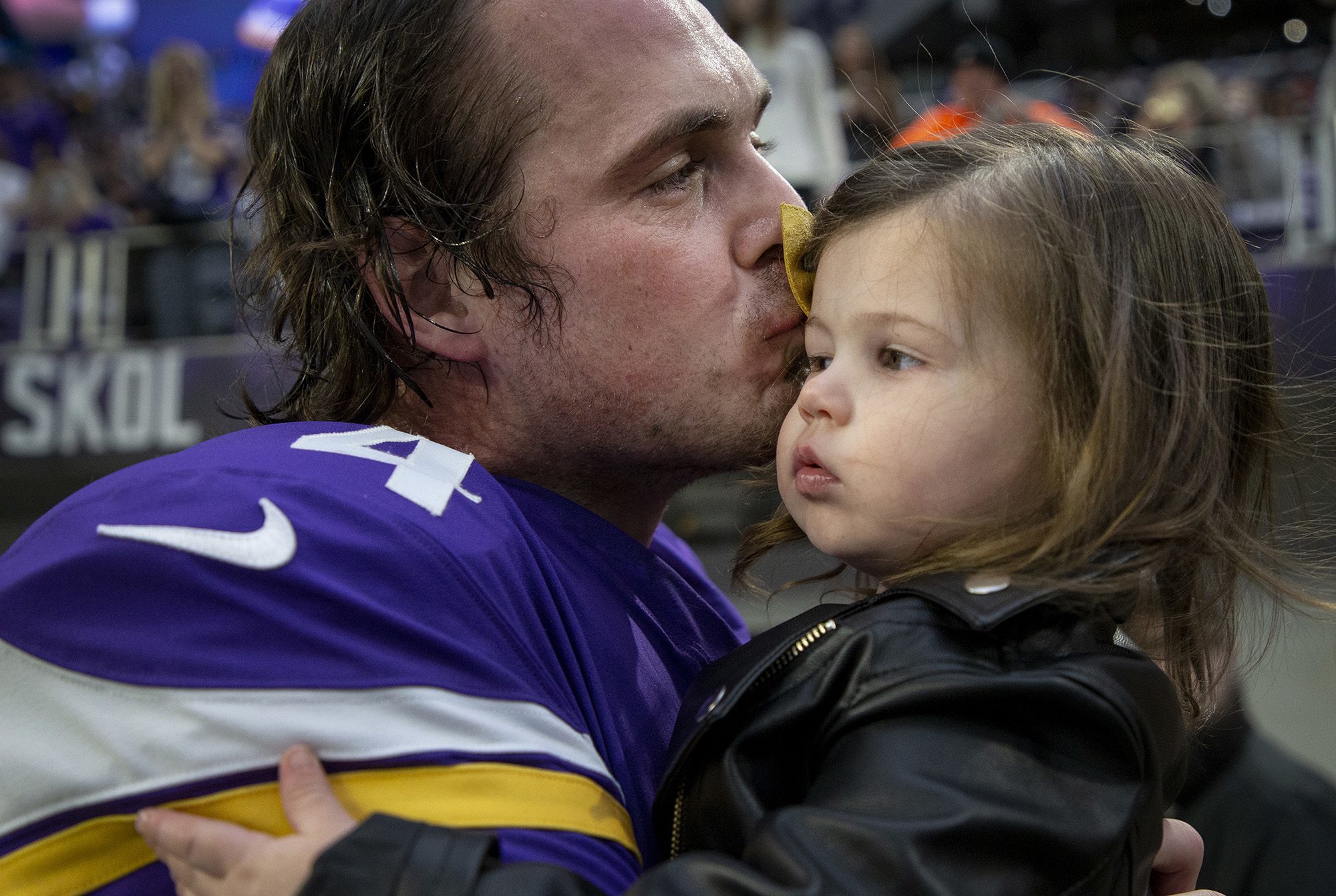
Minnesota Vikings quarterback Sean Mannion (4) kisses his daughter Sawyer after pregame warmups before a game against the Chicago Bears on Sunday, Dec. 29, 2019.Carlos Gonzalez / MCT
John has watched the oldest of his four children become a loving husband to his wife, Megan, and the proud father of three children. He always knew Sean could and probably would eventually become a successful coach, but that spring offered his first real chance to witness Sean’s future in person.
“I could see clearly he had a real knack for it,” John said.
Sean was still in the process of talking to the Eagles when he was tapped to call plays in January’s East-West Shrine Bowl. He called John during his father’s lunch break.
“You haven’t called a game since Mountainside vs. Grant High School back in March of 2021,” John joked.
The two shared a laugh. A few days later, Sean was hired to call plays for the Eagles.
All roads lead to Delco
Margaret Mannion was around 20 years old when she moved to California, but John’s mother spent her early days in Delaware County. She lived in Drexel Hill, graduated from Archbishop Prendergast High School, and worked at Villanova before moving west, where she met Jim Mannion, John’s late father.
Margaret, 84, has dementia now and still lives in California in an elder care facility, but John is pretty confident there will be at least one “proud Philadelphian” and Eagles fan watching the games this year from the elder care facility.
As for John, he’s a self-described “worrier.” When Sean redshirted at Oregon State, John loved the ease of watching the games with no pressure in the family section. After Sean was inserted as starter the next season, John called the box office. He wanted to sit in the far corner of the stadium in the last row. Tickets in the family section were free and required no work on his end, but every year he’d call the ticket office to secure his seats at the top of the stadium.
Sean rarely played in the NFL — he threw just 110 passes over nine seasons in the league — so Sunday Ticket usually sufficed. When Sean was hired by the Packers, they were on national television frequently enough, and for the games they weren’t, John would drive to his local Buffalo Wild Wings, where he’d watch quietly and hope the quarterback play was up to snuff.
Last year, while watching a game at the restaurant, a few Green Bay fans in their 20s complained to John about Packers quarterback Jordan Love. The group had a laugh when John told them, no, he wasn’t from Green Bay, his son coached the quarterbacks.
“I’m going to call him tonight and tell him there’s some guys in Oregon who say he’s got a lot of work to do,” John joked.
This year, it’s back to Sunday Ticket. John, who was in town for a few days in August observing the Eagles and Sean during camp, said he’ll build a fire at home, watch the game in peace, and “keep our fingers crossed.”
His son’s new job comes with a lot of pressure. Patullo was the most criticized person in the building last year and eventually took the fall after the team’s first-round exit, so all eyes will be on Sean as the season gets underway.
Margaret’s older sister, John’s aunt, still lives in New Jersey and called John after Sean got the job.
She was excited Sean was in a new, high-profile job back where his family has roots. But her excitement also had a tinge of nervousness: “Hopefully everybody is nice to him,” she said.
As he commuted from South Jersey into Philadelphia on the afternoon of Sept. 11, 2001, Hugh Douglas kept glancing at the skies.
“I remember driving across the Ben Franklin Bridge, I was looking in the air for those planes. You know, the next planes,” Douglas said. “Because that bridge is the biggest way into Philly, and I thought they would attack that next.”
Douglas, then a star defensive end for the Eagles, was driving to the practice facility, summoned for a team meeting to address an emergency. By then, of course, the skies were empty. The FAA had closed U.S. airspace at 9:42 that morning, and by 12:15, only birds flew over America.
Terrorists had hijacked four commercial flights that brilliant Tuesday morning and turned them into missiles.
At 8:46 a.m., American Airlines Flight 11 crashed into the 92nd floor of the World Trade Center’s north tower. At 9:03 a.m., United Airlines Flight 175 crashed into the south tower. At 9:37 a.m., American Airlines Flight 77 crashed into the Pentagon. At 10:02 a.m., after a struggle between heroic passengers and hijackers, United Airlines Flight 93 crashed into an empty field in Shanksville, Pa., 200 miles west of Philadelphia.
Nearly 3,000 people died as a result of the attacks, still the largest death toll of any terrorist attack on U.S. soil. It stunned the world, and it left the nation shocked and terrorized, and it left the sporting world in turmoil.
Douglas had just turned 30. In his lifetime America had seemed invincible. Impenetrable. It was, by far, the most traumatic event he’d known.
“I thought it was the end of days,” Douglas said.
He was not alone.
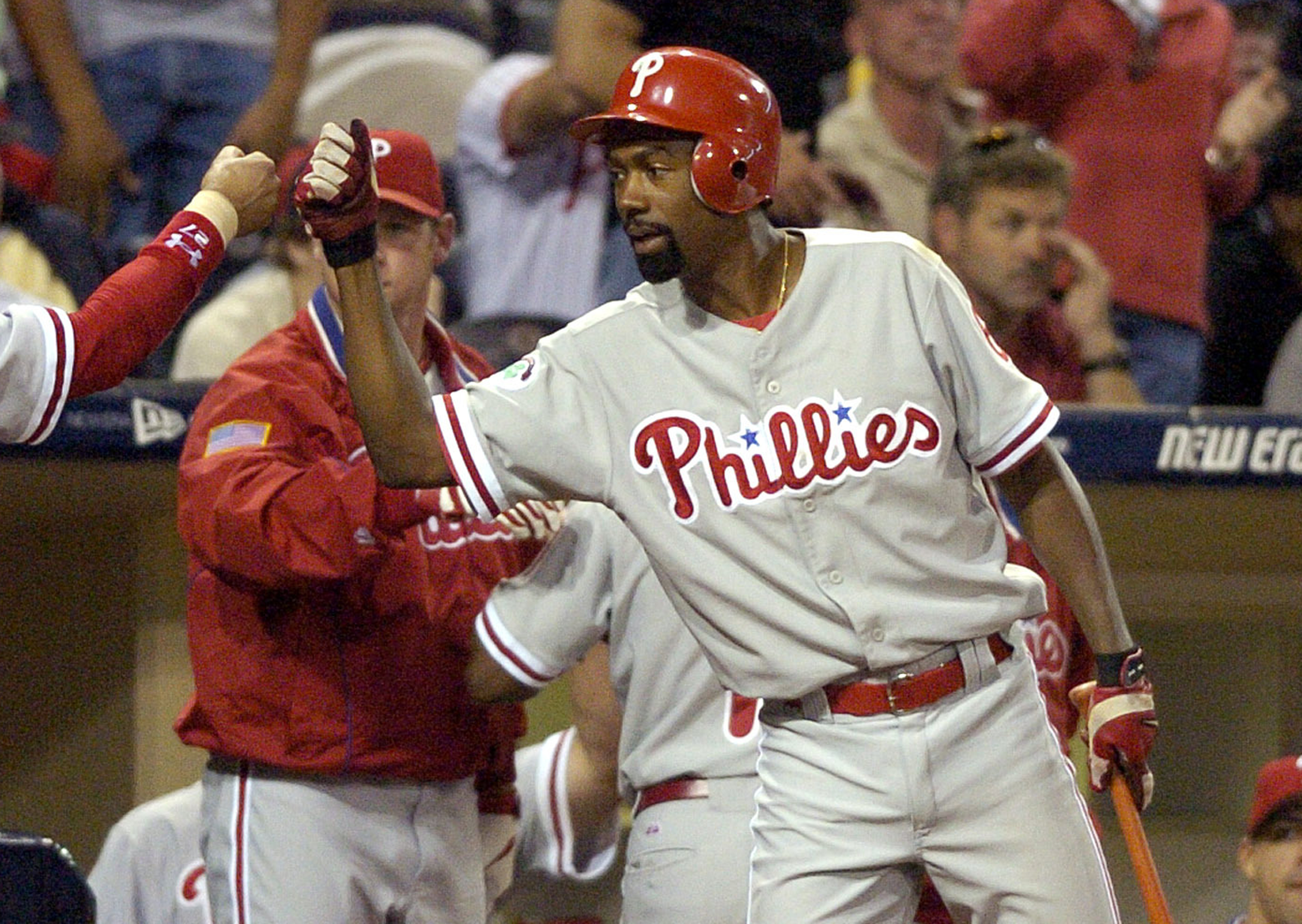
Phillies center fielder Doug Glanville is a year older than Douglas. He grew up in Teaneck, N.J., less than 20 miles from what became to be known as Ground Zero, where the towers collapsed. He’d visited the towers frequently as a boy.
On 9/11, Glanville was with the Phillies in Atlanta, preparing for an important series against the Braves. When he heard that the terrorists targeted sites beyond New York, he worried about what might come next, and whether ballparks and stadiums were vulnerable.
Doug Glanville, here in a 2004 game in San Diego, played six seasons with the Phillies.DENIS POROY
“We didn’t know what imminent threats were still there. We heard that they might attack Atlanta,” Glanville said.
That worry persisted even when games resumed six days later, and beyond.
“You felt like, if you were in a stadium, you were a target.”
‘I thought it was a movie’
Douglas learned of the attacks from the movers helping him settle him and his wife at the time, Simona, into their town house in Marlton, N.J.
“They blew up the tower,” one mover told Douglas. He wasn’t quite sure what the guy meant. The cable company hadn’t arrived yet, so the mover began to jerry-rig an antenna onto a television. Before he finished, another mover, still listening, announced, “They hit the other tower.”
Finally, a fuzzy image appeared on the screen, the towers burning. A few minutes later, at 10:28, the north tower collapsed.
Glanville had much better reception.
Baseball players are a nocturnal breed, but Glanville is one of the few who relishes a hearty breakfast. Also, he’s a reader — he has an engineering degree from the University of Pennsylvania — so he rarely turns on his hotel TV.
“There aren’t a lot of players who get up that early, except Kevin Jordan. So I go out of my room, get in the elevator, and Nina Jordan’s there, Kevin Jordan’s wife,” Glanville said. “I’m, like, ‘Good morning,’ with a smile. She’s like, ‘They hit the towers.’ ”
Glanville flashed back to Feb. 26, 1993, when terrorists attempted to take down the north tower with a car bomb. They failed. Seven people died. Glanville assumed this was similar.
“The first thing I thought is, ‘Oh, again?’ ”
Not exactly.
“We were in CNN country, so I came out of the elevator, I saw banks and banks of TVs,” Glanville said. “And then, of course, we were just, like, locked in.”
Phillies manager Larry Bowa wasn’t watching TV in his room, either, but, with a teenage daughter, he always kept his phone close. When it buzzed that morning and he saw her number he was concerned, of course, but not as concerned as he soon would be.
“She said, ‘Did you see the TV?’ And I said, ‘No.’ She says, ‘Turn it on,’ ” Bowa said. “And when I turned it on, I thought it was a movie.”
‘We took a vote’
What happened in the next couple of days is a blur for most of us who lived through 9/11, and most of us weren’t star entertainers and their bosses walking the thin line of propriety.
Would baseball be played Tuesday night? Would baseball or football, either college or pro, be played on the weekend?
Flights resumed sporadically just two days after the attacks, but it was about a week before air travel resumed full throat. The Eagles and the rest of the NFL hunkered down.
“We knew pretty quick we weren’t going to Tampa that weekend,” Douglas said. “So we just practiced. And it was weird, right? You get planes flying over South Philly all the time, because the airport is so close. There were, like, no planes that week.”
It was as if everyone held their breath, just as they’d done after President John F. Kennedy was assassinated in November 1963, which paused most of college football and briefly paused the NBA and NHL.
“Nobody knew what was the right time,” Bowa said. “Some people were saying they might cancel the whole season.”
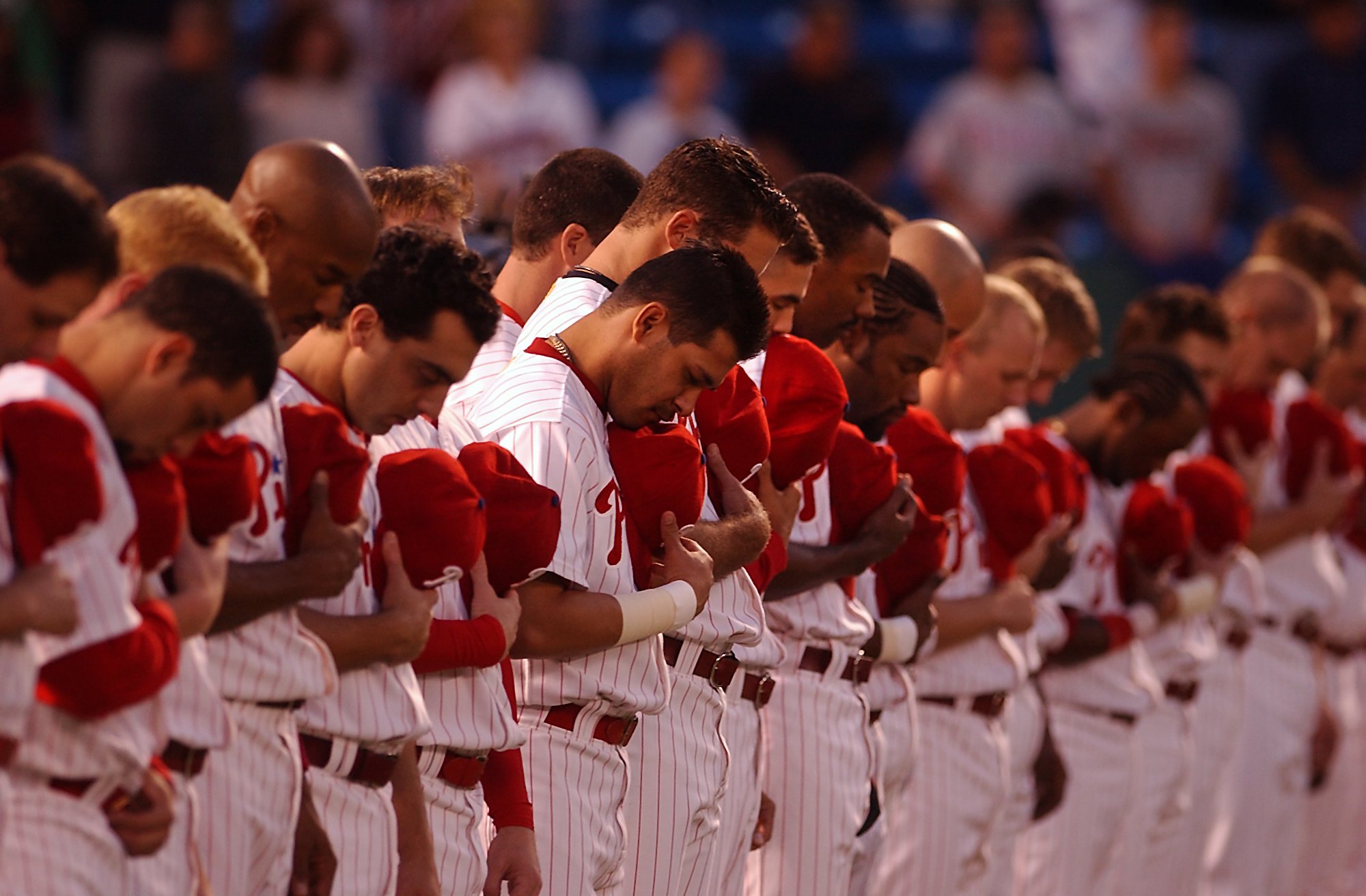
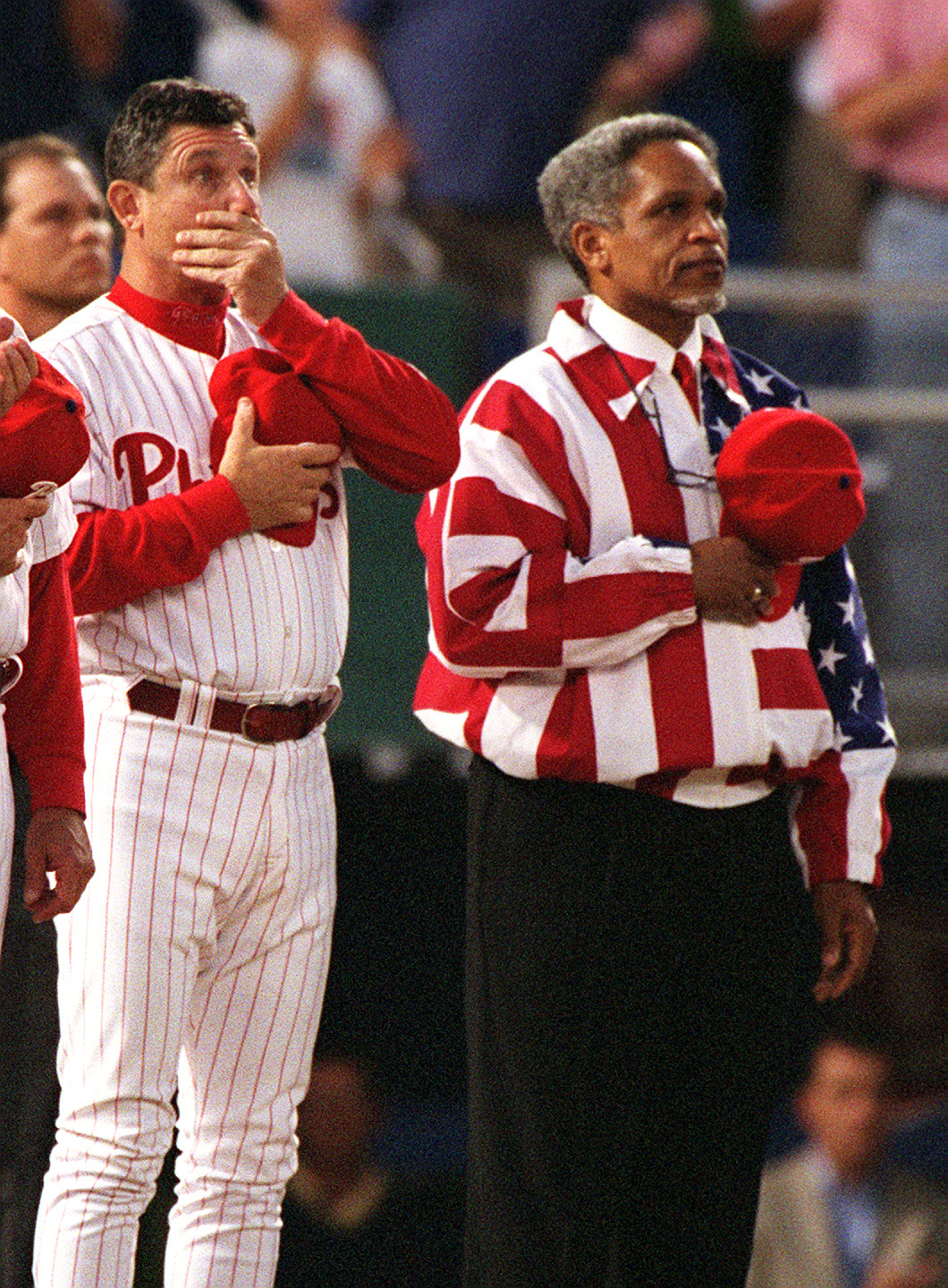
Phillies manager Larry Bowa wipes his face standing next to Philadelphia Mayor John Street during a moment of silence before the Phillies-Braves game on Sept. 17, 2001 at the Vet.D
As it turned out, baseball games resumed Sept. 17. The Expos hosted the Marlins with the first pitch thrown at 7:10 p.m., so baseball officially resumed first in Canada. But the Braves visited the Phillies and the Mets visited the Pirates, and both games went off at 7:19 p.m., so Pennsylvania co-hosted the return of America’s game in America.
‘We took a vote’
Getting from 9/11 to 9/17 was quite a journey for the Phillies.
Games were suspended immediately, but MLB dithered regarding when they would resume. The Phillies spent three days in Atlanta, then decided to bus to Cincinnati, where they were scheduled to play over the weekend. They were outside of Knoxville, Tenn., when they heard that those games might not happen, either.
What now?
They pulled the two buses into a rest stop. Players disembarked to try and get cellphone reception, which was poor on the buses, and check in with their families. At that point, mild chaos ensued.
Should they reroute to Philadelphia? Should they return to Atlanta, where flights would be easier to arrange? Should they just continue to Cincinnati and maybe ride out the weekend?
They couldn’t take the buses to Philadelphia because the bus driver had logged too many hours.
“We took a vote,” Glanville said. “It was everybody, 40 or whatever, to 2. And the two were Bowa and (reliever) Dennis Cook, and Cook lived in Atlanta.”
So, on to Cincinnati, where they discovered those games were, in fact, postponed. Inimitable traveling secretary Frank Coppenbarger, now retired, wheedled a chartered plane for the next day. The Phillies were home for supper on Sept. 15.
MLB delayed the playoffs for a week. The Phillies made up the postponed games in Atlanta and Cincinnati after the regular season ended. Like their NFL counterparts, they played the rest of the season in a daze of heightened security and heightened anxiety.
‘A sense of pride’
NFL players were used to being treated like royalty on their charter flights to games. A week and a half after 9/11, they found out what it was like on tarmacs in countries where terrorism is a constant threat.
“We used to just park our cars at the facility, get on a bus, ride to the airport, get off, and walk right on the plane,” Douglas said. “Now, you went to the airport, man, and everybody was on high alert. There’s guys with machine guns or whatever, there’s tons of security. Even on the plane. And you had to watch your mouth.
“I went to the bathroom and came back and told the fellas I blew it up,” he recalled, and was quickly admonished by security. “Yeah, you couldn’t say you ‘blew up the bathroom’ anymore.”
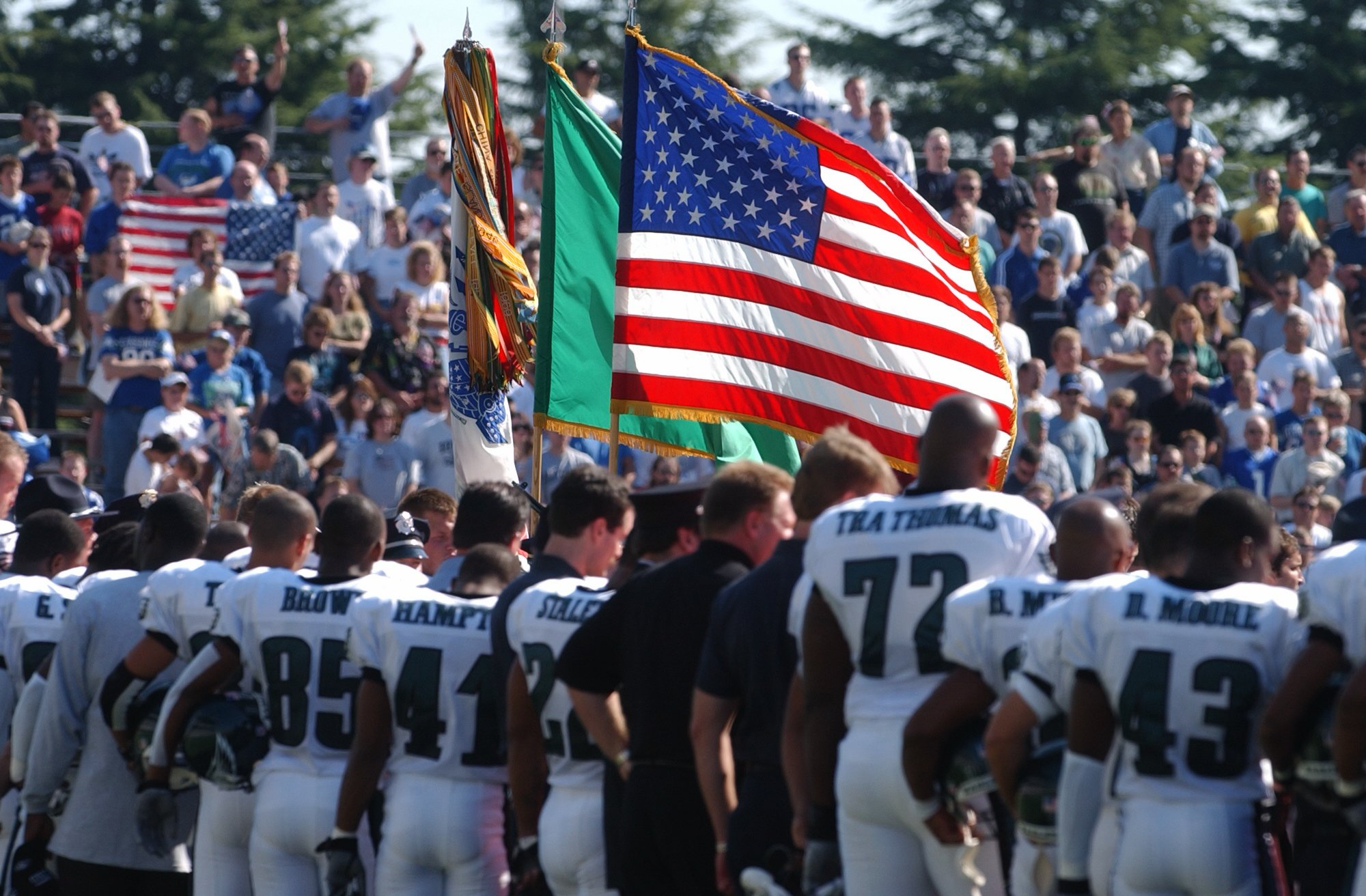
Eagles players line up during pregame ceremonies before the Eagles-Seahawks game on Sept. 23, 2001, the teams’ first game after the attacks.Ron Cortes / Staff Photographer
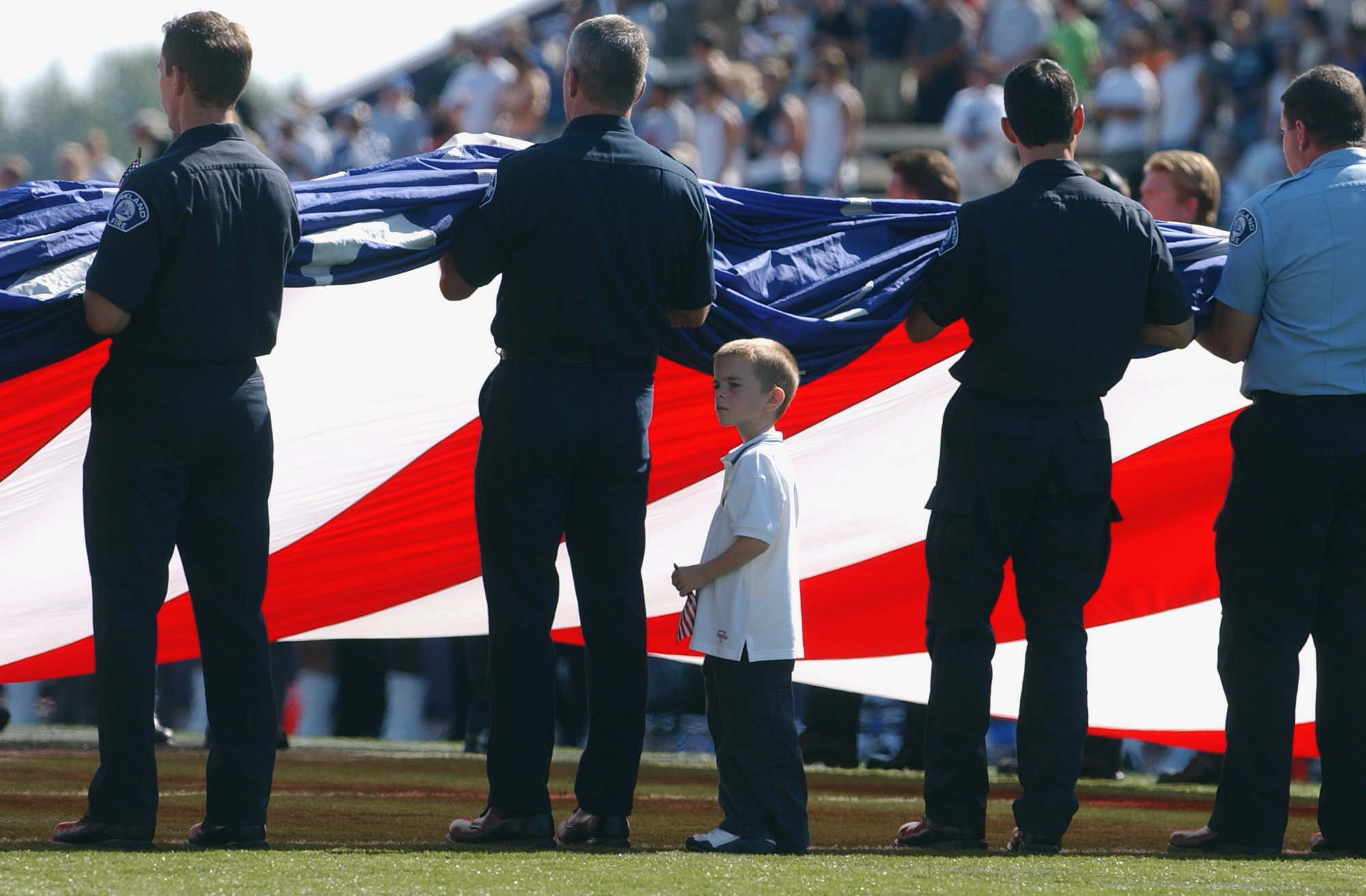
As with MLB, NFL playoffs were delayed by a week, so the Eagles made up their postponed game at Tampa in January after their final scheduled game of the regular season. Their first game after the attacks was in Seattle, where they played the Seahawks at the University of Washington stadium while their new stadium was being built. As in many stadiums that day, the pregame national anthem was performed as a giant flag that covered the entire field.
Who held it? Douglas, his teammates, and his coaches joined their counterparts from the Seahawks and dozens of first responders. Douglas had a hand on that flag, and he remains moved by that ceremony to this day.
“Just, I don’t know,” Douglas said. “Just a sense of pride.”
A giant American flag covers the field before the Eagles-Seahawks game at the University of Washington stadium during pregame ceremonies on Sept. 23, 2001.Ron Cortes / Staff Photographer
‘Tip your cap’
Pride: That’s what Bowa felt on Sept. 17. He’s proud that Philadelphia, the cradle of American democracy, was part of the return to sport. He’s proud that the franchise he played for and managed was, with the Pirates, the first team in the U.S. to resume, and he’s proud that baseball, America’s game, was the first front-line sport to restart.
Bowa is a hard man, but he understood the situation. He held a team meeting before the game and told the players that anyone who didn’t feel like playing didn’t have to; he understood. No takers.
The pregame left Bowa and Glanville shaken. As late Phillies broadcaster Harry Kalas delivered a moving pregame address to viewers, a montage compiled by “Video” Dan Stephenson helped settle the 27,910 fans at Veterans Stadium into their seats.
“People were in tears over that,” Glanville said.
It was the music that got to Bowa. He’d served in the U.S. Army Reserve as a young man, and his patriotism runs deep.
First, he recalled, there was Lee Greenwood’s “God Bless the USA” Then, right before the first pitch, with the teams lined up on the baselines, came “God Bless America” and the national anthem, performed back-to-back by — who else? — the star-spangled Valley Forge Chorus.
Phillies ace Robert Person went eight innings, gave up two runs, Jose Mesa got the save, and the Phillies won, 5-2, and drew to within two games of the Braves in the National League East.
Who’d they beat?
Braves legend Greg Maddux.
Glanville got a hit, Pat Burrell got two, rookie All-Star Jimmy Rollins scored a run, and MVP candidate Bobby Abreu tripled. But all of them — Person, Mesa, Glanville, Rollins, Abreu — they were just co-stars.
Nobody in baseball met the moment like Scott Bruce Rolen.
Chipper Jones’ homer gave the Braves a 1-0 lead in the first inning, but Rolen tied it with a leadoff homer in the second. He drove in Abreu from third base in the fourth for a 2-1 lead.
Then, with two out in the bottom of the sixth inning, Rolen homered again. The Phillies led, 3-2. The Vet rocked and rolled as Rolen returned to the dugout and, as ever, humbly took off his helmet. The crowd was nearly tearing the old stadium down, begging for a curtain call, but that just wasn’t the sort of thing Rolen did. Ever.
Bowa called Rolen over.
“Scotty,” he said, “you got to go out and tip your cap.”
Rolen replied, “Well, you know I don’t do that.”
“Scotty,” Bowa said, “this is something different.”
At the outset of the offseason program in April, Sean Mannion began to install the foundation of the Eagles offense, a brand new scheme from a first-time coordinator.
Those early days, Mannion said Thursday, feel like “ancient history” compared to where the team is now.
He said it jokingly, but acknowledged what has felt like eons between now — just four days before his first regular-season game as a play-caller — and then is a reflection of the work that Eagles staff and players have put into learning the scheme.
The group started with the foundation of the offense in the spring, then added one layer after the other, gradually incorporating different wrinkles and adjustments. Mannion said he is satisfied with the progression, leaving him feeling like the team is in a “great position” heading into Week 1 against the Washington Commanders.
“There’s been so much work, and we’re working relentlessly, and ultimately that builds your confidence, knowing that I’ve spent hours and hours and hours thinking about the plan, preparing the plan, preparing the players,” Mannion said. “I feel confident and excited for Week 1.”
After installing the broader offense throughout the offseason program and training camp, Mannion will narrow the game plan to a more select menu. The Eagles offensive coordinator’s desire to put the players in the best position to succeed helps inform how to pare down the offense.
He has spent the last five months evaluating the strengths and weaknesses of his personnel. Mannion has built what he calls a “library” of plays since April, which includes new plays and familiar ones from past Eagles offenses.
As he game plans, he’s pulling different books from the shelves, so to speak, of the Eagles’ vast play library. Part of his consideration in selecting plays also includes a study of the Eagles’ opponent to determine how to best attack them.
Sean Mannion’s time with the Vikings crossed over with that of current Commanders defensive coordinator Daronte Jones. Jack Dempsey / AP
That aspect of the preparation is shrouded in mystery, as the Commanders have a new defensive coordinator in Daronte Jones, who spent the last four years with the Minnesota Vikings as defensive backs coach and pass game coordinator. Mannion is familiar with the Brian Flores-led Vikings defense, as he played in Minnesota briefly in 2023 (Flores’ first season as defensive coordinator) and coached against him twice a year with the Green Bay Packers for the last two seasons.
Whether or not the Commanders take on more of a Vikings flavor, Mannion said he will be prepared for anything the defense throws at them.
“We’ve really used this extra practice time, kind of the bonus week, to our advantage,” Mannion said. “We want to be ready for everything. … And like any opponent, whether it’s a new coordinator into Week 1 with new wrinkles, or if it’s a first-time coordinator at a place, you’re always ready to adjust in-game, and we have contingencies laid out for different things we might be anticipating.”
Mannion will make those hypothetical adjustments from the coaching box. He experienced calling plays from both the box and the sideline during the preseason and the public practice at Lincoln Financial Field during training camp. He ultimately decided it was the “best decision” for the team to call the game upstairs.
While there are pros and cons to either location, Mannion acknowledged he has more space in the box to operate. Plus, he called the point of view “unique” given the higher vantage point up top.
He even went through the long list of play-callers he had as a player, or worked with as a coach, and tallied up their in-game location. Mannion said it was almost 50-50.
“If there was one thing as I was thinking it through, I realized, you know what?” Mannion said. “There’s plenty of great play callers who have done it from either spot.”
Jalen Hurts said on Wednesday that he hasn’t had a play-caller sit in the box since he was in college. Still, he emphasized that he would support Mannion in his decision, even if his communication with his offensive coordinator between drives might be altered given his location.
Jalen Hurts said earlier this week that he’s OK with not having Sean Mannion on the sideline during games. David Maialetti / Staff Photographer
Mannion noted that one of the advantages of calling plays from the box is his ability to talk to each of his staff members at any time, instead of being fixed in one place and speaking to them individually. Then, his staff members can quickly disseminate information to their respective position groups.
“I think really more than anything, it speaks to [quarterbacks coach] Parks [Frazier], he does a great job with Jalen every day,” Mannion said. “I’m in constant communication with him and all of our position coaches, and then it allows for, I think, everybody to coach their units, and I can kind of survey from up top and distribute information from there, and they take it the rest of the way.”
Mannion has praised the work of the staff and the players as they have learned a new offense. Come Sunday, the details that defined the last five months — from designing the offense, to planning meetings and practice schedules, to teaching the offense, to executing in practice — will come to fruition on the field.
Is there an aspect of the job that keeps Mannion up at night? As he reflected on his work over the last five months, he showed he looks at his myriad responsibilities from a perspective of gratitude.
“Those are the things that you love about coaching,” Mannion said. “There’s so many different elements to it, but football’s a beautiful game because they all come together. I stay awake thinking about that, but I wouldn’t say it keeps me awake. It’s the enjoyable part for me. That’s what I love about it.”
Edge rusher Jonathan Greenard said he “feels good” after missing all of training camp with an injury, though he’s still unsure if he’ll be ready for Sunday’s Week 1 game vs. the Washington Commanders.
Greenard, who practiced in a limited capacity on Wednesday and Thursday, confirmed that he did not need surgery after suffering the pectoral strain while lifting ahead of camp.
“It’s one of those freak things,” Greenard said from his locker room stall Thursday. “Stuff happens and thank God I didn’t need surgery. Just a matter of just trying to work back in there, get it back to full strength.”
Greenard wouldn’t tip his hand about his availability for Sunday, instead repeating “that’s up for [the Eagles coaching staff] to decide.” He emphasized that he’s improving after the injury.
“I feel good, though. I will say, I feel I’m in a good spot,” Greenard said. “Just know that. I know that I’m working every day to continue to try to get this thing stronger. We’re close, I know that.”
Greenard echoed the earlier words of defensive coordinator Vic Fangio, who noted the importance of the edge rusher getting up to game speed ahead of Thursday’s practice,
“It’s day by day,” Fangio said. “He hasn’t practiced a whole lot yet, so we’ll be careful with that. There’s a minimal amount of real practice that you have to go through, especially for a guy coming off an injury. It’s like the guy [Aaron] Donald with the Rams. He’s just coming off rustiness, no injury, and he wasn’t ready this week. We’ll see.”
Jonathan Greenard (58) last played in a game of any kind on Dec. 14, 2025 against the Cowboys. Jerome Miron / AP
Greenard, 29, is a major piece for the Eagles’ defense. General manager Howie Roseman traded third-round picks in 2026 and 2027 for the star edge rusher on April 24. He then signed a four-year, $100 million contract that included $50 million guaranteed. They acquired him to fill the void left by Jaelan Phillips, who signed with the Carolina Panthers in free agency.
Does Greenard feel like he’s comfortable with Fangio’s playbook, even if he might not be in game shape?
“Yeah, it’s kind of similar to Flo [Vikings defensive coordinator Brian Flores] when I was in Minnesota,” said Greenard, who spent the last two seasons with the Vikings. “Just learning different terminology. You know, it’s English and Spanish, pretty much… I’ve dropped before, I’ve covered people before, I’ve rushed. It’s still football, just a different terminology. I didn’t feel like it wasn’t that difficult to grasp the playbook.”
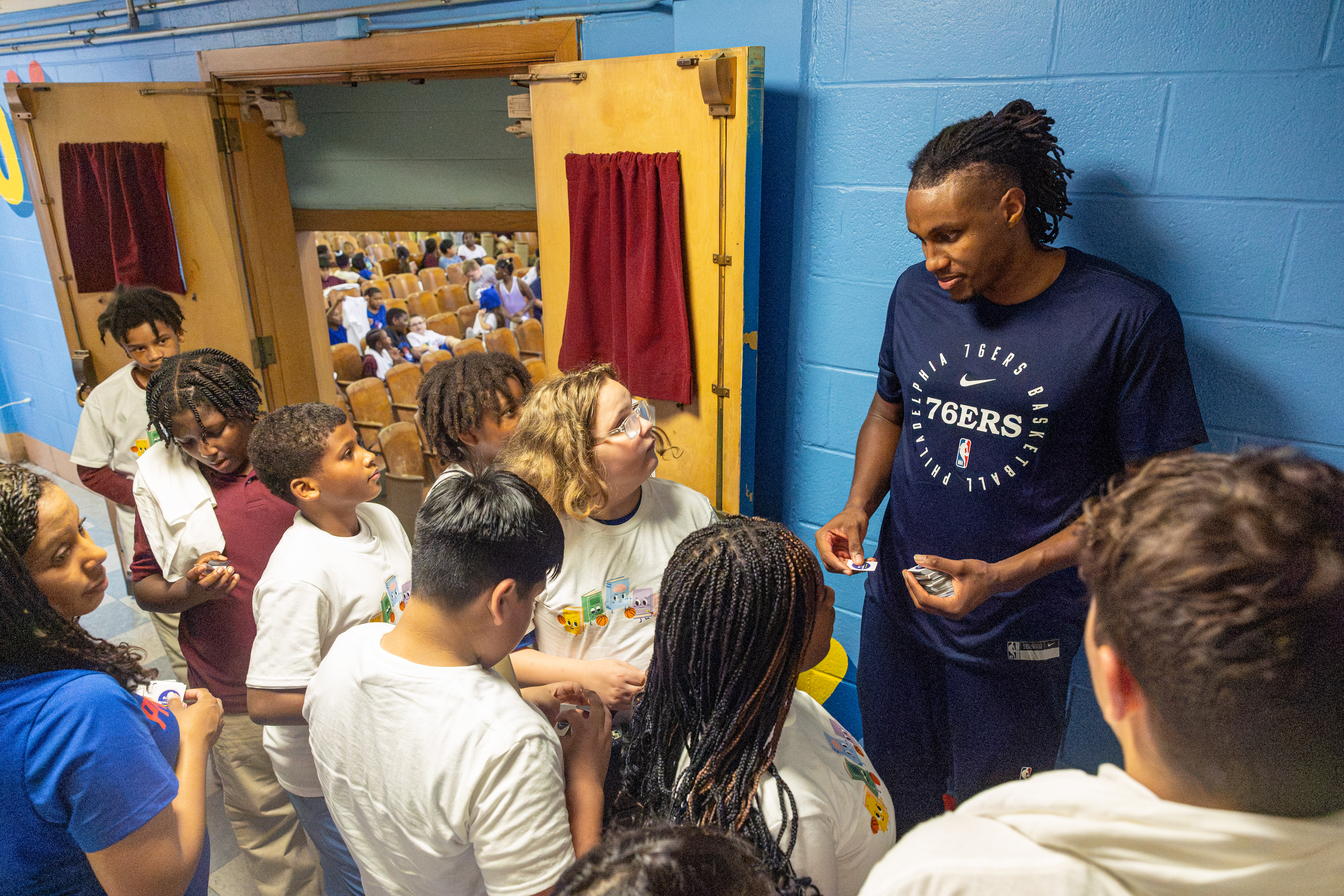
Students filled Stephen Girard Elementary school’s auditorium in South Philly for a pep rally presented by the 76ers and Morgan & Morgan Law Firm on Thursday afternoon to promote reading among the youth.
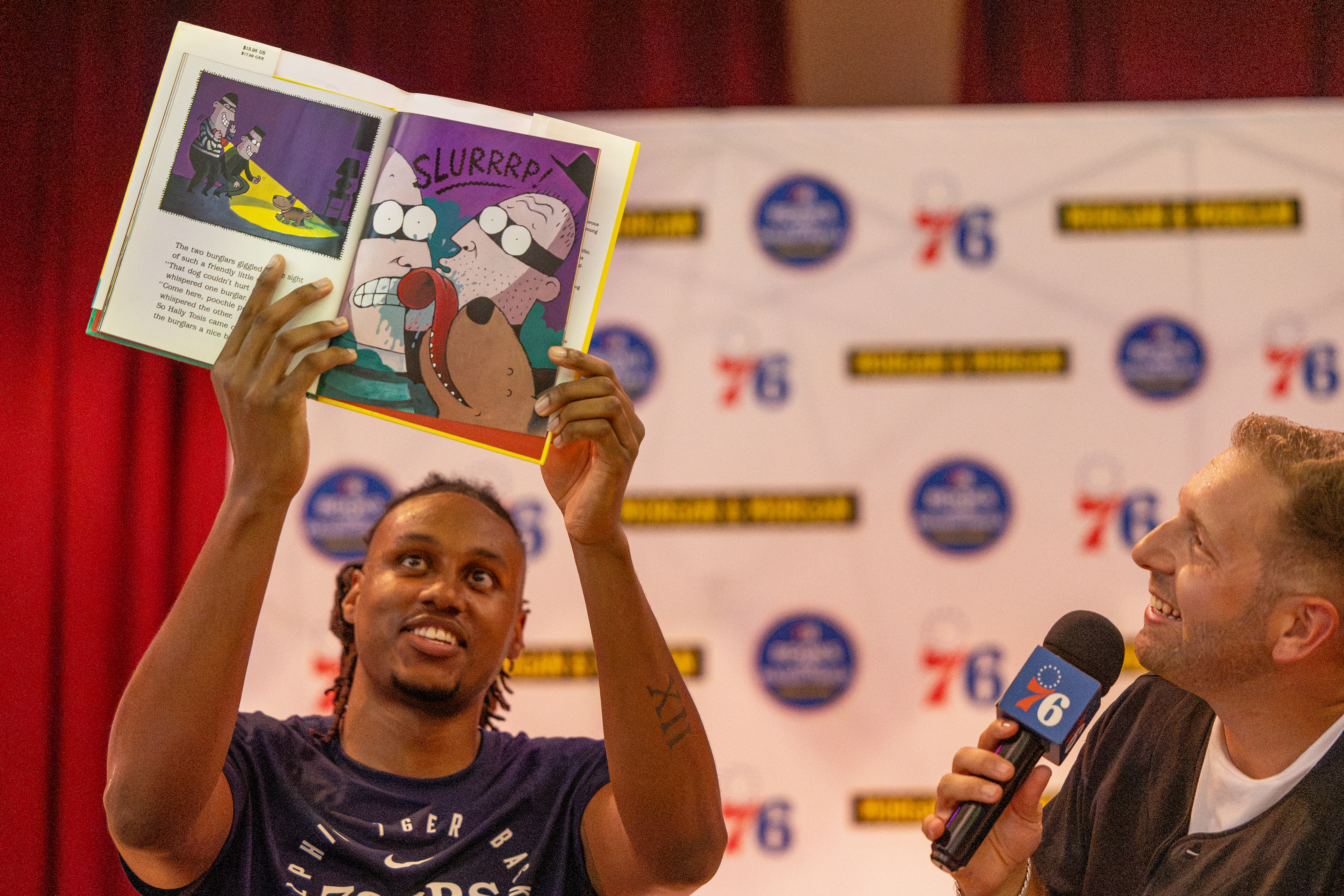
After a dance party with students to start the assembly, 200 children were treated to a surprise when Sixers forward Jabari Walker showed up as a guest reader to read Dog Breath: The Horrible Trouble with Hally Tosis.
Walker and Sixers in-arena host, Lee Farrell, hosted a Q&A to discuss the importance of reading for the students.
“I’m an athlete, and I lift every day to get stronger,” Walker told the students. “The brain is a muscle, so you have to train it every day. You have to get smarter.”
Morgan & Morgan and the Sixers partnered last season and will do so again for the 2026-27 season for the Books & Basketball program, which included the Boards for Books. Morgan & Morgan donates $7.60 for every rebound the Sixers had during the season.
A $15,000 donation was presented to the school for its library and reading program, while a $12,192 donation was made to BookSmiles, an organization that collects and distributes books to promote childhood literacy. The $27,000 total donation for the over 3,500 rebounds the Sixers had during the 2025-26 season is expected to equate over 20,000 books for students in the Philadelphia area.
Hannah Molitoris, an attorney with Morgan & Morgan, said it’s especially important to get the next generation excited about reading because of the access they have to technology and social media.
Jabari Walker shows the ending illustration of the children’s book ‘Dog Breath’ alongside Sixers in-game host Lee Farrell at Stephen Girard Elementary School on Thursday.Aidan T. Gallo / Staff Photographer
“Whereas many people grew up with books in their hands, we see a lot of younger people these days growing up with cellphones and iPads in their hand,” Molitoris said. “So, to get a younger generation excited about reading and the benefits of reading will only serve all of us in the future.”
Having an athlete like Walker there to further the message only helped.
“I think that there is a misconception that if you like to read and you’re an avid reader, then that means that you’re a loser or a nerd,” Molitoris said. “I think hearing someone like Mr. Walker tell these children that it is OK and it is strong and it is powerful to read and to like to read, it’s like your hero telling you that it’s OK to be yourself.”
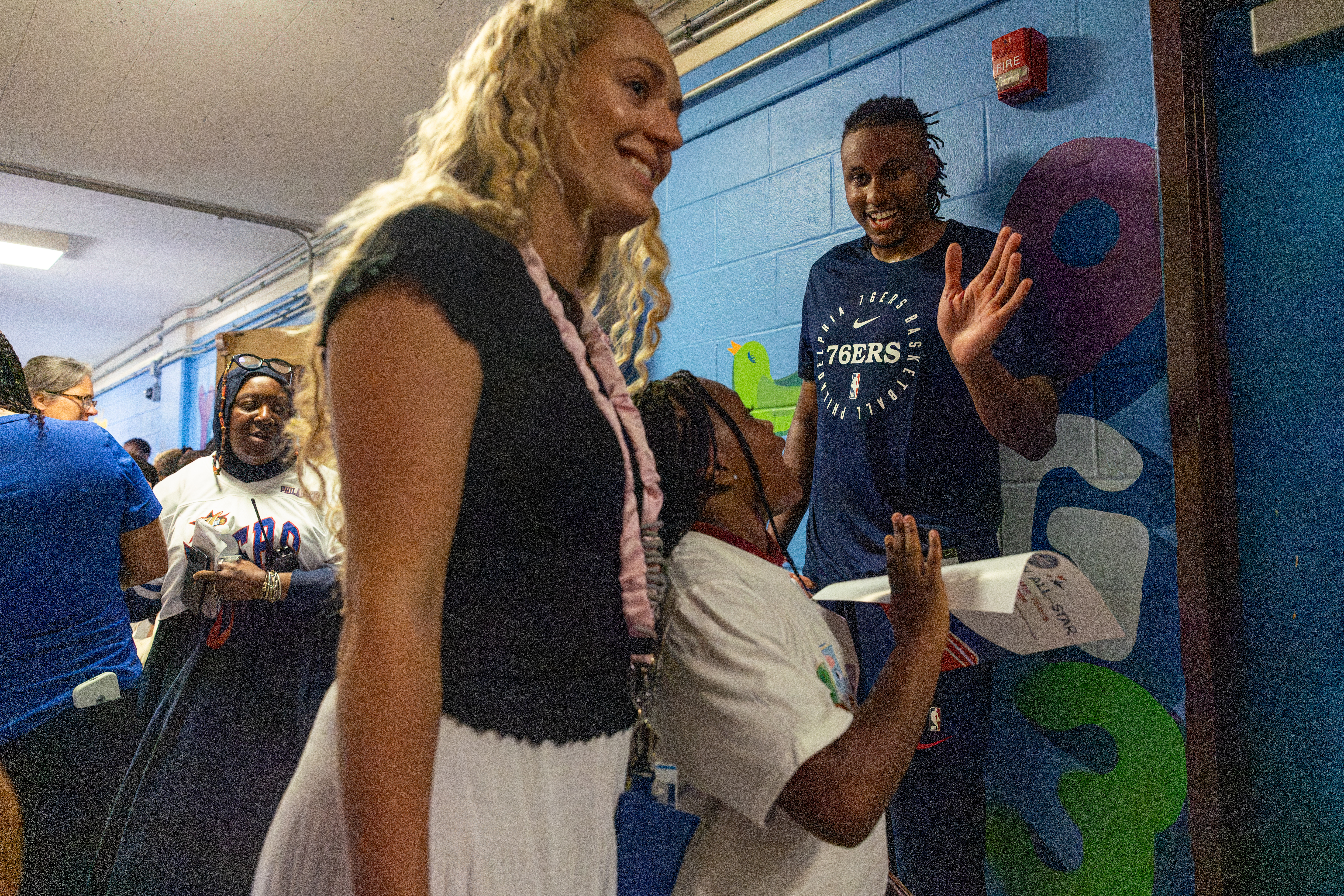
Through BookSmiles, each child left the assembly with a free book and bookmark, which Walker helped hand out as they exited the auditorium. The students also received Basketball & Books T-shirts before the pep rally.
Although Walker said he’s unsure if he would have shared the same excitement as the students over reading when he was their age, he’s become “super passionate about” as an adult and appreciates how the program translates results on the court to a positive outcome for kids in the area, giving him “extra motivation.” Walker said he currently prefers the self-help genre and books that teach financial literacy, but he related to the students over his love for the Diary of a Wimpy Kid books.
Jabari Walker waves goodbye to an elementary school students after Thursday’s pep rally.Aidan T. Gallo / Staff Photographer
Being able to see the students’ excitement in person and make this connection face-to-face is something that Walker said made the experience “even more special.”
“They could watch a video or this could be over Zoom, but I don’t think it hits the same,” Walker said. “For me to take my time and come here, I think it rubs off, and they understand that. So now they all have a personal connection with me, and I’m glad.”
On Wednesday night, Week 1 of the NFL season kicked off. With it, so did “predictions season” — in which media members rush to their keyboards to forecast every week’s matchups.
The Eagles open up their season on Sunday at home against the Washington Commanders (4:25 p.m. Fox29). Like many around the country, The Inquirer’s four beat writers picked the Birds to come out on top.
Here’s what NFL analysts are saying about the Eagles’ chances this weekend and the team’s overall outlook on the season:
NFL.com: Lots to like about the Birds’ defense
NFL.com polled five of its analysts on all 16 Week 1 matchups, and the Eagles were one of six teams it unanimously picked to win their opener. For NFL.com editor Gennaro Filice, who authored the website’s majority opinion, a major factor was the Birds’ defense.
“I have serious doubts about [Jayden] Daniels’ supporting cast, especially the Laremy Tunsil-less offensive line,” Filice wrote. “That’s a recipe for disaster against Vic Fangio’s defense. Sure, the Eagles’ edge group has question marks, but the front is spearheaded by the devastating DT duo of Jalen Carter and Jordan Davis. Even if Jayden can avoid those 650 pounds of PAIN, Philly has two athletic linebackers (Zack Baun and Jihaad Campbell) to track the fleet-footed quarterback and a pair of first-team All-Pro cover men (Quinyon Mitchell and Cooper DeJean) to close his passing lanes.”
Tunsil, the Commanders’ five-time Pro Bowl left tackle, could miss “a significant portion of the regular season” after tearing his triceps in an August practice. Last season, Tunsil let up just two sacks and 15 pressures in 14 starts. The Commanders offensive line ranked 15th overall in pass blocking last year.
Terry McLaurin and the Commanders will be without their top offensive lineman against the Eagles’ defense on Sunday.Monica Herndon / Staff Photographer
Athletic writer feels ‘bad’ for Jayden Daniels
Nick Kostos, a writer for The Athletic, selected the Eagles to win on Sunday — but he has some love for Washington Commanders quarterback Jayden Daniels.
“I feel bad for Jayden Daniels. Less than two years ago, he had the Commanders in the NFC Championship Game as a rookie (coincidentally in Philly against the Eagles),” Kostos wrote. “And it feels like the Commanders are wasting the years on his rookie deal. I love Daniels, but the Eagles might have the best defense in the NFL — and I’m a Jalen Hurts believer. It’s the Eagles or nothing for me here.”
Hurts has won seven of his 10 matchups against the Commanders. In those games, the Eagles captain has passed for 2,152 yards, 14 touchdowns, and three interceptions. He’s rushed for another six touchdowns against Washington.
Eagles quarterback Jalen Hurts has been stellar against the Commanders in his career.Yong Kim / Staff Photographer
ESPN likes the Eagles on Sunday, not for Super Bowl
ESPN picked the Birds on Sunday and also recently asked 65 experts to predict how the NFL season would shake out. Of that group, just four predicted the Eagles to come out of the NFC. The most common answer was the Los Angeles Rams, as 43 analysts predicted LA as the NFC representative in Super Bowl LXI. Of the four who predicted the Eagles to make the Super Bowl, two chose Philadelphia to win: longtime NFL analyst Kevin Clark and NFL Network’s Cameron Wolfe.
The 65 experts also predicted the league’s MVP, and Cincinnati Bengals quarterback Joe Burrow received the most votes (16). No Eagles received votes.
Forbes ranks Eagles as ninth most valuable franchise
In 2022, the Eagles were valued at $4.9 billion, per Forbes. Four years and one Lombardi Trophy later, the franchise has more than doubled that evaluation.
The Eagles ranked No. 9 on Forbes’ annual list of most valuable franchises, coming in at a valuation of $10.25 billion. Eagles owner Jeffrey Lurie purchased the team in 1994 for $185 million.
Lincoln Financial Field made up 13.1% of Forbes’ evaluation. With the stadium’s contract ending in 2032, the franchise is in an “exploratory research” phase on a new or renovated stadium.