Just seconds after taking the podium in Beaver Stadium on Tuesday, offensive coordinator Taylor Mouser was asked about No. 14 Penn State’s struggling run game.
“Yeah, I knew that would be a question today,” Mouser said.
The ground game has been the weakest aspect of the Nittany Lions’ offense so far. They’re averaging 3.9 yards per carry through two games this season, and their starting running back Carson Hansen is at 4.4 yards per attempt.
“To say that I wasn’t thrilled with where the run game’s at would be an understatement,” Mouser said. “Feel like there’s a lot of growth to be had there.”
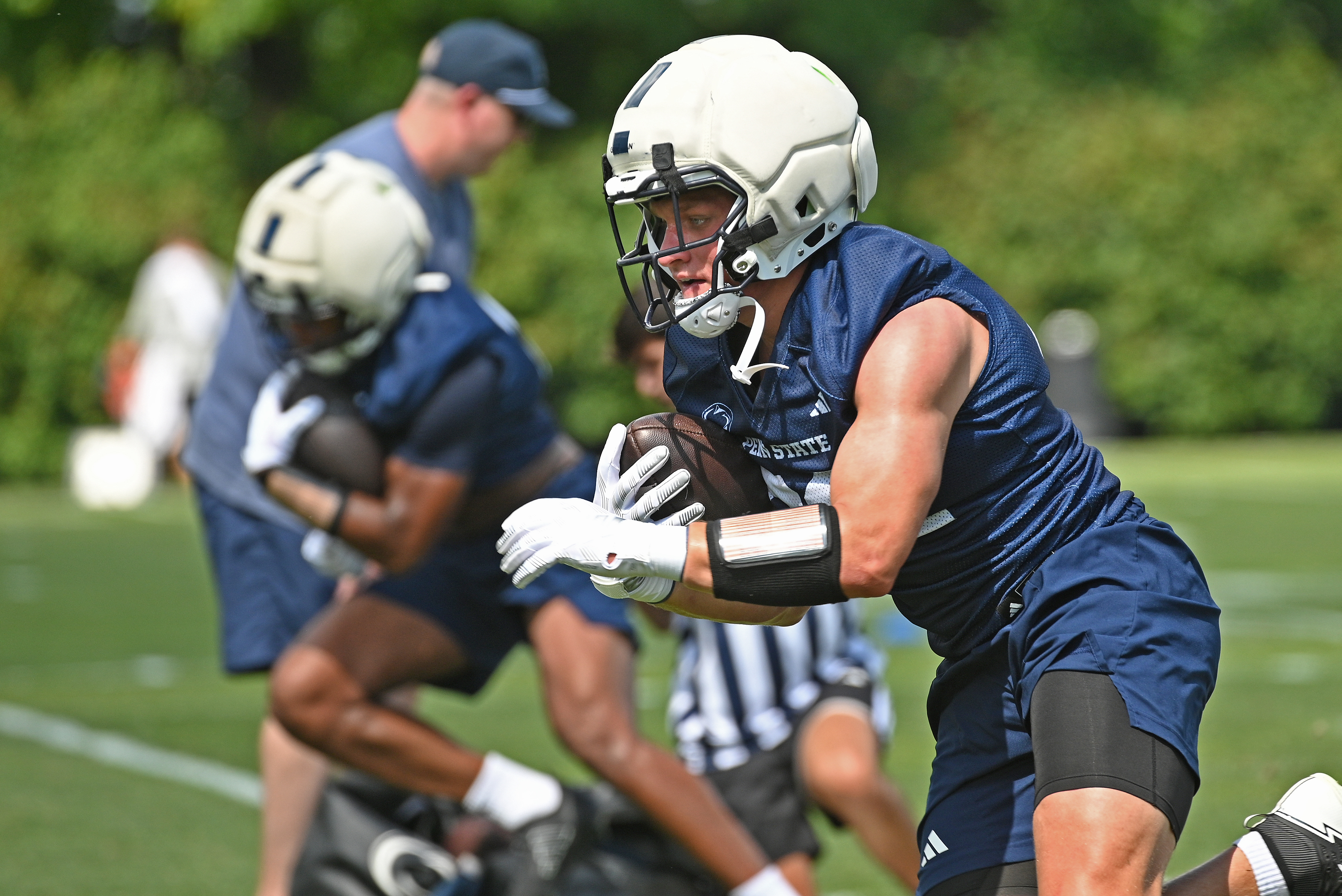
Mouser and head coach Matt Campbell are comfortable playing all four of Penn State’s top running backs — Hansen, James Peoples, Quinton Martin Jr., and Cam Wallace — but Hansen has twice as many carries as the next closest running back in Peoples, who has 15.
Hansen, an Iowa State transfer, had 952 yards and six touchdowns as the Cyclones’ bell cow last year. Mouser noted there is a sense of familiarity with Hansen, which is partly why he has handled the bulk of the carries.
The senior was sidelined with an injury for most of fall camp, perhaps contributing to his early struggles, but Mouser said, “that’s not an excuse.”
“Carson’s a great football player, and I don’t think I’ve done a good enough job as the offensive coordinator, showcasing him,” Mouser said. “He was an all-conference running back for us last year. Does that mean he’s an all-Big Ten running back? No, it doesn’t. But I just know the level of work that guy brings and the physicality and how important it is to him. And for whatever reason, we’ve been a hair off.”
Mouser said they’ve struggled with the small details, including Hansen missing a lane, the offensive line missing a block or a variety of other missed assignments.
But there isn’t an individual or position group to blame.
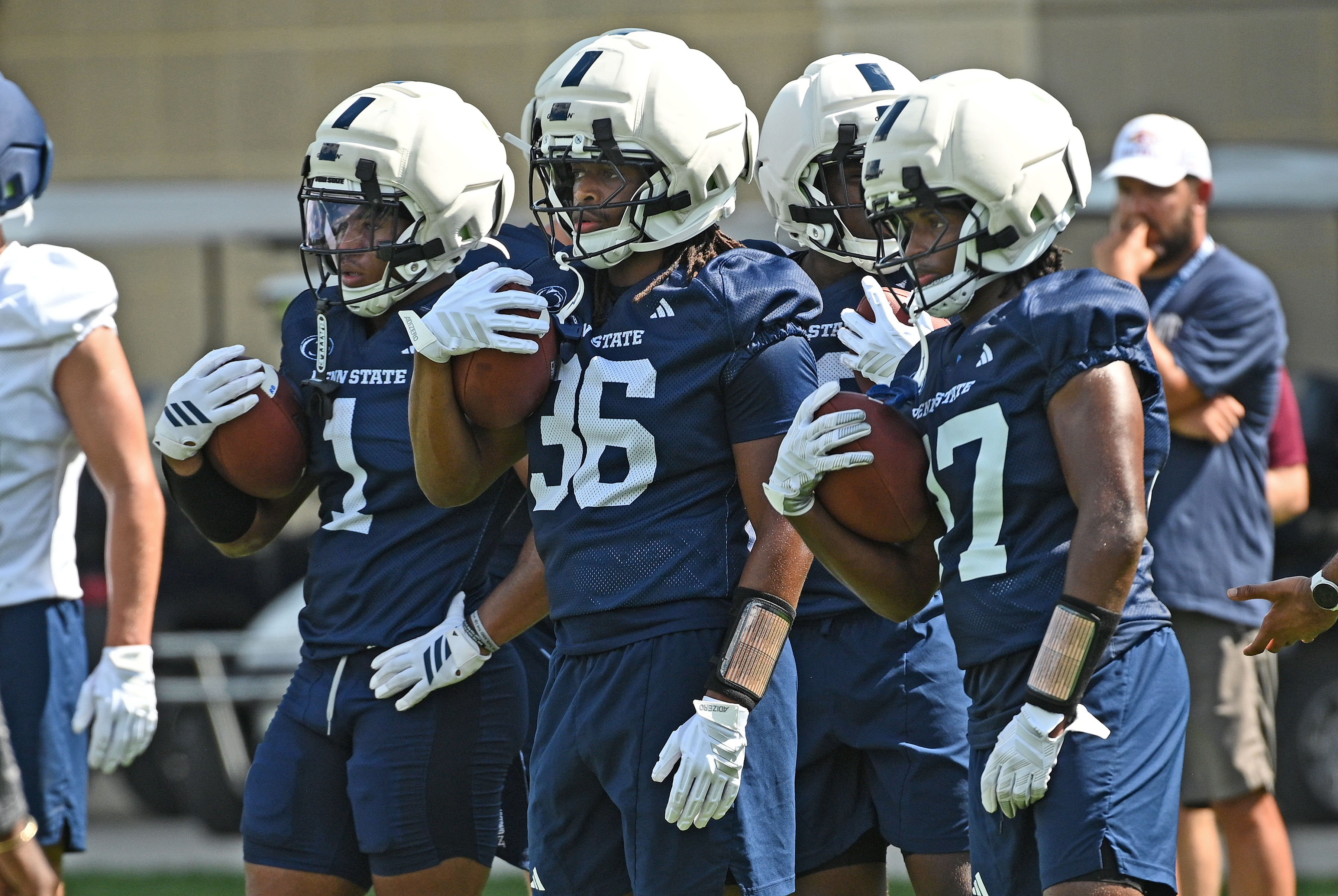
Penn State running backs James Peoples (1), Amar’e Glover (36), and Jeremy Washington (37) during practice on Aug. 5.Craig Houtz / For The Inquirer
“We’re all frustrated with the level of mediocrity that I would call the run game, and that starts with me,” Mouser said.
Campbell said he’s encouraged by none of Hansen’s runs being negative. Even though he’s not picking up 10 or 20 yards, he’s at least gaining field position when he gets the ball.
It’s the explosiveness and “finality of finishes,” where Campbell feels Hansen is lacking, but he echoed Mouser’s claim that the Nittany Lions are “inches off.”
The offensive line especially isn’t satisfied with how the run game has looked, according to Mouser, who said Penn State’s front five “are the most hungry to be dominant” on the ground.
“We want to be a team that prides itself on being the most physical football team and running the football,” Mouser said. “We have to figure out a way that we can be dominant on the ground.”
One adjustment to the ground game could be Martin, who had a breakout performance in the Nittany Lions’ Pinstripe Bowl victory with 103 yards, seeing more carries. The redshirt sophomore didn’t record a snap in Penn State’s 27-9 win over Temple, despite three other running backs getting at least a carry.
Mouser said Martin has “earned the right to get touches in our offense,” and added his absence from last weekend’s matchup wasn’t a reflection of his trust in the running back. But whether the Penn State returnee will see the field on Saturday against Buffalo (noon, Big Ten Network) remains unclear.
“Quinton is certainly one of those guys we all have great belief in,” Campbell said. “I think the reality of that, even that running back room, I just think there’s still some gray, and that room is going to continue to work itself out as we work through the weeks and work through these games.”
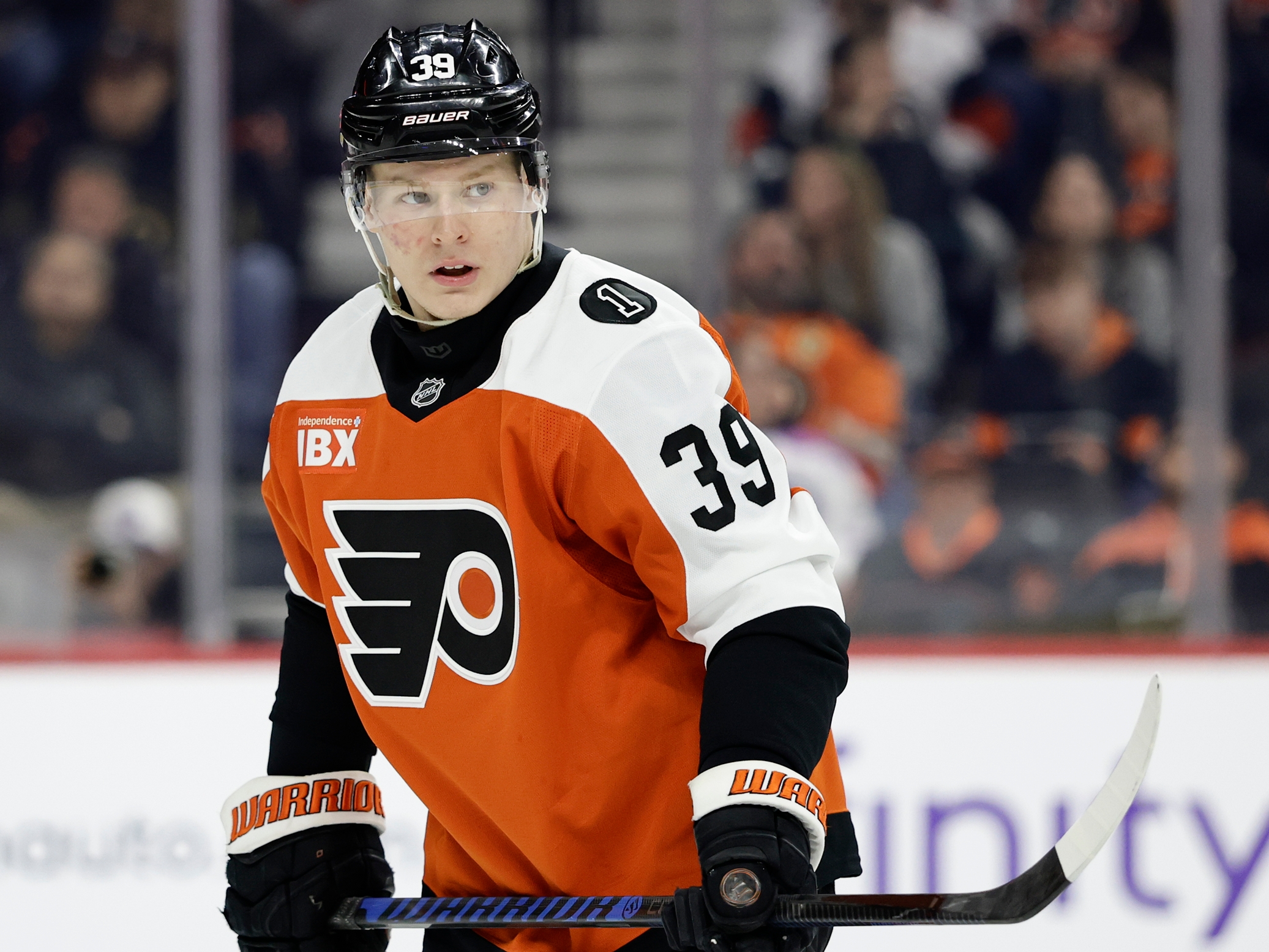
“There was a time that players went to training camp to start training for the season and to get in shape,” said Matt Nichol, a strength and conditioning coach who has worked with countless NHLers, in a 2014 Gary Roberts Performance video.
This wasn’t everyone, to be clear, but back in the day, players had time to prepare for the rigors of a season once they arrived in their respective NHL cities for training camp.
Since then, the science behind getting in shape has evolved, from how to train on and off the ice to nutrition. In the early 1990s, the mindset really shifted, as players began taking only a few short weeks off during the summer before getting right back in the gym and on the ice to prepare their bodies for what was to come.
And now there’s been another change.
With a new collective bargaining agreement that went into effect at midnight Tuesday, gone are the days of fitness testing, like measuring a player’s body fat or the dreaded “rope test” that former coach John Tortorella deployed on Day 1 to see where his players were physically.
The Flyers players are happy that, thanks to the new CBA, things like John Tortorella’s dreaded rope test are a thing of the past.MIGUEL MARTINEZ / For the Inquirer
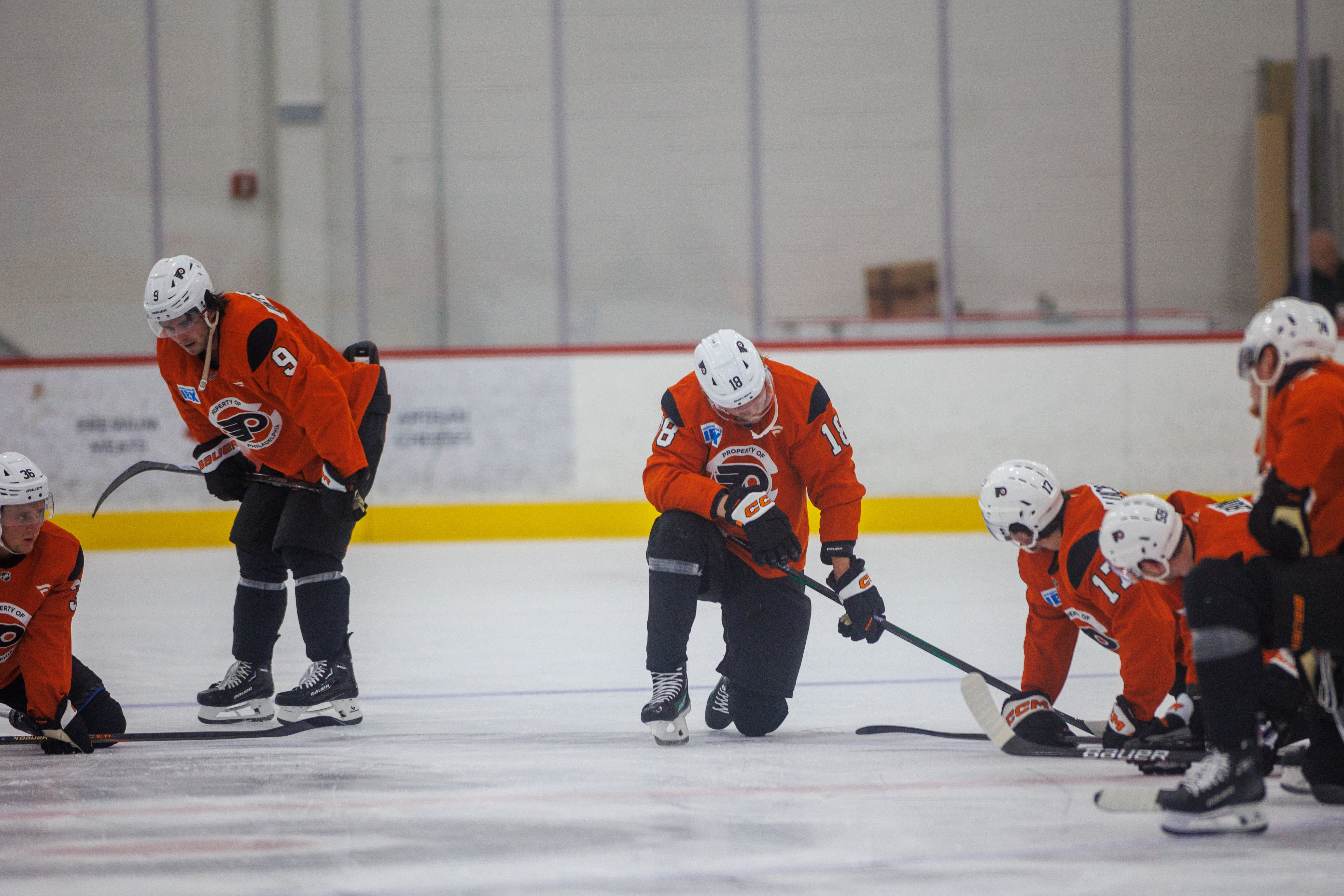
And this year, training camp for the Flyers is condensed to just 11 days, counting from their first on-ice session at 8:45 a.m. Thursday in Voorhees, and ending with practice on Sept. 27. This is why team-style skating sessions started earlier, the ramping up of high-intensity workouts is occurring much earlier than in previous years, and why an emphasis — “a massive emphasis,” as one pro hockey coach said — has been put on doing the work in the summer because there is no time to ease back into things.
“Probably 10 years ago, you took a lot of time off the ice, and now more guys are skating earlier,” a veteran NHL defenseman told The Inquirer last season.
“… There’s still some heavy lifting throughout the week, but it’s not every day. It’s probably every other day, every two days, whatever the strength coaches think. And then towards the end, you ramp it up. You know, a little more power, speed work into the skates.”
Although the offseason work has been important for decades, it is even more critical now.
Last season there was much discord about Matvei Michkov’s fitness entering the season and how it impacted him throughout the year. He has acknowledged several times, including this summer in a Russian-language interview, that he did not prepare adequately for his sophomore campaign and came in with a high body-fat percentage. Based on social media posts, it looks like he’s put in the work.
Another behind‑the‑scenes video from from Panarin's private training camp. The way they transition between teams and players from Michkov all the way to Lyubushkin I'm really into it pic.twitter.com/hwYjvS7eOV
“Everybody has a different path along the way,” Flyers general manager Danny Brière said on Tuesday, adding Michkov looks like he has “a different swagger” now. “But what I was excited to see was, I think his maturity level increased as the season went on. In the offseason, seeing him here, he’s got a pep in his step. He feels good. He looks good. So I’m excited about Matvei’s season.”
And everybody has a different focus every summer, based on their needs and age. As one veteran NHL forward nearing the end of his career told The Inquirer in February, when you’re younger, the goal is to teach your body to get stronger and have bigger gains. As you age, it’s about getting your body back to that strength and improving on it. No matter the age, conditioning is important, too.
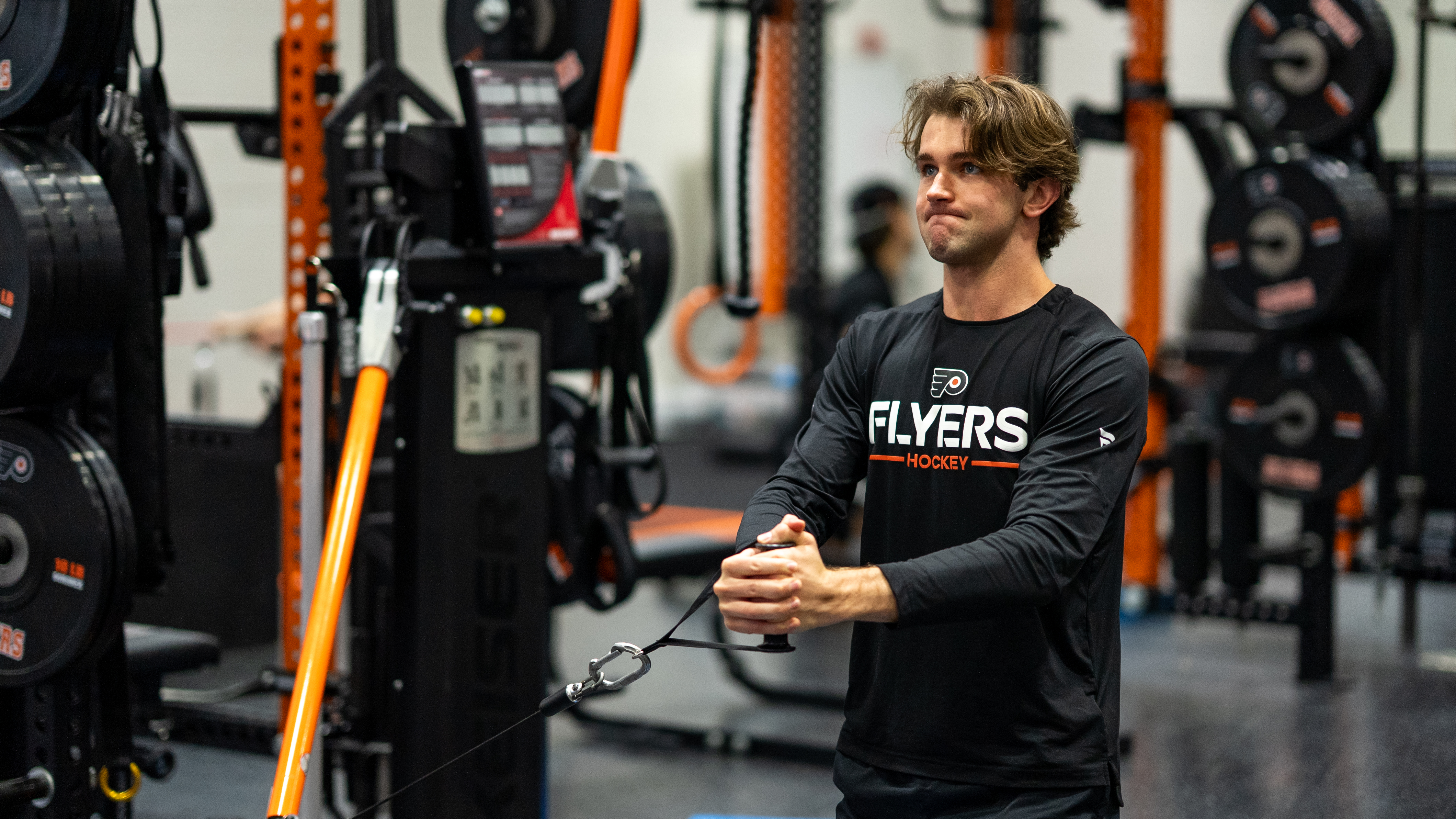
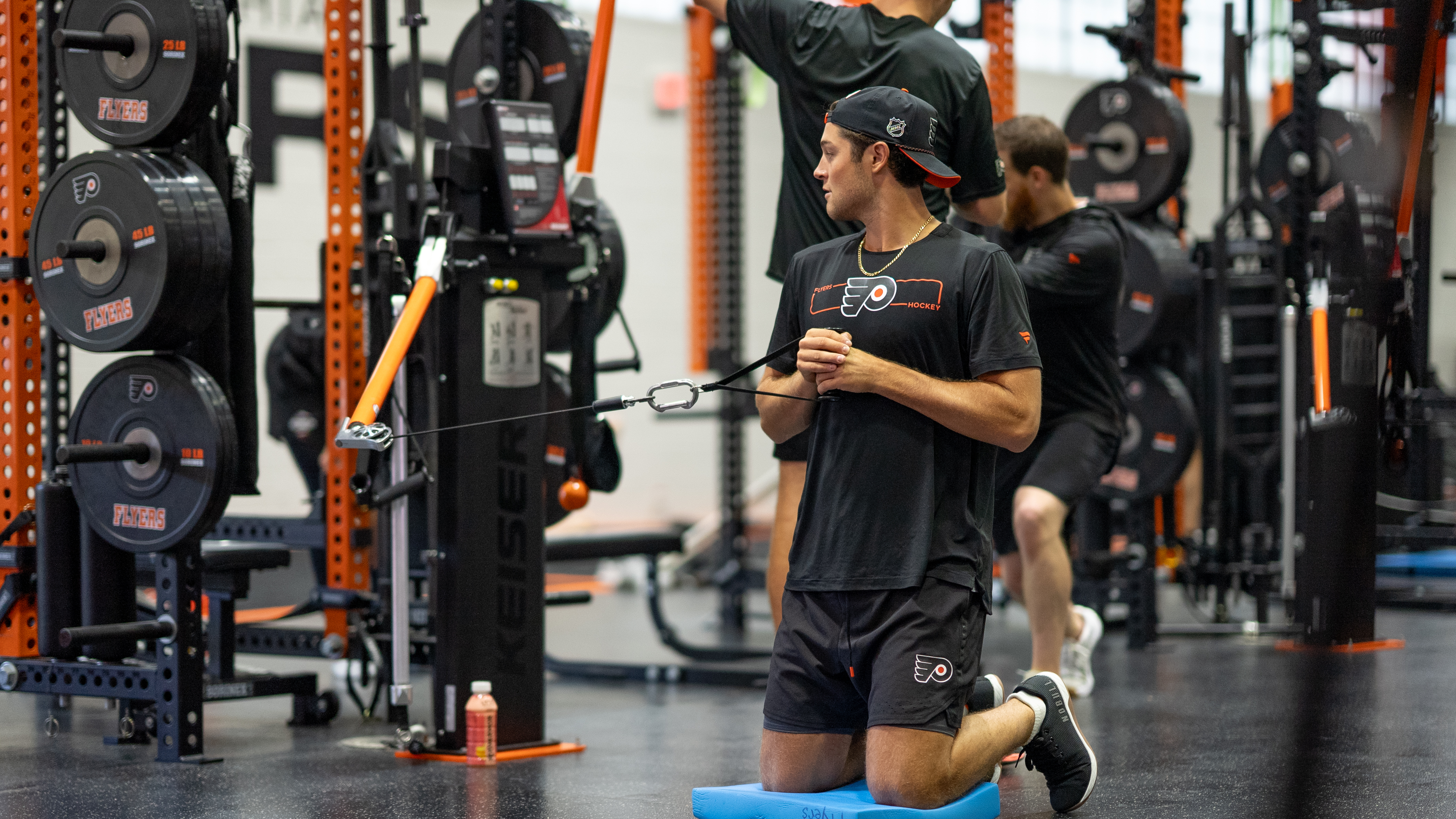
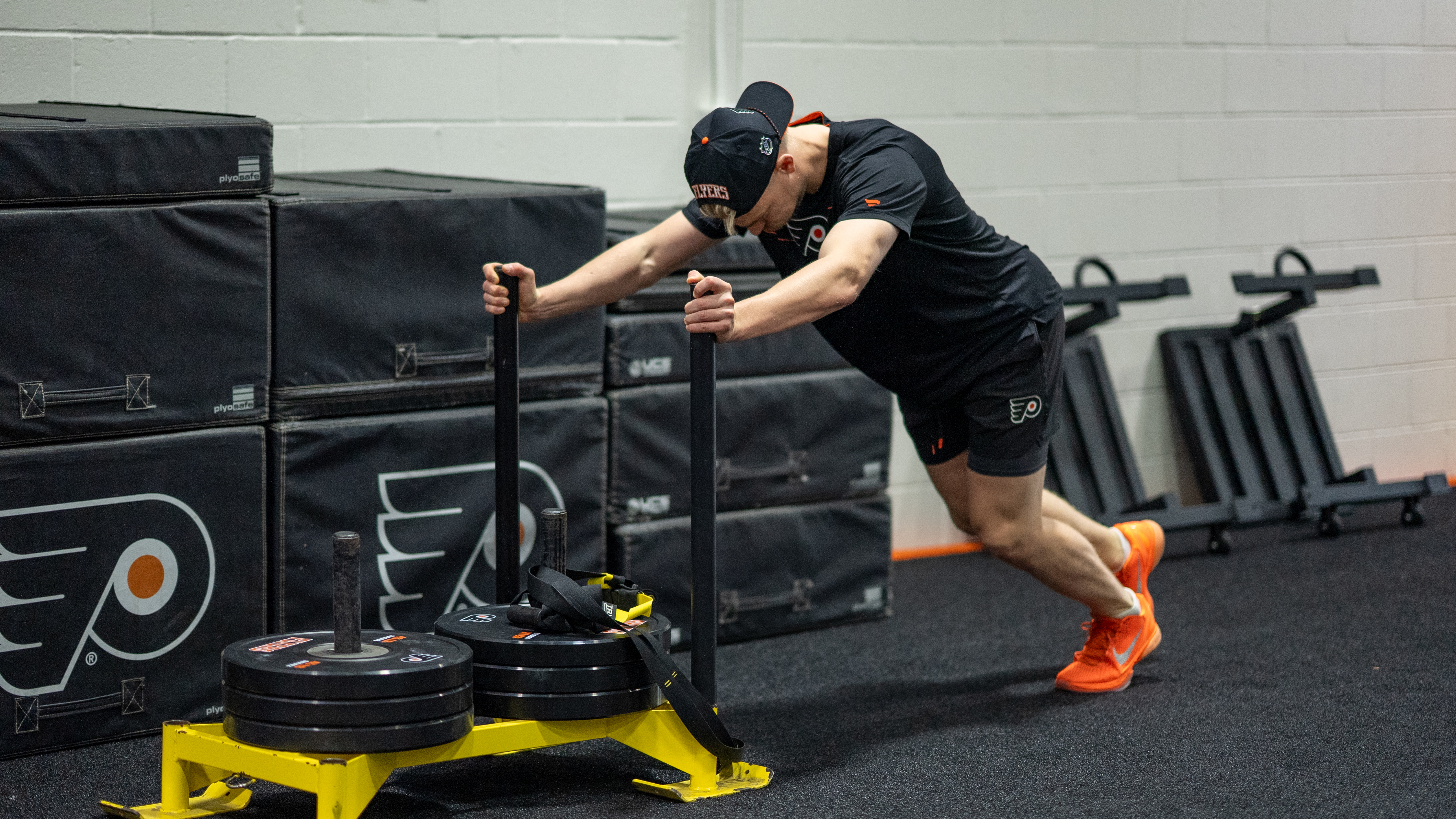
Tyson Foerster’s summer involved a lot of work in the gym as he looked to build back his strength after last season’s arm/shoulder injury.Courtesy of the Flyers
“It doesn’t happen overnight, either. It’s developing those habits in the gym,” said Bryan Marshall, a longtime strength and conditioning coach who was recently named the New York Islanders director of player performance. Marshall has worked with plenty of NHLers, including Flyers defenseman Jamie Drysdale since he was 14 or 15.
“It’s not one magic summer that does anything. It’s more buying into a philosophy that for the next decade of your life, you have to make decisions that are aligned with your hockey goals.
“And I think that has more to do with it for Jamie, because what I’ve noticed over the years is he has one successful month after another in the summer, and then one successful summer after another. And the next thing you know, he’s developed so much more strength, so much more power, and he’s now got the capacity, I think, to sort of really showcase his talents, right? Because the rigors of an NHL season are pretty grueling.”
The usual plan in the gym for Drysdale over the summer, per the defenseman, who spoke to The Inquirer in April, is rigorous: Mondays and Wednesdays are power days, Tuesdays and Thursdays are strength days, and Friday is conditioning. He would focus on power, aerobic capacity on the bike or VersaClimber, ladder work, hip mobility with bands, and explosiveness, like with box jumps. Working with bands and box jumps are his two favorites.
He’ll also typically undergo a comprehensive power assessment with Marshall using force plates and other technology to understand how he produces power, including force and velocity. For Drysdale, he saw that as he got stronger, he got faster.
As one player said: “It never really stops. It’s a full-time job in the summer as well.” Added another: “If you’re not in shape going into the season, you’re behind the eight ball.”
Why? Because during the season, you cannot train the same as you do in the offseason.
The body needs time to rest and recuperate in between workouts, whether they come on the ice or in the gym. According to UCLA Health, the benefits of a rest day include giving the “body a chance to flush out that excess lactic acid so muscles feel less tired and sore,” and allowing the body to heal and strengthen muscles after intense exercise creates small tears.
It’s why, although he chipped away at it and worked out more often during the Olympic break, it was hard for Michkov to ever get into top conditioning shape last season after a poor start. The heavy work in the gym is done in the offseason because, as one former NHLer told The Inquirer, everyone starts at a certain level, but as the season wears on and the body builds endurance, it also breaks down, causing a player’s strength to drop.
“There are sacrifices you have to make. That maybe some of your other buddies [have things they] can do that you are, unfortunately, [unable] to do,” a current NHL forward said.
“But at the end of the day, I’m fortunate enough to play this game at a high level, and I love doing it, so I’m going to do whatever I can to make sure I put myself in the best position each year.”
Flyers defenseman Rasmus Ristolainen’s game is predicated on strength, power, and physicality.Courtesy of the Flyers
The Phillies are alive and well in the hunt for the MLB playoffs, looking to lock up a wild-card spot. Each of the last two postseasons ended in the National League Division Series, as the Phillies struggled to recapture the Red October success that carried them to the World Series in 2022 and the NL Championship Series in 2023, when they made the playoffs as a wild card.
Here’s a look at where the 2026 Phillies are in the wild-card standings, and their remaining schedule:
National League East standings
window.addEventListener(“message”,function(a){if(void 0!==a.data[“datawrapper-height”]){var e=document.querySelectorAll(“iframe”);for(var t in a.data[“datawrapper-height”])for(var r,i=0;r=e[i];i++)if(r.contentWindow===a.source){var d=a.data[“datawrapper-height”][t]+”px”;r.style.height=d}}});
Standings updated at least once/hour.
National League wild-card standings
window.addEventListener(“message”,function(a){if(void 0!==a.data[“datawrapper-height”]){var e=document.querySelectorAll(“iframe”);for(var t in a.data[“datawrapper-height”])for(var r,i=0;r=e[i];i++)if(r.contentWindow===a.source){var d=a.data[“datawrapper-height”][t]+”px”;r.style.height=d}}});
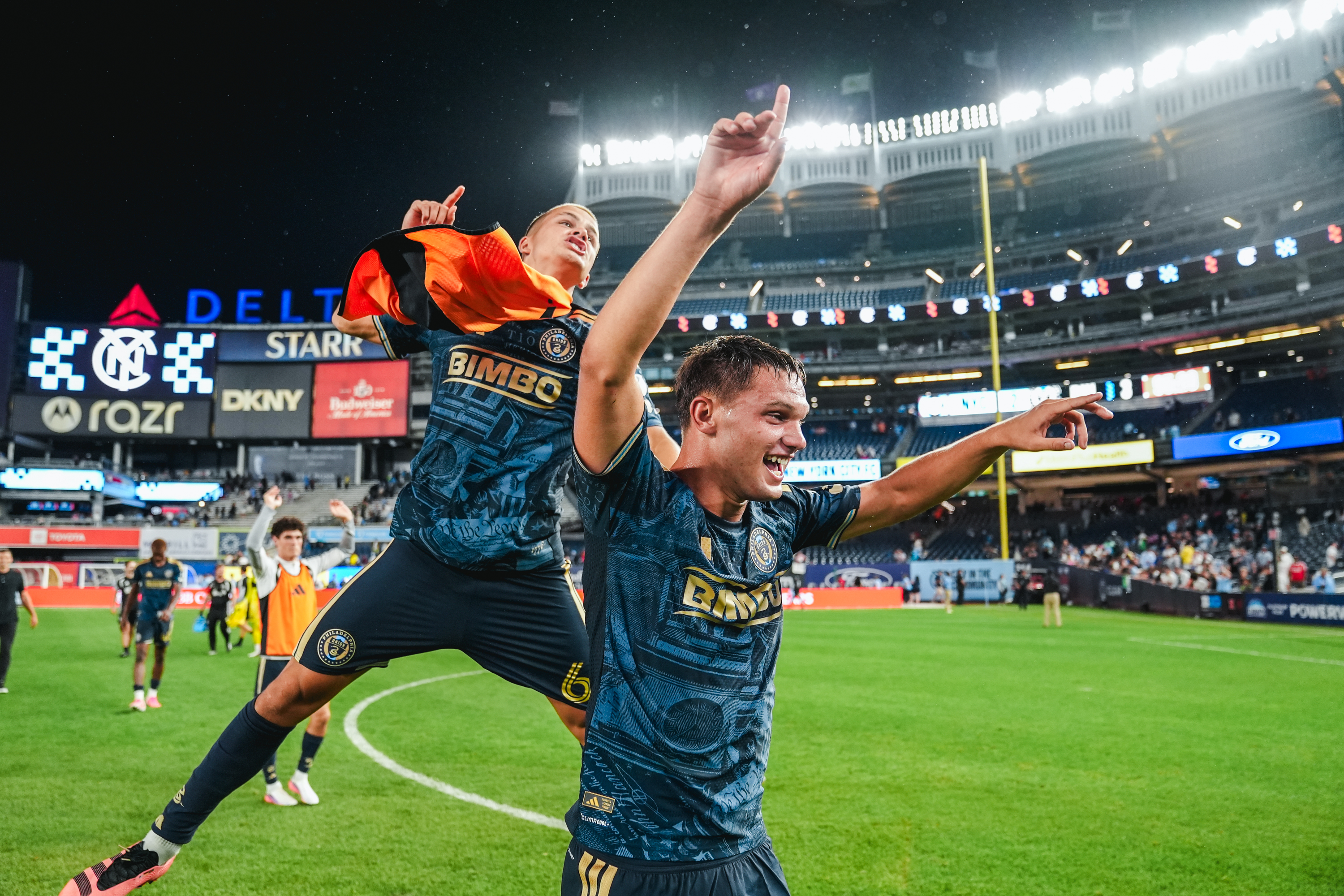
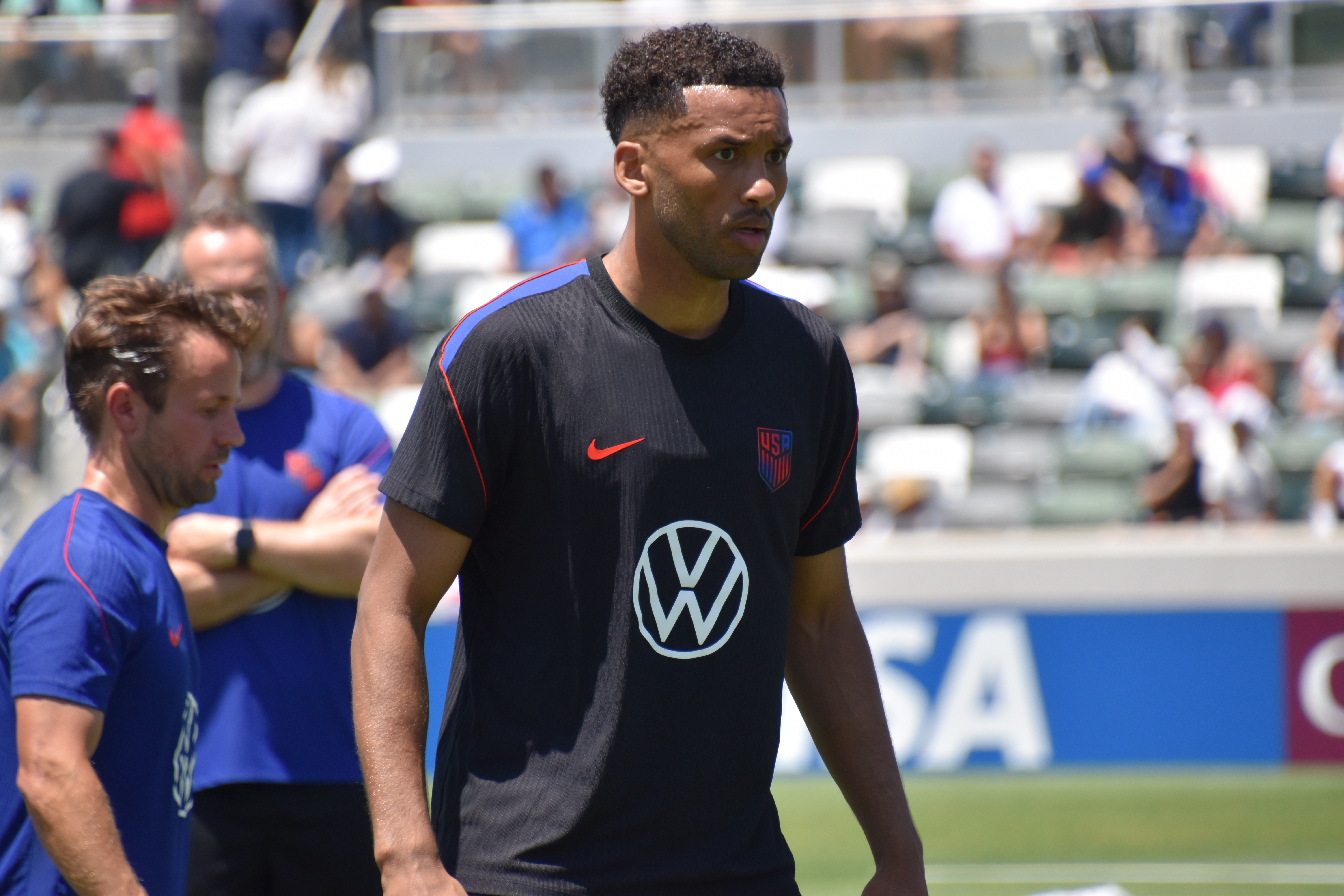
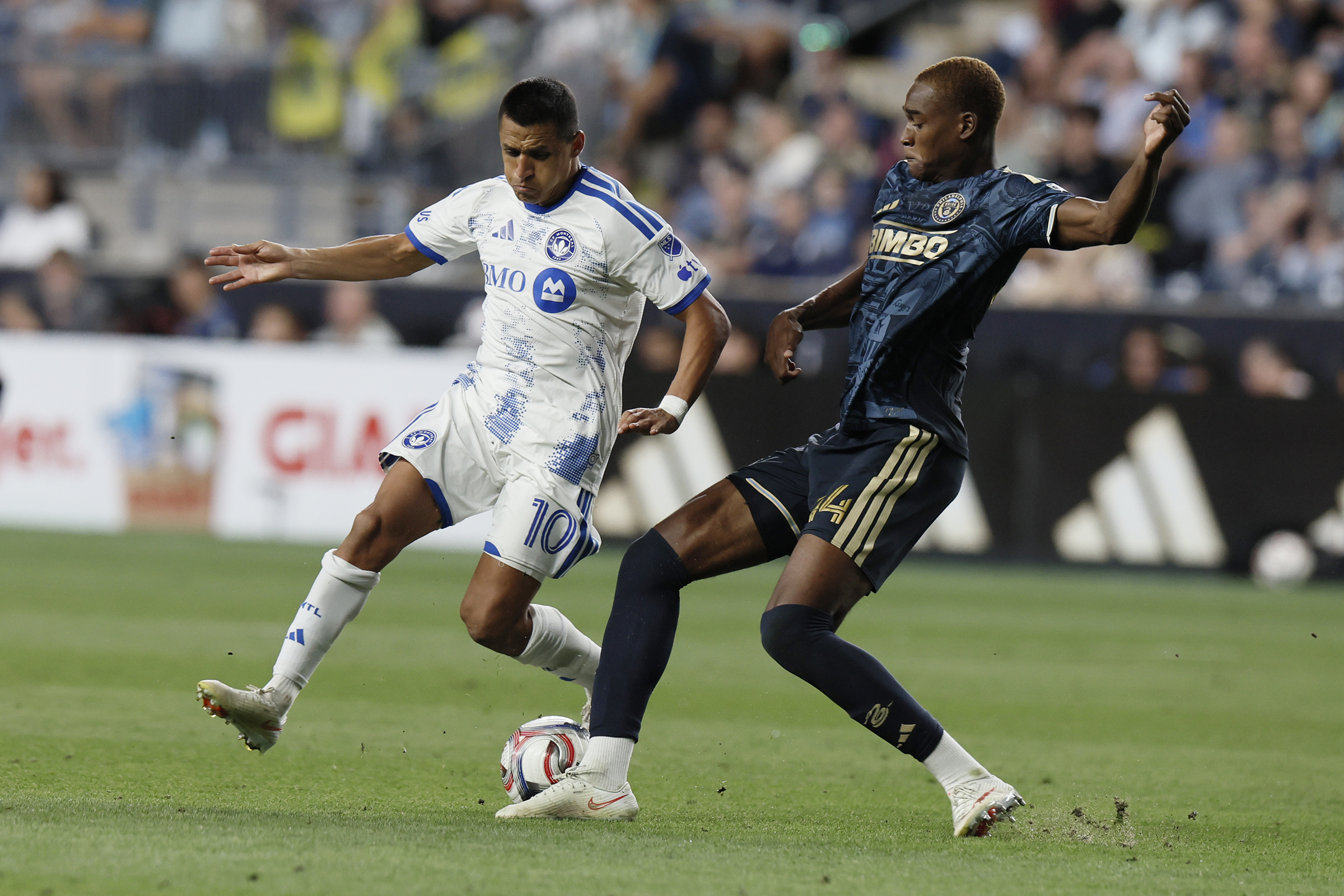
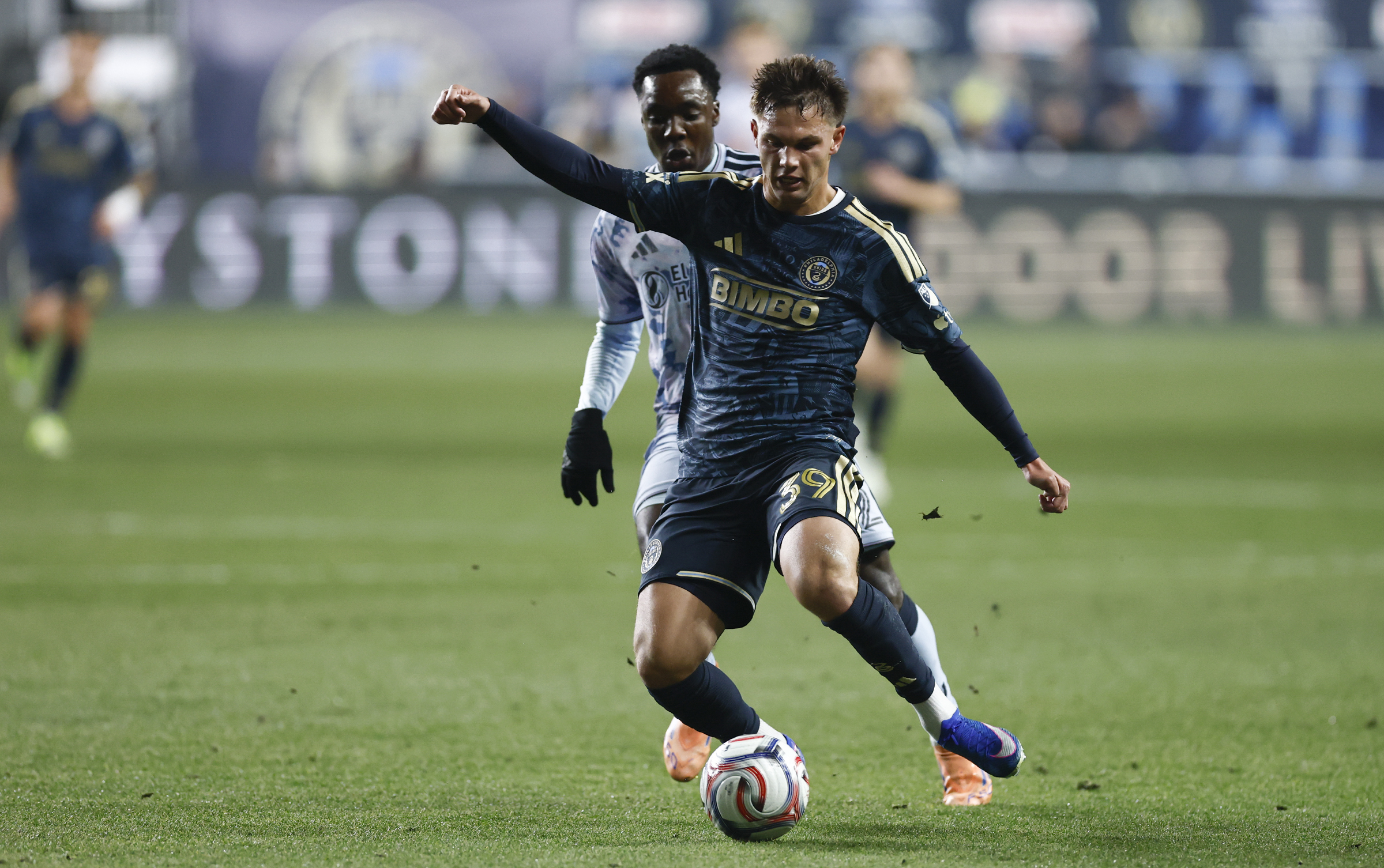
Union phenom Cavan Sullivan’s rapid rise in the soccer world reached a new milestone on Thursday, as the 16-year-old earned his first invitation to the senior U.S. men’s national team.
He is one of three Union players on the latest 28-man squad, along with defenders Neil Pierre and Frankie Westfield. They’re joined by three more with local roots: goalkeeper Matt Freese of Wayne, and centerbacks Auston Trusty of Media and George Campbell of Chester.
Video: Philly’s Cavan Sullivan reacts to being called up to U.S. men’s national team.
Since the Union resumed their season after the World Cup, Sullivan has scored six goals and added five assists in 12 appearances. They include highlight-reel moments that seized headlines across the globe: a dazzling trap and run for a goal at Red Bull New York on Aug. 29, and a backheeled finish in a 5-0 rout at San Diego FC on Sunday.
“I think he deserves all the praise that he’s getting,” U.S. manager Mauricio Pochettino said in a news conference Thursday morning. “Because he’s performing well, he’s playing well, he’s giving assists and scoring goals — and he’s 16.”
Attention isn’t just coming from within MLS. They’re watching on Europe’s big stage, too, since Sullivan is due to join English superpower Manchester City at the end of 2027.
The deal was agreed upon when he turned pro with his hometown club at 14 years old in 2024. While neither club can discuss it publicly because of British labor laws, everyone knows the clock is ticking.
Just before 2 a.m. in Manchester, and it might have woken some people over there up… pic.twitter.com/jI4u2a7pW5
Right now, Sullivan is enjoying the present, kept grounded by coaches, teammates, and family. Chief among them is his oldest brother, Quinn Sullivan, a stalwart of the Union in his own right who earned his senior national team debut last year.
“We need to have a clear idea how to — I don’t want to use the word ‘help,’ but just to be with him and try to provide the best platform for him to evolve,” Pochettino said of wanting to get to know Sullivan. “Every day, we need to be the people that go there to push, and to evolve, and to sometimes put limits, sometimes to encourage to keep going [and] doing what he’s doing. It’s a good challenge for us, and I think it’s exciting to have him.”
The plan to get Sullivan to begin his career in Chester, with the right mix of firmness and care, has worked perfectly so far. And it’s the latest endorsement of the Union’s youth academy, which has become a remarkable pipeline for U.S. national team talent.
Media’s Auston Trusty is one of the veterans on this U.S. squad.
Pierre, Westfield also earn the call
Now a new era is arriving, and not just with Sullivan. He’s joined on this squad by two more of the Union’s leading youngsters: Pierre, an 18-year-old centerback, and Westfield, a 20-year-old outside back.
“You are happy for Philadelphia, no?” Pochettino said. “Plenty of players from Philadelphia.”
Both players are major candidates for the 2028 Olympic squad, which is a big part of why they were invited. The Olympics is an under-23 age-group event, and this window is one of the only chances for candidates to get senior national team experience before they go into their own training regimen.
Pierre was born in Lebanon, Pa., and his family moved to Blue Bell so his older brother, Nelson, could join the Union’s academy as a kid. In time, Neil made his own impression and now is the club’s top centerback prospect since McKenzie and Trusty.
Neil Pierre (right) has made his own rapid rise with the Union this summer.Elizabeth Robertson / Staff Photographer
He’s impossible to miss on the field, standing 6-foot-7. He’s scored four goals since joining the Union’s first team this summer. But he also has proven he has the defensive chops to mix it up with veterans and a terrific passing game.
“When you compare him with a 30-year-old, or 26- or 28-year-old centerback that maybe is playing in another country, or maybe in MLS, I don’t see the difference [just] because one has more experience than other,” Pochettino said. “Both can make a mistake; both can be good. That is why, [with] this type of potential, when players like this guy are playing in MLS, how we can contribute in their career, to evolve and be better and better, is this guy being with us.”
Westfield grew up at the other end of Northeast Philadelphia from the Sullivans, in Morrell Park. For a while, he might not have been the most famous athlete in his house, at least locally: his brother, Rocco, starred for the Father Judge boys’ basketball team that won the last two Catholic League championships.
Frankie made his pro debut the night before Rocco claimed the first of his titles. Now, he has made a name for himself.
Frankie Westfield has been impressive as the Union’s starting right back.Yong Kim / Staff Photographer
“I think that it’s normal that it’s a different process now to build the roster,” Pochettino said. “With the idea of not only to perform today, but also to help these young kids to become more mature, more experienced — and because the one of the biggest objectives of the [U.S. Soccer] Federation is the Olympic Games in two years. And I think giving the opportunity to be involved in this senior team is a thing that is going to pay and to be very helpful in two years for these kids.”
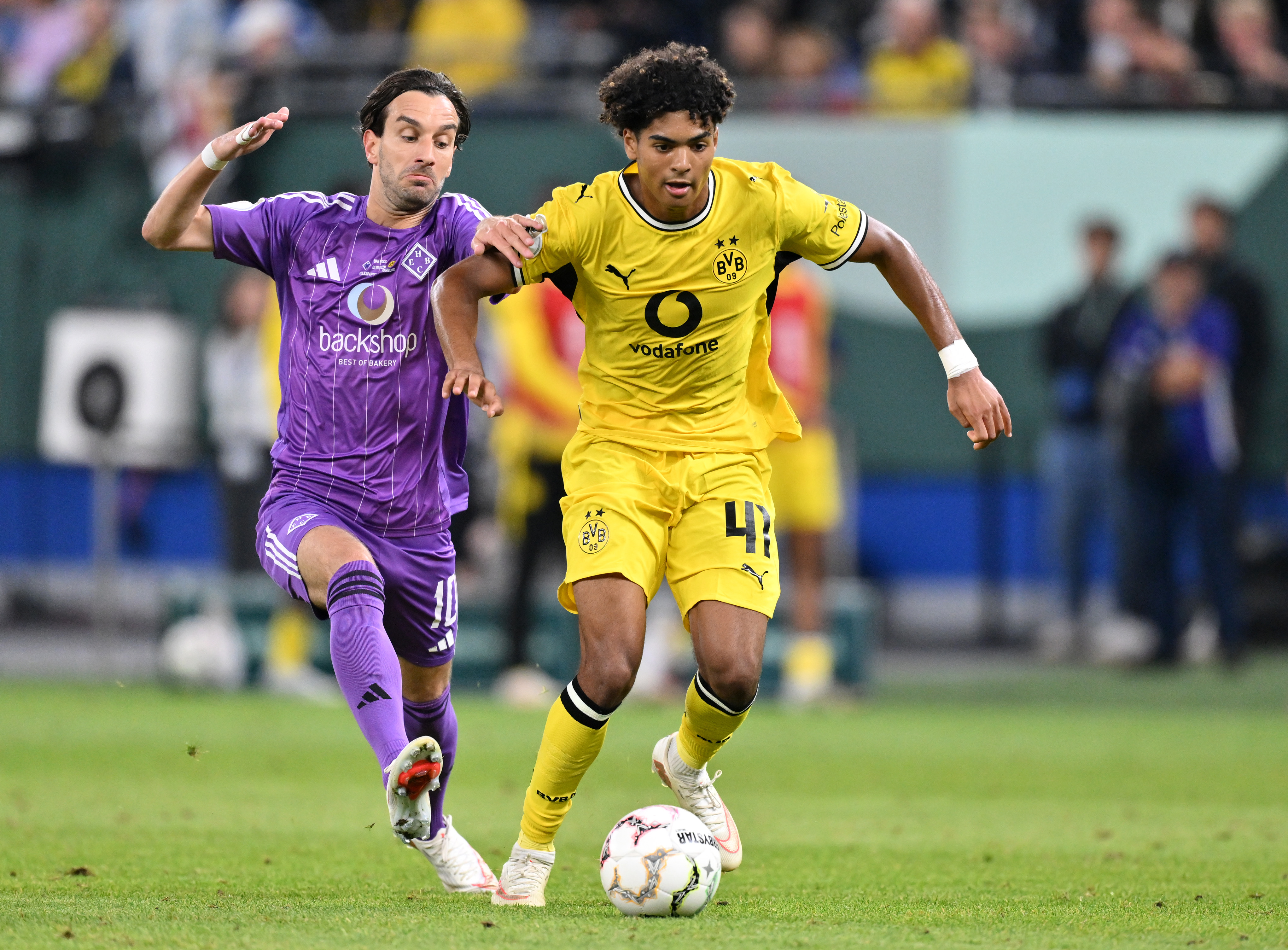
The Union trio is part of a fleet of fascinating youngsters on this latest U.S. squad. Others include wingers Mathis Albert of Germany’s Borussia Dortmund, Cole Campbell of Germany’s Elversberg, and Zavier Gozo of England’s Crystal Palace; forward Julian Hall and midfielder Adri Mehmeti of Red Bull New York; and goalkeeper Diego Kochen, who grew up at Spanish giant Barcelona and is now with Denmark’s Lyngby.
Eleven of the 26 players on the squad are newcomers, with 13 returnees from the World Cup. Among the latter are Freese, Trusty, and perennial locker room leaders Chris Richards and Tyler Adams.
The Americans will take the field starting Monday at the national training center in suburban Atlanta, then head off on a cross-country journey with four games: Peru on Sept. 26 in Orlando, Chile on Sept. 29 in St. Louis, then rivals Mexico on Oct. 3 in Glendale, Ariz., and Canada on Oct. 6 in St. Paul, Minn.
Mathis Albert of Germany’s Borussia Dortmund (right) is another of the intriguing young talents on this U.S. roster.Oliver Hardt
USMNT roster for autumn friendlies
Local products in bold
Goalkeepers (4): Chris Brady (Chicago Fire), Matt Freese (New York City FC), Diego Kochen (Lyngby, Denmark), Brian Schwake (Nashville SC)
Defenders (10): George Campbell (West Bromwich Albion, England), Sergiño Dest (PSV Eindhoven, Netherlands), Alex Freeman (Villarreal, Spain), Peyton Miller (New England Revolution), Neil Pierre (Union), Chris Richards (Crystal Palace, England), Antonee Robinson (Fulham, England), Miles Robinson (FC Cincinnati), Auston Trusty (Celtic, Scotland), Frankie Westfield (Union)
Midfielders (9): Tyler Adams (Bournemouth, England), Mathis Albert (Borussia Dortmund, Germany), Sebastian Berhalter (Middlesbrough, England), Zavier Gozo (Crystal Palace), Adri Mehmeti (Red Bull New York), Yunus Musah (AC Milan, Italy), Brooklyn Raines (New England Revolution), Gio Reyna (Strasbourg, France), Malik Tillman (Bayer Leverkusen, Germany)
Forwards (5): Cole Campbell (Elversberg, Germany); Justin Ellis (Orlando City), Julian Hall (Red Bull New York), Ricardo Pepi (PSV Eindhoven, Netherlands), Cavan Sullivan (Union)
"You are happy for Philadelphia, no? Plenty of players from Philadelphia."
Yes, it is an enjoyable part of my job as a professional cynic. But he can rest assured that lots of people around town are happy today:
The Phillies kick off a four-game series with the New York Mets Thursday, but fans will need to do a bit of channel surfing to catch all the games.
Thursday night’s game will air on Fox beginning at 7:15 p.m., with Kenny Albert and Tom Verducci calling all the action. Ken Rosenthal will report from Citi Field.
Aaron Nola (6-10, 4.69 ERA) is scheduled to take the mound for the Phillies. Nola hasn’t allowed more than three runs in a start since way back on July 22, when he gave up five to the Los Angeles Dodgers. He’ll face Mets rookie Nolan McLean (11-9, 3.24 ERA), who gave up just two hits and struck out 10 in a win against the Phillies on July 19.
On Friday, the Phillies jump off TV and onto streaming for their final appearance on Apple TV’s Friday Night Baseball this season. First pitch is scheduled for 7:10 p.m., with Alex Faust and Ryan Spilborghs on the call and Tricia Whitaker reporting from the stadium.
Apple TV also has its own pregame show hosted by Sierra Santos alongside former outfielder Chris Young and MLB insider Russell Dorsey.
It’s the fifth season of Apple TV’s seven-year, $595 million deal with MLB, which runs through the 2028 season. Over that time, the cost has nearly doubled from $6.99 to $12.99 a month.
While Apple TV’s exclusive games remain an annoyance for baseball fans without the streaming service, they do come with one important perk — the ability to switch the audio feed over to 94.1 WIP and Scott Franzke and Kevin Stocker calls.
The quality of Apple TV’s broadcast is also generally very good, with crystal-clear footage and minimalist graphics (though the constant probabilities and live gambling updates become a bit annoying).
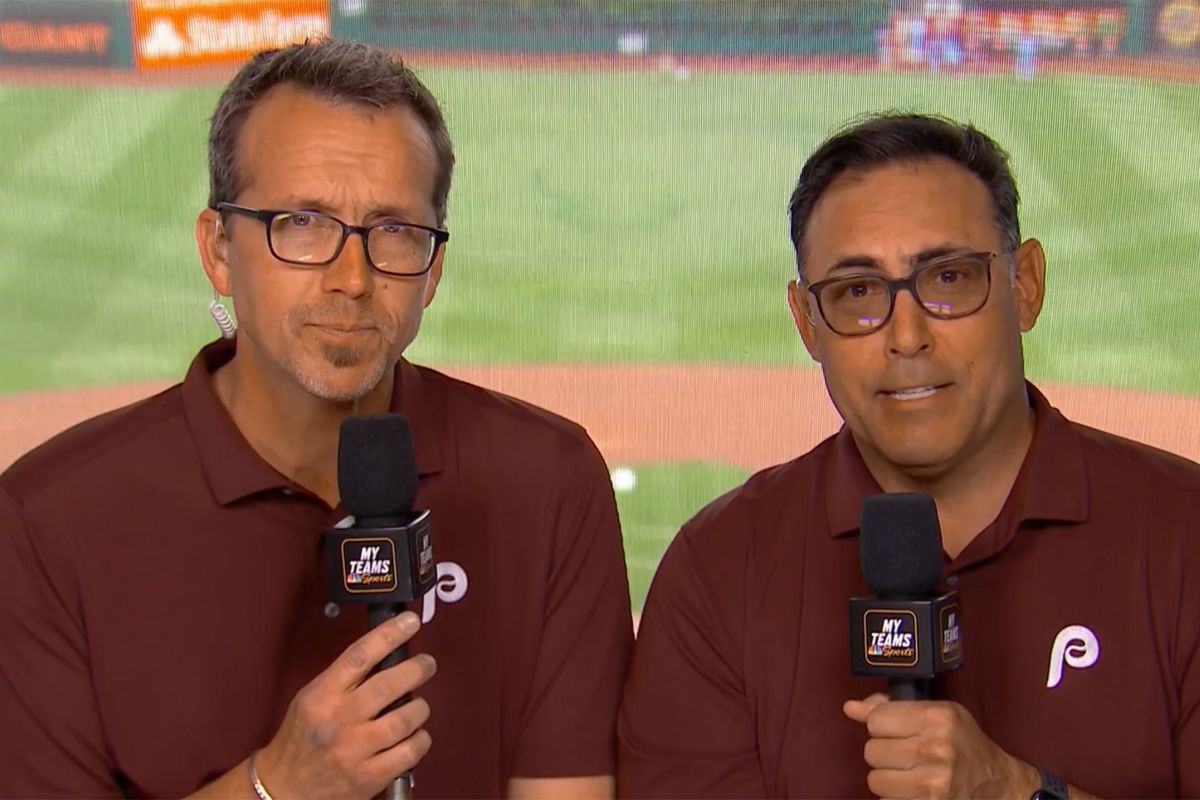
Scott Franzke (left) and Ruben Amaro, Jr. will call the final two games of the Phillies-Mets series on NBC Sports Philadelphia. NBC Sports Philadelphia
The final two games of the Phillies-Mets series will be back on NBC Sports Philadelphia Saturday or Sunday. With Tom McCarthy calling Sunday’s NFL matchup between the Cleveland Browns and Tampa Bay Buccaneers on CBS, it’ll be Franzke calling the games alongside former Phillies general manager turned announcer Rubén Amaro Jr.
John Kruk will be back Tuesday along with McCarthy to call the Phillies’ series against the Milwaukee Brewers, the second-to-last of the season. And World Series MVP-turned-broadcaster Cole Hamels will be back in the booth for the final Phillies game of the season on Sept. 27 against the Tampa Bay Rays.
Phillies playoff picture
NL East standings
window.addEventListener(“message”,function(a){if(void 0!==a.data[“datawrapper-height”]){var e=document.querySelectorAll(“iframe”);for(var t in a.data[“datawrapper-height”])for(var r,i=0;r=e[i];i++)if(r.contentWindow===a.source){var d=a.data[“datawrapper-height”][t]+”px”;r.style.height=d}}});
There was a moment where it seemed like the Phillies might overtake the Braves in the standings. But after dropping two of three against Atlanta last weekend, the Phillies’ chances of winning the National League East appear distant as best.
The Phillies enter Thursday’s series opener against the Mets 4½ games behind the Braves with 10 remaining. Atlanta faces the AL West-leading Houston Astros this weekend, but finish the season against the lowly Cincinnati Reds and Miami Marlins. An epic collapse along the lines of the 1964 Phillies — who blew a 6½ game lead with 12 remaining — doesn’t seem likely.
NL wild-card standings
window.addEventListener(“message”,function(a){if(void 0!==a.data[“datawrapper-height”]){var e=document.querySelectorAll(“iframe”);for(var t in a.data[“datawrapper-height”])for(var r,i=0;r=e[i];i++)if(r.contentWindow===a.source){var d=a.data[“datawrapper-height”][t]+”px”;r.style.height=d}}});
If the season ended Tuesday, the Phillies would end up in the second wild-card spot, meaning they’d travel to Chicago for a three-game series against the Cubs.
The good news is the Phillies are just a half-game down from the top wild-card spot entering Thursday. Overtaking the Cubs would move that three-game series to Citizens Bank Park.
The bad news is the Cubs, who are off Thursday, own the tiebreaker against the Phillies. Chicago kicks off a three-game series against the Reds Friday before finishing the season with series against the Marlins and Boston Red Sox.
The MLB playoffs begin Sept. 29 and will air on NBC.
Phillies magic number
That is the combined total of Phillies’ wins and/or losses by the teams on the outside looking in that are needed to secure at least the third wild-card berth and a spot in the playoffs.
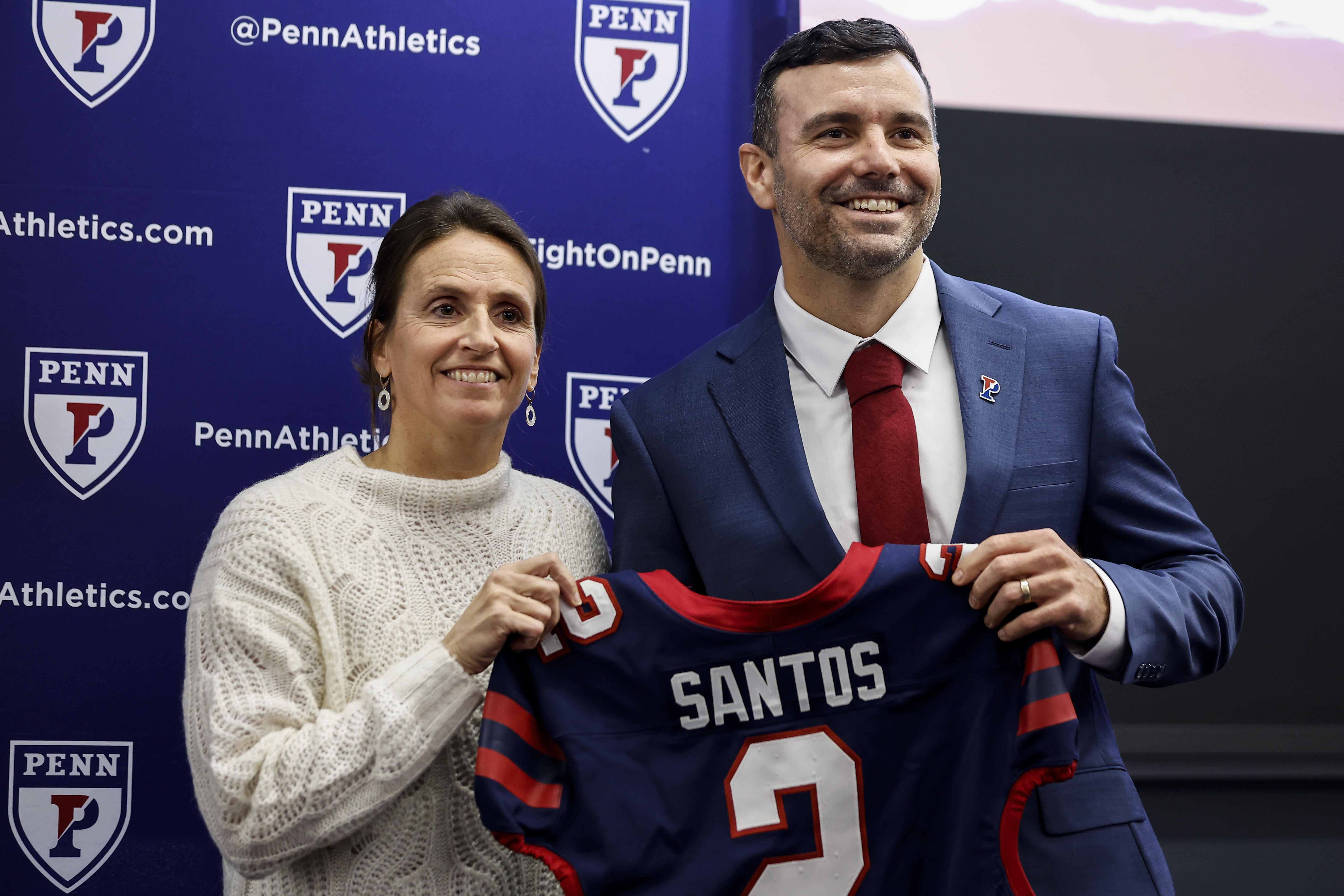
Penn freshman quarterback Miles Teodecki hesitated when he extended his hand for a handshake. His palm and fingers were covered in a thick coat of white chalk, to give him a better grip on the football. Though he had just ended nearly five hours of team practice, his freshly dusted hands looked like he was about to throw for the first time that day.
On Monday, Penn coach Rick Santos announced that Teodecki would be the starting quarterback, reversing the August decision to start junior Karson Siqueiros-Lasky.
“Those two have battled all camp,” Santos said ahead of Saturday’s season opener at Bucknell (3 p.m., ESPN+), “and honestly it was one of the hardest decisions I’ve had as a coach.”
Santos is entering his first season as head coach after Ray Priore stepped down in November, capping an 11-year tenure that included Ivy League titles in 2015 and 2016. Last season’s stars — quarterback Liam O’Brien and wide receiver Jared Richardson — are at Cincinnati and Duke, respectively, following their graduation from Penn.
Many questions loom over this new team, and the Ivy League preseason poll placed Penn fourth. Not that Santos cares.
“In ’22 at New Hampshire, we won the [conference] championship and we were picked ninth out of 13 team[s],” said Santos, who was the head coach at his alma mater from 2022 to 2025, “So at the end of the day, that’s up for the media to talk about and decide what they think. … The rankings matter at the end of the year, so that’s what we got to focus on one week at a time.”
Anyone’s name can stand out on the team’s blank slate, and Santos found that Teodecki, Penn’s highest-rated recruit since 2000, fit what he and his staff had been looking for.
“He’s very competitive. He’s got a moxie about him and a confidence, and we’re excited to see him going game day,” Santos said.
Teodecki, who’s from Austin, Texas, was thankful for the opportunity.
“First off, just got to thank God,” he said. “I got to thank Coach Santos and the coaching staff for believing in me, giving me this chance. I got to thank my teammates for supporting me and going out there doing their jobs, putting trust in me, allowing me to trust in them. I’m fired up for the opportunity.”
Santos said he’s been “encouraged with the senior leadership” on the team, which includes captains Siqueiros-Lasky and senior defensive back Josh Narcisse, and Narcisse noted that relationships have been built across all levels.
“[The coaches have] been really intentional with getting to know each of us on a personal level outside of football,” he said, “And as a player, I can say that goes a long way when it’s Friday night, the lights are bright, you look to the sideline, you want to see people that have your back on and off the field.”
For Narcisse, that’s the identity of this year’s team.
“I think a lot of old Penn teams were more individualized, and it was about what this guy or this guy is going to do any given Saturday, but now when you watch the team, you’re going to be more focused on, ‘What is our defense going to do? What is our offense going to do? How are they going to handle themselves on special teams?’” he said.
Even with the change in starting quarterback, Santos and Teodecki were quick to say that the plays remain the same, regardless of who is under center.
“We have two bona fide studs at quarterback, two guys that can start at this level, two guys that are good enough to lead us to a championship,” Santos said. “So I would expect both of them to play at some point this year, but we decided to give Miles the nod for the opener.
“There [are] no solidified jobs here. Every single day you need to earn the right to be on the field.”
“Confidence through preparation” seems to be the motto of the Santos era. The team hits the field every day at 6:15 a.m. — “We want to get up before the enemy and get a bunch of work in while everyone’s still sleeping,” Santos said — and has been methodical in watching film, running plays, taking notes, and adopting the right mindset.
“I feel 1,000% confident, not only in my own ability, but also our game plan and what our coaches have dialed up for us to be able to make plays and be successful on Saturday,” Narcisse said.
The defense this year, he said, would be “fast, violent, relentless.”
Santos said the defense is “really smart, instinctual in terms of being able to diagnose presnap reads and what the opposing team offense is doing. … And then ultimately when you get to the opener, it’s about how well we tackle.”
Even while the team seems poised and eager to kick off a new chapter this Saturday, Teodecki admits that “there’s a little bit of nerves; if you’re not nervous, that either means you don’t care or you just — you really don’t care.”
After practice ends at 11 a.m., he chalks his hands and throws the football with a teammate for a few extra minutes.
“We’re blessed to play this game, and we get to play this game,” Teodecki said.
WASHINGTON — Most of the Phillies were already gone from the clubhouse to catch the team bus. But for the benefit of any stragglers, Kyle Schwarber took it up an octave.
“It’s going to be a grind,” he said here the other night. “It’s not like it’s guaranteed.”
Not even when it should be a walk in the park — or lots of walks in Nationals Park. Not for these Phillies. Not with 10 games left and a playoff spot still to be clinched.
Case in point: Wednesday night. The Phillies knocked a rookie opener from the game after six batters. They worked seven walks through four innings, including four in the first — and 13in all, their highest total in a game in … checks notes … 22 years.
And yet they ground out only a 3-0victory over the Nationals behind seven workmanlike innings from old reliable Zack Wheeler, once again the most effective and healthiest of the Phillies’ Big Three starters.
“It’s win games and get in the playoffs at this point. So they’re all must-win,” said Alec Bohm, who drove in the first run with a bases-loaded single and reached five times (two hits, three walks). “We just want it in our control. We win, then it’s in our control. If we don’t win, we’re scoreboard watching and who knows what can happen.”
Cue the nightly check of the playoff race:
The Phillies (84-68) remained a half-game behind the (85-68) Cubs for the top National League wild card. The Phillies were one game clear of the Padres (83-69) going into Thursday’s games for the second wild card.
With any combination of six victories or Diamondbacks losses, the Phillies will clinch a wild card.
Chicago, which holds a tiebreaker over the Phillies, is off Thursday. The Phillies will begin a four-game series in New York against the out-of-contention Mets, who have played better after a brutal first half.
Got all that? Good.
NL wild-card standings
window.addEventListener(“message”,function(a){if(void 0!==a.data[“datawrapper-height”]){var e=document.querySelectorAll(“iframe”);for(var t in a.data[“datawrapper-height”])for(var r,i=0;r=e[i];i++)if(r.contentWindow===a.source){var d=a.data[“datawrapper-height”][t]+”px”;r.style.height=d}}});
The Phillies are struggling to reach base at last month’s majors-leading clip. But even they couldn’t avoid taking what the Nationals gave them in the first inning, chiefly enough walks to score twice.
Wheeler said he sought to exploit the young Nationals by throwing pitches off the plate early in the count “to try to use their aggressiveness against them.” It worked. He held them to four hits (three singles) and completed seven innings in 91 pitches.
“I threw a lot of first-pitch balls, but that was kind of on purpose just to see if I could get weak contact,” Wheeler said. “If I was going in, I was trying to throw it off the plate. If I was going away, I was trying to make them chase a ball or two off the plate.”
Luis Arraez doubled in Bryce Harper for insurance in the seventh inning. Arraez reached four times, including his first three-walk game since 2024. Maybe it all gets the offense refocused. Maybe it was one game.
Say this: Bohm has hoisted his average above .250 for the first time since the third game of the season. He’s batting .293 against lefties, including .500 since the beginning of August.
“I was in a pretty deep hole early on,” Bohm said. “For me, it was focusing less on what’s my batting average today and more on let’s go out and try to win a game today. Because the numbers are what they are. Can’t really do much about it at this point, so let’s try to go help the team win and contribute in some way.
“Getting lost in that for a while, they’ve found their way back to, I guess, more of the norm for myself.”
Alec Bohm (right) is batting .293 against lefties, including .500 since the beginning of August.Nick Wass
It’s a mature outlook for a player who has often been criticized for immaturity. But it’s undoubtedly the correct one in the second-to-last week of the season.
At this late juncture, interim manager Don Mattingly is still trying to bring order to the bullpen. He put the lead in the unsteady hands of lefty José Alvarado, who sidestepped a one-out walk by getting dangerous James Wood to line out and Daylen Lile to fly out.
Jhoan Duran, who hadn’t pitched in five days, went to a full count on the leadoff batter in the ninth before striking him out. He popped up CJ Abrams to win a seven-pitch duel before ending the game with a strikeout.
The whole thing was imperfect. The Phillies went 1-for-10 with runners in scoring position. They left 13 on base. They became the first team since the Tigers on June 8, 1955, to walk at least 13 times and score three runs or less in a nine-inning game.
“I look at it as, we won tonight,” Mattingly said. “That’s what I look at. No matter how we do it, we got the win. So, that’s really what matters at the end of the day.”
Indeed. And in winning for only the second time in six games, they crossed Game 152 off the calendar in their quest to just get into the playoffs, reset everything, and take their chances.
“After losing [Tuesday] night, we had to come out here with a win today,” Wheeler said. “I was just trying to do the best that I could and at least split.”
It wasn’t easy, even though the Nationals tried to make it so. And it isn’t about to get easier, just as Schwarber warned.
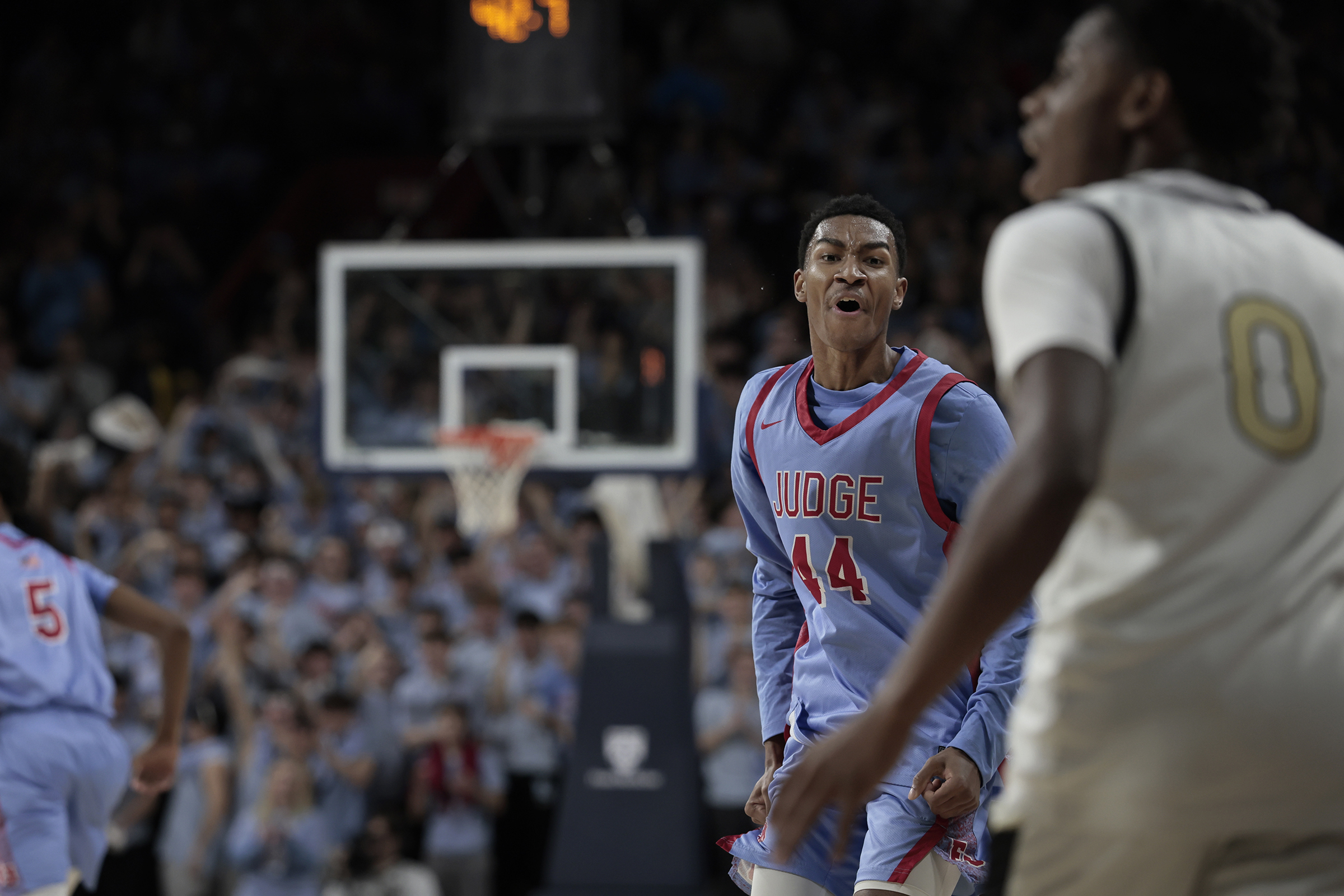
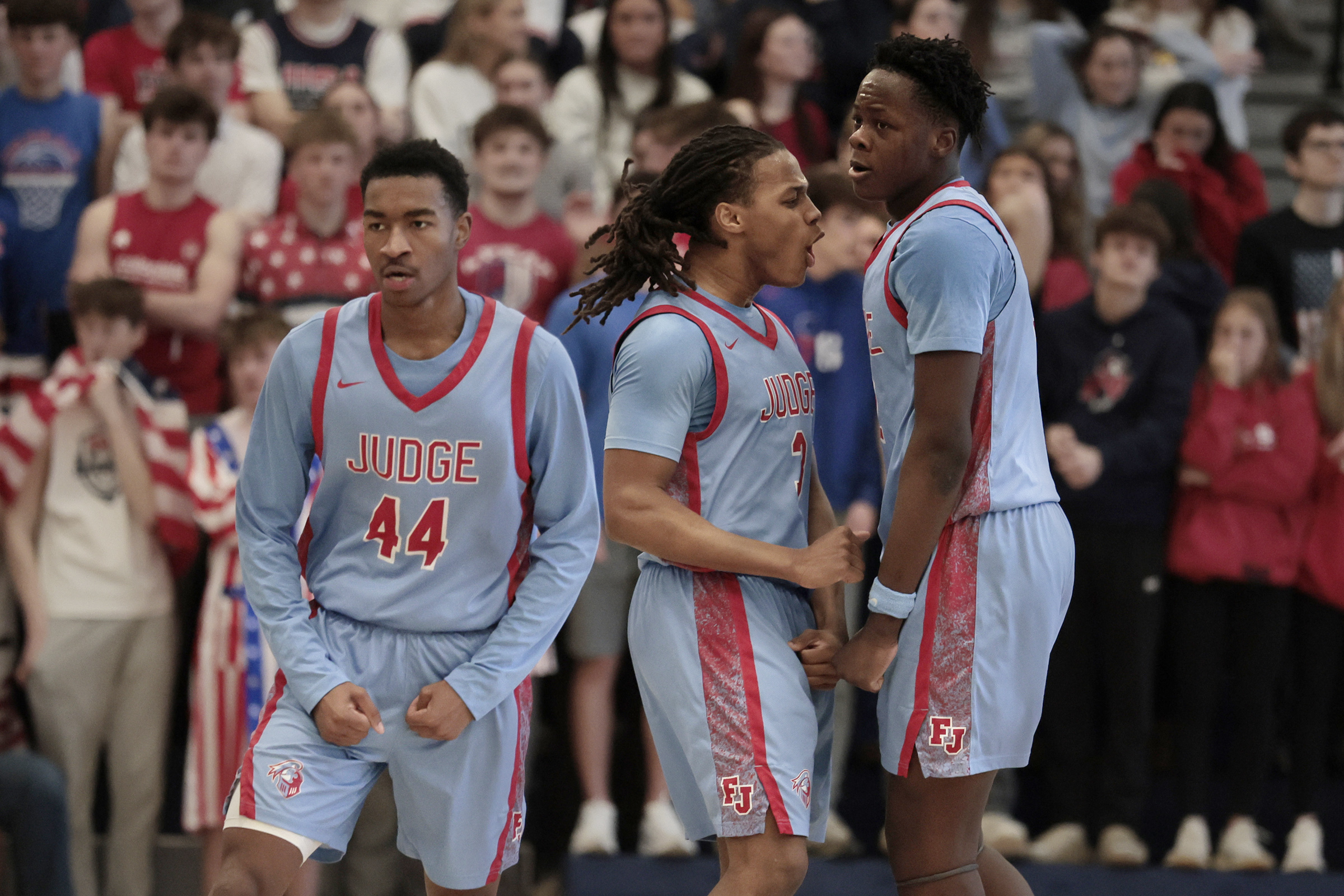
The sound inside the locker room was already overwhelming, Father Judge’s coaches and players shouting and singing after their 52-46 victory over Archbishop Wood in the Philadelphia Catholic League boys’ basketball semifinals last February. And every time someone opened the door to exit, the noise in the room rose, because a sold-out Palestra crowd was now roaring over the night’s second game: Neumann Goretti vs. Bonner-Prendergast.
Still, the kid who had been the primary cause of the celebration, the 6-foot-4 senior guard who had made the night his, was calm. Derrick Morton-Rivera had scored 27 points on an array of three-pointers and pull-up jumpers, leading the Crusaders back from an early 16-point deficit.
“Playing in front of 10,000 people every year, there’s nothing like it,” Morton-Rivera, now a freshman at Temple, said after the game. “I never knew about the PCL until my eighth-grade year. That’s when I learned.”
How did he end up at Judge?
The coaches “recruited me,” he said.
Father Judge graduate Derrick Morton-Rivera after he sank a three-point shot during the 2026 Catholic League boys’ championship.Elizabeth Robertson / Staff Photographer
With that one verb, recruited, Morton-Rivera touched the live wire that crackles among coaches, parents, administrators, and players throughout the high school sports scene in Pennsylvania. House Bill No. 41 — a measure that would allow the PIAA to create separate postseasons, one for public schools and one for private, parochial, and charter schools — passed the Pennsylvania State House of Representatives in April. And of all the factors that play into the longtime dispute over whether boundary and non-boundary schools should compete against each other for championships, none generates as much heat and controversy as recruiting.
“It’s two different worlds,” longtime Lower Merion boys’ basketball coach Gregg Downer said. “If you don’t put massive talent out in basketball or football or soccer or lacrosse, you’re going to get run over.”
Mark Ostaszewski with Archbishop Ryan athletic director Joe Zeglinski after the Raiders won the Catholic League Blue Division title in 2024.Courtesy of Archbishop Ryan
‘Philly is Philly’
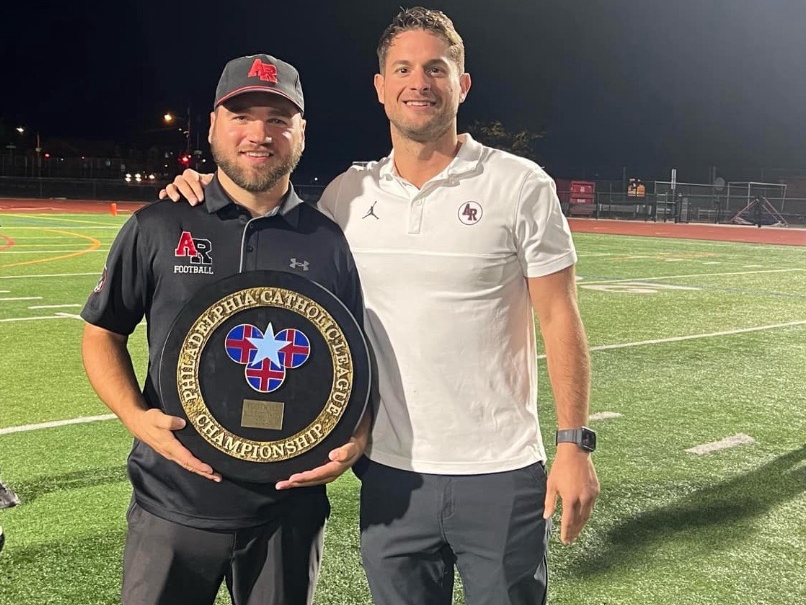
Since the Catholic League joined the PIAA in 2008, just one of its coaches, Archbishop Ryan football coach Mark Ostaszewski, has been suspended for recruiting violations. At a January 2025 football camp, Ostaszewski asked a student from the Bensalem School District if he wanted to apply to Ryan. District 12, the association’s umbrella for the Philadelphia Catholic and Public leagues, banned Ostaszewski for a year; he has returned to his role this season.
Locally, recruiting accusations often put programs from District 12 at odds with those from District One, which comprises schools in Philadelphia’s suburbs. And that confirmed example is tame compared to the more intense efforts that coaches have allegedly made to coax athletes to their programs.
A former basketball standout who graduated recently from a District One public school and his father told The Inquirer on the condition of anonymity that, while the student was in eighth grade and throughout his high school career, representatives from three Catholic League programs pursued him. One head coach offered him free tuition, a stipend, and the use of an apartment near campus. The coach also had his team’s star player send several direct messages on Instagram to the player in an attempt to persuade him to attend the school.
Another program had an assistant coach and a parent take the player’s father out to lunch twice, telling him at both meals that he would not have to worry about paying any tuition for his son. The third program’s head coach told the father that, if his son helped the team win the Catholic League championship, a booster would provide a house for the player. Each of the three schools were located between 15 and 35 miles from the player’s home.
Gregg Downer has spent three decades as the Lower Merion boys’ basketball coach.CHARLES FOX / Staff Photographer
“They can twist this however they want,” Downer said. “These kids are targeted because they’re good at sports. I could list 50 examples of kids who have been recruited.”
Morton-Rivera’s path to Father Judge captures the murkiness of the entire issue. Jim Meredith, a 1992 Judge graduate who became its president in late July, noted in a recent interview that while in eighth grade, Morton-Rivera had visited the school and taken its entrance exam — and that he grew up and lived in Lawncrest, just a mile-and-a-half from Judge.
“I can say with full confidence that we’re following PIAA rules and regulations,” Meredith said. “We’re trying to put out an excellent product for our school and our students. Part of that is making sure we adhere to the guidelines that are prescribed to us.”
When asked how Morton-Rivera ended up choosing Judge, head coach Chris Roantree pointed out that Morton-Rivera’s background and family history made it natural for him to consider attending a school with a strong basketball program. D.J. Rivera, his father, finished his high school career in 2006 as Neumann Goretti’s all-time leading scorer before playing Division I ball at St. Joseph’s and Binghamton.
Father Judge coach Chris Roantree noted that Morton-Rivera’s background and family history made it natural for him to consider attending a school with a strong basketball program.Elizabeth Robertson / Staff Photographer
“Philadelphia basketball is a very small community,” Roantree said. “There are different relationships that everybody has. When somebody shows interest in us, we sell the school. When we bring guys in, we show them our career-pathway center. We show them our academic center. …
“Ultimately, ‘recruiting’ is a very broad thing. It’s going to be questioned because we’re a Catholic and private school. He’s within a mile or two of the school. To me, that’s no different from [a public-school coach] talking to someone from a Plymouth Whitemarsh middle school or an Abington middle school. He’s not a transfer. We didn’t aggressively go after him like that.”
Under Article VI, Section 11 of its bylaws, the PIAA forbids “recruiting [that] is materially motivated in some way by an athletic purpose. Recruiting for athletic purposes is directly contrary to fundamental interests of PIAA and its member schools, and any school engaged in such conduct should do so with the expectation that it will be treated harshly upon proof of such conduct.”
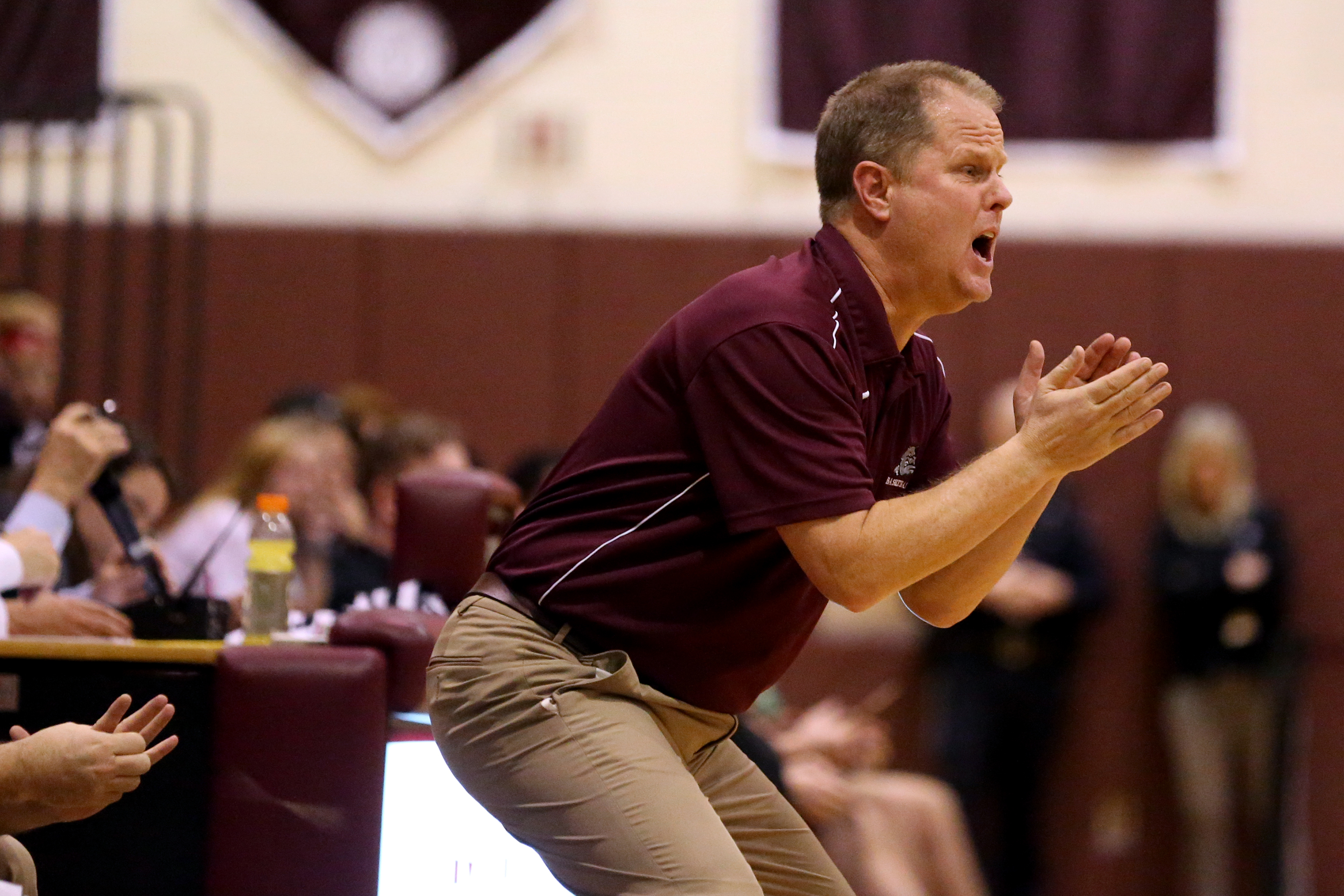
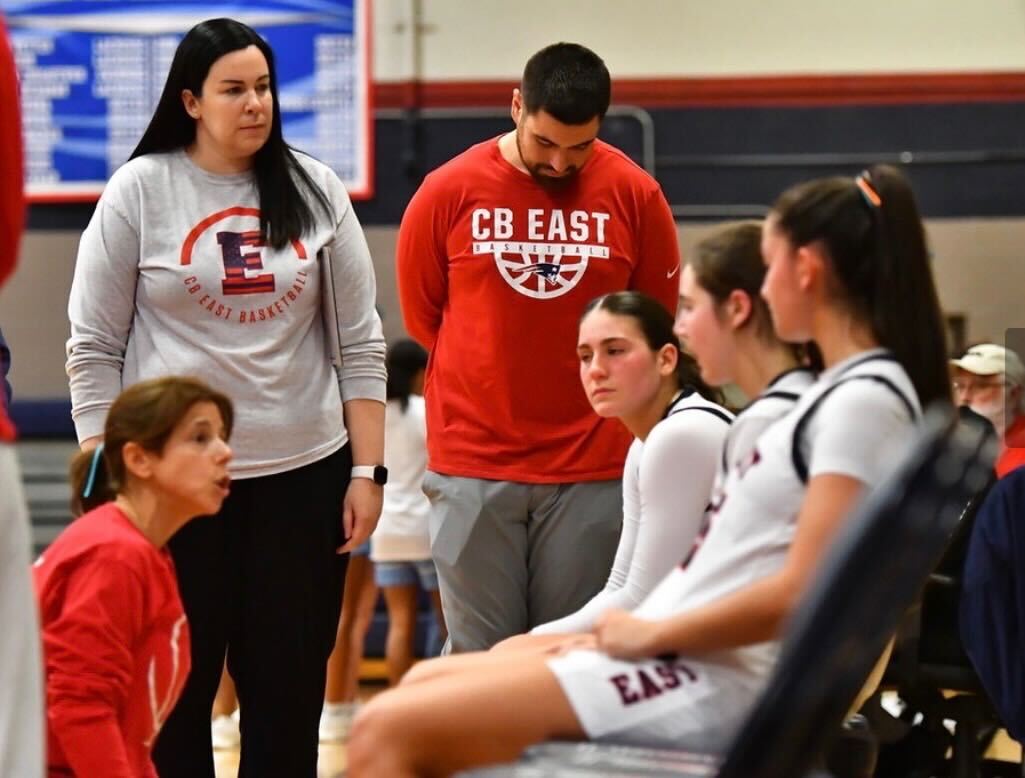
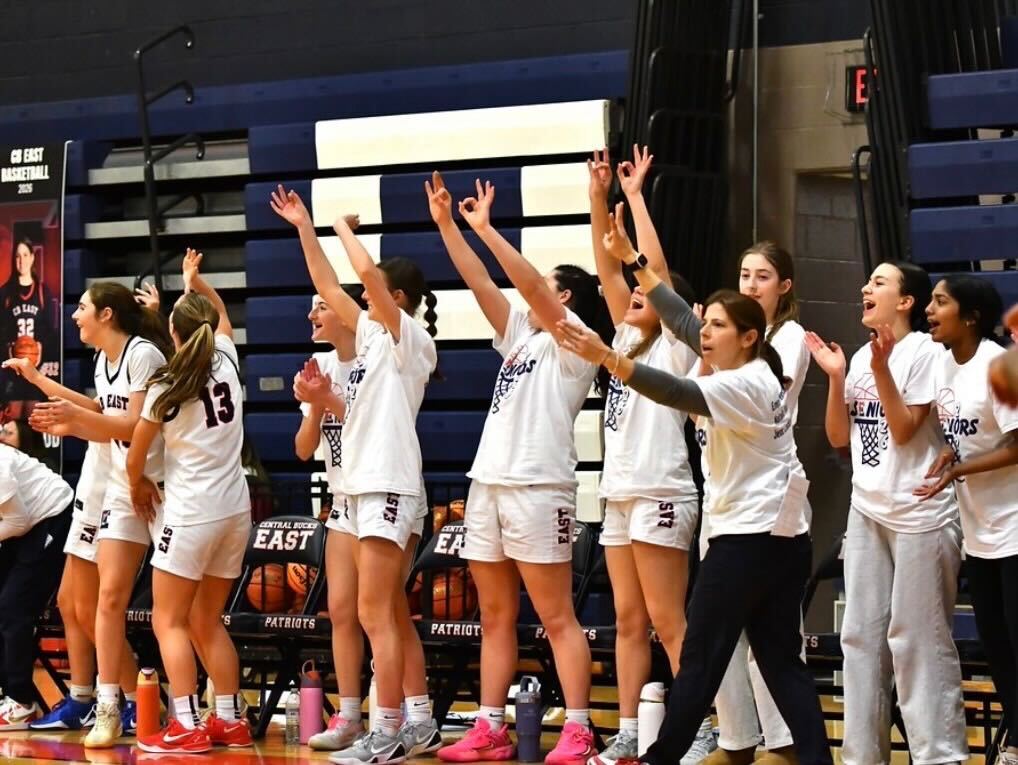
Liz Potash retired earlier this summer after 13 years as Central Bucks East’s girls’ basketball coach.She said, “If I wanted to recruit, I wouldn’t be a public-school coach.”
As clear as that excerpt might seem, determining whether a student’s decision to attend a particular school was “materially motivated” by athletics requires hard and fast evidence, such as text or direct messages between a coach and the athlete, said Sean Kelly, District One’s vice chairman.
If a principal or athletic director files a formal complaint charging an opposing program with violating PIAA bylaws, the association’s corresponding district committee will hold a hearing on the matter.
“Sometimes I’ll get a call from a coach or an AD or somebody who’s associated with one of the schools who says, ‘Hey, this is what we’re hearing. We’re hearing Student A is going to go to this school,’” Kelly said. “I just ask them, ‘What evidence do you have? Are you saying they’re just transferring, or are you saying they’re being recruited?’ We take some time to make sure we pump the brakes because people get very sensitive and very emotional.”
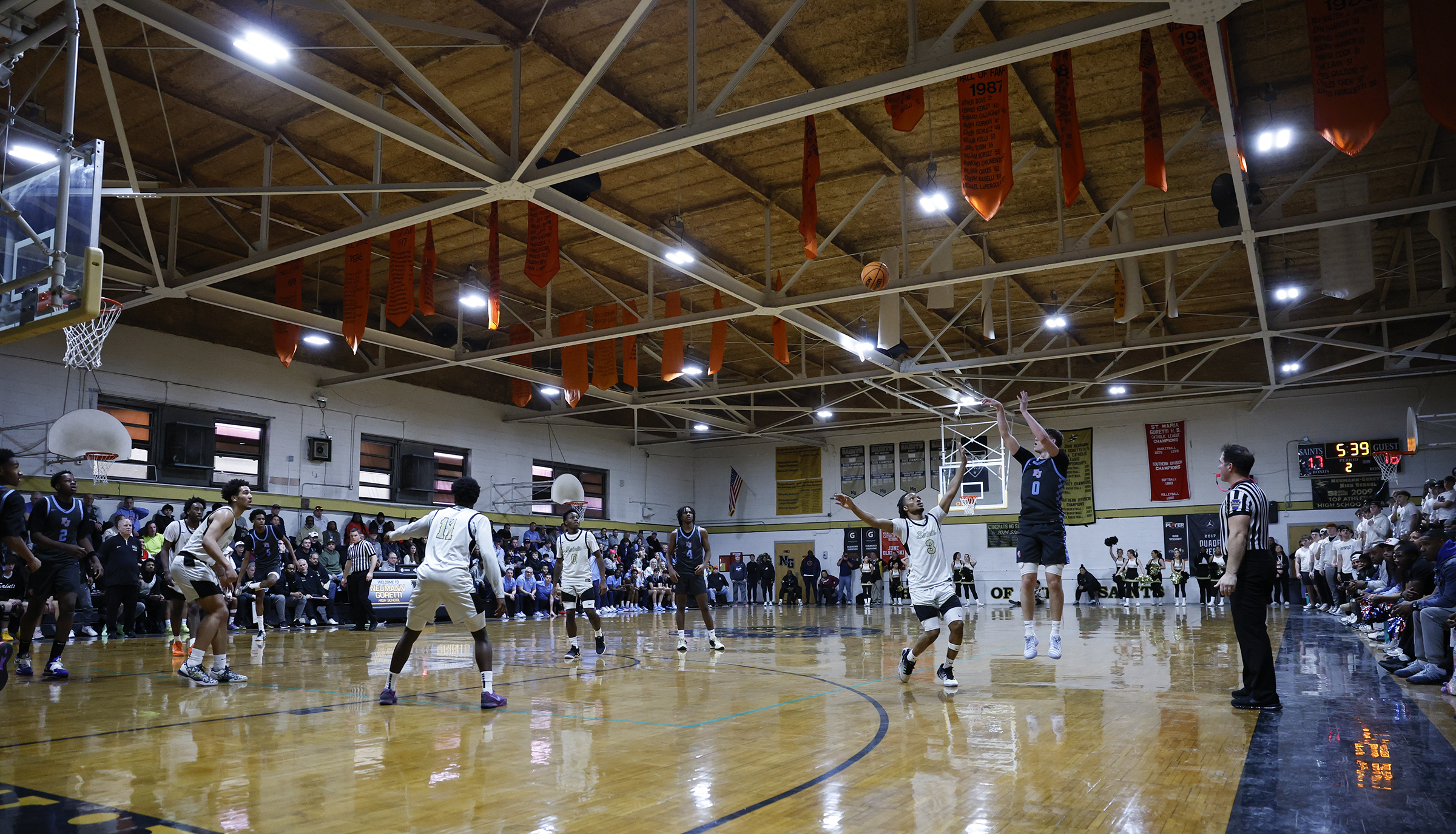
Neumann Goretti and Father Judge boys’ basketball play in South Philadelphia on Feb. 1, 2026.Yong Kim / Staff Photographer
Article VI, Section 11 applies to both boundary and non-boundary schools, but suburban public school coaches bemoan what they see as an inherent imbalance in the system: To play a varsity sport at a public high school, a student must live in that school district. But private, parochial, and charter schools, such as those in the School District of Philadelphia and the Archdiocese of Philadelphia, can draw their students from anywhere. Too many of those institutions, several District One coaches said, bend the rules to do it.
“It’s just not fair,” said Joe Dempsey, who has been the boys’ basketball coach at Spring-Ford High School in Royersford since 2021. “They have the ability to go and get players, to which I say: Let them do that. If they want to go play in that sandbox, let them go.”
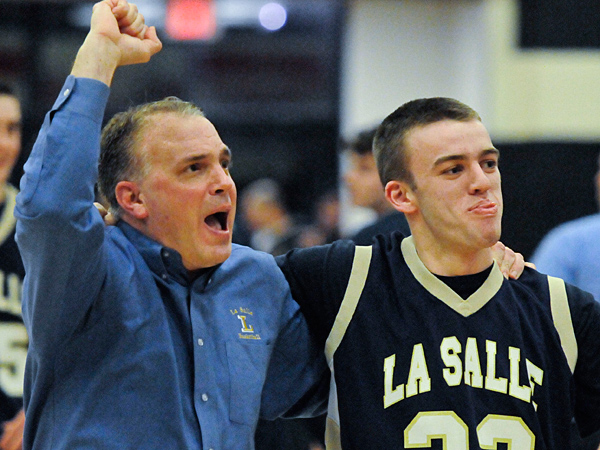
Dempsey had previously coached at La Salle College High School for 27 years, including 14 as the program’s head coach. At CYO games, he would see a promising seventh or eighth grader, he said, then approach the player’s parents without talking to the player.
Joe Dempsey previously coached at La Salle College High School for 27 years.
“La Salle made it very clear: Don’t step over the line. Don’t get us in trouble,” Dempsey said. “Once a couple of schools took the gloves off, the pressure came. The pressure was on me at La Salle. I went to the administration: ‘Are you looking around the Catholic League? I can’t just sit on my hands and wait on some wonderful 6-foot-7 kid who can pay a lot of tuition and go to school with all boys and get bused here. It ain’t going to happen by accident.’”
That archdiocesan schools compete for students within District 12’s open-enrollment landscape only complicates matters further. Consider one example: Bonner-Prendie, nestled in Drexel Hill in Delaware County, won the 2024 PIAA Class 4A football championship. Of the top six zip codes from which the school drew students that year, five were within Delco, and the other was just nearby — the Overbook section of Philadelphia — according to Steve Clement, the chief administrative officer of the archdiocese’s Office of Catholic Education.
How many of its football players did Bonner-Prendie recruit, if any? How many did it have to recruit, given the school’s proximity to West Philadelphia? And if a school such as Bonner-Prendie draws students from the city or St. Joseph’s Prep draws them from Camden — less than five miles away — how different is that from the dynamic at a public school in an especially large district?
“The reality,” Clement said, “is that these schools are still serving the areas they were intended to serve.”
Similarly, parents can and do contact the School District of Philadelphia to ask what high schools would best fit their children’s skills and interests: maybe sports, maybe drama, maybe career and technical education. Starr Davenport, the district’s director of finance for athletics, said she frequently fields phone calls from parents of rising ninth graders who ask her about the quality and array of athletic programs at a particular school, and she is happy to answer their questions.
“It’s not a recruitment strategy,” Davenport said. “It’s just transparency. When they want to know, it means they’re trying to find their school home. That selection process seems equitable because we’re not putting it out there, ‘Go to this school if you like football.’ But if a parent or student-athlete inquires, we are definitely transparent in terms of the full gamut of what is offered at a school.”
As for making competition across the state and the Delaware Valley more equitable — that is, giving boundary schools a better chance of beating non-boundary schools — it doesn’t matter much whether gifted athletes who already live within the city’s borders attend public or non-public schools. As long as it stays in Philadelphia, that talent will reveal itself in the results one way or another.
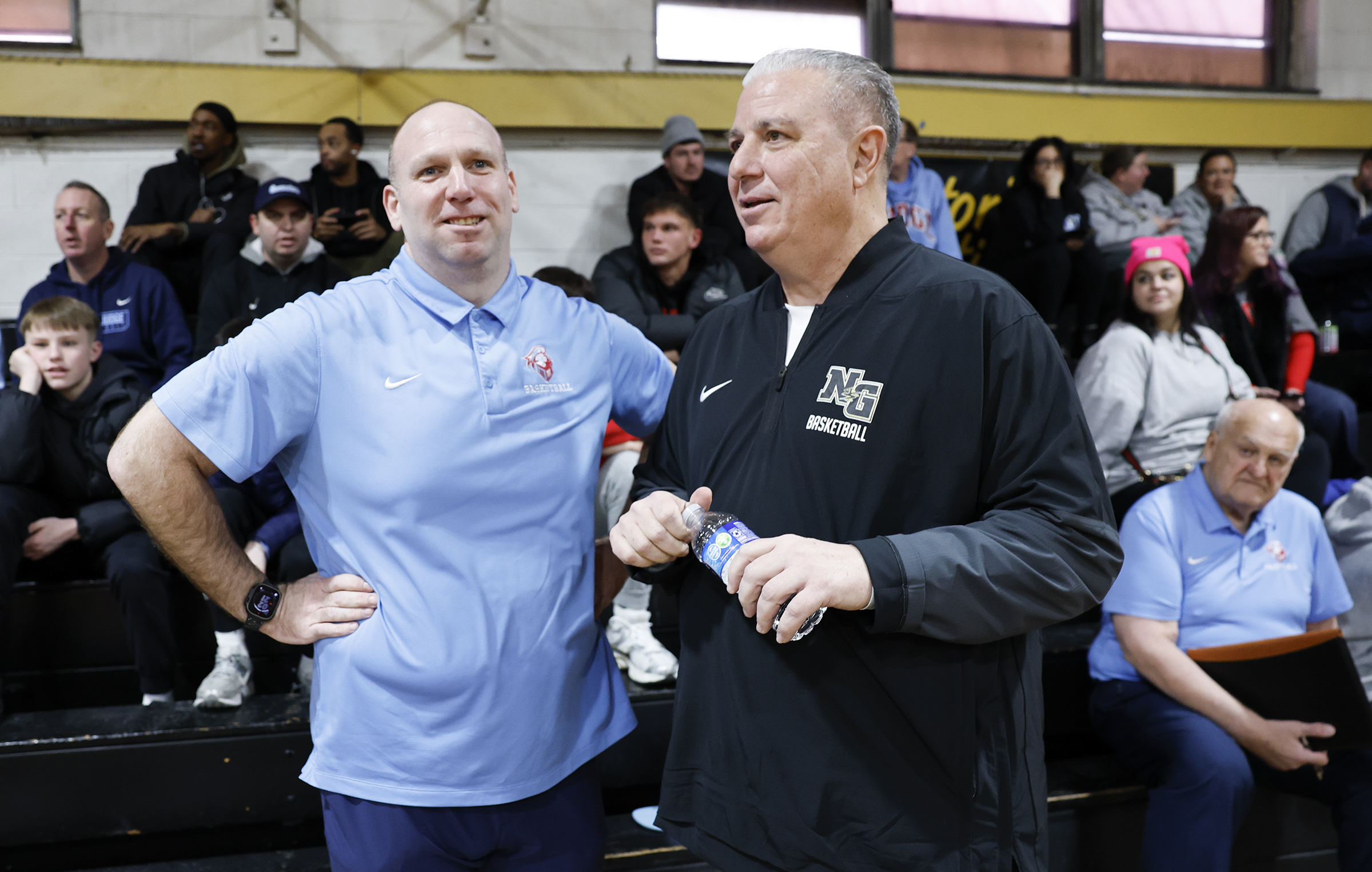
Neumann Goretti head coach Carl Arrigale (right) meets with Father Judge head coach Chris Roantree before the two teams played each other in February 2026.Yong Kim / Staff Photographer
“Here’s the thing: Philly is Philly,” Roantree said. “So if you want all the Philly kids to go to public schools, they’re still going to dominate. There are six, seven, eight, 10 good teams in the Catholic League. If they’re in the playoffs, they’re going to make some noise” in the state tournaments.
The primary complaint among suburban public school coaches and administrators, of course, is that non-boundary schools don’t limit themselves to drawing talent from the city or the neighborhoods that surround them. To some public-school coaches, the notion of recruiting is an alien concept, one they wouldn’t consider if for no other reason than they or the athletes’ families would have to make the necessary arrangements for the athletes to live within district boundaries — say, finding a long-lost aunt whose house was within walking distance of a school bus stop.
Liz Potash, who retired earlier this summer after 13 years as Central Bucks East’s girls’ basketball coach, said she never sought out players to refill her program’s talent pool. “If I wanted to recruit, I wouldn’t be a public-school coach,” she said. “I’m not going to beg an eighth grader to come to East.”
But another coach might.
“Everyone’s doing it,” said Daniel DiBerardinis, who spent 11 years as a Catholic League athletic director — six at Roman Catholic, five at St. Joe’s Prep — before becoming Penn Charter’s AD last year. “Public schools are recruiting. They recruit. People move to different zip codes all the time.
“I’m not going to put any school on blast, but I know intimate situations — I know families who got an address to be a part of a district. I’m not going to say any schools, but I do know it happens. The rules are super-gray, and people are always going to find workarounds.”
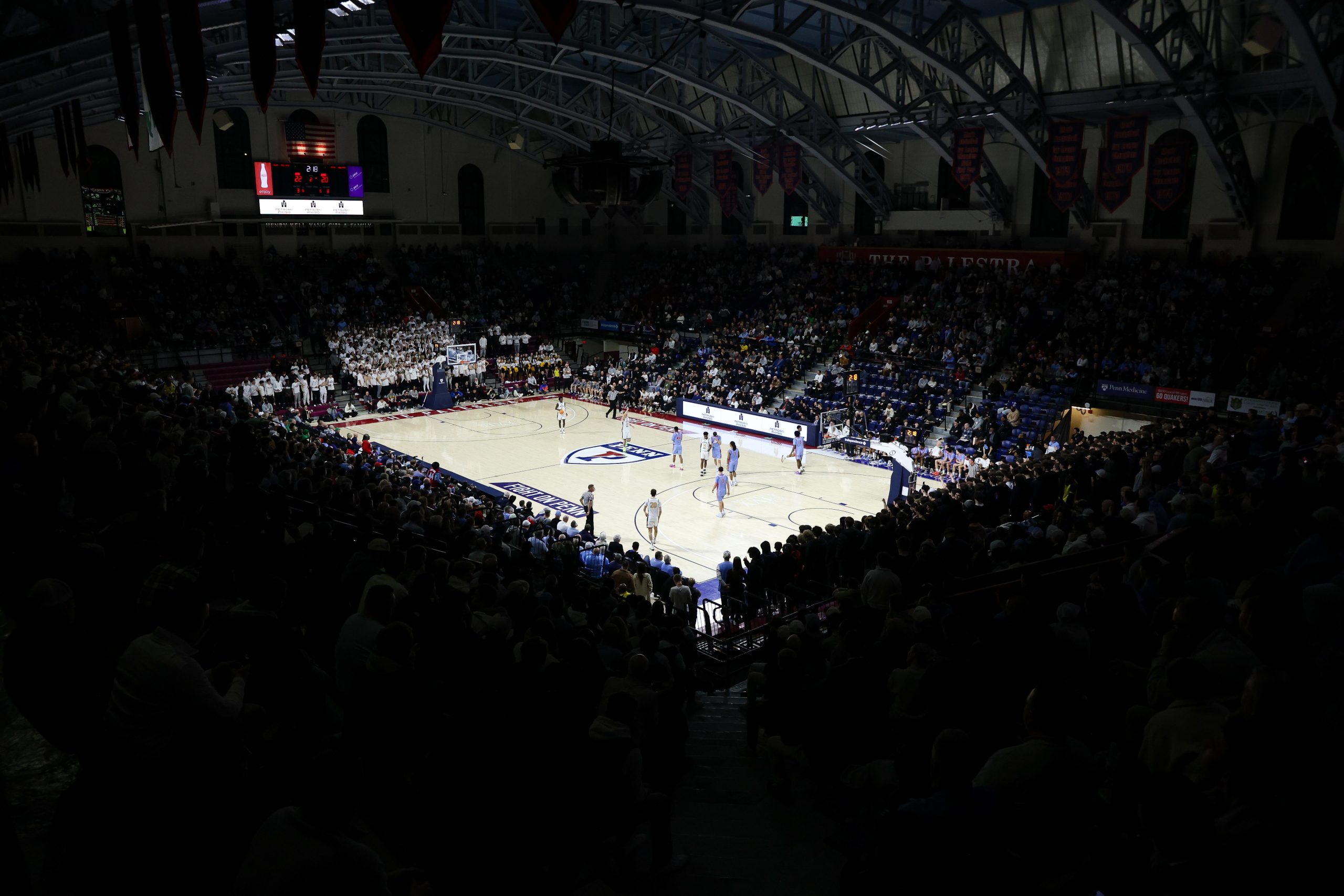
Father Judge takes on Archbishop Wood during in the Catholic League boys’ basketball semifinal at the Palestra on Feb. 18, 2026.
Technicalities
Football, boys’ basketball, girls’ basketball: It’s within the worlds of those three sports that the debates and bickering around recruiting are the loudest and have the most relevance. Rep. Scott Conklin, a Democrat who introduced House Bill No. 41 and represents the 77th district, in State College, all but admitted that the bill was aimed at stopping private, parochial, and charter schools from recruiting — and from continuing to move into the next frontier: wielding sponsor dollars or name, image, and likeness deals to entice athletes.
“Technically, yes, public schools could cheat,” he said in a phone interview. “But we know how difficult that is. I’m 67 years old, and I can win the high-jump competition — technically. But we all know it’s never going to happen.”
In that Palestra locker room back in February, Roantree snickered at the mere mention of the subject. “Everybody says it’s an unfair advantage,” he said. “What I say is, every kid’s got a dream of playing Division I, and there are a lot of coaches in our league who can make that happen. We don’t have to recruit as much as kids want to come and play for us.”
Four days later, behind a team-high 14 points from Morton-Rivera, Father Judge beat Goretti to win its second straight PCL championship. The Crusaders advanced to the semifinals of the PIAA Class 6A tournament, where they lost to a city rival, Imhotep Charter, which then lost in the championship game to Harrisburg’s Central Dauphin.
The Eagles hit the road for their first away game of the 2026 season when they take on the Tennessee Titans on Sunday.
Coming off an uneven 24-22 victory over the Washington Commanders, the Eagles are big favorites over the Titans, with most sportsbooks and data sites giving them an advantage of about a touchdown.
The Titans lost a 23-10 home game in Week 1 to the New York Jets and have some issues on both sides of the ball. The Eagles should have plenty of advantages on Sunday.
Where might their biggest edges be?
Here’s a look at the numbers that could prove to be important Sunday afternoon in Nashville:
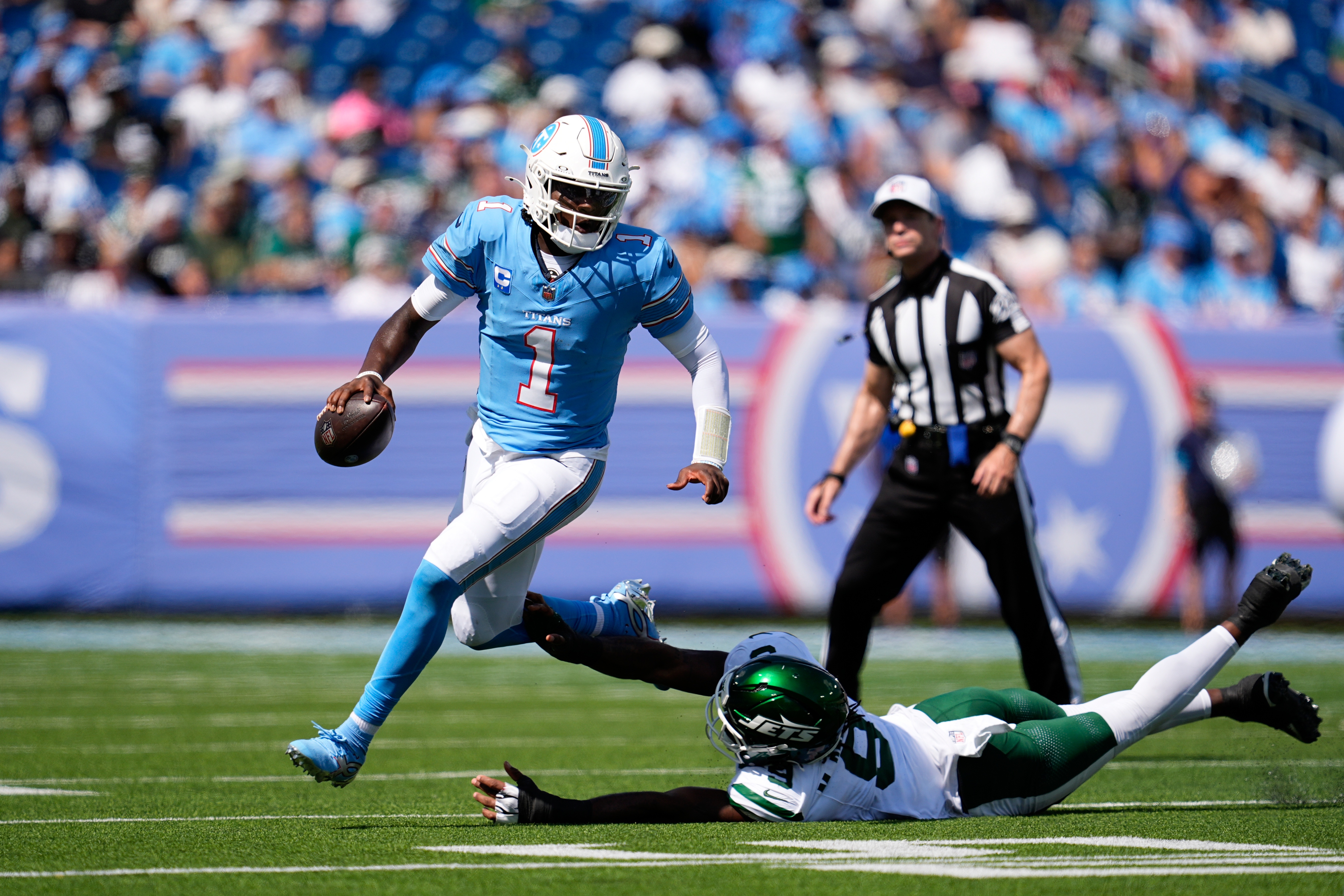
Tennessee Titans quarterback Cam Ward (1) scrambled a great deal in a Week 1 loss to the Jets. George Walker IV
41%
That’s how often second-year Titans quarterback Cam Ward was under pressure when he dropped back Sunday vs. the Jets, according to Next Gen Stats. He was 3-for-10 for 17 yards when under duress.
Ward is in the bottom tier of NFL quarterbacks, and he’s protected by an offensive line that Pro Football Focus ranks 29th in the NFL. That’s not a recipe conducive to a lot of success.
Rookie right guard Fernando Carmona allowed three pressures on 39 pass blocking opportunities in his NFL debut, according to PFF. Left guard Peter Skoronski is probably the best of the five starting linemen, but the Eagles should have an edge up front, inside and out.
The Jets applied pressure to Ward on six of their nine blitzes and had a pressure rate of 33.3% when they sent four or fewer pass rushers, according to Next Gen. It all added up to a pass rush win rate of 65%, according to ESPN, third-highest in the NFL in Week 1.
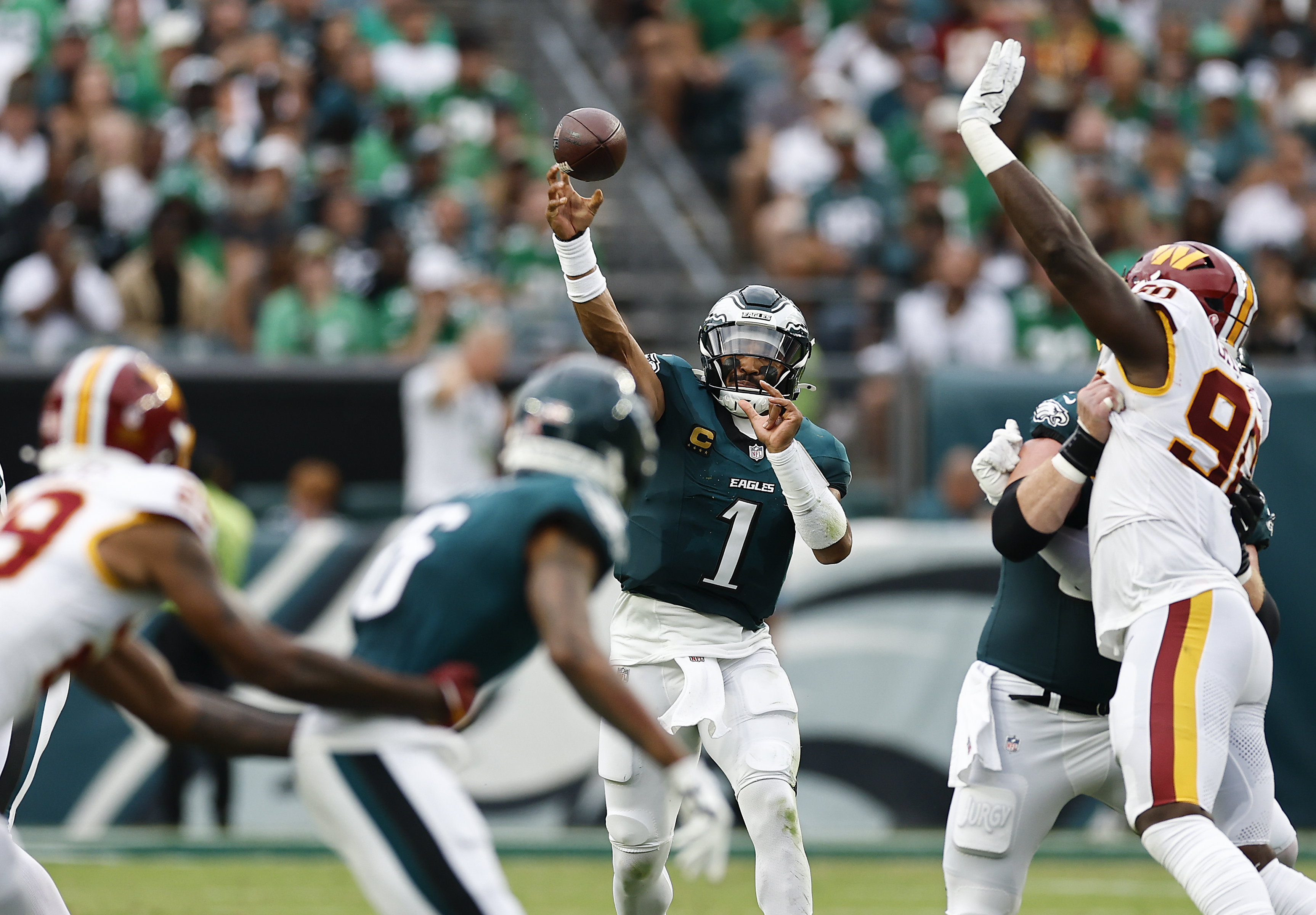
Vic Fangio said Tuesday that he thought his unit’s pass rush was “inconsistent and really wasn’t good enough.” But the Eagles pressured Jayden Daniels on 19 of his 38 dropbacks. Fourteen of those 19 pressures, and a 48.3% pressure rate, came with a four-man pass rush. They did only get Daniels to the ground once, though.
It remains to be seen if the Eagles get a boost with Jonathan Greenard’s return Sunday against the Titans, but they have the personnel up front to cause havoc Sunday regardless.
Jalen Hurts and the Eagles passing game will be in search of greater consistency Sunday. Yong Kim / Staff Photographer
176
Jalen Hurts threw for 203 yards in Week 1, and 176 of them came on throws that traveled at least 10 air yards, according to Next Gen, which counts any throw of 10 or more air yards as a “downfield” pass.
Hurts completed six of his nine downfield attempts and the Eagles scored all three of their touchdowns that way.
The running game struggled, and Hurts faced too much pressure, but the explosive plays to Dontayvion Wicks, Dallas Goedert, and DeVonta Smith showed some of the potential of the new-look offense.
The Titans allowed the sixth-most downfield passing yards last season, according to Next Gen, and they didn’t show in Week 1 that they’ll be less susceptible to it in 2026. The Jets completed four of their five downfield throws for 111 yards.
Cooper DeJean (left) did not have a banner Week 1 against the Commanders and was absent from the practice field on Wednesday. David Maialetti / Staff Photographer
16
That’s how many times Cooper DeJean lined up across Wan’Dale Robinson last season when the receiver was with the New York Giants. Those reps amounted to zero targets in Robinson’s direction. DeJean, according to Next Gen, was the only defender with at least 10 snaps against Robinson to go without a target. Robinson ran 25 routes from the slot against the Eagles without DeJean as his primary defender last season and caught six of seven targets for 90 yards and a touchdown.
Only nine receivers have accounted for more receiving yards from the slot than Robinson since he entered the league in 2022, according to Next Gen. The Jets did a good job against him in Week 1, allowing only two catches on three targets for 18 yards from the slot.
The third-year defensive back mentioned his eyes can sometimes “get bad” in coverage and it can hurt him.
“I think it can happen at times and at times it’s helped him, too,” Fangio said Tuesday when asked about DeJean’s comments. “He’s just got to make sure he can stay tight enough to his assignment and not let his vision get too skewed to where he gets out of position.”
It’ll be an interesting matchup with Robinson and DeJean Sunday, given their history and DeJean’s struggles in Week 1.
With his Father Judge teammates celebrating their Catholic League semifinal win in the background and the other game underway, Derrick Morton-Rivera said the quiet part out loud.
What drew the star guard, now a freshman at Temple, to Judge?
The coaches “recruited me,” he said.
Recruiting. It’s a topic of debate for coaches, parents, players, and even lawmakers across the state — so much so that House Bill No. 41, which would allow the PIAA to create separate postseasons, passed the Pennsylvania State House of Representatives in April.
In the latest installation of his occasional series, Mike Sielski unpacks the complex web of recruiting in high school sports — the dynamics between districts and the perks that are promised — in Philly and beyond.
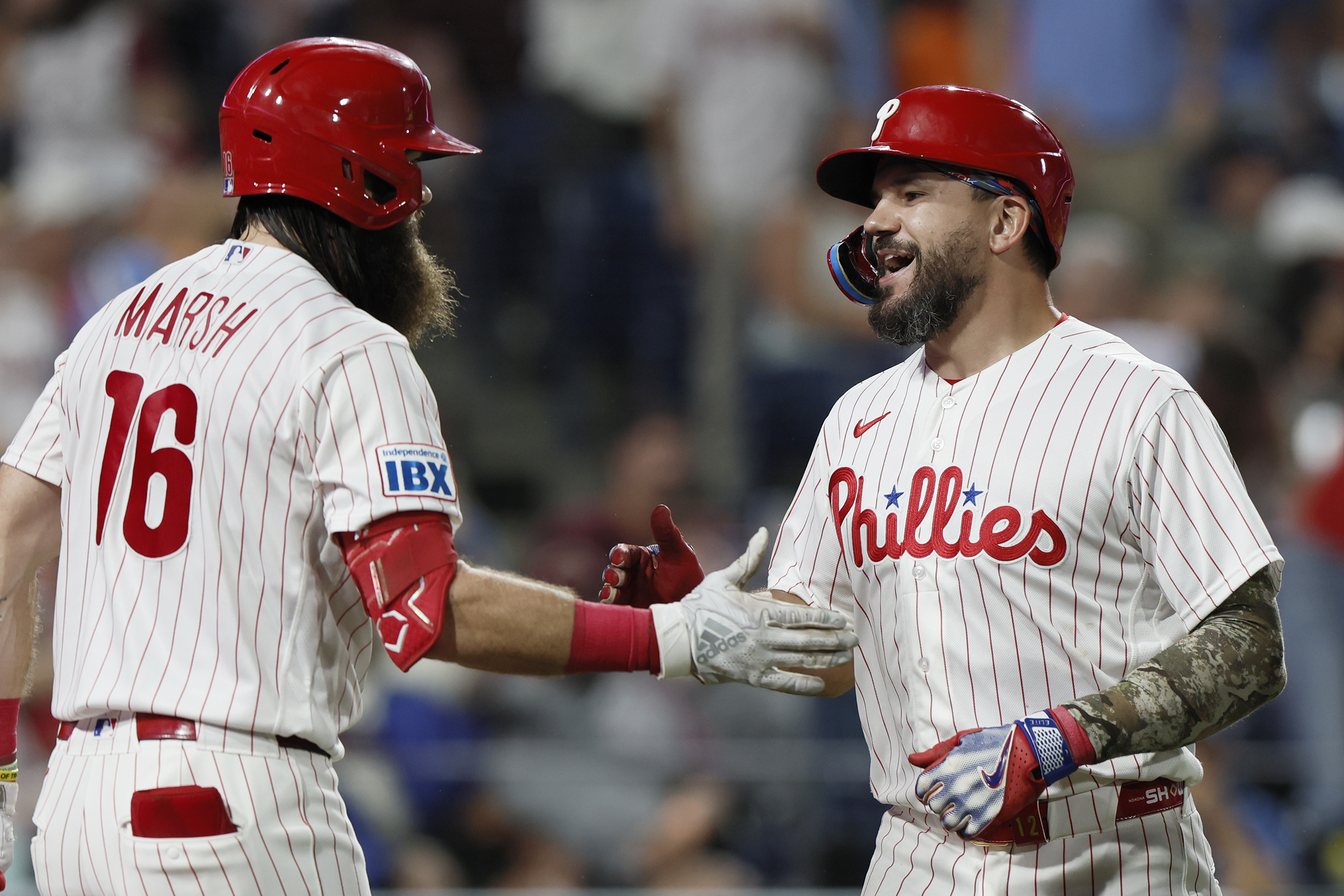
Phillies outfielder Brandon Marsh (right) entered Wednesday hitting .176 since July 1.Yong Kim / Staff Photographer
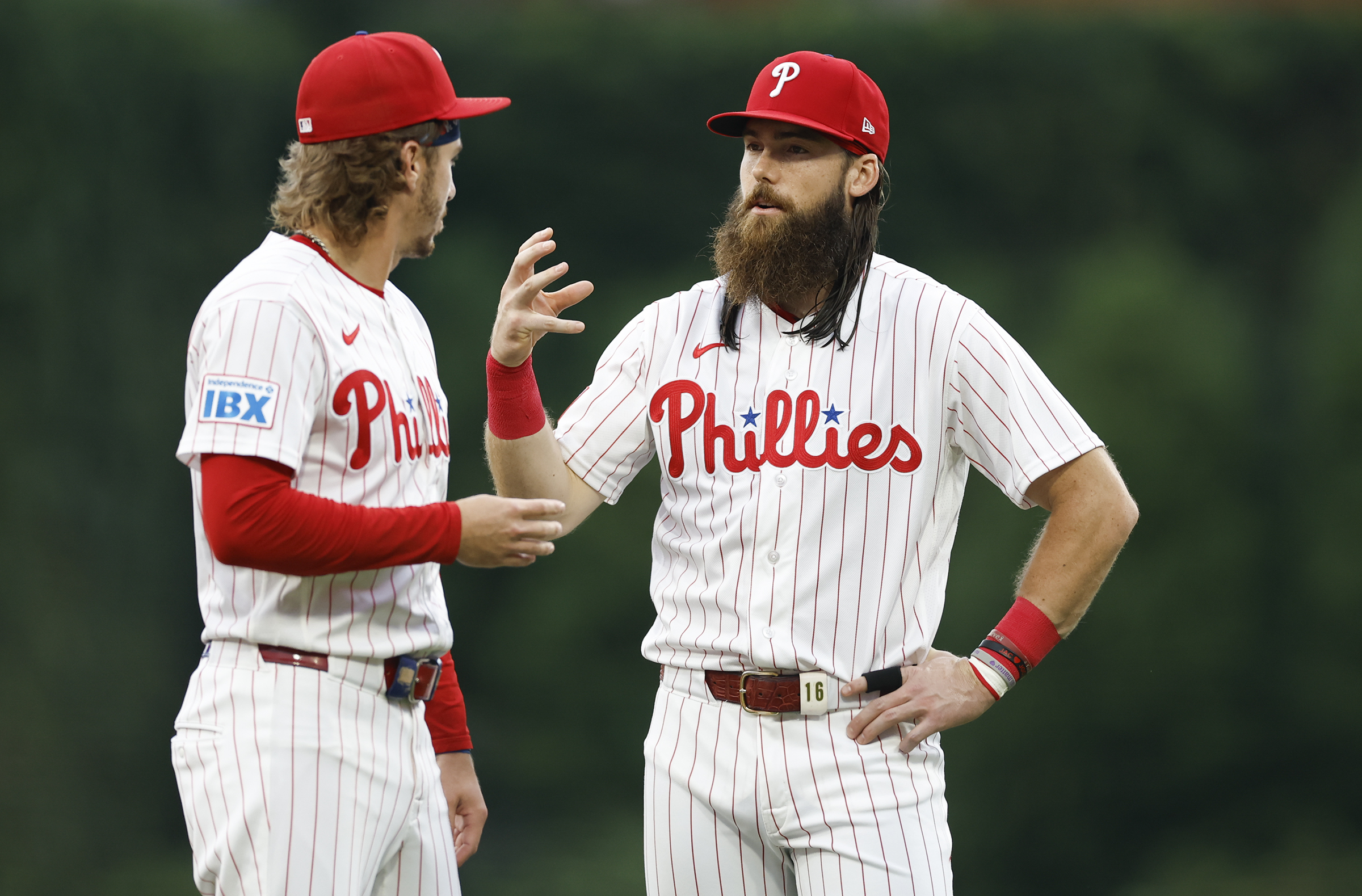
Just a couple months ago, Brandon Marsh was an All-Star.
It’s pretty much ben all downhill from there. As Marsh’s star rose, teams began attacking him differently, and interim manager Don Mattingly noted that he’s gotten fewer pitches in the strike zone in the second half of the season. But the left fielder hasn’t been able to adjust.
Next: The road trip continues as the Phillies head to New York to face the Mets (7:15 p.m., Fox29). New York’s Nolan McLean (11-9, 3.24 ERA) will face Aaron Nola (6-10, 4.69).
Phillies pitcher Jesús Luzardo is on the injured list with shoulder soreness.David Maialetti / Staff Photographer
It’s time to sound the alarm. The Phillies entered Wednesday a half-game behind the Cubs for first place in the wild-card race and just 3½ games ahead of the Diamondbacks, who are the first team out of the three-team wild-card pool.
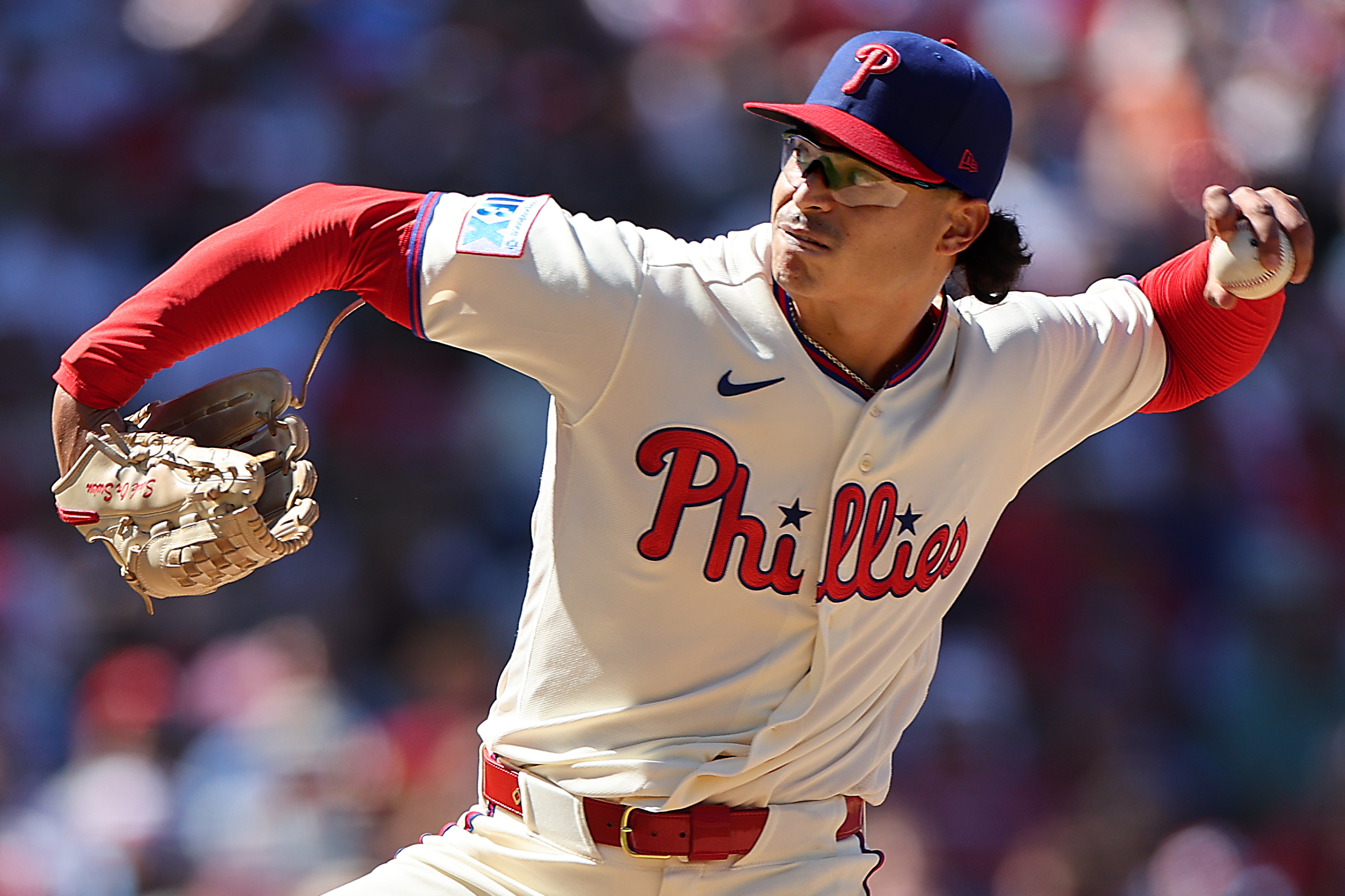
The bullpen is a mess, the defense and baserunning are as bad as ever, and the starting pitching is starting to wear down — Jesús Luzardo is the latest to go on the injured list.
Stars like Bryce Harper, Trea Turner, Kyle Schwarber, J.T. Realmuto, Alec Bohm, and Luis Arraez will make a combined $111.2 million this season.
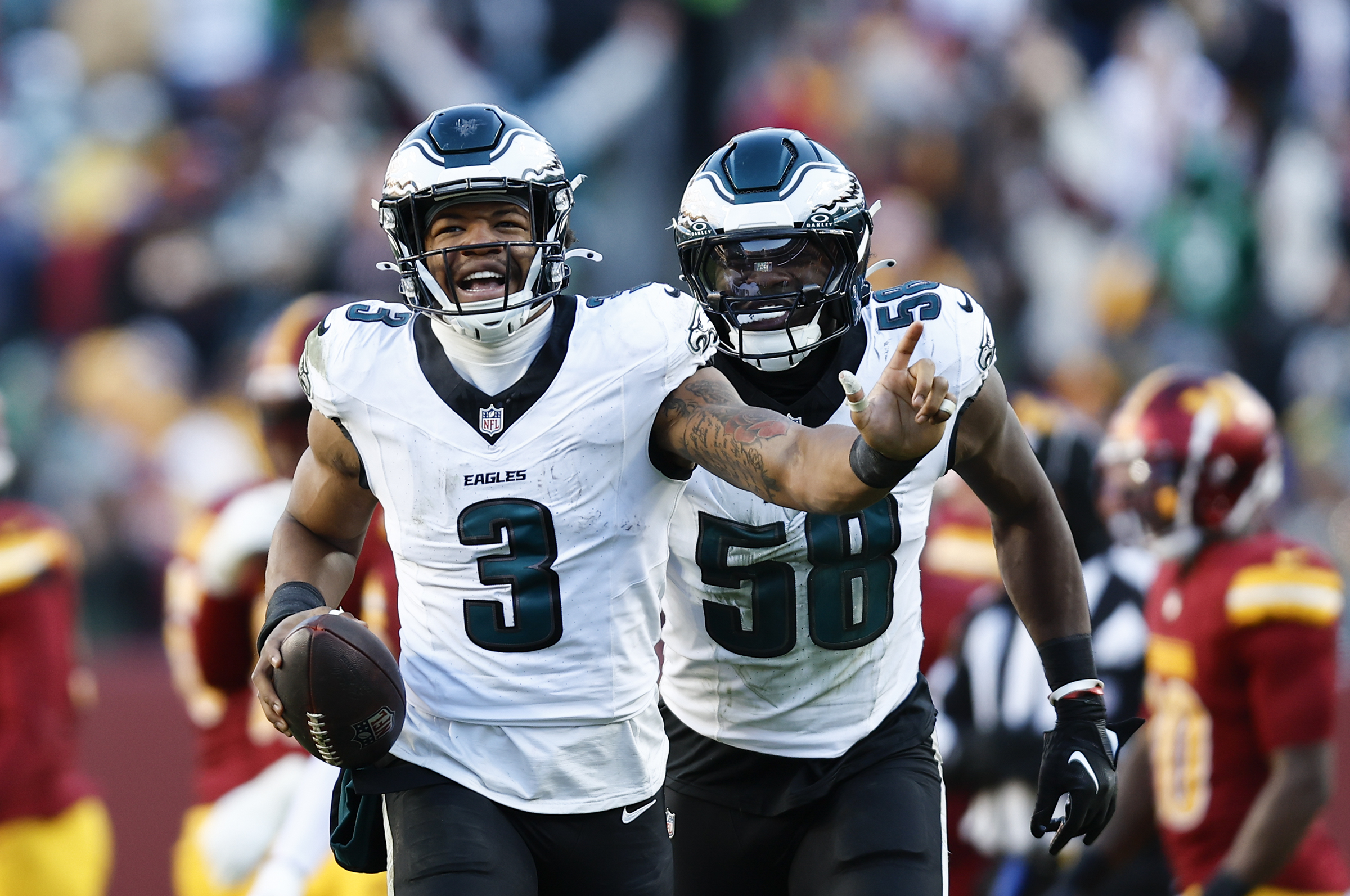
Cooper DeJean (left) struggled at times in the Eagles’ season-opening win.David Maialetti / Staff Photographer
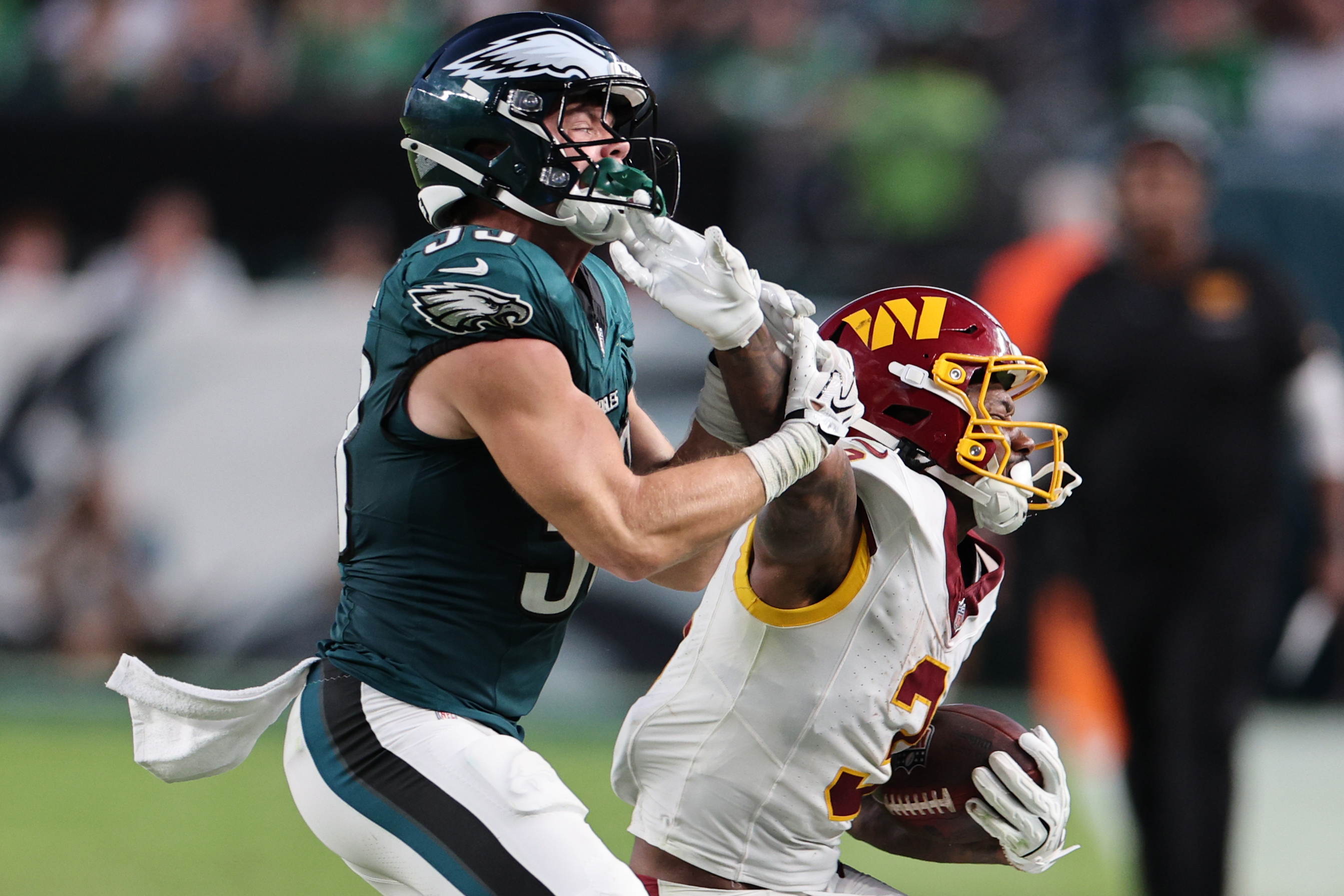
Cooper DeJean appeared to get hurt in the second quarter of the Eagles’ season-opening win. He grabbed the left side of his abdomen after making a tackle but didn’t miss any snaps because of the injury. He struggled in coverage at times, however.
Now, he’s sitting out in practice.
DeJean, who appeared to be wearing a sleeve on his left leg, sat out for the portion of practice open to the media on Wednesday with calf and abdomen injuries, though he expects to get on the field as the team prepares to face the Titans.
Flyers right wing Matvei Michkov is entering a pivotal season.Yong Kim / Staff Photographer
It’s officially time to “do that hockey.” Flyers training camp opens today, and they’re looking to improve upon last season, when they stormed into the second round of the playoffs. They bring back a young, healthy core, but that doesn’t mean there aren’t any questions surrounding the team and its top players, like Matvei Michkov.
Next: Flyers training camp opens today in Voorhees.
On this date
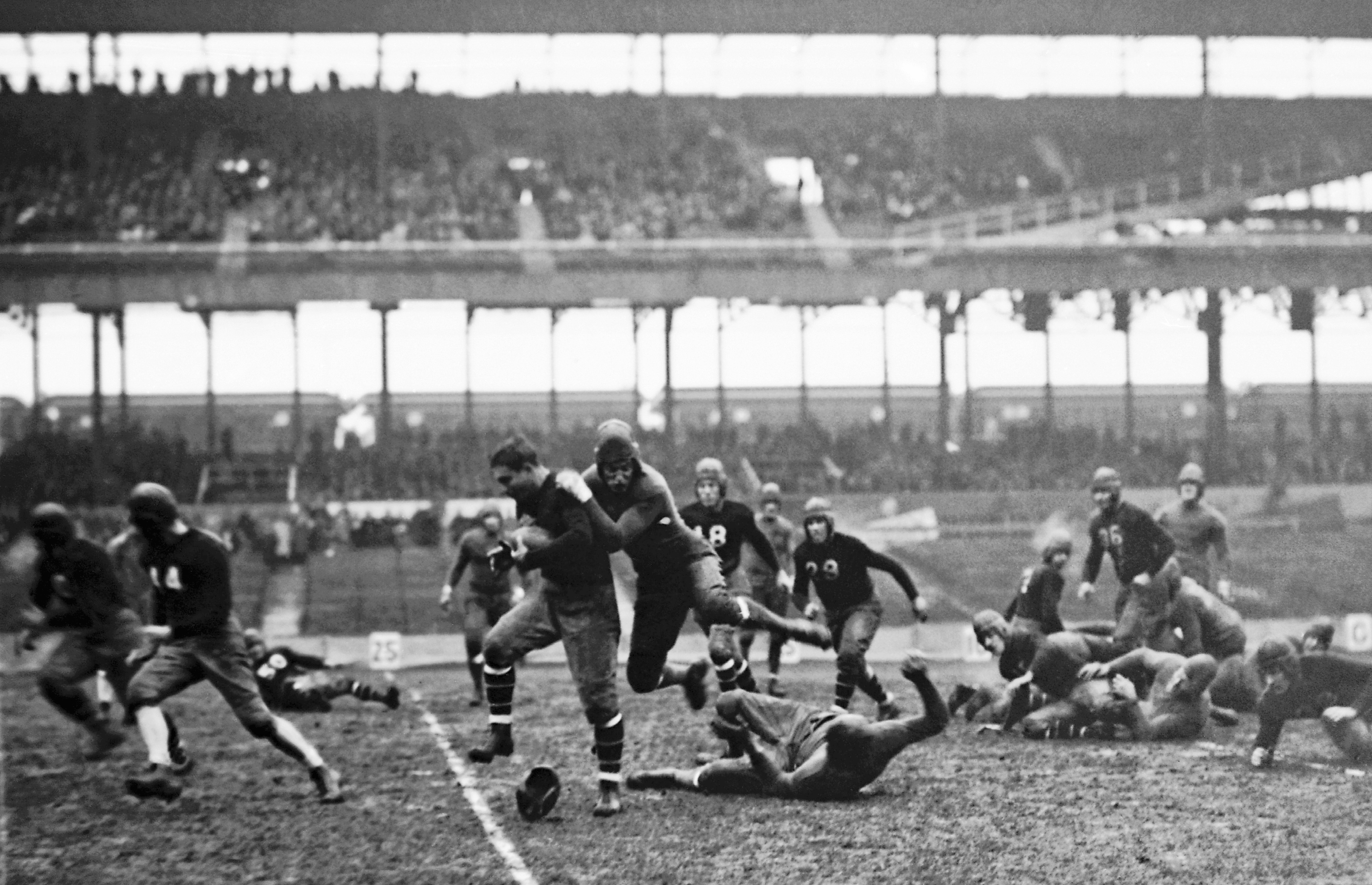
In this Nov. 24, 1929, file photo, New York Giant’s Benjamin Friedman is stopped after making a 10-yard gain against the Green Bay Packers during a football game at the Polo Grounds in New York City. The first season, 1920, the American Professional Football Association had 14 teams. Throughout a decade of flux, many franchises came and went.
On Sept. 17, 1920, 14 teams paid $100 to join the American Professional Football Association, which became the NFL. The league adopted its current name in 1922, and the Eagles joined the fold in 1933. Now, after almost a century in existence, the Birds have two Super Bowl trophies to their name and three other NFL championships from the pre-Super Bowl era.
What you’re saying about sports media
We asked: Who is your favorite sports media personality of all time and why? Among your responses:
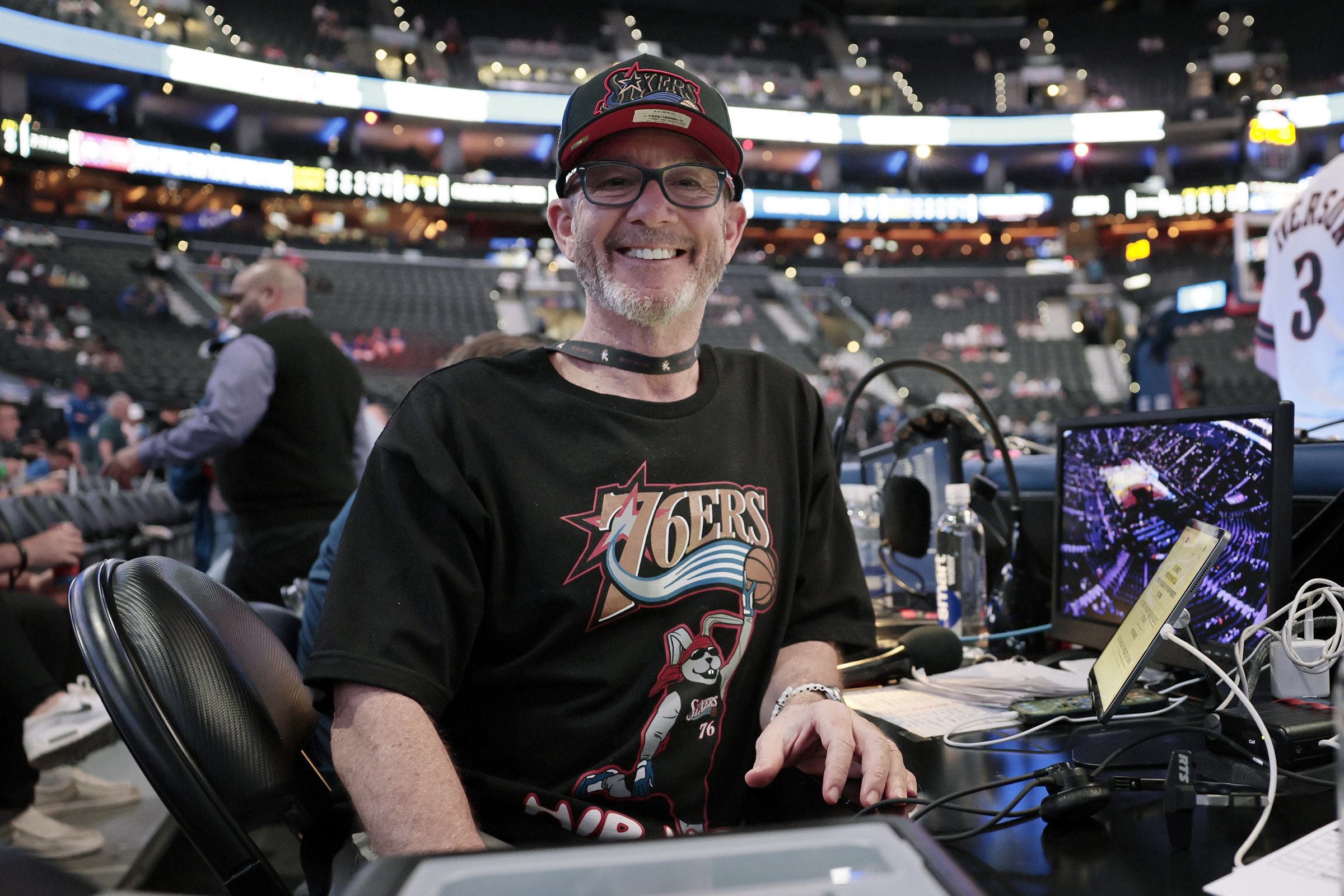
Al Meltzer … “It’s a barn burner.” —William R.
My favorite sports personality was, without a doubt, Richie Ashburn. The combination of humor and baseball knowledge was unparalleled. His interaction with Harry Kalas was priceless. I ran into Richie twice and found that he was just as genuine in person as he seemed to be on air. John Kruk comes close, but nobody can totally replace Ashburn. —Tom E.
The late great Jim Healy, the legendary Los Angeles sports commentator who entertained all sports fans in the greater L.A. area for 43 years with his irreverent and original style. He poked fun at everybody in the sports world and some outside such as Richard Nixon. He had names for everyone such as “Bone Spur Bill” for Bill Walton, and “Brain Surgeons” for the USC Trojans. He played tapes of Tommy Lasorda and others where he bleeped out all the cuss words. He had great fun mocking our late Jerome Brown and his famous comments prior to the Miami-Penn State national championship in the Fiesta Bowl. A wild half hour every week day night. — Everett S.
I used to love to listen to Bill Campbell doing Eagles games prior to MR. — Bill B.
We compiled today’s newsletter using reporting from Mike Sielski, Scott Lauber, Marcus Hayes, Rob Tornoe, Conor Smith, Mia Messina, Olivia Reiner, and Gustav Elvin.
By submitting your written, visual, and/or audio contributions, you agree to The Inquirer’s Terms of Use, including the grant of rights in Section 10.
Thanks for reading along! Kerith will be back in your inboxes tomorrow morning. — Maria