Philadelphia fans did more than fill the seats during Major League Baseball’s All-Star Week. They also helped turn the event into one of the strongest retail performances in the history of the Midsummer Classic.
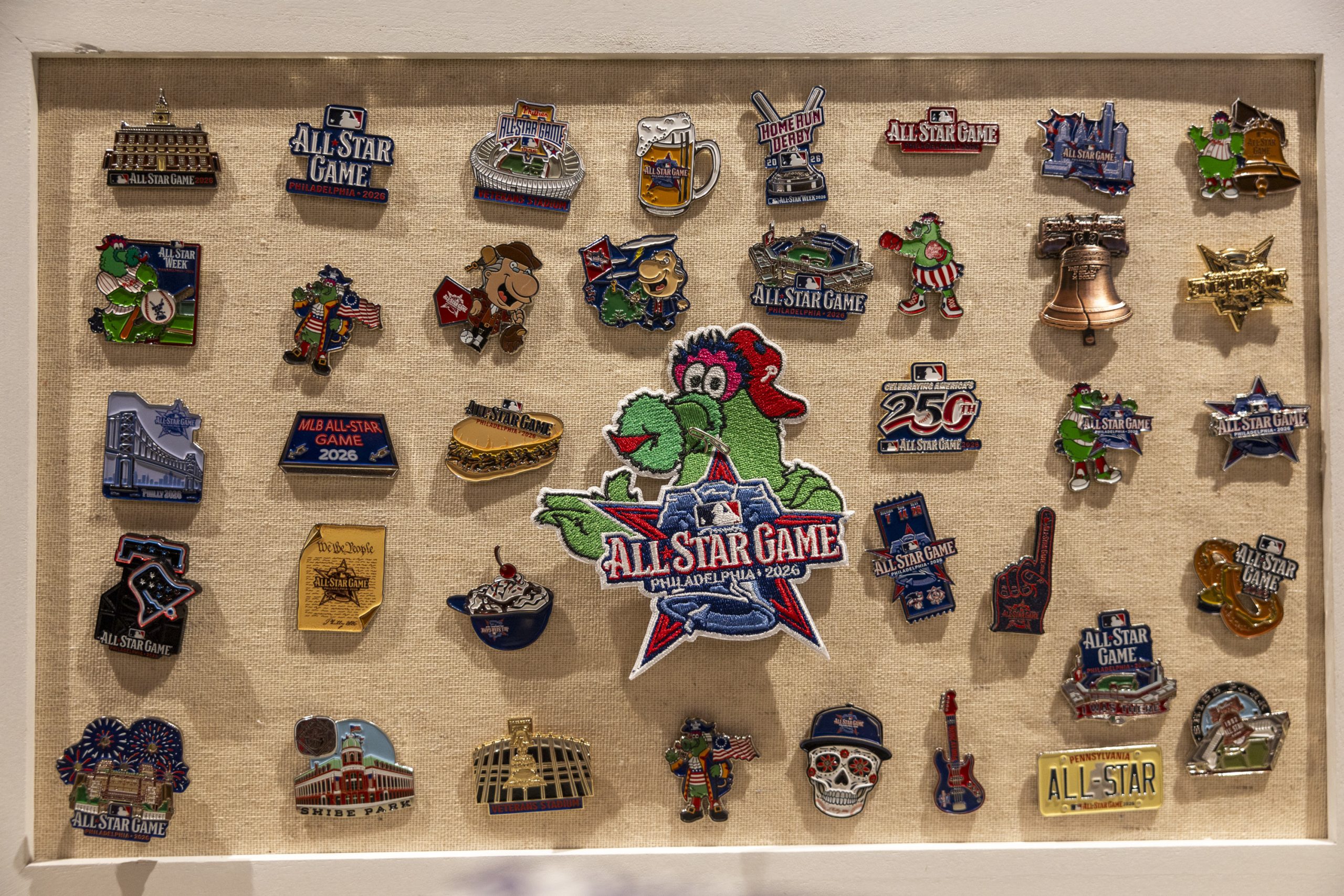
Major League Baseball does not disclose dollar figures for merchandise sales. But the MLB said fans bought a record number of souvenirs and collectibles, including jerseys, caps, and especially collectible pins — more than 12,000 sold over three days at Citizens Bank Park alone.
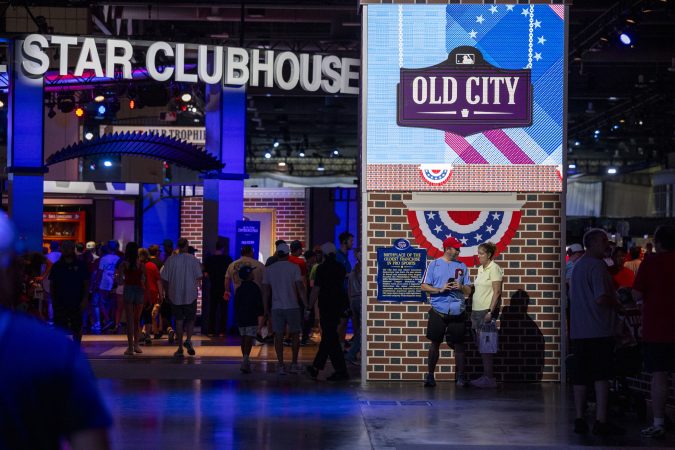
The biggest draw was the All-Star Village at the Convention Center, where 111,616 people attended the four-day fan festival, according to Jamie Leece, MLB’s senior vice president of global consumer products. That made it the most-attended All-Star fan event since Los Angeles in 2022, the year MLB shortened the festival from five days to four. Leece noted that the Los Angeles event also included a free outdoor component that Philadelphia did not have.
The crowds translated directly into sales.
Pins, on display at the retail store at Citizens Bank Park, were a hot seller during All-Star Week.Tyger Williams / Staff Photographer
Through Tuesday, merchandise sales at the official MLB shop inside All-Star Village, operated by Fanatics, exceeded the previous sales record set at the 2022 fan festival by double-digit percentages. Sales also were up 45% from the 2025 All-Star celebration.
Across every retail channel — including All-Star Village, Citizens Bank Park, and MLBShop.com — total merchandise sales matched the record-setting performance from the 2022 All-Star Week in Los Angeles.
At Citizens Bank Park, merchandise sales during All-Star Week rose 25% from 2025. MLB, working with the Phillies and Aramark, operated retail outlets during the HBCU Swingman Classic, the Futures Game, MLB’s 3-on-3 event, the Home Run Derby, and Tuesday night’s All-Star Game.
Online demand also surged, with sales up 34% over the previous year’s All-Star Week, producing the second-best online All-Star retail performance since MLB launched its e-commerce business in 1998.
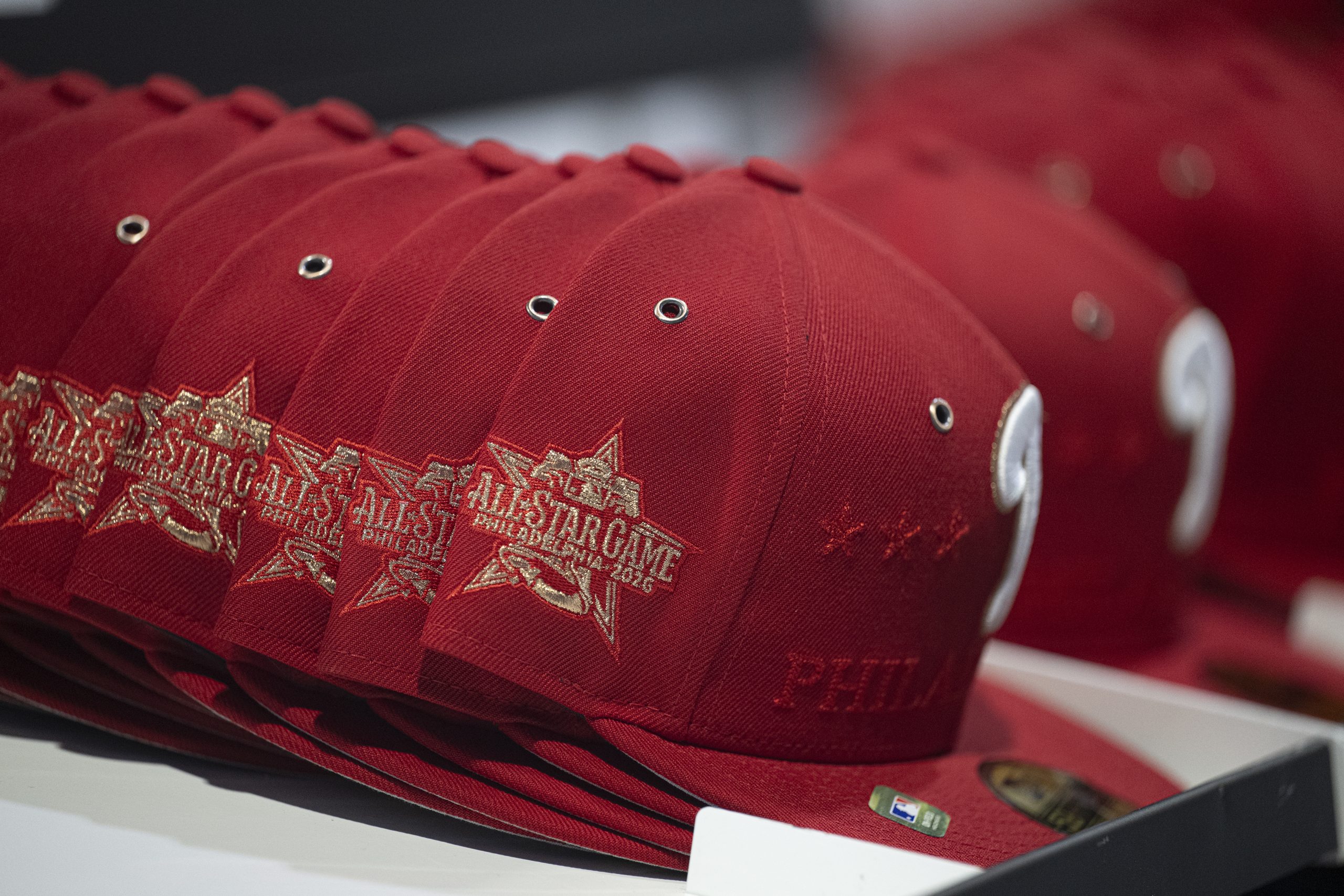
Headgear accounted for 25% of merchandise sales, according to MLB.Jose F. Moreno / Staff Photographer
Leece credited Philadelphia’s fan base for helping drive the record performance.
“Philadelphia fans are deeply passionate and loyal,” he said. “They showed up hours before our events to celebrate, they deeply supported their team and favorite players, and that came through in the retail experience.”
MLB would not identify its top-selling items, although headwear accounted for a quarter of all sales. Leece said demand was broad across the merchandise lineup, which consisted entirely of Phillies- and All-Star-branded products sold at All-Star Village.
As for any unsold merchandise, Leece said some will be offered online, while the rest will be donated to a local charity that has yet to be determined.
Mike Harkins collects old ticket stubs. Harkins estimates he has over 500 physical tickets from events he’s attended in the past, kept in journals, scrapbooks, and in storage.
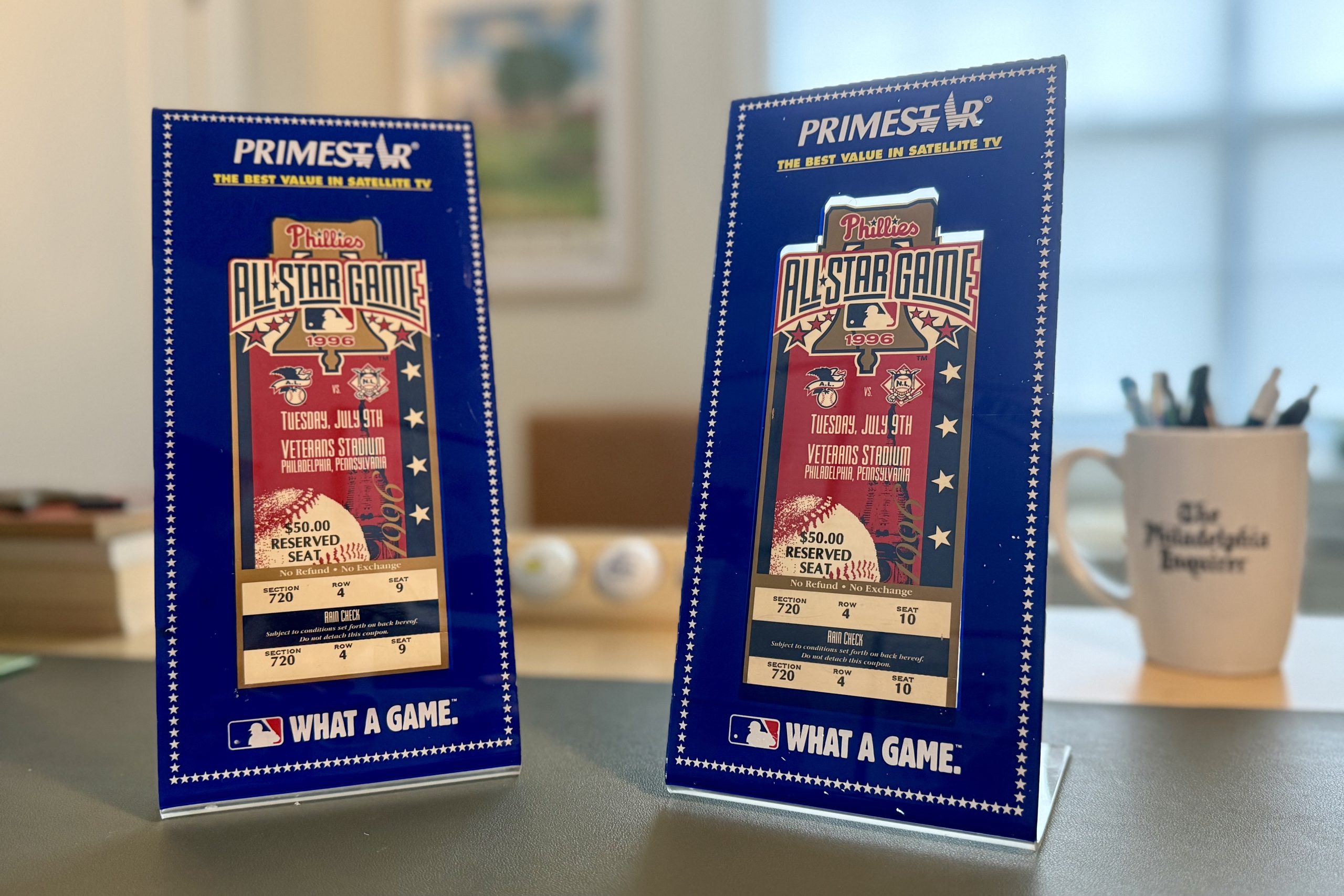
One of his favorites as a kid was from the 1996 All-Star Game, held at Veterans Stadium. Harkins, who was 11 years old and grew up in South Jersey, attended both the game and the Home Run Derby with his father. It was one of his most special childhood memories, and every time he looks at that stub, it takes him back to that moment.
The physical tickets from the 1996 MLB All-Star Game were already keepsake items. They even handed out plastic ticket holders at the game.Matt Mullin / Staff
So, for the 2026 All-Star Game, Harkins decided to print out a physical ticket stub for himself, to remember the moment. He then printed out 250 more, to hand out to fans at the ballpark hoping for that same experience.
“I had the thought, that kids that are going to this game, like when I was 11 in 1996, they’re not going to have that souvenir ticket to bring home,” Harkins said. “Truthfully, kids didn’t really seem that excited about them, but all of their parents were gung-ho when I handed them the ticket stubs.”
Everyone received the same section, row, and seat number, each of which carried a special meaning. Harkins picked Section 126 because “Chase Utley is No. 1 in my book.” The row (20) and seat (08) numbers combine to make 2008, honoring the Phillies’ 2008 World Series title, the first Philly championship Harkins experienced.
On the back of each ticket, he included a message:
“I hope the newer generations of baseball fans can appreciate having a physical memento to remember this night with,” he wrote. “Maybe, thirty years from now, you’ll still have this ticket. I hope you look back on this night as fondly as that 11-year-old from 1996 still does.”
He got the idea after attending a concert in Mexico last month. Harkins met a couple from Denver, who printed out individual tickets of their own to celebrate their trip, and gave him one. As an avid ticket stub collector, he immediately started brainstorming.
Over the last decade-and-a-half, sports teams, concerts, and events have largely turned away from issuing physical tickets, instead relying on mobile tickets and QR codes. The Phillies started the process of turning their season ticket holders toward digital tickets in 2014, eliminating physical tickets entirely in 2020 during the pandemic. Mobile tickets can be more convenient, but don’t make for the same kind of keepsake.
“I’ll see an Eagles game from 2008, where it was blistery, and I can just remember being freezing cold that night against the Carolina Panthers on a Monday,” Harkins said. “It makes me think of the people that I was able to share that experience with and sometimes the result, sometimes good, sometimes bad.”
One of those people at Tuesday’s All-Star Game was Cheryl Spielvogel, the longtime peanut vendor whose call of “Peeeeeanuts!” is a familiar refrain for Citizens Bank Park regulars. Harkins happily told Spielvogel, who has been slinging the ballpark snack for over 50 years, that she helped provide “the soundtrack to my childhood.”
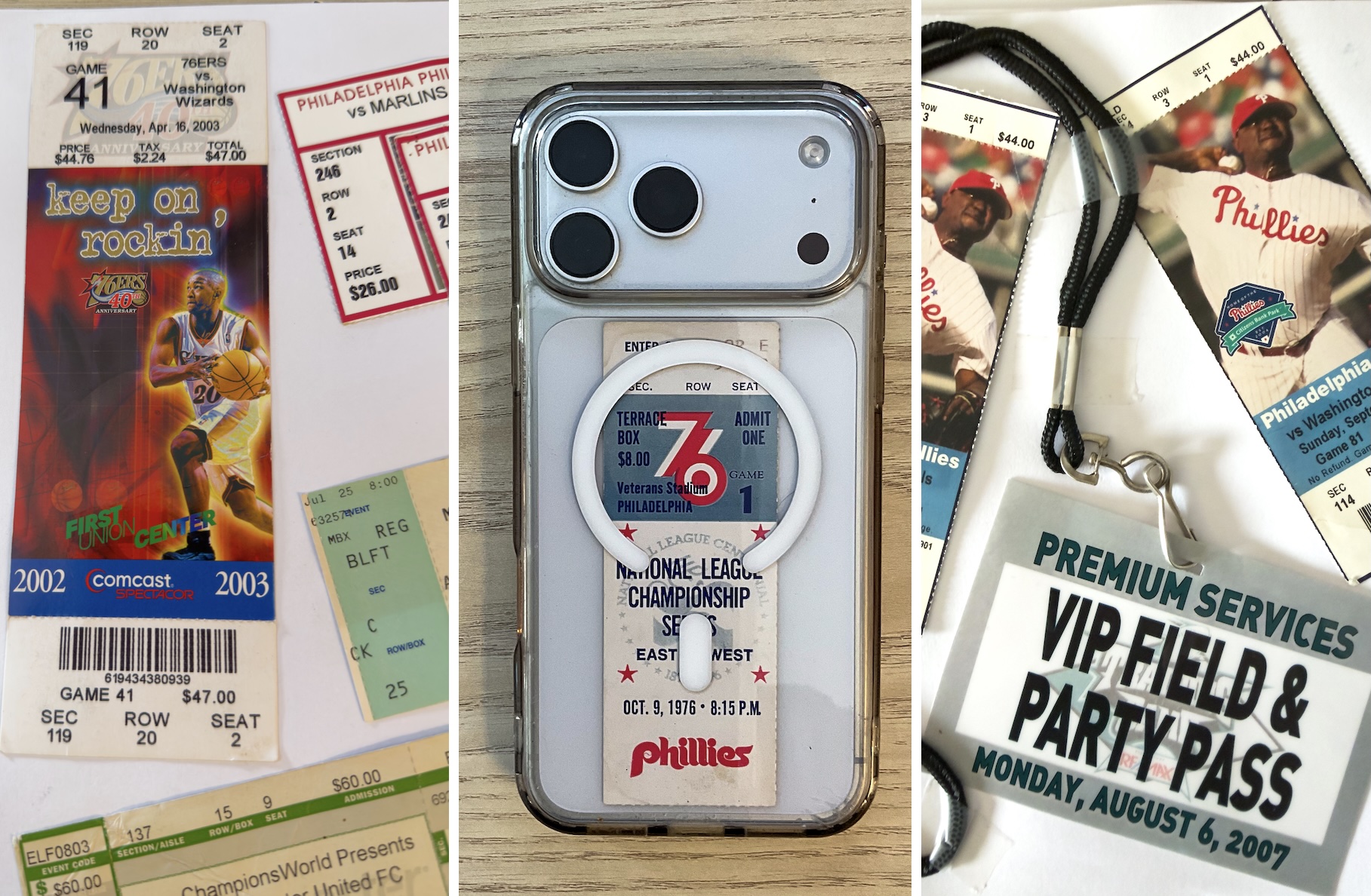
A look at some of the tickets in Harkins’ collection, including Michael Jordan’s last game (left), the 1976 NLCS, kept in his phone case (center), and Phillies tickets from their 10,00th loss and their playoff clinching win in 2007 (right).Courtesy of Mike Harkins
Harkins, who was a member of the famed Wolf Pack (in honor of former Phillies pitcher Randy Wolf) a quarter century ago, said the best ticket in his collection is from the Phillies’ regular season finale in 2007, when they clinched a playoff berth with some help from the Mets. He and his friends listened from the parking lot as Tom Glavine gave up seven runs in the first inning for New York against the Marlins, and were “floating” the rest of the day at Citizens Bank Park.
He even got to meet Dontrelle Willis, who started that game for the Marlins and now works for Fox Sports, at the All-Star red carpet at Independence Mall, and hear the story of that game from his side. Later, at the ballpark, Harkins got to meet the fan known as Marlins Man, a regular behind home plate at big-ticket events around the country. Laurence Leavy, the lawyer behind the orange Miami Marlins jersey, was confused when Harkins first handed him the stub, but was thankful once he realized what he had received.
Harkins considers himself a baseball history fanatic, and said the people who loved physical tickets the most were the ushers at the Bank, many of whom share that same passion for Phillies history.
He hopes the All-Star weekend and the ticket can help spark that in someone else.
After sitting out part of the offseason program due to injury, Makai Lemon said Friday that he’s “feeling great” ahead of training camp.
Lemon, speaking at his FlexWork Sports youth camp in Aston, added that he will be “100%” ready to go when the Eagles hold their first practice of the summer on July 29.
This spring, Lemon participated in rookie minicamp and the first practice open to the media during organized team activities in May. He was sidelined for the second OTA practice open to the media and the entirety of the two-day mandatory minicamp in June with what teammate Quinyon Mitchell said was a hamstring injury.
Still, Lemon said he’s had a productive offseason, as he prepares to report to camp on July 28.
“Just working on my craft, just trying to get the playbook down,” Lemon said. “Just making sure I’m ready so when I go out there, it’s lights out.”
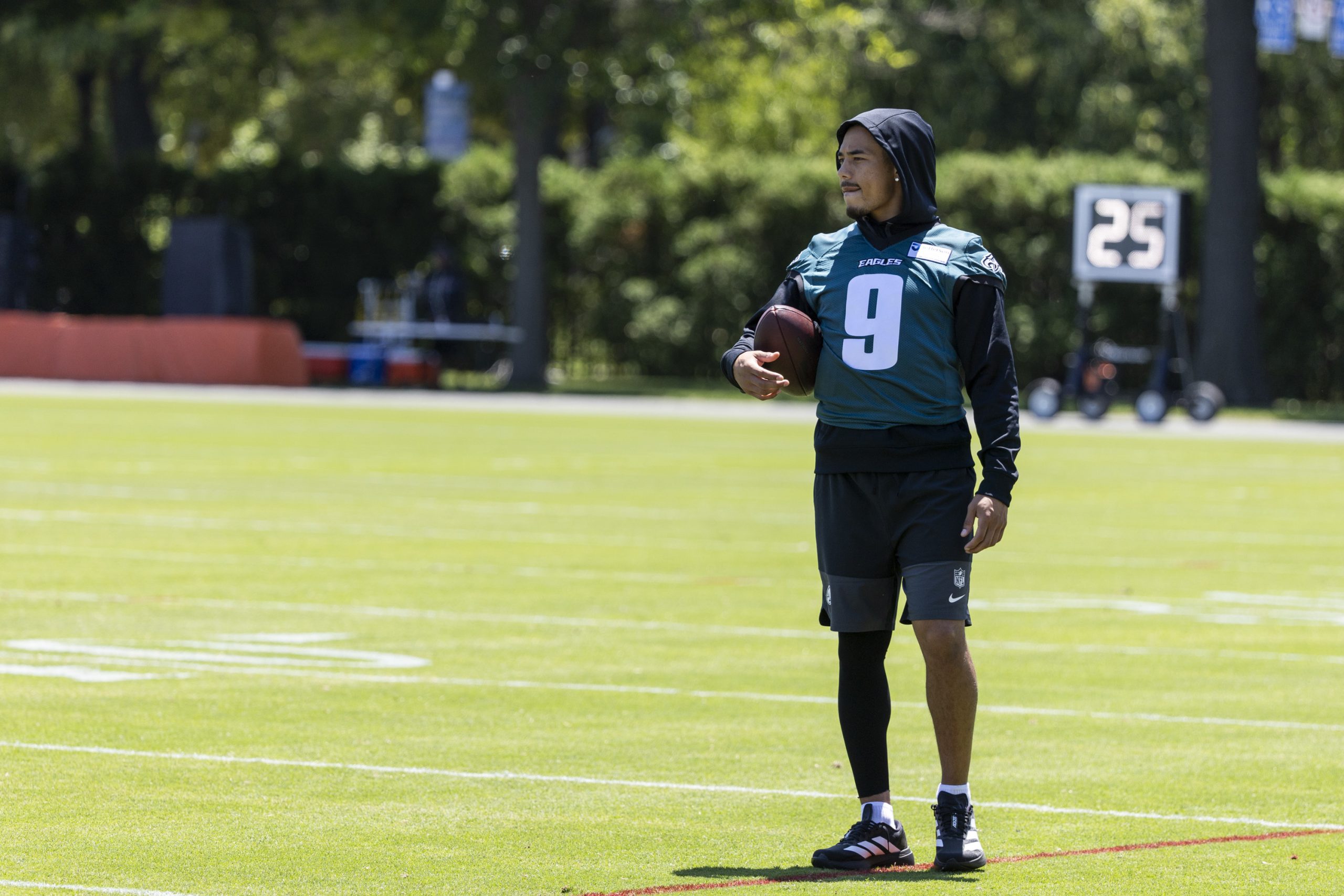
Makai Lemon (9) was sidelined for portions of the offseason program. Tyger Williams / Staff Photographer
Lemon, the Eagles’ first-round pick out of USC, is one crucial piece of the new-look receiving corps. Howie Roseman retooled the group this offseason, trading A.J. Brown to the New England Patriots and adding wideouts such as Lemon, Dontayvion Wicks, and Hollywood Brown and rookie tight end Eli Stowers.
The Eagles have notable returners among the group, too, in DeVonta Smith and Dallas Goedert. Come the start of training camp, offensive coordinator Sean Mannion will have the opportunity to show how each of those pieces will fit in the Eagles’ revamped offensive scheme.
Lemon didn’t get extensive work alongside each of those players during the offseason program due to his injury. But the 5-foot-11, 192-pound rookie receiver said he has already gleaned useful information from the veteran group.
“Just how to take care of your body,” Lemon said. “Just how to attack your preparation. Every little thing that them guys do, I’m watching closely. I feel like I can learn so much from them boys.”
Lemon, who hails from Los Alamitos, Calif., had previously never played on a football team outside of his home state. However, he expressed that he already feels at home in the Eagles locker room.
“I was walking in there, they had open arms for me,” Lemon said. “A lot of veteran guys in my room. I’m just there to learn from them. Soak up any information I can. I’m ready for the season to ride out with them boys, man.”
Lemon said he has felt the love outside of the facility, too.
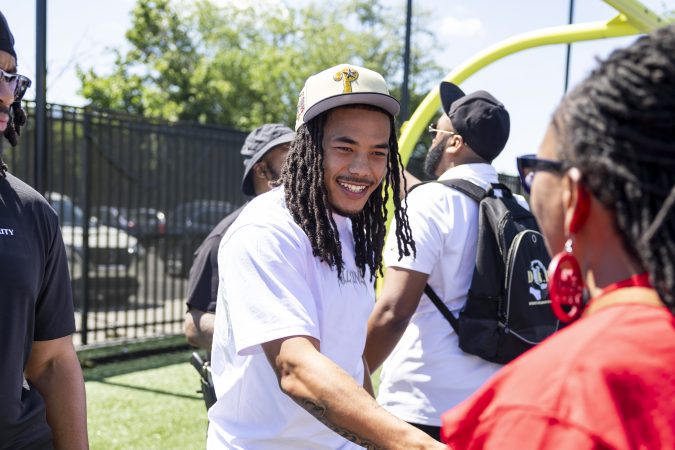
“It’s a great feeling to get in front of the community,” Lemon said. “The people that show me support, show the Eagles so much love. So I’m just out here just reciprocating that love to the youth.”
Less than three weeks before baseball’s trade deadline, one thing stands out to Phillies owner John Middleton.
“There’s very few teams,” he said, “who are out of it.”
Indeed, when the dust cleared from the All-Star break (replaced by smoke from the Canada wildfires), 23 of 30 teams were either in playoff position or within four games of a wild card. The conditions may shift before Aug. 3, but the forecast is calling for a seller’s market, with demand far outpacing supply.
(How’s that for punching a hole in commissioner Rob Manfred’s assertion that MLB is rife with competitive imbalance that only a salary cap can solve? But we digress.)
A group of teams are poised to buy (Dodgers, Brewers, Braves, Yankees, Rays, Cubs, Phillies) and a handful should sell (Rockies, Angels, Royals, Mets, Giants). But most are in the middle. The Red Sox, for instance, looked a few weeks ago like they’d be open for business. Then, they won 14 of 16 games, including nine in a row before the break.
“It’s really hard to trade away players if you’re one of those teams and say, ‘I’m going to give up and try to get some younger players,’” Middleton said on The Inquirer’s Phillies Extra podcast. “Those teams are going to be pushing to add players to bridge that gap and get into the playoffs.”
There’s another wrinkle to this deadline: Nobody knows what the rules will be beyond 2026.
With the collective bargaining agreement set to expire on Dec. 1, and the owners and players at odds over the fundamental structure of the sport’s economic system, club executives must operate at the deadline without knowing if a cap on salaries is coming.
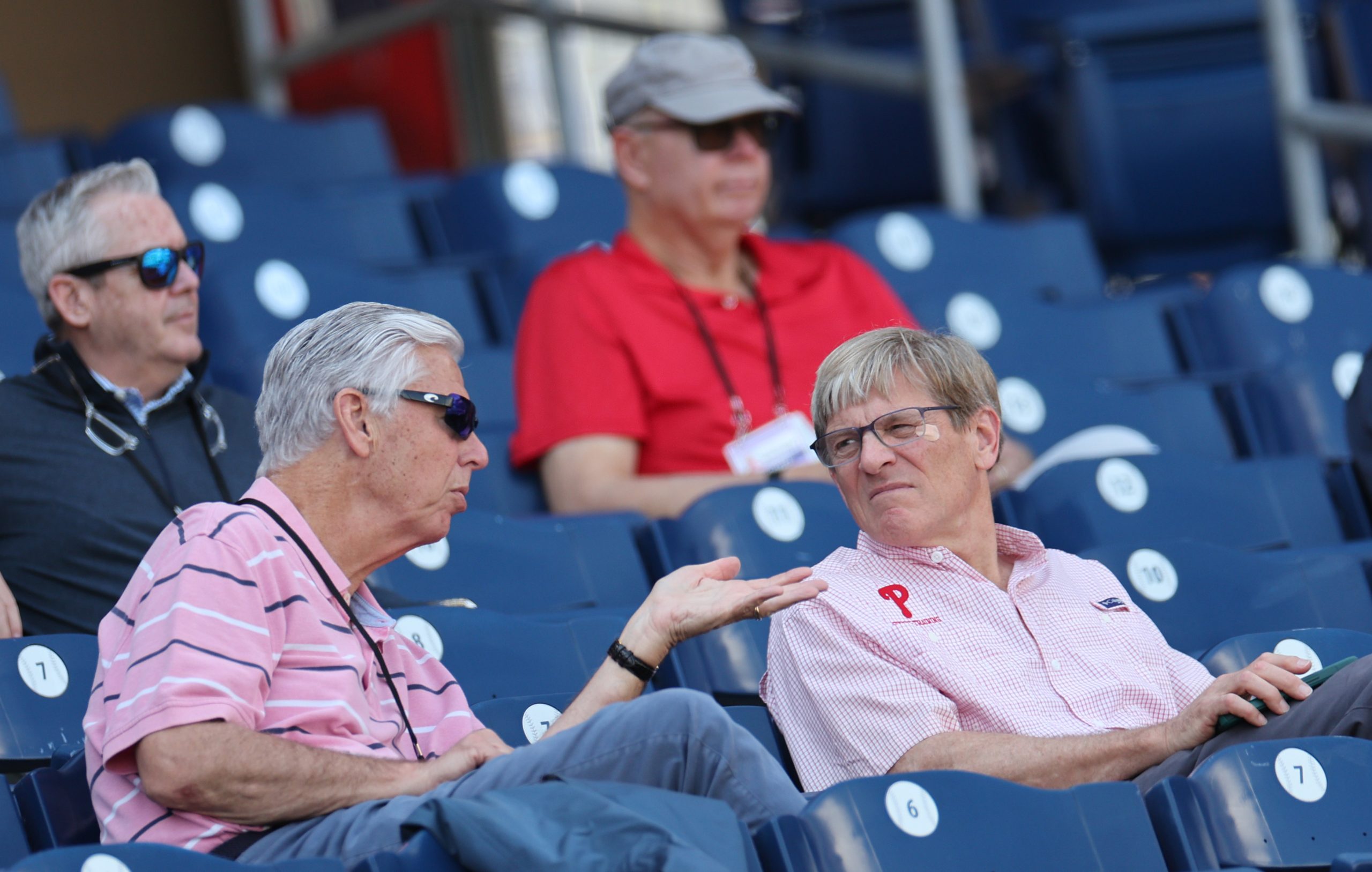
Under owner John Middleton (right) and president of baseball operations Dave Dombrowski (left), the Phillies have been among the highest-spending teams in baseball since 2022.David Maialetti / Staff Photographer
The Phillies have nine players under contract in 2027 for roughly $218 million, as calculated for the luxury tax. Middleton isn’t among the owners on MLB’s labor policy committee and said he hasn’t been informed if the proposed cap would take effect next season.
“That’s all going to be a matter of negotiation,“ he said.
In that case, doesn’t president of baseball operations Dave Dombrowski have to account for the possibility before he trades for a player who is under contract beyond this year?
“I think you have to be aware of it, you have to ask questions about it,” Middleton said. “But at the end of the day, because the range of outcomes is so wide, I think you have to just do what, in your judgment, is in your best interest.
“Philosophically, Dave and I approach these things as maximizing our ability to win today with maximizing our ability to win in the future. … That remains our philosophical construct, and we’re going to kind of move down that path.”
The Phillies continue to pursue an elusive World Series with a core of thirtysomethings who aren’t getting younger. They came out of the All-Star break with the fifth-best record in the National League (54-43) — and tied with the Brewers for the best mark in baseball since April 28, when Don Mattingly took over as manager.
But there’s also a Jenga quality to the roster. With a collection of stars at the top and little depth below them, it feels like the removal of one piece could leave the entire thing teetering on the brink of collapse.
“I think you know what we need, what we’re good at and what we’re not good at right now,” Bryce Harper said during the All-Star break. “John wants to win. He’s going to put all his chips in where he needs to, but he’s going to be smart about our future as well.
“Obviously I like the future of our organization and we need our future, but you’ve got to try to win as well. Whatever that looks like, I think Dave’s going to do a great job — or I hope he does — and get the things that we need.”
Let’s dive in, then, on the Phillies’ three biggest needs — and where they could look to fill them.
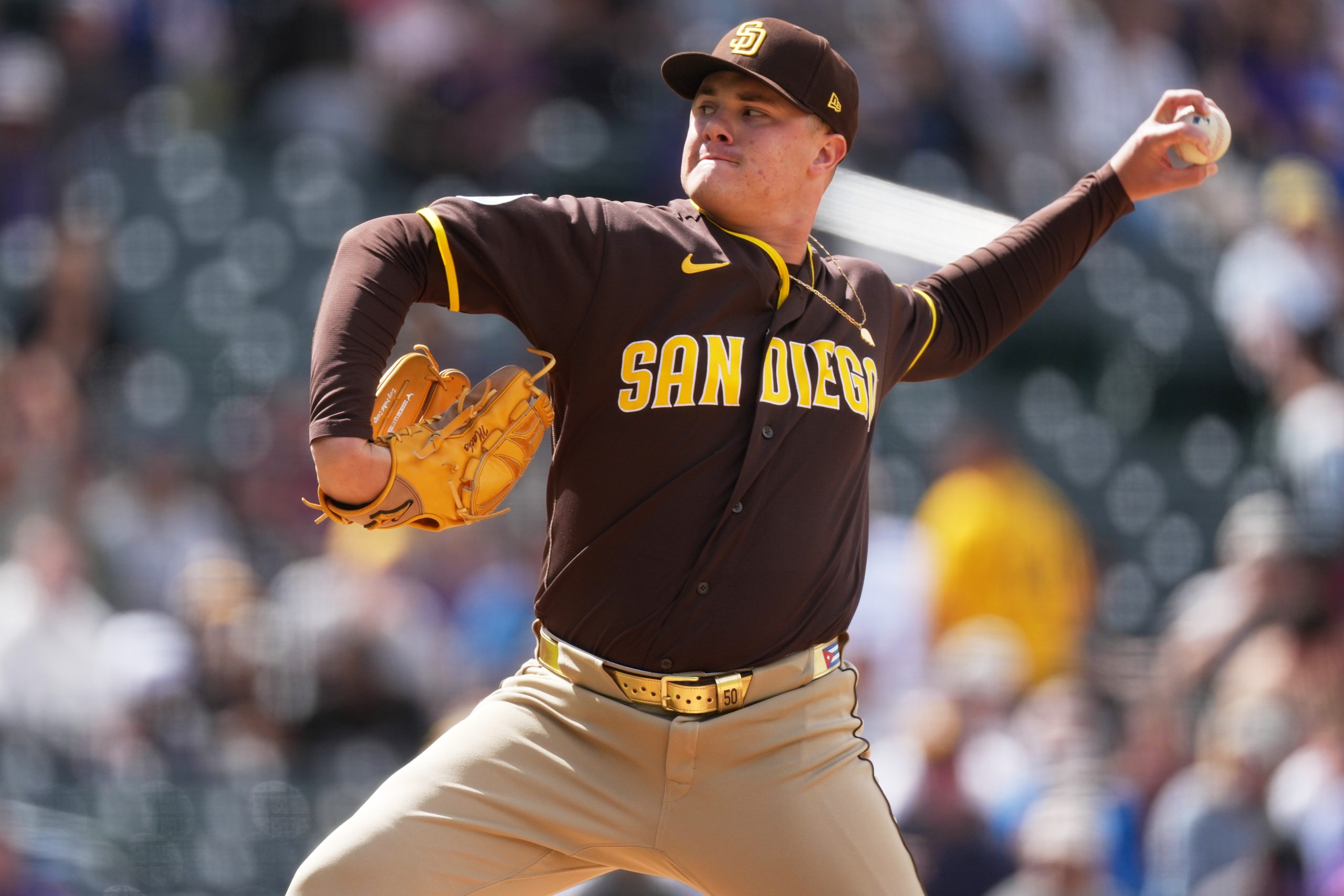
Padres lefty reliever Adrián Morejón is eligible for free agency after the season.David Zalubowski
Bullpen
Late-inning meltdowns torpedoed the Phillies in the 2023 and 2024 postseasons, so they traded two touted prospects at the deadline last year for Jhoan Duran.
And the Durantula has dominated.
But what’s the point of having one of the best closers in baseball if the bridge to him is rickety?
The bullpen vaulted to the top of the Phillies’ priority list this week after they lost Brad Keller for the season with a torn elbow ligament. Orion Kerkering and Jonathan Bowlan are the remaining righty setup options; lefty José Alvarado has pitched better than his ERA (6.82), but not nearly good enough.
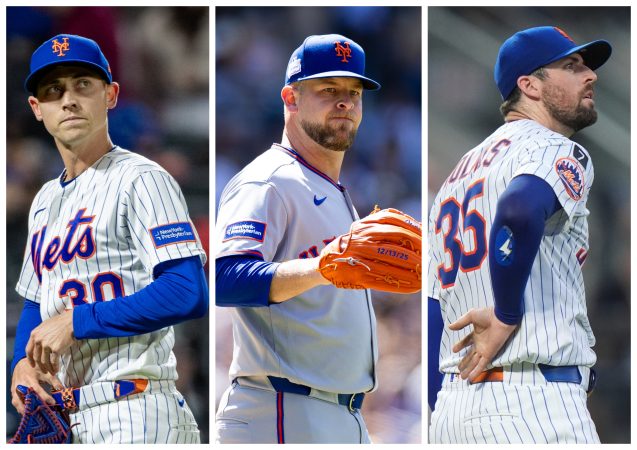
Amid a calamitous season, New York’s bullpen has been an area of strength. Need a lefty? The Mets can offer A.J. Minter (1.42 ERA entering the weekend) or 38-year-old Brooks Raley (2.02), both on expiring contracts. They’re expected to listen on right-hander Huascar Brazobán (2.70), too, although he’s under club control through 2029.
Luke Weaver might bring back the best return for the Mets. He signed a two-year, $22 million contract — identical to Keller’s deal — last winter and has a 2.03 ERA.
The Phillies and Mets aren’t often trade partners. Juan Samuel-for-Lenny Dykstra (and Roger McDowell) in 1989 was a long time ago. But there are a few recent examples. In 2018 and 2019, the Phillies sent minor leaguers to the Mets for Asdrúbal Cabrera and Jason Vargas, respectively.
Another team to watch: the Padres. They lost 11 of 16 games before the break and slid to 3½ games out of a playoff spot. And they open the second half with 10 games on the road, seven of which are in Atlanta and Miami.
It isn’t general manager A.J. Preller’s style to sell. But if the Padres keep plummeting, walk-year lefty Adrián Morejón could be a logical chip. The hard-throwing 27-year-old has a 3.42 ERA and 58 strikeouts in 50 innings.
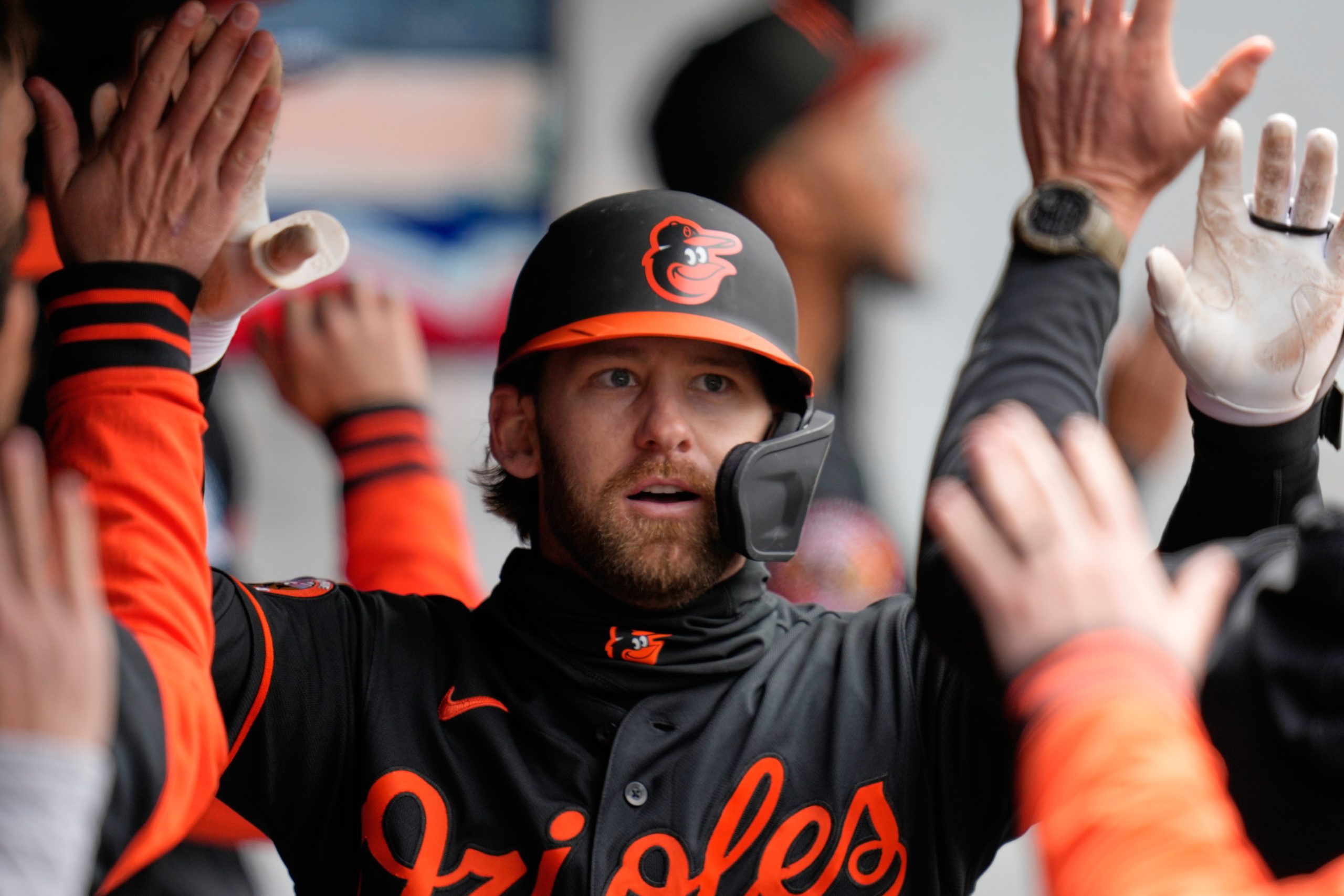
Orioles outfielder Taylor Ward went into the All-Star break with a .387 on-base percentage, seventh in the American League.Sue Ogrocki
Right-handed hitter
Stop us if this sounds familiar: The Phillies are looking for a righty-hitting outfielder.
At each of the last two deadlines, Dombrowski traded for an outfielder who bats from the right side: Austin Hays in 2024 and Harrison Bader in 2025. Then, last winter, the Phillies signed Adolis García.
García, like Keller, is out for the season. And like Keller, his absence left a void, even though he didn’t make the impact the Phillies hoped in the middle of the lineup.
Brandon Marsh is presently the only regular outfielder. Justin Crawford and Gabriel Rincones Jr., both rookies, start against right-handed pitchers; Derek Hill and infielder-turned-outfielder Edmundo Sosa face lefties.
It isn’t ideal.
Entering the weekend, the Phillies were tied for the majors’ worst on-base percentage (.302), including a .271 mark from the right side of the plate. It’s difficult to score runs consistently when so much of the offense depends on Kyle Schwarber and Harper going deep.
“You want to have a club that does everything — hits the ball out of the ballpark, gets on base, doesn’t strike out, puts the ball in play,” Mattingly said. “You’re never going to be perfect in who you are.”
But the Phillies can be better about reaching base at a higher clip.
One player who makes sense: Taylor Ward.
Ward, 32, entered the weekend with six homers for the Orioles after averaging 24 in the last four seasons for the Angels. But he has swapped power for on-base ability, reaching at a .387 clip, seventh in the American League.
The Orioles were 46-51, but only two games out of a wild card. Their first nine games out of the break are against the Astros, Red Sox, and Braves, a stretch that could determine whether they buy or sell.
Mets right-hander Clay Holmes has experience as both a starter and reliever.Colin Hubbard
Three starters is mostly sufficient for the postseason, but getting there requires at least five. Aaron Nola is pitching better with a curveball- and changeup-heavy gameplan. But Andrew Painter has gotten mixed results in triple A, leaving Alan Rangel as the No. 5 starter.
Here again, pay attention to the Mets.
Clay Holmes has been out since May with a fractured right fibula. But interim manager Andy Green told reporters Thursday that the 33-year-old righty is “inching closer” to a minor-league assignment.
Because Holmes had a 2.39 ERA in nine starts before the injury and a 3.53 mark in 31 starts last season. And in the three years before that, he was an excellent late-inning reliever, with a 2.85 ERA and 74 saves for the Yankees.
Holmes has a $12 million player option for next season. The Mets are open to discussing an extension, according to SNY.TV. But they could also trade Holmes, then try to sign him back in the offseason. Because there’s going to be substantial interest in a pitcher who can deepen a contender’s rotation down the stretch before shifting into the bullpen for the playoffs.
On Oct. 28, 2003, the 76ers opened their regular season at home — the arena was called the Wachovia Center then — with an 89-74 victory over the Miami Heat. It was the first game of Randy Ayers’ head coaching career, a career that would last just 52 games before he was fired. The Sixers’ starting lineup that night would make for a trivia question that would stump even the most obsessive hoops historian. Can you name the five? Don’t bother trying. They were Allen Iverson, Eric Snow, Derrick Coleman, Kenny Thomas, and John Salmons. It was, to put it mildly, a long time ago.
The next night, LeBron James played his first game in the NBA.
It is not enough to say that James has been with us ever since, for more than 22 years. It is not enough, now that the 76ers are reportedly one of the few franchises for whom James might choose to play this season, to say that he would be a nice, snug fit with Tyrese Maxey, Jaylen Brown, VJ Edgecombe, and Joel Embiid (when Embiid is healthy enough to suit up). For much of those two decades-plus, he has been the dominant figure in professional basketball and, at times, in all of sports. If your primary thought about a James-Sixers union is, He’d be the perfect power forward for this team, you’re shrinking him to a ridiculous size.
Immediately upon his arrival, he would be the biggest sports star in this city, beyond any of his teammates, beyond anyone on the Eagles or Phillies. A talk-radio debate about Jalen Hurts would be a literary salon next to the daily LeBron discourse.
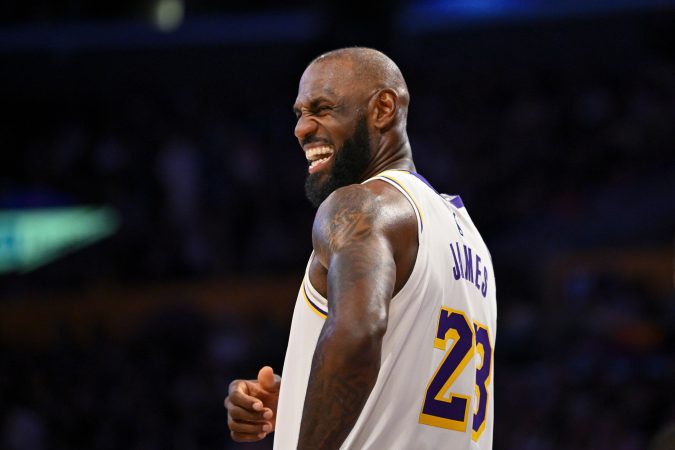
LeBron James’ arrival would dwarf that of Bryce Harper and other superstars.Mark J. Terrill
Steph Curry changed the way basketball was played and the way boys and girls around the world wanted to play it, and among the fraternity of NBA players themselves, Kobe Bryant was more respected and feared, for his preparation and cutthroat competitiveness, than James. But James has been greater longer than any other player in the sport (with the possible exception of Kareem Abdul-Jabbar, if you count his Lew Alcindor/UCLA years).
Set aside, if possible, the four NBA championships and the 10 Finals appearances and the league’s career scoring record and the three Olympic gold medals and the other records he has set. His choreographed announcement in 2010 that he was leaving the Cleveland Cavaliers for the Miami Heat was the 21st century’s answer to the revelation that Kristin Shepard had pumped two bullets into J.R. Ewing’s belly. It changed everything about the power that elite players held over their respective teams because it showed elite players that they held power over their respective teams. Pro sports hasn’t been the same.
Finding an athlete comparable to James in popularity and influence is difficult enough, let alone one who arrived in Philadelphia during the middle stage or latter half of his career, after he had established his galactic superstardom. Wilt Chamberlain already had been a high school phenom here when the Warriors made him a territorial pick in the 1959 NBA draft. Julius Erving was the “Babe Ruth of basketball” — at least, that’s how Sixers general manager Pat Williams described him in trying to persuade owner Fitz Dixon to cough up the money to acquire Dr. J. But Erving had spent six years in the relative obscurity of the ABA; telling someone you had seen him play for the Virginia Squires or New York Nets, whether in person or on TV, was akin to claiming you had spotted a Sasquatch.
Allen Iverson was a pop-culture revolutionary with the Sixers for introducing hip-hop style and fashion into the mainstream; his on-court accomplishments, though, don’t stack up to James’. Bryce Harper was as well known as any player in Major League Baseball when he signed with the Phillies in 2019, but he didn’t and still doesn’t have anywhere near the global recognition and cachet that James does. We’re talking an all-timer among all-timers here.
None of this context and history means that James will sign with the Sixers, and none of it means that they’ll win a championship for the first time since 1983 if he does. But it does provide a good counterbalance to the muted public reaction to the prospect that James could become a Sixer any day now. Yeah, he’s 41. Yeah, he has his coterie of agents and handlers and podcasters and supplicants. Yeah, he could turn out to be a handful or worse, especially if he wants to be the alpha on a team of younger, talented players who believe their time is now and aren’t interested in taking a backseat to anyone, even to one of the five best players ever.
Cool. I’ll believe LeBron will sign with the Sixers when I see it; if I had to guess, I’d say he opts for a charming third go-round with the Cavaliers. But if he does come here … bring it on. Bring on the hope and expectations and the potential chaos. LeBron James in Philadelphia could be a coup, and it could be a disaster, and that volatility would be the fun and fascinating part of it. When Michael Jordan came out of retirement and joined the Wizards in 2001, just two years before James’ debut, The Washington Post assigned a writer, Michael Leahy, to cover Jordan and Jordan alone — a reporter whose beat wasn’t the cops or the courthouse or the ‘burbs or the basketball team, but one man. To my editors: Sign me up.
On July 18, 1923, this Phillies fan, real name Robert Cotter, caught a foul ball in the right-field bleachers during a day game against the Chicago Cubs at North Philly’s National League Park.
And the Phillies wanted the ball back.
The 11-year-old refused to cough it up to security guards, nicknamed “red caps.”
“I started running up the steps to get out,” Cotter later recalled. “I looked up and saw a red cap [guard] coming toward me. I turned around to run the other way, and there was another one standing behind me.”
Tough kid
It may be important to note that “Toughie Reds” did not pay for his ticket.
The kid and his brother, Raymond, ran out of their house on North 15th Street toward the ballpark, and climbed up a rain spout and into the ramshackle ballpark unofficially nicknamed (derisively by The Inquirer) “Baker Bowl.”
But not paying the price of admission seemed to pale in comparison to taking home the ball.
Baseball precedent
Since Cotter would not relinquish his grip on the ball, ownership saw an opportunity.
It was a chance to establish, once and for all, a legal precedent.
The Phillies’ policy in the 1920s said fans who caught foul balls had to give them back. They were team property, and not souvenirs. Mostly because kids like Cotter would try and sell the balls outside the park after outrunning the red caps.
On that July day in 1923, he couldn’t outrun them.
He was pulled into a nearby police station, where he was arrested for larceny, and spent the night in the House of Correction.
The next morning, Cotter and a Phillies rep went before a Municipal Court judge. The court sided with the kid, who was “following his natural instincts,” the judge noted, before adding: “It’s a thing I would do myself.”
Cotter walked, and the Phillies instituted a new policy of allowing fans to keep balls hit into the stands. And, eventually, every team in the major leagues would follow suit.
In 1998, to show there were no hard feelings, the team welcomed back Cotter and his family to Veterans Stadium, and he left with autographed baseballs from the team and Phillies Hall of Fame pitcher Robin Roberts.
With Eagles training camp drawing nearer, The Inquirer is taking a closer look at the more than three dozen new faces who are expected to report along with the rest of the team on July 28.
Player: J.T. Gray
Position: Safety
Age: 30
Previous experience: Gray is a veteran safety with eight years of NFL experience. His primary position is safety, but he cut his teeth as a special teamer, even earning a first-team All-Pro nod there with the Saints in 2021. He spent his first seven years in the league with the Saints before bouncing around to the Ravens, Broncos, and Buccaneers. The Eagles signed him to a one-year contract in March.
Path to a roster spot: Gray’s chances of making the final 53 are decent. He’s just two years removed from being a second-team All-Pro special teamer, so he’d bring much-needed experience to that unit. He also has some safety experience, which projects as the Eagles’ weakest position group at present.
Fun fact: Gray’s nickname in New Orleans was “kingpin” because he’s an avid bowler. His best score was a 285.
Quotable: “I’m certainly a little biased, I coach him every day, but I don’t know if there’s a core special teams player in the league that I would trade J.T. Gray for,” said former Saints coach Darren Rizzi. “He’s an outstanding gunner. That’s where he probably gets most of his recognition, but at the same time, here’s a guy who’s really good in the return game as a blocker.”
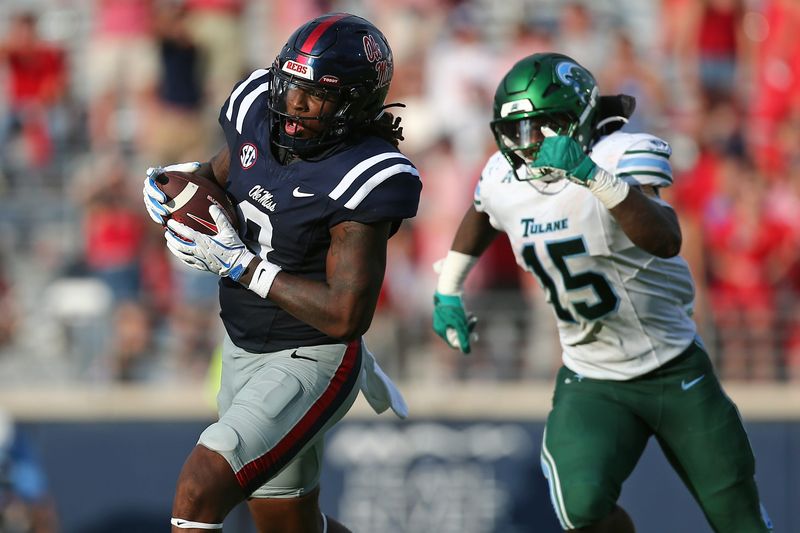
Tight end Dae’Quan Wright (8) was part of a College Football Playoff team at Ole Miss last year. Petre Thomas, Petre Thomas-Imagn
Player: Dae’Quan Wright
Position: Tight end
Age: 22
Previous experience: The Eagles signed Wright as an undrafted free agent in May. He played four years of college football at Virginia Tech (2022-23) and Ole Miss (2024-25). The Athletic’s Dane Brugler described him as a “joker” tight end “whose snap count should increase with every game.”
Path to a roster spot: It won’t be an easy road for Wright to make the final roster. His college resumé wasn’t stellar, and he’ll have to beat out a crowded tight end room that features Dallas Goedert, rookie Eli Stowers, Johnny Mundt, Grant Calcaterra, Stone Smartt, and E.J. Jenkins, among others.
Fun fact: Wright’s first position at Perry High School in Georgia was quarterback. He once threw an 85-yard touchdown and claims he can “still do that.”
A change to Division I men’s soccer looks to be on the horizon.
After years of discussion and debate, the NCAA Men’s Soccer Oversight Committee adopted legislation to shift the sport’s season from the fall to a two-semester schedule. The change was set to go into effect before the 2027 season. But on June 24, the NCAA announced that the Division I Cabinet remanded the proposal for additional review.
Twenty conferences opposed the measure, according to the NCAA’s release, taking issue with “the duration of the season” and “the lack of clarity about related rules.” Additionally, the Cabinet noted issues relating to how the change could impact the “student-athlete academic experience.”
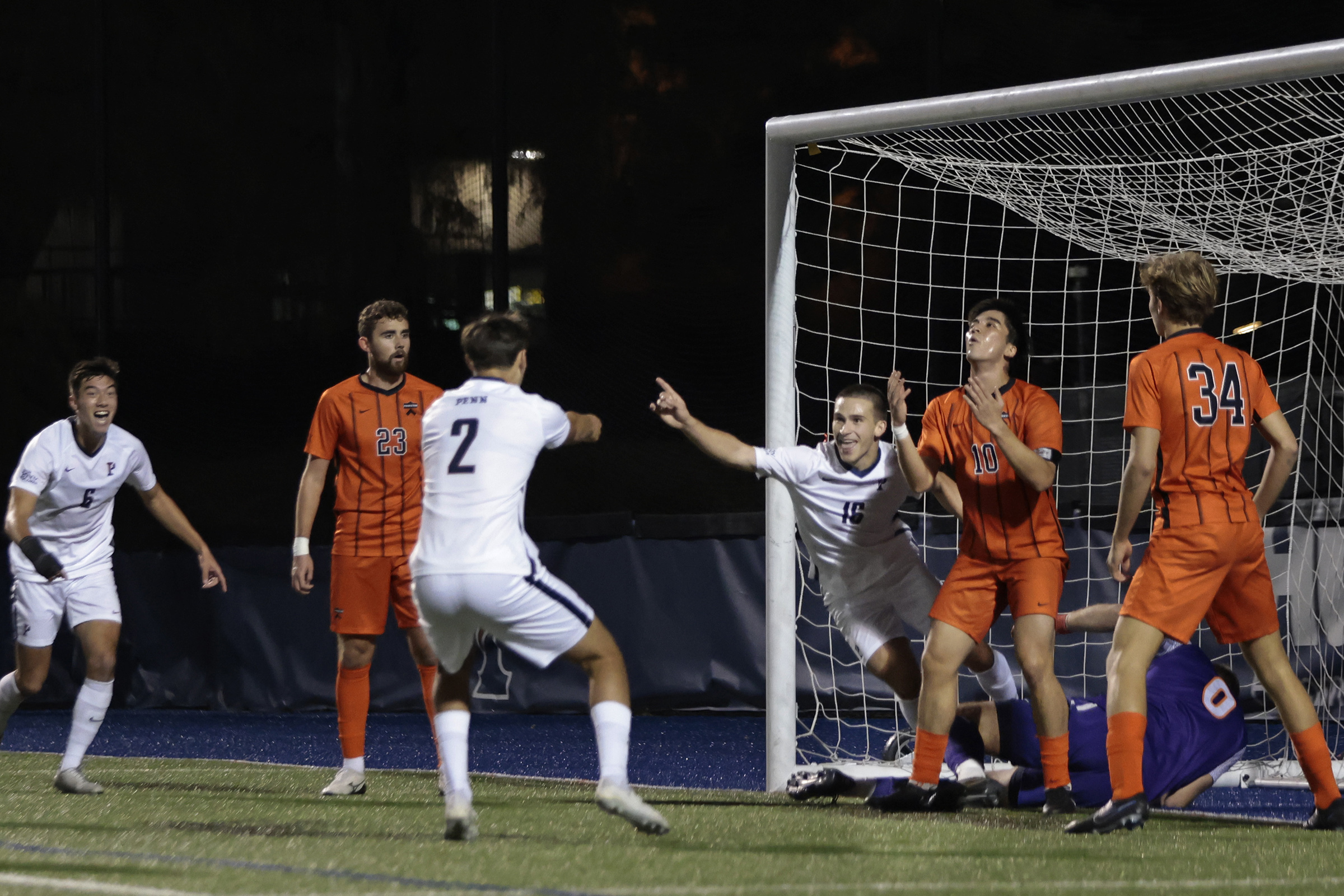
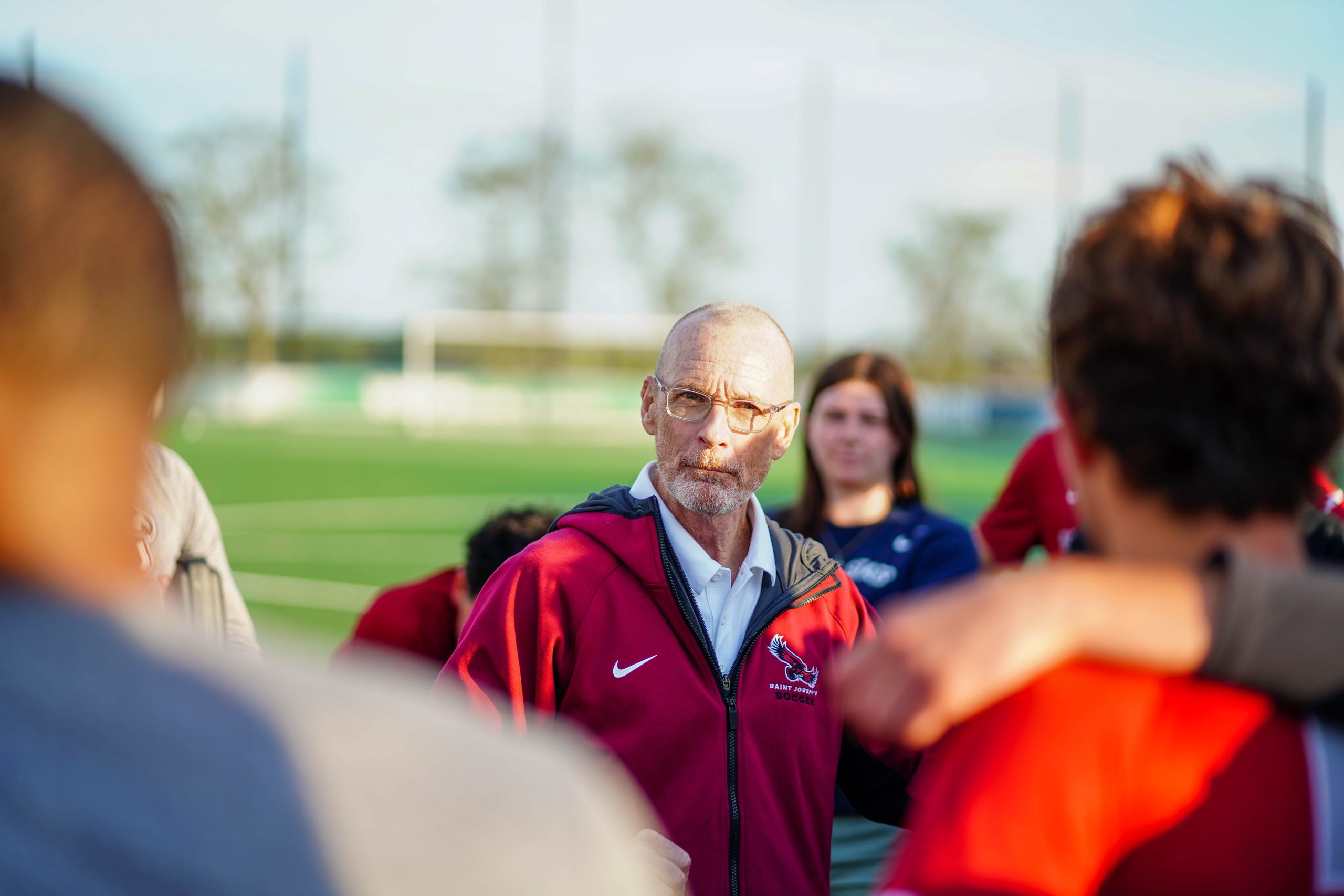
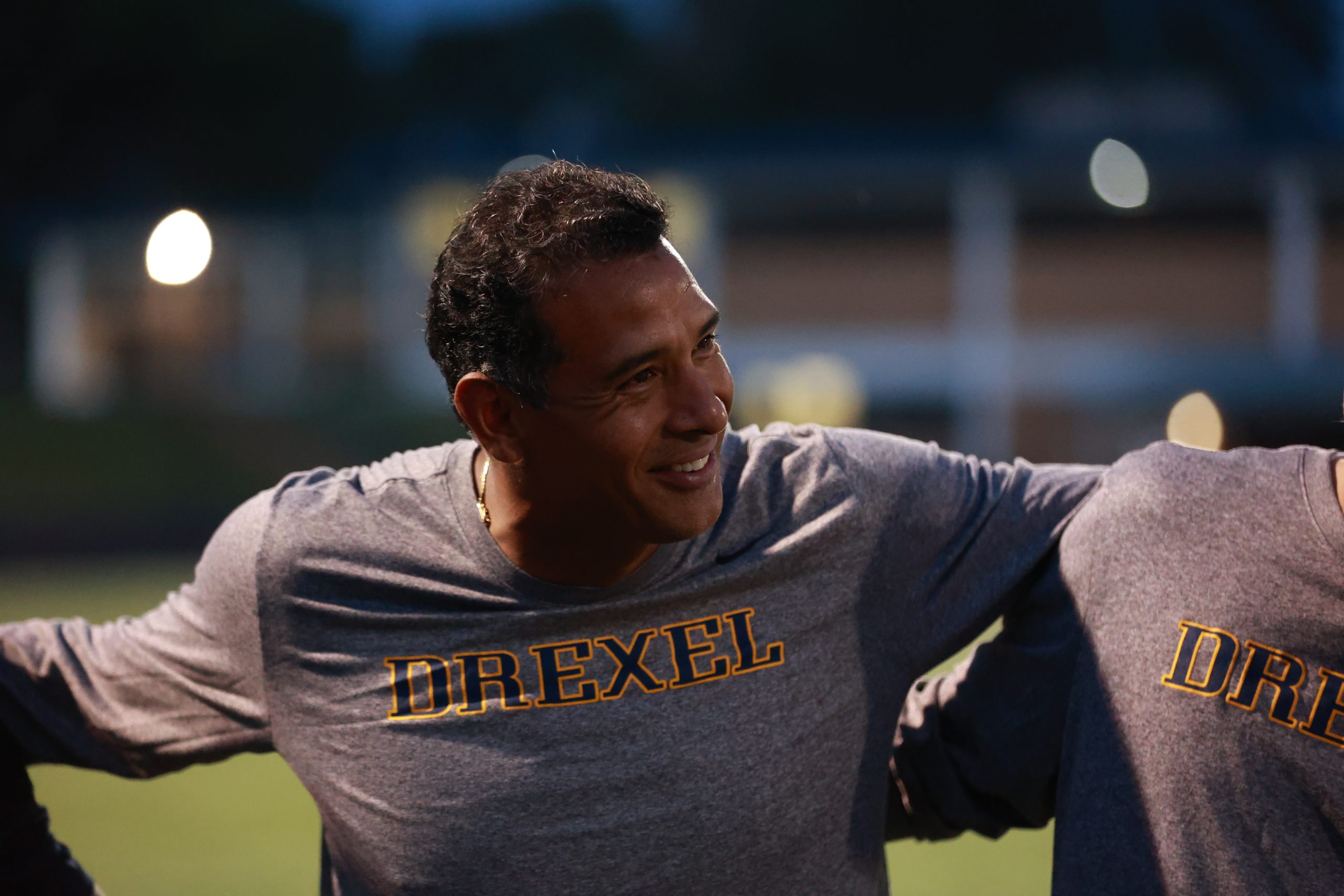
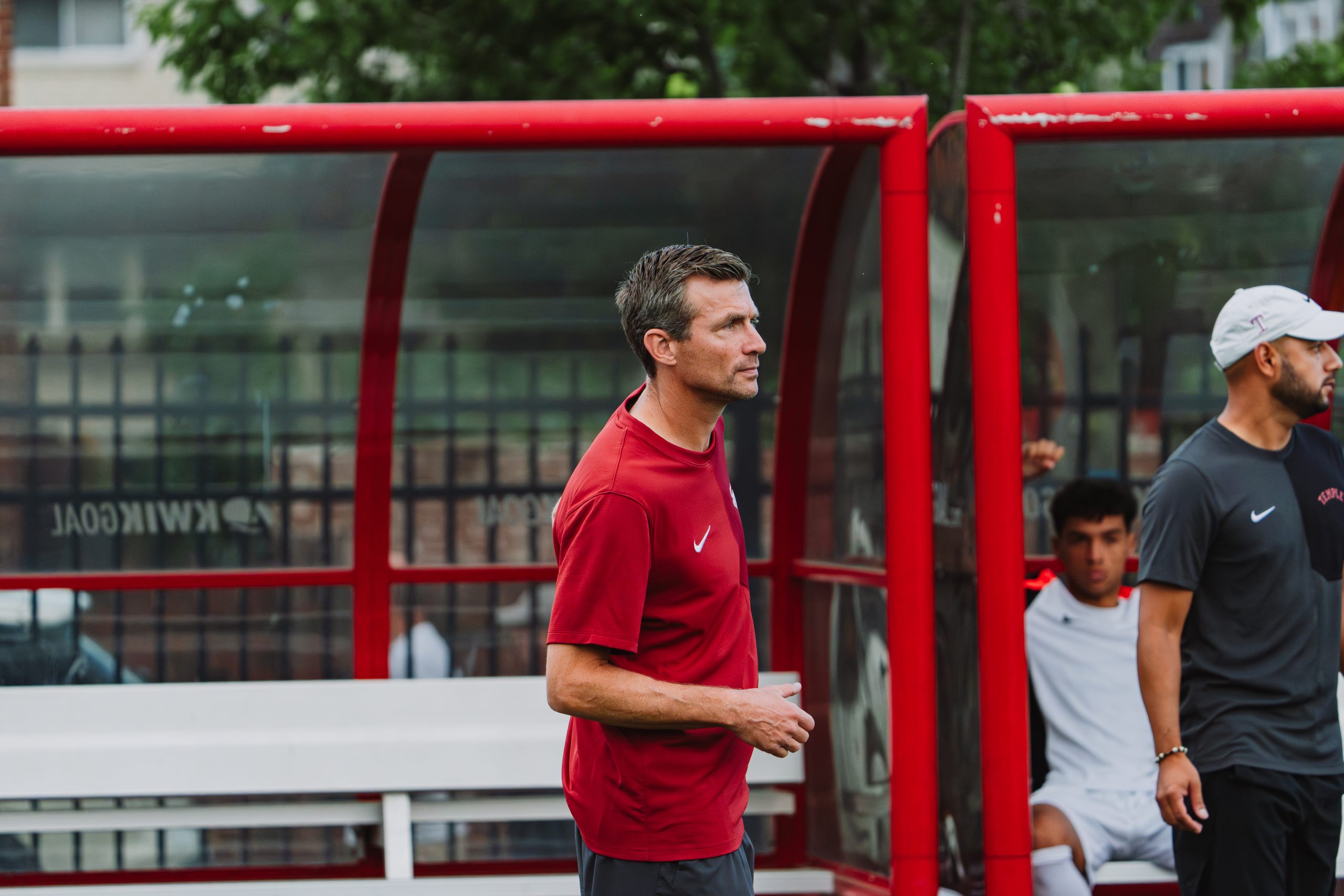
Philadelphia has six Division I men’s soccer programs: Penn, La Salle, Drexel, Villanova, Temple, and St. Joseph’s. The head coaches of each program reacted to the possible change. Some supported it, while others pointed out a variety of flaws.
Player development
Critics of the one-semester season have long lamented that the current setup impacts player development. Villanova head coach Mark Fetrow, who noted his program has been “big supporters” of the new legislation, believes a two-semester format will accelerate development and may be a necessity for college programs.
“When you space the games out, and now you’re saying we’ve got a year of competition, we can now periodize our training in a way where we’re getting more out of our training sessions from a week-to-week basis,” Fetrow said. “We’re really maximizing performance because guys are just healthier on game days. If we want to stay relevant, if we want to evolve, because the game has evolved a lot in the United States in the past 10 years, then we have got to be willing to make some changes as well.”
A main competitor for colleges, in terms of acquiring and developing talent on a path to the professional ranks, has been Major League Soccer Next Pro, MLS’s path to pro league. But a longer season could put college soccer on par with the emerging professional league, says Taylor Thames, La Salle’s head coach.
Oliver Pratt (No. 16) played four years at Penn before signing a pro contract.Elizabeth Robertson / Staff Photographer
“I think it makes us much more competitive in relation to MLS Next Pro, and some of these USL One contracts that are starting to take some high-level players from the college landscape, and it helps us develop them for longer spells,” Thames said. “There’s a bigger development cycle.”
Oliver Pratt, a 22-year old defender for MLS Next Pro’s Union II, played four years at Penn. He had to graduate a semester early to sign with an MLS team in time for the season. Having now experienced a full year of training in the pros, Pratt better understands the upside to shifting the college format.
“I definitely would have been able to maximize [training] more, and I would say be able to significantly improve within one season,” Pratt said. “It’s a different transition for me now. I’m dealing with a 10-month season, and my body’s definitely taking a toll.”
However, the majority of college players are not going pro, St. Joe’s coach Tim Mulqueen pointed out. He also noted that increased development would benefit the “top 1% or 2%,” but argued “that would happen for the top players anyway.” Mulqueen has seen premier development firsthand. He served in multiple roles with U.S. Soccer, including as an assistant coach for the 2008 U.S. men’s Olympic team.
Meanwhile, Drexel coach David Castellanos believes the current system is yielding strong results and a “drastic change” would not be necessary. He said that the old model has produced “national team guys in the 1990 World Cup” and “MLS head coaches.”
Scheduling games, shifting operations
In a two-semester season, programs would have to adjust how and where games are scheduled.
Under the new format, the maximum match limit for each team would stay at the current cap of 25, meaning no additional games would be added in the 2027 season. With this, programs are required to schedule at least seven games or at most 10 games in the spring season. A team cannot opt to play all of its games in the fall.
Having to schedule games and additional practices in the spring could create issues for teams that share their facilities with other programs. For example, St. Joe’s shares Sean Sweeney Field with both of the school’s lacrosse teams and the women’s soccer program.
Tim Mulqueen has served in multiple roles with U.S. Soccer, including as an assistant coach for the 2008 U.S. men’s Olympic team. St. Joseph's Athletics
“When you’re sharing [facilities] with lacrosse or field hockey, that’s going to stress training times,” Mulqueen said. “It’s going to stress the [operations] people, it’s going to stress our trainers, who in small schools do multiple teams.”
Penn and Villanova are the only two local Division I programs that boast soccer-specific facilities, meaning that intra-program scheduling conflicts are unlikely to occur. Still, Quakers coach Brian Gill expressed concern with how the change may affect the other resources that his program relies on.
“Your infrastructure gets shared, so if that’s the actual facility or some of the people: trainers and strength coaches, sports information,” Gill said. “There’s a lot of shared overlap there, so that’s probably one of the biggest challenges. … How do you make this all feasible when it comes down to that stuff?”
Then, there’s the case of weather. Philadelphia boasts relatively cold Februaries, when spring play is slated to resume. From 1992 to 2021, the city’s average temperature in the month was 36 degrees — a cause of concern for a few of the City 6 coaches.
“It’s going to be brutal,” said Castellanos. “If you take, for example, the winter that we just had this year and then you’re telling me our playing season is going to be in the spring. You need January, February for preseason to ramp these guys up.”
Added Thames: “I think any coach should be concerned about competitive advantages — how to protect their program and fight for their program. That’s one concern that I would imagine for teams that don’t have an [indoor] bubble. [La Salle], for example.”
However, Temple head coach Bryan Green did not feel Philadelphia’s climate was a cause for concern.
“All the leagues in Europe, like Germany, have a pretty similar climate to us,” he said. “They play in December and January. It’s part of the sport to play outdoors and play in different environments and conditions”
David Castellanos believes college soccer’s current system is yielding strong results and a “drastic change” would not be necessary.Drexel Athletics
One way to escape the cold is to schedule early spring matches down South, which is what most of the area’s college baseball teams do. Fetrow noted that he has been in conversation with Villanova to “try to go down to a place like North Carolina” to start the second half of the season. Thames, Mulqueen, and Castellanos all shared similar interest.
Like anything, though, that will come with additional costs.
“Those are going to be travel expenses. I don’t see how you can get around it,” Mulqueen said. “We’ve gotten to the stage where the smaller schools, we have to adapt to what’s being done at an NCAA level that we really don’t have much say in.”
Player health
A leading factor in the new format’s adaption was the idea that spacing out games would result in fewer total matches missed due to injuries. The NCAA, in its formal announcement, wrote that increased recovery time “could support injury prevention and return-to-play protocol.”
For the most part, the area’s coaches agreed with the reasoning.
“Say a kid needs two and a half weeks to get back [from an injury], there’s a good chance that the player missed five or six games through one injury,” Gill said. “Versus [in the new format], the player maybe misses two to three games. You’re sort of giving some space for guys to naturally come back.”
While Castellanos agrees that total games missed will be cut down due to the new format, he believes that a longer season may bring more “wear and tear” injuries.
“When we think about these injuries, we think about some of the major ones, but we’re not talking about the soft tissue ones,” Castellanos said. “Now that you go 10 months, you’re on it every single day, right? I think that you know these things can linger. It’s going to put a lot more pressure on the training staff to maintain these guys to be healthy for 10 months.”
Bryan Green has led the Owls as head coach since 2022.Temple Athletics
Mulqueen is also concerned about new injuries sprouting due to the format.
“In my experiences, when you have more time, you do more things,” Mulqueen said. “No one’s going to sit idly by and say, ‘Right, we have 10 months now, or we’re going to give guys time off.’ Well [if] you get bad results, you’re going to do more.”
Now, Philadelphia’s coaches are in a waiting game to see when the proposal will make its way back to the NCAA’s desk. In the meantime, they will continue to prepare for what feels like the inevitable.
“There’s all kinds of different challenges every season, no matter what,” Green said. “I think that’s the one thing that college athletics does really well, is they’re nimble and adaptable, and this is just one more thing that we can prove that we can do.”
When Shane Gillis fans file into Lincoln Financial Field on Friday night for the actor and comedian’s almost sold-out show, they’ll never know that the venue was the center of the soccer universe in Philadelphia for two weeks of the FIFA World Cup.
At least there will hardly be any reminders.
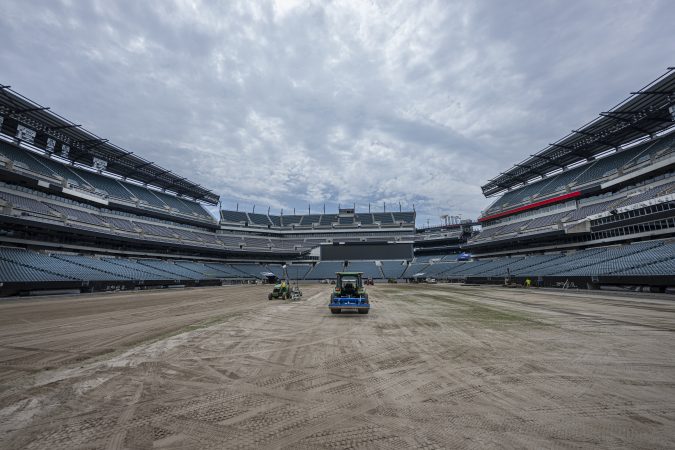
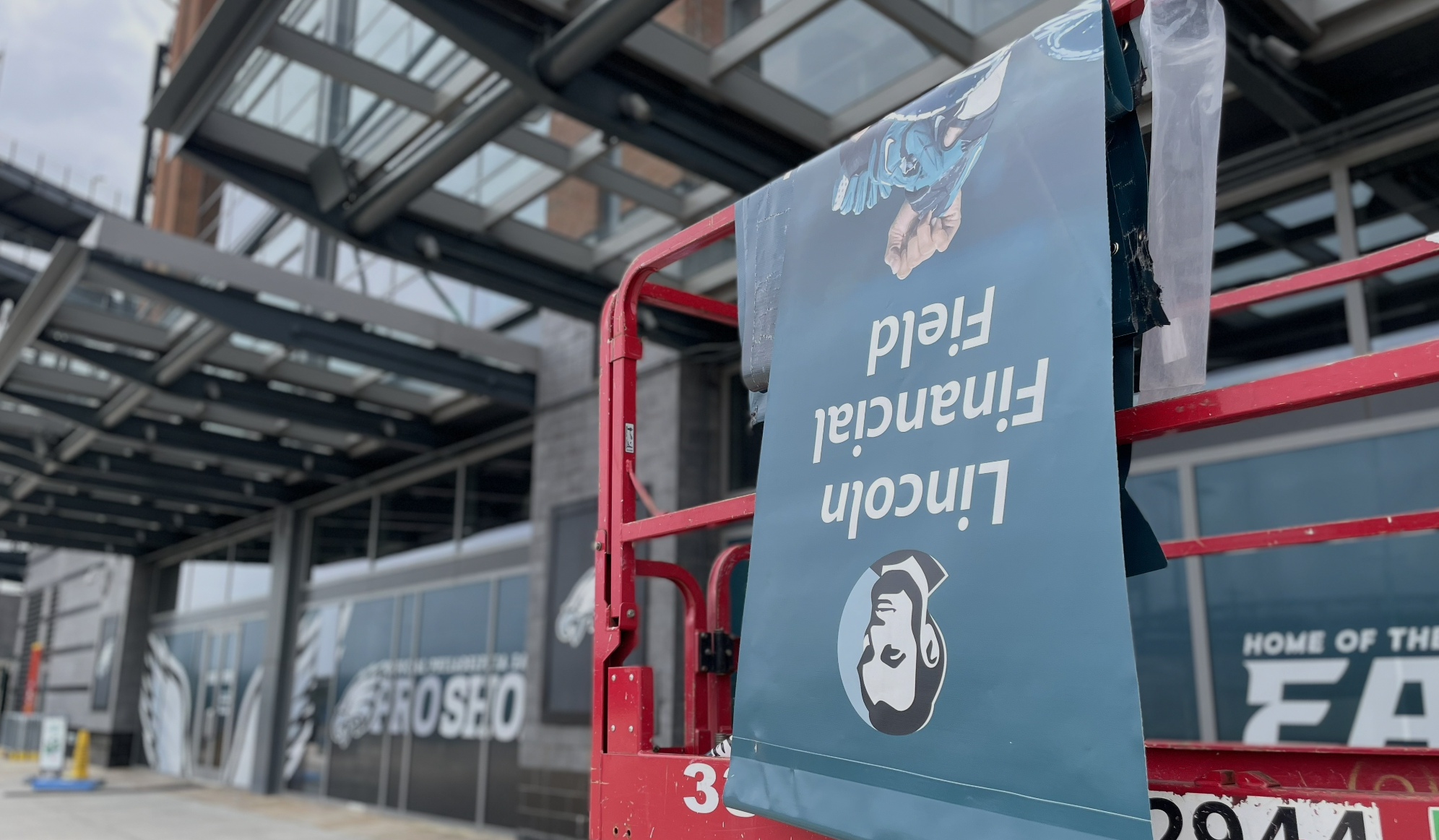
Signage is gone. Seats that were removed to make way for a wider field have been replaced. And when you drive past the south end of the field along I-95, the outline of Abraham Lincoln’s head has returned, instead of the giant blue banner that covered the Lincoln Financial Field sign.
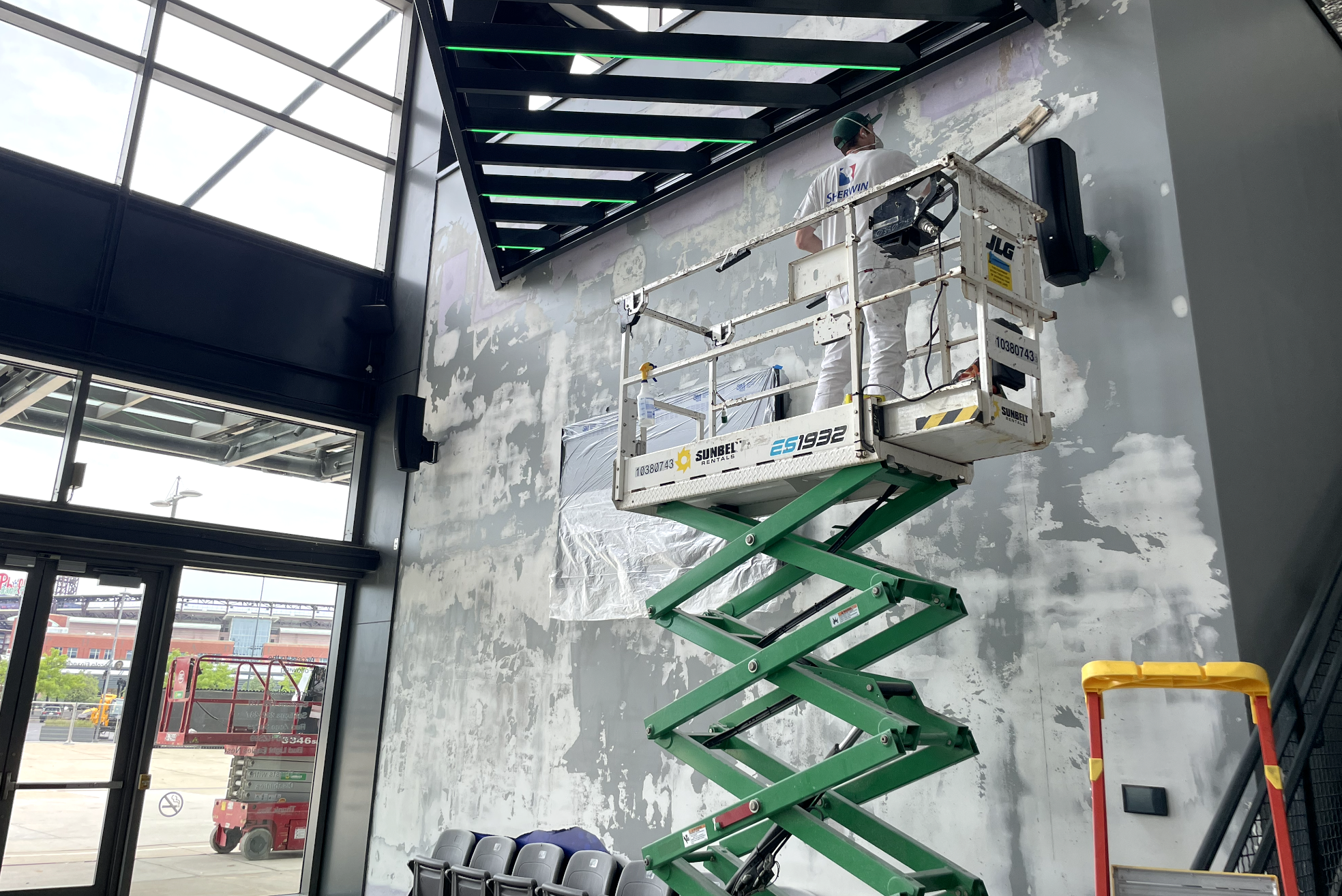
In just 11 days, a team of union workers — from crane operators to field turf professionals to painters — flooded the venue, ripped down anything that had FIFA attached to it, and turned Philadelphia Stadium back into the Linc.
The giant flags during pregame ceremonies? The way finders located both inside and outside the stadium? The caps on the team benches conveying which side each nation has on the sideline?
There’s a WhatsApp group for that.
“A lot of our staff and volunteers who come from those countries get to take them, and people get just so excited when we post them in our WhatsApp group,” said Jolyon Bowman, FIFA’s chief venue operations director for the matches in Philadelphia. “We had a member of our staff the other day show off the banner that she received, and hung it up in her backyard. There’s a lot of pride among all our staff in what we accomplished. And I think people wanted to keep that.”
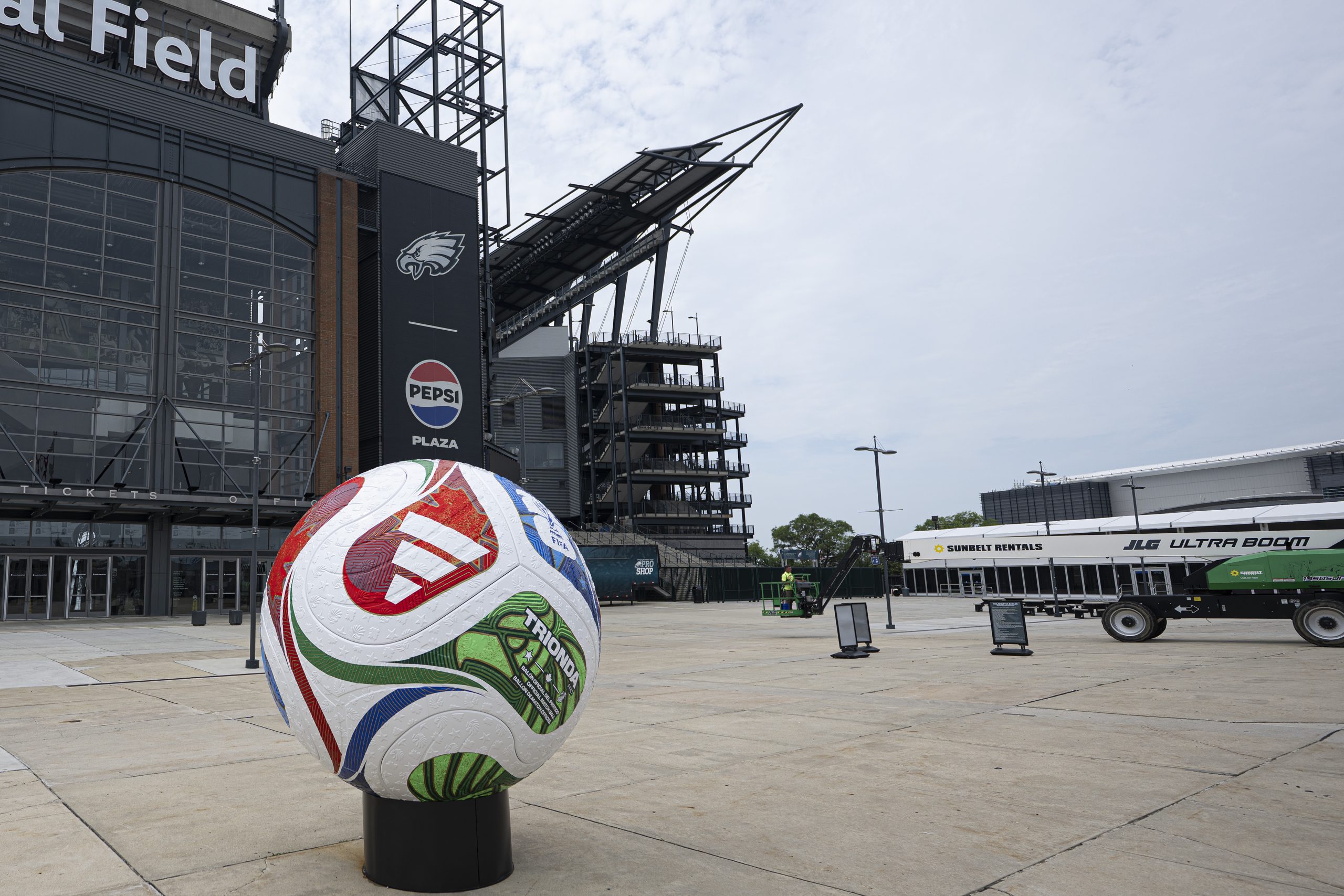
A giant sculpture of the Adidas Trionda match ball remains the only thing that recalls Lincoln Financial Field as a host for World Cup matches, as workers began dismantling signage last week.Jose F. Moreno / Staff Photographer
Bowman says for many of the banners, there’s actually a company FIFA works with that takes them and will create tote bags that also get passed on to staff members as a commemoration of the work they put in.
“We try — I mean, as much as we can — to reduce, reuse, and recycle, and I think we sure did that,” Bowman said. “There are just some things that have to go in the garbage, but a lot of that stuff ends up in the hands of the people [who] have worked the event here; they’re free to take that stuff.”
Staff at Lincoln Financial Field got an opportunity to keep some items as well, but FIFA also noted that it donated leftover food to local charities. Televisions that were used as monitors during the tournament were gifted to the School District of Philadelphia.
Jolyon Bowman, was the venue operations director for FIFA in Philadelphia for the World Cup and says that planning the breakdown happened 18 months in advance of the tournament. Kerith Gabriel / Staff
‘No room for improvisation’
The efficiency in restoring an arena back to its original look in just 11 days began 18 months before the start of the tournament, says Bowman. Coordinating labor, collaborating with the Eagles, and looking at the calendar of events for the Linc all come into play — especially when you’re not trying to overstay your welcome.
“One-hundred percent of it is all talked about and organized before. There’s no room for improvisation when you’re dealing with a change of this scale,” Bowman said. “We start talking about bumping out on the first match day of the whole tournament. We knew there was a huge concert [in Shane Gillis’ show] coming up. Lincoln Financial is going to be hosting 60,000 people on Friday, so we knew we were under the gun to get it done.”
Bowman is very familiar with the process — he’s been in venue operations for nearly 30 years. He can trace his footprint in Philly working as an operations volunteer back to when the Linc first opened in 2003 with a soccer match between European club powers Barcelona and Manchester United.
Though he’s not originally from the area, the native Ugandan who now resides in Washington D.C., says his touchpoints here are numerous, including staying in a section of West Philadelphia while his now wife attended Penn.
Work to restore Lincoln Financial Field to its original look following the FIFA World Cup took place for 11 days, with union working crews doing everything from painting to ripping up the field.Kerith Gabriel / Staff
Above and beyond
During his 18-month preparation, which also included last summer’s FIFA Club World Cup, Bowman says he got acclimated to Philly courtesy of the Eagles, to better understand the day-to-day workings and how to incorporate what they wanted to do both on and off the field.
Perks of the job? He and his team received a season credential to Eagles games to better understand gameday operations, Philly style.
“I spent almost two years in Philadelphia preparing for this,” Bowman said. “The Eagles were on board for the World Cup right after their Super Bowl victory. They gave us the keys to the stadium. I saw a lot of Eagles games and was able to prep at any event I wanted to go to.
“The Eagles gave me a credential to learn as much as I wanted and it really prepared me for the whole thing. Talking to other venue directors [in other World Cup cities], I can tell you that was really unique experience. I just felt like the Eagles went beyond what was expected in trying to host and be a great host, and that just trickled down to everybody in the city.”
That gracious hosting experience started with the Club World Cup, which offered a beta test for how FIFA stadium workers, operations at Lincoln Financial Field, and outside contractors would coexist.
Crews work to put Eagles banners back on the outside of Headhouse Plaza at Lincoln Financial Field on Friday, July 10.Kerith Gabriel / Staff
Bowman estimates “hundreds” of people were directly involved in the operations process from the set up to the restoration, along with scores more who worked in a temporary capacity.
He notes that it’s what made for one of the smoothest restoration projects he’s been apart of, piggybacking what he personally felt was one of the best FIFA World Cups in recent memory.
He would know, considering his life has been setting them up and breaking them down for over a decade.
“I’ve been doing sporting events all my life, but there’s nothing quite like the World Cup that brings that international joy and just happiness of being together,” Bowman said. “[During the June 27 Croatia-Ghana match], I left the soccer game for about 15 minutes to go check out the fan experience [in the Linc’s Headhouse Plaza], and when the DJ played Ghanaian songs, Croatians were dancing. And then the DJ plays the Croatian songs, and the Ghanaians are dancing.
“There was just so much joy, [I think people] enjoyed being together, enjoyed being in Philadelphia. This world needed a World Cup, and I’m happy that I was able to be a little piece of it.”
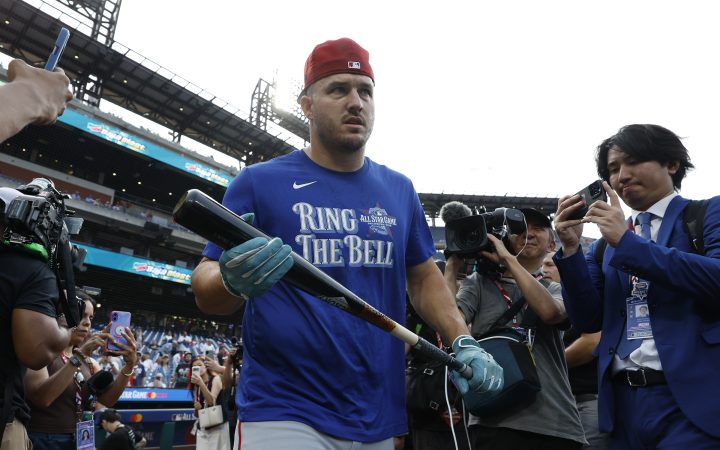
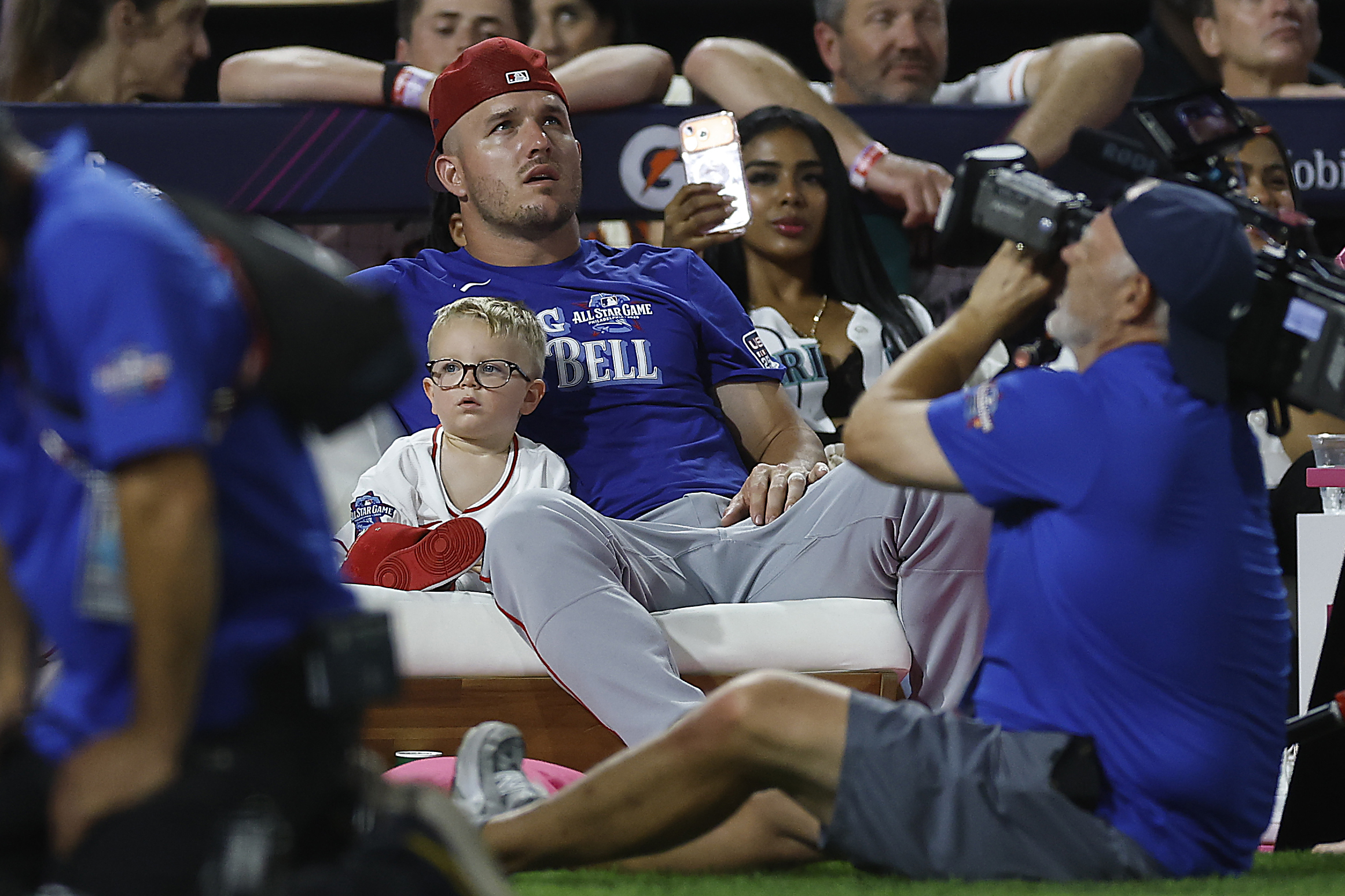
It would certainly explain the vague but consistent discomfort that the Angels superstar projected throughout his All-Star weekend at Citizens Bank Park. From the obligatory arrival-day media free-for-all to a small postgame scrum that included some folks who’d covered him since high school, Trout politely but steadfastly declined to don the homecoming crown.
“It’s been great,” the Millville native said after Tuesday night’s All-Star Game. “Being out there with the guys, seeing my family, friends, it was a special night, special couple days.”
A questioner wanted to know where it ranked. He’d played at Citizens Bank Park in high school, after all. He routinely attends Eagles games across the street. He was applauded wildly during pregame introductions.
“It’s up there,” was all Trout would allow.
Philly loves nothing more than when someone loves it back. Trout surely knows this. Yet his responses were the ones you’d expect if somebody had asked if he enjoyed the meal.
Virtually every year since Trout’s MVP runner-up rookie season, the idea of him in a Phillies uniform has surfaced like a white whale. From the trade-deadline fan fiction to the free-agent fantasy, nobody ever bothered to consider a fundamental question.
Would Trout actually want to play here?
In a lot of ways, Millville is as far away from the insanity of Philadelphia as Anaheim itself is. Trout has seen that insanity close enough at Lincoln Financial Field. Surely, he can imagine all that would await him and his family were he suddenly to become the potential savior of the Phillies.
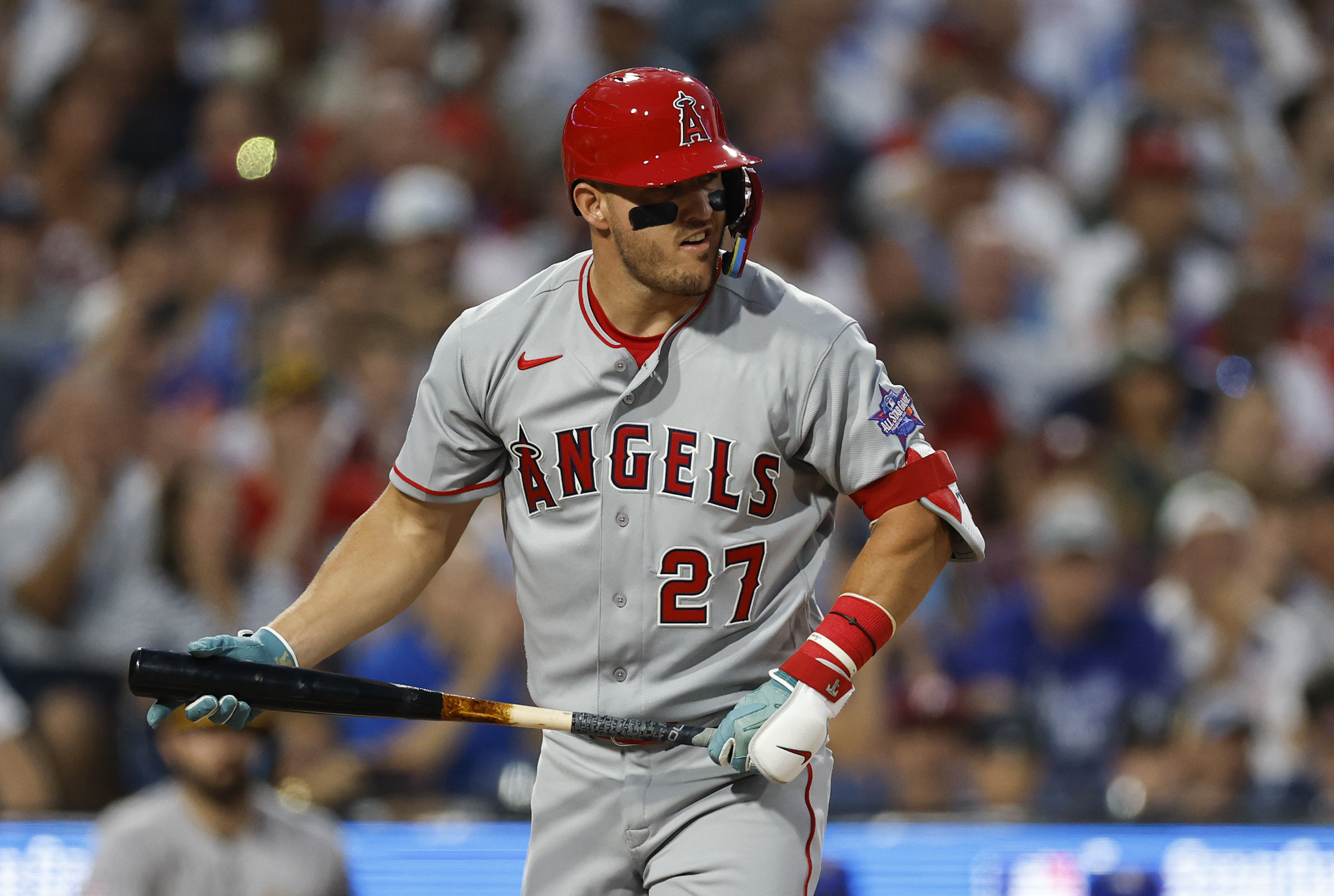
Mike Trout, a Millville native, went 0-for-3 in Tuesday’s All-Star Game at Citizens Bank Park.Yong Kim / Staff Photographer
“I hear this a lot,” Trout told reporters on Monday before the Home Run Derby. “I enjoy coming to Philly. I’m an Angel, obviously. I got a no-trade clause, so it’s ultimately my decision. But, like I said, I love Philly.”
Even if Trout wants to be here, which he has given no indication he does …
Even if the Angels are willing to accommodate it on the Phillies’ terms, which they have given no indication they do …
Even if the Phillies would dramatically increase their World Series odds by adding Trout’s stout right-handed bat to a lineup that leans further left than the DSA. Which is debatable at best …
Even if all that is true — which, again, it very likely isn’t — the Phillies would need to think long and hard about whether such a move makes sense for them.
The rest of us would need to ask ourselves if we really want to see it.
Instead of focusing on the fairy-tale beginning, let’s start with how the thing is most likely to end. That is, poorly. Very, very poorly.
Frankly, the strongest argument for Trout in a Phillies uniform is that the world as we know it may have ceased to exist by the time his contract is off the books in 2030. You only die once, right? Might as well have lived.
Other than that, let’s make sure we think about the likely reality of 2030.
Think about how Trout’s last days, maybe years, in a Phillies uniform would likely look. Think about how the Phillies would likely look as a whole.
Trout is one of the greatest athletes to ever play baseball. He is unquestionably the greatest to do it while holding Eagles season tickets (sorry, Kevin Mench). But Trout’s civic legacy has greatly benefited from the insulation of 2,700 miles. The injuries, the missed postseasons, the diminished production. Thus far, they’ve been the burden of Angels fans, whoever they are.
Mike Trout had a .739 OPS with a .326 OBP in his last 20 games before the All-Star break.Yong Kim / Staff Photographer
There will be no insulation when he is 38 years old and being paid $37 million to limp into the last year of his contract alongside a 37-year-old Bryce Harper and a 37-year-old Kyle Schwarber and a 37-year-old Aaron Nola and a 37-year-old Trea Turner and a Phillies team that needs to get its development house in order to be anything other than a soul-sucking disappointment when the year of our lord 2030 arrives.
Sure, maybe this time will be different. But there are very few scenarios where Trout in a Phillies uniform is sensible for the organization and something other than cringeworthy to watch at the end.
From the Phillies’ perspective, the depreciation calculus would be complex enough to jeopardize a deal even if both sides were open to one. Health is a significant variable. That’s true for most 34-year-old players. It is especially true for Trout, who has played 85+ games just twice in his previous six seasons and hasn’t played more than 140 since 2016, when he was 24. He is barely a week removed from returning from a hamstring strain that sidelined him for three weeks. He missed a month last season after reinjuring a knee that had previously cost him most of 2024. The 2021-23 seasons saw him deal with a calf strain, a back injury, and a fractured hamate bone. The actuarial work will require more than a cocktail napkin just to calculate Trout’s likely availability from now through October. Even more complicated is figuring out how to price the risk/reward of the rest of Trout’s contract, which will pay him about $150 million through 2030, when he will be 38 years old.
That would be true even if the short-term payoff were as decisive as many envision. It isn’t. Trout’s production has cooled off considerably since a sizzling start. He had a .739 OPS with a .326 OBP in his last 20 games before the All-Star break and a .750 OPS with a .349 OBP in his last 42. Those numbers are better than they may sound, particularly compared with what the Phillies’ overall numbers have been in the outfield alongside Brandon Marsh. But they are far from vintage Trout, which is what he was in his first 36 games, reaching base at a .436 clip with a 1.000 OPS and 11 home runs in 126 at-bats.
In the meantime, the Phillies are dealing with the reality that they have exactly one proven late-innings bullpen arm. Their trade deadline focus crystallized on Thursday with the news that setup man Brad Keller will miss the rest of the season — and presumably 2027 — with a torn UCL.
It’s pretty easy to envision how October will end if the Phillies sink resources into Trout instead of allocating them for the bullpen.