Category: Sports

  • 🦅 Six years of Sirianni | Sports Daily Newsletter

    🦅 Six years of Sirianni | Sports Daily Newsletter

    With the page turned on the FIFA World Cup, to ease the pain of soccer’s monthlong party bidding farewell, we need something to look forward to.

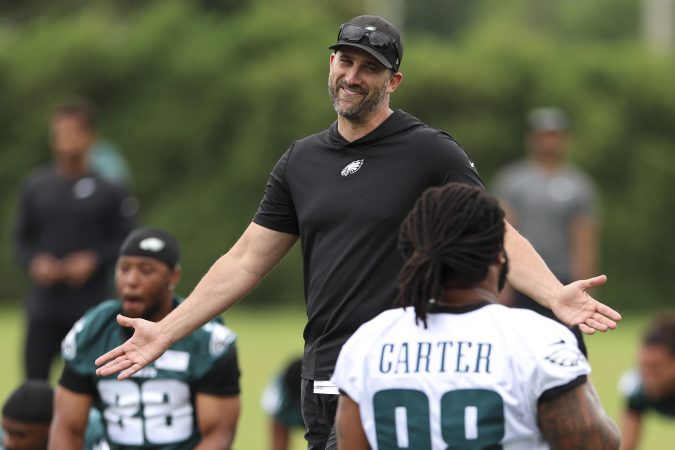
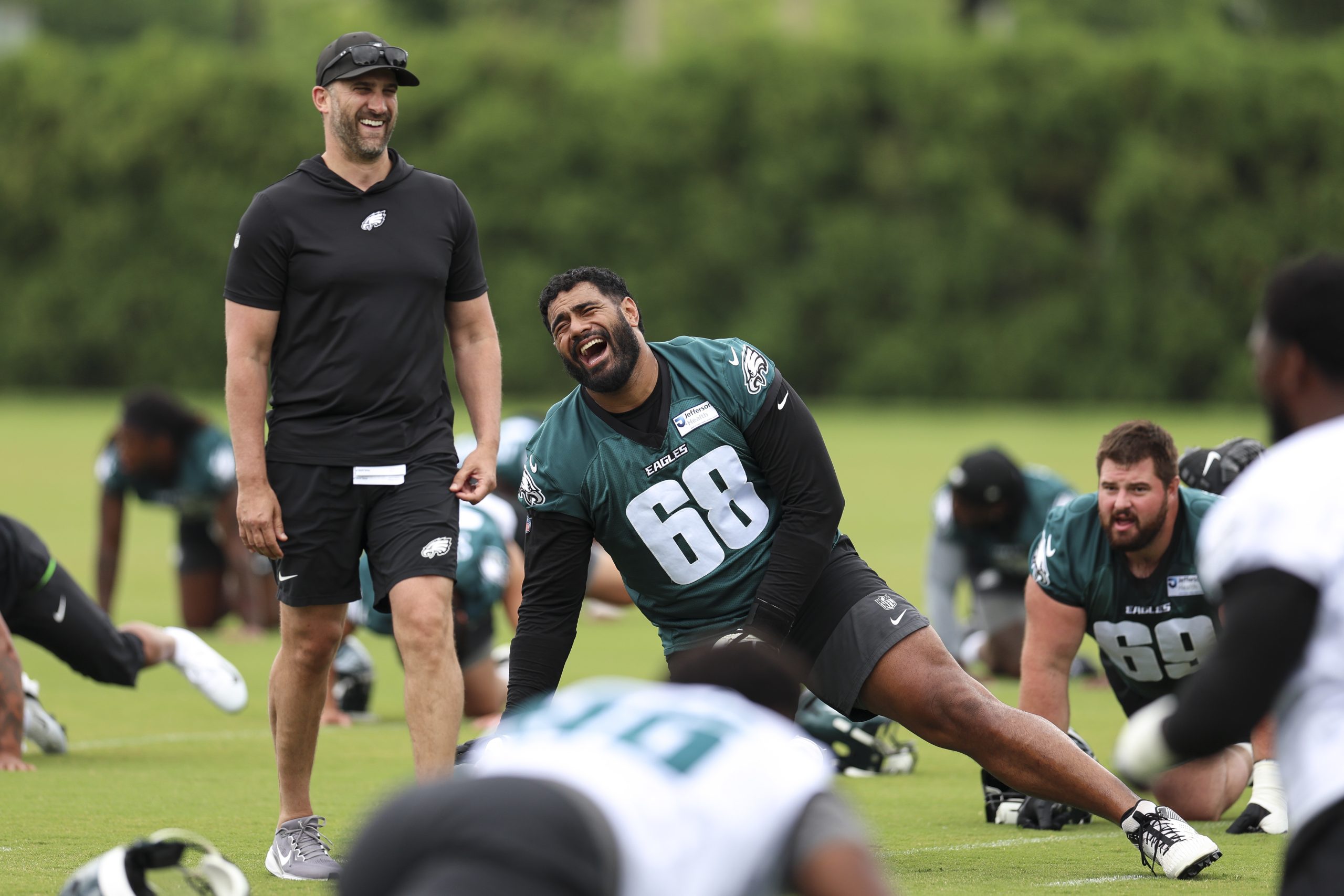
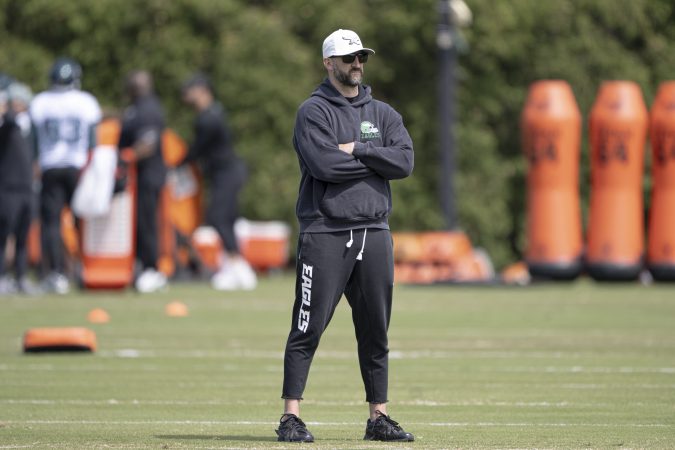
    In Philadelphia, that would be the start of the Eagles’ season and what head coach Nick Sirianni has planned as he heads into his sixth season.

    Over that span, the Birds have been on a pretty successful run, going to two Super Bowls, winning one, compiling a 69.4% win rate with him at the helm. He’s come a long way from the head coach who struggled to put two intelligent sentences together during his introductory press conference.

    But as he heads into another season with a new offensive coordinator and crop of new faces, how does he plan to spice things up? That’s what Inquirer writer Jeff Neiburg explores in this piece that gives a behind-the-scenes look into Sirianni’s mindset.

    Speaking of mindset, yours should be ready for a few scattered showers today but, all in all, another nice day across the region with highs expected only in the mid-80s.

    — Kerith Gabriel, @phillysport, sports.daily@inquirer.com.

    If someone forwarded you this email, sign up for free here.

    ❓What’s your wish for the Eagles and Sirianni this season? Email us back for a chance to be featured in the newsletter.

    Talkin’ baseball

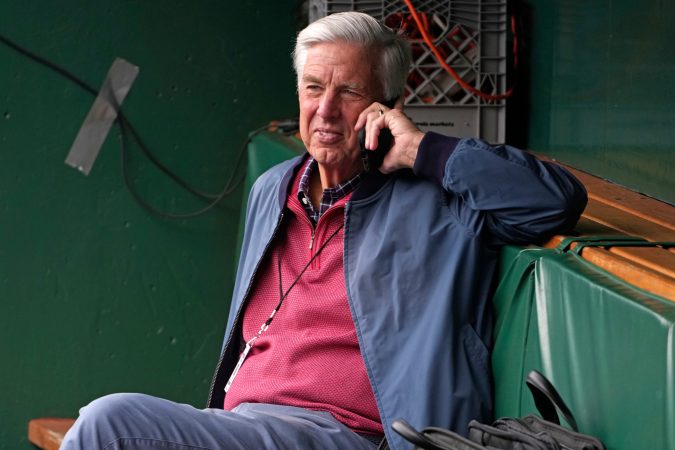
    Phillies owner John Middleton had a lot on his mind in the aftermath of the MLB All-Star Game. He sat down with the Inquirer’s Scott Lauber to discuss. Matt Slocum

    In the aftermath of the MLB All-Star Game, Phillies owner John Middleton has to be a pretty happy camper. In fact, we know he is because Scott Lauber caught up with him for our latest Phillies Extra, to recap how the city did during its week at the center of the baseball universe.

    But that wasn’t all. He got into the upcoming trade deadline (Aug. 3), Wall of Fame ceremony for Chase Utley (Aug. 7), Field of Dreams Game in Iowa (Aug. 13), in addition to his and president of baseball operations Dave Dombrowski’s futures at the top of the Phillies’ organizational masthead.

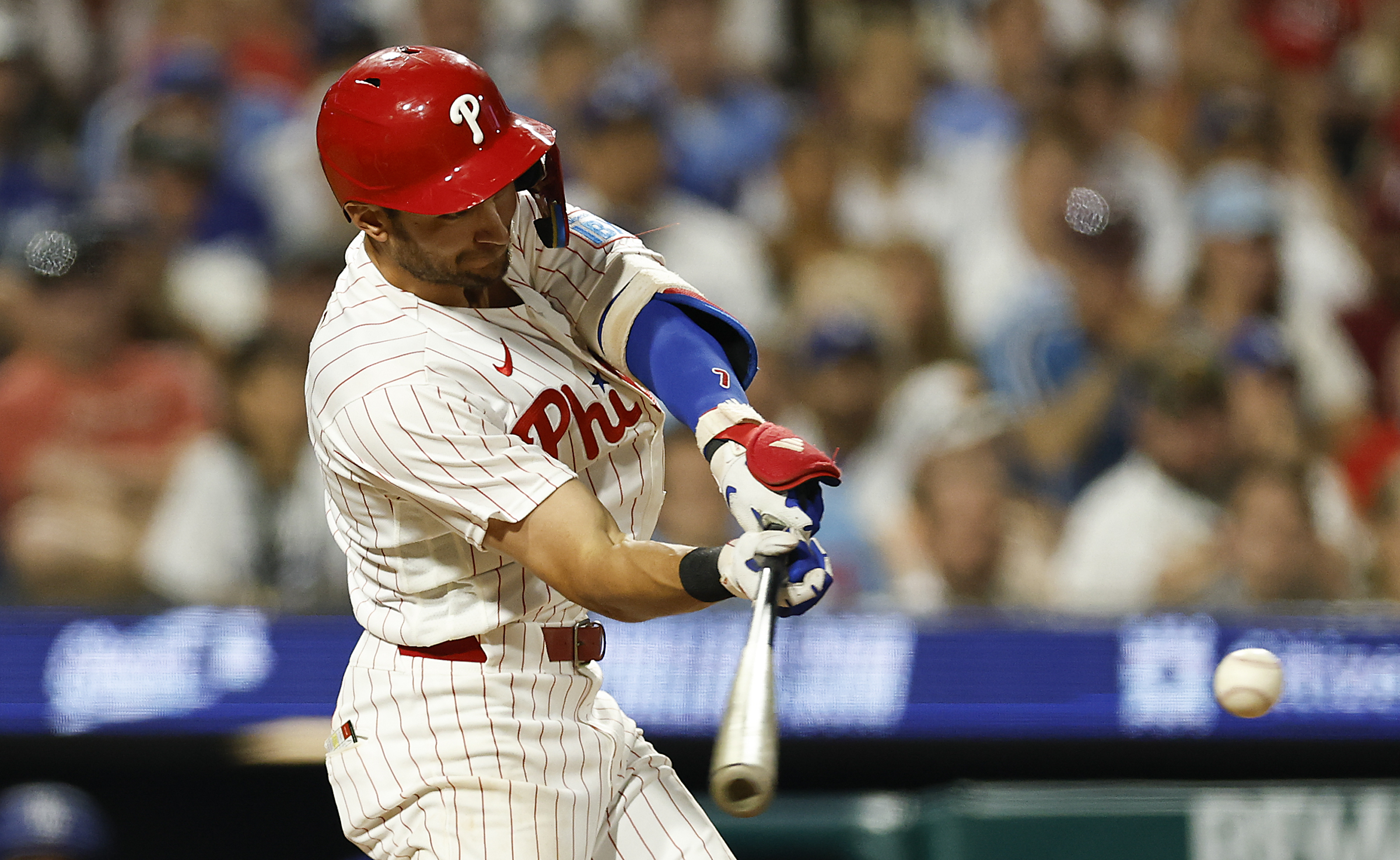
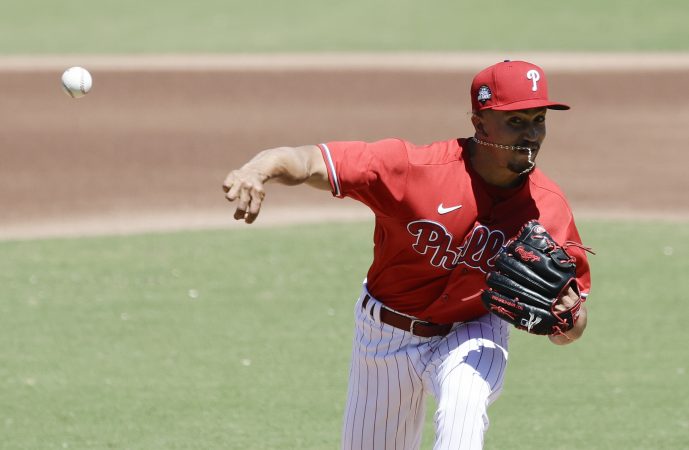
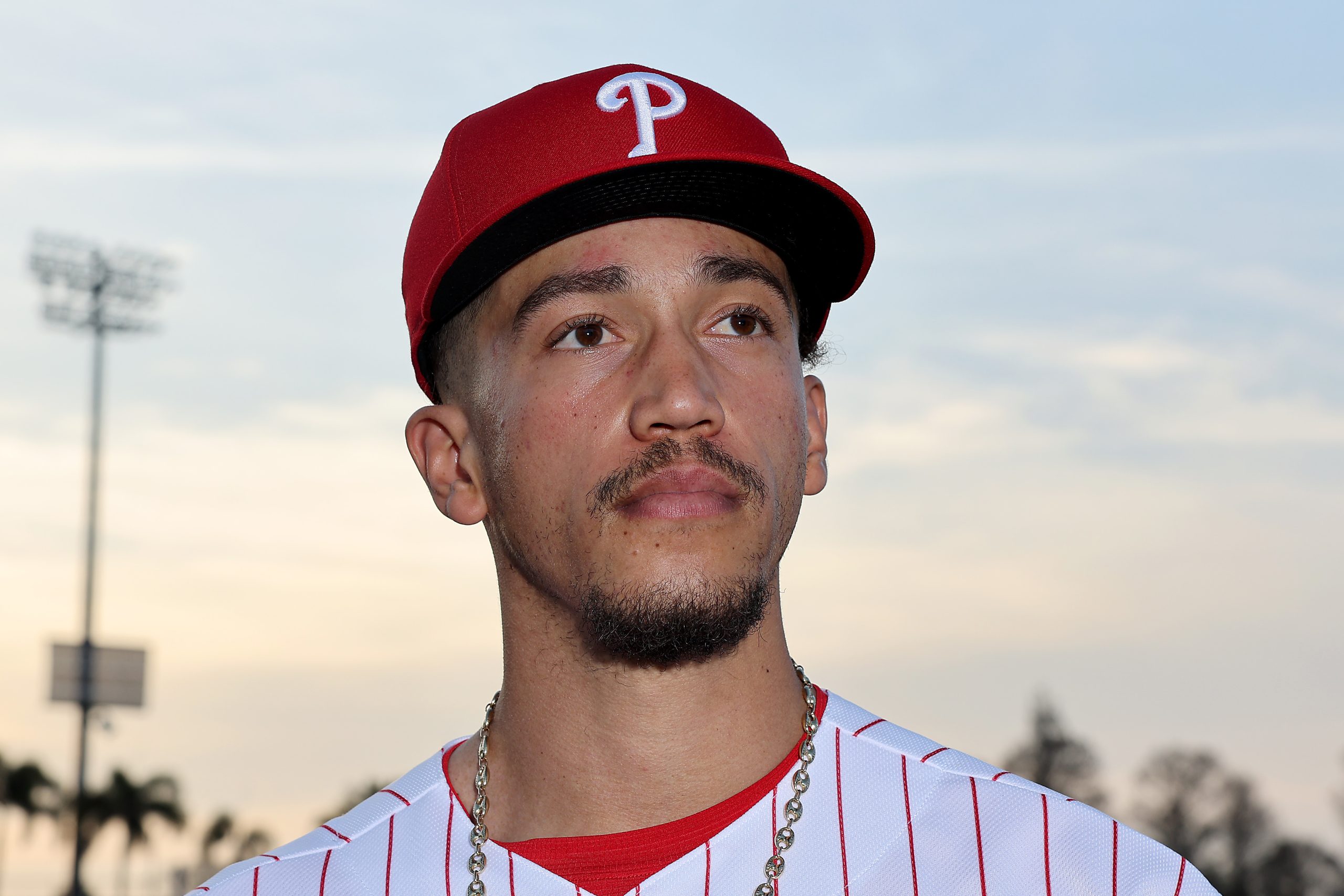
    It’s certainly worth a read, or listen if you need something while you tackle whatever’s on your plate today. Speaking of the Phillies, Trea Turner struggled defensively Monday night, but hit his 200th career homer in a 10-7 win over the Dodgers.

    What we’re…

    🏀 Reading: What the Sixers are saying about Jaylen Brown, now that he’s in the fold.

    ⚽ Sharing: With the World Cup over, some thoughts on what could put America in a good position to chase glory in four years.

    ❤️ Loving: The fact that there is a player in the Eagles preseason player pool named “Hollywood” Brown. Real name: Marquise.

    🤔 Wondering: Why did someone think they’d get away with robbing Saquon Barkley’s house?

    Iced out
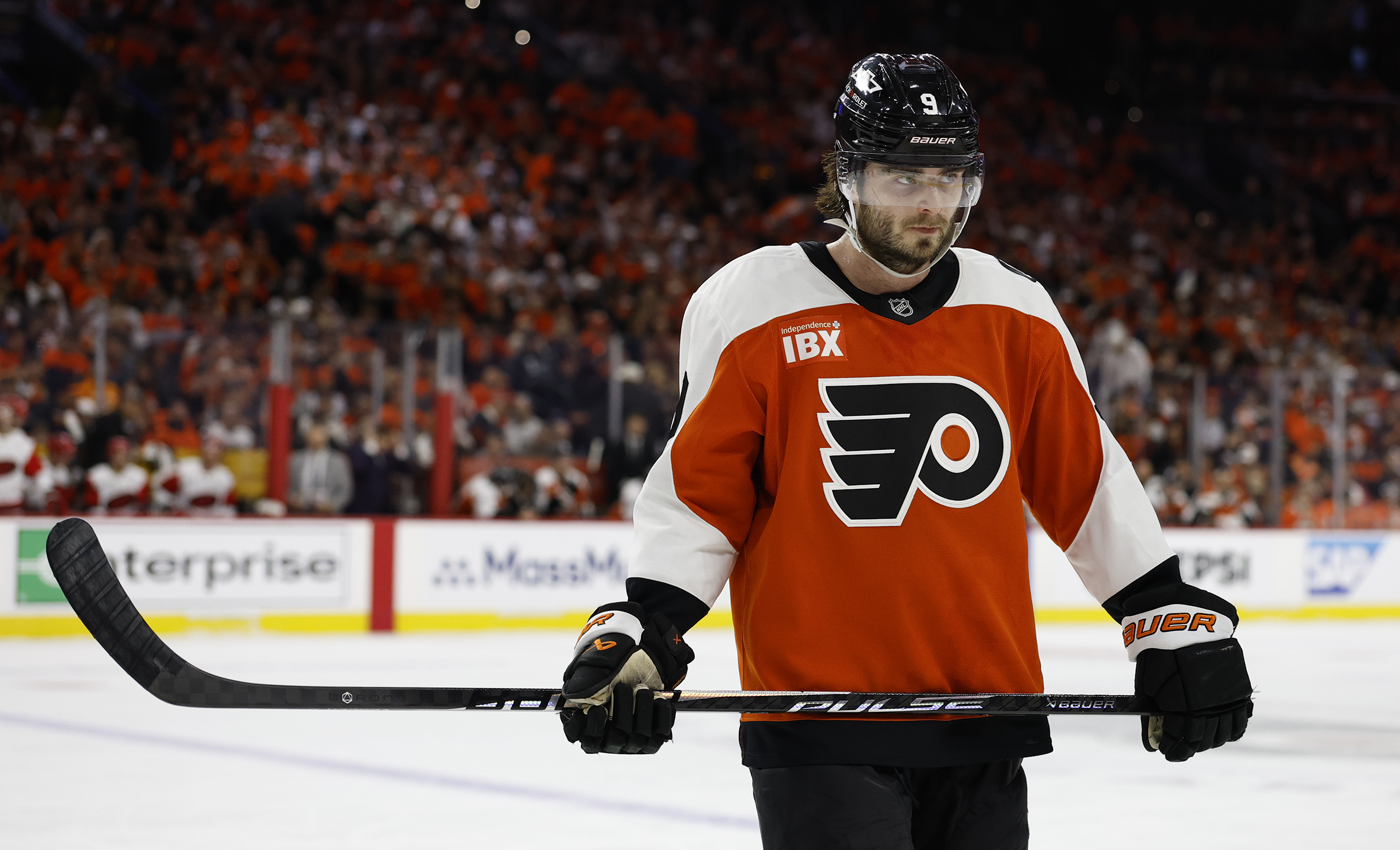
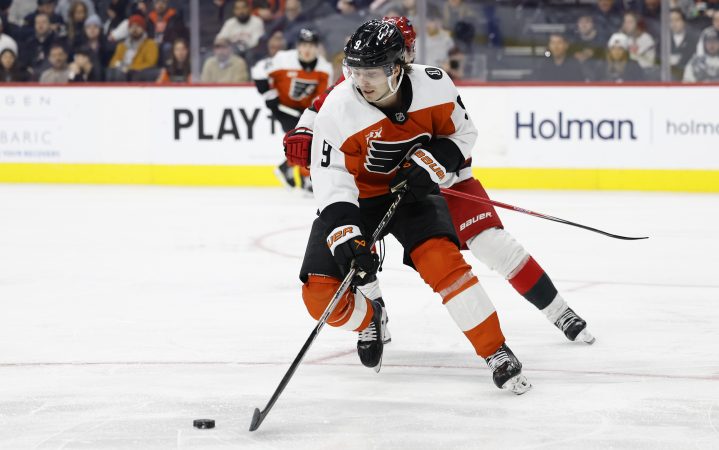
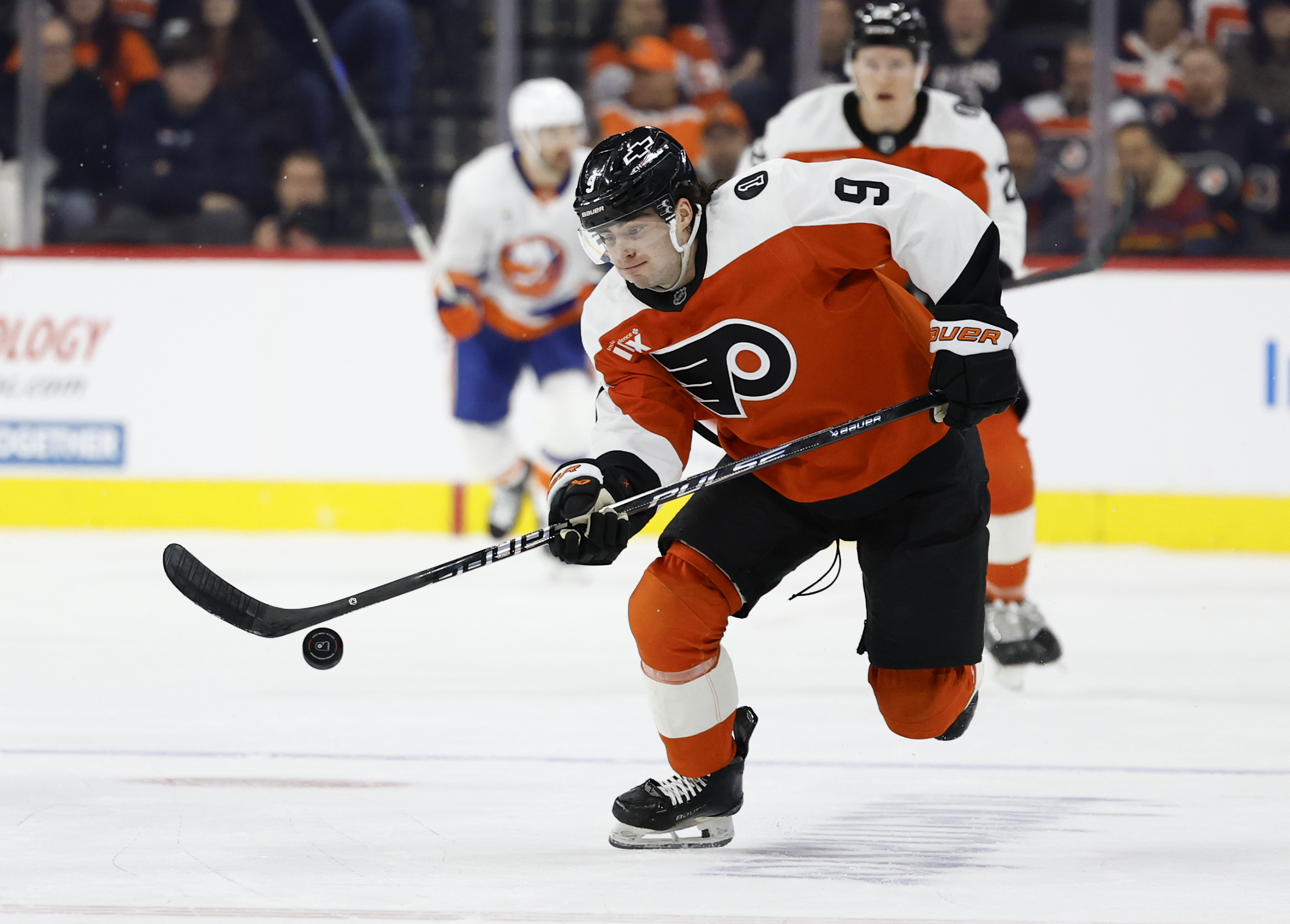
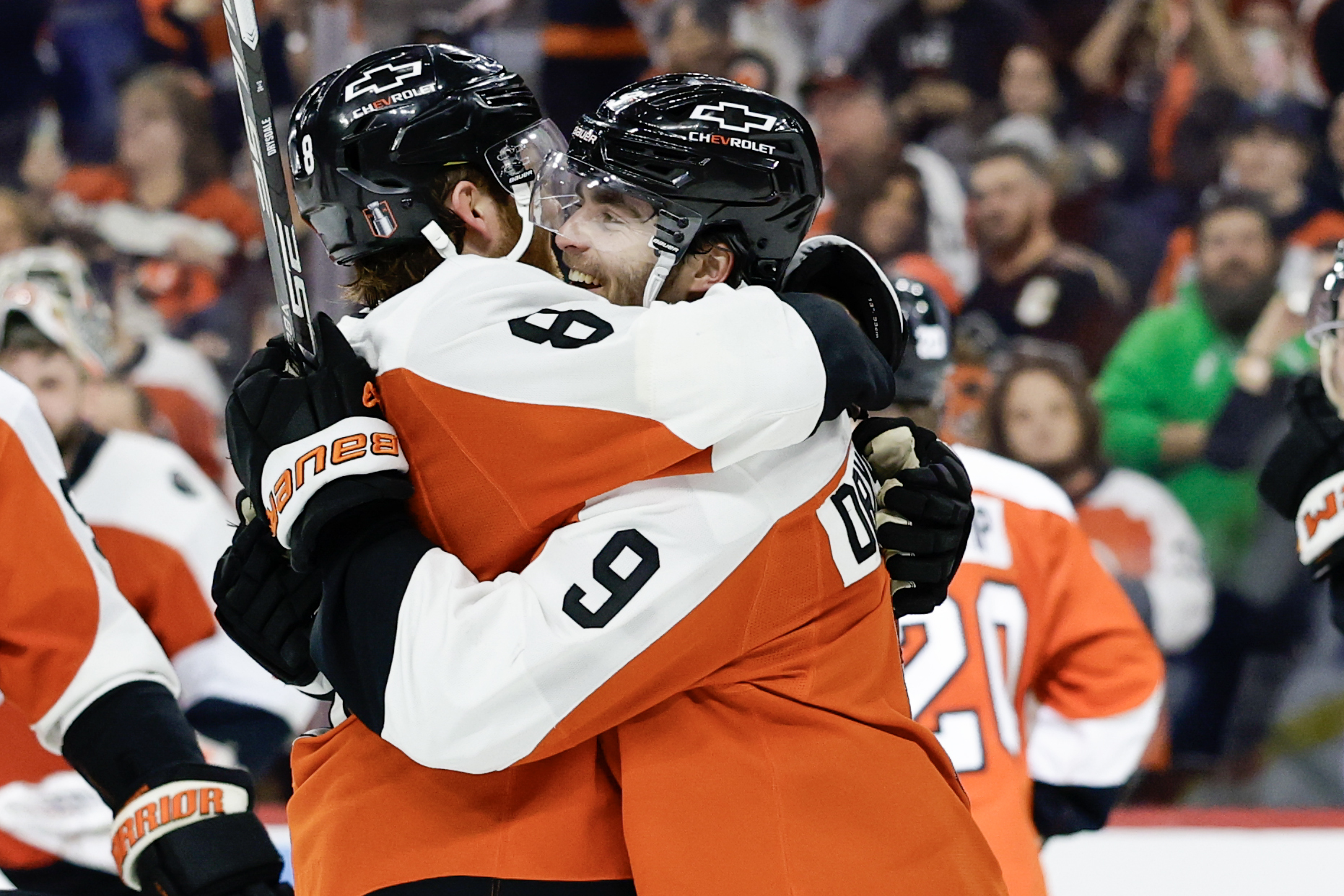
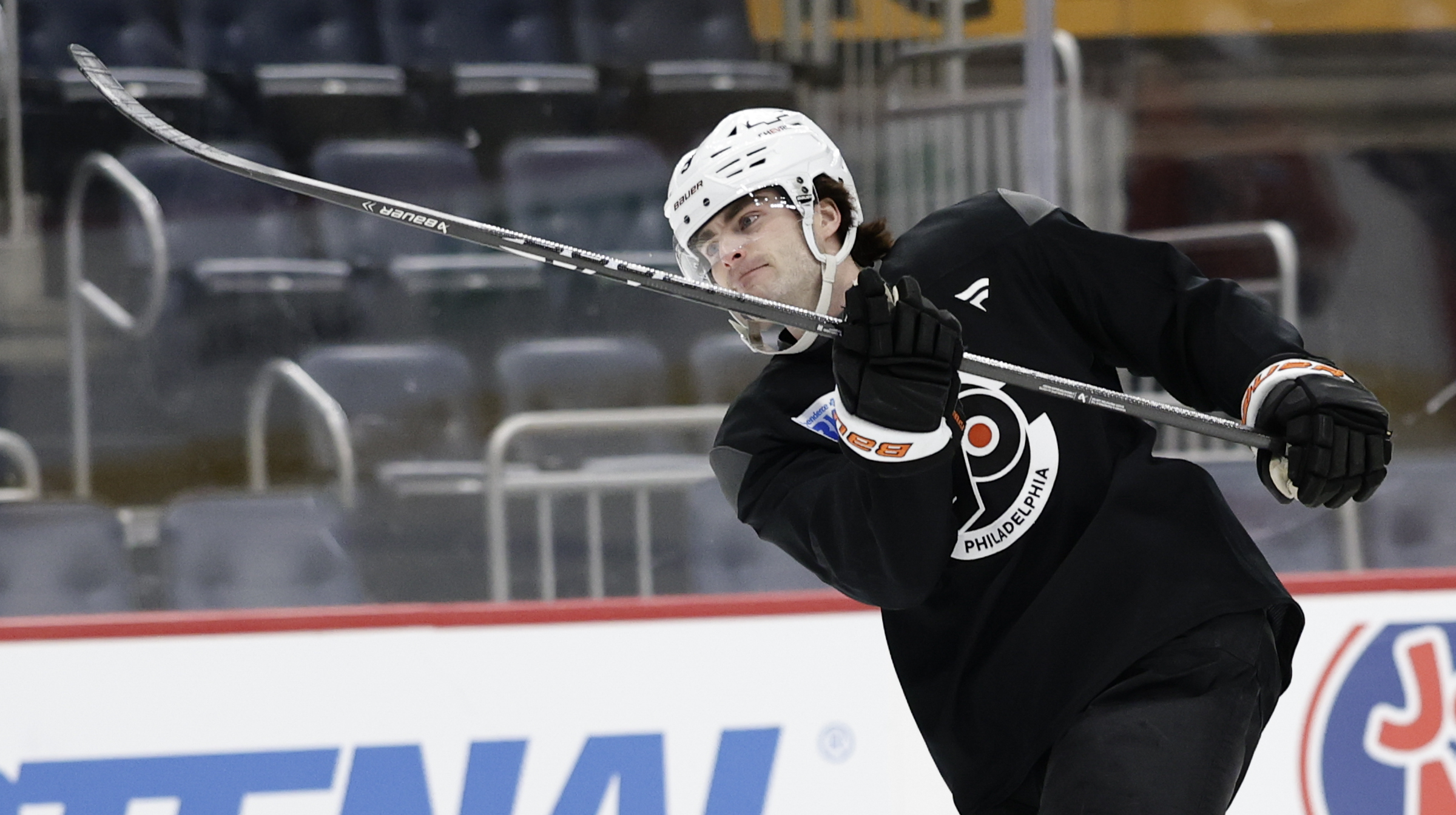
    Flyers defenseman Jamie Drysdale is locked in on remaining a Flyer after a four-year, $26 million extension. Yong Kim / Staff Photographer

    With a four-year, $26 million extension wrapped up, Flyers defenseman Jamie Drysdale is ready to build on the success that got him that sizable bump.

    Although he entered the NHL as an offensive defenseman, he is now strong on both sides of the puck — creating offense, as seen by his career high in goals (eight) and tying his previous best in points (32), while building his defensive game. According to Natural Stat Trick, the Flyers had a 50.5% goal share with Drysdale on the ice.

    Inquirer writer Jackie Spiegel has more on Drysdale, his upside and the lessons he said he’s learned to become one of the NHL’s most impressive defensive presences.

    Holding out
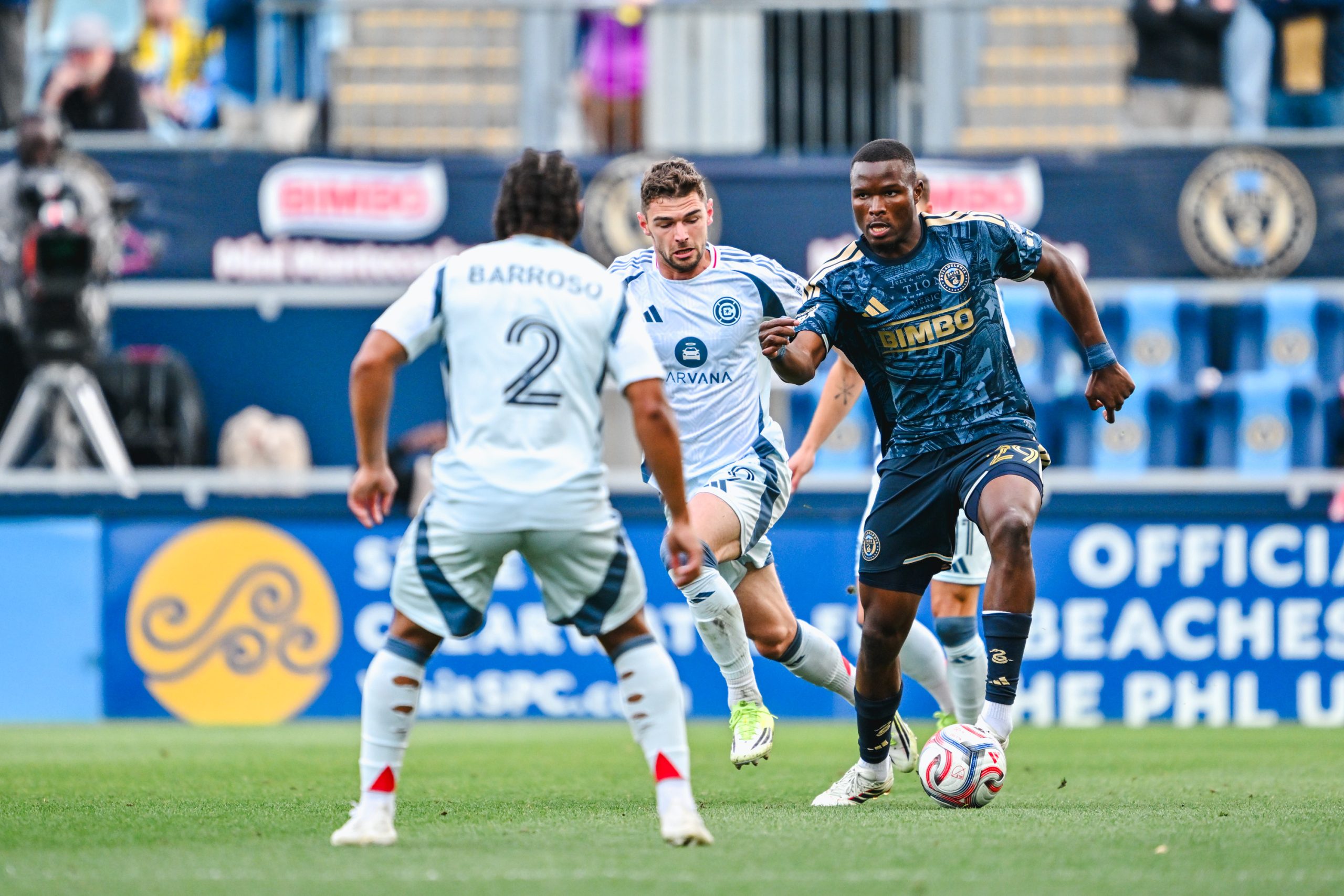
    Olwethu Makhanya (right) on the ball in action earlier this season against the Chicago Fire.Philadelphia Union

    When this newsletter dropped, the Union were a little more than 36 hours out from a return to MLS action when they welcome the rival New York Red Bulls to Subaru Park. But as it stood right around the same time, they’ll be doing so without starting center back Olwethu Makhanya, who is reportedly holding out after the Union did not push forward with a pair of teams interested in his services.

    As the team is looking to start fresh in this second half of the season post-World Cup, this comes at the worst time for interim coach Ryan Richter and Co. Inquirer writer Jonathan Tannenwald has more on the situation and what the Union are saying about it.

    Field of dreams
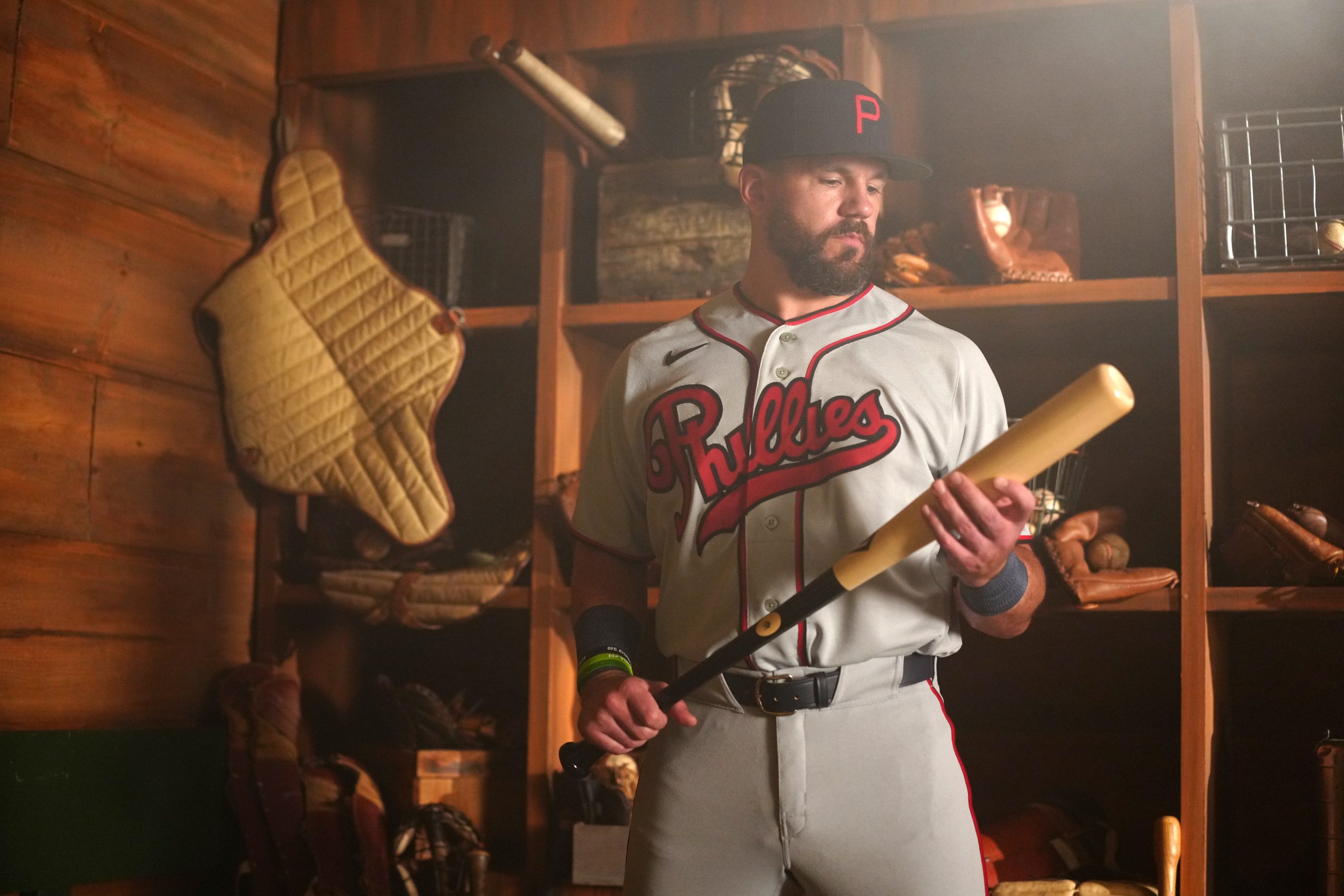
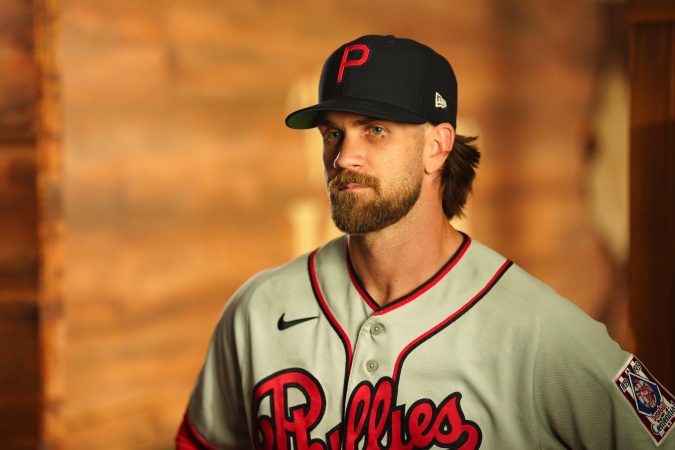
    Kyle Schwarber sports the uniform the Phillies will wear when they play in the MLB Field of Dreams game on Aug. 13.Daniel Shirey

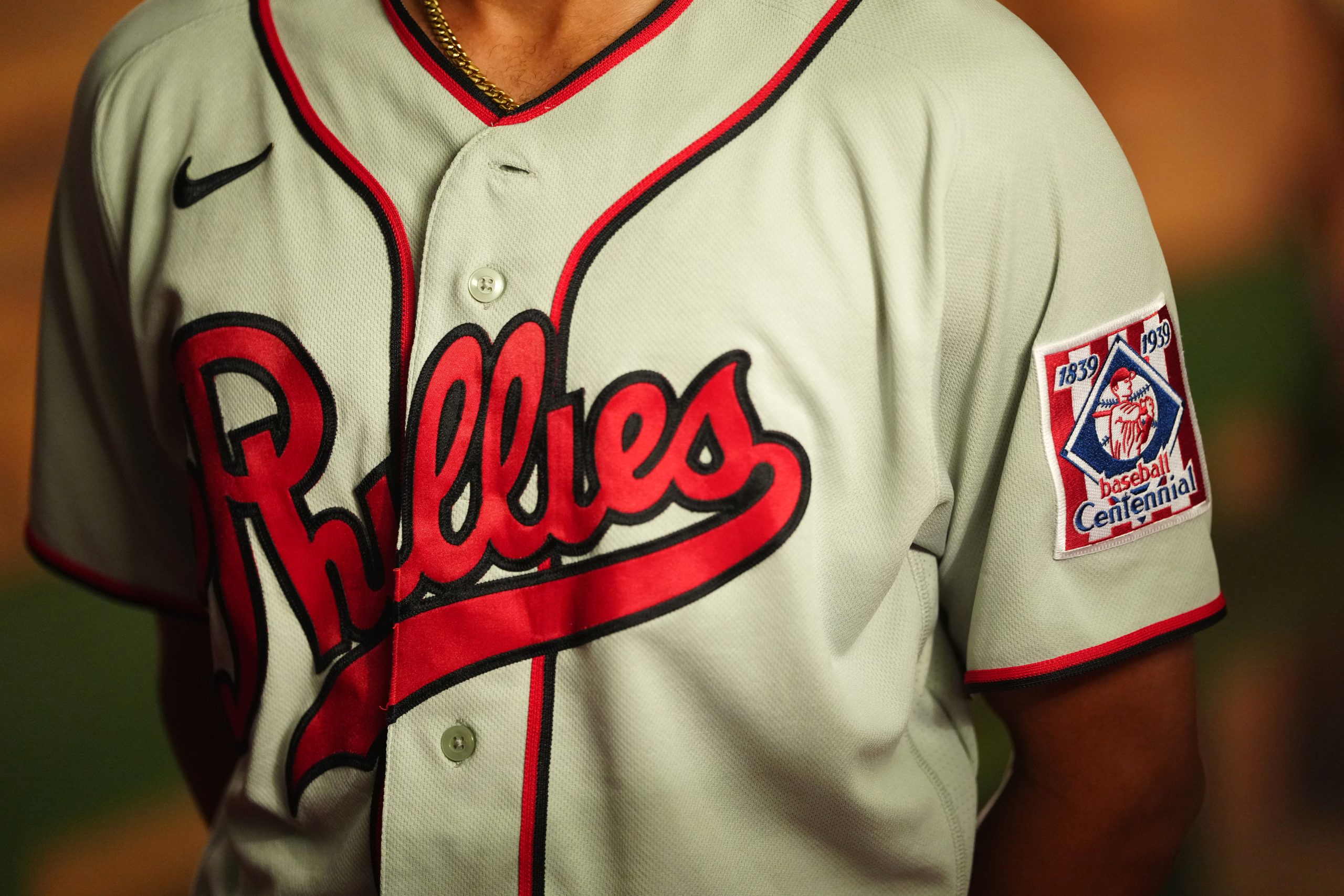
    On this edition of “Please take my money,” the Phillies will wear 1939 throwback jerseys when they travel to Iowa to take on the Minnesota Twins on Aug. 13. Produced by Nike, the sleeve will feature the 1939 Baseball Centennial patch that all teams wore that season, and to complete the look, the Phils will wear navy hats with a bold red “P.”

    While we’re still waiting to see when these will be available for purchase, Inquirer writer Matt Breen has more on the uniform and its historic past.

    On this date

    July 21, 1973: Phillies pitcher Ken Brett watched as Atlanta Braves great Hank Aaron took his fastball to the yard for Aaron’s 700th all-time home run.

    Dave Murphy’s take…

    “Speaking of leverage … It isn’t in [Phillies president Dave] Dombrowski’s favor right now. The idea of buyers and sellers is a false choice. There is a price for everything. The more plausible a team’s denial of having to sell, the higher the price they can sell for. The more teams that could potentially buy at the right price, the higher the price for everyone. — The latest from Murphy examines how important the trade deadline really is, particularly from where the Phillies stand.

    🧠 Trivia time answer

    Before this year, when was the last time Spain won the World Cup?

    Answer: C: 2010 — Joey M. was first with the correct answer.

    Would you believe if we told you that the last time Spain won it all, they were even more star-studded than they were on Sunday?

    What you’re saying about the World Cup

    We asked: What did you think of this World Cup?

    World Cup was great, but instead of babbling on and on, I wish someone would have taken the time to explain offsides and why, as well as the difference between a foul and penalty, and why someone gets a yellow card and why they don’t. I was absolutely hooked, and I am not a soccer fan. — Bill M.

    Wasn’t a soccer fan before, but I am now! I watched almost every game, and I loved it. I really loved how the whole world came together to root for their teams — their own countries or adopted ones. I have a lot of English DNA, so they became my team. My son-in-law has Spanish DNA, so that became my team and “I” won! Man, it looks like brutally hard work for the players in scorching heat. You’ve got players pulling, pushing, and tripping you, and you have been running like a crazy person for over an hour. I’m exhausted just watching. It’s been great feeling the world connection. I wish we could do something like it every year. Maybe we’d all get along better. — Cathy J.

    What a pleasure to be the host country on our 250th anniversary. The crowds did not disappoint, nor did the competition. We had an early run by the US in group play, Messi magic through the semifinals, a wild high-scoring third-place game and a more traditional strategic final in extra time. — Bob C.

    I think that FIFA needs to change the rule that results in a player being disqualified after a second yellow card (i.e, a red card) for the remainder of the match and making his team have one less player during that time. Spain had a huge advantage for the remainder of the second half and the overtime period and ultimately beat Argentina after they went down a player. I think a system more like that in hockey is that the player gets disqualified, but that another player can come out of the “penalty box” after a specified period of time (for instance, 5 minutes?). I was not rooting for either team but just found the penalty excessive and unfair to the other team. Should the coach of Argentina remove a player who has a yellow card to avoid the penalty arising during the match and causing the team to play the rest of the match at a disadvantage? — Stuart R.

    We compiled today’s newsletter using reporting from Matt Breen, Jeff Neiburg, Kerith Gabriel, Jonathan Tannenwald, David Murphy, Jackie Spiegel, Scott Lauber, Maggie Prosser, Vinny Vella, and Gabriela Carroll.

    By submitting your written, visual, and/or audio contributions, you agree to The Inquirer’s Terms of Use, including the grant of rights in Section 10.

    Here’s hoping you have a good start to your Tuesday. Catch you later this week. — Kerith
  • Despite defensive miscues, Trea Turner’s 200th career homer helps Phillies power past Dodgers

    Despite defensive miscues, Trea Turner’s 200th career homer helps Phillies power past Dodgers

    Afterward, Trea Turner could only laugh.

    So could his teammates. As the stadium lights flashed and the bell tolled, signaling another Phillies win — this time, 10-7 over the Dodgers — the infield convened on the dirt.

    The same dirt where Turner had just made four different miscues defensively, and the same dirt Turner had trotted across, twice, after each of his homers on Monday. As the Phillies celebrated their victory, they couldn’t help but tease their shortstop for his Jekyll and Hyde performance.

    “Ridiculous game, in general, by me,” Turner said. “You do things like that, or have games like that, sometimes you just got to laugh about it. And they gave me a hard time.”

    The ridiculousness started in the first inning, when Turner botched a routine grounder — first bobbling it, then pulling Bryce Harper off the bag with his throw — to record his 15th error of the year. The boos rained down as he squandered a chance to get Cristopher Sánchez out of an early jam, and instead helped the Dodgers load the bases.

    Trea Turner has homered four times in the last four games.Yong Kim / Staff Photographer

    But after successfully fielding the next grounder hit in his direction to end it without damage, Turner got the crowd back on his side after sending Emmet Sheehan’s first pitch to left-center for a double.

    “Obviously, Trea swung the bat really well,” said interim manager Don Mattingly. “He didn’t catch it as well.”

    And that was only the beginning of the roller coaster ride. Turner launched a two-run shot in the second inning to help build the Phillies’ early lead, but he also continued to struggle on defense.

    In the fourth inning, Alex Call grounded a ball to left that went underneath Turner’s glove. In the sixth, a chopper from Andy Pages bounced off his glove and a run scored. And in the ninth, a hard-hit grounder from Tommy Edman deflected off his knee.

    All three were ruled singles by the official scorer, but were plays Turner could have made.

    “Everyone talks about rhythm at the plate, but I think there’s rhythm on the base paths, rhythm defensively,” Turner said. “Sometimes you feel good, sometimes you don’t, and you just got to find that flow again.”

    He couldn’t pinpoint what was going wrong Monday or this season in general, but said that poor reads were part of the problem. Turner’s 15 errors have already well surpassed his full-season marker of eight in 2025. His defensive runs saved (-10) is dead last among qualified shortstops this year, but Mattingly still has confidence in him.

    “I trust Trea, honestly,” Mattingly said. “I trust all our guys, and Trea’s going to make some great plays. There’s going to be errors with everybody. Trea works. He’s out there every day, working on ground balls. He’s working on his hands, all that type of stuff. So as long as Trea works, we ride with Trea.”

    Turner has committed three errors in the last four games. He has also homered four times in the last four games.

    This time, his error cost Sánchez a few pitches in the first. The Phillies lefty scattered seven hits and struck out seven. Four of those came on his slider, which he leaned on more than usual over 5 ⅓ innings.

    SĂĄnchez retired Shohei Ohtani three times.

    “Looks like it had good depth of that slider tonight,” Mattingly said. “I’m sure part of the game plan is to not chase that changeup down. … It’s just a tough lineup to get through from the standpoint of just going to the changeup. Everybody knows he’s got a good changeup. We’ve seen teams try to take it away; they’re probably better at it than most.”

    Sánchez was lifted after reaching 99 pitches, leaving two on base for Orion Kerkering in the sixth. Both inherited runners wound up scoring, bringing Sánchez’s total to three earned runs.

    Pinch-hitting Max Muncy won a seven-pitch battle against Kerkering with a double that drove in one. Kerkering bounced back by striking out Dalton Rushing, and then intentionally walked Ohtani to load the bases.

    Pages, who hit the bases-loaded grounder to Kerkering that eliminated the Phillies from the 2025 National League Division Series, stepped into the batter’s box instead. His chopper to Turner could have ended it there, but another run scored to bring the Dodgers within one.

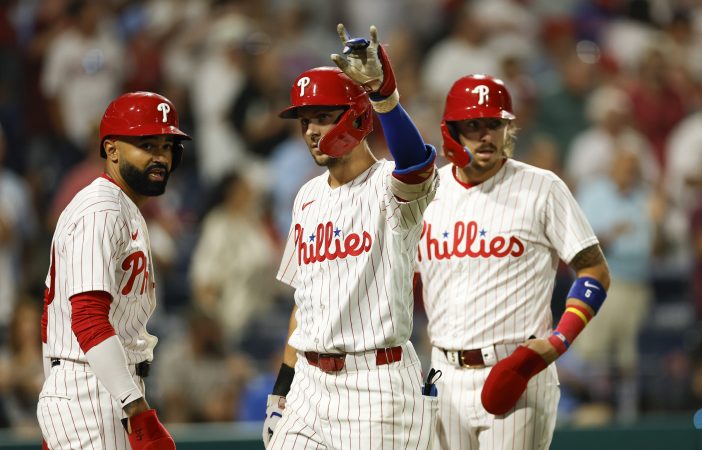
    But once again, Turner found redemption immediately on offense. He hooked his second homer of the night, and 200th of his career, just inside the left field foul pole in the bottom of the inning.

    “That’s how it goes in the game of baseball,” Sánchez said through team interpreter Diego D’Aniello. “You’ll fail, sometimes you miss, but you just try to pick yourself up and be better and do things like that.”

    Turner wasn’t the only Phillies player to have a big game. Gabriel Rincones Jr. hit an RBI double in the second inning, and he also made some key plays in right field. Brandon Marsh, Harper, and Derek Hill, who each had cooled off somewhat after the All-Star break, hit solo homers that gave the Phillies some needed insurance.

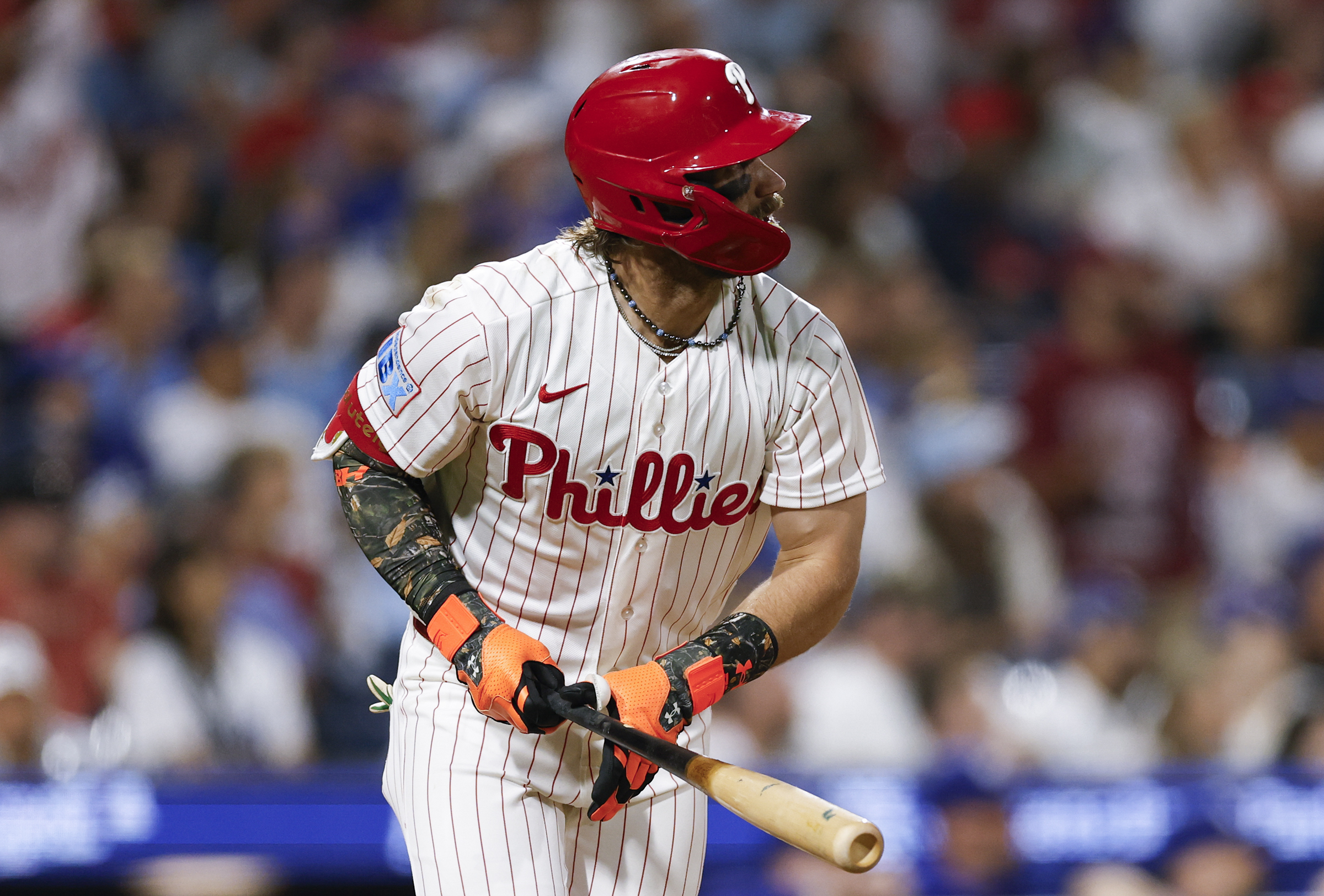
    Bryce Harper hit his 200th homer in a Phillies uniform on Monday.Yong Kim / Staff Photographer

    Chase Shugart had a six-run cushion for the ninth, but the Dodgers made things interesting quickly. Pages drew a leadoff walk and Edman’s grounder that deflected off of Turner’s leg put runners on the corners. An RBI groundout scored a run, and then Mookie Betts delivered his second homer of the game to bring the Dodgers within three.

    Not willing to take any more chances, even with two outs and the bases empty, Mattingly brought in closer Jhoan Duran.

    “I’m not going to let it get away and take another chance that it goes further and then puts him in a spot where he can’t make a mistake,” Mattingly said.

    Duran needed three pitches to retire Teoscar Hernández with a groundout, fielded by — who else? — Turner.

    And with the victory officially secured, then the laughter began. The shortstop left the ballpark Monday night with a souvenir ball to remember his 200th career home run, and the wacky game it happened in.

    “If you can’t laugh at yourself,” Turner said, “then you’re kind of kind of done for.”

  • A solution to the Phillies’ fifth-starter spot? Skip it. But only for now.

    A solution to the Phillies’ fifth-starter spot? Skip it. But only for now.

    Here’s one way to handle not having an appealing choice to fill the fifth-starter spot: Skip it.

    With a day off Thursday in between home series against the Dodgers and Yankees, the Phillies are talking about going with four starters this time through the rotation, interim manager Don Mattingly said Monday.

    But, well, that may present problems, too.

    The Phillies are built to go only as far as their top three starting pitchers carry them. It’s imperative, then, for Cristopher Sánchez, Zack Wheeler, and Jesús Luzardo to stay healthy. Whenever possible, extra rest between starts can help.

    “In general, I like with those guys giving them their rest,” Mattingly said. “It’s not a situation where our depth is at a point where you can lose one of those guys. We’re going to need to keep them strong all year. So, we’re going to be careful with that.”

    Actually, the Phillies’ rotation depth is perilously thin.

    Although Wheeler opened the season on the injured list while recovering from complicated surgery to relieve a vein that was compressed between his collarbone and ribcage, the Phillies were unable to secure veteran pitchers to stash in triple A.

    Phillies starter Alan Rangel was optioned to triple A on Monday.David Maialetti / Staff Photographer

    Taijuan Walker filled out a season-opening rotation that included rookie Andrew Painter. Walker posted a 9.13 ERA in four starts and was released with nearly $18 million left on his contract when Wheeler returned at the end of April.

    Painter, meanwhile, got demoted to triple A with a 7.06 in June. The Phillies recalled righty Alan Rangel, who was optioned to triple A on Monday with a 5.40 ERA in three starts and three appearances behind an opener.

    The day off would enable Sánchez and Wheeler to start Saturday and Sunday, respectively, on regular (four days’) rest against the Yankees. In that case, the Phillies wouldn’t need a fifth starter until Tuesday night in Miami.

    And because of another day off July 30, they wouldn’t need a fifth starter again before the Aug. 3 trade deadline. A back-end starter is on Dave Dombrowski’s shopping list, though it’s likely less of a priority than a late-inning reliever and a right-handed bat.

    “I worry more about health than I worry about who we’re playing,” Mattingly said. “In general, I’m more worried about our guys staying strong and feeling good the whole year, the rest of the year than pushing them up for one series or another.

    “We need our guys all the way through.”

    If the Phillies choose to prioritize rest for SĂĄnchez and Wheeler, the fifth-starter spot could come around Saturday against the Yankees. They could divide that start between relievers. With the promotion Monday of hard-throwing Alex McFarlane, they have nine relievers in the bullpen.

    Ideally, Painter would rejoin the rotation in the second half after improving his fastball and building confidence in the minors. He allowed two runs in 10 innings in his first two starts back in triple A before giving up seven runs in only 2⅔ innings in his final start before the All-Star break.

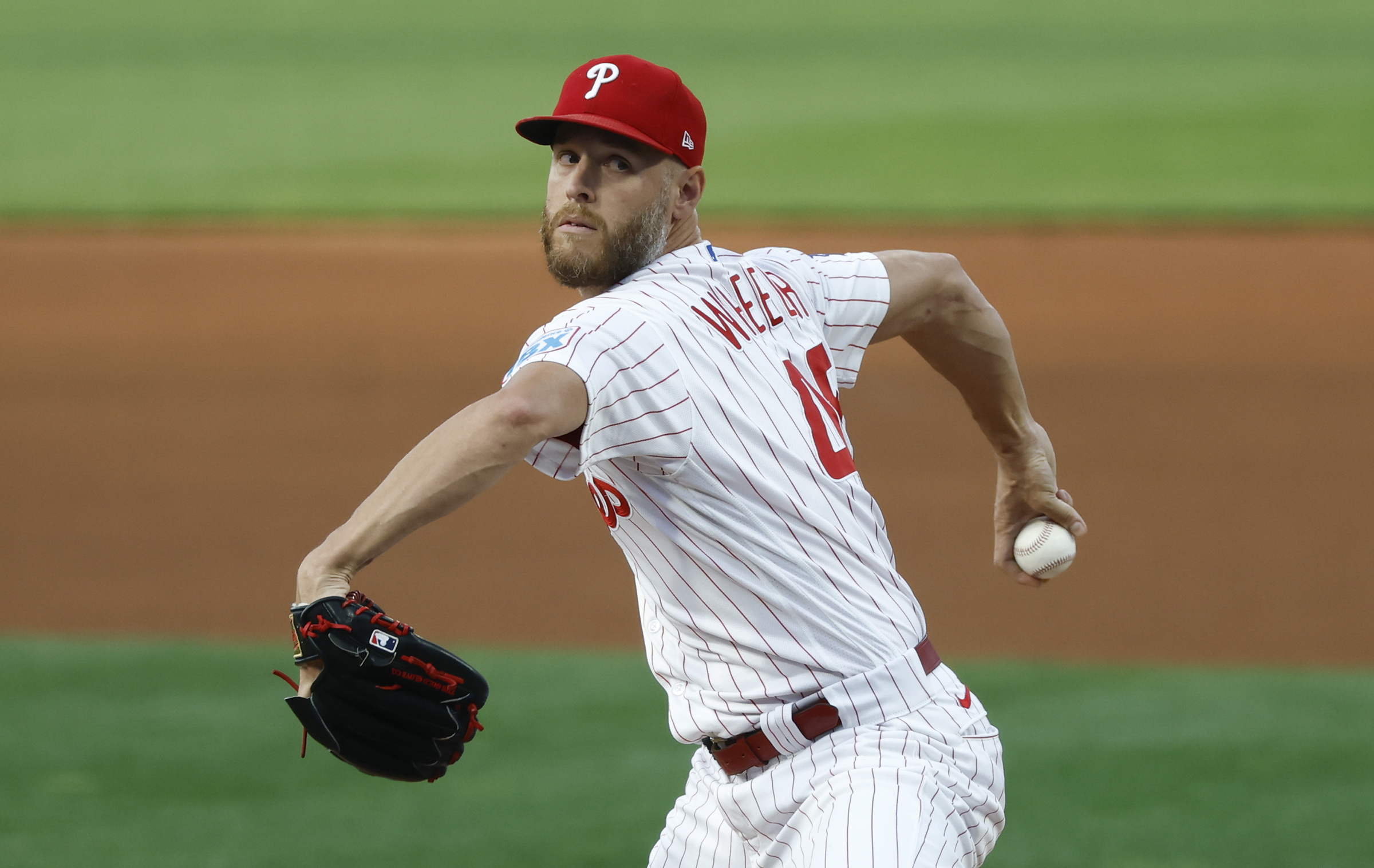
    Zack Wheeler throws the baseball against the Mets on June 21.Yong Kim / Staff Photographer

    Hot Wheels

    Wheeler didn’t conceal that he was irked over not being picked by MLB for the National League All-Star team. And when the league made a late offer to put him on the roster if he agreed to pitch on one day’s rest, he declined, saying he was “not going be disrespected.”

    Dodgers manager Dave Roberts, who led the NL team, declined to weigh in on the situation.

    “Zack made a personal decision that he thought was best for him,” Roberts said. “I think everyone respects it. So, I don’t really have a whole lot of color on that one.”

    Extra bases

    Rookie right fielder Gabriel Rincones Jr. went viral for putting on sunglasses while catching a fly ball Sunday against the Mets. Mattingly’s reaction: “I would think you’d want to have them on the whole time. I thought he had the flip-downs on, and then later seeing it, I was like, ‘What in the world?’ I’ve never seen that.” … Wheeler (10-1, 2.13 ERA) will face Dodgers All-Star lefty Justin Wrobleski (10-2, 2.69) at 6:40 p.m. Tuesday.

  • Flyers defenseman Jamie Drysdale’s summer training has fueled his game. He is ‘excited to show what I can do and keep it going’

    Flyers defenseman Jamie Drysdale’s summer training has fueled his game. He is ‘excited to show what I can do and keep it going’

    There was a 12-second moment in Game 4 of the Flyers’ first-round series against the Pittsburgh Penguins that perfectly encapsulated who Jamie Drysdale, the hockey player, has become.

    In the offensive zone, he got the puck from his good buddy Trevor Zegras at the top of the right circle and snapped a shot on goal. Penguins goalie ArtĹŤrs Ĺ ilovs made the save, and the puck popped out to Erik Karlsson, who put it down on the ice before springing Rickard Rakell.

    Drysdale, using his footwork and quick steps, was able to get back and keep the Penguins veteran forward to the outside before taking him out behind the net. He killed the play and allowed his partner, Cam York, to get the puck.

    This is who Drysdale is now.

    Although he entered the NHL as an offensive defenseman, he is now strong on both sides of the puck — creating offense, as seen by his career high in goals (eight) and tying his previous best in points (32), and building his defensive game. According to Natural Stat Trick, the Flyers had a 50.5% goal share with Drysdale on the ice.

    That is why the Flyers locked up the 24-year-old blueliner with a four-year, $26 million extension on Friday. His $6.5 million average annual value is the highest among the defensemen.

    “Philly’s a place that I love to play, and there’s no secret there,” he said on a Zoom call Monday. “I’ll continuously say it. I’m happy with four years [and] would want to continue that after the fact, obviously, and just really excited to show what I can do and keep it going.”

    Part of the surge is from his growing confidence. The other part is the work he puts in during the dog days of summer.

    Jamie Drysdale’s work with Dawn Braid has helped him improve his skating. Yong Kim / Staff Photographer

    Still learning to skate

    Skating has always been Drysdale’s best tool. He has relied on it since he was a tyke in Toronto, and continues to do so thanks to the work he puts in. At 7 or 8 years old, he started taking figure skating classes to help his edge work, and then once hockey got serious, around 12 or 13, he started working with a skating coach.

    For the last few years, including this summer, he’s headed home and gotten in touch with Dawn Braid, a renowned coach who has consulted with several NHL teams. She was the first woman in NHL history to coach full-time when she joined the Arizona Coyotes in 2016, and currently works for the New York Rangers.

    “I always thought, at least in my head, I thought I was a pretty good skater. And then, the first time I worked with Dawn, it was a lot of corrections,” Drysdale told The Inquirer in May. “It makes you feel not so good as a skater and realize that there’s a lot to work on.”

    Despite it all, he loves working on his skating, calling it his favorite thing to do in the summer.

    “Because when I feel good on my feet, I think that’s when I feel just best on the ice as a whole,” he said. “So, especially to start the summer and to end the summer, I try to get as many sessions as I can to, obviously, set myself up in a good spot for the summer and then set myself up in a good spot for the season.”

    It starts standardly, getting his feet wet again and his technique back after being off the ice for a short time; this season was the first time Drysdale made the postseason in his NHL career. As the summer days roll on, the drills progress — he said it’s frustrating because Braid will demo her drills with ease, when the drills are anything but easy — and they become more tailored to what he specifically wants to work on.

    Cam York (left) has noted the improvement in Jamie Drysdale’s skating, and his confidence. Yong Kim / Staff Photographer

    For Drysdale, the focus is on being able to cut back or explode out, or cut back with speed. He works on being evasive at the blue line, skating with forwards coming at him, retrievals — “a lot of retrieval stuff we do in terms of footwork, on how to use deception with your feet, things like that” — and transitions.

    It has paid off, as seen by that play on Rakell.

    “He’s not the biggest guy, maybe, like physically, but he uses his feet to defend,” York said of Drysdale in April. “I think you look across the league, there’s a lot of smaller defensemen who use their feet, and obviously he’s a great skater and can keep up with anybody. So he uses that to his advantage, for sure.

    “But I think just confidence for him. He’s starting to figure out what works best for him. And he knows that when his feet are moving like that [in general], he’s effective.”

    There’s a good chance that Drysdale will be working on his play with the puck, too. He said at his end-of-season availability that he wanted to work on his puck play, hanging on to pucks, making more plays in the offensive zone, and his shot. He mentioned on Monday that some of his focus is on getting the power play out of the NHL’s basement, specifically with his shot.

    “Been pretty continuously working on my shot over the last year and throughout this summer,” he said Monday. “Something that I’m going to come in confident with and use as a weapon, and kind of take it from there.”

    Those are offensive elements. But there is no denying that his defensive game has, no pun intended, taken the biggest stride. Across his 24 games in his first season with the Anaheim Ducks, Drysdale had a plus-minus of minus-12. The following year, he played 81 games and was minus-26, and in his first 24 games with the Flyers after being acquired in the Cutter Gauthier trade, he was minus-18.

    But that is all behind him. What’s more promising was what he did this past year, going from minus-32 in 2024-25 to minus-3 this past season. It’s not in the positives yet, but it feels like that’s the next step.

    “I wouldn’t say it’s too much technical-wise,” he said when asked if he did anything differently with his skating to become stronger defensively in April.

    “I think it’s more so just being super comfortable with it, knowing that it’s a strong suit and using it. Like fully believing that it’s my best way to defend because I think I trust my gaps. I can trust my feet to get back. … Yeah, so I think that’s kind of the main thing, is just being more confident in what I can do with my feet.”

    From strength to strength

    The work Drysdale is doing isn’t just on the ice. He’s also doing it in the gym. Drysdale has worked with Bryan Marshall, program director and founder of Milo Athletics based in Ontario, and a high-performance coach who has worked with several NHL teams, since he was 14 or 15 years old.

    He thinks Marshall knows him better than himself when it comes to his work in the gym. And Marshall has seen the blueliner’s growth and development in his on-ice game come from the work he has done off the ice, calling it “inevitable.”

    “I think Jamie always had the talent. He always had those natural abilities in his skating. But, at the next level, the real separator is, how efficiently can you repeat that,” Marshall told The Inquirer in April.

    “What I’ve noticed over the years is, he has one successful month after another in the summer, and then one successful summer after another,” he added, “and the next thing you know, he’s developed so much more strength and so much more power, and he’s now got the capacity, I think, to sort of really showcase his talents, right, because the rigors of an NHL season are pretty grueling.”

    Jamie Drysdale is attempting to build strength that can help the Flyers in various ways, including on their beleaguered power play. Yong Kim / Staff Photographer

    According to Drysdale, the schedule is rigorous, with Mondays and Wednesdays being power days, Tuesdays and Thursdays for strength, and Friday for conditioning. He focuses on power, aerobic capacity on the bike or VersaClimber, ladder work, hip mobility with bands, and explosiveness, like with box jumps. Working with bands and box jumps are his two favorites.

    And all the work is done focusing on single-leg work with a priority in preparing Drysdale’s body to receive force.

    This summer, he’s also working on his first few steps. Marshall puts his athletes — he also trains former Flyers forward Scott Laughton, now with the Los Angeles Kings — through a comprehensive power assessment via force plates and other pieces of technology. It helps him understand how a player produces power, including force and velocity, and for Drysdale, he saw that as he got stronger, he got faster.

    “He’s obviously playing with confidence, and he’s got those reserves — that’s what I like to call it — he’s got a strength reserve, he’s got a power reserve, he’s got a conditioning reserve, an aerobic reserve right now, where he can push it on a play, and maybe there is a turnover, but he’s fine,” Marshall said when the play against Rakell was mentioned.

    “He’s not spent; he’s not running on empty, and he can come back and do his thing. And I think his body is allowing him to play with that confidence that he’s obviously shown this year.”

    Confidence has become a big word for Drysdale this past year.

    In the Elite Prospects 2020 NHL draft guide, Drysdale’s scouting report called him a “brilliant skater” but someone who “doesn’t seem to know he is by far the best skater on the ice.”

    It feels like he knows that now.

    “The biggest step, I think, was just confidence level,” he said in May. “That might not be like an actual hockey thing, but I think just coming to the rink and believing that I was a good player and could make an impact, that was probably the biggest kind of shift for me. And I guess that kind of carries all over the ice. …

    “I think there’s a lot of things that I want to work on, and I think I can bring a lot more to the table as well in certain areas. So I think overall, pretty happy with it, but I think, yeah, a lot of work will be done.”

  • Phillies bolster beleaguered bullpen, call up reliever Alex McFarlane from double-A Reading

    Phillies bolster beleaguered bullpen, call up reliever Alex McFarlane from double-A Reading

    In a move that could serve dual purposes, the Phillies called up hard-throwing reliever Alex McFarlane from double A, the team announced Monday.

    McFarlane, a 25-year-old right-hander, represents a fresh arm for a bullpen that was taxed Sunday in a 6-1 loss to the Mets. Five Phillies pitchers combined to throw 208 pitches, including 42 from Max Lazar and 31 from Seth Johnson in relief of No. 5 starter Alan Rangel, who needed 91 pitches to get through only four innings.

    To make room for McFarlane, Rangel was optioned to triple A.

    “The stuff’s been really good,” interim manager Don Mattingly said of McFarlane. “I think he’s got a really good arm. Obviously he’s young, so don’t really know exactly what to expect. But we know he’s got the stuff to be build on.”

    It’s possible McFarlane will be with the team for only a few days. He got called up in a similar situation on April 24 and was optioned back to double A the next day.

    But the Phillies could also opt to keep McFarlane on the roster to determine if he could contribute down the stretch. The Phillies were already seeking help for the bullpen ahead of the Aug. 3 trade deadline — and that was before setup man Brad Keller was lost for the season to a torn elbow ligament.

    “We’ll just see what happens,” Mattingly said.

    Alex McFarlane was selected by the Phillies in the fourth round of the 2022 draft out of the University of Miami. David Maialetti / Staff Photographer

    McFarlane has a 2.06 ERA in 32 appearances for double-A Reading with 47 strikeouts in 35 innings. He has held opponents to a .187 batting average. But he also has a 12.6% walk rate, which has delayed his promotion to triple A.

    In that case, this could be a chance for McFarlane to show that he can factor into the Phillies’ bullpen mix sooner than expected.

    “Just doing what I need to do, whatever the team asks for me,” he said. “Whenever the team calls, I’ll be ready.”

    One adjustment for McFarlane at the next level, either in the big leagues or triple A, will be the baseball.

    From the lower levels of the minors through double A, the baseball is softer, with slightly larger seams. It isn’t until triple A that the balls are the same as in the big leagues. Top pitching prospect Gage Wood, McFarlane’s teammate in double A, said he threw only one slider in the Futures Game on July 13 because the big-league baseball tended to pop out of his hand.

    McFarlane said he has played catch with the big-league ball in Reading to get more familiar with it.

    “Just started incorporating it and playing catch with it as much as I could and just getting familiar with the grips and all types of stuff,” he said. “It just feels a little smaller in my hand, so just took the time to adjust and just play light catch, understand how how the ball feels, and just be ready for whenever that call is.”

  • Phillies to wear 1939 throwbacks for Field of Dreams Game against Twins

    Phillies to wear 1939 throwbacks for Field of Dreams Game against Twins

    The 1939 Phillies were managed by a dentist, lost 30 of their final 37 games, and finished more than 50 games back of the pennant. So it’s safe to say the current Phils aren’t hoping to channel that squad next month when they wear 1939 throwback uniforms for the Field of Dreams Game.

    The jerseys — a sharp grey top with red and navy “Phillies” script across the chest — were unveiled Monday along with the uniforms that will be worn by Minnesota on Aug. 13 in Dyersville, Iowa. The Phils will wear navy hats with a bold red “P” on the front. The sleeve will feature the 1939 Baseball Centennial patch that all teams wore that season.

    The Phillies will wear their Field of Dreams uniforms on Aug. 13. Daniel Shirey

    This year’s game is the third Field of Dreams Game and first since 2022, which is played at a ballpark constructed adjacent to the field used to film the 1989 movie. The game will air on Netflix. The ballpark holds about 7,800 fans, and the big league players usually enter the game by walking through the cornfield, just as the White Sox players did in the film.

    Kyle Schwarber did a promo shoot including the Field of Dreams uniforms last month. Daniel Shirey

    The 1939 Phillies started the season by training in a small Texas town, where they received “one of the warmest welcomes ever accorded a team at spring training.” It was the highlight of the season. By the end of May, they were 12 games back. Doc Prothro, the new manager who pulled teeth in the offseason, had “more cavities to fill than any other team in the National League,” the Inquirer wrote.

  • Access to high school sports in Pa. depends on where you live, a new report finds. Here’s a breakdown.

    Access to high school sports in Pa. depends on where you live, a new report finds. Here’s a breakdown.

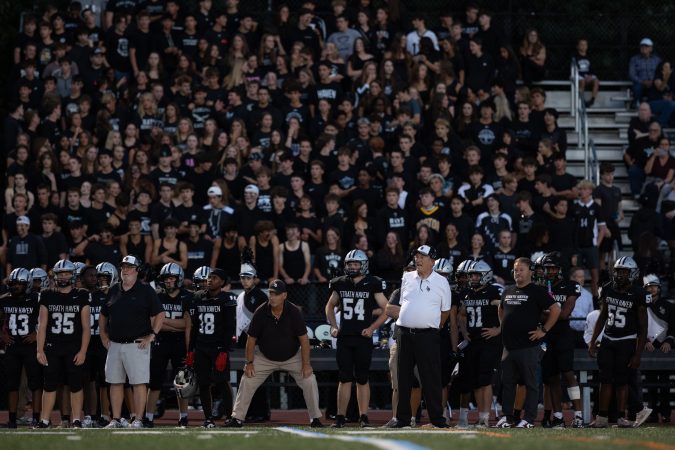
    More than 30% of high school students in the affluent Radnor and Wallingford-Swarthmore districts played sports in the 2024-25 school year.

    In the Philadelphia school district, less than 10% of high school students did.

    The disparities are part of a pattern, with fewer students playing sports in lesser-resourced urban schools, according to Research for Action, a Philadelphia-based educational research organization that released a report Thursday analyzing high school sports participation rates across Pennsylvania.

    The report, which looked at sports as another barometer of opportunities available to students, found participation varies widely — as does school spending on sports programs.

    It also found a link between funding and sports participation, with more students on average playing in higher-spending districts.

    “The degree to which a student may have access to school athletics really depends on what district they’re in,” said Maja Pehrson, the report’s lead author.

    Here’s what the report found — and what questions it raises about access to high school sports in Pennsylvania.

    There are big differences in sports participation rates

    Participation in school sports “hasn’t really been looked at very much,” Pehrson said. Research for Action analyzed data that school districts and charter schools are required to report to the Pennsylvania Department of Education on athletic opportunities.

    The report found participation rates in the 2024-25 school year ranging from 5% in some school districts, to a handful of districts with rates above 40%.

    Topping the list locally were Jenkintown School District, at 35%, and Springfield Township School District in Montgomery County at 34%; followed by Radnor and New Hope school districts, at 31%; Wallingford-Swarthmore, at 30%; West Chester, at 28%; and Upper Dublin, at 27% — all majority white, relatively affluent districts.

    Below the Philadelphia school district’s 9.6% rate were Upper Darby, at 9%; William Penn and Norristown, at 8%; and Chester-Upland, at 6% — all districts that are majority non-white and high-poverty.

    Overall, large, urban districts tended to have the lowest participation rates, meaning “almost half of Pennsylvania high school students are enrolled in districts where the likelihood of participating in a school athletics team is relatively low,” the report said.

    Those “very low” participation districts — with 5% to 17% of students participating — also offered fewer sports per 1,000 students than high-participation districts, the report found.

    Naima DeBrest, a spokesperson for the Philadelphia district, said the district had expanded athletic opportunities in recent years “by introducing new sports such as girls wrestling and girls flag football” and creating intramural programs at the elementary and middle school levels.

    Despite “common challenges” faced by urban districts, “the district remains committed to expanding access to high-quality athletic opportunities and ensuring students have meaningful opportunities to participate in sports that support their academic success, well-being, and overall development,” DeBrest said, noting that the district’s rate is comparable to other urban districts.

    <iframe title="Sports Participation and Athletics Spending Among Local School Districts" aria-label="Table" id="datawrapper-chart-dyc1W" src="https://datawrapper.dwcdn.net/dyc1W/1/" scrolling="no" frameborder="0" style="width: 0; min-width: 100% !important; border: none;" height="971" data-external="1"></iframe><script type="text/javascript">(function(){function e(){window.addEventListener(`message`,function(e){if(e.data[`datawrapper-height`]!==void 0){var t=document.querySelectorAll(`iframe`);for(var n in e.data[`datawrapper-height`])for(var r=0,i;i=t[r];r++)if(i.contentWindow===e.source){var a=e.data[`datawrapper-height`][n]+`px`;i.style.height=a}}})}e()})();</script>

    There are also big gaps in spending

    The report found a relationship between money and sports participation rates. Among the 10% of school districts deemed most underfunded by a state formula calculating what schools need to adequately educate students, more than half had “very low” sports participation rates, while more than two-thirds had “very low” or “low” participation, according to the report.

    And looking at what districts spend on athletics, it varied widely, the report found. Districts with “very low” participation reported spending an average of $409 per high school student on athletics, while “very high” participation districts — with 28.2% to 61.6% of students participation — spent an average of $939 per student.

    Locally, the Jenkintown, West Chester, Phoenixville, and Colonial school districts reported spending more than $1,100 per high school student on athletics, compared with $145 per high school student in Philadelphia.

    The report noted that those figures don’t fully reflect spending on school sports. Many districts didn’t report any spending on athletic facilities, for instance; Pehrson said it was likely hard for schools to calculate how much of their overall facilities spending was tied to athletics.

    The data also don’t reflect any activities fees paid by students.

    Charters have lower participation rates — but in line with Philly

    Statewide, brick-and-mortar charter schools, which are publicly funded but independently run, reported lower rates of sports participation. On average, 8.4% of charter high school students participated in sports, compared with 18.1% in district schools. (Cyber charter schools reported no participation; charter students who participate in district programs are counted by districts.)

    Rather than a difference between the charter and district sectors, however, the gap could largely be a product of school district conditions, the report said. Half the state’s charter high schools are located in Philadelphia, where the charter sports participation rates largely mirror the district’s, the report said.

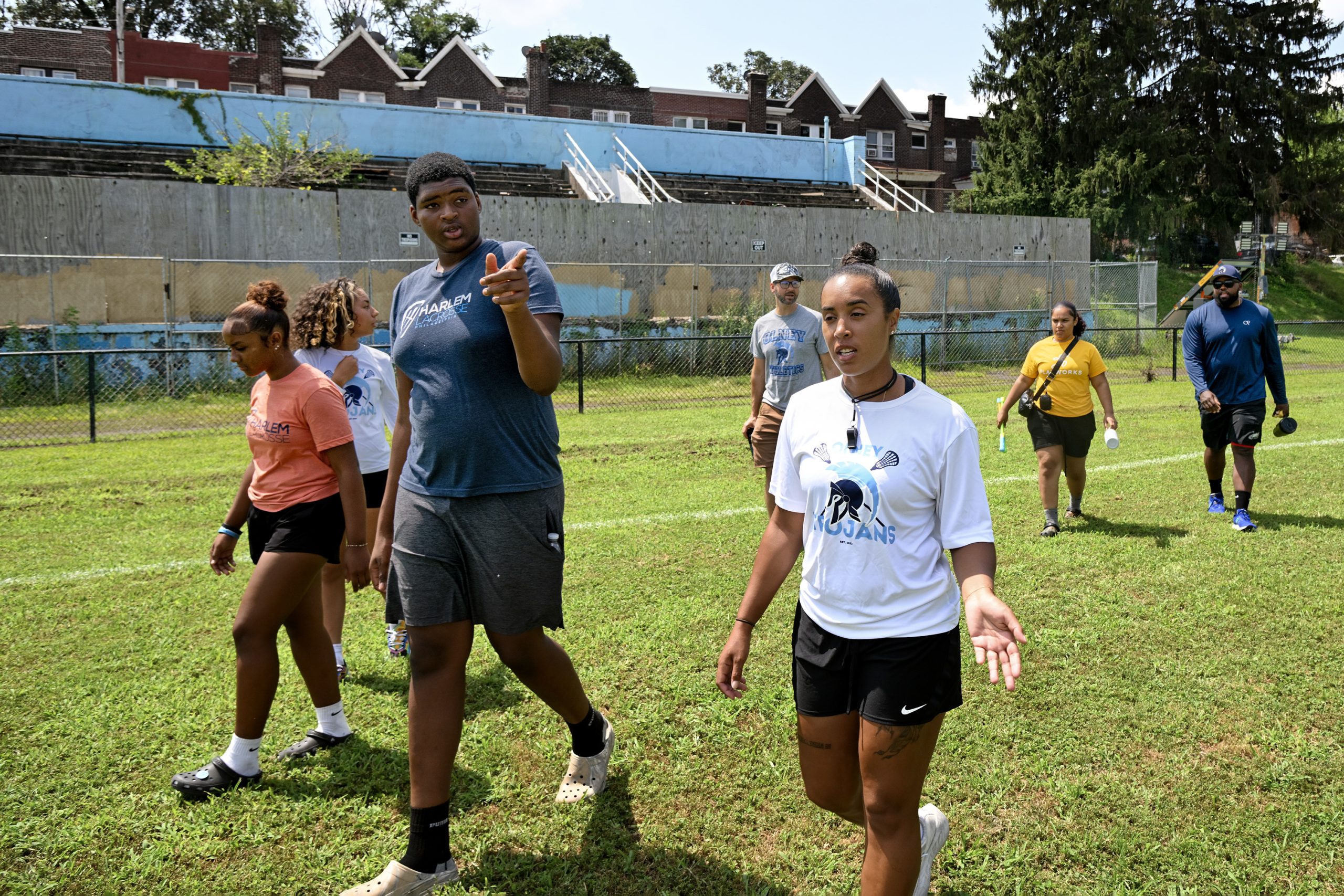
    In front of their boarded up dilapidated stadium, Olney High School athletes Cindi Lizardo (from left), Emma Blanco, Sidi Traore; and principal Michael Roth, coach Siena Childs, recent graduate Ysis Rivera, and athletic director Jorge Gonzalez point out the deplorable condition the sports facilities are in July 24, 2025. Olney High School, which spent a decade under charter management, was turned back over to the Philadelphia school district in 2022.Tom Gralish / Staff Photographer

    Gender gaps persist

    Boys participated in sports in 2024-25 at a higher rate than girls — at an average rate of 20.3% compared with 15.8%, the report found.

    And those gaps persisted across different types of school districts, the report found. For instance, in districts with “very low” overall sports participation, 14% of boys participated, compared with 10% of girls. In districts with “moderate” participation, 24% of boys participated, compared with 19% of girls. And in “very high” participation districts, 35% of boys participated, compared with 30% of girls.

    What’s driving the disparities?

    The report found that access to high school sports in Pennsylvania “is not evenly distributed and is strongly shaped by structural conditions.”

    “Districts with fewer athletic opportunities are more likely to be urban districts with large high schools and more students of color, and they tend to offer a narrower range of teams and spend less per student on athletics, limiting the extent to which students can engage,” the report said.

    But district funding alone isn’t responsible for disparities, the report noted. The gender gap, for instance, is found in well-funded and poorly funded districts.

    The pattern of higher-spending districts seeing more participation “doesn’t line up neatly for every district,” Pehrson said, noting that the data can’t fully answer questions about what’s driving differences in participation.

    Other possible factors could include transportation and sports outside of schools, Pehrson said.

    DeBrest, the Philadelphia spokesperson, noted that urban districts may also have limited athletic facilities, and practice space “and the need for some students to balance academics, work, or family responsibilities.”

    Pehrson hopes the findings prompt more investigation into the availability of school sports, which “are a key part of students’ educational opportunities,” Pehrson said — from boosting physical and mental health, to promoting social-emotional skills and building community.

    “There are clear disparities in terms of sports opportunities students are having,” Pehrson said. “Why is that, and how can we move forward and try to figure out these differences?”

    Editor’s note: This story has been updated to reflect that Jenkintown and Springfield Township were the local districts with the highest sports participation rates.

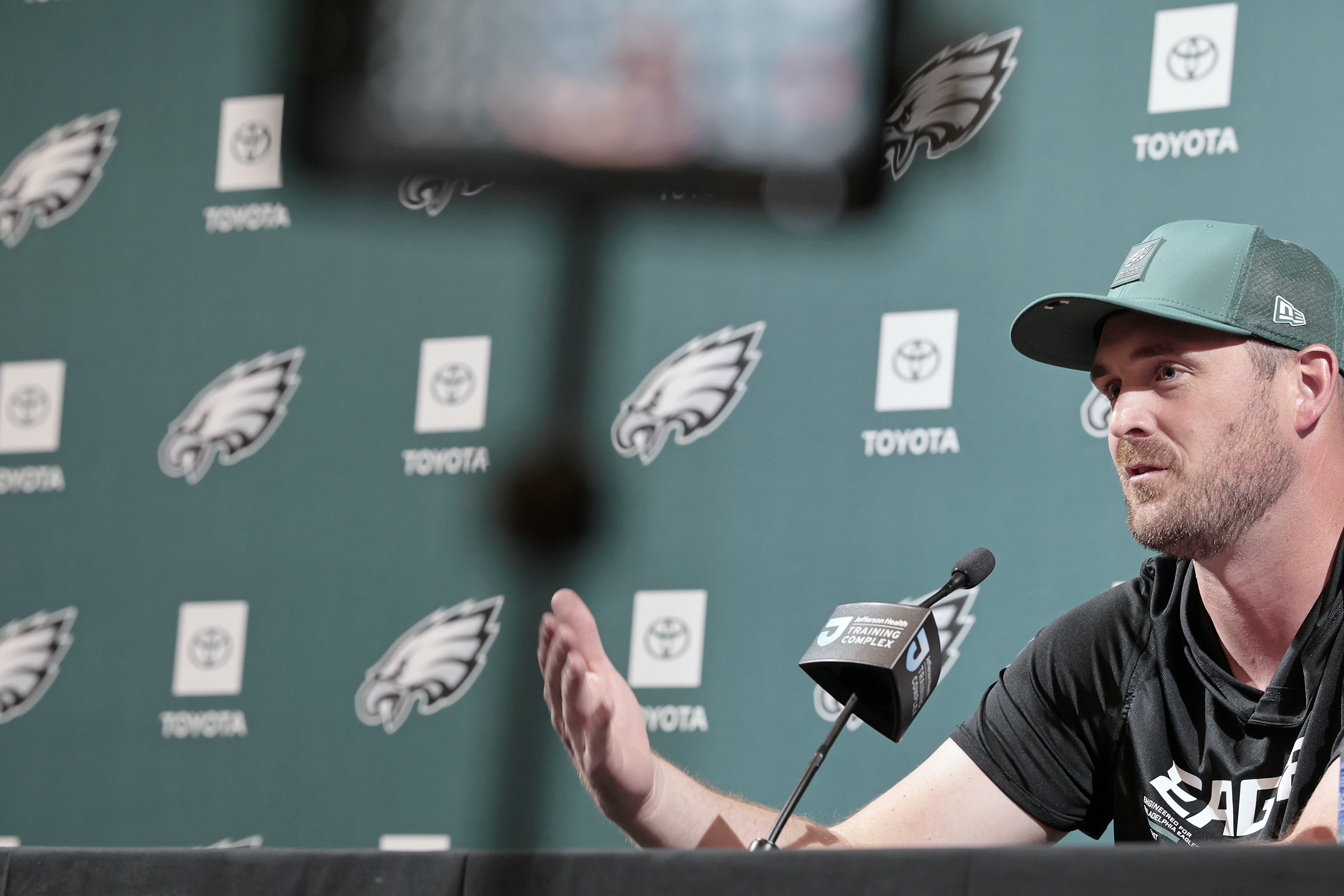
  • Nick Sirianni’s ability to adapt again will be put to the test in year six with the Eagles

    Nick Sirianni’s ability to adapt again will be put to the test in year six with the Eagles

    A mid-March snowstorm dumped more than 26 inches of snow in Green Bay, the second-largest snowfall on record — according to the National Weather Service — in the city that houses a football stadium nicknamed “The Frozen Tundra.”

    Flights were canceled, which meant new Eagles offensive coordinator Sean Mannion, a few weeks into the job and prior to his family making its move east, was facing a delay returning to the office. It was a few days into free agency, and NFL draft prep was in full swing.

    Mannion could have picked up the phone and called his new boss, Nick Sirianni, to tell him his return trip to Philadelphia would be delayed. Instead, he got in the car and started driving the 900-plus mile route to his new home. Sirianni called his new offensive coordinator to check in and was surprised to learn that Mannion was five hours away.

    “This dude loves football and he loves to work,” Sirianni said last month during an extended interview session with Eagles beat reporters. “I’ve really enjoyed being around him.

    “I think we think — about everybody — ‘Man, he’s just got it.’ But it doesn’t happen — whether it’s a player, whether it’s Sean — without this obsession to get better. Sean has this obsession to get better, this obsession with his craft, which is why he’s excelled in this profession and I’m really looking forward to continuing to work with him.”

    Mannion is the fourth Eagles offensive coordinator in four years, and the Eagles hired him to revamp an offense that took a step back in 2025 for a variety of reasons. The team didn’t come close to defending its Super Bowl title in part because its offense wasn’t capable. The offensive line was too banged up. Jalen Hurts was inconsistent at times. Saquon Barkley, behind a battered line, wasn’t the Barkley that dominated in 2024. A.J. Brown wasn’t happy. And Kevin Patullo, the first-year offensive coordinator, appeared not up for the job.

    Mannion, 34, is another first-year coordinator, but he brings a sense of freshness to the Eagles and Sirianni having worked under a different coaching tree that surely will lead to scheme changes with the Eagles in 2026 and beyond.

    Sean Mannion’s new scheme will receive a great deal of attention throughout camp and into the 2026 season. Elizabeth Robertson / Staff Photographer

    Sirianni is entering his sixth season with the Eagles. It is the longest stretch of time the 45-year-old head coach has spent in one place since becoming a coach. It is not unfair to say his future in Philadelphia could rest on how Sirianni helps the Eagles adapt to another new voice leading the offense and moves the franchise into its next stage.

    Show and tell

    Just five head coaches remain in the league who have been in their position longer than Sirianni has been with the Eagles. Five years at one place isn’t a long time in the grand scheme of a normal working career. In the NFL, it has become a rarity.

    The Eagles under Sirianni have done a lot of winning. Only the Buffalo Bills, who just fired Sean McDermott this offseason, have a better winning percentage since the start of the 2021 season than the Eagles’ 69.4% win rate with Sirianni in charge.

    A handful of key Eagles have been around for the entire Sirianni experience, which means they’ve had the same voice leading team meetings for quite a while.

    How does Sirianni try to keep it fresh?

    “I think it’s constant growth,” he said. “Show and tell is one thing. I always tell these guys, me showing you what it looks like and telling you what it is in this aspect, that’s the easy part. Being relentless with the monotony of it and consistent every single day, that’s the hard part. You do that through film and you do that through practice and their actions and our habits. But then you also try to find stories that paint your picture out there.”

    Sirianni has done his best to not repeat often. Lately, he has found himself going to ChatGPT for inspiration. One day during the offseason program, Sirianni typed a prompt into the artificial intelligence assistant. He wanted to find a “true” — yes, he knows that AI isn’t perfect yet — sports story that exemplified the three-word motto Lane Johnson and DeVonta Smith probably find themselves reciting in their dreams: Tough. Detailed. Together.

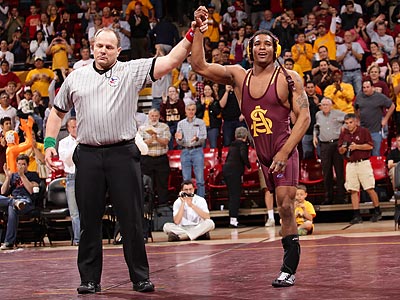
    Arizona State’s Anthony Robles, once the nation’s top-rated 125-pound wrestler, is a source of inspiration for Nick Sirianni.

    The chatbot spit out the story of Arizona State wrestler Anthony Robles, who, despite being born with one leg, went undefeated as a senior and won the 2011 national championship at 125 pounds in Philadelphia. Sirianni did some more research on Robles and had his next story for a team meeting.

    Extended time in one place, though, means he’s been able to personalize some of these stories and connect them to his own roster. Sirianni brought up a story former NFL coach Tony Dungy once told about the Immaculate Reception. Sure, there was some luck involved in Franco Harris catching the deflected pass, but Harris had a habit of being around the ball, being in the right place at the right time.

    “Now I’m thinking about that and I’m like, well, that’s Tank Bigsby,” Sirianni said, mentioning the backup Eagles running back. “He is constantly running to the football. He is constantly doing everything he’s supposed to do. And I was able to hit back the story.

    “I guess what I’m saying is … we’ve created stories. We’ve created things that people are looking up on [ChatGPT].”

    ‘You have to adapt’

    The post-Shane Steichen years have been a roller coaster at the offensive coordinator spot. Brian Johnson, an internal hire, lasted less than one full calendar year in the role after the 2023 Eagles collapsed at the end of the season. Kellen Moore, an external hire, helped the Eagles win the Super Bowl before becoming the head coach of the New Orleans Saints. Then came Patullo, another internal hire and Sirianni’s close friend.

    How things work out with Mannion and the new scheme remain to be seen. He is the Eagles’ third coordinator since 2023 who will be calling NFL plays for the first time.

    Football, Sirianni said, is about adapting.

    “You have to adapt in-game, you have to adapt in-season, you have to adapt to all different styles of how you coach different people,” he said. “What’s great about this world is no two people are perfectly alike. We may have similarities and similar traits but everyone is different.”

    Nick Sirianni (left) is attempting to guide his team following significant offseason changes. Monica Herndon / Staff Photographer

    Mannion, who Sirianni said tends to beat the head coach to the building, has only been a coach for two seasons. He was on a league roster as recently as 2023. The Eagles have had inexperienced coordinators before, but none quite like Mannion. So Sirianni said he has adapted his approach in some ways. In the past, he might have warned Steichen or Moore about a certain scenario he planned to throw at them in practice. But a third-and-12 from the 3-yard line might be a pop quiz for Mannion this time around.

    “My job is to make sure that I put him in as many scenarios as I possibly can to help him go through that,” Sirianni said.

    That part of Sirianni’s job hasn’t changed, but failures of the past may have informed how he views his role.

    But the more things change, the more they stay the same, as the saying goes.

    Sirianni said he noticed something when watching the NBA and NHL playoffs this year. The Knicks and the Spurs, the Hurricanes and the Golden Knights, they all said the same things, the same messages he’s been repeating her for more than five years.

    “There’s a common denominator of these good teams that they just want to play for each other,” Sirianni said. “We’ve talked a lot about that and tried to live that. That’s tricky and that’s hard. How do you come together as a football team? You come together through shared hardships. You get that through the offseason. You come together through building trust, consistently doing what you’re supposed to do. And you come together through the time that you put in with each other. That time, sometimes it feels like it’s invisible progress.

    “Our best teams since I’ve been here have been the closest teams. We believe in that very much.”

    How close will this team become? How will Mannion bring the offense to the next level? How will Sirianni help the Eagles navigate the changes and reach the high expectations in the building?

    The answers to those key questions won’t be known for a few months. The Eagles begin camp next week, and a key season in Sirianni’s career trajectory is about to get underway.

    “It’s a blessing to be at a place for so long in the NFL,” Sirianni said, “and I look forward to continuing that for years to come.”

  • Phillies’ bullpen desperation sets up a perilous trade deadline

    Phillies’ bullpen desperation sets up a perilous trade deadline

    Few things are more toxic than a bullpen that has no good answers.

    The Phillies are treading perilously close to that boundary line.

    Can they actually fix it?

    They can try, sure. They have no choice. With two weeks remaining before Major League Baseball’s trade deadline, the Phillies have exactly one reliever whom Don Mattingly would feel comfortable calling upon in a critical postseason moment. They have one who seems to be earning more of his trust but who would profile more as a dependable middle reliever in a legitimate championship bullpen. After Jonathan Bowlan, they have a couple of arms who are basically a coin flip. After Orion Kerkering and Jose Alvarado, Mattingly can do little more but pray for the best while expecting the worst.

    Dave Dombrowski was up against it even before he learned that high-priced free agent set-up man Brad Keller would miss the rest of this season and likely the next one with a UCL tear. Keller’s signing is ironic in the sense that the Phillies will be paying him the same money they would have been paying to Jeff Hoffman had they not allowed the righty to leave for Toronto, in part out of fear of the health of his arm. Further irony: Hoffman is one of the names that has been tossed around for teams in need of bullpen health, with the Blue Jays currently out of contention.

    Brad Keller is no longer a bullpen option for the Phillies. Yong Kim / Staff Photographer

    The most important thing to know about the trade deadline is that it isn’t as important as everyone would like to believe. Rare is the team that manages to fundamentally alter its outlook or identity midseason. In the best of cases, it is like the magic mushroom in a game of Mario Kart: a decisive boost deployed at exactly the right time while also eminently finite. The Phillies saw the best of cases back in 2009 with the acquisition of Cliff Lee. The next year brought Roy Oswalt, the year after that, Hunter Pence. They have yet to recapture the glory of 2008.

    The question is not binary, in other words. It is not, “Go for broke or stand pat?” The midseason trade market is, first and foremost, a market. All you can do is take what it gives you.

    From a decision-making perspective, the second-most important thing at the trade deadline is to stick to your principles. The first-most important thing is to figure out what those principles are.

    The biggest question right now:

    How confident are the Phillies that they will make the playoffs with the current roster?

    A better way to put it: How sure are the Phillies that the Marlins, Nationals, Cardinals, Pirates, and/or Diamondbacks will ultimately fade?

    Sounds crazy to ask, given that the Phillies have been one of the best teams in baseball since the beginning of May. But these are strange times in the National League. Nine teams are at 50+ wins. Two more are within two games of .500. The Phillies may only be two games behind Atlanta, but the Braves are playing on a different tier. Consider them booked for the postseason, along with the Dodgers and Brewers. The Cubs and the Phillies are alone in the next tier at 10+ games above .500. Problem is, that next tier is closer and more populous than usual. The Marlins, Cardinals, Pirates, and Diamondbacks all entered Sunday within four games in the loss column. That’s nine teams for seven postseason spots. A sudden losing streak could dramatically change the Phillies’ outlook.

    The bullpen would be an issue even if the circumstances were different. But the Phillies could at least be planning for the postseason. As things stand right now, Dombrowski first must decide if he has enough pitching to get him to October.

    Something else to ponder: If Gage Wood and Andrew Painter aren’t immediate solutions, are they potential trade chips?

    Andrew Painter posted a 7.06 ERA while with the Phillies.Yong Kim / Staff Photographer

    It is a double-edged question. The first edge: Are the Phillies willing to trade their two high-level pitching prospects for short-term help? The second edge: How do other teams value them?

    Painter is pretty clearly a lost cause for 2026. His most recent start at triple-A Lehigh Valley: seven runs, one strikeout, four walks, 2 ⅔ innings. In the two starts prior, he allowed just two runs in 10 innings while striking out 10 on three walks. All three outings came on five-plus days rest.

    Wood? We’ll see. The numbers look about as good as the Phillies could have hoped when they selected him at No. 26 overall last June. He has 39 strikeouts and nine walks in 28 ⅔ innings since being promoted to double-A Reading. He has also allowed six home runs. The fastball is crispy, but not to the extent that he can get away without locating it in the strike zone. Hard to believe that Dombrowski or anybody else is thinking of him as a potential answer in high-leverage situations.

    Gage Wood has posted a 3.51 ERA so far in 2026.David Maialetti / Staff Photographer

    Speaking of leverage …

    It isn’t in Dombrowski’s favor right now. The idea of buyers and sellers is a false choice. There is a price for everything. The more plausible a team’s denial of having to sell, the higher the price they can sell for. The more teams that could potentially buy at the right price, the higher the price for everyone.

    The Phillies enter the trade deadline with a farm system that Baseball America ranked as the 29th best in baseball. Their one no-doubt-about-it, blue-chip prospect has yet to take the field this season. Painter has gone from untouchable to would-anybody-touch-him. Once upon a time, the Phillies traded Spencer Howard for Kyle Gibson and Ian Kennedy.

    Are we there yet?

    Rather than buyers and sellers, the trade deadline’s real hierarchy is an order of desperation.

    How desperate are the Phillies? How desperate should they be?

    These are usually losing questions.

  • Want to win a World Cup, America? Start doing better by the kids. And their parents, too.

    Want to win a World Cup, America? Start doing better by the kids. And their parents, too.

    EAST RUTHERFORD, N.J. — The completion of the FIFA World Cup on Sunday wrapped up truly one of the most captivating sports experiences North America has seen in quite some time.

    As we speak, the last of FIFA’s traveling caravan has packed up, ready to move onto its next stop, while leaving American fans looking at the soccer landscape in this country, wondering why, with the wealth of raw athleticism we have here, couldn’t one of those two teams in Sunday’s final have been us?

    Good news. Historically speaking, every World Cup spawns change. Bad news? When it comes to soccer, the United States has been historically bad at making the changes needed to make a stir. In 2026, emerging from the group stage shouldn’t be a hope — it should be the norm.

    The change needed to push American soccer forward is not an easy fix. OK, well, it is, but it requires a dedicated strategy and a collective belief that development, not greed, needs to be at the forefront.

    That investment begins at the grassroots level and comes in two main tiers: Investing heavily in identification and developing raw, untapped talent.

    The other? Educating parents that there’s more to the game than striving to make the top club team in your area.

    You could add a third — offering greater exposure to the game — but that topic sits on its own almost entirely when you consider the level of gatekeeping that exists, from broadcasting contracts going to cable and streaming services to the outrageous price points of tickets.

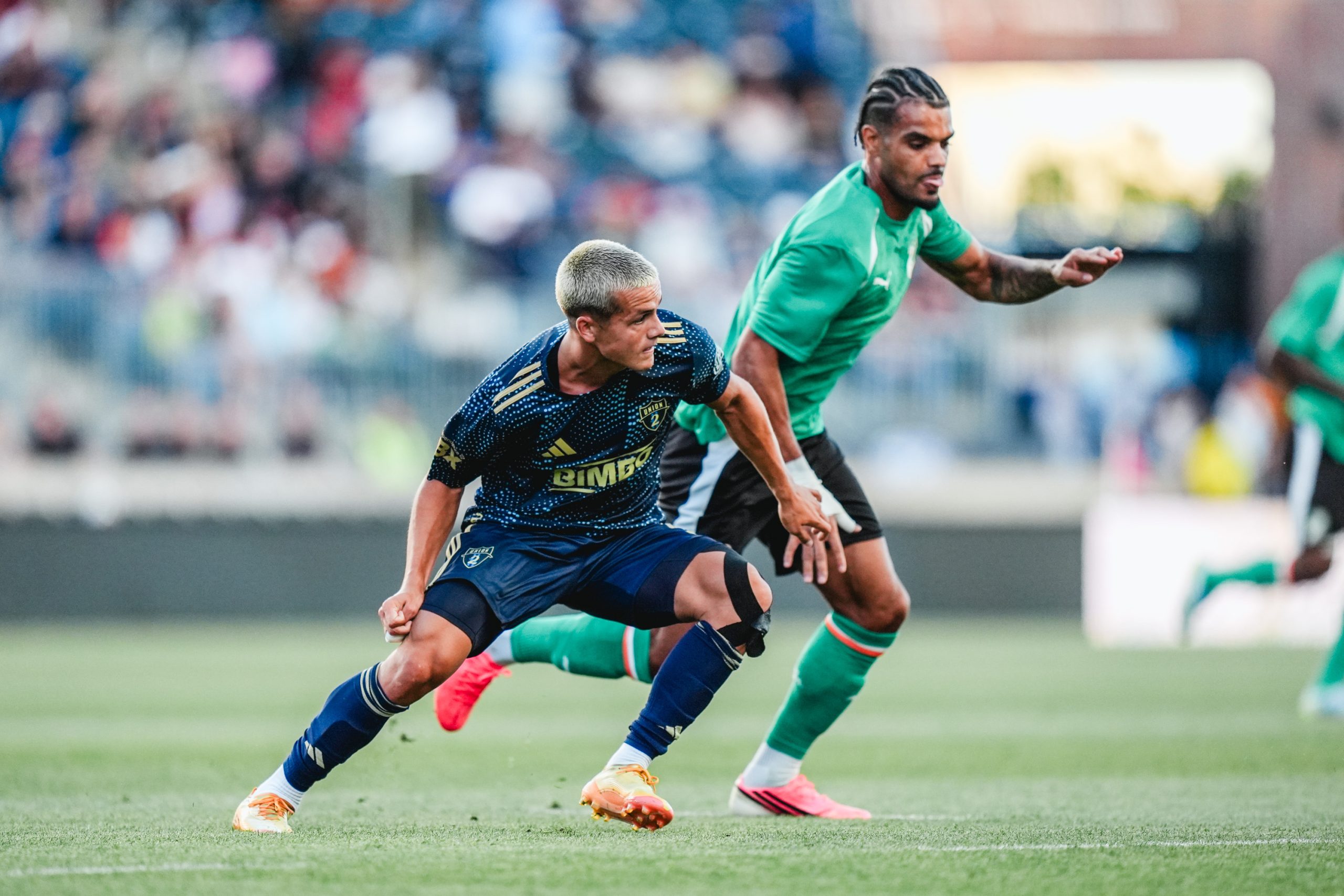
    Cavan Sullivan (left) is an example of the type of player the U.S. could produce behind a deeper focus on development. Philadelphia Union

    It already is in some states, like here, in what the Union is doing with youth development that spawns real American hopefuls (see: Cavan Sullivan). Undoubtedly, that last sentence ruffled a few feathers among the club soccer community.

    If that’s the case from where you’re standing, well, therein lies the problem.

    Finding the future

    Recent history has shown that’s not always going to arrive via a traditional club model where parents are overspending, because at the starting-out level, they honestly don’t know any better. It’s not saying the model is all that ails when it comes to development, just that it can no longer be widely considered as a preeminent pathway for children as young as 5.

    U.S. Soccer recognizes this. Just last week, it noted that in the aftermath of the national team’s round of 16 exit, it’s “trying to create a new system that then we’d make highly affordable. It’s a bold strategy that comes with a ton of roadblocks. The current model is not just fully ingrained into how we develop talent, but it makes a lot of people really rich off kids with a dream and parents with deep pockets.

    But what would an argument be without a solution? Here are two.

    Giving kids an opportunity to ignite a passion for soccer starts with making sure there are ample, unlocked places to play.Allie Ippolito / For The Inquirer

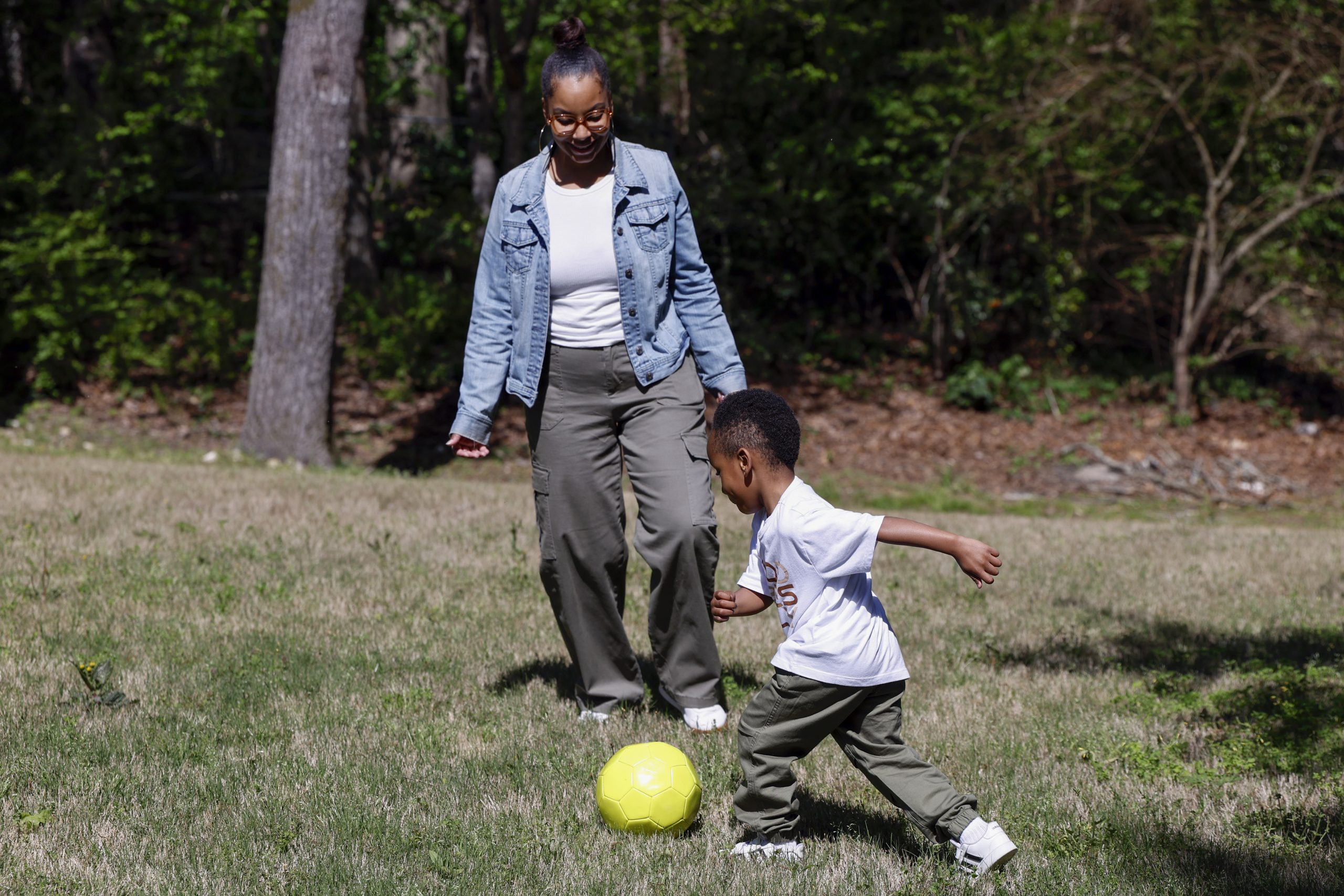
    First, foster excitement by putting the game everywhere. Start with a focus on inner cities and rural communities. Loosen the restrictions on accessibility, price, and most importantly, the gates of locked-up ballfields that kids could be playing on.

    Second? Put some skin in the game.

    Imagine pouring financial resources into underserved neighborhoods. You’ve built the fields, now get kids playing on them. How about a series of cash prize tournaments at multiple age ranges and skill abilities?

    Organizers receive winnings under the demand that a substantial amount of the proceeds is used to create more opportunities to foster interest. In turn, U.S. Soccer and the academies of Major League Soccer teams plant scouts at these events to find the raw talent and develop them.

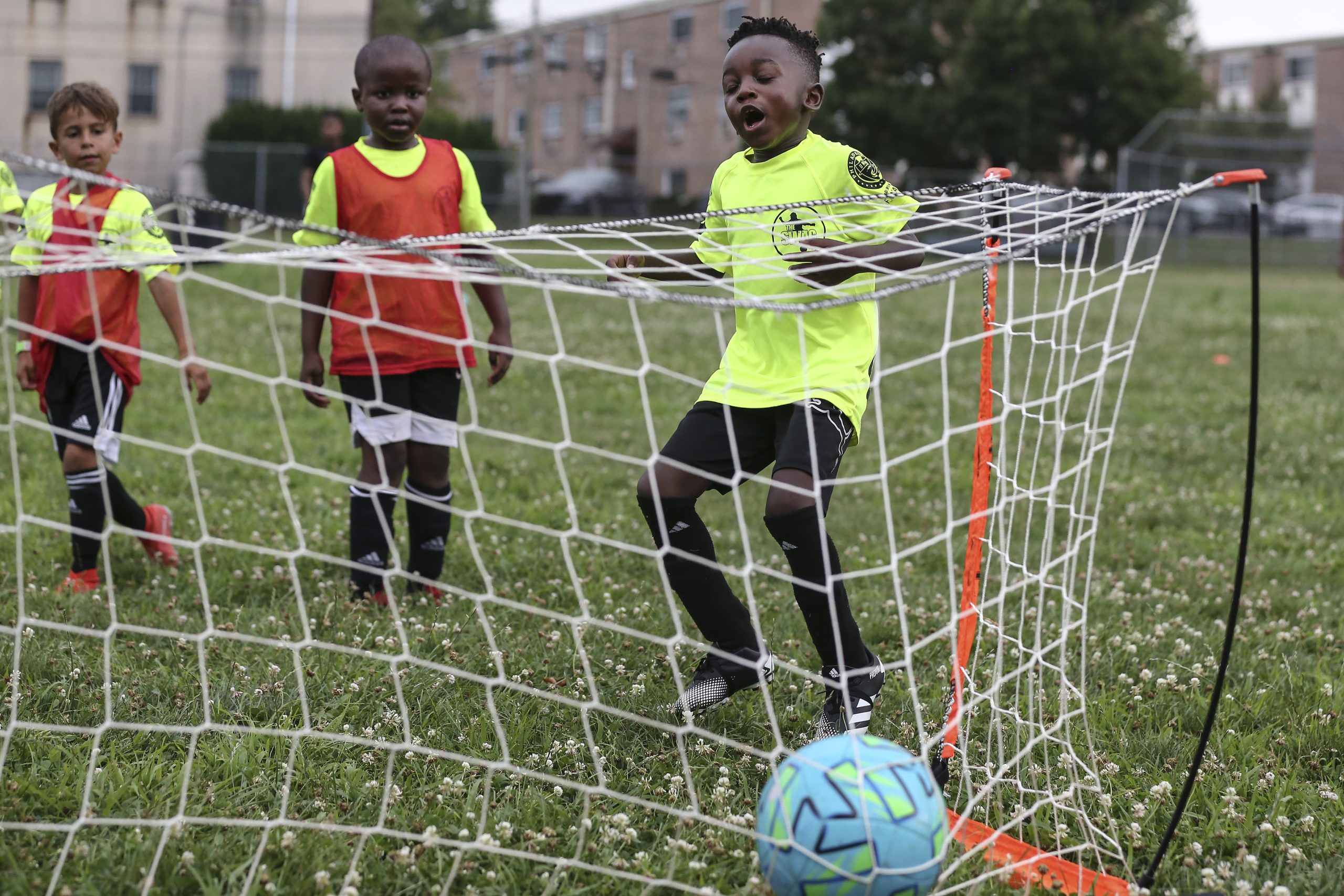
    Started in 2018, the Philadelphia Union’s SWAG program offers underserved kids the opportunity to learn the game, and for the ones that show promise, get placed on a developmental path to pro track. STEVEN M. FALK / Staff Photographer

    Some of that is already happening. In 2018, the Union created the SWAG program, going into schools, finding kids, developing them from the age of five, and grooming them to be on a professional pathway. It’s the kind of pipeline that city-based organizations like Kensington Soccer Club and Capitolo Soccer AC Fairhill, Street Soccer USA and many more are at the ready to be, and are already finding diamonds in the rough all along the way.

    The problem is, as it stands, not enough people in power when it comes to the game care to look.

    The parent trap

    Listen, at the end of the day, you don’t know what you don’t know.

    According to figures from Project Play, a study created by the Aspen Institute, youth sports is a $40 billion a year business, with youth soccer a sizable chunk of that equation.

    The reason why there’s so much money to be made? Here’s a big one: uninformed parents.

    At a certain level, there is this real fear of missing out from parents when it comes to their kids’ trajectory. The FOMO isn’t in every case, but here’s how it typically works when it comes to soccer in America. It starts innocently, a parent signing a child up for in-house soccer, where you discover, and it’s affirmed by a coach and others, that your kid has real talent.

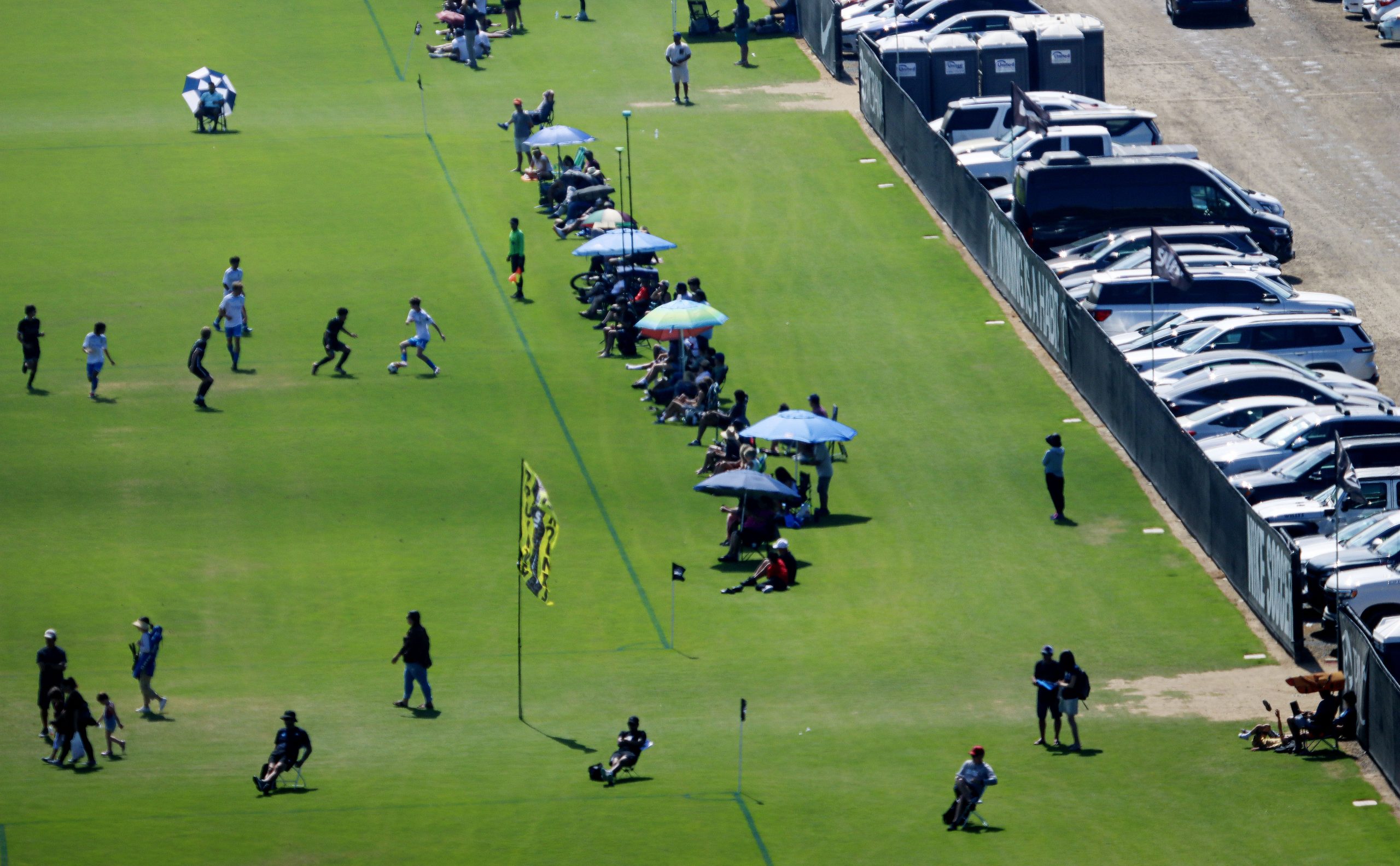
    Parents typically spend hundreds on top of committing multiple days of their family’s time to youth soccer tournaments all over the country. Sandy Huffaker

    But instead of offering programs to develop that talent and get that child acclimated to the sport at a young age through actual development at a continued low cost, parents are coerced into believing that their child would fit seamlessly on a travel club team. One that competes year-round, practices 2-3 times a week, and plays games and tournaments on the weekend.

    According to Project Play, about one-third of families report taking on significant debt so their kids can participate in sports. The average family spends $1,000 on registration fees, equipment, and travel.

    And then there’s the time cost. Traveling back and forth between states, sometimes to play the same team from the next town over from your club in a tournament.

    If you’re a soccer parent, undoubtedly, you’re nodding your head as it probably sounds like your trajectory in youth soccer to date.

    Suppose the solace comes in that you’re not alone?

    For many parents, looking for the best place for their child to play the sport at a top level comes at a high cost. Butch Dill

    And then there are the buzzwords. “Select.” “Premier.” “A-Squad.” All of these focus not on developing kids into the talent needed to put the U.S. in the best position to win a World Cup, but instead compile the best kids to help that club win across multiple age groups. They’re also words that make parents salivate, spending money they believe will deliver their child to greatness.

    Or at least, that team that everyone is talking about.

    At the end of the day, parents want to provide what they believe is the best opportunity for their child. Some don’t know what that looks like in soccer.

    Can’t fault that. The real fault is in the subsequent exploitation of this ideology by organizations charging thousands for a child to have said opportunity.

    Parents in these same circles have revealed that for kids as young as nine and 10 years old, their club won’t even look at kids who don’t already come in with a certain level of skill. Ask yourself: If the mindset has to be about development, how is that mentality not a perceived problem?

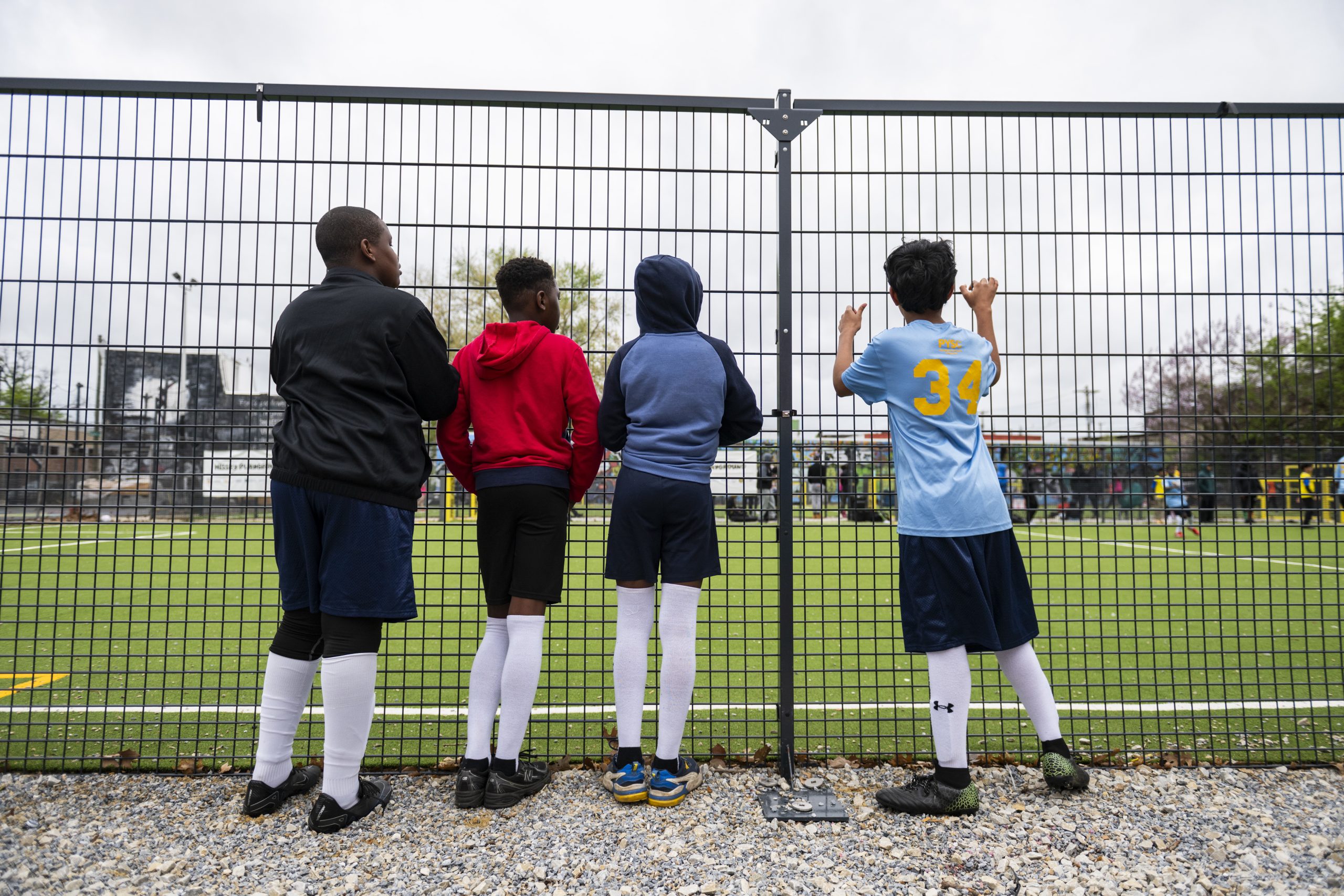
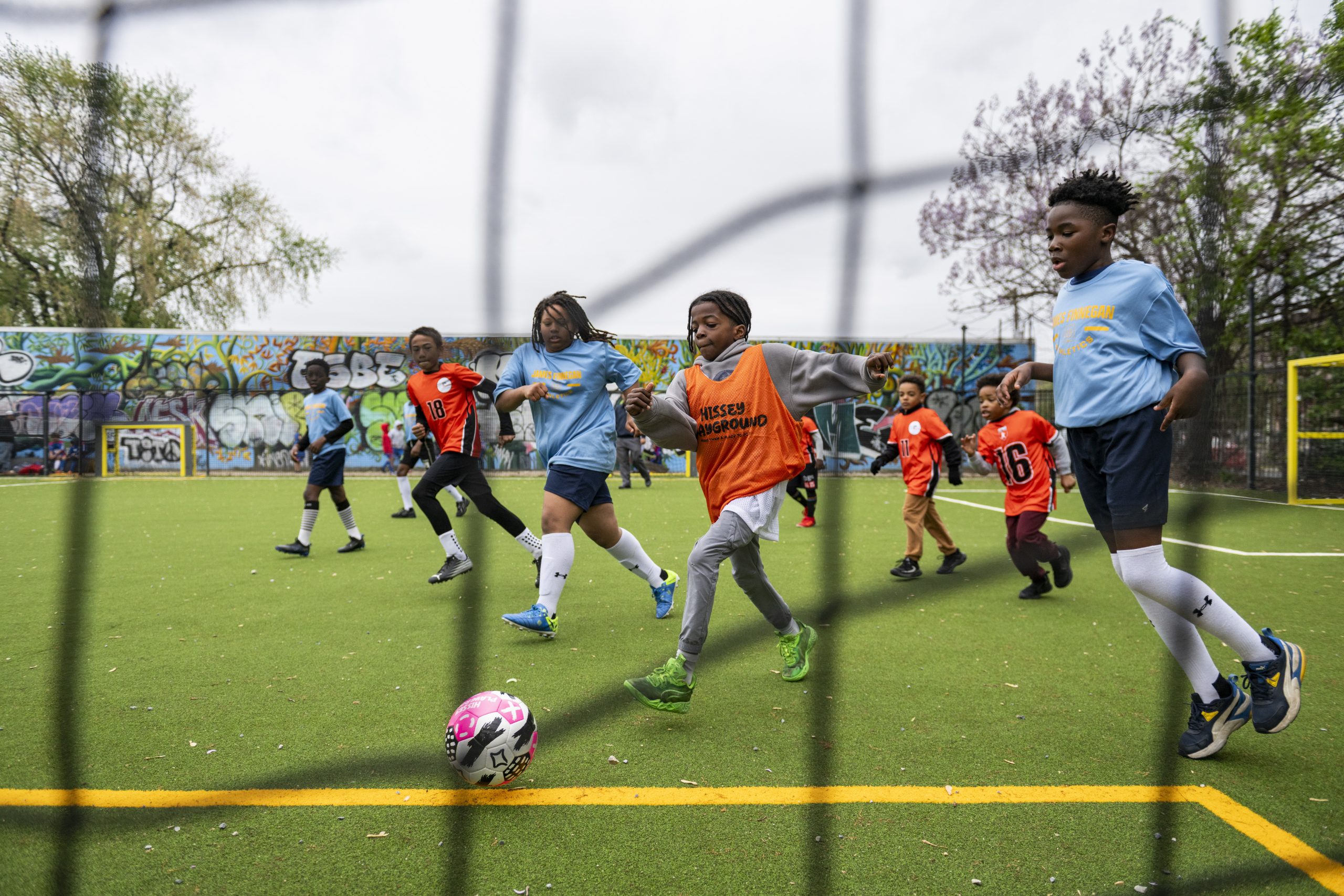
    Kids play in Kensington Soccer Club’s Love Street League program at Hissey Playground in Kensington.Allie Ippolito / For The Inquirer

    So, of course, that begs the question: “Who pays, then?” Well, there are plenty of youth systems around the world with strategies that give youth soccer in America a fantastic roadmap. Anyone tuning in to Sunday’s final was treated to a great page to start reading if you look at what Spain has been able to do on almost every level over the last 10 years, right up through yesterday.

    Two World Cup titles in less than 20 years. A European title. The only nation where both the men’s and women’s teams are defending world champions. If the goal is to crack the code on how to produce players who can go far in a quest to chase a World Cup trophy, maybe start there.

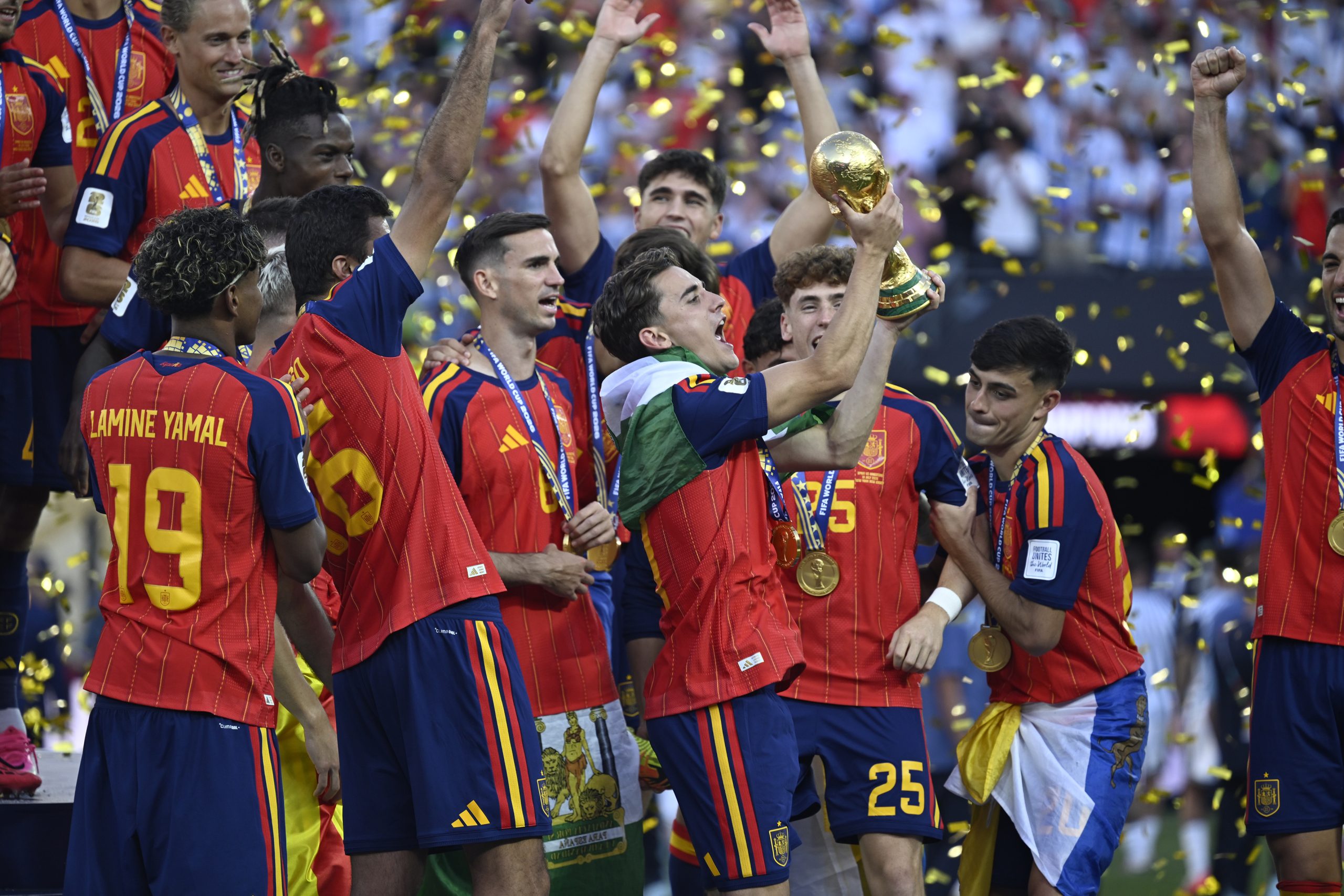
    Spain’s Gavi (9) holds up the FIFA World Cup trophy as Spanish players celebrate after winning the World Cup final against Argentina in East Rutherford, N.J., on Sunday.VINCENT ALBAN

    As it stands today, club soccer in America serves a purpose. It’s a great conduit for exposure. It offers youth players a firsthand look at the rigors of competition at a very young age. It teaches teamwork and being dedicated to a collective mission.

    But it’s not about development. If it were, parents wouldn’t need to consider paying even more for privatized training or skill development camps and clinics. And now, the notion is growing that private equity sees ways in which it can get involved in the gambit. If there isn’t more of a fight to make sure that the status quo doesn’t become the legacy of this World Cup, history looks pretty bound to repeat itself in four years.