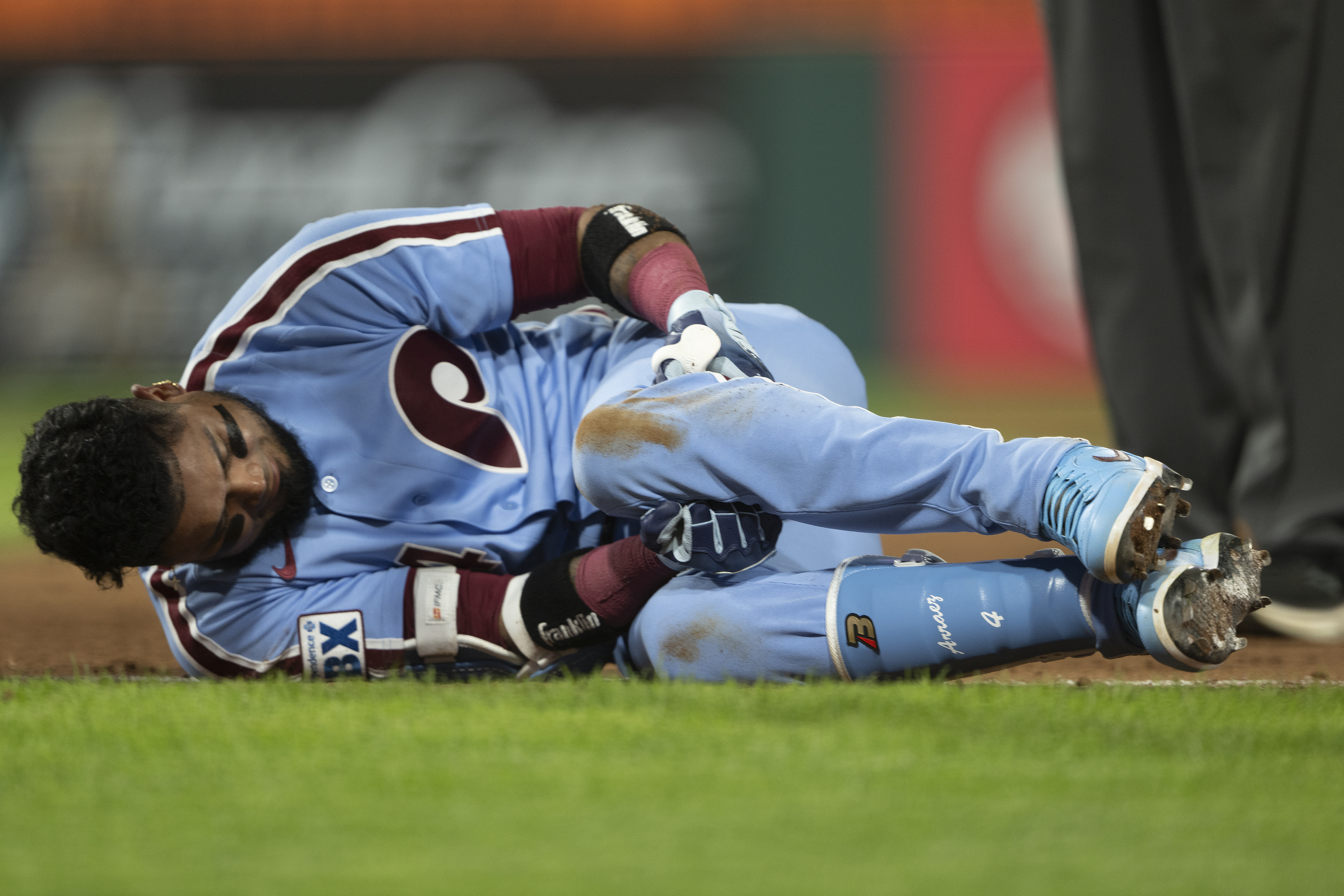
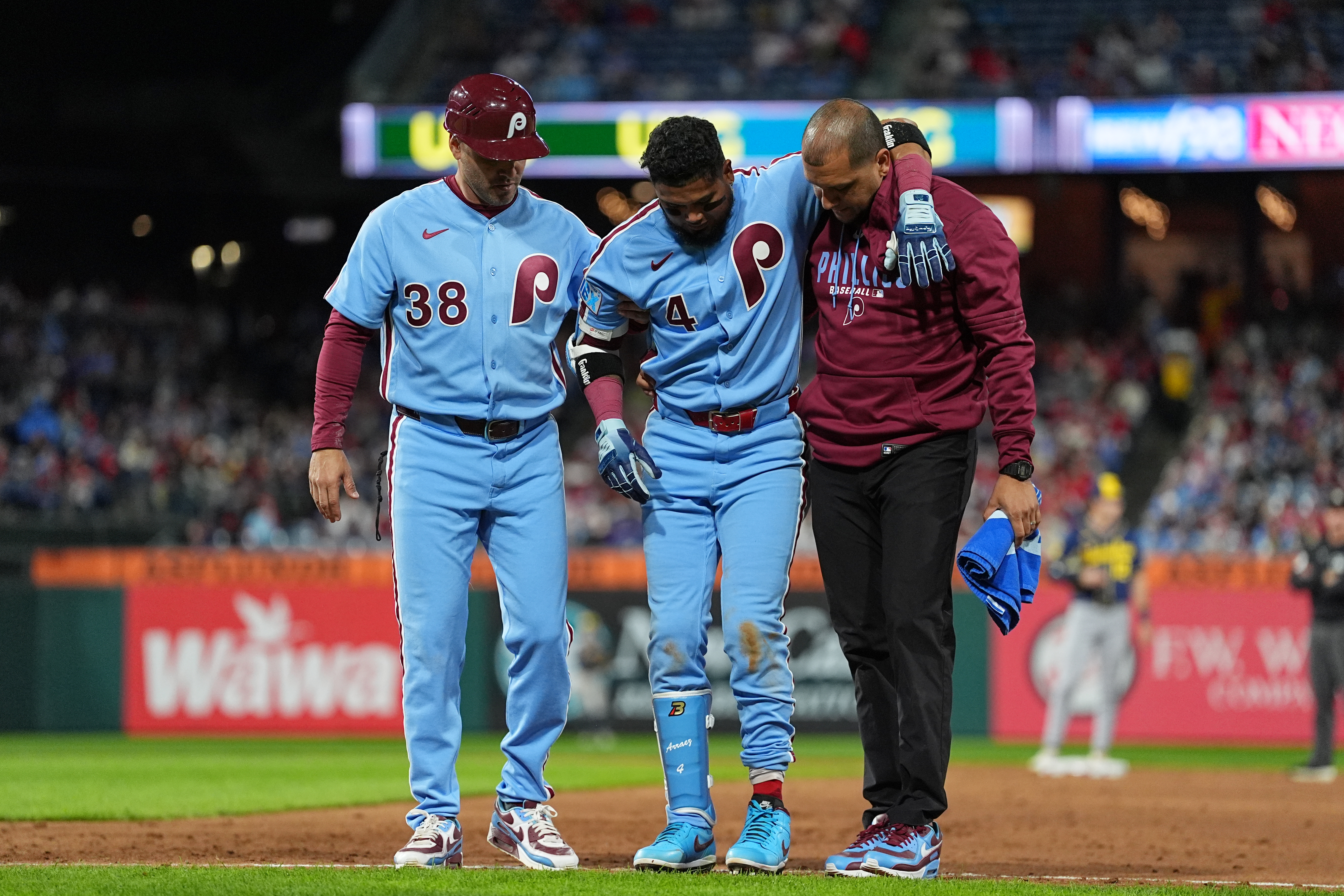
Just in case you thought the Phillies only lost a game Thursday night, there was Luis Arraez, unable to put weight on his left leg as he limped off the field.
And now, it’s unclear if he will play again this season.
Diagnosed with a sprained left ankle after landing on it awkwardly to avoid a tag at first base while legging out a grounder in the sixth inning, Arraez’s availability will hinge on how he responds to treatment. X-rays were negative, according to interim manager Don Mattingly.
“We’ll see more, we’ll know more [Friday],” Mattingly said after the Phillies’ latest attempt to clinch a wild card was foiled with a 5-1 loss to the Brewers. “We’ll see what happens, see how he walks in, or talk to him [Friday].”
Closing in on his fourth batting title with a National League-leading .310 average, Arraez is hitting .278 with a .309 on-base percentage for the Phillies since they traded for him at the Aug. 3 deadline. He has been the cleanup hitter in all 44 of his starts.
The Phillies rearranged three-quarters of their infield to accommodate Arraez at second base. If he’s unable to play in the last three regular-season games against the Rays and (maybe) beyond, they could shuffle everything again, possibly even moving Bryce Harper back to first base from right field.
“Yeah,” Harper said. “I’ll do anything.”
When Arraez left the game, the Phillies moved Bryson Stott back to second base, inserted Edmundo Sosa at third, and kept Alec Bohm at first base and Harper in right field. Mattingly mentioned that as one potential alignment.
“I think it’s just putting our full effort in as a lineup and saying it’s the next-man-up mentality,” Harper said. “Sosa’s been great for us all year. So, if he’s in the lineup, obviously he’s going to be our guy even in the short term.”
Luis Arraez was helped off the field after spraining his ankle in the sixth inning Thursday.Matt Rourke
Another possibility includes Bryan De La Cruz in right field, Harper at first base, and Bohm at third. The Rays are scheduled to start three left-handed pitchers, which likely keeps lefty-hitting Brandon Marsh in the lineup.
In any case, the Phillies must generate more offense. Even with Arraez, they scored once in each of the last two games against the Brewers after scoring three runs in five consecutive games last week against the Nationals and Mets.
Trea Turner said it would be “rough” if the Phillies must play without Arraez.
“He’s kind of locked down that four hole for us and just keep the line moving,” Turner said. “Whether people are on or he’s leading off, it feels like he’s making us a lot better. And the defense has been really good, too. So, I think that’s going to be a little bit of a blow.”
Arraez was trying to beat out a grounder to shortstop when Cooper Pratt’s throw pulled Jake Bauers off the first base bag. As Arraez tried to dodge the tag, he appeared to twist his ankle and fell to the ground in pain.
In an equally cruel twist, Arraez was called out when the umpires said he ran out of the baseline. Mattingly contested that Arraez’s last step before passing Bauers was in the box attached to the baseline.
“So, no matter how far he moves, for me, he’s in the box,” Mattingly said. “Now, if I’m wrong on that, I’m wrong. But he’s still inside that box. … I’ve always felt like you can run in that box all day long and do whatever. So, yeah, I don’t get that one.”
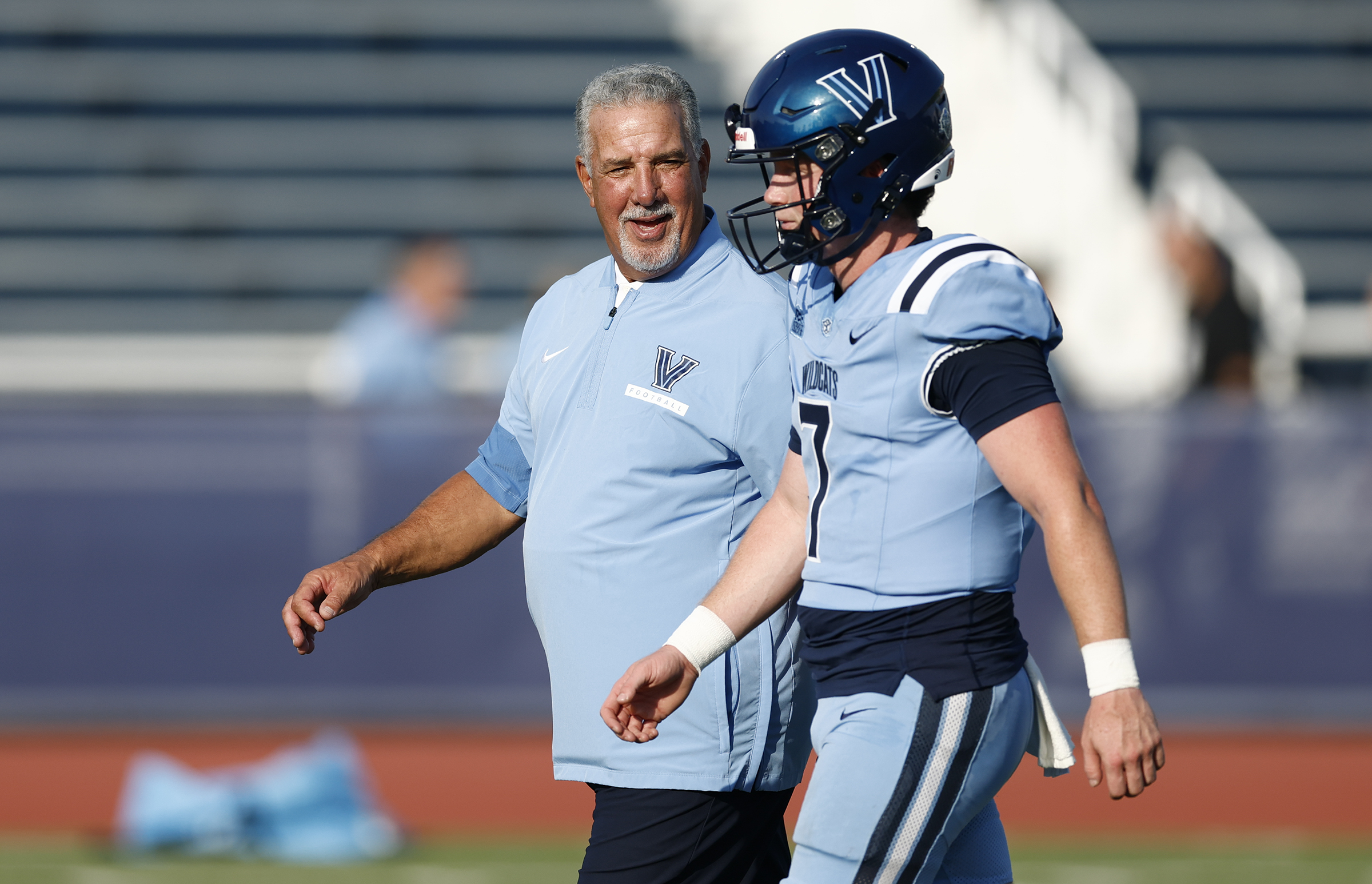
It could be a Patriot League team, a nonconference opponent, or an FBS school, the mentality doesn’t change for Villanova coach Mark Ferrante: “The schedule is the schedule.”
The Wildcats have played two conference games, losing to William & Mary and defeating Bucknell, and two nonconference games, a 59-13 loss to Louisville and a 20-16 win over Long Island on Saturday.
“The nonconference is the nonconference, the in-conference is the in-conference, our approach always has been [the same],” Ferrante said. “We’re going to play who’s on our schedule [and] it shouldn’t matter. You only get so many guaranteed opportunities. You want to try to create more opportunities for yourself at the end of the year, but you better be where your feet are.”
After facing Colgate (3-1, 2-0 Patriot League) at home on Saturday (2:30 p.m., ESPN+), a final nonconference matchup against Morgan State awaits on Oct. 3.
Ferrante is happy the Wildcats are finding ways to win close games with one-score wins over Bucknell and LIU, but he said there is work to be done to play a complete 60 minutes.
“It’s just more consistency,” Ferrante said. “We get great field position, let’s score the touchdown instead of having a turnover. Just got to start feeding off each other a little better, play more complementary football. I hope it’s still a work in progress, and I hope it’s starting to come, but we have not played a full, consistent four quarters yet in any game.”
Villanova also started 2-2 last season before reeling off 11 straight wins and reaching the FCS semifinals.
Even with retaining a majority of the 2025 squad, Villanova is still finding its identity.
“I think they’re starting to realize that they’re not last year’s team,” Ferrante said. “Teams aren’t going to just roll over because Villanova’s coming to town. Teams are going to play harder because Villanova’s coming to town, so we just have to play our game, not play to the level of our opponent.”
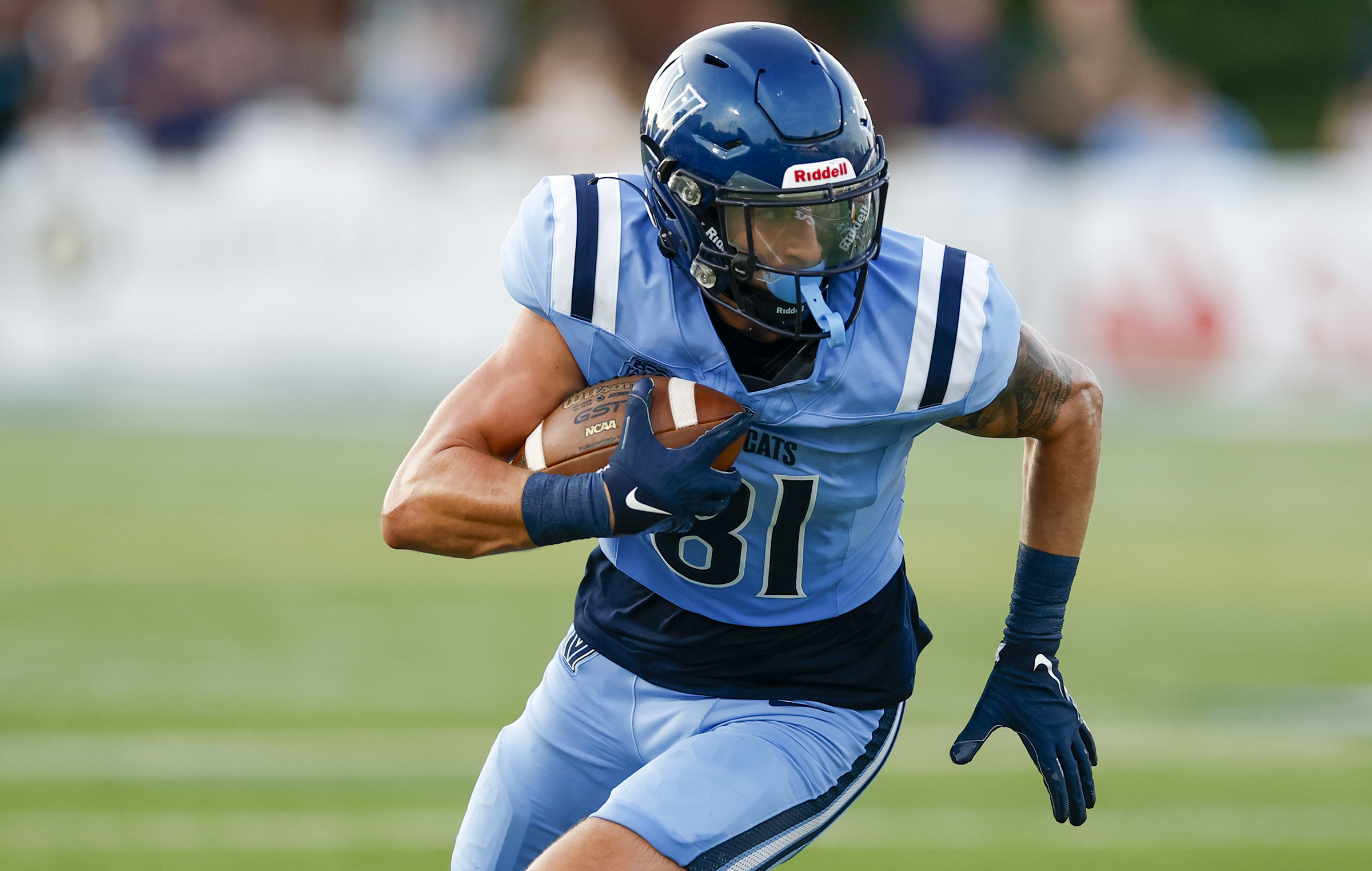
Sophomore wide receiver Brandon Binkowski leads Villanova with 259 yards receiving.Yong Kim / Staff Photographer
Penalties have plagued Villanova. The Wildcats have been called for 36 penalties for 305 yards while their opponents have been flagged for 22 penalties for 230 yards.
“We just got to play a little smarter, with a little more focus,” Ferrante said. “Especially the false starts or the offside on offense and defense, respectively. That’s just focus, those are mental penalties [so] we got to clean that up.”
After a rough start against William & Mary, quarterback Pat McQuaide has bounced back with 607 yards passing, four touchdowns, and one interception over the past three games. Sophomore wide receiver Brandon Binkowski is having a breakout season with 18 receptions for 259 yards, while junior running backs Ja’briel Mace and Isaiah Ragland have combined for 457 rushing yards and four touchdowns.
Ferrante believes cleaner football is on the way.
“It’s just little inconsistencies here and there, whether it’s penalties, whether it’s turnovers, whether it’s just not playing with the same level of intensity from one quarter to the next,” Ferrante said. “But you see the improvement in practice and you hear some of the comments that are being made amongst themselves in practice. I think we’re heading in the right direction, we just got to put it on a field on game day.”
It was perhaps the biggest question entering the 2026 season: How would the Eagles’ pass game fare without A.J. Brown?
DeVonta Smith was lauded as a No. 2 option, but it wasn’t a guarantee he’d thrive as a No. 1 wideout. Dontayvion Wicks was a big wild card. Ditto for rookie Makai Lemon. Few had Darius Cooper making the 53-man roster, let alone being a regular contributor.
Through two weeks, this room has been an advantage for Jalen Hurts and the Eagles, not a problem.
The Birds have five receiving touchdowns through two games, which is tied for fifth best in the NFL entering Thursday. Their 467 receiving yards ranks 11th. Smith has the 13th most yards in the league with 170, while Wicks isn’t far behind him with 147 (19th).
Compare that to their production in the run game — Eagles running backs averaged just 3.7 yards per carry in the first two weeks — and you can see how much of a difference the receivers have made.
Wick, in particular, has been a pleasant surprise. The 25-year-old has quickly grown into the ideal No. 2 option, posting 70 or more receiving yards in consecutive games. Last season with the Packers, he only had 70-plus yards one time. Hurts sung his praises in his Thursday press conference.
“I think Tay’s thinking less because this is something that he’s familiar with,” Hurts said. “And then secondly is the time that we spent together to be able to learn each other. The opportunities I’ve had to learn his body language, to get to know the type of player he is. Everything I’ve seen to that point, he’s given me the utmost confidence. We just want to continue to build. … As a collective [the goal], is just to make this our own thing.”
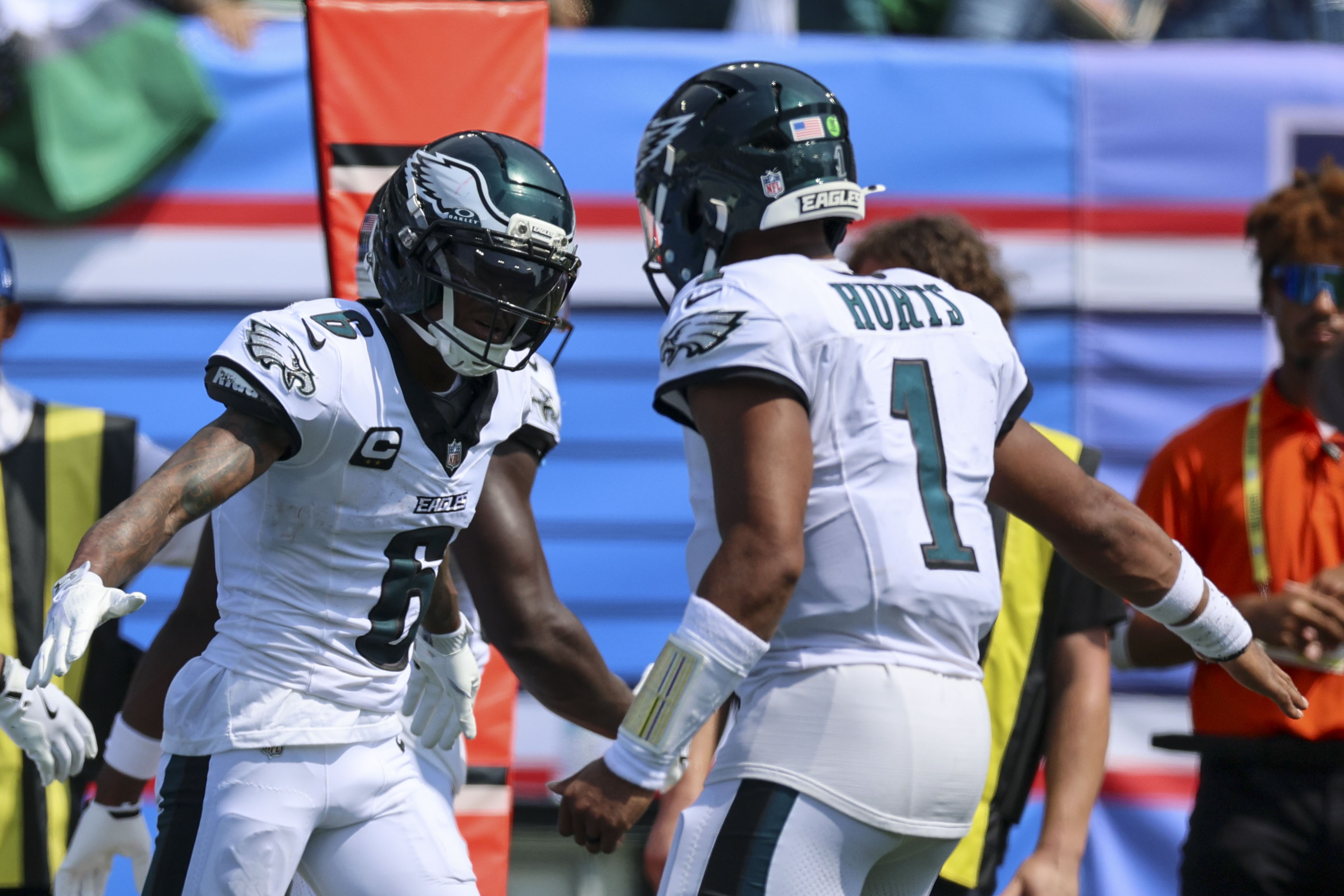
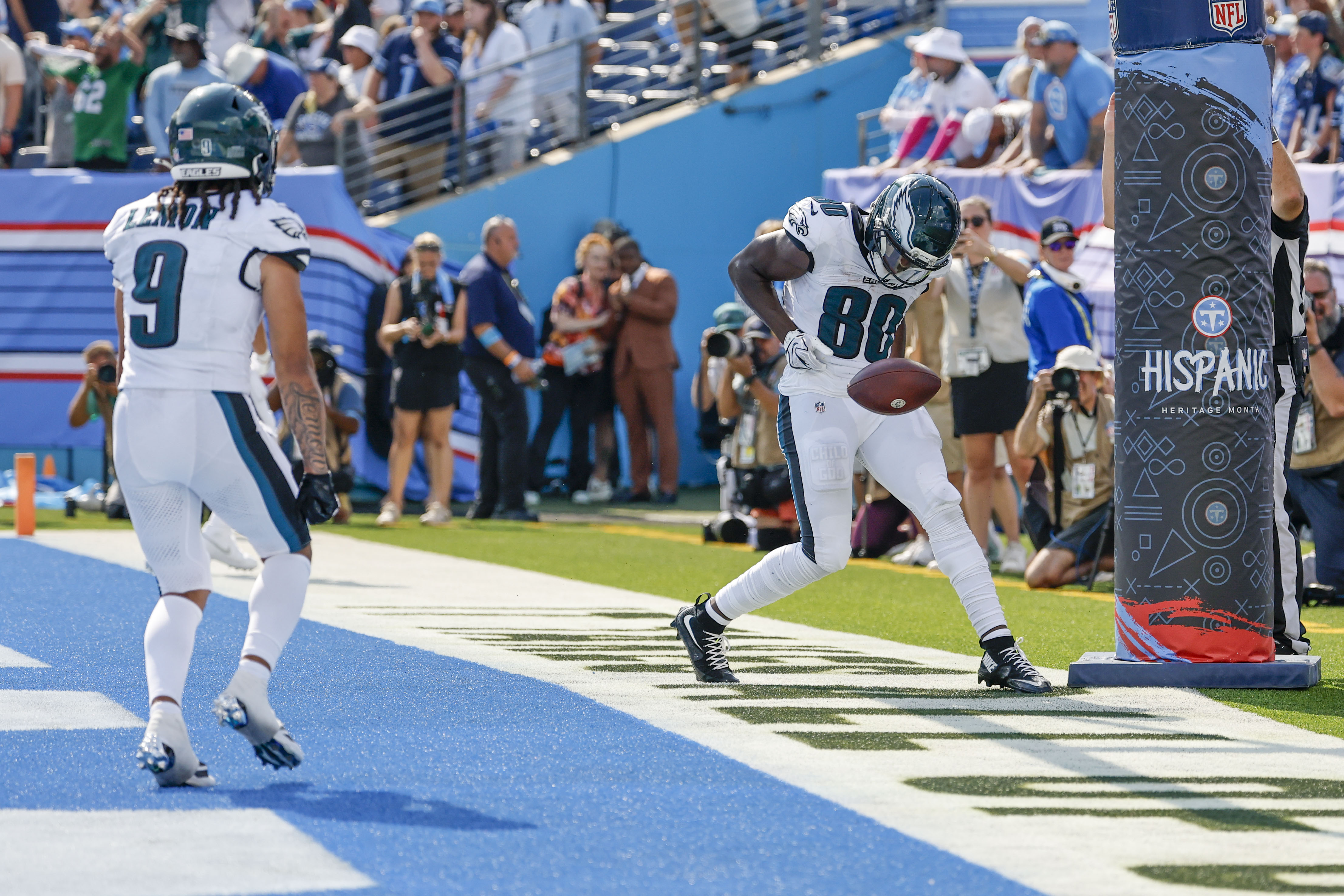
Darius Cooper celebrates after scoring the game-winning touchdown on Sunday.Yong Kim / Staff Photographer
Wicks was an obvious candidate to jell with Sean Mannion’s new offense, given his familiarity with it. Cooper, who scored the game-winning touchdown on Sunday, has been a surprise to outsiders. Not to Hurts, though. The quarterback felt Cooper was primed for a breakout.
“I don’t think there’s any surprise on what type of player he is,” Hurts said. “How he shows up, the character he has and how he works, he’s been able to show up and he’s been willing to do all the things that can help the team be in the best place.
“So, I’m proud of him and excited to see him grow. He’s got an old soul. Sometimes you forget how young in his career he is. He’s going to be great.”
It hasn’t all been perfect. Lemon, for instance, has just nine yards on four receptions, and while he’s shown flashes with his blocking and hustle, it’s no secret the Eagles want more production from their first-round pick.
But with Smith, the top threat in the room, rolling, Lemon can take his time to develop. The former Heisman winner has been a force, coming up clutch on the game-winning drive against Tennessee with 38 yards on four receptions. He finished the game with 117 yards and one touchdown on 10 receptions.
“I think the ball finds guys who get open and win and do things right,” Mannion said. “Smitty’s a tremendous player. He sets a standard for our offense, for our team, in terms of the way he works every day. It’s not an accident.”
Jordan Mailata wasn’t exactly bashful when he shared his instant analysis of Drew Kendall’s first meaningful start at center, even as the second-year player stood within earshot of him in the Tennessee Titans visitors’ locker room.
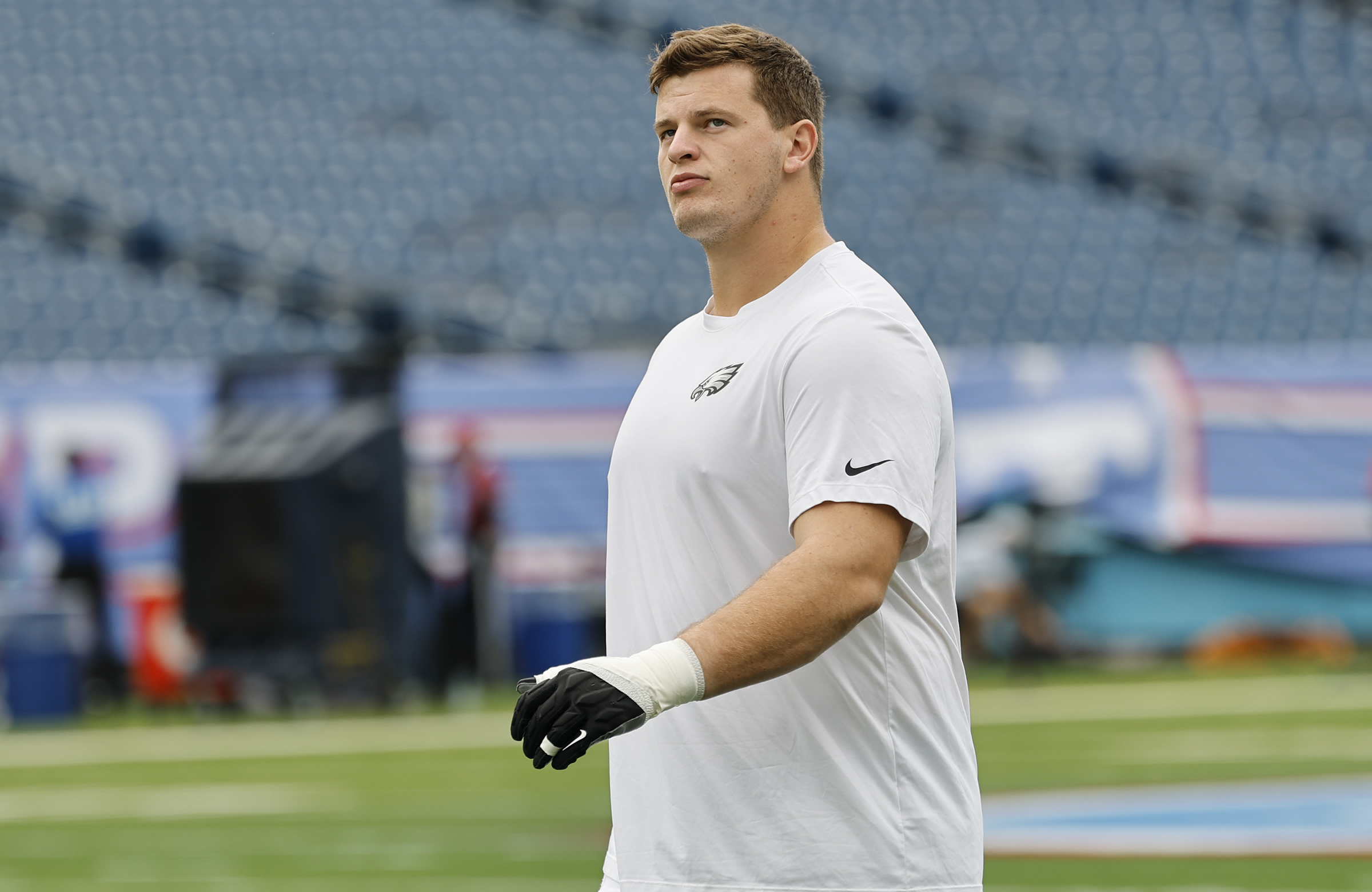
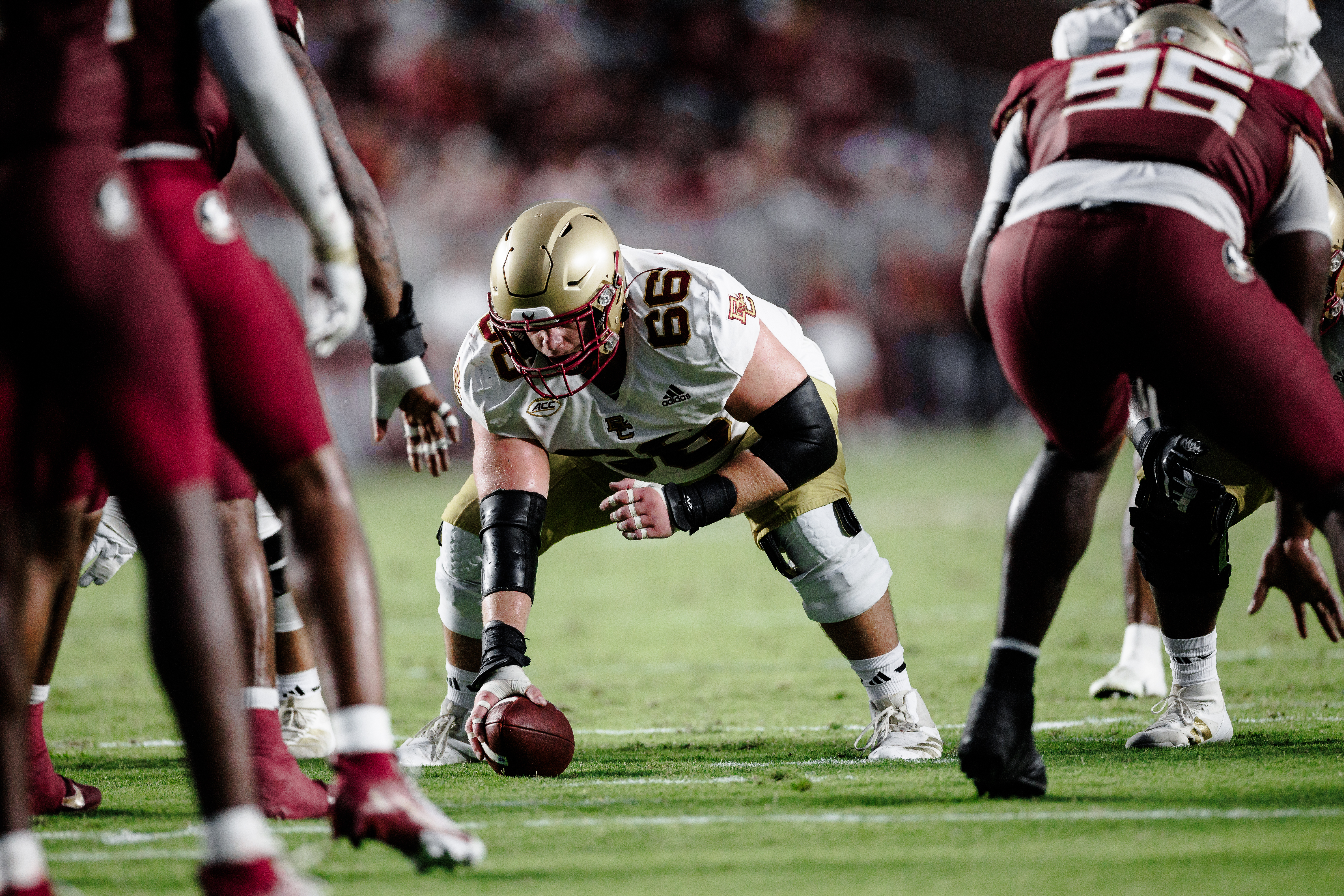
Kendall, the Eagles’ 2025 fifth-round pick out of Boston College, took over Cam Jurgens’ typical starting spot at center, while Jurgens slid over to left guard in place of the injured Landon Dickerson last Sunday.
The Titans turned up the temperature of the game — and not only in a literal sense, with the turf reaching 157 degrees Fahrenheit, according to the Fox broadcast. The Eagles offensive line was also tasked with containing a Titans defensive front headlined by All-Pro defensive tackle Jeffery Simmons.
Kendall didn’t show any nerves, according to Mailata.
“He’s got f—ing ice in his veins,” Mailata said after the game.
Mailata then turned in Kendall’s direction and doubled down.
“Yes, you do, son,” Mailata continued. “Yes, you do. He’s cool as a cucumber out there, making sure that we’re all on the same page. That’s what you need. I think we won this game because of just his operation, the way he was very cool, calm, and collected.”
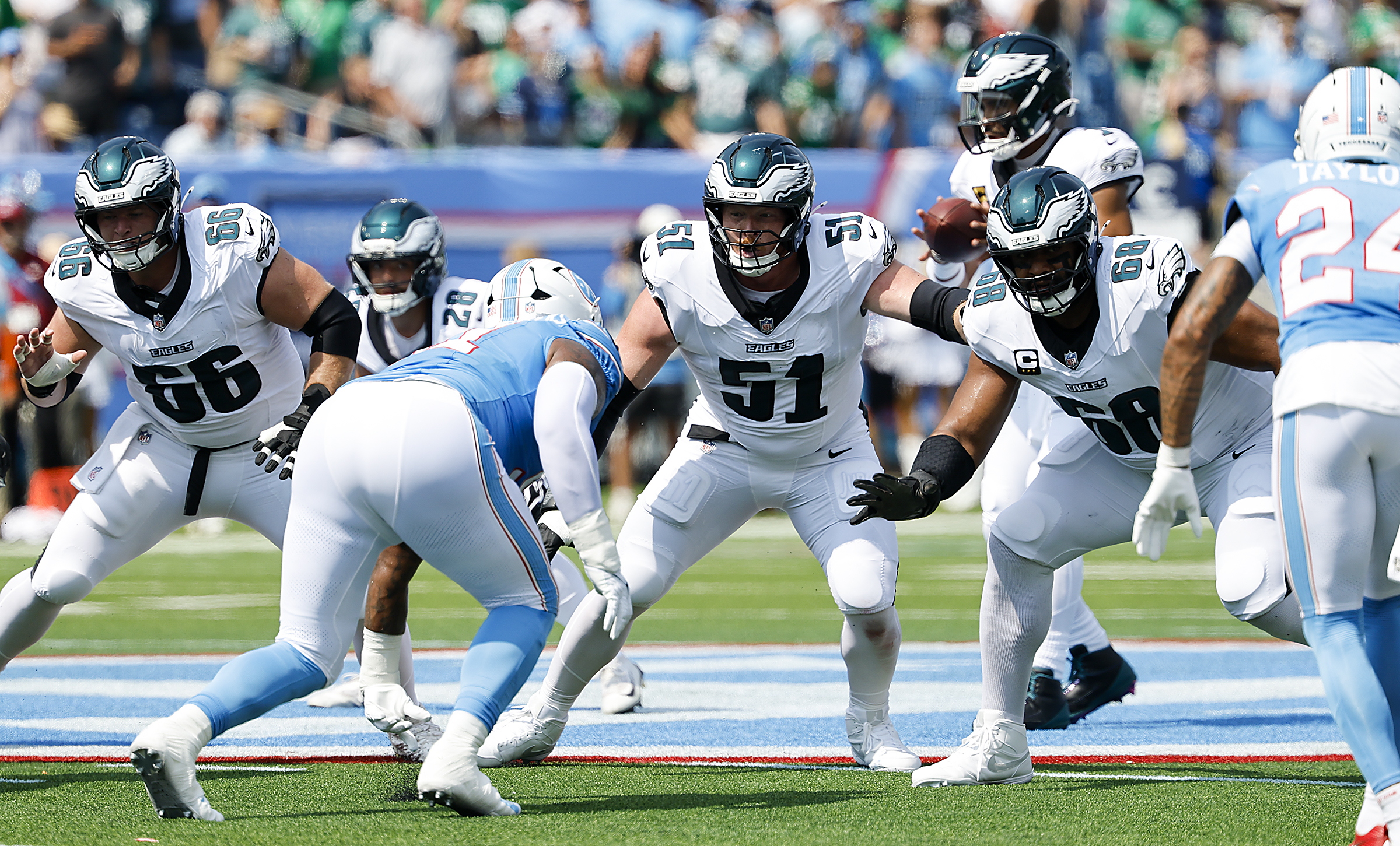
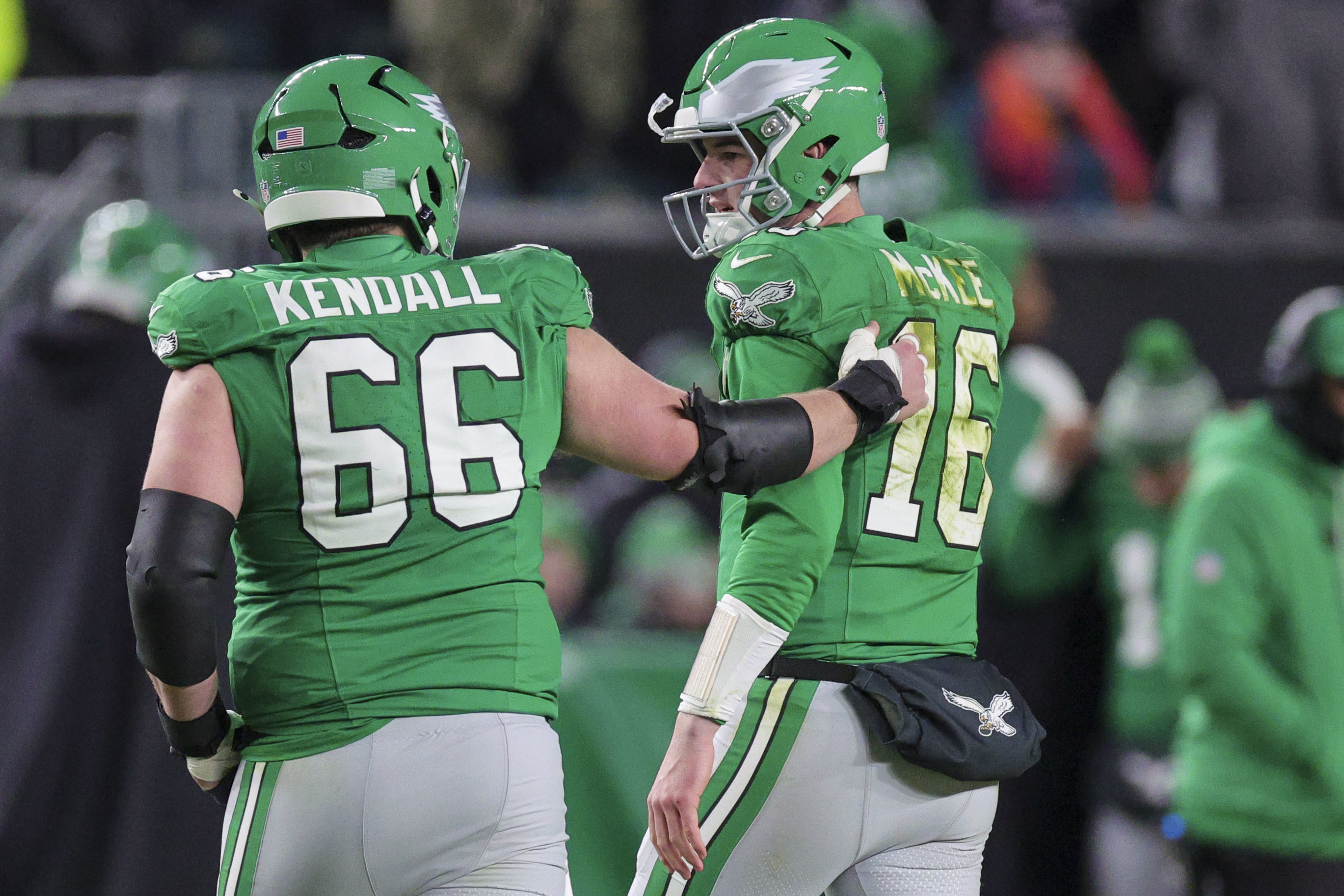
Eagles center Drew Kendall (66), guard Cam Jurgens (51) and Jordan Mailata (68) had their struggles in run blocking but helped fuel a thrilling 24-20 win in Tennessee. Yong Kim / Staff Photographer
Confidence begets confidence. Earlier in the week, Kendall noted that his confidence in his own play — one of the biggest self-identified differences in his mindset between his rookie and second seasons with the Eagles — stems from his teammates’ demonstration of belief in him.
Kendall could have more opportunities to affirm those votes of confidence, as Dickerson must miss at least the next three games while on injured reserve with a knee injury. Offensive coordinator Sean Mannion would not confirm that the Eagles will go with the same offensive line configuration against the Chicago Bears on Monday night, but Mailata emphasized the importance postgame of continuity among the group.
Regardless, Kendall met the moment on Sunday, with room to grow going forward. His solid start was no surprise to his former coaches at Boston College, who long believed he had the ability and the makeup to carve out a role on an NFL offensive line.
“He had the traits,” said Matt Applebaum, Kendall’s offensive line coach of three seasons at Boston College. “Just the competitiveness, the desire to do things the right way and be a great player. He just has all those traits. I thought very early in the process, in recruiting, my vision for him was that he could be a pro center.”
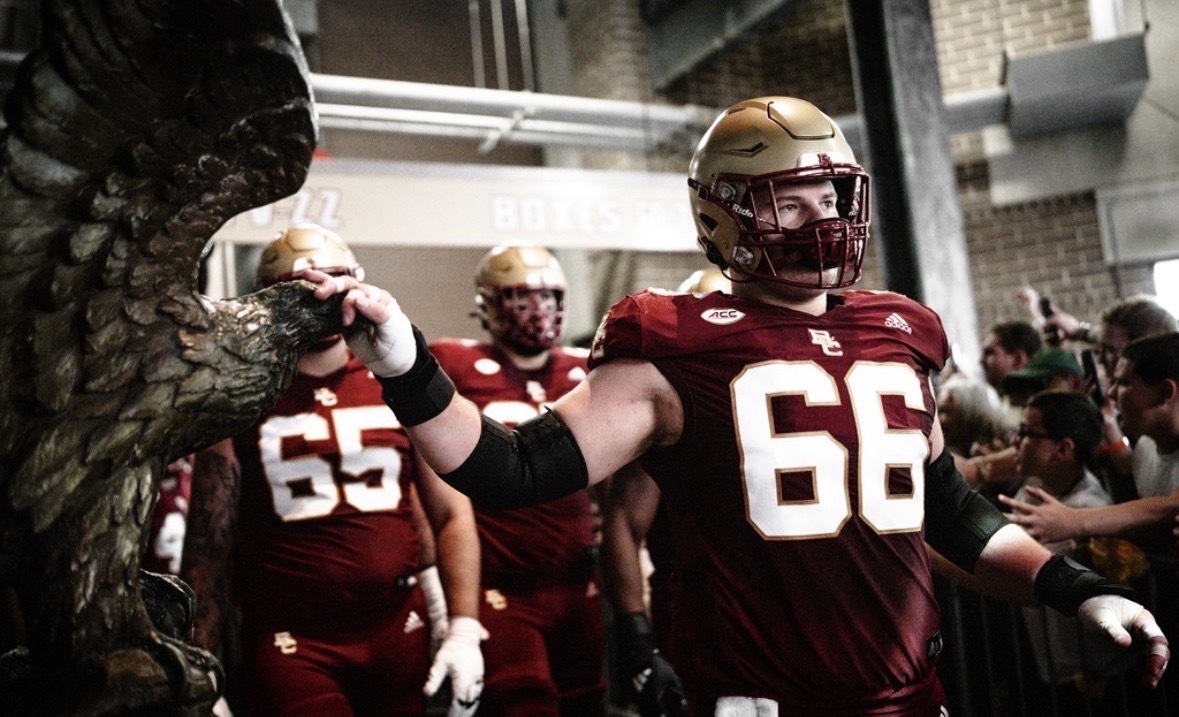
Drew Kendall (66) parlayed his performance at Boston College into a third-day selection in the NFL draft.Boston College athletics
A ‘pro center’ in college
Bill O’Brien assumed the head coaching role at Boston College in 2024, his 32nd season coaching at either the collegiate or pro levels.
When O’Brien arrived in Chestnut Hill, Mass., Kendall was entering his third season as the starting center in his redshirt junior season. According to O’Brien, who served as the Houston Texans head coach from 2014-20, Kendall reminded him of the centers he had encountered in the NFL.
“He was kind of like having a pro center in the college program,” O’Brien said. “That’s basically what Drew was. He knew exactly what we wanted to do, how we wanted to do it, and he was great at it.”
The signs of his potential were there early on, long before he started a game at BC. Applebaum, now the Miami Dolphins assistant offensive line coach, recruited Kendall out of high school in 2020. At the time, Kendall was a four-star recruit out of the Noble and Greenough School in Dedham, Mass., and the No. 1 recruit in the state.
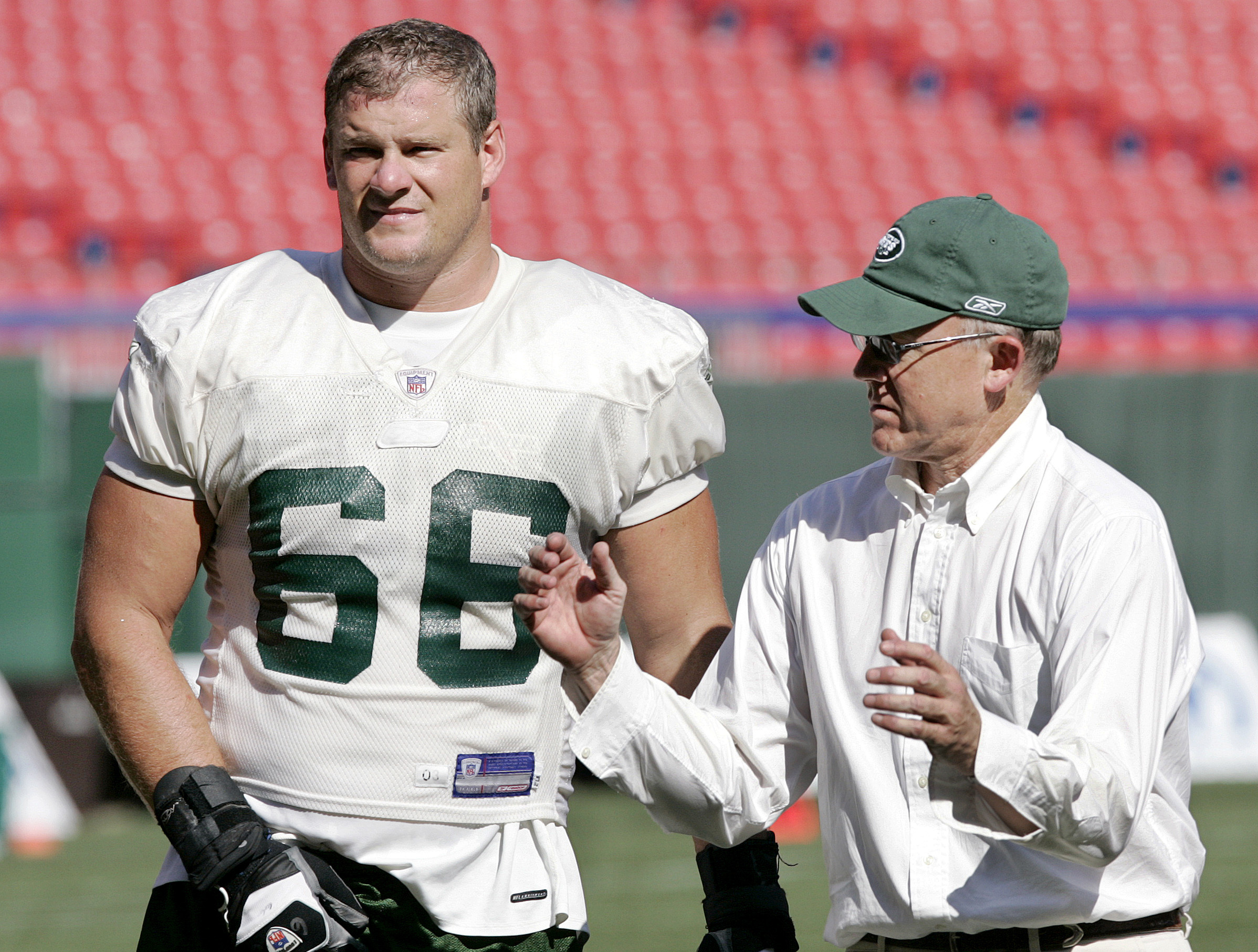
Applebaum understood why. The young offensive lineman possessed a maturity atypical of most 18-year-olds, which lent itself to his makeup as a center. He had a strong foundation, too, given that his father, Pete, was a first-round pick in the 1996 draft out of Boston College by the Seattle Seahawks and played at guard and center in the NFL for 13 seasons.
Pete Kendall (66, with Jets owner Woody Johnson) helped pass on offensive line acumen to his son, Drew.MEL EVANS
Then, there were the physical traits. Applebaum called the then-6-foot-4, 285-pound Kendall a “natural athlete,” as he played on both sides of the line in high school and even lettered in lacrosse.
“He was just one of those guys that was good at things and athletic and smart,” Applebaum said. “So the only thing he was going to have to do when he got to school was just get bigger and stronger throughout his career, which he did in college.”
Alec Lindstrom, who was the starting center for BC when Kendall arrived, was struck by his athleticism at his first summer workout. As Kendall went through positional drills, Lindstrom could tell that he wasn’t like most 18-year-old newcomers.
“You could kind of tell he was a step ahead, and you knew he was going to be a good player based on his quickness, his body control, and things like that,” Lindstrom said.
But Kendall would have to wait to display that athleticism on the gridiron on game days. He took a redshirt year in 2021 as Lindstrom, an eventual Rimington Trophy finalist and undrafted free agent in the NFL, commanded the starting center role in his redshirt senior season.
Kendall had the right attitude about taking the season to learn and grow behind Lindstrom, Applebaum said.
“Drew, right from the jump knew, ‘OK, this is set up for me to learn from somebody that’s been there, done that, knows what it’s supposed to look like,’ and he really took that very seriously and really pushed the envelope in terms of being ready to play if he needed to,” Applebaum said. “So he developed very quickly that way.”
Drew Kendall (66) won the respect of two coaching staffs while starring at Boston College.Boston College athletics
Kendall spurred that development, especially as he continued to grow comfortable with the pre-snap responsibilities on the center, by asking questions of his fellow offensive linemen and coaches. Lindstrom recalled Kendall asking him questions about what he was seeing from the defense in practice, after games, and in the meeting room while watching film.
That attitude toward learning was just as important as his intelligence and ability to process information quickly, according to Lindstrom.
“To play center you have to be smart, but you also have to be quick-thinking,” Lindstrom said. “You break the huddle, you get up to the line, you have two seconds to identify everything, so you have to be kind of quick on your feet and smart. And I think Drew, he has that to begin with, but also when you put his attitude and his wanting to learn together, I think it’s a good combination.”
Kendall would go on to put those traits together as a three-year starter in the ACC for the Eagles. He had to learn three different offenses throughout his college career, and Applebaum said he picked them up “excellently” thanks to his processing ability.
He could make all of the pre-snap identifications and adjustments with ease. While quarterbacks and centers typically share the burden of those pre-snap responsibilities on most teams, Applebaum said the team predominantly leaned on Kendall in that area.
“I would say we put probably more on his plate than a lot of other college centers would have to handle, because he was capable of handling it,” Applebaum said.
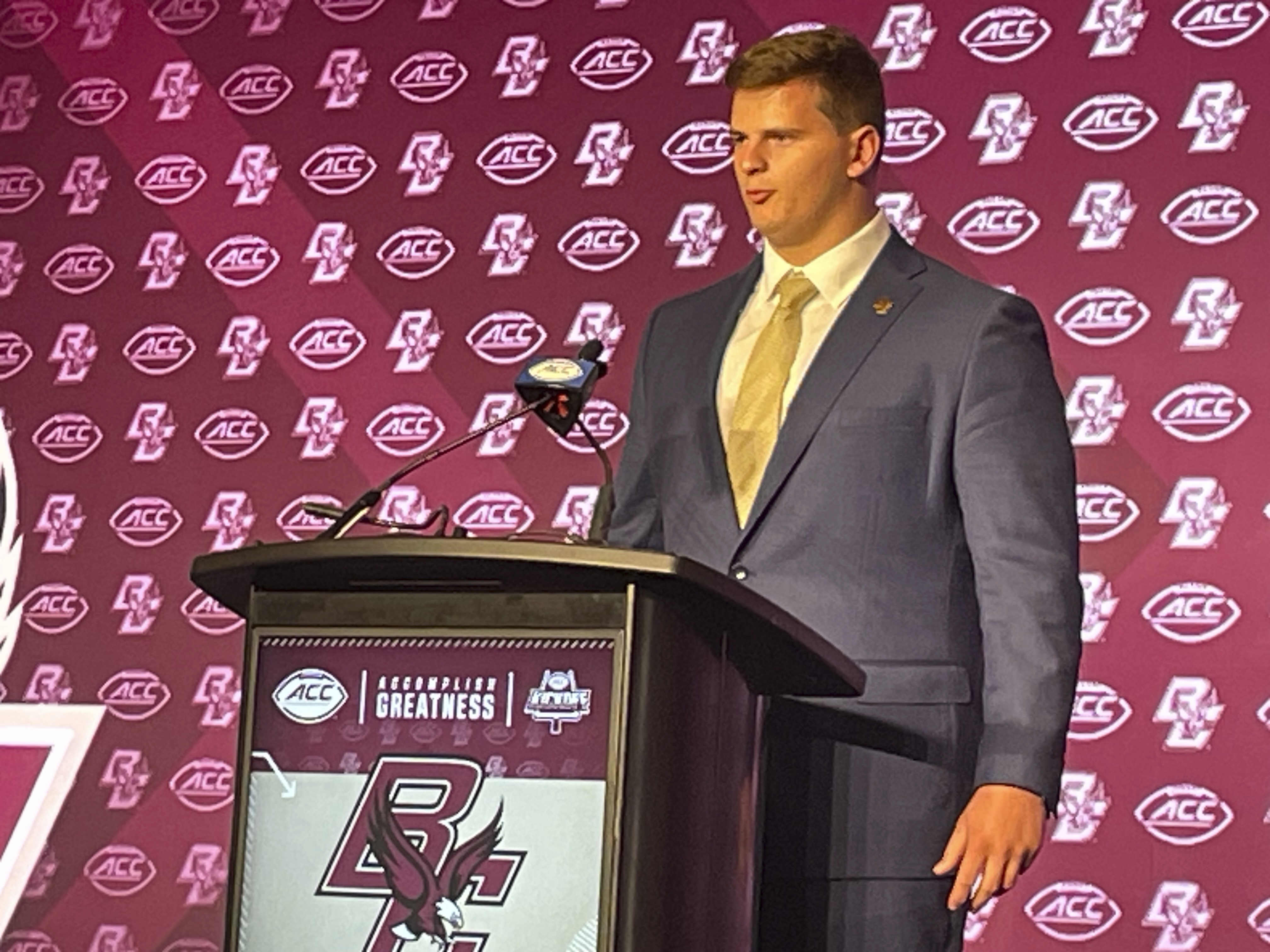
Drew Kendall’s decision to depart BC after his redshirt junior season was a blow to the program, but one the coaching staff understood. Steve Reed
His athleticism also fit well in Boston College’s offense, which incorporated a variety of run schemes, including outside zone, pin-and-pull runs. Kendall was often one of the pullers, O’Brien said, as he harnessed his initial quickness and lateral agility by kicking out defenders on the edge.
Kendall could handle the rigors of executing each play, all while ensuring everyone on the line was on the same page. But what ultimately made him a pro at the college level was his consistency, according to O’Brien.
“He was there every single day,” O’Brien said. “Did his job in every game. I wanted him to come back, and obviously he made the right decision [declaring for the draft], because he’s doing great.
“But we really missed him last year. We did not have a great year, and I think not having him was a big part of that.”
Emerging from another redshirt season
When the Eagles drafted Kendall last season, he didn’t have a clear path to a starting job with Jurgens — and even Brett Toth — ahead of him on the depth chart at center. In a way, history was repeating itself for Kendall, who didn’t start his first season at BC.
Kendall already understood how to take advantage of a redshirt season. But the challenges that awaited him at the NFL level were different.
“The type of guys you’re blocking week-in and week-out at practice, and then obviously on Sundays, much bigger, much stronger,” O’Brien said. “Maybe there were some guys that he blocked in college that were that size and that strength and had that power and explosion. But it’s every guy in the NFL.”
Drew Kendall (66) was forced to adjust to the rigors of the NFL as a rookie in 2025.Jose F. Moreno / Staff Photographer
Kendall said during training camp that he made it a priority to “reshape” his body, with a focus on adding muscle. He estimated during the summer that he was hovering between 300 and 305 pounds, and he’s now listed on the Eagles roster at 308.
He noted that prioritizing sleep, and not eating too close to bedtime, helped him with muscle growth. Kendall said he wasn’t “killing myself in the weight room” as he has in years past. He combined his focus on sleep, nutrition, and hydration with a consistent offseason workout plan, which included training sessions with Lindstrom, Bears left tackle Ozzy Trapilo, and other former Boston College offensive linemen.
Lindstrom said the group, led by former New England Patriots offensive line coach Dante Scarnecchia, would work out five days a week for two hours a day. They would also incorporate boxing into their regimen once or twice a week.
“You can learn how to throw your hands, even if you’re in different positions, weird positions,” Kendall said. “And hand speed was probably the biggest, but it’s also really good cardio.”
Jordan Davis could feel the strength behind Kendall’s hands this offseason. Kendall took what he learned playing behind the veterans of the Eagles offensive line last season and combined that with improved power, Davis said.
“He’s surprisingly savvy for a young player, very savvy,” Davis said. “He has strong hands, great grip. All those combined, all the best O-linemen have those traits. So when he started learning that, he started learning the savviness from the players that he’s playing with, like Lane [Johnson], Landon, Cam. All those guys have experience, it kind of adds into that.”
Even though he wasn’t playing last season, Kendall said he still prepared as if he was the starter, a directive that former offensive line coach Jeff Stoutland emphasized. He cross-trained at both guard and center. Kendall attributed his growth behind the scenes to the Eagles’ development staff for curating a specific plan to keep him on track.
Drew Kendall (66) received his first career NFL start in Week 18 of last season against the Washington Commanders.David Maialetti / Staff Photographer
Kendall’s experience learning a variety of prostyle offenses at Boston College helped him make the leap with the Eagles, he said. His understanding of a variety of schemes has allowed him to pick up Mannion’s offense quickly, as he can draw connections between plays in the Eagles’ new scheme to plays in past Boston College offenses. Similarly, Mannion’s offense also requires its linemen to possess great athleticism in order to execute the wide-zone blocking schemes at the foundation of the run- and play-action pass game.
He is also leaning on the leadership experience he cultivated in college. Jurgens lauded Kendall’s communication skills, especially when passing off defensive line games and stunts, as evidence of his improved confidence this season.
Willie Lampkin, Kendall’s contemporary among the Eagles interior offensive linemen, said the players listen to Kendall because they respect him.
“We respect Drew because he comes to work every single day,” Lampkin said “He’s always doing the right thing, and I feel like that just comes with respect. He does the right thing, and people look at him as a leader.”
Kendall appreciates his teammates’ confidence in him as the team leans on him in the absence of Dickerson. The second-year center called their support “awesome” — but their belief alone isn’t enough for him to feel comfortable in his newfound role.
“Everyone in this locker room, they’re all great guys, and they all support one another,” Kendall said. “The biggest thing that we all care about is winning. And then after that, it’s about, OK, how do we get rid of the bad stuff that might keep us from winning the next game?
“So you’re always happy after a win, but you always got to be your hardest critic.”
It’s too early to jump to conclusions, and history offers a good example of what happens when one does. But it’s hard to look at the trajectory of Cavan Sullivan and not wonder if America’s next hope at a World Cup is going to hail from a basement in Bridesburg.
It’s been well-documented that the Sullivans are Philly soccer royalty, with a family footprint that spans decades in the sport right here at home. Cavan, his older brother Quinn, and his twin brothers Declan and Ronan are the latest in a family that lives and breathes the sport and has found immense success, fortune, and fame as a result.
We’re looking at clouds on this Friday as we keep an eye out for a nor’easter. Perhaps today is the calm before the storm, with highs expected to reach the mid-70s.
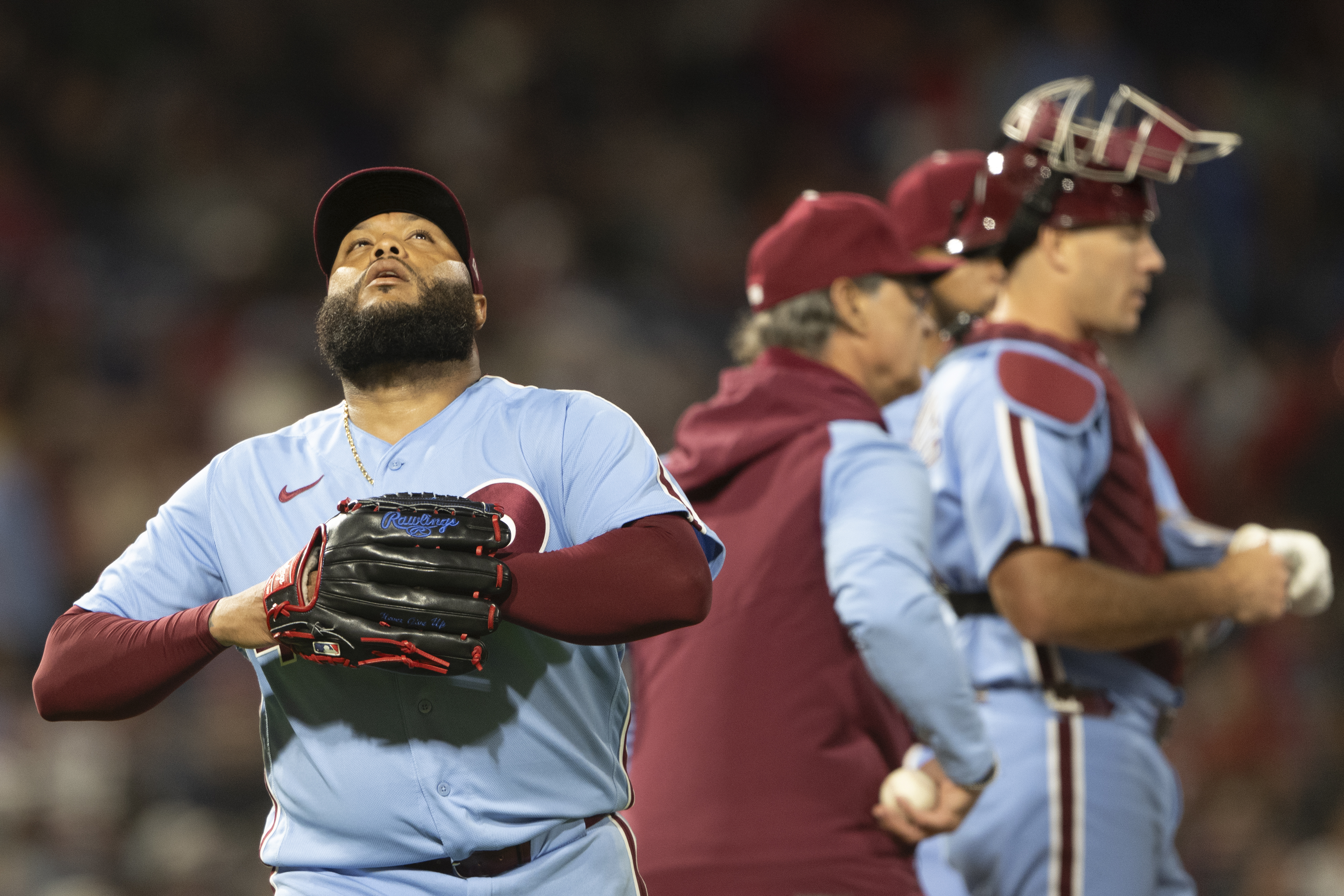
Phillies reliever José Alvarado leaves the mound after giving up three runs in the eighth inning on Thursday.Jose F. Moreno / Staff Photographer
For the second straight night, the Phillies had an opportunity to close in on a playoff spot.
And for the second straight night, the Phillies laid an egg.
A stagnant offense and yet another late bullpen collapse doomed them in a 5-1 loss to the Brewers on Thursday night. Milwaukee secured its 100th win of the season, setting a franchise record at the expense of the Phillies. The magic number remains at 2 going into the late game Thursday night between the Dodgers and Padres.
The Phillies will enter their final series of the regular season against the American League-leading Tampa Bay Rays without having officially secured a playoff spot.
The Phillies did get some good news on Thursday. Jesús Luzardo felt good after throwing a bullpen session and said “chances are good” he’ll be ready for the playoffs.
Next: The Phillies open their final series of the regular season at 6:40 tonight against Tampa Bay (NBCSP). Cristopher Sánchez (18-6, 2.93 ERA) will start against Rays right-hander Freddy Peralta (9-11, 4.56).
Zach Ertz is back with the Eagles after a journey that took him away from the team in 2021.Monica Herndon / Staff Photographer
One would think that Zach Ertz returning to the Eagles would stoke a lot of emotions. Excitement. Joy. Relief. But nervous?
“I don’t know if I’ve ever been more nervous for a walkthrough than today,” Ertz said after his first practice back with the Eagles, who signed him to their practice squad earlier this week. “Obviously the past nine-and-a-half months have been tough. A lot of emotions going through today, a lot of prayers going through today, just to try to center myself.”
After 181 career regular-season NFL games and another 11 in the playoffs, the 35-year-old is playing what looks to be his final chapter in the place that gave him his start. Here’s why, to him, it means so much more than football.
Flyers goalie Joseph Woll says he’ll be ready if called upon in the season opener.Jose F. Moreno / Staff Photographer
After an up-and-down season from Sam Ersson, the Flyers made it a priority to upgrade the backup goaltender position behind Dan Vladař.
That decision could soon pay dividends after Vladař left the team’s second preseason game on Tuesday with an upper-body injury. While the Czech netminder thankfully looks to have avoided a major injury, it highlights why the Flyers were so keen to add a proven commodity Woll.
Could Woll even start opening night?
“I think I’ve proven that I can do that in my career. So my goal from the start with this team has been to help them however I can, whatever situation that means, so [it] doesn’t really change my process or my day-to-day or my mindset with whatever happens,” Woll said Wednesday.
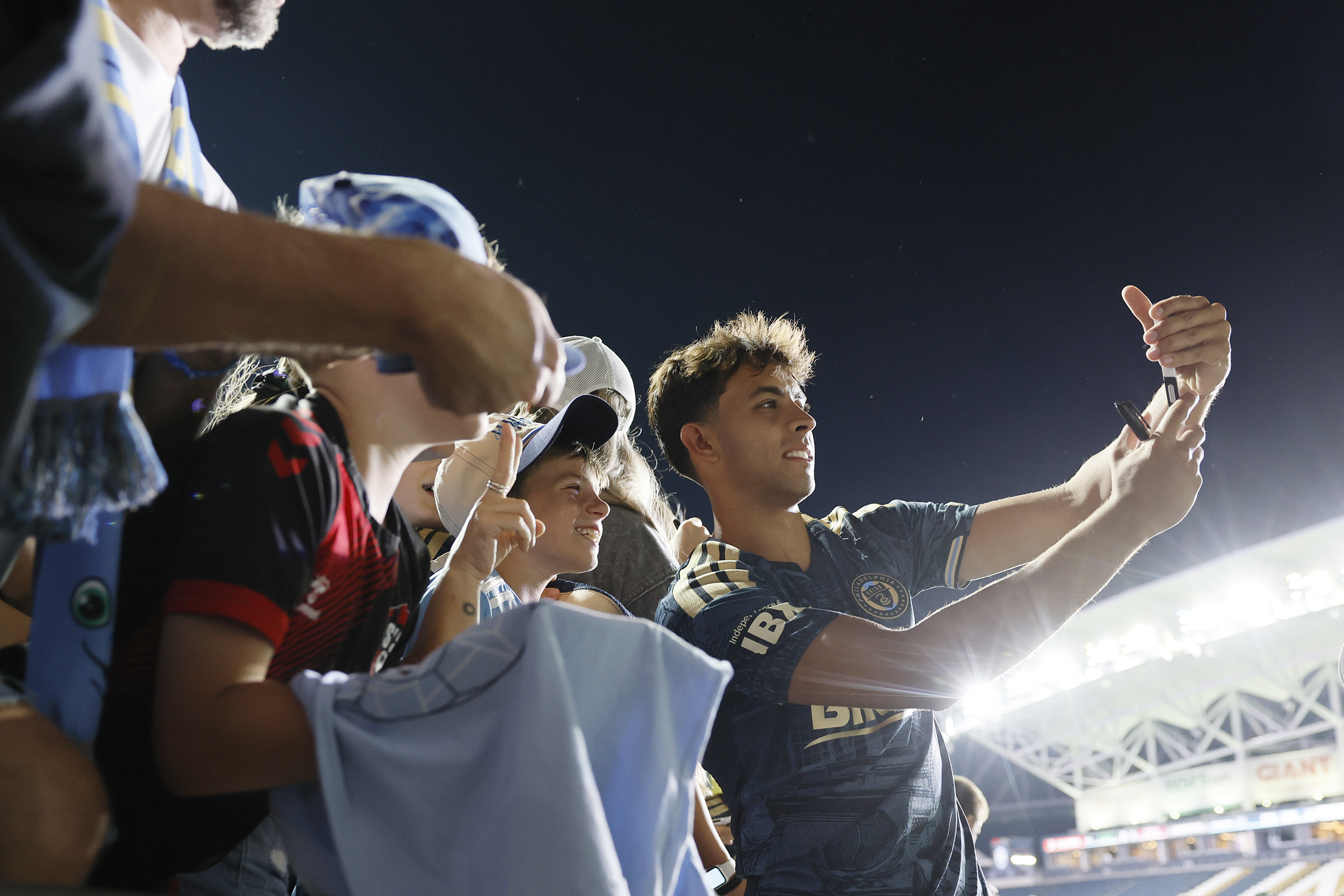
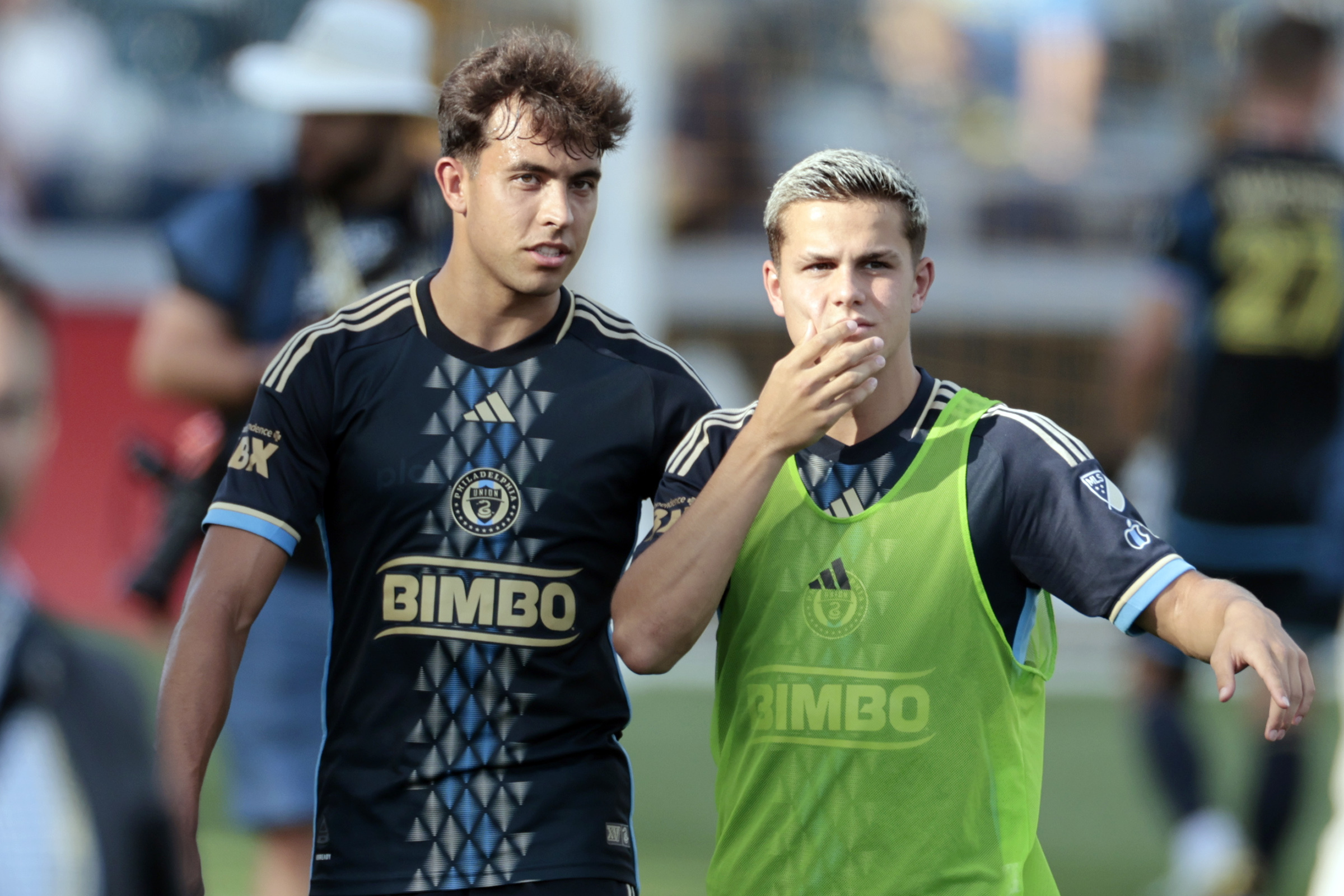
Quinn Sullivan and the Union will play for a hometown crowd in Chester when the team takes on Orlando City on Saturday.Elizabeth Robertson / Staff Photographer
It’s shaping up to be a soccer-filled weekend full of players from the Philly region. Let’s start with the Union, who will face Orlando City on Saturday (7 p.m., Apple TV) without five of its customary starters, two of which have been the heart of the team’s defense. Here’s why interim manager Ryan Richter isn’t worried, as a chance at a franchise record hangs in the balance.
Also, our daily dispatch from the U.S. men’s national team camp checks in with Media’s Auston Trusty, who talks not just about his place on the roster ahead of a Saturday match against Peru (4:30 p.m., TNT), but that of the three Philly-area players like him on the team’s 28-man roster.
On this date
Sept. 25, 1960: How about this for a weird statistic? Today, 66 years ago, the Phillies ended a streak of 16 straight losses in games played on a Sunday after beating the Reds, 7-1.
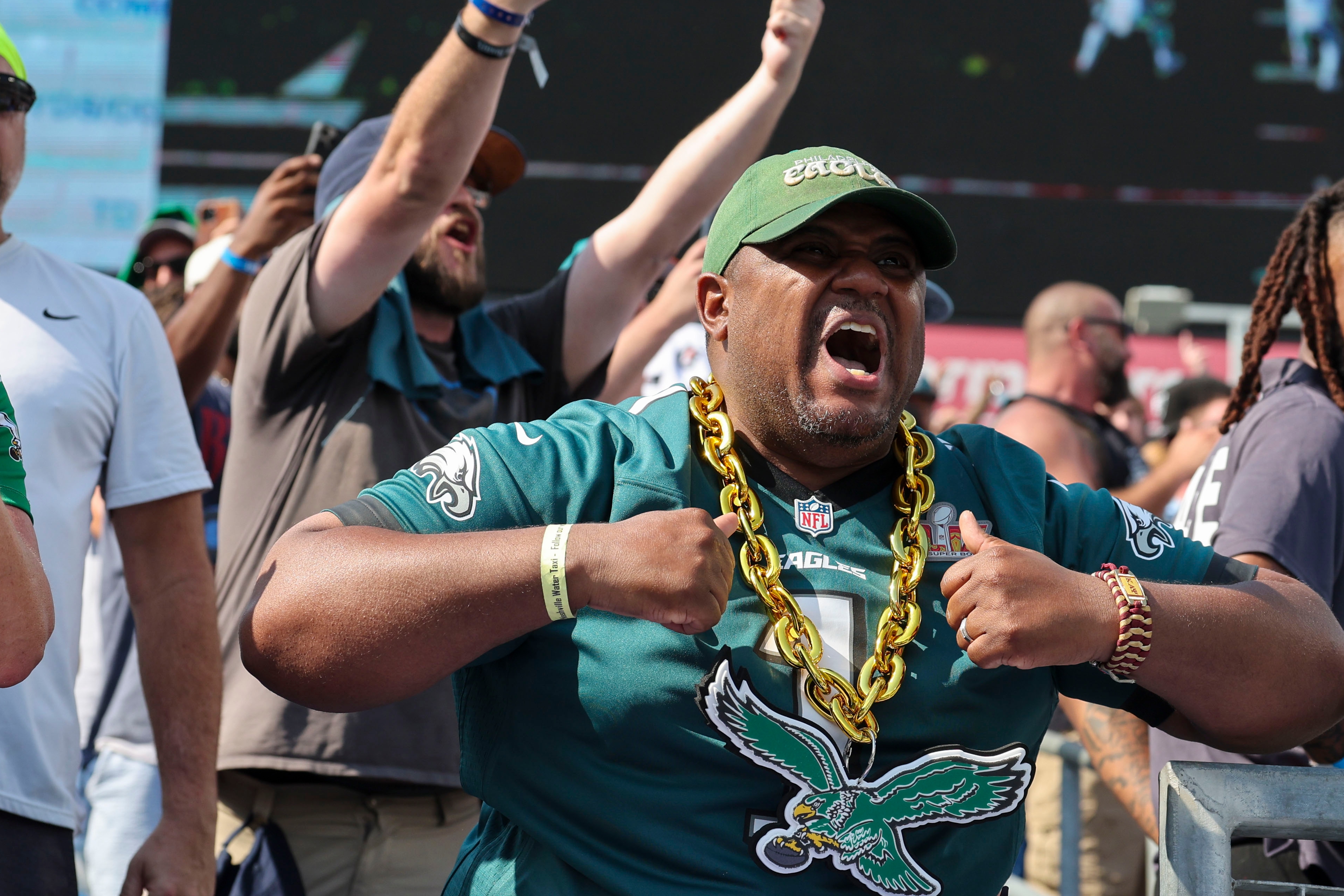
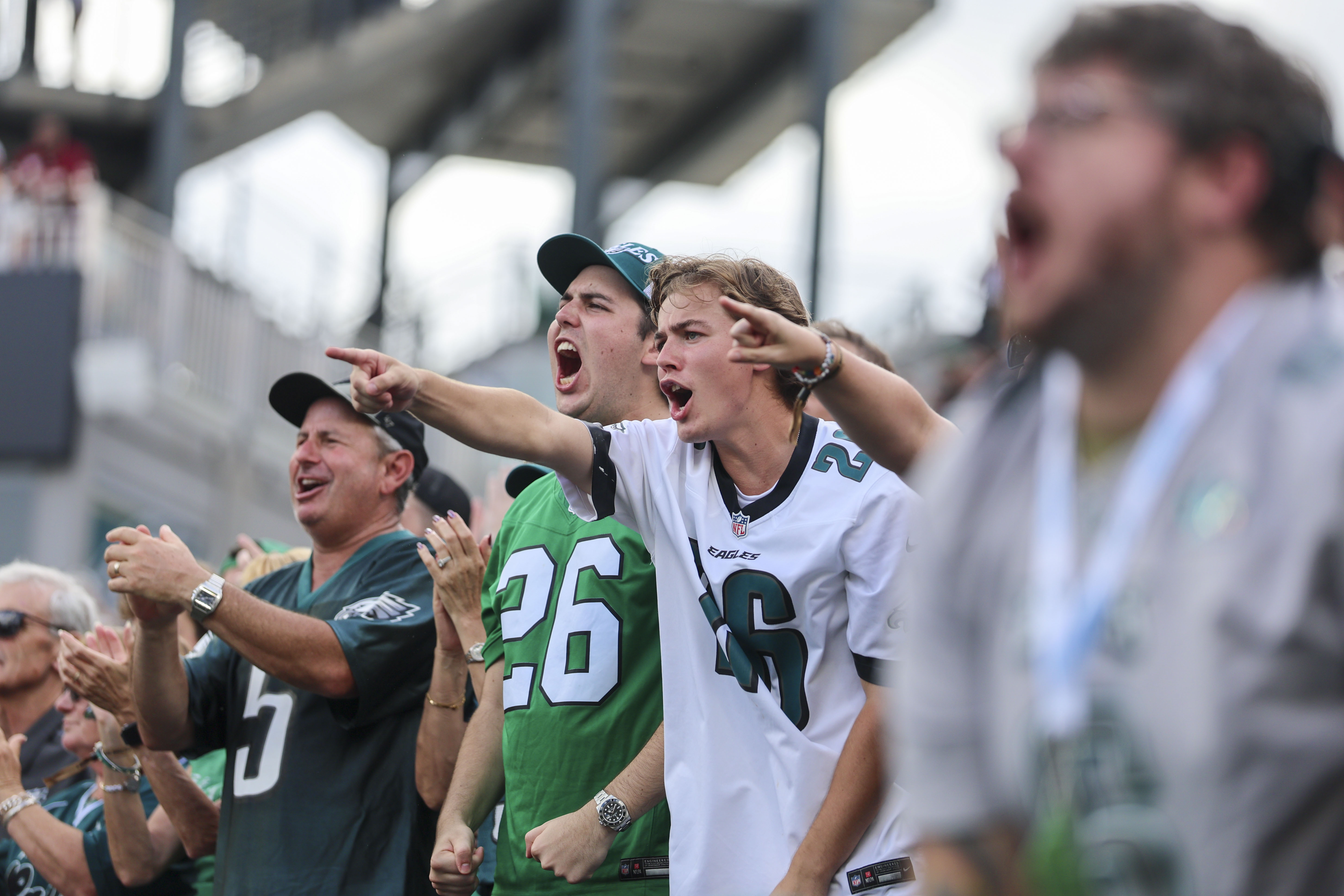
Eagles fans react to the team taking the lead and winning Sunday’s game in Nashville.David Maialetti / Staff Photographer
Our team of photographers captured the Phillies’ playoff chase, as well as a slew of other dazzling sports moments from the week in our latest edition of The Big Picture. Enjoy.
🧩 Unscramble the anagram
TADICA NALLEOG
Which former morning shock jock announced their return to the airwaves to talk almost exclusively about the Eagles? Think you know? Take a guess and click here to see if you’re correct.
What you’re saying about tailgating
We asked: What’s your favorite tailgate memory?
One of the best aspects of an Eagles tailgate is the smell of that amazing food floating across the Lincoln Financial Field Parking lot. Before every Eagles game, without fail — it’s time for a cheesesteak. While most Philadelphians will use any excuse to have that delectable assortment of meat and cheese on a fresh roll from one of the city’s top spots, known internationally, passing through your taste buds on the way down the digestive track — you simply can’t beat one before the game begins. — Michael L.
For me, it’s the random guys in the parking lots selling Eagles gear on the low. I’m a sucker, and as much as I try not to buy, there’s always a hat, a T-shirt, or something they come by the tailgate with, and I end up having to buy. I don’t care where it comes from; I just care that it’s cool, and it’s usually cheap. Long live the hustle, and GO BIRDS! — Geoff B.
We compiled today’s newsletter using reporting from Matt Breen, Scott Lauber, Lochlahn March, Jeff Neiburg, Olivia Reiner, Hannah Chang, Jeff McLane, Jackie Spiegel, Rob Tornoe, Mia Messina, Kerith Gabriel, Jonathan Tannenwald, and The Inquirer’s photography staff.
By submitting your written, visual, and/or audio contributions, you agree to The Inquirer’s Terms of Use, including the grant of rights in Section 10.
That’s your weekend. Enjoy what’s slated to be a packed sports weekend. We’ll be back to unpack all with you bright and early on Monday. — Kerith
The basement on Almond Street didn’t have much, but it had one of those old couches that every basement needs.
“The one that you know is comfy just by looking at it,” Quinn Sullivan said.
The Bridesburg basement, half of which was unfinished, became a clubhouse for the four Sullivan brothers. The miniature soccer net was all Quinn, Declan, Ronan, and Cavan needed to fill an afternoon. Cavan, the youngest of the four, did whatever he could to keep up as he played in a diaper and learned to volley a ball with both feet when he was just 18 months.
It was impossible to know that the seeds of Cavan’s career — perhaps the most promising in the history of American soccer — were being planted on Almond Street where Brendan and Heike Sullivan never told their sons that there was “no ball in the house.”
The boys caromed soccer balls off the living room radiator, played football in the kitchen, broke light bulbs in the basement, and got into some scraps. The parents were just letting their boys play, their mom said.
But there was something different about the toddler who knew how to catch a football.
“Like you throw it at him and he has his hands up,” Brendan said. “He’s not catching with his chest. He’s catching it with his hands. He caught a baseball with his glove. So you know but you don’t know the extent to how different it is.”
The soccer world soon saw what the Sullivans saw in their basement.
Cavan was deemed a prodigy when he was 6 years old and European powers scouted him before he was a teen. He signed his Philadelphia Union contract when he was 14, giving him the chance to play professionally alongside Quinn. He has an agreement to join England’s Manchester City next year when he turns 18, and is training this week for the first time with the senior U.S. men’s national team.
Even more? He’s a safe bet to play for the U.S. in the 2028 Olympics and then the 2030 FIFA World Cup.
The kid from Bridesburg could be the future of American soccer. It started on Almond Street.
“My dad would be in the net and we would just shoot on him all day, whenever we got the chance,” Cavan said of that old basement. “You fall in love with the game in moments like that.”
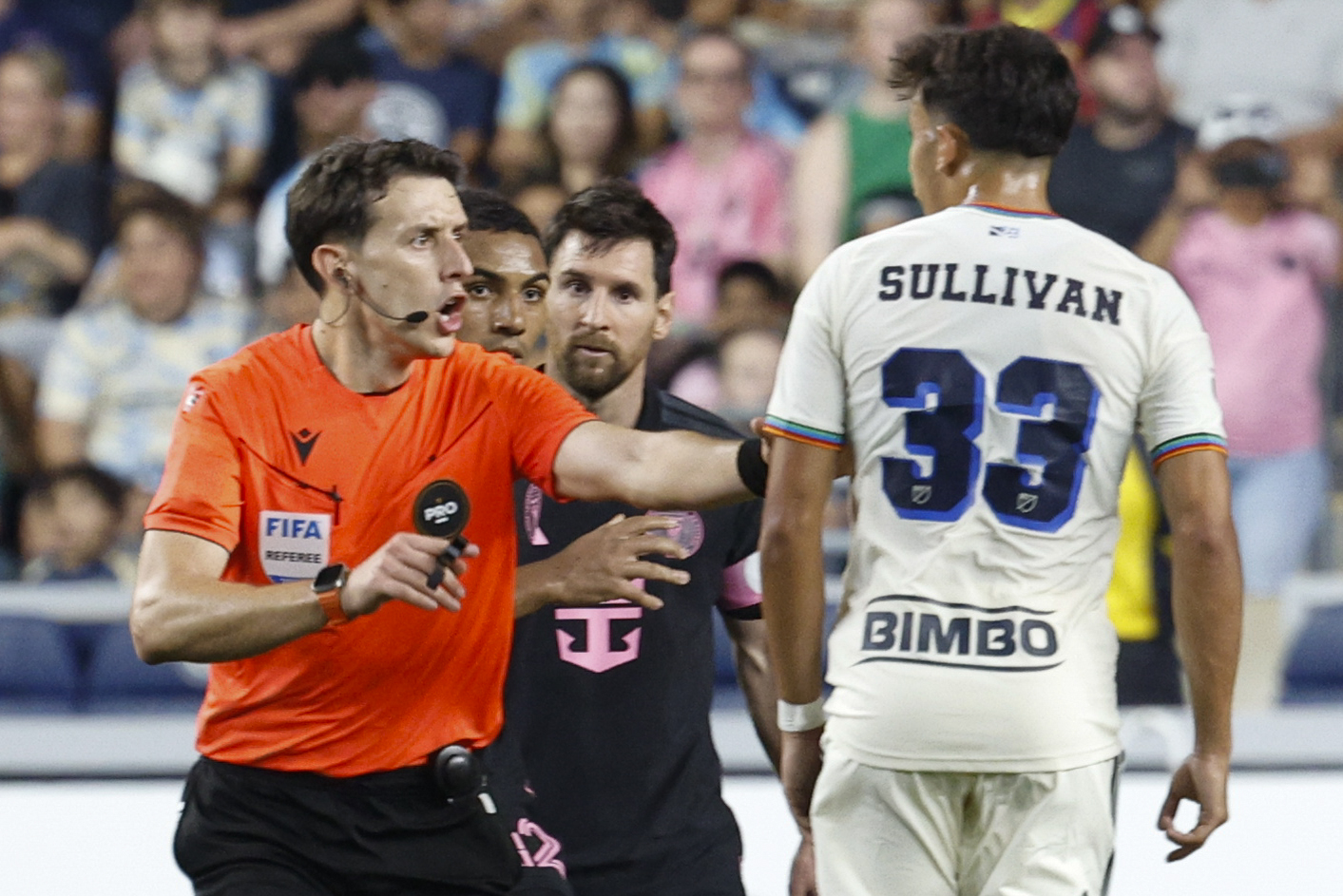
The Union’s Quinn Sullivan has words with Miami’s Lionel Messi during their match on Aug. 19 at Subaru Park.Steven M. Falk / For The Inquirer
No fear
It happened so fast that the Sullivans couldn’t really tell what happened from their seats at Subaru Park. Did Cavan get punched? Did Quinn just go nose-to-nose with Lionel Messi?
Then they watched the replay of the fracas between the Union and Inter Miami, a skirmish that felt like the ones the parents — who met as college soccer players at Penn — used to break up in the backyard.
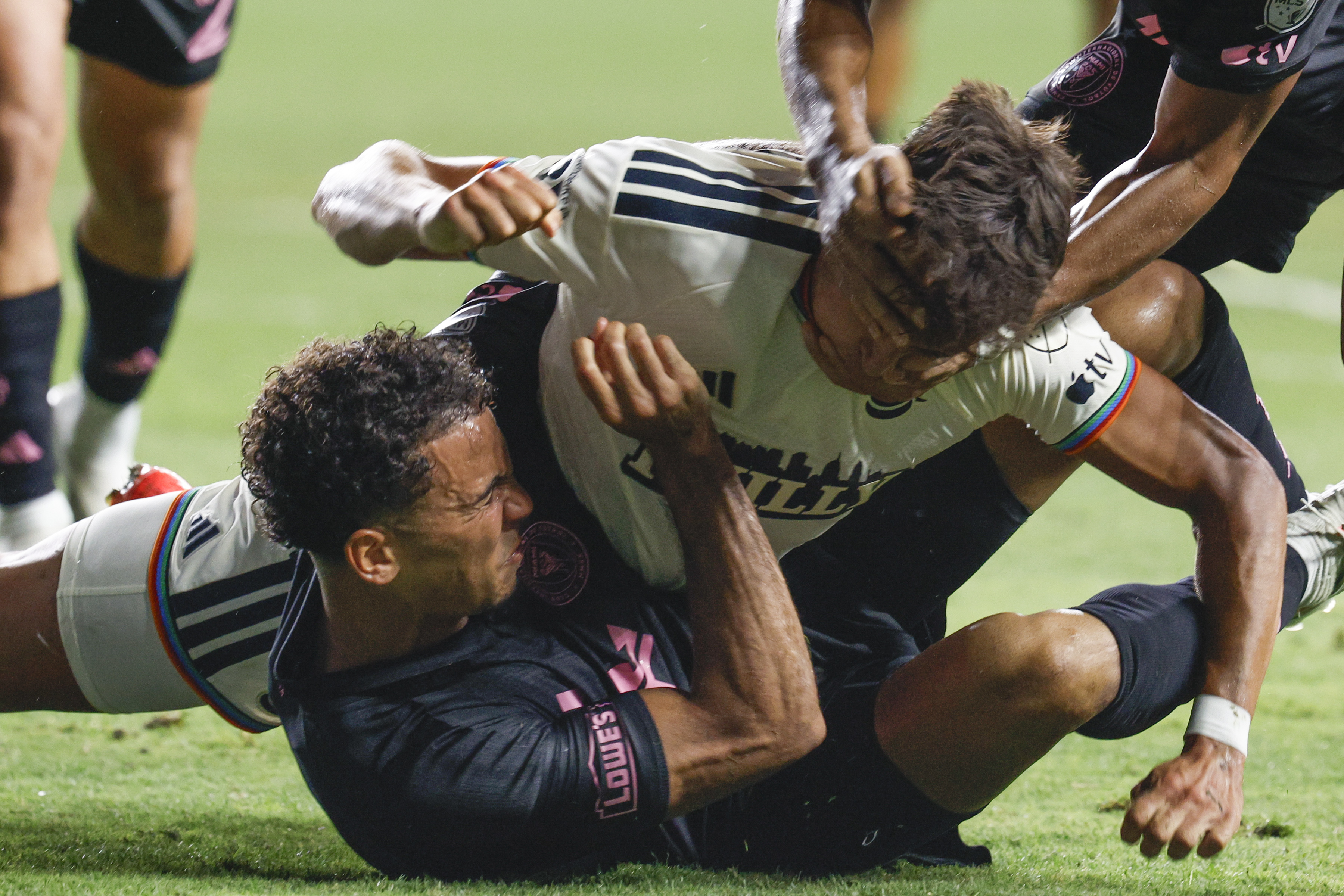
A Miami player tried to step over a fallen Quinn — “You got the wrong guy, buddy,” his dad said — before Quinn hooked his leg and took him to the ground like a UFC fighter.
A swarm of Miami players gathered around Quinn as Cavan sprinted across the field like his brother’s tag-team partner. Quinn used to spend hours on his computer cutting up Cavan’s game tapes and posting the highlights to YouTube. That was support, Quinn said. So of course the little brother had his back last month.
“It’s like ‘You better go in,’” said 18-year-old Ronan, who plays at St. Joe’s with his twin brother, Declan. “He would’ve gotten s— if he didn’t. It’s a lot about where we came from. That’s Northeast Philly right there.”
Cavan squared up against a 25-year-old foe who tried to throw a punch at the 16-year-old boy. Both players were sent off and Messi then slapped Sullivan in the head, appearing to reprimand him for taking down the Miami player. Quinn Sullivan, who grew up idolizing Messi, charged his hero and pushed his face against his.
“I was raised in Philly and you don’t take disrespect,” Quinn, 22, said. “It might sound corny to some people or cliche, but I didn’t like him touching my face and I’m not going to be the guy who falls down. I had to make sure he knew that I didn’t think it was cool.”
The Union’s Quinn Sullivan wrestles with Miami’s Ian Fray on Aug. 19 at Subaru Park.Steven M. Falk / For The Inquirer
It was Cavan’s footwork, speed, and skill that drew the world’s attention. But it is his fearlessness — the mentality that allowed a 16-year-old to run last month toward the fire — that sets him apart.
“There’s a little bit of a flair, a confidence, an arrogance,” said Taylor Twellman, the former U.S. player who now broadcasts MLS games on Apple TV. “But there’s also a real urgency to win, to compete. For a 16-year-old kid, I can see that there’s a little bit of a dog in him. You know what I mean?”
And it’s all about where he’s from. His grandfather, Larry, grew up in Kensington and played at North Catholic. His dad grew up in Juniata Park and played at St. Joe’s Prep. His uncle John Albright played at Frankford and his cousin Chris Albright went from Northeast Philly to the World Cup. Those guys were as tough as the cinders they often played on and they passed that grit down like an heirloom.
For generations, soccer was the sport in the Northeast Philly neighborhoods. And there was only one way to play.
Cavan always played two years ahead of his age group, which teamed him with the twins and allowed his parents to be at just two games every weekend instead of three. He held his own, just like he did in the basement.
Eventually, they figured, his age would catch up to him. It never happened, which is what allowed YSC Academy — the school connected to the Union Youth Academy — to see if Cavan could skip two grades and start seventh grade with his brothers. He handled that, too.
“We never really thought of him as younger,” Declan, 18, said. “I feel like because he was always in our circle, hanging with our friends, he was always like our age in our head. He’s mature for his age and part of that is because he was always around kids who were older than him.”
The Union’s Cavan (left) and Quinn Sullivan celebrate Quinn’s goal on Sept. 9 at Subaru Park.Elizabeth Robertson / Staff Photographer
Brendan coached Cavan’s first team at Lighthouse, which the son described as a group of “aggressive and eager kids” who just went out and played. They didn’t have private training but Cavan had a dad who was committed to teaching them the things he learned from his dad.
Brendan drilled his sons in Ocean City, often turning two-hour sessions into four-hour slogs while Heike waited to go to the beach. They played games their dad invented like “Gauntlet” and “Thirty Seconds of Hell” and debate what was worse: the burning of your quad muscles or the ringing in your ears from the fiery coach.
Cavan Sullivan, front, with his brothers Declan, Quinn, and Ronan and their father Brendan at Newt’s Field in Fishtown.Heike Sullivan
They practiced more on the beach and the boys remember being the last ones to leave travel tournaments while their dad gave instruction long after the final whistle. He was intense, but the boys learned to love it. Quinn said his dad always told his sons he loved them, even when they fell short. He taught his sons to play hard.
And that’s why the brothers from Almond Street weren’t afraid of Messi and Co.
“I love that Quinn didn’t back down in the face of Messi, a guy he has tremendous respect for,” Brendan said. “But you’re still just a dude on the field, same as me. We laced our boots up the same way today. I’m not backing down.
“The old saying goes, ‘If you’re looking for a fight from someone from Philadelphia, you’re more than likely going to get it.’ That’s how we’re raised here. You don’t back down. Stand your ground.”
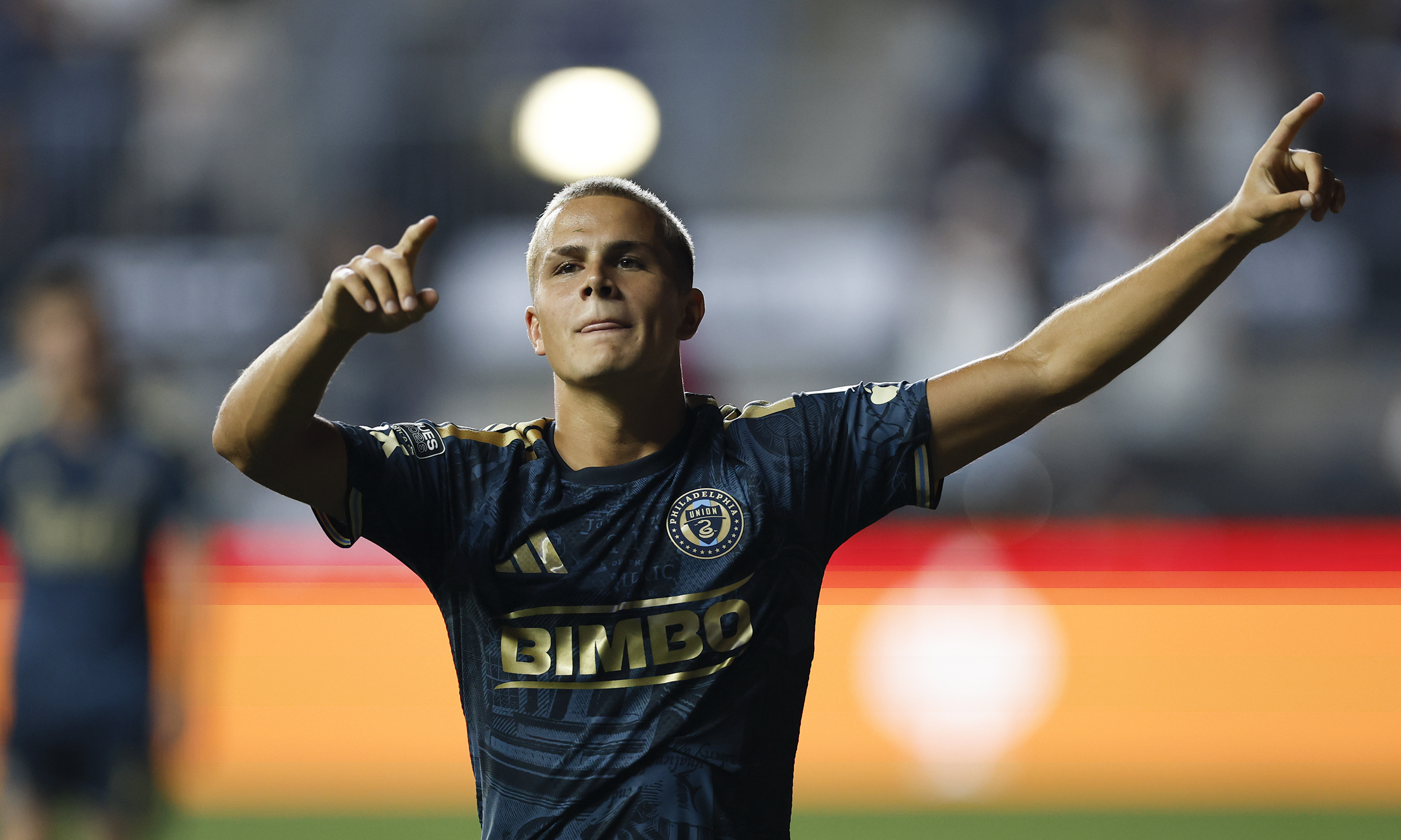
The spotlight on Cavan Sullivan has become in recent months as bright as his bleach blonde hair.Yong Kim / Staff Photographer
Bleached super star
Cavan left Sunday for Atlanta, where he’s training for the first time with the U.S. team and beginning a journey that could make him the star of the next World Cup. He’ll likely earn his first national team appearance before returning to the Union.
But before he boarded his flight, Cavan needed to get his hair right. So his mom, who used to bleach her husband’s hair in the 1990s when he played pro soccer in New York, got to work.
“I looked like a Duracell battery,” Brendan said as his old hair was more copper than blonde. “Cavan gets the extra love.”
Cavan looks the part of a star with his bleached hair, eyebrow slit, and gold chains. He breezes through interviews like he beats defenders as no question seems to trip him up. He’s been in modeling campaigns for non-soccer brands, was photographed this summer by Annie Leibovitz, and has more than 400,000 followers on Instagram.
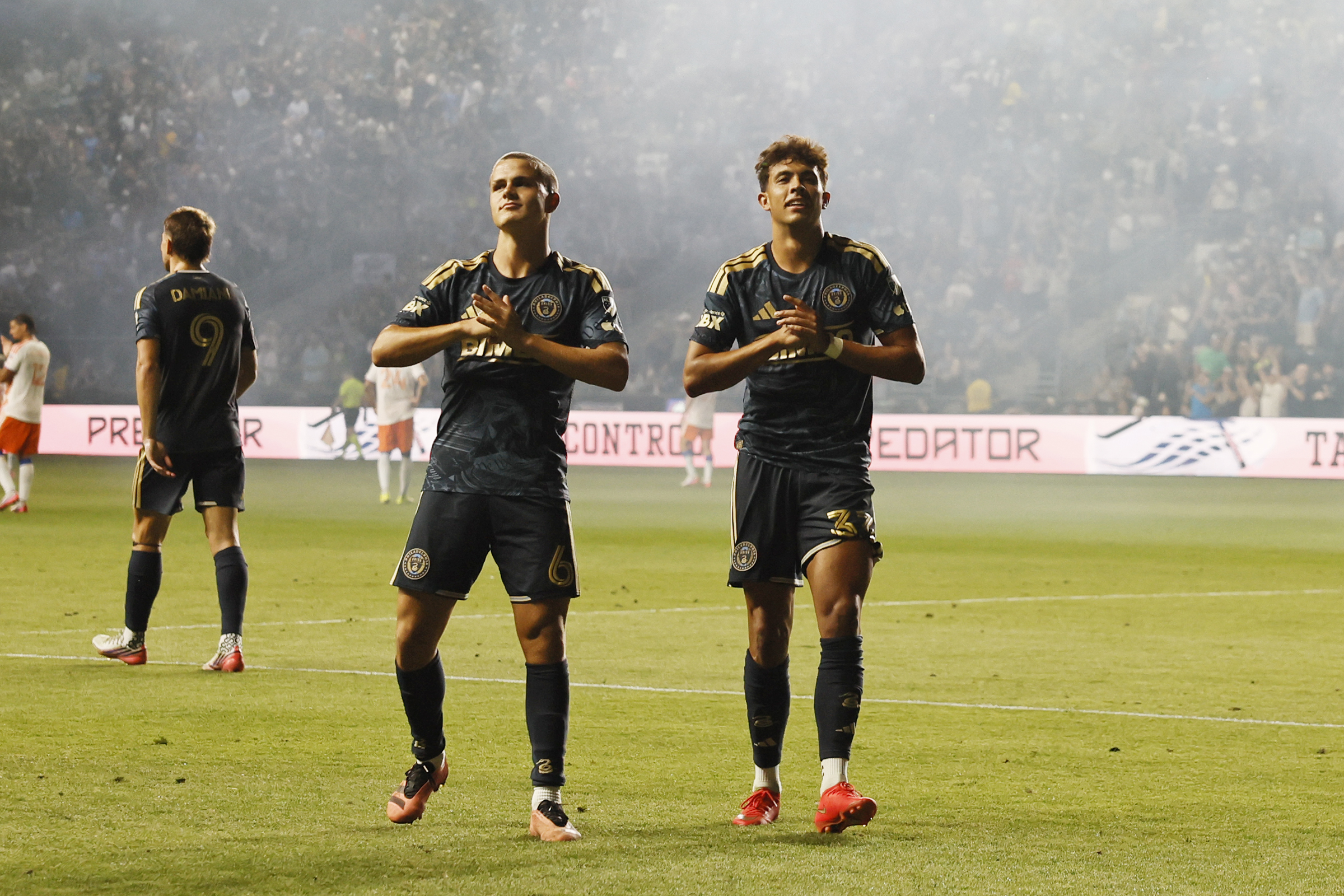
He plays the game like a showman and often tops goals with choreographed celebrations like the time he threw chalk in the air as an homage to LeBron James.
“That’s him,” said Union teammate Frankie Westfield, who grew up in Morrell Park and is with Cavan with the U.S. team. “That’s how he performs. Even in the locker room and in training, he’s dancing around. I don’t want to say he doesn’t care because he cares so much, but I think just playing loose and free makes him what he is. He brings a whole new vibe.”
Cavan has the makings to be more than just a soccer star.
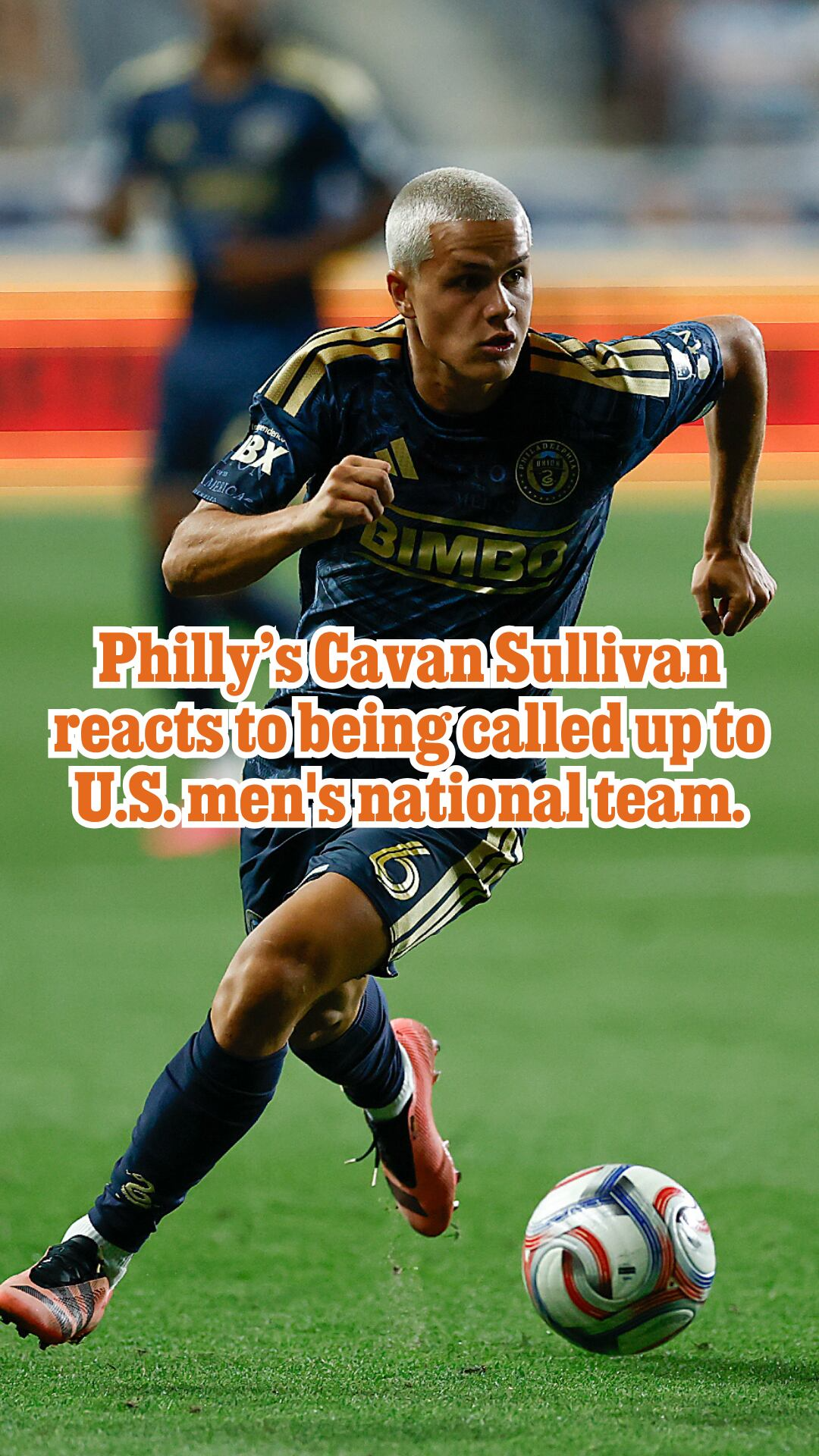
Video: Philly’s Cavan Sullivan reacts to being called up to U.S. men’s national team.
The spotlight on Cavan has become in recent months as bright as his hair. But the kid seems comfortable in it, managing the attention with ease despite being just 16.
“I think I just understand that I haven’t really done anything yet,” he said. “There hasn’t been anything major that I’ve done. I’m still trying to prove myself and make my mark on the city and on the club. I always want more. I always want to be the best. When you focus on it that way, it’s natural to just avoid all the other stuff.”
Quinn remembers driving Cavan home from their Union practice and how the younger brother would be breaking down footage from the session and sending clips to his dad for feedback. He’s always thinking about the game.
He doesn’t count his social media likes or chase clout and even remarked to his brother how he couldn’t get his latest ridiculous goal — a beautiful backheeled tip — off his timeline.
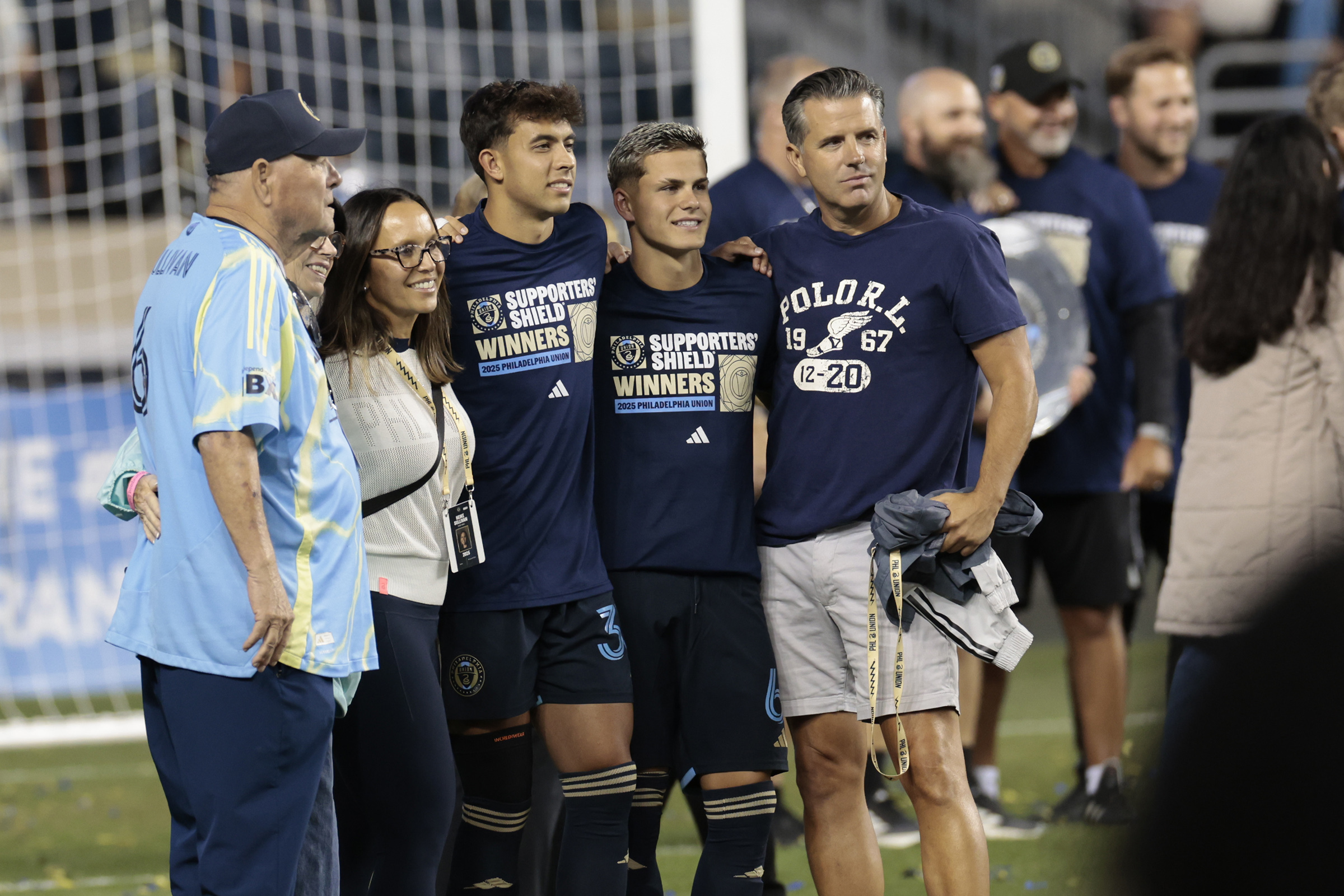
Quinn and Cavan Sullivan pose for a photo after a Union victory over New York City FC last season.Elizabeth Robertson / Staff Photographer
“I was like ‘Dude, you have to hit the not interested button,’” Quinn said. “But he deals with it well. It comes with the game. It comes with being the type of player he is.”
Perhaps Cavan’s ability to shrug at attention goes to how his parents treated him and his brothers. They talked to their kids about the games on the way home and then treated them like kids when they walked in the front door.
Cavan could be playing next year in Europe, but he still has chores at home. And the Sullivans never posted — “I did a couple times,” Heike admitted — about their children on social media.
“Why would you?” Brendan said. “There’s no need to talk about how you won a tournament or had a hat trick. You don’t brag about anything. This is his normal. It’s not normal to us, but he looks at it as his normal. So it’s weird for him if this is his normal. But then again, we don’t talk a whole lot about it. We never gave him media practice. He just knows, ‘Don’t sound like a jerk.’”
Cavan never played the game for attention or accolades. He became a child star, but he wasn’t groomed for it. His parents declined interviews over the years and other media projects.
The Sullivans knew they had a phenom, but they didn’t publicize him, not even on Facebook. They treated him like a kid, his mom said, because he was a kid. It was that simple.
“This wasn’t something we were seeking out,” Heike said. “And maybe that attitude prepared him to not make a big deal out of it.”
Older brother Quinn (left) has Cavan Sullivan’s back on and off the pitch.Elizabeth Robertson / Staff Photographer
Shaped by Philly
The Sullivans left Almond Street in 2018 for Norristown and the allure of a driveway, a backyard, and extra bedrooms. There’s not much to complain about. But they still miss things about the old neighborhood.
There was a corner store where a dollar was enough to score a handful of candy. Brendan can still taste the polish kielbasa and his sons remember the fear they felt as a 4-year-old walking alone around the corner to their grandparents and the pride of making it there safely. There was Wiffle ball and basketball with the neighbors, riding bikes through the cemetery, and playing for hours on the sidewalk.
Philadelphia’s soccer scene was born in neighborhoods like Bridesburg, where European immigrants brought the game decades ago when they came to work in factories along the Delaware River. Rowhouses — just like the one on Almond Street — produced pioneers like Walter Bahr and Benny McLaughlin. The Northeast is where Chris Albright and Bobby Convey, teammates on the 2006 U.S. World Cup squad, grew up. The cinder fields was where Don D’Ambra and Dave MacWilliams made their mark.
The same neighborhood that shaped Sullivan is what powered Philadelphia soccer for generations. He’s only 16 years old and he soon could be the face of a sport. But he was not an overnight sensation. Cavan’s emergence was generations in the making. Just the ones who came before him, he’s a kid from the neighborhood.
The Sullivans left Bridesburg years ago. The basement now belongs to someone else. But the memories? They’ll always belong to the four brothers.
“Northeast Philly sort of shaped me in a way,” Cavan said. “It was just a great place to be.”
The Eagles are headed to Chicago, and Birds fans are expected to follow.
If you are flying into Midway (or O’Hare if you’re unlucky) for the game, here’s everything you need to know about the Windy City:
Where do I find fellow Birds fans?
You are bound to bump into some fellow Eagles fans this weekend by coincidence.
However, you also can plan to see them at one of the many events held by Eagles fan groups. The Green Legion, which hosted events last weekend in Nashville, is now coming to the Windy City. On Sunday, the group is holding a pep rally at Hopsmith Tavern from 7-10 p.m. The pep rally will feature an open bar and light food. Before kickoff on Monday, the group is hosting a tailgate at Fatpour McCormick: Ultimate Chicago Sports Bar at 2:30 p.m. Tickets are limited for both events and can be found on the Green Legion’s website.
Philly Sports Trips is also hosting two meetups. From 4-7 p.m. on Sunday, Birds fans can enjoy an open bar and a live DJ at Rebel & Rye restaurant. Former Eagles Hollis Thomas, Todd Herremans, Tra Thomas, and Clay Harbor are slated to attend. On Monday, the group is holding a tailgate at 1914 S. Wabash Ave. — a short walk from Soldier Field. Tickets can be purchased on Philly Sports Trips’ website.
There are several Philly-themed bars and restaurants in Chicago. A fan-favorite of the Inquirer staff is Philly’s Best — a cheesesteak spot which one sports editor frequented after graduating from college. Philly’s Best is open until 1 a.m. on Monday, so you can get a cheesesteak to celebrate the Birds’ win (or to indulge in your sorrows).
If you are looking for a bar, The Reveler in Roscoe Village is a popular gathering spot for Birds fans living in Chicago. The bar hosts Eagles watch parties every weekend and even plays the team’s fight song after each score. Of course, they also have a cheesesteak on the menu.
Where can I see the whole city?
If you’re scared of heights, skip this part.
Consider checking out CloudBar — Chicago’s highest bar. CloudBar is located on the 94th floor of the 360 Chicago Observation Deck. The building, which was previously named the John Hancock Center, is located in Chicago’s Magnificent Mile district.
Unlike Philadelphia’s swanky SkyHigh bar on the 60th floor of the Four Seasons Hotel, CloudBar is not high end. The bar has no dress code, so feel free to wear that old Zach Ertz jersey you dug out of the closet. Tickets for CloudBar can be purchased on their website.
If you want to venture into enemy territory before or after the game, consider The Staley.
The bar is owned and operated by former Bears defensive end Israel Idonije and is within walking distance of Soldier Field. Like it does every week, the bar is hosting a watch party before and during Monday night’s game.
Another member of The Inquirer’s staff suggests to have a pint at Black Barrel Tavern located in the West Loop neighborhood. At either spot, just be prepared for some comments on your choice of kelly Green attire. Also, get ready to hear lots about “Da Bears.”
What are the classic tourist spots?
Everyone loves the idea of not being a tourist. Sometimes, it’s OK to be one. Here are the top tourist spots in Chicago:
It wouldn’t be a visit to Chicago if you did not visit Millennium Park and take a selfie with “The Bean.” The statue, which actually is called Cloud Gate, was finished in 2006 and quickly became one of the landmarks synonymous with the city.
If you have some spare time hopping from bar to bar with fellow Birds fans, take a scenic stroll down the Chicago Riverwalk. The path spans multiple neighborhoods and even offers kayak rentals. The architecture boat tours are really cool, too.
Like Ferris Bueller, have an afternoon at The Art Institute of Chicago. The museum currently has an exhibition on the art of Mary Cassatt. The painter, who lived from 1844 to 1926, actually received her formal training in Philadelphia. Maybe she’d be a Birds fan, too.
Unfortunately, the Cubs are in Boston this weekend, but still check out Wrigleyville. The neighborhood surrounding the famed ballpark boasts famous bars and restaurants like Murphy’s Bleachers, Sluggers, and The Cubby Bear.
Joe Mihalich loves coffee. Dunkin’, specifically. For years, it has been part of his morning routine: picking up a large decaf, hot, with cream, en route to a basketball arena.
Employees at his home Dunkin’, in Mt. Airy, call him by name (“Mr. Joe”). One server, in Flourtown, gave him a black beanie hat with the company’s logo stitched in, as a modest token of appreciation.
Mihalich would usually order ahead on the app, but sometimes, he’d go to the counter, and stick around for refills. He’d often do this before heading to the gym at Hofstra, where he once worked as a head coach.
It was a simple task that gave him joy. Until it wasn’t.
On Aug. 15,2020, the former La Salle point guard was standing in his Long Island driveway, when he suffered a hemorrhagic stroke in his brain.
He underwent an emergency craniectomy; a surgery in which part of the skull is removed to relieve pressure. He came home in a wheelchair, wearing a helmet, unable to say anything but “yes” or “no.”
Mihalich was 64 years old and leading a Hofstra team that had won back-to-back CAA titles. He was on pace for 600 career wins, with likely a decade of basketball ahead. In an instant, that trajectory ceased. How can you coach if you can’t talk? If your right hand is no longer able to draw up plays?
Joe Mihalich was robbed of his voice while coaching at Hofstra… if only temporarily. Nick Wass
Every routine, big and small, was disrupted. Instead of going to practice, Mihalich went to speech, physical, and occupational therapy. Those daily trips to Dunkin’ became infrequent; he couldn’t drive himself, or dictate what he wanted to drink.
Compounding this was the fact that the stroke didn’t affect his cognition. Mihalich was as sharp as he was before. He could still draw up schemes in his mind. He still preferred zone defense over man, and a four-out, one-in offense over three-out, two-in.
He just couldn’t say it. Doctors expressed skepticism that the coach would ever walk or talk at length again. The likelihood of him returning to even a modicum of independence was slim.
But Mihalich decided to throw himself into the challenge, as if he were preparing for a big game. He started working with a speech language pathologist twice a week.
He took his physical therapy seriously, so much so that he was able to go from a wheelchair to a walker, and from a walker to unassisted walking in just over a month.
He gradually began to visit his old haunts. The coach can still remember the day he went back to Dunkin’. It was 2021, in the Garden City location on 7th Street.
Joe Mihalich cries as he recalls his wife and family’s support for his recovery, in a conversation with The Inquirer last month. Isaiah Vazquez / For The Inquirer
Mihalich walked up to the counter with trepidation. What if the attendant couldn’t understand him? What if he was holding up a line? To prepare, he memorized five words that deep down, he knew by heart: “Large decaf, hot, with cream.”
“I had to repeat it twice,” Mihalich said, “but it was OK.”
In 2021, after taking a medical leave, he returned to Hofstra as a special adviser to the athletic director so the basketball program could transition to Mihalich’s assistant, ex-Sixer Speedy Claxton.
In 2022, La Salle offered Fran Dunphy its head coaching job. He said he wouldn’t take it without Mihalich, a lifelong friend and former Explorers player with whom Dunphy had worked when both were assistant coaches in the 1980s.
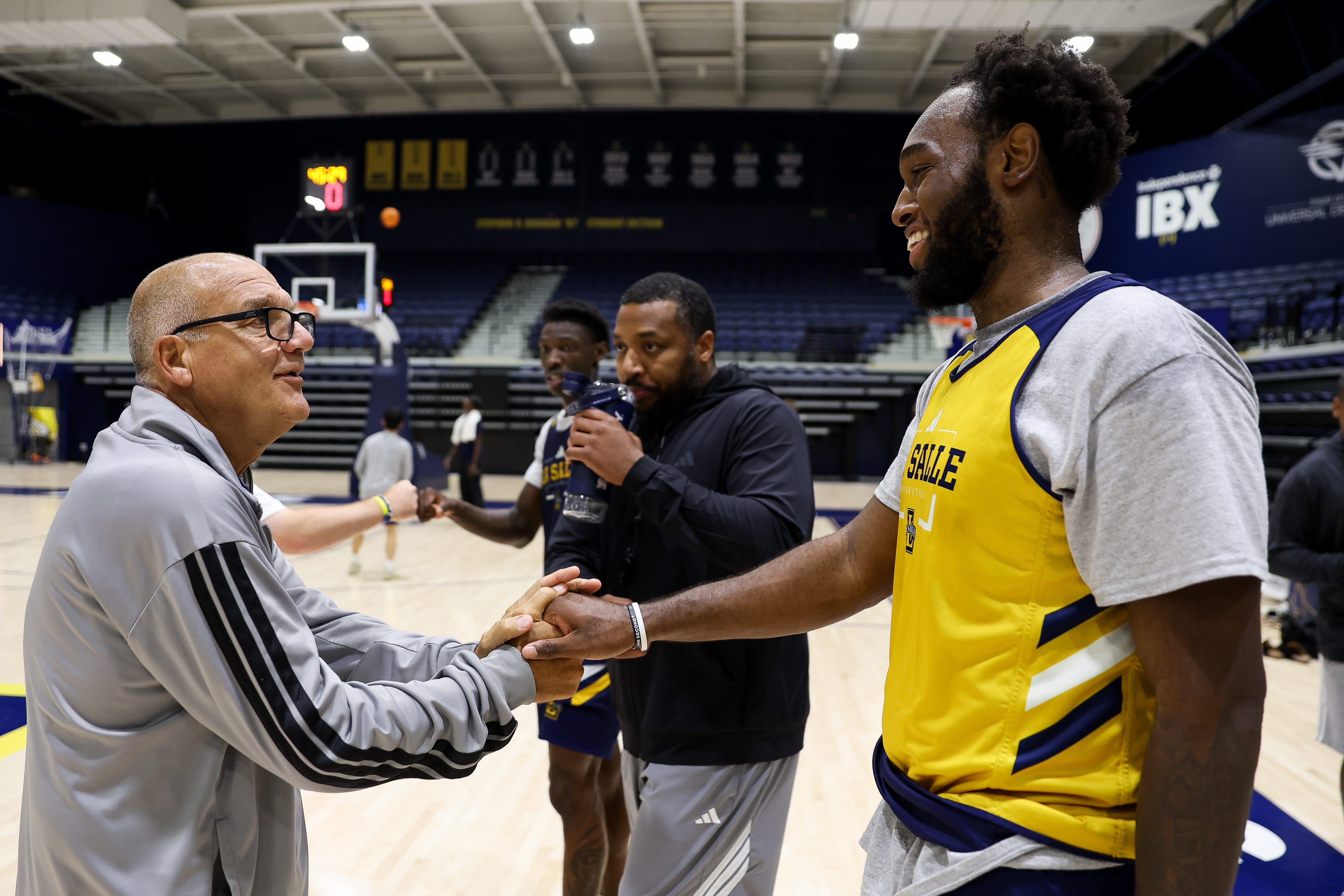
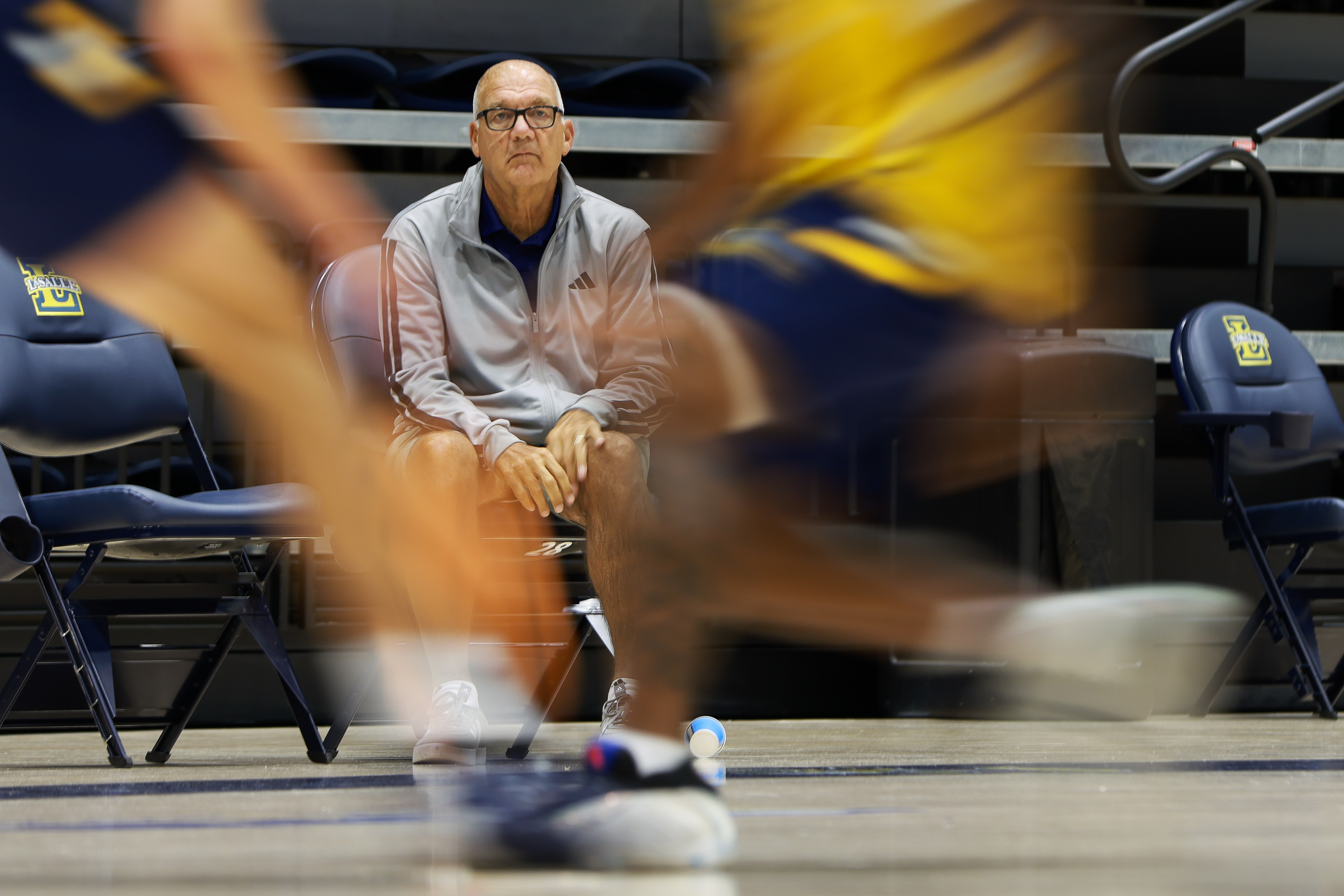
Mihalich has been with the university since Dunphy brought him aboard. He’s at all of La Salle’s home games and practices, doesn’t skip a coaches’ meeting, and is always unafraid to share his thoughts.
After his day is done, typically around 6 p.m., Mihalich heads to theschool’s speech therapy clinic. Those who’ve worked with him say the progress he’s made is rare, given the severity of his brain injury.
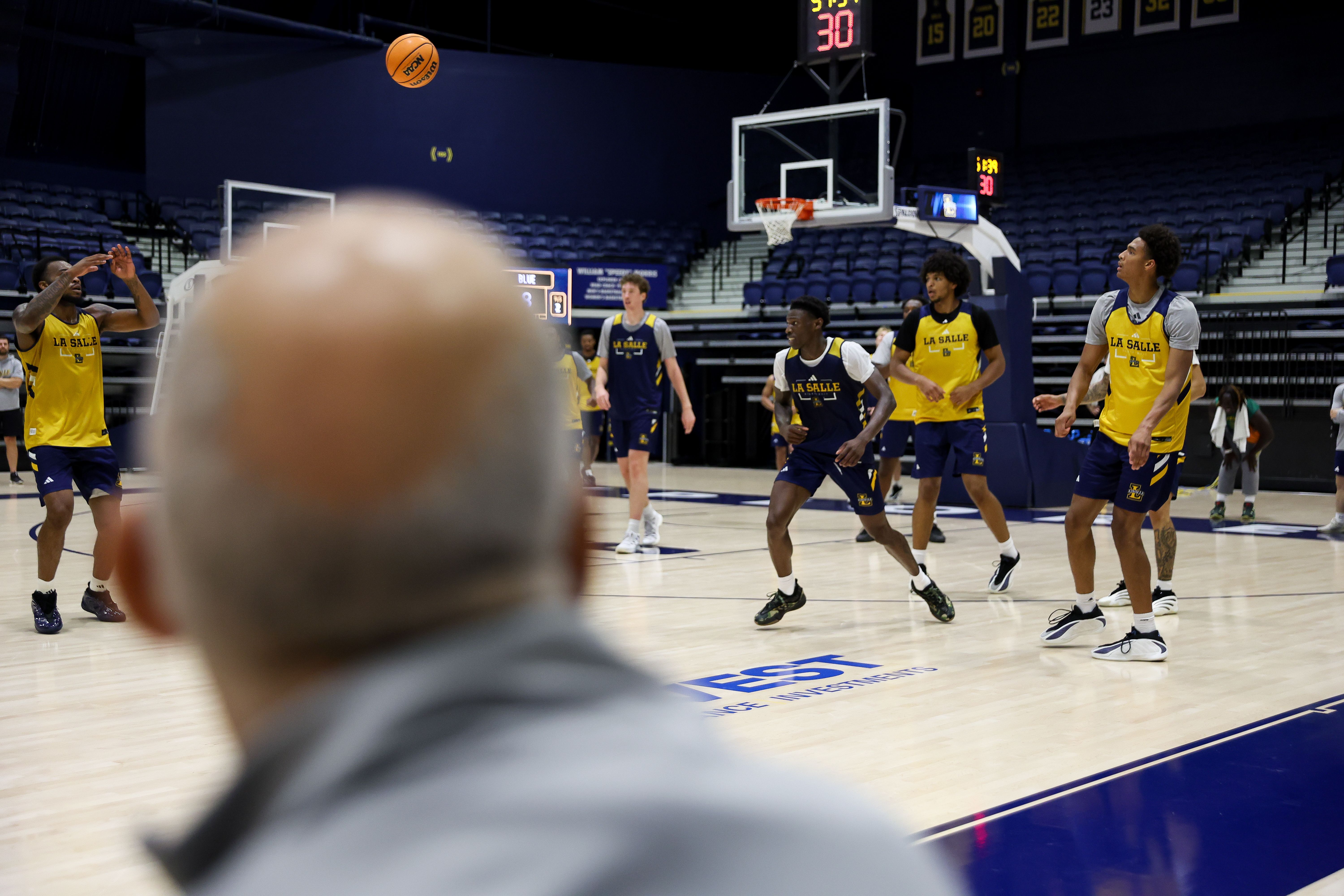
Joe Mihalich looks on from the bench during a La Salle practice earlier this month. Isaiah Vazquez / For The Inquirer
And he’s not finished yet.
“It’s kind of like, ‘You can’t do this?’“ Mihalich said. ”Well, watch me. Watch me.”
Born to be an Explorer
Mihalich was introduced to 20th and Olney at 2 weeks old. His father had gotten a job as a philosophy professor, moving the family from Washington, D.C., to Philadelphia.
They lived on Chew Street in Mt. Airy, a short drive from La Salle. As a child, Mihalich spent most of his time on campus. This remained true until he graduated from the university in 1978.
Fourof his six siblings were students at La Salle; so was Mary, who would become Joe’s wife, and worked as a water girl for the men’s basketball team.
Before Mihalich joined that team, he followed it religiously. The La Salle College High School student regularly attended games at the Palestra. His favorite player was Dunphy, a fellow point guard who made smart decisions and played steady defense.
Mihalich joined the Explorers in 1974 as a walk-on, receiving a basketball scholarship the following semester. After graduating, he took a coaching job at DeMatha Catholic High School in Maryland, where he served under future Hall of Famer Morgan Wootten.
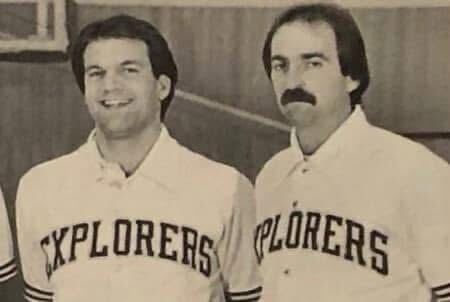
Joe Mihalich (left) and Fran Dunphy were La Salle alums who bonded as members of the Explorers’ coaching staff.provided by La Salle University
In 1981, Mihalich was hired as an assistant for Lefty Ervin at La Salle. Dunphy joined him in 1985, and both men stayed on when Speedy Morris became head coach in 1986.
Together, the two young assistants worked 10- to 12-hour days out of the second floor of Hayman Hall, watching film and meeting with recruits.
They embarked on long road trips to evaluate high school players in Pittsburgh, where the Five-Star Basketball Camp was held. This gave them ample time to get to know the Pennsylvania Turnpike and each other.
Over those 300-plus mile drives, Dunphy and Mihalich mused about someday leading a Division I men’s basketball program.
“I wonder what it’s like,” Dunphy said. “I wonder what kind of pressure the head coach is under, that we’re not seeing. We had great faith in both Lefty and Speedy, when we were together.
“But also knowing that if we ever got that opportunity, we might do it our own way.”
They eventually earned their chance, hundreds of miles apart. Dunphy was named head coach at Penn in 1989, and Mihalich was hired by Niagara University in 1998.
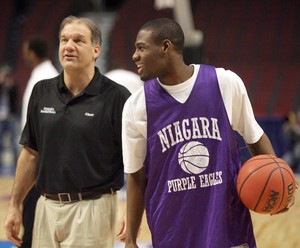
Joe Mihalich (with guard Tyrone Lewis, a product of Truman High in Bucks County) imported an exciting brand of offense when he arrived at Niagara.
The Mt. Airy native immersed himself in the community, going so far as to become a diehard Buffalo Bills fan. He developed a quick-paced, efficient offense, which frequently ranked among the top 75 in the country in offensive rating, according to KenPom.
But even from Western New York, Mihalich never lost touch with his roots. He’d recruit primarily from where he was born (D.C.) and where he was raised (Philadelphia), often targeting kids who were overlooked by the Big 5.
At Niagara, they flourished.
“He would develop them like crazy, from their freshman year to their senior year,” Mihalich’s former assistant Colin Curtin said. “And they would look like totally different players.”
Curtin, a former student manager for Morris at St. Joe’s Prep, has worked with Mihalich for 17 years. When the head coach left Niagara for Hofstra in 2013, he brought Curtin with him, as an assistant.
Mihalich became the second-winningest coach in the school’s history with a record of 154-102. His greatest season there was his last.
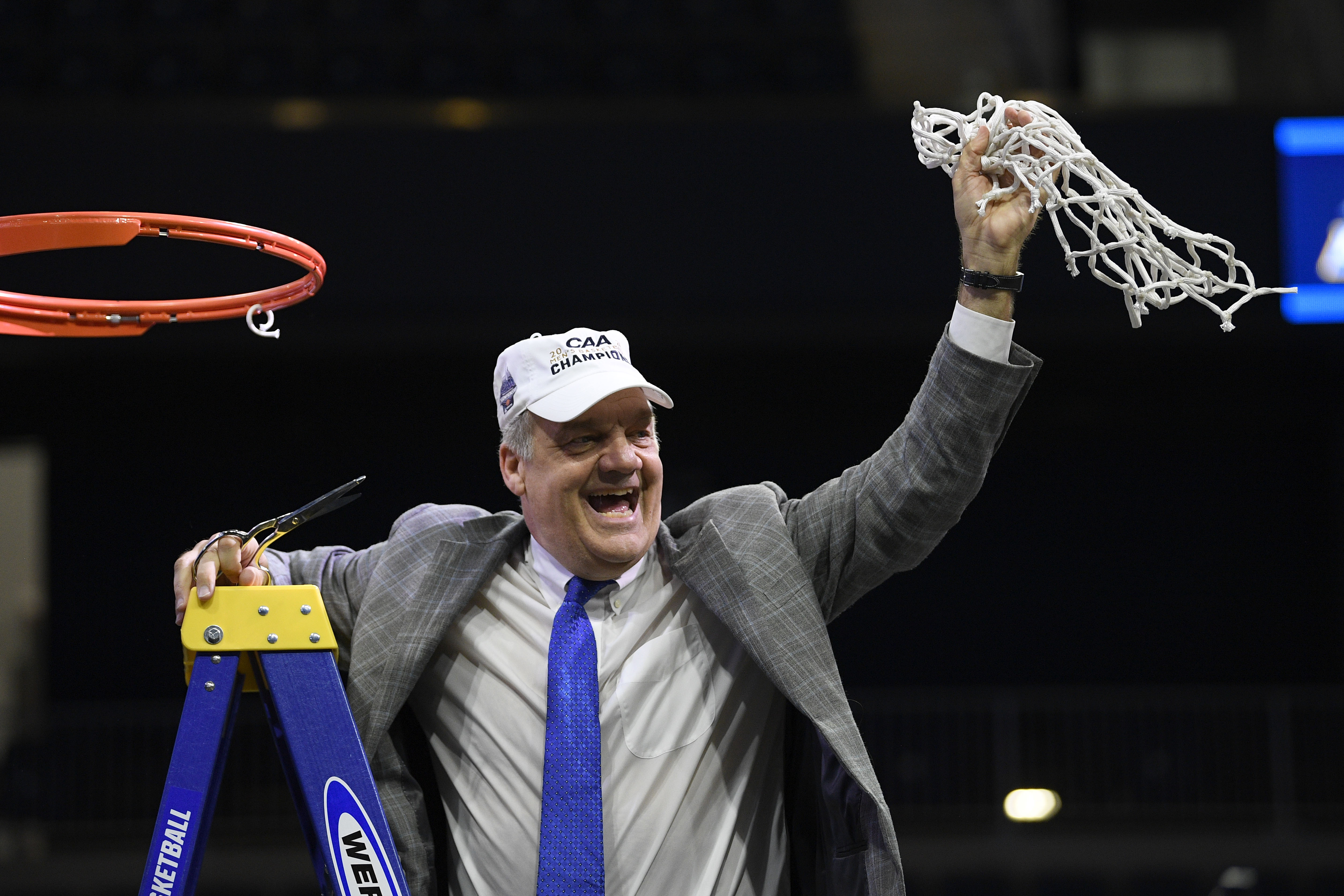
In 2020, Mihalich led Hofstra to its first NCAA Tournament berth since 2001. After winning the CAA title, he climbed high atop a ladderwith a pair of scissors, making the final cut of the net.
Hofstra coach Joe Mihalich holds up the net after cutting it down following the team’s win over Northeastern in the 2020 CAA final. Days later, the world shut down because of the COVID-19 pandemic and the Pride would miss out on a chance to compete in the NCAA tournament. Nick Wass
But Hofstra never got its moment. Two days later, the tournament was canceled due to the pandemic. Five months after that, Mihalich was at home when he got a call from Mary, who was traveling to Ocean City.
He tried to speak but wasn’t able to. The line went dead. She called Curtin, who found the coach standing in his driveway.
He asked if Mihalich was alright.
“I said, ‘Shake your head, yes or no,’” Curtin recalled. “And he shook his head no.”
An unexpected homecoming
While his team embarked on remote summer workouts, Mihalich was placed on a medical leave. He connected with a local speech language pathologist, Alison Durkin, and began to meet with her in the fall.
The coach had been diagnosed with both aphasia, a language disorder, and apraxia, a motor speech disorder. He also lost some mobility on his right side, which prevented him from writing with his right hand.
Alison Durkin (left) with Joe Mihalich and his wife, Mary.Courtesy of Alison Durkin
Mihalich had spent the last four decades amid a symphony of sneakers and basketballs and whistles. In environments that were exciting and fast-paced and energetic.
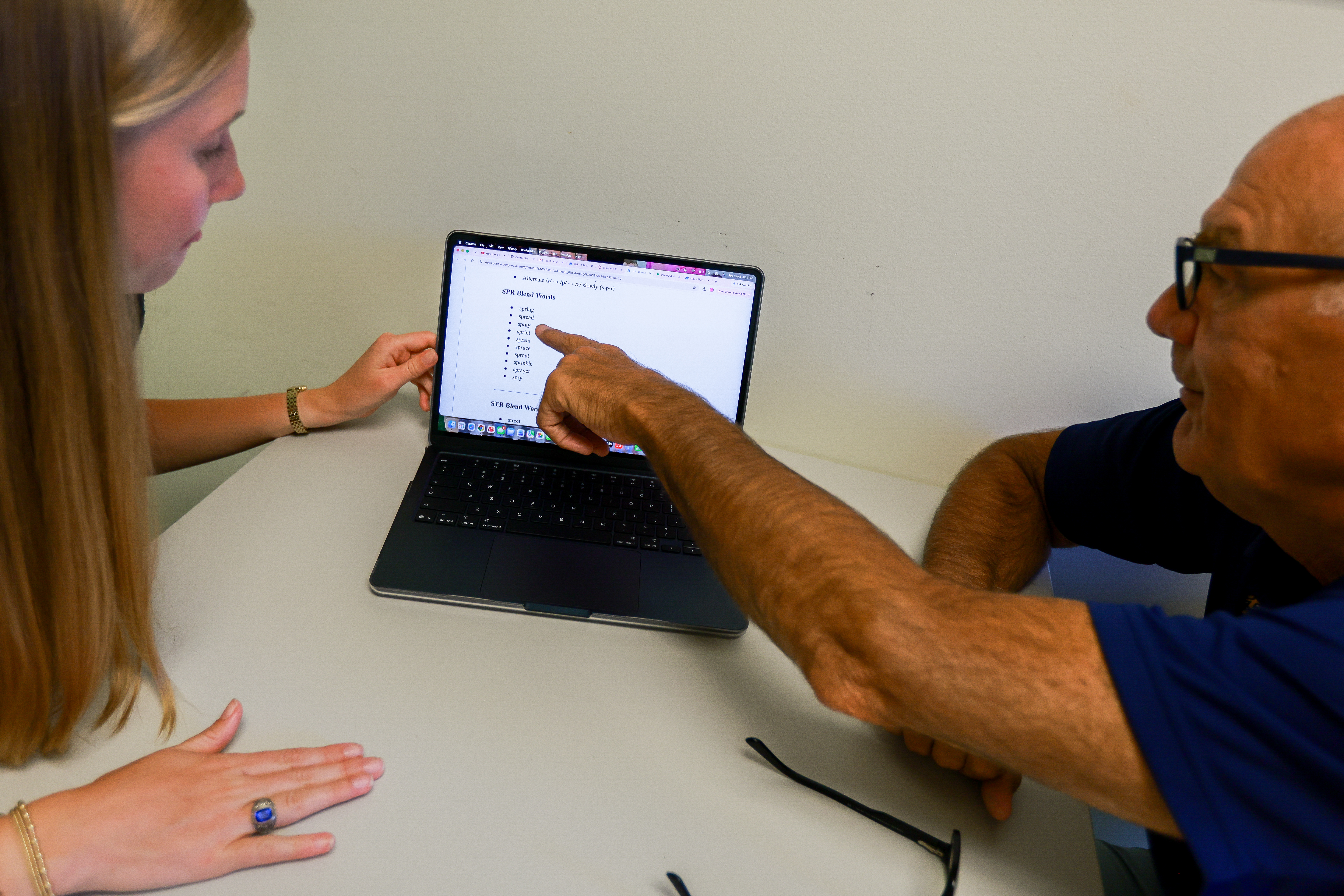
Now, life was quiet and slow, in the most literal sense. He and Durkin started their sessions with simple, binary questions. Then, they’d count numbers, recite days of the week, and months of the year.
When Mihalich did speak, he was encouraged to over-enunciate. Buffalo Bills became “Bu-fa-lo Bills.” Niagara Falls became “Ni-ag-a-ra Falls.”
They had some initial discussions about a return to his previous role at Hofstra, but decided that was not an option.
“Not only was the job itself linguistically demanding, because you’re producing language on a stage,” Durkin said. “You’re yelling at people. You have seconds to speak. I mean — very demanding.
“And then on top of that, there’s really no reasonable accommodations that could be implemented to make that feasible. So it was definitely not an easy thing.”
Mihalich wasn’t involved in the day-to-day in his AD advisory role, and didn’t interact with players and staff; a choice he’d made himself, to ensure he wouldn’t overstep.
Joe Mihalich goes through a speech therapy session with La Salle student and speech-language pathologist Ella Verello earlier this month. Isaiah Vazquez / For The Inquirer
The coach described those years as “horrible.” He sorely missed the rhythms of his previous life. But he and Durkin kept working, unaware of whether he’d ever grace a court again.
The speech language pathologist introduced basketball terminology to keep her pupil engaged. Instead of reciting “three-pointer” or “rebound,” Durkin would have Mihalich describe exactly what those activities were.
“He knows what boxing out is,” she said, “but could he produce the language to explain it to someone who did not know? That’s a hard task.”
The exercise inadvertently set him up for an opportunity to come. In April 2022, Dunphy called Mihalich to ask if he’d be his assistant at La Salle.
Mihalich was limited in what he could say. But one word came through.
“‘Wow,’” Dunphy recalled. “And he repeated it dozens of times.”
Mihalich returned to campus that summer, with an iPad in hand, to jot down thoughts during practice. Dunphy’s staff quickly learned that they wouldn’t need to actually talk to communicate.
Joe Mihalich (right) was by Fran Dunphy’s side when Dunphy coached his 1,000th game in 2025. Charles Fox / Staff Photographer
One of the assistant coach’s first suggestions was to implement a continuity offense, with players starting in the same spots, and flowing to different set plays.
Mihalich couldn’t vocalize this. So, he picked up a marker with his less dominant, left hand, and started scribbling on the white board in the men’s basketball office, using a language any coach could understand: Xs and Os, dotted and zigzagged lines.
Then he directed his cohorts to the gym, to demonstrate.
“And he goes, ‘Come on, upstairs! Upstairs!’” recalled former La Salle assistant coach Mike Doyle. “‘Alright, let me put my basketball shoes on.’”
If there was one aspect of the sport Mihalich emphasized less, it was defense. His teams at Hofstra and Niagara were known to run and gun. The former head coach didn’t want players expending too much of their energy by guarding an opponent.
Dunphy was much more defensive-minded. So, every now and then, Mihalich would yell “Zone!”
“And then, as soon as we’d go zone, somebody would make a three-point shot, immediately,” Dunphy said, “and I’d say, ‘All right, that’s it. That’s enough.’”
Joe Mihalich’s work on his speech continued at La Salle, where speech-language pathologist Ella Verello (left) is among the team assisting the coach’s therapy. Isaiah Vazquez / For The Inquirer
Not long after Mihalich joined the Explorers’ staff, Wendy Silverman, who ran Hofstra’s speech-language hearing clinic, reached out to La Salle on the coach’s behalf.
Mihalich began to take weekly sessions with graduate students at La Salle’s clinic, while working with Durkin remotely, on Zoom. The strategies he learned — speaking slowly, over-enunciating — he’d then bring to the court.
By the end of the 2022-23 season, staff and players could hear a marked difference.
Christine Cahill, the school’s director of academic support for student-athletes, sat next to Mihalich during practice.
“And I told him, it went from like 0 to 70%,” she said, “that first year.”
‘A reason to live’
When Dunphy retired in February 2025, Mihalich was unsure of what he would do next. He initially told Curtin that he wanted to get out of coaching.
But after Darris Nichols was hired at La Salle, his calculus changed. Mihalich had worked with Nichols’ brother, Shane, at Niagara and Hofstra. Curtin would be joining the Explorers’ staff, too.
Joe Mihalich had a connection to coach Darris Nichols and was kept on when Nichols was forming his La Salle staff in 2025. Isaiah Vazquez / For The Inquirer
So, Mihalich decided to give it another go, and Nichols was more than receptive. He saw the former head coach not just as a connector between generations, but someone he could learn from.
“Coming into a new program, he’s helped me navigate it,” Nichols said. “It’s great to have him around.”
Mihalich became an active participant in scouting and recruiting meetings. Just as he had with Dunphy, he started recommending offensive strategies (and of course, more zone).
His speech has progressed to the point where he can now work one-on-one with players. Last year, Mihalich developed a bond with junior guard Rob Dockery, who led La Salle in points, rebounds, and steals.
Dockery’s weakness was his jump shot. His mechanics weren’t consistent, mainly because he wasn’t practicing it enough. Throughout the offseason, the former head coach would routinely text him, reminding the guard to get back in the gym.
“Repeating that same shot, over and over again,” Dockery said. “That’s what he told me. Stick to the same shot.”
Mihalich is still going to speech therapy every week, both at La Salle and with Durkin, and the sessions can be laborious. There are moments when he needs to repeat himself one, or two, or even three times to get his point across.
“But I am here,” he said. And his life is starting to look like it once did. The former head coach wakes up every morning, and drives to the Mt. Airy Dunkin’, where he’s greeted as “Mr. Joe.”
Joe Mihalich has reconnected with basketball and remained a presence at his alma mater for the past four years. Isaiah Vazquez / For The Inquirer
He picks up his coffee — large decaf, hot, with cream — and brings it to the arena, leaving behind a trail of Styrofoam cups.
And for two hours, he sits and watches from his chair, as basketball chaos unfolds around him. A lesser man might see a career cut tragically short. But Mihalich sees something entirely different.
One day last spring, just after the Flyers had finished an off-day practice in Raleigh during the Eastern Conference semifinals against the Carolina Hurricanes, Matvei Michkov lingered in the locker room, the only player there.
Two or three media members were hanging out, too, chatting with him about soccer, Michkov chatting back in splintered English. There was no tension. He was not sullen. If anything, he was effervescent: smiling, happy to engage. He did not in any way appear to be shattered by the hard but necessary treatment he had been receiving from head coach Rick Tocchet — limited ice time, often on the team’s third line — and would continue to receive. In just a few days, Tocchet would bench him for Game 4 of the Hurricanes’ series, the overtime loss that ended the Flyers’ season.
Now here we are, on the precipice of a Flyers season unlike any in the franchise in at least a decade, and Michkov is a reason, maybe the primary reason, for the welcome-if-unfamiliar atmosphere around the team. After the progress that the Flyers made last season — qualifying for the playoffs and winning a series for the first time since 2020, reassuring their fans that the team was, in fact, improving — they’re back to being a team on the rise again. It probably goes too far to say that expectations are or should be high for them, but there is certainly cause for cautious optimism.
Michkov is at the core of both that caution and those good feelings. His struggles, the fits and starts in his maturation, have been well documented. Considering how long it has been since the Flyers have drafted and developed a bona fide superstar, how often their fans and followers have been sold or were eager to buy bills of goods that turned out to be worthless, it was understandable that people might be concerned that Tocchet was hindering Michkov’s growth, if not stopping it altogether.
The subsequent four months, and some perspective, should have tempered that worry. Michkov had acknowledged that he was out of shape throughout last season; over the offseason, he said, he improved his diet and lost 29 pounds. And for all the complaints that Tocchet should have just thrown Michkov on the ice more often to sink or skate, for all the tongue-holding that the head coach did and failed to do, in 81 games Michkov still scored 20 goals and put up 51 points, the third-most on the team. If that measure of production constitutes a disastrous season, then the Flyers will happily take their chances on a lighter, presumably faster, revitalized Michkov. He is 21. Nothing is settled or ruined for him.
Flyers head coach Rick Tocchet and star Matvei Michkov didn’t always see eye to eye last season.Yong Kim / Staff Photographer
That relative gamble (what, were they really going to give up on another highly drafted player and trade him after one suspect season?) is emblematic of the approach that the Flyers took all offseason. Yes, they shocked the NHL with their eye-popping offer sheet to Leo Carlsson, but if you focus on the moves that they made (not the one they couldn’t quite pull off), it’s easy to see that they’ve made similar bets up and down their roster.
They re-signed Tyson Foerster to an eight-year, $56.8-million contract on the belief that an excellent two-way player who hasn’t scored more than 25 goals in a full season can be the kind of player who scores 40. They re-signed Trevor Zegras to a four-year, $36.5-million contract on the belief that he can tap even deeper into his well of skill and creativity. They re-signed Jamie Drysdale to a four-year, $26-million contract on the belief that he can be more than a solid No. 2 or No. 3 defenseman, more than just a coping mechanism for the departure of Cutter Gauthier.
Those players and others like them — Michkov, Foerster, Zegras, Drysdale, Porter Martone — will chart the course of this Flyers season and the franchise’s future, in the near and the long term. What the Flyers are banking on, really, is a factor that so many who work in, cover, and follow sports often forget: that athletes can and do get better with time, that a player won’t remain the same from his second year to his third and his third to his fourth, that a lengthy period of regression or stagnancy — like Michkov’s — doesn’t mean that player won’t return to form or make a great leap. It might even have been a necessary wake-up call.
Who makes that leap? Who shuffles just a few steps forward? Who seems stuck in place? The answers to those questions will define the ‘26-27 Flyers and will make them fascinating to watch. One player in particular.
MADISON, Wis. — Kevin Heywood ran onto the field, in a stadium filled with fans donning the blue and green of Notre Dame and the white and red of Wisconsin. For the second time in school history, the Wisconsin Badgers made the two-plus hour trip to face Notre Dame on Sept. 6 at Lambeau Field, home of the Green Bay Packers for the last 69 years.
Nearly three weeks since the junior made his first collegiate start at right tackle for Wisconsin, the Pope John Paul II graduate, who stands at 6-foot-9, 320 pounds, looked beyond the Camp Randall Stadium stands after Tuesday’s practice with the vivid memory he’ll keep with him for a while.
“It was crazy,” Heywood told The Inquirer, as he shook his head in disbelief of the experience. “It was really cool. Just running out, look up. It’s just like 50/50 [between the two fan bases] in the stands. … Wish [we] came out with the dub, but learned a lot from that game, [grew] from that game, and just got to keep rolling.”
Rolling from Lambeau Field to now Beaver Stadium, in fact. Wisconsin (2-1) opens Big Ten play three hours west of his hometown Royersford, in a place he knows well. Penn State runs in the family.
His older sister, Claire, graduated from Penn State in May, and Heywood had deeps ties with the program when James Franklin was still the head coach. Deion Barnes, the North Philly native who was the D-line coach at Penn State and now coaches at South Carolina, was Heywood’s former trainer and developed a close relationship with the lineman.
But Heywood ultimately chose Wisconsin, and his journey will come full circle for Saturday’s game at Beaver Stadium (5 p.m., Peacock).
“Just being a kid from Pa., going on a bunch of visits [at Penn State] in high school, it was cool,” Heywood said. “I think it’s a really cool atmosphere for us to play in and [it’ll] be a fun environment for sure.”
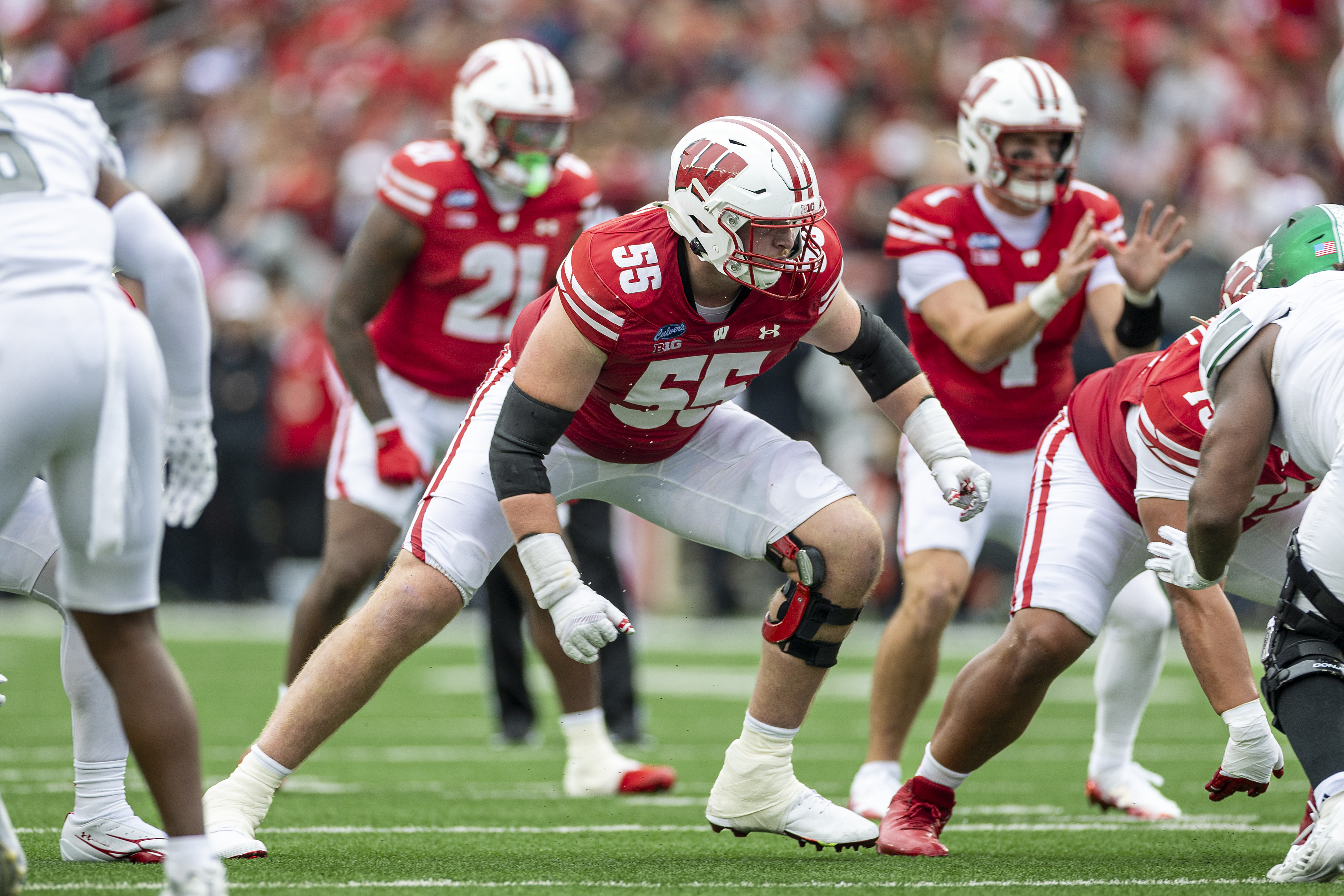
Wisconsin offensive lineman Kevin Heywood blocks against Eastern Michigan on Sept. 19.Courtesy of Wisconsin Athletics
Bouncing back from injuries
Getting to this point wasn’t always as clear-cut. Heywood early enrolled at Wisconsin in 2024 and mostly played on special teams as a freshman.
Last year, heading into his sophomore season as a projected starter at left tackle, Heywood tore the anterior cruciate ligament in his knee during spring practice, ending his 2025 season.
Heywood returned this spring and once again went into this season as a projected starter, but the setbacks continued when he got injured on the second day of fall camp. His starting debut against Notre Dame seemed in doubt, but he was cleared to play a few days before the season opener.
“I’m so proud of how he’s buckled down and fought through the adversity of all the injuries,” said his father Erik Dougherty. “He’s taking everything and [running] with it. We put a lot of stuff in front of him, had him with a lot of people to get him to where he’s at now, but he utilized all those people — and it’s just awesome.”
Added Heywood: “I think the trainers and the strength staff made it very easy. If you’re motivated to come back, you got every tool, every resource to do to get healthy. And I feel better than I did before.”
As he battled his ailments, Heywood also had to endure a coaching change at offensive line. Eric Mateos, who previously coached at Arkansas, was hired last winter to be the new Wisconsin offensive line coach.
The Royersford native says Mateos has taught him to “never be satisfied” and appreciates how “hard he is on us.”
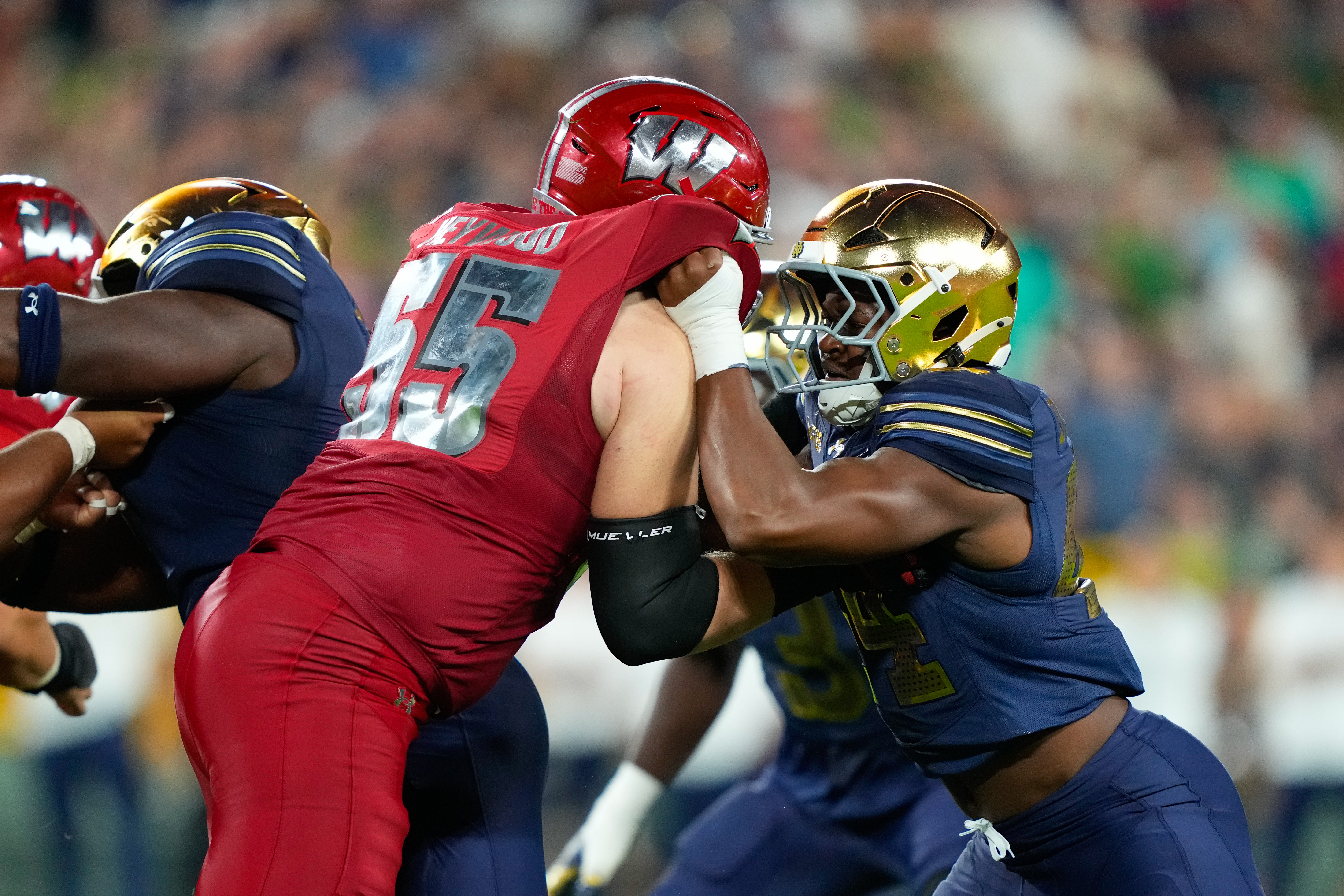
Notre Dame defensive lineman Rodney Dunham (44) against Wisconsin offensive lineman Kevin Heywood (55) on Sept. 6.Kayla Wolf
“He’s pushing everyone in a different way every day,” Heywood said. “There’s always time to clean up on a rep. It’s never going to be perfect. Even when you win a game, you still have to correct yourself and be better and be very hard on yourself.”
Facing the wall
Every time Heywood walks into the team meeting room, he sees the faces of the past Wisconsin All-American linemen. From Joe Thomas to Ryan Ramczyk to Tyler Biadasz, Heywood is reminded of the standard set before him to play on the offensive line.
Thomas and former Rams tackle Rob Havenstein are among the former Badgers linemen who come through to visit, Heywood says.
“Starting is the start of all of it, so I got that down,” Heywood said. “Just got to keep working on my fundamentals and techniques. I have that nastiness. I just need to clean up everything around it, and I’ll be right there with them.”
Wisconsin offensive linemen:
PJ Wilkins, Colin Cubberly, Austin Kawecki, Emerson Mandell and Kevin Heywood taking part in the prestigious OL Masterminds this week #Badgerspic.twitter.com/BuUpKmdXCB
Heywood learned from other professionals, too, this summer. Heywood and four offensive linemen attended the OL Masterminds summit, which Eagles right tackle Lane Johnson is the cofounder of. Wisconsin’s starting center, Austin Kawecki, grew up in Frisco, Texas, where the summit is held, and hosted Heywood and his teammates after the sessions.
“I’d say the biggest thing I took away is just at the end of the day, it’s still a nasty game up front,” Heywood said, while noting he learned some techniques specifically from Johnson as a fellow right tackle. “You can be taught all the techniques in the world, but if you don’t have that edge to you, if you don’t have that nastiness, like, you’re never going to go where you want to go. And I think that’s the main thing I took from it.”
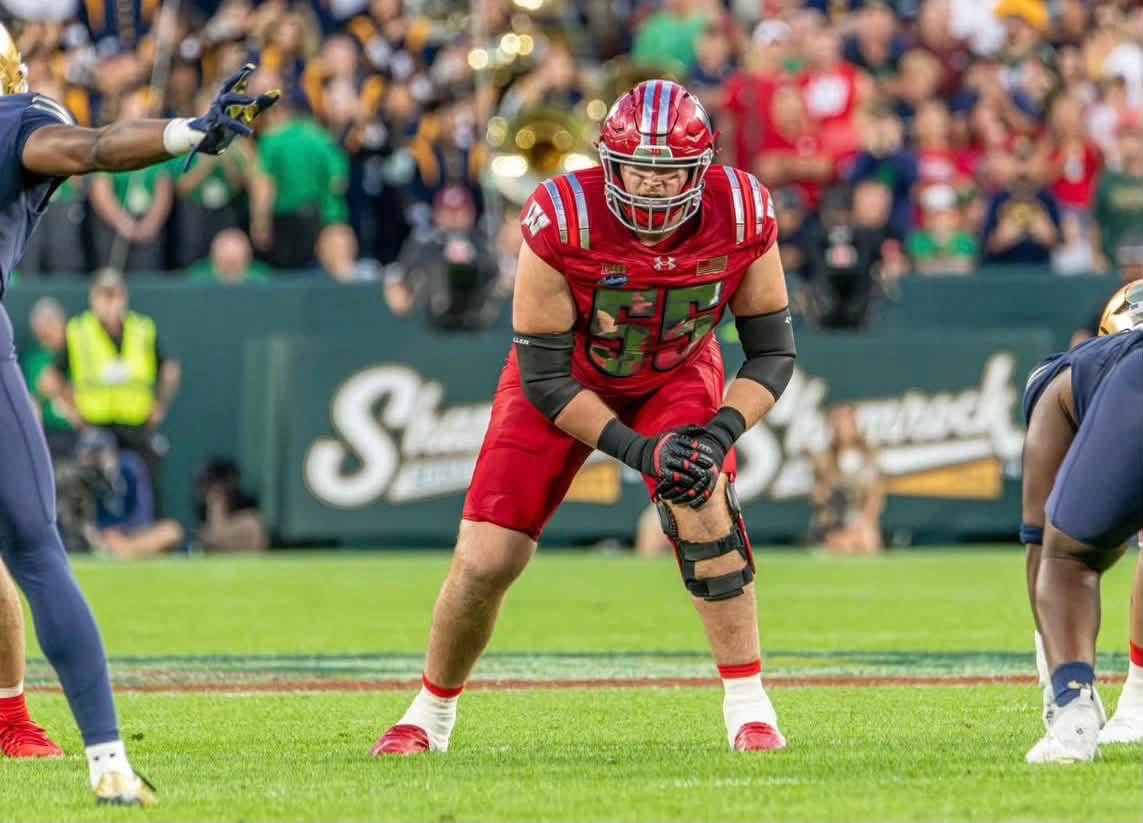
Kevin Heywood played at Lambeau Field for his first career start.Courtesy of Wisconsin Athletics
Doughtery and his wife, Amy, have attended every Wisconsin game so far this season, and will be in the stands on Saturday, along with Claire, and a few of Heywood’s friends from high school.
It is “nerve-racking” watching Heywood play at this level, Doughtery admits, but seeing his son’s dream come to fruition has “filled our hearts.”
“We just have to trust in everything that we instilled in him as a young kid, and he’s taken that and run with it,” Doughtery said. “It’s all him. We just sit back and watch how hard he’s worked and the things that he’s endured.
“He’s got his mind right and he’s focused on what his goals are, and we’re just extremely proud of him.”