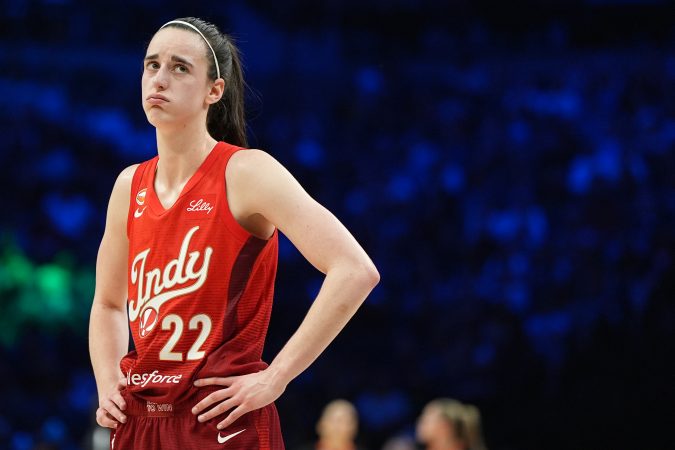
NEW YORK — Caitlin Clark, Angel Reese, and Paige Bueckers will make their World Cup debuts as members of the U.S. women’s national team next month.
The trio will try to help the U.S. win its fifth consecutive FIBA World Cup title. The young stars will be joined by 2024 Olympic gold medalists A’ja Wilson, Breanna Stewart, Napheesa Collier, Chelsea Gray, Jackie Young, Kahleah Copper, and Kelsey Plum.
“It’s always good when you compete for a gold medal, it’s a big honor,” said Wilson, a four-time WNBA MVP. “It’s something I don’t take lightly. Time to go there and have some fun and also win.”
Rhyne Howard and Aliyah Boston also will be making their World Cup debuts to round out the team.
“I’m so excited to announce the 2026 USA Basketball Women’s National Team,” USA Basketball national team managing director Sue Bird said. “This is an incredibly talented group that has earned the opportunity to compete in Berlin. Wearing a USA jersey is a privilege, and I know these 12 players will embrace that responsibility as we go after another gold medal. I can’t wait to see what this team accomplishes together.”
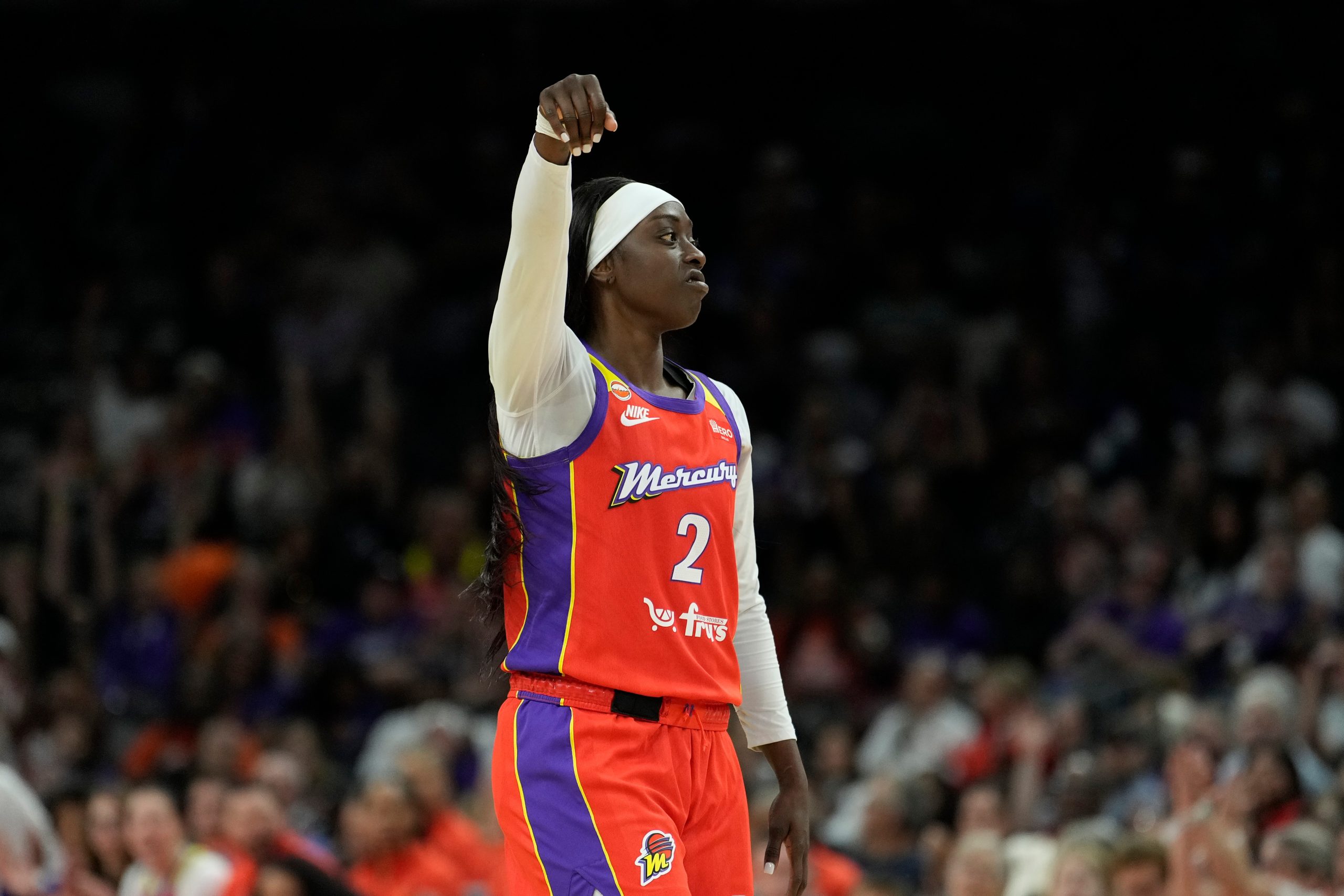
Copper, a North Philly native and Prep Charter alumna, is among five returners from the 2022 World Cup squad that won gold. Copper also recently was a WNBA All-Star for the fifth time. She’s currently averaging 21 points for the Phoenix Mercury, good for fifth in the WNBA.
Wilson leads the league in scoring (26.6 points per game) and blocks (2.0 per game) and is third in rebounds with 9.6 per game. Clark is fourth in scoring (21.5 points per game) and second in assists (8.0 per game).
Phoenix Mercury guard Kahleah Copper, a North Philly native, is heading to the FIBA World Cup with Team USA.Ross D. Franklin
This is the first time that USA Basketball has had a managing director choose the team; in the past, it was a committee. Duke women’s basketball coach Kara Lawson, an assistant on the 2022 team, will coach this year’s squad.
Stewart is the third player in USA Basketball history to appear in four World Cup tournaments, joining Bird, who played in five; and Diana Taurasi, who also played in four.
The Americans will face China, Italy, and the Czech Republic in pool play at the World Cup, which will be held Sept. 4-13 in Berlin. The WNBA will take a nearly three-week break in its season to accommodate the event.
Clark, Bueckers, and Reese helped the Americans win a World Cup qualifying tournament in March in Puerto Rico.
Sabrina Ionescu has been a big part of the U.S. roster the last few years but was left off this season’s team.
Bird said she called many of the players who didn’t make the team this time, including Ionescu.
“I think we can all agree the hardest part, which is a problem I would never trade, is that we have so much talent,” Bird said. “The beauty of that is it means almost all players are wanting to be on this team, willing to be on this team. It is a sacrifice. It is a time commitment.”
Alyssa Thomas helped the U.S. win gold at the Paris Olympics but hasn’t taken part in any USA Basketball camps since. Minnesota rookie Olivia Miles also hadn’t taken part in any USA camps, either.
“Tremendous player. So much fun to watch,” Bird said of Miles, who is the frontrunner for the WNBA Rookie of the Year. “It’s been amazing watching her grow in this league. … She’s played with USA Basketball before. She will undoubtedly be in the mix for teams in the future.”
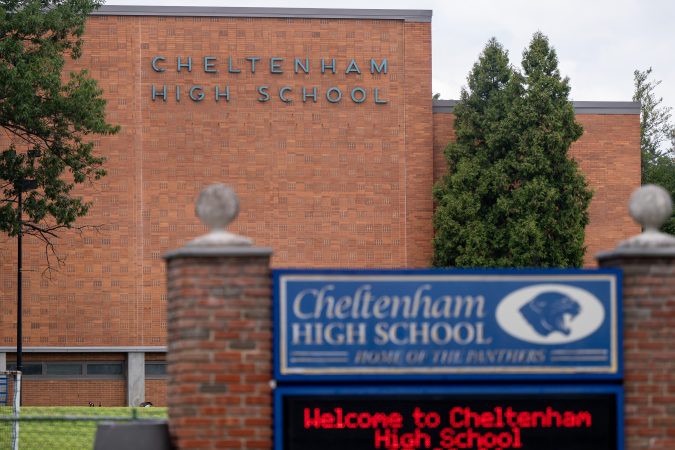
As the high school football season begins to take shape across the Delaware Valley, the Cheltenham community is on the outside looking in after its season was suspended following allegations that former head coach Terence Tolbert allowed bullying to fester.
Tolbert, along with three other Cheltenham coaches, have been charged with endangering the welfare of a child and conspiracy last week after a 15-year-old player was allegedly assaulted in the football team’s locker room by teammates twice last year. Six players were also charged.
But parents of players on the team say they warned the district in the past that Tolbert had alleged prior transgressions during his time at Abington High School.
“We protested and pleaded,” said Naim Ferguson, father of last season’s Cheltenham quarterback Kendall Jackson. “We didn’t think the people they were putting in place were adequate to handle the kids.”
Inquirer reporter Jess Rohan dives into this ongoing investigation and looks at what’s next for the program and the community.
If you’re headed out today, know that scattered storms are in the forecast, with temperatures expected to hit the 90s across the region.
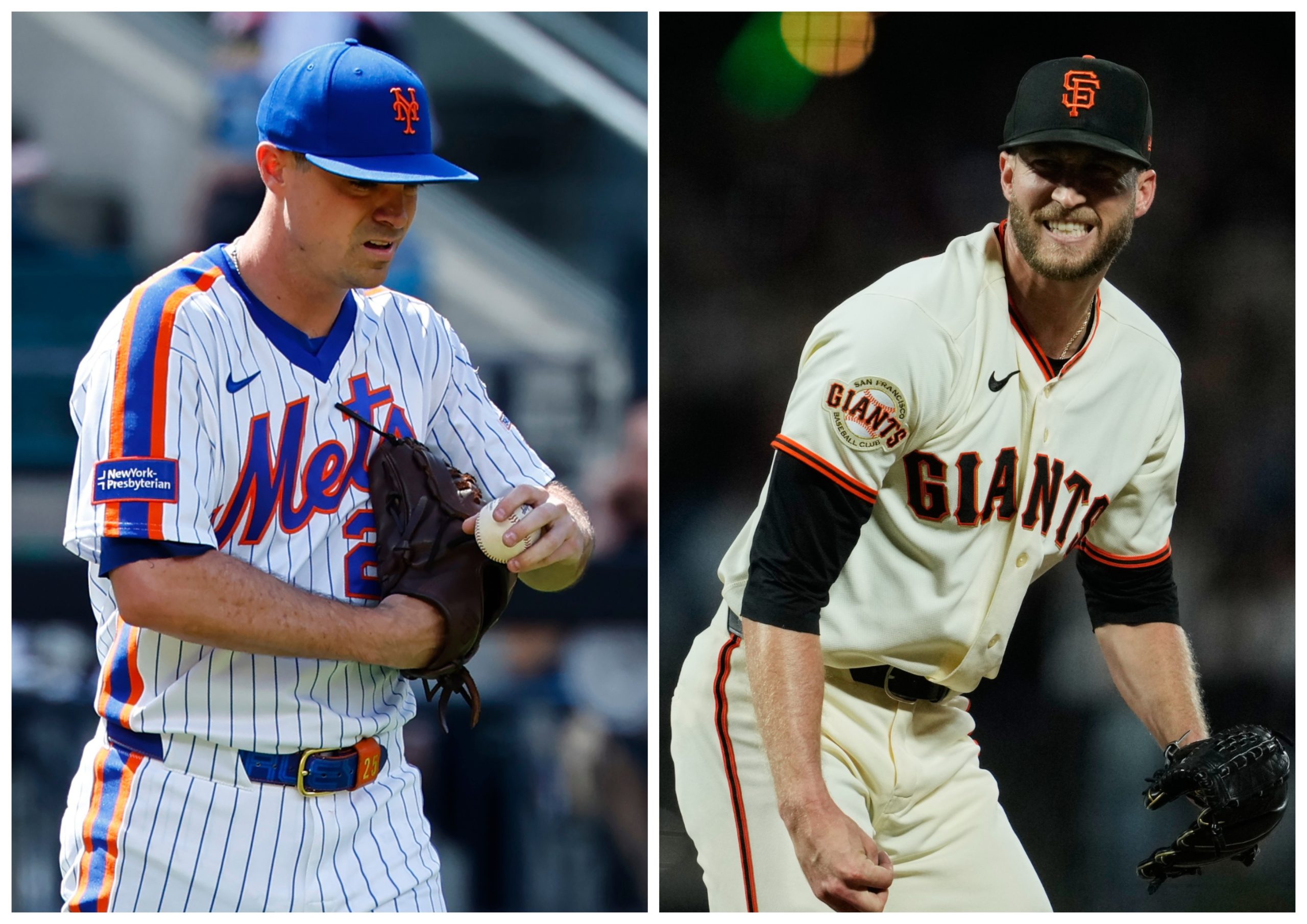
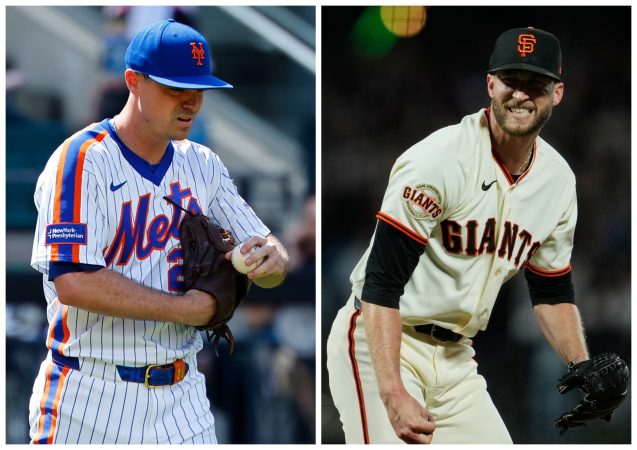
Relievers Brooks Raley (left) and Caleb Kilian are much needed reinforcements for the Phillies bullpen. Associated Press
The other two-thirds of the Phillies’ haul at the trade deadline is settling into their new bullpen, which was in need of reinforcements.
Left-hander Brooks Raley, 38, might not throw Jhoan Duran heat — his fastball averages 90.1 mph — but he mixes and commands his pitches well. And it works for him. Raley, who had a 1.96 ERA in 41⅓ innings entering Wednesday’s game, throws his sweeper 37.8% of the time, with a cutter, sinker, and changeup rounding out his arsenal.
Meanwhile right-hander Caleb Kilian, acquired from the Giants with Luis Arraez, will look to continue what has been a significant season for him. This is the first year he has seized a regular role in the major leagues after transitioning to the bullpen.
The Phillies got hit with the injury bug has pitcher Andrew Painter and outfielder Derek Hill left the game with injuries in their 10-4 loss to the Nationals in 11 innings.
Next: The Phillies wrap up their series with Washington at 6:05 tonight (NBCSP). Cristopher Sánchez (14-4, 2.61 ERA) will start against Nationals right-hander Miles Mikolas (3-8, 5.67).
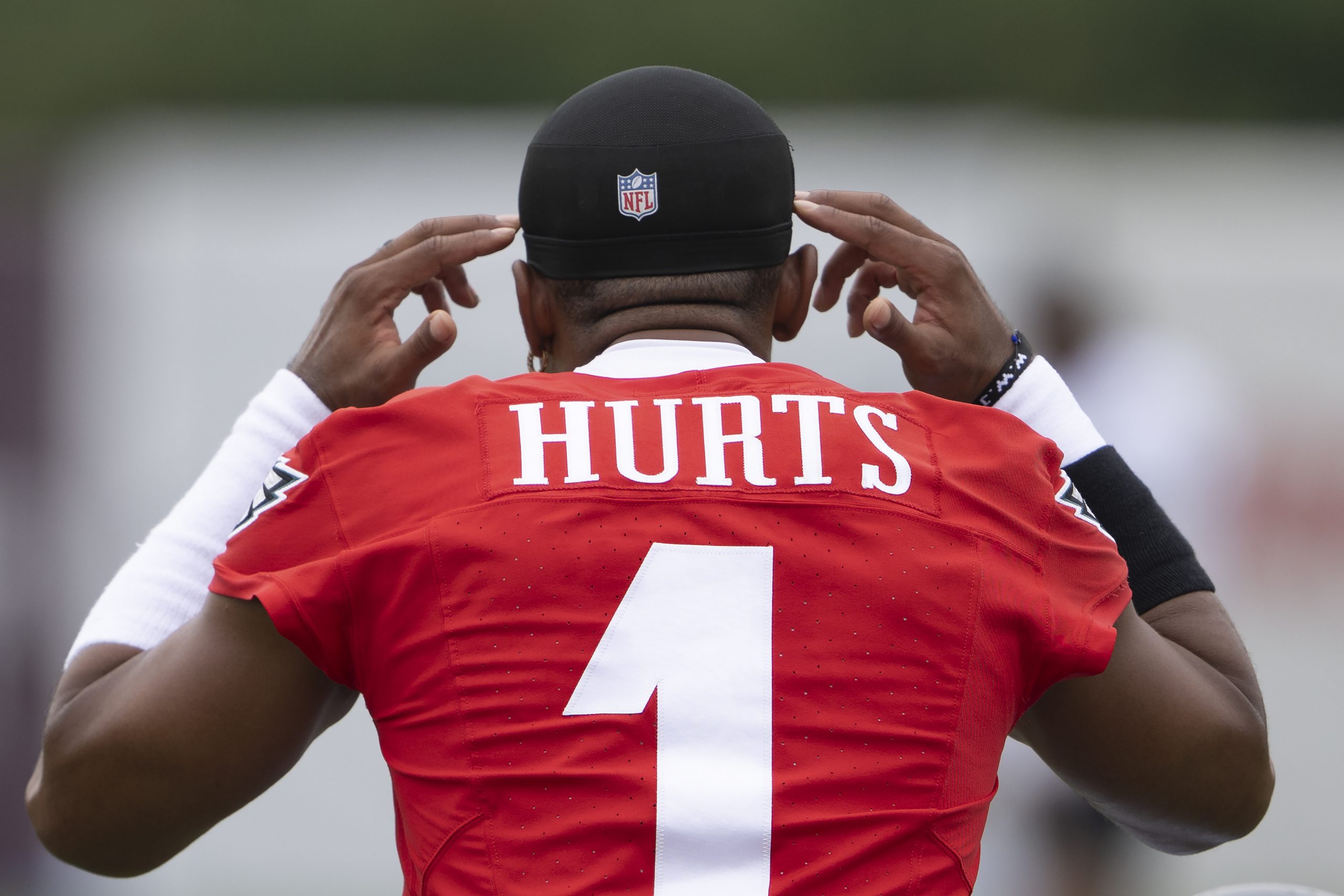
Jalen Hurts isn’t worried about the offense’s evolution. Jose F. Moreno / Staff Photographer
The Eagles offense is going to face heavy scrutiny throughout the month of August, as it adjusts to life with new coordinator Sean Mannion and without wide receiver A.J. Brown. For his part, quarterback Jalen Hurts is not stressing too much over missed connections or shaky play.
“I like to think of the term calibrating,” Hurts said Wednesday. “This is a time where we’re kind of putting it together and finding out who we are. We’ve got a lot of new pieces, an entirely new approach and MO, philosophy, to our offense. Being able to put that together and make it our own, I’m excited about where we are.”
Wednesday’s practice was a run-heavy day, and it was a shorter practice compared to Tuesday’s session that ran nearly two hours. For Hurts, Wednesday was another chance to “continue to take strides.” It isn’t supposed to be easy to install a new offense against one of the best defenses in the NFL.
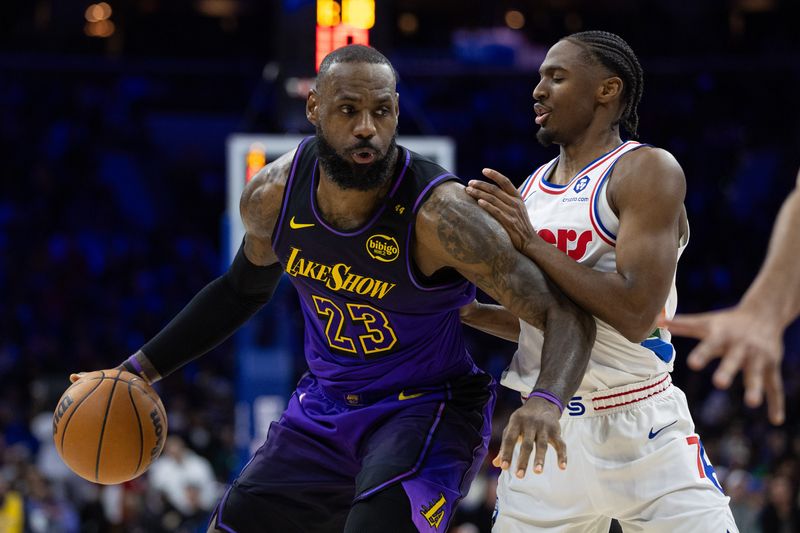
LeBron James, Tyrese Maxey and the Sixers are expected to compete for a title.Bill Streicher, Bill Streicher-I
The 76ers had the splashiest offseason in the NBA, signing LeBron James on a two-year, $8 million deal and trading for Jaylen Brown. Those additions elevated the expectations for the Sixers, who were previously considered a playoff-bound team anchored by the young backcourt of Tyrese Maxey and VJ Edgecombe and former MVP Joel Embiid. So what should we expect in the 2026-27 season? Will the Sixers be title favorites? Our experts Gina Mizell, David Murphy and Gabriela Carroll weighed in.
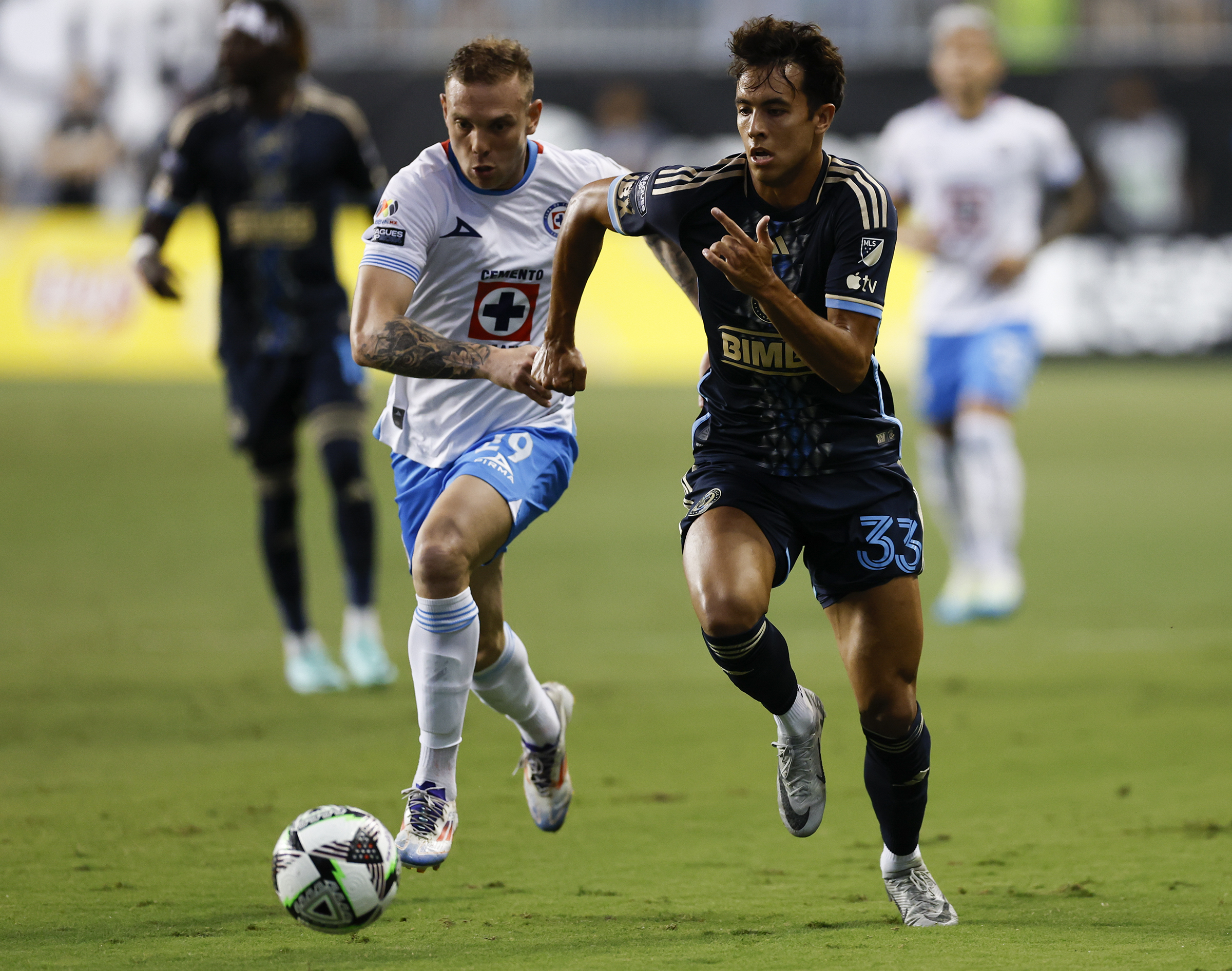
Quinn Sullivan (right) and the Union squared off with Cruz Azul in 2024. Yong Kim / Staff Photographer
Ahead of Union’s MLS Leagues Cup opener tonight at Subaru Park (8 p.m., FS1, Apple TV, TUDN, UniMás), their opponent, Cruz Azul, stirred up some drama by putting out a social post displaying their team’s flag on the Rocky statue.
Historically, that’s been a terrible idea, with the most recent instance coming by way of this summer’s World Cup, when Ecuador found out the hard way, and Brazil put out all the stops, literally, to make sure they didn’t share the same fate.
Aug. 6, 1963: Professional basketball in Philadelphia would no longer be known as the Nationals, but the 76ers, to commemorate the signing of the Declaration of Independence in 1776.
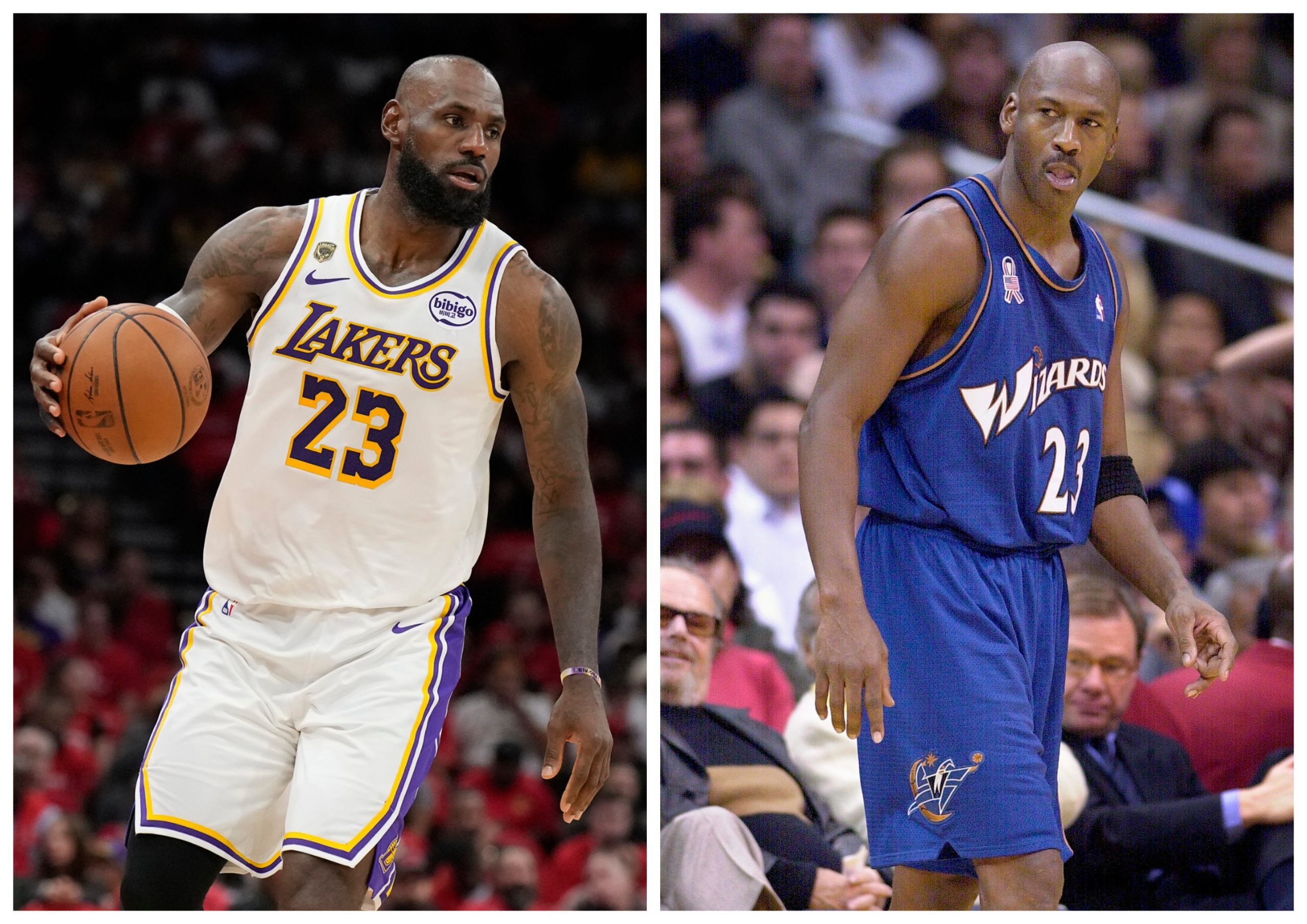
LeBron James (left) and Michael Jordan when he returned to the NBA with the Wizards.Associated Press
“They have to assert and maintain their authority, or at least some semblance of it, in the face of James’s esteem and power. James won’t necessarily be as controlling and demanding as Jordan, but he can be controlling and demanding enough. He’s accustomed to getting his way all the time, and it would be a lot to expect him to be just along for the ride now.” — Columnist Mike Sielski offers a warning to Sixers president Mike Gansey and coach Nick Nurse ahead of the arrival of James in Philly.
🧠 Trivia time answer
For a time, coming out of high school, Sixers guard VJ Edgecombe wasn’t even ranked among the Top 100 players.Monica Herndon / Staff Photographer
We asked: On Monday, which Sixers player was once ranked the 153rd-best player in the country coming out of high school by 247Sports?
Answer: B: VJ Edgecombe. Originally ranked the 153rd-best recruit in the 2024 class, Edgecombe worked his way up to a consensus five-star by the time he was a senior and headed off to Baylor.
What you’re saying about the Phillies
We asked: How would you grade Dave Dombrowski’s trade deadline moves and why?
Honestly, very good trades. — John B.
I’ll give him an A+ for the [Luis] Arraez trade. It’s a major culture shift in the Phillies’ hitting philosophy, adding a Richie Ashburn-type hitter to a group of overswinging strikeout victims who refuse to adjust their hitting approach in any given situation. Basically, they’re way more focused on hitting home runs than just getting a runner on third base, with less than two outs, home. Mattingly’s strategy, or lack thereof, is like that of Earl Weaver, waiting around for a three-run homer rather than manufacturing runs like Gene Mauch. Not sure if he even has a bunt sign. Hopefully, some of Arraez’s hitting style will rub off on the team, and we’ll cut down on strikeouts and runners left in scoring position by putting the ball in play. — Gary M.
A+. How in the world can you trade for the best hitter in the National League for nothing? The Giants will always be at the bottom of the standings with trades like this. Also, an A+ [for the] Mets [to] just give their top reliever to the Phillies again, for nothing. To make a team in your own division better just shows you why the Mets will always be the Mets. Good job, Dave! — Ronald R.
Will have to give Mr. Dombrowski a high five for a change after many years of criticism. What an exciting game with the standing ovation for Arraez as he stepped to the plate for the first time as a Phillie. And then he lit up the park with an RBI single, and finished up with another hit and RBI. And Killian adds a scoreless ninth to end it. And perfect with the first fly ball going to Bryce [Harper] in right and no problems with Bohm and Stott at their new positions. — Everett S.
It’s questionable. The goal was acquiring a right-handed bat, a starting pitcher for the fifth spot, and bullpen help. The “haul” was a left-handed infielder and two relievers. We are all jazzed with former batting champion Luis Arraez, with the expectation he would lead off or bat second, but no! He bats clean-up with a natural clean-up hitter, Kyle Schwarber batting lead-off. Defensively, is he better at second than Bryson Stott? Moving three infielders to new positions is a great idea in spring training, not in August. The division is likely lost; let’s hope the wild card remains in play. — Bob C.
We compiled today’s newsletter using reporting from Jess Rohan, Ryan Novozinsky, Jeff Neiburg, Lochlahn March, Mike Sielski, Kerith Gabriel, Gina Mizell, Gabriela Carroll, Jonathan Tannenwald, and Conor Smith.
By submitting your written, visual, and/or audio contributions, you agree to The Inquirer’s Terms of Use, including the grant of rights in Section 10.
That’s all I have today. I’ll be back one more time tomorrow to get you ready for the weekend. Have a good one. — Kerith
It was easy for Derrick Morton-Rivera to “fall in love” with basketball. He was always around it.
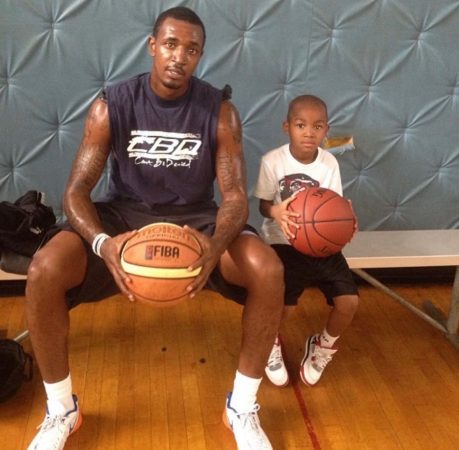
His father, D.J. Rivera, had his son while he was a sophomore at St. Joseph’s. Even after he transferred to Binghamton University in New York then University of Montevallo in Alabama, his son traveled to games and watched.
“His little eyes would be going up and down the court,” said D.J. Rivera, who grew up in Lawncrest and played nine years professionally overseas. “I gave him a basketball, and he never put it down.”
For the Riveras, basketball serves as a reminder that nothing in life is guaranteed.OnMarch 4, 1990, Gathers collapsed on a court in Southern California while playing in the West Coast Conference tournament semifinals. He suffered cardiac arrest and died at 23 years old.
“With my uncle and his heart condition, you never know when you could play your last game or your last time people seeing you — death is real,” D.J. Rivera said. “It’s the only thing that’s guaranteed in life, so I think while we’re here, you should do what you love.”
It’s why Rivera brought his son to the Danny Rumph Classic for years.
The five-day tournament, which begins Thursday at Drexel, honors Rumph, who died in a pickup basketball game at the Mallery Recreation Center on May 8, 2005.
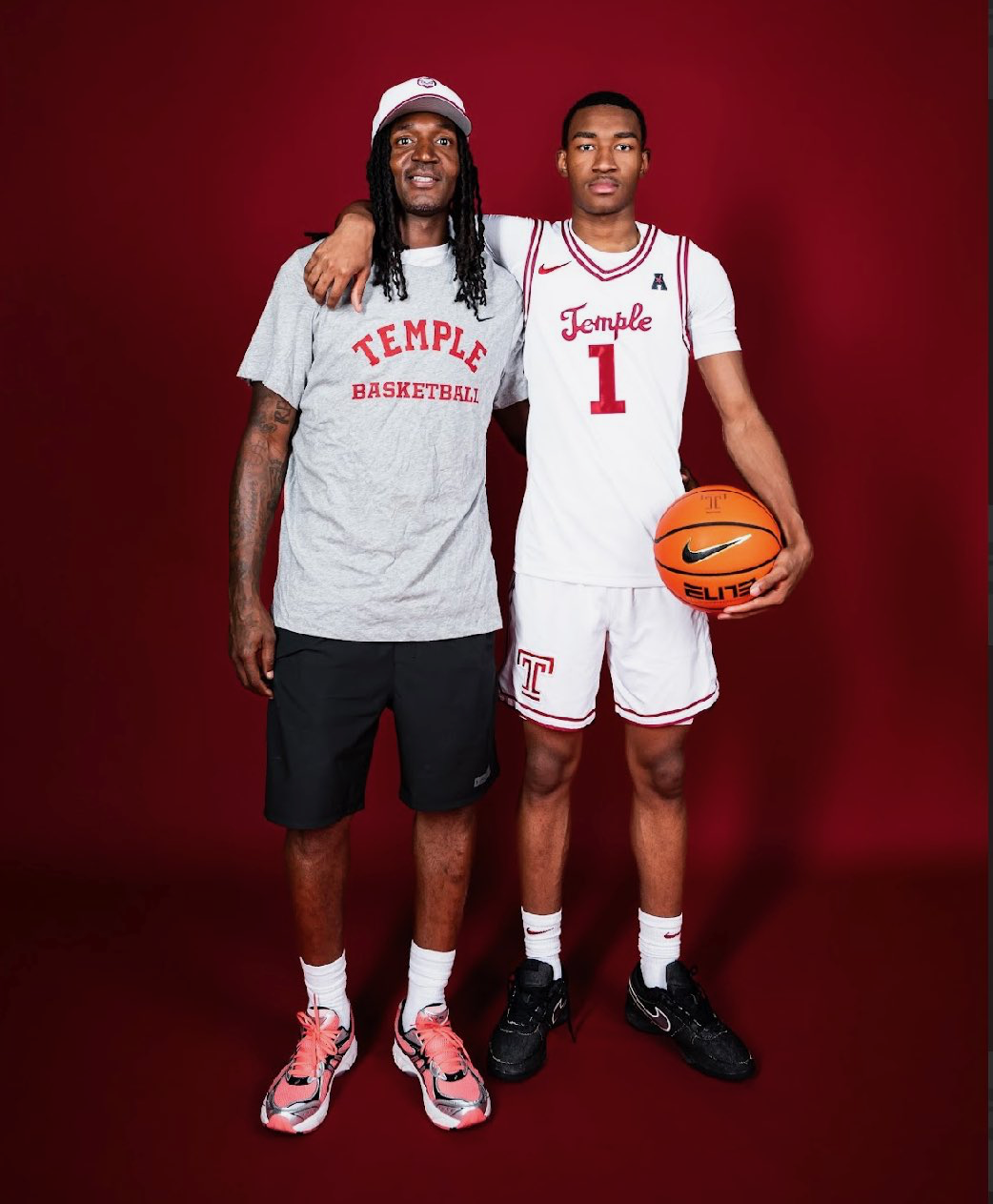
D.J. Rivera with his son, Derrick Morton-Rivera, who will play college basketball at Temple this fall.D.J. Rivera
Rumph died from an undiagnosed heart condition, known as hypertrophic cardiomyopathy, which caused him to go into sudden cardiac arrest. He was 21.
Giving back to a cause that similarly impacted his family was important to Rivera. He played in the tournament in 2012 and did it consecutively for about 10 years. Even Morton-Rivera participated in a youth halftime game during the tournament in 2016, where he recalled winning a $50 Nike gift card and James Harden showing up to play in the final.
The two have made an effort to check out the event each year and plan to attend a game this week.
“I love the Danny Rumph tournament,” Rivera said. “You get to play against pros, NBA players, be highly competitive, get to talk trash, and the crowd’s great. It’s just a great weekend in the city that you look forward to end the summer on.”
Being exposed to an event like the Rumph Classic has also played a factor in Morton-Rivera, a 6-foot-4 guard, continuing his basketball legacy in Philadelphia. The Father Judge graduate will play at Temple this fall.
“Back in the day, a lot of people used to stay home,” he said. “That’s not normal now. I feel like that should be a normal thing because that brings the community out even more. Like if a lot of hometown kids are staying, a lot of people from Philadelphia are going to the games. It’s just better for the city, it brings everybody together.”
At a young age, Morton-Rivera didn’t fully grasp what happened to Gathers, but as he got older, he had a better understanding.
He took a family trip to California before 2020 and visited LMU, where he saw Hank Gathers’ statue outside of the arena. He also met with a program who detects heart problems and had a screening done.
D.J. Rivera played high school basketball at Neumann Goretti, his son competed at Father Judge.D.J. Rivera
The trip, Morton-Rivera said, brought his family together.
“Even though I didn’t know much about it at a young age, just me hearing about it and knowing what they did inspired me to do what I do,” he added.
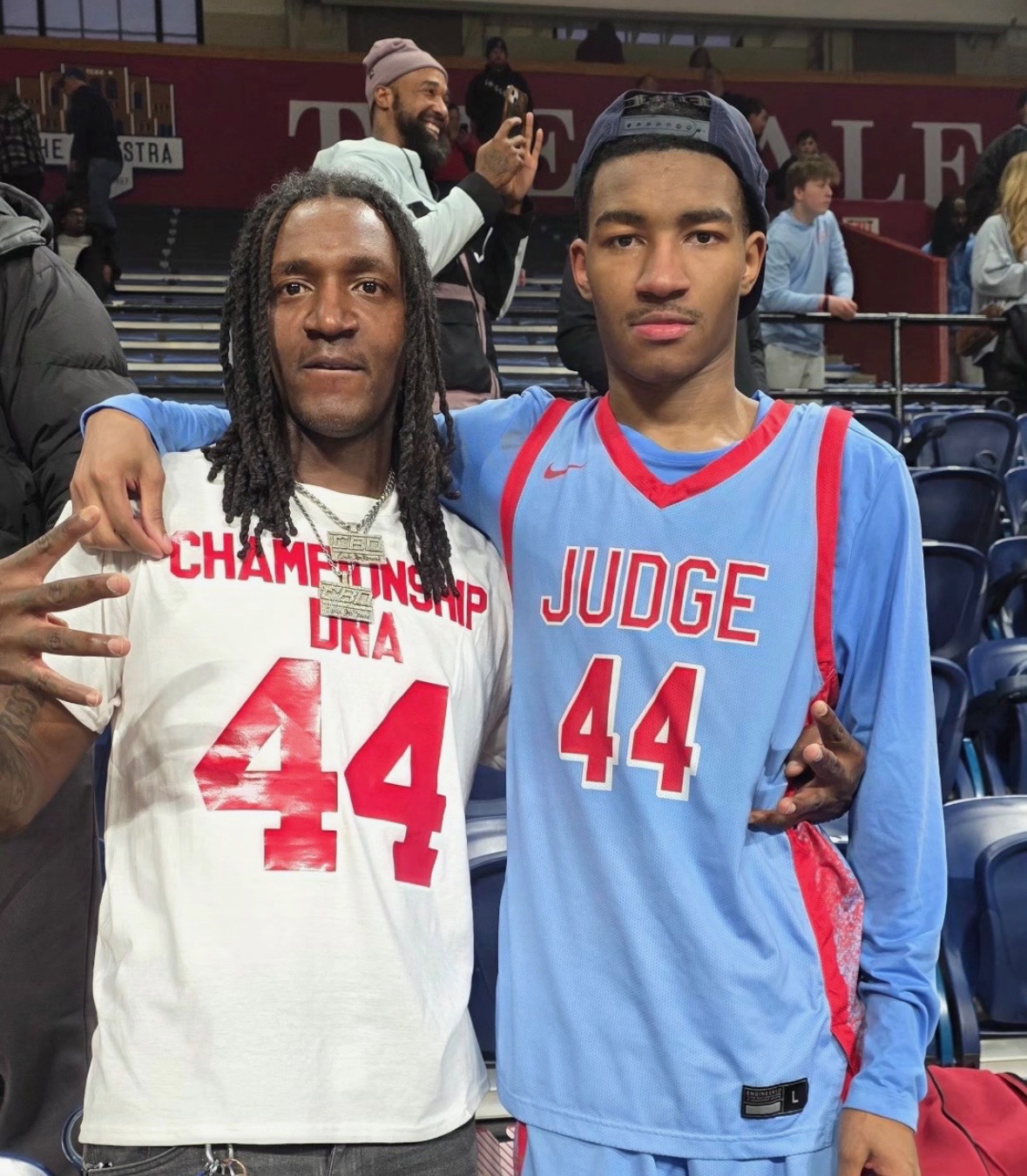
Basketball has also been the focal point of him and his dad’s relationship. This past year, D.J. Rivera got to watch his son win back-to-back Catholic League championships with Father Judge, a feat he once achieved 20 years ago with Neumann Goretti.
Both father and son left their respective high schools as the program’s all-time leading scorer.
After Judge won the crown inside a packed Palestra this past February, Rivera surprised his son with a shirt that read on the back, “20 years apart same heart.”
“When my career came to an end, I got to watch his, so it’s like the game never left,” said Rivera, who will graduate from the Philadelphia Fire Academy in three weeks. “That’s something that brings me and him together. … It’s something we can enjoy together because I both know we love the sport.
“Basketball has done a lot for us. It’s just a great feeling to be able to continue that and watch his time be here now. Soon enough, he’ll be playing in the Rumph as a professional.”
The questions that cut to the heart of the horrible hazing incidents within Cheltenham High School’s football program are the same questions that everyone always asks in these situations: Where were the adults? Who allowed this behavior to happen? How did the chop-busting and rites of passage that have long been intrinsic to sports escalate to the point that four coaches, including former head coach Terence Tolbert, and six players have been indicted for two alleged assaults that took place in the team’s locker room?
Even a glance at the details is enough to turn your stomach. Players — as many as 19 of them — allegedly held down a 15-year-old sophomore member of the team, stepped on his chest and groin with their cleats-clad feet, and tried to poke a broomstick into his butt. The coaches traded inculpating texts about it, according to Montgomery County District Attorney Kevin Steele. The Cheltenham School District canceled the football team’s season last year and again this year. Parents, many of whom reportedly had warned the district against hiring Tolbert in the first place, are angry. And everyone, inside the program and out, is left wondering how in the hell we got here.
A less egregious incident, in the Central Bucks High School West football program in 2014, is instructive here. In that situation, a preseason initiation ritual progressed each year from giving players haircuts — sometimes in the shape of male or female genitalia — to licking mayonnaise off teammates’ nipples and groins to simulating sex with a stuffed toy pig to playing “Slap/Lick/Fondle,” a game that ended with underclassmen touching other players’ private parts.
The Central Bucks School District canceled West’s football season and removed its head coach, but what matters most is that the district acted before the hazing reached the same severity as what allegedly happened at Cheltenham. You’d think such an episode would have been a warning siren for coaches and athletic administrators throughout the region. But after a while, the siren goes silent or the people who need to hear it most go deaf, and vigilance wanes, and the pattern repeats itself.
It is easy and of course correct to lament that youth and high school sports too often have taken on an outsized and inappropriate importance for too many coaches and parents and athletes. But one of sports’ greatest benefits to young people is that it gives them a stake in something bigger than themselves, a stake in something that matters to them, and they learn to develop and modify actions and habits to preserve sports’ place in their lives.
Amid the C.B. West hazing story, for instance, Phil DiGiacomo, who was a star running back on two of the school’s state-championship teams in the late 1990s, told me that, when he played, the Bucks’ success served as an effective deterrent against bad behavior. Yes, Mike Pettine, the program’s legendary head coach, and his staff ruled with a measure of iron-fist discipline that likely wouldn’t fly today, and even those old-school coaching techniques and West’s on-field dominance didn’t prevent every instance of player misconduct. Still, DiGiacomo said, the athletes themselves knew that, just by suiting up for West, they were continuing a special tradition, and they stood to lose a chance to call themselves champions if they did something stupid or malicious. So most of them didn’t.
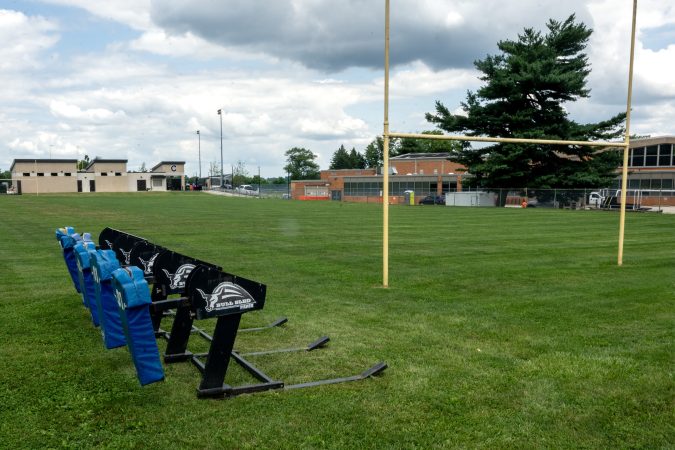
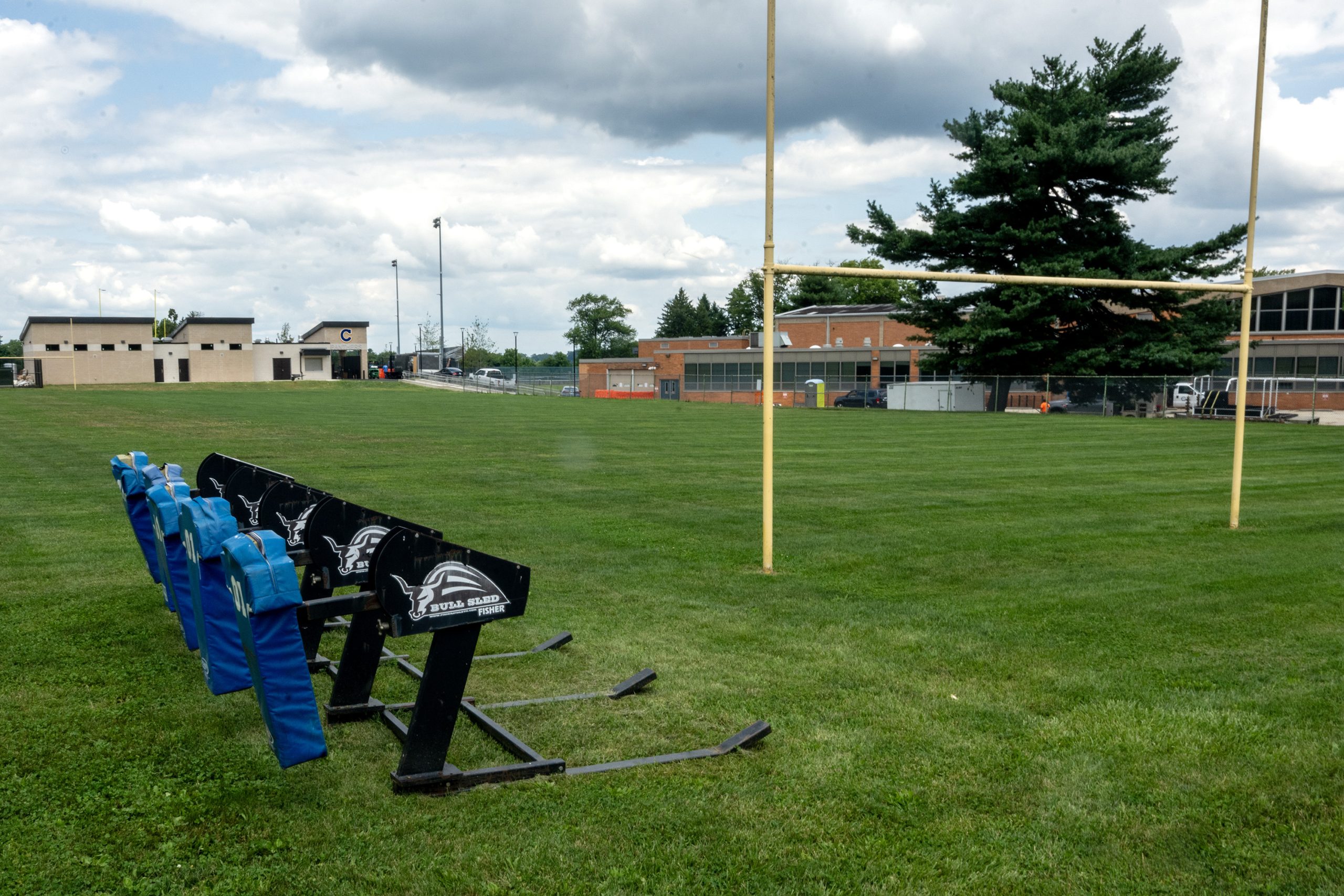
Cheltenham’s practice field photographed on July 29. The program hasn’t had a winning season since 2022.Tom Gralish / Staff Photographer
“When we were there, there was no hazing,” DiGiacomo said. “It’s kind of funny because if anyone ever got picked on, it got straightened out by an older guy real quick, mostly because we feared Pettine — that, and we were too damn tired to do anything else.”
A high school team doesn’t have to win 59 straight games and three consecutive state titles, as those West teams did, to be a point of pride for its players. It just has to provide them a rewarding experience, and they — and their coaches — have to feel that they have something to lose if it doesn’t. That element appears to have been missing entirely from the Cheltenham football program in recent years. In fact, it seems not to have been even a consideration for the school’s administration.
In his previous stint as a head coach, for Abington in 2023, Tolbert had won just one game. The school district decided not to renew him as coach, and sources have told The Inquirer that Tolbert’s toleration of a toxic atmosphere within and around the Abington program, including bullying by players and the use of slurs by coaches, were the driving forces behind his departure.
Cheltenham’s leadership either was unaware of these red flags or was willing to look past them, and for what? The program hasn’t had a winning season since 2022, but come on. Was Tolbert thought to be such a great coach that only he could restore the program to respectability? What qualities did he have that the people who hired him considered so essential? It’s obvious now that he and his assistants weren’t capable of doing the one thing any adult working in a school should put first: Keeping students safe.
The courage to take the right steps
The most infuriating aspect of stories such as this is the excuse that coaches can’t be held responsible for all their players’ mistakes. That’s true as far as it goes, but there are steps coaches can take to establish the right kind of culture, to model good behavior, to let the athletes in their care know what will be tolerated and what won’t.
One longtime area football coach told me Wednesday morning that he was fortunate to have two assistant coaches who were special-education teachers, who spent a lot of time around kids who had been the objects of ridicule. These coaches brought students from the school’s autism-support classes to be managers and statisticians and scorekeepers, and they let everyone know: These kids are part of this program. These kids are accepted members of this team. Treat them with respect.
Those are the kinds of gestures that seem small but can make a major difference, that mitigate the risks that coaches have accepted for decades. Coaching high school sports is a damn hard job, and it’s difficult because, at its best, it requires a measure of moral courage: To say no, to explain why, to stand by that decision. In this Cheltenham ugliness, we see once again what happens when that strength is lacking. The necessary guardrails fall away, if they were ever installed at all, and only after the damage comes to light does it become clear that a school and its students have been saddled with coaches and educators who aren’t willing to do the right thing or, worse, don’t even know what the right thing is.
Entering her final season at Northwestern, Ashley Sessa has accomplished nearly everything in her college field hockey career.
After winning the 2022 national championship as a freshman at North Carolina, the Schwenksville native transferred to Northwestern, where she helped lead the Wildcats to back-to-back national titles in 2024 and 2025.
She has earned several accolades and honors, including two Big Ten Offensive Player of the Year awards, two National Field Hockey Coaches Association All-America nods, and a spot on the 2025 NCAA All-Tournament team.
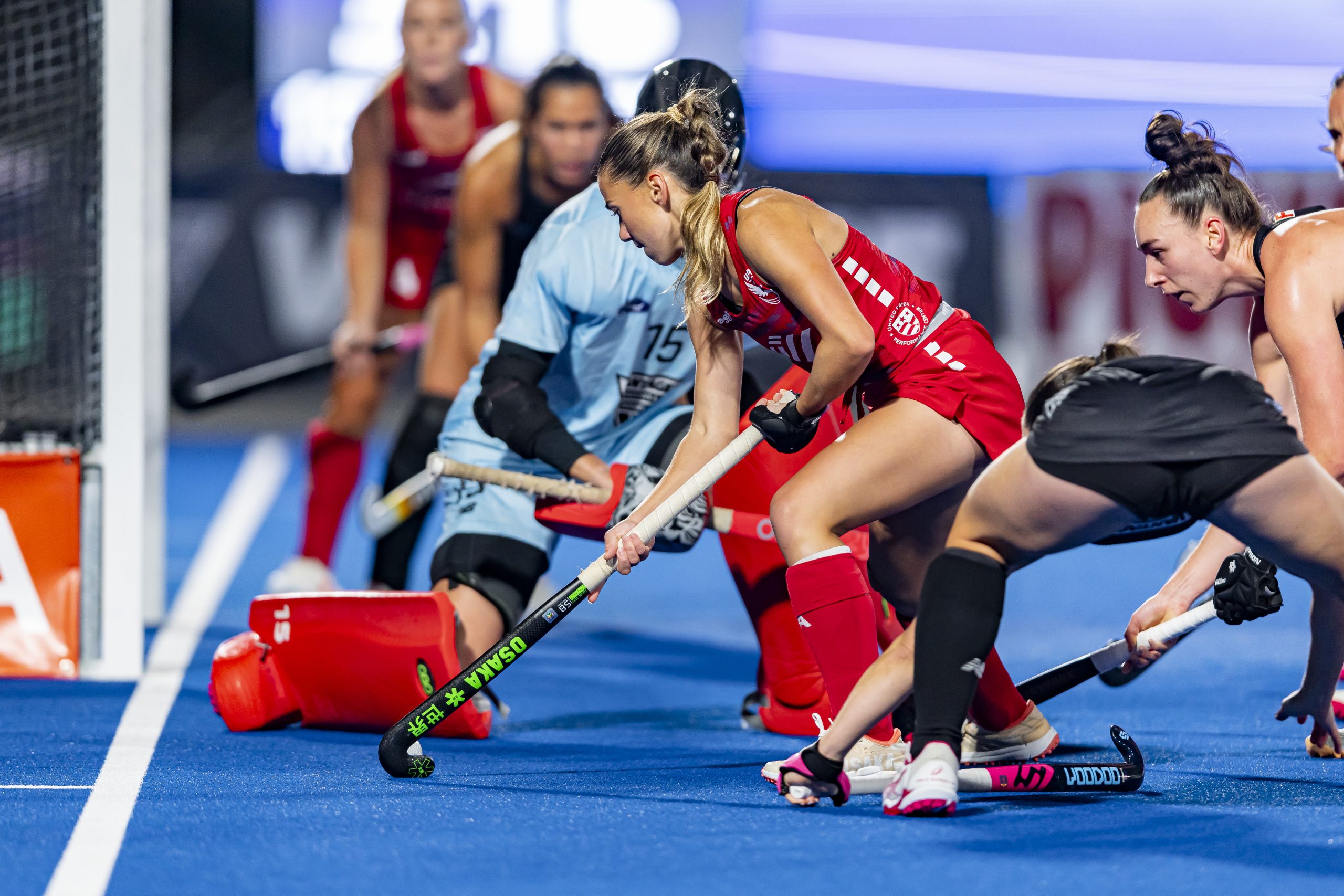
But now, Sessa, 22, is preparing for something new. She will make her first trip to the Women’s International Hockey Federation World Cup with the United States national team from Aug. 14 to 30.
Sessa will travel to Belgium with the rest of the U.S. team for the tournament, which is held every four years in between the Summer Olympics. The U.S. begins its group stage schedule with a match against two-time champion Argentina on Aug. 15 (11:30 a.m., watch.hockey).
Sessa has 62 appearances with Team USA, including at the 2024 Paris Olympics, but she says the World Cup presents a different challenge. The U.S. team left for Europe from Charlotte, where it trains, on Friday.
“We just introduced a few double sessions, two each day, and then [we are] scrimmaging each other on Saturdays,” Sessa said. “It’s been a hard few weeks and months leading up to it, but we’re really excited to see how things go at the World Cup.”
Team USA will look to top its third-place finish in 1994, and it has a large contingent of players from the Greater Philadelphia area. Nine of the 20 players on the roster are from Southeastern Pa., and one from Ocean City, N.J.
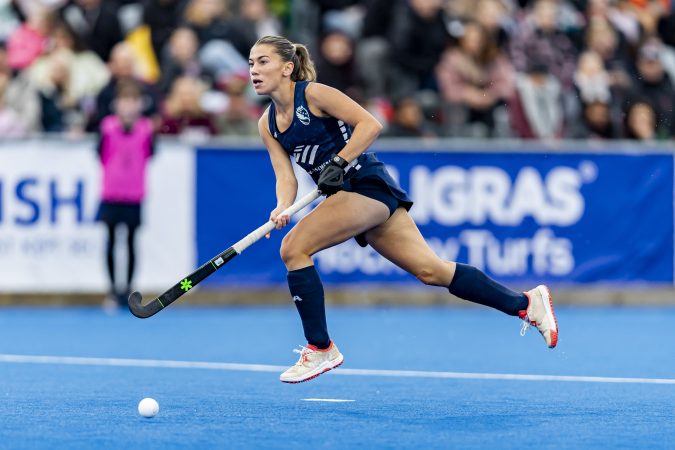
Ashley Sessa has made 62 appearances with Team USA, including the 2024 Paris Olympics.World Sport Pics / Simon Watts
Sessa, who played for Spring-Ford and Episcopal Academy in high school, said her familiarity with her teammates is a benefit. She’ll compete alongside current and former teammates from Northwestern in Hershey native Maddie Zimmer and Lebanon County native Lauren Wadas.
“We know each other pretty well,” Sessa said. “I’ve known a lot of the girls since I was at WC Eagles, [a Chester County-based youth club], since I was maybe like 11, 12 years old. We have a good connection, especially through schools, too … Just growing up with the girls and now playing in a World Cup with them is super amazing.”
The U.S. team medaled at an international competition this summer, earning a third-place finish at the FIH Nations Cup, hosted in New Zealand in June.
Sessa scored two goals, including a 46th-minute winner, to lift the U.S. over Chile in the third-place game. The forward was joint top scorer with six goals in the tournament and was named its best player.
Sessa hopes that the momentum the U.S. team built from its best-ever finish at the eight-team Nations Cup will carry forward to the 16-team World Cup.
“I think we have the determination to go out there and prove to each other that the USA is improving in field hockey,” Sessa said. “We have a great team and a great system that allows us to improve every time we step foot on the field.”
In addition to representing her country, Sessa is determined to make field hockey more visible around the U.S. Through her coaching venture, AS3, Sessa has hosted free youth field hockey clinics in Manayunk and Norristown.
Sessa handed out donated equipment at her clinics, and hopes to do more events across the Northeast and Midwest in the future to get more young athletes interested in the sport.
She said the idea to hold free clinics and equipment distributions came from her mother, Tracey Sessa, who grew up in Norristown. Sessa said she remembered playing against Norristown Area High School as a freshman at Spring-Ford, before transferring to Episcopal Academy.
“You could tell the girls loved the sport, it was just the fact that they didn’t have access to the newest stick or the newest shoes to help them be able to perform,” Sessa said. “I don’t think money should prohibit your sporting abilities or for you to be able to compete in something you love.”
In addition to hosting free clinics in the Philadelphia area, Sessa has hosted a talk and donated equipment to a youth field hockey organization in Charlotte, N.C. She hopes to hold an event in Chicago in the near future.
Her goal is to help draw attention to field hockey, which has a large international audience, but remains obscure in much of the U.S.
The sports’ viewership is growing, with an estimated 10 million Americans watching women’s field hockey during the 2024 Olympics, a 220% increase from the 2021 games.
Leading up to the 2028 Olympics in Los Angeles, the first Summer Games on American soil since 1996, Sessa wants to get more Americans interested in the sport.
“I think this is the most important time to do it, especially two years out,” Sessa said. “America is such a huge avenue for sports, and focusing on that, I think if they do it right, it could be a huge opportunity to grow the sport.”
Sessa tries to stay focused on her day-to-day with the national team and her upcoming senior season at Northwestern, but every once in a while, she lets her mind visualize what it would be like to play at the Olympics on home soil.
“If I have a bad practice day, I let myself think forward a bit and just say, ‘You know what, this is good, I’m learning something new,’” Sessa said. “This preparation will help me further in the future for the L.A. Games.
“Just having that mindset, for me, is really good. … It’s still so far away, and [I am] just doing every I can do to get better, not only as an athlete, but as a person as well, to help me grow, to hopefully be a part of those games.”
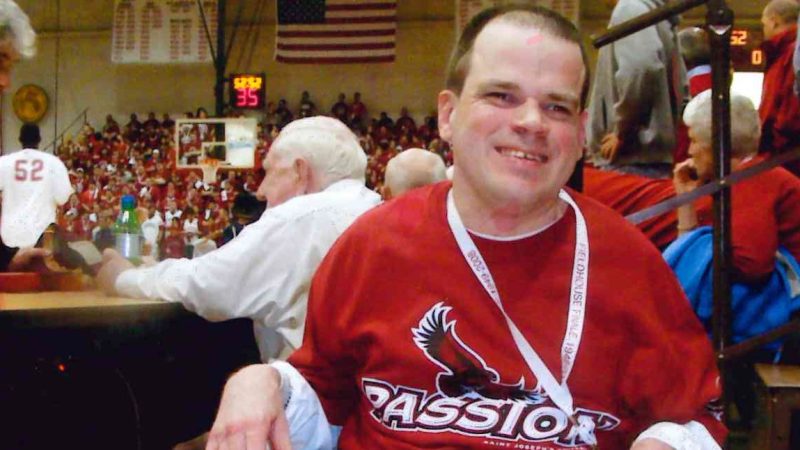
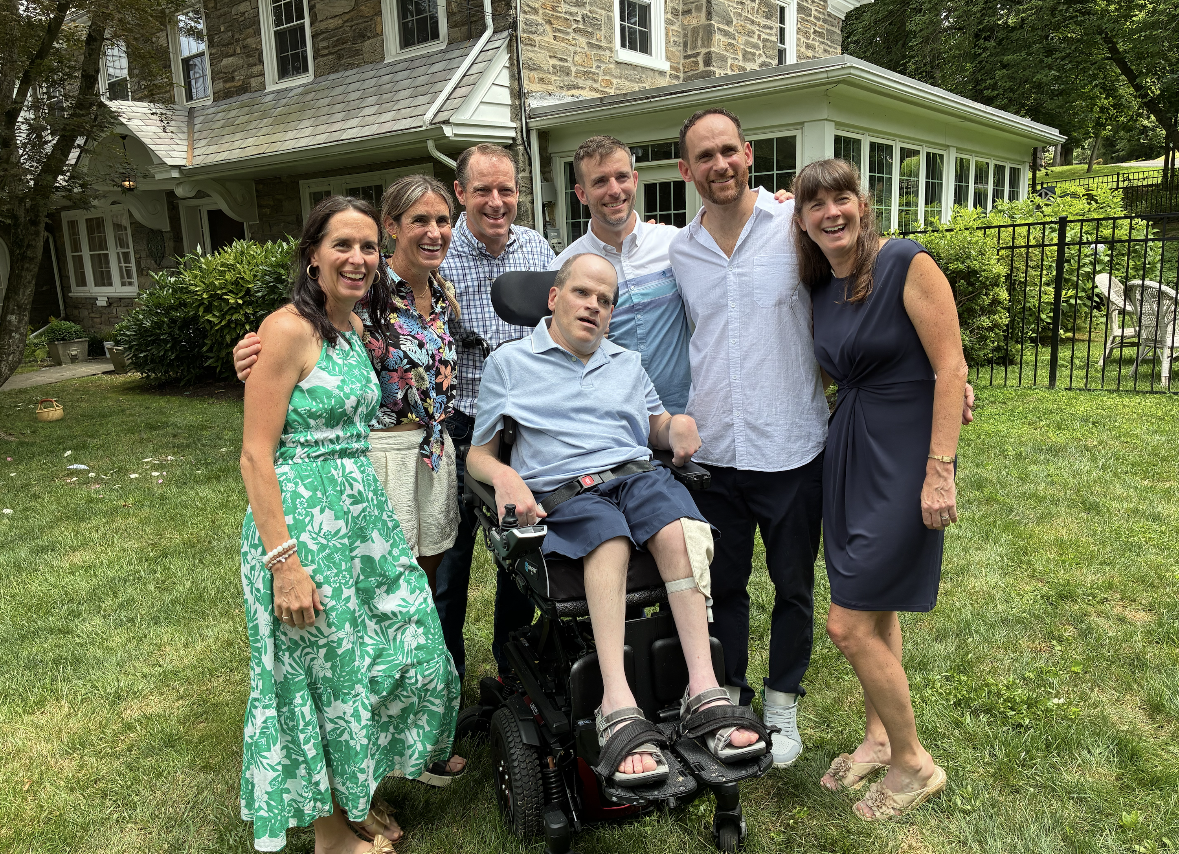
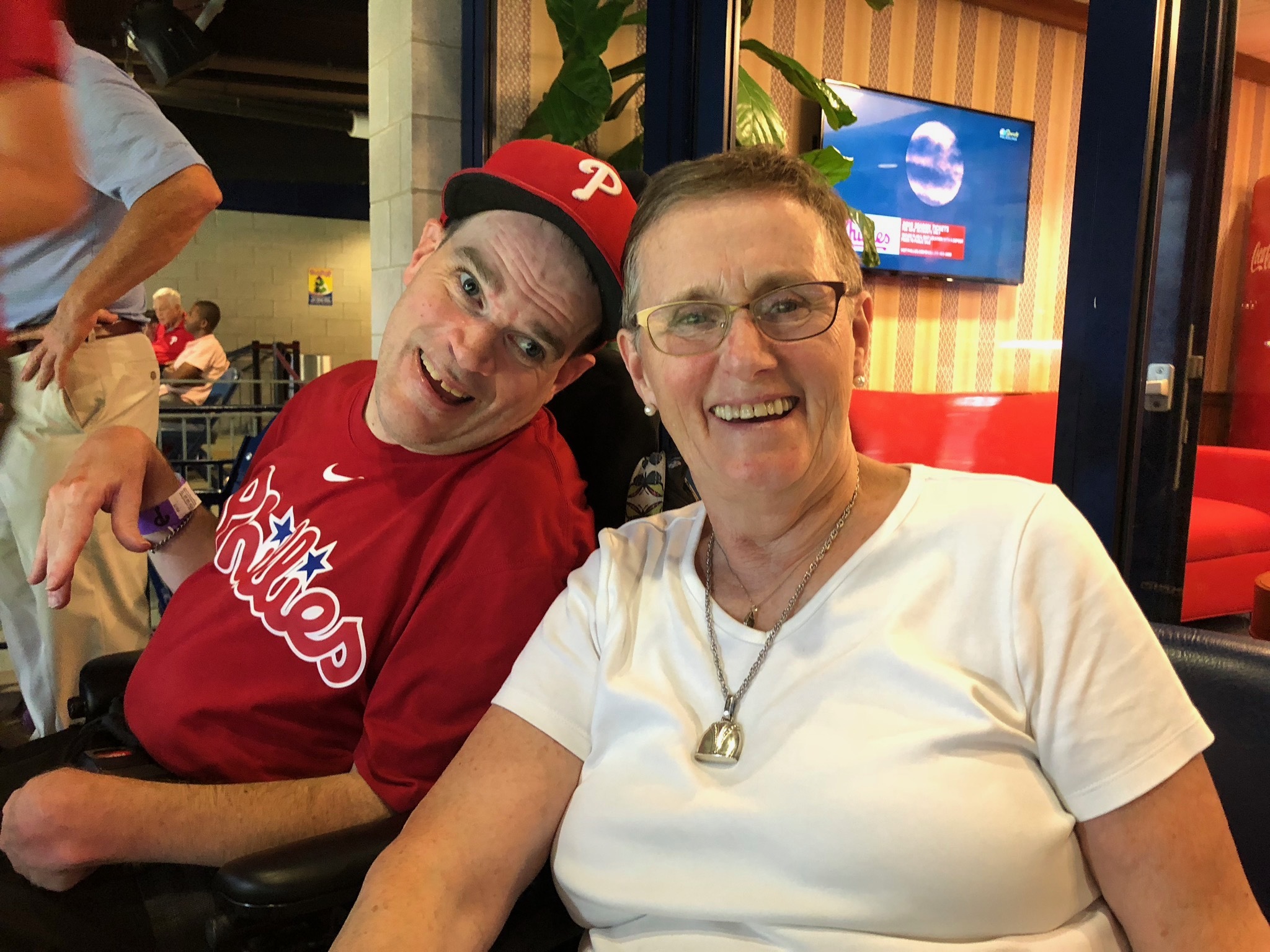
Chris DiJulia spent 56 years living as if he didn’t have cerebral palsy. He’d take “walks” in his wheelchair, down the block from his Havertown home. He was a regular passenger on SEPTA long before paratransit came to the suburbs in 1994.
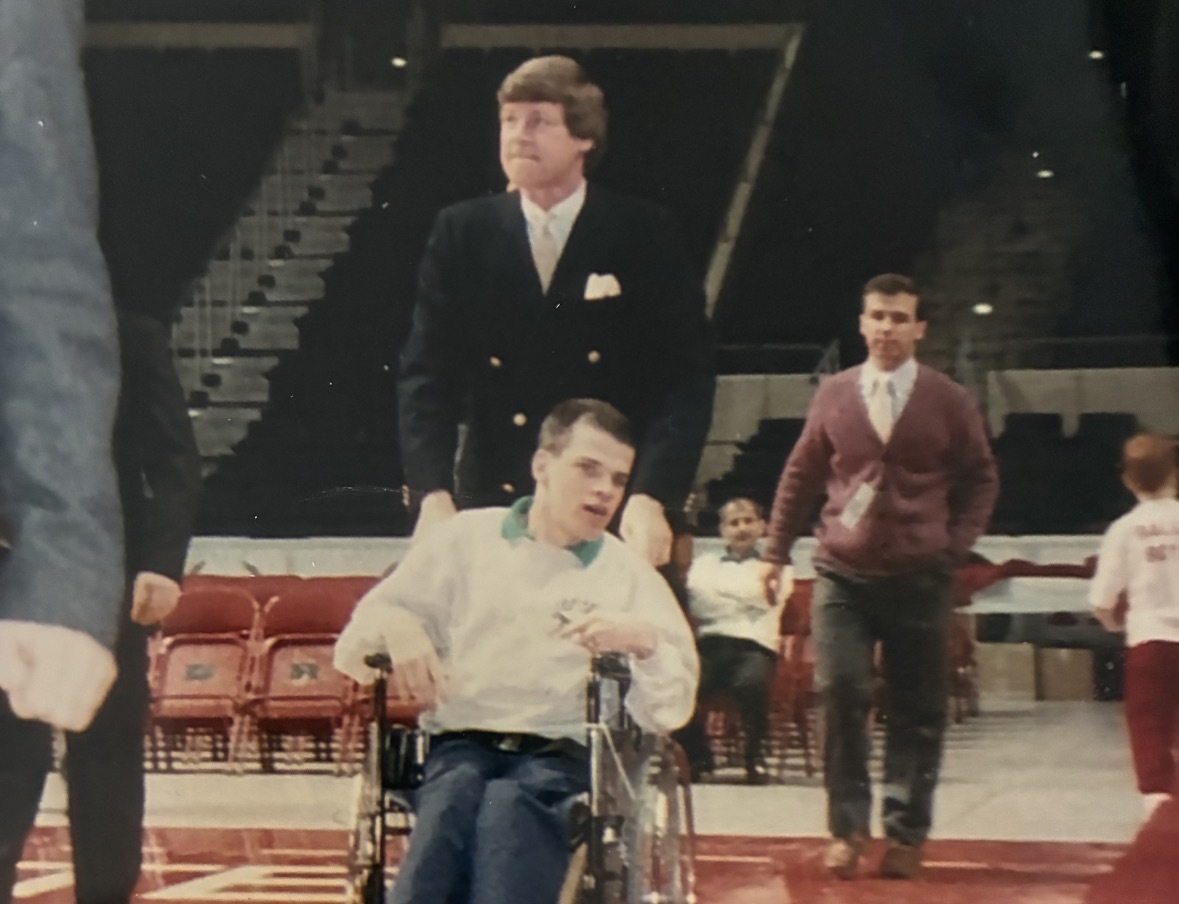
The avid St. Joseph’s basketball fan would often go to Hawk Hill to visit his father, Don, the longtime athletic director, or to watch men’s and women’s basketball practice.
But he’d also venture to Eagles training camp in West Chester, games at the Palestra, Villanova, Temple, all on his own, boldly traversing a city unequipped to take him anywhere.
Of course, this came with its challenges. A broken elevator or an unexpected flight of stairs could derail an entire trip. Sometimes, a bus driver would pretend not to see DiJulia waiting at his stop because they didn’t want the hassle.
But DiJulia was no fool, and certainly no pushover. He’d scribble down the license plate, call SEPTA’s customer service line, and report the vehicle.
“And probably said a thing or two about them as they drove by,” his father added.
This spirit was what made DiJulia special. His limbs were short and stiff, his speech was slow and slurred, but between the ears, he was just like anybody else, and expected to be treated as such.
He frequently signaled this through his humor. If the St. Joe’s fan was among a group of coaches trading barbs, he’d join in. DiJulia was not above yelling “brick” when a player missed a shot, or expanding that sentiment to, “you’re building a whole house!”
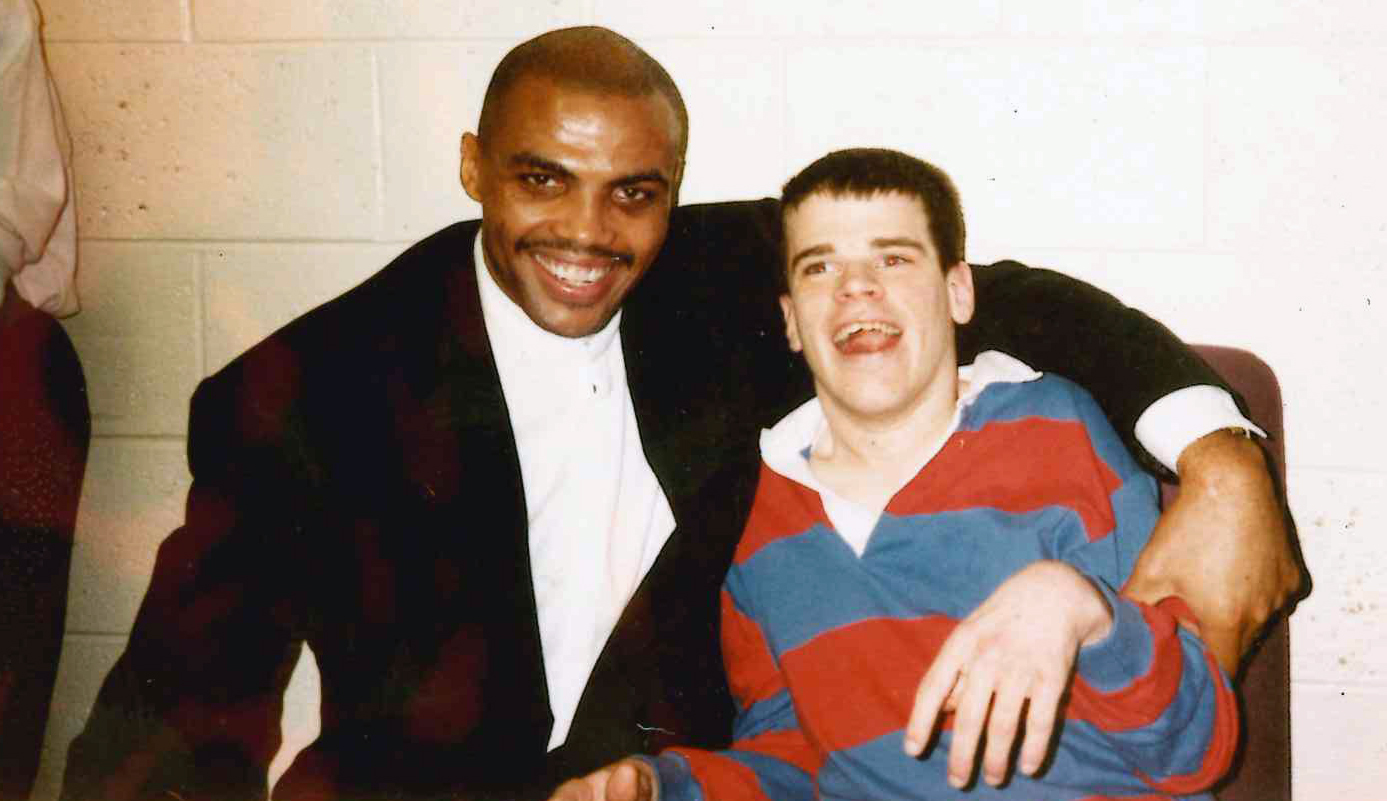
Charles Barkley (left) and Chris DiJulia became friends in the 1980s.provided by Saint Joseph's University
No one was exempt, not even NBA stars. Charles Barkley first met DiJulia in the late 1980s, at the start of his professional career. The Sixers practiced in the morning at St. Joe’s, and the teenager in the wheelchair was always there.
If Barkley had a poor showing, DiJulia would be quick to point it out.
“When I had hair, you never played bad and [went] to a Black barbershop,” Barkley said last week. “You never played bad and [went to] see Chris DiJulia the next morning. You know something bad is going to happen.”
DiJulia could’ve lived a smaller, less-adventurous life in Havertown, and no would have blamed him. But he chose to immerse himself in the world of Philadelphia sports, with all its eccentricities and quirks, and fit right in.
Now, that world is mourning his absence. On July 27, DiJulia died of natural causes stemming from cerebral palsy. The outpouring of support has been immense and wide-ranging.
The DiJulia family has heard from former St. Joe’s basketball players, softball players, field hockey players. Broadcasters and coaches have reached out, many of whom are no longer in the Philadelphia market.
On Thursday morning, Phil Martelli, another close friend of DiJulia’s, texted Delonte West. The former Hawks guard has long struggled with substance abuse and homelessness, but has been sober for the past 190 days.
Phil Martelli (right) was among those on Hawk Hill who drew endless inspiration from Chris DiJulia.provided by Saint Joseph's University
He asked Martelli to relay a message.
“Please send my condolences for Chris,” West said. “[He] was my brother, I carry him in spirit, he used to always have the right words and smile for me.”
A public funeral will be held on Aug. 12. The family is expecting a big crowd. Some will travel hundreds of miles, all to support a man who would do anything to support them.
Pushing through the pain
DiJulia was born in Connecticut in 1969. At first, his parents thought he was healthy; it wasn’t until the baby was baptized that a family member with a medical background noticed his head was oversized.
Doctors diagnosed him with cerebral palsy, and he underwent surgery at three weeks old (the first of over 20 surgeries throughout his lifetime).
Even as an infant, Chris radiated joy, with a big smile and bright blue eyes. Pat DiJulia knew her son had obstacles ahead, but when she’d look at his face, full of expression, she could tell he understood what she was saying.
Don was an assistant college basketball coach at Fairfield at the time. A few years later, when he was hired by George Washington, the family moved to Virginia.
Chris DiJulia (center, with longtime Phillies broadcaster Harry Kalas) developed a love of sports at a young age.provided by Saint Joseph's University
In 1973, he accepted an assistant coaching job at American. Chris was approaching pre-school age, but local options were limited.
The boy would need physical, occupational and speech therapy. The Americans with Disabilities Act was17 years from becoming law, and most schools didn’t provide those kinds of services yet.
So, the DiJulias were directed to three boarding schools on the East Coast. The one closest to them, in Virginia, was more like an institution; instead of catering to a specific population, it housed students with a number of physical and mental disabilities.
They chose to send Chris to Philadelphia instead, to the HMS School for Children with Cerebral Palsy. Both parents had family in the area who could visit him. Don started looking for work there, which is how he ended up becoming the St. Joe’s athletic director in 1976.
It was at HMS that Chris found his love for Philadelphia sports. Many staff members were Phillies fans and began to watch games with him. He quickly developed a talent for critiquing the local ball club (one that would serve him for the rest of his life).
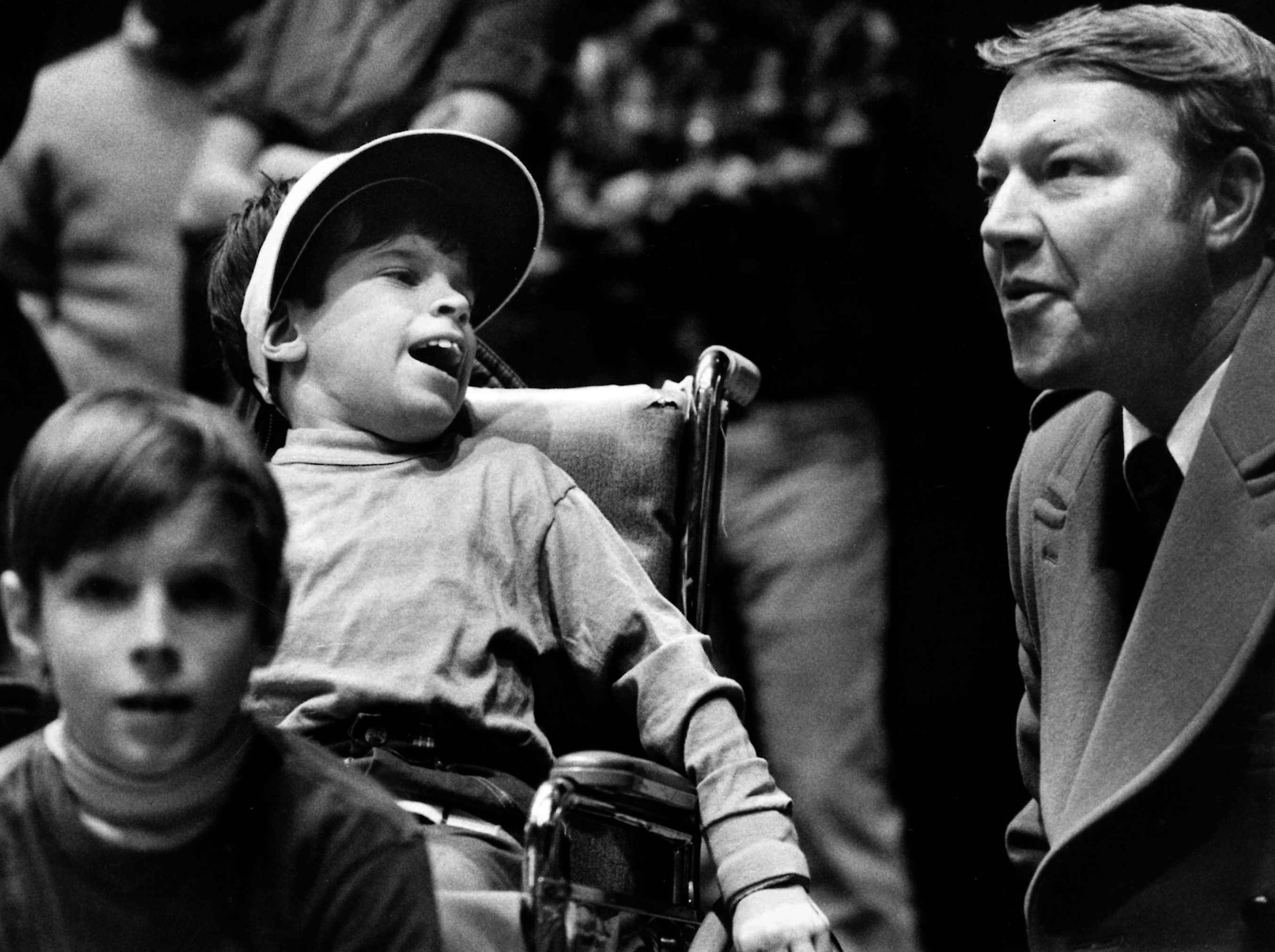
The younger DiJulia would spend his weekends at Alumni Memorial Fieldhouse and the St. Joe’s athletic offices. He did not do so quietly. Women’s basketball coach Jim Foster said the 9-year-old would routinely bust into his office, so much so that he joked he was going to “need a new doorway.”
The family returned to Connecticut in 1984, when Don was named commissioner of the Metro Atlantic Athletic Conference. But they couldn’t stay away from Hawk Hill, and came back in 1988, after Don was re-hired as athletic director, a job he’d keep for the next 30 years before retiring.
The DiJulia siblings were raised by their parents, Don and Pat, to stick together.provided by Kath DiJulia Cloran
By this point, Chris was a young man, brimming with confidence. This was due in large part to his upbringing. He was one of seven children, and Pat and Don treated him no different than the others.
The family would help Chris where he needed it, but always encouraged him to be independent. If he could lift his arms and put his shirt on with some minor assistance, then he would do it.
If he could shuffle his feet from the wheelchair to the bed, as someone hoisted him up, then he would do that, too.
“He was one of the seven,” his sister, Kath Cloran, said. “And yes, he needed extra care, but he was held to the same standards as all of us.
“He never wanted to be special. He just wanted to fit in and do what all of us did, really, and just live as regular a life as he possibly could.”
Transportation was integral to this. Don and Pat would map out a route for their son before each trip, making sure he was familiar with every curb and stair.
Some of these trips were laborious. To get to his technical school in Norristown, for example, Chris would travel a half mile on Haverford Road, to a platform for a high-speed rail.
Chris DiJulia (with his mother Pat) would stop at nothing to be close to the Philly sports scene.provided by The DiJulia Family
When he arrived at Norristown Transit Center, he’d take an elevator to the street level (if the elevator was working, which was a big if) and “walk” a few more blocks to school.
Despite any setbacks, the process was empowering. And paratransit made it even easier. Before long, Chris could travel all over the city, which meant ample trips to St. Joe’s and elsewhere.
Jim Lynam, the Sixers’ former head coach and DiJulia’s uncle, said it wouldn’t be unusual for his nephew to attend Sixers practice in the morning, St. Joe’s men’s basketball practice in the afternoon, and women’s basketball practice at night.
This was how he met Barkley.
The NBA star quickly realized DiJulia was able — and willing — to spar. So, Barkley and a few of his teammates, Rick Mahorn and Manute Bol, started going back and forth with him.
“Some fans, they’re just a-holes,” Barkley said. “They’re just mean. But the way he said something and just started laughing immediately, it took all the sting away.”
He added: “I literally met this guy 1,000 times, because he was always at practice. And I think it gave him joy. It gave us joy, but I think it really gave him joy, too.”
‘People just loved him’
DiJulia became omnipresent in Philadelphia basketball circles. When he wasn’t at St. Joe’s, he’d be at home, on the phone, usually with a coach.
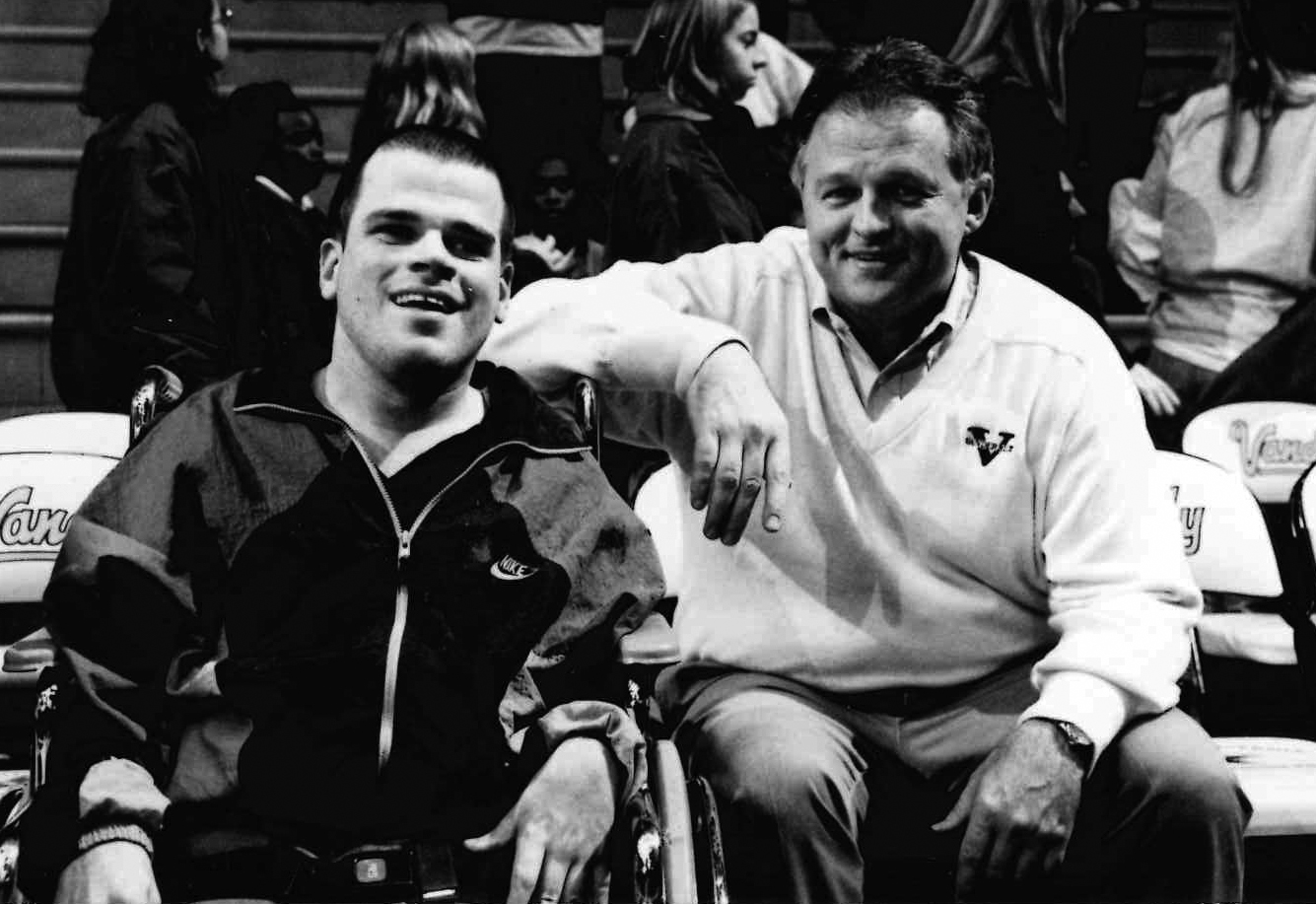
In the late 1980s, Foster invited him to sit on the bench during women’s basketball games (a tradition that continued after Cindy Griffin took over the program).
Chris DiJulia’s friendship with St. Joe’s women’s basketball coach Jim Foster (right) continued after Foster moved on to Vanderbilt.provided by Saint Joseph's University
The coach and his de facto assistant created a pre-game routine. After Foster gave his initial speech, he’d turn to DiJulia, who would share a few words.
“And then he would say, ‘But what it really comes down to,’ and he’d point to his heart,” St. Joe’s Hall of Famer Katie Gardler said. “And then he would point to his head.
“And you looked at all your teammates, and you’re like, ‘We’re doing this for him. Because he can’t get out there. We’re doing this for him.’”
DiJulia soon expanded his network beyond Hawk Hill, attending the NCAA and Atlantic 10 tournaments, among other events. If a coach left Philadelphia, he’d follow their careers, often traveling to go see them.
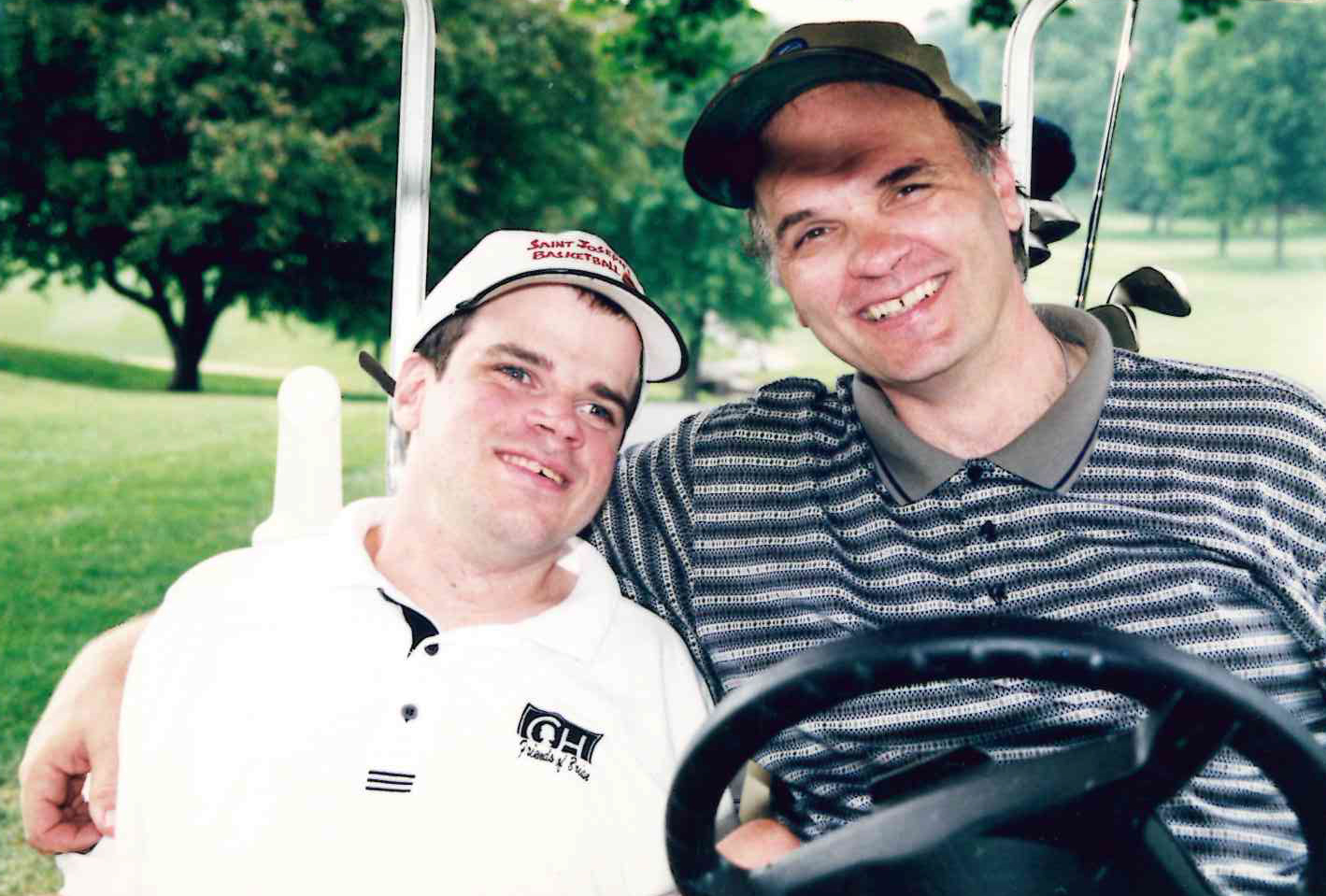
From the 1990s to the 2020s, DiJulia flew to Vanderbilt, Ohio State and Chattanooga to visit Foster, and drove to Michigan with his father to visit Martelli. Every year, he’d trek to Burlington to see Tom Brennan, the men’s basketball coach at the University of Vermont.
Brennan was among his closest friends. They first met in the 1970s, when the coach was assisting Rollie Massimino at Villanova. Brennan was hired by Yale in 1982, overlapping with DiJulia in Connecticut, which brought them even closer.
The two men discovered that they had a similar sense of humor; or as Pat put it, were “both crazy.” Games at Yale eventually led to daily phone calls, which led to trips to Vermont. In late November 2001, DiJulia visited Brennan when Cleveland State was in town, led by Massimino.
A Philadelphia jewel !! Chris DiJulia was as authentic and loyal as they come . An amazing man and a life full of inspiring others !! Love to the DiJulia family . pic.twitter.com/52X7Wglvvb
After the game, they got dinner with a few other coaches and family members. At one point, DiJulia asked Massimino a question that silenced the entire room.
“He said, ‘Rollie,’” Brennan recalled. “And back then, nobody called him Rollie. It was ‘Coach Mass.’”
The head coach turned to DiJulia, with an air of incredulity.
“Rollie?” Massimino said. “Rollie???”
The St. Joe’s fan grinned.
“That’s your name, ain’t it?”
DiJulia was a fixture at the University of Vermont. Every time he visited, he’d sit on the bench, right next to Brennan, tasked with keeping track of timeouts. This didn’t always go according to plan.
In February 1991, Vermont played at Delaware. It was a close game in the final minutes. Vermont was down three with the ball. Brennan turned to DiJulia and asked if they had any timeouts.
He said yes, but had counted incorrectly. Vermont got a technical foul. Delaware made one of two free throws, took possession of the ball, and won the game.
“The fun they’ve had with that over the years…” said Don.
Chris DiJulia and one of his best friends, Tom Brennan.Provided by the DiJulia family
Chris was also a regular on Brennan’s sports talk radio show on WCPV-FM. One time, he got the coach out of a parking ticket, because a police officer recognized DiJulia, and decided not to “mess up DeJules’ weekend.”
He was so beloved that in 2005, when Vermont was playing to reach the NCAA tournament, a booster chartered a plane to fly DiJulia to Burlington for the America East final. A gaggle of reporters met him at the airport.
After DiJulia returned home, Brennan checked in with his friend.
“I said, “Are you going to see St. Joe’s [in the NIT]?” Brennan recalled. “And he said, ‘Yeah… commercial.’ You got some balls. Commercial!
“But people just loved him. They loved him.”
DiJulia’s unflinching honesty was a big reason why. In the mid 1990s, amid a stretch of below-.500 seasons, he penned an angry letter to Phillies team president Dave Montgomery.
Chris DiJulia (with former Big 5 coach Fran Dunphy on the right and St. Joe’s women’s basketball coach Cindy Griffin on the left) was a massive Phillies fan.provided by Saint Joseph's University
Montgomery invited him to his box, with Brennan and Don DiJulia. The executive asked what he could do for the frustrated fan.
“And he said, ‘The first thing is to stop our team from sucking,’” Brennan recalled.
(Montgomery and DiJulia went on to have a very close relationship, one that improved when the Phillies ended their World Series drought in 2008.)
“He was always ready,” Brennan said. “You couldn’t throw him off his game, man.”
A spirit worth celebrating
DiJulia’s health declined over the past two years. He could no longer feed himself or travel. Sitting on the bench at St. Joe’s was not possible; neither was attending games at Citizens Bank Park.
But DiJulia adjusted, as he always did. He continued to work the phones, keeping in touch with coaches. He’d follow his favorite teams remotely, either on TV or an internet stream, rather than in person.
And through it all, he never lost his spirit. Last Easter, DiJulia’s sister, Tyl Sadoff, gifted him a T-shirt. On the front was a message he thought was hilarious: “Just call me Jesus, I keep coming back.”
Perhaps that is the lesson. Even in the darkest of moments, Chris DiJulia was able to laugh. And since his passing, loved ones have found that is the best way to honor him. To share their favorite stories, of their favorite guy, with a tinge of sadness, but a bellyful of joy.
Derek Hill has made several spectacular catches in the two months he’s roamed the outfield for the Phillies.
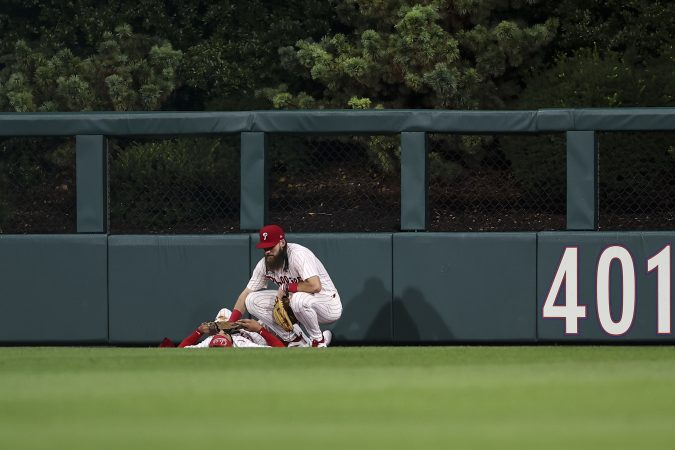
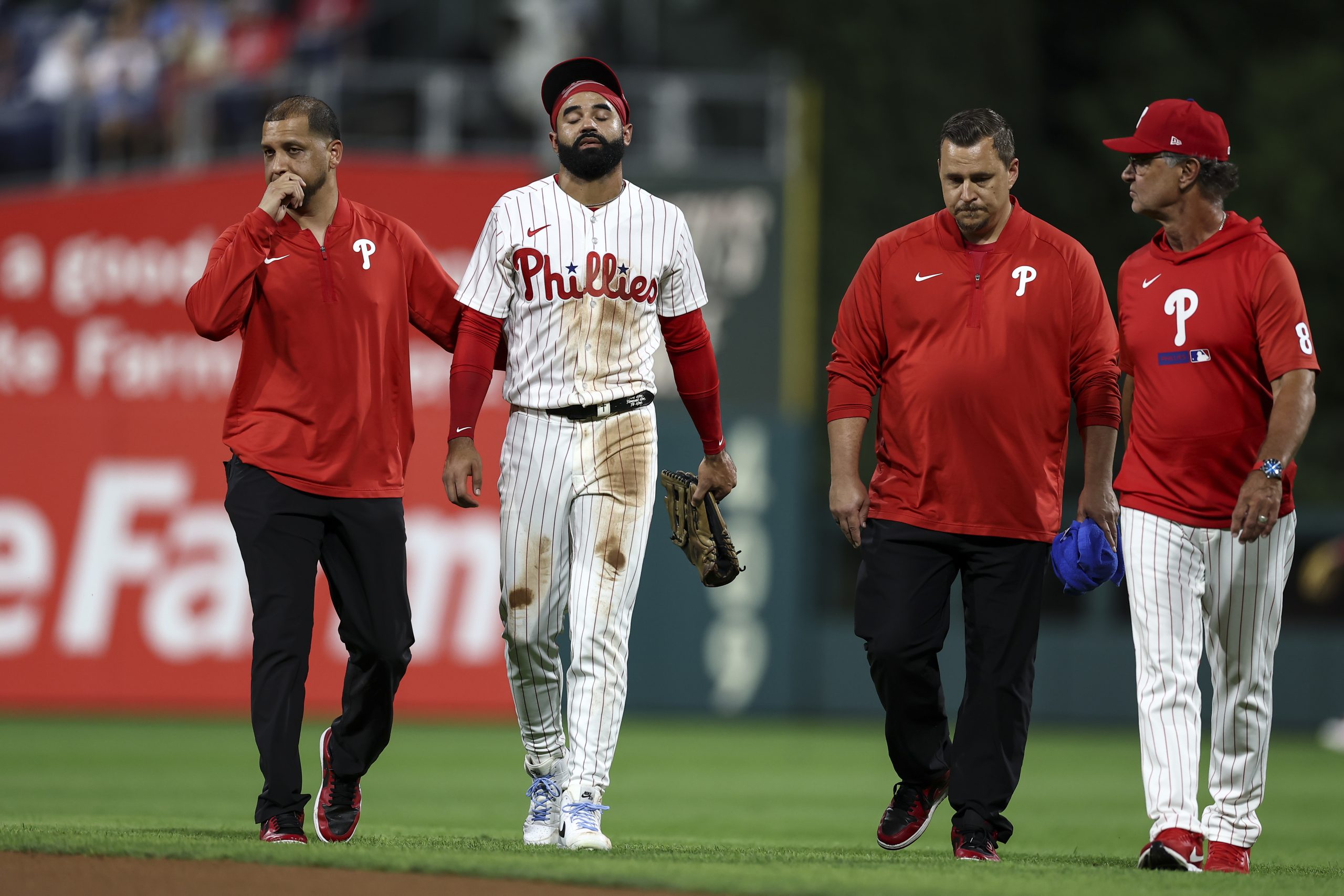
He robbed Juan Soto of a homer in June, made a highlight-reel dive in Detroit in July, and earlier this series snagged a ball while tumbling to the ground. When Nationals shortstop CJ Abrams hit a laser to center field in the 11th inning on Wednesday, Hill made another all-out effort. But this time, he couldn’t come up with it and crashed into the fence.
Hill remained on the ground at first, but was eventually helped to his feet and walked off under his own power.
Interim manager Don Mattingly called it a bruised shoulder, but added the Phillies were evaluating “everything” for the center fielder, including a potential head injury. Hill was not made available to media postgame.
“You hit a wall like that, it’s not too forgiving,” Mattingly said. “I think, give it a chance to evaluate overnight, see what happens, how it comes in tomorrow.”
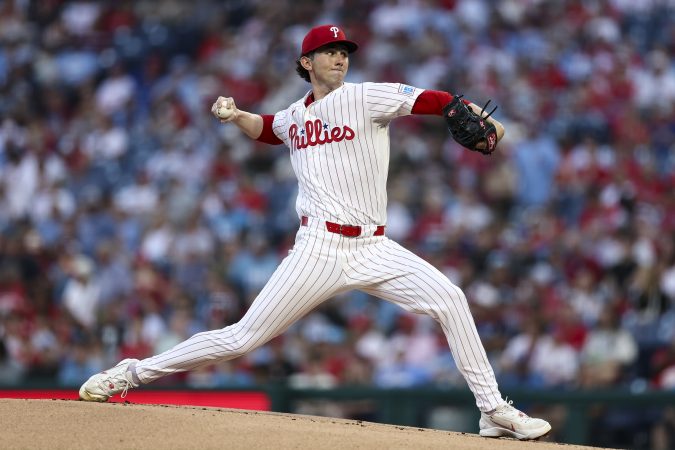
What unraveled into a six-run 11th inning sealed the Phillies’ 10-4 loss to Washington, but most pressing for the club is the status of Hill and starter Andrew Painter, who exited the game after four innings with tightness in his left hamstring. Both will be reevaluated Thursday.
Painter grimaced after falling off the mound during his delivery of a 3-2 pitch to Daylen Lile in the first. He initially remained in the game, with the Phillies checking on him after each inning. When he reported that his hamstring began to tighten up after the fourth inning, the staff decided to pull him.
Andrew Painter lasted just 63 pitches through four innings before being pulled with a left hamstring tightness.Monica Herndon / Staff Photographer
Painter said he has never had a hamstring injury before, but he was not concerned that it will turn into something serious.
“I’m not too worried about it,” Painter said. “I felt like I could have gone out there and still competed. They felt like they didn’t want to risk that, so that’s why we made that decision.”
With their lack of starting pitching depth, the Phillies cannot afford an injury to Painter. They did not add rotation help at Monday’s trade deadline, with president of baseball operations Dave Dombrowski citing Painter’s encouraging outing against the Orioles as one reason why.
“Really, the choice came: Do you end up getting a guy that’s a fifth starter that you don’t think is as good as your guy that you have now, and option the guy that you think is a better chance to win to help your depth, or do what we’re doing?” Dombrowski said Monday. “And we figured we do what we are doing.”
While Painter worked on his fastball in Lehigh Valley, the Phillies relied on Alan Rangel and a patchwork of bullpen games to cover the No. 5 spot in the order. It did not work. They have lost 13 consecutive games started by that rotation spot, a streak that includes Painter’s struggles before he was optioned on June 17.
Before Painter left the game, he threw just 63 pitches. He appeared to improve as the game went on. After giving up a run in the first on a hit batter and two singles, Painter held the Nationals off the scoreboard for the next three innings. He sidestepped a walk and another single, while striking out four. He tossed a 1-2-3 fourth inning, using just nine pitches.
“The changeup was really good. Something we’ve been building on,” Painter said. “Got some good swing and miss there. I feel like the command of it is getting better and better each time I go out there.”
With Painter’s outing cut short, the bullpen had to cover the next 21 outs as the back-and-forth game marched into extras. Tim Mayza, Orion Kerkering, and Jonathan Bowlan each delivered a scoreless inning.
Newly-acquired reliever Brooks Raley coughed up a 2-1 lead in the seventh inning. He surrendered a 404-foot homer to Brady House, followed by a double and a single to left field that scored another.
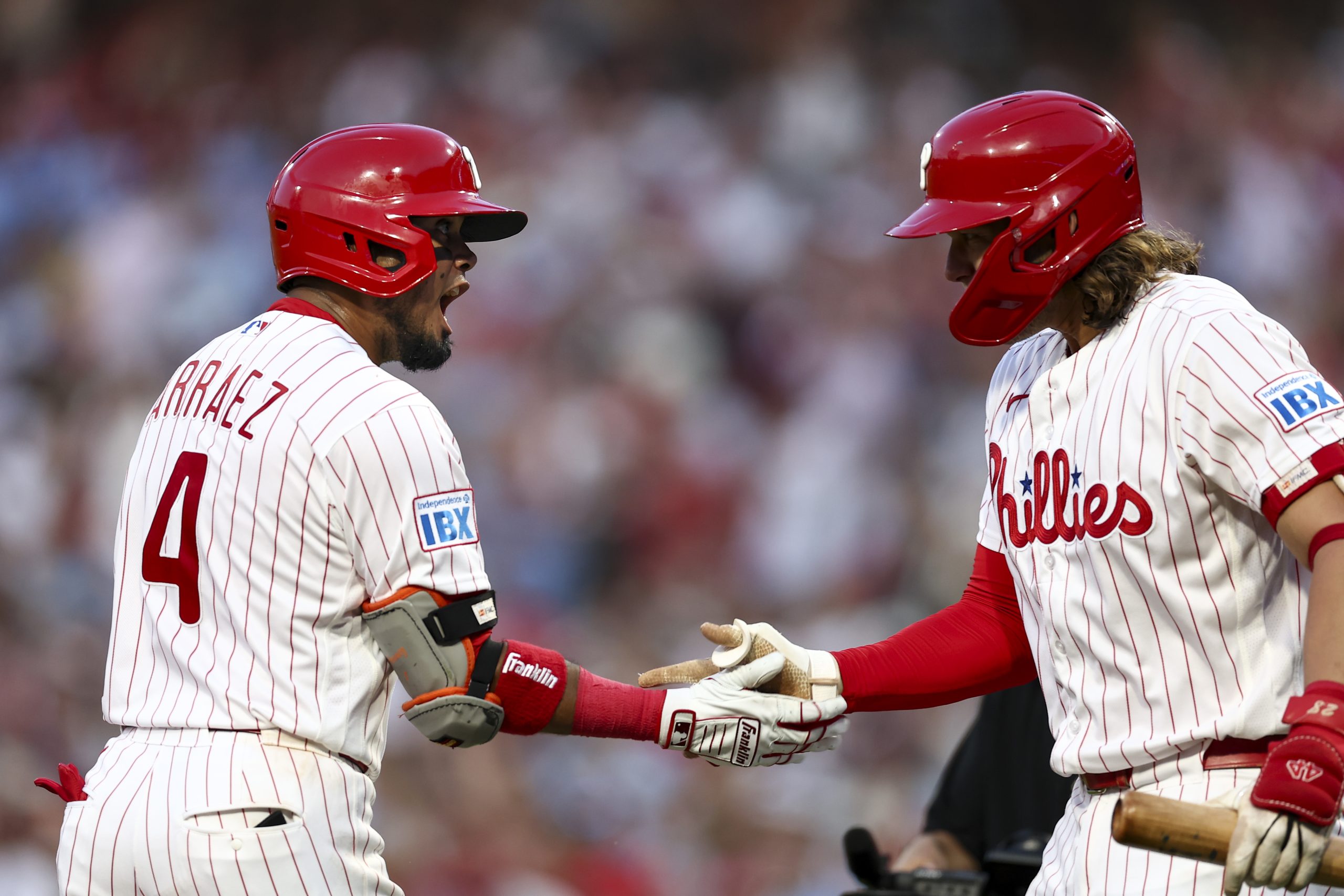
Luis Arraez (left) celebrates a second inning home run with Alec Bohm.Monica Herndon / Staff Photographer
The Phillies punched back. Cleanup hitter Luis Arraez had launched his fifth homer of the year in the second inning, but outside of that the Phillies generated most of their offense from the bottom half of the order. In the seventh, Alec Bohm worked a leadoff walk, advanced on a single from Brandon Marsh, and tied the game at 3-3 on Bryson Stott’s RBI single.
They had the chance to add more, loading the bases against Nationals reliever Tom Cosgrove, but Trea Turner flew out to right field to end the rally.
Closer Jhoan Duran pitched a scoreless ninth inning to give his team the chance to walk it off. When they came up short, José Alvarado entered for the 10th. After getting the first two outs, he completely lost the strike zone. He threw seven consecutive balls as he walked Andrés Chaparro and then Nasim Nuñez, forcing in a run as the Nationals took a 4-3 lead.
In the bottom of the inning, Turner hit a sacrifice fly to right field that Dylan Crews made a diving catch on, scoring Hill from third to tie the game once more. The Phillies put the winning run aboard when Bryce Harper drew a four-pitch walk.
With Arraez at the plate, the Phillies called for Harper to steal second, and he was thrown out to end the inning.
Mattingly said the reasoning behind the decision was to get Harper into scoring position for Arraez. Even with the possibility of the Nationals countering by intentionally walking Arraez, Mattingly said he felt comfortable with Bohm coming up to the plate in that situation.
“It’s still going to be a situation where we’re at Bohm and he’s going to need to get a hit,” Mattingly said. “We take a shot there, knowing that Luis is going to be there the next inning and he’ll lead off.”
By the time Arraez was back in the batter’s box, though, the game was already out of hand. Caleb Kilian had entered for the 11th and walked nine-hole hitter Jacob Young. That brought up Abrams, who drove in two runs with his triple to center.
Derek Hill is escorted by the Phillies’ training staff after crashing into the wall in the 11th.Monica Herndon / Staff Photographer
Nationals manager Blake Butera had emptied his bench, and without further options, he called on pitcher Miles Mikolas to pinch-hit next. He laid down a bunt that scored Abrams.
“I think the biggest the thing that hurt us the most there is really the guy walking, and then it puts Abrams in a spot where he gets to hit, we knew the pitcher was behind him,” Mattingly said. “They were out of players, so if we can get him out there, Abrams basically doesn’t swing the bat. But when you once you walk him, that’s the biggest problem there.”
By the time the Phillies secured the third out, Chase Shugart had replaced Kilian and the Nationals had scored six total runs in the frame. The Phillies’ offense went down in order to end it.
Phillies starter Andrew Painter was removed from his start against the Washington Nationals on Wednesday night with left hamstring tightness.
The Phillies said Painter will be evaluated further. He was amid an encouraging outing against the Nationals, which was cut short after just four innings and 63 pitches. After surrendering one run in the first inning on a hit batter and two singles, he seemed to settle in, preventing Washington from tacking on. Painter struck out four batters, two on his changeup and two with his fastball, and needed just nine pitches in the fourth inning. The Phillies went on to lose 10-4 in 11 innings.
The Phillies’ starting depth is paper-thin. While Painter had worked on his fastball in triple-A Lehigh Valley before being recalled last week, the club relied on Alan Rangel and a patchwork of bullpen games to fill the fifth spot in the rotation.
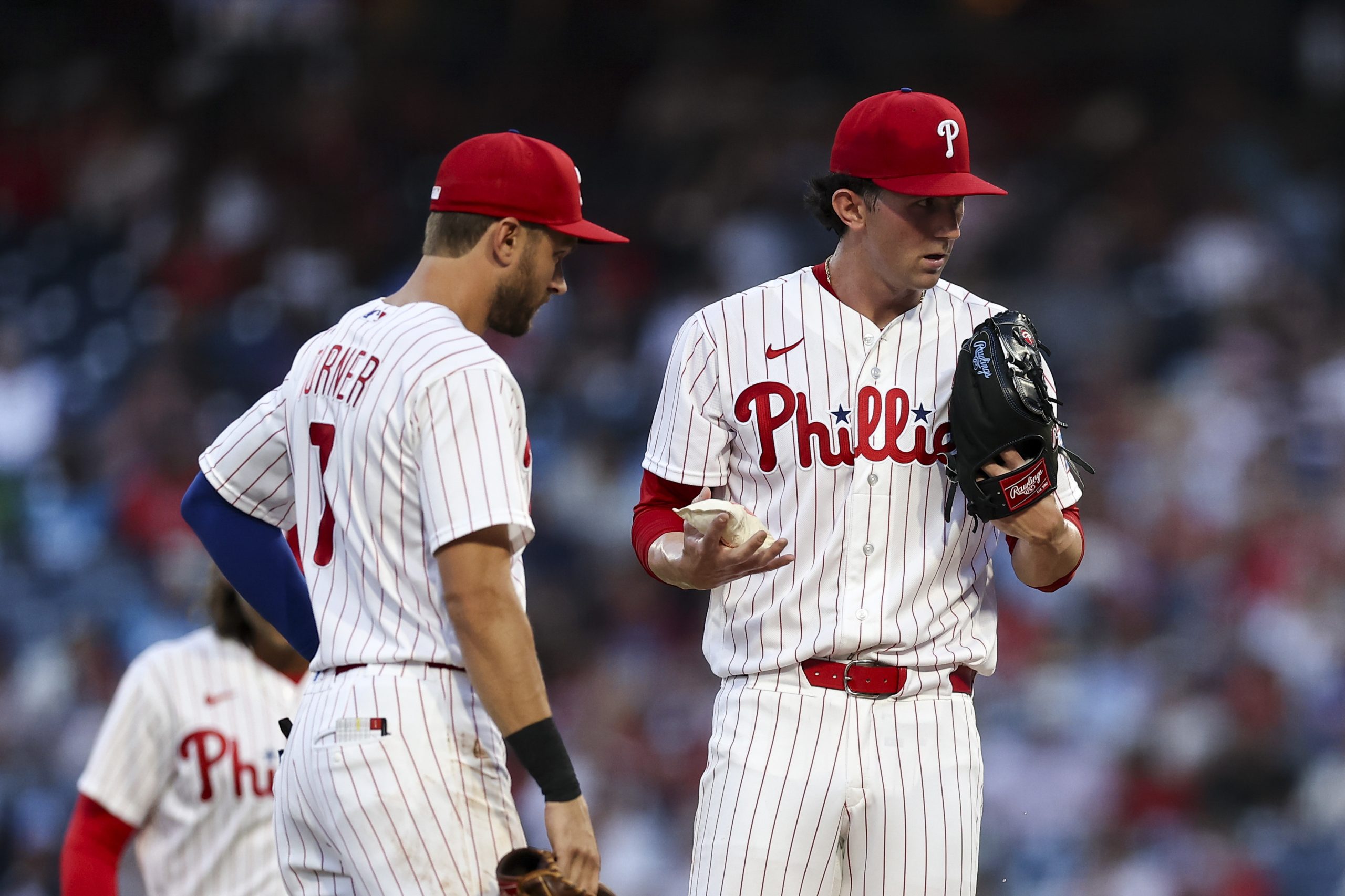
Trea Turner (left) visits Andrew Painter in the first inning. Painter left the game after the fourth inning.Monica Herndon / Staff Photographer
They opted not to trade for rotation help before Monday’s trade deadline. President of baseball operations Dave Dombrowski said the team was unwilling and unable to meet prices on the market for starting pitching.
“Really, the choice came: Do you end up getting a guy that’s a fifth starter that you don’t think is as good as your guy that you have now, and option the guy that you think is a better chance to win to help your depth, or do what we’re doing?” Dombrowski said Monday. “And we figured we do what we are doing.”
Stefon Diggs is signing with the Washington Commanders, a big addition at wide receiver to give quarterback Jayden Daniels and the offense a proven commodity who showed last season he can still be productive more than a decade into his NFL career.
The Commanders agreed with Diggs on a contract for this season, according to a person familiar with the agreement. The person spoke to The Associated Press on condition of anonymity Wednesday because the deal had not been announced.
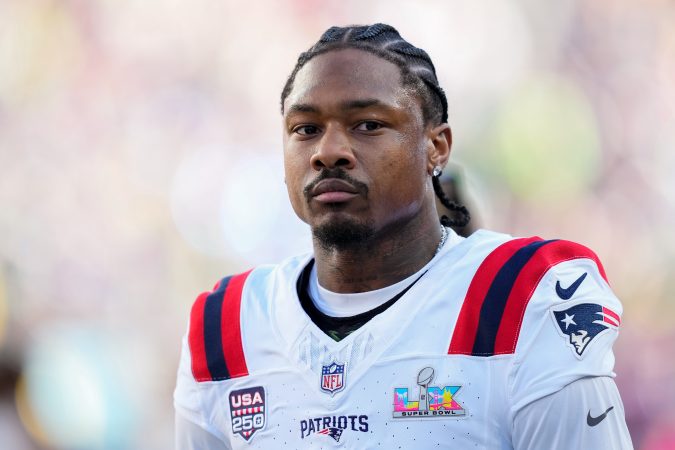
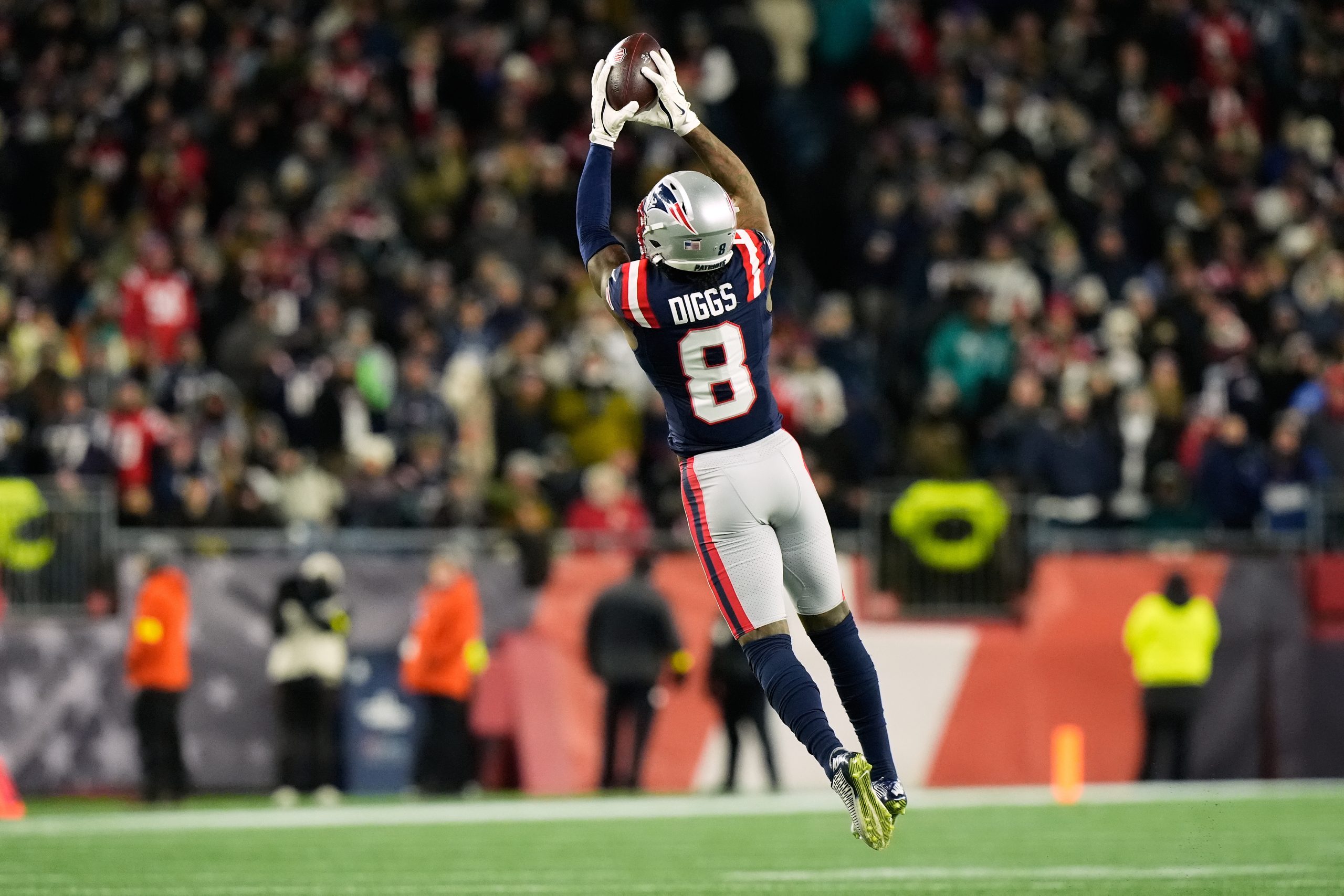
Diggs, a native of nearby Gaithersburg, Md., joins Washington for a 12th year in the league and reportedly can make up to $12 million. He spent last season with New England, making 99 catches for 1,123 yards and five touchdowns in 21 games, including the Patriots’ playoff run to the Super Bowl.
Stefon Diggs had 99 catches for 1,123 yards and five touchdowns in 21 games last season, including the Patriots’ playoff run to the Super Bowl.Robert F. Bukaty
New England released him in March, and the 32-year-old went unsigned in free agency while facing strangulation and other criminal charges in connection with a dispute with his former private chef. Diggs was found not guilty in May, and the NFL said in June that he wouldn’t face any discipline after a review determined there was not enough evidence to punish him under its personal conduct policy.
The Commanders had a hole at the position, and they are banking on Diggs filling it. The in-house options of Treylon Burks and Luke McCaffrey would have put Daniels in a tough spot and likely made No. 1 receiver McLaurin deal with plenty of double teams this coming season.
Signing Diggs could rule out going after Brandon Aiyuk, a friend of Daniels’ who is still under contract with San Francisco. Aiyuk said on social media in June that he would join Washington immediately if the 49ers released him.
Aiyuk remains on the reserve/left squad list out West, while Diggs is now in an NFC East that features receivers CeeDee Lamb and George Pickens with Dallas, DeVonta Smith with Philadelphia and Malik Nabers with the New York Giants.
Diggs previously played for Minnesota, Buffalo and Houston during a career that included him being an All-Pro selection in 2020, when he led all players with 127 catches and 1,535 yards. Since making his debut in 2015 after the Vikings took him in the fifth round of the draft that year, Diggs has 1,025 catches for 12,523 yards and 79 TDs in the regular season and playoffs combined.
That included the “Minneapolis Miracle” catch for Minnesota in the divisional round in January 2018. With 10 seconds left, Diggs leapt and evaded a tackle to score a 61-yard touchdown and beat New Orleans 29-24.
Stefon Diggs (left) will join his fifth team in the NFL.Greg M. Cooper
Off the field, it has been a more tumultuous ride, including getting fined more than $200,000 by the Vikings during his final season with them in 2019 for unexcused practice absences. Diggs was traded to Buffalo in March 2020.
Diggs led the Bills in receiving four seasons in a row, but sideline outbursts and cryptic social media messages were also part of his tenure before being traded to Houston in April 2024. A torn ACL ended his time with the Texans, and skipping a voluntary offseason workout got him off to a bumpy start with the Patriots before he turned out to be a reliable option for QB Drake Maye.
Cut in part because he was owed $20.6 million, Diggs now is teaming up with Daniels, who was taken one spot ahead of Maye when they were the No. 2 and 3 picks in the 2024 draft.
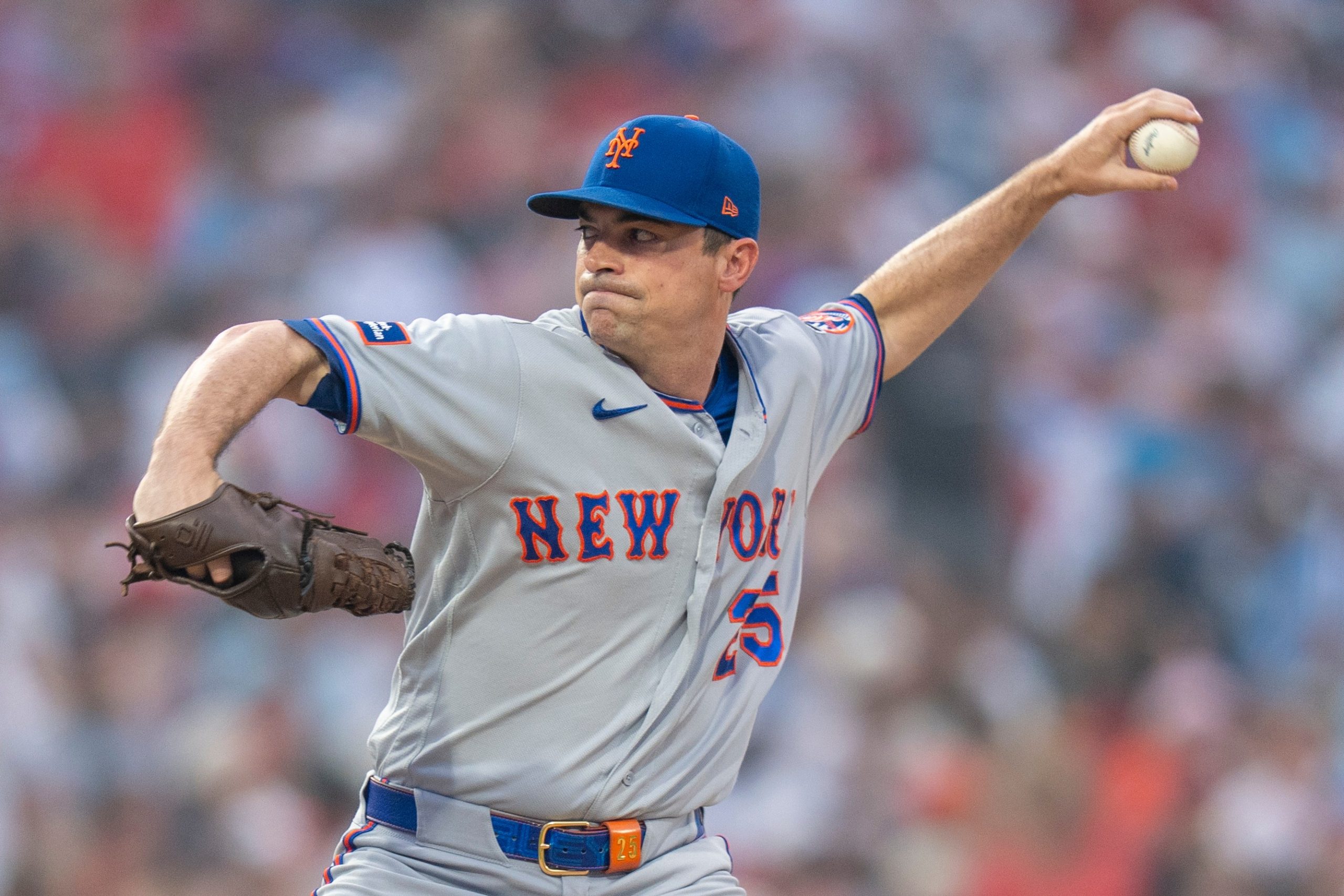
In an era of baseball where high velocity is prized — especially when it comes to relievers — Brooks Raley is a throwback.
The 38-year-old reliever, whom the Phillies acquired from divisional rival New York Mets at the trade deadline on Monday, has an average fastball velocity of 90.1 mph. It’s the lowest velocity of any reliever in the Phillies bullpen, a group that has Jhoan Duran at 100.3 mph at the high end.
But it works for him. Raley has sustained a 1.96 ERA in 41⅓ innings this year because he mixes and commands his pitches well. He throws his sweeper 37.8% of the time, with a cutter, sinker, and changeup rounding out his arsenal.
“Definitely the trend in the sport,” Raley said. “I think hitters will always tell you soft contact, limit damage, throwing strikes, I do a lot of those things well, and sometimes you just got to attack the weaknesses of the player, and I think I’m pretty good at that.”
The Phillies’ lefties have seen it firsthand. Kyle Schwarber is 0-for-10 in his career against Raley with four strikeouts. Bryce Harper is 2-for-9 with five strikeouts. Brandon Marsh is 0-for-7 with six strikeouts.
“Playing against these guys a lot, pretty familiar with the lineup, and excited to join them for a little while at least,” Raley said. “Really good staff, really good pitching staff, and just [looking for] any way to contribute.”
Brooks Raley has a 1.96 ERA in 45 appearances this season.Chris Szagola
It cost the Phillies two prospects — outfielder John Spikerman and right-hander Luke Gabrysh — to acquire Raley, a pending free agent. But he brings consistency to the left-handed side of the bullpen that has struggled this season.
“He’s a back-end guy,” interim manager Don Mattingly said. “It gives us another quality arm, gives us options. I’ve talked a little bit about that sixth inning, where we have trouble getting back to the back-end guys. So this just gives us more options.”
Raley was already familiar with Phillies pitching coach Caleb Cotham. They coincided with the Reds in 2020, where Cotham was director of pitching at the time.
“I enjoyed having him as a coach. And I thought he was kind of on the front end of what baseball is kind of evolving to, so I’m excited to work with that,” Raley said.
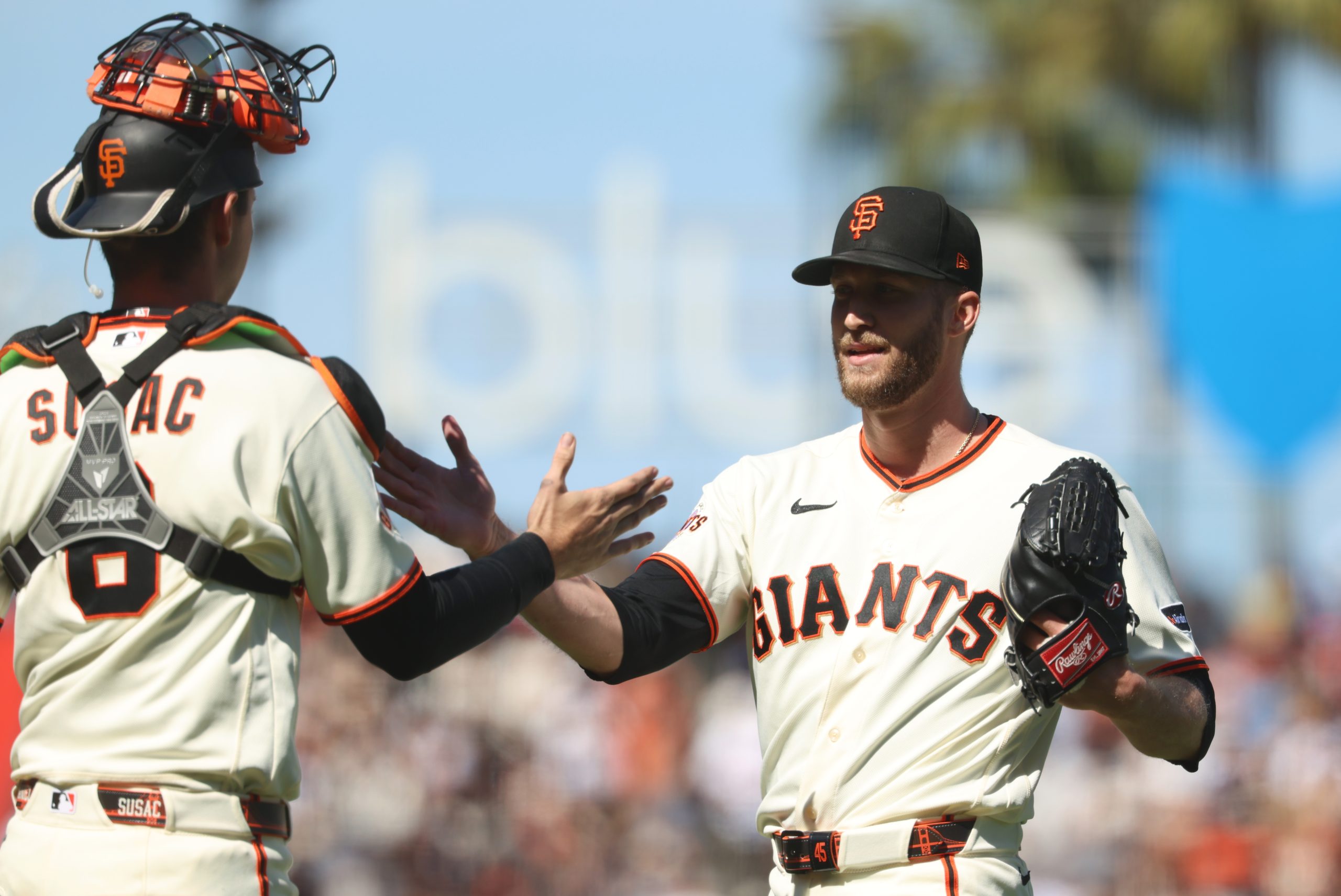
He’s not the only new relief addition. Caleb Kilian, a 29-year-old righty, was acquired from the Giants along with second baseman Luis Arraez on Monday in exchange for a pair of prospects. Kilian is under team control through 2031.
“I feel like I’m surrounded by a bunch of veterans,” Kilian said. “It’s really cool to be on a team that’s gunning for it right now.”
Caleb Kilian’s 4.17 ERA is somewhat inflated by two blowups earlier this season. Jed Jacobsohn
Kilian debuted in the majors in 2022, but this year marks the first time he has seized a regular role in the big leagues after transitioning to the bullpen. He woke up on Monday to his wife telling him he had been traded, and spent the rest of the day on the phone, navigating the sudden life change.
“I’ve learned a bunch this year. So I’ve just been growing and kind of taking it one game at a time,” Kilian said.
Phillies president of baseball operations Dave Dombrowski compared the acquisition of Kilian to their trade for Jonathan Bowlan over the offseason. In December, the Phillies sent left-handed reliever Matt Strahm to the Royals in exchange for the right-handed Bowlan, who had bounced between the minors and majors for much of 2025.
The deal aged well for the Phillies. Bowlan became one of the most trusted arms in the bullpen, with a 3.03 ERA, while Strahm was designated for assignment by the Royals on Tuesday.
“Somebody that we really like his arm, and think we can do some things with him,” Dombrowski said of Kilian.
Kilian has higher velocity, and in addition to his 96 mph four-seam fastball, he also throws a knuckle curve, slider, and sinker.
His 4.17 ERA is somewhat inflated by two blowups earlier this year. He allowed five runs in ⅔ of an inning in Colorado, and four runs in ⅔ of an inning against the Athletics, which padded his numbers. But Kilian has not allowed an earned run in his last six appearances, including a scoreless ninth inning Tuesday in his Phillies debut.
He punctuated his outing with consecutive called strikeouts to end the Phillies’ 5-0 win.
Extra bases
Arraez was back at the cleanup spot on Wednesday. … Cristopher Sánchez (14-4, 2.61 ERA) is scheduled to start Thursday’s series finale against Nationals right-hander Miles Mikolas (3-8, 5.67).