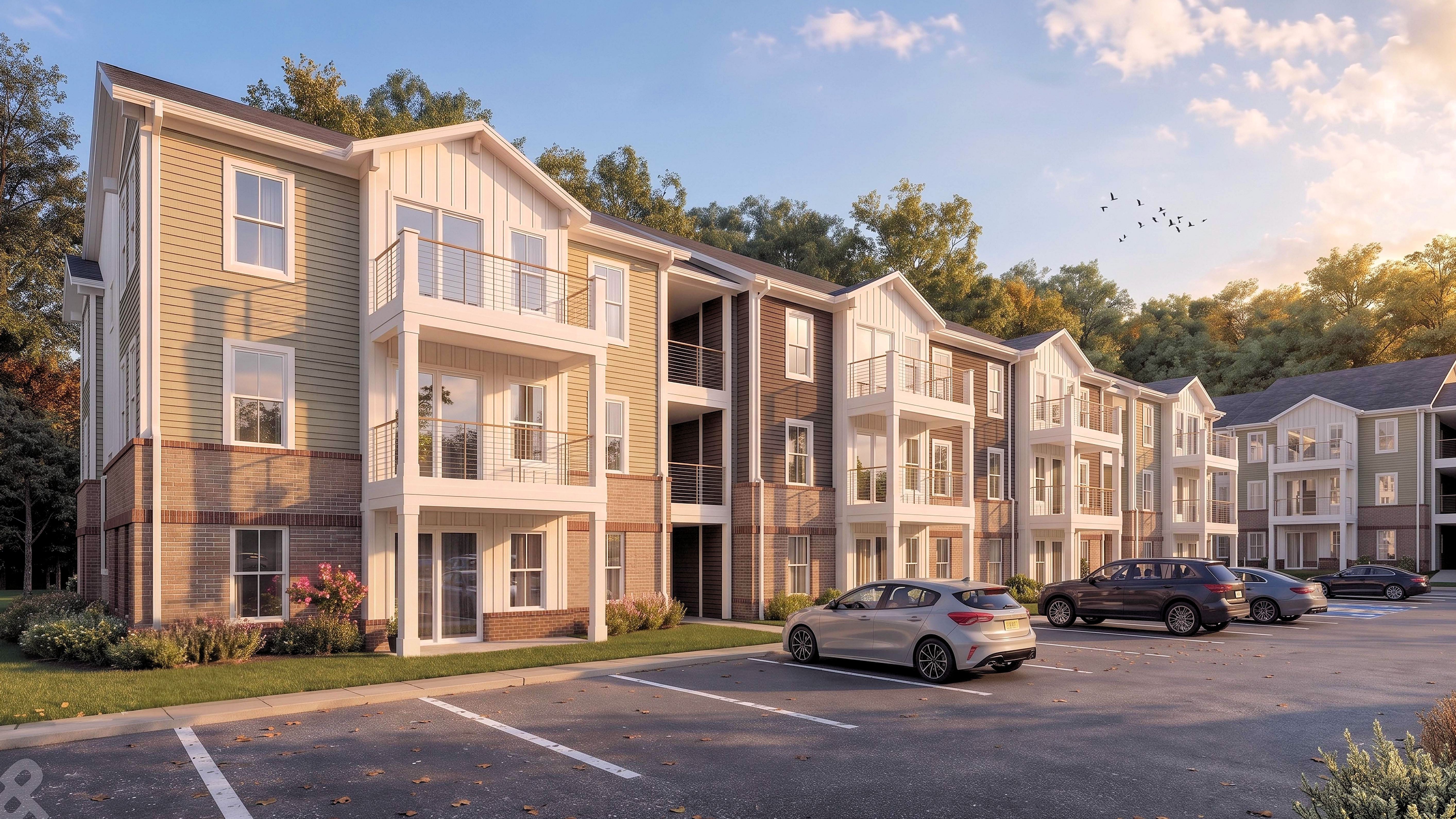
A now-vacant Voorhees plant that for years sent concrete to South Jersey construction projects will be demolished, and a $50-million affordable housing apartment complex will be built on the Centennial Boulevard property.
The Camden-based Michaels Organization last Wednesday received planning board approvals for its preliminary and final major site plans and minor subdivision plan to build The Oaks at Centennial in two phases with 60 affordable apartments in each phase. The formal applicant is Centennial Housing Associates LLC.
For years, L&L Redi Mix Concrete made concrete on the 6.6-acre site until it was acquired in December 2021 by Silvi Concrete, based in Fairless Hills, Pa., and later shut down. At the time of the purchase, the 55-year-old L&L Redi Mix operated concrete plants in New Jersey in Voorhees, Southampton, Woodbury, Cinnaminson, Kingston, and Clayton.
The 120 affordable one-, two- and three-bedroom units are included in the Voorhees affordable housing plan that was released last year and revised in February. The Voorhees affordable housing report says the site has been cleared of any contamination.
Monthly rent for a two-bedroom unit at the 600 and 602 Centennial Boulevard development for a family earning 60% of area median income would be $1,587. Rent for a one-bedroom unit would be $1,323 and $1,834 for three bedrooms.
Nicholas J. Cangelosi, regional vice president of The Michaels Organization, has said affordable housing in suburban towns is a way to help essential workers in retail, healthcare, and the schools to live in the communities they serve.
Traffic consultant Shropshire Associates LLC of Atco estimates The Oaks would generate 43 extra trips during the morning peak hour and 60 extra trips during the afternoon peak hour.
70and73.com is a hyperlocal news site focused on South Jersey, including the communities of Cherry Hill, Evesham, Mount Laurel, Voorhees, Medford, Medford Lakes, and Moorestown.
When Nina Langsam Jay was growing up, it went without saying in her family that it was taboo to ask her parents, both Auschwitz survivors, about their Holocaust experiences.
Like many post-World War II, second-generation Jewish immigrants, Jay said she didn’t want to cause them any more pain by bringing up past trauma or picking at their survivor’s guilt. She knew many of their family members had not made it out alive.
So when decades later, Jay heard her young daughter, Lisa, ask Dora Bursztajn Langsam, Jay’s mother, to share her account of the Holocaust with her Hebrew class, Jay was “shocked” that Langsam agreed. Jay accompanied her mother to the class and “couldn’t believe” the tragedies Langsam recounted: two ghettos, two concentration camps, and working as a slave laborer alongside her younger sister, Salla. Jay wrote down the details as quickly as she could in the notebooks she’d brought, finally putting in ink the family history she’d wondered about her entire life.
“It was like a cathartic happening for her,” said Jay, now 77, who has lived in Cherry Hill for 43 years. The class kicked off a decade-long speaking tour for Langsam, who began sharing her story at other schools, community programs, and, at 80 years old, a prison. She went on to give testimony to Steven Spielberg’s USC Shoah Foundation, a worldwide oral history project for Holocaust survivors.
Before Langsam publicly shared her story, the main anecdote Jay had heard was about how she saved Salla’s life by disobeying orders and pulling her out of a line to a crematorium. Nazi soldiers noticed, Jay said, but before they could act, an air raid occurred, and Langsam pulled Salla into an open train car during the chaos. They both survived the Holocaust, and made it to a displaced persons camp inSweden.
Salla married and started a children’s boutique with her husband in Stockholm. Dora met and married Harry Langsam, who had survived the Holocaust but lost his first wife and two young children. The couple had Jay and her older brother Saul, and the four of them immigrated to the United States in 1953 with help from the nonprofit HIAS.
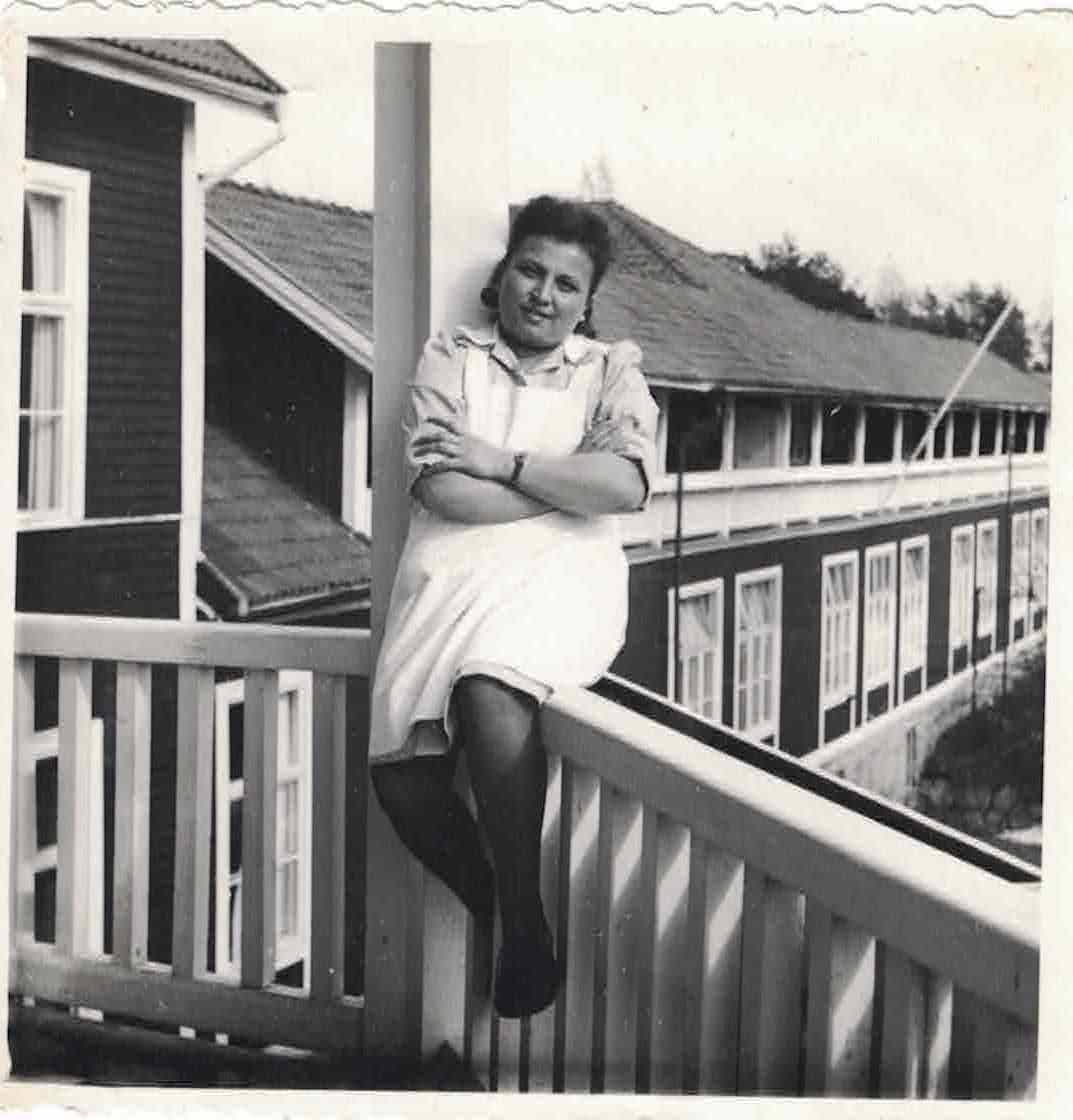
Dora in her work uniform in Sweden, where she was training as a nurse in a local sanitorium (photo from around 1945-6).Courtesy Leah Grisham, PhD
Langsam died in January 2017 while residing at the Lions Gate retirement community in Voorhees Township. Salla died in May 2017. The sisters kept in touch throughout their lives, and often visited each other, sometimes staying months at a time, Jay said.
Jay served as Dora’s caretaker in her final years. And now, Jay is continuing to care for her mom’s story by teaming up with author Leah Grisham, a researcher who wove Langsam’s story into the biography The World Has Caught Fire: One Jewish Family’s Attempt to Survive Nazi-occupied Poland, released in September by Amsterdam Publishers, which exclusively publishes Holocaust memoirs.
“It’s a lifelong dream,” Jay said of the book. “For years I said, ‘If I could just do this one thing for mom, I would feel like I’ve accomplished so much.’”
On Sunday morning, Jay will representthe book at an interactive local authors showcase at Katz JCC. Ahead of the event, we spoke with Jay about what it meant to document her family’s history.
Responses have been edited for length and clarity.
What inspired you to dig into your mom’s story?
She wanted people to know what had happened. It was very hard for her to tell her story, but she realized once she started that she needed to share what happened with the world. If not, who’s going to know? She kept going, and people appreciated that. I still have thank-you notes from some of the schools she spoke at.
I wanted to honor her and my aunt, Salla. When their mother was taken from them, she told [Dora], ‘Don’t cry. Take care of your sister.” And that’s what she did the entire time. I think about that all the time.
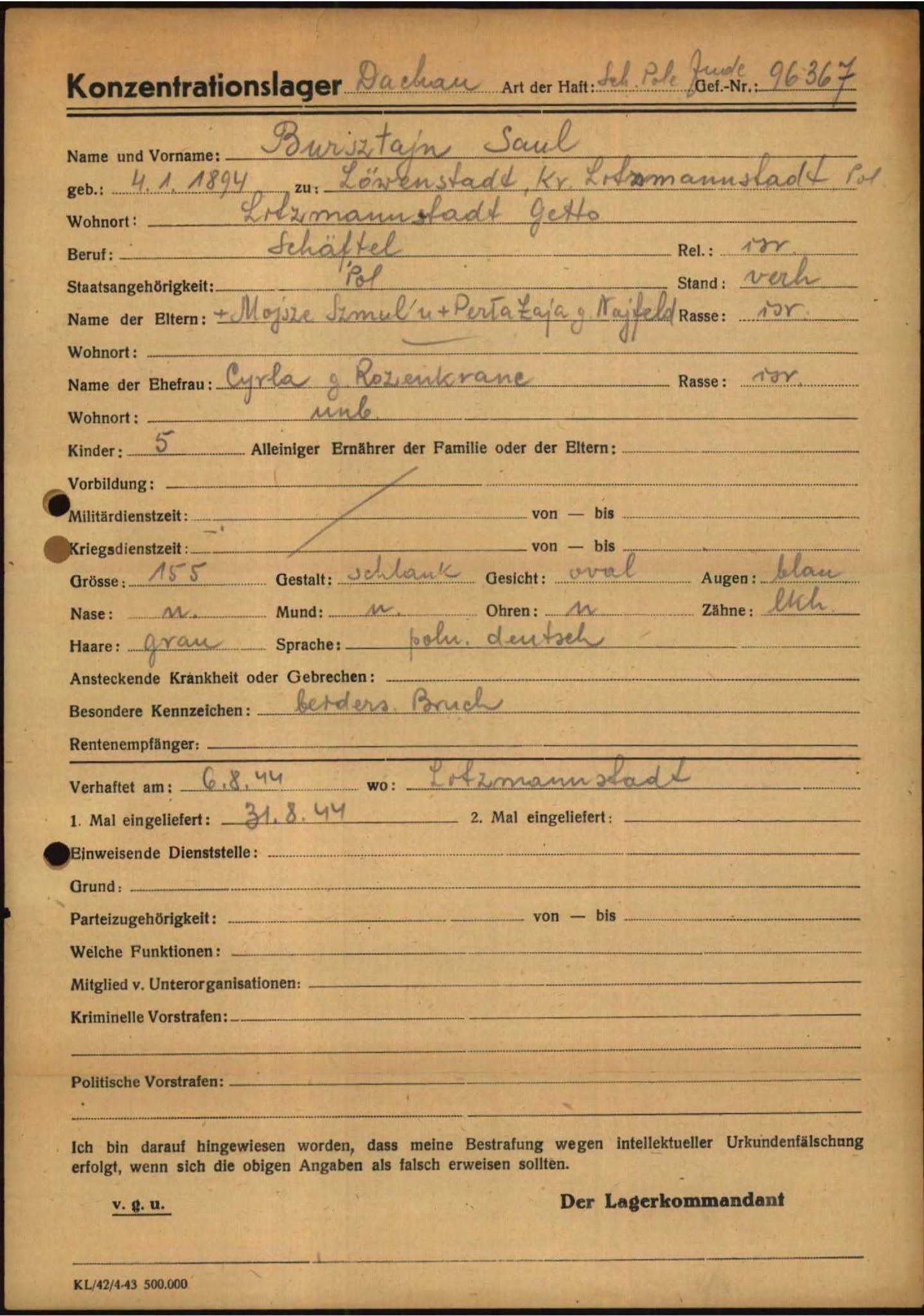
Szoel Bursztajn’s (Dora’s father) registration papers for Dachau. He was moved from Auschwitz to Dachau and then back to Auschwitz, where he was killed sometime in late 1944, according to Leah Grisham. Courtesy Leah Grisham, PhD
How did you connect with Grisham for this project?
My mom’s whole story was so shocking, and I thought, ‘How do I do this?’ I’m not a writer. I have the information, but I don’t know the first thing about putting it into words. I researched online about people who wrote about survivors and Leah’s name popped up. Leah is my daughter’s middle Hebrew name, so I thought maybe that’s a good sign, and I shot her an email out of the blue.
What was it like for you to, generations later, find answers to questions about what happened to specific family members in your lineage?
We grew up to appreciate what our parents sacrificed, and that’s what we hope people will realize. Our parents sacrificed a lot, and that pain never leaves you. My mother said the pain doesn’t leave; she could think about wonderful things and look forward, but she said her heart is broken in two for the family she lost.
Her father was with them until they got to Auschwitz, where they were separated. She thought he was burned right away, but [Grisham] discovered he was taken to another camp. I was hysterical hearing that. My mother never knew.
I never knew my grandparents, obviously. So I had told my husband we would be great grandparents because we knew what it felt like to miss out on that.
A class photo taken before the war. Dora is in the top row, third from the right. A schoolmate whose family left Poland before the war later reconnected with Dora and shared this photo. Approximately 95% of the Jews in her town, Brzeziny, were killed in the Holocaust, according to Grisham.Courtesy Leah Grisham, PhD
What do you feel makes your mom’s story and this book different from other stories we have from the Holocaust?
This book also weaves in the family members and the people who didn’t make it. That’s what a lot of the books today do not talk about. It’s always about the hope, the love, and the rescue, but sometimes it doesn’t portray the whole story accurately.
It also provides the bigger picture. My mom had a loving family, siblings, and a happy childhood. She had a beautiful home life until the Holocaust happened. Her father was a shoe manufacturer, and he’d make samples in her size so she could show them off. She always loved shoes as an adult; they reminded her of her father’s love. He made two-blade ice skates for her and her sisters, and she’d tell me about this frozen pond they’d skate on.
I wanted to share her childhood and the things she enjoyed, not only the painful parts of her story. This book does that.
Do you hope this will inspire others to dig into their family history?
Yes, of course. And if they can find a beautiful writer to help them, that’s great. I know a couple people who did it on their own, but I felt I couldn’t do it justice. [Grisham] weaves my mother’s story with other survivors’ stories in books out there, and draws you in like you are there with her in the camps, the ghettos, watching the deaths.
My mother refused to turn away; she was determined to be a witness. It’s tragic, and she was very brave. That’s just who my mother was, even at a young age.
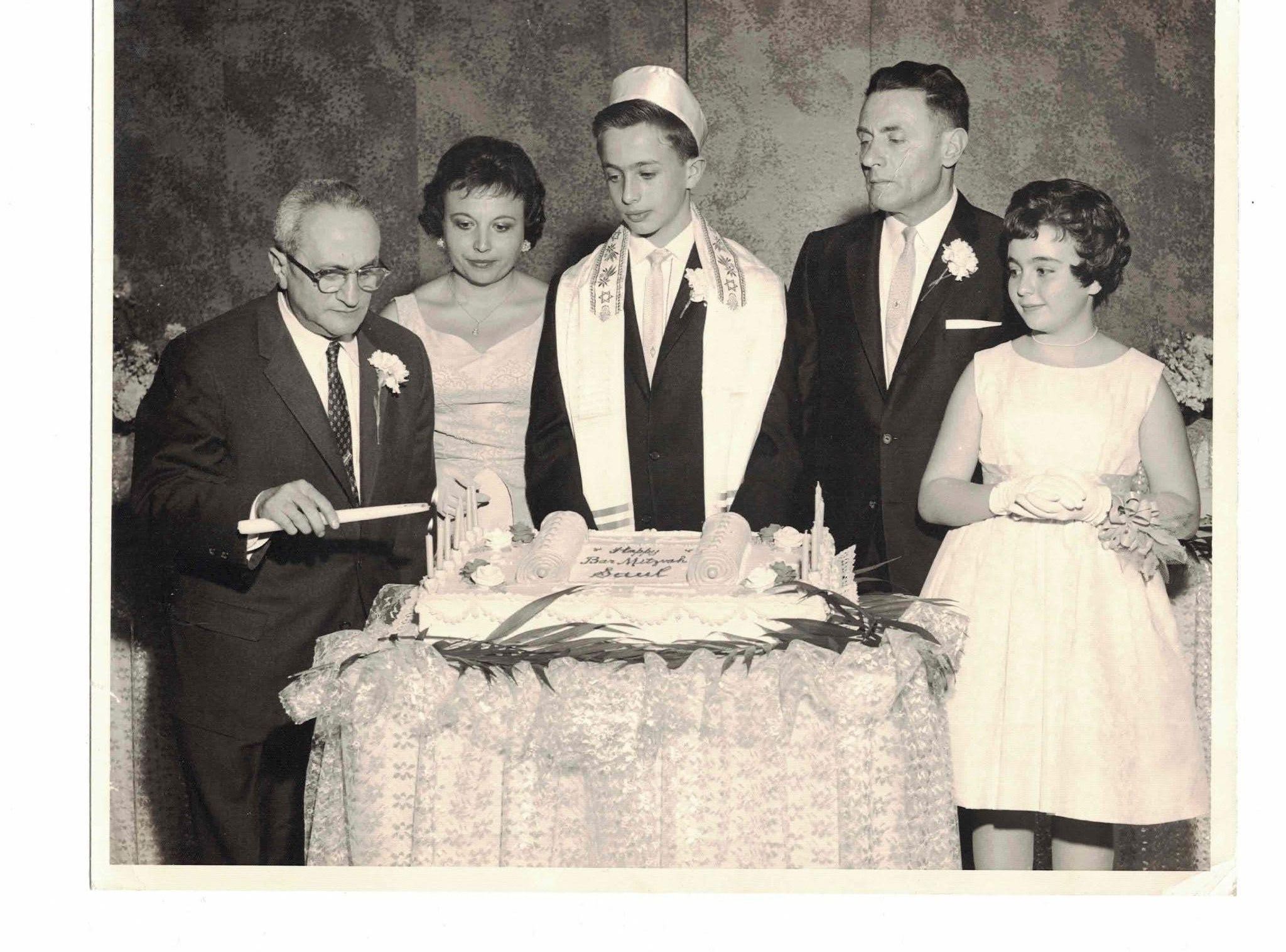
(Left to right): Dora’s uncle Walter (Wolek) Bursztajn, Dora, son Saul, husband Harry, and Nina Langsam celebrate Saul’s bar mitzvah in 1960. Harry (Hersh) and Dora met in a displaced persons camp in Sweden after the war, where they married and eventually had their two children before moving to the United States. Walter was one of Dora’s only surviving relatives, and someone whom Nina and Saul considered a grandfather-like figure.Courtesy Leah Grisham, PhD
What do you hope people will take away from this memoir?
I hope they take away what she always said: “I’m the winner. Hitler did not win.” People like my mom were so strong, and they wanted to live. They made beautiful lives, and they were able to overcome.
She would say, “Look at my beautiful family, my grandchildren, my great-grandchildren.” We were four generations for a long time. She was in the loop for every little thing: every birthday party, outing with the kids, anniversaries. It was wonderful.
With the midterm elections less than a week away, mentions of Jesus seem to be at an all-time high in campaign speeches and literature — and not just from Republicans.
Openly religious Democratic candidates, including several ministers, like James Talarico, Adam Hamilton, Sarah Trone Garriott and Lindsay James, have captured the attention of the media because they seem to represent something new. Their arguments on policy topics as diverse as the struggles of working people and anti-immigrant violence seem to be very different from the secular cases Democrats have made in recent decades.
Indeed, for a quarter century, journalists have chronicled how a “God Gap” has emerged between an increasingly religious right and a secular left. Republicans have embraced prayer breakfasts, Bible study and other overt displays of religiosity. Perhaps not surprisingly, then, regular church attendance has become one of the most reliable indicators of support for the GOP at the polls.
Yet, while the religious right has generated attention, a closer examination of religiosity in this period reveals a progressive political landscape teeming with spiritually driven movement activism. This brand of religious progressivism has deep roots, but its most recent chapter has escaped attention, because liberals have shied away from openly theological rhetoric, while still retaining their religious inspiration.
In the middle of the 20th century, divinely inspired activism leaned left as well as right. The movement most familiar to Americans in this period, the Southern Freedom Struggle for civil rights, articulated demands for justice rooted in Old Testament narratives of liberation and Gospel teachings about the dignity of every human regardless of class and race.
In 1955, the Rev. Martin Luther King Jr. illuminated the religious inspiration for the movement when he quoted the story of Lazarus and the rich man to condemn “the white man who refuses to cross the gulf of segregation and lift his Negro brother to the position of first-class citizenship.”
Even once King’s organization, the Southern Christian Leadership Conference (SCLC), began focusing more on economic justice and the poor people’s campaign in the late 1960s, it continued to rely on the Gospels to orient its message and activism.
Religion also inspired the other major movement in the 1960s: the protests against the Vietnam War. In 1968, for example, nine men and women ransacked a draft board outside Baltimore. The “Catonsville 9” took conscription files, which they proceeded to burn in napalm (the chemical the U.S. government was then using to deforest Vietnam) while saying the Lord’s Prayer. The event ignited what journalists quickly dubbed the “Catholic Left” because of the dominance of priests, nuns, missionaries and devout lay people.
In 1971, this movement burst into the public consciousness in the Delaware Valley when the FBI interrupted a similar draft board raid, this time unfolding on the upper floors of the Camden Federal Building. Agents had infiltrated the group with the assistance of an informant who helped the Bureau collect evidence that ultimately led to the apprehension and indictment of multiple conspirators who become known as “the Camden 28.”
In 1973, the group’s three-month trial generated national attention as reporters covered the defendants’ unconventional testimony, which included self-representation, Scripture and poetry readings. Father Michael Doyle, one of the accused, set the atmosphere with his opening statement. He asked, “to present a motion to a higher court than this one … and make a request that a blessing of truth and a spirit of truth would come upon the deliberations of this room.” Doyle hoped that everyone involved “might somehow be better because we met in this time and place.”
When the jury acquitted the men and women who had stated point-blank that they did indeed commit the crimes for which they were charged, supporters celebrated the decision as a victory for love and nonviolence over the war machine and surveillance state. Joining hands, the crowds inside and outside the court room embraced and sang “Amazing Grace.”
As the Camden 28 were capturing headlines in the early 1970s, however, another religious movement was also coalescing. Conservative evangelical Christians, Catholics and Mormons came together to fight against ratification of the Equal Rights Amendment, sex education, the legalization of abortion and the push for gay rights. Churches were a key place for organizing, and the Christian right wove religious rhetoric and doctrine into its agenda as well.
Made By History sponsors. FOR USE ON MADE BY HISTORY STORIES ONLY.Inquirer Staff
This new movement demonstrated its ability not only to reach across denominational lines like the left, but also to organize and raise money, when groups like the Moral Majority helped Ronald Reagan to win the presidency in 1980.
The religious gap between left and right intensified over the next two decades as the “right to life” movement galvanized religious voters at all levels of politics.
Abortion clinic demonstrations played no small role in the 2000 election of President George W. Bush, an avowed evangelical Christian who in a primary debate cited Jesus Christ as his favorite philosopher. The 9/11 terrorist attacks intensified the divide by inspiring a forceful atheist critique of religion as a harmful influence that inspired violent extremism and stymied scientific progress.
The success of the religious right impacted the left by dampening religious expression in Democratic politics. Disgusted by white evangelical leaders who used the Bible to justify sex-based discrimination and cuts to the welfare state, liberals and progressives came to abhor Christian expression by politicians.
Shying away from religious rhetoric in their own advocacy, liberals developed a rights-based vernacular and a decidedly secular vision of plurality. At the 2004 Democratic National Convention, presidential nominee John Kerry — a church-going Catholic — claimed a moral high ground derived from not religious virtues, but from national ones that made the United States a “beacon” of freedom needed “to lead a global effort against nuclear proliferation.”
When Democrats did refer to their religion, it was almost always to discuss its role in the formation of their character and how it inspired their decision to become public servants — not to advocate for policies. As Barack Obama explained when he launched his run for president in 2007, Chicago was important to him because it was there “that I received the best education I ever had, and where I learned the true meaning of my Christian faith …”
For decades, this impulse to eschew religious rhetoric when it came to policy extended even to Democrats who freely leaned on their faith, like former House Speaker Nancy Pelosi, who extolled the beauty of Catholic encyclicals, and Pennsylvania Gov. Josh Shapiro, who encouraged young Jewish voters to “wear your stars of David with pride.” Such comments signaled that religion was at the root of identity and moral conviction, but not policy prescriptions.
Yet, what many observers missed was that the absence of religious rhetoric from the Democratic Party did not signal the disappearance of religiously inspired activism from left-leaning politics altogether. While Democratic candidates shied away from linking their politics and policies to their faith, plenty of grassroots activism on the left was inspired by religious faith.
The Plowshares movement for peace, for example, emerged out of the Catholic Left. In 1980, the group undertook their first action at a General Electric weapons facility in Pennsylvania, where they damaged missiles, and left their own blood spattered on documents. Subsequently, this movement adopted the biblical injunction to “beat swords into plowshares,” and orchestrated more than 100 such demonstrations. While their activism led to prison sentences, they received nowhere near the attention garnered by Christian activists in the 1960s.
Around this time, religious groups on the left also began demonstrating for environmental justice at toxic waste sites as, for example, Black and white evangelicals did in 1982 to stop a PCB dumping site in Warren County, N.C.
Such activism has remained constant over the years. During the Trump era, people of faith have protested at immigration detention centers with prayers and Eucharistic celebrations, which, in some cases, has provoked a violent reaction from law enforcement.
The religious left, in other words, never stopped organizing — even though the press, the Democratic Party and larger public paid it little to no attention.
This history illuminates that while the overtly religious rhetoric of Democratic candidates in 2026 may represent a tactical shift, faith never stopped motivating liberal activism.
This current slate of ordained and soon-to-be-ordained candidates will not likely draw support away from the Republican base of Christian nationalists. Nevertheless, the grift and cruelty of the current administration has created an opening for these Democrats to overturn some tables and knock down some chairs in the temple.
The captivating vigor of these candidates should force political observers to consider the deep wellspring of religious teachings and tradition that have flourished on the left but flown below the radar for decades. The history of that activism helps explain why the campaigns waged by Hamilton, Talarico, Trone Garriott, James and others are animating so many voters.
Made by History takes readers beyond the headlines with articles written and edited by professional historians. Opinions expressed do not necessarily reflect the views of The Inquirer.
Just over a year after learning he was in remission from non-Hodgkin lymphoma, 12-year-old Mateo Malcarney arrived at Cherry Hill’s Subaru dealership Monday afternoon for a surprise that he’s been wishing for.
With a bright smile stretched across his face, Mateo was practically vibrating with excitement as he learned that not only had his Make-A-Wish for an African safari been granted, but he and his family are leaving for their adventure in just a few days.
“I’ve never been and I feel like it’d be a cool experience,” Mateo said of the origin of his safari dream.
Mateo Malcarney, 12, hugs his brother Carlos, 8, as Make-A-Wish New Jersey surprises him with a wish party at Subaru of Cherry Hill on Monday. Mateo, who has battled lymphoma, learned he is headed to South Africa in just a few days.Tom Gralish / Staff Photographer
To get ready for his upcoming adventure, Mateo and his friends got some hands-on experience with a variety of animals from Zoophoria NJ, including Monty the ball python, a Madagascar hissing cockroach named Ew, and Tripod, a 31-year-old African spurred tortoise equipped with a 3D-printed prosthetic foot.
Mateo’s favorite part of the show?
“All of it,” he said, after an afternoon spent meeting snakes, lizards, a baby alligator, and much more.
“I just love animals, same with my brother,” he added.
Mateo Malcarney (center) 12, meets Tripod, a 31-year-old African spurred tortoise on Monday, shortly after he learned that he and his family are leaving for an African safari in a few days.Tom Gralish / Staff Photographer
Both Mateo and his little brother Carlos, 8, are most looking forward to seeing the African wildlife on their trip — especially the animals known as the Big 5, Mateo said, which consists of the African buffalo, rhinoceros, lion, leopard, and African elephant.
The trip, which was organized and funded by Make-A-Wish New Jersey and Subaru of Cherry Hill, comes as Mateo and his family gradually work their way back to how things were before his May 2025 diagnosis of non-Hodgkin lymphoma, before they had to adapt to a “new normal,” Mateo’s dad, Keith Malcarney, said at Monday’s event.
Non-Hodgkin lymphoma, a group of blood cancers that start in the white blood cells, is diagnosed in about 800 children and teens each year, according to theAmerican Cancer Society.
Mateo Malcarney, 12, and his brother Carlos, 8, receive gifts as Make-A-Wish New Jersey surprises him with a wish party at Subaru of Cherry Hill on Monday. Malcarney, who is battling lymphoma, learned he is headed to South Africa in just a few days.Tom Gralish / Staff Photographer
Following treatment and physical therapy, Mateo is now almost entirely back to where he was pre-diagnosis, Keith Malcarney said, and the safari is the perfect way to celebrate that.
“He’s just a great kid, a great son, and a great big brother,” he said, as he watched his son’s face light up each time a new animal was put before him.
And while Keith and his wife Patricia are certain to enjoy the trip in their own right, he said he is most excited to experience the safari through his kids’ eyes, living vicariously through them as they make memories together that will last a lifetime.
Mateo Malcarney, 12, meets an African constrictor snake alongside his friends at a surprise wish party from Make-A-Wish New Jersey and Subaru of Cherry Hill on Monday.Tom Gralish / Staff Photographer
“Just watching their eyes light up,” he said, smiling. “It’s all just in those little moments, those little comments, those little smiles here and there — just for the both of them to have this experience is amazing.”
At the same time, the couple is also looking forward to a future where their eldest son’s battle with cancer is a memory just the same.
“It’s really just thanking God that he’s in remission right now and you just hope it stays that way,” Keith Malcarney said.
An 80-year-old gynecologist working in South Jersey has been charged with sexually assaulting three of his patients, Burlington County Prosecutor LaChia L. Bradshaw said Monday.
Jerome Check, of Melrose Park, Montgomery County, was taken into custody in September and released following an appearance in Superior Court in Mount Holly, Bradshaw said. He was charged with three counts of second-degree sexual assault.
Between December 2024 and March 2025, Check allegedly sexually assaulted three patients during appointments at his Mount Laurel office, Bradshaw said.
Check, a reproductive endocrinologist and infertility specialist, allegedly was alone in the examination room with the victims during their appointments, Bradshaw said.
Two of the victims believed their appointments would only be for receiving information from Check and not an invasive examination that Check allegedly indicated was necessary, Bradshaw said.
Anyone with information about more possible victims can contact the prosecutor’s office at 609-265-5035 and ask to speak to a detective in the Special Victims Unit. Tips can also be submitted to https://burlpros.org/tips or tips@mountlaurelpd.org.
Robin Lord, Check’s attorney, said in an emailed statement that “Dr. Check is a well-respected expert in his field who has served this community for decades and has brought joy to families throughout the area. He is innocent and these charges are not even worthy of being dignified with a response.”
Lord did dispute the allegations and the evidence in the case.
“The Burlington County Prosecutor’s Office is asking the public to accept that a patient in stirrups, in a gown, in a gynecologist’s office, had no idea a gynecological exam was coming. That claim does not even survive common sense. It’s about time they start investigating cases before they file criminal charges that materially affect the reputation of good people,” Lord said.
On Monday, Check was listed as affiliated with Cooper Norcross Health and listed as a professor of obstetrics and gynecology at Cooper Medical School of Rowan University. Check also is listed as one of two physicians at the Cooper Institute for Reproductive Hormonal Disorders.
The website for Cooper Norcross Health touted the “trusted expertise” of Check for why a patient would choose Cooper for infertility care.
“Led by Jerome H. Check, MD, PhD — an internationally recognized leader in reproductive medicine with more than 40 years of experience — our team brings unmatched knowledge and dedication to patient care,” the Cooper website said.
Wendy Marano, a spokesperson for Cooper, said in an emailed statement: “Dr. Jerome Check is not employed by Cooper Norcross Health. After today’s announcement, all his affiliations at Cooper Norcross Health have been suspended effective immediately.”
In 2021, Check agreed to stop prescribing amphetamines under a consent order with the New Jersey State Board of Medical Examiners, the Courier-Post reported.
Check reportedly was investigated after a monitoring program for prescription drugs showed that Check extensively prescribed Adderall and other controlled drugs, the Courier-Post reported.
New Jersey voters in at least one district on Tuesday will help determine which party controlsthe U.S. House, in a midterm election widely seen as a referendum on President Donald Trump.
Incumbent Republican U.S. Rep. Tom Kean Jr. faces long odds that voters will return him for a third term in the 7th Congressional District inCentral and North Jersey, as Democratic momentum builds amid a national backlash against Trump that will potentially elevate former Navy helicopter pilot Rebecca Bennett to the seat.
Voters’ frustration with the president is so severe that Democrats have expanded their map in the final weeks, increasing their support for Cape May Mayor Zack Mullock’s challenge against four-term Republican U.S. Rep. Jeff Van Drew in South Jersey’s 2nd District.
Here’s what we’re watching as Garden State voters head to the polls Tuesday.
Will the Kean brand survive?
Beyond the national headwinds, Kean’s issues are compounded by questions around his fourth-month medical leave of absence from Congress to undergo treatment for depression. He didn’t disclose the reason for his absence until he returned to Washington in June.
Across the country, observers have viewed the outcome of the 7th District contest between Kean and newcomer Bennett as a must win for Democrats who need to flip four seats blue to achieve a majority. Republicans hold a narrow majority of 218 to 214, with one independent.
Trump’s unpopularity in New Jersey is expected to hurt Kean, who, with a few notable exceptions, has sided with the president on key issues, such as the war in Iran and international tariffs.
Bennett — herself a Republican until she changed parties after Trump won the first time a decade ago — has campaigned on ending the war, which will help reduce energy costs. The 39-year-old health information executive and former U.S. Navy pilot said she would vote to overturn the “One Big Beautiful Bill” that cuts hundred of thousands of people who rely on Medicaid and SNAP food assistance benefits.
Kean, 58, served nearly 20 years in the state Legislature before defeating Democratic Rep. Tom Malinowski in 2022 by roughly 3 points, after redistricting pushed the seat toward the GOP. He touts himself as a skillful bipartisan lawmaker who helped restore and expand the State and Local Tax, or SALT deduction — a big deal in a state with the highest property taxes in the nation.
Republicans outnumber Democrats in District 7, 218,268 to 202,071, with about nearly as many unaffiliated voters, 212,745.
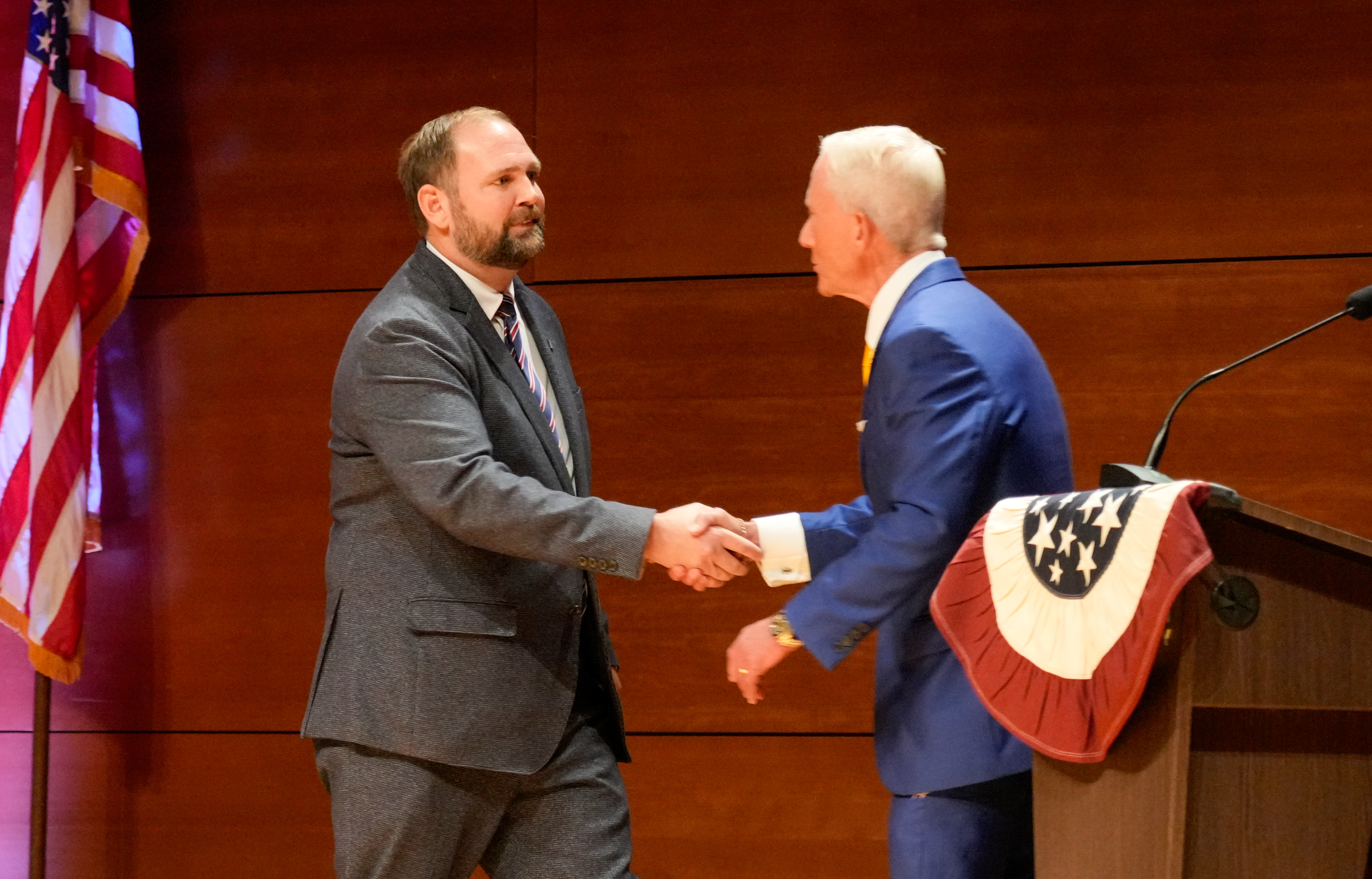
U.S. Rep. Jeff Van Drew (right) and Democrat Zack Mullock shake hands after an Oct. 22 debate in the Campus Center Theatre at Stockton University.Tim Hawk / For The Inquirer
It could take a ‘blue tsunami’ to beat Van Drew
In the 2nd Congressional District, Mullock, 41 is challenging Van Drew, 73, who won the seat in 2018 as a Democrat. Van Drew switched parties to become a Republican a year later, pledging his “undying support” to Trump.
Mullock has mocked Van Drew’s loyalty, saying he “looks up to the president like a child.”
With his family, Mullock helped found the Harriet Tubman Museum and the Cape May Point Arts and Science Center. His family also owns the Cape May National Golf Club, where he works as vice president.
The 2nd District is a conservative one, where Republicans outnumber Democrats 201,759 to 178,060 but unaffiliated voters dominate, at 207,654, according to the state Division of Elections.
But the odds are long that the anticipated blue wave would sweep up Mullock, said Micah Rasmussen, political science professor at Rider University. “We still need to see the blue tsunami getting bigger to reach this one,” he told columnist Tom Moran.
The district contains Atlantic, Cape May, Cumberland and Salem Counties and portions of Gloucester and Ocean Counties.
Trump won the district by 13 points in 2024, according to state election data.
Sen. Cory Booker (left) and his South Jersey Republican challenger Justin Murphy, on the debate stage Thursday night.Pete Borg / Rider University
Booker eyes the future
Democratic U.S. Sen. Cory Booker is also on the ballot, running in a low-key statewide race against Republican Justin Murphy, a U.S. Navy veteran, attorney, and former deputy mayor of Tabernacle in Burlington County.
Booker, who has served in the U.S. Senate since 2013 and a frequent guest on the cable TV talk shows, is expected to win Nov. 3 and run in the presidential primary election in 2028.
Murphy is a Trump loyalist, defending the president’s decision to wage war on Iran, stating, it would be an “unbelievable, unmitigated disaster” if Iran got a nuclear weapon.
“We are not in a quagmire,” Murphy said during a debate with Booker. “The president’s right to do this.”
Booker, a fierce critic of the president, replied, “We do not need yahoo policy. We need sound people that use military force as a last resort, who know the power of diplomacy, who don’t insult your enemies and threaten to invade Canada and Greenland, but pull our allies together.”
The candidates stake out starkly different views on immigration. Murphy said New Jersey is wrong for its sanctuary state policies and not cooperating with the Trump administration’s mass deportation campaign.
“Sanctuary jurisdictions are a problem. They incentivize illegal immigration, and I don’t believe they help our state stay safe,” Murphy said during the debate.
Booker defended state policy that maintains “bright lines between what is a federal responsibility and what is a county and state and local responsibility.”
Staff writer Aliya Schneider contributed to this article.
A Franklinville man was arrested Monday after he allegedly shot and killed his girlfriend and fled the scene, police said.
Ricardo A. Ferrera, 32, is charged with first-degree murder and other charges related to possession of a weapon, the Gloucester County Prosecutor’s Office said in a statement.
A witness called Franklin Township police at about 12:36 a.m. Monday to report a shooting at a home on Porchtown Road in Franklinville. While upstairs with her three children, she heard gunshots and went downstairs to find Christina Cruz, 30, lying in the living room.
She told police that Ferrera and Cruz, his girlfriend, had argued two hours before the shooting.
Ferrera drove off after the shooting, she told police.
Police did not specify the witness’s relationship with Ferrera, and prosecutors could not share Monday who lived in the Franklinville home.
Police found Cruz with two gunshot wounds. She was pronounced dead at the scene, according to the complaint.
A second witness, who was in a first-floor bedroom at the time of the shooting, told police the argument was followed by “two gunshots and a thud.”
Ferrera was also charged with possessing a firearm with the purpose to use it unlawfully against another person and knowingly having a firearm despite a previous gun-related conviction, according to the prosecutor’s office.
Ferrera had previously been convicted of unlawfully possessing a firearm, according to the complaint.
Rebecca Forand, public information officer for the Gloucester County Prosecutor’s Office, declined to discuss Ferrera’s previous charges.
Residents of Cherry Hill’s Kingston neighborhood on Sunday stood on the site of their now-demolished swim club, but they weren’t there to mourn an institution that would have turned 70 years old next year.
Memories of watching generations of neighborhood children grow up at the club, and the family friendships that were formed, are still alive. Now, new memories will be made by young families that will use the town’s just-opened $5 million Kingston Park on the site with colorful playground equipment, a basketball court, and other amenities.
Like the other dozen swim clubs left in Cherry Hill, the Kingston club was part of the marketing plan for the development off Route 70 where split levels in 1960 sold for $16,990. A nonprofit in 1957 opened the club on nearly four acres of land donated by the Kingston Estates developer.
Children, their parents, their grandparents, and even great-grandparents sunned on the deck chairs and cooled off in the pool over the decades.
“There was a bunch of us at 12 noon on the Saturday of Memorial Day weekend… [competing for] who was going to be the first one in the water for the season. Then on Labor Day Monday, who was going to be the last one fished out of the water?” recalled Rob Connor, whose grandparents moved to Kingston from Camden in the late 1950s.
Connor, a Cherry Hill Township Council member, was born in 1973 and was one of the pool kids because his parents moved into Kingston. Now, he lives with his family across the street from the Deland Avenue club site, where his daughters enjoyed the pool as he did.
Watching them tear the pool apart was rough.
“It was really hard,” Connor said, adding the positive side to the property’s rebirth: The pool would have shut down on Labor Day, but the new playground is open year-round.
Facing high expenses to maintain the club, the nonprofit stopped making mortgage payments, and lender TD Bank threatened to foreclose. The township paid $441,000 to buy the property, zoned institutional, to keep it from being developed.
Mayor David Fleisher, speaking at Sunday’s official opening event, thanked the neighbors and Cherry Hill for making “this important investment in our town, memorializing the great and rich history of the Kingston Swim Club and making sure that this property was preserved, protected and enjoyed, literally, for generations to come.”
“If there is ever an example of how local government is supposed to partner with the neighborhood, it is the new Kingston Park,” Fleisher said.
Speaking over the sound of children at play, Greater Kingston Civic Association head Yolanda (Yoli) Lorenz reminisced to the group about her years as a swim club member.
“It was a beautiful place, a beautiful experience,” she said of watching the children advance from the baby pool to the larger pool and mothers bonding in friendship.
“I’ve built lifelong relationships with some of the people that are here today,” she said. “So this was a great reunion. I look forward to this being the same kind of atmosphere for the people that are here new to this place now. And I love that it’s open to everybody.”
Jerry Thompson, who moved to the Kingston development in 1983 and is writing a swim club history, told the group that the club sold 355 membership bonds in 1956 and opened in June 1957 — welcoming thousands of families in its 62 years.
“Families forged lifelong friendships at the club’s social events and through swimming and diving championships and with the other 13 swim clubs, as well as Tri-County Championships,” Thompson said.
Members joined the men’s softball and basketball teams and mixed volleyball team, he said. The women’s softball team continues to compete against the other swim clubs.
70and73.com is a hyperlocal news site focused on South Jersey, including the communities of Cherry Hill, Evesham, Mount Laurel, Voorhees, Medford, Medford Lakes, and Moorestown.
Voters in Camden, Gloucester, and Burlington Counties will choose their next county commissioners in this year’s election. Before Election Day tomorrow, here’s what you need to know.
Several county commissioner seats are up for grabs in this year’s elections.
In Burlington County, a pair of GOP contenders are hoping to win and bring Republican representation to the existing completely Democratic board.
Three Republican candidates are also fighting to oust the three Democratic incumbents up for reelection on Gloucester County’s board. The existing makeup of the board is five Democrats and two Republicans.
Meanwhile, in Camden County, two Democrats will face only one Republican challenger, who is a repeat candidate.
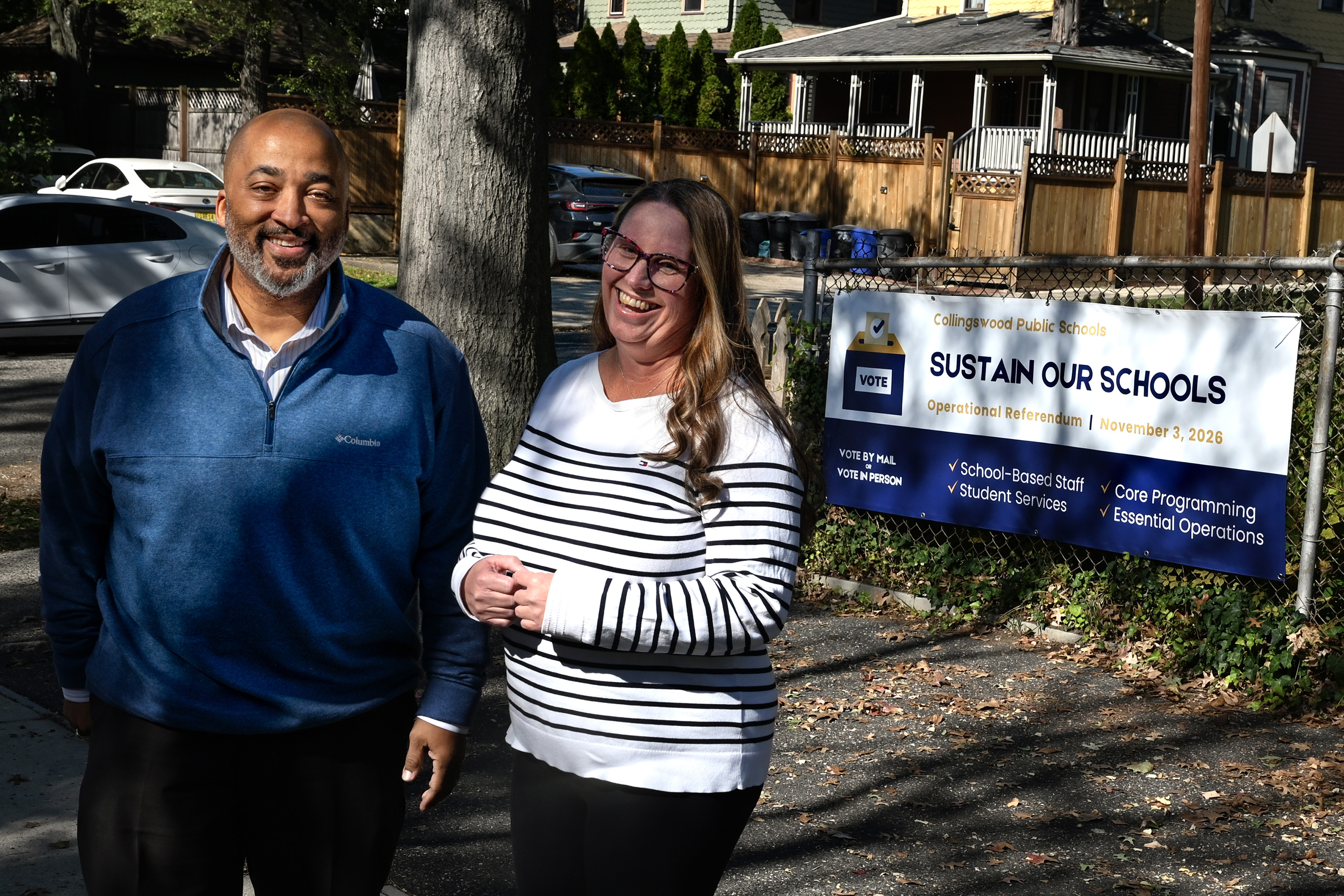
The Collingswood school district wants voters to say yes to the $4.56 million bond question on Tuesday.
According to superintendent Fred McDowell, the bond would help to fund operations, keep teachers, and decrease class sizes. Collingswood is one of many districts grappling with deficits and hoping to figure out how to address budget holes.
But school leaders recognize voters might require some convincing.
If approved, the bond question would mean a $1,324 annual increase to a tax bill for the average home in the borough, assessed at $448,000.
South Jersey’s theater legend Bruce Curless, the founder and producing artistic director of Haddon Township’s Ritz Theatre Company, died at 78 after a battle with pancreatic cancer.
New Jersey Gov. Mikie Sherrill rallied with Democratic Cape May Mayor Zack Mullock on Saturday to garner support for him in his race against incumbent Republican U.S. Rep. Jeff Van Drew.
Cape May Prosecutor Jeffrey H. Sutherland announced Friday that a man who worked as a prekindergarten teacher’s aide was charged again with aggravated sexual assault and making child pornography.
Based on what most Union County voters told The Inquirer, President Donald Trump is motivating people to head to the polls, but that might not favor U.S. Rep. Tom Kean Jr. during the midterm elections.
Real estate developer Bart Blatstein is trying to expand his Showboat Hotel in Atlantic City while also facing a possible foreclosure of it.
A veteran from Bryn Athyn who was indicted for protesting ICE inside a church in Saint Paul, Minn., faces court hearings this week. He is otherwise barred from leaving Pennsylvania because of charges related to his participation in demonstrations near the Delaney Hall immigration detention center in Newark.
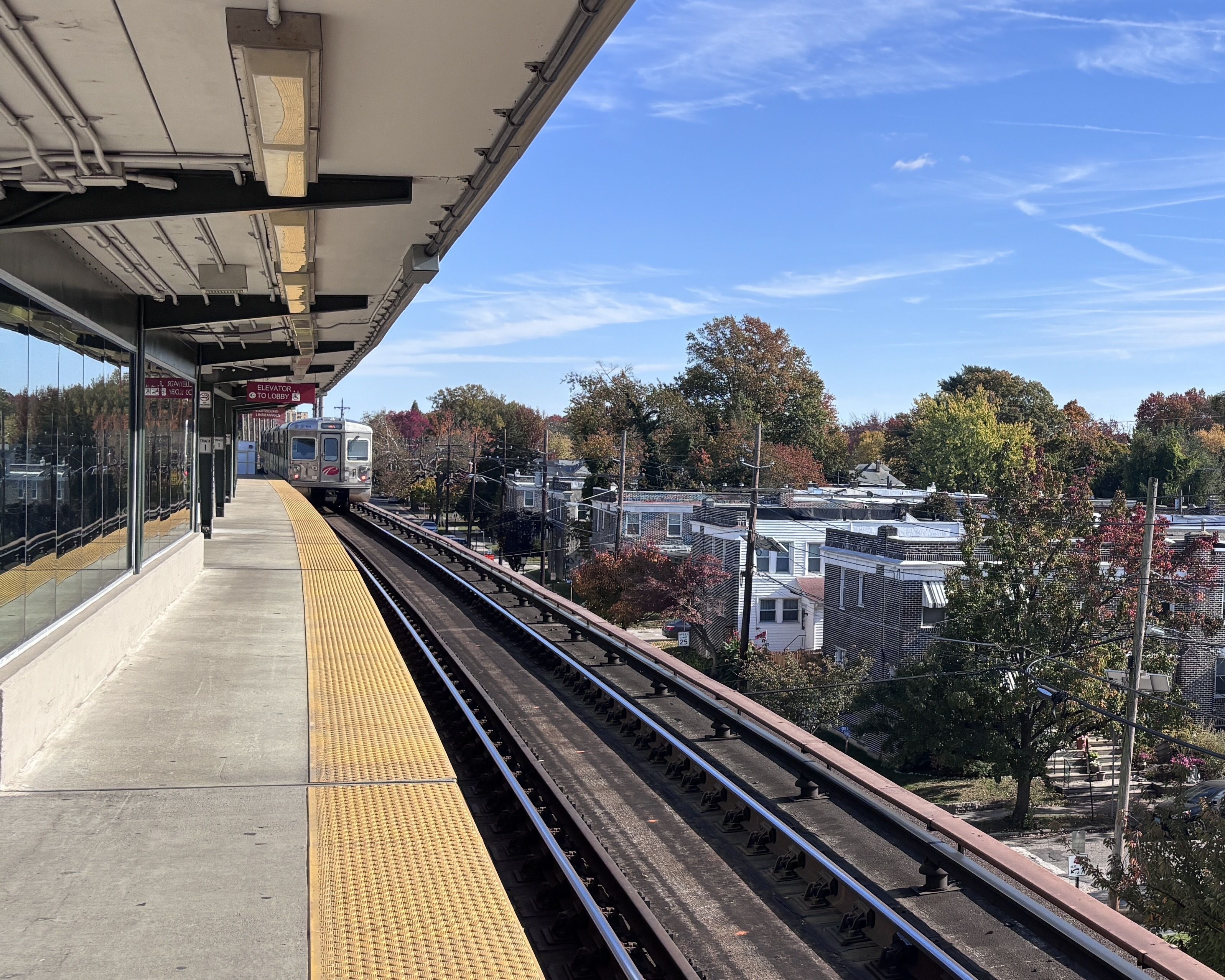
A PATCO train leaves the Collingswood station on Saturday. Taylor Allen
I spent my late Saturday morning on Halloween wandering downtown Collingswood. While waiting for PATCO to take me back home in the late afternoon, a few trains passed by with families and trick-or-treaters onboard.
What does your community look like? What South Jersey memory would you like to share? Submit a photo and/or a brief description for a chance to be featured in the Monday edition of this newsletter.
Amid national midterm buzz, voters in Gloucester, Burlington, and Camden Counties will cast ballots for their county commissioners.
The three South Jersey county commissioners have staggered terms, which means only some seats are up for election this year.
In Gloucester County, a fiery slate of candidates is trying to increase Republican power on the board, which is a majority Democratic.
In Burlington County, two Republican candidates are campaigning together with hopes of getting GOP representation on an all-Democratic board.
And in Camden County, two longtime Democratic incumbents face a challenge from only one Republican who unsuccessfully ran for the post before.
Gloucester County commissioners
The seven-member board currently has five Democrats and two Republicans. Three Democrats and three Republicans are running to fill three positions on the board. The terms are three years and the seven positions are staggered, so candidates are not all up for reelection at the same time.
The two sitting Republican commissioners, Chris Konowel and Nick DeSilvio, flipped commissioner posts in 2021 after Democrats had all the seats on the board, and both were reelected in 2024.
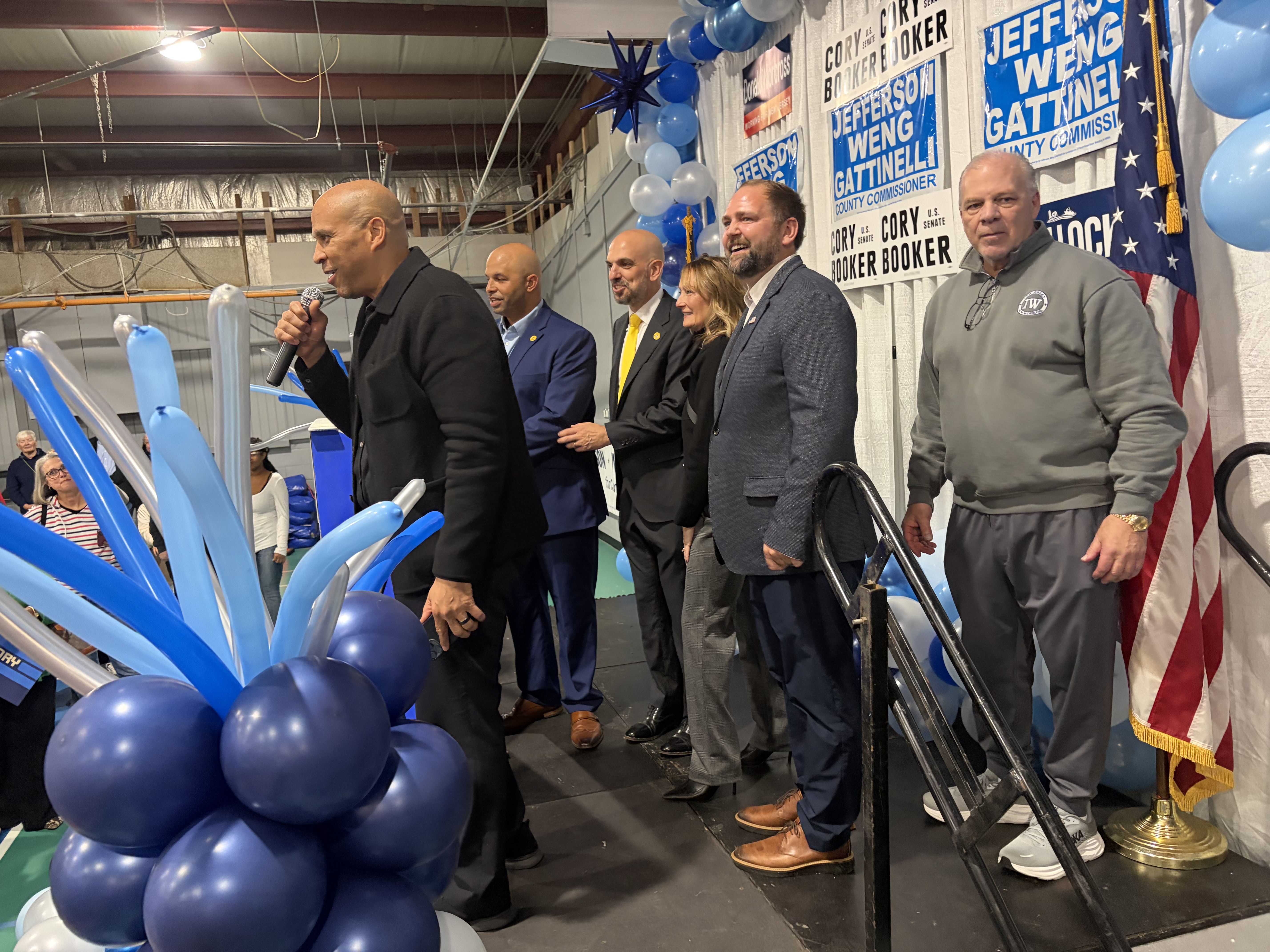
U.S. Sen. Cory Booker campaigns with local Democrats. Behind him (from left) are Gloucester County Commissioners Jim Jefferson, Matthew Weng, and Joann Gattinelli, as well as congressional candidate Cape May Mayor Zack Mullock and Gloucester County Democratic Committee Chair Steve Sweeney, who is also the county administrator.Aliya Schneider / Staff
Democrats: County Commissioner Deputy Director Jim Jefferson and Commissioners Joann Gattinelli and Matthew Weng are running for reelection.
Jefferson, 44, a Woodbury-based minister who has traveled the country to minister in prisons, is finishing his fourth term on the board and his first as deputy director.
In remarks at a Gloucester County Chamber of Commerce candidate forumlast month, he said he has been a liaison for the county’s health and human services department for his 12 years as a commissioner, and he has been particularly passionate about lowering overdoses in the county with the use of Narcan.
“A lot of people came to me and said, ‘Jim, you’re just enabling those who struggle with substance abuse.’ I said, ‘No, they can’t get help unless they’re alive,’” he said.
Gattinelli, 61, a former mayor of Washington Township, and Weng, a Pitman-based attorney, are finishing their first terms, which began in January 2024.
The three commissioners are campaigning together on a platform of saving taxpayers money, building up the local economy, and protecting the quality of life in the county.
They tout getting the highest bond rating from Moody’s, forging partnerships between Rowan University and community colleges, and preserving open space.
“Throughout my tenure here the last three years, we have accomplished so much,” Gattinelli said at the candidate forum.“You don’t just get a AAA rating through Moody’s by sitting back and just signing off or rubber-stamping, as they say.
“We ask questions. We are there with people who are explaining to us,within government, what is happening and how we can be fiscally responsible,” added Gattinelli, a former small-business owner who serves as an economic development liaison.
Weng, 45, who previously served on the Pitman Borough Council and worked as the staff attorney to the New Jersey State League of Municipalities, has recently touted online the county’s efforts to preserve farmland and open space.
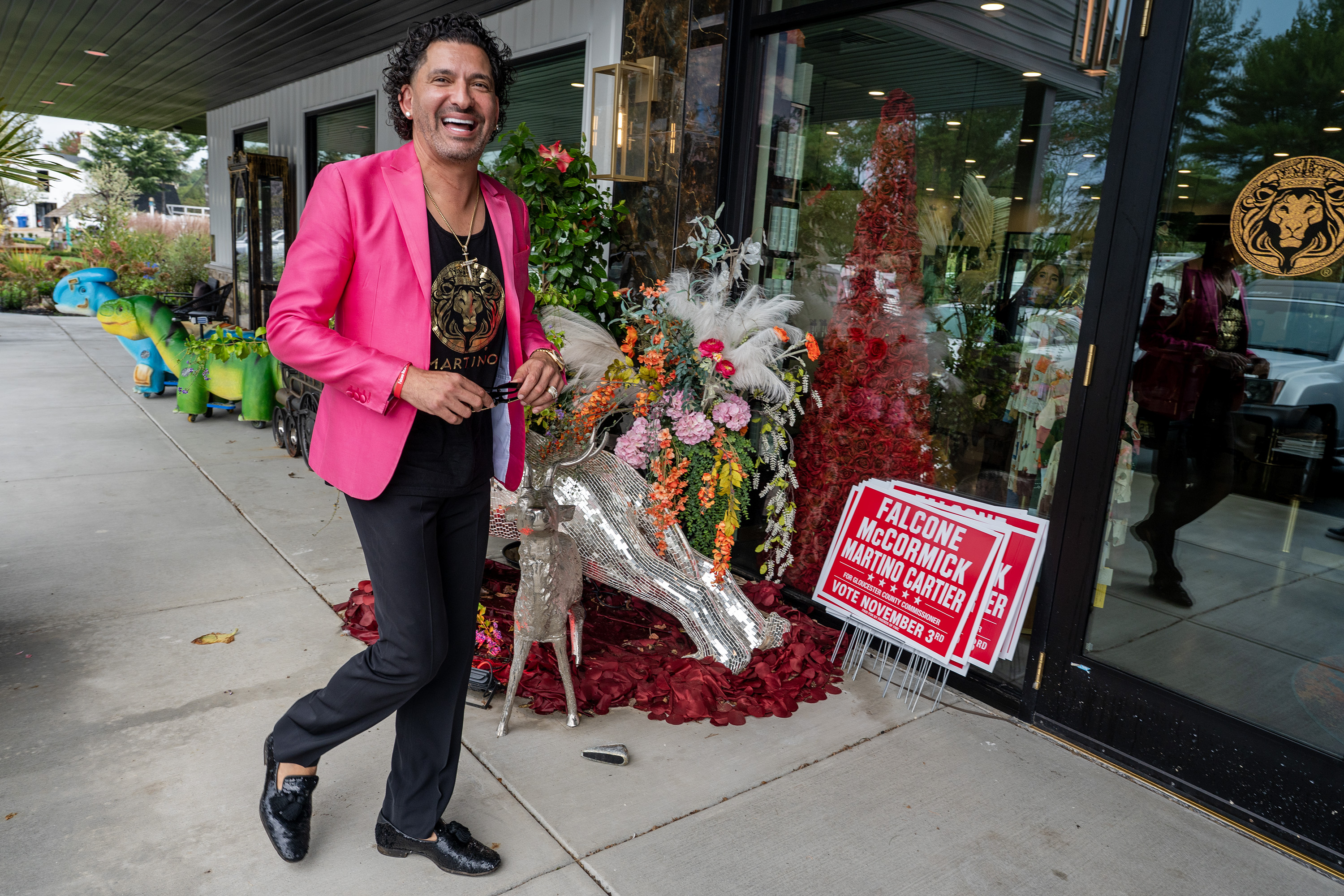
Campaign yard signs for celebrity hair stylist Martino Cartier’s slate are seen outside his salon, Wednesday, Oct. 14, 2026.Tom Gralish / Staff Photographer
Republicans: Martino Cartier, Barbara McCormick, and Katherine Falcone are running in hopes of ousting the three Democratic commissioners up for reelection.
Cartier, 51, is a celebrity hairstylist who runsthe nonprofit Wigs and Wishes. He has faced scrutiny over controversial comments on his Christian podcast, past legal issues, and issues with his charity. Before launching his campaign, he had been embraced by local Democratswho celebrated his charity and lauded him as a “hometown hero.”
Cartier said in an interviewthat if elected, his priority would be seeking counsel on how to fire Gloucester County Democratic Committee chair Steve Sweeney as county administrator and Michelle Coryell as deputy administrator. He echoed criticism from sitting Republican commissioners about Sweeney’s high salary, which Democrats have defended in part because of his extensive experience in government as former state Senate president. Sweeney has a five-year contract with the county.
Cartier accused the county of having a “hostile work environment.”
“I would clean that up so that people are efficient and they want to serve the seniors with a smile, and they want to serve people with disabilities with a smile, and the veterans, and the list goes on and on,” he said in an interview.
McCormick, 63, retired from a career as a nurse and Air Force lieutenant colonel. She said she has advocated in Trenton and Washington for issues such as workplace violence and sepsis awareness and for veteran support initiatives.
“I believe responsible stewardship of taxpayer dollars must remain a top priority,” she said at the Gloucester County Chamber of Commerce forum. “I will work to strengthen our economy, support public service, and ensure county government operates efficiently and transparently.”
Falcone, 67, is the founder and CEO of SOS Group, a home construction company aimed at accommodating people with disabilities. She served on the Monroe Township Council from 2019 to 2022, and left the Democratic Party to become a Republican in 2022.
Falcone said in a video on Facebook that the Republican candidates are running on three main principles: transparency, affordability, and accountability.
Democrats running in Burlington County (from left): Surrogate Brian Carlin, Commissioner Randy Brolo, and candidate Jonathan Chebra.Courtesy Burlington County Democratic Committee
Burlington County commissioners
One or two members of the five-member board are elected each year for a three-year term.This year, voters will pick two candidates out of the four running on their ballots. Each candidate is on the ballot separately, but commissioners on both sides of the aisleare campaigning as a slate.
Democrats gained unanimous control of the board in the 2020 election after it had been fully Republican just a few years prior.
Candidates for county surrogate are campaigning with commissioner candidates. The county surrogate oversees the county’s Surrogate Court, which deals with wills, estates, and the appointment of guardians and administering adoption.
Democrats: Commissioner Randy Brolo is running for reelection and Jonathan Chebra is running to fill an open seat.
Brolo, 48, of Lumberton, is finishing his first term as a commissioner. He has had a career in the labor movement and currently works as an organizer for Laborers’ Local 172, which represents heavy and highway laborers as well as plant and manufacturing employees.
Serving kids and adults with special needs is particularly important to Brolo, as one of his kids is on the autism spectrum. He hosted an event in April called Autism in my Shoes that he said he wants to hold again.
He said he would like to provide support to municipalities that want to pursue affordable housing opportunities. He previously served on the Rancocas Valley Regional High School Board of Education as well as the Mount Holly MunicipalUtilities Authority and the Lumberton Planning Board.
“I was out in the community right away, day one on the job. … I’m always out and about,” Brolo said in an interview.
Chebra, 39, of Bordentown, is running for office for the first time because he wants to “give back in a new way,” he said in an interview. Chebra has served as the chair of the Burlington County Library Commission for the last seven years.
“Keeping Burlington County affordable, keeping taxes low, is job number one,” he said, noting that the county ranked lowest for average tax rate in the state.
He said he is passionate about supporting seniors as they age in the county.
Chebra works as vice president of regulatory and community affairs for Hackensack Meridian Health. He previously worked for the New Jersey Department of Human Services and the New Jersey Hospital Association. From 2012 to 2016, he workedas Democratic U.S. Rep. HerbConaway’s chief of staff when he was a member of the New Jersey Assembly, and before that he had roles in the U.S. Senate.
Brian Carlin, 65, who has served as county surrogate since 2022, is running for reelection alongside them.
Republican candidates in Burlington County (from left): James Melton, Dale McPeak, and Joseph Abegg.Courtesy Burlington County GOP
Republicans: Joseph Abegg and James Melton are hoping to bring Republican representation to the board, which is currently all Democratic. If they both are elected, they would still hold a minority on the five-member board.
Abegg, 67, of Eastampton Township, unsuccessfully ran for commissioner last year against Democratic Commissioner Allison Eckel, who serves as the body’s deputy director. He garnered a little more than 39% of the vote. He is a retired Air Force and commercial pilot and holds several volunteer positions.
The former Democrat said in an interview that he and Melton are determined to rein in spending in the county budget. They want to create a committee of “overseers” with various subject matter expertise and different political leanings to assess the county’s finances.
“I’m against all these warehouses and low-income housing areas unless the community wants it,” Abegg said. “But the real reason I’m in this is because I see the mindless overspending that’s going on. It’s causing our property taxes to soar, and our people can’t afford to live here.”
Melton, 58, of Burlington City, is a Navy veteran who works as a security officer and volunteers coaching underserved youth. He is a retired Camden city police detective and also worked as a corrections officer, yeoman petty officer, and drill sergeant. He said in a written statement that he wants “to prioritize the protection of our natural landscapes and farmland from overdevelopment.”
The two candidates are running on a slate with surrogate candidate Dale McPeak, who earned a spot on the ballot through a write-in campaign in the primary after being removed from the ballot. McPeak, 64, of Southampton Township, is a retired physical therapist.
“We want Joe and James — knowing that we’re not going to be the majority — to at least be the checks and balance in there,” she said.
Camden County Commissioner Director Louis Cappelli Jr. (left) and Commissioner Jonathan Young.Courtesy Louis Cappelli, Jr.
Camden County commissioners
Voters pick two candidates for county commissioner. Two Democrats and one Republican are running for two seats on the seven-member board. Commissioners serve three-year staggered terms, so only two or three run for reelection at a time.
Republicans are running one repeat candidate against two Democratic incumbents.
Republicans have not elected a commissioner — or, under the previous name, a freeholder — in Camden County since 1990.
Democrats: Commissioner Director Louis Cappelli Jr. and Commissioner Jonathan Young are running for reelection.
Cappelli, 64, a Haddonfield resident and attorney, was first elected to the board in 2003 and has been its director for two decades. In his county bio, he touts creating the Camden County Police Department as well as a decrease in violent crime, upgrades to the county’s 911 system, and the establishment of the Camden County Office of Mental Health and Addiction. He also was at the forefront of leading the community through the COVID-19 pandemic, according to his bio.
Young, 57, of Berlin Township, has been on the board since 2015. He is a political director for the Eastern Atlantic State Regional Council of Carpenters.
He serves as a liaison to the Camden County Department of Corrections, the Juvenile Detention Center, the county’s one-stop career center and workforce development board, and the Camden County Department of Sustainability, according to his county bio.
He also works closely with the Camden County Technical Schools Advisory Committee.
Republicans: Robert Stone, 66, of Stratford, has worked for 32 years as a 911 responder and emergency medical services professional, according to his biography on the Camden County Republican Committee website.
His biography says he has also held management positions in Fortune 500 companies but does not say which ones.
He describes himself as a “Full time Disney and Universal Studios expert” on Facebook, which says he owns Mouse Dreams Vacations, a company for planning Disney vacations.
He has unsuccessfully run for commissioner multiple times, including last year, and does not appear to have a platform available online. His recent Facebook posts do not mention running for office. He declined to speak Friday, saying he would only do an interview in person and is away on vacation until after the election.
Republican Shane Bernat, 38, a real estate investor who has also run in the past, was planning to run in the race but did not get on the ballot.