Category: South Jersey

  • Foster mom is charged with murder after police find body of missing 10-year-old girl in trunk of car in South Jersey

    Foster mom is charged with murder after police find body of missing 10-year-old girl in trunk of car in South Jersey

    The foster mother of 10-year-old Malayshia Allford, who had been missing from West Philadelphia for more than a week, was charged with murder after police found the girl’s remains inside the trunk of a car in South Jersey overnight, District Attorney Larry Krasner said Thursday.

    Police found Malayshia’s body in the back of a Lincoln sedan, parked at an apartment complex on the 1800 block of Laurel Road in Lindenwold, Camden County, late Wednesday night, law enforcement officials said.

    Malayshia’s foster mother, Carprice Williams, 36, has been charged with her death.

    Williams works as a teacher for the Philadelphia School District, according to payroll records.

    Police have questioned at least one other person who they believe helped her dispose of the girl’s remains, which were found in a car that belonged to one of Williams’ relatives, said the sources, who spoke on the condition of anonymity to discuss an ongoing investigation.

    Malayshia had been living with Williams on the 500 block of North Simpson Street for about two years, her aunt Yolanda Brown said in an interview this week. She was a shy, timid, smart little girl with three siblings, Brown said.

    The discovery marked a tragic end to a 10-day search in which dozens of local police, FBI agents, and community members scoured West Philadelphia and nearby wooded areas in hopes of finding the missing child.

    “She deserved safety. She deserved to be loved. She deserved a chance to grow up,” Police Commissioner Kevin Bethel said.

    During a news conference held by city officials, a small group of friends and family of the victim sat in two rows of chairs. One woman sat stoically in the back, her eyes slowly collecting tears. Two women in the front row embraced, one of them closely following Krasner’s words and nodding as he promised a “just and vigorous prosecution” in this case.

    Off to the left of the podium, a projector displayed a photo of Malayshia giving a peace sign with her hand, wearing a Lilo and Stitch shirt and pink glasses.

    State Representative Morgan Cephas hugs Malayshia Allford’s aunt Marketa Brown, at a press conference at Philadelphia District Attorney Larry Krasner’s office Thursday, Nov. 5, 2026, in Philadelphia. Monica Herndon / Staff Photographer

    In a statement posted on social media Thursday evening, Mayor Cherelle L. Parker said Malayshia’s death has “shaken me to my core.”

    “There are no words that I can employ to remove the unimaginable pain and suffering that the family of [Malayshia Allford] is experiencing with the tragic loss of their beloved daughter, sister, granddaughter, and loved one,” Parker said.

    “As a mother, this has shaken me to my core. I can’t stop thinking about this precious baby and the heartache and turmoil that her immediate village will endure,” the mayor said.

    “As a praying mayor, who wholeheartedly believes in the power of God’s strength. I pray that God will give the family a certain peace that passes all understanding to meet this moment,” she said.

    City Council President Kenyatta Johnson, in a statement Thursday, said the city must “take a hard look at the circumstances surrounding [Malayshia’s] disappearance and the systems entrusted with her care.”
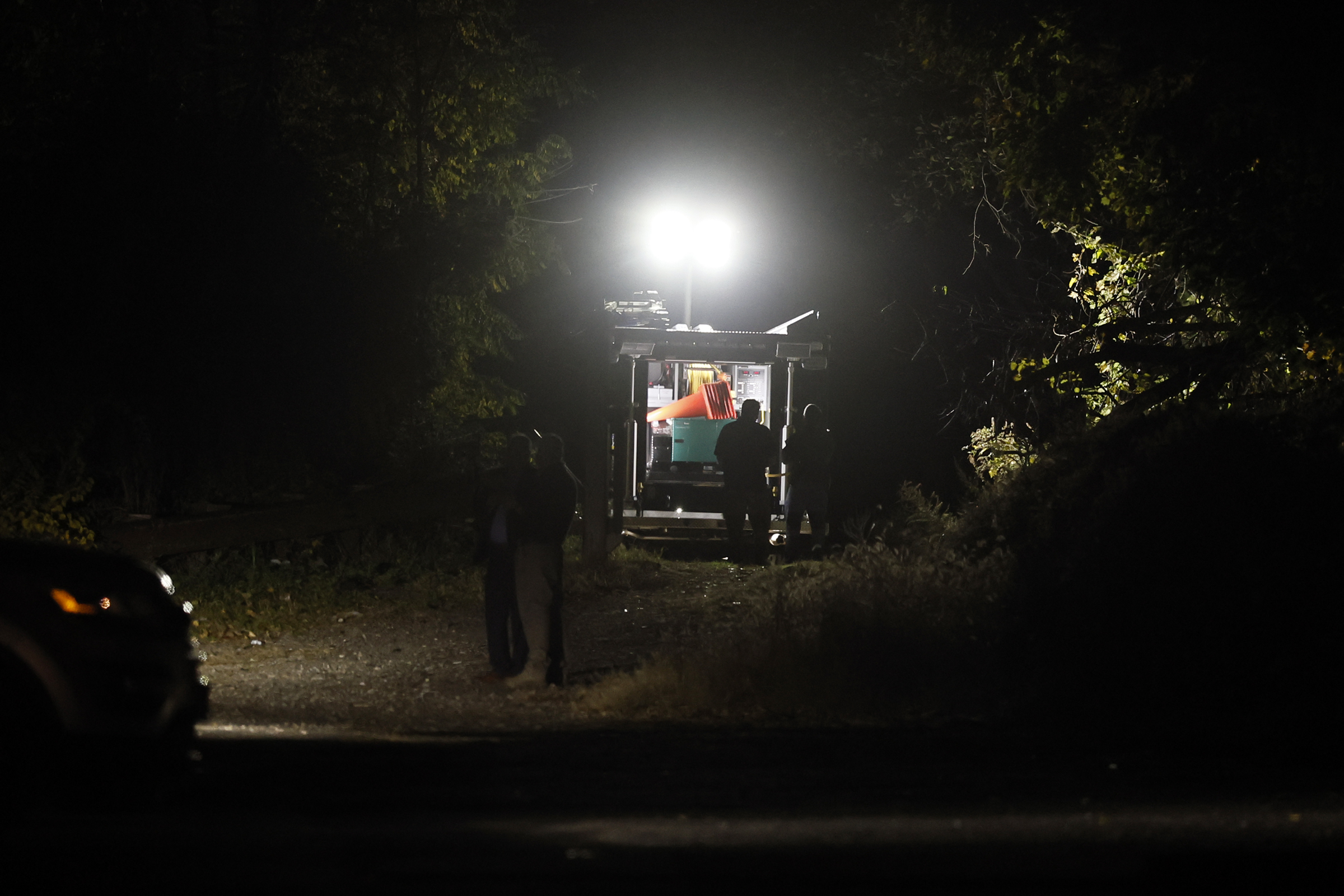
    Philadelphia police searched Cobbs Creek Park, near the intersection of Vine and Dagget Streets, Wednesday night in hopes of finding missing 10-year-old Malayshia Allford. She was not there. Elizabeth Robertson / Staff Photographer

    The search for the child began Oct. 26, after Williams told police that Malayshia left her Simpson Street home to walk to the bus stop for school that morning, but did not return home that afternoon, officials said.

    Brown, the aunt, said Williams had called her and said Malayshia’s biological mother had taken her — but Brown and police contacted the mother and did not find the child.

    Brown said she was told Malayshia did not attend school Friday, Oct. 23, or the following Monday.

    Williams did not report the child missing until the afternoon of Monday, Oct. 26, officials said.

    But law enforcement sources said there were inconsistencies in Williams’ statement and timeline of events.

    Assistant District Attorney Ashley Toczylowski said the last time Malayshia was seen alive was on video on Oct. 22 at her home.

    On Wednesday, authorities recovered video showing what appeared to be Malayshia’s body being removed from her home in a bag.

    Authorities traced the body to a vehicle and a person who provided witness evidence that led investigators around 11 p.m. Wednesday to Malayshia’s body in the trunk of a vehicle in New Jersey, Toczylowski said.

    Malayshia’s body was taken to the medical examiner’s office, where a preliminary examination determined that the girl died from blunt force trauma and the manner was homicide, Toczylowski said.

    Toczylowski declined to detail Malayshia’s injuries, but she did say that there were “instances of abuse” and that “items were used to carry out the abuse.”

    Williams was charged with murder, endangering the welfare of a child, tampering with evidence, abuse of a corpse, and related crimes, Toczylowski said.

    The investigation had intensified Wednesday night as officials surveyed Cobbs Creek Park believing she could be there, but did not find her.
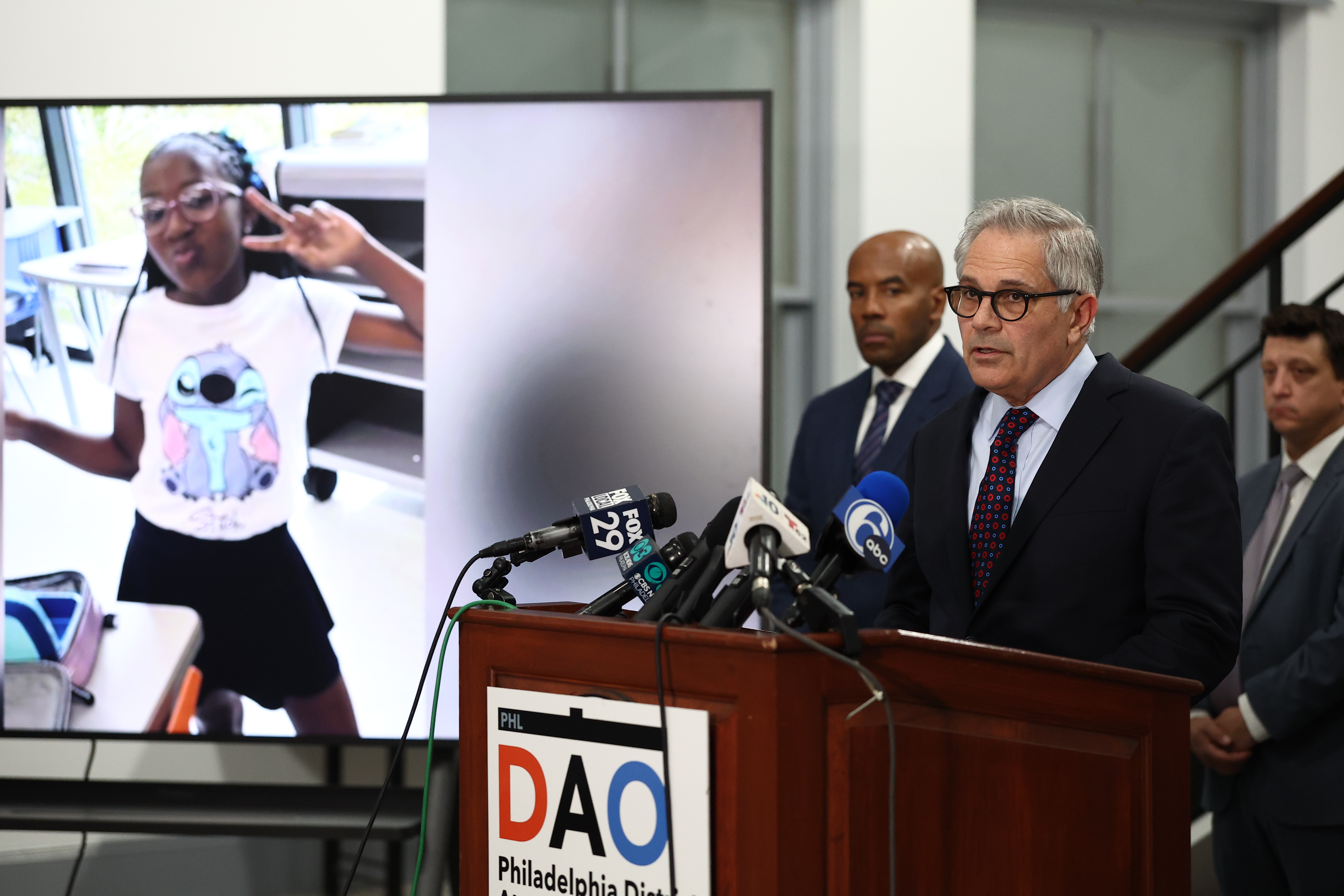
    District Attorney Larry Krasner addresses the media and family at his office Thursday, Nov. 5, 2026, in Philadelphia. Malayshia Allford, 10, went missing in late Oct. and her remains were recovered inside the trunk of a car in South Jersey overnight.Monica Herndon / Staff Photographer

    Then came the discovery in Lindenwold.

    “Every tip mattered, and your willingness to help made a difference,” said Wayne A. Jacobs, special agent in charge of the FBI’s Philadelphia Field Office.

    Krasner didn’t answer a question on whether other people may face charges in the case.

    Monique Braxton, spokesperson for the School District of Philadelphia, said in an emailed statement that the district “is heartbroken to learn of the tragic death of 10-year old Robert E. Lamberton student, Malayshia Alford. We wish to extend our deepest condolences and sincerest sympathy to her family, friends and classmates.”

    Braxton did not mention Williams and referred questions to the police.

    Arthur G. Steinberg, president of the Philadelphia Federation of Teachers, said in a statement that it was “beyond devastating that in her short time on earth, Malayshia did not receive the care and support that every child deserves. We thank the Philadelphia Police Department and law enforcement partners for the work they have done to seek accountability thus far, and for the work still to be done.”

    Steinberg added: “The PFT offers resources including counseling to members working in Lamberton School and throughout the District who are affected by this tragedy.”

    Staff writers Kristen A. Graham and Andrew Kitchenman contributed to this article.
    Correction: This story has been updated to correct the spelling of Malayshia Allford’s last name after law enforcement reports included an incorrect spelling.

  • Cape May Mayor Zack Mullock’s win over Jeff Van Drew is official, the Associated Press says

    Cape May Mayor Zack Mullock’s win over Jeff Van Drew is official, the Associated Press says

    Cape May Mayor Zack Mullock’s shocking victory over incumbent Republican U.S. Rep. Jeff Van Drew in South Jersey is official, according to the Associated Press.

    Van Drew conceded to Mullock two hours after the polls closed Tuesday, much to the surprise of supporters of both candidates. The AP officially called the race two days later, at 4:29 p.m. Thursday, with a difference of just over 7,000 votes and 2.5 percentage points between the two candidates.

    Mullock garnered 137,166 votes, or 49.2%, and Van Drew received 130,084 votes, or 46.7%, with 97% votes tabulated, according to the AP.

    It’s a spectacular flip for the red-leaning district, which spans from Gloucester County down to the Jersey Shore. The district’s electorate, as of Election Day, is nearly 35% unaffiliated, nearly 34% Republican, and nearly 30% Democrat.

    “The direction of our country and what Donald Trump has been doing, I just felt like we need a strong Democratic voice to show that there is another alternative, especially here in South Jersey,” Mullock said in an interview Wednesday.

    U.S. Rep. Jeff Van Drew announcing to supporters that he conceded the race at the Oar House in Sea Isle City on Tuesday.Elizabeth Robertson / Staff Photographer

    National analysts predicted the race would be solidly Republican and shifted its rating to likely Republican in the final stretch — not even viewing it as lean Republican or a toss-up, let alone a Democratic win.

    But Mullock’s campaign felt the energy on the ground in the months leading up to the election across the political spectrum.

    The election was largely a referendum on President Donald Trump amid high gas prices and an unpopular war in Iran. But Mullock, a local mayor with deep roots in Cape May, was also a strong fit for the district, which also faced local hot topics like a massive data center.

    Van Drew was elected to the U.S. House as a Democrat in 2018 after holding local and state positions for years. He switched his party to Republican the following year and vowed his “undying support” to Trump. But with deep connections in the district himself, he warded off his 2020 challenger by almost 6 points and was reelected by double digits the last two cycles.

    He said in his concession speech that he will contemplates what’s next for him, but pledged to continue speaking about about his values of “American exceptionalism.”

    “His success is our success, so I do wish him well,” Van Drew said about Mullock in an interview right after his concession speech. “To wish him ill is wrong. It’s not faithful, and I am a Christian, and I try to be faithful. And also, it’s not productive. If he fails miserably, so does America. That’s not good.”

  • The city of Burlington will raise taxes for an open space and historic preservation fund

    The city of Burlington will raise taxes for an open space and historic preservation fund

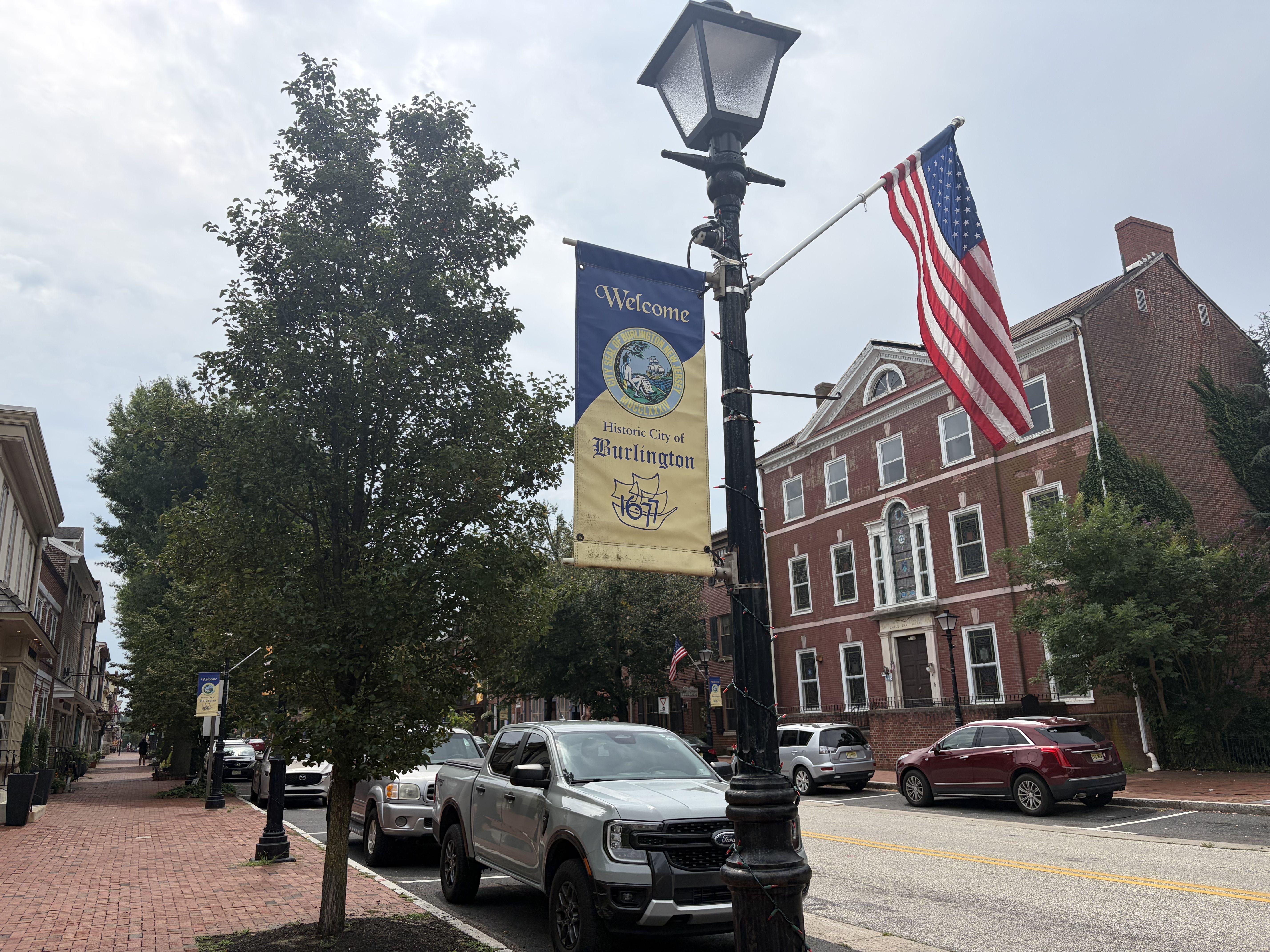
    The city of Burlington will raise taxes to form a trust fund for the preservation of open space and historic sites, voters decided Tuesday.

    The ballot measure passed with over 60% of the vote, or 1,372 voters, according to preliminary results from Burlington County as of Wednesday afternoon.

    Burlington City Council will raise property taxes up to 2 cents per $100 of assessed value to fund the trust over the next 10 years — about $20 to $30 for a home valued at the city’s average assessment. Voters will decide in 2036 whether to extend the fund.

    The money collected for the fund can be used only to acquire, develop, or maintain land and historic sites for recreation and conservation purposes within the city. The fund will primarily be used for the preservation and continued maintenance of the city’s historic properties, Burlington Mayor Barry Conaway told The Inquirer on Thursday.

    “I know asking taxpayers to fund something else is very difficult,” he said. “But on the eve of Burlington City’s 350th anniversary, we thought it was something that we needed to do to save some historic buildings that we have here in town.”

    Any property acquired through the trust cannot be sold or given away without a public referendum.

    City Council now must pass an ordinance to formally establish the fund and determine the tax rate, Conaway said.

    A 2013 property condition study documented problematic conditions at five prominent historic buildings, including the Hoskins House, the Carriage House, and the Quaker Schoolhouse.

    The repairs for those three properties were estimated to cost more than $1 million combined when the report was published.

    The buildings have largely continued to deteriorate in the years since as the city searched for a way to pay for the necessary work, Conaway said.

  • Glassboro planning board approves 220-unit apartment building with 8,208 square feet of retail space

    Glassboro planning board approves 220-unit apartment building with 8,208 square feet of retail space

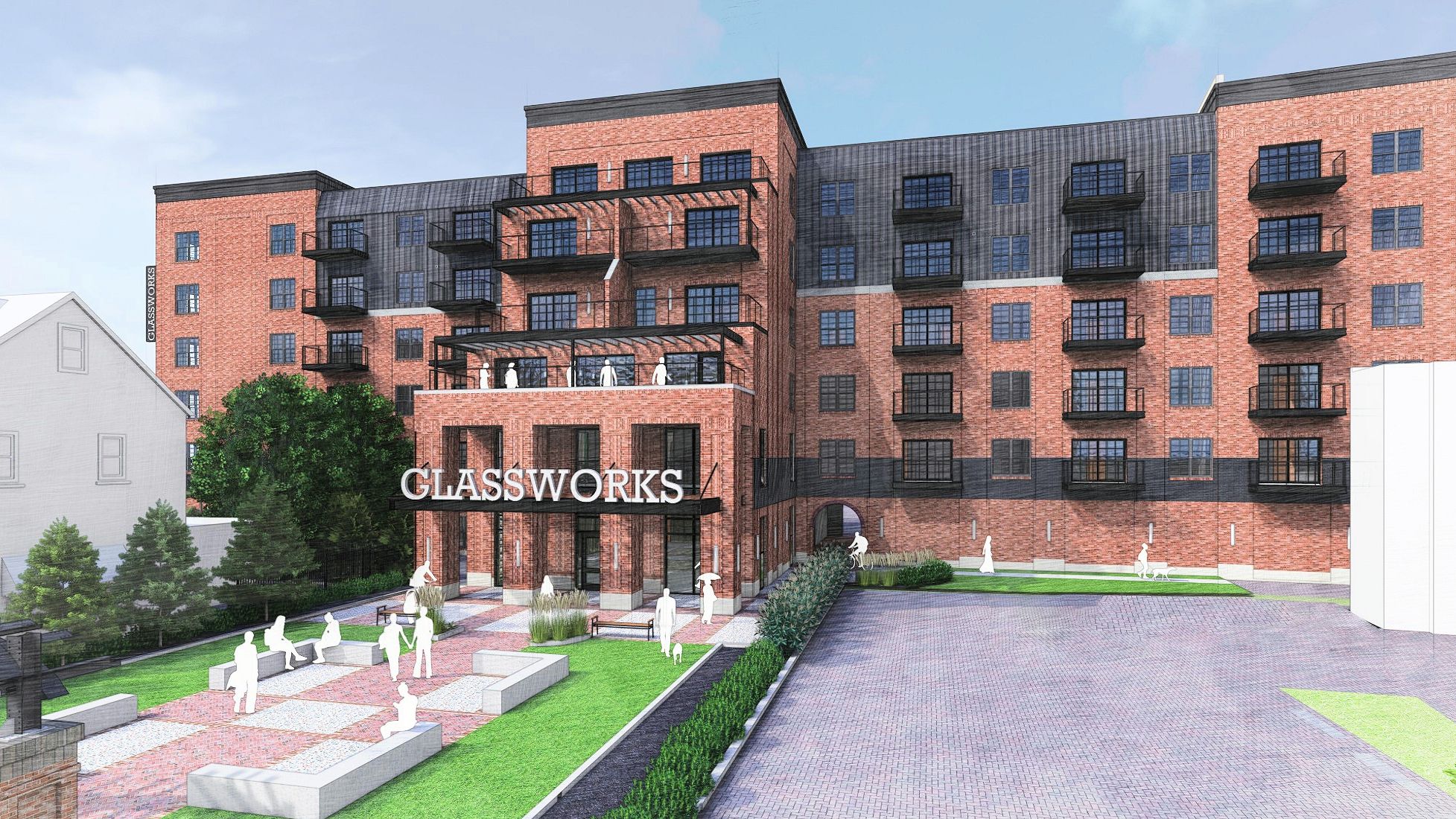
    Glassworks, a six-story, mixed-use building with 220 apartments facing Main Street in Glassboro, was unanimously approved Wednesday by the planning board.

    The project by Glassworks Urban Renewal LLC-Nexus Properties in the Glassboro Central Business District will be bounded by Main, East High, and Academy Streets and College Avenue. The parking lot, served by an Academy Street driveway, will be almost surrounded by three sides of the new building.

    The first floor of the project on the 3-acre property, where Whitney Glass Works once operated, includes 8,208 square feet of retail space, according to the plans.

    Development of the site is covered by a redevelopment plan adopted by Glassboro borough council in May. The developer estimated in application documents that it will be complete and occupied by 2029.

    Planning board engineer James F. Biegen, of Sickels & Associates Inc. of West Deptford, said in his review letter that the subdivision plan includes lots for the new mixed-use building, Angelo’s Diner, the Glass Museum, and the fire house. One lot will be held for future development.

    Glassworks Urban Renewal, based in Lawrenceville, said in its application that mixed-use buildings along East High Street will be demolished. The former Glassboro Library building also will be razed.

    The planning board action approved the developer’s preliminary and final major subdivision plan and the preliminary and final plan.

    70and73.com is a hyperlocal news site focused on South Jersey, including the communities of Cherry Hill, Evesham, Mount Laurel, Voorhees, Medford, Medford Lakes, and Moorestown.

  • The Pemberton mayor who charged at a resident last month has lost his bid for reelection

    The Pemberton mayor who charged at a resident last month has lost his bid for reelection

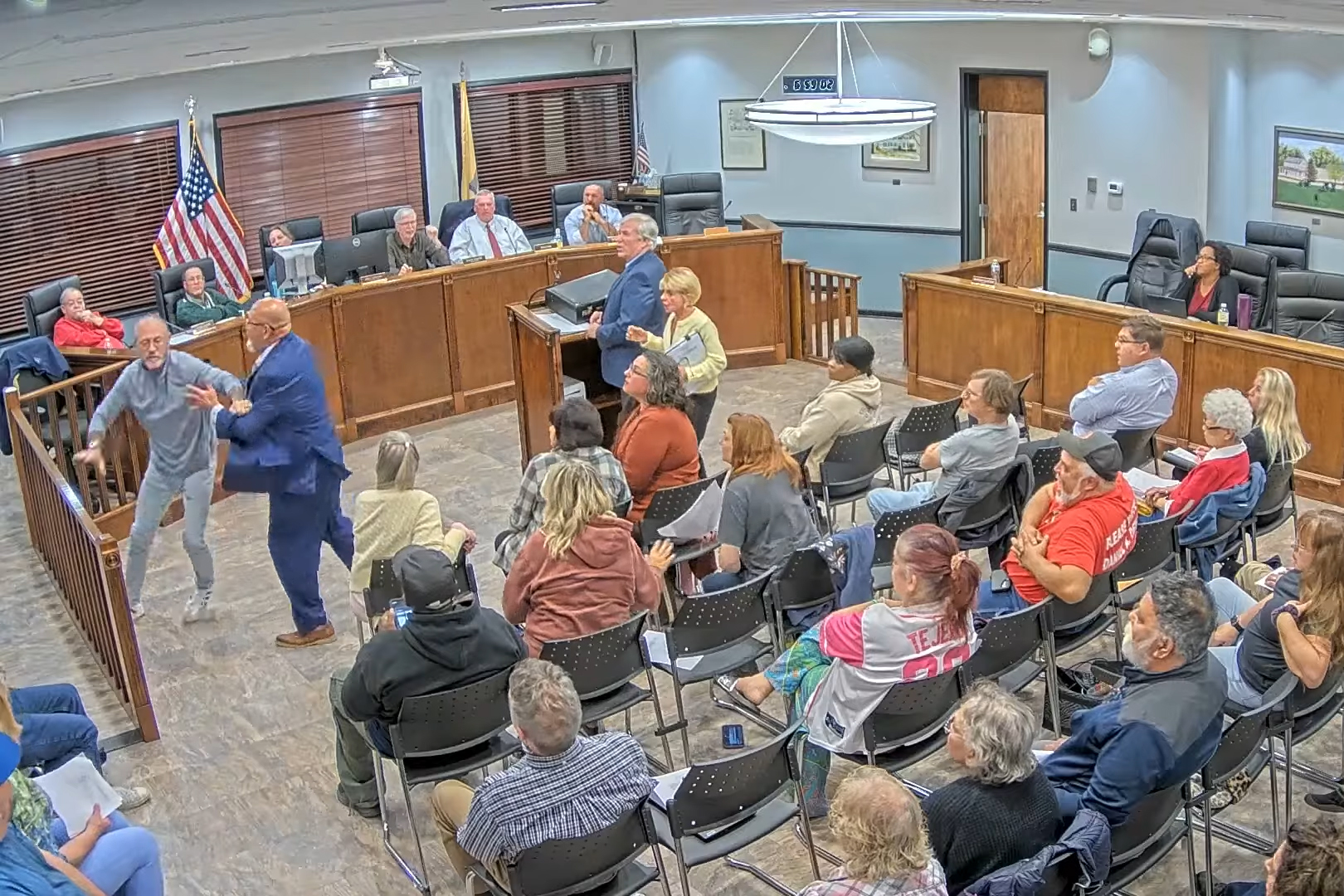
    Less than two weeks after making national headlines for his involvement in a near-physical altercation with a resident during a council meeting, Pemberton Township Mayor Matthew Bianchini was ousted by voters on Tuesday.

    The Republican received just 30% of the vote, or 1,983 votes, compared with Democrat Belinda Fontanez, who pulled in 3,998 votes, according to preliminary election results from Burlington County as of Wednesday afternoon.

    A late write-in effort from Republican Councilman Dan Dewey, which ramped up after Bianchini’s outburst, drew just 52 votes.

    Over 500 Pemberton voters selected a write-in or personal choice candidate.

    Bianchini was appointed mayor in January following the resignation of Jack Tompkins, who stepped down after multiple workplace sexual misconduct allegations.

    During the Oct. 21 council meeting, Bianchini charged at a resident who raised his middle finger toward the mayor.

    Bianchini’s wife, Nicole, later tried to explain her husband’s actions on Facebook, stating that he was acting as a protective father after the resident antagonized him and his family, who were also sitting in the audience.

    Bianchini made no mention of the incident in a Facebook statement Wednesday congratulating Fontanez on her win.

    “Campaigns are intense, emotional, and testing journeys. There are moments we look back on with pride, and moments that teach us humility,” Bianchini said. “Leadership requires learning from every chapter, I accept this outcome with an open heart and a deep respect for our democratic process.”

    “Serving as your mayor has been one of the greatest privileges of my life,” he added, noting that his commitment to Pemberton Township “remains unchanged.”

    He did not immediately respond to requests for comment.

    Meanwhile, Fontanez, a U.S. Navy veteran and former township code enforcement and zoning employee, released a lengthy victory statement Wednesday on Facebook.

    “Throughout this campaign, I made a commitment to you: Leadership with Integrity. Service with Humility. Government with Transparency,” Fontanez said. “Those were not simply campaign words. They are the principles by which I intend to lead.”

    “As we move forward, we will work to strengthen our neighborhoods, support our local businesses, protect our environment, invest in our young people, honor our seniors and veterans, and ensure that the voices of our residents are heard,” she said.

  • Collingswood voters reject $4.56 million school operating referendum

    Collingswood voters reject $4.56 million school operating referendum

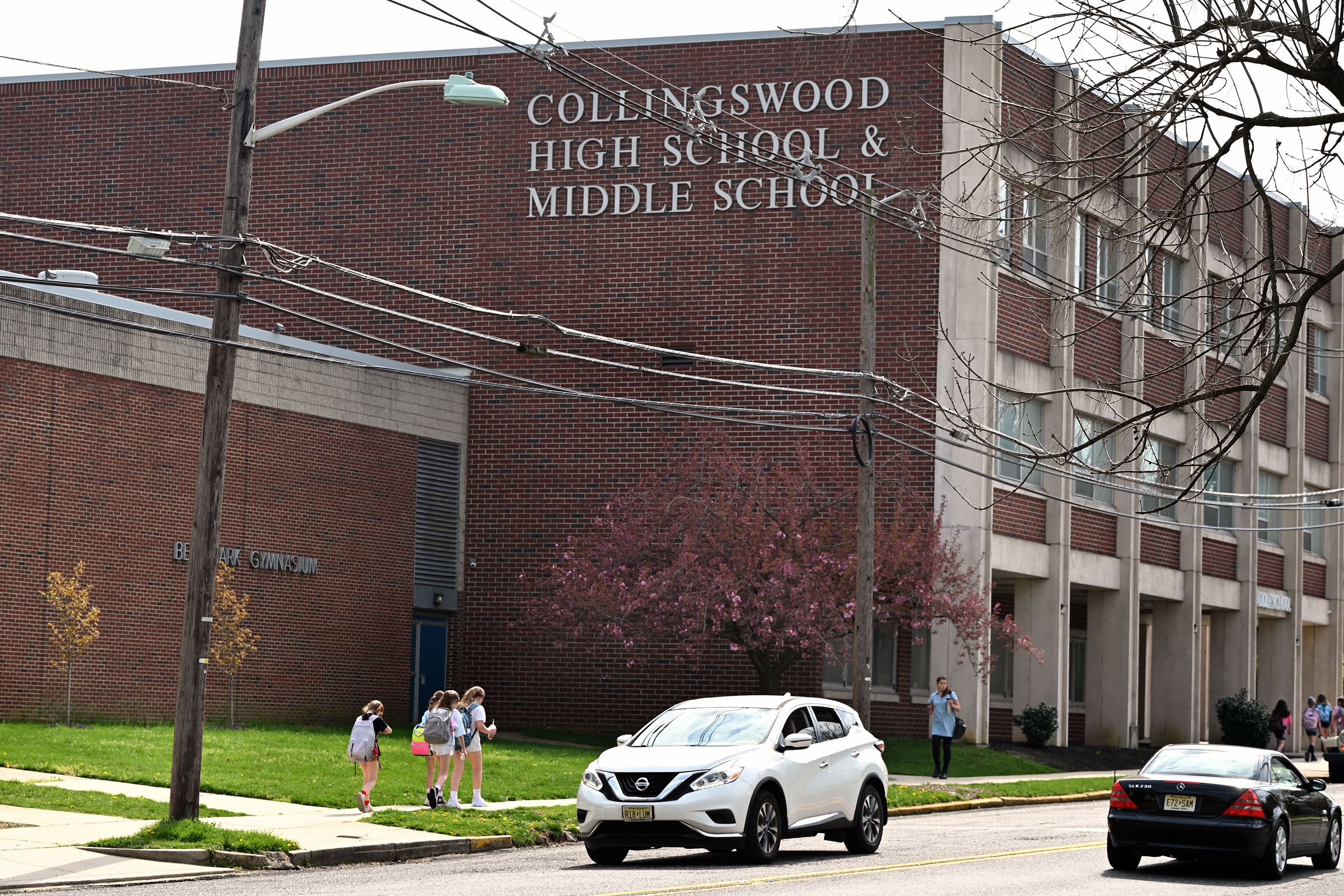
    Collingswood voters rejected a $4.56 million school operating bond Tuesday to pump more funds in the budget and keep schools afloat.

    It was the first bond of its type in the South Jersey school system. District officials said it was needed to close a structural deficit.

    In preliminary unofficial results, the Collingswood bond question was rejected 2,863 to 2,646. It would have added $1,324 annually to a tax bill for a home assessed at the borough average of $448,000.

    “We deeply appreciate every community member who engaged in this process and made their voice heard. While these initial results are not what we had hoped for, our primary focus remains unchanged: delivering a strong, supportive education for all Collingswood students,” Superintendent Fred McDowell said in a statement Wednesday.

    Without the funds, McDowell has said the district would likely face significant budget cuts, including reducing teacher positions, increasing class sizes, reducing elective courses and athletics, and possibly cutting student mental health services for the 2027-28 school year.

    For the current school year, Collingswood raised taxes, cut positions, closed a school, and consolidated its middle school and high school campuses to help bridge a $3.3 million budget gap.

    McDowell has sounded an alarm for another tough budget cycle next year and an expected budget deficit. He said Collingswood’s school tax level yields about $480,000 annually — far short of the $4 million needed to cover salaries, benefits, and state mandates.

    Residents had mixed feelings about the bond proposal.

    “I think in general I had to weigh the future of our schools with the current lack of affordability … but in the long term, with two kids, I need a school system not to crumble,” said Emma Rose, 40.

    Donald Nigro, a software engineer, and his wife, Patricia, an attorney, both voted against the referendum.

    “We don’t have confidence in the members of the school board to be fiscally responsible,” Patricia Nigro said. “I just felt like they need a little more scrutiny and a little more fiscal responsibility.”

    Collingswood was among four districts statewide that turned to operating bonds Tuesday to add to their budgets in the wake of declining state aid. The question enables districts to exceed the 2% property tax levy cap.

    Voters in Burlington Township approved a $567,000 operating bond, and voters in the Bordentown Regional School district passed an $86.1 million capital bond that will raise their property taxes.

    Elsewhere in the state, voters in Oradell in Bergen County rejected a $73,000 operating referendum to fund an armed law enforcement officer and educational programs.

    Burlington Township officials said the funds would be used to hire two additional elementary school teachers, add a music teacher and expand the music program, reduce class sizes, and expand middle school athletic programs.

    The approval, 3,033 to 2,179 vote, will mean a permanent increase in the district’s tax levy. It will add $50 to the annual tax bill for a home assessed at the township average of $234,975, said district spokesperson Liz Scott.

    Voters in the Bordentown Regional school district who reside in Fieldsboro, Bordentown City, and Bordentown Township approved their bond referendum 3,663 to 2,260.

    Superintendent James Altobello said the bond, one of the largest in the district’s history, would be used for renovations at all five district schools.

    The bond will add $588 to the average annual tax bill in Bordentown Township, $456 in Bordentown City, and $420 in Fieldsboro. The state will pick up $34.4 million of the costs.

    Voters in Washington Township in Burlington County approved a measure to reduce the school board from five members to three.

    Staff writer Lacey Latch contributed to this article.
  • Collingswood voters overturn the long-standing liquor ban

    Collingswood voters decided Tuesday to overturn a Quaker-era policy restricting the sale of alcohol in the borough, after more than a century as a dry town.

    The ballot measure passed with just over 60% of the vote, or 3,506 voters, according to preliminary election results from Camden County.

    The move represents a historic shift for a borough that has prohibited alcohol sales since the 19th century.

    “The outcome represents an important change for Collingswood, and the governing body is committed to approaching the next steps thoughtfully, transparently and in a manner that reflects the interests of the community,” the borough said in a statement Wednesday.

    It is not yet clear how quickly alcohol sales could begin. Local regulations will first need to be established to determine how many liquor licenses will be available, what types of businesses can apply for them, what they will cost, and how those businesses will be allowed to operate, according to the borough.

    To abide by the state-mandated population-based cap, Collingswood will be limited to either a single distribution license for a liquor store or four retail consumption licenses that permit restaurants or bars to serve alcohol. It is not clear which route Collingswood will take.

    It is also unclear how much revenue the borough could take in from the new licenses.

    Collingswood intends to award the licenses through a public bidding process and will establish a minimum bid “informed by research into recent successful license bids in comparable municipalities,” according to the borough’s statement.

    Annual licensing and renewal fees could generate between $1,000 and $10,000 each year, borough solicitor Caitlin Harney Norcia said during a commissioners meeting earlier this year.

    In addition to a liquor license ordinance, officials will also need to establish zoning regulations to determine where in town the licensed establishments can operate, the borough said. Right now, they are primarily focusing on the central business district, they added.

    “There’s a general sense that liquor can be a good thing, but there’s a concern that if it’s done in a way that’s unbalanced, it can also throw people off,” borough administrator Cassandra Duffey told The Inquirer in June.

    “The challenge is not to disrupt the balance of businesses that already exist here,” she said.

    Tuesday’s ballot referendum was the result of a concerted effort from Collingswood residents this summer to collect enough signatures to put the question in the hands of voters.

    One of the residents who voted in support of the measure was Emma Rose, 40.

    “We absolutely need liquor in this town,” said Rose, who does not drink but voted in support of the measure.

    “I don’t think businesses should be hampered from being successful in the modern market based on the outdated, outmoded, sort of strange puritanical restrictions,” Rose said.

    “It’s just not possible” for small restaurants to sustain themselves without serving alcohol, Rose said.

    Jill Leeb, a 38-year-old mental health therapist, also does not drink, but she said she wants to see if the liquor licenses can provide a revenue boost for the borough and its restaurants.

    “I don’t think it can do much harm to try it out and see what happens,” Leeb said at her polling place Tuesday. “And we could always walk it back if it doesn’t, but it’s important to enough people that why not try and see how it goes?”

    But longtime residents Donald and Patricia Nigro fear that liquor sales could be a slippery slope for the borough. They both voted against the measure.

    Collingswood’s enduring status as a dry town helps set it apart, they said, and has helped protect it from some of the pitfalls of other municipalities.

    When he moved to the borough decades ago, Nigro said, people were skeptical of his decision.

    “Back in the mid-’80s, Collingswood wasn’t as vibrant as it is now,” he said, attributing its growth into a highly desirable place to live, at least in part, to being alcohol-free.

    “If we have alcohol, it’s going to do nothing for the quality of life here, because when we want to drink at a restaurant, we bring a bottle,” he said. “It’s cheaper.”

  • Camden County voted for a tax hike to protect water, reduce flooding, and update its sewer systems

    Camden County voted for a tax hike to protect water, reduce flooding, and update its sewer systems

    Camden County voters on Tuesday overwhelmingly supported a one-cent increase to an annual tax protecting the county’s natural areas.

    The tax will help fuel a $400 million plan unveiled in July to improve water quality in the Cooper River, a tributary of the Delaware River that runs through Camden County, and other local rivers, lakes, and streams.

    In the county’s final unofficial returns as of Wednesday, 79% of Camden County voters who responded to the ballot question, or nearly 92,000 people, had voted “yes” to boosting the county’s Open Space Trust Fund.

    The tax increase will cost the average Camden County homeowner $1.83 per month. The vote increases the existing open space tax to $.03 per $100 of assessed property value, still one cent lower than in Burlington and Gloucester Counties.

    The county will start collecting that money in 2027, said Dan Keashen, the county’s public affairs director.

    “Now that the referendum has passed we can get to work improving and enhancing our community,” Keashen wrote in a text.

    The ballot question also puts dollars toward protections for the county’s drinking water sources, wetlands, parks, water recreation, and prevention of development in natural areas.

    Don Baugh, president of nonprofit Upstream Alliance, said the new tax will reduce how often his group has to cancel its free paddling and other educational trips through Camden’s waterways. It will also, he said, improve the ecosystem for aquatic life.

    “It will boost the quality of life and economic development of Camden County, where more people will say, ‘I love to live here,’” Baugh wrote in an email.

    County officials are still discussing which projects the levy will fund first, but Keashen said the increase will immediately support fixes for outdated sewer pipes leaking into the county’s waterways and improvements to Camden City’s combined sewer system.

    Those efforts would help reduce flooding in the city and eliminate liquid waste flowing into the Cooper and Delaware Rivers, Keashen said.

    “This referendum reflects a shared commitment to environmental stewardship, and preserving our natural resources for years to come,” wrote Jeffrey Nash, a Camden County commissioner, in a statement.

    In addition to the one-cent tax hike, the county plans to shore up those projects with state and federal funding, philanthropy, and other funding sources.

    Voters approved Camden County’s first open space tax 28 years ago with a referendum establishing a $2 million trust fund for environmental protections. Today, all 21 counties in New Jersey have an open space tax. Camden County raised more than $12 million through the tax last year.

    On Election Day, some voters at the polls supported the new levy, but others were concerned about the extra cost.

    Nicole Fahnestock, 52, has lived in Cherry Hill for nearly two decades. Her main concern at the ballot box was the cost of living.

    “I voted ‘no’ because, honestly, I’m just tired of all the taxes,” Fahnestock said, noting that she has recently been impacted by property tax increases.

    But other Camden County voters, like Shawn Acosta, said they were willing to pay a little more to help the planet.

    “I’m a kayaker, so I’ve noticed our waterways are getting cloudier and cloudier,” said Acosta, a 61-year-old Etsy shop owner and longtime Cherry Hill resident. “I grew up fishing and we ate the fish. I take my grandson fishing and can’t eat the fish. That’s a problem to me.”

    Rudolph Williams, director of climate and culture at the Philadelphia School District, also supported the measure.

    “Anything that’s going to increase the [water] purity needs to happen,” Williams said. “Can you really put a value on purification of the things that we need?”

  • The blue wave swept Van Drew | Inquirer South Jersey

    The blue wave swept Van Drew | Inquirer South Jersey

    Good morning, South Jersey.

    The anticipated blue wave came and, in some cases, ended up stronger than expected. It traveled down the Shore and toppled four-term U.S. Rep. Jeff Van Drew as his challenger, Democratic Cape May Mayor Zack Mullock, clinched his seat. For the latest election news, check Inquirer.com throughout the day.

    Outside of the world of politics, three new restaurants are set to join the local food scene.

    Plus, a $50 million affordable housing complex is coming to Voorhees, and more news of the day.

    — Taylor Allen (southjersey@inquirer.com)

    If someone forwarded you this email, sign up for free here.

    Last night’s shocker

    After the polls closed but before the Associated Press called the race, Jeff Van Drew conceded.

    It’s a surprise victory for Zack Mullock and a major upset for Van Drew.

    South Jersey’s 2nd Congressional district leans toward the right and analysts predicted Van Drew would retain his seat from the beginning.

    As the election drew closer, the race garnered more attention and was placed on the Democratic Congressional Campaign Committee’s “districts in play” list last month. In the final stretch, Mullock had DNC Chair Ken Martin and Gov. Mikie Sherrill campaigning with him.

    The Inquirer’s Aliya Schneider, Amy S. Rosenberg, and Sean Collins Walsh have the story.

    In related politics news: Democrat Rebecca Bennett defeated Republican incumbent Tom Kean Jr. for New Jersey’s 7th Congressional District seat. It was considered one of state’s key races Democrats eyed to help take control of the House.

    Stay tuned for the results of local ballot questions, such as the fate of Collingswood’s liquor license ban, multiple school district bond referendums, Camden County’s ask to increase its open space tax to improve waterways, and more.

    New month, new food options

    November has arrived with a new slate of upcoming restaurant openings.

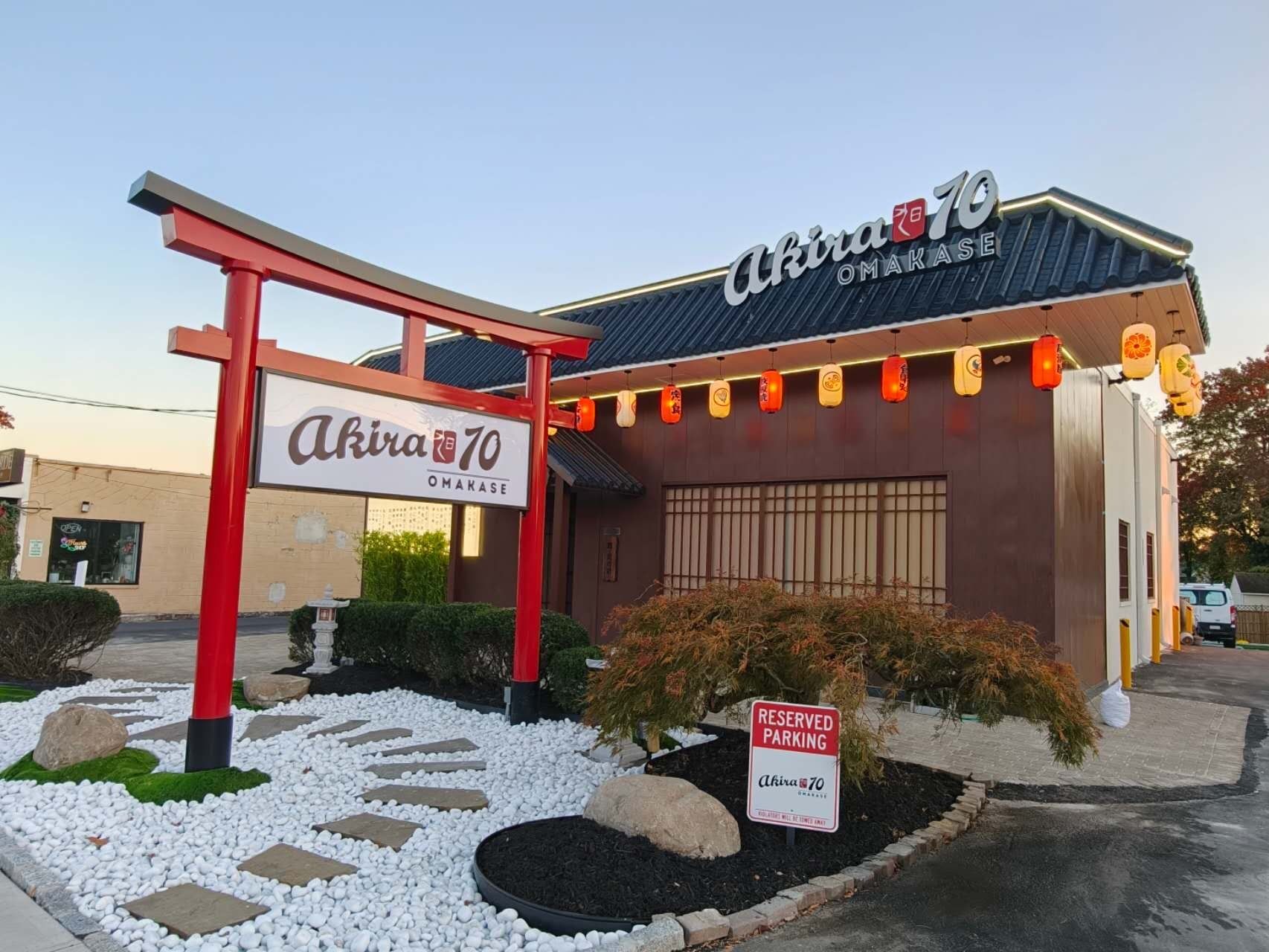
    🍣 Akira70 is set to open its doors in Cherry Hill either at the end of this month or the start of December. The Japanese restaurant will offer a 10-seat omakase counter and a chef’s-table experience. The owner also runs Akira Sushi in Voorhees and Moorestown.

    🧁 Magnolia Bakery, the New York-based company known for its cupcakes and banana pudding, is expected to welcome customers who have a sweet tooth to a franchise shop on Nov. 17 in Mount Laurel.

    🍕 Pizzeria Cusumano in Collingswood is a new venture from Sal Cusumano, who comes from a legacy of pizza makers. His family is known for the Angelo’s shops in South Jersey. Expect New York-style pies by the middle of the month.

    Reporter Michael Klein has the full list of restaurant openings coming to the region.

    What to know today

    • A pickup truck crashed into a school bus with two students onboard Tuesday morning in East Greenwich Township. The two students’ injuries are not believed to be life-threatening and the cause of the collision is under investigation, CBS Philadelphia reports.
    • The Voorhees planning board recently approved a $50 million affordable housing complex of 120 apartments. It will offer one-, two-, and three-bedroom units, 70and73 reports.
    • Contract talks between Jefferson Health and Horizon Blue Cross Blue Shield of New Jersey have reached in impasse, leading both to warn patients that Jefferson will leave Horizon’s network on March 1 if they fail to reach a new agreement.
    • Gov. Mikie Sherrill sent letters to port and terminal operators on Monday warning them to refuse Russian fuel or they will have to deal with penalties, the New York Times reports.
    • A teenager helped save a newborn’s life in Tuckerton using CPR skills she learned in a class two days before, according to NBC10.
    • Residents or those who commute through Camden should be mindful of five roadwork projects throughout the week, two of which are on Haddon Avenue. Be prepared for delays and to take different routes.

    🧠 Trivia time

    Which band named an album after the Palace Of Depression, the roadside attraction in Vineland?

    A) Low Cut Connie

    B) Cosmic Guilt

    C) Japanese Breakfast

    D) The Wonder Years

    Think you know? Check your answer.

    What we’re …

    🌲 Creating: The experience of camping in the Pine Barrens — without actually staying overnight.

    🖖 Remembering: In light of his passing, that time Patrick Stewart starred in a sketch on The Late Show with Stephen Colbert with Gritty.

    🎧 Listening to: The latest episode of unCovering the Birds that gives a closer look inside the Eagles’ problems, big and small.

    🧩 Unscramble the anagram

    Hint: A large troll

    BUSY GRIT

    Email us if you know the answer. We’ll select a reader at random to shout out here. Cheers to Dottie Alexander, who solved last Wednesday’s anagram: Mischief Night. The evening before Halloween is known as Mischief Night and is usually celebrated with vandalism. The term is commonly used in New Jersey, Philadelphia, and Delaware.

    🏡 On the market

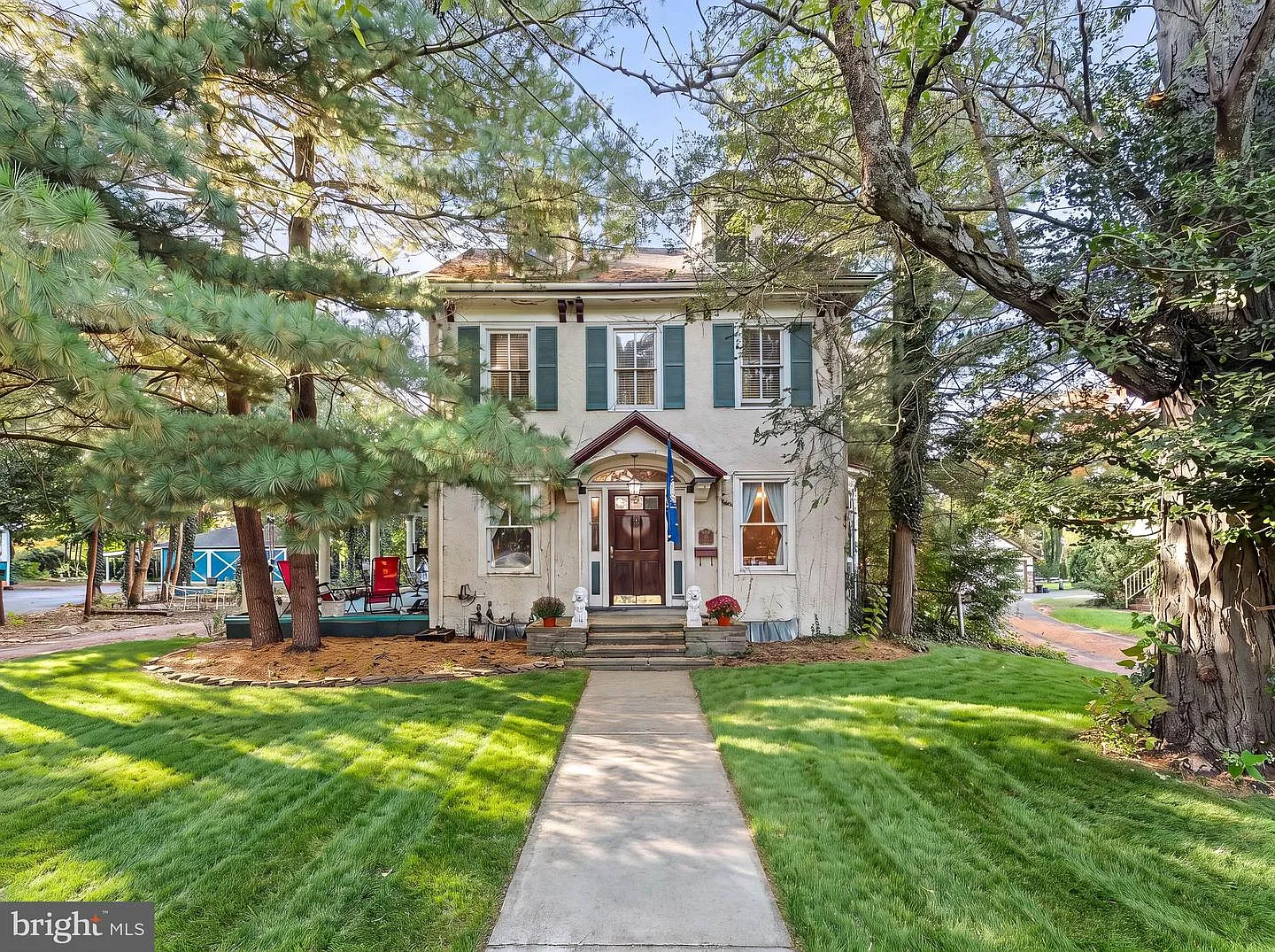
    A historic and New Orleans-inspired Colonial in Woodbury

    Built in 1880, the highlights of this four-bedroom home include its original hardwood floors and French doors, a clawfoot bathtub, and a stone wood-burning fireplace. A spacious three-season balcony offers views of the mature trees on the property.

    Outside of the three-level house, there’s a covered porch, a fenced backyard, and a detached garage.

    See more photos of the property here.

    Price: $400,000 | Size: 2,432 SF | Acreage: 0.33

    Have a good one. 👋🏽

    By submitting your written, visual, and/or audio contributions, you agree to The Inquirer’s Terms of Use, including the grant of rights in Section 10.

  • South Jersey shocker: Four-term GOP U.S. Rep. Jeff Van Drew concedes to Democrat Zack Mullock

    South Jersey shocker: Four-term GOP U.S. Rep. Jeff Van Drew concedes to Democrat Zack Mullock

    The blue wave has hit the Jersey Shore.

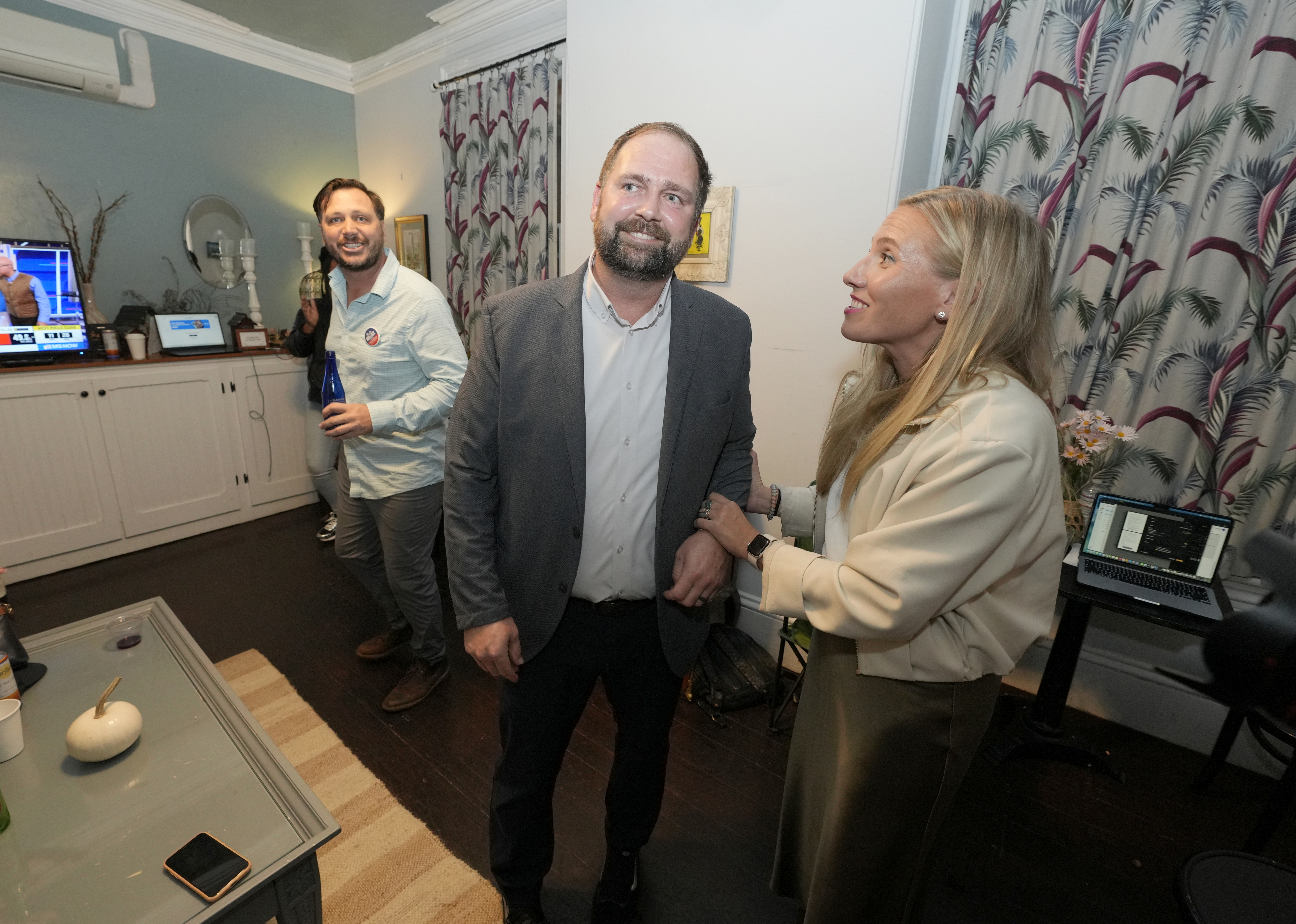
    In a major upset, Republican U.S. Rep. Jeff Van Drew has conceded to Democratic Cape May Mayor Zack Mullock in South Jersey’s 2nd Congressional district. Van Drew’s concession came even as the Associated Press was still reporting the race too close to call.

    The victory for Mullock, 41, is a major win for Democrats in a right-leaning district where Van Drew, 73, has been elected four times even though he switched his party to Republican in 2019, a year after being elected as a Democrat.

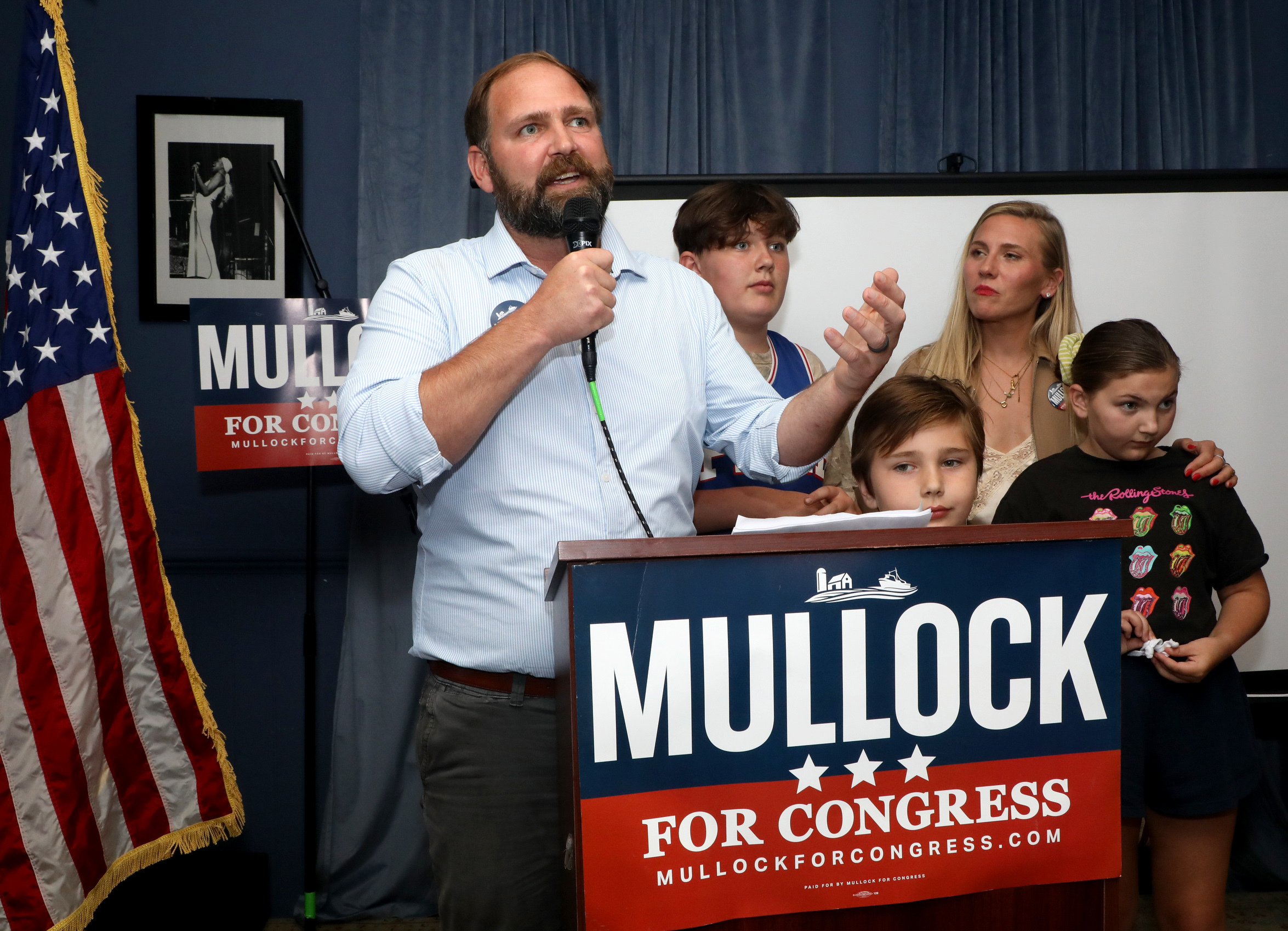
    “I am so humbled. I can’t believe this is happening,” Mullock said Tuesday, joined by his family and Gov. Mikie Sherrill who flew in on a helicopter to be present for the historic moment.

    “It’s a wave election. It can happen,” Van Drew said in an interview after conceding.

    He compared this year’s election cycle to the 1974 midterms, when Democrats racked up victories amid voter frustration with President Richard Nixon following the revelation of the Watergate scandal.

    “What I said all along is I’ll be fine as long as it’s not a Watergate, and it kind of is a Watergate,” Van Drew said. “There’s no Watergate issue, but it’s kind of like a Watergate where it’s larger than life and just swept people along with it.”

    Local Democrats saw the Jersey Shore mayor as their best bet to oust Van Drew but he was largely ignored by national players until the final stretch of the race. The Democratic Congressional Campaign Committee added the district to its ”districts in play” list just last month but did not prioritize it among more competitive races across the country and region.

    (function () {window.addEventListener(‘message’, function (e) { var message = e.data; var els = document.querySelectorAll(‘iframe[src*=”‘ + message.id + ‘”]’); els.forEach(function(el) { el.style.height = message.height + ‘px’; }); }, false); })();

    But Mullock’s victory indicates a blue tsunami even greater than the wave observers were expecting. U.S. Sen. Cory Booker (D, N.J.) declared at a get-out-the-vote rally that Democrats can turn their TVs off if Mullock wins his race “because you know we will have taken back the House.”

    Sen. Andy Kim, a Burlington County Democrat, also campaigned with Mullock, and in the final stretch of the race he was joined by DNC Chair Ken Martin, U.S. Rep. Jamie Raskin (D., Md.), and Sherrill.

    Van Drew has held elected positions in South Jersey for decades. He maintained support in the state even after switching his party from Democrat to Republican and vowing his “undying support” to President Donald Trump in 2019, one year after getting elected to the House. He defeated Amy Kennedy by almost 6 percentage points in 2020 and won reelection by nearly 19 percentage points in 2022 and nearly 17 points in 2024.

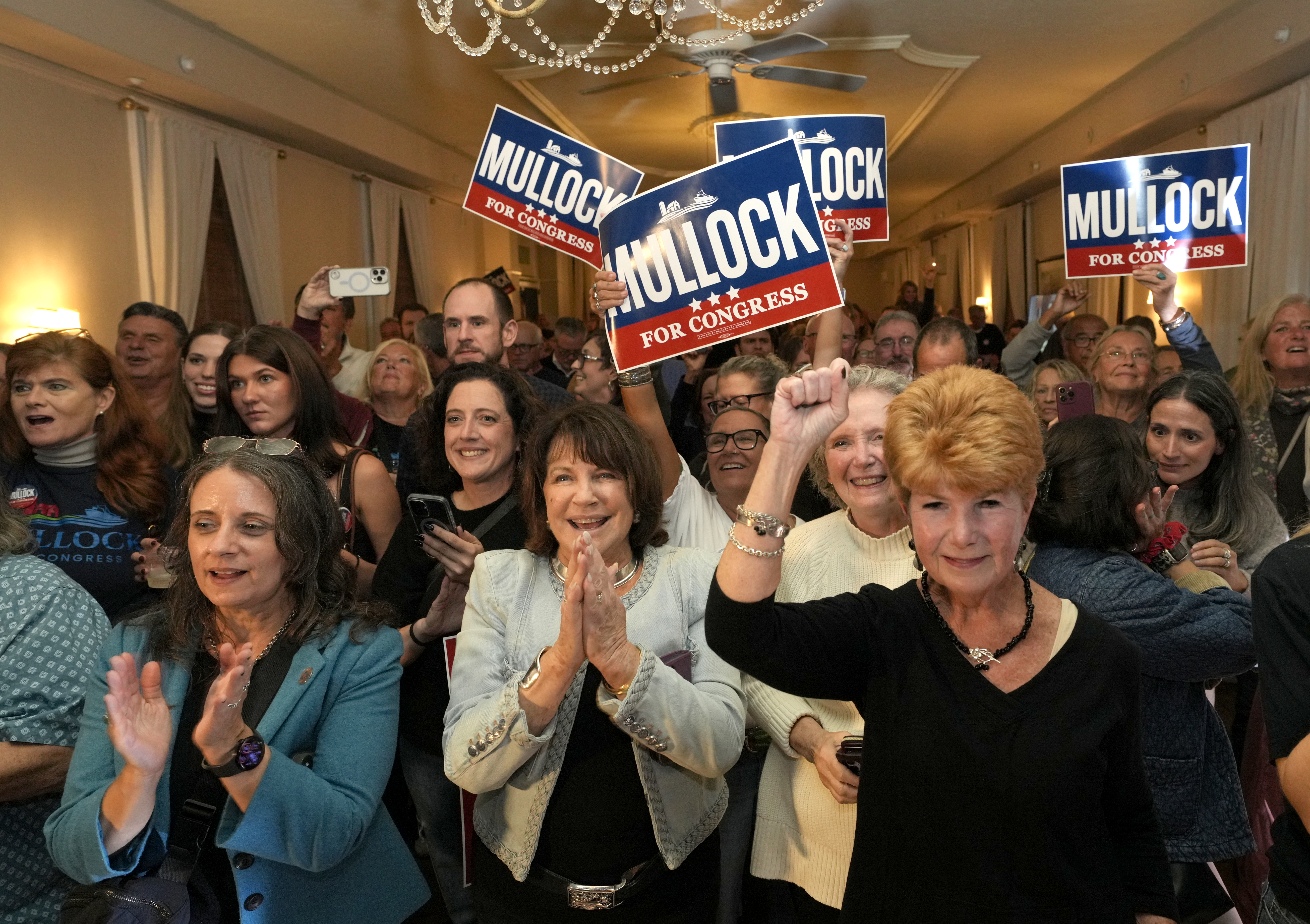
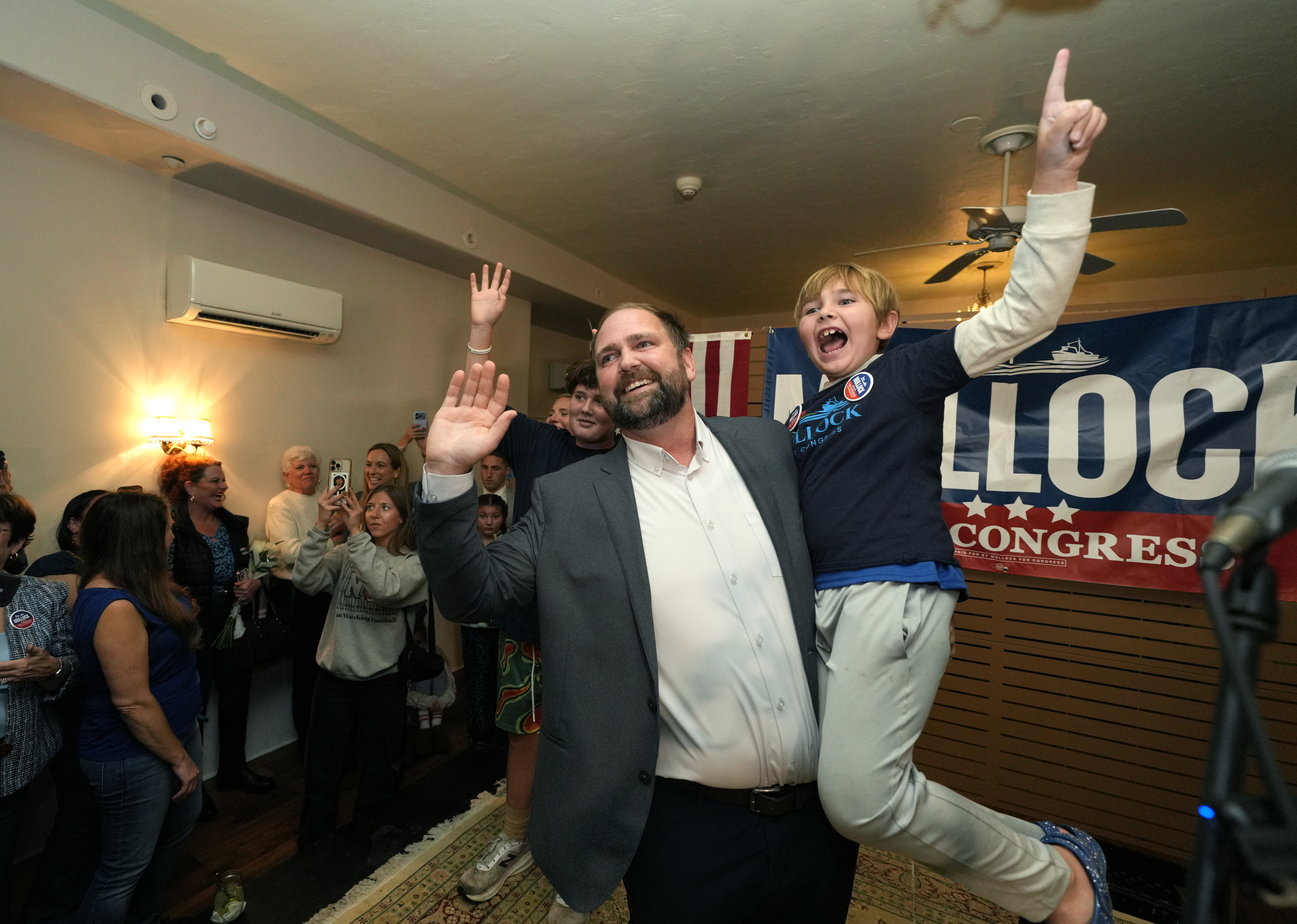
    Supports of Democratic congressional candidate and Cape May Mayor Zack Mullock cheer during an election night party at the Chalfonte Hotel in Cape May.Tim Hawk / For The Inquirer

    Galloway Township resident William Collier, 53, said he voted for Van Drew when he ran as a Democrat. The incumbent’s party change, Collier said, helped motivate him to vote for Mullock this year.

    “Van Drew doesn’t do anything for Jersey,” said Collier, a hospice worker who was interviewed while leaving work in Atlantic City. “He doesn’t do anything. He let us down. He was a Democrat, then he switched over to be a Republican. I can’t vote for Van Drew.”

    At Mullock’s results party, Karen Kurtz, 73, a resident of Cape May for 50 years, said Mullock’s victory was “amazing.”

    “We’ve gone out and went house to house and promoted him, and we are just over the moon that he has won,” Kurtz said. “Everybody was ready for a change. … It needed to happen.”

    One local issue that may have helped Mullock was the development of a controversial data center in Vineland.

    Irene Demaio, 68, said she can hear a constant hum from the data center in Vineland at her home on quiet mornings.

    “Someone I spoke to today, her brother lives even closer and has hearing aids, has to take them out, and still wear earplugs because of the humming noise,” Demaio said from a polling site at a fire station less than two miles away from the massive data center.

    Van Drew, whose district includes the center, has said he has no authority over the project. But Demaio said she doesn’t trust his word.

    “I think the politicians that let it happen need to go. Point blank,” she said. “They need to be out of office. Van Drew, specifically.”

    Dan Vandzura, 31, also had the data center front of mind on Tuesday — this year above other issues he would usually prioritize, he said.

    “There’s a certain set of issues that I might usually be inclined to focus on,” he said. “That one, definitely, I’ll say has risen higher than others. … I never thought data center would be the thing that’s a big deal, but here we are.”

    He declined to share who he was voting for.

    Mullock said in an interview last month that voters across the state are most interested in knowing whether he will “be a decent human being.”

    “I think it’s beautiful that people are willing to put aside some of their biggest issues for the greater good, but it also says how low the bar has gotten,” he told The Inquirer.

    “They have zero faith in the system, and they just think what’s happening right now is just outright corruption, and they just want good people to go in and fight it,” he added.

    Cape May is a nonpartisan government, and the South Jersey Democrat said he’s hired Republican city managers and has no problem working across the aisle. He’s touted local investments in his community and said he has kept taxes down.

    With his family, Mullock helped create the Harriet Tubman Museum and the Cape May Point Arts and Science Center. His family also owns the Cape May National Golf Club, where he has worked as vice president.

    He’s also a general contractor and serves on the Atlantic Cape Community College Board.

    Born and raised in South Jersey, Mullock and his wife, Justine, have three children.

    Mullock raised less than $1 million through Oct. 14 while Van Drew raised more than $2.4 million in the same time period. The Cape May mayor was also outspent in a four-way Democratic primary, which he won with nearly 40% of the vote.

    Mullock criticized Van Drew over his support of Trump’s One Big Beautiful Bill Act, which made large cuts to Medicaid. He also admonished the lawmaker for voting against bills calling for an end to the Iran war.

    “It’s been about fighting for the middle class for Social Security, for Medicare, for Medicaid and for affordable healthcare for all families,” Mullock said in his victory speech. “Yes, it’s about ending the war in Iran. It’s been about ending the tariffs that are causing all of our prices to skyrocket.”

    For some voters, national political concerns were top of mind.

    Margate resident Andy Slobotkin, 67, who owns a place mat advertising company, said he didn’t know much about Mullock, but was voting for him because “I know that I’d like some change.”

    “People are embracing a little bit of a change this election cycle,” said Slobotkin, a Democrat. “They need to send a message to the Republican Party that we were promised one thing and we got something else.”

    Staff writer Sarah Nicell contributed to this article.