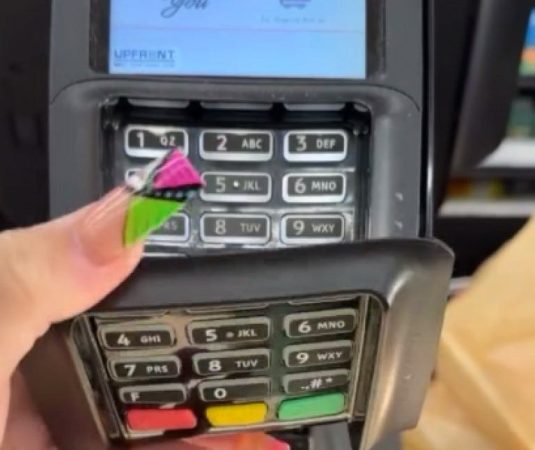
New Jersey and Pennsylvania are the latest states to tackle a growing and nationwide crisis: EBT skimming.
New Jersey isrolling out a roughly four-week pilot to distribute Supplemental Nutrition Assistance Program benefits through chip-enabled EBT cards this summer, the New Jersey Department of Human Services announced Monday.
Cumberland, Essex, and Mercer Counties, as well as anyone in the statewho has lost a card and is in need of a replacement, will be the first to get the new cards that do away with outdated magnetic stripe technology, which is vulnerable to scammers looking to steal people’s benefits.
“The new chip cards provide enhanced security to help prevent that kind of loss in the first place, keeping benefits in the hands of the people who need them,” Human Services Commissioner Stephen Cha said.
Next door, Pennsylvania has also moved forward with a chip card transition, setting aside $7 million in the latest budget for the change, which is due no later than Jan. 1, 2028. The federal government would cover the other $7 million needed for the transition as part of the current breakdown of how administrative costs are to be split.
The next steps are being worked out, and that will determine a distribution timeline, according to the Pennsylvania Department of Human Services. Implementation of the chip cards is slated to take six to eight months.
The switch to chip cards is seen as long overdue among government watchdogs and advocates of those whose benefits have been stolen. By sticking an inconspicuous contraption onto a point-of-sale terminal, scammers can copy magnetic strip card information and spend benefits in different states. The onus of protecting the benefits has largely fallen on recipients, who are required to download apps onto their phones that allow them to lock their cards until the moment they are ready to pay for their groceries.
“This is a basic security measure that will prevent our clients from losing millions of SNAP dollars to international organized criminals, and we hope that Pennsylvania can implement this change quickly,” said Louise Hayes, a supervision attorney at Community Legal Services, which has advocated for Pennsylvania to adopt chip cards.
Help for victims of this kind of fraud has also been limited, leaving churches and food pantries to step in. Stolen benefits were being reimbursed between October 2022 and December 2024, but that ended when Congress did not extend funding.
“Having benefits stolen, with no means to replace them, only adds further strain to already stretched households,” said Natasha Johnson, assistant commissioner of the New Jersey Division of Family Development.
With the federal government no longer replacing stolen benefits, states believe EBT skimming has gone underreported in recent years.
Exact numbers of thefts in New Jersey were not immediately available.
In Pennsylvania, there were at least 5,100 skimming cases in the first five months of 2026, accounting for $2.5 million in stolen benefits, according to the Pennsylvania Office of State Inspector General, which investigates the reports and seizes the skimming devices.
In February 2025, California became the first state to begin replacing the magnetic stripe cards. Oklahoma embarked on a chip card pilot this year and Massachusetts announced in April its own plans for a pilot. This week, New York Gov. Kathy Hochul announced new chip cards would be distributed in the state in early 2027.
Like other states with plans to adopt EBT chip cards, New York hopes to see instances of skimming radically decline with the overhaul.
Staff writer Gillian McGoldrick contributed to this article.
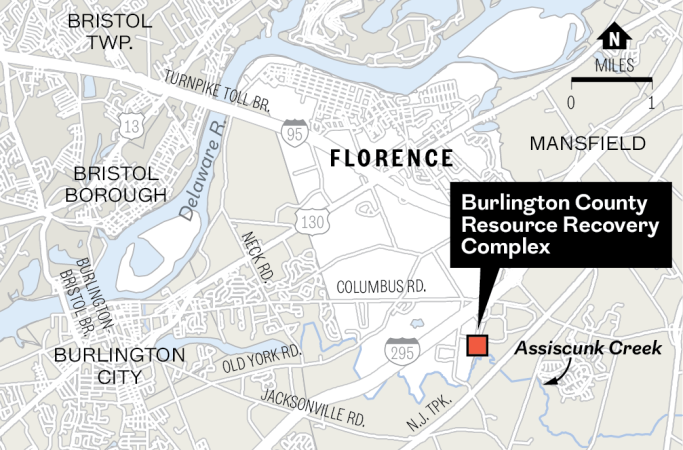
Burlington County officials are working to clean up a major wastewater spill at a Florence Township landfill that could have entered a local waterway.
Workers with a wastewater hauling company discovered a crack on the cap of a leachate cleanout pipe around 4 a.m. Tuesday, the county said. An investigation into the cause is ongoing.
Officials estimate that as a result of the break, between 5,000 and 25,000 gallons of wastewater from the Burlington County Resource Recovery Complex had spilled onto the ground and then spread into a detention basin with an outfall to the Assiscunk Creek.
“It’s possible some wastewater may have entered the water before the spill was contained; however, there are not anticipated impacts,” David Levinsky, a public information officer with the county, said Wednesday.
No nearby residences or businesses were impacted by the spill.
The Burlington County Department of Solid Waste and Recycling is working with the New Jersey Department of Environmental Protection to clean up the spill and remediate the area.
The immediate area where the spill occurred has been treated and the county anticipated completing all remaining remediation actions on Thursday, the county said.
The Assiscunk Creek is a 17-mile tributary of the Delaware River that is a popular fishing, kayaking, and birdwatching spot for South Jersey locals. Assiscunk Creek Park is a series of three preserves along the creek that are connected by walking and bike trails with sports fields, playgrounds, gazebos, and benches overlooking the creek.
Ember, a red fox Labrador working for the Gloucester County Fire Marshal’s Office, and another dog died four years ago when a local official allegedly left them in a hot vehicle in August.
Now, days after a similar case in Salem County resulted in charges, a Gloucester County commissioner is using the case to renew calls for justice.
Eric Campo, Gloucester County’s counsel, said the New Jersey Attorney General’s Office notified the county last week that its investigation into the 2022 incident was closed and returned to Campo’s office with no charges filed. He reported receiving an official letter from Andrew Wellbrock, assistant attorney general, on July 10. NJ.com first reported about the letter last week; Campo later shared it with The Inquirer.
Campo said Gloucester County first received notice that the office had closed the investigation on July 8, one day after the Salem County Prosecutor’s Office charged Salem County Sgt. Cody Henderson with two third-degree counts of animal cruelty resulting in death and more crimes after Henderson allegedly left two K-9s, Boomer and Rip, in a work vehicle for seven hours in May.
Boomer and Rip likely died of heat stroke, prosecutors said. Henderson has since been suspended, and his pay ceased as of Monday, NJ.com reported. A pre-indictment conference for the case is scheduled for Sept. 10 in Superior Court.
The Ember investigation did not move as quickly.
In fall of 2022, residents packed board of commissioners meetings to demand information on how Ember, who was donated to the county fire marshal’s office in 2020 by Joe Nick K-9 Training in Monroeville, had been allegedly left in Chief County Fire Marshal Shawn Layton’s vehicle to die on Aug. 12.
Meeting minutes from the time describe residents reading statements about Ember and calling for memorials. Those records do not indicate that county officials revealed what happened.
Layton, a former Mantua Township Committee member, still works for Gloucester County as chief county fire marshal, according to the county website. A Mantua Township Facebook post from December 2024 detailed that Layton chose not to run for reelection as a committee member to focus on his career.
A representative with the Gloucester County Fire Marshal’s Office reached Wednesday declined to comment on the county’s current K-9 protocols but said that the office no longer has any K-9s.
In 2023, Ember’s investigation was transferred from the Gloucester County Prosecutor’s Office to the New Jersey Attorney General’s Office following conflict-of-interest concerns. The investigation, at least publicly, has been largely silent since.
Chris Konawel, a Republican Gloucester County commissioner, said he was one of the first county officials to find out about the incident back in 2022, when he said an anonymous phone call informed him Layton had buried the dogs in his backyard.
Since then, Konawel said, he has sent about two dozen emails and letters to the attorney general’s office inquiring about the investigation. Some of those messages have received responses, he said, but none contained information about the status of the investigation.
Resident inquiries about Ember have waned over the years, too. Two years ago, a petition among residents demanding accountability slowed at 371 signatures, though some Facebook users are sharing the link again.
“But the incident in Salem County has shined a light back on this,” Konawel said.
The New Jersey Attorney General’s Office did not publicly announce the closure of the investigation into Layton, and an official with the office declined to say whether the investigation is over.
The official said the office is not required to provide notice to anyone, but may provide letters “to an entity that would be responsible for taking an administrative action.” It is unclear whether Gloucester County plans to take administrative action against Layton now that the state investigation has been passed back to the county, but the letter said the investigation’s end at the state does not mean Layton has immunity.
The Gloucester County Prosecutor’s Office declined to comment on the record, and several other Gloucester County officials did not respond to requests for comment.
Trail improvements are headed to Burlington County, though it will be years before they can be enjoyed by the public.
The county will be using nearly $500,000 in grant funding for feasibility studies and engineering designs for multiple trail projects.
Awarded at the end of June and funded by the nonprofit William Penn Foundation, the grants are just a fraction of the more than $4.5 million awarded for trail projects in New Jersey and Pennsylvania as part of the Delaware Valley Regional Planning Commission’s Regional Trail Program.
“Burlington County’s parks and outdoor spaces are among our most important assets, and we are excited by the opportunities to expand the County’s network of trails into additional areas,” Burlington County Commissioner Deputy Director Allison Eckel said in a statement announcing the funding. “These new trails will enhance our parks and open spaces and improve mobility throughout our county.”
What’s planned for Burlington County trails?
The majority of the grant funding, about $400,000, will go toward the engineering design costs for a four-mile trail segment through Mount Laurel from the Rowan College at Burlington County campus across Route 38 to the Melvin and Florence Levin Nature Conservancy off Centerton Road.
The grant covers about 40% of the total expected design costs for the project, the county said.
Burlington County intends to cover the remaining design costs in its 2027 capital projects budget and will likely contract with a design consultant for the project in early 2027, according to county officials. During the 12 to 18 months in which permitting work is being done, the county will pursue additional grant funding to cover construction costs, with the goal of breaking ground in 2029.
The remaining $85,000 in grant funding will pay for a feasibility study for an approximately nine-mile route on the Rancocas Creek Greenway Trail from Rowan College at Burlington County in Mount Laurel to Historic Smithville Park in Eastampton. The county will also study a Mount Holly-to-Medford trail spur to connect both communities’ downtown business districts.
The county expects to have a consultant team on board by the end of the year for both studies. The work is expected to take about six months to complete, the county said, with results likely to be published next spring or summer.
Both trails are expected to become part of the Circuit Trails network — a vast regional network of hundreds of miles of multiuse trails planned throughout South Jersey and Pennsylvania.
The county has other trail projects in the works, including a new four-mile trail linking Willingboro Lakes Park with Mill Creek Park, a 13-mile extension of the Delaware River Heritage Trail, and a connecting 3.25-mile extension of the Kinkora Trail.
Earlier this year, the county also completed an initial study to potentially create an additional 50 miles of trails through Mount Laurel, Moorestown, Evesham, Maple Shade, Medford, Tabernacle, Southampton, and Shamong.
Campbell’s has hopped on the protein trend with a new soup lineup boasting 20 grams of protein per can.
With enhanced macronutrient profiles on five soups, the Camden-based soup and snack brand has joined the ranks of food companies that recently launched protein-forward products. Chipotle debuted a high-protein menu in December, and Starbucks now offers protein coffee, matcha, and cold foam.
“As consumers increasingly seek foods that offer both great taste and meaningful nutrition, this innovative product line will bring excitement and drive consumers to the soup category,” Benjamin Crook, senior vice president of soupand broth, said in a news release.
In 2025, 70% of Americans reported trying to consume more protein, according to a survey by the nonprofit International Food Information Council.
Campbell’s new soup line includes Italian-style wedding, homestyle chickenand rotini, lemon pepper chicken, Mediterranean lentil, and southwest black bean flavors.
The updated soups containmore protein than the company’s original iterations. The existing homestyle Italian wedding soup has 7 grams of protein, and the basic chicken noodle has 3 grams.
The protein soup line is Campbell’s second release of the summer designed to appeal to “better-for-you” consumer preferences. In June, Campbell’s partnered with Banza to introduce its first gluten-free chicken noodle soup. Banza makes chickpea pasta, which has 50% more protein and three times as much fiber as traditional pasta.
In addition to soups, Campbell’s has a vast food and snack portfolio. Under its umbrella is Pepperidge Farm, the baking company that produces Goldfish and Milano cookies, and Snyder’s-Lance, which owns Cape Cod Potato Chips, Kettle Brand, and Late July. In 2024, Campbell’s acquired the parent company of sauce brand Rao’s.
The company reported in June that net sales decreased 4% in the third quarter of the 2026 fiscal year. In the meals and beverages segment, sales decreased primarily due to declines in U.S. soup, Prego pasta sauces, and V-8 beverages, but those were partially offset by gains in Rao’s.
Campbell’s had 13,700 employees in 2025, per the company’s annual report. In 2023, the company launched a $50 million upgrade of its Camden headquarters. The expansion was anticipated to be completed over three years, bringing 330 additional positions to Campbell’s Camden offices.
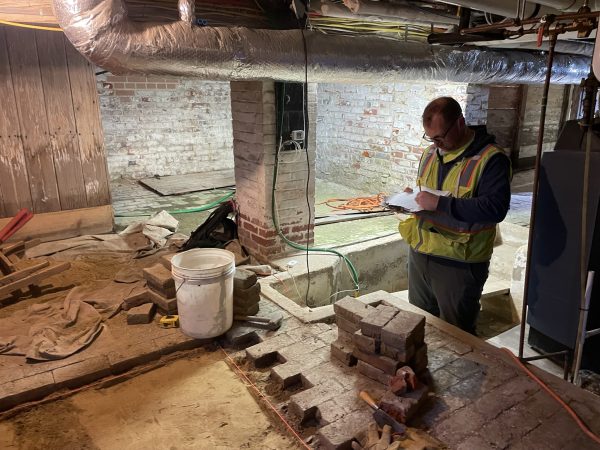
Archaeologists are nearly done digging at Croft Farm in Cherry Hill and have found an extensive catalog of items that have accumulated over thousands of years.
P.S. Thank you for your continuing support. We want your thoughts! Tell us your opinion of the newsletter by taking our survey or replying to this email.
After extensive digging at Cherry Hill’s Croft Farm, once a stop along the Underground Railroad, archaeologists are nearly finished with their analysis.
Their findings include hundreds of bones, thousands of ceramic fragments, and historic possessions of the Lenni-Lenape Indigenous people who once lived along the Cooper River.
Most items come from the past three centuries, but some go back as far as 4,500 years.
Eventually, the township could put some of items on display on the first floor of the property’s Kay-Evans House.
A new bus route is coming to Burlington County and is expected to start in September.
Last month, South Jersey Transportation Authority (SJTA) announced that South Jersey Connects, a free regional bus service, would launch routes in Atlantic, Camden, Cape May, Cumberland, Gloucester, Salem, and Burlington Counties. They all started on June 1 — except the Burlington route.
That’s because SJTA didn’t have the authority to operate in the county. Legislation was needed to fix the issue. The bill that brings Burlington County into SJTA wasn’t signed into law until a month after the program was announced.
Why wasn’t Burlington County part of the transportation agency before?
The Gloucester Township School District is under investigation by the U.S. Department of Education as federal officials focus on sexual misconduct by teachers.
Burlington County is working with the state Department of Environmental Protection to clean up a wastewater spill that was discovered early Tuesday morning at Florence’s Burlington County Resource Recovery Complex.
Camden County wants to spend $400 million to improve its various waterways. It hopes voters will approve a referendum to increase the county’s open space tax in November to help pay for the master plan over the next decade.
The genetic testing company 23andMe and more than 40 attorneys general reached a national $18 million settlement following a massive data breach. According to New Jersey Attorney General Jennifer Davenport, 150,000 customers were impacted in the state.
A new nonprofit is looking to borrow $617 million in tax-free bonds to buy the Marlton-based behavioral health company Advantage Behavioral Health. But the current owner, Clearview Capital, a private equity firm, isn’t stepping away from the South Jersey organization.
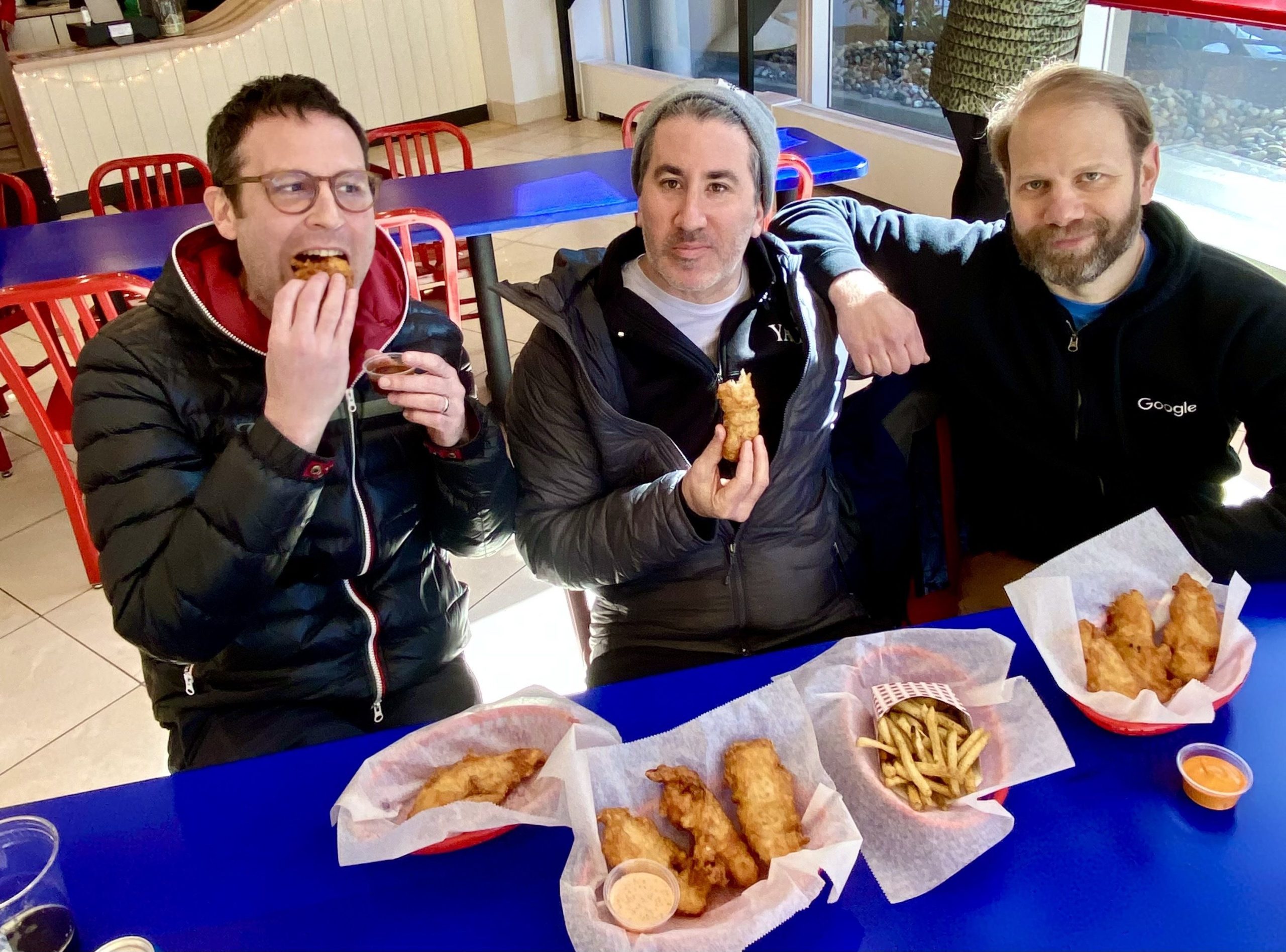
Several Federal Donuts in the Philly region are closing following a slowdown in demand of fast-casual lunches, its owners say. The independently owned one in Marlton will remain open.
🧠Trivia time
Which of the below is a former name of Rowan University?
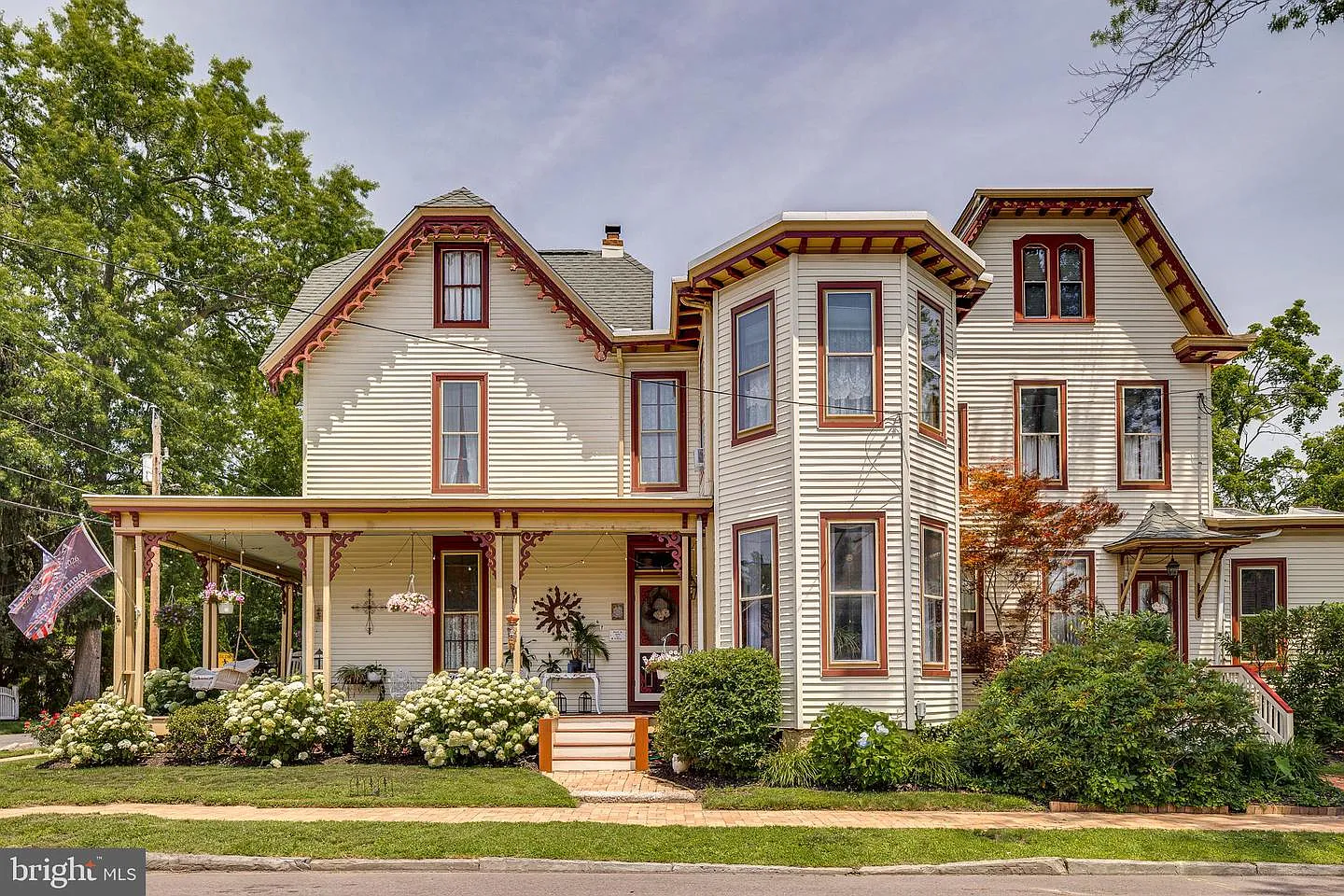
Built in 1871, the four-bedroom and three-bath Victorian has 10-foot ceilings, original hand-blown glass windows, and period millwork. On the outside in the front, there’s a wraparound porch. At the back of the house, the double lot allows for green space, a pool, and a new screened porch. There’s also a detached carriage house and workshop.
Burlington County was left behind when a new free shuttle bus for South Jersey launched in June. That is going to change in September.
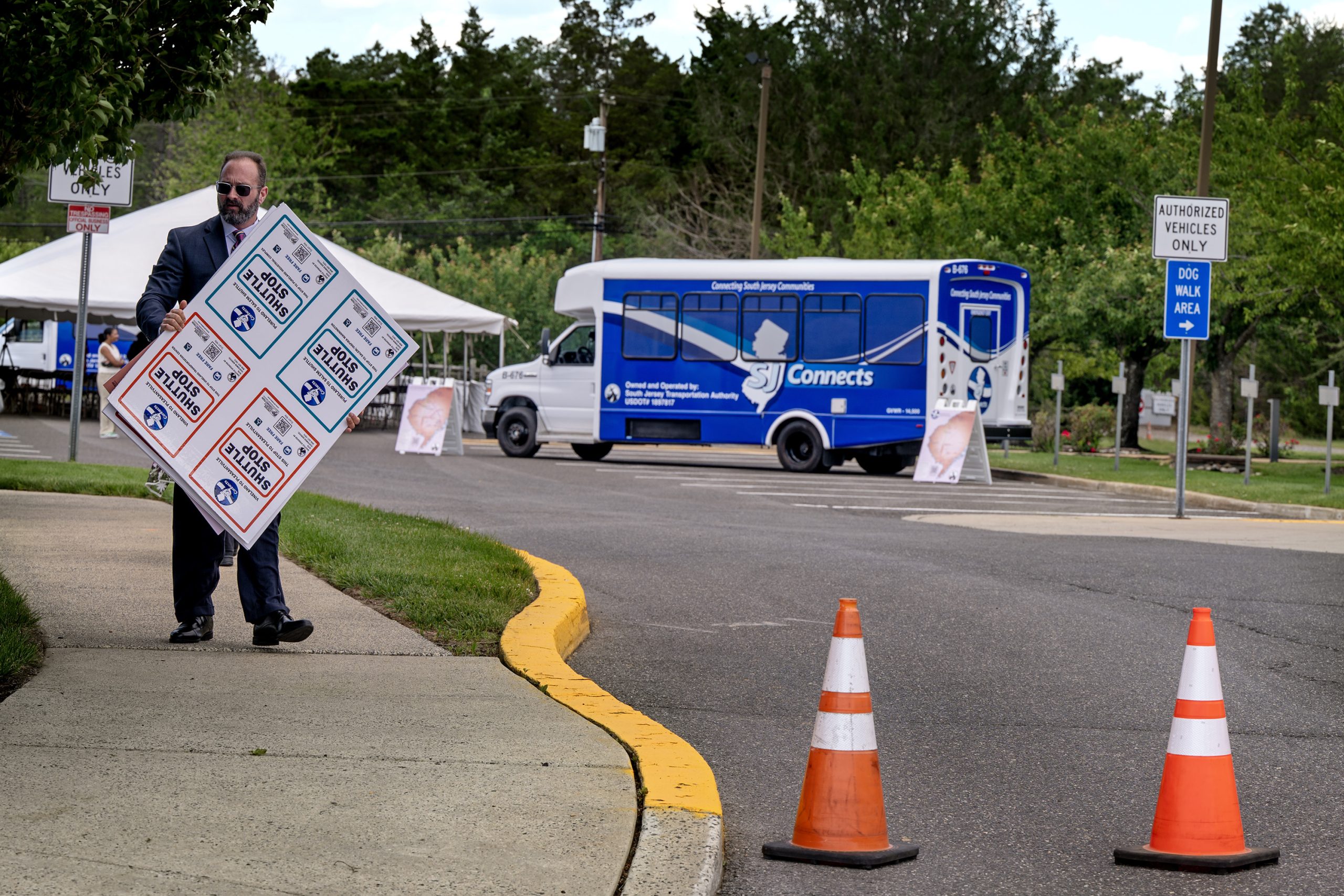
The South Jersey Transportation Authority (SJTA) announced June 1 that a free shuttle bus program called South Jersey Connects was launching that day with routes in all seven southern counties: Atlantic, Camden, Cape May, Cumberland, Gloucester, Salem — and Burlington.
But as the other routes launched, the promised Burlington County route never began. On the authority’s website, it is still marked as “coming soon.”
That is because until recently, the transportation authority was not actually authorized to operate in Burlington County. The county considered operating its own route for the program but ultimately agreed to have the authority run it instead.
But that required legislation.
South Jersey lawmakers had proposed bringing Burlington County into the authority back in the 2022-23 legislative session, but it was not until the South Jersey Connects program was about to launch this year that legislators had the wherewithal to actually hit the gas pedal in Trenton.
“We worked in partnership with our county commissioner, then the administration of Burlington County, and just realized we just couldn’t pull that off,” Sen. Troy Singleton, a Burlington County Democrat, said in an interview. “And speaking with the administration, they were like, look, we feel more comfortable running this through the SJTA, and we already had this legislative vehicle, so that’s when it took on a greater sense of urgency.”
The bill to bring Burlington County into the SJTA passed the Assembly in mid-May and was approved by the Senate just a few days before the June 1 announcement. But Gov. Mikie Sherrill did not sign it into law until the night of the budget deadline — a month after the program had been announced.
“The timing just didn’t work out,” Singleton said.
The Burlington route is expected to start in September, said Dominic D’Amico, director of transportation services at the SJTA, but a start date has not been announced.
The new shuttle’s path has been finalized but has not been shared publicly. D’Amico said in an interview that, like the other routes that launched June 1, it will connect with NJ Transit’s existing infrastructure and the region’s “eds and meds.”
Burlington County Commissioner Felicia Hopson said the new shuttle will enhance the NJ Transit River Line and help residents access jobs, appointments, stores, and schools.
“Stretching 820 square-miles, Burlington County is New Jersey’s largest county, making transportation essential but also challenging for residents without motor-vehicles,” she said in a statement.
The idea of South Jersey Connects emerged from the Chamber of Commerce Southern New Jersey’s advocacy after former Gov. Phil Murphy implemented the 2.5% Corporate Transit Fee on businesses to fund NJ Transit in 2024.
The project was granted $5 million for an 18-24 month pilot, and the future beyond that is uncertain. The South Jersey chamber unsuccessfully requested more money for the effort in this year’s budget, and proponents of the project are hoping to show that it is worth the investment during next year’s budget negotiations.
The summer launch so far has been a little slow, which is to be expected, according to D’Amico.
The authority has seen about 600 one-way trips in the first month of the program, he said, a number he expects to go up as people learn about the routes and as school starts in the fall. He wants to see the service hit at least 5,000 one-way trips each month.
“It takes some time to spread the word, for the marketing campaign to reach the social media platforms, getting brochures delivered to each facility — all those types of things factor into what is a normal slow start,” he said.
“It could be worse, it could be better,” he said.
Why wasn’t Burlington County part of the SJTA before?
Sherrill said in a statement that Burlington County deserves to be part of the authority as “a vital part of the region.”
The reason Burlington County has not been included in SJTA is not because anyone was denying the county is part of South Jersey. Rather, the agency was set up to replace an entity that oversaw the Atlantic City Expressway, which does not go into Burlington, said David Zappariello, the authority’s director of communications.
Along with adding Burlington County to the authority’s coverage zone, the new law allows Sherrill to appoint another member to its board. Members of the board represent the region as a whole, not their home county, Zappariello said, and there is already a Burlington County resident sitting on the board.
Assembly member Alex Sauickie, an Ocean County Republican who also represents part of Burlington County, voted against the bipartisan legislation because it did not also add Ocean County to the authority.
“I just don’t like it when you’re picking winners and losers for political reasons,” he said.
Assembly member Andrea Katz, a Burlington County Democrat, said none of the South Jersey Connects routes will touch her district, where she has concerns about transit deserts. But she is hopeful about public transit expanding in the region and the county getting a seat at the transit table.
“Burlington County now being included means that we’re going to get to have that voice,” she said. “We’re going to get to not be the one stuck in the middle there. We’re going to start to get our own access to public transportation.”
Archaeologists have nearly wrapped up their analysis of artifacts found at Cherry Hill’s Croft Farm, a historic Underground Railroad site where items have accumulated over thousands of years.
That catalog includes 6,300 ceramic fragments, hundreds of bones, and belongings of the Lenni-Lenape Indigenous people who once inhabited the land along the Cooper River.
In February, Cherry Hill Township invited the public to spectate the dig at Croft Farm, a property purchased by Cherry Hill in 1985 and since added to the National Register of Historic Places. It sits at a dead end behind a playground and a dog park, and Megan Brown, deputy chief of staff for Cherry Hill Mayor David Fleisher, said lifelong residents tend to not know it exists.
The township recruited PS&S, an architectural firm headquartered in Somerset County, a year before the February dig to oversee cultural resource management at the site, triggered by renovations to preserve a building there.
Upgrades to the Kay-Evans House, an 18th-century home at Croft Farm that once served as a stop along the Underground Railroad, are funded in part by a $638,000 grant from the New Jersey Historic Trust, which requires work to ensure the safety of historic artifacts found there. Those items will become Cherry Hill Township property.
Brown said the artifacts collected could find their way into public displays on the first floor of the house.
“We do tell the history, but kind of more as a whispering,” Brown said. “We’re going to start really yelling about it.”
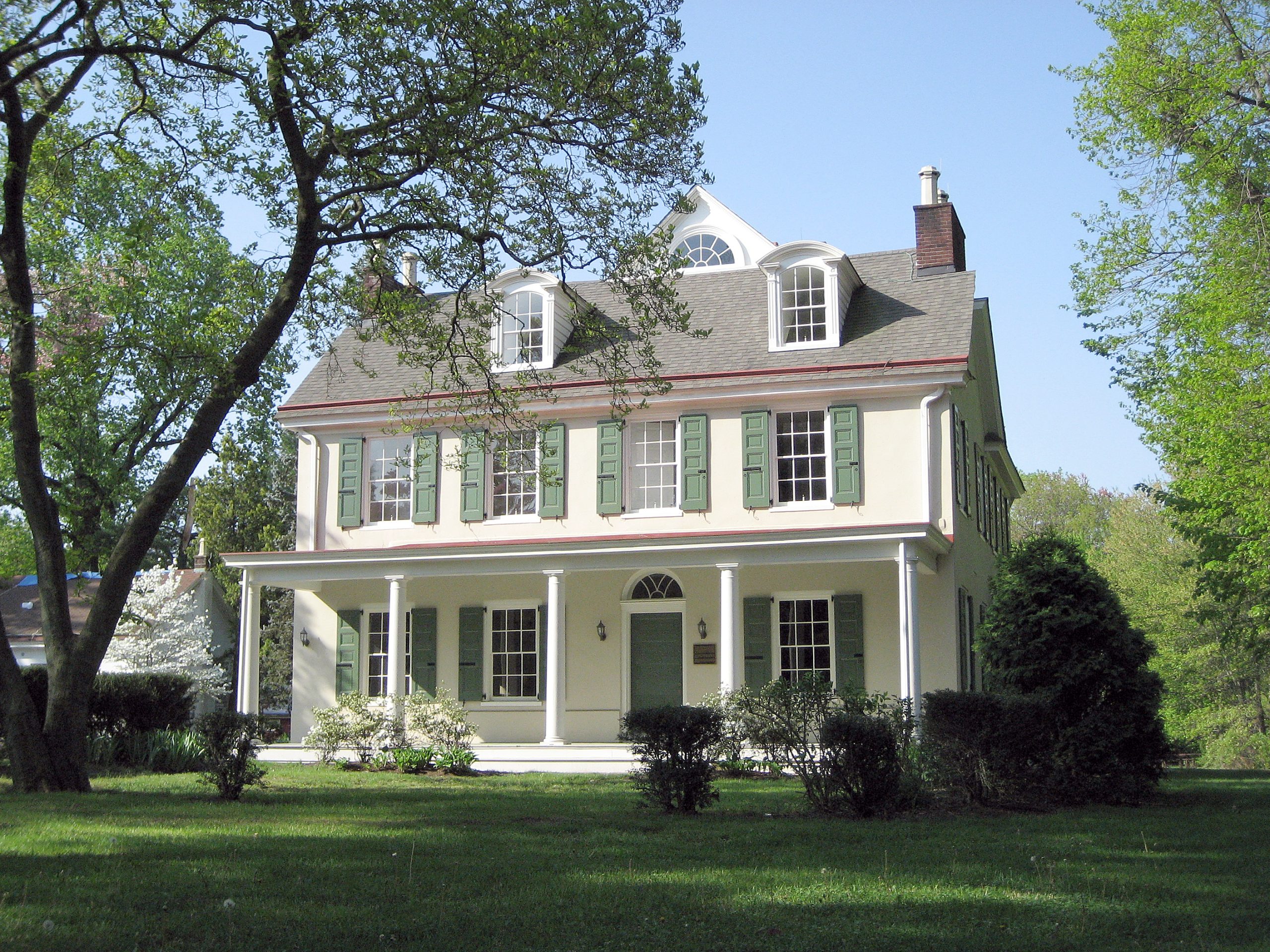
The Kay-Evans House, a historic building at Croft Farm in Cherry Hill, is home to Cherry Hill Township’s Recreation Department.Cherry Hill Township
Hundreds of ceramics
Croft Farm has housed generations of people living along the Cooper River, and artifacts like ceramics help archaeologists identify lifestyle and socioeconomic changes over time.
The land at Croft Farm was purchased by the Kay family in the early 18th century, and around 1750, Quaker Isaac Kay built an early version of the building now known as the Kay-Evans House, which today houses the Cherry Hill Recreation Department.
In the 19th century, the Evans family moved onto the property and expanded the home. Like other Quakers, owner Thomas Evans and his son Josiah were members of the New Jersey Abolition Society who pushed to end slavery and support the Underground Railroad, according to the township’s online history of Croft Farm.
Matthew Tomaso, the senior director of cultural resources for PS&S, said the firm found material spanning from the 18th century to the early 20th century. About 1,000 artifacts come from the 18th and 19th centuries, including when the Evans family helped operate the Underground Railroad.
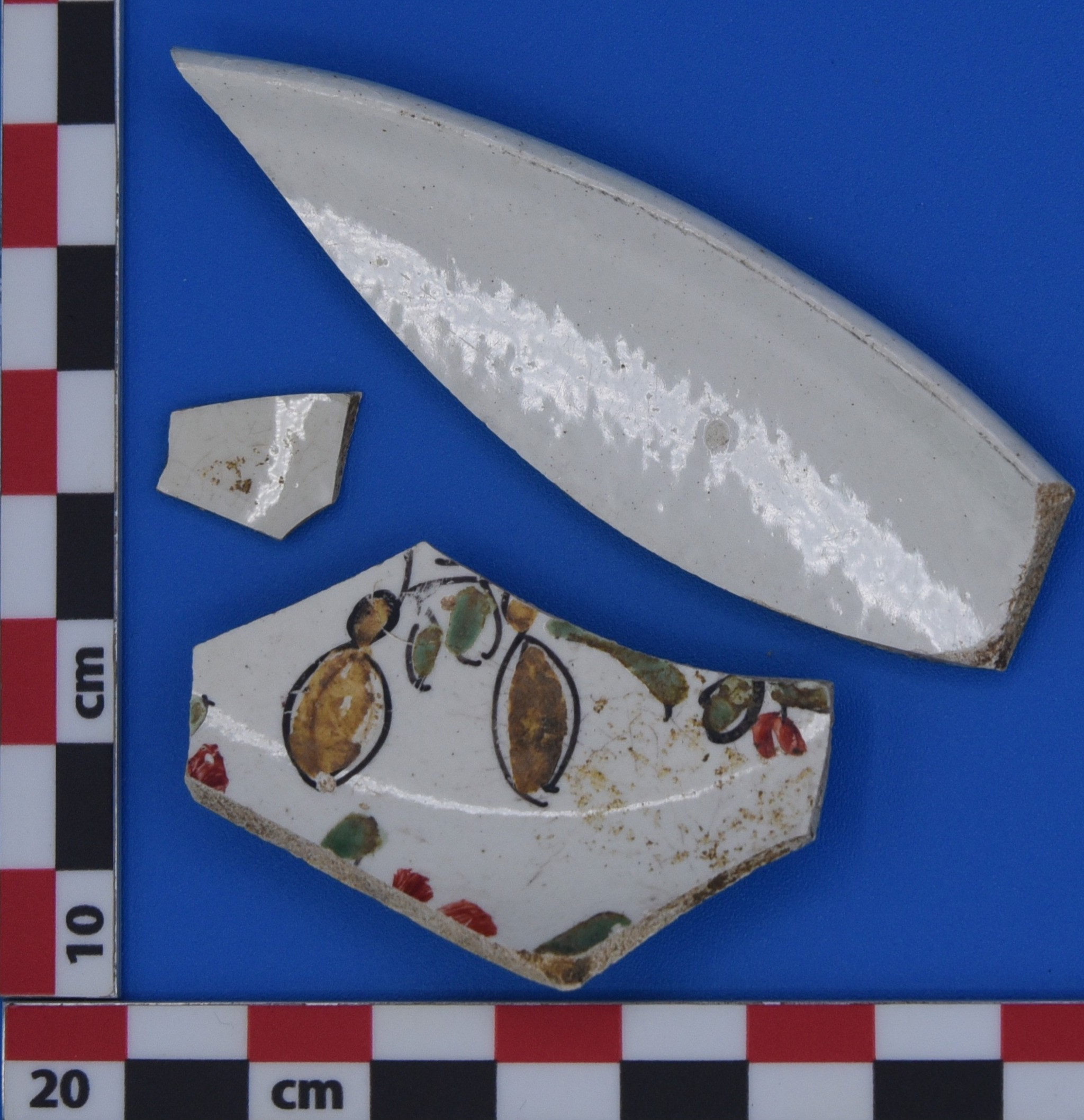
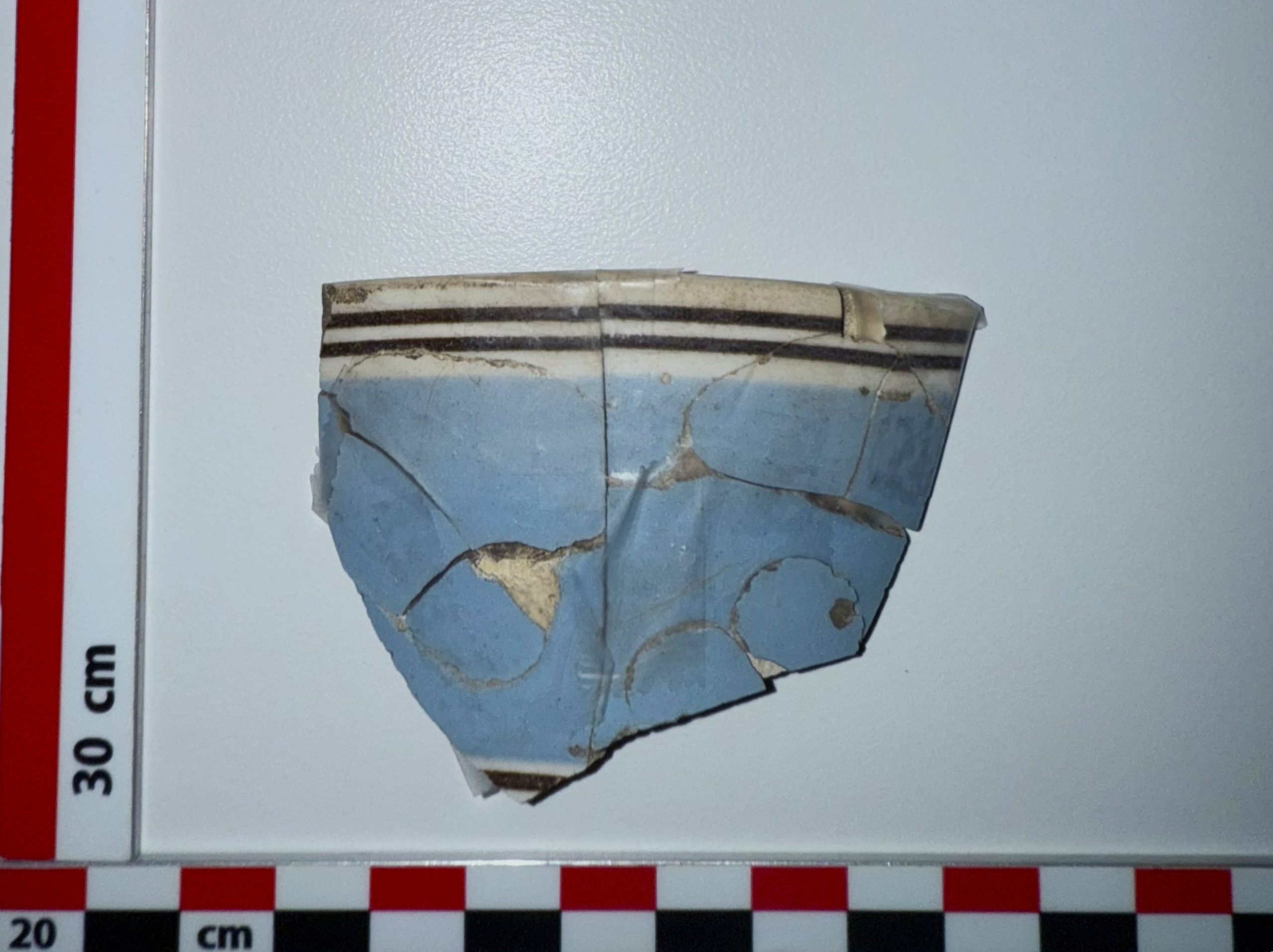
Nineteenth-century hand-painted polychrome ceramic sherds are among the artifacts found by PS&S during site work at Croft Farm in Cherry Hill. Matt Kraemer
Matthew Kraemer, a PS&S archaeologist on the project, said the type of ceramics discovered on the site varied by time period, from 18th-century Staffordshire slipware to more creamware, pearl ware, earthenware, and whiteware as time went on.
The ceramics, buried by time, were not found in one piece. Tomaso said his team sorted through thousands of tiny fragments to assemble 359 vessels.
Kraemer said he is looking at how the ceramics change through time, since a transition from simple to fancy bowls could indicate shifting values among the Quakers, traditionally known for their modesty.
The location where the ceramics are found matters, too. Since enslaved people often used backyards as outdoor kitchens, Kraemer said, finding ceramics outside the house is telling, since that tradition likely continued as formerly enslaved people fled northward.
A 19th-century annular banded dipware ceramic refit, with shards pieced together by PS&S archaeologists, is one artifact found during site work at Croft Farm in Cherry Hill, New Jersey.Matt Kraemer
“If we find a higher proportion of hollowware in the backyard, then we know this could further indicate, from an archaeological point of view, involvement in the Underground Railroad,” Kraemer said.
The Croft Farm site is known as a former home to previously enslaved people, including Joshua Saddler, who founded nearby Saddlertown, a Black settlement in what is today Haddon Township.
‘An awful lot of butchering’
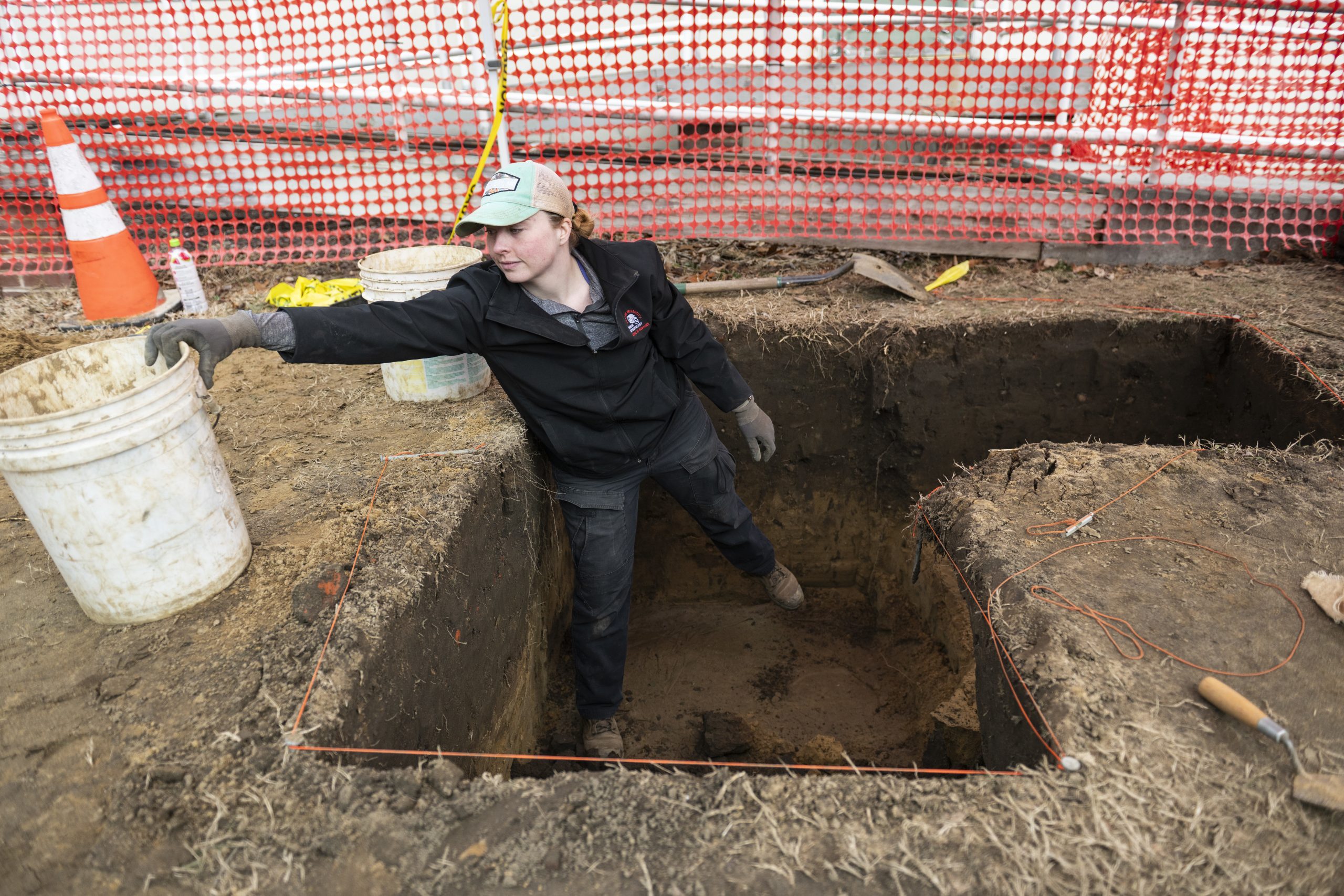
Chelsea Carriere, another archaeologist at PS&S, said she had not expected to find so many animal remains, since nearby water typically makes bones degrade faster.
But Carriere ended up with a stash of 480 bone fragments showing human alteration, or bones with burn or cooking marks.
So far, she has identified goat, cow, sheep, rodent, and turtle bones, along with a raccoon scapula, clearly chopped, and animals likely trapped and hunted, like rabbits. While historical documents show pigs lived on the property, Carriere did not find many pig bones, though she said it could be that the animals were butchered elsewhere or were cooked in a way that did not make for good preservation.
“We can dive into what the recipes of the time were and see if there’s any correlation between the cut marks we’re seeing and what kind of foods were typically cooked or fashionable during certain periods,” Carriere said.
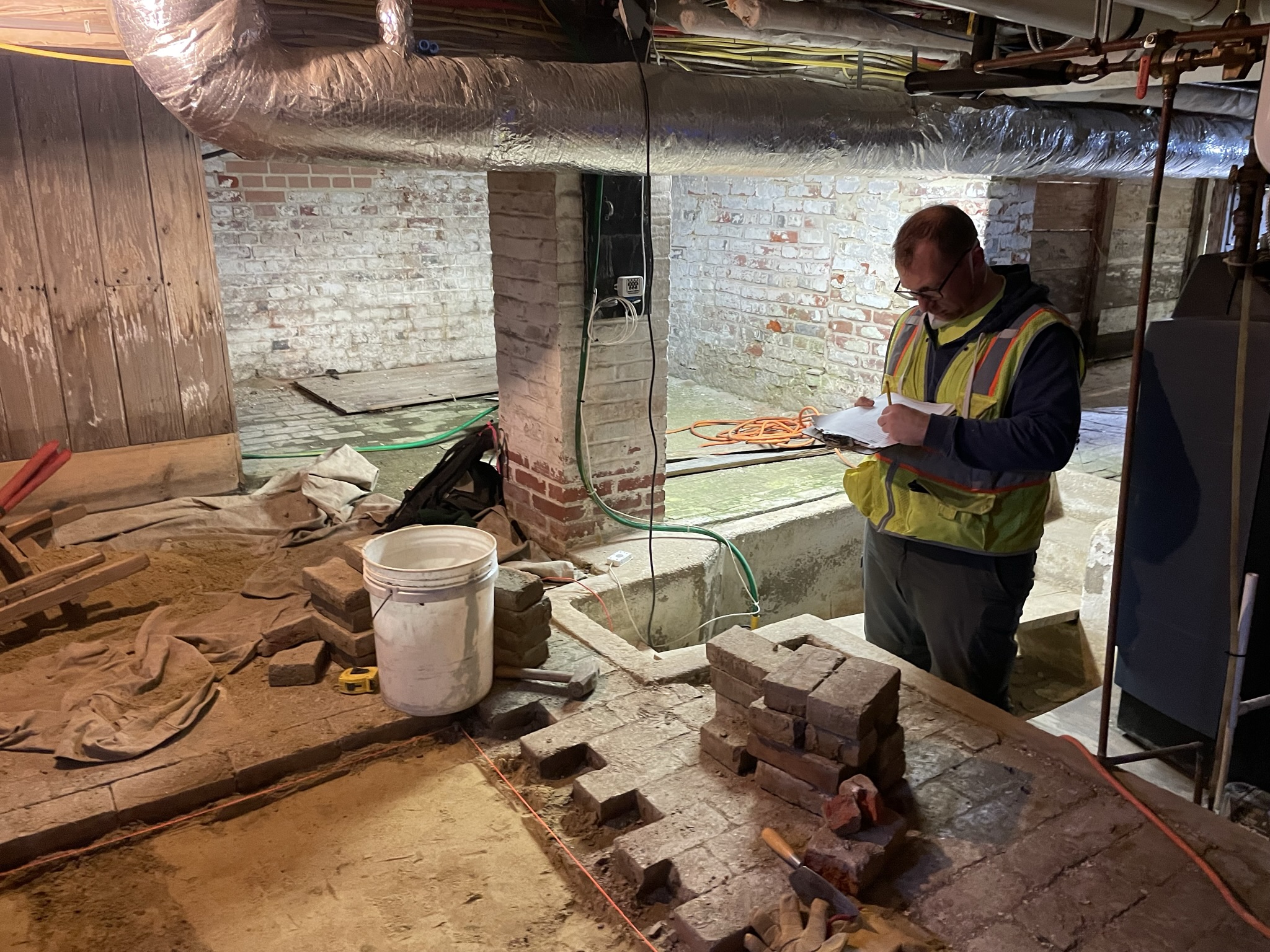
The team also found bones in the Kay-Evans House basement, which Tomaso said was strange, since people did not usually throw away organic waste indoors.
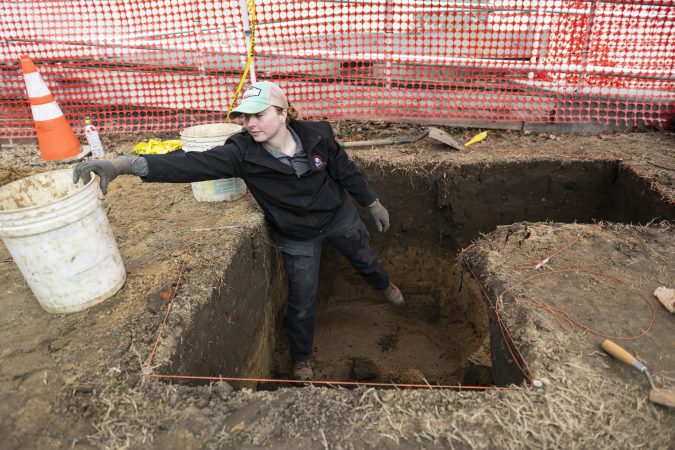
Chelsea Carriere, archeologist with PS&S, grabs for a bucket while digging at Croft Farm in Cherry Hill, N.J. on Saturday, Feb. 21, 2026. Allie Ippolito / For The Inquirer
Studying those remains will help Carriere determine how the people living there butchered and prepared their food, and how the Evans family lived off the land. Bones with rough, choppy markings could indicate at-home butchery by a novice, while clean cuts imply meat purchased from a local butcher.
“You would kind of expect to see a change there where people might be having more access to store-bought cuts of meat in the 19th century during the Evans family’s occupation,” Tomaso said. “And one of the things I think is really interesting … is that it seems like they’re doing an awful lot of butchering right there on the property.”
Over 4,500 years
Most of the recently found artifacts came from the last 300 years, but some items go back further, including ones PS&S archaeologists have not disturbed at Croft Farm.
“We now know that it was probably reoccupied over about 4,500 years or more,” Tomaso said. “So that’s kind of cool.”
Before white settlers came to Croft Farm in the late 17th century, the Lenni-Lenape Indigenous people are known to have lived on the land. Tomaso said artifacts from the Indigenous people are deeper in the ground, and seemingly less intact.
But based on the site’s location and proximity to water, Tomaso said, he suspects Native American tribes used the land for thousands of years, though not continuously. PS&S has bolstered that timeline with the Indigenous artifacts its team managed to find, including triangular projectile points typical of the Woodland Period long before the arrival of white colonists.
The absence of some typical artifacts caught Tomaso’s eye, too. The Croft Farm site had very few glass and liquor bottles, and few smoking apparatuses, and Tomaso said the team is still trying to figure out why.
“I think that these guys might have been practicing temperance, which would have been common for the Evans period, really uncommon for the Kays, even among Quakers,” Tomaso said. “Because 18th century, basically, people just drank all the time. For example, beer was not considered an alcoholic beverage.”
Once the project is wrapped up and the data compiled, PS&S will report its findings to the state, Tomaso said.
In the meantime, Brown said, Cherry Hill is working toward awarding a bid for construction at the Kay-Evans House and finding ways to increase the public’s awareness of the Croft Farm property.
“You can really just kind of disappear from Cherry Hill in this location,” Brown said. “It’s really beautiful and we’re really just looking forward to having people take more advantage of it and having people get to understand it better.”
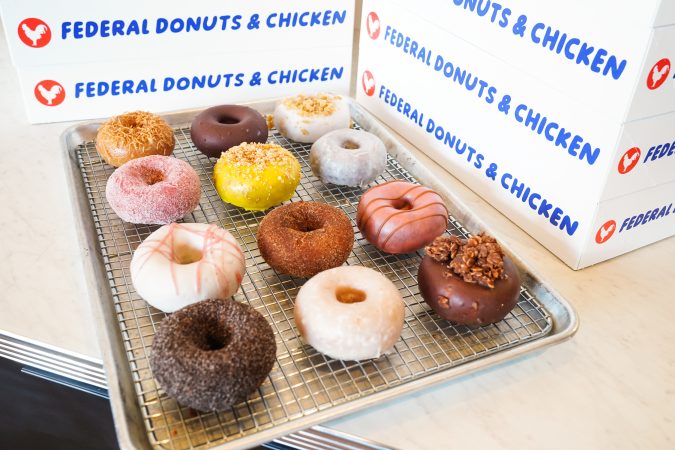
Restaurant group CookNSolo will close three Center City Federal Donuts & Chicken locations and shrink its Goldie falafel chain from four shops to one as owners Steve Cook and Michael Solomonov retrench, citing weakened demand for fast-casual dining, particularly at weekday lunch.
Federal Donuts’ shop at 1909 Sansom St. — designated only months ago as the company’s flagship after the South Philadelphia location closed in February — shut down after business Sunday. Locations at 21 S. 12th St. and 18th Street and Benjamin Franklin Parkway are expected to close by July 31, although Cook said staff departures could accelerate the timetable.
Of Federal’s 45 employees, 27 will be laid off, Cook said. Eighteen employees will be retained to staff the two remaining Philadelphia stores, on Fairmount Avenue and on South Street. Federal launched in 2011 in South Philadelphia with a menu of fried chicken, coffee, and hot doughnuts from a robotic fryer.
Federal Donuts founders (from left) Tom Henneman, Michael Solomonov, and Steve Cook at the Federal Donuts & Chicken location at 1776 Ben Franklin Parkway in 2022.Michael Klein / Staff
Goldie, which debuted in 2017 with a menu of falafel, fries, and tehina shakes, will close its restaurants at 1218 Sansom St., Franklin’s Table food hall at 34th and Walnut Streets, and the Whole Foods Market at 2101 Pennsylvania Ave. in late July or early August. The lone remaining Goldie, at 1911 Sansom St., will absorb the chain’s delivery, takeout, and catering business.
Eighteen of Goldie’s 36 employees will lose their jobs. Cook said the company is working to help find former Federal Donuts and Goldie workers other roles. Hourly staffers will not be given severance, Cook said, as is standard industry practice.
Cook said the closures reflect a restaurant landscape that has changed dramatically since the pandemic.
Dozens of fast-casual and quick-service restaurants have opened in recent years. “We feel like we’re oversaturated in the city, given the economy right now and the demand for fast-casual restaurants,” he said. Federal Donuts has experienced “significant” year-over-year same-store sales declines, he said. He hopes the closures stem the losses.
“We have two great brands here that are worth saving, and we feel like economically this is the best way to preserve those brands.”
Falafel from Goldie.Craig LaBan / Staff
The company’s full-service restaurants — including Zahav, Dizengoff, K’Far Cafe, Jaffa Bar, and Laser Wolf — are unaffected by the shutdowns.
“Post-COVID, while we’ve seen really good rebounds in the dinner, more fine-dining side of our business, weekday lunch traffic has never really returned to full strength,” he said. “The $10-to-$15 lunch is an easy thing to kind of do without.”
Cook’s assessment reflects broader industry trends.
Tehina shakes are a signature product at Goldie.Tim Tai / Staff Photographer
While some national fast-casual brands such as Chipotle and Cava continue to post strong results, many regional chains are struggling as consumers increasingly choose prepared foods from grocery stores and convenience stores instead of restaurant meals, according to R.J. Hottovy, head of analytical research at Placer.ai, a location analytics and foot-traffic company.
While fine-dining restaurants have generally continued to gain traffic through much of 2026, “fast-casual has been more of a mixed bag,” Hottovy said.
Placer.ai’s findings show visits to grocery stores, convenience stores, and wholesale clubs increasing from a year earlier while overall restaurant visits have declined. “Middle-income consumers are increasingly substituting restaurant visits with meals at home,” Hottovy said.
Restaurants also continue to battle rising labor costs while customer traffic softens as menu prices rise. “Price increases are increasingly showing up as lost visits,” he said.
Federal then operated 11 locations and arena concessions, and executives envisioned a franchise system that eventually could reach 150 stores.
The company’s largest franchisee later closed its restaurants in Radnor, Conshohocken, and Willow Grove and returned several Philadelphia stores to the company. In April, Cook and Solomonov announced plans to regain control of those city locations, simplify operations, and improve execution.
At the time, the Sansom Street restaurant was designated as the flagship to redevelop menu items. “I thought we would get a significant bounce in sales [there] and it just didn’t happen,” Cook said.
Cook said NewSpring remains the majority owner of Federal Donuts, while he and Solomonov retain a significant ownership stake and seats on its board. Representatives of NewSpring did not respond to requests for comment.
Under the restructuring, two Philadelphia stores will remain. CookNSolo will take over the location at Seventh Street and Fairmount Avenue, now owned by the company, as a franchisee around Aug. 1.
Federal cofounder Tom Henneman confirmed that he was in talks to operate the location at Sixth and South Streets as a franchisee.
Cook said those stores were chosen because of their historical performance and geographic separation. Consolidating delivery and takeout in two locations instead of five should improve profitability, he said.
Besides the two city stores, Federal will continue operating independently owned franchises in Marlton, Lancaster, and the Hard Rock Hotel & Casino in Atlantic City, along with its licensed airport and stadium locations.
Goldie, unlike Federal Donuts, is owned entirely by CookNSolo.
CookNSolo has also been the focus of pro-Palestinian demonstrations and boycott campaigns since the start of the Israel-Hamas war on Oct. 7, 2023. Activists have criticized the restaurant group for raising money for an Israeli emergency medical nonprofit as well as Cook’s and Solomonov’s outspoken support for Israel. The chefs have said their support for Israel was “not unqualified” and have criticized the Netanyahu government’s efforts to thwart a two-state solution.
A group with the Instagram handle @boycottcooknsolo on Monday reported word of the store closings, contending that the boycott had softened sales.
Cook disagreed. “Any time there’s been a protest, it’s always resulted in a short-term increase in business,” Cook said. “This is really an economic decision that goes back many years at this point.”
(function(){function e(){window.addEventListener(`message`,function(e){if(e.data[`datawrapper-height`]!==void 0){var t=document.querySelectorAll(`iframe`);for(var n in e.data[`datawrapper-height`])for(var r=0,i;i=t[r];r++)if(i.contentWindow===e.source){var a=e.data[`datawrapper-height`][n]+`px`;i.style.height=a}}})}e()})();