Category: Phillies/MLB

  • Zack Wheeler’s delivery comes under scrutiny from the Blue Jays as Phillies lose a rain-delayed 5-4 series opener

    Zack Wheeler’s delivery comes under scrutiny from the Blue Jays as Phillies lose a rain-delayed 5-4 series opener

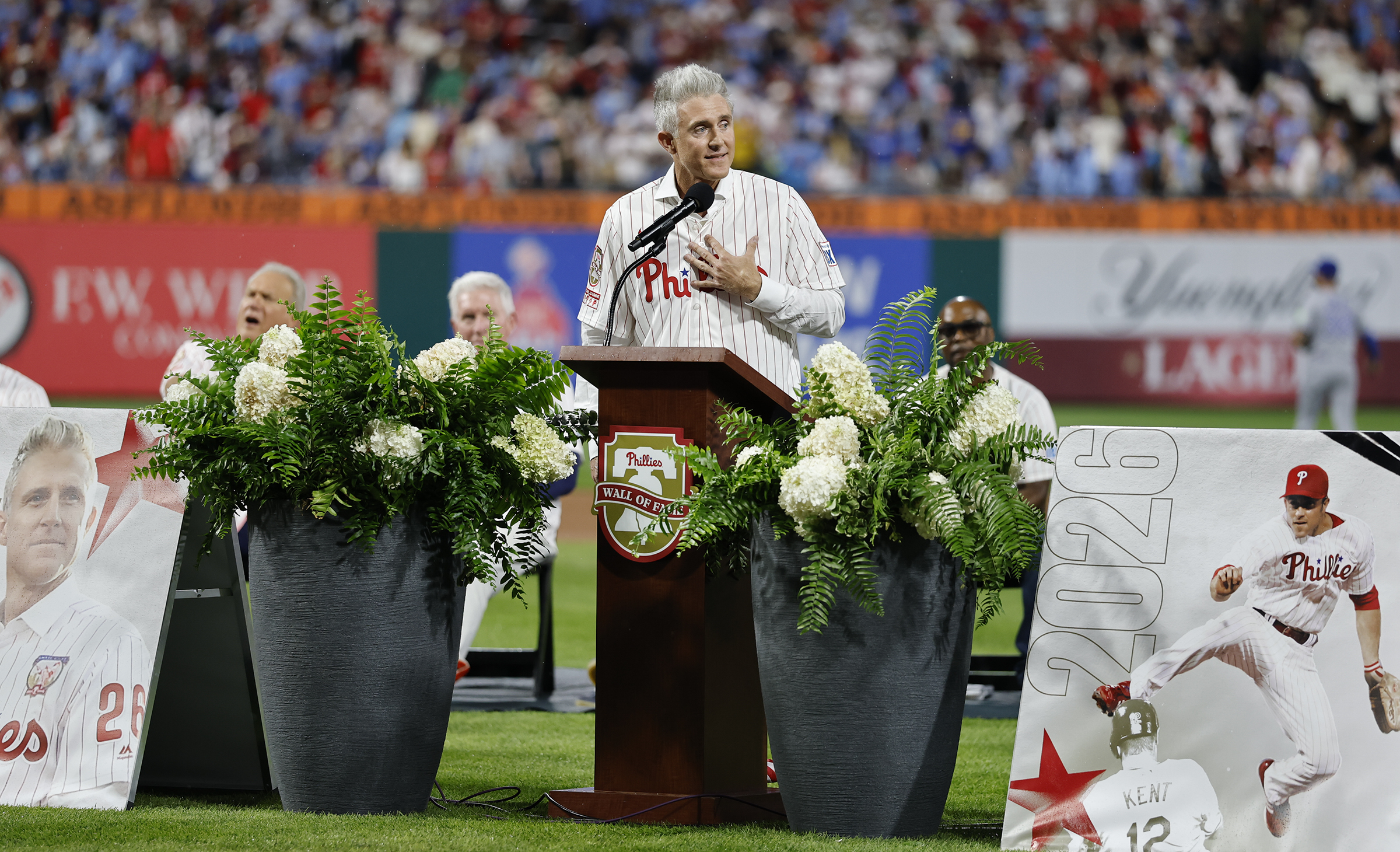
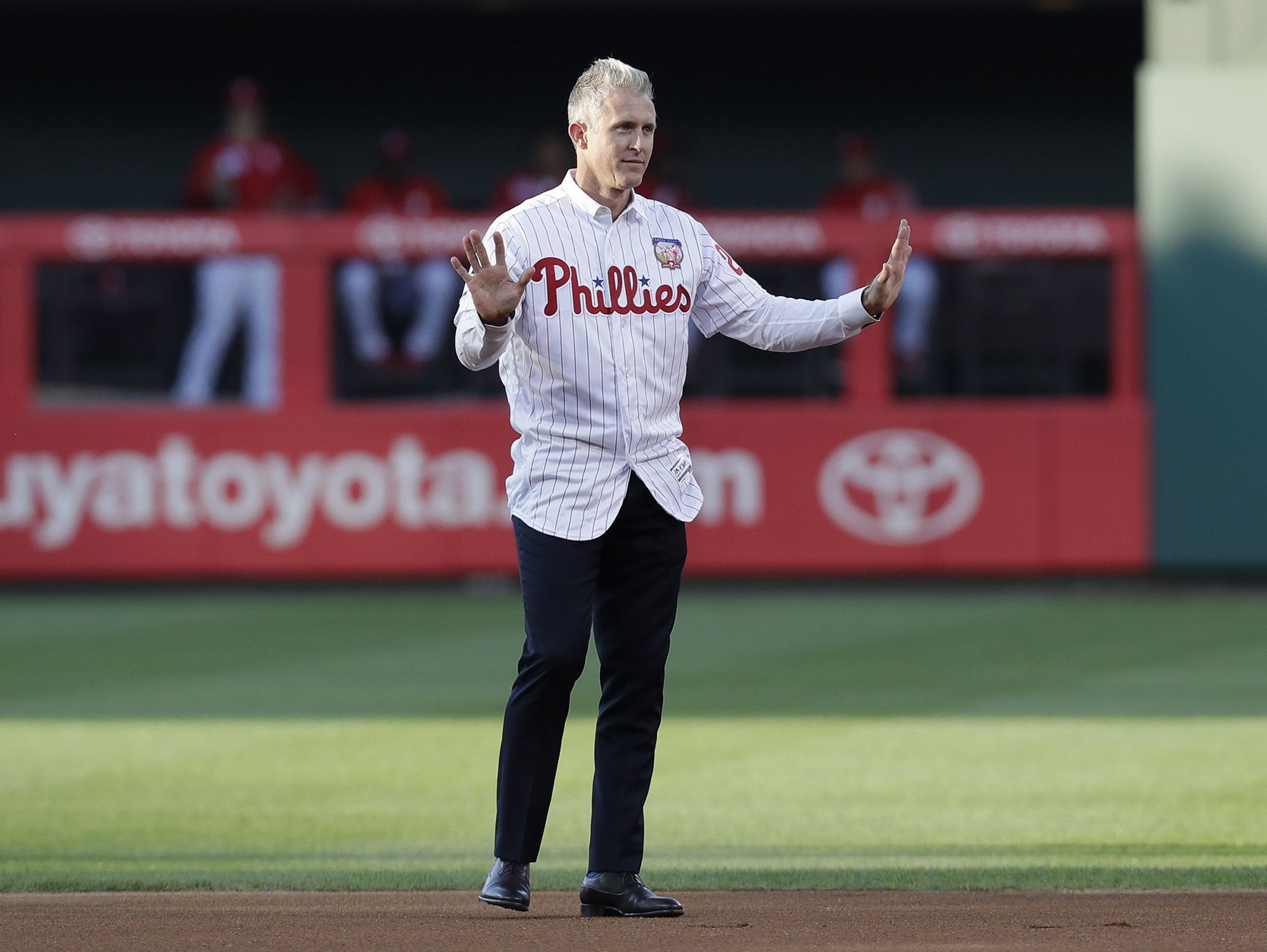
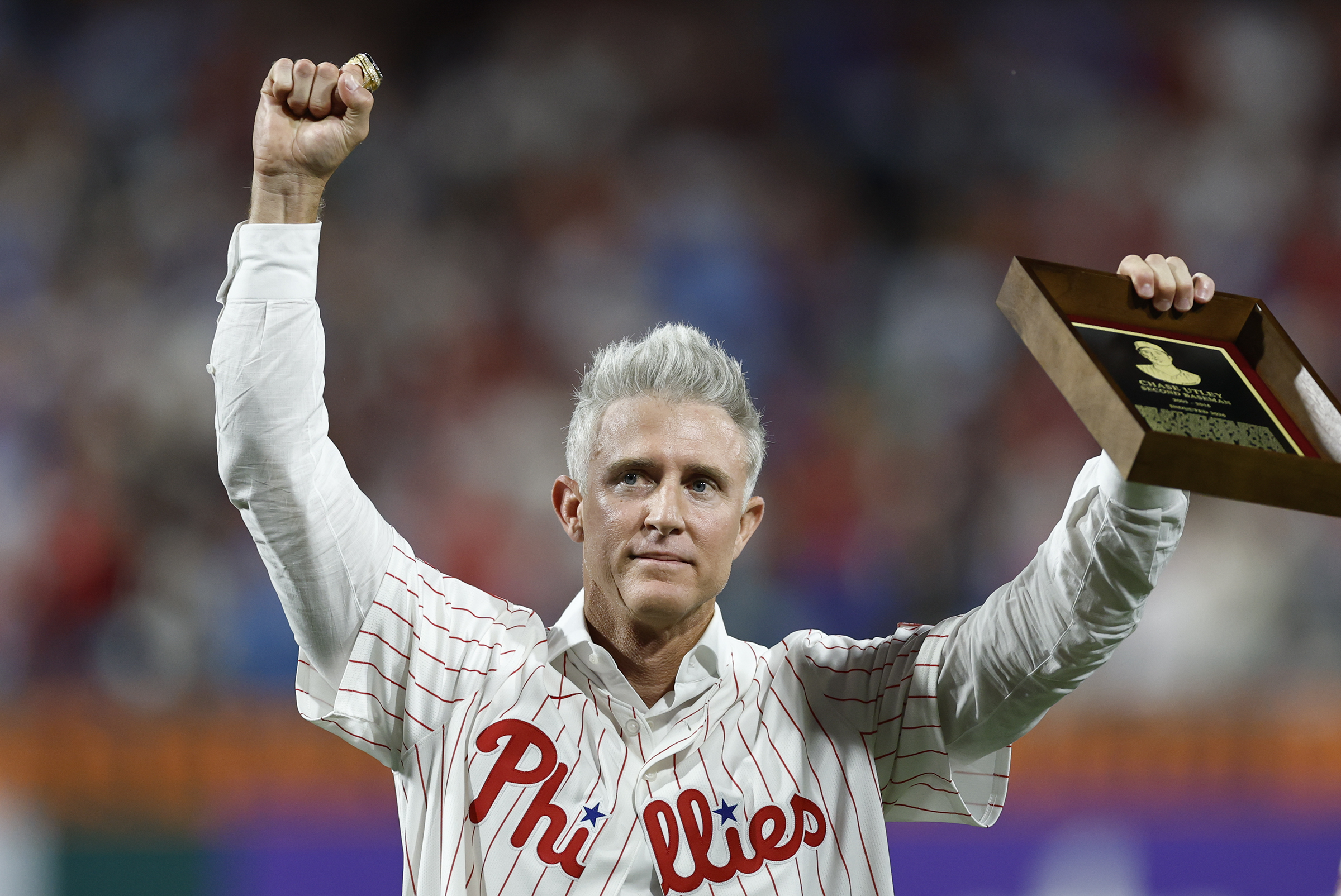
    Chase Utley, famous for his pregame routine and laser-focused preparation, was just getting warmed up. So, he led with an apology.

    “Zack,” he said. “Sorry, dude. I’ll pick this up.”

    Out in the bullpen, Zack Wheeler kept on throwing. Rain shortened his last start to two innings and delayed this one by two hours. Normalcy was gone long before Utley gave his Phillies Wall of Fame speech Friday night.

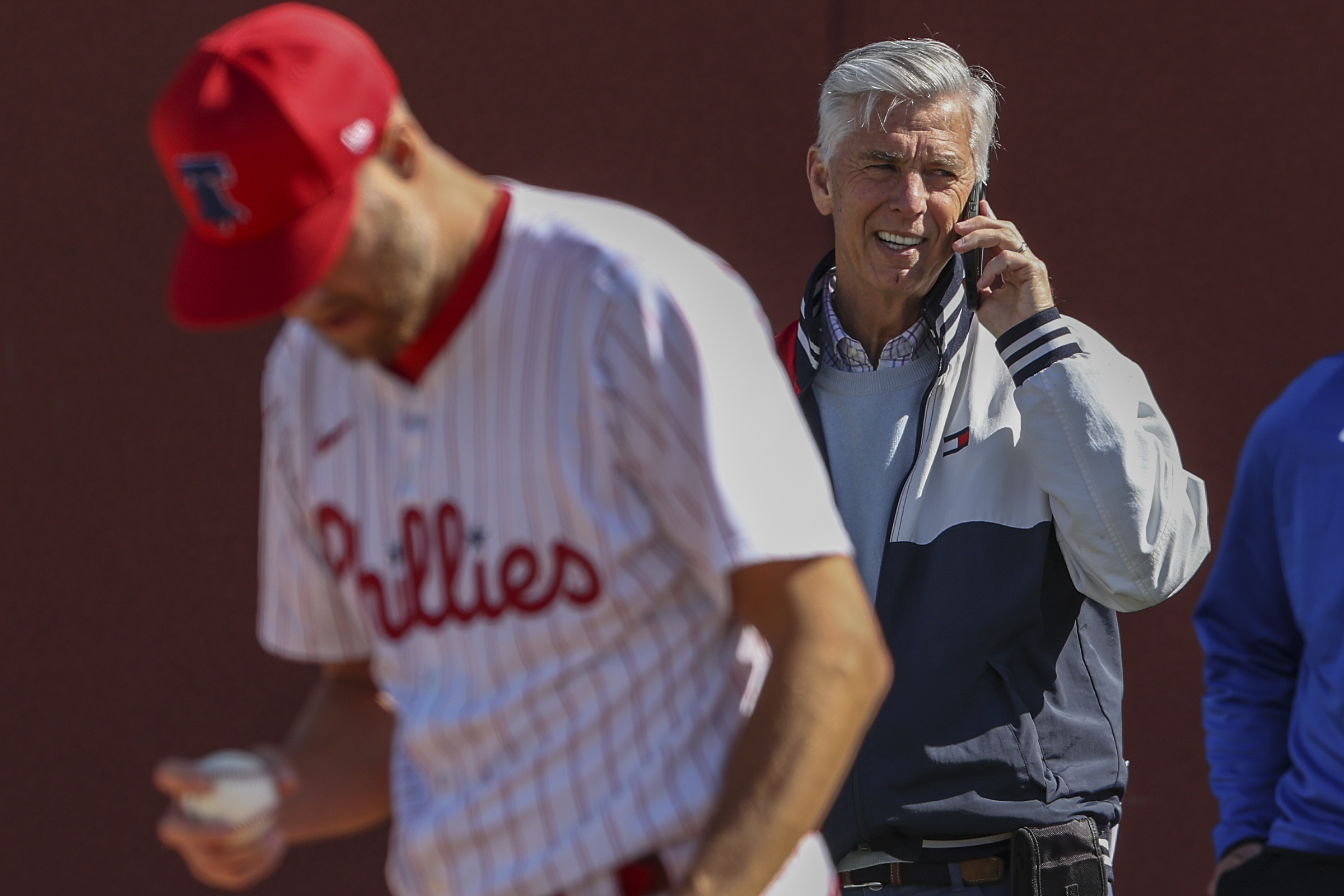
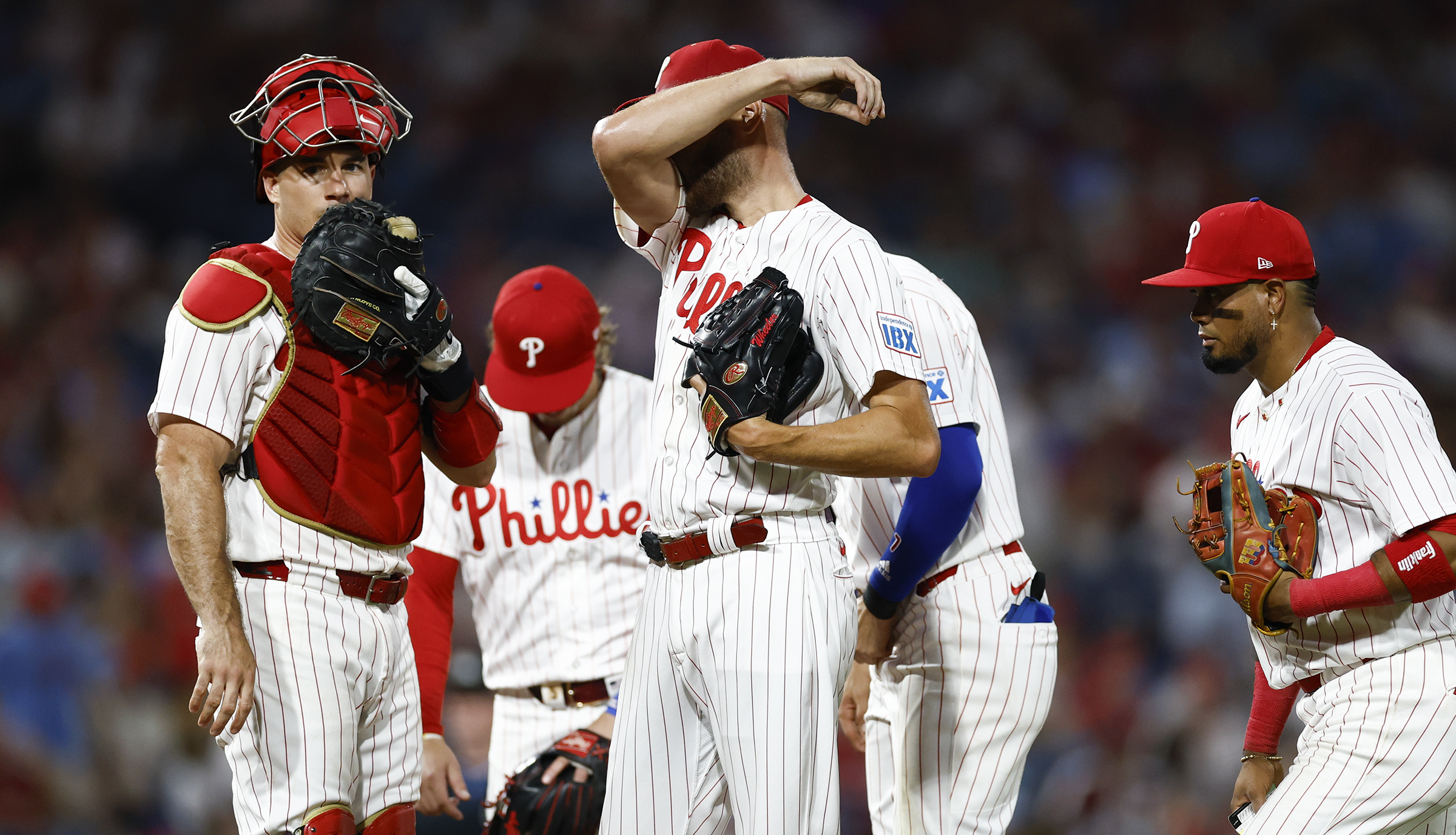
    Besides, things only got stranger once the game finally started. The Blue Jays accused Wheeler of taking his right foot off the rubber, leading to the ejection of their hitting coach and a two-word obscenity from Wheeler in the fourth inning of a 5-4 Phillies loss that went down to the final batter after the clock struck midnight.

    “I’ve been pitching over there [on the first-base side of the rubber] forever, and I’m going to keep doing it, you know?” Wheeler said. “They’ve lost a lot of games over there, so they’re probably trying to pick some things up to complain about.”

    Zing!

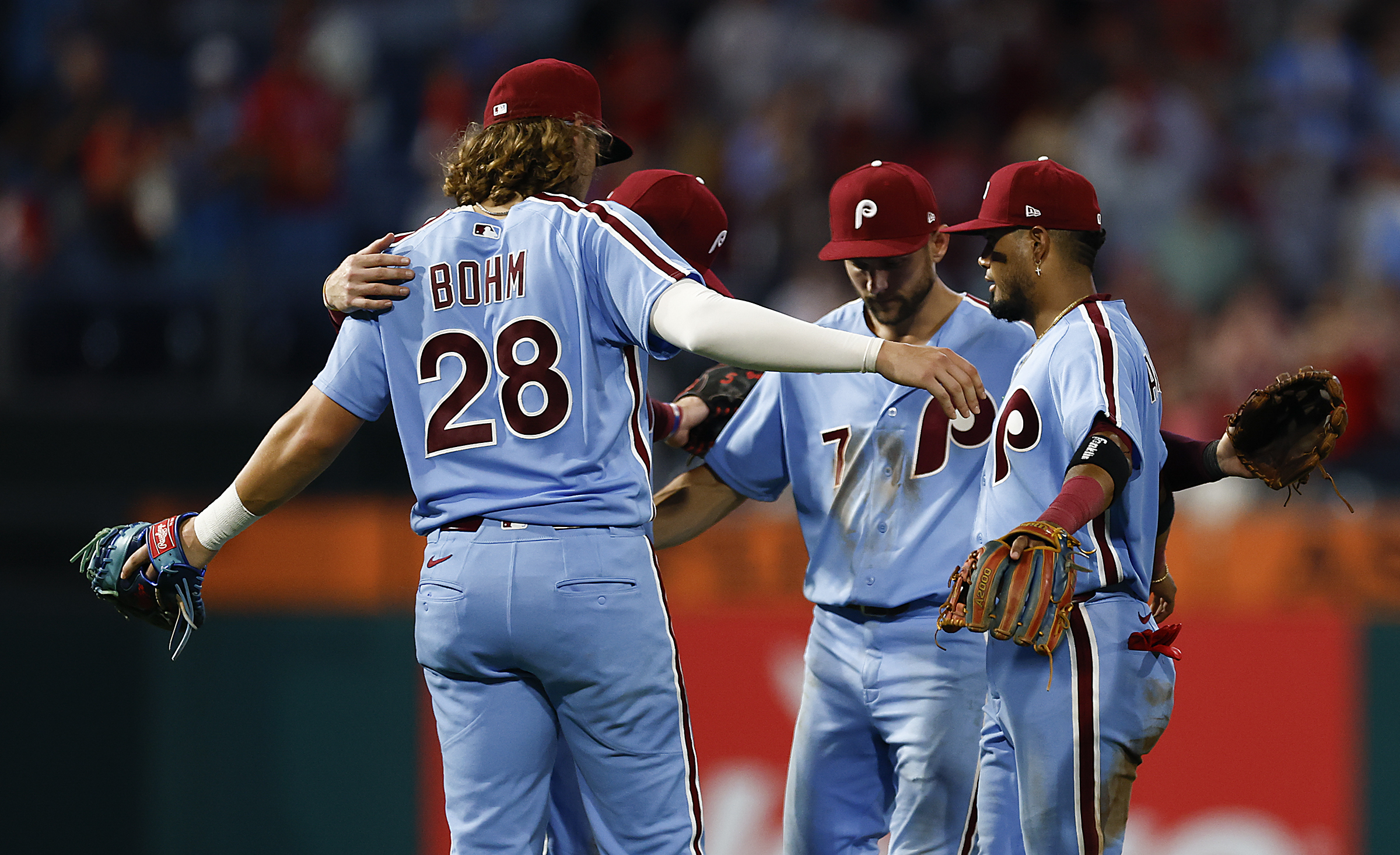
    OK, let’s get this out of the way: The Phillies drew 10 walks — 10! — and lost after leaving the bases loaded twice in the last three innings. They had the tying run on third base — and reliever Tyler Rogers on the ropes — in the ninth after Luis Arraez’s 10-pitch walk. But Alec Bohm hit a first-pitch grounder for a force out at home before Brandon Marsh was thrown out by a half-step on a grounder to end the game.

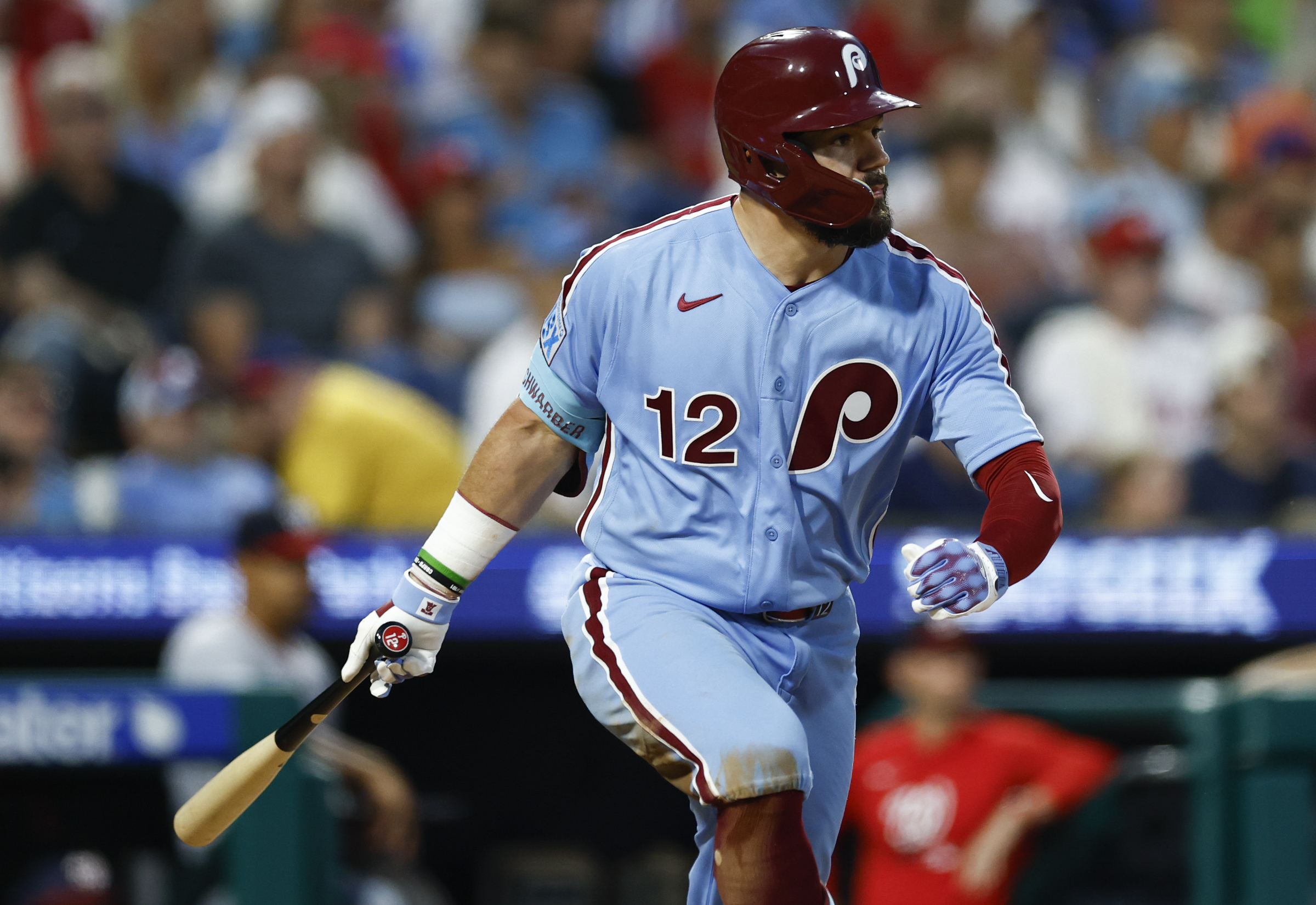
    The Phillies finished 2-for-11 with runners in scoring position and stranded 11. Kyle Schwarber, Trea Turner, and Bryce Harper struck out in succession with two runners on base in the fifth inning.
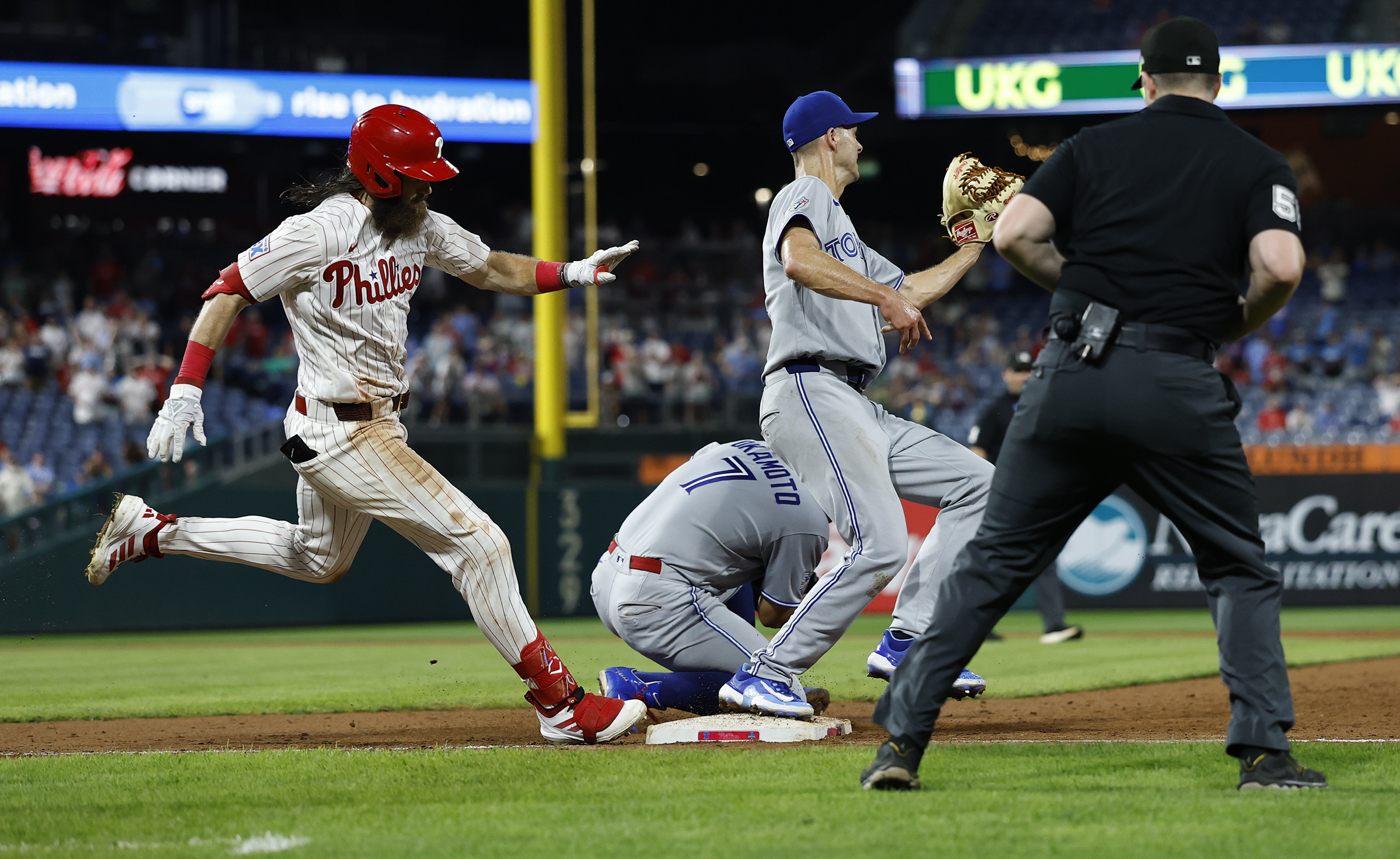
    Brandon Marsh was thrown out by a half-step to end the game in the Phillies’ 5-4 loss Friday night.Yong Kim / Staff Photographer

    “Yeah, just got to be better,” Harper said after the Phillies (62-55) slipped back into a tie for the final National League wild card. “I ain’t got much for you. It’s got to be better in those situations and get those guys in.”

    Hey, it happens. Unlike, say, a team asking the home plate umpire to watch for a pitcher taking his foot off the rubber during his delivery.

    But MLB contacted the Phillies a few weeks ago, interim manager Don Mattingly said, after Wheeler started a nationally televised Sunday night game on NBC. A camera angle appeared to show that Wheeler’s right foot disengaged from the rubber.

    The Phillies disagreed and provided an overhead view that shows Wheeler’s foot does, in fact, stay on the rubber, albeit at the edge. Wheeler said his delivery has been the same for years. To his knowledge, nobody ever complained.

    “Not until this year,” he said.

    Or, more specifically, Friday night.

    Early in the game, Blue Jays manager John Schneider asked plate umpire John Tumpane between innings to look for the placement of Wheeler’s foot. Tumpane, in turn, spoke with Wheeler.

    “John told me to make sure I stay on the rubber,” Wheeler said. “He kind of just said that MLB has me on a list.”

    The Blue Jays pressed the issue again in the fourth inning, with Tumpane ejecting hitting coach David Popkins, who drew the ire of Wheeler.

    “We were just getting information that his foot was off the rubber on the first base side, from video angles with that little step back from the windup,” Schneider said. “It’s hard to see in real time, but there was just an example of our hitting coach kind of protecting the players and me doing the same.”

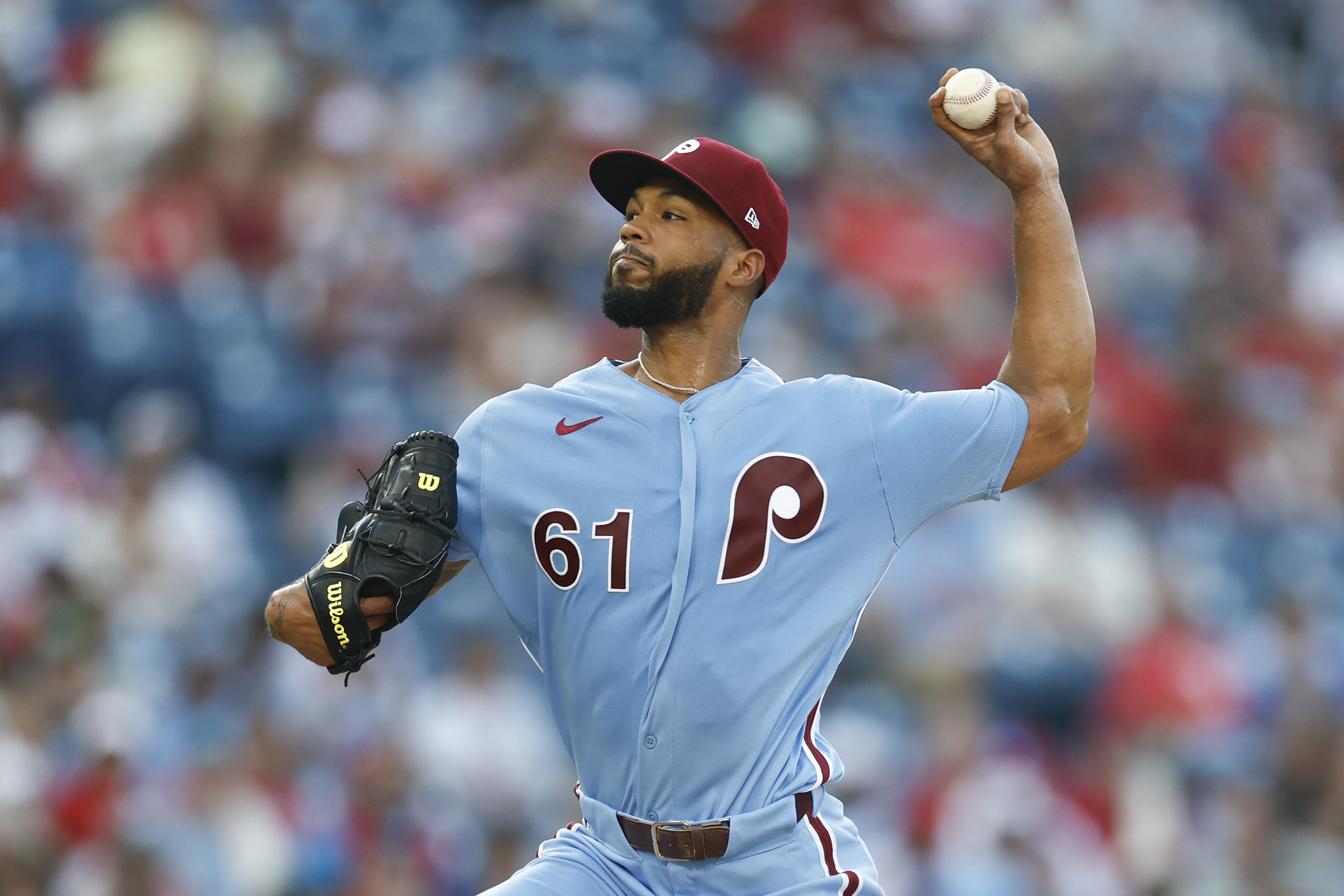
    It was all part of a bizarre start for Wheeler, who walked five batters, more than in any start since April 7, 2019, and threw 116 pitches, his highest total since May 6, 2021.

    The Blue Jays led, 1-0, 2-1, and 3-2, and knocked out Wheeler with one out in the sixth inning after losing a 15-pitch duel with Nathan Lukes, who singled to load the bases. Lefty reliever Tim Mayza gave up a sacrifice fly to make it 4-2.

    “He did that to me last year,” Wheeler said of Lukes. “When we played there, he had a really long at-bat also. I figured I’d have one of those tonight with him. It just happened to be the last one. I was just trying to throw everything at him, but he put a good at-bat together.”

    Wheeler threw only 32 pitches last Sunday in Baltimore before a rain delay forced him from the game. Surely, though, there was a toll from throwing more pitches than he had in five years.

    “Tired,” Wheeler said. “I’m not going to lie, you know? It was hot and humid, and the air was just still. I still had juice in me there at the end, but, yeah, I was a little tired.”

    Trailing, 5-2, in the ninth inning, the Phillies loaded the bases against Rogers on back-to-back walks and a catcher’s interference call that enabled Schwarber to reach. Bryson Stott scored from third when Turner hit into a fielder’s choice, and Harper punched an RBI single through the right side to cut the margin to 5-4.

    Arraez’s drawn-out walk reloaded the bases, and Rogers had thrown 31 pitches when Bohm swung at a first-pitch sinker.

    “I like it if he gets a hit and gets the ball in the air,” Mattingly said. “Obviously he’s not trying to hit a ground ball there. What you’re trying to do [is] you’re trying to get [Rogers] up a little bit. Obviously, we didn’t do that.”
  • Chase Utley’s path to the Phillies Wall of Fame was forged with hours in the video room

    Chase Utley’s path to the Phillies Wall of Fame was forged with hours in the video room

    The game was finished and the Phillies had a flight to catch as Kevin Camiscioli hurried to unhook the computer monitors and video equipment in the visiting clubhouse.

    But Chase Utley — “Nobody spent more time in that video room than Chase,” Pat Burrell said — wasn’t finished yet.

    Forget that the game was over. Utley had more tape to dissect. He replayed each at-bat like it was the Zapruder film. So Camiscioli, then the team’s director of video, gave his workstation to Utley and packed up everything else.

    “But then I pulled the wrong power cord, and it was the main power cord,” Camiscioli said. “As soon as I pulled it out, I could hear the power supplies click. They lost power.”

    Camiscioli stood up and locked eyes with Utley.

    Utley spent hours before — and even after — games in the video room trying to find any advantage he could. He was obsessed, Utley said. And it’s that work ethic that he credits for the iconic career that landed him Friday night on the Wall of Fame at Citizens Bank Park and soon could take him to Cooperstown, N.Y.

    But when Utley’s computer unplugged, Camiscioli held his breath.

    “I said, ‘Man, I’m sorry,’” Camiscioli said. “He starts walking to me. I’m like, ‘Here we go.’ He looks at me and goes, ‘That’s OK.’ Phew. Bullet dodged.”

    Earning Philly’s respect

    Utley debuted in April 2003 as a pinch-hitter for the final home opener at Veterans Stadium. But he didn’t really arrive until later that month when the Phillies recalled him from triple A.

    The Scranton Wilkes-Barre bus pulled over and Utley waited at a Subway until a ride arrived to bring him to Philadelphia. A day later, he hit a grand slam for his first big-league hit and sprinted around the bases as if he was being chased. From then on, his connection with Philadelphia was unrivaled.

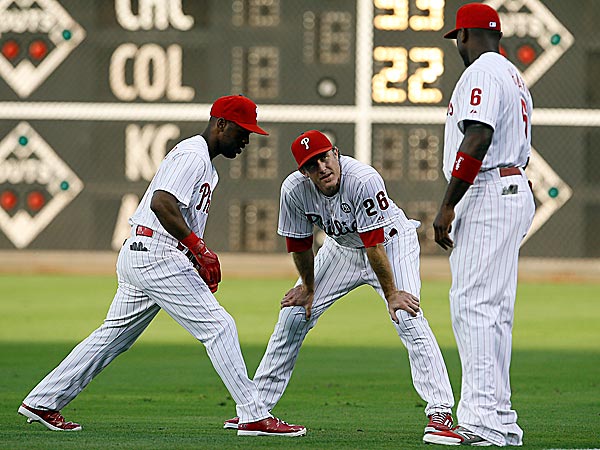
    Jimmy Rollins (left), Chase Utley, and Ryan Howard were part of the Phillies’ core that won the 2008 World Series.YONG KIM / File Photograph

    “I get asked all the time, ‘What was it like to play in Philly?” Utley said. “The truth is you don’t just play in Philly. You survive it. You earn it. And, if you’re lucky, you grow from it. To me, this city is about passion. It’s about emotion. It’s about toughness. But most of all, it’s about winning. For 13 years, I tried to play the game that this city expects us to play: hard, honest, no shortcuts, no excuses. You let me know every night whether I was doing my job. That’s what I love most about this city. In Philadelphia, you don’t get respect. You have to earn respect.”

    Fans roared on Friday when Utley walked onto the field and interrupted his Wall of Fame speech with ovations and catcalls.

    “I love you, too,” Utley responded to a screaming fan.

    Philadelphia has fallen for athletes: Wilt, Bednarik, Dr. J, Iverson, Schmidt, Clarkie, and so on. But there’s an argument to be made that no one won over Philly like Utley.

    “I adore this town,” Utley said. “We had such amazing moments over the years and created so many memories together. Winning the World Series was No. 1, but there were so many other great times together. They supported me essentially from Day 1. I had to earn their respect, and I felt like I did a good job of that. I’m as much obsessed with the fans as they seem to be with me.”

    He grew up in Southern California but was made for South Philly. He played with a scowl and let his game do the talking. He was The Man and always arrived first at the ballpark and was last to leave.

    Utley would go to the trainer’s room before checking in with Camiscioli to watch video. Then he ate a peanut butter and jelly sandwich, hit the weight room, and took batting practice. He grabbed a sweet potato and watched more video before the game began. It was the same thing every day. Even the food didn’t change.

    “He just had that look in his eye,” Camiscioli said. “You got the heck out of the way. You knew when to talk and when not to talk. Just because you knew he was in the zone. You knew. Roy Halladay had that look, too. When it got to a certain time before the game, he would walk from Point A to Point B with determination. There was more speed than regular. A 7 o’clock game, he’s basically suited up to the cleats by 6 ready to go.”

    Chase Utley thanks Phillies fans while getting inducted into the Phillies Wall of Fame on Friday.Yong Kim / Staff Photographer

    ‘What could he be looking at?’

    Utley sat for more than an hour in the afternoon before a game studying every opposing pitcher. The video guys eventually knew what Utley wanted to see so they queued up clips of the other teams’ pitchers in every situation possible and watched Utley go to work.

    “He’d call you over sometimes after he was sitting there for three hours and he’d be like, ‘I don’t know if my eyes are going cross, but is this what I’m seeing?” Camiscioli said. “Some guys go to the clubhouse and they play cards. Some guys do nothing. Some guys play ping-pong. Chase watched video. That’s what he did. I’m surprised he doesn’t need glasses from staring at the monitors so much.”

    Other players soon filtered in, sitting with Utley as if he was a professor teaching a class. He shared the tidbits he gleaned from video — like the opposing pitcher always throws a fastball if he starts with his glove by his belt — and hoped he gave his teammates an advantage before the game started.

    “I wanted to be as prepared as I possibly could,” Utley said. “I felt like the more video I watched, the more information I could gather, the better suited I was to compete on a nightly basis. There were some days when it didn’t tell much, but there were plenty of days where I felt like I benefited greatly from the preparation I put in, my teammates also. Nowadays, the game has changed, and there’s plenty of people watching video. Back then, it wasn’t quite the same. I wanted to be as prepared as possible.”

    The video room is just a few feet from the dugout at Citizens Bank Park, and Utley would stop back after each at-bat, when players were still allowed to watch video during games. He used two monitors to compare what he saw before the game to what actually happened during the game and then leave the monitors up for teammates to check out. Class was always in session.

    “He was very generous with his knowledge,” Camiscioli said. “I never really saw him force himself onto anybody, but eventually people knew and figured it out. Ut had a routine. He was in the video room all the time. There were so many times where it would be like, ‘Oh my God. What could he be looking at?’ But then you started to notice guys filtering in and hovering around him. His preparation was just off the chart.”

    It was one thing to pick apart pitchers during a regular-season game, but Utley requested the same footage when he was selected to the All-Star Game. Camiscioli, who worked for the Phillies from 1996 to 2021, loaded an iPad before the All-Star break with clips of the American League pitchers. For Utley, nothing was an exhibition.

    “All-Star Game? He wanted to hit,” Camiscioli said. “You know how the All-Star Game is. It’s a fun time. He wanted to rake. It was business as usual.”

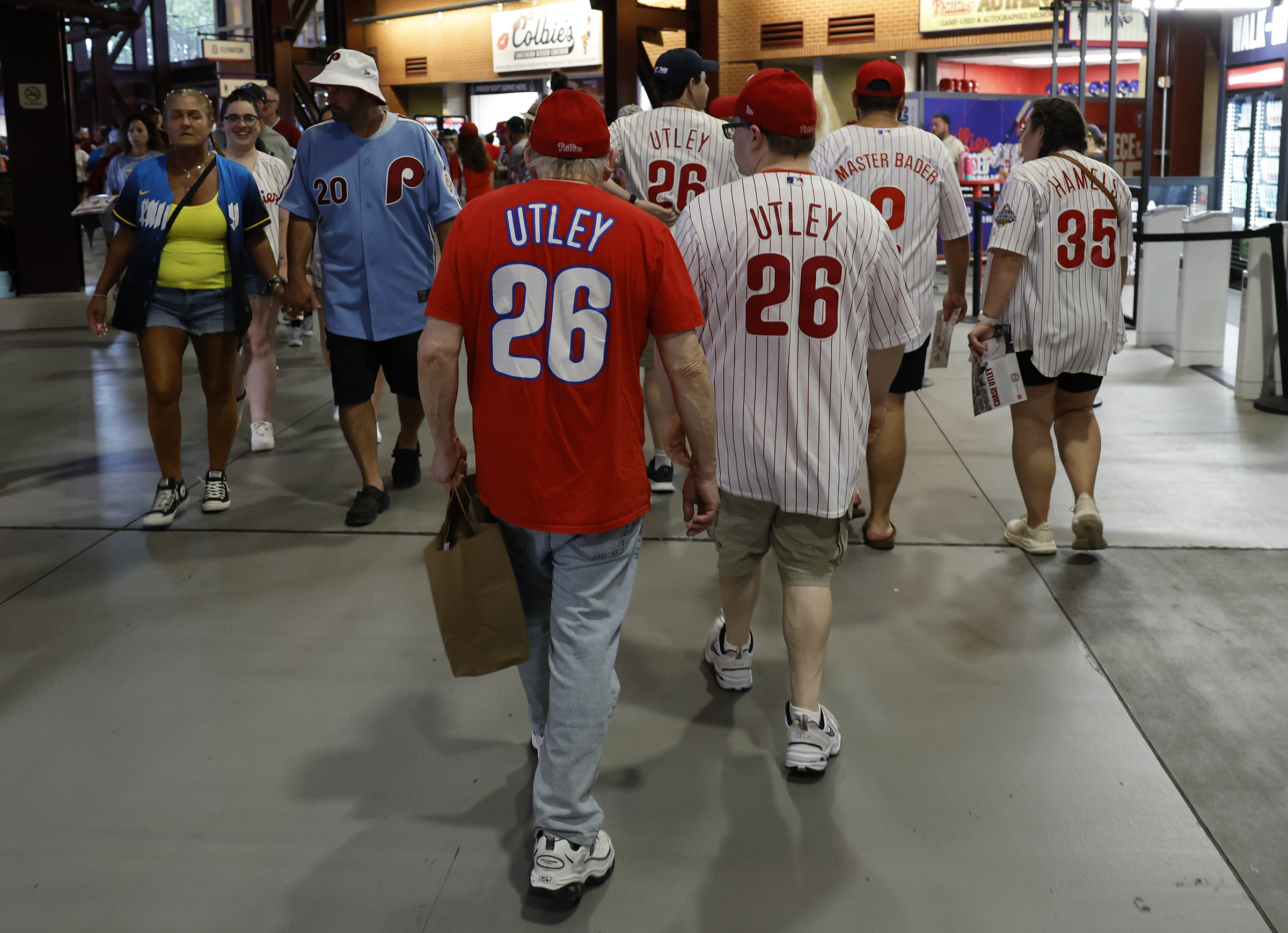
    Phillies fans walk the Citizens Bank Park concourse with Chase Utley jerseys on.Yong Kim / Staff Photographer

    A sense of pride

    It didn’t take long for Utley to tell Camiscioli and his staff to just give him some basic instructions on the computer so he could move through his film without help. That’s who he was, Camiscioli said. Utley didn’t want to bother anyone else.

    “He was great to us,” Camiscioli said. “He respected us and appreciated us. It wasn’t, ‘Oh, you’re just staff.’ In return, everyone wanted to run through a freakin’ wall for him. To this day, I still would.”

    So it meant something that Utley invited Camiscioli and other staff members from his playing days to be at his induction on Friday night. Jimmy Rollins, Ryan Howard, and Cole Hamels were there. But so was Camiscioli and other behind-the-scenes folk who helped Utley become The Man. They loved him, Camiscioli said. Even if he made packing up the equipment a little bit complicated.

    “For me and the guys who worked with me, it was a sense of pride,” Camiscioli said. “We were proud that we could be a part of it. He treated us with respect. You know, that doesn’t always happen. He was really good to us.”

  • Luis Arraez’s biggest strength made him a logical cleanup hitter for Don Mattingly. And it’s worked.

    Luis Arraez’s biggest strength made him a logical cleanup hitter for Don Mattingly. And it’s worked.

    After the Phillies traded for Luis Arraez, Don Mattingly began scratching out potential lineups. He settled on Kyle Schwarber in the leadoff spot and Arraez batting cleanup.

    Wait … what?

    Shouldn’t that be reversed?

    “It is different than when I played, for sure,” Mattingly said Friday. “You would never have thought about hitting [Arraez] fourth. It would’ve been Schwarb fourth, for sure.”

    Indeed, for much of the peak of his 14-year playing career, Mattingly was the ideal No. 3 hitter in a Yankees batting order that featured classic profiles of a leadoff (Rickey Henderson) and cleanup (Dave Winfield) hitter.

    Arraez is a contact-hitting savant who rarely strikes out but also doesn’t hit for power. In 891 starts before joining the Phillies, he batted cleanup only 38 times. Schwarber is among the most feared home-run threats in the sport but also leads the majors in strikeouts.

    So, what prompted Mattingly to turn the stereotypical lineup construction on its ear?

    “Well, I think it puts Luis in a spot where hits create runs, right?“ Mattingly said. ”Schwarbs is an on-base guy. If we get guys on base, I feel like it’s protection for Bryce [Harper]. They really don’t want to pitch to Arraez, either, because they know the hits are coming, and you’re really not going to punch him out for the most part. He doesn’t really strike out.”

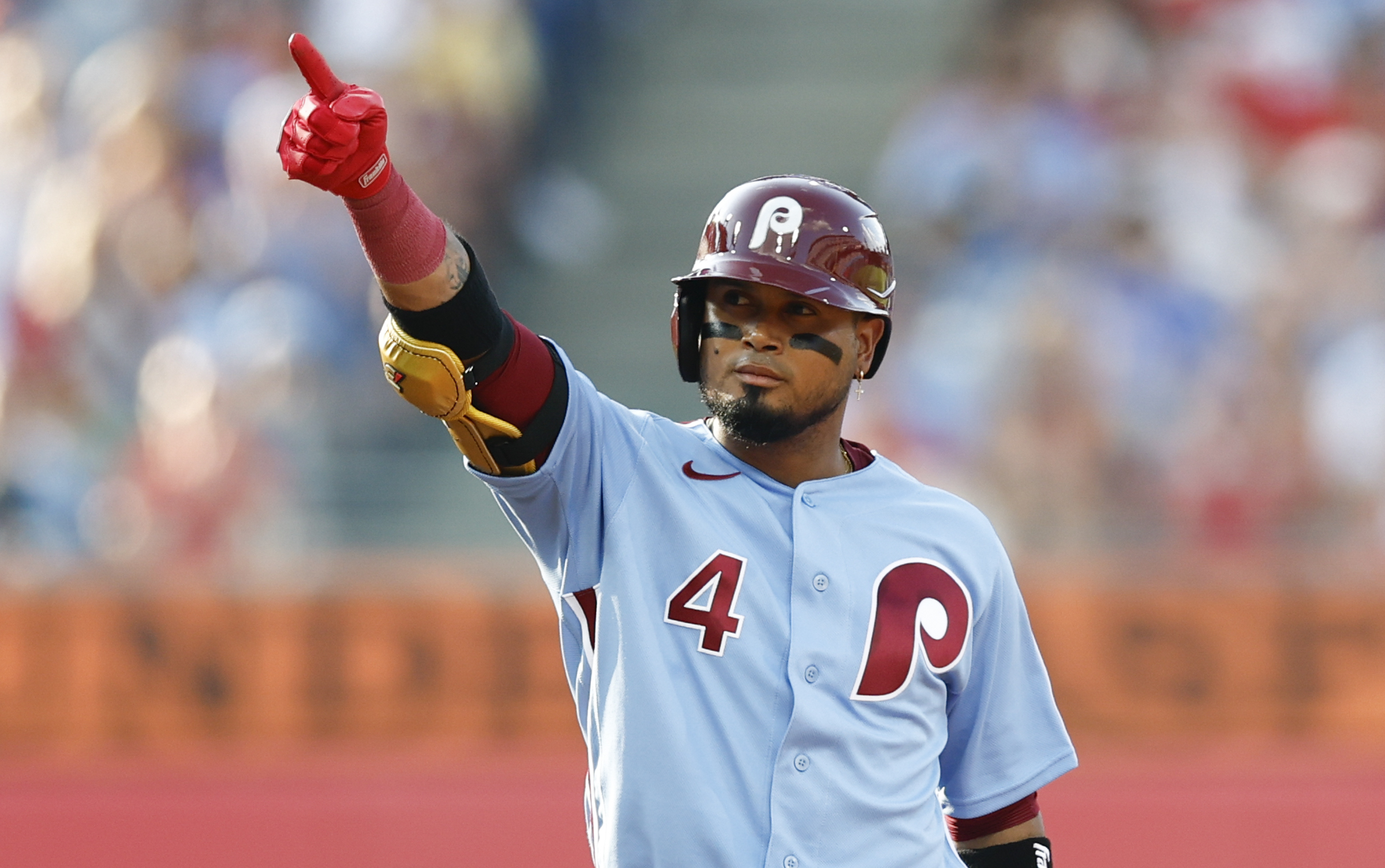
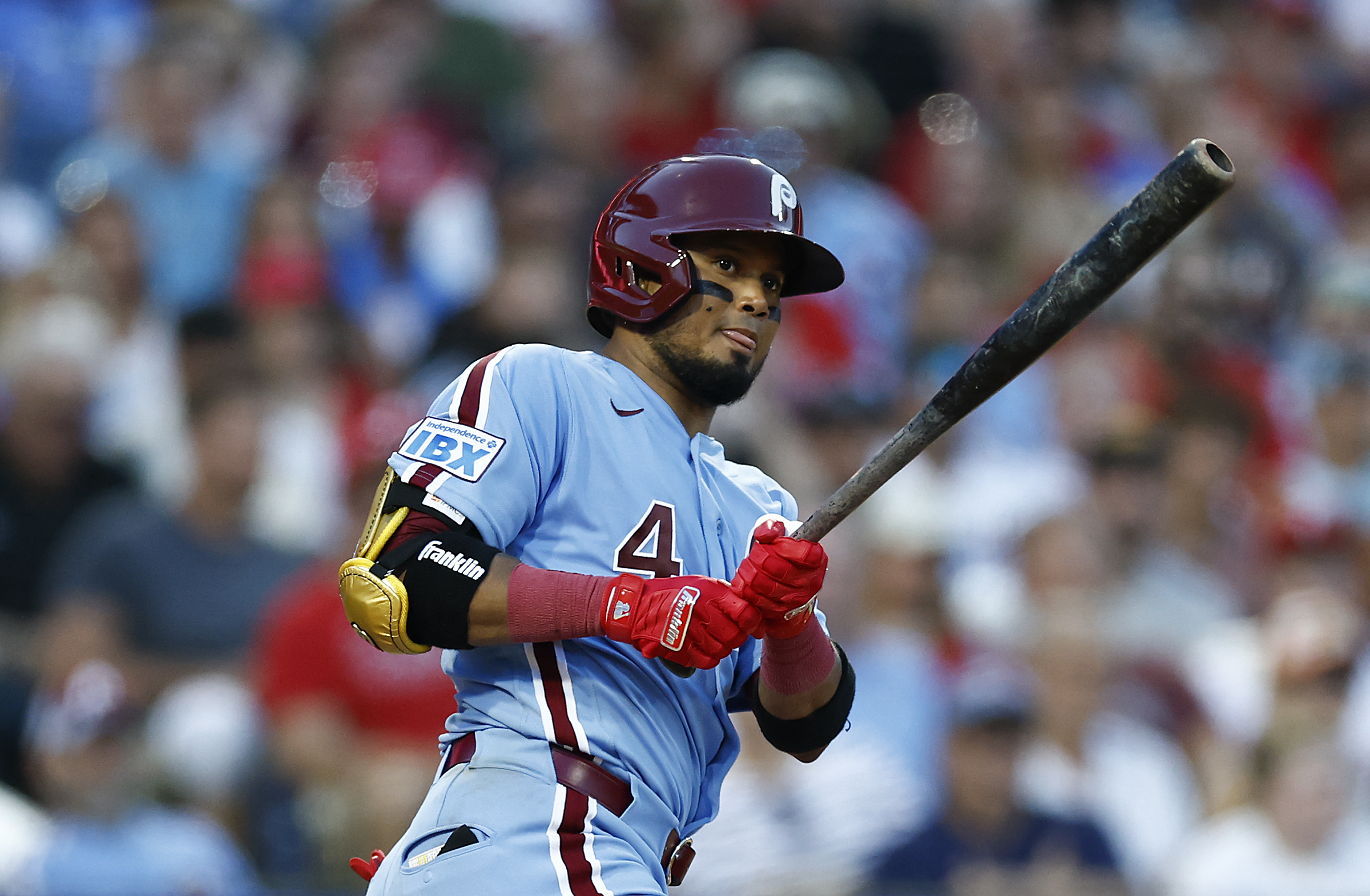
    With Luis Arraez in the lineup, the Phillies were 32-for-101 (.317) and scored 16 runs in the last three games.Yong Kim / Staff Photographer

    So far, it couldn’t be working out any better.

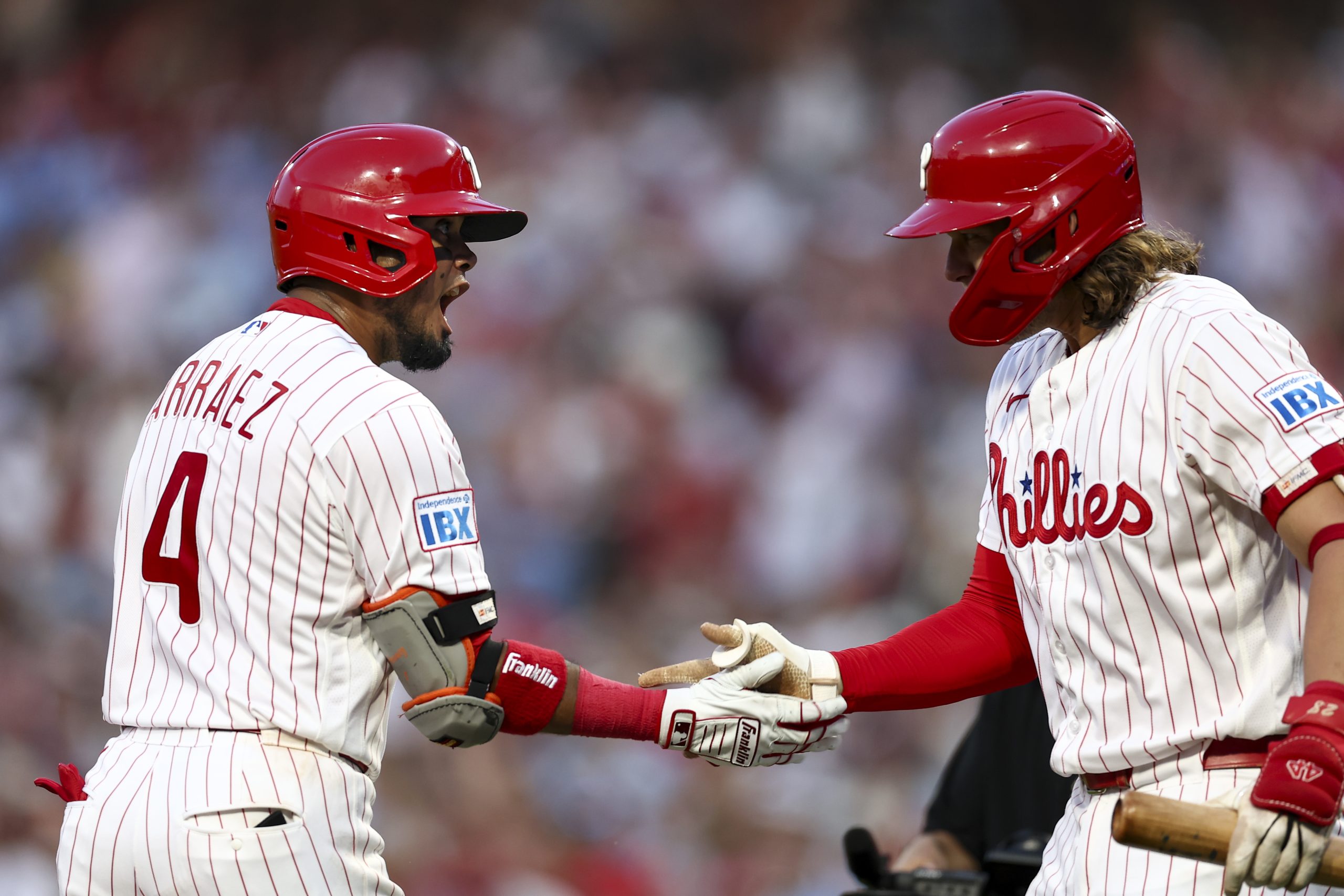
    Arraez’s first two at-bats with the Phillies came with runners on first and second base Tuesday night. In both cases, he drove in a run. Through three games entering Friday night, he was 5-for-13 with two doubles, one homer, and four RBIs — all while batting in the cleanup spot behind Harper.

    There’s more. Arraez swung at 28 pitches and made contact with all of them. And with him in the lineup, the Phillies were 32-for-101 (.317) and scored 16 runs in three games.

    Mattingly conceded that he debated between Schwarber or Arraez in the leadoff spot, with the other hitting cleanup.

    “And honestly,” he said, “I didn’t know which way was better. It’s worked out so far. We’ll see where it goes. But I like him there because he’s on base and he’s also driving in runs with hits.”

    Chase Utley, pictured at his retirement ceremony, was added to the Phillies’ Wall of Fame on Friday night.Yong Kim / Staff Photographer

    Honoring Utley

    At Harper’s suggestion, the Phillies ditched their City Connect jerseys for the classic red pinstripes in honor of adding Chase Utley to the team’s Wall of Fame. Harper prompted the change with a text to owner John Middleton.

    Utley, meanwhile, briefly played for Mattingly after the Phillies traded him to the Dodgers in August 2015.

    “Just a guy that you love on your team and just kind of pure baseball, as much as anything,” Mattingly said. “It just seems like hard-nosed, straight-ahead, no-fluff baseball, and I love that.”

    Mattingly recalled seeing Utley in spring training early in his career, when “most people probably didn’t know about Chase.”

    “Those at-bats looked good,” Mattingly said. “You see it with young guys. You can tell certain guys, it’s just like, ‘OK, this is different.’ Right?”

    Mattingly would know. Utley finished his career with a .275 average, .823 OPS, and 1,885 hits in 7,863 plate appearances; Mattingly was a .307 hitter with an .830 OPS and 2,153 hits in 7,722 plate appearances.

    Extra bases

    Schwarber took grounders and practiced picking throws in the dirt at first base. The Phillies are planning to start him there — and get Harper a day as the DH — this weekend. … With rain in the forecast through Saturday, the Phillies scratched triple-A righty Alan Rangel from his start Friday night in Worcester, Mass., in case they need a fresh arm. It also covers them in the rotation, although Andrew Painter is expected to make his next start Monday night in St. Louis after exiting his last start due to left hamstring tightness. … Aaron Nola (3-9, 5.55 ERA) is scheduled to start at 6:05 p.m. Saturday against Blue Jays righty Max Scherzer (1-4, 7.92).

  • Trea Turner isn’t moving off shortstop (yet). The Phillies’ goal for now: Help him get better.

    Trea Turner isn’t moving off shortstop (yet). The Phillies’ goal for now: Help him get better.

    On the first day of the rest of their season, Alec Bohm practiced picking throws out of the dirt at first base; Bryson Stott worked on cutoffs and relays at third; Bryce Harper ran down fly balls in the outfield.

    And Trea Turner? He was right there at shortstop.

    Just like always.

    For Luis Arraez, the best available hitter in an extreme seller’s trade market, the Phillies finally took Harper up on his standing offer to move back to the outfield and displaced three-fourths of their infield.

    Creative, right? But the one infielder who didn’t switch positions happens to be among the worst defenders in the sport this season, based on both the eye test and metrics.

    Was there discussion of moving Turner off shortstop?

    “Zero,” interim manager Don Mattingly said.

    “There was not,” president of baseball operations Dave Dombrowski said. “Not at this point, no.”

    OK, let’s dispel a myth/social media fabrication: Turner didn’t decline to switch positions. The Phillies never asked him to. Not after Harper set all of this in motion by raising his hand to go to the outfield.

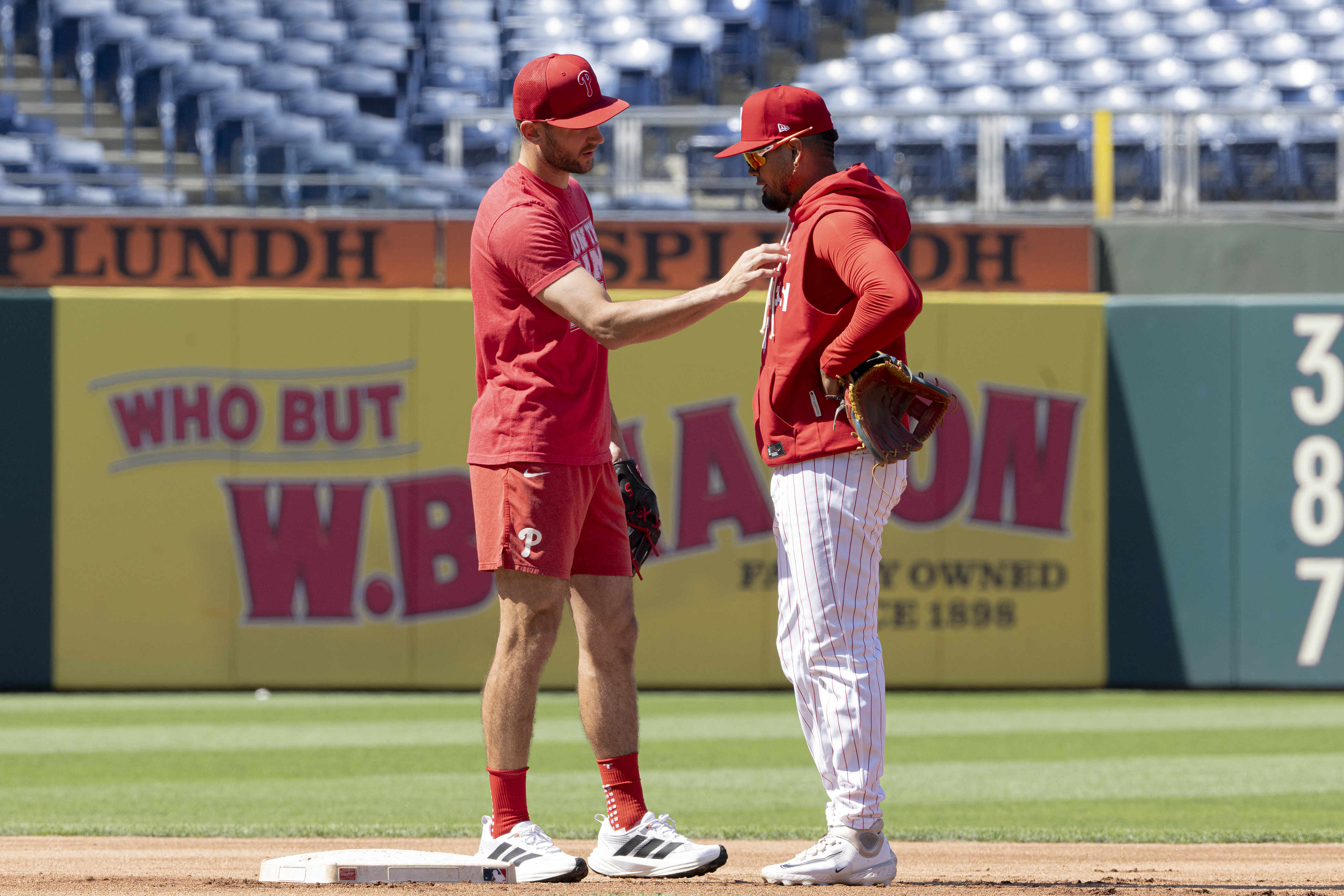
    Phillies shortstop Trea Turner (left) works with second baseman Luis Arraez, his new double-play partner, before a game this week.Jose F. Moreno / Staff Photographer

    None of these moves are permanent. Harper will return to first base next season; Stott will go back to the middle infield; Bohm is a pending free agent. This is a 49-game experiment to add a three-time batting champion to the middle of a lineup that needed more sizzle.

    Arraez brings sizzle, spice, and a knack for forcing the action with his uncanny ability to put the ball in play. Team officials think that will outweigh eight weeks of possibly weakening a defense that wasn’t steady in the first place.

    When the Phillies move Turner, they want it to be for good.

    In time, they will move him. Turner turned 33 in June and is under contract for seven more years. The conversation about vacating shortstop will come … eventually. Maybe even after this season.

    But Turner hasn’t played the outfield in 10 years, since a 45-game cameo as a rookie with the Nationals in 2016. He played 49 games at second base after getting traded to the Dodgers in 2021. Otherwise, it has been shortstop.

    For now, the Phillies are focused on helping Turner get better — or at least closer to last season, when he played the best defense of his career en route to a fifth-place finish in the National League MVP race.

    “Trea’s won a World Series as a shortstop [with the Nationals in 2019]; he’s won a division back-to-back years; he’s played a high level of shortstop last year; he’s still athletic,” infield coach Bobby Dickerson said on The Inquirer’s Phillies Extra podcast. “All those things I don’t see diminishing. He can stay at shortstop.

    “How does it happen? He’s got to put a chip on his shoulders and say, ‘The way to quiet everybody is to make plays, to do my job and do it right and do it good. I always talk about shortstop as the quarterback position. Out on the field, quarterbacking is a person that calms everything down instead of creating more chaos. We’ve got to get back to leading as a shortstop — make plays, play it calm, let everybody breathe. That’s the only way he stays there.

    “My job is to help him stay there. I’ll feel like I failed if we don’t get this done. I’ve seen him play it. And until he’s moved, he’s our shortstop, and we’re going to get after it every day and get it done.”

    Turner entered the weekend with 18 errors, second-most behind Nationals shortstop CJ Abrams. He ranked last among shortstops in defensive runs saved (minus-11), according to Sports Info Solutions, and third-to-last in Statcast’s fielding run value (minus-8).

    In four games out of the All-Star break, he made four errors. He had six in 17 games through Wednesday. The past week has been better, with diving plays to his left to take hits from Jake Rogers last Friday night in Baltimore and the Nationals’ Jorbit Vivas and Daylen Lile at home Tuesday and Wednesday.

    It’s also not coincidental that Turner’s downturn in the field began amid early-season struggles at the plate. Although he has turned it around over the last six weeks, he was hitting .216 with a .595 OPS on June 15.

    “The offense at the beginning of the year was probably in his head a little bit,” Phillies radio analyst and former shortstop Kevin Stocker said on Phillies Extra. “He struggled out of the gate offensively, which has always carried him, and sometimes when you take that out to the field, you’re still kind of thinking about it … and then the routine play eats you up.

    “It’s a classic case of kind of getting the yips. You don’t know whether to charge the ball, whether to go back on a ball, and that is the worst when you get that as an infielder. It’s incredibly difficult to get out of that.

    “The other night, he made an amazing play going to his left. The angle plays, you don’t have time to think about it, [and] you make it. It’s that routine play. … What the Phillies need is Trea needs to make the routine play. The great plays are great, but if you don’t get the routine out and you give an extra out to the bullpen that has been struggling, it’s trouble.”

    But in uprooting three infielders, the Phillies left Turner alone.

    For now.

    “We didn’t even discuss it with him at this point,” Dombrowski said. “He’s done it before and he works hard at it. He’s our shortstop, and that’s where he’s staying right now.”

    Phillies top prospect Gage Wood has been a starter this season at double-A Reading.David Maialetti / Staff Photographer

    Gauging Wood

    Fire up the flux capacitor, and time travel to Oct. 4, 2025.

    It’s Game 1 of the division series. The Phillies lead, 3-2, in the seventh inning at home against the Dodgers. David Robertson gives up a leadoff single and hits a batter before Matt Strahm allows a three-run homer. The Phillies lose, 5-3.

    Now, travel to Oct. 5, 2024. It’s Game 1 of the division series. The Phillies lead, 1-0, in the eighth inning at home against the Mets. Jeff Hoffman gives up a leadoff single, a walk, and an RBI single before Strahm allows the go-ahead single, a sacrifice fly, and another single. Orion Kerkering enters and yields an RBI single and a sacrifice fly. The Phillies lose, 6-2.

    The point is, the bullpen is the source of Phillies playoff disappointments dating to Craig Kimbrel’s meltdowns in Games 3 and 4 of the 2023 NLCS in Arizona. They have Jhoan Duran in the ninth inning now, but getting to him could still be problematic even after the deadline additions of Caleb Kilian and veteran lefty Brooks Raley.

    At present, the starter-to-Duran bridge consists of Jonathan Bowlan, José Alvarado, Kerkering, Tim Mayza, Kilian and Raley.

    Maybe it will be enough. History says it won’t.

    So, hard-throwing Alex McFarlane likely will get another look after retiring Shohei Ohtani in his major league debut July 22. Since then, he gave up one hit and two walks in three scoreless outings in triple A.

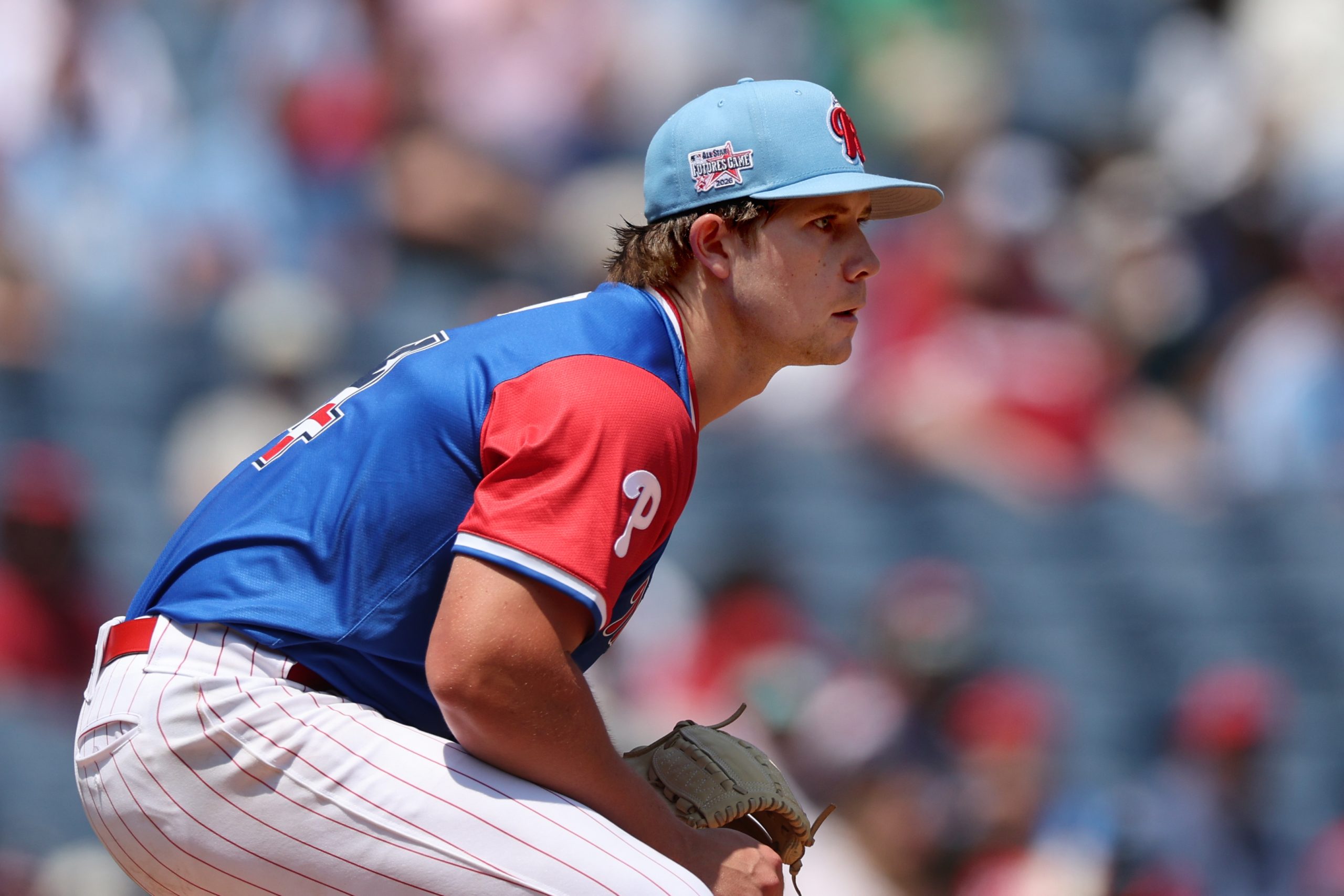
    Rival scouts wonder if the Phillies will push top prospect Gage Wood to the big leagues as a reliever. Wood, who has a 4.32 ERA in 11 starts in double A, pitched out of the bullpen as a freshman in college at Arkansas.

    “Would I consider it?” Dombrowski said. “We have not discussed that at all at this point.”

    Key words: “At this point.”

    The Phillies are monitoring Wood’s innings — 68 and counting — with no plans to shut him down before the end of the minor-league season.

    “He’s a good prospect and we really like him,” Dombrowski said. “But we haven’t talked even talked about that.”

    Phillies president of baseball operations Dave Dombrowski didn’t trade for a starting pitcher at the deadline.Heather Khalifa / Staff Photographer

    False start

    A partial list of starting pitchers who got traded before the deadline: Tarik Skubal, Kevin Gausman, Clay Holmes, Robbie Ray, Casey Mize, Freddy Peralta, Luis Castillo, Foster Griffin, Dustin May, Tyler Mahle, José Soriano, Spencer Arrighetti, Jameson Taillon, Kris Bubic, Braxton Garrett, Dean Kremer, and Connelly Early.

    The Phillies got none of them.

    OK, so they weren’t trading for Skubal. And given the lack of top-end talent in the farm system, Dombrowski conceded the Phillies were unable to beat the returns for some starters. The Cubs (Gausman and Holmes) and Padres (Ray and Mize) were especially aggressive with their prospect packages.

    But Dombrowski also said the Phillies discussed, then dismissed pitchers whom they didn’t view as upgrades over rookie Andrew Painter.

    “The choice came in, do you end up getting a guy that’s a fifth starter that you don’t think is as good as your guy that you have now and option the guy that you think has a better chance to win to help your depth, or do what we’re doing?” Dombrowski said. “And we figured we’d do what we were doing and help our bullpen.”

    It’s riskier than the infield realignment. Much riskier.

    Unlike the Cubs and Padres, the Phillies didn’t need to trade for pitchers who could start postseason games for them. Not as long as Cristopher Sánchez, Zack Wheeler, and Jesús Luzardo are lined up. But they still have to get to the postseason, which is more difficult with a 5-23 record from the fifth-starter spot.

    The Reds held Brady Singer, even though the return likely didn’t have had to be much greater than the value of the compensatory draft pick they will get if they give him a qualifying offer. Adding someone like Singer to slot behind Aaron Nola, with Painter in reserve, would’ve helped, a point that was reinforced Wednesday when Painter tweaked his left hamstring and exited after four innings.

    Painter is expected to make his next start, Mattingly said, but surely, the Phillies were holding their breath. They won’t exhale much over the next seven weeks.

    “I always worry after you get past the trade deadline,” Dombrowski said. “I worry about our depth everywhere if you have injuries.”

    But the state of the rotation feels like an especially dangerous game.

  • Phillies Extra with Kevin Stocker

    Phillies Extra with Kevin Stocker

    In trading for Luis Arraez at the deadline, the Phillies displaced three-fourths of their infield but left Trea Turner at shortstop. To help make sense of it all, pennant-winning former shortstop and current radio broadcaster Kevin Stocker joined Phillies Extra, The Inquirer’s baseball podcast. Watch here.

    You can also subscribe to the podcast version of Phillies Extra on Spotify or Apple Podcasts.

  • Kyle Schwarber breaks out of his slump as Phillies hit eight doubles in 7-3 win vs. Nationals

    Kyle Schwarber breaks out of his slump as Phillies hit eight doubles in 7-3 win vs. Nationals

    With several hours still to go before Thursday’s first pitch against the Nationals, a stifling humidity settled around Citizens Bank Park. To get his pregame swings in, Kyle Schwarber could have easily retreated to the air-conditioned batting cages underneath the stadium as he normally does.

    But instead, the Phillies slugger shifted his daily routine to take an early hitting session with coach Kevin Long outside on the field. As he searched for the end of a slump that had reached 0-for-18, Schwarber wanted to see the ball fly.

    “Sweating bullets out there. That was fun,” Schwarber said. “But being able to try to find the little reset there.”

    The extra work seemed to pay off, as he later delivered a pair of singles and drove in a run in the Phillies’ 7-3 win over Washington. One thing Schwarber didn’t do was hit a double. But his teammates more than made up for that, setting a season-high with eight total doubles from seven different Phillies.

    Schwarber hopes his results on Thursday are a sign he’s turning the corner from a slow start since the All-Star break. The power is still a work in progress. His homer drought has stretched to 15 games.

    “Once I got into that third, fourth at-bat there, and even the fifth at-bat — even though it did result in a strikeout — I felt like that I was starting to get into the positions that I wanted to get into, and the field that I wanted to get into,” Schwarber said.

    Even when he’s at his hottest, Schwarber doesn’t step into the box trying to hit a homer. In fact, he’s usually thinking about staying in the middle of the field and hitting line drives. It just so happens that when he makes that kind of contact, it often goes out beyond the fence. While that hasn’t happened lately, Schwarber is hopeful that it’ll come if he sticks with the process.

    “I just want to try to have the best at-bats I can, keep the quality contact there, keep the chase to a minimum, and find a way on base for our guys,” Schwarber said.

    The Phillies offense racked up 16 hits, knocking around Nationals starter Miles Mikolas for six runs. Luis Arraez started the double party in the first inning, driving in Trea Turner and Bryce Harper with a line drive to right field.

    Justin Crawford was the only other Phillies starter to finish without a double, but like Schwarber, he contributed in other ways. Crawford laced an RBI single in the second inning, and executed a sacrifice bunt in the sixth. After Bryson Stott hit his second double of the game, Crawford’s bunt advanced him to third and he scored on Schwarber’s single.

    “It was nice to see the guys swing the bats tonight, kind of up and down,” said interim manager Don Mattingly. “Everybody with contributions, getting out there early was nice, and to be able to keep scoring was one of those things that you feel good about.”

    The Phillies’ early lead could have been even bigger, but both Arraez and Crawford were waved home on aggressive sends from third that backfired, as each were thrown out at the plate.

    Starter Cristopher Sánchez didn’t look as sharp as usual, but he held the Nationals to two runs. He gave up six hits, including a solo homer to Andrew Pickney for his first major league hit, and walked two. Sánchez allowed baserunners in every inning he pitched except for the first.

    He wasn’t making many bats miss with his sinker, which only generated one swing-and-miss on 23 swings. But Sánchez still struck out six, five of which came on his changeup.

    Phillies pitcher Cristopher Sánchez allowed baserunners in every inning he pitched except for the first. Yong Kim / Staff Photographer

    “I try to pitch as good as I can when I have traffic on the bases and try to get out of those jams, and I always go out there trying to put the team in the best position to win,” Sánchez said through team interpreter Diego D’Aniello.

    In the fifth inning, Sánchez loaded the bases on a single and two walks. Pitching coach Caleb Cotham came out to the mound to give him a chance to steady his breathing in the heat, and afterward Sánchez rebounded with a strikeout and a groundout to end the inning.

    But the long at-bats and long innings had driven his pitch count up, and his night ended there at 98 pitches.

    “Just seemed like he was tick off tonight,” Mattingly said. “They’ve been tough on him all year, it feels like. They’ve put the ball in play. They single him, foul him off a little bit. I thought the fifth was huge. Him getting out of that jam was huge for us. You can tell he kind of emptied the tank there at the end.”

    It was not an ideal situation for a club that used eight bullpen arms in an extra-innings loss the night before, but the offense provided enough of a cushion. Orion Kerkering, José Alvarado, Jonathan Bowlan, and Jhoan Duran made appearances after also pitching on Wednesday.

    “We wanted Sánchy obviously to be able to go further and keep more guys out of the game. But obviously, good to see those guys bounce back,” Mattingly said.

    A run scored on Kerkering in the sixth after he gave up a triple to Jacob Young and a single to Keibert Ruiz. He battled back with consecutive strikeouts to strand runners on the corners.

    The Phillies played some solid defense, too. The new-look infield turned a double play to help out Sánchez in the fourth. Over at third base, Stott caught a foul pop-up just before his momentum took him a few steps into the Nationals’ dugout.

    In the ninth inning, Bryan De La Cruz entered the game in right field as a defensive substitution for Bryce Harper, and made a sliding grab on a line drive.

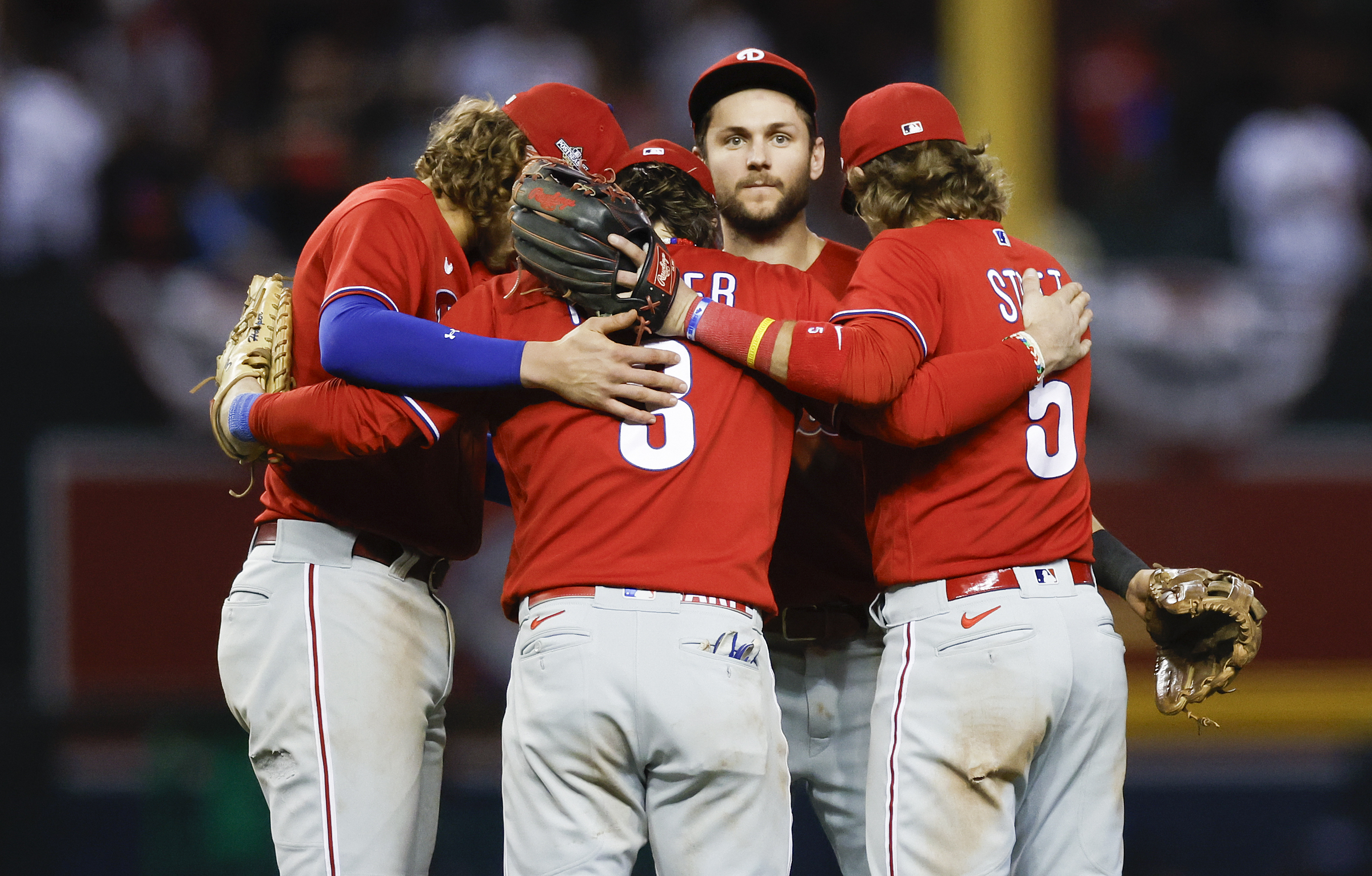
    The Phillies infielders celebrate after their 7-3 win on Thursday night.Yong Kim / Staff Photographer

    The Phillies have won their second consecutive series since getting swept by the Marlins last week. They did it without a single homer from their home run leader. But they expect those to come along soon.

    “I think it’s just a matter of time with him,” Mattingly said of Schwarber. “He’s not one of the guys that I sit there and think about, worrying if he’s going to bounce back or not. He’s going to catch fire again.”

  • Andrew Painter expected to make his next start; Derek Hill avoided injury from collision

    Andrew Painter expected to make his next start; Derek Hill avoided injury from collision

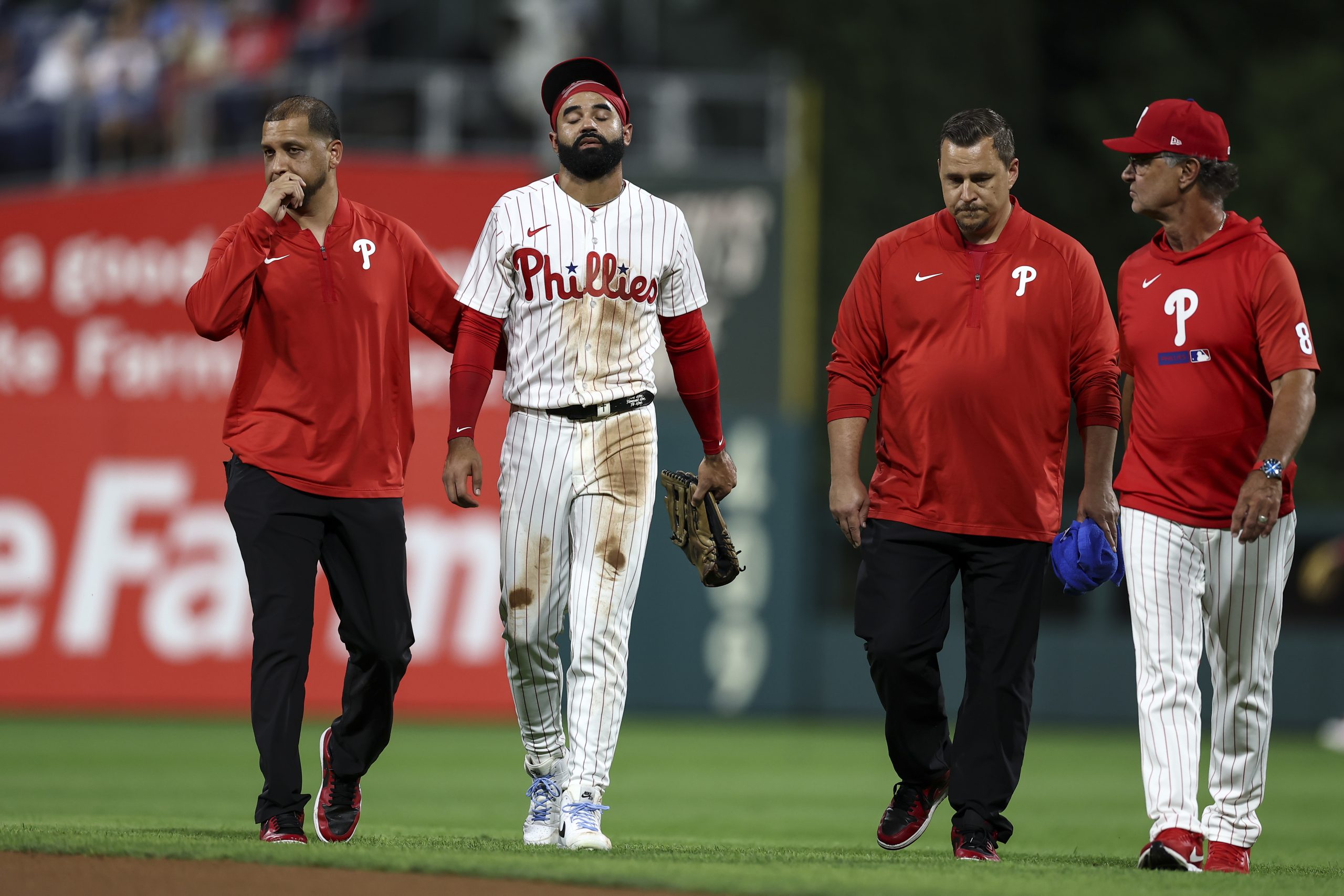
    The Phillies’ 10-4 loss to the Nationals on Wednesday was overshadowed by several injury scares. Andrew Painter left his start after just four innings with hamstring tightness, while Derek Hill exited with a bruised shoulder after crashing into the center field wall in the 11th. After both players were evaluated on Thursday, though, the Phillies were optimistic.

    Imaging on Painter came back clear, and interim manager Don Mattingly said he is expected to make his next start.

    “It’s obviously a sigh of relief that you know you’re not going to be searching for a starter every fifth day. And really everything last night could have been a lot worse,” Mattingly said.

    Hill went through protocols and evaluation after the collision. He was sore but has avoided injury.

    “He feels like he probably should, after running into a wall,” Mattingly said.

    Mattingly added that depending on how Hill progressed through pregame activities, the outfielder might be available off the bench on Thursday.

    Bryce Harper was also checked out by trainers Wednesday night after jamming his hand while attempting to steal second in the 10th, but remained in the game and was fine afterward. Harper was back in the lineup in right field on Thursday.

  • Luis Arraez is the latest Phillie Justin Crawford has pulled aside to ‘pick his brain’

    Luis Arraez is the latest Phillie Justin Crawford has pulled aside to ‘pick his brain’

    After Luis Arraez had traversed the length of the dugout, doling out high fives in celebration of his fifth homer of the season, Justin Crawford had a question for him.

    The Phillies rookie pulled aside the newest member of the team to ask what he’d seen from Nationals pitcher Jake Irvin that had allowed him to take him deep. Arraez sent an 0-2 sinker at the top of the zone 385 feet off the foul pole in right field.

    “I figured he’s probably going to try to pitch me similar to how he pitched him,” Crawford said. “So I was just trying to pick his brain, and see what he saw from him.”

    When it was Crawford’s turn, he attacked a first-pitch fastball from Irvin, and powered it to deep center field for a sacrifice fly that scored a run.

    The exchange between him and Arraez was caught on NBCSP’s broadcast cameras, but it’s something Crawford does often with his teammates. He is always asking fellow lefties Brandon Marsh and Bryson Stott for advice, because he sees their approach as somewhat similar to his own.

    “Just lefties that are kind of similar to me, where I think pitchers might try to pitch us kind of the same,” Crawford said. “Arraez, I went up to him. He had a pretty long at-bat, I think, too. So went up there and [I] asked him what he saw. And yeah, I definitely took that into my next at-bat.”

    Arraez, with his ability to spray the ball all over the field and his penchant for singles, might be more similar to Crawford than anyone else on the team. Both lefties hit for average, don’t swing and miss a lot, and have the ability to manufacture runs. Power is not a main feature of either of their games.

    Luis Arraez celebrates a second-inning home run with Alec Bohm on Wednesday.Monica Herndon / Staff Photographer

    Arraez has three batting titles and is on pace for his fourth. Crawford won the International League batting title in the minors last year after putting up a .334 average in triple A.

    He knows there is a lot he can learn from his new teammate.

    “I think that’s someone I’m going to be relying on throughout the rest of the year, honestly,” Crawford said. “Just with our profiles being pretty similar, knowing that, how pitchers try to pitch him will most likely be how they’re trying to pitch me.”

    What impresses Crawford most about Arraez’s approach is how hard he battles at the plate. Although he has the lowest strikeout rate in MLB — 4.4% — Arraez is not afraid to fall behind in the count and work long at-bats.

    “Just how tough of an out he is,” Crawford said. “I think every at-bat, he goes up there, competes, and his ability to be able to extend that at-bat, put the ball in play, is something that I think is really unique. And also is a lost art.”

    The potential mentorship between Arraez and Crawford is something that interim manager Don Mattingly thinks can really benefit the rookie in the long run.

    “I think Luis is a guy for him. It’s a great guy for him to talk to,” Mattingly said. “He’s left-handed. He’s won a few batting titles. Craw’s won a couple in the minor leagues, so they’re similar guys. Obviously, they look a little different, but they’re similar in what they do.”

    The energy the 29-year-old Arraez has injected into the Phillies lineup in just the two games since they acquired him is clear watching from the outside. But behind the scenes, his leadership is already shining through.

    “Throughout the year, throughout every game, I think I’m going to be kind of leaning on him,” Crawford said. “He’s such a leader too, already, so it’s been really good so far.”

    Phillies outfielder Derek Hill leaves the game against the Nationals after crashing into the center field wall on Wednesday.Monica Herndon / Staff Photographer

    Extra bases

    Zack Wheeler (10-2, 2.49 ERA) is scheduled to start Friday’s series opener opposite Blue Jays right-hander José Soriano (9-6, 3.29). Toronto acquired Soriano at the trade deadline, and he will be making his debut with the club. … Chase Utley is set to be inducted into the Phillies’ Wall of Fame on Friday before the game.

  • Lewis Kalb never became a professional announcer. But during Wednesday’s Phillies game, he had his ‘moment.’

    Lewis Kalb never became a professional announcer. But during Wednesday’s Phillies game, he had his ‘moment.’

    Some kids dream of playing in the major leagues, but Lewis Kalb was always different. Growing up in Detroit in the 1950s, he had no interest in becoming the next Al Kaline or Jim Bunning.

    He had his eyes set on a much more exclusive club, one that only hundreds had ever qualified for. Kalb wanted to be a broadcaster. The boy spent his nights listening to the deep drawl of Ernie Harwell, and after the family moved to Medford Lakes in 1965, the laid-back style of By Saam.

    He quickly realized this would be a lofty goal. In the 1970s, Kalb served as a public address announcer for the hockey team at Hillsdale College in Michigan, and worked as a disc jockey for the local radio station.

    Job opportunities weren’t coming. So he decided to pursue a more pragmatic career, in sales, and moved to Los Angeles in 1977 to work for Russell Stover Candies. But even then, he couldn’t shake his dream.

    As Kalb drove thousands of miles up and down the California coast to peddle boxes of chocolate and other confections, it would be Vin Scully’s voice crooning through the car stereo.

    “I would say, ‘Well, you’ve wanted to do this since age 12,’” Kalb recalled. “You can’t wait too much longer. Now I’m 27, 28 years old. So, if you’re going to pursue it, if you’re going to give it a shot, that’s the time to do it.”

    He moved to State College in 1980 to enroll in broadcasting classes at Penn State, working as an overnight disc jockey with some public address appearances on the side. In 1984, Kalb was hired as the afternoon drive host for WZBZ 99.3 in Atlantic City, a role he’d hold for two years.

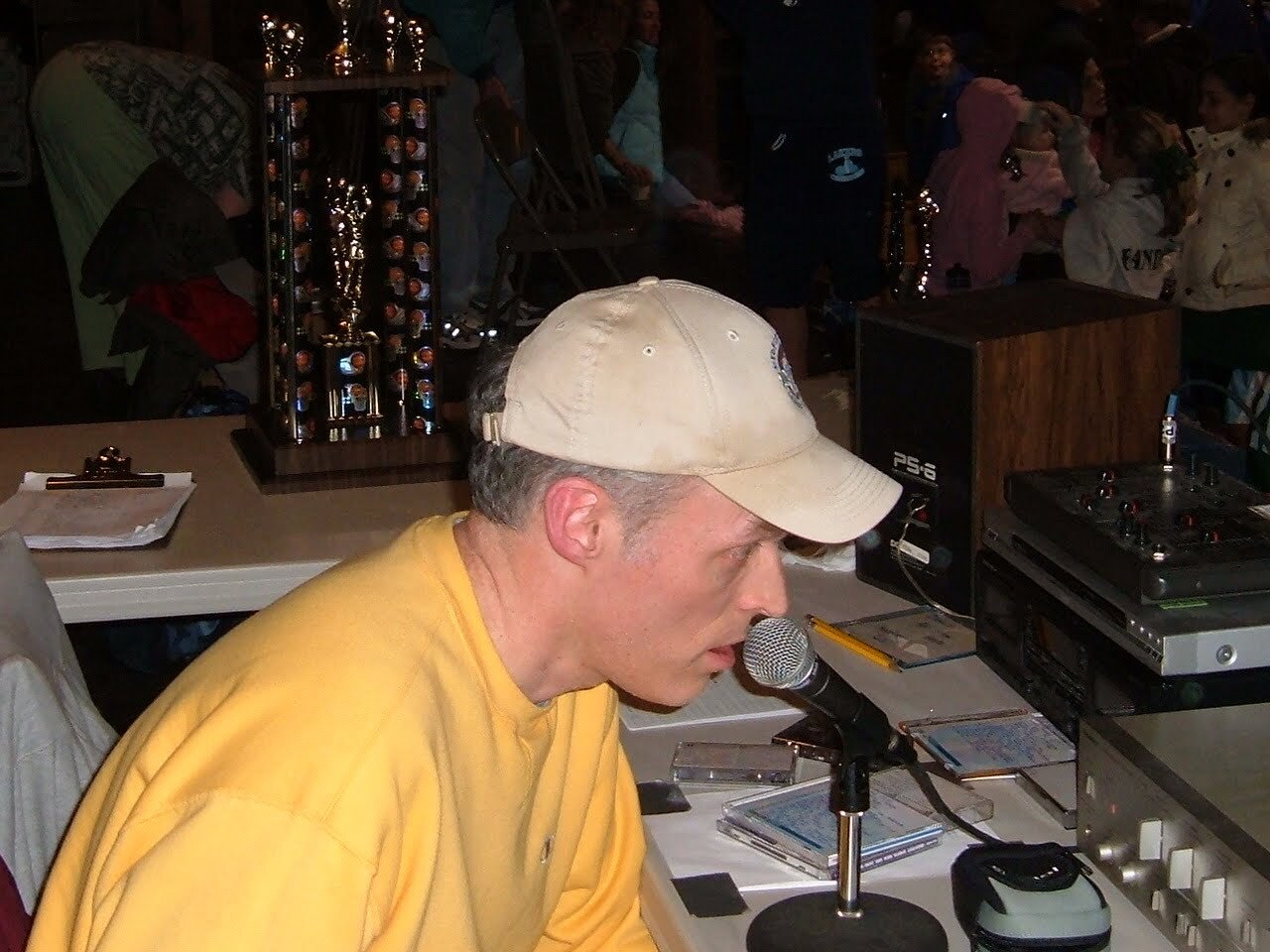
    Lewis Kalb broadcasting a basketball game at Vaughan Hall in Medford Lakes, N.J., in 2010.Courtesy of Lewis Kalb

    The aspiring play-by-play man transitioned into freelance work after that, as a Philadelphia-based reporter for WFAN and WNAW in New York, but never found a full-time gig. The closest he got was in 1996, when the Sixers held open auditions for a public address announcer.

    Kalb knew he’d be competing against “heavy hitters,” in his telling, so he decided to get plenty of reps in. About a mile away from his house in Medford Lakes was a local recreation center, Vaughan Hall.

    The Detroit native began announcing kids’ basketball games, multiple times a week. He didn’t get the Sixers job, but found his calling in the process.

    “It was my volunteer niche,” Kalb said. “It was the greatest thing in the world. The response I got from the kids, the parents, the grandparents, everybody, they loved it so much.

    “Because here I was, announcing their kids, like it was NBA basketball. Playing the music in the timeouts, pumping them up with the intro music, just like the Chicago Bulls used to introduce their championship teams.

    “And it was so overwhelming that I said, ‘You know what? This is what I’m going to do to volunteer and give back to my community.’ And 30 years later, I’m still doing it and loving every second of it.”

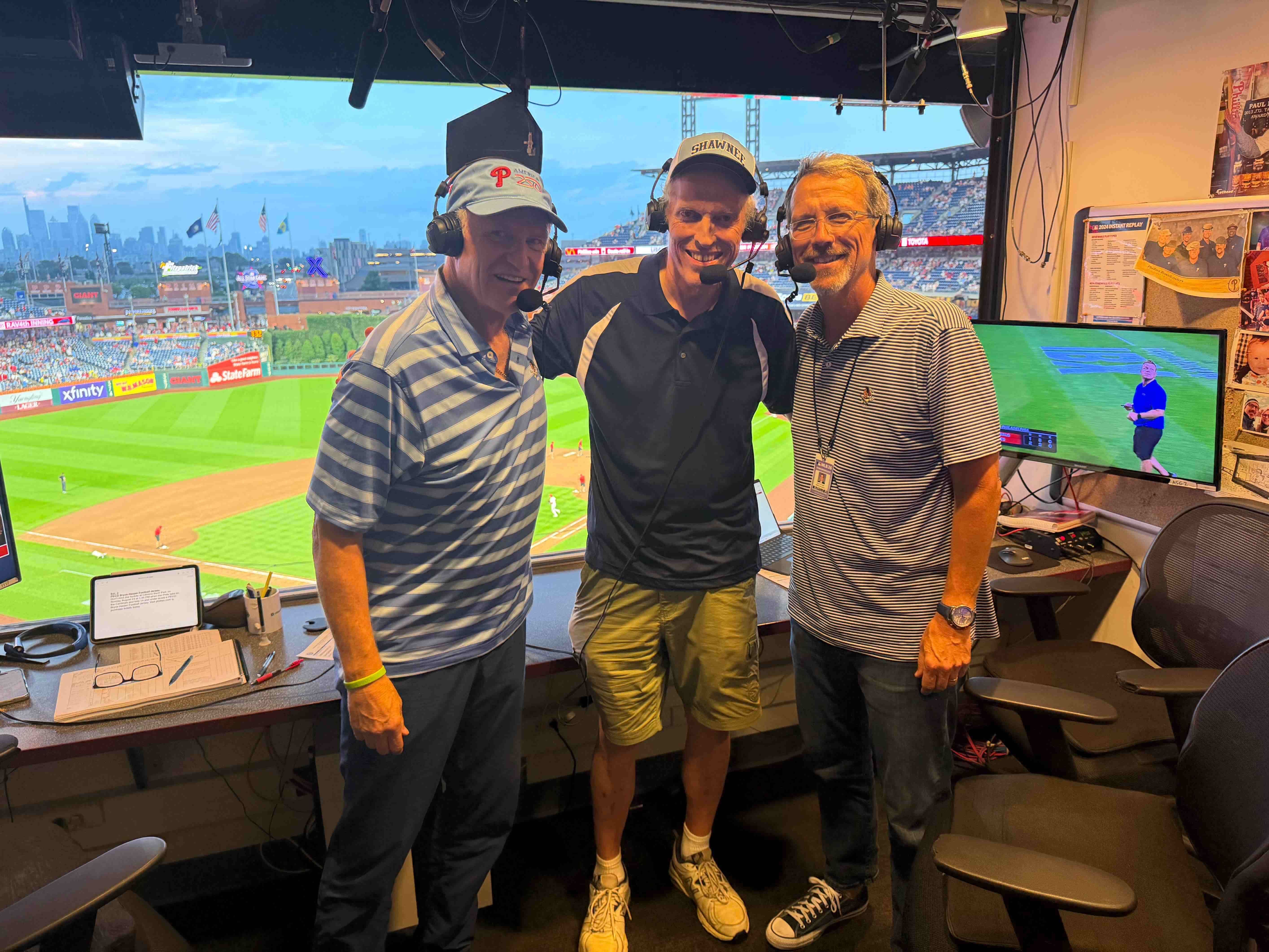
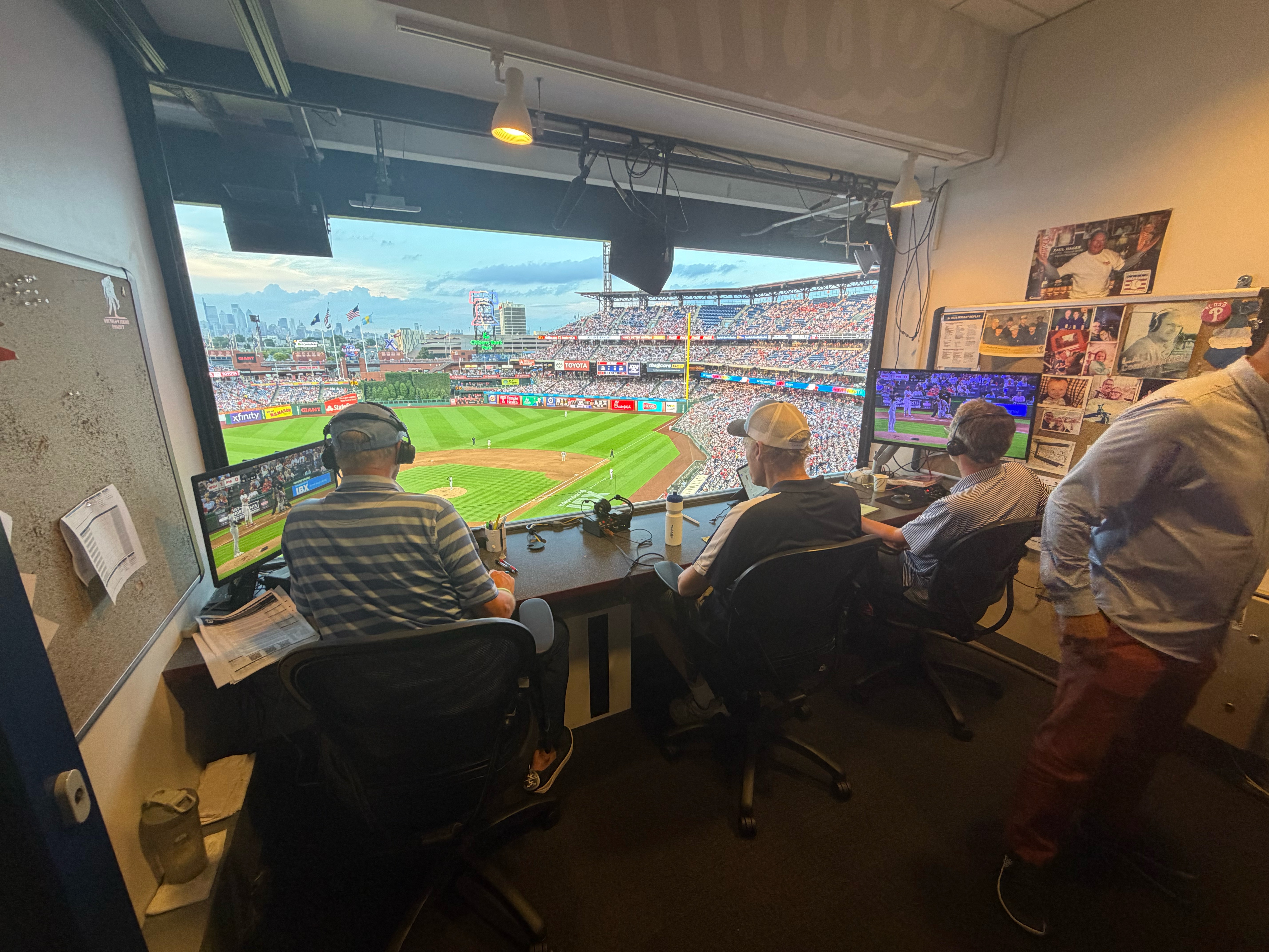
    For those 30 years, Kalb and his dulcet tones were the best-kept secret in Medford Lakes. Not anymore. On Wednesday night, in the third inning of the Phillies-Nationals game, sandwiched between Scott Franzke and Larry Andersen, the 73-year-old took to the air.

    Lewis Kalb (center) with Phillies radio broadcasters Larry Andersen (left) and Scott Franzke (right) after joining them on air on Wednesday.Courtesy of Lewis Kalb

    He’d paid $22,000 for the opportunity in the Phillies’ Phantastic Auction. And to Kalb, a substitute teacher at Neeta Middle School, it was worth every penny.

    The septuagenarian had only minimal live play-by-play experience; about 10 high school baseball games, if that. He’d also done some work on YouTube, holding a camera in one hand, and a mic in the other, while narrating various local sporting events.

    But decades of Scully and Harwell and Saam and, of course, Harry Kalas, had given him an education unlike any other. And when he started to speak, that old-school sound came pouring out.

    Franzke noticed it immediately. The Phillies have held their auction for 14 years, which has brought all sorts of voices into the booth. But the team broadcaster had never heard an auction winner like this.

    Some past auction segments would become de facto interviews, with Franzke and Anderson asking the winner questions about their fandom to fill time. In this case, they barely had to talk at all.

    Kalb had studied so much he didn’t look at his rain-soaked sheet of paper. He had a natural rhythm and feel for what was unfolding in front of him.

    “He was, for the most part, with the play,” Franzke said. “And I think anytime, [with] someone who hasn’t practiced it, that’s the first thing that happens, is they get behind the play. Which is fine. It’s a fun thing; we’re not auditioning, it’s an auction.

    “But for a lot of people, that’s the thing that you notice. The ground ball is on its way to a position and a lot of people are checking their notes. Who is playing that position? What position is it? But he was right on it. Right from the very beginning.”

    Lewis Kalb on the court at the Palestra after announcing a game in 2019.Courtesy of Lewis Kalb

    Kalb had spent the previous week rehearsing for his segment. He had studied each Phillies and Nationals player, making sure he knew their bio, and how to pronounce their name.

    Every night, he practiced play-by-play in front of a small audience on Facebook Live, while watching the Phillies game on TV. That might’ve helped him a bit. But it was also clear, to anyone listening on Wednesday, that the 73-year-old has a gift.

    And while that gift never led to a job in the booth, it did give a lot of joy to a small borough in South Jersey.

    “I didn’t have a career,” Kalb said, “but I had my moment. And I know that’s something that for the rest of my life, I will always cherish.”

  • Before the Phillies could sell you a beer, fans were throwing them at the umpires

    Before the Phillies could sell you a beer, fans were throwing them at the umpires

    The Phillies tell me they sell more than 40 brands of beer, priced from $6.99 for a 12-ounce can of nonalcoholic beer to $17.69 for a 24-ounce premium can. Beer is everywhere at Citizens Bank Park, including at a humongous walk-through cooler on the main level.

    I recently strolled into that cooler and found a lager — at $38.48 for two 19-ounce cans — that paired nicely with chicken fingers and the Fightin’ Phils. OK, so 64 ounces of the exact same beer costs $11.99 at Acme, but you can’t watch the Phils live from Acme, can you?

    “Sometimes, things become clichés because they’re true: A cool beer on a warm summer day at the ballpark is among the great joys of fandom,” says the avuncular Glen Macnow, the former Inquirer reporter (and colleague) and sports talk-show host whose What’s Brewing PA beer show appears on the NBC Sports Philadelphia networks.

    Macnow — who is, full disclosure, also the part-owner of Conshohocken Brewing Co., which vends two of its brands at the ballpark — adds: “I’ve spent many an afternoon (or evening) with a beer in one hand, a hot dog in the other, juggling both so I can fill out the scorecard balanced on my knees.

    “Those are simple and eternal pleasures. Baseball isn’t designed for trendy cocktails in a can; it’s designed for the tradition of leisurely enjoying a cold brew over several innings as you try to convince the guy in the next seat that the manager (whoever he is) is the dumbest one in Phillies history.”

    OK, but just in case you don’t care for a brewski, the Phillies also sell about a dozen different trendy cocktails in cans, with prices running from $14.55 to $23.99. These are no bargains, either, but consider the alternative: The Phillies used to not sell booze at all.

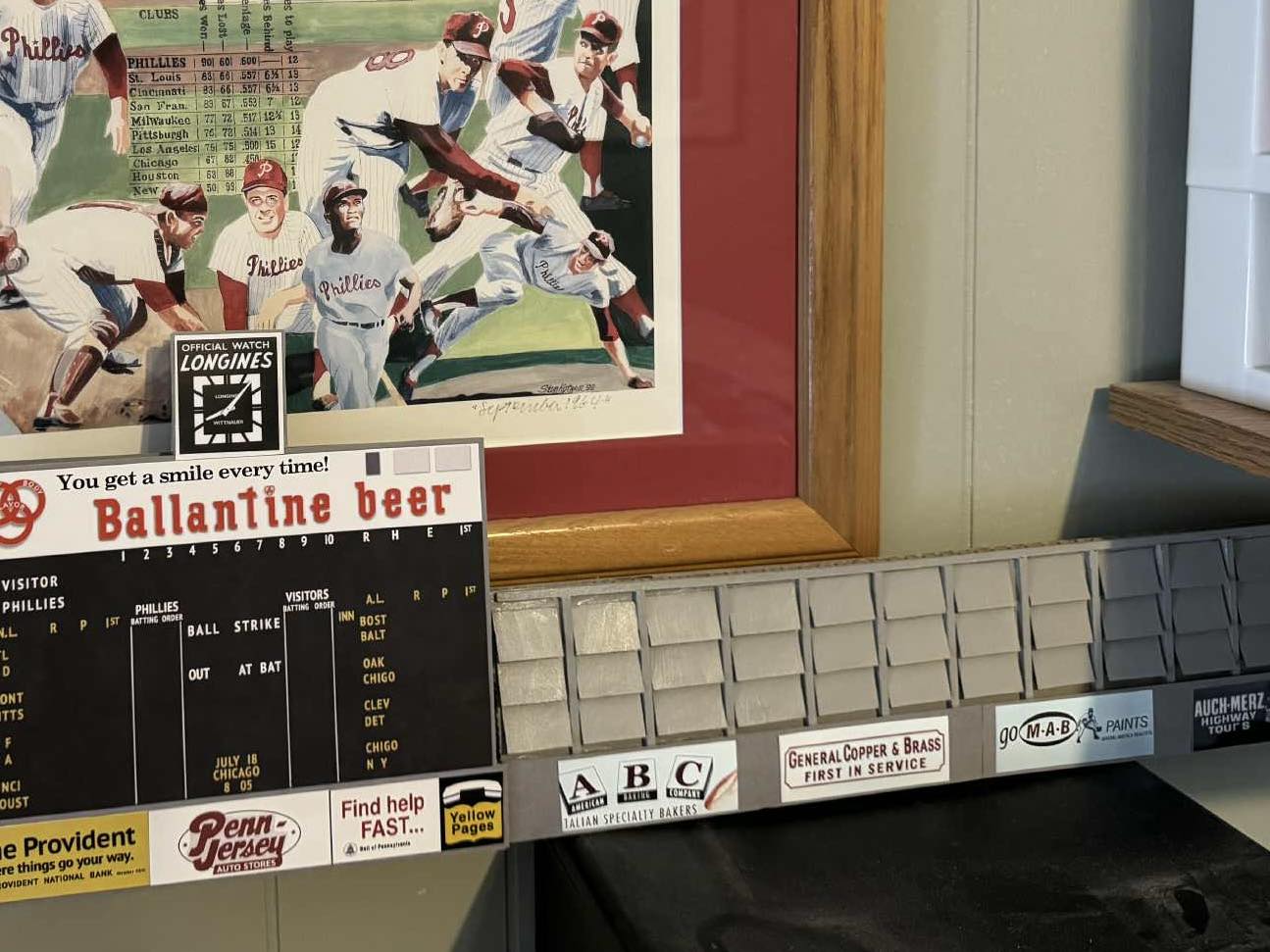
    Baby boomers like me vividly remember the towering, then-state-of-the-art right field scoreboard at Connie Mack Stadium, topped by a gigantic advertisement for Ballantine Beer (and its three-ring logo, for Purity, Body, and Flavor).

    A handmade model of the iconic Ballantine Beer scoreboard at Connie Mack Stadium by Phillies fan Bernie Valente.Courtesy of Bernie Valente

    Well, that scoreboard was erected in 1956, five years before beer was sold there.

    The Phillies first legally sold beer inside Connie Mack Stadium, their musty old park in North Philadelphia, on Aug. 7, 1961, when they put seven local brands of bottled beer on sale for 35 cents, first poured into a paper cup by eight vendors working the aisles.

    The paper cup was a vital part of the transaction, because, prior to legal sales, Phillies fans used to sneak in cans of beer, often sold in “cold packs” at nearby bars like Charlie Quinn’s Deep Right Field Cafe at 20th and Lehigh.

    Beer cans were heavier in those days, so they tended to become missiles when the umpires missed a call, or if the Phillies stank, which was quite often.

    The low point probably came on June 12, 1959, when a twi-night doubleheader against San Francisco was halted after five innings because of rain. The Phillies were no-hit — but even worse, fans were denied rain checks to both games because the first game was official.

    As Frank Fitzpatrick, the now-retired Inquirer reporter who attended the game as a 9-year-old, recalled in the paper in 2016: “Suddenly, one empty can fluttered toward the field. A second followed quickly. Soon, it was a dangerous deluge. So many were tossed that cans obscured the tarp, from the mound to the batter’s box.”

    That was not good news for Robert R.M. Carpenter, the Phillies owner, who dearly wanted a new ballpark for his team. Plans had been drafted for a 45,000-seat, $8 million stadium in the Torresdale section of Philadelphia, with an adjoining theme park, yacht basin, and bird refuge park adjacent to I-95. Beer sales would bring in some cash for that amazing project.

    On June 20, 1961, the Pennsylvania Senate passed a previously approved bill by the state House that would permit the sale of beer every day but Sunday at sporting events at stadiums in the state that seated more than 25,000. (The Pittsburgh Pirates also happened to be looking for a new ballpark.)

    But they faced stout foes. After voting against the bill earlier in 1961 that would have enabled the Phillies to sell beer, a Democratic state assemblyman from Philadelphia, Charles Heavey, predicted that the sale of beer would actually “contaminate” youngsters.

    So … first the beer had to be poured into a paper cup before drinking, preventing another beer can pileup on the field like the one in 1959. And there would be more than one starting pitcher: Schmidt’s, Esslinger, Old Dutch, Horlacher, Neuwiler and, yep, Ballantine were all included in the original sudsy rotation.

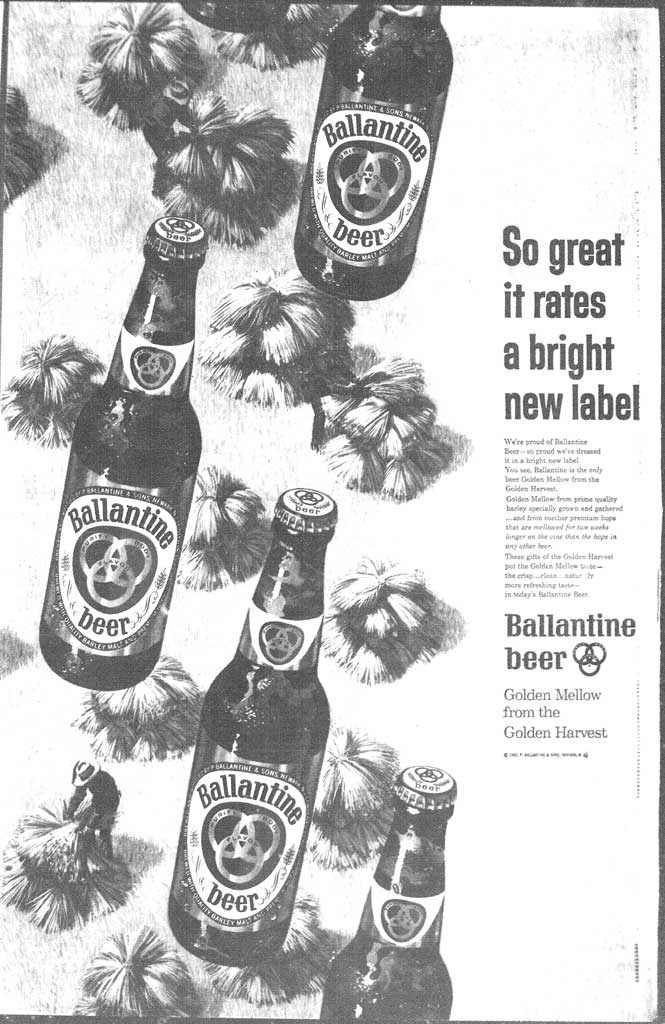
    A 1962 newspaper advertisement for Ballantine beer.

    Larry Merchant provided statistics in his Daily News column the next day: A total of 3,739 beers were served to 5,586 who attended that Aug. 7 game, a 3-1 Pittsburgh victory on a Monday, which was also the Phillies’ 10th straight loss. No bottles or cans were thrown on the field, he reported, but fans did pop the cups and try to throw those onto the field — often in vain.

    “For serious drinkers, it was about a four-beer game, just two and a half hours long,” Merchant joked. “For serious Phillies fans, it was a six-beer job. They look better that way.”

    Merchant made note of signs at the entrances that read, “Bringing in of canned beer or bottled beverages will be a cause for ejection from the park.” Nonetheless, he reported, seven would-be beer smugglers were caught at the gate, their brews returned when they left the park.

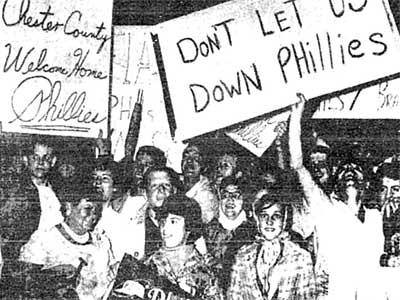
    Those 1961 Phillies were so lousy that their losing streak grew to 23 games, still a modern record. After the Phillies beat Milwaukee, 7-4, on Aug. 20 in the second game of a doubleheader, their flight home was welcomed by 500 fans at 1 a.m. the next day at the airport.

    About 500 Phillies fans welcomed the team home at the airport like conquering heroes after the club broke a 23-game losing streak in August 1961.

    “They are selling rocks at $1.50 a pail,” Phillies pitcher Frank Sullivan, looking out of the plane, joked to his teammates.

    He then wisecracked: “Leave the plane at five-minute intervals. That way, they can’t get us all with one burst.”

    In truth, the beer ploy sales did not seem to provide much of a boost to the 1961 Phillies, who lost 107 games and finished last in the National League in home attendance in 1961, averaging only about 7,600 per home game. But a door, or many brewskis, had been cracked.

    Beer would not be sold at Sunday home Phillies games until 1972, after the Phillies moved to Veterans Stadium, following the amendment of the ancient Pennsylvania Blue Laws, intended to curtail activities on Sundays (including Phillies and A’s home games until 1934).

    “My parents didn’t drink, so I always associated the public consumption of alcohol as something dark and troubling,” Fitzpatrick told me recently. “That feeling was confirmed in spades at that 1959 game.

    “By 1966, the summer I worked at the ballpark, I felt differently. I was a soda vendor, and beer suddenly was a precious commodity. Now I envied the beer sellers, because they made the most money and had the least amount of walking. Occasionally, rowdy fans would harass young vendors like me, hurling popcorn containers or wadded-up cups at us, [but] it definitely was comforting to know you wouldn’t have to dodge metal cans. On the other hand, in ’66 the smell of spilled beer now permeated the place. I don’t remember that same aroma when fans brought their own.”

    Carpenter never did get his Torresdale stadium. After a one-year delay because of construction, however, the Vet opened in 1971 in South Philadelphia. A few fans grumbled about paying 75 cents for a 12-ounce beer served there by a vendor, perhaps because those same items were 40 cents and 60 cents, respectively, at Yankee and Shea Stadiums in New York.

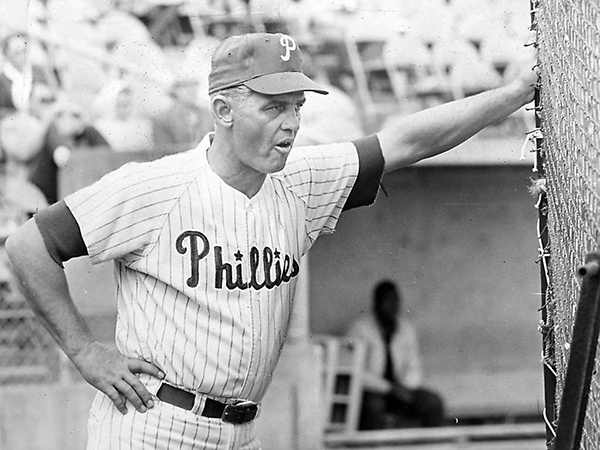
    Gene Mauch managed the Phillies during their historic 107-loss season in 1961. That team dropped 23 straight contests.

    The pricing was actually meant to be sort of a deterrent. Bud Vye, the Connie Mack stadium manager, told The Inquirer, “At these prices, they’ve got to bring a bankroll just to get bombed out.”

    But beer stuck around. A 1998 Daily News exposé into how Ogden Entertainment, then the vendor at the Vet, was caught skimming a half million dollars in annual beer sales led to a price reduction. Local brands, kicked to the side by the national brews, were sold again when the Phillies moved to Citizens Bank Park in 2004. (Large premium drafts then sold for $6.)

    Cups were eventually discontinued, and most beer at the ballpark is sold in much lighter cans (which, it should be noted, are opened by the cashier, lest someone try to hurl a full can on the field). Dozens of different brands of beer can be spotted at any Phillies game.

    “A big part of this is marketing,” Macnow tells me. “Beer at the ballpark is no longer poured into paper cups, so there’s a long-term benefit to seeing people walking around the park holding cans of your beer. Labeling becomes important. Naming beers becomes important.”

    And so is the vessel itself. The Phillies continue to sell “beverage bats,” large hollow plastic souvenir baseball bats that can be filled with any beverage. Those are not cheap, either. Phillies fans may be held captive by the prices, but beer and baseball are inseparable.

    Dave Caldwell lives in Manayunk and covered sports for The Inquirer from 1986 to 1995.