Category: New Jersey News

  • Archaeologists looked for artifacts at an Underground Railroad site in Cherry Hill. Here’s what they found.

    Archaeologists looked for artifacts at an Underground Railroad site in Cherry Hill. Here’s what they found.

    Archaeologists have nearly wrapped up their analysis of artifacts found at Cherry Hill’s Croft Farm, a historic Underground Railroad site where items have accumulated over thousands of years.

    That catalog includes 6,300 ceramic fragments, hundreds of bones, and belongings of the Lenni-Lenape Indigenous people who once inhabited the land along the Cooper River.

    In February, Cherry Hill Township invited the public to spectate the dig at Croft Farm, a property purchased by Cherry Hill in 1985 and since added to the National Register of Historic Places. It sits at a dead end behind a playground and a dog park, and Megan Brown, deputy chief of staff for Cherry Hill Mayor David Fleisher, said lifelong residents tend to not know it exists.

    The township recruited PS&S, an architectural firm headquartered in Somerset County, a year before the February dig to oversee cultural resource management at the site, triggered by renovations to preserve a building there.

    Upgrades to the Kay-Evans House, an 18th-century home at Croft Farm that once served as a stop along the Underground Railroad, are funded in part by a $638,000 grant from the New Jersey Historic Trust, which requires work to ensure the safety of historic artifacts found there. Those items will become Cherry Hill Township property.

    Brown said the artifacts collected could find their way into public displays on the first floor of the house.

    “We do tell the history, but kind of more as a whispering,” Brown said. “We’re going to start really yelling about it.”
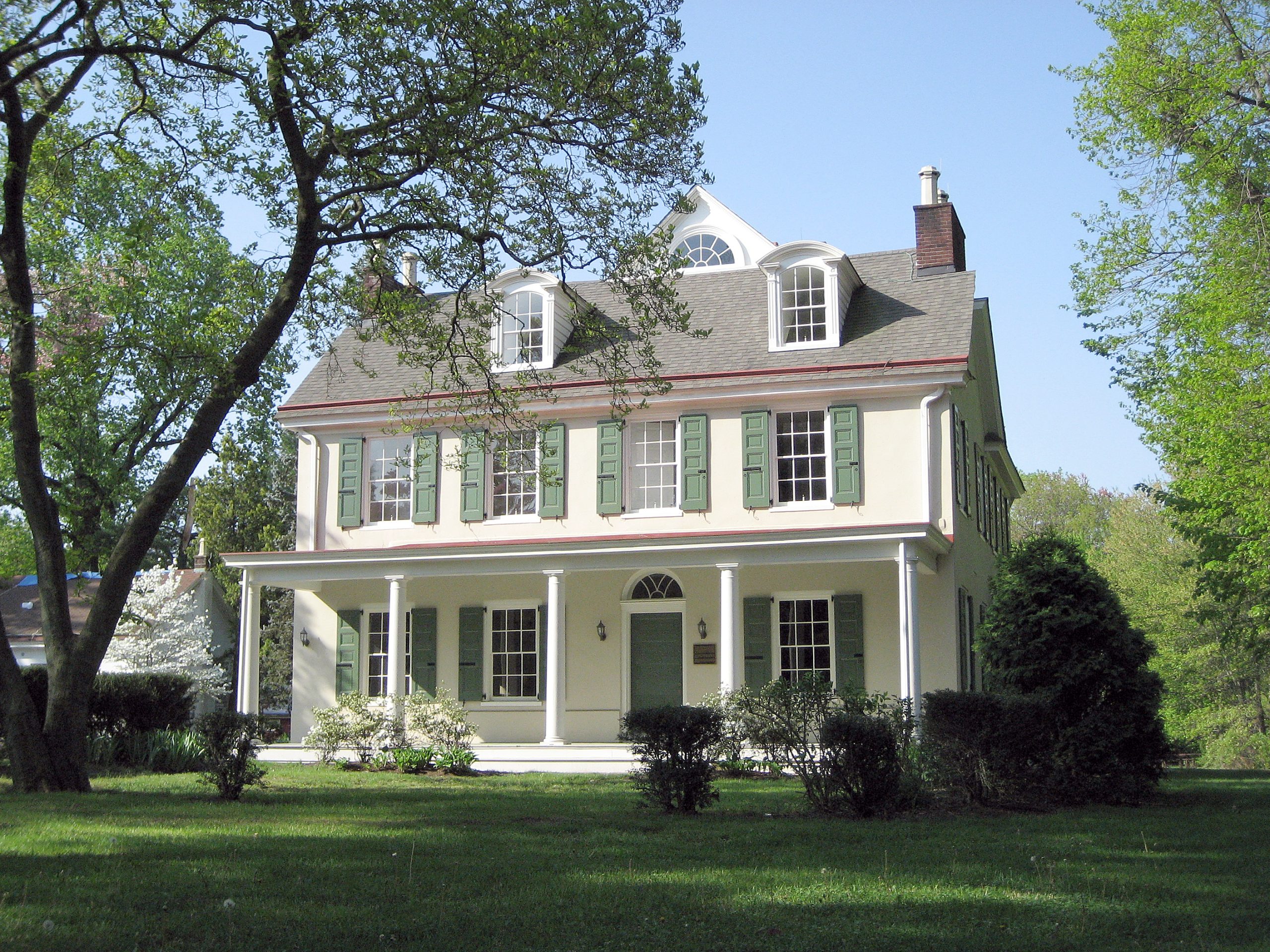
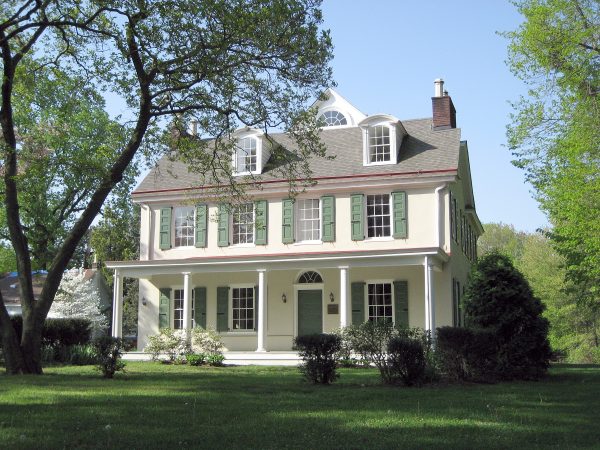
    The Kay-Evans House, a historic building at Croft Farm in Cherry Hill, is home to Cherry Hill Township’s Recreation Department.Cherry Hill Township

    Hundreds of ceramics

    Croft Farm has housed generations of people living along the Cooper River, and artifacts like ceramics help archaeologists identify lifestyle and socioeconomic changes over time.

    The land at Croft Farm was purchased by the Kay family in the early 18th century, and around 1750, Quaker Isaac Kay built an early version of the building now known as the Kay-Evans House, which today houses the Cherry Hill Recreation Department.

    In the 19th century, the Evans family moved onto the property and expanded the home. Like other Quakers, owner Thomas Evans and his son Josiah were members of the New Jersey Abolition Society who pushed to end slavery and support the Underground Railroad, according to the township’s online history of Croft Farm.

    Matthew Tomaso, the senior director of cultural resources for PS&S, said the firm found material spanning from the 18th century to the early 20th century. About 1,000 artifacts come from the 18th and 19th centuries, including when the Evans family helped operate the Underground Railroad.

    Nineteenth-century hand-painted polychrome ceramic sherds are among the artifacts found by PS&S during site work at Croft Farm in Cherry Hill. Matt Kraemer

    Matthew Kraemer, a PS&S archaeologist on the project, said the type of ceramics discovered on the site varied by time period, from 18th-century Staffordshire slipware to more creamware, pearl ware, earthenware, and whiteware as time went on.

    The ceramics, buried by time, were not found in one piece. Tomaso said his team sorted through thousands of tiny fragments to assemble 359 vessels.

    Kraemer said he is looking at how the ceramics change through time, since a transition from simple to fancy bowls could indicate shifting values among the Quakers, traditionally known for their modesty.

    The location where the ceramics are found matters, too. Since enslaved people often used backyards as outdoor kitchens, Kraemer said, finding ceramics outside the house is telling, since that tradition likely continued as formerly enslaved people fled northward.
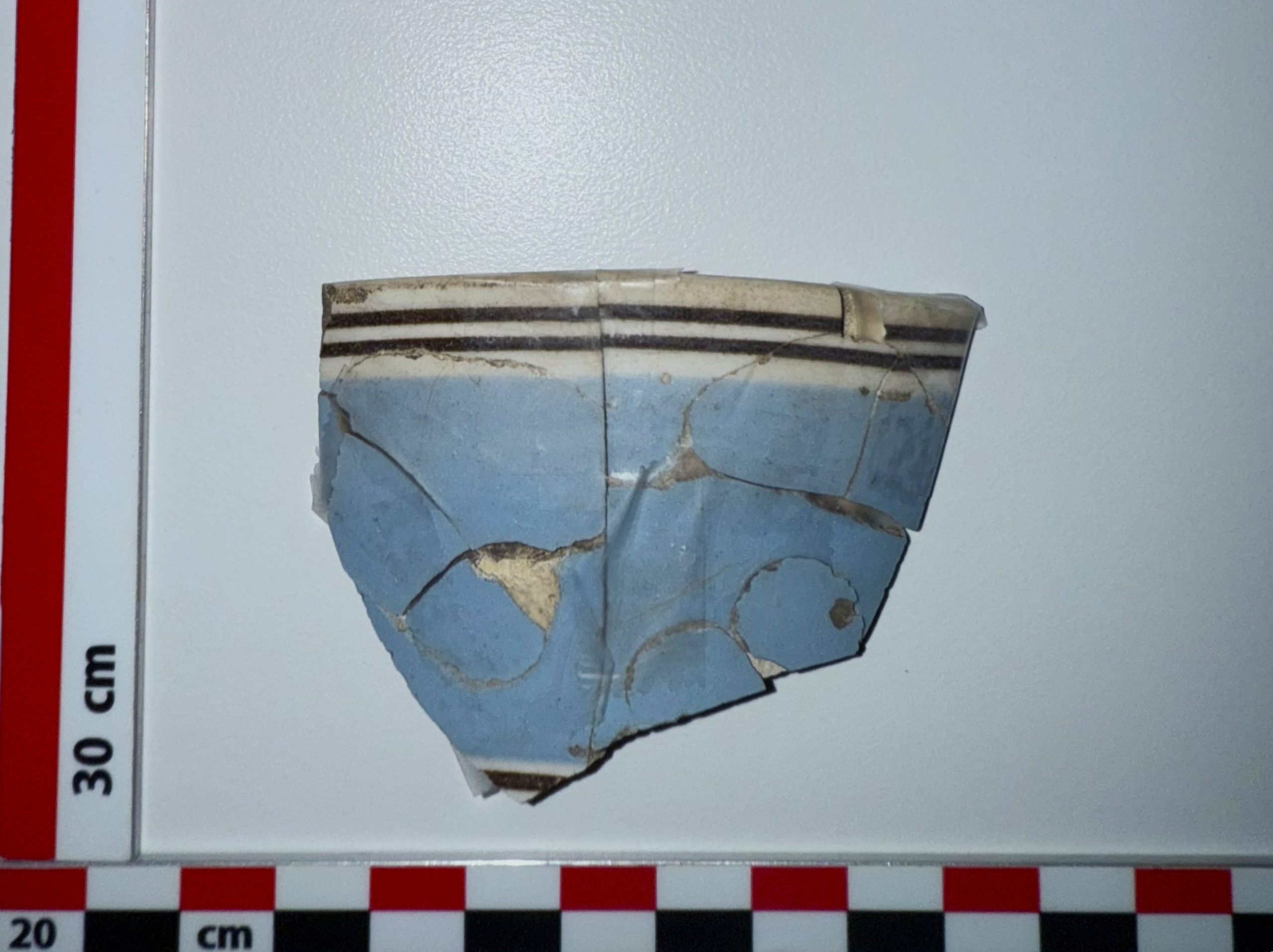
    A 19th-century annular banded dipware ceramic refit, with shards pieced together by PS&S archaeologists, is one artifact found during site work at Croft Farm in Cherry Hill, New Jersey.Matt Kraemer

    “If we find a higher proportion of hollowware in the backyard, then we know this could further indicate, from an archaeological point of view, involvement in the Underground Railroad,” Kraemer said.

    The Croft Farm site is known as a former home to previously enslaved people, including Joshua Saddler, who founded nearby Saddlertown, a Black settlement in what is today Haddon Township.

    ‘An awful lot of butchering’

    Chelsea Carriere, another archaeologist at PS&S, said she had not expected to find so many animal remains, since nearby water typically makes bones degrade faster.

    But Carriere ended up with a stash of 480 bone fragments showing human alteration, or bones with burn or cooking marks.

    So far, she has identified goat, cow, sheep, rodent, and turtle bones, along with a raccoon scapula, clearly chopped, and animals likely trapped and hunted, like rabbits. While historical documents show pigs lived on the property, Carriere did not find many pig bones, though she said it could be that the animals were butchered elsewhere or were cooked in a way that did not make for good preservation.

    “We can dive into what the recipes of the time were and see if there’s any correlation between the cut marks we’re seeing and what kind of foods were typically cooked or fashionable during certain periods,” Carriere said.

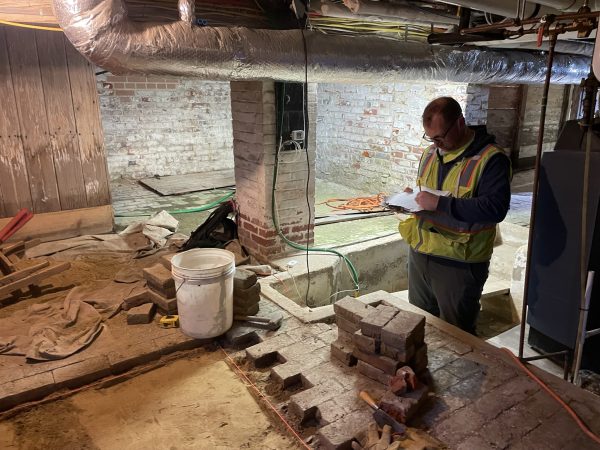
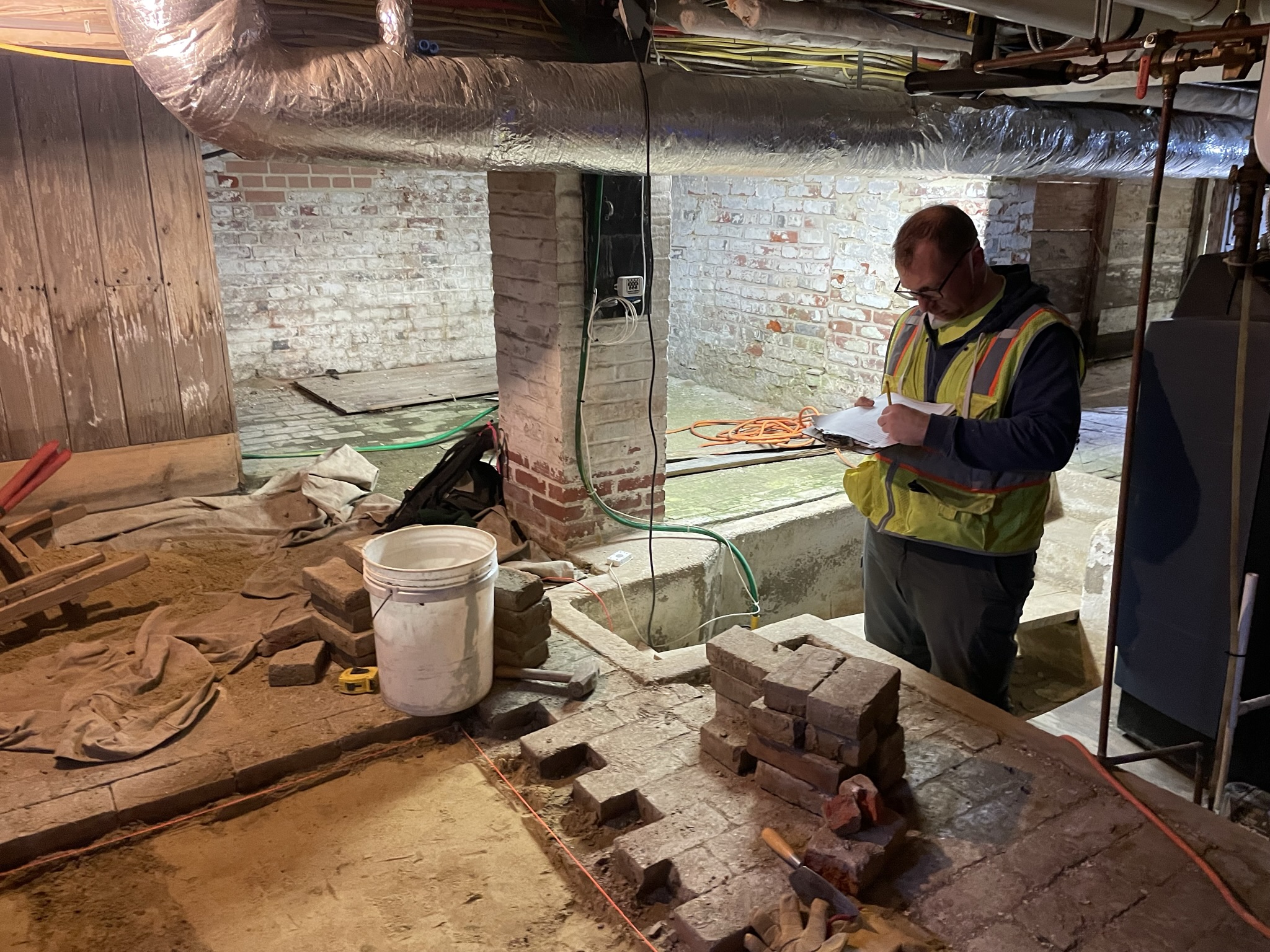
    The team also found bones in the Kay-Evans House basement, which Tomaso said was strange, since people did not usually throw away organic waste indoors.
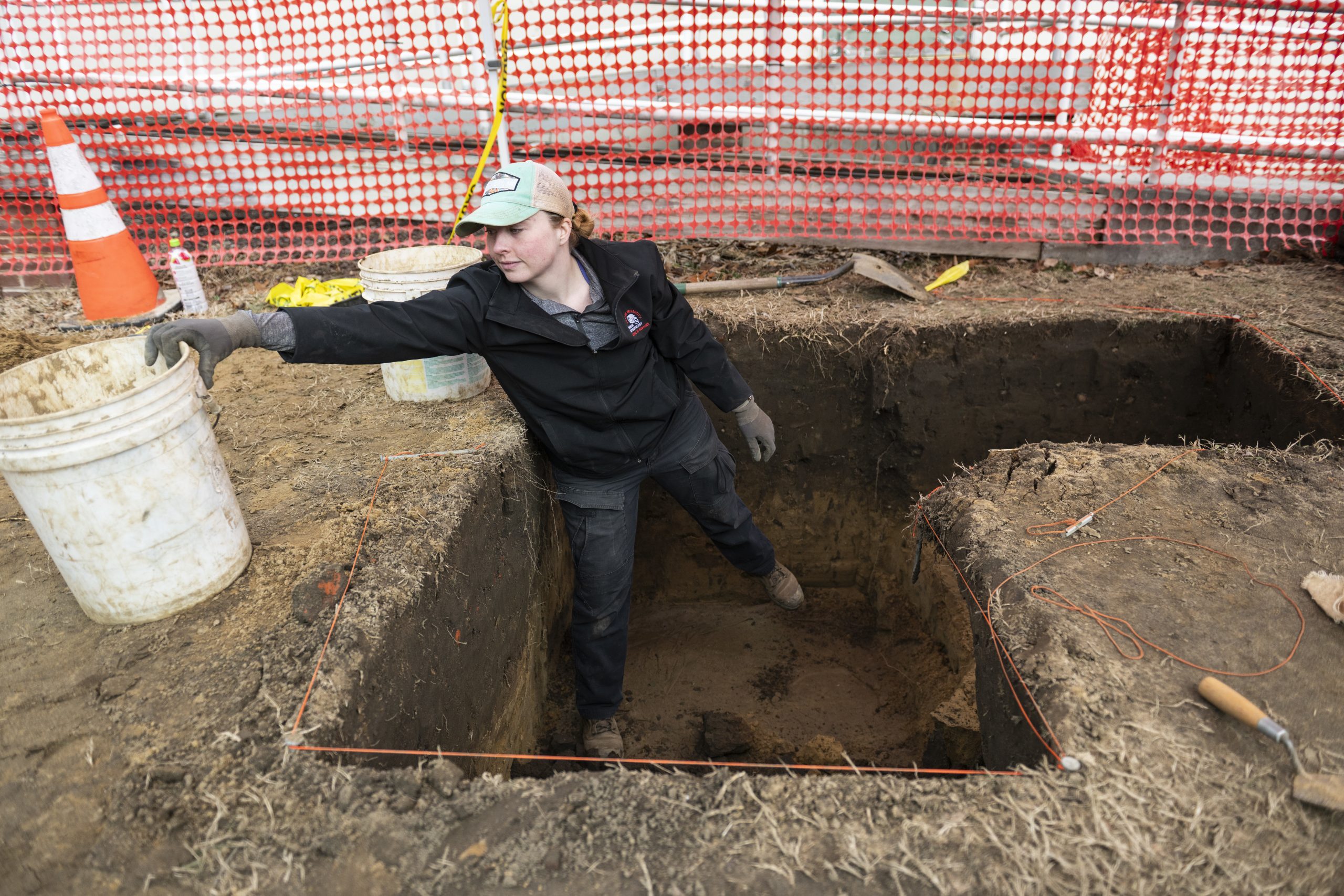
    Chelsea Carriere, archeologist with PS&S, grabs for a bucket while digging at Croft Farm in Cherry Hill, N.J. on Saturday, Feb. 21, 2026. Allie Ippolito / For The Inquirer

    Studying those remains will help Carriere determine how the people living there butchered and prepared their food, and how the Evans family lived off the land. Bones with rough, choppy markings could indicate at-home butchery by a novice, while clean cuts imply meat purchased from a local butcher.

    “You would kind of expect to see a change there where people might be having more access to store-bought cuts of meat in the 19th century during the Evans family’s occupation,” Tomaso said. “And one of the things I think is really interesting … is that it seems like they’re doing an awful lot of butchering right there on the property.”

    Over 4,500 years

    Most of the recently found artifacts came from the last 300 years, but some items go back further, including ones PS&S archaeologists have not disturbed at Croft Farm.

    “We now know that it was probably reoccupied over about 4,500 years or more,” Tomaso said. “So that’s kind of cool.”

    Before white settlers came to Croft Farm in the late 17th century, the Lenni-Lenape Indigenous people are known to have lived on the land. Tomaso said artifacts from the Indigenous people are deeper in the ground, and seemingly less intact.

    But based on the site’s location and proximity to water, Tomaso said, he suspects Native American tribes used the land for thousands of years, though not continuously. PS&S has bolstered that timeline with the Indigenous artifacts its team managed to find, including triangular projectile points typical of the Woodland Period long before the arrival of white colonists.

    The absence of some typical artifacts caught Tomaso’s eye, too. The Croft Farm site had very few glass and liquor bottles, and few smoking apparatuses, and Tomaso said the team is still trying to figure out why.

    “I think that these guys might have been practicing temperance, which would have been common for the Evans period, really uncommon for the Kays, even among Quakers,” Tomaso said. “Because 18th century, basically, people just drank all the time. For example, beer was not considered an alcoholic beverage.”

    Once the project is wrapped up and the data compiled, PS&S will report its findings to the state, Tomaso said.

    In the meantime, Brown said, Cherry Hill is working toward awarding a bid for construction at the Kay-Evans House and finding ways to increase the public’s awareness of the Croft Farm property.

    “You can really just kind of disappear from Cherry Hill in this location,” Brown said. “It’s really beautiful and we’re really just looking forward to having people take more advantage of it and having people get to understand it better.”
  • What archaeologists dug up at Croft Farm | Inquirer Cherry Hill

    What archaeologists dug up at Croft Farm | Inquirer Cherry Hill

    Hello, Cherry Hill! 👋

    An analysis of the archaeological dig at Croft Farm is nearly wrapped up. Here’s what the team behind it discovered. Also this week, a longtime Cherry Hill educator is leaving the district to become a superintendent, a former Rite Aid is set to become a gym, plus, the family of a slain veterinarian continues to grapple with his death.

    If someone forwarded you this email, sign up for free here.

    Here’s what archaeologists turned up at Croft Farm

    The basement of the Kay-Evans House was excavated as part of the project. Chelsea Carriere

    Hundreds of bones, thousands of ceramic fragments, and items belonging to long-ago members of the Lenni-Lenape Indigenous people are among the artifacts archaeologists unearthed as part of their recent dig at Croft Farm.

    The dig took place around the 18th-century Kay-Evans House, part of which was open to the public in February, and archaeologists are now wrapping up their findings. Those items are helping them better understand the people who lived along the Cooper River centuries ago and how society evolved.

    Some artifacts could even be on public display at the house one day as the township looks for ways to showcase its history.

    The Inquirer’s Sarah Nicell digs into what else archaeologists turned up.

    💡 Community News

    • In case you missed it, Cristian Custodio-Aquino was sentenced to 30 years in prison last week for the murder of beloved Cherry Hill veterinarian Michael Anthony.
    • The former Rite Aid at 1360 Brace Rd. is slated to become a Bunker Fitness Center, as the gym expands from its current location in Blackwood.
    • TruGolf Links opened a flagship location last week at the Plaza at Cherry Hill. It offers six golf simulator bays, in addition to food and drinks.
    • Speeders Car Wash opened last week, taking over the former Route 41 Car Wash at 1507 Kings Highway North.
    • Philadelphia arts-and-crafts studio Deko Deko is expanding to Cherry Hill this summer. The shop offers a range of DIY projects, including hair accessories, keychains, and charm bracelets. The studio hasn’t announced exactly where or when it will open its new outpost.
    • Due to the heat, trash and recycling will be picked up today through Friday starting at 6 a.m.
    • Work on westbound Kresson Road will cause a weekday detour between Cropwell Road and Cooper Run Drive from 6 a.m. to 4 p.m. Work will also take place between Springdale Road and Middle Acre Lane, causing traffic pattern changes. Elsewhere, work is continuing on Kenilworth Avenue, which will be closed between Route 38 and Helena Avenue from 7 a.m. to 3:30 p.m. through Friday. And starting tomorrow, expect roadwork on Springdale Road at the Mount Laurel border from 7 a.m. to 3 p.m.
    • There’s a new assistant rabbi at Temple Beth Sholom. Jacob Lipkin began in the role this month.

    🏫 Schools Briefing

    🍽️ On our Plate

    • Looking for great Filipino food? Reyta’s Filipino Cuisine dishes up some of the best in the state, according to NJ.com. The outlet noted the Haddonfield-Berlin Road eatery offers authentic dishes as well as boodle fights served on banana leaves.

    🎳 Things to Do

    🎶 Twilight Music Series: Beach Boys’ cofounder Al Jardine will perform along with The Pet Sounds. ⏰ Thursday, July 16, 8-11 p.m. 💵 Free 📍 Cooper River Park Jack Curtis Stadium

    💫 Music Under the Stars: Party band 80’s Revolution will perform. There will also be food trucks and a beer garden. ⏰ Tuesday, July 21, 7 p.m. 💵 Free 📍 Barclay Farmstead

    🍑 The Peach Truck Tour: The roving peach truck will make a stop at the mall to sell boxes of the fruit. ⏰ Wednesday, July 22, 4:30-6 p.m. 💵 $15-$120 📍 Cherry Hill Mall

    🏡 On the Market

    A four-bedroom home with a cozy family room

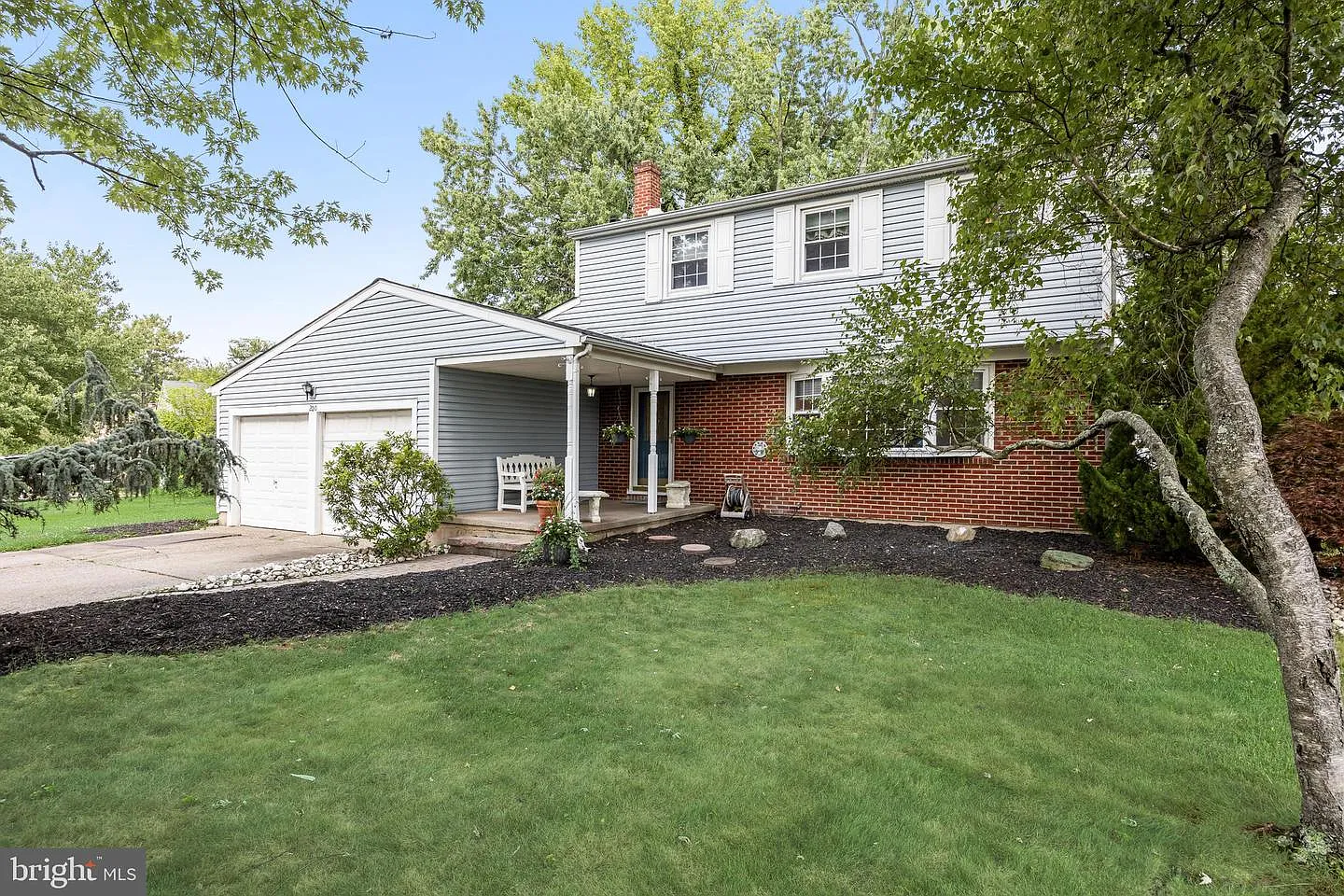
    The home has a covered front porch and a two-car garage.John Marie/Steven Edwards Photography | Courtesy of Susan Grimm/Berkshire Hathaway HomeServices

    Located in the Old Orchard neighborhood, this four-bedroom home has undergone a number of recent updates, including fresh paint, refinished hardwood floors, a newer roof, and refreshed bathrooms. The home has living and dining rooms, an eat-in kitchen, and a family room with vaulted ceilings, skylights, and a fireplace. Outside, a deck overlooks the backyard.

    See more photos of the home here.

    Price: $515,000 | Size: 2,102 SF | Acreage: 0.25

    🗞️ What other Cherry Hill residents are reading this week:

    By submitting your written, visual, and/or audio contributions, you agree to The Inquirer’s Terms of Use, including the grant of rights in Section 10.

    This suburban content is produced with support from the Leslie Miller and Richard Worley Foundation and The Lenfest Institute for Journalism. Editorial content is created independently of the project donors. Gifts to support The Inquirer’s high-impact journalism can be made at inquirer.com/donate. A list of Lenfest Institute donors can be found at lenfestinstitute.org/supporters.

  • Heat near 100 degrees and Canadian wildfire smoke are on tap as Philly’s hot summer continues

    Heat near 100 degrees and Canadian wildfire smoke are on tap as Philly’s hot summer continues

    The Philadelphia region on Wednesday will be under an extreme heat warning, with high temperatures expected to once again hover around the 100-degree mark. But, on the bright side, at least it’s not likely to be record heat for the date.

    That dubious honor for July 15 belongs to 1995, when the mercury hit a scorching 103 degrees. Still, Wednesday will be markedly hotter than normal, with typical highs for the date around 86 degrees, according to the National Weather Service.

    “Any time we put a warning out, it’s telling people this is significant, and you need to take precautions and be aware of this,” said Paul Fitzsimmons, lead meteorologist at the weather service’s Mount Holly office. “Stay in the air-conditioning, do not exert yourself during the hottest parts of the day.”

    It will likely also be noticeably hazy, thanks to smoke from wildfires in Western Ontario, weather service forecasts said.

    Wednesday’s forecast high marks yet another hot day in an already steamy summer, with 2026 posting 21 days at 90 degrees or higher so far — and three 100-degree days, just two shy of the record number of century-mark days set in 1988, weather service data indicate. If Wednesday hits 100 degrees, we would only need one more similarly hot day to tie the record.

    The record number of 90-degree days in a year, meanwhile, stands at 55, set in 2010. But in general, the region typically has only 13 90-degree days by mid-July, and 30 for the entire year, according to weather service data. The area’s temperatures have been about 3.2 degrees above average this month, Fitzsimmons said.

    “That’s certainly noticeable,” Fitzsimmons said. “It’s been quite warm to hot.”

    So, no, you’re not imagining things — it has been plenty hot for us around here lately.

    We’re not in for much relief in the latter half of the week, either. Weather service forecasts indicated a cold front was expected to pass through the area late Wednesday, dropping temperatures slightly, but highs could stretch into the low to mid-90s Thursday and Friday.

    And then, the weekend storms may come. Again.

    Weather service forecasts indicate another cold front is likely to approach the area Friday, bringing with it the chance for weekend storms. It remained too early to tell Tuesday how it would shake out, but early forecasts said that there was potential for severe weather threats Saturday, with a possible risk of heavy rain and flash flooding, similar to what the area has seen the last two weekends.

    Meteorologists have said that it is not uncommon for storms to come in seven-day cycles because of the spacing between atmospheric waves that move weather systems across the country, The Inquirer has reported.

    “The overall setup is not that different — we’re going to have hot conditions and humidity,” Fitzsimmons said. “And we are at a time of year where severe weather is favorable, so it’s possible.”

    Wednesday’s heat serves as yet another day of record-territory temperatures this month. Less than two weeks ago, during the Fourth of July, Philadelphia saw three consecutive days hit 101 degrees or higher, marking the first time that has happened in records dating to 1873, the weather service said.

    Severe storms also hit the region late on Independence Day, bringing heavy rain and wind that caused significant delays to the holiday celebrations, which wrapped up around 3 a.m. A week later, severe weather cropped up once again in the form of several microbursts of winds up to 70 mph that toppled trees, damaged buildings, and knocked out power around the area Saturday — and affected the celebration of the Ben Franklin Bridge’s 100th anniversary.

    Even the FIFA World Cup festivities have been affected, with the FIFA Fan Fest closing early on a few occasions because of heat and storms since it launched in June.

    The heat has also had deadly effects in Philadelphia, as city officials earlier this month confirmed eight heat-related deaths for the season.

    Heat deaths in Philadelphia have averaged about five a year for the last decade. That figure is down significantly from the 1990s; in 1993, the city recorded 118 heat-related deaths. But the number of heat deaths this year so far is the most since Philadelphia recorded eight in 2022, health department records indicate.

  • States reach $18 million settlement with 23andMe, with Pa. and N.J. getting more than $400,000 each

    States reach $18 million settlement with 23andMe, with Pa. and N.J. getting more than $400,000 each

    Genetic testing company 23andMe and a group of attorneys general nationwide have reached a multimillion-dollar settlement following the major data breach that led to the company’s demise three years ago.

    More than 40 attorneys general, including Pennsylvania‘s Dave Sunday, announced the national $18 million settlement with the genetic testing company Tuesday.

    “This company was trusted by millions of Americans to safeguard very private data and information, but failed to do so, learning about a data breach far too late, then pointing fingers at their own customers,” Sunday said in a statement. “I find it appalling that a company dealing with customers’ personal information would be so lax about their system protections, then have the audacity to deny and attempt to wash their hands of wrongdoing.”

    As part of the settlement, Pennsylvania will receive $491,902. Nearly 200,000 Pennsylvanians were impacted by the data breach, according to the state attorney general’s office. About 150,000 customers were impacted in New Jersey, which will receive nearly $410,000, said the state’s attorney general, Jennifer Davenport.

    Here’s what else we know.

    What happened with the 23andMe data breach?

    In October 2023, 23andMe launched an investigation after a “threat actor” claimed to have obtained millions of users’ personal data.

    By December, the company confirmed through a filing with the Securities and Exchange Commission that a hacker directly accessed 0.1% of its users’ accounts, or about 14,000 profiles. Still, because of the networks users can build, connecting their information to possible relatives, the hacker was able to view the information of millions of users.

    A spokesperson for the company told news outlets at the time that 6.9 million people had been affected: about 5.5 million customers who had opted into 23andMe’s “DNA Relatives” feature and 1.4 million users whose family tree information was accessed.

    Of those customers, 192,093 were in Pennsylvania.

    What information was accessed?

    Information accessed included:

    • Display name, profile picture, and birth year.
    • How recently they had logged into their account.
    • Their relationship status.
    • Their self-reported location by city and zip code.
    • Predicted relationships with others.
    • DNA percentages users share with their “DNA Relatives.”

    An additional 1.4 million customers who used the “DNA Relatives” feature had their “Family Tree” profiles accessed, which includes a limited subset of profile data, the company said.

    The hacker activity was contained and required existing users to reset their passwords and enable multifactor authentication, 23andMe said at the time. Still, experts warned consumers that they should consider deleting their accounts.

    When did 23andMe declare bankruptcy?

    The company declared bankruptcy in March 2025 and eventually was sold.

    That’s when states, including Pennsylvania, filed claims related to the data breach investigation. As part of the bankruptcy proceedings, 23andMe’s consumer data was sold to TTAM Research Institute, a nonprofit organization formed by 23andMe founder and former CEO Anne Wojcicki. That sale is bound by new guardrails regarding data security that were put in place with the help of the coalition of attorneys general.

    Sunday joined the lawsuit to prevent 23andMe from selling consumer data as part of its bankruptcy proceedings.

    The lawsuit said the California-based genomics biotech company was proposing to sell an “unprecedented compilation of highly sensitive and immutable personal data: a human being’s permanent and everlasting genetic identity.”

    The risk of a data transfer was too great, the complaint said, as DNA data are unique to an individual and can be used to identify relatives — past and future. And genomic data live forever, even after a person dies.

    “If stolen or misused, it cannot be changed or replaced,” the complaint said.

    What happened this week?

    A group of 42 state attorneys general announced the $18 million settlement. This is in addition to a $46.75 million class-action settlement arising from the bankruptcy, for affected U.S. consumers who submitted claims by Feb. 17. Impacted customers should have received an email notifying them about their eligibility for the class-action settlement, according to the Pennsylvania Attorney General’s Office.

    All 50 states and territories except for California, Hawaii, Mississippi, Missouri, Montana, Nebraska, Nevada, Rhode Island, and Wyoming were involved in the settlement.

  • Camden County wants to spend $400M to make Cooper River swimmable and improve other waterways

    Camden County wants to spend $400M to make Cooper River swimmable and improve other waterways

    Camden County officials announced a $400 million master plan Tuesday to protect the county’s network of rivers, lakes, and streams such as the Cooper River.

    They are hoping voters will approve a referendum in the fall to help pay for it over the next decade.

    That waterway network is threatened by aging infrastructure, stormwater runoff, industry, and changing regulations that have left it degraded. A comprehensive plan is imperative, officials said.

    An ultimate goal, they say, is that residents may one day be able to swim safely in Cooper River Lake without a health risk.

    “Repair. Replenish. Recreate,” County Commissioner Jeffrey Nash said. “Those three words summarize the generational change that Camden County is about to embark on to improve the quality of our water bodies.”

    County, state, and local officials made the announcement at the Camden County Municipal Utilities Authority headquarters in Camden, backed by representatives from various environmental groups and nonprofits.

    To raise the money, officials are assembling federal, state, and government grants and loans, as well as help from private nonprofits.

    Voters could be key

    But they also said a planned voter referendum on increasing the county’s open space tax to $0.03 per $100 of assessed property value is key to secure permanent funding. Voters will weigh in on Election Day, Nov. 3.

    The rate would nudge up from $0.02. That means someone with property assessed at $500,000 would pay $150 a year toward open space, up from the current $100.

    Waterways that would see increased protection include:

    • Cooper River Lake, which spans Camden, Pennsauken, Cherry Hill, Collingswood, and Haddon Township.
    • Kirkwood Lake in Lindenwold.
    • Atco Lake in Waterford Township.
    • Pennsauken Creek, which runs through Pennsauken, Maple Shade, and Cherry Hill.
    • Big Timber Creek, which spans multiple towns.
    • Evans Pond and Wallworth Lake in Cherry Hill and Haddonfield.

    Nash said the county’s population growth over the last 100 years can be attributed to people drawn to the waterways. But increased population also resulted in the need for more sewer lines and attention to aging infrastructure.

    “We stand at a crossroads, and we have a choice to make: Either we’re going to shrug our shoulders and pass this problem on to the next generation, or we’re going to do something that is generational,” Nash said.

    The cost breakdown

    The plan calls for:

    • $200 million to fix aging combined sewer systems that overflow during storms.
    • $75 million for dredging and other methods to reduce sediment.
    • $50 million for rehabilitation of sanitary sewer systems across multiple towns.
    • $50 million to restore recreational lake areas.
    • $25 million for green infrastructure.

    And it includes an unspecified amount for continued planning, monitoring, and management.

    Scott Schreiber, executive director of the Camden County Municipal Utilities Authority, called the plan “a comprehensive strategy that addresses every major factor affecting the health of our rivers, lakes, and streams.”

    He said it represents a new way of thinking about water quality by coordinating across towns, rather than planning by one municipality at a time.

    “Water doesn’t recognize political boundaries or municipal borders,” Schreiber said.

    The biggest chunk of money will go to address combined sewer overflows (CSOs), which are now antiquated. A combined sewer system collects rainwater runoff and household sewage into one pipe. Normally, it can transport all of that to a sewage treatment plant. But storms can bring so much water that they can exceed the system’s capacity. When that happens, untreated stormwater and wastewater flow into bodies of water, such as the Delaware River.

    Schreiber said projects are being designed and built to capture and treat much more stormwater before it reaches the Delaware.

    Separately, money will be used to repair and rehabilitate aging sewer systems, reducing leaks and groundwater infiltration that pollutes waterways.

    He said the infrastructure money will also be used to install rain gardens, permeable pavement, and bioswales, which are typically sloped channels covered with vegetation and designed to capture or slow stormwater.

    The county will start a regular dredging operation to remove decades of accumulated and contaminated sediment in lakes and ponds to improve aquatic habitat, restore ecological function, and create overall healthier waterways.

    And the county plans to restore recreational lakes by improving public access, bolstering shorelines, and boosting overall water quality.

    Officials plan to finance part of the plan through the New Jersey Water Bank, an independent state authority that provides low-interest loans for water quality infrastructure projects.

    However, Schreiber said, the voter referendum will be key. If voters approve it, the referendum would provide $7 million per year that could be used to pay off that debt and pay for other improvements.

    ‘Vibrant waterfront communities’

    Don Baugh, founder of the nonprofit Upstream Alliance, which has helped Camden County build its first water trail, called the master plan a major step.

    “I feel like I should pinch myself,” he said. “This is the dream of restored waterways, swimmable waterways, kids playing in the water, and vibrant waterfront communities.”

    Daniela Solano-Ward, mayor of Collingswood, one of five towns that border Cooper River Lake, said the new coordination by the county is vital.

    “Collingswood can do very little to alter our geographic reality,” she said. “We are bordered by Cooper River to the north and Newton Lake to the south. Ultimately, protecting urban watersheds has fallen to local government. But with 35 municipalities in Camden County, the weight of this lift is too heavy for any one of us to shoulder alone.”

  • Several Federal Donuts and Goldie locations in Philadelphia are closing amid a slowdown in fast-casual lunch business

    Several Federal Donuts and Goldie locations in Philadelphia are closing amid a slowdown in fast-casual lunch business

    Restaurant group CookNSolo will close three Center City Federal Donuts & Chicken locations and shrink its Goldie falafel chain from four shops to one as owners Steve Cook and Michael Solomonov retrench, citing weakened demand for fast-casual dining, particularly at weekday lunch.

    Federal Donuts’ shop at 1909 Sansom St. — designated only months ago as the company’s flagship after the South Philadelphia location closed in February — shut down after business Sunday. Locations at 21 S. 12th St. and 18th Street and Benjamin Franklin Parkway are expected to close by July 31, although Cook said staff departures could accelerate the timetable.

    Of Federal’s 45 employees, 27 will be laid off, Cook said. Eighteen employees will be retained to staff the two remaining Philadelphia stores, on Fairmount Avenue and on South Street. Federal launched in 2011 in South Philadelphia with a menu of fried chicken, coffee, and hot doughnuts from a robotic fryer.

    Federal Donuts founders (from left) Tom Henneman, Michael Solomonov, and Steve Cook at the Federal Donuts & Chicken location at 1776 Ben Franklin Parkway in 2022.Michael Klein / Staff

    Goldie, which debuted in 2017 with a menu of falafel, fries, and tehina shakes, will close its restaurants at 1218 Sansom St., Franklin’s Table food hall at 34th and Walnut Streets, and the Whole Foods Market at 2101 Pennsylvania Ave. in late July or early August. The lone remaining Goldie, at 1911 Sansom St., will absorb the chain’s delivery, takeout, and catering business.

    Eighteen of Goldie’s 36 employees will lose their jobs. Cook said the company is working to help find former Federal Donuts and Goldie workers other roles. Hourly staffers will not be given severance, Cook said, as is standard industry practice.

    Cook said the closures reflect a restaurant landscape that has changed dramatically since the pandemic.

    Dozens of fast-casual and quick-service restaurants have opened in recent years. “We feel like we’re oversaturated in the city, given the economy right now and the demand for fast-casual restaurants,” he said. Federal Donuts has experienced “significant” year-over-year same-store sales declines, he said. He hopes the closures stem the losses.

    “We have two great brands here that are worth saving, and we feel like economically this is the best way to preserve those brands.”

    Falafel from Goldie.Craig LaBan / Staff

    The company’s full-service restaurants — including Zahav, Dizengoff, K’Far Cafe, Jaffa Bar, and Laser Wolf — are unaffected by the shutdowns.

    ‘A mixed bag’

    Cook cited both the lingering decline in Center City office workers and inflation as contributing factors to the closures.

    “Post-COVID, while we’ve seen really good rebounds in the dinner, more fine-dining side of our business, weekday lunch traffic has never really returned to full strength,” he said. “The $10-to-$15 lunch is an easy thing to kind of do without.”

    Cook’s assessment reflects broader industry trends.

    Tehina shakes are a signature product at Goldie.Tim Tai / Staff Photographer

    While some national fast-casual brands such as Chipotle and Cava continue to post strong results, many regional chains are struggling as consumers increasingly choose prepared foods from grocery stores and convenience stores instead of restaurant meals, according to R.J. Hottovy, head of analytical research at Placer.ai, a location analytics and foot-traffic company.

    While fine-dining restaurants have generally continued to gain traffic through much of 2026, “fast-casual has been more of a mixed bag,” Hottovy said.

    Placer.ai’s findings show visits to grocery stores, convenience stores, and wholesale clubs increasing from a year earlier while overall restaurant visits have declined. “Middle-income consumers are increasingly substituting restaurant visits with meals at home,” Hottovy said.

    Restaurants also continue to battle rising labor costs while customer traffic softens as menu prices rise. “Price increases are increasingly showing up as lost visits,” he said.

    A sharp reversal

    The Federal Donuts closures mark a sharp reversal from its expansion ambitions after Radnor-based NewSpring Capital acquired a controlling interest in 2022.

    Federal then operated 11 locations and arena concessions, and executives envisioned a franchise system that eventually could reach 150 stores.

    The company’s largest franchisee later closed its restaurants in Radnor, Conshohocken, and Willow Grove and returned several Philadelphia stores to the company. In April, Cook and Solomonov announced plans to regain control of those city locations, simplify operations, and improve execution.

    At the time, the Sansom Street restaurant was designated as the flagship to redevelop menu items. “I thought we would get a significant bounce in sales [there] and it just didn’t happen,” Cook said.

    Cook said NewSpring remains the majority owner of Federal Donuts, while he and Solomonov retain a significant ownership stake and seats on its board. Representatives of NewSpring did not respond to requests for comment.

    Under the restructuring, two Philadelphia stores will remain. CookNSolo will take over the location at Seventh Street and Fairmount Avenue, now owned by the company, as a franchisee around Aug. 1.

    Federal cofounder Tom Henneman confirmed that he was in talks to operate the location at Sixth and South Streets as a franchisee.

    Cook said those stores were chosen because of their historical performance and geographic separation. Consolidating delivery and takeout in two locations instead of five should improve profitability, he said.

    Besides the two city stores, Federal will continue operating independently owned franchises in Marlton, Lancaster, and the Hard Rock Hotel & Casino in Atlantic City, along with its licensed airport and stadium locations.

    Goldie, unlike Federal Donuts, is owned entirely by CookNSolo.

    CookNSolo has also been the focus of pro-Palestinian demonstrations and boycott campaigns since the start of the Israel-Hamas war on Oct. 7, 2023. Activists have criticized the restaurant group for raising money for an Israeli emergency medical nonprofit as well as Cook’s and Solomonov’s outspoken support for Israel. The chefs have said their support for Israel was “not unqualified” and have criticized the Netanyahu government’s efforts to thwart a two-state solution.

    A group with the Instagram handle @boycottcooknsolo on Monday reported word of the store closings, contending that the boycott had softened sales.

    Cook disagreed. “Any time there’s been a protest, it’s always resulted in a short-term increase in business,” Cook said. “This is really an economic decision that goes back many years at this point.”

    (function(){function e(){window.addEventListener(`message`,function(e){if(e.data[`datawrapper-height`]!==void 0){var t=document.querySelectorAll(`iframe`);for(var n in e.data[`datawrapper-height`])for(var r=0,i;i=t[r];r++)if(i.contentWindow===e.source){var a=e.data[`datawrapper-height`][n]+`px`;i.style.height=a}}})}e()})();

  • They wanted to recreate childhood Shore memories. So they rebuilt a house in Strathmere

    They wanted to recreate childhood Shore memories. So they rebuilt a house in Strathmere

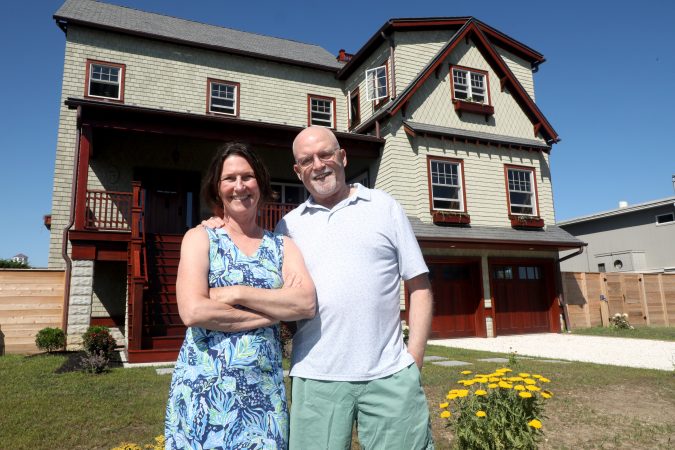
    Creating their forever home was a labor of love for Wendy Whittington and Fred Duffy.

    The couple, on the cusp of retiring from medical careers in Dallas, spent several years designing the Strathmere home they moved into this summer. It’s a showcase of their passions: family, books, travel, and wine.

    “We wanted to recreate an old beach house with the feel of the Shore we knew from growing up,” said Whittington. She grew up in nearby Dennis Township and Duffy visited Long Beach Island in his youth.

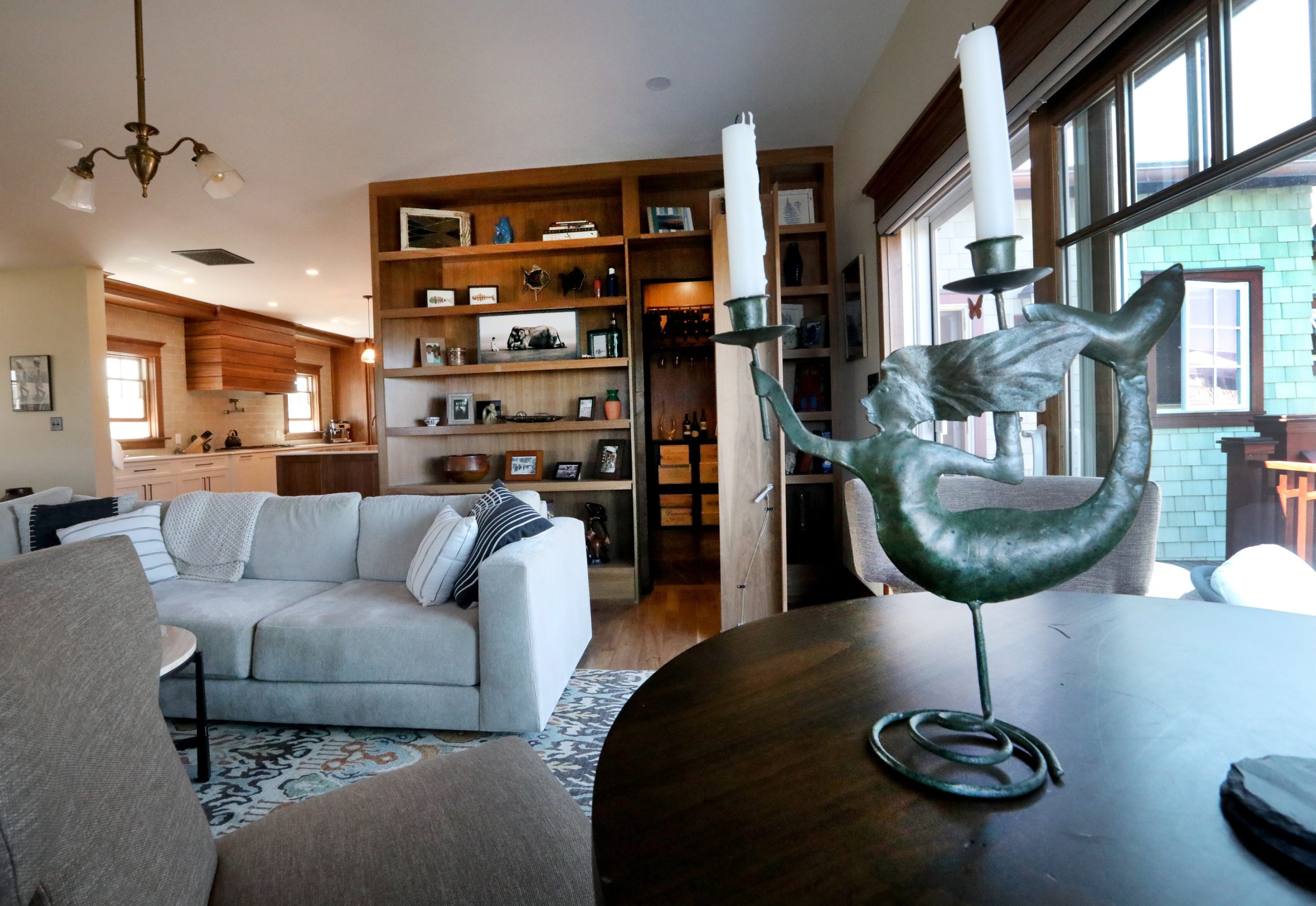
    An ornate candle holder, a gift from Wendy Whittington for her husband, Fred Duffy, sits in a nook in the living space.Vernon Ogrodnek / For The Inquirer
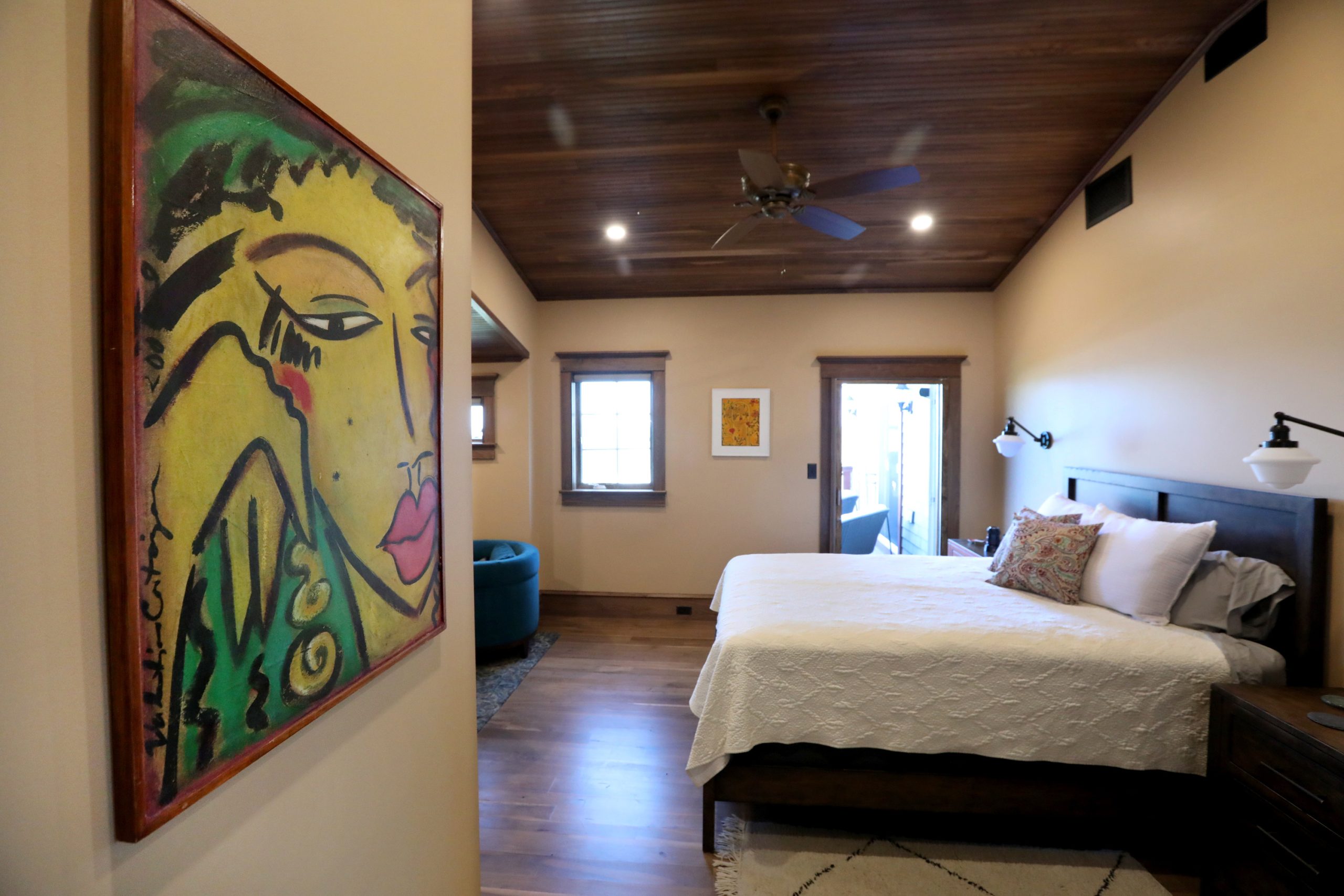
    The main bedroom of the Strathmere home.Vernon Ogrodnek / For The Inquirer

    “We have a big family and wanted a place that was welcoming,” Whittington said, “a gathering place.”

    So they razed and rebuilt the house they had bought a decade earlier. They had purchased the rundown two-bedroom ranch as a rental property, with a plan to replace it later.

    “We had an affinity for coming back to the beach and Strathmere worked for both of us,” said Whittington. “It felt like coming home.”

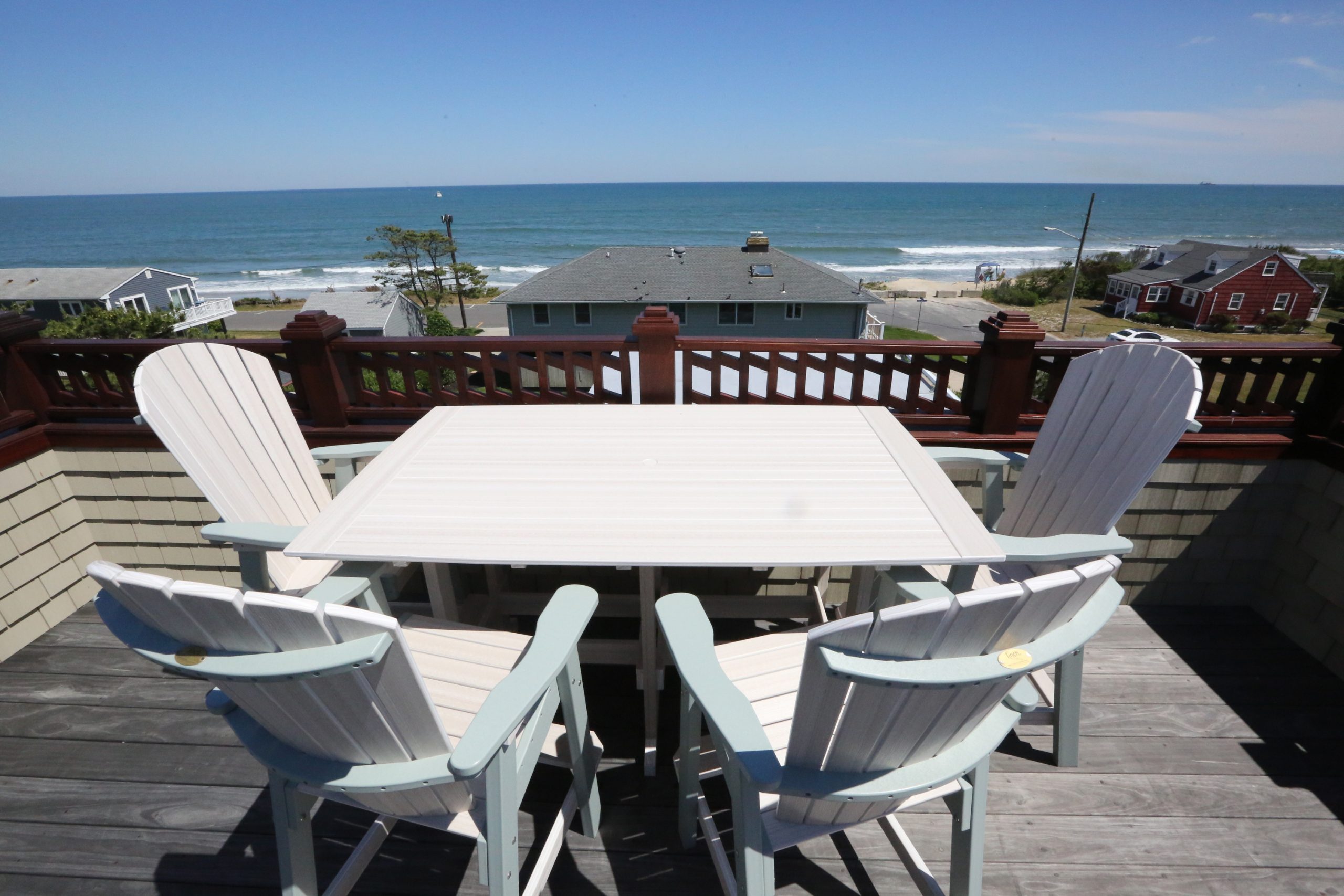
    The uppermost deck offers a view of the ocean.Vernon Ogrodnek / For The Inquirer

    But the house was too small for their large blended family. Together they have eight children, four of whom now have spouses.

    Working with Halliday Architects and Oliver Custom Home Builders, they spent about four years designing and almost two years building the new house. The roughly 4,000-square-foot home has two main floors. The second floor, where the couple spend most of their time, includes a spacious kitchen and den, primary bedroom and sitting area, Duffy’s office, and a secret wine cave.

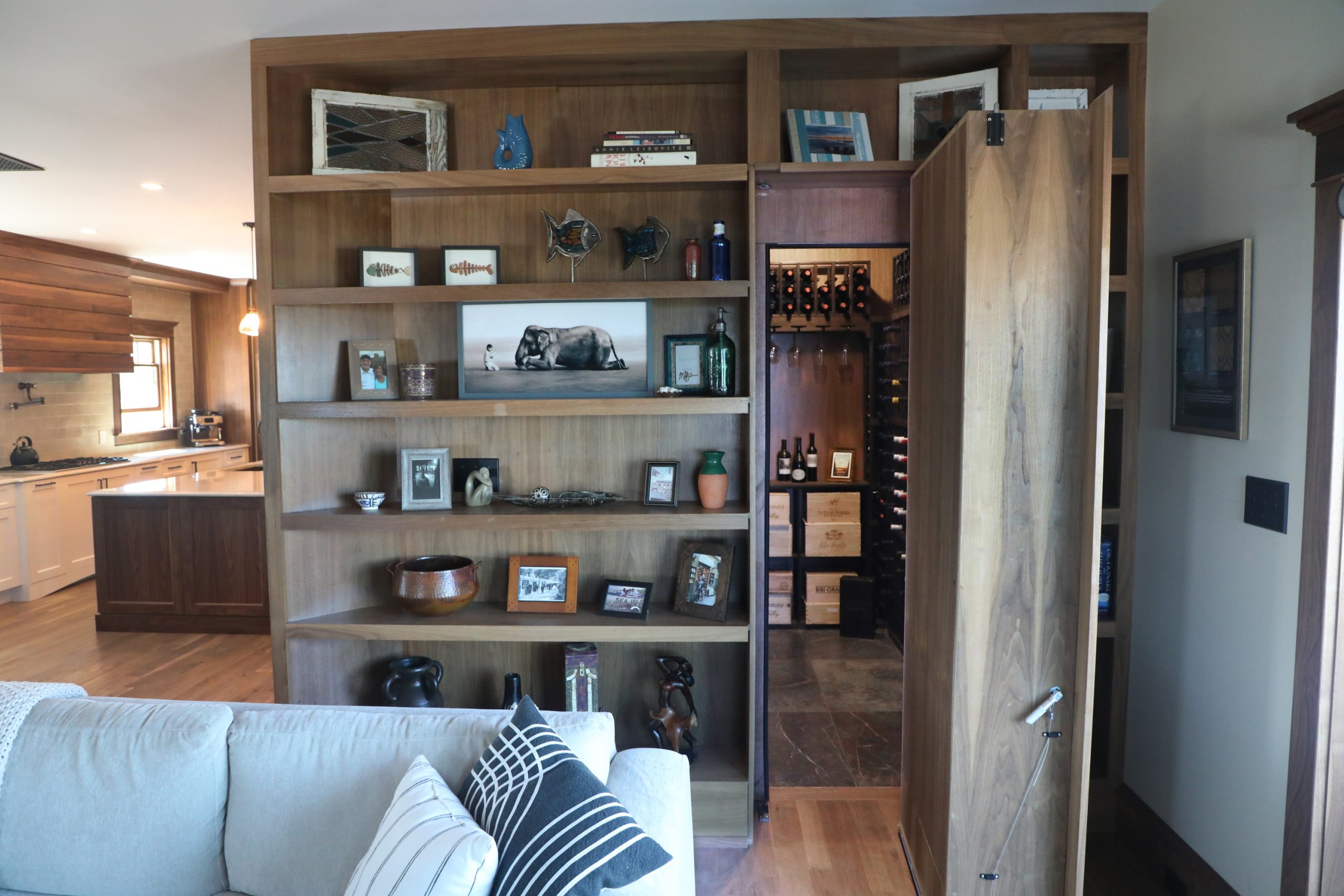
    A custom-made bookcase has a hidden door that leads to a refrigerated wine storage area.Vernon Ogrodnek / For The Inquirer
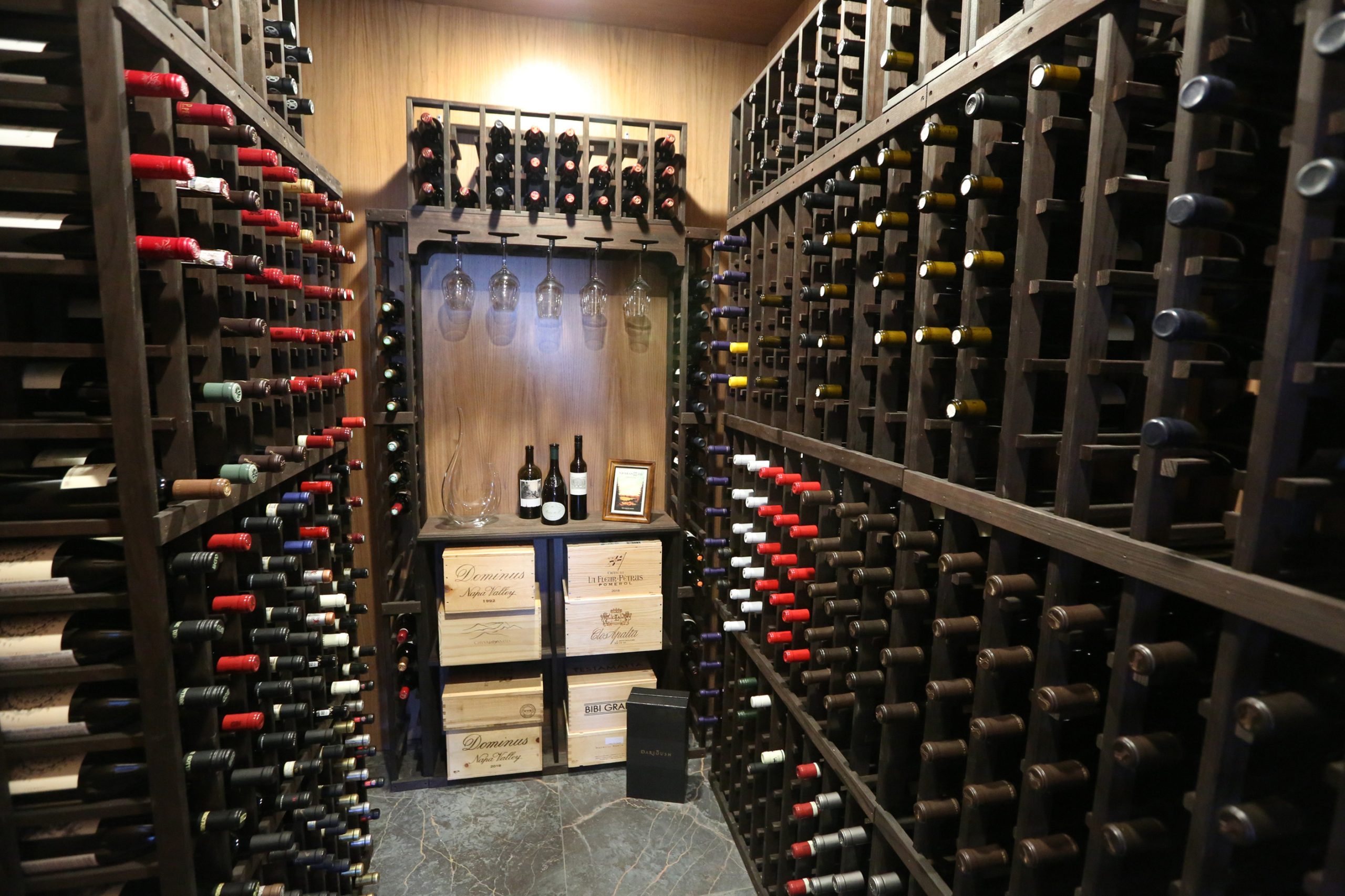
    Whittington and Duffy enjoy collecting and tasting wine.Vernon Ogrodnek / For The Inquirer

    The first floor is where their kids hang out. It has three bedrooms, a second kitchen, and Whittington’s study.

    “The kids are welcome upstairs, but they aren’t encouraged to come up,” joked Duffy. “That’s our sanctuary.”

    Despite the boundary, “everybody always ends up in the kitchen anyway,” Whittington said. So “we wanted a kitchen big enough to allow for that.”

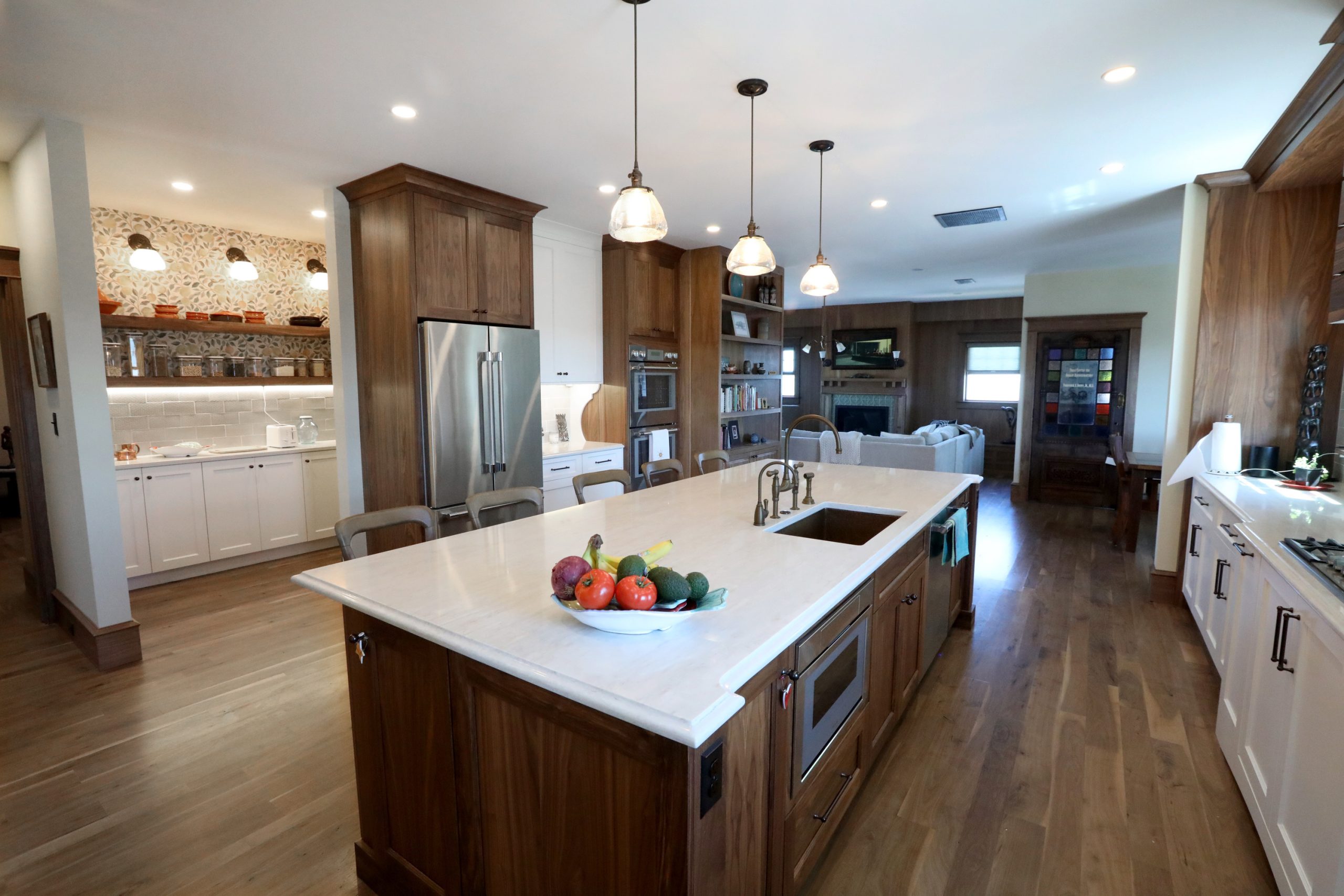
    Whittington and Duffy both enjoy cooking. Their main kitchen was designed with functionality in mind, and includes a large quartz island, Thermador appliances with a five-burner gas stove, double ovens, a pot filler, a copper sink, and lots of storage space.

    The second-floor main kitchen, one of two, is spacious, with ample seating and a large pantry area.Vernon Ogrodnek / For The Inquirer

    The open-concept layout allows guests to mingle in the sitting area, a cozy room with a fireplace, comfortable couches, and a stunning view of the ocean. Large walnut bookcases are filled with books, evidence of their passion for reading. Hidden behind one of the bookcases is the temperature-controlled wine grotto.

    The pair often eat at the bistro table in the corner. When the house is full of guests, they eat in the dining room at an oak table they bought from Land & Sea Furniture in Ocean View. Custom made by Amish woodworkers, it seats 14.

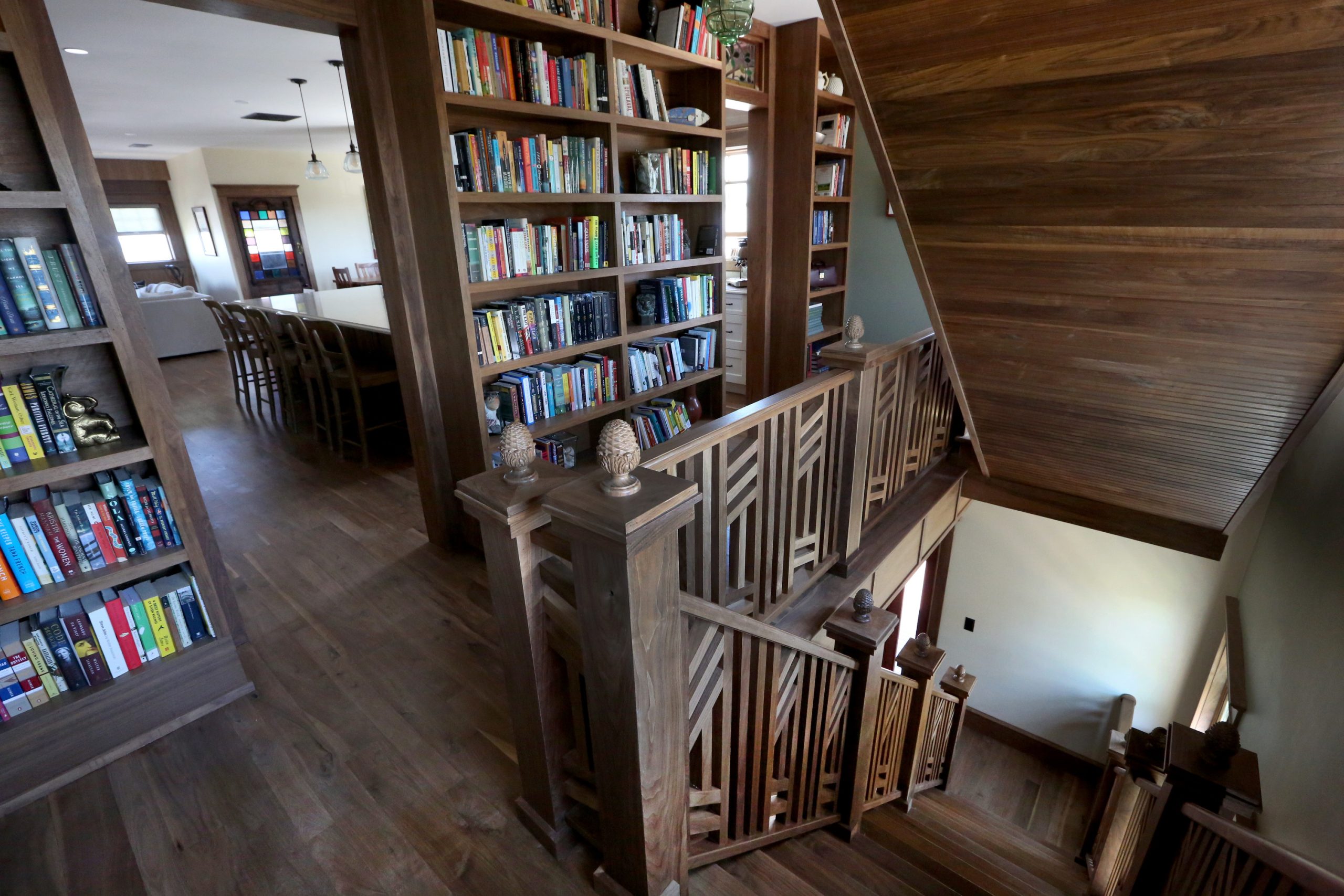
    The extensive use of wood throughout the home is one of its most striking features. Rich mahogany defines the exterior trim and extends to the ceiling of the couple’s primary bedroom. Inside, walnut takes center stage, featured in the flooring, trim, and distinctive banisters.

    Whittington and Duffy, passionate readers, built a library area with a custom bookcase and a custom walnut banister.Vernon Ogrodnek / For The Inquirer

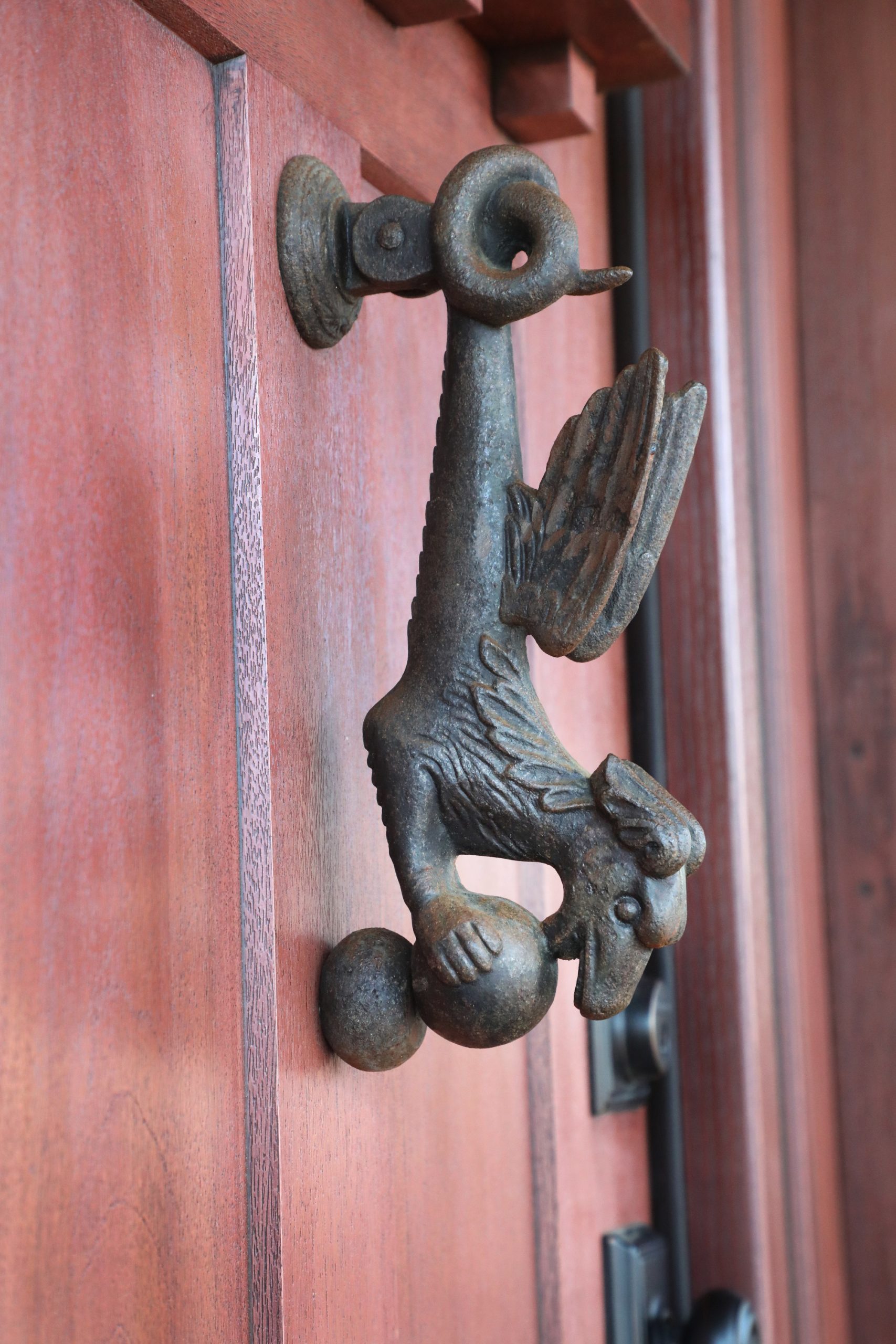
    The home is filled with treasures from their travels, as well as finds from stores in Philadelphia, antique shops in Cape May, and Etsy. The door knocker, which dates back to the 18th century, was found on a trip to Barcelona and the fish-shaped outdoor shower handles came from Uruguay. They discovered several hammered steel pieces of art in Haiti.

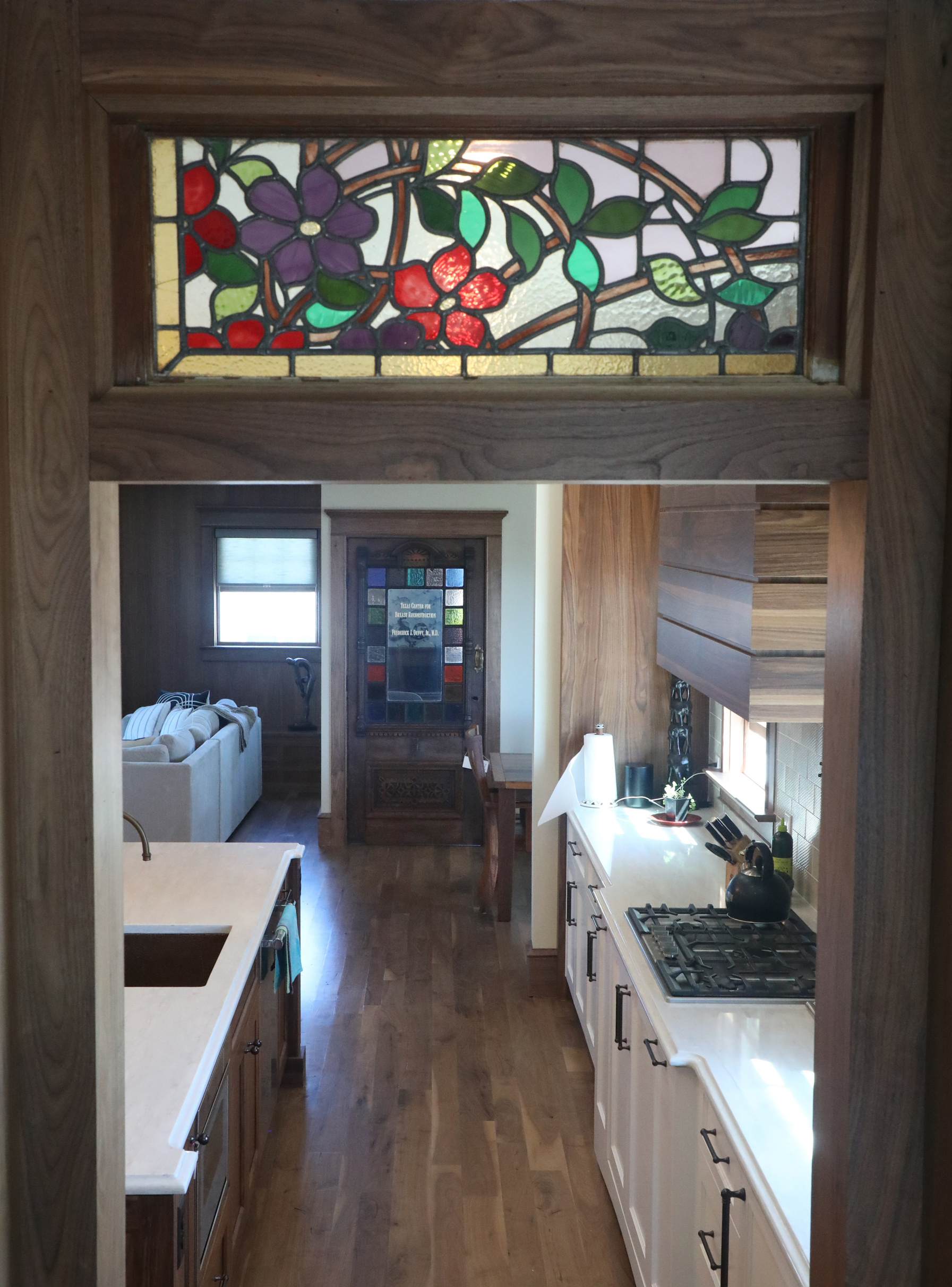
    At Architectural Antiques Exchange in Philadelphia, they found the Belgian cabinet they converted into the powder room vanity, the stained glass for the transoms in the kitchen, and the stained glass door for Whittington’s study.

    “Everything is personal and has a story,” said Duffy.

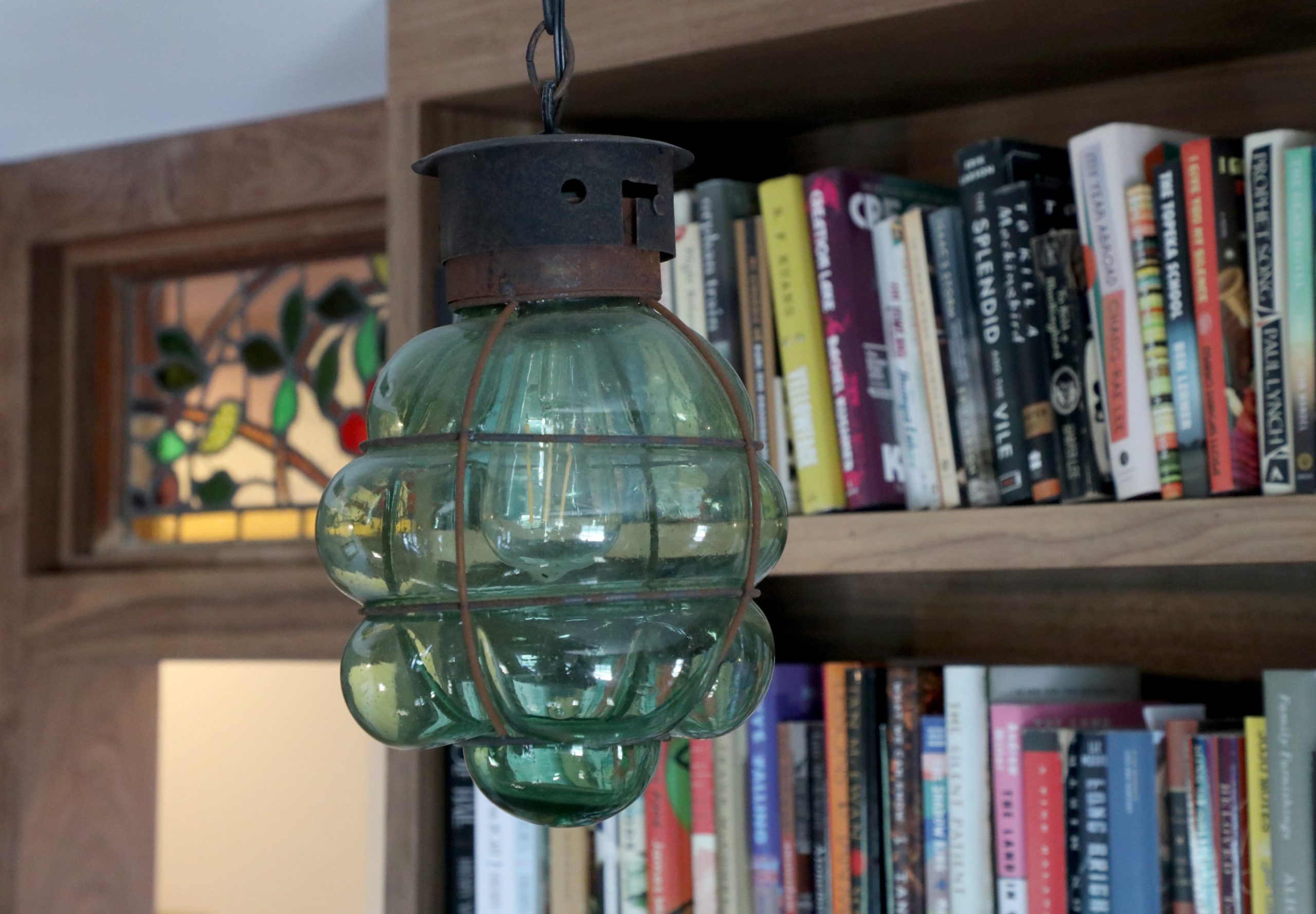
    The light fixtures are among their favorite accents. They aimed for period-appropriate pieces with a whimsical flair. For example, the dining room lights are original milk glass and the second-floor living room chandelier is brass. The two matching stairwell lights are vintage Venetian mouth-blown Murano caged-glass bubble lanterns.

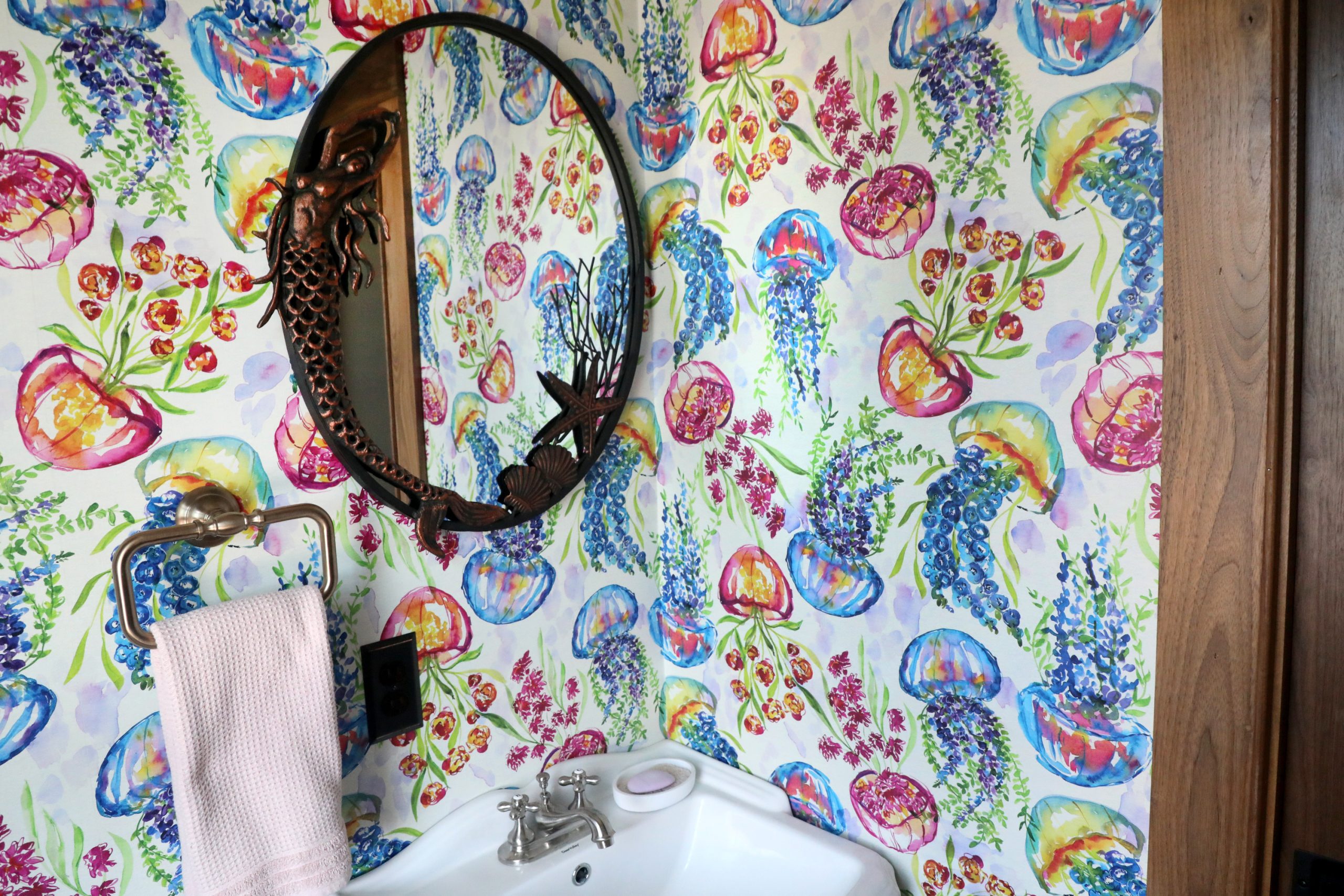
    Whimsical wallpaper brings fun and funky beach designs into the home, featuring fish, octopus, crabs, and seagulls.

    Light fixtures believed to be over 100 years old hang in the library area.Vernon Ogrodnek / For The Inquirer
    The vibrant jellyfish pattern in this bathroom is one of several eye-catching wallpaper treatments in the house.Vernon Ogrodnek / For The Inquirer
    An antique door knocker greets visitors to the home.Vernon Ogrodnek / For The Inquirer
    A stained glass window above a doorway off the second-floor kitchen.Vernon Ogrodnek / For The Inquirer

    The home boasts several outdoor spaces, including a grassy backyard. From the large roof deck, Duffy and Whittington can take in both sunrises and sunsets, and the cozy front porch is where they read and relax. The primary bedroom and a guest bedroom also have walk-out decks.

    “We enjoy sitting on the deck, looking at the stars, listening to the ocean, and having a bottle of wine,” said Whittington. “That’s blissful.”

    Is your house a Haven? Nominate your home by email (and send some digital photographs) at properties@inquirer.com.

  • Day vs. night in Collingswood | Inquirer South Jersey

    Day vs. night in Collingswood | Inquirer South Jersey

    Good morning, South Jersey. Be safe out there: The heat wave returns this week.

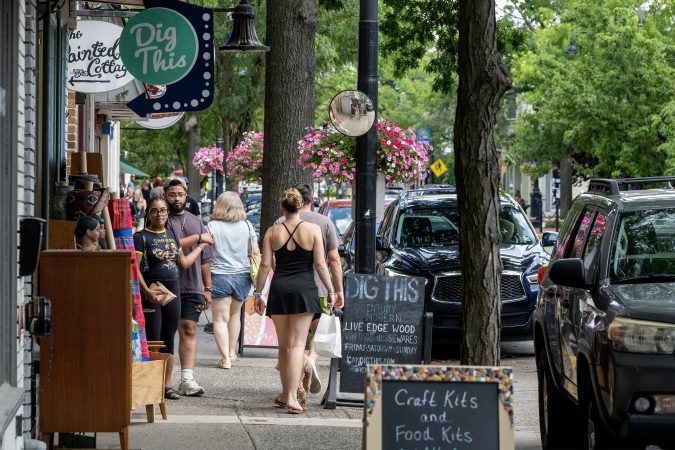
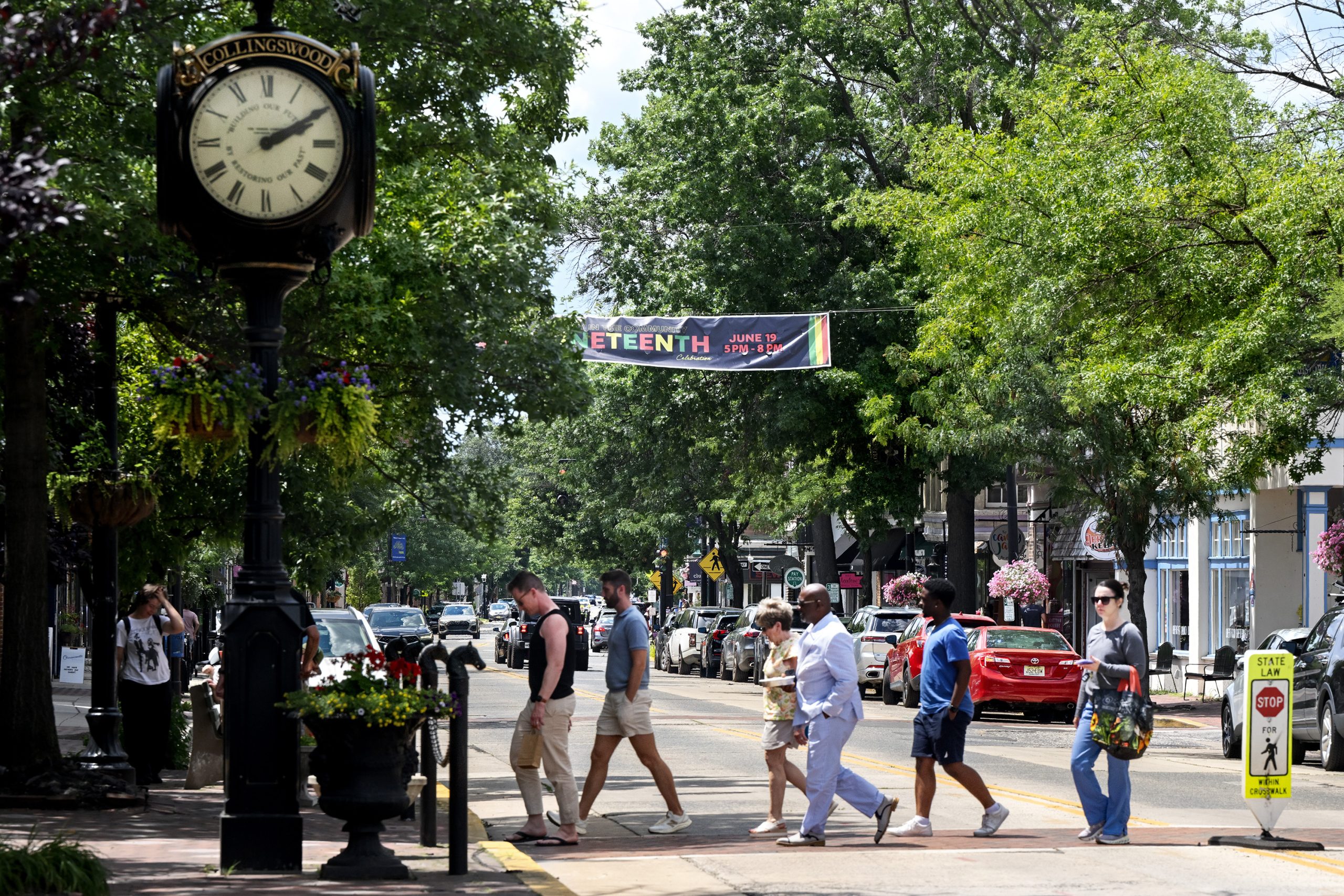
    Business owners in Collingswood want their section of Haddon Avenue to be as busy at night as it is during the daytime.

    And a Camden high-rise that was known for subpar conditions underwent a major overhaul via $130 million worth of renovations.

    Plus, Red Bank Battlefield is closed until further notice because of Saturday’s storm damage, and more news of the day.

    — Taylor Allen (southjersey@inquirer.com)

    If someone forwarded you this email, sign up for free here.

    P.S. Thank you for choosing this newsletter to provide you with your daily dose of South Jersey news. We want your input on how we’re doing! Tell us by taking our survey.

    Wishing for an evening boost

    Collingswood has garnered a reputation for its vibrant downtown, which is clear to see in its daytime foot traffic.

    But according to the town’s business owners, it’s a different story during the weekday evenings. And they seem to agree that’s because of Collingwood’s dry status.

    While they deal with slower nights, a few eye nearby Haddonfield, which is also a dry town but allows businesses to operate under state-issued manufacturing licenses beyond just beer. It’s the reason why it now has a brewery, a wine tasting room, and a distillery.

    Read more to learn how businesses navigate the drastic differences between night and day in Collingswood.

    A $130 million overhaul

    An influx of $130 million transformed a Camden high-rise previously known for its poor living conditions.

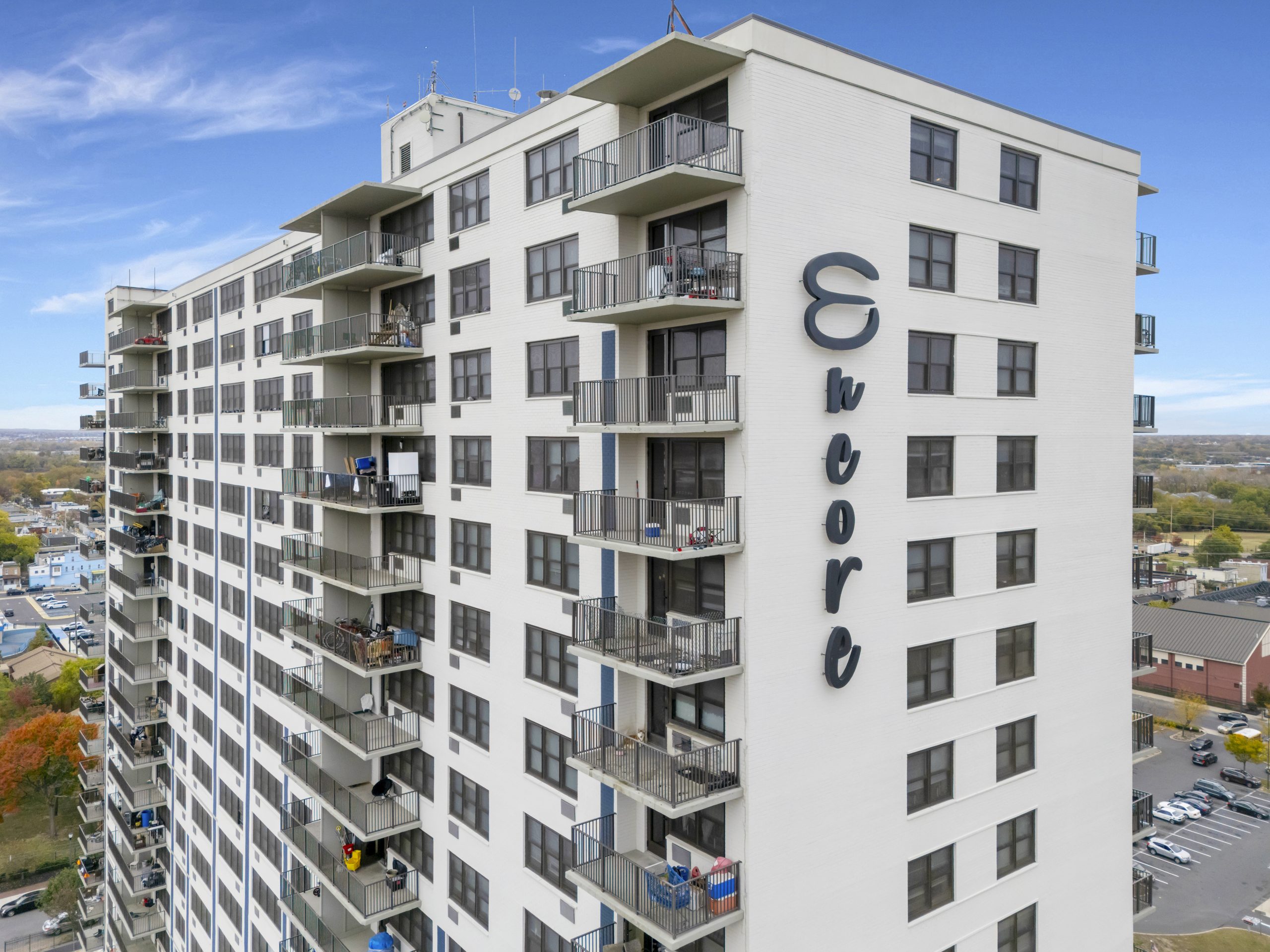
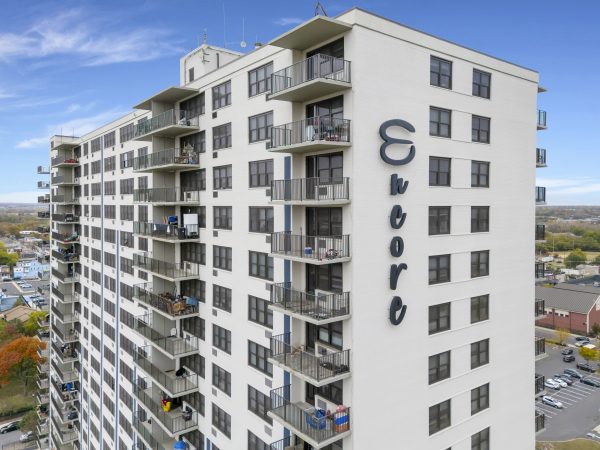
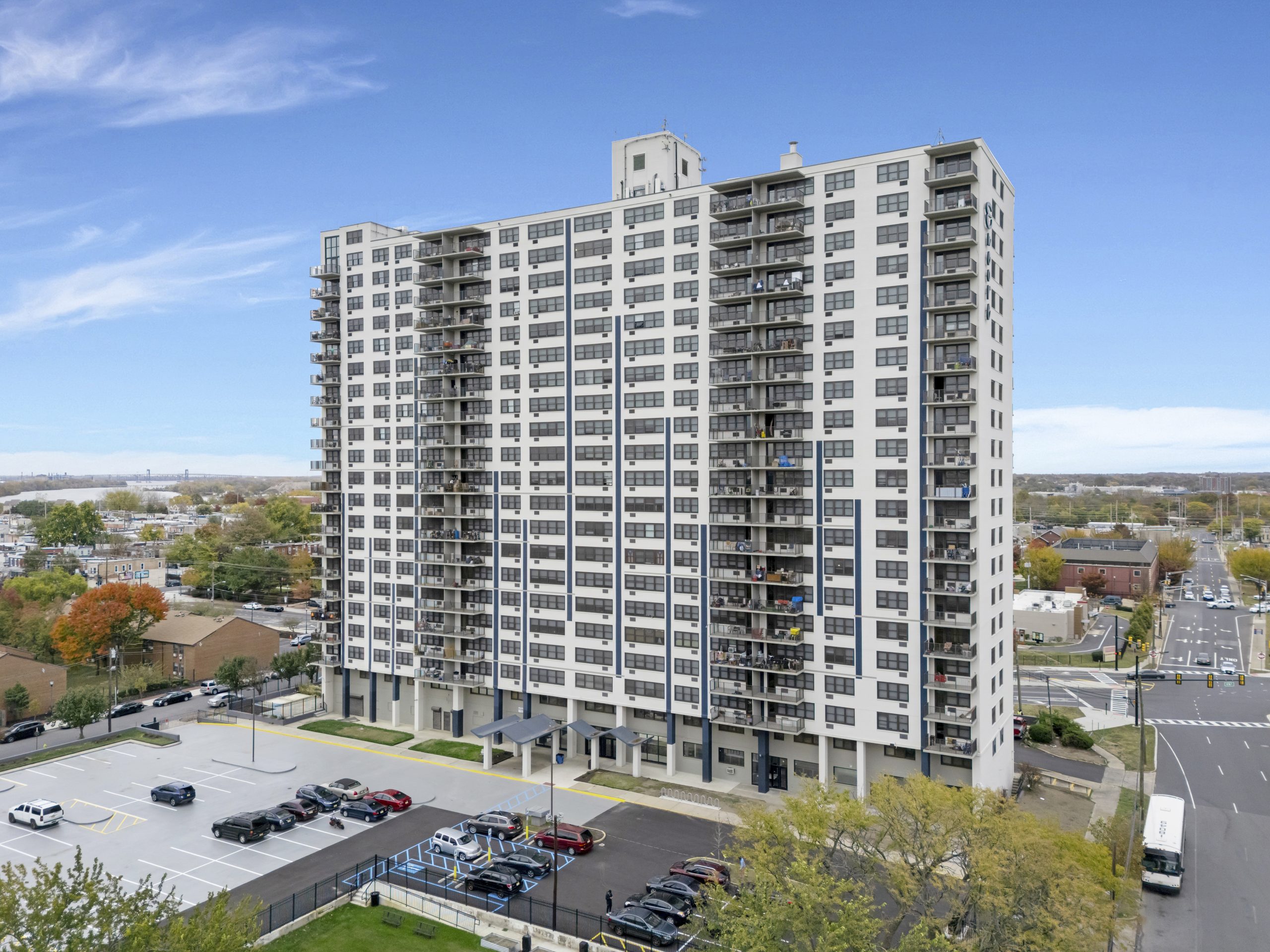
    The affordable housing tower once known as Northgate 1 is now The Encore.

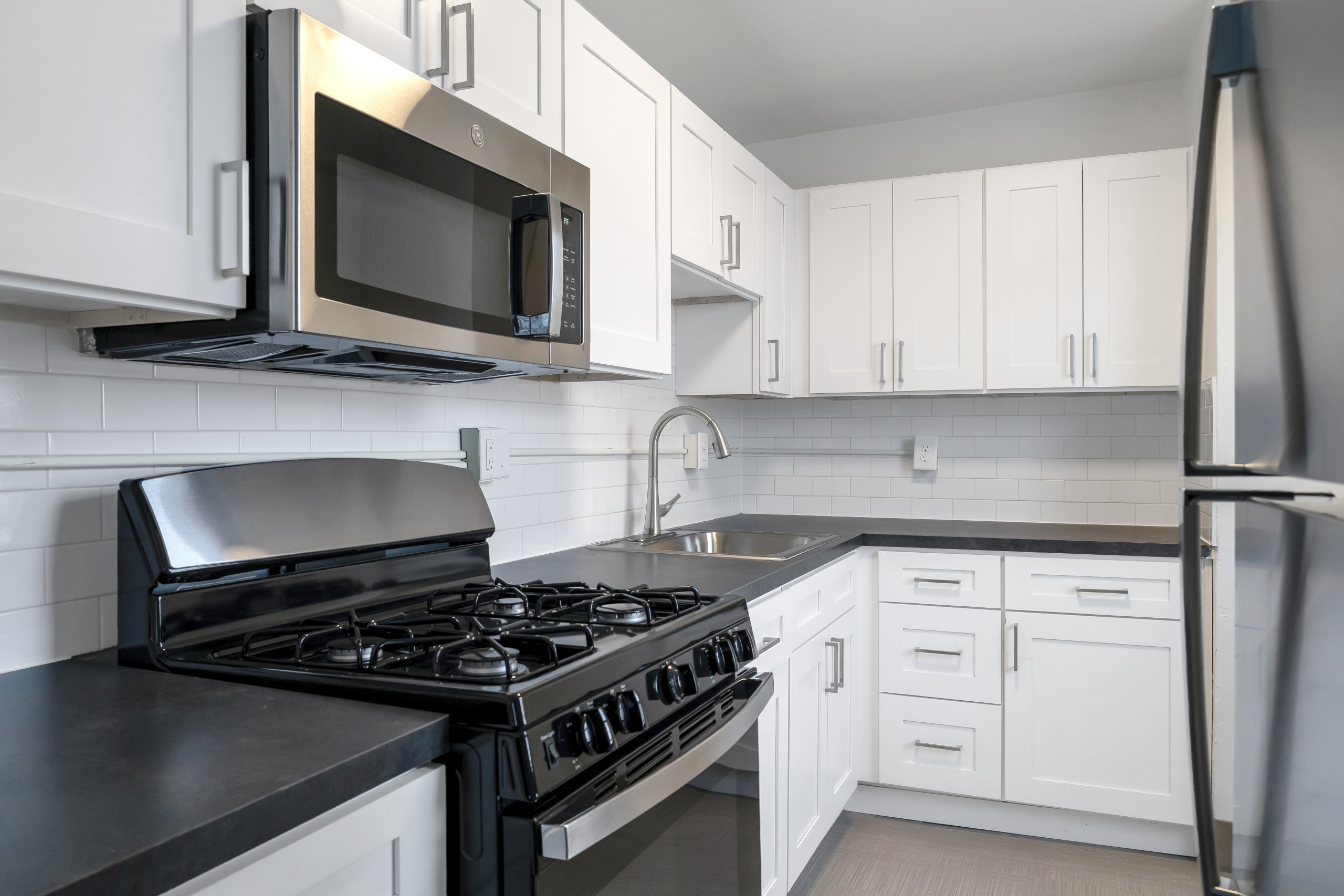
    Extensive renovations allowed all of the units to get new kitchens, bathrooms, HVAC, and more. It also beefed up security measures like cameras, access control, and fencing.

    The building is restricted to households that make no more than 60% of the median income.

    Reporter Lacey Latch has more details on the massive upgrades.

    What to know today

    • Cleanup from Saturday’s series of microburst storms was still ongoing on Monday. The storms caused flooding on several roads in West Deptford, Woodbury, and Woodbury Heights. Red Bank Battlefield is closed until further notice because of significant damage, according to officials from National Park.
    • Gov. Mikie Sherrill launched SimpleFile, a new and free website for families to apply for the state’s Child Tax Credit.
    • Two Camden students became champions of the Philadelphia MLB Players STEM League regional tournament. Their prize included tickets to a Phillies game and a behind-the-scenes look at the All-Star Game and Home Run Derby.
    • Throughout the week, there will be several roadwork projects in Camden County. Most will occur in Camden and Gloucester Township.
    • Drive-thru-only coffeehouse chain 7 Brew Coffee is one step closer to opening in Lawnside. 42 Freeway reports that last week, crews demolished the former gas station on the White Horse Pike property that will soon become the new store.
    • Gather To Graze, the business known for its charcuterie boxes and boards, will move from Mullica Hill to downtown Swedesboro, according to 42 Freeway.

    🗣️ Quote of the week

    The recent high school graduate from Eastern Regional High School in Voorhees only started running track as a freshman. She’s now one of the most accomplished runners in state history.

    🧠 Trivia time

    Where is the Campbell’s Co. based?

    A) Pitman

    B) Camden

    C) Medford

    D) Voorhees

    Think you know? Check your answer.

    What we’re …

    🌮 Craving: Tacos from La Ingrata in Camden.

    🦖 Touring: The Edelman Fossil Park & Museum of Rowan University.

    🏀 Checking: The Bron-O-Meter, our unscientific tracker on the likelihood of LeBron James coming to the Sixers.

    And that should you get started for the day. I’ll catch you tomorrow. 👋🏽

    By submitting your written, visual, and/or audio contributions, you agree to The Inquirer’s Terms of Use, including the grant of rights in Section 10.

  • A $130 million renovation breathes life back into former Northgate, a long-troubled Camden high-rise

    A $130 million renovation breathes life back into former Northgate, a long-troubled Camden high-rise

    An apartment building with living conditions that Camden’s mayor described as “deplorable” just two years ago has undergone a transformation thanks to a $130 million overhaul.

    For years, the 21-story affordable-housing tower previously known as Northgate 1 has been plagued by poor living conditions, safety concerns, and mismanagement.

    Now under the ownership of Hudson Valley Property Group, the 321-unit building is nearly unrecognizable following top-to-bottom renovations that were completed in August 2025. Each unit was equipped with new kitchens, bathrooms, HVAC, and more as residents remained in the building throughout the construction process via on-site relocation.

    Formerly known as Northgate 1, the long-troubled North Camden apartment building has been transformed by a $130 million renovation.Linda Pedroso

    The building’s future as affordable housing has also been secured for the next 20 years after the company extended the property’s Section 8 contract, ensuring residents for 96.5% of the units pay no more than 30% of their income on rent. The Encore is also restricted to households earning no more than 60% of the median income.

    “They did everything they said they were going to do as far as fixing up the units and giving us a lot of amenities and other things like that,” said Karen Merricks, a nearly 30-year resident of the building and president of the tenant’s association.

    Built in 1962 and now called The Encore, the apartment tower overlooking the Benjamin Franklin Bridge was viewed at the time as a sign that Camden’s future was bright.

    Billed as a luxury residence, the building featured amenities like a swimming pool, a shopping “colonnade,” an underground garage, and a two-story penthouse with private roof deck access.

    But the vision for the tower never materialized, and soon saw high vacancy rates and an ownership change decades later.

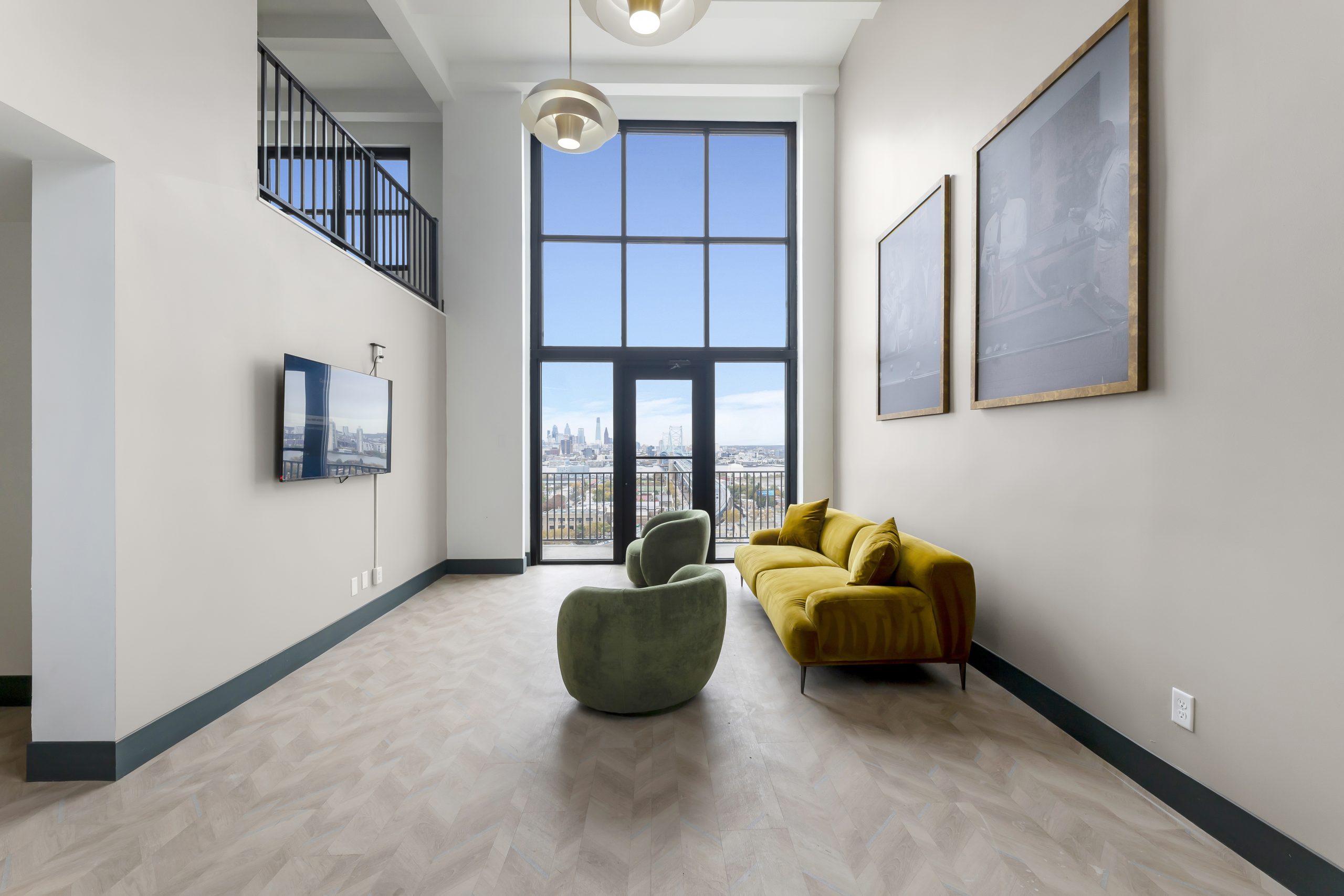
    The Encore includes a playground, gym, business center, and community room for residents in North Camden.Linda Pedroso

    The building continued to deteriorate over time as maintenance requests went unanswered, units were illegally sublet, and it became a site for drug activity, Merricks said.

    A 2022 inspection resulted in 1,000 violation notices, The Inquirer previously reported.

    “Just a lot of chaos and confusion,” Merricks said of that time.

    For the first time in her nearly three decades as a resident, she began to feel unsafe in the building she called home.

    Merricks was not alone, which is why safety was one of the first things Hudson Valley worked to address when they took ownership of the building in 2024, said Andy Cavaluzzi, cofounder and partner of Hudson Valley Property Group.

    “A tremendous amount went in there because we wanted to be able to change not just the physical side of [the building]. … We were changing the whole perception and the culture, and that starts then with the operations and security,” Cavaluzzi said.

    They worked on developing a security plan for the building that included a small number of armed personnel as well as major upgrades like cameras, access control, perimeter fencing, and vehicular gates.

    “Now I’m back to feeling safe,” Merricks said. “They have armed guards here, security to make sure that no one’s coming in, roaming the hallways, smoking drugs in the exits, and stuff like that. That’s all been eliminated.”

    ‘Every part of the building was touched’

    Hudson Valley Property Group spent about $150,000 on each unit’s renovations at The Encore.Linda Pedroso

    New York-based Hudson Valley Property Group specializes in projects like The Encore — buying rental properties with troubled histories and preserving affordable apartments and undertaking extensive renovations.

    They spent about $150,000 renovating each unit, in addition to building-wide infrastructure improvements like all new plumbing and electrical, and exterior repairs, Cavaluzzihe said.

    “Every unit was touched, every part of the building was touched,” he said.

    Residents can also take advantage of a fitness center, a computer lounge, a community room, and a children’s room with an indoor playground. Through a partnership with Citizens Bank, Encore residents also have free internet service for the next 15 years.

    Shared by hundreds of residents, the building also now has a working laundry room for the first time in years, he said.

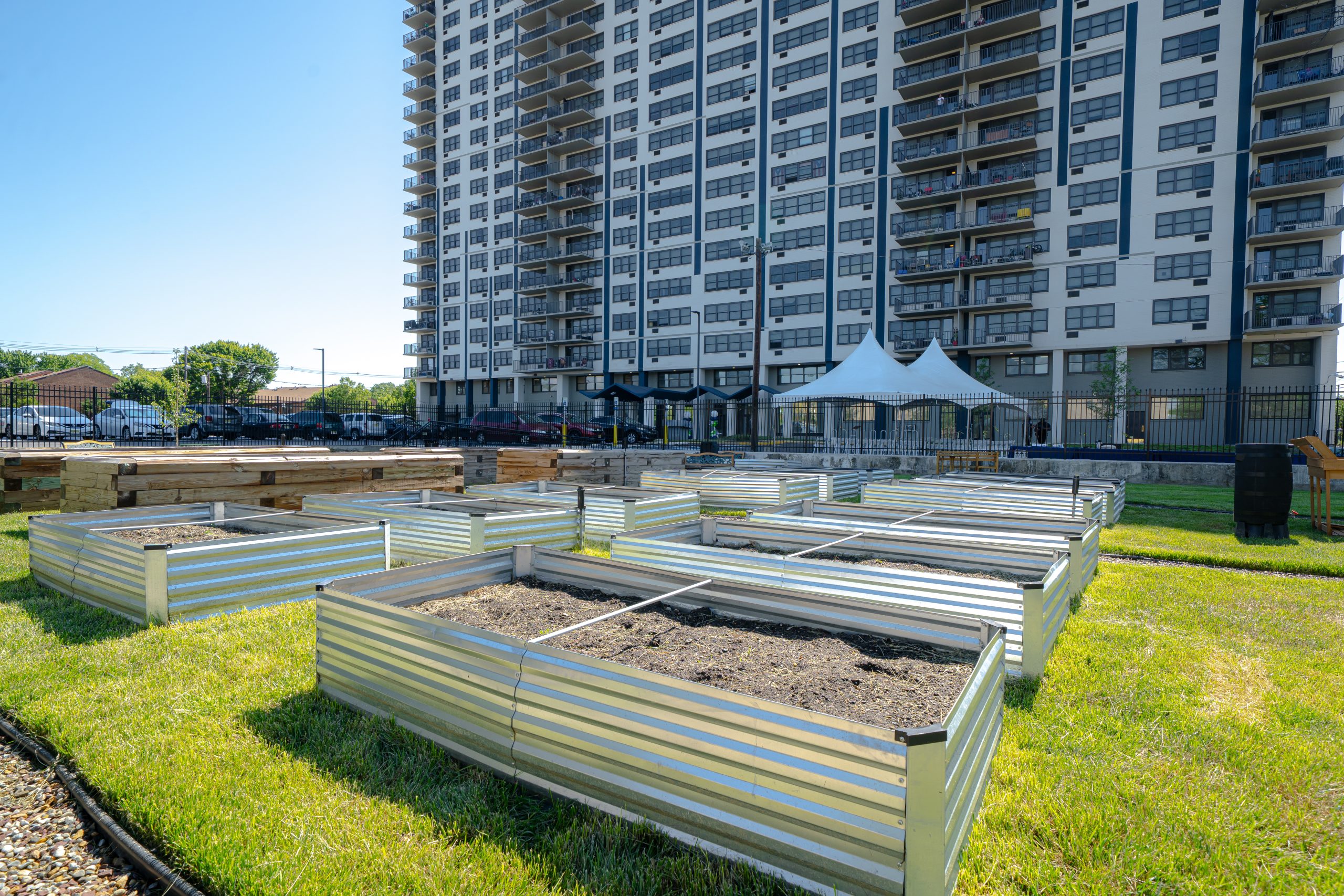
    The site of the former pool is now an urban farm in partnership with Highlands Alliance where residents can learn how to grow their own food and have first dibs on any produce that is harvested before it is sold at local farmer’s markets. The revenue generated from sales will go back into running the farm, Cavaluzzi said.

    The Encore has an urban farm on site where residents can learn to grow their own food.Linda Pedroso

    “Affordable housing doesn’t mean it’s a place that it’s less expensive rent but you’re going to have a lesser living experience,” he said. “That’s not what it means and it doesn’t have to mean that.”

    Camden Mayor Victor G. Carstarphen said he was “impressed” by the enhancements, and called the transformation “simply remarkable” in a statement.

    Driving across the bridge from Philadelphia, the building is hard to miss. Before renovations, it was clear to anyone driving by that it was in disrepair.

    Now, the building stands out for a different reason.

    Repairs to the facade and roof along with new windows, glass doors, and balcony fencing have transformed the tower “from this amazingly big eyesore that was there” into a beacon of positivity for the city, Cavaluzzi said.

    “This is like Camden showing anyone else who wants to come in like, ‘Look, they were able to do it. This is what we want, this is what we expect,’” he said. “We want to be able to to elevate the city and we’re not OK with the status quo.”