Thousands of New Jersey employers will have to provide protected family leave beginning this past Friday under an expansion of the state’s family leave law signed by then-Gov. Phil Murphy shortly before he left office in January.
The change expands the number of companies that must comply with the New Jersey Family Leave Act and decreases the amount of time it takes for an employee to become eligible for the law’s job protections.
The law gives workers who take family leave the right to return to their same job, or one with the same pay, benefits, seniority, and other terms of employment, upon their return. State officials estimate another 400,000 will gain protections as a result of the changes that take effect Friday.
“No one should have to choose between caring for themselves or a loved one and keeping their job,” acting Labor Commissioner Kevin D. Jarvis said in a statement. “These changes strengthen one of New Jersey’s most important worker protections by ensuring more people can take the time they need with the confidence that their job will be there when they return.”
The law provides 12 weeks of unpaid, job-protected leave over a two-year period for workers bonding with a new child, responding to a health emergency, or caring for a seriously ill family member. It does not cover an employee’s own illness, which falls under a separate program.
The law previously captured businesses with at least 30 employees. Under the changes taking effect Friday, companies with 15 or more workers companywide must provide family leave.
The change also loosens rules on who qualifies. Previously, workers needed to be on the job for a full year and have worked at least 1,000 hours. Under the new rules, workers are eligible once they have worked for three months and 250 hours. Officials said this change will protect more part-time employees and recent hires.
Although the leave is unpaid, some employees can be eligible for partial wages via state Family Leave Insurance, which guarantees up to 85% of their weekly pay, to a cap of $1,119 in 2026.
The July 17 change is the first of three scheduled steps to expand the law. The employee threshold drops to 10 or more workers July 17, 2027, and to five or more workers July 17, 2028.
Business groups had opposed the change, warning that expanding family leave eligibility could make New Jersey small businesses less competitive.
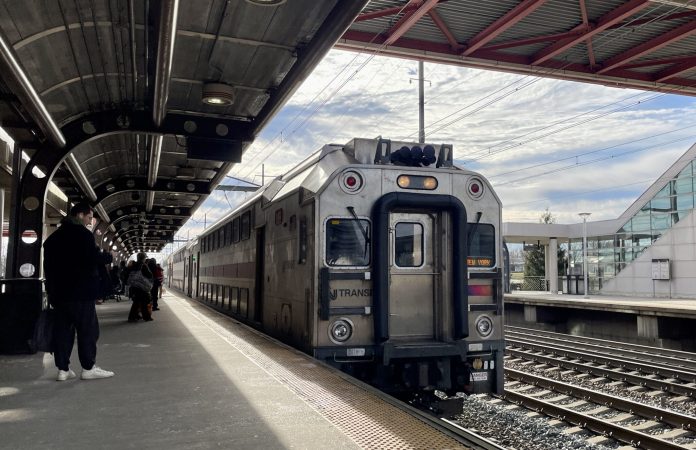
NJ Transit’s board approved $3.5 billion in spending for the fiscal year that began July 1, the largest operating budget in the agency’s history.
The new budget represents an 11% increase over the one approved last year and comes after 12 months of fiscal headwinds that saw the collections from the agency’s dedicated revenue source tumble and its spending on labor and benefits surge beyond expectations.
“This governor is the only governor in recent memory who has given us an 11% increase in budget. I don’t know when the last time that happened,” said NJ Transit CEO Kris Kolluri. “That is how you begin to put the pieces together for this agency to make sure we do it.”
The agency’s fiscal 2027 budget maintains the patchwork of funding sources that have paid for buses, trains, and light rail cars across the state for years.
State subsidies, whether through a direct appropriation from New Jersey’s general fund or via collections from a special corporate business fee statutorily dedicated to NJ Transit, are expected to account for a majority of the agency’s revenue in the current fiscal year.
Combined, NJ Transit expects to receive nearly $1.07 billion from New Jersey’s coffers, including a $302.2 million direct subsidy and $765.6 million in revenue from the corporate transit fee, a 2.5% non-marginal corporate business tax surcharge on businesses with more than $1 million in income.
The direct subsidy is significantly higher than the $43.9 million subsidy approved as part of last year’s budget, but that subsidy grew to $230.6 million as a slump in corporate tax collections drove down revenue from the corporate transit fee. That fee is set to expire, by law, at the start of 2029.
Fare revenue, traditionally the largest single source of funding for NJ Transit, is expected to remain level with last year’s projections at $980 million. Collections from fares undershot their revenue target by about $48 million last fiscal year.
Since an initial 15% fare hike following a board vote in 2024, NJ Transit’s fares have automatically increased by 3% each year, rises officials have said are needed to fund the agency as it seeks to boost reliability after years of disinvestment.
Transit advocate Adam Reich noted on Thursday that state statute required 10 public hearings — and no more than one in a given county — before raising fares.
“If Gov. Sherrill’s going to insist that she’s transit obsessed, certainly taking the most rider-friendly view of the statute is absolutely critical,” Reich said. “It doesn’t mean New Jersey Transit can’t raise fares every year. It doesn’t mean they can’t necessarily follow a 3% plan, but it just means that riders at least be heard before we do that.”
The board’s vote approving both the one-time 15% increase and the 3% annual hikes followed numerous public meetings. The agency has argued that it does not need an annual vote to raise fares as a result.
Reich said they might be able to raise them further if they asked riders.
“Maybe we’d rather pay a little more but see service improvements or at least service stability instead of service cuts, as we did on May 31,” he said
An annual diversion from New Jersey’s clean energy fund will remain level at $140.1 million, while a yearly transfer from the New Jersey Turnpike Authority under an agreement struck under former Gov. Phil Murphy will send the agency $485 million, up from $470 million last year.
NJ Transit paid nearly $103 million more for labor than it expected last year, and its spending on fringe benefits came in $70.5 million above budget. The agency faces a range of cost increases that outpace the rate of inflation.
“The costs are real,” said Kolluri, who also heads the Turnpike Authority. “I know people don’t want to understand or care because they are frustrated sometimes when their train is canceled. I understand it, but the fact that the labor contracts cost $55 million more than they did last year is a fact.”
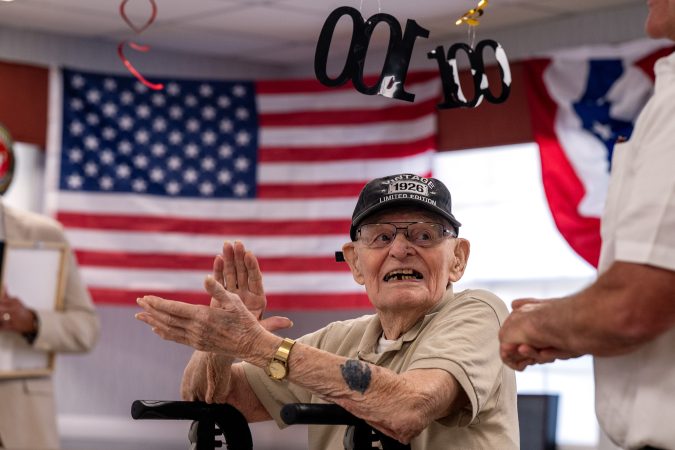
With a century of life under his belt, it’s not easy to get much past World War II veteran Stephen Anderson.
But last Tuesday, Anderson was surprised to return home to find a large 100th birthday celebration in his honor with gifts, commendations, and even a letter from Gov. Mikie Sherrill waiting for him.
Wearing both a T-shirt and belt buckle emblazoned with the United States Marine Corps emblem, Anderson entered the dining room at the Wynwood Rehabilitation and Healthcare Center in Cinnaminson with a big smile as his friends, fellow veterans, neighbors, and more sang “Happy Birthday.” Each of Anderson’s arms are adorned with prominent dark tattoos that have now mostly faded to outlines, the finer details lost to time.
As cupcakes and ice cream were passed around, Anderson was quick to laugh as he joked with the staff and reunited with longtime friends from the American Legion, where he has been a member for 82 years.
“It’s amazing,” he said in between bouts of banter with old friends.
“It’s great because I can’t get out like I used to,” he said. Now, everyone’s come to him.
WWII U.S. Marine Corps (and U.S. Air Force) veteran Stephen Anderson is surprised by fellow vets who attended his 100th birthday party Tuesday at the Wynwood Rehabilitation & Healthcare Center in Cinnaminson.Tom Gralish / Staff Photographer
The party was put together by the staff at Wynwood, where he has lived since 2023 and has since become a beloved resident.
Stephanie Ward, Wynwood’s director of social work, was the driving force behind the celebration, organizing the party and contacting the Legion, the Tun Legacy Foundation, and the governor’s office to recognize Anderson for his lifetime of service.
“He’s so amazing, he’s got a kind heart,” Ward said. “All the veterans always have a special place in my heart and this big milestone, you’ve got to celebrate it.”
Cupcakes, including one with topping of iconic flag raising at Iwo Jima, at the 100th birthday party for WWII U.S. Marine Corps (and U.S. Air Force) veteran Stephen Anderson at the Wynwood Rehabilitation & Healthcare Center in Cinnaminson. He was presented with a letter from Gov. Mikie Sherrill, and letters from both the commandant and sergeant major of the Marine Corps, and more. Tom Gralish / Staff Photographer
Not one to draw attention to himself, she joked that Anderson would probably give her a hard time for setting up the elaborate surprise party for him.
“I’m going to get yelled at later,” she said with a laugh. “But he deserves everything.”
Separated by oceans and decades, it is clear that Anderson’s military service is still close to his heart.
Originally from Massachusetts, he enlisted in the Marines at just 17 years old and was quickly sent to fight in some of the most harrowing battles of WWII, the Korean War, and the Vietnam War. A rare two-branch veteran, Anderson also served in the Air Force from 1961 to 1963.
“Where he fought is legendary. Saipan, Okinawa — some of the largest battles of the war,” said Patrick Dailey, a Marine and founder of the Tun Legacy Foundation, which is working to rebuild Philadelphia’s historic Tun Tavern, where the Marine Corps was born in the 17th century.
WWII U.S. Marine Corps (and U.S. Air Force) veteran Stephen Anderson arrives for his 100th birthday party with Stephanie Ward (left), director of social services at the Wynwood Rehabilitation & Healthcare Center in Cinnaminson.Tom Gralish / Staff Photographer
To honor his years of service and sacrifice, Anderson was presented with official letters from Gov. Mikie Sherrill, the New Jersey legislature, and various levels of American Legion leadership.
Anderson seemed particularly moved by messages from his fellow Marines — personal letters from the Marine Corps commandant, the highest-ranking officer, and the sergeant major of the Marine Corps, the most senior enlisted member of the service.
He was also gifted an American flag that was flown over the U.S. Marine Corps Memorial by troops in Washington, D.C., on July 4 for him.
WWII U.S. Marine Corps (and U.S. Air Force) veteran Stephen Anderson (left) is greeted by his roommate Michael Evans (right) at his 100th birthday party Tuesday at the Wynwood Rehabilitation & Healthcare Center in Cinnaminson.Tom Gralish / Staff Photographer
While Anderson said he expected some of the Wynwood staff might be up to something for his birthday, he said he was not anticipating the celebration that had formed around him.
Brought to New Jersey in the 60s “by Uncle Sam,” as he put it, Anderson spent many years living in Burlington and has long been a dedicated member of American Legion Local Post 39 based in Roebling, at one point serving as commander.
Looking back, he said one of the best parts of the job was simply getting to drive all over rural South Jersey.
“I kind of miss that, I used to travel all the back roads,” he said with a smile.
WWII U.S. Marine Corps (and U.S. Air Force) veteran Stephen Anderson is photographed with letters and proclamations following his 100th birthday party Tuesday at the Wynwood Rehabilitation & Healthcare Center in Cinnaminson.Tom Gralish / Staff Photographer
Anderson has lived “a lifetime of service to the military, to the country, to the American Legion,” said longtime friend Chuck Robbins, a former national vice commander of the American Legion who worked with Anderson.
“You couldn’t ask for a more outstanding vice commander. Somebody who did their job to the fullest and always had my back — I will never forget the service you gave to me,” he said as he presented Anderson with a letter from the national commander of the Legion.
Looking at the flag in its shadow box, numerous framed commendations, piles of birthday cards and more laid out on the table before him, Anderson joked with Ward that they’d need to work out a plan to accommodate all of his gifts.
“You better get me a bigger room!” he said, laughing.
SEA ISLE CITY, N.J. — This is not the same old Sea Isle.
Jason and Kylie Kelce are mired in a four-year wait for membership to the Sea Isle City Yacht Club. They are currently No. 78 of 251, up from last year’s 149.
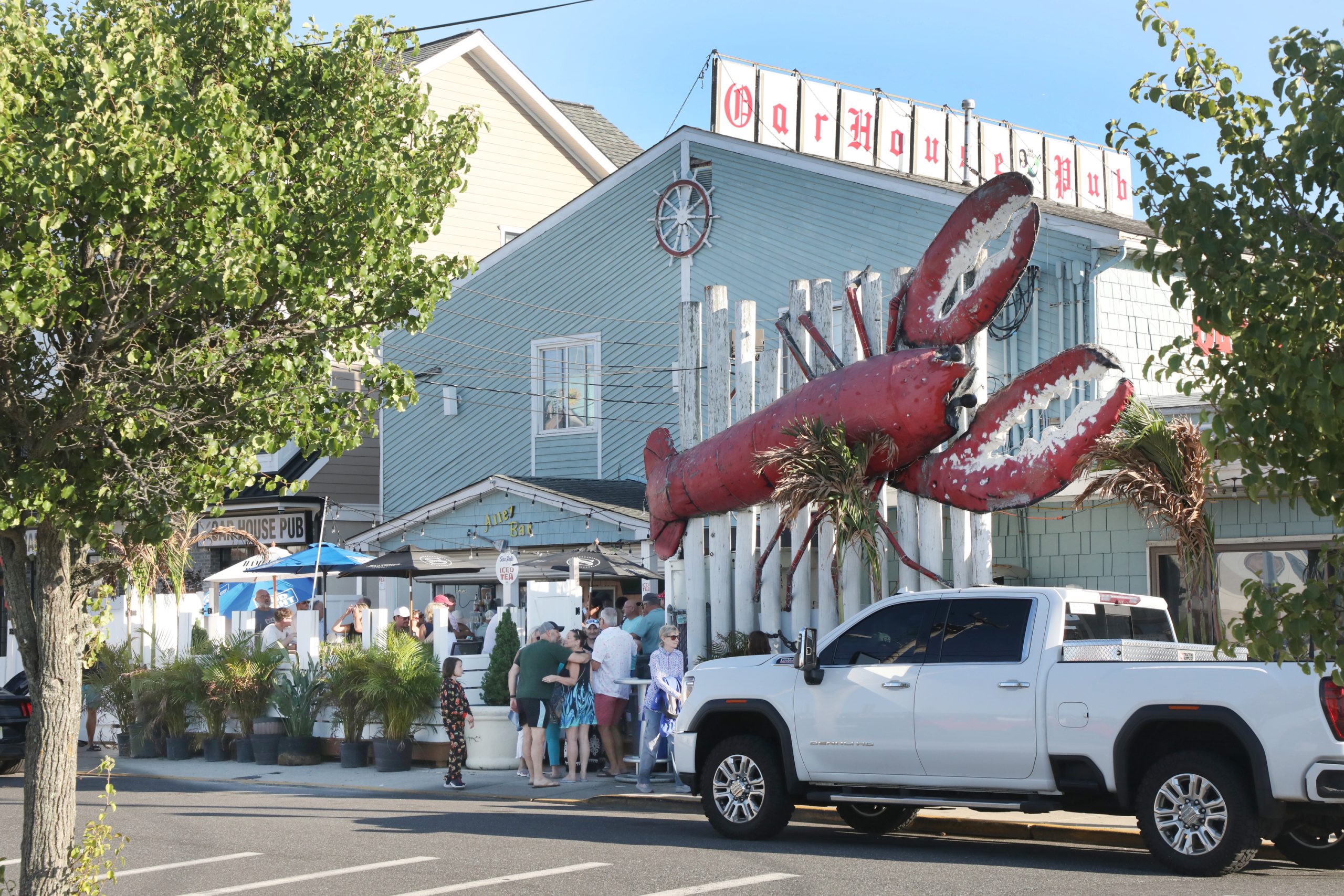
Neighbors are fighting over noise from the Oar House Pub, which expanded this year into two nearby buildings.
Prices in this Shore town have skyrocketed: The median home sale price for the three months ending in May 2026 was $1.8 million, according to Redfin, up 27% from the year before. For May alone, it was $2.2 million.
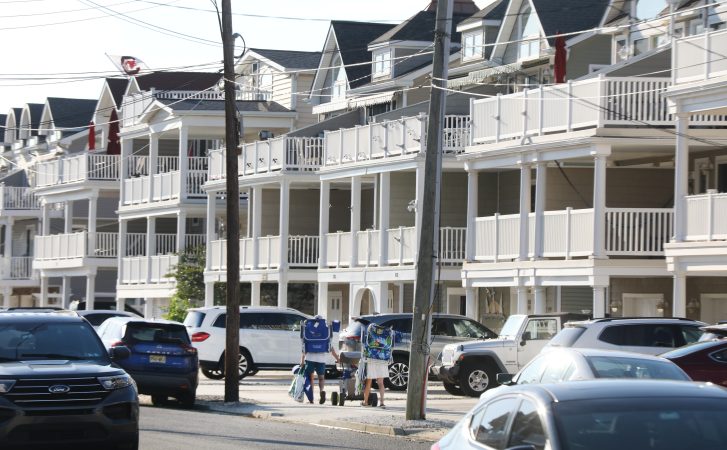
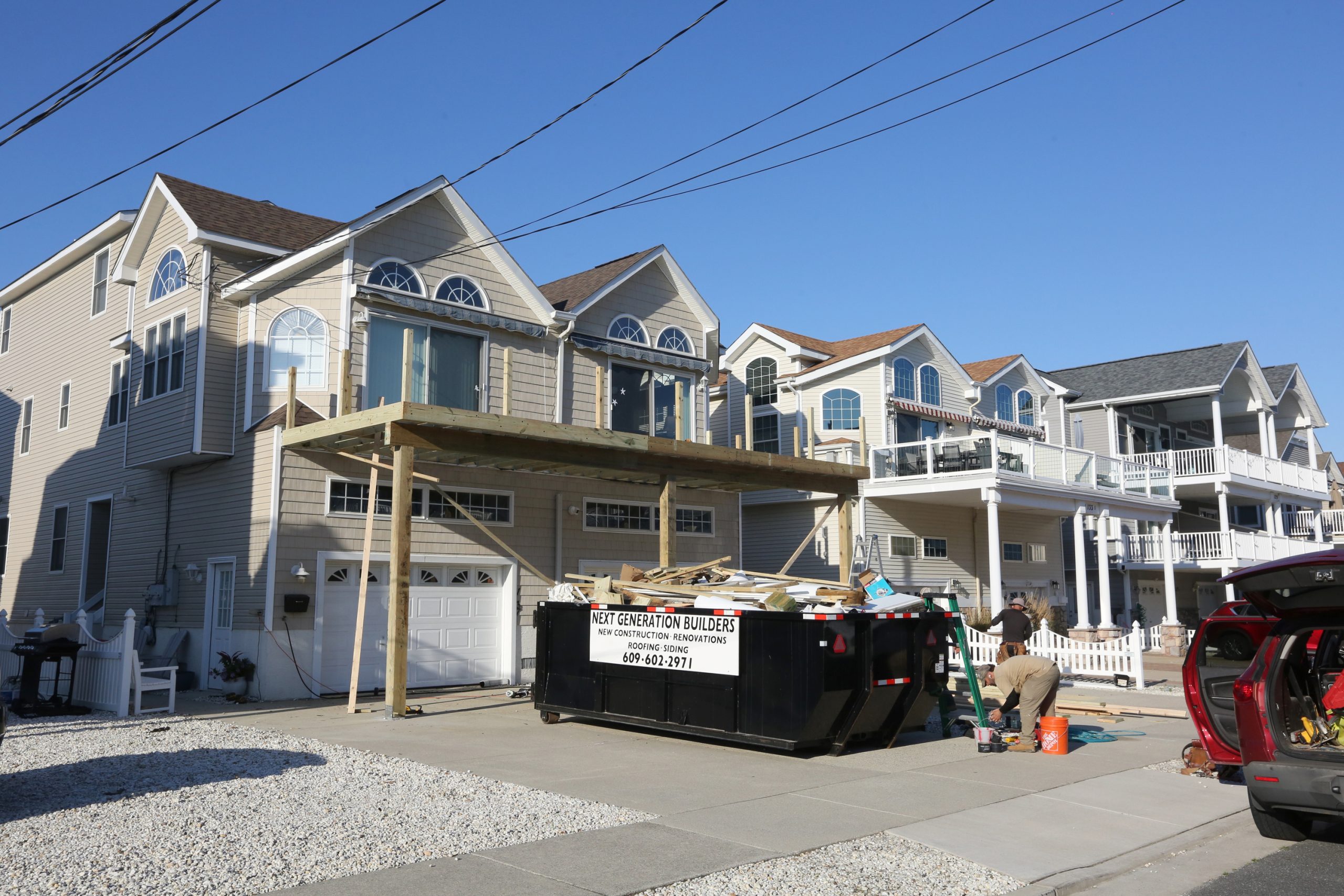
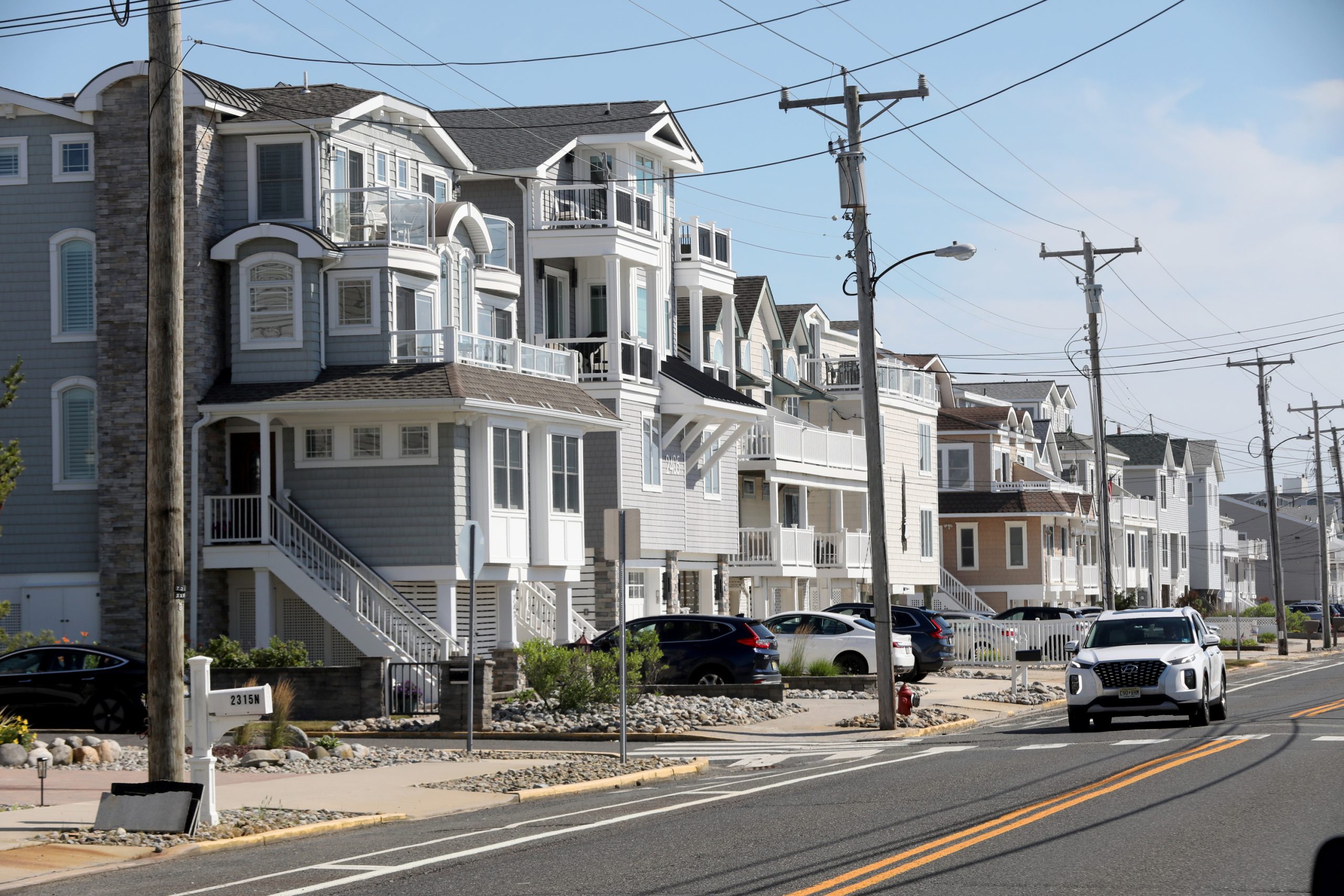
Blocks in Sea Isle are stuffed with new, side-by-side construction, multiple SUVs in pebbled front yards, with few trees or backyards. People sunbathe in their driveways. Silverados have near-collisions with Audis in the Acme parking lot, as golf carts idle out front.
Is it still pleasant on Pleasure Avenue?
People line the beach in Sea Isle City on Wednesday, June 25, 2025 in Sea Isle City, NJ.Monica Herndon / Staff Photographer
Depends on whom you ask. For some, the changes feel more like a maturing of Sea Isle, certainly an upscaling, from the beloved Shore town’s raucous old party days. Houses cost too much to risk renting to the rowdy Shore house crews of years past, homeowners say.
But for others, the town’s rash of new construction, the pricing out of old blue-collar regulars, the impossible parking, even the price of an entree at a restaurant all feel like a betrayal.
Workingman’s beach
Colin Ratner, 53, of Fairmount, global director of sales at a medical software company, raves about Sea Isle’s enduring charms, a place where his daughters have found a sense of freedom they don’t have in Philadelphia, riding their bikes barefoot and playing outdoor basketball games to cheering crowds.
“In Philly, they’re not leaving the street without us knowing where they’re going,” he said. “Here, it’s like ‘Come back before we go to sleep.’ I call Sea Isle Middle America.”
Colin Ratner and his wife, Cindi, of Center City, at their home in Sea Isle City for the summer think the town has matured in a good way, Wednesday, June 24, 2026.Vernon Ogrodnek / For The Inquirer
A rowhouse dweller in Philly, he is not bothered by the density or the parking crunch. “Our property[value] has more than doubled since 2018,” he said. “I’m seeing less renters, and more people using their property, less of the crazy house parties. It’s really kind of settled down.”
Jo Ferenchak bought in 2017 and rents out to cover costs. Her parents bought their Sea Isle house in 1977, she said, for $20,000.
“When my parents bought their house, it was called the Working Man’s Beach,” she said via Facebook message. “No more!”
In a sign of the times, she said her children and grandchildren love to go mini golfing, “but we go to Pirate Island in Avalon because it is so hard to find parking at Pirate Island in Sea Isle.”
‘Saturation point’
It has been more than a decade since a town survey found that 62% of responders said traffic was a problem. The survey, taken for a master plan, drew comments that included “Feeling of too much density and congestion,” “Seashore feeling is being lost,” and “We’ve reached a saturation point.”
Things are more overstuffed than ever, many residents, summer and year-round, say.
Sea Isle’s year-round population is 2,019, fairly stable despite some declines in the years after Hurricane Sandy and some increases after COVID-19. But it can swell to 70,000 on a busy summer weekend.
The change in the housing stock is more dramatic. Between 1990 and 2020, there were about 17% more units created, mostly for seasonal residents, according to the city’s data. Although some old bungalows remain, the town is essentially built out, city officials say.
Sea Isle even proposed partnering with a mainland town to essentially outsource its required share of affordable housing units as required by New Jersey law, but that was not allowed.
New construction off 57th Street, in Sea Isle City, Wednesday, June 24, 2026.Vernon Ogrodnek / For The Inquirer
In a town long known for its rowdy bar scene, there is less tolerance than ever for the spillover effects in dense neighborhoods.
In June, a dispute erupted between the Oar House Pub and its neighbors, including Mike’s Seafood owner Mike Monachetti, a prominent figure around town and a pal of the Kelces’.
Monachetti told the city council that the noise from the pub was regularly so loud “the water cups were vibrating on the tables” at his place.
“Think about what you’re doing,” he scolded the council. “My neighbors suffer from noise, loud noise, smoke going right up into their properties, and, yes, people out on the streets, beer cans on my property. Please, look at your own laws and ordinances. You are putting an alcohol license closer to a church, as well as underneath a residence that was never intended to be a bar.”
Council President Michael Jargowsky, 64, says with the town nearly entirely built out, there is not much to do in terms of stemming overdevelopment.
The city is always looking at adding parking, he said, though he notes that not everyone wants to cross the causeway and see a multistory parking garage.
“Our town has changed a lot physically,” said Jargowsky, a former city police officer who grew up in Sea Isle and paid $205,000 in 1995 for a century-old bungalow. “A lot of single-family bungalows and Victorian homes are now the side-by-sides: three bedrooms went to a combined 14 bedrooms in some places.”
The increase in property value has brought new revenue to the town, and a robust capital project agenda, including a new community center. Longtime residents who sold, or whose children sold, did very well, he noted.
Some things about the town have stayed the same.
“You still see a lot of banners for Delco,” he said.
The Oar House Pub, off 42nd Place, at right, would like to expand to the empty lot adjacent to it, and found itself in a controversy with neighbors over the noise, in Sea Isle City, Wednesday, June 24, 2026.Vernon Ogrodnek / For The Inquirer
‘Like a bad AI-generated image’
Rick Kane, who worked at a family friend’s business for eight years in Sea Isle and lives just on the mainland, said the town is a shell of its former self.
“Many of the affordable family restaurants and cheap bars are gone, replaced by high-dollar places,” Kane said. “Sea Isle has lost its charm and personality. It’s now like a bad AI-generated image of a ‘Shore town.’”
Eagles cornerback Cooper DeJean signs autographs for fans as a celebrity bartender at former Eagle Jason Kelce’s annual Team 62 fundraising event for the Eagles Autism Foundation at the outdoor Paddy’s Green in Sea Isle City, Wednesday, June 24, 2026.Vernon Ogrodnek / For The Inquirer
Christopher Capuzzi, 42, a New York City capital markets attorney originally from Delaware County, said he bought on Long Beach Island even though his extended family gathers in Sea Isle and continues to own houses there.
Capuzzi said he paid $2.8 million in 2022 for a 3,500-square-foot house on LBI, one house from the ocean.
On LBI, he said, “My money’s stretched a lot further, and we actually have trees.”
“When it came time for me to buy, I just felt like Sea Isle has gotten so overdeveloped, the way they cram homes in, every home is basically a side-by-side. The garages don’t fit a single car in them. Parking has become a nightmare.”
Some things haven’t changed
For some diehards, like the 165 members of the extended Mannion family of West Chester and other Philly burbs that for a half-century has rented a half-dozen houses in Sea Isle for the last two weeks in June, the Sea Isle memories compound every year, albeit as the rents, along with all the new construction, go up.
It is a destination they wouldn’t change for anything, family members say.
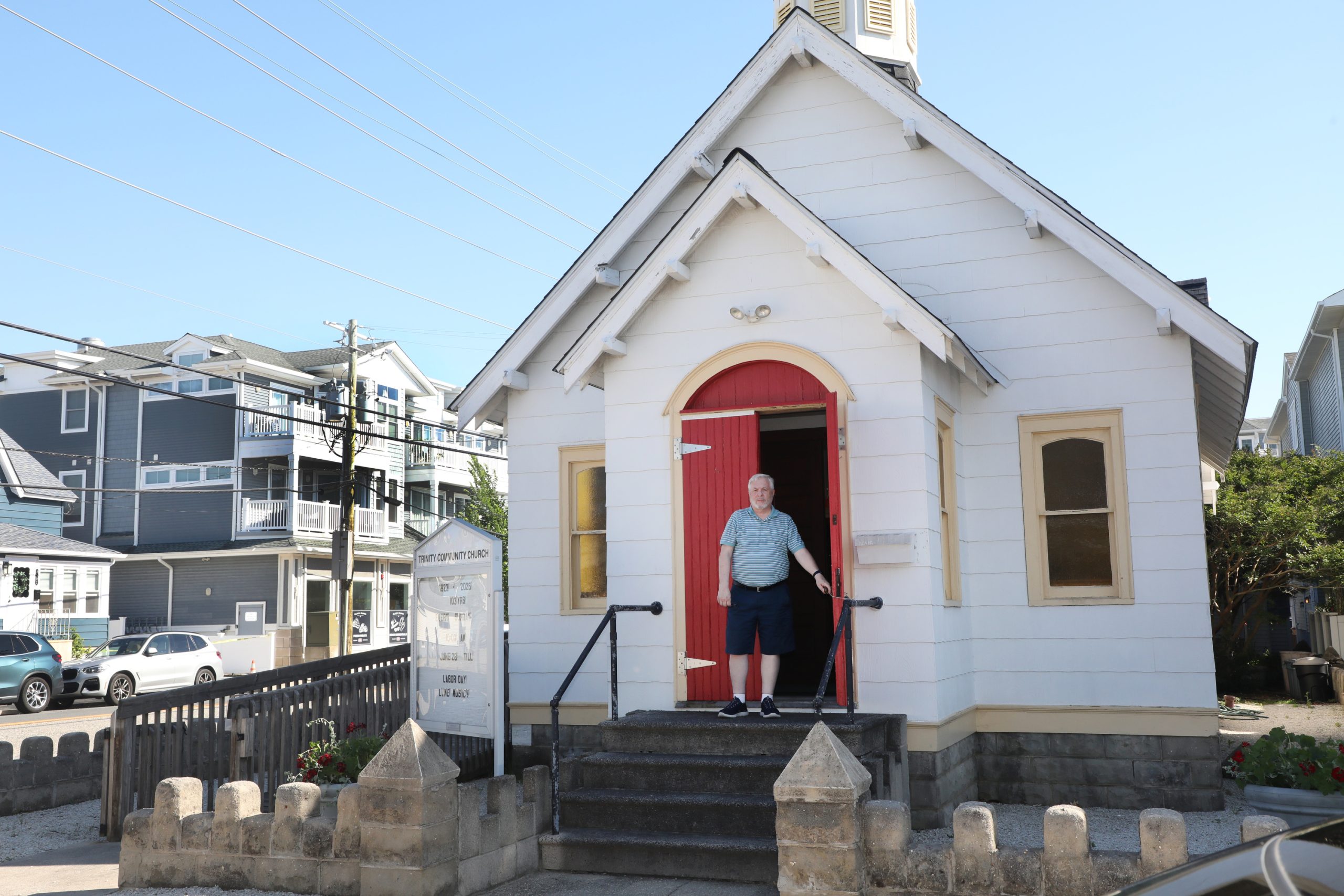
Over at Trinity Community Church of Sea Isle City, pastor Chuck Swanson says his church has been a constant amid all the changes. A seasonal nondenominational place of worship, the church has been at 85th and Landis for 103 summers.
Chuck Swanson, pastor of the historic Trinity Community Church, off 85th Street and Landis Avenue, in Sea Isle City, says the resort town has significantly changed in that the old character of the town has been fundamentally altered, but the change is mostly good and the city is preparing for the future, Wednesday, June 24, 2026.Vernon Ogrodnek / For The Inquirer
“Sea Isle City has changed a lot of late,” Swanson said. “Lots of destruction of older homes and construction of new ones … the old character of the town has been fundamentally changed. Change is mostly good and the city is preparing for the future.
“One thing that hasn’t changed is our church.”
Jim Albright of Bordentown, whose family has owned a house in Sea Isle since 1998, said the town is no longer affordable for most people.
“My dad was an electrician for GM and my mom was an elementary school teacher in Trenton, and on their salaries they were able to buy this house,” he said. “They would absolutely be priced out now.”
Homes along Landis Avenue, here near 23rd Street, have grown higher as the summer bungalows are replaced with more elaborate, and expensive, contruction in Sea Isle City, Wednesday, June 24, 2026.Vernon Ogrodnek / For The Inquirer
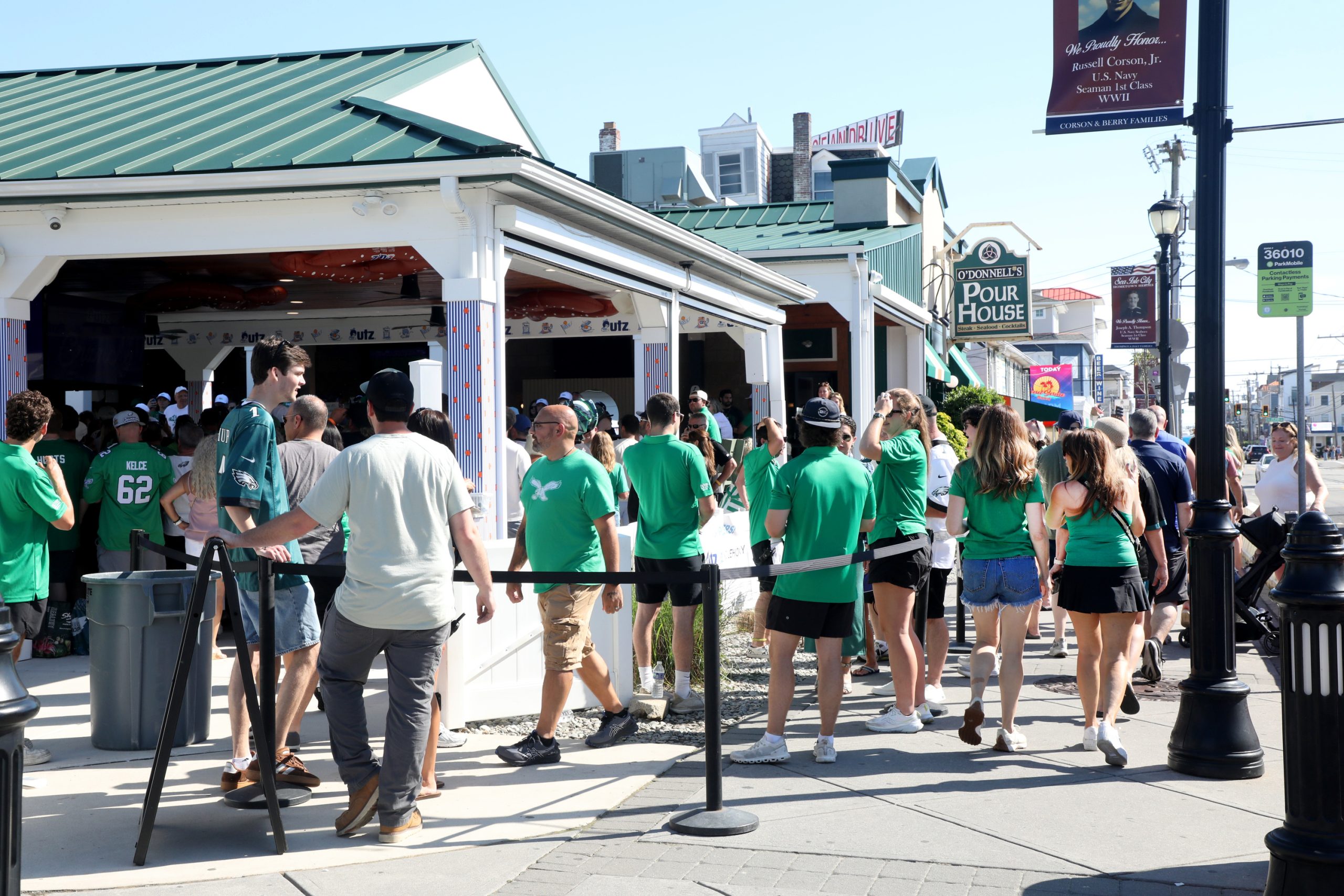
The Kelces can still make Sea Isle the center of the party universe when they hold the Eagles Autism Foundation fundraising days every year in June, but Albright and others see a vibe shift.
“There’s been a massive influx of money. You can tell even by looking at the cars being driven around town,” Albright said.
Regina Lewallen lived full time in Sea Isle from 2020 to 2025. “We loved how friendly everyone was,” she said.
But in those five years, the town transformed, she said. “Many houses were torn down, more people bought homes, parking became scarce, and it was obvious that the powers that be didn’t have a specific plan for what Sea Isle City could be,” she said.
Former Eagle Jason Kelce draws large crowds when he hosts his annual Team 62 fundraising event for the Eagles Autism Foundation at the outdoor Paddy’s Green in Sea Isle City, Wednesday, June 24, 2026. The two-day event features celebrity bartending and a Beer Bowl, drawing thousands of fans and raising hundreds of thousands of dollars for the cause.Vernon Ogrodnek / For The Inquirer
Jen DiMartino, 54, of West Chester, has been going down to Sea Isle for more than 50 years, to 36th and Pleasure Avenue, the third generation of her family to call Sea Isle its summer home.
She says she misses the “ma and pa shops and everyone knowing who you are,” but says there is still pleasure to be found.
A federal appeals court ruled Friday that New Jersey’s bans on assault firearms and magazines that can hold more than 10 rounds are unconstitutional.
This is the first time a federal appeals court has struck down a state ban on such weapons, and it comes as the U.S. Supreme Court is set to consider whether bans on semiautomatic rifles violate the Second Amendment. Just last week, a different federal appeals court upheld Illinois’ ban on semiautomatic weapons.
Friday’s appeals court ruling in the New Jersey case goes further than a July 2024 ruling from a federal judge, who said that the state’s ban on AR-15s specifically was unconstitutional but upheld the provision barring larger magazines. The 3rd U.S. Circuit Court of Appeals said Friday in its opinion that the state’s ban on all semiautomatic rifles it deems to be “assault firearms” and restriction on “large capacity ammunition magazines” were unconstitutional.
New Jersey Attorney General Jennifer Davenport, a Democrat whose office defended the law, said in a statement that the decision is “as unfortunate as it is legally incorrect.”
“Every other federal circuit court to consider the issue has come out the other way,” Davenport said. “Assault weapons and large capacity magazines play a dangerous role in the modern epidemic of mass shootings, and New Jersey acted reasonably and lawfully in restricting them. We are considering our options.”
John Commerford, executive director of the National Rifle Association Institute for Legislative Action, called the ruling a “historic victory for the NRA, the Second Amendment, and law-abiding Americans.”
In addition to New Jersey, 10 states, as well as the District of Columbia, have laws that generally ban the manufacture, sale, and transfer of assault weapons, according to the Giffords Law Center to Prevent Gun Violence. The District of Columbia, New Jersey, and 11 other states cap magazine capacity at 10 rounds generally or for certain types of firearms.
Adam Winkler, a law professor at the University of California, Los Angeles, said that Friday’s ruling was surprising because federal courts of appeals have upheld assault weapons bans in the past. On the other hand, he added, the decision “may be foretelling the Supreme Court’s coming opinion on assault weapons bans.”
“What this Third Circuit opinion shows is that there are very few gun laws that are safe from being struck down right now,” Winkler said.
Birthdays are a funny thing. When you’re young, they are all about getting older. You can hardly wait for the next one.
Then, somewhere along the way, they’re not. Suddenly, big league baseball players, your doctors, and bosses are all younger than you.
Eventually, getting older becomes key again. You want to see more birthdays.
This week I celebrated a birthday of my own, and also photographed a World War II veteran celebrating his 100th. I also photographed church services for an upcoming story on a South Jersey town a century after it was incorporated as the first Black self-governing municipality north of the Mason-Dixon Line.
President Donald Trump is seen on a monitor as he appears at a Defense and Innovation Summit hosted by U.S. Sen. Dave McCormick at the US Army War College in Carlisle Wednesday, July 15, 2026.Tom Gralish / Staff Photographer
And I photographed a president, who unlike most of my coworkers and the folks I usually photograph, grew up before the internet and listened to music as it transitioned from Tony Bennett and Perry Como to Bill Haley & His Comets and Elvis.
Technicans prepare the lighting and microphones before President Trump appears at the Summit.Tom Gralish / Staff Photographer
One of the ways I marked by birthday was by visiting the Main Line Camera Club as their guest speaker. Meeting people who appreciate photography is one of the things that keeps me young. That along with the joy I get from making and sharing photos.
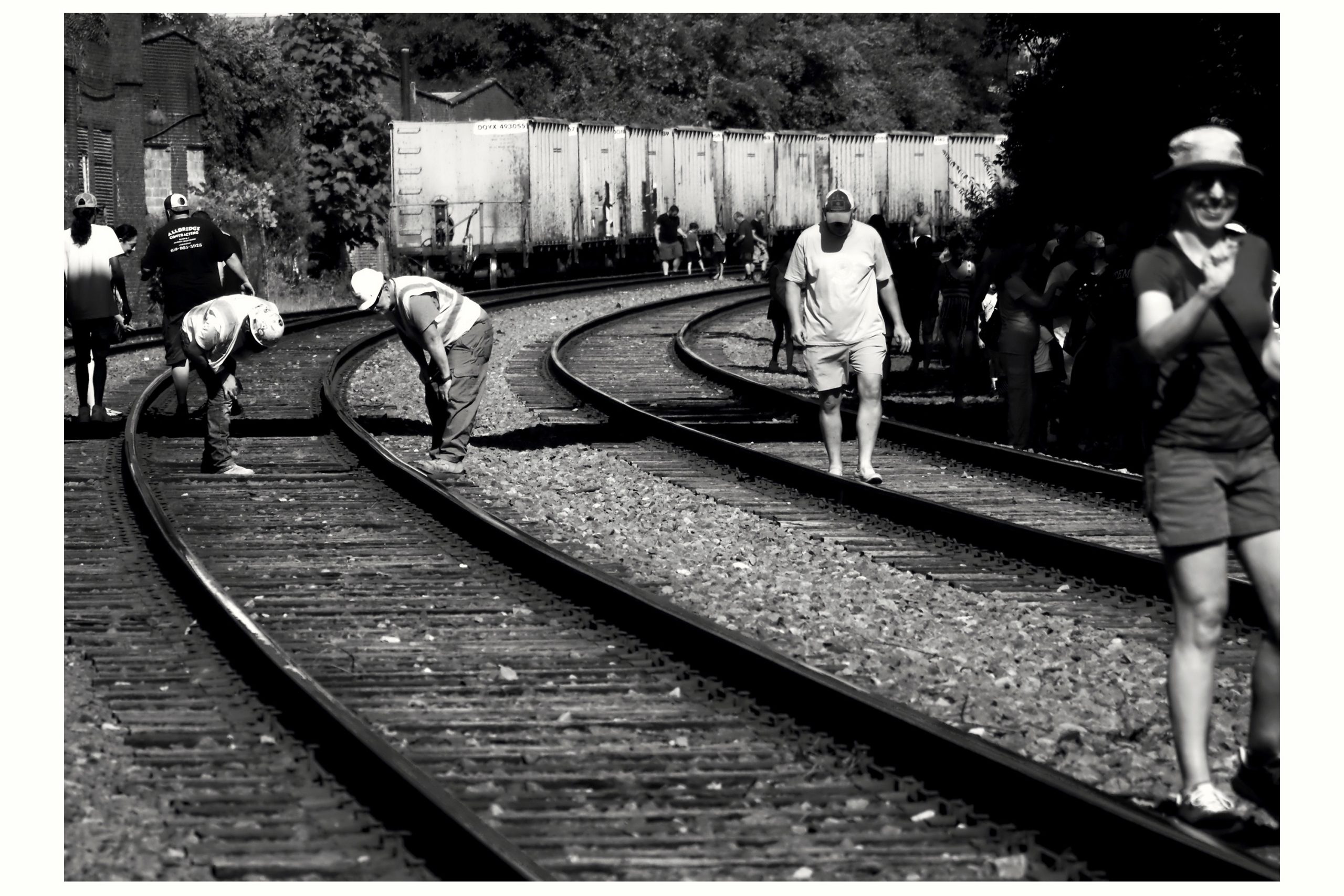
They had many good images but one that stood out for a “different” photo that Jeffrey Benne took during the recent visit by Union Pacific’s famed Big Boy No. 4014, the world’s largest operating steam locomotive. My colleague Monica Herndon also photographed the big engine that could, but until I saw she was headed to Reading, I had no knowledge of it.
After Googling, my social feed exploded with videos and photos of the train along its historic coast-to-coast tour to celebrate America’s 250th. I even heard traffic reports on KYW radio as it approached Philadelphia that weekend begging drivers to quit being foolish by stopping on the Schuylkill Expressway and getting out of their cars to photograph it passing by, being a bunch of train “foamers” (a term I just learned this week).
Benne arrived in Bridgeport, Pa. 45 minutes before Big Boy’s arrival, staking his claim “on a piece of ground then played with the settings on my gear to get a good shot,” with just about 45 seconds to get it passing by.
Afterward, he said he noticed the crowd searching the tracks and realized they were looking for smooshed coins, having set regular coins on the track minutes before. “I should have done that myself,” he said.
Growing up, my friends and I did that, and usually had little luck finding our own “smooshed” pennies.
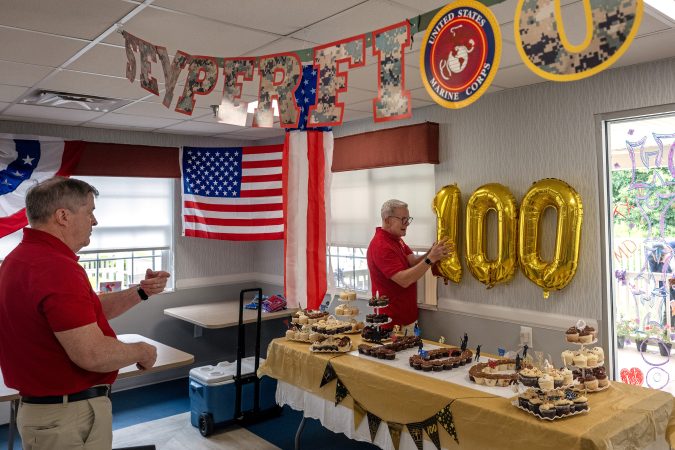
Cupcakes – including one with a topping depicting the iconic Joe Rosenthal photo of U.S. Marines raising the flag at Iwo Jima – at a 100th birthday party for WWII Marine veteran Stephen Anderson.Tom Gralish / Staff Photographer
Pat Dailey, setting up the birthday party in the photo at the top, founded the Tun Legacy Foundation, a nonprofit that supports veteran causes, Masonic charities, and educational scholarships. They are also rebuilding and reestablishing an authentic reproduction of the original Tun Tavern building in Philadelphia. The Tun, constructed in 1693, was the first documented lodge in North America and the birthplace of the U.S. Marine Corps in (1775).
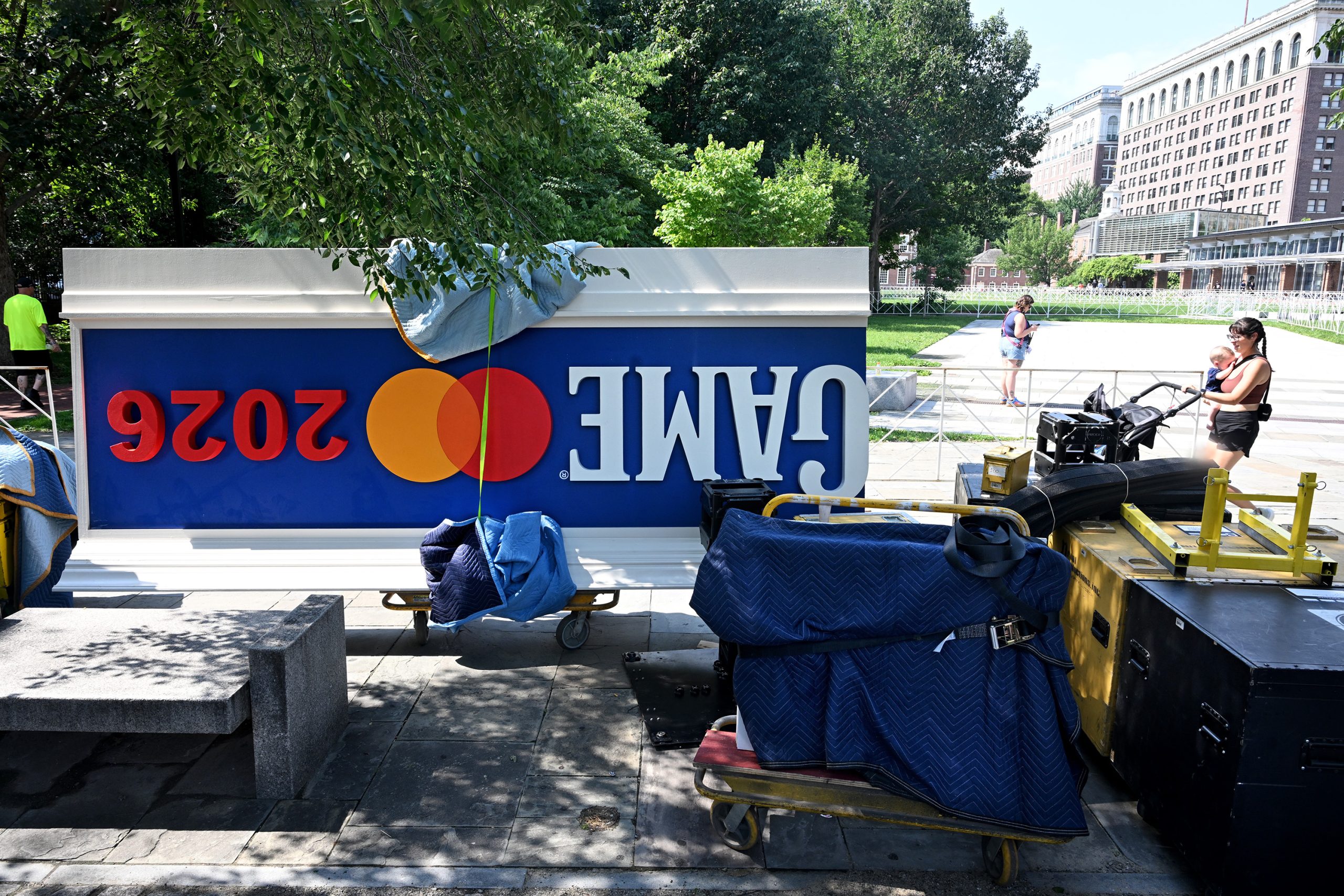
Photographing workers setting up for the Red Carpet on Independence Hall was my only contribution to our coverage of Philly’s hosting the MLB All-Star Game for the first time in 30 years (I did cover THAT game).
Preparations are underway on the Mall at Independence National Historical Park Monday, for the All-Star Red Carpet Show on Tuesday.Tom Gralish / Staff Photographer
I made the Independence Mall prep photo during an early morning check-in on the President’s House site, something I have been doing for months.
There was nothing new on the site that morning, since I had found National Park Service employees a week earlier taking photos and measurements, and looking under, behind, and above the panels. They told me they were “just looking around” and not there to install the new Trump administration panels after a federal appeals court gave the go-ahead just before the Fourth of July weekend.
A National Park Service employee along with a NPS ranger and NPS police officer visit the President’s House site Wednesday, July 8, 2026. Tom Gralish / Staff Photographer
But unlike the original January removal and the subsequent court-ordered return months later, they did it in the middle of the night, avoiding public scrutiny.
A U.S. Parks police officer and a visitor at the President’s House site Wednesday, July 15, 2026 after new panels were installed.Jessica Griffin / Staff Photographer
Since 1998 a black-and-white photo has appeared every Monday in staff photographer Tom Gralish’s “Scene Through the Lens” photo column in the print editions of The Inquirer’s local news section. Here are the most recent, in color:
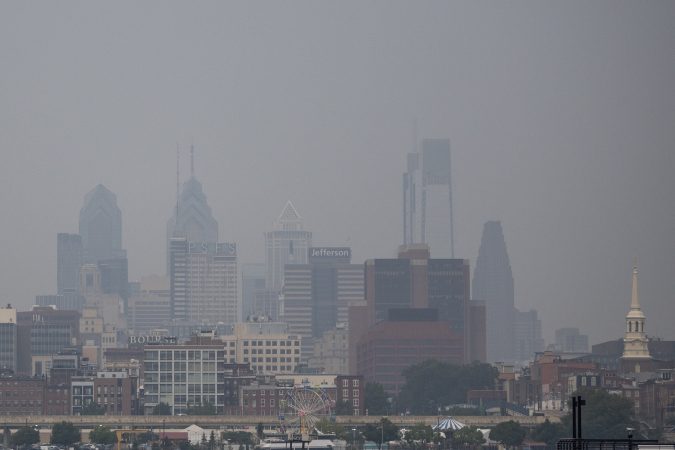
Impacts from Canadian wildfire smoke increased throughout the Philadelphia region Friday, degrading air quality enough to prompt a code purple alert, and force the closure or suspension of some city amenities and services.
It was the latest bad weather event in Philadelphia’s run of tough luck in July, which has so far resulted in record-setting heat and destructive storms that have marred back-to-back weekends. Smoky conditions arrived Thursday, and were bad enough Friday to prompt the closure of city pools and spraygrounds, and temporarily stop trash pickup.
“Our worsening air quality is a dangerous development,” Palak Raval-Nelson, commissioner of the city Department of Public Health, said in a statement. “I strongly encourage all residents to take action to protect themselves by staying indoors, unless they need to be outdoors.”
Likewise, the Philadelphia Zoo remained closed Friday, saying in a statement that its animals were being “closely monitored.” The city, however, stopped short of recommending the cancellation of outdoor events, and large productions like comedian Shane Gillis’ performance at Lincoln Financial Field and a Death Cab for Cutie performance at the Highmark Mann Center for the Performing Arts were still set to go on as of late afternoon.
Officials said that venue owners had been advised of the conditions, and were able to make their own decisions as to whether those events would happen.
Trash collection in the city was expected to cautiously resume Saturday, officials said. Resumption of services was contingent upon improvement in air quality conditions, which vacillated between code purple and the comparatively less severe code red Friday.
“We will make judgment decisions as to when we will resume collections in terms of a start time tomorrow,” said Carlton Williams, director of the Philadelphia Office of Clean and Green Initiatives. “But we do plan on working all day Saturday and Sunday to ensure that last week’s trash and recycling is collected in time for our services to be on a regular schedule starting Monday.”
Pools would reopen Saturday if air conditions were code red or below, said Susan Slawson, commissioner for Philadelphia Parks and Recreation.
The Pennsylvania Department of Environmental Protection said the Philadelphia region would be under a code orange air quality alert Saturday, marking a decrease in smoke pollution. That alert level, described as “unhealthy for sensitive groups,” is the lowest it has been since the wildfire smoke arrived this week.
Air quality conditions in the area were poor Friday morning. The city’s air quality index stood at about 267 as of 7 a.m. Friday — a figure that put it solidly in the “very unhealthy” range, meaning the general public was at risk for serious health effects. It later moved into the code red — or “unhealthy” — range, but stood to potentially again become more severe as the day wore on, Raval-Nelson said.
The city of Chester, however, recorded an air quality index of 312 early Friday, putting it in the “hazardous” range — the highest on the U.S. Environmental Protection Agency’s scale. It later dipped into the “very unhealthy” range.
The region’s smoky conditions were expected to last at least until Saturday afternoon, the National Weather Service office in Mount Holly said. The sky’s hazy appearance, according to meteorologists, came from northwest winds that blanketed the region with particulate-filled air that was expected to stick around through the start of the weekend.
However, by Saturday, an anticipated storm system should clear the smoke out — though that development would likely come with its own risks. That system, said weather service meteorologist Joe DeSilva, could also bring “multiple rounds” of showers and thunderstorms, as well as the potential for flash flooding and possibly damaging winds — as well as a potential tornado.
“It definitely looks like damaging winds will be the primary hazard type,” he said.
City officials warned residents to prepare for potential flooding due to heavy rainfall Saturday. A flood watch will be in effect from 10 a.m. Saturday through 2 a.m. Sunday, the city’s Office of Emergency Management said, as storms could produce up to 2 or 3 inches of rain per hour.
Philadelphia is not the only area at risk this weekend. Berks, Carbon, Delaware, Chester, Montgomery, Lehigh, Bucks, Monroe, and Northampton Counties also face dangers from the storm, as do portions of northern Delaware and parts of New Jersey including Camden and Gloucester Counties.
“Excessive runoff may result in flooding of rivers, creeks, streams, and other low-lying and flood-prone locations,” the city said. “Creeks and streams may rise out of their banks. Flooding may occur in poor drainage and urban areas.”
The risk of storm damage Saturday comes a week after high winds and four “microburst” storms downed nearly 300 trees in the city, and left tens of thousands of residents without electricity. As a result of that storm, Philadelphia still remains under a disaster emergency declaration amid its ongoing recovery.
On Friday, officials encouraged city residents to “do what you have been doing since last week’s storm” in the face of renewed threats.
“As Mayor Parker constantly reminds us, we are one Philly,” said Adam Thiel, managing director of the city of Philadelphia. “We are a united city, as our entire city workforce, along with our residents, our neighbors, our communities, continue to move us forward through this unprecedented year.”
Staff writers Rob Tornoe and Emily Bloch contributed to this article.
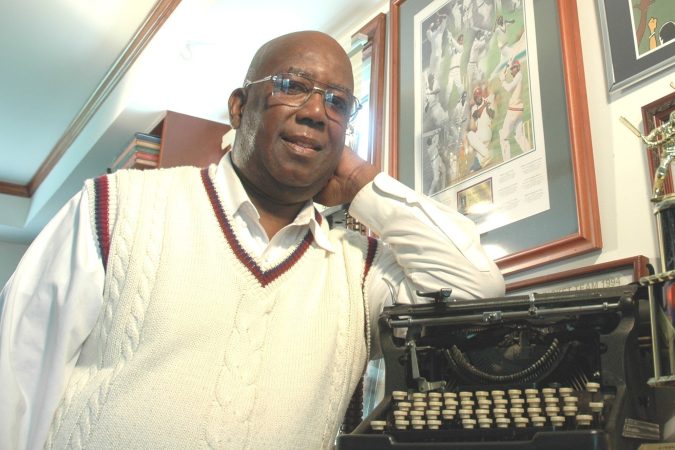
Ewart Rouse, 85, of Lawnside, retired award-winning reporter and editor for The Inquirer, author, journalism adjunct professor, mentor, immigrant advocate, and indomitable cricketer, died Thursday, July 2, of age-associated decline at the Samaritan Center at Voorhees.
Born in Trinidad, West Indies, Mr. Rouse immigrated to New York in 1969 and joined The Inquirer in 1974. For nearly 30 years, until he retired in 2002, Mr. Rouse was an award-winning business and news reporter, suburban editor, and mentor to hundreds of young journalists.
He won a 1980 Keystone Award for a news series on city taxi service and was recognized for another series on street gang homicides involving Black youth. Later, he wrote business columns and covered South Jersey news.
He opened a 1975 story about former President Gerald Ford’s first visit to Philadelphia with: “The old man sat alone and dejectedly with his flags against the wall of the Philadelphia National Bank building at 5th and Market Streets. ‘Not one,’ he muttered. ‘I haven’t sold not one flag today.’”
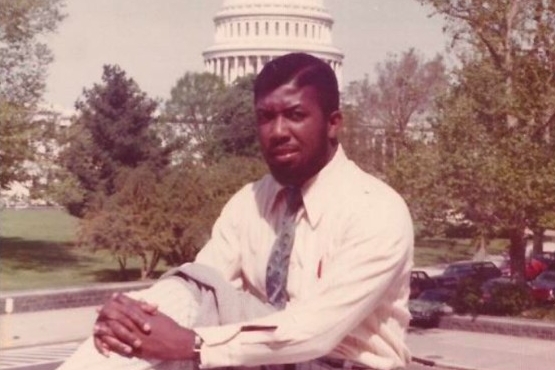
Mr. Rouse worked for the Associated Press in Washington DC.Courtesy of the family
Before The Inquirer, Mr. Rouse was a news and political reporter for the Associated Press in Newark, N.J., Atlantic City, and Washington, D.C. “He was a popular colleague who contributed importantly to the paper’s growth,” Gene Foreman, retired managing editor at The Inquirer, said on Facebook.
Other former Inquirer colleagues called Mr. Rouse “professional and gracious,” “careful and respectful,” and “kind and generous.” Retired Inquirer editor Lil Swanson said on Facebook: “Ewart was filled with wisdom and grace. When he was an editor, young writers flocked to him because he always made their stories better and helped them grow.”
He covered courts and politics for the Trinidad Guardian in Port-of-Spain before leaving for New York, and interviewed Trinidad Nobel laureate V.S. Naipaul for the 1997 book Conversations with V.S. Naipaul. In Philadelphia and South Jersey, he taught news writing, business writing, and investigative journalism at Temple, Rutgers, and Arcadia Universities.
Mr. Rouse loved to play, watch, and write about cricket.Ewart Rouse
Readers called his books “highly entertaining” and “a wonderful addition to cricket literature” in reviews. His daughter Karen said: “The clackety-clack (zing!) of his typewriter was a constant in our home.”
Mr. Rouse played cricket in Trinidad and later in South Jersey, and he cofounded the Philadelphia Cricket League, the New Jersey Cricket Association, and the Echelon Cricket Club. He played the game, managed teams, and became one of the region’s greatest advocates for cricket and its immigrant players.
In 2013, he earned a lifetime achievement award from the South Jersey Caribbean Cultural and Development Organization, and recognition from then-Camden Mayor Dana Redd for his contributions to the community as a journalist, teacher, and cricket activist. “It truly was an honor to be recognized by my own community,” he said on his website, ewartrouse.com.
In a 2016 online interview, Mr. Rouse was asked to advise young writers. “Read anything you get your hands on,” he said, “From books and newspapers … to labels on paint. Each contains nuggets of information that the mind will retrieve for just the right spot in your next project.”
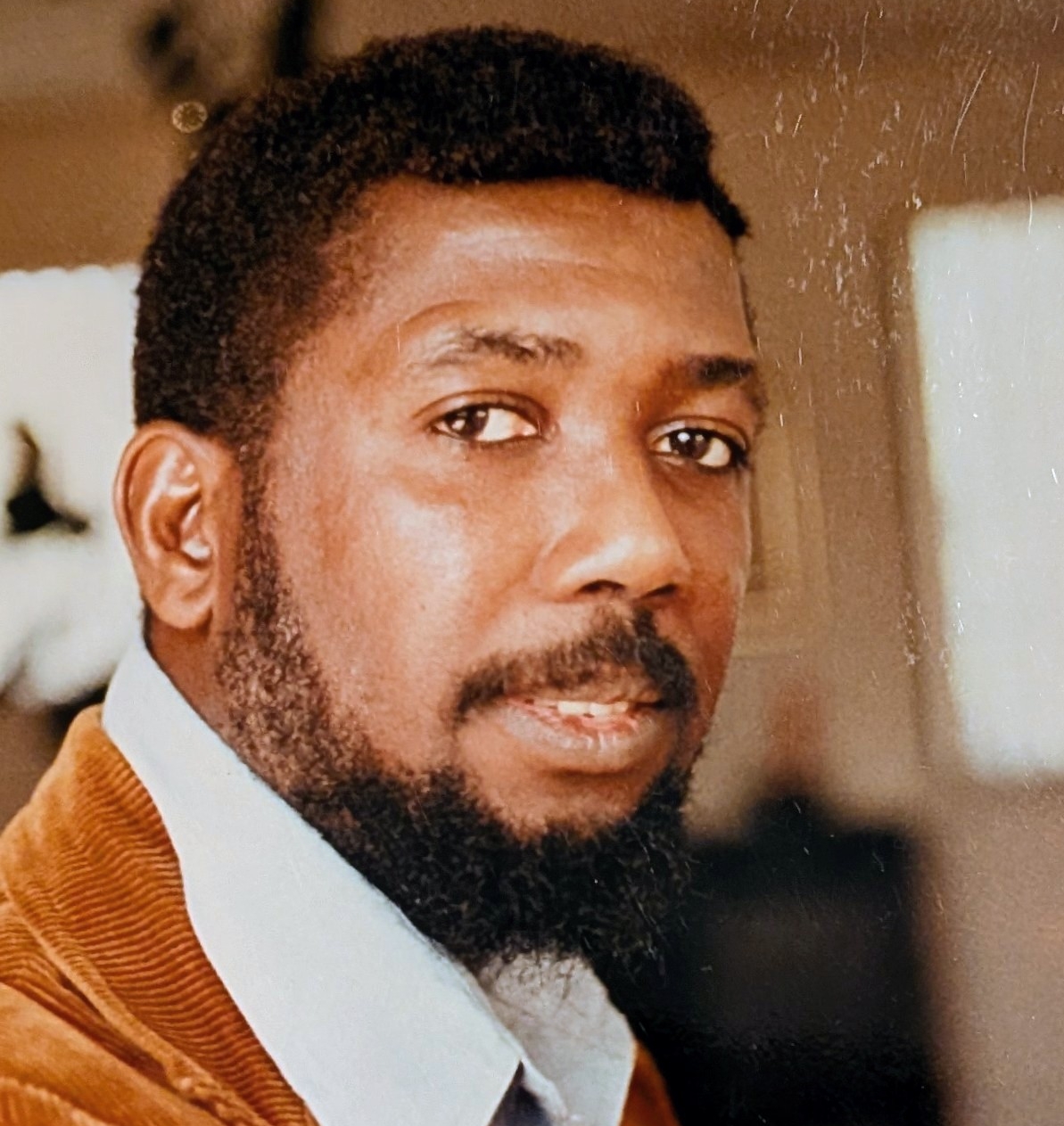
Mr. Rouse and his wife, Vanda, met in Trinidad.Courtesy of the family
Ewart Rigsby Rouse was born Sept. 16, 1940, in Tunapuna, Trinidad. He was an avid reader and creative writer as a boy, and noticed one day that several of his favorite writers — Charles Dickens, John Steinbeck, and Ernest Hemingway — started out as newspaper reporters.
“And now I wanted to be a journalist like them,” he said in a short self-published autobiography.
He met his wife, Vanda, in Trinidad, and they married and had daughters Joann, Karen, and Kristin. They lived in New York, Pleasantville, N.J., and Washington, and settled in Lawnside in the 1970s.
Mr. Rouse was active with the C.C. Morris Cricket Library Association, the South Jersey Writers’ Group, and the Rainy Tuesday Writers Group. He was an avid gardener and routinely gave away bags of home-grown tomatoes to friends and neighbors.
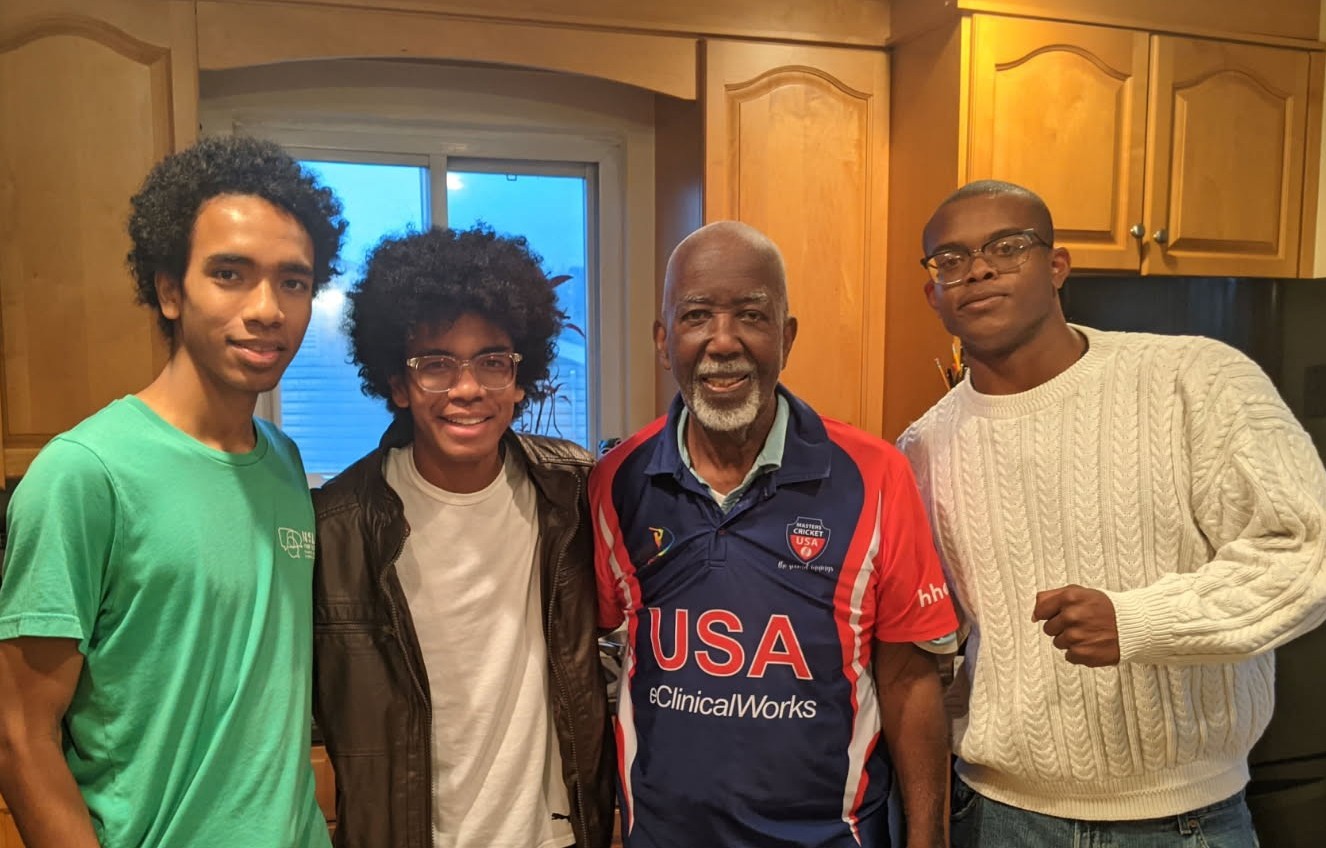
Mr. Rouse enjoyed time with his grandsons. Courtesy of the family
He collected records, listened to Nat King Cole and Frank Sinatra, followed the 76ers, and grilled outdoors as often as possible. He took his family on memorable trips to Trinidad that “opened up a world to us that was accessible, one that we could dare to explore,” said his daughter Karen.
In 2016, Mr. Rouse told aspiring writers: “Who knows, maybe you end up with a bestseller. Some might call you a dreamer. But, hey, as the saying goes, you can’t have a dream come [true] if you don’t have a dream.”
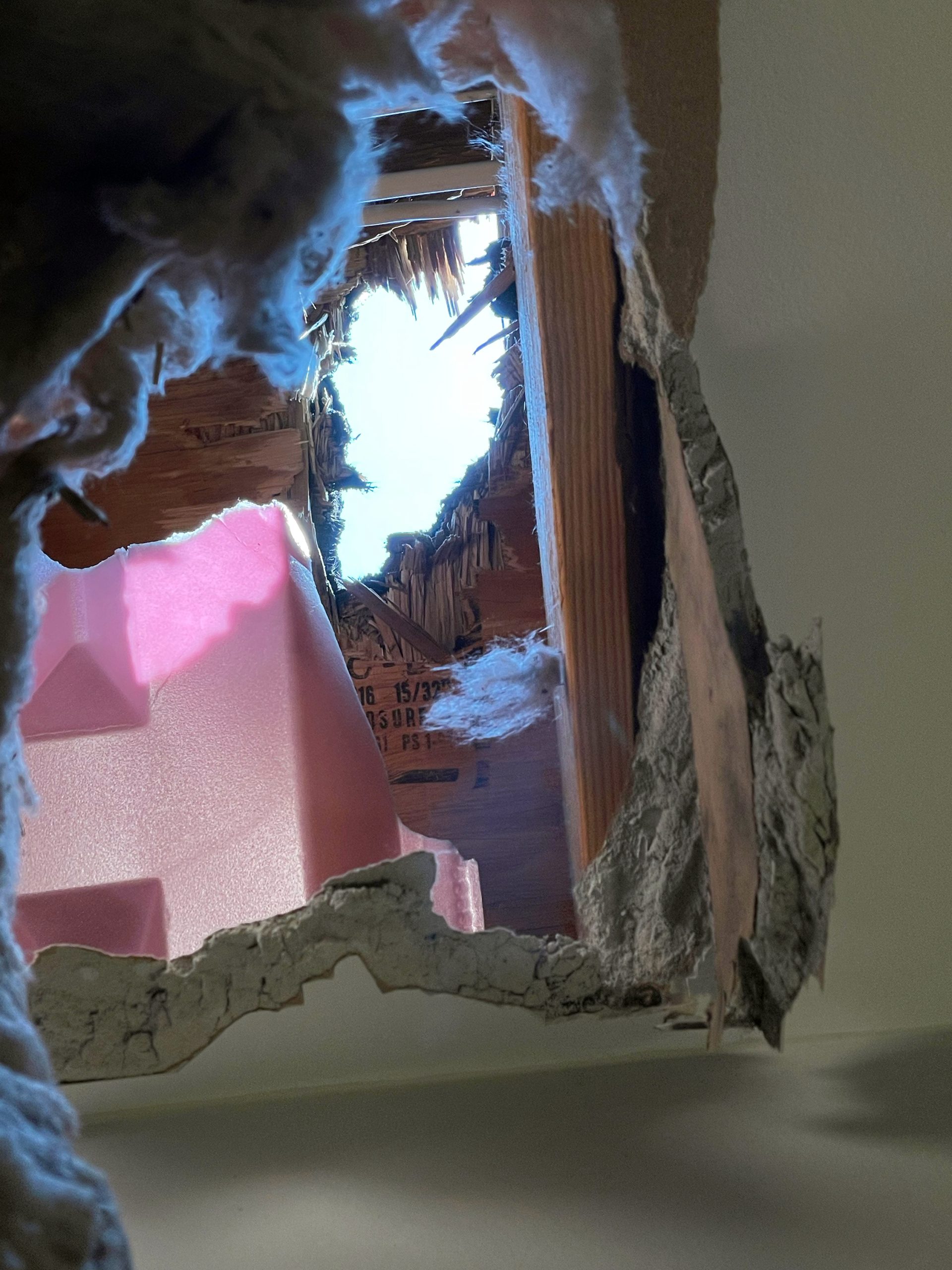
New findings about an alien asteroid are out, and it’s all thanks to a New Jersey couple after an uninvited hazard crashed into their home two years ago.
In July 2024, a meteorite shot through the sky. Observers across the Northeast said they witnessed a fireball at the time.
Before reaching Earth, the asteroid had a mass of 115 pounds, according to calculations based on the fireball’s brightness, speed, and sonic boom. Most of the mass — which blazed through the atmosphere at 32,000 mph — was annihilated. The news went quiet.
NASA said at the time that the rock likely hadn’t survived. No one reported anything making it to the ground.
But in a quiet Hillsborough, N.J., residence, a couple’s home started violently shaking at around 11:15 a.m. The male homeowner — who requested anonymity citing privacy concerns — told the New York Times the crash caused a hole in the ceiling above his bed.
A handout photo shows damage to the ceiling, attic, and roof of a home in Hillsborough, N.J., that was struck by a meteorite on July 16, 2024. A New Jersey couple helped scientists uncover the makeup of an unusual asteroid after it fell into their bedroom.VIA THE NEW YORK TIMES
“Good thing I didn’t sleep in,” he told the Times. The meteorite fragment also had an odor: rotten, sulfurous, with fine black soot and dark rocks.
TheSomerset County couple spent weeks gathering what would amount to about three pounds of extraterrestrial material, using disposable gloves, aluminum foil, and glass jars on the advice of scientists who would later study the findings in detail.
They painstakingly extracted every fleck of meteor dust they could find, using tape to peel microscopic bits off walls, and buying a new vacuum cleaner to exclusively suck up cosmic particles from the carpet, they told the Times.
“We were extremely meticulous,” one of the homeowners said. “The only thing we were missing were the hazmat suits.”
And they told no one about the meteorite except immediate family and the scientists — until now.
“Thanks to the homeowner’s quick reaction, these are the most pristine [meteorites] we know of,” saidPeter Jenniskens of the SETI Institute(a nonprofit institute that studies extraterrestrial intelligence)and NASA’s Ames Research Center.
Two years later, the secret is out.
A journal published Wednesday by ScienceAdvances details the homeowners’ findings and the contents of the meteorite.
As it turns out, the fragments showed scientists that the meteorite was made of a rare and primitive material. The study also revealed that before the fragments broke off, the meteorite had been covered in brine. Meteor experts say that’s a new observation and suggests the meteorite’s parent asteroid had liquid water that evaporated.
Researchers said high concentrations of salt in brines could “create molecules crucial to life on Earth.” The meteorite also held a mix of soluble organic compounds, including amino acids, and compounds found in blood and used in photosynthesis in living organisms.
Does that mean we absolutely have proof of aliens now? Not so fast.
But experts say it does help scientists understand what building blocks of life may have been delivered to the early Earth.
Now that the study of the meteorite is wrapped, the American Museum of Natural History in New York City will receive some of the fragments.
“We are thrilled that nature delivered such a precious asteroid sample on our doorstep,” museum curator Denton Ebel told CBS.
As for the meteorite’s name? It wasn’t New Jersey-born, but it sure was New Jersey-bred. The meteorite was named Hillsborough, for the roof it crashed through and the couple who helped preserve it.
Smoke from Canadian wildfires continues to blanket the region, casting a haze across the sky and posing a risk for people with respiratory issues.
With massive fires burning across Western Ontario, forecasters said wind patterns shifted this week to allow the smoke from those fires to enter the Northeastern and Mid-Atlantic United States.
The city raised the air quality alert level from code red to code purple — meaning the air is “very unhealthy” and can cause health issues for all people.
Friday morning, at least six of the city’s air quality sensors were registering above 200 in the amount of fine particulate matter and nitrogen dioxide in the air, a metric called the air quality index. The city website tracking air data warned people to stay inside, keep windows and doors closed, and run air purifiers if possible. Those who must venture outside should wear N95 or KN95 masks.
(function () {window.addEventListener(‘message’, function (e) { var message = e.data; var els = document.querySelectorAll(‘iframe[src*=”‘ + message.id + ‘”]’); els.forEach(function(el) { el.style.height = message.height + ‘px’; }); }, false); })();
An AQI between 150 and 200 is still considered unhealthy to breathe with prolonged exposure, according to the EPA. Children, older people, and those with respiratory issues could be particularly susceptible to health issues. In air quality alerts issued by the National Weather Service, forecasters recommended avoiding prolonged outdoor exposure, particularly activities like exercise.
By Friday a prior heat advisory had been lifted, with temperatures expected to near 90. Air quality tends to worsen in dense, urban environments during hot weather.
Forecasters urged residents across the eastern United States, particularly those with respiratory issues, to monitor alerts from local officials and be mindful of conditions where they live or work.
(function () {window.addEventListener(‘message’, function (e) { var message = e.data; var els = document.querySelectorAll(‘iframe[src*=”‘ + message.id + ‘”]’); els.forEach(function(el) { el.style.height = message.height + ‘px’; }); }, false); })();
If you’re not able to zoom in on the above map, click here for another version.