Category: Nation & World

  • Asylum seekers could be sent directly to deportation under new federal rule

    Asylum seekers could be sent directly to deportation under new federal rule

    The Trump administration launched a plan Tuesday to channel hundreds of thousands of asylum seekers directly into deportation proceedings, a change that some attorneys said could lead to people being removed from the United States without a hearing.

    Trump officials introduced a rule designed to reduce the 1.4 million asylum cases pending in U.S. Citizenship and Immigration Services, the Department of Homeland Security agency that processes immigration applications, by nearly a third. The rule took effect immediately, before the public could weigh in.

    In the past, asylum seekers who entered the U.S. legally or were never charged with an immigration violation had the opportunity to apply for refuge in an office before a trained asylum officer. The officer could refer them to immigration court for removal proceedings if they were rejected, or allow them to continue proceedings and potentially get on a path to obtaining U.S. citizenship.

    Under the new rule, officials say as many as 444,724 cases could be transferred directly to one of the Justice Department’s immigration judges. Trump officials have empowered judges to dismiss certain cases without a hearing, so attorneys say it is possible that many asylum seekers will be deported without a chance to be heard.

    Trump officials said in a statement that the rule is necessary because the asylum system is facing a “crisis.”

    “For far too long the asylum system has been exploited for purposes of delay and work authorization, not legitimate claims of protection,” USCIS Director Joseph B. Edlow said in a statement. “America’s asylum system exists to protect individuals who genuinely fear persecution and this rule will help ensure that resources are directed to the timely adjudication of those claims instead of to those seeking to use the system as a loophole.”

    The measure is the latest means through which the Trump administration has sought to transform the asylum system. President Donald Trump, in one of his first acts in office, barred asylum seekers’ entry into the United States by declaring an “invasion” at the U.S.-Mexico border.

    He has also targeted those who are already living inside the U.S., including hundreds of thousands of people who probably arrived legally and followed the rules to apply for asylum.

    Trump officials are preparing to terminate work permits for Haitians and Syrians in the coming days after the Supreme Court enabled officials to allow their temporary protected status to expire. If those immigrants also applied for asylum and their cases are referred to the courts, lawyers say, the threat of deportation could be imminent.

    “It’s all part of a plan to take legal people and make them illegal,” said Ira Kurzban, one of the attorneys who represented Haitians in the case that went to the Supreme Court. “That’s what they’ve essentially done.”

    The United States is a signatory to the 1967 United Nations protocol on refugees, which prohibits member countries from expelling immigrants to nations where they face serious threats to their lives.

    Trump officials, Kurzban said, are betraying that principle and turning the asylum system into “a joke.”

    “At a 30,000-foot level it sure looks like a deportation machine,” he said.

    Trump officials argue that smugglers have exploited the U.S. asylum system, flooding it with weak applications so that immigrants may live and work legally in the United States as their cases drag through the system.

    Asylum creates a path to U.S. permanent residency and, eventually, citizenship. To be eligible, applicants must show that they face persecution in their homeland based on their race, religion, nationality, political opinion, or another trait that makes them a specific target. They also must pass background checks and apply within one year of arrival.

    The more than 400,000 pending asylum cases before USCIS that could be sent to deportation proceedings largely involve individuals who filed for refuge after being in the United States for more than a year, officials said in announcing the rule.

    Federal law says asylum seekers must apply within a year of arriving, and officials contend that most late applicants referred to immigration judges in the past few years have been ineligible for an exception to that requirement.

    Advocates for immigrants have long argued that people fleeing for their lives are not well versed in the intricacies and deadlines of U.S. immigration laws, and note that the immigration courts do not assign them public defenders. Sometimes bona fide applications are filed late, they say, and federal law allows judges to overlook that in extraordinary cases.

    Though the new rule took effect immediately Tuesday, USCIS said it will accept public comments and later issue a final rule with its responses.
  • Betye Saar, artist who shattered stereotypes of Black women, dies at 99

    Betye Saar, artist who shattered stereotypes of Black women, dies at 99

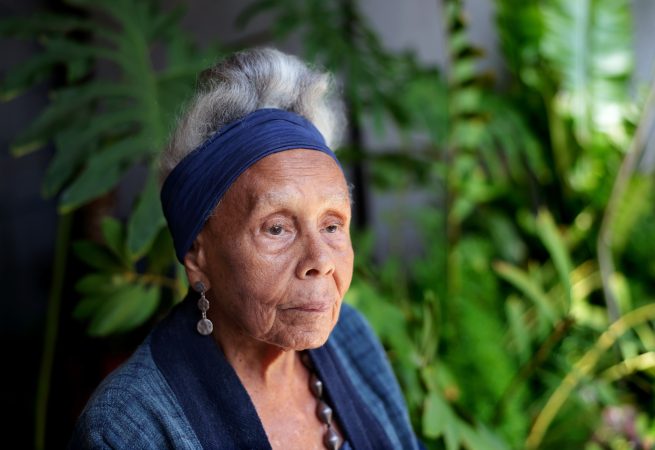
    Betye Saar, who scoured flea markets for ordinary items – clocks and window frames, plastic dolls, miniature ships and masks — from which she crafted works of art that explored and exploded images of Black women in America, died Sunday in Los Angeles. She was 99 and would have celebrated her 100th birthday on Thursday.

    Her death was announced by Roberts Projects, the Los Angeles gallery that represented her.

    Ms. Saar, a lifelong Californian, was 93 when she became an art world star in 2019. That year, the Museum of Modern Art in New York and the Los Angeles County Museum of Art mounted simultaneous exhibitions of her work. Reviewing the Los Angeles show in The Washington Post, art critic Sebastian Smee wrote that her “modestly scaled assemblages address racism and female labor with excoriating intensity and moody finesse. But they also vibrate with spiritual yearning.”

    By then, she had been an artist for more than 50 years. In interviews, Ms. Saar described the assassination of the Rev. Martin Luther King Jr. in 1968 as the event that politicized her and gave her work purpose. “I was a mother with young children,” she told the New York Times. “I couldn’t walk in protest, but I did have a weapon, and that was art.”

    She began collecting likenesses of Aunt Jemima, Uncle Tom, Little Black Sambo and other caricatures that she described as “Black derogatory images.” She incorporated them into collages and assemblages, transforming the scavenged items into statements of political and social protest.

    The most famous of those works was “The Liberation of Aunt Jemima” (1972), in which she depicted the apron-wearing “mammy” with one hand holding a broom and the other a gun.

    “It’s like they abolished slavery but they kept Black people in the kitchen as Mammy jars,” Ms. Saar told the Los Angeles Times. “I had this Aunt Jemima, and I wanted to put a rifle and a grenade under her skirts. I wanted to empower her. I wanted to make her a warrior.”

    Ms. Saar worked in a variety of media, but her assemblages — collections of objects she found on the street or at swap meets — attracted the most notice. She was inspired by a 1967 visit to the Pasadena Art Museum (now the Norton Simon Museum), where she saw assembled works by a master of the form, Joseph Cornell. Ms. Saar said she recalled thinking: “Hey, I can do that. I’ve got all this fantastic stuff.”

    Some of her pieces told stories, and some didn’t. “I prefer it when they don’t tell a story so the viewer can invent their own,” she told the New York Times. Some assemblages displayed materials that belonged to Ms. Saar’s female ancestors, who were African American, Irish, and American Indian. Others referenced events in her life. In “Black Girl’s Window” (1969), a Halloween skeleton, alluding to her father’s death when she was 5, accompanies Ms. Saar’s self-portrait, among other images.

    Still others were overtly political. In his review of the Los Angeles exhibition, Smee focused on an assemblage called “The Edge of Ethics,” from 2010.

    A dark green birdcage contains an armless black figurine chained to a glass bottle and standing on outsize bird’s feet. Smee called the work “a masterpiece,” and he observed that “it makes a bald statement about slavery and incarceration.” He added, “It is more succinct, more poignant and more pressingly urgent than a roomful of research papers, a month of Sunday sermons, a year of news reports.”

    Ms. Saar’s work often referred to such religious traditions as shamanism and voodoo, as well as astrology, palmistry, phrenology and tarot. In a 1977 documentary about Ms. Saar, Los Angeles-based artist John Outterbridge, remarking on her interest in ancient beliefs, said, “She could be a daughter to one of the pharaohs.”

    Betye Irene Brown was born in Los Angeles on July 30, 1926. Around the time of her father’s death, her family moved in with relatives in Pasadena. She spent summers with her paternal grandparents in the Watts neighborhood of Los Angeles, where she watched the construction of Simon Rodia’s Watts Towers, a major work of architectural sculpture.

    Ms. Saar said Rodia, an Italian immigrant, influenced her by his use of broken dishes, seashells, rusty tools, even corn cobs that he pressed into cement, creating an art of assemblage and presaging her own eclecticism.

    At the University of California at Los Angeles, she majored in interior design. “Being from a minority family,” she told the Los Angeles Times, “I never thought about being an artist. But I could tell people how to buy curtains.”

    After graduating in 1949, she created a greeting card line and founded an enamelware business. She started graduate school in graphic design, but an encounter with printmaking changed her trajectory. The form was “liberating,” she told the Los Angeles Times. “It gave me the freedom to experiment.” She began creating color etchings, ink drawings, and intaglio prints.

    In 1952, while in graduate school, she married Richard Saar, a ceramicist. They soon had three daughters: Tracye Saar-Cavanaugh, now a writer, and Alison and Lezley Saar, both artists. In 1962, the family moved to L.A.’s bohemian Laurel Canyon, where Ms. Saar continued to live after she and her husband divorced.

    In addition to her daughters, survivors include six grandchildren.

    During a 1970 trip to Chicago, Ms. Saar studied the African artifacts in the basement of the Field Museum. From then on, many of her works incorporated objects and artworks from Africa.

    In 1974, she received a grant from the National Endowment for the Arts. It made her feel “like an artist for the first time,” she said. “Before I was just making stuff.” A year later, she was the subject of a small exhibition at the Whitney Museum of American Art in New York.

    Although she mostly avoided art world disputes, Ms. Saar led a letter-writing campaign in 1997 to protest the awarding of a MacArthur “genius grant” to Kara Walker, an African American artist whose silhouetted images included depictions of enslaved people as participants in debauchery with their masters.

    In an interview for the PBS series “I’ll Make Me a World,” Ms. Saar called Walker’s work “sort of revolting and negative and a form of betrayal to the slaves, particularly women and children, and that it was basically for the amusement and the investment of the White art establishment.”

    She subsequently explained to the International Review of African American Art: “Here we are at the end of the millennium seeing work that is very sexist and derogatory. … The trend today is to be as nasty as you want to be: TV, Rodman, rap. … There is no personal integrity. … Aunt Jemima is back with a vengeance.”

    But mostly, when she had something to say, Ms. Saar did so through her art. In her later years, her assemblages sometimes grew into room-size installations. “I’m basically a recycler,” she told the New York Times. “I’m a person who walks looking down, because you can find lots of great things on the ground.”

  • A desert town may run out of water. Others could face the same fate.

    A desert town may run out of water. Others could face the same fate.

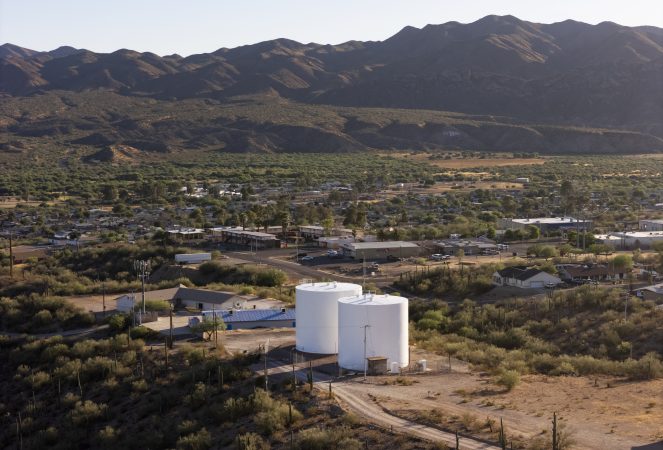
    KEARNY, Ariz. — Mayor Curtis Stacy starts every morning checking two websites that tell him how much he needs to worry about water.

    One site tells him about the reservoir that supplies his tiny desert town — it’s effectively empty. The other site tells him if the town gets additional water that other communities with more senior rights aren’t using; right now, the answer is yes.

    But Stacy tries to remind Kearny’s roughly 2,000 residents that they could easily tip back into crisis mode, just like this spring. In newsletters, he underscores that fragility with no fewer than 20 exclamation points. If other communities call for more water, they will have to cut back again.

    “!!!!!!!!!!THIS SITUATION IS ALMOST CERTAINLY TEMPORARY!!!!!!!!!!” he wrote in one bulletin posted on the Kearny Facebook page and taped up and down the glass doors of the town office.

    Kearny is an extreme example of the water crunch facing communities across the West as states and cities stare down a future of “megadrought” and fight over scarce resources. An unusually dry winter this year left the Southwest parched, with not enough water for everyone laying claim to it. In the complex web of water rights that govern how that short supply is distributed, the tiny town of Kearny comes last.

    Other cities around the West could face similar challenges and cutbacks. The federal government is set to release a plan for the shrinking supply of Colorado River water this summer that could force dramatic cuts.

    The plan, part of which the Bureau of Reclamation described in an Environmental Impact Statement early on Friday morning, comes at a time of escalating crisis for the Colorado River, a crucial water source for seven states, 30 Native tribes and a swath of northwestern Mexico.

    Arizona, California, and Nevada will be required to curb their use of the water from the Colorado River by a combined 20% over the next two years — and could ultimately face even larger cuts, according to three officials familiar with negotiations over a long-awaited federal plan to rescue the depleted waterway.

    Kearny is not directly affected by the Colorado River negotiations, officials say, but its dilemma shows how dwindling resources — and water-rights rules that can feel arbitrary to those most affected — can upend daily life.

    Kearny usually uses about 280 acre-feet of water a year; this year, it was allocated 77 acre-feet (one acre-foot supplies about three homes annually). Town officials realized they were on track to run out of water in July.

    The crisis forced steep reductions in water use and now hangs over the town’s future, testing residents’ ability to adapt to shortage. It has also consumed much of Stacy’s final year in charge, giving him new gray hairs and new worries about his hometown, a community where everyone knows everyone and where you can get ahold of the mayor by walking into his office.

    Stacy thought he had seen Kearny’s worst crisis in 2024, when a wildfire blazed toward the edge of town. He ran from house to house getting people out while embers blew above their heads. But the water shortage has been, in many ways, worse.

    “It’s like a slow death,” Stacy said, “instead of an actual emergency happening right in front of your eyes where you can actually help.”

    The town tried to prepare residents late last year for what was coming. In a Dec. 29 letter, officials warned that the reservoir fed by their primary water source, the Gila River, was running low.

    The first question in the FAQ section was, “What happens if our allotment is zero?”

    Answer: “Severe restrictions will be imposed.”

    Light snowfall had left the reservoir, San Carlos Lake, at about 1% of its capacity, and Kearny’s rights to that small supply were “junior” to other communities under the complicated water-rights system laid out by a court in 1935, before the town was founded.

    Soon, Kearny was on track to run out of water by midsummer.

    “For years, they’ve been telling us that cutbacks were coming,” said Eric Armenta, Kearny’s public works director. “But it never did come until now. And it came drastically.”

    In late March, Kearny imposed “Level 5″ restrictions on water — the most stringent possible. A declaration of emergency told residents they could use water only for the essentials; the mayor went door to door to convey the situation’s gravity. There would be no washing of cars, no kiddie pools, and no watering of grass. Even the Little League field would go dry.

    “Laundry — wear it a second or even third day,” the mayor advised in another bulletin days later. “Bathing/Showers — no better time to connect with your significant other.”

    “What is the Town doing about this?” he wrote in the next note. “This emergency is our entire focus.”

    By the end of April, the message was sinking in and the town was using 30% less water. But when relief came later in the spring, town leaders were torn.

    The authority that oversaw river rights had given Kearny extra water, but only because those with higher priority were not requesting water. The moment that changed, Kearny would need to cut back again.

    The town council voted to go back to “Level 1” restrictions, which meant cutbacks were optional. “Flush, shower, keep the trees alive, launder your clothes, live a normal life again,” the mayor wrote.

    Not everyone thought the reprieve was a good idea. “We knew exactly what was going to happen — people were just going to use it freely,” said Armenta, the public works director.

    Kearny was not yet in the clear.

    Bits of grass around town were starting to turn green again in early July, but mostly the yards were still parched. Public works supervisor Jake Acton looked away when he drove by the Little League field — still dead and brown.

    Kearny officials were no longer worried about running out of water in the short term, but their broader challenge lingered.

    Fourth of July fireworks were canceled due to “dry conditions and limited water”; fire damage aside, Kearny could not afford the thousands of gallons it might take to put out a wildfire. And some officials worried news of their water woes would scare away businesses, scare away homeowners, and make it even harder to recruit teachers.

    Armenta stopped by an old rehabilitated well set to start pumping in a matter of weeks. No one knew how much it would produce until it started functioning, and they were trying not to get their hopes up.

    “We want above 50 gallons per minute,” Armenta said over the roar of a machine clearing sand and debris. “Below that, it’s a waste of time.”

    Armenta was spending some 90 hours a week, he said, on the public works job — a position he took early this year because he knew the city was headed for trouble. He did it because his family is here, and he doesn’t want to leave.

    “My mom still lives here. My sister lives here. I want to live here,” he said. “My kids, I want them to be able to always come back to Kearny.”

    At the bar across the street from the Little League field, people wondered when the monsoon season would bring some real rain. But everyone thought the town would get through the water crisis. When Kathy Taft asked her friend Dave Olsen if the town was “really going to run out of water,” Olsen answered without hesitation.

    “No,” he said. “I just don’t see that happening.”

    The well, when it began operating in mid-July, was a letdown. At 40 gallons a minute, it would cover only a fraction of the town’s need.

    San Carlos Lake, meanwhile, remains close to empty. The lake closed to the public in June after it grew so dry that -— in the words of the local recreation department — “approximately 100% of the fish population” died.

    Now the mayor was worrying about 2027. If the lake didn’t recover, Kearny’s apportionment of river water next year could be zero.

    “We got 77 [acre-feet] this year and we were able to stretch that,” Stacy said. “You can’t stretch zero.”

    What then? There were still other avenues to try. Hydrologists were looking for well sites farther out; a local mining company could give Kearny some of its water. Wastewater could be put back into the ground and reused.

    And the monsoon rains were picking up. Away on a trip to Minnesota, Stacy watched with interest as a flood watch went into effect for much of the Gila River Basin, which includes Kearny.

    With some strong storms, the town’s fortunes could change again.

  • France evacuates 4,000 people as heat threatens wildfire fight

    France evacuates 4,000 people as heat threatens wildfire fight

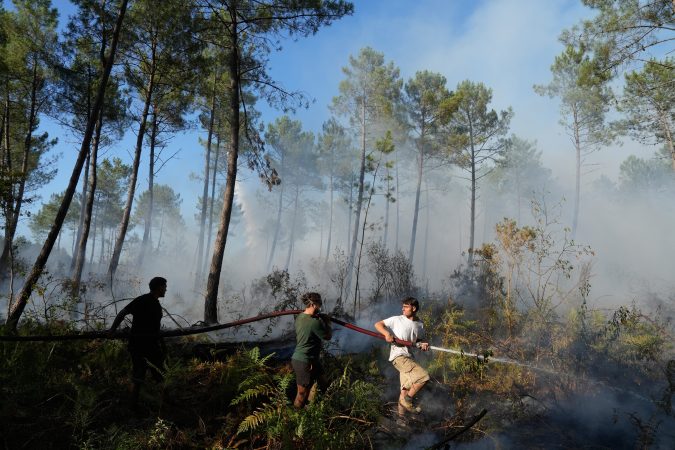
    LEGE-CAP FERRET, France — French authorities ordered nearly 4,000 people evacuated Tuesday from tourist sites on France’s Atlantic coast as returning heat threatened firefighters’ fragile hold on a vast wildfire west of Bordeaux.

    The order underscored a wildfire emergency of exceptional scale across southwestern Europe.

    Fires in France and Spain have forced roughly 330,000 people to evacuate. Spain braced for its fourth heat wave of the summer, with several blazes still out of control, including its largest on record.

    Firefighters held the French blaze in check through a calm night, bringing flare-ups near coastal dunes under control and keeping the burned area unchanged at 162 square miles.

    Authorities described the Gironde fire as stabilized, not fixed, meaning it could still spread again as temperatures rose and humidity fell.

    The precautionary evacuation order covered campsites, holiday villages, tourist residences and leisure parks around the resort of Lacanau, including Lacanau Ocean and both shores of Lacanau lake, Gironde regional authorities said.

    “We are at a point of fragility,” Eric Brocardi, spokesperson for France’s national firefighters federation, told BFMTV on Tuesday. “We will continue attacking this fire despite the forecast rise in temperatures.”

    France’s national weather service placed Gironde under a yellow heat warning from midday Tuesday, forecasting inland temperatures of 33 to 35 Celsius (91 to 95 Fahrenheit). Southeast winds were expected across Gironde, with westerly sea breezes along the coast.

    More than 448 square miles have burned across France this year, according to the Interior Ministry.

    Europe is the world’s fastest-warming continent, heating at more than twice the global average, according to the European Union’s Copernicus climate service and the World Meteorological Organization.

    Western Europe recorded its hottest June on record, with extreme heat and widespread dryness contributing to the spread and intensification of fires in France and Spain, Copernicus said.

    The Gironde blaze has been raging since last week and has proven wildly unpredictable, transforming at times into a self-feeding firestorm. It has burned an area four times the size of Paris and prompted the evacuation of 220,000 people.

    Officials warned that smoldering vegetation, rising temperatures and falling humidity could produce fresh outbreaks along the vast perimeter.

    Military engineers and forest-fire prevention crews resumed work early Tuesday on firebreaks designed to prevent the flames from spreading. Authorities said 103 kilometers (64 miles) of firebreaks had been completed.

    A total of 93 firefighters have been injured, the prefecture said.

    The A63 highway remained partly closed, while rail traffic south of Bordeaux was suspended except on the route toward Toulouse.

    Thousands return as second fire stops advancing

    In neighboring Landes, thousands of evacuees were allowed home after a separate wildfire stopped advancing. The fire had displaced more than 30,000 residents and vacationers.

    “The fire is fixed, which is good news in the Landes,” French President Emmanuel Macron said Monday evening. Regional authorities said that meant its advance had been stopped and there were no new fire starts.

    About 15,000 people were authorized to return home Monday night in Sanguinet, Parentis-en-Born and some parts of Biscarrosse.

    Residents of Biscarrosse’s aviation village and a large campground were among those allowed back, although several other neighborhoods remained inaccessible.

    The return marked a significant step for communities evacuated as flames swept through forests and tourist areas during the height of the summer vacation season.

    Authorities warned that the Landes fire was not extinguished.

    Residual hot spots, wind and drought could cause flare-ups, and surveillance and damping-down operations were expected to continue for days or possibly weeks.

    Spain braces for worsening conditions

    Hundreds of firefighters backed by military emergency brigades and water-dropping aircraft continued battling several major wildfires in Spain.

    Spanish Interior Minister Fernando Grande-Marlaska said Tuesday that nonstop work through the night left him “reasonably positive,” but warned that conditions could deteriorate as temperatures rose again.

    Spain’s national weather service said the country was bracing for its fourth heat wave of the summer, with temperatures expected to exceed 104 F in some areas.

    Authorities have evacuated about 79,000 people and ordered another 30,000 to remain in their homes. The government declared a national emergency over the fires.

    The greatest concern remained two large fires that had at times come close to merging into a single blaze in wooded hills about an hour’s drive west of Madrid.

    Another fire in the eastern province of Castellón also forced mass evacuations.

    A fire burning through hilly, rural terrain in Ávila, west of Madrid, has become Spain’s largest on record, scorching more than 193 square miles, the government said.

    “Look at how the valley is burned. Look at the houses, the people,” said David Gonzalez, a 48-year-old gardener who used his van to deliver supplies to firefighters in Ávila.

    “We are feeling a lot of anger and helplessness. It’s something inhuman,” he said.

    Fires have burned 590 square miles this year in Spain, Ecology Minister Sara Aagesen said.

    Spanish Prime Minister Pedro Sánchez has called for a national pact to fight wildfires, saying climate change is making them worse.

  • US looks to boost anti-China spending worldwide by hundreds of millions, documents say

    US looks to boost anti-China spending worldwide by hundreds of millions, documents say

    WASHINGTON — The Trump administration is preparing to ramp up funding by hundreds of millions of dollars for programs designed to counter China’s growing influence around the world, after it had put a halt to many of those initiatives last year during a flurry of budget and personnel cuts.

    The administration notified Congress late last week that it intends to spend $175.8 million to replace outdated and aging undersea telecommunications cables in the Caribbean and Central America to prevent China from moving in. The Associated Press obtained a copy of the notification on Monday.

    The administration has expressed deep concern about China’s activities in the Americas, pushing back on Chinese ownership of ports at either end of the Panama Canal, infrastructure projects funded by China’s Belt and Road initiative in the region, and Chinese investment in the telecommunications sector.

    A State Department official said China’s economic activities in the Western Hemisphere pose risks to U.S. national security and prosperity. The official, who was not authorized to speak publicly to the subject and spoke on condition of anonymity, said China’s offerings may seem cheaper but in the end wind up being more expensive due to cost overruns, hidden maintenance fees and poor performance.

    The underseas cable funding appears to be part of a broader push to restore support for initiatives aimed at blunting Chinese influence globally that would cost many hundreds of millions of dollars more. That is even as President Donald Trump and Chinese leader Xi Jinping put on a show of cooperation and Xi prepares to visit the U.S. this fall.

    US weighs wider spending to counter China globally

    The State Department is considering spending nearly half a billion dollars more on programs aimed at China throughout the Western Hemisphere, Africa and Asia, according to an internal State Department document obtained by AP.

    “The United States must respond to the CCP’s growing economic, technological, and diplomatic leverage around the world which undermines our national interests,” the document says, using the acronym for the Chinese Communist Party.

    Many of those proposed programs are designed to “reclaim diplomatic leverage” through investments in areas where the U.S. had previously been spending money but stopped as the Elon Musk-led Department of Government Efficiency, or DOGE, carried out deep cuts to government budgets and personnel last year.

    Those cuts, which dismantled the U.S. Agency for International Development and eliminated several hundred diplomatic posts worldwide, also affected previously approved projects, including some aimed at countering China.

    Chinese Foreign Ministry spokesperson Lin Jian said that China’s cooperation with other regions “is not about wooing or rivaling anyone, but about safeguarding world peace, promoting global development, upholding international order and building a community with a shared future for humanity.”

    A senior U.S. official, who spoke on condition of anonymity to discuss future administration plans, confirmed the Trump administration’s intent to boost funding on countering China but could not speak to specifics. The official acknowledged discussions of large-scale projects but said many were still in the discussion phase.

    Congress told about undersea cable project to keep China away

    The program described to Congress on Friday is called the “Countering CCP Control of Caribbean and Central America Undersea Cables project.”

    It will “fund the installation of strategically selected undersea cable infrastructure” and support foreign governments in partnering with private sector undersea cable installers, according to the notification. The money will “support replacement of outdated undersea telecommunications cables in the Caribbean and Central America region with secure, U.S. and trusted alternatives,” it said.

    Even as it pursues the war with Iran and peace efforts in Gaza and Lebanon, the Trump administration has put a focus on the Western Hemisphere, capturing Venezuelan leader Nicolás Maduro earlier this year, ramping up pressure on Cuba’s socialist government in the months since and imposing severe sanctions on the government in Nicaragua.

    Under the new program, funding is anticipated to be given to or in support of undersea cable projects benefiting El Salvador, Guatemala, Honduras, Nicaragua and Haiti, the document said. The U.S. has tenuous ties with Nicaragua and would not be working with the government there.

    Lin said undersea cables benefit people globally and that China is ready to work with the rest of the world to promote their construction and protection.

    “Turning it into a political or security issue will only disrupt international market rules and threaten global digital connectivity and cybersecurity, which serves no one’s interests,” he said in Beijing.

    Other anti-China efforts could focus on cyber and critical minerals

    At the same time, the administration has drawn up plans to spend more than $340 million for over 50 specific anti-China projects around the world, including many in the Western Hemisphere, according to the internal State Department document outlining various proposals.

    The administration notified Congress in May that it had spent several hundred million dollars in counter-China funding from the 2024 budget that was approved by the Biden administration. However, many other projects funded for 2024 and 2025 had been put on hold.

    Among the plans to be resurrected are the creation of security operations centers in Argentina and Belize to monitor Chinese threats to critical infrastructure and cyber platforms throughout the region. Also coming back would be initiatives to protect Ecuador, Jamaica, Mexico, Paraguay, Peru and Uruguay from alleged Chinese attempts to infiltrate port operations and illegally exploit offshore fishing and critical minerals extraction.

    More broadly, the proposal, which is still under consideration, would work against Chinese influence in the selection of a successor to the Dalai Lama “by developing proprietary technology to ensure secure communications and information collection.” It also would go after international support for China’s space program and push back against Chinese firms seeking to export surveillance and censorship technology.

    The document did not describe the initiatives in detail.

    Trump is expected to meet with Xi in September around the time of the annual U.N. General Assembly gathering of world leaders in New York. To prepare for that meeting, Secretary of State Marco Rubio met with Chinese Foreign Minister Wang Yi last week at a regional security conference in the Philippines.

    Trump has oscillated between anger and elation with Xi, whom the U.S. leader has sought to cultivate as an ally even while China pursues goals antithetical to many of his administration’s. The ultimate impact of the proposed new programs won’t be known for many months or years.

  • Zelenskyy will visit Trump at the White House before Sen. Graham’s funeral

    Zelenskyy will visit Trump at the White House before Sen. Graham’s funeral

    WASHINGTON — President Donald Trump and Ukrainian President Volodymyr Zelenskyy will meet Tuesday ahead of Sen. Lindsey Graham’s funeral, their second sit-down this month and after a far-right activist with the U.S. president’s ear had a widely publicized change of heart on Russia’s war against Ukraine.

    Trump is set to welcome Zelenskyy to the White House as the Ukrainian leader travels to Washington to honor Graham, whose final act as a public official was visiting Kyiv and securing an agreement on a package of sanctions that seek to punish countries that purchase Russian oil, gas and other exports.

    Zelenskyy posted on X early Tuesday that he had arrived in the U.S. and listed the goals for his visit.

    “Our schedule includes meetings with President Trump, his team, and those who can support our defense,” the Ukrainian leader said. ”Our number one priority is anti-ballistic defense and strategic cooperation with America. Peace needs to be brought closer.”

    Zelenskyy is now being bolstered by an unusual source: Laura Loomer, known primarily for her incendiary social media posts and her influence with the president. Traveling through Ukraine, Loomer has witnessed Moscow’s barrage firsthand and interviewed Zelenskyy while admitting she was “bamboozled by Russian propaganda.”

    Loomer said she spoke to Trump after she met with Zelenskyy in Ukraine last week, and she also expects to meet with the U.S. president once she returns from her trip.

    “It’s looking good for Ukraine, right?” Loomer said during an interview with The Associated Press. “Going into this meeting next week at the Oval Office is looking pretty good.”

    Ahead of the meeting, Zelenskyy has also warned that Russia has been aiding Iran as the war persists by capturing satellite imagery of U.S. bases in the Gulf region that later appear in Iran. The Ukrainian president also asserted that there was a “clear correlation” between Russia’s images and subsequent Iranian strikes.

    “The purpose is clear,” Zelenskyy said earlier this month. “None of us in the world should turn a blind eye to one very simple fact: Evil always seeks ways to make things worse and spread further.”

    On Monday, Trump downplayed any impact of potential Russian assistance for Iran.

    “I don’t think they’ve been doing it, certainly not at a high level,” Trump told reporters on Air Force One as he traveled to Michigan. “And if they have, it has been very un-impactful.”

    Still, he said he would raise the issue with Russian President Vladimir Putin.

    Zelenskyy has a busy itinerary during his latest visit to Washington. In addition to his White House meeting, Zelenskyy will head to the Capitol to meet with senators on Tuesday evening after Graham’s funeral at Washington National Cathedral, according to a person with knowledge of the meeting who was not authorized to discuss it publicly and spoke on condition of anonymity.

    Republican leadership is hoping to advance Graham’s sanctions legislation this week, although the Senate is juggling several other priorities before lawmakers leave Washington for the August recess.

    The bill has dozens of backers from both parties and is seen as the main policy tribute to Graham, who died unexpectedly this month from a tear in his aorta. It imposes tariffs on goods from the world’s top five purchasers of Russia oil or natural gas, including China and India.

    The legislation also includes sanctions against Putin, senior Russian political and military leaders, and Russian financial institutions and energy projects.

    Trump met with Zelenskyy on the sidelines of the NATO summit earlier this month in Ankara, Turkey, and announced that the U.S. will give Ukraine a license to make Patriot air defense systems, a long-running request from Kyiv in order to counter Russian missile attacks.

    The air defense systems are expensive to make and are in high demand. Noting that he and Zelenskyy have “actually developed a good relationship,” Trump said the U.S. will help Ukraine produce the Patriots and that the country would be able to produce them “pretty quickly.”

  • A shootout that killed 3 at a food festival near Seattle’s Space Needle may have been gang-related

    A shootout that killed 3 at a food festival near Seattle’s Space Needle may have been gang-related

    SEATTLE — There were at least three suspects involved in a shootout at a crowded food festival near Seattle’s Space Needle over the weekend, police said Monday. One of them was among those killed in the violence.

    In a document filed in juvenile court in Seattle, where a 15-year-old arrested in the case waived his initial appearance Monday, police said they believe there were at least three shooters, rather than two: the 15-year-old, an acquaintance who died at the scene and “at least one other unknown suspect.”

    Nicole Powell, the Seattle Police Department’s assistant chief of investigations, told a news conference Monday afternoon that investigators believe the shooting may have been gang-related, with two groups firing at each other. The deceased shooter was 19.

    A judge ordered the 15-year-old held in juvenile detention for investigation of firearms violations and first-degree assault. The King County prosecutor’s office said it expected to receive the case from Seattle police on Wednesday for a charging decision.

    The gunfire erupted around 6 p.m. Sunday in the waning hours of the Bite of Seattle, leaving three people dead and at least four others, including a toddler, injured. The annual three-day festival draws hundreds of food and retail vendors and performers to Seattle Center, a sprawling park in the shadow of the Space Needle. Many attendees rushed into campus buildings or ran from the park at the sound of the shots.

    Officials provided confusing statements about the shooting

    News that there were at least three suspects followed a series of confusing statements from city officials concerning the shooting.

    On Sunday, the police department waited five hours to share with the public that one shooter had been arrested and that they believed another to be on the loose. Earlier, Mayor Katie Wilson had announced two people were in custody, a statement she retracted.

    At a news conference before the court hearing Monday, Police Chief Shon Barnes said investigators weren’t sure if the second shooter was among the dead. Neither he nor the mayor made any reference to additional shooters. Barnes had been out of town Sunday, attending a conference of Black law enforcement executives in Dallas.

    The officials defended their handling of the case, saying they were trying to ensure they provided accurate information about chaotic events.

    The victims included a father of three

    The King County Medical Examiner’s Office on Monday identified the dead as Carlos Israel Sanchez Villalba, 44; Ashley Whitehead, 56; and Junior Cee Niko Semo, 19.

    Villalba was a husband and father of three known for his kindness and willingness to help others, according to a GoFundMe campaign launched Monday to help his family with funeral expenses. He died from a gunshot wound to his torso, while Whitehead died from a gunshot to her pelvis and Semo died from multiple gunshot wounds, according to the medical examiner’s office.

    The four wounded included a 2-year-old boy, who was in satisfactory condition Monday. The others — two men, ages 23 and 27, and a woman, 39 — were discharged, a hospital spokesperson said.

    One of the victims was walking a bicycle when struck, the court document said. The toddler was with his mother.

    Vendors were allowed to clean up Monday

    Vendors were allowed to return to the campus Monday morning to collect their equipment. Skewered squid on grills, roasted ducks in ovens and plates full of food were among the items left behind as people fled.

    Near the spot of the shooting, a stain of what appeared to be blood was still visible. A candlelight vigil was planned Monday night at the center’s International Fountain.

    Dozens of officers were providing security at the event and responded in seconds, at least one observing a suspect firing, authorities said. Police searched an IMAX theater on the grounds where they initially believed a second shooter had fled.

    Adam Lombardo, who had a Burmese food stand at the festival, described the panic of fleeing people as a “stampede.” As he gathered his equipment Monday, he described how police escorted food vendors back to the crime scene to turn off their ovens and stoves.

    “It’s really sad because you think that three innocent people aren’t getting up with their families,” he said. “They just came to enjoy a food festival with people, with friends, with new friends, and they lost their lives in just what sounds like meaningless bloodshed.”

    Attendees describe chaos at a joyful event

    Festival attendee Faith Adia Hunter said she and her friends had just gotten food from a crepe vendor when gunfire broke out. They sheltered in the nearby Seattle Children’s Museum.

    “We were about to start eating, then heard someone yell something, then we saw people start to run,” Hunter said. “So we took off running, too.”

    Moises Perez, 30, was cooking in his apartment next to the Seattle Center when he spotted people running and yelling outside his window. When he opened his door, he heard gunshots and started ushering more than a dozen people, mostly women and children, inside.

    “I was like, ‘OK, we need to help these people,’” said Perez, a construction worker who had attended the food festival that morning. He said losing his brother to gun violence in Mexico years ago made him determined to help the people trying to get to safety.

    He and his roommate, William Large, 25, made sure the door was locked and started directing people to the bathroom and hallway, and told them they could stay as long as they needed.

    “They were definitely in shock. I know that a lot of people were crying, people were screaming, people were just in complete fear,” said Large, who works in social services.

    About 30 minutes later, Perez walked out to see what had happened. He found a woman shot in the leg being helped by emergency officials.

    The festival started in 1982 and draws 350,000 attendees, according to its website.

  • Secret Service agent charged with felonies in beatings police say were fraternity hazing

    Secret Service agent charged with felonies in beatings police say were fraternity hazing

    A U.S. Secret Service agent and two other men have been arrested and charged with violent felonies in the Miami area, where authorities say they committed brutal beatings as part of a fraternity hazing ritual in April that left two people hospitalized with severe injuries.

    One of the men charged, 29-year-old Marquez Christopher Pinder, works in the Secret Service’s Miami field office and is described in an arrest warrant as a “dean of pledges” for a Miami chapter of the Kappa Alpha Psi fraternity.

    The Secret Service said it’s cooperating with investigators and has placed Pinder on administrative leave. He was released from jail after posting a $75,000 bond Monday and faces arraignment before a judge Sept. 24.

    The three men were charged last week after police uncovered evidence of “alleged hazing incidents involving prolonged and repeated beatings with canes and paddles,” the Miami-Dade County state attorney’s office said in a news release.

    Police said in court documents that a University of Miami graduate student and another young man had injuries that could have been fatal had they not been treated. One required skin grafts to his backside and suffered kidney damage, the documents said, while the other had a tube placed in his windpipe to help him breathe.

    Accused agent has worked for Secret Service since 2023

    Charges against the three men include felony counts of hazing with a deadly weapon, aggravated battery with great bodily harm, and attempted manslaughter.

    “In Florida, hazing is abuse and it is a crime,” Katherine Fernandez Rundle, state attorney for Miami-Dade County, said in a statement Sunday. “Its victims too often lie in their graves and in hospital beds.”

    An attorney for Pinder, Justin Beckham, did not immediately return phone and email messages seeking comment Monday. Court and jail records did not list attorneys for the other two men.

    Pinder has worked as a Secret Service agent since 2023, agency spokesperson Matt Fagiana confirmed Monday.

    “Any misconduct will be addressed swiftly and appropriately upon completion of the investigative and judicial process,” Michael Townsend, the special agent in charge of the Secret Service’s Miami field office, said in a statement.

    A spokesperson for Kappa Alpha Psi did not immediately return a phone message left at the fraternity’s Philadelphia headquarters.

    Arrest warrant describes bloody paddling, emergency medical care

    According to Pinder’s arrest warrant, the graduate student told police that he and another young man had their backsides beaten by Pinder and the other defendants during four nights in early April at an apartment and a home off-campus. The paddling started when the victims failed to correctly answer questions about the fraternity and its history, a police investigator said in an arrest warrant filed in court.

    The warrant did not name either victim.

    The beatings stopped on the fourth night when one of the victims had blood seeping through the seat of his pants, according to the warrant. It said fraternity leaders ordered both victims to strip off their clothes and place them in garbage bags before going home.

    One of the victims suffered vomiting, fevers, and intense pain before being admitted to a hospital, where he required skin grafts on his buttocks and treatment for kidney damage, according to police.

    Without emergency medical treatment, the warrant said, “his injuries would have resulted in renal failure leading to death.”

    The second victim told police he knew the other victim from the fraternity. He denied being paddled, the warrant said, but acknowledged receiving emergency medical care in April.

    That person’s medical records showed he had been hospitalized with injuries to his backside and “was intubated during his stay in the hospital to prevent further physical deterioration and death,” the arrest warrant said.

    Florida lawmakers in 2005 made hazing a felony punishable by up to five years in prison if it results in serious injury or death. The law was spurred by the 2001 death of Chad Meredith, a University of Miami freshman who drowned after drinking alcohol and then attempting to swim across a lake at the urging of campus fraternity leaders.

  • Mediators see progress in efforts to halt Iran war as drone attacks rattle region

    Mediators see progress in efforts to halt Iran war as drone attacks rattle region

    CAIRO — Mediators have achieved progress in getting the United States and Iran back to negotiations, regional officials said Monday, after both sides paused attacks following a period of rapidly escalating tensions. But scattered attacks by armed groups across the region underscored the lingering tensions.

    Saudi Arabia said it had shot down drones fired by Iran-backed militias in Iraq that had targeted its petroleum facilities. Iran-backed Houthi rebels in Yemen meanwhile claimed to have attacked Saudi oil facilities as part of a separate but related conflict. It was unclear if they referred to the same attack.

    Neither the U.S. nor Iran reported carrying out any attacks for three days — a respite after about two weeks of sustained bombardments that had led to increasing fears of a return to all-out war.

    U.S. President Donald Trump said Iran had asked for more discussions, reaching out directly “because we’ve been hitting them very hard.” Iran has said there are no direct talks underway.

    “We’re having good talks, so we’ll see what happens,” Trump told reporters Monday on Air Force One. “I think there’s a good chance that something could happen. And if it does, good. if it doesn’t, we go back to doing what we were doing two days ago.”

    The two regional officials, who spoke on condition of anonymity to discuss the closed-door talks, said mediators led by Qatar and Pakistan were working to bridge the gap between Washington and Tehran to return to an interim ceasefire deal that had collapsed after the exchanges of fire.

    No strikes over the weekend

    In addition to the attack on Saudi Arabia, two drone attacks were reported against a Kurdish Iranian dissident group in Iraq on Monday, and Jordan said it had shot down two drones, without saying where they originated. There were no reports of casualties or damage.

    Iran and Ukraine, meanwhile, have been publicly feuding since Ukraine fired on at least one Iranian vessel in the Caspian Sea over the weekend. Iran, which said a sailor had been killed in the attack, is an important ally of Russia in its war against Ukraine and helped Moscow build up its drone expertise.

    The U.S. paused attacks after targeting Iranian coastal areas and infrastructure in a nearly two-week escalation sparked by Iran’s firing at ships trying to transit the Strait of Hormuz, a crucial waterway for global oil shipments. Iran had responded to the strikes with missile and drone attacks on countries hosting U.S. troops, killing at least three service members at a base in Jordan and one in Iraq.

    Asked if the U.S. munitions stockpile was running low, Trump said both that it was “in very good shape,” and “I’d like to have more, to be honest.” Experts have questioned how long both the U.S. and Iran can afford to keep up attacks.

    Iran halted its attacks following the American pause, Tehran’s army spokesperson told Iranian state TV on Sunday.

    Regional officials cite progress in talks

    One of the regional officials who spoke to AP on Monday described the progress made in mediation efforts as “significant.” He said mediators were working with Iran and Oman on a mechanism for managing vessels’ transit through the Strait of Hormuz, the flashpoint for the latest strikes and counterstrikes.

    Iran’s Foreign Ministry spokesperson, Esmail Baghaei, said during a news conference in Tehran on Monday that “mediators may convey messages to us from the American side” but that there were no direct negotiations.

    He said Iran and Oman, which lies on the other side of the Strait of Hormuz, had already held talks on Friday and Saturday on how to manage ship traffic through the waterway.

    Their aim is to “develop mechanisms to ensure safe navigation through the Strait of Hormuz while respecting the sovereign rights and sovereignty of both coastal states, as well as Iran’s security and national interests” Baghaei said. He stressed that the waterway remains closed.

    Tehran has asserted that the interim deal with the U.S. allows it to manage shipping on the waterway and potentially charge fees, and it has objected to U.S. efforts to support an alternative route that passes close to Oman. The strait was open to all without fees before the war.

    The U.S. military on Monday said its recently reimposed naval blockade against Iran continued, with 17 commercial ships redirected, two disabled, and two boarded.

    The 60-day period established by the interim deal in mid-June is now well into its second half, and major issues that were meant to be negotiated — notably Iran’s nuclear program at the heart of tensions — have been set aside as mediators try to keep both sides talking.

    Shipping traffic on the strait is at a 3-week low

    Concerns have grown about shipping through another crucial waterway in the region, the Bab al-Mandeb strait to the Red Sea. The Houthis last week threatened a blockade of Saudi shipping there, and fired on at least one Saudi tanker, setting it alight.

    Global energy supplies and the economy remain in the balance as gasoline prices have risen again.

    Commercial shipping traffic in the Strait of Hormuz was at a three-week low, a maritime body overseen by the U.S. Navy said Sunday, adding that no new attacks had been confirmed in the past 72 hours. It said traffic remained steady through Bab el-Mandeb.

    Netanyahu says he ‘fully’ backs Trump’s efforts

    Meanwhile, Israeli Prime Minister Benjamin Netanyahu said he plans to meet with Trump in Washington on Tuesday. They last met in Washington in February, weeks before they launched the war on Iran that killed senior leaders, including Supreme Leader Ayatollah Ali Khamenei.

    The Iranian-backed Hezbollah militant group in Lebanon fired at Israel two days after the war began, and Israel responded with airstrikes and a ground invasion. Since then, the U.S. has supported landmark direct talks between Lebanon and Israel to try to calm that front and find a way to disarm Hezbollah.

  • Tate brothers will remain in jail at least 2 more weeks as they fight extradition to the U.K.

    Tate brothers will remain in jail at least 2 more weeks as they fight extradition to the U.K.

    MIAMI — Social media influencers Andrew and Tristan Tate will remain in jail at least two more weeks until their next hearing as they fight extradition to the United Kingdom, where the brothers are accused of rape and sex trafficking, a federal judge said Monday.

    U.S. Magistrate Lauren Louis set a detention hearing for Aug. 13 to determine whether the Tates should stay in jail or be released during what could be a monthslong extradition process.

    The brothers weren’t in court Monday or required to be there and have remained in jail since making a brief court appearance two days after their July 18 arrest.

    The Tates have become among the world’s most polarizing internet personalities with their promotion of wealth, male dominance, and misogyny through their social media empire. The new allegations are the latest in a long-running international legal saga involving the Tates that has spanned the U.S., Britain, and Romania. The brothers have repeatedly denied wrongdoing.

    Attorneys for the brothers said Monday that they want the U.S. government to turn over documents that U.K. officials submitted to secure their arrest.

    “They don’t have anything but the accusations,” attorney Joseph McBride said after the hearing. “It’s just their word against our word right now.”

    The U.K. has until mid-September to turn over all of its materials to the State Department, U.S. attorney Alejandra Lopez said in court.

    The brothers have long claimed that their violent and misogynistic statements have been taken out of context or were intended as jokes.

    Jackie Perczek, another one of their attorneys, said the Tates have shown they are not a flight risk by returning to Romania every month after they were accused there of luring women for sexual exploitation.

    “For three years they have not fled,” she said. “They’ve traveled the world and every month they return to Romania.”

    The former professional kickboxers, who have dual U.S. and U.K. citizenship, have millions of social media followers and are vocal supporters of President Donald Trump. The White House has said the brothers shouldn’t expect any help from the president.

    McBride said shortly after the Tates were arrested that “they’ve never done nothing wrong. They shouldn’t be extradited for crimes they did not commit,” he said.

    McBride said the extradition attempt was politically motivated, though he provided no details.

    Prosecutors in Britain said the new charges relate to four new accusers and were brought after authorities received evidence from police in Bedfordshire, in southeastern England. The allegations, which span from 2010 to 2017, include rape, assault, trafficking, and offenses relating to “indecent images of a child and extreme pornography.”

    The brothers are already charged with rape, bodily harm, human trafficking, and controlling prostitution for gain relating to three other accusers in the U.K. between 2012 and 2015.

    The brothers moved to Romania in 2016 and were arrested there in 2022, accused of participating in schemes to lure women for sexual exploitation. They denied those allegations, and the Romanian case hasn’t gone forward because of legal and procedural problems.

    Andrew Tate, 39, became known a decade ago when he was a contestant on the U.K. reality television show Big Brother. He was booted from the show when a video appeared to show him assaulting a woman.

    He has amassed over 10 million followers on X but has been banned from other platforms, including YouTube, TikTok, and Instagram, for violating hate speech guidelines. He has made widely condemned comments, such as saying women who are sexually assaulted should bear some responsibility for the attacks and sharing graphic descriptions of how he might attack women.