One person and a dog were exposed to rabies in Glassboro after coming into contact with an infected bat on Tuesday — one of three animals in Gloucester County to test positive for the disease this week, according to public health officials.
The Gloucester County Health Department announced that in addition to the bat near Joseph L. Bowe Boulevard, raccoons found near Florence Avenue in Pitman and Quest Court in Mantua both tested positive for rabies on Thursday.
The agency is advising residents to make sure their pets are up-to-date on their rabies vaccinations and to avoid contact with wildlife and stray animals.
Anyone bitten or scratched by a wild animal should wash the area with soap and water, seek medical attention, and contact local animal control or health officials.
Former Lt. Gov. Dale Caldwell is being investigated by his own church.
A bishop of the Eastern Pennsylvania and Greater New Jersey Episcopal Area sent an email about the probe to colleagues on the same day of Caldwell’s resignation last week, which followed the release of the initial report finding evidence of sexual harassment.
Caldwell, who is a senior pastor at Covenant United Methodist Church in Plainfield, told the Inquirer that the Eastern Pennsylvania and Greater New Jersey Episcopal Area was “investigating the investigation, based on the same information” and referred to the examination as a “piling on.”
He is suspended from his church duties until the investigation is complete.
The U.S. Environmental Protection Agency awarded a $2.5 million grant to dig up layers of a 1.6-acre site to get rid of contamination.
It’s from a 45-foot-high pile of illegally dumped construction waste that was removed years ago in Camden’s Bergen Square neighborhood that left behind lead, arsenic, and PFAS, aka “forever chemicals.”
The EPA, Camden Mayor Victor Carstarphen, and other officials announced the grant on Thursday. The money will come after the city finds a developer and submits plans for new use at the site, the EPA said.
An investigation from Floodlight and The Guardian revealed that the DataOne data center in Vineland emitted large amounts of air pollution for almost a year before regulators stepped in. The center was recently hit with a $1 million fine for violating clean-air laws by operating dozens of natural-gas power generators without the required state permits.
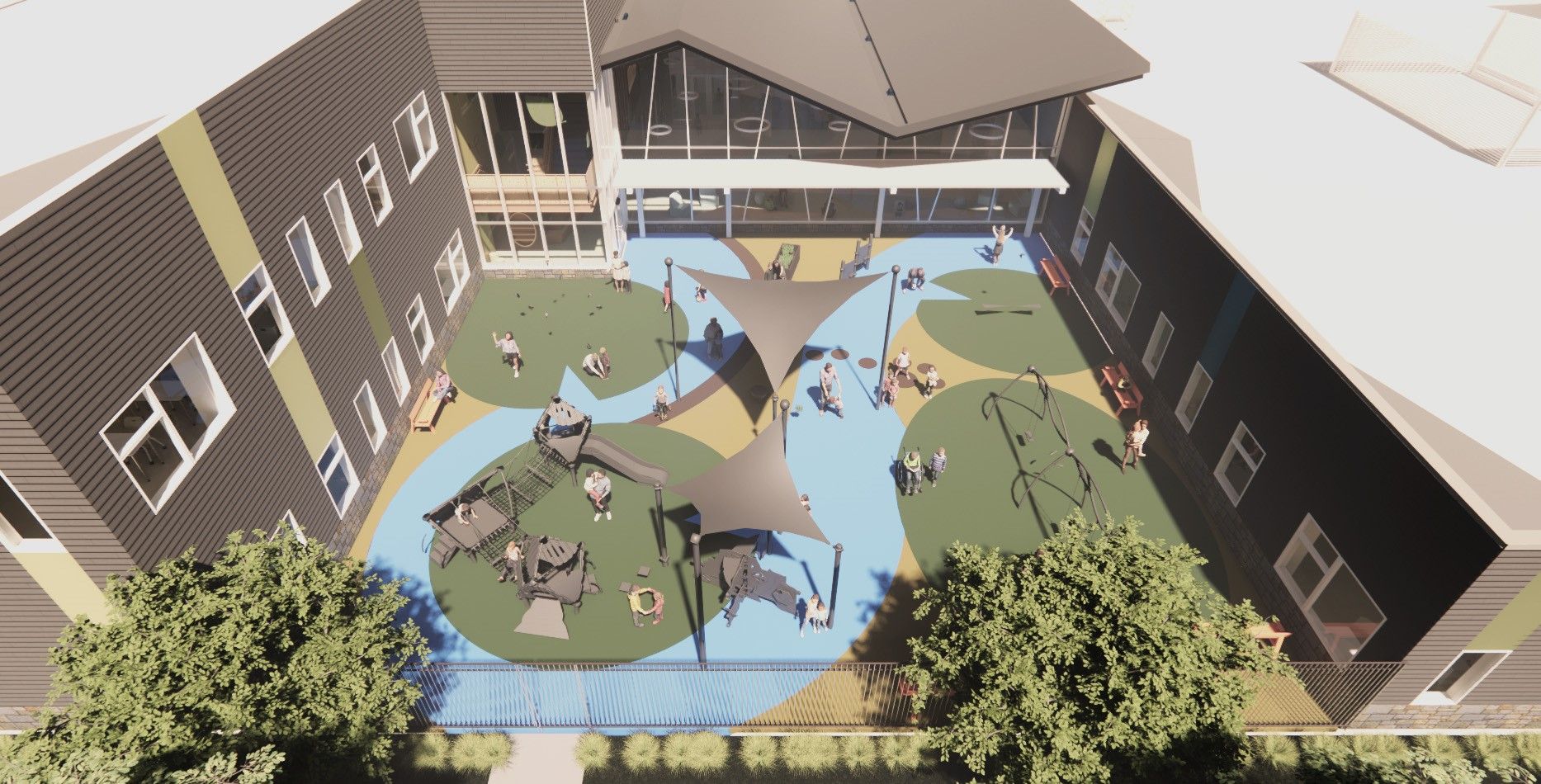
Bancroft NeuroHealth seeks to build a two-level school for 160 students on its Mount Laurel campus. The proposal will go before the township’s planning board next week, according to 70and73.
A new Rutgers University poll shows South Jersey residents are less supportive of Gov. Mikie Sherrill than the rest of the state.
A recently introduced bill would allocate $60 million in state grants for farmers who lost crops from the surprise April freeze. Under the proposed legislation, farmers would need to apply and the most impacted would have priority, according to New Jersey Monitor.
Fresh off its recent rebrand, Cooper Norcross Health released the first renderings of its planned $650 million Camden patient tower, which is set to open in 2028, the Philadelphia Business Journal reports.
Philadelphia 76ers LeBron James poses for a portrait during NBA Media Day at the team’s training facility in Camden on Monday. Jose F. Moreno / Staff Photographer
Enjoy your weekend! See you on Monday. 😎
By submitting your written, visual, and/or audio contributions, you agree to The Inquirer’s Terms of Use, including the grant of rights in Section 10.
New Jersey farmers whose fruit crops were damaged or destroyed by an unexpected four-day freeze last spring could apply for grants to help them recover their losses under new legislation that would earmark $60 million in state funding for such relief.
The late-April cold snap zapped peach, apple, pear, cherry, and other early-blooming trees, as well as shrub, vine, and ground crops like blueberries, strawberries, and grapes at farms both statewide and throughout the eastern U.S. from Virginia to Michigan. Many growers lost 30% or more of their fruit crops, with some reporting total losses. Officials estimated damages in New Jersey would top $300 million.
Assemblywoman Dawn Fantasia (R., Sussex) applauded the state and federal response, with both Gov. Mikie Sherrill (D) and the U.S. Department of Agriculture making statewide disaster declarations that cleared the way for farmers to apply for emergency loans and other relief assistance.
But in the weeks afterward, farmers called for direct financial aid, with many saying the freeze was the most catastrophic of their lifetimes. So Fantasia recently introduced a bill that would allocate $60 million for grants impacted farmers could apply for, with priority given to those hardest hit. The bill would require the state agriculture secretary to report within a year how the money was spent and advise if more aid is needed.
Seven Republicans signed on to co-sponsor the bill. Sen. Parker Space (R., Sussex), who’s also a farmer by trade, will sponsor the bill in the upper chamber, Fantasia said.
Fantasia said $60 million in aid for farmers is far from the controversial budget add-ons that annually bloat the state budget and make GOP legislators howl in protest.
This year, state budget appropriations critics deride as “pork” included $500,000 for pickleball courts and millions for other “really beautiful things that are absolutely wants and not needs,” Fantasia said. Farm relief “is not a want. It’s a need,” she added.
Farming has a sprawling footprint in New Jersey, she said. Almost 10,000 farms generated nearly $1.5 billion in sales in 2022, federal data shows. They employ about 25,000 farmworkers, the bill says.
“We can sure as hell take $60 million from the general fund and give it to an industry that spans the entire state and brings in over a billion dollars to the state of New Jersey,” Fantasia said. “We’re talking about people’s livelihoods and ability to keep jobs and stay in their homes.”
April’s freeze came as farmers already were struggling with rising labor, fertilizer, and fuel costs. Some smaller farms rely on a single season for their annual income, prompting industry observers to predict the freeze would force some growers to cut staff, sell off acreage, or quit farming altogether.
For those reasons, Fantasia expects legislators from both sides of the aisle will support the bill.
“There’s no question here: Severe losses happened. No product to sell. Devastating to the economy. Devastating to the jobs in New Jersey. I think it’s a no-brainer,” she said.
Hunterdon County farmer John Melick lost much of his peach, apple, cherry, plum, and pear crops to the April freeze.
Crop insurance has helped him recover, he said. But he welcomes any assistance the state wants to offer the fruit-growing industry, noting it would be most beneficial for smaller farmers, those without diversified crops, and the few who couldn’t afford or thought they didn’t need crop insurance.
“It’s not going to put me out of business if I don’t get it, but I won’t turn it away either,” Melick said of state aid.
He’d be more excited for Trenton’s intervention if legislators could control the weather, he joked, because the recent rainy stretch has kept customers away.
“I’m hoping for sunny weekends for October, so that the 30% crop that I do have I can sell to pick-your-own customers,” Melick said. “When it rains every Saturday and Sunday, they’re not coming out.”
A proposal for a two-story school for 160 students that Bancroft NeuroHealth plans on its Mount Laurel campus goes before the township planning board next week.
The nonprofit, based in Cherry Hill, would serve children ages 3 to 11 with autism and developmental disabilities in the building, according to documents with the application for preliminary and final major site plan approval.
A public hearing on Bancroft’s proposal is scheduled for the remote-only board meeting on Thursday, Oct. 8 at 6 p.m. via Zoom.
The 55,205-square-foot school at 311 Walton Ave. on Bancroft School’s Welsh Campus would have 188 staff members.
The school is scheduled to open in 2028 on former agricultural land that now is a lawn on the southeast part of the campus, according to the application.
Bancroft’s overall 80-acre Mount Laurel campus was approved by the planning board in 2016. A possible future expansion on the southwest part of the property is mentioned in the documents, but details were not provided.
Arsenic was found in soil on the proposed building site, but a report for Bancroft by Dewberry Engineers Inc., of Parsippany, states it is naturally occurring and not associated with historical agricultural activities or a discharge.
Dewberry reported it found no potentially contaminated areas of concern that required additional investigation.
70and73.com is a hyperlocal news site focused on South Jersey, including the communities of Cherry Hill, Evesham, Mount Laurel, Voorhees, Medford, Medford Lakes, and Moorestown.
Given the remarkable gloominess of the last 30 days, it would be reasonable to believe that the sun had lost its will to shine.
It is due to make a comeback by Thursday afternoon on the first day of a fresh month, but last month has entered the books as one of the wetter and cloudier Septembers in the period of available records.
Ordinarily, the September sun is some consolation for what is a month of rapidly shrinking daylight hours and lengthening nights. Not this time.
“Not your typical September,” said Ray Martin, lead meteorologist at the National Weather Service office in Mount Holly, who has his own hypothesis that includes an indirect connection with the burgeoning El Niño event in the equatorial Pacific.
For some folks, the gloominess is more than an aesthetic issue: It can have deleterious effects on mood and overall well-being, mental health experts advise.
“We’re losing daylight quite rapidly, and a stretch of cloudy weather like we’ve certainly had lately can make that change feel even more pronounced,” said Alan Jacobson, a psychologist practicing in Massachusetts and a specialist in seasonal affective disorder, known as SAD.
What’s going on up there in the skies over Philly?
Perhaps both the sun and moon, whose fullness last weekend also was obscured by the clouds, had spent so much time out of the public eye they developed a certain shyness.
For the month, 18 days came close to or exceeded the criteria for “cloudy,” according to the weather service.
Unfortunately, sky-cover records are wanting since the agency radically changed the observation protocols — replacing humans with a sky-scanning machine — in the mid-1990s.
However, this September by far was the gloomiest since September of 2018, when close to 10 inches of rain was measured at Philadelphia International Airport. The 6.61 inches of September 2026 was the highest total since then.
As to why it has been so cloudy: “We’ve definitely had a lot of systems move through, a lot of moisture,” Martin said.
And why might that be?
This has become the longest wait on record for the first hurricane of the season in the Atlantic basin, as the warming of waters in the equatorial Pacific has interacted with the atmosphere to generate powerful storm-shearing winds from the West. It is at least possible that what’s not happening in the Atlantic has been a factor in the clouds over Philly.
“You could almost argue that the energy that normally would be expended in the tropics by hurricanes … maybe kind of worked its way north,” Martin said, but added: “That’s pure speculation.”
Whatever the cause, the lack of sun has not been exactly an energizer.
The effects of the lack of sunlight
To feel enervated and melancholy at times as the days shorten is a sure sign of normality, Phyllis Zee, a circadian and sleep-medicine specialist with the Northwestern University Medical Center, has observed.
The sunrise-to-sunset periods are shrinking by more than 2½ minutes daily in the Philadelphia region.
Plus, the sun is losing radiative power daily, and clouds dilute whatever reaches the surface.
Less light affects people in a variety of ways.
“For some people, reduced light can affect sleep, energy, concentration, and mood,” Jacobson said.
An estimated 5% of people experience serious symptoms of seasonal affective disorder, which is a form of depression, and 10% to 20% are affected by mild versions.
For those who do not require clinical intervention, Jacobson and other specialists advise that an excellent remedy would be to spend time in the sun (assuming it returns), especially in the morning
“Get outside and move your body daily,” said Tonya Ladipo, a Philadelphia therapist and founder of the Ladipo Group counseling service. “Even if it’s dark and cloudy, you’ll get some natural vitamin D in addition to the mood and energy boost that comes with being outside in fresh air.”
The sun is due for a comeback
And the sun is due to rule the day Friday, and it is at least possible it will show up Saturday and every day of the next workweek.
But showers are possible Friday night and rain is looking likely Sunday, although conditions certainly should not approach anything like last weekend’s.
Vineland residents who are some of the first in the Philly area to know what it’s like to live next to a massive AI data center share their experiences.
And the Delaware Valley Regional Planning Commission wants to know where you’re headed every day — and how you get there.
But a handful of local homeowners have the unique experience of seeing one from their houses — the DataOne facility in Vineland.
They used to have more neighbors before the data center developers and associates bought several homes that now appear to be abandoned.
Multiple residents commented on the excessive sound.
“I think of a prison, and I’m the prisoner with the noise,” said a homeowner of more than 47 years. “You get up in the morning and you’re in a foul mood.”
The DVRPC wants to know just about everything about people’s daily travel habits.
No, this is not about surveillance. After 13 years, the commission needs an updated survey to help guide funding decisions for infrastructure projects and transportation plans for the nine counties it serves, which include Burlington, Camden, and Gloucester.
Since January, it has been recruiting participants by mail to randomly selected households. Sorry, you can’t nominate yourself.
Those who opt in will have to track their household trips for 24 hours using a phone app. It’ll also ask the household basics: size, age, income, etc.
But how exactly will the experts use this information?
Five years after Clementon Park & Splash World was purchased at a bankruptcy auction, the recently shuttered 119-year-old amusement and water park is going back to auction this month.
Researchers have found microplastic pollution in every one of the 22 stream and river segments along the Delaware River tested in New Jersey, Pennsylvania, Delaware, and New York. This includes Cooper River in Camden County.
Residents in Camden and Cherry Hill should be aware of possible detours and prepare to take alternative routes because of roadway projects scheduled for this week.
The Inquirer’s editorial board, which is separate from the newsroom, wrote that Gov. Mikie Sherrill’s call for now-former Lt. Gov. Dale Caldwell to resign set “an ethical example for a corrupt era.”
🗓️ The best things to do this week
🔮 Boos & Brews Witches Market: Check out this witch-themed market full of themed vendors and activities. Stick around for food trucks, a costume contest, performances, and a beer garden. ⏰ Friday, Oct. 2, 5-9 p.m. 💵 Pay as you go 📍 Rancocas Woods Events and Shops, Mount Laurel
📚 Collingswood Book Festival: The 24th annual festival is back spanning six blocks of Haddon Avenue. Come to meet booksellers and stay for author and poetry readings, performances, and workshops. ⏰ Saturday, Oct. 3, 10 a.m.-4 p.m. 💵 Free 📍 Haddon Avenue, Collingswood
🎨 Cranberry Fest: The 36th annual cranberry fest returns with live music, a food court, a beer garden, and more than 100 artisans. 💵 Pay as you go 📍 Farnsworth Avenue, Bordentown
When Amber Ayrer bought her Vineland home 25 years ago, she envisioned growing old there, enjoying lazy afternoons with the windows open and a view of farmland from her front door.
After her adult daughter, Ally, suffered a traumatic brain injury, Amber made the rancher accessible, installing a ramp that aides use to push Ally’s wheelchair outside for her daily walks.
The place had all the makings of a forever home, Amber Ayrer said — until a massive AI data center moved in across the street.
Now, the 71-year-old looks out her front windows at the hulking DataOne facility, a windowless compound surrounded by walls and metal fences.
In recent months, Ayrer said, the 2.4-million-square-foot complex has emitted a near-constant hum. She struggles to sleep, she said, and has suffered from headaches. She turns the TV on to mask the sound.
Residents who live farther away have also complained about the noise, including in a recent lawsuit that was thrown out due to procedural issues. In the suit, residents said the Cumberland County Department of Health measured the hum as higher than 50 decibels a mile away in the middle of the night. A sound higher than 50 decibels is equal to a running refrigerator and is 10 times louder than a typical suburban area at night.
Ayrer, who was not involved in the lawsuit, said she doesn’t want to move, even as she sees neighbors sell their homes to the data center developers.
“In order to get another home, I’d have to get one built” to be accessible, Ayrer said, standing in her entryway. She shrugged, adding, “I need to be here for my daughter.”
The noise had quieted, she noted, since around Sept. 22. That’s when the New Jersey DEP ordered the data center to pay a $1 million fine for running 62 gas generators without the required permits. She isn’t sure why the hum stopped, or whether it was related to the fine.
By late Wednesday, the sound had returned, she said, and she worried it would be even louder when the center is fully operational.
The Ayrers are some of the first Philly-area residents to live in the shadow of a massive AI data center. Only a handful of homeowners live within eyesight of DataOne’s South Lincoln Avenue complex in Vineland.
They used to have more neighbors. But since 2025, DataOne Vineland and LJR Real Estate — which is registered to the address of Northeast Precast, a local company that has partnered with DataOne — have purchased at least five surrounding homes for a combined $3 million, according to online property records.
DataOne and Northeast Precast did not respond to requests for comment about the acquisitions. Several former Vineland residents who sold their homes to these companies could not be reached or declined to comment.
Asked about residents’ concerns, DataOne spokesperson Naomi Rice shared a previous statement, which said in part that the facility was “transitioning to low-emission, quiet fuel cells.” These generate energy through an electrochemical reaction rather than combustion, pistons, or rotating machinery.
Nebius Group, which is operating the center’s internal AI infrastructure, says the fuel cells from Bloom Energy — a company expanding locally — and enhanced sound mitigation will make for a quieter environment than what residents experienced during construction, according to spokesperson Ava Iuliucci.
Charles-Antoine Beyney, DataOne’s founder and chief executive officer, previously said the Vineland center would use “breakthrough” technology to reduce its environmental impact. He said the complex would be a good neighbor, promising a vertical farm — which uses technology to grow crops indoors — to help feed Vineland residents in need.
“Most of the data centers that are being built today suck, big time,” Beyney said in January.
“No freaking way am I going to do what the entire industry is doing … just killing our communities and killing our lungs to make money.”
What it looks like near a South Jersey data center
The Vineland DataOne center, as seen in June, could be finished by the end of the year, developers have said. Tom Gralish / Staff Photographer
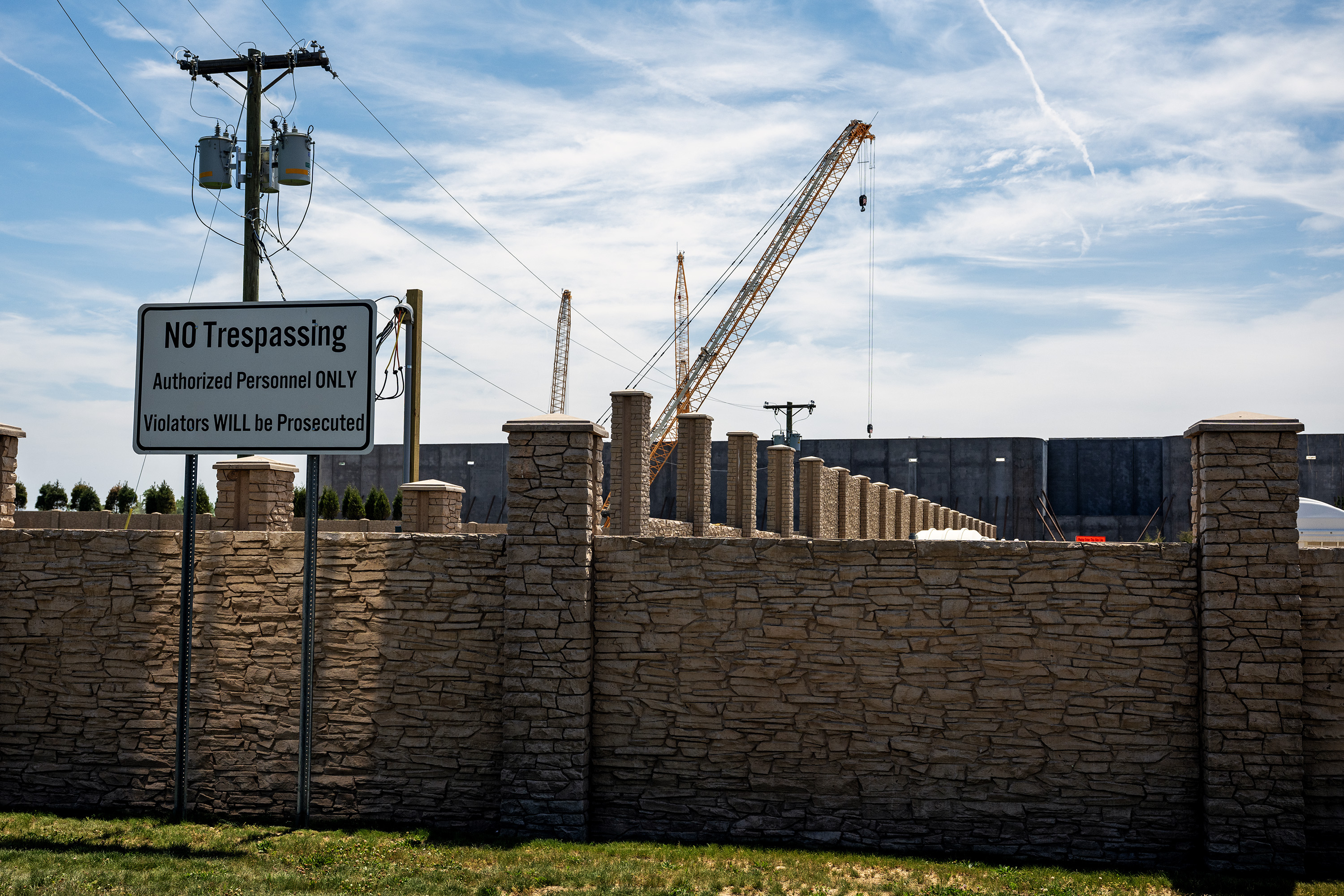
The dark exterior of DataOne abuts busy South Lincoln Avenue, towering above homes and farms on the outskirts of Vineland City. In spots, rows of crops extend to the data center’s walls.
On a recent day, the data center appeared abuzz with activity, although residents said it was relatively quiet, as cars and yellow school buses drove in and out of its gated-off parking lot. Giant “no trespassing” signs are prominently displayed.
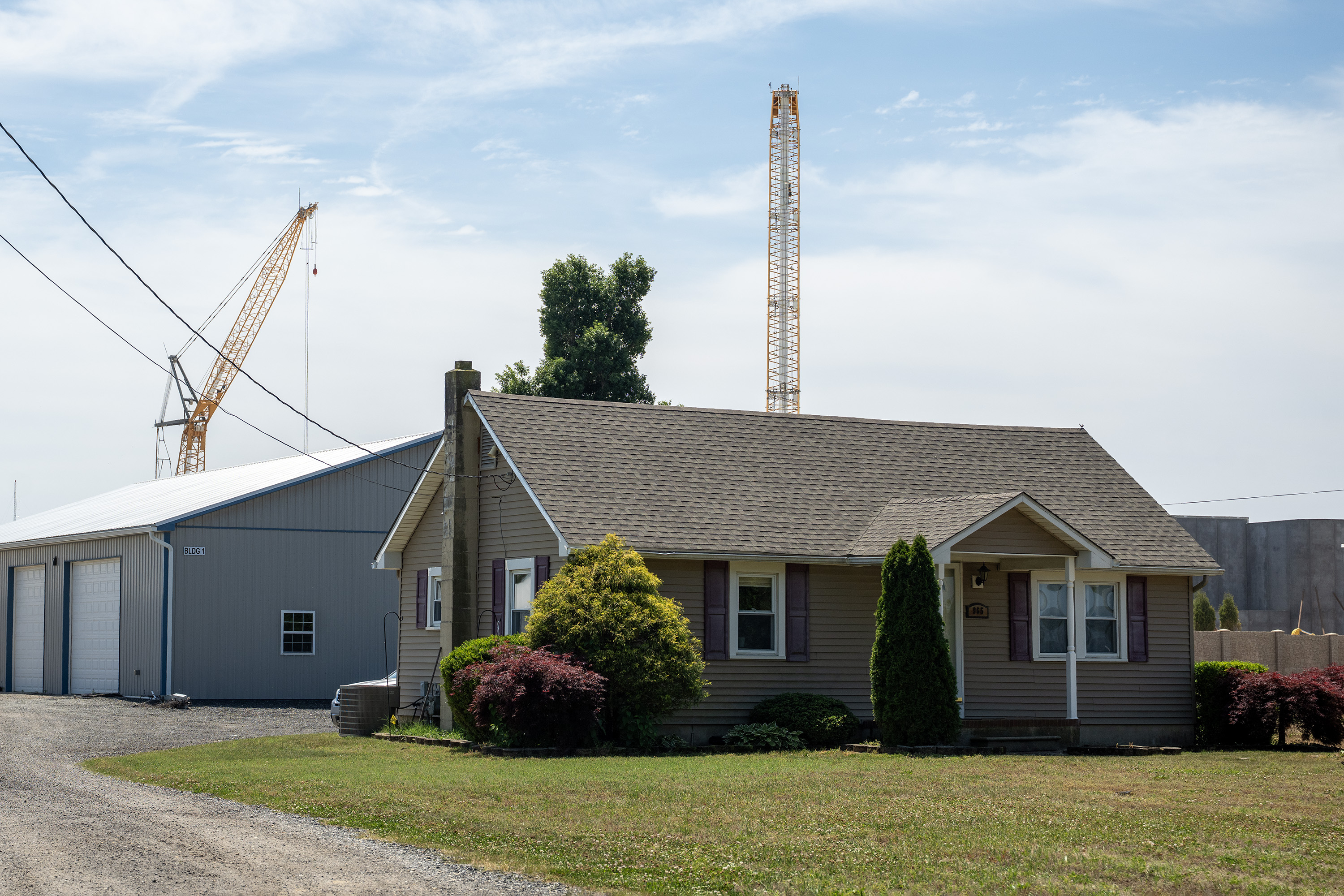
While the front portion of the data center appeared complete, cranes farther back reached into the sky.
Meanwhile, several large homes across from the entrance — purchased by the data center developers and associates — appeared abandoned, with recycling cans askew in the driveways, indoor and outdoor lights on in the middle of the day, and swing sets sitting empty in the backyards. No one answered the doors.
At another home, a woman shook her head, saying she’d lived there forever and would never speak publicly about the development across the street.
DataOne, a French company that manages advanced data centers, is the owner, operator, and builder of the Vineland data center. Its client, Nebius Group, an Amsterdam-based AI-infrastructure company, operates the center’s internal technology, which fuels Microsoft’s AI tools.
As demand for these facilities has surged, so has the controversy surrounding them. Across the country, proposed complexes have received fierce pushback from nearby residents concerned about environmental, noise, quality-of-life, and property-value impacts.
Several of these facilities have been proposed in the Philadelphia region, from King of Prussia to Limerick. But few plans have been approved.
DataOne Vineland could become the region’s first hyperscale AI data center. The developers have said the complex is partially operational, and they expect it to be complete by the end of the year.
Construction continued on the DataOne center as seen from a nearby home in June.Tom Gralish / Staff Photographer
Theresa Lewis, who has owned her home for 47 years, said living by the data center has gotten worse in recent months.
Stepping outside and seeing the building, “I think of a prison, and I’m the prisoner with the noise,” said Lewis, 74, who compares the sound to a tractor trailer idling outside her home all day and night.
“You get up in the morning and you’re in a foul mood,” Lewis said.
Both she and Ayrer said they have called the Cumberland County Department of Health to report excessive noise in the middle of the night, but doing so comes at a cost. They said they then have to get up, get dressed, turn the lights on, and wait for an official to come take a decibel reading, making for another sleepless night.
Data centers are being built in different communities
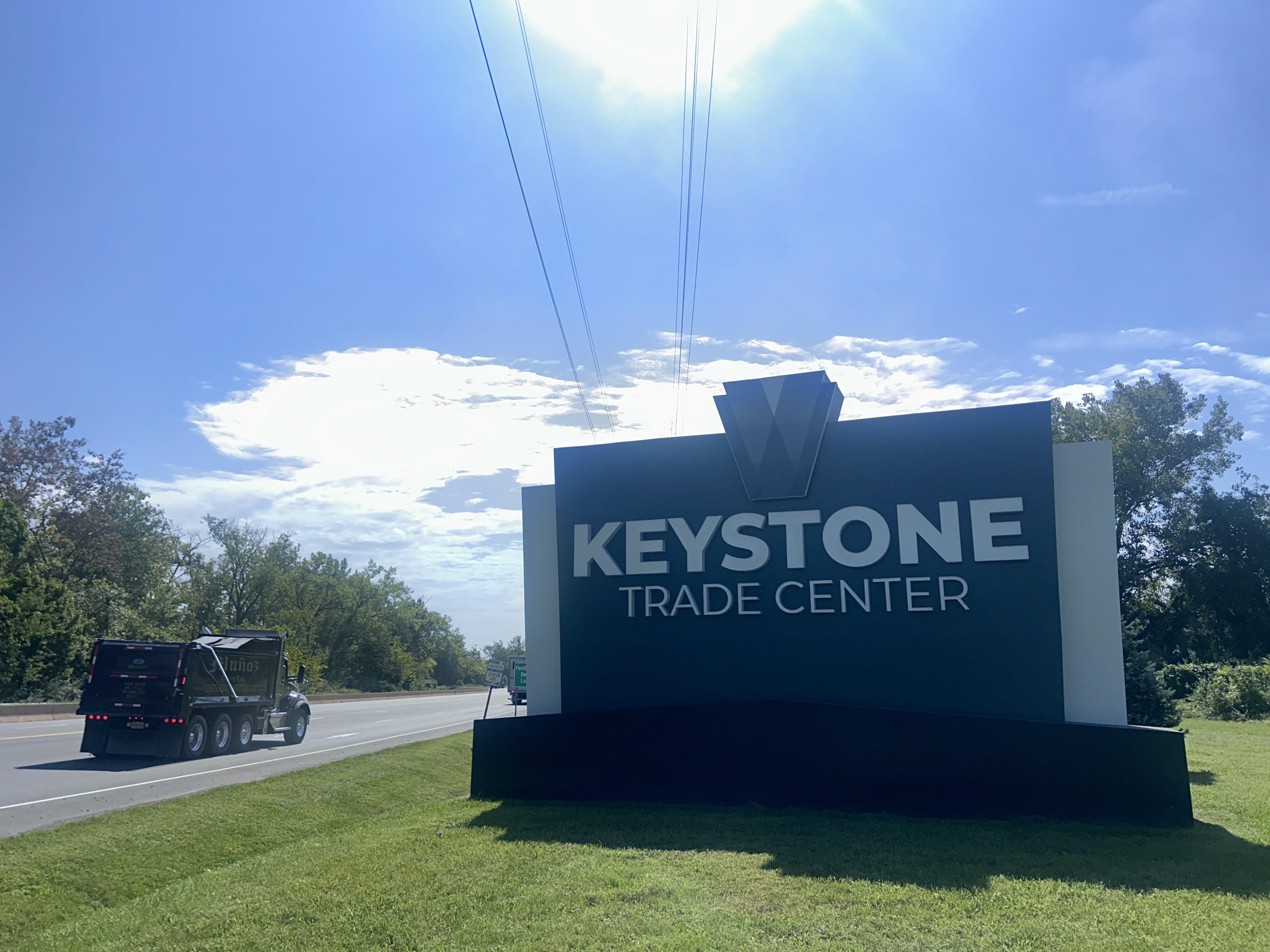
The view outside the Keystone Trade Center in Falls Township. Amazon is building a data center inside the private complex.Erin McCarthy/Staff
The scene in Vineland is vastly different from the one outside Amazon’s 2-million-square-foot data center campus in Falls Township, Bucks County, the Philadelphia region’s other facility nearing completion.
That data center sits deep inside the Keystone Trade Center, an industrial hub surrounded by water, with no homes in sight. On a recent day, tractor trailers whizzed by Keystone’s main entrance. Only the transmission wires overhead hinted at what may be inside the private property.
In Vineland, Lewis said she wishes she and her neighbors had a chance to push back against the data center before it was built. Residents were first asked to provide input about the project at a contentious town hall in January, more than a year after the project was approved by city council and months after construction started.
“I don’t want to move — and who is going to pay what the house is worth with that right there?” Lewis said, motioning to the data center across the street. “But I wake up angry.”
She added: “I can’t imagine living next to this for the rest of my life.”
Editor’s Note: This story has been updated to reflect that the noise from the data center returned Wednesday, according to Ayrer.
The Delaware Valley Regional Planning Commission is collecting granular information about daily travel: Where did people go? Why? Did they drive, take transit, walk, bike, or use an electric mobility device?
Planners working on the project aren’t nosy or trying to surveil anybody.
They need real-time data to update DVRPC’s travel demand model for the nine-county Philadelphia area that will guide funding decisions about infrastructure projects and transportation plans for the next decade.
“Compared to any other 10-year period that I can recall, there has just been so much transformation in how people travel,” said Mike Boyer, the agency’s director of regional planning.
Information from a new household travel survey will show a clear picture of exactly how it changed and provide clues about where regional transportation might be headed. The last household survey was conducted in 2012 and 2013 and a final version was published in 2015.
Typically, DVRPC conducts a travel survey every decade, but officials waited 13 years this time to allow transportation patterns to settle into a “new normal” after the massive disruptions of the pandemic.
How do they find households to take the travel survey?
Beginning in January, DVRPC has been recruiting participants by mailing postcard invitations to randomly selected households in South Jersey and Southeastern Pennsylvania. It has also used some social media posts.
People cannot reach out to nominate themselves.
Random invitations help ensure that respondents reflect the population of the region. Participants need to represent each of DVRPC’s nine counties, as well as a mix of households by income, size, number of workers, and other demographics.
It is expected to take the rest of the year to get the 9,000 to 10,000 completed household surveys required for a good picture of the region’s habits, said Matt Gates, associate director of travel trends and forecasts for DVRPC.
Based on typical response rates, it may take as many as 300,000 postcards to recruit enough participants, he said.
Recruitment paused for the summer and started up again after Labor Day.
DVRPC serves Burlington, Camden, Gloucester, and Mercer Counties in New Jersey as well as Bucks, Chester, Delaware, Montgomery, and Philadelphia Counties in Pennsylvania.
Survey data will be held confidential and anonymized, used in the research but not attached to any specific household or phone number, Boyer said.
“Data won’t be sold or used by any third party,” he said. “We want to be forthright about that.”
What do participants do?
Most will report household trips for one 24-hour period, starting around 2 a.m. or 3 a.m., using a smartphone app that runs in the background, tracking each trip via GPS.
When it detects what might be a trip, it prompts the participant to confirm it and provide details such as the trip’s purpose and what type of transportation is used.
“If you leave your house in the morning and go to work, and then you leave work and go somewhere for lunch, and then you go back to the office, and then, on the way home, you stop at the dry cleaner — all of those pieces of your daily travel are joined together,” said Gates, the chief travel modeler.
That would be counted as a “tour,” broken into separate trips, each attached to a specific activity.
The survey also asks for basic household information — size, ages, jobs, school attendance, income, and vehicles. E-bikes, e-scooters, personal mobility devices for people with disabilities, traditional pedal-powered bicycles, and walking will be counted as separate modes of travel.
In the 2012-13 survey, walking and biking were separate options, but the travel model combined them in one category called “nonmotorized.” A catchall “other” category covered everything else.
Participants who do not want to use the app can keep a paper travel diary and then either enter their trip information on a website or reach a call center, where a person will walk them through the questions and record the data.
How will the information be used?
After it is fed into the travel model, DVRPC will use it to help draft a Transportation Improvement Program (TIP). That is the federally mandated priority list for allocating federal and state funding of transportation, transit, and highway projects across the region.
But that’s not all.
Planners use it to decide on traffic safety projects, to chart where new recreational trails should go, and to test scenarios in response to events.
Combining the data with information about the transportation network can provide insight into how people make decisions about, say, using a SEPTA train vs. driving between two points, Gates said. “Is it time? Is it cost? The number of vehicles available in a household?”
A good travel demand model with those insights can help answer “what if” questions such as what effect a new train line or highway would have, or rising gas prices, transit fare increases, and service cuts, Gates said.
It can help planners think about how the transportation network could accommodate a spurt of growth in Quakertown, Bucks County, for example, or Woolwich Township, Gloucester County.
Last year DVRPC used existing data to project added motor vehicle traffic amid SEPTA service cuts, which began but were quickly rolled back.
The extent to which hybrid work and e-commerce may be reducing trips per person or household. For example: How many shopping trips have been replaced by deliveries?
Transit changes: They want to understand SEPTA’s ridership recovery from COVID-19 and how often people are using transit for a mix of nonwork trips at different times, rather than just traditional commutes.
How are people using ride-hailing services like Uber and Lyft, which have mushroomedover the last decade?
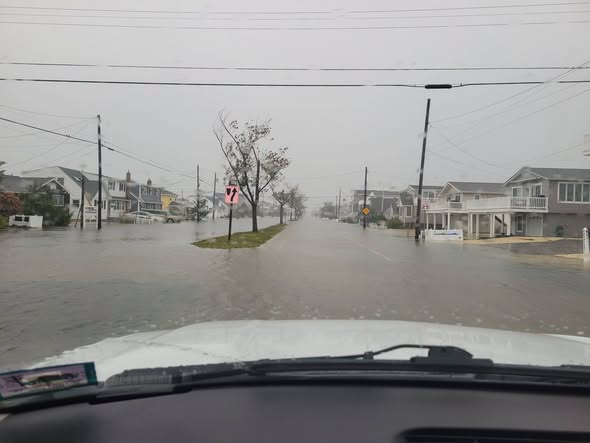
A shark was captured on video swimming in the flooded streets of Surf City in Ocean County while the region was battered by the nor’easter last weekend.
The video was recorded by Drew Procaccino, 66, an adjunct professor at Rider University, around noon on Saturday as the shark swam past his home, he said in a phone interview.
Procaccino said Surf City was “totally flooded” because of the powerful storm, and he lost internet service for around 48 hours, so he and his wife passed time watching debris float by until his wife noticed something that appeared to be a fish.
Then they realized it might be a shark, he said.
“First one we’ve ever seen in front of our house,” Procaccino said.
At first he shared the video with some news organizations, including ABC News, and then he licensed his video with Storyful, the social media news agency.
ABC News said a marine researcher reviewed the video and identified the animal as a smooth dogfish, which can be found along the Atlantic coast from Massachusetts to Florida.
The smooth dogfish, also known as the dusky smooth-hound or dog shark, on average grow to about 48 inches in length, but have been known to measure up to 5 feet.
Unlike other sharks, the smooth dogfish has flat, blunt teeth for grinding crustaceans and other small prey, rather than sharp teeth for tearing apart animals.
“Hero! Bobby Capri takes off his shoes, jumps into the tidepool, catches a dogfish, and throws it back into the inlet — just in time from it becoming lunch for a very interested seagull,” the state park posted.
Potential buyers can either continue operating the park, spanning more than 50 acres in Camden County, as an amusement destination or redevelop the property in a variety of ways, including as a hotel or for retail, residential, or entertainment uses, according to the property listing.
The public auction is set to begin Oct. 19 at noon with bids starting at $1.5 million, the listing shows. The 48-hour auction window is scheduled to close at noon on Oct. 21.
IB Parks & Entertainment bought the park for $2.37 million in the 2021 bankruptcy auction after financial struggles forced the park to shut down suddenly two years earlier.
“After five memorable years, we are saddened to announce that we have made the difficult decision to close the park and plan to offer the park for sale,” the company said in a statement announcing the closure on its website and social media accounts earlier this month. “It has been a privilege to care for a place that has meant so much to generations of families.”
At the time of the closure, the park was one of five amusement properties owned by the company, including West Berlin’s Sahara Sam’s.
IB Parks & Entertainment did not respond to requests for comment.
Clementon Park opened in 1907 as the brainchild of state Assembly member Theodore B. Gibbs and his sons and quickly became a popular destination for families across South Jersey.
After years of being independently owned by various families, the park was bought by its first private amusement park operation company in 2007.
With various management companies at the helm over the next decade, the park expanded significantly with the addition of new thrill rides, children’s attractions, and a 23,000-square-foot wave pool.