Category: Jobs

  • Some young Philly-area workers say they fear remote work more than AI

    Some young Philly-area workers say they fear remote work more than AI

    Soon after Aubrey Lee graduated college and moved to Queen Village in 2021, she determined that her burgeoning career in marketing would be aided by time spent in an actual office.

    Partly that’s because her first job was fully remote, and she was laid off after only five months. But she also found it alienating to fully work from home, with little chance to interact with coworkers.

    So Lee prioritized finding jobs with in-office requirements, and her next one — secured two weeks later — allowed only one day of remote work a week.

    “I feel like remote work, especially at such an early point in my career, made me more of a face on a Teams screen than an actual person,” said Lee, who is 27. “I’d also been inside, locked away from my senior year of college during COVID and feeling very isolated.”

    Lee said her friends generally agree that working outside the office early in their careers was a hindrance.

    “Working remotely can have stunting effects on people’s careers, in terms of both being laid off and not being promoted,” said Lee, whose current job at Publicis Health Media in Old City, is also four days a week in-office.

    Remote work has many advantages, especially for those with physical disabilities, parents of small children, older workers, and those caring for elderly relatives. It also reduces time spent commuting and money spent eating at restaurants.

    But soon after desks emptied in the face of the COVID-19 pandemic, battle lines began forming over the future of the office.

    Workers were generally seen as being in favor of the flexibility that comes with remote work, while many employers and managers wanted people back in the office soon after it was safe.

    In recent years, however, nuances have emerged even as hybrid work has come to dominate the American office workplace.

    A recent burst of new academic research argues that remote work makes Americans lonelier — especially those who live alone — and that it disadvantages those starting out in the workforce.

    Unemployment is relatively high among college graduates and nongraduates, unlike their older counterparts.

    Several recent studies argue that the depressed labor market for younger workers — which is often attributed to the explosive growth of artificial intelligence — more neatly matches the rise of remote and hybrid work.

    Economists Natalia Emanuel, Emma Harrington, and Amanda Pallais argue that “64% of the recent increase in unemployment among young college graduates is due to remote work.”

    They found unemployment among recent college graduates in remote-capable jobs rose early in the pandemic and remains elevated, while those in nonremote capable jobs saw a larger spike in unemployment during lockdown and then a return to the norm.

    More experienced remote-capable workers, meanwhile, saw their unemployment levels fall slightly in 2020 and remain lower than pre-pandemic.

    “Our overall takeaway is that for young people specifically, it looks like this rise in remote work made it relatively difficult for them to find a job,” said Harrington, assistant professor of economics at the University of Virginia.

    The researchers examined hiring at a Fortune 500 online retailer and found that young engineers who worked remotely would get 20% less feedback from their colleagues. They ended up writing lower-quality code, and the company hired fewer younger workers.

    “If it’s going to be really hard to build talent internally, one reasonable response is, ‘Well, let’s just not do that,’” Harrington said. “Let’s try to buy talent that has already been built up. That’s consistent with what we’re seeing in the unemployment data.”

    Remote work and loneliness

    Harrington and Emanuel’s research also has found that remote work increases loneliness by making it harder for people to socialize or make friends in their adult lives, leading to negative effects on mental health.

    That resonated with West Philadelphia engineer John Reid’s experience with an almost fully remote job he got in 2022. In his case, the company did have an office, in Valley Forge, but few people actually worked from there.

    At first Reid, 38, enjoyed the remote work lifestyle, especially with a new child at home. But as the years wore on, that changed.

    “I was mostly remote until late 2025, and I felt like I was getting weird from working at home all the time,” Reid said. “I still had a decent amount of interaction because we live in the city, and I was walking to daycare, but there was less serendipity or new connection than I was used to.”

    Today Reid has a new engineering job in Center City, which requires three days a week in-office. He said he would prefer not to go back to fully remote work, nor to a job that was in-office five days a week.
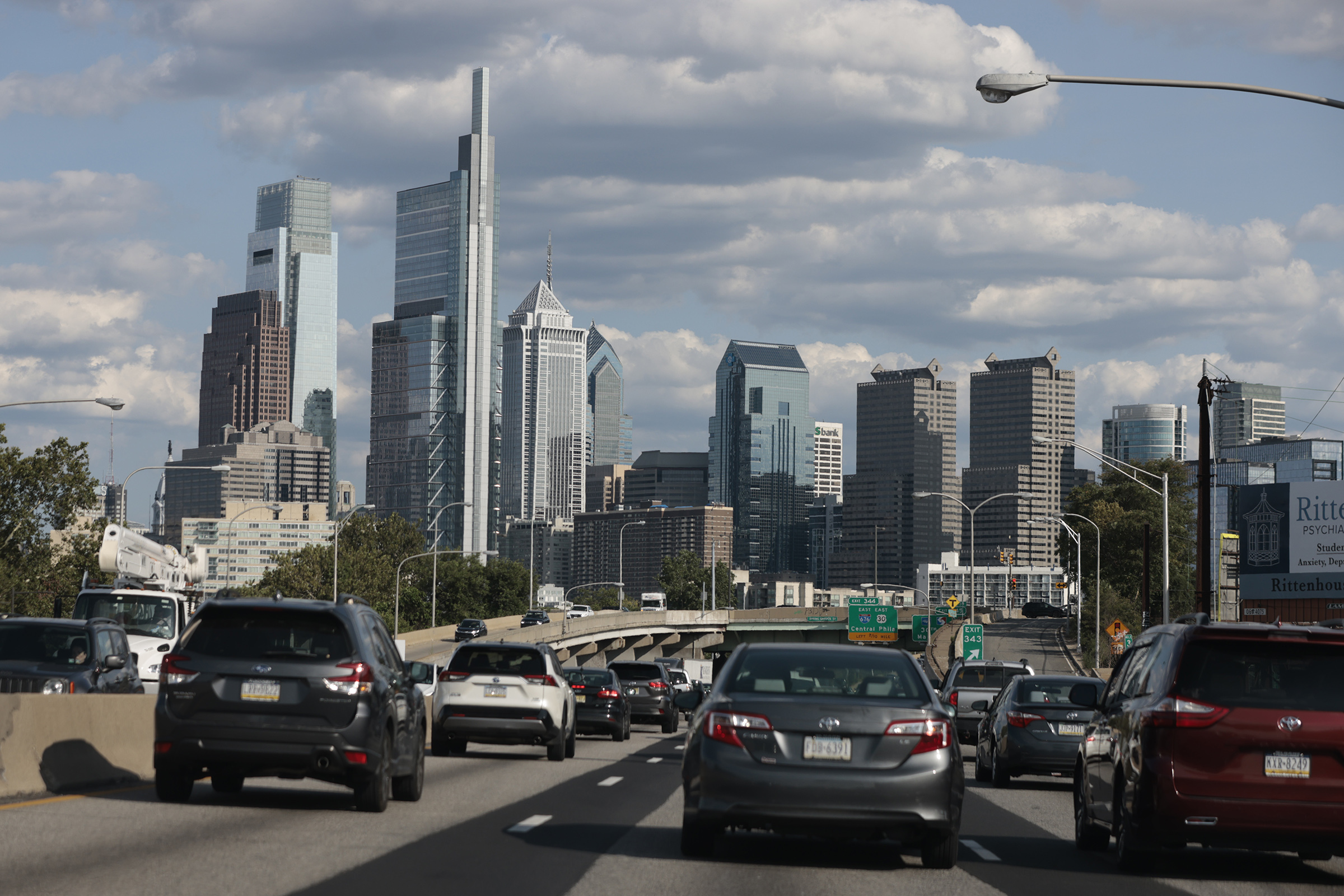
    Many workers have returned to offices since the pandemic, but remote work remains desirable to many.Elizabeth Robertson / Staff Photographer

    That’s largely the equilibrium that office work has settled into.

    After a big push to get workers back to the office in 2022 and 2023, little has changed in recent years. Today, 26% of paid work days in the U.S. are worked from home. That’s up from 7% pre-pandemic, but down from 60% in April 2020.

    Some negative aspects of remote work can be salved

    There are still plenty of remote work enthusiasts among employees, bosses, and labor experts. After all, hybrid work has become the new norm and many still enjoy fully remote work, with a solid 10% of office workers still working from home, according to Nicholas Bloom, economist at Stanford University.

    There are ways to mitigate the negative aspects of remote work, he said.

    One recent study by Bloom and his coauthors published by the National Bureau of Economic Research, found that a fully remote firm in Turkey saw “weaker team cohesion, fewer opportunities for real-time coaching and persistent retention problems.”

    But a control group of workers who began meeting just one day a month in the office saw increases in productivity and attrition decline by a third.

    That suggests even a little team building, and in-person interaction, can go a long way.

    When Jake Stein, the CEO of Common Paper, was planning to start his legal technology company before the pandemic, he wanted it to be fully remote. He lives in Society Hill and at his previous company had been frustrated by losing workers to cross-country moves.

    He agrees that in-person work is a great bonding experience. Many of his closest friends date to his time at a five-day-a-week office job early in his career. But he doesn’t want to restrict his hiring to the talent pool that’s just within an hour drive of Philadelphia.

    Instead, Stein strives to ameliorate the disadvantages of remote work by hosting regular get-togethers, including a weeklong company trip to Mexico City.

    Common Paper also offers structured and recurring mentorship for their employees, with software code review and feedback, as well as “lunch and learns” where workers educate one another.
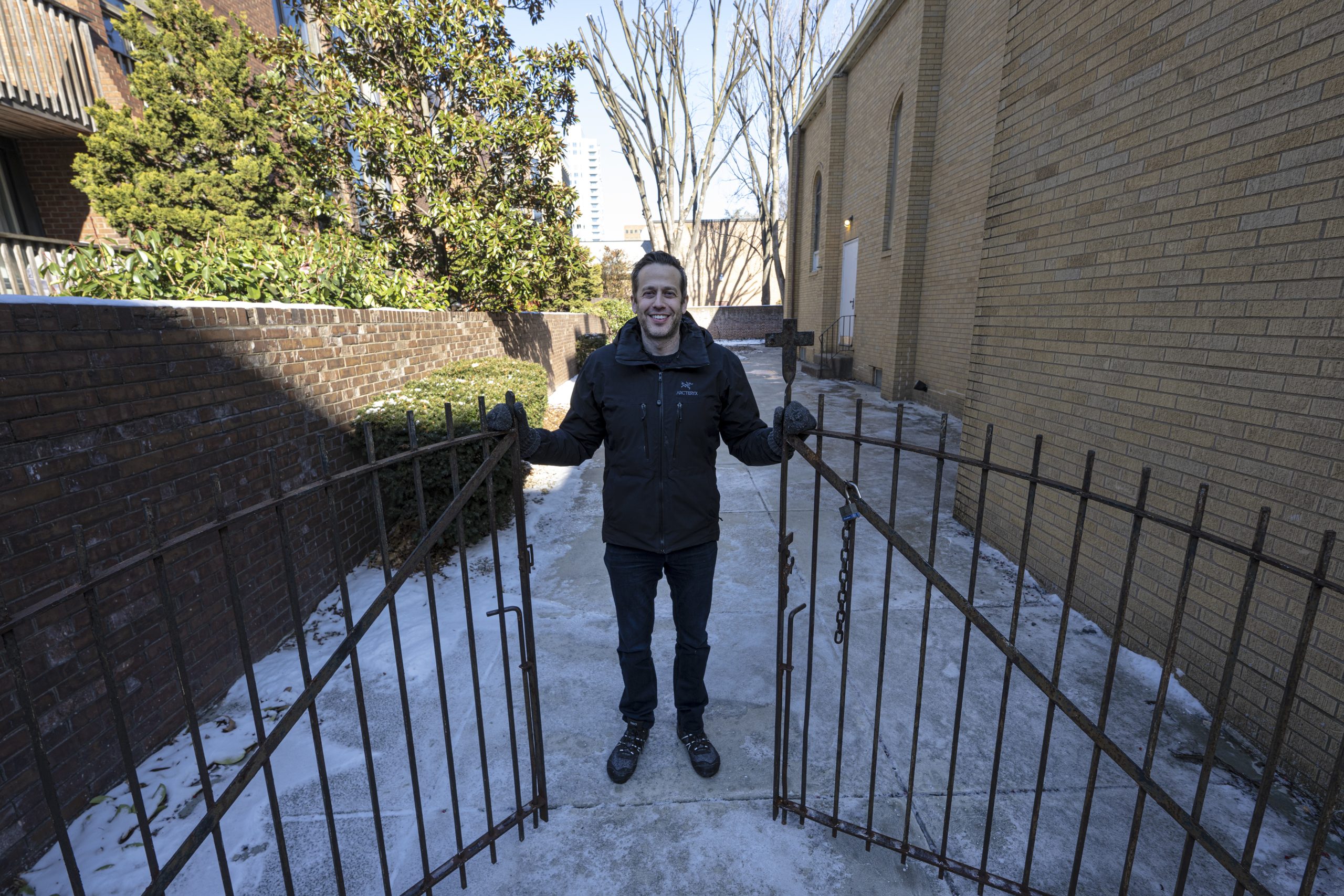
    Jake Stein outside his Philadelphia home.Jose F. Moreno / Staff Photographer

    “Things that might happen organically, we’re trying to make them happen on a schedule and with a process,” Stein said. “These are things that you get [easily] in an in-person office. In many cases, they are gettable in a remote setting, but it requires a lot more deliberate effort.”

    What about young workers?

    Stein said the fully remote model has been successful, although he noted that he does tend to hire more veteran tech workers.

    “There’s a bunch of factors, but it’s definitely true that if you look at the average age, it’s for sure higher in the remote setting,” said Stein, who has seven employees.

    But he said its hard to know why that’s been the case. It’s probably also true that older workers, with kids or other family responsibilities, are more interested in applying for fully remote jobs.

    Bloom agreed that on a larger scale, it’s hard to tell if remote work disadvantages younger people.

    It’s probably part of the story, he said, but it’s hard to disentangle from other factors, including pandemic-era over-hiring in sectors like tech and finance, the disastrous effects of remote schooling during the pandemic, and the rise of artificial intelligence.

    “Typically in economics when there are four factors, they all tend to be at play,” Bloom said. “They all look similar; they have similar timings, and similar effects.”

    Bloom said his research has found little evidence that most workers want to return to the pre-pandemic norm of working in the office five days a week.

    At the same time, remote work remains a boon to many, he said.

    “Setting aside for young people, remote work almost surely has increased employment because there’s a lot of people that can’t work without it,” Bloom said.

  • Peco workers went on strike after the company and its union failed to reach a deal

    Peco workers went on strike after the company and its union failed to reach a deal

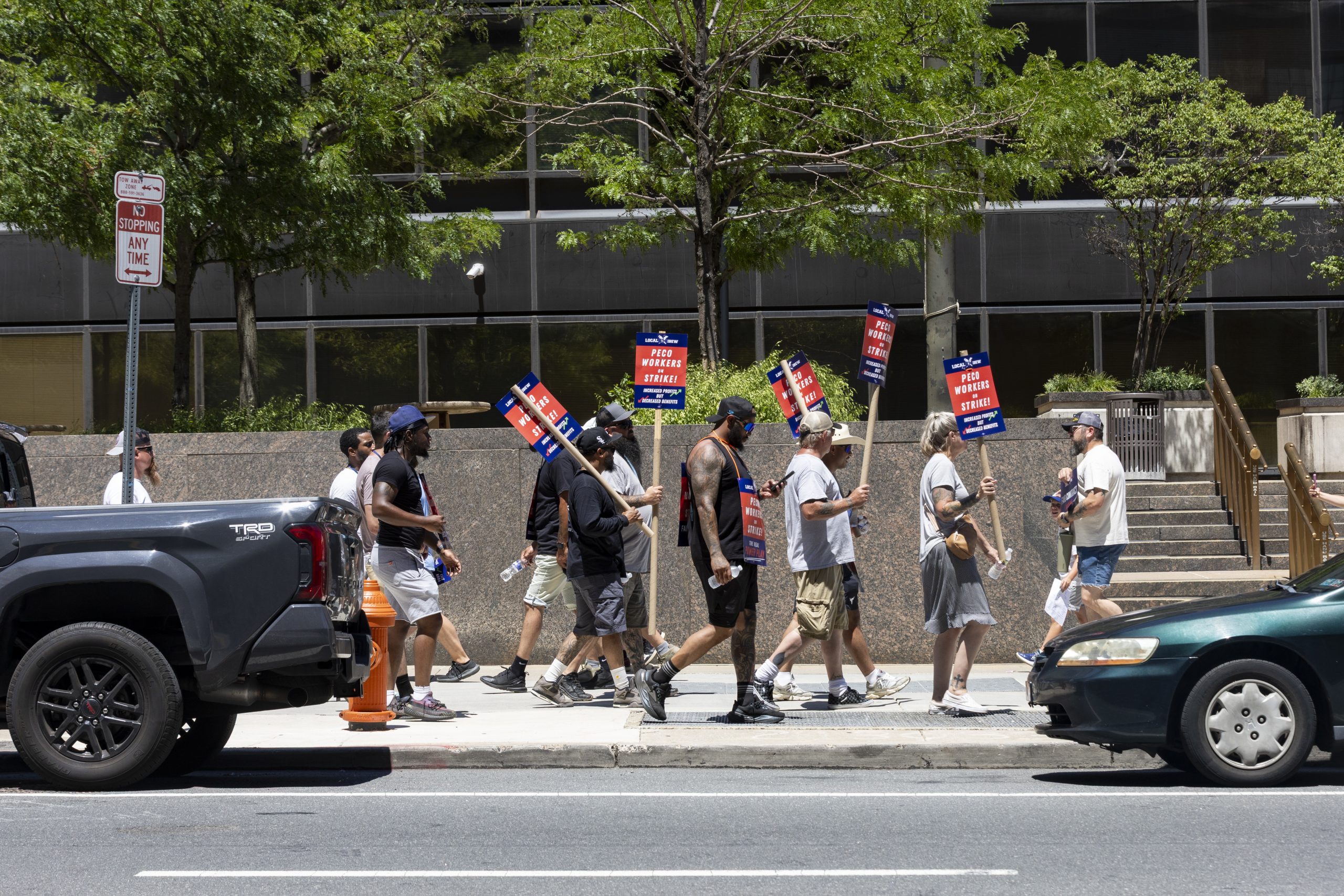
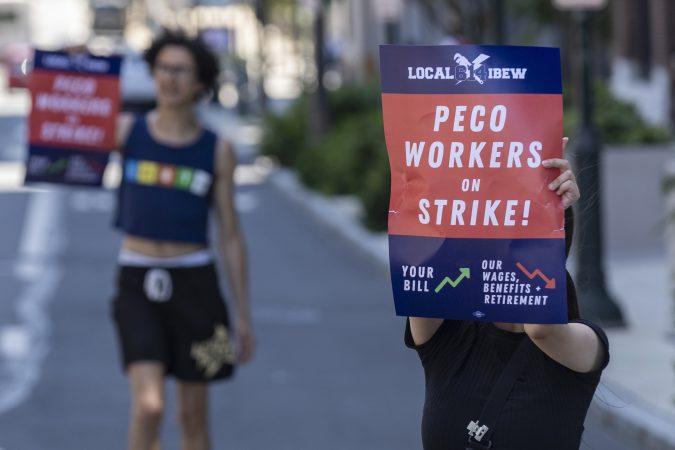
    Linemen, call center workers, and other Peco employees went on strike Saturday. The roughly 1,500 unionized workers, part of IBEW Local 614, officially walked off the job just after midnight, becoming the first employees to strike in Peco’s history.

    The work stoppage marks an escalation in what have been challenging negotiations between the union and Peco. The IBEW contract expired March 31, and both sides have accused the other of using unfair tactics.

    Joseph Vassallo, 43, was among a dozen Peco workers picketing in the sun outside Peco’s Market Street building on Saturday. He expressed frustration that things had to come to this. The union business agent has worked for almost two decades as a Peco power line worker.

    “I have been working 16-hour shifts almost every day before this,” Vassallo said. “The amount of time, effort, wear and tear on your body is a lot, and this is what they think our value is?”

    Peco has a contingency plan in place, and customers shouldn’t expect delays or interruptions in service, Nicole LeVine, the company’s chief operating officer, has said.

    “Our employees are the backbone of our business, and we recognize the talents and value they bring to the company,” Peco said in a statement after the strike announcement. ”We are bargaining in good faith and provided a competitive offer that is fair for employees and customers. Unfortunately, the contract between Peco and IBEW Local 614 expired on March 31, and the union has elected to strike.

    “We are committed to engaging in good-faith negotiations to reach an agreement that is fair to our employees, while supporting the long-term needs of our customers and the communities we serve. We encourage continued dialogue and hope the union will work with us to reach a mutually beneficial agreement.”

    Negotiations continued amid the strike Saturday, but Peco and the union failed to come to an agreement before wrapping up at 9 p.m., IBEW Local 614 said in a statement. Bargaining was slated to resume at 10 a.m. Sunday, and pickets would continue throughout the region, the union said.

    In addition to raises and better healthcare benefits, the union wants its contract to include a uniform retirement plan for all members. Some 600 workers who were hired in recent years haven’t had a pension, while other groups have pension plans with varying terms.

    Peco said that it had offered a nearly 20% wage increase over five years, as well as improvements to retirement and medical benefits.

    In Southeastern Pennsylvania, Peco provides electricity to 1.7 million customers and natural gas to 553,000.

    IBEW Local 614 said in a news release Friday that the union local representing Peco contractors and a half dozen locals representing workers for other regional utilities had directed their members not to cross the picket line.

    Members of the LBEW Local 614 go on strike outside of the Peco headquarters on Saturday in Philadelphia.Aidan T. Gallo / Staff Photographer

    Union president Larry Anastasi announced the strike just before midnight Friday outside the Hilton Hotel at Penn’s Landing, where negotiations had been taking place earlier in the day. With a large group of union members behind him, Anastasi was asked by a reporter whether workers were supportive of the strike.

    “Hey, boys, they want to know if you’re ready to strike,” the union president said, letting the group answer.

    “Yeah!” they responded in uproarious unison.

    “We wish we had better news,” said Stuart Davidson, the union’s attorney.

    Members of the LBEW Local 614 go on strike outside Peco headquarters Saturday in Philadelphia.Aidan T. Gallo / Staff Photographer

    What a strike means for Peco and its employees

    Peco has said its contingency plan includes some workers who are familiar with the company’s specific system and others coming in from outside the region. The company has said customers should not expect delays or interruptions in service.

    But utility companies sometimes encounter challenges when they bring in temporary staff from outside the region, says William Dwyer, associate teaching professor at Rutgers University School of Management and Labor Relations.

    If they don’t know the area well, it takes them longer to get around, noted Dwyer, who previously worked in labor and employment relations at PSE&G in New Jersey.

    Temporary workers “may not be familiar with Peco’s particular distribution network, the way that the system is designed, so there could be delays in operating based on safety concerns around that,” Dwyer said. “There’s a lot of efficiency that’s lost when you’re not dealing with your regular workforce doing the work.”

    But if Peco’s contingency plan works efficiently, he says “that takes away a lot of the union’s leverage at the table.”

    “They might end up accepting what they walked away from on the day of the strike,” he said.

    Utility companies started moving away from providing pensions to new hires in the 1990s, Dwyer said, leaving a 401(k) as the typical retirement benefit. At Peco that happened later — the company stopped putting new hires into its pension plan in 2021, according to the union.

    Peco and IBEW Local 614 now find themselves in a “high stakes” situation, says Dwyer.

    There are downsides to a strike on both sides, he says. There’s the possible “loss of efficiency” at the company, and the “after effects of a strike or a lockout could take decades to get over in terms of damage to morale and the spirit of the workforce.”

    Staff writer Michelle Myers contributed to this article.

    Members of the LBEW Local 614 go on strike outside of Peco headquarters Saturday in Philadelphia.Aidan T. Gallo / Staff Photographer
  • After nine-day strike, Sheraton hotel workers have a tentative contract agreement

    After nine-day strike, Sheraton hotel workers have a tentative contract agreement

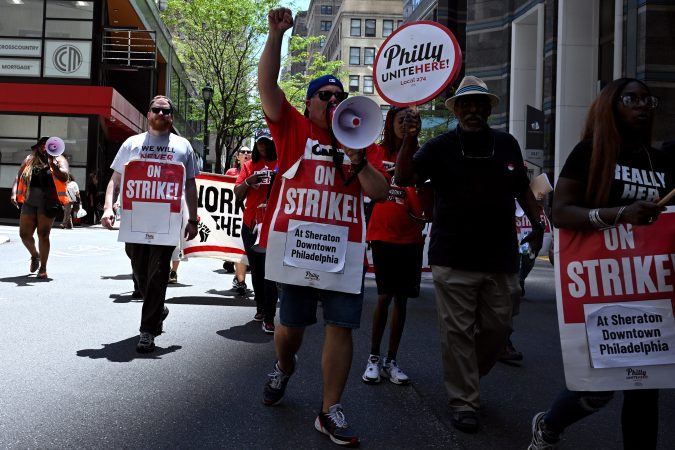
    Center City hotel workers at the Sheraton Philadelphia Downtown have been on strike since June 21, but they could soon be back at work.

    On Monday afternoon, Unite Here local 274, the union that represents the workers, announced that it had reached a tentative deal for a new contract for roughly 200 employees at the hotel, which includes raises and improvements to benefits.

    Workers were expected to vote Monday on whether to ratify the new deal. If they do, they will be back at their jobs on Tuesday, the union said.

    It’s the second time that this group of workers has gone out on strike in the last year as it negotiates for a new contract. Hotel employees of the Sheraton Philadelphia Downtown last walked off the job for four days in October.

    “When we said we were fighting for $30 an hour at the beginning of this campaign, a lot of people told us we were asking for the impossible,” Shafeek Anderson, a hotel steward, said in a union statement Monday. “With this victory, we have shown the whole industry that nothing is impossible when the workers stick together.”

    The Sheraton Philadelphia Downtown is managed by Aimbridge Hospitality and owned by CL Hotels. These businesses did not respond to a request for comment Monday afternoon.

    Unite Here local 274 has been negotiating new contracts for room attendants, cooks, servers, bartenders, dishwashers, and banquet staff across several Philadelphia hotels for over a year.

    Contracts expired in 2024, and new contracts have since been reached at Hampton Inn Philadelphia Center City-Convention Center, Sonesta Philadelphia Rittenhouse Square, the Sheraton Philadelphia University City Hotel, Hilton Philadelphia at Penn’s Landing, Wyndham Philadelphia Historic District, and Warwick Hotel Rittenhouse Square.

    The standard set in these new union contracts includes raises to $30 an hour by 2028 for non-tipped employees and an increase in employer contributions to worker pensions. The new contracts also cap the number of rooms a worker can be tasked with cleaning to 15 per day.

    The remaining hotel without a new contract is the Hilton Garden Inn Center City.

  • Philly’s school bus drivers and maintenance workers want higher pay

    Philly’s school bus drivers and maintenance workers want higher pay

    Philadelphia School District bus drivers, maintenance workers, cleaners, and tradespeople are entering contract season.

    Leaders of 32BJ SEIU District 1201, which represents 2,000 workers, are scheduled to begin talks with Philadelphia School District officials Thursday. Their current contract expires Aug. 31.

    The bottom line for members of 32BJ SEIU District 1201 is higher pay, officials said.

    Members’ current pay scale varies, from bus attendants, who are paid $30,762 annually, to building engineers, whose pay rate starts out at $51,155 and tops out at $77,832. The union’s highest-paid workers are its building construction workers, whose salary maxes out at $77,832.

    Tradespeople — bricklayers, HVAC mechanics, electrical mechanics, plumbers, and roofers — are paid $62,899 at the top of the pay scale.

    “We are the foundation of this district, and we’re not asking for the world here. We’re asking to not live in poverty, and we’re asking to help maintain our health insurance,” said Tim Finucan, 32BJ’s Pennsylvania state director.

    Wages are not the only issue. Union leaders are also fighting for “a more clear ladder of opportunity for our membership to advance within the school district,” Finucan said. 32BJ also wants to codify ways it can work with the district to fill vacant jobs in a system that struggles to find qualified engineers and trades workers, including partnering with community organizations, clergy, and others to spread the word about open jobs.

    “We want people to know if you can get into the school district, you know you’re going to have a good check, you know you’re going to have access to good health insurance, we know you’re going to have access to a pension,” Finucan said.

    Naima DeBrest, a district spokesperson, said in a statement that officials “deeply value” 32BJ members and “will diligently engage in good faith negotiations with the hope of securing a new contract as soon as possible.”

    ‘We got there’

    If you want to know what 32BJ workers mean to the district, think back to February, when a major winter storm dumped more than a foot of snow on Philadelphia, said Ronald Smith, a longtime district building engineer and member of the union’s bargaining committee.

    “The whole city was encased in snow and ice, and the engineers still had to be there, and we got there,” Smith said.

    Building engineers — who are in charge of the operations of district facilities, with responsibilities from keeping up with schools’ heating and cooling systems to making sure schoolyards are maintained — are still waiting for the extra pay they are contractually owed for working in those conditions, Smith said.

    “It was a slap in the face when we had to fight to get paid for that,” Smith said. “A lot of engineers are leaving the district — they feel disrespected. Some of the fights that we have to fight, we shouldn’t have to.”

    A too-small workforce affects the district and its workers in myriad ways, Smith said.

    “We’re bringing in new guys without the trainees having enough time to really learn the basics of the trade,” Smith said. “It’s not really fair to the trainee, it’s not fair to the schools. A lot of these buildings don’t have adequate staffing.”

    Despite friction in some areas, union officials are approaching talks with the district as partners, Smith and Finucan said. Officials are well aware of the district’s looming $300 million deficit, they said; 32BJ members have advocated for more funding for Philadelphia schools in City Hall and Harrisburg, and will continue to do so.

    But union member Sherrie Gordan said it is tougher and tougher to feed and house her three kids on what she earns as a cleaner in the district.

    “Even when I work overtime, so much gets taken out for taxes that it’s still not enough,“ Gordan said in a statement. ”Grocery prices keep going up, and my kids eat more every week. I spend $500 on groceries, but it’s gone in just a week. It’s not like it used to be when you could actually afford it.”

  • QVC’s on-air hosts aim to unionize as bankruptcy case continues

    QVC’s on-air hosts aim to unionize as bankruptcy case continues

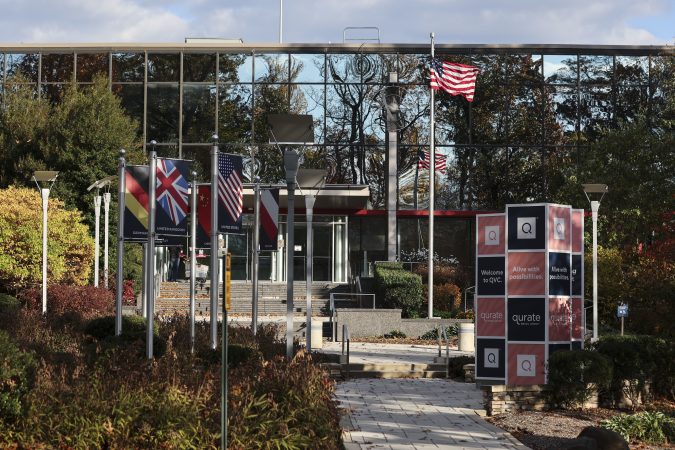
    QVC hosts are moving to unionize as the West Chester-based home shopping network reorganizes in Chapter 11 bankruptcy.

    A supermajority of the network’s 32 on-air hosts presented a petition to company management last week, announcing their desire to unionize and asking for voluntary recognition of the union, according to a statement from SAG-AFTRA, which the hosts intend to join.

    QVC management is reviewing the petition, spokesperson Matthew Goldstein said in a statement: “We respect the legal rights of all team members and are committed to following the appropriate process thoughtfully and responsibly.”

    On Tuesday, SAG-AFTRA — which represents 160,000 media professionals nationwide — filed an election petition with the National Labor Relations Board (NLRB) on the QVC hosts’ behalf, according to the federal agency’s website. If the employer does not voluntarily recognize the union, the petition can trigger an NLRB election and lead to a union’s formal certification.

    The hosts are taking steps to unionize as company higher-ups try to expedite the bankruptcy process, with the hope of emerging this summer.

    QVC pioneered home shopping 40 years ago and developed a loyal following of fans, mostly women, who bought clothes, home goods, kitchen appliances, tech products, and other wares at all hours.

    From its West Chester studios, the network and its smaller counterpart, HSN, still broadcast live, and customers can still call in to order merchandise. But the company has also expanded into online, social-media, and livestream shopping — with mixed results. They are up against stiff competition from the likes of Amazon and other ecommerce giants.

    After years of declining revenue and months of speculation, QVC Group filed for Chapter 11 protection in April, and submitted a reorganization plan that would slash its debt from about $6.6 billion to $1.3 billion within 90 days.

    In recent weeks, a group of shareholders has challenged the plan, putting the company’s expedited emergence in jeopardy, according to court documents.

    The QVC hosts, meanwhile, have other issues on their mind: They are concerned about artificial intelligence, and don’t want QVC using AI to imitate their image, voice, and likeness without consent or compensation, according to SAG-AFTRA, citing the hosts’ petition.

    The national union said the hosts are also calling for stronger job security in the face of AI, clearer paths for career advancement, greater say in company decisions, more equitable pay, and transparency around compensation.

    “We believe we should have meaningful input into our role in the network’s future, and that this is best accomplished through a formal collective-bargaining process,” the hosts wrote in the petition, according to SAG-AFTRA.

    SAG-AFTRA officials said they encouraged QVC management to voluntarily recognize the union and “avoid a costly NLRB process.”

    SAG-AFTRA national executive director and chief negotiator Duncan Crabtree-Ireland said in a statement that he applauded the QVC hosts’ “decision to stand together and seek a collective voice.”

    “These workers are at the heart of QVC’s success, connecting with audiences through creativity, authenticity, and innovation every day,” Crabtree-Ireland said.

    Goldstein, the company spokesperson, said the network’s hosts are “deeply valued team members and an important part of what makes QVC special.”

  • Whole Foods workers in Philadelphia voted to join a union in 2025. They just cleared their latest hurdle.

    Whole Foods workers in Philadelphia voted to join a union in 2025. They just cleared their latest hurdle.

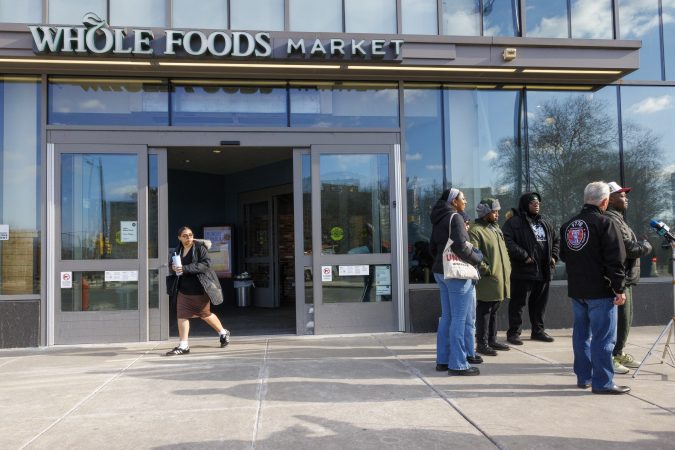
    Philadelphia Whole Foods workers cleared a major hurdle in their unionizing efforts this week, paving the way to negotiating their first union contract.

    Workers at the 2101 Pennsylvania Ave. store voted last year to join UFCW local 1776, becoming the first group within the Amazon-owned Whole Foods chain to unionize. But they have been caught in a procedural standstill for months.

    Whole Foods challenged the union election, citing multiple objections, including allegations that the union promised employees would get a raise if they voted for a union.

    A few months after the election, a regional director at the National Labor Relations Board dismissed Whole Food’s challenge — but the company pushed back, asking for a review by the national board. That brought the case to a standstill because the NLRB was without a quorum after President Donald Trump fired a board member.

    The board has since gained two new members, including one with ties to the Philadelphia area, Scott A. Mayer, a Villanova University graduate who has worked for locally headquartered concessions company Aramark and area law firms.

    This month, the board stood by the regional director’s conclusion upholding the union election, saying Whole Foods’ latest challenge “raises no substantial issues warranting review.”

    Wendell Young IV, president of UFCW local 1776, said Tuesday that the union had been expecting this outcome.

    The NLRB decision “completely vindicates the union and these workers, and there’s no reason at this point Whole Foods/Amazon shouldn’t sit down and begin bargaining right away, although I suspect they won’t,” Young said.

    A Whole Foods Market spokesperson said in an emailed statement that the company strongly disagrees with the board’s decision.

    During a hearing on the issue last year, the spokesperson said, Whole Foods argued that “restrictions on free speech and the union’s illegal conduct interfered with our team members’ right to a fair vote at our Philly Center City Store.”

  • Philly women make 89 cents for every dollar men make, new report finds

    Philly women make 89 cents for every dollar men make, new report finds

    Women working in Philadelphia continue to make less than their male counterparts, according to a new report from the Forum of Executive Women.

    While the gender pay gap in the city narrowed between 2015 and 2024, women in the local workforce still earn on average about 89 cents for every dollar men make, according to the organization’s annual report, citing Philly-specific research from the Economy League of Greater Philadelphia.

    And the pay gap is worse for women of color, the report found.

    “Persistent pay gaps do more than reduce annual income,” Meghan Pierce, forum president and CEO, wrote in the report. “They affect lifetime earnings, retirement security, access to capital, business formation, and the generational wealth of women and their families.”

    “Pay gaps impact who leads, who invests, and who builds lasting economic power in our region.”

    The gender pay gap is narrower in Philadelphia than the national average, which is roughly the same as it was in 2010. Across the country, women earn on average 81 cents for every dollar made by men, according to data from the Economic Policy Institute, a left-leaning nonprofit think tank.

    Because of the gap, working women in the U.S. collectively lose about $1.7 trillion in wages each year, according to the forum report, and each woman loses about $500,000 on average during their career.

    While the gender pay gap is smaller in Philadelphia, racial disparities persist.

    Compared to non-Hispanic white men, white women in Philadelphia earn 94 cents on the dollar, the report found, while Black women earn 64 cents, and Hispanic and Latina women earn 57 cents.

    Women in the city also remain concentrated in lower-earning professions, making up 76% of healthcare workers and 66% of education workers, two sectors where the median annual earnings was below $60,000, according to the report, titled “The Philadelphia Paradox.”

    While a pay gap persists for local women at every education level, some industries have narrowed the gap more than others in recent years, the report found: Finance, retail, and real estate saw their gender pay gaps narrow, while the gap widened in arts, utilities, and construction.

    When it comes to Philadelphia’s gender pay disparity, the report concluded: “Progress is real, but closing the remaining gap requires addressing the structures that determine who enters higher-paying fields, who advances within them, and who benefits from the systems that shape long-term economic security.”