Category: Jobs

  • Charles P. Baker III, celebrated cofounder of Baker Industries for the ‘least employable,’ has died at 101

    Charles P. Baker III, celebrated cofounder of Baker Industries for the ‘least employable,’ has died at 101

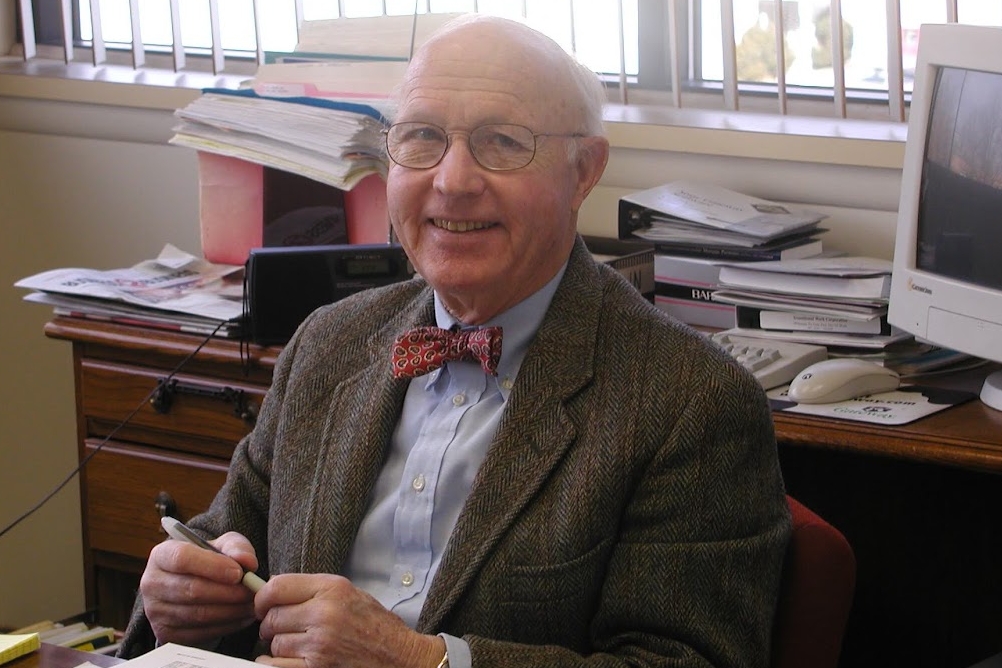
    Charles P. Baker III, 101, formerly of Radnor, celebrated cofounder of Baker Industries, longtime workplace for the “least employable,” former owner of the C.P. Baker & Co. chemical firm, Army veteran, national squash champion, mentor, and volunteer, died Wednesday, Sept. 16, of congestive heart failure at HarborChase assisted living community in Wilmington.

    Born in Philadelphia, Mr. Baker grew up in the old Colonial Hotel at 11th and Spruce Streets in Washington Square West. He and his wife, Louise, founded Baker Industries in 1980, and the workforce development nonprofit has hired, trained, and mentored more than 12,500 workers with physical and intellectual disabilities, substance use disorders, recent periods of incarceration, and housing insecurity who could not find jobs elsewhere.

    Their own son, Justin, lives with epilepsy and, when he could not find suitable employment years ago, Mr. Baker and his wife started their own two-person mail order packaging firm in their Strafford garage. Their son was their first hire.

    “We decided, if we’re going to start something like this, let’s go for the people who need it the most,” Mr. Baker told The Inquirer in 1998, “the ones who are least employable.”
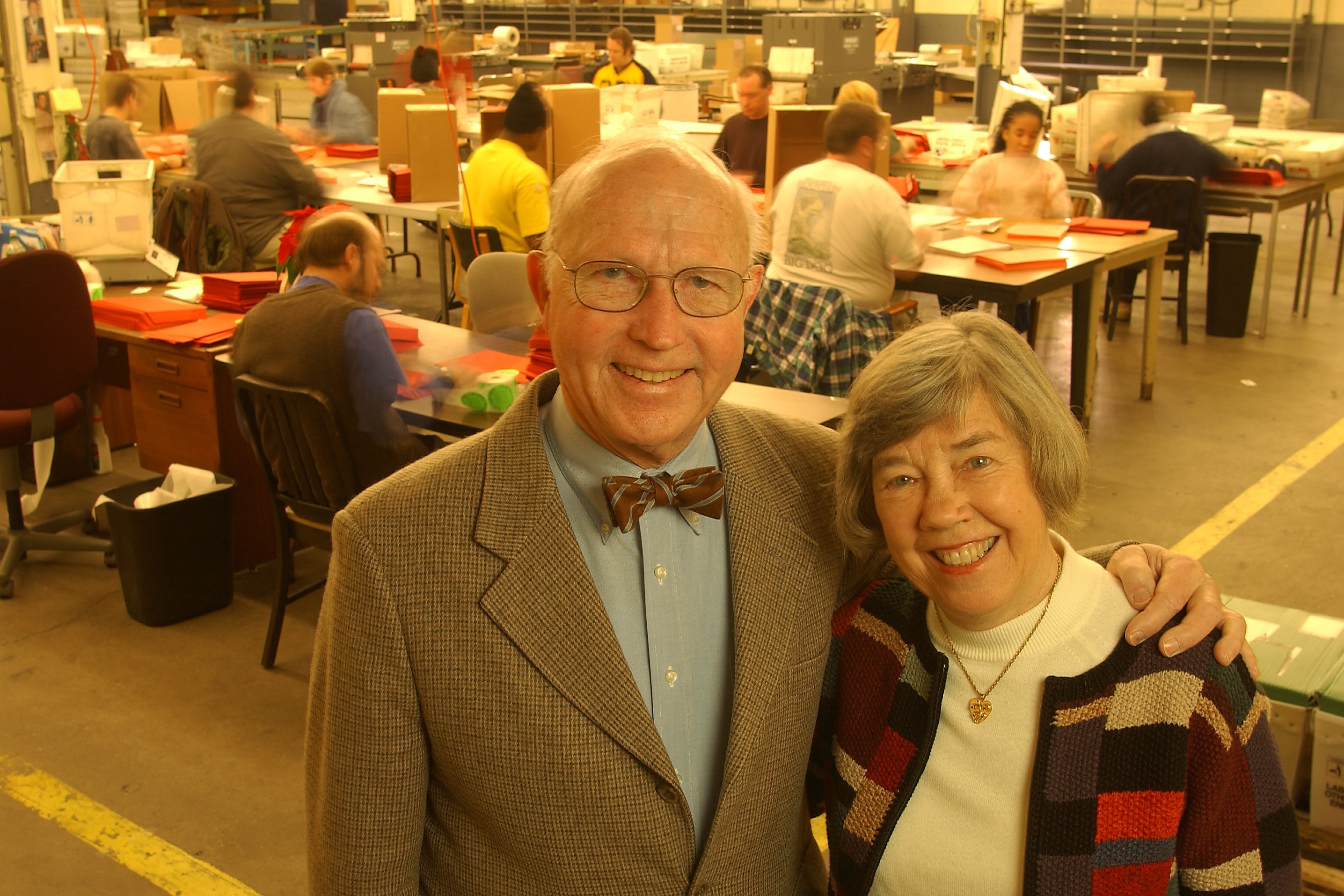
    Mr. Baker and his wife, Louise, stand inside their Baker Industries building in Malvern in 2003. Michael Bryant / Staff Photographer

    For nearly five decades, Baker Industries has contracted light industrial and office work from hundreds of businesses, and operated facilities in Philadelphia, Malvern, and elsewhere. Employees are paid an hourly wage, offered additional training, and encouraged to attend workshops, social events, and support group meetings.

    The company motto is “providing a steppingstone to regular employment,” and many workers have moved on to higher-paying jobs elsewhere. “We have a philosophy of work as rehabilitation,” Mr. Baker told the Daily News in 1988. “The goal is to show these people they can do a whale of a lot more than they think they can do.”

    Mr. Baker served as the unpaid president at Baker Industries until 2002 and then on the board of directors. In the 1950s, he assumed control of his family’s small chemical company, C.P. Baker & Co., and he expanded it before selling it in 1980.

    “Charlie and Weezie Baker believed there is healing in work,” colleagues at Baker Industries said in a Facebook tribute on his 101st birthday in June. “Not just jobs. Work. Showing up. Being part of something. Contributing alongside others.”

    Mr. Baker played many roles at Baker Industries.Baker Industries

    Turk Thacher, vice board chair at Baker Industries, said: “Charlie was beloved. He was kind to everybody.”

    Mr. Baker, his wife, and their company were featured often on TV shows, and in The Inquirer, the Daily News, and other publications. They won many awards for their community service and innovative business model.

    “I was grateful to have their guidance,” Nic Watson, president of Baker Industries, said, “and we will follow their example for years to come.”

    In 1991, the company was named an inspirational Point of Light by President George H.W. Bush. In 2004, Mr. Baker and his wife earned the legacy award for “community generosity” from the Chester County Community Foundation.

    “They went above and beyond their own self-interest,” a foundation official told The Inquirer then.
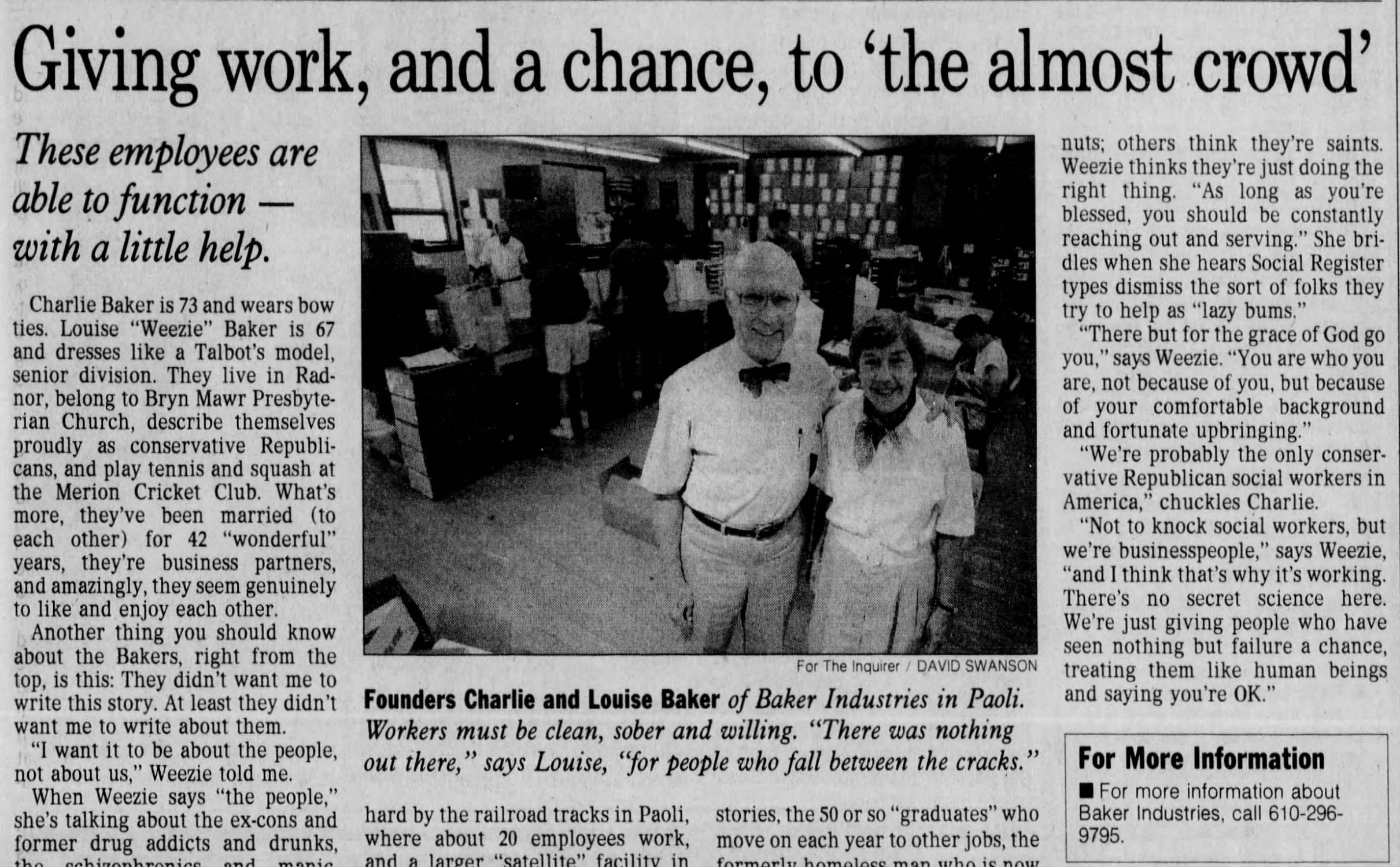
    This photo and article about Mr. Baker were published in The Inquirer in 1998.Newspapers.com

    Away from work, Mr. Baker was an avid squash player, skier, and sailor. He won the U.S. national hardball singles squash championship six times in the 80-and-older division from 2006 to 2016, skied into his 70s, sailed into his 80s, and played squash and tennis at the Merion Cricket Club until recently.

    He graduated from the U.S. Military Academy in 1946 and served more than seven years in the Army. He was stationed in Europe and rose to captain. His family called him a “relentlessly joyful spirit” in a tribute and said: “The world was a better place for his presence.”

    Charles Pitman Baker III was born June 24, 1925, in Philadelphia. His father, Charles Jr., was manager at the old Colonial Hotel, and Mr. Baker told stories of dropping water balloons on passing pedestrians from windows when he was very young and spending summers at the beach and on boats with the Ocean City Yacht Club.

    He was a star squash player at the Haverford School and known by classmates as “the Arm,” his 1943 senior yearbook said, “because of the vicious way he wields a racket.” His mother died when he was 11.
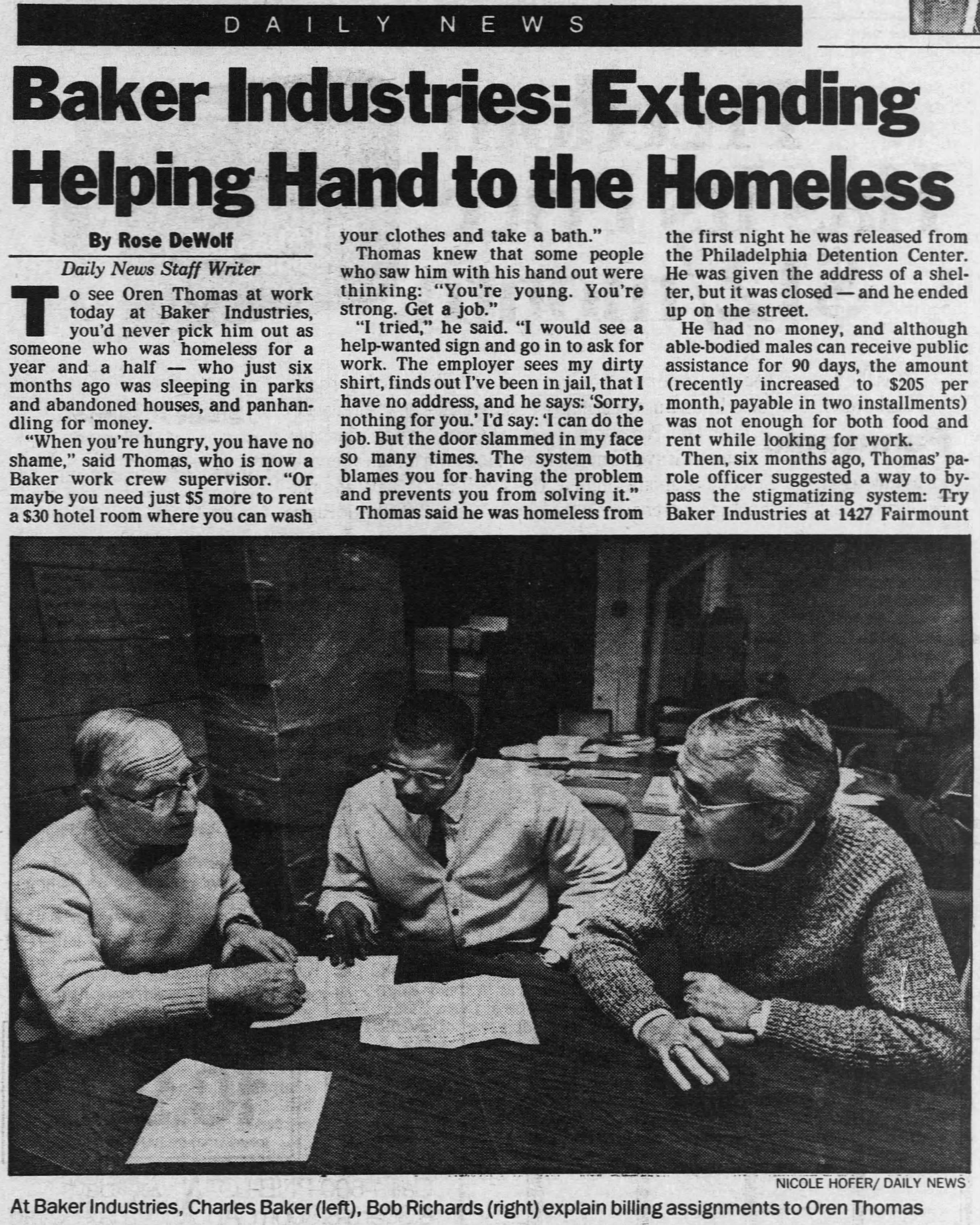
    This photo and article about Mr. Baker (left) appeared in the Daily News in 1990.Newspapers.,com

    He met Louise Wilhelm while water-skiing in Ocean City, and they married in 1955, and had sons Charles IV and Justin and a daughter, Sandra. His wife died in 2025.

    Mr. Baker and his wife attended Wayne Presbyterian Church, and he was known for his bow ties and wide smiles. He was funny, his daughter said, and liked to sing show tunes anytime anywhere, and write corny poems on birthday cards.

    “He was a wonderful dad who loved his family,” his daughter said. His family said in a tribute: “His legacy of service, humor, and kindness will live on for many generations to come.”

    His wife told The Inquirer in 2004: “Charlie has a kind heart.”

    Mr. Baker (front left) celebrated his 100st birthday in June 2025 with his family.Courtesy of the family

    In addition to his children, Mr. Baker is survived by four grandchildren, five great-grandchildren, and other relatives. Two sisters died earlier.

    Visitation with the family is to be from 10 to 11 a.m. Saturday, Oct. 17, at Wayne Presbyterian Church, 125 E. Lancaster Ave., Wayne, Pa. 19087. A celebration of his life is to follow. Bow ties are optional but encouraged, the family said.

    Donations in his name may be made to Baker Industries, 184 Pennsylvania Ave., Malvern, Pa. 19355.

    His wife told The Inquirer in 2004: “Charlie has a kind heart.”Baker Industries
  • Tom Corcoran, retired president of the Delaware River Waterfront Corp., has died at 82

    Tom Corcoran, retired president of the Delaware River Waterfront Corp., has died at 82

    Tom Corcoran, 82, of Philadelphia, retired president of the Delaware River Waterfront Corp., founding president and former chief executive officer of the old Cooper’s Ferry Development Association in Camden, former business administrator for the city of Camden, onetime Peace Corps program director in West Africa, mentor, and poetry enthusiast, died Sunday, Aug. 30, of complications from dementia at his home in Center City.

    Born in Chicago and a graduate of Loyola University Chicago, Mr. Corcoran earned a master’s degree in public administration at the University of Pennsylvania’s Wharton School in 1975 and never strayed far from the Delaware River after that. He spent 25 years, from 1984 to 2009, as president and CEO of the Cooper’s Ferry Development Association on the Camden waterfront, and eight years, from 2009 to 2017, as president of the Delaware River Waterfront Corp. in Philadelphia.

    He championed what he called “the two cities, one waterfront strategy” and was especially adept, former colleagues said, at political maneuvering and marshaling funds and projects. Former colleagues on both sides of the Delaware called him “a tireless public servant,” “a visionary urban planner,” and an “economic development strategist with short-term practicality and long-term vision.”

    In Camden, Mr. Corcoran added more than $550 million of investments to the waterfront area and oversaw the development of what is now the Freedom Mortgage Pavilion, the Adventure Aquarium, Wiggins Waterfront Park, the Riverlink Ferry, several office buildings, and other projects. Another New Jersey developer called him a “cult figure” among state lawmakers.

    Mr. Corcoran talks at City Hall in 2011 about creating a string of parks along the Delaware River.Akira Suwa / Staff Photographer

    He said education as well as development was key to building a strong local economy and told The Inquirer in 2006: “Until Camden has a good-quality education system, we’re not going to be able to attract families with school-age children back to the city.”

    Dana L. Redd, former Camden mayor and current president and CEO of Camden Community Partnership, said on Facebook that Mr. Corcoran often slept on a cot in his Camden office and left daily handwritten messages that his project managers called “love notes.” Redd said: “He challenged a generation of urban leaders to think bigger, believe in Camden, and dream about what the city could become.”

    In Philadelphia, he initiated the Race Street and Washington Avenue pier parks, the Spruce Street Harbor Park, a miles-long bike and walking trail, and the I-95 overpass park to reconnect Center City with its waterfront. “The more we look at the concept of one waterfront, two states, the more opportunities we’re going to find,” he said when he left Camden for Philadelphia in 2009.

    When he retired in 2017, he said: “Instead of swinging for the fences, we decided we would hit singles and doubles and bunts and sacrifices, steal bases, and do whatever we could. Eventually, we thought, we’d always get back to the center.”

    Mr. Corcoran (left) shakes hands with then-Mayor Michael Nutter in 2009 after joining the Delaware River Waterfront Corp. Alejandro A. Alvarez / Staff Photographer

    Longtime colleague and friend Bill Hankowsky said: “It is truly unique that a single individual could have the vast impact across two facing waterfronts in the center of one of the country’s major urban metros.”

    Earlier, Mr. Corcoran served nine years, from 1975 to 1984, in Camden city government, rising from administrative aide to business administrator. In 2001, he earned a Good Neighbor Award from the Camden County chapter of the American Red Cross for his “integral role in the revitalization of the city.”

    In the 1960s, Mr. Corcoran joined the Peace Corps after college and spent seven years in Africa building dams and wells with local farmers. He spoke French and the local African language, and rose to program director.

    “What an exemplary life he led,” a former Peace Corps colleague said in a tribute, “without fanfare or drama and always with service to others.”

    Mr. Corcoran (right) led visitors on a tour of the Washington Avenue pier park in 2014.Viviana Pernot / Staff Photographer

    Off the waterfront, Mr. Corcoran was enthralled by poetry and his Irish heritage. He liked to recite lines from Ulysses and other poems, and sing songs from the old country.

    “He was a true Renaissance man who had a remarkable vision for communities and people,” a former colleague said. Former colleague John Grady said: ”Tom was a giant, unassuming, persistent force for the local community.”

    Thomas Patrick Corcoran was born May 13, 1944. He earned a bachelor’s degree in political science at Loyola in Chicago and rode camels to work in Africa during his time in the Peace Corps.

    He met Robin Lowey at a dinner society event, and they married in 2003, and lived in Camden and Philadelphia. They enjoyed traveling and dining together, and hashing over world affairs.

    Mr. Corcoran and his wife, Robin Lowey, married in 2003. Courtesy of friends

    In 2009, he said he often peered through a telescope at the Philadelphia waterfront from his home in Camden and wondered how he would develop Penn’s Landing. “He’s the one who brought together the business leaders and was able to steer through difficult political waters,” then-Camden County freeholder Jeffrey Nash said in 2009.

    His wife said: “He was a kind and generous gentleman. He was a good, nice person.”

    In addition to his wife, Mr. Corcoran is survived by three sisters, a brother, and other relatives.

    Services were held Thursday.

    Donations in his name may be made to the Caplan Caring Difference Fund at the Penn Memory Center, Office of the Treasurer, Box 71332, Philadelphia, Pa. 19176.

    Mr. Corcoran spent seven years in the Peace Corps after college. Courtesy of friends
  • Malvern medical-tech company is slashing jobs as part of cost-cutting campaign

    Malvern medical-tech company is slashing jobs as part of cost-cutting campaign

    Tela Bio, a Malvern-based medical-technology company, plans to cut about 20% of its workforce.

    The layoffs, most of which are to take place this month, will reduce the company’s headcount from 201 full-time employees to 160, according to an SEC filing last week. The locations and types of jobs affected were not specified. Company executives say the move is part of a larger plan to slash Tela Bio’s annual operating expenses by about $17 million.

    CEO Heather Getz said in a statement that they are “implementing a broader initiative to strengthen our cost structure and position Tela Bio for long-term success.”

    Headquartered in the Great Valley Corporate Center, Tela Bio makes biological products for soft-tissue repairs, including hernia surgeries and ab-wall reconstructions. Among its products: OviTex tissue, made from sheep stomach, which Tela Bio says promotes natural healing while reducing plastic in the body.

    Last year, Tela Bio reported more than $80 million in revenue, up 16%, which the company attributed to an increase in customers and higher sales overseas, according to earnings reports. But with $88 million in operating expenses, the company continued to operate at a loss, as it has since its founding in 2012.

    Tela Bio, which went public in 2019, had accumulated a deficit of more than $421 million as of June, according to its latest quarterly report.

    Company executives expect these layoffs to cost about $1.5 million in severance and other employee payouts, according to the SEC filing.

    On Monday, the company also parted ways with Roberto Cuca, who had served as chief financial officer and chief operating officer since 2021. Per the SEC filing, Getz, the CEO, will become the company’s “principal financial officer.”

    Tela Bio executives said they’ll provide more information on cost-cutting efforts on the company’s next earnings call, scheduled for November.

    “We are focused on disciplined execution, strengthening the business, and creating a more efficient organization positioned to deliver sustainable long-term growth,” Getz said, adding that executives ”expect this initiative to extend our cash runway into 2028.”

    Getz was appointed CEO last month, succeeding Tela Bio cofounder Antony Koblish. Previously, Getz was executive vice president and chief financial and operations officer at Butterfly Network, a portable-ultrasound company.

    In announcing Getz’s hiring, Tela Bio executives said she made “transformative changes in [Butterfly Network’s] strategy, capital allocation, cash runway and investor relations while building a performance culture.”

    Butterfly Network remains unprofitable, but has seen recent revenue increases.

  • Vanguard sells one of its Chester County offices for $17 million, but will stay put for now

    Vanguard sells one of its Chester County offices for $17 million, but will stay put for now

    Vanguard has sold a Tredyffrin Township office complex for $17 million — with no plans of moving out.

    Last month, the Malvern-based investment firm sold its 22-acre property at 1041 W. Valley Rd. to another Malvern-based company, E Kahn Development, according to Chester County property records.

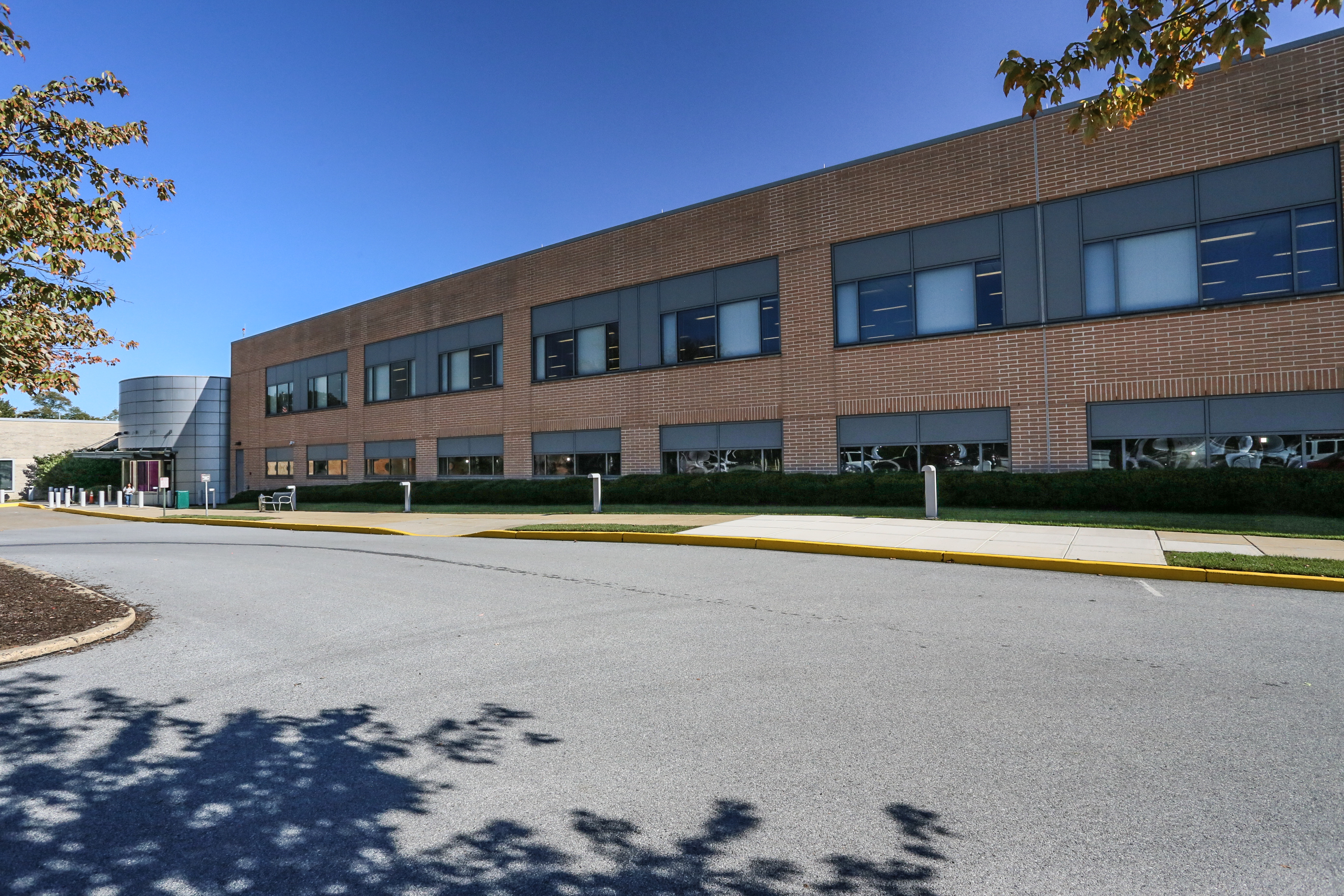
    But Vanguard plans to continue leasing the 323,000-square-foot space, which sits just off U.S. Route 202, about eight miles from its main campus in Malvern. Hundreds of Vanguard IT employees work at the complex, called the Robert A. DiStefano (RAD) Technology Center.

    Vanguard’s RAD complex in Tredyffrin Township has been sold for $17 million, but Vanguard will continue to lease the space for its IT operations.Courtesy Vanguard

    The sale and lease-back “reflects Vanguard’s focus on providing work environments that support and inspire our crew as they remain focused on our end investors,” a company spokesperson said in a statement. “Vanguard crew will continue to work at the RAD Technology Center through at least 2028, and there are no immediate plans to move crew who work there today.”

    Eli Kahn, president and founder of E Kahn Development, said in an email that his company has “no immediate plans for the buildings.”

    Earlier this summer, Vanguard closed a leased office at 45 Liberty Blvd. in Malvern, moving employees there to the company’s 87-acre main campus.

    Vanguard employs about 20,000 employees, 12,000 of whom are based in Malvern. About 600 IT staffers work at RAD, Vanguard’s only complex with a Wayne address.

    The company is expanding its IT staff worldwide, including at a new office in India, but has said its U.S. workforce will not be impacted.

  • ‘We weren’t building power’: Inside the takeover of an influential Philadelphia labor council

    ‘We weren’t building power’: Inside the takeover of an influential Philadelphia labor council

    James A. Williams Jr. walked his first picket line when he was 8, growing up in the 1980s in Northeast Philadelphia as the son of a labor leader.

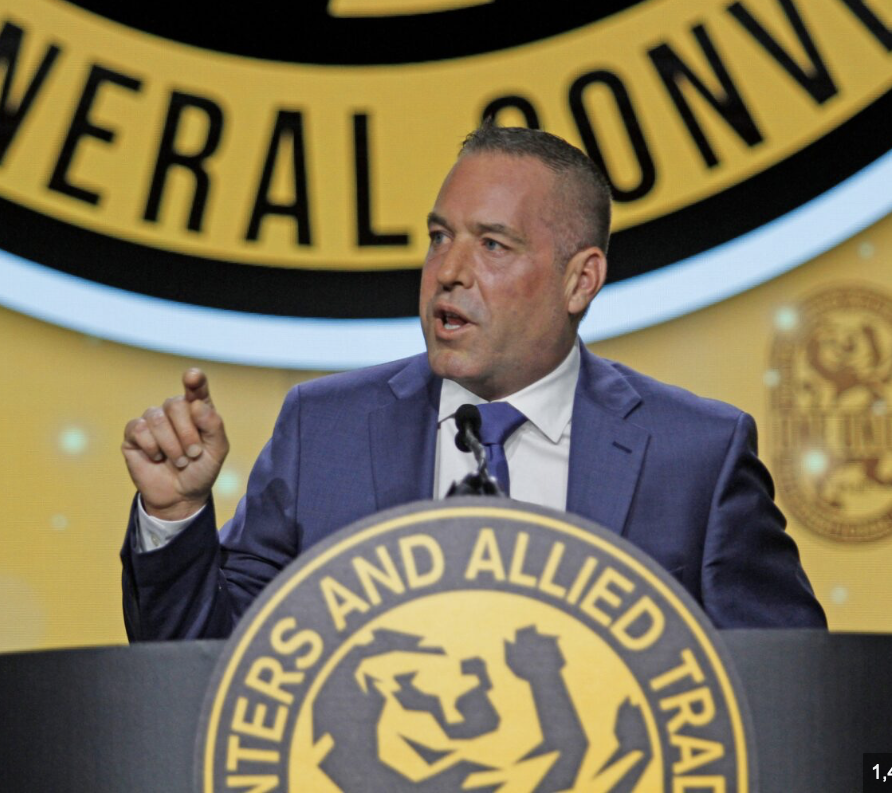
    He followed in his father’s footsteps, joining Glaziers Local 252 — the same union of which his great-grandfather was a charter member when it was founded 100 years ago. Also like his father, Williams rose to the top of the 140,000-member International Union of Painters and Allied Trades, becoming general president in 2021.

    Yet, even as Williams, 48, known as Jimmy, has broadened his focus to national issues — including Trump administration policies he sees as anti-labor — his attention diverted back to the city this summer when he ordered a review of his union’s regional governing body in Philadelphia, District Council 21.

    Seeking to evaluate DC 21’s recent merger with its counterpart in North Jersey, Williams says he found declining membership, excessive compensation for certain staff, and a lack of transparency.

    “It was obvious that we weren’t building power,” he said in an interview. “If anything, we were operating outside of our own laws and our own rules.”

    So Williams appointed a trustee to take control of the district council, removing the union’s elected business manager, Bernie Snyder, from his position and suspending other officers. Williams’ trustee on July 24 hand-delivered a letter — a copy of which was obtained by The Inquirer — with this news to DC 21’s union hall on Southampton Road in the Far Northeast, citing “widespread financial malpractice” and other governance issues.

    Williams said his review did not find evidence of theft or fraud: “The case you have here is mismanagement.” Snyder could not be reached for comment.

    Such trusteeships are not unheard of. They have been imposed on more than 20 Philadelphia-based unions since 2000, according to U.S. Labor Department records.

    But DC 21 — which is affiliated with 11 unions in Pennsylvania, New Jersey, and Delaware representing 5,600 painters, glaziers, drywall finishers, wall coverers, and glass workers — is not just any union. It is one of the largest members of the politically influential Philadelphia Building and Construction Trades Council, which is a close ally of elected officials ranging from Mayor Cherelle L. Parker to Gov. Josh Shapiro. In 2023, President Joe Biden and Vice President Kamala Harris each visited a training site affiliated with DC 21.

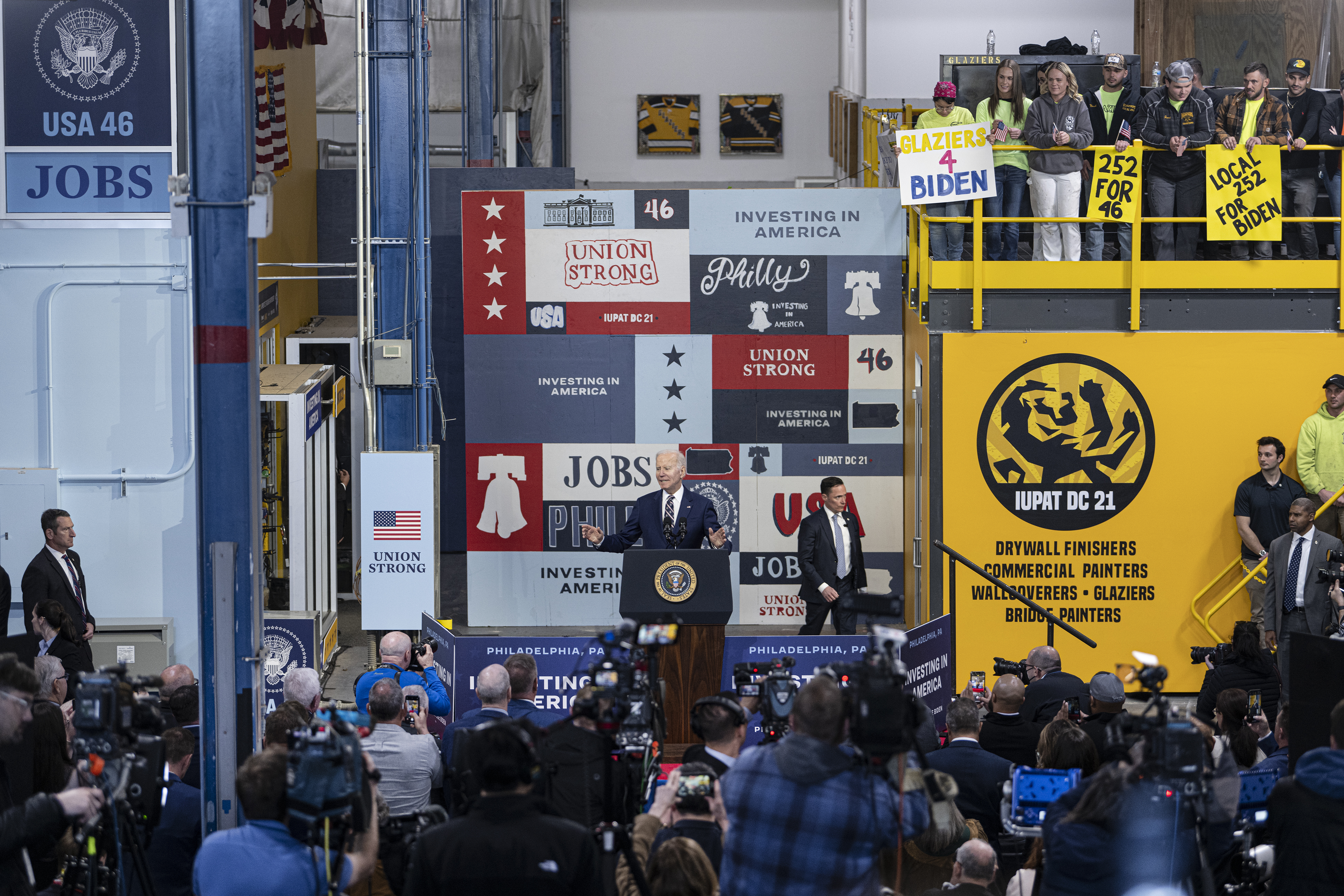
    President Joe Biden spoke at the Finishing Trades Institute in Northeast Philadelphia in March 2023.Jose F. Moreno / Staff Photographer

    Adding to the intrigue is the international president’s close ties to the district council and the broader Philly labor movement. His father, James Williams, once led Glaziers Local 252, and his uncle Ralph Williams was business manager of the Philadelphia building trades council in the 1980s. Beyond his family ties, Williams has described former DC 21 business manager Joseph Ashdale, a fellow glazier, as his mentor.

    “It had to be serious for him to have done it [taken control of DC 21],” said a local building trades source who spoke on condition of anonymity to speak candidly about a sensitive labor issue. “It’s drawing attention to his home local. It’s personal when it’s your own local.”

    Some in the world of organized labor did not see it coming. “That’s shocking to me,” State Sen. John Kane (D., Delaware), a former business manager of Plumbers Union Local 690, said of Snyder’s ouster.

    Susan Schurman, a professor at Rutgers University’s School of Management and Labor Relations, said oftentimes one faction of a union will level accusations of wrongdoing against a rival group in an effort to gain power.

    But Schurman, who reviewed Williams’ letter at The Inquirer’s request, said she was “inclined to think” that is not the case here. “Assuming what is said in the letter is accurate, when you have a declining membership and you’re raising the compensation and other things for officers and staff, you got a problem,” Schurman said.

    Williams said he was not motivated by politics. “It was difficult because of relationships and, you know, long-standing roots,” he said, adding that he had worked with Snyder, a painter by trade, for 25 years. “But it was also more necessary in order to change the culture for our membership here.”

    ‘I’d be angry’

    That change — to center the organization around members, not staff — is needed not just in Philadelphia but across the union, Williams says. He wants members to become “active participants” in the organization.

    “As a whole, people need to be held accountable and kicked in the a— to push forward, represent the labor movement, and display their potential power,” Gregg Smith, the Hanover, Md.-based union’s general secretary-treasurer, wrote in an internal newsletter this summer.

    Williams has described Joseph Ashdale, former DC 21 business manager, as his mentor.Clem Murray / Staff Photographer

    But as Williams seeks to empower members, some in DC 21 say they are not getting enough information from leadership. “Everybody’s pissed off,” one member told The Inquirer, speaking on condition of anonymity out of fear of retribution.

    Williams has held several meetings with members in recent weeks, including one at the Northeast Philly union hall on Aug. 5. “They basically avoided any questions,” the member said. “Where did all the money go? Nobody will tell ya nothing.”

    When DC 21 posted about the trusteeship on Facebook, one member responded, “How many times does our membership have to be victimized[?]”

    That frustration is understandable, Williams said. “There’s some angry members,” he said. “And think about it, I’d be angry. I’m working my a— off every day, and I expect that those that I elect are capable and are following the rules, right? And it’s just not what happened here.”

    19% decline in membership

    The takeover comes after DC 21 lost 19% of its membership in just two years, falling from 6,977 in 2023 to 5,621 last year, according to U.S. Labor Department data.

    “That’s huge,” the building trades source said. “You don’t see drops like that, that quickly.”

    Painters unions in other big cities did not see a similar drop-off over that two-year period. In New York, membership in District Council 9 held steady around 7,600 people. In Chicago, DC 14’s membership fell by 4% to about 3,900. DC 51 — which represents workers in Washington, D.C., Virginia, and Maryland — saw a 37% increase to 1,600 members.

    (function(){function e(){window.addEventListener(`message`,function(e){if(e.data[`datawrapper-height`]!==void 0){var t=document.querySelectorAll(`iframe`);for(var n in e.data[`datawrapper-height`])for(var r=0,i;i=t[r];r++)if(i.contentWindow===e.source){var a=e.data[`datawrapper-height`][n]+`px`;i.style.height=a}}})}e()})();

    In his July letter to members announcing the takeover, Williams said DC 21’s organizing department “has no discernible targets, strategic plans, or campaigns while membership declines and trade jurisdictions are undefended.”

    In the interview, he also pointed to a slowdown in regional construction. But the problem runs deeper, he said. Going back to 2010, Williams said, the union’s membership in Pennsylvania and New Jersey has declined by 2,000 people.

    Even in a region known as friendly to organized labor, more work is being performed by “open-shop” contractors that hire both union and nonunion labor, he said, adding that workers are increasingly being “misclassified” as independent contractors.

    “Philadelphia, New Jersey are right in the crosshairs for where organized labor needs to organize power and grow,” Williams said.

    Allegations of excessive pay

    Even as DC 21 lost members, it provided compensation packages to officers and certain staff that were inconsistent with the union’s bylaws, the letter said. That included $300,000 for elected staff over a two-year period in excess of what was allowed under the bylaws, according to Williams.

    Labor Department records reviewed by The Inquirer shed additional light on the union’s spending.

    The DC 21 staff’s average gross salary was $116,000 last year, a 14% increase from 2023. DC 21 employees’ average salary for 2025 was the highest of any of the 10 district councils in IUPAT’s Eastern Region, including New York, which paid an average of $109,356.

    DC 21 had been facing challenges even before the recent shake-up.

    Membership had been sliding for years when the union merged in 2022 with District Council 711 in North Jersey. (DC 21 already had a presence in South Jersey.) At the time, DC 21 was led by Ashdale, a former longtime chair of the Philadelphia Parking Authority.

    Ashdale retired in 2023 and was succeeded by Fran McLaughlin. Snyder was elected business manager the following year and served in that role until his ouster by the international union in July.

    The newly appointed trustee is Brian Courtien, a former business manager of District Council 51 in Maryland.

    He has to do two things, said Rutgers’ Schurman: dig into the union’s books and fix anything that was done “inappropriately,” and then try to ease rank-and-file members’ concerns about how their dues are being spent.

    “The trustee has to kind of manage a process of bringing calm and order back to the organization,” she said.

    Once that work is complete, the union will elect new leaders.

    For Williams, effecting change starts with ensuring members understand they have agency in the organization. “Their bylaws are theirs; they’re not their leaders’. Their contracts are theirs. They’re not their employers’ or their leaders’.” he said.

    “Having our rank-and-file at the center of everything we do,” he said, “from political endorsements to contract negotiations to union governance, that’s the culture we’re trying to build within our organization.”

  • Gen Zers like what Philly has to offer, but they want better pay and more work opportunities, survey says

    Gen Zers like what Philly has to offer, but they want better pay and more work opportunities, survey says

    Gen Z has established a foothold in the workplace, and as these workers become a bigger part of Philadelphia’s workforce, they’re increasingly shaping the economy.

    So what do Philadelphia’s Gen Zers think is a good job?

    The perhaps unsurprising answer: one that allows advancement opportunities, high pay, and employer-funded healthcare benefits, as well as work-life balance and boundaries. That’s the finding of a new report from the Pew Charitable Trusts.

    And for some Gen Zers Pew heard from, pursuing a job in their field means looking beyond Philadelphia. Outside of healthcare, and some opportunities in law and engineering, they say, other desirable industries don’t seem to be hiring much here.

    “Understanding their attitudes, their perspectives about work, about what a workplace should be, what their feelings are about work-life balance” is important, said Thomas Ginsberg, author of the report on Gen Z workplace attitudes.

    Released Wednesday, the report is based on focus group discussions that took place last year with 54 Philadelphians aged 18 to 29.

    They’re skeptical about what’s learned in college and want to build up more hard skills. And they see work as a key to living well, not as the reason to live.

    “They’re not at all reticent about working hard,” Ginsberg said. “What they’re doing is questioning what’s the ultimate goal of ‘work hard.’ It’s to have an affordable personal life, in their view.”

    But participants in the survey expressed that “jobs today often don’t deliver that,” he said.

    “You work hard and you still can’t buy a house,” Ginsberg said. “Those two things are coming together pretty starkly for this group.”

    Gen Zers looking outside Philly for good, flexible jobs

    Gen Z Philadelphians want flexible work hours and perhaps the freedom to go to the dentist without requesting time off from work.

    They want boundaries when they’re off the clock, so they can maintain hobbies and relationships. But they also want some in-office time to learn from colleagues.

    “I don’t live to work. I work to live. So there needs to be that distinction between the two,” one participant said.

    Much of Philadelphia’s Gen Z population works in healthcare, social assistance, and education services, reflecting the city’s eds and meds focused economy.

    Survey participants interested in healthcare jobs said there were plenty to go around. Others looking outside that field said there aren’t enough good job opportunities.

    In particular, they said, jobs in tech, finance, and the arts seem more scarce. They said New York and Washington, D.C., seem to have more opportunities in those fields.

    And while cost of living and housing seems lower in Philadelphia than in other East Coast cities, jobs here generally pay less, they say.

    Still, they like much of what the city offers for nonwork hours, from the social life to the sports, arts, and transportation. SEPTA, PATCO, and NJ Transit attracted some Gen Zers to the area in the first place, the report said.

    College builds contacts, not skills, Gen Z says

    A little over half of Philadelphia residents between the ages of 25 and 29 had a bachelor’s degree between 2020 and 2024 — a higher share than residents older than them. But Pew found this age group has reservations about whether college provides what they need for career advancement.

    “This age group is the highest-educated age group that we can measure … and even so, they’re only marginally positive about the value of college education,” Ginsberg said.

    Temple University students on graduation day on May 6.Alejandro A. Alvarez / Staff Photographer

    College-educated Philadelphians surveyed said their higher education was valuable for building a professional network, Ginsberg said, but not as much for hard skills. They said they want more training in skills like coding, data analytics, AI, and industry-specific software. Some said they know they will need a graduate degree to advance.

    Those without a degree felt they could get those hard skills without college, said Ginsberg, pointing to the availability of specialized programs and microcredentials.

    Still, those without an undergraduate degree said that they felt like employers favored potential hires who had gone to college and that they could have benefited from learning soft skills such as public speaking, networking, and interviewing in a college setting.

    Gen Z doubts the value of retirement benefits

    Ginsberg noted that the Gen Z respondents expressed skepticism about financial institutions and retirement, which he wasn’t expecting. Some said they had purposely forgone their employer’s 401(k) plan or couldn’t afford to set money aside to retire. Some said they felt more confident investing money on their own.

    “Gen Z has lived through two economic shocks in this country,” Ginsberg said. They’re also facing record levels of college debt, and high inflation.

    “They’re translating that, to some degree, into questioning whether the institutions of our economy actually are doing right by them.”

  • This taxpayer-funded warehouse is key to Philly port’s expansion. But who gets to work there?

    This taxpayer-funded warehouse is key to Philly port’s expansion. But who gets to work there?

    Cleo Winfield has worked at a warehouse located inside the Packer Avenue Marine Terminal in South Philadelphia for 22 years, stacking bananas and other cargo that are unloaded from ships docked on the Delaware River.

    Now his job is at risk.

    The warehouse, currently operated by an affiliate of Holt Logistics Corp. and staffed by members of a longshoremen’s union, is expected to be razed to make space on the terminal to stack more shipping containers.

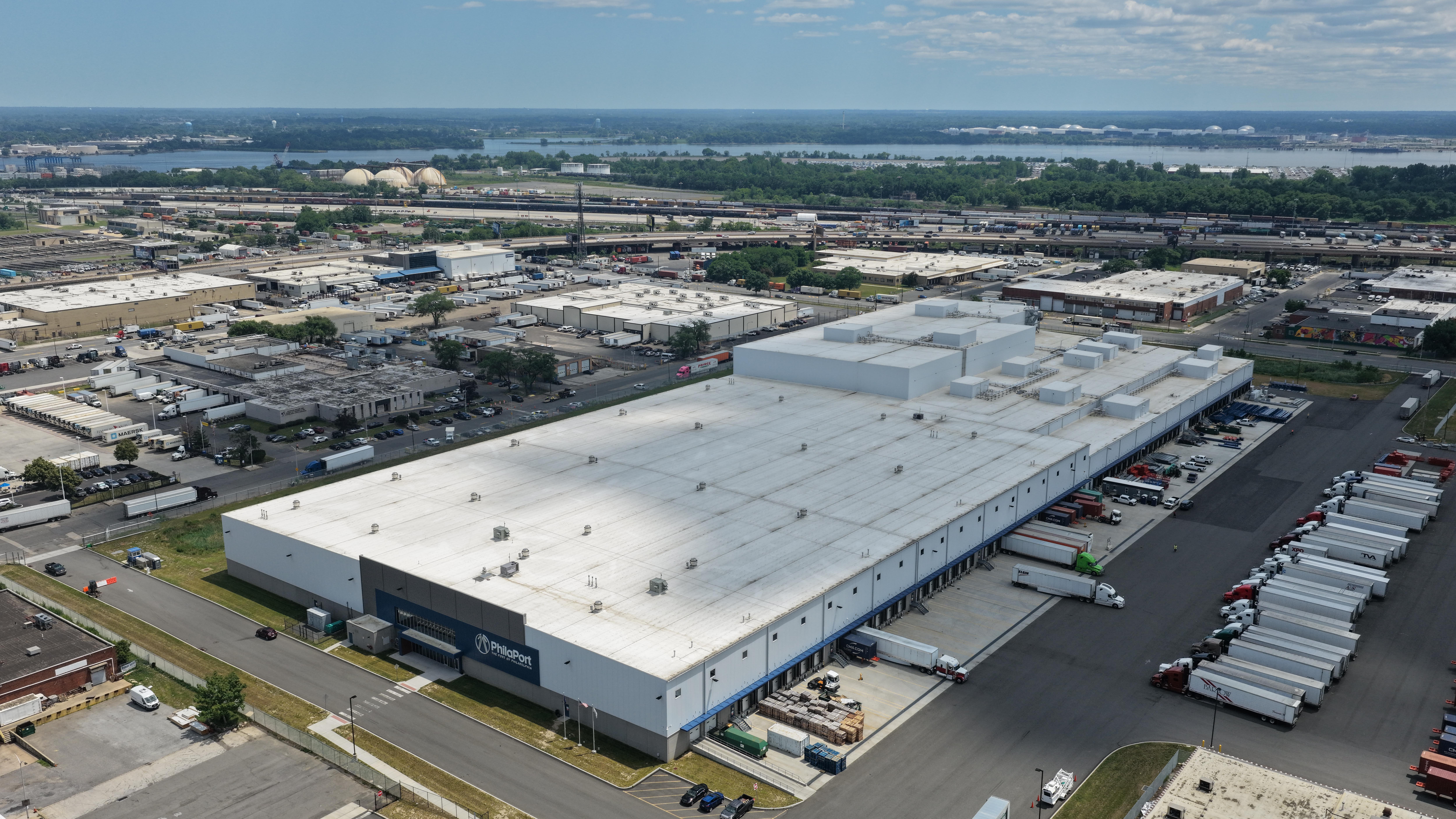
    As part of a port development plan, the Philadelphia Regional Port Authority (PhilaPort) — the Pennsylvania state agency that owns the city’s seaport facilities and leases them to private tenants — has built a new taxpayer-funded, Holt-operated warehouse a mile from the Packer Avenue terminal.

    Gloucester City-based Holt says it has a deal to staff the new facility with workers represented by Teamsters Local 929. Holt has longshore work available for the members of International Longshoremen’s Association Local 1291, the company says, but it has been unable to reach an agreement with the union. A contract extension expired in June.

    The ILA counters that such an arrangement would strip Winfield and 30 other warehouse workers of their seniority — sacrificing wages and benefits they’ve accrued over the years.

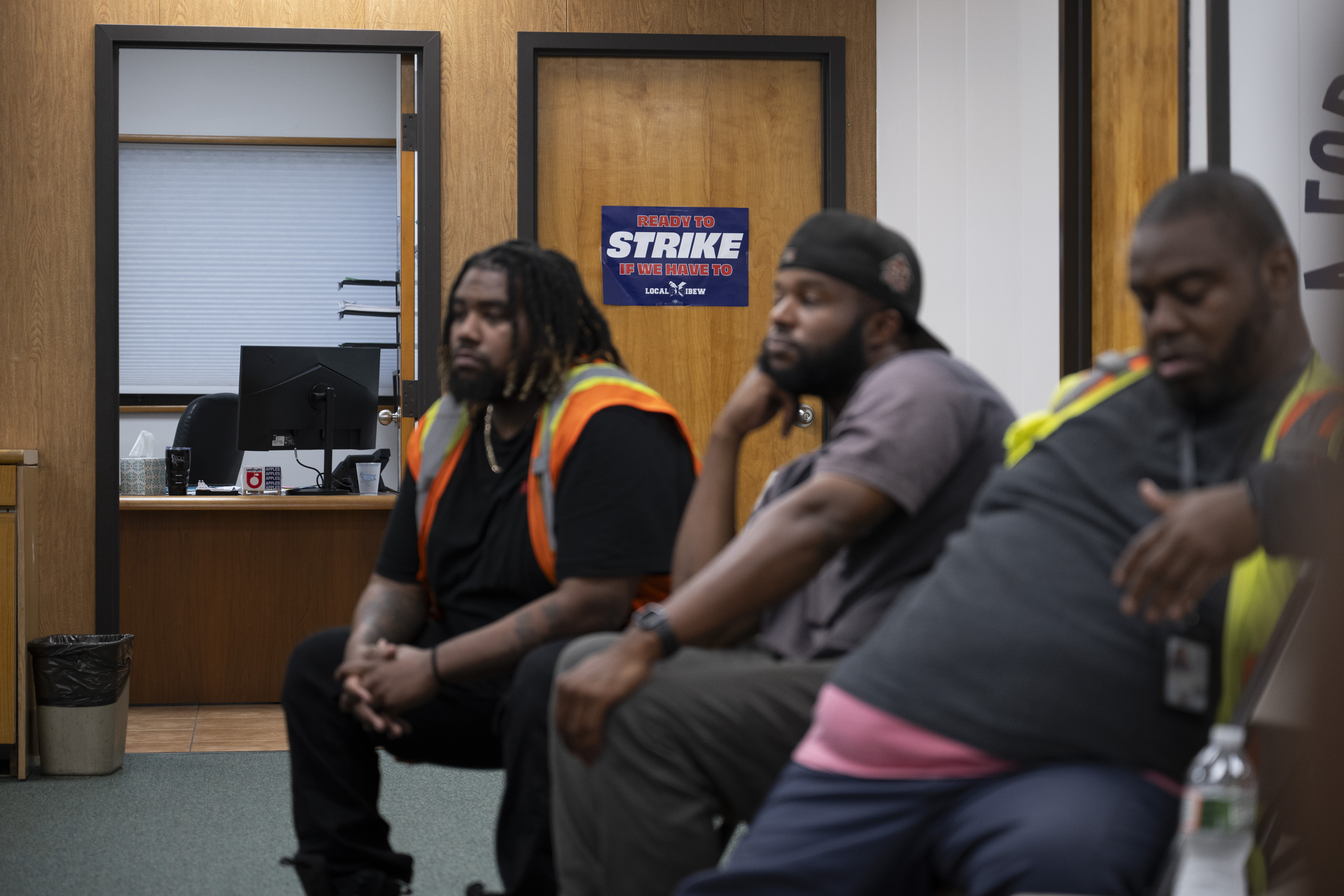
    He and the other ILA members who attended Monday’s union meeting in Port Richmond voted unanimously to authorize a potential strike “if and when necessary,” a development that would require approval from their parent organization.

    International Longshoremen’s Association Local 1291 members attend a union meeting.Joe Lamberti / For The Inquirer

    “Been there so long. That’s really all I know, man,” said Winfield, 57. “Raised my family with that job, put my son through college, man. I’m still paying the student loan on that. … I just want to be able to take care of my family.”

    Holt said in a statement that the workers are all “productive and hardworking ILA members.”

    “To be clear, there is more than enough terminal and stevedoring work for these men at Packer, and we remain interested in bringing them on if the ILA agrees,” the company said.

    Regardless of the outcome, the episode has laid bare growing pains at the Port of Philadelphia, which has seen hundreds of millions of dollars of public and private investment over the past decade — as well as disputes over competition and labor. That includes $85 million in state funds that were allocated to the new 165,500-square-foot warehouse, according to PhilaPort. Holt invested $81 million in the building.

    Boise Butler, president of ILA Local 1291, said he wants Holt to be a healthy employer. “But don’t screw them,” he said, motioning to his members. “Don’t screw us. OK? Because it’s not necessary.”

    Port development

    Philly’s port is relatively small compared to the biggest U.S. container ports, but it’s seen steady growth in recent years and is a major gateway for refrigerated cargo, especially fresh fruit.

    Container volumes have more than doubled since 2016, from about 400,000 units that year to almost 900,000 in 2025.

    During that time, the U.S. Army Corps of Engineers completed the three-decade-long deepening of the Delaware River from 40 to 45 feet, which allowed the port to accommodate bigger ships.

    Leo Holt, president of Holt Logistics Corp., at the the Packer Avenue Marine Terminal in South Philadelphia in April 2025.Tom Gralish / Staff Photographer

    And Democratic Gov. Tom Wolf’s administration invested more than $500 million in Philadelphia’s port expansion. That included more than $120 million for a distribution center near Packer Avenue featuring two warehouses totaling 365,000 square feet.

    The distribution center “is an important step to improve port facilities and bring more traffic to the port,” Wolf said when construction began on the first warehouse in 2021. Leo Holt, president of family-owned Holt Logistics, said at the time that warehouse space “puts Philadelphia more fully into the last-mile business.”

    The PhilaPort Distribution Center in South Philadelphia.Courtesy Holt Logistics Corp.

    Teamsters and longshoremen at odds

    The warehouses were built at the site of the old Food Distribution Center, a wholesale market that opened in the late 1950s and employed Teamsters for decades.

    To Rocky Bryan Jr., that history is important. “We’ve been on that location there since the ’50s,” said Bryan, president of Teamsters Local 929, which represents about 3,000 members in three states.

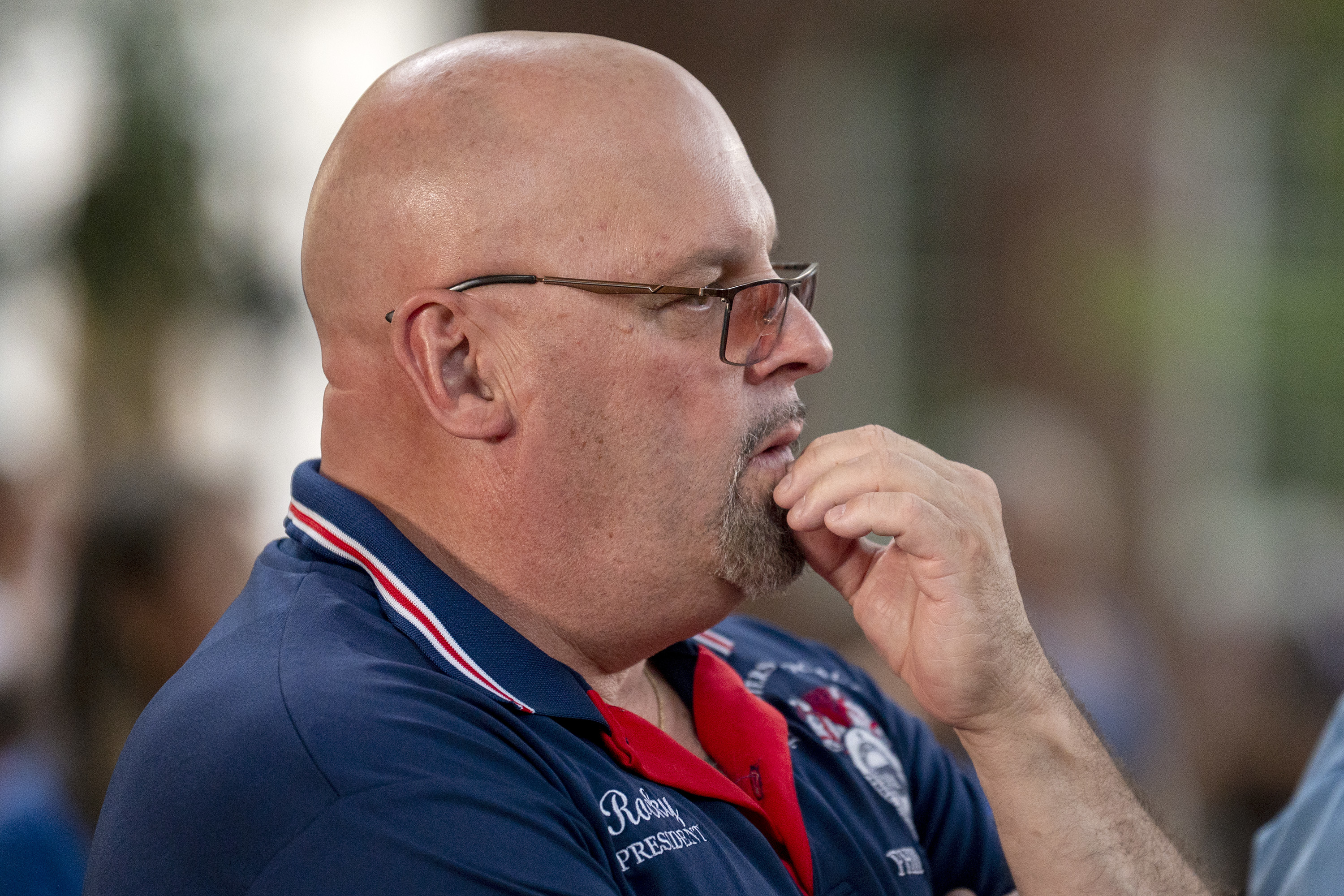
    Rocky Bryan Jr., president of the Teamsters Local 929, pictured in 2022.Tom Gralish / Staff Photographer

    The first so-called dry warehouse opened three years ago, and there’s no conflict over that facility. About 15 Teamsters work there, Bryan said. The disagreement revolves around the second, refrigerated warehouse, with both the Teamsters and the longshoremen’s union making claims to the territory.

    “To us, it’s all one warehouse. It’s our jurisdiction,” Bryan said, adding that a collective bargaining agreement is already in place. “It’s traditional Teamster work, which is truck driving and warehousing.”

    As it happens, the ILA warehouse workers used to belong to the Teamsters but voted to join the longshoremen’s union in 2009, according to the ILA’s Butler.

    Butler points to another piece of history. When the Food Distribution Center closed and a new Philadelphia Wholesale Produce Market opened on Essington Avenue near the airport in 2011, the same Teamsters who worked at the old facility continued to work at the new one, he says.

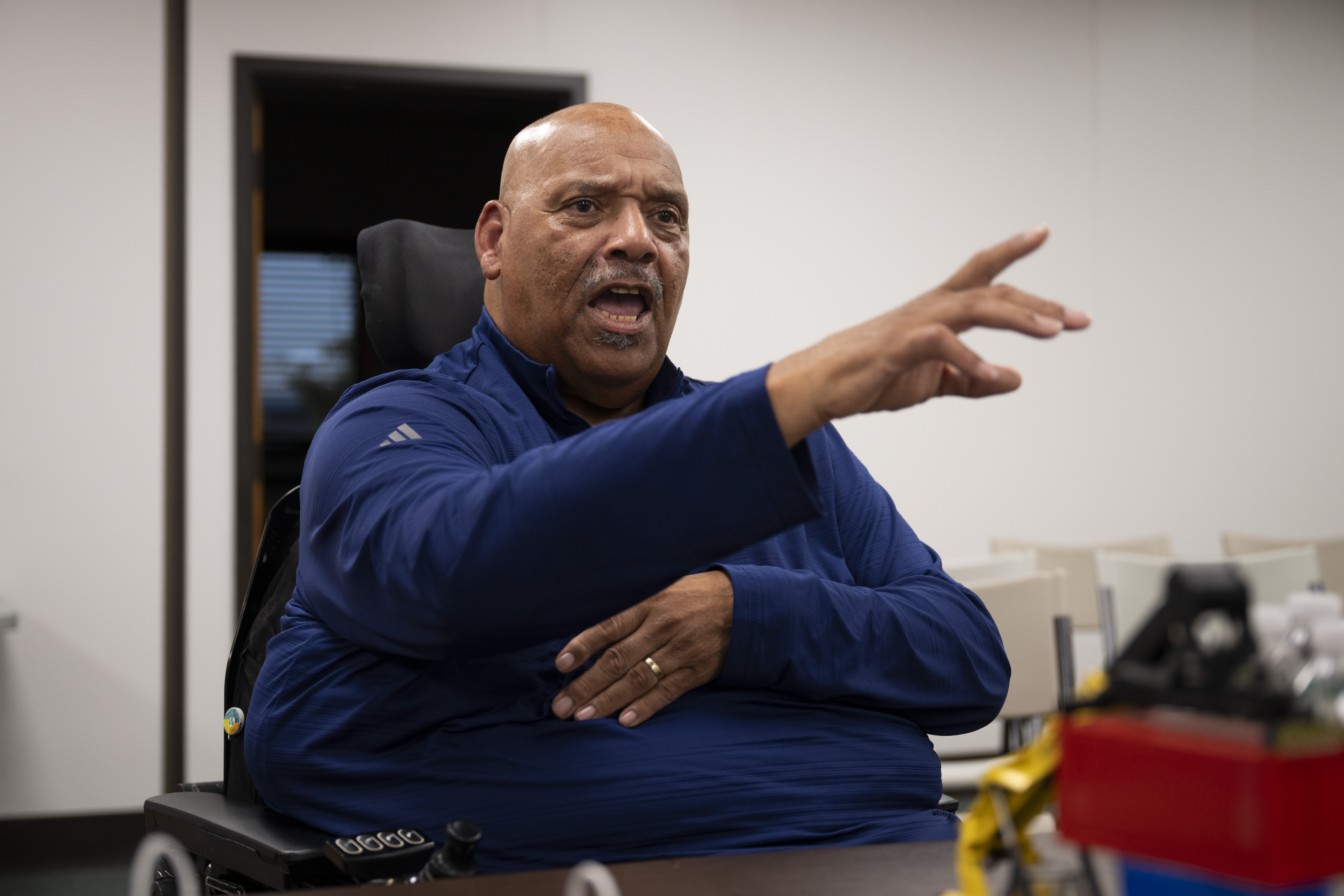
    ILA Local 1291 President Boise Butler speaks to his members in Philadelphia.Joe Lamberti / For The Inquirer

    The same principle should apply today, Butler says: Some of his members have been working at the Packer Avenue refrigerated warehouse since the late 1990s, and they should be able to “follow their work.”

    Butler added, “I knew the Holts was gonna try to turn this into a union against union. I’m not fighting with Rocky.”

    Butler — who serves alongside Bryan on PhilaPort’s board — has sought to elevate the dispute to political leaders, writing in an April memo to PhilaPort management and Democratic Gov. Josh Shapiro’s staff that Holt has “refused to commit to hiring” the ILA members.

    “In effect, that will mean that taxpayer money was used to subsidize Holt Logistics’ desire to expand its refrigerated warehouse cargo operation, all while ending the careers of 31 warehouse workers in the process,” Butler wrote.

    Representatives for PhilaPort and Shapiro’s office declined to comment.

    Gov. Josh Shapiro meets with officials of the Teamsters Local 929 as he visits the Packer Avenue Marine Terminal in South Philadelphia in April 2025. Tom Gralish / Staff Photographer

    Holt maintains that traditional longshore work is available to the workers. Butler said it’s “not impossible to do that” but added that they would lose their seniority.

    That’s because the warehouse workers belong to a separate bargaining unit from the 500 longshoremen in Local 1291 who work the docks at Packer Avenue and other Delaware River ports.

    In the final year of the union’s recently expired contract, warehouse workers with at least three years on the job were paid a minimum wage of $30.59 an hour, plus a $4.25 hourly annuity contribution for retirement. It also included provisions for health insurance, overtime pay, and vacation.

    “A lot of us put over 20 years here, and a lot of us is at the age where we don’t want to start over,” said Lonnie Boyd, 50, an assistant shop steward who’s worked at the Packer Avenue warehouse since 1998. “We can’t afford to start over.”

  • Workers at Quaker Valley Foods in Northeast Philly on strike over pension dispute

    Workers at Quaker Valley Foods in Northeast Philly on strike over pension dispute

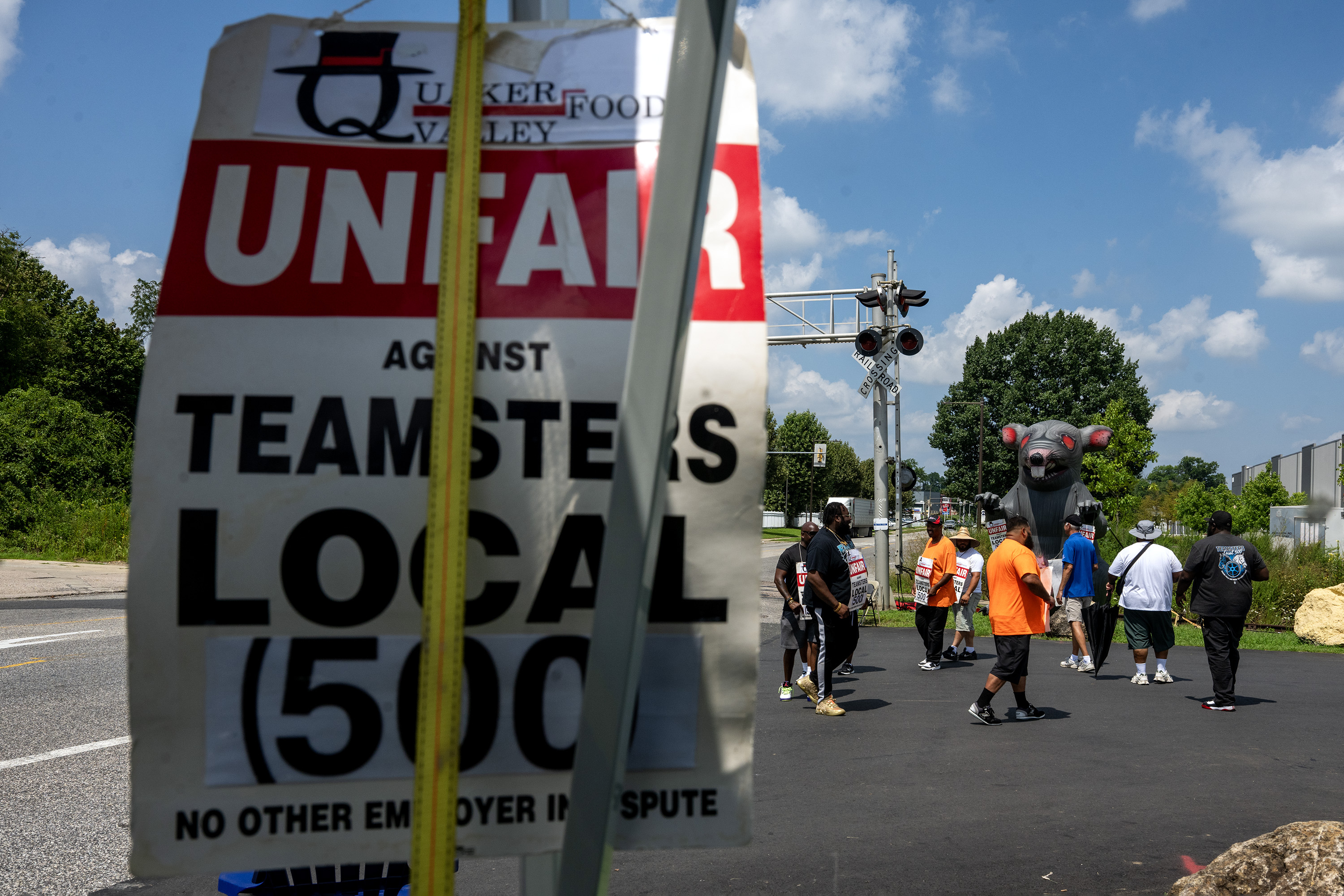
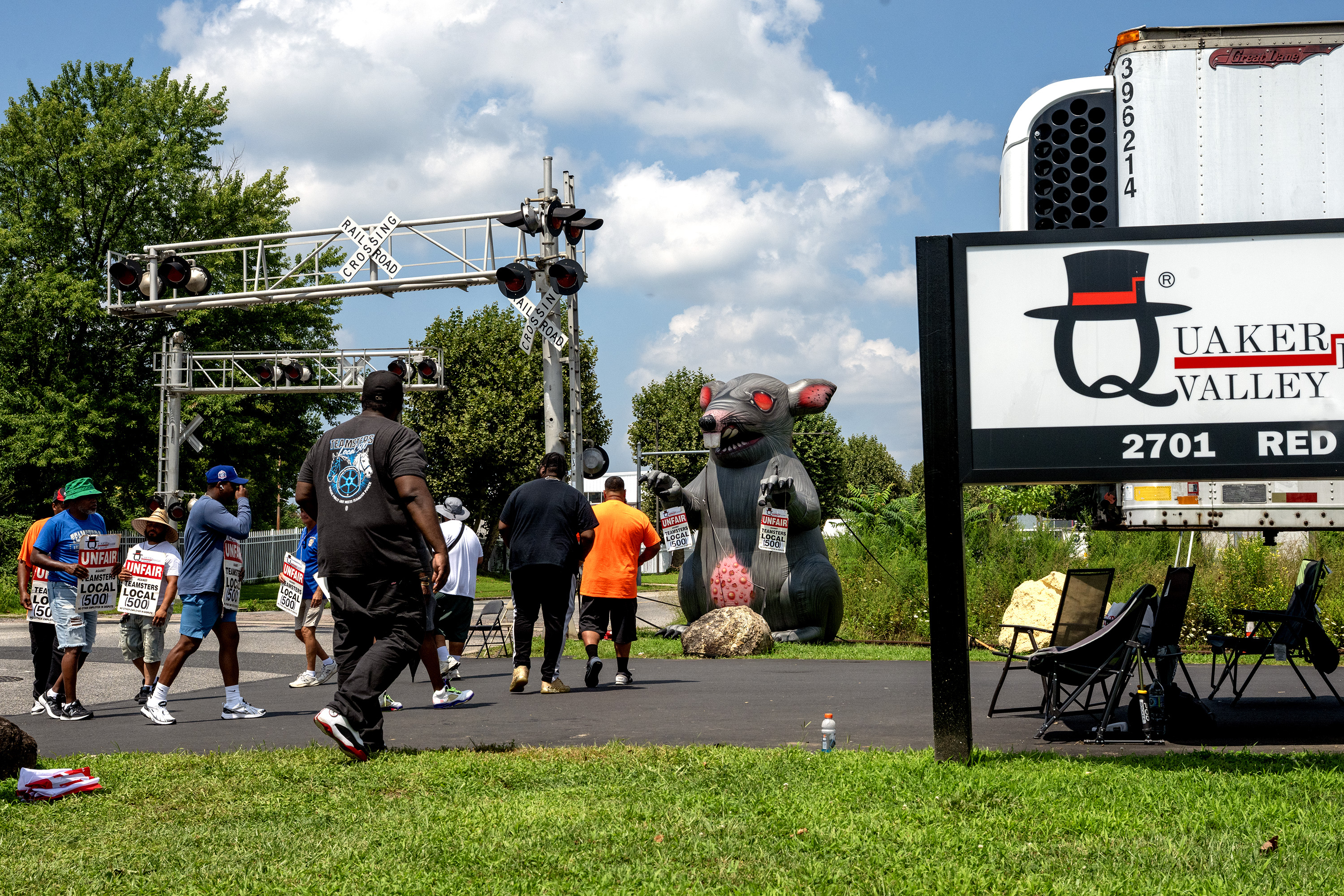
    A labor strike in Northeast Philadelphia stretched into its fourth day Sunday after a food distributor failed to meet truck drivers’ demands for a pension plan.

    Members with Teamsters Local 500 have been picketing around-the-clock at Quaker Valley Foods’ warehouse since Wednesday night, according to union officials.

    The union represents about 70 Quaker Valley employees, including roughly 35 truck drivers whose contract expired Aug. 1. They have said they will not return to work until the food distributor agrees to administer a pension plan as part of a new five-year contract.

    In an emailed statement, Quaker Valley Foods said it “cares deeply about its employees and their welfare and remains committed to reaching an agreement with the union.” The company said it presented a “generous contract settlement” with “significant and unprecedented wage increases and provides enhanced retirement benefits for our workers and their families.”

    On Sunday afternoon, about a dozen union members were stationed outside Quaker Valley’s Red Lion Road facility, braving blistering heat and humidity as passersby honked car horns in solidarity.

    According to labor leaders, the drivers’ union has been vying for a pension in recent contract negotiations, which they believe would provide more security than the company’s 401(k) retirement plan. However, management earlier this week issued a steadfast refusal, Local 500 president Doug Edwards said.

    Picketers walk outside the Quaker Valley Foods warehouse in Northeast Philadelphia on Sunday, Aug. 9, 2026. Teamsters Local 500 members are on strike demanding the food plant administer a pension plan.Tom Gralish / Staff Photographer

    “These are hardworking guys, and many of them have been here for a long time,” Edwards said, noting that many of the workers drove food deliveries into New York City during the COVID-19 pandemic without personal protective equipment.

    “These guys risked everything to get food out to people, and now it’s time that the company should give us guarantees in our retirement,” he said.

    Edwards said members rejected a prior contract deal that did not include a pension plan; as of Sunday afternoon, he said the union had not heard from the company.

    Quaker Valley distributes meat, deli, and specialty foods along the East Coast. The company said it had “implemented contingency plans across the business during this time and will continue working to meet the high standards our customers and vendors have come to expect.”

    Doug Edwards (right), president of Teamsters Local 500, and Juan Lafuente (left), a Quaker Valley driver for 12 years and shop steward, join the picket line outside the Quaker Valley Foods warehouse in Northeast Philadelphia Sunday, Aug. 9, 2026. Union members are on strike demanding the food plant administer a pension plan.Tom Gralish / Staff Photographer

    Shop steward Juan Lafuente, who has worked for Quaker Valley Foods for 12 years, said the union is striking for its future security. At 40, he’s worried about the state of Social Security and whether traditional retirement funds will sustain him for a lifetime.

    “We want to retire here,” he said, “we’re not trying to grab money and run — we’re trying to stay. You got a whole bunch of guys who are going to commit the rest of their lives to this company and make it grow.

    “All we ask for is a pension.”

  • ‘Financial malpractice’ alleged at Philly-based painters union

    ‘Financial malpractice’ alleged at Philly-based painters union

    The parent organization of a Philadelphia-based painters union has taken control of the local entity after alleging “widespread financial malpractice” and a “lack of democratic controls.”

    The International Union of Painters and Allied Trades appointed a special trustee to “take charge and control” of District Council 21, ousting business manager Bernie Snyder from his leadership position, according to a July 24 letter obtained by The Inquirer.

    IUPAT DC 21 represents 5,600 painters, drywall finishers, wall coverers, glaziers, and glass workers in Pennsylvania, New Jersey, and Delaware. The international union has 140,000 members in the U.S. and Canada.

    “Instead of responding to membership’s needs and growing power in the jurisdiction, under the business manager’s leadership, the district council has engaged in financial malpractice, a lack of transparency, and acted without accountability or democratic controls,” the international union’s general president, James A. Williams Jr., wrote in the letter to DC 21 members.

    Williams, a fourth-generation glazier from Philadelphia and a member of DC 21 and Local 252, said the functions of all officers, business representatives, and employees of the District Council would “terminate” and pass to the trustee, Brian Courtien, a special assistant to the general president.

    Snyder, a painter by trade, could not be reached for comment. A person who answered the phone at DC 21 said Snyder was no longer employed there.

    Snyder, 54, of Thornton, Delaware County, was elected business manager/secretary treasurer in August 2024. At the time of his election, the union said he’d belonged to the council for 29 years, starting out with Local 703.

    IUPAT declined to make Williams — who’s also a member of the AFL-CIO’s executive council — available for an interview. In a statement, IUPAT spokesperson Ryan Kekeris said the international organization “conducted a review and found sufficient evidence to place District Council 21 under a special trusteeship.”

    “A fair, democratic, and constitutionally approved hearing will determine what next steps, if any, are appropriate.”

    In the letter, Williams depicted a disengaged leadership team that failed to organize or defend its trade jurisdiction, even as it increased spending. Membership has declined by 1,200 people in the past decade, Williams wrote. The council employs fewer staff than it did in 2023, yet costs have increased, he said.

    The letter said the District Council’s officers and certain “selected staff” received compensation packages inconsistent with the union’s bylaws, adding that these actions were “hidden” from rank-and-file members.

    DC 21 leadership provided an “inappropriate and unsustainable” number of staffers with excessive base compensation, Williams wrote.

    He also cited “ballooning” compensation costs for elected staff that exceeded $300,000, “in direct conflict” with the organization’s bylaws, as well as “insufficient detail in itemized staff expense receipts.”

    In addition to financial mismanagement, the letter took issue with a lack of accountability at the District Council. Rank-and-file members don’t know which staffers are elected and which are appointed, and executive staff failed to hold regular substantive meetings, the letter says.

    Snyder frequently failed to show up to the office, attend collective bargaining sessions, and engage in community and political activities, violating the union’s constitution, according to the letter.

    “Instead of correcting past financial and structural difficulties, District Council 21’s actions, and inactions, have exacerbated them,” the letter says. “Cumulatively, these failures evidence a general lack of attentiveness to members’ welfare and concerns, and a failure to perform bargaining representative duties, which must be addressed.”

  • QVC hosts vote to unionize

    QVC hosts vote to unionize

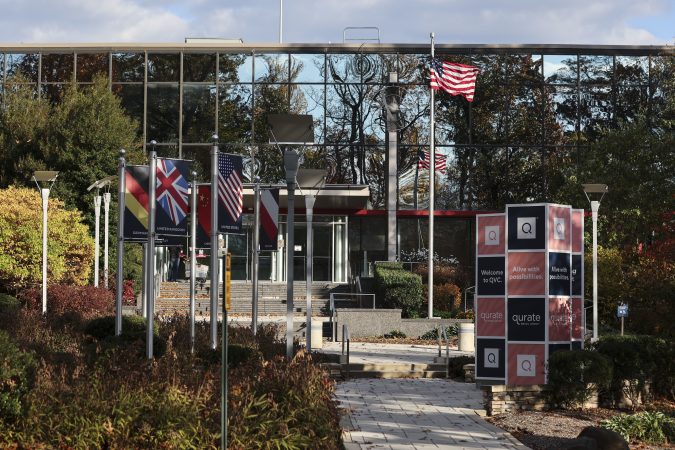
    Most QVC hosts have voted in favor of unionizing, according to SAG-AFTRA, as the West Chester-based shopping network prepares to emerge from bankruptcy.

    About 80% of the hosts voted in favor of joining SAG-AFTRA, according to a news release from the union, which represents 160,000 media professionals nationwide.

    The group includes 53 on-air hosts who sell clothes, home goods, and other products from QVC Group’s West Chester studios. The programs are broadcast on QVC, HSN, and various digital platforms, a segment of the business the company refers to Omni Channel.

    “The strong show of support for unionizing reflects QVC, HSN, and Omni Channel hosts’ professionalism and resolve to improve their workplace and build a better future for themselves and their colleagues,” SAG-AFTRA national executive director and chief negotiator Duncan Crabtree-Ireland said in a statement.

    A QVC Group spokesperson reiterated that the hosts are “deeply valued team members.”

    “While we have long believed that a direct relationship with team members is the best approach, we respect the outcome of the election and our hosts’ right to make this choice,” spokesperson Matthew Goldstein said Friday in a statement, adding that management “will work with SAG-AFTRA on the next steps.”

    The vote comes a month after a supermajority of QVC’s TV and digital hosts presented a petition to company management, asking for voluntary recognition of the union.

    In the petition, the hosts expressed concerns about QVC using artificial intelligence to imitate their image, voice, and likeness without consent or compensation, as well as about pay equity and transparency.

    “As QVC Inc. adapts, we hope to foster a culture in which workers feel valued, trusted, and appreciated, where ideas are recognized and concerns respected,” the hosts wrote in the petition. “This is especially true given the current landscape of artificial intelligence, discussions surrounding the regulation of image and likeness, and concerns of job security.”

    Despite developing a loyal following of fans over 40 years, QVC has struggled recently to expand its customer base and compete with online retailers. After years of declining revenue, QVC Group filed for Chapter 11 protection in April.

    A federal judge last week approved the company’s reorganization plan, which would slash its debt from about $6.6 billion to $1.3 billion. QVC executives have said they hope to emerge from bankruptcy sometime this summer.