Category: Food

  • This Thanksgiving, just make one recipe

    This Thanksgiving, just make one recipe

    Soon, we Americans will gather for that annual orgy of mostly bland, mushy, heavy dishes paradoxically called Thanksgiving.

    We haven’t eaten like this since, well, the Pilgrims, who were raised on this kind of plain cuisine in England and needed all the calories they could get, whereas we fuel our screen work with salads and grains.

    Thanksgiving is the exception, the yearly ritual when — out of habit or fear of disappointing family traditionalists — pretty much everyone but me becomes historic dinner reenactors.
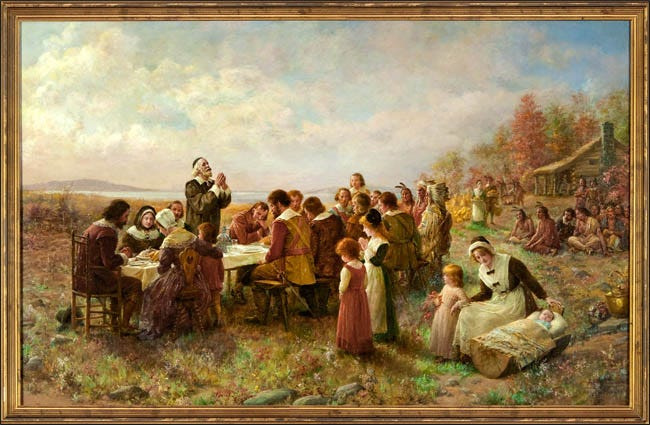
    “The First Thanksgiving at Plymouth, 1914” is an oil on canvas painting by Jennie Augusta Brownscombe.Provided by Pilgrim Hall Museum

    I stopped this multi-dish madness about 20 years ago, in favor of downsized but still delicious one-dish mains that nod to tradition without being shackled to it — or my stove.

    In 2024, turkey company Jennie-O surveyed Thanksgiving hosts, who said they spent up to two weeks on planning and cooking ahead of the holiday. No thanks, not for me! Or you either, if you adopt my no-sides approach, which should hold special appeal to the lazy, the busy, or the bored (like me).

    When I was 8, I had a blast sending peas down gravy rivers on mashed potato mountains with the cousins at the “little table.” The next several decades on the turkey-stuffing-gravy train were tolerable, even as the gulf widened between what I enjoyed eating every day and on this holiday.

    Now that I’m well past middle-aged, I’m so done with our country’s annual mush-fest.

    Originally a celebration of harvest abundance, by the 20th century Thanksgiving dinner evolved into the Great Annual Exam of moms’ cooking abilities, with a huge menu of high-work/low-payoff dishes (Turnips! Taters! Squash!), all of which are expected to land hot on the table with the precise timing of a lunar landing. I hope we are beyond that now.
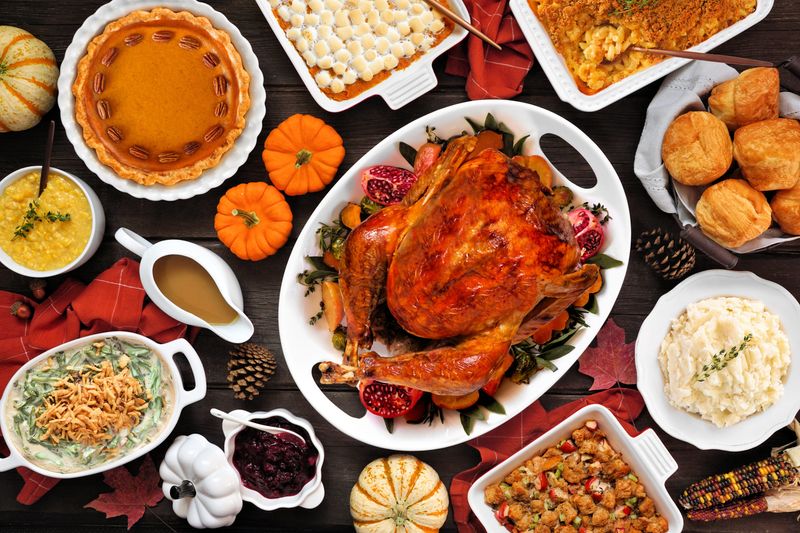
    Traditional Thanksgiving turkey dinner.Getty Images

    Most days, it works just fine to throw a few things together from the Acme, or to order in or dine out. But digging into a supermarket Thanksgiving bundle is like eating leftovers. And I’ve always believed Thanksgiving to be a family/home holiday vs. a public/restaurant one (all the more so now that your family’s bad table behavior could end up on TikTok).

    Potluck Thanksgiving? That’s Russian roulette for a meal some people will be spending $4.50 a gallon and all their patience to get to.

    That’s why I’m suggesting you join me in focusing your Thanksgiving hosting energies on a more interesting and modern single-dish substitute for the holiday’s traditional turkey and sides: trendy sheet-pan Thanksgiving, vegetarian Thanksgiving pizza, innovative Thanksgiving-stuffed pumpkin, and fun Thanksgiving tater tot casserole (recipes below). And then hunt and forage online to find local stores and bakeries to supply the other courses.
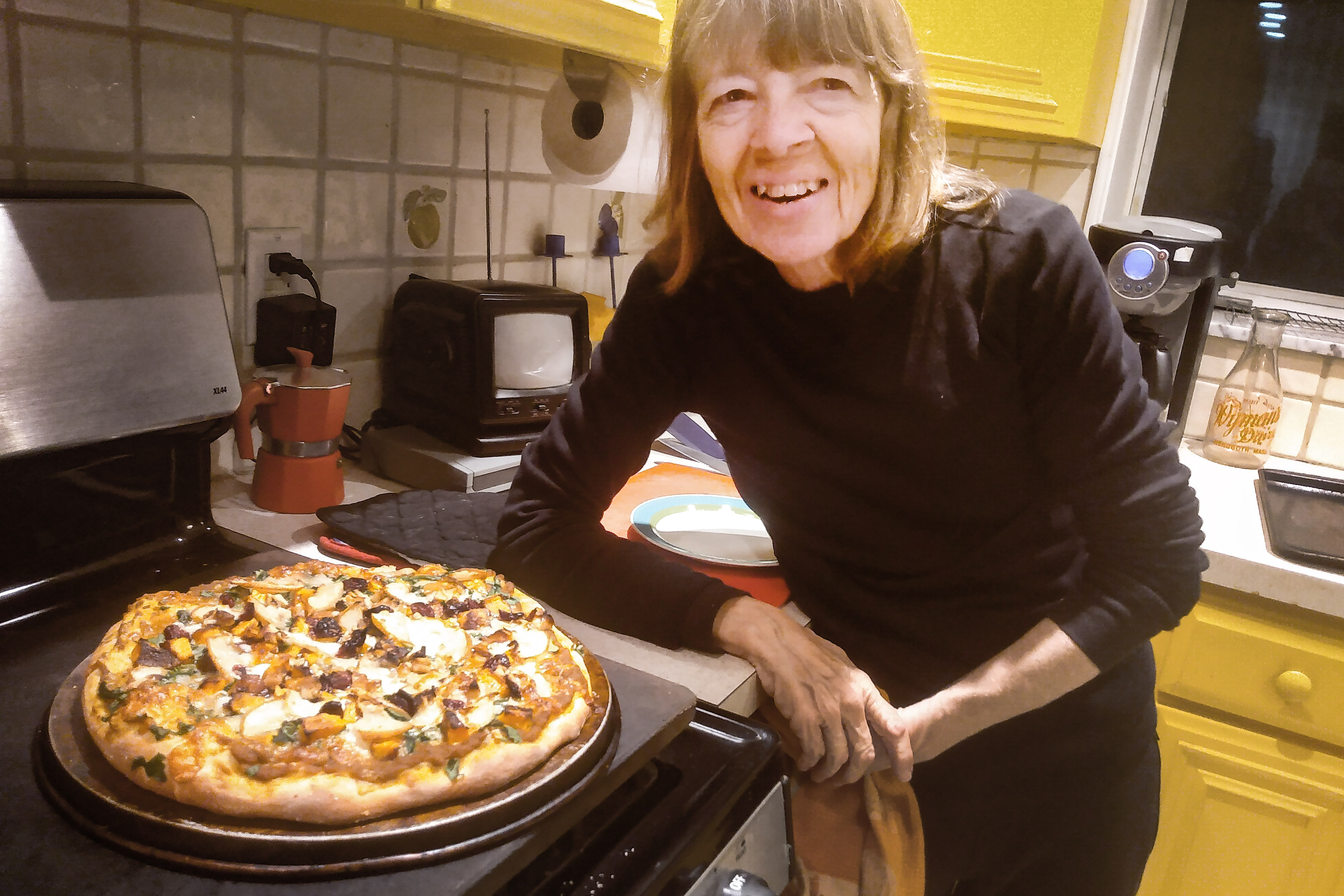
    Carolyn Wyman with a home-baked Thanksgiving pizza.Courtesy of Carolyn Wyman

    Yes, you will need these. “Big feed” is baked into most people’s experience of this holiday, and you don’t want to send people home hungry or feeling deprived.

    I found this out the hard way the first pandemic Thanksgiving, when my husband was happily eating his dainty little turkey roulade until a Zoom box popped up with our virtual dinner companion’s plate piled high with all the trimmings. I suddenly became Nurse Ratched.

    That’s why your one-dish meal should start with cocktails and an appetizer, and end with dessert, which, in a slimmed-down one-dish Thanksgiving, your guests should actually be able to eat and appreciate. Trader Joe’s and Aldi have multiple rows of pumpkin and/or cranberry-flavored crackers, cheeses, and dips that will do the trick. (My personal favorite Thanksgiving app is a turkey-shaped pretzel from Philly Pretzel Factory Langhorne.)
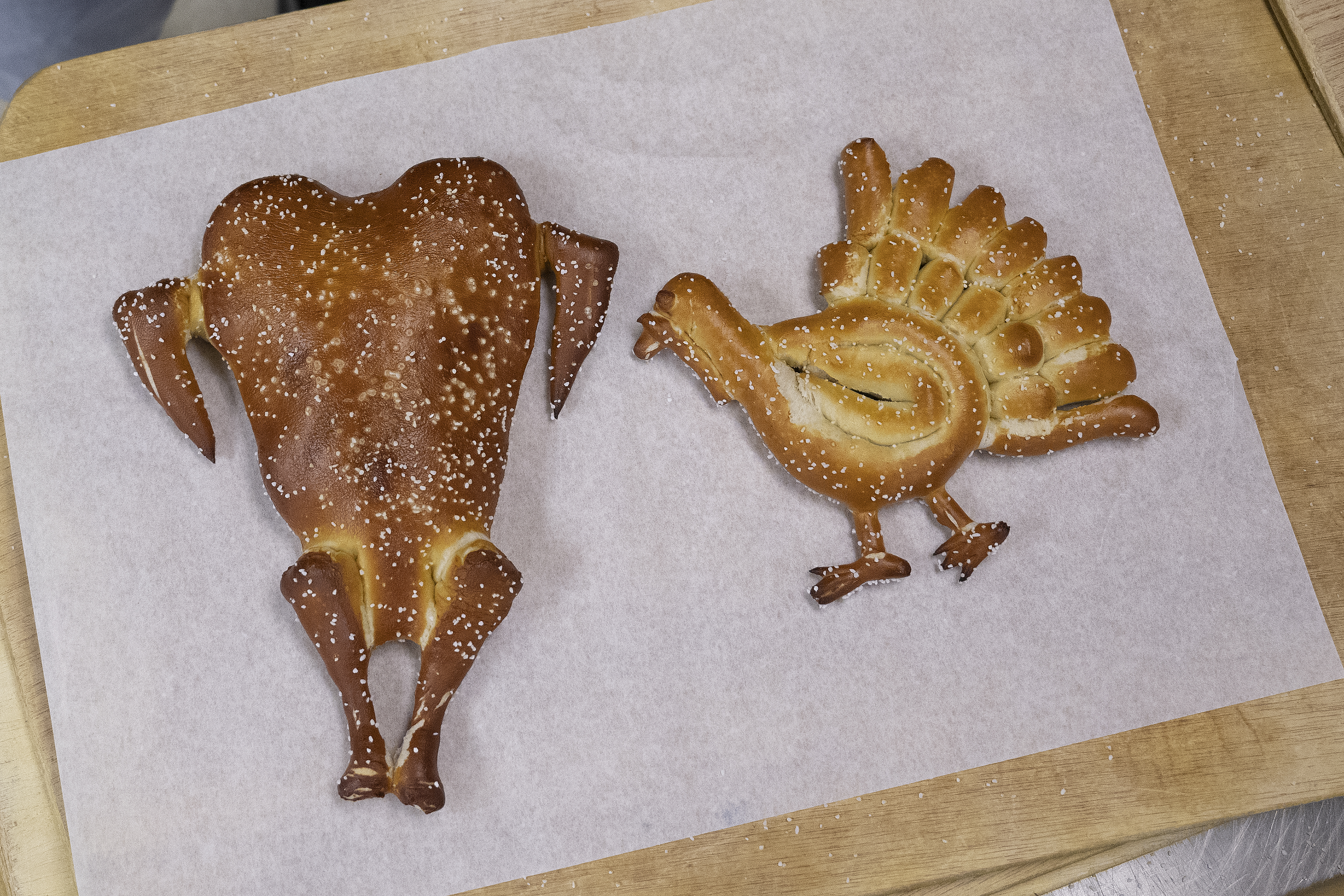
    Turkey-shaped pretzels available at the Philly Pretzel Factory in Langhorne.Jose F. Moreno / Staff Photographer
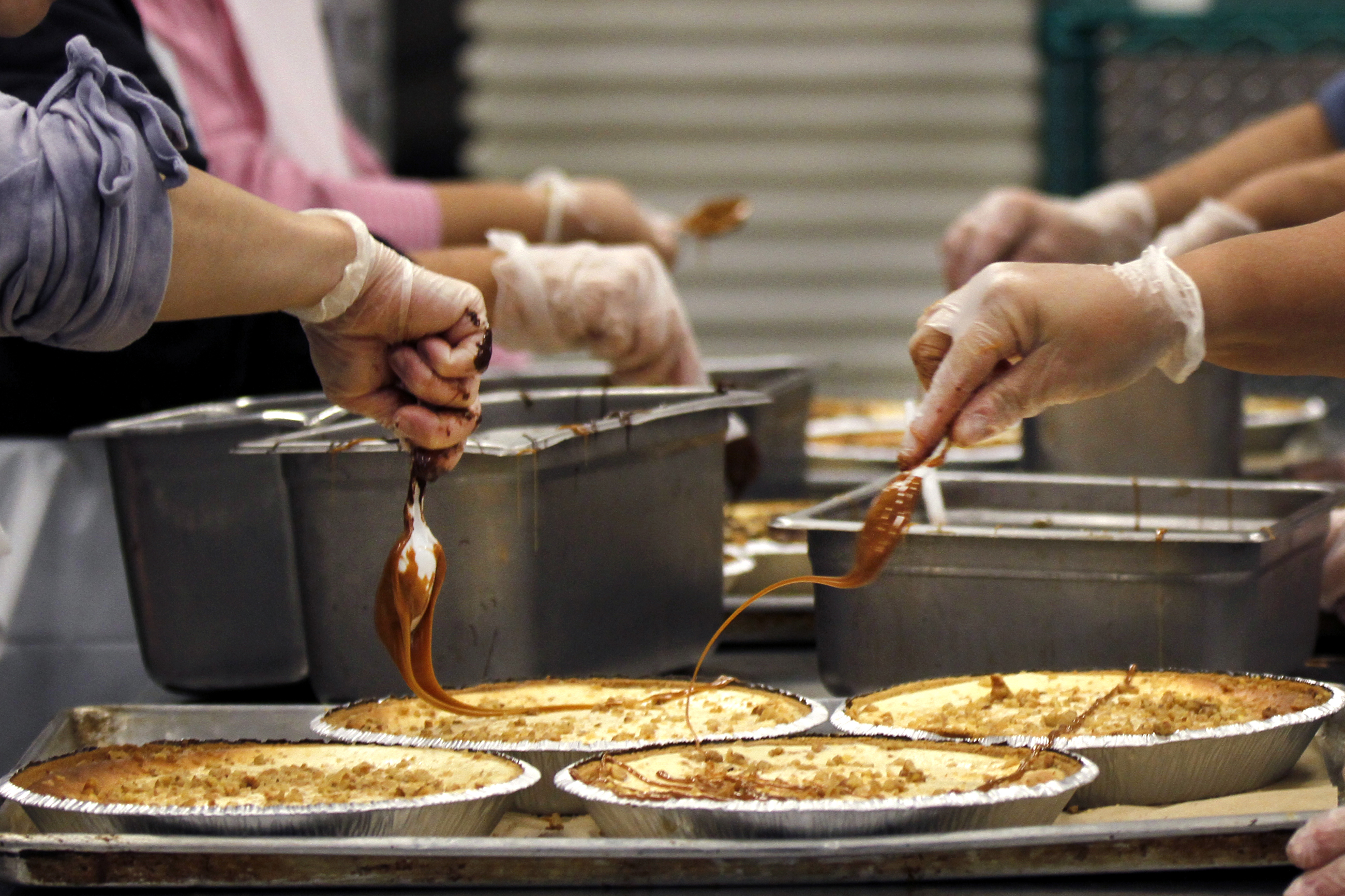
    Volunteers make pies on Oct. 11, 2019, for the annual “Pie in the Sky” fundraiser held by MANNA.BAIDI WANG / Staff Photographer

    Get dessert pie and good vibes by ordering from MANNA’s Pie in the Sky fundraiser. Or lean into the simplified spirit of a one-dish Thanksgiving by serving supermarket pumpkin pudding (Jell-O makes instant) or pumpkin ice cream adorned with a few Sweetzels spice cookies. Bread is also a good idea (filling!). A seasonal loaf from a local bakery (like Merzbacher’s garlic ’n herb mashed potato dinner rolls or Mighty Bread’s cranberry walnut sourdough) is a way to up the sophistication of your meal for not a lot of money.

    These ideas and recipes would obviously work just as well for Friendsgiving or a meal of Thanksgiving leftovers. But that wouldn’t solve your Thanksgiving hosting problem, would it? And those who don’t like the sound of a one-dish Thanksgiving can always lie about going to their aunt’s in another state.

    I’ve had good buy-in (sometimes with a side eye) and mainly positive post-gathering reviews — or positive with some reservations, like from my mother-in-law, Adele, the year I served Thanksgiving-stuffed pumpkin. Thereafter it was the only Thanksgiving dish Adele ever talked about when the subject of that holiday came up. Even if it was mainly because she thought it was weird, that dish made that Thanksgiving stand out in the blur of more than 90 she experienced in her lifetime.
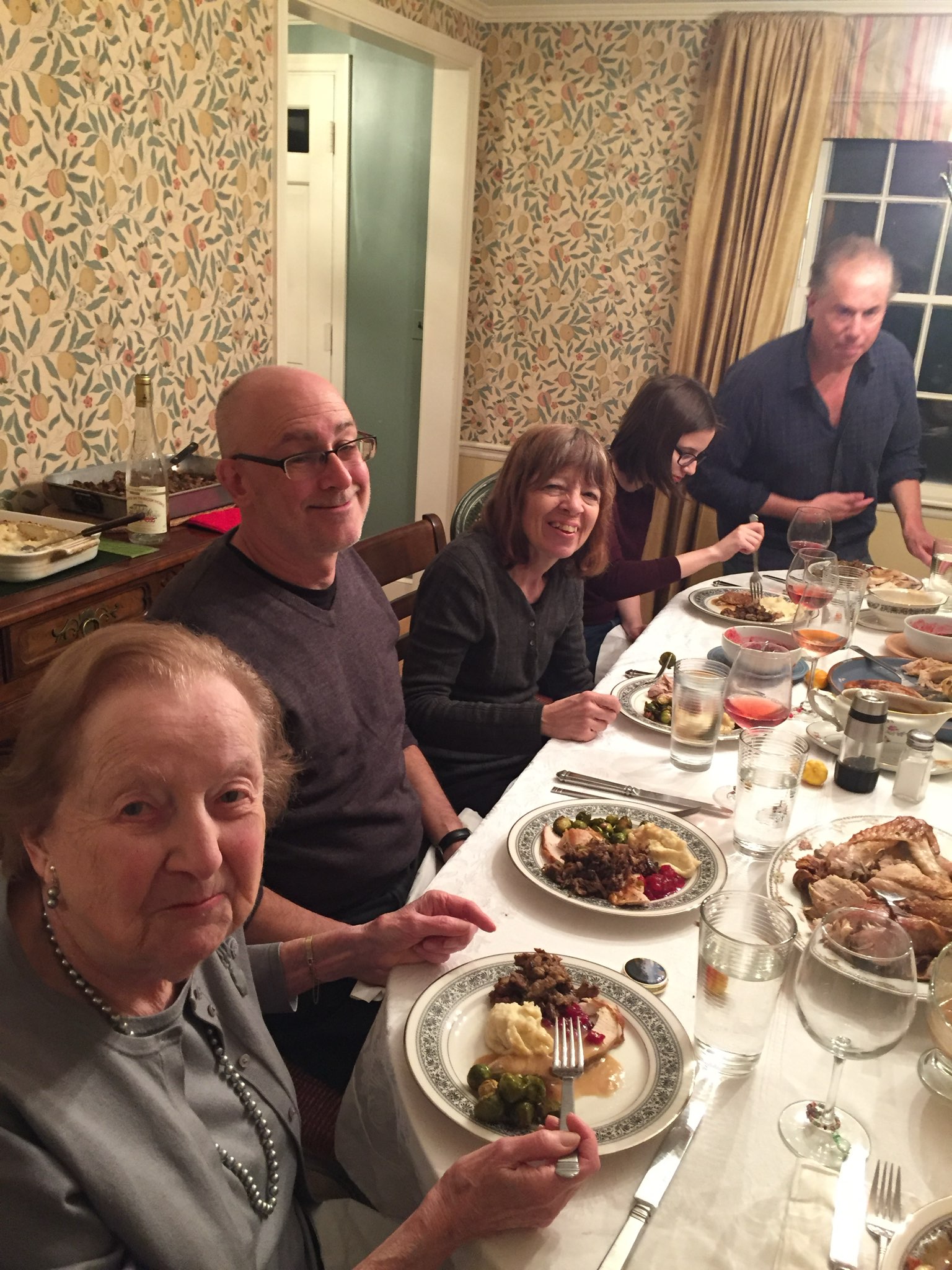
    A Thanksgiving Adele (left) enjoyed (since her daughter made it and it was traditional). To her right is her son, Philip Blumenkrantz, who is seated next to Carolyn Wyman, his wife and the author of this story.Courtesy of Carolyn Wyman

    It was memorable.

    Isn’t that the goal of every host and gathering?

    Thanksgiving-Stuffed Pumpkin

    Pumpkin as a Halloween decoration and latte flavoring are relatively new. For the Wampanoag tribe and the colonists who copied them, pumpkins were food, baking vessel, and serving dish in one. Their early stuffed-pumpkin recipes inspired this stew-like dish that first appeared in my Kitchen Sink Cookbook of oddball recipes.

    Serves 4 to 6

    1 (6-pound) squat-shaped sugar pumpkin (see note)

    1½ cups cooked long grain and wild rice mix

    1½ cups cornbread stuffing, from a 6-ounce box according to package directions

    1 medium onion, minced

    ½ pound sweet Italian sausage, ground or links (removed from casings)

    1 pound ground turkey, or 2 cups cooked turkey, cubed or shredded

    2 eggs, lightly beaten

    ¼ cup dried sweetened cranberries

    2 teaspoons poultry seasoning or 1 teaspoon each ground sage and ground thyme

    Heat oven to 350 degrees F. Cut off the top of the pumpkin and clean out and discard the seeds and pulp as you would with a jack-o’-lantern. Prepare the rice and stuffing (if you use boxed mix, you will have extra) and set aside.

    In a large saucepan over medium-high, sauté the onion and sausage, stirring frequently, until the onion is limp and the meat is no longer pink, about 5 minutes. Add the ground turkey, if using, to the pan (if using cooked turkey, add it in the next step), plus a bit of oil if needed to keep it from sticking, and cook until all the meat is browned, another 7 to 9 minutes. Transfer to a large bowl.

    To the bowl, add the cooked rice, stuffing, eggs, cranberries, and poultry seasoning and mix well. Pack it into the pumpkin. Replace the pumpkin lid, then place the stuffed pumpkin in a baking pan.

    Add about an inch of water to the pan, then bake between 1 and 1½ hours, or until the pumpkin is tender. Check at the hour mark and periodically after by inserting a toothpick in the side — it should go in easily. Don’t overcook or it could collapse.

    Put the pumpkin on a big plate on the table and cut it into wedges.

    Note: Be sure to use sugar or pumpkin pie pumpkin found in produce departments of food markets, vs. the more common decorative or jack-o’-lantern pumpkin, which are fibrous and not very flavorful. If you can’t find a 6-pound sugar pumpkin, stuff two 3-pound ones.

    Thanksgiving Pizza

    This recipe was inspired by a 2024 vegetarian harvest pie Dock Street Brewery no longer makes for some crazy reason. You could add pieces of leftover turkey to its list of toppings, but there are more than enough Thanksgiving flavors going on here without it.

    Makes one 16-inch pizza

    1 pound ball of pizza dough, store-bought or homemade

    1- to 2-pound butternut squash, peeled and cut into ½-inch cubes (about 1½ cups)

    1 teaspoon olive oil (plus more for pan)

    Cornmeal

    Flour

    1½ cups canned pumpkin (not pumpkin pie filling)

    1 teaspoon ground cinnamon

    ½ teaspoon ground nutmeg

    1½ teaspoons honey

    1½ cups shredded mozzarella or mild cheddar or a blend

    1½ cups chopped fresh spinach or arugula

    ⅓ medium pear, thinly sliced (8 to 10 slices)

    ⅓ cup dried cranberries

    ⅓ cup walnut pieces

    Heat oven to 400 F. Remove dough from refrigerator and let it sit at room temperature for at least 20 minutes. Lightly oil a 16-inch pizza pan or an 18-by-13-inch sheet pan.

    On another sheet pan, toss the squash with the oil and spread in a single layer. Bake 40 minutes, or until cubes are tender and browned. Remove from heat and set aside to cool. Increase oven temperature to 450 degrees F.

    In a small bowl, combine the pumpkin with the cinnamon, nutmeg, and honey.

    On a work surface lined with parchment and dusted with cornmeal and flour, shape the pizza dough into a 16-inch circle or oval (smaller, if you prefer a thicker crust). It helps to dust your hands liberally.

    Ladle pumpkin mixture onto the dough, then spread to cover the surface evenly. Top the sauce with half the cheese and then the spinach, cooked squash, and pear. Top with remaining cheese.

    Slide the pizza off the parchment and onto the oiled pizza or sheet pan. Place on a lower rack of the oven and cook 5 minutes. Remove pizza, quickly sprinkle with cranberries and walnuts, then return to oven. Cook an additional 2 to 5 minutes, or until the cheese is bubbling and the crust is golden brown.

    Tater Tots Turkey Trot Casserole

    This Thanksgiving riff on the most popular of all tater tot casseroles should be a hit with green bean casserole fans, as well as those who actually like the traditional Thanksgiving feast’s mushy heft.

    Serves 4

    1 pound ground turkey or 2 cups cooked Thanksgiving turkey, cubed or shredded

    1 (15-ounce) can cut green beans

    1 (2.8-ounce) container of fried onions (about 1½ cups), divided

    1 (10½-ounce) can condensed cream of mushroom soup

    ½ cup milk

    1 teaspoon soy sauce

    Salt and pepper, to taste

    3 cups (about 16 ounces) frozen tater tots, regular or sweet potato

    Ground thyme and sage, to taste (optional, see note)

    Preheat oven to 375 degrees F. Grease a 2-quart casserole dish or 8-by-8-inch baking pan with cooking spray or butter. If using ground turkey, in a 12-inch skillet over medium-high, cook until meat is no longer pink, 7 to 9 minutes.

    In a large measuring cup, combine the mushroom soup, milk, soy sauce, and a few shakes of salt and pepper. Add to the skillet with cooked turkey, green beans, and half the fried onions. (If using leftover turkey, use a medium bowl.) Toss, then transfer the mixture to the prepared casserole dish.

    Top with a single layer of tater tots, covering as much of the casserole as possible. Sprinkle tots generously with thyme and sage (or less, to taste).

    Bake 35 minutes. Remove the casserole from the oven and top with the remaining fried onions. Bake an additional 5 to 10 minutes or until the tots are browned and the casserole is bubbling at the edges. Serve with cranberry sauce as a condiment.

    Note: If you’re serving this to herb-averse human “tots,” you might want to omit the thyme and sage sprinkles entirely. This recipe also works well with leftovers: A ½- to 1-inch layer of Thanksgiving stuffing can make a fine base for the green bean mixture (definitely omit the extra herbs if you make stuffing your first layer, though), and 1½ cups of leftover turkey gravy can sub for the cream of mushroom soup and milk.

    Sheet-pan Thanksgiving

    This all-in-one Thanksgiving main is as of-the-moment as the tater tots casserole is retro. It’s also very easy. Its Brussels sprouts have Momofuku chef David Chang’s eureka roasting idea to thank for turning that former vegetable pariah into a modern holiday favorite.

    Serves 3 to 4

    2 to 3 pounds fresh bone-in, skin-on turkey thighs or drumsticks

    3 tablespoons olive oil, divided

    1 tablespoon poultry seasoning

    2 cloves of garlic, peeled and minced

    Salt and pepper

    1 pound sweet potatoes, butternut squash, parsnips, or some combination, peeled and cut into 1-inch cubes (about 3½ cups)

    4 teaspoons brown sugar

    ½ teaspoon ground cumin

    1 pound small Brussels sprouts, trimmed and halved or quartered (about 4 cups)

    6 small shallots, peeled (and cut if large)

    ½ cup pecan halves

    ⅔ cup fresh whole cranberries

    Heat oven to 400 degrees F. Pat the turkey dry with a paper towel. In a medium bowl, combine 1 tablespoon of the oil, the poultry seasoning, garlic, and a few shakes of salt and black pepper to make a paste. Smear the paste under the turkey skin and all over the meat’s surface. Place the turkey on a 13-by-18-inch sheet pan and let sit at room temperature.

    In the medium bowl, toss the root vegetable cubes with brown sugar and 1 tablespoon of the olive oil. Transfer to the pan, scattering them around the turkey in a single layer without overlapping or excessive crowding. Place the sheet pan in the oven and roast for 20 minutes. Meanwhile, combine the sprouts and shallots in the bowl and toss with the remaining 1 tablespoon oil and salt and pepper.

    After 20 minutes, remove pan from the oven. Stir the root vegetables, add the sprouts and shallots — also in a single layer — and sprinkle the pecans and cranberries among the ingredients. Rotate the pan 180 degrees, then return it to the oven.

    Roast an additional 30 minutes or until a thermometer placed in the thickest part of the turkey registers 165 degrees F and the turkey and vegetables are browned or lightly charred. Let the food rest 10 minutes before serving.

    Note: Check at the 35-minute mark to see if anything is roasting too quickly and take evasive action; if something is browning, remove that food from the pan or cover it with foil.

    If you want to use leftover cooked turkey, start the recipe by roasting the root veggies, then, after 40 minutes, add cooked turkey to the sheet pan. When the vegetables are tender and the turkey is hot, remove the pan from the heat.
  • There’s now more room for rigatoni at one of Philly’s top Italian restaurants

    There’s now more room for rigatoni at one of Philly’s top Italian restaurants

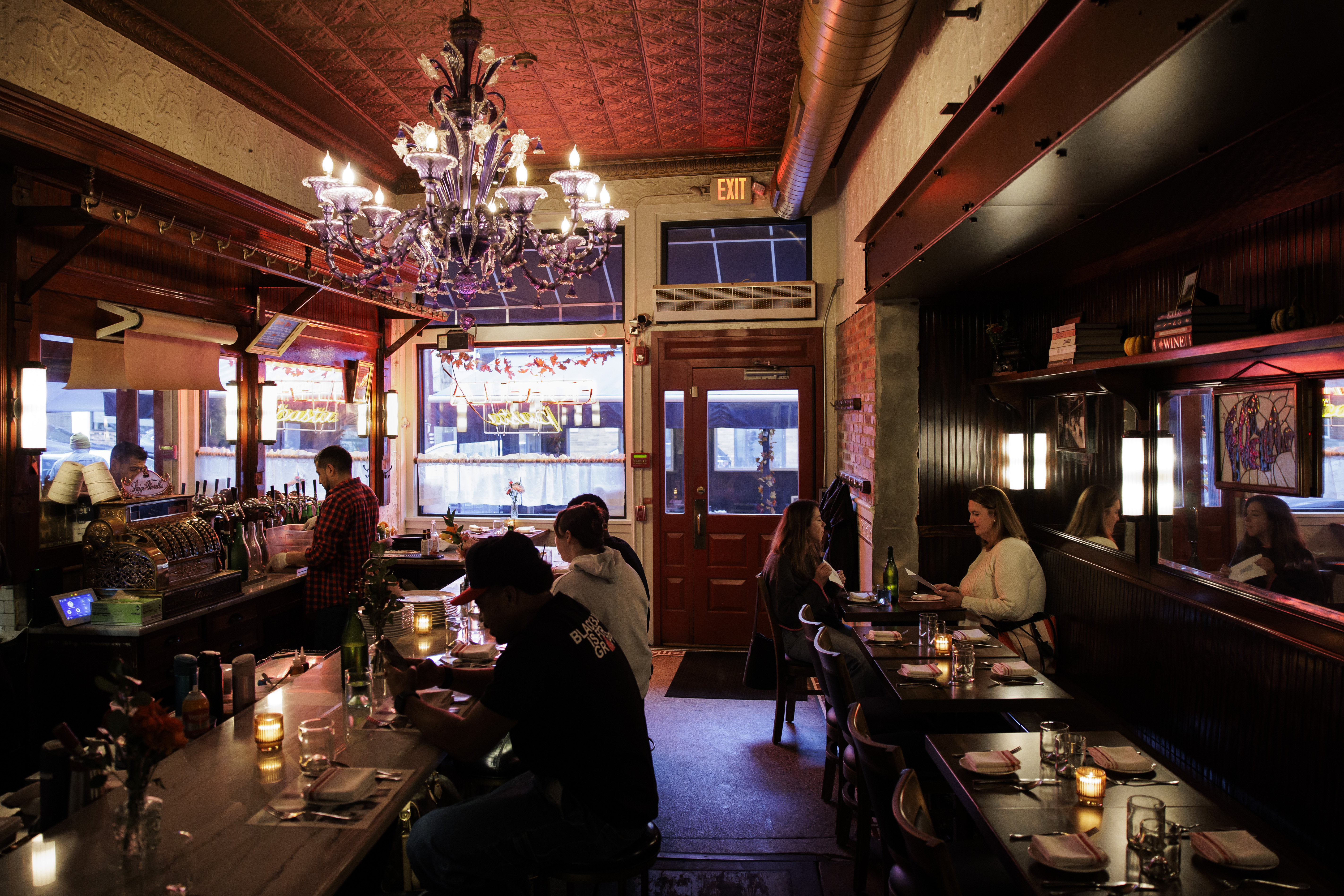
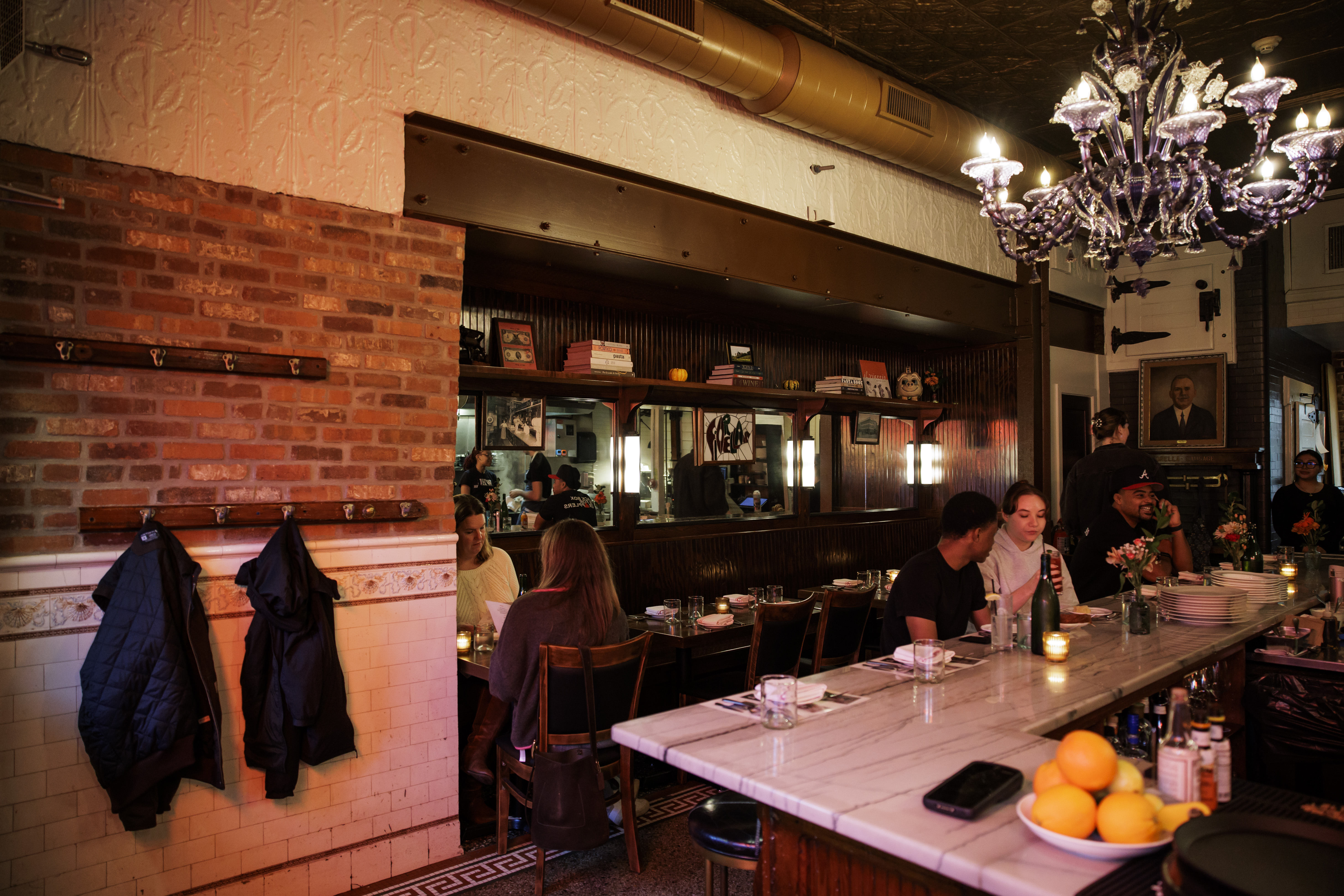
    The alley next to Fiorella Pasta used to hold propane tanks, ladders, and random outdoor furniture. Now it’s home to an extension of the dining room at Marc Vetri’s South Philadelphia pasta bar.

    With eight seats at three tables, it has boosted the indoor capacity by more than 50%.

    Fiorella has been a tough reservation since opening in February 2020, just weeks before the pandemic shut down indoor dining for months. During the surge of streeteries, the restaurant added about 30 outdoor seats, which it has since used year-round.

    But as temperatures drop, Vetri said, keeping diners warm becomes more difficult. With just 14 seats inside, including the counter and a couple of tables, plenty of customers were left out in the cold.

    The recently renovated and enlarged interior at Fiorella.Monica Herndon / Staff Photographer

    Vetri and his team began sketching out what they could fit if they removed the wall separating the dining room from the alley. Like homeowners cleaning out a basement, staff sorted through the alley’s accumulated items, throwing away what they could, Vetri said.

    Then they broke through the wall — after removing and saving the former butcher shop’s decorative tile — and created a recessed nook framed with wooden paneling and mirrors, with a wooden bench for seating.

    The conversion took about two months, with construction done during off-hours.

    The new section blends into the dining room and faces the counter and open kitchen, where chef Matt Rodrigue turns out menu staples such as rigatoni with sausage ragù, ricotta gnocchi, and cacio e pepe, along with seasonal specials.

    Fiorella occupies the former butcher shop that Luigi Fiorella opened in 1892 at 817 Christian St., near the Italian Market. Vetri had tested the pasta-bar concept at pop-ups in the demonstration kitchen at Vetri Cucina before bringing it to Christian Street.

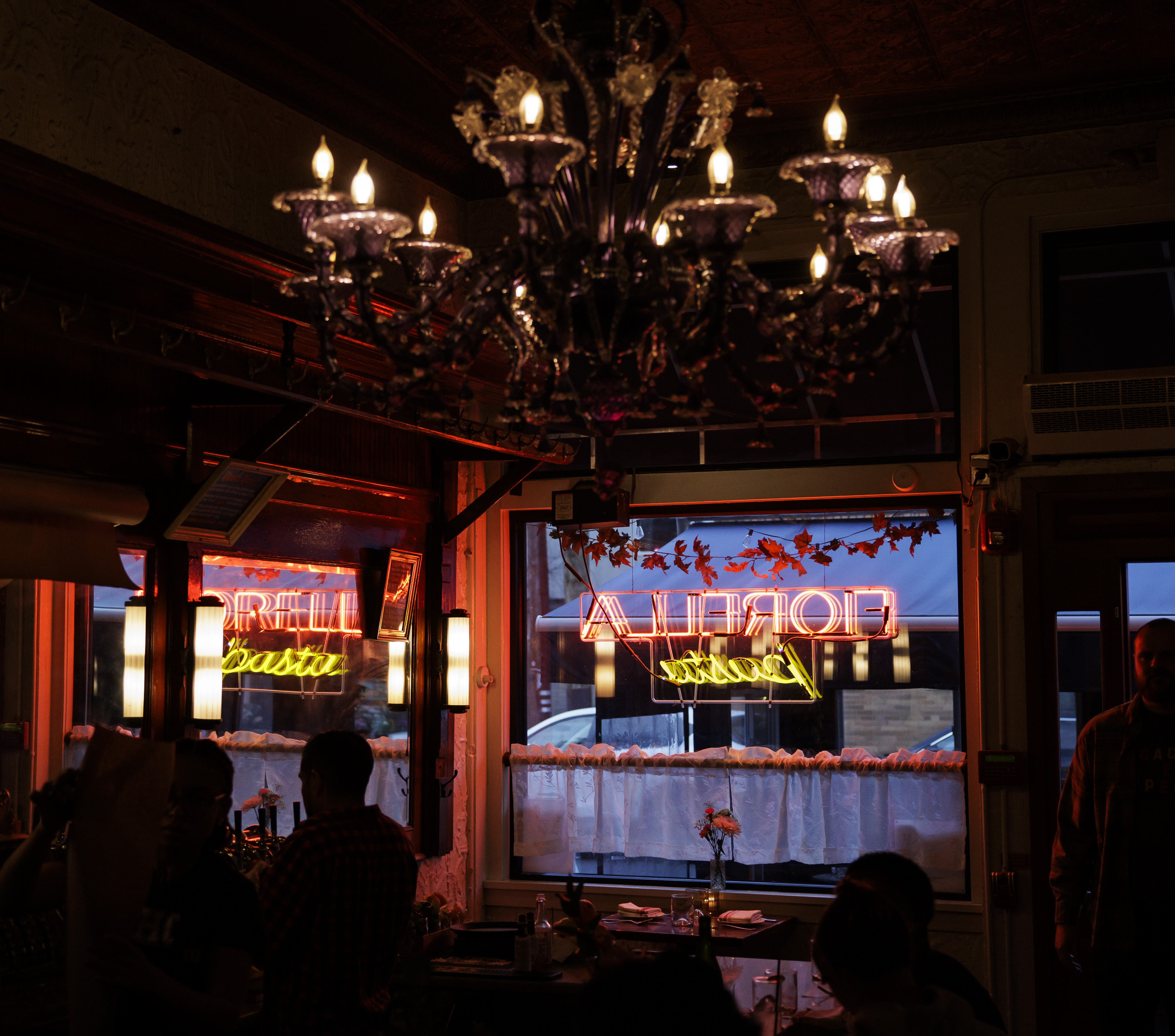
    Fiorella glows in neon on Nov. 12.Monica Herndon / Staff Photographer

    He kept the Fiorella family name, the original tin ceiling, and a brass cash register that had briefly gone missing before resurfacing in a Northeast Philadelphia antiques shop.

    When Fiorella opened, customers could leave a phone number and wander the neighborhood while waiting for a seat. Today, it takes indoor and outdoor reservations through OpenTable.

    As for the new dining area, Vetri said, “It looks like it was always there.”

  • How bluefin got back on the menu, in Philly and beyond

    How bluefin got back on the menu, in Philly and beyond

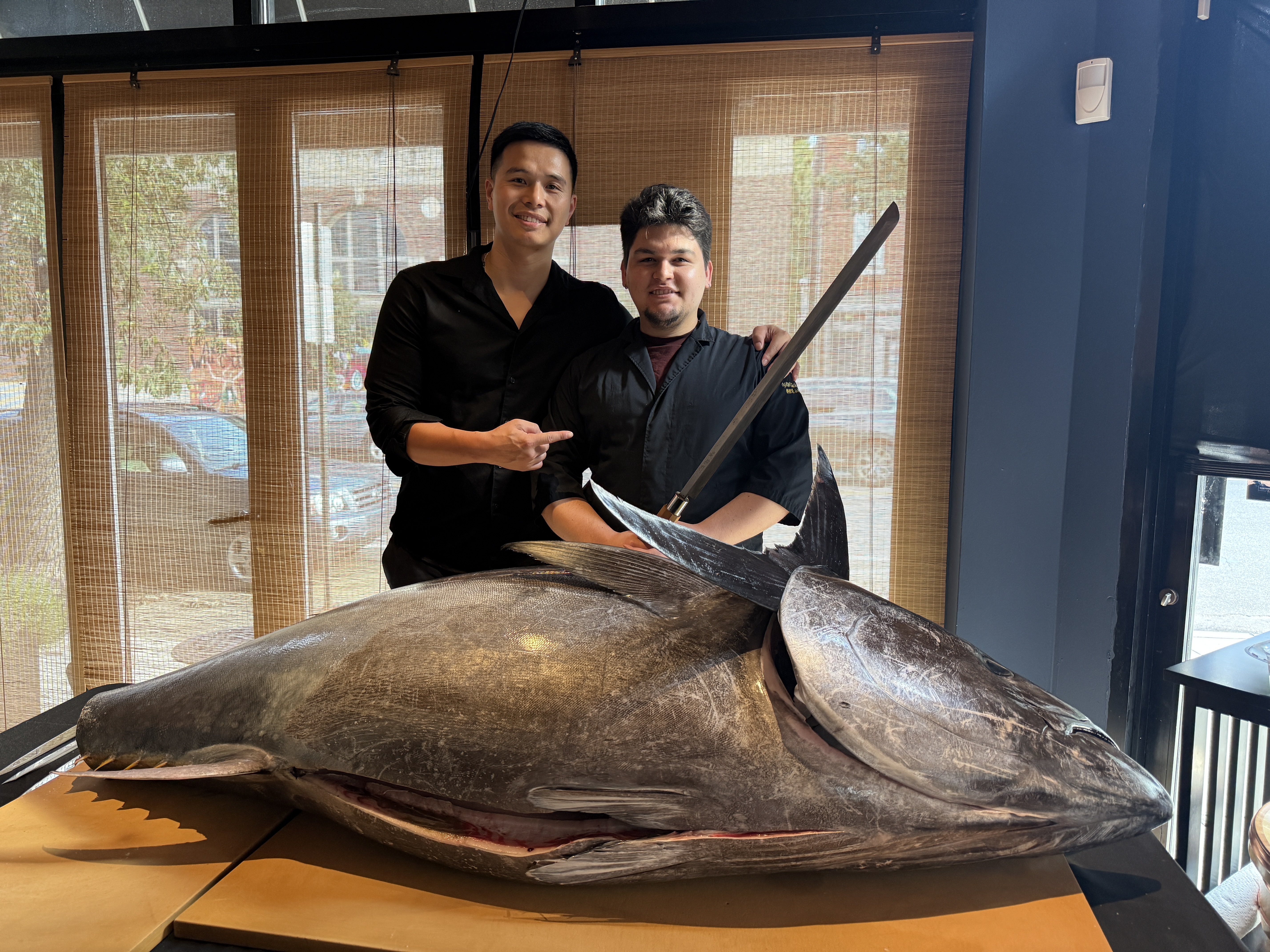
    It takes four people to carry a whole bluefin tuna into Da-Wa in Fishtown. It happens in summer and fall, when chef-owner Joseph Kim orders the fish directly from Spain. In winter, Kim sources smaller Hokkaido bluefin straight from Japan. Kim breaks them down solo, into pieces suitable for service. The whole process takes him hours, and on tuna delivery days, he doesn’t make it home until 3 a.m. or later if he’s working on a 300-pound fish.

    Kim’s palate is so attuned to the nuances between bluefin that he can taste them blind and tell you their provenance. Spanish bluefin is particularly soft and fatty. Hokkaido bluefin is less fatty and much smaller, at around 150 pounds vs. the 300 pounds that Spanish tunas average. Compared to more common, smaller varieties of tuna, like skipjack or albacore, bluefins are exceptionally buttery. In terms of fattiness and richness, Kim compared bluefin to wagyu.

    No other varietal of the tuna passes through the door. But for Kim, the effort is worth it. “Bluefin has richness throughout the entire fish.” said Kim. “It is the heart of the sushi restaurant.”

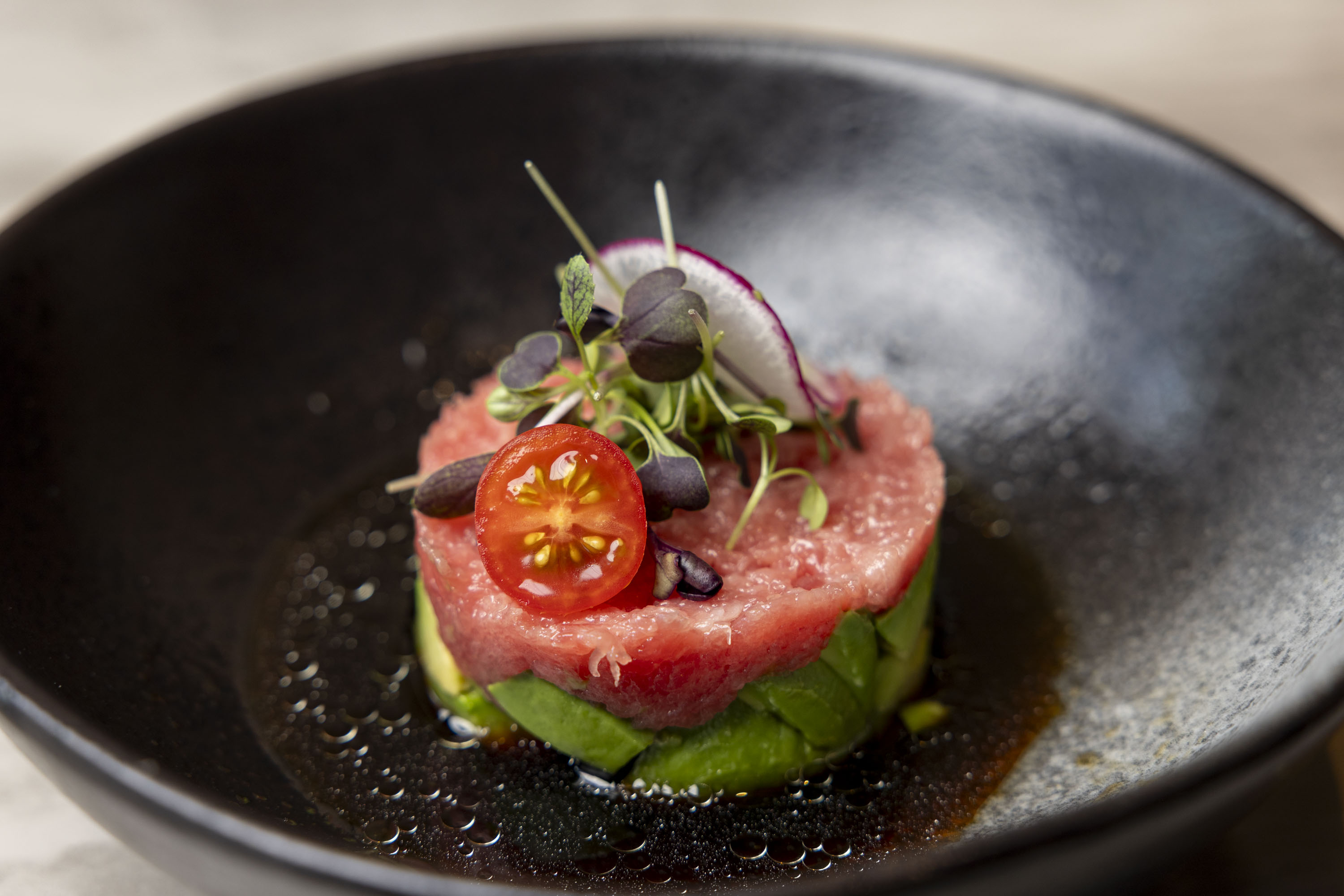
    It’s not just Da-Wa. Bluefin, once a controversial menu addition, is back in a big way. And the surge isn’t just restricted to high-end omakases, even though bluefin is some of the most expensive fish available. Bluefin is now at many of Philly’s newer midrange sushi restaurants like Palm Vintage, Javelin, and Oroshi, as well as restaurants that straddle the line between fine dining and neighborhood-driven, like Little Water and Alice. Bluefin is everywhere.

    Bluefin tuna was, for years, an illicit luxury, though it never fully left menus. A decade ago, conservation groups were staging boycotts against consuming the fish, chefs were swearing off serving it, and demand for the increasingly rare fish was so high, it was fetching eye-watering prices. But now the coveted ultrasoft and fatty fish is back on the menu all over Philadelphia and far beyond.

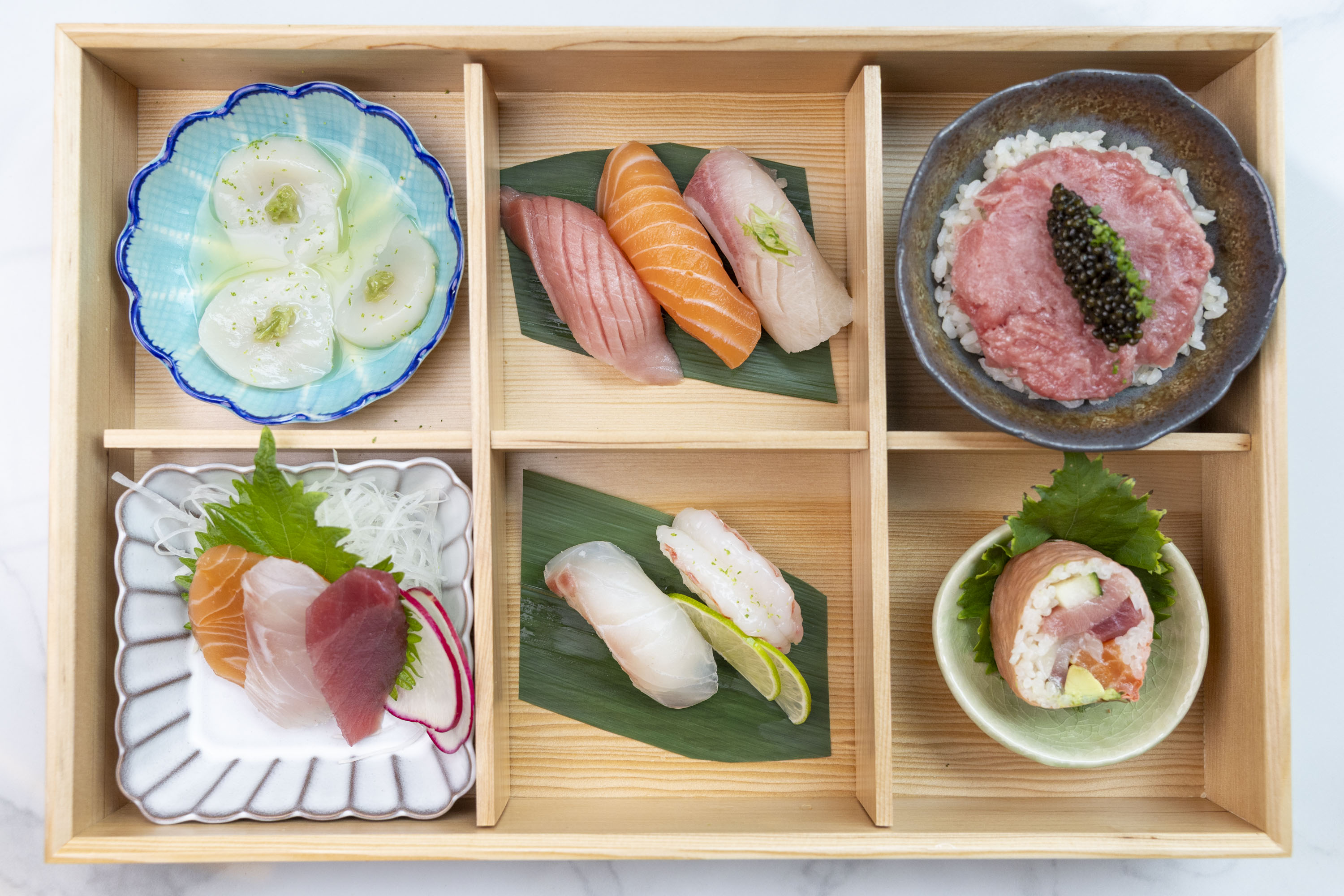
    The Palm V. Mini Omakase bento box at Palm Vintage.Tyger Williams / Staff Photographer

    Off the menu

    The return of bluefin tuna to restaurant menus was a long process. In the 1980s, sushi started trending stateside and eating tuna surged in popularity, which led to severe overfishing. In 2006, the International Commission for the Conservation of Atlantic Tunas (ICCAT) implemented a 15-year recovery plan to prevent the tuna population from collapse. This plan limited fishing seasons and raised the minimum allowable size of tuna for fishing.

    Those measures worked, and the population bounced back. In 2021, the International Union for Conservation of Nature (IUCN) moved Atlantic bluefin tuna from the list of endangered species to those of least concern.

    But it hasn’t just been Atlantic tuna returning in droves. Pacific bluefin, once restricted from fishing for environmental reasons, is now fair game again. To the delight of chefs in San Diego and Baja California, fishermen are catching bluefin tunas of record weight — nearly 500 pounds — in their waters. Giant bluefins have also returned to British waters (and even in the Baltic Sea), which have been mostly absent of the species since the 1960s.

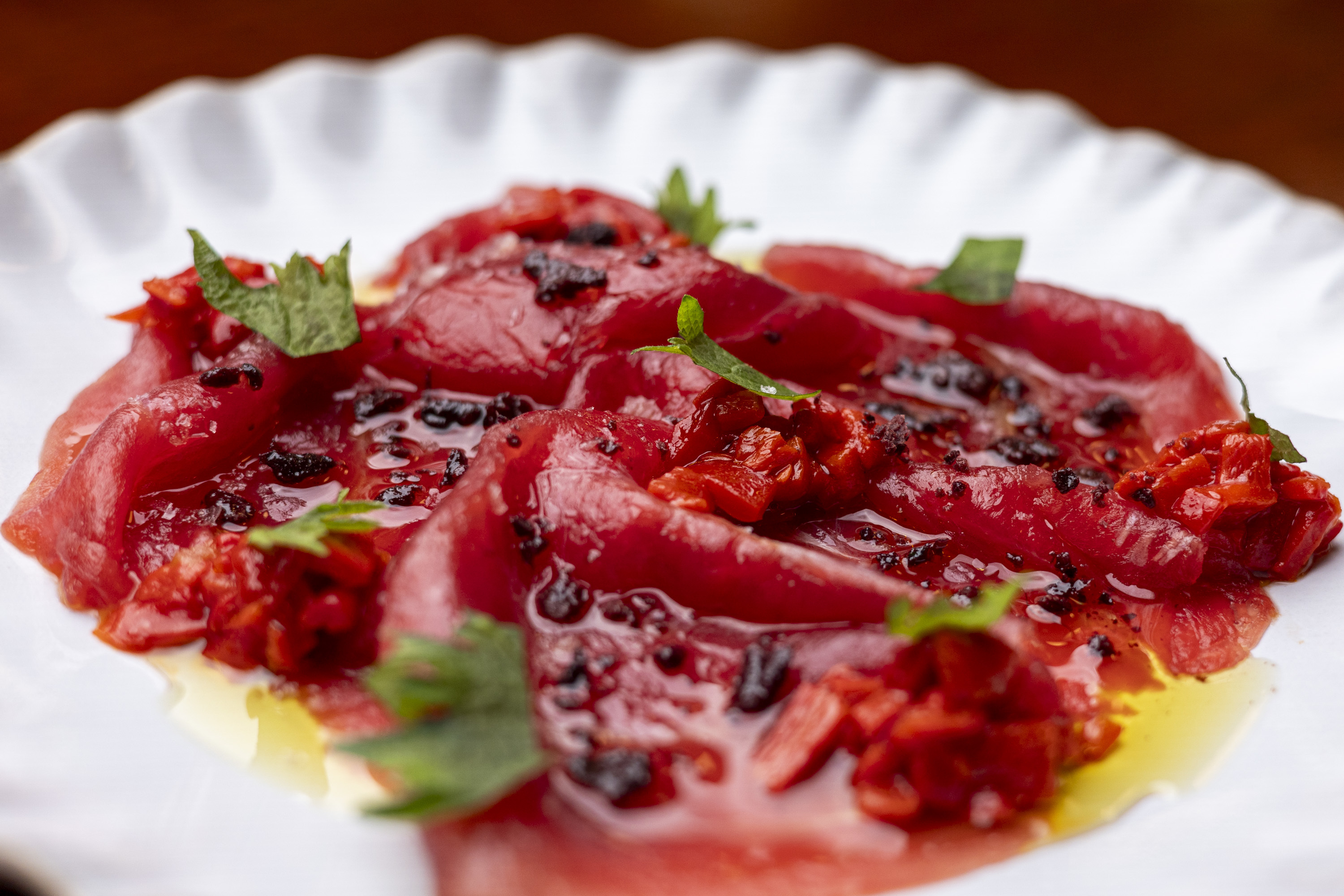
    Raw bluefin tuna at Little Water.Tyger Williams / Staff Photographer
    Bluefin tartare at Ogyu.Tyger Williams / Staff Photographer

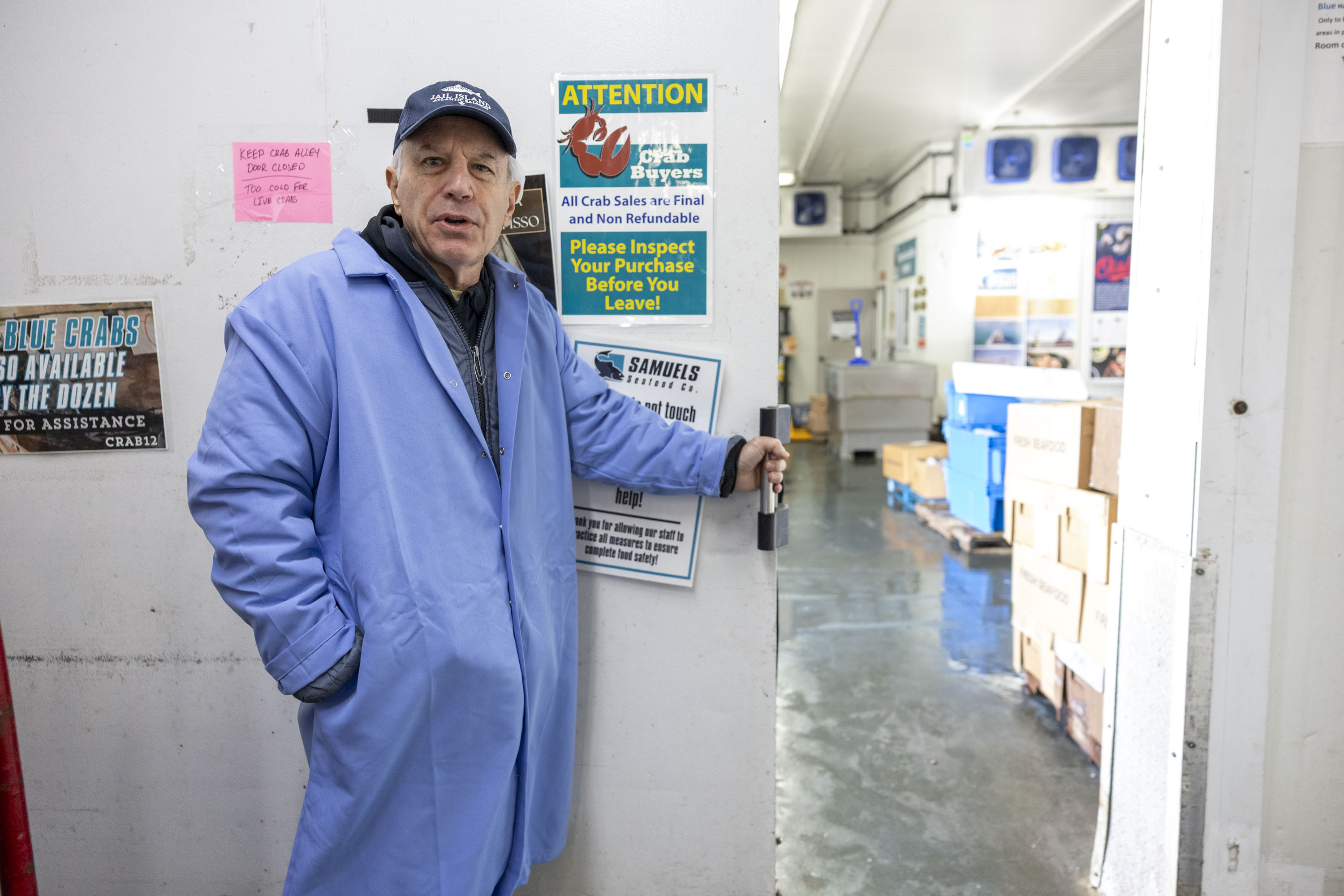
    At South Philadelphia-based seafood distributor Samuels Seafood Co., the tunas come in from all over the world — in the summer months from along the East Coast and currently, from the Mediterranean, though also from the Carolinas and some from South Africa. They’re sold to customers along the East Coast, as far down as South Florida, and in some parts of the Midwest and Las Vegas.

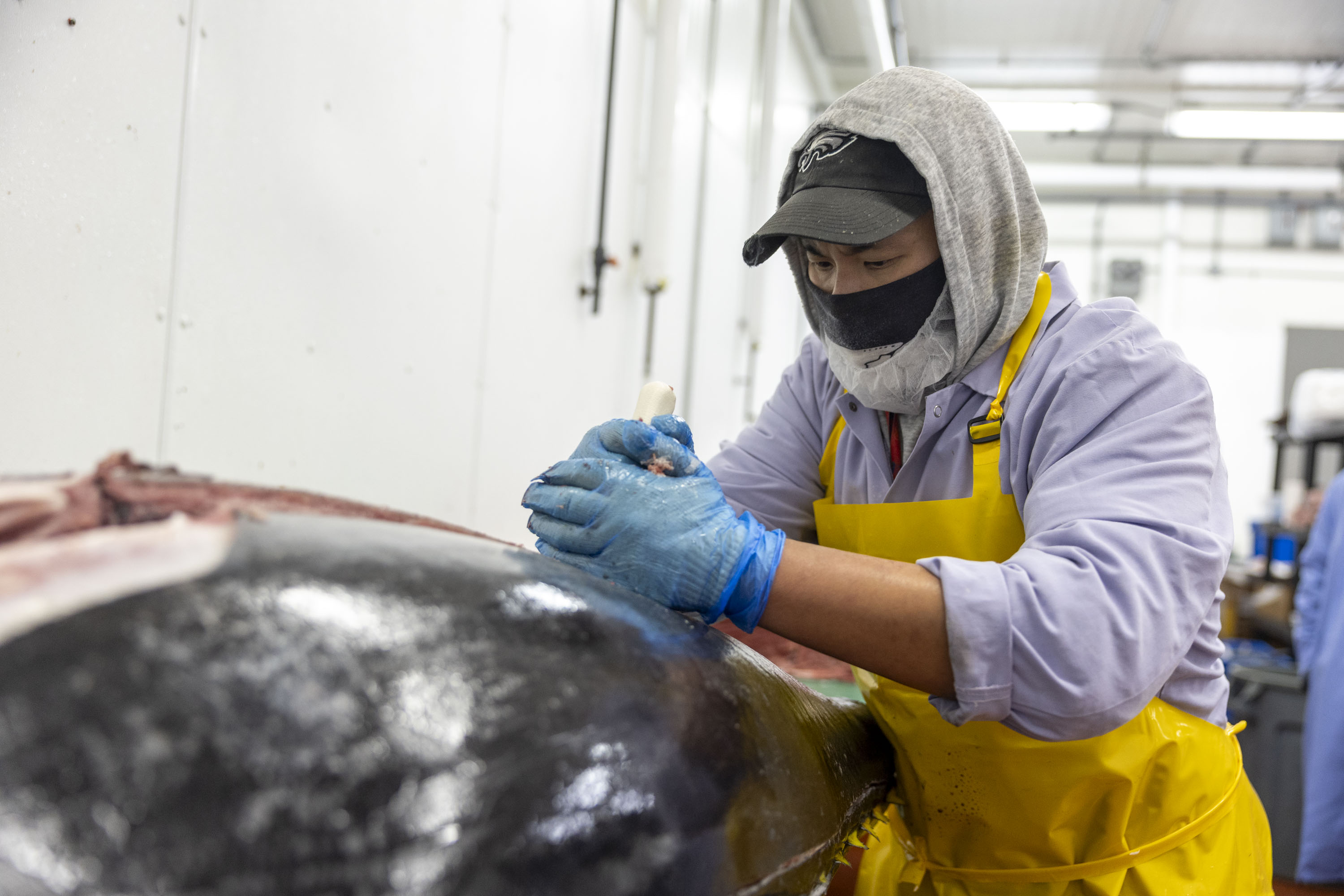
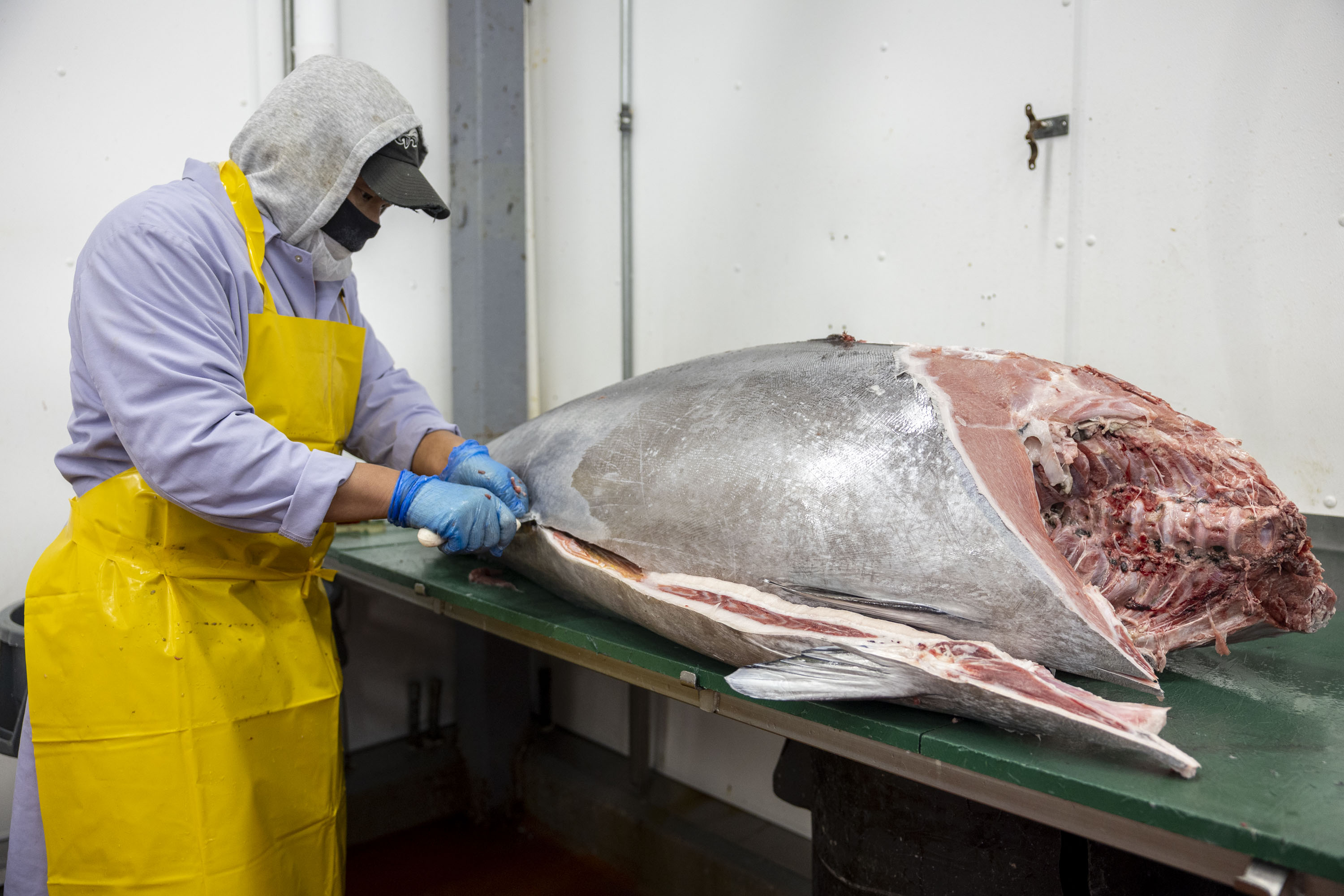
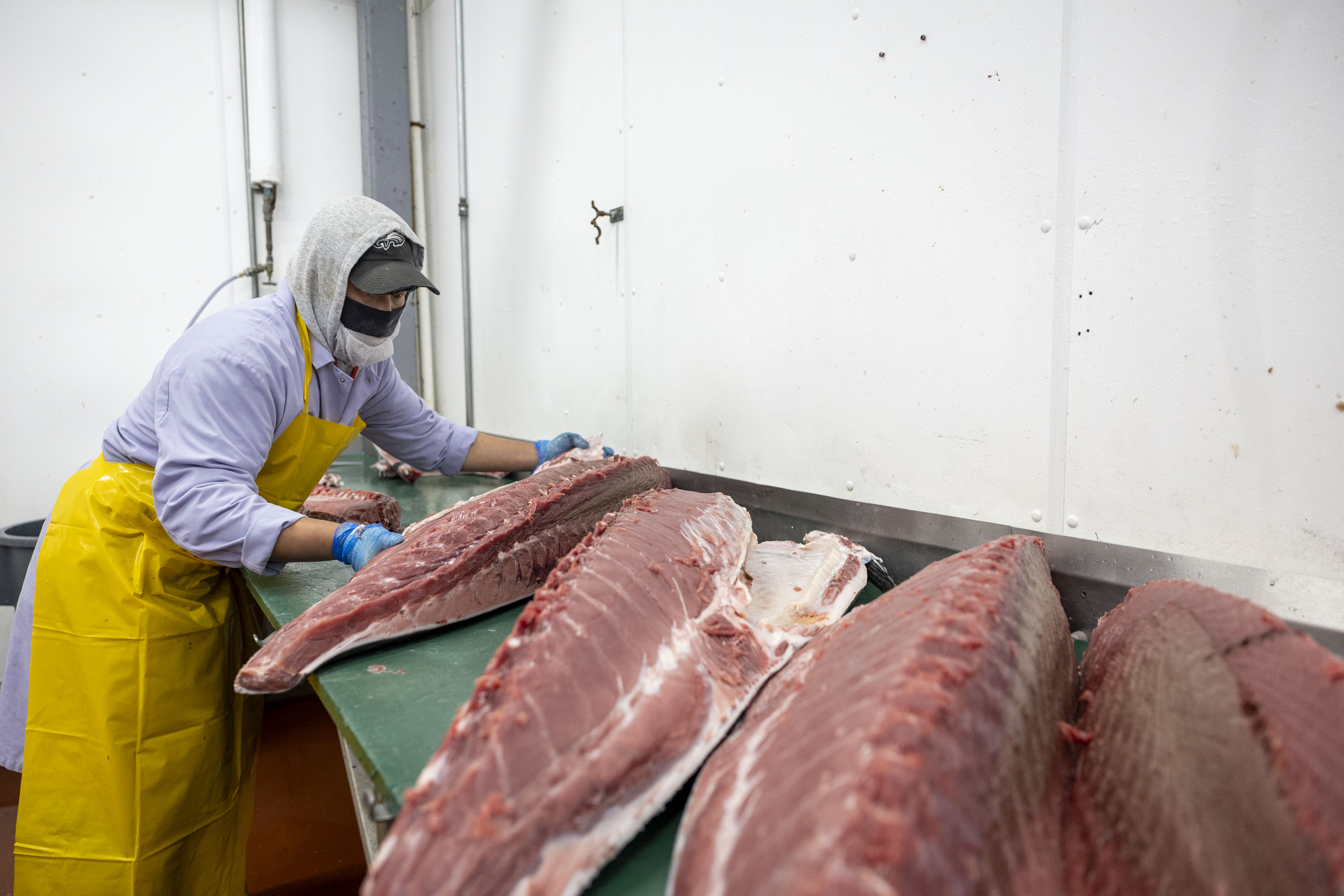
    Joe Lasprogata, the company’s senior vice president of product development (who also trained as a marine biologist), oversees tuna shipments and their breakdown into loins for customers. At Samuels, it takes tuna cutter David Lam about 15 minutes to cut a whole 350-pound bluefin into loins and collars, to be further broken down by chefs and at sushi restaurants. The record weight for a bluefin brought into Samuels is 820 pounds.

    Joe Lasprogata, vice president of product development at Samuels Seafood, gives a tour.Tyger Williams / Staff Photographer

    The bluefins — or as Lasprogata calls them, “apex predators of the ocean” — that Samuels brings in twice a week are both wild and ranch-raised.

    David Lam breaks down a bluefin tuna at Samuels Seafood.Tyger Williams / Staff Photographer
    David Lam shows different cuts of a bluefin tuna at Samuels Seafood.Tyger Williams / Staff Photographer

    “People are all excited about [bluefins coming back] but I think it’s a little premature,” said Lasprogata. “It’s great that the bluefin are coming back, but we’re also seeing other stocks lessening. So there’s still something out of balance.”

    “Everything is cyclical,” he said.

    Size does matter

    Chefs like Kim of Da-Wa in Fishtown and seafood purveyors like Lasprogata of Samuels Seafood will tell you that bluefin has a sweet spot in terms of weight for prime deliciousness, and that’s around 300 pounds.

    And they can get far larger, which means they have incredibly long lifespans and long gestation periods, according to Jackie Marks, the senior PR manager of the Marine Stewardship Council (MSC), which certifies marine fisheries, as opposed to the Aquaculture Stewardship Council (ASC), which sets responsible practices for farmed fish. “And that means they reach sexual maturity later in their lives and when you think about how that affects fishing, which often targets younger fish — they’re not able to reproduce yet,” said Marks. From her perspective — a biological one — the larger the tuna, the better.

    If we overconsume bluefin, we’ll know by their size. “If the tuna that are being brought in are smaller and smaller, then we have a reason to be concerned [again],” said Marks. And keeping watch will take a coordinated effort among countries and governing councils.

    Sushi chefs Albert Zheng and Carlos Wills in front of a 281-pound Spanish bluefin tuna at Javelin in Fairmount.Kiki Aranita / Staff /

    Wild caught, if possible

    Not just any bluefin is migrating back to Philadelphia sushi restaurants. Much of it, like the 300-pound bluefins regularly broken down at Samuels, is ranch-raised. This is a controversial practice that sits in between aquaculture (or seafood farming) and wild fishing, due to high FIFO or fish-in-fish-out ratios. The average ratio is 15:1, meaning that for every ton of ranch-raised tuna, 15 tons of feed is required. As a point of comparison, the FIFO ratio of farmed salmon is 0.82:1.

    “It’s like Hansel and Gretel-ish,” explained Lasprogata. “You put them in a pen, feed them, fatten them up, and then harvest them.”

    The benefit, he says, is that they can be harvested larger and more mature, after they’ve had the opportunity to procreate. The fish, so long as they’re dispatched properly, are also extremely high quality, with rich and oily, well-marbled flesh. Tuna ranches also operate year-round.

    But chefs who are fanatical about bluefin tend to seek out wild bluefin, which can only be caught seasonally (and given that they’re a migratory species, the seasons change around the world), which is why Kim has to store his fish after breaking it down in three super freezers, set to between -64 and -110 degrees Celsius, which cost him $100,000. They keep his costly tuna fresh as he uses it over the course of three months.

    “I don’t make money on tuna, but I am a chef, not a businessperson,” said Kim.

    At Little Water and River Twice, Randy Rucker gets his tuna from the East Coast. “Wild bluefin tuna has a depth of flavor that is hard to compare to,” said Rucker, who works with his sous chef, Jeff McConnell, to use every part of the fish, incorporating the bloodline in their house-made XO sauce and meat scraped from bones in their seafood charcuterie program.

    “We choose wild-caught bluefin tuna because of its incredible flavor, texture, and richness. But not all bluefin is the same. We pay close attention to the fat, color, texture, and how the fish is handled,” said Carlos Wills, the executive chef at Ogawa in Old City, which uses bluefin tuna on its omakase menu. Wills has also performed annual bluefin tuna breakdowns at Ogawa and Javelin in Fairmount, sourcing the massive fish from Spain, just as Kim from Da-Wa does.

    And of all the fish in the sea, “There’s nothing else — no texture like bluefin. It’s so fatty and marbled, but also it can be intense and irony,” said Kim. With a close eye on bluefin stocks worldwide, right now, we can indulge in this wagyu of the sea.

  • 10 Philly-area spots for an epic Thanksgiving dinner, whether you’re dining in or taking out

    10 Philly-area spots for an epic Thanksgiving dinner, whether you’re dining in or taking out

    Ever stare down the neck of a frozen turkey and think, “How did this become my job?” The rest of the fam’s in the living room wearing cozy sweaters and watching football, and you’re in the kitchen mashing potatoes and candying yams all day like a sucker.

    Is this the year you outsource Thanksgiving? If so, you have options: Lots of local restaurants are willing to do the birdy work, from prepping heat-and-eat platters to sitting you down for a multicourse meal. Here are a few that caught our eye this year.

    Go out

    The Pub

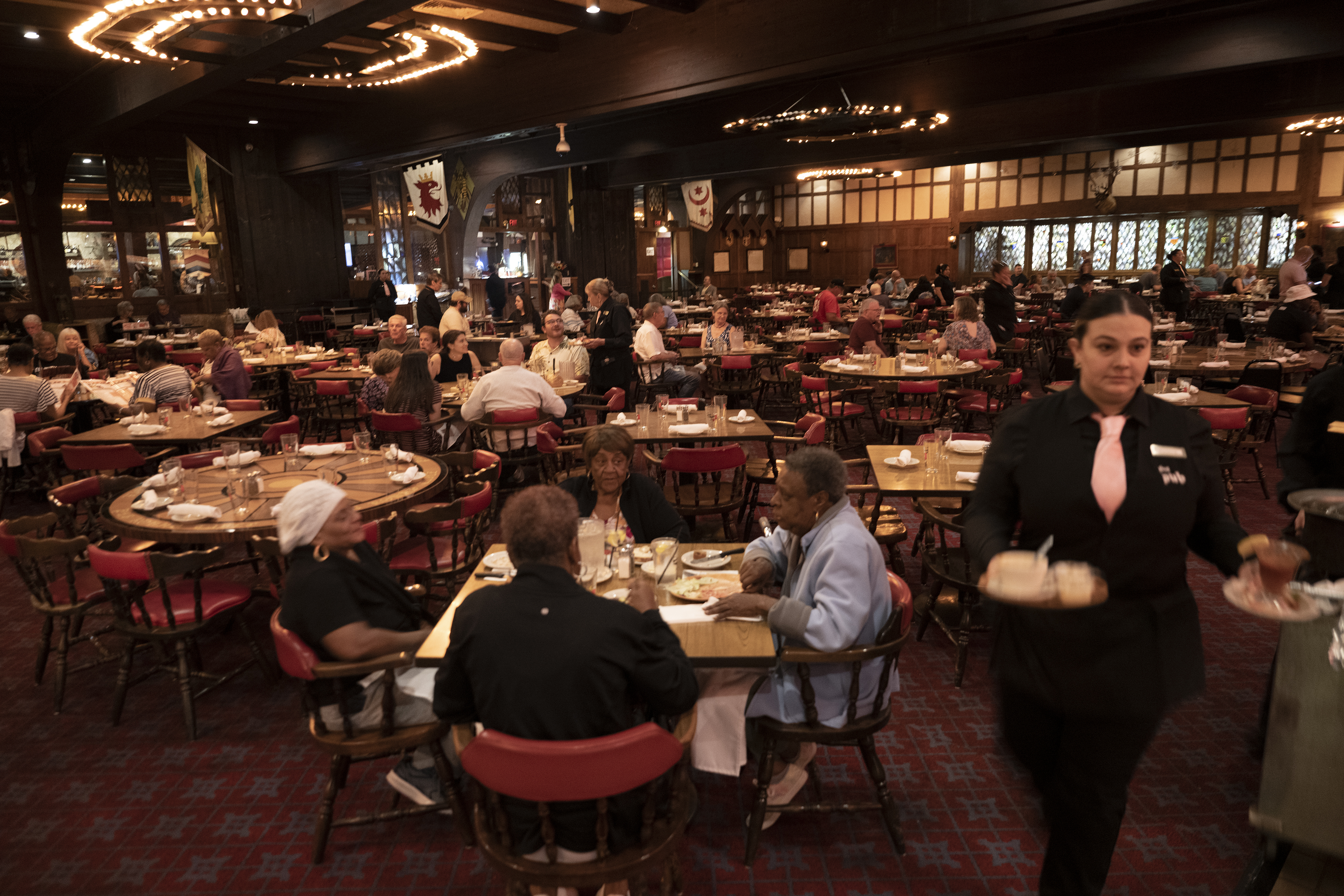
    Historical revisionism is a Thanksgiving tradition, so it’s no great sacrilege if you eat dinner in a vaguely medieval British hunting lodge the size of a football field. The Pub — South Jersey’s largest, most legendary dining hall — will be serving up roasted young Vermont turkey (but not too young; that would be eggs), plus stuffing, gravy, veggies, candied southern yams, pumpkin pie, and infinite access to the identical-twin salad bars jutting out from the dining room’s corners like battleships at port. (The Pub is still for sale, by the way, but you have to promise not to change literally any part of it.)

    $37.95 ($20.95 for kids), 7600 Kaighns Ave., Pennsauken, N.J., thepubnj.com

    Fork

    Ellen Yin’s Michelin- and James Beard-approved eatery in Old City is offering a prix fixe Thanksgiving feast, featuring options like celery root-cider soup, blue crab salad, or delicata squash to start, with turkey, maccheroni, or steelhead trout for the main course. Sourdough stuffing, potato terrine, root vegetables, and pie from nearby High Street round out the rest. (Psst: Here are some fancy words and phrases that we pared from the menu’s description — have fun guessing where they go: membrillo, sunchoke, kabocha squash curry, labneh, puntarella, and sherry jus.)

    $120 per person, 306 Market St., forkrestaurant.com

    Aqimero’s Thanksgiving feast promises mimosas, bellinis, and four courses of “festive flavors and elevated culinary touches.”Aqimero

    Aqimero

    For a holiday so forgiving of gluttony, a Thanksgiving brunch buffet just makes sense. This one, at chef Richard Sandoval’s spacious Aqimero deep within the Ritz-Carlton compound, promises mimosas, bellinis, and four courses of “festive flavors and elevated culinary touches.” Of course, courses are an arbitrary distinction the buffet realm; if you wanna put stuffing, bacon, and pumpkin pie on the same plate, no one can stop you.

    $95 per person, 10 Avenue of the Arts, aqimero.com

    Parc

    In addition to its usual menu, Rittenhouse Square’s busiest and perhaps Frenchiest fine-dining spot is offering a multicourse feast for T-Day: mushroom soup, roast turkey, and a slew of sides like stuffing, candied yams (topic: Are we candying enough things?), brussels sprouts, cranberry compote, and pommes puree. See? Got really French at the end there. Pumpkin pie to follow, mon ami français.

    $76 per person, 227 S. 18th St., parc-restaurant.com

    Founding Farmers

    The eco-conscious King of Prussia eatery is offering prix fixe breakfast, brunch, lunch, and dinner menus all day with an impressive array of main-course options including turkey, ham, Southern fried chicken, prime rib, honey-glazed salmon, or veggie loaf, plus sides, soups, etc. (Pro tip: For an extra $75 you can take home a “leftover kit” stuffed with turkey, cornbread stuffing, mashed potatoes, and more.)

    $49.95 ($24.95 for kids), 255 Main St., King of Prussia, wearefoundingfarmers.com

    Takeout

    CO-OP Restaurant & Bar

    Tucked inside the Study hotel in University City, CO-OP specializes in seasonal and locally sourced ingredients. For T-Day, they’ll send you home with turkey, whipped potatoes, sage-and-onion stuffing, squash agrodolce, green beans, salad, and gravy made from “roast pan drippings,” a rather beastly phrase which nonetheless makes my mouth water.

    $88 for two, $160 for four, 20 S. 33rd St., coopphilly.com

    CO-OP has a Thanksgiving to-go menu for you and your family.Michael Persico

    Heavy Metal Sausage Co.

    South Philly’s most hardcore meat grinders will send you home with half a turkey (brined, deboned, smoked, and ready for sacrifice), plus seven sides (stuffing, root veggies, etc.). It’s a lot of food for four people, because leftovers are part of the plan. Separate orders for sides, wines, and charcuterie boards are also on the table. 🤘 Reign in gravy. 🤘

    $295 for four, 1527 W. Porter St., heavymetalsausage.com

    48th Street Grille

    If you’re expecting a full house on Thanksgiving, let this West Philly Caribbean restaurant prepare a mighty feast. Pick your main course — turkey, jerk-marinated turkey, or prime rib — and they’ll pair it with the appropriate gravy and piles of sides: baked macaroni, candied sweet yams, veggies, and bread pudding with butter-rum sauce (I had to take a Lactaid just to type that). Lots of à la carte options too.

    $495-$675, for 8-12, 310 S. 48th St., 48thstreetgrille.com

    Ponzio’s

    In Cherry Hill, where diners reign, Ponzio’s remains the king of the fancies — a sparkling, liquor-licensed cathedral of baked goods and majestic portions. They’ll send you home with turkey, stuffing, gravy, and cranberry sauce, plus a bunch of sides, soups, and pies of your choosing. (Pro tip: Before you go, check the bakery cases for Thanksgiving-themed cookies and cupcakes.)

    $35.99 for one, $129.99 for four, $399 for 12 (includes a whole turkey), 7 W. Marlton Pike, Cherry Hill, ponzios.com

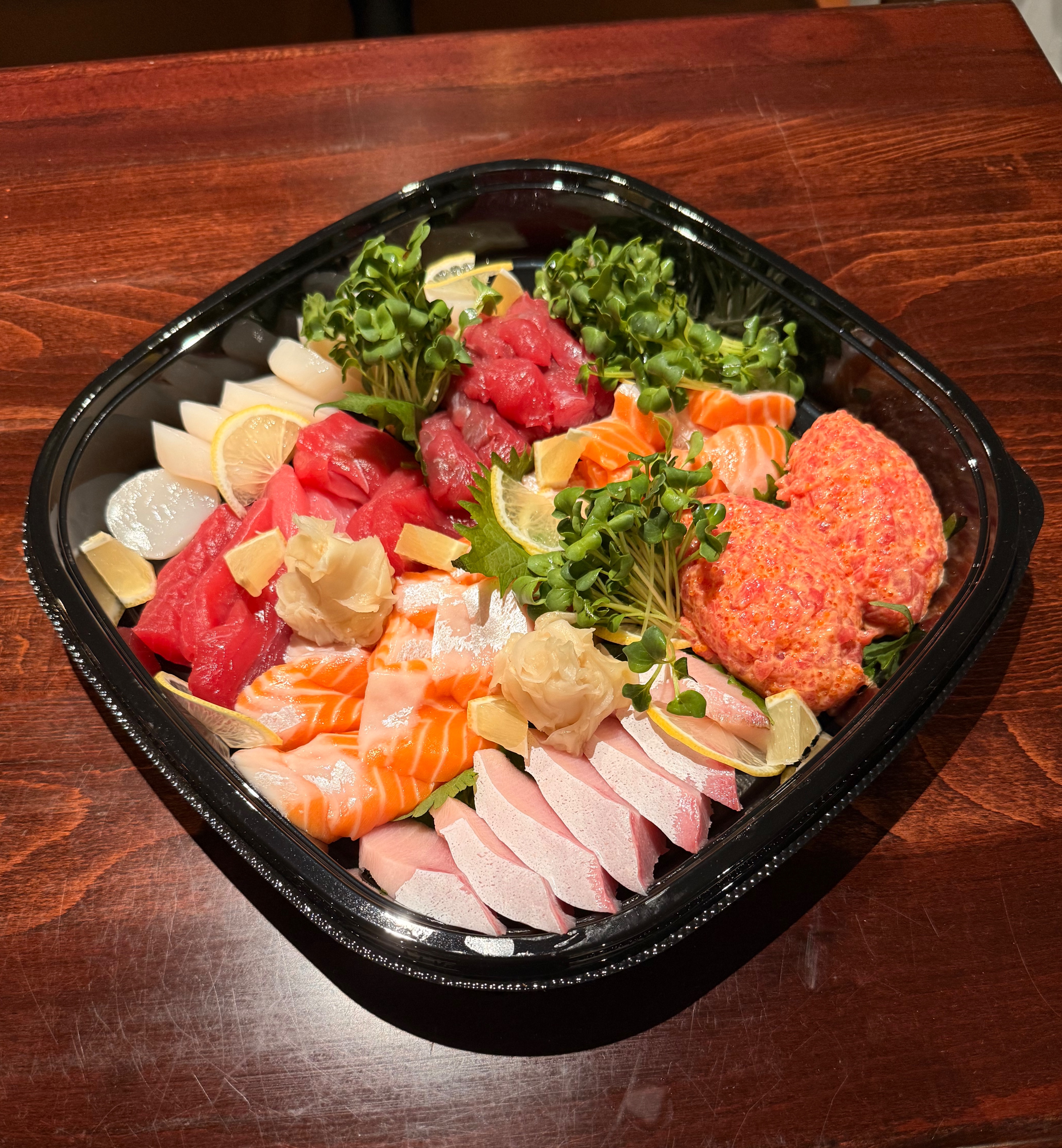
    Little Fish is offering takeout trays of expertly prepared sashimi for Thanksgiving, if turkey and stuffing isn’t your jam.Marie DeFeliciantonio

    Little Fish

    If you’re not into the whole turkey and stuffing thing, then you and I are very different people. But also, you might be interested in a Thanksgiving sashimi platter from this long-running and adorable Bella Vista BYOB. We’re talking bluefin tuna, king salmon (props to all ocean monarchs), scallops, tai snapper, hamachi, and spicy mayo tuna tartare.

    $150 for 6-8 people, 746 S. Sixth St., littlefishbyob.com

  • The best things Abigail Covington ate at the second Inquirer Food Festival

    The best things Abigail Covington ate at the second Inquirer Food Festival

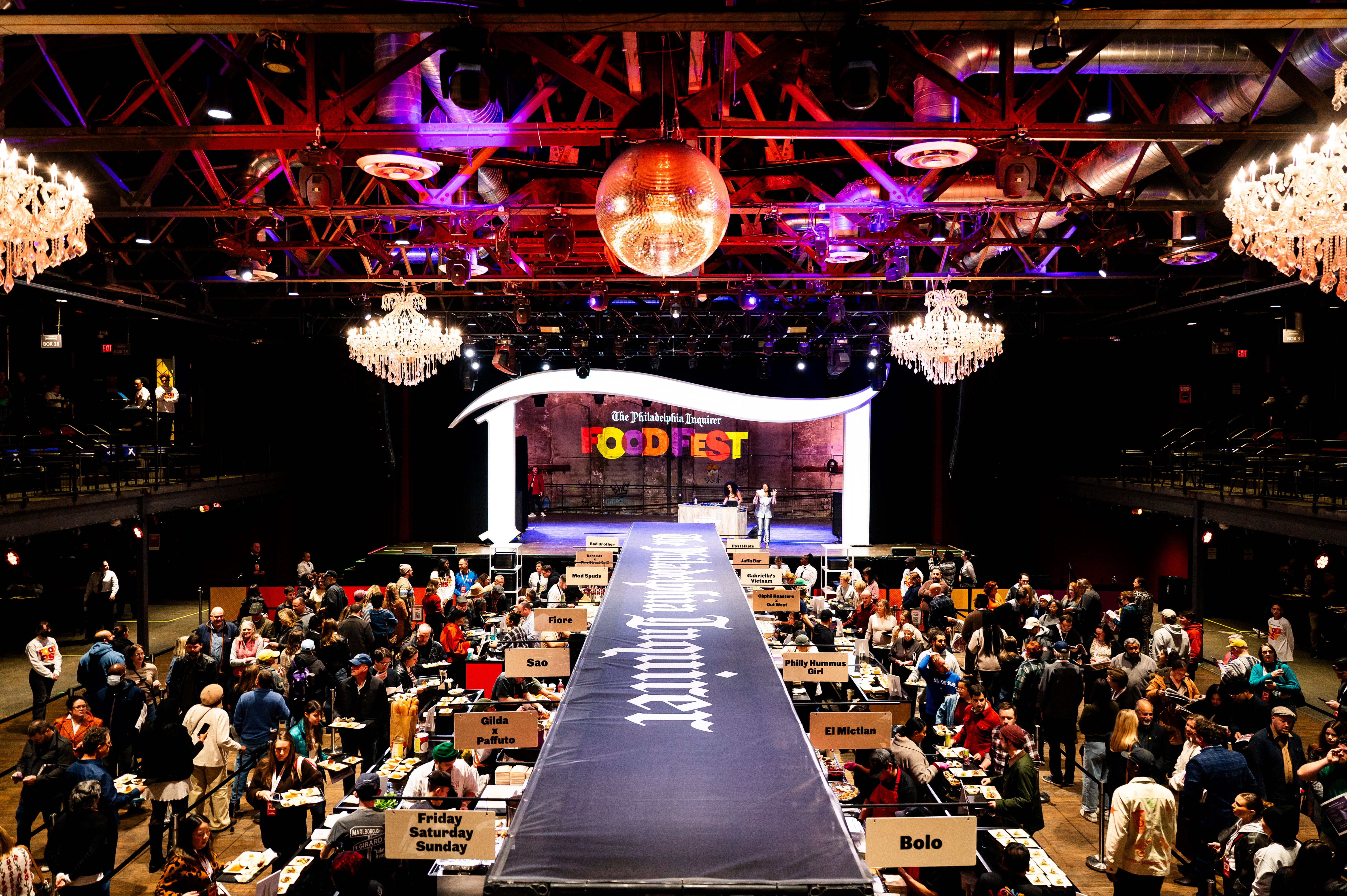
    By the time I arrived at the Fillmore for last Saturday’s Inquirer Food Festival, my stomach was growling. I knew I needed to bring my appetite for the big day, so I’d skipped breakfast. Now it was time to eat, and a feast of inventive, off-menu bites from nearly 50 of Philly’s best chefs and bakers awaited.

    Inside, colorful lights illuminated the crowds of hungry food lovers weaving between restaurants’ booths. Bartenders were pouring signature cocktails and mocktails, chefs were staging cooking demonstrations, and Inquirer bake-off treats were circulating upstairs.

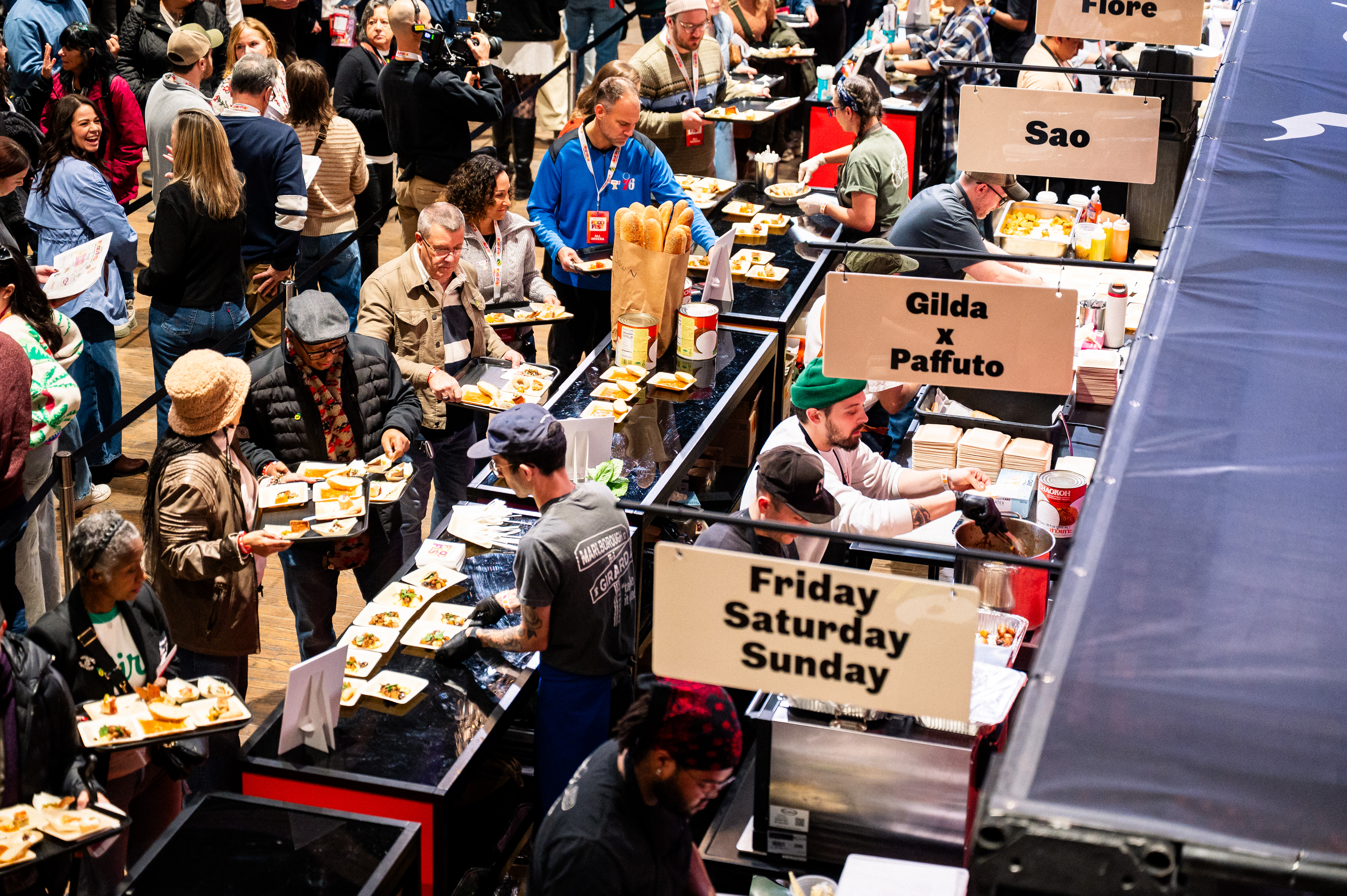
    It was a choose-your-own-adventure kind of afternoon, but I was on a specific mission: Eat everything. Over two tasting sessions, I did just that, sampling dishes from stellar restaurants like Michelin-starred Friday Saturday Sunday, neighborhood favorite El Mictlan, and fine-dining spots Vedge and Ocho Supper Club, which were among several restaurant pairs that teamed up for the festival. Choosing just five favorites wasn’t easy, but a few bites were simply too good to forget.

    Here are the best things I ate.

    The restaurant booths, including Friday Saturday Sunday, at the Inquirer Food Festival.Joe Dantone

    Friday Saturday Sunday

    I don’t have much of a sweet tooth, but pastry chef Amanda Rafalski’s blackberry-and-corn pavlova won me over. Tart blackberry-chamomile preserves balanced the sweetness of roasted corn custard, while the delicate meringue and fried corn silk snapped, crackled, and popped in my mouth. Just when I thought I’d experienced every texture, another one came along.

    Gilda x Paffuto

    Gilda and Paffuto’s wild boar ragù tasted like November in a bowl. Slow-cooked with red wine, pancetta, and mushrooms, the rich, earthy meat was served over creamy chouriço polenta with roasted root vegetables. A little orange gremolata cut through the richness, adding a welcome burst of brightness. It was the kind of hearty, comforting dish that makes you glad it’s cold outside.

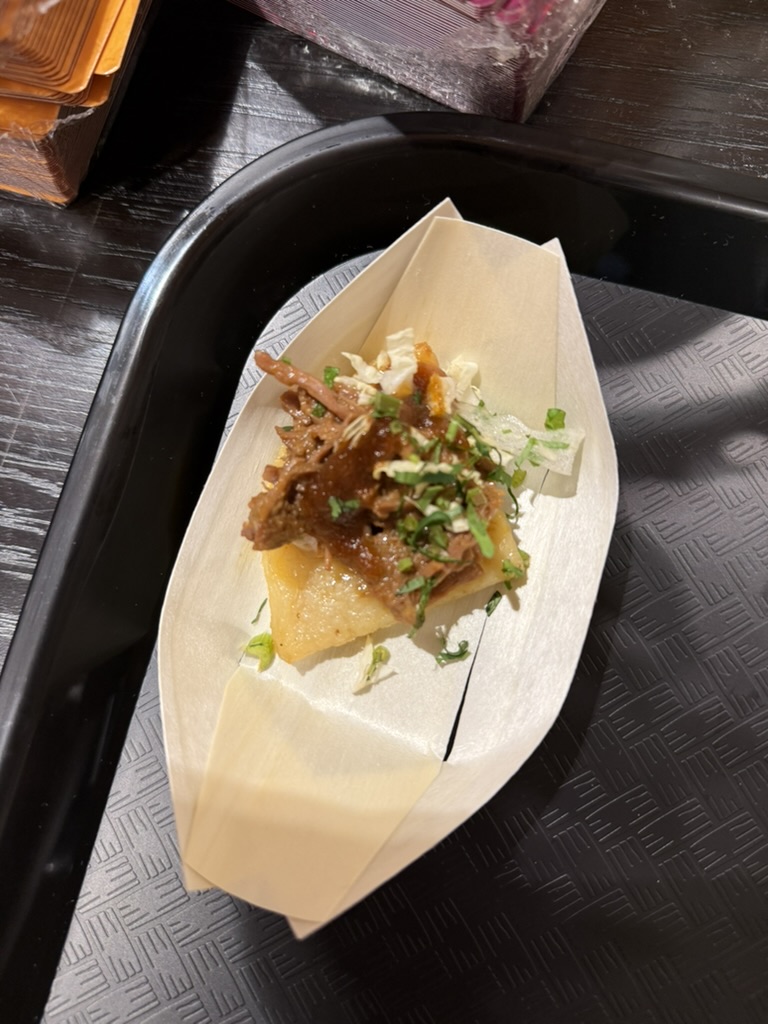
    Classic Scottish tattie scones with Malaysian rendang from Mod Spuds.Abigail Covington

    Mod Spuds

    I wasn’t sure what to expect when I approached Mod Spuds’ table. I’d never heard of a tattie scone, nor had I tried Malaysian rendang. Turns out I’d been missing out on both. Ange Branca’s miniature Scottish potato flatbreads were crisp around the edges and soft in the middle, making them the perfect vehicle for the rich, hearty, deeply spiced meat.

    El Mictlan

    I was already stuffed when I got to El Mictlan. So I planned to take only one bite of chef Chelo Manzanarez’s chochoyotes, little corn masa dumplings swimming in a rich, nutty green mole that reminded me of pozole. Instead, I inhaled the whole thing. No regrets.

    The Bread Room

    A butter-and-cheddar sandwich has no business being so delicious, but Christina McKeough’s humble dish was a reminder that sometimes simple is best. The seeds coating the bun gave every bite some crunch, the cultured butter added richness, and the sharp Clover Creek cheddar delivered a smack of flavor. That was the whole sandwich, and I wouldn’t have changed a thing.
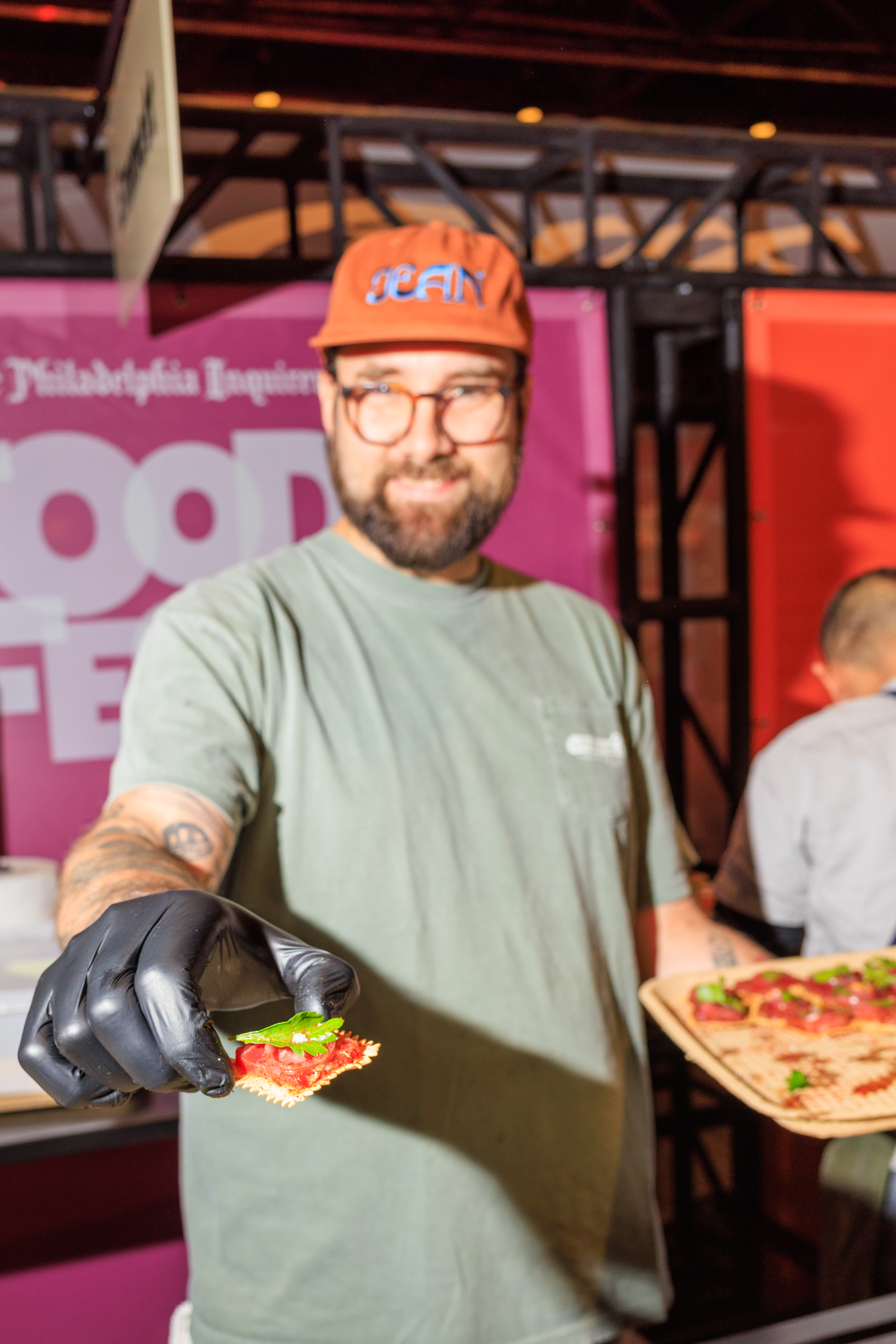
    Emmett’s Julian van der Tak serving up chili-cured tunakc tinari

    Emmett

    My second tasting got off to a blazing start thanks to chef Evan Snyder’s chili-cured tuna. Served on a crunchy everything-seasoned matzo cracker with red pepper labneh and pickles, the fish had just enough heat to give it a kick, while the labneh and pickles added pleasant tang. The perfectly sized portion left me wanting more and eager to try out Emmett’s full menu.

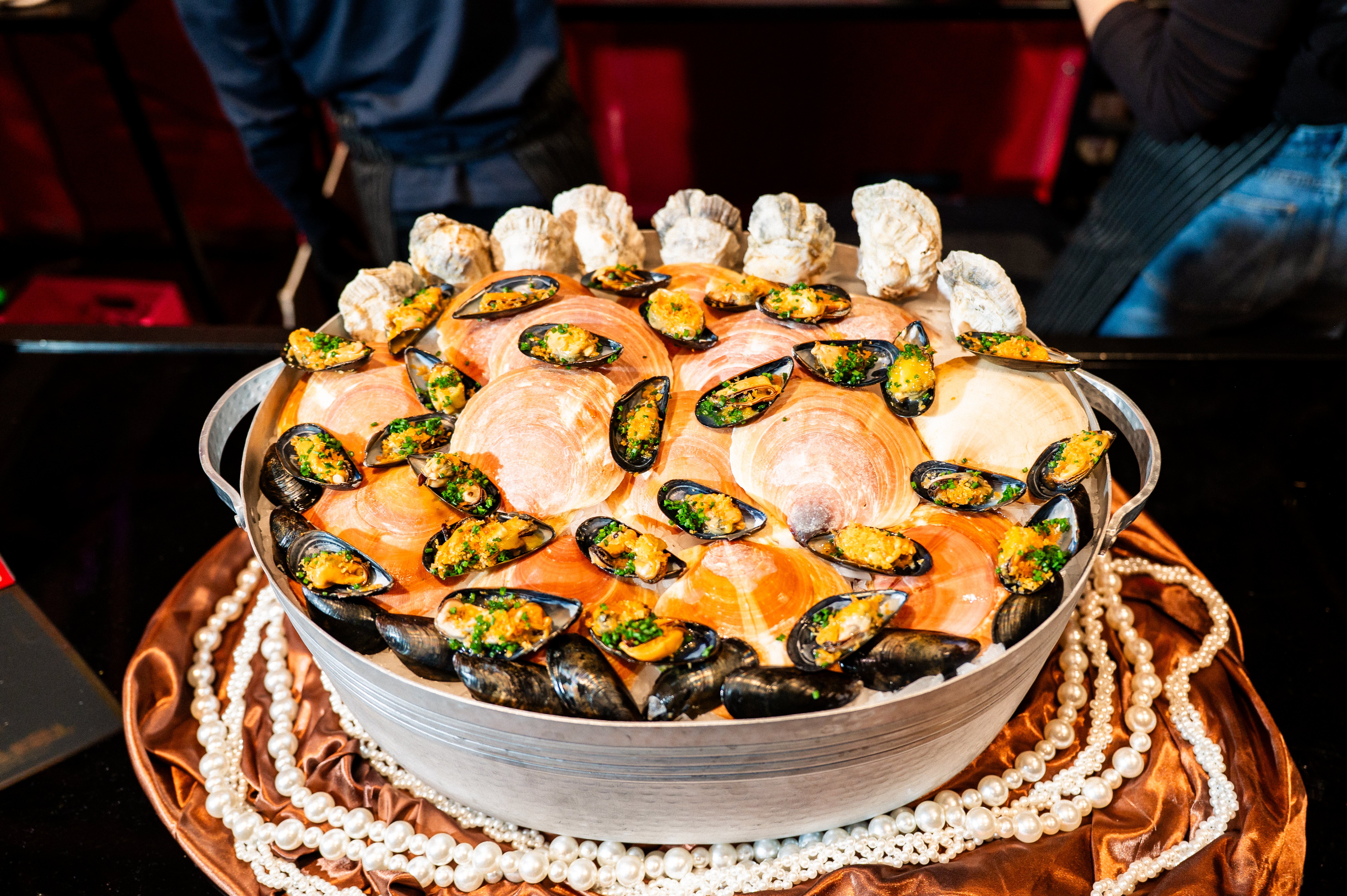
    Tesiny’s pickled mussels with spiced Espelette breadcrumbs and chives.Joe Dantone

    Tesiny

    My last dish of the day turned out to be the perfect finale. Kevin McWilliams’ pickled mussels were worlds away from the traditional white-wine-and-butter preparation. Briny and pleasantly tart, with a crunchy topping of Espelette-spiced breadcrumbs and chives, they were refreshing rather than rich. After hours of eating, this light, delicate bite was exactly what I needed.

  • Missing paychecks, a staff walkout, and a menu overhaul: What happened at Soufiane at the Morris?

    Missing paychecks, a staff walkout, and a menu overhaul: What happened at Soufiane at the Morris?

    The French classics are gone from Soufiane at the Morris. So is the chef who made them.

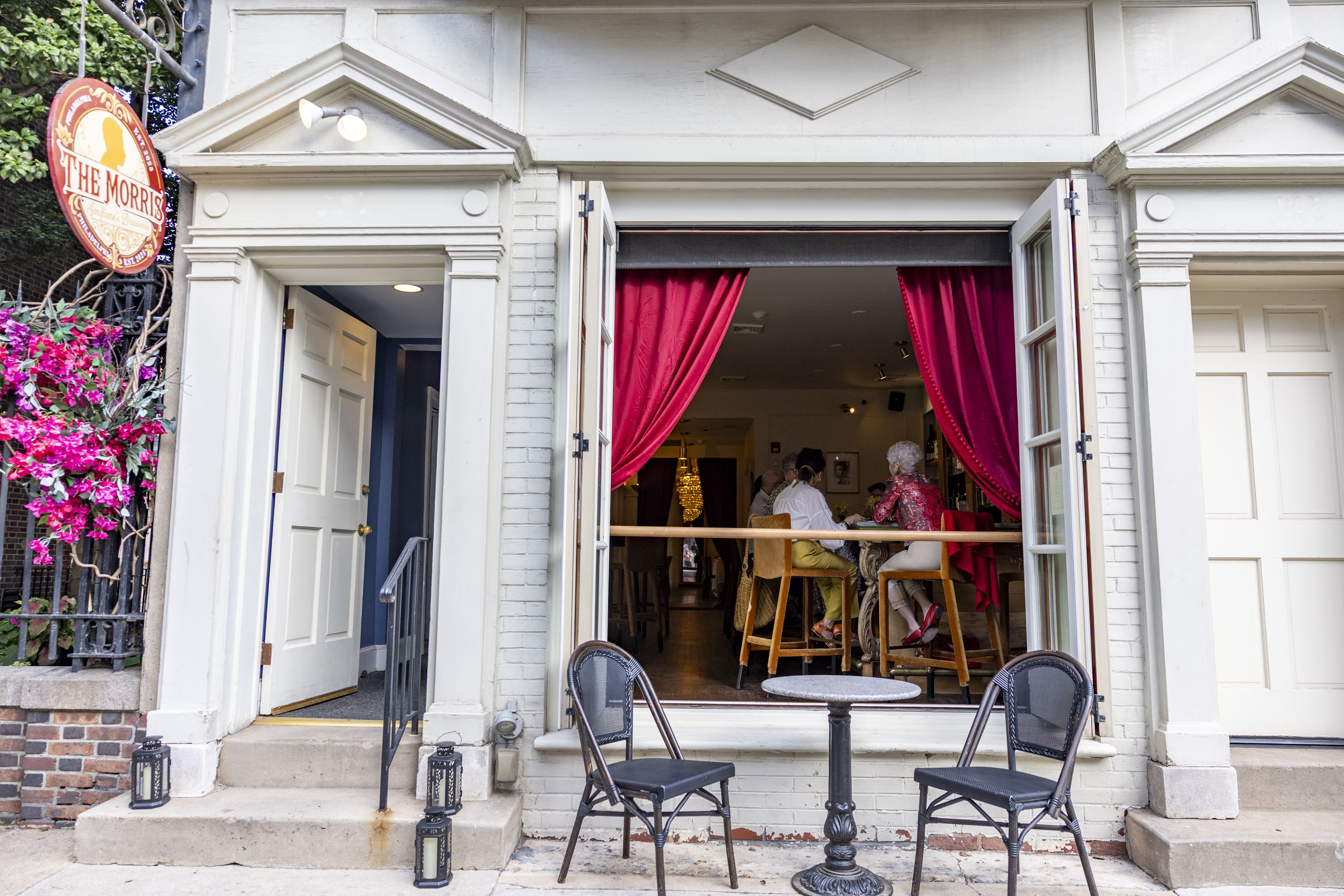
    Less than five months after opening, owner Soufiane Boutliliss has taken over the kitchen at the Morris House Hotel in Washington Square West, replacing much of the restaurant’s French-Moroccan menu with dishes rooted in his Moroccan heritage.

    The abrupt transformation followed an Oct. 3 staff walkout that temporarily closed the restaurant.

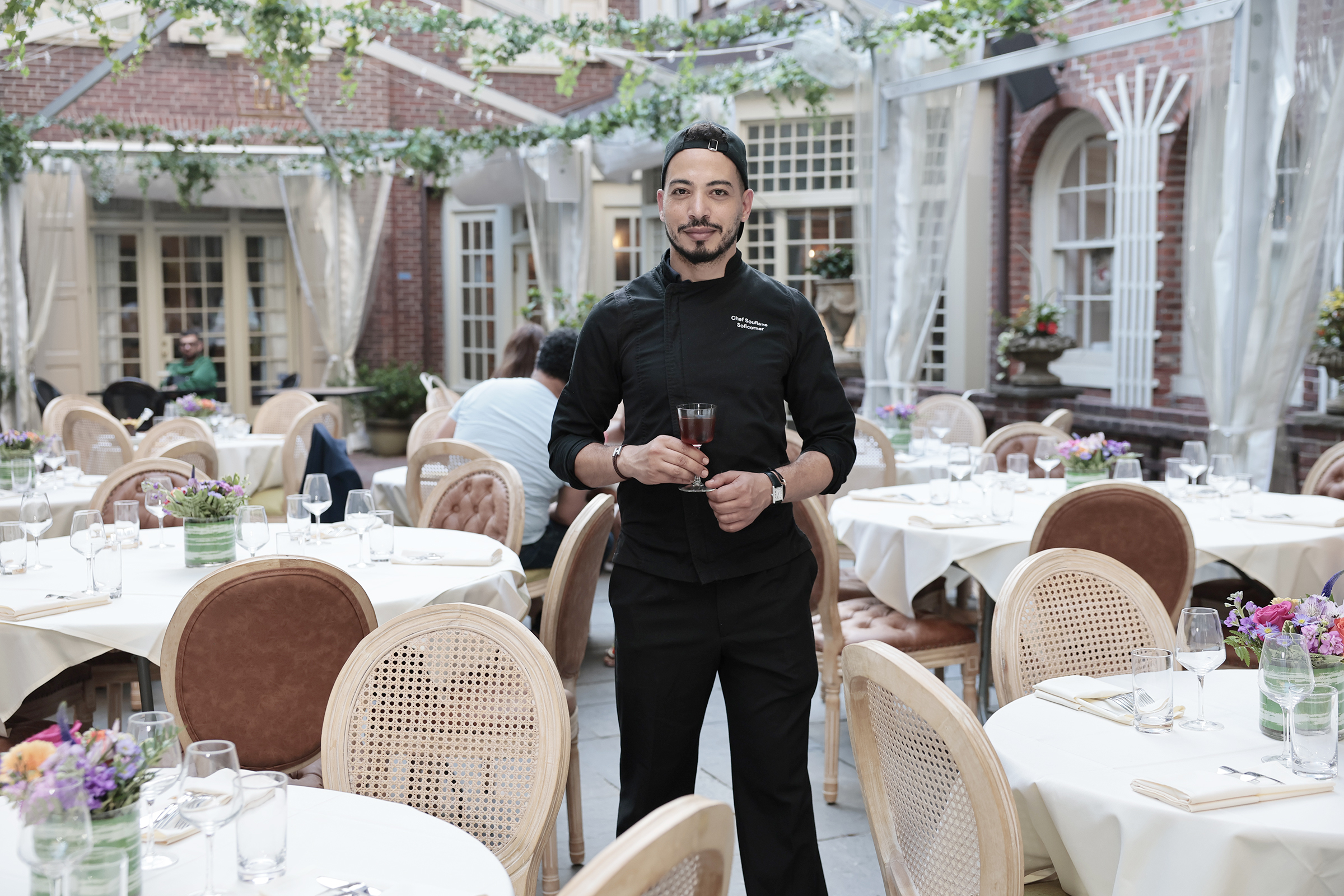
    Chef-owner Soufiane Boutliliss in the garden at Soufiane at the Morris on May 27, during a preview.Elizabeth Robertson / Staff Photographer

    Former executive chef Henry McGuigan and other employees said the walkout followed months of late and missing paychecks dating back to the restaurant’s opening in early June. McGuigan and two sous chefs were subsequently dismissed in what management called a financial and organizational restructuring.

    Boutliliss acknowledged payroll delays but blamed administrative errors, excessive kitchen staffing, and his own failure to control labor costs. He said he had left too much responsibility to others.

    “Maybe that was my mistake,” Boutliliss said. “I trusted people, and I paid a very high price for it.”

    A turbulent start

    Boutliliss, a Moroccan native raised in Paris, entered Philadelphia’s restaurant scene in September 2023 with Sofi Corner Cafe, a small, largely daytime restaurant on Locust Street. It developed a following for French café staples inspired by his Parisian husband, Christophe Mathon, and Moroccan specialties, particularly couscous and tagines.

    Soufiane at the Morris was a much bigger undertaking, with a full bar, 45 indoor seats, and 55 outdoors at 225 S. Eighth St. McGuigan, whose resumé includes Zahav, Laser Wolf, Lucky’s Last Chance, June BYOB, and Tavern on Camac, was hired in the spring to oversee a menu ranging from escargots and steak frites to chicken tagine and couscous royale.

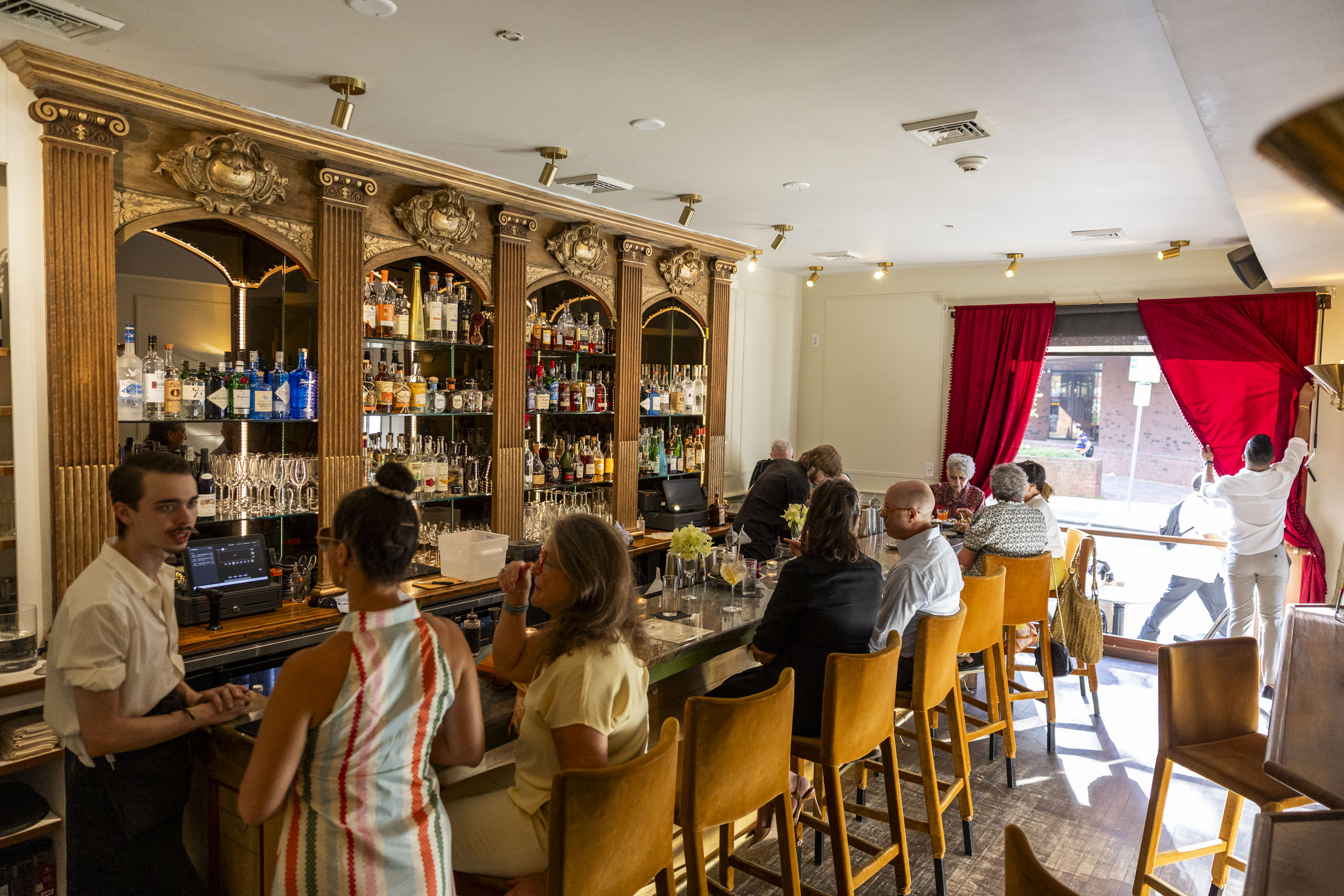
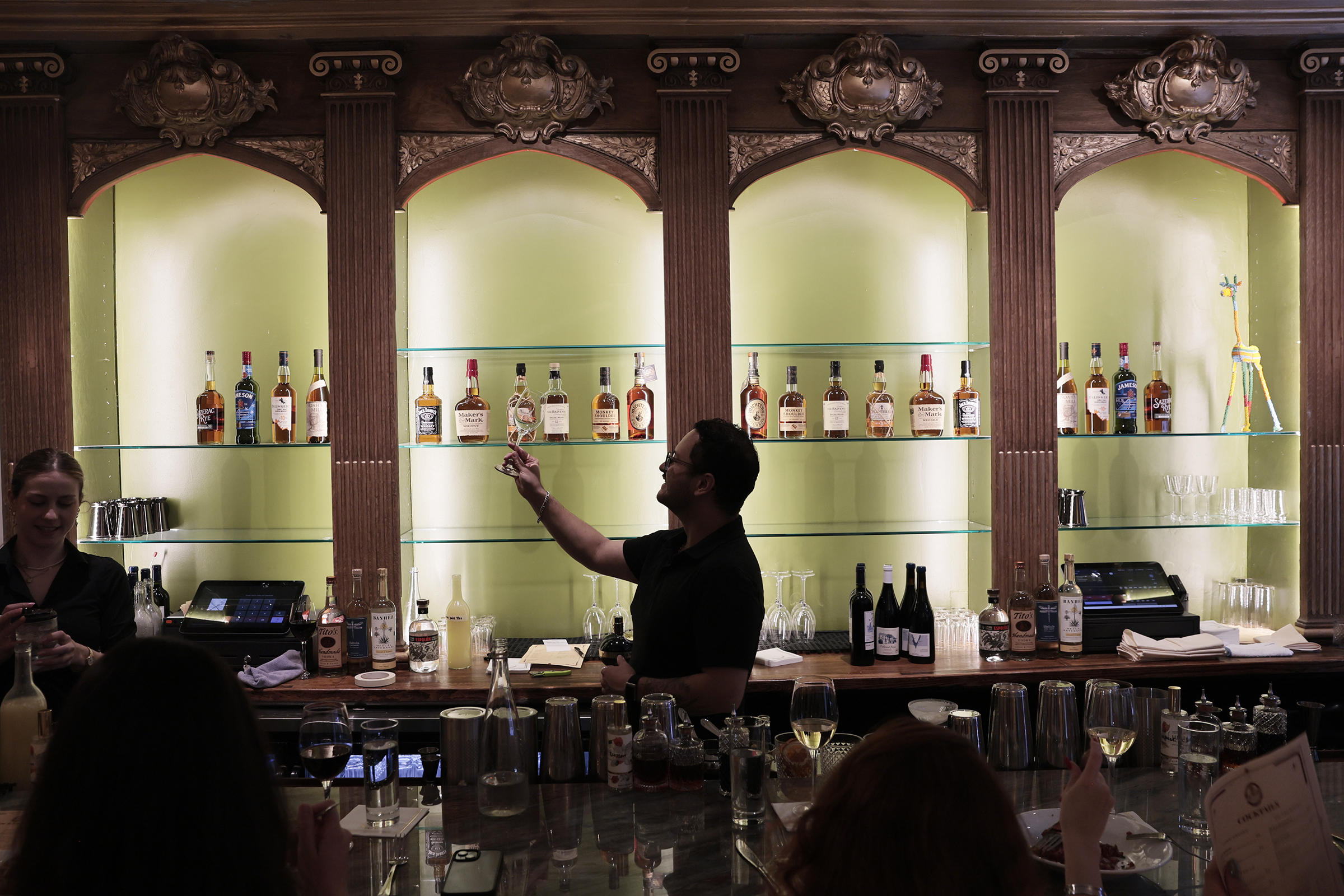
    The bar at Soufiane at the Morris on Sept. 10.Tyger Williams / Staff Photographer

    Growing pains are common at new restaurants, and turnover is a fact of life. But behind the beauty and grace of Soufiane’s historic hotel setting and secluded courtyard, the operation over the summer and early fall was anything but tranquil. Accounts of what went wrong differ widely, from who controlled staffing and spending to what prompted the walkout.

    Employees described bounced paychecks, missed direct deposits, and mounting frustration. “People were not being paid and were very upset,” said Matthew Morphet, who was hired in July to oversee payroll. “They were already on the verge of organizing a walkout by then.”

    Payroll problems

    While Boutliliss insisted that every Soufiane at the Morris employee was paid, several employees said otherwise.

    McGuigan said pay had been unreliable almost from opening day. Direct deposits failed to arrive, he said, and replacement paper checks sometimes bounced.

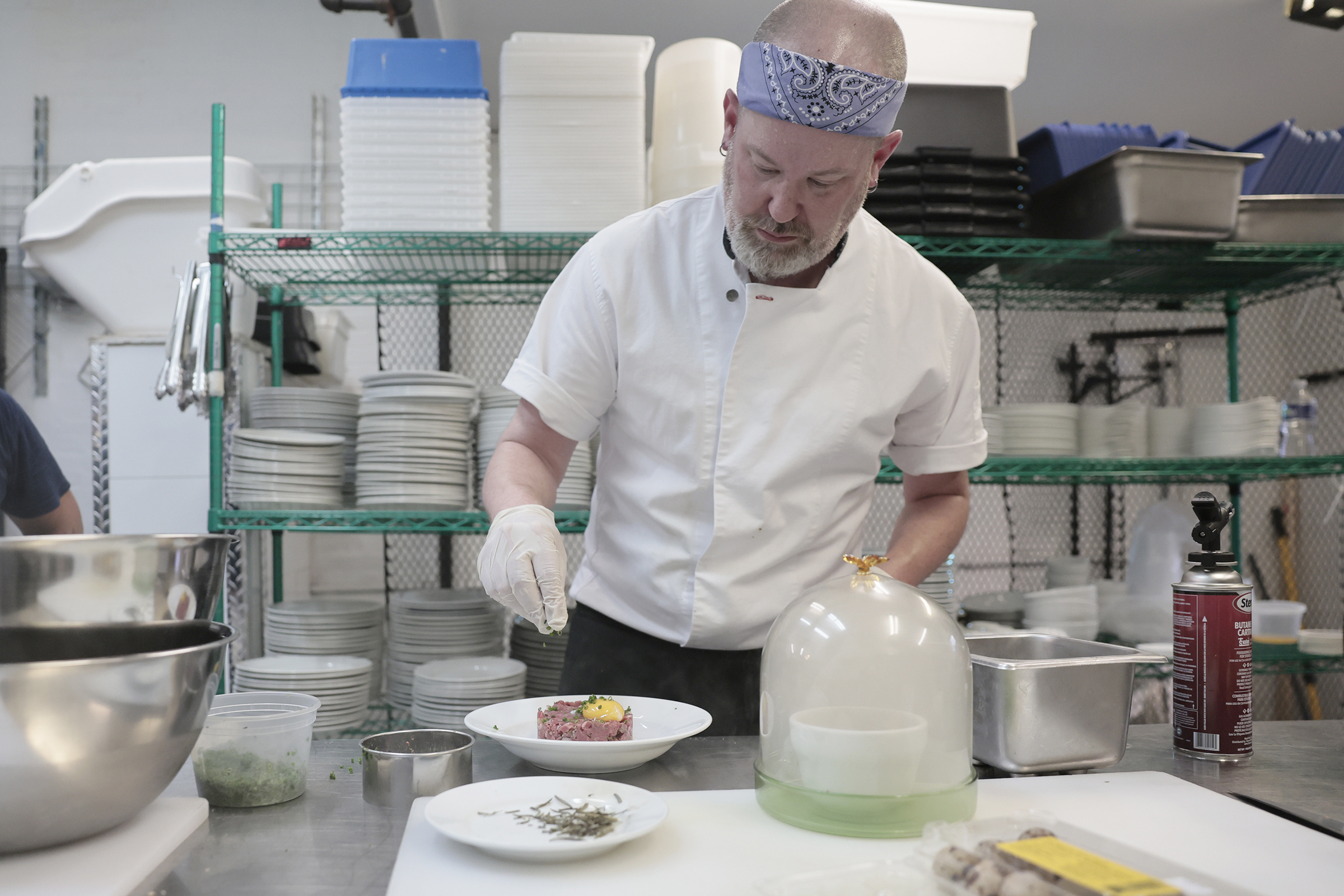
    Chef Henry McGuigan plating beef tartare smoked under a cloche with lavender and quail egg at Soufiane at the Morris.Elizabeth Robertson / Staff Photographer

    “We’d tell the staff, ‘I promise you’re going to get paid today. They told us the checks are coming,’” McGuigan said, referring to himself and other managers. “Then the checks wouldn’t arrive, or the money wouldn’t be there.”

    Some employees quit; others confronted their managers. Several former employees, who requested anonymity because of Philadelphia’s close-knit restaurant community, corroborated the payroll problems and shared with The Inquirer documentation of their filings with authorities.

    One bartender filed a claim with the state Bureau of Labor Law Compliance, alleging being owed $4,109. A server filed a wage-theft claim with Philadelphia’s Office of Worker Protections, alleging being owed $3,500.

    McGuigan said he is owed $5,000 to $6,000 and is seeking legal counsel.

    “I don’t care about the money I’m owed anymore,” he said, adding that he was more concerned about the hourly workers.

    The bar at Soufiane at the Morris.Elizabeth Robertson / Staff Photographer

    Boutliliss attributed delays to a former top manager’s tip calculations and incomplete employee records, which he said disrupted direct deposits and required payments by check. He also said some employees were on the books but never worked.

    The former manager, who requested anonymity, showed The Inquirer records of two of her own biweekly payments she received through Venmo. One, sent July 10 from an account she did not recognize and marked “payroll,” carried a 2.99% seller transaction fee that she said she was asked to absorb. She pushed back.

    The former manager, who described herself as biracial, also filed a complaint with the Equal Employment Opportunity Commission alleging that she was paid less than her predecessor, a white man. Boutliliss denied discrimination, saying their duties differed. The former manager said last week that the EEOC had ended its investigation. She was issued a right-to-sue notice, allowing her to pursue the matter in civil court, and said she is consulting her attorneys about next steps.

    Decision-making in dispute

    Boutliliss said labor costs had grown unsustainable. During the restaurant’s first month, he said, payroll reached roughly $90,000 against $60,000 in sales.

    At times, he said, 11 kitchen employees were working while the dining room had only four occupied tables.

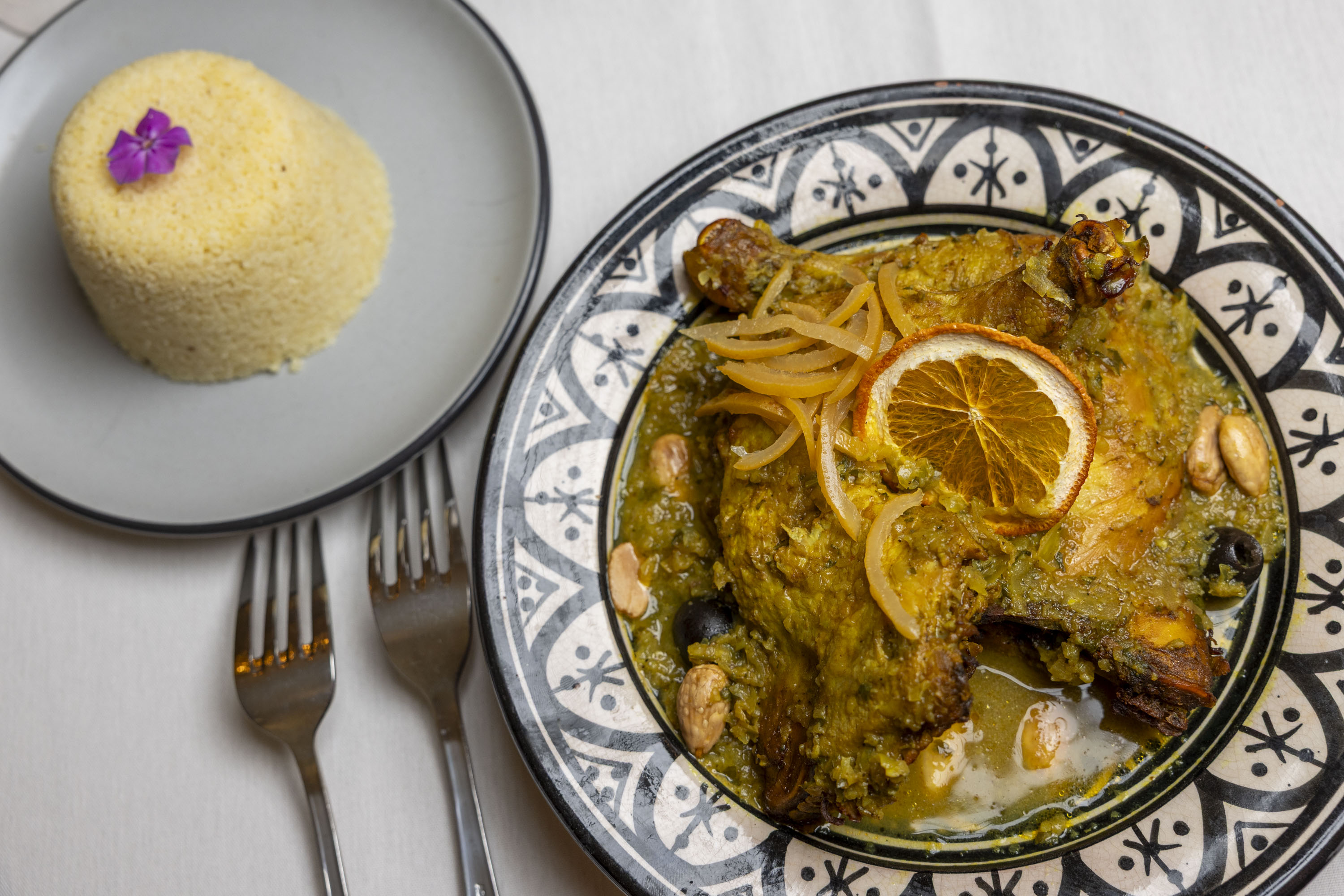
    Chicken tagine remains on the menu at Soufiane at the Morris.Tyger Williams / Staff Photographer

    He also questioned timekeeping practices, saying some employees recorded hours outside their assigned shifts or clocked in remotely. Some kitchen workers, he said, began at 7 a.m., although dinner service did not start until 4:30 p.m.

    Boutliliss said he repeatedly asked McGuigan to cut costs.

    McGuigan disputed that account, saying he kept kitchen labor costs at roughly 15% of sales — about half of the standard for a white-tablecloth restaurant.

    He said Boutliliss received schedules in advance and regularly discussed staffing levels with him, including how hours were allocated among salaried and hourly employees. McGuigan said they frequently reduced staffing even after schedules were issued in order to control the cost of labor.

    Boutliliss said he initially left scheduling to McGuigan and became more directly involved as problems mounted. Even then, he said, schedules that were supposed to arrive by Thursday frequently reached him as late as Sunday or Monday, leaving little opportunity for meaningful review.

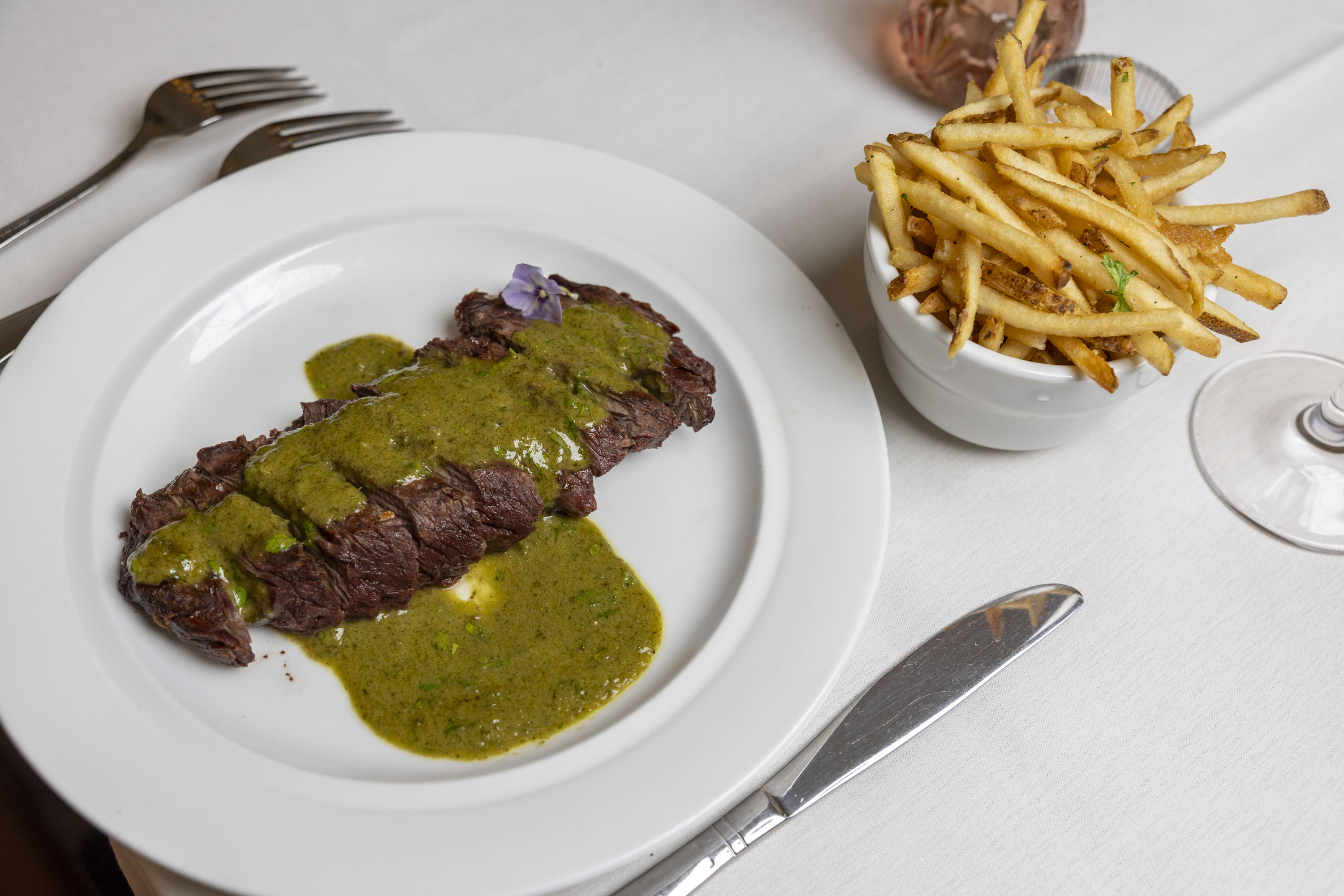
    Steak-frites were part of the menu before Oct. 3 at Soufiane at the Morris.Tyger Williams / Staff Photographer

    He also said he saw employees working in the kitchen who had not appeared on the schedules submitted to him.

    “Approving a schedule based on the information provided to me is fundamentally different from approving staffing arrangements that were never properly disclosed,” Boutliliss said.

    McGuigan described Boutliliss as an absentee owner. “Not being there, you really can’t see what was going on day to day,” he said.

    Boutliliss said he met weekly with McGuigan to address staffing and operational issues, only to be repeatedly assured that problems would be corrected.

    The events also brought into focus another disagreement: how much responsibility Mathon, Boutliliss’ husband, had exercised over the business.

    Public records identify Boutliliss as the restaurant’s sole owner. Boutliliss describes Mathon as an adviser at both Soufiane and Sofi Corner, not an owner or employee.

    McGuigan and Morphet said Boutliliss routinely deferred to Mathon to deliver difficult messages and enforce decisions, casting Mathon in what McGuigan called a “bad cop” role.

    The walkout

    Then came Saturday, Oct. 3.

    Two days earlier, the The Inquirer published a review by critic Craig LaBan noting much of Soufiane’s ambitious menu.

    Come Saturday, the restaurant had 100 reservations on the books.

    McGuigan and the former manager said they approached Boutliliss about payroll in the morning. Boutliliss said he was transferring funds to cover it and told McGuigan that employees would be paid the next day or by Monday at the latest.

    McGuigan said that front-of-house employees refused to work, making dinner service impossible, and that he and the kitchen staff subsequently left around 1 p.m. Boutliliss maintained that most front-of-house employees were willing to work.

    The restaurant closed for the night.

    On Oct. 6, McGuigan said, he received notice through the scheduling system that his employment had been terminated, effective immediately. Two sous chefs received similar notices, he said.

    A smaller operation

    The walkout and dismissals left Boutliliss to rebuild.

    The restaurant now operates with a much smaller staff, and its menu reflects Boutliliss’ growing emphasis on Moroccan cooking, veering away from the French items — beef tartare, escargots, French onion soup, steak frites, and curried mussels — LaBan praised in his review. All have disappeared.

    The chicken tagine remains, along with Moroccan pain perdu and lemon tart. Couscous royale, an elaborate platter of chicken, lamb, merguez, and vegetables, has given way to separate chicken and vegetable versions. Newer offerings include lamb and prune tagine, harira soup, and vegetable tagine. Quiche Lorraine and croque monsieur are among the few French holdovers.

    Boutliliss recently added chicken pastilla, a savory-sweet Moroccan pastry, and plans to further explore Moroccan cuisine on future menus.

    Asked whether he regretted taking on a project so much larger than Sofi Corner, Boutliliss acknowledged that the restaurant’s troubles had depleted his savings. With no outside investors, he alone bears the losses.

    He hopes the leaner operation and a return to his Moroccan roots, which he said has been well-received, will put the restaurant on firmer footing.

    “Sometimes you give someone a chance to build a career,” he said. “If you build your career and I build mine, we can grow together.”

  • The best thing Craig LaBan ate this week: The BBQ beef shoulder at Dizengoff

    The best thing Craig LaBan ate this week: The BBQ beef shoulder at Dizengoff

    Is beef shoulder the new short rib? Dizengoff chef de cuisine Quin Meyer is making a convincing case.

    In the ongoing quest to transform CookNSolo’s popular hummusiya from its original incarnation as a fast-casual takeout hub into a full-service neighborhood restaurant, Meyer has experimented with a number of options for a beef entree that’s both delicious and fairly priced. The original plan, to feature a grilled-to-order skirt steak, proved to be cost-prohibitive (given the skyrocketing cost of beef), not to mention tricky to execute consistently.

    So Meyer gravitated toward a more predictable slow-cooked solution with beef shoulder, a five-pound hunk of meat most commonly butchered into flat iron and blade steaks.

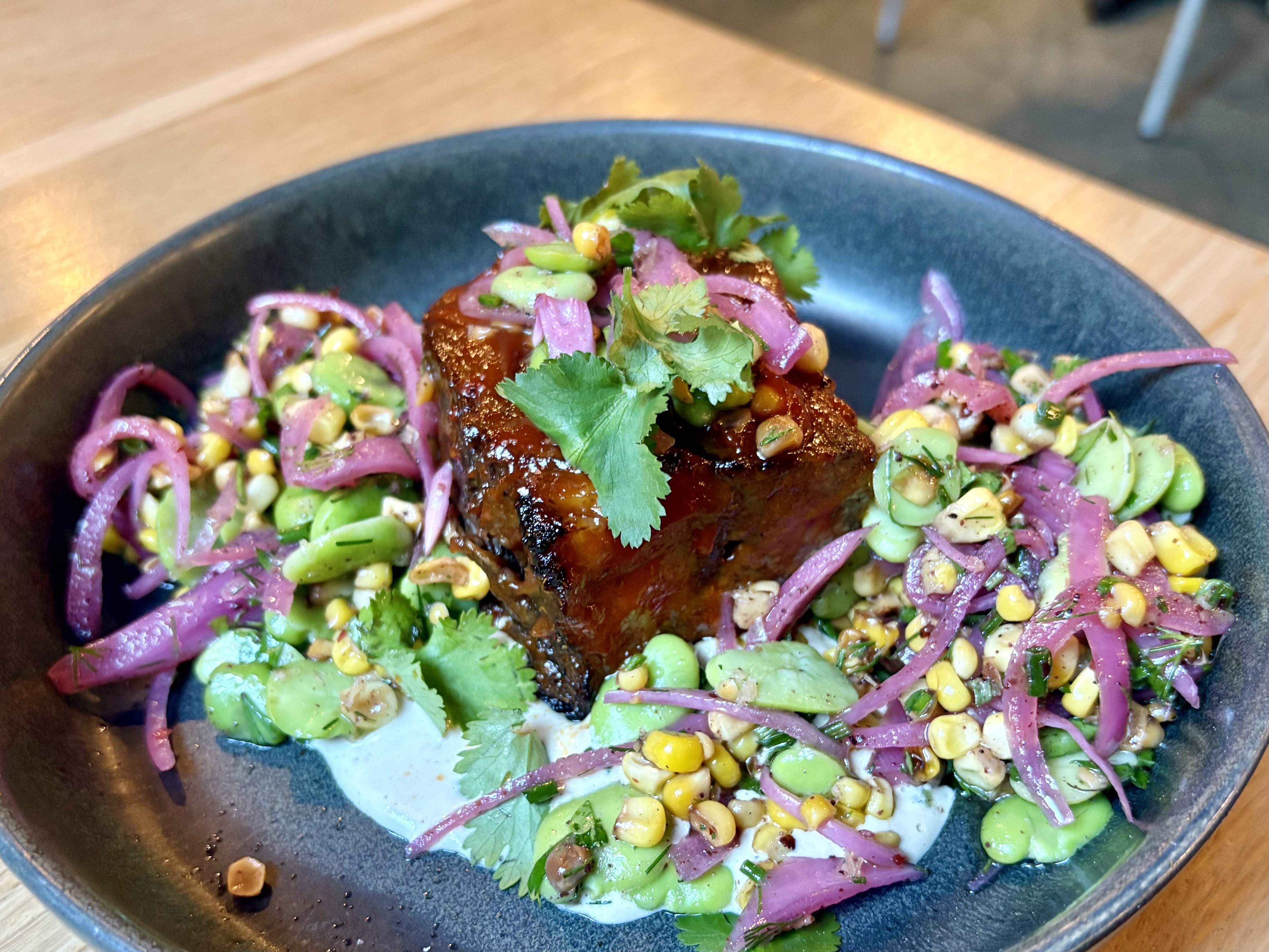
    Meyer instead braises the big cut whole for five hours with onions and tomatoes until it’s meltingly tender. It’s then cut into half-pound bricks and caramelized to order in the blazing hot pita oven, where it gets lacquered with a tropical, sweet-tart passion fruit-amba barbecue sauce. The beef is served with a colorful succotash of fava beans, roasted corn, and sumac-dusted onions. When you pierce the meat with a fork, it unfolds with unctuous softness, not unlike a luxuriously braised short rib — but at nearly half the price of that popular cut.

    The shoulder has proven to be one of the most popular entrees, especially for dinner, alongside Dizengoff’s za’atar roast chicken. It’s also a flexible canvas for whatever the season brings. The current rendition recalling the faded warmth of summer will soon shift into deep-fall mode, shined with a tangy date glaze over a garlicky celery root skordalia mash, with broccoli rabe and crunchy celery root chips. Along with the sides of turmeric rice and chopped cucumber-tomato salad that accompany every platter at Dizengoff, it makes for a hearty supper.

    Dizengoff, 1625 Sansom St., 215-867-8181, dizengoffphilly.com

  • Kalshi is asking Philly restaurants to place wagers on the Eagles

    Kalshi is asking Philly restaurants to place wagers on the Eagles

    Kalshi is betting that some local restaurants are willing to wager their sales on the Philadelphia Eagles.

    At least three Philly restaurants — a bakery, a sandwich shop, and a BYOB — received Instagram DMs from the prediction market’s official account last Thursday asking if they were open to trading on the outcome of the Eagles’ home game against the New York Giants, according to messages reviewed by The Inquirer.

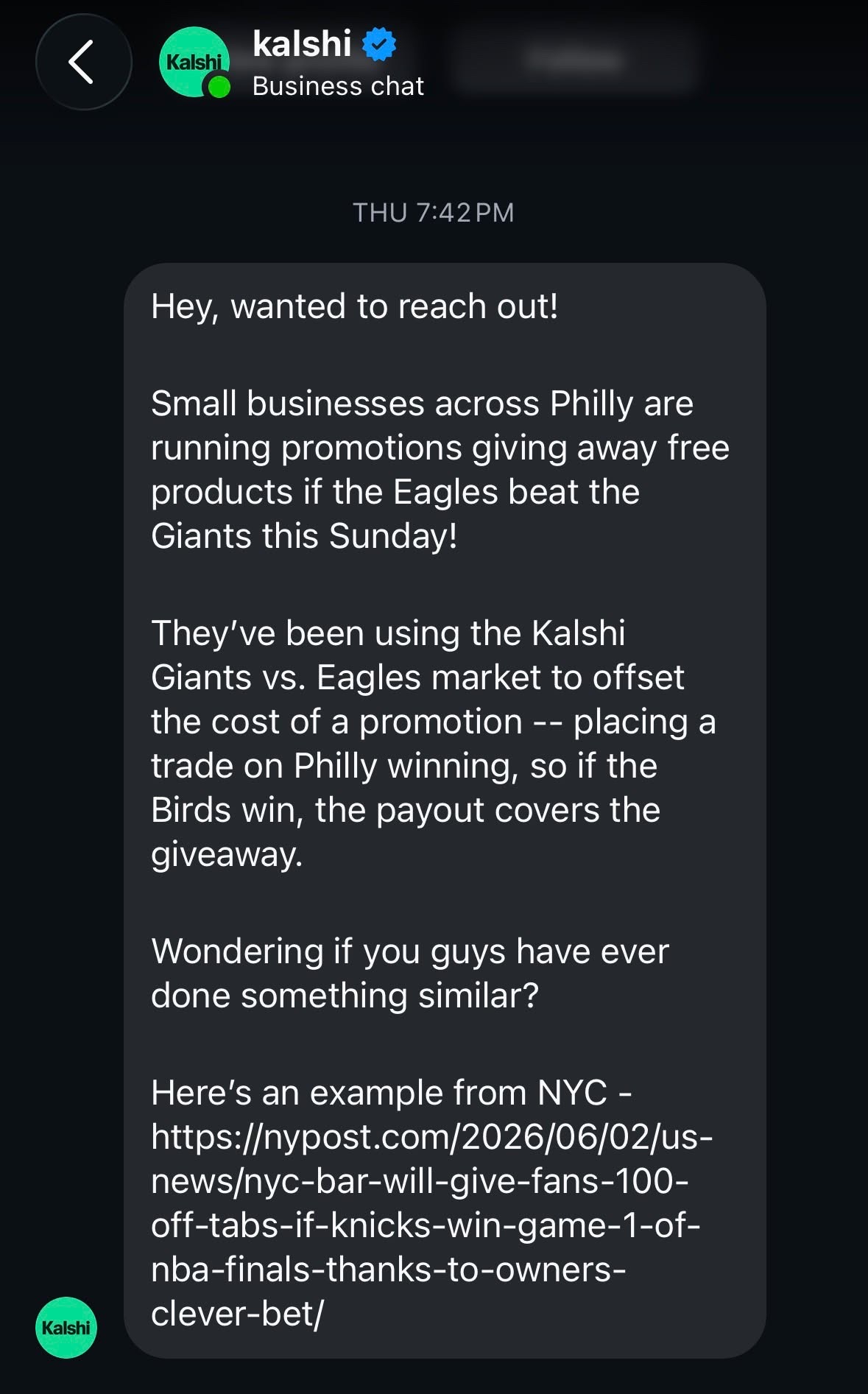
    “Small businesses across Philly are running promotions giving away free products if the Eagles beat the Giants this Sunday,” the message said. “They’ve been using the Kalshi Giants vs. Eagles market to offset the cost of a promotion — placing a trade on Philly winning, so if the Birds win, the payout covers the giveaway. Wondering if you guys have ever done something similar?”

    Kalshi’s official Instagram account sent this message to at least three Philadelphia restaurants on Nov. 5, 2026. “Small businesses across Philly are running promotions giving away free products if the Eagles beat the Giants this Sunday! They’ve been using the Kalshi Giants vs. Eagles market to offset the cost of a promotion,” it read.Obtained by The Inquirer

    The Eagles lost to the Giants 19-11 on Sunday adding a seventh game to the team’s losing streak. The organization has been in free fall since starting quarterback Jalen Hurts was placed on the injured reserve in mid-October after a blood clot had traveled from his legs to his lungs. Kalshi itself called the Giants a “clear favorite” in the matchup.

    A Kalshi spokesperson confirmed via email that the prediction market did reach out to a number of Philadelphia businesses ahead of Sunday’s game. They did not specify how many received messages, how recipients were selected, or if any placed trades.

    Kalshi’s messages were not intended as explicit instructions, the spokesperson said: “Our outreach with businesses is kept educational. The DMs sent to Philadelphia businesses did not directly tell businesses to hedge.”

    That’s not how Rougarou Baking co-owner Paige Wenrick felt when the DM appeared at the top of her Queen Village bakery’s inbox last week.

    Philadelphia Eagles defensive tackle Jordan Davis (right) pressures New York Giants quarterback J.J. McCarthy out of the pocket at Lincoln Financial Field in Philadelphia on Sunday, Nov. 8, 2026. The Eagles lost 19-11.David Maialetti / Staff Photographer

    “It’s not a secret that we’re not doing well,” Wenrick said of the Birds. “So it felt like [Kalshi] was specifically asking small businesses in the Eagles’ home city to just give up money.”

    Wenrick said she didn’t respond to Kalshi’s message. Nor did Chance Anies, whose well-regarded Filipino BYOB Tabachoy in Bella Vista received the same Instagram message last Thursday.

    Anies is a San Francisco 49ers fan, and Tabachoy doesn’t have a television to broadcast games. He’s uncertain how his 28-seat restaurant got on Kalshi’s radar.

    “I’m small-business owner that runs restaurants. I’m already gambling with enough of my money,” said Anies. “But from a financial standpoint,” he went on, “this is stupid … you want me to bet thousands of dollars on a losing team just to have a little bit of hope [to make some back]?”

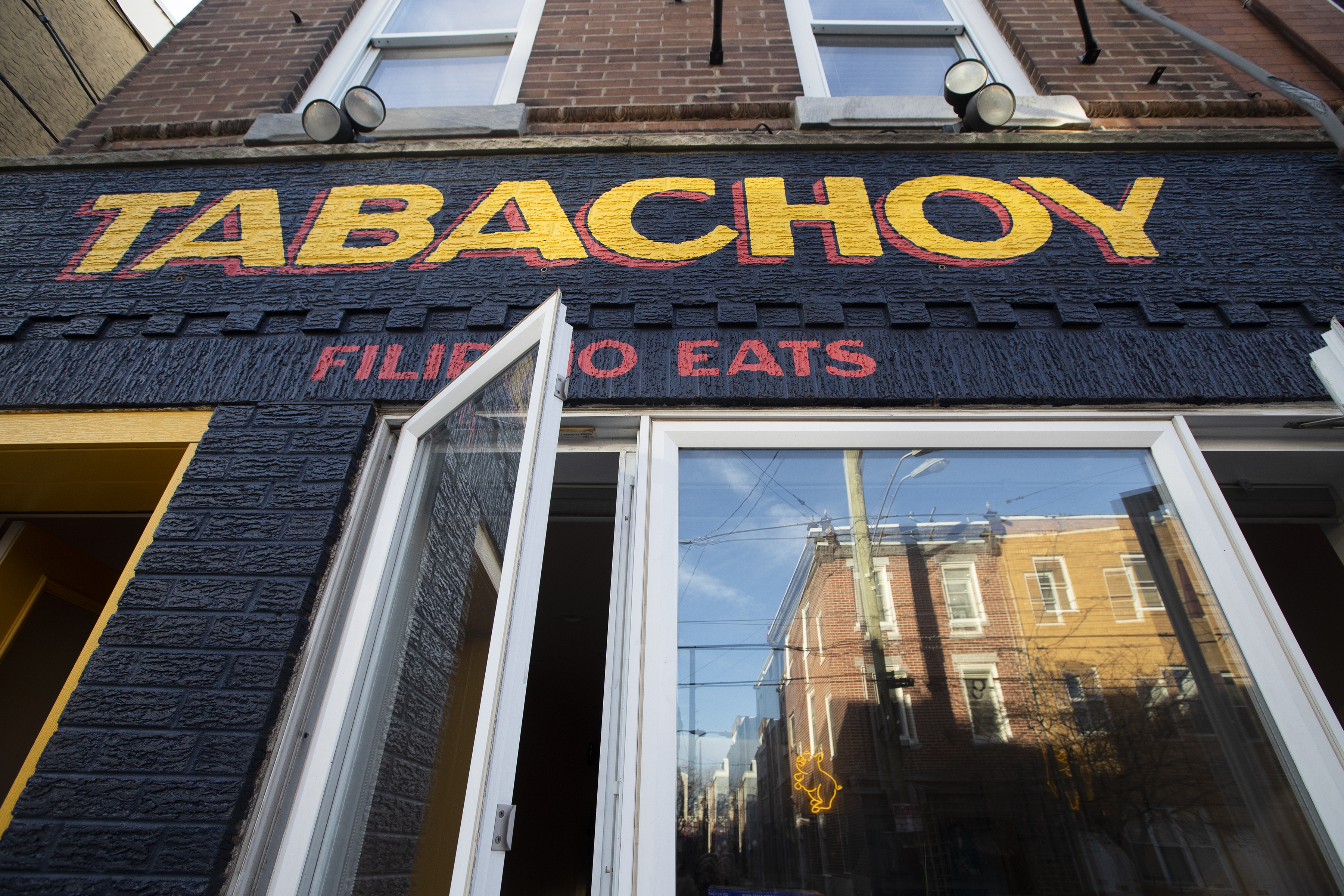
    The exterior of Tabachoy, 932 S. 10th St., with the neighborhood reflected in its windows on Feb. 15, 2023.Charles Fox / Staff Photographer

    Trading vs. gambling

    Founded in 2018, Kalshi began as a prediction market where users could place trades (aka wagers) on the yes-or-no outcome of real-life events — elections, war, or who wins Dancing with the Stars — before wading into professional sports two years ago.

    Now, sports drive most of Kalshi’s $30 billion trading volume, according to research from Pew. Kalshi says it functions less like a traditional casino or sportsbook and more like a stock exchange, since users are wagering against each other instead of odds set by the house. (The platform instead makes money from transaction fees and selling data.)

    The distinction has placed Kalshi at the center of several legal battles. Kalshi can operate in all 50 states because it’s federally regulated by the Commodity Futures Trading Commission, a technicality that some say has allowed Kalshi to skirt state laws that restrict those under 21 from gambling.

    FILE – A Kalshi advertisement is displayed at Oracle Park during a baseball game between the San Francisco Giants and the St. Louis Cardinals, Tuesday, Sept. 8, 2026, in San Francisco. (AP Photo/Jeff Chiu, File)Jeff Chiu

    In October, the NFL and attorneys general from 39 states — including Pennsylvania and Delaware — filed amicus briefs in support of New Jersey’s request that the U.S. Supreme Court rule on whether states can regulate prediction markets. Judges in Ohio and Tennessee have already ruled that states can, while a separate ruling gave Nevada the authority to ban Kalshi altogether.

    Liberty Kitchen culinary director Beau Neidhardt is among those who don’t see a difference between trading on a prediction market and gambling, which looms large in Pennsylvania.

    The sandwich shop, which has locations in Olde Kensington and Chestnut Hill, also received a message from Kalshi. Neidhardt said it was “so weird.”

    Hedging on a rainy day

    Kalshi has repeatedly referred to trades by small businesses as “hedging.”

    Hedging on Kalshi is “like insurance,” the spokesperson wrote, and “certainly not setting money on fire.”

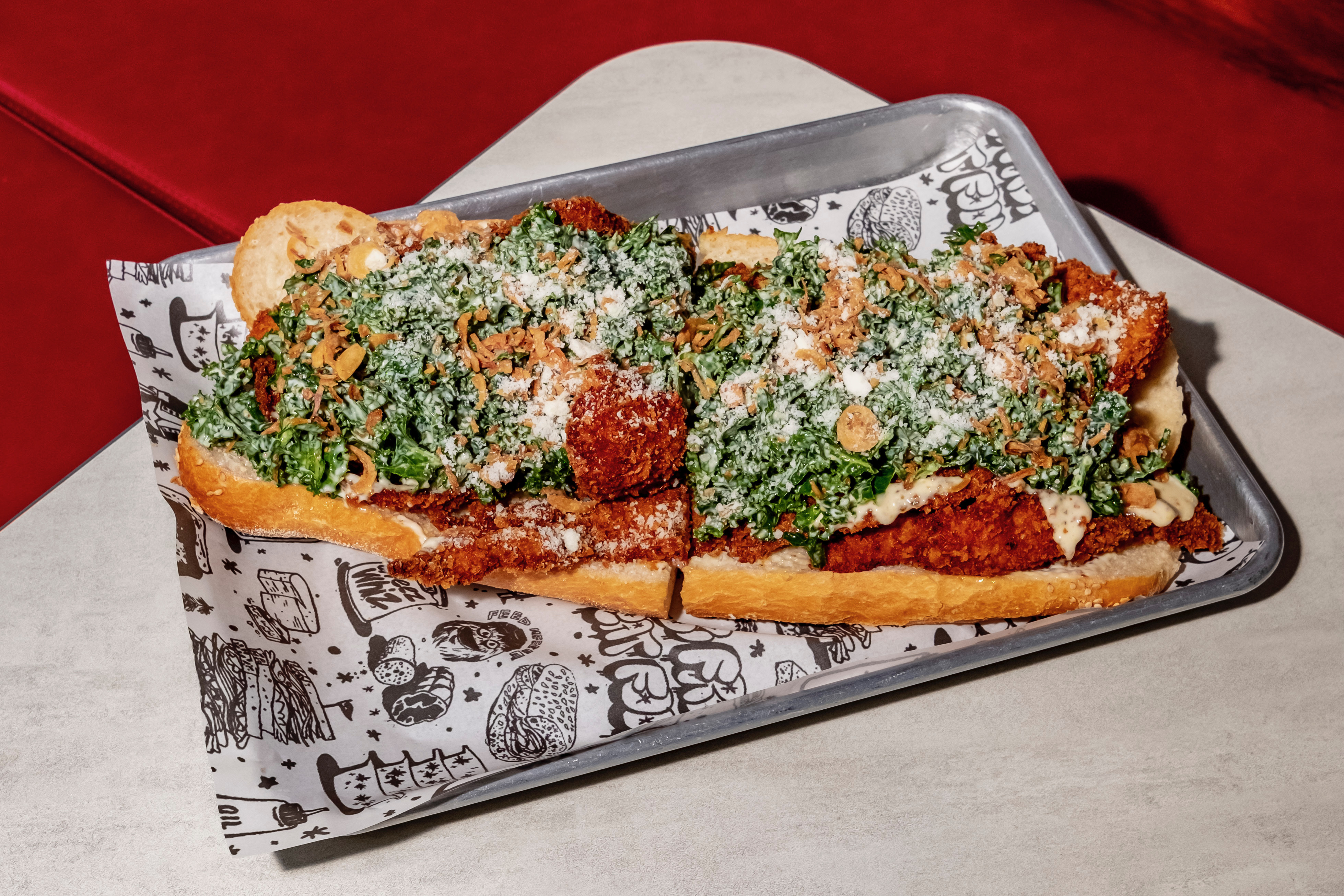
    Liberty Kitchen packs all the Caesar goodness in a hoagie.KC Tinari

    “Small businesses face various real-world risks daily — issues related to weather, politics, sports, the economy, etc,” they went on. “We provide a liquid, transparent market platform that allows any business to take action against risks affecting their operational outcomes.”

    This is not the first time Kalshi has solicited small businesses.

    In June, Kalshi asked the owner of the New York City bar The Jeffrey to wager on the Knicks winning their first NBA finals game after learning that the bar lost $4,000 in one night from covering tabs during the Eastern Conference Finals. More recently, a conglomerate of sports bars in Los Angeles used Kalshi to bet on the Dodgers missing out on the World Series to offset a potential dip in revenue.

    In Philly, the spokesperson said, a construction company is currently betting on local snowfall totals to hedge against revenue declines from stalled work in the winter. “If it doesn’t snow much, [they] lose what [they] put into the trade, but crews stay on schedule,” she wrote. “If it snows heavily, [the] Kalshi payout helps offset the cost of the delays.”

    Anies, of Tabachoy, wasn’t sure it would work out that way for his restaurant. For Kalshi’s proposition to work, he would’ve needed the Eagles to win, the restaurant to be full, and to wager $2,000. Only then, according to Anies, would Tabachoy be able to cover the cost of food and labor and make a profit.

    Wenrick — who owns Rougarou — also said Kalshi’s recommendation wouldn’t work for her business, a small batch Creole-Jewish bakery. The bakery would still take a loss on wasted product if the promotion didn’t lead to a sellout.

    “We’re too small to afford that,” she said.

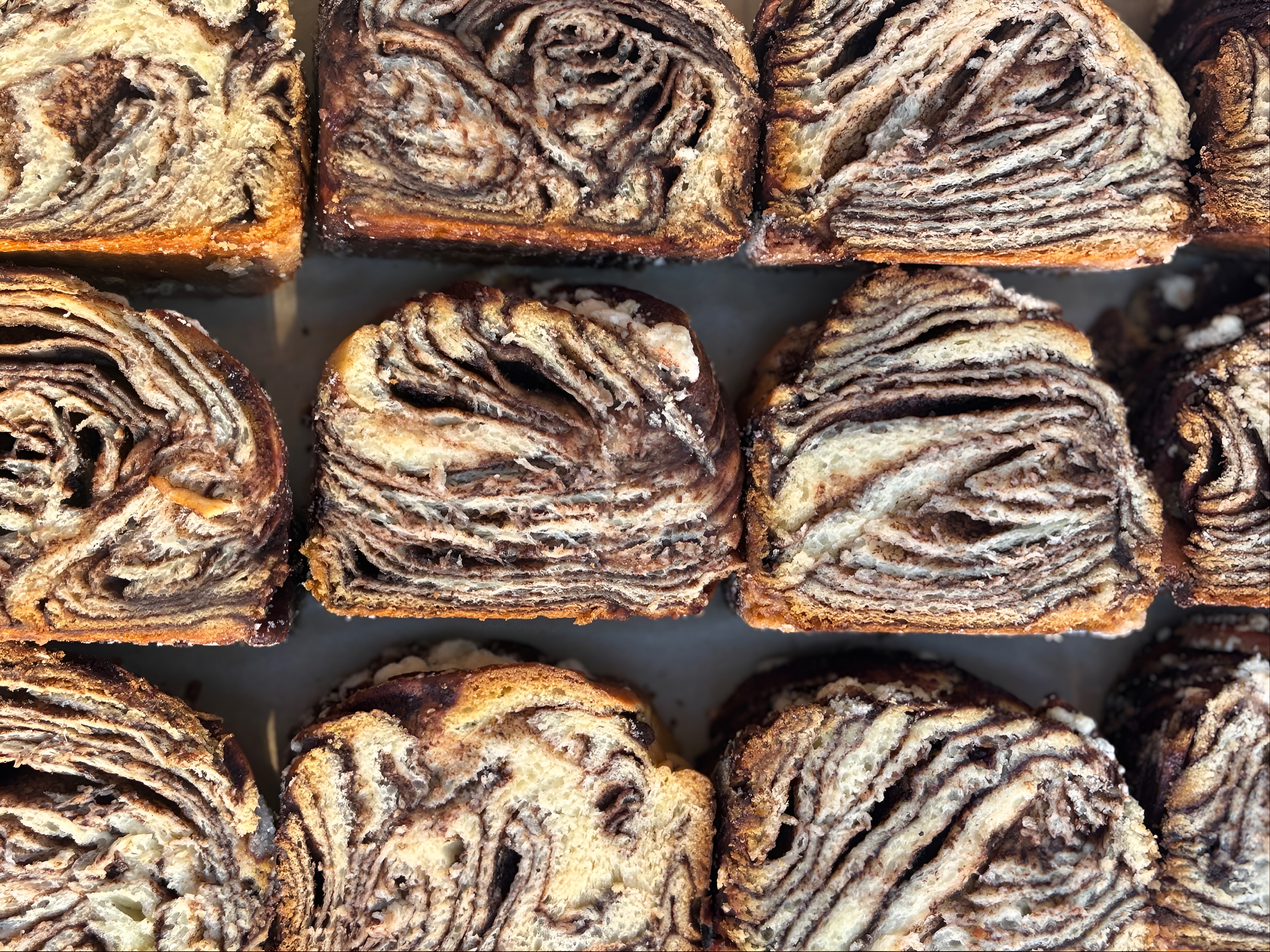
    Rougarou Baking is known for its chocolate babkas.Rougarou Baking

    The Kalshi spokesperson clarified that the message was not meant as financial advice. Businesses can trade however they want.

    “A trade on the Eagles winning only makes sense for a business that is running a promotion tied to an Eagles win, like a free cannoli or round of drinks … In exactly that scenario, the payout covers the giveaway,” she wrote. “The Eagles being underdogs is what makes the hedge more affordable: an unlikely outcome means a low-cost hedge, the same way insurance against an unlikely event costs less.”

    Terms and conditions

    Wenrick, however, was more concerned with the legality. It’s against the terms and conditions of most betting and banking platforms to gamble with a business bank account, she pointed out, which could result in banks restricting funds.

    That fear is unfounded, according to the Kalshi spokesperson. Trading on a prediction market is no different from a cafe opening a brokerage account to trade coffee futures, she said.

    A face-off during the third period of an NHL hockey game between the Chicago Blackhawks and the Minnesota Wild with the Kalshi sign in the background Tuesday, March, 17, 2026, in Chicago. (AP Photo/David Banks)David Banks

    The Pennsylvania Gaming Control Board, for its part, can’t comment on Kalshi because Pennsylvania doesn’t regulate prediction markets.

    “In this current landscape, we would not be made aware of any marketing such as this by entities we do not license and regulate,” a spokesperson said in a statement.

    The board, he said, is unaware of any sportsbooks asking businesses in the commonwealth to place bets — at least at this time.

  • Bubbles make this riesling even better

    Bubbles make this riesling even better

    Sparkling wines have become so wildly popular that some winemakers are experimenting with new ways to add a tingle of carbonation and excitement to their still wines, too, as with this new “bubbled” spin on an iconic riesling from the Pacific Northwest.

    The fermentation process used to make all alcoholic beverages generates carbon dioxide as a natural byproduct, so carbonation isn’t foreign to wine. In standard winemaking, this carbonation is allowed to dissipate before bottling, but over the past 500 years, vintners have developed specialized methods for making wines that sparkle and fizz.

    The most influential innovation, pioneered in the Champagne region of northern France, was to add sugar to bottles of a still base wine, sparking a second fermentation in a closed vessel that could trap the resulting bubbles. To this day, almost all sparkling wines undergo a second fermentation. The most ambitious wines use the “Champagne method” (meaning the second fermentation occurs in the same bottle in which they’re later sold) or traditional-method large tanks, while more affordable options like prosecco from Italy induce the second fermentation in pressurized tanks.

    Force-carbonating a wine — a practice common in beer and cider — is not routine in the wine trade, but this is changing fast. The demand for bubbles at bargain prices is inspiring less traditional winemakers like this one to experiment with “bubbled” versions of their still wines.

    Here, a vibrant, racy, and lightly sweet riesling that has had a cult following for decades has been given a brilliant effervescent makeover with deliciously unfamiliar results. Twice-fermented riesling can make a compelling sparkling wine, but the process mutes the grape’s distinctive fragrance; by adding carbonation to a finished riesling instead, the wine’s green apple flavors and jasmine tea aromatics are amplified by zippy bubbles in a delightful and irreverent way. The only downside is that bubbled wines like these do go flat faster than other sparkling wines. But few will notice since the bottle will likely be finished well before then.

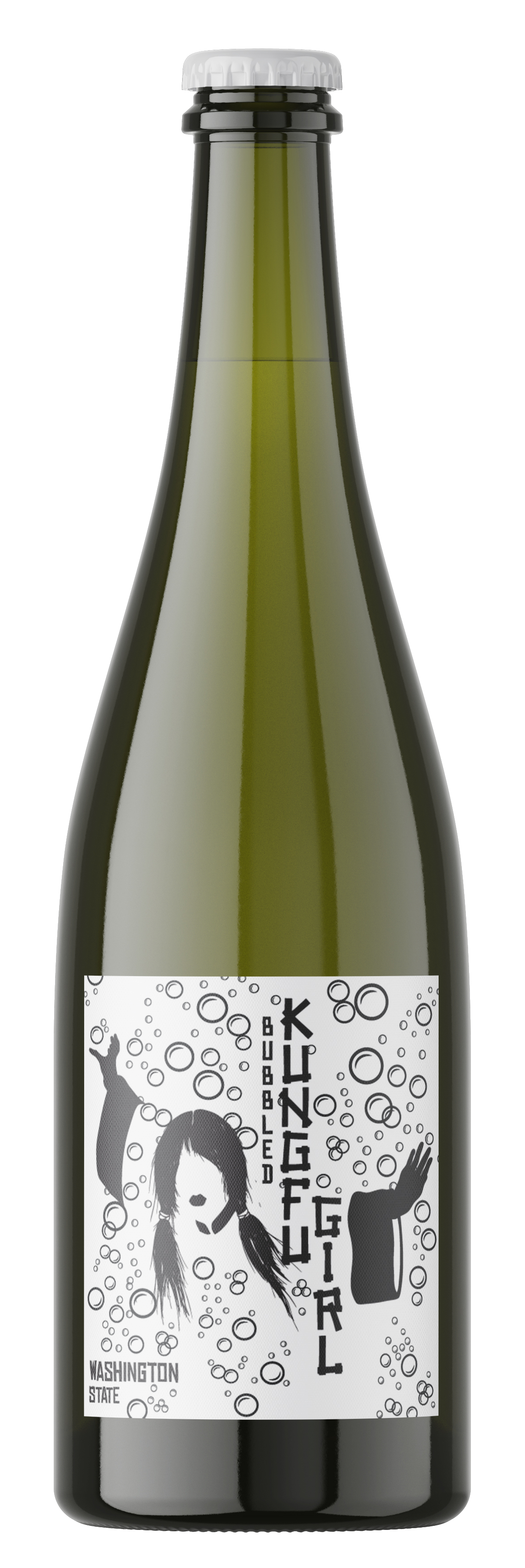
    Charles Smith “Kung Fu Girl” Bubbled RieslingCharles Smith

    Charles Smith “Kung Fu Girl” Bubbled Riesling

    Washington State

    12% ABV

    PLCB Item #100057055

    on sale for $14.99 through Nov. 29 (regularly $17.99)

    No alternate retail locations within 50 miles of Philadelphia according to Wine-Searcher.com

  • Washington Square’s favorite coffee shop is closing, but will reopen in South Philly

    Washington Square’s favorite coffee shop is closing, but will reopen in South Philly

    Washington Square’s destination for the most erudite of coffee aficionados is saying thank you, thank you, and goodbye — but not for long.

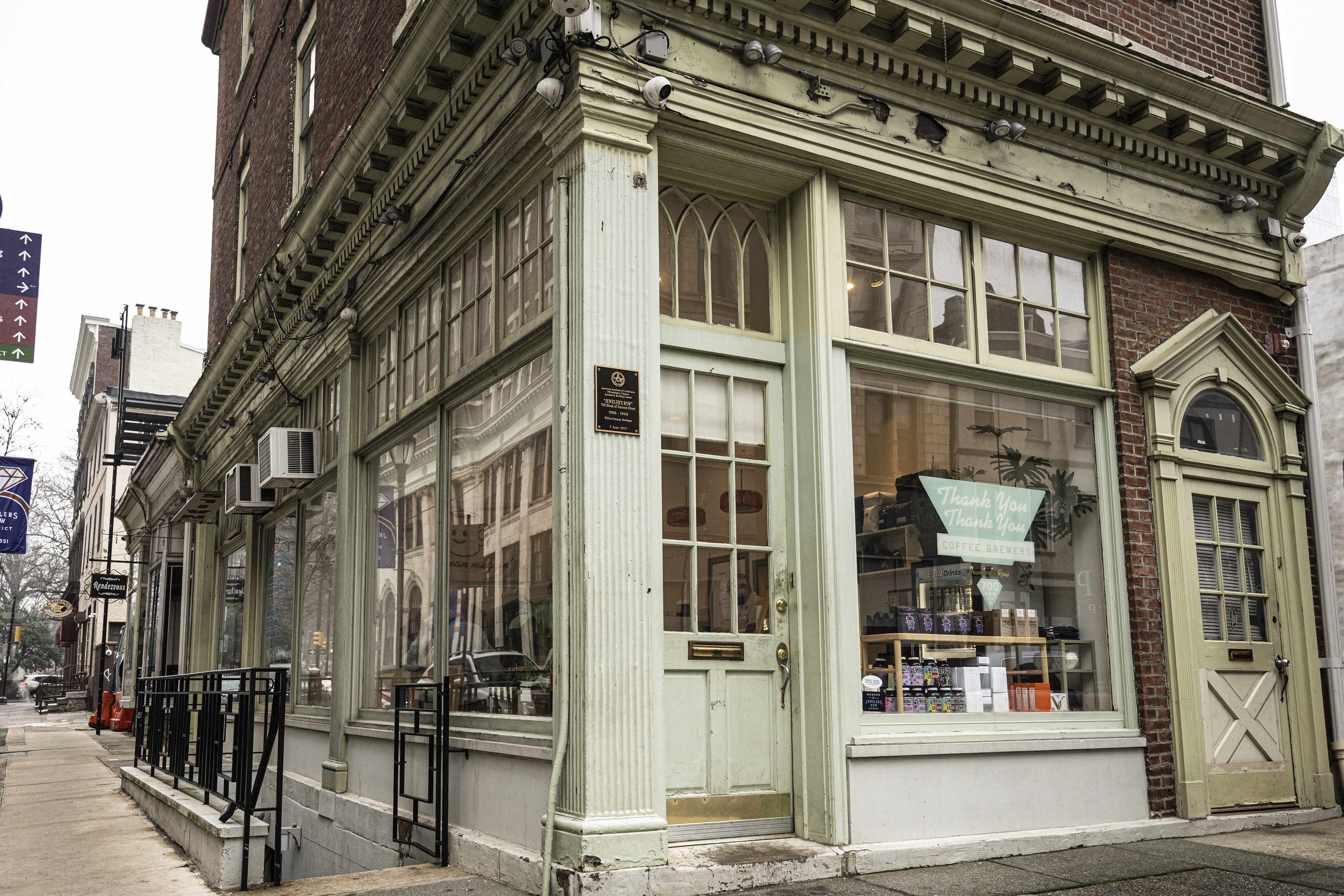
    Coffee shop Thank You Thank You opened in a 300-square-foot space at 700 Sansom St. in May 2021 and quickly developed a citywide reputation for its vast inventory of beans from an array of international roasters.

    After five years, the shop’s last day of service on Jewelers Row will be Dec. 23.

    But if all goes as planned, Thank You Thank You’s loyal following won’t have to wait long to get an expertly brewed espresso from a far-flung roaster. Owner Cody McGregor hopes to open a new cafe at 2401 Washington Ave. by early January.

    The new Graduate Hospital location will be about eight times the size of the Sansom Street storefront.

    “We’re going to do everything that we’ve always wanted to do but that we didn’t have the space for,” said McGregor. “So in some ways, this is a blessing in disguise.”

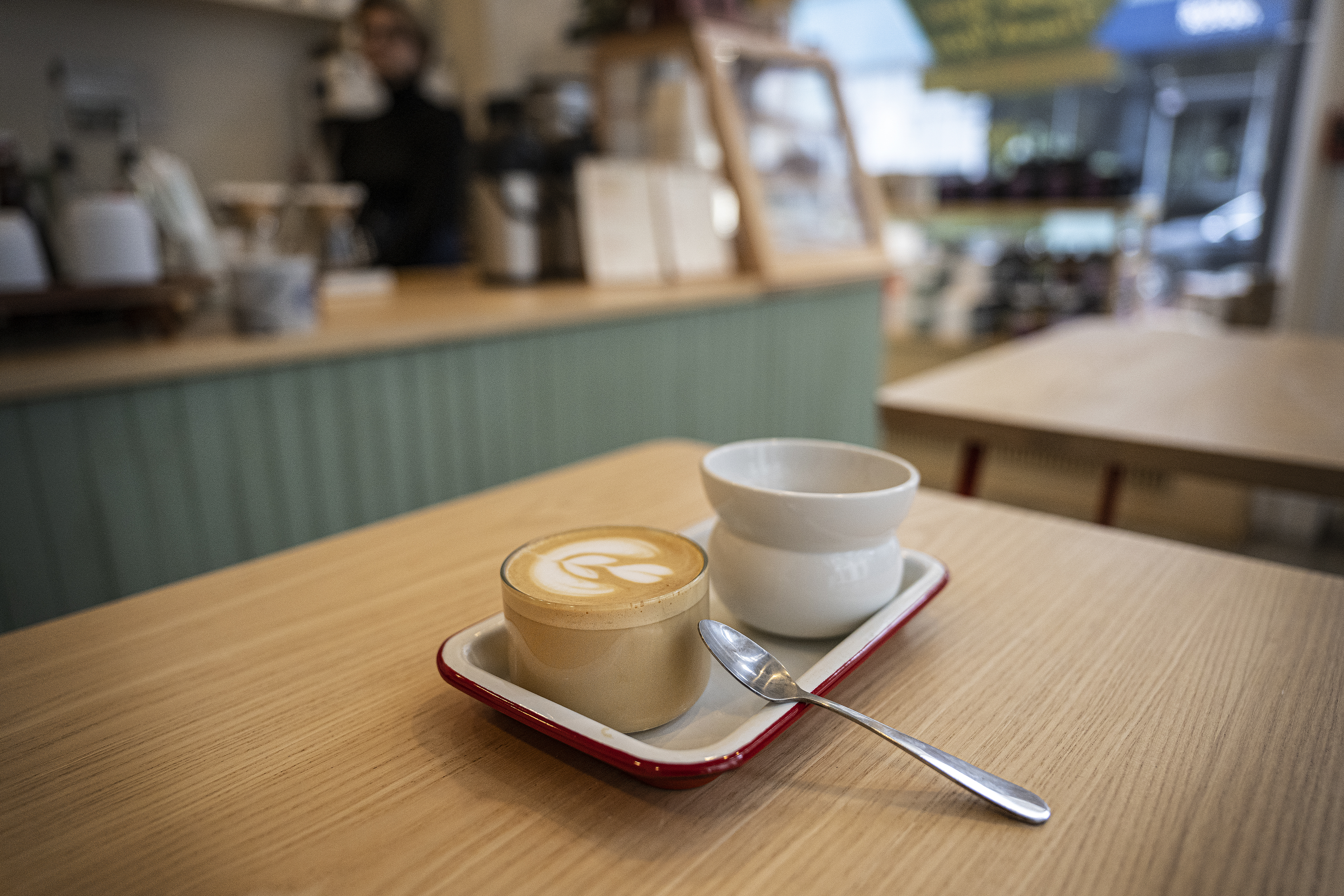
    A one-and-one espresso coffee is shown at the Thank You Thank You Coffee Brewers on Jan 24, 2024. Jose F. Moreno / Staff Photographer

    McGregor said the decision to close the Jewelers Row shop was prompted by signs that long-delayed construction on a 99-unit, 35-story apartment tower on the vacant lot next door may soon go forward. That lot, once owned by Toll Brothers, is currently owned by Philadelphia-based developer Pearl Properties, which recently purchased Thank You Thank You’s building at 700 Sansom St., as well as two other historic buildings on the 100 block of Seventh Street. McGregor’s landlord notified him of the sale in late September.

    “After talking with the people running the project for Pearl Properties, it seemed untenable to continue business as usual through the construction of it,” he said.

    Luckily for fans of Thank You Thank You, McGregor signed a lease in March 2025 on a 2,100-square-foot space at 2401 Washington Ave. — a newly constructed four-story, 28-unit building — for what he initially thought would be a second location. He was familiar with the Grad Hospital neighborhood from two years spent working at the Ultimo Coffee shop near 22nd and Catharine. (He left for a job doing quality control and education at ReAnimator Coffee.)

    Work has been underway on the would-be second location for over a year, but had been delayed by various life events, including the birth of McGregor’s daughter.

    Thank You Thank You will benefit from more room in more ways than one. McGregor said the original space was at times so busy that making coffee could feel like a “conveyor belt experience,” something he hopes to avoid in the future.

    “The larger working space will allow us to finally push further into creative and inventive, cocktail-style signature beverages,” he said.

    The new premises will also allow the shop to show off its bean collection. “We’ve been slowly amassing an archive of our favorite coffees that we’ve kept frozen,” he said. “This will allow us to serve a large back catalog of the best coffees we can find ranging back years, similar to a wine cellar.”

    McGregor has an expansive view of coffee, and wants to continue to bring in beans from roasters like Tim Wendelboe from Norway, Drop from Sweden, Koppi (also from Sweden) and Heart from Oregon — all of which he first encountered as a customer at Budin in New York. He has developed relationships with all of those players and more over the years.

    Besides its international inventory, Thank You Thank You has a particular way of pulling espresso that is “outside the typical parameters of Italian-style espresso. It’s clarity-focused, with a longer brewing ratio.” In other words, Thank You Thank You’s espresso is made with more water and a different level of pressure than is typical, resulting in “a flavor profile that is more bright, clear, and alive.”

    Cody McGregor prepares an espresso at Thank You Thank You Coffee Brewers on Jan 24, 2024.Jose F. Moreno / Staff Photographer

    In addition to walk-in service in Grad Hospital, McGregor is planning an appointment-only coffee bar focused on slow pours of coffee, largely inspired by Now and Then in Nashville. “You’ll book a time slot where you’ll sit and have someone walk you through the process [of brewing]. It’ll be more personalized,” he said. “I want to create an environment that feels appropriate to the levels of coffee we’re serving.”

    The shop will continue to highlight roasters and producers of terroir-driven coffees imported from all over the world. McGregor also plans to host community tasting events, coffee producer and roaster spotlights, and brewing workshops for home enthusiasts at the new location.

    “It’s all about championing the stories of the people who make this global commodity so cool,” he said.