Category: Music

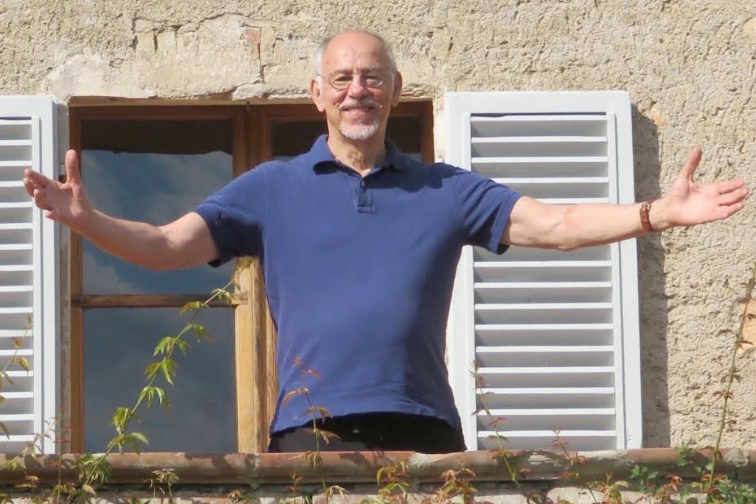
  • Tom Di Nardo, former Inquirer and Daily News music writer, and longtime Peco electrical engineer, has died at 89

    Tom Di Nardo, former Inquirer and Daily News music writer, and longtime Peco electrical engineer, has died at 89

    Even as a young man, Tom Di Nardo was eclectic.

    Born in South Philadelphia and reared in Germantown, he was naturally adept at math and physics. He was good at analyzing and solving problems about structure and distribution.

    He also loved music and was obviously an insightful writer. His teachers at Germantown Friends School encouraged him to write more.

    So, after graduating from high school, he did both.

    Mr. Di Nardo earned a bachelor’s degree in electrical engineering at Tufts University in Massachusetts and spent 36 years, from 1960 to 1996, designing high-voltage outdoor wiring systems for Peco. And when storms ravaged the wires and poles, and the system went down, he worked in his office, sometimes for 24 hours straight, until the lights went back on.

    “He clearly considered that work as a means of service to the community,” his son, Marc, said.

    In 1974, now a music-loving, single father of two and seeking more income, Mr. Di Nardo snapped up a night job as a freelance classical music critic for the Bulletin. He wrote reviews — mostly positive, he conceded later — until the Bulletin closed in 1982. Then he switched to the Daily News and The Inquirer and filed stories until 2017.

    At the Daily News and Inquirer, Mr. Di Nardo was prolific. He wrote more than 1,000 features and news stories about classical music, opera, jazz, and other topics. He enjoyed researching the musicians, conductors, and singers, and did lengthy interviews for in-depth profiles.

    He was friends with conductors Riccardo Muti and JoAnn Falletta, and he interviewed, among hundreds of others, singer Luciano Pavarotti, musician Yo-Yo Ma, and composer David DiChiera.

    “What I was concerned about the most,” Mr. Di Nardo said in a 2016 online interview, “was to find out the heart and soul of these people, not so much the nitty gritty. … I was so interested in the human part of this.”
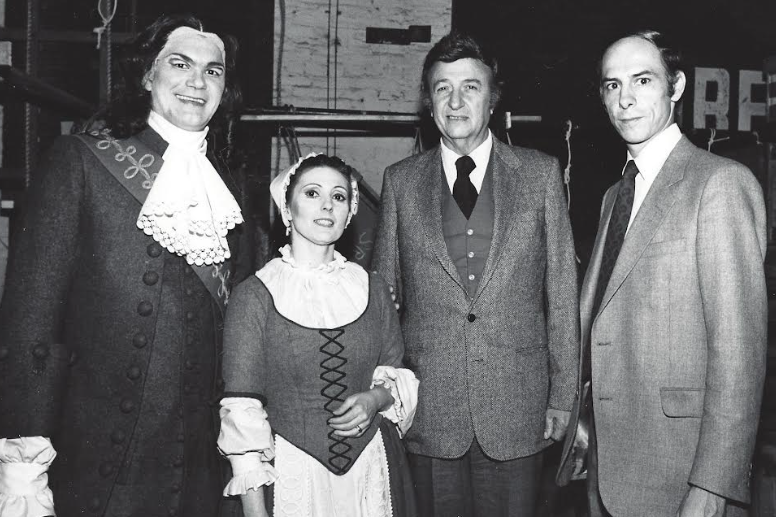
    Mr. Di Nardo (right) stands with composer Romeo Cascarino (second from right), Dolores Cascarino, and singer John Cheek at the 1982 debut of Romeo Cascarino’s opera “William Penn.”Courtesy of the family

    On Saturday, Sept. 19, Mr. Di Nardo died of a brain hemorrhage while traveling and visiting family in Italy. He was 89.

    “He was naturally curious,” his daughter, Lisa Di Nardo Parker, said. “He always wanted to connect and talk.”

    Mr. Di Nardo also wrote books about music, including 2016’s Performers Tell Their Stories: 40 Years Inside the Arts and Listening to Musicians: 40 Years of the Philadelphia Orchestra. He also cowrote with percussionist Emil Richards and contributed many profiles to The Philadelphia Music Book: Sounds of a City in 2025.

    He championed local artists, especially composer Romeo Cascarino, and served as executive producer of Cascarino’s 1982 opera William Penn. He actively urged his readers to check out opera and classical music performances.
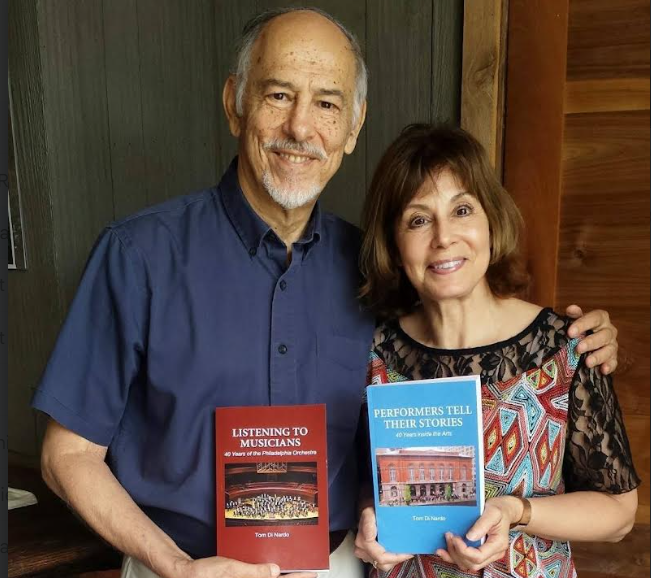
    Mr. Di Nardo poses with conductor JoAnn Falletta and his books.Courtesy of the family

    The Daily News headline for his story on April 29, 1994, was: “Try it, you’ll like it: Four chances to sample opera.” He said in the 2016 online interview: “Once they go once, that’s it. They’re hooked.”

    In 1991, he wrote about a concert that linked music with nature. “Music has the power to inspire, amuse, and enlighten,” he said. “But it also has the ability to educate.”

    In a 1991 Daily News story about doings at the old Opera Company of Philadelphia, he said: “In the precarious world of grand opera, you’ll often find more unexpected drama and sudden crises behind the scenes than on the stage.”

    He also wrote about film, ballet, dance, and local music stores and venues. His children said they whiled away many weekend hours at the old Bulletin office while he wrote his stories.
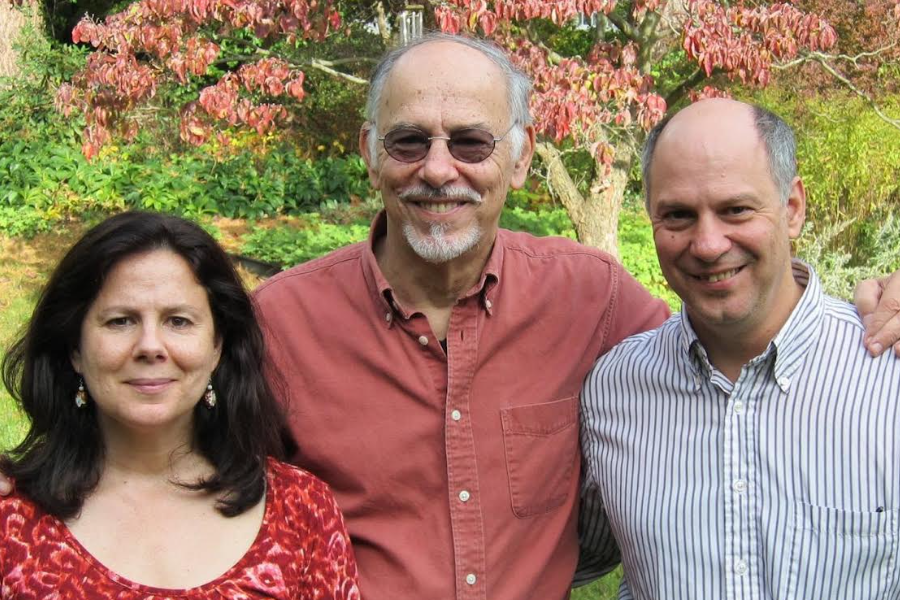
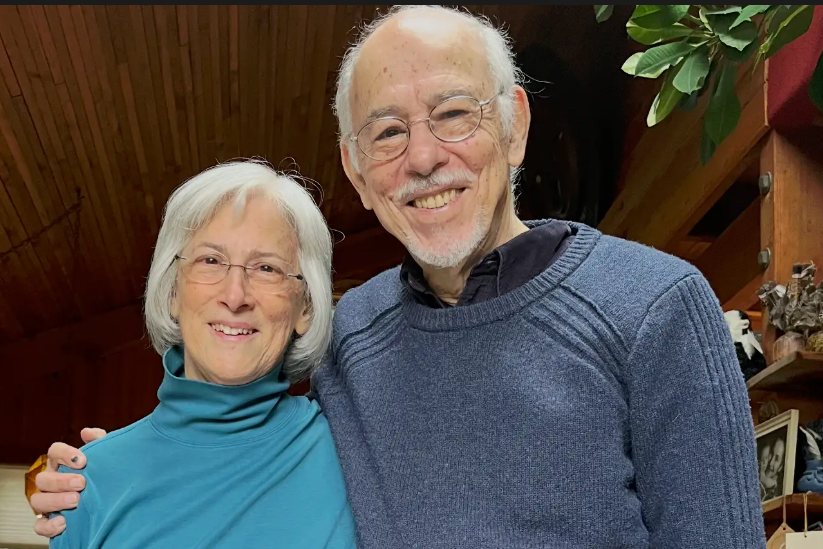
    Mr. Di Nardo, center above, enjoyed time with his children, Lisa and Marc, and his sister, Martha, below.Courtesy of the family

    In online tributes, former colleagues and friends called him “the very definition of modesty and selflessness” and “warm-hearted and generous with praise for the things he loved.” Retired Inquirer writer David Lee Preston called him a “pro’s pro both as a journalist and as a human being.”

    Composer Kile Smith said on Facebook: “Tom knew everyone who came through Philadelphia who had anything to do with music: classical, jazz, pop.” Conductor Gary White said Mr. Di Nardo “worked tirelessly to bring together members of the arts and help create synergies that otherwise would never have occurred.”

    Thomas Eugene Di Nardo was born Aug. 7, 1937. He played shortstop on the Germantown Friends School baseball team and later on the softball team for his favorite after-hours haunt, the Pen and Pencil Club.

    He married Diane Allen, and they had a son, Marc, and a daughter, Lisa. After a divorce, he met Margie Jones, and they traveled the world together, hosted memorable homemade pizza parties, and became longtime steadfast partners.
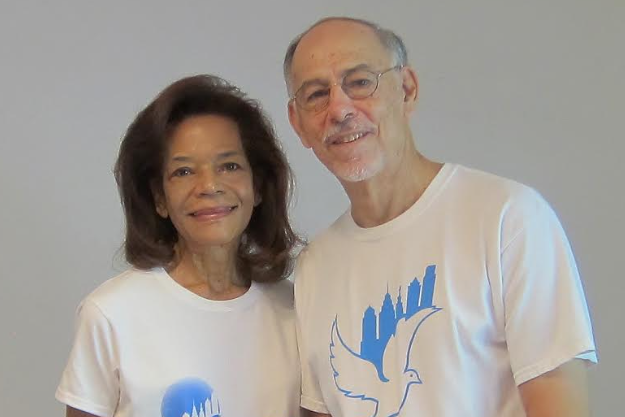
    Mr. Di Nardo and his partner, Margie Jones, traveled the world together. Courtesy of the family

    Mr. Di Nardo was interested in photography, history, and culture. He played piano, traveled to Italy often, valued education, and was a board member at Peace Day Philly.

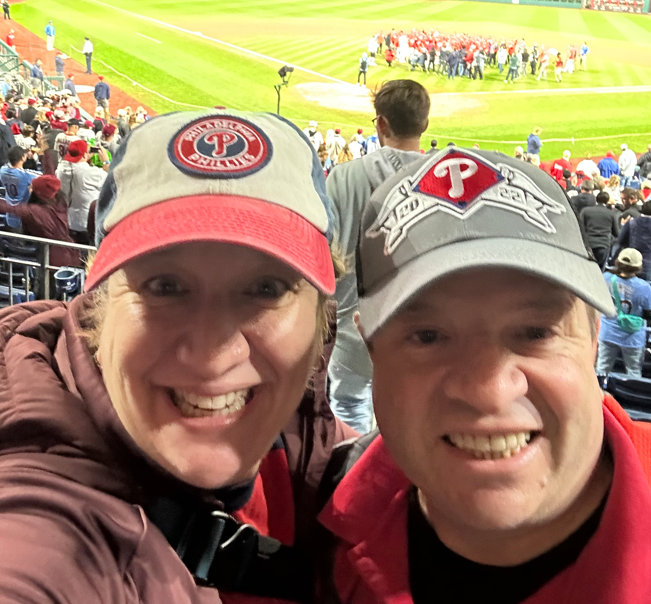
    He followed the Phillies closely and was at Veterans Stadium when they clinched the 1980 World Series. He took his children to many concerts and chatted up the ushers and ticket takers as well as the performers.

    “He was affable, bright, and relational,” his daughter said. “He loved to share his passion.”

    His son said: “He encouraged everyone and treated people with respect and dignity. He wanted to know what they do.”
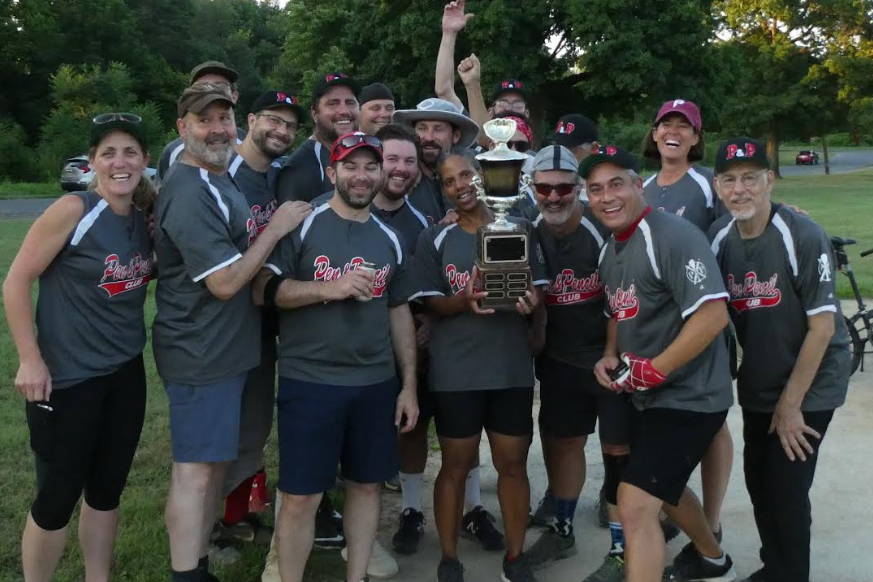
    Mr. Di Nardo (right) played softball for years with the Pen and Pencil Club team. Courtesy of the family

    In addition to his children, partner, and former wife, Mr. Di Nardo is survived by a sister, a grandson, and other relatives.

    A memorial celebration is to be held later. Memories may be sent to tomdmemories@gmail.com.

    Donations in his name may be made to the American Society of Music Arrangers and Composers, 11333 Moorpark St., No. 174, Studio City, Calif. 91602; and Philadelphia Sinfonia, 1315 Walnut St., Suite 300, Philadelphia, Pa. 19105.
  • Michelle Denker Pearlman, longtime rabbi at Malvern’s Beth Chaim Reform Congregation, has died at 56

    Michelle Denker Pearlman, longtime rabbi at Malvern’s Beth Chaim Reform Congregation, has died at 56

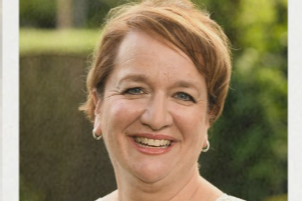
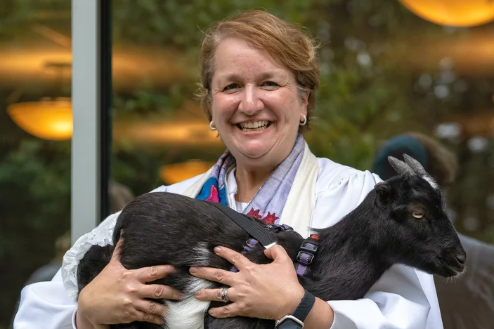
    Michelle Denker Pearlman, 56, of Ardmore, longtime rabbi at Beth Chaim Reform Congregation in Malvern, former cantorial soloist and music director at Congregation Kol Ami in Chicago, spiritual guide to congregants in Pennsylvania, New Jersey, and Massachusetts, social justice activist, musical stage performer, and mentor to many, died Sunday, Sept. 20, of leiomyosarcoma at her home.

    Born and reared in Michigan, Rabbi Pearlman was ordained in 2005 and arrived at Beth Chaim in 2014 after serving as rabbi at Monmouth Reform Temple in New Jersey for three years and associate rabbi at Temple Shalom in Massachusetts for four years. She was an engaging speaker and melodious mezzo-soprano, congregants everywhere said, and an activist for youth engagement, social justice, and interfaith community outreach.

    She long embraced what she called a “song and story” approach to nurturing spiritual and community relations. On LinkedIn, she said: “My passion is creating sacred community while helping individuals make meaningful connections to Judaism, to God, and to one another.”

    Her Instagram profile reads: “Metro Philly Rabbi, Champion of Justice, and Proud Mom.”

    At Beth Chaim, Rabbi Pearlman gave sermons, led all kinds of services and projects, expanded adult and youth study courses, forged community and congregation partnerships, raised funds, increased membership, and organized trips, a choir, and a theatrical play. She instituted a “no shushing” tradition during services, downplayed dress codes, and, one congregant said, “focused on what’s most important: community, love, working toward peace together.”

    In a 2019 video, Rabbi Pearlman called Beth Chaim “a place to embrace Judaism but also to have a lot of fun.”

    Her profile on the congregation website calls her “the glue of our congregation” and notes her “magnetism, wisdom, approachability, sharp intellect, ability to deeply care, and propensity to work (and overwork).” Congregation board members praised her “intelligence, creativity, and the countless ways she touched our lives” in a tribute.

    During the COVID-19 pandemic, Rabbi Pearlman held services online and offered personal and interactive sessions she called “LOL activities.” She lamented the lack of face-to-face gatherings in a 2020 video but said: “Different can be really special.”

    Rabbi Pearlman “was a wonderful soul and gave so much of herself,” a congregant in Malvern said in a tribute.Beth Chaim Reform Congregation

    A congregant in Massachusetts called her sermons “moving and meaningful” and lauded her “vivacious delivery and humanity” in an online tribute. A Beth Chaim congregant told the Jewish Exponent in 2024: “She creates a welcoming, educational environment that is authentically attractive.”

    Rabbi Pearlman also did outreach work for the Jewish Federation of Monmouth County and the Union for Reform Judaism. She was a visiting rabbi in Warsaw, Poland, in 2004 and 2005.

    She earned a master of arts degree in Hebrew letters at Hebrew Union College in New York in 2004 and was active with the Central Conference of American Rabbis, Interfaith Philadelphia, the Institute for Jewish Spirituality, and other groups.

    She had a soaring singing voice and was a cantorial soloist and music director at Congregation Kol Ami from 1995 to 2000. It was there, working with Rabbi Steve Denker, that she decided to join the rabbinate.

    She also sang in synagogue choirs and performed in theatrical productions in high school, college, and afterward. She earned a bachelor’s degree in voice performance at the University of Michigan in 1992 and a master’s degree in music and voice performance at the University of Illinois in 1995.

    A congregant in Malvern said online: “She was a wonderful soul and gave so much of herself.” Rabbi Denker said: “Michelle blessed her congregants, communities, and the Jewish people wherever she served.”

    Michelle Gail Perlman was born June 18, 1970. She grew up in Southfield, Mich., about 15 miles northwest of Detroit, and earned a singing scholarship to Michigan.

    She met Andrew Denker, cousin of Rabbi Steve Denker, in Chicago, and they married in 2001. They had daughters Madeline, Noa, and Natalia, and lived in Ardmore.

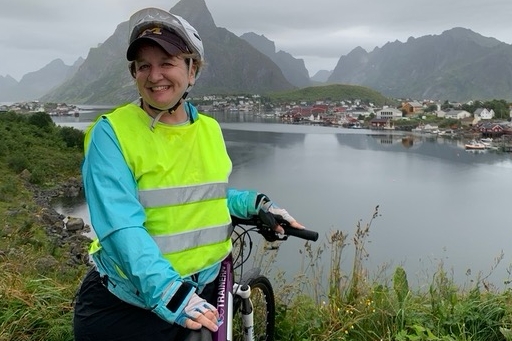
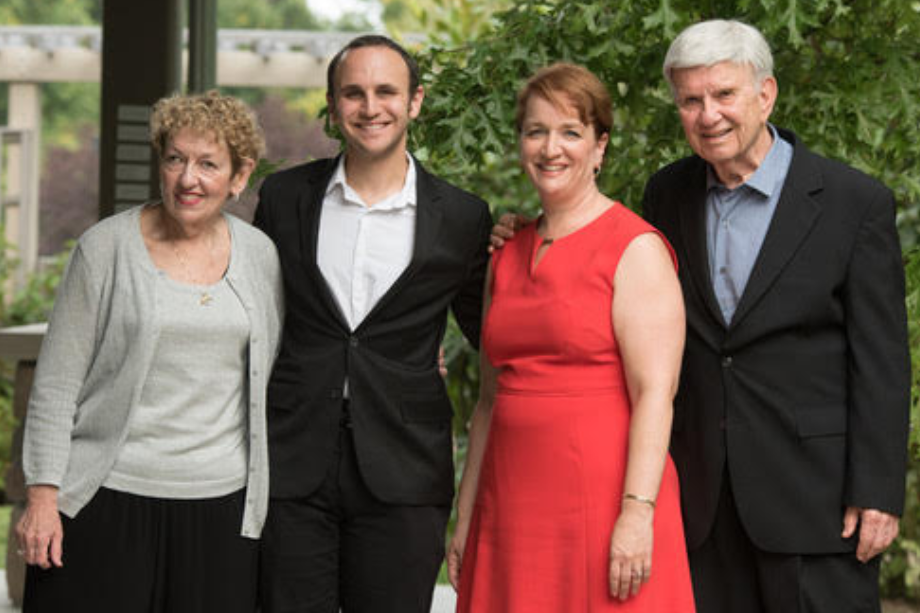
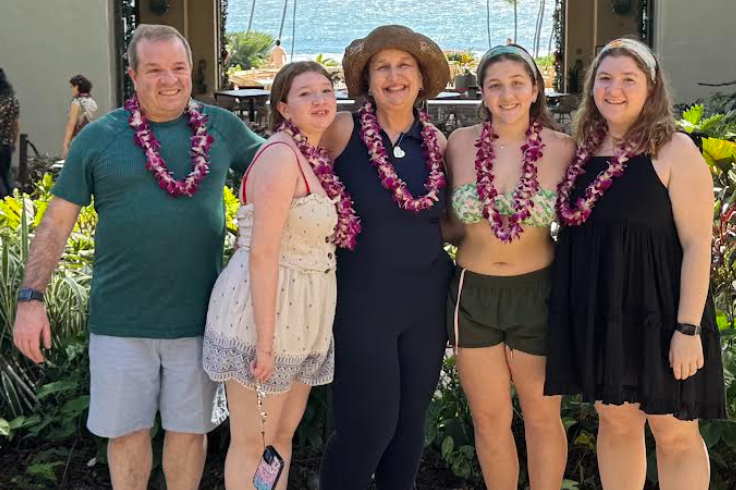
    Rabbi Pearlman, second from right above and center below, enjoyed time with her family. Courtesy of the family

    Rabbi Pearlman enjoyed hiking and biking, anything outdoors. She followed the Phillies closely and went to the Eagles’ Super Bowl parade in 2018.

    She liked musicals, concerts, water ice, and the Schuylkill River Trail. She loved books and libraries, and performed with the Santa Fe Opera.

    “She was curious, always wanting to talk,” her daughter Noa said. “She was immensely joyful.” Her daughter Madeline said: “She was welcoming and always had an open door.”

    Her husband said: “She was caring and adventurous. She wanted to make connections, and she did it her way.”

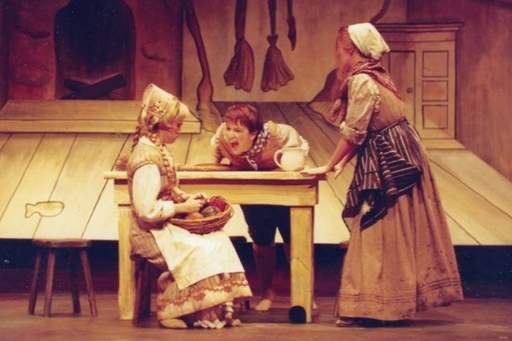
    Rabbi Pearlman (center) performs in a stage production about Hansel and Gretel.Courtesy of the family
    Rabbi Pearlman “was caring and adventurous,” her husband said.Courtesy of the family

    In addition to her husband and daughters, Rabbi Pearlman is survived by her mother, Barbara; a brother, Adam; and other relatives.

    Services were held earlier.

    Donations in her name may be made to the Beth Chaim Reform Congregation of Malvern, Box 1198, Malvern, Pa. 19355; and the National Leiomyosarcoma Foundation, 1685 S. Colorado Blvd., Unit S, Suite 447, Denver, Colo. 80222.

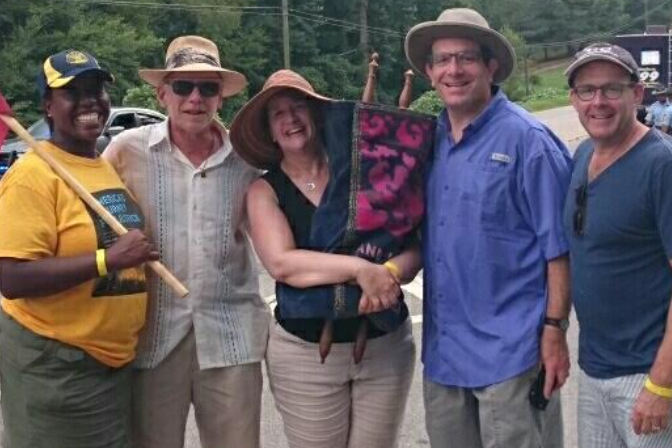
    Rabbi Pearlman (center) carried the Torah during part of the America’s Journey for Justice march in 2015.Courtesy of the family
  • Chuck Berry made music for everyone. He would have been 100 this month.

    Chuck Berry made music for everyone. He would have been 100 this month.

    In 2026, music, television, movies and more are sorted by political and cultural preferences that are captured, packaged and marketed to targeted demographic slices. Once upon a time, though, integration was a shrewd commercial strategy.

    On Oct. 10, the Bruce Springsteen Center for American Music at Monmouth University in Long Branch, N.J., will celebrate what would have been Chuck Berry’s 100th birthday (which is actually on Oct. 18) in a daylong symposium bringing together scholars, journalists and musicians. They will pay tribute to a founding father — by many informed reckonings, the founding father — of rock & roll.

    Berry’s impact was seismic, as he remade popular music by centering the electric guitar as the core of the rock band and writing his own music at a time when it was far from the norm. He also reimagined what live performances would look like for the generations to come with his signature “duckwalk,” which has become an iconic pose on the concert stage.

    Yet, the guitar slinger’s signal success in his time — and the legacy that remains an object lesson for our time — was his ability to bring together audiences across racial and generational lines, despite living in a period when Americans were sharply divided. He did so by inhabiting the heart of the American Century at its zenith and capturing the shimmering allure of its consumer culture.

    Berry was born in St Louis in 1926, at a time when the city had a growing African American population. His father worked in a flour mill and then went on to become a contractor; his mother, a schoolteacher, was a pianist and singer. Both of Berry’s parents were Baptists and active in their local church, though he was never particularly pious.

    Berry’s roots affected his emerging musical style. St Louis was not quite a musical caldron on the order of New Orleans or Memphis. He did not grow up saturated in church music to the extent Little Richard was, nor was he drenched in the blues in the manner of Mississippi Delta giants like B.B. King or Muddy Waters.

    Though Berry absorbed such influences, he also listened to a lot of pop and country music, developing a hybrid of rhythm & blues reminiscent of fellow St. Louis resident Ike Turner, whose 1951 hit “Rocket 88” is widely cited as the first rock & roll song. Berry often sang more like Hank Williams than his friend Bo Diddley, and aspired for the mainstream appeal of Nat King Cole.

    After spending a few years playing a mix of musical styles live in local clubs during the late 1940s and early 1950s, Berry ventured to Chicago with his band to try his luck as a recording artist with Chess Records, a rhythm-and-blues outfit owned by Polish immigrant brothers Leonard and Phil Chess.

    In 1955, he released “Maybellene,” which became his first hit. The song began its life as “Ida Red,” which Berry derived from a hillbilly song called “Ida Mae.” (It assumed its final form under the direction of Leonard Chess, who wanted something more urban.) Berry, who took justified pride in his wordsmithing, was always careful to enunciate his lyrics in ways that were decidedly radio-friendly at a moment when the medium was evolving from its scripted programing and dialogue heavy roots to becoming a vessel for pop music records.

    In “Maybellene’s” story of a Ford driver who successfully snatched back his wayward girlfriend from her Cadillac companion, Berry crafted a propulsive underdog story grounded in the postwar automotive consumer culture that was rapidly taking hold in the 1950s.

    Berry’s career also took off because he was a master of strategic racial ambiguity. In 1956, he released “Brown Eyed Handsome Man,” which slyly substituted eye color for skin color in a series of vignettes that included a Jackie Robinson-type baseball player scoring a winning run and a man unjustly on trial freed at the demand of the judge’s wife — narratives that invited listeners from all demographic groups to supply the subtext they liked. The song would become an inspiration for later rock artists like John Fogerty and Bruce Springsteen, who alluded to it in their songs. “I wanted to write the way I thought people talked. That’s the way he writes,” Springsteen later explained of Berry’s influence.

    Made By History sponsors. FOR USE ON MADE BY HISTORY STORIES ONLY.Inquirer Staff

    In 1958, Berry released his signature hit: “Johnny B. Goode.” It provided another example of the calculated way in which he handled race. In his 1987 autobiography, Berry explained that the original lyrics spoke of a “colored boy,” which he changed to “country boy.” An uncritical listener might well have assumed that Johnny was white, though as likely as not he was Black — the kind of skillful omission that was Berry’s stock in trade for attracting a wide audience.

    The song was such a hit that it was included in a time capsule that included works from Bach and Mozart in the 1977 launch of the Voyager 1 spacecraft sent to the far reaches of the universe to give any intelligent life a glimpse of human culture.

    Berry reached his commercial peak in the late 1950s in a career in which he placed 21 songs on the Billboard Hot 100. He was exceptionally savvy in pitching his music to an emerging baby boomer demographic that became a driving force in record sales. Songs like “School Days” and “Sweet Little Sixteen” captured the joys and frustrations of adolescence with crisp detail (“Ring ring goes the bell / the cook in the lunchroom’s ready to sell”).

    As he moved into the 1960s, Berry also evoked more adult emotions that appealed to older audiences. In 1964, he released “Nadine,” which unfolded like a movie, with its narrator desperately trying to get off a city bus after catching a glimpse of his beloved, who was mysteriously walking toward “a coffee-colored Cadillac.” Cars were the great fact and metaphor of Berry’s oeuvre, a way to craft a vignette to which Americans of all backgrounds could relate. When the Smithsonian came knocking in 2011 hoping he would donate the guitar with which he wrote “Maybellene,” he insisted they couldn’t have it unless they took his 1973 Eldorado Cadillac convertible as well.

    In an odd coda to his recording career — but one that reflected his reach for the broadest possible appeal — Berry scored the only #1 hit of his career in 1972 with “My Ding-a-Ling,” a song about masturbation.

    There was a paradox at the heart of Berry’s artistry. His music consistently expressed the joy of American life in terms relatable to audiences of all stripes — and even shared their frustrations in a key of wry amusement. Yet, personally, he was a troubled man. After experiencing exploitation of the kind endemic to Black musicians in the mid-20th century, he developed a steely-eyed determination to get his financial due: he demanded payment, in cash, before he took any stage.

    He also had run-ins with the law throughout his life, including multiple arrests, and serving jail time for the sexual exploitation of a minor and tax evasion. While racism was a factor in the criminal justice system at the time, there’s little question he committed illegal as well as immoral acts.

    Both sides of Berry must be taken into account. By virtue of his talent and a feral feel for the marketplace, he was an integrationist at a revolutionary moment in American society. As his artistry was cresting, the Rev. Martin Luther King, Jr. was making stirring oratory to call Americans to their better selves.

    Berry was uniquely prescient in seeing what united Americans. He skillfully wove integration of multiple kinds into the fabric of American life — crafting everyday language for everyday people, in the words of his heirs Sly and the Family Stone — whose appeal grew steadily over the course of his life and beyond.

    It is one measure of Berry’s achievement that so many subsequent artists covered so many of his songs, notably the Beatles, who put their own spin on Berry hits like “Rock & Roll Music” and “Roll over Beethoven.” (“If you were to try and give rock & roll another name, you might call it Chuck Berry,” John Lennon once said.)

    Perhaps the greatest reading of Berry’s canon is Linda Ronstadt’s lusty rendition of “Back in the U.S.A.,” a national anthem celebrating jumping jukeboxes and sizzling burgers in Detroit, Chicago, Chattanooga and Baton Rouge — the mere recitation of which captured Berry’s instinctive musicality and his complicated love of his country, which he stitched together with a Whitmanic feel for its shared dimensions. More than ever, we need voices like his to remind us what we share.

    Jim Cullen is a cultural historian. His forthcoming book, How It Worked: The American Dream in Everyday Life, will be published next year.

    Made by History takes readers beyond the headlines with articles written and edited by professional historians. Opinions expressed do not necessarily reflect the views of The Inquirer.

  • Longtime Phish fan and respected show ‘taper’ killed in crash after band’s Atlantic City concert

    Longtime Phish fan and respected show ‘taper’ killed in crash after band’s Atlantic City concert

    A fatal crash in Atlantic City early Sunday morning between a car and a pedestrian has rattled the community of fans of the jam rock band Phish.

    Duncan Oldham, 69, of Geneva, N.Y., was struck and killed by a driver following Phish’s Saturday night show — a 3½-hour show and one of a three-night run at Jim Whelan Boardwalk Hall.

    Oldham was a highly regarded “taper” — someone who records a band’s shows in their entirety and shares them — among the Phish fan base. The practice is embraced by the band, with its shows including a dedicated taper section with a recognizable sea of microphones.

    “Duncan was a well-known Phish taper going back to the 90s,” one member of the Phish Subreddit wrote. “Many of his sources still circulate and are the best ones available for shows that haven’t been officially released by the band. It’s a huge loss to the community.”

    Oldham attended and taped the band’s Friday performance. His recording had already been uploaded. At Sunday’s Phish show at Boardwalk Hall, the first following the crash, fans said the band’s crew acknowledged the loss, putting out a sign in the taper section.

    Phish has not publicly commented.

    Oldham was struck near the intersection of Iowa and Pacific Avenues around 12:05 a.m. Sunday, according to police. He was pronounced dead at the scene.

    The driver remained at the scene, police said. No additional details have been released and no charges have been filed.

    The Atlantic City Police Department and the Atlantic County Prosecutor’s Office were investigating the crash.

    Emotions were raw as friends of Oldham, Phish fans, and fellow tapers processed the death.

    “I watched my best friend die in front of me,” audio engineer Charlie Miller wrote on social media shortly after the crash. Miller was on the scene and gave a statement to police. “I’m devastated.”

    According to Miller, who is well known among the Grateful Dead and Phish fan bases, he and Oldham were leaving the Tropicana after having post-show pizza when a car failed to yield for Oldham at the crosswalk.

    “The Phish crew, Phish management team, Boardwalk Hall event staff, first responders, Clarion Inn staff and the Phish fans have all been very supportive,” Miller added. “Duncan’s last words before the accident were ‘that was a really good show.’”

    Tributes to Oldham continue to mount online, celebrating his legacy as a taper along with his love for food and his pugs.

    One Reddit user called him “Not just a taper, but a super nice guy. This [is] a loss not just to his close friends, but also those of us that casually knew him from shows. I’m still trying to wrap my head around this one.”

    A former neighbor called him a constant at Phish concerts.

    Another user remarked on Oldham’s willingness to share his taper archive treasures.

    On Facebook, a fellow taper called him “a good man who cared about our taper community, and we gave our love back to him. A contributor to our community like Duncan will be sorely missed by all.”

    At Phish shows since Oldham’s death, fans took Sharpies to yellow balloons, penning lyrics and tributes to Oldham on the spheres before tossing them into the crowd.

    “Be at peace, Duncan,” one balloon said.

  • The Philly Music Fest is back. Here are our can’t-miss picks from the lineup.

    The Philly Music Fest is back. Here are our can’t-miss picks from the lineup.

    It’s a milestone year for the Philly Music Fest.

    In 2017, Greg Seltzer and his wife, Jenn, founded the nonprofit festival that presents only Philly or Philly-connected acts at various independent venues, raising money to benefit music education organizations in the city.

    This year’s weeklong event is the PMF’s 10th. The fest begins Monday, Oct. 12, with the first of two nights at Ardmore Music Hall, headlined by Gregory Alan Isakov, and concludes Sunday, Oct. 18, with jazz saxophonist Immanuel Wilkins at Solar Myth.

    PMF 2026 will present 25 bands in nine showcases at six venues, bringing the total number of acts presented over the past decade to 175.

    In that time, says Greg Seltzer, a Ballard Spahr attorney as well as supporter of the Philly music scene, the PMF has donated $650,000 to music educations programs like Rock to the Future, Settlement Music School, Beyond the Bars, and Key of She.

    The economic impact in the region — including payments to bands, venues, and local vendors — runs somewhere between $2 and $3 million, Seltzer says, with the weeklong fest having grown to donating $100,000 to charity and generating $600,000 in economic impact per year.

    This year’s fest has many cool first-time gets. Only jazz percussionist-poet Angelo Outlaw (who is on an Oct. 15 MilkBoy Philly bill headlined by RJD2) and Remember Sports (on a loaded bill with Sweet Pill, Wax Jaw, and Midfield on Oct. 16 at Underground Arts), have played the PMF before.

    Acts making their PMF debuts include DJ-bandleader RJD2, country-folk songwriter Madi Diaz, metal quintet Dillinger Escape Plan, Philly emo quartet Marietta, Delaware-bred folkie Sug Daniels, and funk-soul rock-and-roller Owen Stewart.

    The big new PMF development, however, happens before any of the music showcases even begin.

    It’s the expansion of Inside Hustle, the music industry networking event that debuted as part of the PMF in 2018.

    From its inception, the idea behind Inside Hustle has been to redress the imbalance that has always been an issue with the Philadelphia music scene.

    That is, the city has always produced incomparable musicians and great music but has been lacking in infrastructure compared to industry centers like New York, Los Angeles, and Nashville.

    Earlier this year, Inside Hustle, which is designed to bring aspiring music business professionals together with industry insiders, grew from a twice-a-year event to a monthly get-together at the Ethical Society on Rittenhouse Square.

    Now the confab is having another growth spurt. On Oct. 10, the PMF is presenting this year’s Inside Hustle along with Philadelphia Music Alliance, Drexel University’s Antoinette Westphal School of Media Art & Design, and University of Pennsylvania radio station WXPN-FM (88.5), in its biggest iteration by far at the URBN Center on the Drexel campus.

    Sug Daniels reacts while performing at City Winery Philadelphia on Feb. 16, 2022. Daniels plays the Fallser Club in East Falls on Oct. 16 as part of this year’s Philly Music Fest.ELIZABETH ROBERTSON / Staff Photographer

    The four-hour daytime session will include 10 panels with titles like “Getting the Gig 101″ and “Breaking into Music Marketing,” plus opportunities to meet music business pros, and a keynote speech by Toby Leaman of Dr. Dog.

    The idea, says Seltzer, is to show the Philadelphia music scene has come of age as a place to do business, with renowned entities like Will Yip’s Memory Music Studios, the live music streaming platform nugs.net, and influential radio programming like WXPN’s World Cafe.

    Seltzer envisions Inside Hustle as “a kind of all-in Philly music conference” that he foresees becoming “an annual coming together of the entire Philly music industry.”

    And along with the music business, of course, the PMF is about the live music experience. Here are my PMF picks not to miss.

    Gregory Alan Isakov

    Indie folk songwriter Isakov’s Philly-ness isn’t well known — he was born in South Africa and lives in Colorado. His patient, understated songs have a spaciousness suitable to his Rocky Mountain milieu. But he grew up and first started playing in bands here, and in Ardmore, he’ll be in much cozier environs than he is accustomed to. Monday, Oct. 12, and Tuesday, Oct. 13, at Ardmore Music Hall.

    Lancaster native Madi Diaz plays Ardmore Music Hall on Oct. 13 as part of Philly Music Fest.Allister Ann / Courtesy of Pitch Perfect PR

    Madi Diaz

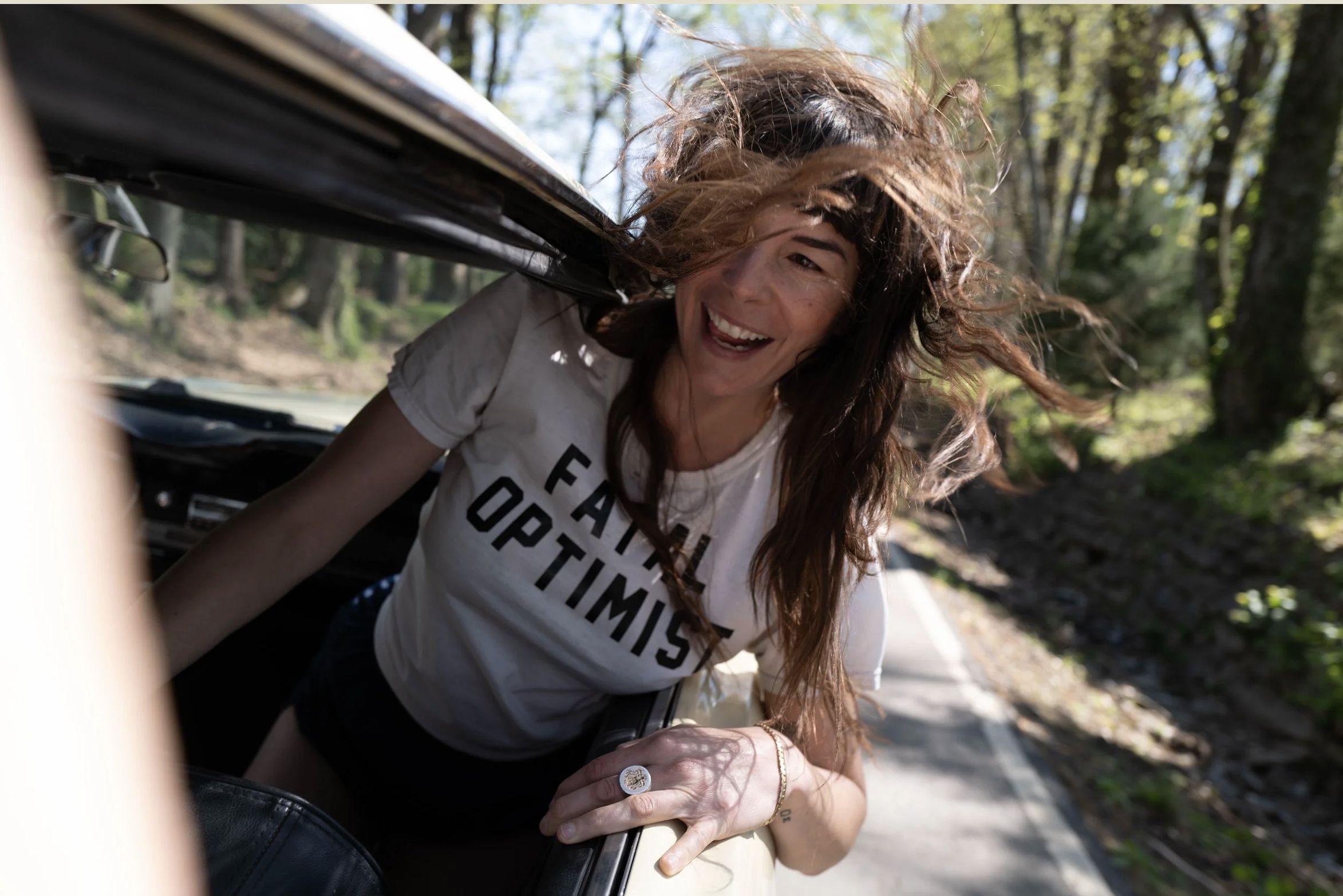
    Madi Diaz grew up in Lancaster and has the resumé of a successful Nashville songwriter. She’s cowritten hits for Kesha and Maren Morris, duetted with Kacey Musgraves on “Don’t Do Me Good” on Diaz’s Grammy-nominated 2024 album Weird Faith. She has also opened for Harry Styles and played in his touring band. And along with her own most-recent album, Fatal Optimist, she released a full-length cover album of Blink 182’s Enema of the State last year to raise money for a legal aid fund that assists immigrant communities. Tuesday, Oct. 13, at Ardmore Music Hall.

    Dillinger Escape Plan plays Underground Arts on Oct. 15 as part of Philly Music Fest.Courtesty of Philly Music Fest

    Dillinger Escape Plan

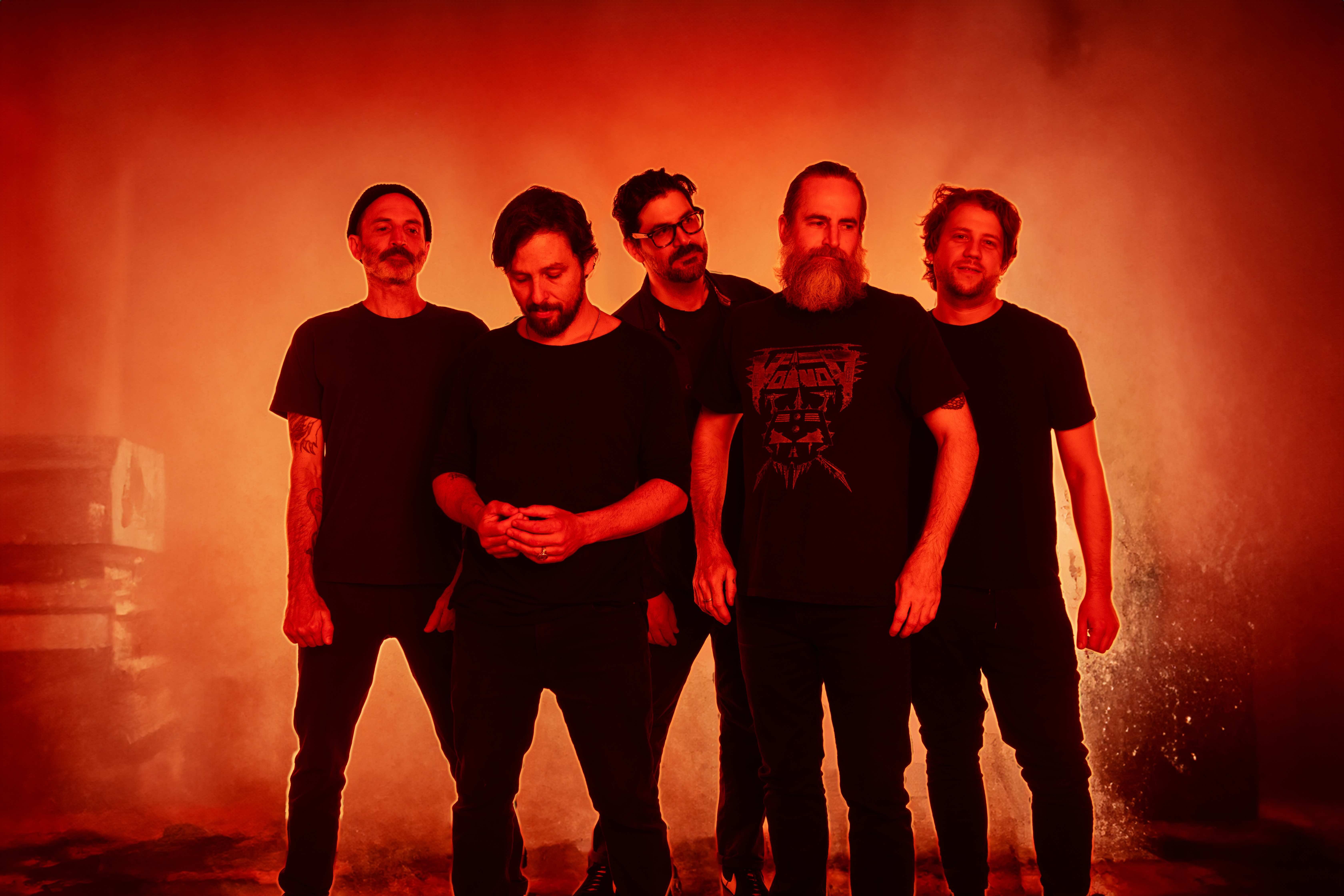
    In 2025, the PMF made its first foray into metal, and in 2026, the fest is back for more with math and metalcore quintet Dillinger Escape Plan. The band, originally from Morris Plains, N.J., split up after 2016’s Dissociation, and reunited in 2024 to celebrate the 25th anniversary of its 1999 debut, Calculating Infinity. The PMF show with Pyrron and Caged opening is one of a handful of dates as that reunion draws to a close. Thursday, Oct. 15, at Underground Arts.

    RJD2 will play MilkBoy Philly during Philly Music Fest in October.Courtesy of the Artist

    RJD2

    RJD2 is the formerly Philly-based DJ, producer, and multi-instrumentalist born Ramble Jon Krohn, who makes electronic and full-band music across many solo and collaborative projects. You might not think you know his music but you probably do. In 2006, “A Beautiful Mine” — an instrumental track drawn from Magnificent City, his collaborative album with rapper Aceyalone — was adapted as the opening theme to Mad Men. Thursday, Oct. 15, at MilkBoy Philly.

    Philly band Sweet Pill’s new album is “Still There’s a Glow.”Juliette Boulay

    Sweet Pill

    Hard-hitting Philly pop-punk band Sweet Pill is led by singer Zayna Yousseff and guitarist Jayce Williams, two native New Jerseyans who formed the band while students at Rowan University in 2018. The band finds its sweet spot with Still There’s a Glow, its sophomore release, which came out in March. Friday, Oct. 16, at Underground Arts.

    The Flying Vees

    It’s a been a good year for the women of the Flying Vees. Hannah Taylor, Shannon Vasile, Brechyn Chace, and Caitlin Ramsey wrote “Workman’s Song” for WXPN-FM’s 24 Hour Song Challenge, and took home first prize for their tune about how freedom isn’t always so easily appreciated by working people struggling to make ends meet. They played XPoNential Music Festival last month and the band is on a rock-solid bill with Owen Stewart, Roberta Faceplant, Sug Daniels, and Nik Greeley & the Operators. Friday, Oct. 16, at the Fallser Club.

    Philly quintet Wax Jaw plays Underground Arts on Oct. 16 as part of Philly Music Fest.Ryder Griffith

    Wax Jaw

    Philly quintet Wax Jaw makes music with manic energy and razor-sharp hooks, pulling from early punk and new wave. It Takes Guts!, the band’s debut on Philly’s Born Losers Records, is a ripping, fun-filled affair that gets serious as singer Shane Morgan writes about life in America as a transmasculine person. On a terrific bill with Sweet Pill, Remember Sports, and Midfield. Friday, Oct. 16, at Underground Arts.

    Marietta plays Underground Arts on Oct. 17 as part of Philly Music Fest.Courtesy of Philly Music Fest

    Marietta

    It seems like Philly emo bands come, go, and then decide to come back again. Like the Wonder Years and Algernon Cadwallader, Marietta followed a flurry of early activity, with its debut album, Summer Death, in 2013 and its follow-up, As It Were, two years later, and then had a long period of inactivity. The band has been back in action since reuniting a year ago at the Ukie Club, and is topping this bill that also features Euphoria Again, Bleary Eye, and Máty. Saturday, Oct. 17, at Underground Arts.

    Saxophonist Immanuel Wilkins, who was raised in Upper Darby, poses for a portrait on Sept. 28, 2026, in New York. (AP Photo/Andres Kudacki)Andres Kudacki

    Immanuel Wilkins

    This year, the PMF booked a genius. Upper Darby-raised saxophonist Immanuel Wilkins is the youngest of 20 winners in this year’s class of MacArthur Foundation’s genius grants. Wilkins put on a scintillating performance with his quartet plus special guests William Parker and Jeff “Tain” Watts during Ars Nova Workshop’s Coltrane 100 festival last month. Sunday, Oct. 18, at Solar Myth.

    Inside Hustle is free and will be held at the URBN Center, 3501 Market St., from 10 a.m. to 2 p.m. on Oct. 10. Philly Music Fest runs Oct. 12-18. Tickets sold separately for each showcase. phillymusicfest.com

  • The Dogist, the dog blog with millions of followers, will be in Philly this weekend leading pups up the ‘Rocky’ steps

    The Dogist, the dog blog with millions of followers, will be in Philly this weekend leading pups up the ‘Rocky’ steps

    Alert your pups! The Dogist is coming home to Philadelphia.

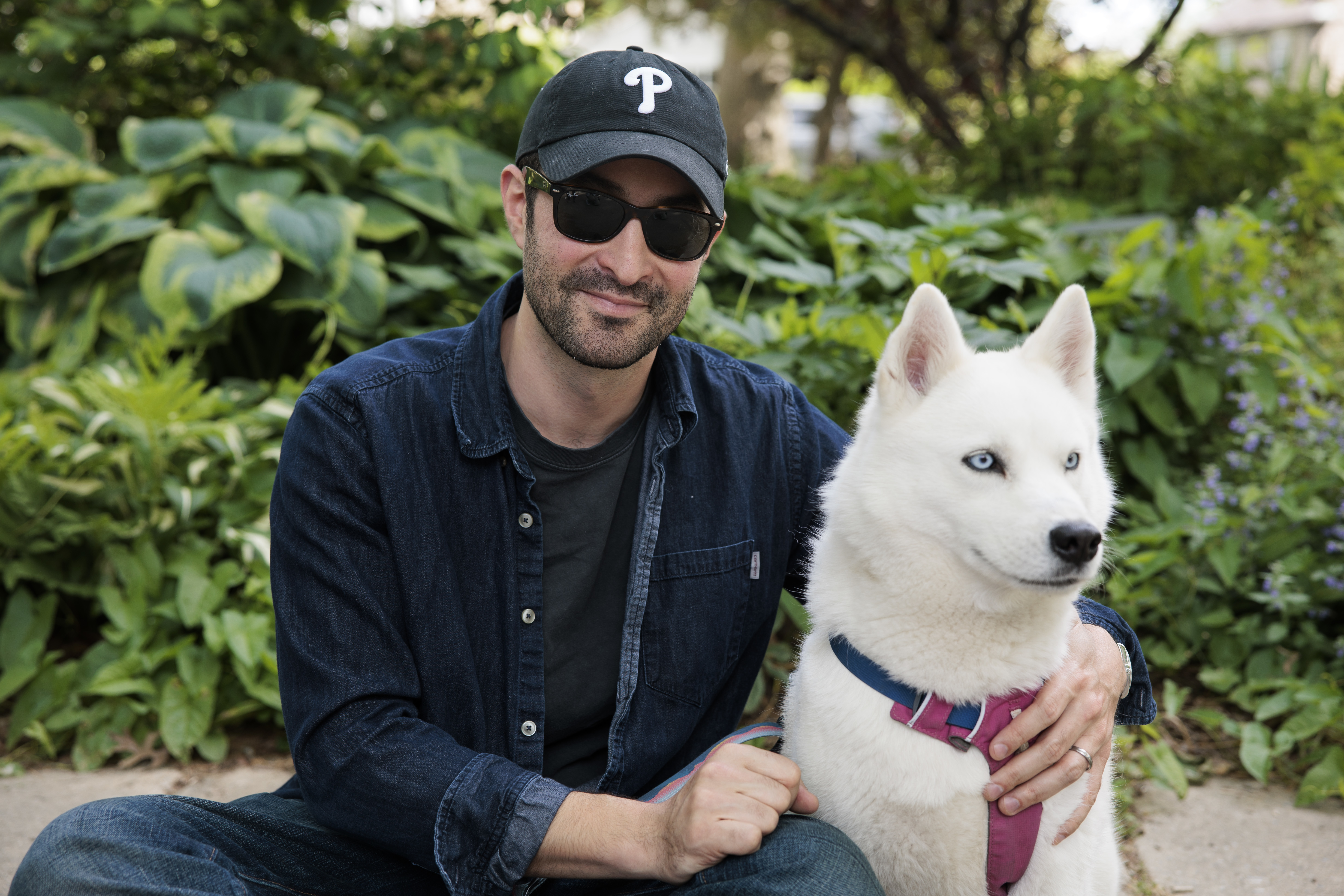
    Elias Weiss Friedman, the Narberth-raised canine street photographer whose blog The Dogist has over 10 million social media followers, will be in Philadelphia this weekend for a group walk and photo shoot.

    Friedman — who has posted over 50,000 photos and videos of dogs (and their humans) online since 2013 — is hosting a meetup on Sunday morning on the Schuylkill Banks. Hundreds of hounds are expected to attend.

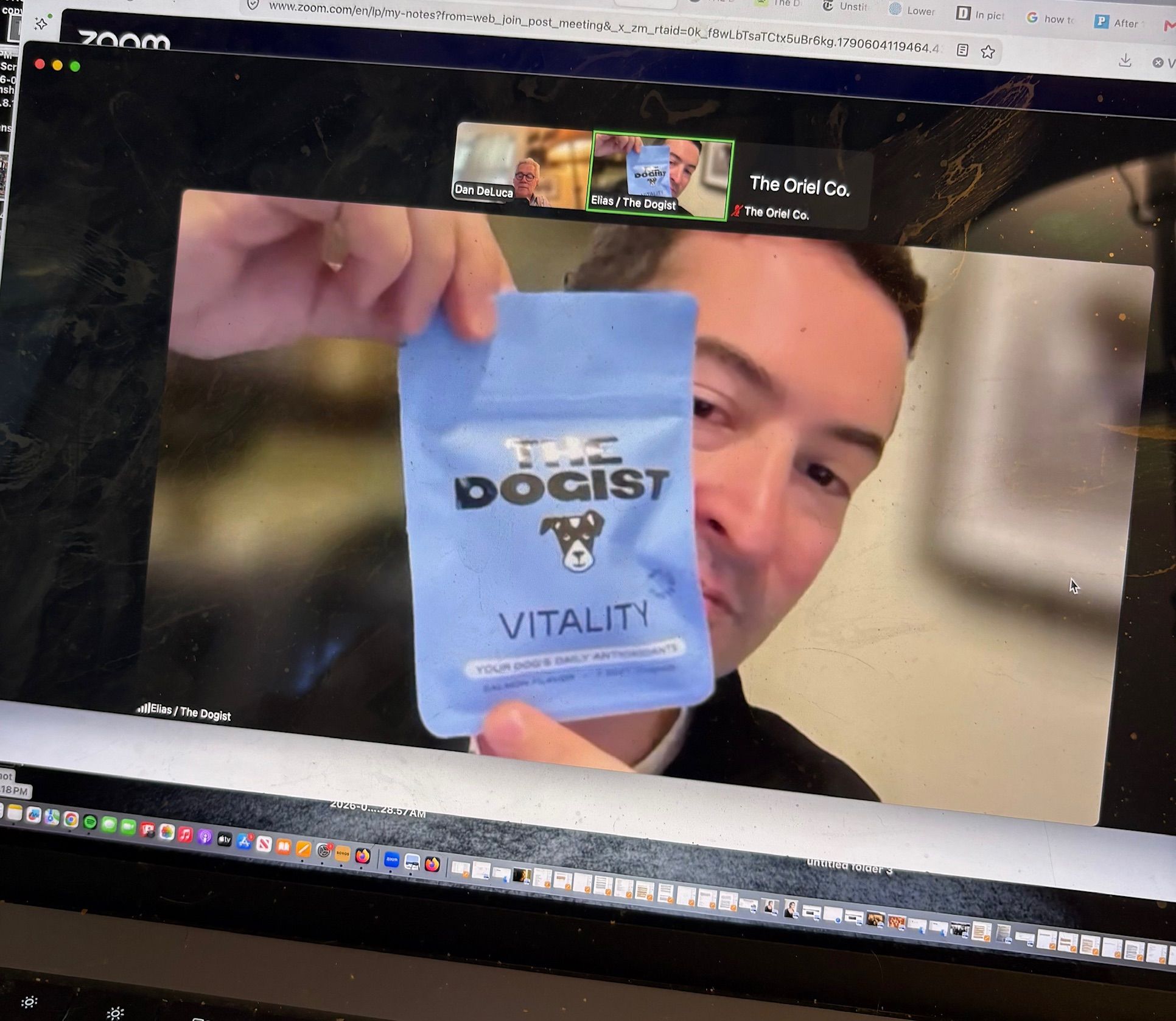
    “We’re going to meet at the Schuylkill River Dog Park,” said Friedman, speaking via Zoom from his Manhattan apartment, “and then we’re going to walk along the river up to the Art Museum and climb the Rocky steps for a group photo.”

    Friedman will be there with his dog, Elsa, the Instagram-famous white husky mix who was dog of honor at his 2025 wedding to Samantha Cutler, his fellow alum of Wynnewood’s Friends Central High School. The wedding was featured in the New York Times’ Vows column.

    “It’s a little crazy for me,” said Friedman, “because I feel like I’m a prophet, or” — he laughs — “some sort of dog evangelist, where everybody’s gonna follow me. It’s like I’m leading a march.”

    “It’s a very joyful thing to have people meet up around a shared love of dog. They get to know each other, and make a lot of connections. It’s an amazing show of the power of not just the dog community, but the Dogist community.”

    Sunday’s walk with Friedman is part of a Dogist tour tied to the launch of the Dogist Company, a canine wellness brand whose first product is Vitality, which is advertised as a “Board-Certified Vet-formulated antioxidant chew that supports brain, joint and immune health.”

    “It’s salmon flavored so a dog might consider it a treat,” Friedman says of the product he developed with veterinary nutritionist Angela Rollins, which is available at thedogistcompany.com. “But it’s not a treat, it’s a supplement.”

    Elias Weiss Friedman, a.k.a. the Dogist, holds a package of his newly launched canine wellness brand, The Dogist Company’s Vitality supplement, during a Zoom interview.Dan DeLuca

    “Everybody wants more years with their dog. But it’s also about having good years with your dog,” says Friedman, who credits Elsa, 6, as “chief wellness officer” on the Dogist Company website.

    “I’ve spent the last 13 years of my life showing the world how amazing dogs are. So the next evolution of the Dogist ecosystem is creating products that make dogs’ lives better — because it’s the least we can do for them for all they do for us.”

    Friedman is also active with the Dogist Fund, a charitable partnership with GoFundMe that supports three nonprofit canine support organizations each year.

    This year’s beneficiaries are the Maryland-based Pets With Disabilities; New York’s Animal Rescue Consortium, which was featured in a heart-tugging post this week about Zoe — a pit bull who suffered violent injuries as a bait dog in a dogfighting ring; and Paws & Affection, headquartered in Montgomery County, .

    “They’re based in Narberth where I grew up,” Friedman said. “They raise service dogs to work with teenagers and children who are clinically diagnosed with depression, or PTSD, or are on the autism spectrum.”

    Friedman also has a show on YouTube — simply called Dogs — where he strolls around meeting pups with celebrities, such as actors Zooey Deschanel and Sarah Paulson, and comedians Roy Wood Jr. and Lewis Black.

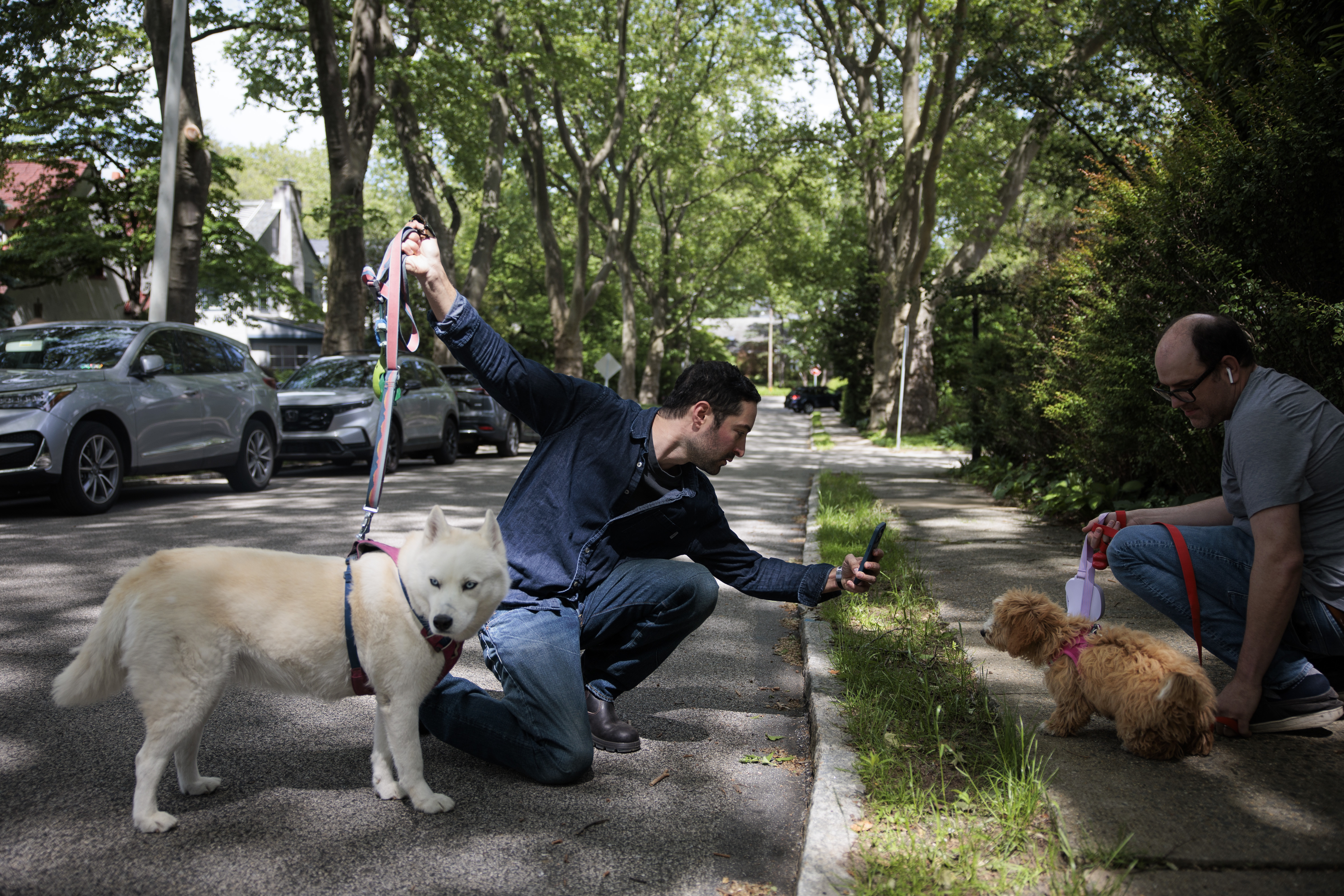
    Elias Weiss Friedman, photographer and founder of the Dogist, holds onto his dog named Elsa, while photographing Michael Rey and Rosie, in his childhood neighborhood on May 20, 2025, in Narberth.Monica Herndon / Staff Photographer

    Last year, Jane Goodall was a guest in an episode recorded a week before her death. Meeting the English primatologist and anthropologist “was the biggest honor, probably, of my life,” said Friedman.

    The Dogist origin story dates back to when he was a 2 year old and wandered away from his grandmother’s house in Narberth toward traffic on Montgomery Avenue. Oreo, his grandmother’s dutiful black Lab, kept him from walking into speeding traffic.

    Most of the Dogist’s photos are taken in New York, but Friedman’s content-gathering travels have frequently brought him to Philadelphia, where he’s found four-legged subjects in Manayunk, Rittenhouse Square, and the Main Line.

    “Negativity is easily found on the internet,” he said. “Dogs are an antidote or a respite to all that.”

    At group meetups like Sunday’s — where walkers without dogs are also welcome — he can connect IRL with members of the digital Dogist community.

    “I always enjoy going out and meeting people and talking to them about their dogs,” said Friedman, who has published three books including last year’s This Dog Will Change Your Life.

    “Dogs don’t have an ego, right?” he said. “They’re not burdened by one like we are. So part of the joy of seeing that they’re so free is that it allows us to transcend our ego for a few minutes. And that’s a very liberating experience.”

    The Dogist Company Vitality Walk at Schuylkill River Park, 30 S. 25th St. at 10 a.m. on Sunday, Oct. 4, Instagram.com/thedogist

  • AC/DC did the same thing it always does. Philly fans wearing devil horns lapped it all up.

    AC/DC did the same thing it always does. Philly fans wearing devil horns lapped it all up.

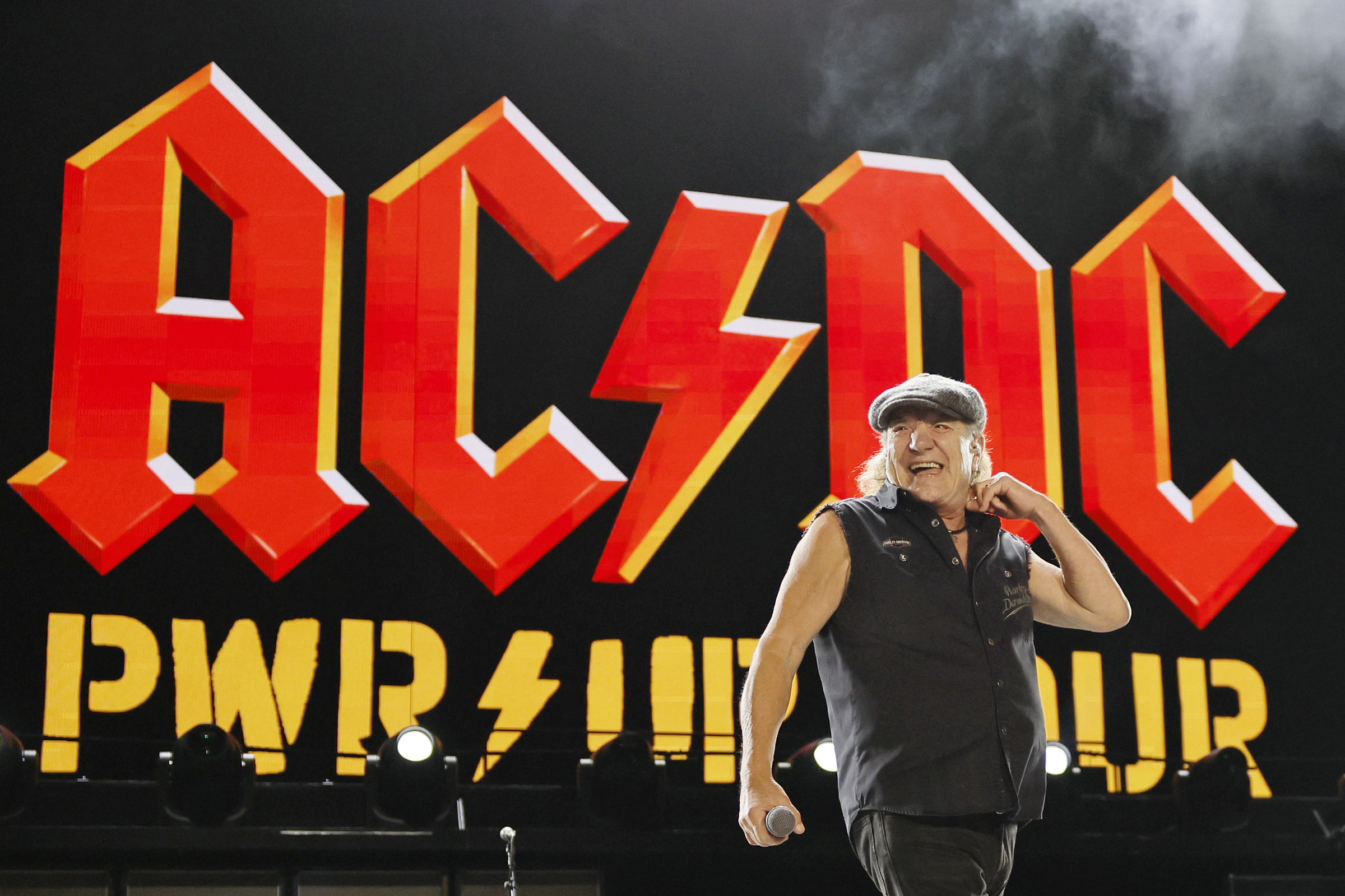
    AC/DC frontman Brian Johnson made a promise shortly after taking the stage at Lincoln Financial Field on Tuesday night: “We’re gonna do the same thing we always do.”

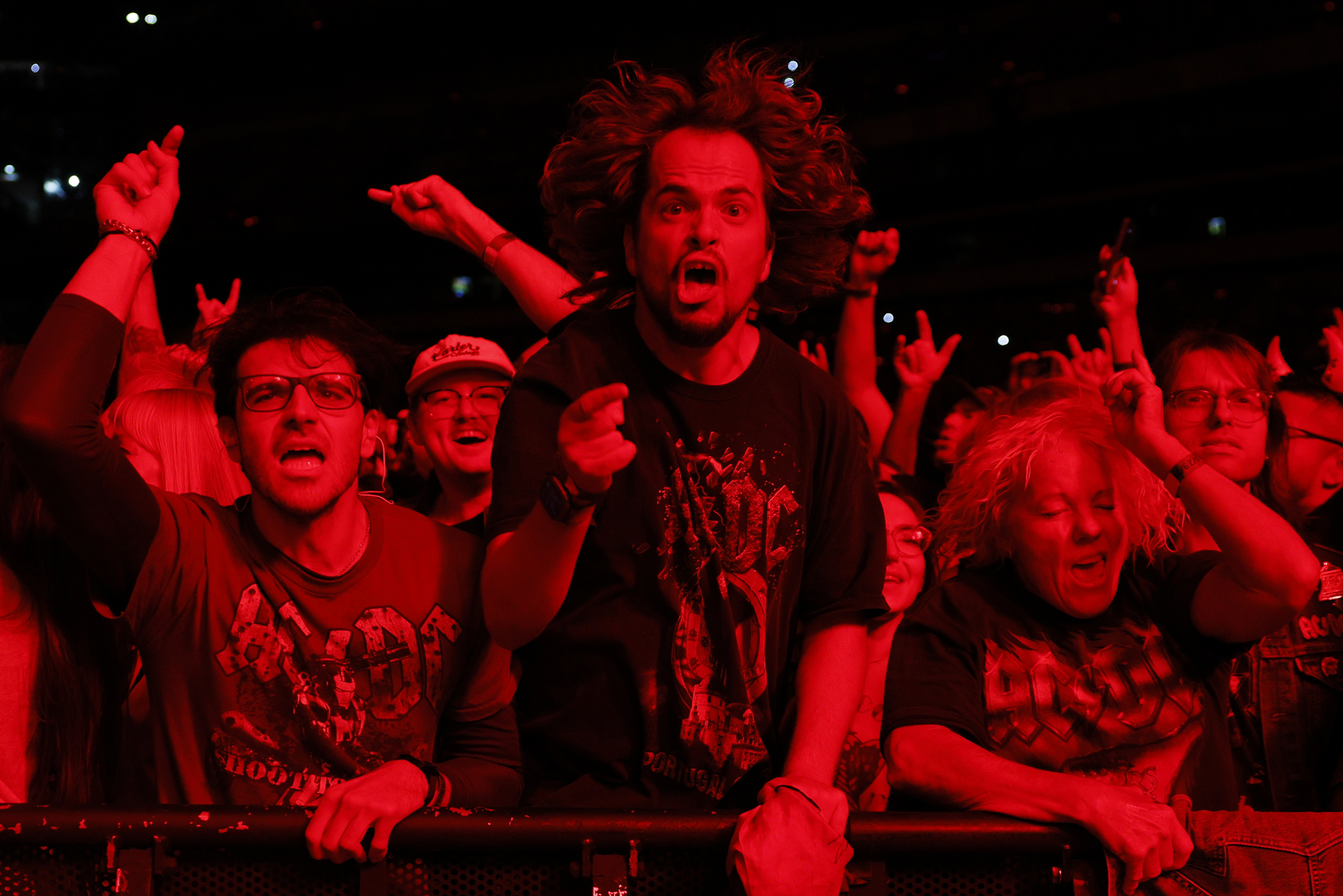
    It was met by a roar of approval from the sea of fans sporting red light-up devil horns, reaffirming that the Australian-born band’s multigenerational audience expects nothing less — or more.

    Throughout its more than half-century history, AC/DC has belonged to a stunted-but-exultant branch of the rock family tree that stubbornly refused to evolve past the bracingly simple riffs, the strutting duckwalk of Chuck Berry, and the lyrical concerns of a hormonal adolescent.

    That these sentiments are coming from a group of men in their 70s has rarely been an issue for rock icons of a certain age, but AC/DC has clung to its aura of misspent youth with an impish fervor that shrugs off questions of dignity with a raised pint and a lascivious grin.

    AC/DC fans sing and dance Tuesday during the band’s “Power Up” tour stop at Lincoln Financial Field.Elizabeth Robertson / Staff Photographer

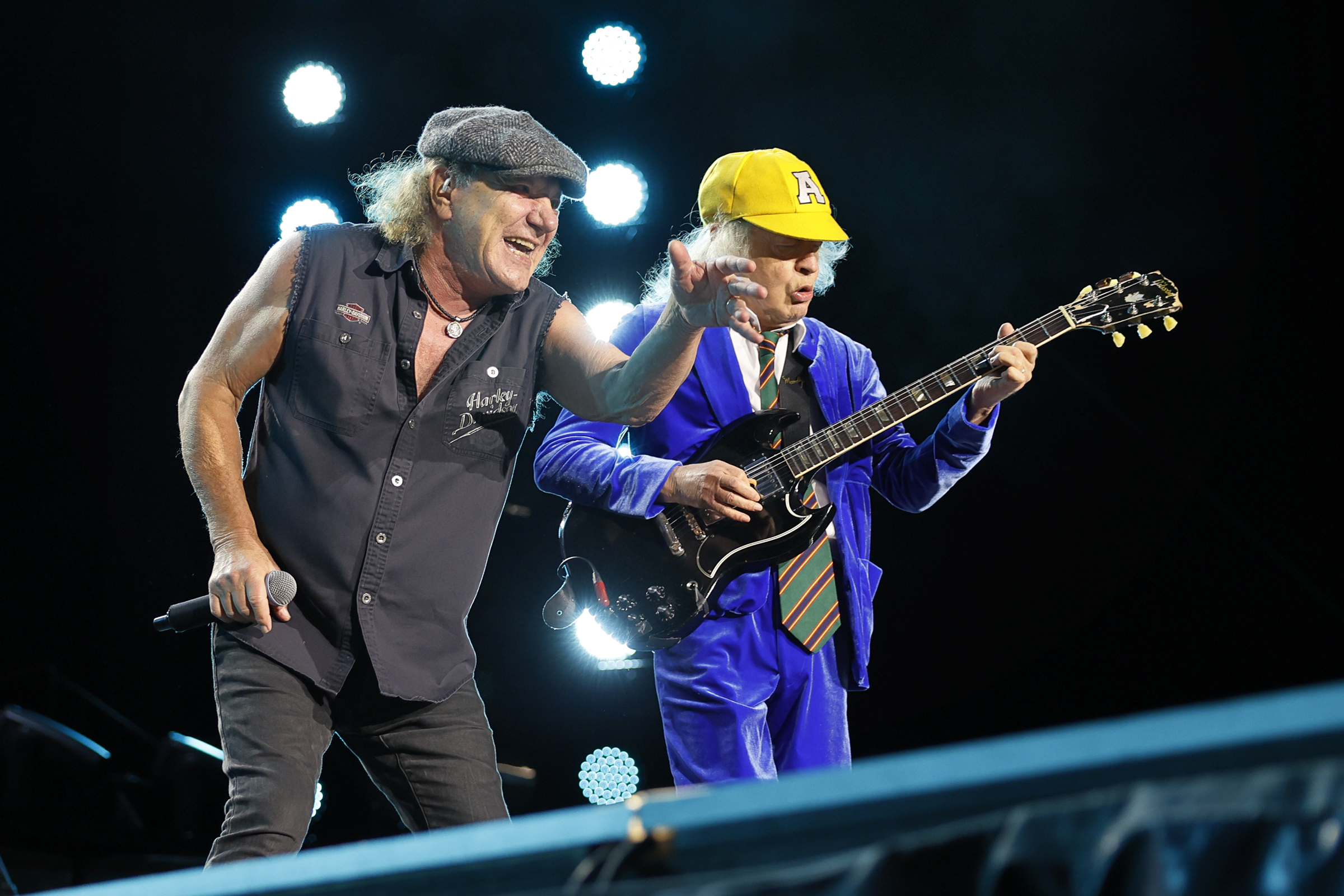
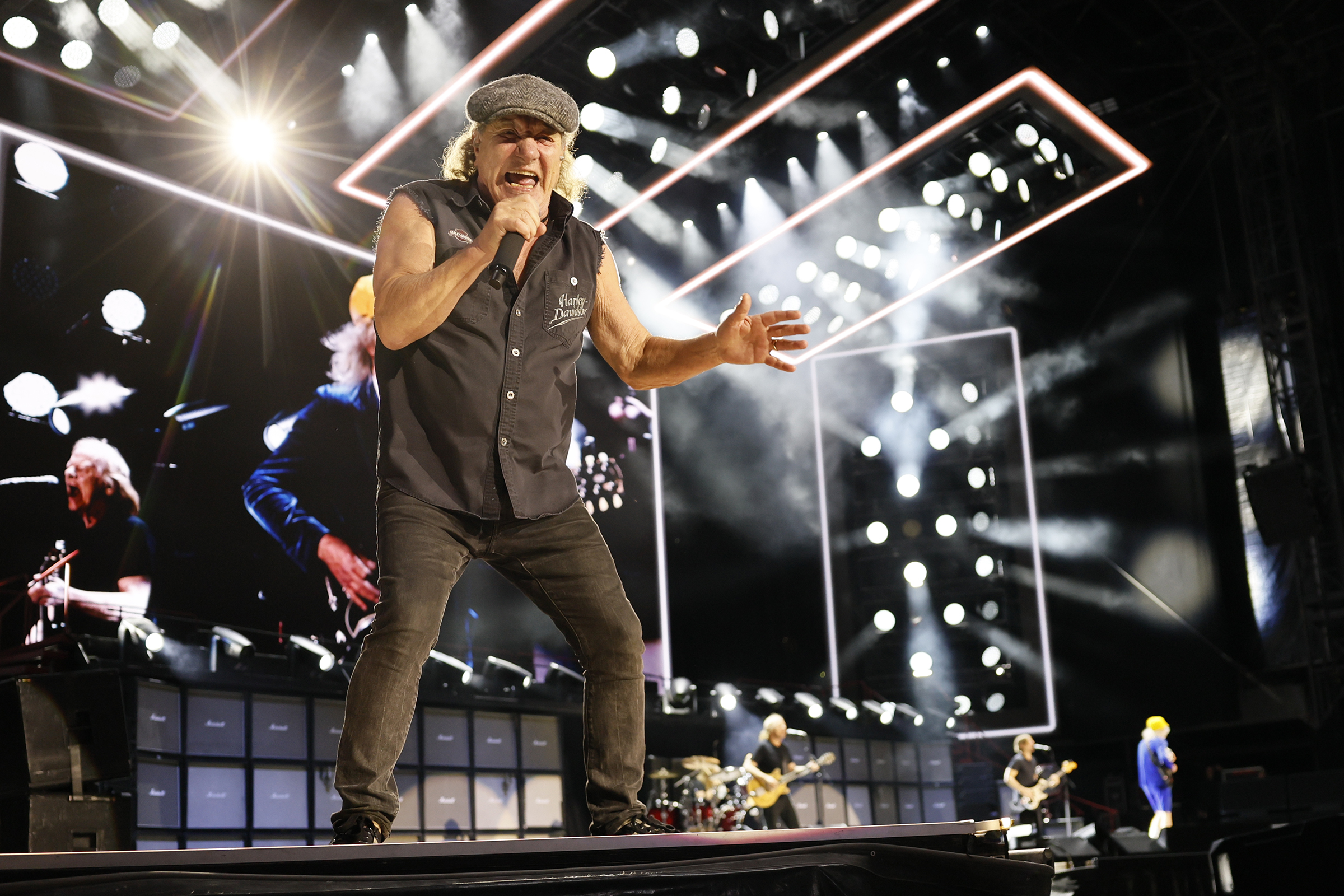
    At 78, Johnson remains the gregarious, leering charmer with the air of a man perpetually perched on his favorite barstool, even as he skulks around a stadium-size stage. A decade after being replaced on tour by Guns N’ Roses frontman Axl Rose because of hearing loss, Johnson sounded strong despite a few stumbles — swapping verses on “Dirty Deeds Done Dirt Cheap,” which he acknowledged with a chuckle, or missing his entrance on “Whole Lotta Rosie.”

    A voice that in its prime sounded like a junkyard dog snarling double entendres through a barbed-wire fence suffers the ravages of age differently than a more finely honed instrument. But Johnson managed to summon his gloriously serrated howls when he needed them, talk-singing his way through the rough patches as if sharing a private joke.

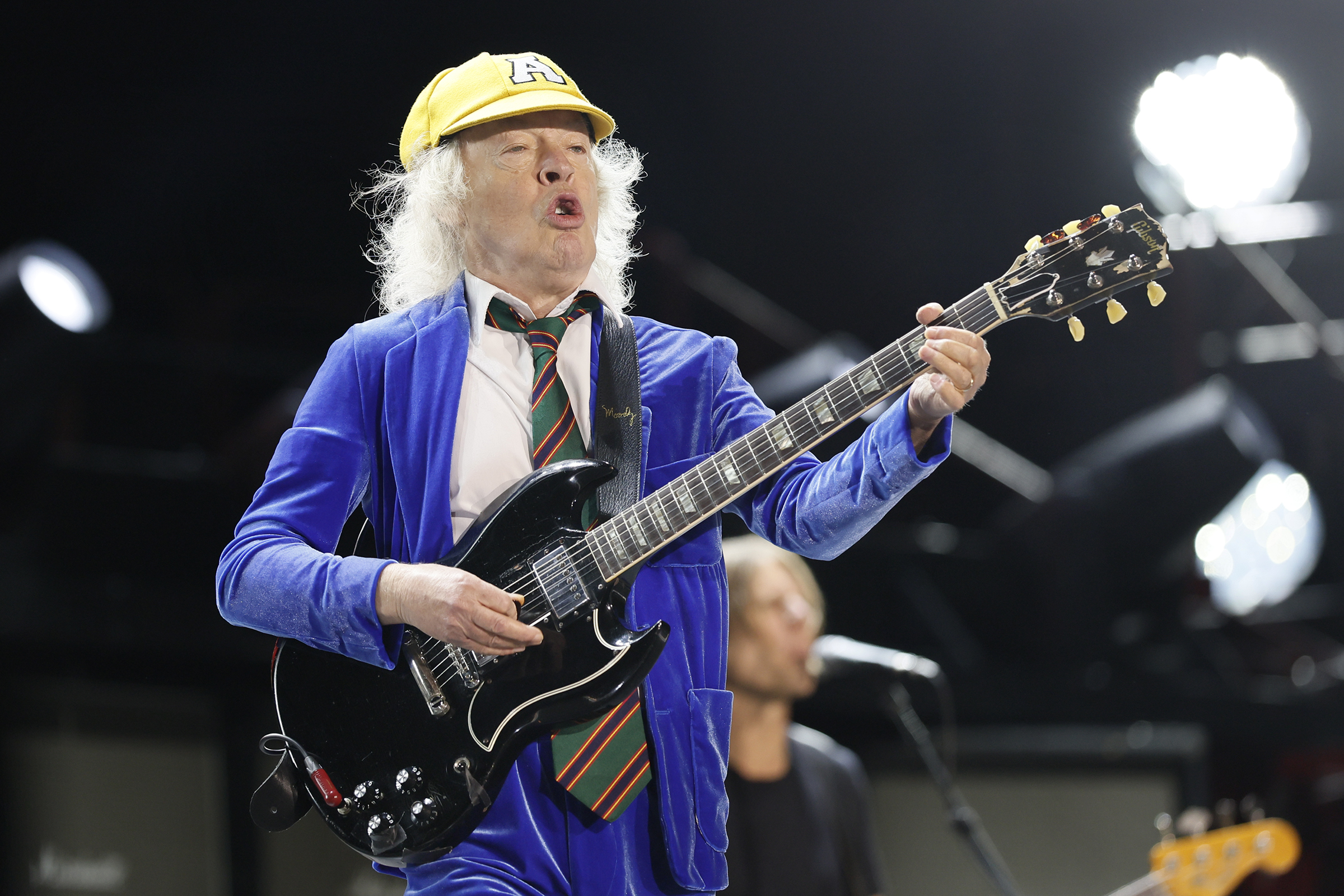
    AC/DC’s guitarist Angus Young performs during the band’s “Power Up” tour stop at Lincoln Financial Field on Tuesday.Elizabeth Robertson / Staff Photographer

    Which brings us to Angus.

    The poster boy for arrested development, Angus Young still sports a schoolboy uniform at 71 (royal blue for this occasion, topped by a bright yellow cap emblazoned with his first initial). With his shock of gray hair, Young looks less like the juvenile reprobate gone to seed of his younger days, more like a student cursed, mummylike, to wander the halls of his school for all eternity.

    The sole remaining member from the band’s 1973 founding, Young is indisputably the star of the show. From the opening riff of “If You Want Blood (You’ve Got It)” to the closing cannon fire of “For Those About To Rock (We Salute You),” the guitarist remained in perpetual motion throughout the two hour-plus show while churning out nearly two dozen indelible riffs. He eventually removed his tie, bashing it against his strings for the solo to “Sin City,” and even took the mic to growl a couple of lines of “Dirty Deeds.”

    AC/DC’s Brian Johnson (left) and Angus Young play on during the band’s “Power Up” tour stop at Lincoln Financial Field on Tuesday.Elizabeth Robertson / Staff Photographer

    The leaps that accompanied each song’s final crashing chord don’t quite achieve the height they used to, and the blistering fretwork on “Thunderstruck” has slowed a step or two, but Young commands attention like few guitarists can. He quite literally eclipsed the rest of the band for an extended solo showcase on “Let There Be Rock”: As the rest of the stage fell into shadow, he first duckwalked to the end of the stage, where he was hoisted skyward on a raised platform, spinning and spasming on the floor as confetti erupted around him; then ascended to a catwalk atop the bank of Marshall amps to engage in an extended call and response with his adoring audience.

    Johnson and Young both have personalities outsized enough to split the spotlight between them, necessarily so as the touring version of the band is otherwise filled out by hired guns. Longtime bassist Cliff Williams and drummer Phil Rudd remain official members of the band and contributed to the most recent album, 2020’s Power Up, but have been replaced for the tour by Chris Chaney, formerly of Jane’s Addiction, and Slash’s Snakepit/Alanis Morissette drummer Matt Laug. From half a football field away, Stevie Young could pass for his late uncle Malcolm, clad in all black and jittering along with the steady chug of his rhythm guitar.

    AC/DC’s Brian Johnson sings during the band’s “Power Up” tour stop at Lincoln Financial Field on Tuesday.Elizabeth Robertson / Staff Photographer

    AC/DC’s first Philly stop in seven years came two and half years into its “Power Up” tour, which finally wraps up Friday in East Rutherford, N.J. Its namesake album was given two nods in the 21-song setlist, with “Demon Fire” and “Shot in the Dark” fitting snugly in with the classics. The title track from 2000’s Stiff Upper Lip was the only other song drawn from the band’s 21st-century output.

    Otherwise they stuck, as promised, to the familiar, accompanied by unobtrusive visuals: columns of flame for “Highway to Hell,” monochrome and static for “Back in Black,” a bell lowered from the rafters for “Hells Bells.”

    Opening the evening, as they have throughout the lengthy tour schedule, was the Pretty Reckless. Led by former child star and model Taylor Momsen, who has been moonlighting recently with the sporadically reuniting Soundgarden, the band shares the headliner’s penchant for amped-up, blues-based rock, if not its gift for memorable riffs.

  • The Fire, the Northern Liberties music club long touted as the city’s only woman-owned venue, is closing

    The Fire, the Northern Liberties music club long touted as the city’s only woman-owned venue, is closing

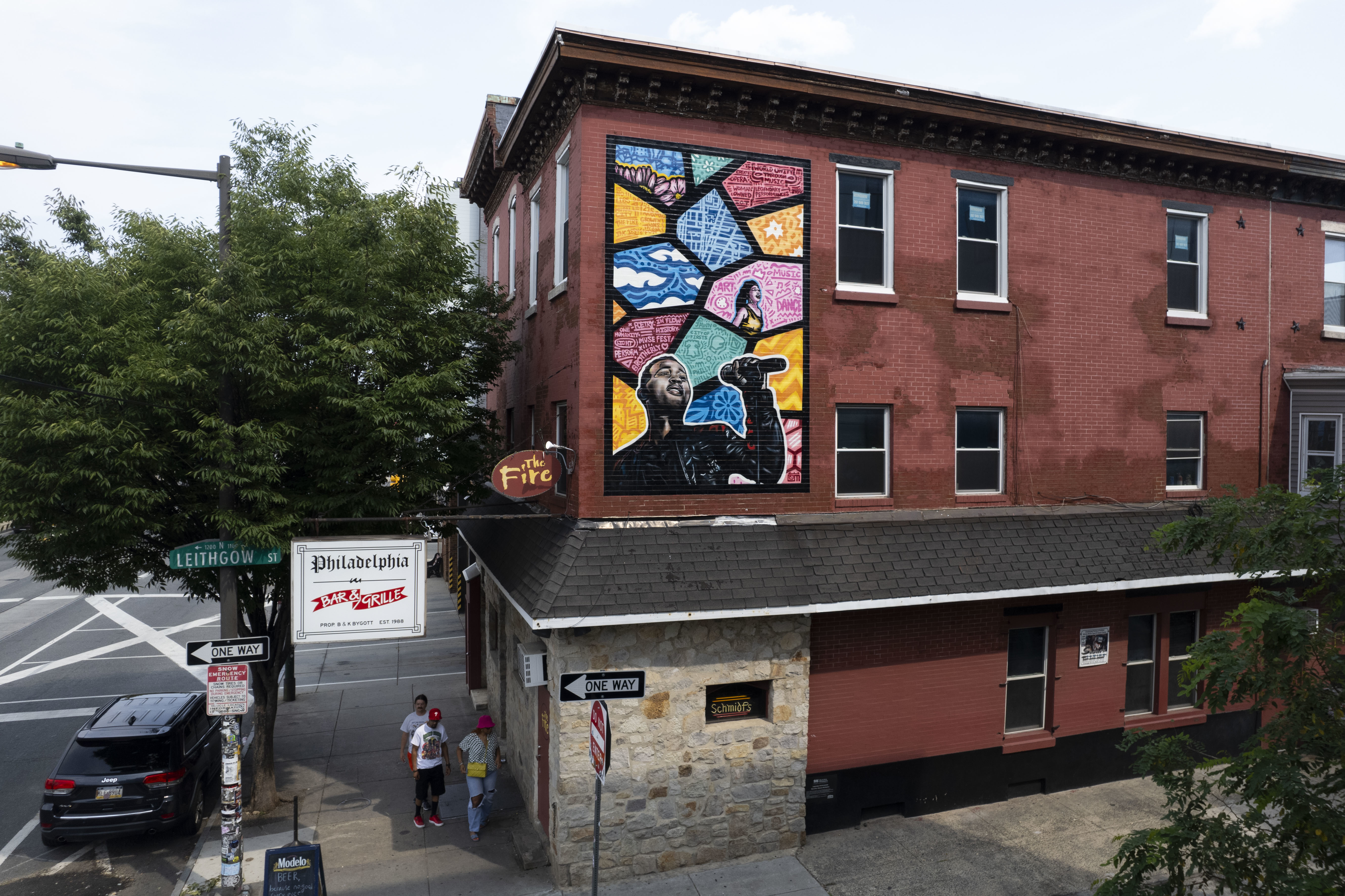
    The Fire, the Northern Liberties music venue that played host to an illustrious list of Philadelphia and national touring acts in the 2000s and 2010s, will shut its doors this week.

    Karen Lauria Saillant, the owner of the club at 412 W. Girard Ave. that is housed within the Philadelphia Bar & Grille, announced in a Facebook post that the music venue and the bar will close permanently on Wednesday.

    “I am not able to continue after the death of my beloved son, Christian Bygott, who was our manager & our backbone,” she wrote, citing the reason for closure.

    Bygott, who had been the club’s talent buyer and was also, like his mother, an opera singer, died in 2024 at age 41.

    Saillant, who has long touted the Fire as Philly’s only fully woman-owned music venue, purchased the Philadelphia Bar & Grille with her husband, Bernie Bygott, in 1988.

    In Jonathan Demme’s 1993 AIDS drama Philadelphia, starring Tom Hanks and Denzel Washington, the exterior of the bar is shown in an opening credit sequence while Bruce Springsteen’s “Streets of Philadelphia” plays.

    After her husband became severely incapacitated in 1999, Saillant founded the Fire. In the decades that followed, many rising stars played there, particularly in the years between 2003 and 2017 when Philly music manager and talent buyer Derek Dorsey ran the venue.

    Acts that played at the Fire and went on to big things, include John Legend, Rilo Kiley, My Chemical Romance, Amos Lee, Maroon 5, Kurt Vile, Alex G, Jason Mraz, Modern Baseball, Hop Along, Damien Rice, Santigold, Iron & Wine, Cold War Kids, and more.

    In 2022, Gerard Way of My Chemical Romance — who played the Fire in 2002 — gave the venue a shout-out in a show at the Wells Fargo Center.

    In 2023, a Mural Arts mural of Legend, painted by Philadelphia artist and clothing designer Alloyius Mcilwaine was added to the building. The mural also includes a depiction of Japanese singer Yasko Fujiì, who starred in several operas produced by Saillant’s International Opera Theater of Philadelphia company, which was headquartered upstairs at the Fire. The opera company has productions in the works through the end of the year, but its office will no longer be in the Fire building.

    On Wednesday, the final show at the Fire is scheduled to be Philly hip-hop and R&B artist Deek Westside, celebrating his new album, Everything Is Different. It’s billed as “a Fire celebration for a fire artist.”

    Saillant wasn’t immediately available for comment.

  • Saxophonist Immanuel Wilkins, an Upper Darby native, gets a MacArthur ‘genius grant’

    Saxophonist Immanuel Wilkins, an Upper Darby native, gets a MacArthur ‘genius grant’

    Upper Darby native and saxophonist Immanuel Wilkins is among the MacArthur Foundation’s 20 “genius grant” recipients for 2026, the foundation announced Tuesday.

    In more official terms, that makes Wilkins, 29, a MacArthur Fellow — the youngest member of his class. All fellows will receive $800,000 in unrestricted funding over the next five years, with the awards giving financial flexibility to recipients for their artistic and scholarly visions.

    Wilkins, in an interview Tuesday with the Associated Press, said he received word that he had been named a MacArthur Fellow while traveling from New York to Philadelphia.

    “I was just outside,” he said. “Which was nice because then I could yell as loud as I wanted to and celebrate.”

    In a video introducing the 2026 fellows, Wilkins described himself as a saxophonist and composer who anchors “original compositions in history and spirituality.” He added that as a performer, he was “looking to escape the gaze that might be on me and direct my creative energy inwards and upwards.”

    Widely considered a leading contemporary jazz musician, Wilkins was joined by jazz great Odean Pope for “RECESS,” an immersive musical experience staged at the Power Market, a former Peco electrical station in North Philadelphia. Pope, 87, and Wilkins met when Wilkins was a young student at the Clef Club of Jazz and Performing Arts, and Pope took him on as a mentee, The Inquirer reported.

    Presented by Ars Nova Workshop, “RECESS” featured the musicians playing on a stage modeled into a combination playground and bandstand, which Wilkins earlier told The Inquirer was a way to inspire “radical play.”

    “I started thinking about the landscape of Philadelphia as functioning as a kind of abstracted play space,” Wilkins said in a May interview.

    Wilkins’ debut album, Omega, was released in 2020, and connects the 1918 lynching of a pregnant Black woman, Mary Turner, to the 2014 fatal police shooting of a Black teenager, Michael Brown. The abstraction of music, Wilkins told the AP, allows him to represent these stories without “recreating the violence of them.”

    “Although it is some of the most painful material, the music itself feels so good,” Wilkins said in the MacArthur Foundation clip.

    Most recently, Wilkins released Immanuel Wilkins Quartet: Live at the Village Vanguard Vol. 1, a three-volume recording of performances at the iconic New York City jazz club.

    In addition to Wilkins, two other MacArthur Fellows this year have ties to the Philadelphia area. Both are Princeton University professors.

    Ellora Derenoncourt, an associate professor in the university’s economics department, told the AP that she would use the award to translate issues of economic justice for the broader public and interested policymakers. And Elizabeth Ellis, an associate history professor, hopes to support research projects focusing Native American history, the university said.

    This article contains information from the Associated Press.

  • Phoebe Bridgers’ phone-free ‘The Lost Tour’ stop at South Philly was the balm we needed for the Eagles loss

    Phoebe Bridgers’ phone-free ‘The Lost Tour’ stop at South Philly was the balm we needed for the Eagles loss

    On “Garden Song” from her 2020 album Punisher, Phoebe Bridgers sang: “When I grow up, I’m gonna look up from my phone and see my life.”

    When she sang that lyric on Monday in South Philly, she didn’t have to take her eyes away from her mobile device because, of course, she was on stage and didn’t have it with her.

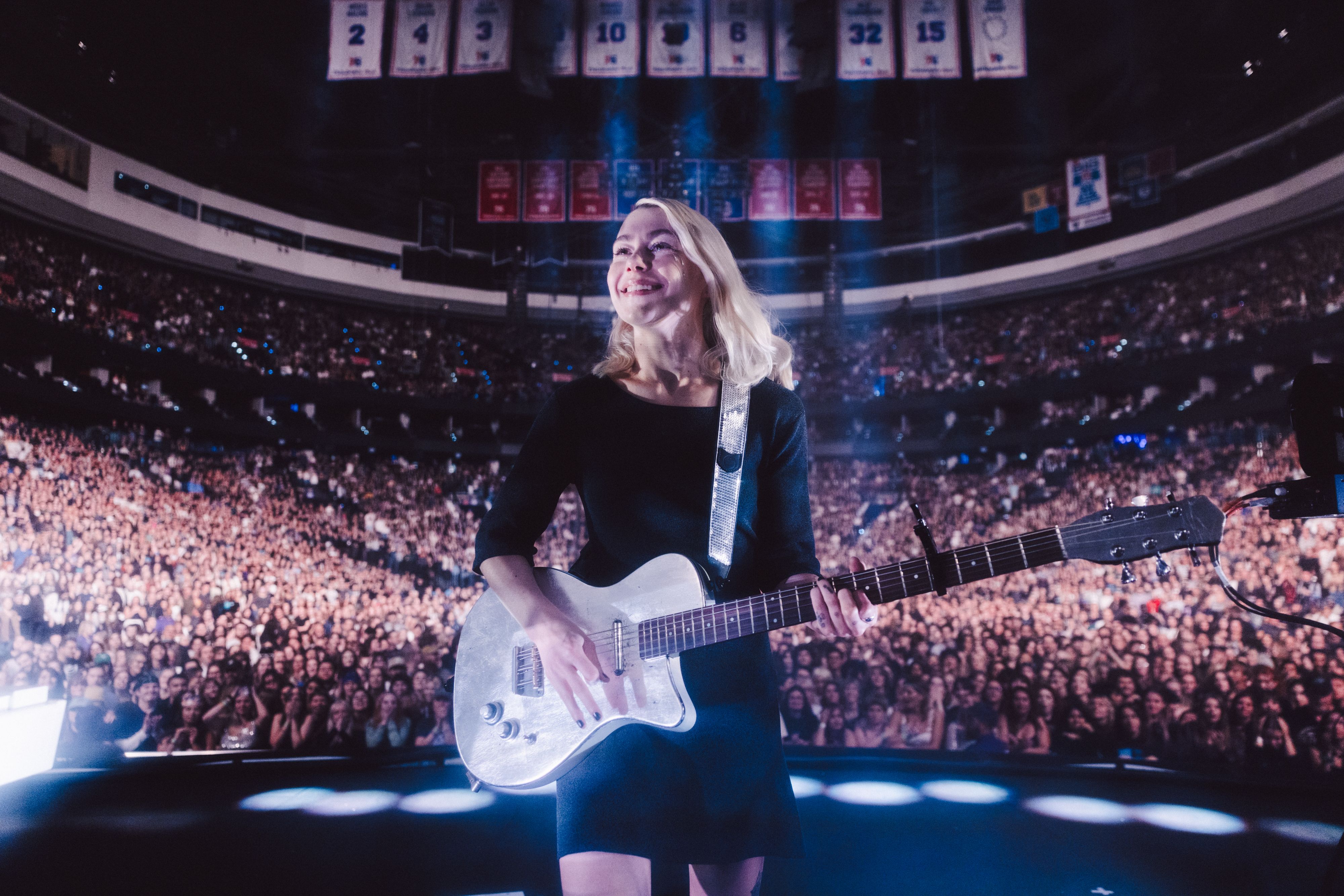
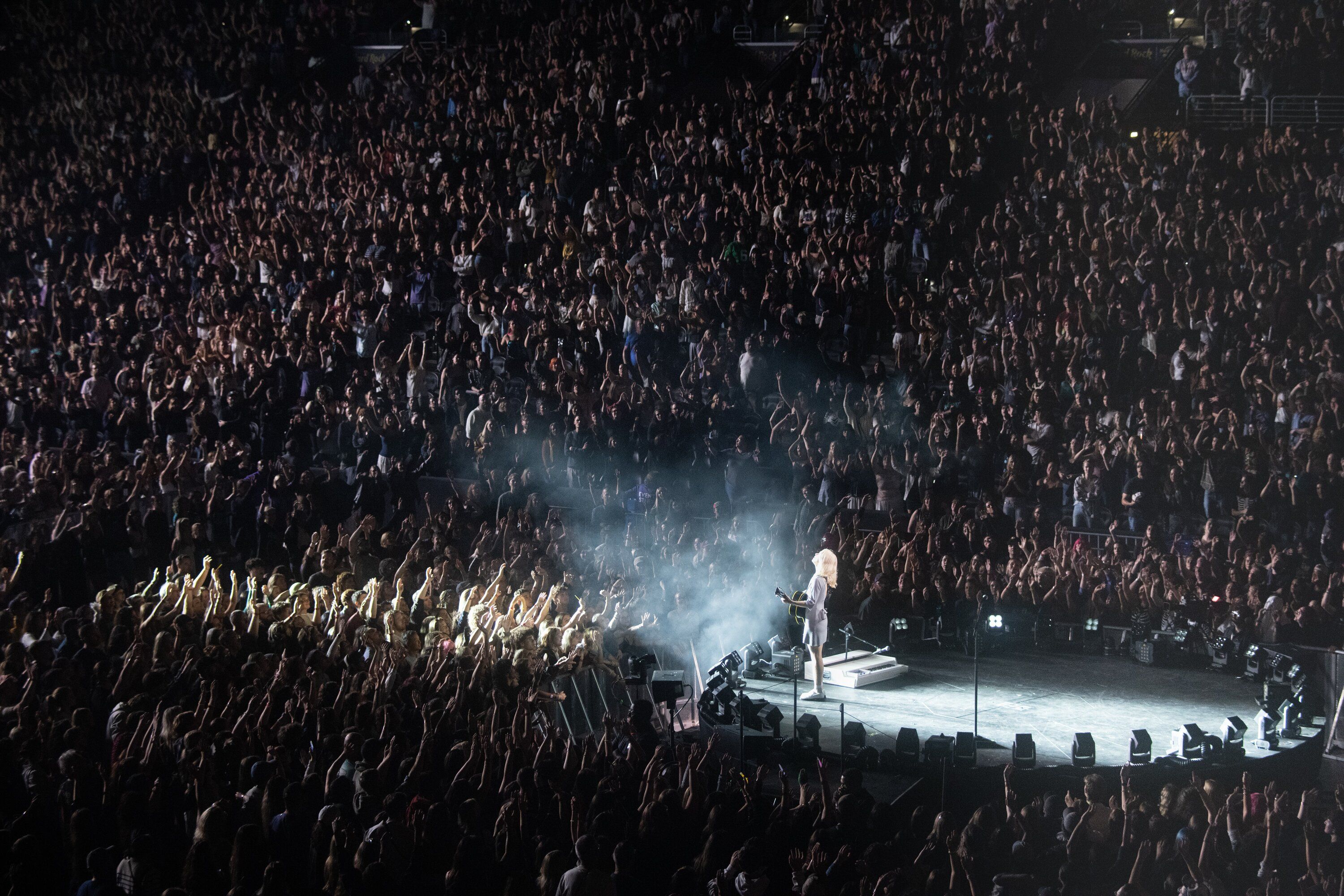
    But what was different about The Lost Tour — the concert trek that brought Bridgers to the Xfinity Mobile Arena along with her nine-piece band and her opening act, Havertown’s own Alex G — was that none of the other 20,000 or so people in the room had their cell phones with them either.

    Or rather, most had them in their possession, but the phones were locked away in Yondr pouches attached to lanyards around their necks, and thus inaccessible for the combined three-hour duration of Bridgers’ 26-song headlining set and Alex G’s 19-tune opener.

    So: No photos, no videos, and no Instagram until after the show was over. What a concept: Does an actual shared experience even happen if it can’t be immediately shared virtually?

    And perhaps more importantly, how are you supposed to know the Eagles score if you can’t constantly check your phone? Though that turned out to be a blessing, considering the Birds’ abysmal Monday Night Football performance.

    Bridgers’ performance, on the contrary — as well as the impressive and imaginative staging of the singer-songwriter’s inaugural arena tour — was exemplary.

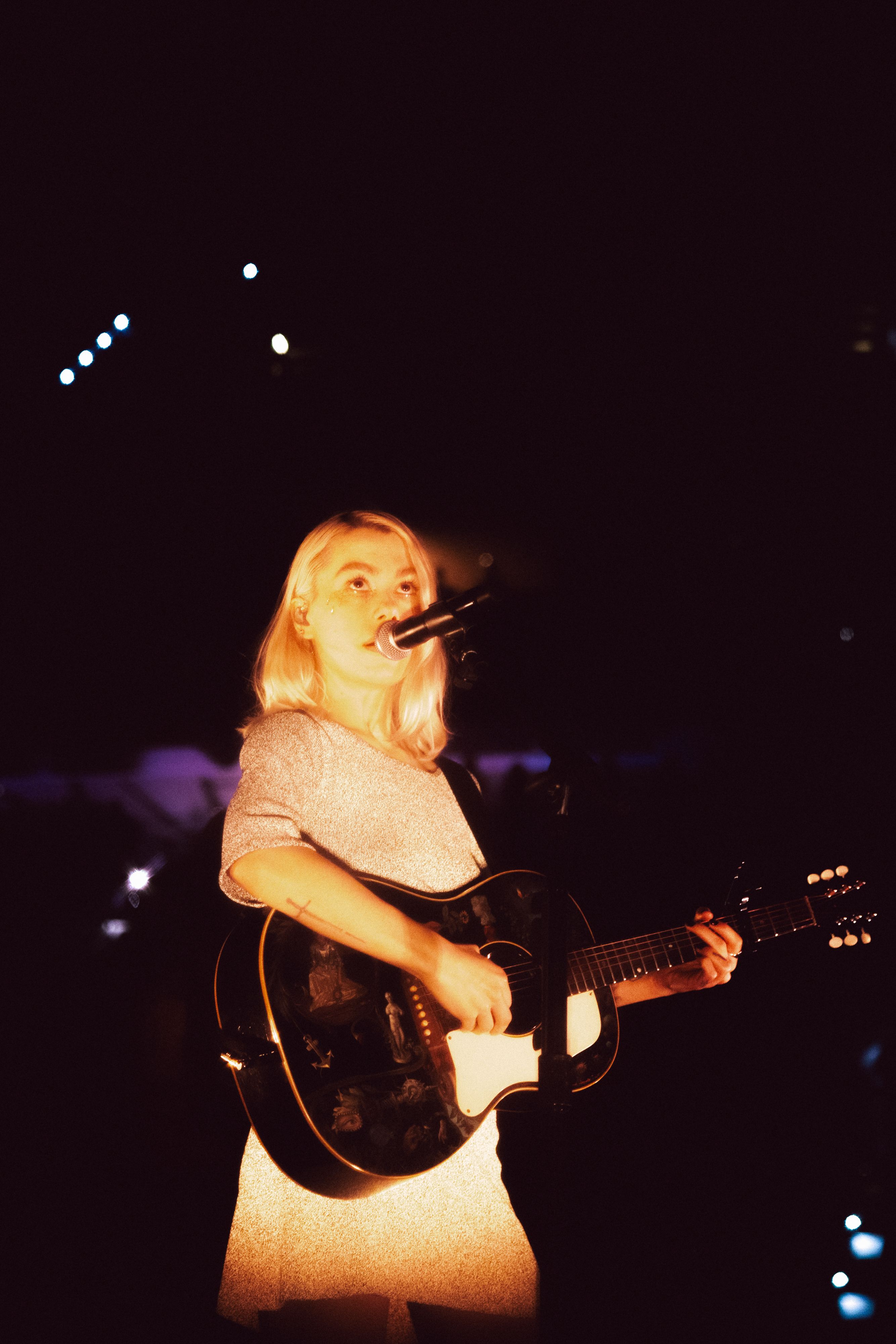
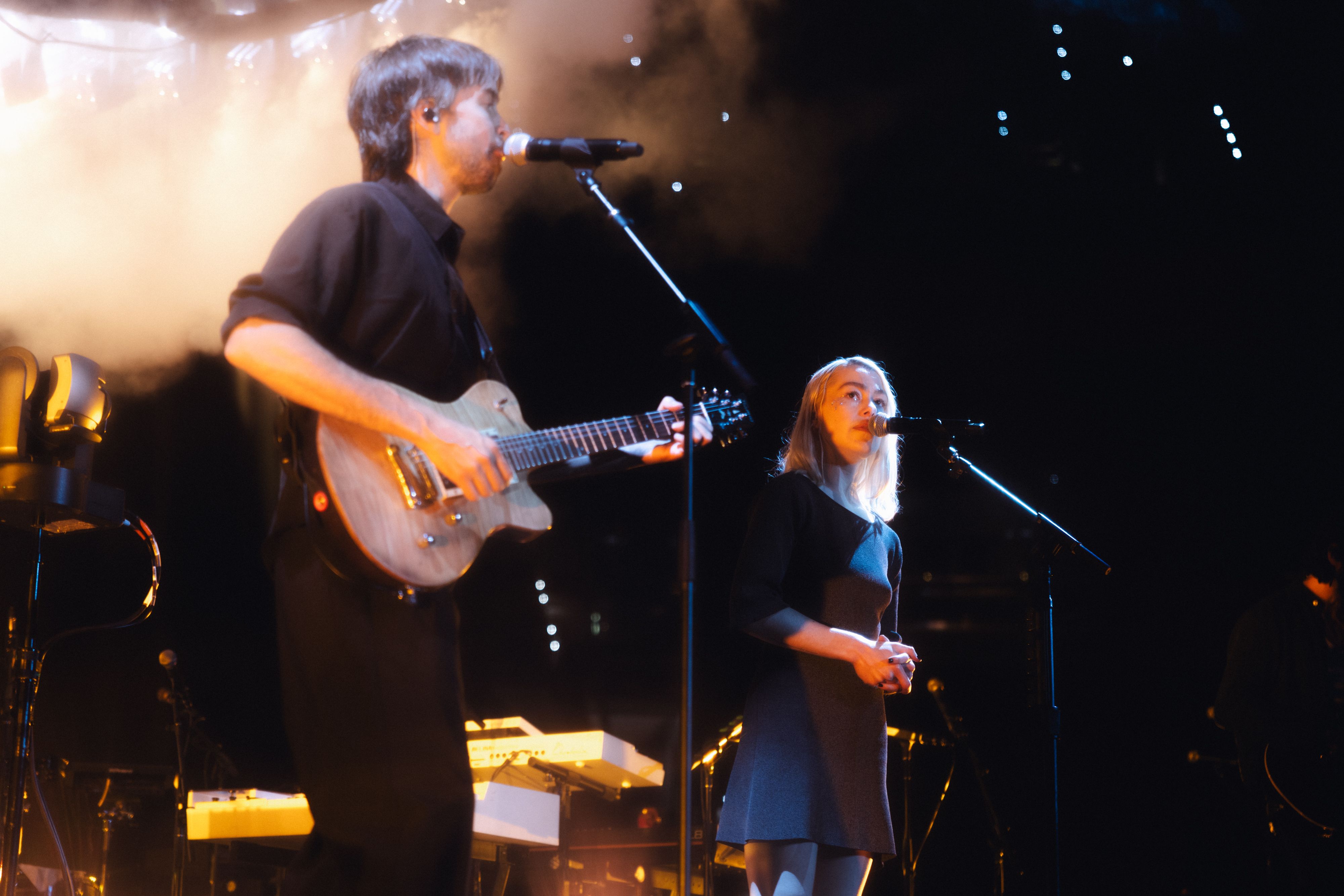
    Phoebe Bridgers at Xfinity Mobile Arena in South Philly during The Lost Tour on Monday night.Wes Ellis / Courtest of the Oriel Co.

    The show drew from her grief-stricken, joyous, emotionally complex, darkly funny, and musically varied new album, Lost Weekend, as well as Punisher and her 2017 debut, Stranger in the Alps.

    It also looked really cool. This summer, in the run-up to the release of Lost Weekend, Bridgers stoked the ardor of her fan base first with a series of no phones pop-up shows around the country, and then Lost Weekend listening parties staged in planetariums.

    The Lost Tour recreates that sparkly star-filled aesthetic in an arena setting. Bridgers began with the main stage covered by a dome that looked like a giant cloche — one of those plate covers that a server lifts to reveal a dinner plate at a fancy restaurant.

    The first song “Outside,” also the opening track on Lost Weekend, was played by musicians not yet visible under the dome. In its first verse, Bridgers’ heavily processed voice cracked a macabre joke about the funeral of her father, who died in 2022: “Crying in a suit and tie, but you should see the other guy / One more time for old time’s sake, I’ll watch him get carried away.”

    Then the dome slowly lifted to reveal the dressed-in-black band. The ensemble, which excelled at folk-pop but also moved into more electronic and noisy textures, included a four-person string section, plus multi-instrumentalist Melina Duterte, who performs under the stage name Jay Som.

    As it hung overhead, the dome then tilted back to reveal outer space imagery — the surface of the moon, or what looked like Jupiter — in its circular core while sky-high back and white visions of Bridgers were projected on curtains on either side of the stage.

    The action began with Bridgers’ “Motion Sickness,” about an abusive relationship (“I hate you for what you did, and I miss you like a little kid”) and kicked into gear with the new album’s earworm “Lost Boys,” about men behaving badly, again.

    Alex G with Phoebe Bridgers at Xfinity Mobile Arena in South Philly during The Lost Tour on Monday night.Wes Ellis / Courtesy of The Oriel Co.

    Bridgers rose to popularity as an unstinting and artful chronicler of her interior life not only with her solo work, but also with Better Oblivion Community Center with Conor Oberst of Bright Eyes and especially boygenius, with bandmates Lucy Dacus and Julien Baker.

    The trio broke through to mainstream popularity in 2023, when it sold out the Mann Center in Fairmount Park. That fan base of teenage and older women singing along to every word was in force on Monday, when the merch line was even longer than the queue for the men’s room at Willie Nelson and Neil Young’s show at the Mann last week.

    Boygenius reunited at Bridgers’ shows in Brooklyn this month, but her bandmates didn’t make the trip down the Jersey Turnpike to Dacus’ former hometown. Not to worry, though: Bridgers had a special guest at the ready in her opening act.

    In her own set, she brought out “my friend Alex G.”

    The singer whose last name is Giannascoli cowrote two songs and co-produced 11 on Lost Weekend. It’s no surprise he and Bridgers are simpatico, as his music bears the influence of Elliott Smith, one of Bridgers’ songwriting heroes.

    Many of Bridgers’ songs — catchy as they are, and sung in a sweet upper register — can be heavy going, even when she makes not really light-hearted jokes like in “Governor’s Waltz,” about “hiding in the bathroom, like Shelley Duvall” in The Shining.

    But her music also rocks out with ecstatic release. As it did on Monday with “Bobby,” a euphoric tune about her partner, comedian Bo Burnham, who cowrote it.

    She then brought out Alex G and his band, including violinist Molly Germer, for a duet on his song called “Bobby,” a country lament from 2017.

    “I’ve been wanting to do that for a decade,” Bridgers said.

    Much of the most memorable action happened on the second, satellite stage. Bridgers played a six-song set there, at some points solo and others accompanied by her string players.

    Alex G with Phoebe Bridgers at Xfinity Mobile Arena in South Philly during The Lost Tour on Monday night.Matt Grubb / Courtesy of the Oriel Co.

    She sang the devastating “Funeral,” and thanked fans for putting phones away, as part of a trend that’s also seen artists like Jill Scott go the Yondr route to create a more present, in the moment experience.

    Some fans in other cities had cut the pouches open with knives, Bridgers said, but joked “they have to live with who they are.” Creating a phone-free experience, she said, “is actually no more thought out than it’s really nice.” Which it was.

    Before “Still Standing,” a song about domestic violence, Bridgers, 32, talked about her complicated relationship with her father, and how satisfying it’s been to talk to fans and friends who’ve had similar experiences.

    “I used to think that artists had traumatic lives,” she said. “Now I realize it’s just that artists sing about it. Really, it’s everyone. Everybody deserves their own documentary.”

    Alex G played his entire set from the second stage, which was lit by light saberlike sticks that made it appear that he and his band were performing from inside of a light bulb.

    The prolific musician who has moved into film scoring, most recently stretching out as a composer with his work on Jane Schoenbrun’s horror rom-com Teenage Sex and Death at Camp Miasma, was in fine form.

    His economical set courted Bridgers’ fans early on with melodic nuggets like “Gretel” and the grabby “Runner” before moving into more gnarly territory.

    Coming on stage as a recording of “Here Come the Sixers” played, he let his subtly appealing music do the talking, but also charmed with awkward, blurted out stage patter.

    “It’s good to be back in the greatest city in the world,” he said, adding “I can’t think of anything else to say. Is everybody excited about LeBron James?”

    And after thanking everyone involved in the show, from Bridgers to his driver, he ended with the words that all Philadelphians understand but which did no good on this particular evening: “Go Birds!”