Category: Movies

  • In ‘Dear Lara,’ violinist Lara St. John confronts rampant sex abuse in classical music in Philadelphia and beyond

    In ‘Dear Lara,’ violinist Lara St. John confronts rampant sex abuse in classical music in Philadelphia and beyond

    When famed violinist Lara St. John thought about the soundtrack for her new documentary, Dear Lara, she already had a classic composition in mind: Franz Schubert’s Death and the Maiden.

    It’s a story about death coming for a young girl who begs him to stay away, but he tells her there’s nothing to fear, his touch won’t hurt. The perilous interaction has long fascinated composers, musicians, and artists who frequently sexualized the relationship in the retelling over some 200 years.

    For St. John, the parallels felt strikingly relevant to her film as she completed interview after interview with survivors of sexual assault, most of whom were raped and abused as children by their classical music teachers in conservatories around the world.

    It’s her story too.

    In 2019, St. John came forward publicly with her experience from her time studying at Philadelphia’s Curtis Institute of Music, alleging in a Philadelphia Inquirer investigation that her violin teacher, Jascha Brodsky, assaulted and raped her.

    At the time, Brodsky was 79 years old and she was 14.

    Brodsky died in 1997 before accusations of his misconduct from St. John and other students came to light. His family said the alleged behavior was “completely inconsistent with the man we knew and loved.”

    After speaking out, the Canadian violinist received a deluge of letters and calls from fellow survivors in the classical music world, primarily from women who were abused as girls by older, powerful men considered too talented to be stopped.

    Hundreds of “Maidens” came forward to share their harrowing and haunting encounters with “Death.”
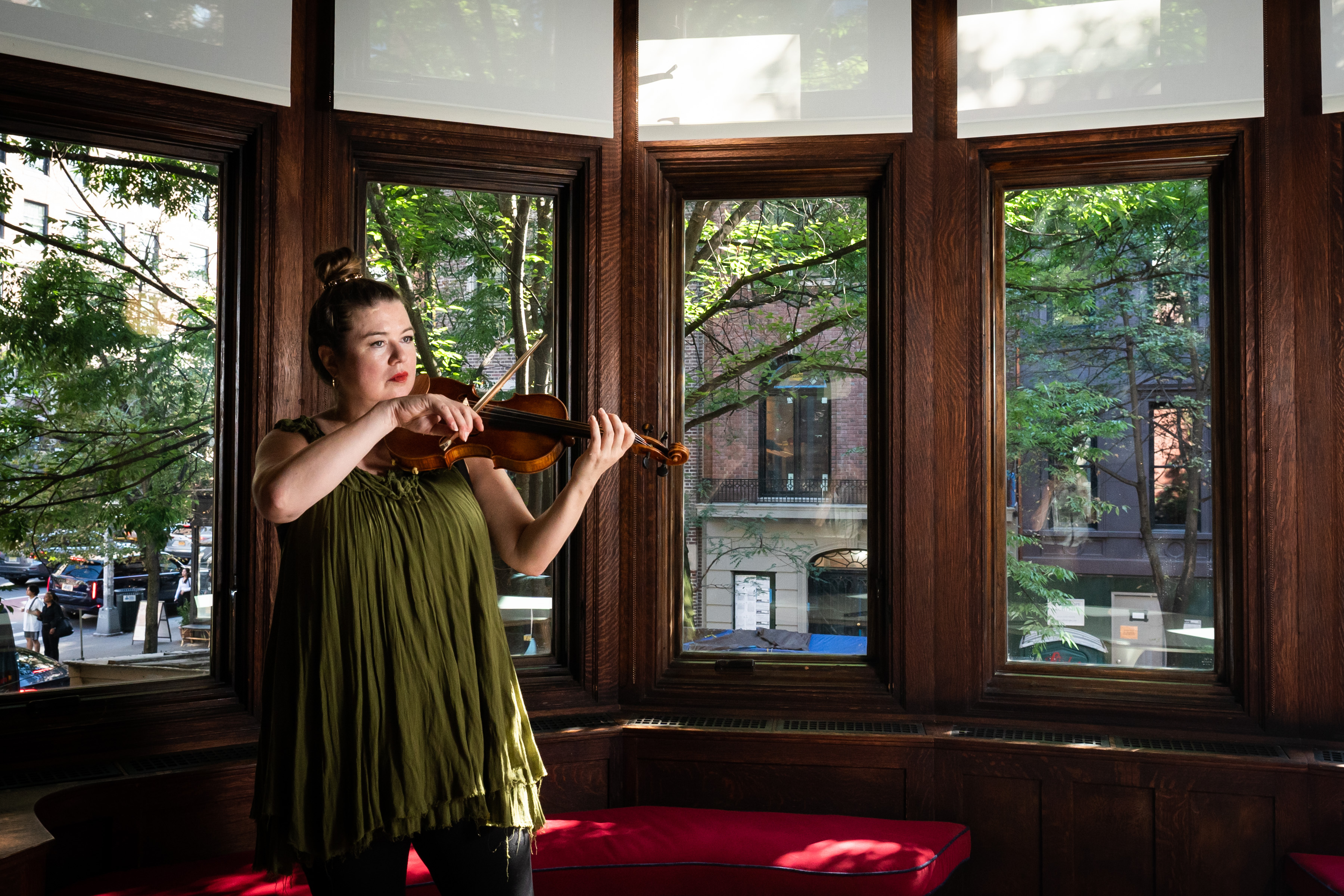
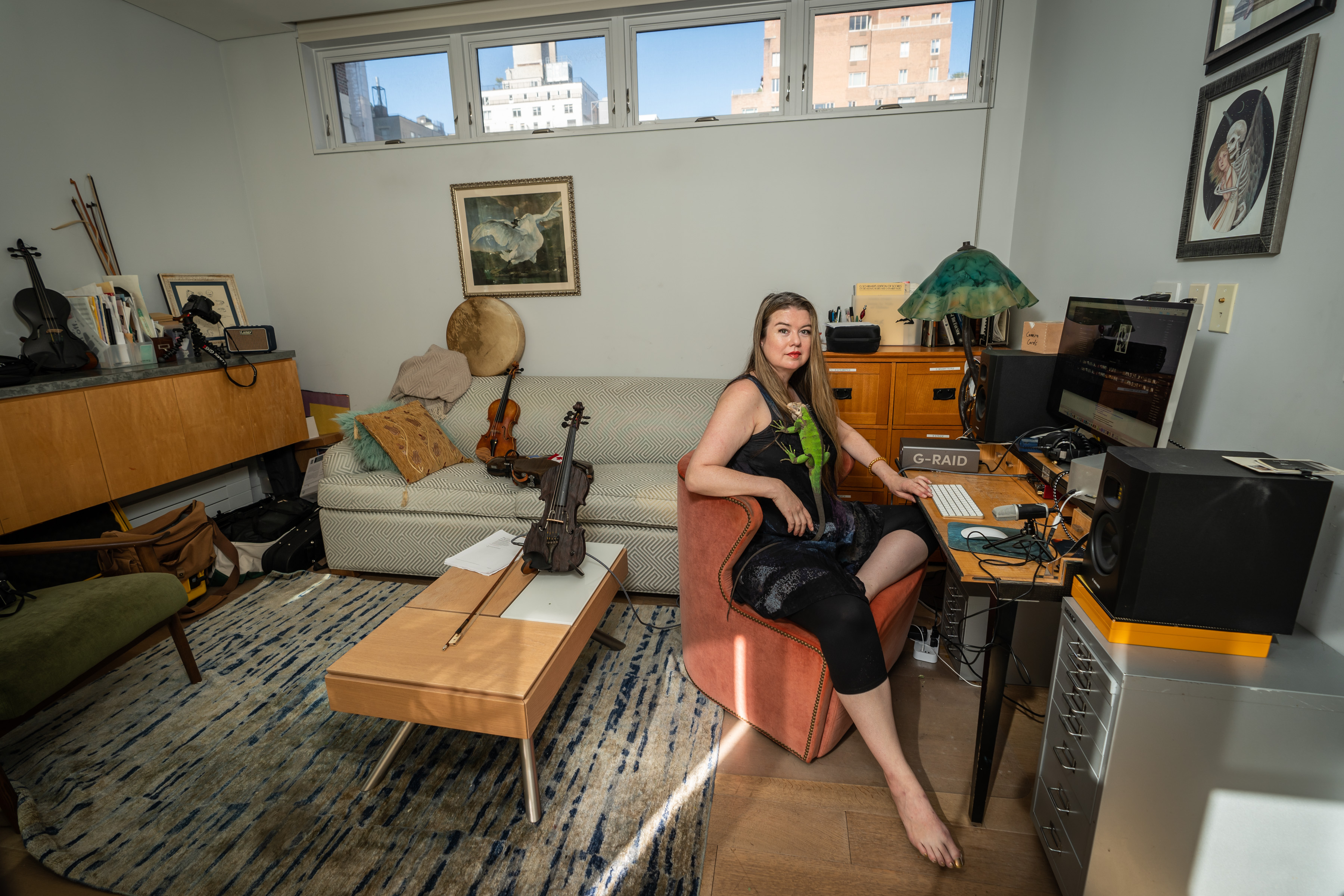
    Lara St. John at her home in New York City on Sept. 10, 2024.Jessica Griffin / Staff Photographer

    Their stories followed a familiar pattern, painting a horrific picture of systemic abuse and institutional complicity. Bright and skilled young girls enrolled in prestigious, competitive institutions to learn from world-renowned maestros treated with godlike reverence. In private lessons, those men forced themselves onto their students repeatedly, brazenly, and without consequence. They threatened their victims with expulsion or other punishments to keep the children quiet. If a girl did come forward to report her assault, school leadership rarely took disciplinary action against the abuser.

    The men continued teaching, founded music programs of their own, racked up awards, and secured illustrious titles. The girls faced ridicule and retaliation, struggled to recover as their lives were derailed, and some stopped playing music entirely. Many attempted suicide. A few died that way.

    Rewind, replay.

    “It’s a small world, and I knew I wasn’t alone in this, obviously, but I didn’t realize the breadth of it — how global it was and just how endemic it was,” said St. John, 55, who now lives in Manhattan. “Once they knew about me, everybody had their own story that they wanted to share.”

    St. John felt a profound responsibility to take action.

    Three months after she went public with her own story, she picked up two cameras and began interviewing fellow survivors, starting a seven-year-long filmmaking process.

    Dear Lara, which premiered earlier this year at the Santa Barbara Film Festival, features accounts of eight survivors of sexual abuse at the hands of teachers, concertmasters, and once-renowned classical music stars: Pianist Lusiana Lukman, violinist Lisamarie Vana, violinist Mascha van Sloten, double bassist Heather Bird, violinist Zeneba Bowers, oboist Katherine Needleman, opera singer Samuel Shultz, and the late cellist Robie Brown (as told through her widower, Frank Powdermaker).

    Their stories are intertwined with archival footage and images as well as interviews with legal experts and journalists (including The Inquirer’s classical music critic, Peter Dobrin) who investigated assaults at various schools and orchestras. The film will have its Pennsylvania premiere on Monday, Oct. 5, with two screenings at the Free Library of Philadelphia on the Parkway.

    It arrives amid renewed conversations about women’s safety on school campuses and criticism of educational institutions who shield perpetrators of sexual assault from accountability following the alleged rape of a Cornell University student by members of a fraternity house.
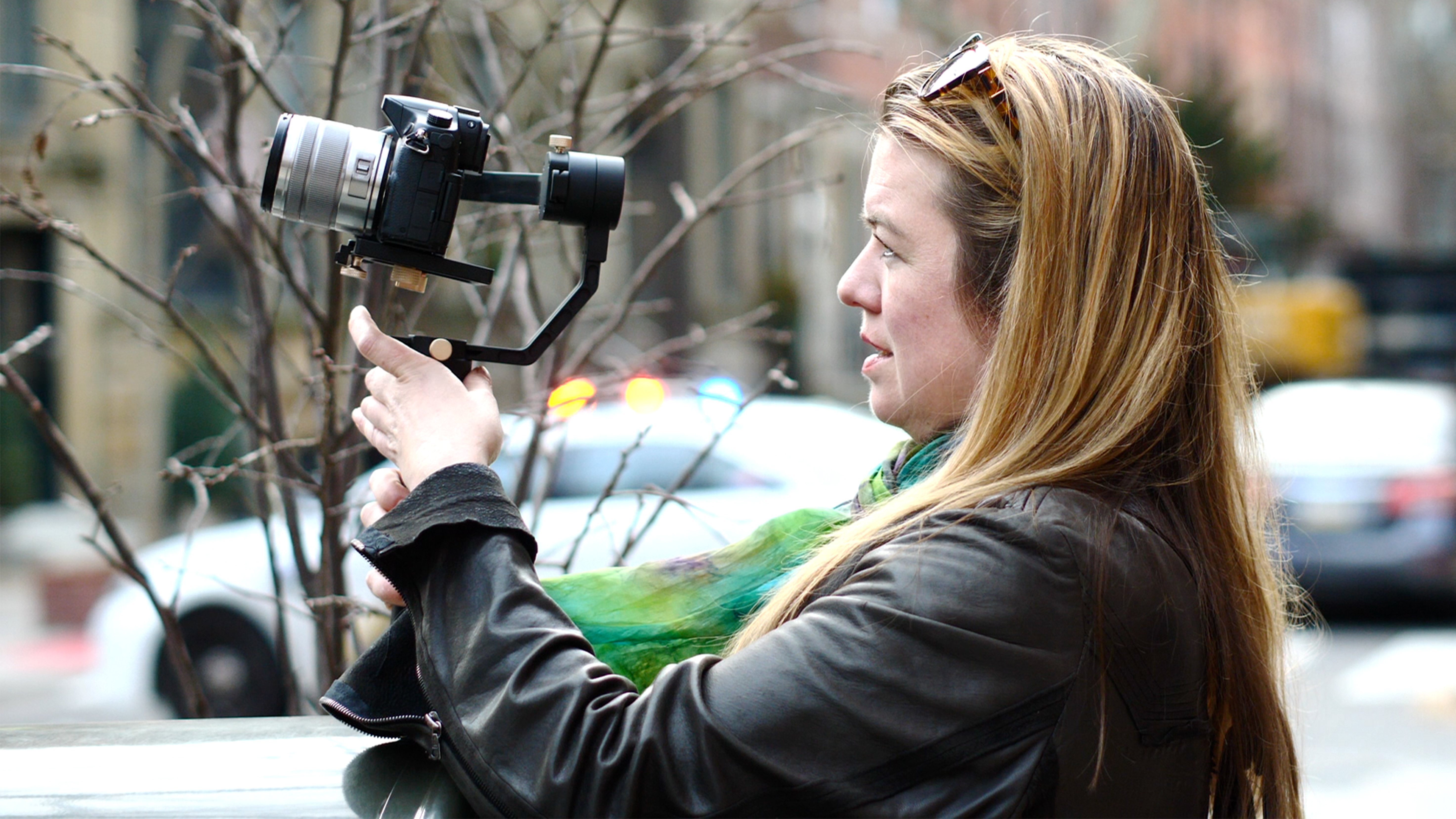
    Lara St. John shooting in Philadelphia for her 2026 documentary “Dear Lara.”Courtesy of Lara St. John

    “I certainly never set out to be a filmmaker … It was an ambitious undertaking. I made a lot of rookie mistakes [at first],” said St. John, whose previous film experience consisted of editing her own music videos. “I’m really glad that I set out on my own as early as October 2019 because various situations have changed, and I wouldn’t have gotten some of those stories if I had waited until I had a team together.”

    The heart-wrenching film follows St. John on her interview trips to Toronto, Amsterdam, Winston-Salem, N.C., and Philadelphia. In some Zoom interviews, St. John’s pet iguana, Cain, made a cameo. (He died in 2021 but during our interview, St. John introduced her new baby iguana, Octavius.)

    Shooting in Philadelphia was especially difficult. While standing in Rittenhouse Square, across the street from Curtis, she felt physically sick as she recounted attempting suicide during her third year. In the aftermath of her allegations, Curtis commissioned a report from law firm Morgan Lewis that concluded St. John was credible.

    The school eventually apologized in a statement acknowledging that leadership “failed to provide her with a safe learning environment, failed to carefully investigate her claims, failed to communicate our grave disappointment in how she was treated by Curtis, and repeatedly failed to communicate the steps that were taken to prevent such abuse from occurring in the future.”

    Curtis has since implemented policy changes, like disallowing private lessons at teachers’ homes, hired a Title IX coordinator, and established a trauma fund for free counseling for victims of sexual abuse within the Curtis community. In a 2024 statement to The Inquirer, the school said these efforts, among other changes, “have made Curtis an incredibly safe and nurturing place.”
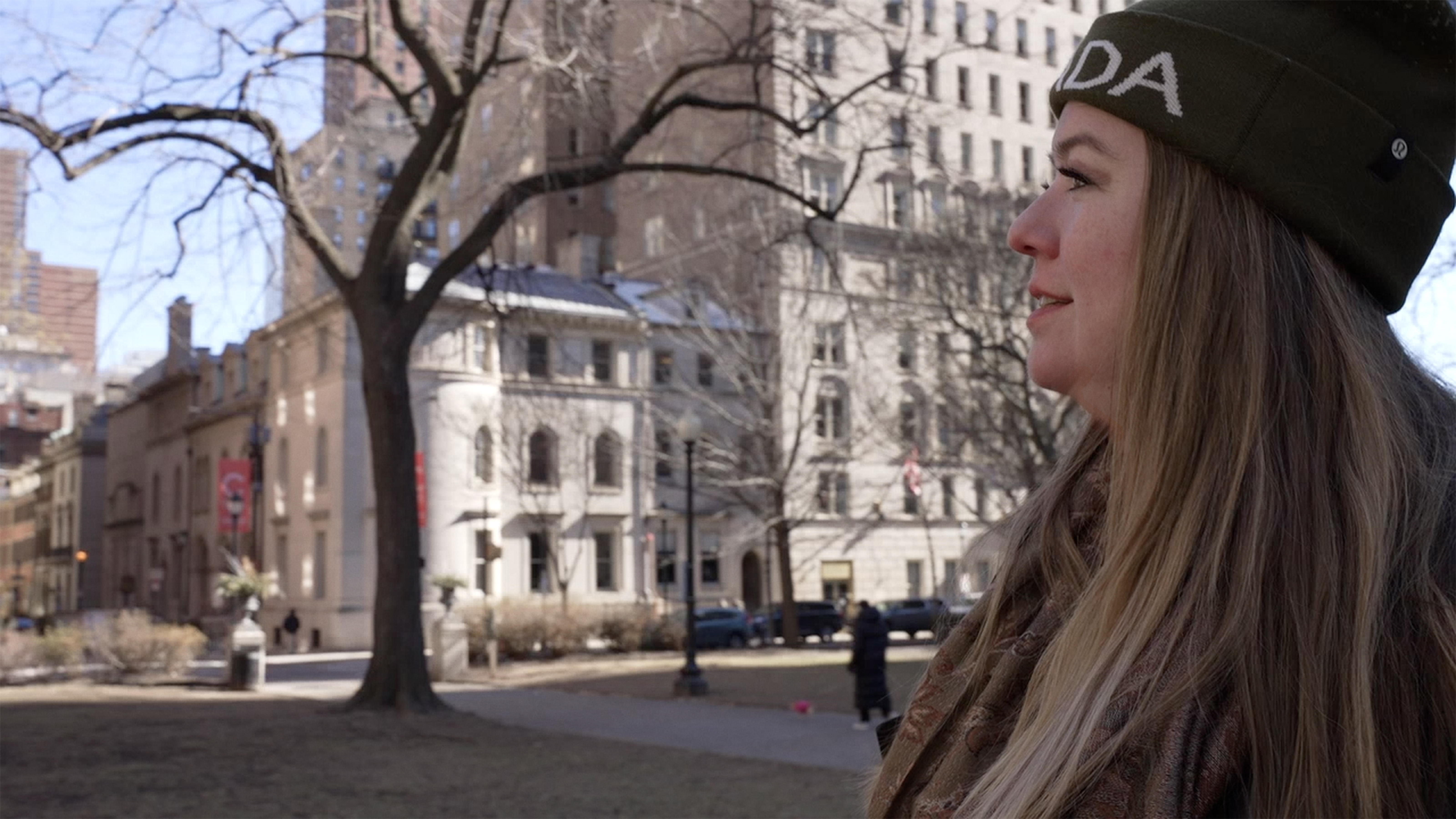
    A still from the documentary “Dear Lara,” picturing violinist Lara St. John in Rittenhouse Square discussing the abuse she experienced as a teenage student at Curtis Institute of Music.Courtesy of Lara St. John

    Since the release of Dear Lara, another school was pressured to conduct an investigation.

    In the documentary, Lukman, a pianist who left home in Indonesia at 14 to pursue music, detailed allegations of sexual assault by her teacher Boris Berlin at the Royal Conservatory of Music in Toronto in the 1980s. After the documentary screened in Canada, Lukman created a petition demanding an independent investigation into sexual abuse at the institution that earned thousands of signatures; the conservatory has since hired a law firm to investigate. Berlin died in 2001.

    “I felt devalued and betrayed, because if anything is worse than being molested, is coming forward about these things and being betrayed by the people that supposedly protect children,” Lukman says in Dear Lara.

    Lukman and St. John are continuing to pressure the school to make the report public when it’s completed. Their efforts are part of St. John’s relentless advocacy work beyond the documentary to support survivors and denounce music schools worldwide that have fostered what she calls a culture of silence and abuse.

    “We’re trying to create a movement, really, to get rid of this ridiculous — well, honestly, it’s overused now, but — patriarchy in classical music. I believe many, many women have just been abused out of the field, and some men, obviously, as children as well,” said St. John.

    The violinist is now deeply familiar with Pennsylvania politics as she’s traveled to Harrisburg three times to advocate for amending the statute of limitations for childhood abuse. In Dear Lara, St. John appears with ChildUSA founder and University of Pennsylvania professor Marci Hamilton at Philadelphia’s City Hall to garner support for House Bill 462, which would provide a two-year window for survivors to file lawsuits that otherwise could not be prosecuted because the statute of limitations has expired. While the bill passed in the House in 2025, it has stalled in the Senate.

    A still from “Dear Lara” picturing Lara St. John at Philadelphia’s City Hall for a rally with Child USA to advocate for Pennsylvania to change its laws regarding the statute of limitations for childhood sexual abuse.Courtesy of Lara St. John

    “If it’s murder, there’s no statute of limitations. … Child sex abuse is, in many ways, like the murder scenario because the victim is so disempowered as compared to the perpetrator, and the average age to come forward is in the early 50s,” Hamilton explains in the documentary. “Twenty years ago, 15 years ago, there were a lot of states where you had two years from the date of the act. So if you were six years old, you had two years to get a lawyer and press charges.”

    St. John hopes that the film will encourage audiences to take action, too.

    Dear Lara is a groundbreaking and searing examination of the classical music industry, which rarely is represented on screen.

    (The Emmy-nominated Tár, which cast Cate Blanchett as a fictional, predatory lesbian conductor, is one recent and prominent example. St. John thought it was “ridiculous” and “idiotic” that the perpetrator was female. “There are thousands of men Társ out there, and they made this a woman, like come on,” she said.)

    After serving as Dear Lara’s director, writer, cinematographer, and participant, St. John also contributed original music. In addition to using her arrangements of Death and the Maiden, she composed a theme song beginning with A and E strings as a nod to how every child first learns the violin.

    Some of the featured musicians on the soundtrack include fellow survivors like Needleman, the principal oboist at the Baltimore Symphony Orchestra who discussed her experience of sexual harassment in the film, and Cara Kizer, a French horn player who was allegedly raped by two of her New York Philharmonic colleagues.

    St. John plans to release a Dear Lara soundtrack with their recordings, including those she had to cut from the film, like an aria from Shultz, a participant who described being raped as a graduate student in Texas.

    Eventually, St. John wants to create a foundation to support survivors pursuing justice against their abusers and the institutions who failed them.

    “That will be my life’s work,” she said.

    ‘Dear Lara’ will screen twice on Oct. 5 at the Free Library of Philadelphia’s Parkway Central Library, 1901 Vine St., Phila., 833-825-5357 or libwww.freelibrary.org.
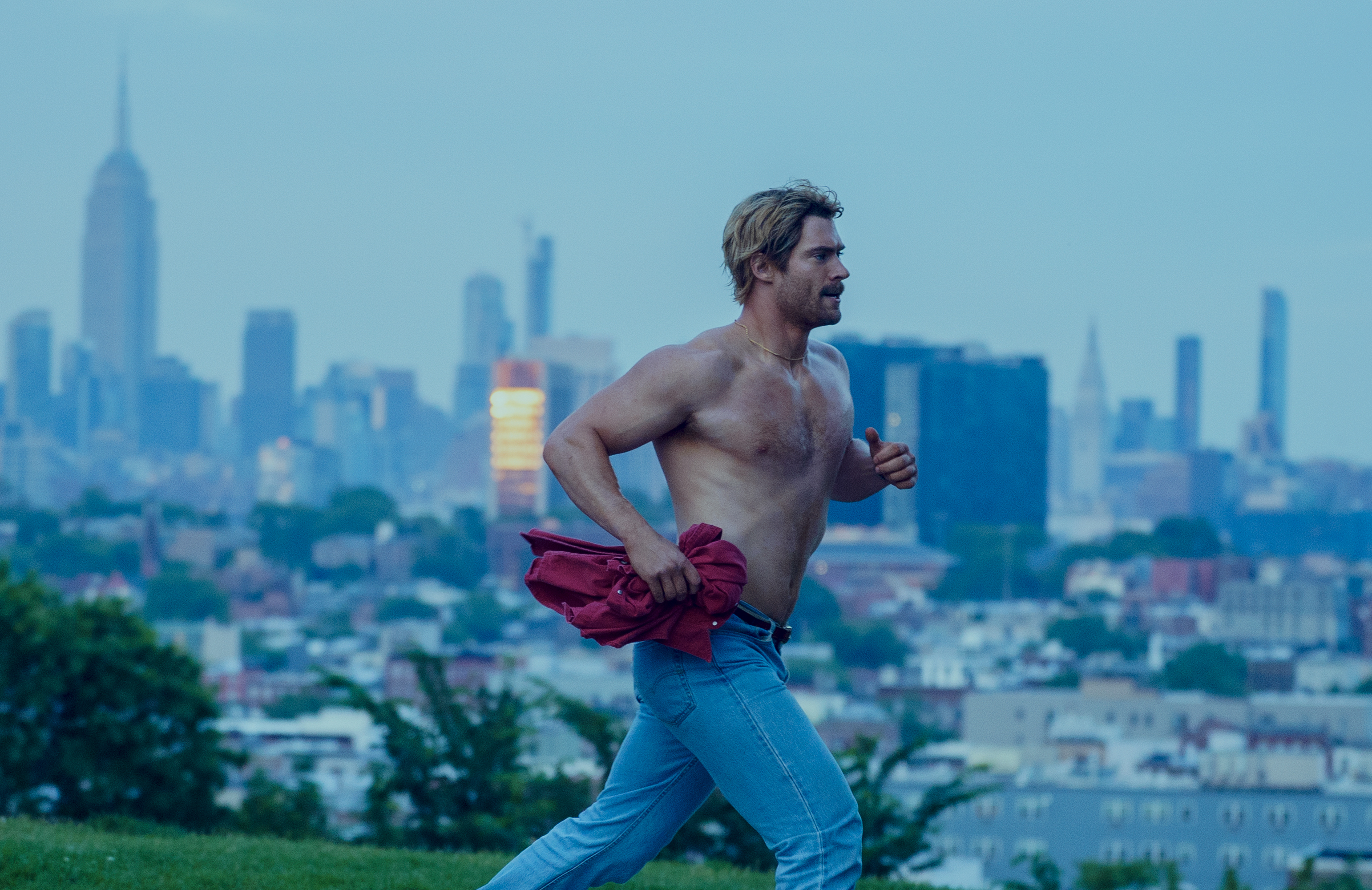
  • Eagles fan David Corenswet is playing a Giants star in upcoming ‘Mr. Irrelevant’

    Eagles fan David Corenswet is playing a Giants star in upcoming ‘Mr. Irrelevant’

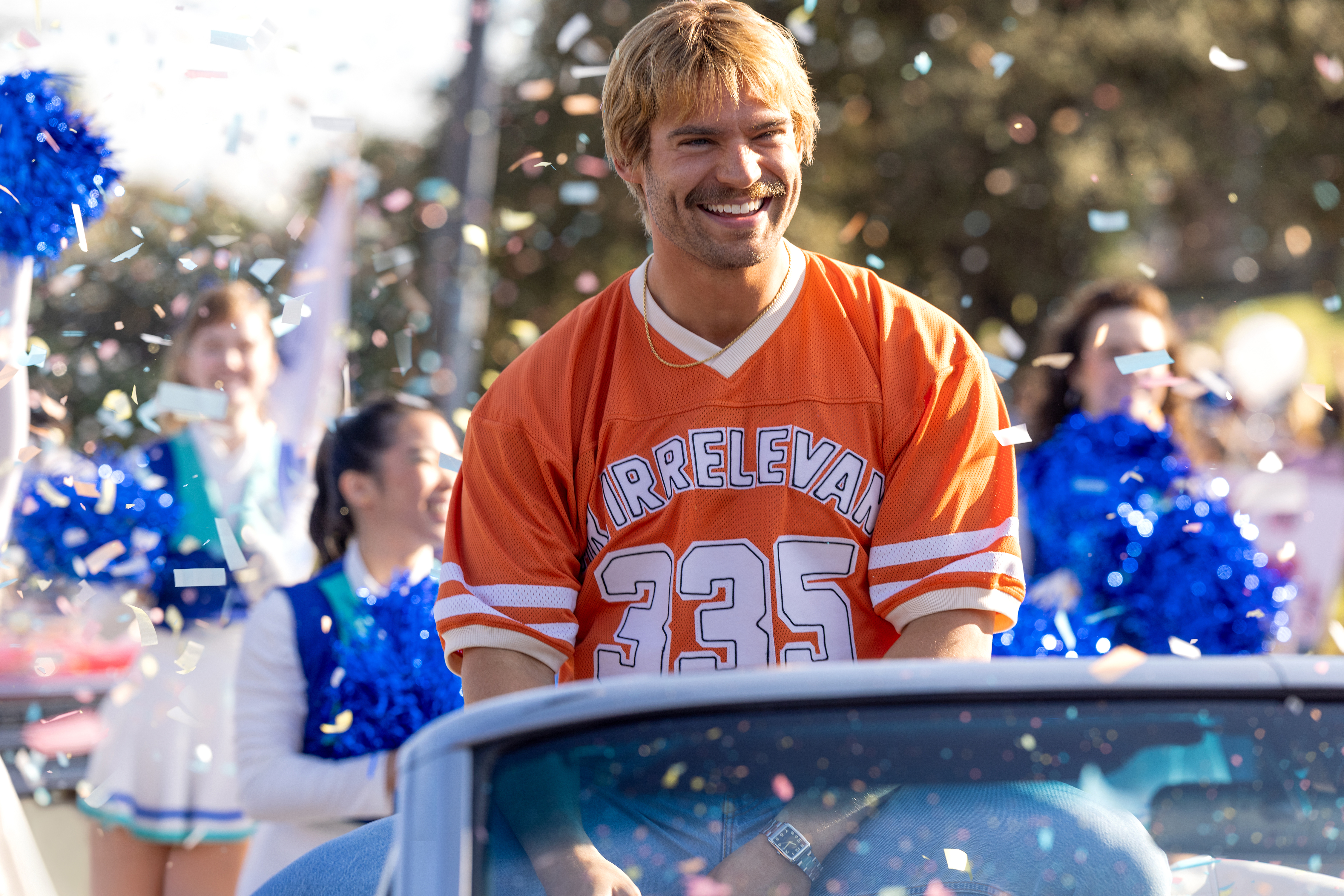
    Superman star David Corenswet grew up in Philadelphia loving the Eagles, but that didn’t stop him from saying yes to donning a Giants jersey for the upcoming biopic, Mr. Irrelevant.

    The 33-year-old actor — who got his start on local stages as a kid — became a breakout movie star last year when he played Superman in James Gunn’s revamp of the legendary superhero films. While the sequel, Man of Tomorrow, releases in summer 2027, Corenswet’s next project is based on a true story that follows underdog football player John Tuggle.

    Mr. Irrelevant, named because Tuggle was the last pick of 1983 NFL draft, was written by Reacher creator/producer Nick Santora and will be out in theaters Dec. 25. In a promotional video that dropped Wednesday, Corenswet admitted that he initially had doubts about the role because of his Eagles allegiance, but he soon realized the story was bigger than football fandom — and Tuggle had a connection to Philadelphia of his own, too.

    David Corenswet as John Tuggle in “Mr. Irrelevant” from Paramount Pictures.Clay Enos

    “As a kid from Philadelphia, I thought it would be a hard sell to get me to wear a Giants jersey on the big screen,” said Corenswet. “When I learned that John Tuggle scored his only professional touchdown against Philadelphia in Philadelphia, I thought, ‘This would really be a terrible betrayal,’ you know? What would Bradley Cooper think of me?”

    Cooper, of course, is another diehard celebrity Eagles fan who introduced the Birds at their victorious Super Bowl LIX in New Orleans in 2025. The Silver Linings Playbook actor and Maestro director also wound up making a cameo in Superman as Corenswet’s extraterrestrial father, Jor-El.

    “But when I saw the footage of that play, when I saw John dive into that kelly green end zone, the fans cheered,” Corenswet continued. “The same fans that booed Santa Claus cheered for a New York Giant scoring six on their turf. Why? Because for that moment, John Tuggle wasn’t a New York Giant, he was Mr. Irrelevant. He was the guy who was never supposed to make it.”

    Tuggle was a rookie from California who played just one season with the Giants as a running back before he was diagnosed with cancer. After two years of extensive treatment, he died at age 25 in 1986. His story was explored in the 2018 ESPN 30 for 30 short film, The Irrelevant Giant.

    ‘Mr. Irrelevant’ will be released in theaters Dec. 25.

  • Dolly Parton’s many contradictions hold lessons for Americans of all stripes

    Dolly Parton’s many contradictions hold lessons for Americans of all stripes

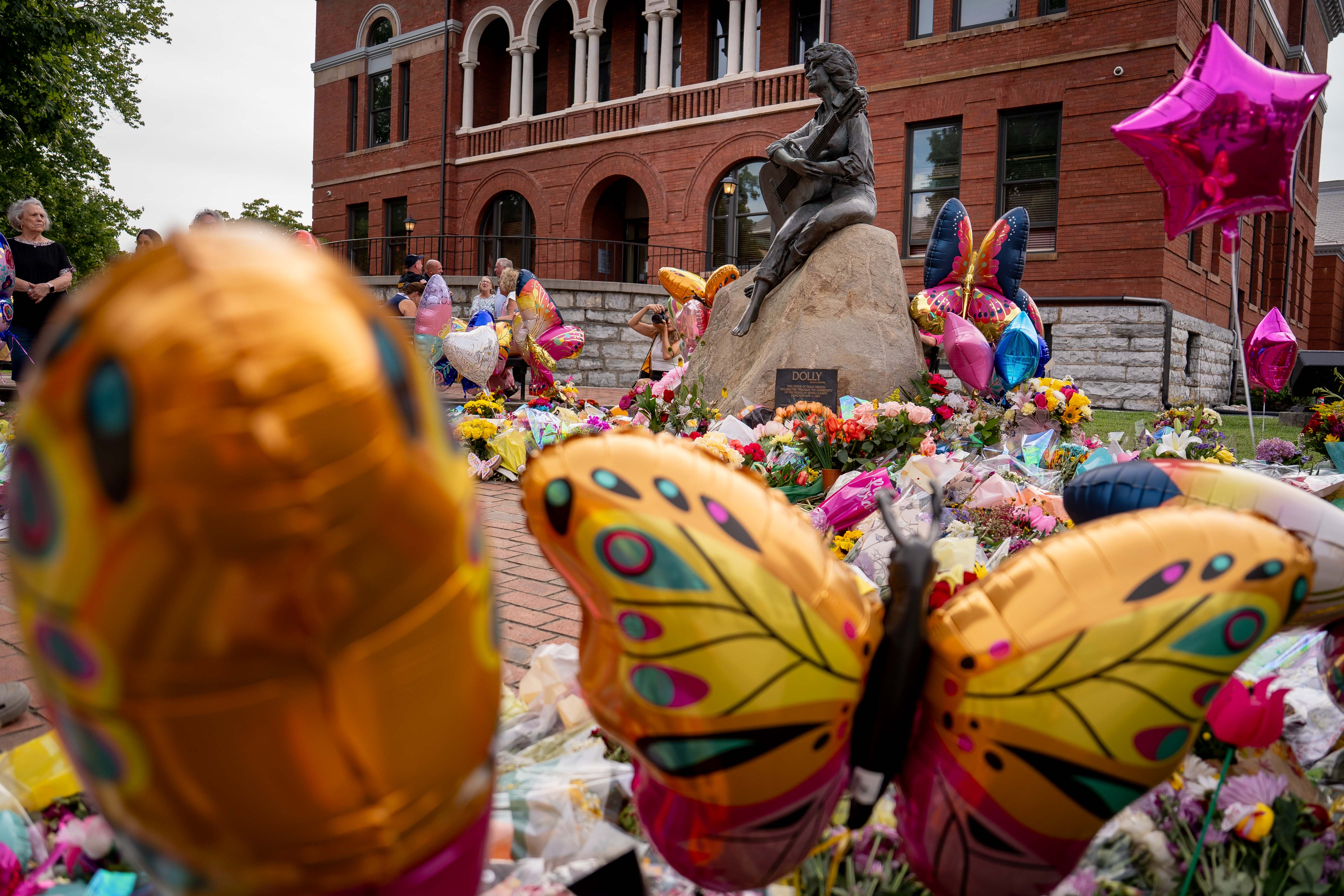
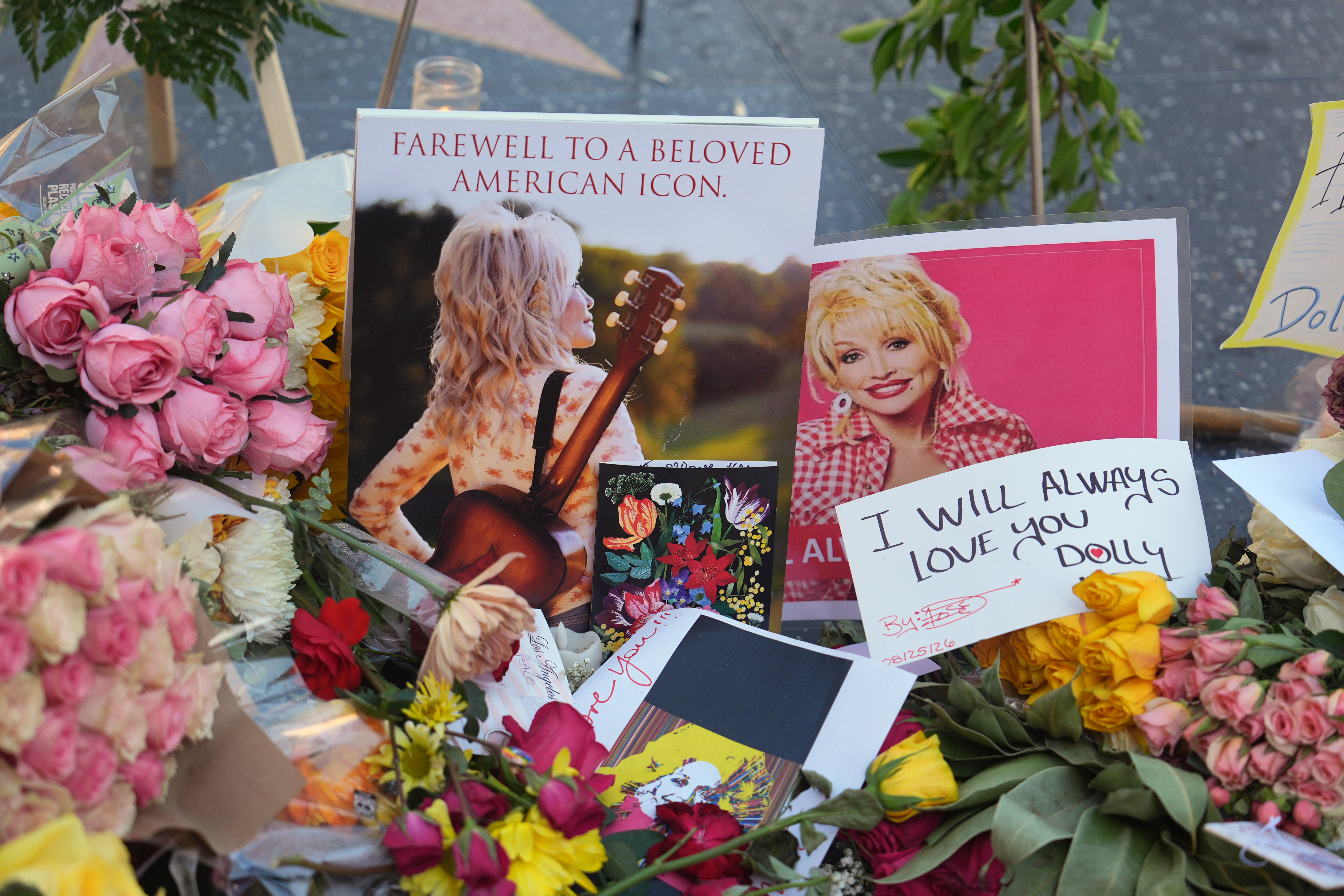
    Americans of all stripes are mourning the loss of singer and philanthropist Dolly Parton, who died on Aug. 26 at the age of 80.

    The outpouring of grief and mourning has exposed the complex and often contradictory identities Parton inhabited.

    She was self-proclaimed poor “trash” from rural Appalachia — and proud of it. She regularly wore loud makeup and big hair, and had even bigger breasts, but she made sure she was taken seriously as a businessperson by the music establishment and Hollywood. She was a multimillionaire who connected with the working class.

    Musically, Parton was a symbol of traditional country music, even as she crossed over into pop music in the 1980s. And she was a queer icon, yet, in her honor, the loudly anti-queer Trump administration ordered that flags be flown at half-mast.

    Her complexities and contradictions reflected Parton’s enormous contributions to American history and culture, which crossed all sorts of ideological lines and made her genuinely beloved.

    Dolly Parton’s aesthetic and style allowed her to celebrate a background that traditionally had been scorned. Women who were visibly sexual were branded trashy or sluts, and terms like “poor white trash” and hillbilly denoted racial and class hierarchies.

    Parton, however, dismissed these historical connotations from her first days in the spotlight. She admitted that her style was “gaudy,” or “tacky,” and confessed that as a little girl she idolized a woman her mother called “trash.” She responded with, “Well mama, I want to look like trash.” She also embraced the “trash” label to talk about her hyperfeminine body presentation, which included ostentatious costumes, long nails and big hair.

    As Parton’s star grew in the 1970s, and she refused to adopt markers of high-class femininity, she forced a rethinking of how society characterized women who had long been maligned for their sexuality and poverty.

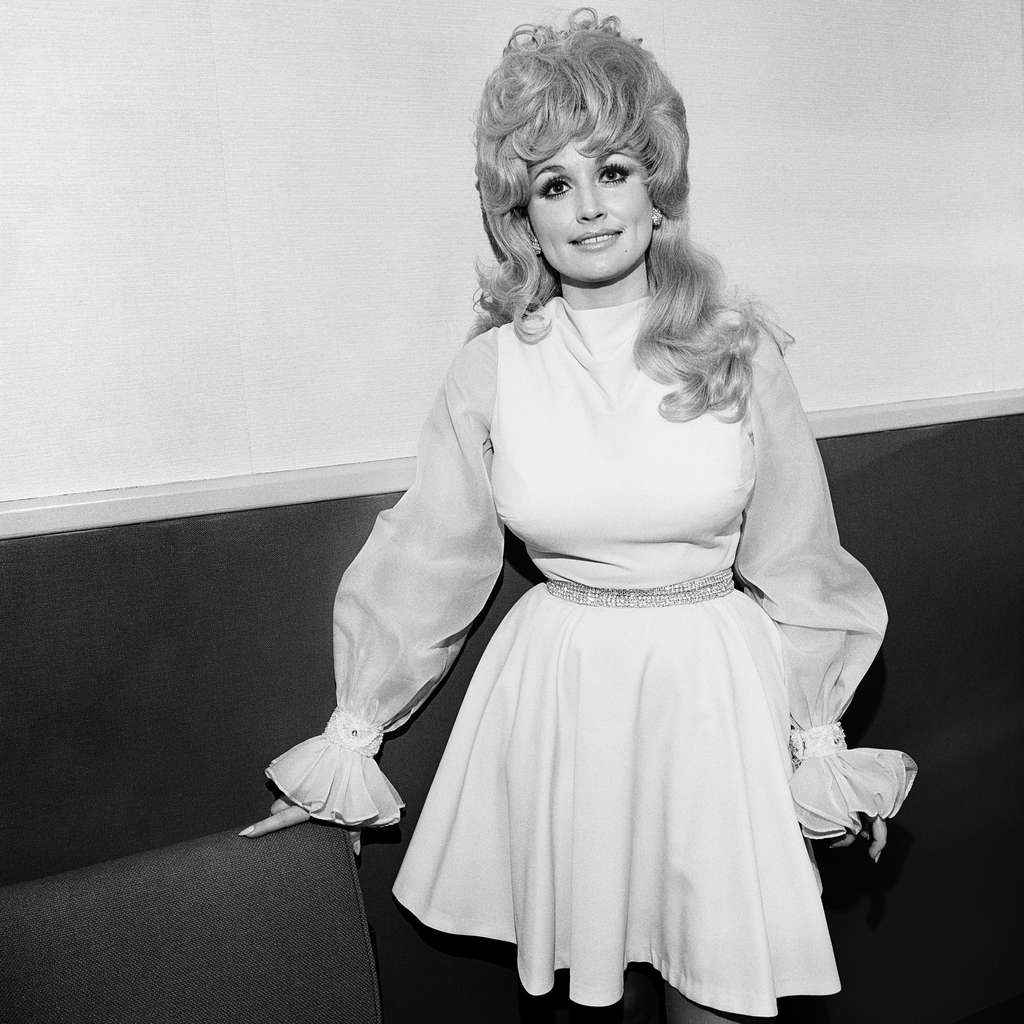
    Dolly Parton, Symphony Hall, Boston, 1972.HENRY HORENSTEIN

    For instance, in 1971, she released one of her biggest hits, “Coat of Many Colors,” which talked about her poor upbringing and a colorful coat that her mother made for her out of discarded rags. Her classmates ridiculed her, but rather than feeling ashamed, she felt pride in her “new” coat. This story demonstrated the hardscrabble, can-do spirit of the working class and illustrated the love Parton held for her family and her people.

    The song’s reception also highlighted Parton’s unique knack for reaching multiple audiences. While its cultural dynamics shined through initially, years later, the song gained a new dimension when it became an anthem for LGBTQ Americans because of its message of pride in one’s self and the colorful similarities the coat shared with the LGBTQ pride flag.

    “Coat of Many Colors” reflected how, throughout Parton’s career, her work subtly advocated for the marginalized. Nothing epitomized this better than “9 to 5,” one of her most famous songs and acting roles. In 1980, Parton released the iconic song as the theme for the movie of the same name.

    The movie spoke to women, who were entering corporate America at an unprecedented rate. Yet, the Supreme Court had not yet declared sex discrimination illegal, and they encountered an environment full of glass ceilings, discriminatory language, sexual harassment and societal expectations to succeed even while maintaining a traditionally gendered home life. The song and the film took a clear stance: women belonged in offices and deserved to be treated with respect, regardless of their hair color or bust size.

    In particular, Parton’s character Doralee spoke directly to the constraints clerical and administrative workers faced. Increasingly, as America deindustrialized, women constituted a growing percentage of the working class, and working class jobs became feminized. Invigorated by second wave feminism, working class women had been pushing for improved workplace conditions, including better wages and expanded opportunities for female administrative workers to move into management positions.

    Made By History sponsors. FOR USE ON MADE BY HISTORY STORIES ONLY.Inquirer Staff

    Parton’s title track directly addressed the frustrations driving these demands, lamenting, “They just use your mind and they never give you credit … for service and devotion you would think that I would deserve a fair promotion / Want to move ahead, but the boss won’t seem to let me / I swear sometimes that man is out to get me.”

    The song was classic Parton, both celebrating workers’ daily grinds and speaking clearly about class exploitation.

    The film itself presented these experiences of gender and class discrimination as part of a slapstick comedy. Yet, for mainstream audiences across the country, this softer, comedic approach to feminism and activism, made the very real plight of Judy (Jane Fonda), Violet (Lily Tomlin) and Doralee (Parton) relatable.

    Two years later, in 1982, Parton once again used an acting role to speak up for women who were denigrated as disposable items when she starred in the movie adaptation of The Best Little Whorehouse in Texas. Parton’s character Miss Mona was a brothel owner who was fighting against moral crusaders attempting to close her down.

    Denouncing the hypocrisy of men who privately availed themselves of women’s sexual services and then publicly shamed them as immoral, Parton’s character firmly established sex workers as people worthy of respect and dignity. Situated against the backdrop of a rising Moral Majority movement that fought to overturn reproductive rights, ban pornography and reverse anti-discrimination laws protecting people based on sexual orientation, Parton again used comedy to bring humor to a very real issue and, in doing so, made visible a group of people usually shunned by society.

    Her devotion to calling for acceptance of people excluded from mainstream society continued throughout Parton’s career. In 1991, she released the song “Family,” which referenced LGBTQ people for the first time and exhorted people not to turn their backs on family members who were different. “Some are preachers / some are gay / some are addicts, drunks and strays / But not a one is turned away when it’s family.”

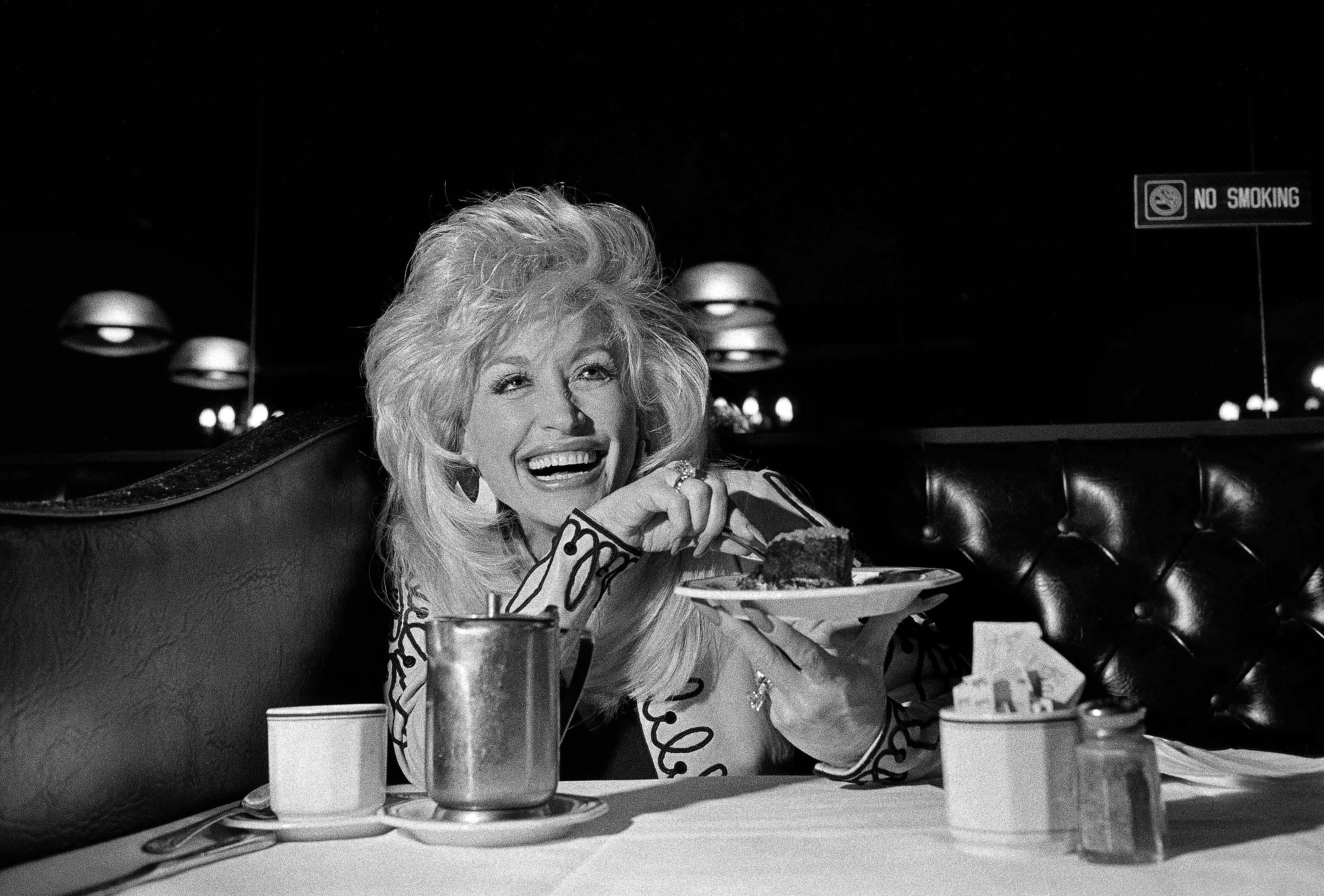
    Dolly Parton savoring a chocolate mousse cake in New York in 1992. EDWARD KEATING

    This was a powerful message at the height of the AIDS epidemic when gay men and intravenous drug users were among the most at-risk groups — both of contracting the virus, and of being shunned because of it.

    At a moment when society was ostracizing and legislating against LGBTQ people, Parton instead called for acceptance. She stood by her message in “The Family” over the following decades. In a 2009 interview, she endorsed same-sex marriage, and in 2016 she opposed bathroom bans that limited transgender people’s access to public toilets.

    Because of these stances, the LGBTQ community embraced Parton right back. Her songs and image have become mainstays used by drag performers, and in 2012 Parton related that she once lost a Dolly Parton look-alike contest to a drag queen. The ties between Parton and the queer community became so interconnected that, upon her death, CNN inadvertently aired an image of a drag performer during a tribute to the late singer.

    Parton famously said, “Honey, there is no such thing as the real Dolly Parton.” She created a life of contradictions, and while her hair and makeup may have been fake, the power Parton held was very real.

    She had a unique ability to transcend boundaries, allowing her to speak for people across classes, gender identities and sexualities. Her calls to support the downtrodden and shunned are her lasting legacy. Her ability to engage in such advocacy while continuing to be beloved across the political divide offers a lesson for all Americans.

    Elyssa Ford is associate professor of history at Washington State University. Rebecca Scofield is professor of history at the University of Idaho.

    Made by History takes readers beyond the headlines with articles written and edited by professional historians. Opinions expressed do not necessarily reflect the views of The Inquirer.

  • From Gotham to the mandap: A Desi bride and groom bring the Batmobile to Philly

    From Gotham to the mandap: A Desi bride and groom bring the Batmobile to Philly

    It’s a bird! It’s a plane! Oh wait, it’s a … Batmobile?

    A replica of the 1989 Batmobile briefly bottlenecked Market Street early Saturday morning, social media posts showed.

    The Tim Burton-era ride came out of the Batcave for what appeared to be a South Asian wedding near Loews Philadelphia. The newlyweds, guests, and gawking passersby were spotted taking pictures with the armored roadster.

    “I’ve seen elephants, camels and even Mummers in Indian wedding processions in Philly, but this is a first,” blogger @phillychitchat wrote on Instagram. That post had nearly 5,600 likes as of about 2:20 p.m.

    It wasn’t immediately known who the couple was or why they included Batman’s iconic car in their nuptials. The replica car rental company, DeloreanRental.com, could not be reached Saturday afternoon for comment.

    The Batmobile may have been a superhero-inspired take on a traditional wedding procession, according to Sucheta Sachdev, cofounder of Kareena’s Closet, a marketplace for renting and buying pre-loved South Asian formalwear.

    In a North Indian baraat, a groom rides to the wedding venue on a lavishly adorned horse. But another groom went viral last year for similarly arriving at his wedding on the top of the “Tumbler,” the 2005 iteration of Bruce Wayne’s Batmobile. Is it too early to call this a knot-tying trend?

    Indian weddings are notoriously lavish and involved, often taking place across days and requiring multiple intricate outfits, Sachdev said. She described the festivities as “organized chaos.”

    “The idea of weddings in South Asian culture is really not about individuality,” Sachdev said. “It’s about families and families coming together.”

    But perhaps the Batmobile was a way to infuse the bride and groom’s wants or interests into the celebration, she posited. For example, at her own wedding more than a decade ago, Sachdev and her husband rode away in a then-novel Tesla; at her cousin’s wedding in Salt Lake City, the couple took off in a hot air balloon.

    Regardless, as @phillychitchat said, “Never a dull moment in Center City.”

    Quick! To the Batmobile!

  • The Jersey Shore bakery that helped Dominic Sessa transform into Anthony Bourdain

    The Jersey Shore bakery that helped Dominic Sessa transform into Anthony Bourdain

    Before he played Anthony Bourdain in the coming-of-age biopic Tony, Dominic Sessa’s first brush with fame was as an Ocean City, N.J., doughnut guy.

    Tony, which opened in theaters nationwide last Friday, is an origin story. It depicts Bourdain decades before he would become the executive chef of French brasserie Les Halles and eventually a prolific travel journalist, best known for shows like A Cook’s Tour, No Reservations, and Parts Unknown.

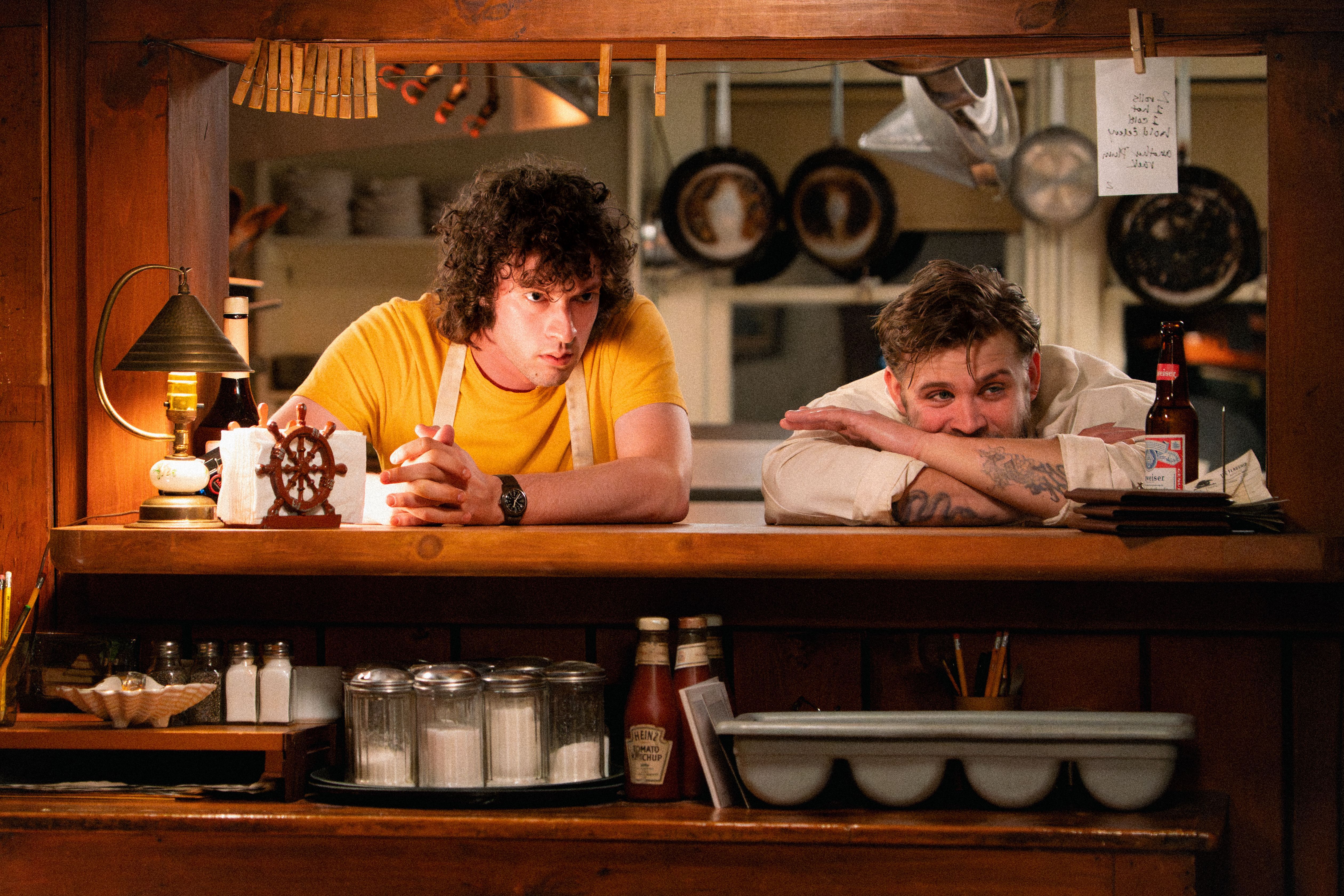
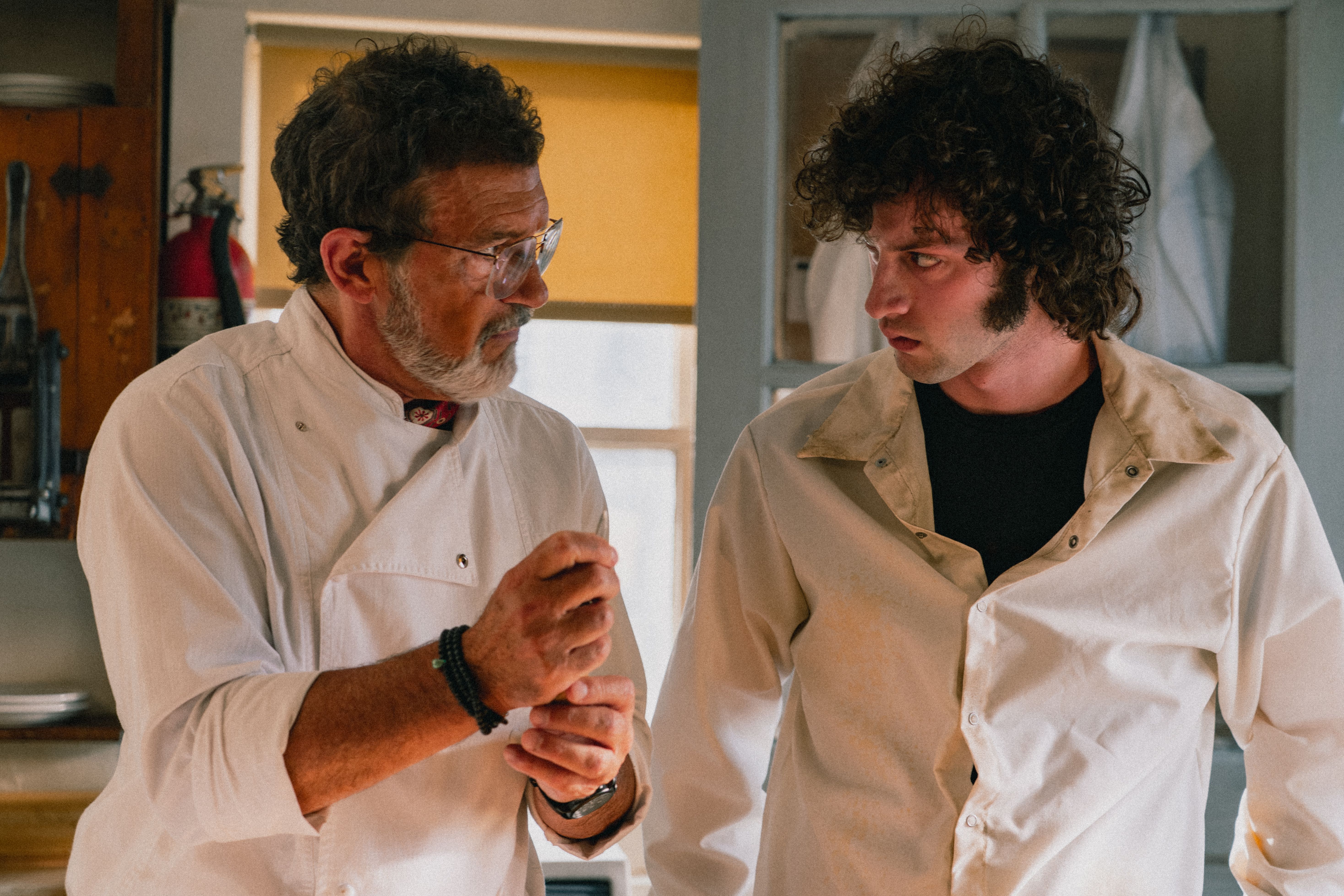
    Dominic Sessa (left) as Anthony Bourdain with Leo Woodall as a renegade cook in “Tony.”A24

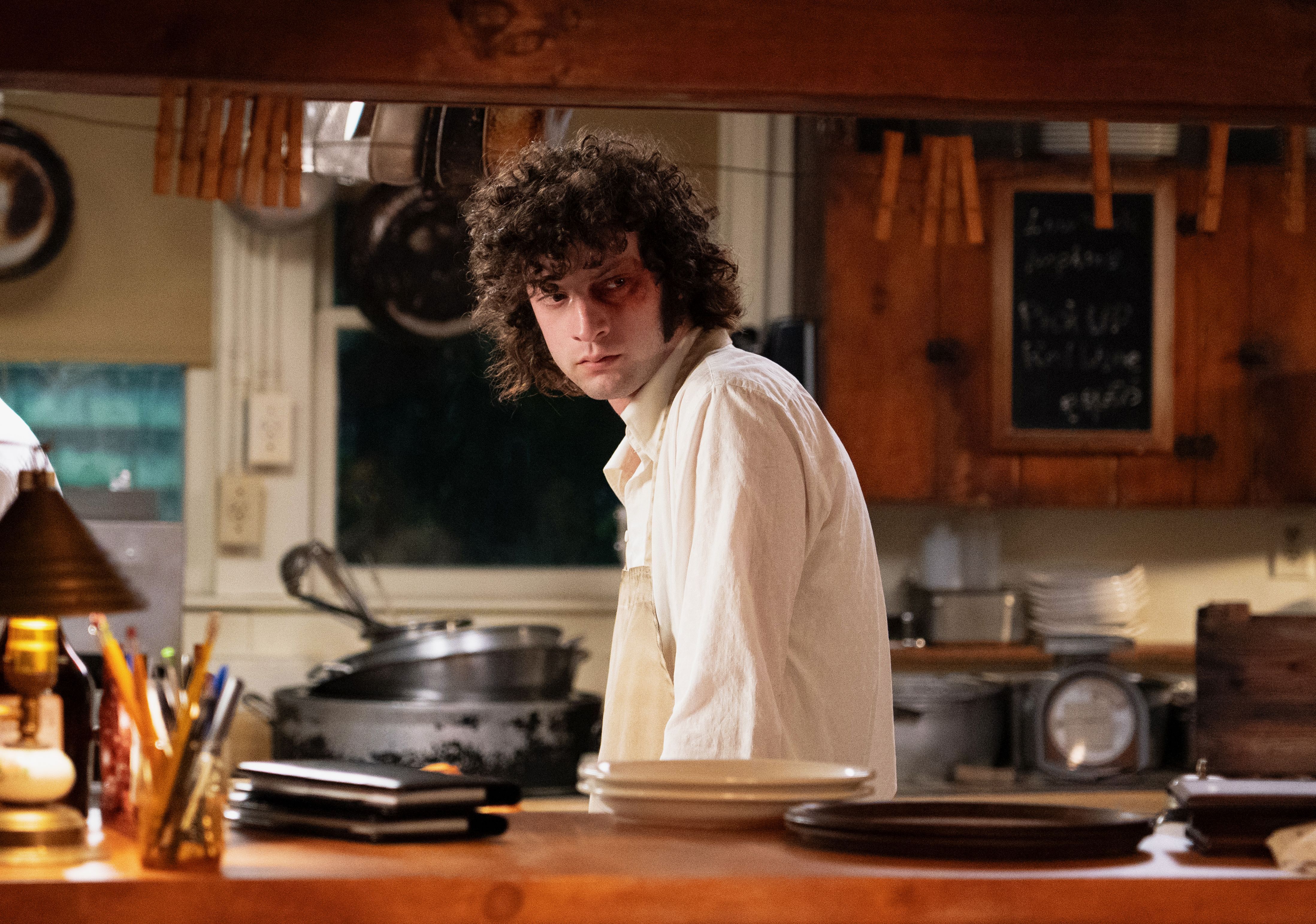
    In the film, Sessa portrays a 19-year-old Bourdain in the summer of 1973, when he found himself in Provincetown, Mass., desperate to get his would-be wife, Nancy Putkoski (Emilia Jones), to fall in love with him after losing out on a writing fellowship. A tough-yet-kind chef (Anthony Banderas) gives Bourdain a job as a dishwasher at the Flagship, a no-nonsense seafood shack where Bourdain grows from bumbling dishwasher into something resembling a cook.

    The film draws heavily on chapters of Bourdain’s best-selling memoir Kitchen Confidential, in which Bourdain romanticized a crew of talented, if aimless, line cooks and their exploits.

    “They drank everything in sight, stole whatever wasn’t nailed down, and screwed their way through floor staff, bar customers, and casual visitors like nothing I’d ever seen or imagined,” Bourdain wrote with palpable admiration.

    It’s a feeling that Sessa, 23, knows well.

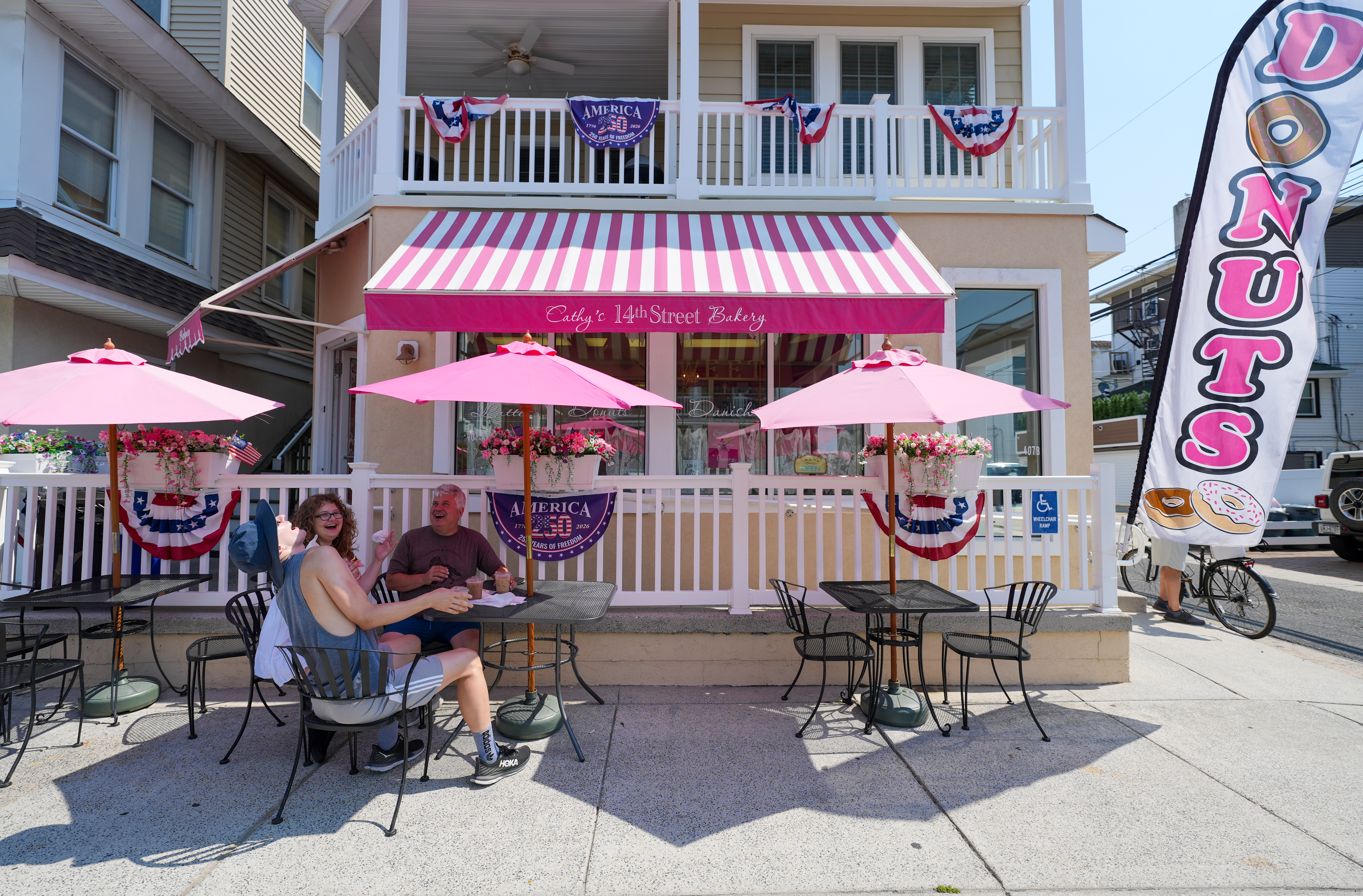
    Born in Cherry Hill, Sessa grew up in Egg Harbor Township and Ocean City, where he spent four summers working in the kitchen at Cathy’s 14th Street Bakery, a pink-and-white storefront that serves thousands of doughnuts a week.

    When Sessa started as a dishwasher there in 2016, he was 13. By the time he worked his last shift in 2019, he had worked his way up to full-fledged baker, responsible for opening the shop and preparing batches of Cathy’s famous powdered and cream-filled doughnuts from scratch.

    “I’ve hired a lot of great kids, but there are some who don’t get it,” said Cathy Greene, the bakery’s owner. Sessa “was really a natural.”

    Cathy Greene, owner of Cathy’s 14th Street Bakery in Ocean City, N.J., fills a box with doughnuts for a customer on Aug. 13, 2026. Former Cathy’s dishwasher and junior baker Dominic Sessa plays Anthony Bourdain in the new A24 biopic “Tony.”Tim Hawk / For The Inquirer

    Sessa doesn’t remember taking to it so easily. And yet, like Bourdain, he kept coming back.

    “When I first started there, it was miserable — especially at that age, waking up super-early and making batches of dough. I was just lazy and didn’t feel like finding another job,” Sessa told The Inquirer. “But every summer I’d come back and Cathy would teach me something new … The experience was one of the things that taught me how to work hard.”

    Tyler Greene, Cathy’s son, flips doughnuts in a deep fryer at Cathy’s 14th Street Bakery in Ocean City, N.J., on Aug. 13, 2026. Tim Hawk / For The Inquirer

    Doughnut summers

    Admittedly, frying doughnuts at a family-run bakery did not entirely prep Sessa for the fictional kitchen he’d step into as a teenage Bourdain. In Tony, the Flagship is full of cocaine, dirty jokes, and smashed dishes. Cathy’s, by contrast, was basically Disney World.

    Still, Sessa said the job helped him understand what motivates chefs to endure grueling hours and nonstop kitchen injuries. Like Bourdain, the actor was a self-styled troublemaker, nearly getting kicked out of his South Jersey high school before earning a hockey scholarship to Massachusetts’ prestigious Deerfield Academy, where he would eventually be discovered by director Alexander Payne and land his breakout role as a boarding school kid in 2023 Christmas comedy The Holdovers.

    Cathy’s kept him disciplined.

    Sessa used to clock in at the bakery at 4:30 a.m. to prep the day’s first doughnuts, rolling out and aerating one batch of dough while minding another batch as it proofed. In between, he’d fry up a third.

    Tyler Greene rolls out the dough for donuts at Cathy’s 14th Street Bakery in Ocean City, N.J., on Aug. 13, 2026. Former Cathy’s dishwasher and junior baker Dominic Sessa plays Anthony Bourdain in the new A24 biopic “Tony.”Tim Hawk / For The Inquirer
    A variety of doughnuts are for sale at Cathy’s 14th Street Bakery in Ocean City, N.J., on Aug. 13, 2026. Former Cathy’s dishwasher and junior baker Dominic Sessa plays Anthony Bourdain in the new A24 biopic “Tony.”Tim Hawk / For The Inquirer

    At its busiest, Greene said, Cathy’s sells between 1,200 and 1,400 doughnuts a day. Sessa drew on the rush — and the high stakes — while acting in Tony.

    “I related to the integrity working in a kitchen demands,” he said. “If I didn’t show up on time, everything would be messed up, and everyone would know it was [because of] me.” Plus, there was “something so gratifying” about placing doughnuts in the display case and watching customers snap them up.

    Antonio Banderas (left) as a chef-mentor with Dominic Sessa as Anthony Bourdain in “Tony.”A24

    Greene said Sessa shined when it came to the rhythm of baking and could manage the flow of the station about as well as she could. When they’d roll out dough side by side, Greene would quiz him on three-digit by three-digit multiplication. Sessa, she said, always answered correctly “off the top of his head.”

    “He was a real smart kid,” Greene said.

    Things didn’t always run smoothly. Once, Sessa recalled, he nearly ruined the bakery’s trash cans by throwing out a batch of dough with too much yeast in it. He had gotten away with the mistake — until the dough proceeded to nearly quintuple in size. “It was billowing out of the cans, on the ground, seeping into the kitchen,” said Greene. “It was pretty funny.”

    The stress of the job didn’t detract from Sessa’s favorite part: small-town notoriety.

    Passersby love to peer into Cathy’s kitchen from the street. “Kids were always interested in watching the guy who rolls the doughnuts out,” Sessa said. “It made me feel like a celebrity.”

    The outside of Cathy’s 14th Street Bakery in Ocean City, N.J., on Aug. 13, 2026. Former Cathy’s dishwasher and junior baker Dominic Sessa plays Anthony Bourdain in the new A24 biopic “Tony.”Tim Hawk / For The Inquirer

    Drinking on the beach and baking hungover

    As much as Tony spins a hero’s journey for a young Bourdain (who ends the movie — spoiler — by enrolling in culinary school), it also foreshadows his struggle with substance use.

    Dominic Sessa as Anthony Bourdain in “Tony.”A24

    Bourdain, who died from suicide in 2018 at 61, had spoken candidly about his addiction to heroin and cocaine before getting sober in the 1980s. In Tony, we see the fledging chef try cocaine for the first time at his dishwashing station at Flagship with Sal (Leo Woodhall), a hard-partying coworker who relishes in showing Bourdain his favorite vices.

    Sessa’s Ocean City summers followed a similar pattern. Before The Holdovers, the actor was crossing the causeway to buy booze at Circle Liquors in Somers Point.

    “All of my friends were doing the same thing” as Bourdain in Tony, Sessa said. “We would just work so we could get paid enough to buy alcohol, drink on the beach all night, go into work hungover, sleep it off after our shift, and do it all over again the next day.”

    “We were all under 18 so we felt invincible,” Sessa said. ”It was paradise.”

    Cathy Greene, owner of Cathy’s 14th Street Bakery in Ocean City, N.J., fills a box with donuts for a customer, on Aug. 13, 2026. Former Cathy’s dishwasher and junior baker Dominic Sessa plays Anthony Bourdain in the new A24 biopic “Tony.”Tim Hawk / For The Inquirer

    Antics aside, Greene is proud of the role her bakery played in helping Sessa get into character (even if she hasn’t seen Tony yet). She just isn’t sure about cashing in on his star power. “I don’t want to be the one who is like, ‘Oh, I had Dominic Sessa here,’” Greene said. “But it’s pretty cool.”

  • Philly-area AMC Theatres will screen two Dolly Parton movies

    Philly-area AMC Theatres will screen two Dolly Parton movies

    In the days since her Aug. 25 death, the tributes to country music icon Dolly Parton have piled up: from music megastars, tech-industry titans — even the Buckingham Palace guards.

    Add AMC Theatres to the list.

    The company announced this week that it will be holding a retrospective of the artist’s film work, with screenings of a pair of Parton-starring films — Steel Magnolias and The Best Little Whorehouse in Texas — in her honor. Screenings begin Friday and run through Sept. 2, the company said.

    In all, roughly 200 AMC locations nationwide will hold screenings.

    Participating Philadelphia-area theaters include AMC Cherry Hill 24 and AMC Voorhees 16 in New Jersey, and AMC Neshaminy 24 in Bensalem. Tickets will be offered at discounted prices and are available through the AMC website.

    The two films are among several that Parton appeared in between 1980 and 2015, a list that also includes 9 to 5, in which she starred alongside Jane Fonda and Lily Tomlin, and received three Golden Globe nominations.

    The 1982 musical comedy The Best Little Whorehouse in Texas saw Parton play a brothel madam alongside Burt Reynolds, earning her another Golden Globe nomination in the process.

    In 1989’s Steel Magnolias, Parton stars alongside Julia Roberts, Sally Field, Shirley MacLaine, and Daryl Hannah.

    A longtime star of the music, film, and television industries, Parton’s death has brought a wave of homages this week from everyone from Taylor Swift to Amazon founder Jeff Bezos. Her death followed a brief battle with cancer, a family spokesperson has said.

    Parton was a 10-time Grammy Award winner, and her 55 Grammy nominations make her the third-most nominated woman in the awards’ history, according to the Associated Press, trailing only Beyoncé and Swift.

    In addition to AMC, Regal Cinemas will be screening both films, as well — though screenings will be limited to Parton’s home state of Tennessee.

  • Landmark Ritz Five is closed after failing city inspections

    Landmark Ritz Five is closed after failing city inspections

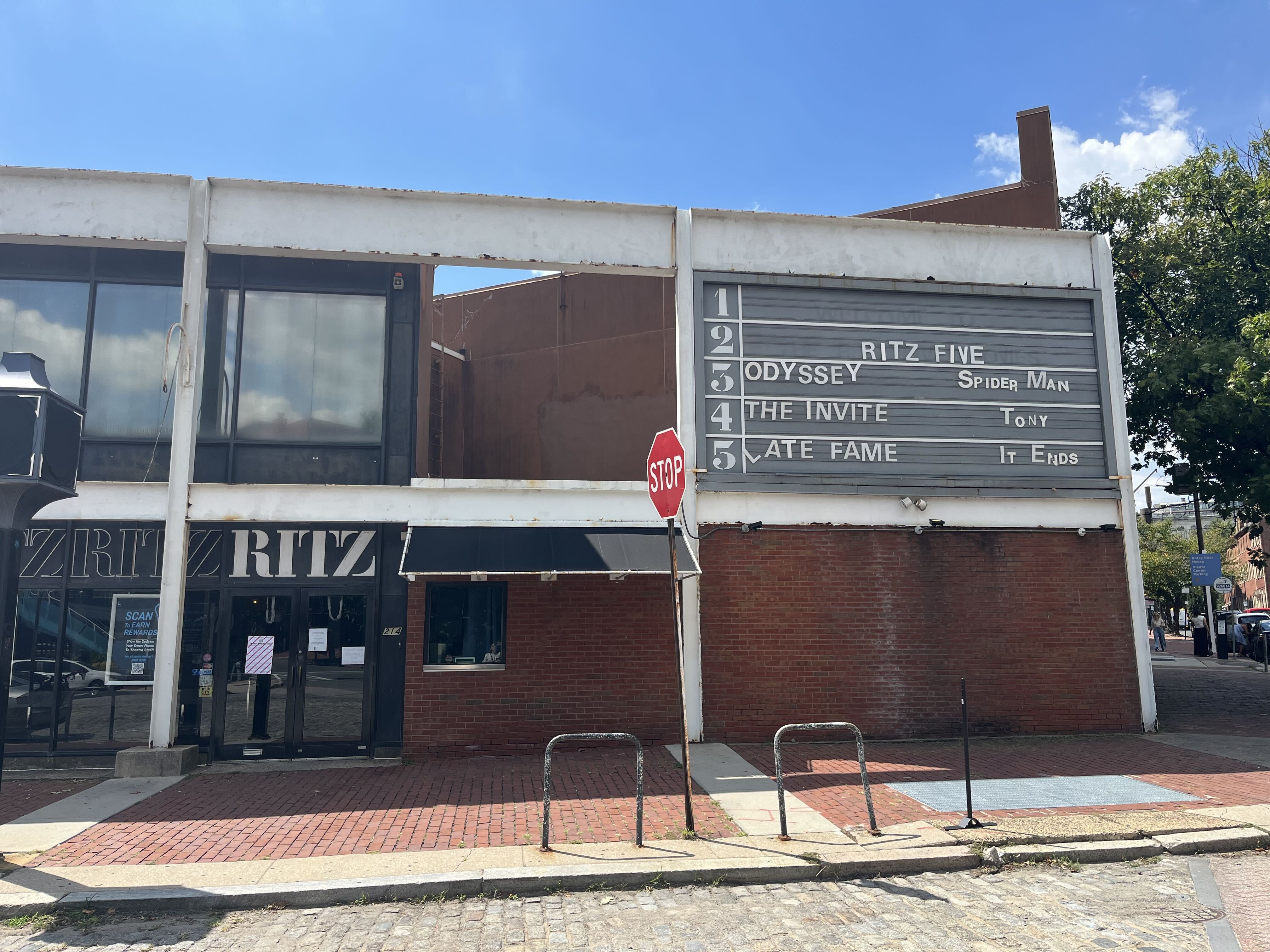
    Landmark Ritz Five movie theater is closed after failing inspections by the city’s Department of Licenses and Inspections.

    On Wednesday morning, the theater’s website posted that the location was temporarily closed “due to administrative issues.”

    The theater at 214 Walnut St. was found in violation of several city codes in March, and the theater failed a follow-up inspection on Aug. 11, according to a city online portal.

    March’s violations include failure to: obtain a permit to install a fire alarm system, share documentation that fabrics are flame retardant, ensure that exit doors fully “self-close and latch,” and certify emergency lighting. The theater was also found to be missing a valid food license. In total, the theater was issued seven violations in March.

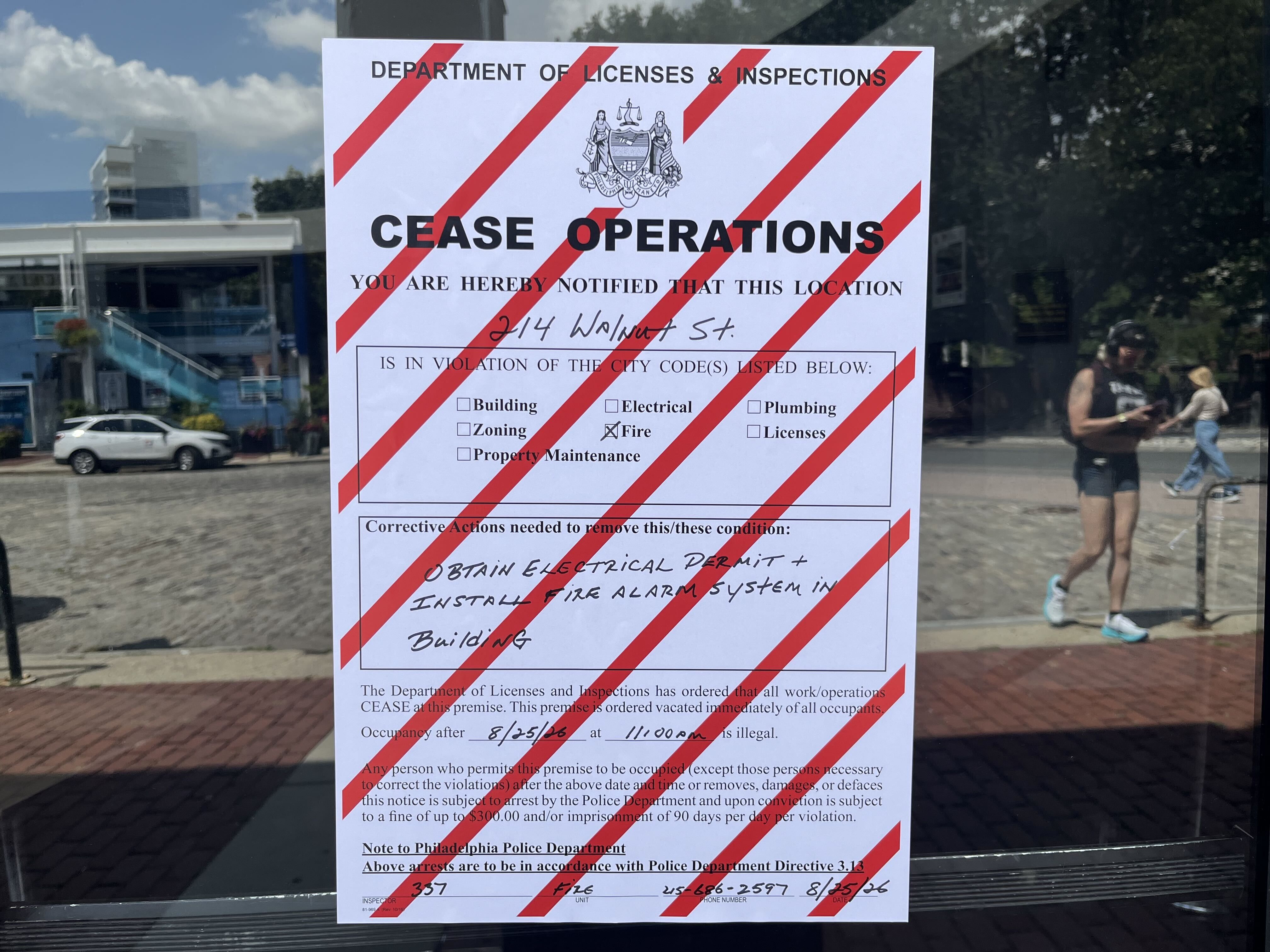
    A city notice posted to the theater doors on Wednesday said the theater needed to obtain an electrical permit and install a fire alarm system.

    The inspections were prompted by the department receiving “several complaints regarding the Ritz Five Theater,” an L&I spokesperson said.

    The Landmark Ritz Five movie theater was closed on Wed. Aug. 26, 2026, after failing two city inspections. A cease-operations notice was posted to the theater doors on Wednesday.Ariana Perez-Castells

    A representative for Landmark Theatres did not immediately share a comment on the closure and inspections on Wednesday.

    When the Philadelphia theater was inspected in March, it was ordered to remedy the violations by April 22 or face fines. The violations each carry their own fines, totaling $2,800. The department charges the code violation fines on a daily basis. The theater can also be ordered to pay additional fines related to the violations.

    However, on Wednesday, an L&I spokesperson said “there are no fines associated with the violations. Should this matter be progressed to court, then fines may begin to accumulate.”

    The roughly 13,0000-square-foot theater was founded in 1976 with three screens, according to the theater’s website. Today, it has five projection screens.

    Philadelphia was once home to three Landmark Ritz theaters, known for showing independent and documentary films alongside mainstream releases. But the theaters at the Bourse and East are now operated by the Philadelphia Film Society while only Ritz Five remains under Landmark’s umbrella.

    No showtimes were listed for Wednesday on the theater’s website. As of Wednesday morning, tickets could still be purchased online for Thursday viewings of The Odyssey, Spider-Man: Brand New Day, and Tony, among other movies.

    Landmark Theatres was purchased by Cohen Media Group in 2018. The Landmark Theatres brand has several locations across the country, including theaters in Arizona, California, and Florida.

  • Dolly Parton, music star, actor and beloved figure who spanned generations has died at 80

    Dolly Parton, music star, actor and beloved figure who spanned generations has died at 80

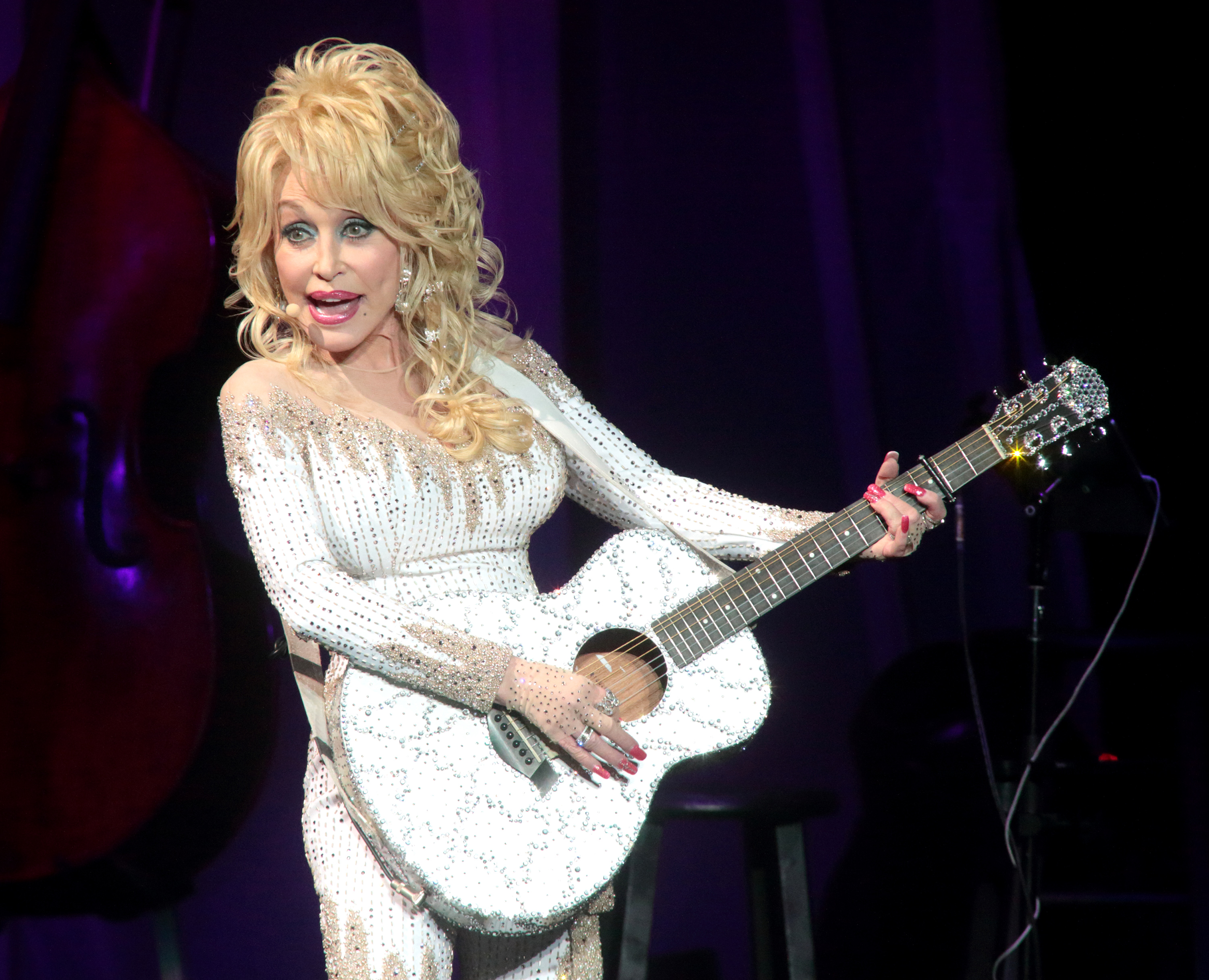
    Dolly Parton, the country music icon whose soaring vibrato vocals, poignant songwriting and sparkling costumes defined her rise from a log cabin in the Tennessee mountains to the height of stardom and acclaim, has died. She was 80 years old.

    Known for her curvy physique, massive blonde wigs and skin-tight outfits that served her self-deprecating wit, she was among the most beloved personalities in music and beyond — the rare celebrity whose appeal transcended generations, geography and politics.

    She wrote hundreds of songs, including classics like “Jolene,” “Coat of Many Colors” and “I Will Always Love You,” that totaled more than 100 million worldwide sales and more than 1 billion online streams. Parton, who plucked bejeweled banjos, guitar and dulcimers with her long fingernails during performances, was a generous philanthropist and successful businesswoman whose projects included a theme park in the Smoky Mountain foothills near her birthplace.

    Her career was forever influenced by her upbringing as one of 12 children born into what she called a “dirt poor” Tennessee family. She started her education nonprofit, Imagination Library, to send free books to children in Tennessee because her father, who quit school to work on the farm, struggled to learn to read.

    Parton’s first musical performances were in church, where her grandfather was a preacher. By age 10, she was learning guitar and singing on local television shows. At 13, she appeared on the Grand Ole Opry in Nashville, where Johnny Cash introduced her as “a little girl here from up in East Tennessee.”

    With a suitcase of songs, she followed her uncle, Bill Owens, also a songwriter, to Nashville after graduating high school in 1964. Fred Foster, who produced Roy Orbison, Willie Nelson and more, saw her potential and got her songs cut by other artists, as well as recording and releasing Parton singing her own material. By the mid-1970s, Parton was a Nashville queen.

    A key collaboration with Porter Wagoner

    Parton’s partnership with Porter Wagoner, a pencil-thin pompadoured star with flashy rhinestone outfits, was key to her career. She honed her acting skills on his syndicated TV show and he advocated for her to get a record deal at RCA. Their first duet, “The Last Thing On My Mind,” was released in 1967, the same year she started her own publishing company.

    While their duets were often big radio hits, Parton’s solo singles didn’t chart as high at first. With Wagoner as a co-producer, she began to adjust her country warble to a more polished, pop-leaning style.

    She got her first No. 1 solo single with “Joshua,” and reached the Top 5 with the ballad “Coat of Many Colors,” about how her mother sewed together scraps of clothes to make a coat Parton wore “so proudly” even as her peers mocked her for being poor. The song, with its Biblical references and ode to maternal love, was later made into a children’s book and a TV movie.

    In 1973, she had the hit that made her career — “Jolene,” a country music standard with its steady, churning rhythm and Parton’s repeated delivery of the title as she pleads for the woman not to steal her man.

    The song topped the country charts, crossing over to pop and later being released internationally, opening up new audiences for Parton. “Jolene” is one of her most covered compositions, including by Miley Cyrus (Parton’s goddaughter), Olivia Newton-John and The White Stripes.

    She left Wagoner’s show in 1974, amid reports of squabbling between the two, although they continued to record together and Wagoner stayed her producer for years after that. But the relationship turned litigious when Wagoner sued her in 1979 for millions in management fees and royalties.

    A pop crossover star

    She followed “Jolene” with a huge hit in 1974, “I Will Always Love You,” an ode and farewell to Wagoner that helped her win the Country Music Association’s female vocalist of the year back-to-back in 1975 and 1976. She famously turned down Elvis Presley, who wanted to record it, because she would not share publishing rights.

    Decades later, Whitney Houston’s version of “I Will Always Love You” became a smash for the soundtrack of her 1992 film “The Bodyguard,” and broke sales records. Houston won a Grammy for her performance in 1994, presented to her by Parton.

    “Here You Come Again,” a pop crossover hit and one of the few she didn’t write, further established Parton as a multi-genre entertainer and brought her first Grammy Award in 1979.

    “A lot of people thought I had totally lost my mind,” she told The Associated Press in 1979 of changing her singing style. “But I had no fear of change. I expected success, but I was braced for failure. I didn’t care if people thought I was wrong. In my own heart, I knew I was doing the right thing.”

    Parton’s other crossover hits included the title song from “9 to 5,” the 1980 comedy starring Parton, Jane Fonda and Lily Tomlin; and her duet with longtime friend Kenny Rogers, “Islands in the Stream,” written by brothers Barry, Maurice and Robin Gibb of the Bee Gees. In 1987, she collaborated with Linda Ronstadt and Emmylou Harris on the million-selling “Trio” album.

    Down home charm

    For millions of fans, she was simply “Dolly,” a mixture of Southern charm, humor and glamour. But she was also considered a feminist role model for holding the reins of her own career, writing her own songs, owning her content and looking after her finances in an entertainment world dominated by men.

    Parton was open to making fun of herself; when she hosted “Saturday Night Live” in 1989 she told the writers that her only restrictions were she wouldn’t curse and she wouldn’t make fun of Jesus. She regularly joked about her breasts or her dumb blonde appearance, but with a wink that she was the one controlling the laughs. In the memoir “My Life So Far,” Fonda remembered Parton’s way with a wisecrack, “usually high raunch,” and a laugh that was “somewhere between a girl’s giggle, an explosive shriek, and a cascade of little bells.”

    After her gown split down the front when she won CMA’s entertainer of the year in 1978, Parton quipped: “My Daddy said that’s what I got for putting 50 pounds of mud in a five-pound bag.”

    Throughout her career, she embraced her glamorous style, often wearing custom curve-hugging rhinestone dresses and bodysuits even if they drew tsk-tsks from others in the industry. Her look was always a part of her larger musical business plan.

    “I knew my songs were good even if I had been ugly as sin,” she told the AP in 2014. “So I thought, ‘Well, I would have probably chose to look this way even if I had been a waitress.’ I mean, this is my look. I mean, I like a lot of makeup. I like a lot of hair. I like flashy clothes. I like to show it off. But that’s just who I am.”

    She married Carl Dean, an asphalt paving contractor, in the mid-1960s; they were together until his death in 2025 at the age of 82. Though rarely seen in public, he was an influence on her career. She told NPR that she wrote “Jolene” about a flirty bank teller who seemed to take an interest in Dean.

    ‘9 to 5’ to Hollywood and Broadway

    In her first major film role, Parton played alongside Fonda and Tomlin as office workers who rebel against their tyrannical boss in “9 to 5.” Critic Roger Ebert called her a “natural-born movie star” and the title song earned her two Grammy Awards and a ranking of 78 on the American Film Institute’s list of top 100 movie songs. Starring roles in the “The Best Little Whorehouse In Texas” and “Steel Magnolias” followed.

    “I never thought of myself as a movie star,” she told AP’s Bob Thomas in 1979. “I knew I’d be a star, but as a singer or as a writer of songs or books or poetry. I wanted to be a famous performer and wear flashy clothes, but singing in movies was not one of my ambitions. My family lived in the mountains and we didn’t see movies.”

    Her love affair with TV and film continued for decades, with appearances alongside Cyrus on “Hannah Montana” and adaptions of her music for Christmas specials, films and streaming series. She also became an author, her books ranging from the memoir “Dolly” to a bestselling novel co-authored by James Patterson, “Run, Rose, Run,”

    The stage adaptation “9 to 5: The Musical” debuted in 2009, and “DOLLY: A True Original Musical” had been set to open in December 2026.

    United States of Dolly

    Beyond her music, Parton’s most lasting legacy might be her generosity and broad appeal.

    When a deadly wildfire swept through the Smokies in 2016, she held an all-star telethon and set up a foundation that sent monthly checks to residents whose homes were damaged or destroyed.

    She opened up her Dollywood theme park in East Tennessee, a major economic driver in Appalachia that draws tourists from around the country, and established the Dollywood Foundation. She wrote books and memoirs, was inducted into the Country Music Hall of Fame and was given a lifetime achievement award by the Recording Academy. She was selected for the Jean Hersholt Humanitarian Award from the Academy of Motion Picture Arts and Sciences in 2025.

    With 55 Grammy nominations and 10 wins, Parton is the third-most nominated woman in Grammy history, only behind Beyoncé and Taylor Swift.

    Parton spanned social and political divides, through multiple generations of fans, urban and rural and in between. In tumultuous election years, it wasn’t uncommon to see “Dolly for President” shirts. But she was strict in not voicing her own political beliefs, often turning aside questions about presidents, candidates, policies and other controversies.

    “I don’t do politics,” Parton told host Jad Abumrad on his hit podcast “Dolly Parton’s America.”

    “I have too many fans on both sides of the fence. Of course, I have my opinion about everything, but I learned years ago to keep your mouth shut about things.”

    When the Rock & Roll Hall of Fame Foundation sent out a ballot in 2022 with her name on it, though she said she felt she hadn’t earned it, the voters answered with a “Hello, Dolly.” Parton showed up to the induction ceremony, performed and then put out a rock album.

  • Nolan’s women in The Odyssey may be truer to history than Homer

    Nolan’s women in The Odyssey may be truer to history than Homer

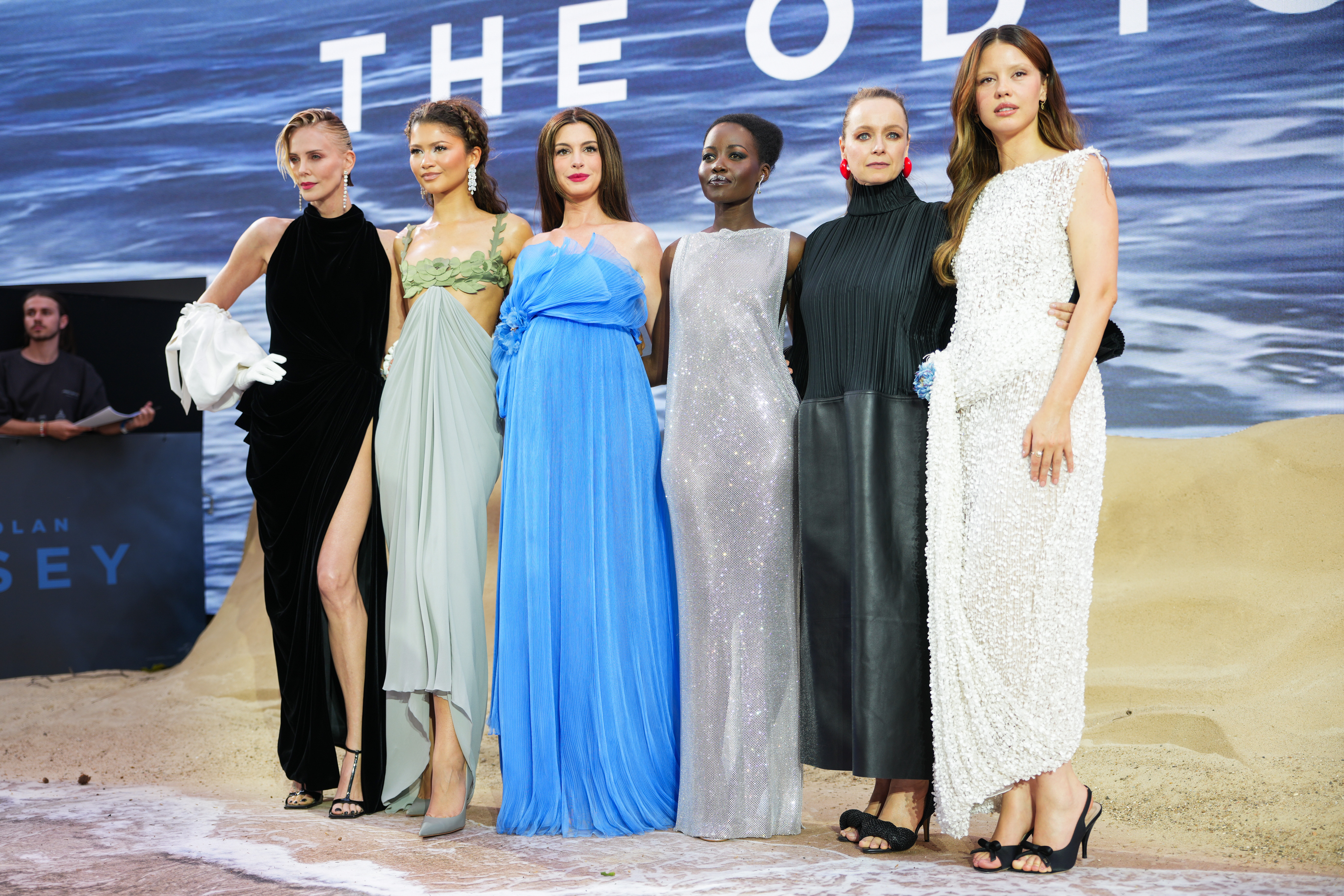
    Christopher Nolan’s new film The Odyssey has generated tremendous debate over, among other things, the casting of non-white actors, including Lupita Nyong’o, who portrays Helen. The argument that these choices don’t honor the original epic has been leveled at the portrayal of the women in the film more generally as well. As one scholar has written, Nolan’s Odyssean women “lack the sexual and intellectual complexity of Homer’s poem. Their desires, agency and choices are either not as vibrant or lost.”

    It is true that in Homer’s Iliad and Odyssey women are relatively empowered. They are not often under the thumb of men, not threatened, endangered or cowed. And yet Nolan’s creative choices about women, while differing from the ancient texts, do come closer to capturing the actual historical truth of women’s lives in the ancient Greek world.

    Homer’s epics offer a variety of fascinating and often powerful female characters throughout: from Helen to Andromache, along with the goddesses who strut through Olympus and down to Troy and Ithaca, female characters often seem nearly as empowered as their husbands, lovers, and brothers. There is only the occasional hint at a power imbalance, such as when Zeus threatens to hurl Hera from heaven, or in cases where a woman has been enslaved, such as for Briseis, Achilles’ “prize” in the Iliad.

    One reason for this variety and complexity of female characters might be that, in the archaic period (c. 800 – 500 BCE) of ancient Greece, women were not viewed as particularly threatening. Within the aristocratic system, where powerful families ruled the roost, women had a significant and socially acceptable role to play, unlike in the more male-centered world of the classical Greek polis, in which the bonds of male citizenship were considered crucially important, and familial or female interference was understood as a risk to these bonds. Homer’s epics belong to the archaic period where women were not so systematically feared as they came to be later, and thus there was space for more interesting and complex characterizations.

    Yet Nolan takes a different approach than Homer, presenting his female characters as facing greater danger and with less agency. Most notably, he depicts the face of Helen (Nyong’o) as having been half mutilated. It is her husband Menelaus who exposes the terrible scarring to half her face, thrusting it toward Odysseus’ son Telemachus with an angry and mocking gesture that suggests he was the perpetrator of the violence that left her so disfigured.

    Second, he shows the witch Circe (Samantha Morton) as terrified of rape and violence, particularly at the hands of soldiers, a nod surely to Madeline Miller’s trenchant take on the character in her novel Circe. Third, he portrays Penelope (Anne Hathaway) as under pressure to remarry by a collective of unseen elders who are absent from Homer’s Odyssey. Finally, even Athena (Zendaya), who appears at Odysseus’ side through most of the film, is revealed to have been a young priestess of Athena—perhaps a shade or a representation of the hero’s guilt—who was the victim of savage slaughter in the sacking of Troy.

    In Homer’s Odyssey, by contrast, Helen appears in Sparta to be in fine form and unscathed by the war or its domestic aftermath; Circe is formidable, cunning, and in control, and not apparently afraid of any man; Penelope is not under the thumb of any Ithacan elders, though she does face a great deal of pressure from the suitors; and Athena is in no danger of butchery.

    So how are Nolan’s choices justified? He may have decided to follow the historical record in this regard, rather than be true to the literary text. Though the realities faced by ancient Greek women garner precious little space in the early written record, we can glean from Greek tragedy that some of the harsher realities portrayed in Nolan’s Odyssey would have rung true.

    From Aeschylus’ Agamemnon, first produced in 458 BCE, we have a description—practically a vision—by Clytemnestra of Troy’s downfall as savage and violent. We find, too, a portrait of Athena’s priestess Cassandra as victimized and destroyed by the god Apollo, only then to be enslaved (for sex, it is insinuated) by her master Agamemnon.

    Euripides’ play, Trojan Women, produced in 415 BCE, digs even deeper into the painful realities of women when their homeland has been destroyed. Here we have Cassandra driven mad by the rape she suffered at the hands of a Greek “hero.” We watch the baby of the widow Andromache ripped from her arms to be thrown from the Trojan ramparts. We learn that the old queen Hecuba will endure a life of servitude to none other but the wily Odysseus. In Euripides’ play Hecuba, she evades this fate by casting herself into the sea—but only after having two of her own children brutally murdered by her former allies and enemies.

    There are countless other examples to be found in Greek literature of women victimized at the hands of men and their brutal whims: Antigone is thrown into a tomb by her uncle so that she will die of starvation, a fate she too evades by suicide; Danae is cast into a trunk by her own father with her infant to die at sea, though she is eventually saved; Coronis, a woman in a lyric poem by Pindar, is burned alive for daring to sleep with a mortal man after she has been bedded by Apollo.

    Made By History sponsors. FOR USE ON MADE BY HISTORY STORIES ONLY.Inquirer Staff

    Although there is a certain degree of ghoulish spectacle in these tales, nothing from our historical record of the period suggests they are unrepresentative of women’s actual reality in ancient times. First, there is the extreme and unremarkable likelihood of widespread domestic violence, referred to jokingly in Old Comedy and in images from vases. Moreover, it was known and accepted practice that when a city-state was defeated in war—a widespread fact of life—its male population was eliminated, while its female population was systematically raped and enslaved, a reality that comes up frequently in the histories of both Herodotus and Thucydides. Indeed, the enslaving of a young woman, explicitly for the purpose of rape, is the inciting incident of both Homer’s Iliad and Herodotus’ Histories.

    And such forms of repression and violence have persisted long since ancient times. Rape and brutality against women have been common forms of violence for as long as there have been wars. Incidents of femicide within families (often accompanied by infanticide) also persist.

    It is truly fascinating to experience Homer’s strong and dazzling women; everyone should pick up a translation and do so. But in removing the agency from female characters that Homer gave them, Nolan reveals at greater depth their vulnerability and humanity in a way that is much closer to the historical truth of how women actually lived in the ancient Greek world.

    Sarah Nooter is the Edward Olson Professor of Classics and Theater and Performance Studies at the University of Chicago. She is the author, most recently, of Greek Poetry in the Age of Ephemerality.

    Made by History takes readers beyond the headlines with articles written and edited by professional historians. Opinions expressed do not necessarily reflect the views of The Inquirer.

  • At 20, BlackStar founder Maori Karmael Holmes’ documentary on the women of Philly hip-hop remains a cultural touchstone

    At 20, BlackStar founder Maori Karmael Holmes’ documentary on the women of Philly hip-hop remains a cultural touchstone

    Watching Maori Karmael Holmes’ 2006 documentary Scene Not Heard: Women in Philadelphia Hip Hop is a sweet throwback to the era of Questlove and Mike Nyce on the Tastytreats turntables at Fluid Nightclub.

    It’s remembering what it was like seeing Jill Scott, Floetry, Kindred the Family Soul, and the Jazzyfatnastees at Black Lily.

    It calls to mind open mic poetry at Crimson Moon coffee shop, the simplicity of Razr cellphones, and the ubiquity of the Honda Accord. Before there were Instagram stories and Facebook feeds, Megan Thee Stallion and Cardi B, Holmes made Scene, an authentically Philly exploration of the life of the lady emcee.

    The 44-minute documentary, featuring legendary rappers Bahamadia and Monie Love, deejays Lady B and Dyana Williams, and poets Ursula Rucker and Lady Alma will screen again Friday afternoon at 4:30 p.m. during the 15th BlackStar Film Festival at the Suzanne Roberts Theatre.

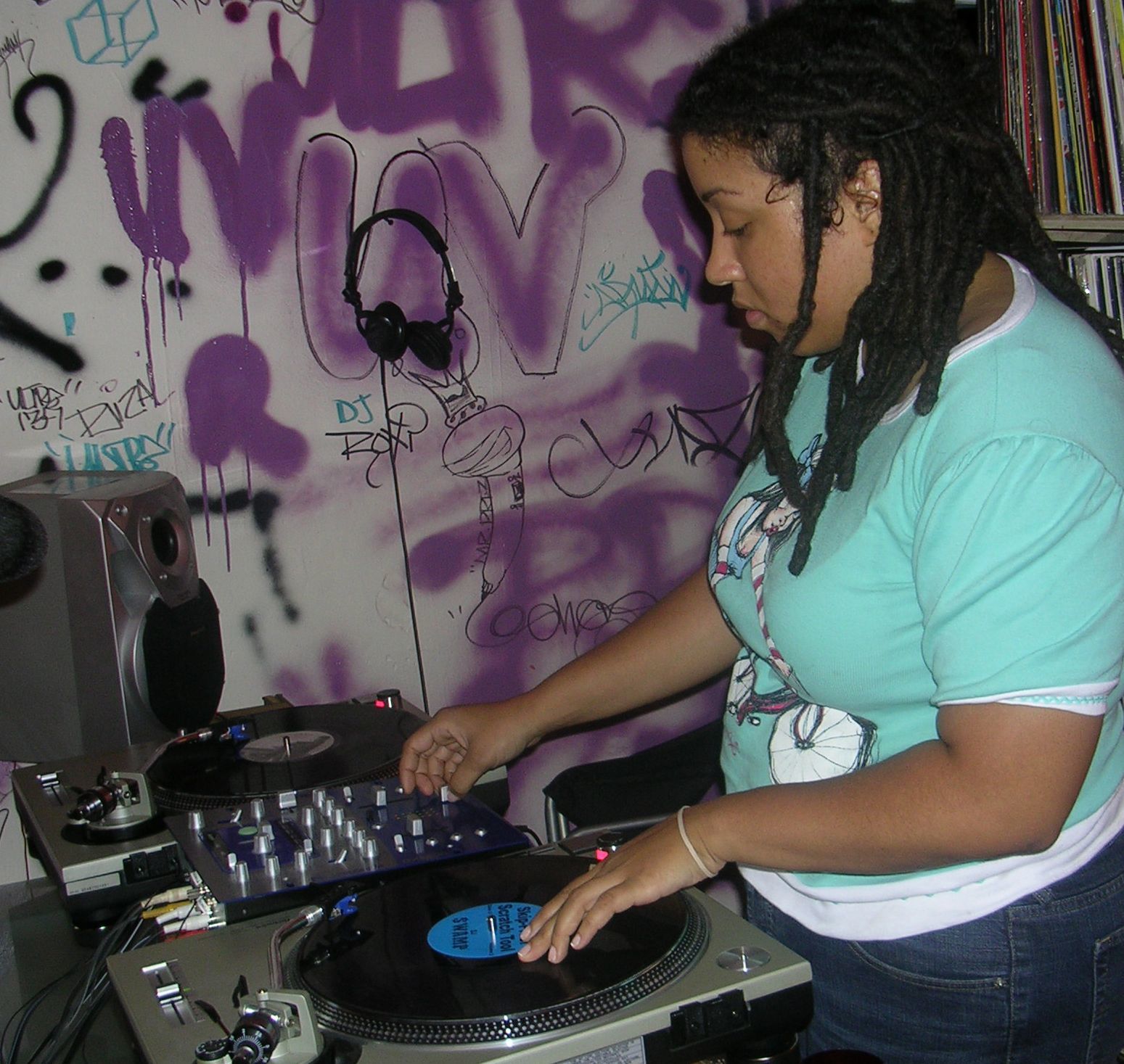
    A still from Maori Karmael Holmes’ 2006 documentary “Scene Not Heard” centering the experiences of lady emcees in hip-hop. Pictured here is DJ Ultra Violet.Maori Karmael Holmes

    “Scene Not Heard is a part of the BlackStar origin story,” Holmes said in a video call last week. She didn’t know it back then but Scene — her thesis project for her Temple University MFA — would become BlackStar’s foundation.

    It feels like a lifetime ago.

    “There are so many people who identify me with BlackStar, but they have no idea that I’m a filmmaker. They see me as an arts worker,” said Holmes, who has since released several documentaries and directed the music video for India Arie’s 2018 single That Magic.

    Friday’s screening is the first time Scene will be shown at BlackStar. Holmes is a little nervous about rereleasing Scene to a new generation of film festivalgoers, but she’s also curious about what they’ll think about watching the film she made when the festival itself was a distant dream.

    For Scene, Holmes masters the art of being the silent observer. She gets more than a dozen women in Philly hip-hop to talk candidly about what it feels like to assume roughneck personas or be pressured to dress scantily to be seen on the scene. That couldn’t have been easy when the male gatekeepers at the time were as vindictive as they were entitled. The women talk about their love of hip-hop but don’t deny how the culture marginalized them.

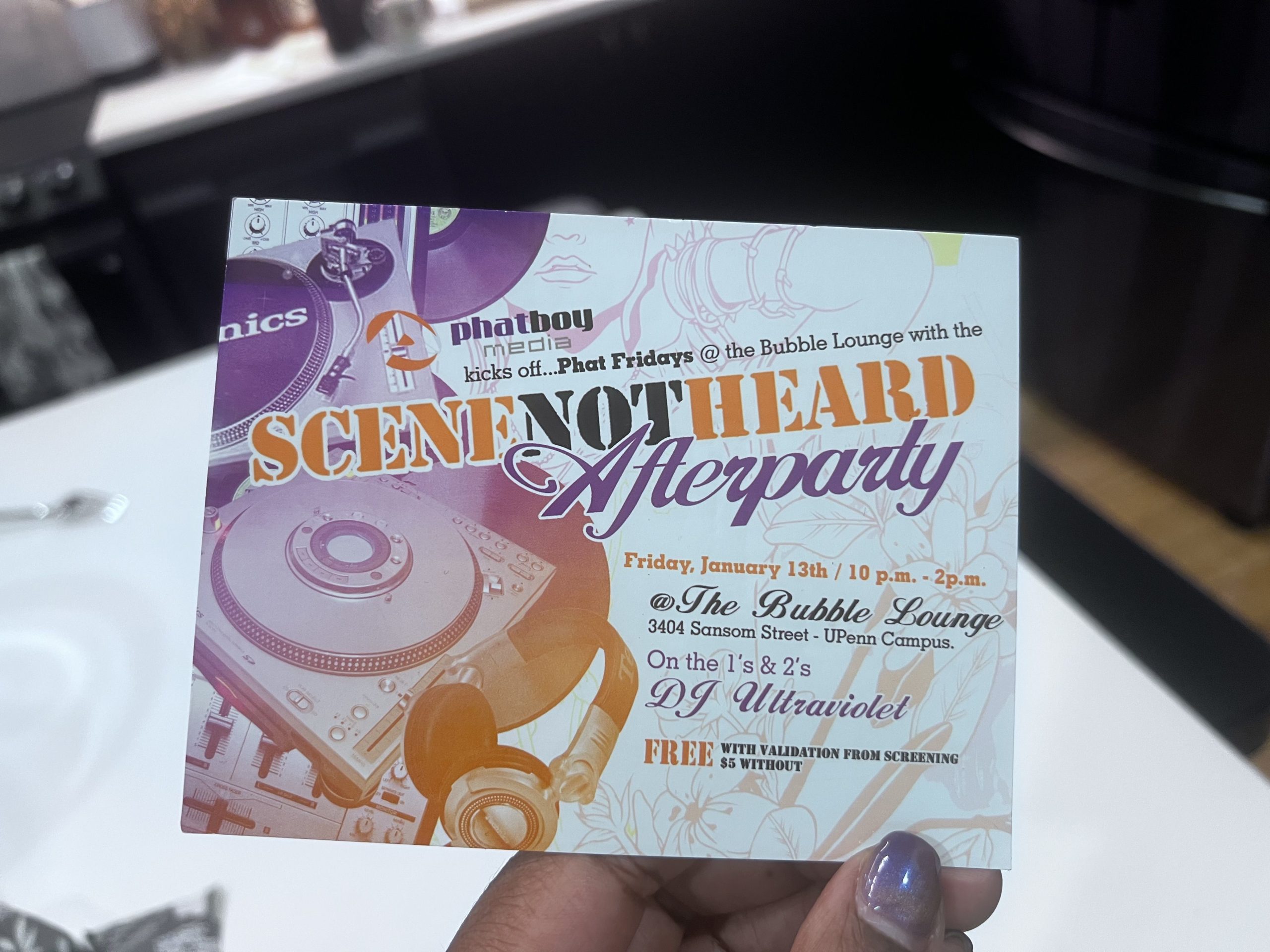
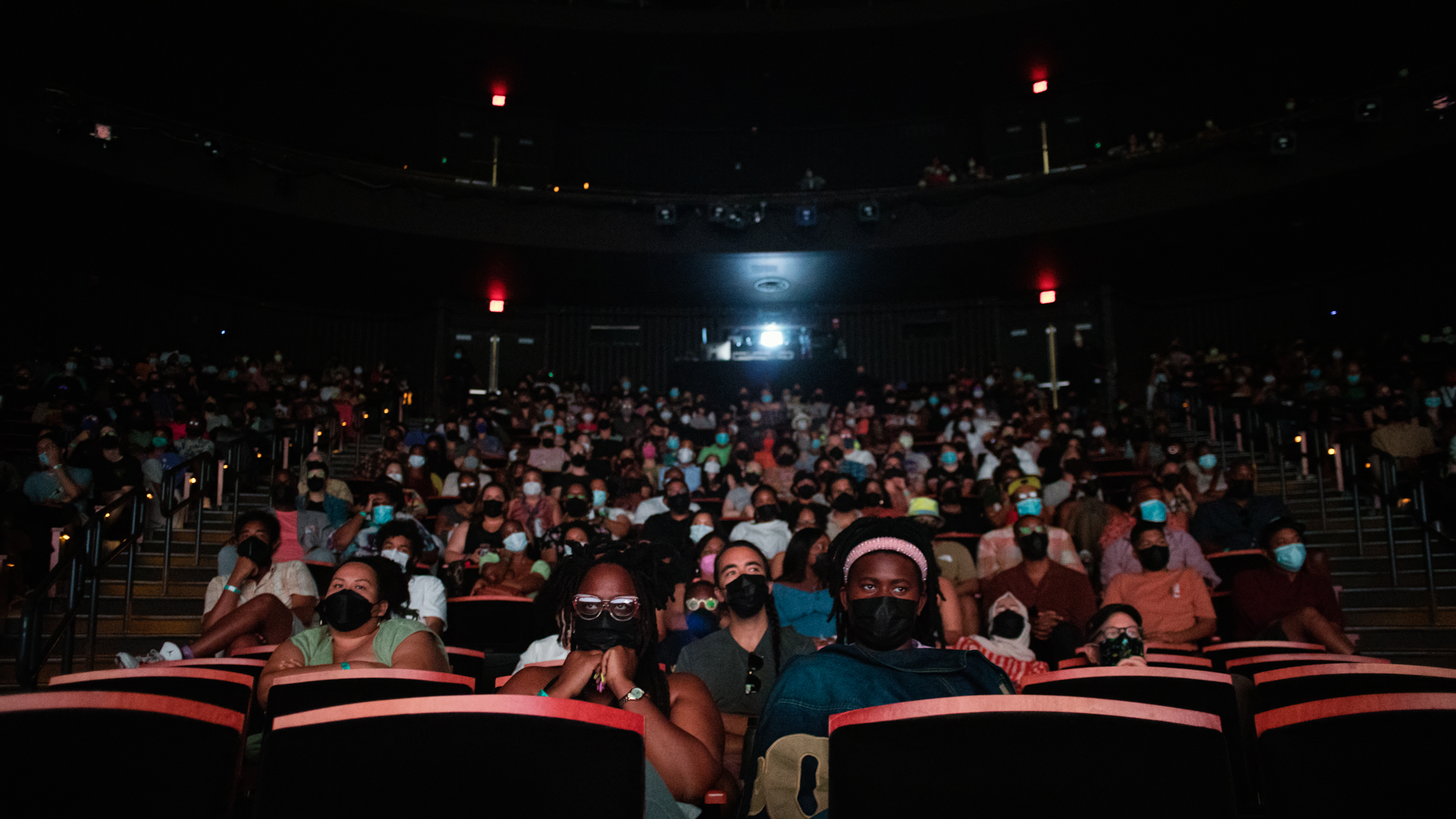
    The flyer for the afterparty to the 2006 screening of Maori Karmael Holmes’ “Scene Not Heard” at the International House.Courtesy of Maori Karmael Holmes

    Bahamadia cries, recalling how hard it was to break through and how in 2005 she was fighting to remain relevant.

    That was 20 years ago. I wondered aloud how she felt now. Holmes wasn’t sure.

    Bahamadia is invited to the screening but hasn’t RSVP’d yet. By the end of Scene, it’s clear that Philly B-girls of the late ’90s and early aughts made a way for Cardi, Megan, Tierra Whack, Latto, and Doechii to find their footing in the industry.

    “There is so much more visibility for women in hip-hop now,” Holmes said. “It used to be you got one at a time. Nicki Minaj was the last of that era.”

    The old and the new at the 15th BlackStar

    Scene is one of 91 films from 43 countries featured in the 2026 BlackStar Film Festival, more than double the number of films shown at the first fest in 2012. The festival runs Thursday through Sunday.

    This year’s standouts include The Keeper, a horror film by Tananarive Due and her husband, Steven Barnes, scheduled for Saturday, 8:30 p.m., at the Perelman Theater.

    Ethiopian filmmaker Haile Gerima’s five-part documentary Black Lions – Roman Wolves: The Children of Adwa will be screened throughout the four-day fest, culminating into a closing-night showing.

    “It is the corrective story of the Ethiopian resistance to Italian occupation in Ethiopia,” explained festival director Nehad Khader.

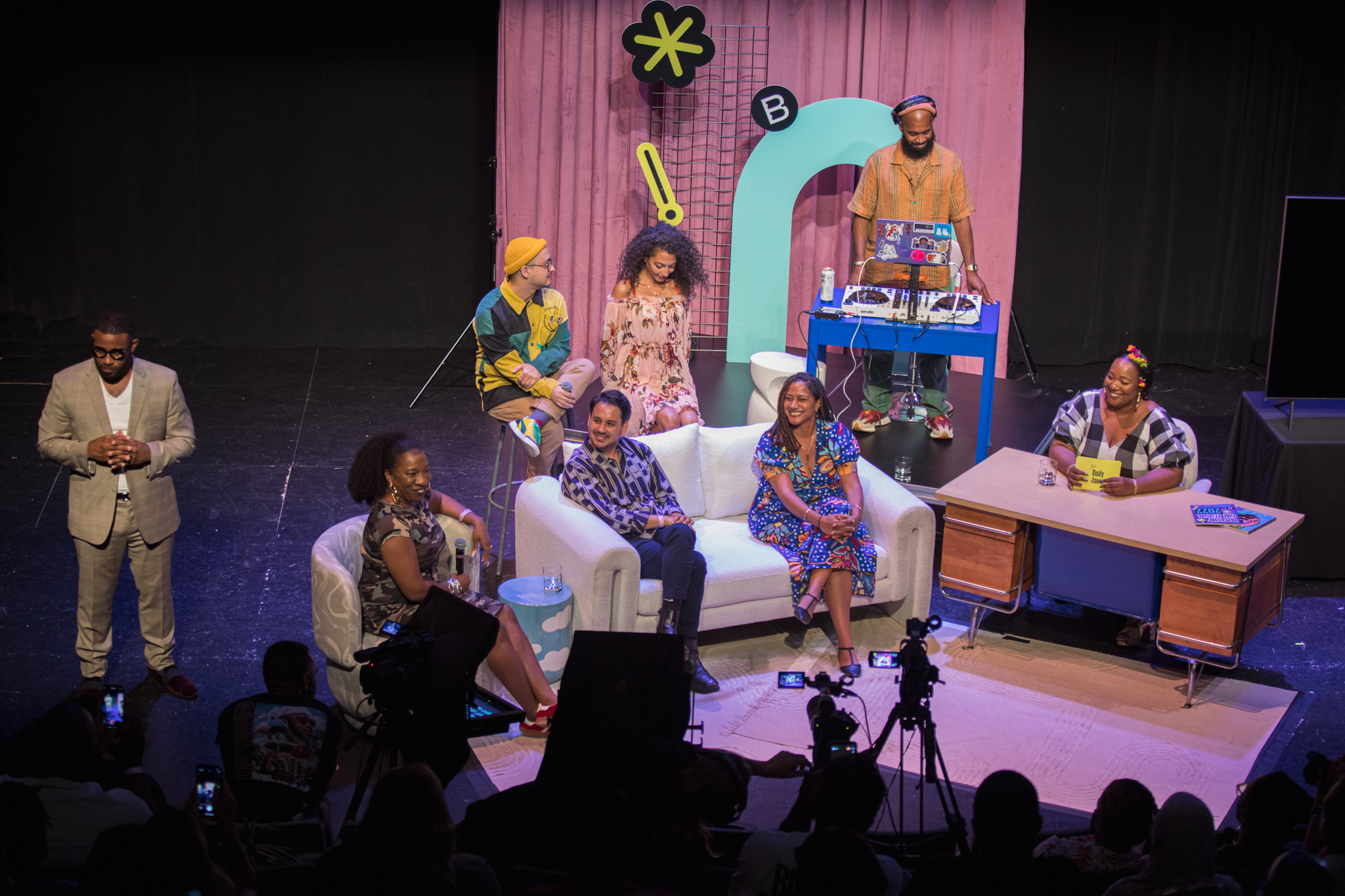
    The Daily Jawn Morning Show will return to the Kimmel. BlackStar’s health and wellness program has grown more robust over the years, featuring daily yoga, acupuncture, and breathing sessions.

    The Daily Jawn stage at the 2023 BlackStar Film Festival.Daniel Jackson for BlackStar Projects

    Earlier this year, Scene went through a 2K restoration and was transferred to a digital file. It is one of two retrospective films featured at the festival this year. Showing throwbacks, Khader says, pays homage to the independent filmmakers from previous generations.

    The second is A Different Image, a 1982 film by Alile Sharon Larkin, exploring Black women’s beauty standards. It will be screened Sunday, Aug. 9, at the Wilma Theater. Like Scene, it speaks to how today’s generation of Black women’s mothers and grandmothers demanded to be seen on their own terms, setting the stage for their agency in this millennium.

    “We have so many newcomers to BlackStar,” Khader said. “People of this generation may not know these stories. Scene Not Heard is a revival of Philly history, but it’s also Maori’s backstory.”

    ‘When people went to the culture’

    Holmes, who is from Los Angeles, moved to Philadelphia from Washington, DC in the early aughts, completed an MFA program at Temple in 2005. Scene debuted in 2006 at the International House to a standing-room-only audience of more than 400 people. The film cost $16,000 to make.

    After its Philly run, Holmes screened the film at more than 40 hip-hop, women’s, music, and movie festivals between 2006 and 2007. It won best documentary at the Denver Pan African Film Festival and best short documentary at the Trenton Film Festival, among other awards.

    The BlackStar Film Festival in Philadelphia puts Black, brown, and Indigenous artists center stage. Image is from 2022.Daniel Jackson for BlackStar Projects.

    Scene, however, didn’t launch Holmes’ film career. She instead began building platforms for other artists to show their work. In 2007 and 2008, Holmes partnered with the Jazzyfatnastees Mercedes Martinez and Tracey Moore to create the Black Lily Film &Music Festival. It ran for two years.

    BlackStar kicked off in 2012. Philadelphia scholar Yaba Blay named the fest after Marcus Garvey’s early 20th-century shipping line Black Star.

    “We launched with 40 films, from four continents over four days,” Holmes said.

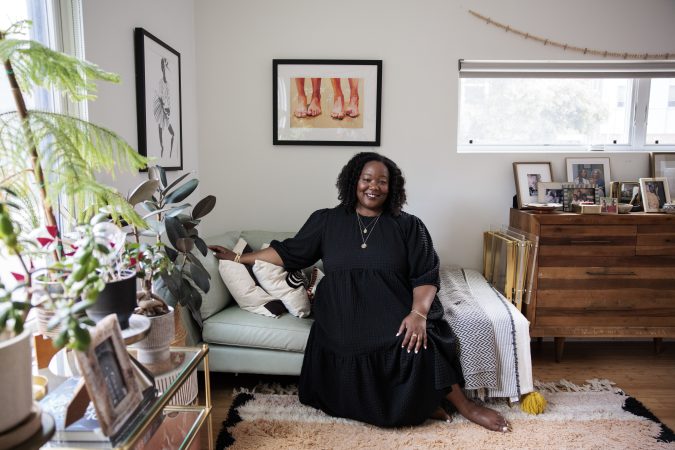
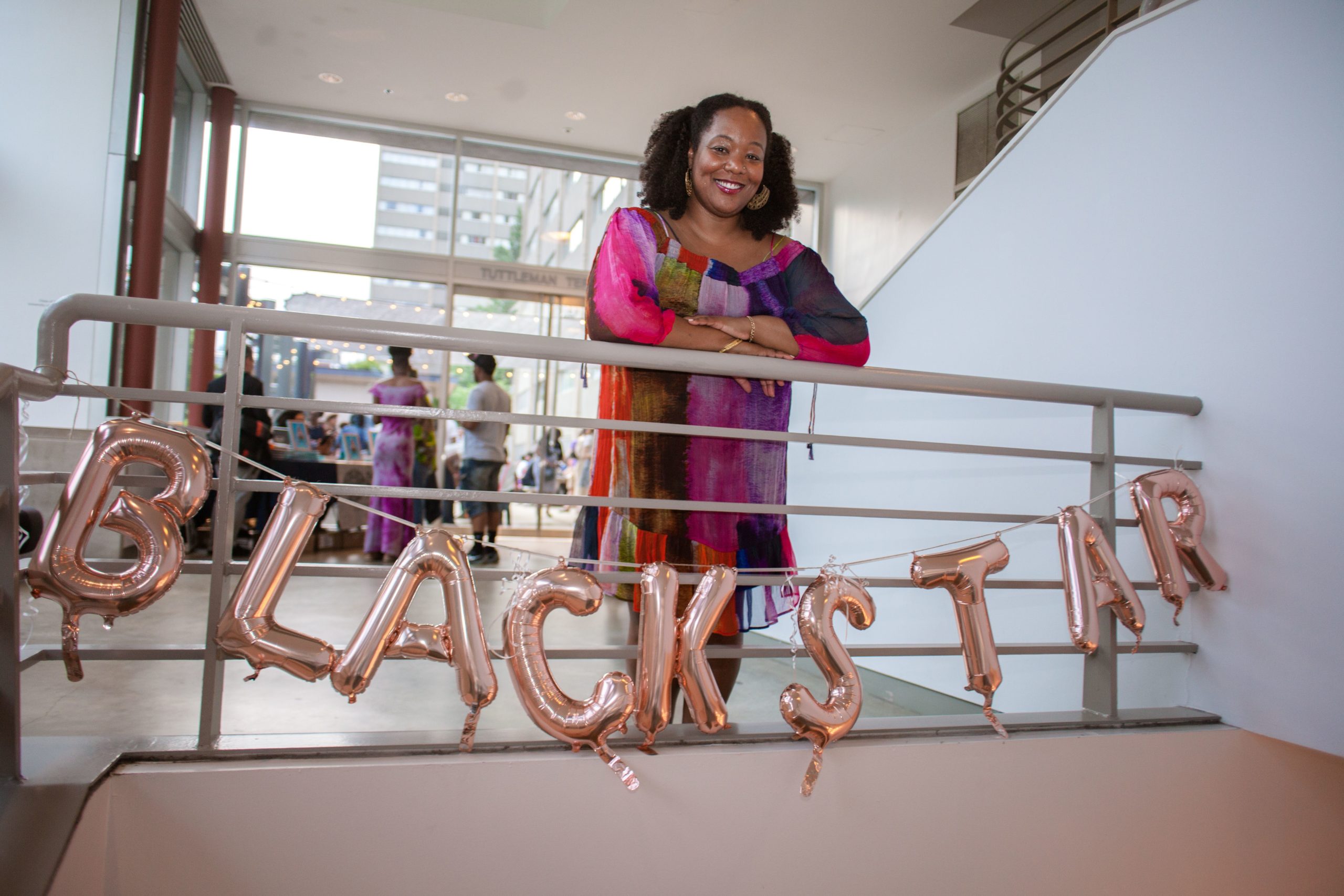
    BlackStar Film Festival founder Maori Karmael Holmes in 2021.Daniel Jackson

    Today, BlackStar is the crown jewel under the BlackStar Projects umbrella. It operates with a $4 million budget and a staff of 15. It publishes the biannual film journal Seen and hosts the William and Louis Greaves Filmmaker Seminar at Stanford University. BlackStar is a curation partner for programs at the Barnes Foundation and the Philadelphia Museum of Art.

    Currently “Freedom Dreams,” a film exhibit Holmes cocurated at the Barnes with its Fleischner Family vice president for engagement of community engagement James Claiborne, is on view.

    “The through line for me is curiosity,” Holmes said. “Everything I’ve done, from my exhibitions to my films, is because I’m curious about things. I want to figure out how to make things happen. Sometimes I’m teaching myself along the way. But that curiosity is what fuels me.”

    Yesterday’s curiosity leads to today’s conversations.

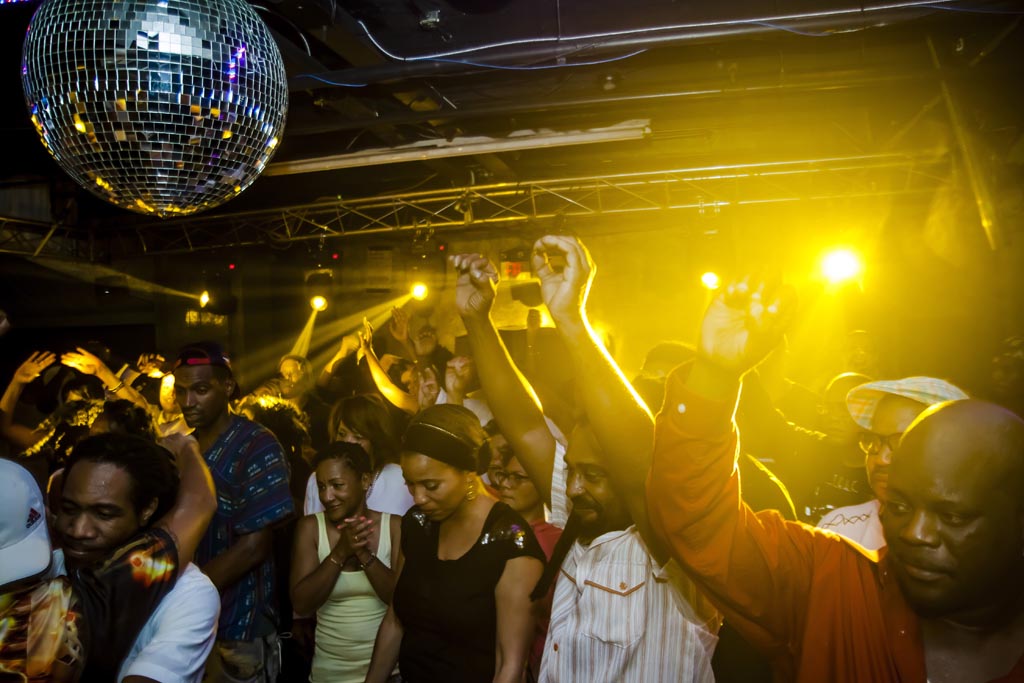
    DJs Sonny James, Lee Jones, Matthew Law, Rich Medina, Ultraviolet, and Mike Nyce at a 2014 party at Fluid Nightclub ( Tim Blackwell / Philly.com )

    Friday afternoon’s screening will be followed up Saturday with a panel featuring Holmes, Martinez, and filmmaker Tina Morton. The conversation is to be moderated by Deesha Dyer, Barack and Michelle Obama’s Philly-born former social secretary and author of Undiplomatic. Dyer was a mover and shaker in the scene back in the day, too.

    Thanks to the screening of Scene, BlackStar promises to be a reunion of Philly’s hip-hop greats. There will be reminiscing. The scene has changed so much.

    The Black Lily is no more. Tastytreats is over. Crimson Moon is closed.

    “That film represents a time, the ending of a time, when people went to the culture,” Holmes said. “Now, culture comes to us on YouTube.”

    This weekend, we can see the culture for ourselves at BlackStar.

    The BlackStar Film Festival 2026 will screen movies throughout Philadelphia from Thursday, Aug. 6, through Sunday, Aug. 9. For a complete schedule, visit BlackStarProjects.org.