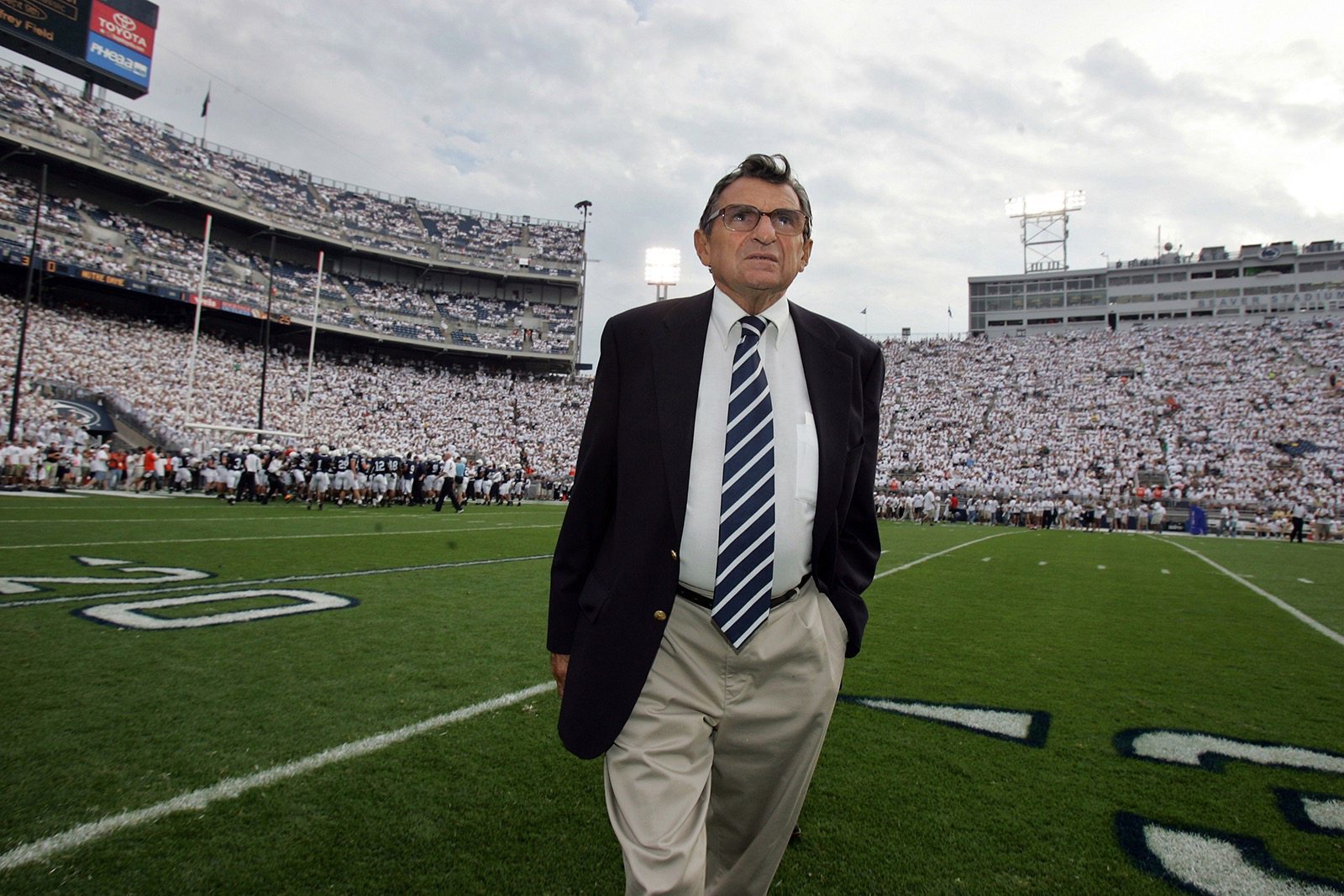
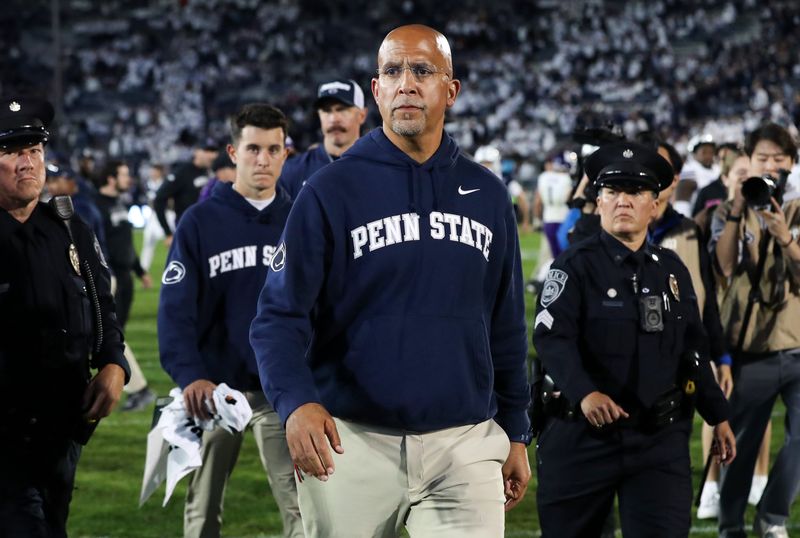
Pennsylvania State University this week announced the opening of the Paterno Family Football Experience Room, named for the school’s iconic — and deeply polarizing — longtime football coach.
The backlash quickly followed.
According to a university news release, the new exhibit — which will be part of the Penn State All-Sports Museum inside Beaver Stadium — will include a slate of features, including Paterno’s original office desk and personal artifacts from his six-decade tenure at the school.
“Penn State Football’s history belongs to generations of student-athletes, coaches, staff, and supporters who helped build this program,” Pat Kraft, Penn State’s vice president for intercollegiate athletics, said in a statement. “This room gives us an opportunity to preserve that history, present it thoughtfully, and create an experience that connects the proud tradition of Penn State Football with its future.”
The release did not directly address how the university settled on the name of the new exhibit, saying only that the school’s athletics department “received a lead gift from an anonymous donor supporting the creation and naming of the Paterno Family Football Experience Room.”
In an email Wednesday, Leah Beasley, a Penn State deputy athletics director, declined to comment further, directing a reporter to the original news release.
The Paterno Family Football Experience Room is set to open to the public Thursday.
The announcement of the new attraction comes 15 years after Paterno’s coaching career came to an abrupt end, when he was fired in 2011 by Penn State’s Board of Trustees over the program’s handling of child sexual abuse allegations involving longtime assistant coach Jerry Sandusky. Paterno died in 2012 at the age of 85.
And on Wednesday, it quickly rekindled the discourse surrounding Paterno’s complicated legacy.
Critics on social media expressed their disbelief at the university’s decision to name the museum after a man who played a role in one of the biggest scandals in college sports history.
“The WHAT Family football experience room!??!?!?!?!?” wrote one user on X.
“Incredibly tone-deaf,” wrote another.
“Yeah I think I’ll pass on the ‘Paterno family football experience room,’” said another.
In an interview Wednesday, Penn State booster Michael Kirschner — who along with wife Patty helped fund the Paterno desk exhibit and historical display in the new project — said he supported the use of the Paterno name.
“I am OK with it,” he said. “Those of us who sit on the Paterno side realize that the character of the man was not such that he would do something like that, and he’s done so much for Penn State that we have an allegiance to him that is lasting.”
Brandon Short, a former Penn State football captain and NFL linebacker who now serves on the school’s Board of Trustees, also praised the announcement.
“As a two-time football captain, PSU Trustee, and Letterman, I’m proud to see the Paterno Family Football Experience Room coming to Beaver Stadium,” Short wrote in a social media post. “Been working on this for a while — grateful it’s finally happening. We Are!”
On the field, Paterno’s success was indisputable. From 1966 to 2011, the coach amassed a 409-136-3 career record, becoming the winningest coach in major college football history. He led the Nittany Lions to two national titles, five unbeaten seasons, and 37 bowl appearances.
But to many, those achievements were far overshadowed by the coach’s role in the case of Sandusky, who was accused of using his association with Penn State football to groom boys for sexual abuse.
Sandusky was eventually convicted of 45 counts of sexual abuse involving 10 boys over the span of 15 years. (Last week, a judge agreed to a hearing in the case after a man said he wanted to recant his allegations against Sandusky.)
In a 2012 report commissioned by the university, former FBI Director Louis Freeh found that Paterno, school president Graham B. Spanier, athletic director Tim Curley, and vice president Gary Schultz “failed to protect against a child sexual predator harming children for over a decade.”
“The most powerful leaders at the university … repeatedly concealed critical facts relating to Sandusky’s child abuse,” the report said.
Shortly after the release of the Freeh report, then-Penn State president Rodney Erickson announced that the seven-foot statue of Paterno in front of Beaver Stadium was being removed, calling it “a source of division” and “an obstacle to healing.”
The coach’s name still adorns the university’s main campus library, The Pattee Library and Paterno Library — and many within the Penn State community have remained vocally supportive of the coach and his legacy.
What effect, if any, the exhibit’s name has on prospective interest remains to be seen — though Kirschner, for his part, doesn’t appear overly concerned.
“The lines to see the exhibit,” he predicted, “will be longer than the lines to the Creamery.”
The Matt Campbell era will officially begin at 3:30 p.m. Saturday against Marshall in Beaver Stadium.
It’s hard to say what Penn State could achieve this year, with plenty of new players and coaches expected to blend with the guys who stuck around.
But after spring and fall camp, there’s more of a clear picture of how this team will take shape. With that being said, here are five things to know about the Nittany Lions ahead of their 2026 campaign.
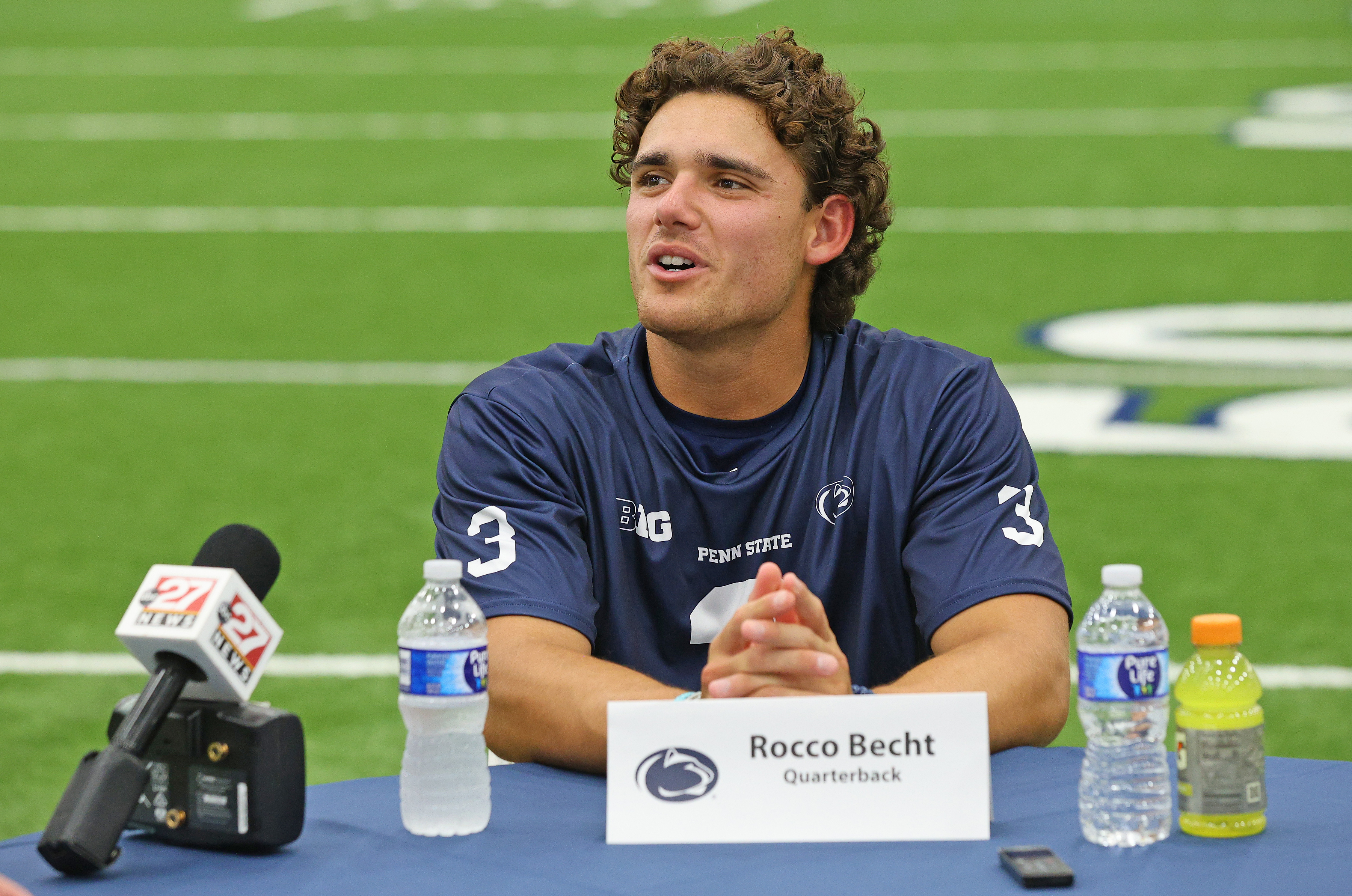
While fifth-year senior Rocco Becht isn’t one of the big names in college football this season, he’s one of the most productive returning quarterbacks.
The Iowa State transfer won 26 games as the starting quarterback for the Cyclones over the past three seasons, the most of any returning starter in the country. Becht has thrown for 9,274 yards across his career with 64 touchdowns and a 60.7% completion rate.
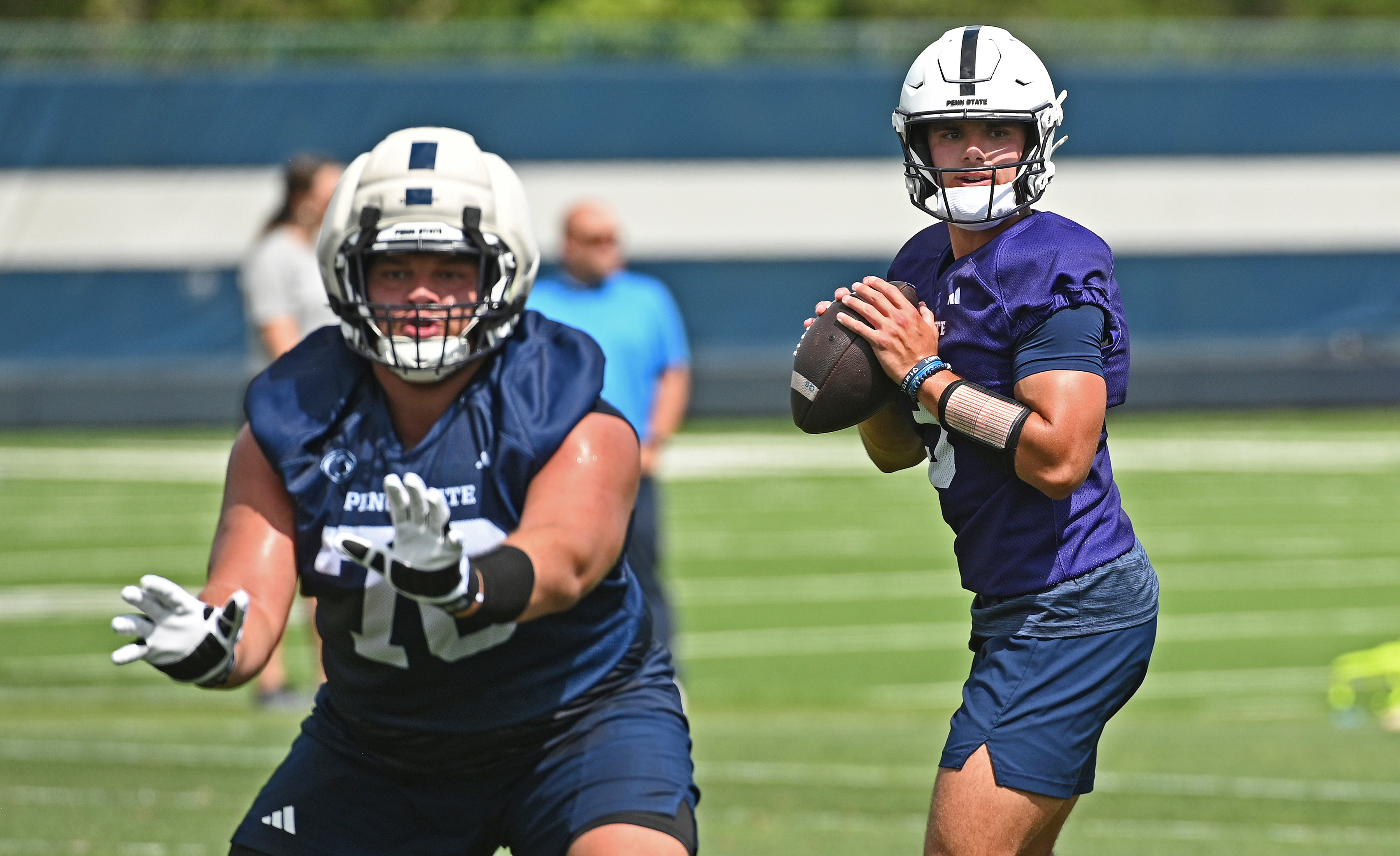
Rocco Becht is the winningest returning quarterback in college football.Craig Houtz / For The Inquirer
Last year was Becht’s least productive season as a starter at Iowa State — he finished with 2,584 passing yards, compared to his 3,505 in 2024. In October 2025, he suffered an AC joint sprain in his throwing shoulder, then in November, he tore the labrum in his left shoulder that required offseason surgery.
Now, Becht is fully healthy after being limited in the spring and ready to bounce back from his less-than-ideal campaign last year.
“I think Rocco’s in a completely different space than I’ve seen him really in his career,” Campbell said on Aug. 20. “What Rocco brings to the table is a guy that’s already gone through the highs of college football, the lows of college football. He’s been in the same system now, going into his fifth year, and he’s played at an elite clip every day.”
Iowa State influx
Campbell brought 24 players with him from Iowa State, and that doesn’t even include those from his 2026 recruiting class who wound up signing with him at Penn State.
Eleven of those transfers are projected starters, with six on offense and five on defense. Becht is the most notable, but junior safety Marcus Neal Jr., senior running back Carson Hansen, senior tight end Benjamin Brahmer, redshirt senior safety Jeremiah Cooper, and wide receivers Chase Sowell and Brett Eskildsen are also set for big roles.
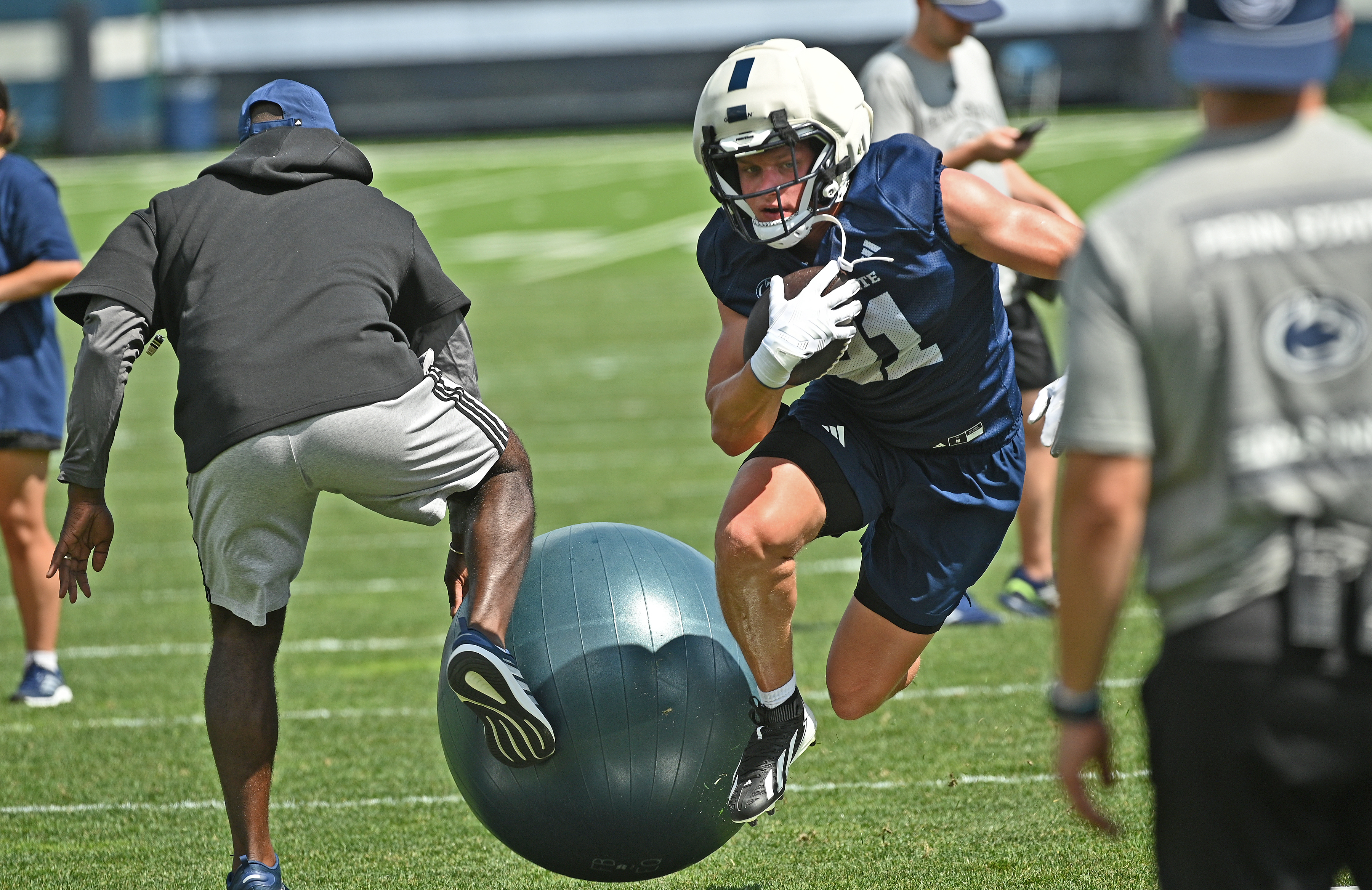
Carson Hansen (21), a transfer from Iowa State, should play a big role in Penn State’s offense this season.Craig Houtz / For The Inquirer
Most of Penn State’s offensive coaching staff came from Iowa State as well, including offensive coordinator and tight ends coach Taylor Mouser, offensive line coach Ryan Clanton, and quarterbacks coach Jake Waters.
However, with the large contingent of former Iowa State players, the biggest question mark is whether they can adapt to playing in the Big Ten.
Manageable schedule
FanDuel has Penn State’s win total set at 9.5, as does nearly every other sportsbook. Its odds to win the national championship are plus-7000, while its odds to win the Big Ten are plus-1800.
So why do the Nittany Lions have a high win total if their odds to achieve anything of magnitude are so low?
Their schedule is incredibly favorable. Penn State avoids preseason AP Poll No. 1 Ohio State, No. 2 Oregon, and No. 6 Indiana, with its three hardest matchups coming against No. 14 Southern California, No. 16 Michigan, and No. 17 Washington.
The Nittany Lions also play three of the four teams with the lowest projected win totals in Maryland (5.5), Northwestern (5.5), and Purdue (3.5), according to FanDuel. Wisconsin and Minnesota are the other two Big Ten games they’ll play, with both holding projected win totals of 6.5.
Penn State can easily go 10-2 in Campbell’s first season and would just need to win one of its three tough matchups. If that’s the case, 10 wins could be good enough to make the College Football Playoff as a Big Ten team.
Deep running back room
Nicholas Singleton and Kaytron Allen led Penn State’s backfield for the last four seasons, so a big change is coming in 2026 as both moved on to the NFL.
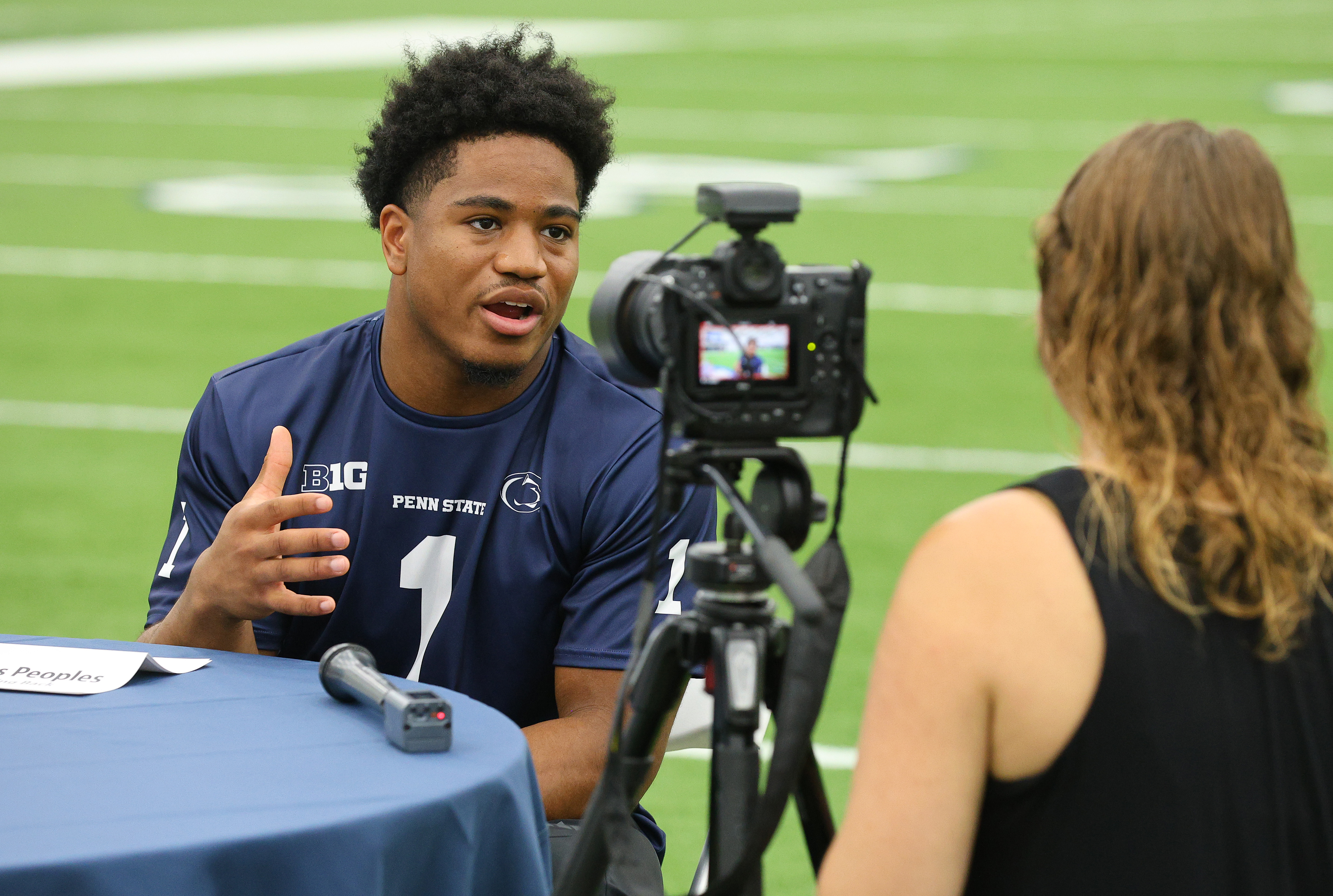
Hansen, Ohio State transfer James Peoples, returning redshirt sophomore Quinton Martin Jr., and returning redshirt junior Cam Wallace will fill the room.
All four could see meaningful minutes this year, but Hansen will likely lead the way, as running backs coach Savon Huggins said he would turn to the senior in a fourth-and-1 situation.
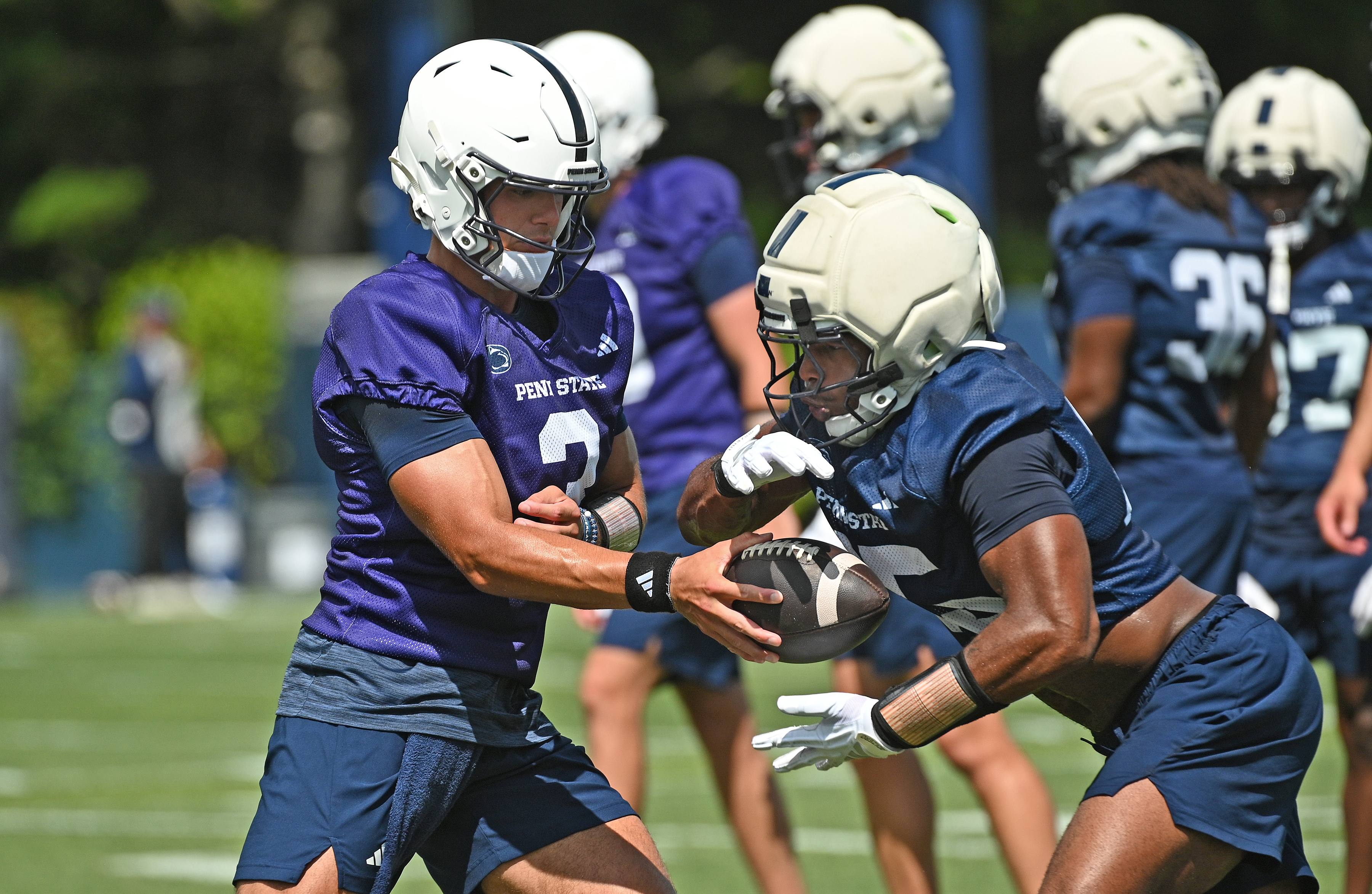
Penn State running back James Peoples transferred in this offseason from Ohio State.Craig Houtz / For The Inquirer
Peoples, Martin, and Wallace have vastly improved this offseason, according to Huggins, but still need to be more consistent if they want to challenge Hansen for the top spot on the depth chart.
“[They] all have had success and some of them haven’t,” Huggins said. “I told them all, ‘Listen, I don’t decide [your impact], you guys do,’ and that’s the cool thing about the competition. I want to see what these other guys do, and they’ve all done a great job when they actually do that. Some of them haven’t come through, but I think it’s all learning experiences.”
Spring to fall evolution
When Penn State began spring practice, time was spent building chemistry, learning new playbooks, and forming a team identity.
Fast-forward to fall camp, defensive coordinator D’Anton Lynn said players are speaking more confidently in meetings about his scheme, and Campbell said they learn more about this team “every single day.”
“We’re growing. Every single day is different,” Becht said. “For all of us, we’re just continuing to be on the same page, continuing to help make that relationship on and off the field, and continuing to grow day in and day out.”
On Christmas mornings while growing up in Northeast Ohio, Matt and Scott Campbell were excited to fulfill what became a yearly tradition. Most kids raced toward the Christmas tree to open presents and celebrate the holiday, but not the two brothers, who were born four years apart. They raced out the door to get a football game in, even when snow covered the ground.
Those games were one-on-one, mano a mano. Matt “had quite an impressive [size] advantage on me,” Scott said. The memory proved instructive of his older brother’s competitiveness, as Matt steps into his third college football head coaching job.
“It was not uncommon to get your favorite football jersey for a Christmas present. And then Riddell was giving out all those football uniforms that came with shoulder pads, leg pants, and helmets,” Scott Campbell told The Inquirer of his earliest football memories with Matt. “Then you go outside [to play against Matt].
“I never won these games.”
Football runs deep for the Campbells. Rick Campbell, Matt and Scott’s father, was a high school coach at Jackson High School in Massillon, Ohio, and later went into administration.
The sport quickly became the center of Matt’s life, too.
He would attend two-a-days with his dad before his school day started.
“My greatest childhood memories are being in the locker room and being on the football field with my dad, watching him lead and coach a football team,” Matt Campbell told The Inquirer in July. “I wanted to help give back and make a difference [as a coach] because so many people had done that for me.”
(function() {
var l2 = function() {
new pym.Parent(‘campbell2’,
‘https://media.inquirer.com/storage/inquirer/projects/innovation/arcgis_iframe/campbell2.html’);
};
if (typeof(pym) === ‘undefined’) {
var h = document.getElementsByTagName(‘head’)[0],
s = document.createElement(‘script’);
s.type = ‘text/javascript’;
s.src = ‘https://pym.nprapps.org/pym.v1.min.js’;
s.onload = l2;
h.appendChild(s);
} else {
l2();
}
})();
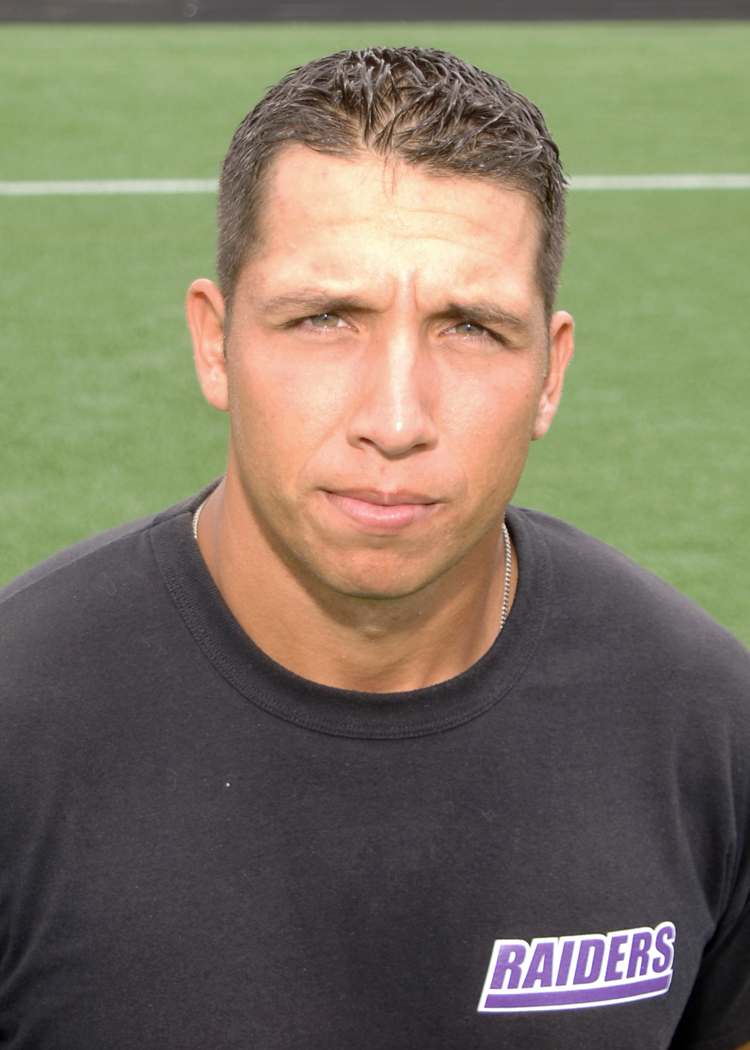
From those early days in their backyard, to stops at Pittsburgh and Mount Union as a player, then coach, and several other stops before landing his highest-profile opportunity yet at Penn State, Campbell has remained the same, his former teammates, players, and coaches across his 24-year coaching career say.
“Anybody that knew younger Matt or played with him or crossed paths with him, I don’t think anybody is surprised [by] the success he’s had,” Indianapolis Colts tight end coach Tom Manning said by phone shortly after Campbell was hired at Penn State. “Obviously, he’s a very good football guy in terms of X’s and O’s, but I think the thing that makes Matt dynamic is his ability to inspire others, certainly a great teacher, but he has this ability to have a relationship with everybody that is authentic and real.
“He creates this culture of unification, of toughness, of having a chip on your shoulder. And I think that every person that’s ever played [in] his football program or coached for him, they just feel like they’re part of something a little bit bigger than themselves.”
Matt Campbell (center) makes a tackle during a game for Mount Union during his playing days.Courtesy of Cockrill’s Studio
Embracing the ‘abnormal’
Campbell, now 46, developed into a standout defensive end at Perry High School in the 1990s. Matt was coached there by Keith Wakefield, who is “as inspirational as anybody in his life,” Scott said.
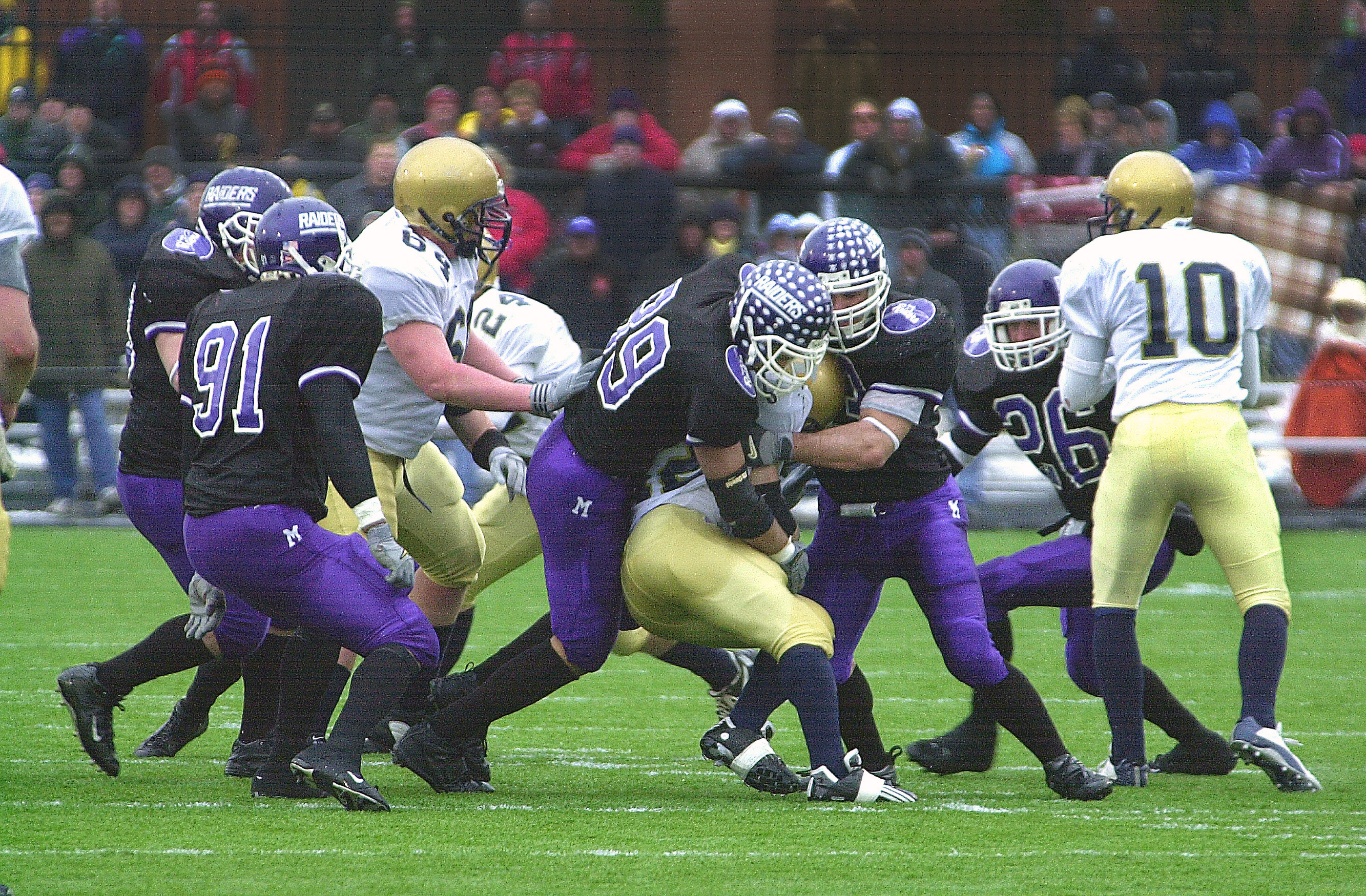
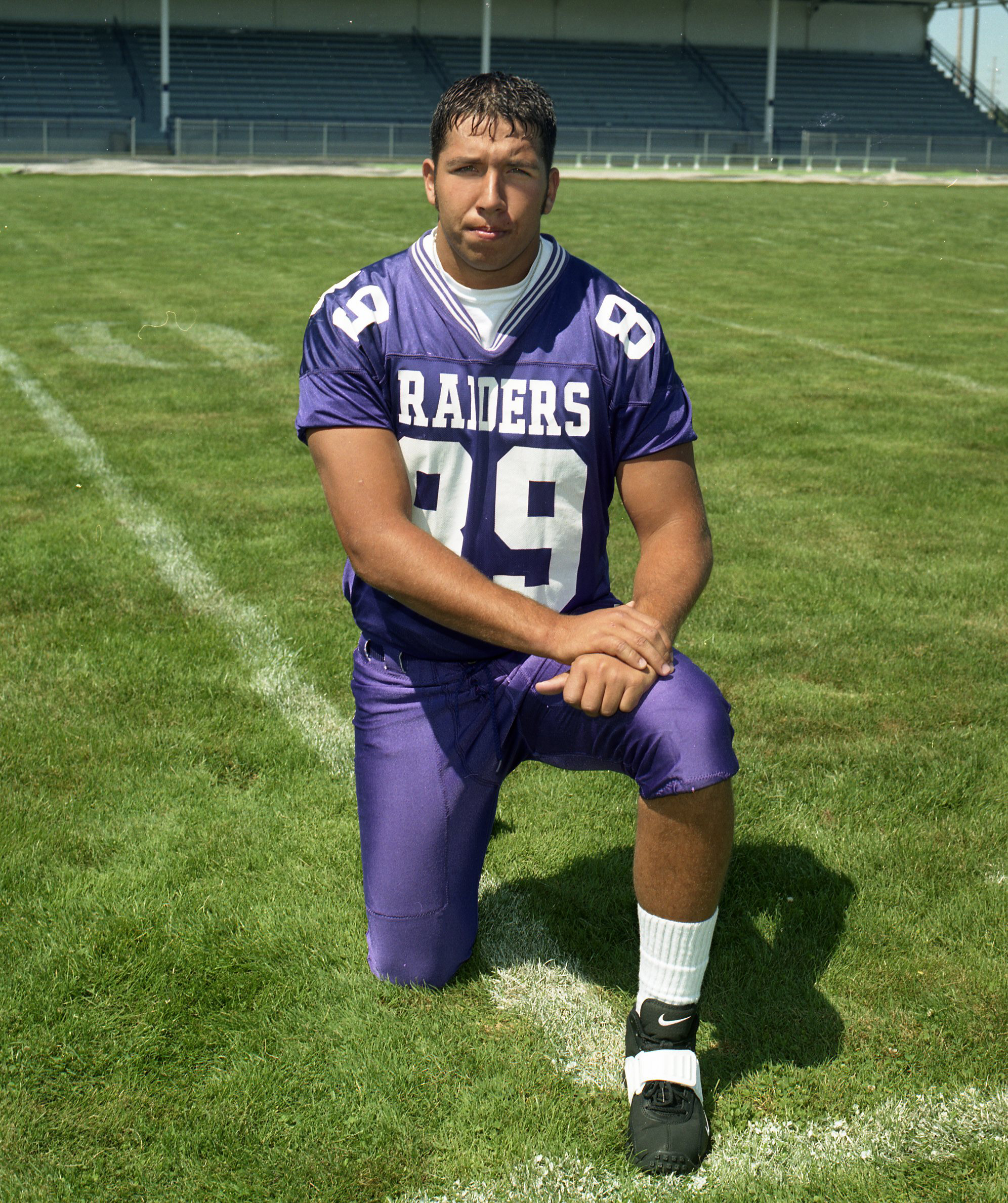
Out of high school, he accepted a scholarship from Pitt, but after the team went 2-9 his freshman season in 1998, he transferred to Division III Mount Union — a move that not only defined his playing and coaching career, but moved him closer to home.
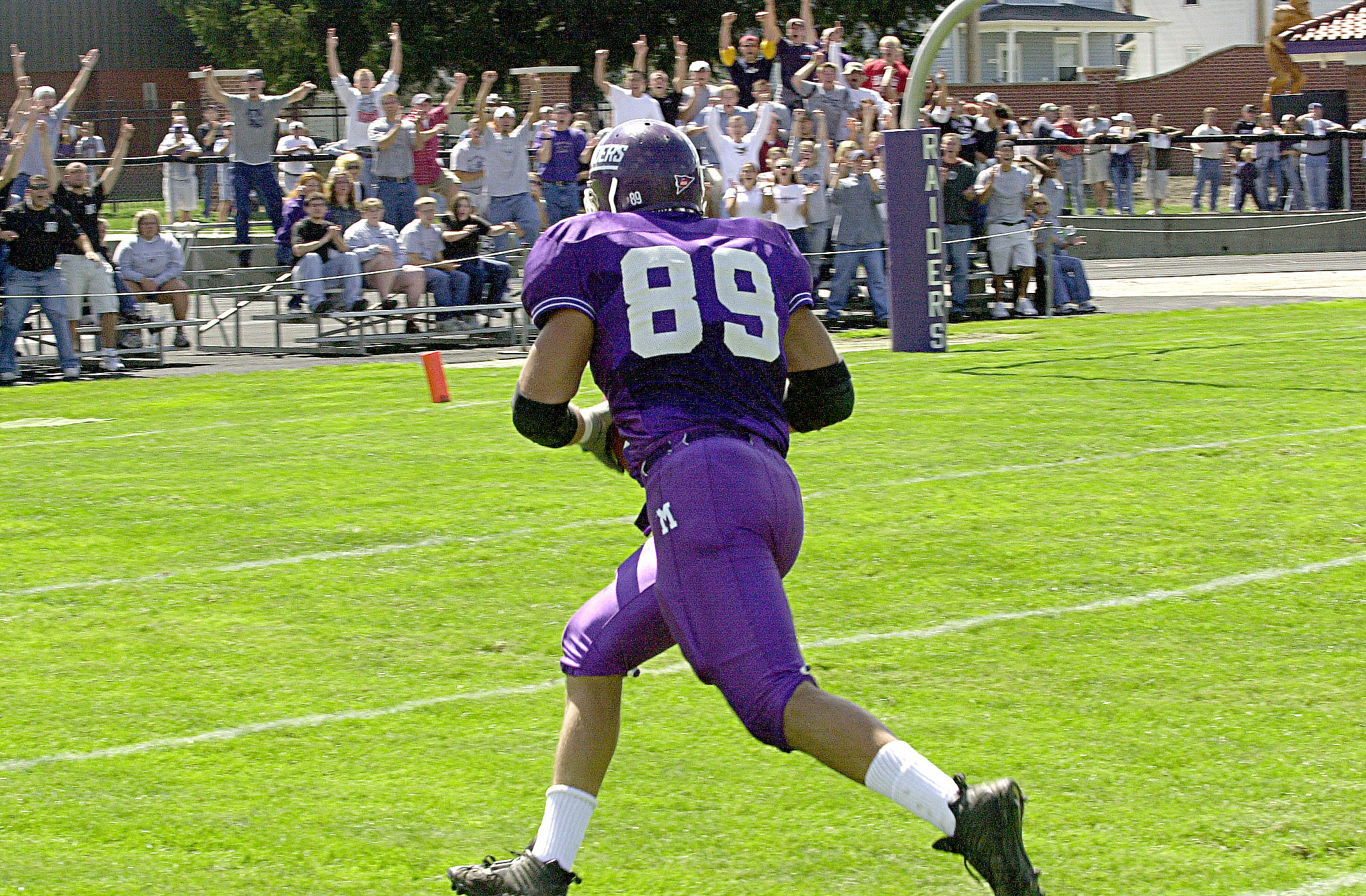
Campbell won three D-III titles from 1999 to 2002 at Mount Union, was named an All-American twice, and was the Ohio Athletic Conference defensive lineman of the year in back-to-back years in 2001 and 2002. But it was during his playing days there, under legendary coach Larry Kehres and alongside lifelong friends and coaching contemporaries, where Campbell first showed an inkling toward his future career.
Matt Campbell played defensive line at Division III school Mount Union after spending his freshman season at Pitt.Courtesy of Cockrill’s Studio
“The connection of understanding the value of ‘People don’t care how much you know until they know how much you care,’ and you go back and you say, ‘Man, why? What made the great coaches that you had impactful in your life?’” Campbell said. “It was a transformational experience rather than a transactional journey. And you’re talking about two of the winningest coaches in the history of Ohio high school football, and certainly in all of college football [in Wakefield and Kehres].
“I think their greatest gift was their gift to connect … and find a way to help make their players better, because their belief [of], ‘Man, they cared about them and they wanted to have a real relationship with them.’ So I think that foundation has been huge.”
Often understated about Campbell’s background is how impactful he was on the field for the perennial title contender. His 182 assisted tackles and 55 tackles for loss rank fourth in school history, his 26 career sacks are seventh, and he is 19th in total tackles (256).
Matt Campbell played and coached at Division III Mount Union.Courtesy of Cockrill’s Studio
His on-field success, though, was anchored by film study. Campbell would know “the play that was coming by whether it was the formation or certain motions that they do into the boundaries, and he was calling the plays out,” said Scott, who joined his older brother on Mount Union’s football team in 2002. Campbell’s teammates also took notice.
“All of them knew the way that Matt prepared for football games was abnormal,” Scott said.
But what made what Matt was doing abnormal?
“I don’t think it’s uncommon for a player to be obsessed at watching film,” Scott said. “Some people get really good at honing their skills and they want to do it. It’s abnormal when they bring people along with them. So when you might get a kid, like a very talented defensive tackle … and some of these guys that he played with, they’re meeting on a Sunday night and doing hard core [film study] because they want to be ready for the next week.
“When you have gravitational pull to bring the people that either you’re leading, which we are seeing it with him as a coach, or the ones that you’re going to war with as a football player … for them to match your intensity, they were buying into that and they saw, ‘Well, Campbell’s doing that. We have to do it.’”
Added Manning, Matt’s teammate for two years at Mount Union: “He was always in the film room. He was always trying to find an edge, in terms of being a player, and he was a guy that was probably more talented than most of the people that he played, and he still had the work ethic and the attention to detail as a player that I think helped him separate himself even further.”
Matt Campbell was twice named to the College Football All-America team and named Ohio Athletic Conference’s defensive lineman of the year at Mount Union.Courtesy of Cockrill’s Studio
‘Just as authentic’
When Campbell finished his playing career at Mount Union in 2002, he went to Bowling Green to work as a graduate assistant, but returned to Mount Union in 2005 and was its offensive coordinator and offensive line coach for the next two seasons.
The program won back-to-back titles, with a staff that included Eagles coach Nick Sirianni (2004 to 2005), Campbell’s college teammate and former roommate, as defensive backs coach in that first year. Connecticut coach Jason Candle (2003 to 2008), another former teammate, and Syracuse defensive coordinator Vince Kehres (2000 to 2019), Larry Kehres’ son, were on the staff both seasons.
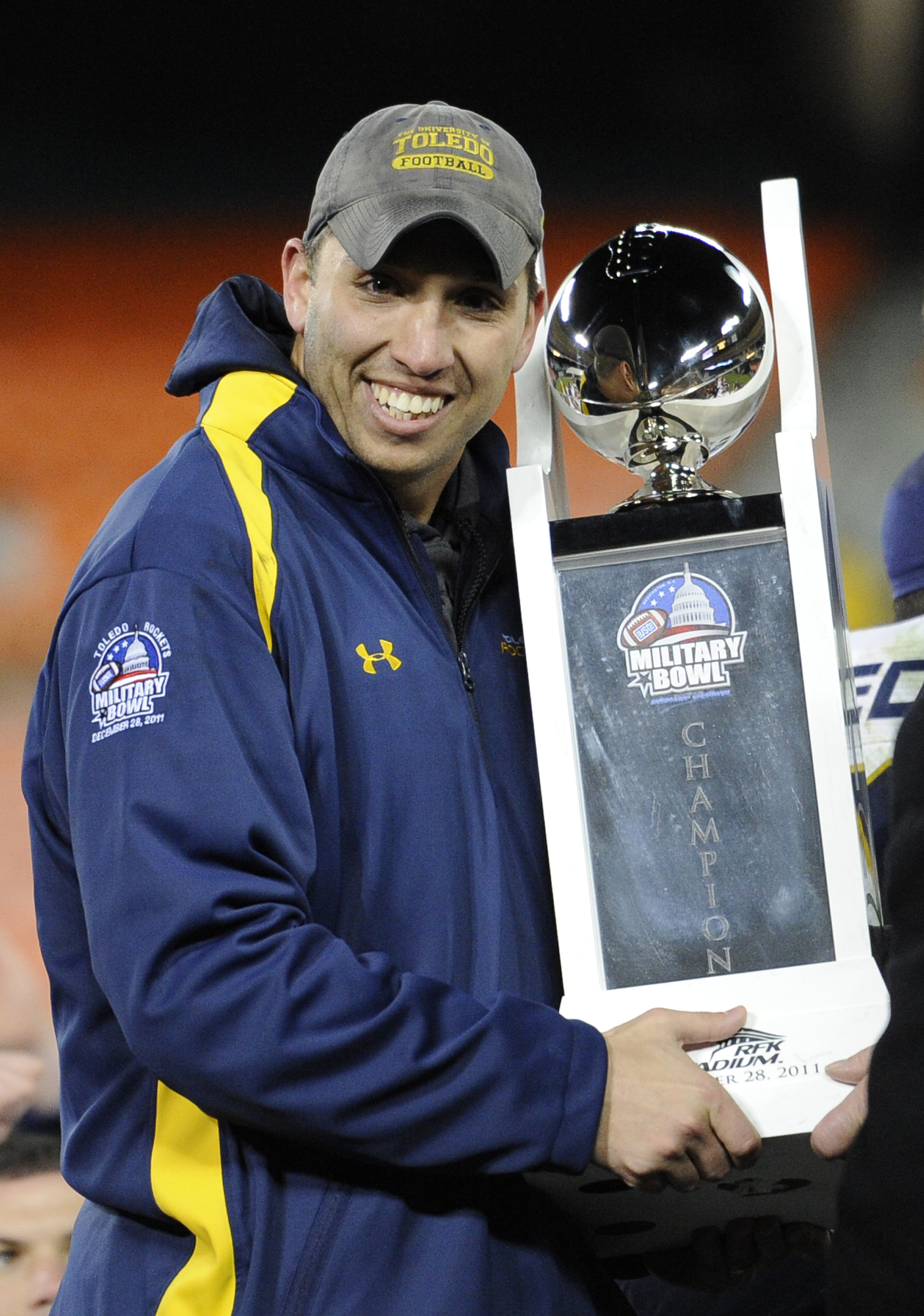
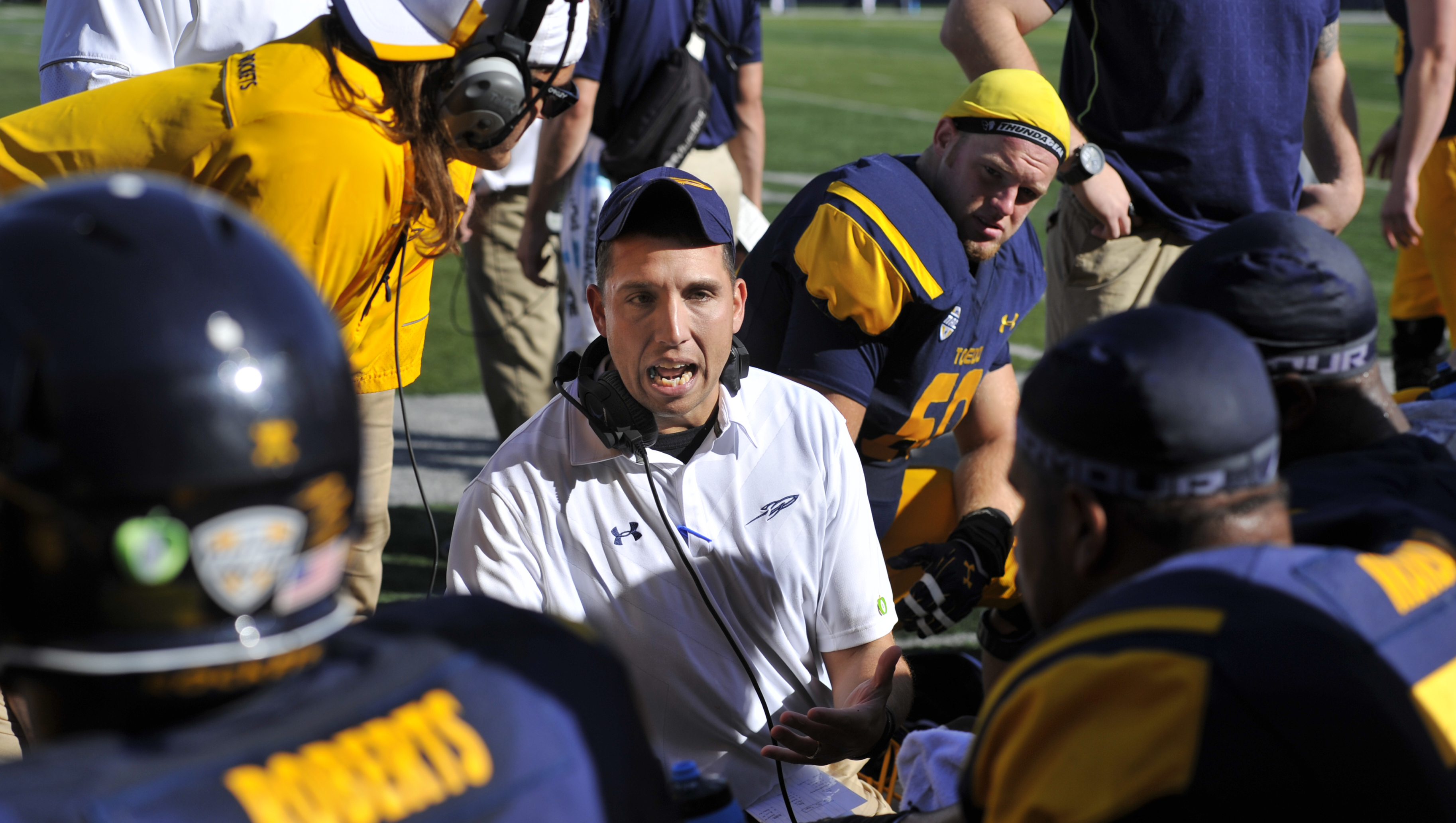
Campbell returned to Bowling Green for two more seasons before landing at Toledo in 2009, first as an offensive line coach and run game coordinator. By 2012, he was the program’s head coach at 32 years old, making him the FBS’s youngest coach at the time.
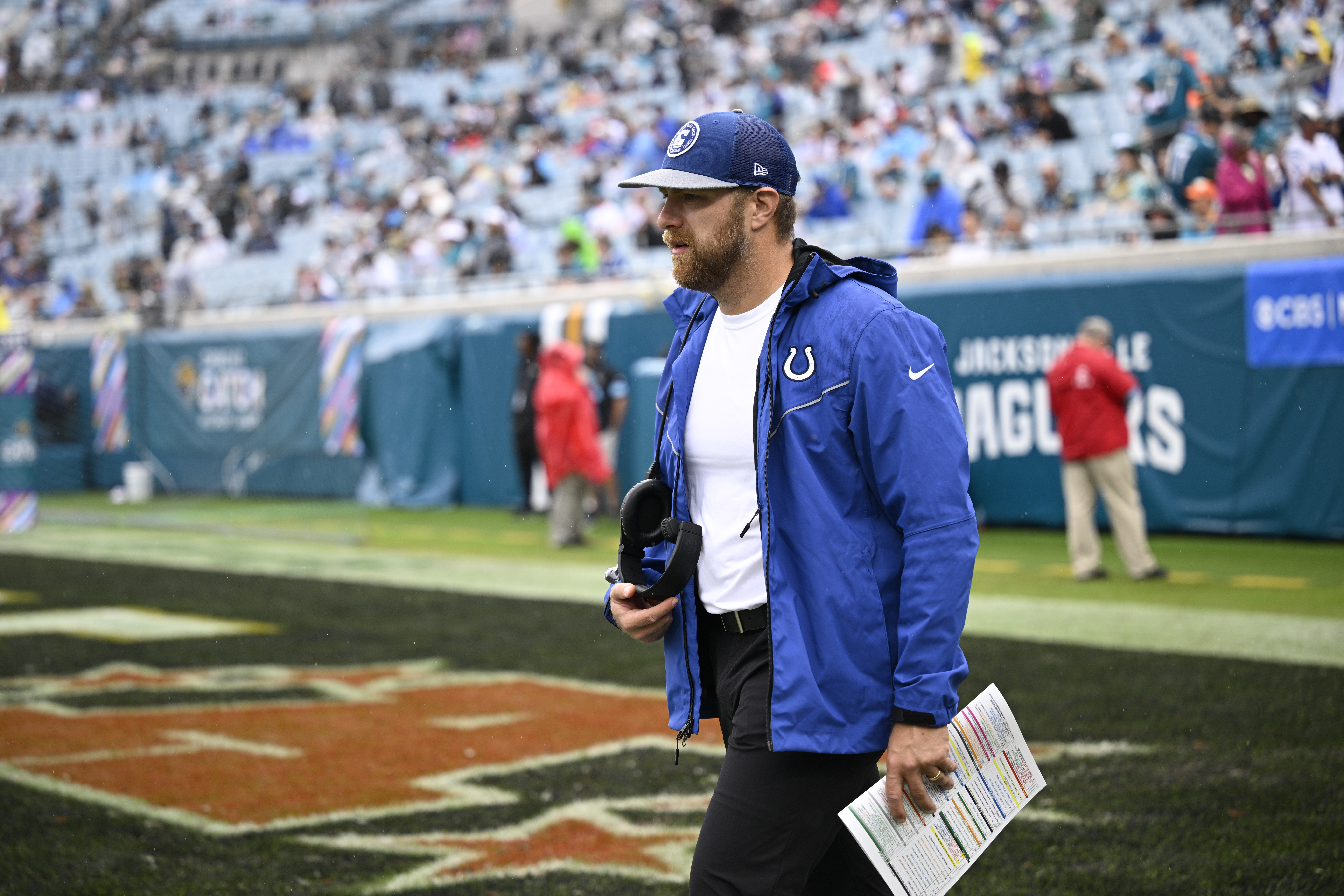
Colts tight ends coach Tom Manning was teammates with Matt Campbell for two years at Mount Union.Phelan M. Ebenhack
What impressed Manning, who also worked at Toledo as a graduate assistant (2009) and later as its director of football operations and offensive line coach, was how quickly Campbell connected with players and recruits.
“What I really recognized the most was that he was different in recruiting, [he had a] dynamic personality, but I was always impressed, and probably what stuck out the most was that when he had recruits, whether up on campus or visiting him, he had a real relationship with a ton of kids,” Manning said. “I was like, ‘Man, I don’t understand how this guy after just a couple brief contacts, has the ability to know so much about him, have real conversations with him.’ … I knew Matt as a younger guy, and now I knew him in the professional world. I was like, ‘Man, the biggest thing about Matt is he’s just as authentic as he was the day that I met him.’”
And that started with his own teammates. Mount Union was “a player-led program,” and Campbell — along with other leaders like Sirianni, Candle, and Kehres — would open their house and “nurture the young kids because that’s the next generation of leaders in that program.”
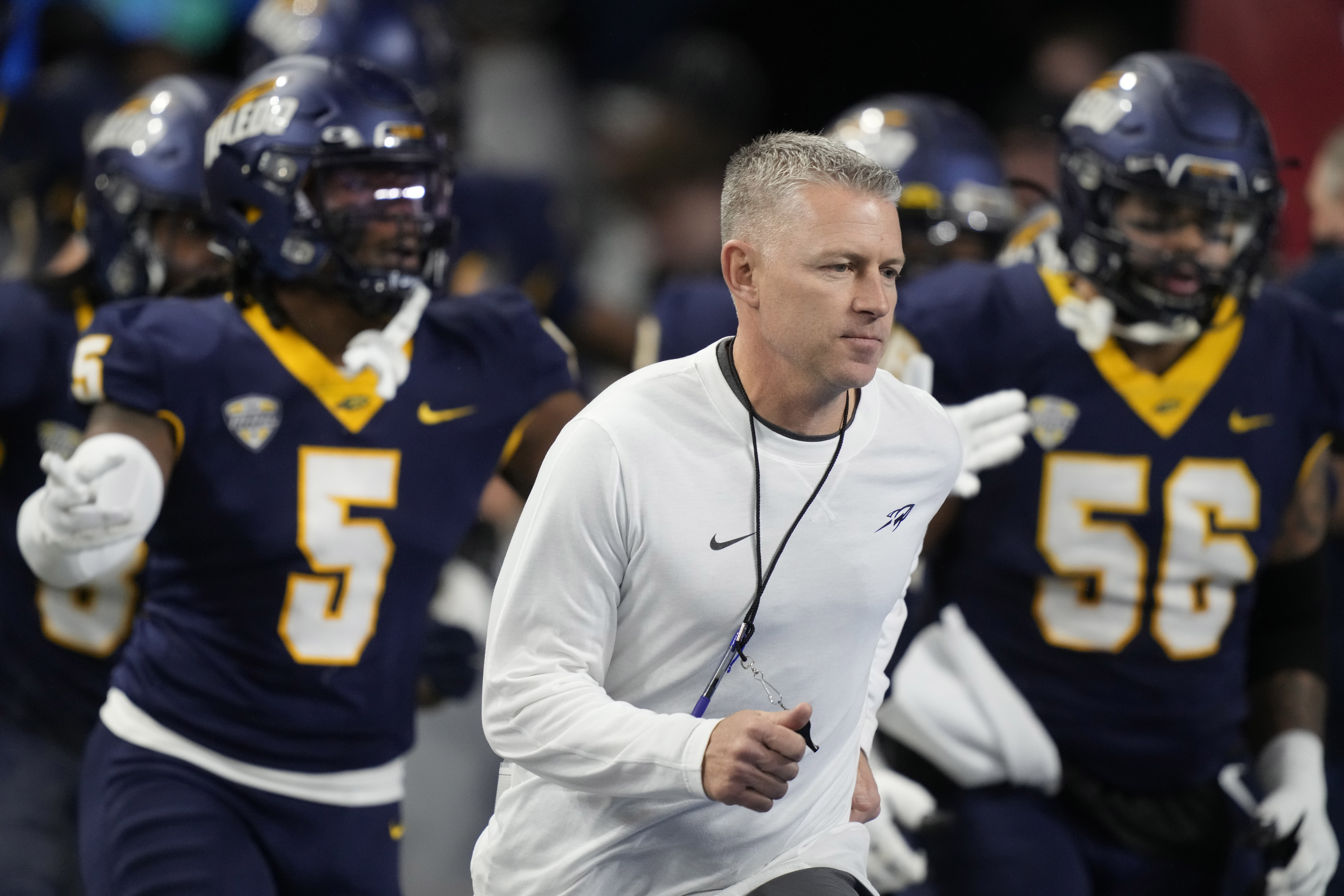
Jason Candle followed Matt Campbell to Toledo in 2009 as slot receivers/tight ends coach.Carlos Osorio
“That’s what that whole program was,” Scott said. “It was a program that was giving way before we even knew it was giving to us.”
Matt Campbell worked closely with Candle, who followed him to Toledo in 2009 as slot receivers/tight ends coach, especially when the former assumed play-calling duties under Tim Beckman.
Candle, who considers Campbell a “true friend” and a “great mentor,” recalled the early “camaraderie of the young assistant coaches that we had at the time.”
“Lots of times you don’t get to work with or alongside with or for your college teammates,” Candle said. “And we’ve been through a lot of battles together as players and certainly as young assistant coaches. [Matt’s] been a guy that I’ve learned a lot of football from and a guy that has certainly earned the right to lead one of the top programs in the country.”
Campbell went 9-4 in his first season leading Toledo, and he compiled a 35-15 overall record before moving on to Iowa State at 36 years old.
Matt Campbell compiled a 35-15 overall record while at Toledo.Nick Wass
Campbell “surrounded himself with young and hungry people,” Manning said, particularly on his offensive staffs at Toledo — which featured future Cincinnati coach Scott Satterfield, future Auburn coach Alex Golesh, and Candle. But it was Campbell “doing things the right way” and never being “anybody that he’s not” that stood out.
“Working for him is was one of the greatest experiences of my life,” said Manning, who worked with Campbell for a total of 12 years between Toledo and Iowa State. “You felt like you were doing something. … You were coaching the whole player. It was about character. It was about teaching kids attitude and effort, the ability to be consistent, and to give a little bit more themselves and to play in a unified front — that’s what he does so well.”
Matt Campbell was the head coach at Toledo from 2012 to 2015.David Richard
‘Dog mentality’
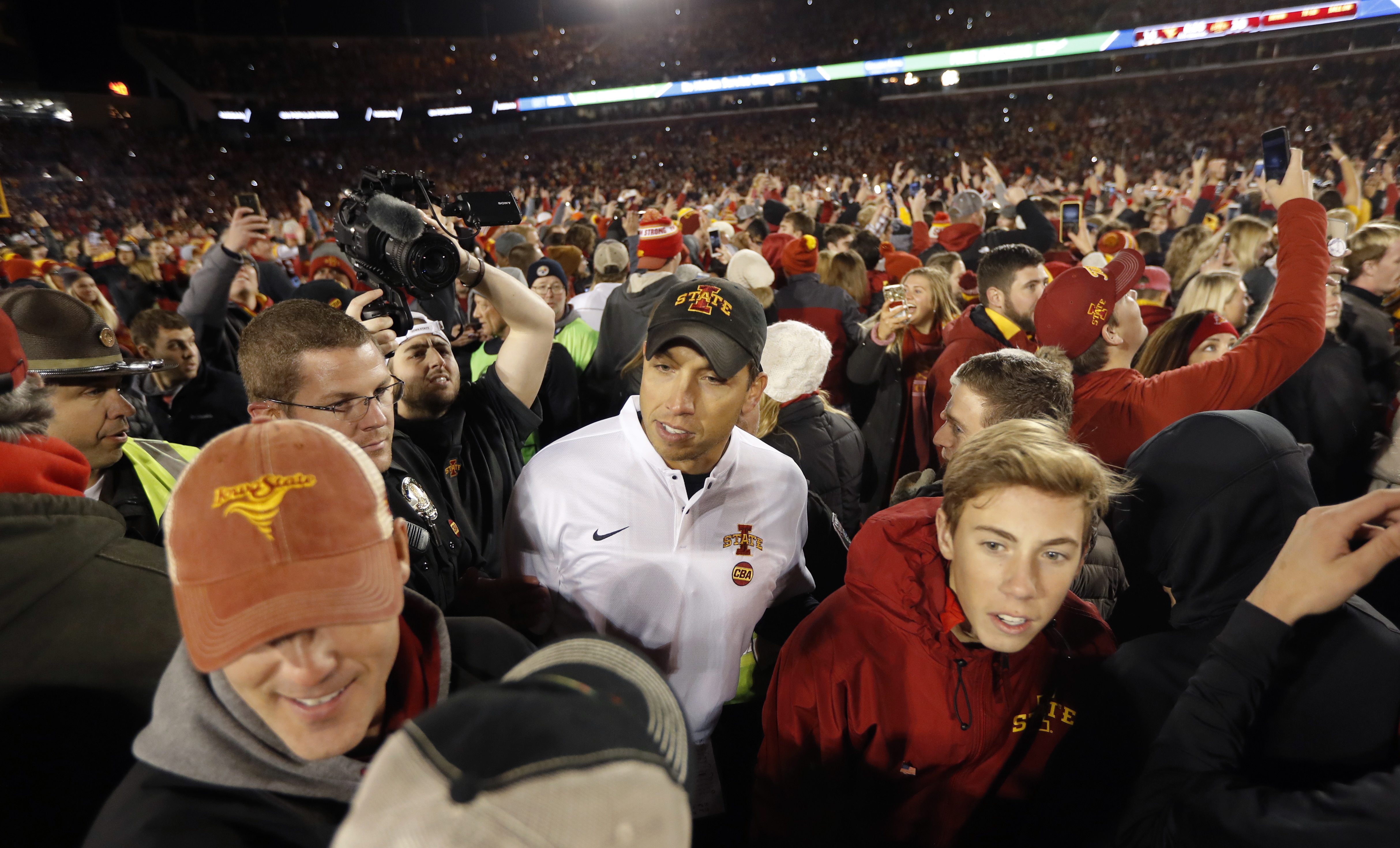
In the 10 years before Campbell took over Iowa State, the program had just one winning season and had finished with more than seven wins once since 2000.
He accomplished those milestones by Year 2. In 2017, the Cyclones went 8-5, their best record in 16 years, and upset No. 3 Oklahoma, 38-31, a memory that is forever etched in the mind of Manning, who was the team’s offensive coordinator and offensive line coach.
“That week, we kind of put in a whole new defense,” Manning said. “We had our middle linebacker who [also] was a quarterback. He played about 40% of the snaps at quarterback. He’s playing both ways. We got a walk-on quarterback who essentially ends up winning us the game, and [Matt’s] belief the whole week, his belief during the game, never wavered. A lot of guys tell themselves like, ‘Hey, we’re going to win this game.’ My man thought we’re going to win the game the entire week, and then we end up winning the game.
Matt Campbell became the Iowa State’s all-time winningest coach.Matthew Putney
“… And to me, it was culture over scheme. Maybe our players collectively weren’t as talented and as good, but, ‘Hey, if we’re united, we have this culture of winning, we do things the right way.’”
That unwavering belief was reflected by his players, too. Among them was former Iowa State quarterback Brock Purdy, a four-year starter who could sense Campbell’s “loyalty” and praised his former coach “who had a vision for [him in] place.”
“Coach Campbell’s coaching style is huge on culture. It’s important because he sets up an organization that is able to withstand adversity, the good, the bad,” said Purdy, who’s now the San Francisco 49ers starting quarterback. “And it’s all about being a real team that trusts in each other, goes through things with each other. And then at the end of the day, he is going to prepare us better than anybody in the country in terms of scheme and making sure our bodies are right for a long season.”
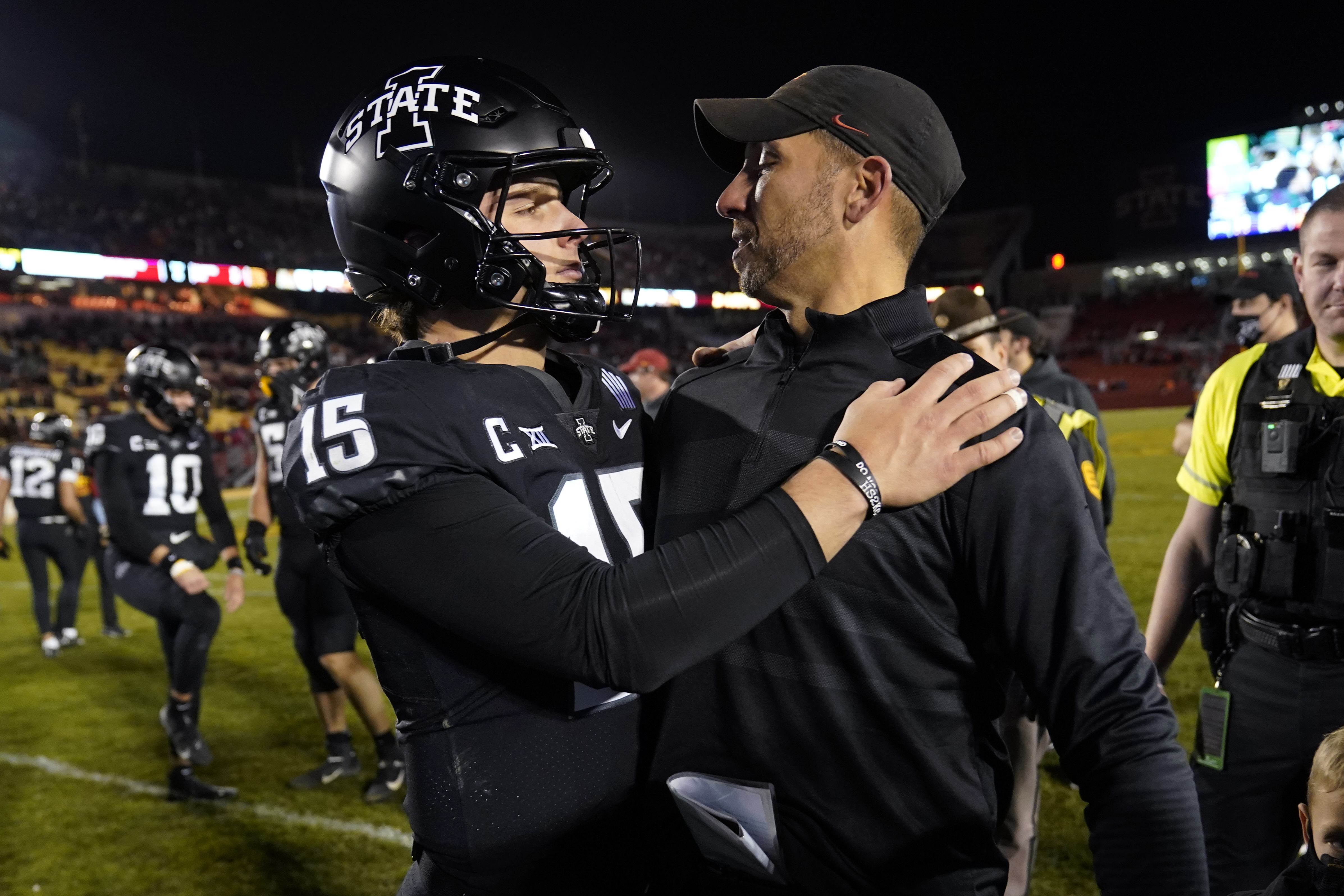
Former Iowa State quarterback Brock Purdy gets a hug from Matt Campbell against TCU on Nov. 26, 2021.Charlie Neibergall
Those Iowa State teams often punched above their weight. Campbell’s highest-ranked recruiting class with the Cyclones was the Class of 2026, which was 48th before he departed for Penn State, taking much of that class with him.
Wide receiver Xavier Hutchinson, who played three seasons at Iowa State from 2020 to 22, said Campbell recruited players that were “like-minded.”
“Everybody went to Iowa State either because you were underlooked, you weren’t valued, or just people thought [other players] were better,” said Hutchinson, who’s now on the Houston Texans with four other former Cyclones who played for Campbell. “We all had like a dog mentality — and I felt like that’s Coach Campbell’s mentality. It’s like the rough side of the mountain. … He wanted guys who have something to prove and had a chip on their shoulder.”
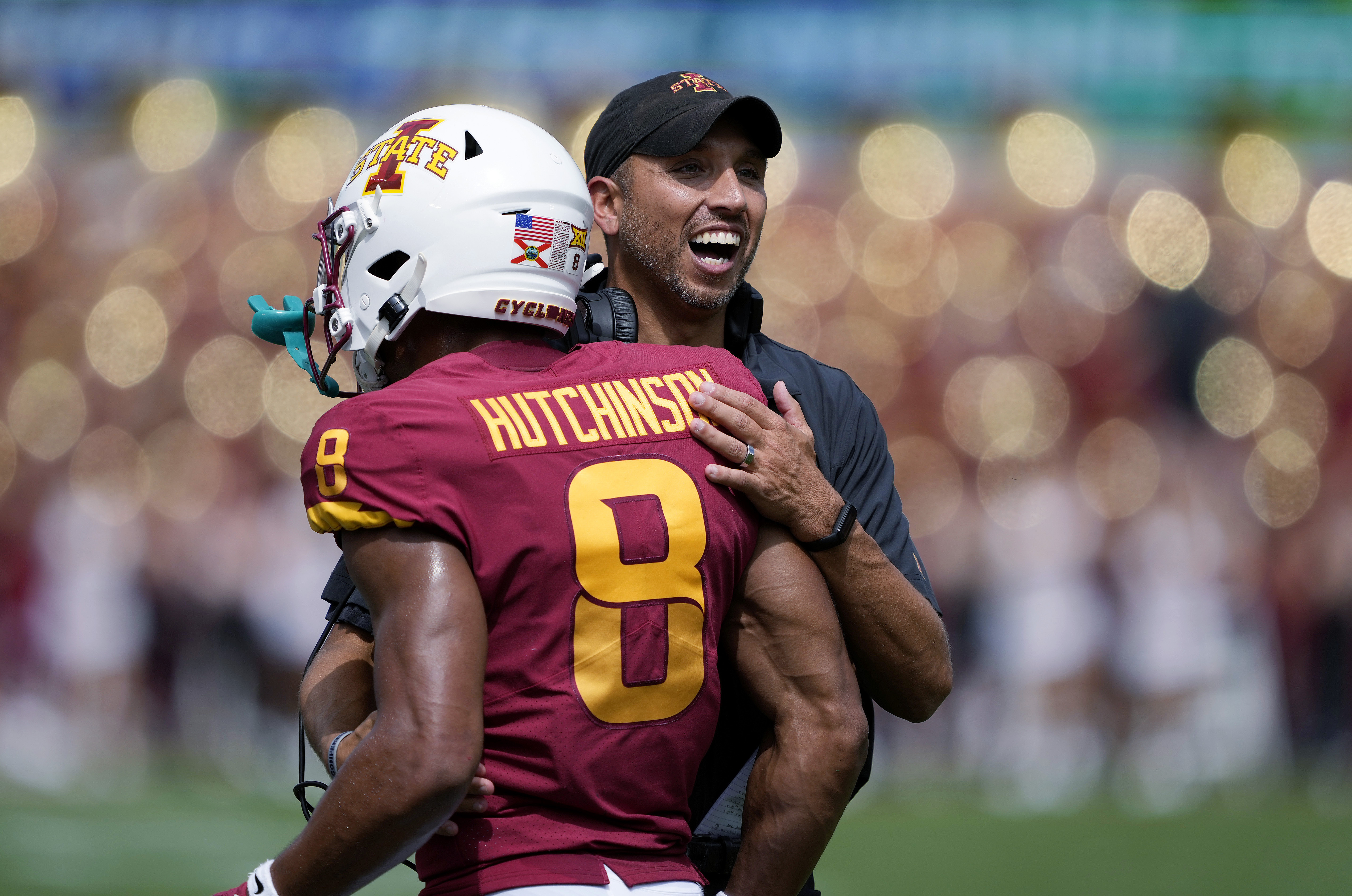
Matt Campbell congratulates former Iowa State wide receiver Xavier Hutchinson on his touchdown against Southeast Missouri State on Sept. 3, 2022.Matthew Putney
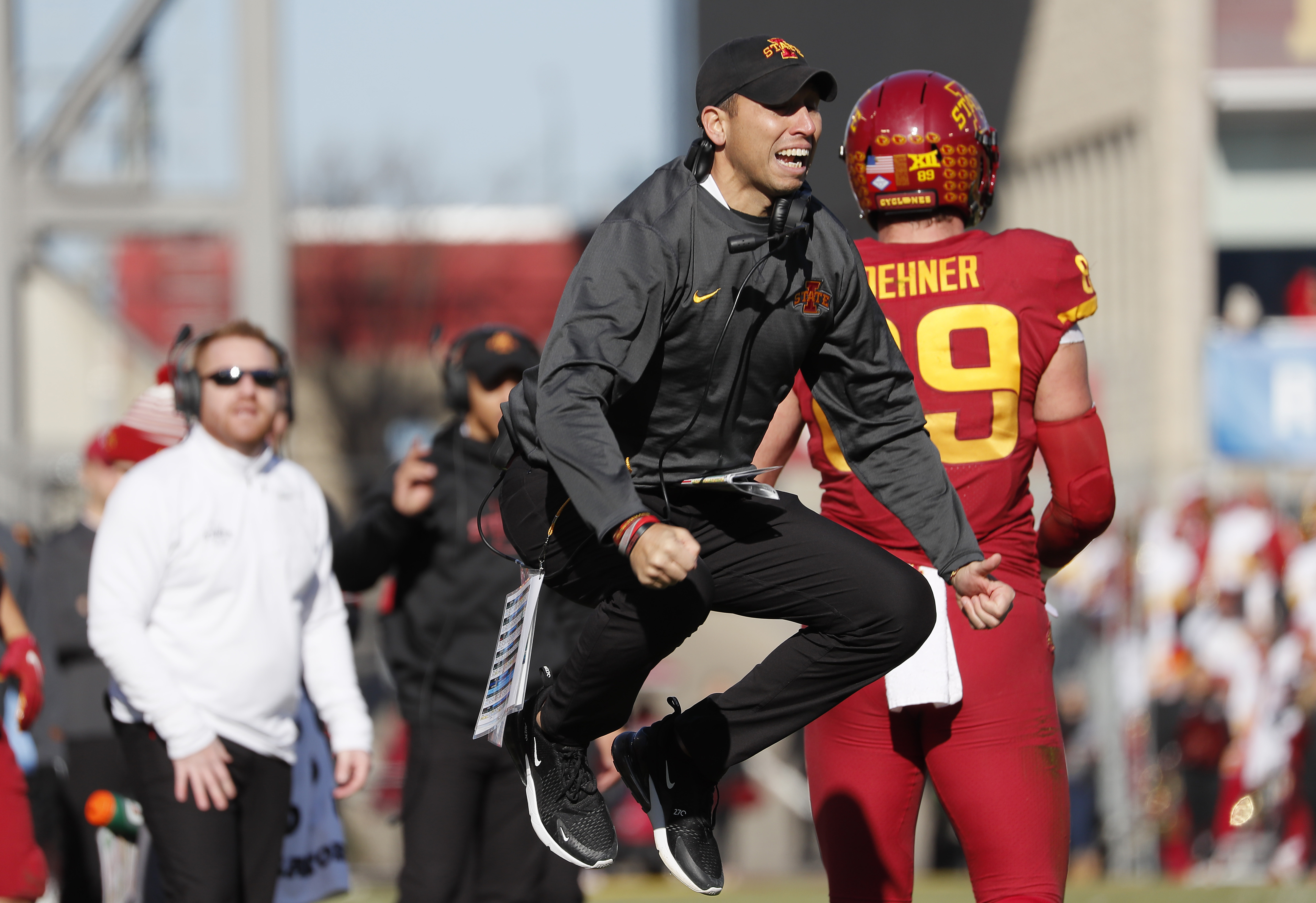
There were plenty of highs in his 10-year run at Iowa State: Two Big 12 championship appearances (2020, 2024), the most wins in a two-year stretch (19 wins across 2024 and 2025) and double-digit wins for the first time in program history. Twelve of his 17 Associated Press Top 25 wins came in that time frame, and he became the program’s winningest coach.
Even in the down years — Campbell and Iowa State missed bowl games just twice in 10 years, once in his debut season (2016) and another in 2022 — Hutchinson says his former coach “never let the success or the failures define him as a coach.”
“He’s taken them all on the chin,” Hutchinson said. “When we’ve had the greatest success, he was there. He still had the same motto even when we started [struggling] a little bit. He was still the same guy every day. And I think when your head coach is the same guy, and he doesn’t get frazzled by the success or the failures — it’s going to bleed into the into the team.”
Matt Campbell led Iowa State to two Big 12 championship appearances.Charlie Neibergall
‘The best version of me’
Campbell will emerge from the Beaver Stadium tunnel for the first time this weekend, marking the next chapter for him and the program. His team has 24 former Iowa State players who followed him to Happy Valley.
At the root of his confidence in leading Toledo, Iowa State, and now Penn State is what he learned from his father, Wakefield, and Kehres, his coaching mentors: “Not trying to be somebody else.”
“I love learning. I love being humble and growing, but I’m just trying to be me, the best version of me,” Campbell said. “What I found is we’ve been able to build trust, loyalty, togetherness in our football program, whether it was at Toledo, whether it’s at Iowa State, and obviously that’ll be a great challenge as we build this Penn State program.
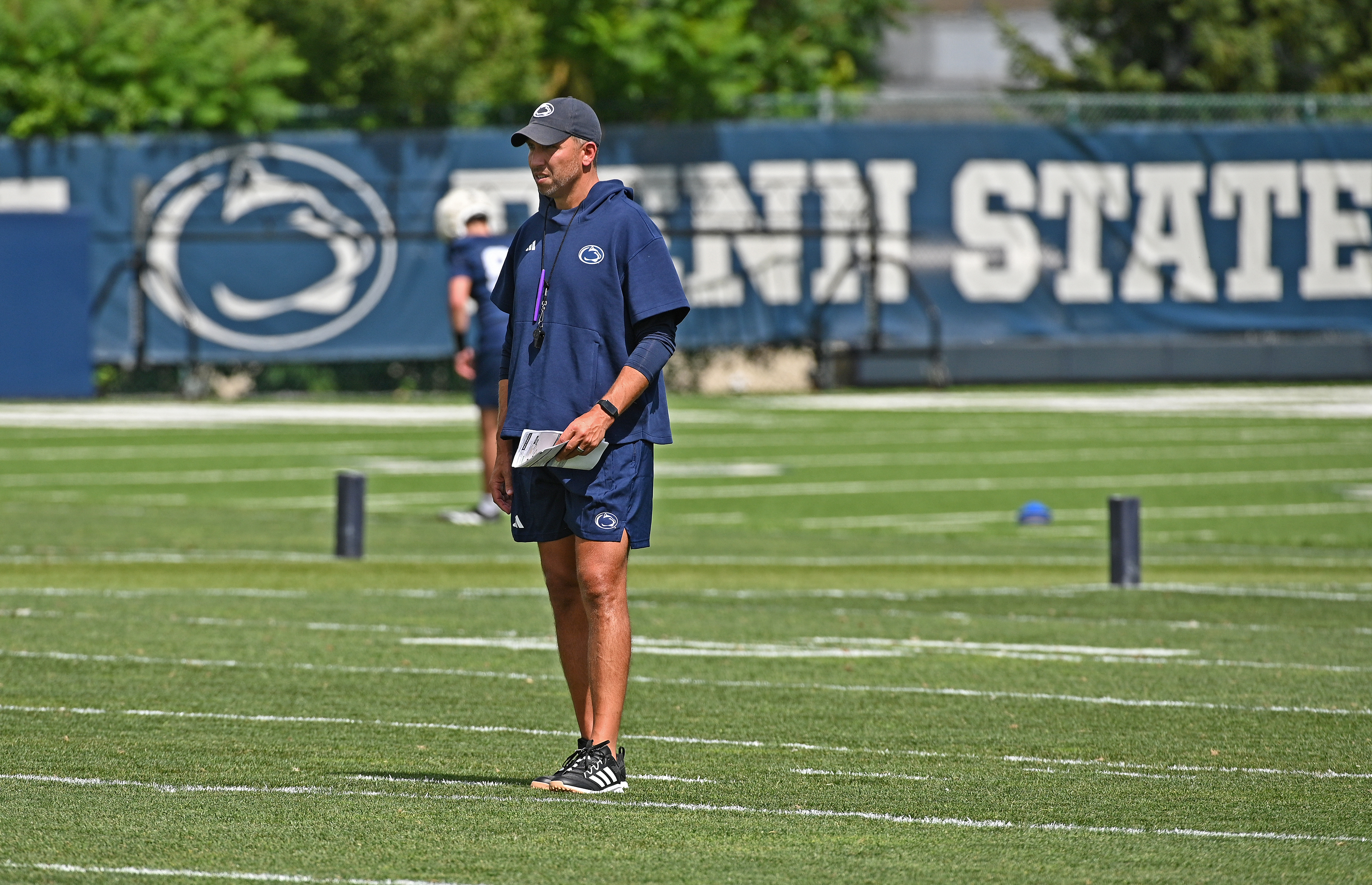
Matt Campbell during Penn State’s first practice of training camp on Aug. 5.Craig Houtz / For The Inquirer
“The attitude and the effort and the consistency to show up every day, and be able to be the same person every day, and allowing your staff and the players on the team to know exactly what they’re going to get … I think those are what I learned and took as a player and a coach from [Kehres and Wakefield], and it’s what I’ve tried to emulate everywhere I’ve been as a football coach.”
His former players, Purdy, Hutchinson, and offensive lineman James Neal III, have no doubts Campbell is ”going to give [Penn State] everything he has” to help it reach new heights. It begins with Marshall on Saturday (3:30 p.m., FS1).
Scott, who joined Wakefield at a Penn State practice on Aug. 13, says his older brother is doing “what he loves.” And it’s why he believes Campbell has sustained success throughout his career.
“If somehow you’re able to get, say, the 400, 500 people that at some point came across Matt Campbell at Mount Union College that played with him or whatever, I would probably say in the high 95 percentile range, every one of them would have told you he was going to be a head coach and a successful head coach at some point,” Scott said. “Matt’s elite trait that he has is that he is beyond competitive.
“He just doesn’t say, ‘We’re going to do this’ because why else would you do it? No. Matt envisions this and believes it. He’s not going to tell you if he doesn’t [believe it.].”
One of the biggest unknowns of the 2026 college football season is whether No. 18 Penn State will fare better or worse without James Franklin leading the program.
While many felt it was Franklin’s time to go, it will still be an adjustment that for the first time in over a decade, a new face at the head-coaching position will run out of the gates at Beaver Stadium when the Nittany Lions open their season against Marshall on Saturday (3:30 p.m., FS1).
So how might Matt Campbell’s success at Iowa State translate to Penn State, since comparing the Big 12 to the Big Ten is like devouring an apple and claiming it was the juiciest orange you’ve ever tasted?
A good place to start is the College Football Playoff.
In the history of the tournament, only four teams from the Big 12 have qualified, and none were named Iowa State, the program Campbell led for the last 10 years. Conversely, six Big Ten teams, including Penn State, have qualified for the CFP, with a program in the conference taking home the title the last three years, the latest when Curt Cignetti and Indiana shocked the college football world.
Let’s not forget one of those title teams was nearly the Nittany Lions, who were a mere field goal away from a trip to the championship game in 2024 before it all unraveled for Franklin last season and cost him his job.
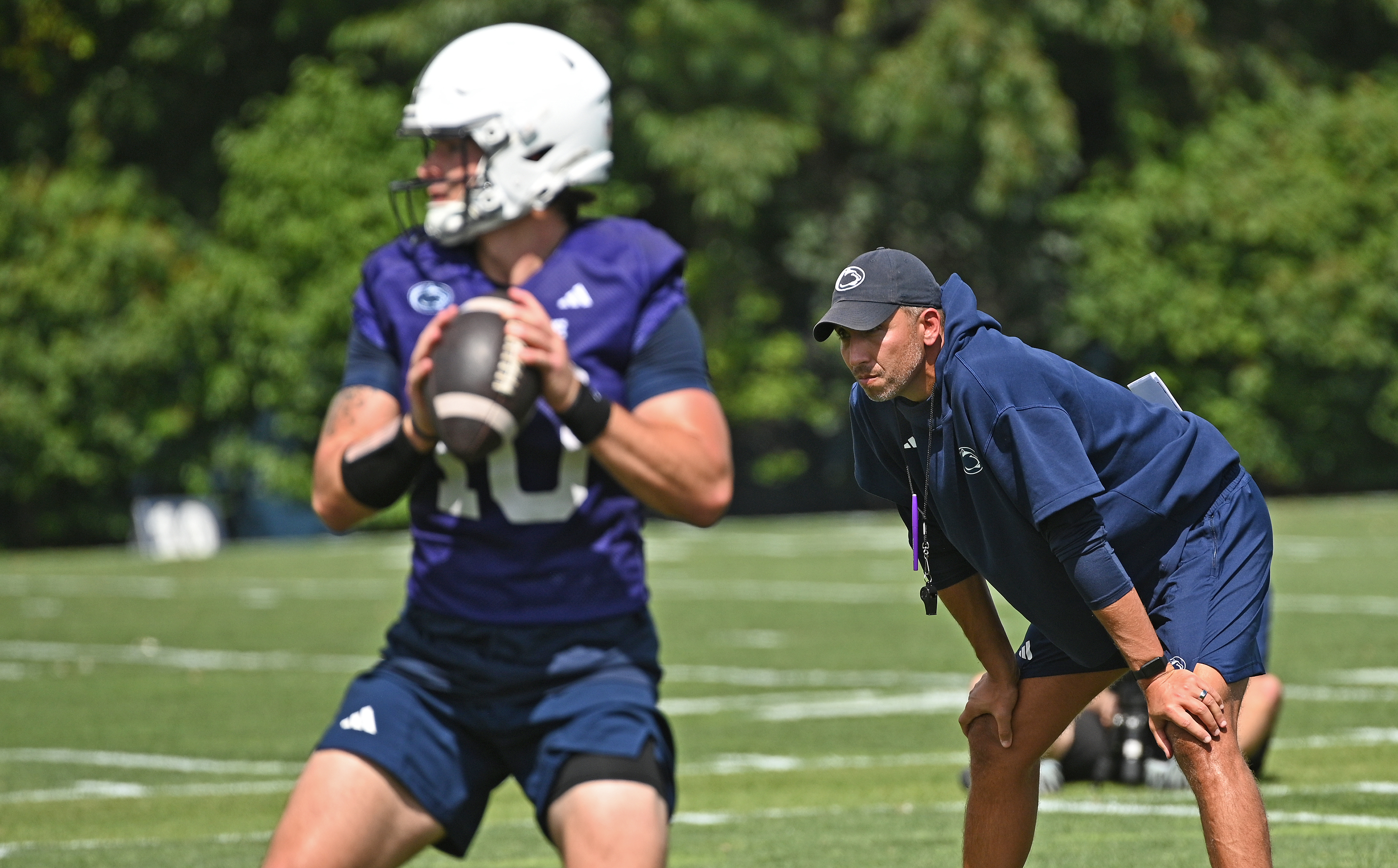
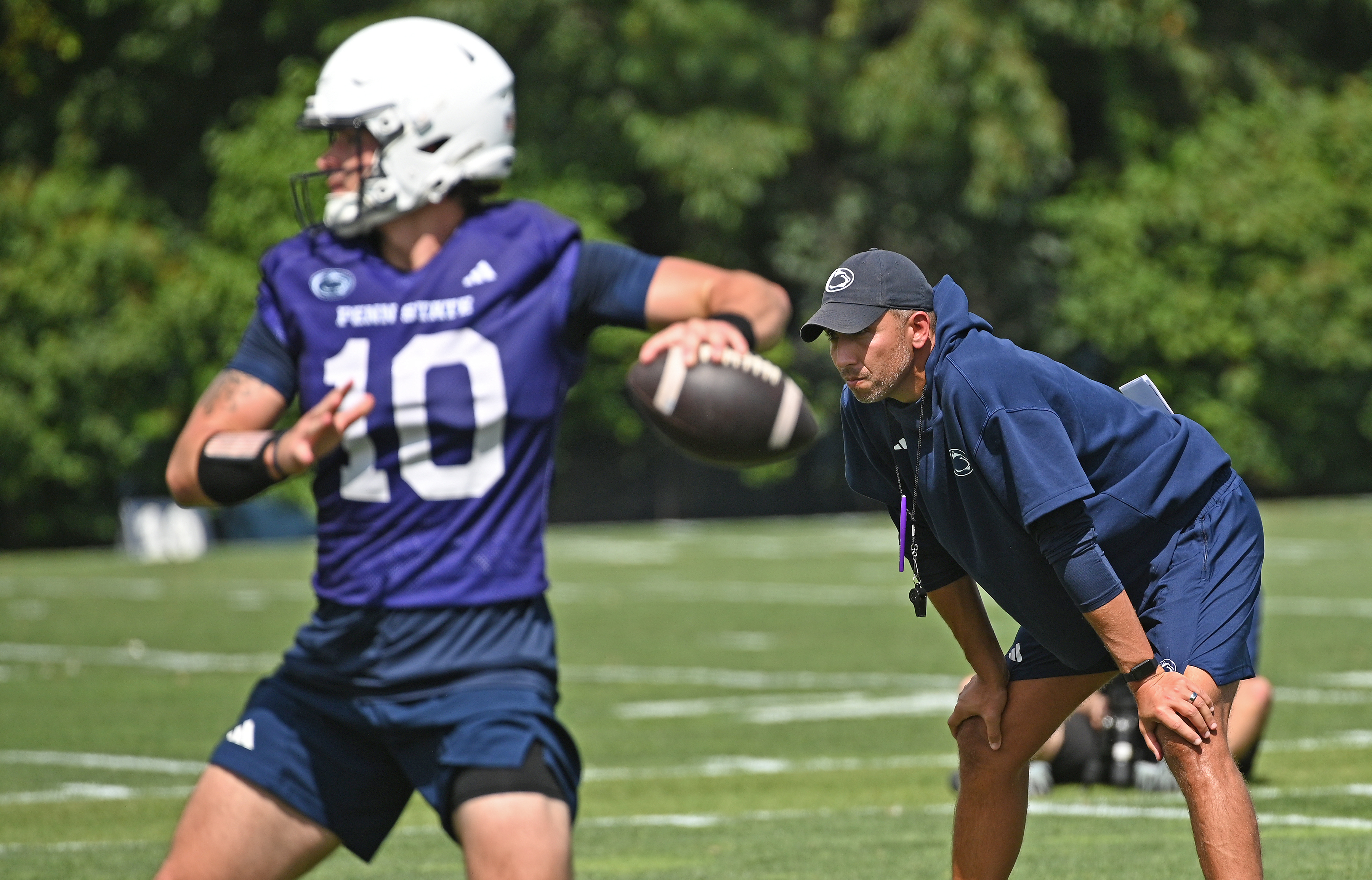
Matt Campbell, previously head coach at Iowa State, watches quarterback Connor Barry (10), a transfer from Christopher Newport University, on Aug. 5.Craig Houtz / For The Inquirer
Here’s what we know about Campbell that bodes well for Penn State.
In his 10 seasons at Iowa State, he left as the winningest coach in program history with 72 victories. He has an offensive mind, and he convinced quarterback Rocco Becht, the former Iowa State QB and son of former NFL tight end Anthony Becht, to transfer in the offseason and join him in Happy Valley.
Becht is a whole other beast. The fifth-year player from Wesley Chapel, Fla., is so invested in helping Campbell restore Penn State’s glory that he’s committed to taking just one class this upcoming semester.
That wasn’t a misprint. One class. Three credits. And it’s an online course, which has legislators questioning how Becht’s situation accurately defines the term “student-athlete.”
Taking one online class is far from being a full-time student.
My amendment to the Protect College Sports Act would address this. The “student” in student-athlete should still matter so they are set up for success, wherever they go next. https://t.co/6Y7ce0TbBg
— U.S. Senator Bill Cassidy, M.D. (@SenBillCassidy) August 21, 2026
So the program has a new coach eager to prove he can bring the success he had in the Big 12 to the elite level of the Big Ten, a quarterback who’s dialed in to simply being all about football, and an athletics department that’s betting a bit of the farm on Campbell to the tune of an eight-year deal in Happy Valley that will see him collect nearly $80 million over the life of the contract.
The Nittany Lions also have one of the most favorable schedules. They face just three teams in the Associated Press Top 25 preseason poll in No. 16 Michigan (Oct. 17), No. 17 Washington (Nov. 7), and will host No. 14 Southern Cal in their annual “White Out” game on Oct. 10 (7:30 p.m., NBC).
The way the Big Ten configuration landed, Campbell will chase a spot in the College Football Playoff not needing to face Ohio State (current AP No. 1), defending champion Indiana, Oregon, or Iowa, all teams in the AP rankings. It’s the perfect schedule for a team not looking to waste time and millions on rebuilding its program.
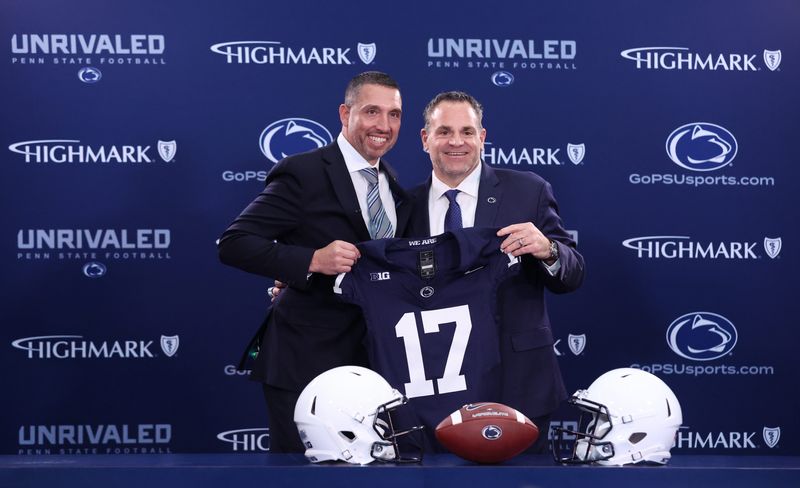
Penn State athletic director Pat Kraft poses for a photo with Matt Campbell, after Campbell was announced as the school’s new head football coach in December. Matthew O'Haren, Imagn Images
In fact, there is no rebuild. If you listen to Nittany Lions athletic director Pat Kraft, Campbell’s upside is believed to be the perfect option to seamlessly right the wrongs that closed out Franklin’s tenure.
This was Kraft’s statement in the press release upon hiring Campbell last December:
“Coach Campbell is, without a doubt, the right leader at the right time for Penn State football. He is a stellar coach with a proven track record of success and his values, character and approach to leading student-athletes to success on and off the field align perfectly with the traditions and values of Penn State.”
Penn State fired James Franklin on Oct. 12, 2025, after a third straight loss. The Nittany Lions were 104-45 in 11-plus seasons under Franklin.Matthew O'Haren-Imagn Images
Now, it just needs some fine tuning to be driven again. Campbell is squarely in that driver’s seat with the keys in his hands. He’s got the tools when it comes to Penn State’s pedigree, the coins courtesy of a reported 10-year, $300 million apparel deal with Adidas, and the NCAA’s transfer portal, which will continue to provide the resources, especially after the exodus of starters following last season.
Can Campbell take this new-look team and right the wrongs of Franklin’s past? It’s tough to say, especially attempting to judge anything by the first three games of the season, starting with the Thundering Herd this Saturday, followed by Temple on Sept. 12 at Lincoln Financial Field (noon, ESPN2), and Buffalo on Sept. 19 (noon, Big Ten Network).
But the notion certainly does seem worth tuning in for.
During Matt Campbell’s first year as the head coach at Toledo, he attended a high school coaching clinic in Michigan. There, Campbell discovered a concept that changed the way he concluded fall camp.
Aaron Segedi, a coach at Trenton High School in Michigan, was holding what he called “Victory Day,” on which children with disabilities participated in activities with the team. After seeing the impact it had on the children, Campbell knew he wanted to bring it to college football.
Victory Day became an annual training camp tradition under Campbell, and now he’s brought it to Penn State.
“Great night for our community. Great night for our kids,” Campbell said after Victory Day with the Nittany Lions. “Still, this world’s about giving back and making a difference. And to be able to do that [Friday night], and be able to be with so many great families and young people that may never get the opportunity to play the game of football, it’s a special opportunity for us.”
Friday was the first edition of the event in Happy Valley, as local children and their families joined the Nittany Lions inside Beaver Stadium. Kids could participate in activities like footwork drills, the Oklahoma drill, throwing balls into a net, and playing catch with players.
The highlights of the event, however, were the rushing touchdowns. Children would line up for the chance to run a play with Penn State’s starting offense and defense while their names boomed from the stadium’s sound system. Campbell greeted every kid with a smile and a handshake before huddling everyone up for the play call.
“I know we had a couple of trick plays in there, some special calls in there that weren’t supposed to be leaked,” quarterback Rocco Becht said. “But they were out there for the kids.”
Inside Penn State’s Inaugural Victory Day🏈
I’ve been blessed to cover a lot of awesome things involving my Alma Mater. This is one that makes me proud to be a Penn Stater🦁 pic.twitter.com/mtAMdzBZoZ
Friday was Becht’s fifth Victory Day — he participated in four at Iowa State — so he’s seen firsthand the impact this event can have on a community and those who participate.
The highlight for him this year? Throwing a 15-yard touchdown pass to a youngster down the sideline.
“I think it’s the best day of the year for me to give back to these kids, to see a smile on their face,” Becht said. “It’s truly the best thing in the world. We’re just glad to be here and put a smile on these kids’ faces.”
Penn State quarterback Rocco Becht, an Iowa State transfer, is no stranger to Victory Day. Offensive lineman Trevor Buhr is a fellow Cyclones transfer.Craig Houtz / For The Inquirer
Although the Iowa State transfers have experienced Victory Day before, it was most of the team’s first time participating. Becht said some guys were a “little skeptical” when it began, but, by the end, there wasn’t a face without a smile.
Junior offensive lineman Cooper Cousins still believes THON, the dance marathon that raises funds to help children with cancer, is the best day of the year at Penn State. But Victory Day is now a close second.
“It was awesome seeing the smiles on the kids’ faces, seeing every kid get the opportunity to score a touchdown was awesome, and really just seeing the family’s reactions,” Cousins said. “When you get the opportunity to come out here and hang out with the youth around the community, inspire them, and be with them throughout the night, it was awesome. It was a great time.”
Since becoming Penn State’s head coach in December, Campbell has made it a point to get out into the community and make a difference. From packing lunches for the YMCA of Centre County Backpack Program to doubling the amount of money players raised for THON, Campbell is determined for the Nittany Lions to have a charitable impact.
And Victory Day was the latest example.
“This isn’t a popularity contest. This isn’t trying to sell our program to anybody. This is to make a difference in the lives of other people,” Campbell said. “To be honest with you, the more people we can make a difference in their lives, the better this opportunity is, and the more special this day becomes.”
Maybe the best thing that can happen to college sports’ integrity is everything that is happening to its integrity right now. It would be ironic, in a way. The NCAA and its member institutions are where they are because they spent decades adhering to a policy of inertia. Only now does it look like a viable strategy, after their world is already burning around them. Sometimes, in order to gain back what was lost, one must lose what little remains.
Very little remains. Let’s be clear about that. That was true even before last weekend’s news that former Eagles undrafted rookie free agent Dae’Quan Wright was planning on returning to the college ranks after being waived by the Browns. In fact, the hand-wringing that has accompanied the tight end’s reported agreement with LSU is mostly an admission of naiveté or ignorance on the part of the hand-wringers.
The NCAA is more than a decade into a series of logical premises and conclusions that was always going to lead power conferences like the SEC and Big Ten to where they are right now. The university presidents who operate behind the NCAA’s bureaucratic anonymity chose this path when they allowed the almighty dollar of television contracts and the vanity of a news cycle monopoly to become the primary goal of collegiate sports rather than sports played by, for, and among collegiates.They are living in a reductio ad absurdum of their own creation.
The best thing any of us can do for our sanity is to lean back and enjoy watching them lose theirs. It no longer makes sense to react to each development as if university athletic departments are tethered to some sort of ethical baseline that sets them apart from any other major professional sports organization. They pulled up that anchor long ago. The ship has sailed.
Frankly, the idea of an undrafted athlete moving from the bottom of an NFL training camp roster to a college football starting lineup pales in comparison to the legion of current college football starters who are making bigger bank than they would as NFL players on rookie contracts. The average Power 4 quarterback is currently signed to a name, image, and likeness deal worth $3.1 million, according to Sportico. It always made sense that there would come a day when a player would ask out of a contract from the Browns for a more competitive offer funded by Big Willy’s Jeep-Chevy of Baton Rouge. That’s the way NIL was always going to work.
Average NIL spend has nearly tripled in the past three seasons, reflecting an accelerating market. Power 4 programs spend roughly $24.8M on football alone.
Top position groups can expect annual NIL earnings of $3.1M (QB), $1.0M (WR) and $932K (RB). QB has the best ratio of… pic.twitter.com/U4HYYXcAJT
The ridiculousness is the real sport, now. We should treat it as such. For years, the NCAA chose to address the logical implications of its profit drive with a weird and counterintuitive combination of hope, avoidance, and authoritarian dictates. They fully recognized that the genie would one day escape the bottle. Now, they’re left to hope that Ja’Marr Chase and Joe Burrow already have plans for their bye week, when LSU plays Mississippi State.
Lane Kiffin’s central role in the latest lunacy is fitting. College football’s Kendall Roy has spent the early part of this week channeling the exact sort of ends-based nihilism so sublimely satirized by HBO’s Succession. He did the same last year when he left his Ole Miss team on the eve of the college playoffs in order to sign a mega contract with LSU. Nick Saban, his former boss at Alabama, leveraged the full power of the media-sports industrial complex to absolve him of responsibility.
“We need to take a better approach to the business aspect of what we do in college athletics,” Saban said on ESPN’s pregame studio show after Kiffin left Ole Miss. “In the NFL, you can’t leave your team until you are finished playing. You can’t talk to another coach in the regular season. There’s a defined time when you can talk to them if they are in the playoffs. We should match the academic calendar with the football calendar.”
Well, yeah. You should. But there are a whole lot of competing self-interests standing between ought and is. Like any system, it is first and foremost a reflection of those who agree to its framework. Major college football has become nothing more than Boar on the Floor in pads. Any television news segment on NCAA should conclude with a clip of Logan Roy smirking at all the piggies at the trough.
Dae’Quan Wright is among the NFL players trying to play another season of college football.Carolyn Kaster
“In general, should NFL players come back to college? I believe — it doesn’t matter necessarily what I believe — that answer would be no,” Kiffin said in a Monday news conference while defending his recruiting of at least two former Ole Miss players who’d spent the summer in NFL training camps.
Focus on Kiffin’s interjection.
It doesn’t matter necessarily what I believe.
You’ll struggle to find seven words that more accurately summarize both the current state of college sports and its contributing factors. In a more principled world, they would be written off as the words of a coward. In our current world, they might as well be written in Latin beneath the flag or family crest or company logo of a disconcerting number of tech titans, politicians, and Fortune 500 firms, not to mention the hundreds of university presidents who have long embraced the plausible deniability of the concept of shareholder value. The best thing you can say about the system of higher education in the United States is that it remains steadfastly by and of the system at large.
The only hope is that it burns itself as quickly and completely as possible. The inevitable end game for the major football-playing schools won’t look much closer to the mandates of their university charters. The big schools will break away, impose a salary cap, hiring and transfer restrictions — all of the things major sports leagues long ago did as a result of similar competitive inevitabilities. They will sign their own television contract, sell their own licensing agreements, consolidate the revenues. The nonpower schools will exist mostly as a counterweight to any antitrust claims. Meanwhile, the rest of us will continue to contemplate the question: Do we really care about college sports if they are no longer about the college?
One of college football’s best atmospheres has an official date.
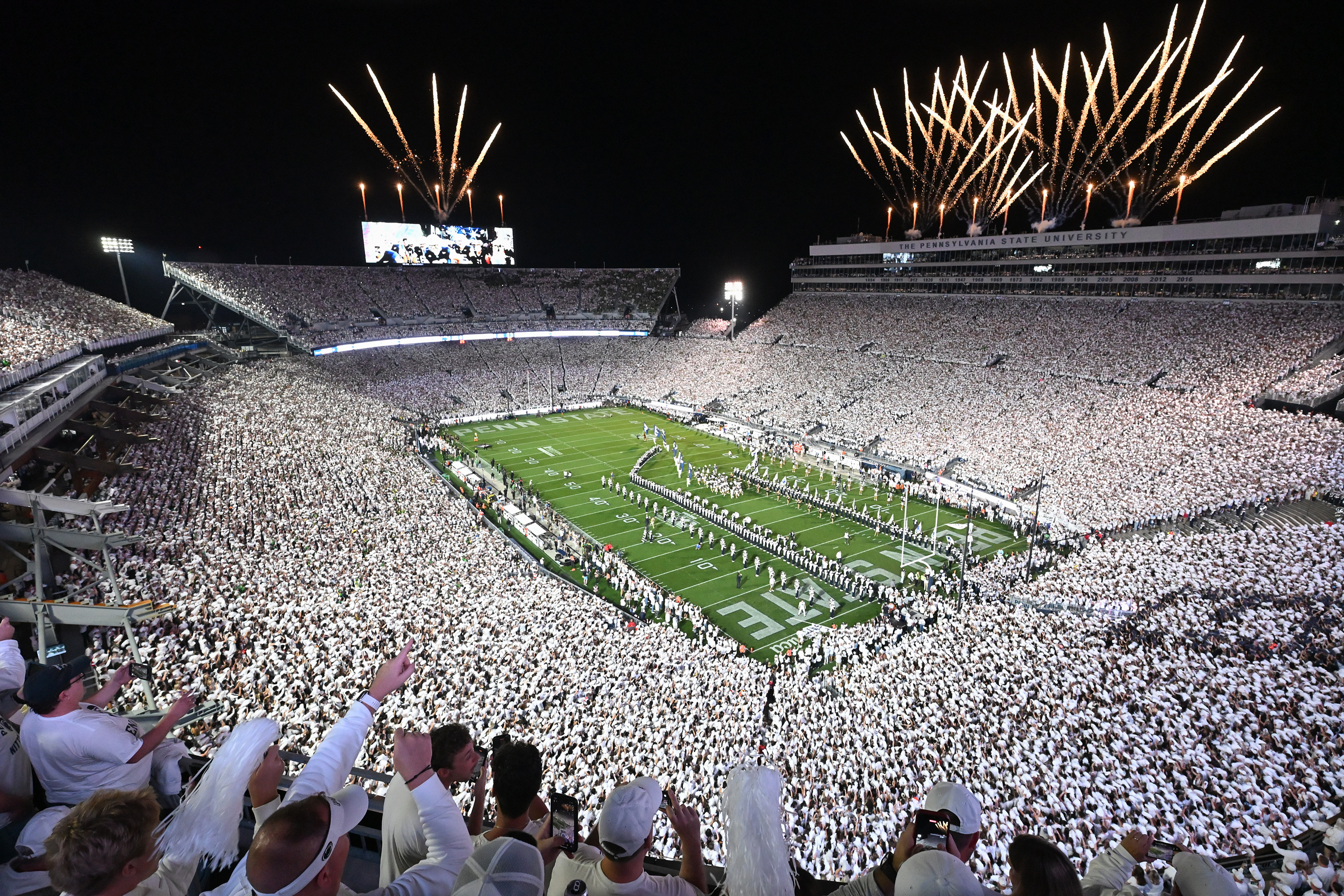
Led by new head coach Matt Campbell, Penn State will host its iconic “White Out” game against Southern California on Oct. 10, the program announced on Tuesday. Kickoff is set for 7:30 p.m. (NBC10, Peacock).
The tradition started in 2004 with just the Penn State student section and expanded to the entire stadium in 2007. This will be the 19th year with a full “White Out” in Happy Valley.
Last season, the Nittany Lions lost to Oregon during the “White Out” game in overtime, which set off a string of six straight losses and included the firing of longtime head coach James Franklin. Last year’s loss also ended a six-game winning streak in the annual game, dating back to 2019.
This matchup will also mark the first time Penn State will host USC in Beaver Stadium since the Trojans joined the Big Ten ahead of the 2024 season. Their only meeting as conference foes came in 2024, when the Nittany Lions overcame a 14-point halftime deficit to win in overtime, 33-30. Overall, USC holds a 6-5 advantage in all-time meetings between the two programs.
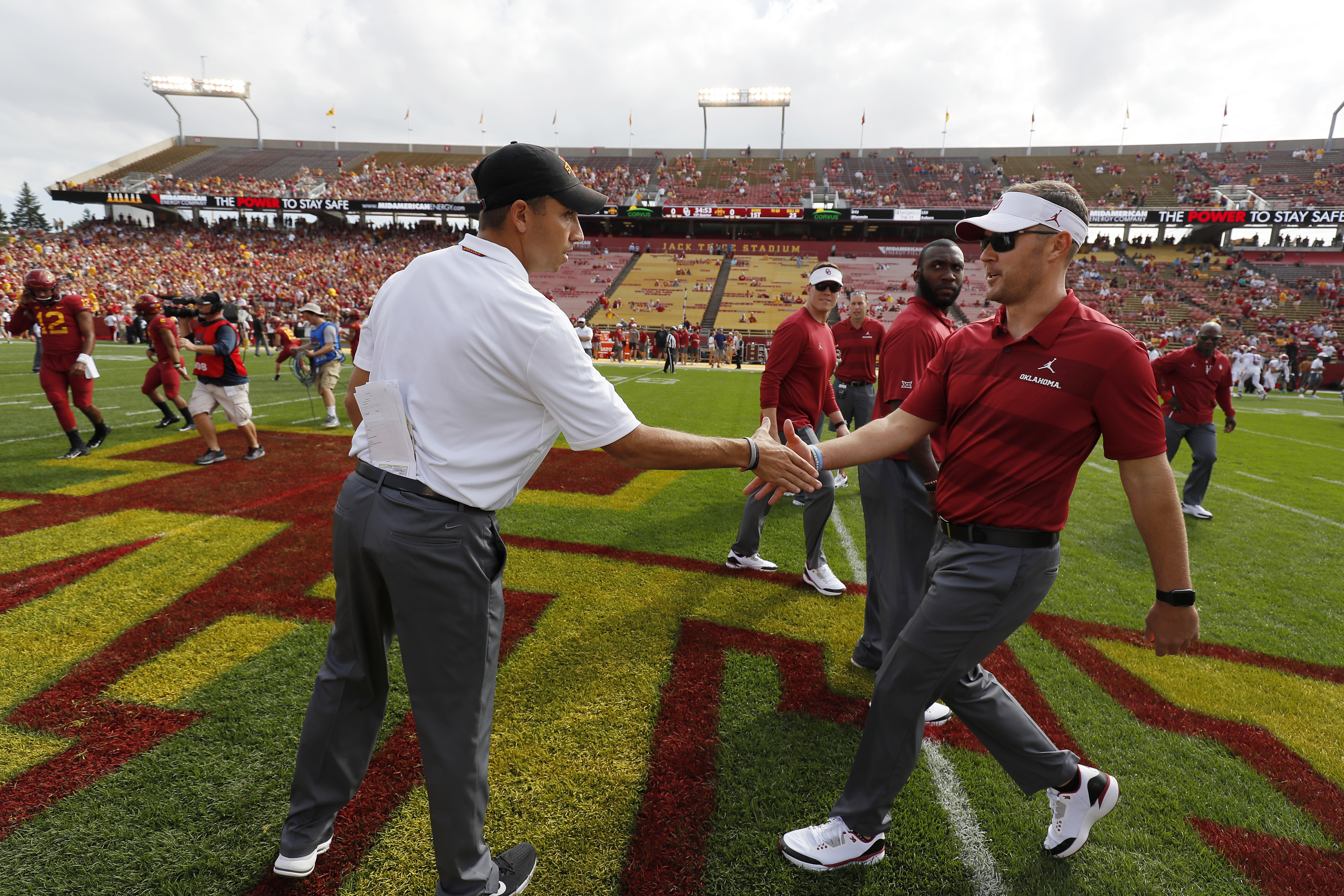
Iowa State head coach Matt Campbell, left, meets with Oklahoma head coach Lincoln Riley, right, before an NCAA college football game, Saturday, Sept. 15, 2018, in Ames, Iowa. (AP Photo/Matthew Putney)Matthew Putney
Campbell and Lincoln Riley will face off as head coaches for the first time since 2021, when the former was at Iowa State and the latter was with Oklahoma. Riley’s Sooners held a 4-2 advantage over Campbell’s Cyclones, including a Big 12 championship game win in 2020.
Before Penn State hosts USC for the White Out game, it will face Marshall (Sept. 5) at home, travel to Lincoln Financial Field for a noon kickoff against Temple (Sept. 12), and host Buffalo (Sept. 19). Then, Big Ten Conference play begins with the opener against Wisconsin (Sept. 26) before traveling to Northwestern’s new Ryan Field for a Friday night in Evanston, Ill. (Oct. 2).
Ohio State and Oregon are 1-2 in the AP Top 25, giving the Big Ten Conference the top two teams in the preseason rankings for just the second time ever. Georgia, Notre Dame and Texas round out the top 5.
The Southeastern Conference gets bragging rights with nine ranked teams, but the Big Ten isn’t far behind with eight.
Penn State is ranked 18th going into its first season with coach Matt Campbell, who was hired in December following a 7-6 season that cost James Franklin his job in October. Penn State is one of four teams in the Top 25 with new coaches.
Indiana finished the 2025 season at No. 1 in the rankings after a historic 16-0 run and national championship game victory. This season, Ohio State enters with the best odds (+600) to win it all. Notre Dame (+650), Texas (+650), Indiana (+800) and Oregon (+800) round out the top five.
The Top 25 voters are more than 60 journalists covering college football for AP members and other news organizations. They’re urged to base their votes on head-to-head results, not reputation, preseason speculation or regional bias.
Having Ohio State and Oregon enter the season Nos. 1 and 2 ahead of sixth-ranked defending conference and national champion Indiana is a flex for the Big Ten, which already is riding the momentum of winning the last three national titles.
Having five of the top 10 teams, and seven of the top 13, bolsters the SEC’s contention that it has greater depth. The SEC has nine ranked teams compared to the Big Ten’s eight.
The debate goes on over conference supremacy and will only heat up when the Big Ten and SEC square off in the first heavyweight games of the season Sept. 12. That’s when No. 10 Oklahoma visits No. 16 Michigan and No. 1 Ohio State goes to No. 5 Texas. Both are rematches of games won by the home team last year — OU 24-13 and Ohio State 14-7.
Texas quarterback Arch Manning is expected to be a Heisman Trophy candidate this season.Stephen Spillman
Longhorns, No. 1 in last year’s preseason poll, look to bounce back
The Longhorns entered the 2025 season at No. 1 after receiving 25 first-place votes — two more than No. 2 Penn State. But after a Week 1 loss to Ohio State, Texas found itself fighting upstream to maintain its top-ranked status. An October loss to a struggling Florida team didn’t help either, knocking Texas out of the rankings altogether.
The Longhorns, despite gutting out a few impressive wins, ultimately fell short of the 12-team College Football Playoff after Georgia handed them a third loss.
Eyes will be on quarterback Arch Manning, who the Longhorns hope makes the expected jump from year one to year two as a full-time starter. Manning, a favorite for the Heisman Trophy this year, will have to lead a team facing plenty of expectations once again.
Buckeyes are an early favorite
It’s the first time the Buckeyes have topped the list since the 2015 preseason.
Ohio State ranked No. 1 in the AP Top 25 for the entire regular season last year, only dropping after a Big Ten Championship game defeat from Indiana. With a 12-1 record, Ohio State still earned the No. 2 seed and a first-round bye in the College Football Playoff. The Buckeyes ultimately went on to drop 24-14 to eventual runners-up, Miami, in the Cotton Bowl.Gallery
This season appears promising with quarterback and receiver duo Julian Sayin and Jeremiah Smith returning to the offense. Veteran defensive end Kenyatta Jackson Jr. is expected to anchor the defense. Notre Dame and Texas are tied for the second best odds at +650. Indiana (+800) and Oregon (+800) round out the top five.
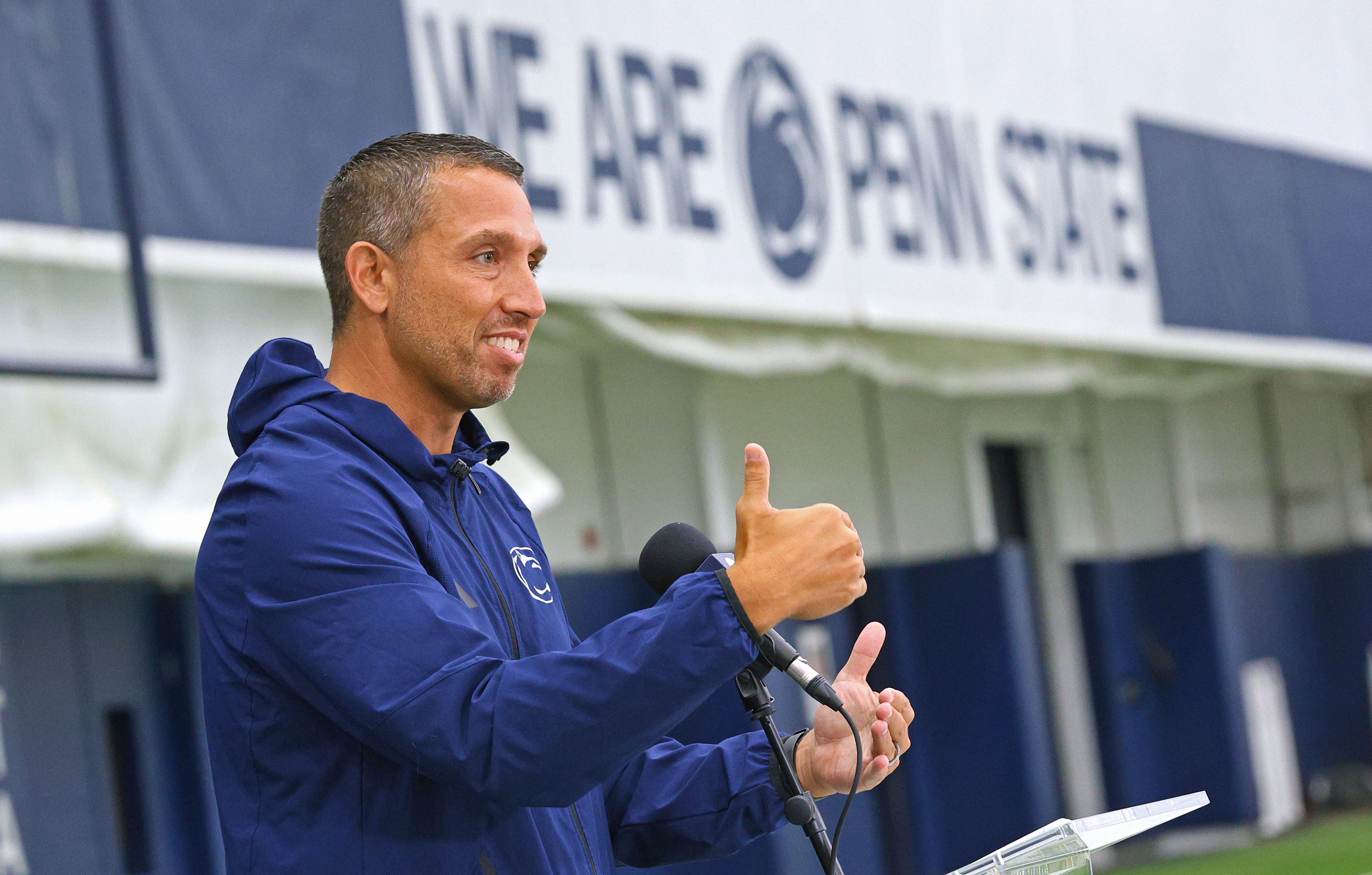
STATE COLLEGE, Pa. — Penn State football coach Matt Campbell said the theme for these next few weeks is “preparation for the journey” as his squad works toward a Week 1 matchup vs. Marshall on Sept. 5 (3:30 p.m., FS1).
“We’ve grown,” Campbell said Friday at the team’s local media day. “It was great to see Practice 1 and 2 because there was great growth between Practice 1 and Practice 2, and we’re going to have to not miss a day as we continue. There’s a sense of urgency.”
Besides Penn State’s continued preparation, here are three other takeaways from Friday’s availability:
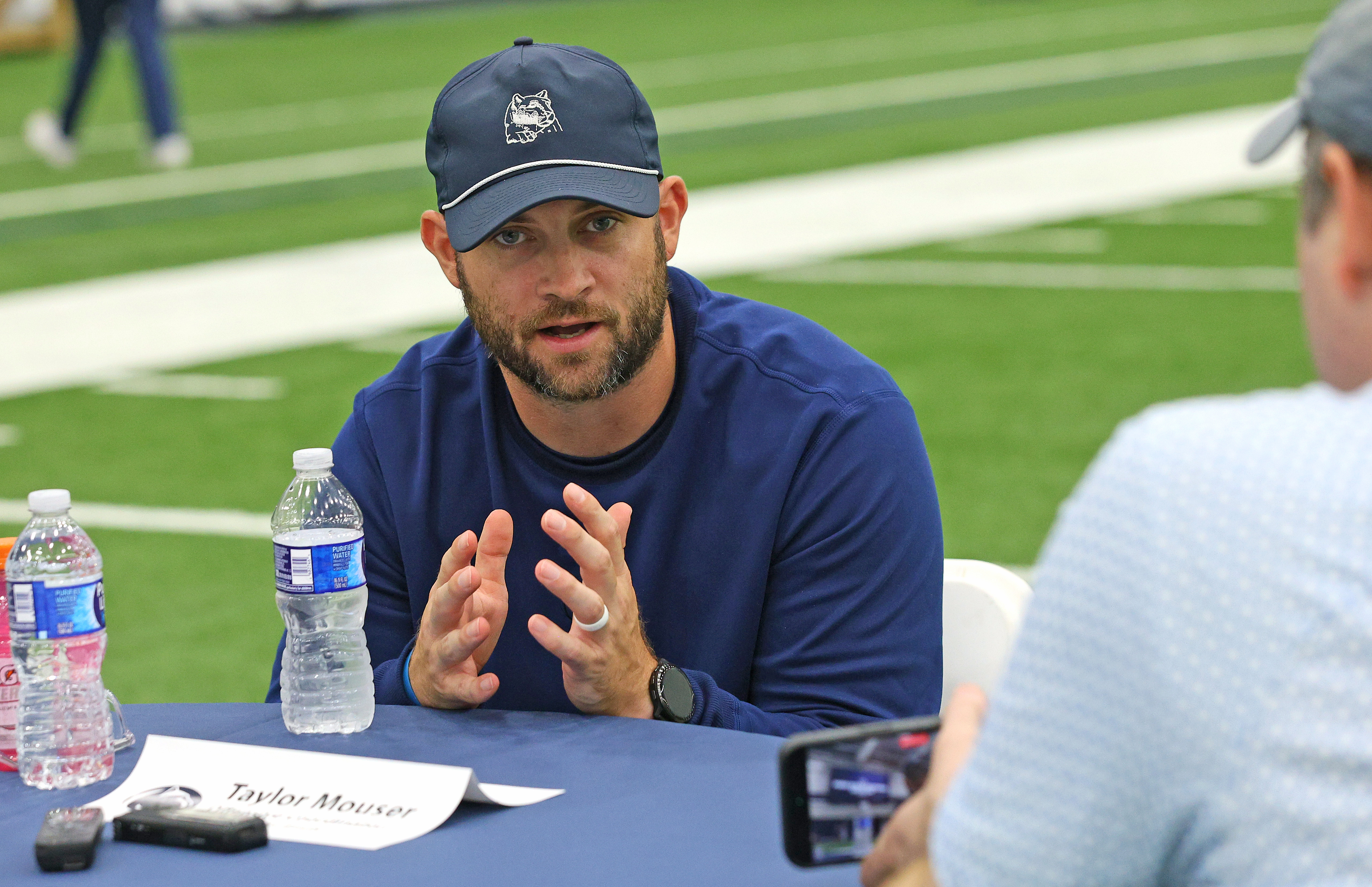
Offensive coordinator Taylor Mouser doubles as Penn State’s tight ends coach.Craig Houtz / For The Inquirer
Tight end takeover
Campbell said 12- and even 13-personnel, meaning two or three tight ends on the field, is going to be prevalent in new offensive coordinator Taylor Mouser’s scheme, mostly because Campbell and Mouser want to design plays that highlight the team’s strengths.
Tight end will be a focal point. Iowa State transfer Benjamin Brahmer was a semifinalist for the John Mackey Award for the nation’s top tight end last season, fellow Cyclones transfer Gabe Burkle is “the guy that cleans up the mess,” according to Mouser, and returnee Andrew Rappleyea began to break out at the end of 2025. Brahmer and Burkle were named to the Mackey Award watchlist earlier this week.
With that comes high expectations for the group, especially considering Mouser is also their position coach.
“We think we’re the smartest on the offense, pretty much, so we always know what we’re doing, and if we do mess up, it’s our fault,” said Brahmer, a senior. “Or if anybody messes up, [Mouser] thinks it’s the tight ends’ fault because we’re kind of the central piece of that offense.”
The idea of playing 12- and 13-personnel excites Rappleyea, who said the tight ends and wide receivers jokingly argue when Mouser calls for more tight ends during practice.
“I think that [Mouser] realizes the way it is,” said Rappleyea, a junior. “The game’s evolving, and if you have big guys that can get open, we’re not going to complain about having two of us on the field instead of three receivers.”
Consistency is key
In any normal year, Campbell likely would have a general depth chart in his head for the season. But this is not a normal year, and Campbell is making every player earn their Week 1 spot.
“Everybody’s either on a new team, at a new place, got new coaches, and everybody’s going in with kind of the same starting lines,” said Campbell, who’s entering his first season as the Nittany Lions’ coach after a decade in the same role at Iowa State. “You got to go earn it. To be honest with you, on a good team, some great teams that I’ve been a part of, championship ball, you kind of got to earn it because there’s enough good depth.”
Ultimately, Campbell emphasized that the players who separate themselves will be the consistent ones, particularly among the wide receivers. The Nittany Lions have developed a reputation for poor wide receiver play in recent years, but Iowa State transfers Chase Sowell and Brett Eskildsen received high praise from Campbell on Friday, alongside returnee Koby Howard, a sophomore.
“I think [Sowell and Eskildsen] give you proven reps that these guys can do it. Can they do it at the consistency now that the great ones look like?” Campbell said. “I think then you look the rest of the way, and you see a guy like Koby. You saw what he could do. I think the same thing I would say about Kobe, and it’s his challenge, and he and I talked about it, is consistency. Can you be the best version of you every day?”
Wide receiver Koby Howard is back with Penn State.Craig Houtz / For The Inquirer
Versatile defense
Campbell has made it known that he believes the defense under new coordinator D’Anton Lynn can be “multiple” in scheme and features Nittany Lions who can play different positions.
He name-checked junior safety Marcus Neal Jr., senior cornerback Zion Tracy, and redshirt junior linebacker Tony Rojas, but they aren’t the only ones adding versatility.
Sophomore defensive end Yvan Kemajou said Lynn’s scheme gives “a lot of freedom to the D-line and linebackers.”
“I feel like we’re very multiple. I like that,” Kemajou said. “So it’s just great learning his scheme, just learning his style of playing defense, and it’s been great.”
Senior linebacker Caleb Bacon, another Iowa State transfer, can play at different spots and has been working out at defensive end to start fall camp. He doesn’t necessarily have a position preference and is more focused on doing what he can to help Penn State.
“If we need edge rushers, if we need linebackers, I think I’m really just ready for whatever,” Bacon said. “Kind of knowing this scheme, it all really helps. And playing strict linebacker in spring ball, and now transitioning a little bit of a mixed role, I think has been super beneficial for my football IQ and just knowledge of the defense in general.”
“I want to be Defensive Player of the Year,” Carter said. And he absolutely thinks he can do so right away.
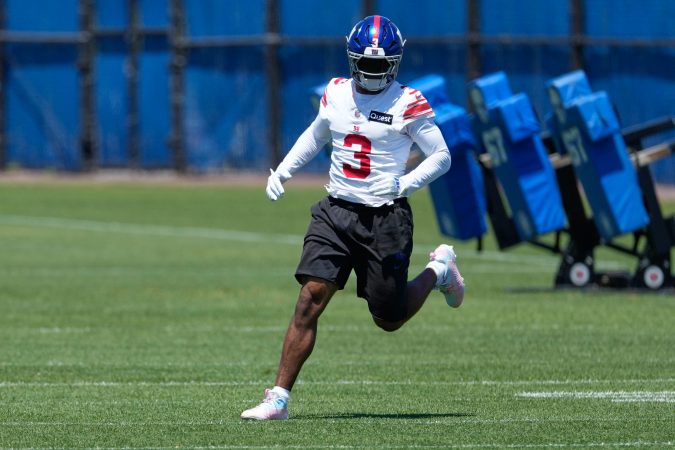
The North Philly native, who starred at La Salle College High School and Penn State, goes into his second NFL season with the New York Giants having come a long way from the edge rusher selected with the third pick in the 2025 draft and who asked Hall of Famer Lawrence Taylor to wear his No. 56 — and was denied. He has visibly evolved as a player and a person since struggling through the first two months as a rookie and getting disciplined twice for off-field team violations.
After finishing strong last year with 3½ sacks in his final five games, Carter has been a disruptive force early in training camp and could soon be an every-down linebacker and a difference-maker in all situations.
“I know what I’m capable of,” Carter said last week at The Greenbrier Resort in White Sulphur Springs, West Virginia. “I know if I put the work in and believe in myself, trusting myself, trust in my teammates, trust in my coaches, I can be whoever I want to be.”
Carter has shown flashes of brilliance in practice, working against established starting left tackle Andrew Thomas and often beating him to the backfield. Thomas notices Carter being better than this time last year.
“He’s using his power more, and you can tell he just has a better understanding for different types of blocks, different types of attacks, recognizing play schemes,” Thomas said, acknowledging Carter has exhibited growth all around. “He wants to be a good player, so when you have that drive, you just have to get it going in the right direction. You just learn as you go. He’s a young kid. He’s going to learn. He’s going to get even better.”
The learning happened in a very public way. Carter had just half a sack in his first 10 pro games, got benched from the first defensive series of his 11th by interim coach Mike Kafka, who then sat him again for the first quarter two weeks later.
Carter, who will be 23 in October, said at the time he owned his mistakes. Asked at this camp if he could tell his younger self anything, he brushed that off as not the way he thinks about life.
“I feel like everything happened the way it was supposed to,” Carter said. “I learned from it, moved on from it, so I’m ready to go into year two.”
“He ended the year strong,” Burns said. “I expect him to break out, pick up where he left off.”
Carter intends to do that by leaning on the video, playbook study and practice habits he has developed. That approach fits in with what Burns and others have observed about Carter showing more maturity.
It doesn’t hurt that Carter also has a new coach in John Harbaugh, who brings Super Bowl-winning gravitas to the job and hired Dennard Wilson to be defensive coordinator. It’ll be up to Wilson to figure out the best ways to use Carter to unlock his potential, though that’s something Harbaugh already has a good idea of.
“Just a consistency level: down, after down, after down, all downs, all situations,” Harbaugh said. “Play the run, rush the passer, all the movements, stunts — things like that — (and) cover for guys on movements. All those things that he’s determined to do, I’ve heard him say it many times, to be a complete player.”