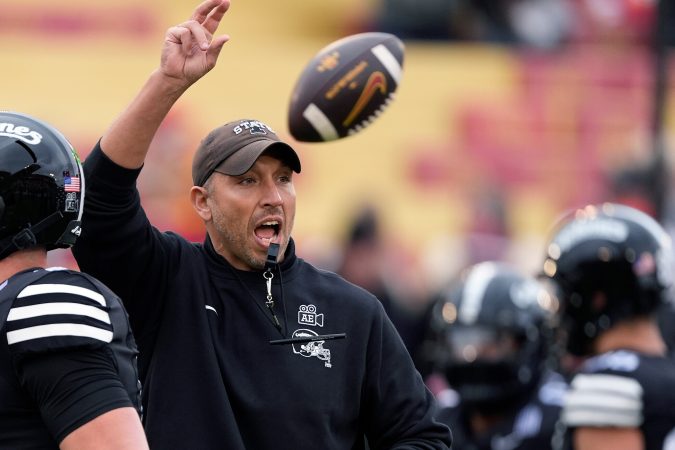
During Matt Campbell’s first year as the head coach at Toledo, he attended a high school coaching clinic in Michigan. There, Campbell discovered a concept that changed the way he concluded fall camp.
Aaron Segedi, a coach at Trenton High School in Michigan, was holding what he called “Victory Day,” on which children with disabilities participated in activities with the team. After seeing the impact it had on the children, Campbell knew he wanted to bring it to college football.
Victory Day became an annual training camp tradition under Campbell, and now he’s brought it to Penn State.
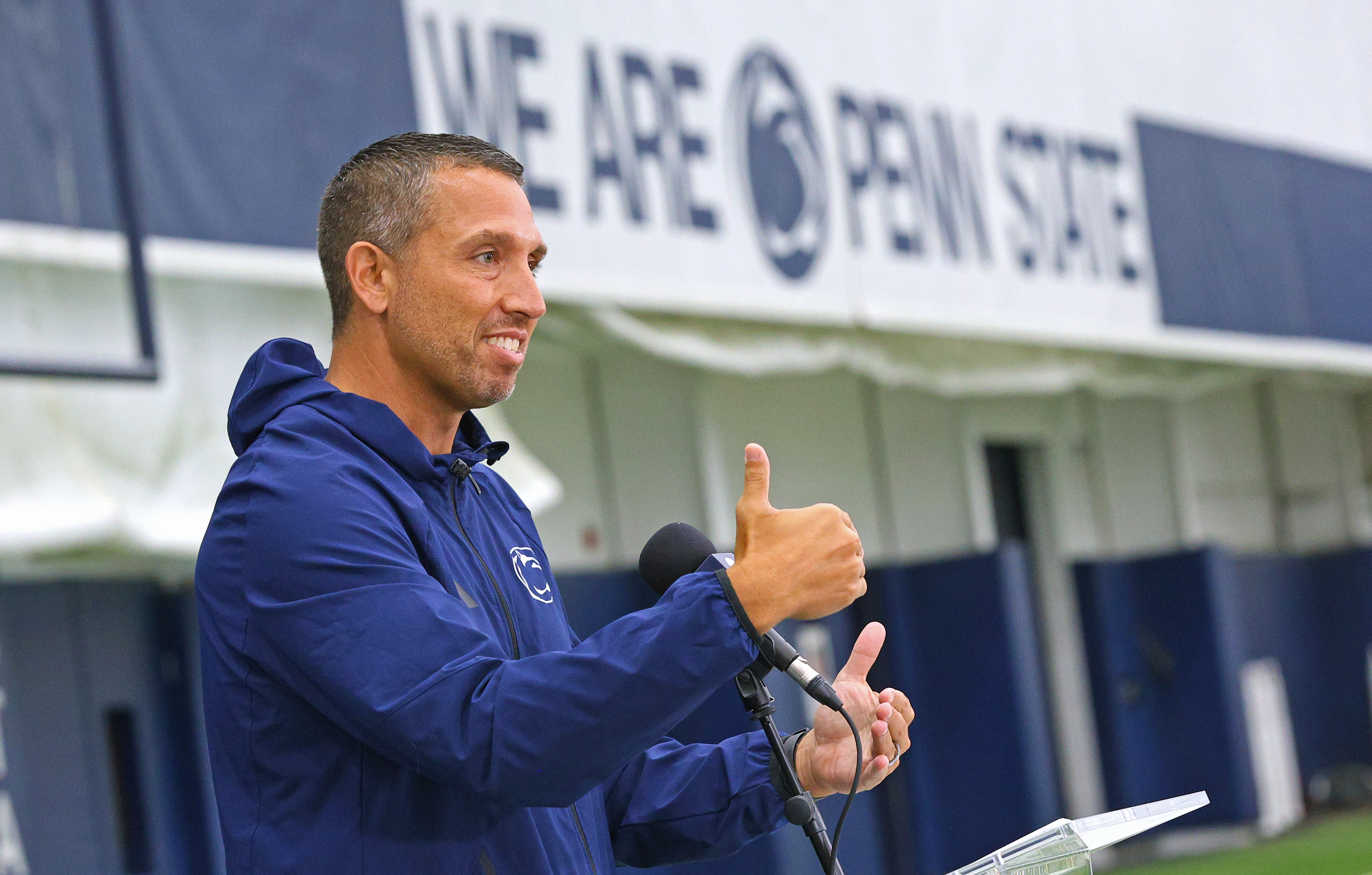
“Great night for our community. Great night for our kids,” Campbell said after Victory Day with the Nittany Lions. “Still, this world’s about giving back and making a difference. And to be able to do that [Friday night], and be able to be with so many great families and young people that may never get the opportunity to play the game of football, it’s a special opportunity for us.”
Friday was the first edition of the event in Happy Valley, as local children and their families joined the Nittany Lions inside Beaver Stadium. Kids could participate in activities like footwork drills, the Oklahoma drill, throwing balls into a net, and playing catch with players.
The highlights of the event, however, were the rushing touchdowns. Children would line up for the chance to run a play with Penn State’s starting offense and defense while their names boomed from the stadium’s sound system. Campbell greeted every kid with a smile and a handshake before huddling everyone up for the play call.
“I know we had a couple of trick plays in there, some special calls in there that weren’t supposed to be leaked,” quarterback Rocco Becht said. “But they were out there for the kids.”
Inside Penn State’s Inaugural Victory Day🏈
I’ve been blessed to cover a lot of awesome things involving my Alma Mater. This is one that makes me proud to be a Penn Stater🦁 pic.twitter.com/mtAMdzBZoZ
Friday was Becht’s fifth Victory Day — he participated in four at Iowa State — so he’s seen firsthand the impact this event can have on a community and those who participate.
The highlight for him this year? Throwing a 15-yard touchdown pass to a youngster down the sideline.
“I think it’s the best day of the year for me to give back to these kids, to see a smile on their face,” Becht said. “It’s truly the best thing in the world. We’re just glad to be here and put a smile on these kids’ faces.”
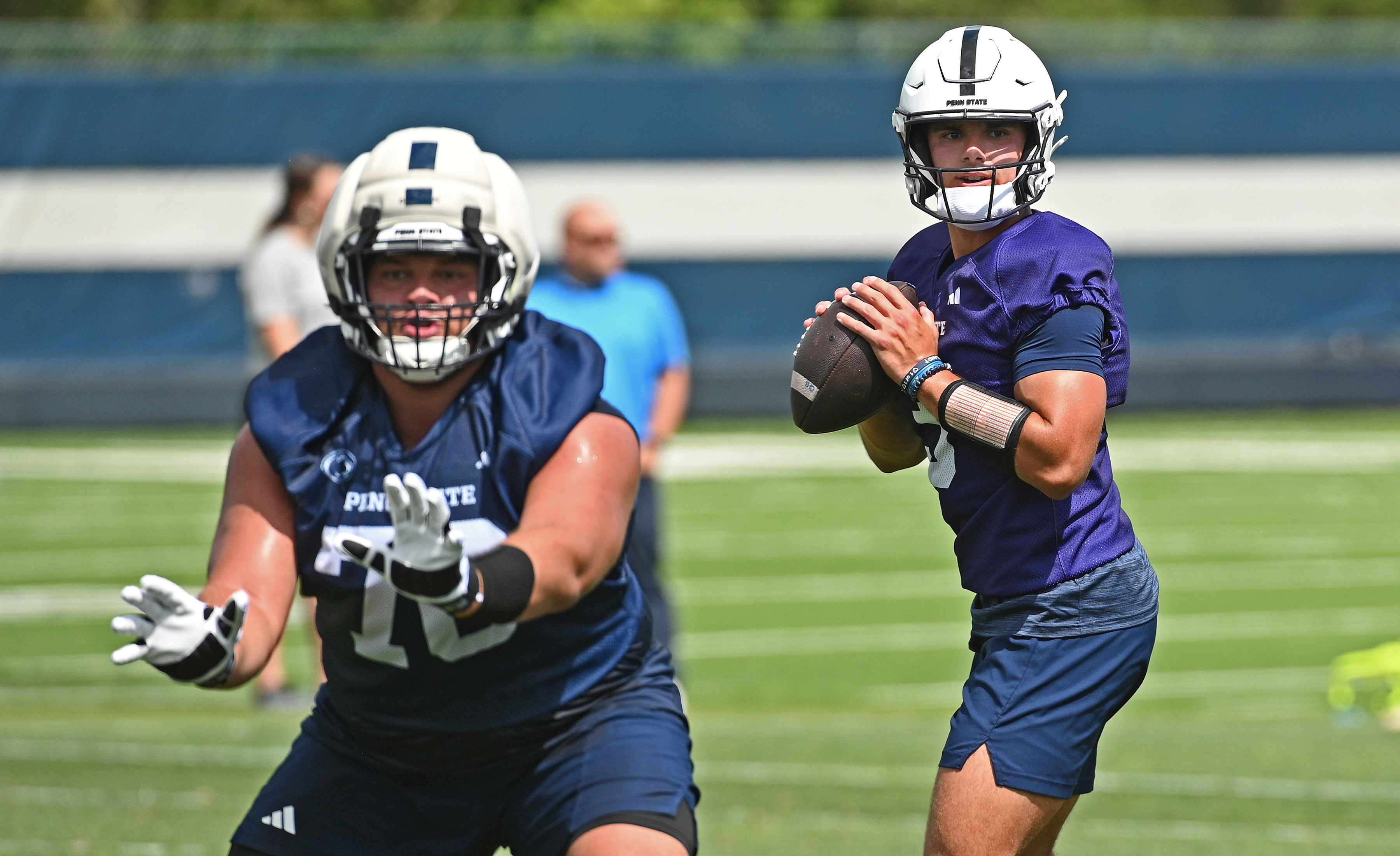
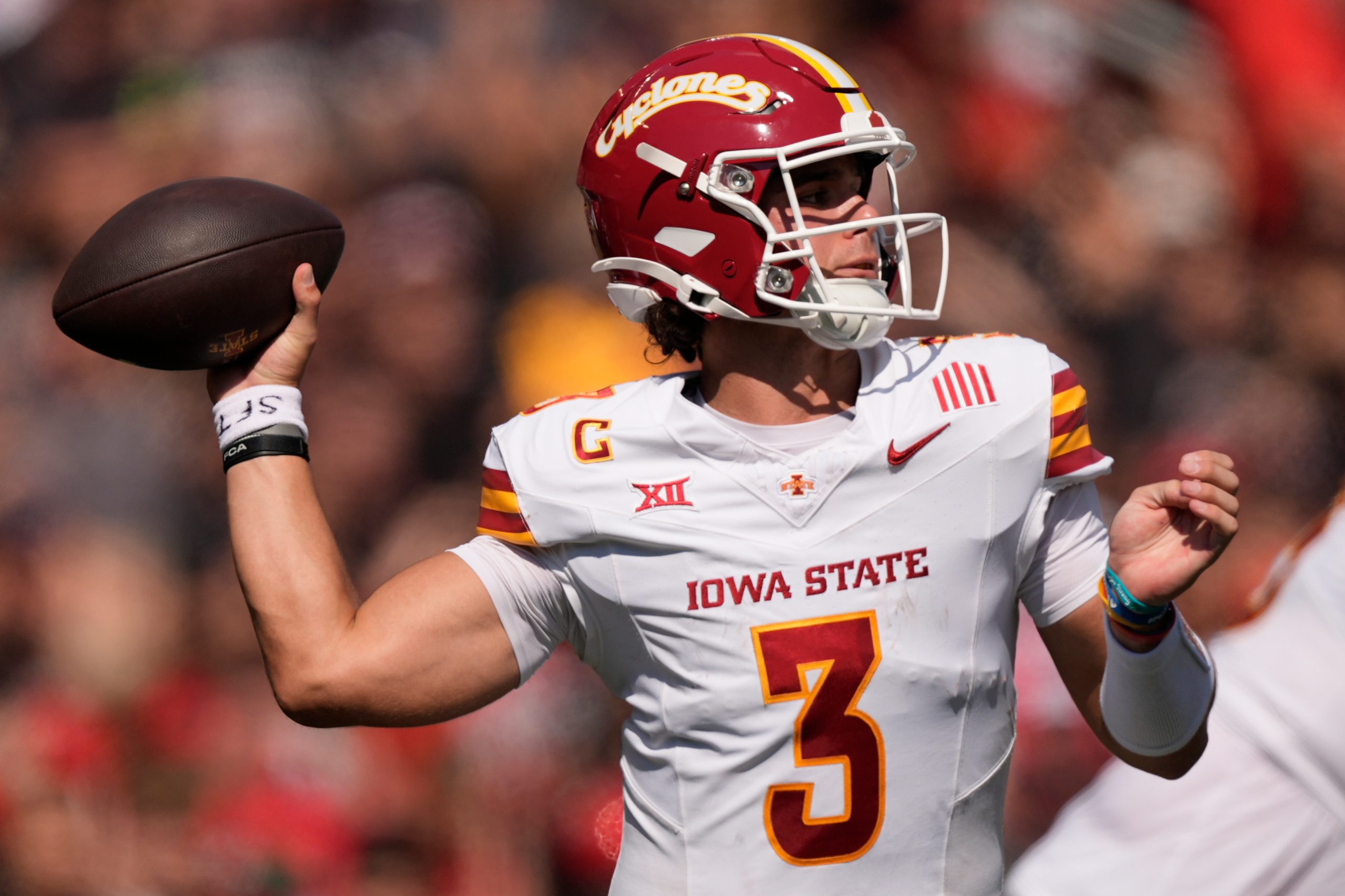
Penn State quarterback Rocco Becht, an Iowa State transfer, is no stranger to Victory Day. Offensive lineman Trevor Buhr is a fellow Cyclones transfer.Craig Houtz / For The Inquirer
Although the Iowa State transfers have experienced Victory Day before, it was most of the team’s first time participating. Becht said some guys were a “little skeptical” when it began, but, by the end, there wasn’t a face without a smile.
Junior offensive lineman Cooper Cousins still believes THON, the dance marathon that raises funds to help children with cancer, is the best day of the year at Penn State. But Victory Day is now a close second.
“It was awesome seeing the smiles on the kids’ faces, seeing every kid get the opportunity to score a touchdown was awesome, and really just seeing the family’s reactions,” Cousins said. “When you get the opportunity to come out here and hang out with the youth around the community, inspire them, and be with them throughout the night, it was awesome. It was a great time.”
Since becoming Penn State’s head coach in December, Campbell has made it a point to get out into the community and make a difference. From packing lunches for the YMCA of Centre County Backpack Program to doubling the amount of money players raised for THON, Campbell is determined for the Nittany Lions to have a charitable impact.
And Victory Day was the latest example.
“This isn’t a popularity contest. This isn’t trying to sell our program to anybody. This is to make a difference in the lives of other people,” Campbell said. “To be honest with you, the more people we can make a difference in their lives, the better this opportunity is, and the more special this day becomes.”
Maybe the best thing that can happen to college sports’ integrity is everything that is happening to its integrity right now. It would be ironic, in a way. The NCAA and its member institutions are where they are because they spent decades adhering to a policy of inertia. Only now does it look like a viable strategy, after their world is already burning around them. Sometimes, in order to gain back what was lost, one must lose what little remains.
Very little remains. Let’s be clear about that. That was true even before last weekend’s news that former Eagles undrafted rookie free agent Dae’Quan Wright was planning on returning to the college ranks after being waived by the Browns. In fact, the hand-wringing that has accompanied the tight end’s reported agreement with LSU is mostly an admission of naiveté or ignorance on the part of the hand-wringers.
The NCAA is more than a decade into a series of logical premises and conclusions that was always going to lead power conferences like the SEC and Big Ten to where they are right now. The university presidents who operate behind the NCAA’s bureaucratic anonymity chose this path when they allowed the almighty dollar of television contracts and the vanity of a news cycle monopoly to become the primary goal of collegiate sports rather than sports played by, for, and among collegiates.They are living in a reductio ad absurdum of their own creation.
The best thing any of us can do for our sanity is to lean back and enjoy watching them lose theirs. It no longer makes sense to react to each development as if university athletic departments are tethered to some sort of ethical baseline that sets them apart from any other major professional sports organization. They pulled up that anchor long ago. The ship has sailed.
Frankly, the idea of an undrafted athlete moving from the bottom of an NFL training camp roster to a college football starting lineup pales in comparison to the legion of current college football starters who are making bigger bank than they would as NFL players on rookie contracts. The average Power 4 quarterback is currently signed to a name, image, and likeness deal worth $3.1 million, according to Sportico. It always made sense that there would come a day when a player would ask out of a contract from the Browns for a more competitive offer funded by Big Willy’s Jeep-Chevy of Baton Rouge. That’s the way NIL was always going to work.
Average NIL spend has nearly tripled in the past three seasons, reflecting an accelerating market. Power 4 programs spend roughly $24.8M on football alone.
Top position groups can expect annual NIL earnings of $3.1M (QB), $1.0M (WR) and $932K (RB). QB has the best ratio of… pic.twitter.com/U4HYYXcAJT
The ridiculousness is the real sport, now. We should treat it as such. For years, the NCAA chose to address the logical implications of its profit drive with a weird and counterintuitive combination of hope, avoidance, and authoritarian dictates. They fully recognized that the genie would one day escape the bottle. Now, they’re left to hope that Ja’Marr Chase and Joe Burrow already have plans for their bye week, when LSU plays Mississippi State.
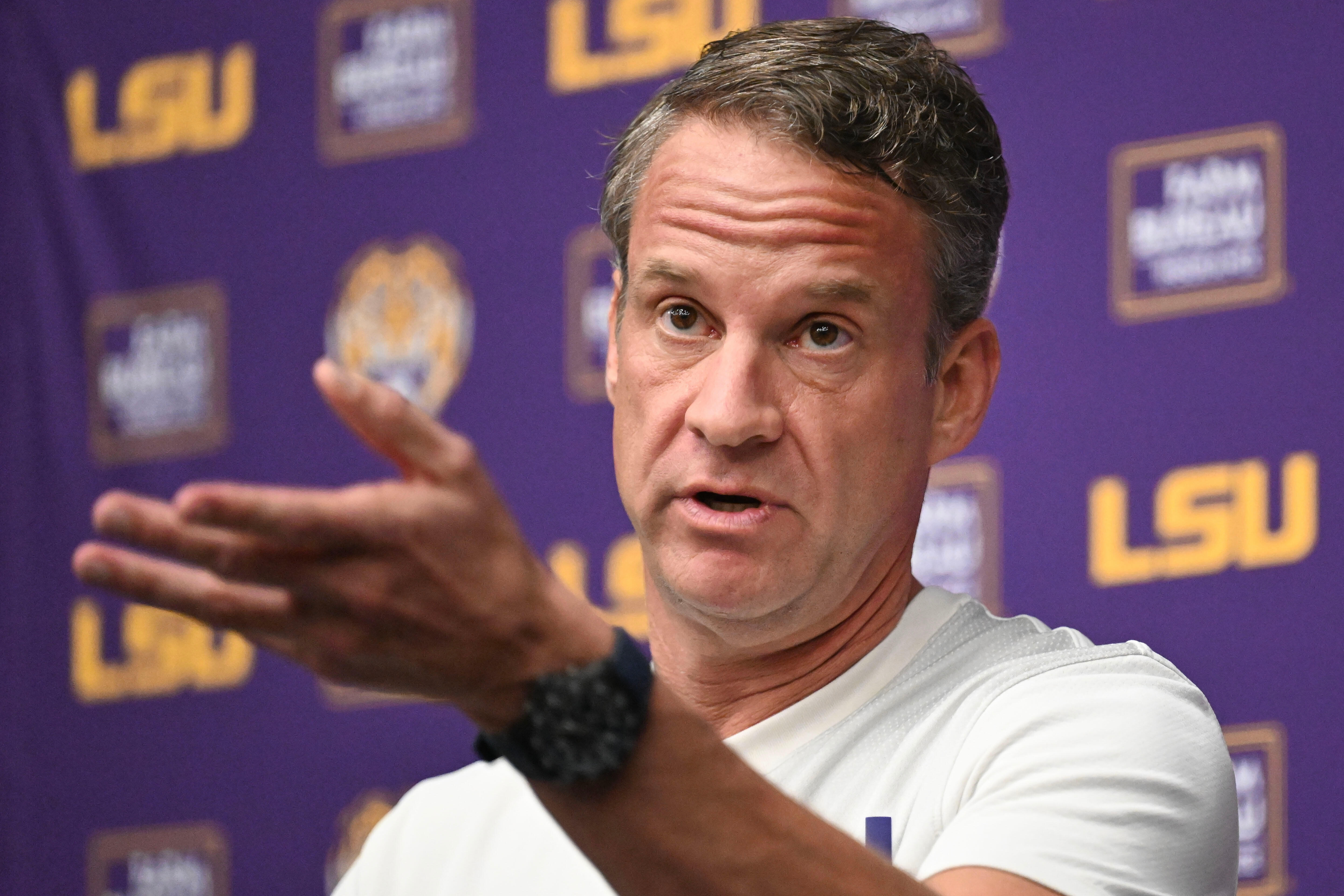
Lane Kiffin’s central role in the latest lunacy is fitting. College football’s Kendall Roy has spent the early part of this week channeling the exact sort of ends-based nihilism so sublimely satirized by HBO’s Succession. He did the same last year when he left his Ole Miss team on the eve of the college playoffs in order to sign a mega contract with LSU. Nick Saban, his former boss at Alabama, leveraged the full power of the media-sports industrial complex to absolve him of responsibility.
“We need to take a better approach to the business aspect of what we do in college athletics,” Saban said on ESPN’s pregame studio show after Kiffin left Ole Miss. “In the NFL, you can’t leave your team until you are finished playing. You can’t talk to another coach in the regular season. There’s a defined time when you can talk to them if they are in the playoffs. We should match the academic calendar with the football calendar.”
Well, yeah. You should. But there are a whole lot of competing self-interests standing between ought and is. Like any system, it is first and foremost a reflection of those who agree to its framework. Major college football has become nothing more than Boar on the Floor in pads. Any television news segment on NCAA should conclude with a clip of Logan Roy smirking at all the piggies at the trough.
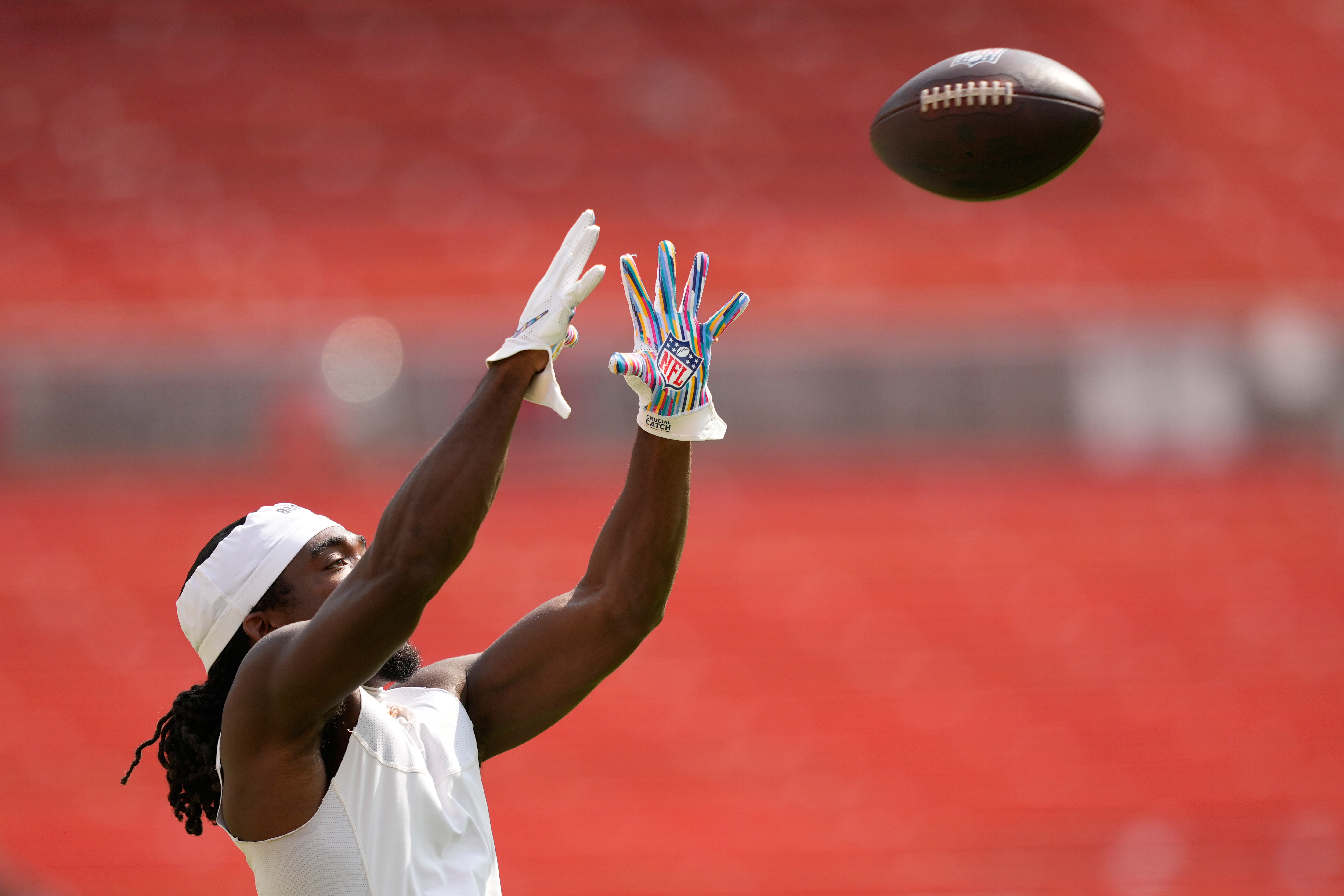
Dae’Quan Wright is among the NFL players trying to play another season of college football.Carolyn Kaster
“In general, should NFL players come back to college? I believe — it doesn’t matter necessarily what I believe — that answer would be no,” Kiffin said in a Monday news conference while defending his recruiting of at least two former Ole Miss players who’d spent the summer in NFL training camps.
Focus on Kiffin’s interjection.
It doesn’t matter necessarily what I believe.
You’ll struggle to find seven words that more accurately summarize both the current state of college sports and its contributing factors. In a more principled world, they would be written off as the words of a coward. In our current world, they might as well be written in Latin beneath the flag or family crest or company logo of a disconcerting number of tech titans, politicians, and Fortune 500 firms, not to mention the hundreds of university presidents who have long embraced the plausible deniability of the concept of shareholder value. The best thing you can say about the system of higher education in the United States is that it remains steadfastly by and of the system at large.
The only hope is that it burns itself as quickly and completely as possible. The inevitable end game for the major football-playing schools won’t look much closer to the mandates of their university charters. The big schools will break away, impose a salary cap, hiring and transfer restrictions — all of the things major sports leagues long ago did as a result of similar competitive inevitabilities. They will sign their own television contract, sell their own licensing agreements, consolidate the revenues. The nonpower schools will exist mostly as a counterweight to any antitrust claims. Meanwhile, the rest of us will continue to contemplate the question: Do we really care about college sports if they are no longer about the college?
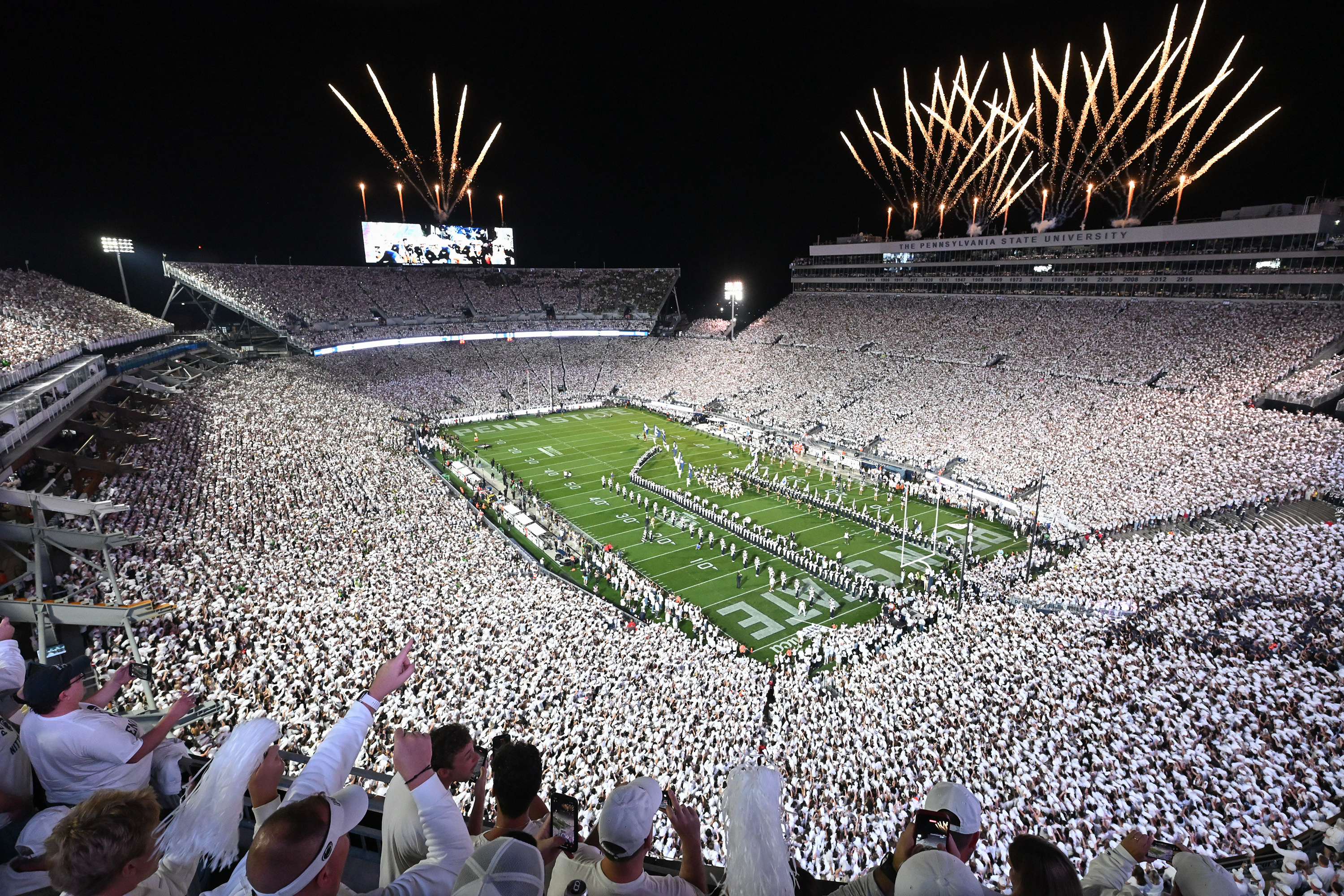
One of college football’s best atmospheres has an official date.
Led by new head coach Matt Campbell, Penn State will host its iconic “White Out” game against Southern California on Oct. 10, the program announced on Tuesday. Kickoff is set for 7:30 p.m. (NBC10, Peacock).
The tradition started in 2004 with just the Penn State student section and expanded to the entire stadium in 2007. This will be the 19th year with a full “White Out” in Happy Valley.
Last season, the Nittany Lions lost to Oregon during the “White Out” game in overtime, which set off a string of six straight losses and included the firing of longtime head coach James Franklin. Last year’s loss also ended a six-game winning streak in the annual game, dating back to 2019.
This matchup will also mark the first time Penn State will host USC in Beaver Stadium since the Trojans joined the Big Ten ahead of the 2024 season. Their only meeting as conference foes came in 2024, when the Nittany Lions overcame a 14-point halftime deficit to win in overtime, 33-30. Overall, USC holds a 6-5 advantage in all-time meetings between the two programs.
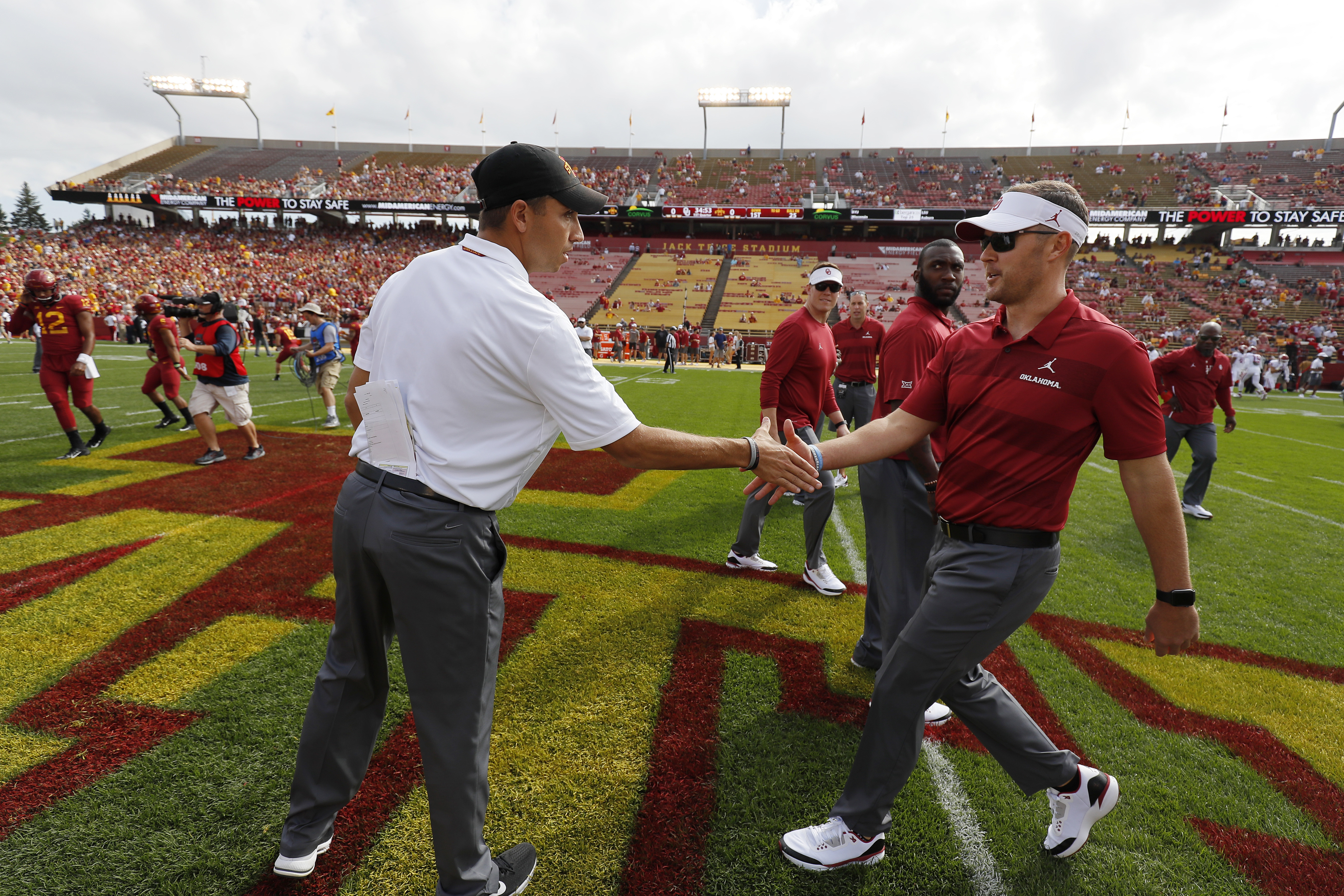
Iowa State head coach Matt Campbell, left, meets with Oklahoma head coach Lincoln Riley, right, before an NCAA college football game, Saturday, Sept. 15, 2018, in Ames, Iowa. (AP Photo/Matthew Putney)Matthew Putney
Campbell and Lincoln Riley will face off as head coaches for the first time since 2021, when the former was at Iowa State and the latter was with Oklahoma. Riley’s Sooners held a 4-2 advantage over Campbell’s Cyclones, including a Big 12 championship game win in 2020.
Before Penn State hosts USC for the White Out game, it will face Marshall (Sept. 5) at home, travel to Lincoln Financial Field for a noon kickoff against Temple (Sept. 12), and host Buffalo (Sept. 19). Then, Big Ten Conference play begins with the opener against Wisconsin (Sept. 26) before traveling to Northwestern’s new Ryan Field for a Friday night in Evanston, Ill. (Oct. 2).
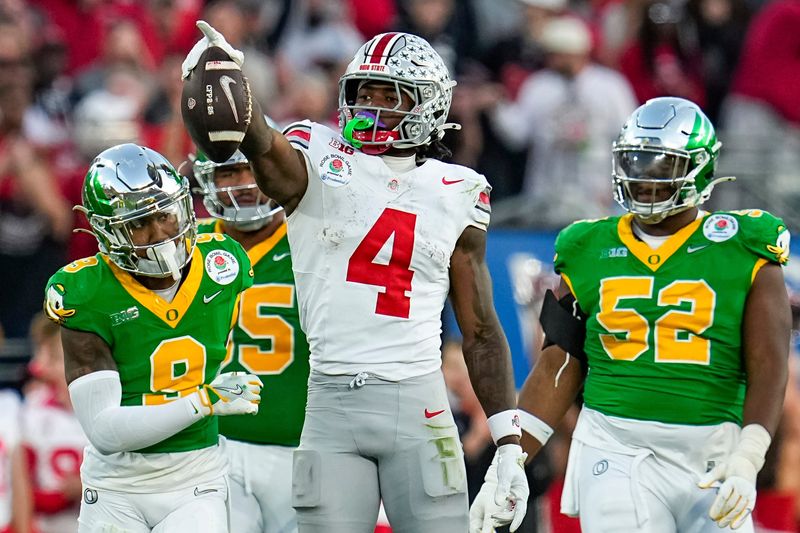
Ohio State and Oregon are 1-2 in the AP Top 25, giving the Big Ten Conference the top two teams in the preseason rankings for just the second time ever. Georgia, Notre Dame and Texas round out the top 5.
The Southeastern Conference gets bragging rights with nine ranked teams, but the Big Ten isn’t far behind with eight.
Penn State is ranked 18th going into its first season with coach Matt Campbell, who was hired in December following a 7-6 season that cost James Franklin his job in October. Penn State is one of four teams in the Top 25 with new coaches.
Indiana finished the 2025 season at No. 1 in the rankings after a historic 16-0 run and national championship game victory. This season, Ohio State enters with the best odds (+600) to win it all. Notre Dame (+650), Texas (+650), Indiana (+800) and Oregon (+800) round out the top five.
The Top 25 voters are more than 60 journalists covering college football for AP members and other news organizations. They’re urged to base their votes on head-to-head results, not reputation, preseason speculation or regional bias.
Having Ohio State and Oregon enter the season Nos. 1 and 2 ahead of sixth-ranked defending conference and national champion Indiana is a flex for the Big Ten, which already is riding the momentum of winning the last three national titles.
Having five of the top 10 teams, and seven of the top 13, bolsters the SEC’s contention that it has greater depth. The SEC has nine ranked teams compared to the Big Ten’s eight.
The debate goes on over conference supremacy and will only heat up when the Big Ten and SEC square off in the first heavyweight games of the season Sept. 12. That’s when No. 10 Oklahoma visits No. 16 Michigan and No. 1 Ohio State goes to No. 5 Texas. Both are rematches of games won by the home team last year — OU 24-13 and Ohio State 14-7.
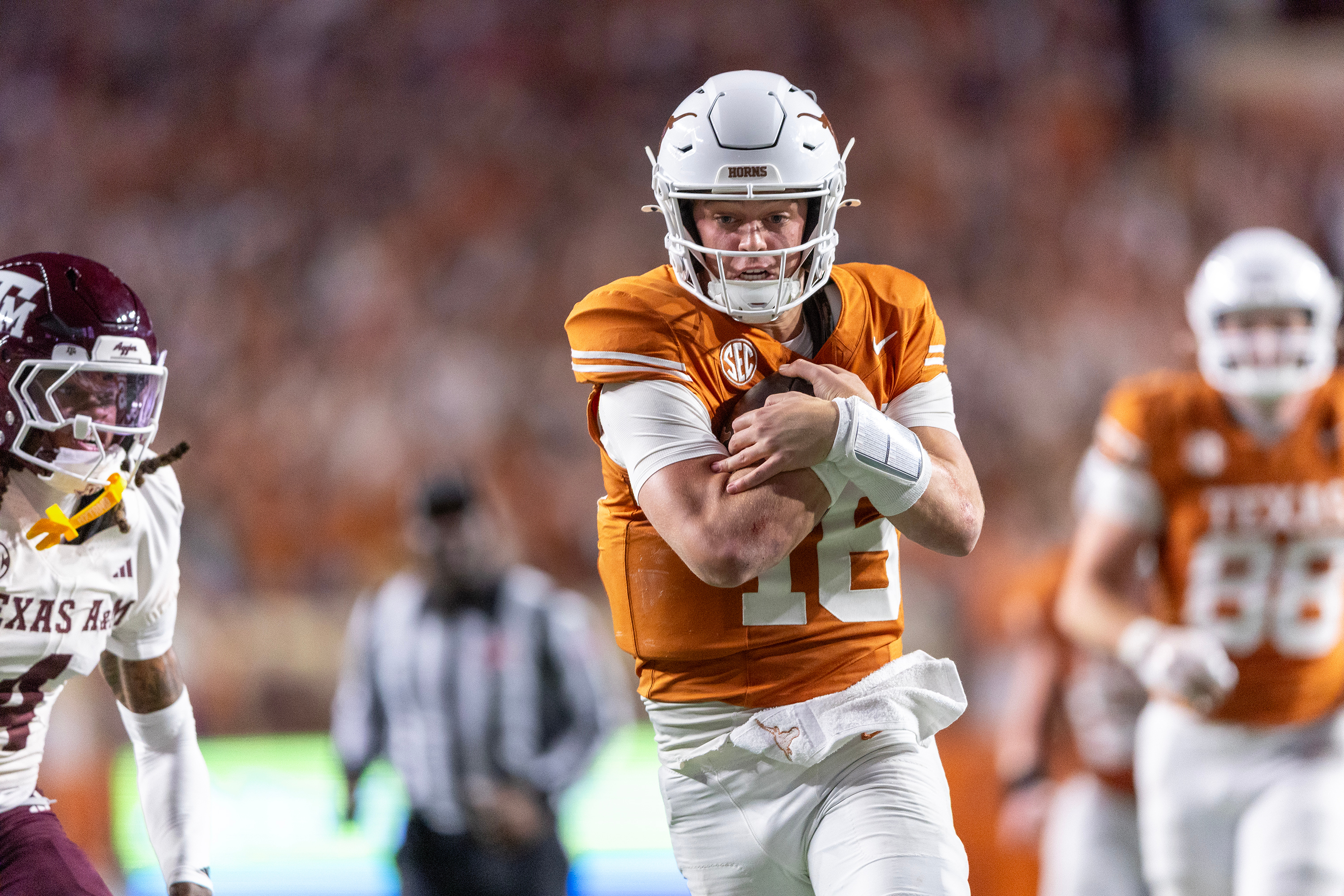
Texas quarterback Arch Manning is expected to be a Heisman Trophy candidate this season.Stephen Spillman
Longhorns, No. 1 in last year’s preseason poll, look to bounce back
The Longhorns entered the 2025 season at No. 1 after receiving 25 first-place votes — two more than No. 2 Penn State. But after a Week 1 loss to Ohio State, Texas found itself fighting upstream to maintain its top-ranked status. An October loss to a struggling Florida team didn’t help either, knocking Texas out of the rankings altogether.
The Longhorns, despite gutting out a few impressive wins, ultimately fell short of the 12-team College Football Playoff after Georgia handed them a third loss.
Eyes will be on quarterback Arch Manning, who the Longhorns hope makes the expected jump from year one to year two as a full-time starter. Manning, a favorite for the Heisman Trophy this year, will have to lead a team facing plenty of expectations once again.
Buckeyes are an early favorite
It’s the first time the Buckeyes have topped the list since the 2015 preseason.
Ohio State ranked No. 1 in the AP Top 25 for the entire regular season last year, only dropping after a Big Ten Championship game defeat from Indiana. With a 12-1 record, Ohio State still earned the No. 2 seed and a first-round bye in the College Football Playoff. The Buckeyes ultimately went on to drop 24-14 to eventual runners-up, Miami, in the Cotton Bowl.Gallery
This season appears promising with quarterback and receiver duo Julian Sayin and Jeremiah Smith returning to the offense. Veteran defensive end Kenyatta Jackson Jr. is expected to anchor the defense. Notre Dame and Texas are tied for the second best odds at +650. Indiana (+800) and Oregon (+800) round out the top five.
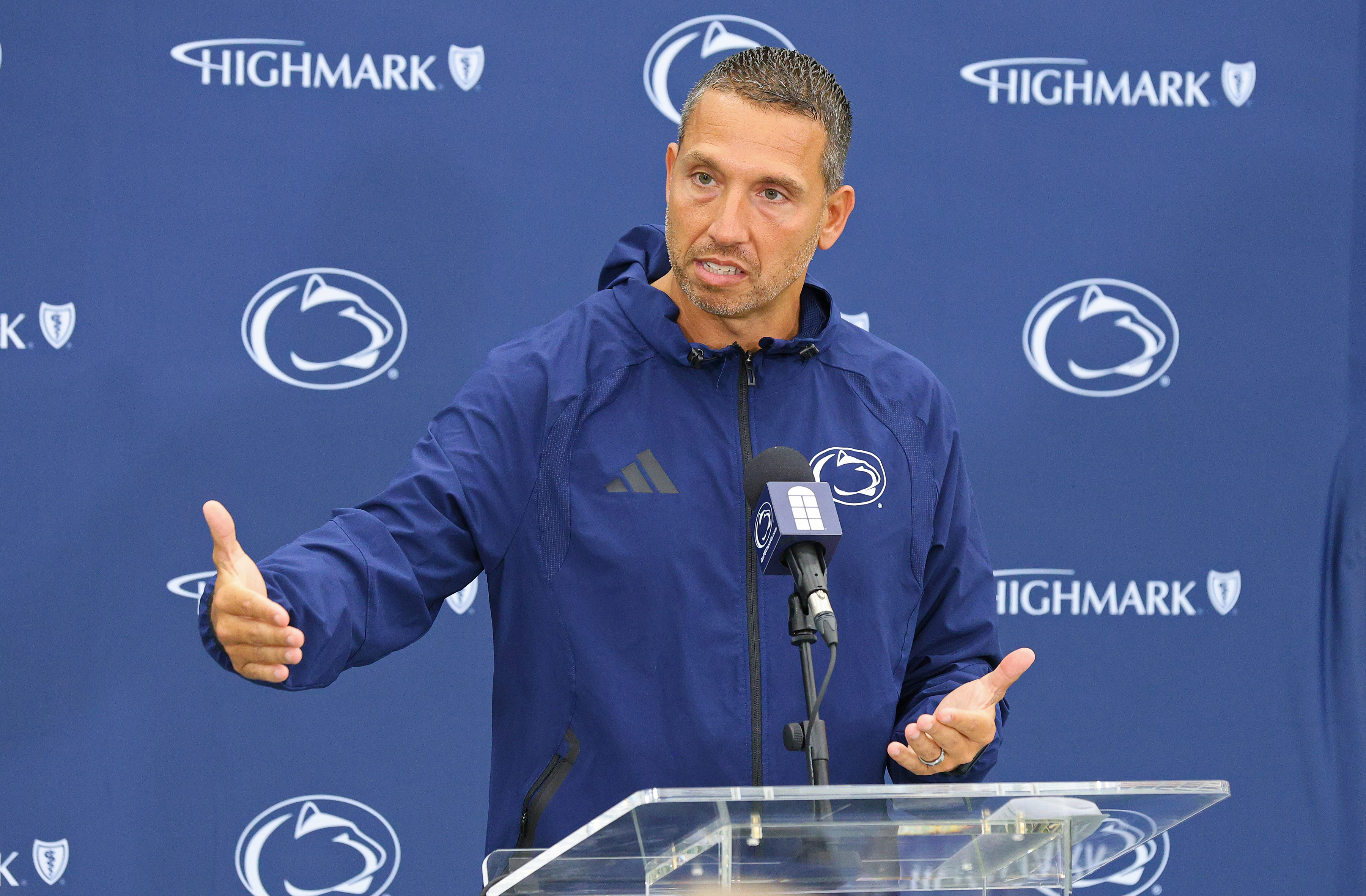
STATE COLLEGE, Pa. — Penn State football coach Matt Campbell said the theme for these next few weeks is “preparation for the journey” as his squad works toward a Week 1 matchup vs. Marshall on Sept. 5 (3:30 p.m., FS1).
“We’ve grown,” Campbell said Friday at the team’s local media day. “It was great to see Practice 1 and 2 because there was great growth between Practice 1 and Practice 2, and we’re going to have to not miss a day as we continue. There’s a sense of urgency.”
Besides Penn State’s continued preparation, here are three other takeaways from Friday’s availability:
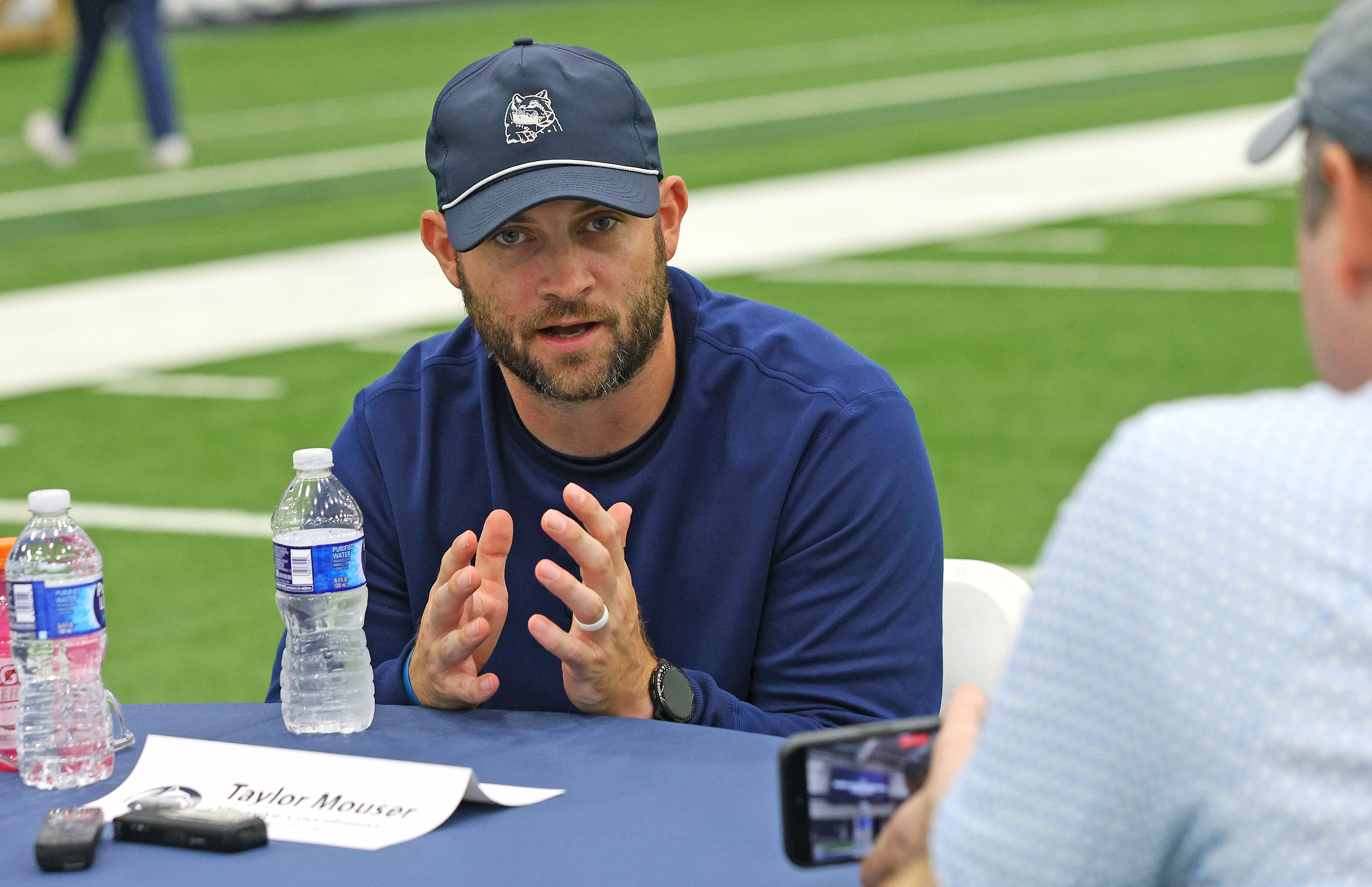
Offensive coordinator Taylor Mouser doubles as Penn State’s tight ends coach.Craig Houtz / For The Inquirer
Tight end takeover
Campbell said 12- and even 13-personnel, meaning two or three tight ends on the field, is going to be prevalent in new offensive coordinator Taylor Mouser’s scheme, mostly because Campbell and Mouser want to design plays that highlight the team’s strengths.
Tight end will be a focal point. Iowa State transfer Benjamin Brahmer was a semifinalist for the John Mackey Award for the nation’s top tight end last season, fellow Cyclones transfer Gabe Burkle is “the guy that cleans up the mess,” according to Mouser, and returnee Andrew Rappleyea began to break out at the end of 2025. Brahmer and Burkle were named to the Mackey Award watchlist earlier this week.
With that comes high expectations for the group, especially considering Mouser is also their position coach.
“We think we’re the smartest on the offense, pretty much, so we always know what we’re doing, and if we do mess up, it’s our fault,” said Brahmer, a senior. “Or if anybody messes up, [Mouser] thinks it’s the tight ends’ fault because we’re kind of the central piece of that offense.”
The idea of playing 12- and 13-personnel excites Rappleyea, who said the tight ends and wide receivers jokingly argue when Mouser calls for more tight ends during practice.
“I think that [Mouser] realizes the way it is,” said Rappleyea, a junior. “The game’s evolving, and if you have big guys that can get open, we’re not going to complain about having two of us on the field instead of three receivers.”
Consistency is key
In any normal year, Campbell likely would have a general depth chart in his head for the season. But this is not a normal year, and Campbell is making every player earn their Week 1 spot.
“Everybody’s either on a new team, at a new place, got new coaches, and everybody’s going in with kind of the same starting lines,” said Campbell, who’s entering his first season as the Nittany Lions’ coach after a decade in the same role at Iowa State. “You got to go earn it. To be honest with you, on a good team, some great teams that I’ve been a part of, championship ball, you kind of got to earn it because there’s enough good depth.”
Ultimately, Campbell emphasized that the players who separate themselves will be the consistent ones, particularly among the wide receivers. The Nittany Lions have developed a reputation for poor wide receiver play in recent years, but Iowa State transfers Chase Sowell and Brett Eskildsen received high praise from Campbell on Friday, alongside returnee Koby Howard, a sophomore.
“I think [Sowell and Eskildsen] give you proven reps that these guys can do it. Can they do it at the consistency now that the great ones look like?” Campbell said. “I think then you look the rest of the way, and you see a guy like Koby. You saw what he could do. I think the same thing I would say about Kobe, and it’s his challenge, and he and I talked about it, is consistency. Can you be the best version of you every day?”
Wide receiver Koby Howard is back with Penn State.Craig Houtz / For The Inquirer
Versatile defense
Campbell has made it known that he believes the defense under new coordinator D’Anton Lynn can be “multiple” in scheme and features Nittany Lions who can play different positions.
He name-checked junior safety Marcus Neal Jr., senior cornerback Zion Tracy, and redshirt junior linebacker Tony Rojas, but they aren’t the only ones adding versatility.
Sophomore defensive end Yvan Kemajou said Lynn’s scheme gives “a lot of freedom to the D-line and linebackers.”
“I feel like we’re very multiple. I like that,” Kemajou said. “So it’s just great learning his scheme, just learning his style of playing defense, and it’s been great.”
Senior linebacker Caleb Bacon, another Iowa State transfer, can play at different spots and has been working out at defensive end to start fall camp. He doesn’t necessarily have a position preference and is more focused on doing what he can to help Penn State.
“If we need edge rushers, if we need linebackers, I think I’m really just ready for whatever,” Bacon said. “Kind of knowing this scheme, it all really helps. And playing strict linebacker in spring ball, and now transitioning a little bit of a mixed role, I think has been super beneficial for my football IQ and just knowledge of the defense in general.”
“I want to be Defensive Player of the Year,” Carter said. And he absolutely thinks he can do so right away.
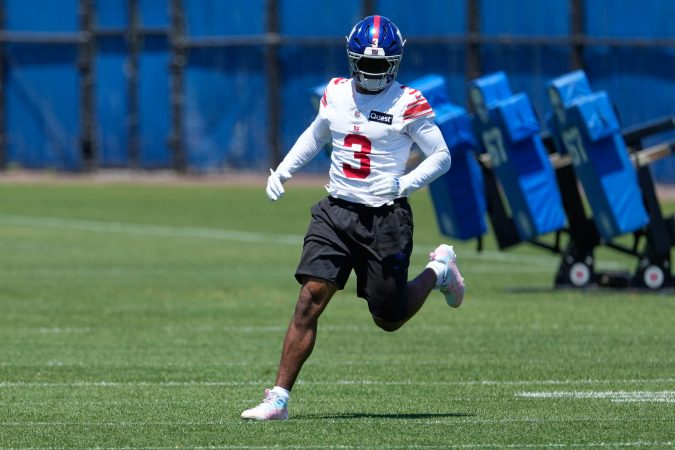
The North Philly native, who starred at La Salle College High School and Penn State, goes into his second NFL season with the New York Giants having come a long way from the edge rusher selected with the third pick in the 2025 draft and who asked Hall of Famer Lawrence Taylor to wear his No. 56 — and was denied. He has visibly evolved as a player and a person since struggling through the first two months as a rookie and getting disciplined twice for off-field team violations.
After finishing strong last year with 3½ sacks in his final five games, Carter has been a disruptive force early in training camp and could soon be an every-down linebacker and a difference-maker in all situations.
“I know what I’m capable of,” Carter said last week at The Greenbrier Resort in White Sulphur Springs, West Virginia. “I know if I put the work in and believe in myself, trusting myself, trust in my teammates, trust in my coaches, I can be whoever I want to be.”
Carter has shown flashes of brilliance in practice, working against established starting left tackle Andrew Thomas and often beating him to the backfield. Thomas notices Carter being better than this time last year.
“He’s using his power more, and you can tell he just has a better understanding for different types of blocks, different types of attacks, recognizing play schemes,” Thomas said, acknowledging Carter has exhibited growth all around. “He wants to be a good player, so when you have that drive, you just have to get it going in the right direction. You just learn as you go. He’s a young kid. He’s going to learn. He’s going to get even better.”
The learning happened in a very public way. Carter had just half a sack in his first 10 pro games, got benched from the first defensive series of his 11th by interim coach Mike Kafka, who then sat him again for the first quarter two weeks later.
Carter, who will be 23 in October, said at the time he owned his mistakes. Asked at this camp if he could tell his younger self anything, he brushed that off as not the way he thinks about life.
“I feel like everything happened the way it was supposed to,” Carter said. “I learned from it, moved on from it, so I’m ready to go into year two.”
“He ended the year strong,” Burns said. “I expect him to break out, pick up where he left off.”
Carter intends to do that by leaning on the video, playbook study and practice habits he has developed. That approach fits in with what Burns and others have observed about Carter showing more maturity.
It doesn’t hurt that Carter also has a new coach in John Harbaugh, who brings Super Bowl-winning gravitas to the job and hired Dennard Wilson to be defensive coordinator. It’ll be up to Wilson to figure out the best ways to use Carter to unlock his potential, though that’s something Harbaugh already has a good idea of.
“Just a consistency level: down, after down, after down, all downs, all situations,” Harbaugh said. “Play the run, rush the passer, all the movements, stunts — things like that — (and) cover for guys on movements. All those things that he’s determined to do, I’ve heard him say it many times, to be a complete player.”
The annual preseason college football coaches poll was released, and Penn State was included despite a disastrous 2025 season.
On Tuesday, Penn State was ranked No. 17. Eight Big Ten schools were included in the Top 25 poll, with Ohio State atop the list.
Last season, the Nittany Lions were ranked third overall in the same preseason poll, which was not indicative of the season the team had. The Nittany Lions finished 7-6 overall and 3-6 in conference play. Longtime head coach James Franklin was dismissed in the middle of the season. Former Iowa State coach Matt Campbell was hired in December to take over the program.
“Over the past six months, we’ve been reminded every day why Penn State was the right fit,” said Campbell during Big Ten media day last week. “The history is special. The tradition is special. But what really resonated with me is how Penn State has always valued integrity, character, and class at its best.”
It seems Campbell’s peers believe he can help the program bounce back. To do so, he will lean on some familiar faces, as 24 Iowa State players followed Campbell to Penn State through the transfer portal, including starting quarterback Rocco Becht.
In 12 games last season, playing with a torn labrum on his nonthrowing shoulder, Becht threw for 2,584 yards and 16 touchdowns. He is the winningest returning quarterback in college football.
Quarterback Rocco Becht followed Matt Campbell to Penn State.Carolyn Kaster
“We have our goals in mind, and that’s to win a Big Ten championship and ultimately get to the College Football Playoff to have a chance to win a national championship,” Becht previously told the Inquirer. “With the team that we have now, I think we’re fully capable of doing that. Everybody just has to buy in, be consistent with the standards, and I think we’ll be in good hands.”
Big Ten commissioner Tony Petitti addressed the media Tuesday in Chicago, and emphasized that the conference has never been in a better position.
Big Ten schools have won the past three national championships in football — Indiana (2025), Ohio State (2024), and Michigan (2023) — and it continues to try to influence the future of college athletics.
Petitti discussed the proposed Protect College Sports Act and said the Big Ten continues to withhold support until it can review amendments made to the bill’s language.
“Over the past 10 days, there have been hundreds of phone calls discussing key aspects of the bill,” Petitti said. “It is important to understand that this bill sets forth very specific language on how college sports will operate going forward. After a lot of productive work, it is absolutely imperative that we see the amended language of the bill. We cannot change our position until we see the amended bill and have an opportunity to share it with our leadership. And I will say … we expect to see the amended bill shortly.”
Petitti said the Big Ten has been in communication with lawmakers about the proposed changes and believes progress has been made.
“There seems to be alignment in the direction with the senators,” Petitti said. “They understand our issues. I think we’ve been aligned with the SEC in pointing those out, which is really the case on most of the stuff around the bill and even really working together.”
Later, new Penn State coach Matt Campbell, along with offensive tackle Anthony Donkoh, quarterback Rocco Becht, and linebacker Tony Rojas, took the floor to answer questions. Here were the most notable takeaways:
Decision to leave Iowa State
Campbell was hired on Dec. 5, 2025, after James Franklin was fired midway through his 12th season. Campbell was the winningest coach in Iowa State history, recorded more than half of the school’s Big 12 wins, and reached the conference championship in 2024.
A common question throughout Campbell’s tenure with the Cyclones was whether he would leave for another coaching opportunity. Campbell reportedly was offered an eight-year, $68.5 million contract to be the Detroit Lions’ head coach in 2021 and initially accepted the offer before deciding to remain at Iowa State.
Campbell was the Cyclones’ head coach from 2016 to 2025 and amassed a 72-55 record while winning Big 12 Coach of the Year three times. So the decision to leave Iowa State was a big one for him.
“If we were ever going to leave, it had to be for a place that aligned with my beliefs about culture, leadership, and building a football program,” Campbell said. “Over the past six months, we’ve been reminded every day why Penn State was the right fit. The history is special. The tradition is special. But what really resonated with me is how Penn State has always valued integrity, character, and class at its best.”
Campbell said he is focused on building a program centered on young men who value doing the right thing on and off the field, have a genuine passion for football, and are committed to receiving a meaningful education.
“While many things surrounding college football continue to change, winning football games has not,” Campbell said. “Neither has my belief in how you build a football program. I still believe it’s my responsibility to help turn young men into great husbands, great fathers, and great leaders. That responsibility hasn’t changed, and it’s one I embrace every day. At Penn State, we’ve chosen a culture that embraces doing what’s hard rather than what’s easy. We want people who are chasing something greater than simply winning football games.”
Bringing Iowa State with him
Campbell brought 24 players from Iowa State with him, including Becht, who is the winningest returning quarterback in college football.
Becht spent much of the spring recovering from surgery on his left, nonthrowing shoulder and was unable to participate in spring practices.
“I wasn’t able to do a lot in spring football,” Becht said. “So I think that ultimately helped me become a better leader off the field. To lead off the field, I had to make those meetings with the guys, with the running backs, with the receivers, with the tight ends, because all that offense was so new to them that I was probably, when the coaches are gone, the next resource to help them gain that knowledge of the offense. And so that was my mentality of going into the spring ball was how much time can I get with those guys off the field so then ultimately when I got back onto the field, that relationship just clicked.”
"That's a guy that we want to play for, somebody that knows where we came from."
Taylor Mouser, Ryan Clanton, and Deon Broomfield joined Campbell’s coaching staff from Iowa State. Becht said one of the factors that went into following Campbell to Penn State was the type of person he is off the field.
“[The coaches] are down to earth and people of relationships,” Becht said. “They don’t just care about you as a football player, they care about you as a person as well. And that’s something that I wanted to experience for my last year in college football.”
Defensive changes
Campbell also discussed new defensive coordinator D’Anton Lynn. Lynn had spent the past three seasons as a defensive coordinator at Big Ten foes UCLA and Southern Cal.
“He understands this conference, the style of play, and what it takes to build great defenses,” Campbell said.
Lynn is a Penn State graduate who was a cornerback from 2008 to 2011. He recorded 162 tackles, including seven tackles for loss, four interceptions, and one fumble recovery in 47 games, while starting 37 of his last 38 games.
“He understands what it means to play here and what it means to lead here. He and his family have a deep passion for Penn State and the community,” Campbell said. “Beyond that, he’s an outstanding teacher. He’s assembled an excellent staff around him and has already made a tremendous impact on our players. Those qualities made him the right fit.”
Along with the new defensive coordinator, Campbell is moving away from the 3-3-5 defense he used at Iowa State. During his time at Toledo and throughout his first two seasons at Iowa State, he primarily used a four-down front with multiple variations before evolving into the defense for which they became known.
“As the Big 12 evolved with more multiple tight-end sets and more pro-style offenses, we found ourselves naturally moving back toward four-down fronts in certain situations, anyway,” Campbell said. “When we got to Penn State, we evaluated who we are, what our personnel looks like, and what gives us the best opportunity to succeed.”
Variety in their defense is important, Campbell said, but the foundation will begin with a four-down front.
Keeping Terry Smith
One of the most important aspects of taking the Penn State job was keeping Terry Smith on the coaching staff, Campbell said.
“Watching him lead Penn State through a difficult stretch at the end of last season only reinforced my respect for him,” Campbell said. “It wasn’t an easy situation, but Terry steadied the program and gave us a strong foundation moving forward.”
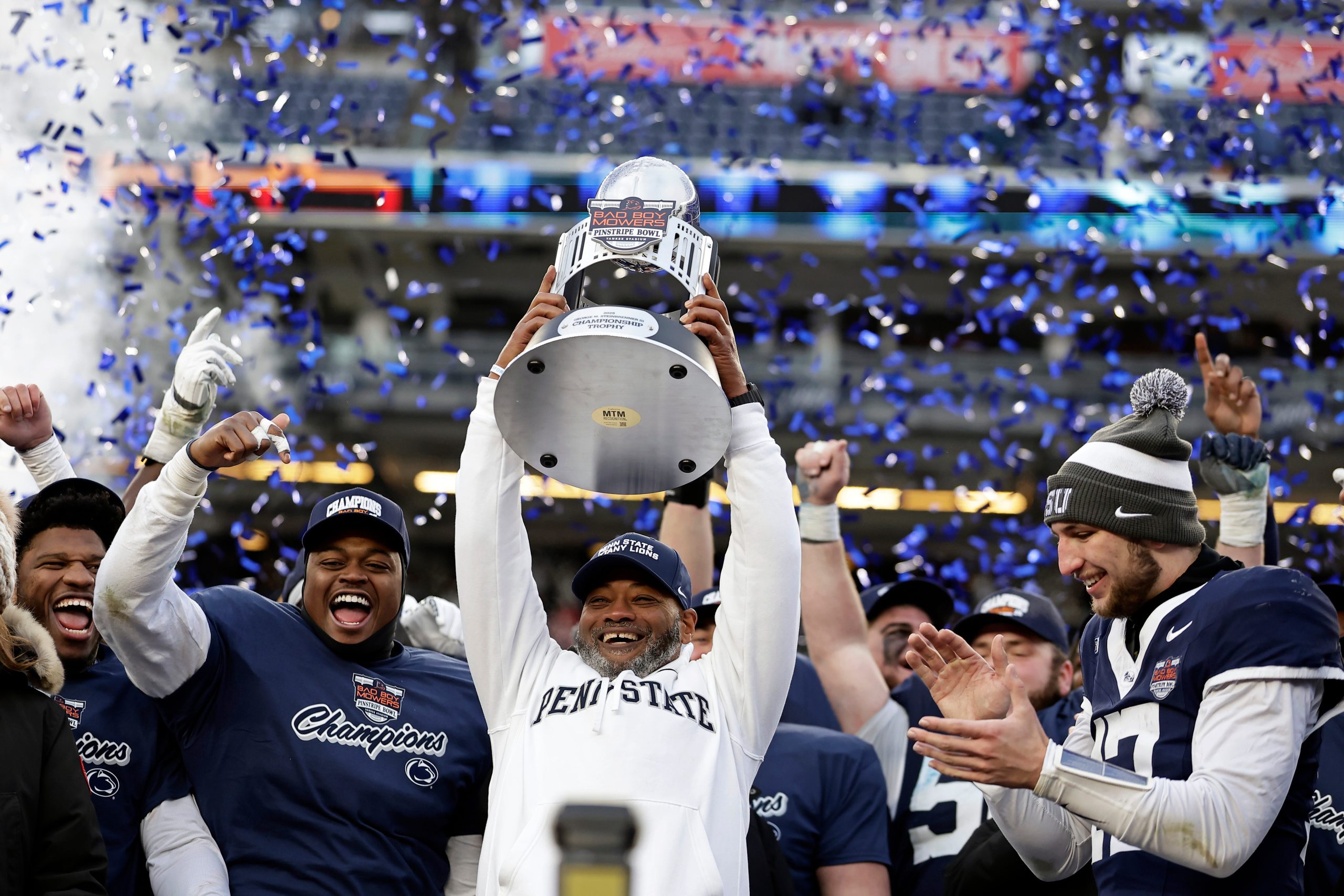
Last season, Terry Smith led Penn State to a win over Clemson in the Pinstripe Bowl.Adam Hunger
Smith served as the associate head coach and cornerbacks coach before being named the interim head coach after Franklin was fired. Rojas said Smith taking on the interim role brought life to the locker room.
“Everyone wanted to play for each other and wanted to play for him,” Rojas said. “Especially the last bowl game, we’re all super excited to get that last one for him. So I think just keeping him on our staff has been a big blessing.”
Smith was a wide receiver at Penn State from 1987 to 1991.