Category: College Sports

  • Penn State held players-only meeting to get ‘on the same page’ after its loss to Wisconsin

    Penn State held players-only meeting to get ‘on the same page’ after its loss to Wisconsin

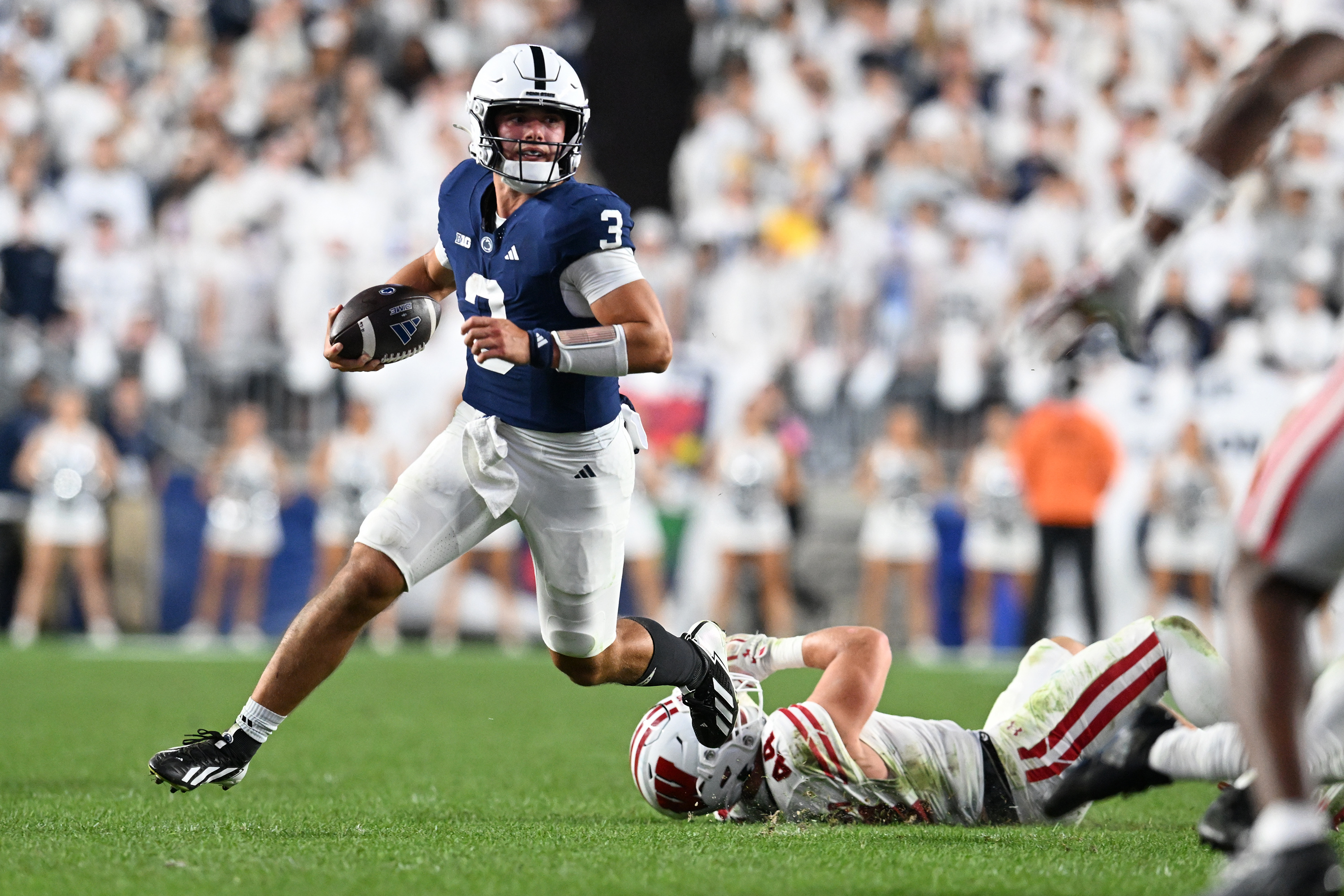
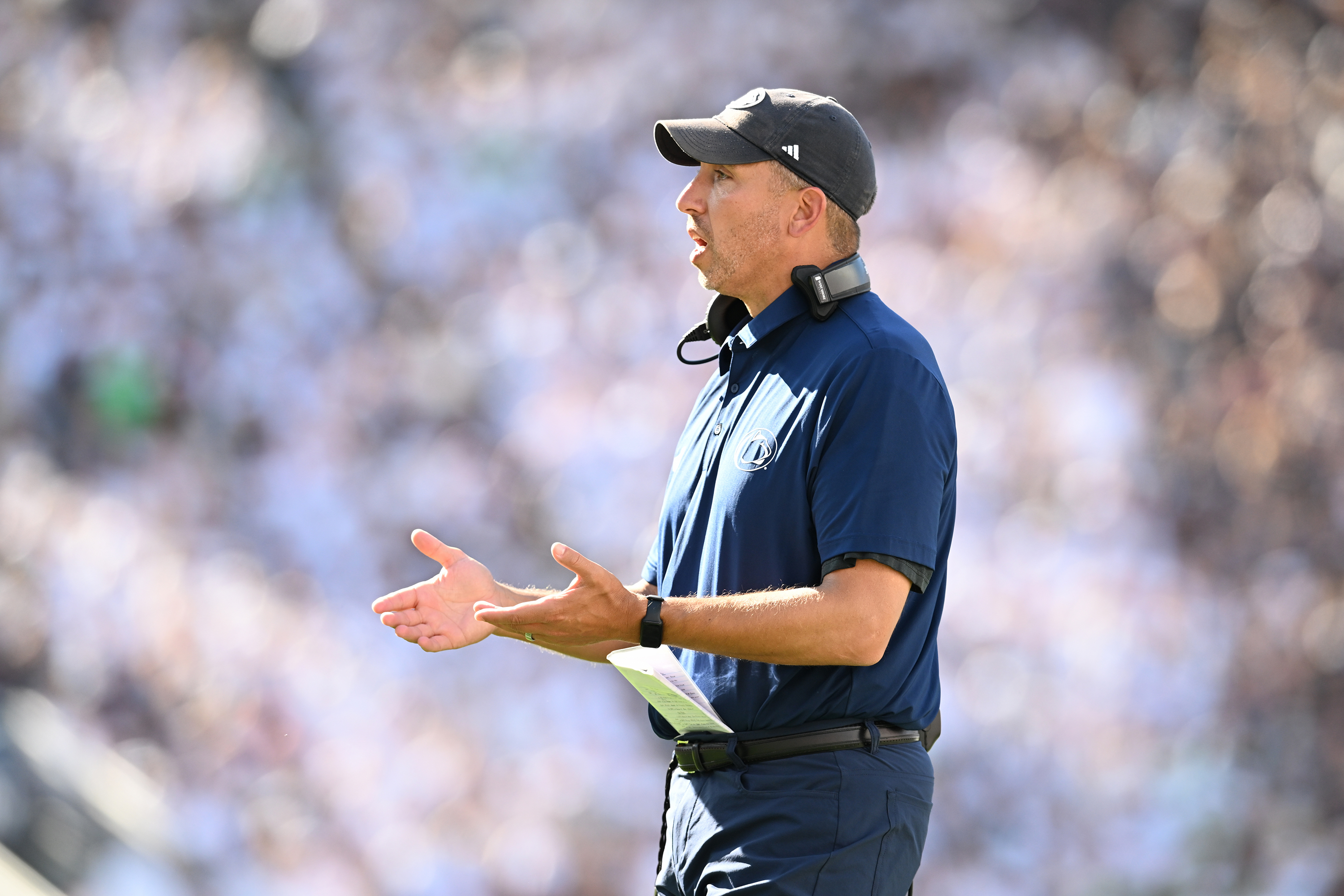
    Penn State coach Matt Campbell and his senior leaders knew they needed to do something after losing to Wisconsin to get the team on the same page.

    The solution? A players-only meeting on Monday. No coaches — just teammates hearing each other out and bonding in the face of adversity.

    “Having those player meetings is huge for us because it does bring us closer together,” quarterback Rocco Becht said on Tuesday. “It does [help us] find out about one another, and we just got to continue the grind and move on.”

    Becht is one of the key leaders for Penn State, as the redshirt senior has been named a captain for each game this season. He rallied the team together at Temple, and took accountability in the locker room after the loss to Wisconsin.

    So it’s no surprise Becht was one of the players to speak during the meeting.

    “He played a big role,” offensive lineman Trevor Buhr said. “I think overall, we were just kind of making sure we were all on the same page, kind of going over what we had to do, what our goals are getting ready for this week, just making sure everyone’s on the same page.”

    Becht said they don’t have regularly scheduled player meetings, but it’s also not the first time the team has met separately. These gatherings come around when the Nittany Lions “feel like it needs to happen,” according to Becht.

    But being on the same page means something different to everyone. For defensive tackle Keanu Williams, it means understanding how everyone is feeling, not necessarily having the whole team agreeing on one idea.

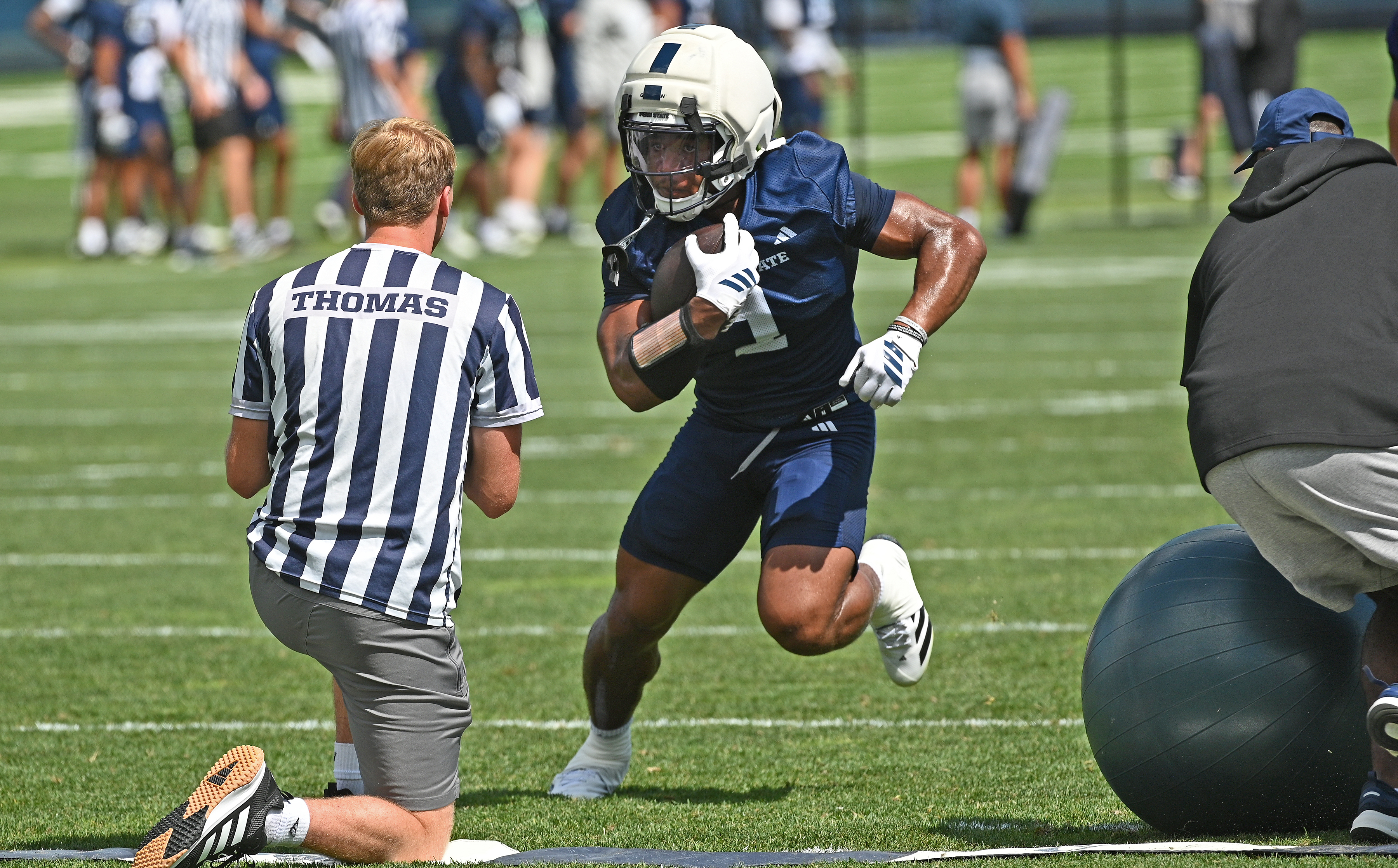
    Penn State running back James Peoples said the team “can’t get stuck in the past.”Craig Houtz / For The Inquirer

    “It comes into play in the sense of whatever the problems we’re having, lay it on the table, and we all kind of got to sit here and just talk it out,” Williams said. “Whatever it is we need to talk out, whatever problems we’re having, we need to sit there and be on the same page with that. That’s what I really mean by getting on the same page.”

    The players meeting is one example of how Penn State has made an effort as a team to move past the unexpected loss. Running back James Peoples said in the immediate aftermath of Saturday’s collapse, everyone handled it differently.

    “You don’t want that, what happened last Saturday,” Peoples said. “You don’t want that outcome, but we understand there’s still a lot more ahead of us. So you got to be looking down the line and seeing what you got in front of you to understand, ‘OK, we can’t get stuck in the past.’”

    Starting right tackle Anthony Donkoh, a Penn State returnee, knows what it feels like to have a loss that snowballs into more after last year’s collapse. He doesn’t want that happening this year, but he feels confident moving forward because of how the players have rebounded emotionally.

    “I feel like a lot of the guys handled it well this time around,” Donkoh said. “I feel like there’s a lot more emotions last year, and you just felt like a big negative shift, like after a game sometimes.

    “But then like after this loss, everybody is still in good spirits. Like we know that we still have a lot of the season ahead of us. We know that if we just keep our head down and keep working every day, then we’re able to get ourselves out of the situation that we’re in.”

  • Temple hosting Big East field hockey tournament adds ‘a little fire’ to Michelle Vittese’s team

    Temple hosting Big East field hockey tournament adds ‘a little fire’ to Michelle Vittese’s team

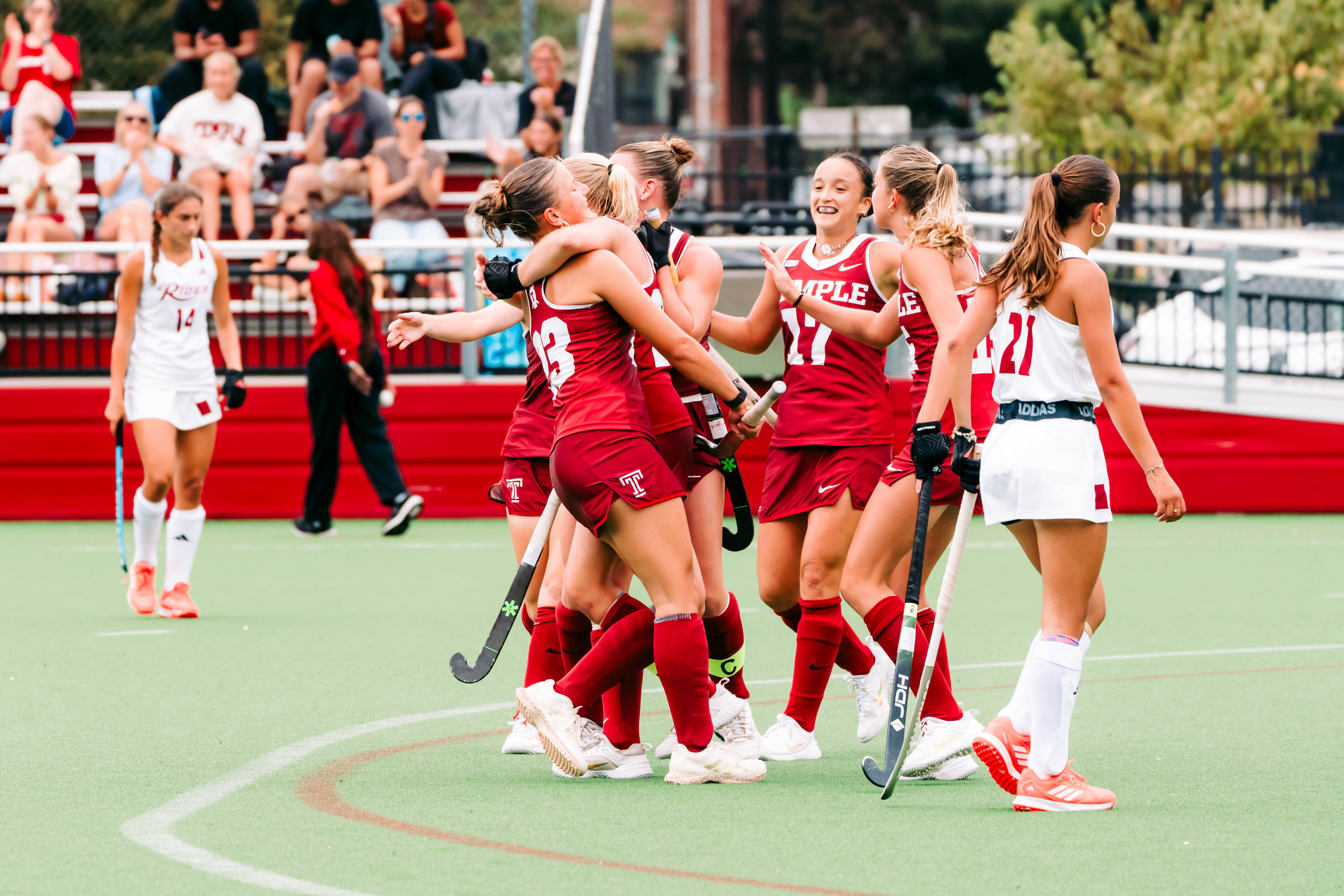
    The Big East field hockey tournament will come to Temple Sports Complex in November, but whether Temple will be playing in it remains up to the Owls.

    After narrowly missing the four-team field last season, Temple entered this fall knowing exactly where it wanted to be by November. Entering Friday’s matchup against Delaware, the Owls are 5-4 and 1-1 in conference play.

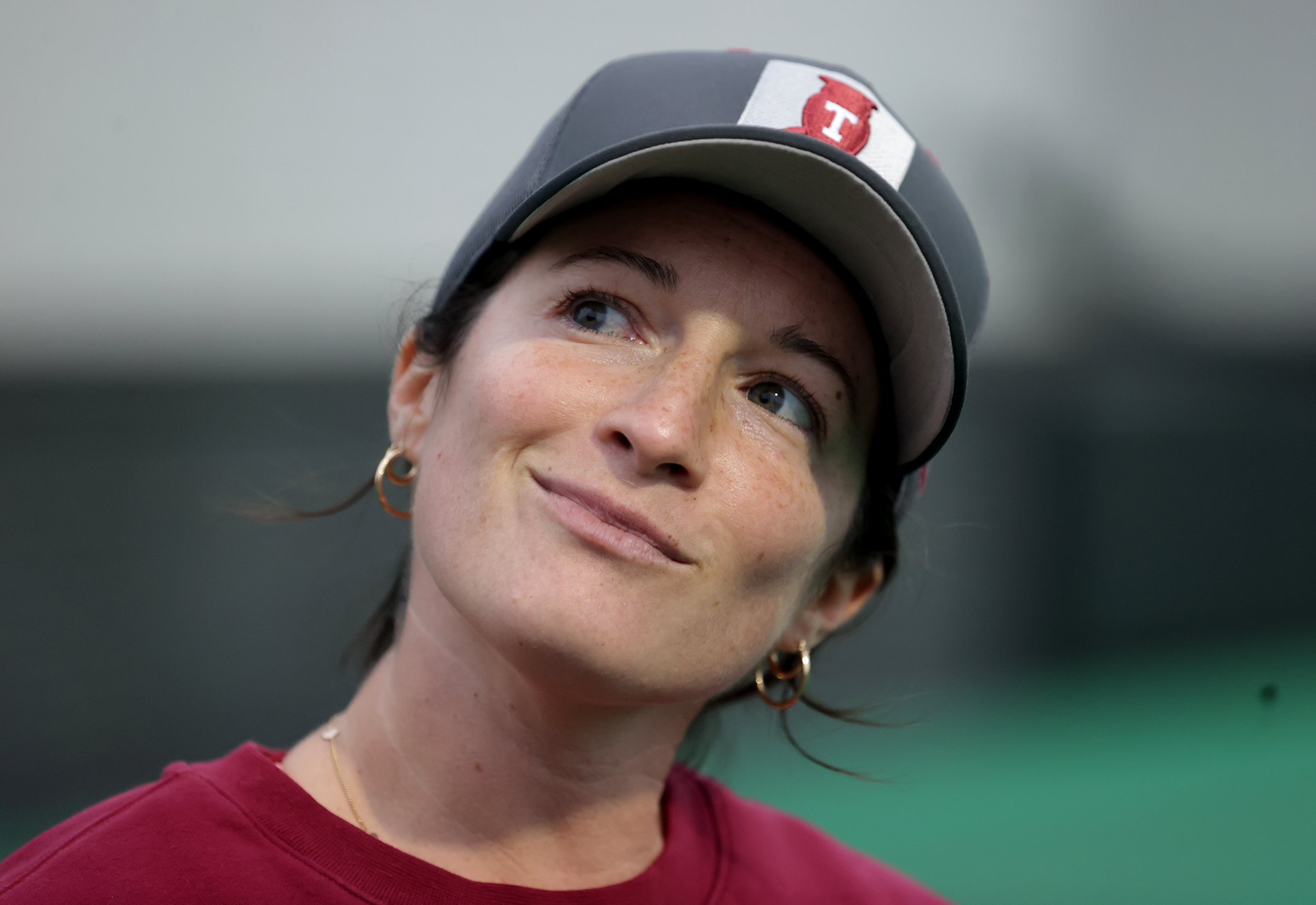
    For coach Michelle Vittese, having the conference tournament on Temple’s home field has made the pursuit of reaching the postseason difficult to ignore.

    “Definitely a little fire, definitely a little bit of anxiety,” Vittese said. “There’s a pressure element to that.”

    Vittese has tried to keep that pressure from becoming the Owls’ focus. Rather than measuring each result against whether Temple will qualify in November, she wants her team focused on improving enough to prove it belongs there.

    “It’s about, can we provide an experience?” Vittese said. “Can we get to a place at which we hopefully prove that we deserve to be in?”

    Temple recently won three straight games, which included a victory over Georgetown in its Big East opener, before Villanova ended the Owls’ streak on Sept. 25. The Owls sit fourth in the Big East standings.

    Vittese said her team is still searching for consistency, which has led her staff to tinker with the Owls’ approach. Temple has shifted players between the forward and midfield line, altered its defensive penalty-corner setup, and emphasized increasing its work rate.

    Michelle Vittese wants her team to “focus on ourselves” rather than standings or results in the Big East.Charles Fox / Staff Photographer

    Some of those changes came after Temple allowed Lafayette to score on three of its five penalty corners in a 4-3 loss on Sept. 4.

    “We were constantly making adjustments every day,” Vittese said. “Every practice, every day, depending on the opposition, we [were] also make in-game adjustments based on what we’re seeing.”

    Temple has also changed how it measures effort. The Owls previously reviewed data from their GPS tracking system after games, but the coaching staff has begun using the system during training to receive immediate feedback on players’ work rates.

    “It’s a real-time information feedback system,” Vittese said. “It’s a lie detector. Like, are you working hard or are you not? And so you can say you are, but the numbers really tell a story.”

    Goalkeeper Alex Lepore sees another area that needs improvement: how the Owls start games.

    Lepore said Temple has often played its best field hockey after halftime.

    “We’re very much a third-quarter, second-half team, which is great,” Lepore said. “We get back for the game, but we really need just to come out a little stronger, set the tone, and set the pace of the game early on.”

    Vittese has emphasized the importance of connection and trust in practice, including how players react when a teammate makes a mistake. After noticing an instance when a struggling player received little encouragement during a game, Vittese challenged the Owls to become more deliberate about picking each other up.

    “How relentlessly positive and empowering of our own teammates can we be?” Vittese said. “That’s actually been a practice point.”

    Temple finished 3-4 in Big East play last season, the same conference record as Villanova, but the Wildcats claimed the fourth and final tournament spot.

    Last year’s results have only motivated the Owls in 2026, says sophomore midfielder Lucia Magro.

    “We always can do better,” Magrobut. “But we’re [feeling] really confident.”

    Temple still has five Big East games remaining, including matchups against UConn, which is first in the conference’s standings, Old Dominion, and defending conference champion Liberty, before the tournament arrives at its home field.

    And Vittese does not want her players consumed with where they could be in November.

    “Thinking about anything other than what we can do excellently to be successful is a waste of time,” Vittese said. “We need to focus on ourselves.”

  • Temple releases 2026-27 conference schedules for women’s and men’s basketball

    Temple releases 2026-27 conference schedules for women’s and men’s basketball

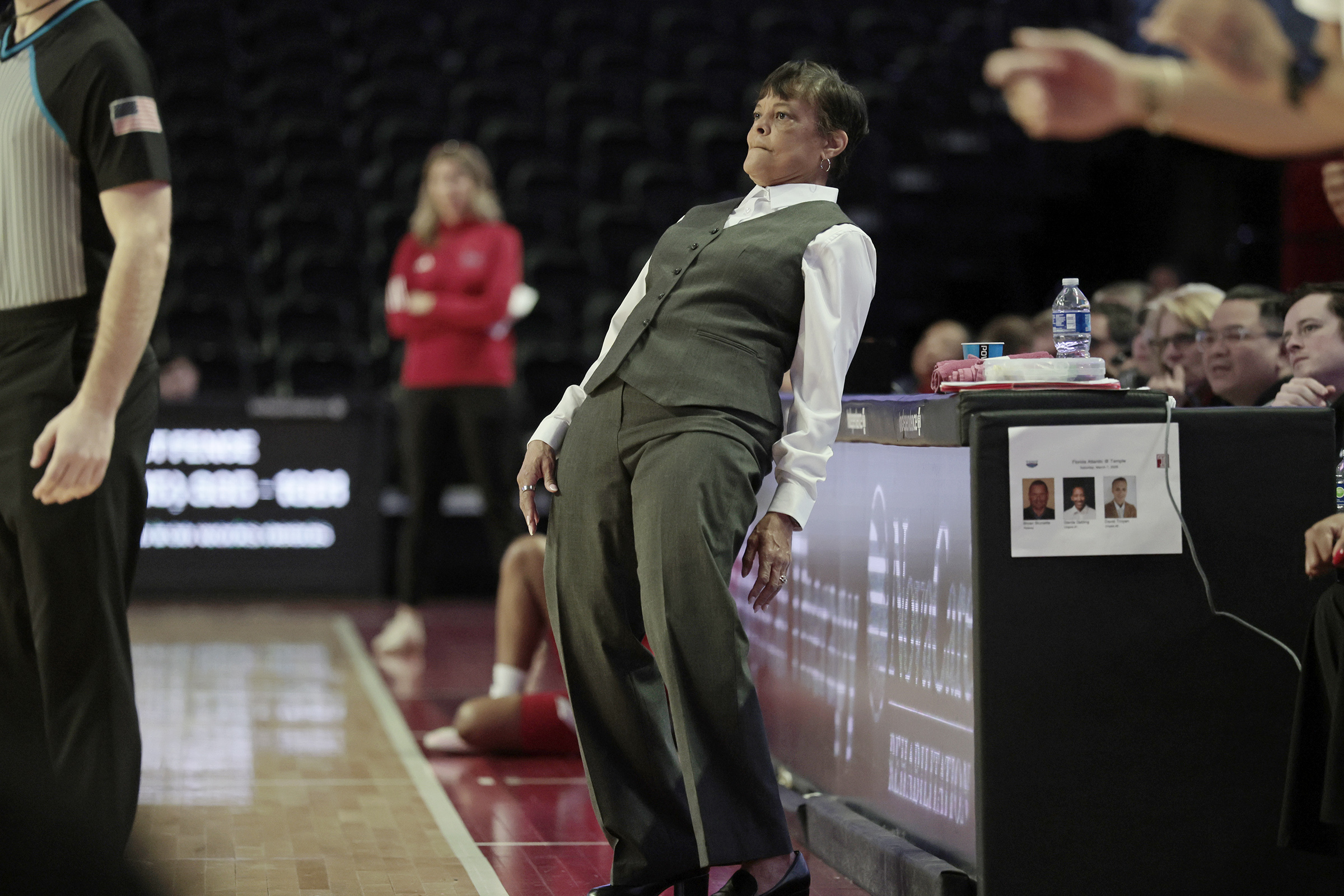
    Temple’s men’s and women’s basketball teams will open American play on Dec. 30, with the men traveling to Rice and the women hosting Charlotte, as part of the Owls’ 18- game conference slate announced Wednesday.

    Both programs will face six conference opponents twice, with three at home and three on the road. The Owls’ men’s and women’s teams each finished 8-10 in the American last season.

    The American men’s and women’s basketball tournaments will be held in Tampa in March. Game times and broadcast information for Temple’s conference schedules will be announced at a later date.

    Men’s schedule

    The men will play their first two conference games at home against UTSA on Jan. 2 and UAB on Jan. 5. Temple will also host each of the American’s top three finishers from last season — South Florida, Wichita State and Tulsa — with defending regular-season and tournament champion South Florida visiting the Liacouras Center on Jan. 14.

    Temple handed South Florida one of its three conference losses last season, beating the Bulls, 79-78, at the Liacouras Center on a Mohamed Keita tip-in with six seconds remaining.

    The Owls will have a difficult road stretch midway through conference play. Beginning Jan. 31, Temple plays four of five games away from home, traveling to UAB, North Texas, Florida Atlantic, and South Florida in between a Feb. 7 home matchup with East Carolina.

    Temple will return home to face Wichita State on Feb. 21 and Tulane on Feb. 24 before visiting East Carolina on Feb. 27. The Owls will play their conference home finale against Memphis on March 4 before ending the regular season at UTSA on March 7.

    Women’s schedule

    The women begin conference play with two home games, following their opener against Charlotte with a Jan. 2 matchup against Rice. The Owls will get an immediate test against the defending American regular-season champions, who went 17-1 in conference play last season.

    Temple will host each of the five teams who finished above the Owls in last season’s conference standings — Rice, East Carolina, South Florida, Tulsa, and North Texas — at the Liacouras Center.

    After opening January at home, the Owls will play four of their next six games on the road, including trips to Memphis, UAB, South Florida, and Wichita State. Temple closes the month at Tulane on Jan. 30 before traveling to UTSA on Feb. 6.

    The UTSA game will be Temple’s first meeting with the Roadrunners since they eliminated the Owls from last season’s American tournament. UTSA beat Temple, 59-51, in the second round before going on to win the conference tournament and earn an NCAA Tournament berth.

    Temple then begins a three-game homestand against Tulsa on Feb. 9, followed by Wichita State on Feb. 13 and Florida Atlantic on Feb. 17. The Owls’ final home game is against South Florida on Feb. 27 before they close the regular season at Florida Atlantic on March 6.

  • Penn State made head-scratching decisions in its first loss. It also exposed glaring weaknesses.

    Penn State made head-scratching decisions in its first loss. It also exposed glaring weaknesses.

    While leading by 10 points, Penn State decided to run on third-and-12 midway through the fourth quarter. Running back James Peoples didn’t pick up the first down as boos echoed through Beaver Stadium.

    It was the fourth time that offensive coordinator Taylor Mouser called a run in a third-and-long situation in a 24-20 loss to Wisconsin on Saturday.

    “It’s always situational for me,” Mouser said Tuesday. “The defense had been playing so good up to that point, didn’t want to put them in a bad spot, have something bad happen. Didn’t have a ton of rhythm going in the pass game up to that point either. So it was take the less of two evils and play the field position game, as dumb as that sounds and as much as I hate to say that.”

    Those third-and-long decisions were just some of the head-scratchers from the Nittany Lions first loss of the season (3-1, 0-1 Big Ten) and showed where the offense needs to grow ahead of their road matchup against Northwestern (2-1, 0-1) on Friday night (8 o’clock).

    “You got to stay focused on what the goal is,” Mouser said. “And the goal for us on a short week has to be the work. We just don’t have the time to be able to dwell on it and feel sorry for yourself. No one else does. And this Northwestern team is going to try to murder us.”

    Red zone struggles

    Penn State has made 20 red-zone trips this year, but only 10 have ended in a touchdown. Against Wisconsin, the Nittany Lions reached the 1-yard line on their second possession, but settled for a field goal.

    “I’m frustrated with that,” Mouser said. “And it’s an ongoing message. … Are we playing the right people? Are we handing it to the right people? Are we throwing to the right people? Are the right people in the right spots to be able to block and execute the plays? We haven’t been able to do that, and it’s our job as coaches to figure that out.”

    Penn State went 1 of 3 on red-zone trips, with the lone touchdown coming off sophomore cornerback Daryus Dixson’s interception that set up the Nittany Lions at the Badgers’ 11-yard line.

    These red-zone struggles first popped up against Temple, with Penn State’s first three opportunities only resulting in three points. The issues haven’t gone away.

    Lack of tight end usage

    Senior Benjamin Brahmer was the only tight end with a catch in Saturday’s loss, finishing with four receptions. Redshirt senior Gabe Burkle was targeted twice, while redshirt junior Andrew Rappleyea was thrown to once.

    “I still walk out of the game frustrated with my inability to get those guys the ball as much as we should,” Mouser said. “Rapp’s one of our best pass catchers and didn’t find a way to get the ball more. Same with Ben and even with Gabe.”

    Mouser took accountability for the lack of targets his tight ends received, and knows he needs to rely on Brahmer and his fellow tight ends in the passing game with top wide receiver Koby Howard out for the foreseeable future.

    “Those three are some of our best pass catchers and we’re going to have to find ways to get them the ball in easier ways that we can make those throws,” Mouser said. “I still don’t think we’ve sniffed just how good that room can be and the standard I think those guys can play with.”

    Becht’s poor showing

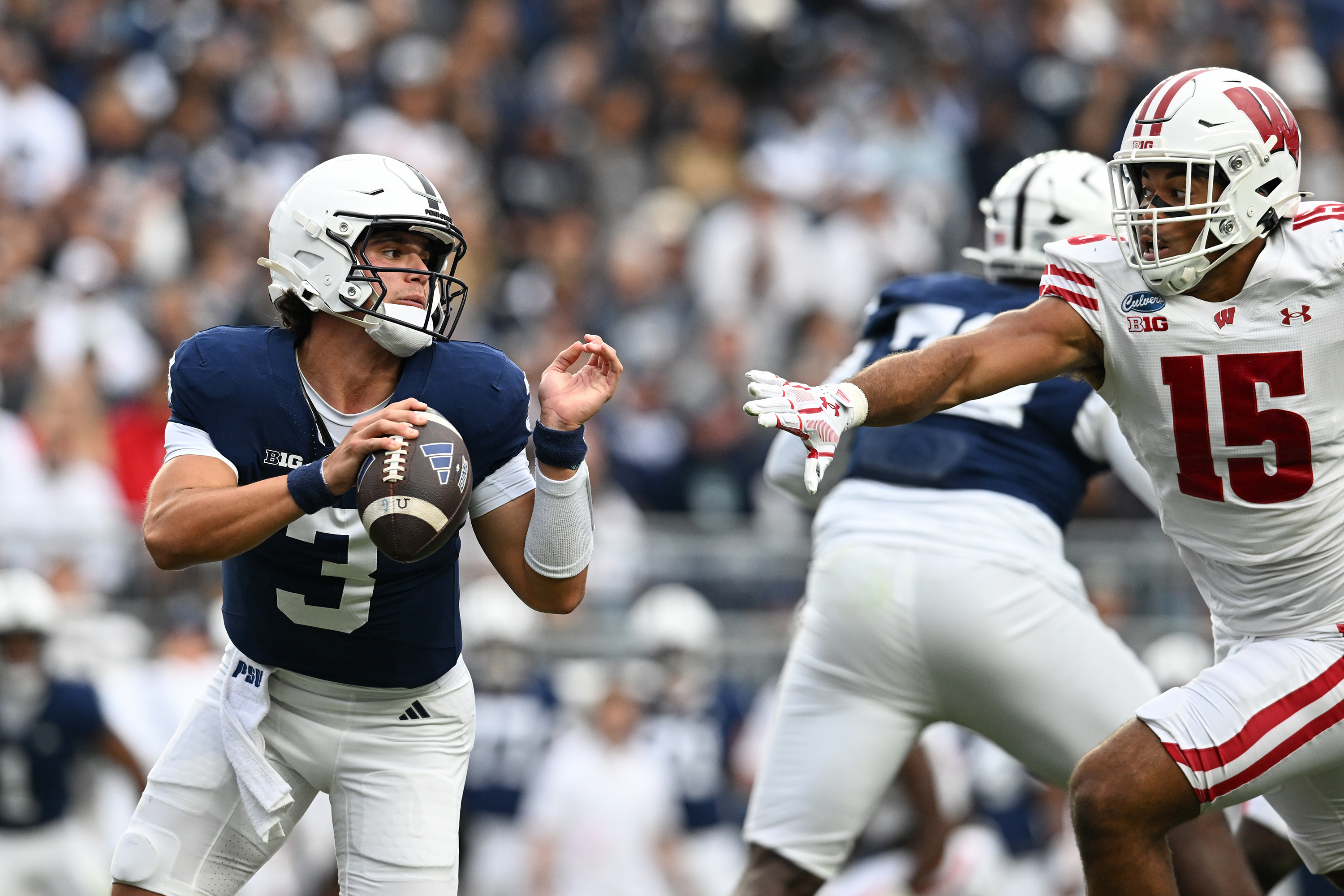
    Rocco Becht said Tuesday he plays better on the road, so it’s a good thing Penn State is headed to Northwestern this weekend after the quarterback’s performance against the Badgers.

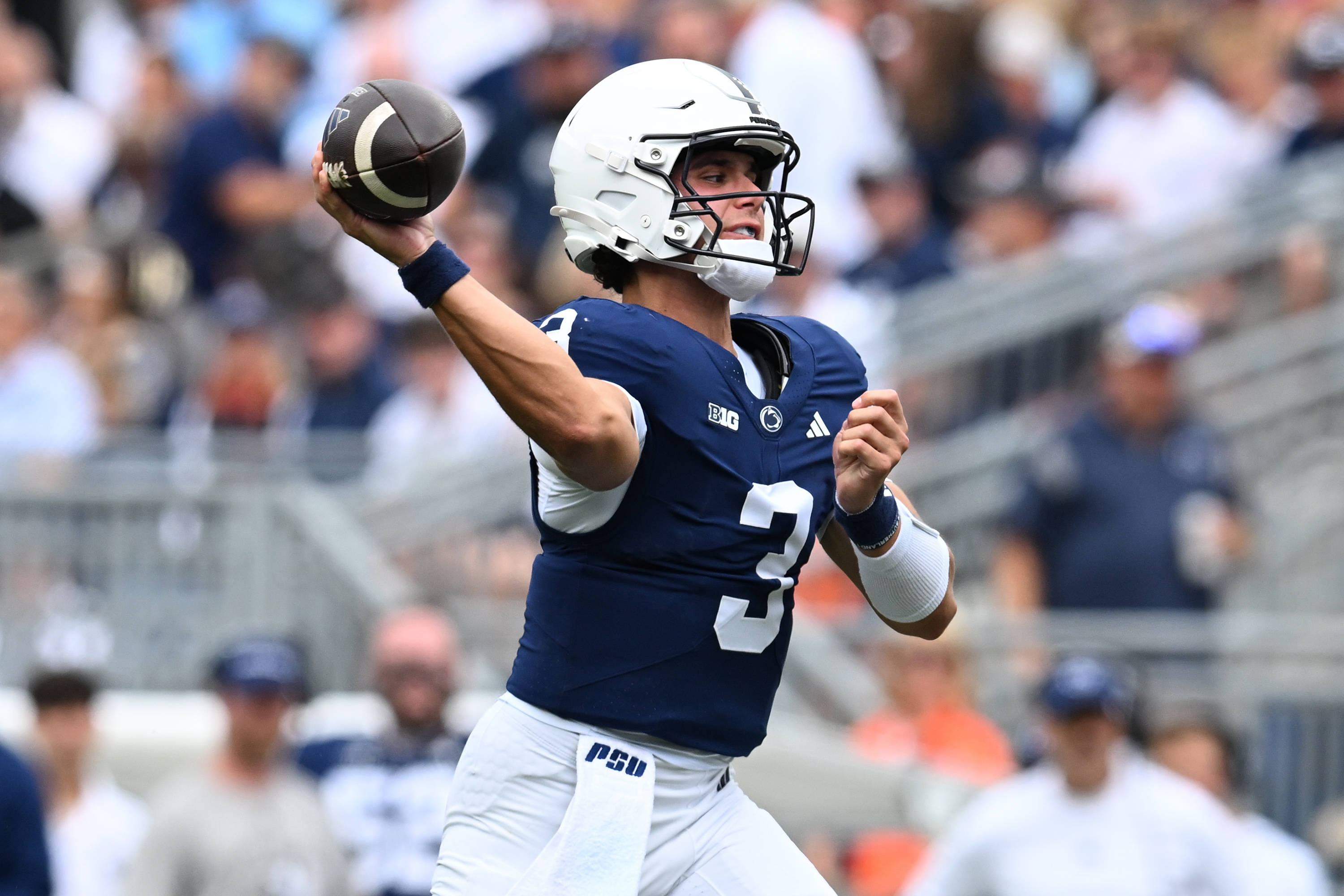
    Becht went 12-for-29 with 129 yards, zero touchdowns, and his first interception of the year, though the pass was tipped. He put blame on himself postgame, saying he needs to be better for his team.

    On Tuesday, Mouser took accountability for Becht’s struggles.

    Rocco Becht went 12-for-29 with 129 yards and zero touchdowns against Wisconsin.Barry Reeger

    “I know what Rocco Becht is,” said Mouser, who also was his offensive coordinator at Iowa State. “He’s a 10,000-yard passer, and I’ve known him for three years, and I know how good he is. So when it’s not working, I’m going to always put it on myself because I know how talented he is and the way that he prepares.”

    The Wildcats’ defense sits at the bottom half of the Big Ten in passing yards allowed this season with 218 per game, potentially giving Becht an opportunity to get himself and his wide receivers going after a tough showing against Wisconsin.

    “We didn’t really show ourselves last Saturday who we were, and we didn’t put enough out there to bring that win home for us,” Becht said Tuesday. “I think for us, it’s just continuing to go out there on Friday and continuing to just do our job and have fun and go out there and play ball.”

  • Temple looks to rebound against South Florida after three straight losses. But it won’t be easy.

    Temple looks to rebound against South Florida after three straight losses. But it won’t be easy.

    Three weeks after Temple’s season-opening win, the Owls find themselves on a three-game losing streak.

    The last two stung the most. The Owls fell at Toledo in overtime after leading by 14 and then lost to Army on the final drive. Now, Temple (1-3, 0-1 American Conference) goes back on the road to face South Florida (4-0, 1-0) on Saturday (7 p.m., ESPNU).

    The Owls have been plagued with late-game breakdowns. But the chance to prove themselves and put those losses behind them excites coach K.C. Keeler.

    “The bad news is, we have to go play South Florida coming off a brutal loss like this,” Keeler said. “The good news is, we get a chance to go play South Florida after a brutal loss like this, because the only thing that gets you right is getting out there and beating a good football team.”

    Running with the Bulls

    The Owls’ running back group is headlined by Sam Brown V, whose three touchdowns against the Rockets was tied for second-most in a game in the conference. Temple is ranked 24th nationally in rushing. Keveun Mason ran for a career-high 158 yards in Week 1.

    South Florida’s D.J. Crowther has displayed impressive figures as well, having topped 100 rushing yards in each of the last two games. Crowther averaged 12.6 yards per carry (eight carries for 101 yards and three touchdowns) in the first contest vs. Delaware State before carrying the ball 23 times for 143 yards and a TD in the second vs. Bowling Green.

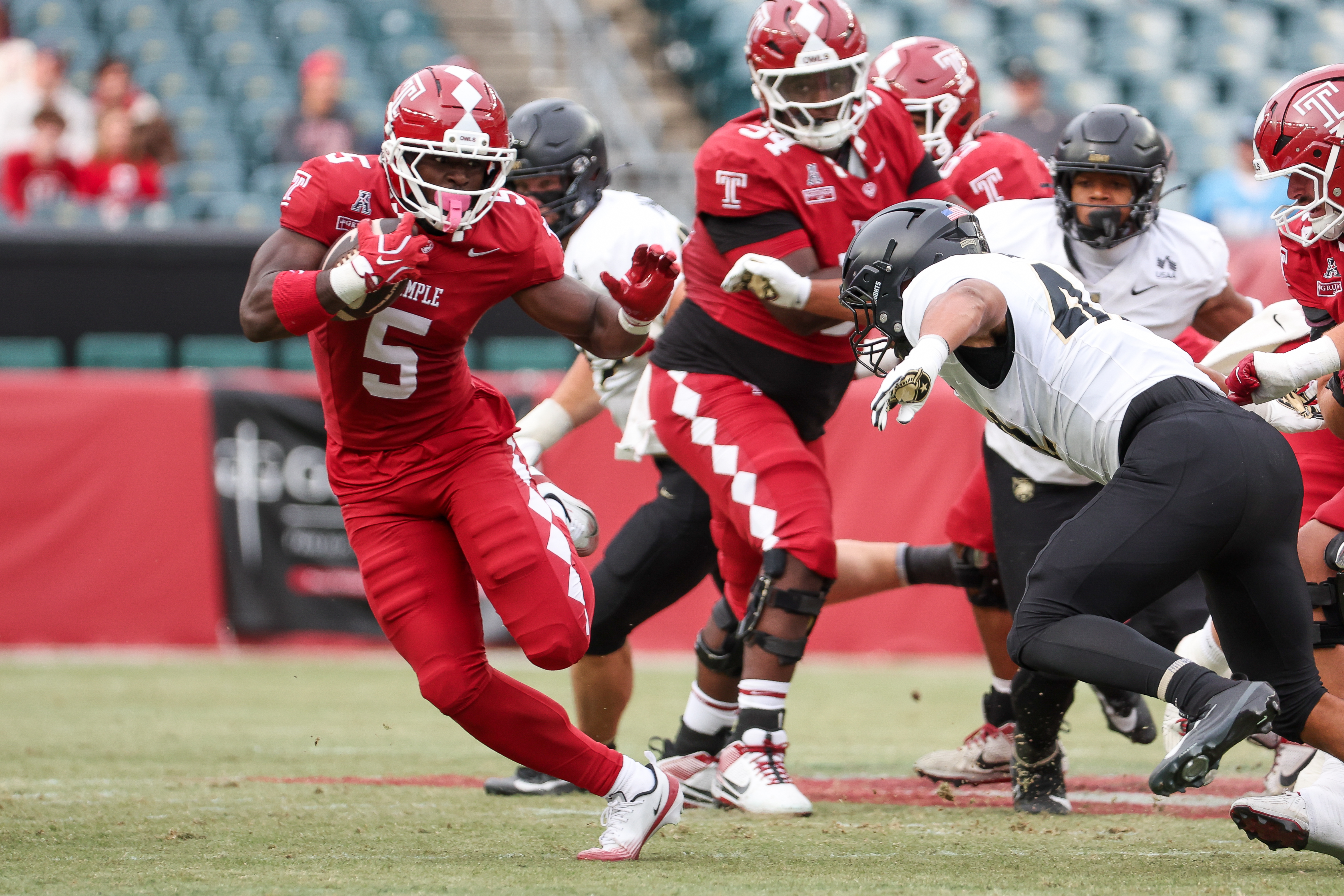
    Sam Brown V runs the ball during the first quarter against Army Black on Sept. 25.Isaiah Vazquez / For The Inquirer

    Keeler knows how strong the Bulls’ ground game is, and his staff usually reviews rushing footage from the week before to prepare. But that wasn’t a focus in practice Monday, simply because Army was a different beast.

    “Typically today would be a corrections day for [the defense] — they sort of moved on,” Keeler said. “After an Army or Navy game, you don’t get a lot out of that video … there’s not a lot of crossover for what would help today.”

    Sheppard still in shotgun

    Jaxon Smolik started as Temple’s signal-caller against Penn State and Toledo after splitting the job with Ajani Sheppard against Rhode Island. When Smolik went down with an injury after his first throw against the Rockets, Sheppard stepped in and recorded three touchdowns. He continued to impress with 290 all-purpose yards and two touchdowns against Army.

    Keeler is impressed by what he’s seen in Sheppard’s deep passing and explosiveness. Sheppard may get to showcase his talents in Tampa, Fla., as Smolik’s health is still in question.

    “I really haven’t talked to Tyler [Walker] because we’re kind of waiting for someone to say Jaxon is 100%. I don’t think we’re there yet,” Keeler said. “I think he’ll progress this week, but I think we’ll know a lot more during the course of the week than we know right now.”

    Fine-tuning details

    Keeler has drilled one word into the minds of his players: details.

    Temple hasn’t lacked energy through the past three weeks, but its failure to execute in the final minute has cost them games. The Owls weren’t far from being 3-1, Keeler said.

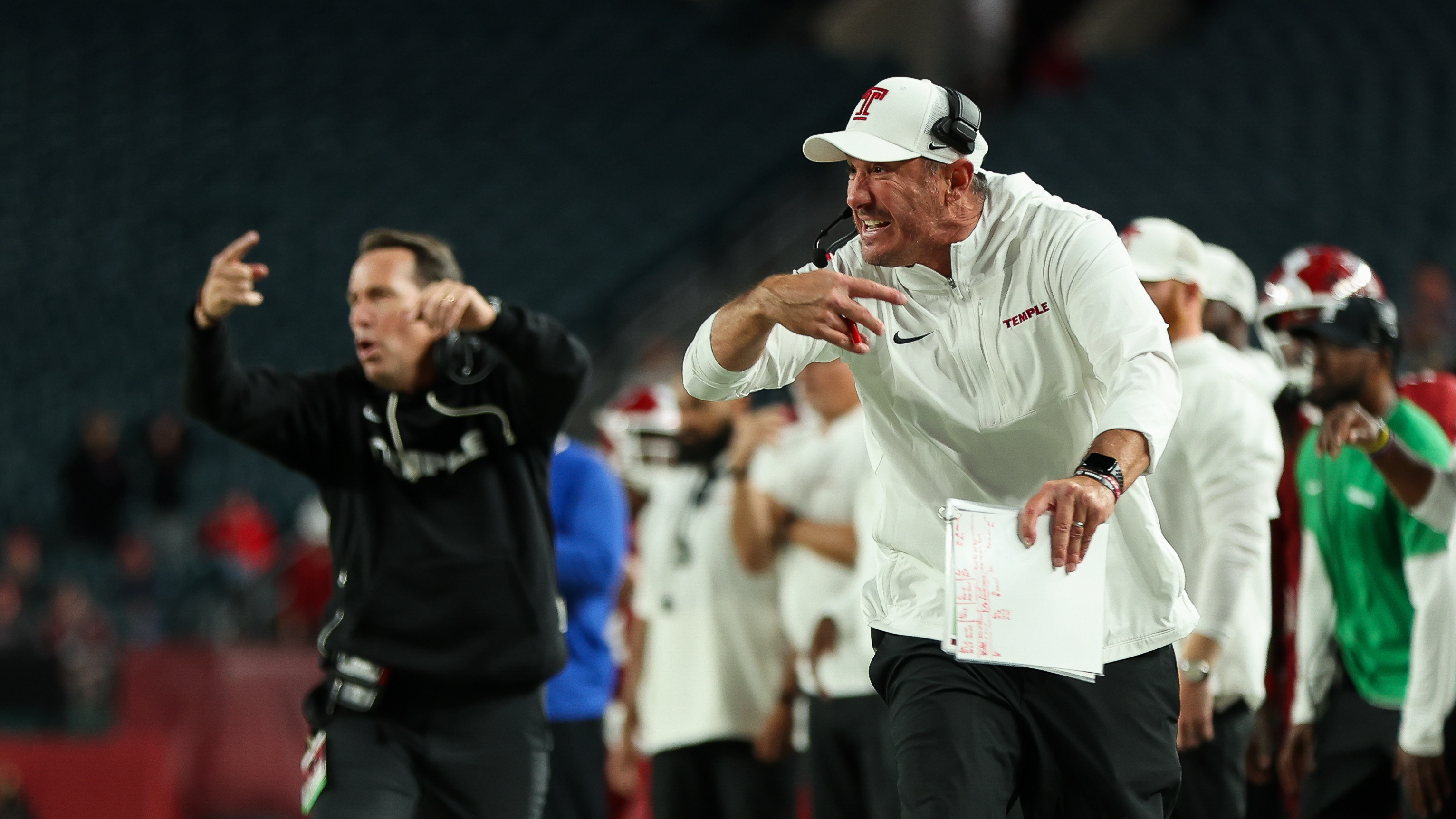
    Special teams coordinator Brian Ginn and head coach K.C. Keeler yells against Army on Sept. 25.Isaiah Vazquez / For The Inquirer

    This weekend, however, Temple can’t afford to leave any boxes unchecked.

    “I can’t ask them to work any harder in practice, except the mental part of it,” Keeler said. “We better really look ourselves in the mirror and say, ‘Are we doing everything we can? Is it looking at your tip sheet? Is it watching an extra video?’ … Let’s really worry about those details.”

  • Senate passes college sports bill that would rein in athlete payments and transfers

    Senate passes college sports bill that would rein in athlete payments and transfers

    WASHINGTON — The Senate passed a sweeping bipartisan bill on Monday that would regulate college sports, an attempt to end “chaos” in an industry that has been upended by skyrocketing athlete payments and near-unrestricted transfers between schools.

    The overwhelming 77-22 vote to pass the legislation is the strongest effort yet by Congress to set national regulations governing payments to college athletes for their name, image and likeness and how often they can transfer. It would give the NCAA new authority over those rules and limited antitrust protections to enforce them.

    The bill is the product of years of Senate negotiations that intensified after a 2025 lawsuit settlement uprooted the college sports landscape by allowing colleges to pay their players. The legislation, which would still have to pass the House, would codify the settlement into law but also establish new guardrails around the system in an attempt to rein in the runaway costs for colleges.

    “It would be nice if college sports could somehow magically fix itself, but this is a matter of law, federal law, and only Congress can fix it,” said Senate Commerce Committee Chairman Ted Cruz, R-Texas, who negotiated the bill with the top Democrat on the panel, Washington Sen. Maria Cantwell.

    The bill’s backers — more than 70 senators from both parties — say it aims to curtail constant litigation and uncertainty across college sports for athletes, schools and fans. It would also give hundreds of thousands of student athletes new health and labor protections.

    But critics say the bill doesn’t do enough to protect athletes or curtail the enormous sums of money flowing to coaches, colleges and conferences.

    “This is a bill that essentially ensconces a system of exploitation, and it doesn’t fix the broader problems,” said Connecticut Sen. Chris Murphy, a Democrat who has worked with labor and civil rights groups to rally opposition to the bill.

    The bill’s future is still unclear.

    President Donald Trump has repeatedly expressed an interest in the legislation, and the White House formally endorsed the bill last month. But it could face an uphill battle in the House, which failed repeatedly over the last year to get a different version to the floor and is in recess until after the November elections.

    Lawmakers will have to start over in the next Congress if the bill doesn’t pass both chambers by the end of the year.

    Bill addresses skyrocketing spending, unlimited transfers

    College sports have been reeling in the wake of the 2025 court settlement allowing colleges to directly pay players for their name, image and likeness. The fallout has reshaped the industry and led to football roster payrolls that can exceed $40 million.

    The bill would codify the court settlement, including a revenue cap that allows schools to share up to $21.5 million in revenue with their players. The legislation would more than double that amount for some schools, allowing up to an additional $27.5 million in payments through a retention fund — a change that helped win the support of the two largest conferences, the Big Ten and Southeastern Conference.

    To help schools raise more revenue, the bill would give schools and conferences the option of pooling their TV media rights.

    The legislation also aims to stabilize the NCAA transfer portal that has led to players constantly switching teams. It would restrict player transfers to one “free” move over five years without sitting out a year, with some exceptions, and also would restrict players to five years of total eligibility.

    The proposed eligibility limit comes amid backlash to schools that have increasingly pushed boundaries, including LSU’s now-canceled plans to place players on the roster who had participated in NFL training camps.

    “That was probably like a big lamp for some people who saw it and said, ‘Oh my God, this is so out of control,’” Cantwell said in a recent interview with The Associated Press.

    The bill also would restrict coaches from leaving their schools during the season, force schools that want to switch conferences to spend three years as an independent and prevent conferences from growing larger than 20 programs — an effort to prevent so-called “superleagues” from taking over sports. A last-minute amendment proposed by Florida Sen. Ashley Moody raised that cap from 19 in the original legislation.

    The vote was delayed several hours on Monday as senators negotiated Moody’s amendment and others that were eventually adopted, including provisions to make it easier for athletes to sue over sexual assault and a requirement to disclose foreign financing.

    The Senate rejected an amendment by Sen. John Kennedy, R-La., that would have put limits on ticket prices for fans and two by Sen. Cory Booker, D-N.J., that would have capped coaches’ salaries at $5 million a year and increased compensation for athletes who have catastrophic injuries.

    Critics say it wouldn’t do enough to help athletes

    The legislation includes new protections for athletes, including caps on agent fees and guarantees for health insurance and scholarships. It would also require schools to maintain a minimum number of sports and roster spots — an effort to ensure that women’s and Olympic sports are not cut in favor of football, basketball and other sports that generate more revenue.

    Still, some Democrats say it wouldn’t do enough to limit the big money in college sports.

    The legislation “places a cap on the students’ cut of the revenues, but there are no caps on coaches’ salaries or on the size of donations to athletic programs,” Murphy said last week.

    Groups like the NAACP, Congressional Black Caucus and AFL-CIO have also opposed the bill, in part, because it leaves unresolved whether athletes should be considered employees with the ability to collectively bargain.

    All four Black Democrats in the Senate — Booker, Raphael Warnock of Georgia, Lisa Blunt Rochester of Delaware and Angela Alsobrooks of Maryland — have opposed the bill.

    Booker, who played football at Stanford in the late 1980s on a scholarship, noted the “outsized role” that Black athletes play in college sports. He said it wasn’t until college athletes were able to begin to win cases in court that the power started to shift, “and now the NCAA is coming here to the United States Senate, asking for sweeping powers” to exempt antitrust laws.

    “We know who this bill is protecting,” Booker said.

    House passage is uncertain

    Despite strong bipartisan support in the Senate, the bill faces a murky path in the House.

    House lawmakers won’t return to Washington until mid-November, after the elections. And it’s unclear what will be on Republican leaders’ agenda in the chaotic last few weeks of the session.

    Pressure from Trump could help push the bill to passage. But some House Republicans have insisted on language explicitly stating that athletes are not employees, which the Senate bill does not have — a key concession to Cantwell to win enough Democratic support.
  • Villanova mascot Will D. Cat inks NIL deal with Friskies. No, seriously.

    Villanova mascot Will D. Cat inks NIL deal with Friskies. No, seriously.

    Even mascots are getting NIL deals now.

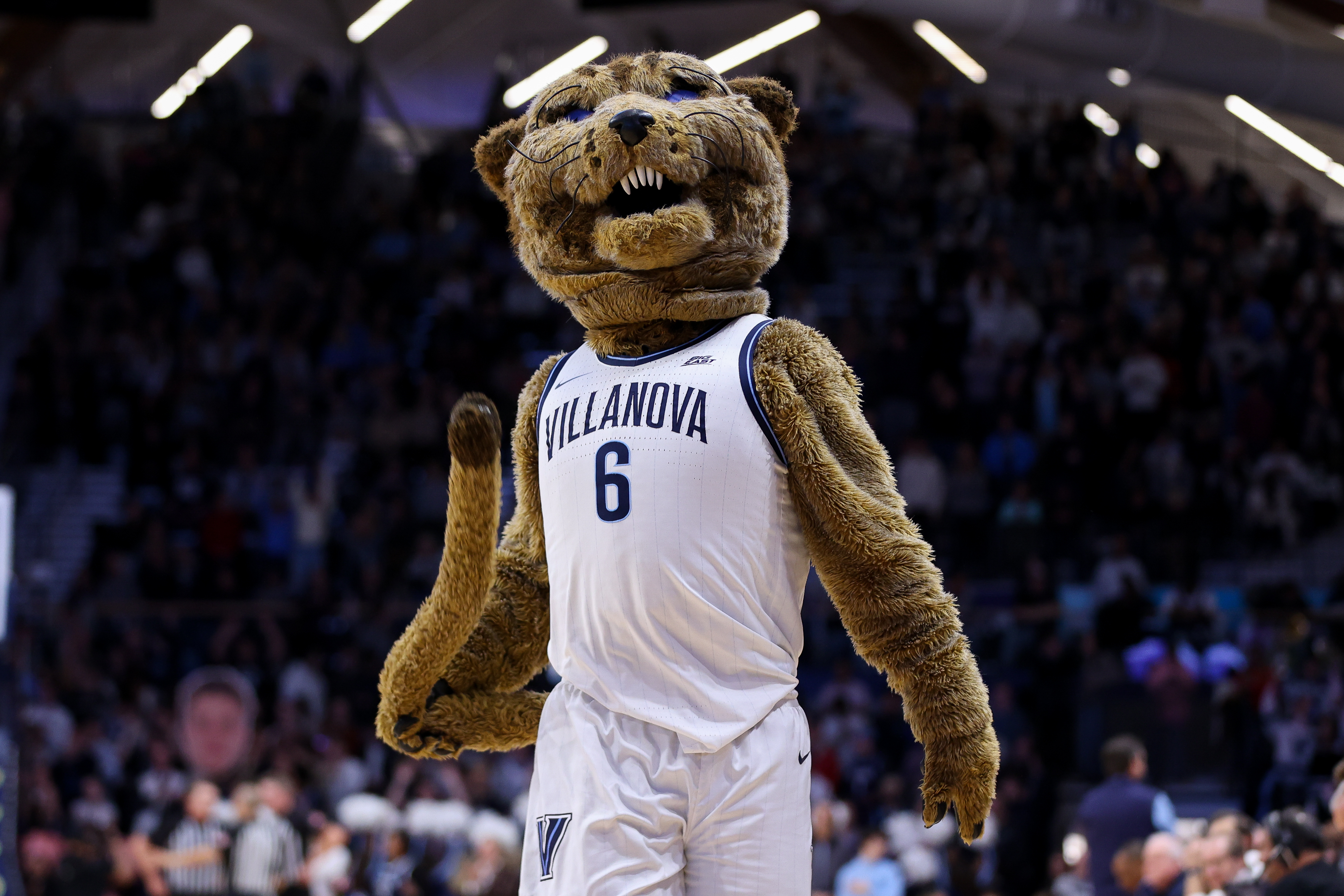
    Villanova’s Will D. Cat is among six feline mascots signed to Friskies’ “Certified Frisky” campaign.

    During football season, the popular cat food brand will donate 10,000 meals to Greater Good Charities for each score to help feed shelter cats in each school’s community.

    It doesn’t matter whether it’s a touchdown, field goal, or a safety; a Wildcats score will translate to more food for cats living in Philly-area shelters.

    Animal Care and Control Team of Philly, the area’s largest animal care and control organization, is open every day (except for major holidays) for pet adoptions.

    Other participating mascots are Wilbur and Wilma Wildcat (Arizona), Truman the Tiger (Missouri), Cosmo the Cougar (BYU), and Aubie the Tiger (Auburn).

    Whether it’s sideline antics or big orange cat energy, these cats bring “playful, surprising, and a little unhinged,” energy. Now, that energy will help kitties across the country.

    The partnership builds upon a collaboration with Arizona during its men’s basketball NCAA Tournament run.

    Greater Good Charities is a 501(c)(3) that has invested more than $1.1 billion into charities supporting people, animals, and the environment since 2006.

  • Florida rides win over Rebels to No. 8 ranking, Penn State falls out of AP Top 25

    Florida rides win over Rebels to No. 8 ranking, Penn State falls out of AP Top 25

    Florida made a massive jump in The Associated Press Top 25 on Sunday and landed in the top 10 for the first time in five years while four new teams joined the rankings in a major shuffle.

    The Gators’ 24-point win over then-No. 4 Mississippi under first-year coach Jon Sumrall on Saturday earned them a 13-rung promotion to No. 8, their highest ranking since 2020 and first top-10 appearance since 2021.

    Texas, Georgia, and Notre Dame continued to hold the top three spots, Miami was a season-high No. 4 and Ohio State moved up two spots to No. 5. Indiana, Alabama, Florida, Mississippi, and BYU completed the top 10.

    The Longhorns received 62 first-place votes from the media voting panel, four more than last week, after they held off Tennessee 20-17 in their first road game.

    Georgia, coming off a convincing win over Oklahoma and outscoring opponents by an average of 41.5 points per game, got six first-place votes, double its number last week. Miami and Indiana each received one first-place vote.

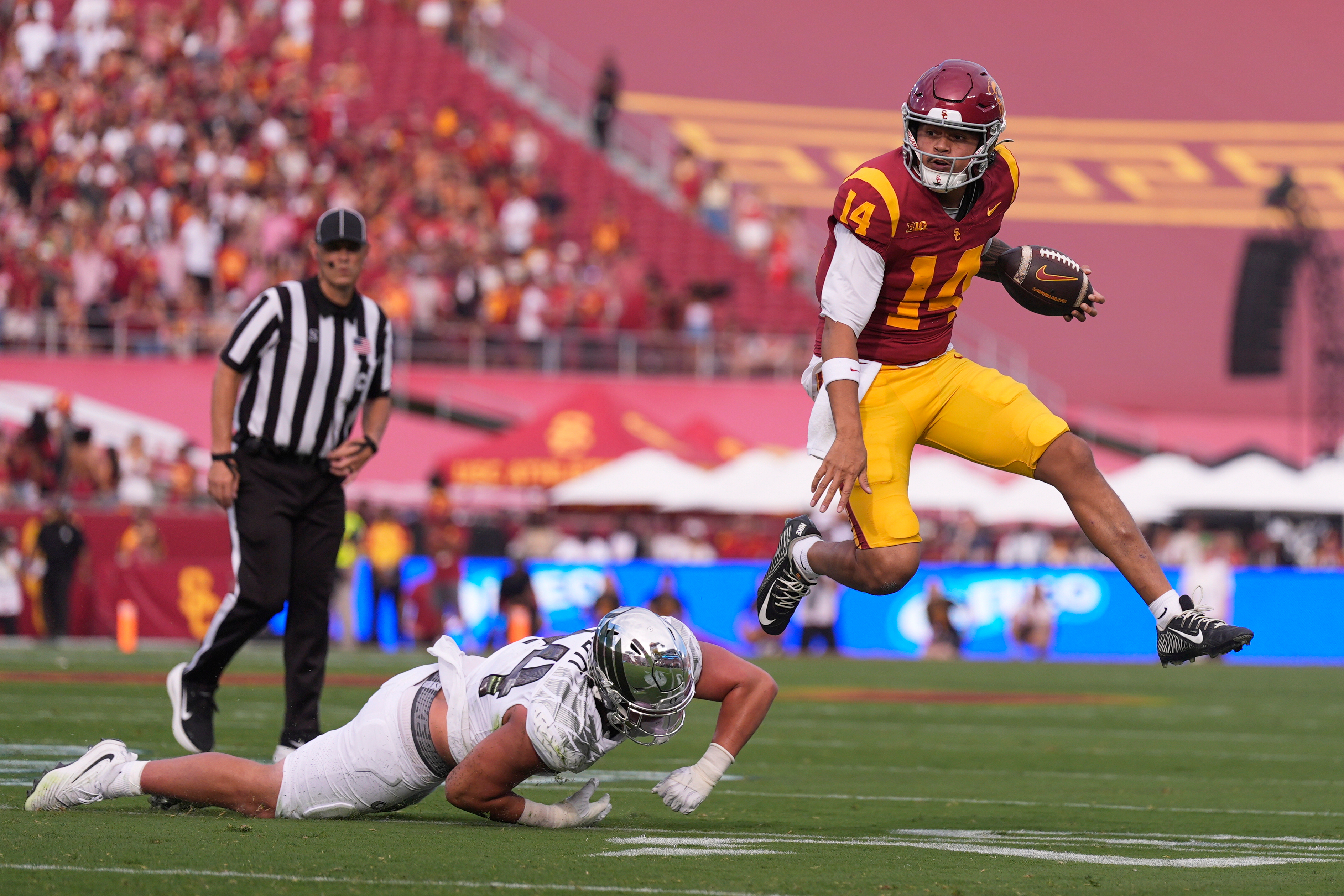
    Mississippi State moved up eight spots to No. 16, its highest ranking in four years, for beating Missouri at home. Oregon was up five spots to No. 15 after winning on the road against Southern California. Houston also moved up five spots to No. 20 after winning at Georgia Southern.

    Iowa earned its highest ranking since 2021, at No. 14, for knocking off Michigan on the road on the final play of the game.

    Seven ranked teams lost in Week 4 and four dropped out of the poll. Penn State took the biggest fall, going from No. 13 to unranked after losing to Wisconsin at home.

    In and out

    No. 19 Oklahoma State, which won at West Virginia for its third straight victory after losing 21 straight against Bowl Subdivision opponents, is ranked for the first time in two years.

    No. 22 Boise State of the Pac-12 is the first Group of Six team to crack the Top 25 this season. The Broncos’ 25-point win at Western Michigan was their third straight win after a narrow loss at Oregon. They hadn’t been ranked since the 2025 preseason poll.

    No. 23 UCLA is 4-0 for the first time in four years after a 51-point road win over Maryland and is ranked for the first time in three years.

    No. 24 Kentucky followed its win at Texas A&M with an easy victory at South Alabama to earn its first ranking since 2023.

    In addition to Penn State, Michigan, Louisville, and Texas A&M fell out of the Top 25.

    Full rankings

    1. Texas
    2. Georgia
    3. Notre Dame
    4. Miami
    5. Ohio State
    6. Indiana
    7. Alabama
    8. Florida
    9. Mississippi
    10. BYU
    11. LSU
    12. Texas
    13. Utah
    14. Iowa
    15. Oregon
    16. Mississippi State
    17. Tennessee
    18. USC
    19. Oklahoma State
    20. Houston
    21. SMU
    22. Boise State
    23. UCLA
    24. Kentucky
    25. Missouri
  • No. 13 Penn State fumbles a 10-point second-half lead to lose to Wisconsin in Big Ten opener

    No. 13 Penn State fumbles a 10-point second-half lead to lose to Wisconsin in Big Ten opener

    STATE COLLEGE, Pa. — After No. 13 Penn State took a 10-point lead at the end of the third quarter, it was all downhill for the Nittany Lions in their Big Ten opener against Wisconsin on Saturday.

    Wisconsin scored two touchdowns in 3 minutes, 31 seconds to defeat the Nittany Lions , 24-20. Quarterback Colton Joseph found tight end Jacob Harris for a 72-yard go-ahead touchdown with 1:13 to go. That play gave the Badgers their first road win since 2024 and first victory over Penn State since 2011.

    Penn State’s offense was inconsistent from the get-go, while its defense couldn’t keep up after three straight three-and-outs on the other side of the ball.

    “We just really struggled to find a rhythm,” coach Matt Campbell said. “Never got into the flow of the game.”

    Offensive struggles

    Offensive coordinator Taylor Mouser’s first crack at calling plays in the Big Ten didn’t go as planned.

    Without top receiver Koby Howard, the passing game struggled. Quarterback Rocco Becht threw his first interception of the season after a ball was tipped at the line of scrimmage and fell right into the hands of Wisconsin defensive end Charles Perkins.

    Becht finished 12-for-29 with 129 yards and an interception. He had multiple bad misses and threw it through the end zone on the final play of the game.

    “I got to be better for the offense,” Becht said. “I got to be better for this team. I can’t put us in scenarios where our backs are backed up and we got to have a big play. We got to continue to move the chains, stay in front of the sticks, and I didn’t do my part today, so I got to do better.”

    The run game couldn’t find the consistency it had last week, and running backs Carson Hansen, Quinton Martin Jr., Cam Wallace, and James Peoples all saw the field in the first quarter in an effort to get something going.

    Peoples ended up being the featured back. The Ohio State transfer finished with 67 yards on 14 attempts, good for 4.8 yards per carry.

    “I thought James ran the ball really well today,” Campbell said. “I thought he made some really key plays in some key situations. I do.”

    Cornerbacks step up

    Penn State’s cornerback room was the most stable following an offseason of transfer portal exits and additions, with eight corners from last year’s squad returning this season.

    True freshman Josiah Zayas and sophomore Daryus Dixson recorded interceptions on back-to-back drives in the second quarter, resulting in a 14-point swing for the Nittany Lions in just over two minutes. Zayas returned his for a touchdown, while Dixson’s set Penn State up at the Badgers’ 11-yard line.

    “Our defense was playing well,” Becht said. “Props to those guys for continuing to go out there and make plays and having our back.”

    On Zayas’ pick-six, he read the screen perfectly, and there was only green grass in front of him once the ball was in his hands. The play was eerily similar to his pick-six in Penn State’s Blue-White Game.

    Redshirt senior Audavion Collins got involved as well with three pass breakups, two of which came late in the fourth quarter.

    Linebacker Tony Rojas tacked on a third interception in the fourth quarter.

    Up next

    Penn State heads to Northwestern and its brand-new Ryan Field for its first Friday game since 2023 (8 p.m., Fox29).

    Northwestern beat the Nittany Lions, 22-21, last season in what ultimately was James Franklin’s last game at Penn State.

  • Mistakes prove costly for Villanova in conference loss to Colgate

    Mistakes prove costly for Villanova in conference loss to Colgate

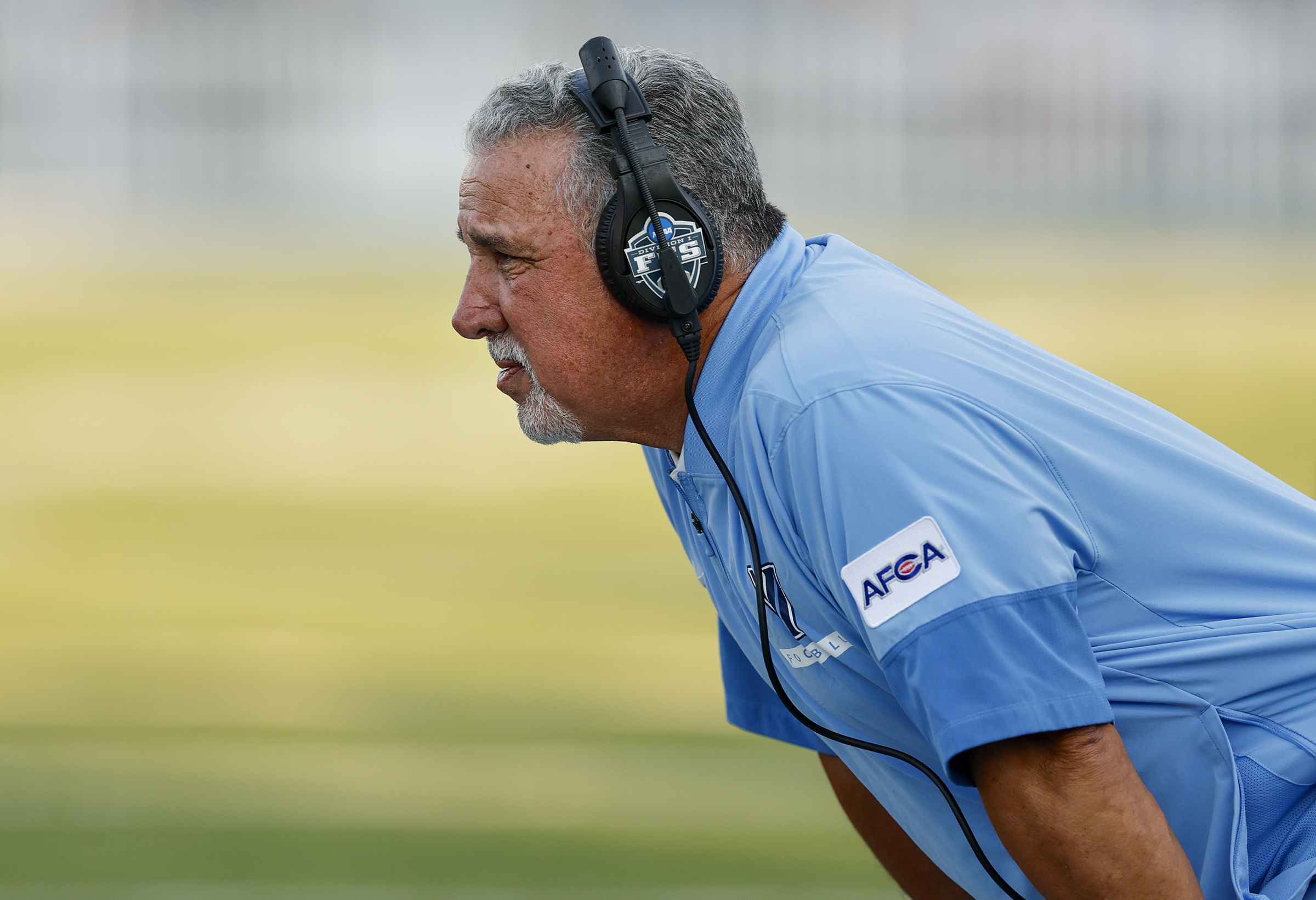
    Villanova coach Mark Ferrante says the Wildcats have become their “own worst enemy.”

    The Wildcats returned home to Villanova Stadium for the first time in four weeks, searching for their first win home win since last November. After a competitive first half, costly penalties, an inability to stop Colgate on third down, and communication miscues led to a 28-21 loss.

    It’s the first time Villanova (2-3, 2-1 Patriot League) has lost to Colgate (4-1, 3-0) since 1978, snapping an eight-game winning streak.

    “We’ve got to stop being the opponent [to] ourselves,” Ferrante said.

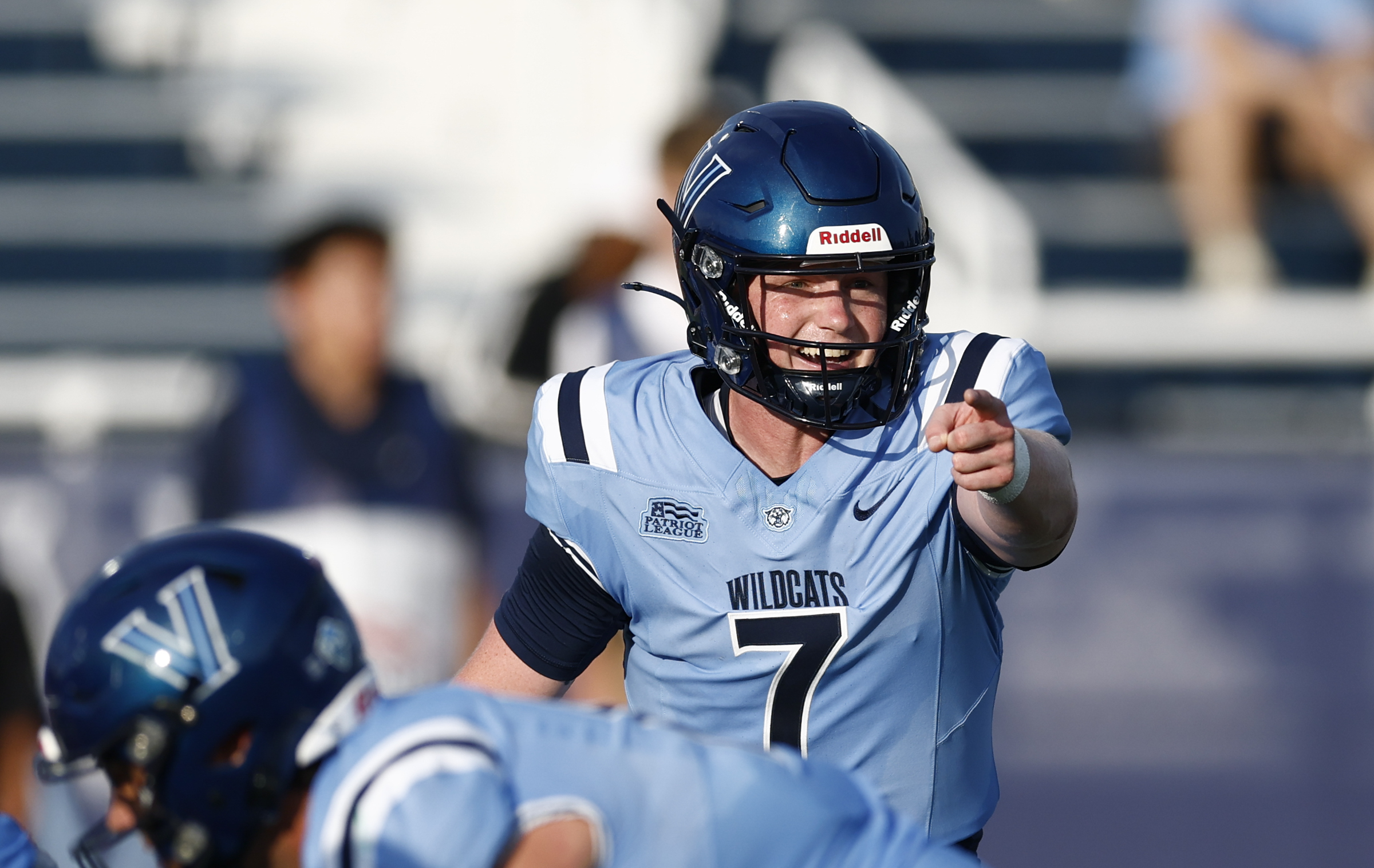
    Graduate quarterback Pat McQuaide completed 12 of 23 passes for 192 yards, two touchdowns, and an interception. McQuaide had a couple of opportunities for big plays with open receivers downfield, but overthrew them.

    Running backs Ja’briel Mace and Isaiah Ragland combined for 98 rushing yards on 23 attempts. Ragland picked up a rushing touchdown in the first half, while Mace hauled in a touchdown catch.

    “But, again, the one-two punch didn’t get us the win today,” Mace said. “So, I mean, the most important thing to me is winning football games, and we’re not doing that right now. We need to be better.”

    Villanova quarterback Pat McQuaide, seen here in a game earlier this season, threw for 192 yards and two touchdowns in a loss to Colgate on Saturday.Yong Kim / Staff Photographer

    Time not on the Wildcats’ side

    The Wildcats were unable to retain possession of the football. Colgate led Villanova in total time of possession by over 15 minutes. A main factor in the discrepancy was the Wildcats’ inability to stop the Raiders on third down, allowing them to go 8 for 15.

    “We’ve got to get off the field on third down on defense,” Ferrante said. “I would say [our opponents] are averaging over 50% against us in the first five games in third-down conversions, and too many of them [are] because of penalties.

    “Looking at the stat sheet, 8 for 15, that’s more than 50%. Time of possession is ridiculous. We need to get off the field on defense. We need to stay on the field and hang on the football on offense.”

    Through its first five games, Villanova has allowed every opponent except one to convert at least 50% of its third downs. The only game under 50% was against Bucknell in Week 2 (30.8%).

    Penalties continue to derail momentum

    Villanova has struggled this season with penalties. The Wildcats have committed seven or more penalties in four of their five games.

    Against Colgate, Villanova was penalized eight times for 79 yards. Some of those came on third downs when Villanova had the opportunity to force Colgate into punting or settling for a field goal.

    “We have to be smarter,” Ferrante said. “We have to be more disciplined. We’re giving up too many first downs in big plays because of our penalties. So we’ve got to make sure, No. 1, we stay outside so we don’t give them a free 5 yards and move the sticks, and No. 2, during the course of the play, we’ve got to make sure that we’re playing clean football as opposed to giving them pass interference calls and hand-to-face calls and personal foul calls.”

    Villanova’s offensive line

    The program has emphasized a strong offensive line in successful seasons.

    But the offensive line has been hit with injuries. That was evident on Saturday, as McQuaide was sacked six times, including on the Wildcats’ final play to seal Colgate’s win.

    At times the pass protection was there, but it was not consistent enough. And the run game was affected, too: No Villanova running back has eclipsed the 100-yard mark this season.

    Last season, Villanova running backs had seven 100-plus-yard rushing performances.

    Up next

    Villanova will stay on the Main Line for a nonconference matchup against Morgan State (3-1). The Bears are coming off a bye week.

    Villanova last faced Morgan State in 2014 and defeated the Bears, 48-28, at Villanova Stadium.