Pay and benefits typically account for more than half the total costs in hospital systems at a time when healthcare costs are rising sharply in the Philadelphia region and nationally.
Local nonprofit health systems reported compensation ranging from $1.2 million to $3.7 million in 2024 for the 100 highest-paid employees listed in their most recent federal nonprofit tax returns. The ranking excludes system CEOs.
Meanwhile, employers are expecting insurance increases approaching 10% for the coming year, according to several national surveys by benefits consultants. Experts cite increased use of healthcare services, widespread use of expensive specialty drugs, and rising hospital prices as key factors leading to overall rising benefit costs.
Clinicians accounted for 60 spots in The Inquirer’s top 100 ranking, which is based on compensation reported in dozens of 990 tax forms from Philadelphia-area hospitals, affiliated physician groups, and other related entities.
Highly specialized neurosurgeons accounted for the highest number of top-paid clinicians, followed by cardiac and cardiothoracic surgeons and orthopedic surgeons.
Chief financial officers and chief operating officers were well represented in the management ranks.
The region’s largest health system also claimed its highest-paid non-CEO, Jefferson Health president and physician Baligh R. Yehia. His $3.7 million in compensation also topped that of all but two CEOs, as disclosed in a previous Inquirer analysis.
Thomas Jefferson University, which is Jefferson Health’s parent entity, had 30 executives and physicians in The Inquirer’s top 100. The Jefferson group includes four executives who left during or before 2024, but not salaries reported through the Lehigh Valley Health Network, which Jefferson acquired in August of that year.
Children’s Hospital of Philadelphia had the second-largest number of employees in the top 100, with 18, including surgeons and numerous top executives, such as CFO, general counsel, and head of human resources.
Virtua was third, with nine employees, mainly surgeons.
Across the region, 176 nonprofit health system employees received at least $1 million in total compensation in 2024. That amounts to one in five employees in The Inquirer’s database of more than 800 people.
IRS rules require nonprofits to report compensation for officers, highest-paid employees, and employees with a certain level of responsibility.
(function(){function e(){window.addEventListener(`message`,function(e){if(e.data[`datawrapper-height`]!==void 0){var t=document.querySelectorAll(`iframe`);for(var n in e.data[`datawrapper-height`])for(var r=0,i;i=t[r];r++)if(i.contentWindow===e.source){var a=e.data[`datawrapper-height`][n]+`px`;i.style.height=a}}})}e()})();
The two busiest surgery centers in the Philadelphia region last year were operated by Penn Medicine in Radnor and Jefferson Health in Center City.
Such facilities have grown increasingly popular as a cost-saving option for procedures that do not require intensive hospital resources or overnight stays.
While they offer convenience, the facilities operated by Penn and Jefferson both count as hospital departments for billing purposes, which means they cost more than surgery centers operated by independent physicians or other companies.
Penn Medicine Radnor Surgery Center operates within a large outpatient facility near the intersection of I-476 and Route 30. It logged 12,464 surgical visits in 2025, up from 8,961 the year before, according to data published last month by the Pennsylvania Department of Health.
Penn attributed the growth to the addition of new gastroenterologists in Radnor to perform colonoscopies, upper endoscopies, and other procedures. Colonoscopies, in particular, account for a large portion of the overall volume in surgery centers outside hospitals.
Jefferson Surgery Center was close behind, with 12,261 surgical visits, up from 2,639 in 2024. It sits within the Honickman Center, which opened in 2024 at 1101 Chestnut St. in Philadelphia. Jefferson has gradually expanded the array of surgical services offered there.
“Growth has been driven by both increasing patient demand and the strategic transition of services from other Jefferson locations, allowing us to provide care in a state-of-the-art outpatient environment,” Jefferson said in an email.
Other fast-growing surgery centers include two independently operated facilities focused on orthopedics, Premier at Exton Surgery Center in Exton and Restore Orthopaedic Surgical Institute in Chadds Ford.
(function(){function e(){window.addEventListener(`message`,function(e){if(e.data[`datawrapper-height`]!==void 0){var t=document.querySelectorAll(`iframe`);for(var n in e.data[`datawrapper-height`])for(var r=0,i;i=t[r];r++)if(i.contentWindow===e.source){var a=e.data[`datawrapper-height`][n]+`px`;i.style.height=a}}})}e()})();
Surgery center ownership matters
Even though the Penn and Jefferson outpatient facilities are not in hospitals, their ownership by large hospital systems enables providers to get paid as if they were located inside the Hospital of the University of Pennsylvania or Thomas Jefferson University Hospital.
Hospital outpatient department billing rates are sometimes twice as much as the rates paid to independent surgery centers.
For example, surgery to remove torn cartilage from a knee can cost $7,190 when performed on an outpatient basis in a hospital, nearly three times the $2,477 cost in ambulatory surgery centers (ASCs), according to Philadelphia-area commercial insurance averages from Turquoise Health.
Health insurers Independence Blue Cross and Highmark have implemented policies this year seeking to save money for employers and patients by moving care out of hospitals and into ambulatory surgery centers or ASCs. Both insurers say they will only pay for certain procedures if they are done in an ASC.
But it’s not enough to move surgeries to a setting outside a hospital, given the hospital-like billing status of certain surgery centers.
“The cost savings from an ASC depend on the facility’s ownership, licensing, and billing model,” Richard Snyder, IBX’s chief operating officer, said in a email to The Inquirer.
IBX would like to see more ASCs in its Southeastern Pennsylvania market and is “prepared to help catalyze growth through continued value-based arrangements, strategic partnerships, and investments,” Snyder said.
Litigation over ASCs and other policies
In a July lawsuit against IBX, Jefferson claimed that the insurer’s ASC policy amounted to a change to the financial terms of their contract that needed to be negotiated.
The lawsuit said that ASC mandate will cost the health system $35.4 million, but doesn’t specify over what time period.
IBX filed a motion last weekto dismiss the lawsuit, which was moved to U.S. District Court in Philadelphia from the Philadelphia Court of Common Pleas.
The insurer says that the lawsuit was premature because Jefferson filed it before completing a contractual process designed to resolve such policy conflicts.
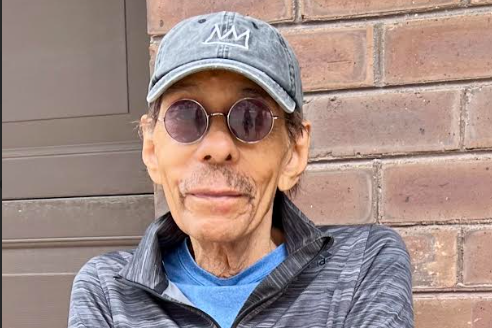
William Johnson Jr., 95, of Philadelphia, a former Army dentist in France who later practiced for more than 40 years in Northwest Philadelphia, and a star distance runner at Norristown Area High School, the Penn Relays, and elsewhere, died Wednesday, Aug. 26, of congestive heart failure at his home near the Philadelphia Museum of Art.
Dr. Johnson grew up in Norristown, was part of his high school’s meet-winning mile and two-mile relay teams, and enlisted in the Army after graduating from New York University in the 1950s. His mother, Mary, wanted him to be a doctor. So, after she died when he was 6, he went on to earn a dental degree at Meharry Medical College in Nashville.
He spent five years as an Army dentist in France in the 1960s, reveled in the sophisticated social and cultural atmosphere in Paris at the time, and set up his own practice in the 1970s for what he saw were underserved communities around Chew Avenue and Slocum Street. He and his family lived above the first-floor office, and his son, Bill, and daughter, Jacqueline, both worked with him for a time.
“When we were young, he would tell us to stop running when he had patients,” his daughter said. His son processed X-rays and did other chores in the back room. “On Saturdays,” he said, “the office would be full of people of color. That’s how much he was needed.”
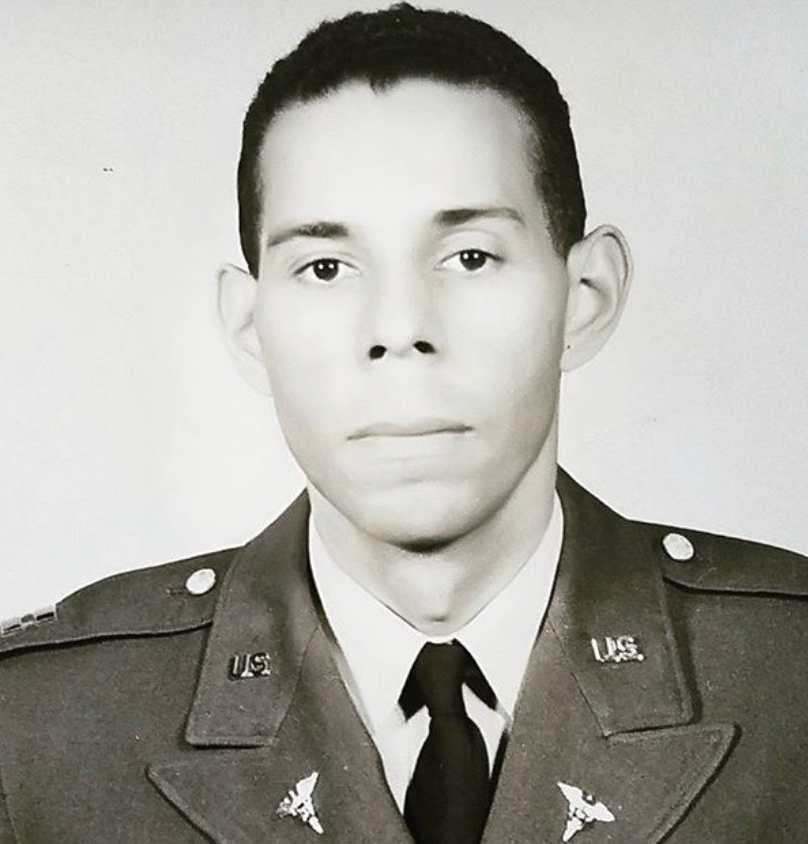
Dr. Johnson was an Army dentist in France. Courtesy of the family
Dr. Johnson finally retired in 2014, at 83. Even then, his wife, Liz, said, “his loyal patients were reluctant to see him retire.”
Away from his patients, Dr. Johnson was a dedicated runner who rarely missed a daily workout. Wednesdays were half days at the office, so he saved his most grueling runs of the week for then.
“He wore a ski mask sometimes when it was cold,” his son said, “and when he was done it would be covered with ice.”
He won mile relay, two-mile relay, and other long distance races in high school in the 1940s, ran for the college team at NYU, and later finished first in masters division races at the Penn Relays. He was a longtime member of the Freedom Striders running club and most often ran in the lead pack in the Broad Street Run and other big road races.
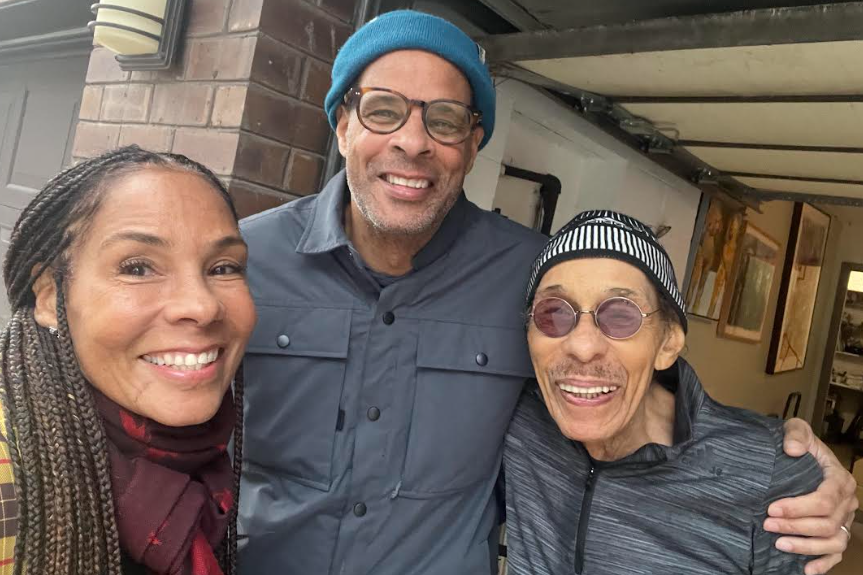
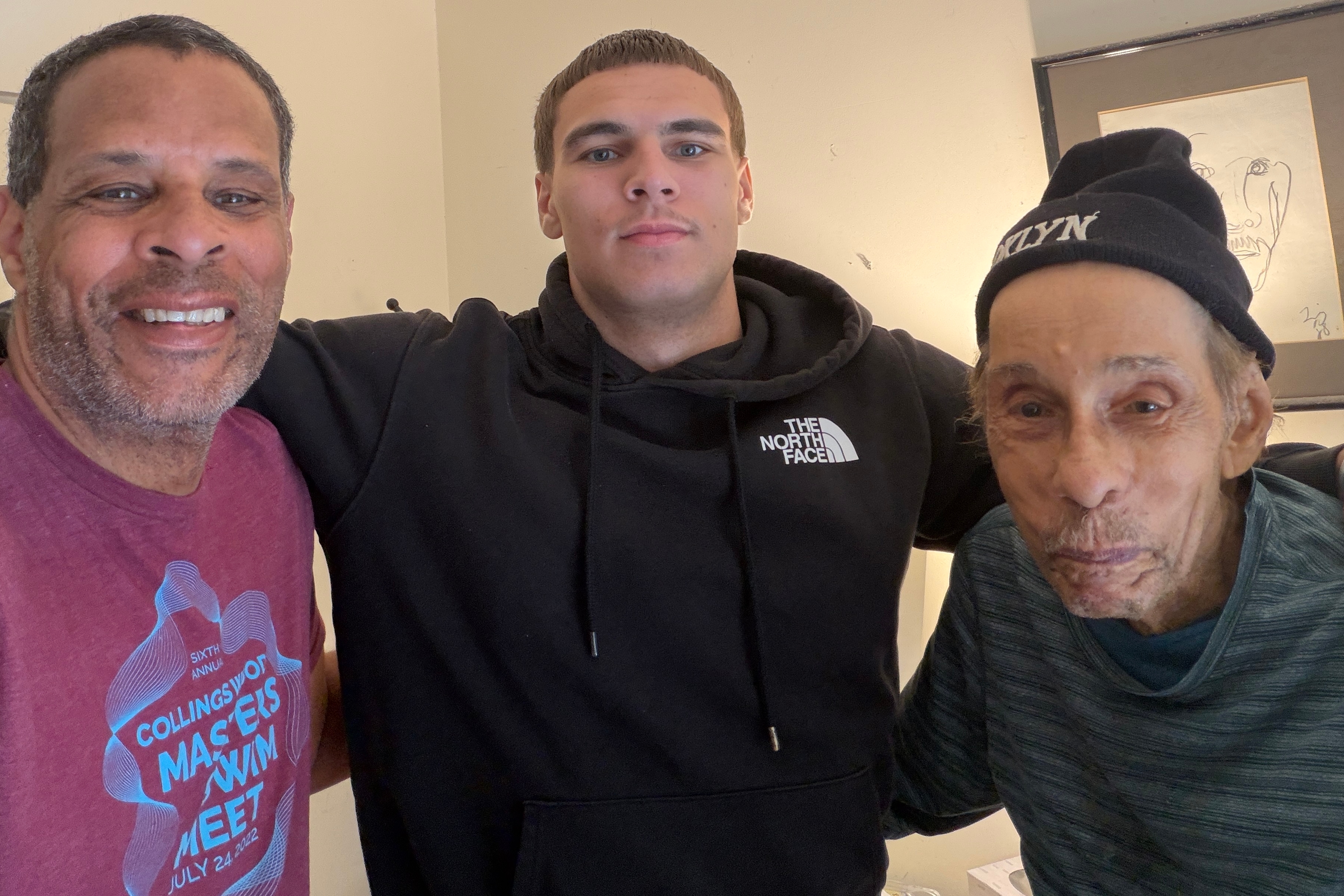
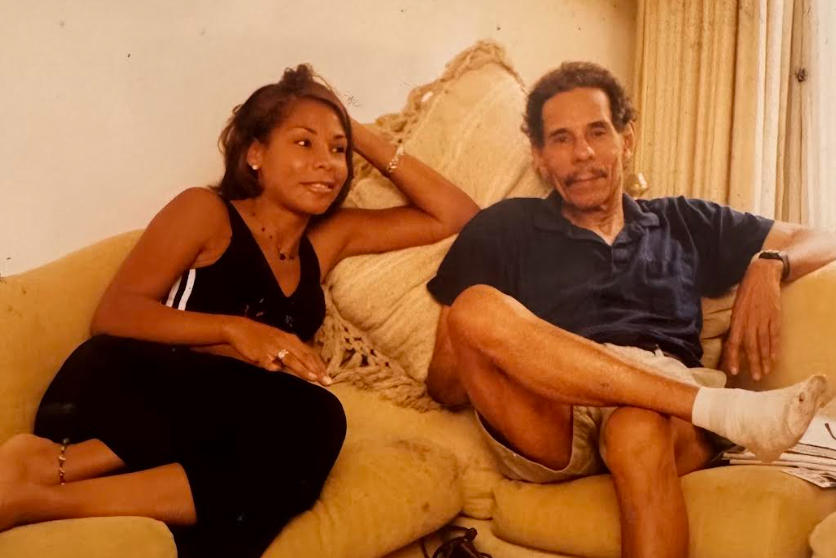
Dr. Johnson (right) doted on his daughter, Jacqueline, and son, Bill.Courtesy of the family
He was also an amateur historian who loved to hash over stories about the old days in Philadelphia and Norristown. “He was analytical and liked to laugh,” his son said. “He was a model for me about the value of hard work and being humble.”
William Johnson Jr. was born Feb. 24, 1931, in Norristown. He lived with his father, William Sr., sister Jean, and brother Eddie after his mother died, and developed what his children called a “deep sense of family, independence, and faith.”
He played football as well as track in high school, joined the Alpha Phi Alpha fraternity at NYU, and worked in the New York garment district to make money. He enlisted in the Army after graduation to attend dental school.
He met Susie Jeffries in Tennessee while at Meharry, and they married, lived in Orléans, France, and moved to Philadelphia after he left the Army. They had two children. They divorced later.
Dr. Johnson and his wife, Liz, were both dedicated runners. Courtesy of the family
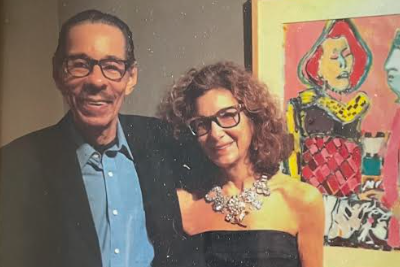
In the 1990s, Dr. Johnson moved to the Art Museum area and married Liz Goldberg, also a dedicated runner. He and his wife traveled the world together, and she called him “an exuberant and colorful spirit” who “brought energy and joy to those around him.”
Dr. Johnson was interested in fashion, especially Ralph Lauren, and he and his daughter shopped together frequently. He liked music, French food, art shows, and gardening.
His son said: “A lot of people have told me: ‘Your dad was the best.’”
In addition to his wife, children, and former wife, Dr. Johnson is survived by four grandchildren and other relatives. His sister and brother died earlier.
Private services were held earlier.
Donations in his name may be made to Meharry Medical College, 1005 Dr. D.B. Todd Jr. Blvd., Nashville, Tenn. 37208.
Dr. Johnson, right above and below, enjoyed time with his family. Courtesy of the family
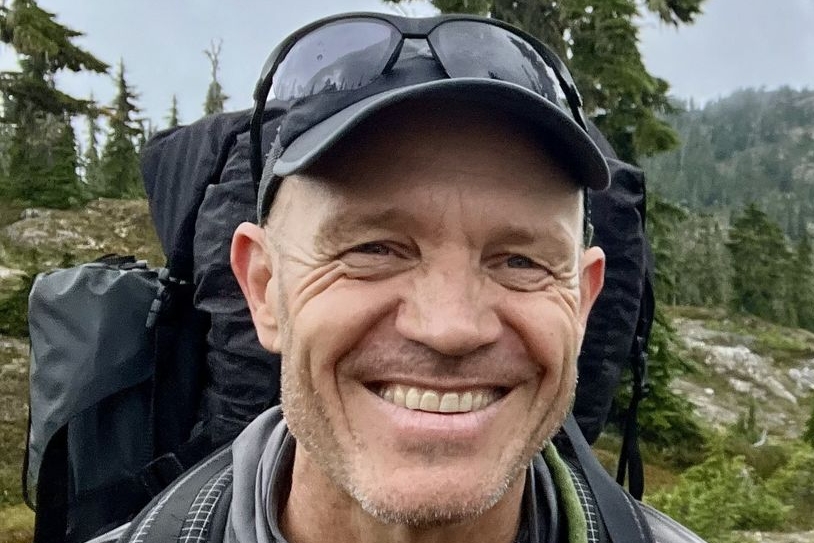
Peter D. Yeomans, 58, of Philadelphia, innovative clinical psychologist at the Corporal Michael J. Crescenz Department of Veterans Affairs Medical Center, founder of Cold Mountain Counseling LLC, worldwide mountaineer and backcountry adventurer, teacher, author, mentor, Quaker, and volunteer, died Friday, Aug. 28, of cardiac arrhythmia at the VA Medical Center in University City.
Dr. Yeomans was an expert in trauma, substance use disorder, moral injury, and spiritually integrated healthcare. He joined the Philadelphia VA Medical Center as a staff psychologist in 2009 and became director of its innovative PTSD outpatient team program in 2019.
He opened his own psychology practice, Cold Mountain Counseling, in 2021 and advised thousands of veterans, fellow backcountry adventurers, and other clients in need across the country. “He was instrumental in the healing process for so many veterans that it is hard to fathom the reach of his influence,” a VA colleague said in a tribute.
R. Tyson Smith, a friend and colleague, said several veterans told him: “Peter Yeomans saved my life.”
At the VA center, in addition to physical and mental ailments, Dr. Yeomans and others innovated a treatment for what are called “moral injuries” from military service. They connected therapists with VA chaplains to link emotional healing with faith rituals, and veterans in the program spoke appreciatively about shifting the guilt and shame of moral failures during war from soldiers in general to society at large.
“These are stories to hear and also for the public to wrestle with,” Dr. Yeomans told The Inquirer in 2019. His wife, Kate O’Shea, said: “He was the most responsible person you could imagine, and he felt he had a responsibility to humanity.”
Outside the medical center, Dr. Yeomans spent weeks at a time hiking, backpacking, packrafting, skiing, rock climbing, and mountain biking around the world. He reached summits in Alaska and Argentina, had to be rescued from a deep crevasse, and worked as a program supervisor and senior field instructor in the 1990s for the National Outdoor Leadership School in Alaska, Wyoming, Arizona, and Utah.
Later, he cofounded the local Wilderness Outdoor Leadership Force for teens in Kensington. Talia Young, a longtime WOLF member, called him “genuine and earnest … and joyful with kids.”
Dr. Yeomans was an avid cyclist.Bicycle Coalition of Greater Philadelphia
Longtime colleague Rob Riman said he was a “consummate adventure partner and wildly inspired guide.” On his website, coldmountaincounseling.com, Dr. Yeomans said: “Many of the fondest memories of my life are from adventures in the mountains.”
He earned a bachelor’s degree in psychology from Harvard University in 1991 and came to Philadelphia from Wyoming in 1997 to be with O’Shea. He earned a master’s degree in psychology from Lesley University in Massachusetts in 2001 and a doctorate in clinical psychology from Drexel University in 2008.
Dr. Yeomans traveled to New Zealand, Rwanda, Burundi, and elsewhere to train other counselors. He worked in state correctional institutions in Philadelphia and Chester, and earlier for the American Red Cross in Germany.
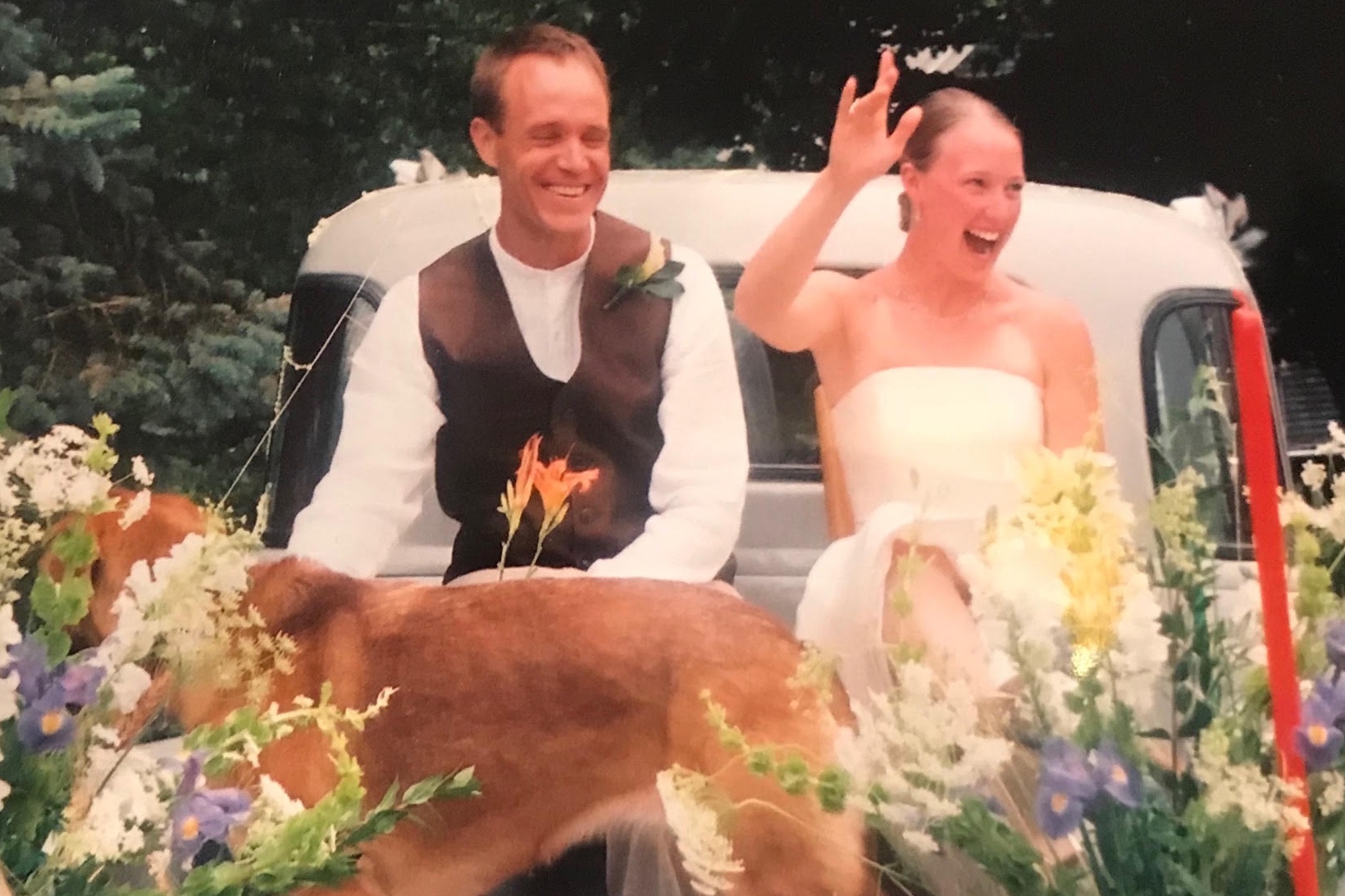
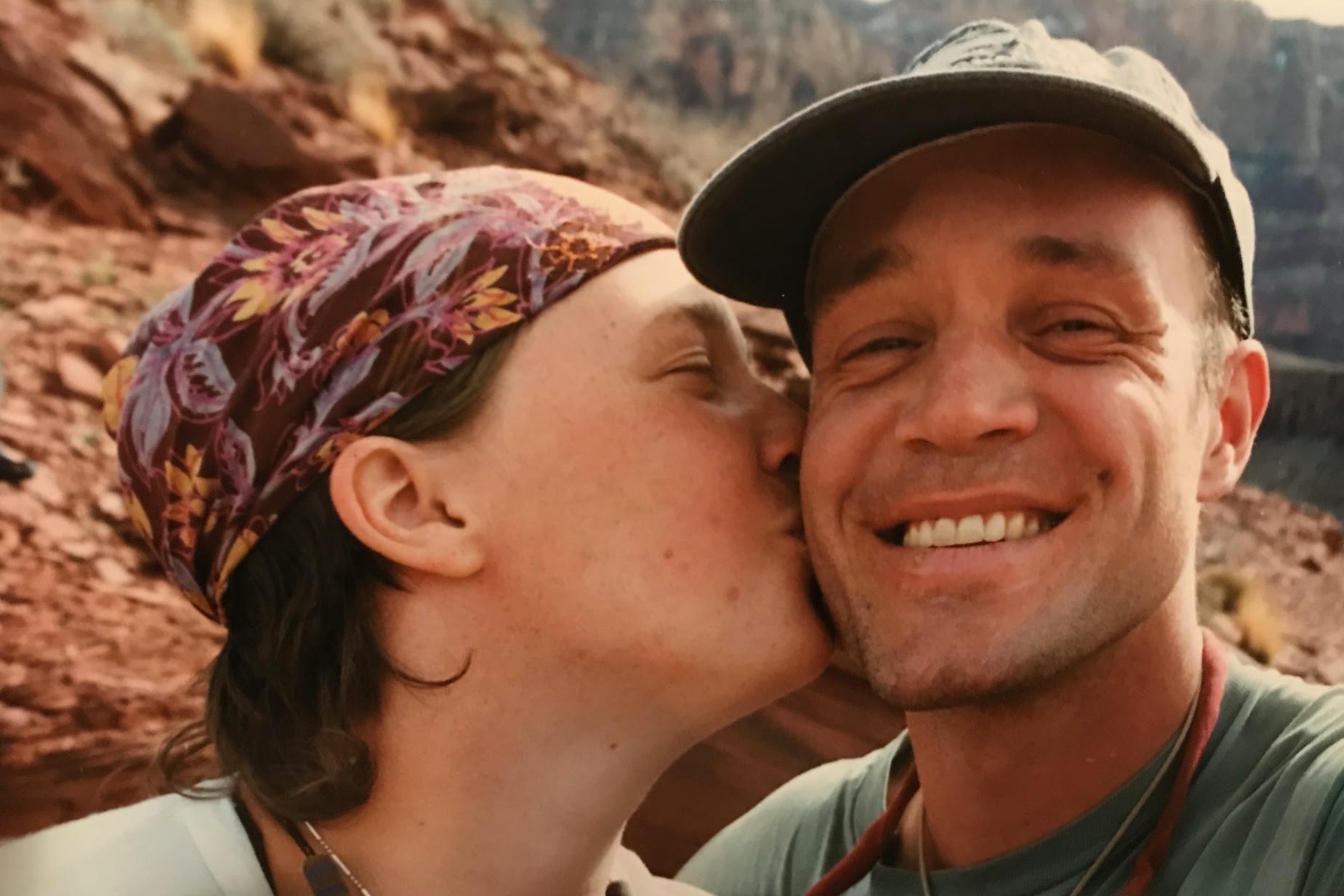
Dr. Yeomans and his wife, Kate, married in 2002 and had many adventures together. Courtesy of the family
He taught classes on moral injuries at Germantown Friends School, the University of Pennsylvania, and elsewhere. Longtime friend William Anninger said: “He was particularly good at creating emotional sharing among men.”
Friend Lila Berman said: “He exuded warmth and care for the people around him, and for the natural environment.”
Peter Douglass Yeomans was born Aug. 27, 1968, in Berkeley, Calif. The family moved to Massachusetts when he started high school, and he graduated from Concord Academy in 1986.
He met Kate O’Shea at an environmental ethics course in Utah in 1996, and they married in 2002 and lived in Germantown. He made her tea in the mornings and left love notes behind when he left the house first. They reared a daughter, Ada, and sons Josiah and Levi, and they all went on memorable adventures in Wissahickon Valley Park, across the country, and around the world.
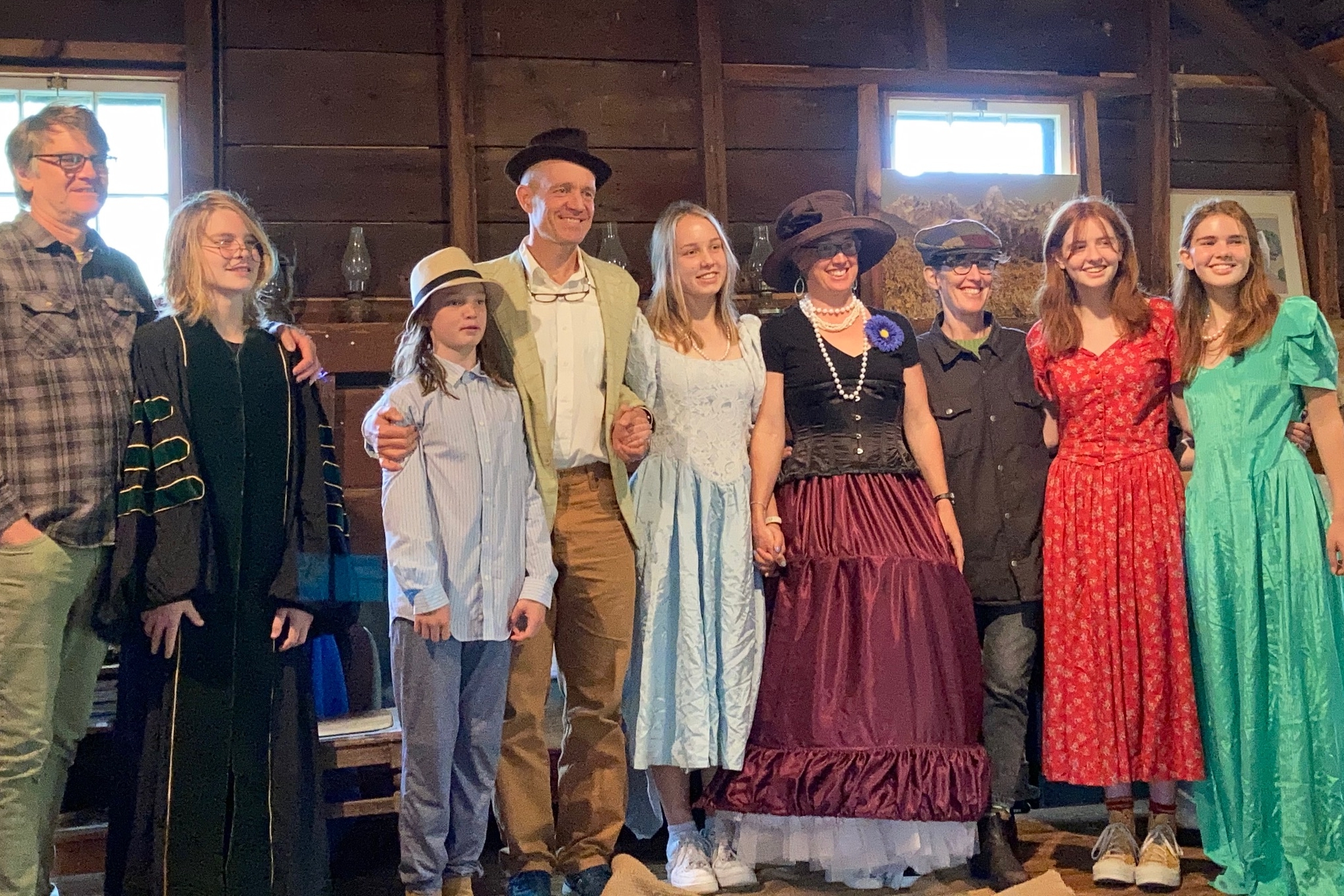
Dr. Yeomans, rear left on top and fourth from the left on bottom, enjoyed time with his family in the mountains and on stage. Courtesy of the family
“They complemented each other perfectly,” their daughter said. “He taught us how to read a map, find a campsite, and most importantly bake cinnamon rolls in the backcountry.”
Dr. Yeomans was a member of the Bicycle Coalition of Greater Philadelphia, and he rode his bike often from home in Germantown to work in University City. He went to Germantown Friends Meeting, played guitar, sang, and acted in theatrical shows in high school and later with community groups and his family.
He was inclusive and encouraging, his brother, Ben, said, “drawing out capacities in me I wasn’t yet trusting.” His parents, Anne and Tom, said: “It has been a great privilege to have been Peter’s parents.”
His mother-in-law, Margaret O’Shea, praised his “compassion, selflessness, nobility, and grace,” and his father-in-law, Dan O’Shea, said: “When our daughter met Peter she described him as ‘Mr. Perfect.’ Little did we know how perfect.”
“It has been a great privilege to have been Peter’s parents,” his parents said.Courtesy of the family
Kate O’Shea said: “Because of Peter, our world is a kinder, more generous, and more loving place.”
In addition to his wife, children, parents, brother, and in-laws, Dr. Yeomans is survived by other relatives.
A memorial service is to be held at 2 p.m. Saturday, Oct. 3, at Germantown Friends Meeting, 47 W. Coulter St., Philadelphia, Pa. 19144.
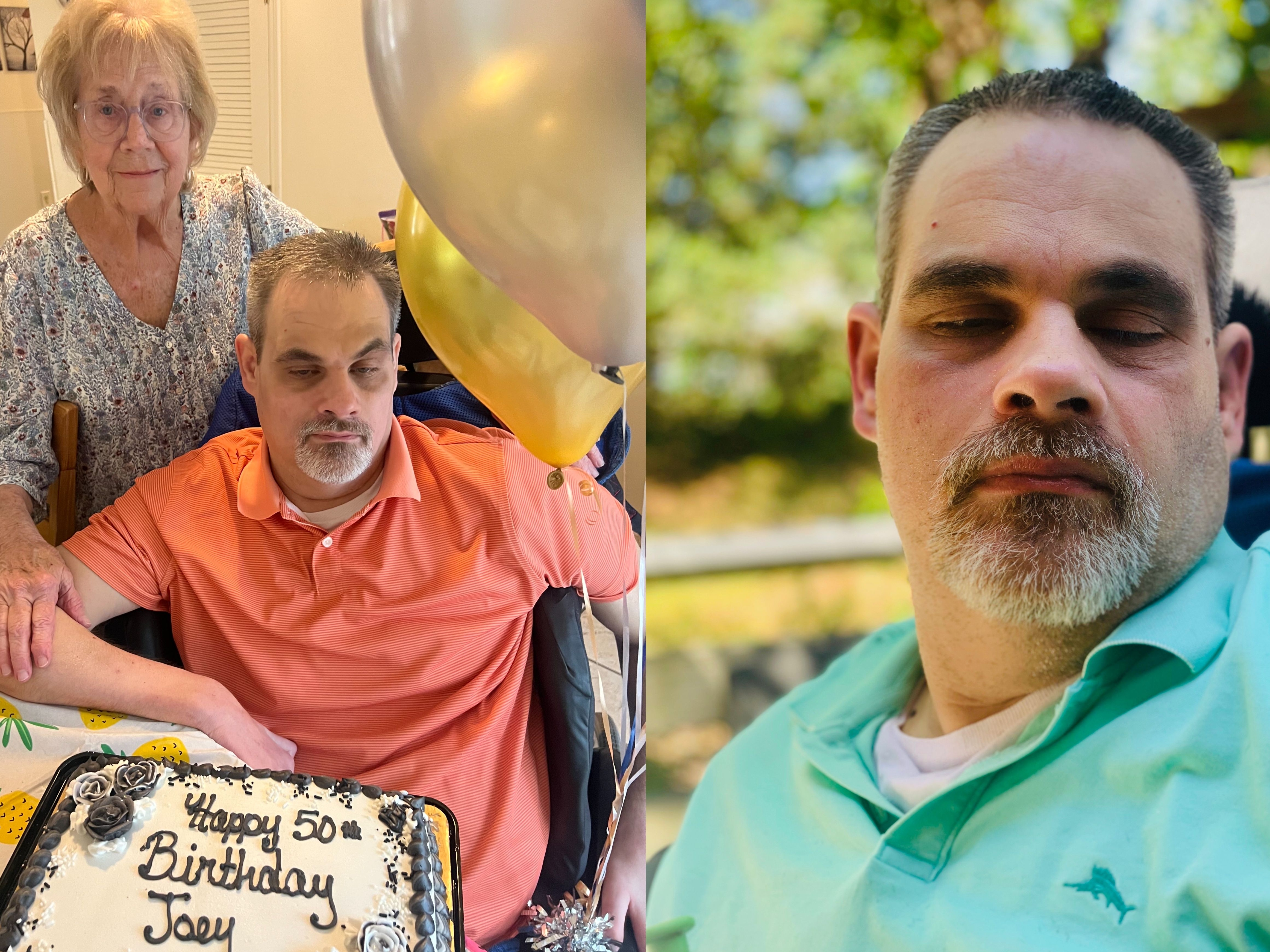
Joey Shevenock suffered repeated urinary tract infections, kidney stones, partially amputated toes, and a broken hip during his last years living in a Reading-area group home for people with intellectual disabilities.
Then, on July 2, the 52-year-old with a history of swallowing difficulties choked and breathed in rice while he was being fed. That led to cardiac arrest. Shevenock died three days later at Reading Hospital.
The Shevenock family has hired a lawyer and plans to file a lawsuit claiming that negligence led to his death, which came 15 months after state regulators had revoked the license of the operator of his Exeter Township group home, Supportive Concepts for Families.
State law allows the nonprofit owned by Inperium Inc. to continue operating while it appeals the revocation,which followed at least four deaths, 11 abuse incidents, and dozens of cases of neglect at Supportive Concepts’ homes in the year ended February 2025.
The license revocation covered 103 of its group homes across northeastern Pennsylvania, including those in Berks County.
Joey Shevenock’s brother, Jeff, questions why state law gives Supportive Concepts so much time.
“I’m a chef, and they’ll shut a restaurant down for X, Y, or Z, and they don’t let you reopen until you correct whatever the violations are,” he said.
“It just blows me away that they know this is going on, but they’re like, well, we’re going to give you six months, a year, whatever, to work on it,” he said.
Supportive Concepts CEO Colleen Miller declined to comment, citing privacy laws. “We remain committed to the health, safety, and well-being of the individuals we serve,” she said in an email Wednesday.
Inperium did not respond to questions about the license revocation.
Homes like the one where Joey Shevenock lived for more than 20 years are regulated by the Pennsylvania Department of Human Services, which said it “cannot comment on specific incidents or investigations, and we cannot comment on pending appeals.”
Like many states, Pennsylvania gives operators time to correct deficiencies, with no set timeline on how long an appeal can go on. “It’s not unusual to allow them to continue operating,” said Mark Davis, CEO of Pennsylvania Advocates and Resources for Autism and Intellectual Disabilities, a Harrisburg trade association for service providers.
During appeals, providers are subject to more frequent, unannounced inspections.
The deathat Supportive Concepts reflects a bigger problem in Pennsylvania’s system of care for adults with autism and intellectual disabilities, said Dee Coccia, cofounder of Vision for Equality, a Philadelphia nonprofit advocacy group for these individuals and their families.
Shevenock’s death, detailed to The Inquirer by his family, follows 25 choking-related deaths reportedin Pennsylvania group homes for intellectually disabled individuals in the last 3½ years through June 30, according to state data.
“You wouldn’t stand for it if you were taking care of animals,” Coccia said.
Deteriorating conditions for Joey Shevenock
Cyndi Shevenock, Jeff’s wife, started closely monitoring Joey’s care about eight years ago, after her in-laws moved to South Carolina.
Joey was blind, had cerebral palsy, and needed a wheelchair to get around. He required support for most daily living activities, including dressing, eating, and getting into bed.
After the July Fourth holiday weekend in 2025, a Supportive Concepts staffer took Joey to the hospital with a urinary tract infection, Cyndi recalled.
Cyndi said anurse called while she and Jeff were driving from their home near Baltimore to the hospital and told her that Joey’s urine had become a concerningly darkiced tea-like color.
The nurse also shared that, according to the aide who brought Joey to the hospital, his urine had started smelling three or four days earlier.
Cyndi said “by the time they took him in, the infection was so bad” that the nurse advised the family to report the incident to Adult Protective Services. The investigator found no signs of neglect, Cyndi said.
Cyndi subsequently reviewed 1,448 pages of Joey’s medical records andfound a half dozen urinary tract infections in the last couple years, two choking incidents that he survived, and 26 hospitalizations between January 2020 and his death.
Joey was prone to urinary tract infections and kidney stones because he was incontinent and spent all his time either in his wheelchair or lying down.
He sat in wet diapers far too long before being changed, Cyndi said, and almost always had sores in that area. Regulators consider bed sores a sign of poor care, often found in nursing homes.
In Cyndi’s view, the lack of dignity in his careextended beyond medical needs.
Every visit, she would check his clothes, to make sure they were clean. She invariably found that they “were just shoved into drawers, inside out, wrinkled, shoved in any drawer,” she said. “Sometimes, the clothes weren’t even his.”
Ongoing troubles at Supportive Concepts
A week after Joey’s death, Inperium announced its founding CEO Ryan Smith had returned to Supportive Concepts as acting president.
Smith had started at Supportive Concepts in 1993, rising to CEO in 2000. He remained in that position until 2018, according to hisLinkedIn profile.
He continues to serve as CEO and chairman of Inperium, a nonprofit also based in Reading, which Smith founded a decade ago to acquire Supportive Concepts — and since then dozens of other typically financially struggling nonprofits.
After acquiring a nonprofit, Inperium consolidates back-office and other business functions in a subsidiary called Apis Management Services to save money.
For example, Inperium told investors recently that Apis saved $8 million at Philadelphia-basedResources for Human Development, which it acquired in 2024.
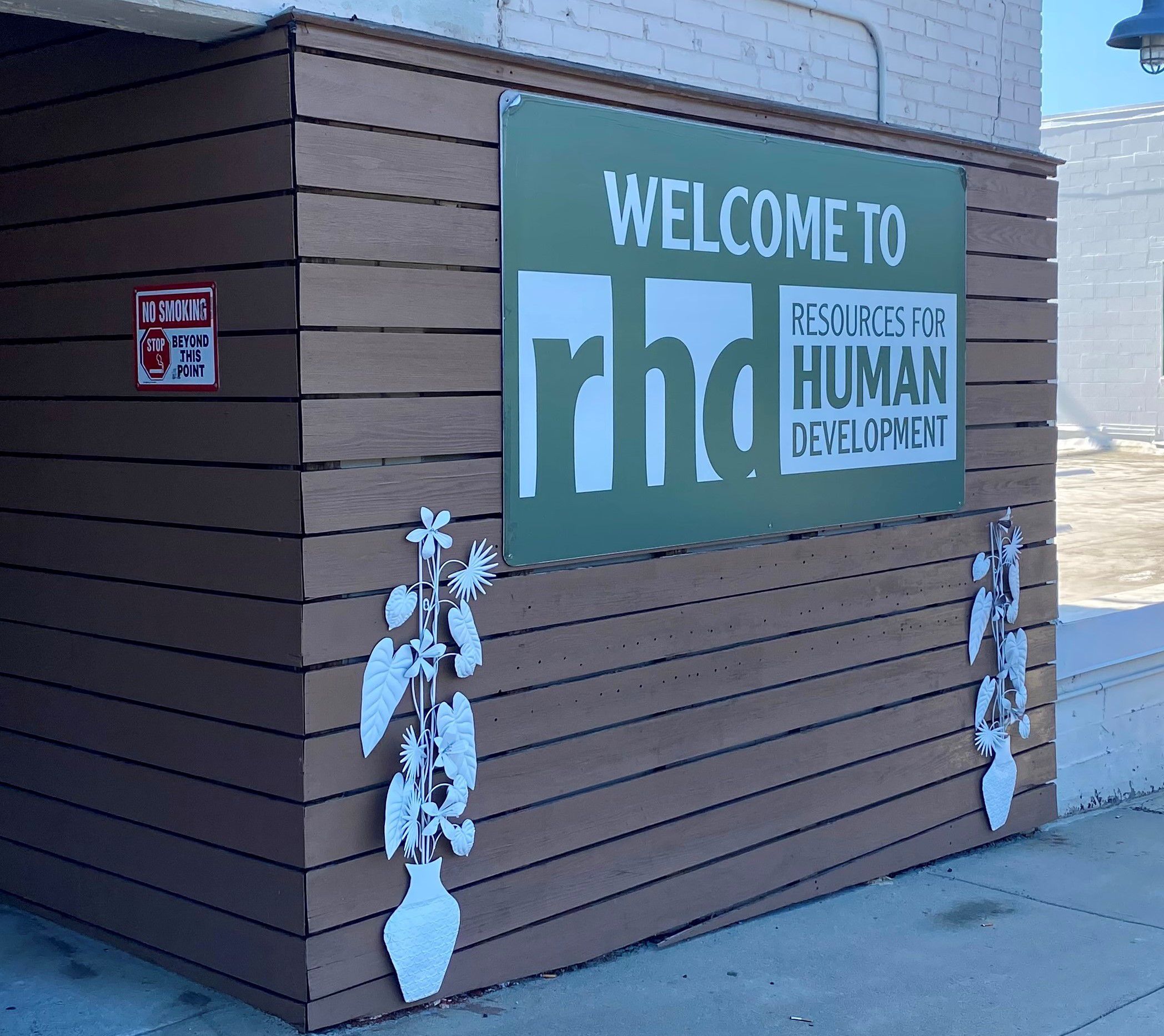
The main entrance to Resources for Human Development on Wissahickon Avenue in Philadelphia. It was acquired by Inperium Inc., a Reading nonprofit that has grown rapidly through acquisitions since its founding in 2016.Harold Brubaker / Staff
Smith’s return to Supportive Concepts has not ended its license revocation affecting operations in 15 northeastern Pennsylvania counties, including Berks. Under the terms of the revocation, the organization cannot open any new homes or accept new clients in existing properties.
State regulators have alsofound significant violations of care standards at Supportive Concept group homes in Western Pennsylvania. Since February, 17 facilities have been operating under provisional license, Inperium disclosed in a recent bond offering statement. The provisional status requires them to implement a correction plan.
The sanctions have led to sharply lower profits for the Supportive Concepts, according to Inperium’s bond statement.
The state sanctions haven’t stopped Inperium from making additional acquisitions in Pennsylvania as Smith aims to build a $1 billion enterprise. (Inperium reached $819 million in revenue for the 12 months that ended June 30.)
Inperium’s most recent sizable acquisition brought into its portfolio KidsPeace, a financially troubled provider of youth mental health services based in Lehigh County.
Inperium’s track record is troubling, said Leonard G. Villari, a Philadelphia lawyer hired by the Shevenock family to represent them in a lawsuit against Joey’s death. He pointed to its ability to keep growing a business largely funded with Medicaid through acquisitions with little state intervention.
“This looks like a very concerning company to me,” he said. “It’s only getting bigger, and they’re aggressive. They’re bolder.”
Bright spots for Joey
Before his choking death, Joey had some memorable relationships with Supportive Concepts staff, the family recalled.
A part-time caregiver would go to Joey’s house on Sundays, give him a fresh shave, make sure he had a nice shirt on, and take him to church with her. After church, they would go out to lunch, Cyndi said, noting the visits ended when the woman stopped working at Supportive Concepts.
In an Instagram comment to a familypost about Joey’s death, another former caregiver recalled how much they loved listening to oldies music like Johnny Cash and Elvis Presley. Joey knew every word of Wizard of Oz and Home Alone, she wrote.
“We’d sit outside together and he was always interested in what the birds and squirrels doing. He’d laugh at the cutest stuff,” she wrote.
The Fourth of July was a significant holiday for Joey and their father, Jeff said. Even though he couldn’t see the fireworks, he loved the sound.
Jeff was so saddened by the thought of his brother dying on that day that the family waited to end his life support the next day.
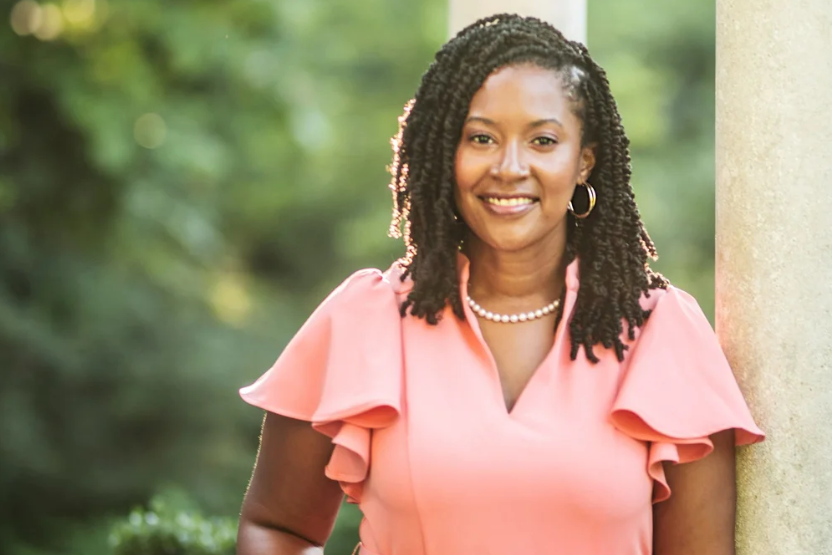
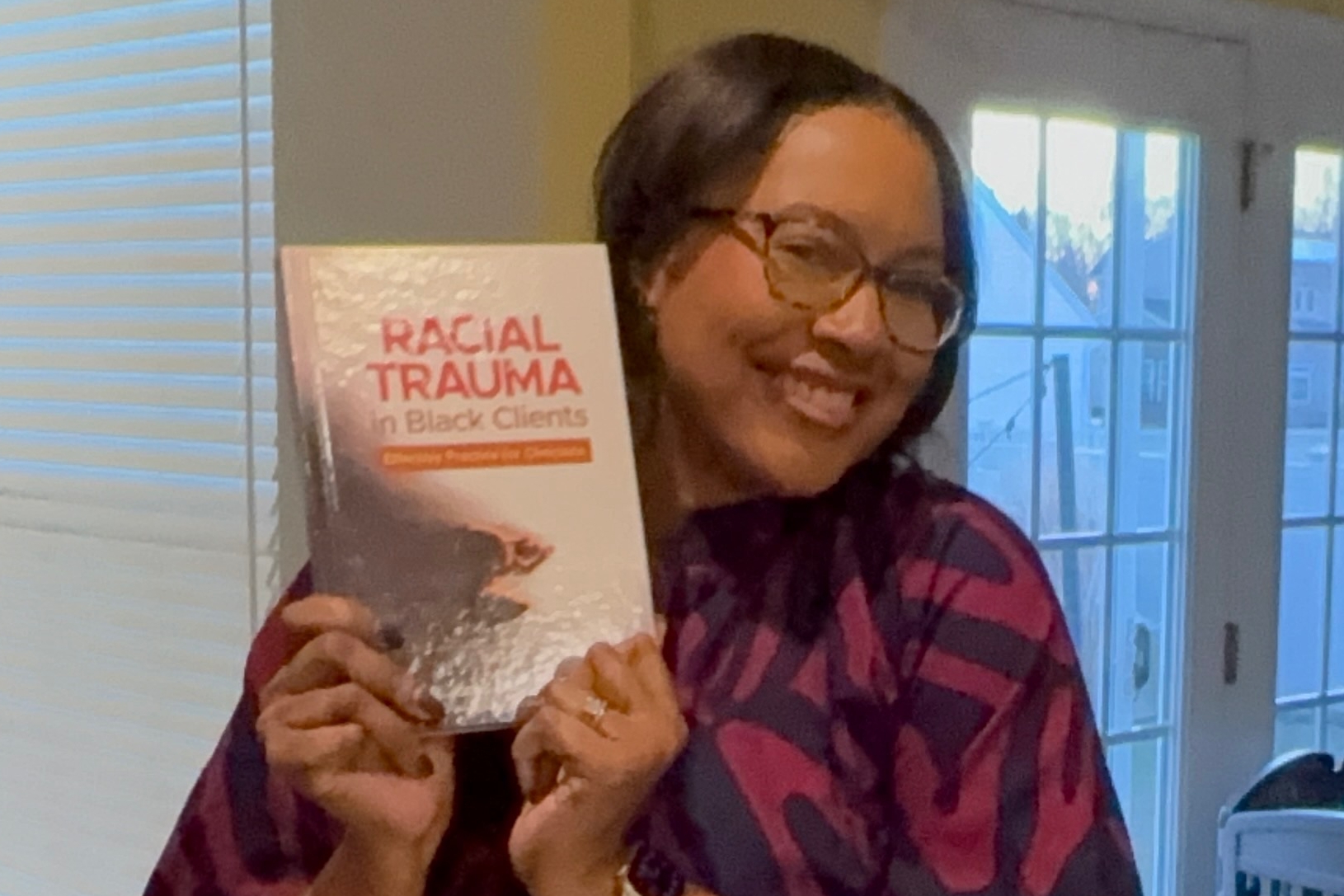
Kelly N. Moore, 46, of Burlington Township, award-winning clinical psychologist, founder of Moore Wellness LLC, director of the Center for Psychological Services at Rutgers University, graduate school clinical associate professor, former fellow at the University of Pennsylvania’s Center for the Treatment and Study of Anxiety, mentor, author, mental health activist, volunteer, and 2026 Willingboro High School Hall of Fame inductee, died Thursday, Aug. 20, of kidney cancer at Virtua Voorhees Hospital.
Adept at treating anxiety, depression, trauma, and perinatal disorders, Dr. Moorebecame director of the Rutgers Center for Psychological Services and a clinical associate professor in the Graduate School of Applied and Professional Psychology in 2020. As CPS director, she mentored hundreds of doctoral students regarding academic requirements and clinical procedures, and supervised the center’s community mental health clinic.
She significantly expanded the center’s services and outreach, Rutgers colleagues said in a Facebook tribute, and forged important partnerships on campus and in the community. Colleagues said: “Her warm demeanor, melodic voice, vibrant spirit, and calming presence made all who met, and were fortunate enough to know her, feel seen, welcomed, and heard.”
She spent two years as a fellow at Penn’s Center for the Treatment and Study of Anxiety after earning her doctorate in clinical psychology at Rutgers in 2011. During the COVID-19 pandemic, she founded Moore Wellness LLC and focused on helping women, children, and clients of color.
“Wellness does not mean you will never experience challenges,” Dr. Moore said in an online profile for Psychology Today magazine. “Rather, it means having the tools to manage the challenges when faced with them.”
Dr. Moore was an outspoken activist for mental health education and services. She spoke with groups often, organized workshops, and was featured in newspapers and magazines and on TV and podcasts. “Just trying to get people to understand as much as they can about the impact their mental health and well being have on their day-to-day lives,” she said in a 2026 podcast interviewwith the Multicultural Counseling Institute.
She belonged to the American Psychological Association and the New Jersey chapter of the Association of Black Psychologists. She was active with the Therapy for Black Girls podcast and the Leadership Institute for Women in Psychology.
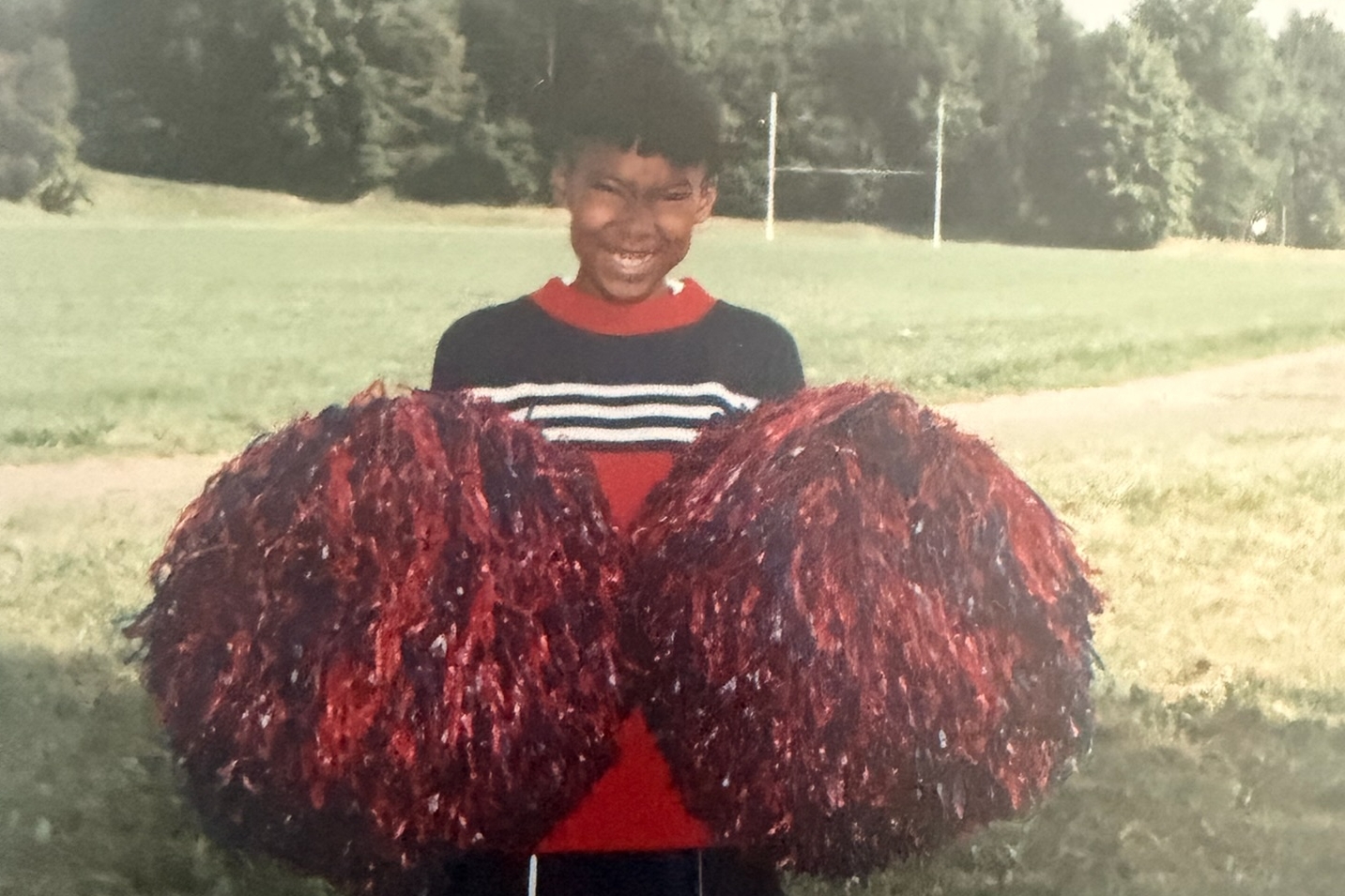
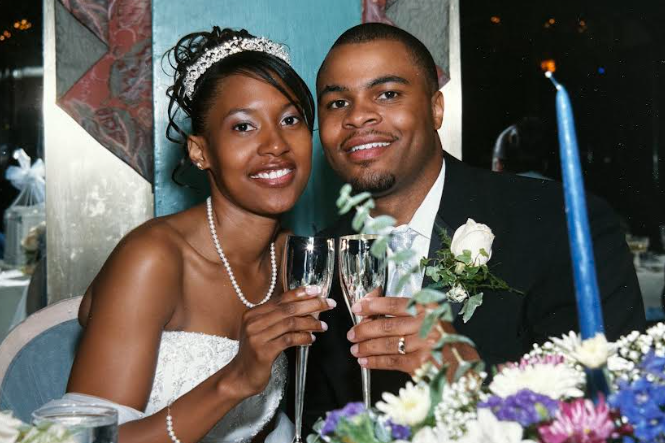
Dr. Moore was a cheerleader and lacrosse player, and graduated from Cornell University in 2002.Courtesy of the family
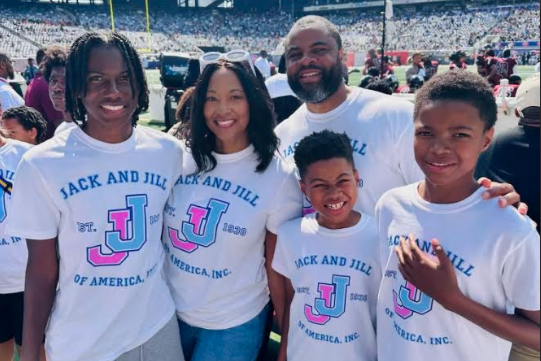
She earned leadership and achievement awards from the New Jersey Psychological Association, the National Council of Schools and Programs of Professional Psychology, and other groups. She was president and a board member of the Burlington County chapter of Jack and Jill of America Inc. Colleagues there called her “a beautiful example of leadership, service, grace, and love.”
Kelly Nicole Walker was born Aug. 20, 1980, in Philadelphia. Her family moved to Willingboro when she was 2, and she graduated from Willingboro High School in 1998.
She was a cheerleader and played lacrosse and viola as a teenager. Her mother, Diana, was a social worker, and she showed Dr. Moore up close how one person could impact their community.
“I was just fascinated by this concept,” Dr. Moore told the Multicultural Counseling Institute in the podcast interview. “It was already set at a young age that this was the kind of work I should be doing.”
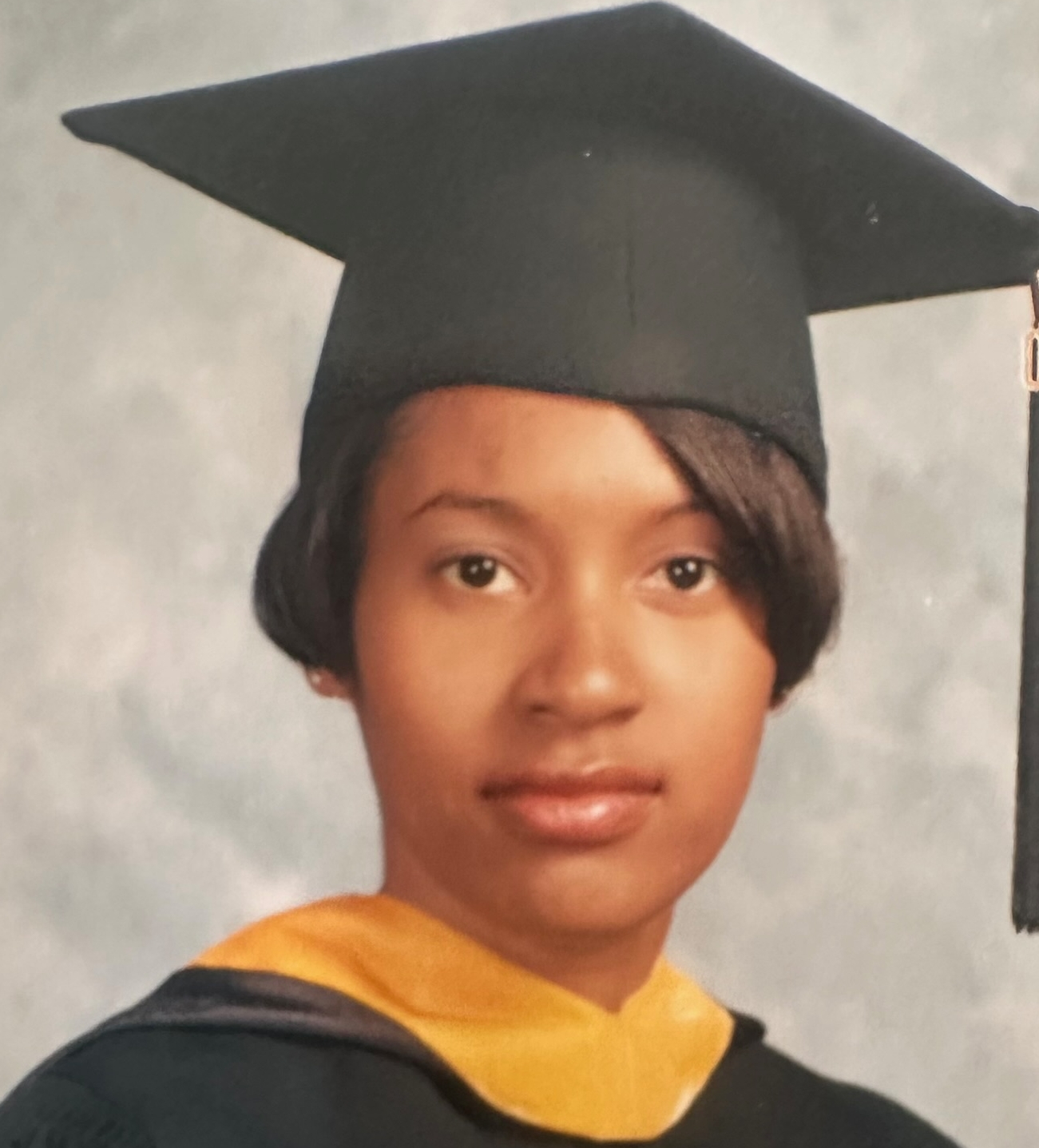
She earned a bachelor’s degree in human development at Cornell University in 2002 and a master’s degree in education at Penn in 2003.
She met Melvin Moore through friends, and they married in 2004 and had sons Miles, Mason, and Matthew. They lived in Marlton and Delanco, and, since 2015, in Burlington Township.
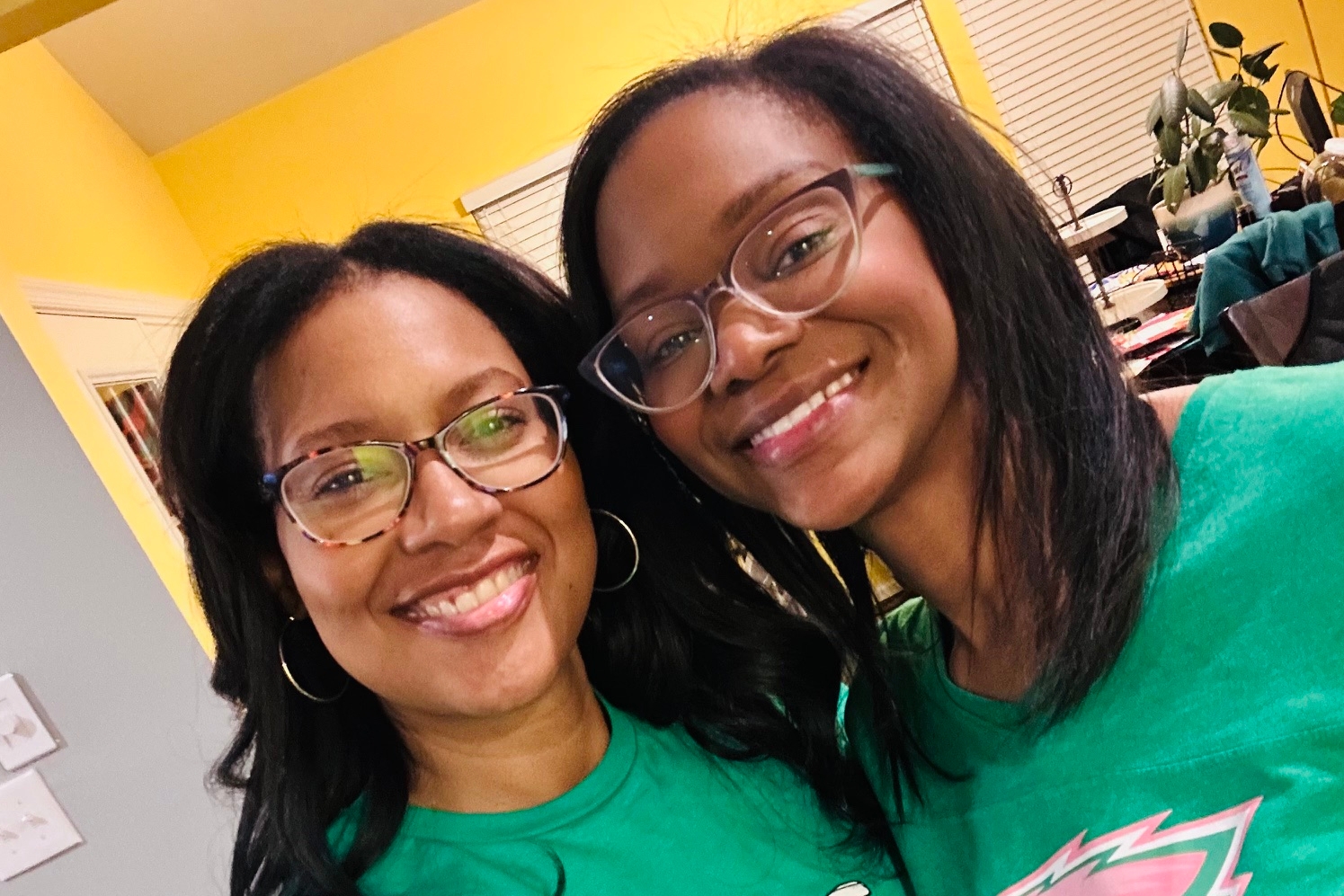
Dr. Moore was a longtime member and dance choreographer at the Gospel Tabernacle Church. She joined Alpha Kappa Alpha Sorority Inc. at Cornell in 2000 and was on the executive board of its Pi Mu Omega chapter in Willingboro.
Friends noted her “warmth, generosity, and kindness,” and called her “genuine” and “quietly brilliant” in online tributes. One friend said: “She sure made me proud to be from Willingboro.”
Dr. Moore and her husband, Melvin, married in 2004 and had three sons. Courtesy of the family
Dr. Moore doted on her sons and called them her “M & M’s.” She was an avid reader and led several book clubs.
She liked to garden, play piano, take photos, cook, and crochet. She was diagnosed with renal medullary carcinoma about a year ago and was determined, her husband said, to reach her 46th birthday. She did it.
And the insurance company with the biggest piece of that business in Pennsylvania is making its voice heard in Harrisburg, Washington, and across the political landscape.
Newtown Square-based AmeriHealth Caritas, an affiliate of the Philadelphia-based healthcare giant IBX, contributed $500,000 total last year to national Democratic and Republican groups that work to elect governors and state legislators, more than double what it gave those entities in 2020.
As the GOP-led Congress passed legislation making deep cuts to Medicaid spending last year, AmeriHealth spent $1.7 million on federal lobbying, the most since at least 2008. And the company made charitable contributions aligned with causes promoted by political leaders in states where it does business — including a $5 million donation to food banks announced by North Carolina’s Democratic governor and 250 book bags for schoolchildren as a gift to the Democratic speaker of the Pennsylvania House.
It all adds up to a growing influence operation run by a company in a competitive industry that relies on government for revenue. Last year, AmeriHealth generated almost $16 billion from Pennsylvania contracts — more than half its total revenue.
Medicaid — a joint state-federal program that funds healthcare for low-income people, children, seniors, and individuals with disabilities — is also the single biggest cost driver in Pennsylvania’s budget. Almost three million Pennsylvanians, or more than one-fifth of the population, are covered by Medicaid.
AmeriHealth’s corporate political giving has drawn criticism from some Republican state lawmakers, who call it an inappropriate use of taxpayer dollars.
“That’s money that’s supposed to be going out to our hospitals, pharmacies, and disabled service providers,” said State Sen. Cris Dush (R., Jefferson).
State Sen. Cris Dush (R., Jefferson) in 2021.Matt Rourke / AP
AmeriHealth’s increased political activity has come during a volatile period for Medicaid. Enrollment surged during the COVID-19 pandemic as a federal emergency declaration meant people didn’t have to reapply for benefits, even if they no longer qualified. Once states resumed verifying eligibility, insurers including AmeriHealth saw membership decline — and those most likely to maintain coverage were sicker than average.
Now insurers are grappling with the biggest cuts to federal healthcare spending in history — $1 trillion over the next decade, mostly to Medicaid — in President Donald Trump’s big domestic policy legislation last summer. They are set to take effect next year.
Lee Drutman, a senior fellow at New America, a Washington, D.C.-based think tank, said AmeriHealth’s political activity is part of a “tried-and-true playbook” in corporate America.
“If you do business with the government or have contracts or regulatory interests, you want to make sure the people who are making the decisions have a nice warm feeling when they think about your company,” said Drutman, author of The Business of America is Lobbying. “The best way to give them that nice warm feeling is to contribute to their campaigns and their causes.”
AmeriHealth said in a statement that it reviews all political contributions to ensure compliance with applicable laws and regulations and that the company does not make contributions “from legal entities that have state or federal contracts.”
AmeriHealth did not say what revenue source it uses to fund its corporate political contributions and did not answer questions about whether it had any revenue streams that were not tied to tax dollars.
“Our participation in the public policy process focuses on healthcare issues affecting our members and the communities we serve,” AmeriHealth said, adding that it supports organizations across the political spectrum.
Donations to DGA and RGA
Like most states, Pennsylvania contracts with private insurers — also known as managed care organizations (MCOs) — to manage Medicaid beneficiaries’ benefits.
Federal law sets broad coverage requirements, but states have flexibility in determining which populations are eligible and which services to include.
And every year, they set monthly rates they pay insurers for Medicaid enrollees. Federal regulators review the rates.
“That all has a huge impact on the financial health, the success of the Medicaid managed care plan,” said Edwin Park, research professor at the McCourt School of Public Policy at Georgetown University.
It is not surprising, then, that insurers like AmeriHealth donate to political groups that elect governors and state legislators.
Among the groups that have benefited from AmeriHealth’s giving is the Democratic Governors Association, which in 2022 gave $7.2 million to then-Pennsylvania Attorney General Josh Shapiro’s successful gubernatorial campaign and which has given $750,000 to his reelection bid.
From 2021 through last year, AmeriHealth gave $250,000 to the DGA annually, up from $100,000 in 2020. It gave $250,000 to the Republican Governors Association in 2025, up from $100,000 each of the previous two years.
The donations put AmeriHealth in the top 10% of donors to each group in 2025, according to an Inquirer analysis of Internal Revenue Service data compiled by ProPublica.
(function(){function e(){window.addEventListener(`message`,function(e){if(e.data[`datawrapper-height`]!==void 0){var t=document.querySelectorAll(`iframe`);for(var n in e.data[`datawrapper-height`])for(var r=0,i;i=t[r];r++)if(i.contentWindow===e.source){var a=e.data[`datawrapper-height`][n]+`px`;i.style.height=a}}})}e()})();
The RGA has not invested in Pennsylvania’s gubernatorial election this year, in which Shapiro is favored against Republican state Treasurer Stacy Garrity.
Pennsylvania law prohibits corporations and labor unions from making direct contributions to state campaigns, though those groups can form political action committees. PACs can raise funds from their employees or members and use that money to donate to candidates. AmeriHealth started a Pennsylvania PAC in 2022.
However, corporations and unions can use their treasury funds — drawn directly from profits or member dues — to give unlimited amounts of money to groups such as the DGA and RGA. Those groups can donate to campaigns that may otherwise face restrictions on receiving corporate money, as in Pennsylvania.
In response to written questions, neither AmeriHealth nor Shapiro’s campaign would say whether the governor or his representatives had solicited contributions from the company on the DGA’s behalf.
AmeriHealth did not answer a question as to whether it had asked the DGA to designate some or all of its contributions to Shapiro’s race. Izzi Levy, a spokesperson for the DGA, said, “As a policy, DGA does not accept funds earmarked for any race or state.”
Gov. Josh Shapiro in August.Kalim A. Bhatti / For The Inquirer
“Corporations, labor unions, wealthy individuals want to have a powerful ally in a governor,” said Michael Beckel, an expert on money in politics at Washington, D.C.-based Issue One, a group that advocates for campaign finance restrictions.
“Being able to give through a group like the DGA or an RGA is a way to help secure your position as a friend and ally, who then in turn might be somebody that [governors] listen to on policy matters,” he said.
Many companies donate to these groups, but AmeriHealth’s corporate contributions have caught the attention of Pennsylvania lawmakers, including Senate President Pro Tempore Kim Ward (R., Westmoreland).
“The money should be used as appropriated for Medicaid because we are struggling with the increased funding needs for the program,” she said, adding that it doesn’t matter which party benefits from the donations.
Pennsylvania Senate President Pro Tempore Kim Ward in Harrisburg in February.Tom Gralish / Staff Photographer
Ward said AmeriHealth has suggested that one of its contributions to the DGA “was comprised of the interest made off the principal of the Medicaid money.”
“To be clear, no matter if the political contribution is made up from the principal or the interest from Medicaid funds, it is all government money and shouldn’t be used for political purposes,” Ward said in a statement.
Under federal regulations, insurers are required to spend at least 85% of Medicaid funds on services for beneficiaries, leaving 15% for plan administration and profits. A spokesperson for the Pennsylvania Department of Human Services said AmeriHealth has complied with those rules.
AmeriHealth isn’t the only Medicaid insurer that donates to the DGA, RGA, Democratic Legislative Campaign Committee, and Republican State Leadership Committee — the latter two of which work to elect state legislators across the country.
The University of Pittsburgh Medical Center (UPMC), the No. 2 Medicaid insurer in Pennsylvania, has given three of the four groups a total of $330,000 since 2013, the year AmeriHealth significantly increased its giving. AmeriHealth gave $3.3 million over that period of time.
By contrast, St. Louis-based Centene Corp. has far outspent AmeriHealth, giving a total of nearly $18.8 million to the groups since 2013. Centene is the No. 3 Medicaid insurer in Pennsylvania and the largest in the country, operating in 30 states.
Neither UPMC nor Centene responded to requests for comment. Centene says on its website that its political activity is grounded in the company’s public policy positions “and the best interests of our business, our employees, and the members we serve, without regard to political party affiliation.”
From West Philly to 13 states
For-profit AmeriHealth is owned by nonprofits Independence Health Group and Blue Cross Blue Shield of Michigan.
Formerly known as AmeriHealth Mercy, the company started as a pilot program in the early 1980s at a West Philadelphia hospital. It now operates in 13 states and Washington, D.C., and employs almost 10,000 people.
AmeriHealth covered about 771,000 Pennsylvania residents enrolled for physical health — including for services such as medical visits, pregnancy and newborn care, and dental — and 176,000 for community services, including nursing homes, at the end of 2025. The company also manages benefits for behavioral health services.
In addition to its Medicaid business, AmeriHealth also offers Medicare Advantage plans for people eligible for both Medicare and Medicaid, as well as Affordable Care Act health insurance marketplace plans.
AmeriHealth had net income of $138 million last year after reporting a loss in 2024, though Independence Health — which includes insurer Independence Blue Cross — has continued to struggle financially.
Pennsylvania’s Medicaid program cost $49.3 billion in state and federal funds for the fiscal year that ended in July 2025, according to the Independent Fiscal Office. The state share of Medicaid expenditures, $14.4 billion, accounted for 31% of total general fund spending, among the highest ratios in the country, according to health research nonprofit KFF.
State spending on Medicaid was on track to increase 7.8% for the fiscal year that ended July 1, according to a June analysis by the IFO.
AmeriHealth’s $15.7 billion in revenue last year from contracts with the Pennsylvania Department of Human Services and county governments was up from $14.2 billion the prior year and $11.4 billion in 2021 — a 38% increase over the four year-period.
UPMC saw a 50% increase over that period, for $12.6 billion in revenue last year.
(function(){function e(){window.addEventListener(`message`,function(e){if(e.data[`datawrapper-height`]!==void 0){var t=document.querySelectorAll(`iframe`);for(var n in e.data[`datawrapper-height`])for(var r=0,i;i=t[r];r++)if(i.contentWindow===e.source){var a=e.data[`datawrapper-height`][n]+`px`;i.style.height=a}}})}e()})();
AmeriHealth has attributed its financial success last year — when it swung back to a profit a year after reporting losses in 2024 — in part to higher Medicaid rates as well as “work with state partners to support reliable access to high-quality care for the members we serve.”
Ali Fogarty, spokesperson for the Pennsylvania Department of Human Services, said rate increases are necessitated by costs that insurers incur administering the Medicaid program.
A big driver has been higher costs for GLP-1s, the drugs that manage Type 2 diabetes and obesity. Pennsylvania in 2023 started covering GLP-1s in Medicaid for weight loss only. Medicaid spending on the drugs in Pennsylvania increased from $223 million in 2022 to more than $1 billion last year, Fogarty said. The state stopped covering GLP-1s for weight loss this year.
“Realities like this can drive rate increases to ensure stability of our Medicaid program and solvency of MCOs that coordinate care, in addition to typical year-over-year increases in costs of care and operations,” she said.
AmeriHealth increased its lobbying, too
AmeriHealth spent $1.7 million on federal lobbying last year, up from $970,000 in 2024 and $400,000 in 2023, according to data compiled by OpenSecrets, a group that tracks money in politics.
The bill mentioned the most on the company’s lobbying reports in 2025 was H.R. 1, or the One Big Beautiful Bill Act. The sweeping domestic policy legislation — passed by the GOP-controlled Congress and signed into law by Trump — included $900 billion in cuts to federal Medicaid spending over the next decade.
(function(){function e(){window.addEventListener(`message`,function(e){if(e.data[`datawrapper-height`]!==void 0){var t=document.querySelectorAll(`iframe`);for(var n in e.data[`datawrapper-height`])for(var r=0,i;i=t[r];r++)if(i.contentWindow===e.source){var a=e.data[`datawrapper-height`][n]+`px`;i.style.height=a}}})}e()})();
The law reduces spending in part by imposing new work requirements on adults who are eligible for Medicaid under the Affordable Care Act, the 2010 law that sought to expand healthcare coverage. Pennsylvania expanded Medicaid in 2015.
Those requirements take effect Jan. 1. The new law also includes provisions requiring more frequent eligibility checks and cost-sharing requirements for enrollees in the so-called Medicaid expansion group.
The law’s Medicaid provisions are projected to increase the number of uninsured in 2034 by 7.5 million people, according to estimates from the Congressional Budget Office. About 300,000 Pennsylvanians could lose coverage due to the Medicaid restrictions, according to Shapiro’s administration.
Medicaid insurers opposed the cuts. After the House passed its initial version of H.R. 1 in May 2025, Medicaid Health Plans of America — a trade group that represents AmeriHealth and other insurers — cautioned Senate leaders against legislative provisions “that have been found to increase churn, set up additional barriers to receiving coverage, disincentivize essential care, hamstring states in financing the program, and that will likely cause disruption that radiates across the health care system.”
Republicans say the law will strengthen the integrity of programs like Medicaid and help ensure that able-bodied adults on public assistance are contributing to society. Democrats voted against the measure, accusing the GOP of cutting the safety net to finance tax cuts for the wealthy.
The One Big Beautiful Bill Act has big implications for state budgets. Starting in October, states including Pennsylvania will be restricted in their ability to finance Medicaid through taxes on healthcare providers such as hospitals, nursing homes, and insurers. States have traditionally used that financing mechanism to help draw federal matching funds.
Management consulting firm Oliver Wyman wrote that as states adjust their financing strategies, “plans may face more volatile rate-setting processes, delayed approvals, and growing tension between providers seeking to preserve revenue and payers managing constrained margins.”
As H.R. 1 is implemented, insurers like AmeriHealth are maintaining a strong presence in Washington. Records show AmeriHealth spent $1.5 million on federal lobbying through June — almost as much as it spent all of last year.
But as insurers seek to influence policymakers, they are facing increasing criticism from conservatives who say they have failed to improve patient outcomes, lower costs, or deter fraud. More broadly, Trump last year directed Health and Human Services Secretary Robert F. Kennedy Jr. to “take appropriate action to eliminate waste, fraud, and abuse in Medicaid.”
“Medicaid managed care creates strong incentives to maximize enrollment, as plans are generally paid a fixed amount for each enrollee,” Brian Blase, a former Trump White House official and president of the Paragon Health Institute, wrote in June. “Improper enrollment, duplicate enrollment, and phantom enrollment increase payments flowing to MCOs.”
The plans say they have taken action against fraud and abuse. The Medicaid Health Plans of America in a February report pointed to an inspector general report showing that insurers in recent years had steadily increased their fraud referrals to state law enforcement agencies.
Pennsylvania’s GOP-led Senate in July passed a resolution, largely along party lines, directing the Legislative Budget and Finance Committee (LBFC) to audit the state’s Medicaid program. The resolution calls for a review of the “standards used in Pennsylvania to evaluate Medicaid managed care program contracts.”
Democrats said they wanted to limit the scope of the audit, saying the state’s Medicaid program is already subject to federal reviews.
The resolution does not carry the force of law, but its lead sponsor, Dush, said he hopes the bipartisan LBFC — a committee that consists of 12 legislators from both chambers of the General Assembly — agrees to take up the cause.
Charitable giving
When the federal government shut down last fall amid a congressional spending impasse, the Trump administration paused the disbursement of food assistance, known as SNAP benefits, which help low-income families pay for groceries.
Within days of that announcement, North Carolina Gov. Josh Stein said the state would grant $10 million to local food banks — and that AmeriHealth Caritas and other private donors had also chipped in.
AmeriHealth, which had won a Medicaid contract with the state in 2019, gave $5 million, according to Stein’s announcement. “With the help of generous partners, North Carolina is taking action to keep families fed,” Stein, a Democrat, said in a news release at the time.
It’s an example of how AmeriHealth has made philanthropic gifts in line with causes promoted by political leaders in states where the company does business. Drutman, the lobbying expert, said supporting such causes can be seen as part of a company’s broader political strategy.
“As long as government is an important player in an industry, either as a regulator or purchaser of services, companies can have a strong interest in making sure that people in power have a positive opinion of the company,” he said. “Usually, the positive opinion of a company is not free.”
Stein’s office didn’t respond to a request for comment.
AmeriHealth told The Inquirer that the company and its foundation invest in community organizations “to improve access to care and address needs such as maternal health and food insecurity.”
“We invest in healthcare policy that is aligned with the needs of the nation’s most vulnerable populations,” the company said.
Another organization it partnered with was the Hope Florida Fund, a charity founded by Casey DeSantis, wife of Republican Gov. Ron DeSantis. The Governor’s Office announced in March 2023 that AmeriHealth had contributed $100,000 to reduce reliance on public assistance and make grants to local nonprofits.
The next month, the state started the bidding process for new Medicaid contracts. AmeriHealth ultimately lost its bid to remain in Florida, where it had operated since 2012. Gov. DeSantis’ office didn’t respond to a request for comment.
Sometimes AmeriHealth’s gifts are smaller.
Pennsylvania House Speaker Joanna McClinton, a Democrat who represents parts of West Philadelphia and Delaware County, reported on her 2025 financial disclosure form that AmeriHealth had donated 250 book bags at resource fairs in her district. She valued the gift at $2,500. A spokesperson for McClinton confirmed the gift but otherwise had no comment.
Other companies including insurers Highmark Wholecare and Independence Blue Cross gave similar gifts, according to the disclosure.
House Speaker Joanna McClinton during a Feb. 3 news conference at the Capitol in Harrisburg.Tom Gralish / Staff Photographer
AmeriHealth has won praise for some of its giving.
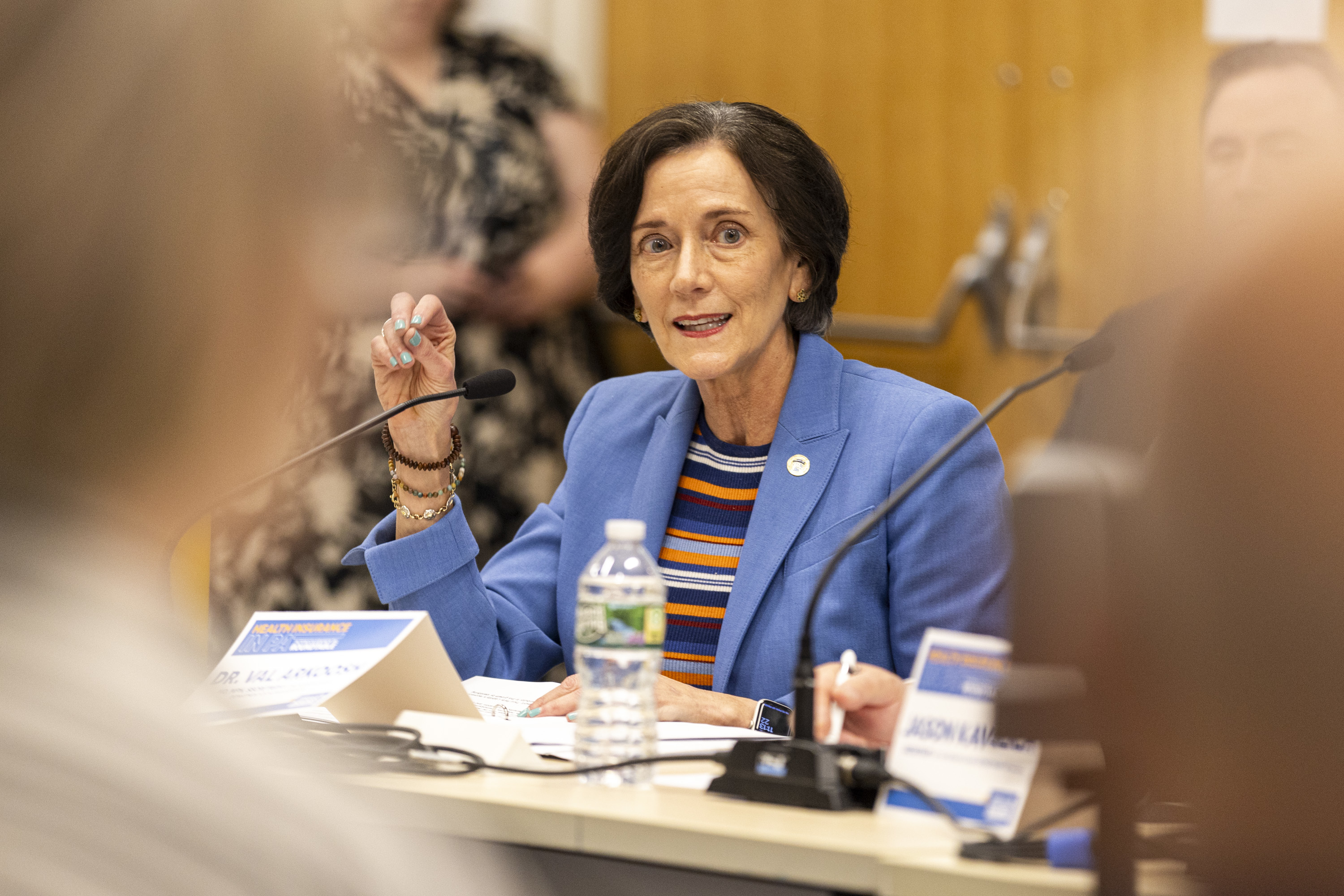
In May, Val Arkoosh, secretary of the Pennsylvania Department of Human Services, visited the Greater Philadelphia YMCA’s Willow Grove branch to highlight a maternal health initiative that provides a free membership and programming for expectant moms.
Arkoosh’s office said in a news release that the initiative “aligns perfectly” with the Shapiro administration’s “Healthy Moms, Vibrant Futures” strategic plan.
DHS Secretary Val Arkoosh in 2025.Tyger Williams / Staff Photographer
Fogarty, the DHS spokesperson, noted that the U.S. maternal mortality rate outpaces all other high-income countries and said Arkoosh, an obstetric anesthesiologist, is passionate about the issue. “We appreciate the many partners who work to address maternal mortality and are stepping up to support mothers and children in their community,” Fogarty said.
AmeriHealth’s foundation said in a news release that “providing children with healthy beginnings will help them avoid adverse experiences later in childhood.”
The release featured a photo of Arkoosh standing next to a YMCA executive and Steve Fera, an IBX executive and AmeriHealth Caritas Foundation board member.
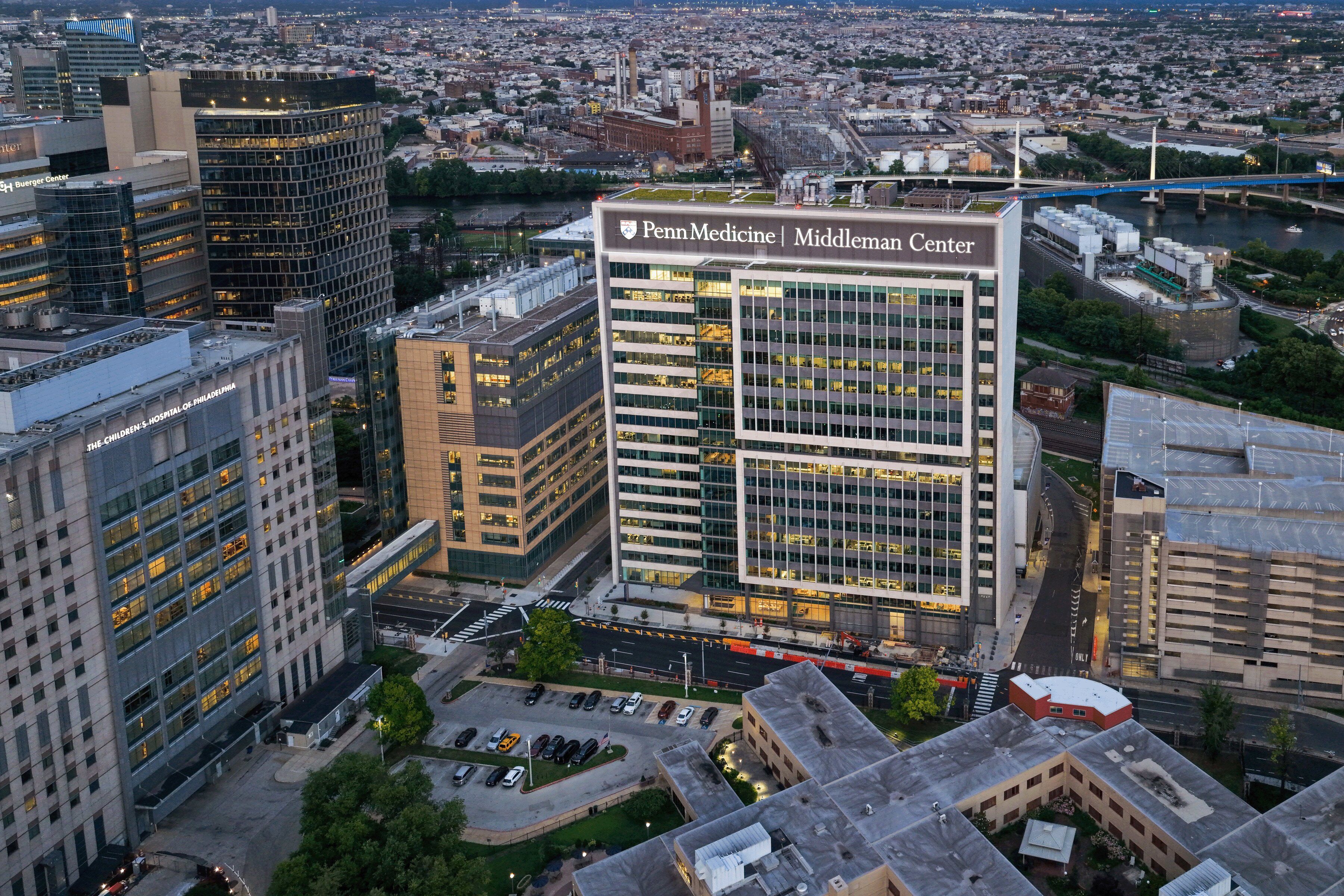
Penn Medicine announced a $50 million gift from Stanley C. Middleman on Thursday to support early-stage research and will name a recently expanded building at 3600 Civic Center Blvd. in the businessman’s honor.
Income from the fund will be used to accelerate work on therapies for cancer, autoimmune diseases, infectious diseases, and other serious conditions, with a goal ofshortening the path from the laboratory to the market, Penn said.
“I was born and raised in Philadelphia, and I’m proud to support Penn Medicine and the extraordinary work being done there to advance medicine and improve people’s lives,” Middleman said in a news release provided to The Inquirer in advance.
The Middleman Center “will bring together the people and ideas” to support new approaches to treatment and scientific discovery, he added.
The $50 million gift marks his first to Penn. He previously donated undisclosed amounts to his alma mater, Temple University, and to Children’s Hospital of Philadelphia, which named the main patient tower at its King of Prussia hospital for Middleman’s family.
Middleman founded privately owned Freedom Mortgage Corp. in South Jersey in 1990 and grew it into one of the nation’s largest lenders before moving the company’s headquarters to Florida in the early 2020s.
The building being renamed for Middleman underwent a $376 million, 217,000-square-foot expansion that opened last year. Itadded seven floors, including as many as 37 labs. Penn originally opened the building in 2018 with eight floors and 250,000 square feet of office space, which has also been renovated.
The new floors house the Colton Center for Autoimmunity at Penn and the High-Throughput Institute for Discovery, a specialized lab testing patient samples to help make diagnoses and guide treatments. The Middleman Center also includes a Biosafety Level 3 lab, which is specially equipped to handle infectious disease specimens.
“Anchoring the western edge of Penn Medicine’s campus, the Middleman Center is uniquely positioned to bring together biomedical researchers, physicians, medical students, patients, and experts from engineering, business, and other areas of the University of Pennsylvania,” said university president J. Larry Jamesonin the news release.
“This creates an extraordinary environment for discovery — not just sparking ideas but seeing them all the way through to the moments where lives change for the better, as a result of discovery,” he said.
Highmark plans to end its Pennsylvania contract with Rothman Institute on Oct. 1, according to a letter to members. The insurer claimed that about a half-dozen Rothman surgeons had abused a federal process designed to protect patients from unforeseen out-of-network bills.
The dispute centers on the use of out-of-network physician assistants by Rothman surgeons who do not have residents or fellows working for them and need help treating patients, Rothman president Alexander Vaccaro said in an interview Wednesday.
Rothman physicians are under contract with Highmark, but the physician assistants used by some doctors work for a separate company that Rothman has no control over, he said. He said it’s hard for some doctors to keep physician assistants on staff because there’s so much demand for those skills.
“Now they’re kicking us out, so now we’ll be that out-of-network provider. We will be that individual that Highmark is trying to go after,” Vaccaro said.
From Highmark’s perspective, the use of out-of-network clinicians violates a contract that took effect at the beginning of last year, said Dan Tropeano, president of Highmark’s Southeastern Pennsylvania market.
Even if some Rothman surgeons use out-of-network assistants, they don’t have to go through arbitration for payment, he said. They could instead accept standard out-of-network reimbursement, he said. That’s usually based on Medicare rates, plus some additional percentage.
Help for patients turned into controversy
Congress passed the No Surprises Act in 2020 to prevent patients from facing unexpected bills from out-of-network doctors when they receive care at an in-network hospital. This was a particular problem in emergency departments. The law has been successful on that front.
However, it also created what has become a controversial arbitration process to determine what insurers should pay out-of-network clinicians. Sometimes, that has led to arbitration decisions for amounts that are many times the in-network price, according to the New York Times and other news outlets.
Highmark’s dispute with Rothman centers on that arbitration process, also known as independent dispute resolution (IDR).
“We feel like they’re egregiously abusing the No Surprises Act and the arbitration or IDR process that comes along with it,” Tropeano said in an interview.
Rothman physicians’ use of arbitration for out-of-network physician assistants had caused “significant increased costs to Highmark and its self-insured clients,” Highmark said in a statement posted to its website in July.
Vaccaro said that if Highmark paid a fair rate for physician assistants some doctors need to use, arbitration wouldn’t be needed.
Patients caught in the middle
The dispute is bad news for James Pavlock, a retired federal prosecutor who has a form of Medicare supplemental insurance from Highmark.
“It’s a big deal for me. I’m supposed to have surgery on Oct. 13. Do I go forward and pay thousands of dollars potentially?” the Fairmount resident said in an interview Tuesday, the day he received a letter from Highmark dated Sept. 2 about the termination.
Highmark said 10,100 Highmark members had used Rothman services in the past year.
Highmark will help patients in Pennsylvania find alternate sites of care, including at Penn Medicine and Main Line Health.
Rothman will work with patients to use out-of-network benefits to continue receiving care from Rothman, Vaccaro said. The dispute with Highmark will not impact New Jersey patients, he said.
Joan E. Lynaugh, 90, of Gwynedd, Montgomery County, pioneering primary care nurse practitioner, award-winning professor emerita of nursing at the University of Pennsylvania, historian, mentor, author, birdwatcher, and “living legend,” died Friday, July 10, of age-associated decline at Foulkeways at Gwynedd retirement community.
Reared on a dairy farm in the Finger Lakes region of upstate New York, Dr. Lynaugh became a pioneering international expert on primary care nursing and nurse practitioner policies, education, and history. For decades, from the early 1960s through her retirement in the late 1990s, she treated patients, taught students, researched history, and joined colleagues in defining and expanding the role of nurses in modern healthcare.
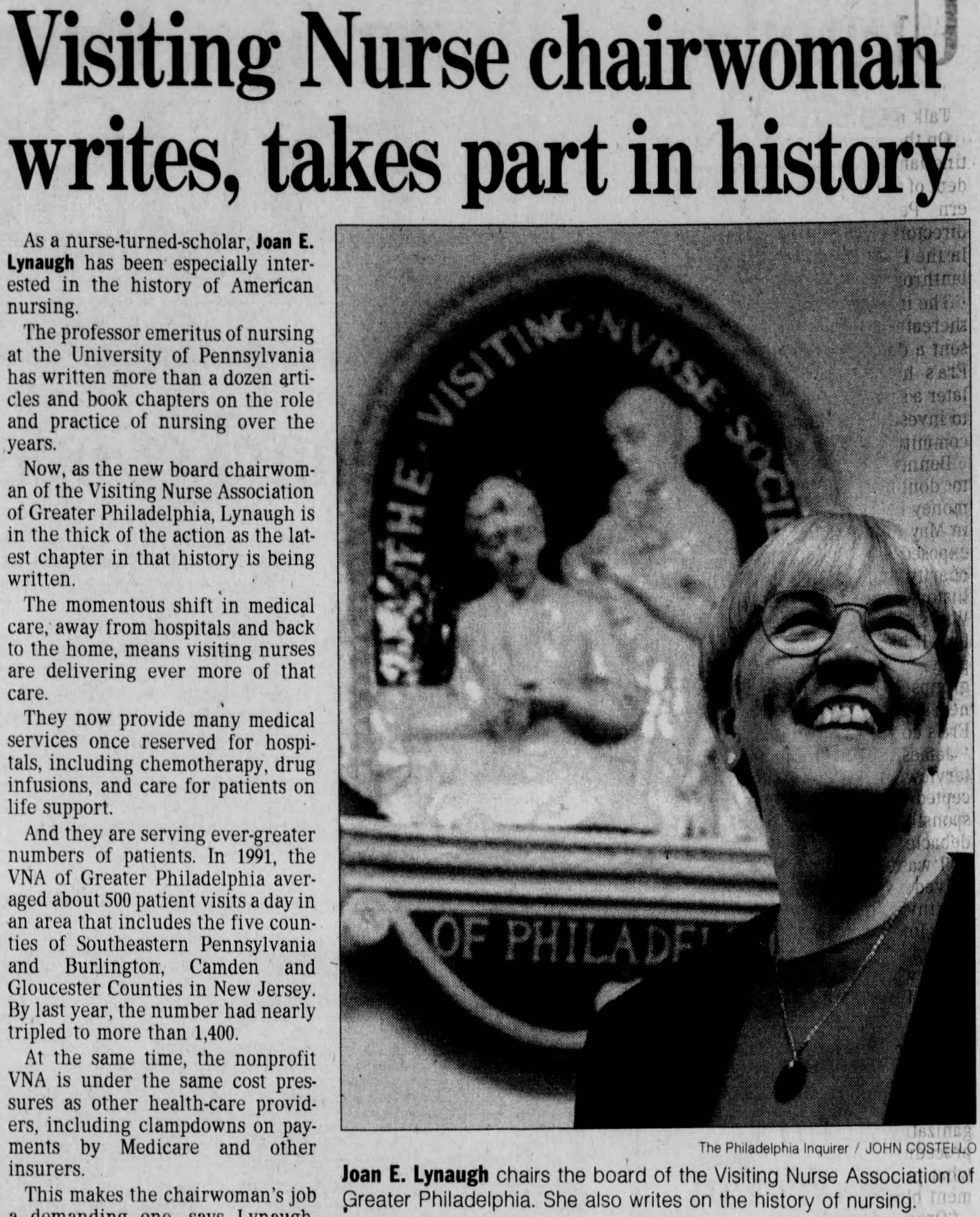
During her career, the benefits of home care, the importance of critical care, and the need for nursing history education were hot topics in healthcare. “As a historian,” she told The Inquirer in 1997, “I take great interest in this shift from the intense emphasis on hospitals to the more balanced emphasis on other kinds of care.”
Dr. Lynaugh joined Penn’s School of Nursing in 1980. She took charge of the school’s new primary care nursing unit and went on to be director of the Robert Wood Johnson Foundation primary care nurse practitioner program and associate director of the foundation’s teaching nursing home project.
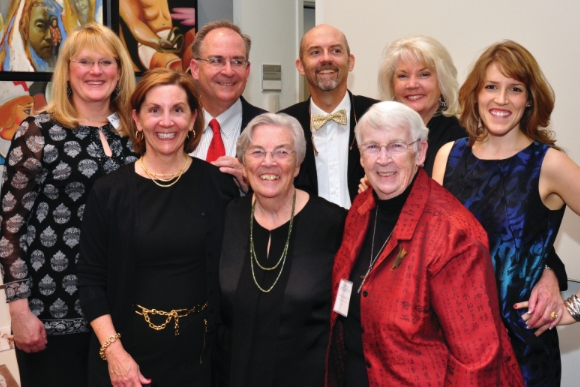
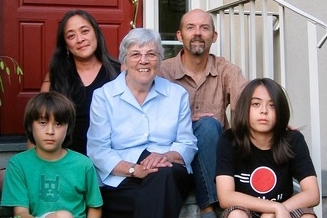
Dr. Lynaugh (front center) and her family celebrate her 2005 award as a “living legend.”Courtesy of the family
She was also the nursing school’s associate dean and director of graduate studies from 1993 to 1996, and chair of the nursing, history, and healthcare department from 1994 to 2000. In a tribute, colleagues at Penn Nursing said: “Dr. Lynaugh was a visionary leader, a prolific scholar, and a dedicated mentor whose extraordinary career left an indelible mark on Penn Nursing and the global nursing profession.”
In 2000, she told writer Suzanne Gordon: “We know we can’t get into the hospital without a doctor. That’s no surprise. We are, however, surprised to discover that we can’t get out of the hospital without a nurse.”
This story and photo of Dr. Lynaugh appeared in The Inquirer in 1997.Newspapers.com
In 2018, the center named its archives the Joan E. Lynaugh Archives and Special Collections. Before Penn, Dr. Lynaugh practiced and taught nursing at the University of Rochester and the old Providence Hospital in Washington, D.C.
She was a fellow at the American Academy of Nursing, board chair of the Visiting Nurse Association of Greater Philadelphia, and active with the College of Physicians of Philadelphia, the American Association of Critical Care Nurses, and other groups. She cowrote Critical Care Nursing: A History with Penn colleague Julie Fairman in 1998, and coedited the award-winning textbook Enduring Issues in American Nursing in 2000.
Colleagues at the American Association for the History of Nursing said in a tribute: “Joan’s intellectual curiosity, generosity as a mentor, commitment to excellence, and passion for nursing history left an indelible mark on the nursing profession worldwide.”
A friend on Facebook called her “one of the smartest, kindest scholars I ever had the honor and pleasure to be mentored by.”
Dr. Lynaugh (center) enjoyed time with her family.Courtesy of the family
Joan Estelle Lynaugh was born Aug. 30, 1935, in Canandaigua, N.Y., about 28 miles southeast of Rochester. She studied nursing at St. Mary’s Hospital School of Nursing in Rochester and earned bachelor’s and master’s degrees in nursing at the University of Rochester, and a doctorate in history at the University of Kansas in 1982.
Her whole life, she enjoyed traveling, bird-watching, camping, and hiking. She was an engaging host and liked to read mysteries and newspapers.
She was a longtime colleague and personal partner of fellow medical professional Barbara Bates, and they lived in Bryn Mawr for years. Bates died in 2002, and Dr. Lynaugh moved to Gwynedd a few years later.
“Joan will always be remembered for her generous spirit, wonderful sense of humor, persistent intellectual curiosity, and a sincere commitment to making the world a better place,” her family said in a tribute.
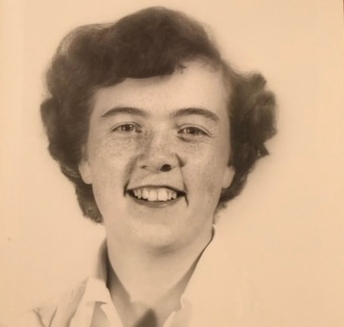
Dr. Lynaugh grew up in the Finger Lakes region of upstate New York.Courtesy of the family
Her niece Mary Clare Hamlin said: “She was understated, humble, practical, and scientifically minded. She always wanted to help others.”
In addition to her niece, Dr. Lynaugh is survived by other relatives. Two brothers and a sister died earlier.
A celebration of her life is to be held at 1 p.m. Friday, Oct. 23, at Penn’s Claire M. Fagin Hall, Room 316, Third Floor front, 418 Curie Blvd., Philadelphia, Pa. 19104.
Donations in her name may be made to the Joan Lynaugh Founders Fund at Penn’s Barbara Bates Center for the Study of the History of Nursing, Office of Institutional Advancement, Claire M. Fagin Hall, 418 Curie Blvd., Suite 445, Philadelphia, Pa. 19104.
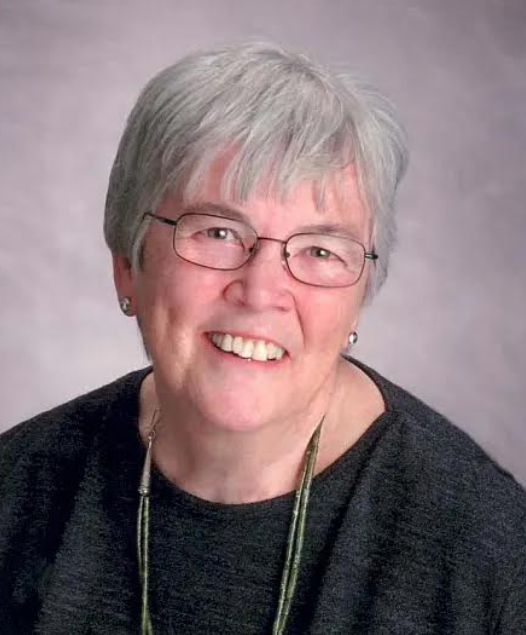
Dr. Lynaugh “was understated, humble, practical, and scientifically minded,” her niece said. Courtesy of the family