Author: Jonathan Zimmerman

  • Hannah Gann’s racial misrepresentation was a product of the lies we tell ourselves about identity

    Hannah Gann’s racial misrepresentation was a product of the lies we tell ourselves about identity

    Let’s start with the easy part: Philadelphia teacher Hannah Gann should not have pretended to be Black and Palestinian. I cannot — and will not — excuse that.

    But I think I can explain it.

    Gann seems to have believed the biggest myth of modern America: that identity is destiny. Your race and ethnicity determine how you think and act. So your membership in a given group gives you a special kind of insight that outsiders can never share.

    That echoes the fallacy of white racists, the original practitioners of American identity politics. You can find traces of it in Vice President JD Vance’s tributes to “Heritage Americans,” or in the recent rants against Black and brown football fans by a Texas political candidate. We got here first, the argument goes, and our experiences make us more legitimately American than anyone else.

    Never mind that Native Americans lived on these shores for centuries before any white person arrived. Our race is our truth, the white-identity crowd says. You are not us, so you cannot contest it.

    We hear the same claims from people of every background now. Whether you’re Black or Asian — or Jewish or Muslim — you claim a special understanding of your own group. It’s your identity, after all.

    That also means people outside the group can’t really understand it. So much for the ancient ideal that “nothing human is alien to me,” as the Roman playwright Terence wrote in 163 B.C. Identity politics imagines the opposite: Everyone is alien to you except people like you.

    Most of all, they can’t comprehend any oppression or harm you have faced. And “marginalization becomes a form of social currency,” as one observer posted about the Gann saga. The highest status goes to the group that has suffered the most.

    That’s probably why Gann — a white Jewish woman — disguised her background. A teacher in Philadelphia public schools and a vocal anti-Israel activist, she thought she would gain more credibility — and more clicks — if she presented as Black or Palestinian.

    And that’s on us. We like to think we evaluate people based on their behavior, not their race. But Gann knew better. By altering her skin tone with fake tans and makeup, she got more people to rally behind her.

    Those people are now like jilted lovers who crave revenge. Blasting Gann on social media, critics noted she taught “predominantly Black youth” and “gained the trust of young people on the basis of a sense of shared oppression.” They also called on the school district to “hold Hannah accountable for the harm she caused.”

    Meanwhile, Gann released a proof-of-life-style video expressing “shame and sorrow and regret” for her deceptions about race. But here’s what she didn’t say: Race itself is a deception. It tricks us into thinking that our differences are immutable, and that some Americans have more insight into them because of a shared identity.

    That condescends to people, all in the guise of elevating them. I once heard a prominent Black historian of African American politics say he resented the idea that his race gave him more understanding of his topic. Just like any other scholar, he painstakingly gathered pieces of evidence and wove them together. His identity had nothing to do with it.

    Sadly, Gann isn’t the only white educator who has faked her race in recent years. In 2020, historian Jessica Krug — who, like Gann, is white and Jewish — admitted that she had pretended to be North African, Caribbean, and Afro-Latina. And in 2023, anthropologist Elizabeth Hoover — a scholar of Native American culture — acknowledged that she had falsely identified as Native American herself.

    In each case, social media exploded with vitriol. Both women were frauds, the critics said, and their scholarship wasn’t any good.

    But their work received loads of praise before their identity hoax was uncovered. Put simply, we evaluated them more highly when we believed they weren’t white. Remember the phrase “don’t judge a book by its cover”? We judged their books by the authors’ colors.

    That kind of distortion is inevitable when we prize identity over everything else. To repeat, Gann should not have lied about her race. But we should not have given her more attention — and more trust — because we believed the lie. We exposed her racial fraud. And she exposed ours.

    Jonathan Zimmerman teaches history and education at the University of Pennsylvania. He is the author of “Schooling Citizens: How Education Can Save Our Democracy,” which will be published in the spring by the American Philosophical Society Press.

  • AI and the illusions of college teaching

    AI and the illusions of college teaching

    How will artificial intelligence affect student learning on college campuses?

    We don’t know. And here’s the worst part: We don’t want to know.

    That’s because we have never taken teaching — or learning — seriously. We don’t prepare future professors for the classroom. And have no real systems for evaluating and rewarding their instruction.

    Dire warnings aren’t new

    So we also don’t have good ways to evaluate the gee-whiz rhetoric from the AI industry, which assures us the tool will “revolutionize” learning. We’ve heard that song before. In 1913, Thomas Edison forecast that books would “soon be obsolete” in schools, and that “every branch of human knowledge” would be taught via film.

    Like today’s AI barons, Edison had a vested interest in that outcome: He helped invent motion pictures and started a company to market them in schools. But none of his predictions came true. Ditto for the futurists who said radio, television, and personal computers would transform teaching and learning forever.

    But AI is different, its enthusiasts tell us, because it interacts with us. In the brave new world to come, everyone will be taught by a robot tailored to their individual interests, skills, and goals. It will help students “build agency,” “learn continuously,” and “solve hard problems,” declares the largest provider, OpenAI.

    The initial research suggests the opposite: Students forsake their agency to the bot when challenges arise. As a recent report by an AI committee at the Massachusetts Institute of Technology (MIT) warned, AI creates “the illusion of learning” for students who use it “at the first hint of struggle.”

    But in higher education, we’ve been fostering the illusion of learning for a very long time. Over the past half century, we have assigned less work and awarded higher grades. And there’s no evidence — none — that our students are learning more.

    Nor have we made a sustained effort to incentivize teaching. At every type of institution, from small community colleges to huge private universities, professors who spend more of their time on research make more money. Those who devote themselves to teaching make less.

    And nobody is really minding the classroom itself. I have been teaching at the University of Pennsylvania for 10 years, and I have never been observed by someone with supervisory authority. I could be doing anything. Or nothing.

    Sure, my students submit evaluations of my courses. But the results have never figured into my rank or salary. And a good review from your students doesn’t mean you did a good job teaching them.

    Indeed, it might mean the inverse. In a 2010 study at the Air Force Academy, where everyone takes the same courses, professors who got high marks from their students gave out higher grades — and their students did worse in subsequent classes. Professors who were harder graders got lower student evaluations, but their students performed better later on.

    Let’s teach teaching

    If we really valued teaching, we would evaluate it the same way we judge each other’s research: via peer review. When I wrote a history of college teaching, I didn’t submit it to a group of 19-year-olds to decide if I had something important to say. It was vetted by specialists in my field.

    We would also give future professors sustained instruction in how to teach. To obtain a doctorate at Penn, you have to spend six to nine years reading in your field and conducting research that contributes to it. To become a teaching assistant, by contrast, you receive a three-day training.

    That’s why I called my book The Amateur Hour — not because all college teaching is terrible (some of it is terrific), but because we never professionalized it. We don’t hold each other to best practices, and we don’t have good data about who is doing what.

    That’s the biggest scandal in higher education we talk the least about. And AI has shone a bright light on it.

    Dozens of institutions — including Penn — have released policies and statements about proper and improper uses of AI. We want AI to “enhance student learning,” not inhibit it. But we never bothered to figure out how much students were learning in the first place. So we’re in no position to judge how the bot is affecting them.

    Every institution providing Claude or ChatGPT to its students should also commit to researching their learning. It won’t be easy or cheap. But it’s the only way to see our way out of this mess. Without real knowledge, we’ll be flying blind.

    I’ve heard colleagues say teaching and learning are too subtle and complicated to evaluate in a meaningful way. Please. Scholars at Penn have examined hugely complex forms of human behavior, from consumer choices to sexual decision-making. If we wanted to do the same for what happens in our classrooms, we could.

    Will we?

    Jonathan Zimmerman teaches history and education at the University of Pennsylvania. He is the author of “The Amateur Hour: A History of College Teaching” (Johns Hopkins University Press).

  • Free speech, hypocrisy, and the real ‘Marxist’ problem at our universities

    Free speech, hypocrisy, and the real ‘Marxist’ problem at our universities

    Here’s what you need to know about free speech on America’s college campuses: We’re all Marxists now.

    No, we’re not those “crazy communists” whom President Donald Trump denounced at the Republican midterm convention in Dallas last week. I teach at the University of Pennsylvania, where nearly two-thirds of undergraduates enter finance, technology, or consulting. If I’m trying to convert them to Karl Marx, I’m doing a very poor job of it.

    I’m talking about the comedian Groucho Marx, who authored the world’s funniest testament to hypocrisy. “These are my principles,” Groucho quipped, “and if you don’t like them … well, I have others.”

    That’s the big takeaway from the annual report on campus free speech by the Philadelphia-based Foundation for Individual Rights and Expression (FIRE), which came out on the same day as Trump’s convention diatribe. We’re not communists or anarchists or any of the other slurs he lobbed at us. We’re hypocrites. All of us. On campus, and off of it.

    Witness the response to the murder of conservative activist Charlie Kirk last fall. After complaining for years about “cancel culture” in American higher education, GOP politicians led the drive to fire or suspend professors and students who said the wrong thing about Kirk.

    Meanwhile, left-leaning academics who had supported speech codes prohibiting “violent” speech insisted that comments praising the violence against Kirk must be protected. They were correct about that: Nobody should have been penalized for what they said about him. But there was no acknowledgment — none — that we had erred in trying to censor others.

    Instead, as the FIRE report demonstrates, the censorship continued. Dozens of schools blocked conservative students from establishing chapters of Turning Point USA, the organization Kirk founded. And where chapters already existed, we tried to shut them down.

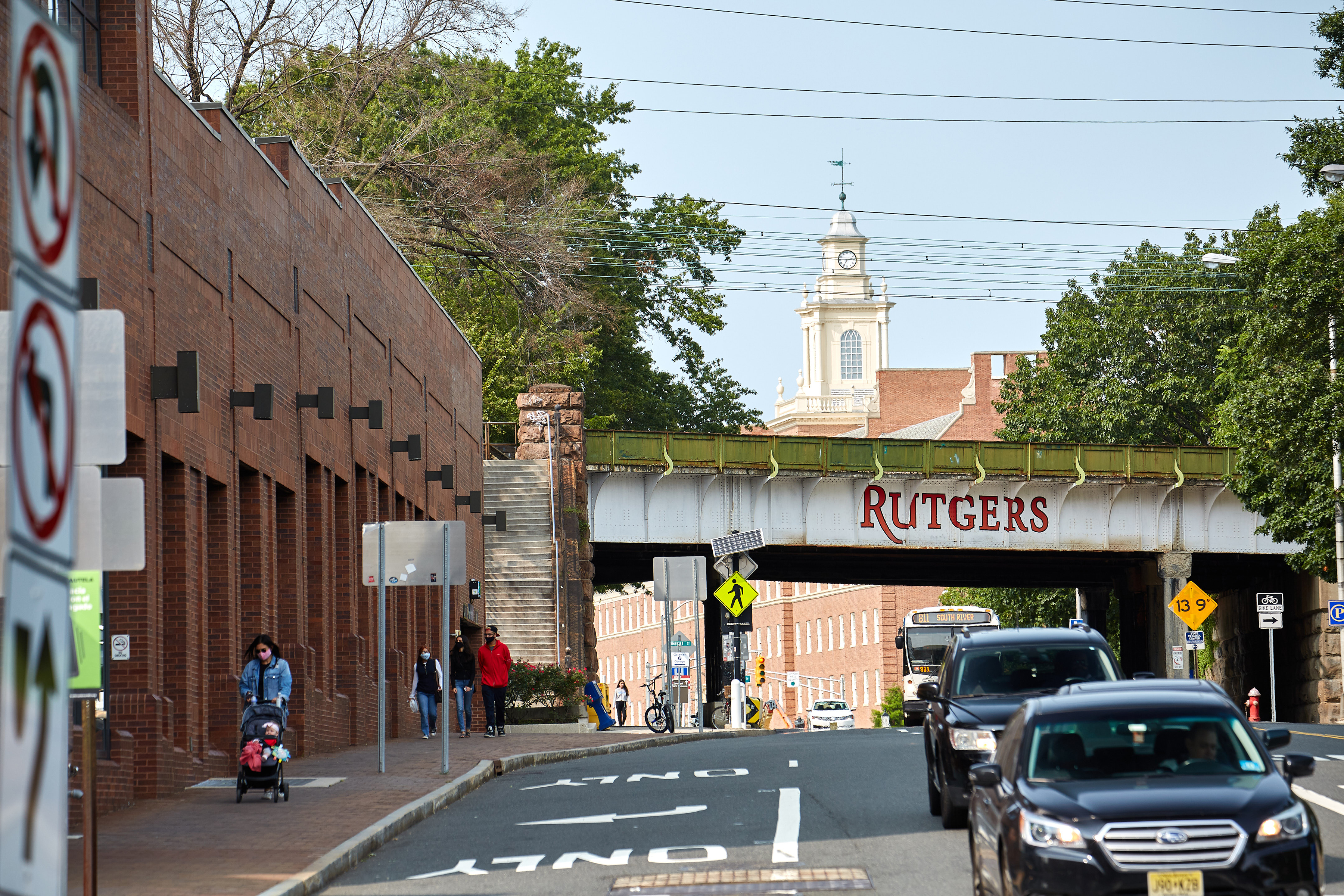
    At Rutgers, for example, more than 7,000 people signed a petition asking the university to disband its TPUSA chapter because it made people feel unsafe. “It is imperative that we take decisive action to restore security and the feeling on inclusivity to the campus,” the petition declared.

    Meanwhile, the Rutgers TPUSA chapter issued its own petition calling on the university to fire a history professor because of his alleged ties to antifa. Why? You guessed it: People felt unsafe. “Having a prominent leader of the Antifa movement on campus is a threat to conservative students,” the petition claimed.

    Remember when right-wingers denounced liberal “snowflakes” on campus? Now everyone is a snowflake, just like we’re all (Groucho) Marxists. If you don’t like someone’s opinion, just say it threatens your safety. It will work.

    And it will make everyone afraid to speak, no matter their politics. At Penn, the FIRE report notes, over half of surveyed students said they have self-censored on campus at least once or twice a month. “In classrooms, it is difficult at times to express full opinions without causing someone to become upset,” one Penn student told FIRE.

    What’s wrong with that? If I write a column and nobody becomes upset, it was a lousy column. To be clear, I never go out of my way to offend anyone. But I take it for granted that if I have something meaningful to say, some readers will be angered or annoyed by it.

    On our campuses, by contrast, causing upset has become a dangerous thing. Best to keep your big mouth shut, lest you get on the wrong side of anyone.

    So both pro-Israel and pro-Palestinian students bite their tongues. And so do conservatives and — especially — Trump voters, who often stay in the closet instead of revealing their true selves.

    I taught for 20 years at New York University, which was dead last in FIRE’s free speech ranking in this year’s report. I have taught for 10 years at Penn, which moved up slightly — from 261st to 227th — but still received an “F” grade from FIRE.

    And I haven’t heard anyone at either institution acknowledge the report or pledge to do better. You would think the firing of professors for their comments about Kirk — or about gender fluidity, a frequent right-wing target — would make our heavily liberal professoriate rally around the principle of free speech.

    But no. I’ve heard colleagues say Trump voters should keep quiet because they are racist and sexist and nobody wants to hear that. Other professors say scaredy-cat conservatives should just show some backbone instead of hiding in the shadows.

    Please. Here’s the question we should pose to ourselves: If FIRE reported that any other sizable group of students — aside from political conservatives — felt too afraid to voice their views, how would we react? Would we see righteous protests across our campuses? Or would we tell those who were scared they should just suck it up?

    “The secret of life is honesty and fair dealing,” Groucho Marx said. “If you can fake that, you’ve got it made.” We’ve got a lot of fake free speech warriors on our campuses right now. You either believe in it for everyone, or you don’t believe in it at all.

    Jonathan Zimmerman teaches history and education at the University of Pennsylvania. He is the author of “Schooling Citizens: How Education Can Save Our Democracy,” which will be published in the spring by the American Philosophical Society Press.
  • Michigan’s pass-fail grading won’t cure student angst

    Let’s suppose you’re the kind of citizen who puts a “Science is Real” sign on your lawn. You’re outraged by the Trump administration’s baseless attacks on vaccines and its brazen denials of human-made climate change. You think data — not ideology — should determine our social policies.

    How can you also be OK with a college lowering its academic expectations for students?

    I’m talking about the University of Michigan, which announced last week that first-semester students in its college of arts and sciences would receive pass-fail grades rather than traditional letter marks. The aim, Michigan said, was to “curb the mental health crisis unfolding among college-aged individuals.”

    That’s an admirable goal, of course. But there’s no evidence that easing up on students will help them feel better.

    To the contrary, psychologists have been reminding us for years that the best way to improve mental health is to address our fears and challenges head-on. Avoiding them might bring momentary relief, but it will make us feel worse in the long run.

    Put simply, Michigan is engaging in a huge collective experiment in avoidance. The first term of college is indeed a challenging time for students. But we don’t do them any favors by letting them coast in class.

    And make no mistake: That’s what they’ll do. I’ve been teaching college for 35 years, and I can assure you that all but a handful of students would do less work if I wasn’t grading them.

    Think about yourself at 18. Would you have devoted yourself fully to your studies if you could get the same grade without putting in the effort?

    Gamely, Michigan officials said that eliminating grades in the first term would “allow intrinsic motivations to guide personally meaningful academic journeys.” Instead of just working for a grade, the argument goes, students will explore ideas that truly interest them.

    That would be wonderful, but it won’t happen. Of course, I want students to develop a love for learning. But most of them won’t do that unless we grade them, too. Remember, they’ve been graded for a decade or more before they arrive at our doors. It’s what they know.

    And the more we expect of them, the more they’ll learn. In a now-classic 1965 experiment, psychologists Robert Rosenthal and Lenore Jacobson administered IQ tests to elementary students, and then told their teachers that certain randomly selected members of the class were “bloomers” who would likely improve. Regardless of their initial scores, those students showed more gains than their classmates when the test was administered again at the end of the school year.

    Rosenthal and Jacobson called that the Pygmalion effect, after the artist in Greek mythology who falls in love with a statue he built and asks the gods to bring it to life. Teachers can breathe life into their students, too, but only if the teachers believe the students can succeed.

    And if we lower expectations for them, we communicate the opposite: You’re too weak and fragile to get the job done. How can that be good for their development as human beings?

    Even at elite schools, let’s remember, a rising number of people arrive without the skills and knowledge that first-year students formerly possessed. Letting them skate by won’t solve that problem; instead, we will reinforce it.

    The only way to help them succeed — and to feel better about themselves — is to ask more of them. Over the past five decades, college students have done progressively less homework even as their grades have gone up.

    We need to reverse that trend. Rather than eliminating first-semester grades, we should raise the requirements for earning the top one.

    That might mean some students are disappointed with the marks they get. But that, too, can be good for them.

    “College should be one of the places where young people learn that evaluation isn’t always pleasant,” psychotherapist Jonathan Alpert said last week, criticizing the new Michigan plan. “These experiences can hurt, but learning that you can tolerate them and move forward prepares you for adulthood.”

    I’m not saying we should curve grades to limit the number of A’s, like Harvard did earlier this year. Instead, we should raise the bar and encourage everyone to meet it.

    That won’t be popular with our students, of course. At Michigan, the student body president praised the elimination of first-semester grades on, yes, mental health grounds. “You’re just figuring out how to be an adult and live on your own,” he said. “It gets extremely stressful having to balance that with also wanting to be a straight-A student.”

    I’m sure it does. But that’s why students need to confront the stress, not shrink from it. The science on that is real. The only question is whether we’ll shrink from it, too.

    Jonathan Zimmerman teaches history and education at the University of Pennsylvania. He is the author of “Schooling Citizens: How Education Can Save Democracy,” which will be published next spring by the American Philosophical Society Press.
  • How the Haverford antisemitism settlement harms free speech

    I believe in Israel.

    I oppose its current leadership and its policies in Gaza and the West Bank. But I support its right to exist as a Jewish state. And I reject the idea that Zionism is inherently racist or malevolent.

    That’s why it’s important for me to hear from people who see Israel differently than I do. I need them to question, provoke, and challenge me. That’s how I learn.

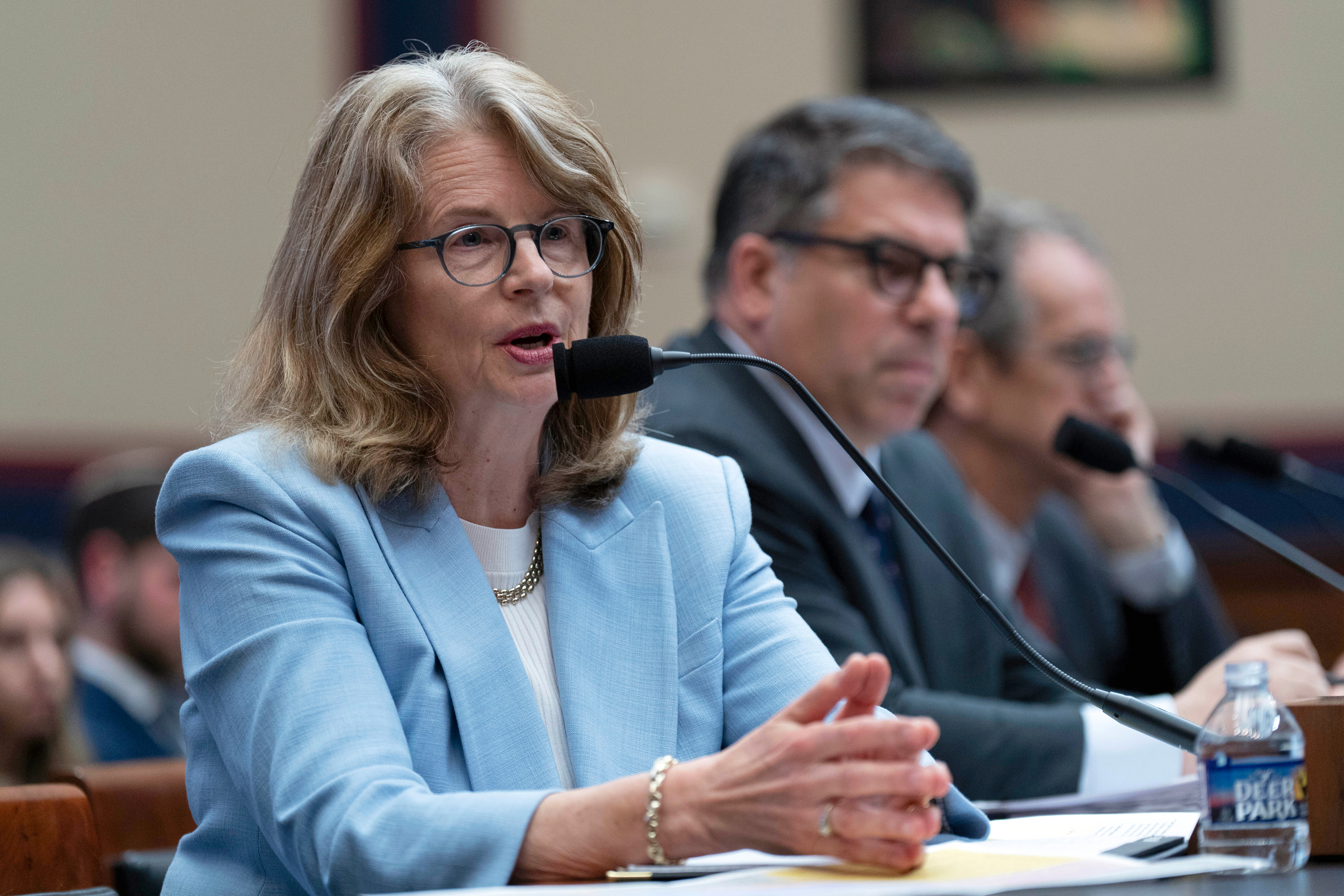
    And that’s also why I’m worried about the settlement Haverford College announced last week, pledging to protect Jewish students from antisemitic speech. In a statement, Haverford president Wendy Raymond declared that the college would not tolerate “discrimination, harassment, and bias” against “students who identify as Jewish” or “those who support Zionism.”

    So does that mean you won’t be able to say “Zionism is racism” or “Israel is an apartheid state”? The lawyer representing Jewish students who sued the school — and who said she was “very pleased” with the settlement — seemed to think so.

    “It’s a new form of antisemitism, saying, ‘Oh, no, I don’t hate Jews, I just hate Zionists,’” she said. “For a Jew to hear that was incredibly painful.”

    I’m sure that it was. I’m Jewish, and anti-Zionist rhetoric is hard for me to hear, as well.

    But that’s why I should hear it. Zionism is probably the most contested question on our campuses right now. Unless everyone can address it, freely and openly, we’ll never get a good purchase on it.

    Wendy Raymond, president of Haverford College, pledged that the college would not tolerate “discrimination, harassment, and bias” against “those who support Zionism.”Jose Luis Magana

    Ditto for Columbia, where I went to college 40 years ago. Back then, you could argue about anything. But now Zionism, too, is effectively off the table.

    That’s because the university adopted the International Holocaust Remembrance Alliance’s definition of antisemitism. According to the IHRA, “claiming the existence of a State of Israel is a racist endeavor” and “drawing comparisons of contemporary Israel policy to that of the Nazis” are antisemitic.

    But a competing standard, the Jerusalem Declaration on Antisemitism, argues that “criticizing or opposing Zionism as a form of nationalism” or offering “evidence-based criticism of Israel as a state” are not, on their face, antisemitic. Haverfordʼs settlement seems to lean entirely on the first definition and ignores the second, which has not been adopted by the college or most other institutions, but was endorsed by Bucknell University’s faculty last year.

    Under the IHRA definition, would a student or professor who said Israel was committing genocide in Gaza — like the Nazis did in Europe — face punishment at Columbia? I don’t think Israel’s action in Gaza constitutes genocide, but I know other historians do. And again, I need to hear from them.

    In their 2024 lawsuit against Haverford, Jewish students complained that a professor called supporters of Israel “racist genocidaires.” I can understand why they felt “pain and harm” about these kinds of comments, as Raymond acknowledged at the time.

    But you can censor anything — literally, anything — on those grounds. During the 2016 presidential campaign, students at Emory University said they were harmed by campus chalk messages backing Donald Trump. “Supporting him, repeating his catchphrases [is] an implicit attack on the Muslim, Latinx, Black, and other communities at Emory and across the country,” protesters declared. “This is not political expression; it is hate speech.”

    And in 2021, Harvard biology professor Carole Hooven caused an outcry when she told Fox News that gender could take any number of forms, but sex is binary: male or female. After a colleague denounced Hooven’s “transphobic and hateful” comments on Twitter (now X), she became a campus pariah. Her mental health plummeted, and she resigned.

    Like Zionism, the biology of sex is a hugely contested and complicated matter. And we won’t be able to learn more about it if we inhibit discussion of it.

    How many people celebrating the new restrictions on anti-Zionist speech at Haverford would be OK with prohibiting claims that sex is binary? Likewise, would any of the critics who pushed out Hooven rest easily if critics of Israel were silenced, too?

    We all want to have our own say, of course. But when we feel pained or harmed by someone else’s political expression, we call it hate speech. And we try to blot it out.

    To be clear, nobody should be subject to threats of physical violence. Whatever you think of Zionists on campus, you can’t say you’re going to assault or murder them. That’s against the law, and our colleges should be vigilant in enforcing it.

    But at Haverford, it would now appear, you can’t say anything negative about Zionism. Period. If you don’t think Israel should exist, you’re an antisemite. And you need to keep your big mouth shut.

    I know some people on campus have been “deeply hurt” by anti-Israel rhetoric, as Raymond said in her statement last week. But once that becomes the barometer for what the rest of us can say, we won’t be able to speak — or listen — across our differences. Isn’t that why we gather at universities in the first place: to learn from each other?

    Either you believe in free expression for everyone, or you don’t believe in it at all. Period.

    Jonathan Zimmerman teaches history and education at the University of Pennsylvania. He is the author of “Schooling Citizens: How Education Can Save Democracy,” which will be published next spring by the American Philosophical Society Press.

  • Cheltenham High’s hazing scandal isn’t the outlier you think it is

    Cheltenham High’s hazing scandal isn’t the outlier you think it is

    Here we go again. Another high school football team. Another hazing assault. Another round of shock, outrage, and canceled games.

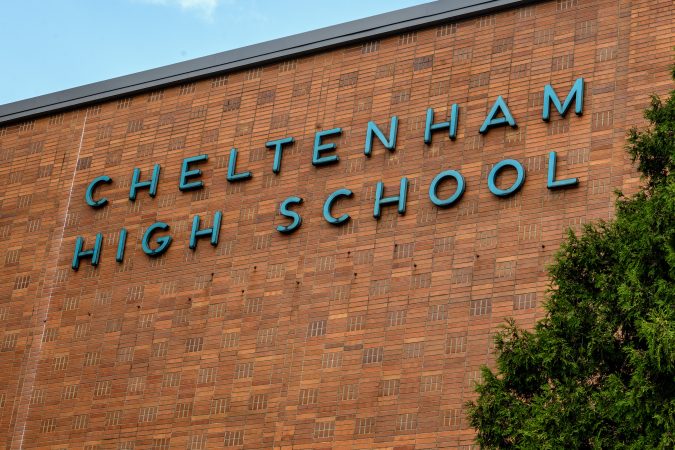
    That’s what I thought when I read about the charges that have been filed against six students and four coaches in connection with what the authorities said were a pair of hazing assaults on a Cheltenham High School football player. Of course, I was outraged that several teammates stomped on his groin and chest with their cleats and poked at his buttocks with a broomstick, according to Montgomery County prosecutors.

    But I wasn’t surprised. And you shouldn’t be, either.

    Put simply, hazing is as American as apple pie. When an incident like this happens, everybody expresses shock and dismay. Legal charges are filed, coaches are fired, and games are canceled. And then we go back to hazing again.

    Most Americans probably associate hazing with college and — especially — with fraternities. But in a 2009 survey of over 11,000 university students, 47% reported they had experienced hazing in high school. All told, an estimated 1.5 million high school students are hazed each year.

    That means it’s people you know, in the communities where you live.

    In 2004, a grand jury reported that three Long Island football players attending a summer camp in Wayne County, Pa., had inserted pine cones and golf balls into teammates’ anuses. The assaults were part of a long history of hazing at the camp, where coaches “displayed a lack of common sense and accountability,” the report said.

    At a July 29 news conference, Montgomery County District Attorney Kevin Steele announces multiple charges in connection with two assaults in the Cheltenham High School locker room that injured a 15-year-old football player.Tom Gralish / Staff Photographer

    In 2014, Central Bucks West High School in Doylestown acknowledged that rookie football players had been forced to grab other players’ genitals. They were also led into the shower with towels over their heads, which the players called “waterboarding.”

    In 2015, seven football players at Sayreville High School in Middlesex County, N.J., were charged with grabbing teammates’ buttocks and digitally penetrating one of them.

    In 2016, prosecutors said football players at Conestoga High School in Berwyn had penetrated a freshman player with a broomstick as part of a hazing ritual called “No Gay Thursdays.” And in 2022, football players at Wall Township High School in Monmouth County, N.J., were caught on video holding a student’s legs apart and, yes, assaulting him with a broomstick.

    Are we seeing a pattern here? Most high school hazing involves verbal — not physical — abuse. But the most violent episodes happen on sports teams, which also have the highest rate of hazing.

    And they’re also the most likely to generate criminal charges. In Cheltenham, six players have been charged in connection with the assaults on their teammate. And four coaches face charges of endangering the welfare of a child and conspiracy for allegedly trying to cover up the incident.

    That’s necessary and appropriate, but it’s not enough. Hazing is illegal in 44 states and the District of Columbia, and it happens anyway. Clearly, our laws aren’t deterring it.

    The football practice field and stadium at Cheltenham High School.Tom Gralish / Staff Photographer

    Ditto for our educational efforts. When reports of hazing surface, school officials pledge to conduct anti-hazing training for coaches and students. And they release statements declaring that hazing will not be tolerated, in any form.

    But their message is falling on deaf ears. So it’s time to change the messenger to someone whom kids will really hear: the hazers themselves. If you haze somebody, you should be required to speak to other students about it.

    It’s happened before. After a Virginia Commonwealth University student died of alcohol poisoning in a fraternity initiation in 2021, six students who pleaded guilty to hazing him agreed to travel to universities around the country to discuss the tragedy and the role they had played in it.

    We could — and should — demand the same thing from high school hazers. Plea agreements in hazing episodes often require guilty parties to perform community service. What could be a better service than speaking at student assemblies and other public events about the problem of hazing?

    In the Cheltenham incident, two 18-year-old football players were charged as adults — one with assault and conspiracy, the other with false swearing for being untruthful to police. The four other players were under 18 and were charged as juveniles.

    I don’t know what penalties they should receive. But here’s what I do know: The rest of the school would discover a lot more about hazing if the six students were required to speak about it. And maybe, just maybe, we could start to shift the culture around this destructive behavior.

    When hazing is reported at a high school, local officials condemn the incident and inevitably declare that “this is not who we are.” In fact, it’s exactly who we are. We haze. So let’s hear from the people who do it, about why they haze and what they have learned. We can all learn something from them.

    Jonathan Zimmerman teaches history and education at the University of Pennsylvania. He is the author of “Schooling Citizens: How Education Can Save Democracy,” which will be published next spring by the American Philosophical Society Press.

  • Three-year degrees won’t save higher ed. Better teaching will.

    Three-year degrees won’t save higher ed. Better teaching will.

    In 1992, I started teaching at West Chester University. My students were mostly working-class kids from the collar counties who saw higher education as a way to move up in the world. But they often struggled in subjects like history — my own field — which they saw as irrelevant to their future employment.

    So let’s make college shorter, shall we? We can save a year by paring away the dull “general education” classes — in English, history, and so on — that the students hate anyway. They can focus on their majors, graduate in three years, join the workforce, and save a quarter of their tuition costs.

    That’s what the Pennsylvania State System of Higher Education (PSSHE) is considering for its 10 campuses, including West Chester. Around the country, more and more schools are offering three-year Bachelor of Arts degrees.

    I think that’s a bad idea, but I don’t blame people for wanting it. Instead, I blame us.

    I’m looking at you, my fellow professors. Put simply, we didn’t do a good enough job with what we have.

    College is expensive. Families are strapped. And a lot of general education courses are — as the students correctly perceive — a waste of time and money.

    The only way to make the case for them is to make them better. But you won’t hear that from our educational establishment, which pretends we were delivering on the promise of college before the three-year proposal raised its ugly head.

    Witness the joint statement from the American Association of University Professors and the American Federation of Teachers condemning Massachusetts’ approval of three-year degrees at two state colleges. “Compressing or reducing the curriculum threatens to narrow students’ education at precisely the moment when society needs graduates with stronger critical thinking, communication skills, scientific literacy, and civic understanding,” they declared.

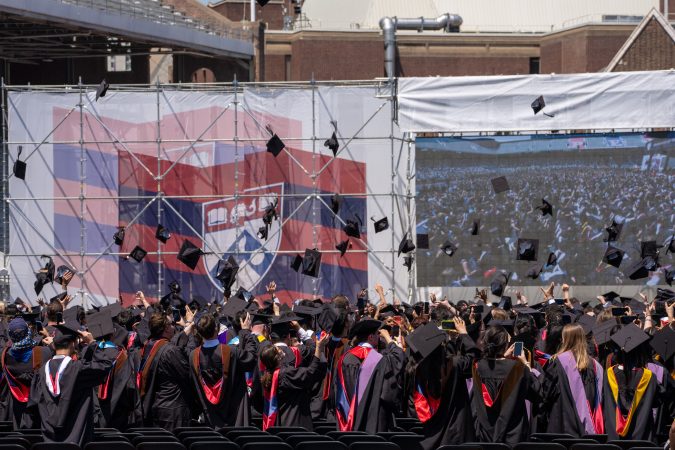
    Award-winning presidential historian and best-selling author Michael Beschloss speaks at the University of Pennsylvania’s graduation ceremony in May.Jessica Griffin / Staff Photographer

    Kenneth M. Mash, president of the PSSHE faculty union, said almost exactly the same thing. “At a time when there are calls for critical thinking, calls for knowledge about civics, what we’re doing is reducing the amount of time that students have to get that in,” Mash warned.

    But here’s what these spokespeople won’t tell you: We’re not teaching those skills now. Even with four years of college, our students remain woefully undereducated.

    According to a survey administered earlier this year by the American Council of Alumni and Trustees, only 39% of college students know that U.S. senators serve for six years and representatives for two. And just 37% can correctly identify the branch of government that has the power to declare war. (Answer: legislative.)

    So much for civics. What about critical thinking? Cornell University has instituted an online module to teach it to students, precisely because their coursework often didn’t. “Many of us include it in our learning objectives,” one faculty leader admitted, “but when you look at courses, it’s often not taught explicitly.”

    That’s especially alarming in the face of artificial intelligence, which threatens to envelop our students in mindless slop. Unless they learn to use their own brains, they won’t be able to critically evaluate what AI spits out.

    And we’ve never taught critical thinking well. In 2010, when generative AI was still science fiction, sociologists Richard Arum and Josipa Roksa found that nearly half of all college students showed no improvement in critical thinking skills during their first two years on campus.

    There’s no evidence that things have picked up since then. Instead, a growing body of research suggests that AI is eroding students’ capacity to think. The bots have made it easier to cheat your way to a BA while pretending you know what you’re talking about. So why not reduce the degree to three years? Or two, or one? Heck, why not just give it to anyone who will pay?

    Because we’re not simply selling credentials, that’s why. I don’t get out of bed in the morning and say, “I’m going to help people affix letters next to their names today!” My goal is to help them learn. And if you think we’re doing that well, you just haven’t been listening.

    I know our students need jobs, too. But when you survey employers, it turns out they want precisely the critical thinking skills we’re not teaching. Those irrelevant gen ed classes could have a real market value if we played our cards right.

    That means giving future professors serious training for the classroom, which we have never really done. It means evaluating and rewarding them for their teaching, not just their research. And it means creating new core classes that require students to think, not simply regurgitate.

    Last week, I had dinner with a beloved student from my days at West Chester. She succeeded wildly there, but many of her peers failed. They didn’t need a shorter college experience. They needed a better one.

    Jonathan Zimmerman teaches history and education at the University of Pennsylvania. His next book, “Schooling Citizens: How Education Can Save Democracy,” will be published next spring by the American Philosophical Society Press.
  • The whitewash is the lesson

    The whitewash is the lesson

    I taught high school history in Vermont in the 1980s, during the waning years of the Cold War. When we got to Hiroshima and Nagasaki, I dug up the translation of a Soviet textbook and made copies of the pages that described America’s atomic attacks on Japan.

    I gave the pages to my students and asked them to compare the Soviet account to the one in their textbook, which said the U.S. dropped the bombs because Japan wouldn’t surrender. By contrast, the Soviet book claimed that our real aim was to demonstrate our technological prowess and block the global spread of communism.

    Many years later, I got an email from a former student who said that exercise opened her mind to the way different people think about the world. And it made her realize that history isn’t simply a record of names, dates, and events. It’s a debate about their meaning and significance.

    We have a great opportunity to teach that lesson right now. And we don’t have to look abroad to find material for it.

    The debate over history is here. It’s happening all around us. The only question is whether we can muster the will — and the courage — to expose our young people to it.

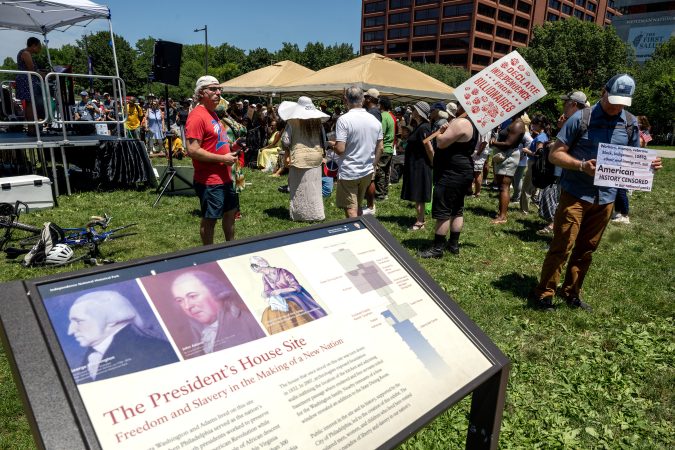
    Consider the controversy over slavery exhibits at the President’s House here in Philadelphia. Back in January, the Trump administration ordered the removal of panels about the nine African Americans whom George Washington enslaved. And last month, a federal appeals court upheld the right of the White House to replace those panels with, yes, a different interpretation.

    The administration’s new panels — which you can read online — acknowledge that Washington and other Founding Fathers practiced slavery. But the panels remove earlier language, highlighting its brutality. Instead, we are told, enslaved people living in the President’s House “experienced a greater modicum of autonomy than elsewhere.”

    On July 4, protesters converged upon the site and taped printed copies of the original panels to the walls. “I know they’ll get torn down,” one demonstrator said, “but hopefully there’s enough people here today for the holiday that they’ll be seen, and maybe it’ll inspire someone else to do the same.”

    Here’s who I hope will be inspired: America’s history teachers. They should give the text of the original panels — and also of the new ones — to their students, just as I shared American and Soviet interpretations of the atomic bombings.

    And they should ask their students about the differences. Why did one of the earlier panels highlight “The Dirty Business of Slavery” — especially the buying and selling of human beings — and why did the Trump administration omit that? Why did it also leave out most of the details about Ona Judge, Martha Washington’s personal maid, who escaped to freedom in 1796?

    Teachers should also share the Trump administration’s recent report attacking the Smithsonian’s National Museum of American History. There’s too much at the museum about racism and oppression, the White House says, and not enough about progress and freedom.

    A display in the “Great Debate” section of a democracy exhibit at the Smithsonian’s National Museum of American History, seen in August 2025.Calvin Woodward

    Again, is that right? Schools that are close enough to Washington, D.C., should take students to the museum and let them decide for themselves. Everyone else should assign the Trump administration report and rejoinders to it by historians and others.

    Teachers have been doing lessons like that for a long time. In the 1980s, Oregon history instructor Bill Patterson had his students compare their state-approved textbook with A People’s History of the United States by radical scholar Howard Zinn.

    And if you think this was all just an exercise in left-wing propaganda, think again. Patterson’s students wrote letters to Zinn and took issue with his interpretations, including his claim that the bombings of Hiroshima and Nagasaki were unnecessary.

    I can’t remember what my own students decided about America’s use of atomic weapons in Japan. But I’m glad I didn’t give them a single interpretation of it. That’s not education; it’s indoctrination.

    A few days after he returned to the presidency in January 2025, Donald Trump issued an executive order “ending radical indoctrination in K-12 schooling.” But in its first sentence, the order calls on schools to “instill a patriotic admiration for our incredible nation.”

    That’s indoctrination, too. I know the White House doesn’t want the kind of debate I’m advocating here. But neither do some people on the left, who will inevitably dismiss my approach as “bothsidesism.”

    Please. Our students need to come to their own conclusions about the President’s House, the Smithsonian, and everything else. If you only want them to hear your side, you’re in the same league as Trump and his disciples.

    News flash: We disagree about our nation. On its 250th birthday, the best way to celebrate it would be to present our differences to our students openly and honestly. It’s not our job to tell them what to think. It’s their job to figure it out.

    Jonathan Zimmerman teaches history and education at the University of Pennsylvania. His next book, “Schooling Citizens: How Education Can Save Democracy,” will be published in the spring by the American Philosophical Society Press.
    Editor’s Note: An earlier version of this column incorrectly noted that the story of Ona Judge, a woman enslaved by George Washington, was not part of a new display at Independence Mall. She is, in fact, featured in the exhibit.

  • Graham Platner and the Democrats’ war on expertise

    Graham Platner and the Democrats’ war on expertise

    Let’s suppose you’re the kind of Democrat who — like me — derides Republicans for declaring war on expertise. From vaccines and climate change to tariffs and foreign aid, we say, the GOP has discarded professional knowledge in its quest for power.

    Why, then, do we support candidates who lack expertise — and experience — themselves?

    That’s the question we should be asking about Graham Platner, whose campaign for the Senate is on the ropes following a former girlfriend’s claim that he had sexually assaulted her. Platner has never held elected office; his only political experience was a stint on his town planning board.

    How can we be OK with that? If we value expertise in government, we should want leaders who have demonstrated it. But Democratic voters seem to be moving in the opposite direction.

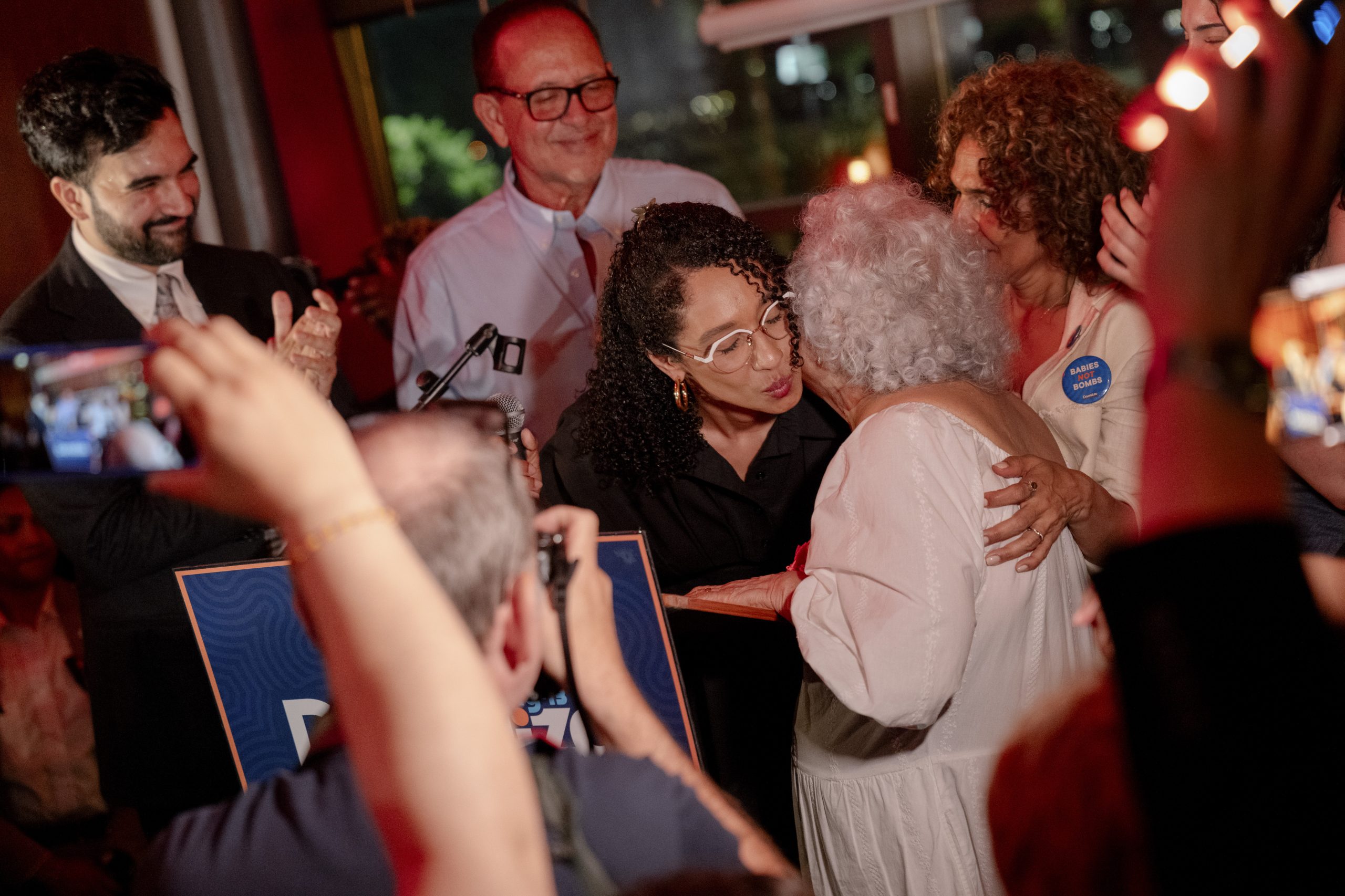
    In the recent New York primary, they chose Darializa Avila Chevalier to replace five-term, 71-year-old Rep. Adriano Espaillat. The first Dominican American — and the first formerly undocumented immigrant — to be elected to Congress, Espaillat helped win measures protecting delivery drivers and home-based childcare providers. But he lost to a 32-year-old graduate student who has zero political experience.

    Darializa Avila Chevalier (center), alongside New York Mayor Zohran Mamdani (left), greets supporters after winning the Democratic nomination for New York’s 13th Congressional District.LEXI PARRA

    Neither does Melat Kiros, 29, who unseated 15-term Rep. Diana DeGette, 68, in the Democratic primary in Colorado. She has worked as a lawyer and — more recently — as a barista. But when it comes to politics, she is a complete novice.

    Then there’s Platner. A combat veteran and oyster farmer, he ran as an aw-shucks common man. That meant eschewing what he called “the establishment,” including experienced political consultants and pollsters.

    But guess what? It turns out experience matters. The young Democratic operative who recruited Platner to run for Senate bypassed the standard background check, which usually takes a few weeks. He opted instead for a three-day “investigation” by a firm that didn’t even bother to interview Platner or solicit a questionnaire from him.

    To its credit, the firm flagged some of Platner’s controversial Reddit posts. But a more thorough — and, yes, professional — background check would surely have uncovered his “unsettling” behavior around women, which former girlfriend Jenny Racicot described to reporters last month.

    And earlier this week, Racicot said Platner had shown up drunk at her house — after she asked him to stay away — and forcibly had sex with her. Platner denied the charge, but he said he was “mindful of the political reality it would inflict” and that he was taking time to “reflect” on how to proceed.

    Leading Democrats — including Sens. Elizabeth Warren and Bernie Sanders — called on Platner to quit the race, and I agree with them. But I also think the party should reflect on why we continue to elevate candidates who lack any real political experience.

    To defenders of these outsiders, their inexperience is a selling point. If you want to challenge the establishment, the argument goes, you need people who aren’t tainted by it — which was a major sentiment behind then-29-year-old Alexandria Ocasio-Cortez’s upset in New York’s 14th Congressional District in 2018. Ever since, some have argued, that’s the only way to get progressives into power.

    Nonsense. Here in Philadelphia, Chris Rabb scored a stunning victory in the May primary race to replace Rep. Dwight Evans. Like Chevalier and Kiros, Rabb calls himself a democratic socialist. But he also has significant experience in government.

    Jonathan Zimmerman wonders how voters can be OK with supporting Graham Platner, a Senate candidate who has never held elected office.JORDAN GALE

    Rabb served for five terms in the Pennsylvania House of Representatives, where he sponsored bills to repeal the death penalty and to promote restorative justice in criminal sentencing. He knows his way around Washington, too. Earlier in his career, he worked as an aide to Carol Moseley Braun, the first African American woman in the U.S. Senate.

    Whatever you think of Rabb’s politics, he is qualified for the job. And we should care about that. Just like we shouldn’t make a housing official the director of national intelligence, we shouldn’t make an oysterman a member of Congress. To serve effectively in government — like any other professional role — you need knowledge and experience.

    And if you think otherwise, just look at the guy in the White House. America elected 44 presidents before Donald Trump. Forty-one of them had held prior political office; the other three (Zachary Taylor, Ulysses S. Grant, and Dwight D. Eisenhower) were victorious U.S. war generals.

    By contrast, Trump was a failed real estate baron and a successful reality TV figure. His two presidencies have been monuments to incompetence because he doesn’t believe in expertise. Or in anything, really, except himself. Remember “I alone can fix it”? He didn’t, and he won’t.

    Experts don’t know everything, of course, and they can be wrong (see: COVID-19 lockdowns). But they do know more than the rest of us about what they do. In choosing candidates like Graham Platner, Democrats turned their backs on that principle. Let’s hope they rediscover it before it’s too late.

    Jonathan Zimmerman teaches education and history at the University of Pennsylvania. He is the author of “Schooling Citizens: How Education Can Save Democracy,” which will be published next spring by American Philosophical Society Press.
  • Assailed by right and left, the Peace Corps continues to make an apolitical difference

    Assailed by right and left, the Peace Corps continues to make an apolitical difference

    In 1983, I finished college and joined the Peace Corps. I was sent to Nepal, where I taught English in a remote village. To get there, you took an overnight bus out of Kathmandu and then walked for three days into the Himalayan foothills.

    My Peace Corps journey changed my life. It opened my eyes to cultural differences, and it taught me how to communicate across them. That’s been an invaluable tool for me, as an educator and a human being.

    But when I got to graduate school, I discovered that many of my fellow left-leaning students — and some of their professors — had a decidedly less rosy view of the Peace Corps. It was a neocolonial project, they said, designed to enhance America’s global power and to keep poorer countries in perpetual dependency.

    I’ve been thinking about their comments over the past few days, as news spread that U.S. Rep. Scott Perry (R., Pa.) had proposed to eliminate funding for the Peace Corps under amendments he submitted to a House appropriations bill. The York congressman was also an ardent supporter of Elon Musk’s dismantling of the U.S. Agency for International Development, which Perry called a “piggy bank for far-left causes.”

    Yet, the Peace Corps — like USAID — has also been the target of left-wing attacks, which bear a strong echo to Republican ones. Neither side believes Americans can be a force for good in the world.

    That’s why the Peace Corps matters. It’s based on the simple proposition that bringing different people together can help them thrive. And it’s a standing rebuke to cynics on the right and the left.

    Going back to Richard Nixon, GOP politicians have tried to diminish — or destroy — the Peace Corps. Their last effort to zero it out took place in 2019, when U.S. Rep. Mark Walker (R., N.C.) proposed to “put America first” by defunding the Peace Corps and devoting the saved dollars to disaster relief at home.

    Never mind that the Peace Corps represents 1% of our foreign aid budget, which is usually about 1% of total government spending. That means one out of every 10,000 federal dollars goes to the Peace Corps.

    But that’s too much for Perry, who has also proposed eliminating government funding for the Millennium Challenge Corp., which finances infrastructure and anti-poverty programs in poor countries, and for the Democracy Fund, which aids nascent democracies that are under strain.

    U.S. Rep. Scott Perry (R., Pa.) at a campaign event in front of employees at an insurance marketing firm in Harrisburg in 2024. He has proposed eliminating funding for the Peace Corps.Marc Levy

    America’s own democracy is under strain, of course, thanks to the likes of Perry. As his text messages showed, he tried to assist Donald Trump’s effort to overturn the results of the 2020 election. He’s also facing a tough reelection battle this fall against Democratic challenger Janelle Stelson, whom he narrowly defeated in 2024.

    Perry is betting that his campaign to defund the Peace Corps and other foreign aid will help him at the polls, and I hope he’s wrong. But I also think it’s wrong to dismiss the Peace Corps as an imperial power grab, as my grad student colleagues did.

    That critique has been revived in the digital age by “No White Saviors,” a social media campaign begun in 2018. When the Peace Corps evacuated all of its volunteers during the 2020 COVID-19 pandemic, No White Saviors said they should stay home.

    “No more pretending inexperienced young people are actually useful in countries and cultures they are alien to,” No White Saviors declared. “No more spending money on flights or evacuations, no need to teach language or culture.”

    That demand was taken up within the Peace Corps itself. Calling themselves “Decolonizing Peace Corps,” disillusioned volunteers called for the abolition of the agency. The Peace Corps was a scam, they said, spending scarce resources that could be better used at home.

    Scott Perry and Mark Walker couldn’t have put it better themselves. Whatever their other differences, America First Republicans and No White Saviors think the Peace Corps is a waste of taxpayer dollars.

    Please. The 250,000 people who have served in the agency have generated enormous goodwill overseas and huge benefits at home. More than 80% of them continue to volunteer in their communities. A quarter of them have started businesses.

    They’re also more diverse than No White Saviors assumes. In 1990, four years after I returned from Nepal, only 7% of volunteers were nonwhite; in 2020, 34% were.

    I didn’t go to Nepal to save anyone. I went to live, and to learn, and to grow. And 25 years later, I returned to my village with my 17-year-old daughter. A bus road had been cut into the hills, so the three-day walk was narrowed to about six hours.

    The school where I taught held an impromptu “welcome home” ceremony for us. I stood up to give a speech in my broken Nepali, but broke down in tears, overwhelmed by my good fortune to have known these good people. If we jettison the Peace Corps, fewer Americans will experience that kind of connection. I just don’t see how that can be good for America or for the world.

    Jonathan Zimmerman teaches history and education at the University of Pennsylvania. He is the author of “Schooling Citizens: How Education Can Save Democracy,” which will be published next spring by the American Philosophical Society Press.