Author: Anthony R. Wood

  • New Jersey growers get a federal disaster declaration for freeze-damaged crops

    New Jersey growers get a federal disaster declaration for freeze-damaged crops

    It won’t bring back the lost apples or peaches, but New Jersey has secured a federal disaster declaration for the crops damaged in April’s rare heat-freeze sequence.

    The declaration, which covers all 21 counties, makes the state’s farmers eligible for emergency federal loans, Gov. Mikie Sherrill announced.

    A similar designation covering 17 Pennsylvania counties, including Lancaster County, was secured last month.

    As much as $300 million in crop losses were reported by both states as the result of record heat on April 15 and 16 that induced the tree-flowering process to pick up the pace, setting them up for the kill that came with the freezes of April 20 and 21.

    Growers have been warning that apple crops were destroyed and that any peaches would be as scarce as they were pricey.

    Gov. Josh Shapiro has described the Pennsylvania damages as “unparalleled.”

    It is unusual for temperatures to hit 90 in April, said Bob Oravec, a lead forecaster at the Weather Prediction Center in College Park, Md.

    Rarely, however, have they been followed by such devastating freezes.

    Some of the fruit crops, including the strawberries that are now in season, have managed to survive, Ben Casella, national policy director at the New Jersey Farm Bureau, said last month.

    He added that Jersey growers are “fully promoting that they’ll have a strong crop of blueberries.”

    Cherries and grapes didn’t fare so well, but was too soon to determine the exact extent of the losses.

    The disaster designation makes farmers eligible for low-interest loans from the Farm Service Agency, what Sherrill called “a critical first step toward recovering from their crop losses.”

  • Philly hits a record high 97 as the World Cup fest begins. Strong storms may come later.

    Philly hits a record high 97 as the World Cup fest begins. Strong storms may come later.

    The heat and humidity have transformed the atmosphere into an obnoxious broth — just in time for the World Cup FIFA Fan Festival — and we can do without the fireworks, thank you.

    The official temperature at Philadelphia International Airport had reached 97, setting a record for the date, with a heat index of 103 at 4 p.m. It beat the high of 95, reached in 1985, and an encore was expected Friday, when the record also is 95.

    In addition, the steaminess has added volatility to a vapor-swollen atmosphere that is even making the windows sweat. The city’s heat emergency remains in effect until 8 p.m. Friday, and the National Weather Service is advising people to stay hydrated and in air-conditioning if possible.

    With a front approaching, strong thunderstorms with potent winds are likely at some point during the FIFA fan festivities in Fairmount Park on Friday.

    It will still be hot during the weekend, forecasters say, but as the World Cup activities heat up, the humidity will be so comfortable you might think you had moved.

    As for game-time conditions Sunday for the Ecuador vs. Ivory Coast match in South Philly, spectators might want to pack an umbrella.

    When the storms are expected to arrive in Philly

    The government’s Storm Prediction Center warned that the region could be affected by “multiple disturbances,” and the atmosphere is well-juiced with moisture.

    Rich Thompson, chief of forecast operations at the storm center, in Norman, Okla., said the center might have to issue a severe watch for the Philly region Friday, when he happens to be on duty.

    Those attending the FIFA Fan Festival on Lemon Hill in Fairmount Park will be well-warned in case of severe weather, said Philadelphia Soccer 2026 spokesperson Melissa Ferdinand, via screens, announcements, and text messages.

    In short, if you didn’t like the weather Thursday, you won’t like Friday’s, either.

    The weather service warned of the “risk of heat-related illnesses for much of the population — especially those without effective cooling or hydration.”

    The outlook for the weekend

    Temperatures on both Saturday and Sunday are expected to reach 90 or better, but the air is going to be refreshingly drier. All thermal comfort being relative, the differences will be as noticeable as they are welcome.

    At game time Sunday — 7 p.m. — it should be quite comfortable in South Philly. However, another system may touch off more showers during the game in advance of what will be a refreshing air mass to start the workweek.

  • El Niño has formed officially, and it likely will be one of the strongest on record

    El Niño has formed officially, and it likely will be one of the strongest on record

    El Niño has formed officially and it is likely to become one of the strongest on record, with potentially profound impacts on the hurricane season and the U.S. winter, government meteorologists announced Thursday.

    As it matures during the summer and fall, it is likely to hold down the numbers of Atlantic tropical storms. And while it is impossible to predict what it might mean for winter around here, some of Philly’s strangest winters have coincided with El Niño.

    Scientists with the National Oceanic and Atmospheric Administration see a 63% likelihood that this El Niño will qualify as “very strong” and rank among the elite of the last 75 years.

    El Niños occur every two to seven years as part of a natural process as east-to-west trade winds that push water into the western Pacific slacken and massive amounts of warm water move eastward.

    In the key El Niño region of the central Pacific, sea-surface temperatures over a 2.4 million-square-mile area become anomalously warm. In this instance, NOAA says, the temperatures may end up being 3.5 degrees Fahrenheit higher than normal.

    All that warm water interacts with the overlying atmosphere to disrupt weather-bearing winds worldwide.

    The naming has been attributed to Peruvian fishers who lamented the effects of the warmth on the anchovy catch. They called it a Spanish term for the Christ child, since this tended to happen around Christmastime.

    El Niño and the hurricane season

    El Niño’s impacts can be enormously disruptive, but it’s possible that residents of the Caribbean, Atlantic, and Gulf coasts will catch a break.

    The phenomenon can have a dampening effect on hurricanes.

    One well-documented effect of the warming is that it generates powerful upper-air winds from the west that can have shearing effects on incipient tropical storms in the Atlantic, thousands of miles away.

    On Wednesday, Philip Klotzbach, a researcher at Colorado State University, which developed the prototype for those seasonal hurricane outlooks, reduced the storm numbers in his forecast and is now calling for only five hurricanes. The average is seven.

    Some of the quietest Atlantic hurricane seasons on record have occurred during strong El Niño years.

    El Niño and the Philadelphia winter

    Strangeness is no stranger to Philadelphia winters, but strong El Niños have coincided with extremes of snow — in both directions.

    In 1972-73, for example, no measurable snow fell in Philadelphia, and only 0.8 inches accumulated in the 1997-98 winter. Philly was hit with a 21.3-inch blizzard in February 1983 and a 2-footer in January 2016, both during high-end El Niño years.

    Unfortunately, in the short term, El Niño isn’t going to be doing anything about this heat and humidity.

  • Steamy weather threatens fan fest, and Philly’s 1st World Cup game won’t feel like home to either team

    Steamy weather threatens fan fest, and Philly’s 1st World Cup game won’t feel like home to either team

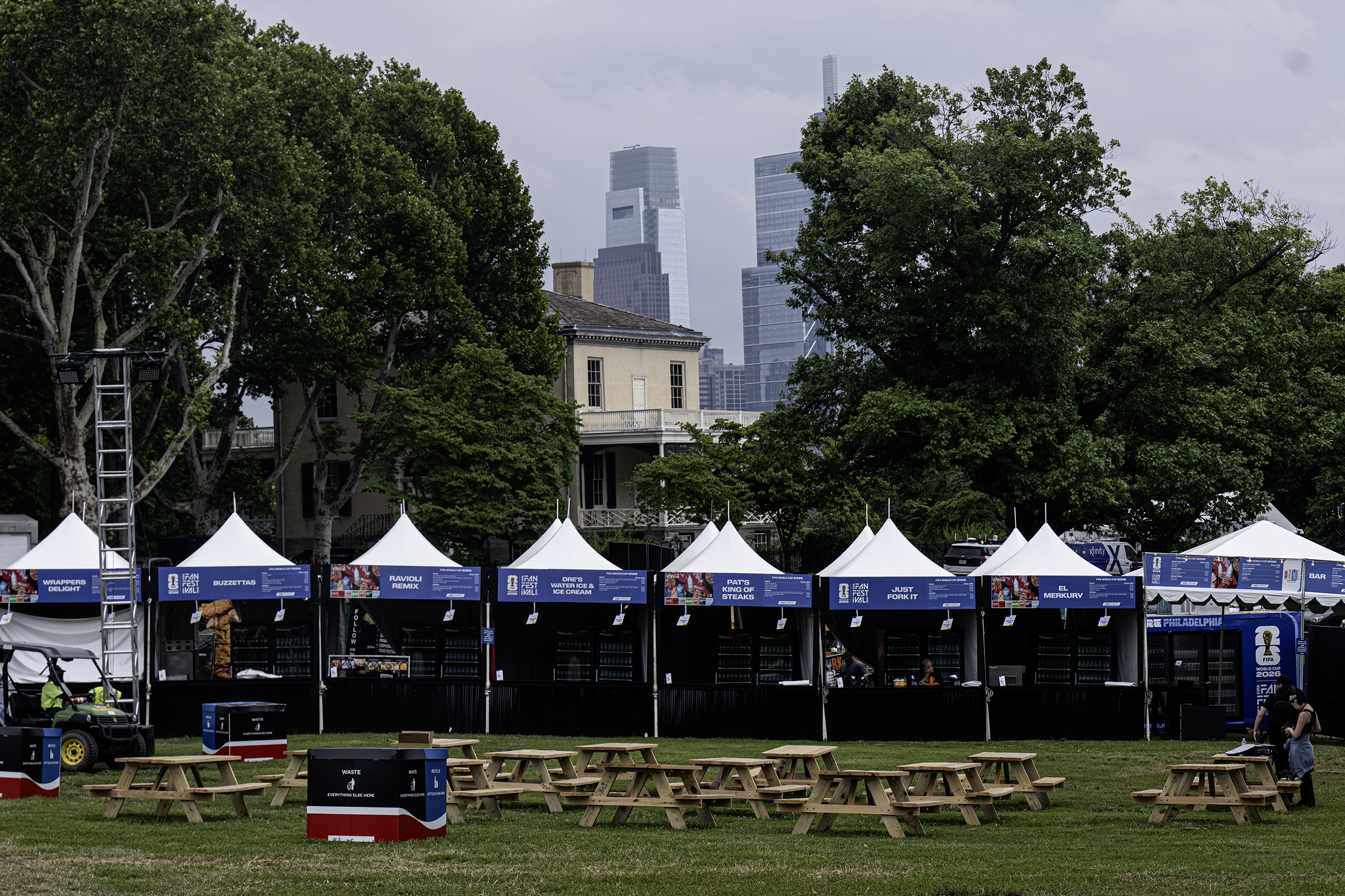
    No matter what else happens at the World Cup’s FIFA Fan Festival events Thursday and Friday on Fairmount Park’s Lemon Hill, expect hot times.

    After setting four high temperature records since April, two more could fall this week in Philadelphia as a very warm June picks up steam and the mercury heads to the mid-90s on both days, while the atmosphere turns to soup.

    “It’s going to be very uncomfortable,” said Bob Oravec, senior branch forecaster at the Weather Prediction Center in College Park, Md.

    The National Weather Service in Mount Holly said heat indexes could reach 103 on Thursday and 105 on Friday in the city, and the Philadelphia Department of Public Health has declared a heat emergency.

    With the increase in water vapor and an approaching front, thunderstorms also could pop up, and festival organizers are well aware of the potential at what will be a “rain-or-shine event,” said Philadelphia Soccer 2026 spokesperson Melissa Ferdinand.

    Conditions are due to improve on the weekend, with lower humidity and just an outside chance of showers during the Sunday night match between Ecuador and Ivory Coast in South Philly.

    The weather outlook for the fan fest activities

    When the fan festival gets underway at 2 p.m. Thursday, chances are excellent that Philly will be chasing a record, with a Friday encore. The all-time high for both Thursday and Friday in Philly is 95 degrees.

    Thunderstorms are possible both afternoons, with about a 15% chance that they reach severe status — with wind gusts near 60 mph — according to the Storm Prediction Center in Norman, Okla.

    Soccer matches will be televised throughout the festival, including Sunday’s game in Philly, and in the event of severe weather, the screens will carry evacuation orders, along with announcements and text communications, Ferdinand said. “Our highest priority is the safety of our guests,” she said in an email.

    On Saturday, conditions should improve markedly, with daytime highs several degrees lower and the mugginess backing off. On Sunday, temperatures are expected to climb back to the low and mid-90s, but the humidity should not approach the Thursday and Friday levels.

    The weather outlook for Sunday’s game

    Temperatures around game time are forecast to be in the upper 80s with comfortable humidity and a breeze under 10 mph.

    The only caution flag would be the chance of a shower, said Mike Lee, a meteorologist at the weather service office in Mount Holly, but “it looks like it’s going to be on the hit-or-miss side of things.”

    It should be comfortable for the fans, but upper 80s would not be a cool dip in the pool for the players, who can run six miles or more during a match — no home run trots in soccer. Throughout the tournament, heat and humidity certainly are going to be players, said Ryan Calsbeek, a runner and Dartmouth College biological sciences professor.

    He allowed that running this week was an ordeal. Granted, it got up to only 85 degrees where he lives in New Hampshire, but it was the first warm shot of the season, and his body let him know it was not enjoying the adjustment. Acclimatization certainly will be a challenge to the World Cup participants at the venues across the United States, Canada, and Mexico, he said.

    The atmospheric conditions on Sunday in Philly are not going to feel much like home to either team.

    The Ecuadorians may even get a little homesick. They play in Quito, right on the equator, but their stadium is at an elevation of more than 9,000 feet — 1.7 miles. Temperatures decrease with height, and the average high in June in Quito is 70 (the same as it is in January).

    Conversely, the Ivory Coast team’s home field is in Abidjan, a city of more than six million on the south-central Atlantic coast. The region gets prodigious amounts of rain as storm waves move across east to west across the continent, said Tom Kines, senior meteorologist with AccuWeather Inc. And is it ever muggy.

    Les Elephants might view South Philly as a vacation spot.

  • It may feel like 100 degrees in Philly on Thursday and Friday. The early heat could pay off.

    It may feel like 100 degrees in Philly on Thursday and Friday. The early heat could pay off.

    With the summer solstice still two weekends away, already the temperature has reached 90 degrees or higher in Philly nine times.

    And while the sequence of 90s has been extraordinarily premature, the early experience may come in handy this week as the region could experience triple-digit heat indexes.

    “It will definitely feel different,” said Ray Martin, lead meteorologist with the National Weather Service office in Mount Holly, as the humidity and dew point, the measure of absolute moisture in the air, reach their highest levels of the year to date.

    Any 100-plus heat indexes may present challenges to some older residents, and those with heart and other health issues. The weather service Wednesday morning issued an advisory for indexes of up to 103 Thursday and Friday.

    But the heat the region has experienced, starting in mid-April, could be viewed as a sort of spring training for the discomforts to come, said Samuel Eldrich, director of the Temple Health-Chestnut Hill Hospital Emergency Department.

    “It’s all about adaptability,” he said. And it’s not just physiological, he said.

    In addition, a juicier atmosphere may squeeze out some much-needed rain.

    The regional forecast for the next several days

    Showers are possible Wednesday morning and late in the day, Martin said, with highs in the mid-80s. However, it might not get cooler than 70 degrees early Thursday, a sign that mugginess is on the increase.

    A moist air mass inhibits daytime heating from escaping into space, and the heat and humidity build for real on Thursday.

    “It’s not going to feel nice out there,” said Tom Kines, senior meteorologist with AccuWeather Inc.

    Shower chances are in the forecast Wednesday through Friday, and at times the atmosphere will be highly energized, Martin said. The Storm Prediction Center in Norman, Okla., has outside chances for severe thunderstorms for the entire region Thursday and Friday. Isolated flooding downpours are not out of the question, Martin said.

    The heat and storm threats should back down some by the weekend, when Philadelphia hosts the World Cup match between Ecuador and the Ivory Coast, with a high about 90, the air less muggy, and rain looking unlikely.

    How hot has it been in Philly so far?

    Philly has logged four daily highs of 90 degrees or more so far this month, and nine since April — including four record highs — almost a third of the average for an entire year.

    Whether that is a harbinger of a punitive summer is beyond the realm of reliable forecasting, but the early heat is likely to have some positive effects, Eldrich said.

    Far more dangerous are hot spells that come abruptly after the weather has been relatively cool and comfortable for a period, he said.

    Early heat, which typically is short-lived, can make a difference in terms of how we respond to subsequent hot spells. “You’re more accustomed” to the heat, Eldrich said. “You’ve adapted to the lifestyle. You sweat more quickly, more easily.”

    People are more likely to stay inside, and stay hydrated.

    “It’s both the physiological and the cultural factors,” he said. “In the South, you don’t hear about heat exhaustion or heat emergencies. It’s something they deal with three-quarters of the year rather than a quarter of the year.”

    Drought conditions persist, but more rain may be coming

    The longer-range outlooks favor above-normal temperatures for the rest of the month, but they also see the odds tilted toward above-normal rainfall.

    That would be a switch. Philadelphia’s precipitation has been below normal for 10 consecutive months.

    “We could certainly use the rain,” Martin said. The interagency U.S. Drought Monitor has most of the region under “severe drought” conditions. State-declared drought emergencies remain in effect in New Jersey and Chester County.

    Any showers would mean temporary breaks in the heat Wednesday and Thursday, and the heat wave is not expected to survive the weekend, in keeping with a trend.

    Even though average summer temperatures have been rising, the hot spells this century have not lasted as long as some of those of the 1990s.

    “Let’s hope that streak continues,” Martin said.

    Whether it is related to heat-wave durations or the city’s responses to hot-weather emergencies, heat mortality is way down in Philadelphia.

    From 1991 through 2000, 227 heat-related deaths were recorded in the city. In the last 10 years, there were 37.


  • The water wars are escalating in the City of Chester’s historic bankruptcy

    The water wars are escalating in the City of Chester’s historic bankruptcy

    As it approaches its third anniversary, the City of Chester’s historic and contentious bankruptcy also may be approaching a watershed.

    In a filing Tuesday afternoon, the state-appointed bankruptcy receiver asked Commonwealth Court to rule on an issue pivotal to the city’s ability to sell water assets that are keys to Chester’s emergence from bankruptcy.

    Receiver Vijay Kapoor argued that a narrowly tailored state law passed in 2012 that wrested control of the Chester Water Authority from city government was unconstitutional.

    If the judge finds in the receiver’s favor, “It would likely resolve a lot of the legal questions,” Kapoor said.

    The water authority, which serves 46 towns in Chester and Delaware Counties and reported $51.7 million in revenues last year, is the centerpiece of the receiver’s plans of creating a regional water authority. Aqua Pennsylvania offered over $400 million for the authority four years ago. The city’s annual budget is around $65 million.

    The Environmental Protection Agency estimates that, conservatively, U.S. residents collectively spend $100 billion a year on water.

    The receiver’s office has insisted that an owner operate the water assets as a “public entity,” not beholden to stockholders.

    Kapoor said that the state law transferring control of the authority was amended at the last minute and passed without debate.

    Frank Catania, the water authority’s attorney, countered that the receiver’s office is attempting a hijacking and that the receiver and city officials are asking customers, 80% of whom are outside Chester, for a bailout.

    “It’s not like they’re losing something they had,” he said. “They never had it “

    Kapoor also asked the judge to force the authority to turn over financial documents to explain its 14% rate increase earlier this month, adding about $70 to the average annual residential bill.

    He said the authority had undertaken a costly ad campaign, presumably at ratepayers’ expense, that he said appeared to include racial overtones.

    The authority blamed the rate hikes on bankruptcy-related legal fees and lowered credit ratings.

    “We’re a water utility,” Catania said, “and we’re also fighting a war.”

    The law the receiver is challenging

    In his filing, technically a bankruptcy “plan modification,” Kapoor said the 2012 legislation was crafted specifically to refer to the Chester Water Authority and was afoul of state law.

    Rather than the five-member board appointed by the city council, it resulted in the creation of a nine-member board with only two representatives from the city and others appointed by Chester and Delaware County commissioners.

    The law applied only to an authority that serves “parts of at least two counties” and services an area ”five times larger than the incorporating municipality.”

    The authority also had to have “projects in more than two counties.” Part of the Octoraro Reservoir, from which the authority draws water, is in Lancaster County.

    When will the bankruptcy end?

    It was uncertain when the judge might rule, or when the bankruptcy — which as of the end of 2024 had cost the state $11.5 million in legal fees — might end.

    The city, which is 80% Black, has been in the state’s “distressed” status since 1995 and entered receivership in 2020.

    Kapoor’s predecessor, Michael Doweary, took it into bankruptcy in November 2022. Chester had accumulated a $48 million pension deficit and missed several years of payments.

    Kapoor has said that sale of the water assets would be critical to avoiding dramatic cuts in retirement benefits.

    Chester’s tax base has declined precipitously in the decades since the city’s wartime industrial heydays, and a casino and an incinerator are key contributors to its annual budget.

    Other cities have suffered similar economic trauma, but Chester is a rarity. Of the more than 35,000 towns in the country, only about 30 have filed for bankruptcy.