Author: Sean Collins Walsh

  • Inquirer journalist’s notes appeared in files of N.J. Attorney General’s Office in a case against Norcross

    Inquirer journalist’s notes appeared in files of N.J. Attorney General’s Office in a case against Norcross

    An Inquirer staffer’s interview notes came into the possession of the New Jersey Attorney General’s Office during an investigation that led to the high-profile, and recently abandoned, racketeering indictment against South Jersey power broker George E. Norcross III.

    News organizations typically treat unpublished reporting material as confidential and often fight government demands for it in court.

    Inquirer editor and senior vice president Gabriel Escobar on Wednesday confirmed that state investigators had obtained interview notes typed in 2019 by Nancy Phillips, who currently edits the Justice and Injustice Team. The Inquirer “did not turn over notes to state prosecutors” and was never subpoenaed by authorities for them, Escobar wrote in a note to the newsroom.

    “We do not definitively know how the notes ended up with the state, but we do know it was not from us,” Escobar said in response to questions from an Inquirer reporter.

    A person with firsthand knowledge of how the notes came into the possession of the authorities said Phillips had shared the notes with someone outside The Inquirer.

    “Nancy Phillips shared the notes with a third party. It was not for the purpose of sharing the notes with authorities. It was for her own edification,” said the source, who is not an Inquirer employee and requested anonymity due to ongoing litigation threats related to the case. “The state did not receive the notes from Nancy Phillips directly.”

    A second source with direct knowledge of the evidence discovery file related to the Norcross investigation said the interview notes were included in an electronic file titled “Stier Documents.”

    Edwin Stier, a former state and federal prosecutor in New Jersey, has been quoted previously in The Inquirer, including as part of its coverage of Norcross. He is mentioned elsewhere in the discovery file, said the source, who spoke on the condition of anonymity because he was not permitted to publicly discuss the discovery material.

    Stier declined to comment on why his name appears in the evidentiary documents.

    Phillips declined to comment, saying she was “not comfortable talking about the process of newsgathering.”
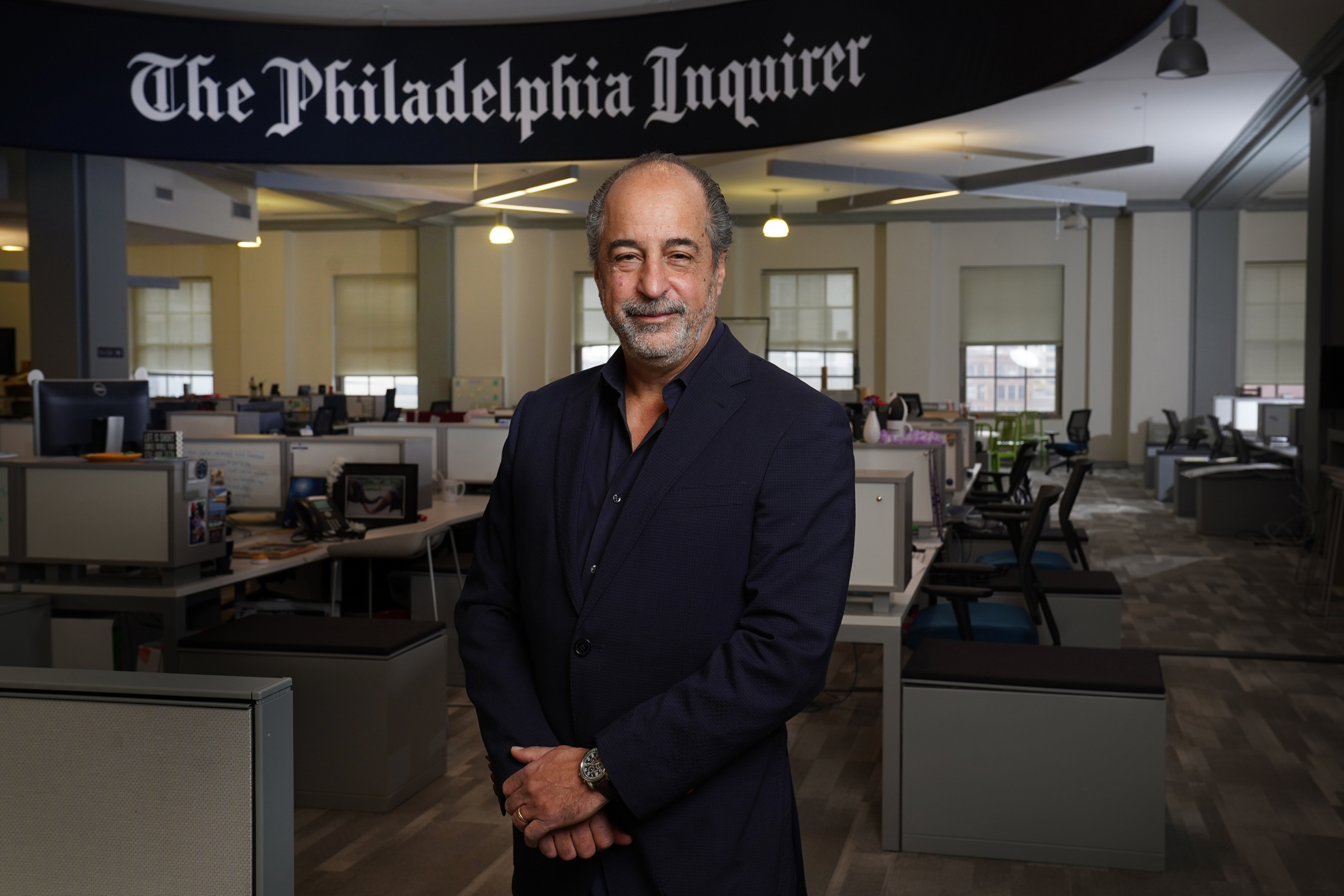
    Gabriel Escobar became The Inquirer’s top editor in 2020.JESSICA GRIFFIN / Staff Photographer

    Escobar — who joined The Inquirer in 2007 as metropolitan editor and was appointed its top editor in 2020 — declined to respond to questions about whether Phillips shared the notes with anyone outside the newsroom, including Stier. Escobar did not respond to a request for a phone interview and instead answered questions in writing.

    ‘False and outrageous’

    BigTrial, a blog authored by former Inquirer reporter Ralph Cipriano, first reported on Wednesday that the 10-page typed interview notes were in the state’s hands. Norcross’ legal team obtained the notes from the state through evidence discovery, and Norcross is considering a lawsuit against the state for malicious prosecution, BigTrial reported.

    The notes do not indicate the name of the author but appeared to summarize August 2019 meetings between a journalist and longtime Cherry Hill mayor Susan Bass Levin, who shared information critical of Norcross, according to the BigTrial report. Bass Levin is the former president and CEO of Cooper University Health System’s Cooper Foundation, where Norcross serves as a board member.

    “I have never seen the notes,” Bass Levin said. She declined to comment further.

    An Inquirer reporter was not able to obtain a copy of the notes. Escobar said he did not have a copy of them.

    Cipriano’s report claims that there are “only a couple possible explanations” for how prosecutors obtained the notes: The Inquirer supplied the notes in response to a subpoena; or Phillips was “voluntarily helping the investigators trying to pin a racketeering indictment on Norcross and associates.”

    Cipriano included no evidence to support either claim.

    In his email to the newsroom, Escobar wrote that Cipriano’s theories amounted to “unfounded and irresponsible speculation.”

    “Speculation that Nancy Phillips, who has a long and distinguished track record as a reporter and editor, was working with state prosecutors is both false and outrageous,” Escobar wrote. “When we learned that state investigators had the notes, we conducted an inquiry and determined that the material was not provided to them by The Inquirer.”

    He declined to give further details.

    (Escobar recused himself from involvement in this story, as did the reporters and editors who led The Inquirer’s coverage in 2019 of the investigation into Norcross.)

    Asked whether Phillips or any other staffer had faced discipline after the internal inquiry, Escobar wrote: “We do not comment on personnel matters.”

    Norcross spokesperson Dan Fee said Norcross’ legal team was not aware of how the state obtained the notes.

    The New Jersey Attorney General’s Office declined to comment.

    The Norcross investigation

    New Jersey state prosecutors, led by then-Attorney General Matthew Platkin, in 2024 indicted Norcross and five others in a racketeering case centered on alleged corruption in economic development tax breaks for projects connected to Norcross in Camden.

    A judge in 2025 dismissed the charges. The prosecution, now led by acting Attorney General Jennifer Davenport, effectively dropped the case earlier this year when it declined to appeal a state appellate court decision upholding the dismissal.

    Beginning in 2019, Inquirer reporters Andrew Seidman and Catherine Dunn wrote a series of articles on the tax break deals and the investigation into Norcross.

    Norcross spokesperson Fee said Seidman told him at the time that Phillips was not involved in the coverage. Phillips had a longtime romantic relationship with the late New Jersey billionaire Lewis Katz, who clashed with Norcross when both were co-owners of The Inquirer in the early 2010s.

    The combination of the notes and subsequent stories in The Inquirer indicate that Phillips had not just met with Bass Levin but also passed her notes to the reporters covering the story, showing that Phillips did play a role in coverage of Norcross, Fee said.

    Fee said Wednesday that Escobar’s statement “confirms the two most important things in the BigTrial story: Nancy Phillips’ notes ended up in the hands of prosecutors and that despite her bias against George Norcross being clear and known, Phillips was part of the reporting on stories involving him.”

    He called on Inquirer leadership to conduct a “public investigation” and questioned whether “there will be some effort to cover everything up.”

    Cipriano’s report quoted brief portions of the notes, including that Bass Levin suggested requesting certain public records, and that an Inquirer reporter later requested those records.

    Escobar’s note to the newsroom Wednesday said that Phillips “was not directly involved in the [Norcross] coverage but served as a conduit for information only she could access.”

    “Nancy has established a network of sources in her long career, and the information she has been able to gather has aided our journalism across many fronts,” Escobar wrote. “In 2019, she was approached by a source who was offering unique insights on a significant and running story. Nancy conducted an interview, typed up the notes, and then shared them with two Inquirer reporters who were working on the story.”
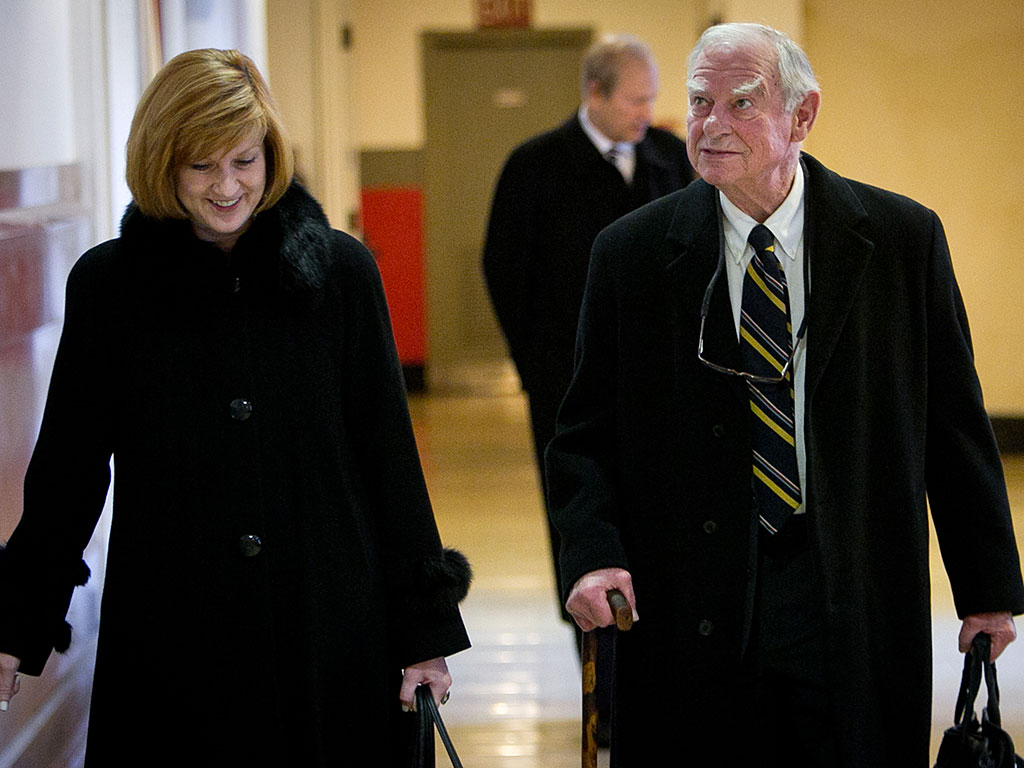
    Inquirer staffer Nancy Phillips walks alongside H.F. “Gerry” Lenfest, the newspaper’s late owner. ALEJANDRO A. ALVAREZ / Staff Photographer

    Cipriano, Norcross, and Phillips each have complicated Inquirer tenures.

    Cipriano, who was fired from The Inquirer in 1998, sued his editor for libel following a dispute over his coverage of the Archdiocese of Philadelphia. The suit was settled in 2001 with both sides declining to disclose the terms of the agreement, according to a New York Times report. Cipriano frequently criticizes The Inquirer’s coverage and its reporters and editors on his blog.

    Norcross was a co-owner of The Inquirer from 2012 to 2014, a tumultuous period in which he battled with Katz over control of the company.

    And Phillips, who scored legendary scoops as a crime reporter and now edits the Justice and Injustice Team, was involved in a relationship with Katz during his public fight with Norcross.

    Katz and cable mogul-turned-philanthropist H.F. “Gerry” Lenfest ultimately prevailed in the dispute over who would own The Inquirer. Katz died in a 2014 plane crash, just days after he and Lenfest bested Norcross in an auction organized to settle the ownership matter. (The Inquirer since 2016 has been owned by the Lenfest Institute for Journalism, a nonprofit endowed by its namesake before he died in 2018.)

    Camden coverage

    Escobar, who did not become The Inquirer’s top editor until a year after Phillips’ meeting with Bass Levin, said that he “did not have firsthand knowledge” of any arrangement barring Phillips from involvement in Norcross coverage.

    “But I could see a situation where a judgment call was made that placed priority on gathering information in a limited way,” Escobar said.

    He added in a separate response: “Gathering information from all quarters on a story always yields better and more complete journalism and, as the [newsroom] note says, this particular source was in a position to know and would only provide it to Nancy.”

    At the time of the 2019 interview, Phillips was a deputy regional editor overseeing reporters covering the Pennsylvania and New Jersey suburbs. In that role, Phillips would not normally be involved with stories concerning the Norcross investigation, which was handled by reporters from the politics and business desks.

    In a statement, Seidman noted that Norcross and the Camden tax breaks became a matter of public debate in the spring of 2019 and that he and Dunn began their reporting in May of that year — three months before Phillips met with Bass Levin.

    “Our reporting was based on interviews, emails, bank documents, property records, appraisals, and other government documents,” Seidman said. “I stand by it 100%.”

    Dunn, who left The Inquirer in 2022 and has been a reporter at Barron’s for about four years, declined to comment.

    Fee said he repeatedly disputed Seidman’s and Dunn’s coverage of Norcross, including an October 2019 article Cipriano highlighted regarding a land deal in Camden.

    The Inquirer publishes corrections when it discovers that its reporting contained factually inaccurate information. No corrections were made to the 2019 article.

    Former Inquirer editor John P. Martin, who was the lead editor on that story, said he and the reporters “talked at length with Mr. Norcross’ spokesman and several lawyers representing him.”

    “At no point, to my recollection, did Nancy Phillips offer input, advice, editing help, ask questions, or even engage in small chat about that story or any involving Mr. Norcross,” said Martin, who is now with Bloomberg.

    Escobar concluded his note to the newsroom by saying the episode offered “an important lesson.”

    “The information we gather in the course of reporting should always be safeguarded,” he said. “And no matter how well established a source-reporter relationship is, each interaction should establish clear parameters for the use of the information.”

    Asked for clarity on how those comments related to prosecutors obtaining Phillips’ notes, Escobar wrote: “The notes ended up with the state so something went awry. That part of the message is intended as a general reminder and not specific to the circumstances.”
  • Philly schools will get $157 million more in this year’s state budget. Gov. Josh Shapiro came to South Philly to tout the plan.

    Philly schools will get $157 million more in this year’s state budget. Gov. Josh Shapiro came to South Philly to tout the plan.

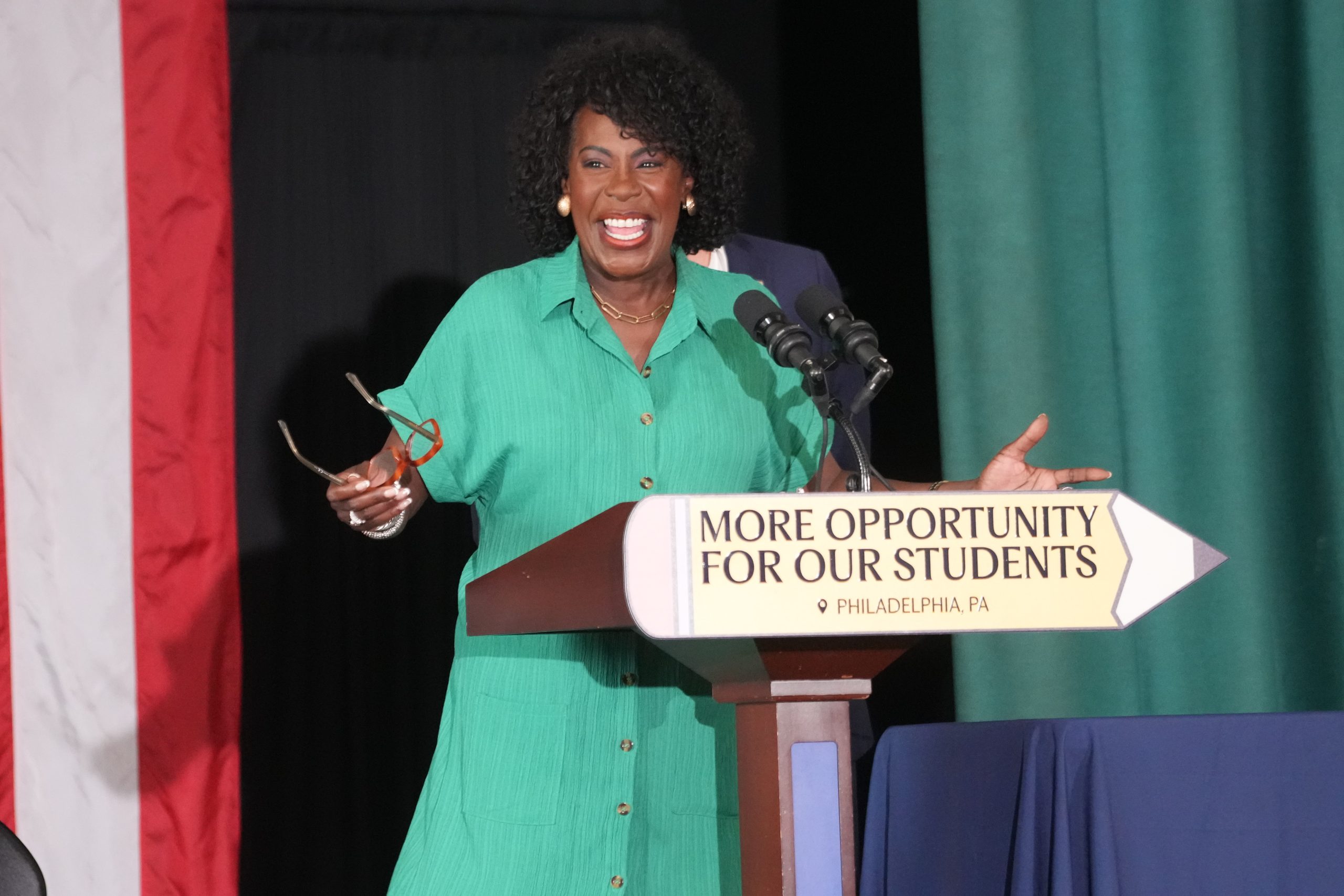
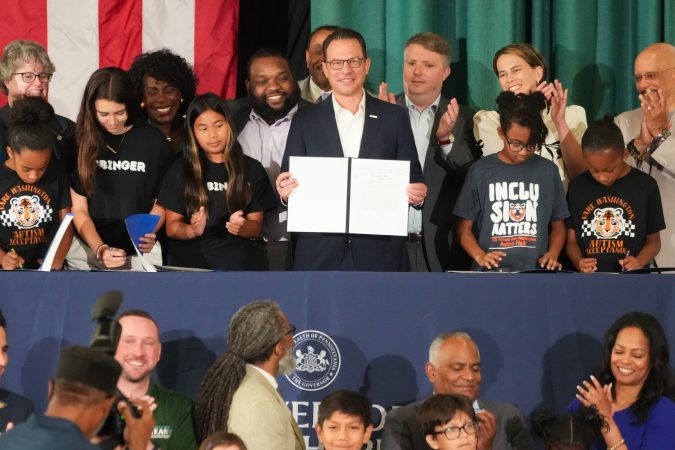
    Gov. Josh Shapiro on Tuesday visited Vare-Washington Elementary School in South Philadelphia to tout the $678 million in new education funding included in the state budget deal finalized over the weekend.

    The new education funding — including $565 million in “adequacy funding” to aid poorer districts — represented one of the most significant victories the first-term Democratic governor took home from the $50.8 billion state budget deal, which did not address lingering issues such as taxing so-called skill games and long-term funding for SEPTA and other public transit agencies.

    The Philadelphia School District will receive $137 million in adequacy funding and $20 million in other new funding. The district will also be able to compete for a share of $125 million set aside for school facilities projects.

    Philadelphia’s cash-strapped district, which entered this year with a $300 million structural budget deficit, still faces deep challenges. The school board this year approved a facilities plan to close 17 school buildings and renovate 169 more.

    “We’re driving this money out to the schools that need it most — school districts like Philadelphia, Norristown, Pottstown, and Allentown, and others in our region,” Shapiro said. “They were getting shortchanged, and now they’re getting the lion’s share of this new funding.”

    While it broke little new ground, this year’s state budget deal helped avoid another prolonged impasse involving Shapiro, the Democratic House, and the Republican Senate. Last year, lawmakers failed to reach a compromise until 135 days after the July 1 budget deadline, leaving school districts and local governments across the state in limbo for months.

    Lawmakers approved this year’s deal 12 days late.

    “I‘m one of the only governors in the country with a divided legislature, one of the only legislatures that has to negotiate with people on the other side who really have a very different view, who don’t think the way we do about investing in public education,” said Shapiro, who was joined by Mayor Cherelle L. Parker and numerous Philadelphia Democratic lawmakers. “We have all been clear that we would not get up from the table in Harrisburg until we fully funded public education, and we’ve done that.”

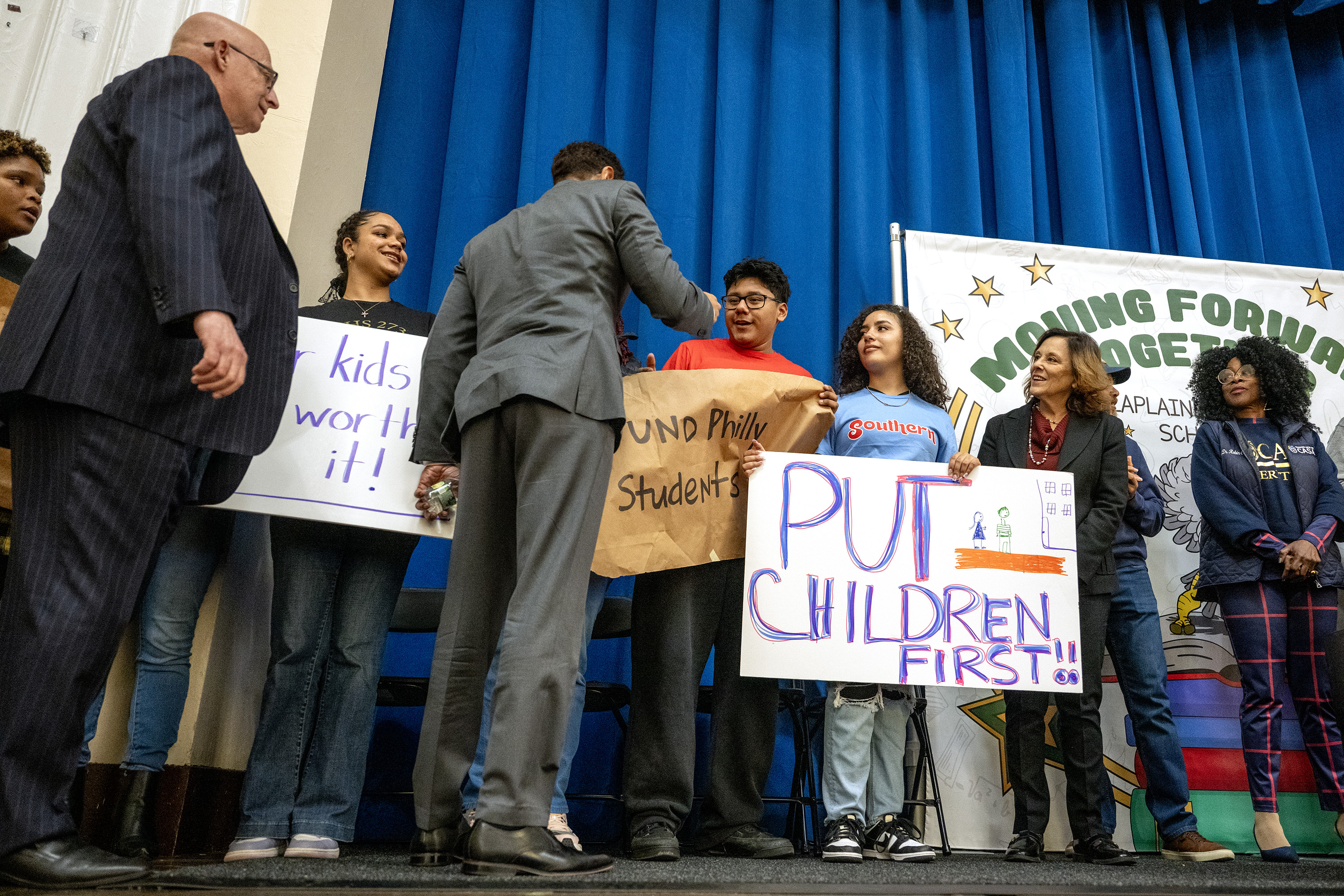
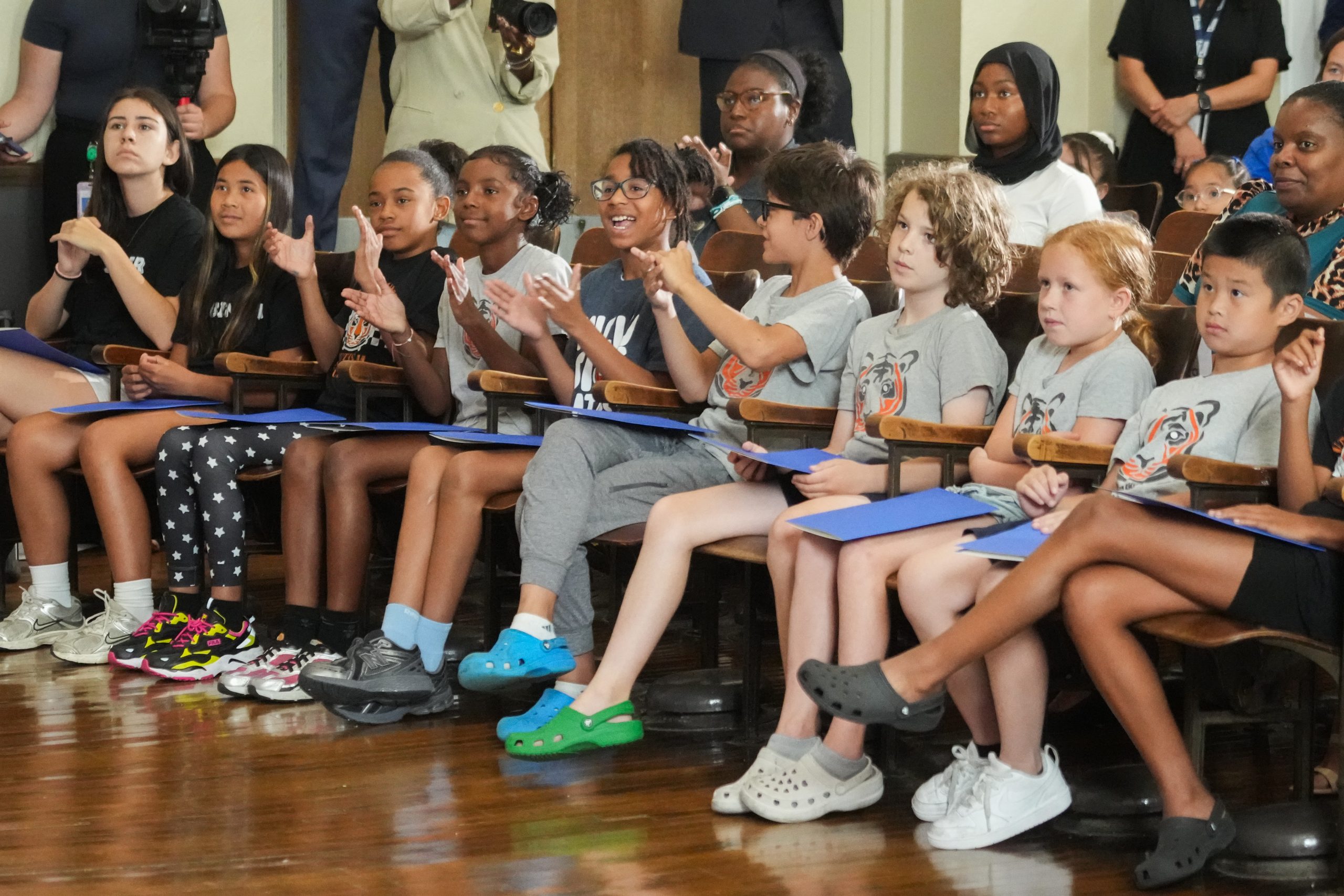
    Students applaud speakers at Vare-Washington Elementary School during an assembly highlighting the education investments included in the 2026-27 state budget in Philadelphia, Pa. on July 14, 2026.Jessica Griffin / Staff Photographer

    The new adequacy funding is the third infusion of money resulting from a formula lawmakers adopted in the wake of a 2023 Commonwealth Court ruling that said Pennsylvania’s former method of funding schools, which relied heavily on local property taxes, was unconstitutional.

    The formula calculated that a majority of Pennsylvania schools were underfunded, by a total of $4.5 billion. For the last three years, the state has given those schools an extra $565 million a year, filling about one-third of the gap. The state plans to fully address the shortfall by 2032.

    Advocates for underfunded districts, like Philadelphia’s, have credited the state for sticking with the plan, but have also said the money is flowing too slowly for struggling districts. Meanwhile, Republican lawmakers have challenged the increased funding for poorer districts, saying others are getting shortchanged by the new system.

    Mayor Cherelle L. Parker speaks at Vare-Washington Elementary School to highlight the historic education investments included in the 2026-27 state budget, in Philadelphia, Pa. on July 14, 2026.Jessica Griffin / Staff Photographer

    Philadelphia’s school district, the only one in the state prohibited from raising its own revenue, relies on city and state lawmakers for its funding.

    Parker this year clashed with City Council over how to deliver roughly $50 million to the district to help close a budget gap that threatened to eliminate 340 classroom positions. Council ultimately rejected Parker’s proposal — to levy a $1-per-ride tax on rideshare services like Uber and Lyft — and instead pulled from one-time funding elsewhere in the budget while promising to find a new recurring revenue source for the district.

    “We have limited revenue-generating capacity in the city of Philadelphia,” Parker said Tuesday. “I wish I could tell you, as mayor, that we had all of the money that we needed to address problems, but that is not the case. Our city can’t be successful without a strong partnership from Harrisburg.”

    Parker thanked Shapiro and the city’s delegation to Harrisburg for “keeping your word” and delivering more education funding to Philadelphia from the state.

    Vare-Washington is one of 40 Philly schools included in Parker’s Extended Day/Extended Year initiative, which provides additional programming for students outside normal school hours.

    During her remarks, Parker led the students assembled at the event in several call-and-response chants, including, “Excellence matters — at Vare-Washington!”

    “I want to hear you say, ‘Thank you — Gov. Shapiro!’” Parker said in another chant. “‘Thank you — Harrisburg legislators!’”

  • Mayor Parker’s office declined to say if the city will be refunded for Christina Aguilera’s canceled July 4th concert set

    Mayor Parker’s office declined to say if the city will be refunded for Christina Aguilera’s canceled July 4th concert set

    Mayor Cherelle L. Parker’s office on Tuesday declined to say whether the city will save money after pop star Christina Aguilera, who was scheduled to headline the city’s free July Fourth concert, ended up not taking the stage Saturday due to the weather delays that pushed much of the concert and the subsequent fireworks display into the early morning hours of Sunday.

    Parker spokesperson Joe Grace said the city had “no comment as yet” on whether the city would be refunded in light of the change in plans triggered by Saturday’s severe thunderstorms.

    Aguilera was the only artist who ended up skipping their set, and Grace emphasized Parker’s role in ensuring the rest of the performers returned to the Benjamin Franklin Parkway to restart the show around midnight after it was suspended about 9 p.m.

    “We’re focused on the performers who did return and put on a tremendous show once the storms subsided,” Grace said in a statement, noting that the Roots, Kathy Sledge, State Property, Meek Mill, Will Smith, and DJ Jazzy Jeff all performed after the concert restarted. “In the evening, those artists came back, at the request of [concert producer] ESM and Mayor Parker — and put on a great concert. … All the evening artists credited the mayor with bringing them back to perform.”

    The decision to restart the concert pushed the fireworks display to about 2:30 a.m. Sunday.

    “After the storms passed, there were a lot of people who could have called it a night,” Parker said in a statement Tuesday. “Instead, we made one more call. The Roots and the other artists, including Will Smith returned. Thousands of people returned. Our city employees never stopped working. Our first responders stayed at their posts. Together, we finished what we started. That’s who Philadelphia is.”

    Smith, in an Instagram post on Monday, said he returned to the Parkway to perform in the Independence Day concert after midnight after receiving a personal call from Parker.

    Will Smith and DJ Jazzy Jeff (left) perform at One Philly: Unity Concert for America on the Benjamin Franklin Parkway Sunday, July 5, 2026, in Philadelphia.Yong Kim / Staff Photographer

    Parker’s administration this year agreed to pay $15.5 million to ESM Productions, a for-profit Philadelphia-based company known for putting on major events on the Parkway, to organize the show. The city paid ESM at least $10 million prior to July Fourth, but it is unclear if any money was paid out to performers in advance of the show.

    The annual concert was previously managed by the nonprofit Welcome America, a public-private partnership organized by the city in the 1990s, and cost taxpayers far less.

    The last July Fourth concert cost Welcome America about $3 million to produce, according to a person with knowledge of the event who was not permitted to discuss details about its costs. Welcome America’s entire budget for 2024 — its salaries and office expenses, a concert that featured Kesha and Ne-Yo, and several smaller events it organizes — totaled about $6.6 million, about $5.3 million of which came from government grants, according to the group’s most recent federal nonprofit disclosure.

    It is unclear how much Aguilera was supposed to be paid for her performance this year.

    ESM’s original $10 million contract with the city, which was obtained by The Inquirer, included a nearly $3.4 million budget for “talent.”

    The contract between the city administration and ESM did not include a breakdown on how much each artist would be paid, and it did not include details related to artists’ pay in the event of canceled performances.

    The city also signed a $5.5 million contract amendment with ESM that did not include budget details.

    ESM Productions declined to comment.

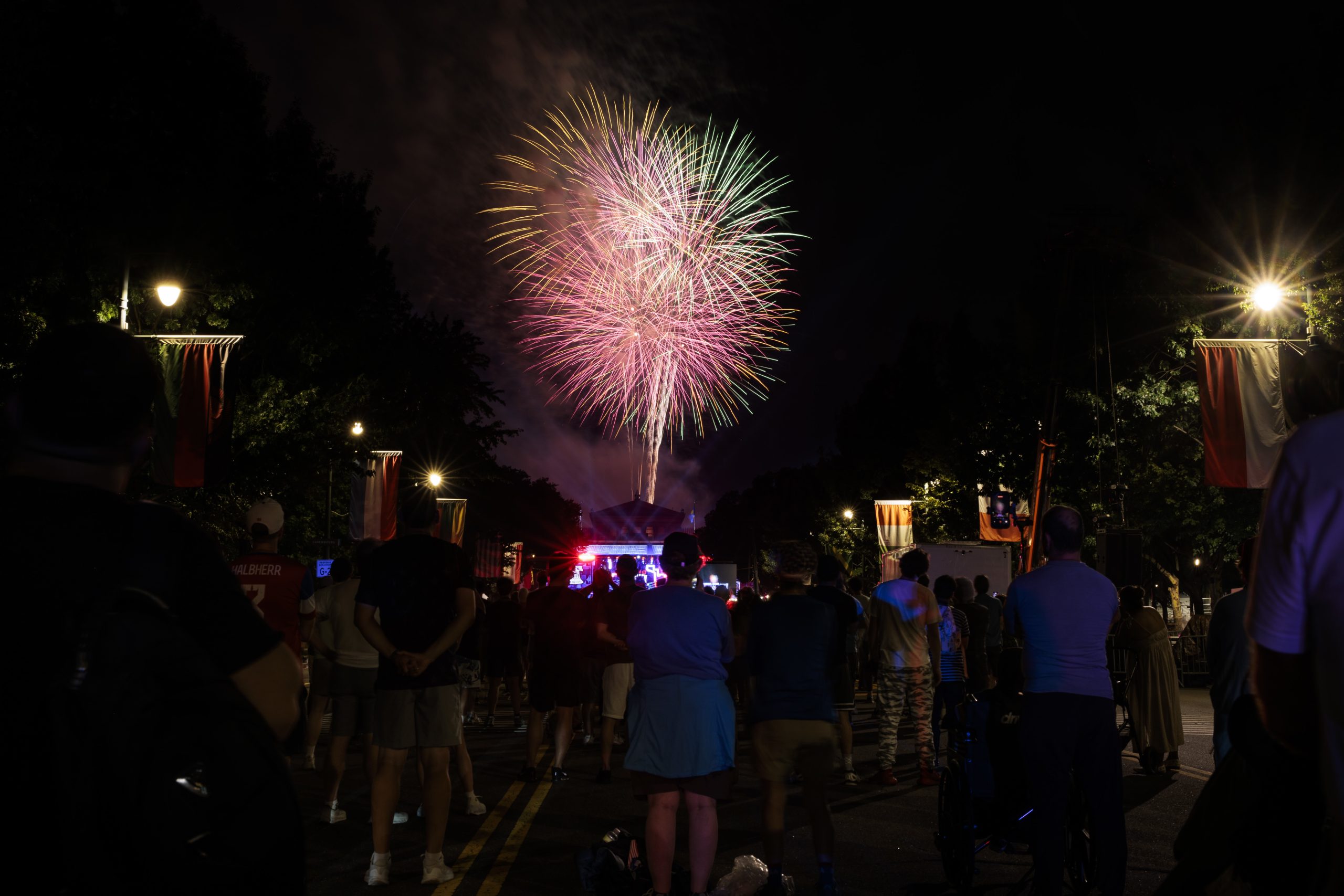
    Fireworks fill the sky at the One Philly: Unity Concert for America on the Benjamin Franklin Parkway on Sunday, July 5, 2026 in Philadelphia.Monica Herndon / Staff Photographer

    United Talent Agency, which represents Aguilera, did not return a request for comment. The pop star on Sunday posted videos from her rehearsals prior to the show on social media.

    “Philly, we had such a special 4th of July show planned for you!! 😭😫☔️🌧️,” Aguilera wrote on Instagram. “We poured so much heart and soul into this one, but safety always comes first—and sadly, the storm meant we couldn’t give you the show we worked so hard to bring to life 💔 Thank you to everyone who came out, and to my team for all the hard work that went into building this show… I hope to be back to Philly soon! xxxx.”

    The city’s payments to ESM are only part of the taxpayer costs for putting on the annual concert. The city also increases hours for city workers such as sanitation workers and police officers to put on the event.

    Grace on Tuesday declined to share the total cost of the concert, and reiterated Parker’s previous promise to lay out all expenses related to it at a future date.

    “As we’ve said previously, we will account for all expenses associated with the concert, along with producing an analysis of economic benefits accruing to the city, and release a report at a later time,” he said. “We want the report to be comprehensive.”

  • Mayor Parker changed things up for this year’s July 4th concert — and it’s costing Philly’s taxpayers millions more

    Mayor Parker changed things up for this year’s July 4th concert — and it’s costing Philly’s taxpayers millions more

    With the eyes of the nation on Philadelphia for America’s 250th birthday, Mayor Cherelle L. Parker’s administration this year took over management of the city’s free July Fourth concert, which for years was produced by a nonprofit established by the city: Welcome America.

    The mayor instead hired ESM Productions, a for-profit company, to put on the annual show featuring musical acts and fireworks over the Ben Franklin Parkway, and she changed the name from Wawa Welcome America to the “One Philly: Unity Concert for America” — a version of Parker’s well-known slogan, “One Philly: A United City.”

    Another change: It will cost taxpayers far more than in the past.

    The city is due to pay ESM Productions about $15.5 million for the show, which will be headlined by Christina Aguilera, Jill Scott, and The Roots, and feature rapper Meek Mill, according to a copy of the city’s contract paperwork with ESM, obtained by The Inquirer. The city in March signed a $10 million contract with the Philadelphia-based company, as well as a $5.5 million contract amendment.

    By comparison, Welcome America’s budget for all of 2024 — including that year’s July Fourth concert, the numerous other events it manages in the build-up to the concert, and the salaries of its staff — was about $6.6 million, only about $5.3 million of which came from government grants, according to the group’s most recent federal nonprofit disclosure.

    Welcome America, which is a public-private partnership with the mayor serving as a board member, receives city and state funding, as well as a corporate sponsorship. The organization has been involved in Philly’s July Fourth celebrations since 1993.

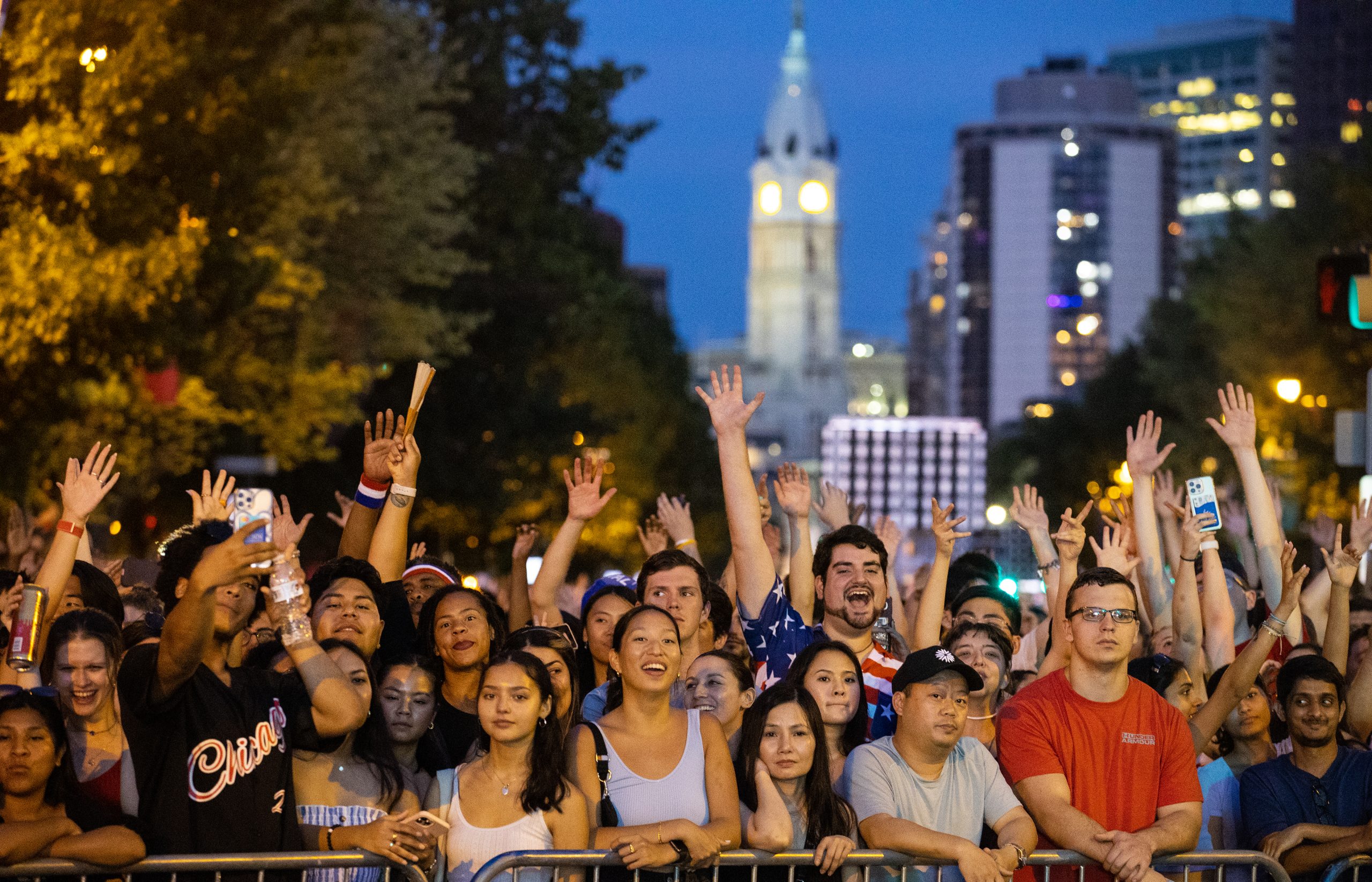
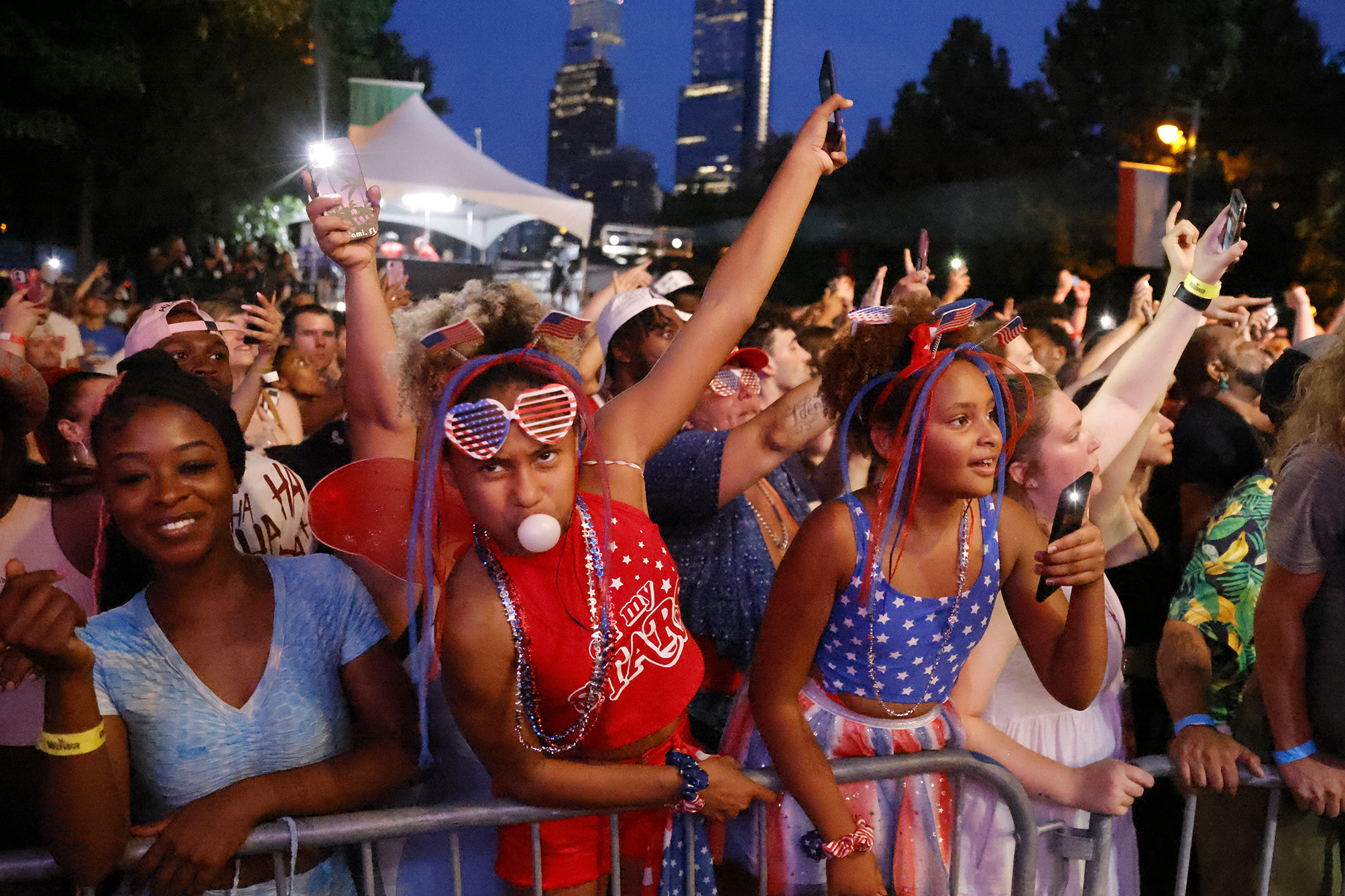
    Fans react to the music as the Wawa Welcome America Festival concluded July 4, 2023 with a free concert featuring Ludacris on the Benjamin Franklin Parkway.Charles Fox / Staff Photographer

    Last year’s iteration of the Wawa Welcome America concert cost the organization about $3 million, according to a person with knowledge of the situation who spoke on the condition of anonymity because they were not permitted to disclose that information.

    The Philly taxpayer money paid to the concert’s producers does not cover additional expenses borne by the city, such as pay for police officers and sanitation workers staffing the event.

    Parker’s office declined a request from The Inquirer for a copy of the contract or information on the cost of this year’s concert. Chief Deputy Mayor Vanessa Garrett Harley said in an interview that the administration would publicly disclose the costs and economic benefits of the concert after it was over.

    “At a later time, we could certainly be doing a full accounting, as we’re not trying to hide anything and always want to be transparent,” Garrett Harley said.

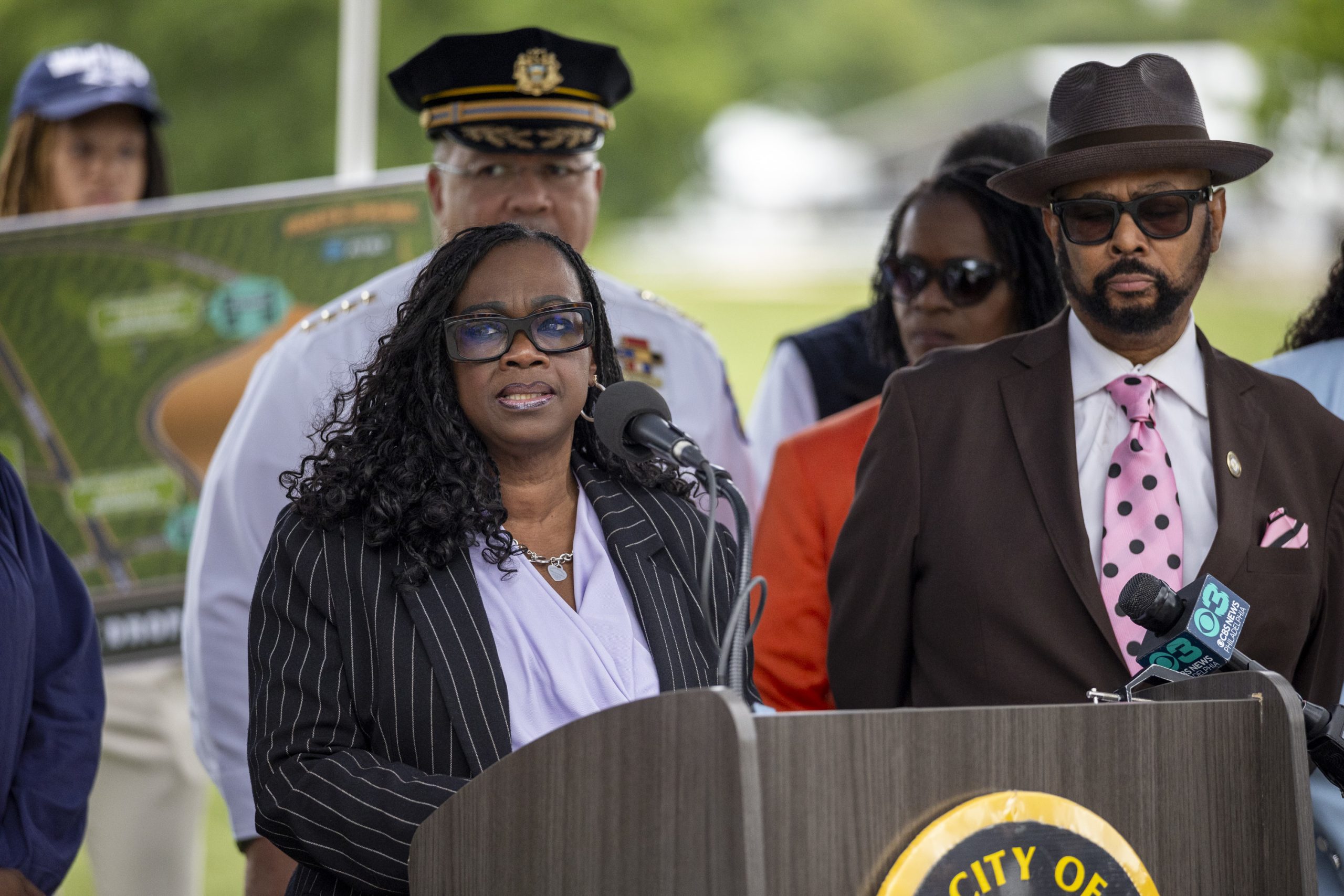
    Chief Deputy Mayor Vanessa Garrett Harley speaks at Belmont Plateau in Philadelphia on May 28.Tyger Williams / Staff Photographer

    Following the interview with Garrett Harley, The Inquirer later obtained the contract, and the mayor’s office on Tuesday did not respond to follow-up questions about the cost of the concert.

    ESM’s original $10 million contract with the city included a breakdown of costs, ranging from $5,000 for “furniture” to nearly $3.4 million for “talent.” It also included $1.2 million for “ESM Productions Fees” and $1 million for “Above the line Producer’s Unit.”

    The contract amendment for $5.5 million, signed June 26, did not include details on costs.

    A spokesperson for ESM declined to comment.

    Founded in 1996 by Scott Mirkin and Jenny Woo, ESM has previously produced numerous high-profile events on the Parkway, including the 2015 papal visit and Jay-Z’s Made in America concert.

    David L. Cohen, a Philly political powerbroker and former U.S. ambassador to Canada, said he has hired ESM to produce events going back to when he was chief of staff for then-Mayor Ed Rendell in the 1990s.

    “They’re incredibly competent; they’re incredibly good; they do an excellent job,” he said. “I really do think they’re the best event producers in Philadelphia.”

    In paperwork submitted to the city, ESM said it “has a long standing relationship” with Cohen and pointed to events he hired the company to produce at the U.S. embassy in Ottawa, Canada, as examples of its past work.

    Cohen, who is close to Parker and is working with the mayor to lure the Democratic National Convention back to Philly, said he had “nothing to do with their hiring.”

    Michael DelBene, president and CEO of Welcome America, said that, despite no longer being the producer for the concert, his organization is still managing more than a dozen Semiquincentennial-related events in partnership with the city. The events kicked off on Juneteenth and will run through the Fourth.

    “The celebrations that happen in the city are the implementation of the mayor’s vision, and if she chooses a team to implement that vision, that’s great, and we all support that person and that team,” DelBene said in an interview. “We’re all going to row in the same direction to make sure the city shines.”

    ‘Any and everybody can participate’

    By the time Parker took office in January 2024, Philadelphia was already behind in planning the celebration for America’s Semiquincentennial.

    Drama and infighting had plagued a series of nonprofit efforts and federal commissions meant to coordinate the festivities. And the COVID-19 pandemic pushed party-planning way down the priority list for the city and for state leaders who could have previously led the charge, former Mayor Jim Kenney and former Gov. Tom Wolf.

    Those delays likely squandered any opportunities for a monumental building project, such as the Please Touch Museum building, which was constructed for the 1876 Centennial Exposition, or the Ben Franklin Bridge, which opened for America’s 150th birthday in 1926. They may have also cost Philly the chance for an appearance by a high-profile dignitary, such as when Queen Elizabeth II visited for the 1976 Bicentennial.

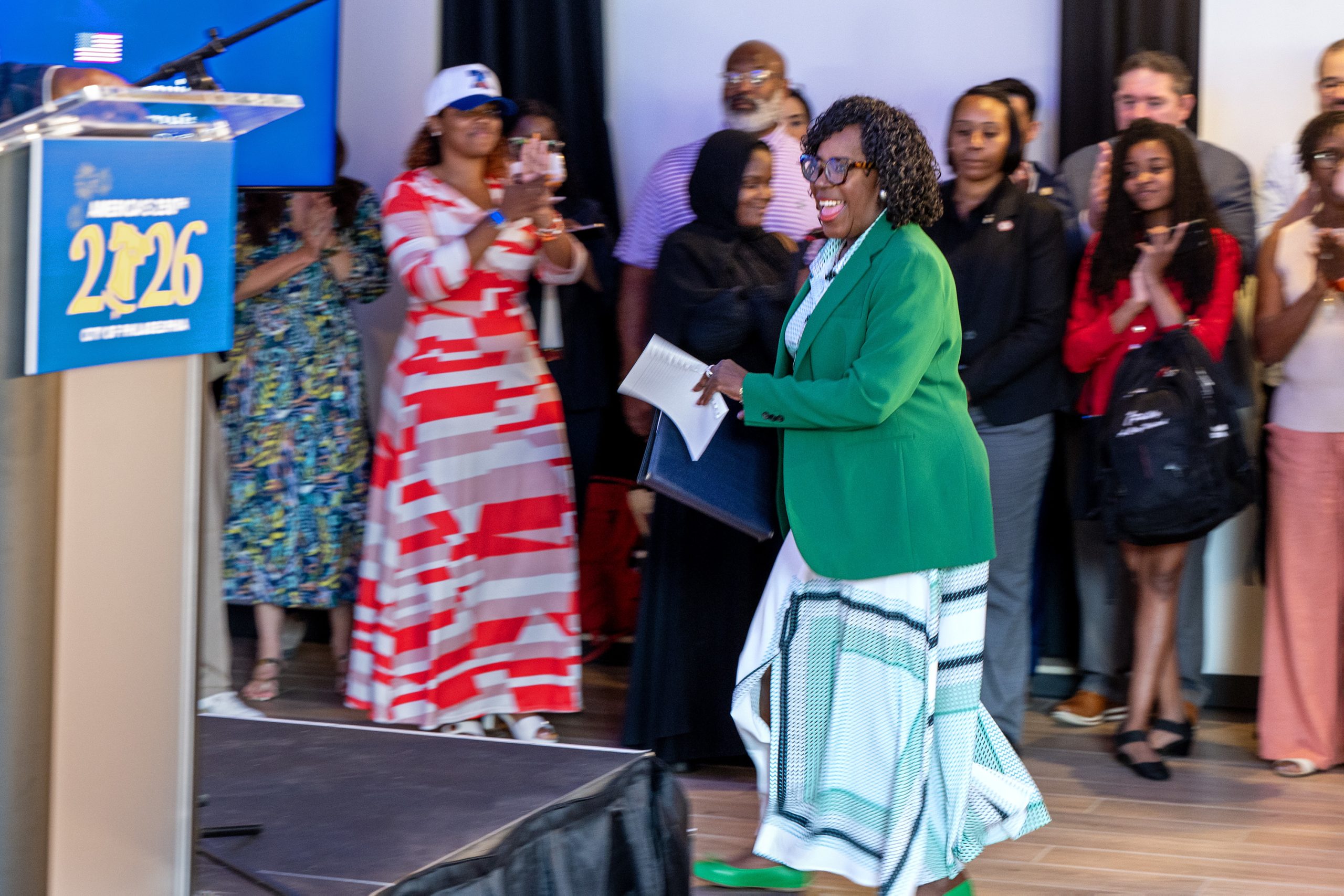
    Mayor Cherelle L. Parker heads to the stage at the Independence Visitor Center Wednesday, Sept. 3, 2025 to announce a new initiative that puts city neighborhoods at the forefront of the city celebrations of America’s 250th birthday in 2026.Tom Gralish / Staff Photographer

    Parker, who campaigned on combating the city’s gun violence crisis and improving basic services, did not at first appear to make the Semiquincentennial a top priority. She dedicated no money to the celebration in her first budget proposal, which was focused on public safety and public cleanliness. And she helped squelch a proposal from former Gov. Ed Rendell to build a monument for the 250th in LOVE Park.

    But the mayor eventually embraced the task in a more public way — following some public prodding from City Councilmember Isaiah Thomas — and the city’s Semiquincentennial celebrations will very much bear her stamp.

    Parker has pledged to spend $120 million this year to mark the occasion, and she has made investing in communities across the city, not just the historic district, a major focus as Philadelphia this summer is also hosting World Cup games and the MLB All-Star Game. Much of that spending will pay for street work and beautification projects in neighborhood commercial corridors, 250th-themed block parties, and extra funding for annual events like the Odunde Festival.

    “We want to make sure that any and everybody can participate in this regardless of your station in life,” Garrett Harley said.

    ‘This is her big concert’

    With the official Independence Day parade — still organized by Welcome America — scheduled for Friday, July 3, there is surprisingly little in the way of official patriotic proceedings taking place on July Fourth itself.

    Parker at 10 a.m. will lead a Philadelphia Freedom Awards ceremony at Independence Mall, honoring seven people, including Cohen and actor and Philadelphia-native Colman Domingo.

    At 5 p.m., the concert will kick off on the Ben Franklin Parkway. Performers include Aguilera, Will Smith, DJ Jazzy Jeff, Jill Scott, The Roots, Meek Mill, and Seal. The city’s official fireworks show will begin at the show’s conclusion, around 11:30 p.m.

    Fans during the Wawa Welcome America July 4th Concert on the Parkway in Philadelphia, Pa. on July 4, 2022.ELIZABETH ROBERTSON / Staff Photographer

    Parker has several times compared this year’s show to Live Aid, the 1985 benefit concert staged in Philadelphia and London that featured in its 10-hour stateside lineup Bob Dylan, Mick Jagger, Madonna, Phil Collins, the Beach Boys, the Four Tops, Santana, Run-D.M.C., and many other musical A-listers.

    “If you remember Live Aid and you think about the legacy experience we’re trying to create … that’s what we’re trying to do on July the Fourth,” Parker said in March.

    Garrett Harley on Tuesday conceded the concert lineups may not be exactly comparable, but said the mayor was “really talking more about the scope and the magnitude and just the memories.”

    “But to certain kids it’s gonna be bigger than Live Aid, because Christina Aguilera means to them what Stevie Wonder and some of the folks who ran Live Aid meant to others,” Garrett Harley said.

    Garrett Harley disputed the notion that renaming the concert “One Philly: A Unity Concert for America” meant that it now bears Parker’s branding.

    “I don’t know how a ‘Unity Concert for America’ is Parker’s branding because the whole point of this is about unity,” Garrett Harley said. “The branding is really about reminding people that we need to unify, we need to be one America, despite everything that may be going on in the country right now.”

    The mayor frequently concludes speeches by asking crowds to raise their index fingers and say in unison, “One Philly: A United City.” She has also had the slogan printed on city trash trucks and cans, along with her name.

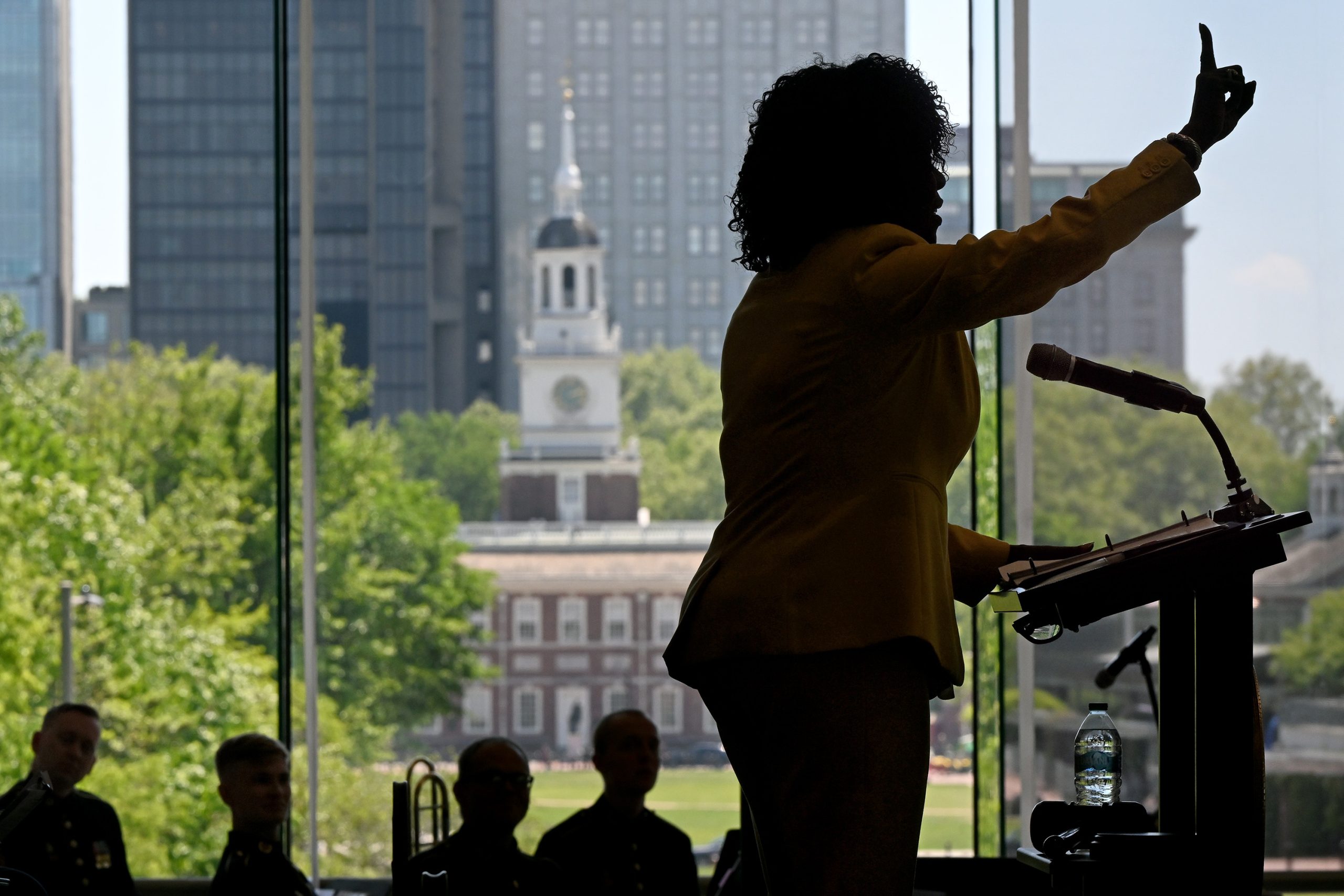
    Mayor Cherelle L. Parker raises a finger with her call-and-response “One Philly, A United City” mantra ending her speech during a ceremonial meeting of the Pennsylvania Senate at the National Constitution Center across the mall from Independence Hall on May 5.Tom Gralish / Staff Photographer

    “Even if it is Parker’s branding, if that’s how people see it, what would Wawa Welcome America be if not branding?” Garrett Harley added.

    (Wawa, a longtime corporate sponsor for the city’s July Fourth festivities, pays Welcome America to include its branding in the event, defraying costs for taxpayers.)

    Branding or not, Parker’s vision guided the planning for the concert, Garrett Harley said.

    “At the end of the day, this is [Philadelphia’s] 100th mayor,” Garrett Harley said of Parker. “This was her biggest concert, and probably will be the biggest that she will ever do. She’s the first female mayor. She’s the first African American female mayor. This is her big concert.”

  • One of Mayor Parker’s top licenses & inspections officials ‘is no longer with the City.’ Her office won’t say why.

    One of Mayor Parker’s top licenses & inspections officials ‘is no longer with the City.’ Her office won’t say why.

    After taking office in 2024, Mayor Cherelle L. Parker split the Department of Licenses & Inspections into two separate agencies.

    On Thursday afternoon, Parker’s administration unexpectedly announced that her appointee to lead one of those two agencies “is no longer with the City of Philadelphia effective Thursday.”

    Parker appointed Basil L. Merenda as the L&I commissioner for “Inspections, Safety, and Compliance” in February 2024, at the same moment she split the agency and named Bridget Collins-Greenwald commissioner for “Quality of Life.”

    The departure of top city officials are often announced well in advance of their last days. That was not the case for Merenda, and the city declined to explain the circumstances of his exit.

    “We do not comment on private personnel/HR matters,” Sharon Gallagher, a spokesperson for the managing director’s office, said in a statement. “We remain laser-focused on L&I ISC’s mission, workforce and the public they serve.”

    Perhaps the most high-profile moment of Merenda’s tenure came two months ago when he stood alongside Parker during a news conference at the site of a deadly collapse of a Children’s Hospital of Philadelphia garage that was being constructed in Grays Ferry.

    Parker noted at the time that the project had all necessary permits for construction and that inspections were up to date. Three ironworkers died in the collapse, which was caused by a precast concrete roof panel crashing onto the garage’s stairwell.

    Gallagher confirmed the administration will continue L&I’s bifurcated structure, which Parker established through an executive order in 2024.

    Merenda’s division was tasked with overseeing permitting and inspections for construction, building operation, and demolitions in the city.

    The city’s politically powerful building trades unions, which played a critical role in electing Parker in 2023, have a keen interest in who holds that job. And Merenda, who was the city’s director of labor under union-friendly former Mayor Jim Kenney, seemed to fit the bill as someone who could be a reliable ally.

    Ryan Boyer, who heads the Philadelphia Building & Construction Trades Council, said Thursday he found out about Merenda’s departure when the Parker administration publicly announced it and did not know why he was let go.

    Attempts to reach Merenda were unsuccessful.

    Ralph DiPietro, a deputy commissioner in L&I’s quality of life agency, will replace Merenda, according to the administration’s announcement.

    “Commissioner DiPietro’s vast experience with the Department, building and inspection background, and work on many recent initiatives will serve well for him to assume the restructured L&I Inspections, Safety, and Compliance Division,” Managing Director Adam K. Thiel said in a statement. “We thank him in advance for his service and leadership during this transition.” 

    Staff writer Anna Orso contributed to this article.

  • Councilmember Cindy Bass will remain the Democratic ward leader in Mount Airy. But she agreed to share power with progressives.

    Councilmember Cindy Bass will remain the Democratic ward leader in Mount Airy. But she agreed to share power with progressives.

    After a week of heated conflict that left both sides looking worse for wear, the race to become the Democratic leader of Mount Airy’s 22nd Ward came down a tie.

    Philadelphia City Councilmember Cindy Bass and her progressive challenger, Octavius Price, each received 27 votes from their fellow committeepeople in the initial rounds of voting during Wednesday night’s redo of the race for ward leader, an influential party position in one of the most voter-rich neighborhoods of the city.

    A series of closed-door meetings followed, including a one-on-one meeting between Bass and Price.

    Ultimately, Price agreed to allow Bass to remain as ward leader as part of a power-sharing agreement in which he will become ward chair, the No. 2 position. They also agreed to elect a joint slate of officers to fill out the ward’s executive committee.

    “We both had supporters who weren’t here today, so we would have just kept tying, essentially,” said Price, a fiber optic engineer and a member of the Pennsylvania Air National Guard. “And because I’m committed to the ward, I decided to take a position that was not necessarily a ward leader, but still gives me the time and the capacity to work with my constituents.”

    Bass described the outcome as “a win.”

    “We’re looking forward to working with everybody,” Bass told reporters. “We’ve got some new members who have joined the ward, and we’ve got some other folks who will be the staples of the organization who can help keep it going.”

    The drama began on the evening of June 8, when Bass declared herself the victor of the ward leader race after a divided voice vote of committeepeople during a meeting at the Germantown Seventh-day Adventist Church. The Inquirer published a video of the meeting showing Bass refusing requests to hold a roll-call vote that could have clarified the results, prompting the Democratic City Committee to order a redo of the race.

    Both sides spent the ensuing week attempting to win over committeepeople for the rerun.

    On Wednesday morning, progressive activist Nate Holt visited committeeperson James Harrison at his home and offered him money while encouraging him to vote against Bass, videos of the encounter obtained by The Inquirer show.

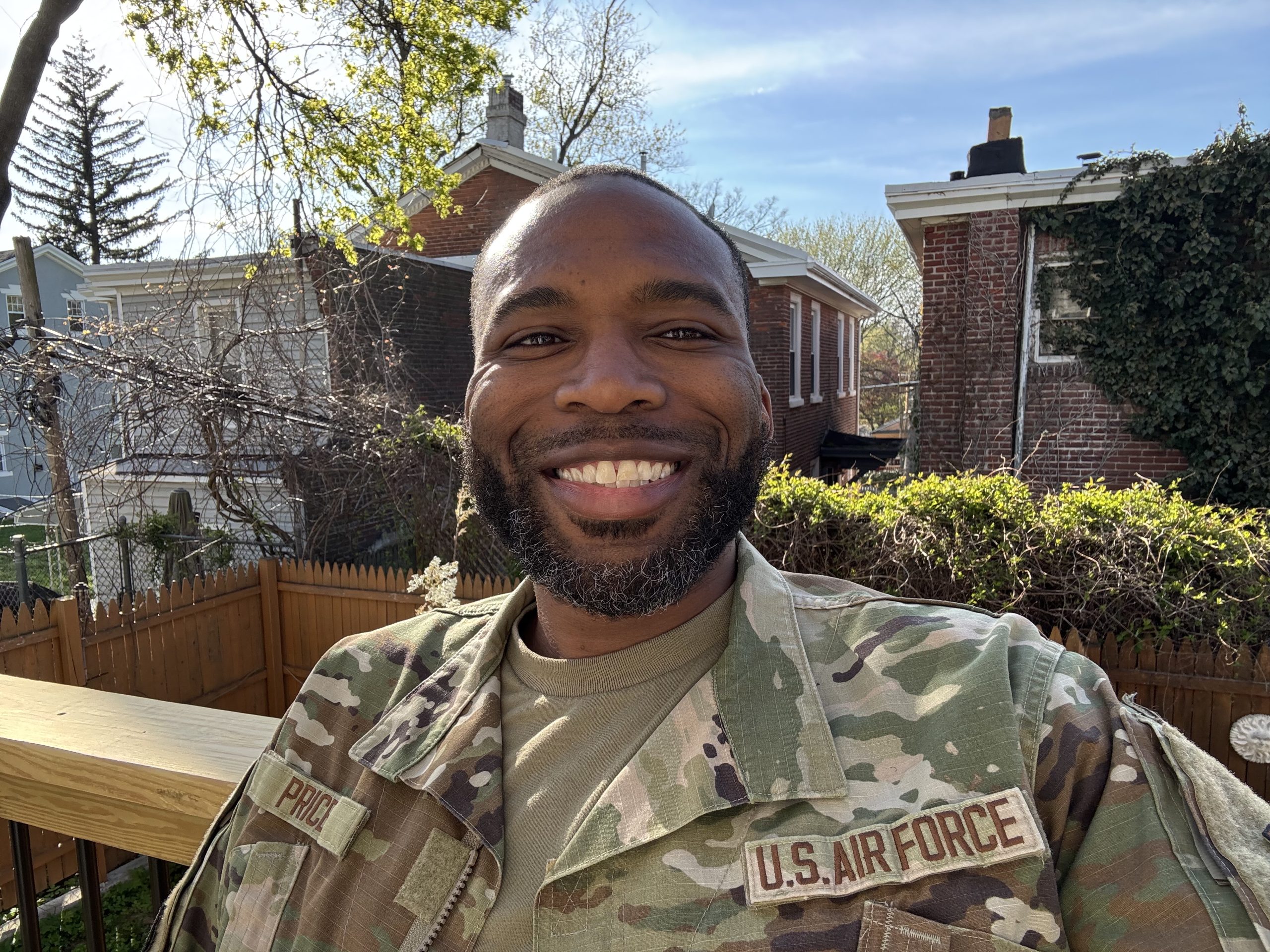
    Octavius Price, a fiber optic engineer and member of the Pennsylvania Air National Guard, ran for 22nd Democratic Ward leader. (Photo courtesy of Octavius Price)Sean Walsh

    Price condemned Holt’s behavior and said he had “cut all ties with him” in a statement Wednesday evening before the vote.

    Holt has not responded to questions about why he offered money to Harrison, but said in a statement he did not court committeepeople at the direction of any ward leader candidate.

    As it happens, Harrison’s vote could have been decisive. But he did not attend Wednesday’s meeting.

    Additionally, one committeeperson who did show up abstained, declining to vote for either candidate.

    Another key vote came from former Councilmember Derek S. Green, a committeeperson in the ward who briefly considered running for ward leader and said he abstained during the initial vote last week, ultimately sided with Bass.

    Green said the incident with Holt and Harrison swayed his vote.

    “I learned about the video,” Green said, explaining his decision. “I’ve never seen that in the history of politics.”

    The redo election took place Wednesday night at party headquarters. The party’s organization committee, which is made up of other ward leaders and chaired by former Councilmember Sharon Vaughn, oversaw the election.

    Bass is often at odds with progressive activists in her Northwest Philadelphia-based 8th Council District. She narrowly won reelection in 2023 and likely faces another stiff challenge in next year’s Council race.

    Ward leaders and committeepeople, the front-line workers of the party, are charged with getting out the vote for party-endorsed candidates and fielding constituent services requests.

    Control of the voter-rich 22nd Ward could play a big role in next year’s Council race.

    The 22nd Ward was one of three elections the party ordered to be rerun Wednesday night. In both other races, the candidates who won the initial votes also prevailed in the redos.

    In North Philadelphia’s 14th Ward, Valerie Williams defeated the incumbent, Arthur Green, in a 10-8 vote.

    And in an open race for the Northwest Philadelphia-based 17th Ward, Tyrone Barge beat Melissa Schley, a former ward leader.

    Barge said that his race did not involve significant ideological differences. Instead, committeepeople supported him because he promised “hard work” and increasing efforts to drive turnout for Democrats.

    “We’re gonna do some exciting things in the ward,” Barge said in an interview. “It’s gonna be different.”

    The results put an end to a dramatic party election cycle that saw longtime Democratic City Committee chair Bob Brady reelected to an 11th term with a new roster of lieutenants led by Vaughn, the party’s new first chair.

    Brady said after Wednesday’s election that party leaders at one point considered deciding the race through a coin toss.

    “We didn’t know what to do with it. And then the two got together and made an agreement and made life a lot easier,” Brady said. “The best thing can happen is those two factions that they had all agreed on this … and the two are going to work together, and I told them I would come and work with them.”

  • Activist offered money to committeeperson and asked him to vote against Councilmember Cindy Bass in Northwest Philly ward, videos show

    Activist offered money to committeeperson and asked him to vote against Councilmember Cindy Bass in Northwest Philly ward, videos show

    A progressive activist on Wednesday offered money to a Democratic committeeperson while attempting to convince that person to vote against City Councilmember Cindy Bass in Wednesday night’s 22nd Ward leader election, videos obtained by The Inquirer show.

    The activist, Nate Holt, is a former 22nd Ward committeeperson working to support progressive candidate Octavius Price’s bid to unseat Bass from the party leadership post.

    The 22nd Ward leader election has already generated considerable controversy. Wednesday night’s vote will be a redo of the contested initial election, which was last Monday.

    The Inquirer last week published a separate video in which Bass declared herself the winner of the first election following a contested voice vote. That prompted the Democratic City Committee to order the vote being held at party quarters Wednesday night.

    Both sides have been working to win over committeepeople in advance of the rerun.

    In the new videos, Holt is standing on the porch of committeeperson James Harrison. Holt knocks, but Harrison doesn’t immediately come to the door. Holt then appears to shout to Harrison through a window.

    “James, this is Nate. Nate Holt, tall white boy. I got your money, man,” Holt says in the videos, which are filmed from a car parked on the street outside the home. “Yo, you know me.”

    Holt, who is not a committeeperson, at one point tells Harrison he’s “from the committee.”

    Harrison eventually comes to the door.

    “Yeah, so you know about this vote tonight? I have some money for you from the previous election,” Holt says in part. “We’re trying to get Cindy Bass out. … Were you going to attend tonight, or do you want to sign a form so that somebody else can vote for you?”

    It was not clear what previous election Holt was referencing.

    At one point, Harrison says, “Where the money at?”

    “Look, I’m going to give you 30 right now,” Holt responds in part.

    The audio then becomes difficult to discern as the person shooting the videos — a 12th Ward Democratic committeeperson supporting Bass named Earl Graham — gets out of the car and ends the recording.

    Graham confirmed he took the videos and said he went to Harrison’s house while also trying to win his support in Wednesday night’s election.

    “I saw somebody at his house banging on the door saying, ‘Hey, I got some money for you,’” Graham said. “I just pulled over and just recorded.”

    In a statement, Holt confirmed he “visited the house of a 22nd ward committeeperson” on Wednesday morning and encountered a Bass supporter.

    He emphasized that he acted alone and did not approach committeepeople at the direction of any candidate.

    Holt did not respond to questions about the money he referenced in the videos.

    Bass and other Democratic leaders respond

    Ward leaders and the committeepeople that elect them are the neighborhood-based front line soldiers of the Democratic Party, working to get out the vote for party-endorsed candidates and field constituent services requests.

    Bass was heavily criticized for her handling of the initial vote, in which she declared herself the victor after a contested voice vote and refused to honor requests for a roll-call vote that could have clarified the results.

    Now Bass is saying it is her opponents who are using underhanded tactics.

    “It’s very clear what the intent was of this transaction or attempted transaction, and I don’t even know what to say. I’m flabbergasted,” Bass said in an interview after viewing the videos Wednesday.

    She added that the videos have been shared with the district attorney’s office election integrity unit.

    Spokesperson Marisa Palmer said that, under the office’s policy, she could neither confirm nor deny the existence of an investigation.

    “The Philadelphia DAO takes seriously the democratic rights of the residents of Philadelphia and protects those rights even-handedly,” Palmer said.

    At his house Friday evening, Harrison on Friday evening declined to talk at length about the ordeal but said Holt did not give him any money.

    “He ain’t give me nothing,” Harrison said. “He came asking me to sign for somebody else. … Everybody wants me to do what they want.”

    Price on Wednesday said he was “saddened and outraged today when I learned of the video showing community member Nate Holt knocking on a [committeeperson’s] door, and offering him money in an attempt to get him to come to the door and participate in tonight’s election whether in person or by proxy.”

    “I did not, nor did anyone on my campaign, advise Nate Holt to offer any committee person money in exchange for their support,” Price said in a statement. “We had no knowledge of his plan to do so. Nate Holt is not a committee person and we have since cut all ties with him. ”

    Price also said his “resolve remains stronger than ever … to give voice to all those doing the work to build a stronger and more effective Democratic Party.”

    The election will take place at party headquarters on Spring Garden Street, but committeepeople can vote by proxy if they sign affidavits giving their support to one side.

    Democratic City Committee chair Brady said the committee had already planned to independently verify all proxies submitted at the meeting before the videos surfaced.

    “Any effort to improperly influence these elections, financially or otherwise, is an affront to our democracy and our values in the party,” Brady said in a statement.

    Holt’s history with Bass

    In a statement, Holt confirmed he “visited the house of a 22nd ward committeeperson” on Wednesday morning and encountered a Bass supporter.

    He emphasized that he is not a committeeperson and was not at the moment attempting to get Harrison to sign a proxy voting affidavit.

    “I did not coordinate this visit to the committeeperson with anyone else, neither other committeepeople, nor any candidates for ward offices,” Holt said. “I acted alone. I am not currently a committeeperson. I am not voting in any ward election, and I have not collected any proxy votes for any candidate, nor handled any proxy vote forms either physically or digitally.”

    But in the videos, Holt at one point explains proxy-voting to Harrison.

    “You don’t have to go. You can just sign the form, and somebody else can vote for you,” Holt tells Harrison. “I can get you that form.”

    Holt and Bass have history.

    Bass in 2024 had the party remove Holt and several others as 22nd Ward committeepeople for allegedly backing Working Families Party candidates for Council. Party bylaws prohibit committeepeople from backing non-Democrats.

    Holt has previously worked on a State House campaign for State Rep. Chris Rabb, a progressive who won last month’s high-profile race for Pennsylvania’s 3rd Congressional District race.

    Rabb said he was unaware of the incident Wednesday and declined to comment.

  • Bob Brady has chaired Philly’s Democratic Party since 1986. Ward leaders just gave him four more years.

    Bob Brady has chaired Philly’s Democratic Party since 1986. Ward leaders just gave him four more years.

    Since 1986, Philadelphia has had six different mayors and five City Council presidents. But over those four decades, the city’s Democratic Party has known only one leader: Robert A. Brady.

    And he’s not done yet.

    Brady, 82, on Monday night won an 11th term as chair of the Democratic City Committee, continuing an astonishing run as the top official in the local party despite growing tensions between the local Democratic establishment and progressive insurgents.

    Fresh off democratic socialist Chris Rabb’s victory in last month’s Democratic primary for an open Philly congressional seat, District Attorney Larry Krasner called on Brady to resign, and progressive activists hoped to shake up the local party they blame for Philly Democrats’ lackluster turnout in recent federal elections.

    But following last week’s ward leader elections — in which left-leaning candidates notched at least five victories but came up well short of the numbers needed to seriously threaten Brady and his allies — the writing was on the wall.

    No challenger stepped forward during Monday night’s leadership elections at the party’s headquarters, the Robert A. Brady Office Building on Spring Garden Street, and the incumbent won another four-year term.

    “It‘s pretty nice to get it unanimous — nobody complains at all, no problems whatsoever, and that’s the way I like to have it,” Brady told reporters after his reelection, in which the ward leaders approved his slate of party officers in a unanimous voice vote.

    He added that he believes the party’s factions can overcome their differences.

    “They know that my heart’s in the right place,” Brady said of the party’s left-leaning critics. “I want to go in the right direction, and it might be the direction that they want to go.”

    Mayor Cherelle L. Parker, who leads the 50th Ward, addressed party officials during the election meeting, telling them she is a “progressive with a capital P — because if you want to be a progressive, you got to make some progress.”

    “People want results,” Parker said in an interview afterward. “They don’t want to see fighting. They don’t want to see finger-pointing. Let’s focus on an agenda and not try to eat our own.”

    Also Monday, the party elected several new officers to serve alongside Brady and ordered reruns of three ward leader elections with contested outcomes.

    Those include Mount Airy’s 22nd Ward, in which City Councilmember Cindy Bass controversially declared herself the winner after a contested voice vote.

    All three reruns will take place Wednesday night.

    Soup to nuts in Democratic politics

    Brady lives in Overbook, where he is the 34th Ward leader.

    His mother was a committeeperson, and he worked as a union carpenter before his mentor, the late City Council President George X. Schwartz, got him a patronage job as a Council sergeant-at-arms. (Schwartz later went to jail after being convicted on corruption charges as part of the Abscam scandal in the 1980s.)

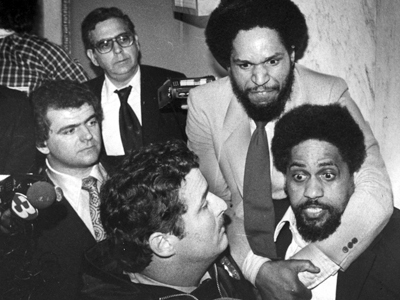
    City Council Sergeant-at-Arms Bob Brady, left, looks on as Councilmember John F. Street, top, and State Rep. Milton Street, right, take part in a near-riot in Council chambers. (Daily News File Photo)

    Brady was elected to Congress in a 1998 special election, and eventually chaired the House Administration Committee, which handles behind-the-scenes tasks such as assigning office space to lawmakers.

    While in Congress, he ran unsuccessfully for mayor in 2007, losing to Michael A. Nutter, who ran on an anti-corruption campaign.

    In 2017, news broke that Brady’s congressional campaign was the subject of a federal investigation over an alleged scheme in which a would-be challenger accepted $90,000 to withdraw from running against Brady in a 2012 primary.

    Two of Brady’s aides served prison time, but Brady never admitted wrongdoing. He chose not to run for reelection the following cycle, in 2018.

    A modern political ‘boss’

    While Brady is often referred to as Philly’s “party boss,“ leading the Democratic City Committee is not the same job as it was in the heyday of big-city machine politics.

    Thanks to civil service reforms in the 1950s, there are far fewer patronage jobs to hand out. And Brady’s time is more often spent attempting to maintain peace among the various political organizations around the city, rather than telling them what to do.

    “It really isn’t all that easy, you know, keeping everybody together,” Brady said Monday night. “You got all kinds of factions, all kinds of egos, and I try to do the best I can to keep together, like we did tonight.”

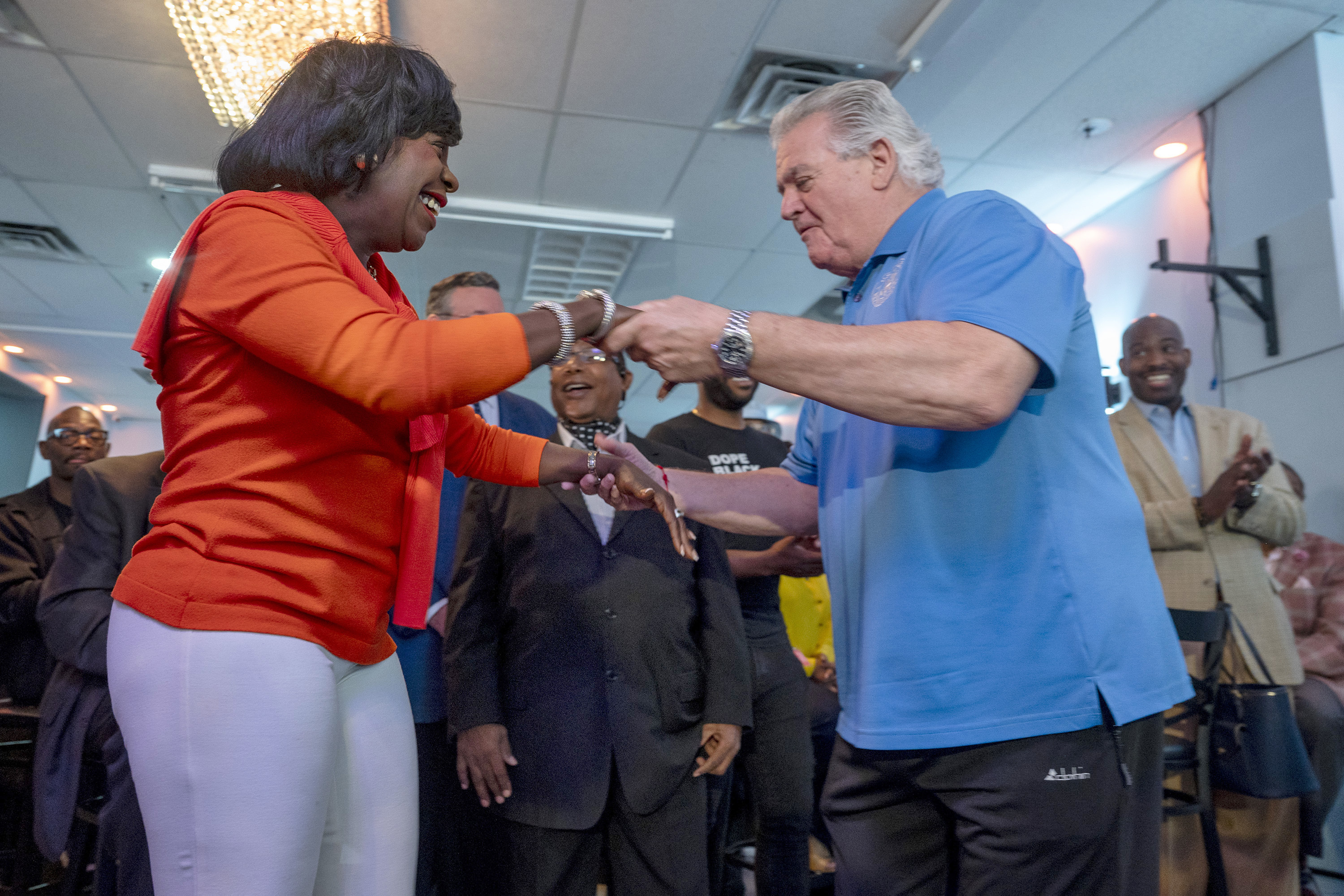
    Bob Brady, right, chair of the Philadelphia Democratic City Committee, dances with Cherelle L. Parker at a “unity breakfast” following her victory in the 2023 Democratic mayoral primary. Tom Gralish / Staff Photographer

    One area where today’s party does resemble the machine politics of old is local judicial elections. Party-endorsed candidates almost always win seats on the local Municipal Court and Common Pleas Court benches, and many of their staffs are in turn filled with people connected to the local party.

    Brady and party leaders have no qualms about admitting what it takes to win their approval: doing favors and free legal work for the city committee, ward leaders, and their constituents.

    Philly Democrats’ new No. 2

    Although the Democratic City Committee does not have a new chair, ward leaders on Monday elected a new No. 2.

    Former Councilmember Sharon Vaughn, who leads the 49th Ward, will be the new first chair of the party, replacing former Councilmember Jannie Blackwell, who did not run for reelection as 46th Ward leader.

    Vaughn, who is also a secretary of the Pennsylvania Democratic Party, would temporarily become city committee chair if Brady were to step aside. Brady said Monday he would support her to one day hold the position on a permanent basis as well.

    “She’s a great world leader, a former Council person, a hard worker,” Brady said. “What you see is what you get, straight shooter, and she’ll tell you just what it is. And she’s a loyal lady.”

    Lauren Rinaldi, the 18th Ward leader who is seen as having relationships with both the progressive and establishment wings of the party, became the second vice chair. She replaces Bass, who has now lost out on her citywide party leadership post regardless of how Wednesday’s 22nd Ward election redo shakes out.

    Rinaldi said Monday night she understands her election to leadership was partially an olive branch to the left wing of the party.

    “I‘m sure that’s part of it, definitely,” Rinaldi said in an interview. “But I am seeing my role as an advocate — advocating for reform to strengthen the party and modernize the way we do some things and bring more people in instead of shut them out. Basically to rebuild trust with voters.”

    The third vice chair remains 7th Ward leader Angel Cruz, and 63rd Ward leader Brian Eddis has replaced Bill Dolbow as fourth vice chair.

    Former City Controller Jonathan Saidel will stay on as the party’s treasurer, with John Brady, who is not related to the chair, serving as assistant treasurer.

    And 6th Ward leader Pete Wilson was retained as secretary, with 8th Ward leader Elaine Petrossian elected as assistant secretary.

    Back-to-back-to-back reruns

    The party on Monday ordered the results of three contested ward leader races voided. They will be rerun on Wednesday at the Brady building, with a committee of other ward leaders overseeing the results.

    In all three instances, the ward elections were found to have violated the party’s procedures.

    The redo for the 14th Ward, in which incumbent Arthur Green lost to Valerie Williams, will take place at 6 p.m.

    City Councilmember Cindy Bass, left, speaks with a reporter about her contested 22nd Ward leader election. Aidan T. Gallo / Staff Photographer

    That will be followed by a 7 p.m. rerun of the 17th Ward election, which was an open seat in which Tyrone Barge defeated Michelle Schley.

    And finally, the 22nd Ward redo will take place at 8 p.m., with progressive challenger Octavius Price taking on Bass.

    In all three races, the party will allow submission of “proxy votes” from committeepeople who cannot attend if they are accompanied by notarized affidavits.

    Brady said the decision to redo the 22nd Ward vote was an easy one after he saw a video published by The Inquirer showing Bass, who chaired her own reelection meeting, shutting down requests for a roll-call vote that could have clarified the results.

    “I don’t think anybody that saw that … was supportive of it,” Brady said. “One ward is one ward, and there’s 68 others, and we’re all going to fix that on Wednesday night.”

  • Banning ‘convenience’ fees, buying the police headquarters, and approving the city budget | City Council roundup

    Banning ‘convenience’ fees, buying the police headquarters, and approving the city budget | City Council roundup

    Sick of being charged with “processing” or “transaction” fees when shopping online?

    So is City Councilmember Rue Landau, and she introduced a bill Thursday to help Philadelphians avoid so-called pay-to-pay fees for online transactions.

    “This will keep money in people’s pockets,” Landau said in an interview. “Oftentimes, people are paying these fees every single month to simply pay their bills to an entity that only allows you to pay it in a certain way. They are unnecessary. We are making them unlawful.”

    The legislation aims to ban fees that are not related to actual costs to the seller. That means standard credit card processing fees, which retailers must pay to credit card companies, would not be banned under the bill. Instead, the bill aims to tackle additional fees beyond those processing charges by:

    • Mandating online payment portals have at least one option that involves no additional fees.
    • Requiring “cost justification” for fees, which Landau’s office said would essentially ban convenience fees by necessitating proof they are related to real costs borne by the seller.
    • Compelling online retailers to disclose all fees up front in “total-price advertising” before a transaction begins.

    To enforce the bill’s provisions, the city’s law department would be authorized to sue businesses charging illegal pay-to-pay fees. The bill would also allow private individuals to sue for damages from companies charging the fees, including as part of a class-action lawsuit.

    Next, Council President Kenyatta Johnson will refer the bill to a committee, where it could get a hearing as soon as this fall.

    Philadelphia City Council members inside the caucus inside City Hall in Philadelphia, Pa. on Thursday, June 11, 2026.Aidan T. Gallo / Staff Photographer

    What was the meeting’s highlight?

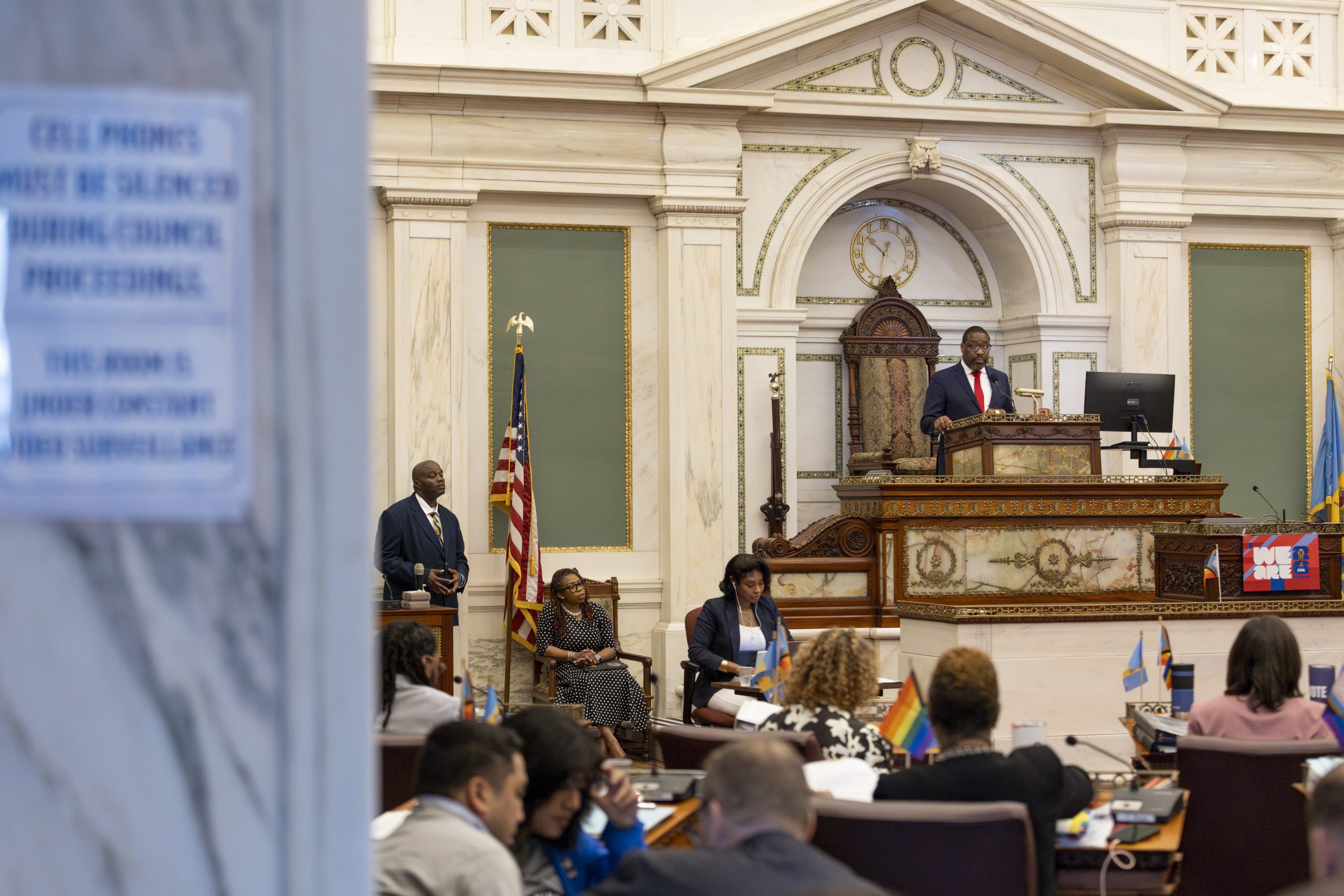
    All’s well that ends well?: Thursday was the last session before lawmakers adjourn for summer recess, and Council members pushed through a raft of legislation, including the $7.1 billion city budget for the fiscal year that begins July 1.

    City budget negotiations wrapped up last week, and Thursday’s votes were largely procedural.

    But the fallout continued Thursday from Council’s decision last week not to adopt Mayor Cherelle L. Parker’s proposal to plug the Philadelphia School District’s budget deficit with a new $1-per-ride tax on rideshare services like Uber and Lyft.

    Council President Kenyatta Johnson speaks during an announcement at the School District of Philadelphia Headquarters on Wednesday, June 10, 2026 in Philadelphia. Philadelphia School District officials will move to restore 340 classroom-based jobs that were slated to be cut, despite top district leaders saying last week that they did not have the recurring funding needed to keep the positions.Monica Herndon / Staff Photographer

    Council instead pulled roughly $50 million, the amount the tax would have generated next year, from the existing city budget to help fund the schools. District officials, however, said after that vote that they would have to move forward with cuts to 340 classroom positions because Council did not provide recurring revenue.

    Parker, Johnson, and school officials on Wednesday announced they had reached an agreement to provide recurring funding that will allow those jobs to be saved. But they offered few details on where the money would come from.

    What else happened?

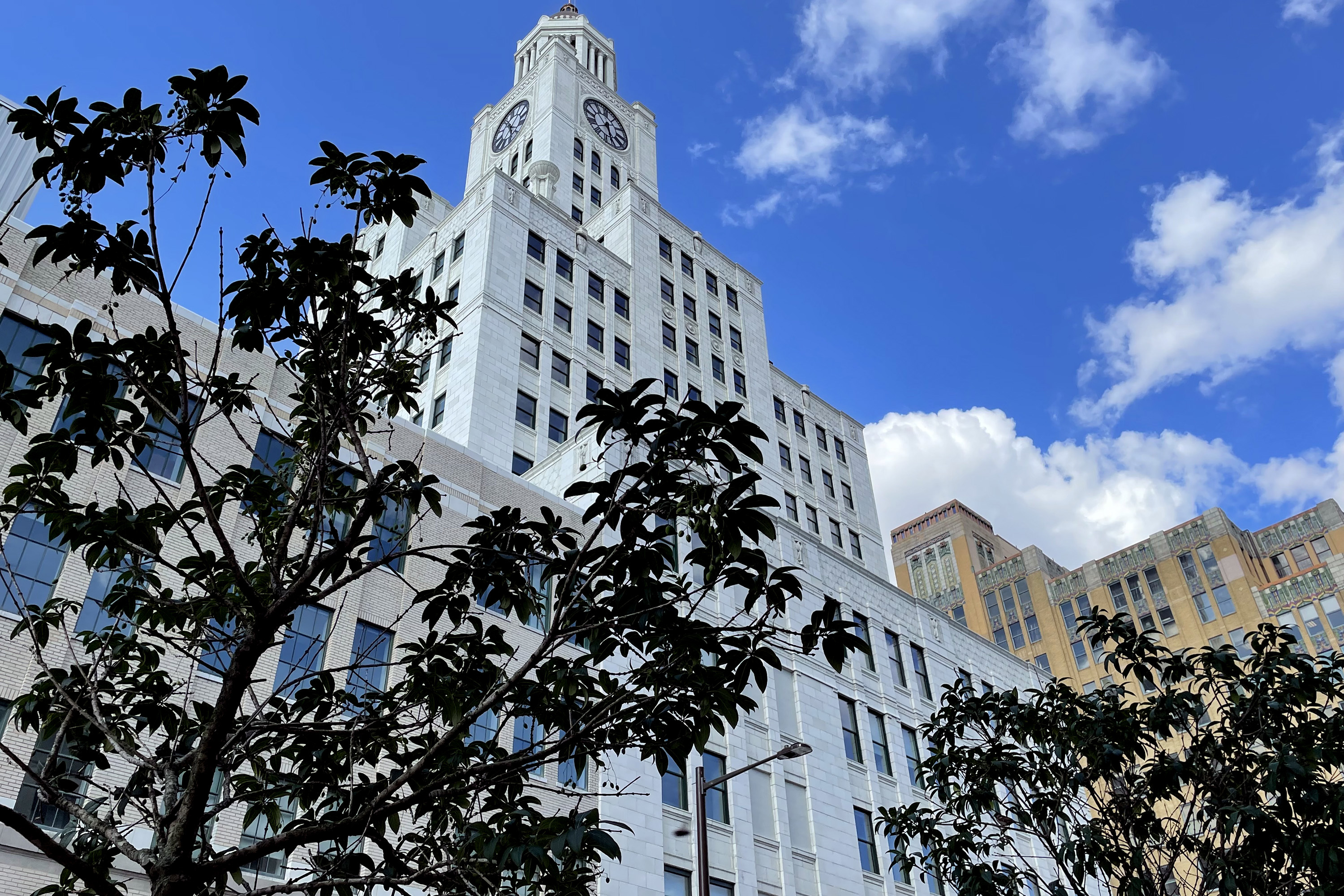
    The Tower of Taxpayers: The city will soon own the 18-story tower at 400 N. Broad St., the beaux arts landmark that is the Philadelphia Police Department’s headquarters and was dubbed the “Tower of Truth” when it was the home of The Inquirer.

    Council on Thursday voted 17-0 to approve legislation authorizing the city to borrow $200 million so it can own the building, part of a complex and controversial deal in which the city is buying outstanding debt on the property that is currently held by developer Bart Blatstein.

    The Philadelphia Public Services Building (PPSB) at 400 North Broad Street is the historic former Inquirer and Daily News building. It will soon be owned by the city of Philadelphia.TOM GRALISH / Staff Photographer

    The purchase stems from an agreement inked in 2017 during former Mayor Jim Kenney’s administration. Under the terms of the deal, the city’s current $15 million annual rent on the building was set to nearly double if the city did not exercise a one-time option to buy the property.

    Parker administration officials testified to a Council committee last week that, while the building is appraised to be worth $21.5 million, in order to purchase the structure, the city was required to assume the debt that Blatstein incurred to renovate the property.

    Council members on the Finance Committee balked at the $200 million price tag and initially held up the proposal, but eventually approved the measure.

    The city will issue bonds to buy the debt and will pay roughly $15 million a year in debt service.

    Expanding the definition of ‘the line of duty’: The city appears poised to offer death benefits to the families of first responders who die by suicide, a change that amounts to an expansion of how the government defines a death that occurred “in the line of duty.”

    Council approved legislation to offer pension payments, healthcare coverage, and other forms of compensation to the families of city workers who either had a diagnosed psychiatric disorder due in “significant part to exposure to one or more traumatic events in the line of duty” or died by suicide within 45 days of exposure to a traumatic event at work.

    That was despite the city’s risk manager testifying last week to a Council committee that the Parker administration opposes the change. Sharolyn Murphy told Council members that the administration is focused on suicide prevention, and that expanding who is eligible for death benefits would result in higher costs to the pension fund.

    Several members were deeply critical of the administration’s testimony, calling it “cruel” and “outrageous.”

    On Thursday, Council approved the bill in a 17-0 vote, sending it to Parker’s desk with a veto-proof majority.

    Quote of the week

    Philadelphia City Council members inside the begin the session inside the chamber at City Hall in Philadelphia, Pa. on Thursday, June 11, 2026.Aidan T. Gallo / Staff Photographer

    A bittersweet Pride: That was Mark Segal, the publisher of the Philadelphia Gay News and one of the most recognized leaders of the city’s LGBTQ+ community. He spoke Thursday during a Pride celebration in Council, and he called for accountability following the police response to Pride festivities on Sunday that many have called heavy-handed.

    Landau introduced legislation to hold hearings examining the police force’s tactics. It passed unanimously.

  • Mayor Parker and City Council now have one year to figure out a way to bring in $216 million after reversing Philly school cuts, officials say

    Mayor Parker and City Council now have one year to figure out a way to bring in $216 million after reversing Philly school cuts, officials say

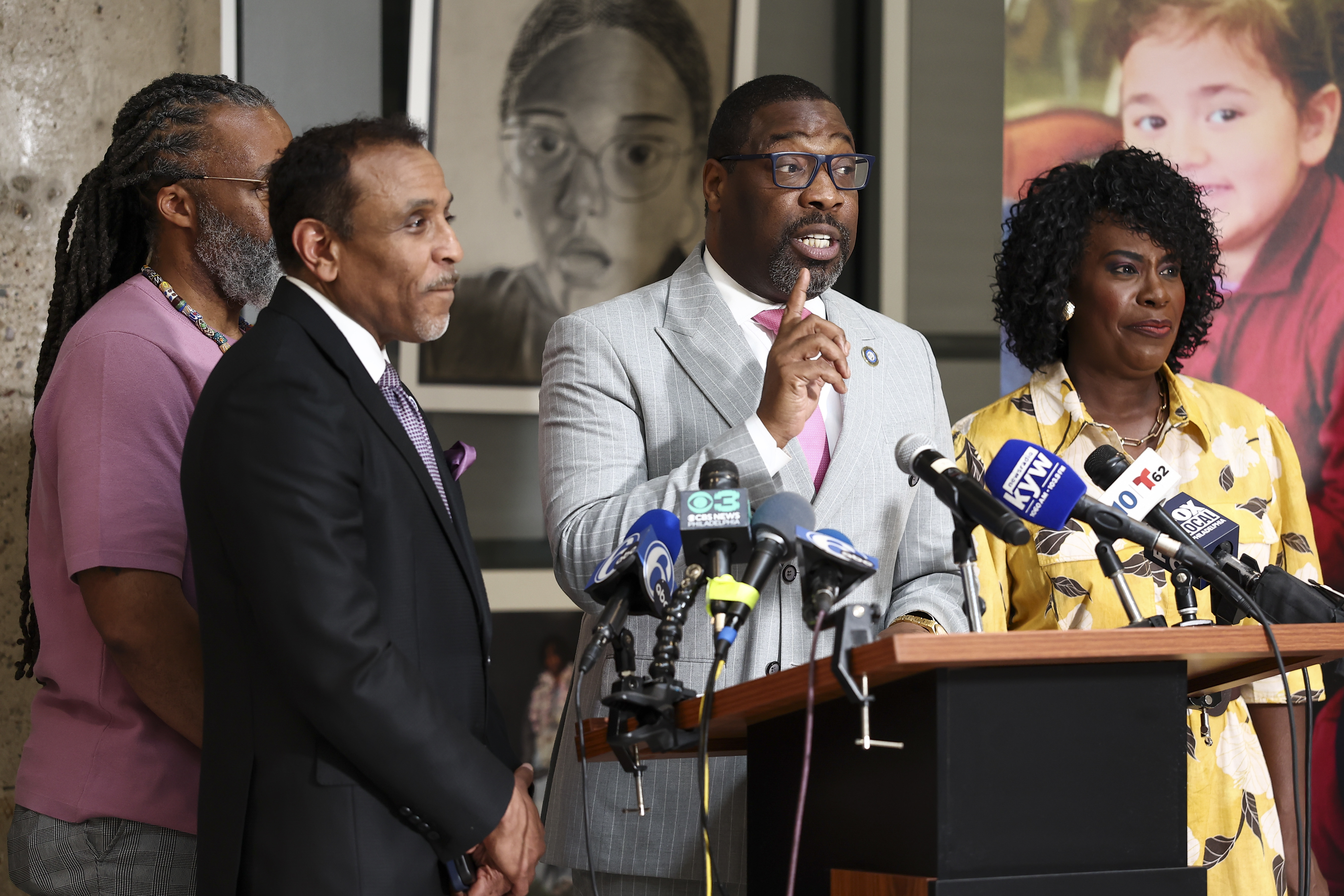
    Philadelphia School District officials and public education advocates were relieved Wednesday when Mayor Cherelle L. Parker announced she had reached a deal with City Council that will prevent 340 classroom positions from being eliminated amid the district’s funding woes.

    But as limited details about the agreement began to emerge Thursday, it became clear that the deal was less of a schools-funding program than a plan to figure one out over the next year — with the prospect of $216 million in city budget cuts taking effect if Parker and Council cannot eventually agree to adopt a new revenue stream.

    “Council President Kenyatta Johnson and I publicly committed to working together to find local, recurring, predictable, and dependable revenue sources for the School District of Philadelphia over the next year to ensure that we keep these critical positions,” Parker said Thursday during a city budget bill-signing ceremony. “That is our shared goal and our commitment.”

    But if Parker and Johnson do not make good on that commitment by July 1, 2027, the city will be on the hook for additional funding it has promised the school district between 2028 and 2031, including roughly $50 million in the first year of that time frame.

    Council President Kenyatta Johnson speaks during an announcement at the School District of Philadelphia Headquarters on Wednesday, June 10, 2026 in Philadelphia. Philadelphia School District officials will move to restore 340 classroom-based jobs that were slated to be cut, despite top district leaders saying last week that they did not have the recurring funding needed to keep the positions.Monica Herndon / Staff Photographer

    Parker, Johnson, Superintendent Tony B. Watlington Sr., and school board president Reginald Streater triumphantly unveiled the agreement to stave off the planned job cuts Wednesday. That announcement followed days of suspense after Council last week refused to pass the mayor’s proposed $1-per-trip rideshare tax, which would have funded schools, and instead advanced a city budget with about $50 million from one-time cuts that would be sent to the district as a Band-Aid for its $300 million budget gap.

    Council’s move prompted Watlington, with Parker’s backing, to say the positions would still be eliminated without an explicit promise that the money would be recurring, rather than a one-time allocation.

    Officials said they worked “around the clock” between Council’s rejection of the rideshare tax and Wednesday’s announcement, which Johnson jubilantly hailed as “Christmas in June.”

    On Thursday, education advocates and labor leaders heaped praise on the administration for the deal.

    Several district principals said Thursday they do not yet have details about exactly how much they will get back in their budgets, or how the dominoes will fall once positions are restored.

    Watlington had school leaders build their 2026-27 budgets as if the cuts were happening, and many of the affected teachers, counselors, and climate staff secured new positions, some in the district and some outside the system. The restoration will undoubtedly cause vacancies elsewhere, months after other districts filled jobs for the fall.

    “The win is making sure that those 340 jobs, with teachers, will not be laid off, and they will not have to second-guess if next year they’re going to come back to work,” Johnson told reporters Thursday. “And I think ultimately we can talk about sometime the ‘how’ we get to a particular end. But it’s always the ‘why.’ … At the end of the day, all of our young people still can have a chance to get a quality education.”

    ‘Budget sequestration’ comes to Philly?

    The agreement between Parker and Johnson in some ways hearkens back to Congress’ 2011 “budget sequestration” debacle, when President Barack Obama, a Democrat, and House Speaker John Boehner (R., Ohio) agreed to severe across-the-board spending reductions that would take effect automatically if lawmakers and the White House failed to reach a “grand bargain” to restructure the federal budget.

    They never reached an agreement — and the sequestration cuts, once thought of as too painful to countenance, eventually became reality.

    Parker and Johnson are optimistic their arrangement for the school district and the city budget will not suffer a similar fate.

    The future city budget cuts will be reflected in the city’s five-year plan, which must be approved by a state oversight board each year but is not binding legislation like annual taxing and spending measures. That gives City Hall more wiggle room to figure out how to find the money officials have now promised the district than Obama and Boehner had.

    Philadelphia Mayor Cherelle L. Parker is cheered by members of Philadelphia City Council at conclusion of the budget address, Thursday, March 12, 2026. From left are council members Nicholas O’Rourke, Cindy Bass and Katherine Gilmore Richardson. In background is council President Kenyatta Johnson. .Alejandro A. Alvarez / Staff Photographer

    Parker said her administration has already identified the cuts that will be reflected in the five-year plan when it is up for approval next month at the Pennsylvania Intergovernmental Cooperation Authority. But she has offered few specifics on what those potential cuts would entail.

    Parker said Thursday that the city could make up part of the difference by reducing future debt repayment obligations by reducing the size of planned city bond sales. She mentioned the city’s capital budget, which funds projects like repaving roads and renovating recreation centers, but did not say how much would be cut.

    And she said the city could halve its next borrowing related to her signature housing program, Housing Opportunities Made Easy. The city plans to take out a second tranche of $400 million in city bonds next year for H.O.M.E.; the potential cuts to free up money for schools could include taking only $200 million at that time, she said.

    “Where did we get the money from in future years?” Parker said Thursday. “In our five-year plan, we made cuts to very important programs associated with our capital budget and even our H.O.M.E. plan — but cuts that will never have to be realized once we all make good on that commitment to generate that approximately $50 million in new, predictable recurring revenue.”

    One complication in the negotiations to come is that Parker and all 17 Council members are up for reelection next year, and lawmakers are not eager to approve new taxes before voters head to the ballot box.

    The Democratic primary, which effectively decides almost all elections in Philadelphia due to the city’s deep-blue electorate, will be in May 2027. The next city budget, including all tax measures for the following fiscal year, must be enacted by the end of June 2027, leaving several weeks after the election for Council to potentially approve a new tax to provide money for the district next year.

    Philadelphia City Council members at City Hall in Philadelphia, Pa. on Thursday, June 11, 2026.Aidan T. Gallo / Staff Photographer

    Some possibilities do not involve new or increased taxes for residents. The city, for instance, could speed up its plans to increase the share of property tax revenue that is dedicated to the district. Currently, the district receives 56% of property tax revenue, while the city takes 44%.

    Additionally, Council last year approved a Parker proposal to enact 13 years of cuts to the business income and receipts tax and five years of reductions to wage tax. The city could generate more revenue by pausing those reductions.

    Parker said the agreement will allow Philadelphia to present a united front in Harrisburg as officials prepare to ask for more state funding for the city’s school district. State lawmakers in the past have pointed to disagreements among city leaders when rejecting requests for additional support.

    “This is the first time … in my lifetime that the city of Philadelphia, the administration, and the legislative branch, along with the superintendent of the School District of Philadelphia and the school board, will all travel [to Harrisburg] in unity, along with all of our union partners and all of our education advocates,” Parker said. “We can stand up when we arrive in Harrisburg and say … ‘Philadelphia’s homework is done.’”

    School advocates relieved

    Arthur Steinberg, president of the 14,000-member Philadelphia Federation of Teachers, said the news of Parker and Johnson’s agreement came just in time. Thursday was the last day of school for 114,000 district students; staff finish the school year Friday.

    “It was a very difficult year, and I’m glad that we’re able to tell them now that the positions that were cut due to this will be restored,” Steinberg said at a news conference Thursday morning outside Council chambers. “This means a lot to them. There’s stability over the summer. The communities will know who their teachers will be, and they’ll know where they’re going.”

    Arthur G. Steinberg (left), president of the Philadelphia Association of Teachers, and school superintendent Tony B. Watlington, Sr. (right) greet students as they arrive onstage for Mayor Parker’s announcement March 23, 2026, of $1 rideshare tax proposal to fund city schools.Tom Gralish / Staff Photographer

    Tiffany Johnson Williams said she was thrilled that cuts at her child’s school — Nebinger Elementary in South Philadelphia — and others would be rolled back.

    “I am equally grateful to Mayor Parker, Superintendent Watlington, and the school board for coming back to the table and working collaboratively to reach the solution that restored our critical positions,” Williams said at the news conference. “As a parent and educator and a youth advocate, I know that stability matters.”

    Councilmember Isaiah Thomas, who has had a testy relationship with the district and school board over the last several months, suggested it was time to move forward cohesively to push for more funding elsewhere.

    “I think where we are at this moment is recognizing that as we come together as Philadelphians, our job now is to use our advocacy initiatives and our leverage to try to get even more resources from Harrisburg,” Thomas said.

    Staff writers Anna Orso and Jake Blumgart contributed to this article.