Author: Sean Collins Walsh

  • After a messy budget fight, Philly City Council turns to its unfinished business: Trash, taxes, and a new arena

    After a messy budget fight, Philly City Council turns to its unfinished business: Trash, taxes, and a new arena

    One evening last week, City Council President Kenyatta Johnson stood on South Broad Street and greeted his fellow lawmakers as they arrived at Steak 48.

    Johnson had invited them to the swanky Center City steakhouse to “reconnect, share conversation, and enjoy each other’s company outside of City Hall,” according to an invitation for the Sept. 9 “members only” event obtained by The Inquirer.

    Council resumes for its fall session Thursday — and after the way things ended in the spring, the city’s legislators may have needed the opportunity to break bread together.

    When lawmakers last met in June, they approved a $7.1 billion city budget that left all sides feeling dejected. Council turned away a series of tax proposals from Mayor Cherelle L. Parker, including a $1-per-ride levy on rideshare companies like Uber and Lyft, and ended up passing a budget that omitted a number of members’ own priorities and left unanswered how the city will help the Philadelphia School District navigate its funding crisis in the long run.

    In addition to representing a new low in Parker’s relationship with the legislative body of which she was once a member, some Council members also questioned their own negotiating team’s handling of the ordeal.

    Councilmember Mike Driscoll noted last week that while he was not “pointing fingers,” Council could have added more money in the budget for line items requested by lawmakers, such as funding for community groups.

    “I’m disappointed and pissed off at the way it played out,” Driscoll, who represents parts of Northeast Philadelphia, said in an interview. “Our priorities weren’t analyzed in a more thoughtful [way]. … We do the amendments. [Parker] doesn’t. We could have put money in.”
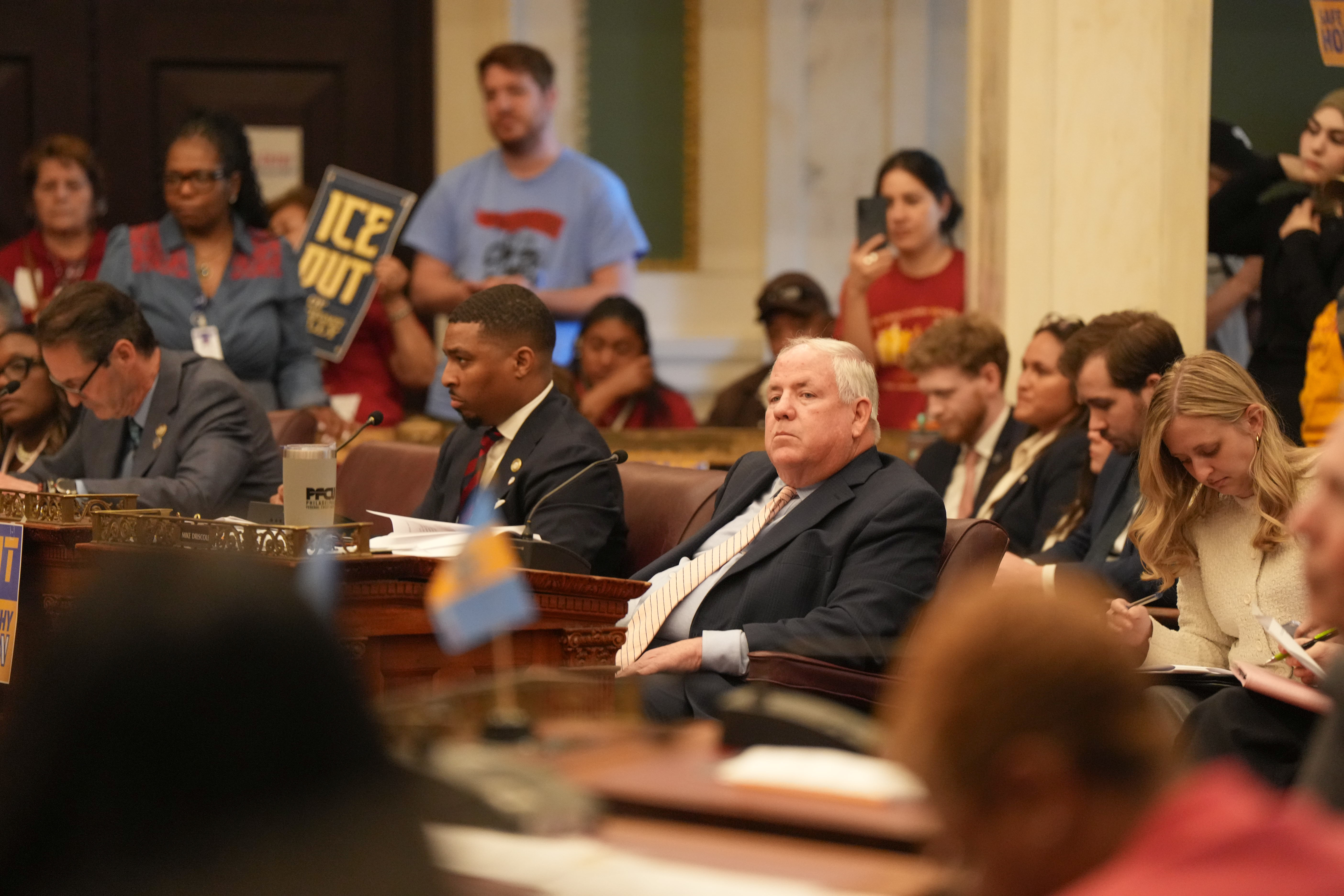
    Councilmember Michael Driscoll in Philadelphia on April 23, 2026.Jessica Griffin / Staff Photographer

    In addition to dealing with the aftermath of the budget, Council this fall is expected to revisit a tense debate over how the city disposes of its trash and a proposal by Driscoll to provide business tax relief to sole proprietors. It may also begin to consider legislation related to the proposed 76ers and Flyers arena in the South Philadelphia sports complex.

    An Inquirer reporter saw at least 11 of Council’s 17 members at the Steak 48 event, meaning a majority, or quorum, of Council was present. The Pennsylvania Open Meetings Act, or Sunshine Act, requires legislative bodies to notify the public if a quorum is present for a meeting at which official business is discussed.

    But Johnson said at the beginning of the dinner that would not be happening.

    “Tonight we do no official business,” Johnson said in an interview. “Just social. Welcome back to City Council. Eat and drink and be merry. No policy on the table. No legislation on the table. Just having a good time.”

    Johnson’s invite directed members to RSVP to a Council staffer’s city email address. Johnson said his campaign picked up the tab.

    Parker and all 17 Council members will be on the ballot in next year’s municipal elections.

    “Everyone facing reelection next spring knows they have to be able to point to real accomplishments on the important issues voters care about,” City Hall lobbyist John C. Hawkins said. “And this fall is their last opportunity for them to address the most pressing issues that were not fully resolved in the spring budget process.”

    Budget fight hangover

    When Council and the mayor in the spring failed to reach a deal over new tax revenue to plug a $48 million hole in the school district’s budget, Johnson said Council had helped identify one-time savings in the city budget to fill the gap for a year while vowing to explore new recurring revenue streams for the district.

    Johnson has not yet scheduled a hearing on schools funding, and Council’s dissatisfaction with the district appears to have been mounting.
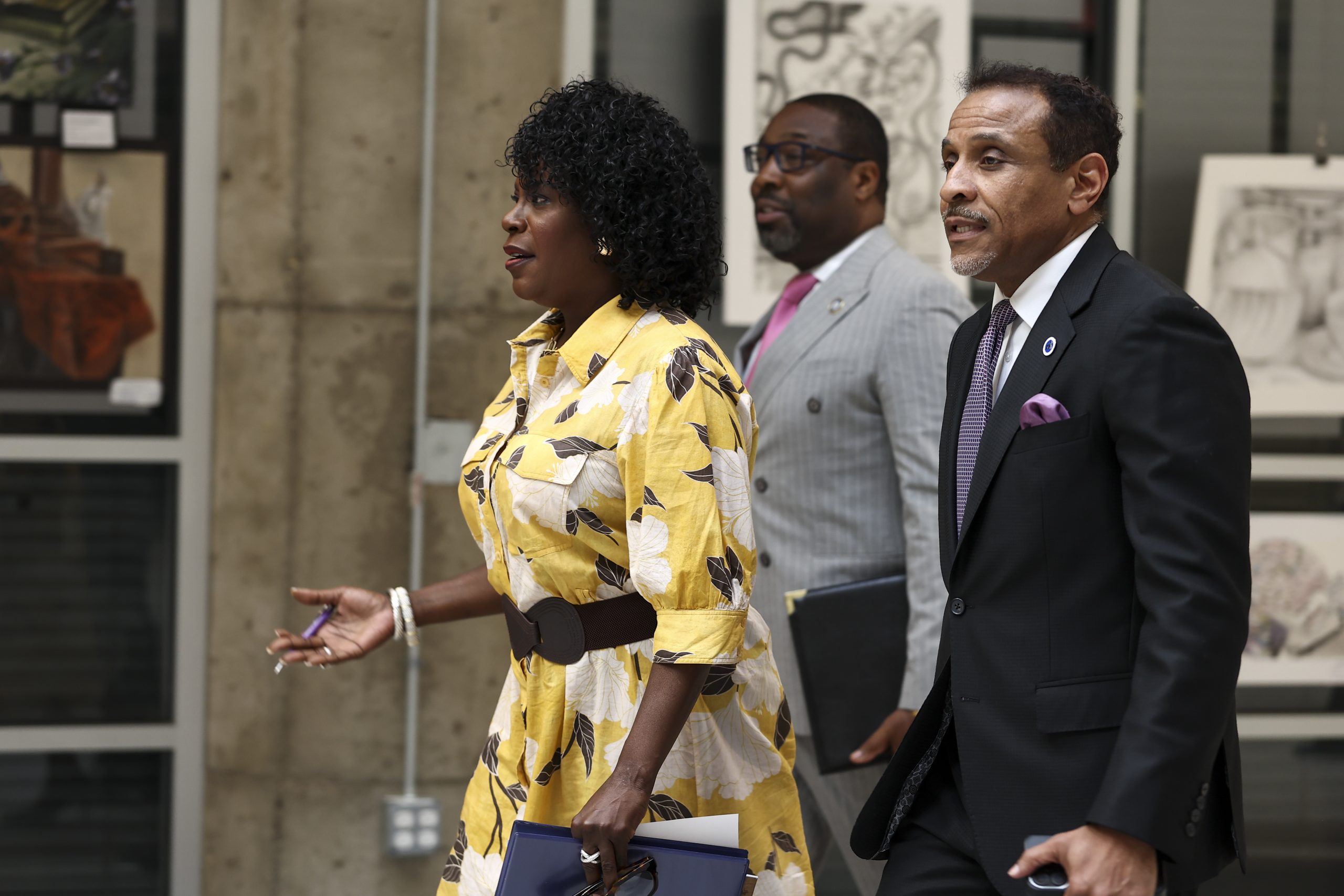
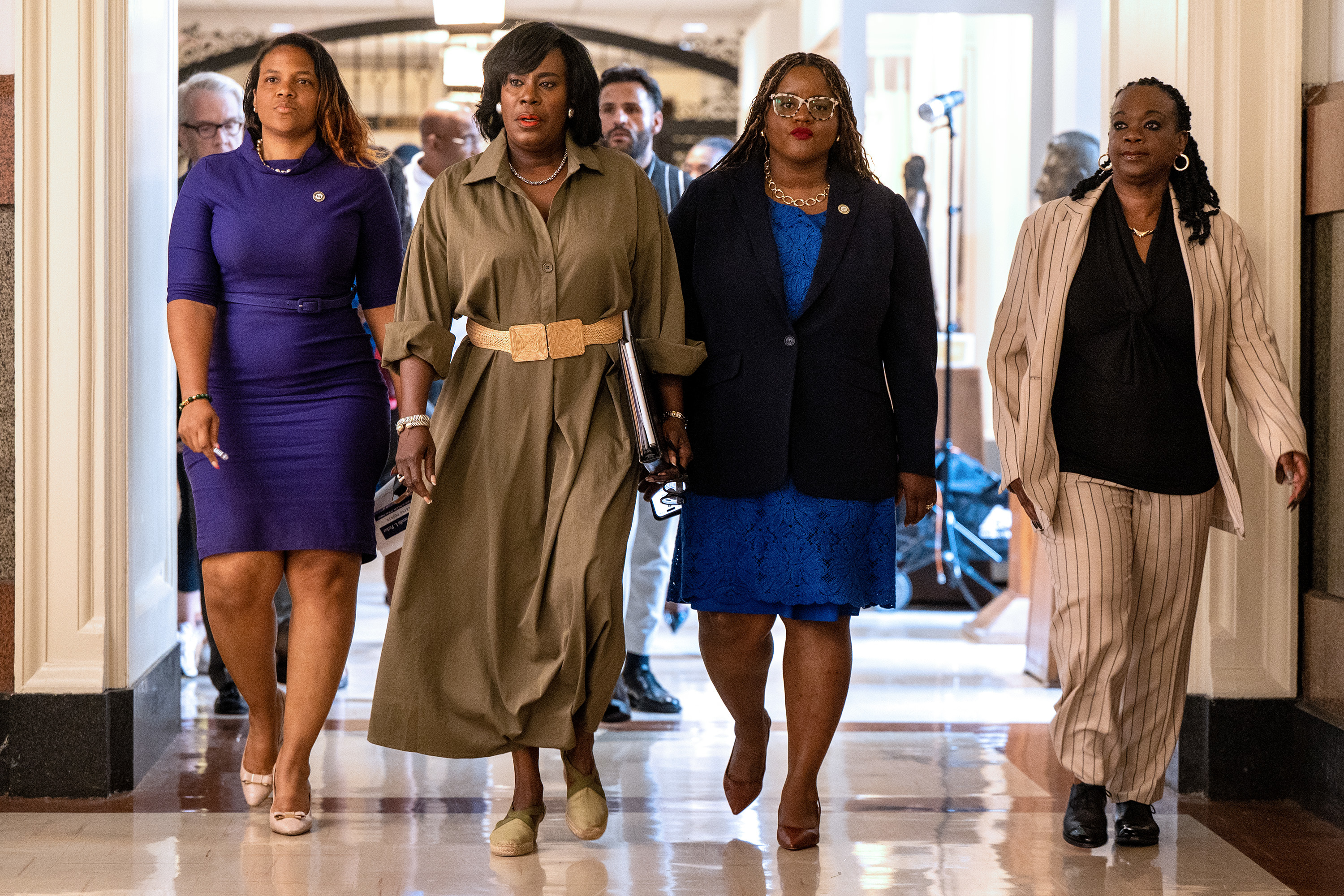
    Mayor Cherelle L. Parker, Council President Kenyatta Johnson, and Superintendent Tony B. Watlington Sr. arrive for an announcement at the School District of Philadelphia Headquarters on Wednesday, June 10, 2026 in Philadelphia. Monica Herndon / Staff Photographer

    He said in a statement this week that Council will honor its commitment, but also alluded to finding that money in the district’s own budget, despite school officials saying they are navigating a $300 million structural deficit.

    Johnson said Council is awaiting the results of a performance audit of the school district that is being conducted by City Controller Christy Brady. He said that report “will help Council identify any available funds to support recurring funding.”

    New arena, who dis?

    In the fall of 2024, Council was consumed by the debate over the 76ers’ proposal to build an arena in Center City.

    Lawmakers spent much of the session debating the economic benefit of the project, while opponents cried out that it would displace businesses and residents in nearby Chinatown.

    Despite Council approving it, that project was scuttled by the Sixers, who instead teamed up with Comcast, which owns the Flyers, to plot a different project: a joint venture that would bring a new arena to the South Philly sports complex. Earlier this month, they released the first renderings of what the Spectrum-inspired arena could look like.

    There will likely be spirited discussions about it all in Council — at some point. But don’t expect a redux this fall of the all-out brawl that was 2024.
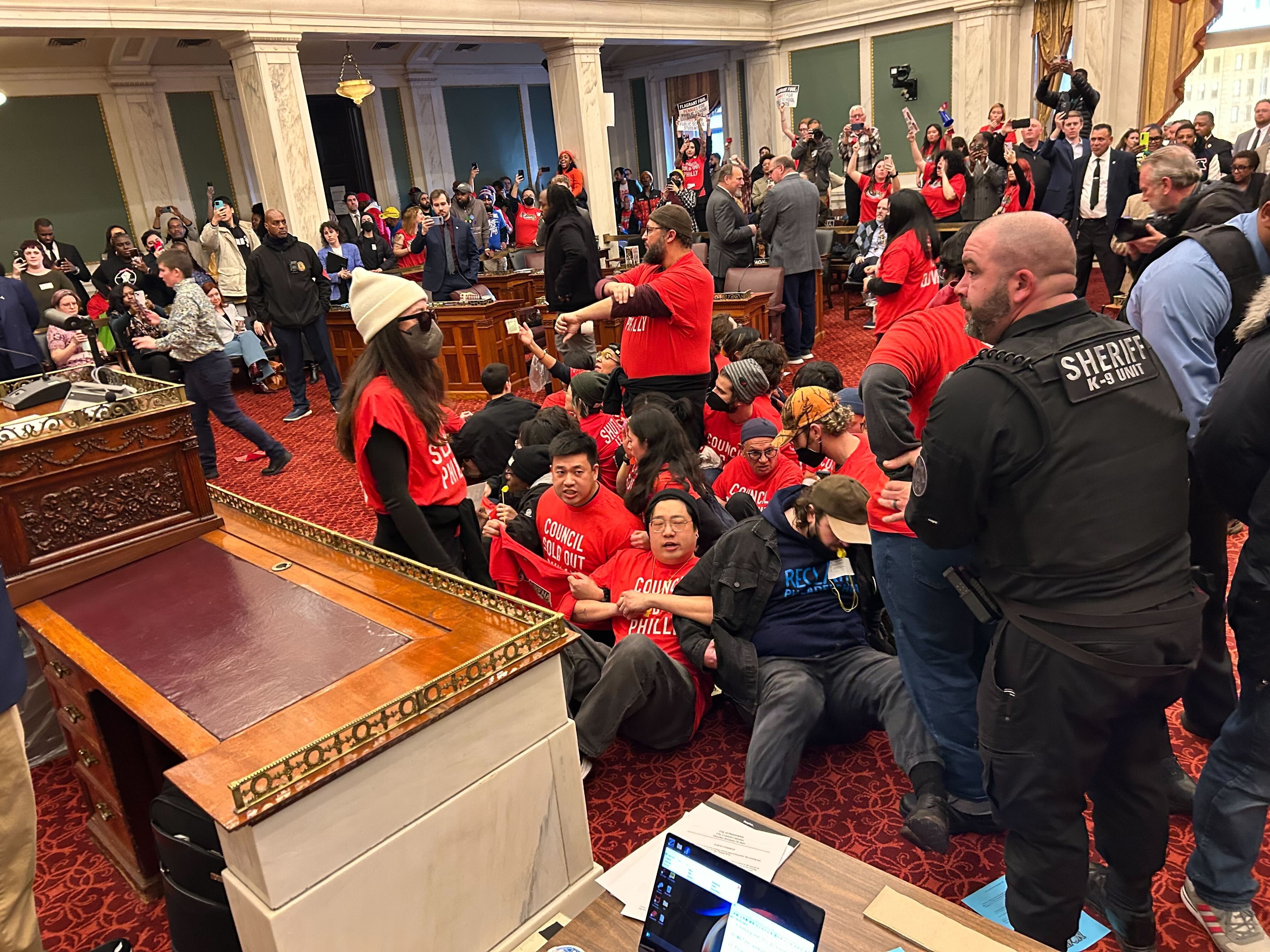
    Protesters link arms as sheriff’s deputies attempt to remove them from Philadelphia City Council chambers as the council is scheduled to vote on final approval for the Sixers’ proposed Center City arena on Thursday, Dec. 19, 2024.Sean Collins Walsh / Staff

    The stadium district falls in Johnson’s 2nd District, meaning it will be on him to introduce legislation that would green-light the project. And he has not been in a hurry to accommodate the Sixers’ timeline, which would be to approve the project as soon as possible so the venue can open by 2030.

    Johnson said in a statement that “no zoning legislation is scheduled for introduction,” and that he is working to find consensus with the Parker administration and other Council members before introducing any legislation.

    “I am focused on ensuring that any future legislation concerning the new arena addresses the interests and concerns of the community around the Stadium District and in Philadelphia,” he said.

    When that legislation is brought forth, it is unlikely to be anywhere near as controversial as the 76ers’ Center City proposal, which drew opposition due to its proximity to Chinatown, so long as the teams uphold their promise to not seek public subsidies.

    The Asian Pacific Islander Political Alliance, which led opposition to the Center City arena, released a statement earlier this month that signaled openness to the South Philly project.

    “The people of South Philly should have a meaningful voice in whether and how this project moves forward,” said Will Gross, an API PA member who is rumored to be considering a run for Council. “And if it does, it should mean good union jobs, a strong community benefits agreement, and real benefits for the people who live and work in the neighborhood.”

    Trash issue continues to burn

    Councilmember Jamie Gauthier has spent the better part of the last year trying to whip up support for a bill that would ban the city from shipping off its trash to be burned at an incinerator in Chester, a longtime practice she and others say is poisoning residents of the city to Philadelphia’s south.

    The Parker administration opposed the measure, saying it would limit the government’s ability to carry out its normal competitive bidding process and select the best-value contractor. Gauthier failed to get a majority of Council on her side, and she never called up the Stop Trashing Our Air Act for a vote.

    This fall, she will try a new tactic.

    Gauthier and her allies are attempting to kill the Parker administration’s effort to approve a new contract with Reworld, which operates the Chester waste-to-energy facility where the city sends about a third of its garbage. (The remainder is hauled off to landfills.)
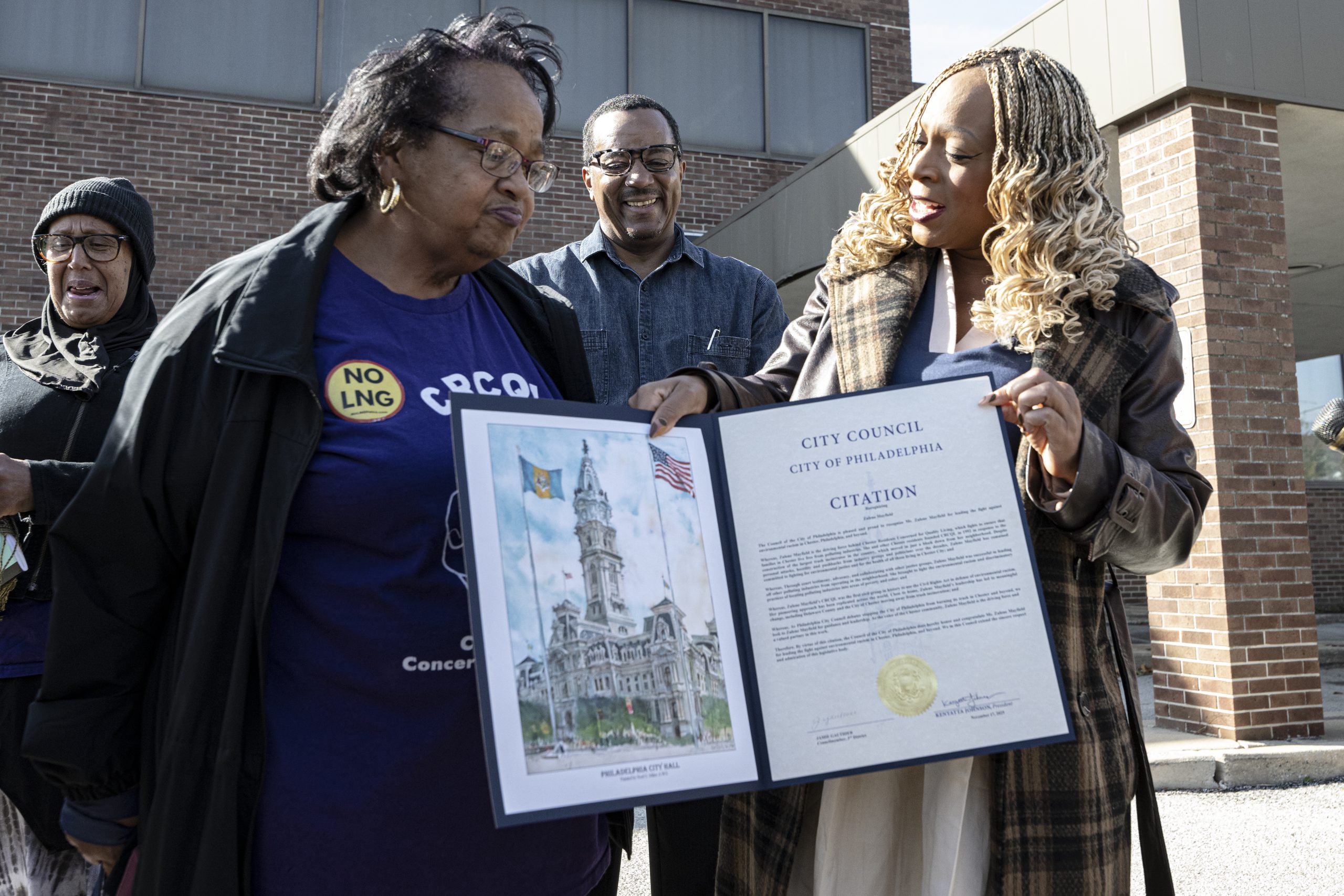
    Chester resident Zulene Mayfield, left, Philadelphia Councilmember Jamie Gauthier, right, and Chester Mayor Stefan Roots meet to discuss Gauthier’s “Stop Trashing Our Air Act,” which would ban the city from incinerating waste, during a visit with lawmakers and staff in Chester, Pa., on Friday, Nov. 7, 2025.Jose F. Moreno / Staff Photographer

    In July, the Parker administration announced that it intends to enter into a new four-year contract for waste processing and disposal with Reworld, as well as two landfill operators, Republic Services and Waste Management. The terms of those contracts have not yet been made public.

    Council must approve multiyear contracts, and Gauthier, who represents parts of West and Southwest Philadelphia, said she is planning a full-court press to get her colleagues to “block Mayor Parker’s dirty deal with trash incinerators.”

    The question is whether she can get eight other members on her side to reach a majority of Council. She is likely to find support from three fellow progressives, and she is expected to be joined by Councilmember Isaiah Thomas, the Democratic majority whip, at a Thursday news conference calling on the city to end its contract.
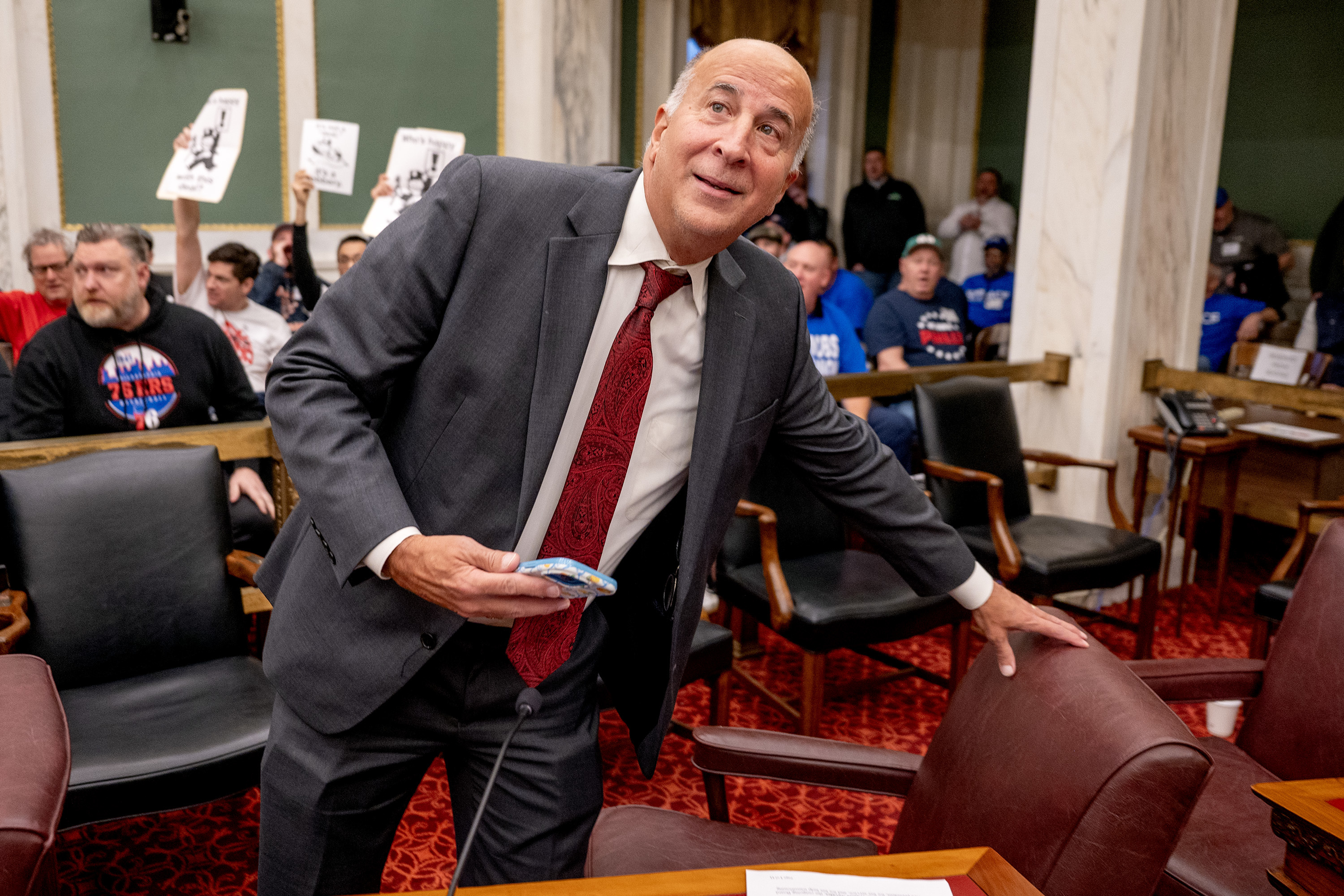
    Councilmember Mark Squilla takes his seat in chambers Wednesday, Dec. 11, 2024, before a scheduled committee vote on Sixers arena related legislation was postponed,Tom Gralish / Staff Photographer

    Meanwhile, Councilmember Mark Squilla said he has been working with the administration on a plan to build out a “circular waste” system that would replace incineration and landfilling over time with composting and waste “digestion.”

    “The incinerator bill …. doesn’t solve a problem we have: to reduce our waste,” Squilla, whose district includes parts of Center City, South Philadelphia, and the river wards, said in an interview. “If we can reduce our waste by going to composting and digestion and other forms, we then eliminate all of our trash. Therefore end up with the result of what the goal should be, [which] is to get as close as possible to zero waste.”

    Squilla’s proposal, which would involve “a long-term contract to attract providers to be able to build out a possible digester to decrease the amount of food waste,” could make it easier for Council members sympathetic to Gauthier’s goals but skeptical of her incinerator bill to approve the administration’s contract with Reworld while committing to a long-term solution.

    The business tax, revisited

    Separate from the school district revenue, some Council members are hoping to advance measures that would provide tax relief to businesses.

    Council two years ago approved a 13-year schedule of rate cuts that would dramatically reduce the business income and receipts tax. But at the same time, Parker moved to eliminate a tax break that primarily helped small businesses after its legality under the Pennsylvania Constitution was challenged in court.

    The elimination of the tax break — which excluded from taxation companies’ first $100,000 in revenue — has forced thousands of small firms and sole proprietors that make less than that threshold to begin paying a tax from which they had been effectively exempted.

    Driscoll worked with tax experts to find a workaround that could pass legal muster — exempting certain types of businesses, such as sole proprietors, from the tax entirely — and he is planning to call up for a vote his bill this fall.

    Thomas, meanwhile, said he will introduce a resolution Thursday to hold hearings this fall on the feasibility of reducing the net income portion of the business tax “much sooner” and more “aggressively,” meaning an acceleration of the tax cuts already scheduled.

    The measures are likely to spark opposition from more progressive members of Council and could be tricky to navigate for Parker, who wants to make Philly more business-friendly but may not want to forgo additional revenue.

    Members eye priorities as election looms

    With next year’s election looming — and all 17 members indicating they intend to seek new four-year terms — the fall session is also likely to see movement on a myriad of issues championed by individual legislators.

    Majority Leader Katherine Gilmore Richardson said she will propose bills to “protect communities from harmful nuisance businesses and improve processes around code violations,” continuing her efforts to crack down on businesses that neighbors say attract crime.

    Councilmember Rue Landau, who represents the city at-large, said she is “tackling the impact of emerging technologies, making Philadelphia more affordable for working people, and ensuring equity remains at the center of how we serve our LGBTQ+ communities.”

    Landau said she also plans to introduce a resolution calling on the state to ban automated license plate readers like Flock cameras.
    The Philadelphia Council members inside the caucus inside City Hall in Philadelphia, Pa on Thursday, June 11, 2026.Aidan T. Gallo / Staff Photographer

    And Councilmember Kendra Brooks will propose new protections for temporary workers and tenants facing eviction, according to her spokesperson, Kathleen Melville.

    Brooks, a progressive who represents the city at-large, will also fight for additional funding for reproductive healthcare providers, a priority of hers that was left out of the budget following Council’s impasse with Parker, Melville said.

    “That was her biggest focus going into the budget,” Melville said. “She had the same experience as every other Council member in that none of her budget priorities made it into the budget.”

    Several members have also said that they want to bolster the city’s property tax relief offerings after the administration this summer released its citywide assessments that will mean higher taxes for thousands of homeowners.

    The most likely move would be for Council to amend the city’s tax code to increase the popular homestead exemption, which currently exempts the first $100,000 from a home’s taxable value if the owner lives in the dwelling as their primary residence.

    Johnson said Council “will review all tax-relief options” this fall.
  • She was Mayor Parker’s director of youth engagement. Now, she’s planning to run against her former boss in 2027.

    She was Mayor Parker’s director of youth engagement. Now, she’s planning to run against her former boss in 2027.

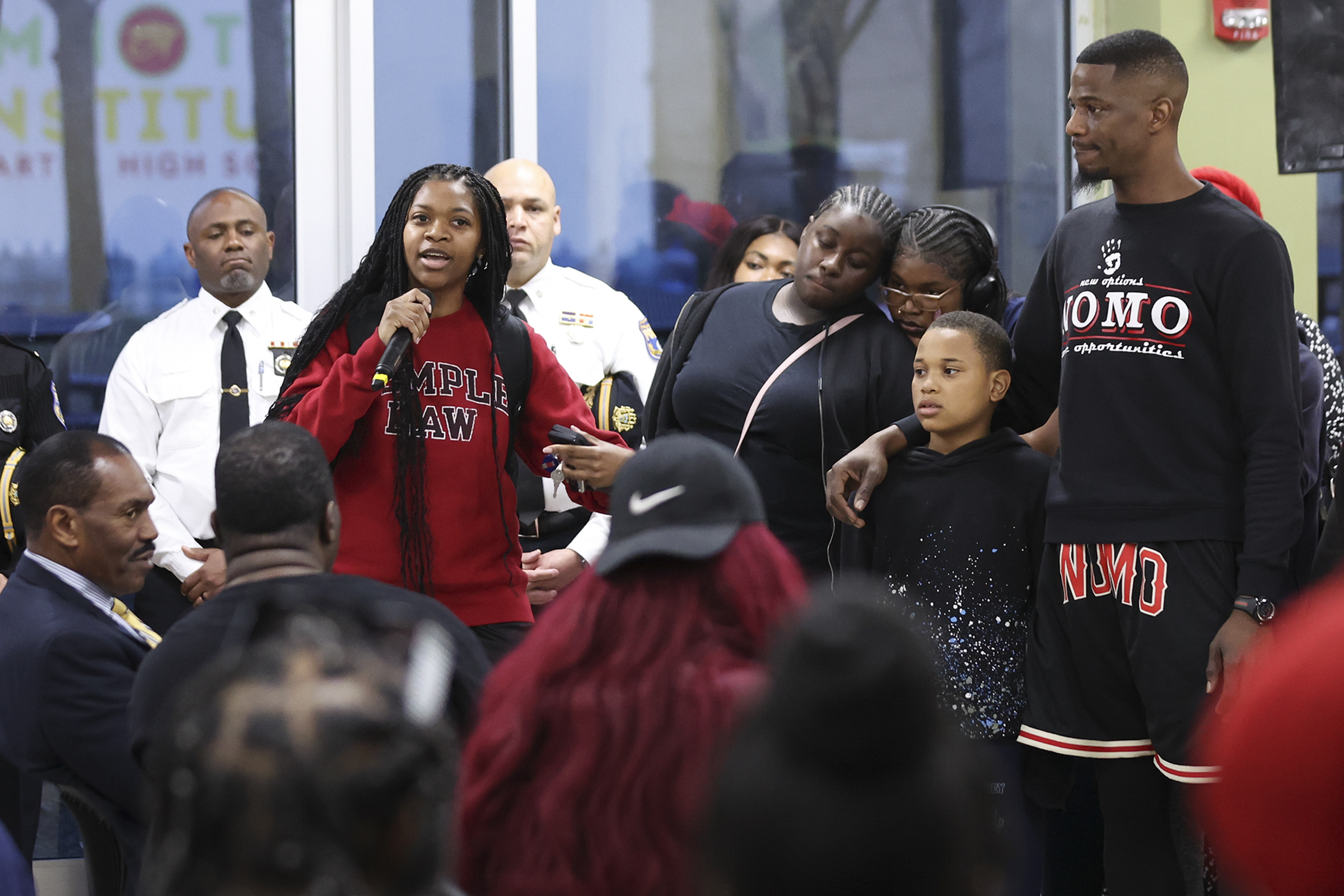
    Shania Bennett was the director of youth engagement in Mayor Cherelle L. Parker’s administration until she resigned in May. The mayor, she said, once treated her as a protégé.

    Now, Bennett, 26, says she plans to run against Parker next year — the first candidate to publicly announce an intention to challenge the mayor’s reelection bid in next May’s Democratic primary.

    “Sometimes, you have to be willing to hold people you love accountable,” Bennett said in an interview Tuesday. “To be honest, I’m the change that I want to see. I think a lot of Philadelphians [are] waiting on it.”

    She released a video on social media Tuesday announcing her campaign with the slogan, “Leadership you can trust.”

    A Parker campaign spokesperson declined to comment.

    Bennett, who lives in her native South Philadelphia and graduated from Pennsylvania State University in 2020, said she resigned from Parker’s cabinet in May after realizing the administration would not give her office the budget or authority it needed to accomplish its mission.

    “My hands were tied. I couldn’t do anything on behalf of young people,” she said. “It was an opportunity for me to put all of my passion into something I really believed in, just to end up disappointed.”

    In July, she posted on social media that working for the administration was “the worst experience of [her] life” and that she had quit after “unprofessional harassment.”

    No Philadelphia mayor has lost reelection since the city’s Home Rule Charter was adopted in 1951, and Bennett has her work cut out for her if she wants to break that streak in her first run for office.

    Parker, 54, has spent 21 years in elected office, and her campaign had more than $1.4 million in the bank as of May 4, according to her most recent campaign finance report.

    Bennett said she has not yet put together a campaign team and is still ironing out her policy platform. She said she plans to conduct listening sessions so she can craft proposals that address Philadelphians’ needs.

    “Let me see the things you want me to talk about as a candidate,” she said. “I haven’t seen a candidate that really reflects the people’s choice in Philadelphia.”

    Bennett said she was alarmed by last weekend’s “teen takeovers,” when police officers arrested three people after confrontations erupted between large groups of teenagers who congregated near City Hall on consecutive nights.

    “It’s just young people acting out, and we have to get to the root cause,” Bennett said. “Is what we’re funding effective, and is it giving us the outcome that we want?”

    Parker, a moderate Democrat with strong support among the local party establishment, is seen by some as potentially vulnerable to a challenge from a progressive politician such as District Attorney Larry Krasner.

    Bennett said her platform will reflect the problems facing the city, not ideology.

    “Some of it might be progressive, but some of it might be: You have to put your foot down,” said Bennett, who founded the anti-violence nonprofit Reach4Peace as a teenager. “Philly has some unique challenges. It is not one party or one ideology that can fix them.”

    Mayor Cherelle L. Parker, speaks at the ribbon cutting for the newly renovated skate plaza at the Municipal Services Building in Philadelphia, Pa., on Friday, April. 17, 2026.Tyger Williams / Staff Photographer

    Bennett said she understands that many powerful politicians and deep-pocketed groups like labor unions are unlikely to endorse her challenge to Parker. But she is holding a launch event on Sept. 26 and hopes to gain momentum from there.

    “It’s still extremely early, but I’m hoping to announce early to do the hard work of fundraising and listening sessions,” she said.

    Parker took Bennett under her wing during the 2023 mayor’s race.

    Bennett had previously worked for State Rep. Jordan Harris and State Sen. Nikil Saval, both Philadelphia Democrats, but had no previous ties to Parker before showing up at a campaign office offering to help, she said.

    Bennett stood out as a hardworking volunteer as she knocked on doors and organized neighborhood canvasses, and she caught Parker’s eye.

    “Every time I saw her, she was hard at work,” Parker said when she appointed Bennett to lead the Mayor’s Office of Youth Engagement in early 2024.

    After leaving the administration, Bennett briefly worked for the Pennsylvania Democratic Party as a regional organizing director before resigning to launch her mayoral bid.

    “When you leave somewhere with your integrity intact, it’s like, ‘OK, you can do something about it,’” Bennett said. “I was just like, ‘Know what? I’mma press play.’”

  • Mayor Parker’s election put lobbyist William Dunbar at the center of Philly politics. Now he’s awaiting sentencing on tax fraud charges.

    Mayor Parker’s election put lobbyist William Dunbar at the center of Philly politics. Now he’s awaiting sentencing on tax fraud charges.

    When Mayor Cherelle L. Parker took office in early 2024, William F. Dunbar Sr. became one of the most important people in Philadelphia politics.

    A confidant of Parker who played an important advisory role in her 2023 campaign, Dunbar was also a registered lobbyist with a growing client list.

    When other key figures in Parker’s campaign took top roles in her administration, Dunbar stepped into an official, but unpaid, role managing People for Parker, the mayor’s political committee.

    Those dual roles created an unusual circumstance: Someone who raised money from donors for the mayor’s campaign was also a lobbyist whose clients paid him to influence her administration.

    And they were physically embodied in a 2,250-square-foot office in the Penn Center complex one block west of City Hall. Dunbar’s lobbying firm, Dunbar Public Affairs & Associates, rented the space in March 2024, and People for Parker paid half of the $3,750 rent through a sublease agreement, according to lease documents obtained by The Inquirer.

    But the heady days for Dunbar didn’t last. Parker let Dunbar go from her campaign in August 2024. Neither side has publicly explained what led to the separation. And last week, he pleaded guilty to federal tax fraud charges unrelated to Parker’s campaign.

    A plea agreement Dunbar signed allows U.S. District Court Judge Kelley B. Hodge to consider three instances of “additional misconduct” — separate from the tax fraud scheme — that did not result in charges when she decides his sentence in January.

    One instance stemmed from a dispute over the sublease agreement for the Penn Center office. (In the other incidents, prosecutors said Dunbar falsified a document for a mortgage application and submitted false financial information to receive additional financial aid at a private school.)

    In the plea agreement, Dunbar stipulated that he “falsely modified the terms of the lease agreement” to increase the notice the campaign was required to give him to terminate the lease, a move that could have resulted in the campaign paying him money he was not owed had it not been discovered.

    City law prohibits officials from using government resources, including City Hall office space, for political purposes. By renting space with Dunbar’s firm, Parker and her team could pop across the street and attend to political tasks without running afoul of ethics rules.

    In a letter from March 2025 that was obtained by The Inquirer, an attorney for Dunbar wrote that his firm “had no need for an office space that was close to City Hall other than to support the Mayor’s needs.”

    The dispute culminated in the final breakdown of their already-strained relationship, an exchange of emails between lawyers for Parker and Dunbar shows.

    “It has come to our attention that Mr. Dunbar has misrepresented that he continues to have relationships with People for Parker to current and prospective clients,” Timothy J. Ford, an attorney for Parker, wrote to Dunbar’s lawyer, Mark Jaffe, in March 2025. “Mr. Dunbar must cease and desist immediately from making incorrect statements of any affiliation with People for Parker, Mayor Parker in her political or personal capacity, or staff or consultants related to People for Parker.”

    Jaffe fired back.

    “Respectfully, my client asks that the Mayor cease and desist from contacting all donors and personal/business contacts that Dunbar Public Affairs supplied her immediately,” Jaffe wrote Ford in response. “It has come to Mr. Dunbar’s attention that the Mayor continues to misrepresent that Dunbar is still supportive of her efforts and that said relationships should still support her.”

    Dunbar asked for “a letter of formal apology from the Mayor [for] the harm she has caused as to his reputation and financial losses to his company.”

    Dunbar declined to comment for this story.

    From Lincoln to ‘kitchen cabinet’

    Dunbar, 42, first met Parker, 53, around 2005, when he was a student at Lincoln University, he said in a 2023 interview. Parker, a Lincoln alum, was a Pennsylvania state representative, and she visited her alma mater to speak to political science students.

    “She was a star to the folks at Lincoln then,” Dunbar said in the interview. “Cherelle is the big sister. She sometimes call me the big little brother. I’m very, very protective of Cherelle.”

    Both were elected student government presidents during their time at the historically Black university in Chester County.

    They maintained a connection over the years as they made their way up the ladder in local politics, Parker as an increasingly high-profile elected official and Dunbar as a well-connected operator.

    By the time Parker began preparing to launch her mayoral campaign, Dunbar had become a lobbyist for Comcast. He volunteered as part of her “kitchen cabinet” of informal advisers, and he made a key contribution by championing a strategy of Parker leaning into her life experience, from growing up in a household that needed public assistance to being a single mother.

    “I always would come back to that we need to continue to define Cherelle as the authentic Black woman working mom,” he said. “Cherelle is able to live with that every day, so I knew and believed that the message would always resonate more, in particular with Black women, who obviously are the No. 1 voting bloc in our city.”

    An unexplained separation

    When the top aides in Parker’s campaign joined her administration, preventing them from managing or being paid by a political group, the mayor turned to Dunbar to run People for Parker in 2024.

    Although Parker is not up for reelection until 2027, her campaign has remained active, raising and spending hundreds of thousands of dollars each year since she became mayor.

    Meanwhile, Dunbar’s lobbying practice grew: the School District of Philadelphia, which employed him a subcontractor, and an ATM company became clients in January 2024, according to the public records. (Dunbar is no longer representing the district because the primary contractor terminated their agreement, according to the district.)

    But his arrangement with Parker didn’t make it through the summer. Parker acknowledged the separation in an interview while she was at the 2024 Democratic National Convention in Chicago.

    “Will has been a valued friend to me, and let me just say that life is good right now [for Dunbar] and business is good and it’s growing,” she said.

    Dunbar said at the time: “I’m very much still an informal senior adviser but because of a different set of priorities, the mayor has decided to manage her politics herself. … My business has continued to grow as we work to support our clients.”

    In the March 2025 letter, Dunbar’s attorney said Parker in August 2024 had “agreed to continue a business relationship for public perception” after the split.

    The sublease dispute that unfolded over the next six months eliminated that possibility.

    Two documents, one lease

    The Inquirer has obtained two versions of the sublease agreement, one with a 30-day termination window and one lasting a year. Both versions include electronic signatures from Dunbar on March 2, 2024, and Gabrielle Cook-Frazier, on behalf of the campaign, on March 8, 2024.

    Parker’s attorney said it only ever had the version with a 30-day window. Federal prosecutors alleged Dunbar forged the version with a one-year window to squeeze more rent payments out of the campaign.

    “People for Parker is particularly concerned that Mr. Dunbar produced a different version of the Document containing a term to which People for Parker did not and never would have agreed,” Ford wrote.

    Ford said the campaign was willing to make rent payments through the end of 2024 to “soften” Dunbar’s separation, but not after. The campaign made rent payments totaling $22,850 to Dunbar Public Affairs between March 2024 and November 2024, according to campaign finance records.

    In the letter, Dunbar’s attorney suggests Parker’s aides could have violated city ethics laws by doing political work “on City time using said space for political meetings with the Mayor.”

    The Parker campaign declined to answer questions for this story, but sent a statement rejecting Jaffe’s assertion in the 2025 letter.

    “The allegation is patently false,” Ford said in a statement. “Neither the Mayor nor her team engaged in political activity on City time or using City resources.”

    It’s far from clear that the arrangement would be a violation of ethics rules. The top officials in Parker’s administration were salaried employees for the city who worked far more than 40 hours per week, making it difficult to assess when they were on the clock. They are allowed to participate in political meetings so long as they are not paid by the campaign and have only “minimal input” on strategy, communications, or finance, the city’s ethics regulations state.

    Despite the breakdown in their relationship, Dunbar held out hope for a reconciliation.

    “Notably, if the Mayor or her political team would ever like to reconcile and restore this relationship, my client would welcome that and he stands ready to continue to be a selfless supporter of the Mayor and her administration,” Jaffe wrote, adding that Dunbar would no longer seek additional rent payments.

    Weeks later, Dunbar learned that federal agents were investigating him for tax fraud.

  • A former confidant to Mayor Cherelle L. Parker tried to bilk campaign for rent money, court document shows

    A former confidant to Mayor Cherelle L. Parker tried to bilk campaign for rent money, court document shows

    William F. Dunbar Sr., a former confidant to Mayor Cherelle L. Parker who pleaded guilty this week to federal tax fraud charges, also sought to bilk a political campaign out of rent payments he was not entitled to, according to a court document filed Tuesday.

    The document does not name the campaign, but it appears to be Parker’s.

    Dunbar, 42, never actually received any ill-gotten funds related to the lease with the campaign, prosecutors said, and he was not charged in connection with the matter.

    But prosecutors said in court documents that he’s agreed to let a judge consider the episode and two other incidents of “additional misconduct” as she weighs his sentence for tax fraud.

    Dunbar, a Philadelphia lobbyist, was an unpaid but important adviser to Parker during her winning campaign for mayor in 2023. He officially joined her campaign, People for Parker, around the time she took office in January 2024.

    The mayor let Dunbar go from her campaign in July 2024 in a move that Dunbar at the time described as Parker’s decision.

    The campaign made a series of rent payments totaling $22,850 to his lobbying firm, Dunbar Public Affairs & Associates, between March 2024 and November 2024, according to campaign finance records. The address listed for the rent payments was an office in the Penn Center complex near Philadelphia City Hall.

    According to Dunbar’s plea agreement, in February 2025 he “falsified certain terms of a lease agreement for office space that [he] had entered as the lessor with a Philadelphia political campaign.”

    The city’s online database of campaign finance records shows People for Parker as the only campaign that has made rent payments to Dunbar’s firm.

    “The facts speak for themselves,” said Aren Platt, executive director of People for Parker, declining to comment further on Tuesday.

    Dunbar declined to comment.

    William F. Dunbar Sr., a lobbyist and a former informal adviser to Mayor Cherelle L. Parker.Courtesy of William F. Dunbar Sr.

    The plea agreement, which was signed by Dunbar and his attorney, said he “falsely modified the terms of the lease agreement” to increase the notice the campaign was required to give him to terminate the lease.

    Had the campaign not discovered the change, the agreement said, Dunbar would have received money he was not owed. “The defendant’s efforts in this regard did not result in his obtaining any funds, and he ceased making any efforts to obtain these funds before learning of the federal criminal investigation resulting in the charges in this case,” the agreement said.

    Dunbar on Monday pleaded guilty to filing false tax returns for himself and his wife between 2020 and 2025 and claiming substantial refunds when, in reality, they owed money. Prosecutors said in court papers that the tax loss related to the fraud was between $350,000 and $750,000. The charges carry a maximum sentence of 16 years in prison, plus supervised release and fines.

    Dunbar’s attorney, Brian McMonagle, said in a statement Tuesday that the plea agreement “reflects Mr. Dunbar’s acceptance of responsibility for his own conduct.”

    McMonagle said that the agreement “does not include any cooperation obligations” and that Dunbar is “not required under the agreement to provide information or testimony regarding any other individual.”

    The four charges to which Dunbar pleaded guilty are unrelated to his firm’s lease with the Parker campaign and the two other incidents of “additional misconduct” that Dunbar stipulated in the agreement. The other incidents involve falsifying a document for a mortgage application and submitting false financial information to receive additional financial aid at a private school.

    Although those episodes did not lead to criminal charges against Dunbar, U.S. District Court Judge Kelley B. Hodge will be able to consider them when determining his sentence. A sentencing hearing is scheduled for January.

    Staff writer Chris Palmer contributed to this article.

  • William Dunbar, a key adviser for Mayor Cherelle Parker’s 2023 campaign, pleaded guilty to federal tax evasion charges

    William Dunbar, a key adviser for Mayor Cherelle Parker’s 2023 campaign, pleaded guilty to federal tax evasion charges

    William F. Dunbar Sr., a Philadelphia lobbyist who was an important unpaid adviser to Mayor Cherelle L. Parker’s 2023 campaign, on Monday pleaded guilty to federal criminal charges related to a tax fraud scheme that lasted six years.

    Dunbar’s lawyer, Brian McMonagle, said Dunbar “accepts full responsibility for his conduct.” The charges were filed in July but were under seal until Monday morning. Dunbar entered his plea on Monday afternoon before District Court Judge Kelley B. Hodge.

    Dunbar, 42, was charged with four counts including tax evasion and filing a false tax return. He was charged by information, a process used when a defendant intends to plead guilty.

    “Today’s plea reflects his commitment to resolving this matter with honesty, accountability, and respect for the judicial process,” McMonagle said. “He has taken decisive steps to satisfy his outstanding tax obligations and has implemented appropriate financial controls and professional oversight to help ensure this does not recur.”

    McMonagle added that Dunbar “has dedicated his professional and personal life to serving his community through public service, civic leadership, and charitable engagement.”

    A spokesperson for the U.S. Attorney’s Office declined to comment on the case Monday.

    The charges carry a maximum sentence of 16 years in prison, plus supervised release and fines. A sentencing hearing was scheduled for Jan. 11, and Dunbar was released on bail pending sentencing.

    Dunbar pleaded guilty to filing fraudulent income tax returns for himself and his wife from 2020 through 2025. Prosecutors say Dunbar inflated his charitable giving and business expenses while dramatically undervaluing his taxable income, a scheme that likely would have lowered the couple’s tax bill.

    For example, they said, in the 2024 tax year, Dunbar claimed $1.45 million in total business expenses while indicating he had no taxable income. Dunbar also reported that he owed $46,000 in total taxes for that year, a sum that can include other taxes outside the income tax, but prosecutors said the amount he actually owed was “materially greater” than what he reported on his tax form.

    Prosecutors did not specify how much money Dunbar owed the government in taxes, but said in court papers that it was between $350,000 and $750,000.

    Assistant U.S. Attorney Louis D. Lappen told Hodge that, due to the fraudulent returns, Dunbar for tax year 2023 received a refund of about $30,000 while his spouse received a refund of about $36,000. Lappen said the couple claimed similar refund sums each year from 2020 through 2025, and that they should have paid additional taxes when they filed their returns instead of receiving refunds.

    “Had the taxes been filed accurately and appropriately and without fraud, [Dunbar and his spouse] would have owed,” Lappen said.

    Although prosecutors accused Dunbar of inflating expenses associated with his political consulting firm, Dunbar Public Affairs & Associates, there are no accusations in his charging documents that connect his conduct with Parker or others affiliated with her campaign.

    Dunbar was a key member of Parker’s “kitchen cabinet” of informal advisers during her 2023 run, in which she bested a crowded field to win the Democratic primary and become the city’s first female mayor. Dunbar also has had ties to other high-profile Democratic politicians, including Gov. Josh Shapiro, U.S. Sen. Cory Booker of New Jersey, and members of Philadelphia City Council.

    The Inquirer reported earlier this month that federal investigators last summer issued subpoenas for documents and financial records related to Dunbar, according to three sources with direct knowledge of the probe.

    One of the sources said the investigation appeared to be a “fairly broad” review of Dunbar.

    Parker’s campaign has dramatically increased its spending on legal services since early 2025, around the time the sources said subpoenas were issued, according to campaign finance reports.

    The campaign paid its law firm, Dilworth Paxson, about $108,000 since the start of 2025, The Inquirer reported. By comparison, it paid the firm less than $15,000 during the 2023 election year and about $19,000 in 2024.

    Parker last week declined to comment on the subpoenas related to Dunbar or on her campaign’s increased legal spending.

    Spokespeople for the mayor’s office and for Parker’s campaign declined to comment on the charges against Dunbar on Monday.

    Dunbar was never paid for his role in the campaign during the 2023 mayoral election.

    In 2024, Parker’s first year in office, Dunbar took over management of the campaign. The campaign paid Dunbar’s firm a series of rent payments totaling $22,850 between March 2024 and November 2024.

    Parker let Dunbar go from her campaign in the summer of 2024 in a move that Dunbar said at the time was the mayor’s decision. The campaign is now managed by Aren Platt, who was one of the architects of Parker’s 2023 run and served as chief deputy mayor in her administration before resigning in October 2024.

    Dunbar appears to still be active in politics despite no longer being on Parker’s team. Two weeks ago, he posted on social media a series of behind-the-scenes photos from a filming session at a West Philadelphia barbershop for a Shapiro campaign advertisement, writing: “Where politics meets the people.”

    Manuel Bonder, a spokesperson for Shapiro’s reelection campaign, said in a statement that Dunbar has “no formal or informal role with the Shapiro for Pennsylvania campaign.”

    Dunbar’s lobbying clients include Comcast, the Chamber of Commerce for Greater Philadelphia, and Jackmont Hospitality, an airport concessions company, according to his lobbying registration with the city.

    Dunbar previously lobbied for the Philadelphia School District, but a district spokesperson said earlier this month that he stopped working for the district in June.

    Staff writers Abraham Gutman and Ryan W. Briggs contributed to this article.

  • The U.S. Supreme Court removed limits on political parties coordinating with candidates. What does that mean for Philly’s elections?

    The U.S. Supreme Court removed limits on political parties coordinating with candidates. What does that mean for Philly’s elections?

    The U.S. Supreme Court this summer overturned limits on how much money political parties can spend in coordination with their chosen candidates — the latest in a series of decisions by the conservative majority that have unleashed a flood of money into national politics.

    How that will play out in Philadelphia remains to be seen. But local elections lawyers said last week it could boost the power of the city’s political parties to influence the outcome of elections.

    “It will be disruptive to city elections,” Adam Bonin, a Philadelphia-based Democratic elections attorney, said of the case, National Republican Senatorial Committee v. Federal Election Commission. “It will give parties more power, and it will give incumbents more power.”

    The Philadelphia Board of Ethics, which enforces the city’s campaign finance rules, plans to consider the potential impacts of the Supreme Court’s 6-3 ruling this fall, said board chair Ellen Mattleman Kaplan. That would ensure any changes would take effect before next year’s municipal elections, when Mayor Cherelle L. Parker and all 17 Council members are up for reelection.

    In deep-blue Philadelphia, where most local elections are effectively decided by Democratic primaries, two key questions will determine the case’s impact: Does the ruling apply to local elections, and does it apply to primaries?

    Both are legally thorny issues that could require lengthy court battles to sort out. But if the answer to both questions ends up being yes, the NRSC ruling has the potential to give significant advantages to candidates who are endorsed by the Democratic City Committee.

    For instance, in crowded Democratic primaries for mayor or City Council, the party-endorsed candidates would be the only ones who could effectively circumvent the city’s limits on the size of political donations — currently $3,700 per year for individual donors — by directing deep-pocketed supporters to give additional money to the party, which is not subject to those limits.

    The party could then work directly with its endorsed candidates on how to spend that money, including decisions on the messaging and timing of TV ads or door-knocking efforts.

    To be clear, experts said, there are many uncertainties about how, and even if, the ruling would apply to Philadelphia municipal elections, where political money is more tightly regulated than in state and federal races. In the immediate future, the ethics board could take the position that the ruling applies only to federal races, not the city races it regulates.

    “We haven’t come to any conclusions yet,” said J. Shane Creamer Jr., the ethics board’s executive director. “We’ve got to keep in mind that the federal law in that case is a little different than Philadelphia’s laws, including different rules designed to prevent circumvention of contribution limits.”

    Additionally, the Supreme Court opinion did not specify whether its ruling applies to local elections, a question that could be addressed by subsequent federal court cases. The NRSC case before the justices centered on limits on coordination between parties and candidates in federal law that apply only to general elections.

    But Philadelphia elections lawyer Kevin Greenberg said the underlying philosophy in the decision — that limiting political parties’ coordination with their candidates constituted a violation of the constitutional right to free speech — would likely extend to primary elections.

    “There is nothing about the Supreme Court’s logic that inherently applies only to general elections,” said Greenberg, who has done legal work for the Pennsylvania Democratic Party. “What any judge and any lawyer thinking about how to implement this … would and should do is apply the Supreme Court’s opinion to what the next set of facts are, and under the Philadelphia law, this will be problematic for the existing [campaign finance] statue.”

    The ruling directly applies to general elections for U.S. House and Senate races, meaning that federal party committees can now coordinate with — and spend freely on behalf of — candidates running for Philly congressional seats and Pennsylvania’s U.S. Senate seats.

    But the two outstanding questions, about local elections and primaries, would likely have to be sorted out in court because the city is unlikely to voluntarily change its system, said Matthew Haverstick, a Philadelphia elections lawyer who often works with Republican clients. Such a case would require a candidate or, more likely, a political party suing the city, he said.

    “Given the way the Philly ethics board and the city regulates elections, they’re not going to do anything unless they’re told to do it by a court,” Haverstick said. “Whether this decision has a direct impact on the Philadelphia rule is unclear. … You could argue that political parties can coordinate in primaries — there are good arguments that it could — but it would have to be considered in court.”

    Haverstick is representing 2023 mayoral candidate Jeff Brown in a lawsuit against the ethics board. During that campaign, the ethics board alleged that a super PAC backing Brown coordinated with him in violation of campaign finance rules. A judge later threw out the case.

    With Haverstick as their attorney, Brown and the PAC have since sued the ethics board, alleging in part that it unfairly targeted him during the campaign. The Commonwealth Court in March ruled against Brown and the PAC. They have appealed the decision to the Pennsylvania Supreme Court, where it is pending.

    A potential opportunity for Philly’s Democratic establishment

    The local Democratic establishment’s influence in recent years has been waning as insurgent candidates backed by progressive groups have notched key victories, oftentimes with the backing of deep-pocketed outside spending groups supported by organized labor.

    Depending on how it is applied, the court’s decision could create an opportunity for the Democratic City Committee to reassert itself by giving its preferred candidates, who are typically more centrist or conservative Democrats, access to a major financial advantage over their rivals.

    The Democratic City Committee did not respond to a request for comment.

    Currently, candidates for city offices are subject to strict limits on the size of donations they can collect: $3,700 per year for individual donors, and $14,800 for organizations. Outside groups known as super PACs can raise money in unlimited amounts — but they are prohibited from coordinating with campaigns over fundraising, strategy, and spending.

    If applied to city elections, the ruling could create an exception to those rules for one type of outside group — political parties — allowing them to raise money in unlimited amounts and spend as much as they want while working hand in glove with their endorsed candidates. And in a primary election, where there is only one party involved, that could give the establishment-backed candidate a major advantage.

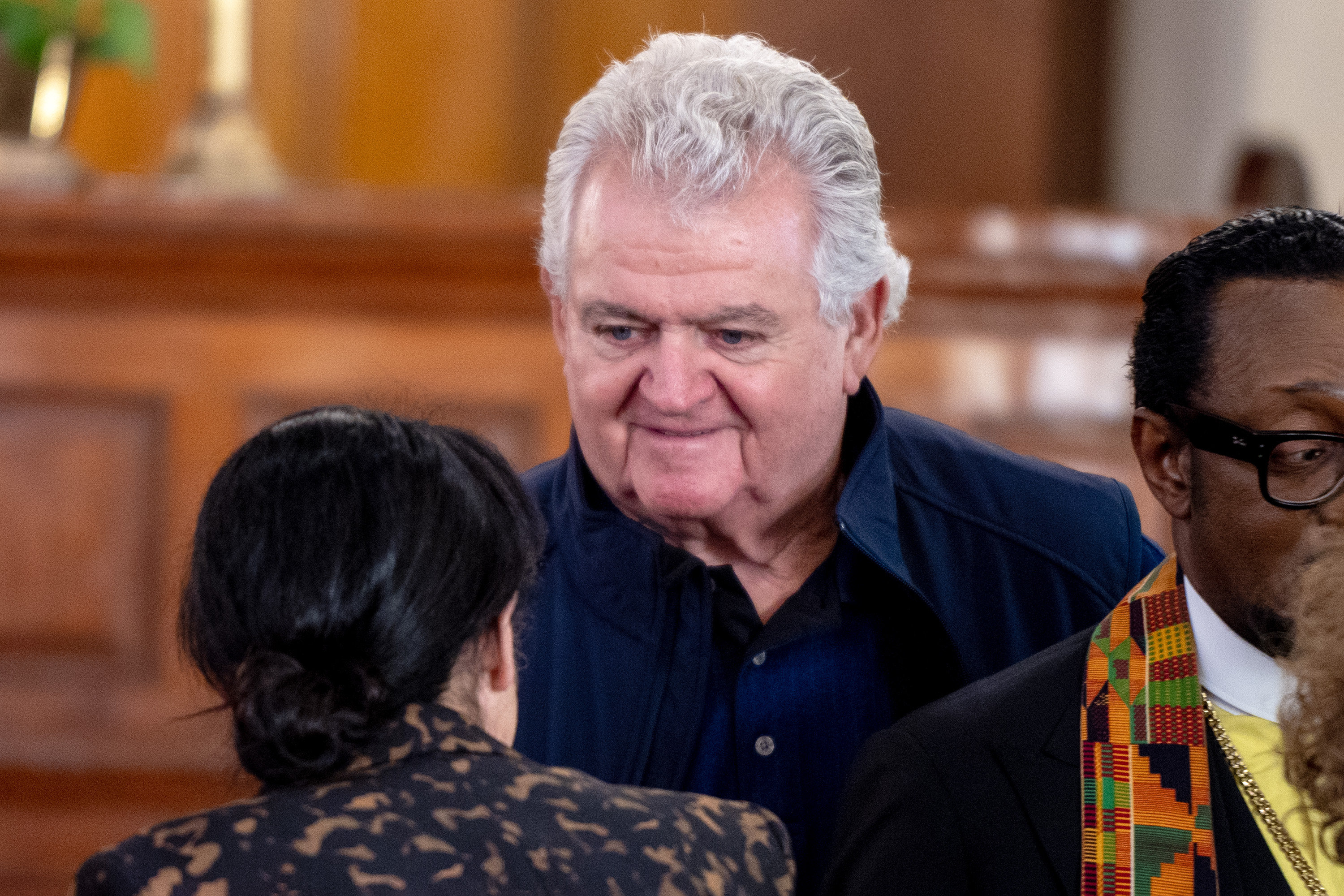
    Chairman of the Democratic City Committee, former U.S. Rep. Bob Brady, at Mother Bethel AME Church Nov. 2, 2025.Tom Gralish / Staff Photographer

    But there is reason to doubt that scenario will become the norm in high-profile Philadelphia elections. In addition to legal questions about the NRSC case’s applicability, there are political obstacles that could prevent candidates from taking advantage of the court’s ruling.

    To be endorsed by the city committee, candidates must receive the support of a majority of the 69 Democratic ward leaders, who often fail to reach that level of consensus in crowded races. And even if a candidate wins the endorsement, there is no guarantee they would have the donor network to be able to take full advantage of coordinating fundraising with the party.

    Lastly, the party may differ with a candidate’s campaign on strategy decisions, or it could decline to raise money beyond the limits applicable to other candidates to avoid the appearance of tipping the scales.

    Bonin said he opposes the current Supreme Court’s campaign finance rulings, such as the 2010 Citizens United decision that helped usher in the dominance of super PACs. But in light of those rulings, he said, the NRSC decision may be a positive development.

    “If we’re going to live in a world where super PACs exist, we are better off strengthening political parties, which are more accountable,” he said.

    A new twist in Council election races for the GOP and Working Families Party?

    There is another arena in which the decision could have a major impact in Philadelphia: the general election races for the two seats on City Council that are reserved for independent or minority-party candidates.

    Republicans held those seats for about 70 years until Councilmembers Kendra Brooks and Nicolas O’Rourke of the progressive Working Families Party won them in the two most recent city election cycles, a major factor in Council’s recent shift to the left.

    At left is Kendra Brooks speaking with colleague Nicholas O’Rourke during caucus session. Philadelphia City Council gathered today for the budget address from Mayor Cherelle L. Parker in chambers, Thursday, March 12, 2026. .Alejandro A. Alvarez / Staff Photographer

    The Philly GOP has seen anemic fundraising levels and dismal results in recent years. If applied to local primaries, the NRSC ruling could potentially help the party gain traction with the help of just a handful of major donors — especially given that it is less clear the Working Families Party, without a primary election, would be able to take advantage of the change.

    If the NRSC ruling is applied to city elections, the Philly GOP would undoubtedly be able to coordinate with its nominees in those Council races. Vince Fenerty, who chairs the Republican City Committee, said he is seeking legal advice on that question.

    “We’re hopeful that there could be a chance for us to help our City Council candidates next year and everyone else who runs [as a Republican],” he said.

    It is unclear whether the ruling would benefit the smaller Working Families Party, which under Pennsylvania law is not a major political party. (Pennsylvania’s Commonwealth Court is currently deciding an unrelated case on the Green Party that could affect the legal standing of groups like the Working Families Party.)

    At left is attorney Matt Wolfe and Vince Fenerty, chair of the Philadelphia Republican Party attended the hearing for Working Families Party candidates. Hearing in courtroom 443 Philadelphia City Hall for Working Families Party candidates on Friday, August 11, 2023.Alejandro A. Alvarez / Staff Photographer

    In a statement, Working Families Party spokesperson Nick Gavio lamented the direction of the U.S. Supreme Court’s recent rulings on campaign finance law.

    “Anyone who has knocked a door in Philadelphia knows that regular voters are not pushing to give billionaires and the ultra-rich more power to influence our elections,” he said. “WFP has no interest in overturning existing campaign finance regulations that act as guardrails against political and corporate insiders buying elections. We will of course continue to follow all campaign finance rules that are on the books.”

    A new quandary for the ethics board

    In stark contract to the increasingly unregulated world of federal elections, Philadelphia has some of the tightest campaign finance restrictions in the country, and the ethics board has aggressively enforced the city’s rules.

    Critics, including Greenberg, believe the board has already overextended itself by sticking to Philly’s rules as the Supreme Court increasingly takes a wrecking ball to federal campaign finance law. And for Greenberg, the NRSC case is the latest decision that shows Philly is overdue for a full redo that “addresses these issues in light of the [Supreme Court’s] clear direction.”

    “City Council needs to write appropriate rules, and the board of ethics needs to rescind almost all of its existing regulations and readopt them in law,” he said.

    It is unlikely the ethics board would lead the charge in demolishing the campaign finance system it helped to create — one that has been widely credited with limiting the influence of corporate interests and super-wealthy individuals since it was implemented in 2005.

    In an interview, Creamer, the ethics board executive director, referenced differences between the federal law in question in the NRSC case and Philly’s system — an indication the board could determine the decision has no bearing on local elections.

    “We don’t have a similar structure to our law. So it may impact our law somehow; it may not,” Creamer said. “We’re still analyzing it.”

    There are several important differences the board could point to. In federal law, for instance, there are limits on how much individuals can give to political parties, but in Philadelphia there are none.

    In addition, the majority opinion in the NRSC decision, which was authored by Justice Brett M. Kavanaugh, discusses at length how rules around “earmarked” donations — in which donors give money to political parties and direct them to spend it on specific candidates — provide a “prophylaxis” against corruption that could result from eliminating limits on coordination with political parties. Philly does not have an earmarking process.

    If the ethics board stands pat, candidates or political parties seeking to take advantage of the NRSC ruling could challenge the board’s regulations in court. Politicians in heavily Democratic cities like Philadelphia, however, face strong disincentives from taking that step, which would allow them to be painted as supportive of moneyed interests playing a greater role in local politics.

    Bonin, who has been less critical of the ethics board’s approach to campaign finance than Greenberg, said resistance to the NRSC case would be difficult.

    “Whether they like it or not, they have to allow it,” Bonin said, referring to coordination between candidates and parties.

  • Mayor Parker has seen higher turnover among her top appointees than her recent predecessors

    Mayor Parker has seen higher turnover among her top appointees than her recent predecessors

    Mayor Cherelle L. Parker has seen more than twice as much turnover among top officials in her administration than her most recent predecessors had at the same point in their tenures, according to an Inquirer analysis of personnel moves.

    Come September, when City Solicitor Renee Garcia’s resignation takes effect, more than half of Parker’s highest-level appointees will have departed in the two years and nine months since she took office in January 2024.

    Following last month’s announcement that Managing Director Adam K. Thiel and Garcia would soon be leaving Parker’s administration, The Inquirer compared turnover at the top level of city government under Parker with former Mayors Jim Kenney and Michael A. Nutter. The analysis included chiefs of staff, deputy mayors, and the half-dozen other positions designated by the Philadelphia Home Rule Charter as part of the mayor’s cabinet.

    The analysis found:

    • Of the 11 people Parker appointed to those jobs, six have already left the administration or are poised to leave by September. Kenney had lost three of his 11 top appointees by the same point in his tenure, and Nutter had lost two of the nine officials in comparable positions.
    • Most strikingly, Parker has lost three of the top four officials in her government: Chief Deputy Mayors Aren Platt and Sinceré Harris, the architects of her 2023 campaign, and Thiel, who oversaw most of the city’s operational departments. By this point, Kenney and Nutter both had lost two of the six people who held comparable roles in their tenures.
    • For the director of the Philadelphia Department of Labor, a cabinet position, Parker is on her third appointee, after her first two left city government after short stints leading the agency. (Parker has also had three directors of LGBTQ+ affairs, a non-cabinet position, after firing the first two people who served in that role.)
    • In another cabinet role, that of commerce director, Karen Fegely has been serving on an interim basis since May 2025, when Parker’s original appointee, Alba Martinez, resigned to produce a musical.

    Tiffany W. Thurman, Parker’s chief of staff, said the turnover has not raised “any red flags or alarms internally.”

    “It’s cyclical, and it’s part of the process,” Thurman said in an interview Thursday morning, after the initial publication of this story. “The work is continuing, and it’s strong and it’s good, and the vision hasn’t wavered despite the turnover, and so I’m very, very pleased with the team that we have right now.”

    (function() { var l = function() { new pym.Parent( ‘parker-staff__graphic’, ‘https://media.inquirer.com/storage/inquirer/ai2html/parker-staff/index.html’); }; if(typeof(pym) === ‘undefined’) { var h = document.getElementsByTagName(‘head’)[0], s = document.createElement(‘script’); s.type = ‘text/javascript’; s.src = ‘https://pym.nprapps.org/pym.v1.min.js’; s.onload = l; h.appendChild(s); } else { l(); } })();

    Although the top rung of Parker’s administration has seen high turnover, the analysis found that the next two tiers of city government leaders under Parker have seen less churn.

    • Of 18 key department heads not included in the charter-designated cabinet under Parker, three have resigned from or been forced out of city government. (A fourth, former Fire Commissioner Craig Murphy, stepped down as part of a scheduled retirement after Parker appointed him on an interim basis.)
    • Of the 76 additional political appointees, smaller department leaders, and deputies identified by The Inquirer — including all of the officials whose appointments Parker publicly announced as she filled out her administration — at least 12 have resigned, been fired, or moved to a new role in a discipline-related transfer. (Others have received promotions or switched roles to fill vacancies.)
    • Major officials who remain in the administration hold some of the most critical posts in city government, such as Police Commissioner Kevin J. Bethel, the first appointment Parker announced after her election, and Finance Director Rob Dubow, who has held his role since the start of Nutter’s administration in 2007.

    While smaller in number, the departures among the second and third tiers of city government leadership under Parker have included losses in important positions, including Water Commissioner Randy Hayman, Licenses and Inspections Commissioner Basil Merenda, Chief Policy Officer Sophie Bryan, and Budget Director Robert McDermott.

    (function() { var l = function() { new pym.Parent( ‘parker-staff2__graphic’, ‘https://media.inquirer.com/storage/inquirer/ai2html/parker-staff2/index.html’); }; if(typeof(pym) === ‘undefined’) { var h = document.getElementsByTagName(‘head’)[0], s = document.createElement(‘script’); s.type = ‘text/javascript’; s.src = ‘https://pym.nprapps.org/pym.v1.min.js’; s.onload = l; h.appendChild(s); } else { l(); } })();

    There is always turnover in administrations, but it is often clustered around the end of mayors’ four-year terms. (There are exceptions: A majority of Philadelphia city solicitors since 1992, for instance, have served around two to three years, putting the length of Garcia’s tenure on par with her predecessors.)

    Traditionally, deputy mayors and chiefs of staff work most closely with the mayor, and the posts have often been filled by people in the mayor’s inner circle or top campaign aides. They often do not have deep city government experience, which was the case for Harris and Platt, both of whom have since returned to politics.

    Appointments for operational positions, such as managing director and police commissioner, usually go to people with experience in their fields. Thiel led the fire department and the office of emergency management under Kenney. Bethel was a former deputy police commissioner.

    Parker, at the helm of City Hall, has said she has a demanding leadership style.

    “With my team, am I always stretching and pushing and requiring that homework is done?” Parker said in a 2024 interview. “Yes, but I also believe I have the best and the brightest people with me. So naturally I have very high expectations for them because, quite frankly, they’re smart.”

    Candi Jones, the administration’s chief human resources officer, said that Thiel and Garcia’s tenures are roughly in line with the average length of their predecessors’ over the last four administrations.

    “Turnover is not turmoil,” Jones said Thursday during the interview with Thurman. “What is of most importance is that the city has an obligation for operational continuity. … Everyday, our operations are continuing to be managed daily, weekly, monthly. There has been no gaps in service.”

    She also emphasized that key officials like Bethel, Dubow, and Thurman “since day one have been in place and really have been moving the government forward.”

    The Inquirer attempted to reach all of the former administration officials mentioned in this article. Many declined to comment for this article or did not respond to interview requests. Attempts to reach several others were unsuccessful.

    ‘Big Three’ loses two

    Even before Parker took the oath of office, intrigue over personnel matters became a defining aspect of her administration.

    After winning the mayor’s race, Parker announced in late 2023 that she would appoint a “big three” of senior advisers to lead her administration, rather than a single “big mahoff,” an all-important aide who touches almost all major decisions, as had been the case in past administrations.

    “No one like me has ever been elected mayor of our city, and no one has ever organized their senior staff this way,” Parker, the city’s first Black female mayor, said at the time.

    It didn’t last.

    Platt resigned unexpectedly in October 2024 after just 10 months on the job, and has since returned to Parker’s political campaign as executive director. Harris stepped down in March to join the political consulting firm GPS Impact.

    Parker tapped City Hall veteran Vanessa Garrett Harley to fill Platt’s role, while Harris has not been directly replaced.

    Despite Parker’s initial vision for a triumvirate of top aides, Thurman has by all accounts become Parker’s indispensable No. 2. Parker has referred to Thurman as her “chief air traffic controller.”

    Mayor Cherelle L. Parker walks from her office at City Hall on Wednesday, Jul. 9, 2025, to speak hours after her administration struck a tentative contract agreement with District Council 33 leaders overnight, ending a workers strike. With her are: Chief Deputy Mayor Sinceré Harris (from left); Chief of staff Tiffany W. Thurman; and Chief Deputy Mayor Vanessa Garrett-Harley.Tom Gralish / Staff Photographer

    Thiel’s tenure with the city, meanwhile, has been one of the most perplexing sagas of Parker’s first term. In the administration’s early days, he often appeared alongside the mayor at news conferences during emergencies and major announcements.

    But his public role overseeing many of the city’s day-to-day operations faded over time, and his obligations outside City Hall grew. In addition to working as a high-paid consultant and adjunct professor — as he had since the start of the administration — Thiel joined the U.S. Army Reserve in 2024 and took multiple leaves from the city for military service, including during this winter’s prolonged snow and ice emergency.

    In July, Parker announced Thiel’s resignation, noting that he is leaving to “reenter the private sector.”

    Philadelphia Managing Director Adam Thiel updates the latest from garage collapse at 30th and Grays Ferry with Mayor Cherelle L. Parker on Thursday, April 9, 2026.Yong Kim / Staff Photographer

    New positions, new faces

    Parker, who has also greatly expanded the mayor’s office staff and increased salaries, created numerous new roles after taking office. Several people left those positions shortly after becoming the first people to hold them.

    Kafi Lindsay resigned as director of the Philadelphia Office of Strategic Partnerships just nine months after being appointed, according to her LinkedIn profile. Rachel E. Branson resigned as the director of the Philadelphia Office of Minority Business Success after a year and three months, according to her LinkedIn profile. And Hassan Freeman last fall was let go as director of neighborhood and community engagement after an altercation with Councilmember Isaiah Thomas outside City Hall.

    Some signs of strain within the administration emerged during Parker’s second year in office.

    Parker last summer fired Brandee Anderson, who was the chief diversity, equity, and inclusion officer, and Tyrell Brown, the director of LGBTQ+ affairs, amid a thorny personnel issue that also led to the deputy chief of staff, Chris Dailey, moving to the managing director’s office in a disciplinary transfer.

    Last month, Anderson sued the city, alleging her termination was part of an effort to “suppress” DEI work in the administration. Around the same time, Shania Bennett, Parker’s former director of youth engagement, a non-cabinet position created by Parker, posted on social media that her time with the mayor’s administration was “the worst experience of [her] life” and that she resigned due to “unprofessional harassment” from a fellow staffer.

    ‘What’s the bench?’

    George R. Burrell, a lawyer and former City Council member who held senior roles under two mayors, said the personnel churn under Parker will test the leadership skills of the behind-the-scenes city officials who have been elevated to fill vacancies.

    “The question you have, when you have this kind of turnover, is, ‘Well, what’s the bench?’” said Burrell, who served in the administrations of former Mayors William J. Green III and John F. Street. “The question of what happens next and the quality of what happens next is the quality of the bench.”

    Veteran city staffers now occupy four of the six top roles originally held by Parker appointees who have since left City Hall. Harris’ position was not directly replaced.

    The exception is former Assistant U.S. Attorney Monique Galloway, a newcomer to Philadelphia government, who will replace Garcia as the city’s top lawyer next month.

    Burrell said he expects longtime city bureaucrat Carlton Williams, who has replaced Thiel as managing director after serving as Parker’s director of clean and green initiatives, to succeed in his new role.

    “I watched him evolve into what is a productive public servant,” Burrell said. “So I think that’s a bench member who is going to perform at the level that’s needed.”

    Philadelphia Mayor Cherelle L. Parker announces Carlton Williams as the new Philadelphia Managing Director, replacing Adam Thiel during a news conference at City Hall in Philadelphia on Tuesday, July 28, 2026.Jose F. Moreno / Staff Photographer

    Once in office, Parker took nearly a full year to fill out her administration with appointments to key positions. She did not announce her selection of Kehinde “Kenny” Solanke to lead the Philadelphia Department of Behavioral Health and Intellectual disAbility Services, or DBHIDS, until July 2025, a year and a half into her tenure.

    During that process, Parker said she was seeking the “best and brightest” and conducted national searches for some roles. A vast majority of her appointees, however, had strong ties to Philadelphia.

    In 2024, when Parker was filling out her administration, she said she attended a training for new mayors at Harvard University. Some leaders from other cities, she said, were interested in recruiting Hayman, who had been appointed water commissioner by Kenney in 2019.

    When Parker took office, it was unclear if she would keep Hayman in command of the water department. She announced she was retaining him in March 2024, and relayed the Harvard anecdote to demonstrate how Philly already had some of the country’s top public servants.

    “He’s not going anywhere,” Parker said at the time. “We were able to hold on to some of the best talent in the nation.”

    In July 2025, Hayman left Philadelphia to become the executive director of the New Orleans Sewerage and Water Board.

    Staff writers Ryan W. Briggs and Anna Orso contributed to this article.

  • Federal investigators subpoenaed records about Philly lobbyist William Dunbar, who was key to Mayor Parker’s campaign, sources say

    Federal investigators subpoenaed records about Philly lobbyist William Dunbar, who was key to Mayor Parker’s campaign, sources say

    Federal investigators last summer issued subpoenas for documents and financial records related to William F. Dunbar Sr., a Philadelphia lobbyist who was a close confidant of Mayor Cherelle L. Parker during her 2023 campaign, according to three people with direct knowledge of the probe.

    Dunbar, who has extensive political ties, was a key member of Parker’s informal “kitchen cabinet” of unpaid advisers during her 2023 run, and he ran her campaign, People for Parker, for most of 2024, the mayor’s first year in office. He has also raised money for U.S. Sen. Cory Booker of New Jersey and members of Philadelphia City Council, and he co-chaired Gov. Josh Shapiro’s 2023 inaugural committee.

    The sources, who spoke on the condition of anonymity to discuss a sensitive legal matter, said federal investigators in the summer of 2025 issued subpoenas to multiple associates of Dunbar’s, compelling them to produce records related to his business and political dealings. One source described the investigation as “fairly broad.”

    None of the sources said they were aware of an investigation centered on Parker.

    Dunbar, 42, declined to comment Thursday.

    A spokesperson for the U.S. Attorney’s Office in Philadelphia declined to comment. No charges have been filed in relation to the probe.

    A Parker campaign spokesperson declined to comment on her behalf.

    Records show that Parker’s campaign increased its spending on legal services in 2025, around the time that the sources said the subpoenas were issued. The Inquirer reported this week that the campaign has paid its law firm, Dilworth Paxson, about $108,000 since the start of 2025, according to campaign finance reports. It paid the firm less than $15,000 during the 2023 election year and about $19,000 in 2024. People for Parker did not respond to a request for comment on what was driving the increased legal bills.

    During the 2023 election, the campaign was led by campaign manager Sinceré Harris and senior adviser Aren Platt. Dunbar and several other informal advisers, however, were part of Parker’s inner circle, helping with strategy and fundraising.

    In 2024, Dunbar officially joined the campaign for the first time after Platt and Harris became chief deputy mayors in Parker’s administration. Both have since resigned from city government. Platt later returned to the campaign to serve as executive director of People for Parker.

    Dunbar has never been personally paid by People for Parker, according to campaign finance records. The campaign made rent payments to his firm, Dunbar Public Affairs & Associates, totaling $22,850 from March 2024 to November 2024.

    Parker’s campaign parted ways with Dunbar in late July 2024. Dunbar at the time said it was the mayor’s decision to take the campaign in a different direction.

    “I’m very much still an informal senior adviser but because of a different set of priorities, the mayor has decided to manage her politics herself,” Dunbar told The Inquirer at the time. “My business has continued to grow as we work to support our clients.”

    Parker added: “Will has been a valued friend to me, and let me just say that life is good right now [for Dunbar] and business is good and it’s growing.”

    Dunbar, an Overbrook Park native who got his start in politics working for former U.S. Rep. Chaka Fattah (D., Philadelphia), has developed an extensive political network through fundraising and advising campaigns. He worked in government affairs for Comcast before expanding his lobbying portfolio after Parker’s victory in the 2023 election.

    Dunbar in recent years registered as a city government lobbyist on behalf of several clients, including Comcast, the Philadelphia School District, the Chamber of Commerce for Greater Philadelphia, Jackmont Hospitality, and several other companies, according to public disclosures. Dunbar’s lobbying registration had been listed as “expired” in city records Friday, but was changed to “submitted” after the initial publication of this story.

    Dunbar worked with the school district as a subcontractor for a Harrisburg lobbying firm, DT Firm.

    “In June, the DT Firm informed the District [that] Mr. Dunbar was no longer a subcontractor with the firm,” district spokesperson Naima DeBrest said in a statement.

    DeBrest did not respond to a question about whether the district received a subpoena. The DT Firm declined to comment.

    Comcast and the chamber also declined to comment.

    Jackmont, which operates concessions at Philadelphia International Airport and also runs two TGI Friday’s locations in Philadelphia, did not respond to a request for comment.

    Staff writer Ryan W. Briggs contributed to this article.

  • Mayor Parker’s campaign is spending far more on lawyers than it did when she was running for office

    Mayor Parker’s campaign is spending far more on lawyers than it did when she was running for office

    Mayor Cherelle L. Parker’s campaign has spent about $108,000 on legal fees since the start of 2025, far more than it shelled out in any recent year, campaign finance records show.

    For instance, in 2023, when Parker’s legal bills would have been expected to spike amid her winning campaign for mayor, the campaign paid about $14,900 in fees to its law firm, Dilworth Paxson, according to campaign finance reports. In 2024, Parker’s first year in office, the campaign sent Dilworth about $19,300.

    But in 2025, payments to Dilworth more than quadrupled.

    Aren Platt, executive director of the Democratic mayor’s campaign, People for Parker, did not respond to a request for comment on what was driving the increased legal bills.

    “Our lawyers at Dilworth are an essential part of our team and it’s important that we are able to talk to them on a variety of strategic initiatives,” Platt said in a statement.

    The campaign paid Dilworth about $88,700 in 2025, and an additional $19,700 between Jan. 1 and May 4 of this year, according to the most recent report.

    “It’s an unusual number to see right now,” said Matthew Haverstick, a Philadelphia-based elections attorney who has primarily worked with Republican candidates. “There could be lots of prosaic or benign explanations for it, but it’s not normal.”

    Election law gives campaigns wide latitude over how they spend money from donors. In addition to election-related expenses like advertisements or legal work on campaign finance compliance, campaigns can spend money on everything from constituents’ funeral expenses to airfare for candidates to attend political events. They can also support the candidates’ work in government.

    Public records do not provide detailed information about campaign expenditures. After multiple requests from The Inquirer for the campaign’s legal expenses, Dilworth attorney Timothy J. Ford, who handles most of the campaign’s legal work, on Monday provided copies of invoices from 2023 through 2025.

    The campaign told the Philadelphia Office of City Commissioners, which oversees elections and processed the request, that the delay was due to a mix-up involving an email address that is “not checked regularly.”

    The invoices, which the commissioners said were “redacted for attorney-client privilege and client confidential information,” show Dilworth billed the campaign during that three-year period for four separate matters.

    For “Matter 01,″ which included all the invoices during the election year of 2023, the firm billed the campaign for about $12,400, and almost all of the work appears to have been done by Ford. (The campaign spending reports and Dilworth’s invoices do not exactly align, due to the timing of payments and potentially other factors such as reimbursements.)

    “Matter 02″ listed in the invoices lasted from February 2024 to March 2024, with Dilworth billing $2,300. Ford appeared to complete all the work.

    The billings escalated with “Matter 03,” which began in March 2024, three months into Parker’s tenure, and lasted at least through October 2025, the period covered by the most recent invoice provided to The Inquirer. The firm billed about $62,100 for its work on that matter, and the invoices show that at least four people from Dilworth billed hours.

    “Matter 04″ began in August 2025, and has resulted in $45,300 in billing with as of October 2025. Although most of the details are redacted, the invoices show extensive billing around an “interview” on Sept. 12, 2025. From Sept. 10 to 13, Dilworth billed nearly $7,800.

    Additionally, the Parker Mayoral Transition and Inaugural Committee, which aided her transition into office and has since closed, paid Dilworth about $9,700 between December 2023 and March 2024, when it was active.

    Parker’s campaign has been more active with fundraising during nonelection years than the campaigns of her recent predecessors. In 2025, she raised $1.7 million, more than any another second-year mayor since at least the early 2000s, according to her campaign.

    People for Parker had about $1.4 million in cash on hand as of May 4 after raising about $241,000 and spending about $390,000 in the first four months of this year. Parker is up for reelection next year, and rumors have swirled about the potential of her facing a challenger backed by the progressive movement.

    Earlier this year, Parker’s campaign donated $23,000 to the Pennsylvania Democratic Party and $25,000 to Pick Pennsylvania, a committee led in part by Parker to lure the Democratic National Convention back to Philadelphia.

    Allies of Parker also set up a 501(c)4 nonprofit called One Philly that raised and spent vast sums in 2024 before appearing to fade away in 2025.

    Political consultant Jeff Sheridan, who helped lead a super PAC that was critical to Parker’s 2023 victory, was a public point person for the One Philly nonprofit. In March 2024, he said the group was formed to advance Parker’s governing agenda, not to get involved in politics.

    One Philly, which is not required to disclose its donors, raised $658,500 in 2024, Parker’s first year in office, according to an annual return the nonprofit filed with the IRS. It spent $484,900 that year to “promote policies and actions championed by City leaders.”

    The group also reported paying nearly $19,000 in legal bills that year, and listed its representative as the Ballard Spahr law firm.

    In 2025, the group reported raising only $15,000 and spent all of its remaining money, according to its most recent disclosure, filed in May.

    Sheridan did not respond to a request for comment.

    Staff writer Anna Orso contributed to this article.

  • The city plans to pay up to $75,000 to help measure the economic impact of Philly’s major events in 2026

    The city plans to pay up to $75,000 to help measure the economic impact of Philly’s major events in 2026

    When Mayor Cherelle L. Parker faced questions about spending on Philadelphia’s Fourth of July concert, she promised a “fiscal impact report” that would help determine how the economic benefits of the concert and other major events in Philadelphia during 2026 compared with their cost to city taxpayers.

    It turns out the city will have to spend a bit more taxpayer money to get to the bottom of that inquiry.

    The finance department is looking to hire a consulting firm for up to $75,000 to provide “economic analysis services to better understand the economic and fiscal impact of Philadelphia’s 2026 events and related activity on the local economy,” according to a contract opportunity posted on the city’s website last week. Responses are due Aug. 5.

    The contract solicitation calls for an evaluation of “event-related visitation, tourism activity, and associated economic activity” and estimates of “state and local tax revenues generated by event-related economic activity,” among other things. But it does not ask the consultant to produce an accounting of the city’s spending on those events.

    Andrew Richman, a top attorney in the city law department, said the administration will also produce an analysis of the city’s spending related to the major events hosted in Philly during 2026, including the nation’s 250th birthday, FIFA World Cup games, and the MLB All-Star Game.

    Fans celebrate after Mexico scores against South Africa while watching the FIFA World Cup opening match on a giant screen during the opening day of the FIFA Fan Festival at Lemon Hill on Thursday, June 11, 2026, in Philadelphia.Jose F. Moreno / Staff Photographer

    “As a standard operating procedure in the Parker administration, there will be financial accounting that details every dollar and cent spent on 2026-related activities, analysis including all expenses, and economic impact of all activities and investments associated with 2026,” Richman said.

    The mayor’s office did not respond to a request for comment on when that accounting will take place.

    Parker’s administration this year took over management of the July Fourth concert and fireworks show on the Ben Franklin Parkway, which for years had been handled by the nonprofit Welcome America, a public-private partnership created by the city in the 1990s.

    Parker instead hired ESM Productions, a for-profit company led by well-known concert producer Scott Mirkin, and renamed the event the “One Philly: Unity Concert for America,” a version of her slogan, “One Philly: A United City.”

    Pennsylvania Governor Josh Shapiro and Philadlephia Mayor Cherelle L. Parker at the One Philly: Unity Concert for America on the Benjamin Franklin Parkway on Saturday, July 4, 2026, in Philadelphia.Yong Kim / Staff Photographer

    The changes resulted in a much more expensive concert than in years past. The city agreed to pay ESM about $15.5 million to put on the show, The Inquirer reported after obtaining the contract. The previous year’s concert cost Welcome America about $3 million, a source with knowledge of the event told The Inquirer.

    Those sums did not include costs related to city employees, such as sanitation workers and overtime for police officers who worked the event.

    Inclement weather, including extreme heat in the afternoon and a thunderstorm that disrupted the concert for hours in the evening, limited attendance at what Parker had hoped would be a major event.

    The city’s coming analyses, however, will include all of 2026’s major events, not just the concert.

    Parker has said her administration will spend $120 million on this year’s celebrations, and she has pledged to ensure communities across Philadelphia, not just Center City, benefit from the investment, which includes beautification projects in neighborhood commercial corridors and funding for block parties and events across the city. The administration has not yet provided details on how much was dedicated to the concert or any other specific event this year.

    “At the end of our celebration, you will be able to see an accounting of how that $120 million was spent,” Parker said at a July 1 news conference.

    Jill Scott takes to the stage for One Philly: Unity Concert for America on the Benjamin Franklin Parkway on Saturday, July 4, 2026, in Philadelphia.Yong Kim / Staff Photographer

    Economic impact analyses produced by paid consultants often include rosy estimates that public officials use to justify priorities. Academics who study their work for years have cited issues including inflated assumptions for visitors’ spending and understated or omitted opportunity costs for economic activity displaced by a large project or event.

    “Most economic impact studies are commissioned to legitimize a political position rather than to search for economic truth,” John L. Crompton, a professor at Texas A&M University, wrote in an influential 2006 paper published in the Journal of Travel Research. “Often, this results in the use of mischievous procedures that produce large numbers that study sponsors seek to support a predetermined position.”

    This year’s July Fourth concert was supposed to be headlined by Christina Aguilera, but the pop star ended up not taking the stage after the city paused the event around 9 p.m. due to the storm. The show resumed shortly after midnight, pushing the fireworks to about 2:30 a.m. July 5.

    Parker’s office on Wednesday did not respond to a request for comment on whether the city would receive any refund in light of Aguilera not performing.

    All other scheduled performers went ahead with their sets, including the Roots, Jill Scott, Meek Mill, DJ Jazzy Jeff, and Will Smith, who said Parker reached out to him personally to ensure he came back after the weather delay.