Author: Jonathan Tannenwald

  • ‘Two Delco-heads,’ Matt Freese and Auston Trusty, helped the USMNT make World Cup history

    ‘Two Delco-heads,’ Matt Freese and Auston Trusty, helped the USMNT make World Cup history

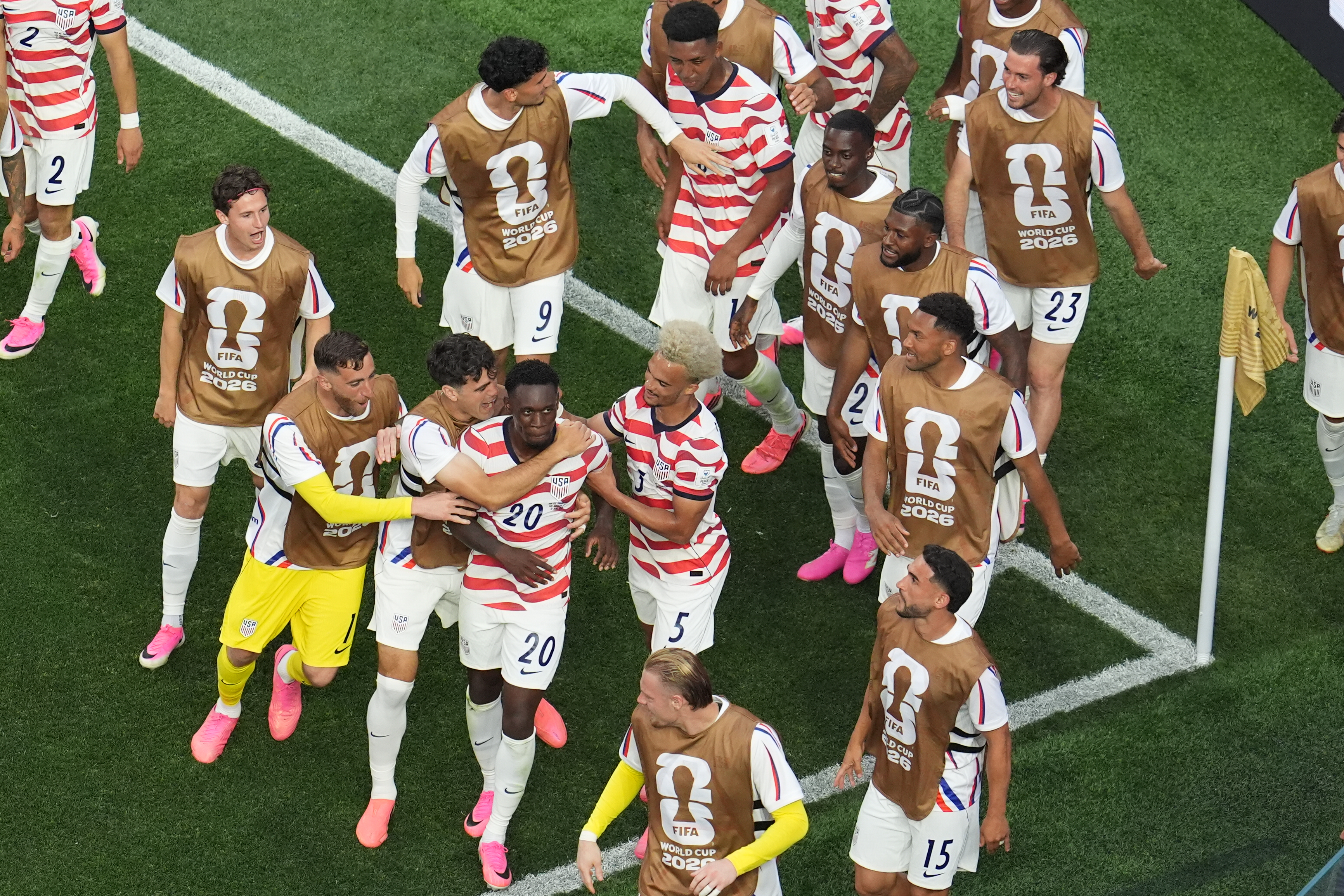
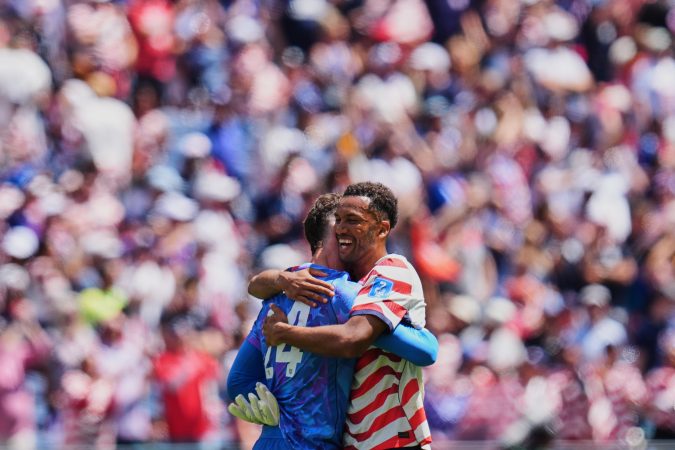
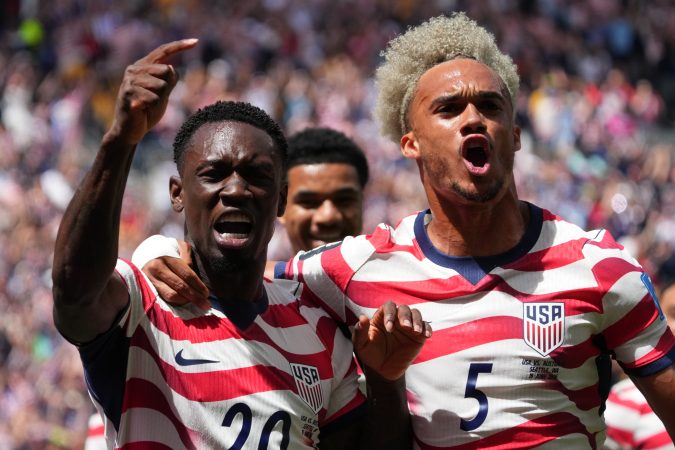
    SEATTLE — At the final whistle of the U.S. men’s soccer team’s 2-0 win over Australia on Friday, Auston Trusty walked over to Matt Freese to offer a big hug.

    They didn’t know that a photographer from the Associated Press was standing nearby to capture the moment. But soon enough, everyone found out.

    Yes, Delco was very much mentioned on the world’s biggest stage.

    “He came over to me and said, ‘Two Delco-heads just had a shutout in the World Cup together. That’s fate,’” the Wayne-born Freese said after his shutout in net. “And I laughed and I said, ‘Yeah, who would have thought?’”

    Perhaps Jim Curtin, or other coaches across the Union ranks who worked with the duo over the years. But not too many people beyond Chester, or Wayne in those days, since that was YSC Academy’s first home.

    “It’s obviously such a cool thing to have known him for so long, and I knew him outside of the soccer world too,” Freese said of Trusty. “We were just friends. So it’s incredible.”

    That wasn’t the only karmic coincidence of the day. Trusty made his World Cup debut in front of not just his wife, daughter, in-laws and cousins, but also two of his first youth soccer coaches with the old Nether United club in Nether Providence, Delaware County: Tor Hotham and John Waraksa.

    Like so many people around American soccer, they circled this day in this soccer-mad city and decided they had to be there. The reward was beyond measure.

    “To have them fly here, not knowing if I’m going to play or not, to come here and be here for this game where I actually make my World Cup debut, it’s just all meant to be,” Trusty said.

    The Media native beamed with pride again when he reflected on finally reaching this moment at age 27, 11 years after going to an under-17 World Cup with Christian Pulisic, Tyler Adams, Alejandro Zendejas, and Haji Wright.

    “When you’re a little kid, dreaming about the stadiums you play in and the atmospheres and everything involved, to play in a home turf World Cup, get minutes, it’s a dream come true,” Trusty said.

    Freese had his family in attendance too, plus his girlfriend’s family, and old friends from high school at Episcopal Academy. He shouted out one of the closest, Michael Hinkley, a soccer teammate back then who went on to play basketball at Dickinson.
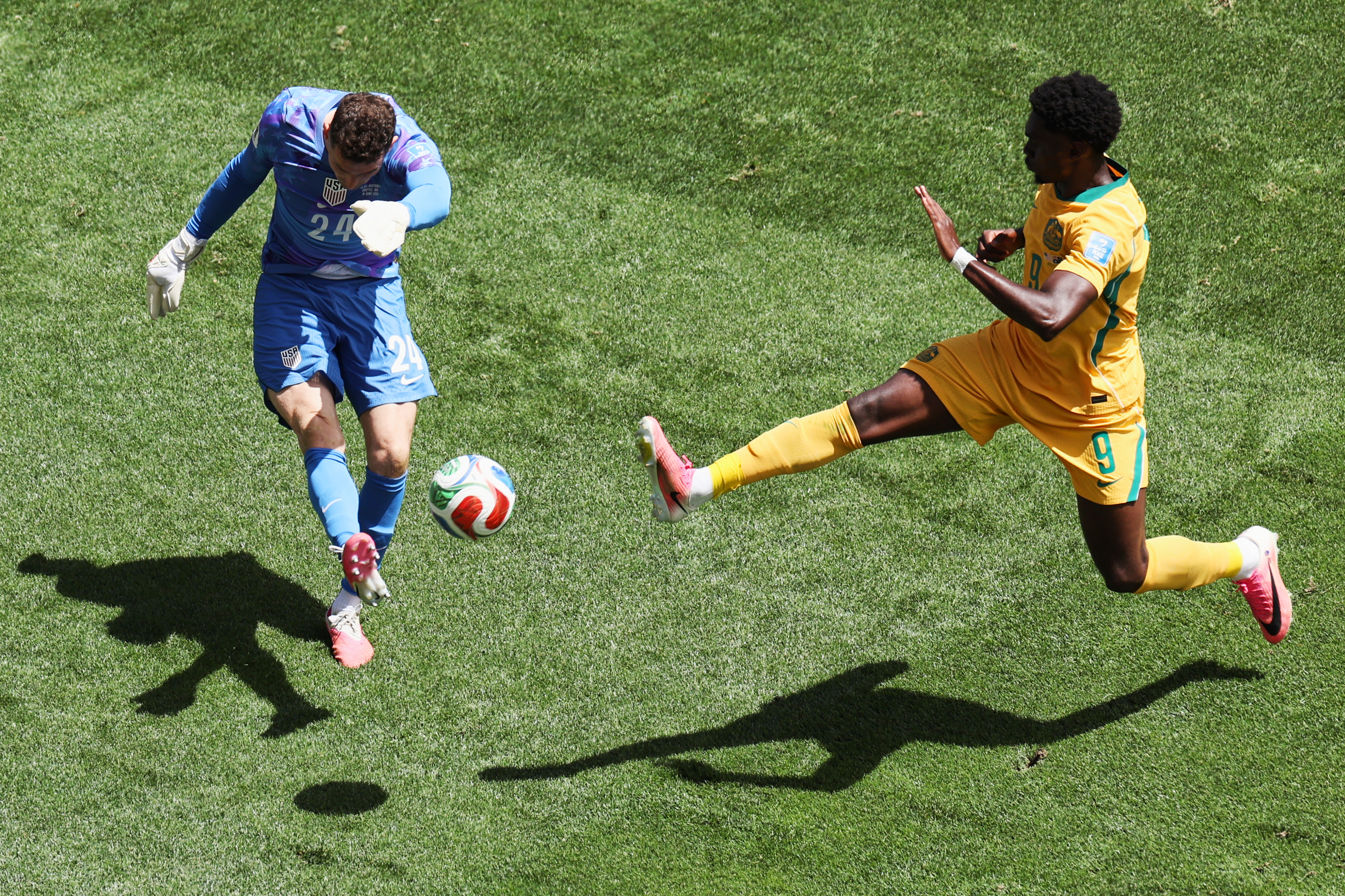
    Matt Freese (left) clearing the ball in front ofAustralia’s Mo Touré during the first half.Maddy Grassy

    “Obviously incredible support,” Freese said. “It means a lot to play in front of them, and play in front of everyone in this country.”

    That support fueled the U.S. team all day, with the stands full and roaring well before kickoff. Trusty said the atmosphere “gives you chills,” especially when the crowd sang The Star-Spangled Banner over the orchestral rendition on the speakers.

    “The atmosphere is one of those things you dream of,” Freese said. “I’ve heard ‘the 12th man’ is what they call the crowd here. It was definitely a 12th man for us — I think it was a 12th, 13th, 14th, 15th man for us today.”

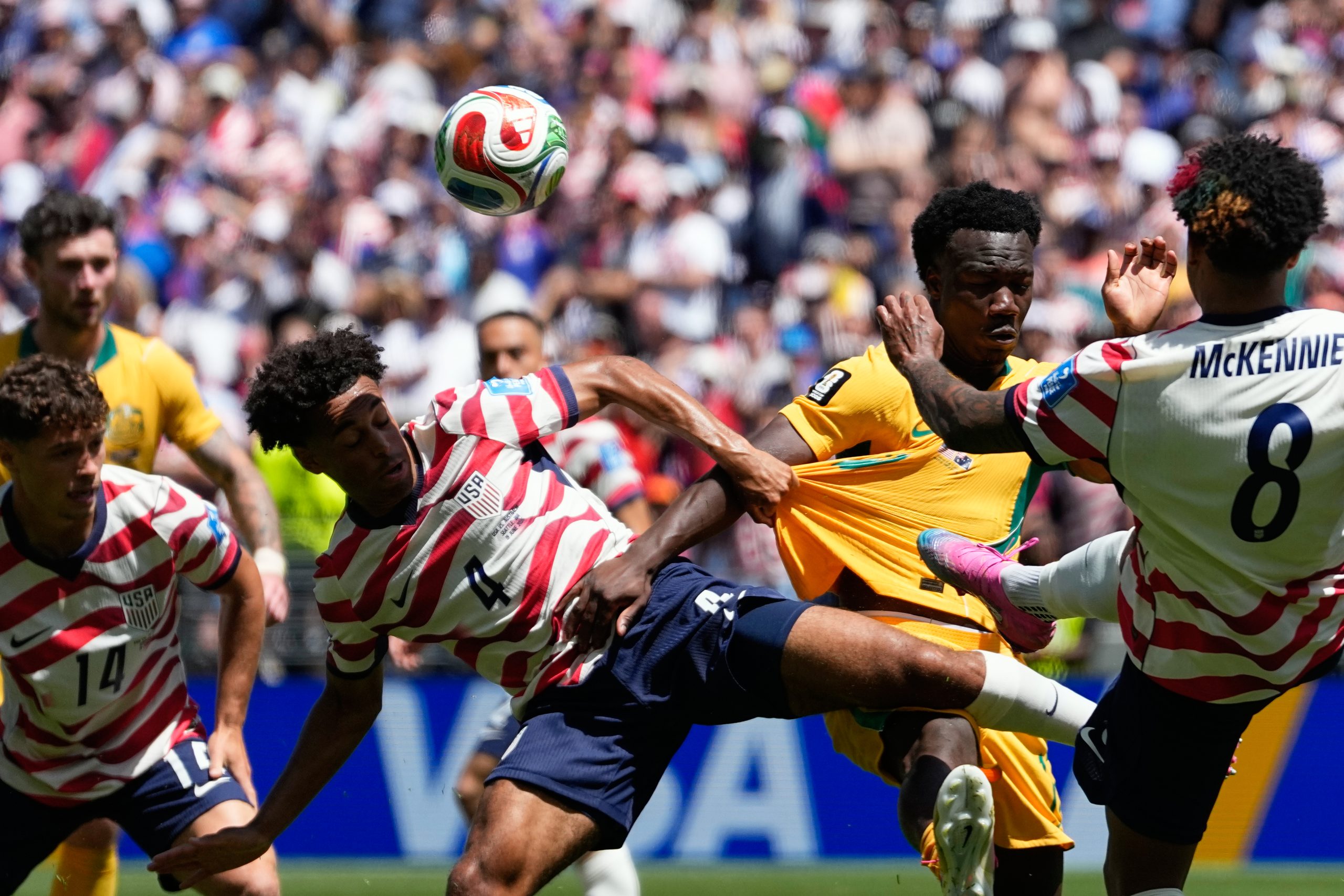
    But things were getting dicey when Trusty and Joe Scally entered the game in the 80th minute as defensive reinforcements. Australia was gaining momentum even though it hadn’t scored, and an already physical game was getting even more fractious.
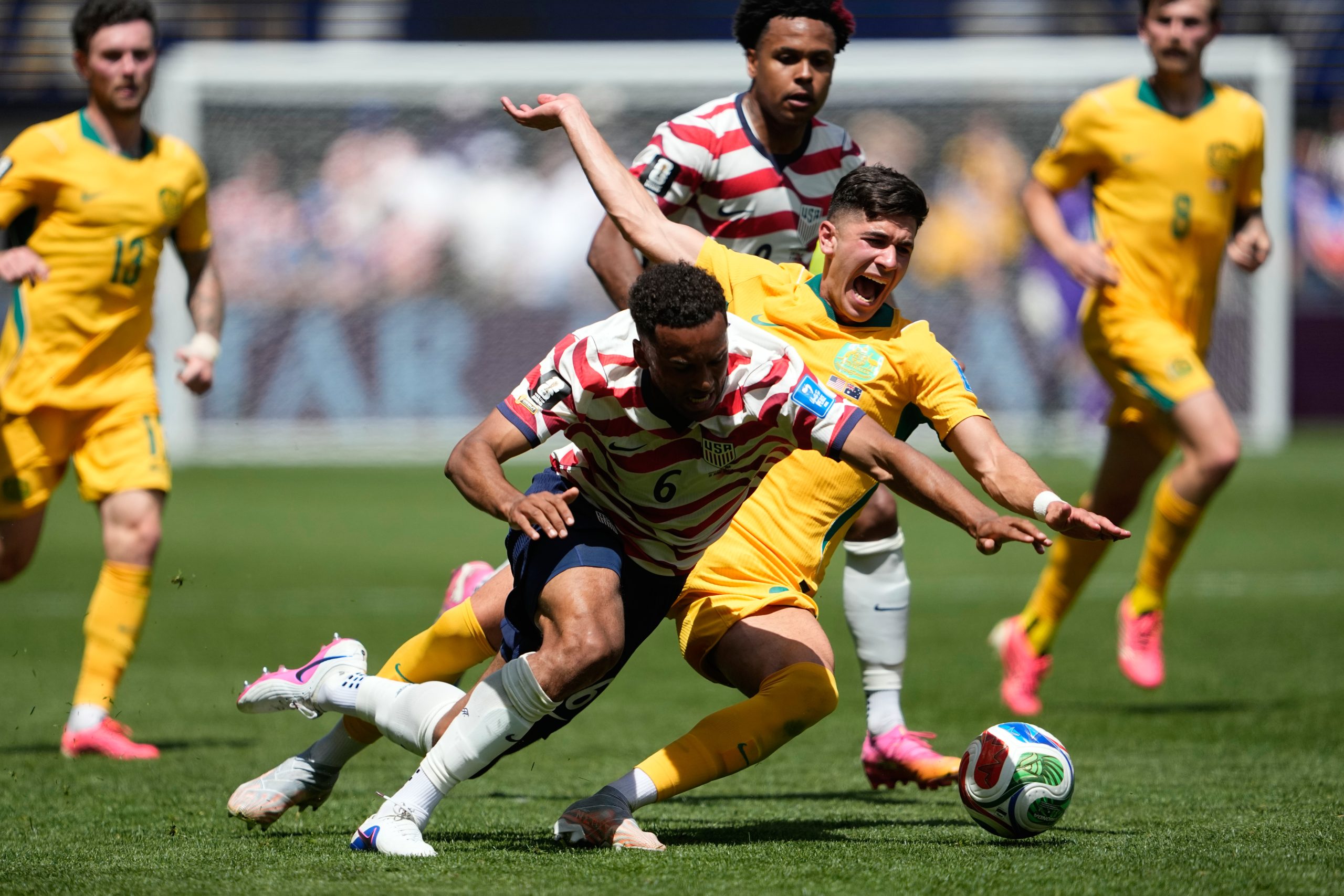
    Auston Trusty (left) tussling with Australia’s Cristian Volpato.Lindsey Wasson

    It got especially chippy in the last few minutes, but those two and the rest of the Americans kept their heads and finished the job. They did so at both ends, ensuring Australia didn’t score while also keeping a foot on the gas pedal in attack.

    “Just keep the pressure up,” Trusty said. “They weren’t really pressing too much, they kind of had like a halfway-block [formation], and obviously in a back five [defensively], they want pressure on them. So just continue the press that we had and the movement we had, and really just keep momentum.”

    Mission accomplished on all counts. Not only did the U.S. men qualify for the knockout rounds before the group stage finale against Turkey, but the program has two wins in one World Cup group stage for the first time since the inaugural tournament in 1930. And thanks to Turkey’s loss at the end of the night, the U.S. clinched first place with a game to spare.

    “We came into the tournament wanting to make a statement,” Freese said. “The first part of that’s done, but, you know, there’s a lot more statements we want to make.”
  • The USMNT clinches advancing in the World Cup with a 2-0 win over Australia

    The USMNT clinches advancing in the World Cup with a 2-0 win over Australia

    SEATTLE — It turned out that the U.S. men’s soccer team didn’t need Christian Pulisic to beat Australia, and make history in doing so.

    With the star playmaker unable to shake off a calf injury, the Americans used two first-half tallies and a raucous atmosphere in Seattle to earn a 2-0 win, before a packed-to-the-roof crowd of 66,925.

    The win clinched qualification for the knockout rounds, and marked the first time since 1930 that the U.S. men’s program has won two games in a World Cup group stage.

    U.S. manager Mauricio Pochettino started Ricardo Pepi in the open lineup spot, leading to a tactical change. The Americans rolled out a 3-5-2 formation, with Pepi and Folarin Balogun paired up top.

    It didn’t take long for that to pay off. In the 11th minute, Antonee Robinson sprung Balogun down the left flank. He ran almost to the end line, then laid a pass into an onrushing crowd that included Pepi, Sergiño Dest, and three Australian defenders. The ball hit one of them, Cameron Burgess, and pinged into the net.

    The statisticians at TruMedia noted this marked the first time in World Cup history that one team benefited from own goals in consecutive games, following the opening tally of the U.S.’ win over Paraguay.

    During the rest of the first half, the action was as physical as expected. Each team committed eight fouls in the period, and German referee Felix Zwayer left more potential ones uncalled. There were two yellow cards, for Jordan Bos’ tackle on Tyler Adams in the 16th minute, and Alessandro Circati’s hard hit on Malik Tillman in the 32nd.

    The mood came to a boil in the 38th when Alex Freeman collided head-to-head with Paul Okon-Engstler, and both players stayed down for a while. Fortunately, neither had to leave the game.

    The Americans got their second in the 43rd, and in controversial fashion. After Dest and Tillman combined to draw a foul on the right wing, Robinson served the free kick wide to Dest at the top of the 18-yard box. He ripped a shot that hit the crowd, flew up in the air, and Freeman jumped to head it past Matt Beach.

    The controversy was that the flag was up for offside, and it sure looked at first like there was good reason. Balogun and Weston McKennie were indeed off when Dest shot. But Freeman wasn’t, and since Balogun didn’t touch the ball, the video review officials called it a good goal.

    Australia manager Tony Popovic admitted how deep a hole his team was in by making three substitutions at halftime, including taking out Burgess. Another, replacing striker Mohamed Touré with Nestory Irankunda, raised the question of why Irankunda surprisingly hadn’t started.

    Popovic had another complaint in the 63rd when Adams, who was risking a suspension for yellow card accumulation, knocked Connor Metcalfe over in the box off the ball and it went uncalled.

    This was the start of the Socceroos gaining momentum, and Wayne’s Matt Freese was forced into his first proper save of the day in the 65th. A few seconds later, Chris Richards shoved Irankunda outside the box as Freese was charging off his line toward them, Zwayer didn’t blow his whistle, and Popovic was angry again.

    Pochettino finally made his first substitution in the 74th, sending in Sebastian Berhalter for Pepi and taking the U.S. back to a one-striker setup.

    Tyler Adams (left) and Weston McKennie (right) battling with Australia’s Nestory Irankunda during the second half.Lindsey Wasson

    The crowd might have preferred hometown hero Cristian Roldan, and a lot of people wanted to see Adams taken off before picking up that feared second booking.

    Instead, there were two other defensive substitutions in the 80th: Joe Scally for Dest and Media’s Auston Trusty for Robinson.

    Tempers flared again in the 88th when Australia’s 6-foot-6 centerback Harry Souttar and Balogun got each other in mutual headlocks. There was a brief coming together of the teams, and both players were booked. Australia’s Jacob Italiano was also booked amid the scuffling.

    As six minutes of stoppage time began, the crowd gave another hearty “USA!” chant. Then they had a brief laugh in the 93rd when Zwayer cramped up on the field, and needed some medical assistance. Players from both teams came over to lend a hand.

    Pochettino then made two last substitutions, withdrawing Balogun for Haji Wright and McKennie for Gio Reyna.

  • Mauricio Pochettino keeps Christian Pulisic’s status a mystery ahead of USMNT-Australia

    Mauricio Pochettino keeps Christian Pulisic’s status a mystery ahead of USMNT-Australia

    SEATTLE — There was no surprise news about Christian Pulisic from U.S. men’s soccer team manager Mauricio Pochettino in his news conference before Friday’s game against Australia (3 p.m., Fox29, Telemundo 62). Pochettino did not rule the star playmaker in or out, and that was not surprising.

    “As you know, he was training in an individual way the whole week,” Pochettino said. “But like always, I think tonight, the day before the game, we have a meeting with our medical area, and we will assess the whole group, the players, and tomorrow we will communicate all the things that we can agree tonight.”

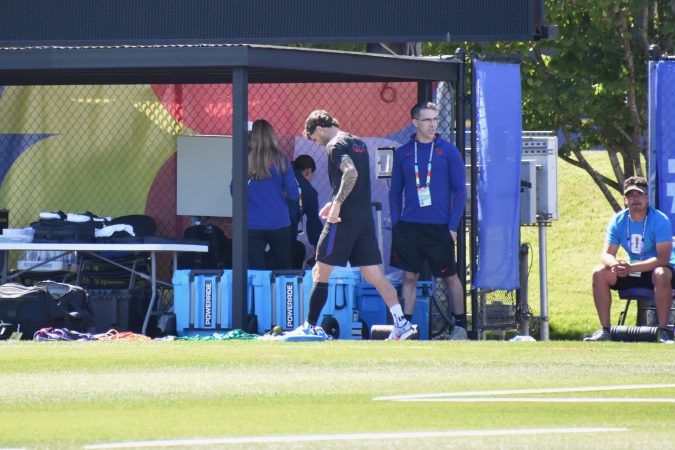
    Pulisic was seen briefly at the start of Thursday’s practice, then headed off to work on his own. When he arrived, he wasn’t wearing the sleeve over his injured left calf that he sported on Wednesday. But after a few minutes, he sat down on a bench by the sideline and put it on.

    “He is evolving, he is much better from [last] Friday,” Pochettino said. “I think at the moment we’ll see. … He’s doing a massive effort trying to be ready.”

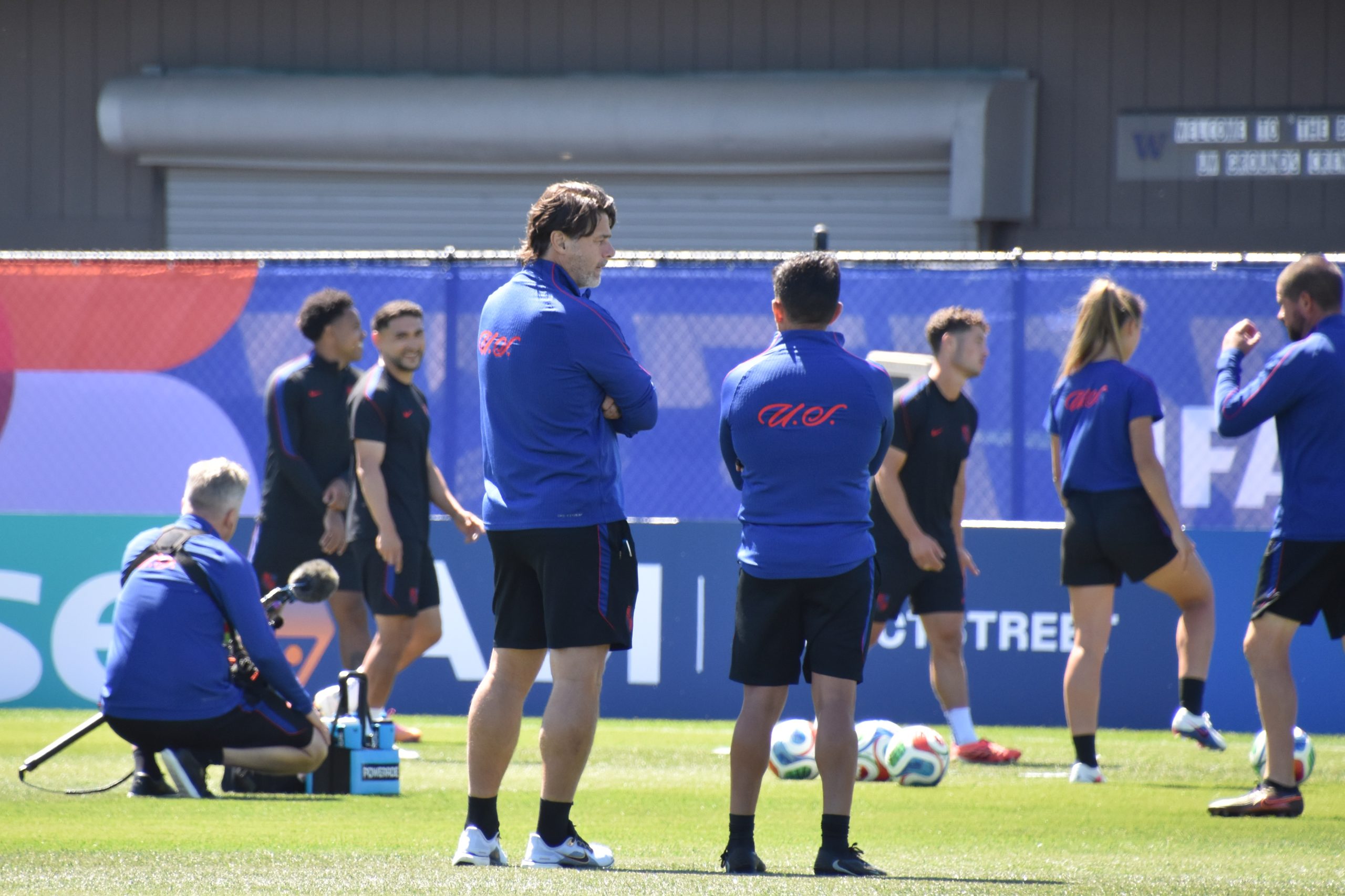
    Mauricio Pochettino (left) and his top assistant Jesús Pérez at Thursday’s practice.Jonathan Tannenwald

    The manager also praised Pulisic for being “strong and with a great mentality” as the Hershey native works to be ready for kickoff.

    Asked who might play if Pulisic can’t go, Pochettino didn’t answer. This was no surprise either.

    “I will tell tomorrow if that is the situation,” he said. “At the moment, we are evaluating all the possibilities just in case, and then we will decide when we have the confirmation in one or another direction tonight.”

    What is no secret is that when these teams met in a friendly in suburban Denver in October, it was far from friendly on the field. Australia played a physical game, with a focus on Pulisic that forced him off the field injured in the 31st minute.

    When Christian Pulisic (center) first appeared Thursday, he wasn’t wearing the sleeve over his injured calf that he wore Wednesday. He put it on later.Jonathan Tannenwald

    All of the U.S. players are ready for round two, and so is the manager.

    “I think we need to play on the edge of the line, not crossing the lines of the rules,” Pochettino said. “I think we are going to try, all, to be very close to this thin line. That allows us to take some advantage [with] the rules.”

    Later in the day, Australia manager Tony Popovic was asked if he expects this game to be similar to the last. He didn’t answer directly.

    “Since then we feel we’ve improved,” he said. “We’re a better team now than what we were in October and I’m sure the U.S. is as well.”

    Popovic also was asked if he expects Pulisic to play.

    “I’m sure he’ll play if he’s fit — he’s one of their best players, an outstanding footballer,” Popovic said. “We expect Christian to definitely play if he’s available, and if he’s not, we’ve looked at some of the players that have played when he hasn’t been there.”

    A soft spot for Argentina and Messi

    Pochettino grew up in Argentina, played 20 times for his country (including at the 2002 World Cup), and like many Argentines is fiercely proud of his roots. So of course he was thrilled to see the Albiceleste start its World Cup campaign by routing Algeria, 3-0, with a hat trick from Lionel Messi — whom Pochettino coached at Paris Saint-Germain in the 2021-22 season.

    “I am Argentino, and I really enjoyed the performance,” Pochettino said, quickly adding “but I’m going to give my life for the USA.”

    He didn’t have to worry about offending anyone this time.

    “I think it’s difficult to describe Messi,” Pochettino said. “Six World Cups, all that he achieved in his career in different clubs [in] collective and individual ways — woof. Is he the best? For sure, yes.”

    (Not that he was ever going to answer with Brazil’s Pelé, Argentina’s foil for decades; or Portugal’s Cristiano Ronaldo, Messi’s modern foil.)

    “Argentina is an amazing team,” Pochettino said of the reigning champions, noting his friendship with their manager Lionel Scaloni and some of his staff. “Lionel is, for me, the best coach today in this World Cup. … The fans — amazing.”

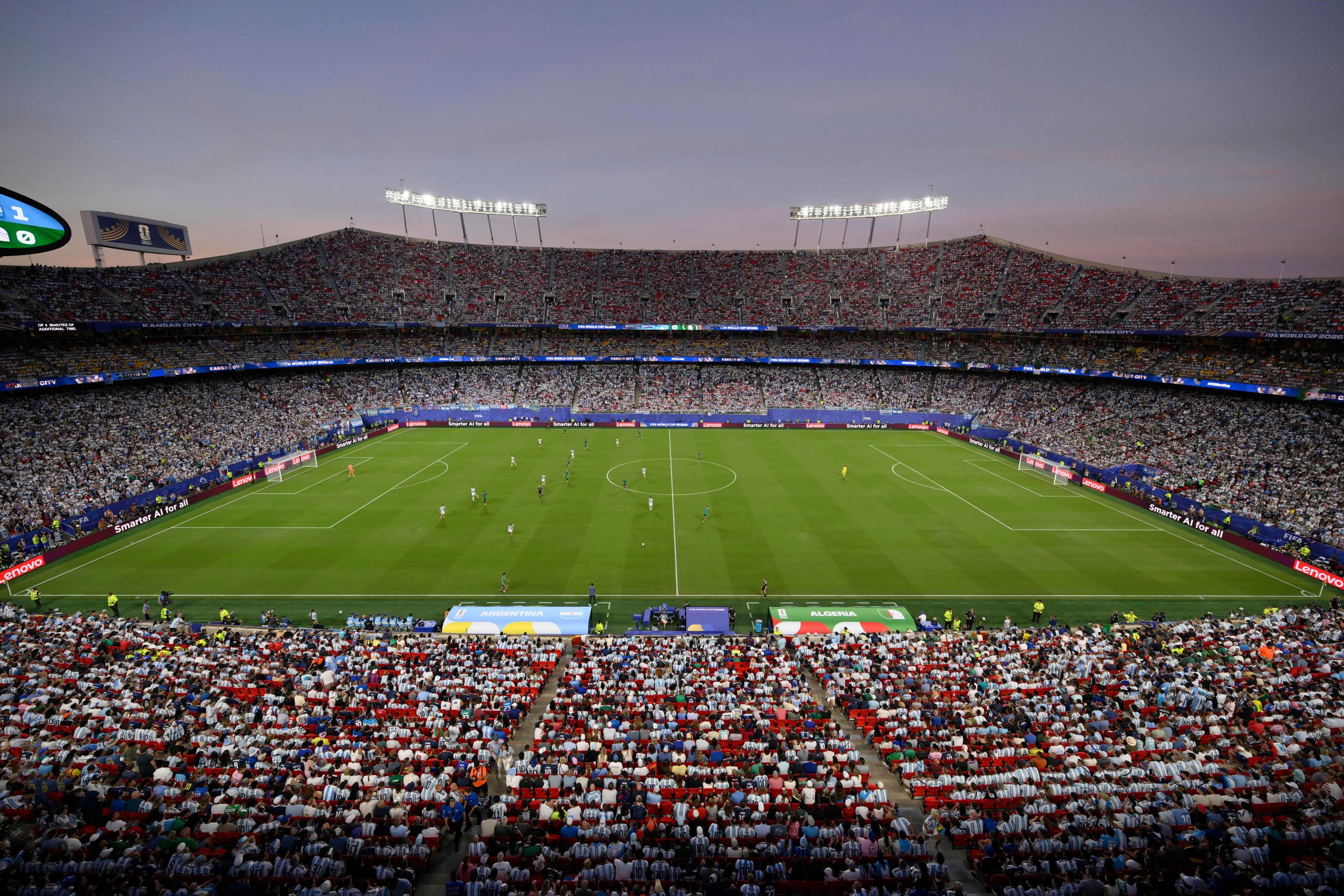
    The packed crowd of Argentina fans in Kansas City on Tuesday.Reed Hoffmann

    He paused there to make a gesture showing the importance of Argentina’s legendary fan base, that has filled stadiums to the brim for decades. Kansas City’s Arrowhead Stadium was the latest to see the show, as a full house roared into the night.

    “And then the cherry [on top]? Messi,” Pochettino concluded.

    Big man on campus

    This isn’t Pochettino’s first trip to Seattle. In 2014, his first game with England’s Tottenham Hotspur was a friendly against the Sounders at the same stadium he’ll work Friday.

    “I saw the ambience and the atmosphere and the people, and I hear that they are very passionate people here,” he said. “I’m looking forward [to] tomorrow, to share all together a great night, I hope with a good result and good performance.”

    The vibrant scene in Seattle as Fox’s studio show goes on air:

    #USMNT

    [image or embed]

    — Jonathan Tannenwald (@jtannenwald.bsky.social) June 18, 2026 at 2:23 PM

    At one point during Thursday’s practice, Pochettino walked to the end of the field, then up a hill behind the net, took out his phone, and recorded a little video. What was that about?

    He joked in the news conference that it was “to see how everything looks without me,” mocking Argentines’ reputations for big egos. He also joked that he was watching for spies, though that line fell a little flat in a sport where spying actually happens.

    As it turned out, he was just taking a video for himself, with a view in front of him of Lake Washington and the facilities on a classically big-time American college campus. Though the U.S. team was only there for a short time, Pochettino appreciated the setting.

    “It was amazing, beautiful facilities,” he said. “We know that they were working for months, only for us to spend maybe an hour and a half, two hours. … Thank you to the people that made it possible to have, in perfect condition, the field and all the facilities.”

  • An all-time World Cup home field advantage awaits the USMNT in soccer-crazed Seattle

    An all-time World Cup home field advantage awaits the USMNT in soccer-crazed Seattle

    SEATTLE — Like any sport, soccer is a game of players, tactics, skills, and decisions. But when it comes to emotions, no sport is like the world’s most famous one.

    Not for nothing did soccer resist the long march of analytics far longer than increasingly-global basketball, baseball, ice hockey, gridiron football, and others. (Americans might not know cricket, for example, but that bat-and-ball game has its own volume of statistics.)

    So, yes, we can talk about player matchups in Friday’s U.S.-Australia showdown for first place in Group D (3 p.m., Fox29, Telemundo 62). We can talk about the Socceroos’ impressive striker Nestory Irankunda and 6-foot-6 centerback Harry Souttar. And we can certainly talk about whether Christian Pulisic will shake off his calf strain in time.

    But it’s impossible to avoid this moment’s romantic side. The Emerald City is rich with a half-century of soccer history, from the NASL’s Sounders to the MLS version, always drawing big and passionate crowds. In recent years, the NWSL’s Reign have joined them, with their own robust fan base watching stars of the women’s game.

    Seattle fans show up in big numbers for soccer games at Lumen Field, the home of MLS’s Sounders and the NWSL’s Reign.Seattle Sounders

    For all that time — from hosting Pelé at the Kingdome to hosting Lionel Messi at Lumen Field, from Bobby Moore to Clint Dempsey, from Michelle Akers to Megan Rapinoe — Seattle’s soccer tapestry has missed one piece.

    Until this year, it had never hosted a World Cup.

    Now, at last, that hole is filled, and with style. Since the day in early 2024 when FIFA announced the U.S. would play a group game here, Seattle has been counting down to this moment, and so have fans across the country.

    A game in this city, with its stage towering over the south side of downtown, is a joy any time. But a World Cup game here is on American soccer’s bucket list. So it’s natural that U.S. and Sounders midfielder Cristian Roldan, in his 12th season with the only club of his career, has led the welcome committee for the squad.

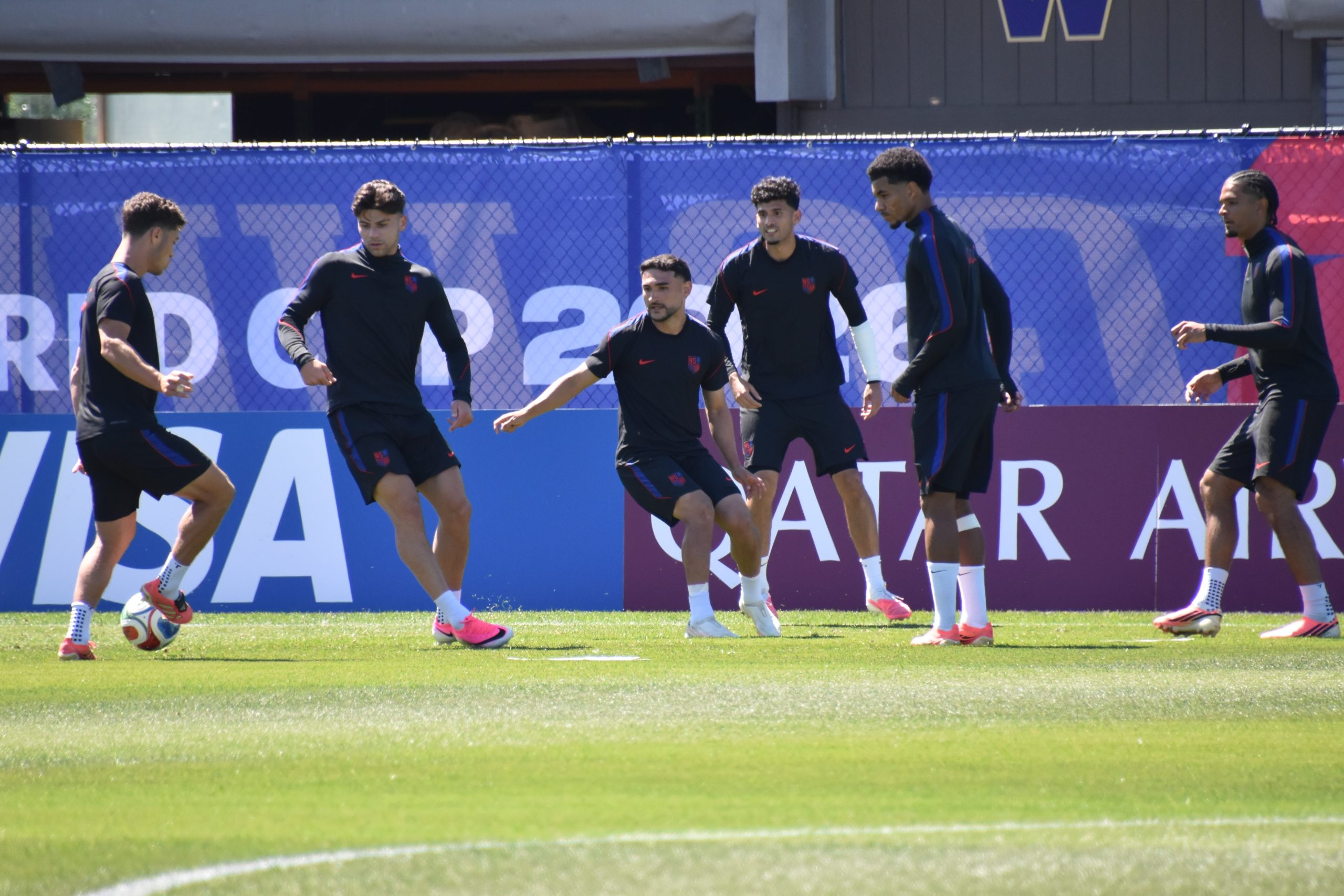
    Cristian Roldan (center) at work on his old college field during Thursday’s practice.Jonathan Tannenwald

    “I’ve told them that the city is ready, that the city is energized,” he said before Thursday’s practice at the University of Washington, his alma mater — with its own famed sports theaters in football’s Husky Stadium and basketball’s Palestra-like Hec Edmundson Pavilion.

    “We haven’t had a game here in a long time, and we’ve been desperate to host a World Cup game, a U.S. men’s national team game,” Roldan added. “So they’re going to feel the crowd, feel the energy, and it’s about feeding off it.”

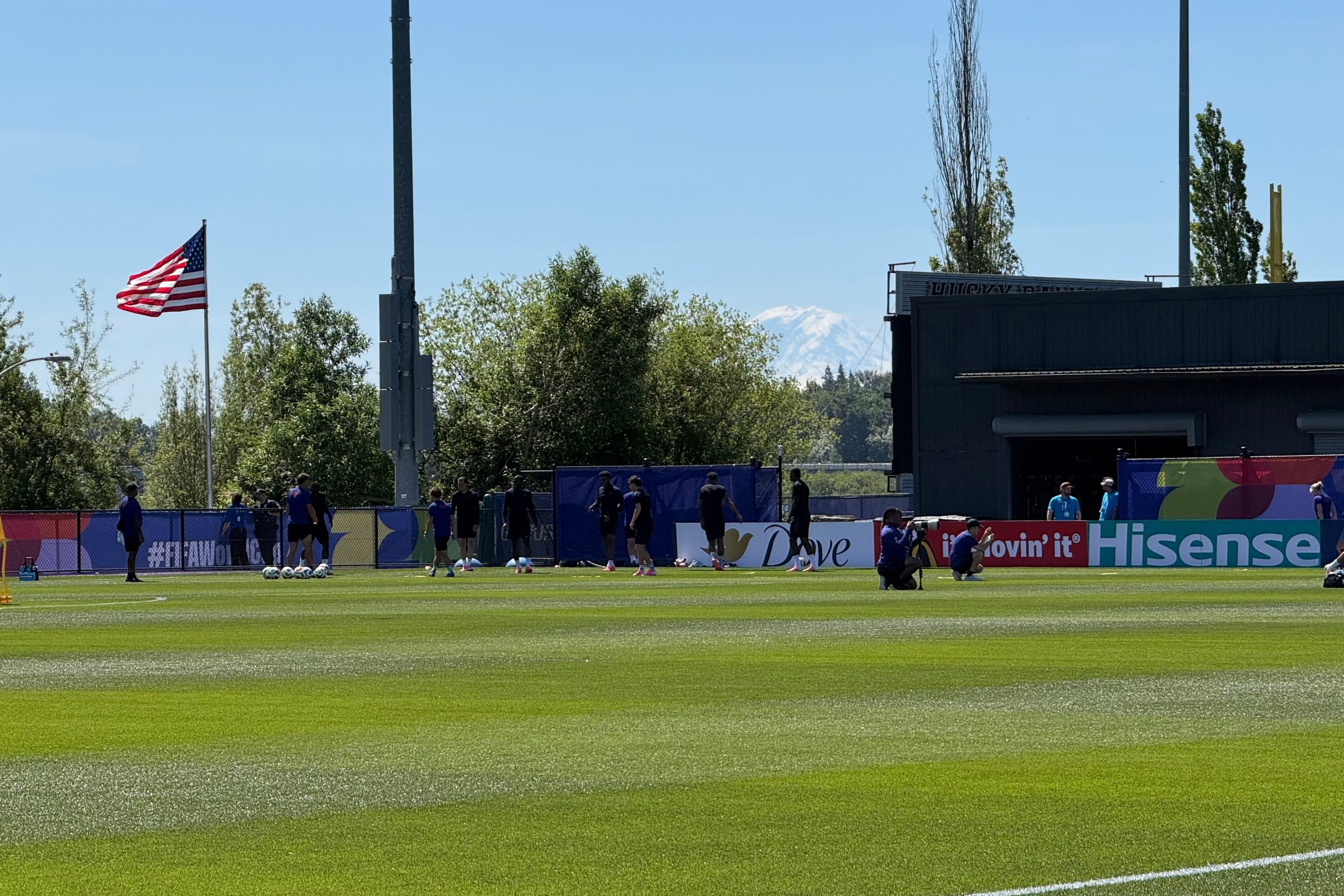
    He felt it even more as he set foot on his old college field, with glittering Lake Washington a stone’s throw away and Mount Rainier towering beyond. On the same day that Penn product Duke Lacroix returned to his alma mater in Philadelphia ahead of Haiti’s clash with Brazil on Friday, a similar scene unfolded thousands of miles west.

    “I’m thankful to have this full circle moment,” Roldan said. “I don’t think people realize how special it is for me to be here and enjoying this experience with the men’s national team.”

    Mount Rainier looming in the background over the scene at the U.S. team’s practice.Jonathan Tannenwald

    Come lunchtime, a walk through downtown showed what awaits. Fans in U.S. jerseys were all over, from Pike Place Market (Seattle’s version of Reading Terminal) to the glistening waterfront.

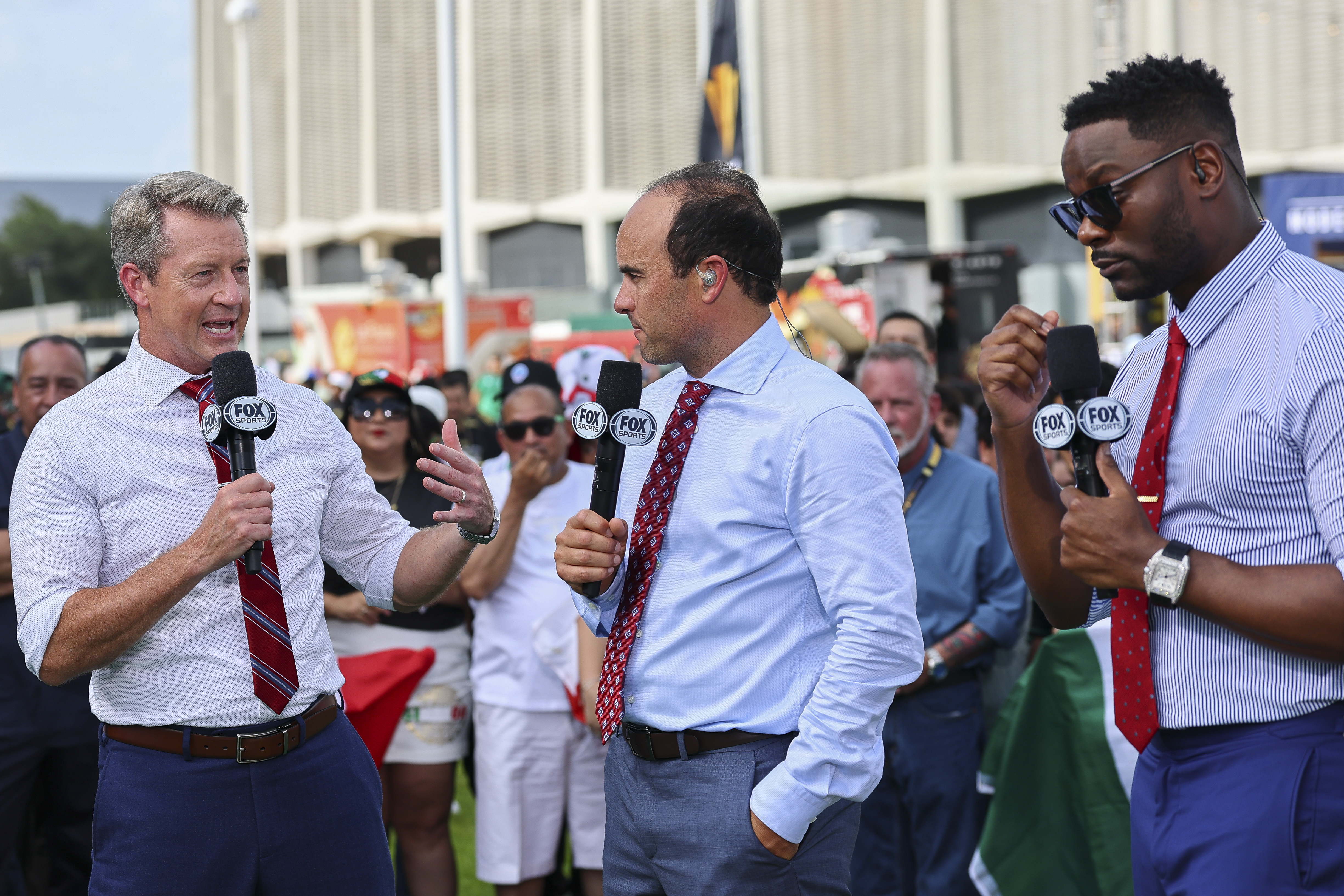
    Fox’s studio show set up shop on one of the piers, with the ferries crossing Puget Sound as one backdrop and a boisterous crowd as another.

    It’s a different vibe from sprawling Los Angeles, and they’ll tell you that here as much as a visitor from out east naturally senses it.

    Everything will come together at noon local time on Friday, when a capacity crowd of just under 67,000 will roar the U.S. team onto the field.

    The vibrant scene in Seattle as Fox’s studio show goes on air:

    #USMNT

    [image or embed]

    — Jonathan Tannenwald (@jtannenwald.bsky.social) June 18, 2026 at 2:23 PM

    The players are excited to experience it, especially those who haven’t before. Because the stadium usually has artificial turf, the U.S. men haven’t been here since the 2016 Copa América Centenario, when grass was installed like it has been this summer. (The World Cup’s grass also helped bring the women’s team here in April, ending a nine-year drought.)

    “I’ve obviously spoken to ‘Roldy’ and other people who’ve said how much of a soccer culture Seattle has, and I’m really looking forward to experiencing that firsthand,” defender Antonee Robinson said. “The first game that was played in that stadium looked amazing. So I’m looking forward to being a part of it, too.”

    Roldan isn’t expected to start, and he knows it. But if he gets on the field as a substitute, the roar that rises will no doubt be as great as a U.S. goal.

    “I’m getting goosebumps just thinking about it,” he said. “This is a place that I call home, and I’ve called home for a while. … I’ve given my heart and soul to this club. To be able to see the field would be a dream come true, and I think it would be special not only for me, but I think for the city of Seattle as well.”

  • Christian Pulisic’s calf injury is the USMNT’s biggest story at the World Cup. Here’s what to know.

    Christian Pulisic’s calf injury is the USMNT’s biggest story at the World Cup. Here’s what to know.

    IRVINE, Calif. — In the traditional American sports, there are rules requiring teams to publish injury reports.

    Sure, a coach might just say a player has a “lower-body injury,” especially in hockey. But there still are rules, and many Philadelphians (especially 76ers fans) might know them by heart these days.

    At the World Cup, there are no rules — and there’s even less incentive to tell the truth. There’s a long history of subterfuge, from Brazil’s Ronaldo in 1998 to Canadian star Alphonso Davies’ hamstring and U.S. star Christian Pulisic’s calf today.

    So if you’re wondering why the U.S. staff haven’t said much about the matter, the answer is simple: why should they? All it would do is give things away to the tournament’s other teams, including the Americans’ next opponent, Australia.

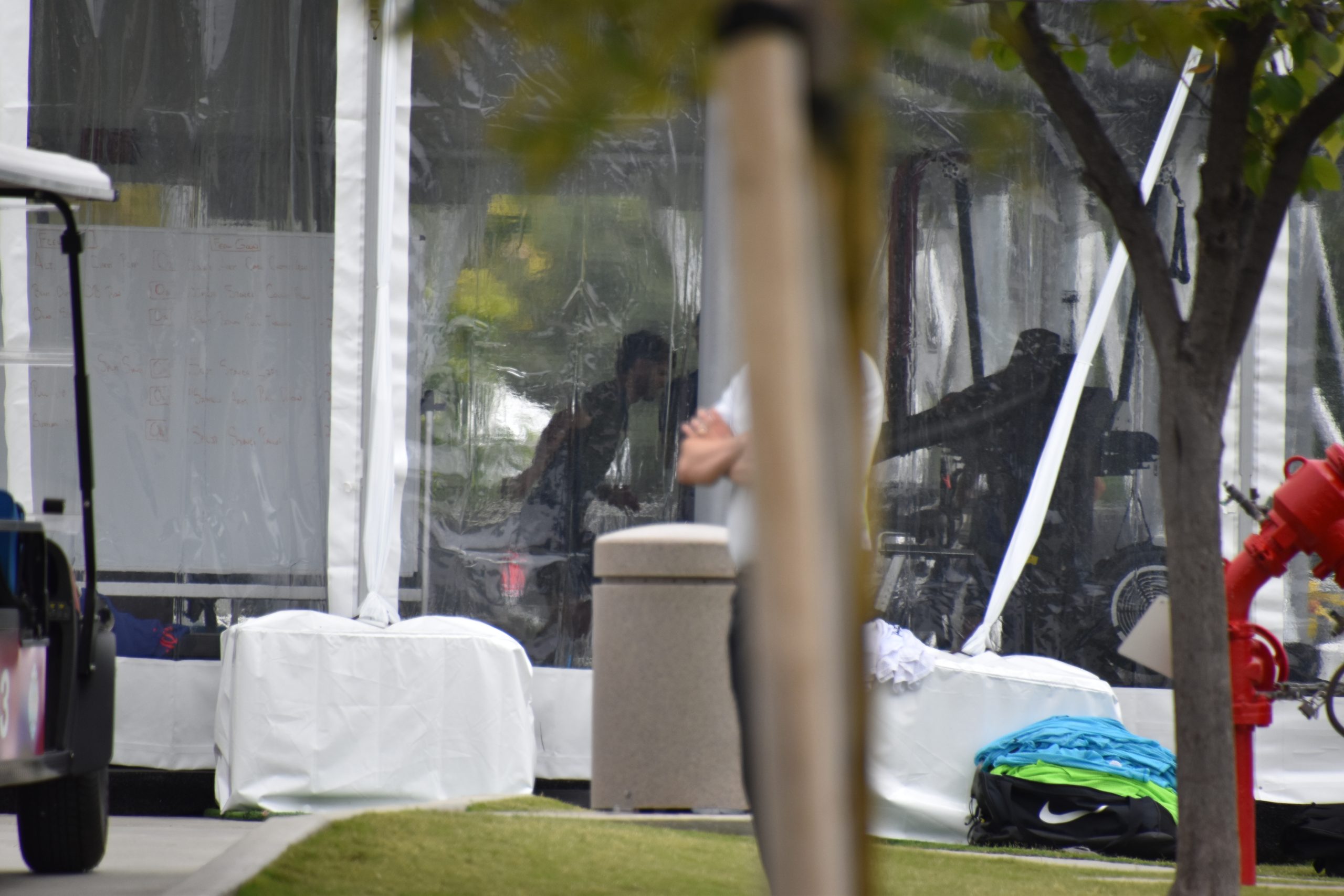
    Christian Pulisic did some exercises in the workout tent at the start of Friday’s practice.Jonathan Tannenwald

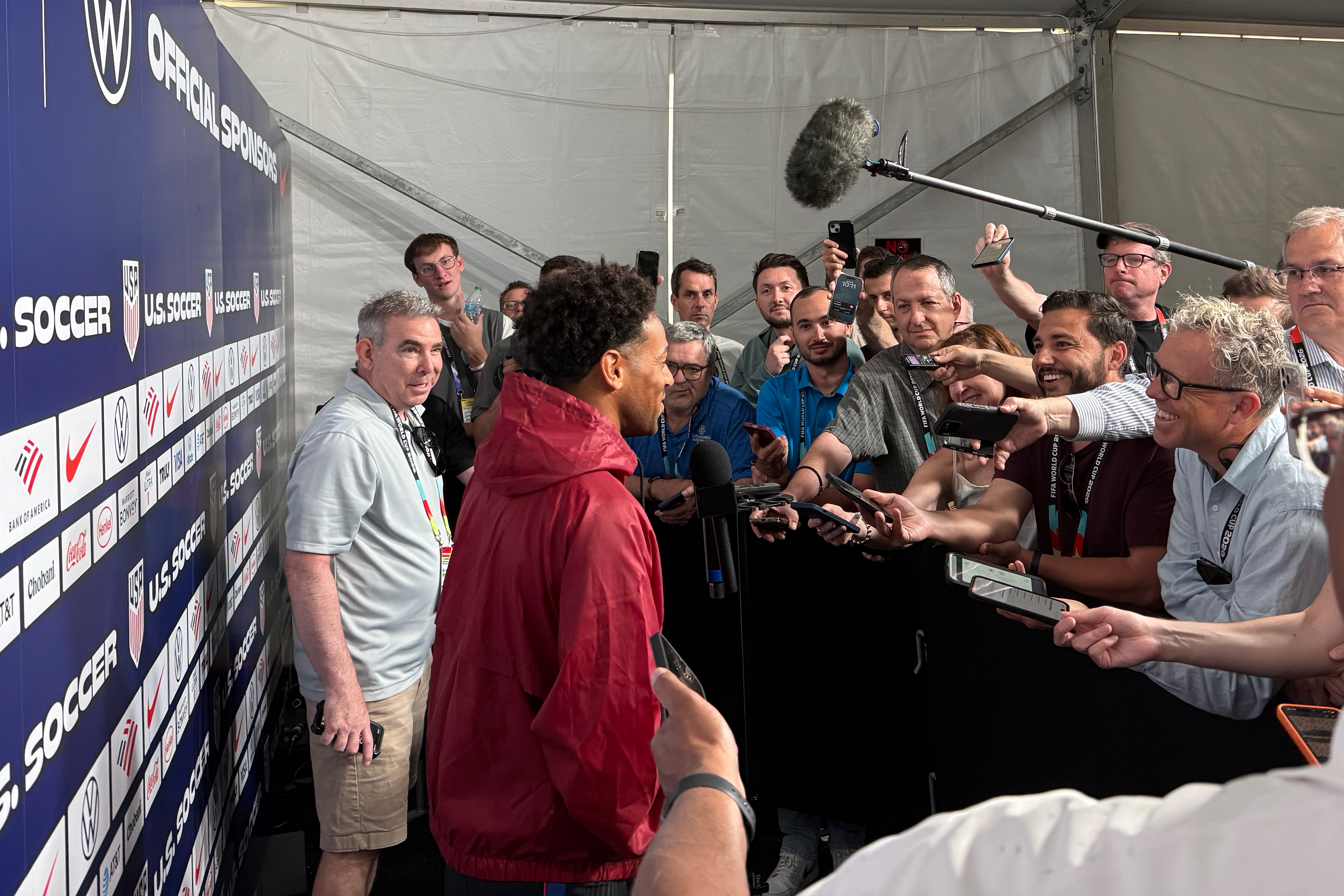
    “When I’m in England, they tell you exactly what it is with stuff like this,” said midfielder Brenden Aaronson, whose Medford and Union roots make him as well-versed in American ways as the world’s game. “With this situation, I can’t tell you what it is because I’m not a part of the medical staff and stuff like that. But it is different, and it is a different part of the game when it’s at club and in international football.”

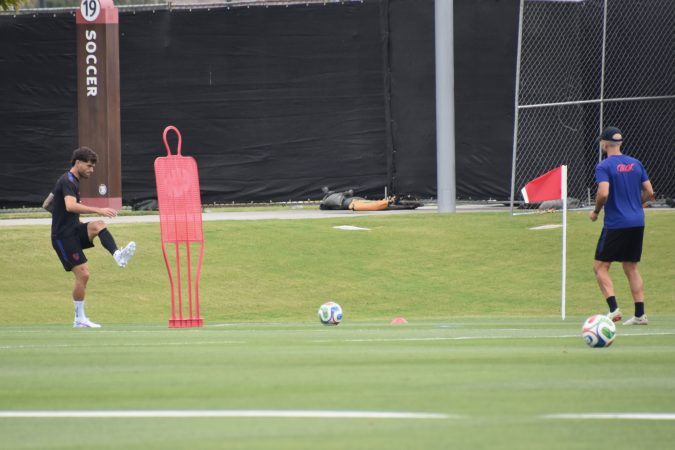
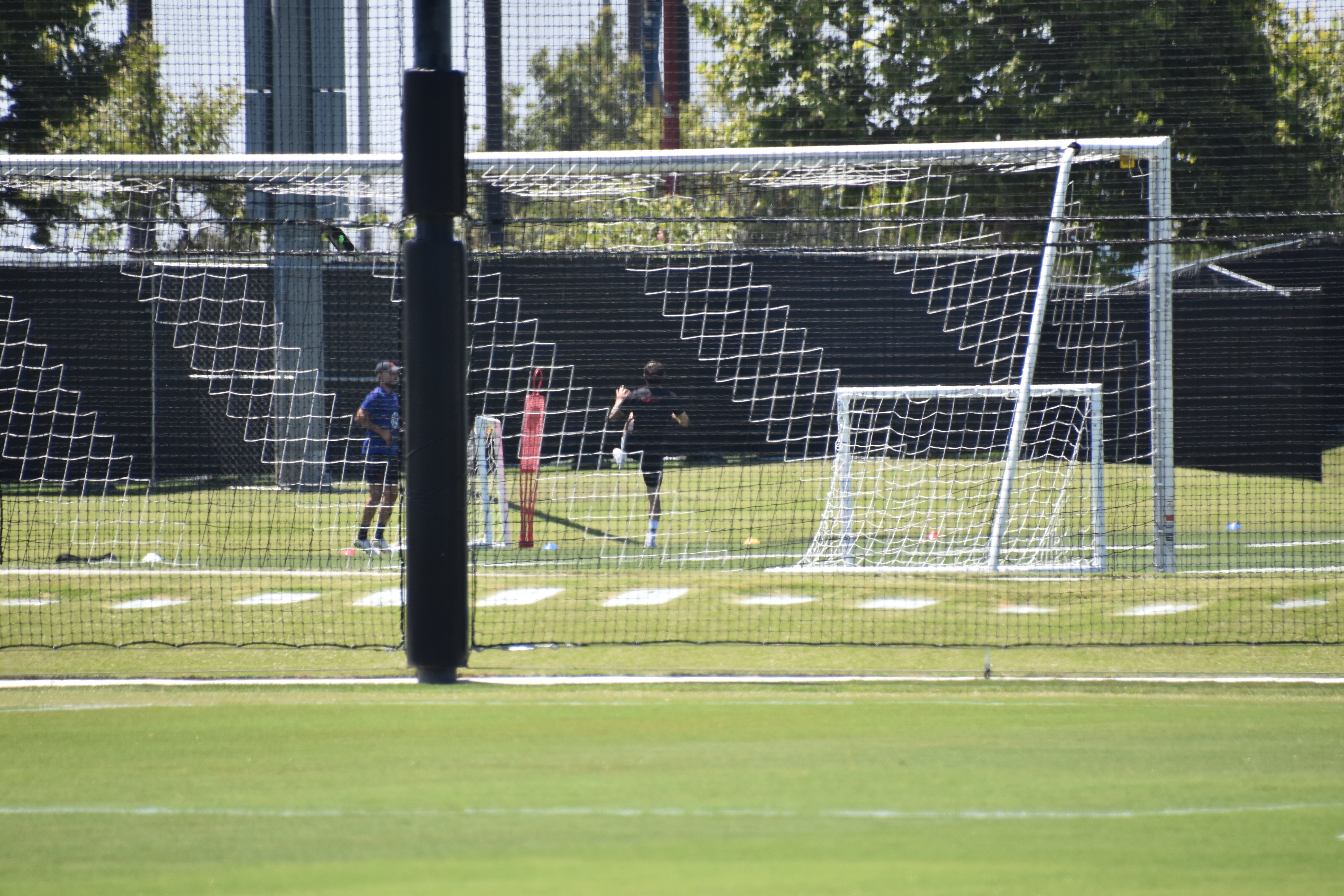
    Officially, Pulisic remains day to day. He trained on his own during the first 15 minutes of Wednesday’s practice, which was the portion that was open to watch. Most of that time was spent in the team’s workout tent, but he emerged toward the end and walked across a field to kick a ball back and forth with a coach.

    This was the extent of the day’s drama, even though Pulisic’s absence from Friday’s game (3 p.m., Fox29, Telemundo 62) obviously would be a huge deal.

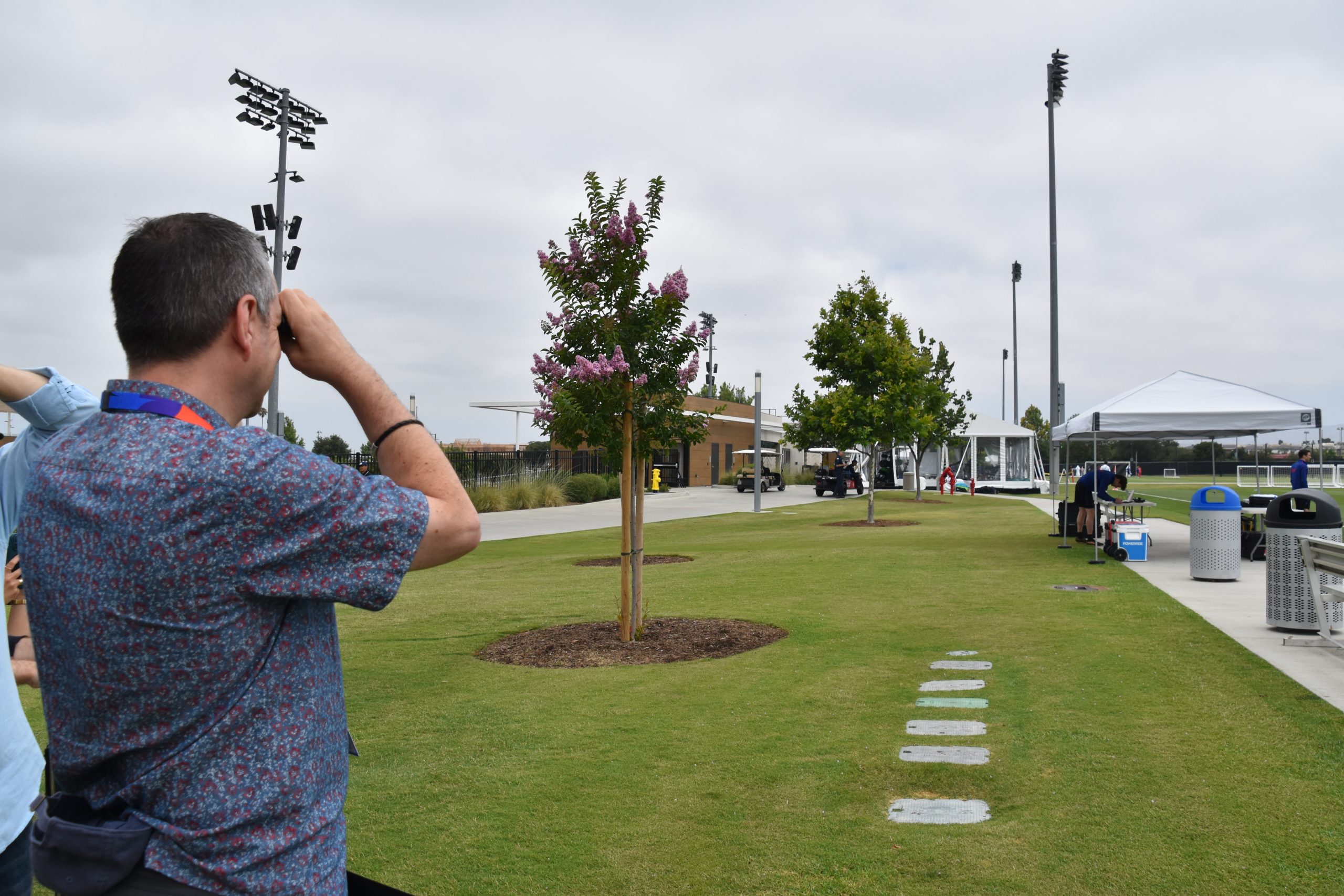
    There was a lighthearted moment when a reporter used a pair of binoculars to try to spot Christian Pulisic.Jonathan Tannenwald

    What do Pulisic’s teammates think of all this? Everyone who has spoken this week hasn’t said much, and that continued Wednesday.

    “I’m not sure the exact sort of terminology of his injury,” defender Antonee Robinson said. “I mean, he’s been taking it day by day, and he’s not been training fully with the group yet. We’ve still got a couple of days to see where he’s at, and thankfully we’ve got a lot of boys on the bench who are eager and ready to get involved in helping the team, and a lot of quality.”

    A few hours later, the caravan flew north to Seattle to get ready for Friday’s big game (3 p.m., Fox29, Telemundo 62). The U.S. will train at the University of Washington on Thursday, then get ready for a thunderous atmosphere at the stadium downtown on Friday.

    Along the way, the ritual likely will be repeated: questions about Pulisic, vague answers, and a collective shrug. This is how it is, and how it has been, and it’s just another part of the World Cup’s spectacle.

    And would you believe that Christian Pulisic has WALKED OUT OF THE TENT and is now DOING A DRILL on the field.

    (In all seriousness, he’s got some kind of wrapping on his left leg. But otherwise, this whole thing is yelling into a molehill.)

    #USMNT

    [image or embed]

    — Jonathan Tannenwald (@jtannenwald.bsky.social) June 17, 2026 at 11:16 AM

    In awe of Messi’s hat trick

    Speaking of spectacle, they don’t come any better than Lionel Messi’s dazzling hat trick in Argentina’s 3-0 win over Algeria. The 38-year-old tied the World Cup’s scoring record with his 16th goal in the tournament, sending a jam-packed crowd in Kansas City into rapture — and the rest of the world, too.

    “For the fans watching, obviously Messi’s probably the greatest footballer who’s ever lived, and he’s still going, still showing quality,” Robinson said. “As a fan, I’m sure it was amazing to watch him. That’s the magic of the tournament: you want to see the world’s best doing what they do on this stage, and hopefully every game like that keeps giving those moments, and it’s enjoyable the whole way through.”

    Aaronson has also watched Messi plenty, including in person last year at Subaru Park when Inter Miami visited the Union. He admitted that “the fanboy comes out of all of us,” even though he also knows that if the U.S. finishes second in its group and reaches the round of 16, it could play Argentina.

    “If we do play Argentina, we’ll all be ready to go,” Aaronson said.

    Messi’s next chance to break the scoring record, which has stood since Germany’s Miroslav Klose set it in 2002, will come Monday against Austria in Arlington, Texas.

    But he isn’t the only player chasing history at this World Cup. France’s Kylian Mbappé’s two goals against Senegal on Tuesday took his tournament total to 14, and made him his country’s record scorer with 58 all-time.

    Mbappé’s next game is in Philadelphia, on Monday against Iraq. And if there wasn’t already enough hype around Les Bleus’ visit, their 3-1 win in the Meadowlands raises the hype around what might be this World Cup’s most star-studded squad.

    Mbappé and Messi’s heroics were expected to draw big TV audiences, along with Norway star Erling Haaland’s two goals in his World Cup debut, a 4-1 win over Iraq. It was quite a sight to have all three stars play on the same day.

    Expect another big number for Cristiano Ronaldo’s debut in the tournament with Portugal, in Wednesday’s 1-1 upset tie with the Democratic Republic of Congo. That game joined Cape Verde’s tie with Spain (featuring former Union midfielder Jamiro Monteiro), Jordan’s hard-fought loss to Austria, and Curaçao’s goal against Germany as great moments by underdogs so far.

    “You see the results in the last couple of days, of teams who definitely weren’t the favorites managing to get points, and I think that’s what the World Cup’s about,” Robinson said. “It’s about bringing lots of different cultures together and giving them moments like this, and experiences, and it’s really nice to see.”

  • A USMNT history lesson is a reminder: The win over Paraguay was big, but it was only one game

    A USMNT history lesson is a reminder: The win over Paraguay was big, but it was only one game

    IRVINE, Calif. — Sebastian Berhalter was just over a year old when he went to South Korea to see his father, Gregg, play in the 2002 World Cup. But he knows a lesson from back then applies today.

    The U.S. men’s soccer team opened that tournament with its biggest win on the biggest stage since 1950, a 3-2 upset of Luis Figo’s Portugal. It stunned the world, even if it only made a limited impact back home.

    It also was just one game. The Americans followed it with a 1-1 tie vs. co-host South Korea, then a 3-1 loss to Poland in the group stage finale. They backdoored their way into the round of 16 only because South Korea edged Portugal at the same time as the U.S.-Poland game, which allowed the Americans to finish second.

    Longtime U.S. fans will remember their shredded nerves of that morning, as Portugal hammered away in the final minutes but could not find the net. An equalizer would have put the Americans out on goal difference, since Portugal had routed Poland, 4-0.

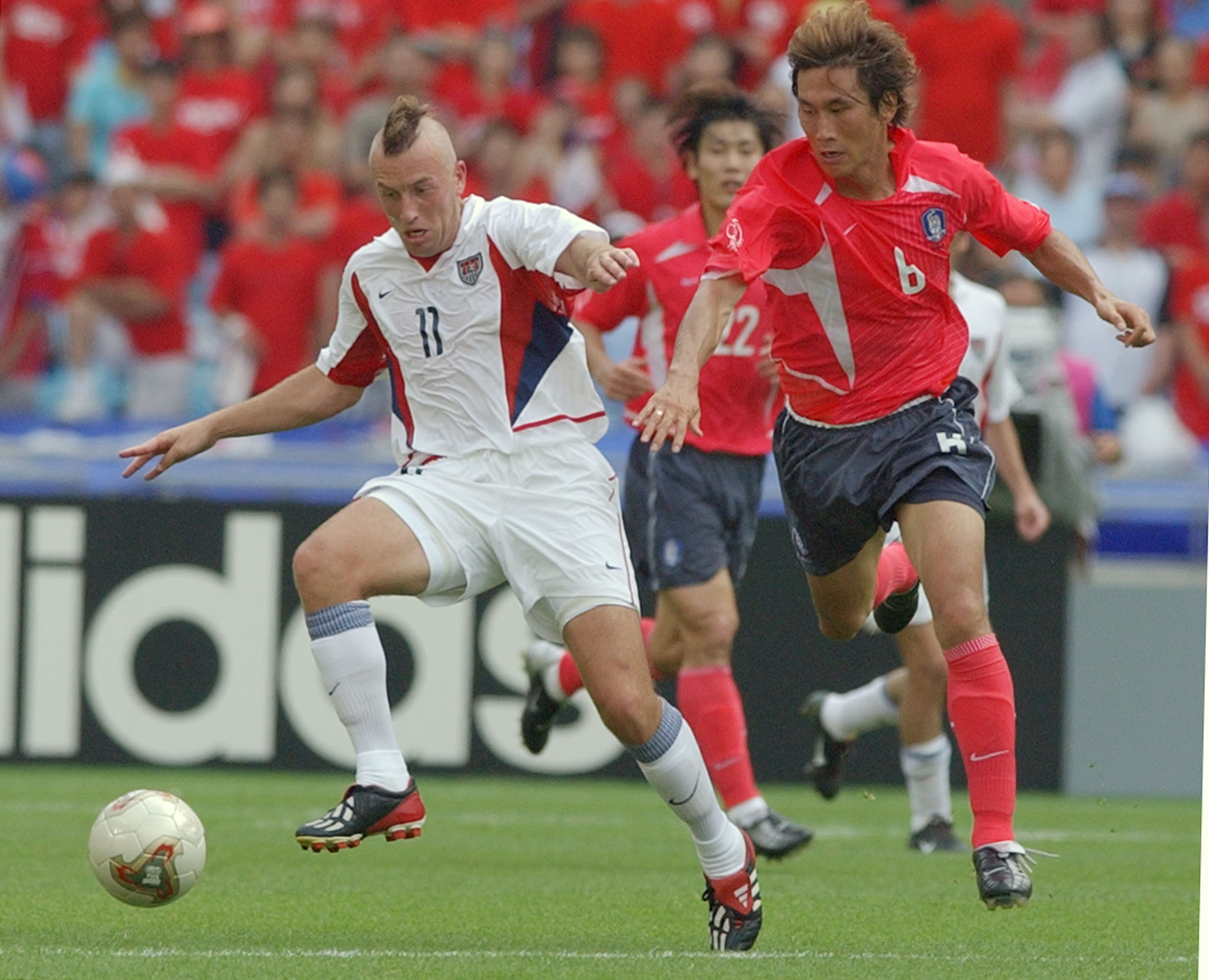
    Clint Mathis (left), one of the stars of the 2002 U.S. World Cup team, on the ball against South Korea.Beth A. Keiser

    The odds of that scenario repeating are lower now, not least because the U.S. is the co-host. The caldron on Friday in Seattle will be theirs this time, instead of the opponent’s.

    Still, it’s worth turning to that page of the history book to bring some perspective to the upcoming U.S.-Australia showdown for first place in Group D (3 p.m., Fox29, Telemundo 62).

    “Yeah, it is one game, and we know we have tough teams coming up, and they’re all going to present different challenges,” the now-25-year-old Berhalter said after Tuesday’s practice. “But for us, it’s just taking it one moment at a time, one game at a time, and we’ll be good.”

    Winger Tim Weah has had his own moments of fandom lately, as a Brooklyn native and New York Knicks diehard. But when he put on his work clothes, his focus was clear.

    Tim Weah on the ball during Tuesday’s practice.Jonathan Tannenwald

    “From a fan standpoint, I think it’s amazing to celebrate it,” he said. “But for us, we want to not get too high. We want to make sure that we’re focused on what we need to focus on. I think staying humble is the key. As a group, we just have to prepare for our next game and be ready to fight.

    The familiarity between these teams extends beyond their friendly meeting in suburban Denver last October, a 2-1 comeback U.S. win. Australia midfielder Aiden O’Neill and defender Kai Trewin play for New York City FC, highly regarded defender Lucas Herrington plays for the Colorado Rapids, and veteran defender Miloš Degenek used to play for the Columbus Crew.

    If it becomes the kind of physical contest that friendly was or the defense-first game Australia played in upsetting Turkey, Berhalter said the U.S. will be ready.

    “I love the way they defend,” he said. “You like teams that have that brotherhood. You like teams that when you go against them, you can see they’re hungry and that they want to fight, because it makes you raise your level that much more.”

    He also had the line of the day when he praised manager Mauricio Pochettino’s influence on the team’s intensity.

    “I think one is that we’re American, we don’t take s—, and I think that’s something that he really put in,” Berhalter said, drawing laughs with his turn of phrase. ”Even though he’s [Argentine], he has that mindset of, ‘Look, this is what we do, and this is who we are, and this is what America’s about.’ Even from an outside perspective, he showed us Americans what we’re about, and he really drilled that into us, and I think that’s something that has helped us this last cycle.”

  • As the USMNT returns to work at the World Cup, Australia’s big win sharpens the focus

    As the USMNT returns to work at the World Cup, Australia’s big win sharpens the focus

    IRVINE, Calif. — The U.S. men’s soccer team’s big win over Paraguay electrified this World Cup, especially for American fans. But the players can’t spend too long reveling in the moment, because the next game is now on the horizon.

    Monday was always going to be a natural moment to turn the page, since it marked the return to work after two days off. But there was also a wakeup call over the weekend, when Australia upset Turkey and blew Group D wide-open.

    The players got the message.

    “We saw a team that went out against Turkey and competed at a very, very high level,” stalwart U.S. midfielder Tyler Adams said of his team’s next opponent. “They’re combative, they’re smart, tactically they were unbelievably sound. So I think it’s going to be an extremely difficult game.”

    Tyler Adams making a point to a teammate during a drill.Jonathan Tannenwald

    As he got ready for Monday’s practice, Adams said it was “pretty easy” for the team to shift its focus ahead.

    “I think that having a day off is obviously nice to just be able to disconnect,” he said. “I think having this amount of time in between games is really nice, just for the body, the mind, everything in between. It was a good start — it’s exactly what we wanted and we set out to do. That being said, the focus has to be on Australia now.”

    Australia’s win raises the stakes even higher in what was already a much-anticipated game (3 p.m., Fox29, Telemundo). The scene will be just as much of the story as the action on the field, as soccer-mad Seattle finally hosts the U.S. after not being part of any previous World Cup in this country, from the 1994 men’s tournament to the 1999 and 2003 women’s ones.

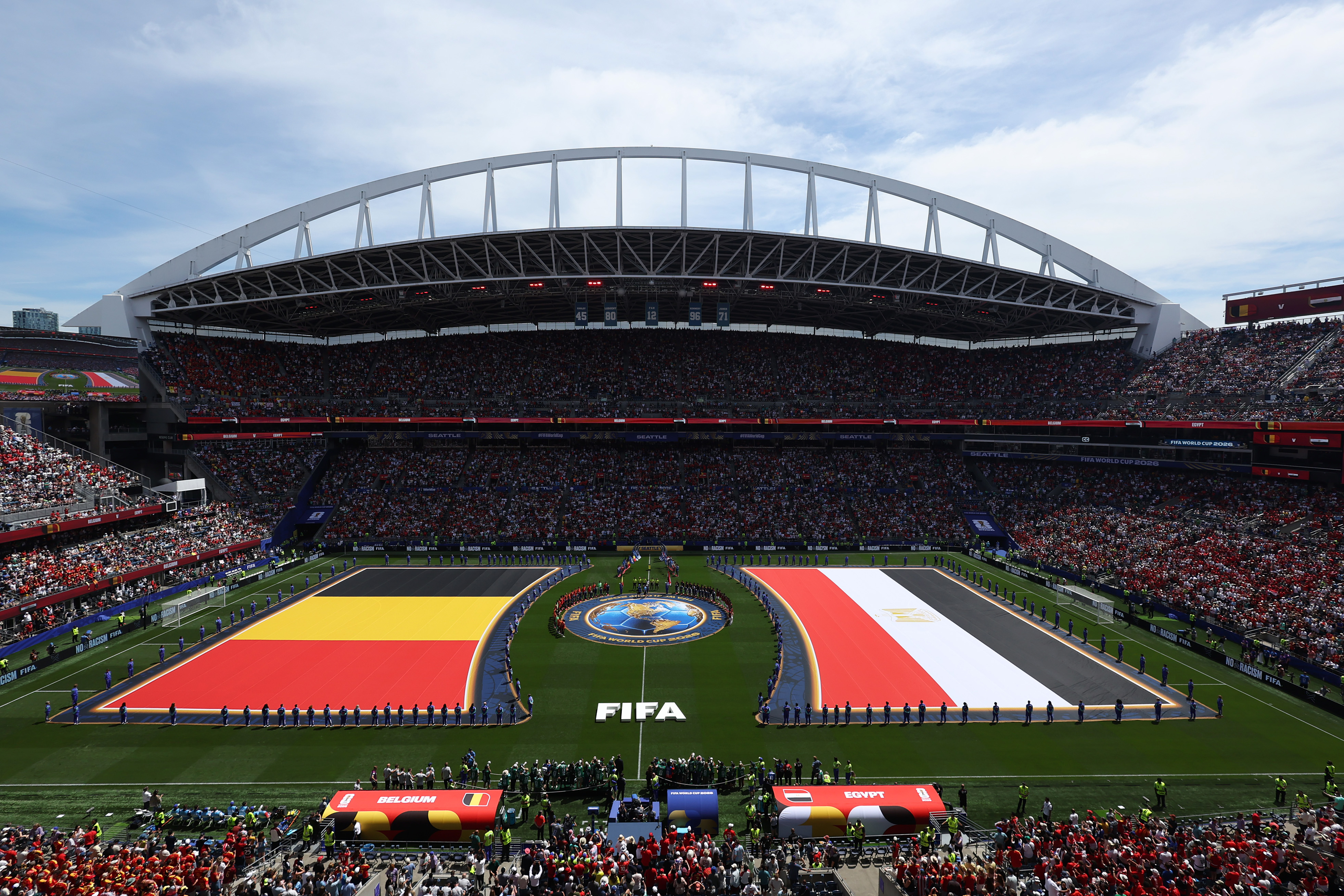
    The city looked terrific in its first time on the big stage, Egypt’s 1-1 tie with Belgium on Monday.

    A view of the full house in Seattle as Belgium and Egypt’s players lined up for the national anthems.Maddy Grassy

    When the U.S. and Australia met in a friendly last October, striker Haji Wright scored both American goals in the 2-1 win. He reflected Monday on watching tape of the Turkey game, and how these Socceroos compare to last fall.

    “Saw a well-executed game plan from Australia,” he said. “They’re tough to break down, they’re dangerous on counterattacks, they have good players at the top of the pitch, and they were able to be effective and damage Turkey. I think Turkey kind of came into the game a bit overconfident, and I think we won’t make that same mistake.”
    That was a reference to team captain Hakan Çalhanoglu claiming a few days earlier: “I think we will dominate the game, because we have more qualities and a more talented team.”

    Some U.S. pundits have done some boasting of their own, and Adams was asked about that. He quickly brushed it off.

    “I don’t think any commentary helps anybody,” he said. “And no, it’s not going to be a layup. If anything, it’s going to be one of the most difficult games that we play.”

    Haji Wright (center) in a drill at Monday’s practice.Jonathan Tannenwald

    The U.S. will be on alert not just for Australia forward Nestory Irankunda, already justifying the hype as a breakout star. Adams’ yellow card in the second half against Paraguay means that if he’s is booked again in this game, he’ll miss the group finale against Turkey on June 25. Card accumulation is then reset after the group stage ends, and after the quarterfinals.

    “I live with yellow cards,” Adams said. “I think that for me, it’s something that you have to manage of course, but especially in the second game, you can’t take your foot off the gas.”

    When kickoff arrives, it will have been a week since the Americans’ group opener. That’s a rare sight in a World Cup, created by FIFA’s expansion of the field to 48 teams. In the past, there were usually three or four days between games.

    “I absolutely love it after playing a long season,” said Adams, who plays his club soccer for the English Premier League’s Bournemouth, noting too that the last World Cup in 2022 — his first — was the first moved from the summer to autumn because of Qatar’s heat.

    Tyler Adams drew a big crowd for his session with the media, as he always does.Jonathan Tannenwald

    “Your body feels it, obviously, a little bit more coming into the end of the season, into a World Cup where there’s so much emotion, so much adrenaline, all these things,” he said.

    Pulisic trains separately

    As he nurses the hamstring knock that sent him out of the Paraguay game at halftime, Christian Pulisic did not take the field with his teammates Monday morning. He emerged separately a few minutes later, and worked on his own with a trainer on the next field over.

    A U.S. Soccer spokesperson said Pulisic was scheduled to do a “modified training session” with “gym and individual field work.”

    Pochettino wasn’t scheduled to meet with the media on Monday, but he came over during practice to say hello and talk casually for a few minutes. When a reporter asked him how Pulisic is doing, Pochettino answered “Good.”

    Christian Pulisic working with a trainer on a separate field Monday morning.Jonathan Tannenwald

    Adams shared the sentiment, and a few more words.

    “Come on — Christian will be ready, everyone. Let’s relax,” he said with his usual spirit. “I think that he picked up a knock a few days before the game, and I think he got kicked in the same spot again during the game, and when you go in at halftime, things obviously get tight within the 15-, 20-minute break. But he’ll be fine.”

    U.S. Soccer also announced that 20-year-old goalkeeper prospect Julian Eyestone of English club Brentford has joined the camp as a training player. Diego Kochen of Spain’s Barcelona departed last week, while the Union’s Andrew Rick has stayed all along.

    Though U.S. Soccer didn’t say why Kochen left, ESPN reported last week that the 20-year-old is on the verge of a season-long loan to Danish club Lyngby to get some regular playing time. Lyngby earned promotion to Denmark’s top flight last month, and its ownership includes the Union holding a partial stake.

    Julian Eyestone (left) is another of the U.S. program’s leading young goalkeeper prospects.Jonathan Tannenwald
  • Danley Jean Jacques becomes the first active Union player to play in a World Cup

    Danley Jean Jacques becomes the first active Union player to play in a World Cup

    Halfway through the Union’s 17th season, midfielder Danley Jean Jacques became the first active player from the club to play in a World Cup.

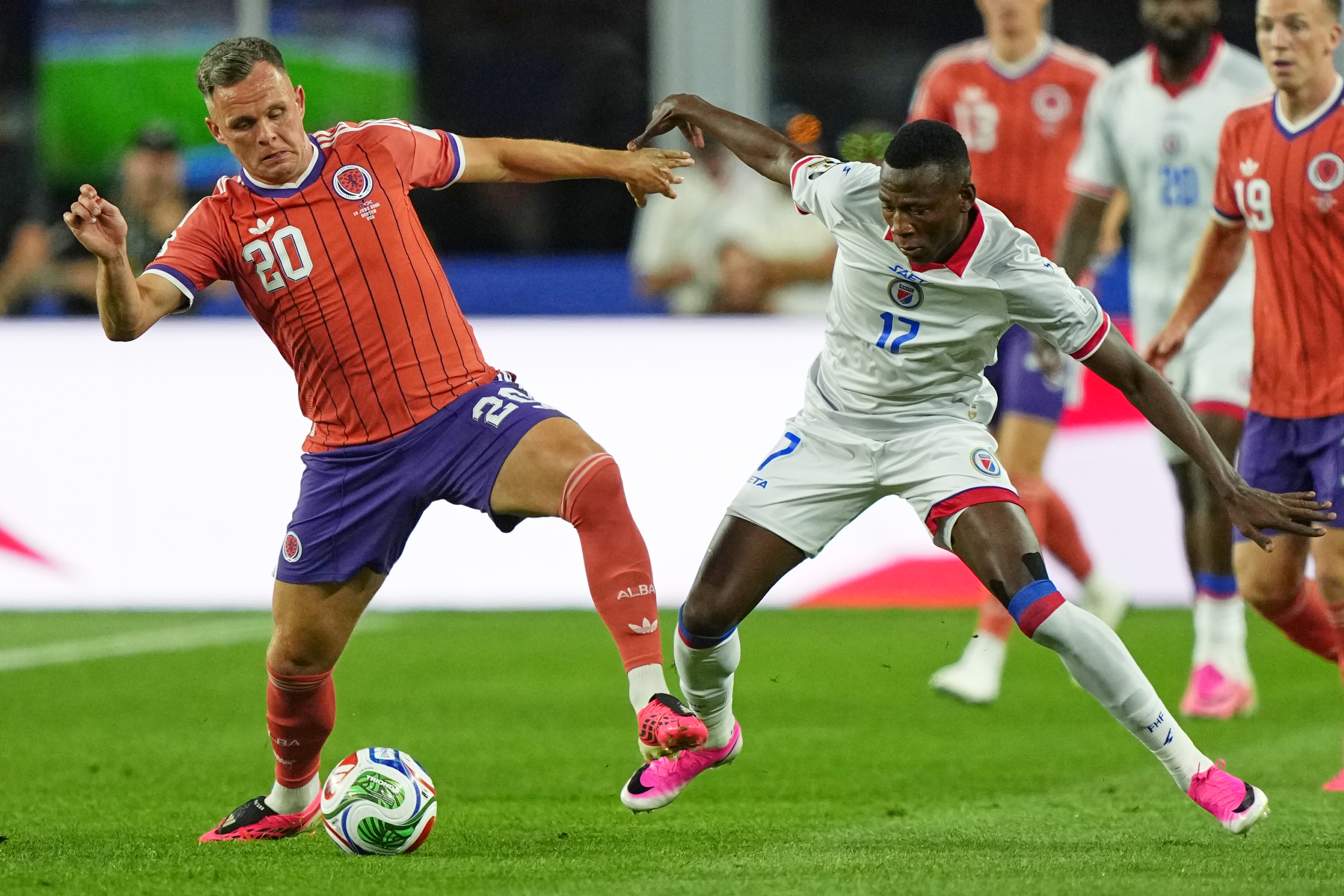
    Jean Jacques started for Haiti on Saturday night against Scotland in Foxborough, Mass., in what was also Haiti’s first men’s World Cup game since 1974 and Scotland’s first since 1998.

    Haiti lost the game, 1-0, but played well, outshooting Scotland 15-9 and holding a majority of the possession. Jean Jacques was often at the center of the action, with four tackles, two clearances, one interception, eight duels won in 12 contested, and 44-of-53 passing.

    The 26-year-old from the small coastal town of Petit-Goâve is in his third season with the Union. He has been a regular with Les Grenadiers since 2023, earning his 31st cap for the country in this game.

    Jean Jacques is the third active Union player to be on a World Cup team. The first was right back Olivier Mbaizo, who made Cameroon’s squad four years ago but did not play.

    In 2014, centerback Carlos Valdés played in the tournament while on a series of loans away from the Union. While he returned to Chester later, the loan meant he didn’t qualify for this piece of history.

    This year, centerback Olwethu Makhanya made South Africa’s team. He could have beaten Jean Jacques to the history books since South Africa played co-host Mexico in the tournament’s opening game.

    Alas, Makhanya was on the bench, though that wasn’t too surprising. He had never played for Bafana Bafana’s senior team before the tournament, and hadn’t come close until finally earning a training camp invitation from manager Hugo Broos this past March.

    The odds of Makhanya playing in South Africa’s next game, Thursday in Atlanta vs. Czechia (noon, Fox29, Telemundo62), might have gone up when two of his teammates were sent off in the 2-0 loss at Mexico City’s fabled Estadio Azteca. Then again, neither of those players was a centerback.

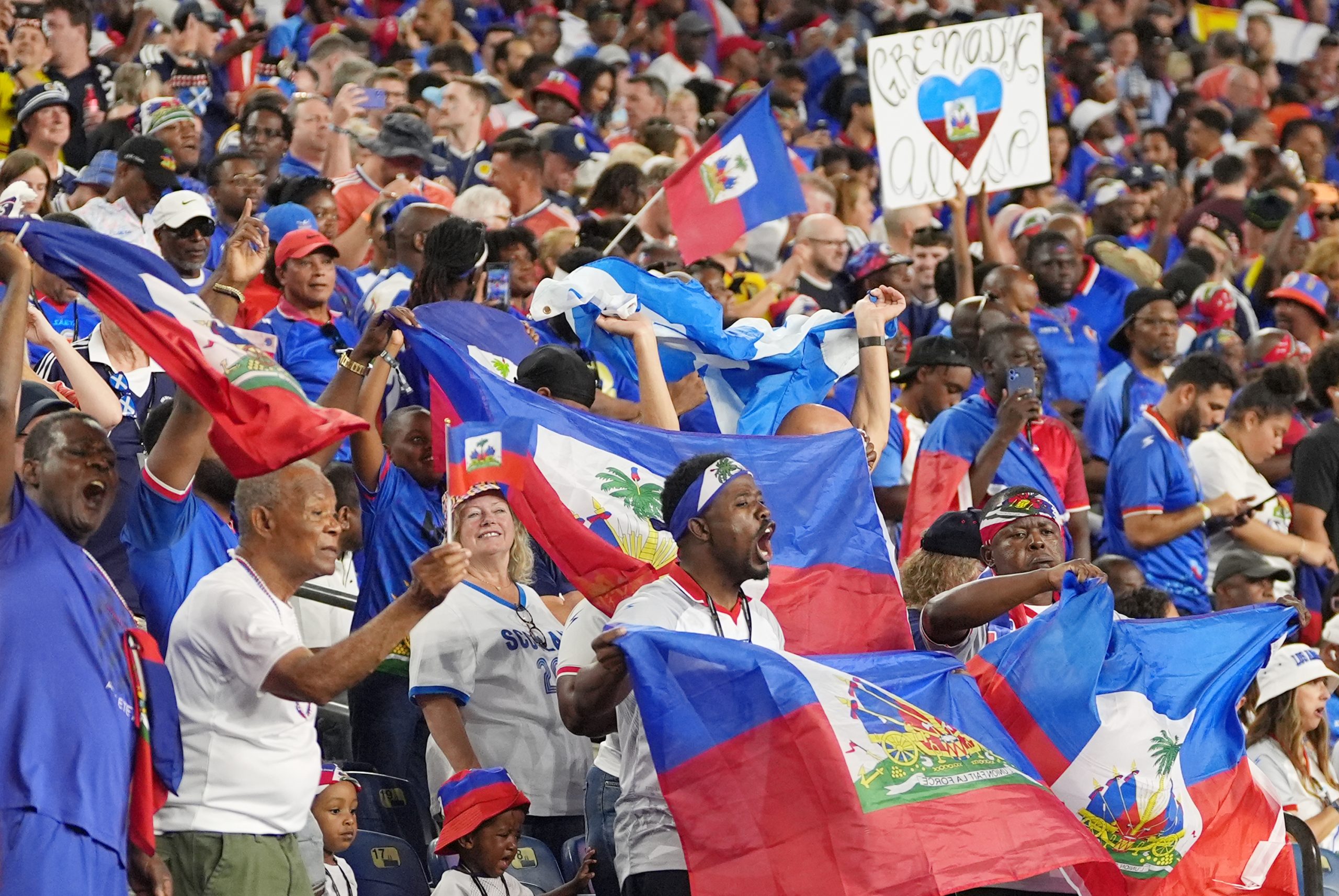
    Haiti fans in the stands at Saturday’s game.Charlie Krupa

    Haiti’s next game will be a homecoming for Jean Jacques, as the team plays mighty Brazil in Philadelphia on Friday (8:30 p.m., Fox29, Telemundo 62). One of his teammates, Penn alum Duke Lacroix — a native of New Egypt, N.J., in Ocean County — will also return to town, and will get to train on his old college field on the eve of the game.

    Lacroix was an unused substitute against Scotland.

    Haiti’s group finale is June 24 against Morocco in Atlanta. Morocco and Brazil tied, 1-1, earlier Saturday in East Rutherford, N.J., with spectacular goals by Ismael Saibari and Vinícius Junior.

    South Africa’s group finale is June 24 against South Korea in Monterrey, Mexico.

  • On a ‘dreamy’ night at the World Cup, the USMNT’s biggest stars electrified the biggest stage

    On a ‘dreamy’ night at the World Cup, the USMNT’s biggest stars electrified the biggest stage

    INGLEWOOD, Calif. — Twenty-four years ago, the U.S. men’s soccer team scored three goals in the first half of a World Cup game.

    They were halfway around the world, in South Korea. It was just before 6 a.m. in Philadelphia, and only the die-hards woke up early.

    On Friday, a new generation did it again. This time, it was on home turf, in the shadow of Hollywood, and the nation watched in prime time.

    The 3-2 win over Portugal in 2002 marked the start of an era. Friday’s 4-1 rout of Paraguay was the greatest proof of how far things have come.

    Yes, it was only one game, and these U.S. players know that better than anyone. But they also know how big this was.

    It’s not an overstatement, especially for a fan base that has endured so much frustration over the last 12 years. It’s OK to savor a moment of real happiness, and the rest of the nation is welcome to join the party.

    It’s especially worth saying that this team’s biggest players delivered on the biggest stage.

    Christian Pulisic was dazzling, especially with his playmaking on the first two goals, before exiting at halftime as a precaution after a hit to his left calf.

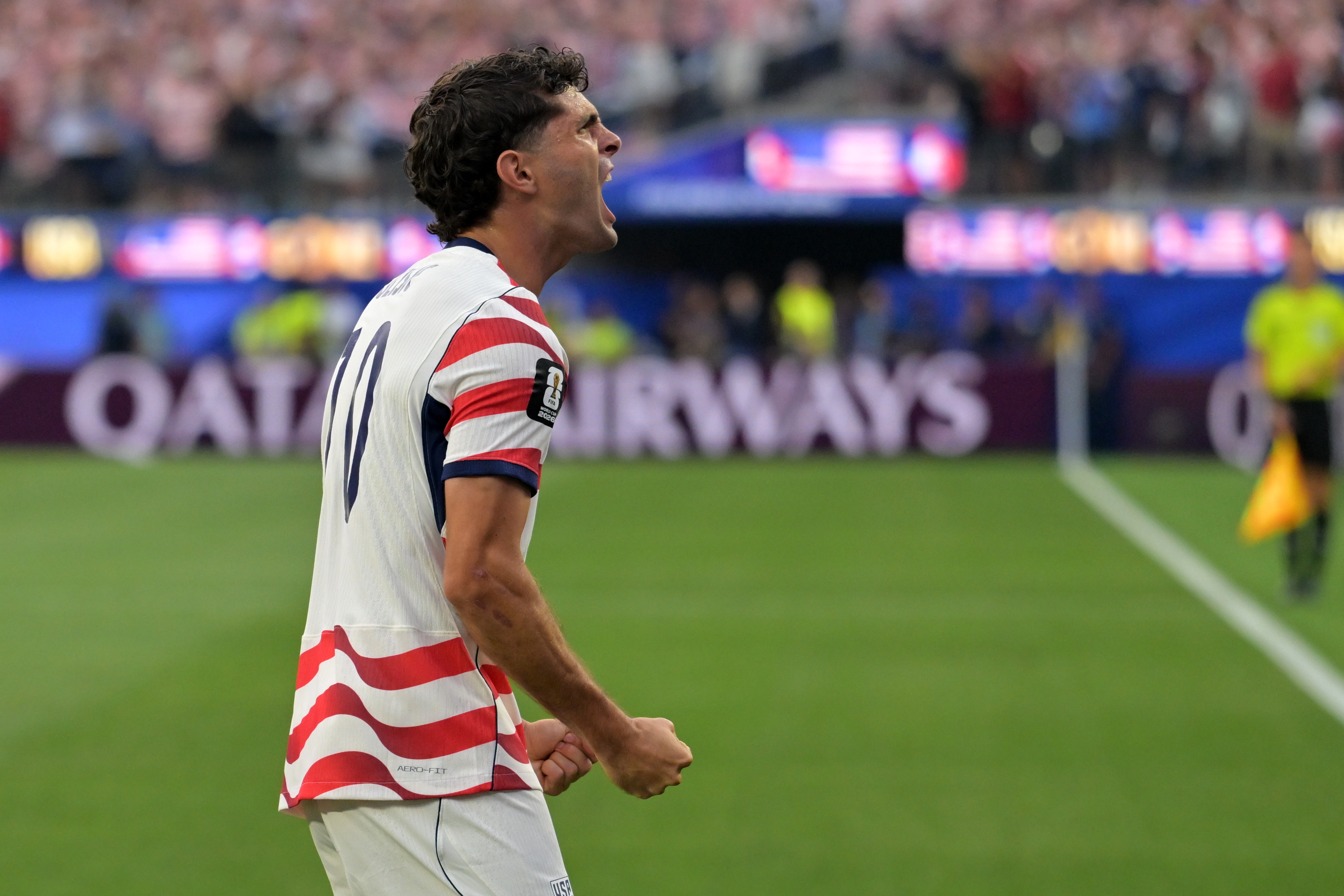
    Christian Pulisic celebrates after his playmaking helped force the Paraguay own goal that opened the scoring.Jayne Kamin-Oncea

    Folarin Balogun again showed why he’s the striker the U.S. program craved, with clinical finishes on the second and third goals. Weston McKennie drove the play from the engine room, starting with a charge downfield to set up the first tally.

    Tyler Adams was the midfield general, and Chris Richards was impeccable on the back line: 6 of 10 duels won, three clearances, and a perfect 84-of-84 passing. Gio Reyna, so long maligned, capped the night with a thunderbolt.

    A ‘culture shift’

    While the instinct at halftime was to compare this game to the Portugal one in 2002, the final whistle brought another comparison.

    Just 15 months ago, many of these players left this Los Angeles-area stadium at a low point: humiliating losses to Panama and Canada in the Concacaf Nations League final four.

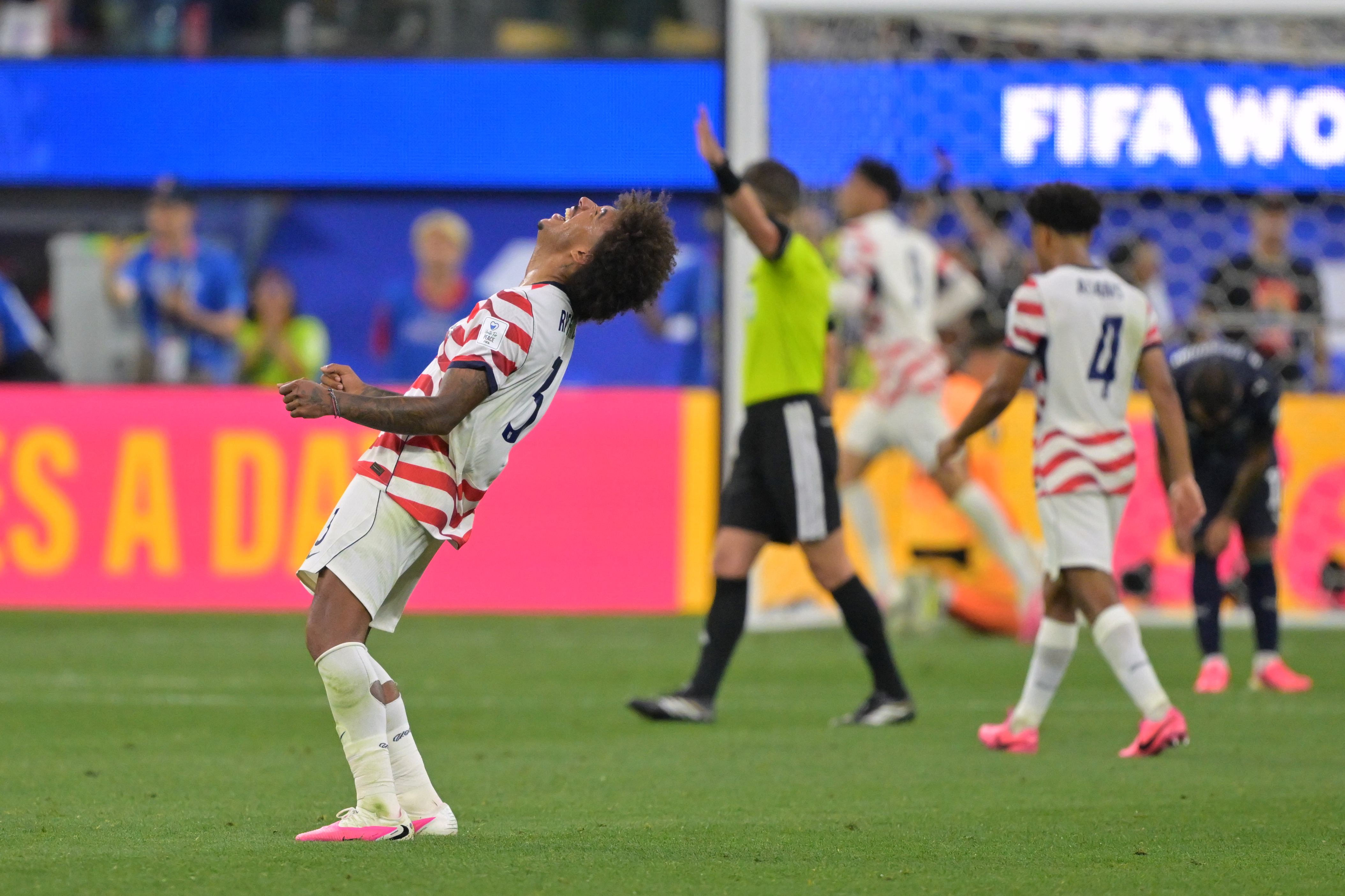
    Chris Richards (left) celebrates after Gio Reyna’s late goal capped the U.S.’ win over Paraguay.Jayne Kamin-Oncea

    Richards and Adams were asked if they thought about that time as they returned to the ultramodern venue typically known as SoFi Stadium, and both said they did not. But they had no doubt about how far their program has come.

    “I think you’ve seen a complete culture shift,” Richards said. “There [were] a lot of question marks last March about if we have that fight, if we can do it, if we can go all the way, especially without having any real competitive games. But I think we proved it to everybody tonight.”

    Adams spoke of the team’s growth “as players and individuals, but also just understanding what the manager wants, exactly how to instill that every single day, the culture of the team, bringing more players into the fold. We’ve come a very long way.”

    It bears saying that Balogun missed those Nations League games because of injury. But the search for a marquee striker had gone on long before then. But it bears repeating: He has delivered.

    “When I committed, and throughout the whole cycle and the whole journey to me being at this point, I’ve always said the fans gave me so much motivation, showed me so much support,” he said. “And for me, the most important thing has always been to be able to repay that. I feel like today’s a great opportunity, and I just want to continue to show the fans I made the right decision.”

    He called it “a dreamy night,” and speaking soon after the final whistle meant he had only started to process it.

    “I’ve not been able to take it all in,” he said. “When I get back to my hotel and I rest, I’m sure I’m going to really be able to be in the moment and experience how much of an amazing night this is.”

    A true home advantage

    Another contrast between last year and this one came from the stands. While the players were the best actors, the crowd of 70,492 played more than just a supporting role.

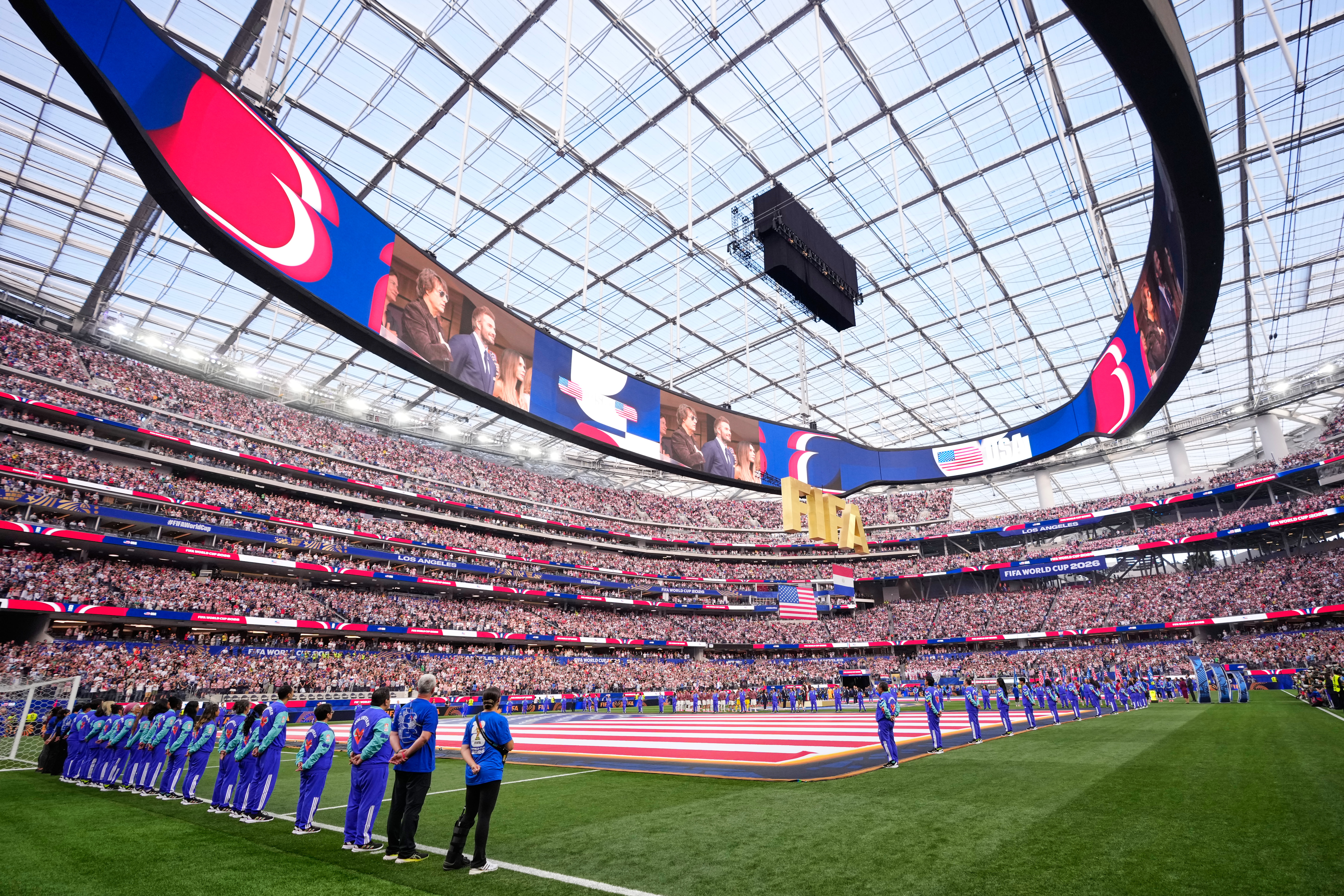
    A view of the crowd from field level during the national anthems.Mark J. Terrill

    The compounded fear of seeing laid-back LA pay FIFA’s exorbitant ticket prices vanished when the national anthem singers found themselves joined by a rising chorus. There were “USA!” chants all night, real and organic, from the moments before kickoff to a key stretch late in the game when the players needed a boost after Paraguay’s goal.

    Player after player said they felt it on the field.

    “Walking out to that makes it feel real,” Adams said. “Seeing that support, you don’t want to let the fans down and the country down.”

    Pulisic said: “It meant everything for us. A half like that, for it to go as it did, and have the fans really excited about it our performance, it felt amazing.”

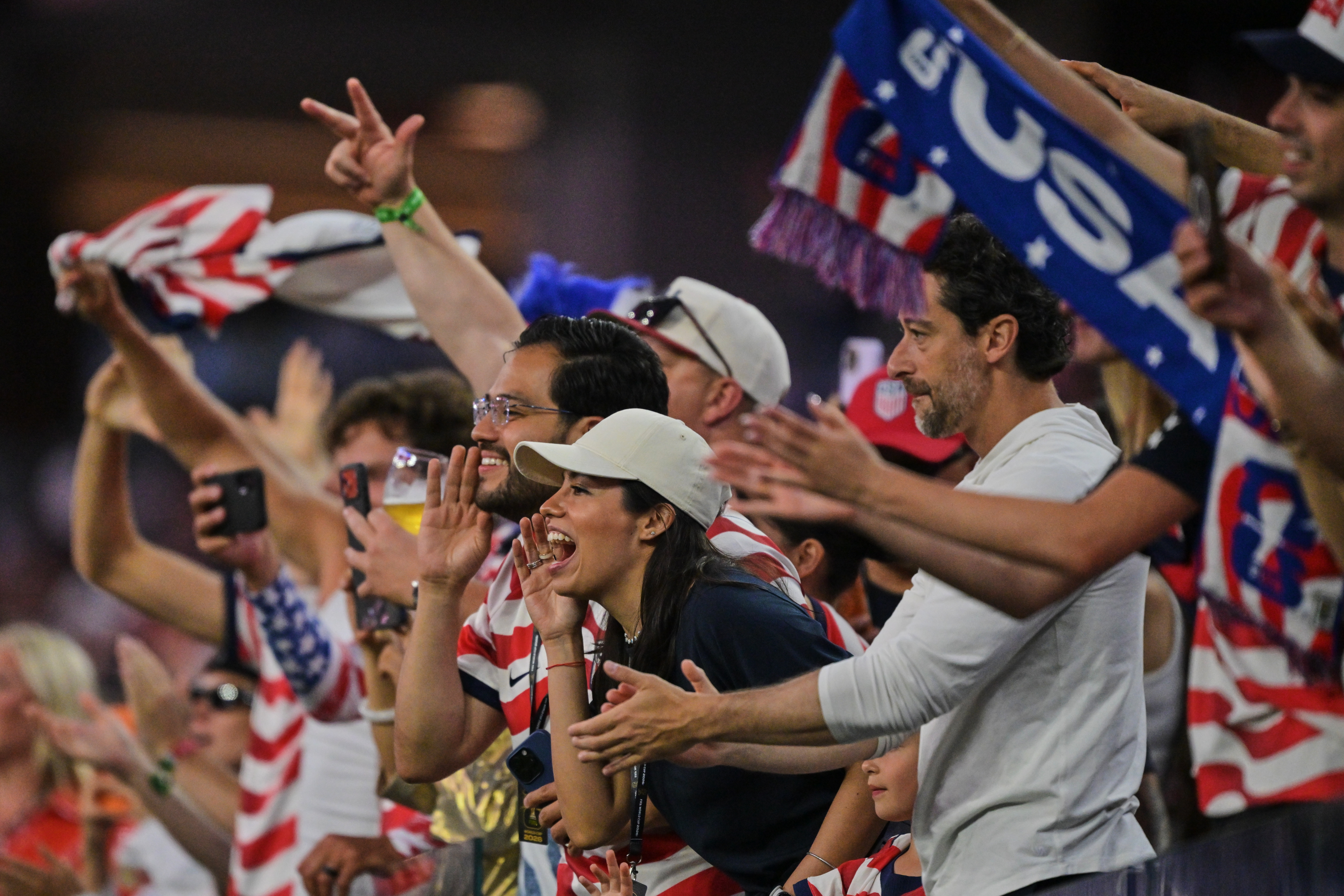
    Some of the U.S. fans in the stands on Friday.Jayne Kamin-Oncea

    Last summer, McKennie stood at the White House with his club team, Juventus, and watched President Donald Trump make that moment about something totally unrelated to his visit. This time, the Texas-born son of a retired Air Force staff sergeant could express his own form of patriotism.

    “Hearing the national anthem and hearing the fans singing it, in that moment, it’s one of those things that just pushes the feeling even further,” McKennie said. “Where you’re like, ‘I’m proud to be American, this is my home, this is my country.’ And that’s something that is hard to describe — it’s something that as a player you just feel whenever you just see that.”

    Medford’s Brenden Aaronson said the anthem gave him “goose bumps,” even though he was on the bench and didn’t play. Cristian Roldan, another unused substitute, called the atmosphere “beautiful.”

    Even goalkeeper Matt Freese, renowned for his laser focus while on the clock, admitted to taking a moment to soak in the scene.

    “I had gotten some texts from a few mentors that said, ‘Make sure you take a moment to take it in,’ because they know I otherwise I wouldn’t,” he said. “And so I did. I just looked up, and it was a breathtaking sight, I would say.”

    Pochettino, an Argentine who has spent his coaching life in Europe, felt something, too.

    “It was amazing for our fans to watch this type of game,” he said. “And today, I am so proud, and we are so proud, because I think we are winning a lot of fans, adding fans [of] that sport here in America.”

    This was just one game, of course. But it was a big one, and not just because it was the highest-scoring U.S. men’s game in World Cup history. At the final whistle, it opened a path toward even bigger things to come.

  • Rob Stone has spent half his life broadcasting World Cups. This summer, he leads what could be Fox’s last.

    Rob Stone has spent half his life broadcasting World Cups. This summer, he leads what could be Fox’s last.

    NEW YORK — So much in American soccer is defined by change that sometimes the constants get overlooked.

    But one constant will be front and center during the World Cup and hopes to be welcomed by longtime and new fans alike.

    This will be Rob Stone’s 13th tournament between men’s and women’s, in a 28-year run that spans nearly half his 57 years. His first was in 1998, when he was a reporter for ABC and ESPN, and he worked seven for those channels through 2011. In 2012, he moved to Fox, where he became the lead studio host for every World Cup the network has aired since the first in 2015.

    Now comes a summer like none before, from a logistical and personal perspective.

    “The fact that it’s on home soil, you do allow yourself a moment to hit the pause button,” he told The Inquirer, “and rewind back to old MLS Cups in the ’90s and covering the U.S. team in ’98. And then do the math of where you are now, and the responsibility that’s on all of our shoulders. It’s a cool moment.”

    The interview occurred amid mountains of preparation for the first World Cup with 48 teams and 104 games. It’s so much time and tonnage that Fox will have four studio hosts: Stone, Rebecca Lowe (borrowed from NBC), Jules Breach (from England’s TNT Sports and Channel 4), and Pien Meulensteen (from England’s Sky Sports).

    “I’ll probably reflect better on it in late July when it’s done,” Stone said. “Right now, it’s like a refrigerator on your chest, and you’re just trying to catch your breath and be healthy and ready to run at a sprint pace on Day 1. This is a massive undertaking for our network, for sure, but I think more so for our country.”

    Most of Fox’s studio coverage will come from the network’s Los Angeles headquarters, a perk of a home World Cup. But Stone will be on site at U.S. games, and perhaps other big ones, and is happy to be taking the show to fans. He has experience with it, too, as the host of Fox’s Big Noon Kickoff college football pregame show.

    Rob Stone (left) with Landon Donovan and Maurice Edu at last year’s Concacaf men’s Gold Cup final.Fox Sports

    “College football and soccer have always, to me, been kind of blood brothers,” he said. They run in the same circles: it’s the same amount of passion and that energy and that tailgating and that tribalism. So I’m really excited that Fox is saying, ‘Let’s get out with the people’ and really do have our finger on that pulse.”

    That will be the most true for the U.S. team’s second group-stage game, against Australia on June 19 in soccer-crazed Seattle. It’s the most-anticipated group game for many U.S. fans, not because of the opponent, but because of the expected atmosphere.

    “That home-field advantage from Seattle should be amazing,” Stone said. “And I am so happy for that city that they get the opportunity to host their national team, and not just in a tuneup game, but in a game that could absolutely determine where they go through the course of this summer.”

    The studio sets’ locations hadn’t been finalized when Stone spoke, not least because there are a lot more security layers at a World Cup than a college football game. But the idea is as clear to him as it undoubtedly is to fans: to “have a much better vibe and be able to report that, and let the viewer understand a little bit to a better extent what World Cup soccer is all about.”

    An electric atmosphere is expected when the U.S. plays Australia on June 19 in Seattle.Seattle Sounders

    ‘A distinguished, educated soccer culture’

    How does he handle the always-delicate balance of teaching new fans while not alienating diehards who don’t want to be condescended to? That exists in other sports, but it’s especially pronounced in soccer.

    “It’s a really interesting conversation because if you compare the soccer tent in the U.S. to ’94, it’s worlds apart, right?” Stone said. “This is much more of a distinguished, educated soccer culture than it was back then in the early ’90s. But there’s still growth. There’s still opportunity for more.”

    The specifics of a home tournament come into play for him here, too, with the potential for even bigger audiences than World Cups already draw on U.S. television.

    “We definitely want to make sure that the newbies feel welcome to come in with the soccer intellectuals, if you will, and make it one big happy family where we can all get certain levels of enjoyment out of it,” he said. “But we have to be welcoming to new people and that new generation of the soccer fan, and this is a great opportunity to do it.”

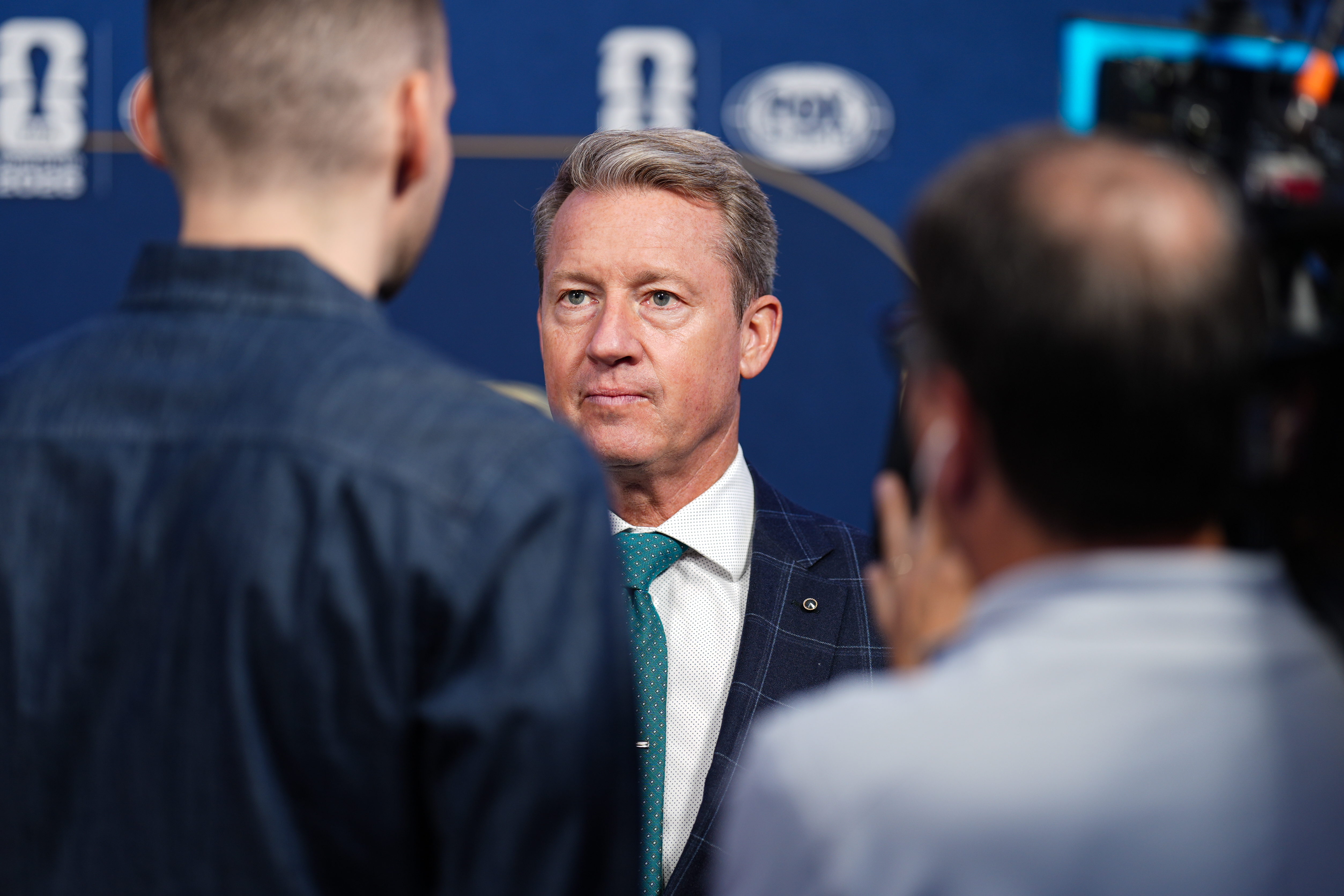
    Rob Stone (center) participates in Fox Sports’ World Cup media day in late May.Fox Sports

    He added that he thinks “about the millions and millions of people who became soccer fans in our country because of ’94. We have another opportunity to do that this summer.”

    Stone’s experience and professionalism have long drawn praise from across the industry.

    “I mean, Rob Stone is American football for me,” Lowe said, only to realize her British roots had spun a double entendre. “I mean, he’s also American football, right? He’s American soccer.”

    Then she turned serious.

    “His passion, his depth of knowledge, and his experience means that when you turn on your television, you are listening [to] and watching somebody you can be safe with,” she said. “There are so many avid football fans in this country who know everything about the game, and so does Rob. They need somebody on their screen reflecting back that level of knowledge, but also that depth of passion. He just gets it.”

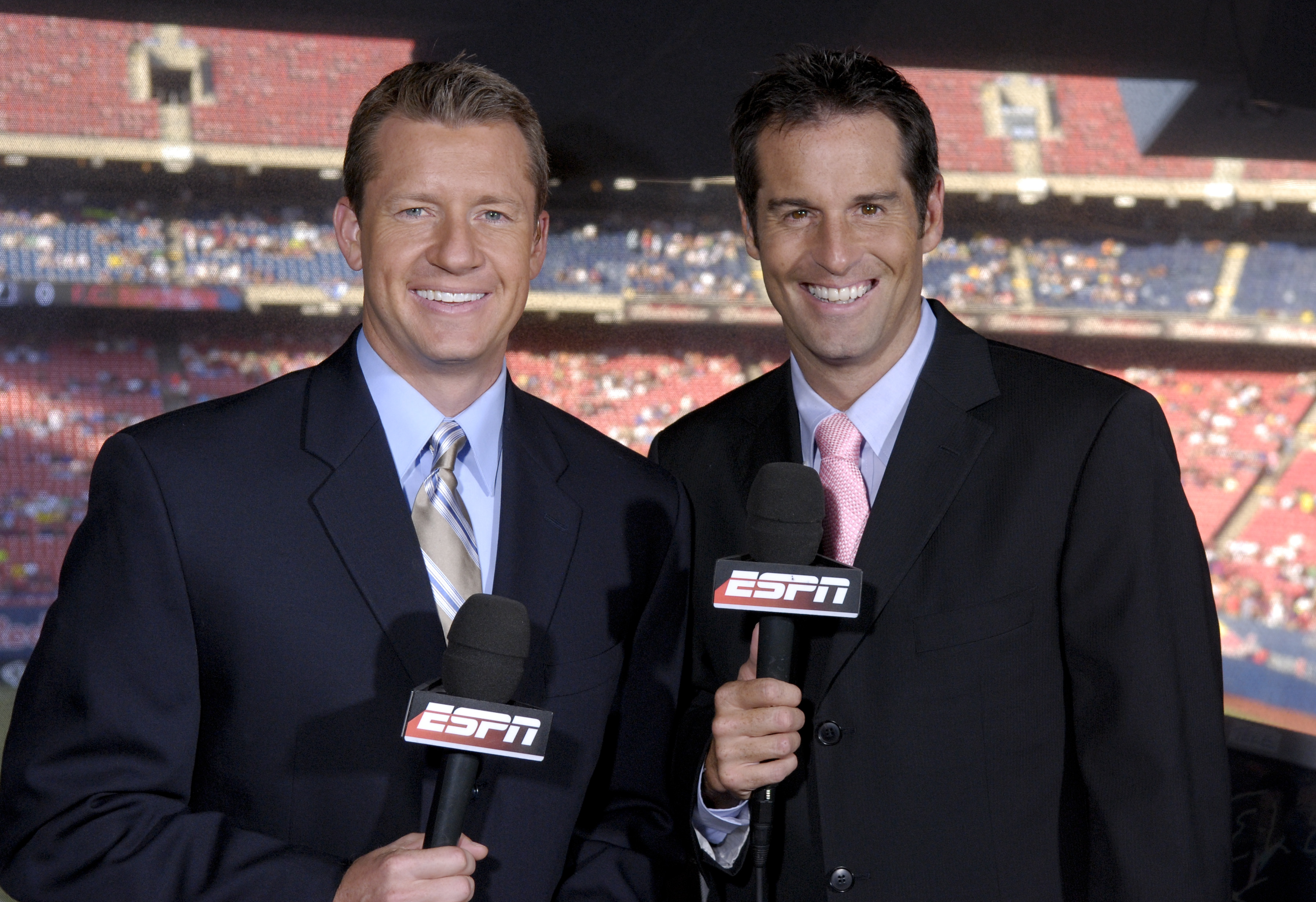
    Rob Stone (left) on the call with John Harkes at an ESPN soccer broadcast in 2008.Lorenzo Bevilaqua

    ‘A grind-plus-one’

    Longtime Fox analyst Stu Holden played for the U.S. national team in the 2010 World Cup, which was Stone’s last for ESPN. The two have known each other well for a long time; Holden joined Fox in 2014 and quickly became its lead game analyst.

    “He is, and will be, remembered long, long after he’s done in television as one of the most important people in sports broadcasting for American soccer,” Holden said.

    Stone also can teach his Fox colleagues who don’t know the sport well. Though it isn’t to some fans’ taste, the network is unabashed about wanting to bring in big names from other sports and popular culture.

    “If you’re coming into a World Cup cold, I’m worried about you,” Stone said. “Alexi [Lalas] and I have talked about this for decades. Whenever a new talent comes in, and usually it’s a former athlete, we get to him or her really fast and [are] just like, ‘Hey, this literally is a marathon, and you need to be prepared mentally and physically before it starts.’”

    As much of a grind as a World Cup is, he said this edition is “a grind-plus-one.”

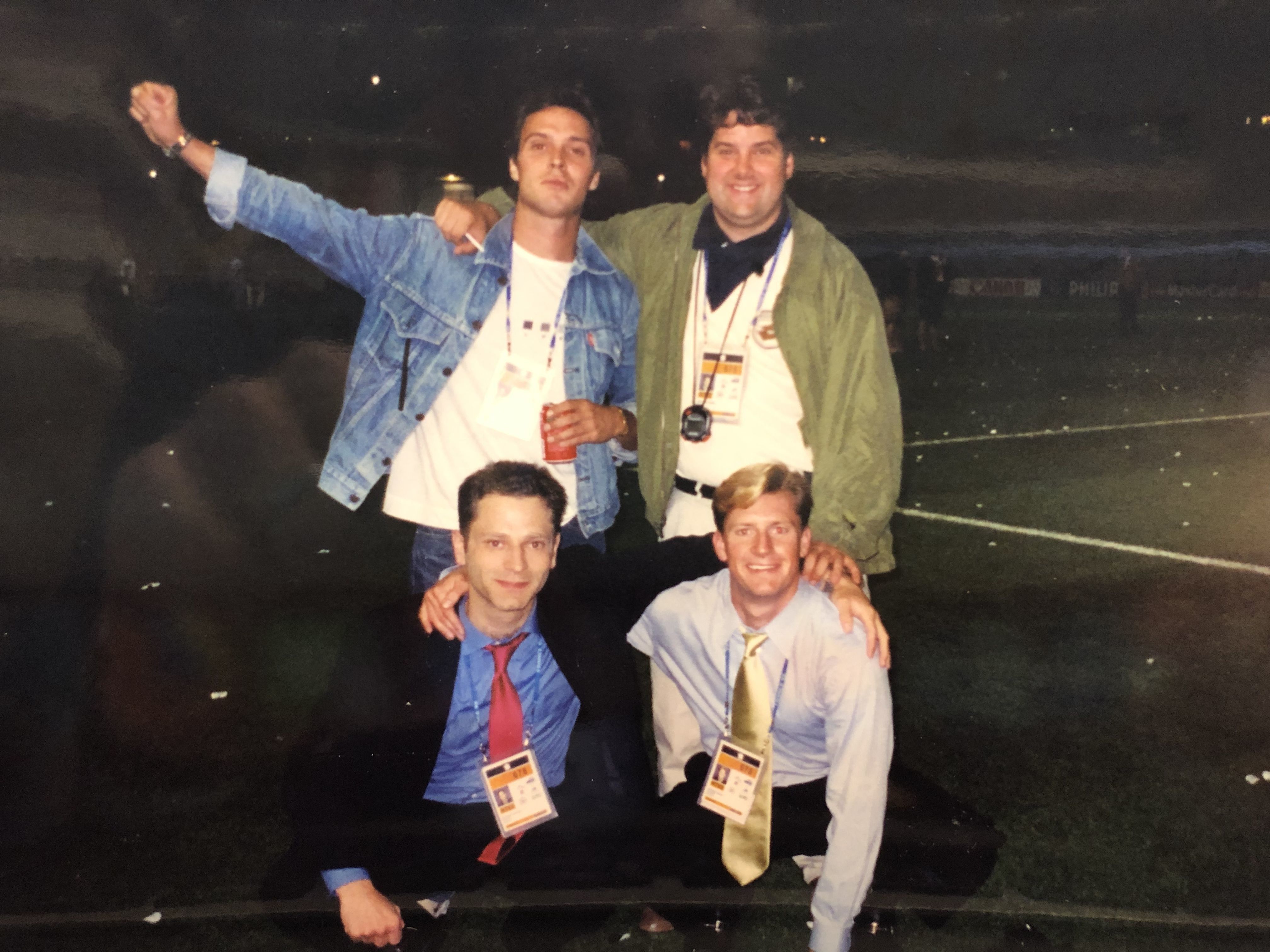
    Longtime ESPN reporter Jeremy Schaap sent The Inquirer this photo with himself (bottom left), Rob Stone (bottom right), cameraman Nicolas Servant (top left), and producer Jim Witalka (top right) on the field at the Stade de France during the 1998 World Cup.Jeremy Schaap

    For all the highs and lows to come this summer, the end also will bring a major moment. This tournament is Fox’s last of its 15-year contract with FIFA. The women’s World Cup will move to Netflix for next year’s tournament and 2031, and negotiations for the next round of men’s tournament rights haven’t started.

    Stone doesn’t know what the future holds for those rights or for him. But he is aware that this World Cup could be not just Fox’s last, but his last.

    “I’m not ready to say it’s an end of an era yet, because who knows where the next men’s World Cup is going to go,” he said. “I’m 100% looking at it like I’ve got more to go, and I’ve got plenty more in the tank. … There’s certainly that possibility out there that’s it for Fox. And if it is, we’re going to finish with a bang, just like we started.”