Author: Scott Sturgis

  • 2026 Volkswagen Jetta GLI: A quick bargain that may be gone in a flash

    2026 Volkswagen Jetta GLI: A quick bargain that may be gone in a flash

    2026 Volkswagen Jetta GLI Autobahn vs. Hyundai Elantra N vs. Mazda3 2.5T Premium Plus AWD Hatchback: Let’s have some fun without breaking the bank.

    This week: Volkswagen Jetta GLI Autobahn

    Price: $35,670 as tested. And that comes pretty tricked out, with heated and ventilated seats, and premium audio. Just $650 for the 18-inch black rims and black side mirror caps. Autobahn is simply a top trim level, with one special feature noted below.

    What others are saying: “Highs: Just as quick as the GTI, as playful as ever, kind of a hot deal. Lows: We still prefer the manual even if it’s slower, annoying exhaust drone at highway speeds, deserving of a summer-tire option,” says Car and Driver.

    What Volkswagen is saying: “It’s the kind of car that’s hard to ignore.”

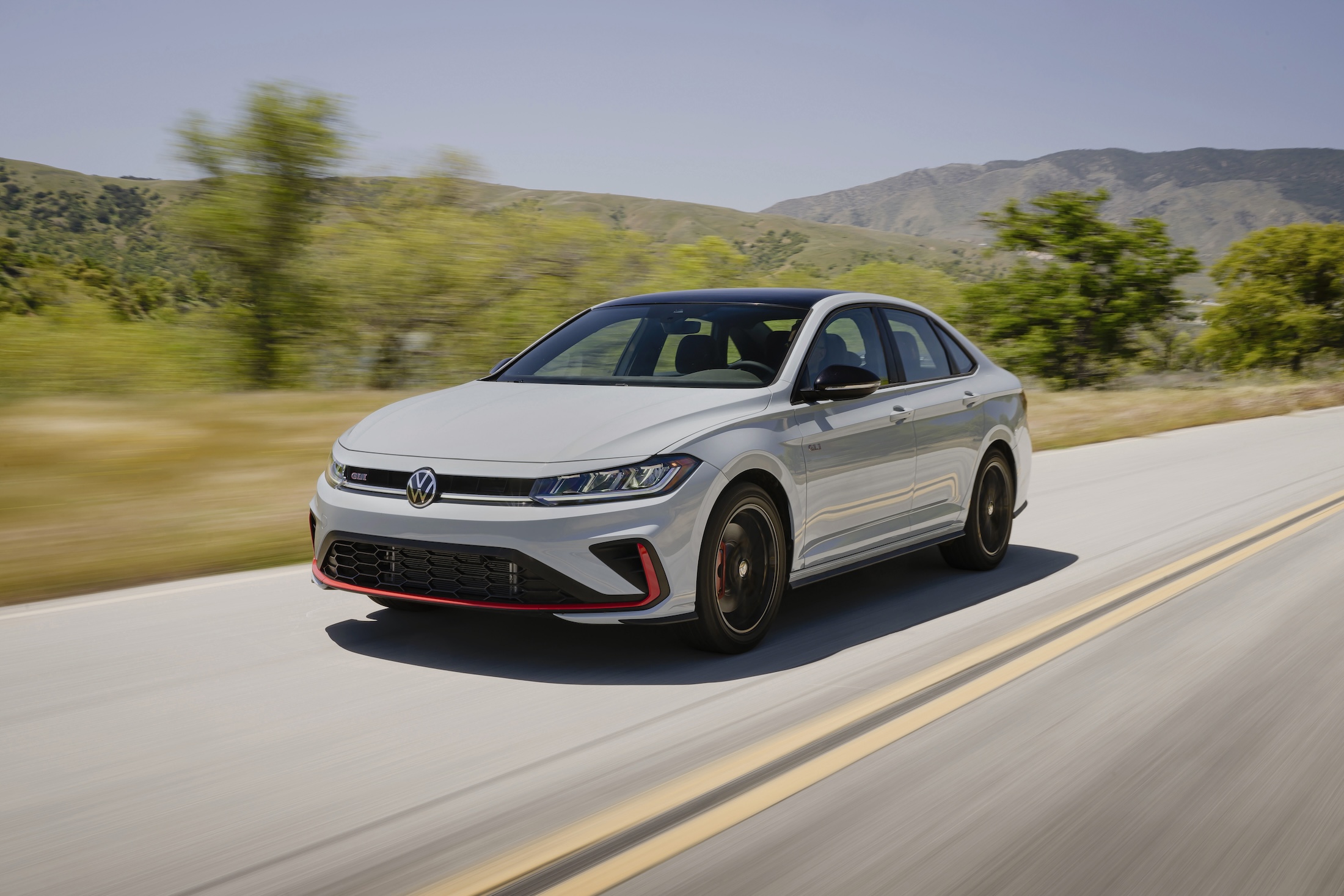
    Reality: It actually is quite easy to ignore, with all the exterior excitement of a Buick sedan, but it’s worth paying some attention.

    What’s new: Volkswagen has been having some financial problems and is planning to cut 100,000 jobs, according to BBC. As those in the know handicap which models may be cut from the lineup, Car and Driver is betting the GLI could be on the short list.

    Until then, though, let’s take this baby out for a ride. Fun seems to be harder to find these days, with war in Iran and tariff roulette costing us all money, so it seems like a good time to see which little cars might return a smile to our faces with little-ish price tags. With that comes a comparison of the Jetta GLI, Hyundai Elantra N, and the Mazda3 Turbo.

    Competition: In addition to the comparison vehicles, there are the Honda Civic Si, Honda Civic Type R, Toyota GR Corolla, Volkswagen Golf GTI, and Volkswagen Golf R.

    Up to speed: Woo hoo, the Jetta GLI Autobahn will get you to 60 quickly. Car and Driver says it gets there in 5.6 seconds, and I’m skeptical. It feels faster than that; I thought for sure I’d find a sub-5 time. But whatever, the 2.0-liter turbocharged four-cylinder engine creates 228 horses, and it really gets the small sedan around in a hurry.

    Zipping past cars on the highway is easy, so is getting the Jetta to 65, 70, and beyond, if you’re not looking. This is not the car to hand over to a teen to take to college.

    On the road: In fact, the Jetta GLI gets moving with more force than the front-wheel-drive system can adequately handle. Stomp on the accelerator while turning from a red light and the Jetta GLI Autobahn can quickly lose its composure and start dancing from side to side. All-wheel drive would be such a blessing to this little car.

    After you get rolling, give the GLI free rein in and out of turns and it’ll go exactly where you point it. The highway seams are not as brutal as you’d think in this sporty little sedan (unlike the unforgiving Toyota Sienna XSE I tested on a recent Minnesota drive) and there’s certainly plenty of gusto for passing your fellow motorists.

    Shifty: The Jetta in all its forms offers Volkswagen’s typical D-S shifter, where a double pull adds to the performance, and a push to the (wrong) right side gives you shift capabilities (the left side is the right side for shifting, people). Then a push forward lets you upshift — also incorrect, because a pull was mandated in documents carried by Moses from the Mount. The shifter is also a little too mushy for shifting, so maybe opt for the paddles.

    Or the stick shift. The Jetta GLI is one of the last few vehicles to let you shift for real, with a 6-speed manual also on offer.
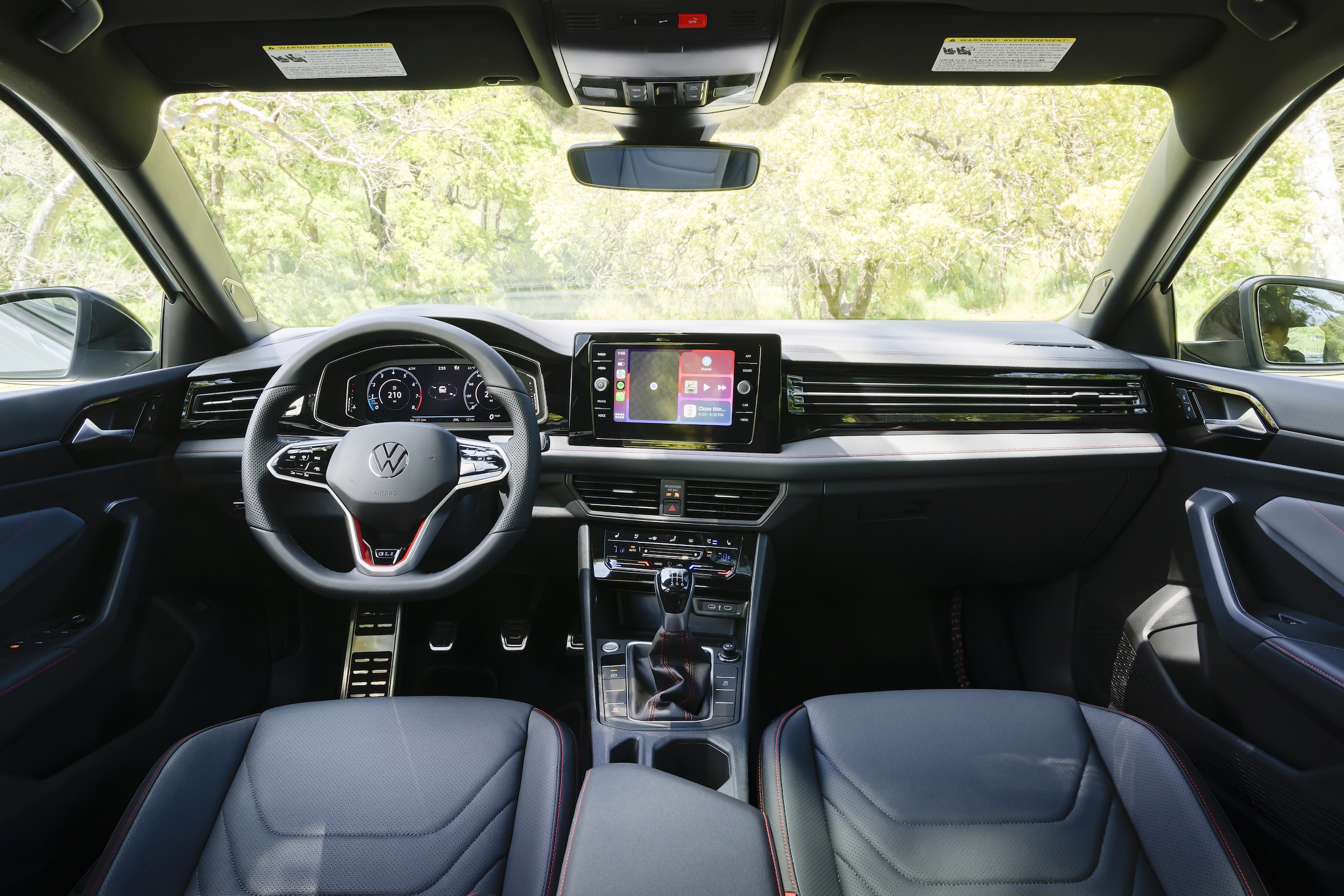
    The interior of the 2026 Volkswagen Jetta GLI continues a tradition of no-nonsense colors and functionality.JAMES LIPMAN

    Driver’s Seat: The leather-covered, red-accented Driver’s Seat offers more performance than comfort; it’ll hold you firmly in place, but it’s not ache-inducing. (Ask me about my back problems; I have aged into the perfect Goldilocks for all your Driver’s Seat insights.)

    The controls and gauges haven’t changed much in the past 10 years. You go, Volkswagen. Save those pennies.

    Friends and stuff: The rear seat has decent headroom and legroom, although foot room under the front seat is a little snug. The center seat is tight behind the console, of course. The entire seat is comfortable enough, especially for the price point.

    Cargo space is 14.1 cubic feet; the seats fold down for a pass-through.

    In and out: The Jetta sits sports-car low, so brace yourself for the ups and downs.

    Play some tunes: The stereo interface is also classically inspired, with volume and tuning knobs and an 8-inch screen. Like the 0-60 time, the little screen really punches above its weight; I searched and searched to make sure I didn’t have some larger upgrade, but no.

    Sound from the Volkswagen Premium Audio system, part of the Autobahn trim level, is quite good, an A- almost hitting an A.

    Keeping warm and cool: Dials control temperature, and buttons handle everything else. The blowers provide plenty of air on the hot days, something we’ve had more than our share of this summer, and the ventilated seats help with cooling as well.

    Fuel economy: The vehicle averaged 29 mpg over the last 1,500 miles, including a few hundred of mine.

    Where it’s built: Puebla, Mexico. The parts are 36% Mexican and 17% German.

    How it’s built: Consumer Reports predicts the Jetta reliability to be a 2 out of 5.

    In the end: You’re basically getting an Audi A3 for a Volkswagen price, so why wouldn’t you take it? Still, gotta check out the competition.

    Next week: We try the Hyundai Elantra N.
  • 2026 Toyota Sienna: A Superior ride — and dressing room — through the North Country

    2026 Toyota Sienna: A Superior ride — and dressing room — through the North Country

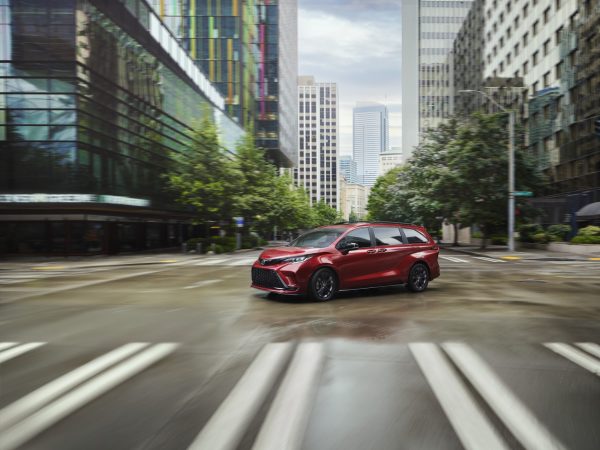
    2026 Toyota Sienna XSE AWD: Practical people mover?

    Price: $53,159 as tested.

    What others are saying: “Highs: Fuel economy, ride, interior room, versatility and flexibility, cruising range; lows: Long stopping distances, engine noise,” reports Consumer Reports.

    What Toyota is saying: “Built for life’s everyday adventures.”

    Reality: Built for life’s everyday adventures.

    What’s new: Toyota last thoroughly updated the people-moving Sienna for the 2021 model year, when it received a hybrid powertrain. There have been some changes since then, but mostly it was a strong start, or restart.

    Competition: The minivan category is shrinking, but there are still some competitors. The Chrysler Pacifica, Honda Odyssey, Kia Carnival and Carnival Hybrid, and Volkswagen ID.Buzz are about it. The Pacifica PHEV is gone, and the ID.Buzz has been revamped for 2027 with more range and features.

    The latest Sturgis Sienna adventure was a long one. We had airline points so our choices were limited; a summer vacation to Minneapolis and the North Shore of Lake Superior would offer a summer-worthy set of adventures.

    As a Bob Dylan fan, it seemed the perfect time for me to drag the Lovely Mrs. Passenger Seat around the stomping grounds of one of Minnesota’s most famous sons.

    We hadn’t planned for the highest temperatures in the Upper Midwest in ages, followed by smoky skies after lightning strikes set up a million-acre wildfire in Canada.

    Up to speed: The 2.5-liter four-cylinder engine coupled with the battery pack and motor makes 245 horsepower, perfect for threading into I-35 traffic in Minneapolis or making a left onto the famed “Highway 61” from Black Beach or Split Rock Lighthouse.

    The power is also there when you’re stalking the Dylan-Zimmerman farm near Minneapolis, and you need to exit the long driveway quickly. (Special thanks to Favorite Waitress 1.0 who offered enough information to put the final pieces of the puzzle together. No, I’m not telling; we found it with internet clues, so you can, too.)

    Shiftless: A traditional T-bar lever gets things into gear, a thankful nod to tradition.

    On the road: Handling seemed loose at first, and Sport mode tightened things up, but over time Normal mode was fine for all of our purposes, riding half forever across upper Wisconsin to the tourist haven called Bayfield. Unfortunately smoky skies canceled the boat tours to Apostle Islands. After an hourlong visit to Madeline Island, we learned the awful truth that it is definitely to be missed; it’s seen better days and has little to offer.

    The road seams are rough on many of Minnesota’s highways, and the Sienna XSE with sport-tuned suspension is not doing much to smooth them over. I-35 had some rough spots up North. Lots of construction deluged us in Duluth. Maybe choose the more rarified Limited if you live in areas of rough roads, like, say, Pennsylvania, New Jersey, or anywhere I’ve been in the United States, to be honest.

    “The hills of old Duluth” Dylan mentions in the 1970s deep track “Something There is About You” could challenge Manayunk or Pittsburgh for steepness, but the Sienna slows itself nicely for the descent. We ventured past Bob’s boyhood home and through neighborhoods of truly beautiful architecture closer to the water. Everything is big downtown, just like the ships and the bridge. And the woods.

    Northern Wisconsin is the sad stepchild of the family up here. The Minnesota side captures all the tourists and their money, I imagine. The east sides of metro areas also tend to catch the prevailing winds and suffer for it.

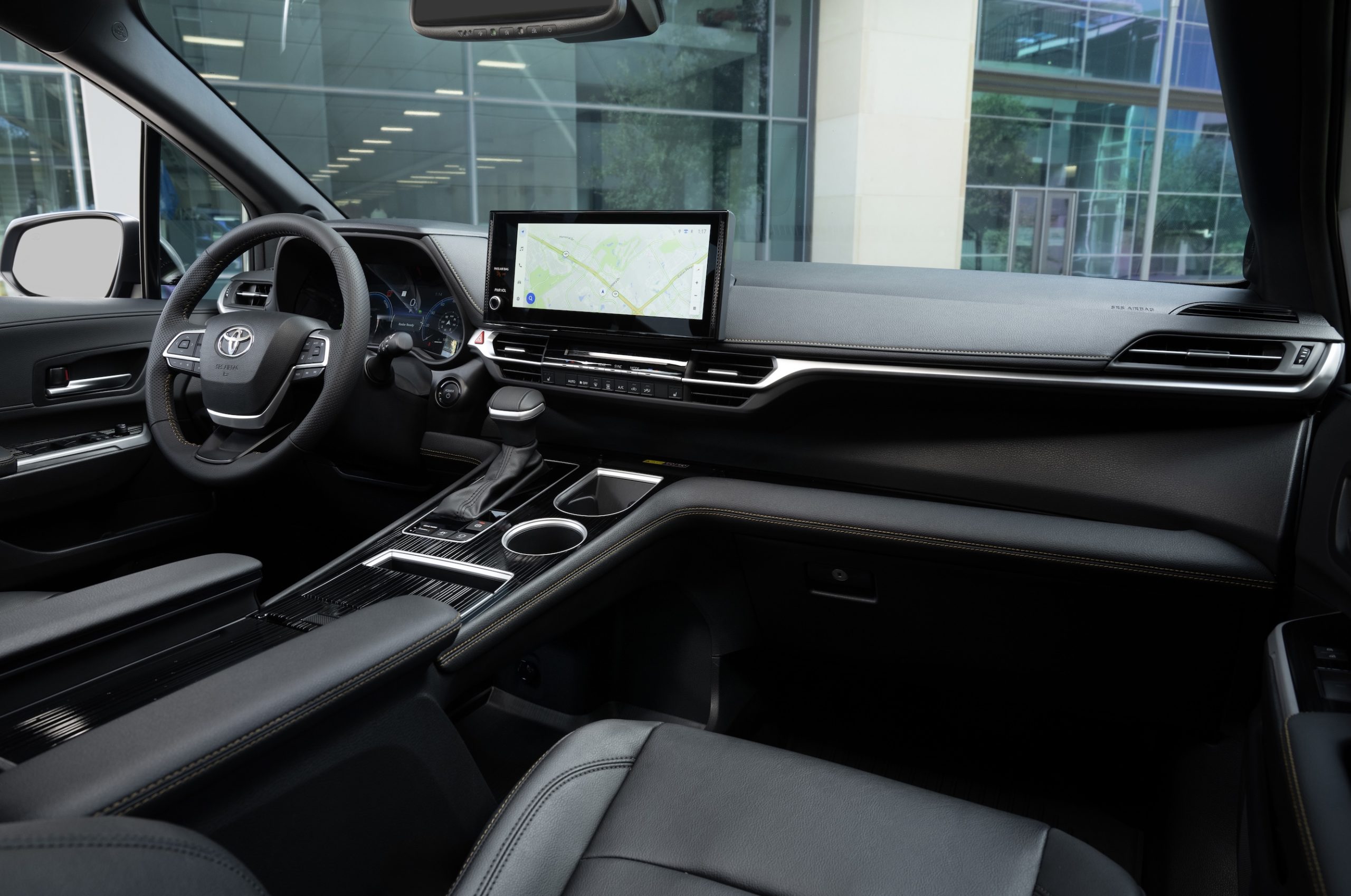
    Driver’s Seat: The high 90s outside reinforced that the Sienna is best ordered with ventilated seats. Our model did not have the option, and the Softex seats held the heat like many of the places we stayed, which do not have AC units designed for such temperatures.

    The front of the 2026 Toyota Sienna has plenty of storage bins in addition to comfort; the rear makes a nice mobile changing room.NATHAN LEACH-PROFFER

    Friends and stuff: The second and third rows are among the most spacious out there and provided plenty of changing room for Mr. Driver’s Seat and The Lovely Mrs. Passenger Seat for swimming adventures in Lake Superior (43 degree water there, and brave Mr. Driver’s Seat was the only one with wet hair).

    The seats seem less cumbersome than Sturgis Kid 1.0’s Sienna but still only smash up against the front seats, no fold-down or fold-away option.

    Cargo space is 33.5/75.2/101. The old Sturgis Family Sienna from 2011 remains the cargo carrier, with 150 cubes when the third row is squished down, and the second row is left in the garage. Still, there’s plenty of room to shop it up at the Mall of America or Duluth and the North Country’s many gift shops.

    Play some tunes: Mr. Dylan would be as sad as Mr. Driver’s Seat to know how the JBL 12-speaker stereo was not quite up to the task. It didn’t play loudly enough to even hear some songs as we thumped along I-35 or U.S. 2 to our destinations. The system is set for full media experiences like Highway 61 Revisited or 2001’s Love and Theft, not the more spare sounds of Blonde on Blonde, and certainly not Freewheelin’. Songs from those acclaimed albums were half lost in the echoing cabin. I’d call it a B+, though sound could be good, it just disappeared into the corners of the van.

    It has a volume knob; other controls are in the 12.3-inch touchscreen, and with icons down the left, Toyota has made this a functional system across its lineup. Sound controls are sliders in the screen, though, and very difficult to follow.

    Keeping warm and cool: Dials for temperature and buttons for all the rest. The Sienna handled 100-degree heat pretty nicely for a giant box. But note the sweaty seats.

    The recirculation button kept the cabin smoke free even as we drove with our lights on for miles and miles and miles.

    Fuel economy: Averaged right around 33 mpg, which is where it started.

    Where it’s built: Princeton, Ind.

    How it’s built: Consumer Reports predicts the reliability of the Sienna to be a 3 out of 5, but I’m going to violate my oath to them here and say it received one point less than a 4 out of 5 on their more specific scale. I love CR, but I find that a really jerky thing to do.

    In the end: Toyota still has THE minivan, and I defend the reliability because my 15-year-old model is still going strong here at home. (Which I’m sure I just jinxed.) The competitors are good, too, and if the Odyssey went all-wheel drive and hybrid, I’d probably change allegiances. The ID.Buzz also is a joy to live with, although Volkswagen reliability is sketchy.

  • 2026 Volvo EX30: The little EV that could go fast, but beyond that …

    2026 Volvo EX30: The little EV that could go fast, but beyond that …

    2026 Toyota bZ XLE FWD Plus vs. 2026 Volvo EX30 Twin Motor Performance Electric Ultra: A little EV battle.

    This week: 2026 Volvo EX30

    Price: $48,445 as tested

    What others are saying: “Highs: Blistering acceleration, short stopping distances. Lows: Unintuitive controls, overly light steering, cramped rear seat, some driving position quirks,” notes Consumer Reports.

    What Volvo is saying: “The range and quick charging you want in a small SUV that’s big on style, storage and safety.”

    Reality: You’re really leading with range and recharge rate, Volvo?

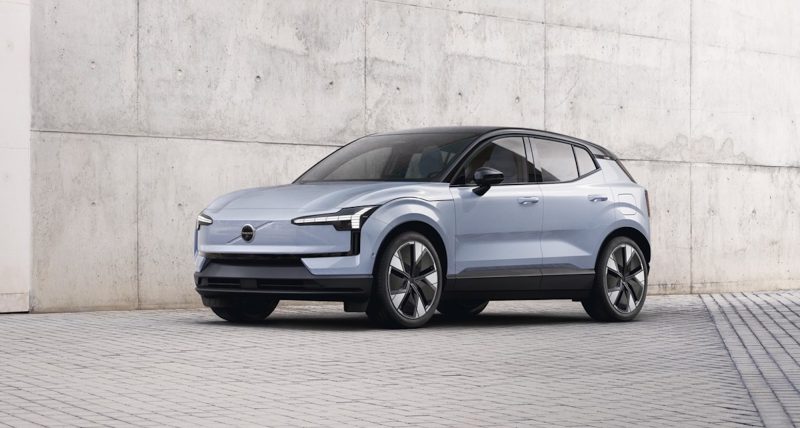
    What’s new: The EX30 is Volvo’s answer to the small car, but in EV form.

    Competition: I kinda cheated pitting the Toyota and the Volvo against each other, at least following Consumer Reports’ competition report, but they do run about the same price when outfitted comparably. And it’ll make even more sense later. Others are Audi Q4 E-Tron and Q6 E-Tron; BMW iX; Cadillac Lyriq, Optiq, and Vistiq; Genesis Electrified GV70 and GV60; Lexus RZ; Lucid Gravity; Mercedes-Benz EQE and EQS; Rivian R1S; and Tesla Model X.

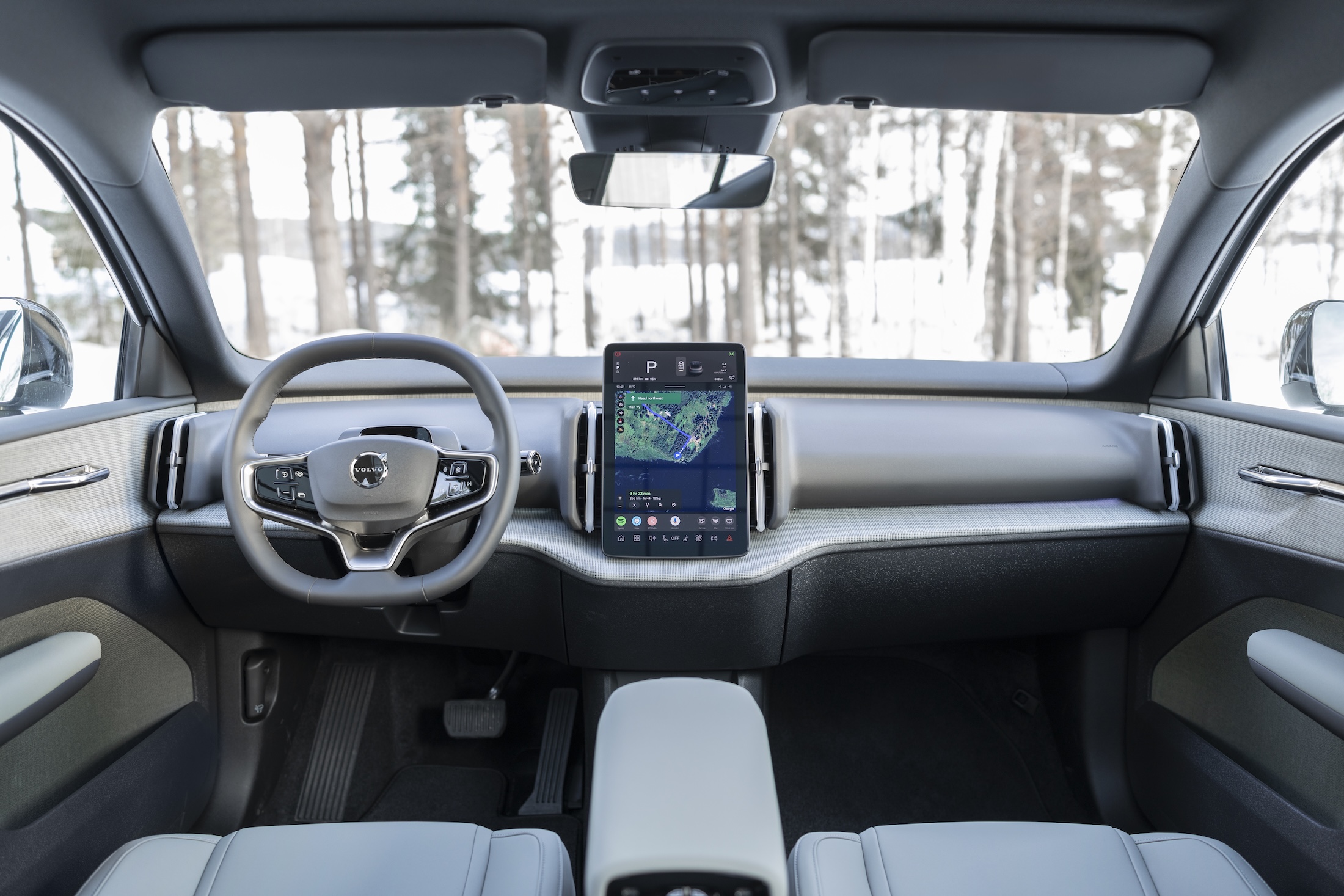
    The interior of the 2026 Volvo EX30 pays for the tall, straight stance of the vehicle.Daniel Ahlgren

    Driver’s Seat: The EX30 requires a great deal of get-acquainted time. Like a Tesla, the Volvo puts all the information you need into the spacious touchscreen in the center of the dashboard — there are no standalone gauges.

    The key card waved in front of a spot marked with a Wi-Fi symbol in the driver’s door gives you access; place that card in the exact spot in the console to fire the motors up. Waving the card in front of the door at shutdown locks everything up and shuts it off.

    An app can do all that as well.

    Driving position is almost like a city bus in its verticality, completely opposite the bZ’s stance, but the seat is comfortable. An array of seating controls happen in just one button; watch the screen to see which one you’re on and then adjust accordingly.

    Play some tunes (perhaps better renamed “Controlling the vehicle”): Like the seat adjustment options, everything happens in the touchscreen. Lights? Also in the touchscreen.

    As for the music, I never found much in the way of tone adjustments, but the standard setting seemed to play just fine, about an A-.

    Keeping warm and cool: This also pretty much happens in the touchscreen. A small temperature icon lets you change that in a larger window, and a little fan icon lets you make more detailed adjustments, which is a real pain. Either should offer the whole array.

    Manual adjustments were quite fussy, but automatic settings left me uncomfortable most of the time. Most vehicles figured this out a long time ago.

    Up to speed: Like almost every electric-powered vehicle, the EX30 zips from a start so freely, it’s almost like you barely have to look before pulling into traffic. I said almost, people. I heard those tires squealing.

    For small-car lovers like Mr. Driver’s Seat, the EX30 really brings the best of peppy little rides. The two motors produce 422 horses, and that rushes the little car to 60 mph in 3.4 seconds, according to Volvo. That’s half a second slower than a Corvette (2.8 seconds).

    A front-drive version gets 268 horses and reaches 60 mph in 5.1 seconds. Advantage Volvo, on both models.

    Shiftless: Tap the right steering column lever downward for Drive or up for Reverse. A button on the end parks the vehicle.

    On the road: Unlike the bZ, the all-wheel drive and battery weight don’t do much for the handling, though. The EX30 handles like a golf cart at its best. But it’s small and maneuverable, and the punchy performance makes up for the sedate slithering.

    Friends and stuff: Legroom is quite snug. Head and foot room are nice, though. The seat is seriously short; the accommodations are just not that nice back here.

    Volvo claims the cargo space is 12.5 or 27.8 cubic feet, which is a super low number. Some manufacturers measure the dimensions differently; this seems on par with similar-size vehicles, although probably not as generous behind the rear row as the bZ. Still, I can confidently say advantage Toyota.

    In and out: Entering the rear doors is the tightest I’ve felt this side of a two-door. Advantage Toyota.

    Sunny days: I still haven’t figured out how to close the shade for the sunroof.

    In the rain: When it’s raining, a driver wants easy access to the wipers, defroster, and rear defroster. As in, why aren’t these grouped together?

    The wipers are on the steering wheel stalk, and the defrosters require two-plus clicks into the touchscreen. Sure, there’s a standalone defroster button for making the thing blow so hard it feels like the windshield has been removed. (Business idea: This setting could be sponsored by Refresh Tears or some similar eye drop manufacturer.) Advantage Toyota.

    Range and recharge: The EX30 has a maximum range of 253 miles, a little on the short side.

    Volvo says the charging from 10-80% capacity is 28 minutes. The EX30’s recharge rate on a simple 110-volt charger is one of the quickest I’ve seen in the last several years, gaining 4 miles per hour of charge. Advantage Toyota.

    Where it’s built: Ghent, Belgium. Parts are 80% Chinese and 10% Belgian.

    How it’s built: The EX30 rates a 2 out of 5 for reliability from Consumer Reports. I’d have guessed lower. I’ve had Volvo EVs that repeatedly failed to show up for test weeks because of rainy weather. I’m hoping they’ve worked out those kinds of issues.

    In the end: The EX30 would be great competition for the CX-30 Turbo, a $35,000 ride, because this is also an awesome $35,000 ride. Unfortunately, it costs $48,000.

    So the bZ really wins the day here. But even its $40,000 price tag is also not going to help move vehicles.

    And the EX30 is no competition for most of the Consumer Reports offerings; some of those are running over $100,000 and have far different space configurations.

    Coming in September I expect to review the new Chevrolet Bolt. Here’s hoping.

  • 2026 Toyota bZ: A new name, more power, and lots going for it

    2026 Toyota bZ: A new name, more power, and lots going for it

    2026 Toyota bZ XLE FWD Plus vs. 2026 Volvo EX30 Twin Motor Performance Electric Ultra: A little EV battle.

    This week: Toyota bZ

    Price: $40,468 as tested. Options were few, floor mats and such. Lots standard for this trim level.

    What others are saying: “Highs: Smooth and nearly silent powertrain, excellent efficiency, comfortable front seats. “Lows: Long wet stopping distance, no one-pedal driving ability, lacks some expected EV-specific features, compromised driving position, meager small-item storage,” says Consumer Reports.

    What Toyota is saying: “Miles and miles of innovation.”

    Reality: Whoa, dropping that letter and number from the name really helped this EV.

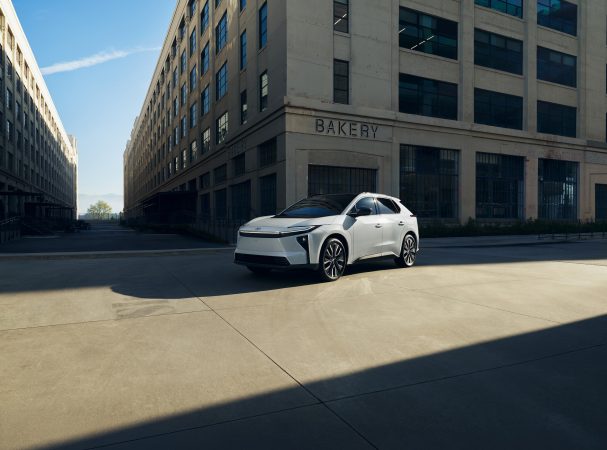
    What’s new: Toyota has given a bit of a rethink to the bZ4X, rebranding it now as simply the bZ. (Even I could not remember the old name, and I get paid to remember the name. Then again, I never had the pleasure of testing one, just the Subaru Solterra clone.) They’ve also stretched the range to 314 miles, at least on the version tested. Comforting. It has a new sleeker look too.

    It’s part of Toyota plotting its own path on EV, with the improved bZ and larger bZ Woodland, a path that was cut years ago and now they’re stuck with it. But could it mean a resurgence of EVs, when they’ll finally come in to their own? When a consistently trustworthy brand like Toyota jumps in head first, it could open up new possibilities. Especially if oil prices stay high.

    Competition: Some are calling EVs a thing of the past but there are a lot of them available. This is not a comprehensive list: Chevrolet Bolt (a Driver’s Seat review is planned for September), Chevrolet Blazer EV, Chevrolet Equinox EV, Ford Mustang Mach E, Honda Prologue, Hyundai Ioniq 5, Jeep Wagoneer S, Kia EV6, Mini Countryman EV, Nissan Ariya, Subaru Solterra, and Tesla Model Y.

    Up to speed: Like most EVs, the bZ climbs to 60 mph with seemingly no effort. There may be a Sport mode; I didn’t feel the need to look for it. There is an Eco mode, and I didn’t bother turning it on.

    The front-wheel-drive versions of the bZ create 221 horses, and hit 60 mph in 6.2 seconds, according to Car and Driver, which puts it into respectable fast-car territory. The all-wheel drives have a second motor, 338 horsepower, and get to 60 mph in 4.4 seconds, according to Motor Trend, more like an EV.

    Shiftless: The bZ has a nice dial shifter on the console; push down and twist counterclockwise for Reverse, or clockwise for Drive. Press a button for park. The tiny parking brake lever is conveniently nearby.

    On the road: The aerodynamics and heavy batteries make driving a rewarding experience. There’s a little bit of fun but there’s mostly just a smooth glide as you zip along.

    The front-wheel-drive version does a great job of not feeling like one. Oversteer or lurching to the side on corners is limited, although the torquey motor meant the bZ left rubber behind on occasion when the light turned green.

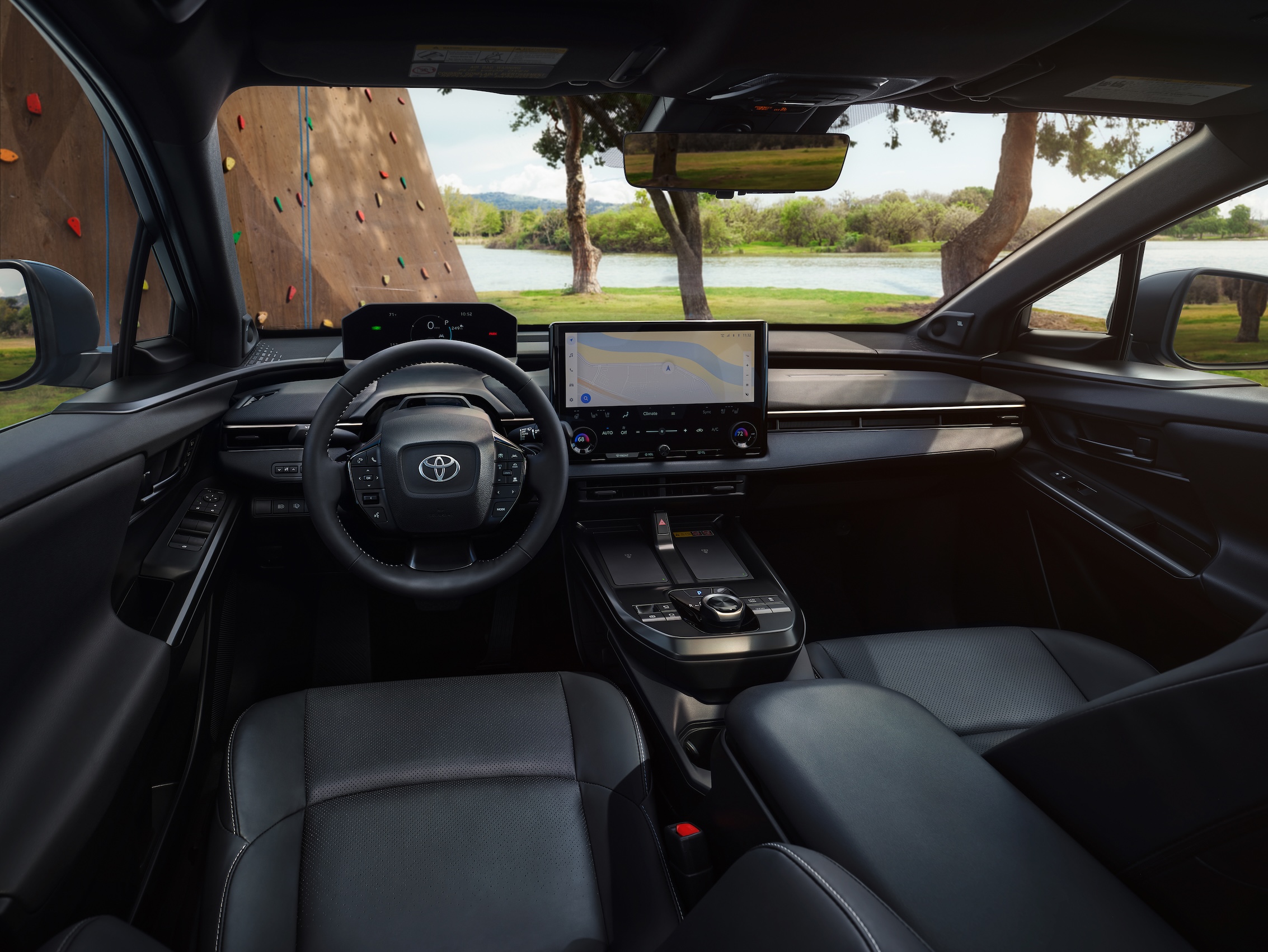
    The interior of the 2026 Toyota bZ provides comfort up front, sadness in the back, at least with the cloth seats in the test model.Toyota

    Driver’s Seat: The cloth seats provided great comfort and support. Toyota makes a superb basic seat; it was the main selling point in Sturgis Kid 1.0’s first car, a 2016 Scion iM, and every family member who drove it agreed those were refreshing. The bZ carries this spa-day mantel.

    The faraway gauge pod pretends to be mounted on the steering column. I’d found it cumbersome and somewhat hard to read in my Solterra test, but this time I was charmed. The Lovely Mrs. Passenger Seat commented on how neat it looked.

    The sloped front windshield makes for a welcome cockpit for anyone who ever spent time in a 1990s GM dustbuster minivan.

    Friends and stuff: Here, the bZ starts to lose its charm. Rear-seat passengers will find plenty of legroom, and decent headroom. Foot room is a little snug but there’s so much legroom.

    But the real downfall is the rear seat. The seat cushion is so crushable it’s almost like sitting on an air mattress, and so short from front to back it’s like sitting on a log. So I guess it’s an air log?

    Cargo space is 38.1 or 56.1 cubic feet.

    Play some tunes: The 14-inch Toyota audio multimedia screen is perched liked an iPad on the dashboard, complimenting the gauge screen nicely and giving the bZ a very Prius-like feel. Getting around the system is almost entirely through the touchscreen, but it’s big enough that it’s not too impossible.

    Sound from the system is very good, an A. Extremely clear audio.

    Keeping warm and cool: The Lovely Mrs. Passenger Seat commented on the round temperature control dials’ attractiveness. I explained how they meant swiping something else on the screen by accident, but then couldn’t replicate my errors when asked. Sigh.

    The rest of the controls are on the ebony portion of the touchscreen, and do require some eyes-off-the-road time. The fan is especially difficult to operate. Notably, the bZ alerted me to keep my eyes on the road, and I told it, “You know, this is all your fault. But it won’t be YOUR insurance rates going up.” No response. No apology. Jerk.

    Range: The vehicle reported a 314-mile range. The best mileage comes in the low-priced offering, which is a nice touch. The next level Limited range drops to 299 miles, and the Limited all-wheel drive will only travel 278.

    It was fairly quick to charge on my home 110-volt outlet, adding 20% range overnight, and it advertises that it takes eight hours to fully charge on a 240-volt standard home charger.

    It’ll charge from 10-80% in 30 minutes on a fast charger, slightly slower than the 20 minutes on other carmakers’ EVs.

    Where it’s built: Aichi, Japan

    How it’s built: Consumer Reports predicts the bZ reliability to be a 3 out of 5.

    Next week: Volvo EX30

  • 2026 Kia K4 Hatchback: Bigger and better than you’d think

    2026 Kia K4 Hatchback: Bigger and better than you’d think

    2026 Chevrolet Trax 1LT vs. 2026 Kia K4 Hatchback GT-Line Turbo: Battle of the low(ish)-payment models.

    This week: Kia K4 Hatchback

    Price: $32,770 as tested. A GT-Line tech package adds ventilated front seats, various collision avoidance features, surround-view camera, and more for $2,395. Heated front seats come standard.

    What others are saying: “Highs: Attractively modern styling, adult-friendly back seat, high-value standard features list. Lows: Ho-hum handling, base engine lacks oomph,” says Car and Driver.

    What Kia is saying: “Sculpted, sophisticated, and made to be seen.”

    Reality: It’s attractive and does many things quite well, but does it beat the Trax?

    What’s new: After the introduction of the K4 sedan for 2025, the hatchback joins the lineup this year.

    The GT-Line has a turbocharged engine available that we tested here.

    Competition: A surprising number of contenders still ride in the small-car club. In addition to the Trax, there’s the Buick Envista, Honda Civic, Hyundai Elantra, Kia Niro, Mazda3, Nissan Versa, Subaru Impreza, Toyota Corolla, and Toyota Prius.

    Safety equipment: While the Trax offers forward collision alert, lane keeper with departure warning, automatic emergency braking, and following distance indicator, the K4 website only mentions the last three. It does note rear cross-traffic collision avoidance, so both are well stocked with features.

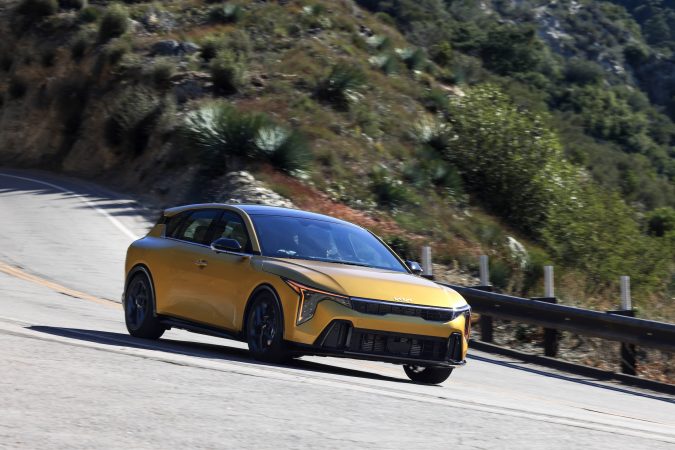
    Up to speed: In lieu of the 2.0-liter four-cylinder engine in the standard GT-Line, this version gets a 1.6-liter four married to a turbocharger, giving the little hatchback 190 horsepower, 43 more than standard.

    A 2025 model reached 60 mph in 7.3 seconds, according to Car and Driver. This is 1.5 seconds faster than the Trax.

    But life on the road was quite nice, at least when minding your own business. The little hatchback kept up over hill and dale. But in passing maneuvers and in pulling into traffic, the K4 still fell a little short.

    Shifty: Instead of the CVT in the basic model, this one gets an eight-speed shiftable automatic. It can be a little balky before the vehicle is warmed up, hanging onto lower gears for a concerning amount of time at first. Use that snazzy T-bar shifter if needed. Score one for Kia.

    On the road: The K4 was bright and cheerful on country roads, nice even for a small front-wheel-drive car. It didn’t offer the kind of zig you might get from a Mazda or a Volkswagen, but it’s easy to go where you point it. This is a tie with the Trax.

    Set speed: Kia and Hyundai cruise-control systems can occasionally have a mind of their own. On highways with concrete barriers and some traffic, the sensors hallucinate reasons to slow down, likely as annoying to other drivers as to Mr. Driver’s Seat. I’d be requesting a long demonstration with a salesman on this topic before I signed the papers.

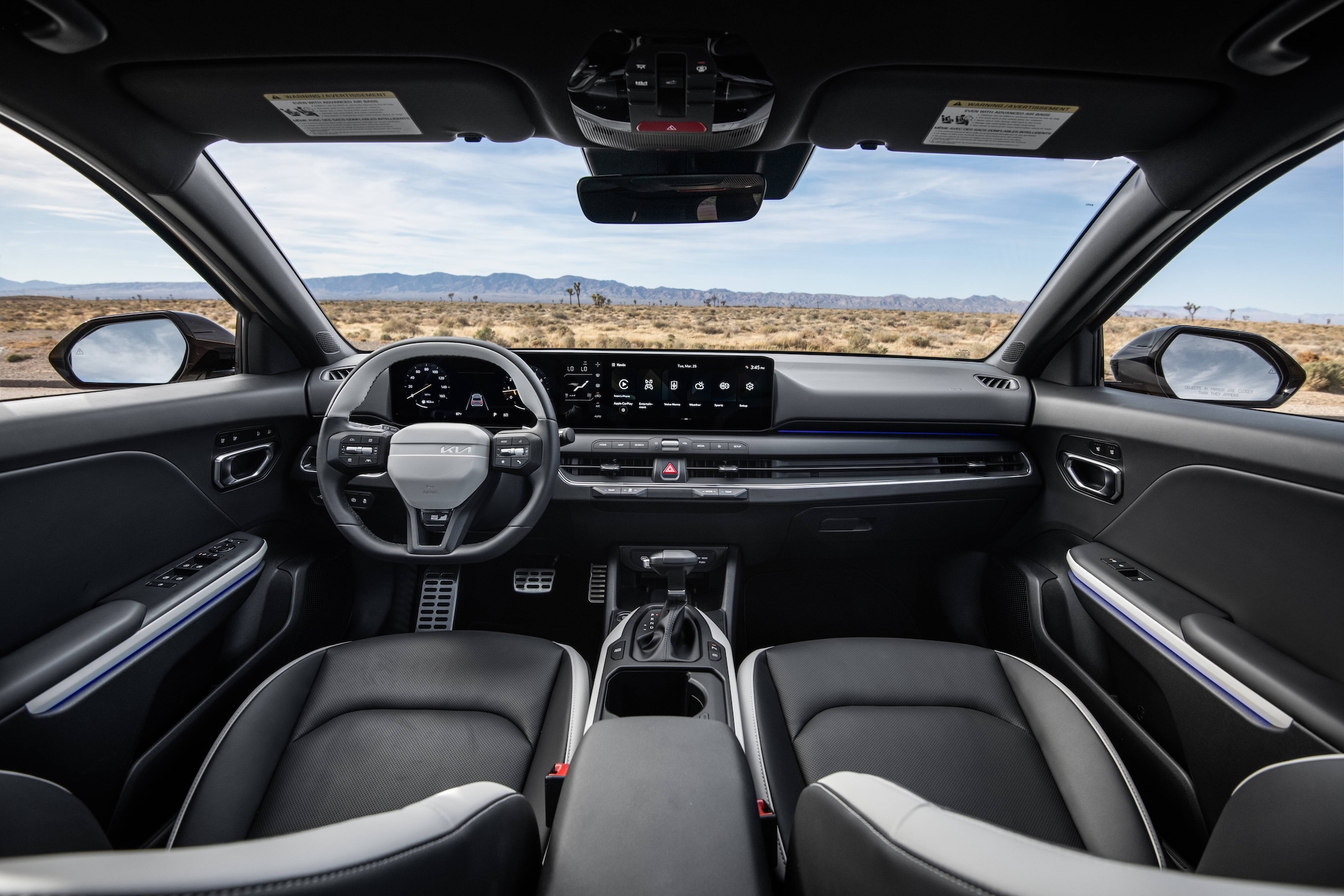
    The interior of the 2026 Kia K4 Hatchback offers plenty of comfort and good looks for the money spent, and rear-seat passengers will especially appreciate the accommodations.Kia

    Driver’s Seat: The seat feels a little on the small side. At about 5-foot-10, I’m fairly average, and I’ve driven a lot of small cars over the years, so the fact that I noticed this one is telling. Otherwise it’s quite comfortable and supportive, surprisingly so for the price point.

    The dashboard is standard Kia, easy to use the steering wheel controls to scroll through your choices. This I’d call a tie as well.

    Friends and stuff: Rear passengers get a comfortable seat that’s perfectly angled (but no recline). Headroom is good, legroom is really good for the size, and only foot room is a little snug. Strong advantage Kia.

    Cargo space is 22.2 and 59.3 cubic feet, putting the Trax’s numbers in the middle of that. Kia wisely gives more space to the rear passengers.

    In and out: It’s a bit of a step down into the K4, almost to sports car levels, so be prepared when you sit.

    Play some tunes: The standard 12.3-inch touchscreen is a generous size for a small car, about half an inch bigger than the Chevrolet, and has the added bonus of a row of buttons across the dashboard underneath, allowing for easy maneuvering. A side row of icons and the home screen’s large icons help the process.

    Sound from the Harman Kardon system (standard in the GT-Line) is OK, about a B+ or an A-. Kia would do well to put some more effort into their sound systems. A tie; Kia for size and usability, Chevy for sound.

    Keeping warm and cool: The controls are a combination of simplistic and advanced that kind of works when you figure it out. A row of cheap-feeling plastic toggles blends into the cheap-feeling dashboard curves and those toggles adjust the temperature, fan speed, and blower setting.

    Except … if you want all defroster, you have to hit the nifty, premium touch pad next to the infotainment screen. Same for the rear defroster. This extra touch pad pushes the dashboard blower down a bit, interfering with cooling. Trax wins this category.

    Fuel economy: The K4 Turbo reported about 26 mpg in a mix of highway and secondary road trips, about par for the small-fast-car course. I thought this would beat the Trax by more than one tick, but alas, there’s a turbo to feed.

    Where it’s built: Pesqueria, Mexico

    How it’s built: Consumer Reports predicts the K4 reliability to be a 3 out of 5, a notch lower than the Trax.

    In the end: Really, with two models that actually get you from point A to point B for under $30,000, either of these is a real winner. And even though the two mostly tied, the K4 does so many things better.

    In the category, though, a little more scratch gets you a Corolla or a Prius, which are probably better bets in the long run.

  • 2026 Chevrolet Trax: What you can get for under $30,000, Part 1

    2026 Chevrolet Trax: What you can get for under $30,000, Part 1

    2026 Chevrolet Trax 1LT vs. 2026 Kia K4 Hatchback GT-Line Turbo: Battle of the low(ish)-payment models.

    This week: 2026 Chevrolet Trax

    Price: $26,280 as tested. Options include $795 for rear cross-traffic alert, lane change alert, adaptive cruise, and rear park assist, and $595 heated steering wheel, front seats, mirrors, and more.

    What others are saying: “Highs: Rides and handles well, hushed cabin, cavernous cargo area. Lows: Lackluster acceleration, some scratchy interior plastics, no all-wheel drive,” says Car and Driver.

    What Chevrolet is saying: “Bold style that’s in your range.”

    Reality: Some real bright spots for the price point.

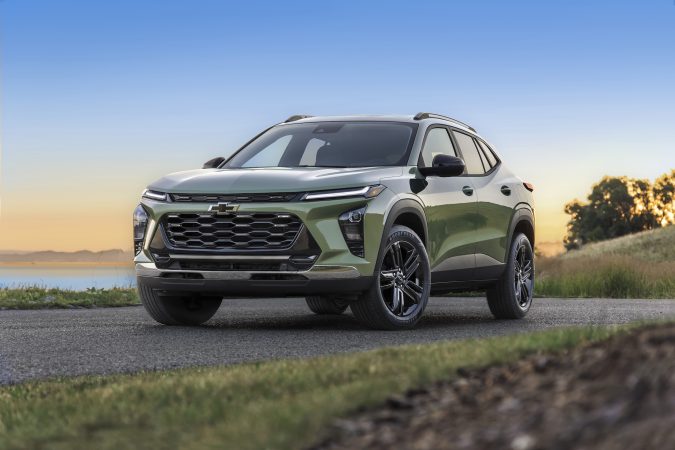
    What’s new: The little crossover gets some new colors for 2026, and that’s it. It received the sharp new Chevrolet looks in 2024.

    Competition: Though it’s a dwindling category, there are still several contenders in the small car club, like Buick Envista, Honda Civic, Hyundai Elantra, Kia K4, Kia Niro, Mazda3, Nissan Versa, Subaru Impreza, Toyota Corolla, and Toyota Prius.

    Safety equipment: I rarely note safety features even after several reader requests because it’s easily searchable, correction-risky information that’s generally matched among models. But at this price point, it’s worth noting standard features include forward collision alert, lane keeper with departure warning, automatic emergency braking, and following distance indicator.

    Up to speed: The 1.2-liter, three-cylinder turbocharged engine creates 137 horsepower and gets to 60 mph in 8.8 seconds, according to Car and Driver. The strain to get from 40 to 60 mph is real in the Trax.

    In spite of those issues, it’s fairly peppy in everyday use, and I found travel along back roads not bad at all. You’re not going to win any races, but wise philosophers say you really should only compete against yourself. (Mr. Driver’s Seat notes this wisdom while writing a comparison between two vehicles. He is a wiseguy, though, so maybe that counts.) If you have never owned a real car — and this was definitely Mr. Driver’s Seat once upon a time — you might not mind this.

    Shifty: The 6-speed automatic transmission is a sad unit to have attached to a small vehicle like the Trax. There’s only shiftability via a button on the shift lever, and it really just allows you to select a top gear. Nice for going down hills, but zero joy is added, in a vehicle where every drop of joy must be savored.

    On the road: At first turn, the Trax steering felt so loose and power-assisted that I was ready to weep for the man I would become over the next week. A man who once reviewed a 2011 Corolla and earlier piloted a 1964 Rambler Ambassador.

    Surprisingly, though, over test week I found the Trax grew on me. The country road triumphs were not lessened by the little vehicle’s handling, and I liked how it zipped here and there. The Trax only comes in front-wheel drive; all-wheel drive could only brighten the shine on this facet.

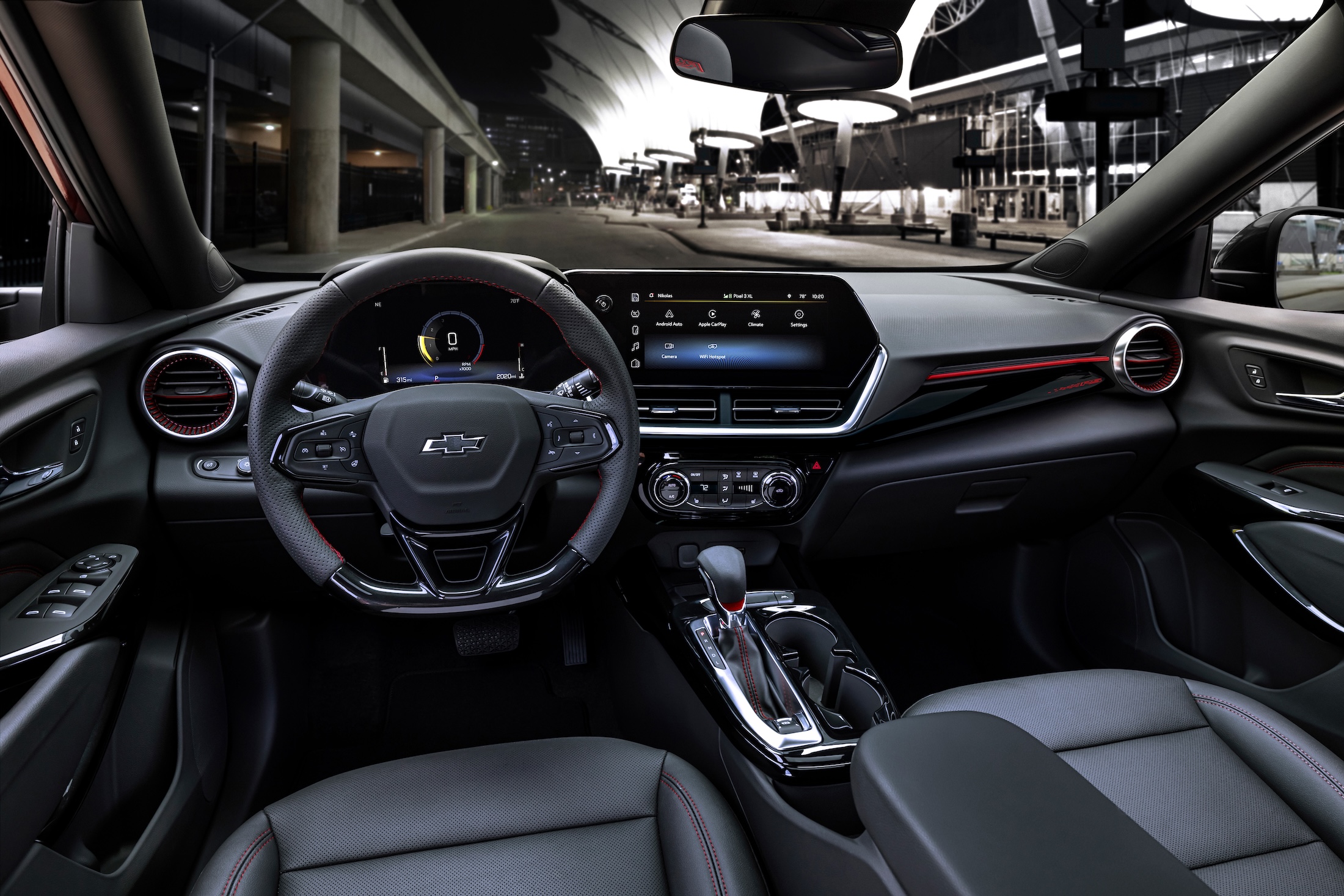
    The interior of the 2026 Chevrolet Trax doesn’t necessarily look or feel cheap, but the touchscreen appears smaller than in real life.Chevrolet

    Driver’s Seat: Part of what keeps the Trax more sporty than more expensive cars could be its profile. The seats sit quite low for something that appears to be a tall box, and the entry is simple.

    The logic of the gauge screen could really use some explaining. Off in the upper right corner and cleverly concealed by the steering wheel are two bits of potentially collision-avoiding pieces of information — whether the high beams are on and the distance to the vehicle in front of you. The Trax even helpfully tells you how many seconds in front of you that car is.

    Having to explain to the nice patrol officer that your high beams caused a sideswipe collision or you rear-ended a vehicle while craning your neck to find out if you were at risk of hitting someone probably won’t reduce your fine.

    Friends and stuff: Legroom and foot room are good. Headroom is OK; my head reached to about an inch from the ceiling.

    The seat feels kind of cheap but not uncomfortable, it’s just a little small in the bottom, so it’s better if you are, as well. The Trax offers no adjustments for recline.

    Cargo space goes from 25.6 to 54.1 cubic feet.

    Play some tunes: The stereo features a volume button and then everything else is touchscreen time. The Trax features CarPlay, so it’s a tick above the GM vehicles that don’t anymore, although the 11-inch home screen looks straight out of a base-model 2016 Toyota.

    Sound from the system is surprising, about an A-.

    Keeping warm and cool: A dial controls temperature, another fan speed, and then some smallish buttons in between handle the rest. Hooray for simplicity.

    Fuel economy: The Trax averaged around 25 mpg for me and fellow drivers, which is tragic for such a small, underpowered vehicle.

    Where it’s built: Changwon, South Korea

    How it’s built: The Trax has improved its Consumer Reports reliability score, up to a 4 out of 5 from its previous 2.

    In the end: The Trax is cheap. For better and for worse.

    Next week: Let’s see how the Kia K4 Hatchback compares.

  • 2026 Toyota Crown Signia: Smooth, comfortable contender

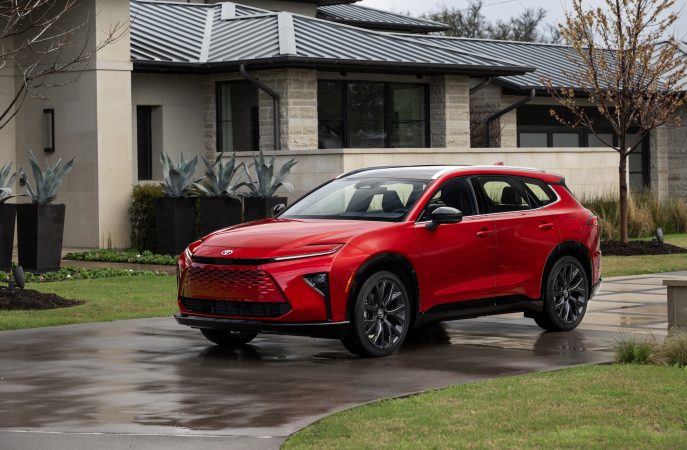
    2026 Toyota Crown Signia: Smooth, comfortable contender

    2026 Subaru Outback Touring XT vs. Toyota Crown Signia Limited: New ways to get around.

    This week: Toyota Crown Signia

    Price: $48,990 for the Limited model.

    What others are saying: “Highs: Lexus-like interior, plush ride quality, thrifty hybrid powertrain. Lows: Noisy engine under acceleration, bland handling, underperformed its EPA highway fuel economy rating in real-world testing,” says Car and Driver.

    What Toyota is saying: “First-class comfort.”

    Reality: So suave and charismatic, maybe there should be a Thomas Crown Signia edition for 2027.

    What’s new: While I billed this competition as new ways to get around, the Crown Signia is only new to Driver’s Seat testing. This hybrid-only SUV debuted for the 2025 model year, replacing the Venza.

    The Venza was a model I really enjoyed, but it got very little respect from car lovers. Both models have a reputation for boring drivers, but I loved the comfy seats and easy controls of the Venza — and the 36 mpg — enough to recommend it heartily. Would the Crown Signia bring the same kind of experience?

    As for the Outback vs. Crown Signia comparison, two cars with more opposite market aims could hardly fit into the same category, and they could hardly have come to testing in more opposing conditions. The Outback endured 20-degree days while the Crown Signia was here for the 90s. Both offered some hesitation before they were warmed up, so we’ll just have to say that’s a feature, not a bug.

    Competition: In addition to the Outback, there are the Chevrolet Blazer, Honda Passport, Jeep Grand Cherokee, Nissan Murano, Mazda CX-70, and Volkswagen Atlas. That’s a wide range of crossovers.

    Up to speed: A new 240-horsepower 2.5-liter four-cylinder is mated to an electric motor, and it adds 21 horses over the Venza. It gets to 60 mph in 7 seconds, according to Car and Driver; with 20 fewer horses than the Outback turbo tested, it’s almost a second slower. You go, Subaru.

    Shifty: The Crown Signia uses the Prius shifter, electronically shifting up and left for Reverse and down and left for Drive.

    On the road: On-demand all-wheel drive makes the handling acceptable, and Sport mode is a little nicer. The Crown Signia lends itself to driving sedately and looking at the scenery.

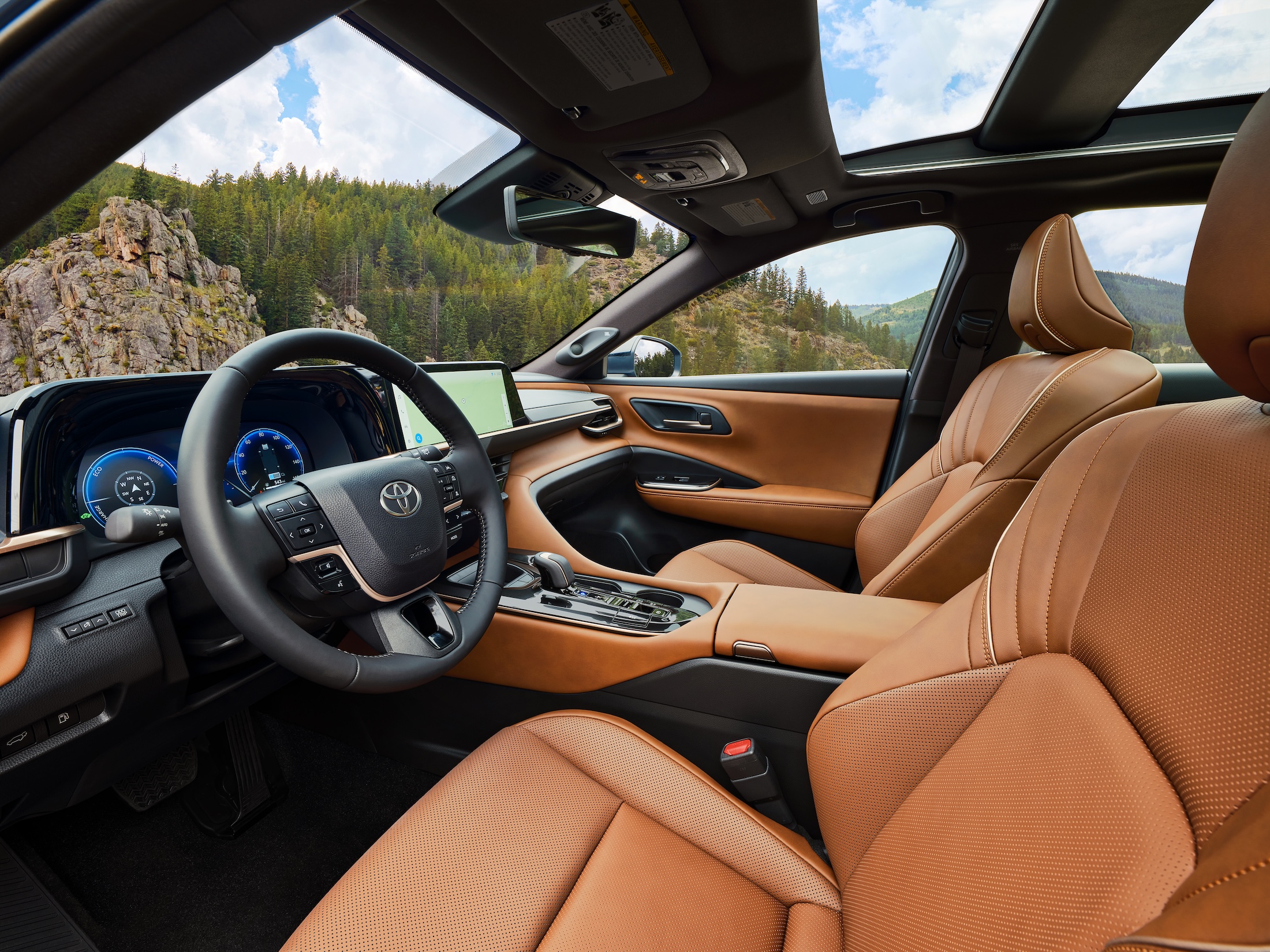
    The pretty interior of the 2026 Toyota Crown Signia turns the comfort level to 11.Toyota

    Driver’s Seat: Comfort is definitely the name of the game behind the wheel of the Crown Signia. Convenience as well. This is where I realize the Crown Signia is a nice replacement for the Venza; that too offered luxury and comfort closer to Lexus’ standard than Toyota’s.

    No ground is really broken here, as the controls match most of Toyota crossovers and cars. The Outback wins this category.

    Friends and stuff: The rear seat provides comfort in both cushion quality and spaciousness. Legroom, headroom, and foot room are all generous. The middle seat is not too bad as the floor hump sits low and wide, and the console doesn’t intrude too much.

    Cargo space is 24.8 or 66.1 cubic feet, a growth spurt over the Venza that may help improve sales. But it’s still no match for the Outback’s 80 cubes.

    In and out: The Crown Signia is at a perfect height for people of almost any age. No real climb or limbo required.

    Play some tunes: A lone volume button is the only nod to the Before Times from the stereo control people. The screen is big and easy to follow.

    Sound from the system is clear and aimed correctly, an A- to an A. Advantage, Crown Signia.

    Keeping warm and cool: Toggles control all the features, and this functions nicely. Except for the seat heaters and coolers, which sit above a different toggle, so that confuses until you get used to it. It keeps us out of the touchscreen, at least. A small screen tells you what’s blowing where and how hard.

    An annoying feature of the Crown Signia HVAC (something I noticed in the 4Runner hybrid as well) is the AC turns itself off with each restart. So I’d be blasting the fan on myself after crossing a 90-degree parking lot and wondering why I never got cool. I’m sure it’s easy to get used to but also, why? At least it’s not a touchscreen control, which would certainly malfunction when the interior exceeds 120 degrees.

    Fuel economy: I averaged close to 36 mpg during my week of testing, much nicer than the Outback turbo (as can be expected). Strong win for the Crown Signia.

    Where it’s built: Aichi, Japan

    How it’s built: Consumer Reports gives the Crown Signia a four out of five for reliability.

    In the end: The Crown Signia carries the torch of the Venza: Fun may not be part of the vocabulary, but it sure is a nice, efficient ride. The Subaru is also a nice ride, but I’m not sure 0.8 seconds off the 60-mph run-up is worth another 10 cents a mile forever.

    And at 50 grand each, a Thomas Crown-worthy heist may be needed to help pay either of these vehicles off.

  • 2026 Subaru Outback: New look, but the best remains

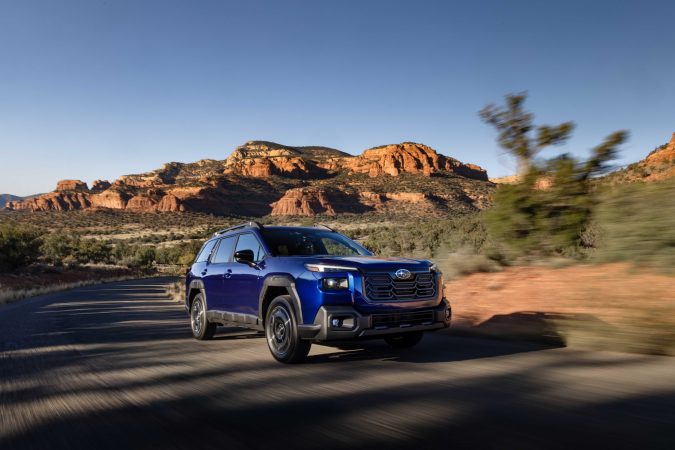
    2026 Subaru Outback: New look, but the best remains

    2026 Subaru Outback Touring XT vs. Toyota Crown Signia Limited: New ways to get around.

    This week: Subaru Outback

    Price: $49,445 as tested

    What others are saying: “Highs: Spacious rear seat and cargo area, decent off-road capability, friendly dashboard controls. Lows: Base engine provides unhurried acceleration, handling is not engaging, no longer looks like a wagon,” says Car and Driver.

    What Subaru is saying: “Love never looked so good.”

    Reality: Most of the best features are kept, but then so are most of the not-so-best.

    What’s new: It’s a whole new redesign for the Outback. Beyond the new face up front, it gets a boxier profile and flatter roof for more passenger and cargo space.

    The Outback and brother Forester tend to bring a feeling of trustworthiness to every drive, somewhere in the putt-putt engine, just-right handling, and interior design. Will the redesign upset that balance?

    Competition: In addition to the Crown Signia, competitors include an eclectic mix of crossovers: Chevrolet Blazer, Honda Passport, Jeep Grand Cherokee, Nissan Murano, Mazda CX-70, and Volkswagen Atlas.

    Up to speed: The Outback as tested features a turbocharged version of the 2.4-liter Boxer four-cylinder engine, making 260 horses. It gets the vehicle to 60 mph in 6.2 seconds, according to Car and Driver. The standard 2.5-liter four-cylinder creates 180 horsepower and gets there in 8.8 seconds, Car and Driver estimates.

    A morning in the 20s was accompanied by some occasional hesitation — from the Subaru, not just Mr. Driver’s Seat — when pulling out and while in motion.

    Shiftless: The Outback continues to transfer the power to the road with a continuously variable transmission. There’s no real excitement, but it just adds to the feeling of trustworthy canine companion somehow.

    The shifter is the old-fashioned handle style. Paddle controls on the steering wheel and a manual mode offer the illusion of control.

    On the road: The Outback visited the Sturgis household during frigid temperatures and an unusual midwinter snowpack. I wasn’t driving through the snow, which would have been a very Subaru-worthy test indeed. Unfortunately, I faced icy roads only when it got dark, so I never had the chance to put it to a real test. Still, the SUV did just fine, hugging the curves and making me confident that it would follow my steering inputs quickly.

    I never found any drive modes and didn’t really miss them, but there is a snow mode.

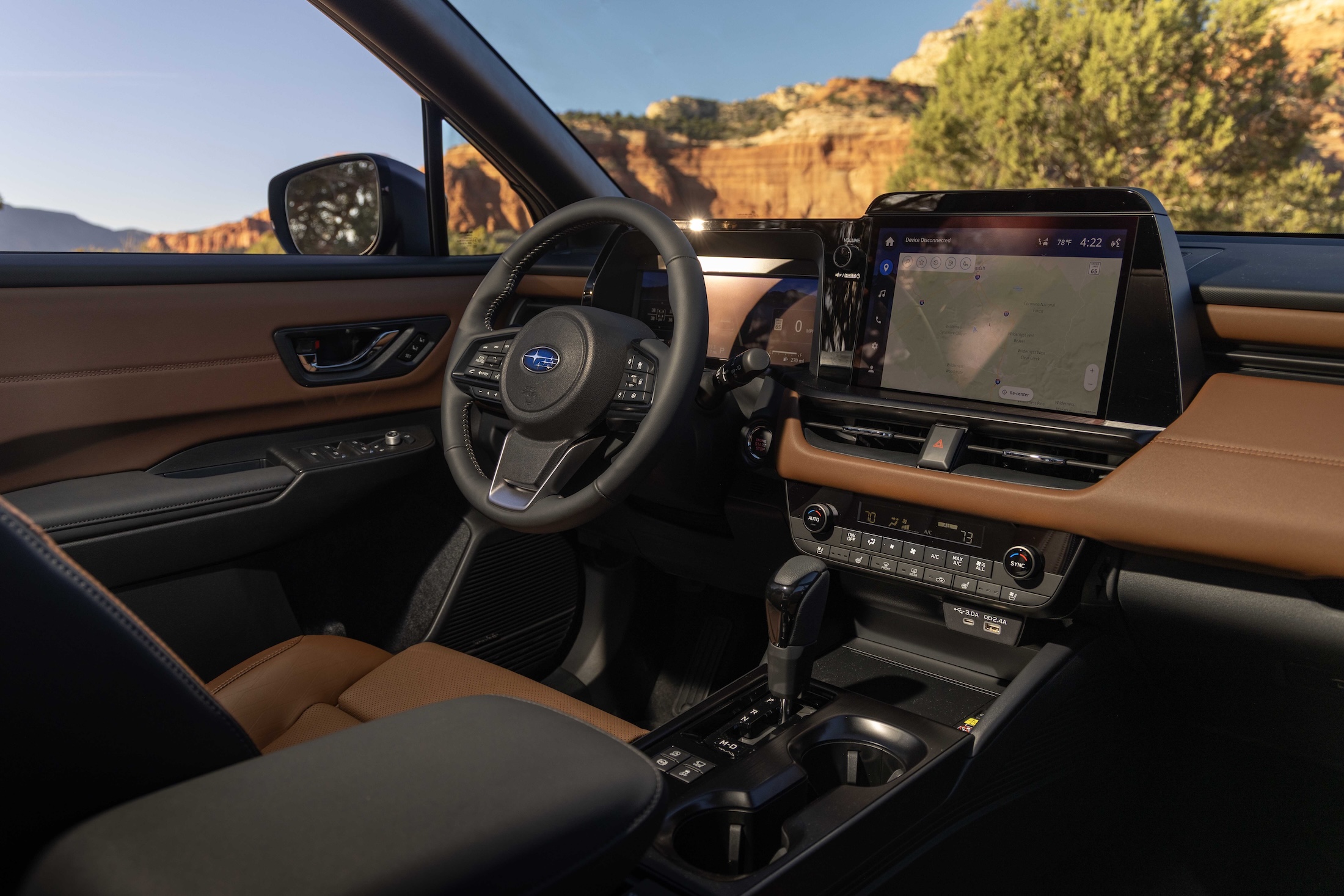
    The interior of the 2026 Subaru Outback keeps its classy look and does away with the vertical center pod.Subaru

    Driver’s Seat: The interior is all new as well, although it’s not radically different from Outbacks of yore.

    The seats in the Outback were quite comfortable and roomy — and luxurious. The adjustments are handled on the door, not my favorite setup.

    The Outback handles the cold with some real bun burners for seat heaters. I could hardly keep it set to 2, while the Lovely Mrs. Passenger Seat relished 3.

    Friends and stuff: Rear seat passengers should be pleased with their accommodations. There’s tons of legroom, foot room, and headroom. The seat is almost as supple and inviting as the front.

    Cargo space is 34.6 or 80.5 cubic feet, depending on the seat origami.

    Play some tunes: Subaru literature advertises a 12.1-inch infotainment screen, but it sure looks larger than that. It’s also attractive and easy to operate, with a dial for volume and button icons that are easily visible and get you around the functions. And it’s also not the vertical screen of yore.

    Sound from the Subaru Multimedia system is OK, about a B+, maaaaybe an A-. It seemed to miss a lot of the parts of songs I know to look for.

    Keeping warm and cool: Dials control the temperature and buttons handle everything else. There’s a display that tells you what’s going on without taking over the main screen.

    Again, those seat heaters. Wow.

    Fuel economy: I averaged about 19 mpg on side roads until I took it out on the highways and got close to 21. Subarus can be thirsty, and this Outback is less station wagon and more SUV than ever.

    I didn’t have it out too much, though, so there may be some more room for improvement.

    Where it’s built: Gunma, Japan

    How it’s built: The Outback gets a 3 out of 5 for reliability from Consumer Reports.

    In the end: My love for the Outback has grown over the years, especially the Wilderness model. This one offers much the same experience. The turbo adds a lot of fun, but also drinks a lot of fuel.

    Next week: See how the Crown Signia Hybrid compares.

  • 2026 Infiniti QX60: New look, new engine, new experience?

    2026 Infiniti QX60: New look, new engine, new experience?

    2026 Infiniti QX60 Sport AWD: New stuff is better, right?

    Price: $65,750 as tested.

    What others are saying: “Pros: Classy, high-feature interior, well utilized screens, best-in-class third-row accessibility. Cons: Not a Sporting bone in this body; VC-Turbo drivability still disappoints; poor lane keep, auto stop/start systems,” says Motor Trend.

    What Infiniti is saying: “Designed with distinction — inside and out.”

    Reality: Sometimes new stuff is just new.

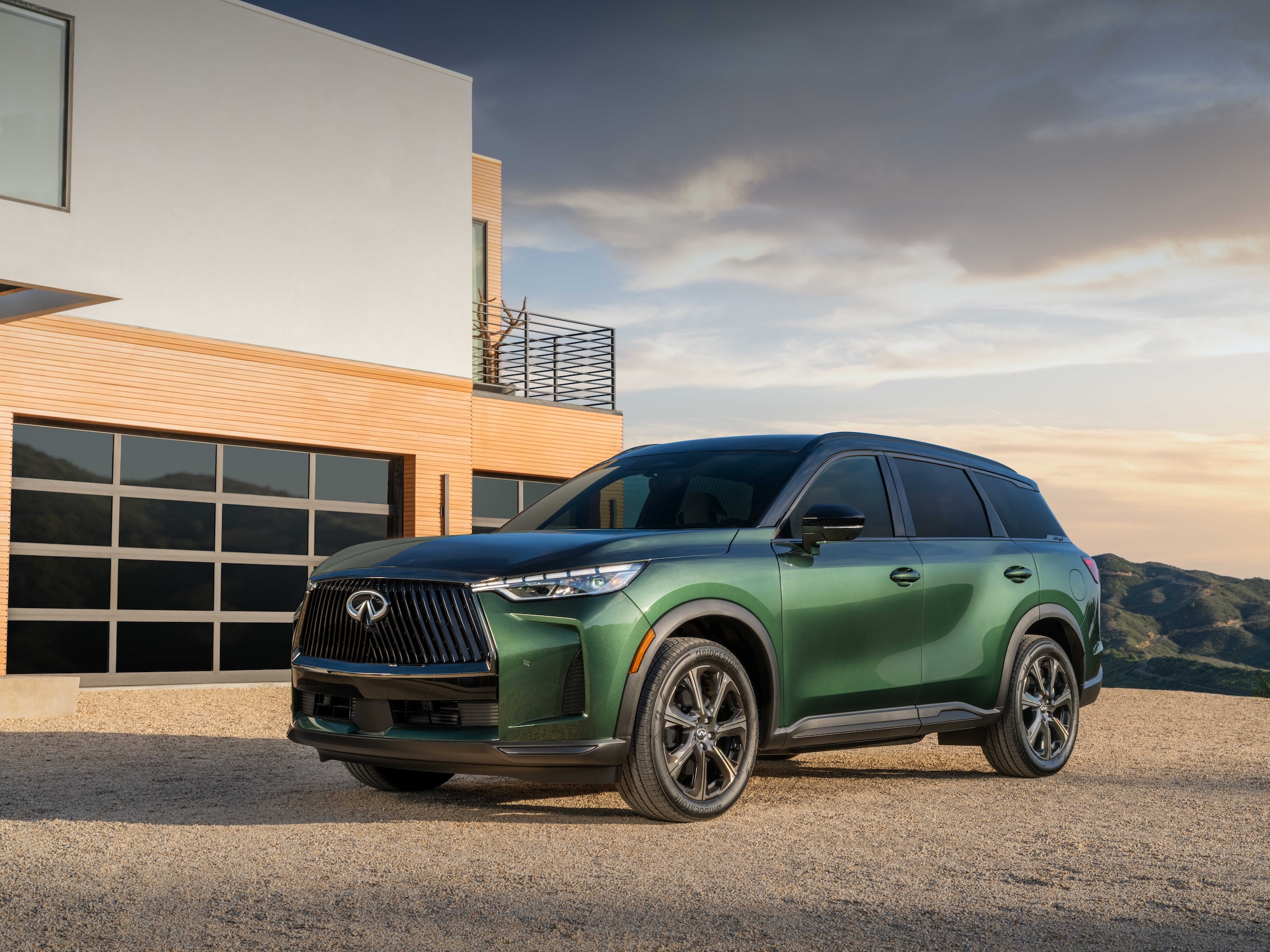
    What’s new: The QX60 is redesigned for 2026, adding mass and presence in its new look, as Infiniti touts. (Never do cars redesigned for the American market get more svelte or subtle.) The vehicle also adds more smart tech.

    The Sport grade tested is also new for 2026, and it jazzes up inside and out.

    The VC-Turbo four-cylinder replaced the old V-6 in 2025, and there’s a lot to say about that power plant below.

    Competition: Acura MDX, Audi Q7, BMW X7, Cadillac Escalade, Cadillac XT6, Land Rover Range Rover, Lexus GX, Lexus TX, and Volvo XC90.

    Up to speed: I can be as focused as the next car guy on 0-60 times, but years of testing have proven time and again that there’s so much more. The 0-60 time of 6.9 seconds, according Motor Trend, is respectable among premium three-row SUVs.

    But if I stopped here, you’d being missing a lot.

    This is the QX60’s second year featuring 268-horsepower VC-Turbo 2-liter four-cylinder engine name, which sounds pretty cool in a Marvin Martian kind of way. Much like the Illudium Q-36 Explosive Space Modulator!, though, this VC-Turbo is still in beta testing.

    Each standing start revealed the QX60 had more hesitation than Mr. Driver’s Seat trying to explain a dent on a test vehicle. I’d press the accelerator and for easily a second, the QX60 would hem and haw. Frightening.

    The denouement came while turning left from a parking lot onto a 50-mph stretch of U.S. 322. Even in Sport mode, I was sweating getting to 50 mph quickly enough, let alone 60.

    I had much better success with a 3.5-liter V-6 in a 2022 QX60, although I’m trusting that “some hesitation” back then was far better than this time around.

    Good to go: Not everything about the drive was terrible. On the first day behind the wheel, I found the QX60 to feel somewhat sporty and fun. It seemed to have a bit of a kick to it, almost Jeep Wranglerlike in its roughness. But that got old really fast, especially in light of the unpredictable accelerator.

    Shifty: The 9-speed automatic transmission operated seamlessly while driving, but it also revealed one weird habit while getting in gear: It rolled back quite a bit. In fact, its rolling could almost match clutch driving. This seemed more prominent in Sport mode. Presumably there’s an auto hold button I could have engaged, but I haven’t needed to in 40 years of driving.

    The shifter is modeled on Lexus’ long-ago handle, a square top that pulls back or pushes forward depending on where you want to go.

    If you want to shift your own gears, though, it’s paddle city for you.

    On the road: The handling of the QX60 never got me excited. Curves and turns came and went, and I sought out enjoyment, but was left disappointed. At least the vehicle felt small and athletic for a three-row SUV.

    Sport mode, though, was a rough one on the highways; any road seams of note set the QX60 to shaking.

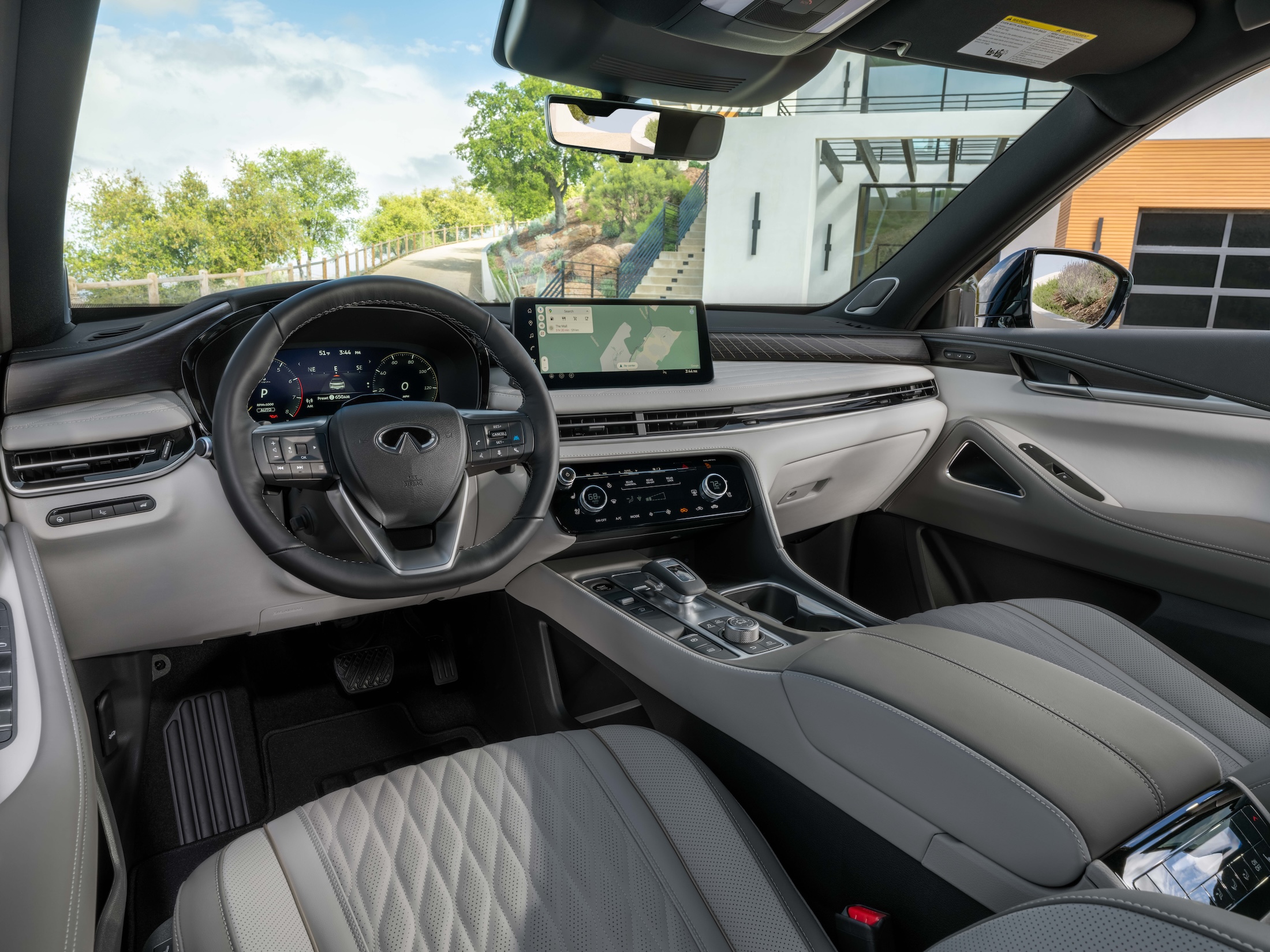
    The interior of the 2026 Infiniti QX60 looks inviting, but rear-seat passengers may feel like they’re visiting the grandmother’s house where kids aren’t allowed in the living room.TIM SUTTON

    Friends and stuff: The second row provides comfortable enough captains’ chairs, with decent space overall.

    But the third row is only for youngsters. Getting back there is hard, clambering past the second-row seats. Foot room in the rear is pitiful, even with the middle row scooched up a bit. I had to twist my size 12s with my hand to turn them into place. Finally, the door is narrow, and hopping out feels as death-defying as Lindsey Vonn’s last ride.

    Cargo space is 14.5/41.6/75.4 cubic feet, depending on the ups and downs.

    Driver’s Seat: The cockpit felt very Nissan-esque, with the usual controls and gauges found on the lesser make’s models. Granted, Nissans do generally feel more luxurious than they have a right to, but we’re paying for Infiniti luxury here.

    The seat was comfortable enough but no oohs and aah were emitted during test week.

    Play some tunes: Sound from the system was disappointing for the model level, about a B.

    A dial for volume and another for tuning make the system a little easier to control than many nowadays. The 12.3-inch touchscreen is par for the vehicle class.

    Keeping warm and cool: An ebony touchpad has Audi-style haptics, where you have to press hard enough to register your feelings. So it’s good for not accidentally setting off unwanted features as you slide around the pad, but in the Infiniti there’s no feel, so you still have to look.

    Fuel economy: The QX60 averaged just under 21 mpg.

    Where it’s built: Smyrna, Tenn.

    How it’s built: Consumer Reports had no guess for the new model’s reliability, but 2025’s was a 4 out of 5.

    In the end: Most of the vehicles in the competition list lack space in the rear, but the QX60 is exceptionally difficult.

    But if the engine hesitation was not just a test-model problem, I’d write it off. I’m surprised reading how much I liked the Lexus GX, so I’d probably start there.