Author: Andrew Seidman

  • Five Below investors are alleging securities fraud in a class action

    A federal judge in Philadelphia ruled Monday that a lawsuit alleging discount retailer Five Below defrauded investors can move forward as a class action on behalf of numerous shareholders.

    U.S. District Judge Gerald Austin McHugh’s 34-page order handed a win to the lead plaintiffs, two Arkansas public employee retirement plans. The pension funds say that for more than a year, Philadelphia-based Five Below misled investors about its ability to identify and stock popular products — a skill company executives referred to as their “secret sauce.”

    Once investors learned the full extent of the company’s challenges in July 2024, Five Below’s stock price plummeted, wiping out almost $8 billion in shareholder value, the suit says. The company’s CEO resigned around that time.

    The Arkansas Public Employees’ Retirement (APER) and the Arkansas Teacher Retirement System say they lost more than $5 million combined due to the alleged fraud.

    McHugh granted their motion asking him to certify a class of people and entities who bought Five Below stock between December 2022 and July 2024.

    “We are pleased to be able to represent the interests of these public pension funds, where teachers and other public servants were invested in this company and lost a considerable amount of money,” Michael Dell’Angelo, executive shareholder and general counsel of Philadelphia-based law firm Berger Montague, said in a statement.

    “Our clients lost millions of dollars after they relied on the exaggerated expectations set by this retailer,” he said.

    Five Below has 1,800 stores in 44 states and says most of its products are priced between $1 and $5, many of them aimed at children and teens. The company didn’t respond to a request for comment. Attorneys for Five Below and two other defendants — former CEO Joel Anderson and chief operating officer Kenneth Bull — didn’t respond to requests for comment.

    The defendants have denied the allegations in court papers.

    “Being honest with the market about the pitfalls of a business strategy as they are learned in no way reveals advance knowledge that the approach would fail, and failing to make accurate predictions does not amount to securities fraud,” Jay A. Dubow and Erica H. Dressler of the Philadelphia firm Troutman Pepper Locke LLP wrote in a court filing last year.

    The suit alleges that despite management’s repeated assertions that Five Below could identify and capitalize on trends, the company in fact “did not operate with any real ability to stock its stores with in-demand products.”

    Nevertheless, Five Below told investors it planned to triple its number of locations and double its sales based on this “trend-right” strategy, the suit says. The “plan was abruptly throttled down” shortly after Anderson, the CEO, resigned in July 2024, according to the complaint.

    Even as Five Below’s problems with product assortment, inventory, and expansion dragged on its operating performance, executives falsely blamed shoplifting, the suit says.

    The company eventually allegedly admitted its shortcomings in a series of disclosures to investors, with executive Bull conceding in late 2024 that Five Below had “lost our way.”

    While investors suffered losses, Bull and Anderson sold more than $9 million in Five Below shares during the period in question, “while also receiving incentive compensation valued at over $10 million based on the inflation in the company’s share price,” the suit says.

    The company has since rebounded, with executives citing the popularity of games and viral toys, as well as artificial-intelligence tools that help with inventory.
  • Philly’s new cruise terminal is behind construction schedule and will cost millions more than expected

    Philly’s new cruise terminal is behind construction schedule and will cost millions more than expected

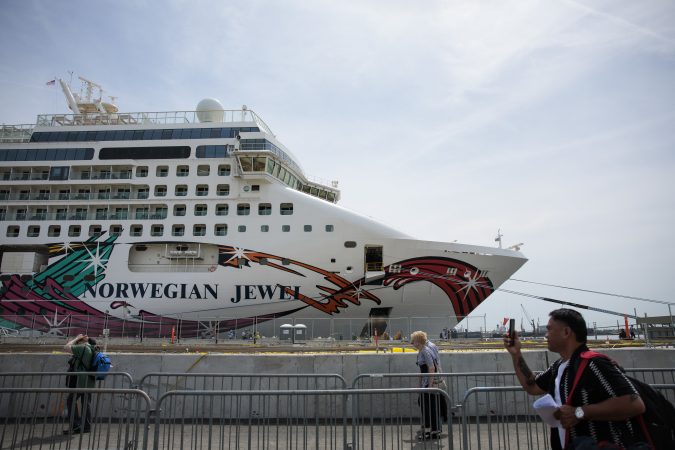
    A cruise ship sailed out of the Port of Philadelphia this spring for the first time in 15 years, as state and local officials celebrated a new economic driver for the region.

    Officials have projected that the new cruise business — anchored by Norwegian Cruise Line at a Hog Island terminal near Philadelphia International Airport — will create more than 2,100 jobs and generate $300 million in annual economic activity.

    What they did not anticipate before breaking ground in December was that several obstacles — including several weeks of subfreezing temperatures and icy conditions on the Delaware River — would send the construction project millions of dollars over budget.

    The cost of building the terminal has increased 50% to more than $60 million, according to the Philadelphia Regional Port Authority (PhilaPort), an independent state agency that owns seaport facilities along the Delaware. The port authority is funding the project.

    PhilaPort is considering obtaining financing to help cover the $20.1 million in cost overruns. The authority’s board this month approved a resolution authorizing staff to borrow up to $15 million. PhilaPort spokesperson Marty O’Rourke said loan terms remain under negotiation.

    In addition to the potential financing, the port authority is funding the project from operating revenues, O’Rourke said. PhilaPort generates revenue from its leases with tenants that operate facilities such as marine terminals and warehouses.

    PhilaPort’s budget for the fiscal year that began July 1 includes $34.5 million in revenue.

    Despite the delays, Norwegian Cruise Line’s ships have continued to dock at PhilaPort’s under-construction terminal since April. Mayor Cherelle L. Parker and Gov. Josh Shapiro, both Democrats, attended an onboard ceremony for the Norwegian Jewel’s inaugural call that month.

    Shapiro — whose appointee chairs PhilaPort’s board — touted the cruise business “as the newest addition to our commonwealth’s fast-growing tourism industry.”

    There had been 13 voyages as of mid-July.

    PhilaPort remains upbeat about its new revenue stream. Under a seven-year agreement, Norwegian Cruise Line has committed to 41 voyages annually to locations like Bermuda, and PhilaPort says it will receive $59 million in rent from the company over that period of time.

    “The key point to remember moving forward is that all infrastructure is now in place for additional cruise lines to start using the PhilaPort Cruise Terminal,” O’Rourke said. Each new line has the potential to generate an additional $8.5 million in annual rent, he said.

    Construction began in December after PhilaPort acquired the Hog Island terminal facility in Tinicum from Energy Transfer Marketing & Terminals L.P. for $10. Under the deal, ownership of the 15.5-acre property reverts back to Energy Transfer in seven years.

    PhilaPort’s board in November authorized the agency to bypass competitive bidding “due to the urgency of need to ensure that the cruise terminal is operational and ready to receive passengers by the first scheduled sailing in April 2026.”

    The port authority hired Bridgeport, N.J.-based Commerce Construction Corp. to handle waterside construction, based on their past maritime experience, O’Rourke said.

    Norwegian Cruise Line tapped Philadelphia-based A.P. Construction to lead landside construction.

    O’Rourke said PhilaPort “had a very narrow four-month window to complete construction in time for the first ship berthing.”

    “This tight construction window was compounded by severe weather-related obstacles and delays caused by several weeks of subfreezing temperatures, resulting in higher-than-anticipated costs for labor overtime and added acceleration fees for materials acquisition,” he said in an email.

    Also contributing to added costs were regulatory requirements, environmental remediation, additional landside mooring work, and temporary facilities needed to support vessel operations, O’Rourke said.

    The landside construction was originally scheduled for completion by the end of June. The port authority now anticipates the terminal will be complete by its grand opening Aug. 27.

    Commerce Construction didn’t respond to a request for comment, but the contractor posted on LinkedIn earlier this summer that it had made progress despite “extreme cold, icy conditions, and a relentless deadline.”