The move comes as PHS prepares to mark its 200th anniversary next year.
PHS’s roughly 100 office-based employees have worked on a hybrid schedule since 2022, president Matt Rader said. The in-person cadence ranges from a couple days a week to a couple times a month, he said.
That will change starting in the spring at PHS’s new office at 1900 Market St., where the organization signed a 16-year lease. Rader said employees would be required to come into the office three days a week.
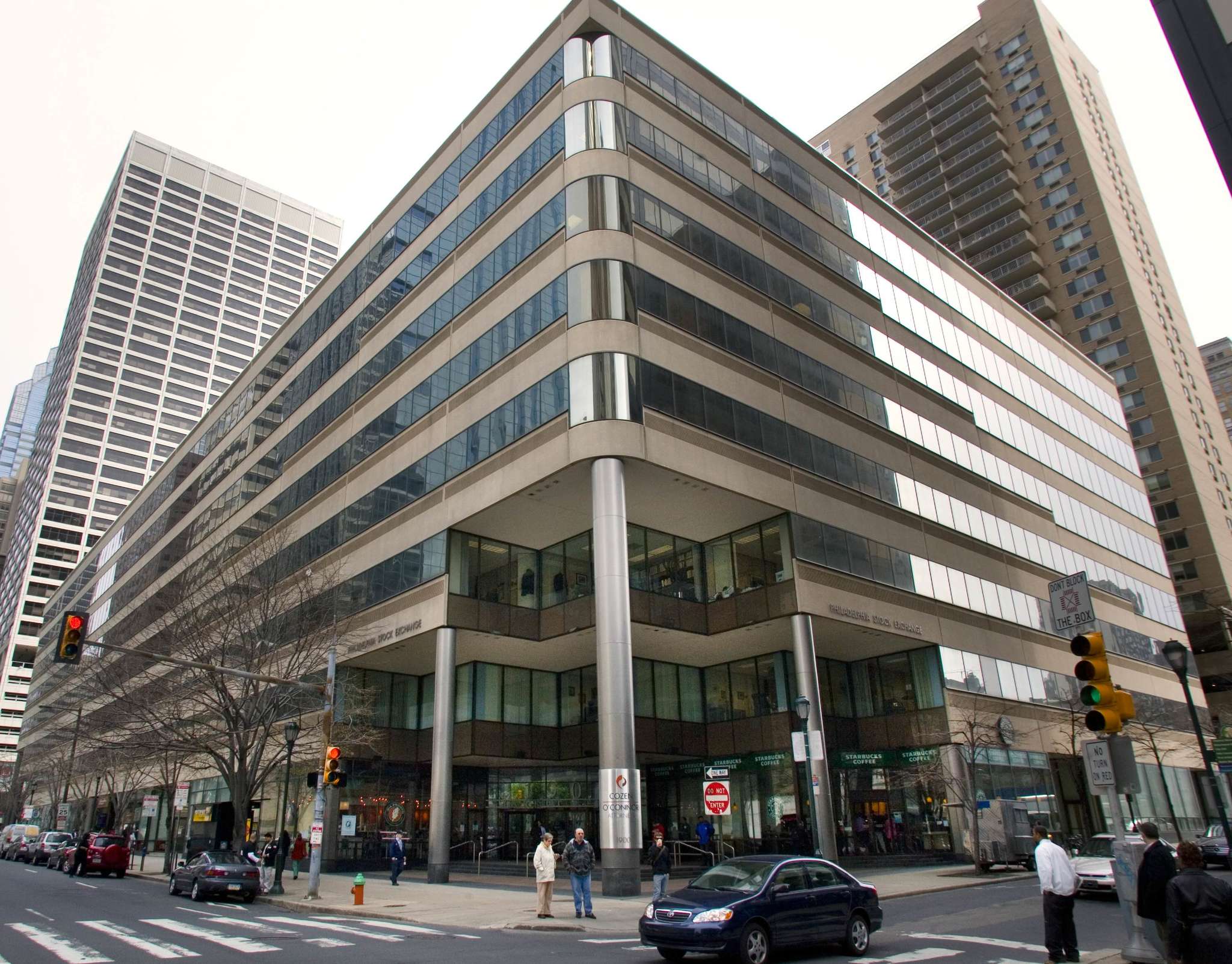
In its current building at 100 N. 20th St., PHS leases 31,000 square feet, subleasing two-thirds of that space to another tenant, Big Brothers Big Sisters. Its workforce is split into two suites on different floors. The new location, at the site of the former Philadelphia Stock Exchange building, is a single space spanning 18,000 square feet.
“Our current office space that we’re occupying is quite small because we’ve been on this largely hybrid model, and we wanted to move into a situation where we could have the team comfortably in-office three days a week and have everybody in one space,” Rader said.
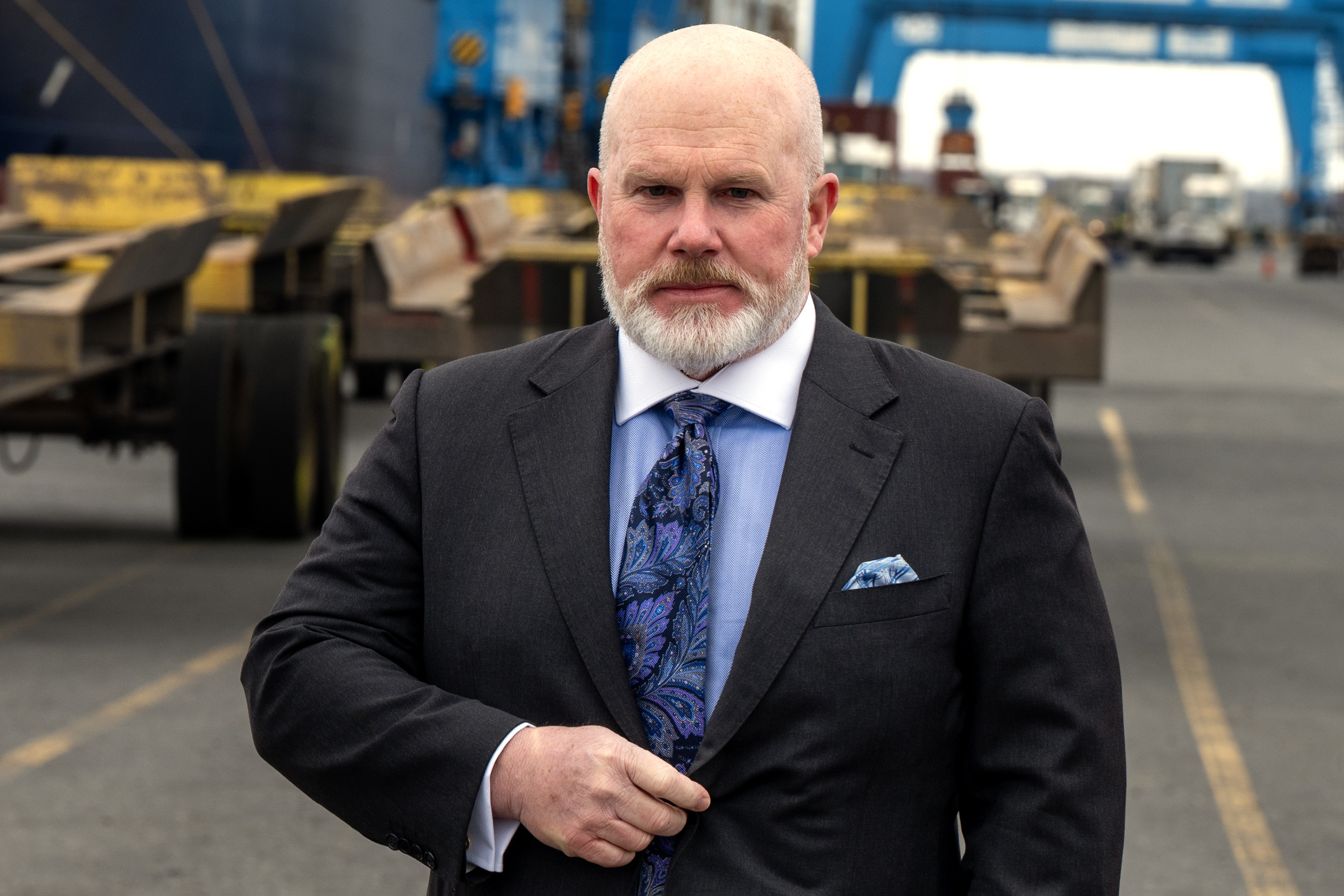
Matt Rader, president of the Pennsylvania Horticultural Society, in 2024.Jessica Griffin / Staff Photographer
“PHS, despite being two centuries old, has the nimbleness of a start-up,” he said. “We’ve been in a significant chapter of growth, particularly in our neighborhood work. We do a lot of work around tree planting, community gardening, vacant land greening, small-business development, and job training across the city and region, and that work has grown significantly since 2019.”
Staying in Center City was an easy decision, Rader said.
“We believe very much in Center City,” he said. “We work in more than 230 city and suburban neighborhoods. So our PHS community of supporters, volunteers, staff is kind of everywhere.”
That means easy access to public transit is important, Rader said.
As for its 200th anniversary, PHS plans to double down on its neighborhood greening work, invest more in the annual Flower Show, and launch a new vision, Rader said: “Every person, every place, gardening for the greater good.”
“Our job is to scale up the places and people involved in using gardening to improve the health and well-being of the region, and we see this new headquarters office space as a great first step on that journey,” he said.
A federal transit agency has awarded SEPTA $80 million to make three stations in the Center City trolley tunnel accessible to people with disabilities, officials said Monday.
New elevators, raised platforms, and other improvements will make the 22nd Street, 33rd Street, and 36th Street stations fully accessible, officials said, bringing them into compliance with the Americans with Disabilities Act of 1990.
Built in 1955, the stations are currently only accessible by stairs.
“Ensuring that every customer can access transit service that is safe, clean and reliable is a core part of SEPTA’s mission,” SEPTA board chair Kenneth E. Lawrence Jr. said in a statement.
Lawrence said Pennsylvania’s congressional delegation worked to secure the grant, which was made available under the Federal Transit Administration’s All Stations Accessibility Program. The program was established by the 2021 Infrastructure Investment and Jobs Act.
SEPTA was awarded an earlier $56 million grant in 2022 through the same federal program. That funding was designated for elevators, ramps, and other enhancements at five subway stations on the Broad Street and Market-Frankford Lines. SEPTA began construction last month on one of those projects at the 11th Street Station.
SEPTA officials said the accessibility project was part of its $2 billion plan to modernize its eight trolley lines — an initiative that includes longer vehicles that hold more passengers, new on-street stations, and proposed line extensions.
And the insurance company with the biggest piece of that business in Pennsylvania is making its voice heard in Harrisburg, Washington, and across the political landscape.
Newtown Square-based AmeriHealth Caritas, an affiliate of the Philadelphia-based healthcare giant IBX, contributed $500,000 total last year to national Democratic and Republican groups that work to elect governors and state legislators, more than double what it gave those entities in 2020.
As the GOP-led Congress passed legislation making deep cuts to Medicaid spending last year, AmeriHealth spent $1.7 million on federal lobbying, the most since at least 2008. And the company made charitable contributions aligned with causes promoted by political leaders in states where it does business — including a $5 million donation to food banks announced by North Carolina’s Democratic governor and 250 book bags for schoolchildren as a gift to the Democratic speaker of the Pennsylvania House.
It all adds up to a growing influence operation run by a company in a competitive industry that relies on government for revenue. Last year, AmeriHealth generated almost $16 billion from Pennsylvania contracts — more than half its total revenue.
Medicaid — a joint state-federal program that funds healthcare for low-income people, children, seniors, and individuals with disabilities — is also the single biggest cost driver in Pennsylvania’s budget. Almost three million Pennsylvanians, or more than one-fifth of the population, are covered by Medicaid.
AmeriHealth’s corporate political giving has drawn criticism from some Republican state lawmakers, who call it an inappropriate use of taxpayer dollars.
“That’s money that’s supposed to be going out to our hospitals, pharmacies, and disabled service providers,” said State Sen. Cris Dush (R., Jefferson).
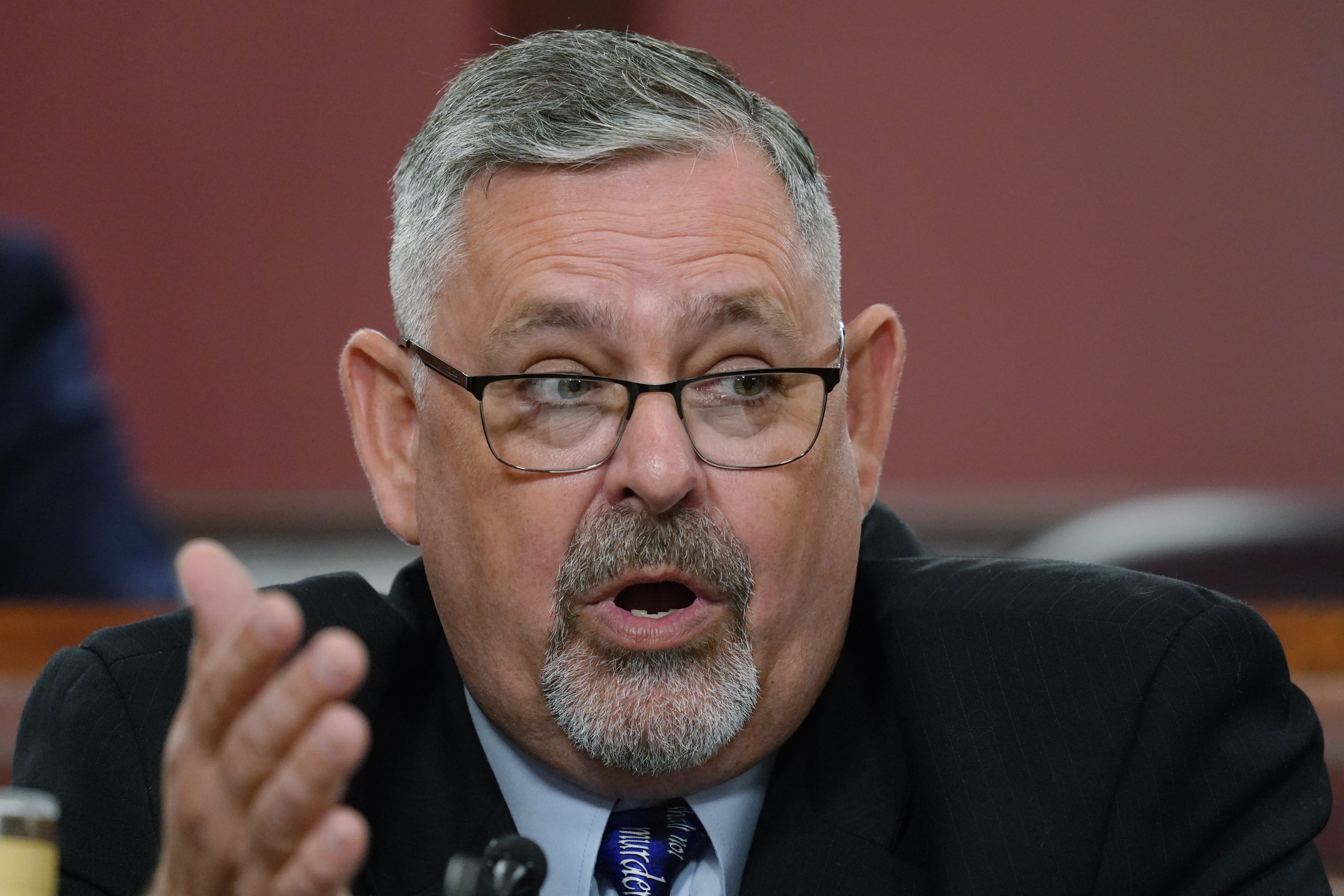
State Sen. Cris Dush (R., Jefferson) in 2021.Matt Rourke / AP
AmeriHealth’s increased political activity has come during a volatile period for Medicaid. Enrollment surged during the COVID-19 pandemic as a federal emergency declaration meant people didn’t have to reapply for benefits, even if they no longer qualified. Once states resumed verifying eligibility, insurers including AmeriHealth saw membership decline — and those most likely to maintain coverage were sicker than average.
Now insurers are grappling with the biggest cuts to federal healthcare spending in history — $1 trillion over the next decade, mostly to Medicaid — in President Donald Trump’s big domestic policy legislation last summer. They are set to take effect next year.
Lee Drutman, a senior fellow at New America, a Washington, D.C.-based think tank, said AmeriHealth’s political activity is part of a “tried-and-true playbook” in corporate America.
“If you do business with the government or have contracts or regulatory interests, you want to make sure the people who are making the decisions have a nice warm feeling when they think about your company,” said Drutman, author of The Business of America is Lobbying. “The best way to give them that nice warm feeling is to contribute to their campaigns and their causes.”
AmeriHealth said in a statement that it reviews all political contributions to ensure compliance with applicable laws and regulations and that the company does not make contributions “from legal entities that have state or federal contracts.”
AmeriHealth did not say what revenue source it uses to fund its corporate political contributions and did not answer questions about whether it had any revenue streams that were not tied to tax dollars.
“Our participation in the public policy process focuses on healthcare issues affecting our members and the communities we serve,” AmeriHealth said, adding that it supports organizations across the political spectrum.
Donations to DGA and RGA
Like most states, Pennsylvania contracts with private insurers — also known as managed care organizations (MCOs) — to manage Medicaid beneficiaries’ benefits.
Federal law sets broad coverage requirements, but states have flexibility in determining which populations are eligible and which services to include.
And every year, they set monthly rates they pay insurers for Medicaid enrollees. Federal regulators review the rates.
“That all has a huge impact on the financial health, the success of the Medicaid managed care plan,” said Edwin Park, research professor at the McCourt School of Public Policy at Georgetown University.
It is not surprising, then, that insurers like AmeriHealth donate to political groups that elect governors and state legislators.
Among the groups that have benefited from AmeriHealth’s giving is the Democratic Governors Association, which in 2022 gave $7.2 million to then-Pennsylvania Attorney General Josh Shapiro’s successful gubernatorial campaign and which has given $750,000 to his reelection bid.
From 2021 through last year, AmeriHealth gave $250,000 to the DGA annually, up from $100,000 in 2020. It gave $250,000 to the Republican Governors Association in 2025, up from $100,000 each of the previous two years.
The donations put AmeriHealth in the top 10% of donors to each group in 2025, according to an Inquirer analysis of Internal Revenue Service data compiled by ProPublica.
(function(){function e(){window.addEventListener(`message`,function(e){if(e.data[`datawrapper-height`]!==void 0){var t=document.querySelectorAll(`iframe`);for(var n in e.data[`datawrapper-height`])for(var r=0,i;i=t[r];r++)if(i.contentWindow===e.source){var a=e.data[`datawrapper-height`][n]+`px`;i.style.height=a}}})}e()})();
The RGA has not invested in Pennsylvania’s gubernatorial election this year, in which Shapiro is favored against Republican state Treasurer Stacy Garrity.
Pennsylvania law prohibits corporations and labor unions from making direct contributions to state campaigns, though those groups can form political action committees. PACs can raise funds from their employees or members and use that money to donate to candidates. AmeriHealth started a Pennsylvania PAC in 2022.
However, corporations and unions can use their treasury funds — drawn directly from profits or member dues — to give unlimited amounts of money to groups such as the DGA and RGA. Those groups can donate to campaigns that may otherwise face restrictions on receiving corporate money, as in Pennsylvania.
In response to written questions, neither AmeriHealth nor Shapiro’s campaign would say whether the governor or his representatives had solicited contributions from the company on the DGA’s behalf.
AmeriHealth did not answer a question as to whether it had asked the DGA to designate some or all of its contributions to Shapiro’s race. Izzi Levy, a spokesperson for the DGA, said, “As a policy, DGA does not accept funds earmarked for any race or state.”
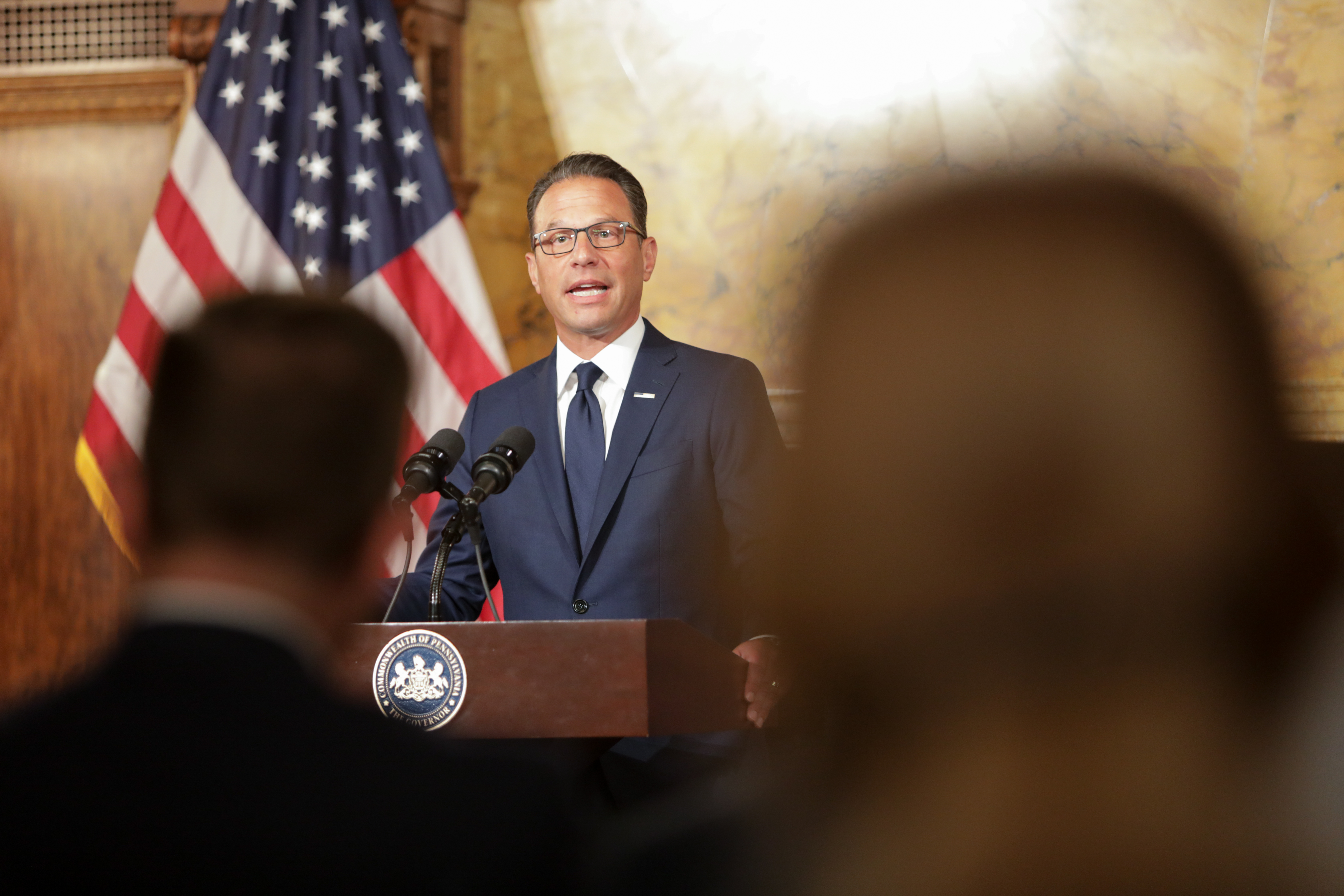
Gov. Josh Shapiro in August.Kalim A. Bhatti / For The Inquirer
“Corporations, labor unions, wealthy individuals want to have a powerful ally in a governor,” said Michael Beckel, an expert on money in politics at Washington, D.C.-based Issue One, a group that advocates for campaign finance restrictions.
“Being able to give through a group like the DGA or an RGA is a way to help secure your position as a friend and ally, who then in turn might be somebody that [governors] listen to on policy matters,” he said.
Many companies donate to these groups, but AmeriHealth’s corporate contributions have caught the attention of Pennsylvania lawmakers, including Senate President Pro Tempore Kim Ward (R., Westmoreland).
“The money should be used as appropriated for Medicaid because we are struggling with the increased funding needs for the program,” she said, adding that it doesn’t matter which party benefits from the donations.
Pennsylvania Senate President Pro Tempore Kim Ward in Harrisburg in February.Tom Gralish / Staff Photographer
Ward said AmeriHealth has suggested that one of its contributions to the DGA “was comprised of the interest made off the principal of the Medicaid money.”
“To be clear, no matter if the political contribution is made up from the principal or the interest from Medicaid funds, it is all government money and shouldn’t be used for political purposes,” Ward said in a statement.
Under federal regulations, insurers are required to spend at least 85% of Medicaid funds on services for beneficiaries, leaving 15% for plan administration and profits. A spokesperson for the Pennsylvania Department of Human Services said AmeriHealth has complied with those rules.
AmeriHealth isn’t the only Medicaid insurer that donates to the DGA, RGA, Democratic Legislative Campaign Committee, and Republican State Leadership Committee — the latter two of which work to elect state legislators across the country.
The University of Pittsburgh Medical Center (UPMC), the No. 2 Medicaid insurer in Pennsylvania, has given three of the four groups a total of $330,000 since 2013, the year AmeriHealth significantly increased its giving. AmeriHealth gave $3.3 million over that period of time.
By contrast, St. Louis-based Centene Corp. has far outspent AmeriHealth, giving a total of nearly $18.8 million to the groups since 2013. Centene is the No. 3 Medicaid insurer in Pennsylvania and the largest in the country, operating in 30 states.
Neither UPMC nor Centene responded to requests for comment. Centene says on its website that its political activity is grounded in the company’s public policy positions “and the best interests of our business, our employees, and the members we serve, without regard to political party affiliation.”
From West Philly to 13 states
For-profit AmeriHealth is owned by nonprofits Independence Health Group and Blue Cross Blue Shield of Michigan.
Formerly known as AmeriHealth Mercy, the company started as a pilot program in the early 1980s at a West Philadelphia hospital. It now operates in 13 states and Washington, D.C., and employs almost 10,000 people.
AmeriHealth covered about 771,000 Pennsylvania residents enrolled for physical health — including for services such as medical visits, pregnancy and newborn care, and dental — and 176,000 for community services, including nursing homes, at the end of 2025. The company also manages benefits for behavioral health services.
In addition to its Medicaid business, AmeriHealth also offers Medicare Advantage plans for people eligible for both Medicare and Medicaid, as well as Affordable Care Act health insurance marketplace plans.
AmeriHealth had net income of $138 million last year after reporting a loss in 2024, though Independence Health — which includes insurer Independence Blue Cross — has continued to struggle financially.
Pennsylvania’s Medicaid program cost $49.3 billion in state and federal funds for the fiscal year that ended in July 2025, according to the Independent Fiscal Office. The state share of Medicaid expenditures, $14.4 billion, accounted for 31% of total general fund spending, among the highest ratios in the country, according to health research nonprofit KFF.
State spending on Medicaid was on track to increase 7.8% for the fiscal year that ended July 1, according to a June analysis by the IFO.
AmeriHealth’s $15.7 billion in revenue last year from contracts with the Pennsylvania Department of Human Services and county governments was up from $14.2 billion the prior year and $11.4 billion in 2021 — a 38% increase over the four year-period.
UPMC saw a 50% increase over that period, for $12.6 billion in revenue last year.
(function(){function e(){window.addEventListener(`message`,function(e){if(e.data[`datawrapper-height`]!==void 0){var t=document.querySelectorAll(`iframe`);for(var n in e.data[`datawrapper-height`])for(var r=0,i;i=t[r];r++)if(i.contentWindow===e.source){var a=e.data[`datawrapper-height`][n]+`px`;i.style.height=a}}})}e()})();
AmeriHealth has attributed its financial success last year — when it swung back to a profit a year after reporting losses in 2024 — in part to higher Medicaid rates as well as “work with state partners to support reliable access to high-quality care for the members we serve.”
Ali Fogarty, spokesperson for the Pennsylvania Department of Human Services, said rate increases are necessitated by costs that insurers incur administering the Medicaid program.
A big driver has been higher costs for GLP-1s, the drugs that manage Type 2 diabetes and obesity. Pennsylvania in 2023 started covering GLP-1s in Medicaid for weight loss only. Medicaid spending on the drugs in Pennsylvania increased from $223 million in 2022 to more than $1 billion last year, Fogarty said. The state stopped covering GLP-1s for weight loss this year.
“Realities like this can drive rate increases to ensure stability of our Medicaid program and solvency of MCOs that coordinate care, in addition to typical year-over-year increases in costs of care and operations,” she said.
AmeriHealth increased its lobbying, too
AmeriHealth spent $1.7 million on federal lobbying last year, up from $970,000 in 2024 and $400,000 in 2023, according to data compiled by OpenSecrets, a group that tracks money in politics.
The bill mentioned the most on the company’s lobbying reports in 2025 was H.R. 1, or the One Big Beautiful Bill Act. The sweeping domestic policy legislation — passed by the GOP-controlled Congress and signed into law by Trump — included $900 billion in cuts to federal Medicaid spending over the next decade.
(function(){function e(){window.addEventListener(`message`,function(e){if(e.data[`datawrapper-height`]!==void 0){var t=document.querySelectorAll(`iframe`);for(var n in e.data[`datawrapper-height`])for(var r=0,i;i=t[r];r++)if(i.contentWindow===e.source){var a=e.data[`datawrapper-height`][n]+`px`;i.style.height=a}}})}e()})();
The law reduces spending in part by imposing new work requirements on adults who are eligible for Medicaid under the Affordable Care Act, the 2010 law that sought to expand healthcare coverage. Pennsylvania expanded Medicaid in 2015.
Those requirements take effect Jan. 1. The new law also includes provisions requiring more frequent eligibility checks and cost-sharing requirements for enrollees in the so-called Medicaid expansion group.
The law’s Medicaid provisions are projected to increase the number of uninsured in 2034 by 7.5 million people, according to estimates from the Congressional Budget Office. About 300,000 Pennsylvanians could lose coverage due to the Medicaid restrictions, according to Shapiro’s administration.
Medicaid insurers opposed the cuts. After the House passed its initial version of H.R. 1 in May 2025, Medicaid Health Plans of America — a trade group that represents AmeriHealth and other insurers — cautioned Senate leaders against legislative provisions “that have been found to increase churn, set up additional barriers to receiving coverage, disincentivize essential care, hamstring states in financing the program, and that will likely cause disruption that radiates across the health care system.”
Republicans say the law will strengthen the integrity of programs like Medicaid and help ensure that able-bodied adults on public assistance are contributing to society. Democrats voted against the measure, accusing the GOP of cutting the safety net to finance tax cuts for the wealthy.
The One Big Beautiful Bill Act has big implications for state budgets. Starting in October, states including Pennsylvania will be restricted in their ability to finance Medicaid through taxes on healthcare providers such as hospitals, nursing homes, and insurers. States have traditionally used that financing mechanism to help draw federal matching funds.
Management consulting firm Oliver Wyman wrote that as states adjust their financing strategies, “plans may face more volatile rate-setting processes, delayed approvals, and growing tension between providers seeking to preserve revenue and payers managing constrained margins.”
As H.R. 1 is implemented, insurers like AmeriHealth are maintaining a strong presence in Washington. Records show AmeriHealth spent $1.5 million on federal lobbying through June — almost as much as it spent all of last year.
But as insurers seek to influence policymakers, they are facing increasing criticism from conservatives who say they have failed to improve patient outcomes, lower costs, or deter fraud. More broadly, Trump last year directed Health and Human Services Secretary Robert F. Kennedy Jr. to “take appropriate action to eliminate waste, fraud, and abuse in Medicaid.”
“Medicaid managed care creates strong incentives to maximize enrollment, as plans are generally paid a fixed amount for each enrollee,” Brian Blase, a former Trump White House official and president of the Paragon Health Institute, wrote in June. “Improper enrollment, duplicate enrollment, and phantom enrollment increase payments flowing to MCOs.”
The plans say they have taken action against fraud and abuse. The Medicaid Health Plans of America in a February report pointed to an inspector general report showing that insurers in recent years had steadily increased their fraud referrals to state law enforcement agencies.
Pennsylvania’s GOP-led Senate in July passed a resolution, largely along party lines, directing the Legislative Budget and Finance Committee (LBFC) to audit the state’s Medicaid program. The resolution calls for a review of the “standards used in Pennsylvania to evaluate Medicaid managed care program contracts.”
Democrats said they wanted to limit the scope of the audit, saying the state’s Medicaid program is already subject to federal reviews.
The resolution does not carry the force of law, but its lead sponsor, Dush, said he hopes the bipartisan LBFC — a committee that consists of 12 legislators from both chambers of the General Assembly — agrees to take up the cause.
Charitable giving
When the federal government shut down last fall amid a congressional spending impasse, the Trump administration paused the disbursement of food assistance, known as SNAP benefits, which help low-income families pay for groceries.
Within days of that announcement, North Carolina Gov. Josh Stein said the state would grant $10 million to local food banks — and that AmeriHealth Caritas and other private donors had also chipped in.
AmeriHealth, which had won a Medicaid contract with the state in 2019, gave $5 million, according to Stein’s announcement. “With the help of generous partners, North Carolina is taking action to keep families fed,” Stein, a Democrat, said in a news release at the time.
It’s an example of how AmeriHealth has made philanthropic gifts in line with causes promoted by political leaders in states where the company does business. Drutman, the lobbying expert, said supporting such causes can be seen as part of a company’s broader political strategy.
“As long as government is an important player in an industry, either as a regulator or purchaser of services, companies can have a strong interest in making sure that people in power have a positive opinion of the company,” he said. “Usually, the positive opinion of a company is not free.”
Stein’s office didn’t respond to a request for comment.
AmeriHealth told The Inquirer that the company and its foundation invest in community organizations “to improve access to care and address needs such as maternal health and food insecurity.”
“We invest in healthcare policy that is aligned with the needs of the nation’s most vulnerable populations,” the company said.
Another organization it partnered with was the Hope Florida Fund, a charity founded by Casey DeSantis, wife of Republican Gov. Ron DeSantis. The Governor’s Office announced in March 2023 that AmeriHealth had contributed $100,000 to reduce reliance on public assistance and make grants to local nonprofits.
The next month, the state started the bidding process for new Medicaid contracts. AmeriHealth ultimately lost its bid to remain in Florida, where it had operated since 2012. Gov. DeSantis’ office didn’t respond to a request for comment.
Sometimes AmeriHealth’s gifts are smaller.
Pennsylvania House Speaker Joanna McClinton, a Democrat who represents parts of West Philadelphia and Delaware County, reported on her 2025 financial disclosure form that AmeriHealth had donated 250 book bags at resource fairs in her district. She valued the gift at $2,500. A spokesperson for McClinton confirmed the gift but otherwise had no comment.
Other companies including insurers Highmark Wholecare and Independence Blue Cross gave similar gifts, according to the disclosure.
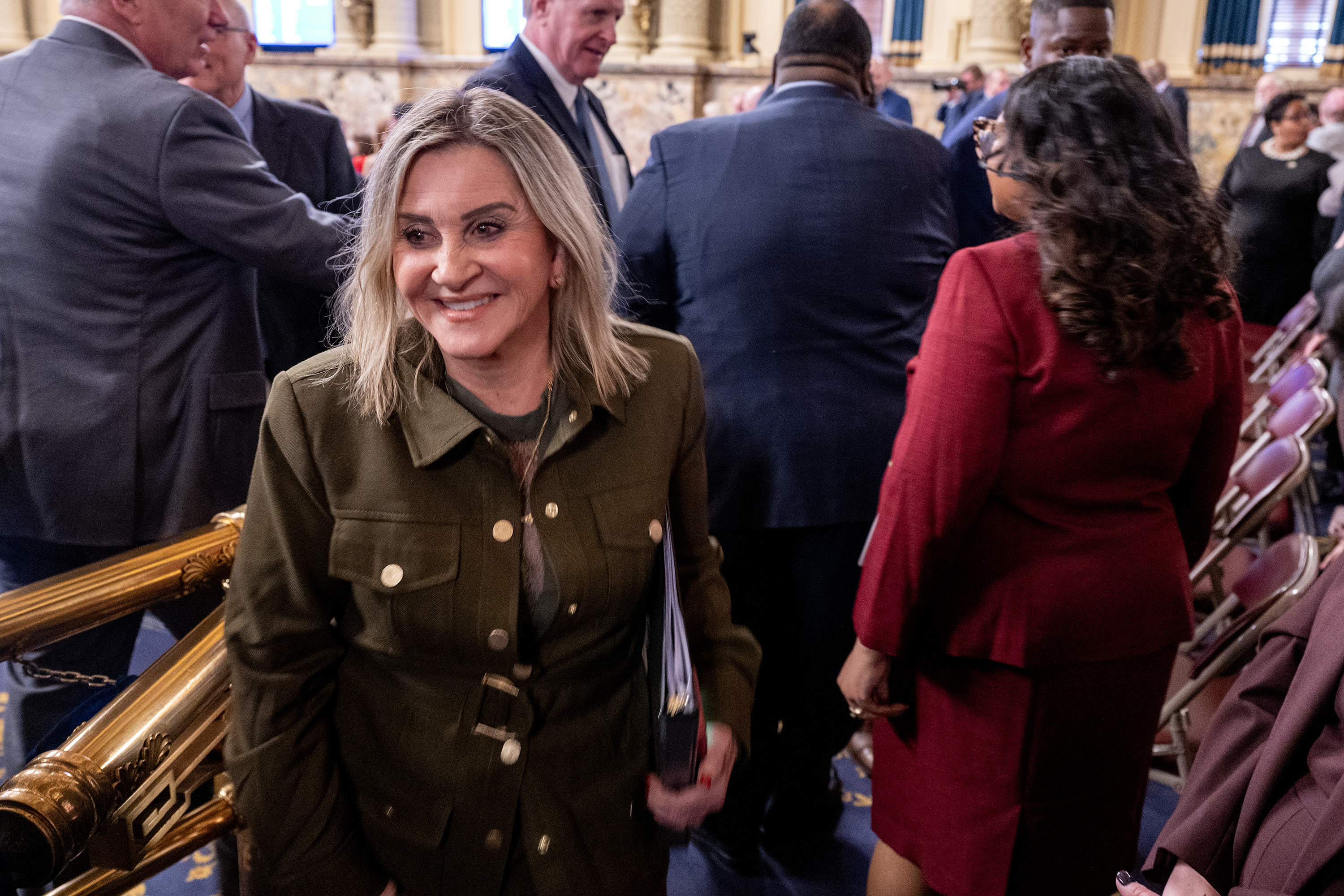
House Speaker Joanna McClinton during a Feb. 3 news conference at the Capitol in Harrisburg.Tom Gralish / Staff Photographer
AmeriHealth has won praise for some of its giving.
In May, Val Arkoosh, secretary of the Pennsylvania Department of Human Services, visited the Greater Philadelphia YMCA’s Willow Grove branch to highlight a maternal health initiative that provides a free membership and programming for expectant moms.
Arkoosh’s office said in a news release that the initiative “aligns perfectly” with the Shapiro administration’s “Healthy Moms, Vibrant Futures” strategic plan.
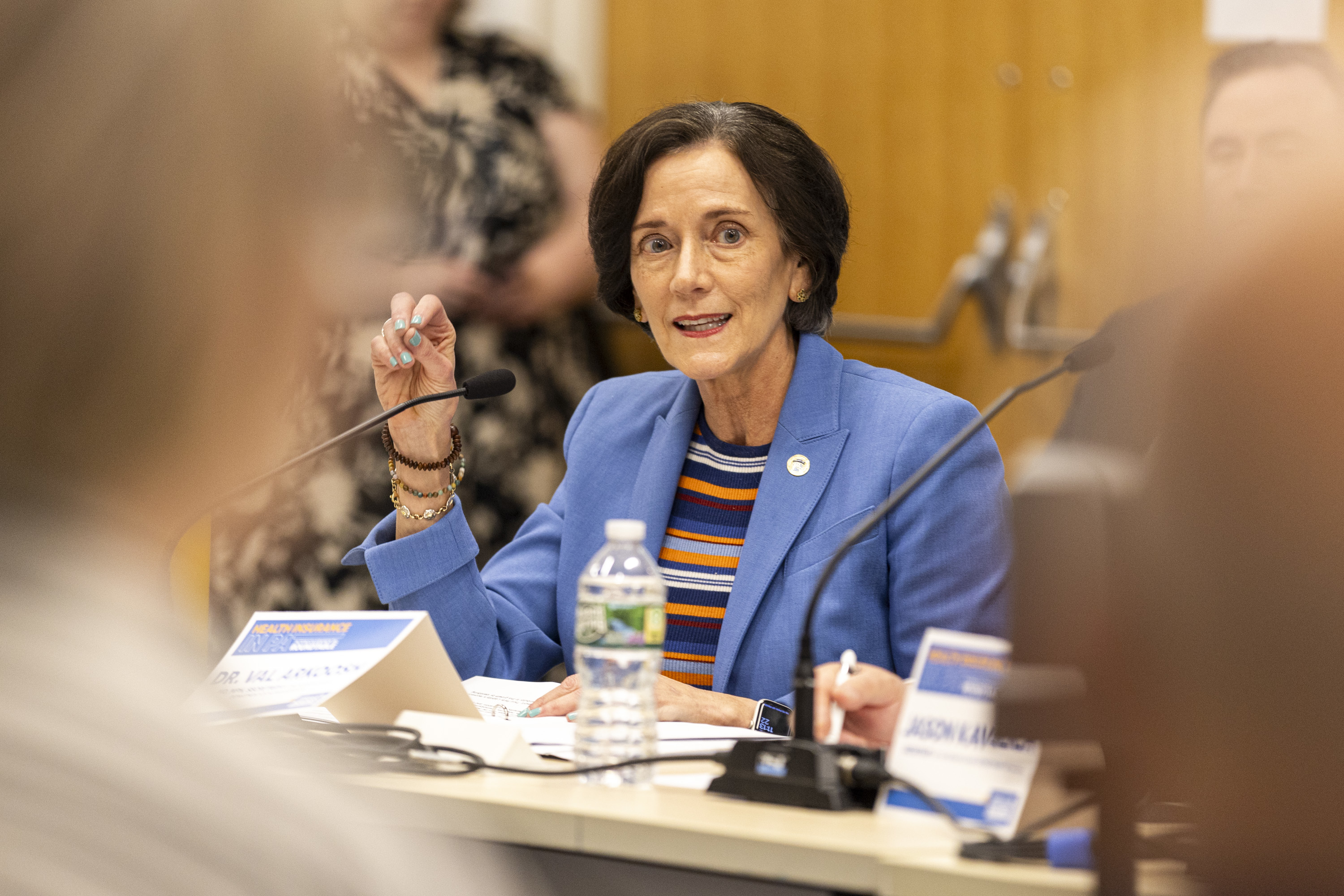
DHS Secretary Val Arkoosh in 2025.Tyger Williams / Staff Photographer
Fogarty, the DHS spokesperson, noted that the U.S. maternal mortality rate outpaces all other high-income countries and said Arkoosh, an obstetric anesthesiologist, is passionate about the issue. “We appreciate the many partners who work to address maternal mortality and are stepping up to support mothers and children in their community,” Fogarty said.
AmeriHealth’s foundation said in a news release that “providing children with healthy beginnings will help them avoid adverse experiences later in childhood.”
The release featured a photo of Arkoosh standing next to a YMCA executive and Steve Fera, an IBX executive and AmeriHealth Caritas Foundation board member.
President Donald Trump says he’s holding Canada accountable for “ripping off” the United States through unfair trade practices.
But by imposing new tariffs on Canadian goods and prompting retaliation from one of America’s largest trading partners, U.S. businesses and consumers could face higher costs, analysts said — including in key electoral battlegrounds like Pennsylvania.
Pennsylvania sold $13.4 billion in goods last year to Canada — its largest export market.
About $2 billion worth of those goods, or 16%, will be subject to higher tariffs — some as high as 50% — starting Sept. 8 after Canada this week announced new levies, according to an Inquirer analysis of trade data. Some of the state’s top exports facing new tariffs include raw aluminum, lumber, and passenger vehicles.
(function(){function e(){window.addEventListener(`message`,function(e){if(e.data[`datawrapper-height`]!==void 0){var t=document.querySelectorAll(`iframe`);for(var n in e.data[`datawrapper-height`])for(var r=0,i;i=t[r];r++)if(i.contentWindow===e.source){var a=e.data[`datawrapper-height`][n]+`px`;i.style.height=a}}})}e()})();
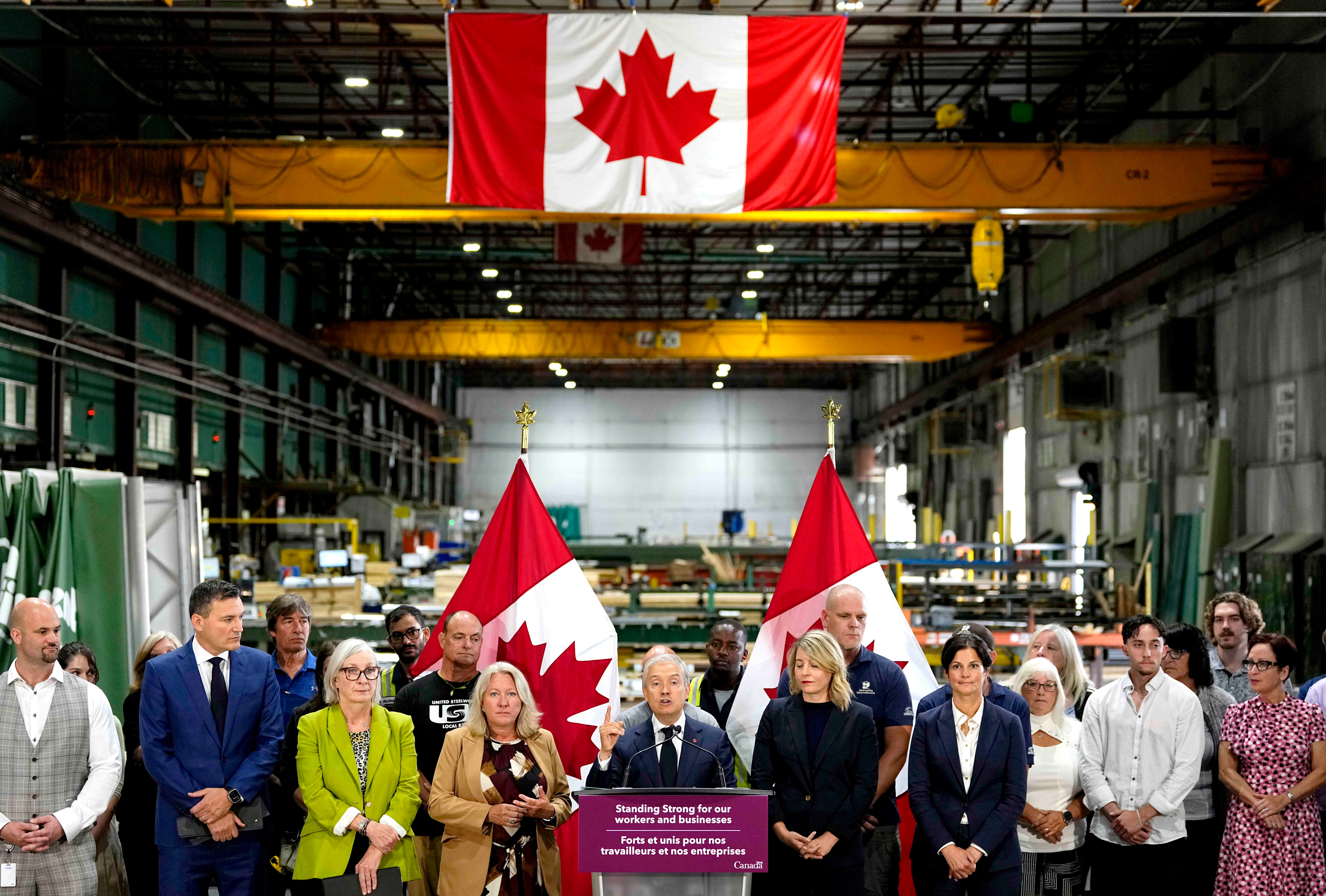
Canadian officials said the tariffs on hundreds of U.S. goods worth a total of $20 billion are meant to protect its workers in response to increased U.S. levies on the same amount of Canadian imports. That affects a relatively small share of trade between the two countries, but analysts said the situation is still evolving.
“There’s so many things that go back and forth, some of it multiple times. The effect and the amplification of these tariffs, we’ll definitely feel,” said Lauren Swartz, CEO of the nonprofit World Affairs Council of Philadelphia. “When we think about what that means for Pennsylvania, it’s going to be loud.”
“My sense is the rhetoric that we’re hearing, and the fact that it’s already being labeled a trade war, is that both countries are reserving the right to escalate the level, the percentage of tariffs, as well as the scope of goods that will fall under the new trade war,” she said. “So it will expand.”
Steel, dairy, electronics impacted
The new tariffs came after talks between the U.S. and Canada over a trade deal fell apart last weekend. Trump imposed 50% tariffs on goods such as hockey sticks, national flags, and building materials.
“Canada has been ripping off the United States for decades — and President Donald J. Trump is done letting them get away with it,” the White House said on Tuesday. It said the U.S. had offered Canada “the most preferential market access of any country on Earth” but that the country chose “unreasonable demands, walk-backs, and flat-out rejection.”
Canadian officials said the country’s counter tariffs would protect the country’s workers and businesses. They said the levies on U.S. goods targeted sectors such as appliances, steel, dairy, and electronics.
(function(){function e(){window.addEventListener(`message`,function(e){if(e.data[`datawrapper-height`]!==void 0){var t=document.querySelectorAll(`iframe`);for(var n in e.data[`datawrapper-height`])for(var r=0,i;i=t[r];r++)if(i.contentWindow===e.source){var a=e.data[`datawrapper-height`][n]+`px`;i.style.height=a}}})}e()})();
Influence on midterms?
The trade dispute could inject new uncertainty into the economy less than three months before the U.S. midterm elections decide control of Congress and statehouses around the country. Republicans are seeking to retain control of the U.S. House and Senate. Pennsylvania has several competitive House races in which Republican incumbents are seen as vulnerable.
Pennsylvania Gov. Josh Shapiro, a Democrat who is running for reelection against Republican state Treasurer Stacy Garrity, has repeatedly criticized Trump’s tariffs.
“Donald Trump’s reckless tariffs are a tax on Pennsylvanians — and Gov. Shapiro has been fighting back against them from day one,” said campaign spokesperson Manuel Bonder.
“This President has raised costs for families, screwed over our farmers, and shut down markets for businesses — all with Stacy Garrity’s 100% support,” Bonder said in a statement.
Garrity’s campaign didn’t respond to requests for comment. She has in the past said Trump’s tariffs could result in some “short-term pain” but would ultimately bring jobs to America. “It’s going to be fantastic,” she said in a clip that Shapiro’s campaign has highlighted. More recently, Garrity told reporters in July she would “do the tariffs a little bit differently.”
Canadian officials appeared to target some goods that are important in electoral battlegrounds, such as seafood in Maine, the Wall Street Journal reported.
Analysts said Pennsylvania didn’t appear to be a principal target. “But unfortunately, it’s one of the states that does a lot of goods transfer with Canada, and unfortunately, they’re hit in the crossfire,” said Kyle Peacock, a trade expert and founder of Peacock Tariff Consulting.
Peacock said that after previous rounds of tariffs, many businesses were able to absorb the costs.
But now that some products face 50% levies, that will likely change, he said. “Not a lot of industries or products have 50% margin that you can just eat,” he said. “So I think you’re going to see that this time, unfortunately, that’s going to be passed on to the consumer.”
James A. Williams Jr. walked his first picket line when he was 8, growing up in the 1980s in Northeast Philadelphia as the son of a labor leader.
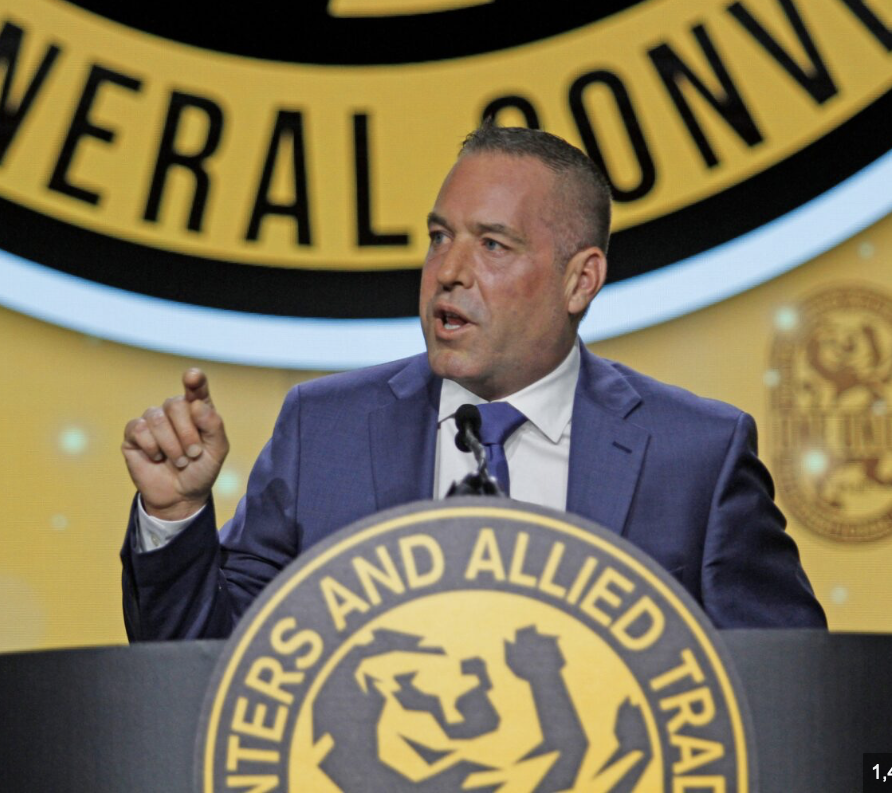
He followed in his father’s footsteps, joining Glaziers Local 252 — the same union of which his great-grandfather was a charter member when it was founded 100 years ago. Also like his father, Williams rose to the top of the 140,000-member International Union of Painters and Allied Trades, becoming general president in 2021.
Yet, even as Williams, 48, known as Jimmy, has broadened his focus to national issues — including Trump administration policies he sees as anti-labor — his attention diverted back to the city this summer when he ordered a review of his union’s regional governing body in Philadelphia, District Council 21.
Seeking to evaluate DC 21’s recent merger with its counterpart in North Jersey, Williams says he found declining membership, excessive compensation for certain staff, and a lack of transparency.
“It was obvious that we weren’t building power,” he said in an interview. “If anything, we were operating outside of our own laws and our own rules.”
So Williams appointed a trustee to take control of the district council, removing the union’s elected business manager, Bernie Snyder, from his position and suspending other officers. Williams’ trustee on July 24 hand-delivered a letter — a copy of which was obtained by The Inquirer — with this newsto DC 21’s union hall on Southampton Road in the Far Northeast, citing “widespread financial malpractice” and other governance issues.
Williams said his review did not find evidence of theft or fraud: “The case you have here is mismanagement.” Snyder could not be reached for comment.
Such trusteeships are not unheard of. They have been imposed on more than 20 Philadelphia-based unions since 2000, according to U.S. Labor Department records.
But DC 21 — which is affiliated with 11 unions in Pennsylvania, New Jersey, and Delaware representing 5,600 painters, glaziers, drywall finishers, wall coverers, and glass workers — is not just any union. It is one of the largest members of the politically influential Philadelphia Building and Construction Trades Council, which is a close ally of elected officials ranging from Mayor Cherelle L. Parker to Gov. Josh Shapiro. In 2023, President Joe Biden and Vice President Kamala Harris each visited a training site affiliated with DC 21.
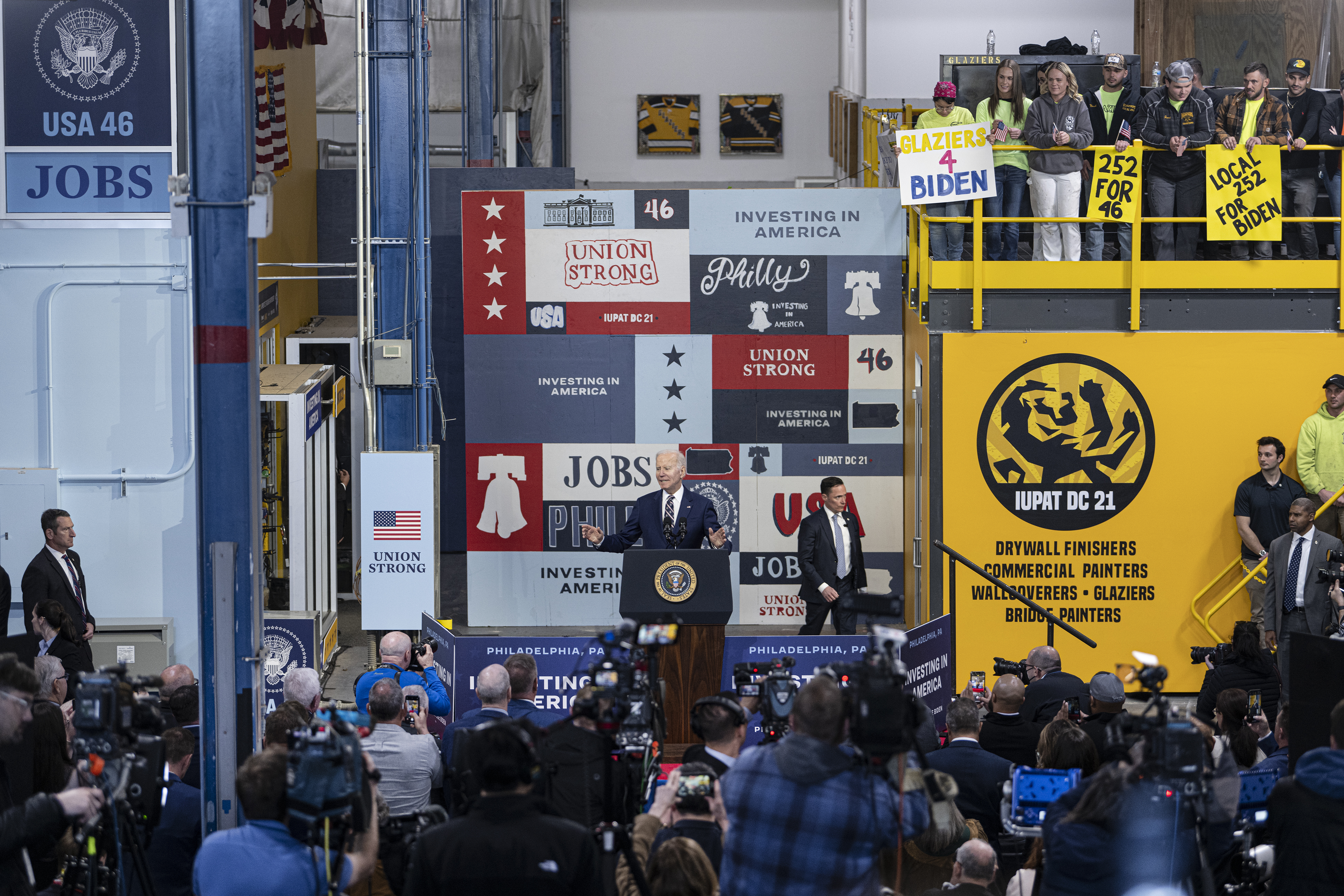
President Joe Biden spoke at the Finishing Trades Institute in Northeast Philadelphia in March 2023.Jose F. Moreno / Staff Photographer
Adding to the intrigue is the international president’s close ties to the district council and the broader Philly labor movement. His father, James Williams, once led Glaziers Local 252, and his uncle Ralph Williams was business manager of the Philadelphia building trades council in the 1980s. Beyond his family ties, Williams has described former DC 21 business manager Joseph Ashdale, a fellow glazier, as his mentor.
“It had to be serious for him to have done it [taken control of DC 21],” said a local building trades source who spoke on condition of anonymity to speak candidly about a sensitive labor issue. “It’s drawing attention to his home local. It’s personal when it’s your own local.”
Some in the world of organized labor did not see it coming. “That’s shocking to me,” State Sen. John Kane (D., Delaware), a former business manager of Plumbers Union Local 690, said of Snyder’s ouster.
Susan Schurman, a professor at Rutgers University’s School of Management and Labor Relations, said oftentimes one faction of a union will level accusations of wrongdoing against a rival group in an effort to gain power.
But Schurman, who reviewed Williams’ letter at The Inquirer’s request, said she was “inclined to think” that is not the case here. “Assuming what is said in the letter is accurate, when you have a declining membership and you’re raising the compensation and other things for officers and staff, you got a problem,” Schurman said.
Williams said he was not motivated by politics. “It was difficult because of relationships and, you know, long-standing roots,” he said, adding that he had worked with Snyder, a painter by trade, for 25 years. “But it was also more necessary in order to change the culture for our membership here.”
‘I’d be angry’
That change — to center the organization around members, not staff — is needed not just in Philadelphia but across the union, Williams says. He wants members to become “active participants” in the organization.
“As a whole, people need to be held accountable and kicked in the a— to push forward, represent the labor movement, and display their potential power,” Gregg Smith, the Hanover, Md.-based union’s general secretary-treasurer, wrote in an internal newsletter this summer.
Williams has described Joseph Ashdale, former DC 21 business manager, as his mentor.Clem Murray / Staff Photographer
But as Williams seeks to empower members, some in DC 21 say they are not getting enough information from leadership. “Everybody’s pissed off,” one member told The Inquirer, speaking on condition of anonymity out of fear of retribution.
Williams has held several meetings with members in recent weeks, including one at the Northeast Philly union hall on Aug. 5. “They basically avoided any questions,” the member said. “Where did all the money go? Nobody will tell ya nothing.”
When DC 21 posted about the trusteeship on Facebook, one member responded, “How many times does our membership have to be victimized[?]”
That frustration is understandable, Williams said. “There’s some angry members,” he said. “And think about it, I’d be angry. I’m working my a— off every day, and I expect that those that I elect are capable and are following the rules, right? And it’s just not what happened here.”
19% decline in membership
The takeover comes after DC 21 lost 19% of its membership in just two years, falling from 6,977 in 2023 to 5,621 last year, according to U.S. Labor Department data.
“That’s huge,” the building trades source said. “You don’t see drops like that, that quickly.”
Painters unions in other big cities did not see a similar drop-off over that two-year period. In New York, membership in District Council 9 held steady around 7,600 people. In Chicago, DC 14’s membership fell by 4% to about 3,900. DC 51 — which represents workers in Washington, D.C., Virginia, and Maryland — saw a 37% increase to 1,600 members.
(function(){function e(){window.addEventListener(`message`,function(e){if(e.data[`datawrapper-height`]!==void 0){var t=document.querySelectorAll(`iframe`);for(var n in e.data[`datawrapper-height`])for(var r=0,i;i=t[r];r++)if(i.contentWindow===e.source){var a=e.data[`datawrapper-height`][n]+`px`;i.style.height=a}}})}e()})();
In his July letter to members announcing the takeover, Williams said DC 21’s organizing department “has no discernible targets, strategic plans, or campaigns while membership declines and trade jurisdictions are undefended.”
In the interview, he also pointed to a slowdown in regional construction. But the problem runs deeper, he said. Going back to 2010, Williams said, the union’s membership in Pennsylvania and New Jersey has declined by 2,000 people.
Even in a region known as friendly to organized labor, more work is being performed by “open-shop” contractors that hire both union and nonunion labor, he said, adding that workers are increasingly being “misclassified” as independent contractors.
“Philadelphia, New Jersey are right in the crosshairs for where organized labor needs to organize power and grow,” Williams said.
Allegations of excessive pay
Even as DC 21 lost members, it provided compensation packages to officers and certain staff that were inconsistent with the union’s bylaws, the letter said. That included $300,000 for elected staff over a two-year period in excess of what was allowed under the bylaws, according to Williams.
Labor Department records reviewed by The Inquirer shed additional light on the union’s spending.
The DC 21 staff’s average gross salary was $116,000 last year, a 14% increase from 2023. DC 21 employees’ average salary for 2025 was the highest of any of the 10 district councils in IUPAT’s Eastern Region, including New York, which paid an average of $109,356.
DC 21 had been facing challenges even before the recent shake-up.
Membership had been sliding for years when the union merged in 2022 with District Council 711 in North Jersey. (DC 21 already had a presence in South Jersey.) At the time, DC 21 was led by Ashdale, a former longtime chair of the Philadelphia Parking Authority.
Ashdale retired in 2023 and was succeeded by Fran McLaughlin. Snyder was elected business manager the following year and served in that role until his ouster by the international union in July.
The newly appointed trustee is Brian Courtien, a former business manager of District Council 51 in Maryland.
He has to do two things, said Rutgers’ Schurman: dig into the union’s books and fix anything that was done “inappropriately,” and then try to ease rank-and-file members’ concerns about how their dues are being spent.
“The trustee has to kind of manage a process of bringing calm and order back to the organization,” she said.
Once that work is complete, the union will elect new leaders.
For Williams, effecting change starts with ensuring members understand they have agency in the organization. “Their bylaws are theirs; they’re not their leaders’. Their contracts are theirs. They’re not their employers’ or their leaders’.” he said.
“Having our rank-and-file at the center of everything we do,” he said, “from political endorsements to contract negotiations to union governance, that’s the culture we’re trying to build within our organization.”
The Pennsylvania agency that owns Philadelphia’s seaport facilities plans to buy three Navy Yard buildings at the foot of South Broad Street for $22.6 million, as it seeks to relocate its headquarters from Port Richmond.
The board of the Philadelphia Regional Port Authority (PhilaPort) voted Wednesday to authorize staff to purchase the properties at 5101 and 5115R S. Broad St., which are owned by Delaware-based 5101 South Broad Street Associates L.P., a partnership controlled by the family of the late logistics executive Dennis J. Colgan Jr.
PhilaPort CEO Rich Lazer said in a statement that the goal of moving the authority’s operations to the Navy Yard is “to create a comprehensive maritime campus with the space we need to grow, expand our reach, attract new business, and create more good-paying jobs.”
“This move is an investment in PhilaPort’s long-term growth and in the future of Philadelphia’s maritime industry,” said Lazer, who took the port authority’s top job in June.
Agency documents say the properties — including a 1909 building that was once home to a submarine periscope factory — are currently occupied by tenants under leases that extend through 2028 and 2029. The leases generate $1.8 million in annual rental revenue, according to PhilaPort.
Property records show that as of last year, the tenants included logistics firm Geodis USA Inc. and engineering firm Q.E.D. Systems Inc.
PhilaPort owns marine terminals, warehouses, and other facilities along the Delaware River from Port Richmond to South Philly. Its new headquarters would bring the agency closer to key assets including the Packer Avenue Marine Terminal and Mustin Yard, the rail yard it bought last year with $90 million in state funds.
It wasn’t immediately clear what might happen to PhilaPort’s current headquarters in Port Richmond.
The authority’s board on Wednesday authorized staff to borrow $18 million from First Trust Bank to finance the acquisition. The agency — which is funded by rental revenue it generates from leases with tenants — plans to make a $5 million down payment.
PhilaPort said the $22.6 million purchase price was subject to certain conditions.
The current owner is a limited partnership controlled by Dennis J. Colgan III, a Riverton property manager, and his sister Lisa Colgan Antonucci, according to property records. They couldn’t be reached for comment.
Their father, Colgan Jr., of Moorestown, died in 2024 at 84. He started a customs brokerage in Philadelphia in 1970 with partner Wolf Barth and later bought back Barth’s stock. Barthco International grew into a global logistics company with 700 employees.
Colgan moved his company’s headquarters from Center City to the Navy Yard in 2004, converting the former submarine periscope factory into a 45,000-square-foot office building overlooking the Delaware River.
Colgan’s partnership acquired the 150,000-square-foot property at 5101 S. Broad St. in 2003 for $300,000 from an affiliate of Philadelphia Industrial Development Corp. (PIDC), a public-private economic development corporation.
He said at the time that his company spent $10 million purchasing, restoring, and equipping the building.
Colgan sold Barthco to Ozburn-Hessey Logistics in 2006 for $75 million, The Inquirer reported, but retained ownership of the building. OHL was later acquired by Geodis, which now occupies the property.
In 2007, Colgan bought the 80,500-square-foot property at 5115R S. Broad St. for $185,000 from a PIDC affiliate.
Staff writer Jake Blumgart and news researcher Ryan W. Briggs contributed to this article.
Cleo Winfield has worked at a warehouse located inside the Packer Avenue Marine Terminal in South Philadelphia for 22 years, stacking bananas and other cargo that are unloaded from ships docked on the Delaware River.
Now his job is at risk.
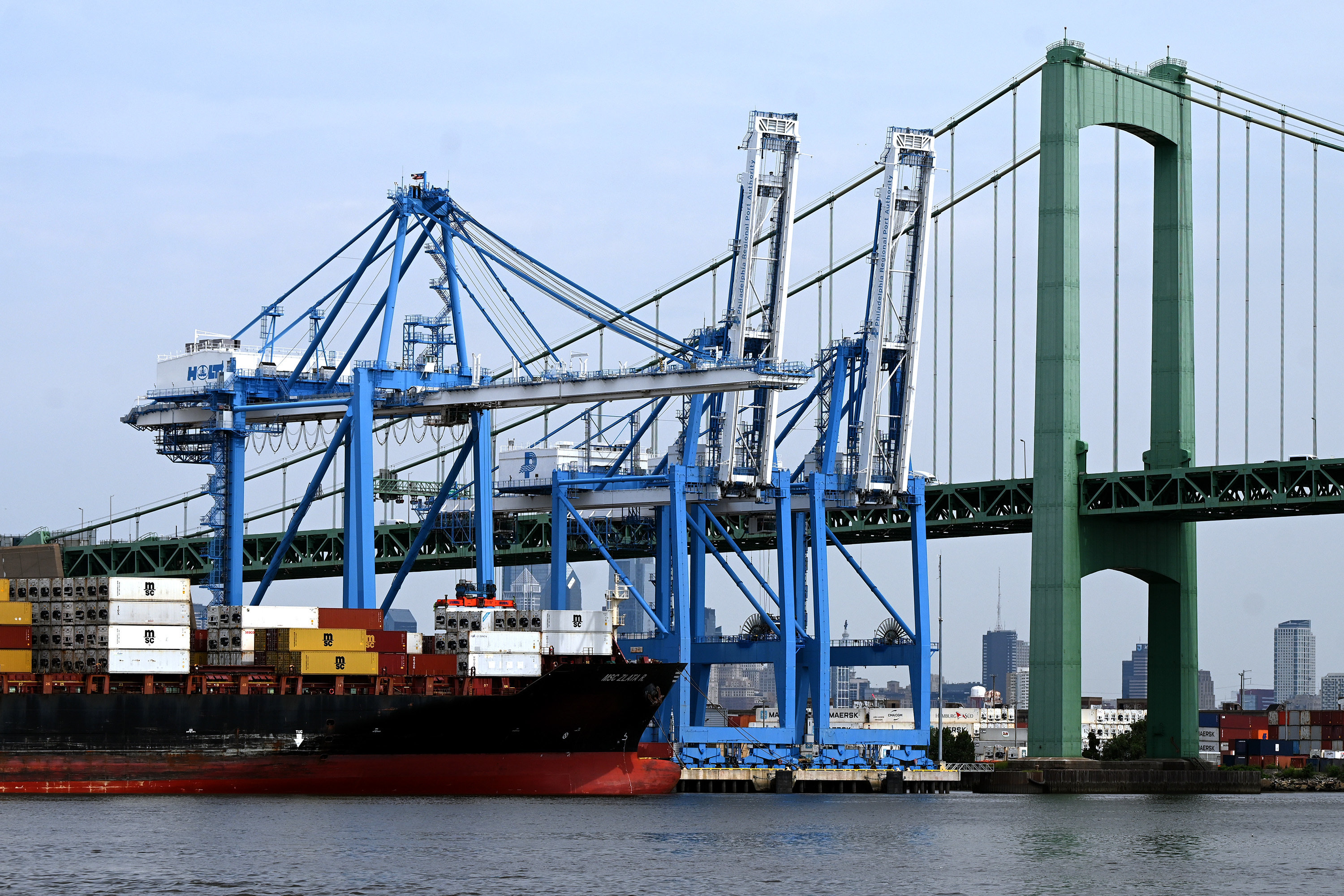
The warehouse, currently operated by an affiliate of Holt Logistics Corp. and staffed by members of a longshoremen’s union, is expected to be razed to make space on the terminal to stack more shipping containers.
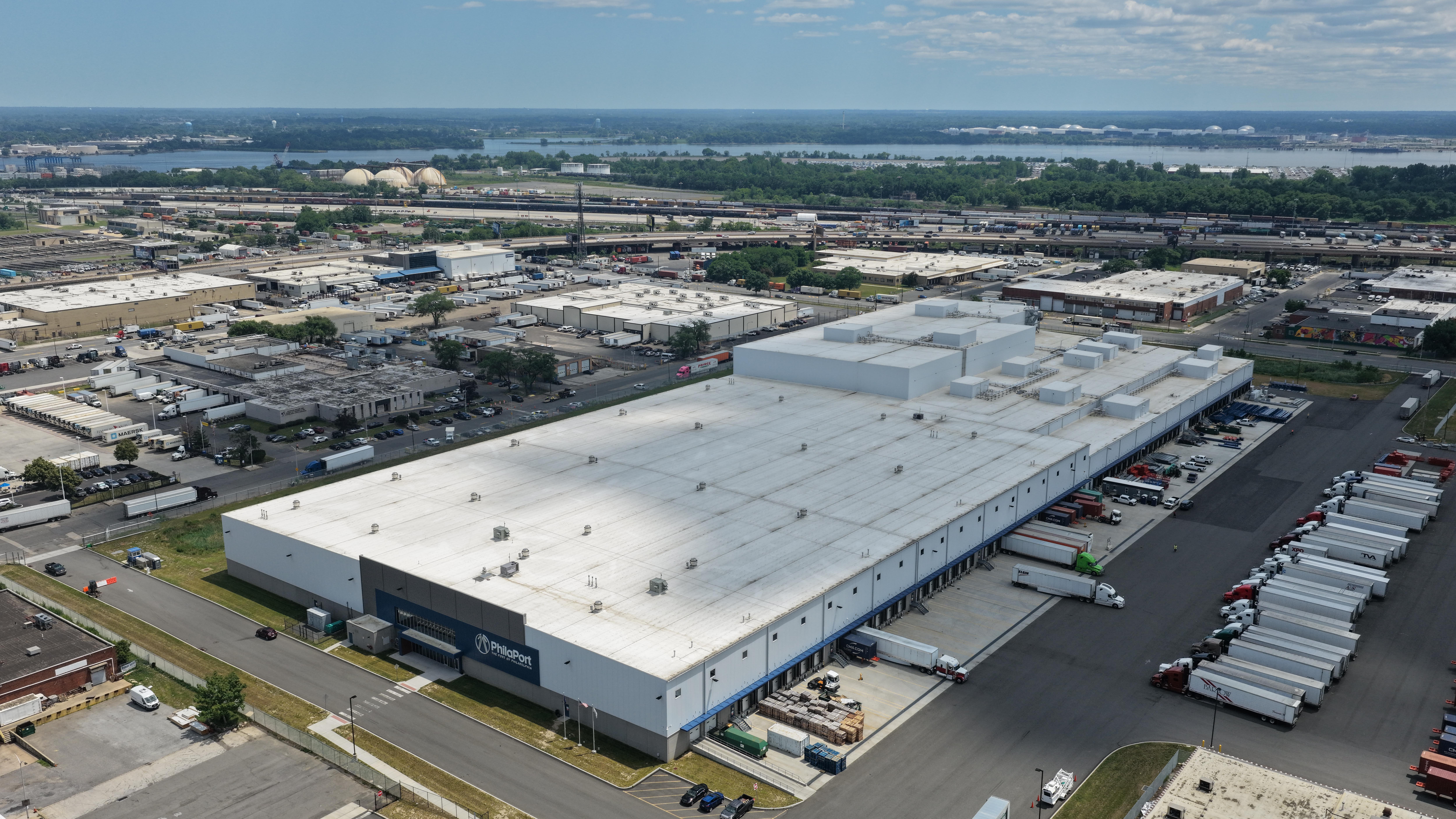
As part of a port development plan, the Philadelphia Regional Port Authority (PhilaPort) — the Pennsylvania state agency that owns the city’s seaport facilities and leases them to private tenants — has built a new taxpayer-funded, Holt-operated warehouse a mile from the Packer Avenue terminal.
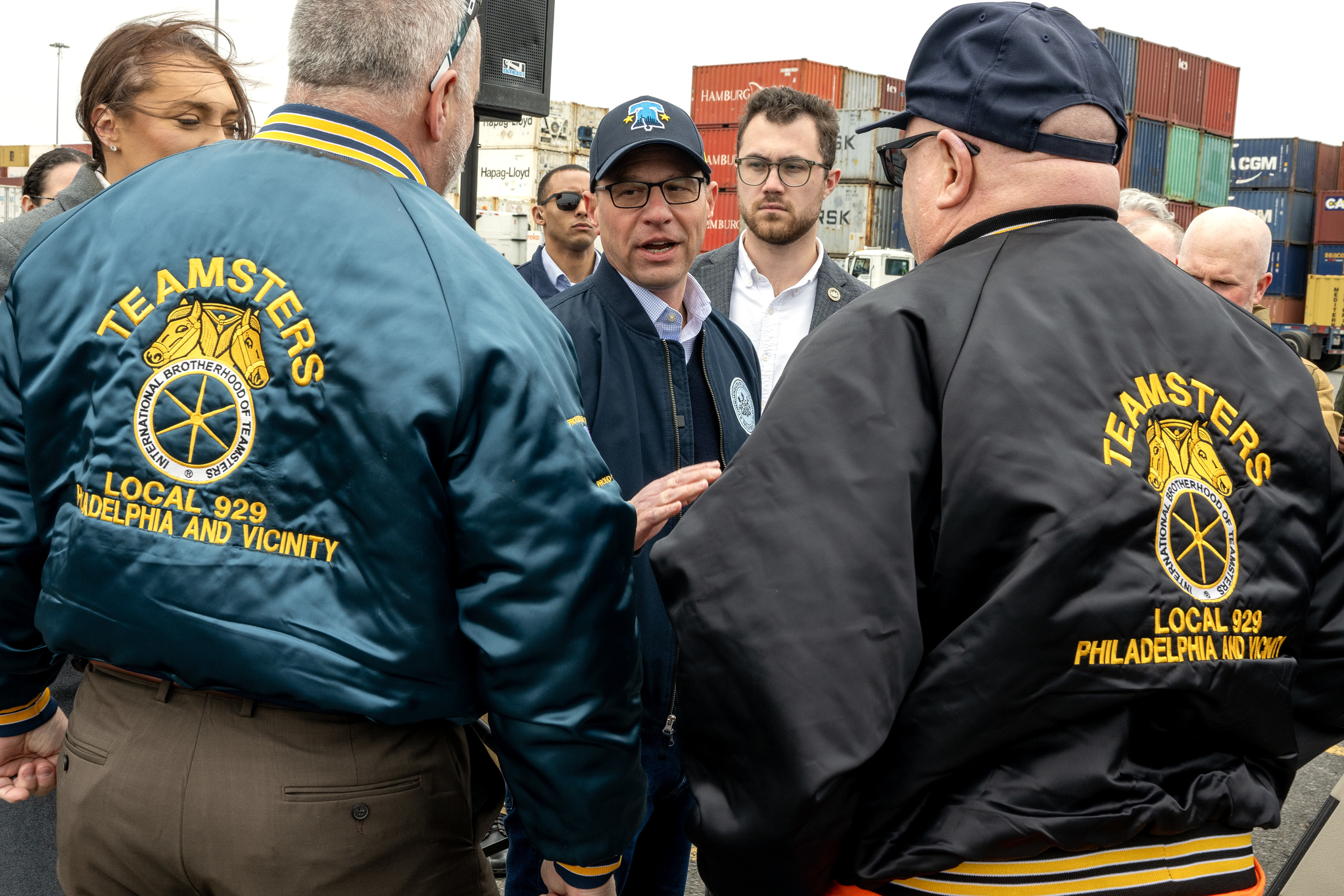
Gloucester City-based Holt says it has a deal to staff the new facility with workers represented byTeamsters Local 929. Holt has longshore work available for the members of International Longshoremen’s Association Local 1291, the company says, but it has been unable to reach an agreement with the union. A contract extension expired in June.
The ILA counters that such an arrangement would strip Winfield and 30 other warehouse workers of their seniority — sacrificing wages and benefits they’ve accrued over the years.
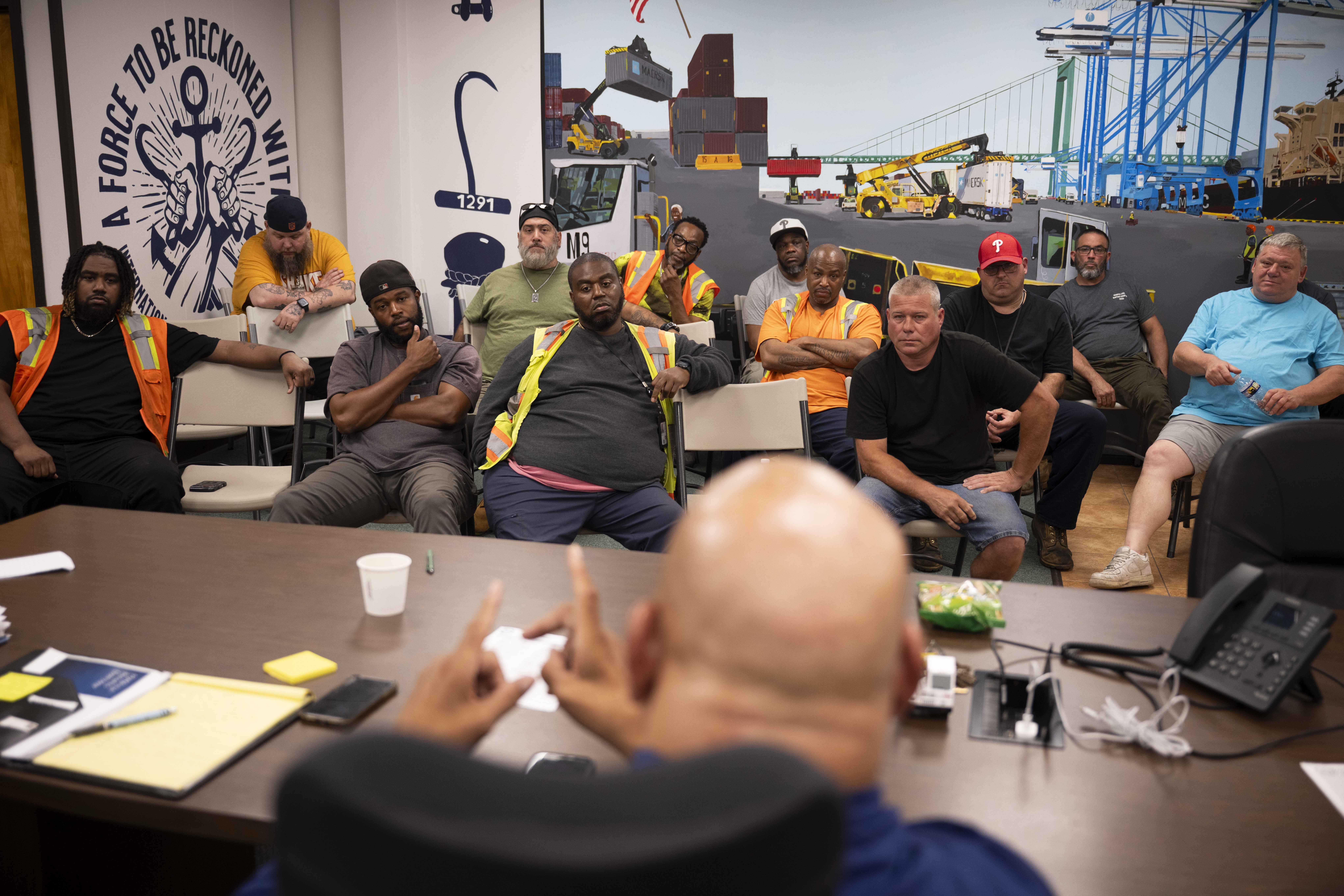
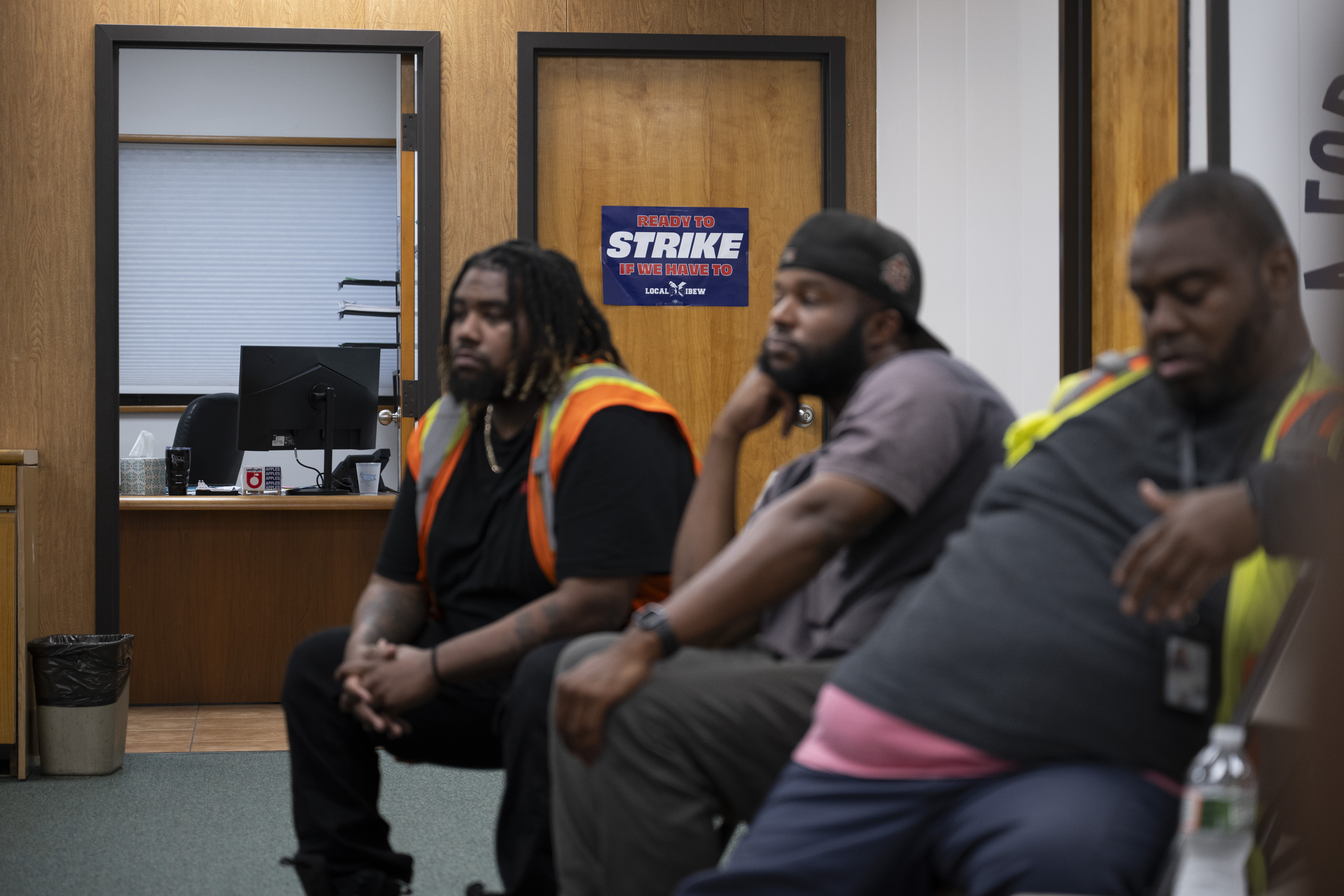
He and the other ILA members who attended Monday’s union meeting in Port Richmond voted unanimously to authorize a potential strike “if and when necessary,” a development that would require approval from their parent organization.
International Longshoremen’s Association Local 1291 members attend a union meeting.Joe Lamberti / For The Inquirer
“Been there so long. That’s really all I know, man,” said Winfield, 57. “Raised my family with that job, put my son through college, man. I’m still paying the student loan on that. … I just want to be able to take care of my family.”
Holt said in a statement that the workers are all “productive and hardworking ILA members.”
“To be clear, there is more than enough terminal and stevedoring work for these men at Packer, and we remain interested in bringing them on if the ILA agrees,” the company said.
Regardless of the outcome, the episode has laid bare growing pains at the Port of Philadelphia, which has seen hundreds of millions of dollars of public and private investment over the past decade — as well as disputes over competition and labor. That includes $85 million in state funds that were allocated to the new 165,500-square-foot warehouse, according to PhilaPort. Holt invested $81 million in the building.
Boise Butler, president of ILA Local 1291, said he wants Holt to be a healthy employer. “But don’t screw them,” he said, motioning to his members. “Don’t screw us. OK? Because it’s not necessary.”
Port development
Philly’s port is relatively small compared to the biggest U.S. container ports, but it’s seen steady growth in recent years and is a major gateway for refrigerated cargo, especially fresh fruit.
Container volumes have more than doubled since 2016, from about 400,000 units that year to almost 900,000 in 2025.
During that time, the U.S. Army Corps of Engineers completed the three-decade-long deepening of the Delaware River from 40 to 45 feet, which allowed the port to accommodate bigger ships.
Leo Holt, president of Holt Logistics Corp., at the the Packer Avenue Marine Terminal in South Philadelphia in April 2025.Tom Gralish / Staff Photographer
And Democratic Gov. Tom Wolf’s administration invested more than $500 million in Philadelphia’s port expansion. That included more than $120 million for a distribution center near Packer Avenue featuring two warehouses totaling 365,000 square feet.
The distribution center “is an important step to improve port facilities and bring more traffic to the port,” Wolf said when construction began on the first warehouse in 2021. Leo Holt, president of family-owned Holt Logistics, said at the time that warehouse space “puts Philadelphia more fully into the last-mile business.”
The PhilaPort Distribution Center in South Philadelphia.Courtesy Holt Logistics Corp.
Teamsters and longshoremen at odds
The warehouses were built at the site of the old Food Distribution Center, a wholesale market that opened in the late 1950s and employed Teamsters for decades.
To Rocky Bryan Jr., that history is important. “We’ve been on that location there since the ’50s,” said Bryan, president of Teamsters Local 929, which represents about 3,000 members in three states.
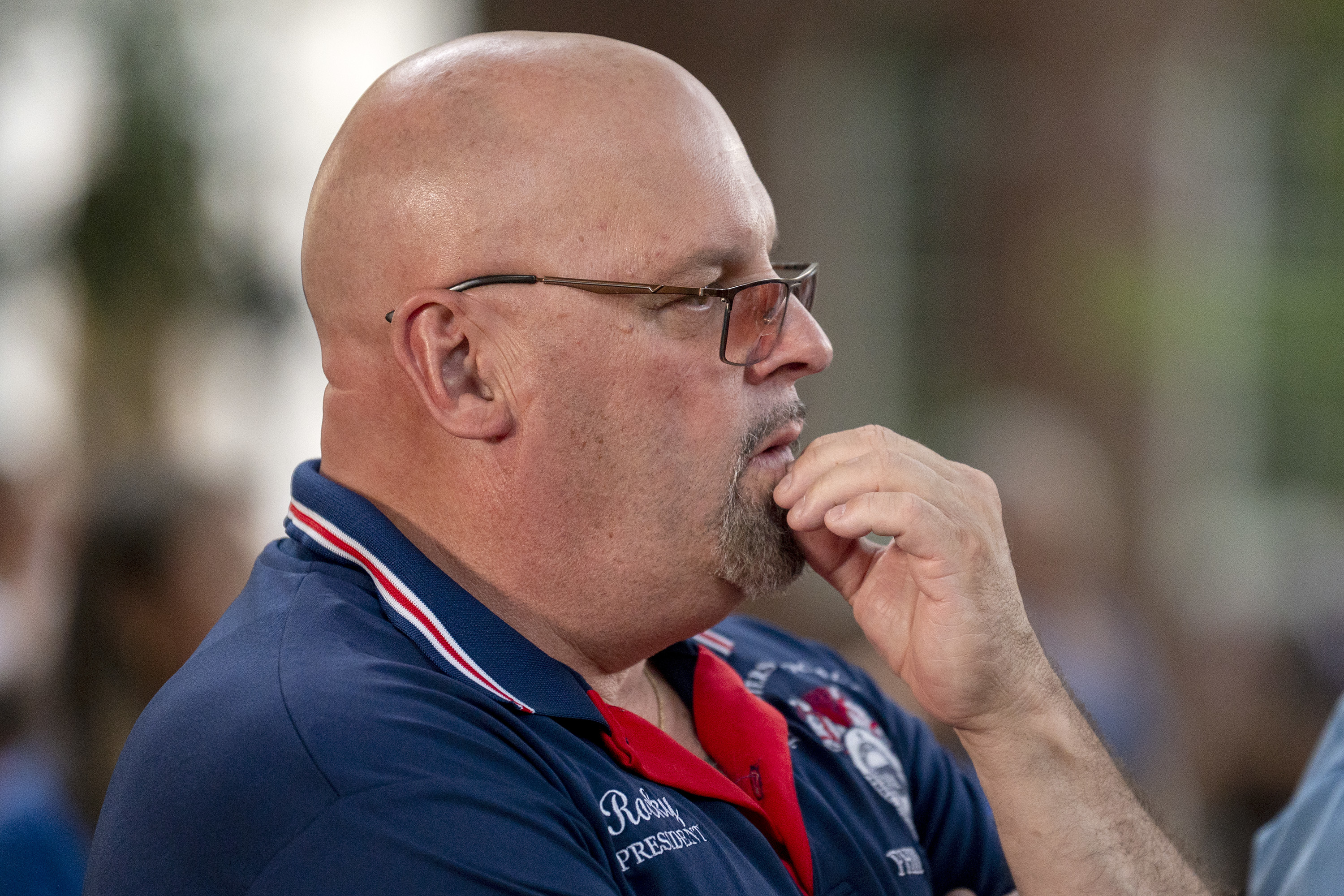
Rocky Bryan Jr., president of the Teamsters Local 929, pictured in 2022.Tom Gralish / Staff Photographer
The first so-called dry warehouse opened three years ago, and there’s no conflict over that facility. About 15 Teamsters work there, Bryan said. The disagreement revolves around the second, refrigerated warehouse, with both the Teamsters and the longshoremen’s union making claims to the territory.
“To us, it’s all one warehouse. It’s our jurisdiction,” Bryan said, adding that a collective bargaining agreement is already in place. “It’s traditional Teamster work, which is truck driving and warehousing.”
As it happens, the ILA warehouse workers used to belong to the Teamsters but voted to join the longshoremen’s union in 2009, according to the ILA’s Butler.
Butler points to another piece of history. When the Food Distribution Center closed and a new Philadelphia Wholesale Produce Market opened on Essington Avenue near the airport in 2011, the same Teamsters who worked at the old facility continued to work at the new one, he says.
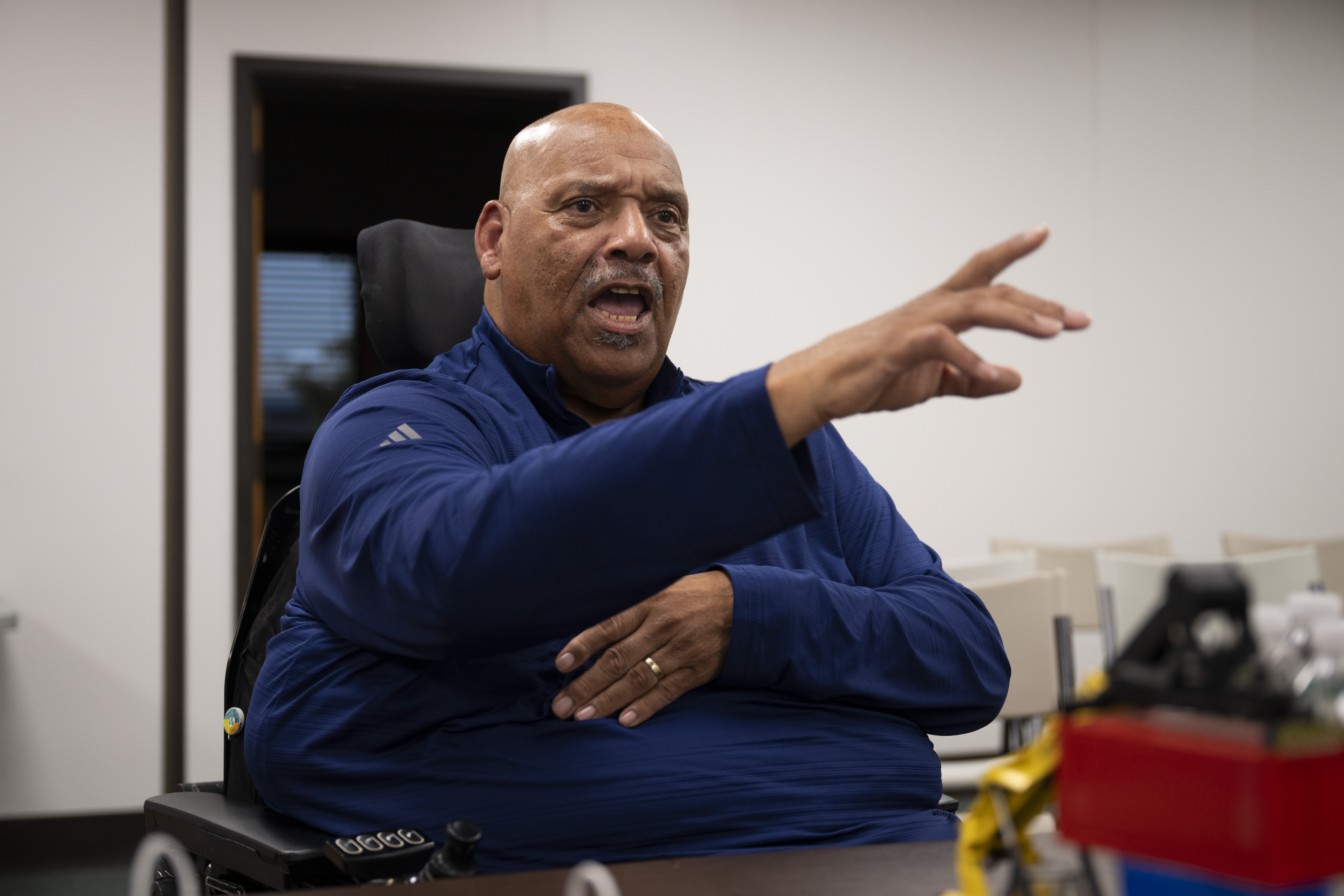
ILA Local 1291 President Boise Butler speaks to his members in Philadelphia.Joe Lamberti / For The Inquirer
The same principle should apply today, Butler says: Some of his members have been working at the Packer Avenue refrigerated warehouse since the late 1990s, and they should be able to “follow their work.”
Butler added, “I knew the Holts was gonna try to turn this into a union against union. I’m not fighting with Rocky.”
Butler — who serves alongside Bryan on PhilaPort’s board — has sought to elevate the dispute to political leaders, writing in an April memo to PhilaPort management and Democratic Gov. Josh Shapiro’s staff that Holt has “refused to commit to hiring” the ILA members.
“In effect, that will mean that taxpayer money was used to subsidize Holt Logistics’ desire to expand its refrigerated warehouse cargo operation, all while ending the careers of 31 warehouse workers in the process,” Butler wrote.
Representatives for PhilaPort and Shapiro’s office declined to comment.
Gov. Josh Shapiro meets with officials of the Teamsters Local 929 as he visits the Packer Avenue Marine Terminal in South Philadelphia in April 2025. Tom Gralish / Staff Photographer
Holt maintains that traditional longshore work is available to the workers. Butler said it’s “not impossible to do that” but added that they would lose their seniority.
That’s because the warehouse workers belong to a separate bargaining unit from the 500 longshoremen in Local 1291 who work the docks at Packer Avenue and other Delaware River ports.
In the final year of the union’s recently expired contract, warehouse workers with at least three years on the job were paid a minimum wage of $30.59 an hour, plus a $4.25 hourly annuity contribution for retirement. It also included provisions for health insurance, overtime pay, and vacation.
“A lot of us put over 20 years here, and a lot of us is at the age where we don’t want to start over,” said Lonnie Boyd, 50, an assistant shop steward who’s worked at the Packer Avenue warehouse since 1998. “We can’t afford to start over.”
The parent organization of a Philadelphia-based painters union has taken control of the local entity after alleging “widespread financial malpractice” and a “lack of democratic controls.”
IUPAT DC 21 represents 5,600 painters, drywall finishers, wall coverers, glaziers, and glass workers in Pennsylvania, New Jersey, and Delaware. The international union has 140,000 members in the U.S. and Canada.
“Instead of responding to membership’s needs and growing power in the jurisdiction, under the business manager’s leadership, the district council has engaged in financial malpractice, a lack of transparency, and acted without accountability or democratic controls,” the international union’s general president, James A. Williams Jr., wrote in the letter to DC 21 members.
Williams, a fourth-generation glazier from Philadelphia and a member of DC 21 and Local 252, said the functions of all officers, business representatives, and employees of the District Council would “terminate” and pass to the trustee, Brian Courtien, a special assistant to the general president.
Snyder, a painter by trade, could not be reached for comment. A person who answered the phone at DC 21 said Snyder was no longer employed there.
Snyder, 54, of Thornton, Delaware County, was elected business manager/secretary treasurer in August 2024. At the time of his election, the union said he’d belonged to the council for 29 years, starting out with Local 703.
IUPAT declined to make Williams — who’s also a member of the AFL-CIO’s executive council — available for an interview. In a statement, IUPAT spokesperson Ryan Kekeris said the international organization “conducted a review and found sufficient evidence to place District Council 21 under a special trusteeship.”
“A fair, democratic, and constitutionally approved hearing will determine what next steps, if any, are appropriate.”
In the letter, Williams depicted a disengaged leadership team that failed to organize or defend its trade jurisdiction, even as it increased spending. Membership has declined by 1,200 people in the past decade, Williams wrote. The council employs fewer staff than it did in 2023, yet costs have increased, he said.
The letter said the District Council’s officers and certain “selected staff” received compensation packages inconsistent with the union’s bylaws, adding that these actions were “hidden” from rank-and-file members.
DC 21 leadership provided an “inappropriate and unsustainable” number of staffers with excessive base compensation, Williams wrote.
He also cited “ballooning” compensation costs for elected staff that exceeded $300,000, “in direct conflict” with the organization’s bylaws, as well as “insufficient detail in itemized staff expense receipts.”
In addition to financial mismanagement, the letter took issue with a lack of accountability at the District Council. Rank-and-file members don’t know which staffers are elected and which are appointed, and executive staff failed to hold regular substantive meetings, the letter says.
Snyder frequently failed to show up to the office, attend collective bargaining sessions, and engage in community and political activities, violating the union’s constitution, according to the letter.
“Instead of correcting past financial and structural difficulties, District Council 21’s actions, and inactions, have exacerbated them,” the letter says. “Cumulatively, these failures evidence a general lack of attentiveness to members’ welfare and concerns, and a failure to perform bargaining representative duties, which must be addressed.”
A federal judge in Philadelphia ruled Monday that a lawsuit alleging discount retailer Five Below defrauded investors can move forward as a class action on behalf of numerous shareholders.
U.S. District Judge Gerald Austin McHugh’s 34-page order handed a win to the lead plaintiffs, two Arkansas public employee retirement plans. The pension funds say that for more than a year, Philadelphia-based Five Below misled investors about its ability to identify and stock popular products — a skill company executives referred to as their “secret sauce.”
Once investors learned the full extent of the company’s challenges in July 2024, Five Below’s stock price plummeted, wiping out almost $8 billion in shareholder value, the suit says. The company’s CEO resigned around that time.
The Arkansas Public Employees’ Retirement (APER) and the Arkansas Teacher Retirement System say they lost more than $5 million combined due to the alleged fraud.
McHugh granted their motion asking him to certify a class of people and entities who bought Five Below stock between December 2022 and July 2024.
“We are pleased to be able to represent the interests of these public pension funds, where teachers and other public servants were invested in this company and lost a considerable amount of money,” Michael Dell’Angelo, executive shareholder and general counsel of Philadelphia-based law firm Berger Montague, said in a statement.
“Our clients lost millions of dollars after they relied on the exaggerated expectations set by this retailer,” he said.
Five Below has 1,800 stores in 44 states and says most of its products are priced between $1 and $5, many of them aimed at children and teens. The company didn’t respond to a request for comment. Attorneys for Five Below and two other defendants — former CEO Joel Anderson and chief operating officer Kenneth Bull — didn’t respond to requests for comment.
The defendants have denied the allegations in court papers.
“Being honest with the market about the pitfalls of a business strategy as they are learned in no way reveals advance knowledge that the approach would fail, and failing to make accurate predictions does not amount to securities fraud,” Jay A. Dubow and Erica H. Dressler of the Philadelphia firm Troutman Pepper Locke LLP wrote in a court filing last year.
The suit alleges that despite management’s repeated assertions that Five Below could identify and capitalize on trends, the company in fact “did not operate with any real ability to stock its stores with in-demand products.”
Nevertheless, Five Below told investors it planned to triple its number of locations and double its sales based on this “trend-right” strategy, the suit says. The “plan was abruptly throttled down” shortly after Anderson, the CEO, resigned in July 2024, according to the complaint.
Even as Five Below’s problems with product assortment, inventory, and expansion dragged on its operating performance, executives falsely blamed shoplifting, the suit says.
The company eventually allegedly admitted its shortcomings in a series of disclosures to investors, with executive Bull conceding in late 2024 that Five Below had “lost our way.”
While investors suffered losses, Bull and Anderson sold more than $9 million in Five Below shares during the period in question, “while also receiving incentive compensation valued at over $10 million based on the inflation in the company’s share price,” the suit says.
The company has since rebounded, with executives citing the popularity of games and viral toys, as well as artificial-intelligence tools that help with inventory.
A cruise ship sailed out of the Port of Philadelphia this springfor the first time in 15 years, as state and local officials celebrated a new economic driver for the region.
Officials have projected that the new cruise business — anchored by Norwegian Cruise Line at a Hog Island terminal near Philadelphia International Airport — will create more than 2,100 jobs and generate $300 million in annual economic activity.
What they did not anticipate before breaking ground in December was that several obstacles — including several weeks of subfreezing temperatures and icy conditions on the Delaware River — would send the construction project millions of dollars over budget.
The cost of building the terminal has increased 50% to more than $60 million, according to the Philadelphia Regional Port Authority (PhilaPort), an independent state agency that owns seaport facilities along the Delaware. The port authority is funding the project.
PhilaPort is considering obtaining financing to help cover the $20.1 million in cost overruns. The authority’s board this month approved a resolution authorizing staff to borrow up to $15 million. PhilaPort spokesperson Marty O’Rourke said loan terms remain under negotiation.
In addition to the potential financing, the port authority is funding the project from operating revenues, O’Rourke said. PhilaPort generates revenue from its leases with tenants that operate facilities such as marine terminals and warehouses.
PhilaPort’s budget for the fiscal year that began July 1 includes $34.5 million in revenue.
Despite the delays, Norwegian Cruise Line’s ships have continued to dock at PhilaPort’s under-construction terminal since April. Mayor Cherelle L. Parker and Gov. Josh Shapiro, both Democrats, attended an onboard ceremony for the Norwegian Jewel’s inaugural call that month.
Shapiro — whose appointee chairs PhilaPort’s board — touted the cruise business “as the newest addition to our commonwealth’s fast-growing tourism industry.”
There had been 13 voyages as of mid-July.
PhilaPort remains upbeat about its new revenue stream. Under a seven-year agreement, Norwegian Cruise Line has committed to 41 voyages annually to locations like Bermuda, and PhilaPort says it will receive $59 million in rent from the company over that period of time.
“The key point to remember moving forward is that all infrastructure is now in place for additional cruise lines to start using the PhilaPort Cruise Terminal,” O’Rourke said. Each new line has the potential to generate an additional $8.5 million in annual rent, he said.
Construction began in December after PhilaPort acquired the Hog Island terminal facility in Tinicum from Energy Transfer Marketing & Terminals L.P. for $10. Under the deal, ownership of the 15.5-acre property reverts back to Energy Transfer in seven years.
PhilaPort’s board in November authorized the agency to bypass competitive bidding “due to the urgency of need to ensure that the cruise terminal is operational and ready to receive passengers by the first scheduled sailing in April 2026.”
The port authority hired Bridgeport, N.J.-based Commerce Construction Corp. to handle waterside construction, based on their past maritime experience, O’Rourke said.
Norwegian Cruise Line tapped Philadelphia-based A.P. Construction to lead landside construction.
O’Rourke said PhilaPort “had a very narrow four-month window to complete construction in time for the first ship berthing.”
“This tight construction window was compounded by severe weather-related obstacles and delays caused by several weeks of subfreezing temperatures, resulting in higher-than-anticipated costs for labor overtime and added acceleration fees for materials acquisition,” he said in an email.
Also contributing to added costs were regulatory requirements, environmental remediation, additional landside mooring work, and temporary facilities needed to support vessel operations, O’Rourke said.
The landside construction was originally scheduled for completion by the end of June. The port authority now anticipates the terminal will be complete by its grand opening Aug. 27.
Commerce Construction didn’t respond to a request for comment, but the contractor posted on LinkedIn earlier this summer that it had made progress despite “extreme cold, icy conditions, and a relentless deadline.”