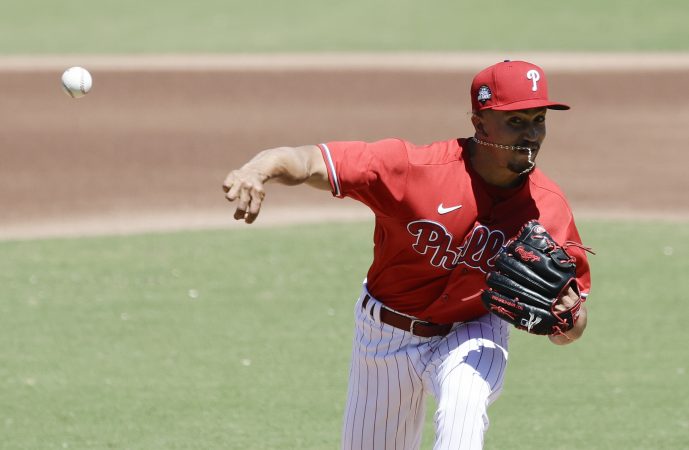
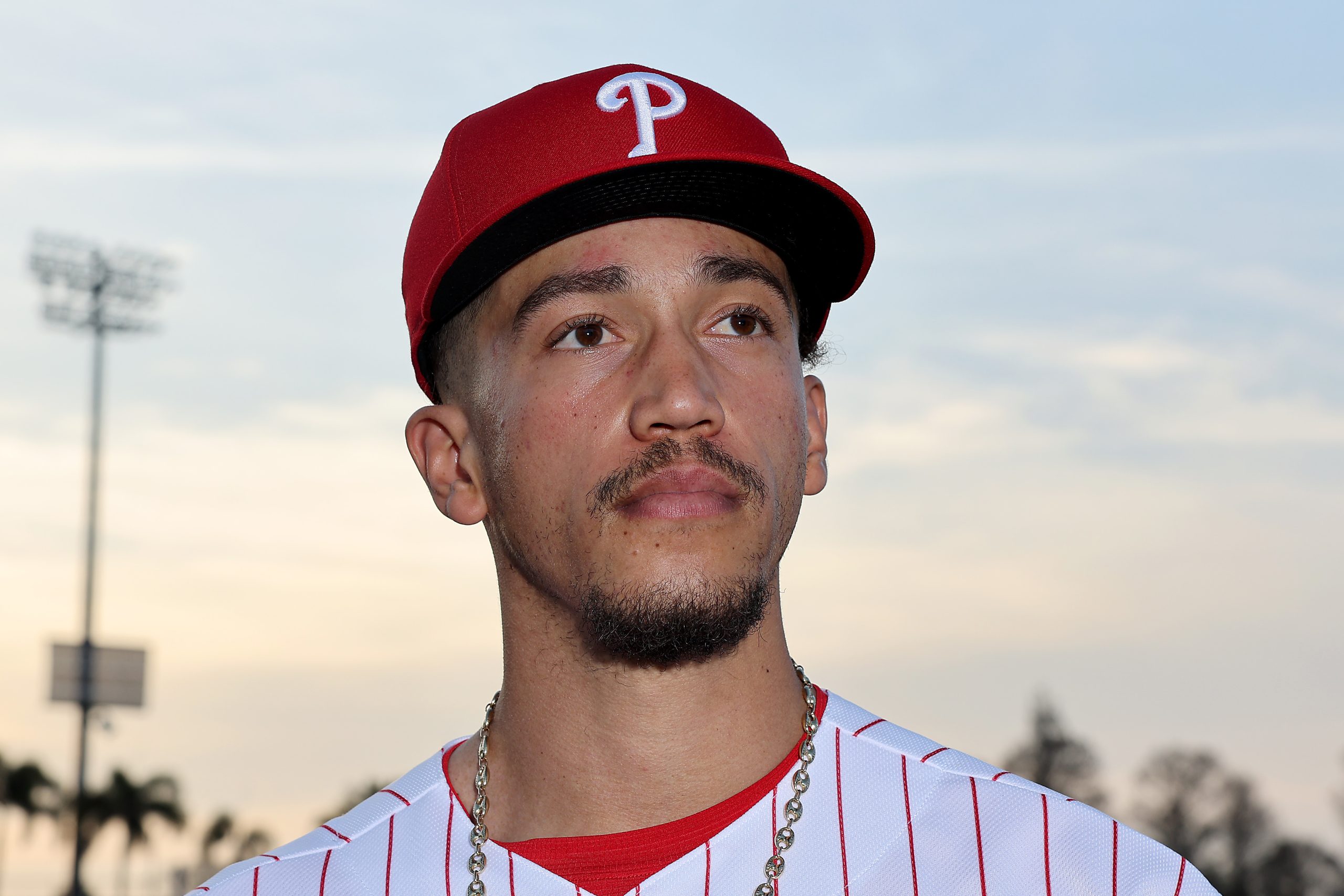
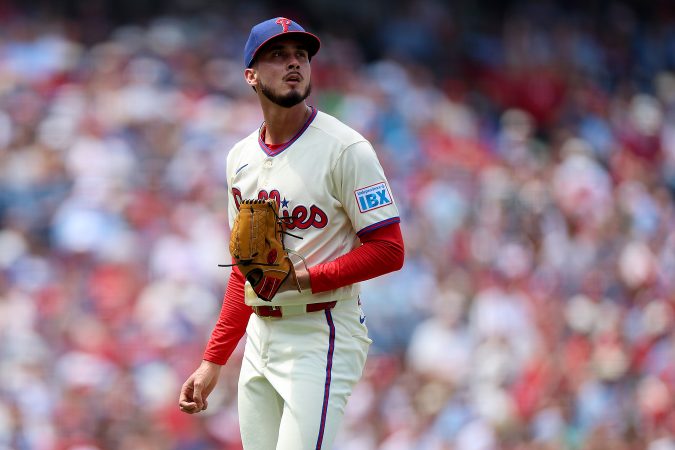
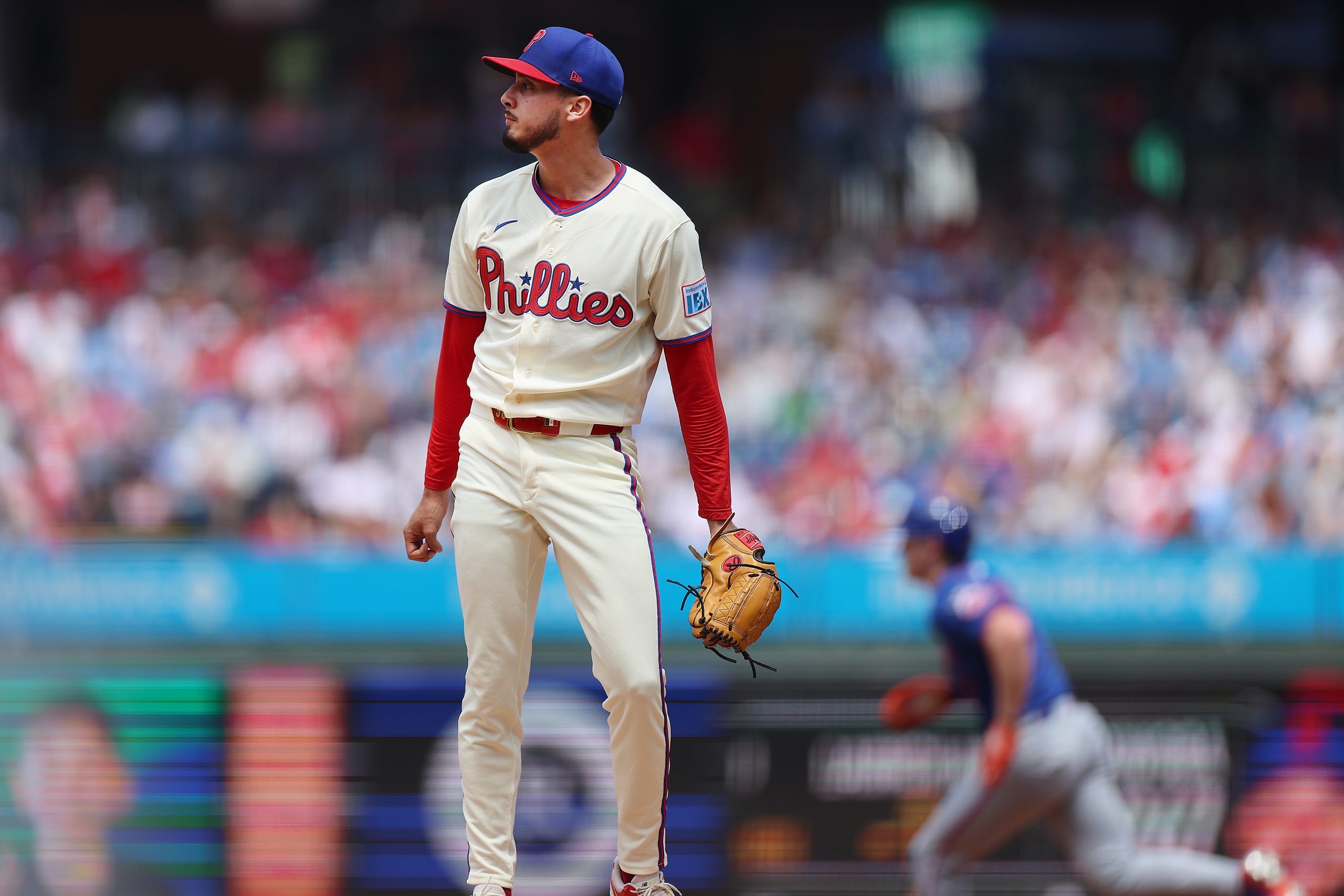
In a move that could serve dual purposes, the Phillies called up hard-throwing reliever Alex McFarlane from double A, the team announced Monday.
McFarlane, a 25-year-old right-hander, represents a fresh arm for a bullpen that was taxed Sunday in a 6-1 loss to the Mets. Five Phillies pitchers combined to throw 208 pitches, including 42 from Max Lazar and 31 from Seth Johnson in relief of No. 5 starter Alan Rangel, who needed 91 pitches to get through only four innings.
To make room for McFarlane, Rangel was optioned to triple A.
“The stuff’s been really good,” interim manager Don Mattingly said of McFarlane. “I think he’s got a really good arm. Obviously he’s young, so don’t really know exactly what to expect. But we know he’s got the stuff to be build on.”
It’s possible McFarlane will be with the team for only a few days. He got called up in a similar situation on April 24 and was optioned back to double A the next day.
But the Phillies could also opt to keep McFarlane on the roster to determine if he could contribute down the stretch. The Phillies were already seeking help for the bullpen ahead of the Aug. 3 trade deadline — and that was before setup man Brad Keller was lost for the season to a torn elbow ligament.
“We’ll just see what happens,” Mattingly said.
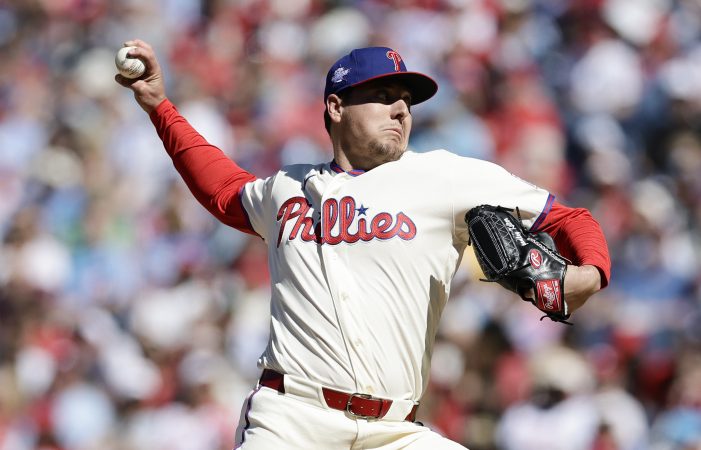
Alex McFarlane was selected by the Phillies in the fourth round of the 2022 draft out of the University of Miami. David Maialetti / Staff Photographer
McFarlane has a 2.06 ERA in 32 appearances for double-A Reading with 47 strikeouts in 35 innings. He has held opponents to a .187 batting average. But he also has a 12.6% walk rate, which has delayed his promotion to triple A.
In that case, this could be a chance for McFarlane to show that he can factor into the Phillies’ bullpen mix sooner than expected.
“Just doing what I need to do, whatever the team asks for me,” he said. “Whenever the team calls, I’ll be ready.”
One adjustment for McFarlane at the next level, either in the big leagues or triple A, will be the baseball.
From the lower levels of the minors through double A, the baseball is softer, with slightly larger seams. It isn’t until triple A that the balls are the same as in the big leagues. Top pitching prospect Gage Wood, McFarlane’s teammate in double A, said he threw only one slider in the Futures Game on July 13 because the big-league baseball tended to pop out of his hand.
McFarlane said he has played catch with the big-league ball in Reading to get more familiar with it.
“Just started incorporating it and playing catch with it as much as I could and just getting familiar with the grips and all types of stuff,” he said. “It just feels a little smaller in my hand, so just took the time to adjust and just play light catch, understand how how the ball feels, and just be ready for whenever that call is.”
No, really, bring ’em on. So what if the two-time defending World Series champs are still the best team in baseball? The Phillies would sooner face them for three days than talk about what happened Sunday.
Oh, all right. A few words about that:
In the latest noncompetitive dud from a No. 5 starter (more on that later), Alan Rangel gave up five runs before some fans found their seats. The Phillies managed six hits and lost, 6-1, to the Mets to drop the first series after the All-Star break, their warts on display.
But hey, that’s life when neither Cristopher Sánchez nor Zack Wheeler pitches in a series. That won’t be the case against the Dodgers. Sánchez is scheduled to start the opener Monday night followed by Wheeler in the second game.
So, bring on the champs, right?
“Obviously they’re a good team, one of the best,” said Alec Bohm, whose homer accounted for the offense. “I think just the opportunity is to win some games. I don’t think it’s anything crazy. It’s kind of getting down to that time of the year. We’re in the second half now. We just want to come in and take care of business.”
Say this: It’s a measuring-stick series. The Dodgers are talented and endlessly deep, with the best record in baseball — 63-36, a 103-win pace, through the opener of a doubleheader at Yankee Stadium. Shohei Ohtani won’t pitch this week because of left knee pain, but he went 2-for-5 with a double and drove in two runs Sunday in Game 1 against the Yankees, so hitting won’t be a problem.
Phillies starter Alan Rangel gave up two runs in the first inning and three in the second in a loss to the Mets on Sunday.David Maialetti / Staff Photographer
The Phillies were still ascending from a season-opening 9-19 hole when they visited Dodger Stadium the last weekend in May. They lost two of three, including Wheeler’s only defeat in 15 starts.
But they went 9-3 against the Dodgers over the last two regular seasons and lost three games by a total of four runs in the divisional round last year. Dodgers officials didn’t want to face the Phillies and were mostly relieved to survive the series.
They could be headed for an October rematch, in which case the Dodgers’ uneasy feeling won’t likely subside if Sánchez, Wheeler, and Jesús Luzardo are lined up to pitch.
To get there, though, the Phillies need more from the back of the rotation. They are 41-14 when Sánchez, Wheeler, or Luzardo start; in starts made by anyone else, they are 14-31, including 10 consecutive losses from the No. 5 spot.
“Obviously,” interim manager Don Mattingly said, “you don’t want to have a day that we never win.”
The Phillies haven’t won with a No. 5 starter since May 18. Since then, Andrew Painter got demoted to triple A, where the results have been mixed. Rotation depth is an organizational weakness. Rangel is the best (only?) option — and has a 5.75 ERA since replacing Painter.
Rangel’s next start would be Saturday at home against the Yankees. Will he make it?
“It’s something to talk about,” Mattingly said. “Now is not a great time to talk about that when you’re 10 minutes after the game. But I’m sure it’s something that everybody’s looking at.”
With a day off Thursday, the Phillies could skip the No. 5 spot and have Sánchez, Wheeler, and Aaron Nola start on regular (four days’) rest. In that case, they would need a fifth starter only once before the Aug. 3 trade deadline — and not until July 28 in Miami.
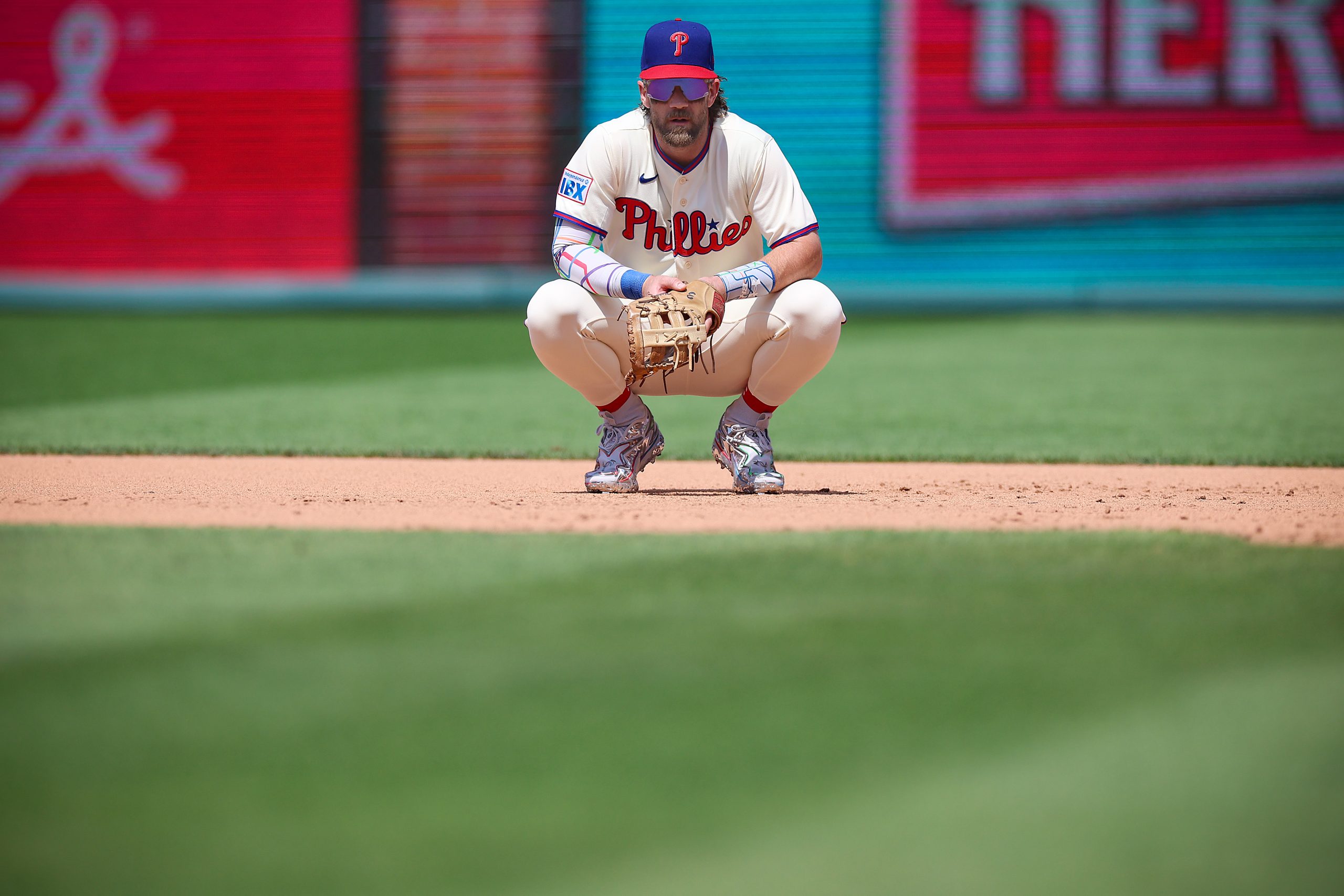
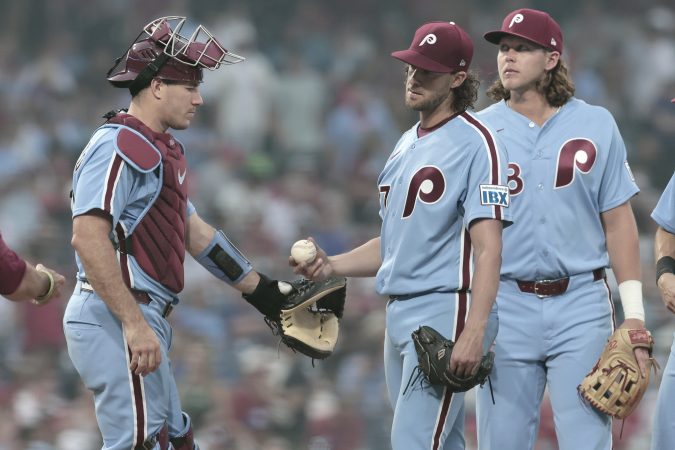
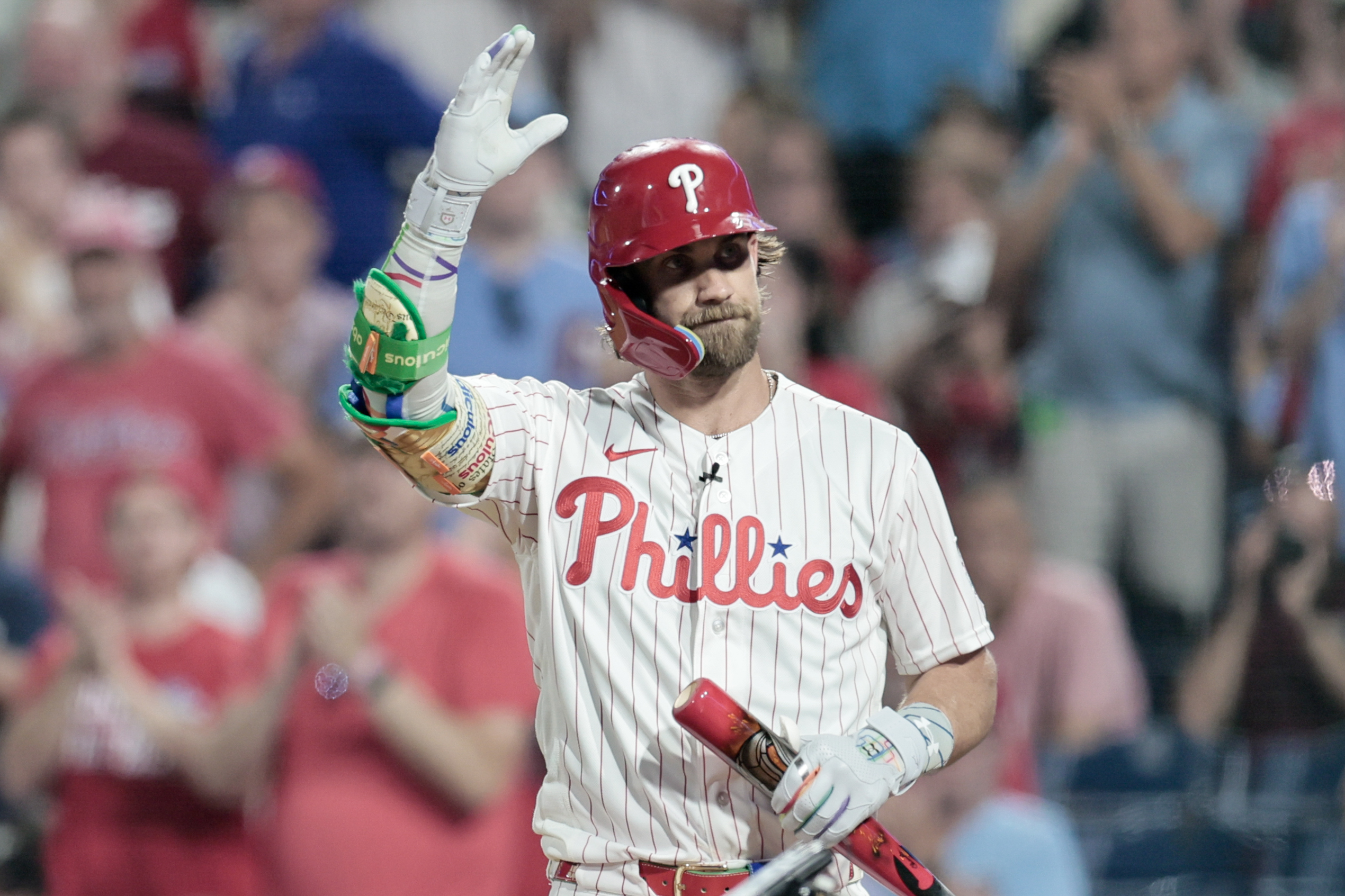
Bryce Harper pauses during a pitching change in the sixth inning against the Mets on Sunday.David Maialetti / Staff Photographer
Before sending Rangel to the mound against the Mets, Mattingly wondered how the 28-year-old righty would fare after facing them three weeks earlier in New York.
It’s safe to say the advantage went to the Mets.
“My mind wasn’t there,” Rangel said through a team interpreter. “I wasn’t thinking about that. I wasn’t worried about that. I was just trying to make my pitches and just try to do that.”
Rangel said he sensed some hitters seemed to change their approach “maybe a little.” He relies heavily on his changeup and deceptive over-the-top delivery to get soft contact. This time, the Mets fouled off a lot of pitches against him.
“I think more than anything he just wasn’t able to put guys away,” Mattingly said. “Second time they’ve seen him. Everybody’s making adjustments.”
To wit: Bo Bichette fouled off six consecutive pitches and worked an 11-pitch walk with two out in the first inning. Rangel then left a fastball over the plate to Francisco Lindor for a two-run homer into the second deck in right field.
It got worse for Rangel in the second inning. Brett Baty led off with a single before Luis Torrens lined an RBI double. Juan Soto walked and Bichette singled to load the bases for Lindor, who stroked an RBI single. Carson Benge lifted a sacrifice fly to make it 5-0.
How’s that for deflating in the rubber game of a series?
“Well, it can be,” Mattingly said. “You know, getting down five early. With that, the guy on the mound today [Mets ace Nolan McLean], he was good. It puts you in a tough spot. … It feels like kind of all day you’re kind of out of it.”
The Phillies won’t face the Mets again until September. Before that, New York is expected to be an active seller at the trade deadline, with several pitchers who could help the Phillies, perhaps none more than right-hander Clay Holmes.
A closer-turned-starter, Holmes is rehabbing from a right leg fracture. If he shows he’s healthy in upcoming minor-league starts, he would fit the Phillies as a No. 5 starter down the stretch who could easily transition to a late-inning relief role in the postseason.
In the meantime, here come Ohtani and the Dodgers.
At least the Phillies will have Sánchez and Wheeler waiting for them.
Less than three weeks before baseball’s trade deadline, one thing stands out to Phillies owner John Middleton.
“There’s very few teams,” he said, “who are out of it.”
Indeed, when the dust cleared from the All-Star break (replaced by smoke from the Canada wildfires), 23 of 30 teams were either in playoff position or within four games of a wild card. The conditions may shift before Aug. 3, but the forecast is calling for a seller’s market, with demand far outpacing supply.
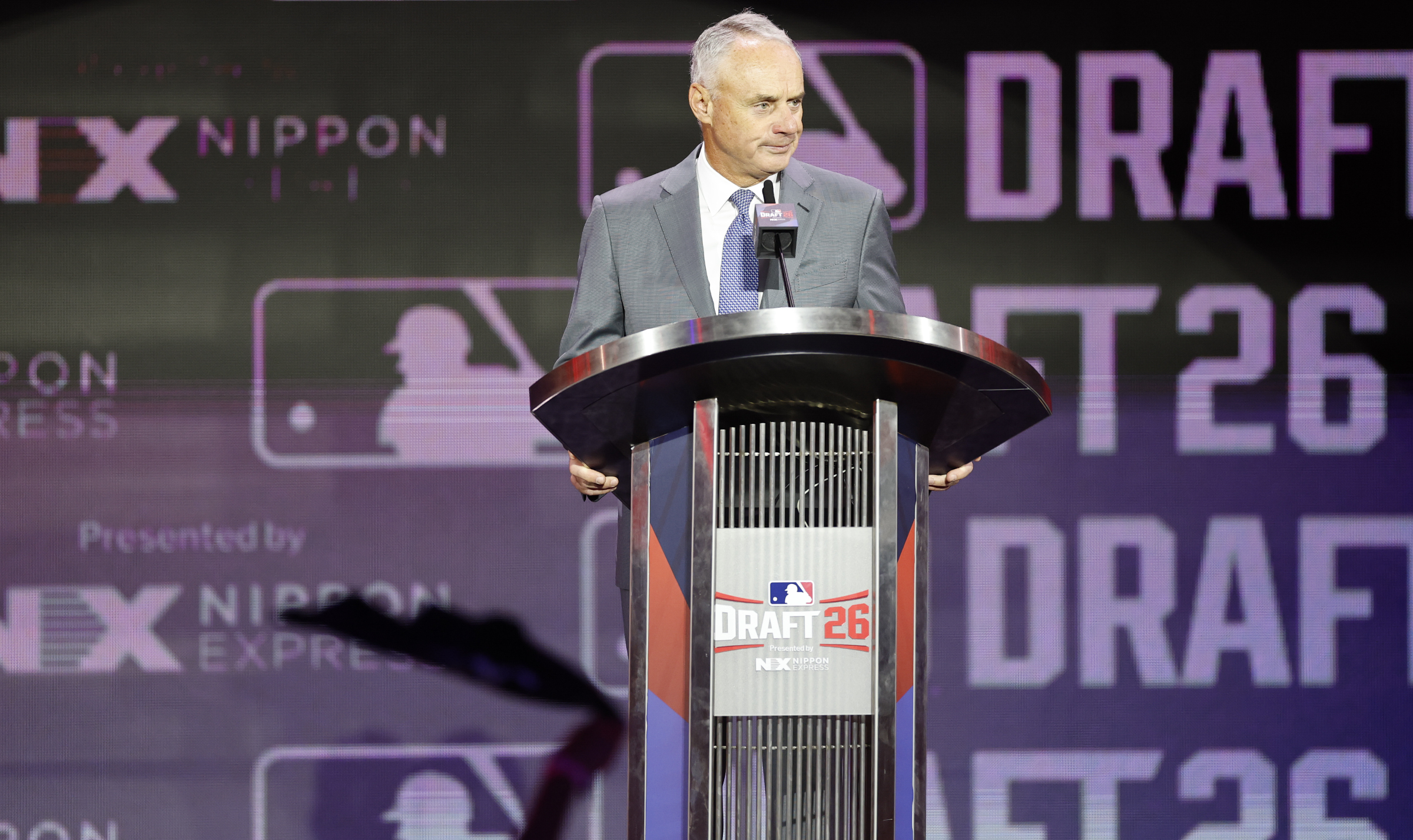
(How’s that for punching a hole in commissioner Rob Manfred’s assertion that MLB is rife with competitive imbalance that only a salary cap can solve? But we digress.)
A group of teams are poised to buy (Dodgers, Brewers, Braves, Yankees, Rays, Cubs, Phillies) and a handful should sell (Rockies, Angels, Royals, Mets, Giants). But most are in the middle. The Red Sox, for instance, looked a few weeks ago like they’d be open for business. Then, they won 14 of 16 games, including nine in a row before the break.
“It’s really hard to trade away players if you’re one of those teams and say, ‘I’m going to give up and try to get some younger players,’” Middleton said on The Inquirer’s Phillies Extra podcast. “Those teams are going to be pushing to add players to bridge that gap and get into the playoffs.”
There’s another wrinkle to this deadline: Nobody knows what the rules will be beyond 2026.
With the collective bargaining agreement set to expire on Dec. 1, and the owners and players at odds over the fundamental structure of the sport’s economic system, club executives must operate at the deadline without knowing if a cap on salaries is coming.
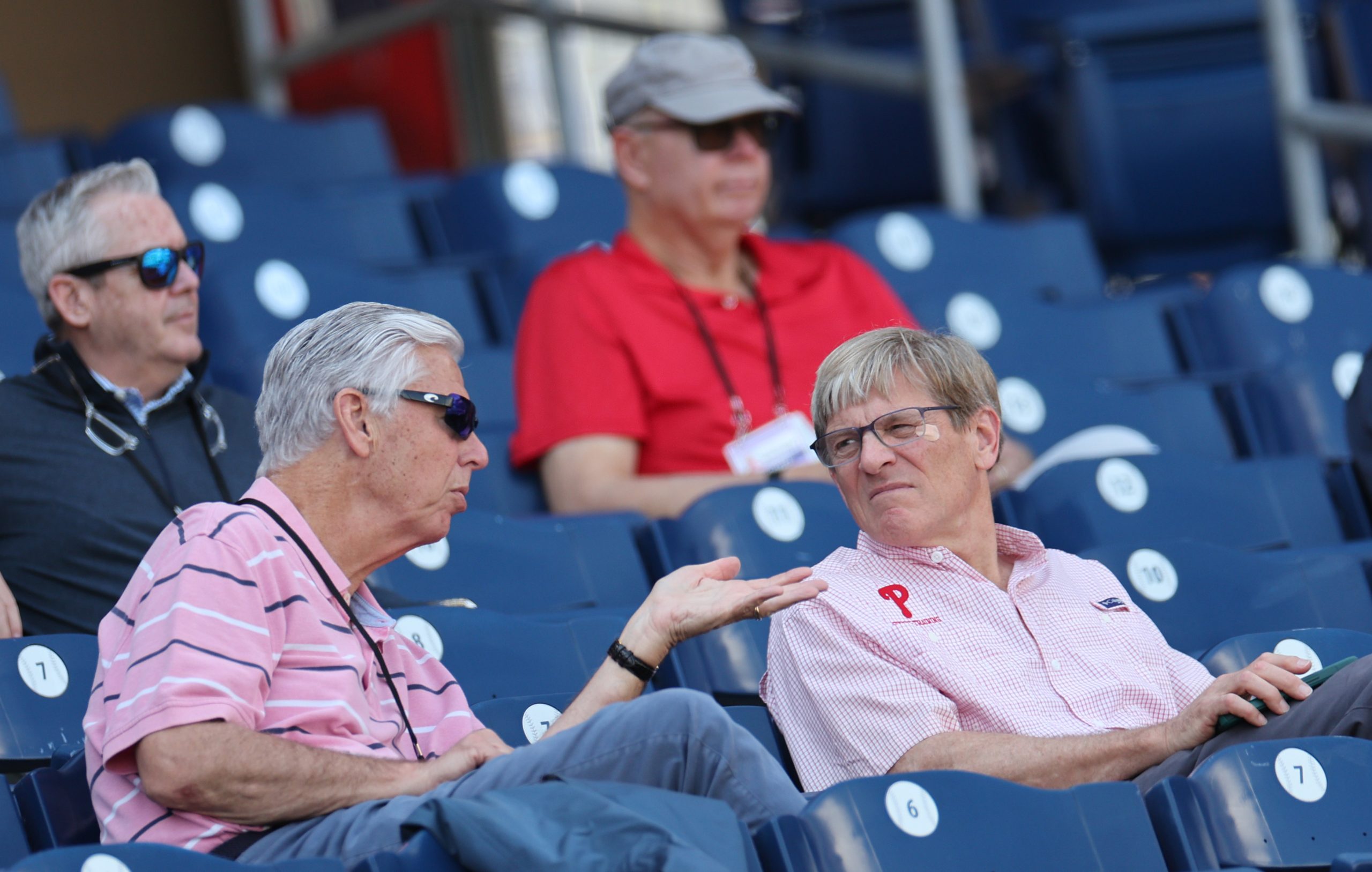
Under owner John Middleton (right) and president of baseball operations Dave Dombrowski (left), the Phillies have been among the highest-spending teams in baseball since 2022.David Maialetti / Staff Photographer
The Phillies have nine players under contract in 2027 for roughly $218 million, as calculated for the luxury tax. Middleton isn’t among the owners on MLB’s labor policy committee and said he hasn’t been informed if the proposed cap would take effect next season.
“That’s all going to be a matter of negotiation,“ he said.
In that case, doesn’t president of baseball operations Dave Dombrowski have to account for the possibility before he trades for a player who is under contract beyond this year?
“I think you have to be aware of it, you have to ask questions about it,” Middleton said. “But at the end of the day, because the range of outcomes is so wide, I think you have to just do what, in your judgment, is in your best interest.
“Philosophically, Dave and I approach these things as maximizing our ability to win today with maximizing our ability to win in the future. … That remains our philosophical construct, and we’re going to kind of move down that path.”
The Phillies continue to pursue an elusive World Series with a core of thirtysomethings who aren’t getting younger. They came out of the All-Star break with the fifth-best record in the National League (54-43) — and tied with the Brewers for the best mark in baseball since April 28, when Don Mattingly took over as manager.
But there’s also a Jenga quality to the roster. With a collection of stars at the top and little depth below them, it feels like the removal of one piece could leave the entire thing teetering on the brink of collapse.
“I think you know what we need, what we’re good at and what we’re not good at right now,” Bryce Harper said during the All-Star break. “John wants to win. He’s going to put all his chips in where he needs to, but he’s going to be smart about our future as well.
“Obviously I like the future of our organization and we need our future, but you’ve got to try to win as well. Whatever that looks like, I think Dave’s going to do a great job — or I hope he does — and get the things that we need.”
Let’s dive in, then, on the Phillies’ three biggest needs — and where they could look to fill them.
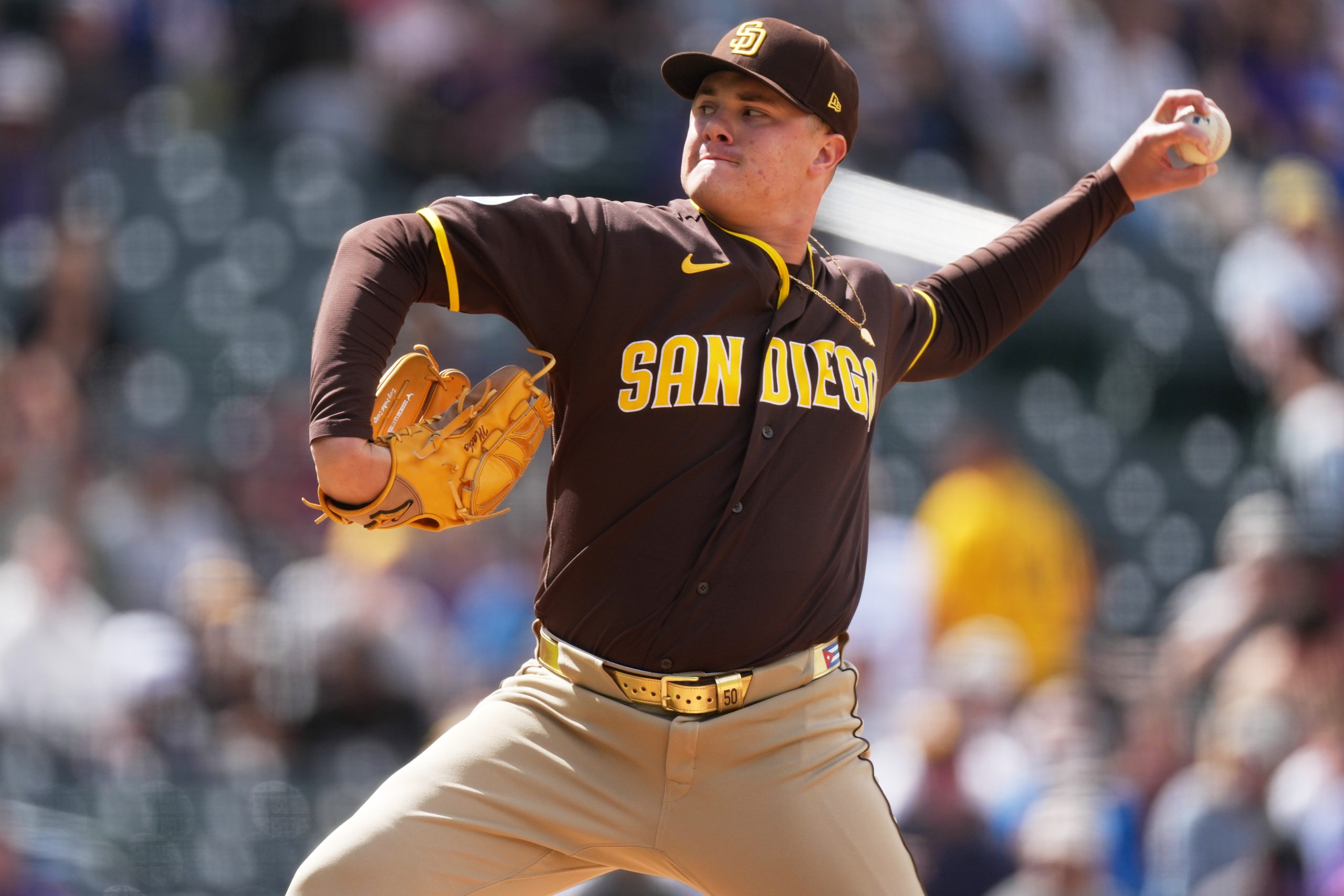
Padres lefty reliever Adrián Morejón is eligible for free agency after the season.David Zalubowski
Bullpen
Late-inning meltdowns torpedoed the Phillies in the 2023 and 2024 postseasons, so they traded two touted prospects at the deadline last year for Jhoan Duran.
And the Durantula has dominated.
But what’s the point of having one of the best closers in baseball if the bridge to him is rickety?
The bullpen vaulted to the top of the Phillies’ priority list this week after they lost Brad Keller for the season with a torn elbow ligament. Orion Kerkering and Jonathan Bowlan are the remaining righty setup options; lefty José Alvarado has pitched better than his ERA (6.82), but not nearly good enough.
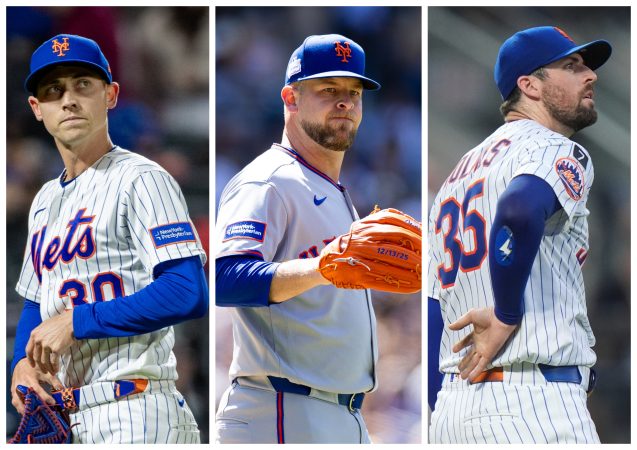
Amid a calamitous season, New York’s bullpen has been an area of strength. Need a lefty? The Mets can offer A.J. Minter (1.42 ERA entering the weekend) or 38-year-old Brooks Raley (2.02), both on expiring contracts. They’re expected to listen on right-hander Huascar Brazobán (2.70), too, although he’s under club control through 2029.
Luke Weaver might bring back the best return for the Mets. He signed a two-year, $22 million contract — identical to Keller’s deal — last winter and has a 2.03 ERA.
The Phillies and Mets aren’t often trade partners. Juan Samuel-for-Lenny Dykstra (and Roger McDowell) in 1989 was a long time ago. But there are a few recent examples. In 2018 and 2019, the Phillies sent minor leaguers to the Mets for Asdrúbal Cabrera and Jason Vargas, respectively.
Another team to watch: the Padres. They lost 11 of 16 games before the break and slid to 3½ games out of a playoff spot. And they open the second half with 10 games on the road, seven of which are in Atlanta and Miami.
It isn’t general manager A.J. Preller’s style to sell. But if the Padres keep plummeting, walk-year lefty Adrián Morejón could be a logical chip. The hard-throwing 27-year-old has a 3.42 ERA and 58 strikeouts in 50 innings.
Orioles outfielder Taylor Ward went into the All-Star break with a .387 on-base percentage, seventh in the American League.Sue Ogrocki
Right-handed hitter
Stop us if this sounds familiar: The Phillies are looking for a righty-hitting outfielder.
At each of the last two deadlines, Dombrowski traded for an outfielder who bats from the right side: Austin Hays in 2024 and Harrison Bader in 2025. Then, last winter, the Phillies signed Adolis García.
García, like Keller, is out for the season. And like Keller, his absence left a void, even though he didn’t make the impact the Phillies hoped in the middle of the lineup.
Brandon Marsh is presently the only regular outfielder. Justin Crawford and Gabriel Rincones Jr., both rookies, start against right-handed pitchers; Derek Hill and infielder-turned-outfielder Edmundo Sosa face lefties.
It isn’t ideal.
Entering the weekend, the Phillies were tied for the majors’ worst on-base percentage (.302), including a .271 mark from the right side of the plate. It’s difficult to score runs consistently when so much of the offense depends on Kyle Schwarber and Harper going deep.
“You want to have a club that does everything — hits the ball out of the ballpark, gets on base, doesn’t strike out, puts the ball in play,” Mattingly said. “You’re never going to be perfect in who you are.”
But the Phillies can be better about reaching base at a higher clip.
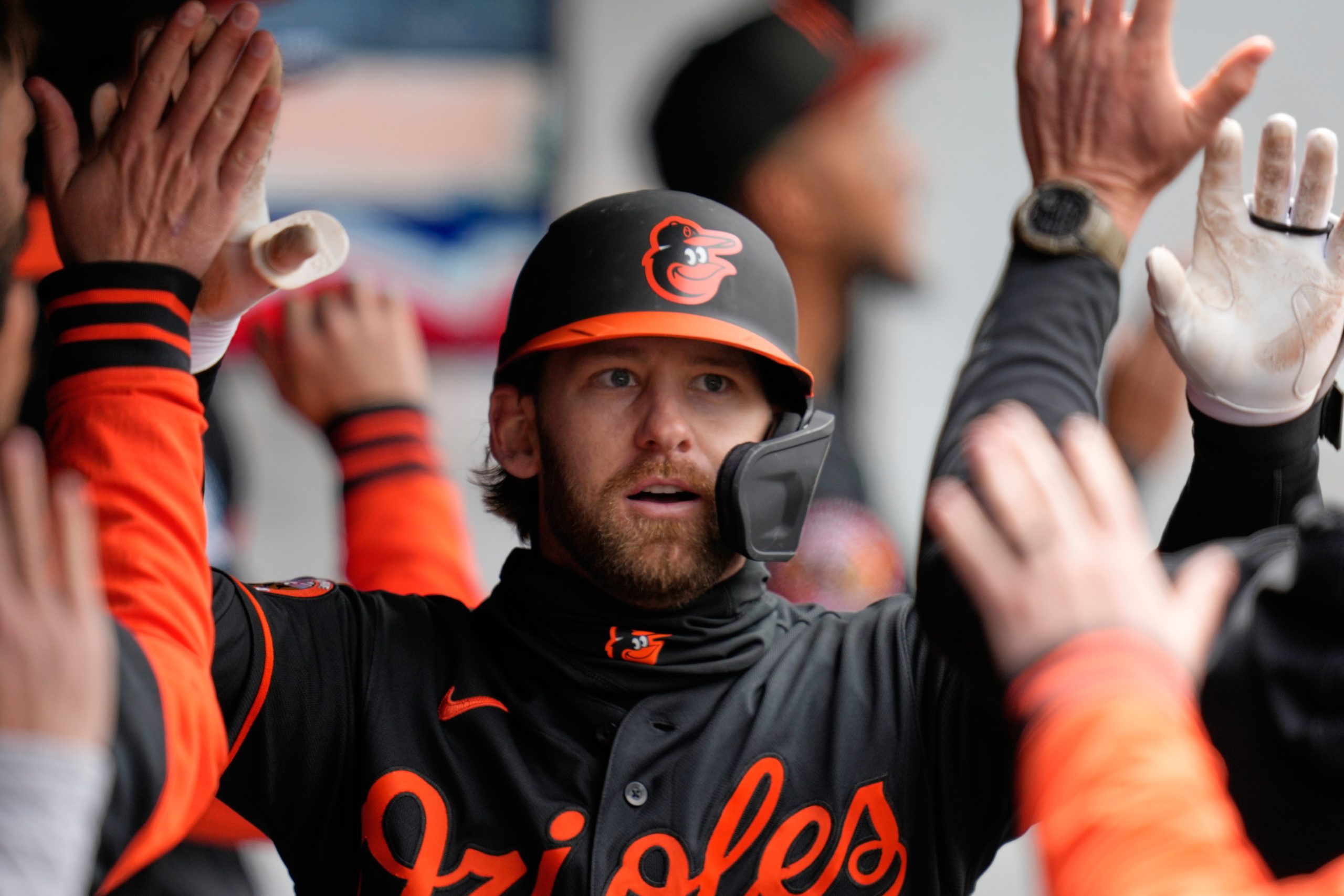
One player who makes sense: Taylor Ward.
Ward, 32, entered the weekend with six homers for the Orioles after averaging 24 in the last four seasons for the Angels. But he has swapped power for on-base ability, reaching at a .387 clip, seventh in the American League.
The Orioles were 46-51, but only two games out of a wild card. Their first nine games out of the break are against the Astros, Red Sox, and Braves, a stretch that could determine whether they buy or sell.
Mets right-hander Clay Holmes has experience as both a starter and reliever.Colin Hubbard
Three starters is mostly sufficient for the postseason, but getting there requires at least five. Aaron Nola is pitching better with a curveball- and changeup-heavy gameplan. But Andrew Painter has gotten mixed results in triple A, leaving Alan Rangel as the No. 5 starter.
Here again, pay attention to the Mets.
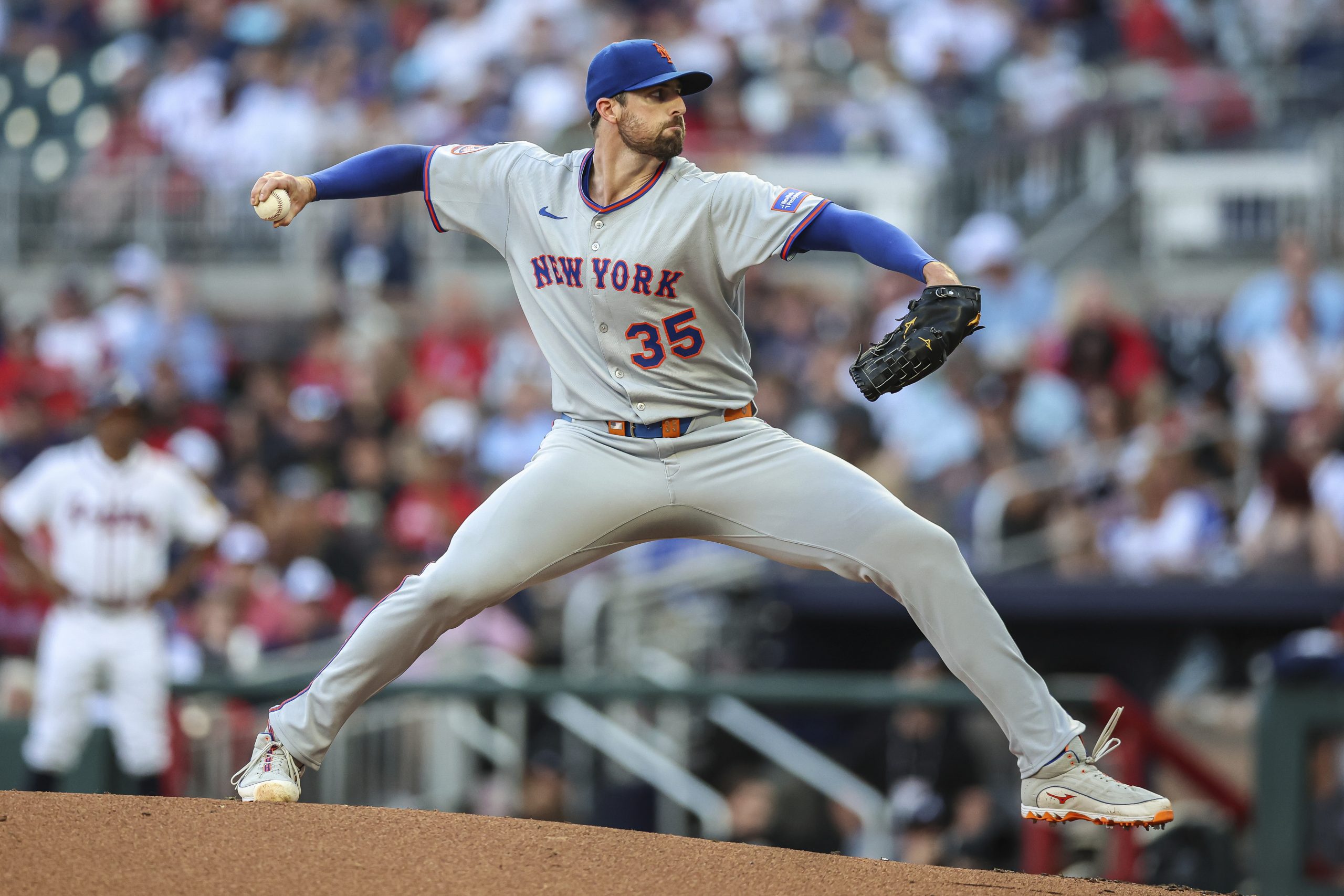
Clay Holmes has been out since May with a fractured right fibula. But interim manager Andy Green told reporters Thursday that the 33-year-old righty is “inching closer” to a minor-league assignment.
Because Holmes had a 2.39 ERA in nine starts before the injury and a 3.53 mark in 31 starts last season. And in the three years before that, he was an excellent late-inning reliever, with a 2.85 ERA and 74 saves for the Yankees.
Holmes has a $12 million player option for next season. The Mets are open to discussing an extension, according to SNY.TV. But they could also trade Holmes, then try to sign him back in the offseason. Because there’s going to be substantial interest in a pitcher who can deepen a contender’s rotation down the stretch before shifting into the bullpen for the playoffs.
Phillies owner John Middleton spent months planning to host the city’s first All-Star Game in 30 years. Now that it’s over, he joined Phillies Extra, The Inquirer’s baseball podcast, to recap his most memorable moments from the week. He also discussed the upcoming trade deadline and Field of Dreams Game in Iowa, and the future of the top of the Phillies organizational masthead. Watch here.
After coming up for air from the All-Star break one day sooner than usual, the Phillies played through smoke-filled air that only worsened Thursday night.
His teammates? Put it this way: Although the Phillies didn’t cite the campfire that hung over Citizens Bank Park as an excuse, the only thing more suffocating was the blanket flung over their bats by a handful of Mets pitchers in a 4-1 loss to open the season’s symbolic, if not mathematical second half.
“The weather was a bit different tonight, but it played no part in the final result,” Brandon Marsh said. “We just didn’t play as good as we should have, you know? Yeah, we’ve just got to be better.”
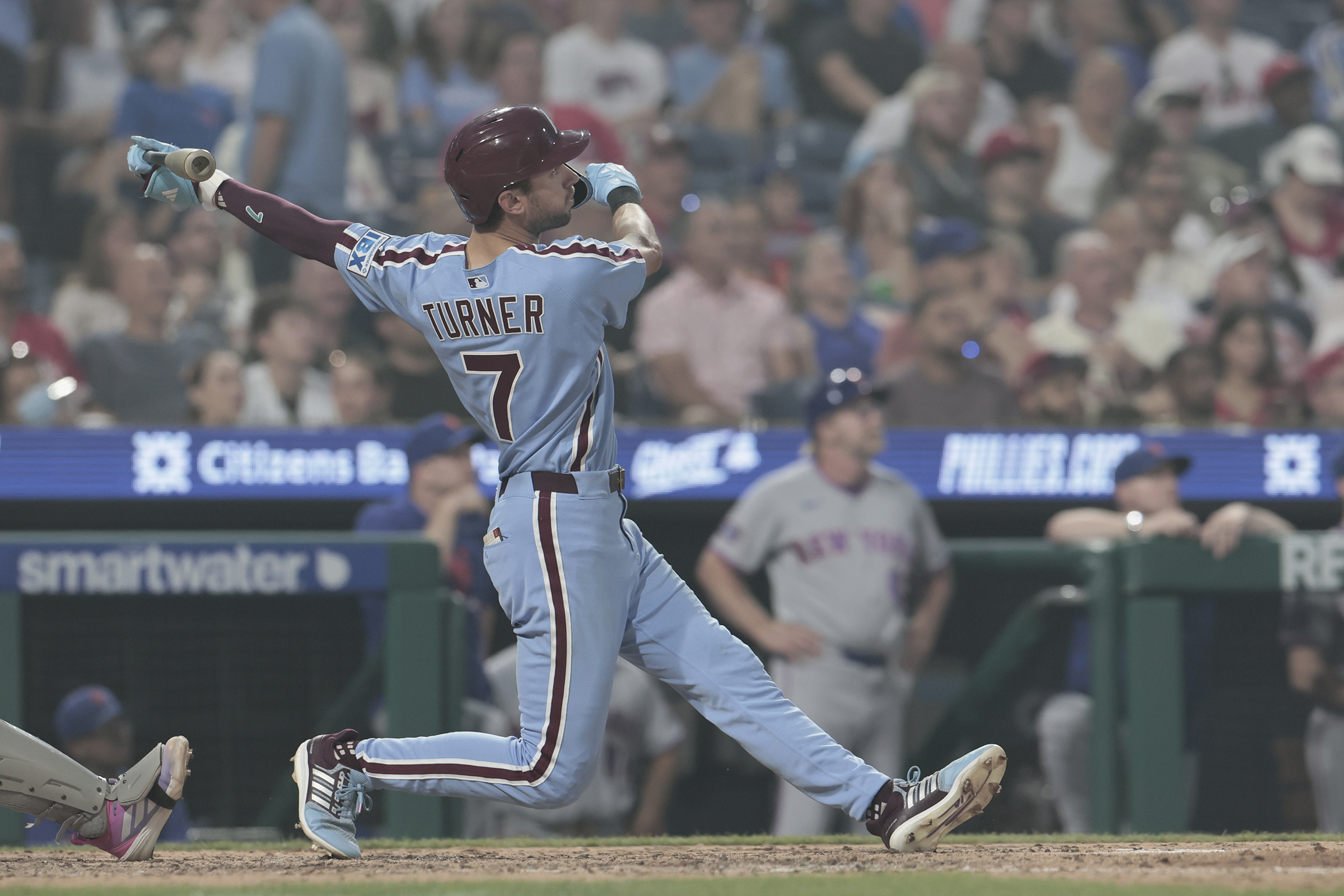
For the fifth consecutive season, the Phillies lost the first game after the All-Star break. This year, they managed four hits, with only Trea Turner’s two-out homer in the eighth inning keeping them from getting shut out for the eighth time.
Nola weaved in and out of trouble and allowed one run through six innings. But when interim manager Don Mattingly sent him back out for the seventh, at 90 pitches and against the bottom of the Mets’ order, he gave up back-to-back homers to Brett Baty and Francisco Alvarez.
Trea Turner watches his solo homer in the eighth inning, which was the Phillies’ only run of the night.Elizabeth Robertson / Staff Photographer
It was the reverse of Nola’s last start on July 10, when Mattingly pulled the veteran righty after five innings and 84 pitches in a 2-2 game. Lefty reliever Tim Mayza gave up five runs in the sixth, and the Phillies lost.
“So, I take him out too early, leave him in too long,” Mattingly said, smiling, but also claiming that his quick hook with Nola last time didn’t factor into his decision-making. “Honestly, you really take each game for what it is. If he would have struggled in the sixth, then I would have been more proactive. But he threw the ball so good in the sixth … I felt good about him right there.”
Scenes in Philadelphia as the wildfire smoke rolls in during the Mets-Phillies game 😮 pic.twitter.com/ahil4fh2ST
It marked Nola’s third consecutive solid start, a positive development for the back end of the rotation on a day when the bullpen lost setup man Brad Keller for the season with a torn elbow ligament.
The Phillies and Mets had their All-Star break shortened by one day when ESPN chose them in the offseason for a standalone national broadcast. The rest of the sport returns from the break Friday, as usual.
And a few minutes before 4 p.m., the teams were told the start of the game would be moved up to 6:10 p.m. — one hour earlier than scheduled — because the air quality was expected to worsen after sunset.
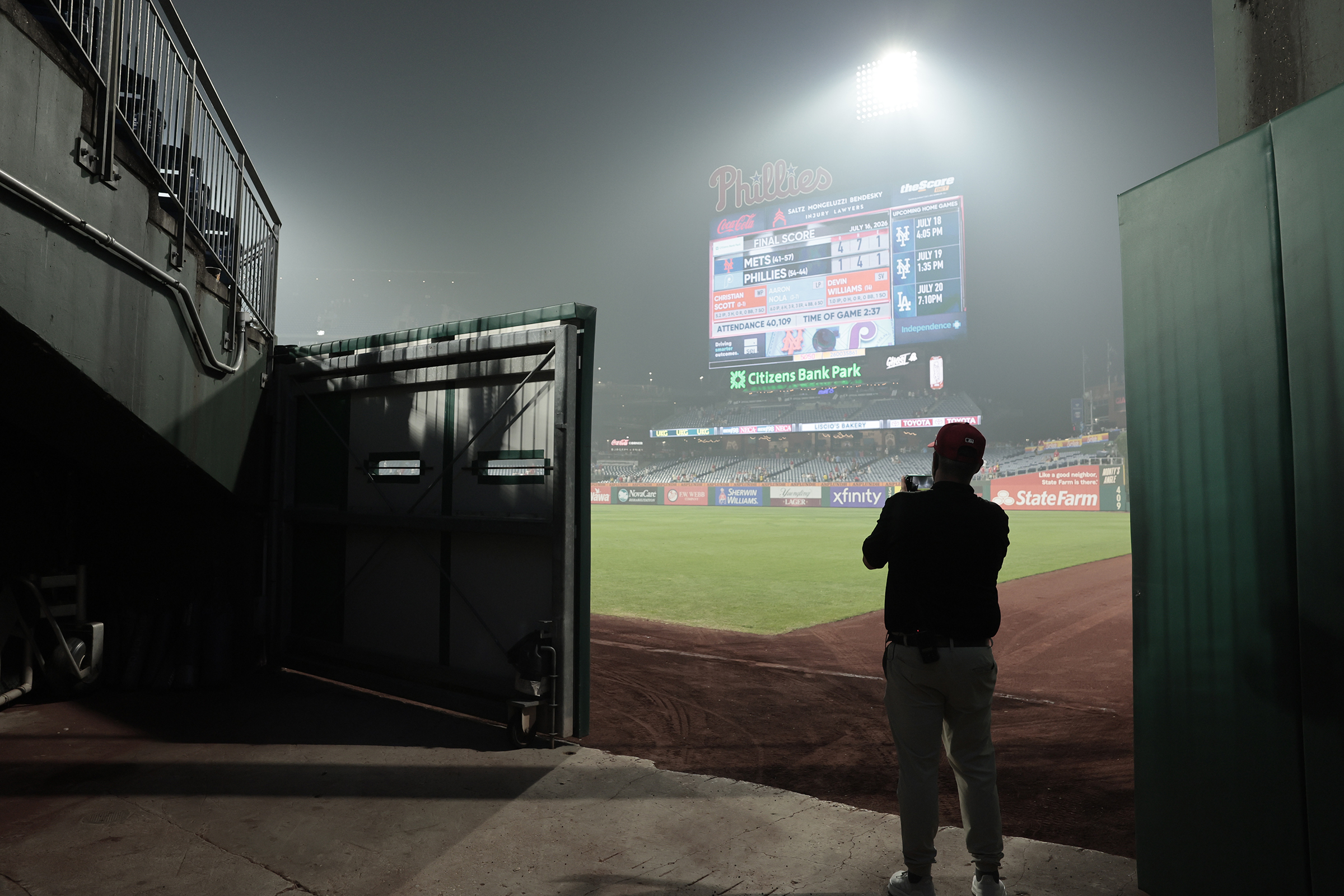
The forecast proved correct. When the game started, the air quality index was at 157, according to airnow.gov, categorized as “unhealthy.” It rose to 166 by 8 p.m., with the Center City skyline no longer visible from South Philly. By 9 p.m., it was 192.
“It’s not ideal,” Nola said. “But it is what it is. Can’t really do anything about it. It’s one of those days where it was smoky. But I mean, it’s an outdoor stadium. You’ve got to get the game in and play through different conditions.”
Marsh said home-plate umpire Dan Iassogna, also the crew chief, repeatedly asked players throughout the game if they didn’t feel well or if the conditions were disruptive in the game.
“Yeah, multiple times they were checking with us, asking us players — which was cool to see — if we were good to go, and obviously we were all ready to go,“ Marsh said. ”That was good by them. I wasn’t expecting that, but that was good.”
Mattingly said there was discussion earlier in the day about whether the game should be played. But based on forecasting, league and team officials were confident they could get it in, albeit earlier than expected.
Phillies logistics team member Erik Lowell takes a photo of the smoke filled air over the baseball field after the Phillies’ loss on Thursday night.Elizabeth Robertson / Staff Photographer
But the Phillies and Mets altered their pregame routines in other ways. Neither team took batting practice on the field and spent “as little time as possible on the field,” Mattingly said.
“Just doing what you absolutely feel like you have to do after being gone for three days,” he added. “Not trying to absorb a bunch of energy when you’re getting heated.”
The Phillies were muted by Mets starter Christian Scott and four relievers. They had one hit through three innings and failed to capitalize on Bryce Harper’s one-out double in the fourth and a two-out double by Kyle Schwarber that missed being a homer by inches in the sixth.
Nola, meanwhile, continued to have success by leaning on his signature curveball and changeups to left-handed hitters. Fifty-nine of his 97 pitches were off-speed compared to only 19 four-seam fastballs and 15 sinkers.
In his last three starts, Nola has given up eight runs in 18 innings to leave his ERA at 5.68.
“Stuff feels pretty good,” he said. “Solo home runs is hurting me, but other than that, body and stuff is pretty good. Overall, I feel like I’m getting ahead in the counts and getting earlier outs and going a little bit deeper in the games.”
The Phillies could take a measure of consolation in that, maybe when the smoke clears.
Set a calendar reminder for March 25, when the Phillies are expected to open the 2027 season in Washington, according to the schedule released Thursday by MLB.
That assumes, of course, that next season starts on time.
Baseball is facing a work stoppage after the collective bargaining agreement expires on Dec. 1, at which point the owners likely will lock out the players. If a new agreement can’t be reached by mid-March, it’s possible games will be lost.
Holiday games on May 9 (Mother’s Day) vs. the Braves, June 20 (Father’s Day) vs. the Giants, July 4 vs. the Mariners, and Sept. 6 (Labor Day) vs. the Marlins.
Brad Keller returned from the injured list and threw 14 pitches in a scoreless inning last Wednesday night. He didn’t pitch again before the All-Star break.
And now, his season is over.
Keller, the Phillies’ highest-paid reliever and a primary bridge to closer Jhoan Duran, tore the ulnar collateral ligament in his right elbow, the team disclosed Thursday. The 30-year-old righty will get a second opinion before likely having Tommy John elbow surgery, which typically involves a 12- to 14-month recovery.
“It’s tough, tough news,” Keller said. “Obviously with the team and the position that we’re in, you want to come in the second half and fight with the boys. Just tough to swallow this pill right now.”
Keller’s injury may alter the Phillies’ approach to the trade deadline, set for 6 p.m. on Aug. 3. A leverage reliever already ranked among their needs. But it may now move ahead of a right-handed bat and back-end starting pitcher.
Orion Kerkering, already filling a late-inning role, took a 2.43 ERA into Thursday night’s game against the Mets. Fellow righty Jonathan Bowlan, who didn’t allow a run in seven innings before the break, has gained more of interim manager Don Mattingly’s trust.
But even before losing Keller, the Phillies were looking for another reliever. Hard-throwing lefty José Alvarado had a 6.82 ERA entering Thursday, although Mattingly noted his underlying metrics forecast better results. Alvarado’s expected ERA, for instance, is only 3.74.
“Obviously,” Mattingly said, “we’re going to need Alvy to be Alvy.”
Jonathan Bowlan will step into a bigger role in the Phillies’ bullpen now that Brad Keller has been lost for the season.Yong Kim / Staff Photographer
And, even then, the Phillies will need to find relief help in a trade market that favors sellers over buyers.
Interestingly, the Mets, with a 40-57 record at the break, are likely to move a few relievers, including walk-year lefties A.J. Minter and Brooks Raley. Luke Weaver, who has one year at an $11 million salary left on his contract, also could be available.
“I know we’re always going to try to get better — everyone’s going to try to get better at the deadline if they can,” Mattingly said. “For me, I’m comfortable with where we’re at. If you’d say this is our club the rest of the way and whoever’s in the minor leagues is going to help us and we go forward, we’re good enough to win.”
The Phillies recalled righty Seth Johnson from triple A to take Keller’s roster spot. Another name to watch: Alex McFarlane. The 25-year-old is on the 40-man roster and has a 2.12 ERA and 45 strikeouts in 34 innings in double A, although his 13% walk rate is a concern.
The Phillies signed Keller to a two-year, $22 million contract in the offseason after a breakout year with the Cubs, a rare instance in which president of baseball operations Dave Dombrowski committed more than one year to a free-agent reliever.
Keller overcame a rough start to the season before giving up three runs in the eighth inning June 13 in Milwaukee. He went on the injured list a few days later with what the Phillies classified as forearm tendinitis.
An MRI last month “showed no tear or anything,” Keller said. And the discomfort he had felt, including being unable to straighten his arm after pitching, subsided to the point that he described it as a “night-and-day difference.”
To fill Brad Keller’s spot, Phillies recalled righty Seth Johnson from triple A.Elizabeth Robertson / Staff Photographer
The tightness returned after his scoreless inning last week in Cincinnati and didn’t subside. He got another MRI on Monday, which revealed the tear.
“I don’t really recall a pitch or anything like that I felt a pop or anything, so it’s kind of really strange,” Keller said. “It’s pretty surprising news, for sure.”
Keller said he has a second opinion scheduled with Keith Meister, a Texas-based orthopedic surgeon and the Rangers’ longtime team physician.
In 32 appearances, Keller had a 4.02 ERA and 32 strikeouts in 31⅓ innings.
Set a calendar reminder for March 25, when the Phillies are expected to open the 2027 season in Washington, according to the schedule released Thursday by MLB.
That assumes, of course, that next season starts on time.
Baseball is facing a work stoppage after the collective bargaining agreement expires on Dec. 1, at which point the owners likely will lock out the players. If a new agreement can’t be reached by mid-March, it’s possible games will be lost.
Holiday games on May 9 (Mother’s Day) vs. the Braves, June 20 (Father’s Day) vs. the Giants, July 4 vs. the Mariners, and Sept. 6 (Labor Day) vs. the Marlins.
Sept. 26: Season finale at home vs. the Nationals
Cristopher Sánchez will make his next start against the Dodgers on Monday.Elizabeth Robertson / Staff Photographer
Extra bases
Mattingly said Cristopher Sánchez and Zack Wheeler are lined up to start Monday and Tuesday, respectively, against the Dodgers. Sánchez started the All-Star Game for the National League and threw 34 pitches in the first inning. Wheeler will wind up with seven days’ rest. “He’s our oldest guy [36 years old], so we want to keep him strong, give him the best chance to have success through the whole second half,“ Mattingly said. … The Phillies and Mets will be off Friday before resuming their series Saturday night. Jesús Luzardo (8-4, 3.51 ERA) is scheduled to face Mets lefty Sean Manaea (2-4, 4.56).
In 1976, when the All-Star Game came to Veterans Stadium, the Yankees’ Catfish Hunter and Thurman Munson did a midgame interview about a historic collective bargaining agreement that was ratified the night before.
Now that was a celebration of baseball.
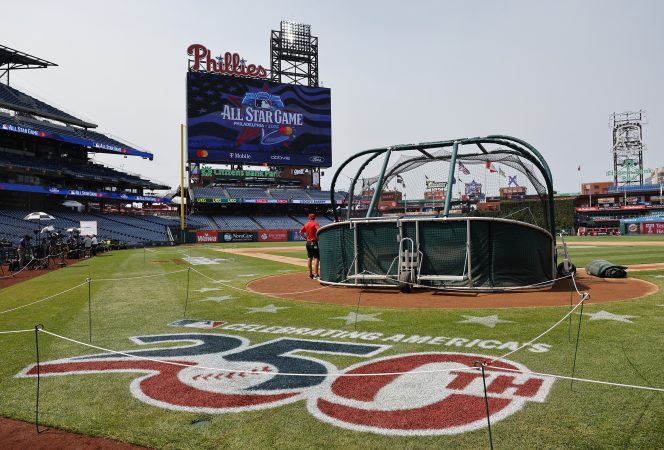
Fifty years on, this wasn’t so bad either. MLB pulled out all the stops — and tugged on a few heartstrings, too — Tuesday night, from Miles Teller’s pregame ode about the sport’s impact on a 250-year-old country to the fifth-inning recreation of The Sandlot, including Ray Charles’ rendition of “America The Beautiful,” with All-Stars and children watching fireworks together on the field like it was some magical backyard.
“Oh, yeah, that was honestly one of my favorite parts of the game just because that was my favorite baseball movie growing up,” said Brandon Marsh, the Phillies’ first-time All-Star. “When I hear that song, it almost just brings tears to my eyes because it takes me back to being 5 years old.”
That was the point. And on that count, bravo, baseball.
All of which makes what will happen in less than five months so much more galling.
Because the owners and players agree on one thing — and one thing only: Baseball is thriving. Commissioner Rob Manfred and interim players’ union chief Bruce Meyer have the attendance figures and television ratings to prove it.
Baseball’s owners are “more united than any group in my entire time in baseball” in the pursuit of a salary cap, according to commissioner Rob Manfred.Yong Kim / Staff Photographer
Yet when the collective bargaining agreement expires Dec. 1 without a new deal — the sides can’t even agree on an economic framework within which to work — the owners almost surely will lock out the players, inciting a work stoppage that threatens to shutter the sport not only during a long, cold winter but also for part or even all of the 2027 season.
Talk about hitting the self-destruct button. Or pulling the pin out of the grenade. Pick your metaphor. They all apply.
And if you didn’t already think baseball was headed to such a dark place, well, you should’ve been in the hotel ballroom where Meyer and Manfred met separately with members of the Baseball Writers’ Association of America hours before the American League scored three first-inning runs against the Phillies’ Cristopher Sánchez in a 4-0 victory over the National League.
Start here: Meyer rejected MLB’s proposal to institute a salary cap, forever a third-rail issue for the players, on the union’s contention that baseball isn’t suffering from competitive imbalance as much as a subset of owners that aren’t trying to actually win. The players, then, are proposing changes to how revenue is shared between the teams.
“Teams in every market across the league can afford to compete; many of them are choosing not to,” Meyer said. “From our standpoint, that’s the biggest problem in the game right now.”
But the owners are “more united than any group in my entire time in baseball” in the pursuit of a salary cap, according to Manfred, who said they were influenced by internal polling of fans. (Here’s a secret: It’s really more about the owners wanting to control costs and raise their franchise values.)
And the players? Although it remains to be seen whether the union can hold — rank-and-file players with lower salaries might have different interests than superstars — the biggest names in the sport are steadfast in their refusal to accept a cap.
It goes back generations, in fact, to Philly’s 1976 All-Star Game, where the players won the right to become free agents after accruing six years of major league service. They played without a CBA for the first half, the sides trusting they would work something out.
“None of us talked about that stuff,” Larry Bowa said. “I hear it now [from players]. You hear a lot of talk about if there’s going to be a lockout. I do know that when we had these talks, [owners] always wanted a cap, and that was one thing that was embedded in our brains: ‘Don’t go for a cap. It’s not going to work.’”
And now?
“I think the opportunity for players to get paid is what this is all about,” Bryce Harper said. “That’s why we have no cap and what we’ve done for so long, starting with Curt Flood. He started everything. So, we owe it to the guys that have come before us to do the same thing and all the young guys that are going to go through it, as well.”
Said Mike Trout: “I think [a cap] is bad for the game. The game’s in a great spot right now, you know? I just don’t support that.”
With five months before the CBA expires, this is a time for rhetoric more than serious negotiation. But Meyer blasted MLB for its advertising campaign on MLB.TV — “Level the Playing Field” — to drum up public support.
“The supposed stewards of the game have spent an inordinate amount of time trying to convince fans that they shouldn’t have hope, or that the product they’re paying to consume in record numbers is somehow broken,” Meyer said. “I think it’s perverse.”
Manfred pointed out that a small-market team hasn’t won the World Series since the Royals in 2015. Meyer noted that the Brewers and Rays are leading their divisions at the All-Star break, with Milwaukee bound for its eighth playoff appearance in nine years, including four in a row.
“It gives Bruce talking points,” Manfred said. “But from our perspective, the more important issue is, what’s the aggregate data over time? Our view of the world is that over a very long period of time, there’s a very strong relationship between [payroll] and who gets into playoffs.”
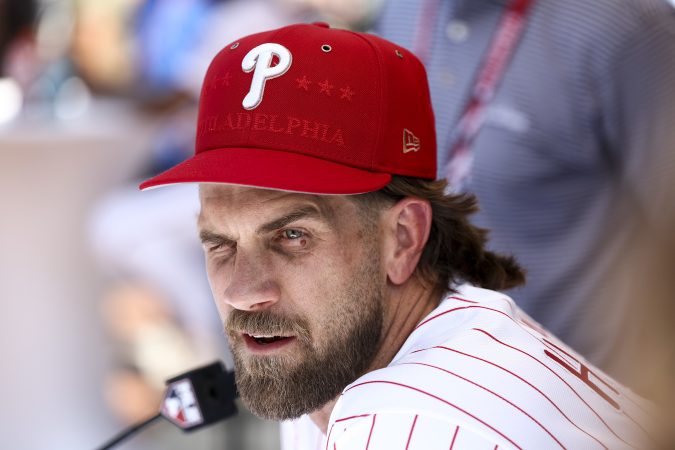
The Phillies’ Bryce Harper is adamantly against a salary cap.Elizabeth Robertson / Staff Photographer
It’s ugly. And it will only get uglier.
Five years ago, baseball went through a 99-day lockout before reaching a deal in mid-March and shoehorning a 162-game season into a compressed schedule. Back then, though, the owners and players settled their differences within the existing non-cap system.
Now, they can’t even agree on an economic structure. It’s as if the owners are speaking French and the players German.
“A salary cap is the ultimate excuse for an owner to say, ‘Gee, I would like to make the team better, but you know, I can’t,’” Meyer said. “Salary caps are bad for fans.”
Said Manfred: “I think the number from top to bottom in our sport, in terms of payroll, the gap is $441 million. It defies human experience to ask a fan to think that the bottom end of that gap has the same opportunity to win as the top end.”
As baseball fans tune in to the All-Star Game, they may notice the advertising campaign that suggests the public supports Major League Baseball’s recent proposal for a salary cap.
Nonsense, according to the MLB Players Association.
“The supposed stewards of the game have spent an inordinate amount of time trying to convince fans that they shouldn’t have hope, or that they don’t have hope, or that the product they’re paying to consume in record numbers is somehow broken,” MLBPA interim executive director Bryce Meyer said Tuesday in a meeting with the Baseball Writers Association of America. “I think it’s perverse.”
MLB is running the ads with the slogan “Level the Playing Field” on MLB.TV. The collective bargaining agreement is set to expire on Dec. 1, and the owners maintain that a cap-based system is necessary to achieve greater competitive balance.
In addition, commissioner Rob Manfred has claimed that feedback from fans, obtained through public polling, is central to the league’s desire to implement a salary cap.
The players have historically opposed a cap. And with the sides at odds over the very structure of the sport’s economic system, a work stoppage seems likely, even at a time when MLB is experiencing increased attendance, strong television ratings, and an uptick in overall interest.
Manfred, who met with the BBWAA after Meyer, cited a $441 million disparity between the teams with the highest and lowest luxury-tax payrolls. Meyer countered by noting that the low-budget Milwaukee Brewers and Tampa Bay Rays are leading their respective divisions at the All-Star break.
“It gives Bruce talking points,” Manfred said. “But from our perspective, the more important issue is, what’s the aggregate data over time? Our view of the world is that over a very long period of time, there’s a very strong relationship between [payroll] and who gets into playoffs and who proceeds.”
Manfred was asked why the league would launch an advertising campaign if the fans didn’t need to be swayed.
“I think when you have a difficult public issue, particularly when the other side of the issue is being very public about what their views are on the negotiation, I think it’s incumbent on us to keep our fans informed of our view of the world,” Manfred said. “Particularly given sometimes the other side may not be completely accurate or fair in terms of their recitation of what’s going on.”
Negotiations on a new agreement began in May and will continue until the existing CBA lapses, at which time the widespread expectation is that the owners will lock out the players and effectively shut down the sport. In 2021-22, MLB experienced a 99-day lockout before an agreement was reached in mid-March, before regular-season games needed to be canceled.
With the talks still in their early stages, Manfred and Meyer each presented a united front. Manfred said the owners are “more united than any group in my entire time in baseball.” Meyer countered by saying MLB will try to break the union by appealing to rank-and-file players closer to the bottom of the pay scale.
It was against that ominous backdrop Tuesday night that MLB held the All-Star Game in Citizens Bank Park, with its “Level the Playing Field” ad campaign in full force.
“There’s something wrong with that,” Meyer said. “Look, we’re in a bargain year. Both sides engage in media efforts. We do it. Sadly, we don’t own our own TV network.”
As details emerge on the personalized video that Bryce Harper says he unknowingly recorded on behalf of FanDuel for a sports-gambling addict, Major League Baseball is confident that the Phillies star didn’t violate any league policies.
“I think the important thing is that Bryce’s activity was not a violation of the basic agreement,” commissioner Rob Manfred said Tuesday in a meeting with the Baseball Writers’ Association of America. “We made sure about that, and we’ll continue to try to figure out exactly how we ended up, where we ended up on that.”
MLB’s collective bargaining agreement, which will expire Dec. 1, allows players to appear in advertisements or make personal appearances for casinos, racetracks, or sportsbook companies, as long as they do not encourage betting on baseball.
The Inquirer obtained a copy of a 21-second video from November 2024 in which Harper offered a greeting to a bettor, Terry Thompson, who wagered $18.5 million with FanDuel and lost $1.5 million, according to a lawsuit that the Public Health Advocacy Institute filed in March in Common Pleas Court in Philadelphia.
Harper posted to Instagram on Monday that he thought he was just doing a message on the site Cameo — where celebrities are paid to record videos for fans — but “what happened here went beyond anything I knew about or approved.”
“I did not know this video would be used for commercial purposes,” Harper wrote, adding that he read a script “in good faith” before FanDuel put its own logo on the video and used it as a gambling promotion. “I did not know FanDuel would do this, I did not consent to it, and FanDuel had no right to do it.”
Harper declined to comment beyond his initial statement on the advice of counsel.
Manfred said he’s “aware of the situation” and Harper’s statement about it, but said “I’m not really certain that I know all of the underlying facts well enough to evaluate the behavior.”
Harper will be in the All-Star Game on Tuesday night in Citizens Bank Park. He was selected as the commissioner’s “Legends Pick,” one spot on each league’s roster that is filled by Manfred.