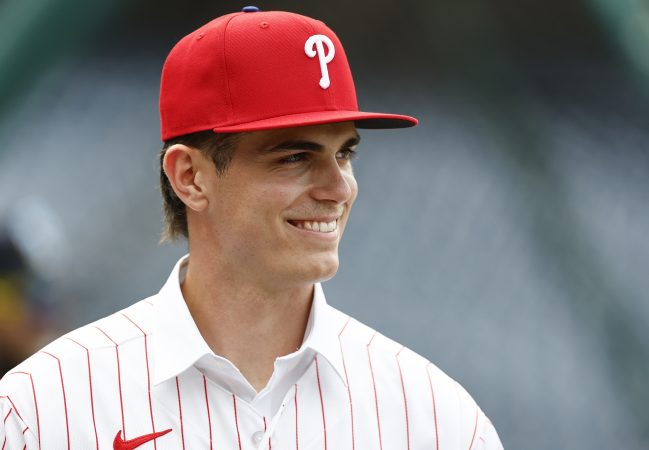
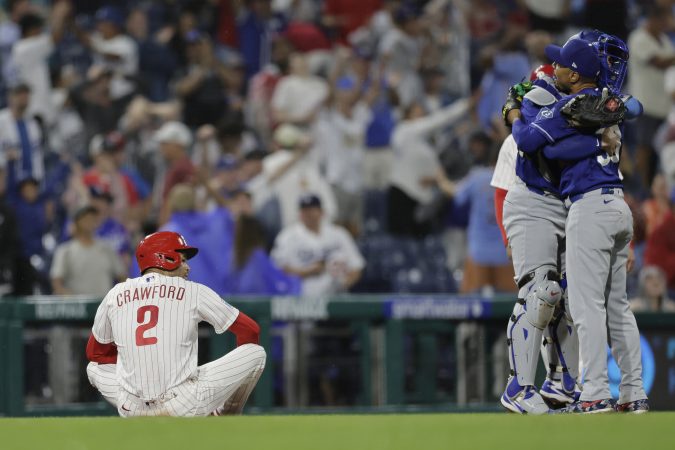
A half-hour after the final out, Brian Keller still hadn’t peeled off the uniform.
There wasn’t time. Not between taking photos on the field with family and talking with reporters in the middle of the Phillies’ clubhouse. Besides, after 10 years, two countries, and multiple surgeries — one of which he paid for out of pocket — he didn’t know if he’d ever get to wear it.
And so Keller was still decked out in red pinstripes, No. 48 on his back, when he poked his head into the office where pitching coach Caleb Cotham and assistant Mark Lowy were packing up for the night.
Look, the Phillies didn’t make any guarantees when they called up Keller, age 32, 10 years after he was a 39th-round pick in an MLB draft that has since been curtailed to 20 rounds. But they’ve searched for a No. 5 starter since demoting Andrew Painter to triple A last month and haven’t won a game from the fifth-starter spot in 11 tries since May 18.
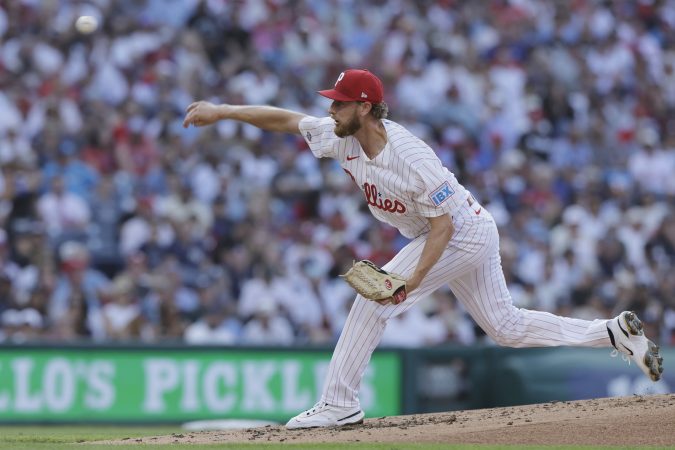
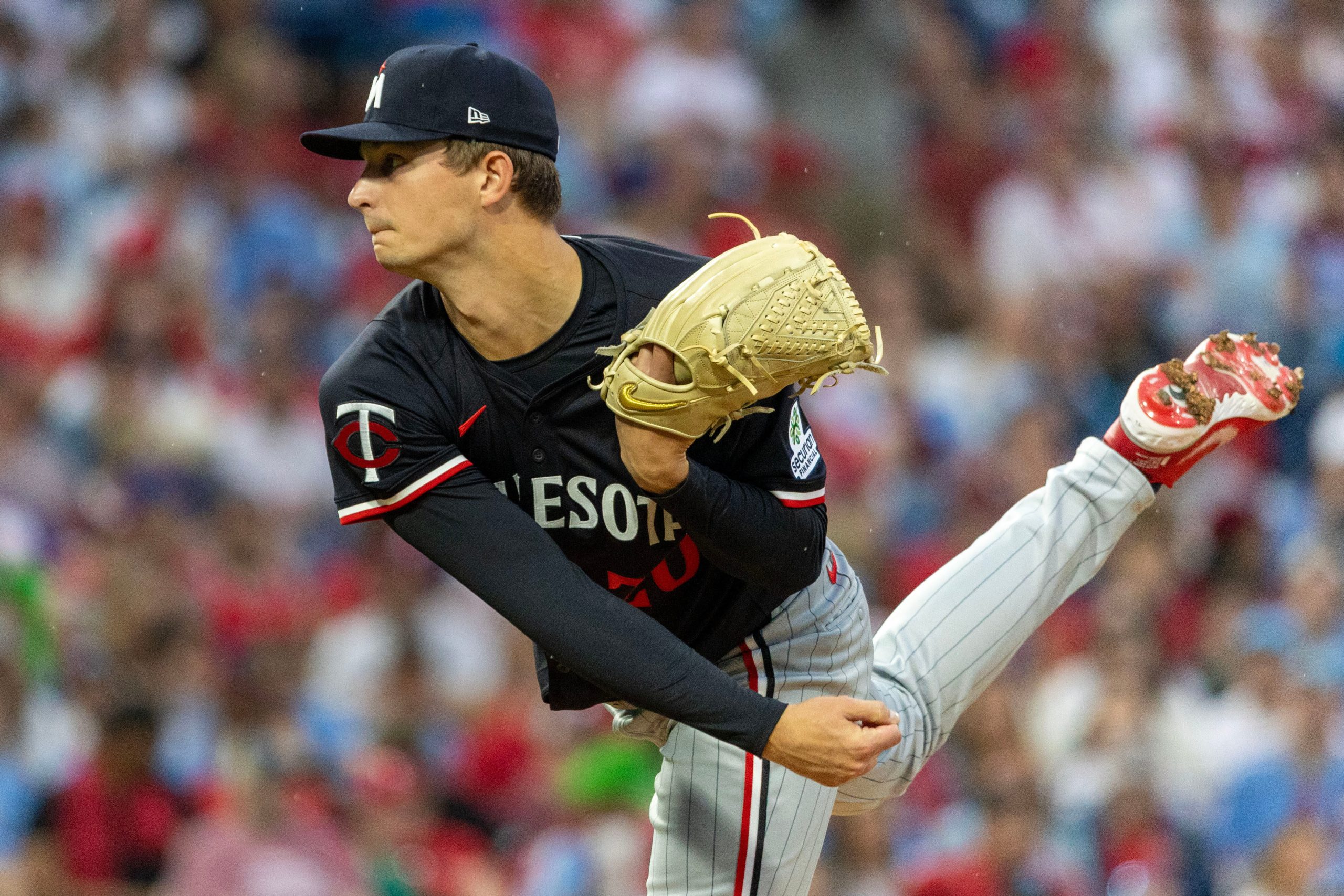
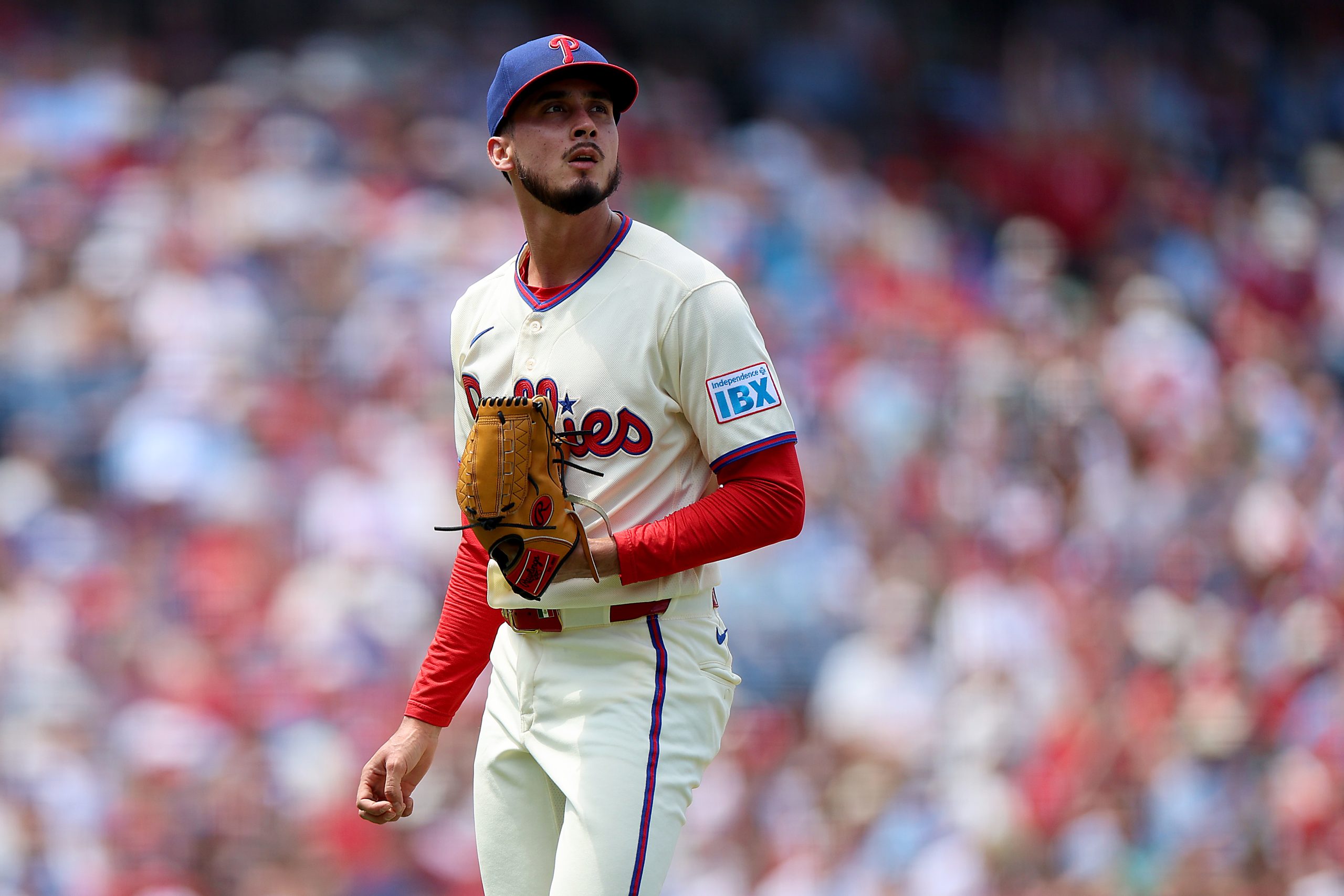
They didn’t win this one, either, not after the Yankees broke a tie in the sixth inning to send the Phillies to a 3-1 loss, their fourth defeat in a row. But Keller did his part, following lefty opener Tim Mayza and delivering three solid innings that were tainted only by a two-out homer from Austin Wells.
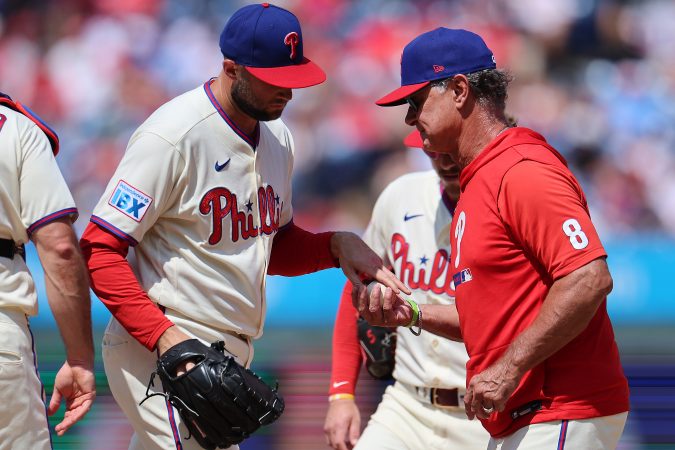
Keller might’ve kept going, too, except interim manager Don Mattingly wanted a lefty to face a left-handed pocket of the Yankees’ lineup in the sixth inning. Kyle Backhus walked the leadoff man, who scored on Cody Bellinger’s two-out single against Seth Johnson.
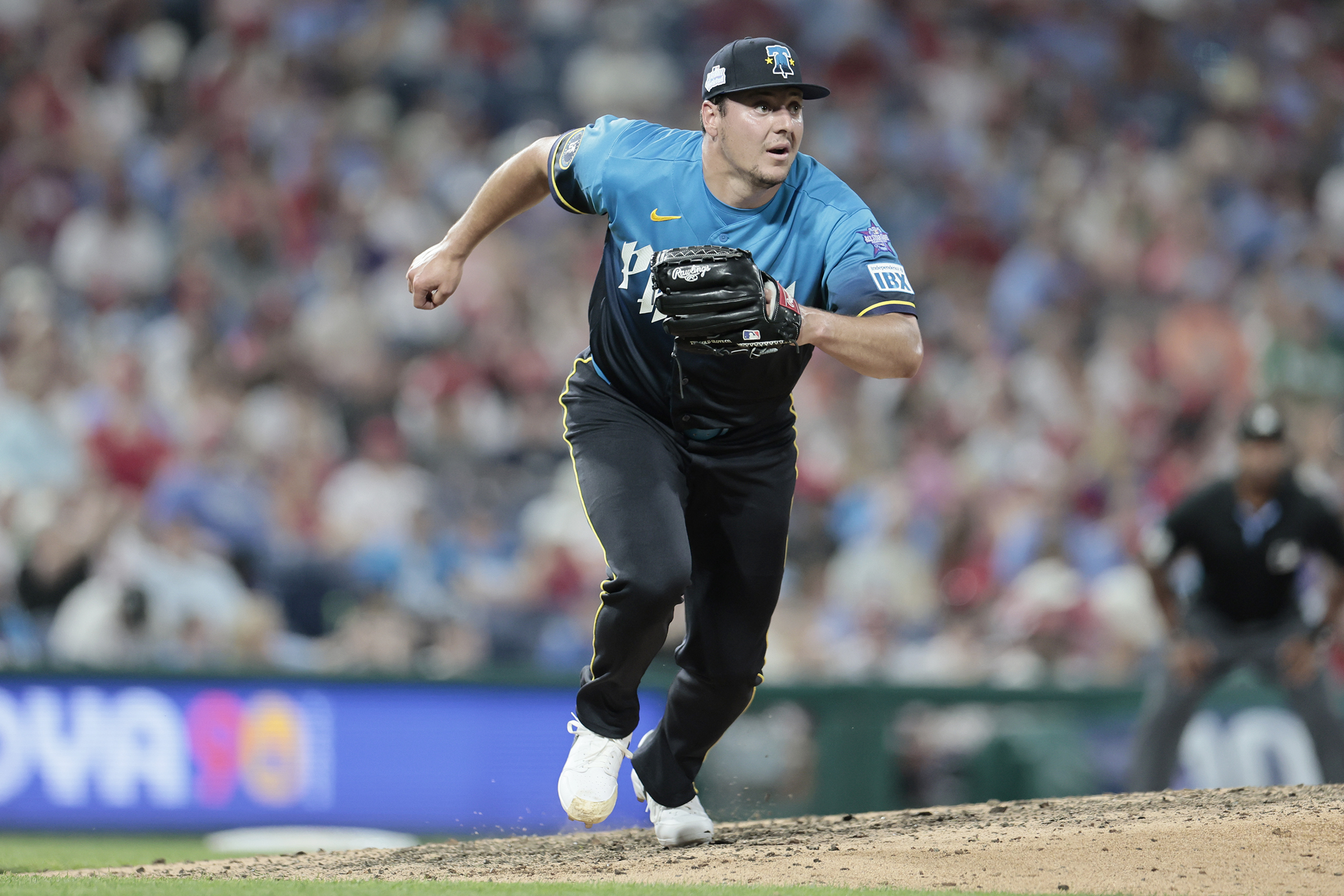
First MLB strike out for 32 year old Brian Keller who is making his MLB debut with the Phillies today.
But don’t let those details rain on the parade of a righty from Wisconsin, 18 miles northwest of Milwaukee, whose long shot to reach the majors got even longer a few years ago.
It was 2023, and Keller was pitching in Japan when he blew out his elbow. He had Tommy John surgery and missed two seasons trying to come back. When further issues arose, he paid “12 grand maybe, something like that,” to undergo a nerve transposition.
“I wasn’t with an organization, and it wasn’t a medically necessary surgery, technically,” Keller said. “It was necessary from the viewpoint of getting back to playing professional baseball, so, hey, you’ve got to do what you’ve got to do, right?
“Luckily, I made a little bit of money in Japan to basically buy me a little bit of time to be able to go through that rehab process. … Took a little hit, but we’re here. So we’re all right.”
Keller always pictured what it would be like to reach the majors, but if he’s being honest, the image in his mind had dimmed.
“Oh yeah, definitely,” said Keller, who signed with the Phillies in May and had a 2.23 ERA in triple A. “During rehab, it was like, I don’t know if you’d call it a setback, but somewhat setback after setback to the point where, yeah, I just didn’t know if it was ever going to happen, pitching again professionally, much less playing in the big leagues.
“But, yeah, here we are.”
Indeed, there was Keller, running in from the bullpen to begin the third inning in front of a personal cheering section — “I think 20 people, total,” he said — and striking out Jazz Chisholm Jr. on a slider.
Keller sidestepped a one-out single by Paul Goldschmidt in the fourth inning and struck out Chisholm again on another slider and José Caballero on a fastball to end the fifth. He threw 39 pitches, 29 strikes.
“He handled himself fine,” Mattingly said. “Threw strikes. He went after them. He was on the attack. He wasn’t walking people. So, that part of it I like.”
Enough to get another chance next Friday night in Baltimore?
“It’s something we’ll talk about as we get there,” Mattingly said. “But he did fine.”
Just in case, he left on the jersey to make the most of his first night in the majors.
“Nobody can take that from me, right?” he said. “Proud of that.”
Nine days before the trade deadline, the discussions continued on the executive level of Citizens Bank Park about the Phillies’ most advisable strategy to improve the roster.
The debate surely got more robust Saturday night.
Go ahead and take your pick of the Phillies’ most pressing need: a back-end starting pitcher, a right-handed bat, another late-inning reliever. The answer is there aren’t any wrong answers. Not after each shortcoming was exposed again in a 3-1 loss to the Yankees.
In losing their fourth consecutive game — and falling to 2-6 since returning from the All-Star break (slumber?) — the Phillies were silenced again by a left-handed starter. They lost their 11th game in a row from the No. 5 starter spot. And struggling lefty José Alvarado gave up a late home run.
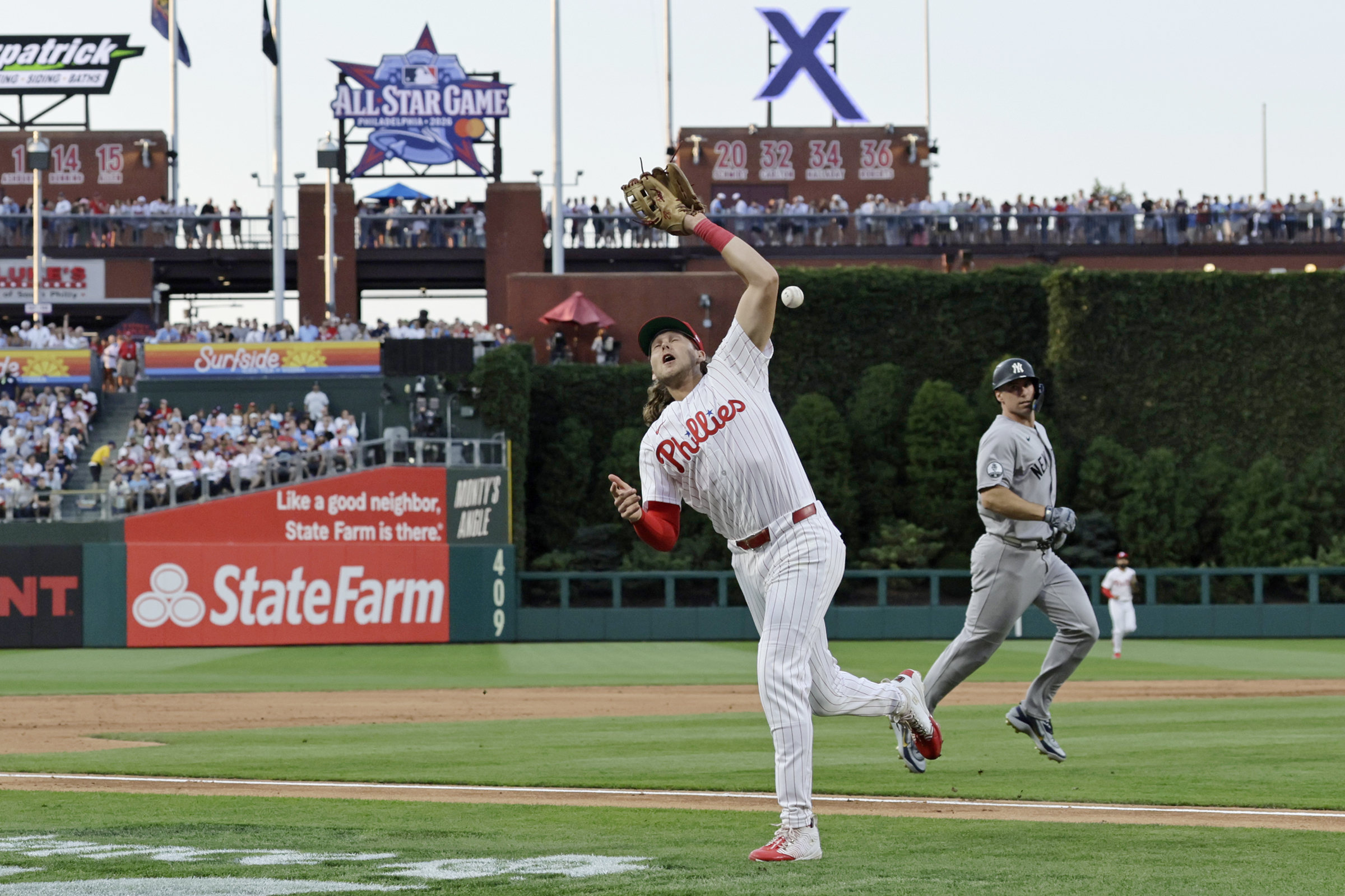
Oh, and for good measure, they backed the statistical evidence that they’re the worst defensive team in baseball with two errors from third baseman Alec Bohm and a pivotal two-out pop fly to shallow left field that went through shortstop Trea Turner’s hands.
“I tried getting there as best I could,” said Turner, who couldn’t come up with a back-to-the-infield basket catch that preceded Cody Bellinger’s go-ahead single. “It’s just kind of an awkward angle. You don’t want to overrun it or start judging it when it’s kind of behind you. But, yeah, I thought I had a shot. Just couldn’t come up with it.”
Once the Phillies fell behind, they couldn’t come back. They managed only seven hits, six against Yankees lefty starter Ryan Weathers despite loading the lineup with right-handed bats.
(Side note: The Phillies are tied for last in the majors with a .278 on-base percentage from their right-handed hitters.)
At 56-49, the Phillies remain in position for the second National League wild card. But they have the look of a team that needs the kick-start that an active trade deadline can provide.
“Yeah, it hasn’t been our best,” Turner said. “We know that we want to play better. I think it’s just kind of going back to what Donnie [Mattingly] said early on when he got the [managerial] job: ‘It’s just three hours of competing, and don’t let your foot off the gas.’
“I don’t think it’s a lack of effort, but I think we need to get that back a little bit.”
The Yankees took the lead in the sixth inning against the underbelly of the Phillies’ bullpen, which followed 32-year-old righty Brian Keller after three innings as a bulk pitcher in his major league debut. (More on Keller shortly.)
Mattingly called on lefty Kyle Backhus, just back from triple A, to face a left-handed pocket of the Yankees’ order. Backhus walked Austin Wells, then struck out Ryan McMahon and dangerous Ben Rice.
On came Seth Johnson for a righty-on-righty matchup with Paul Goldschmidt, who hit the bloop into shallow left field.
“When it went up, I thought it was going to be an out,” Mattingly said. “It was deeper than I thought. It’s a player making an over-the-shoulder catch, so it’s not a routine play or anything like that. I felt like Trea was there. But I think it’s a play Trea probably thinks he can make.”
The Phillies are now 5-21 from the No. 5 spot in the rotation. In their latest attempt to solve the fifth-starter riddle, they opened with lefty Tim Mayza for two innings before bringing in Keller.
It actually worked.
Well, kind of.
Phillies third baseman Alec Bohm misjudges a foul ball in the sixth inning vs. the Yankees on Saturday.Elizabeth Robertson / Staff Photographer
Mayza retired six batters in a row, then handed over a 1-0 lead. And although Keller gave up a game-tying two-out homer to Austin Wells, he acquitted himself well by allowing just the one run on two hits in three innings.
Keller’s story is improbable. A former 39th-round pick (the draft is only 20 rounds now), he kicked around the Yankees’ farm system for most of seven years in the minors before going to Japan, where he made only three starts before blowing out his elbow. He had Tommy John surgery, missed two seasons, and hooked on with the depth-deprived Phillies on a minor league contract in May.
And now, this.
“It was amazing,” Keller said. “Dream come true. You picture it over and over. You picture it going well; you picture it going poorly, unfortunately. But I’m glad it turned out all right. I was surprisingly calm out there. Yeah, just really happy.”
First MLB strike out for 32 year old Brian Keller who is making his MLB debut with the Phillies today.
If only it ended as well for the Phillies, who haven’t won a series against team with a winning record at the time since June 22-25 in Washington. Their last winning series against a team currently in playoff position was June 5-7 against the White Sox.
At least they will have Cristopher Sánchez on the mound Sunday night to try to avoid a sweep.
“When you hit a stretch where you’re not playing good, you’re running into some good teams and you’re not scoring, it makes it tough,” Mattingly said. “It doesn’t mean we can’t beat them, right? It just means we got to get going again.”
Now, he’s longer starting every day for the Phillies.
Marsh wasn’t in the lineup Saturday night against the Yankees, the second time this week that he sat out against a left-handed starting pitcher. It could be an uncomfortable situation, so interim manager Don Mattingly met with Marsh to explain his reasoning.
“Honestly,” Mattingly said, “you have to look at the numbers at some point.”
And these are Marsh’s numbers against lefties: .233 batting average, .645 OPS.
So, Marsh insists he will do what he’s done for most of his career and set aside his ego for a manager who wants to play the matchups. In this case, it meant staying ready to replace righty-hitting Edmundo Sosa in left field or Bryan De La Cruz in right once the Yankees lifted lefty starter Ryan Weathers.
“The way I look at it is I’m a baseball player, and I play for Don Mattingly and for the Phillies,” Marsh said. “I’ve got nothing but love and respect for him. I’ll ride for him. I’ll die for him. And if he wants De La [Cruz] to go run out there and take the nod in left field, then that’s what’s going to happen. And I hope De La Cruz hits three homers tonight.”
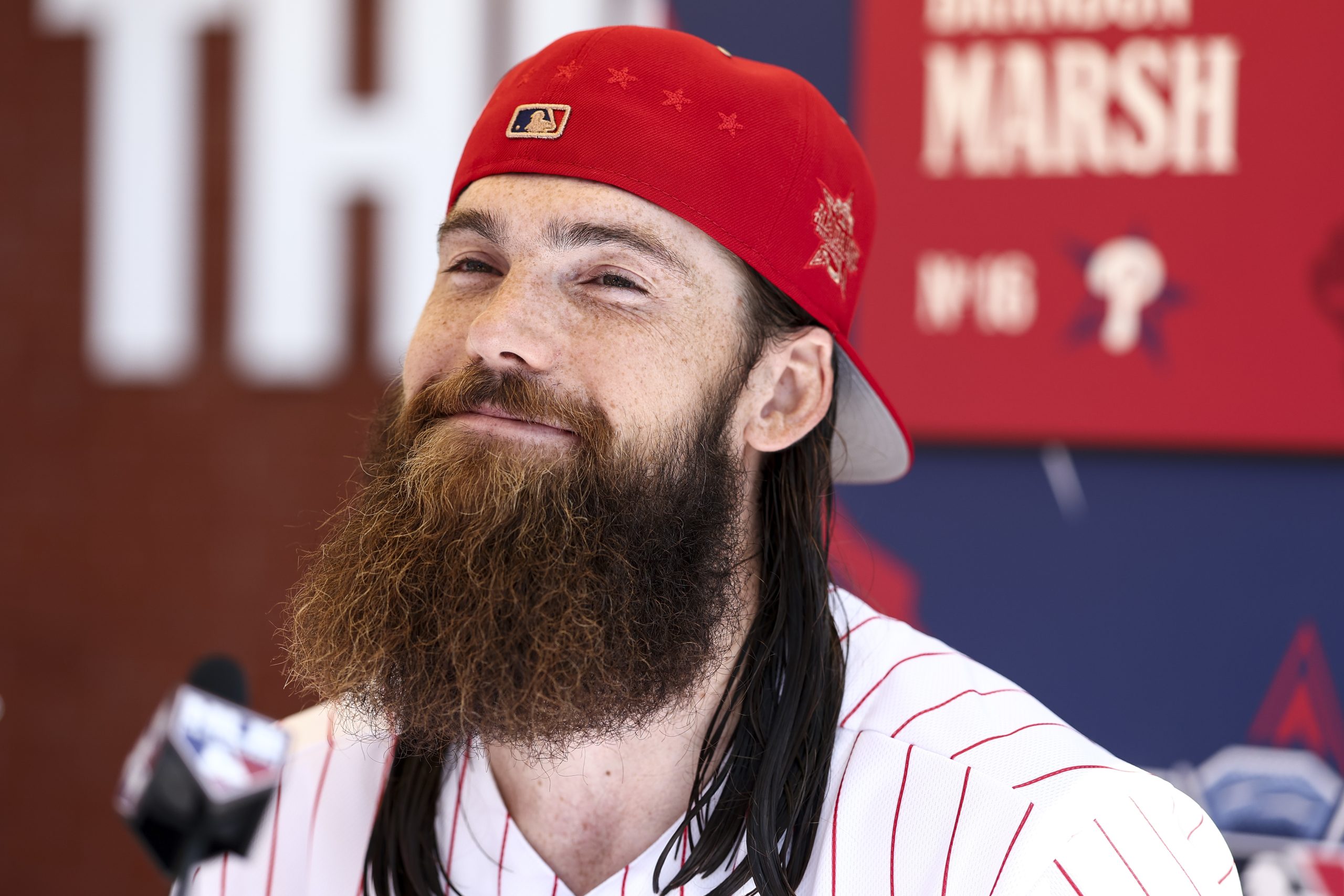
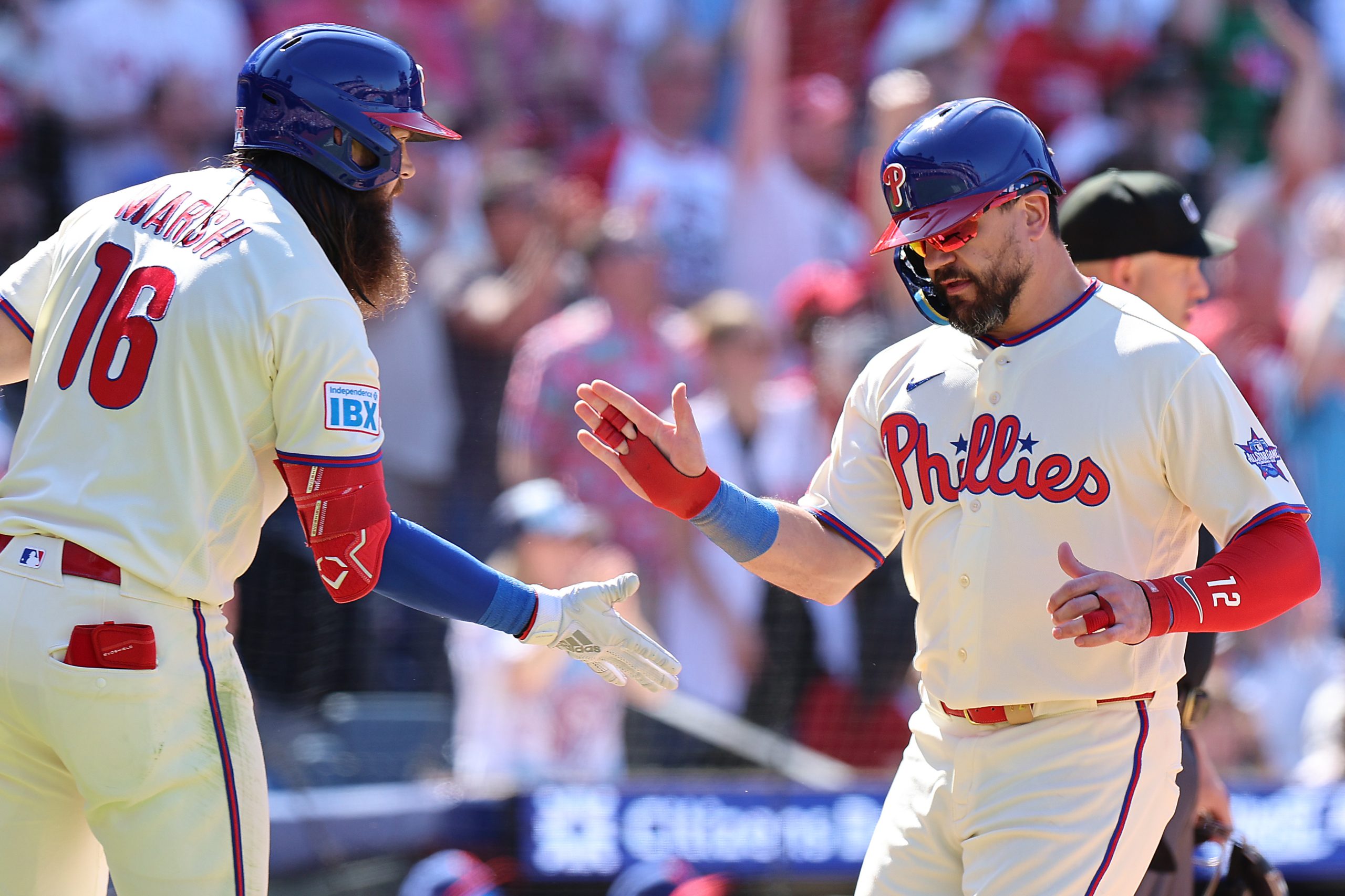
Phillies outfielder Brandon Marsh played in his first All-Star Game this month.Monica Herndon / Staff Photographer
It’s imperfect to run three platoons in the outfield. But for now, and unless the Phillies acquire a righty-hitting upgrade before the Aug. 3 trade deadline, Mattingly seems intent on mixing and matching.
Against righties, Marsh will play left field, with rookies Justin Crawford in center and Gabriel Rincones Jr. in right. Against lefties, Mattingly is using Sosa in left, Derek Hill in center, and De La Cruz in right.
Clearly, though, there’s room for an upgrade. Entering the weekend, the Phillies had a .302 on-base percentage against left-handed pitching, tied for 26th in the majors. Collectively, their right-handed hitters were reaching base at a majors-worst .276 clip.
If the Phillies can add a right-handed bat, they may be better able to tolerate Marsh’s struggles against lefties.
“I do believe that he’s going to be a guy that can be an everyday guy,” Mattingly said. “Something we talked about is understanding how to hit lefties and what you need to do. Understanding ball movement, what do you want to hit, where does [the swing] have to start. He’s a guy that, honestly, at the big league level has really not had the opportunity to continue to do that.
“But at some point, we’re trying to win games. We need to be better against lefties. Again, I do feel like he’s going to be that guy that could play every day, but right now, it’s just not showing up in the numbers.”
Brandon Marsh (left) has picked Phillies teammate Kyle Schwarber’s brain about having more success as a left-handed hitter against lefty pitching.David Maialetti / Staff Photographer
Marsh was showing some improvement against lefties early in the season. Through June 25, he was 21-for-77 (.273) and slugging .429. Since then, he’s 3-for-26 (.115) and slugging .231.
In the ninth inning Tuesday night, he huddled with Kyle Schwarber before facing Dodgers lefty Tanner Scott. He wound up cueing a ball to third base, which led to a game-ending double play after bad baserunning by J.T. Realmuto.
But Schwarber, who had little success against lefties earlier in his career, has been a resource for Marsh, who said he has gained a better understanding for how lefties want to attack him.
“He’s able to relate to players like me, guys who are following his footsteps,” Marsh said. “He can tell us everything that’s going on in his head to help us out.”
It hasn’t translated into better overall numbers, but Marsh said he’s confident that his approach against lefties is improving.
“I feel more comfortable against them for sure, just with the reps that I’ve gotten this year and the work we do in the cage and stuff like that,” he said. “Definitely a lot more room for improvement. Really just got to keep the head down and grind, but definitely a lot better than years prior.”
For now, though, it seems he’ll be watching most lefty starters from the bench.
Phillies reliever Brad Keller is expected to get a second opinion on his torn elbow ligament Tuesday from orthopedic surgeon Keith Meister in Texas.Elizabeth Robertson / Staff Photographer
Bullpen shuffle
Although injured reliever Brad Keller will fly to Texas on Monday for a second opinion from orthopedic surgeon Keith Meister, Tommy John surgery remains the likeliest outcome.
The Phillies will continue to seek a late-inning reliever before the deadline to replace Keller.
In the meantime, Kyle Backhus was recalled from triple A to give Mattingly another lefty in the bullpen against the Yankees and next week in Miami and Baltimore. Hard-throwing Alex McFarlane and fellow righty Max Lazar were optioned to triple A for Backhus and righty Brian Keller, called up to make his major league debut after an opener on Saturday night.
The Phillies placed lefty reliever Tanner Banks (forearm strain) on the 60-day injured list to clear a 40-man roster spot for Brian Keller. … The Phillies acquired lefty-hitting outfielder Kam Misner from the Royals for cash and optioned him to triple A. Misner, 28, is a .206 hitter with five homers in 253 major league at-bats. Switch-hitting outfielder Steward Berroa was designated for assignment to get Misner on the 40-man roster. … Mikal Bridges, NBA champion with the New York Knicks and notable Phillies fan, was on the field and in the clubhouse before the game. … Cristopher Sánchez (12-4, 2.71 ERA) is scheduled to start the series finale on Sunday Night Baseball against Yankees righty Will Warren (7-4, 4.00).
Bryce Harper tapped his helmet because, well, what else could he do?
Harper had just run the count full in the seventh inning Friday night when the Yankees’ Cam Schlittler froze him with a 98 mph sinker at the bottom of the strike zone, an unhittable pitch even for the Phillies’ best hitter.
Tap, tap, tap.
Call upheld. Strike three. Thanks for playing.
It was that kind of night. Not quite to the level of what the Phillies saw from the Brewers’ Jacob Misiorowski two months ago in Milwaukee, but in blanking them for 7⅓ innings of a 1-0 loss, Schlittler was darn close.
“No, he’s good,” Don Mattingly said of the Yankees’ Cy Young candidate. “I’ve seen him a few times last year. He bullies you a little bit with the fastball on both sides and kind of makes it go both ways. Yeah, it was good.”
What can be said, then, of the Phillies?
They’ve lost three consecutive games and come out of the All-Star break in a 2-5 funk. They haven’t played horribly; two of the last three losses were by one run. One pitch here or one play there, and a few outcomes would’ve been different.
But they certainly don’t look sharp, either. Not on the bases. Not defensively. Not at the plate. Harper and Kyle Schwarber are 4-for-25 since the break; Brandon Marsh is 3-for-25; Trea Turner has made five errors in seven games.
The highlight of the series opener against the Yankees, apart from seven strong innings from Jesús Luzardo in a tough-luck decision: The Phanatic’s imitation of LeBron James’ chalk toss before dunking on a man in a Knicks jersey.
Are the rest of the Phillies simply in a rut, one of many over a six-month season? Or is there more to be concerned about?
“I’m not necessarily concerned about it,” J.T. Realmuto said. “We’ve been playing good teams, and we definitely would like to be playing better baseball. I think we’re just a little inconsistent right now, throughout the lineup. We’re not scoring enough runs, to be quite frank, and then our defense has scuffled a little bit.”
Indeed, the margin for error is this teeny-tiny: Luzardo threw a sinker down in the zone — exactly where he said he wanted it — and Paul Goldschmidt hit it into the right-field bleachers to lead off the fourth inning.
And that was enough to beat the Phillies.
“Sinker down, 2-0, just trying to get back in the zone, and he just put a good swing on it,” Luzardo said. “He’s been around for a long time.”
It doesn’t get easier Saturday night, when the Phillies will call up 32-year-old journeyman Brian Keller for his major league debut as either a starter or bulk pitcher. The Yankees will counter with lefty Ryan Weathers; the Phillies have struggled to hit lefties.
“Obviously, the talent’s there,” Realmuto said. “We feel good about our team. We’re just not playing our best baseball right now. We’ve just got to turn it around, get it going.”
Goldschmidt’s fourth-inning homer was the first hit of the game for either team. The Phillies got their first against Schlittler on Schwarber’s one-out double in the bottom of the inning. But Harper grounded out and Marsh struck out to extinguish any rally.
The Phillies didn’t threaten again until the eighth, when they finally knocked out Schlittler with two on and one out. Edmundo Sosa singled to load the bases before Turner flew to shallow left field and Schwarber grounded out.
“I was ready to tag up and score [on Turner’s ball],” said Realmuto, whose baserunning blunder ended Tuesday night’s game against the Dodgers. “[Third-base coach Anthony Contreras] told me no, which was the right call. I was going to be out at home.”
In the ninth, Marsh hit a ball hard to left field, where Cody Bellinger made a leaping catch on the warning track to rob extra bases.
That kind of night. That kind of week.
And not many answers.
“I don’t think it’s anything specific,” Luzardo said. “It’s more so just kicking it back into high gear and playing the brand of baseball that we were playing before the break. There’s a little sense of, we’re right there. We’re not getting blown out. We’re a play away, maybe a swing away, an out away, whatever it might be from winning that game.
“As long as we’re keeping games close, as long as we have a chance, we’ll come out on top more times than not.”
Tyler Spangler will never forget the life-changing day when he signed his first pro baseball contract.
Never mind, then, that LeBron James upstaged him.
In the other big signing in Philadelphia sports Friday, the Phillies agreed to a deal with Spangler, their first pick in the draft two weeks ago. The 18-year-old shortstop received a $3.25 million bonus, a source confirmed, $491,200 more than the MLB-listed slot value for the No. 36 overall pick and 42% of the Phillies’ $7.773 million bonus allotment.
Spangler will report to the Phillies’ training facility in Clearwater, Fla., within the next few days to begin the yearslong climb to the majors. First, the team invited him and his family to watch batting practice on the field, tour the clubhouse, and meet several players.
And wherever they went around town, Spangler said folks were buzzing over the Sixers and their new megastar.
“It was nice of LeBron to follow him,” agent Scott Boras said jokingly.
Seriously, though, there were draft-day questions about Spangler, notably his health. He didn’t play this year as a senior at De La Salle High School in Northern California because of a back injury, which hit home because of a back condition that has prevented Phillies top prospect Aidan Miller from playing this season.
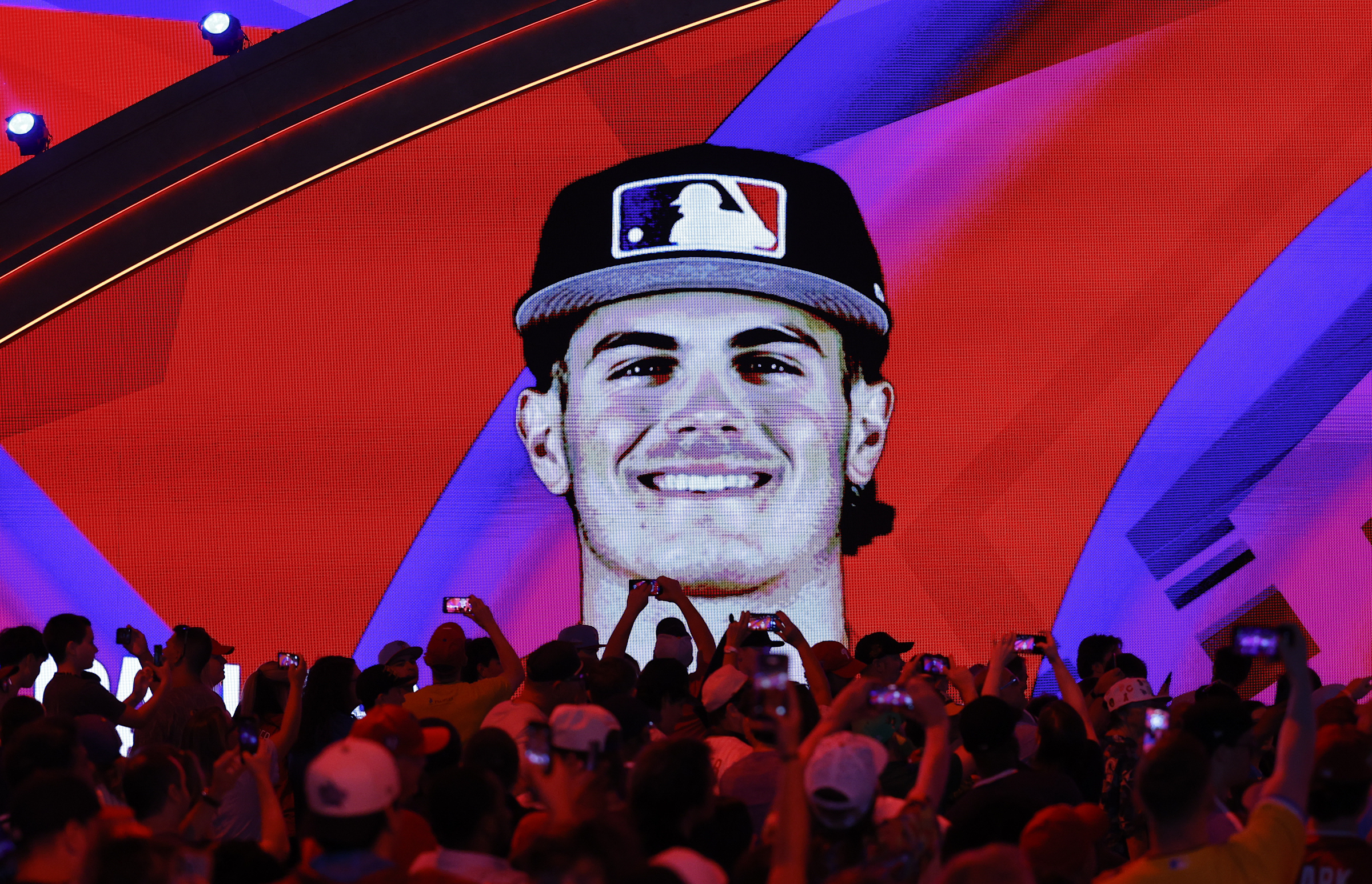
Tyler Spangler’s picture was posted on a screen at the MLB draft in Philadelphia after the Phillies selected him with the 36th overall pick.Yong Kim / Staff Photographer
Neither Spangler nor Boras divulged specifics about the back injury. Spangler called it “a little problem” and said it “wasn’t bad.” Boras said he advised Spangler to “conservatively manage a very minor back issue” to focus on making sure he was ready for the draft, not the high school season.
“The [medical] advice was basically, ‘It’s not a serious issue, but you know what, let’s treat this conservatively,’” Boras said. “The key thing is to get core strength with young players, getting core strength and leg strength underneath them so that nothing like this occurs any further.
“It was really a decision medically on the basis of saying, ‘Let’s resolve this.’ He could probably have played with it, but let’s resolve it and focus toward what we’re going to do in the future.”
Like most teams, the Phillies scouted Spangler in his junior year and in tournaments leading up to his senior season. He was cleared to participate in MLB’s scouting combine in June in Phoenix. The Phillies watched him there and again a week later in a workout at his high school.
As he heads to Florida, Spangler said he doesn’t have physical limitations, especially after testing his back at the combine.
“It was super important,” Spangler said. “Going out there and taking BP in a big league stadium for the first time in a while, it was surreal. It was awesome. I was just super happy that I went out there and felt great and no issues. I just felt healthy and ready to go.”
If not for the injury, Spangler may not have been available when the Phillies made the 36th pick. And by signing him for more than the slot value, they pried him away from a college commitment to Stanford.
Spangler has drawn parallels to five-time All-Star shortstop Corey Seager because of his size (6-foot-3) and aptitude as a left-handed hitter. He doesn’t mind the pressure that comes with such a lofty comparison.
“I mean, definitely, Seager’s a good one,” Spangler said. “Bigger shortstop, left-handed hitter. I love the way he plays. I always watched Barry Bonds, too, just the way he swings it. I feel like I model my game after those two guys.”
With the 36th pick in the 1st round the Phillies select SS Tyler Spangler from De La Salle High School (CA) pic.twitter.com/KRzYI6AcSW
Spangler will join the rest of the Phillies’ draft class in Clearwater. All but one pick, 19th-round catcher Braeden Lipoff of Gloucester Catholic, have signed. Lipoff has a college commitment to East Carolina.
The Phillies hope Spangler will play in games before the end of the minor league season.
Meanwhile, as Spangler tried out Philly cuisine (he said he went to Angelo’s Pizzeria and sampled cheesesteaks, of course), his friends from back home in California texted him about that other athlete who just signed with a Philadelphia team.
“Oh yeah, I was happy,” Spangler said of the James news. “But I’m from the Bay Area, so, you know, the Warriors were another option, right? And I’ve been a Warriors fan for my whole life. All my friends are giving me a hard time back home that he’s coming here. But either way, now it’s good with me.”
Even at rock bottom — a 9-19 record, last place, the manager collecting a pink slip — Phillies officials figured they might still wind up buying at the trade deadline.
But would they have the prospect capital for a big deal?
“Well, there’s no doubt that we do,” Dave Dombrowski said back on April 28. “Yes.”
Not everyone shares that opinion.
With the deadline looming — set a calendar reminder for Aug. 3 at 6 p.m. — the Phillies are in playoff position and believed to be targeting late-inning relief, a right-handed bat, and a No. 4 or 5 starter. Or maybe, as one rival scout theorized this week, Dombrowski will attempt a bigger swing for higher-end starting pitching given the lack of available impact bats.
In any case, the Phillies’ farm system is ranked 29th out of 30 teams, according to Baseball America’s recently released midseason assessment. But don’t take the word of one publication. FanGraphs pegs them with the No. 24 system; MLB Pipeline’s preseason ranking put them at No. 20.
Many scouts are similarly unimpressed. One evaluator from a National League team, granted anonymity in exchange for candor, called the Phillies’ system “pretty barren,” while conceding they have a few “lottery ticket types” in the low minors.
As another NL scout put it, “Their system’s thin at the upper levels.” While some teams “have guys who could come to the big leagues and probably perform at a high level, the Phillies don’t really have that at triple A at all.”
Indeed, in trying to turn up right-handed hitting within the organization, the Phillies cycled through Otto Kemp (2-for-25, 10 strikeouts), Félix Reyes (6-for-38, nine strikeouts), switch-hitting Steward Berroa (1-for-7, four strikeouts), and now, veteran Bryan De La Cruz, who homered Wednesday night. They traded two minor leaguers last month for platoon outfielder Derek Hill.
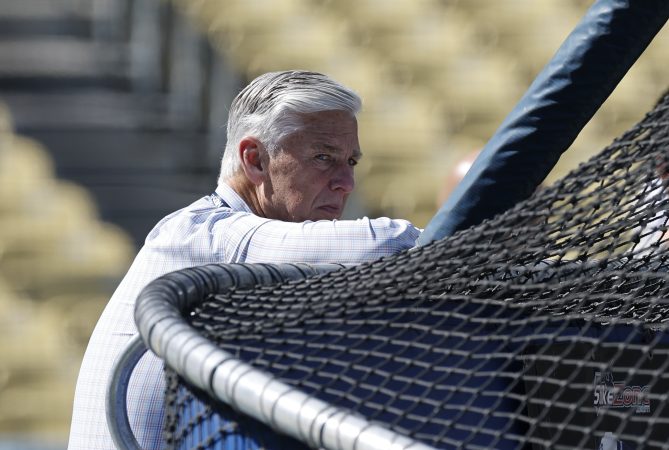
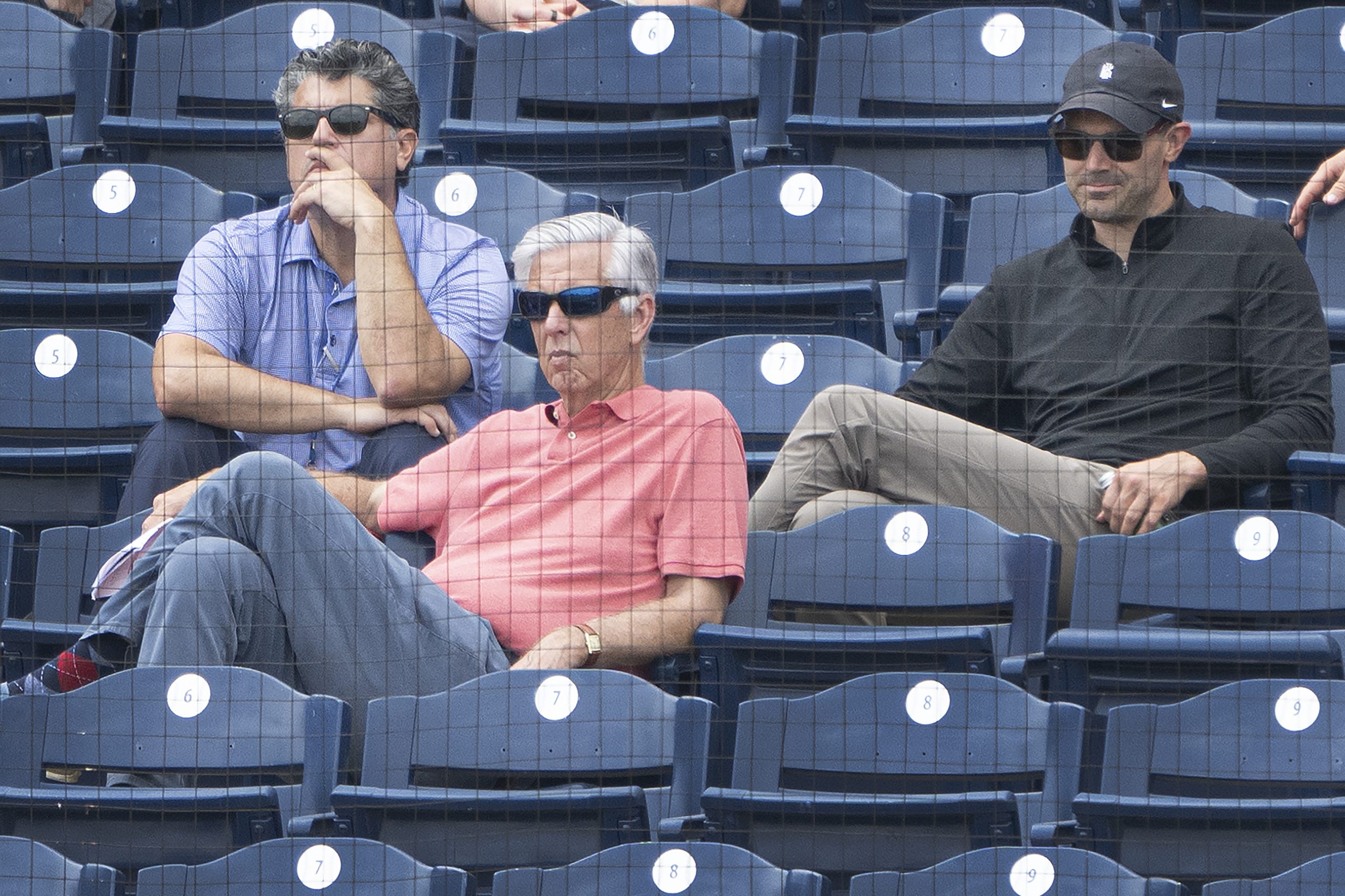
Phillies president of baseball operations Dave Dombrowski (center) and general manager Preston Mattingly (right) push back against criticisms of the club’s farm system.Jose F. Moreno / Staff Photographer
On the pitching side, untouchable (in past trade talks, at least) Andrew Painter lugged a 7.06 ERA back to triple A in June. The best in-house replacement: Alan Rangel, a 28-year-old righty who got released in the minors by the Angels two years ago and posted a 5.40 ERA before returning to Lehigh Valley this week.
Dombrowski and general manager Preston Mattingly push back against criticisms of the farm system. Never mind, Mattingly says, that the Phillies have only two prospects (injured infielder Aidan Miller and righty Gage Wood) who are regarded among the top 100 in the sport.
“A lot of times, you mention top-100 lists, that’s not necessarily what teams internally talk about and the players they ask about,” Mattingly said recently on The Inquirer’s Phillies Extra podcast. “They’re going with a lot of the information, the data that we have internally. And we feel really good where our system’s at.”
Sure, but the Brewers and Dodgers feel the same about theirs, No. 1 and No. 3, respectively, in Baseball America’s rankings. The Braves and Cubs are closer to the middle of the pack, at No. 14 and No. 16, but still ahead of the Phillies.
It’s shaping up as an extreme seller’s market, with 22 teams entering the weekend in playoff position or within 4½ games of a wild-card spot. Some will waive a white flag before Aug. 3; others will hold firm. Regardless, the demand for players will outweigh supply.
“To me, it’s always about who can impact my team more rather than what’s my biggest need,” former major league general manager Jim Bowden said this week on Phillies Extra. “A starter probably helps the Phillies win the division more over a 162-game schedule. But to win in October, perhaps it’s the reliever or the right-handed bat that would be more important.”
Relative to most of his counterparts, Dombrowski is willing to move prospects, though he has clung to Miller and especially Painter, whom he wouldn’t discuss at the deadline two years ago for Garrett Crochet. He probably will have to change that stance now for a starter who would pitch in the postseason — and certainly for Tigers ace Tarik Skubal, the marquee name on the market if Detroit makes him available.
Even so, it’s fair to wonder if there’s enough in the Phillies’ minor-league stable to make meaningful additions to any area of the major league roster.
“What’s fascinating about [Dombrowski’s] long, successful Hall of Fame career, which is what it’s been, is that he has made a lot of trades without having good farm systems,” Bowden said. “He did it in Detroit, he did it in Florida, he did it in Montreal.”
It seems Dombrowski will have to pull another card from his sleeve this year.
Phillies infield prospect Aidan Miller has not played since the end of last season because of a lower back condition.Jose F. Moreno / Staff Photographer
Missing Miller
As a nonroster invitee to spring training, Miller’s locker was in the high-rent district of the clubhouse, wedged between Bryce Harper and J.T. Realmuto.
It wasn’t a coincidence.
The Phillies hoped to bring Miller to the majors this year, especially after he batted .356 with six homers and 22 steals over the final two months last season. Instead, the 22-year-old former first-round pick hasn’t played at all because of a lower back condition involving a degenerating disc and joint swelling.
Miller had a spinal procedure June 5, at which time the Phillies outlined “the goal to return to game activity in six to eight weeks.” Seven weeks later, updates are infrequent.
”He’s progressing,” farm director Luke Murton texted Thursday. “Back to playing catch. Some defense next week.”
Even so, the treatment that Miller received — radiofrequency ablation of the facet joints — provides temporary relief and may need to be repeated. The uncertainty about Miller’s short- and long-term health creates multiple questions, not only about his status as the Phillies’ future shortstop but also his value in a potential trade.
“If he was healthy,” an AL scout said, “he could lead a package.”
And now? It’s doubtful Miller could anchor a deal for, say, Skubal or Padres closer Mason Miller. For a trade of that magnitude, the Phillies may have to use Painter as a headliner — and even then, the Brewers and Dodgers have the prospect depth to outbid them.
But do they have the collateral in prospects to make a move for another starter, such as the Mets’ Clay Holmes, the Blue Jays’ Kevin Gausman, or Giants lefty Robbie Ray? Or will they have to aim lower, or fill a less costly need?
Among their higher-end prospects, infielder Aroon Escobar entered the weekend with a .637 OPS in double A, and outfielder Dante Nori has been sidelined for six weeks with a lower body injury. Shortstop Bryan Rincon (13 homers, .834 OPS in double A) is having a nice year, but he profiles as a second or third piece in a deal.
The top two positional prospects in the system — outfielder Francisco Renteria and shortstop Juan Parra — are 17 years old and in their first year of pro ball in the Dominican Summer League.
The Phillies traded 2020 first-round pick Mick Abel to the Twins at the deadline last year for star closer Jhoan Duran.Laurence Kesterson
Two years ago, the Phillies’ farm system was No. 14 in Baseball America’s midseason rankings. A partial list of trades since then:
Pitchers Sam Aldegheri and George Klassen to the Angels for closer Carlos Estévez.
Infielder William Bergolla to the White Sox for Tanner Banks.
Teenage shortstop Starlyn Caba and outfielder Emaarion Boyd to the Marlins for Jesús Luzardo.
Right-hander Mick Abel and teenage catcher Eduardo Tait to the Twins for Jhoan Duran.
Outfielder Hendry Mendez to the Twins for Harrison Bader.
The Phillies haven’t been burned by any of those players … yet. And the Luzardo and Duran trades, in particular, were big wins. But a continuous drain of the prospect pool led to a cumulative erosion.
“We’ve definitely been in a window where we’re acquiring players at the deadline,” Mattingly said. “We’re never recouping value, which is the state of where we’re at. It’s a great place to be, honestly, when you’re trying to compete for a championship every year.”
And after having only 12 major league debutants over the last three seasons, fewer than any team in that span, the Phillies finally graduated Justin Crawford, Painter, and Gabriel Rincones Jr. to the majors this year.
Crawford and Rincones are platoon outfielders for now; Painter, long viewed by Dombrowski as Justin Verlander 2.0, is expected back in the majors before the end of the season.
In time, the Phillies believe all three will make a greater impact, though they could also be used in a trade.
Either way, it takes time to replace them in the system.
Right-hander Gage Wood, the Phillies’ first-round pick in last year’s draft, is the organization’s top pitching prospect.David Maialetti / Staff Photographer
Gage-ing the system
The deepest subset of the Phillies’ farm system, in the assessment of three scouts, is right-handed pitching.
Start with Wood.
Or maybe bring him out of the bullpen?
Most scouts concur that Wood will pitch in the majors, but there’s disagreement about his optimal role. The 22-year-old is starting in the minors, though he has pitched more than four innings only once. He has a 3.58 ERA in double A and gained more national exposure two weeks ago by starting the Futures Game.
There may be enough interest in Wood to anchor a deal for a needle-moving player. But Wood also appears to be on an accelerated track, with the Phillies jumping him two levels to double A in late May.
“I don’t think about that stuff,” Wood said of being the subject of trade rumors. “I’m just here to play baseball.”
Several other right-handers are getting attention from scouts, but most are in the low minors. Two scouts mentioned 21-year-old righty Brad Pacheco, who has a 4.05 ERA and 78 strikeouts in 73⅓ innings for low-A Clearwater. Wen-Hui Pan and Alex McFarlane, a hard thrower who made his major league debut this week, also get decent marks.
A name to watch: Ramon Marquez. The 20-year-old righty entered the weekend with a 2.02 ERA in 10 games, including a 2.25 mark in four starts since moving up to high-A Jersey Shore.
One scout called Marquez “probably their best pitching prospect right now.”
Jim Bowden spent 16 years as a general manager with the Reds and Nationals before becoming an MLB analyst and commentator. And with the trade deadline approaching — Aug. 3 at 6 p.m. — he joined Phillies Extra to discuss the Phillies’ needs, some potential targets, and what it’s like to be a GM in the frenzied days leading up to the deadline. Watch here.
Justin Crawford stood on third base, with one out in the ninth inning, and got his instructions: Run on contact … unless the ball is hit to third.
The ball was hit to third.
Crawford ran anyway.
“Just one of those things,” the rookie said, “that can’t happen.”
But it wasn’t the Phillies’ worst baserunning blunder on the inexcusable double play that ended Tuesday night’s rain-delayed 2-1 loss to the Dodgers. No, that belonged to J.T. Realmuto, a veteran who conceded he should’ve known better.
As Crawford got stuck in a rundown between home and third, Realmuto ran to third base. At worst, he should’ve been at third, with Brandon Marsh reaching second, two outs, and a chance to still win the game.
Instead, Realmuto turned back. And after the Dodgers’ Mookie Betts tagged Crawford, he fired to second base to easily catch Realmuto retreating.
All together now: Yikes.
“It was just a bad baserunning play, really,” Realmuto said. “Once Craw gets in the rundown, I’m on third base. There’s no reason for me to go back to second. Just a lapse of judgment. Can’t make two outs on that play.”
But it wouldn’t have been Phillies-Dodgers in Citizens Bank Park without a pivotal play at third base in the ninth inning of a one-run game.
Think back, if you can stomach it, to Game 2 of the divisional round series last October. With the tying run on second base and nobody out, the Phillies called for Bryson Stott to bunt. Betts alertly covered third, and the Dodgers cut down Nick Castellanos for a costly out.
In this case, Crawford explained he took off from third base because Marsh hit the ball softly — 47.5 mph off the bat. But third baseman Max Muncy was already playing in on the grass and didn’t have to range far for the ball.
“I was like, OK, he cued it, so I kind of thought I’ve got a chance [to score],” Crawford said. “And by the time I realized I wasn’t going to be able to make it, it was kind of too late. Just got to make a better decision next time.”
Interim manager Don Mattingly remembered it slightly differently, noting that Crawford was told to run on contact no matter what. Either way, he stayed in the rundown long enough for the Phillies to have runners on second and third when he got tagged out.
If only Realmuto stayed put.
“I don’t know what J.T. was thinking there,” Mattingly said. “Honestly.”
Not enough, according to Realmuto.
“Maybe something I could have done better was play that in my head before it happened,” he said. “I think that’s something, on the base paths you have to be proactive and think of those things. I was more just trying to get a good lead, get a good jump, and score on a base hit, where I should have maybe thought through that scenario before the play.”
In any case, it was another nail-biting chapter between National League powers that couldn’t be more evenly matched. In a postseason vanquishing by the Dodgers last year, the Phillies lost three games by a total of four runs.
We offer that as “a reminder for whoever needs to be reminded,” to use Wheeler’s line, that the Phillies will be an even tougher out this October — assuming they (a) make the playoffs and (b) can line up Cristopher Sánchez and Wheeler to start Games 1 and 2.
Because one night after the Phillies won behind Sánchez, Wheeler subdued the Dodgers but for one pitch, a first-pitch cutter that Muncy hit into the center-field shrubbery in the fourth inning.
It was the deciding blow and the only dent in Wheeler over seven innings.
“Maybe not the best pitch in that situation,” Wheeler said. “Just because we got him on it a couple different times in that first at-bat, so he probably went up there saying, ‘You got me on this.’ He was probably just ready for it.”
Wheeler said he “second-guessed in my head” throwing another cutter to Muncy. But he also hardly ever shakes off Realmuto.
After an 80-minute rain delay at the outset, the game had a postseason feel, from the duel between Wheeler and lefty Justin Wrobleski to Dodgers manager Dave Roberts using Tanner Scott for a five-out save.
And, of course, the crazy ending.
Alec Bohm‘s two-out RBI single gave the Phillies a lead in the first inning. But they managed only three more hits against Wrobleski. He shut them down for seven innings in May at Dodger Stadium, part of a stellar first half that put him in the All-Star Game.
Wheeler was irritated by being left out. Since then, he has allowed a total of three runs in 20 innings over his last three starts, a revenge tour that has lowered his already teeny-tiny ERA to 2.16 and put him squarely in the Cy Young conversation.
The Dodgers goofed on the bases in the third inning, and it cost them a run. Shohei Ohtani tried to stretch a two-out single and got thrown out at second base before slow-footed Eliezer Alfonzo crossed the plate.
But the Phillies’ game-ending gaffe topped everything.
“A lot of times these games are going to be won by the little things,” Realmuto said. “They’ve been able to make less mistakes than we have in our series, going back to last postseason. They’re such a powerful team. But we match up well with them, I think.
“Where we have to get better is on those edges, make the small plays, make the routine plays, and not give them extra outs, not give away outs on the bases, stuff like that. It’s the little things that you have to do well to beat a team like that.”
John Middleton spent months overseeing preparations for Philadelphia’s first All-Star Game in 30 years.
“I think of it like my daughter’s wedding,” the Phillies owner said in February. “I’m excited; I’m looking forward to it. And I know I’ll be really happy the day after when I wake up and it’s done.”
After the baseball world left town, Middleton sat down with Phillies Extra, The Inquirer’s baseball podcast, to recap how the city did during its week at the center of the baseball universe.
But he also talked about the upcoming trade deadline (Aug. 3), Wall of Fame ceremony for Chase Utley (Aug. 7), and Field of Dreams Game in Iowa (Aug. 13), in addition to his and president of baseball operations Dave Dombrowski’s futures at the top of the Phillies’ organizational masthead.
Watch the full interview below and subscribe to the Phillies Extra podcaston Spotify or Apple Podcasts.
Q: Now that it’s over, is there a lasting memory that you will take from the first All-Star Game in Philadelphia in 30 years?
A: I don’t think I have one in particular … if this were a one-day event like it was in ’76, where they came in, flew in on Sunday evening or Monday morning, and had fielding practice and batting practice Monday afternoon, and played the game on Tuesday and left, maybe you have one. But it’s a five-day event now, and so I’ll just kind of give them to you chronologically, the ones that really stand out.
For me, the standard I use is what’s quintessentially Philadelphia. … you could have great experiences in any other city, any other ballpark during those five days, but they’re not Philadelphia-based driven experiences. The first one was the attendance at the All-Star Village. I’m told that we blasted every attendance record they had. I know in terms of recent attendance figures, I mean, we did [25,000]-plus the first day, 25-plus the second day, nearly 23 the third day, and over 22 the fourth day. We were at 93,800 and some odd attendees over the four days, and if you looked at the more recent history, they were all kind of in the [12,000] to 15,000. So, this is an enormous increase … And I’m told that it is literally the largest attendance they had over the course of an All-Star Village in any year. So that’s, to me, quintessentially Philly. The fan base responding to that opportunity was extraordinary.
I think the Home Run Derby was incredible … I doubt they’ve ever had a Home Run Derby like this. What [Cardinals slugger Jordan] Walker did was extraordinary. The finals between the two of them [Walker and Kyle Schwarber] was unbelievable. You couldn’t have scripted it frankly any better other than Kyle winning, but you’ve got to take your hat off to Jordan Walker. He hit six consecutive home runs absolutely on his last ball. Any one of those that he didn’t hit would have resulted in a different outcome. But the fans were so electric. The stadium was electric. It felt like a late postseason-clinching game in a postseason series. It was just wonderful, and that was quintessentially Philadelphia.
I think the third one I would point to is the red carpet. The way they had it set up, you were in the backstage area and you couldn’t really see anything out there. And you kind of came through the pathway, and you walked through a door, and staring in front of you was a red carpet laid out. There were thousands of fans, and rising above it all was Independence Hall and the steeple, and that was an emotional moment. And you couldn’t have that in any other place in this country but in Philadelphia. And frankly, you could have it in Philadelphia in five or 10 years, and it wouldn’t be quite the same because it wouldn’t be the 250th birthday of the country. You won’t have that chance to have that moment again, in my opinion, until the tricentennial, and I’m not planning to be around to experience that one.
And I guess the last one I would point to is the entire pageantry surrounding the All-Star Game itself. I think Miles Teller’s moment, his speech was extraordinarily moving. I think the recreation of the Sandlot moment after the fifth inning was unbelievable, and that again is just kind of quintessentially Philadelphia.
The Phillies fired manager Rob Thomson on April 28 after a 9-19 start.Erik S. Lesser
Q: Just because I haven’t talked to you since it happened, could you take me through the emotions of the day Rob Thomson was fired, from your perspective?
A: I, personally, find terminating someone the most difficult and the most unpleasant part of being an executive. I’ve been doing this for over 45 years … and it was horrible the first time I had to do it, and I can’t tell you that it’s particularly better or easier nearly 50 years later. You’re really disrupting somebody’s life significantly, and you never can forget that.
I think the hardest part about doing something like this is the judgment between how much time you give something. Do you let it go further? And when do you draw the line and say, ‘Enough time has passed. We have to make the decision?’ And frankly, as the old expression goes, not to decide is actually to make a decision. You’re deciding not to decide, and Dave and I talked about this a lot and have talked about it a lot. And we kind of finally reached the same point. And we obviously had done that in the past with Joe [Girardi in 2022], and I really trust Dave’s judgment on these things. And that’s not just the two of us talking. It’s a whole bunch of people talking, and it took awhile to get to consensus. But the consensus was that we needed to kind of do something.
Rob was great about it. … Rob knows he’s always got a place in the organization. It’s really up to Rob to decide where and when and how, and we’ll work him in. I made the point to Rob, I said, ‘Look, Rob. Charlie Manuel got fired in August of ’13.’ And I said, ‘Look at him; he’s back, and everybody loves him, and everybody from in the organization, the fan base loves to have him back, loves to have him around. Gets a huge ovation every time he’s introduced. Ruben [Amaro Jr.] was fired. He’s back, albeit he’s an announcer, but he’s welcomed back. He comes to all our alumni events, and we love having him around. And I told Rob, I said, ‘It’s going to be the same thing with you. It’s just when you’re ready for it.’
A decision like this is never so black and white that everybody’s going to agree with it. There are people who are going to say that we waited too long. There are people who will say that we didn’t wait long enough. There are people who say that other people should have been fired. I’ve read all those comments. I don’t agree with them, but that doesn’t mean that I’m right and they’re wrong. But I get paid to make a decision. Dave gets paid to make a decision, and that’s kind of when we thought we needed to do it. And I will tell you, the aftermath [under interim manager Don Mattingly] more or less supports the decision. You can argue that we maybe should have moved earlier. Maybe we would have had a better record today had we moved a week earlier, five days earlier, or three days earlier. But the reality is, you just need to set the organization on a path that’s going to hopefully result in the best season you can possibly have. And I think we’re on that. We’ve got to be healthy. But if we remain healthy, we’ll be in good shape.
Phillies president Dave Dombrowski has a lot of work to do before the trade deadline.Elizabeth Robertson / Staff Photographer
Q: The trade deadline is roughly two weeks away, and this one is especially intriguing because nobody knows what the rules are going to be beyond 2026 in terms of whether or not there’s going to be a salary cap. How do you and Dave go about doing what you have to try to do to win right now when you don’t know what the landscape is going to look like next year?
A: … I think you have to be aware of it. You have to ask questions about it. But at the end of the day, because the range of outcomes is so wide, I think you have to kind of just do what’s in your judgment is in the best interest. And philosophically, Dave and I approach these things as kind of maximizing our ability to win today with maximizing our ability to win in the future. And reasonable people can disagree about how you actually implement that philosophy and how you think about an individual trade, the players you’re getting, who the players are that you’re giving up, what the salary is you’re taking on, and all of that. But that remains our philosophical construct, and we’re going to move down that path.
That kind of also gets you back to health. Because obviously if somebody gets injured, an important player gets injured in particular, that changes your understanding of the team and what you have to do to maximize the rest of the season in the postseason. So, all of those things are out there and they’re playing.
… there’s like four or five teams in the National League that are within say three games of the final wild-card spot. It’s really hard to trade away players if you’re one of those teams and say ‘I’m going to give up and try to get some younger players.’ Most of those teams are going to turn out to try to be pushing to add players to kind of bridge that gap and get into the playoffs. I mean we were there in ’22. It’s exactly where we were, and so I think that makes it very difficult because if you look in the National League and the American League, there’s a handful of teams that are quote unquote out of it. So I think most teams are kind of in it, and that really shrinks the pool and rise prices up.
Here’s one way to handle not having an appealing choice to fill the fifth-starter spot: Skip it.
With a day off Thursday in between home series against the Dodgers and Yankees, the Phillies are talking about going with four starters this time through the rotation, interim manager Don Mattingly said Monday.
But, well, that may present problems, too.
The Phillies are built to go only as far as their top three starting pitchers carry them. It’s imperative, then, for Cristopher Sánchez, Zack Wheeler, and Jesús Luzardo to stay healthy. Whenever possible, extra rest between starts can help.
“In general, I like with those guys giving them their rest,” Mattingly said. “It’s not a situation where our depth is at a point where you can lose one of those guys. We’re going to need to keep them strong all year. So, we’re going to be careful with that.”
Actually, the Phillies’ rotation depth is perilously thin.
Although Wheeler opened the season on the injured list while recovering from complicated surgery to relieve a vein that was compressed between his collarbone and ribcage, the Phillies were unable to secure veteran pitchers to stash in triple A.
Phillies starter Alan Rangel was optioned to triple A on Monday.David Maialetti / Staff Photographer
Taijuan Walker filled out a season-opening rotation that included rookie Andrew Painter. Walker posted a 9.13 ERA in four starts and was released with nearly $18 million left on his contract when Wheeler returned at the end of April.
Painter, meanwhile, got demoted to triple A with a 7.06 in June. The Phillies recalled righty Alan Rangel, who was optioned to triple A on Monday with a 5.40 ERA in three starts and three appearances behind an opener.
The day off would enable Sánchez and Wheeler to start Saturday and Sunday, respectively, on regular (four days’) rest against the Yankees. In that case, the Phillies wouldn’t need a fifth starter until Tuesday night in Miami.
And because of another day off July 30, they wouldn’t need a fifth starter again before the Aug. 3 trade deadline. A back-end starter is on Dave Dombrowski’s shopping list, though it’s likely less of a priority than a late-inning reliever and a right-handed bat.
“I worry more about health than I worry about who we’re playing,” Mattingly said. “In general, I’m more worried about our guys staying strong and feeling good the whole year, the rest of the year than pushing them up for one series or another.
“We need our guys all the way through.”
If the Phillies choose to prioritize rest for Sánchez and Wheeler, the fifth-starter spot could come around Saturday against the Yankees. They could divide that start between relievers. With the promotion Monday of hard-throwing Alex McFarlane, they have nine relievers in the bullpen.
Ideally, Painter would rejoin the rotation in the second half after improving his fastball and building confidence in the minors. He allowed two runs in 10 innings in his first two starts back in triple A before giving up seven runs in only 2⅔ innings in his final start before the All-Star break.
Zack Wheeler throws the baseball against the Mets on June 21.Yong Kim / Staff Photographer
Dodgers manager Dave Roberts, who led the NL team, declined to weigh in on the situation.
“Zack made a personal decision that he thought was best for him,” Roberts said. “I think everyone respects it. So, I don’t really have a whole lot of color on that one.”
Rookie right fielder Gabriel Rincones Jr. went viral for putting on sunglasses while catching a fly ball Sunday against the Mets. Mattingly’s reaction: “I would think you’d want to have them on the whole time. I thought he had the flip-downs on, and then later seeing it, I was like, ‘What in the world?’ I’ve never seen that.” … Wheeler (10-1, 2.13 ERA) will face Dodgers All-Star lefty Justin Wrobleski (10-2, 2.69) at 6:40 p.m. Tuesday.