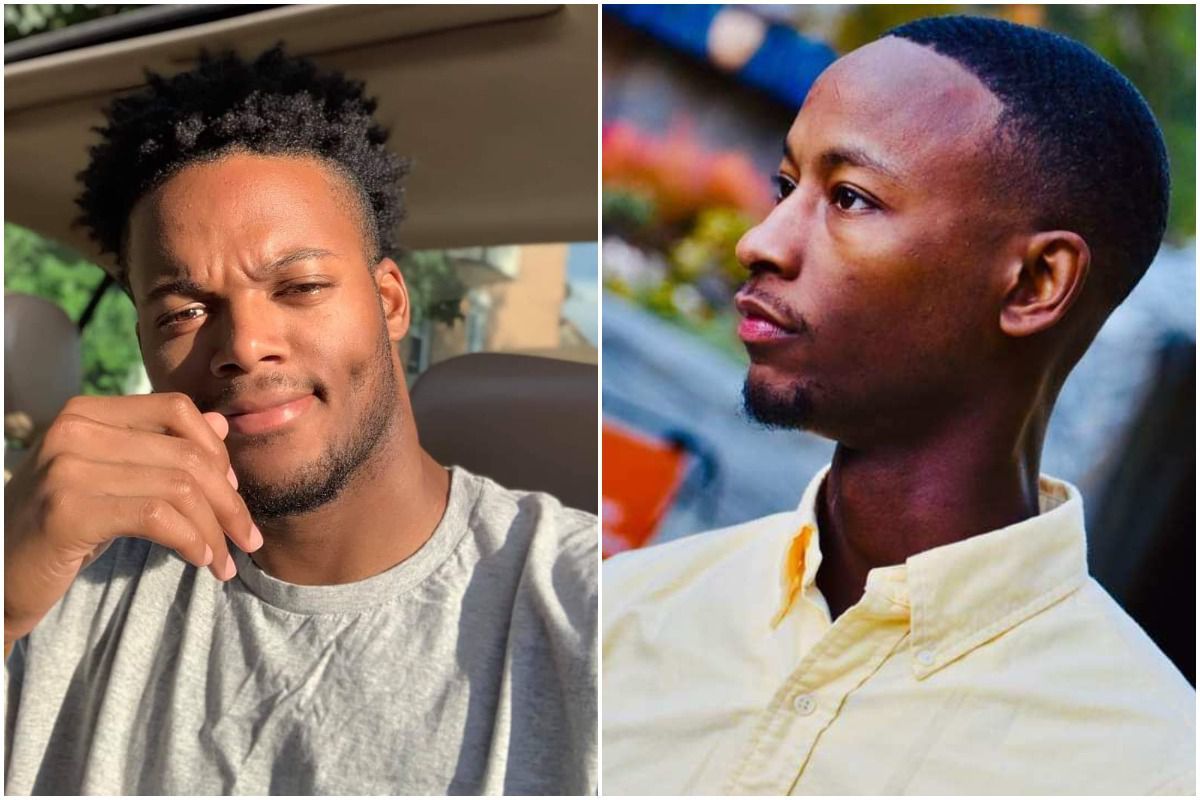
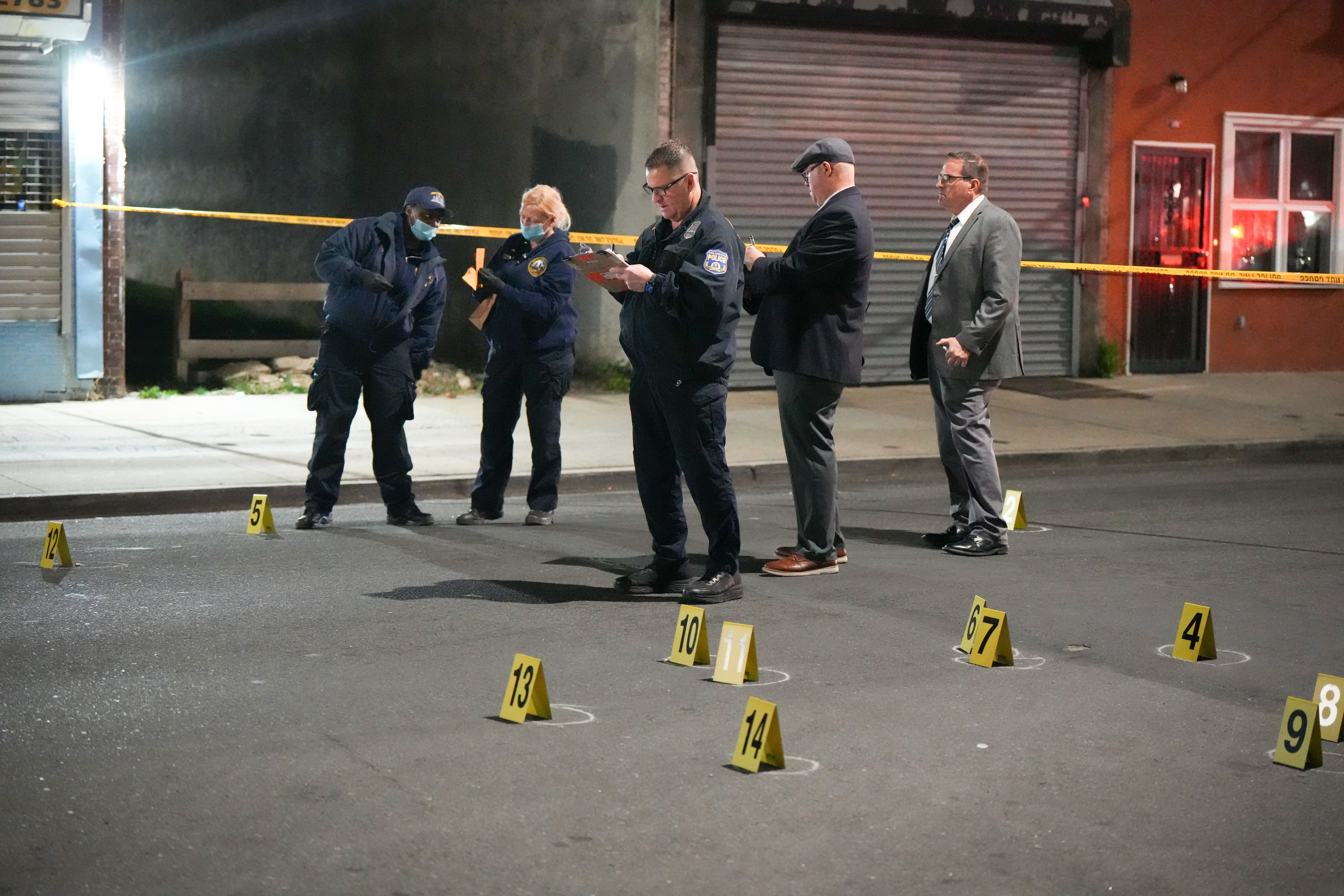
Philadelphia homicide detectives are investigating two fatal shootings that occurred days apart near Hunting Park Recreation Center, where both victims were found with gunshot wounds near the park’s recreational facilities.
The victims — both adult males who have yet to be publicly identified — were discovered less than a week apart in separate areas of the recreation center, raising questions about whether the killings could be connected.
Police have not said whether they believe the shootings are related.
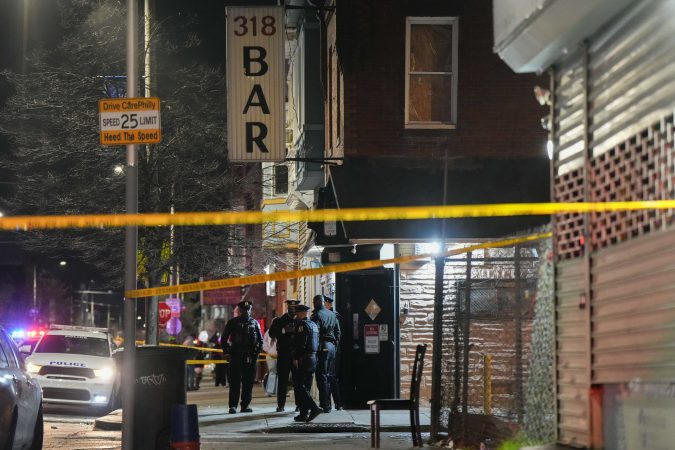
On June 26, just before 11 p.m., patrol officers discovered a man believed to be between 25 and 30 suffering from a gunshot wound to the back near the outdoor basketball courts. He was taken to Temple University Hospital, where he died a short time later. Police discovered a .40-caliber fired cartridge casing nearby.
The killing came six days after police discovered a man shot to death near the center’s baseball field. It was shortly after 10 p.m. on June 20, when police responding to a call for a shooting, found the 45-year-old victim suffering from gunshot wounds while seated on bleachers near the field. The victim, who had been shot in the torso, was pronounced dead at the scene. Investigators discovered two 9mm fired cartridge casings during that investigation.
Police have not released any motives or announced any suspects in the killings. Investigators have been searching the surrounding area for video surveillance footage, police said.
According to the Philadelphia Police Department, 80 people have been killed in the city so far in 2026, a nearly 30% decrease from the same period last year.
Anyone with information about either shooting is encouraged to contact the Philadelphia Police Department’s Homicide Unit at 215-686-3334 or submit an anonymous tip by calling or texting 215-686-TIPS (8477).
The Pennsylvania Supreme Court’s decision to limit Philadelphia prosecutors’ ability to seek to overturn old convictions not only took aim at one of District Attorney Larry Krasner’s defining initiatives — it altered the work of an office he will one day leave behind.
The high court’s ruling adds an extraordinary new layer of oversight to an issue that helped make Krasner one of the nation’s most prominent progressive prosecutors: correcting what he has described as injustices of decades past.
But the newly established changes to the appellate processes in Philadelphia will outlive Krasner’s tenure and reshape the way the office reviews post-conviction cases for years to come. It could not only apply to high-profile exonerations in murder convictions, but also extend to cases that even Krasner’s more conservative predecessors were eager to undo, like drug and gun convictions linked to corrupt cops.
It also deepens a yearslong conflict between Krasner and his critics in the justice system. Several justices, in dissenting opinions, raised concerns that the change could inject politics into a high-stakes legal process.
Since taking office in 2018, Krasner has made post-conviction review a centerpiece of his reform agenda. His office said it has overturned the wrongful convictions of 59 people — almost all of them Black men. It has also struck deals that allowed defendants to plead guilty to lesser charges in dozens of other cases in which prosecutors did not say those charged were innocent, but agreed their original trials were unfair, often because of prosecutorial or police misconduct.
But the high court, in a forceful majority opinion written by Justice Kevin Dougherty, said Krasner’s prosecutors had misled judges in several of those cases, that the prosecutors were not acting as the necessary adversaries to test the cases’ merit, and that the courts could no longer trust his prosecutors’ word when deciding whether to overturn a conviction.
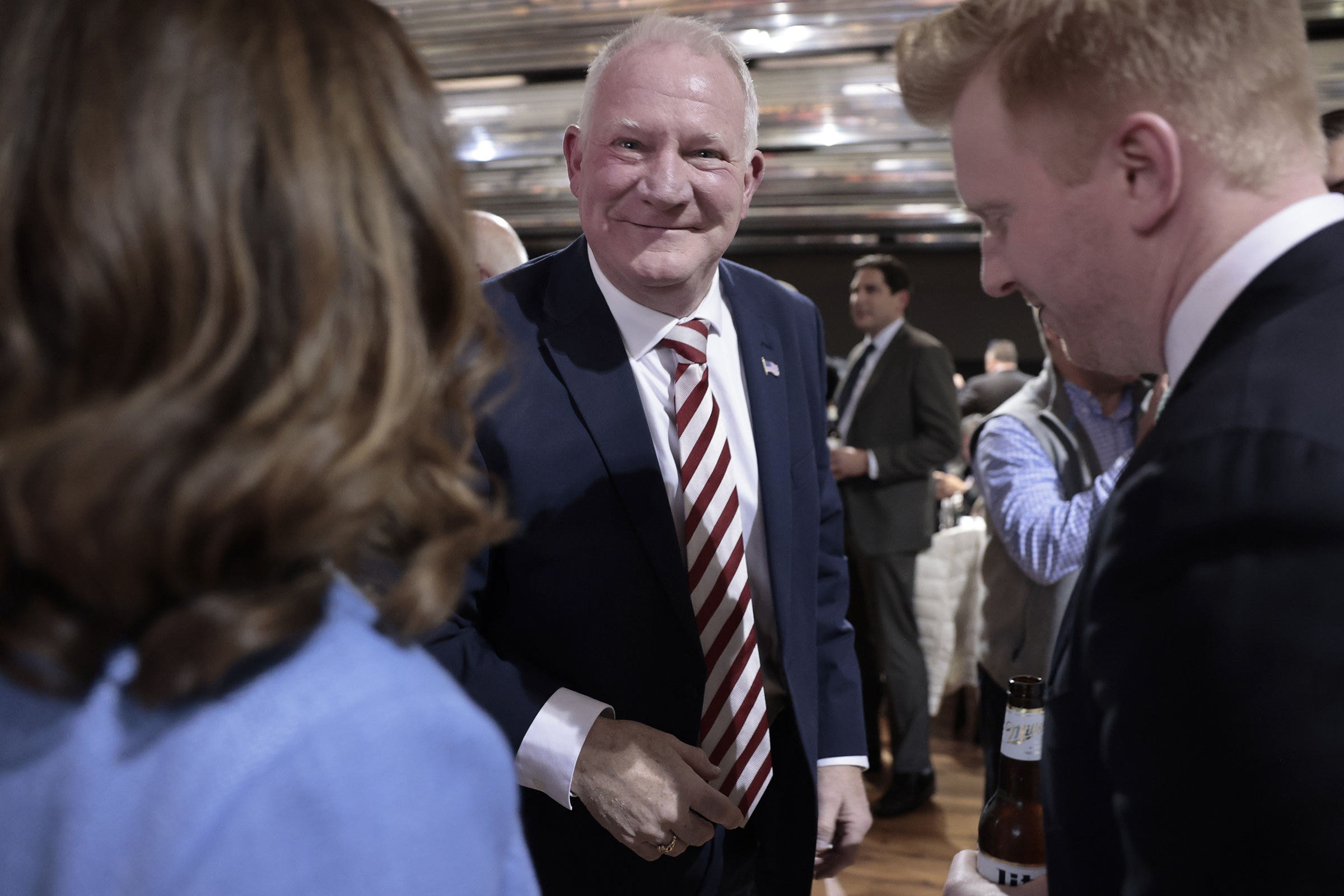
Pennsylvania Supreme Court Justice Kevin Dougherty greets supporters during an election night party in November 2025.Elizabeth Robertson / Staff Photographer
Moving forward, the justices ruled, if the district attorney’s office agrees to alter a sentence or overturn a past conviction, judges must ask the state attorney general’s office to review the case before proceeding. The ruling applies only to Philadelphia; prosecutors in every other Pennsylvania county can continue to evaluate cases on their own.
Krasner declined to comment this week. While it was not immediately clear whether he had a legal path to challenge the ruling, he said in a video statement last week that it “undermines the value of a vote in Philadelphia.”
He compared criticism of his post-conviction review efforts to attacks that have been leveled against other social and racial justice movements.
“We know where we are in the fight,” he said, “and once we get past the fight, we all win.”
But the Supreme Court’s ruling sharply curtails part of that effort, and it is expected to significantly reshape — and likely slow — one of the most consequential parts of Krasner’s agenda.
It was “an extraordinary remedy for something the court thought was an extraordinary problem,” said Aaron Marcus, chief of the appeals division at the Defender Association of Philadelphia.
But, he added, “the remedy might go beyond what was necessary in the court’s mind to address the problem in front of it.”
While the decision gives the attorney general broader authority to intervene when city prosecutors support post-conviction relief, it remains unclear how often — or when in the process — it will weigh in.
Brett Hambright, a spokesperson for the office of Attorney General Dave Sunday, a Republican, said in a statement this week that officials were still evaluating the order and its potential impact. Because of the many unknowns, he said, “it may be difficult to fully assess … until the process truly begins.”
Still, on Wednesday, Sunday’s office filed a notice of intervention in a murder case that Philadelphia prosecutors helped overturn just last month — setting up a potential test case for the new legal landscape around the issue.
Marcus, of the Defender Association, said the ruling could cause confusion — and delays — in cases that the conviction integrity unit does not typically handle, such as weapons and drug-possession cases, as well as more routine matters, like correcting prison sentences that had been miscalculated.
“There’s already too few attorneys with too little time and insufficient resources,” he said.
Marissa Boyers Bluestine, assistant director of the Quattrone Center for the Fair Administration of Justice at the University of Pennsylvania’s law school, said that because the courts did not set a timeline for how quickly the attorney general’s office must review each case, the added oversight could draw out an already yearslong appellate process filled with delays. And, she said, it could create “confusion on who exactly is representing the state.”
“Now you have two entities who are potentially in opposition to each other,” she said. “It raises confusion and diminishes the real trust in the criminal legal system.”
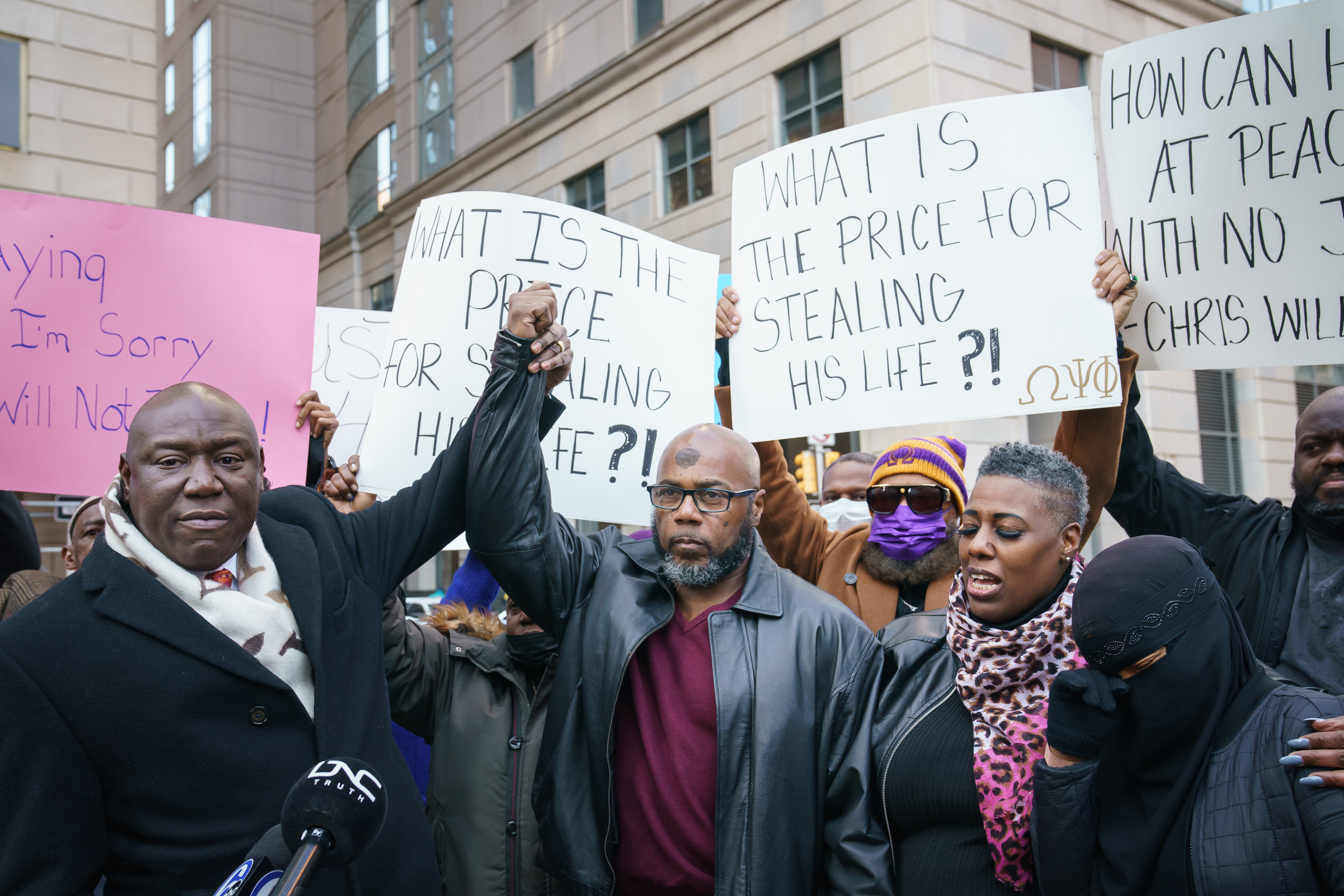
Dozens of people have been released from prison in Philadelphia after prosecutors agreed their trials were unfair. In this 2021 photo, Christopher Williams, center, gathered outside the Criminal Justice Center to announce a lawsuit against the city of Philadelphia, police and prosecutors. Williams was exonerated and released from prison in February 2021 after more than 25 years on death row.JESSICA GRIFFIN / Staff Photographer
Several defense lawyers who handle post-conviction cases were similarly concerned about the unknowns of the ruling — and said the majority opinion did not address the decades of problematic police and prosecutorial behavior that led to this moment.
Michael Wiseman said Krasner’s office has opposed most of his clients’ petitions over the years. Like other district attorneys before him, Krasner is not perfect, Wiseman said, but the high court “is vexing in its willingness to ignore all the times when Krasner’s office got it right.”
At the same time, he said, “It is similarly vexing for not recognizing the imperfections of past administrations, who, unlike Krasner, defended every conviction without regard to innocence or unconstitutional convictions.”
Adding to the complexity of the issue, some justices believed the majority’s decision could threaten to reignite long-running feuds between Krasner and prosecutors he has clashed with in the past.
In one of his first actions after taking office in 2018, Krasner fired dozens of veteran prosecutors, effectively describing them as unfit to serve in a reform-oriented administration. Some who were ousted then went on to work in the state attorney general’s office, and Krasner, in a remark that was widely criticized, jokingly referred to that office as “Paraguay,” a South American country where Nazis fled after World War II.
Justice Christine Donohue warned in a dissenting opinion that the majority’s ruling could threaten to inject personal disputes between rival lawyers into a process that is supposed to be unbiased. In addition, she said, giving the attorney general’s office authority in those cases could give some state prosecutors a role in defending convictions they helped obtain when they worked for the city.
“This is in stark contrast to acting as a friend of the court,” she said.
Ben Lerner, a former Philadelphia Common Pleas Court judge and former chief defender, said Krasner deserves credit for creating a meaningful system to revisit convictions — something he said previous administrations largely failed to do.
But state and federal courts have repeatedly raised concerns about the office’s methods, he said, including allegations that prosecutors excluded investigating officers and former trial attorneys from parts of the review process, and focused disproportionate attention on cases tied to prosecutors Krasner had clashed with during his years as a defense lawyer.
“In my view, it’s a shame,” he said, “because this was basically a very important thing that he was doing that previous district attorneys had had no interest in doing.”
A former supervisor in Philadelphia District Attorney Larry Krasner’s office has been suspended from the region’s federal courts, a development that came just one day after the Pennsylvania Supreme Court sharply curtailed the office’s ability to seek to overturn old convictions and accused its lawyers of misleading judges.
Nancy Winkelman was suspended for three years by a panel of federal judges who found that she was complicit in efforts to mislead a federal judge while seeking to overturn the death sentence of a man convicted of killing an East Mount Airy couple in the 1980s and allow him to serve life in prison instead.
The ruling, made public this week, adds to the mounting judicial scrutiny of post-conviction work in Krasner’s office. On Tuesday, the state Supreme Court imposed remarkable new restrictions on prosecutors’ efforts to reverse potentially problematic convictions.
In a forceful and scolding opinion, the high court said Krasner’s office misled judges, submitted false statements, and “violated its duty of candor” in asking a judge to vacate a 2004 murder conviction.
The court wrote that prosecutors’ actions in the case were part of a troubling pattern of conduct in seeking to overturn murder convictions and ordered that, going forward, the state attorney general’s office must be asked to review and weigh in on all such cases.
The panel of federal judges, in ordering Winkelman’s suspension, echoed some of those concerns.
Winkelman, who had led the office’s law division since 2018 before moving into a part-time role handling legal matters in state court last year, did not respond to a request for comment Wednesday. Her attorney, Andrew Hellman, declined to comment.
Winkelman is appealing the decision. In an earlier request that the findings remain under seal, Hellman described the ruling as having “findings and conclusions infected by serious errors.”
Krasner said in a statement Wednesday night that Winkelman is an exceptional attorney who left a lucrative private law practice to serve the public. He said she always showed “exceptional competence and integrity and contributed mightily to needed reform.”
“On the eve of Juneteenth,” he said, “we should all remember that reform is necessary in every era. And that those who bring needed reform sometimes are made to pay a price.”
The three-judge panel, in a ruling issued in March and unsealed this week, said Winkelman and a subordinate, former assistant district attorney Paul George, misled a federal judge by misrepresenting parts of the case while attempting to reverse the death sentence of Robert Wharton.
Wharton was convicted of first-degree murder and sentenced to death for the 1984 strangulation and drowning deaths of Bradley and Ferne Hart inside their East Mount Airy home.
The jury found that Wharton, angry over a disputed debt, spent months terrorizing the family before he forced his way inside the home at knifepoint and killed the couple. Afterward, he turned off the heat, leaving the couple’s seven-month-old baby, Lisa, to freeze to death — but she survived.
Decades later, prosecutors in Krasner’s office, in seeking to vacate his death sentence, suggested in court that the victims’ family backed their effort. But it was later discovered that they had consulted only one relative and never contacted Lisa Hart-Newman, the couple’s surviving daughter, who strongly opposed the move.
George later acknowledged that was a mistake, and U.S. District Judge Mitchell Goldberg ordered Krasner to write apology letters to the Harts’ relatives.
Goldberg, who denied the request to reduce Wharton’s sentence, later said that George’s and Winkelman’s review of the case was “patently deficient” and that they had violated federal rules of procedure in a manner that was “egregious” and “exceptional.”
The two prosecutors then faced federal disciplinary proceedings to examine whether they had been intentionally deceptive.
Last year, the three-judge panel found that George had lied to Goldberg about key facts, “flouted the interests of the public and the victims’ families,” and acted as the “quarterback” of efforts by the district attorney’s office to undo or undermine all death penalty cases.
George, 75, was disbarred in federal court. He has denied the accusations and filed an appeal. His attorneys said his disbarment was “highly disproportionate and offends basic tenets of justice.” Krasner also defended George’s work and said he believed the appeals court would find that the opinion criticizing George was filled with “factually and legally incorrect” statements.
The panel’s probe into Winkelman’s conduct continued, and the judges said they determined she “was willfully blind to, and complicit in,” George’s misrepresentations to Goldberg.
Winkelman, the judges said, “knowingly made misrepresentations” as part of the district attorney’s office “policy of vacating all death sentences.”
Krasner and his staff have long denied that the office has any such policy.
But the panel appeared to reject that, writing: “We do not credit [Winkelman’s] testimony that there is no such policy.”
According to the order, after Krasner was elected in 2017, he asked Winkelman, who had spent decades in civil appeals work but had no criminal law experience, to lead his office’s law division, a unit that handles hundreds of appeals and post-conviction cases in state and federal court each year.
George, a veteran attorney in the office, was made her assistant supervisor “to fill what she described as the ‘very big gap’ in her resume,” the order said.
The judges wrote that while Winkelman “betrayed the public’s trust,” she “has had a long and distinguished career.” George was the “quarterback of the DAO’s misrepresentations,” they said, and he alone misled Goldberg in the office’s communication with the Hart family.
In a forceful and scolding opinion, the Pennsylvania Supreme Court ruled Tuesday that District Attorney Larry Krasner’s office misled the courts, “violated its duty of candor,” and submitted false statements when asking a judge to vacate a 2004 murder conviction.
In the opinion released Tuesday, Justice Kevin Dougherty wrote that prosecutors’ pattern of misleading judges in seeking to overturn murder convictions is so troubling and recurrent that, going forward, before Krasner’s office seeks such relief, judges must notify the state attorney general’s office and allow it to review the case.
The decision amounted to one of the most scathing rebukes yet of Krasner’s efforts to revisit decades-old convictions, and arrives amid intensifying scrutiny of the office’s Conviction Integrity Unit and appeals division, whose handling of post-conviction cases has drawn criticism from judges in both state and federal court.
Just last week, Krasner’s office reversed course in a separate murder case, writing in a federal court filing that one of its prosecutors had made “material misstatements” and submitted “legally erroneous” statements when seeking to overturn a man’s murder conviction. The office sought to withdraw its recommendation to grant the defendant a new trial.
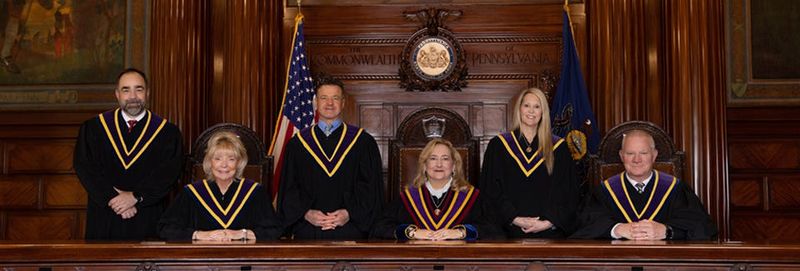
Supreme Court of Pennsylvania Justices Kevin Brobson, Christine Donohue, David Wecht, Debra Todd, Sallie Updyke Mundy and Kevin Dougherty in 2023.Provided by Administrative Offic
By giving the state attorney general authority to intervene when Philadelphia prosecutors decline to defend a conviction, the high court added a new layer of oversight to the state’s largest prosecutor’s office — a rare step that reshapes who controls post-conviction litigation in Pennsylvania.
Krasner, in a video statement shared late Tuesday, said the high court’s ruling “undermines the value of a vote in Philadelphia as compared to every other county.”
In the video, which featured images of the Rev. Dr. Martin Luther King Jr. and Rosa Parks, Krasner compared the pushback to his criminal justice reform efforts to those of other social justice movements.
“First they ignore you — we’re past it. Then they laugh at you — we’re past that. Then they fight you — and we have been fighting for 8½ years,” he said.
While four justices — Dougherty, Sallie Updyke Mundy, P. Kevin Brobson, and Daniel McCaffery — agreed there are systemic concerns about the district attorney’s office, three — Debra Todd, Christine Donohue, and David Wecht — supported neither that narrative nor the court’s remedy.
Wecht cast the lone full dissent, arguing that the case did not warrant the Supreme Court’s intervention and that the lower courts already have the tools necessary to prevent improper concessions by prosecutors.
The case at the center of the court’s ruling was that of Lavar Brown, who was sentenced to life in prison without the possibility of parole after a jury convicted him of second-degree murder in the robbery and shooting death of Michael Richardson, a North Philadelphia Rite Aid worker, in 2003.
Brown was later convicted of shooting and killing a second man, Robert Crawford, in 2005, and was sentenced to death — in part because of the first conviction.
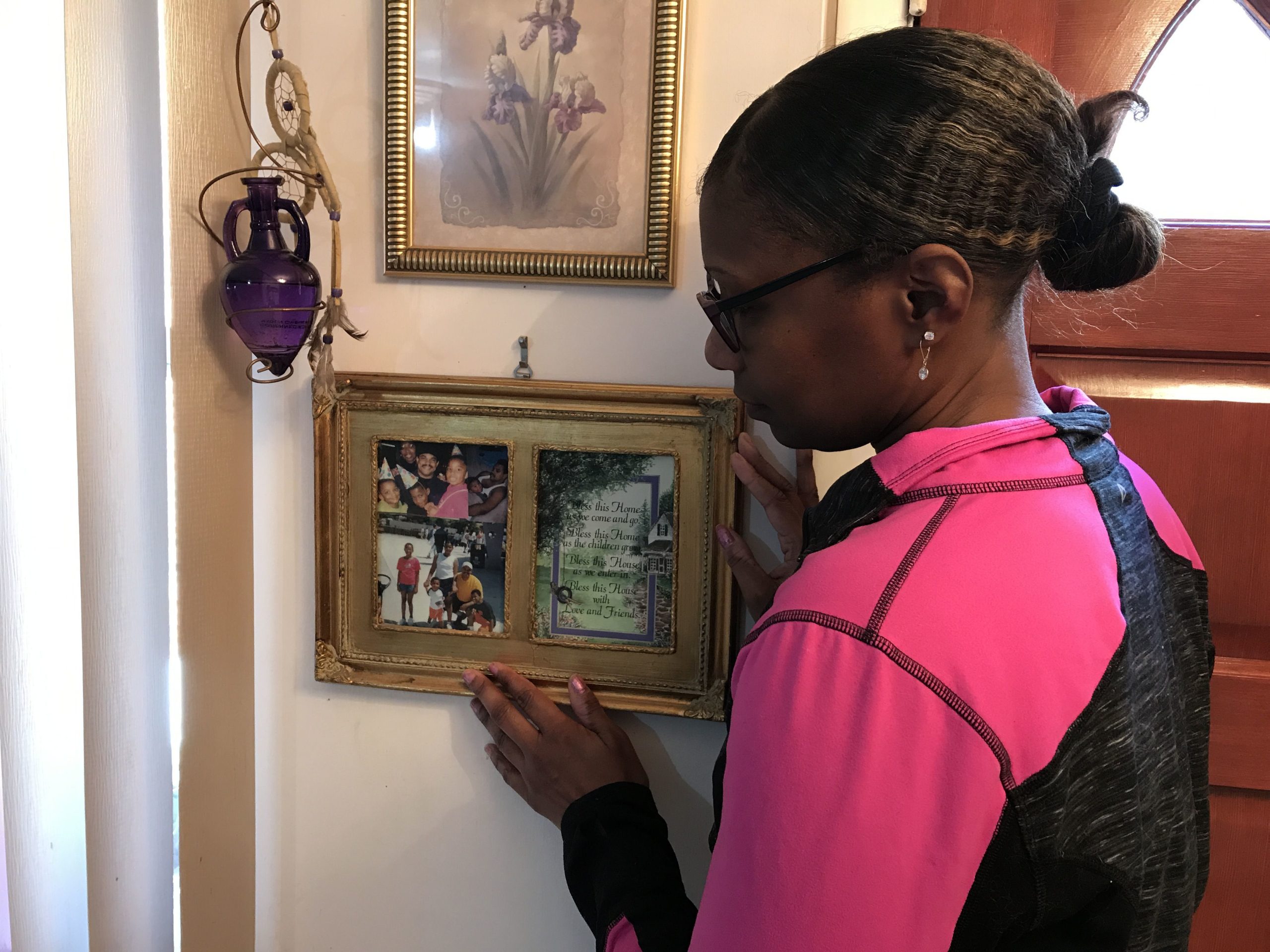
In this 2019 photo, Kristi Richardson looks at photos of her husband, Michael Richardson, who was shot and killed during a robbery at the Rite Aid where he worked in 2003.JULIE SHAW / Staff
In post-conviction court filings, Brown’s attorneys said the prosecution’s case in Richardson’s killing largely relied on the testimony of two witnesses — including one who, in a statement to police, implicated a teenage girl who was incarcerated at the time of the murder. The witness’ earlier statements were never provided to his trial lawyers, the attorneys said, which violated his right to a fair trial.
When a Common Pleas Court judge later granted Brown a new trial, the families of Richardson and Crawford took the unusual step of asking Pennsylvania’s highest court to intervene.
The families said Krasner had a conflict of interest because two of his former law partners had previously been involved in Brown’s case. They also argued the district attorney’s office was trying to “circumvent” the courts by conceding relief in the Rite Aid killing, which had served as an aggravating factor for his death sentence.
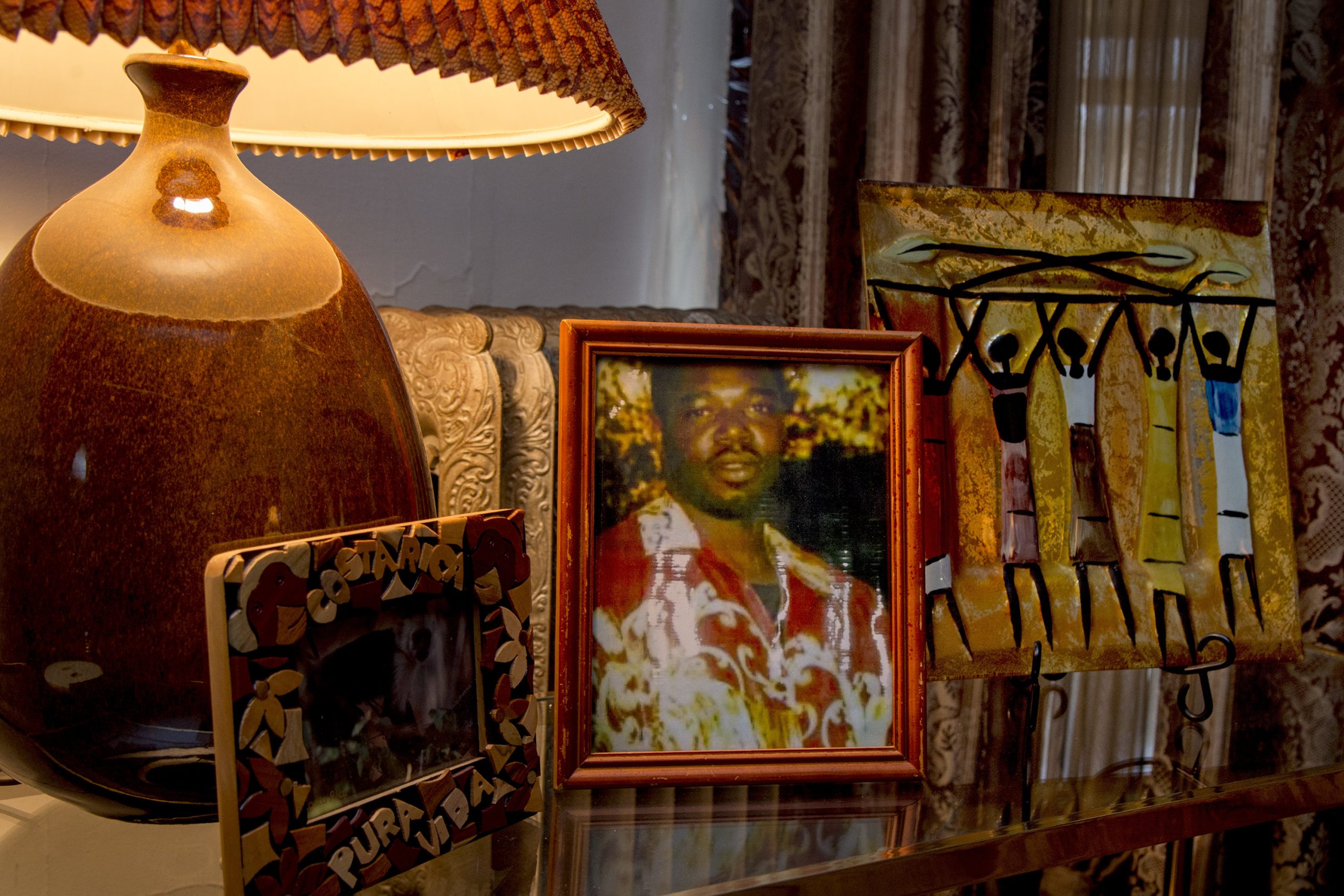
A photo of Robert Crawford in the home of his sister Suzette Crawford March 27, 2019. Robert was shot to death in Philadelphia in December 2003. His killer, Lavar Brown, is on death row.TOM GRALISH / Staff Photographer
The Supreme Court agreed to hear arguments in March 2025. And on Tuesday, six justices agreed that Brown’s conviction should not have been overturned and ordered a new hearing in the case.
Dougherty, in writing the majority opinion, was scathing in his assessments of prosecutors’ conduct.
In a case involving a murder conviction and death sentence, he wrote, the district attorney’s office’s “fidelity to its duty of candor should have been at its zenith. Regrettably, it was anything but.”
The opinion said prosecutors did not disclose a memorandum in which a key witness, Ronald Vann, identified Brown as being involved with the murder, even as they asked Common Pleas Court Judge Glenn Bronson to vacate the conviction.
Instead, the court said, they asserted that the document was irrelevant to Brown’s claims.
Krasner’s office also tried to keep the victim’s families from accessing it.
But the memorandum was “unquestionably relevant” to the case and showed a consistency over time of Vann’s statements, the opinion said. That Krasner’s office would say otherwise “rings hollow and smacks of post hoc rationalization,” the court said.
“The memorandum would have poured salt on the ‘fertile ground’ for impeachment envisioned by the DAO,” the ruling said, adding that withholding the document was a “breach of its duty of candor” to the court.
The high court also said prosecutors filed a joint stipulation with Brown’s attorneys that “was false in multiple respects,” including mischaracterizations of the timeline of witness statements to police.
The justices said prosecutors had not interviewed a single witness or investigator who had handled the case, and rejected their claims that it had conducted a “thorough, independent review of the records in this case.” Krasner’s office, the court said, “cut corners and shirked its duties in conducting its post-conviction ‘investigation.’”
The court reversed Bronson’s order granting Brown a new trial.
To “promote just outcomes” moving forward, the opinion said, the courts handling appeals must notify the attorney general’s office of any case in which Krasner’s office plans to seek relief, and give state prosecutors the opportunity to review it and weigh in on whether the decision is appropriate.
A lawyer for Brown could not be reached for comment. The Pennsylvania Innocence Project, which had filed a brief supporting Brown and the district attorney’s office alongside dozens of other prosecutors’ offices, former judges, and defense attorneys, declined to comment.
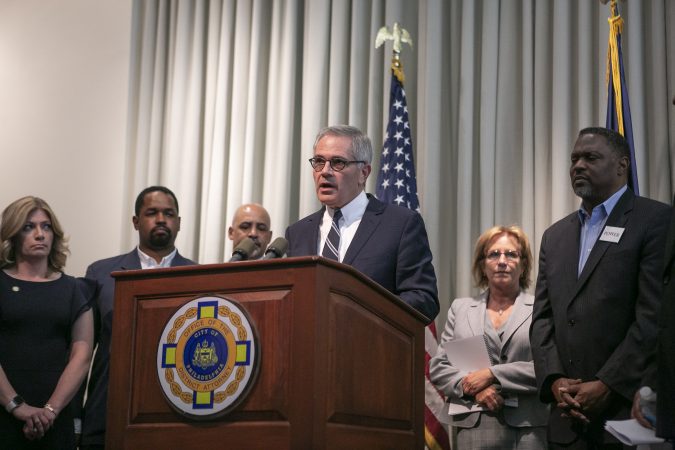
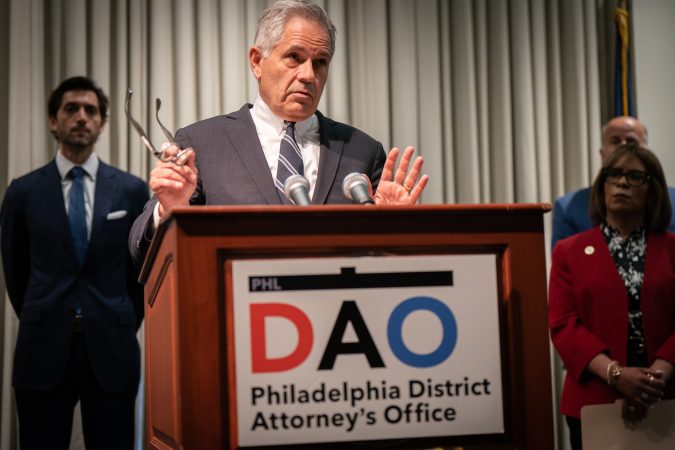
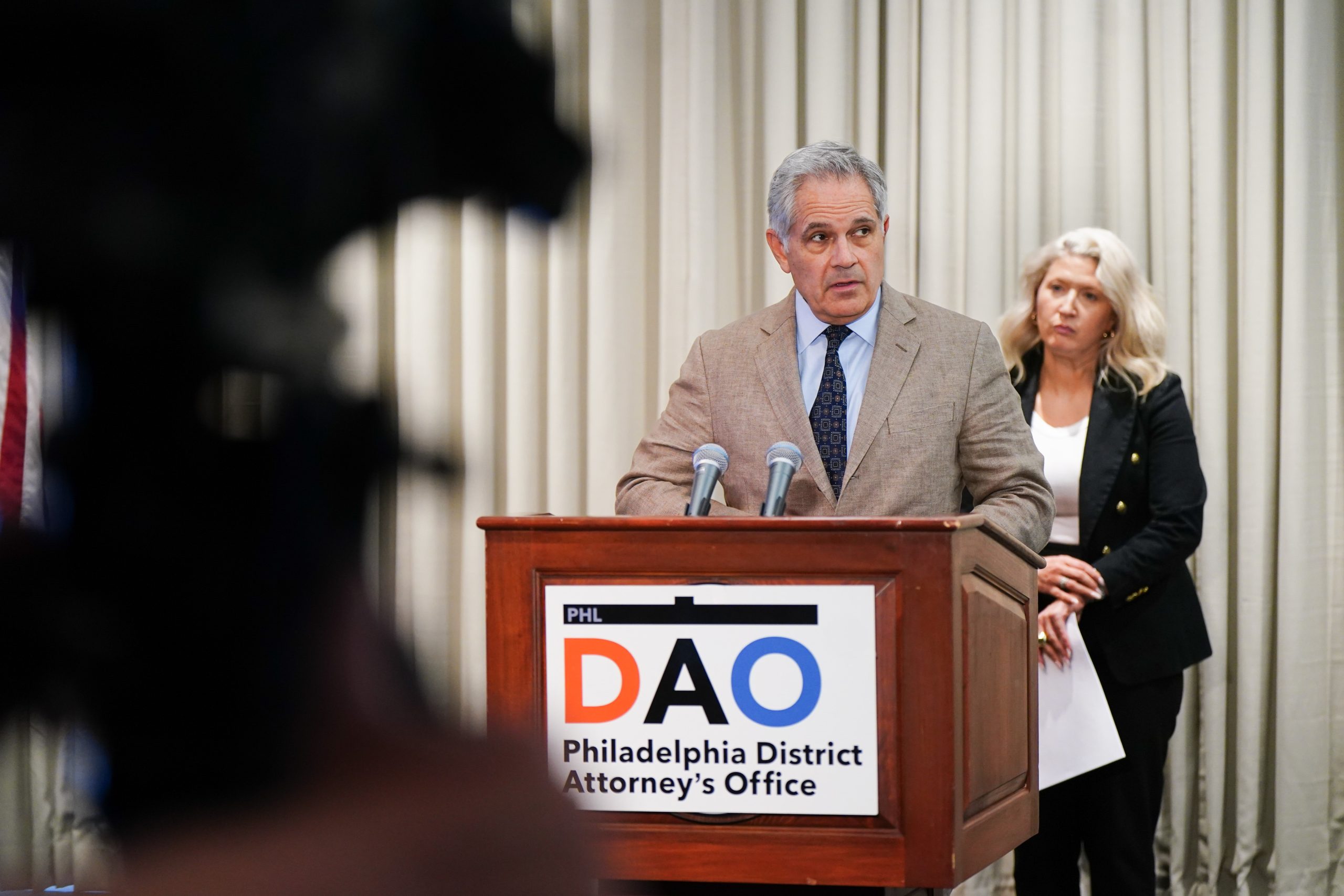
Da Larry Krasner speaks during a May 2026 press conference. Jessica Griffin / Staff Photographer
Chris Lynett, the lawyer who represented the families of Richardson and Crawford, said the high court’s opinion supported their belief that Brown’s case — like others — had not been scrutinized closely enough by prosecutors.
“We can’t just say that if we feel uncomfortable with a conviction that we are going to overturn it,” he said. “You need a full record, you need honesty, and you need an evaluation.”
Lynett, who worked as an assistant district attorney in Philadelphia for five years before leaving the office in 2020, said its leadership needs to “think about what they’re doing and what they’re encouraging their line prosecutors to do in court.”
The attorney general’s office had filed an amicus brief in support of the families, arguing that, since 2018, Krasner’s office agreed to overturn convictions in 115 cases with little to no meaningful opposition to defendants’ claims.
Attorney General David Sunday, a Republican, said in a statement Tuesday that his office is grateful to serve “as a check on this process for the citizens of Philadelphia and ensure that the interests of victims’ families are represented.”
When an investigation shows that a defendant was wrongfully convicted, his office said, prosecutors have a duty to remedy the situation — through the established court processes.
“As the Court noted,” his office said, “this case is about the failure of the process in Philadelphia, both as to this defendant and many others.”
Krasner, for his part, stood by his office’s policies. Philadelphia is on track to record the fewest homicides in recent memory, he said in the video, and correcting past mistakes builds trust in the criminal justice system.
Acting as an adversary in overturning wrongful convictions, he said, “doesn’t help safety, it doesn’t help democracy, it doesn’t help freedom, but that’s OK. Because we know where we are in the fight, and once we get past the fight, we all win.”
Tanya Clark’s knees bounced as she sat in the courtroom, her eyes darting toward the doors. For nearly four years, she’d waited for this moment — for the person who killed the nephew she’d raised like a son to admit to what he’d done.
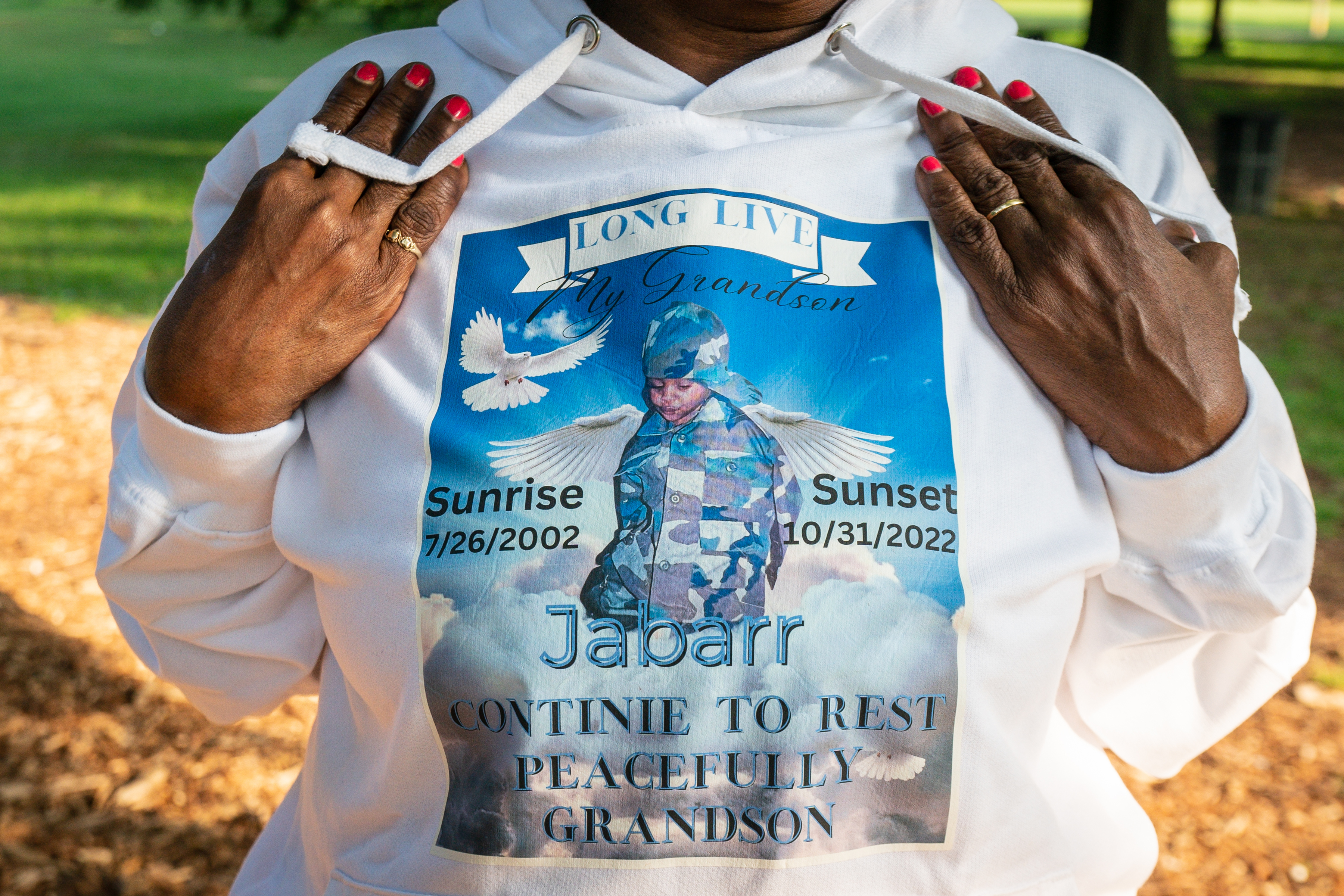
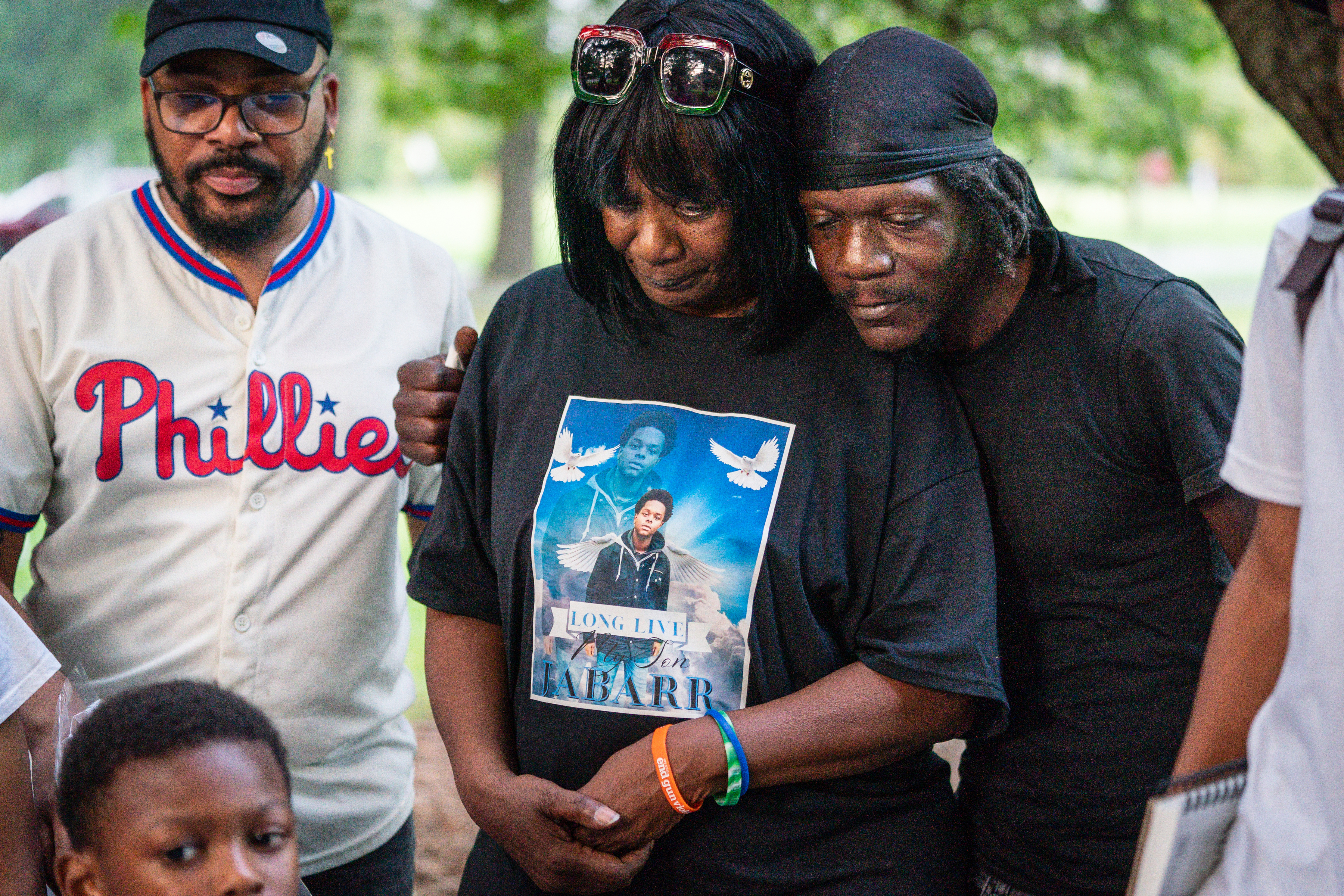
But as Aaron Coles, 21, took a seat next to his lawyer and prepared to plead guilty to killing Jabarr Richards, 20, in Southwest Philadelphia in 2022, Clark had to leave the room.
How, she said she thought, could this be the person that ruined my life?
“I went in with anger and hatred,” she said. “And then you see this child.”
Coles on Monday pleaded guilty to third-degree murder, conspiracy, and gun crimes, admitting that when he was 17, he and two others shot Richards nine times at 53rd Street and Greenway Avenue on Halloween night.
Tanya Clark (center) gathers with family to celebrate and mourn on what would have been Jabarr Richards’ 21st birthday in July 2023. Jessica Griffin / Staff Photographer
For nearly 18 months, Richards’ killing — one of more than 500 homicides in 2022 amid an unprecedented spike in violence — went unsolved. Clark and her family agonized over the possibility of becoming one of the hundreds of families in the city who might never get to face their loved one’s killer in court.
But Assistant District Attorney Anthony Voci said Homicide Detective Joseph Cremen had persistently worked the case, amassing evidence that ultimately showed Coles was involved.
Voci said Coles’ cousin had been killed several months earlier, and that his crew from the Bartram Village projects blamed young men from 53rd and Greenway. The lawyer said there’s no evidence to suggest that Richards was involved with that earlier homicide, and believes he was targeted simply because he was from the area.
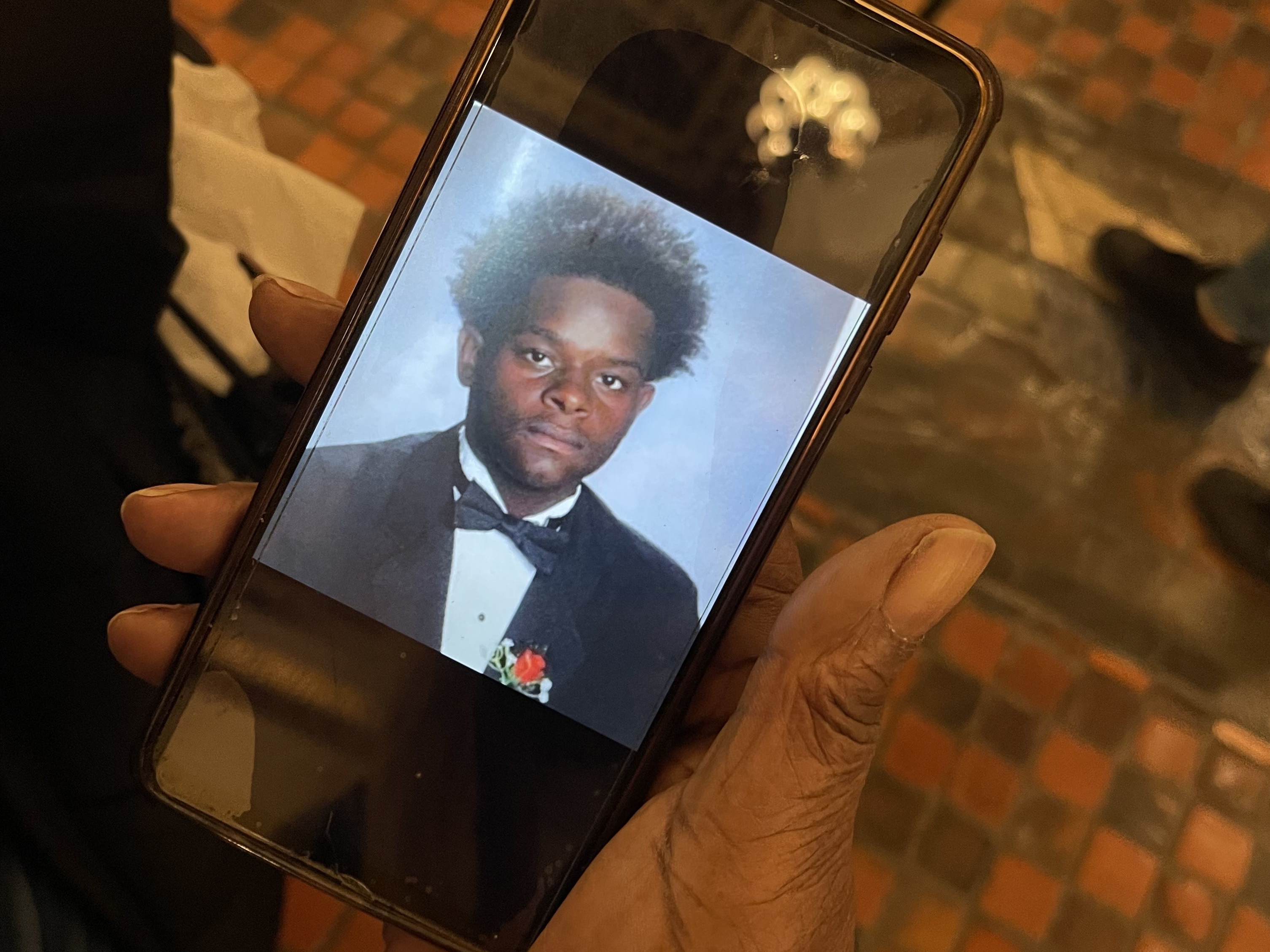
Tanya Clark holds a photo of her nephew Jabarr Richards, who was fatally shot in Southwest Philadelphia in October. He was 20 years old, and she had raised him like a son.Ellie Rushing
At the time of the shooting, he said, Coles was wearing a GPS ankle monitor for an earlier illegal gun possession arrest, and had placed aluminum foil around the monitor to try to obscure his location.
But even through the foil, Voci said, the monitor communicates with cellphone towers, which showed Coles near 53rd and Greenway at the time of the shooting. Coles’ Instagram messages also referenced the shooting, he said, and included a photo of a firearm that appeared to resemble one of the Smith and Wesson guns used to kill Richards.
Coles was arrested and charged in June 2024.
In the courtroom on Monday, Coles’ mother bounced her knee anxiously and wiped away tears as her son repeated that he was guilty.
He’s scheduled to be sentenced in August.
In the hallway, Clark, alongside her daughter and Richards’ older brother, David, tried to find some comfort in the fact that they wouldn’t have to sit through a lengthy trial.
“One step over the hill, toward healing,” Clark said.
Tanya Clark raised her nephew Jabarr Richards as if he was her son. Jessica Griffin / Staff Photographer
She thanked Cremen, the detective, who told her he was still working to identify the two other gunmen.
Clark nodded and believed him.
Back at her West Philadelphia home that afternoon, Clark sat with the morning’s hearing still running through her mind. She just kept thinking about Coles.
“This boy was lost and caught up in a world that was too fast for him,” she said. “What hurt so bad that you had to take my child? Why my child?”
Her child — the goofy one who’d survived his own painful childhood with absent parents, who played basketball and pestered his older siblings but would have done anything for them.
Her voice cracked and faded as she repeated: “I just wanna know. I just wanna know. I just wanna know.”
Three Philadelphia police officers were wounded in a shooting late Saturday after an argument with a retired city firefighter escalated, and the man opened fire on them in the street, law enforcement sources and city officials said.
The gunman was killed by officers in response, officials said.
Police responded to reports of gunfire at a car near North 54th and Arlington Streets in the Wynnefield section of West Philadelphia around 10:30 p.m., Commissioner Kevin Bethel said at a news conference early Sunday.
A 57-year-old man — identified by police late Sunday as Eric Franks — then confronted four officers on the block and began arguing with them, according to video of the encounter obtained by The Inquirer.
Officials said police were trying to explain to Franks that they needed to establish a crime scene, according to a news release Sunday evening.
The video appeared to show an animated Franks yelling at officers while another man attempted to hold him back. Franks, according to the video, then pushed a sergeant.
City Managing Director Adam K. Thiel (center, facing forward) at the emergency entrance of Penn Presbyterian Medical Center, where three Philadelphia police officers were taken after being shot.Elizabeth Robertson / Staff Photographer
Bethel said the officers repeatedly told him to “stand down” before attempting to arrest him about 10:45 p.m.
As the officers tried to detain Franks, the video showed him break free, then pull a gun from his waistband, and begin shooting at the officers in the street. In the statement released Sunday, police said Franks had a license to carry a firearm. It stated that the officers repeatedly told him not to draw the weapon.
In the video, officers and several civilians could be seen diving behind cars and scattering for their lives.
Four officers shot back at Franks, Bethel said. Three, including a sergeant, were struck by gunfire and taken to Penn Presbyterian Medical Center. One officer was shot in the face, one in the hip, and another in the leg, according to Mayor Cherelle L. Parker. The officers’ names have not been released by officials.
All were reportedly stable Sunday and expected to recover.
The video shows Franks stumbling down the sidewalk before collapsing. He was shot in the chest and leg. He died at Thomas Jefferson University Hospital at 11 p.m., Bethel said.
Bethel said Franks was not involved in the initial incident for which police were called.
“Why he elected to come into that scene and engage the officers — whether this was premeditated — we will walk through that process to see,” Bethel said. “But you don’t come to a situation like that … to engage the officer. We all can start to think of what potentially his intended purpose was.”
Eric Franks, 57, a retired firefighter, was shot by Philadelphia police officers on Saturday night.Courtesy of the Frank family attorney
Franks’ family attorney James Funt said Bethel should not have “insinuated” that Franks may have planned the shooting.
“That’s just not true,” Funt said. “I don’t know where he got that information.”
Funt said Franks was a community activist who had met with Philadelphia City Councilmember Curtis Jones Jr. and police to address an increase in drug crimes in the neighborhood.
On Saturday night, Franks was managing a 16-year-old’s birthday party at his event space business at the other end of the block when his son called him to tell him that someone had shot a car, Funt said. Franks ran to the corner to see if he could help, he said.
“He is not someone who would try to be an initial aggressor,” Funt said.
Funt said he doesn’t know what led up to the confrontation captured on video, but it warrants a full investigation and the review of any additional video recordings to get the full picture.
An investigation by the police department’s officer-involved shooting investigation unit and internal affairs bureau, and the Philadelphia District Attorney’s Office, is ongoing.
“All we want is for the facts to come out,” Funt said.
City payroll records show Franks retired from the Philadelphia Fire Department in September 2025 after nearly 20 years on the job.
Mike Bresnan, president of the International Association of Firefighters Local 22, declined to comment Sunday. A city spokesperson for the fire department referred questions to the police.
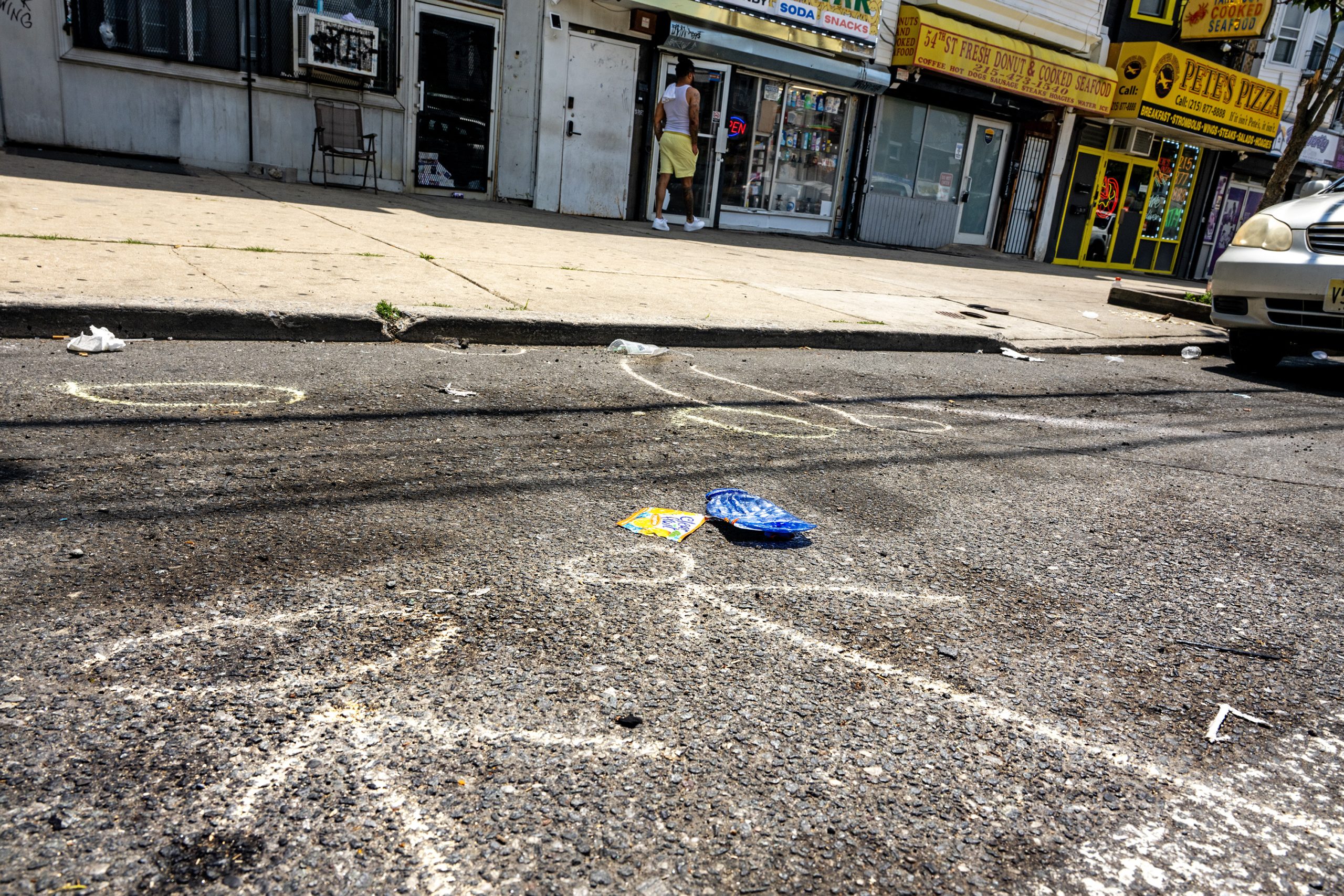
Police evidence marks are along 54th Street in the Wynnefield section of West Philadelphia Sunday June 14, 2026, the morning after three Philadelphia police officers were wounded in a shooting late Saturday after a verbal altercation with a retired city firefighter.Tom Gralish / Staff Photographer
The officers, ages 43 and 30, have worked as Philadelphia police for two and seven years, respectively. The sergeant, 39, has been with Philadelphia police for eight years.
“These men and women give their lives for this work,” Bethel said. The mayor also commended the officers’ resiliency and resolve. “We’re just grateful that tonight, they will survive their injuries,” Bethel added.
On Sunday, officers with the police department’s crime scene unit continued to comb the block — a street of porch-lined rowhouses and small businesses — for evidence and witnesses. Police pulled several fired shell casings, caked in mud, from a sewer drain.
Across the street, a group of people who identified themselves as Franks’ relatives gathered outside the event space called Mingle, that the family owns.
Franks’ wife, Michele, referred questions about the shooting to Funt.
But in a brief phone interview, she tearfully described how they’d been together ever since they went to their senior prom at Overbrook High School in 1986.
“He’s a husband, father, a man of the community,” she said.
Editor Joe Berkery contributed to this article. The article has been updated to include PPD’s statement on the shooting, released Sunday evening.
Unable to sleep, Nyshyia Thomas stepped into the shower at 4 a.m.
She stood beneath the water longer than usual, feeling its warmth against her face and running down her skin, hoping it would carry her tears with it.
It was graduation day. A day she’d been waiting for since 2022, when her youngest son, DaJuan, started his freshman year at Jules E. Mastbaum High, where she had graduated years earlier, and where her eldest child had graduated as well.
Nyshyia Thomas gets ready to attend the Jules E. Mastbaum High School graduation, where her son DaJuan Brown was honored and would have graduated.Jessica Griffin / Staff Photographer
DaJuan was supposed to graduate on this day.
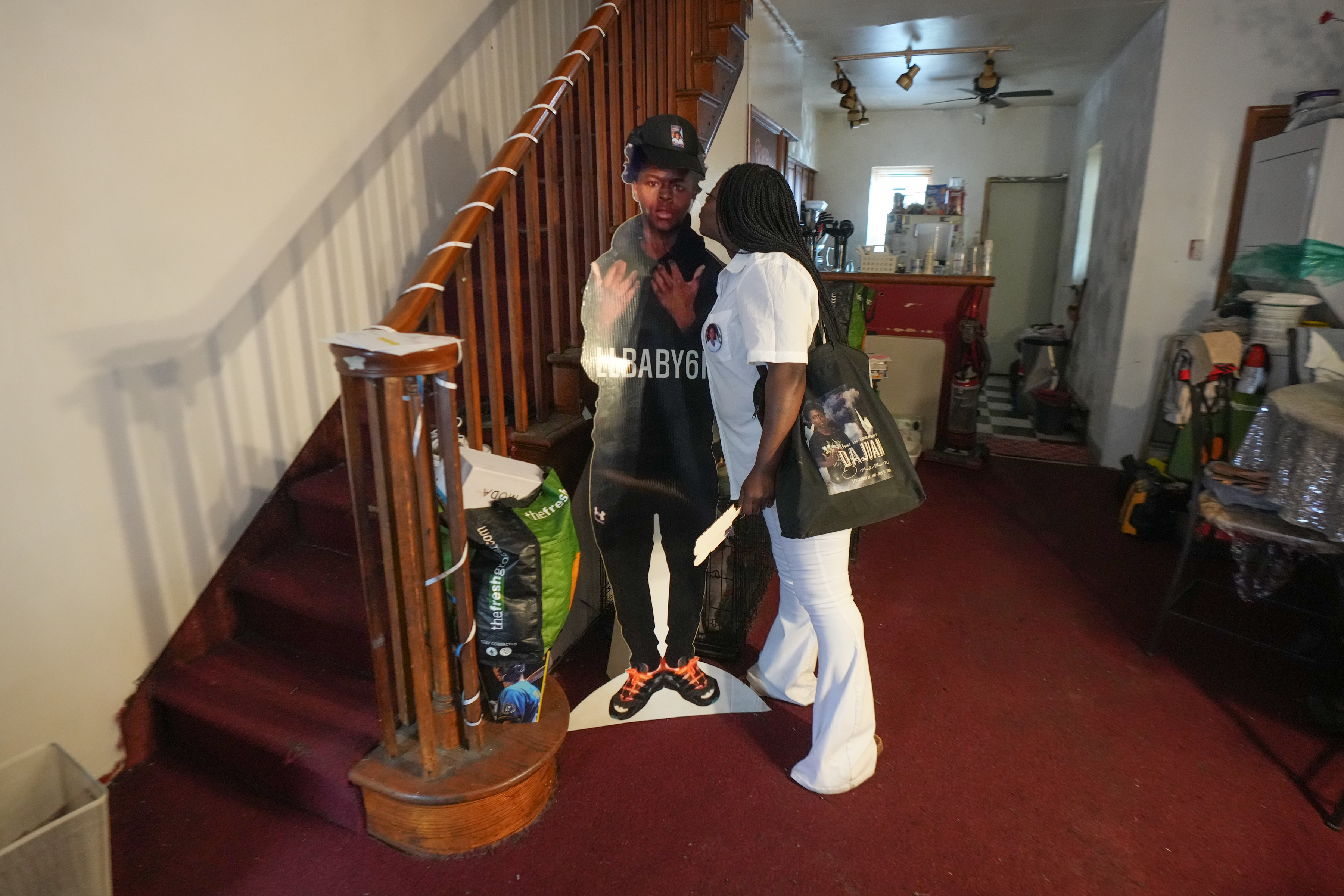
She stood at the base of her stairs, wrapped in a purple silk robe, and stared at the life-size cardboard cutout picture of him in her living room, her cheeks quivering through a smile.
He had just completed his freshman year at Mastbaum.
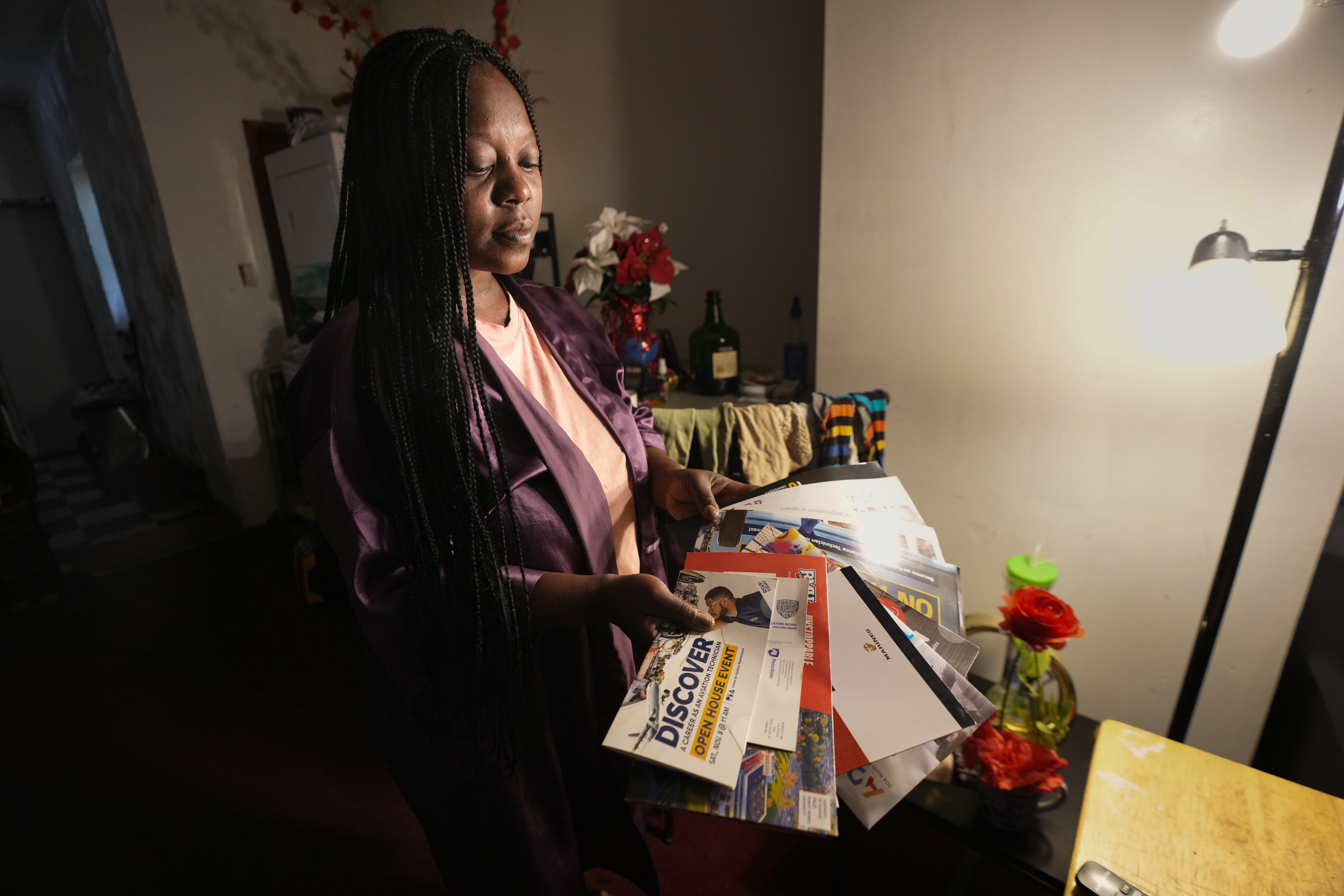
Now, three years later, college brochures regularly arrived in the mail, addressed to him.
Mail from different colleges has often arrived addressed to Nyshyia Thomas’ son, DaJuan. Jessica Griffin / Staff Photographer
Penn State. Indiana University of Pennsylvania. The Marines. Towson. Aviation school.
Each one like an arrow through his mother’s heart.
But now she had something to look forward to. Mastbaum was honoring DaJuan at its graduation ceremony Wednesday with a posthumous diploma.
“You did it, Juan Juan,” she told the cutout. “I’m so proud of you.”
She kissed his cheek and walked upstairs to get ready.
Thomas, 37, plumped her skin with Vaseline, dabbed her lips with coconut oil gloss, and carefully applied fluttering eyelashes with waterproof glue.
Then she dressed, all in white — the color of angels, of the doves they released at DaJuan’s funeral.
Nyshyia Thomas at the Mastbaum High School graduation, where her son Dajuan Brown was honored and would have graduated Wednesday. Jessica Griffin / Staff Photographer
Around 9 a.m., her eldest son, DaQuan Brown, called from jail, his morning voice slow and gravelly.
He has been incarcerated since August after police said he was among at least 15 people who fired guns aimlessly down the 1500 block of Etting Street during a block party last July, leaving three dead and 10 others wounded. Defense lawyers have said Brown, 22, and other partygoers thought they were being shot at and were defending themselves when they opened fire and unintentionally shot one another.
Prosecutors say that there was no one targeting the party, and that a loud “pop” triggered contagious gunfire. Anyone who fired a gun that night, officials said, is responsible for the carnage.
So Brown is in custody, held without bail, facing three counts of murder, 10 counts of attempted murder, and related crimes.
The father of her children was locked up, too. Police said that when they reviewed surveillance footage from that night on Etting Street, it showed TyeJuan Brown, 38, running down the block toward his son and the gunfire, holding a firearm, which he is barred from owning because of criminal convictions.
He was charged with illegal gun possession and had been held on $250,000 bail since August.
Nyshyia Thomas prayed for strength before attending what would have been her son’s high school graduation.Jessica Griffin / Staff Photographer
Thomas hadn’t heard from him in a few days. She suspected his cellblock was on lockdown again.
“Love you,” she said. “Call me when it’s over, like 2 o’clock.”
Nyshyia Thomas kisses the life-size cardboard cutout picture of her son DaJuan Brown before leaving for what should have been his high school graduation ceremony.Jessica Griffin / Staff Photographer
Her nerves worsened as she, her daughter, and her mother-in-law arrived at the South Philadelphia venue. They were 15 minutes late. And where were her sisters?
“I told y’all hurry up!” she said into the phone.
Just wait, they told her. We’re almost there.
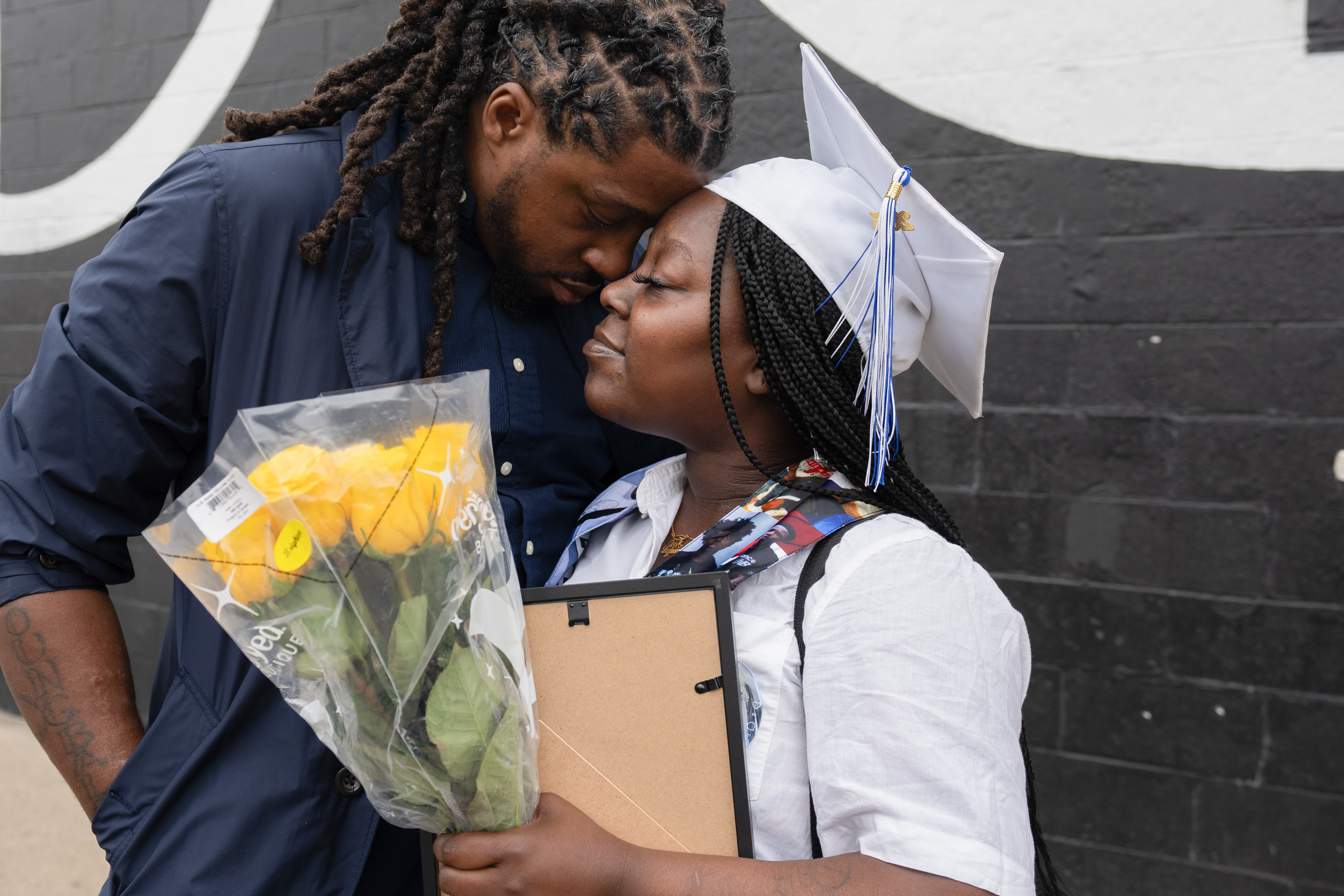
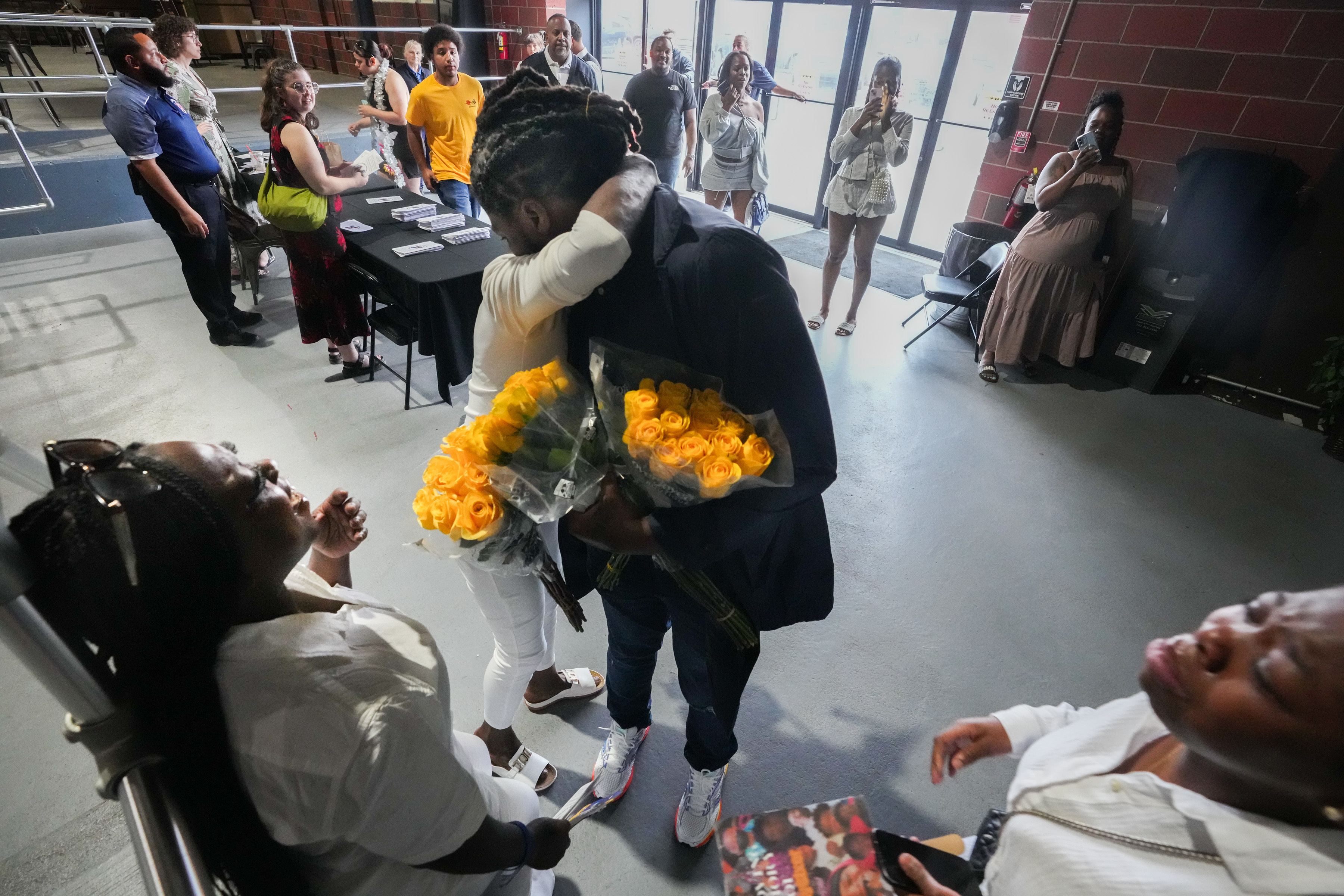
She paced the hall, deciding whether to take a seat without them, when she saw TyeJuan Brown walk through the door carrying three bouquets of yellow roses.
She ran into his arms and buried her head in his chest. Their daughter, NeSiyah, 15, turned away in tears, then dived into his arms. Their three faces nuzzled together at last.
TyeJuan Brown had been jailed since August, when police said he was seen on video with a gun, rushing toward the sounds of gunfire the night of the July 2025 mass shooting. After his bail was lowered, he surprised his family, including his daughter and the mother of his children, at what would have been his son’s high school graduation.Jessica Griffin / Staff Photographer
“How?” Thomas cried.
His bail was lowered last week, he said, so his sister posted the $250 necessary for his release and started planning the surprise.
She couldn’t stop touching his face. His cheeks were fuller, his skin was healthier. But his eyes, those rich mahogany ones she had loved since she was 12, were filled with relief. She kissed him deeply.
“All right, all right,” said his sister, Shikema. “We’re going to miss the graduation!”
Nyshyia Thomas, left, and TyeJuan Brown, reunite at what would have been their son DaJuan’s graduation day. They met when they were 12, and share three children.Jessica Griffin / Staff Photographer
Thomas could not stop giggling as she took her seat beside the broad-shouldered man she had known more than half her life and missed every day for 10 months.
Their relationship had its trials, and he had been jailed years ago for drug and gun charges. But with their eldest son now fighting a murder case, Thomas and her daughter needed him more than ever.
She interlaced her fingers through his, and leaned into his shoulder. NeSiyah kept glancing over at her father, as if to make sure he was still there.
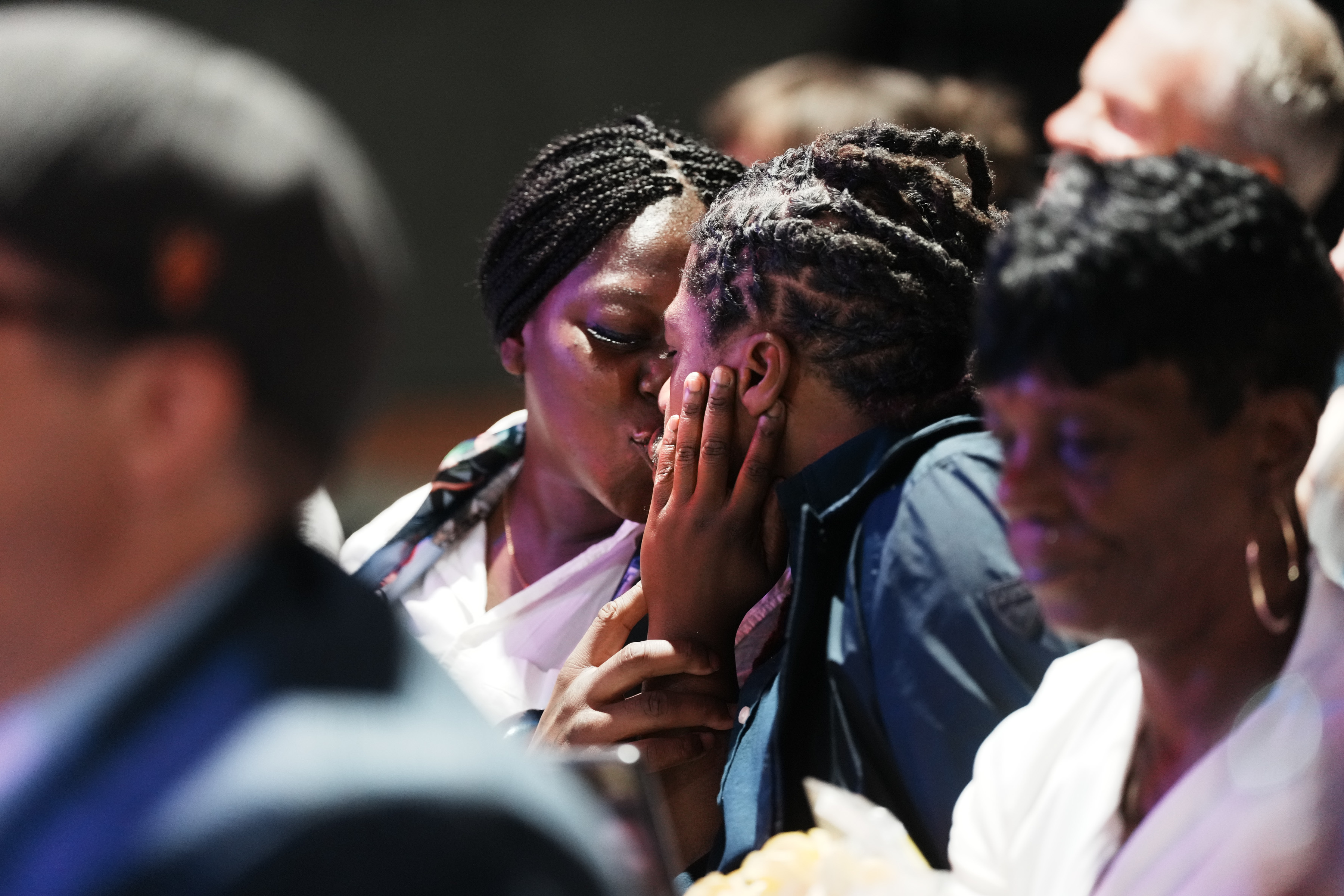
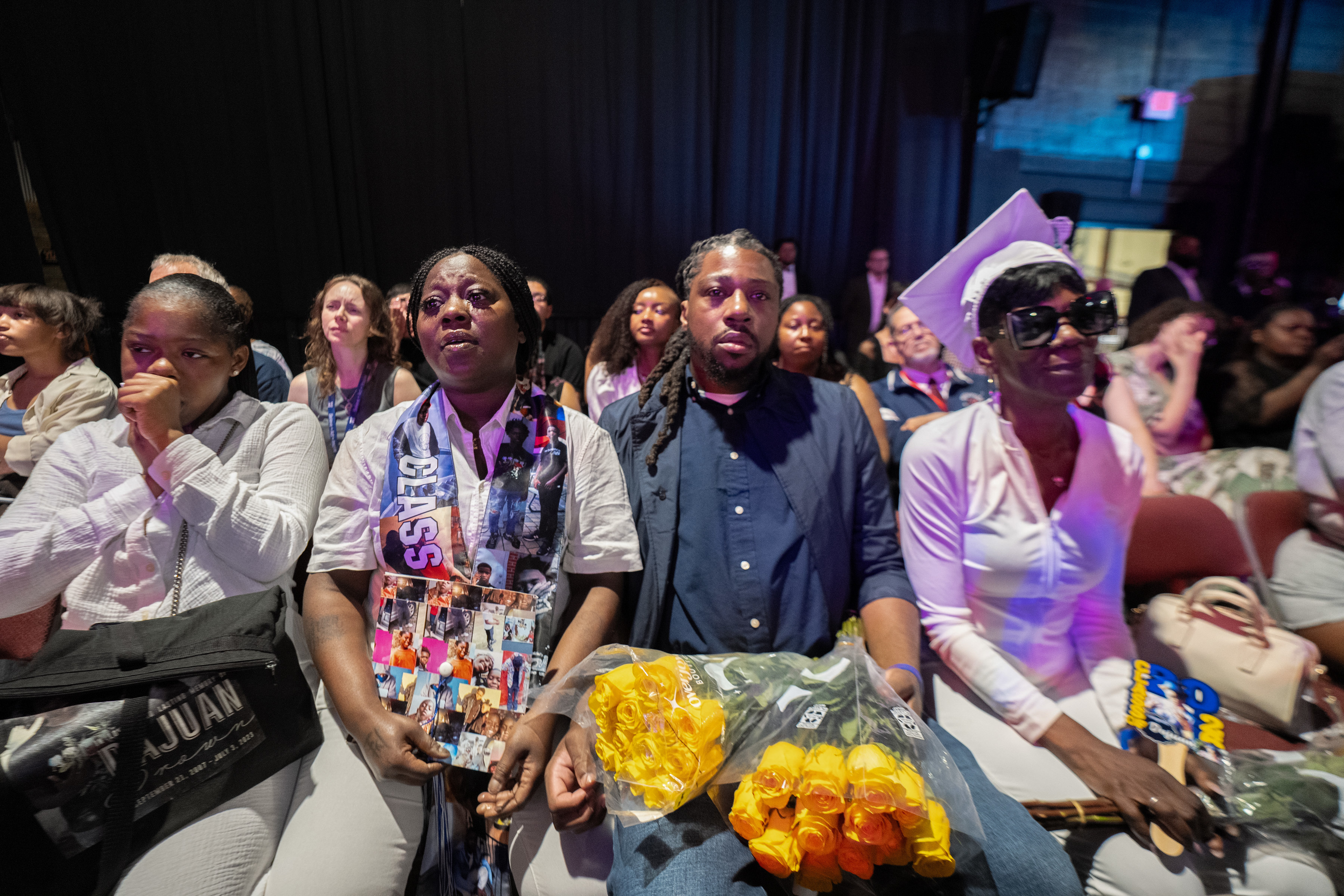
But as the ceremony progressed, each moment of celebration wore on them. Their smiles faded. When the students from each vocational program stood to applause, Thomas pinched her eyes shut.
NeSiyah Thomas-Brown, Nyshyia Thomas, TyeJuan Brown, and Odessa Brown (left to right) experience a range of emotions during the graduation ceremony.Jessica Griffin / Staff Photographer
What would DaJuan have chosen? she wondered. Culinary or carpentry? Maybe film and video?
Name after name was called. Past the B’s, where DaJuan would have been mentioned.
Thomas clapped. NeSiyah sucked her thumb.
How would he have decorated his cap?
As the final students picked up their diplomas and the cheers waned, a quiet fell over the auditorium. It was time for the school to honor DaJuan.
Just at the sound of his name, Thomas’ eyes welled and she looked toward the ceiling.
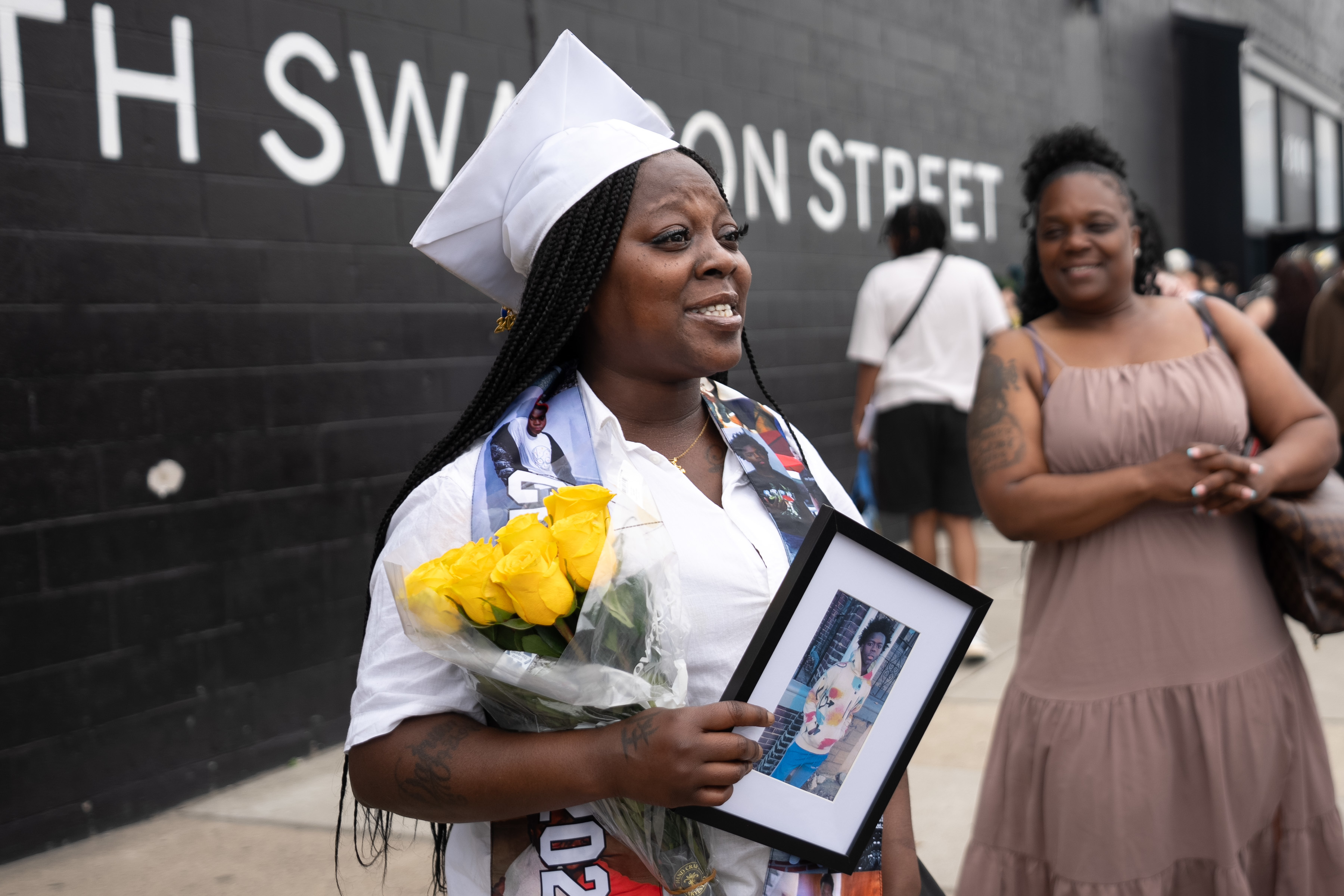
Nyshyia Thomas, left, and Odessa Brown, right, at the Mastbaum High School graduation, where Thomas’ son and Odessa Brown’s grandson Dajuan Brown would have graduated.Jessica Griffin / Staff PhotographerNyshyia Thomas wore a graduation cap she decorated with photos of her son DaJuan. Jessica Griffin / Staff Photographer
“It’s hard to find the right words to say goodbye to someone who had so much life to live,” assistant principal Amy Georgia Foster told the crowd. “He had a beautiful, silly streak in him, the kind of sweet, mischievous energy that made you feel the protective love of a grandparent.”
That’s my Juan Juan, Thomas thought.
“DaJuan undoubtedly left his mark on each one of us,” Foster said. “He brought warmth to our halls, and light to our lives.”
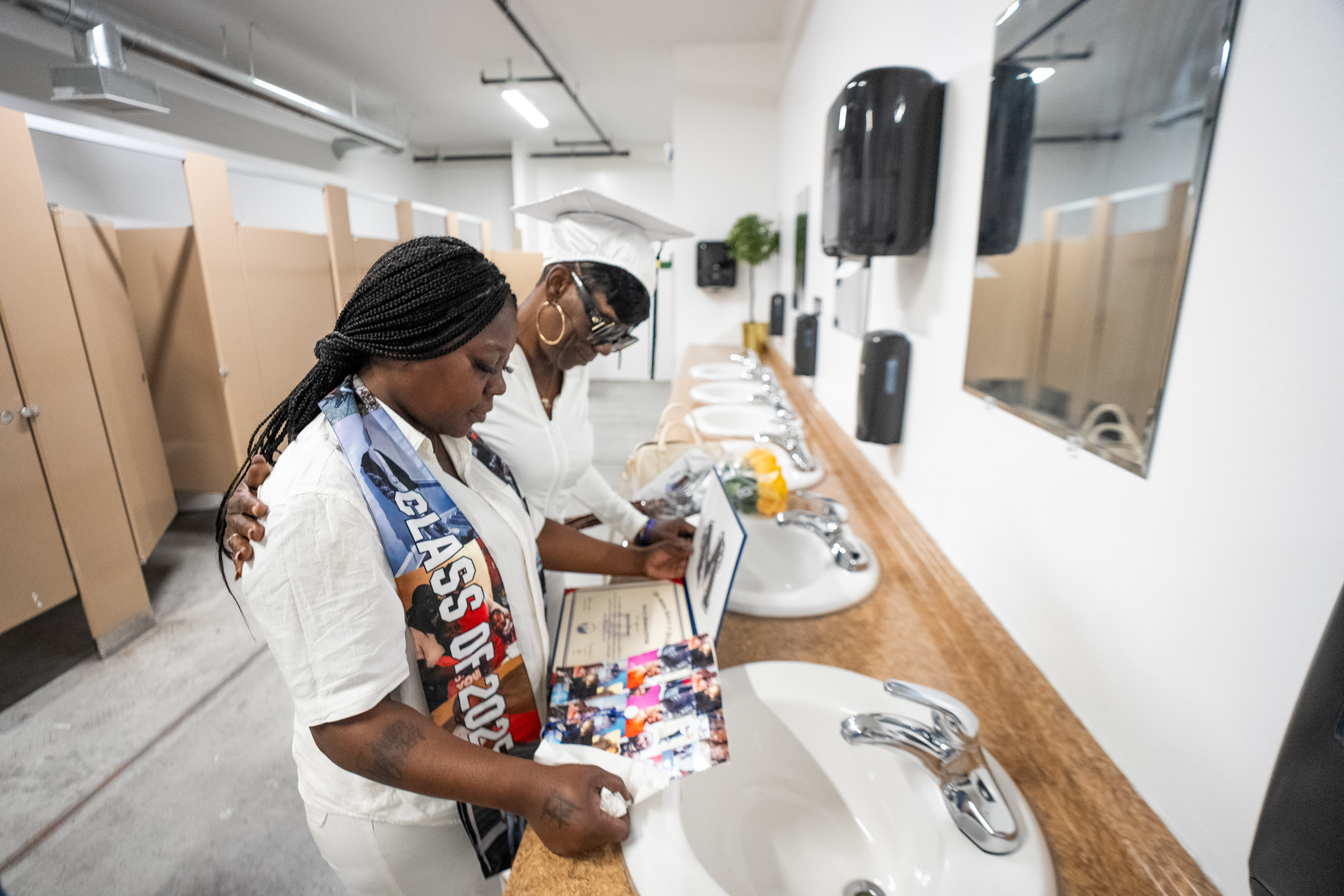
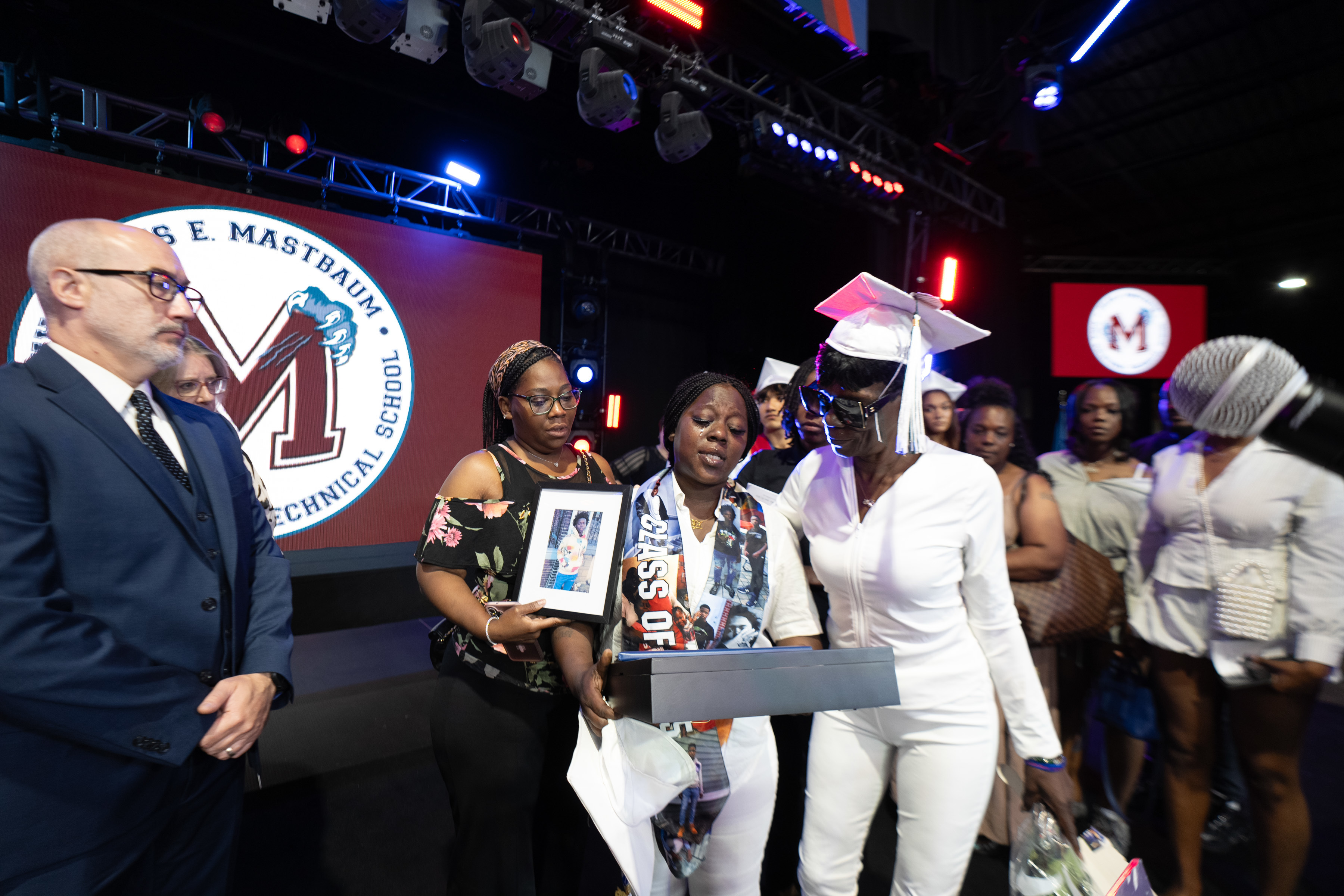
Thomas walked toward the stage, her face streaked with tears, her chest heaving. She embraced Foster and the teaching staff, and in her arms they placed a glass box frame, holding a red Class of 2026 stole, and his cap and gown. She pressed his diploma to her heart.
Principal David Lon, left, and the staff at Mastbaum High hand Nyshyia Thomas, center, and Odessa Brown, right, DaJuan’s stole, cap and gown, and diploma.Jessica Griffin / Staff PhotographerDaJuan Brown, 15, was killed in the Kingsessing mass shooting in July 2023. Jessica Griffin / Staff Photographer
The ceremony continued with final words from the class president, before all the students moved their tassels from left to right.
“Congratulations, Class of 2026!” their principal cheered.
Thomas and her family moved through the crowd toward the door. Beaming teens snapped selfies. Overjoyed mothers embraced their children.
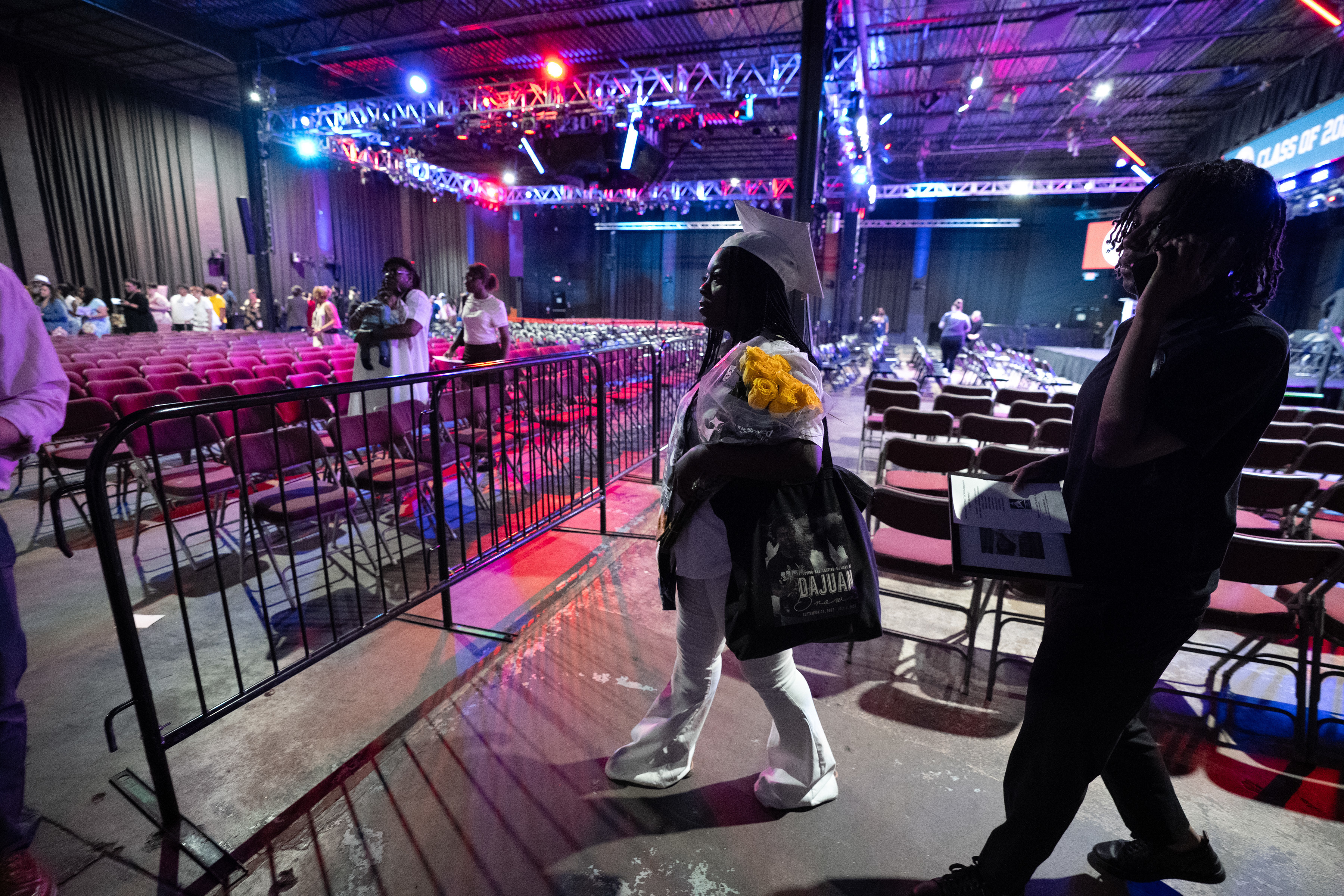
She held hers in a picture frame.
Nyshyia Thomas walks through the auditorium after her son was honored.Jessica Griffin / Staff Photographer
But a jury acquitted him of those crimes, and he walked free in May 2023.
Three years later, Bowie, now 22, is back in jail — again accused of killing two people.
Police said Bowie and several others drove to 60th and Delancey Streets on the night of March 30, and opened fire on a group of people standing outside a corner bar, wounding three and killing Paul “PJ” Cobb and Naasir Boyd, both 24.
More than a dozen shots were fired from three different 9mm handguns, police said. In the hours after the shooting, police found the Mercedes on fire on the 1200 block of Cumberland Street.
Another man, Marquis Andrews, is also expected to be charged, police said. Andrews, 22, has been in custody since April after he was charged with illegally carrying a loaded gun, court records show.
Paul “PJ” Cobb, 24, was shot and killed near 60th and Delancey Streets on March 30. Cobb was the eldest son in his large, blended family, and was born and raised in West Philly.Courtesy of the Cobb family
The deaths of Cobb and Boyd, childhood friends born and raised in the neighborhood, came amid what law enforcement officials described as an escalating feud between the crews “Northside” and “Southside” in West Philadelphia — groups that have warred across the Market Street corridor for more than a decade.
Cobb’s and Boyd’s killings not only devastated their families, but police said the shooting likely led to another. The week after they were killed, police said, four Southside affiliates seeking revenge opened fire on a Northside rival standing outside a corner store at 60th and Market Streets.
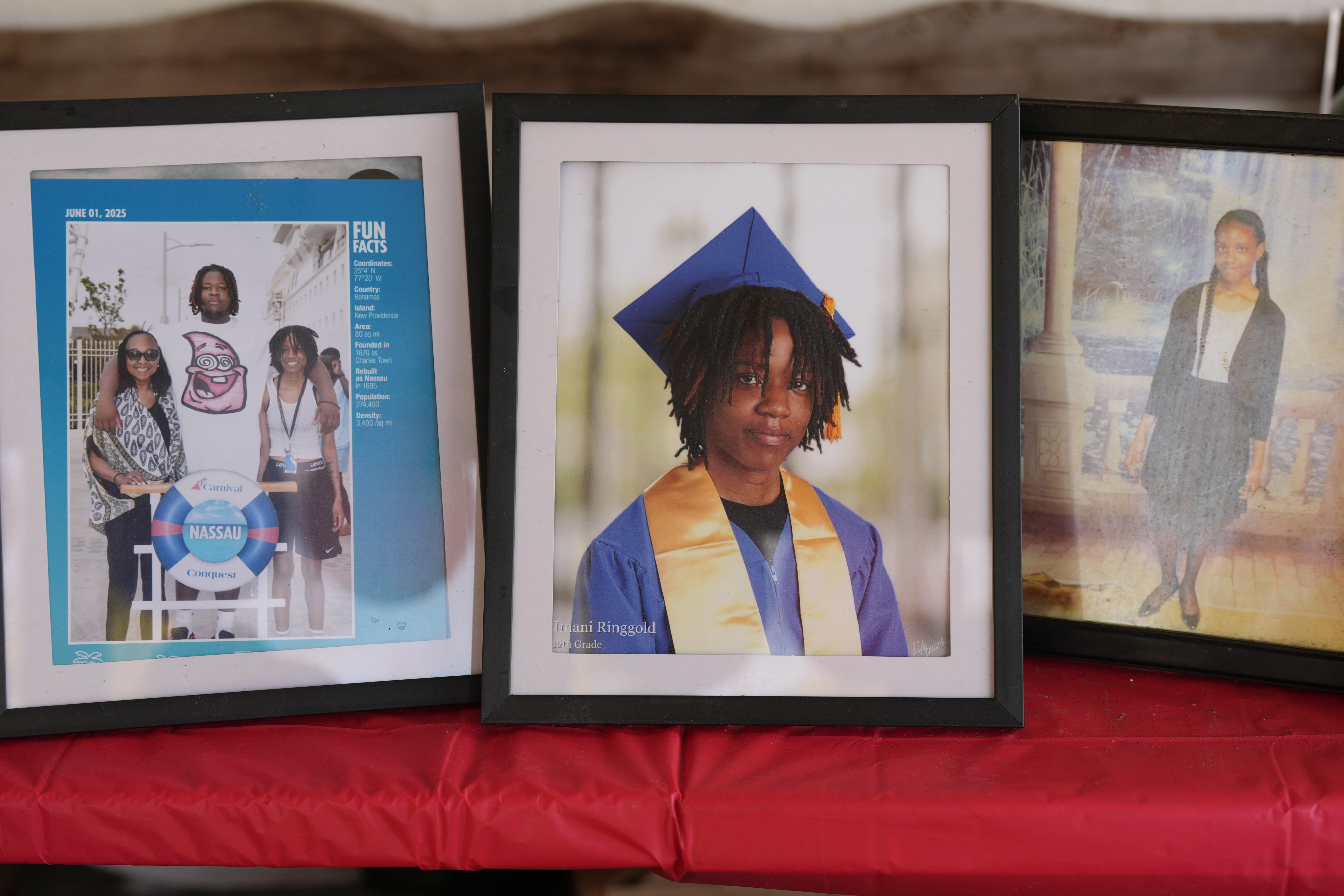
Instead, the bullets struck and killed 20-year-old Imani Ringgold, who was walking with a slice of pizza and talking to her grandmother on the phone — and who had nothing to do with the feud.
Photos of Imani Ringgold are laid out on the table at her grandmother’s home. Jessica Griffin / Staff Photographer
One detective, at a recent court hearing, testified that at least 30 people have been killed in connection with the groups’ conflicts since 2015 — a beef that has festered for so long that many people at the center don’t even know how it started.
Bowie’s cases
Prosecutors previously said the first two killings Bowie was charged with — and later acquitted of — were also tied to the Northside-Southside feud.
In that case, lifelong friends Jarell Jackson and Shahjahan McCaskill, both 26, were driving near 57th Street and Locust Avenue when three gunmen jumped out of a black SUV and fired more than two dozen bullets into their car, killing them, in October 2020.
Jarrell Jackson, left, and Shahjahan McCaskill were killed in a case of mistaken identity in West Philadelphia in October 2020.Family photos
Investigators at the time said they believed the gunmen were Northside members who shot up the car in a botched retaliation for an earlier homicide.
Chesley Lightsey, then-homicide chief at the district attorney’s office, said Jackson, a Jefferson Health technician who mentored troubled teens, and McCaskill, who was a cancer survivor and small-business owner, had nothing to do with that conflict. The men, she said, “were targeted because of the neighborhood they live in.”
Bowie was among three teens charged. But at the May 2023 trial, jurors acquitted him and his co-defendants. (Bowie was convicted of illegal gun possession in the case, and sentenced to 11½ to 23 months in jail, allowing his immediate parole, court records show.)
Marisa Palmer, a spokesperson for the district attorney’s office, said in an emailed statement that at Bowie’s trial, prosecutors presented witness testimony, and social media, video, and firearm-related evidence that prosecutors “believed established the defendants’ guilt beyond a reasonable doubt.”
The office respects the jury’s decision, she said. She called the new allegations against Bowie “deeply concerning,” and declined to comment further.
Bowie was taken into custody last week and charged with two counts of murder, as well as three counts of attempted murder, arson, and related crimes.
Police and homicide detectives investigate a double homicide at 60th and Delancey Streets on March 30. Jessica Griffin / Staff Photographer
Investigators tied Bowie to the crime after his cell phone location data placed him near the scene of the shooting, according to the affidavit of probable cause for his arrest. Andrews’ cell data also links him to the crime, the affidavit says, and call detail records and text messages show the two men were in communication in the hours after the killings.
The records say that police also recovered the murder weapon linked to Bowie. During an April 30 car stop in Kensington, the records say, police encountered Bowie and another man, and officers recovered a 9mm handgun that a ballistics test showed was used in the killings of Boyd and Cobb.
Court records did not list an attorney for Bowie.
Families in mourning
Boyd and Cobb have deep ties to the neighborhood, and were killed just blocks from where they lived.
Cobb’s mother said in an interview that her son was raised in a house at 60th and Delancey, and that she had countless memories of him playing and riding bikes on the block where he was killed. He was the eldest son of a large, blended family.
Cobb’s mother and sisters, who asked not to be identified for fear of retaliation, said he was goofy and protective, loyal and independent. He attended Sayre High School, before earning his GED, they said, and worked in construction with his father.
Paul “PJ” Cobb, 24, loved helping take care of a collection of nieces and nephews. Courtesy of the Cobb family
But his favorite role, they said, was being an uncle to his many nieces and nephews. He picked several of them up from school and daycare each day, and cared for them as if they were his own until his sisters finished work.
The sisters said they now tell their kids their favorite “Uncle P” is “in the sky.”
One older sister said that on a recent flight, her 3-year-old kept staring out the airplane window, looking for him in the clouds.
“She asked ‘Mom, where’s Uncle P at?’” she said. “And I had to tell her, ‘He’s further in the sky than we are on the plane.’”
His death, they said, has fractured their lives and ability to feel safe in their neighborhood.
Cobb’s mother said the conflicts of Northside and Southside have always loomed. Her son was not affiliated with Southside, she said, but having grown up on blocks at the center of the group’s feuds, he was cautious about his whereabouts, and she often worried about him.
When she first heard police made an arrest, she said, she was relieved. But learning that Bowie had been charged and acquitted before left her uneasy.
“There are things that happened,” she said, “that could have prevented this.”
He called himself “the Beast,” and he killed six people in six months.
Several of his victims were retail store workers who gave up cash or goods during robberies, and he decided to shoot them anyway. One of the victims was his mother — he shot her at her office because he wanted the payout from her life insurance policy.
On Tuesday, Keith Gibson, 44, was delivered a measure of accountability for his killing spree — one of the worst in recent city history — when a jury convicted him of four counts of first-degree murder and related crimes for the killings he committed in the city in 2021.
He was immediately ordered to serve four consecutive life sentences in prison. That’s on top of the seven life sentences he had already been handed for two murders and a string of robberies he committed in Delaware.
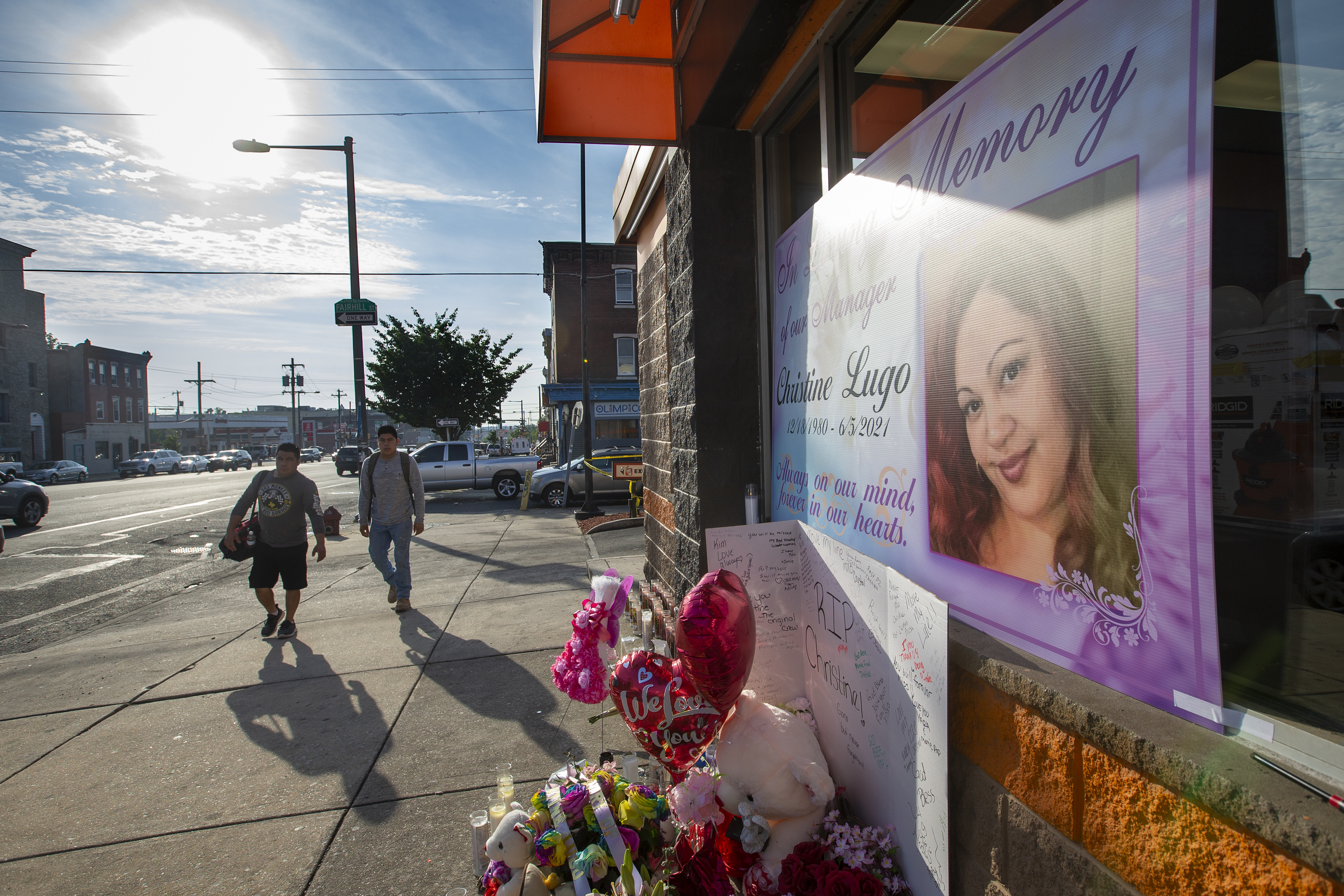
The case attracted attention when the crimes happened five years ago, in part because some of Gibson’s targets were compliant and effectively defenseless when he shot them. In one murder, at a Dunkin’ store in Fairhill, surveillance video showed an employee speaking with Gibson for several minutes and handing him cash before he shot her in the head and left her for dead.
Surveillance video showed Keith Gibson inside the Dunkin’ before he shot and killed Christine Lugo in June 2021. Courtesy of Philadelphia police
Assistant District Attorneys Jeffrey Hojnowski and Katie Wood called Gibson’s crimes despicable.
“These were regular, ordinary people, fellow Philadelphians going about their business, trying to work, and they were gunned down callously, needlessly,” Hojnowski said. “This was never about the money. This is about control. This is about dominance.”
The case also stood out because of questions about why Gibson had been free to kill in the first place. In April 2021, he was jailed in Delaware for a probation violation, and a probation officer told a judge that police considered Gibson a suspect in his mother’s killing. But the judge ordered Gibson released, and in the weeks after, he went on to kill three more people.
The weeklong trial that led to his conviction in Philadelphia relied heavily on surveillance video and ballistics evidence. Testing showed that Gibson had used the same revolver in every crime, and officers in Wilmington found the gun as they arrested him for robbing a Rite Aid store.
A former friend, Amanda Masteller, took the stand and testified that Gibson, who she said referred to himself as “the Beast,” carried that revolver everywhere — including into her house and around her children when she let him stay in a spare room from time to time.
She wanted to tell him to stop coming over, she said, but the gun and his aggressive demeanor left her afraid of what might happen if she did so.
“I was petrified of this man,” she said.
Gibson’s crimes
Gibson’s killing spree began Jan. 28, 2021, at Al-Madinah Traders store in Germantown. There, he rummaged through the shop and stole several watches. He forced employees Roy Caban and Eric Flores into a back room, where he shot Flores in the head and Caban in the back as he tried to flee.
The following week, Gibson set out after his own mother.
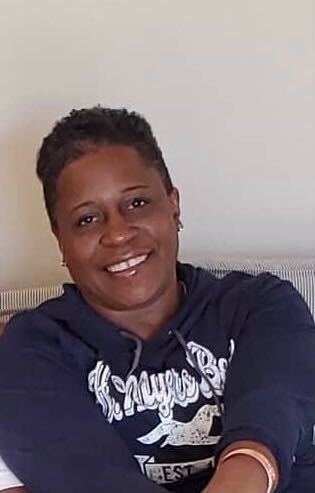
Christine Gibson, 54, was shot and killed by her son, Keith Gibson, in February 2021. She worked as the director of a mental health program at a community center in East Falls.Courtesy of David Thornton
Christine Gibson, 54, told family members she was afraid of her son and wanted him to move out of her North Philadelphia home. And, prosecutors said, she had made plans to remove him as the beneficiary of her life insurance policy.
On the morning of Feb. 8, Keith Gibson accompanied her to the United Peers Community Center in East Falls, where she worked as the director of a mental health counseling program. Once inside, he took her to a small office room in the rear of the building and shot her in the back of the head. Her body was found two days later.
Soon after, probation officials in Delaware sought to have Gibson held in jail, filing paperwork saying he was a suspect in his mother’s killing and that violated the terms of his probation from a 2010 manslaughter conviction.
But Superior Court Judge Vivian L. Medinilla declined to extend Gibson’s time in custody. He was released in late April.
A few weeks later, in late May, Gibson robbed an AT&T store in Elsmere, Del., of cash and phones, and shot and killed the store attendant before stealing her car.
And in early June, his crimes continued in Philadelphia.
Surveillance video played at trial showed Gibson wandering the city on foot before dawn on June 5. After leaving his house on the 2700 block of North Croskey Street at 4:25 a.m., evidence showed, Gibson walked about a mile and a half to the Dunkin’ at Fifth Street and Lehigh Avenue.
Christine Lugo was unlocking the store to start her shift when Gibson walked over to her with his gun and shoved her inside.
Christine Lugo was killed during a robbery at the Dunkin at 532 W Lehigh Ave. on June 5, 2021.
Cameras from inside the store captured the lengthy encounter. Lugo did not appear to panic, and was not aggressive toward Gibson. Instead, she could be seen shrugging at times and showing Gibson her wallet, as if to suggest she didn’t have anything for him to take.
Eventually, she sat down on a chair in a closet-size office and gave Gibson about $300 from the cash register trays.
Gibson then glanced at his watch, shot Lugo in the head, and walked out.
Later that day, he went to Wilmington, where he shot and killed Ronald Wright, 42, during a robbery.
His string of crimes began to unravel there three days later, when he robbed a Wilmington Rite Aid and stole a bag of cash — with a tracking device inside. Police quickly arrested him with a revolver behind a rowhouse. Ballistics tests later showed the same gun had been used at Al-Madinah Traders and in the killings of Gibson and Lugo.
Tips from the public identifying him in surveillance footage then bolstered the investigation. After Lugo was killed, police released some footage from the incident to try to identify a suspect. Masteller — his former friend from Delaware — said she saw it and called to tell police the man in the video was Gibson.
Gibson’s attorneys, Jonathan Strange and Brian Johnson of the Defender Association, said homicide detectives rushed to tie Gibson to other crimes as a means of closing old, unsolved cases. They failed to collect or test certain evidence, Johnson said, including surveillance video and DNA in some of the cases.
“The police had to take the easy way out,” he said.
Following his convictions, Gibson, in a lengthy ramble, said he was not happy with his legal representation and intended to appeal his convictions. He was not guilty, he said. And he only briefly addressed his victims’ families, saying: “I’m extremely sorry for your loss.”
It brought no comfort to the loved ones of his victims who had filled the courtroom throughout the trial.
Lugo’s children, Frances Rodriguez and Christian Lugo, said the disturbing video of their mother’s death will remain etched in their memories. Still, as prosecutors played it several times, they stayed to watch.
Left to right: Frances Rodriguez, Christine Lugo, Christian Lugo, and another family member celebrate Christmas.Courtesy of Frances
“I didn’t want my mom to be alone,” said Rodriguez, 27. “She already had to experience it alone already.”
Lugo, originally from Massachusetts, had a vibrant laugh and believed fiercely in giving people second chances, they said. She had two children and three grandchildren.
Also in the courtroom Tuesday were members of Gibson’s family, who had spent years praying he would be held accountable for killing his mother.
David Thornton, 68, said his nephew stole the golden years of his sister’s life.
Christine Gibson overcame years of addiction, he said, and went on to earn a master’s in sociology from Widener, bought a house in Philly, and was working a job she loved. She was strong, outgoing, and full of joy.
She had told Thornton she was afraid of her son, he said, but did not want to call the police.
“She’d say, ‘That’s my son,’” Thornton said. “That was her only child.”
They never imagined it would come to this.
“Some things,” he said, “are not meant to be understood.”