Author: Trudy Rubin

  • I’ve seen struggles for democracy around the world. It’s painful to see that battle come home.

    I’ve seen struggles for democracy around the world. It’s painful to see that battle come home.

    As we approach the 250th anniversary of America’s founding, I can’t help recalling my 1999 visit to the Central Asian republic of Turkmenistan, whose dictator had a fetish for white marble architecture decorated with gold.

    As I drove around the dusty capital of Ashgabat, it was impossible to escape Saparmurad Niyazov’s face.

    It was emblazoned on banners hanging from government buildings and appeared on every denomination of paper currency. Statues of the dictator (I learned there were more than 2,200 of them in a country of 4.2 million people) loomed all around the city. The oil fields of this desert backwater funded Niyazov’s whims. Much of the country’s budget went into his private slush fund — all while he slashed resources for healthcare and renamed the months of January and April after himself and his mother.

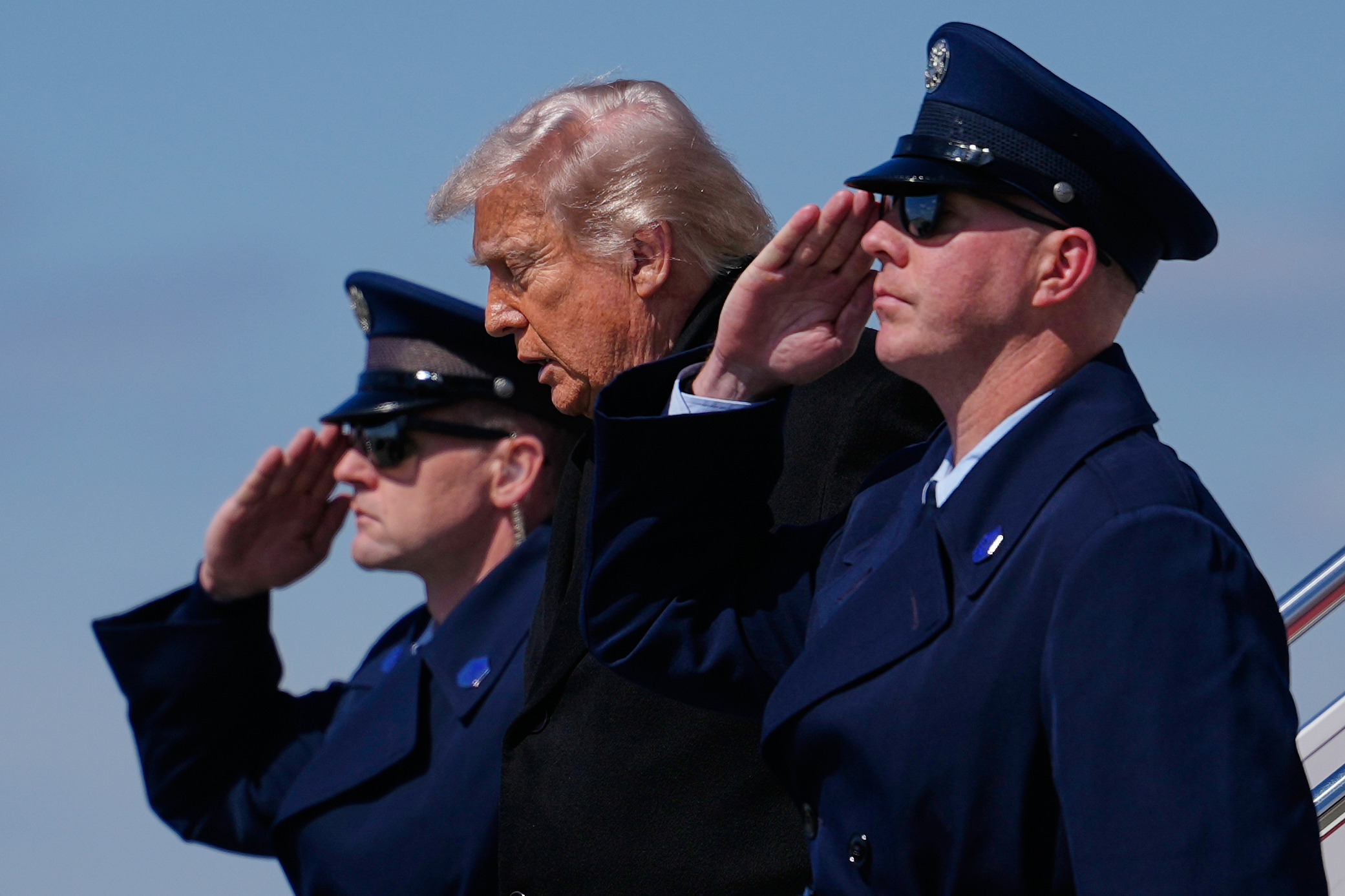
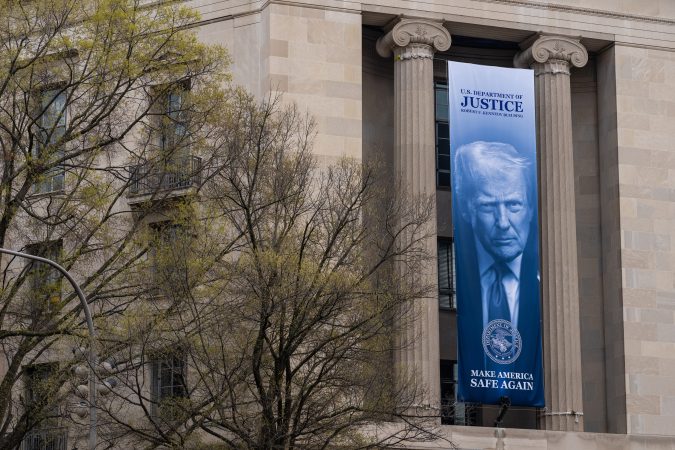
    What sticks out most vividly among my memories, as President Donald Trump turns our nation’s Semiquincentennial into a celebration of himself — festooning government buildings with huge banners of his face and holding a political rally on the mall Wednesday to kick off July Fourth events — is Niyazov’s arch.

    The three-legged arch, sitting in the center of Ashgabat, supported an observation tower that, at 226 feet, soared higher than the nearby presidential palace. The structure was topped by a 36-foot gold plated statue of the Asian potentate that rotated constantly to face the sun. Perhaps if the planned 250-foot high “Arch de Trump” ever gets built, and blocks the view of Arlington National Cemetery, the face on the gold winged figure atop the memorial will look familiar.

    It seems all dictators and wannabes have the same instincts: to build grandiose monuments of marble and gold, the bigger the better, in order to impress their subjects with their magnificence. Back in Ashgabat all that seemed bizarrely amusing. Whoever thought it could happen here?

    Instead of honoring the country’s founding values and documents in this year’s celebrations, Trump is performing like a wannabe Niyazov of Turkmenistan.

    The main point of the Declaration of Independence was that governments “derive their just powers from the consent of the governed,” i.e., the people. The 13 colonies were quitting the British Empire because they refused to submit to a monarch who tried to rule by decree, rather than respect the elected representatives from the colonies.

    Trump, who disdains any restraints on his powers and wants to rig election rules so they guarantee GOP victories, is turning the meaning of the Fourth of July on its head. I find it personally painful how this distortion has changed attitudes toward the United States all around the world.
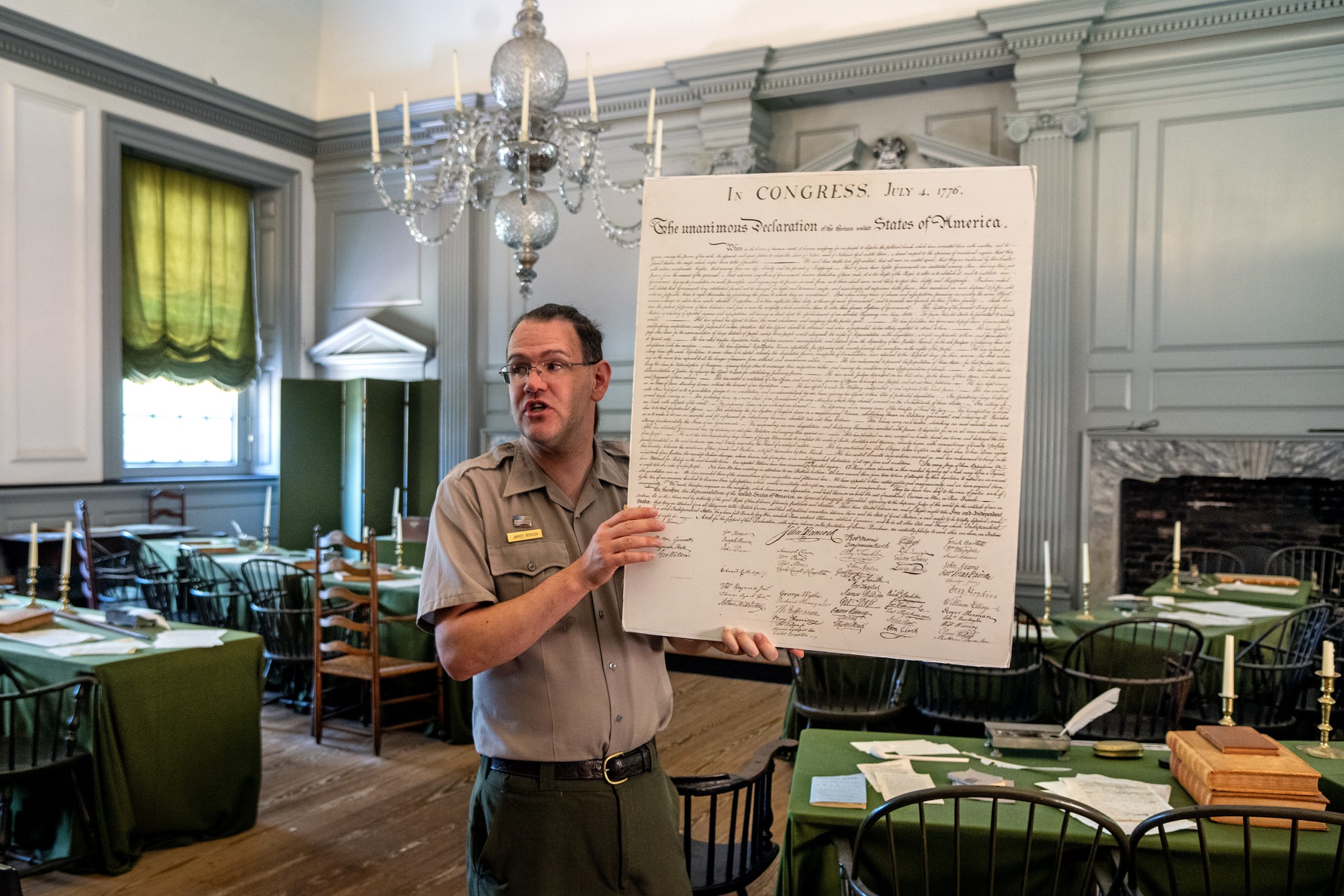
    National Park Service ranger James Benson uses an enlarged copy of the Declaration of Independence while talking to visitors in the Assembly Room — where both the declaration and U.S. Constitution were signed — on the first floor of Independence Hall in Independence National Historical Park in August 2025.Tom Gralish / Staff Photographer

    For decades I’ve reported on the struggles of other countries to achieve the kind of free elections that most Americans have taken for granted for decades. I had the privilege of bearing witness to struggles for some form of democracy in the Soviet Union and China, in new post-Soviet nations, during the 1980s upheavals in the Philippines and South Korea, during the Arab Spring revolts, in post-Saddam Hussein Iraq, and during the post-Taliban interval in Afghanistan.

    Those who struggled for the right to choose their leaders often paid a terrible price. More often than not, their struggles failed or have been reversed after brief periods of freedom.

    Throughout those struggles, the U.S. election system was a lodestar – even though reformers abroad may have opposed specific U.S. foreign policies or the U.S. exercise of overweening power. That admiration was especially evident in the ’80s and ’90s inside communist countries that were trying to break away from their past.

    Russians listened to Voice of America (now nearly shuttered by Trump) and would eagerly query me about U.S. politics on my yearly visits to Moscow during those decades.

    In 1989, I shadowed then-President of the Soviet Republic of Russia Boris Yeltsin for a day when he visited the room where the Declaration of Independence was adopted inside Independence Hall. He asked the National Park ranger how the American colonies apportioned power between states and central government after independence. I realized only later that he was preparing to take Russia out of the Soviet Union and wanted tips on how the Founding Fathers managed their exit from the British Empire.
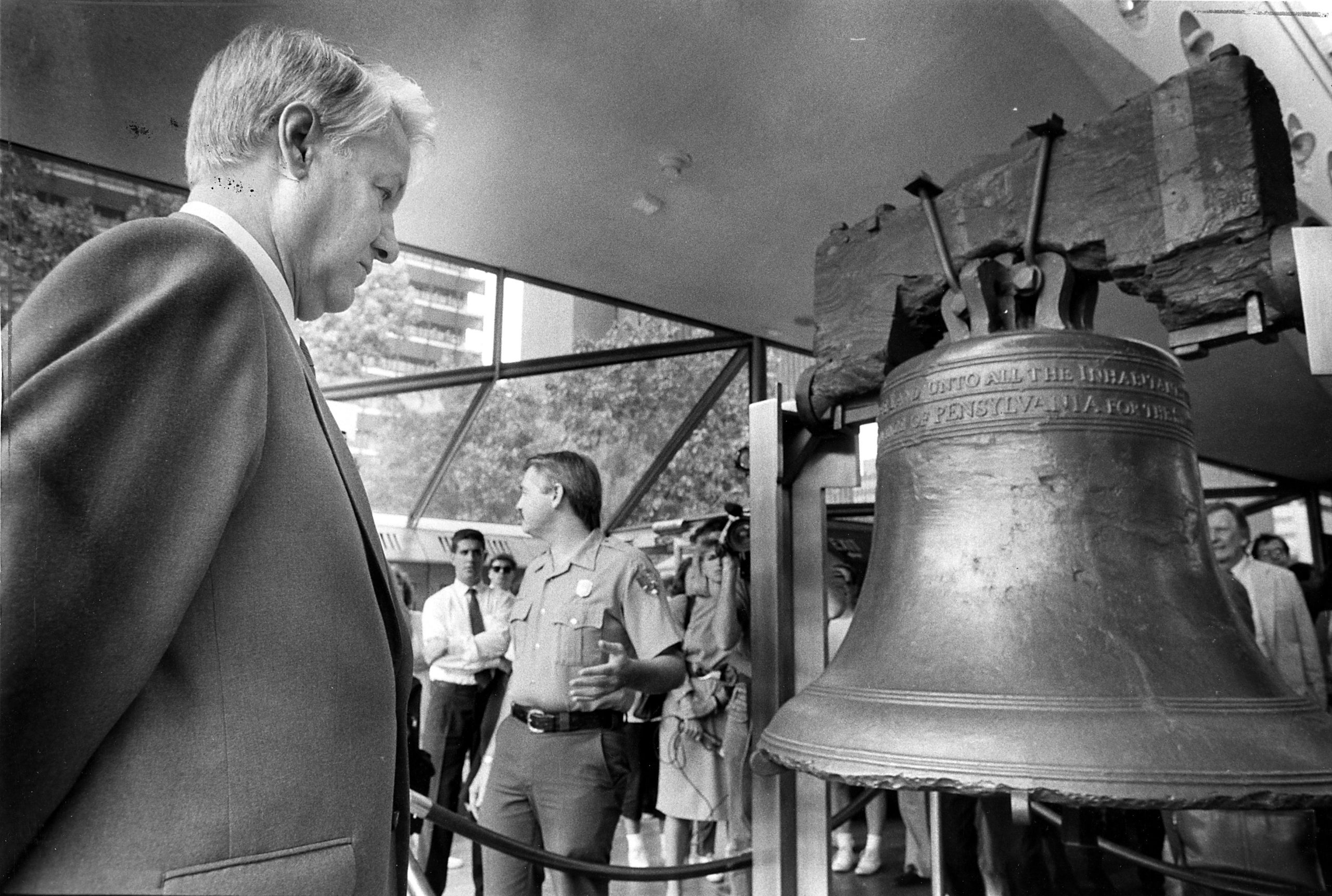
    Boris Yeltsin views the Liberty Bell during a visit to Philadelphia in Sept. 13, 1989. Seeking to view U.S. democracy up close, he traveled the country, including a visit to the White House.Eric Mencher / Staff Photographer

    In May 1989, Chinese students erected a 33-foot-tall Goddess of Democracy statue in Tiananmen Square inspired by the Statue of Liberty. I was in Poland at the time, observing that country’s first free parliamentary elections on June 5 that were won by Lech Walesa’s Solidarity movement. But on June 4, I watched with horror on television, along with Polish colleagues, as the Chinese army sent tanks into Tiananmen Square.

    Yet, despite hundreds to thousands of deaths (the exact figure is still unknown), Chinese democrats didn’t give up. In the 1990s, I reported on their efforts to press the central government to permit village, and then town, elections. I interviewed law students at top universities who traveled to small villages to instruct peasants on their rights according to Chinese laws that were ignored by officials.

    This progress has been totally reversed by China’s hard-line dictator Xi Jinping, who also crushed democratic institutions in once autonomous Hong Kong. But as recently as 2023, it was inspiring to hear Hong Kong high schoolers, who were protesting the ongoing crackdown by Beijing, recite from memory their rights under law as they had learned in civics classes. Since then, such classes have been banned, and students must memorize rote lessons on “patriotic education” or “Xi Jinping thought.”

    It saddens me now to hear self-exiled Russian liberals or Hong Kong democrats or visiting Chinese who once worked for some form of democracy at home, express shock at Trump’s attacks on America’s democratic institutions and efforts to rig elections. Repeatedly, I get the same questions expressed with genuine bewilderment: Why isn’t it possible to stop him from doing this? How is it possible that this can happen in the United States?
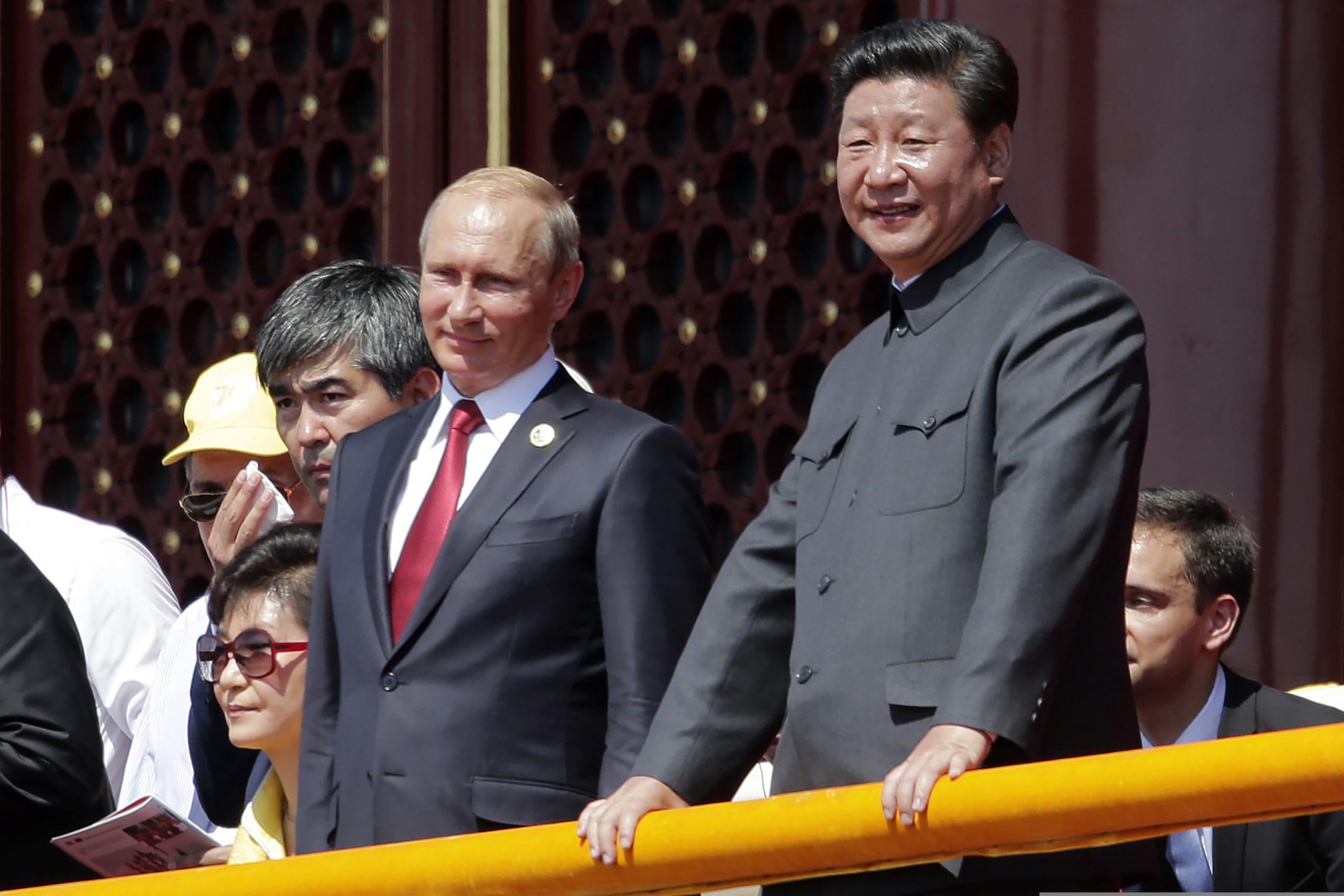
    In this Sept. 3, 2015, file photo, Chinese President Xi Jinping (right) and Russian President Vladimir Putin observe a parade commemorating the 70th anniversary of Japan’s World War II defeat, from Tiananmen Gate in Beijing.Ng Han Guan

    Ukrainians, who have fought bravely for more than four years to save their independence from Vladimir Putin’s imperialism, ask me how a U.S. president can back a dictator who hates the West, and wants to restore the Soviet empire. As Independence Day approaches, POTUS continues to ignore the parallel between Ukraine’s courageous struggle for freedom and ours long ago against the imperial British.

    Europeans have given up on Trump, and I understand why, having watched Vice President JD Vance at the 2025 Munich Security Conference praise far right, neo-Nazi parties and demean Europe’s democracies. Trump, Elon Musk, and other MAGA acolytes continue to support extremist Europeans whose values would make the Founding Fathers gag.

    So it isn’t surprising that a new Pew Research Center poll reveals a steep decline in the popularity of the United States worldwide, especially over the past year. Only a median of 37% of adults polled across 36 countries hold a favorable opinion of our nation. Only 23% express confidence in Trump’s leadership of world affairs, ranking him behind Putin and Xi.

    But what is even more striking is that only 39% believe the U.S. government respects the personal freedoms of its own citizens. This is how the world now views a country that was once seen as a beacon of democracy.

    During July Fourth celebrations across the country, in places far away from Trump’s pollution of the capital, I hope Americans will reflect on what the Founding Fathers bequeathed to us 250 years ago. For inspiration, reread the Declaration of Independence and brainstorm with friends, colleagues, and family on how to prevent the president from desecrating its principles at the polls come November.
  • Failure of Iran war reveals Trump’s inability to deal with America’s security needs

    As we approach America’s 250th anniversary, the political party that brags of its patriotism is actively undercutting national security.

    Although many GOP House members and senators are versed in foreign affairs and grasp the irresponsibility of their actions, they are too cowardly to confront the biggest security threat America has faced in decades: President Donald J. Trump.

    As his Iran debacle laid bare, Trump’s ego-driven foreign policy is making America more vulnerable to our enemies — both at home and overseas. Yet, the aging POTUS seems ever more determined to ignore real security dangers. His main focus is on seeking quick military hits he thinks will win him personal acclaim.

    His failed Iran war perfectly displays his misuse of the U.S. military for unnecessary battles that decrease capacity for any future conflicts with Russia and China. And Republican legislators — who claim a monopoly on love of country — don’t have the guts to call him out.

    Why? Because they value their chairs more than keeping Americans safe.

    The Iran war, and the memorandum of understanding that has temporarily halted it, are a perfect example of Trump’s failure to protect the nation.

    In February 2026, Iran presented no threat to the United States. Tehran’s enriched uranium was deeply buried under rubble after the U.S. and Israel waged a 12-day war on Iran in June 2025.

    But, driven by ego, POTUS let Israel’s Benjamin Netanyahu persuade him that a quick bombing run could achieve regime change in Tehran and remake the entire Middle East.

    Don’t blame Bibi, because only a president who knows nothing about Iran and obsessively seeks a Nobel Peace Prize could have believed such nonsense. POTUS ignored warnings from U.S. military brass that Iran would respond by blocking the Strait of Hormuz, because he insists he knows best.

    After four months of war, what has Trump’s ego wrought?

    In desperation to get Iran to reopen the strait and push gas prices down before the midterms, Trump has promised Tehran huge and immediate economic benefits. Meantime, nuclear talks are pushed back to 60 days of negotiations, which will probably be extended indefinitely.

    The one-and-a-half page memo contained only one paragraph on nuclear talks, but POTUS has already revealed a host of U.S. concessions in interviews. They guarantee that if a nuclear deal is ever reached, which is far from certain, it will be similar or worse than President Barack Obama’s JCPOA nuclear accord, from which he withdrew in 2018.

    Rather than ending Iran’s nuclear program altogether, as Trump promised, any deal will permit Tehran to enrich uranium to low levels, as did the JCPOA. It will also allow Iran to downgrade its highly enriched uranium inside their country, rather than send 97% out of the country as required by Obama’s deal.

    In fact, Trump now debunks the importance of rushing to extract Iran’s enriched uranium from the rubble, because Tehran can’t access it. “Nobody’s touching it,” he said. “We have Space Force cameras [monitoring the sites]. It’s actually not valuable. …”

    So tell me again, Mr. President, why you started this war?

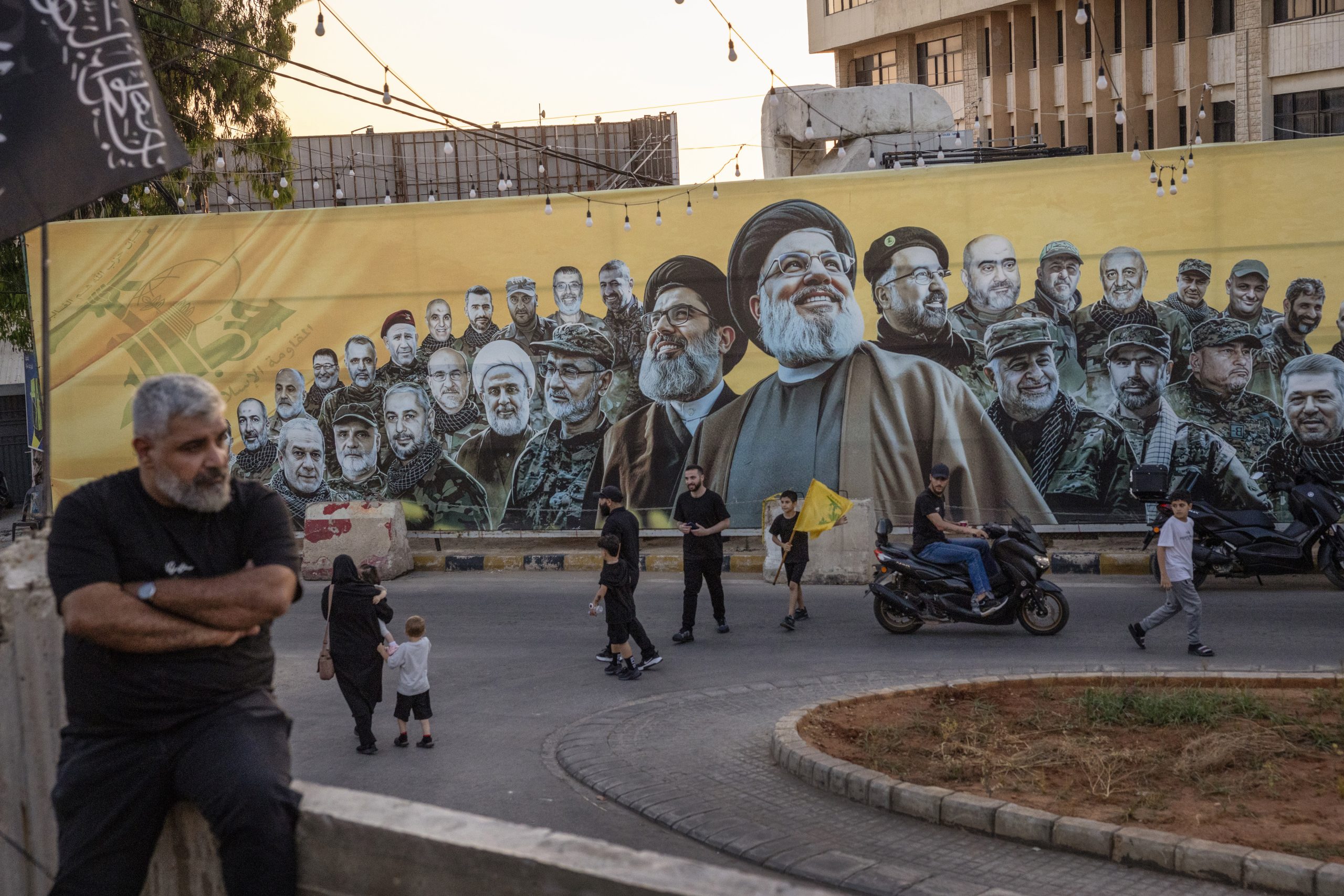
    Supporters pass by a billboard showing leaders of Hezbollah, outside the grave of the late Hezbollah leader Hassan Nasrallah, as they mark the first day of Ashoura in Beirut, Lebanon, on Wednesday. The preliminary agreement between Iran and the United States leaves unresolved the two issues at the heart of the conflict: Israel’s occupation and Hezbollah’s arsenal.DAVID GUTTENFELDER

    The list of Trump concessions to Iran goes on, each one explained more bizarrely by the president. Trump casually declared he would allow Iran to keep its ballistic missiles, which were fired at Israel and U.S. bases — a total reversal of his pledge before the war started. “I’m saying that ⁠if other countries have ​them, it’s a little bit ​unfair for them not to have some,” Trump told reporters in Paris the other day. Say what?

    What is particularly dangerous — and requires Congress to confront the president — is that this unnecessary war has degraded the U.S. military, and revealed its weaknesses to our adversaries.

    The war has also exposed the erratic style of the U.S. commander in chief, who treats the U.S. military like his personal plaything. Both he and his showman “secretary of war,” Pete Hegseth, have proved they lack the judgment and temperament to command this force.

    By keeping such a huge percentage of our air force and naval assets in the Mideast for months, Trump has worn out the readiness of our military. This war also used up a staggering amount of U.S. long- and medium-range missiles that are badly needed to stabilize the Indo-Pacific against Chinese aggression, and by NATO allies to ward off Russian aggression.

    Yet, instead of selling such missiles to Taiwan, or letting Europeans buy them to protect Ukraine from massive Russian bombing, Trump used them up against Iran.

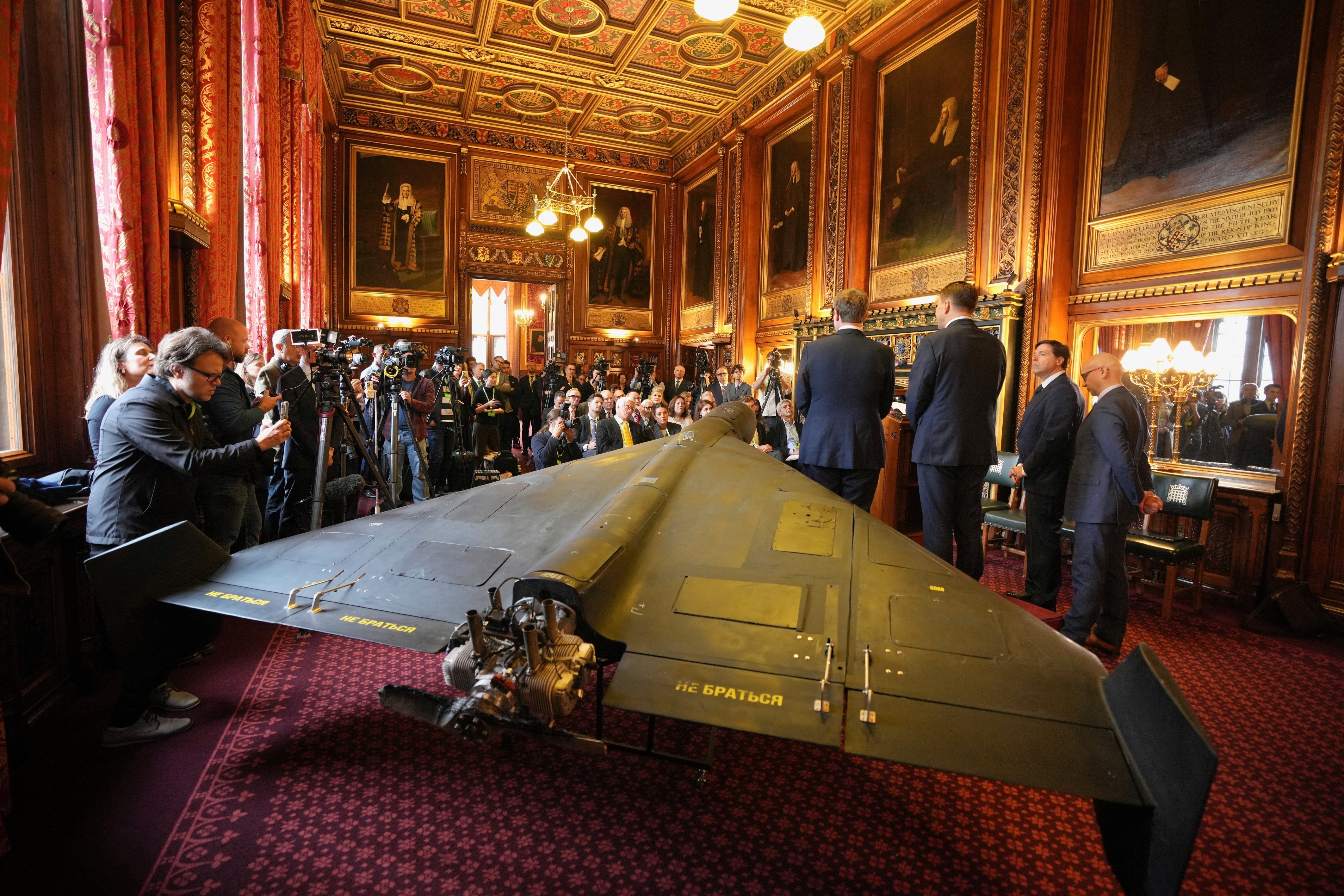
    Moreover, the Iran war revealed the continued Pentagon failure to prepare for the new drone and artificial intelligence-driven 21st century form of warfare. The U.S. military used billions worth of $2 million missiles to intercept $20,000 Iranian drones because the Pentagon has been unable to speed up drone production and refuses proffered help from Ukraine.

    In fact, at the G7 summit in France on Tuesday, Trump made a point of how unimportant the Ukraine conflict was to America. “Look, we have nothing to do with it,” he said of that war. “It has no impact on us, other than we sell weapons” to Ukraine, he added. “We’re thousands of miles away.”

    That kind of dumb remark, in a world where satellites and electronic warfare make distance irrelevant, is proof positive of Trump’s total misunderstanding of geopolitics. The U.S. abandonment of Kyiv and coddling of Russia enhances China’s belief that America’s power is declining and the global balance of power is shifting.

    Indeed, the most vivid illustration of the president’s blindness to the fallout from his Iran fiasco, came when he thanked Vladimir Putin and Xi Jinping for their help with ending the Iran war. What head spinning brain-blank could prompt gratitude for Putin giving intelligence information to Tehran to target U.S. bases? Or to Xi for providing all the parts for Iranian drones that killed Americans in Kuwait?

    Which side is Trump on?

    POTUS’s conviction that his personal relationships with Putin and Xi will prevent them from doing America harm is endangers America’s safety. He won’t critique them for aiding Iran, because he believes both men are his comrades. His easily manipulated ego plays into both dictators’ hands.

    This war has provided proof that America’s adversaries need only wait and watch as the U.S. president undermines the U.S. military’s fighting capacity by wasting it on delusionary wars.

    Instead, Trump and Defense Secretary Hegseth make a point of slamming our allies, whose help we need to deter to Russian and Chinese imperialism.

    Even as POTUS was signing the surrender document with Iran, Hegseth announced the U.S. will pull back troops from Europe and weapons support for NATO. Thus, Trump openly advances Putin’s dreams of splitting the transatlantic alliance, at a time when Russia is openly hostile to the West.

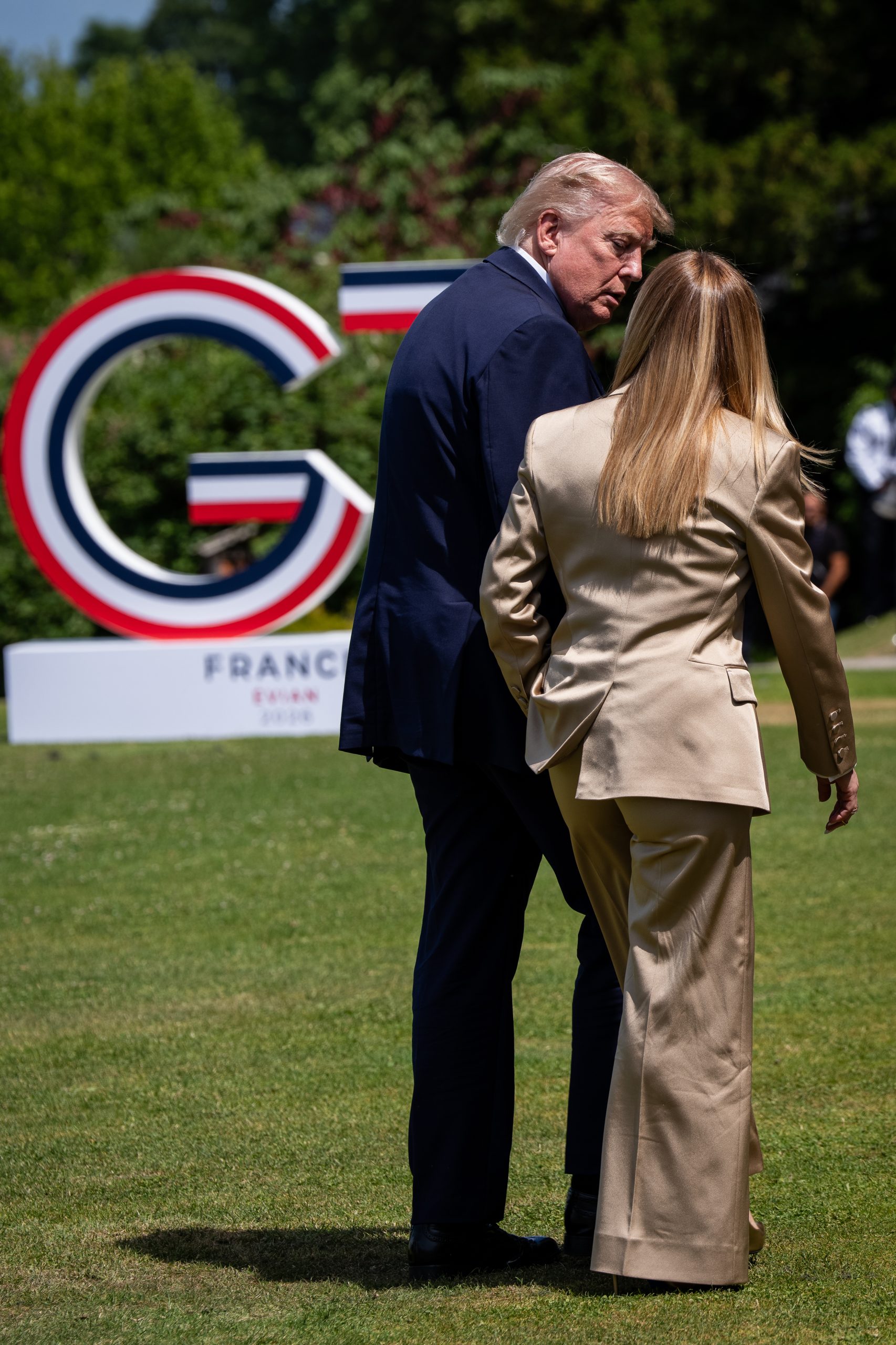
    President Donald Trump with Prime Minister Giorgia Meloni of Italy after a Group of 7 photo in Evian-les-Bains, France, Tuesday.HAIYUN JIANG

    POTUS even infuriated his closest European ally, Italian Prime Minister Giorgia Meloni, who accused him of “fabricating” claims that she “begged him” for a joint photo.

    “I can only say it is disappointing that he does not show the same determination with the enemies of the ⁠West and of the United States, whose leaders he instead treats with far ​greater indulgence [than his allies],” Meloni stated angrily.

    There is a name for a leader who coddles the enemy while alienating friendly democracies that share our values. Such treachery, whether carried out wittingly or blindly, betrays our nation.

    Trump’s indifference to U.S. security isn’t just evident in his misadventures abroad.

    At a time when foreign terror threats to the nation are high, the president just refused to reauthorize critical U.S. foreign spy powers, unless they were tied to a voter suppression bill.

    The same week, he used political trickery to officially appoint a fervently loyal ally, Bill Pulte, as temporary director of national intelligence, over bipartisan Senate objections. Pulte has zero intel experience, but is tasked by POTUS to pursue his political enemies and undermine the midterms.

    Never mind the serious risk of terror attacks during FIFA matches or sesquicentennial celebrations — or during fall balloting. GOP senators bowed to their boss man rather than make a big fuss.

    So as July Fourth approaches and Trump busies himself with architectural destruction in the nation’s capital, his GOP enablers in Congress are helping a doddering egomaniac undermine the. security of the citizens he supposedly serves. These Republicans know what POTUS is doing, yet they refuse to stand up and make their voices heard.

    On America’s 250th, GOP pols are aiding Trump in betraying constitution and country. How they can look in the mirror and call themselves patriots mystifies me.

  • Trump’s bloated claims about his Iran deal can’t hide his failure

    Trump’s bloated claims about his Iran deal can’t hide his failure

    “You can fool all the people some of the time and some of the people all the time, but you cannot fool all the people all the time.” That maxim is often attributed to Abraham Lincoln, but it’s occasionally credited to the great American circus showman P.T. Barnum. It has special relevance when applied to Donald Trump, who has outdone Barnum in self-promotion.

    The president has had astonishing success in fooling some of the people all the time, from his foundational lie that the 2020 election was stolen through his daily blast of falsehoods about everything from the economy to the financing of his ballroom.

    Yet, with his blatant efforts to bamboozle all the people about his Iran deal, Trump may have finally reached the point where most Americans realize he is a fraud.

    For starters, Trump’s claim that he has reached a “Great Deal [that] will bring Peace and Security to the whole Region” is flat out fraudulent. The Iran war has laid bare the incompetence of a U.S. leader who assumes that force alone produces victory.

    The U.S. and Israel may have destroyed much of Iran’s military, but Tehran has denied them a geopolitical win, which all the world’s leaders (except for Trump) recognize.

    And most Americans will soon see this for themselves.

    Until the U.S. joined Israel in the February attack on Iran, Tehran’s religious and military leaders had never tried to close the Strait of Hormuz for fear of arousing American wrath. But after Trump openly called for regime change, they had nothing to lose.

    Despite its military losses, Iran has proved (as has Ukraine) that a smaller country using unconventional means (drones, mines, a willingness to absorb pain) can hold off a superpower.

    Moreover, Tehran is still insisting it will charge ships fees for transiting the strait after the 60-day ceasefire extension expires, contrary to Trump’s claim that the strait will be “toll free.” And the world knows that, if pushed, Tehran can close the strait again.

    Trump now looks like a chump.

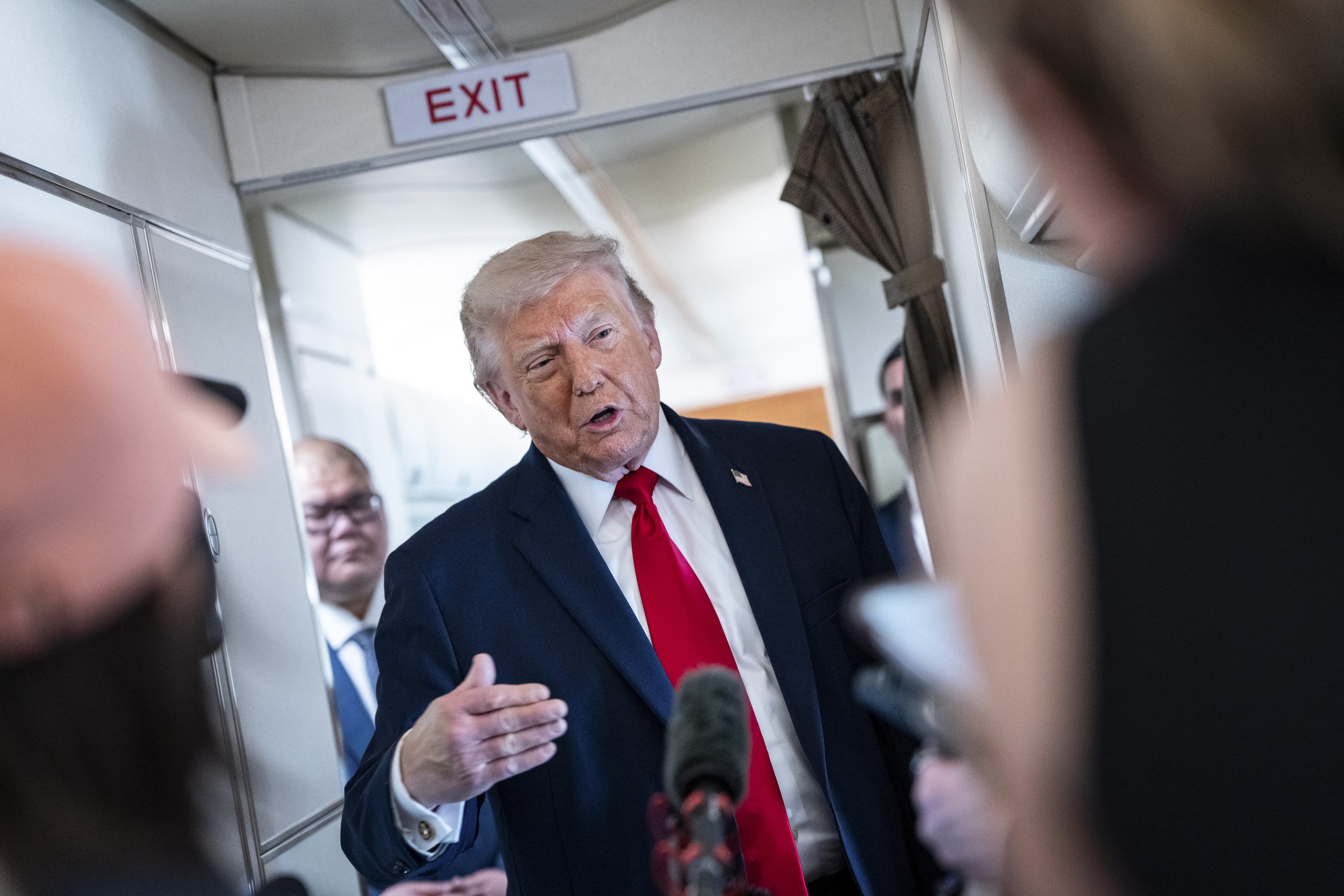
    President Donald Trump speaks to reporters aboard Air Force One while traveling to Chippewa Falls, Wis., June 5.HAIYUN JIANG

    He has alienated Mideast allies, including Gulf states, which took the brunt of Iran’s military revenge. He has encouraged America’s adversaries, including Russia and China, by revealing his lack of any long-term strategy.

    Vladimir Putin and Xi Jinping had only to watch as the U.S. military squandered huge numbers of precious missiles against Iranian drones, leaving them in such short supply that the U.S. military is exposed in the Indo-Pacific.

    Moscow can only toast Trump’s blindness, as the U.S. cancels promised sales of mid- and long-range missiles to Europe for defense against Russia and to pass on to Ukraine. This has left Ukrainians defenseless against Russia’s rain of cruise missiles on civilians — and on a thousand-year center of Orthodox Christianity, the Kyiv Pechersk Lavra monastery and its golden-domed Dormition Cathedral.

    Not a word of protest by Trump or MAGA’s white Christian nationalists who admire Putin’s religiosity. Instead, POTUS has bizarrely praised Putin’s help with Iran. Could he possibly be referring to Moscow’s sharing of intelligence on U.S. targets with Tehran?

    But never mind. Let’s get to the document Trump signed electronically on Sunday. It was not a peace deal. Rather, it was a so-called Memorandum of Understanding — “about a page and half … a very general document,” according to Vice President JD Vance.

    Contrary to Trump’s grandiose claims, this memorandum kicks all the main questions about dismantling Iran’s nuclear program down the road to future negotiations over the next 60 days.

    By keeping the document secret at least until Friday, the president is relentlessly trying to frame his defeat as an astounding victory in hopes this will shape the thinking of the MAGA faithful.

    From Trump’s own words, however, and those of his henchmen, it’s already clear he has abandoned most of the stated goals of this war.

    Let’s look at what we already know.

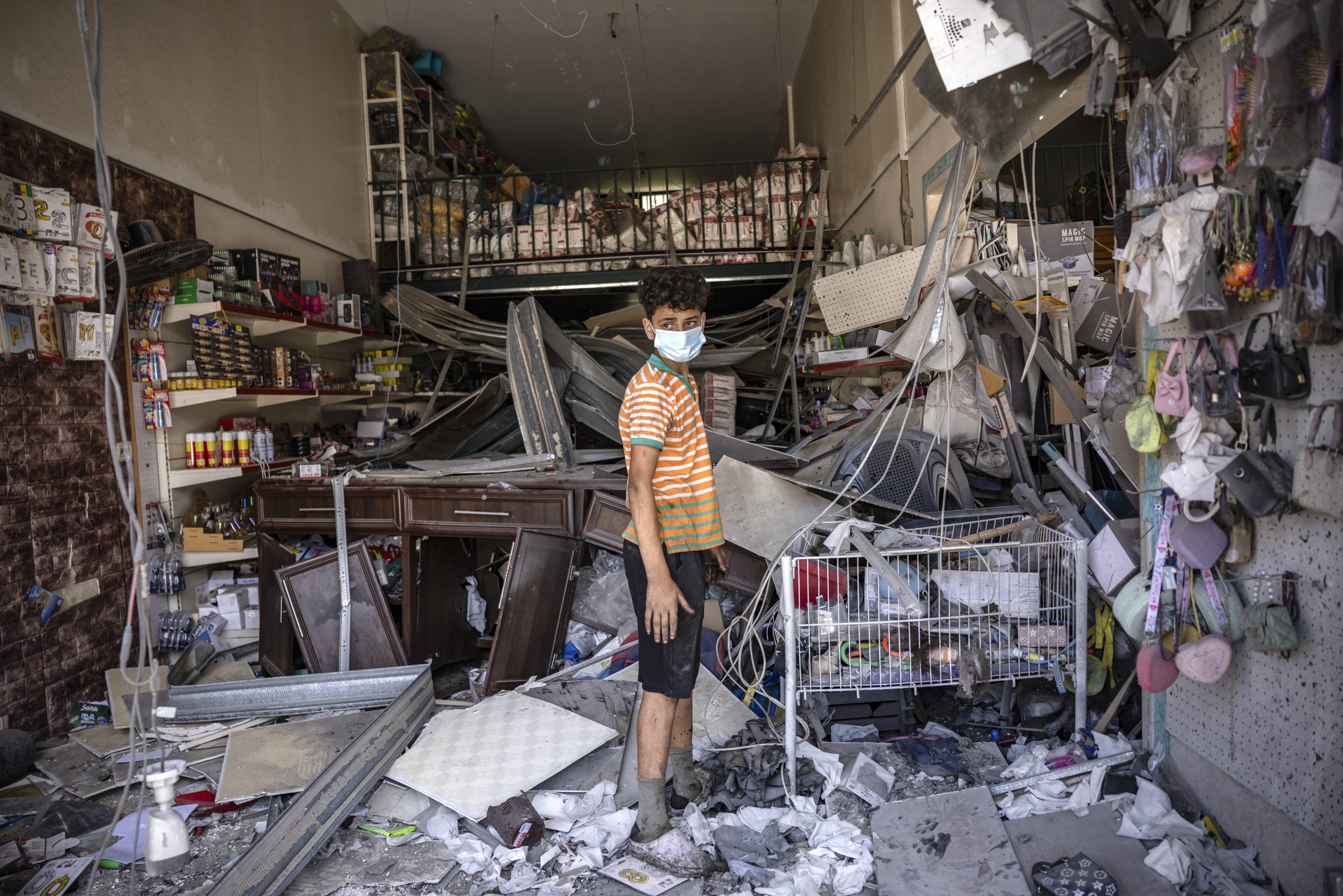
    A boy walks through his family’s destroyed shop after arriving home in Chehabiyeh in southern Lebanon, where people have begun returning after a ceasefire was announced, on Tuesday. Israel has said its forces have been targeting the Iran-backed Hezbollah militia, and it has continued to launch strikes since the U.S.-Iran preliminary deal was announced over the weekend.DAVID GUTTENFELDER

    1. There will be no regime change, as POTUS called for on the opening day of the war, urging the Iranians to rise up. Trump now bizarrely calls Iran’s new leadership pragmatists in a New York Times interview, labeling them “smarter” and more “rational” than those who were assassinated. Yet the Revolutionary Guard’s military commanders now running the show are more hardline and more confident about defying the U.S. president.

    2. As so far revealed, the negotiating framework to end Iran’s nuclear program sounds no better than President Barack Obama’s 2015 agreement. POTUS bragged in the Times that the agreement would ensure Iran “cannot develop or purchase a nuclear weapon.” But Tehran has asserted for decades that it would not do so and made the same pledge on the first page of Obama’s deal, known as the JCPOA.

    Although Trump promised to eliminate Iran’s nuclear program entirely, he appears to have backtracked significantly, now saying that Iran “can never go beyond a certain amount” of enrichment that could be used for military purposes. Again, this echoes the JCPOA, which limited enrichment to 3.67%, an amount that can be used in power reactors but not for a bomb.

    As for how long Iran would have to limit enrichment, Trump hinted that he might settle for a 15-year suspension, which is the same time limit the JCPOA required. (But in a contradiction, he said the limit would be “forever,” although there is no sign Tehran would agree to this.)

    If POTUS hadn’t pulled out of the JCPOA in 2015, the 15 years would have extended until 2030, and Iran would now have no highly enriched uranium.

    The flaw in the JCPOA was the 15-year sunset, after which Iran could have restarted enrichment, but Trump seems headed toward a similar limitation.

    As for the 11.5 tons of enriched uranium Iran produced since Trump junked the JCPOA — including a half ton of nearly bomb-grade nuclear fuel — the president has talked about reducing its purity level (known as downblending), possibly inside Iran. A far cry from previous demands for removing it entirely.

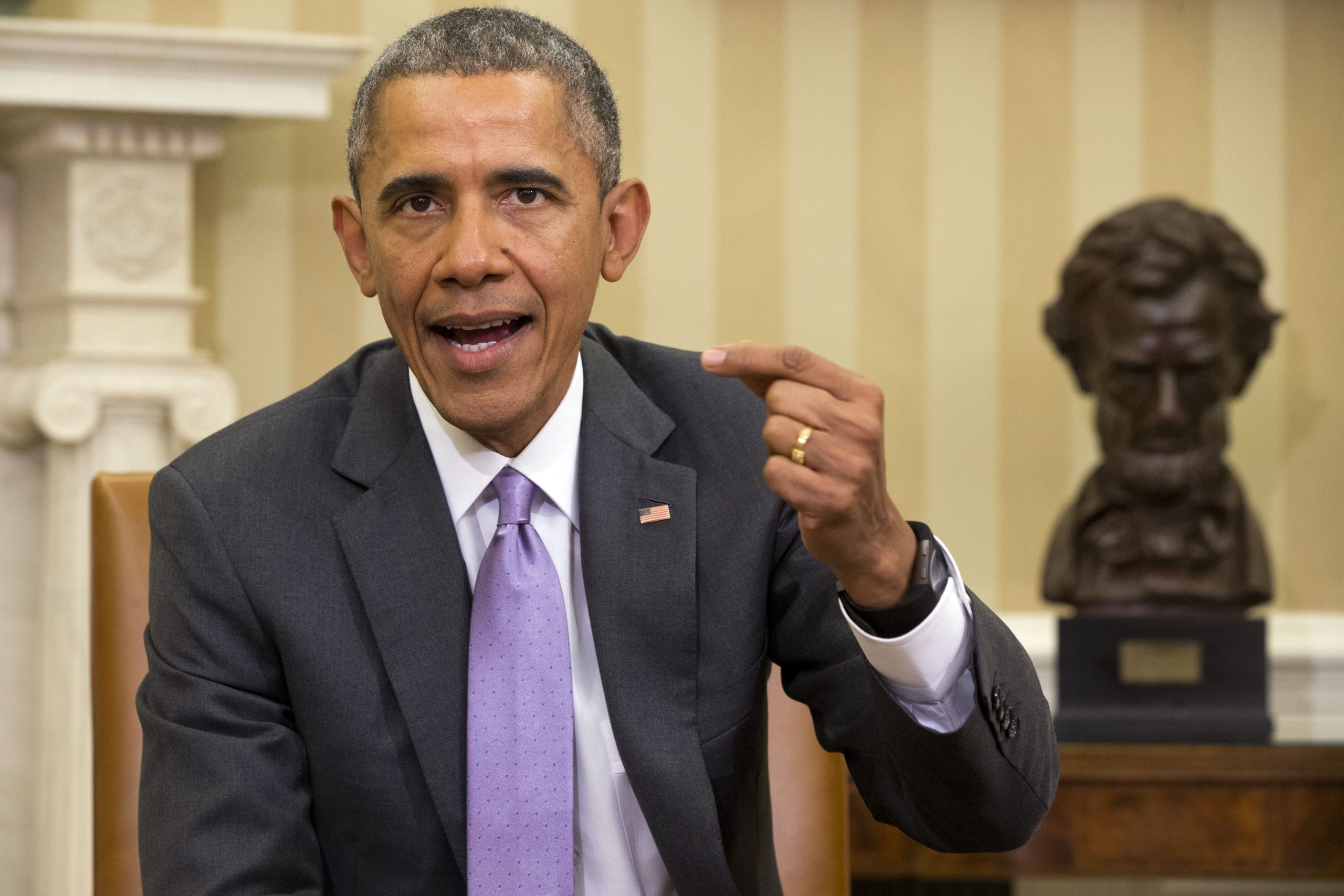
    President Barack Obama speaks about Iran and Israeli Prime Minister Benjamin Netanyahu’s speech to Congress during a meeting with Defense Secretary Ash Carter in the Oval Office in 2015.Jacquelyn Martin

    In the Obama deal, 97% of Iran’s stockpile was removed outside the country to Russia. No sign that Trump’s deal will do as well.

    Moreover, the joint Israel/U.S. 12-day war against Iran in 2025 had buried Iran’s enriched uranium, and as Trump has recently admitted, U.S. satellites could see if the Iranians tried to remove it. Negotiations in February, mediated by Oman, were reportedly headed toward a better deal than Trump will ever achieve, if he achieves any deal at all.

    Trump killed those talks by starting the war.

    So, if you parse Trump’s own admissions, there was no need for his four-month war, which has cost America 13 dead and hundreds of billions of dollars — not to mention 3,000 Iranian dead and severe damage to the global economy.

    Yet the outpouring of Trump lies this week designed to disguise his failure roll on.

    While the president insists that Iran will get no economic benefits until a deal is concluded, it appears that Tehran will be able to immediately restart exporting oil during negotiations. And there are reports that other Gulf states such as the United Arab Emirates or Qatar may release Iranian funds held in their banks immediately, enabling Iran to benefit economically before any nuclear deal.

    Moreover, a future Trump deal doesn’t cover an end to Iran’s missile buildup, or the end of support for proxies, sins for which Trump never stops excoriating Obama. Also, Israel and Hezbollah aren’t party to the deal and are likely to keep fighting.

    When the details of Trump’s non-deal are revealed, he will try to paper over his failure with more prevarications. But as Barnum noted, “you can’t fool all of the people all of the time.”

  • Trump could be a winner on Ukraine if he recognized Kyiv’s stunning turnaround of the war

    Trump could be a winner on Ukraine if he recognized Kyiv’s stunning turnaround of the war

    As President Donald Trump sinks deeper into an Iran quagmire, he looks like a loser for joining an ill-planned war of choice and failing at peace talks.

    Even if a U.S.-Iran memorandum of understanding (or MOU) is signed soon, this will not be a “peace deal” but will merely kick negotiations on all the tough issues down the road. And the MOU will most likely leave the U. S. worse off than before the war.

    Yet, on another front, the Ukraine war, where Trump is supposedly still working on a peace proposal, the president has new opportunities to advance a reasonable deal and be lauded as a winner.

    Kyiv, through incredible bravery, fortitude, and technological brilliance, has finally turned the tide against Russian aggression via its innovative drone war. The conflict is far from over, but Russia has been stalled for months, gaining almost no ground, and is now losing more men than it can mobilize.

    And President Volodymyr Zelensky has just proposed freezing the war along current lines while negotiating directly with Vladimir Putin in a third country, an offer the Russian leader immediately refused.

    Yet, Trump continues to aid the loser, Putin, and to undermine the advances of the increasingly visible winner, Kyiv. He has cut off all military aid to Ukraine (even though Europe will pay for the weapons), including vital air defense systems Kyiv desperately needs to destroy the ballistic missiles Putin is raining down on civilians. POTUS is also resisting bipartisan efforts in Congress to restore limited Ukraine aid and add sanctions to Russia.

    The House just passed the Ukraine Support Act in a bipartisan push that overcame Speaker Mike Johnson’s efforts to block it, but the White House has strong-armed pro-Ukraine Republicans in the Senate to sit on a similar measure. The GOP‘s cowardice has become a national embarrassment.

    If Trump insists on going down in history as a foreign policy loser (or a Russian dupe), Senate Republicans must decide whether they want to share the shame.

    It is pathetic to watch how the Kremlin has been making fun of Trump’s weakness. The president keeps claiming he doesn’t want to provoke Moscow by sending more weapons, yet his vacillation has made him a punching bag on RT, the Kremlin’s mouthpiece TV outlet.

    “Vladimir, STOP!” Trump begged on Truth Social on April 27, after massive Russian drone and missile attacks on Kyiv and other cities. “Lets get the Peace Deal DONE!” He told reporters he thought Putin would listen. Haha!

    “What Vladimir Putin doesn’t realize is that if it weren’t for me, lots of really bad things would have already happened to Russia, and I mean REALLY BAD. He’s playing with fire!” POTUS posted on May 27. RT posted sarcastically: “Trump’s message leaves little room for misinterpretation. Until he posts the opposite the next morning.”

    A Kremlin spokesperson dismissed his remarks as “emotional overload.” Trump appears unaware of Kyiv’s extraordinary achievement in bringing the war home to Russia, hitting deep into the country with mid-range and long-range drones that take out military bases, oil depots, refineries, bridges, and rail lines.

    When I spoke to Ukrainian military officers as they were displaying videos of sophisticated drone operations to business and political leaders at the Munich Security Forum in March, they told me their goal was to interrupt Russian supply lines and thus cripple military logistics inside Russia and inside Russian-occupied territories.

    Another main point was to finally bring the cost of the war home to Russians, since Kremlin-controlled media and internet constantly portray Russia as winning.

    Even under President Joe Biden, Ukrainians were frustrated that U.S. aid, notably medium- and long-range missiles, was conditional on their not being fired into Russia — lest it “escalate the fighting.” Under Trump, who has cut all aid, the Ukrainian military feels no such compunctions.

    This approach is succeeding. Fuel shortages are spreading across Russia, and fuel supplies in Crimea have reportedly run dry last week, after Ukrainian drones took out two land bridges to the Russian-occupied peninsula.

    Even more embarrassing to Putin, he was forced to curtail the huge annual May 8 and 9 World War II Victory Day military parade due to fear of Ukrainian long-range drone strikes.

    Yet, Trump refuses to take advantage of Russia’s new weakness and to endorse Zelensky’s call for a freeze along current military lines. Instead, the president’s ill-equipped negotiators have swallowed Putin’s demand that Kyiv surrender critical cities, which Russia has been unable to take by force.

    Even more idiotic, Trump has failed to take advantage of Zelensky’s year-old offer to share Ukraine’s brilliant drone technology and swap just-in-time, battle-tested drones and interceptors for U.S. weapons. This, at a time when the unacceptably slow pace of U.S. drone development has put America on the back foot in the Iran war, and forced our military to use $2 million missiles to down $50,000 Iranian Shahed UAVs (as unmanned aerial vehicles are called).

    All of America’s Sunni Arab allies are begging Kyiv for help downing Iran’s drones, as U.S. private companies are rushing to test new drone innovations in Ukraine. Even some Pentagon officials are waking up to how much they need Ukraine’s help, yet Trump remains aloof — and still blames Ukraine, not Putin, for causing the war.

    My only explanation for such stupidity is that POTUS has never gotten over his anger at Zelensky for rejecting the president’s famous 2019 demand in a phone call to dig up (nonexistent) “dirt” on Biden. That phone call was the basis for Trump’s first impeachment.

    I’d add to the mix Trump’s envy of dictator Putin’s total control of everything in Russia and his past, frequent displays of bare-chested masculinity. (Perhaps the choice of a bizarre UFC mixed martial arts match for his birthday on the White House lawn Sunday is a way for POTUS to play catch-up.)

    The result, however, is that America rejected the vital help of an important Ukrainian partner at a critical moment in the Iran war, while aiding a Russian adversary who is assisting Iran. And the U.S. president has squandered hundreds of scarce Patriot and THAAD long-range interceptor missiles in the Iran war, which, if Europe could have purchased them for Ukraine, could have saved that country’s urban infrastructure.

    Instead, Trump refuses to put Ukraine in the queue for receiving new missiles when the woefully slow U.S. production lines are sped up. And he has just halted a scheduled deployment of Tomahawk missiles to Germany, supposedly from fear of upsetting Russia, even though Putin is now openly threatening Europe.

    From June 15 to 17, the leaders of the G7 group of the world’s top industrial nations will meet in France, on the shores of Lake Geneva, and French President Emmanuel Macron has invited Zelensky to speak. The topic will be Ukraine, and Trump will have a chance to strongly endorse Zelensky’s proposal.

    I don’t expect much from Trump, who has complained about Russia being kicked out of the former G8 after invading Ukraine. But who knows? Maybe POTUS will decide he doesn’t want to be a loser after all.

  • To stop Hezbollah, Trump must prevent Israel from creating another Gaza in Lebanon

    Early Tuesday morning, President Donald Trump claimed, yet again, that a peace deal with Iran could be closed “in two or three days.” This was the 38th time since a U.S.-Iran ceasefire in April that he predicted a deal was around the corner.

    But never mind.

    By later Tuesday, Israel was heavily bombing the historic city of Tyre in southern Lebanon, despite Trump’s earlier, profanity-laden demand to Prime Minister Benjamin “Bibi” Netanyahu to stop such attacks.

    Yet, Bibi seems determined to occupy southern Lebanon, drive out its population, and raze its villages and towns in an effort to finally stop Iran’s Shiite proxy militia Hezbollah from firing into northern Israel. Meantime, Tehran insists there will be no deal on opening the Strait of Hormuz, and no nuclear talks before ending Israel’s attacks on Hezbollah.

    So Lebanon has become the new flashpoint of the conflict. Events there will be more critical to the outcome of the Iran war, I believe, than the limited U.S. military strike on Iran in retaliation for the shootdown of a U.S. helicopter near the Strait of Hormuz.

    Why so? For me, Lebanon provokes a painful case of déjà vu, because I spent two years as a foreign correspondent covering the 1982 Israeli invasion of Lebanon, and watched it give birth to Hezbollah, unnecessarily. I watched Israel — and the United States — make mistakes they are repeating today, which will trap both of them in a self-induced Iran quagmire.

    I reported that Israel (and the Reagan administration) learned the hard way that defeating an ideological movement cannot be done by military pressure alone, but must involve winning over the local population. And that includes offering hope that they can gain more from rejecting the ideologues, despite the risk that is involved, especially if those abusive ideologues have already alienated them deeply.

    Based in Beirut, at the legendary Commodore Hotel, I used to make regular trips to southern Lebanon, a poor Shiite region that was neglected by Sunni and Christian Lebanese leaders who deprived it of resources.

    And many Shiites resented the tens of thousands of Palestinian refugees who fled or were driven out of Palestine in 1947-49 during Israel’s war for independence. Although the refugees lived in shantytown camps, they received lots of international aid, including education, hospitals, and jobs.

    In Sidon and Tyre, I met with numerous middle-class Shiites who had emigrated to West Africa to earn money and returned to build homes and small businesses. Many were members of the strongest Shiite political movement in that region, known as Amal (or Hope), and led by Nabih Berri, which agitated for more government help for their region.

    They resented the growing power of the Palestine Liberation Organization, based in the camps and nearby cities, which, according to my sources, treated the Palestinians unfairly.

    When Israel invaded southern Lebanon in 1982, I was told by Amal leaders that they were not displeased at Israel’s effort to eject the PLO, but wanted the war to end as soon as possible.

    They were worried about a new group called Hezbollah, backed by Iran, that was emerging to fight the occupation. Berri wanted the Israeli military and government to negotiate directly with Amal leaders. He pledged they would protect the border with Israel and cooperate in preventing any Hezbollahis from attacking across the boundary.

    Instead, Israel chose to ally with a Christian leader, Bachir Gemayel, who was soon assassinated by a member of the Syrian Socialist Nationalist Party, an ally of Iran. No peace deal with Lebanon was signed.

    With Iran’s help, Hezbollah grew into the most powerful military and political force in Lebanon, far more powerful and better armed than the Lebanese army, with the more moderate Amal reduced to a secondary force. Israel remained in south Lebanon as an occupying power until 2000, immersed in a quagmire that took the lives of innumerable soldiers and embittered thousands more.

    Fast-forward to today. Most Lebanese are fed up with Hezbollah, which dragged Lebanon into the Gaza war by attacking Israel in sympathy with Hamas. Syria has a new government, which is hostile to Iran and Hezbollah. Moderate Sunni Arab leaders in the region feel the same. So do many Shiite leaders in southern Lebanon, where Hezbollah was based, and from which Israel has now driven out much of the population. (Longtime survivor Berri is currently the speaker of the Lebanese parliament.)

    And Lebanon, for the first time in decades, has a president, Joseph Aoun, who is willing to stand up to Hezbollah, negotiate directly with Israel, and try to replace Hezbollah with the Lebanese army, which is too weak to do so without external help.

    Instead, choosing to rely on force, Israel has been trying to make southern Lebanon into another Gaza, razing villages and towns to the ground, and making it impossible for the population to return. This can only lead to another occupation quagmire for Israel, just like 1982-2000. It will only restore Hezbollah’s credibility and assist Iran.

    This threat was summed up acutely by Ehud Barak, the former Israeli prime minister, who finally withdrew Israeli troops from Lebanon in 2000.

    “To eradicate Hezbollah,” he wrote in Haaretz, “we would need to occupy all of Lebanon, which is simply unrealistic. The only way to disarm the organization is through a diplomatic process in coordination with the governments of Lebanon, the U.S. and others of the region.”

    In addition, France, Gulf Arab countries, along with Jordan and Egypt, might contribute to policing the south and the border with Israel. (Forget about U.N. peacekeepers who failed miserably for decades.) “Anyone, without a plan like that,” Barak continued, “is destined to sink into the Lebanese quagmire and spill years of blood without results. We’ve already been there, done that, and believe me, it is not easy to get out of it.”

    The mistake Netanyahu made, and Trump endorsed when both attacked Iran in February, was to assume that force alone could resolve the Iran problem. This has left POTUS on the back foot, still dreaming he can get Iran to surrender without any concessions.

    After Trump’s mistaken handling of the Iran war, it will be tremendously difficult to devise any deal with Iran that doesn’t leave its leaders strategically stronger than they were before the war started, although the economic price Iran has paid may inspire a domestic revolution after the fighting ends. But if POTUS doesn’t want to join Israel in a Lebanon quagmire and end any prospects of opening the Strait of Hormuz, he had better find negotiators who know a bit of Lebanese history.

    Once more, there is a small chance to save Lebanon from Iran’s clutches and end the rule of its Hezbollah proxies. But that chance will die if Israel insists on dispossessing one million Lebanese Shiites and subjecting them to horrors such as those Netanyahu permitted in Gaza.

    Trump claims he can control Bibi. He failed wretchedly (and he never really tried) in Gaza. The test now is in Lebanon.

  • Trump’s kowtow to China on Taiwan risks tech disaster for the U.S. and the world

    Trump’s kowtow to China on Taiwan risks tech disaster for the U.S. and the world

    Recently, I attended a showing of a fascinating documentary called A Chip Odyssey that laid out the history of how that small self-governing island democracy of Taiwan came to manufacture around 90% of the world’s most advanced semiconductor chips.

    It was not at all, as President Donald Trump keeps insisting, because Taiwan “stole our chip industry.” The real reason is one Americans need to understand: if China ever manages to take control of Taiwan, it will cause a U.S. and global economic disaster that would make the Strait of Hormuz blockade look like child’s play.

    It would halt America’s global dominance in the field of artificial intelligence, since U.S. AI companies all depend on sophisticated chips fabricated by the Taiwan Semiconductor Manufacturing Co., known as TSMC. As the Wall Street Journal put it, “the island is now the factory floor” for U.S. leadership in AI.

    Yet, Trump, before, during, and after his May summit with Xi Jinping, has continued to belittle Taiwan. He discussed a planned $14 billion U.S. arms sale with Xi, despite a long-standing pledge to Taiwan, made by President Ronald Reagan, that U.S. weapons support for the island would never be subject to China’s approval.

    Trump has now frozen the weapons sale, saying it could be “a bargaining chip” with Beijing.

    The president has repeatedly hinted at his reluctance to defend a place that’s “9,500 miles away.” And he frequently argues that the production of advanced chips could and should be moved to the United States.

    My conversations with the director of A Chip Odyssey, Hsiao Chu-Chen, and coproducer Ben Tsiang (along with my recent trip to Taiwan) made clear why it will be years before the U.S. can onshore production of even a modest percentage of its chip needs. The film offers a moving history of how a small, poor island became a tech giant because it had no choice.

    Hsiao Chu-Chen, left, director of “A Chip Odyssey,”  and the documentary’s co-producer Ben Tsiang in Philadelphia in May.Trudy Rubin

    “I wanted to tell the history of Taiwan’s semiconductor industry, not just about the achievement itself, but how people strived to achieve what they did,” Hsiao told me over coffee in Philadelphia. Fifty years ago, the island was almost abandoned by the international community after the United Nations switched the China seat to Beijing and expelled Taiwan, she told me. “Taiwan is so tiny, with no minerals, so we needed to find a way we could survive.”

    After consulting with Taiwanese American engineers working in the United States, the Taipei government decided to focus on high tech. In the mid-1970s, it licensed and paid for semiconductor technology transfer from RCA, a common process. Nothing was stolen — and, at the time, this technology wasn’t new or mainstream, and was only a minor focus at RCA.

    Taiwanese engineers traveled to the United States to master manufacturing technology, returned, and vastly improved it. They began transferring it to the manufacture of consumer electronics such as watches, personal computers, and cell phones.

    Fast-forward, when a brilliant Chinese American engineer and star at Texas Instruments named Morris Chang was recruited by Taipei in 1987 to advance its semiconductor industry. He conceived the idea of a “fab-less” process, where small companies in Taiwan and elsewhere, and huge ones in the U.S., could focus on design and research to constantly update the technology, while Taiwan would be the foundry that manufactured complex chips to their specifications.

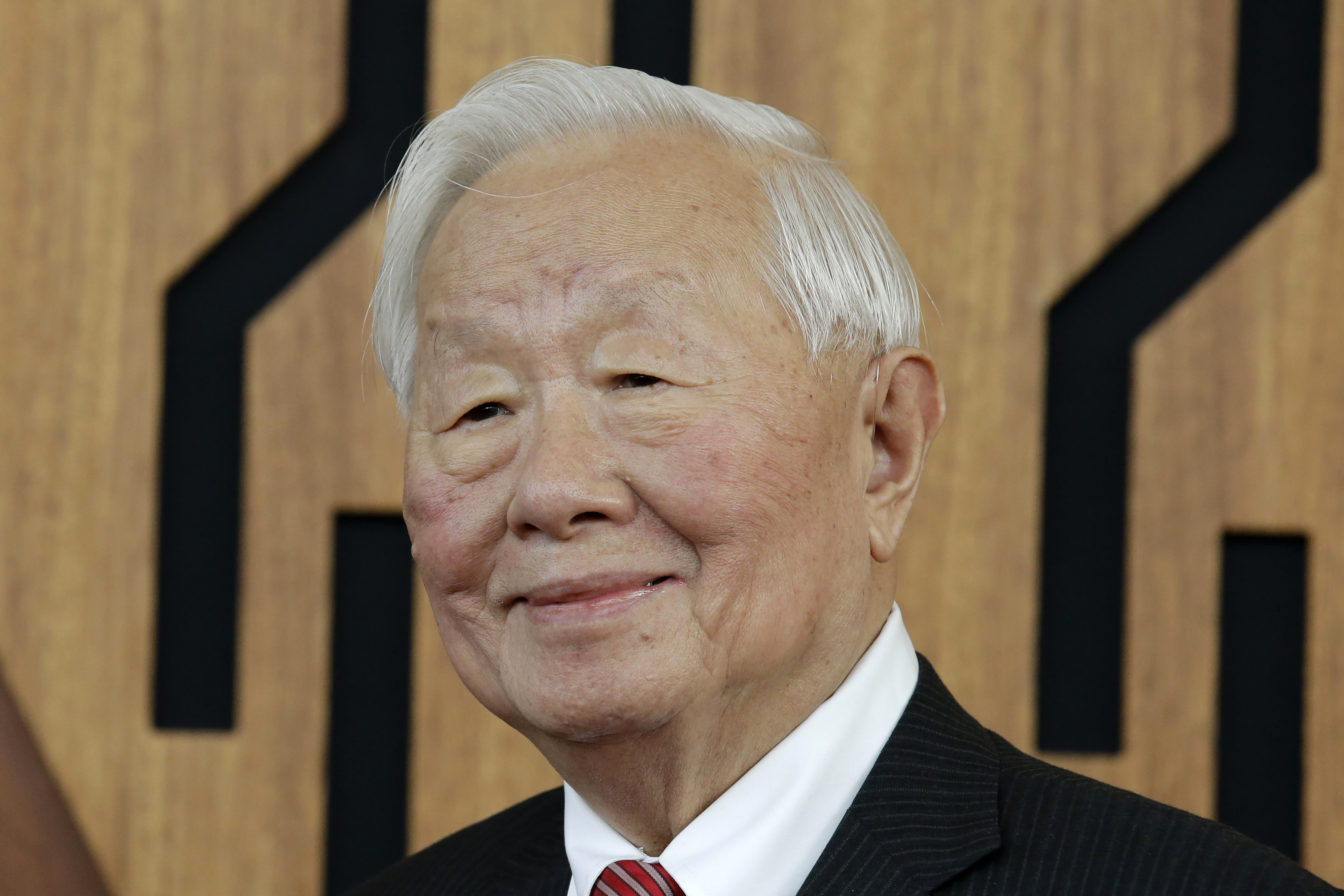
    Morris Chang, founder of one of the world’s largest chip manufacturers, TSMC, smiles at the start of the APEC Economic Leaders Meeting at Port Moresby, Papua New Guinea, in 2018.Aaron Favila

    For example, Hsiao explained, “TSMC makes chips based specifically on designs from Nvidia [a global leader in technology, based in California], so it is not competing with them.” And TSMC has built up the trust of its many U.S. and international partners because it never leaks information. In fact, it hardly ever allows journalists (myself included) within its sprawling precincts at the Hsinchu Science Park, an hour outside Taipei.

    “The most important principle [of TSMC] is integrity,” said the film’s director. “Companies don’t have to worry that their technology will be stolen, as it has been in China.” Moreover, TSMC invests massively in research and development to keep its foundry on the cutting edge.

    Fabricating chips “is not like manufacturing nails,” I was told by one scientist who studies TSMC and preferred not to be named, “but it is an intense, complex, and layered process. You need to update, improve the technology all the time.”

    When Chang pioneered his “fab-less” concept, making Taiwan the world’s semiconductor foundry, it was a huge risk, but it paid off beyond his dreams.

    “I understand that some Americans are anxious about losing leadership in the semiconductor industry, but Taiwan earned its place with decades of talent, tireless innovation,” producer Tsiang said intently. “It took daring investment across generations to build what we have today. That is what we were trying to show.

    “But it is not a zero-sum game with America. Taiwan’s rise is deeply connected to collaboration with U.S. companies, and will be in the future.”

    Indeed, the choice by companies such as Nvidia or Intel to outsource fabrication of chips to Taiwan was based on profit-seeking, since it vastly lowered costs.

    The Americans could also rely on the massive Taiwanese production and talent ecosystem that feeds into TSMC. As the film shows, engineers there rotate in three shifts, so they are always present and are ready to show up at 2 a.m. if machinery needs adjusting.

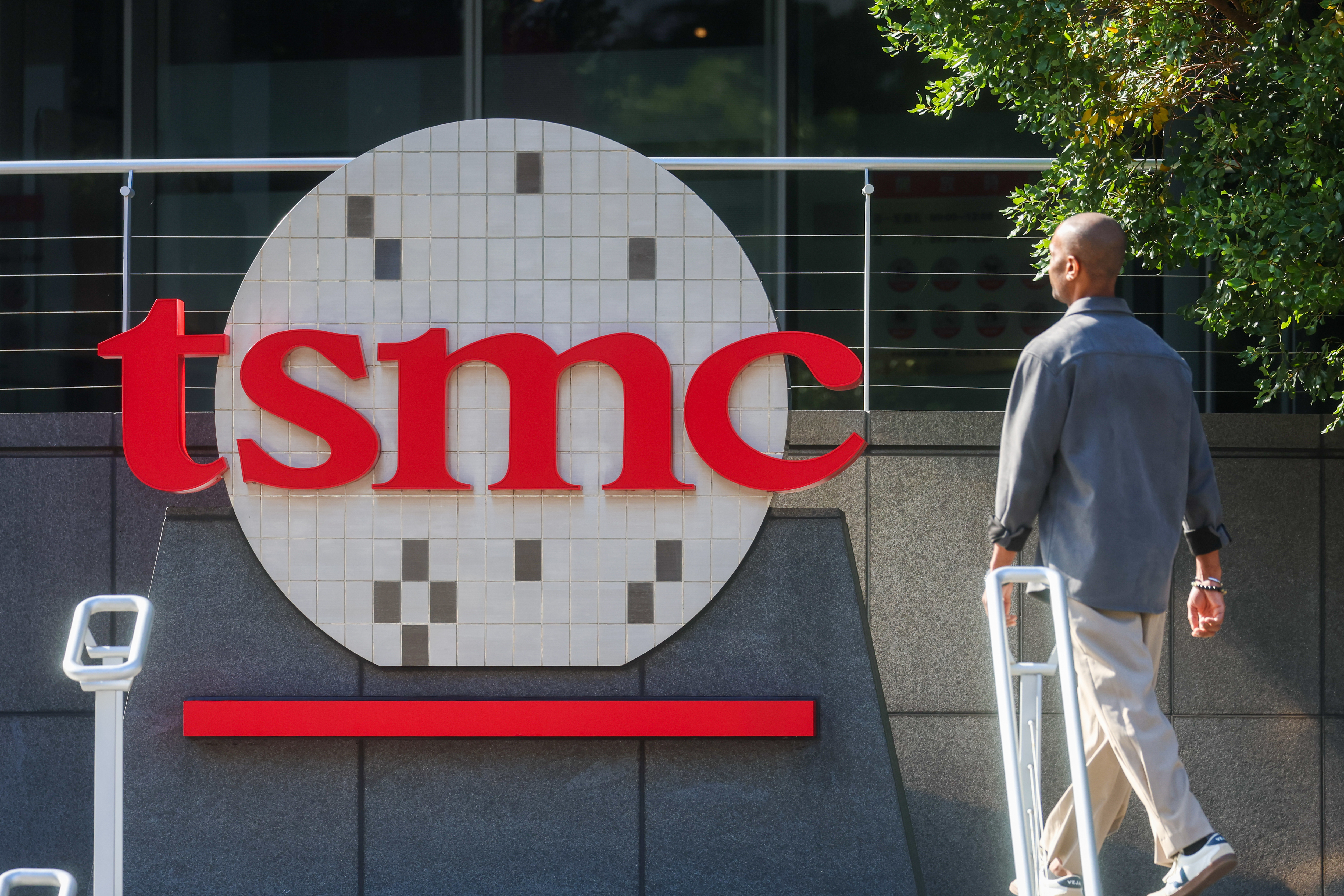
    A worker walks past the logo of TSMC, or Taiwan Semiconductor Manufacturing Co., a Taiwanese multinational semiconductor contract manufacturing and design company, in Hsinchu, Taiwan, in January.Daniel Ceng

    Which brings us to the question of whether a huge chunk of the foundry production could easily be moved from Taiwan and installed in the United States, as Trump demands.

    TSMC has committed $165 billion to build six “fabs” (as fabrication plants are called) in Phoenix. Yet, only one is operating, and one more will come online this year.

    The difficulties are obvious. Besides far higher operating costs than in Taiwan and the far more casual American work ethic, there is the huge problem of finding the engineering talent in the United States — both to maintain complex machinery and oversee complex operating processes.

    “In Taiwan, all the top university graduates go to TSMC,” Tsiang told me. “In the United States, the top university graduates go to Washington, D.C., or Silicon Valley. There is a real test in how the U.S. can develop a talent pool.”

    Links are being established with the University of Arizona and other potential feeder schools to programs aimed at filling TSMC positions. But this is a process that will take years.

    At present, the Phoenix fabs depend on around 2,000 Taiwanese engineers and staff. There are seven direct flights a week from Taipei to Phoenix.

    In Taiwan, audiences tear up at showings of A Chip Odyssey as they listen to elderly scientists reminisce about their years of building TSMC from the ground up. I wish more Americans could see the film, but it is only available for now at special showings. (However, you can watch the trailer as well as an extended interview with the director and producer on YouTube.)

    Yet, the cost to America of a possible Chinese takeover of Taiwan in the next decade is almost unimaginable, even though Trump seems to dismiss it. His ignorance of the real story of Taiwanese semiconductors is infuriating and dangerous.

    Perhaps some of Trump’s tech-bro pals can get the message across to him before we all suffer the consequences of losing TSMC.

  • Trump administration wants to give Afghans who helped U.S. forces a choice between death and disaster

    Trump administration wants to give Afghans who helped U.S. forces a choice between death and disaster

    Just when you think the White House policy toward refugees can’t get any uglier, it sinks to new depths that should infuriate Americans of all political persuasions.

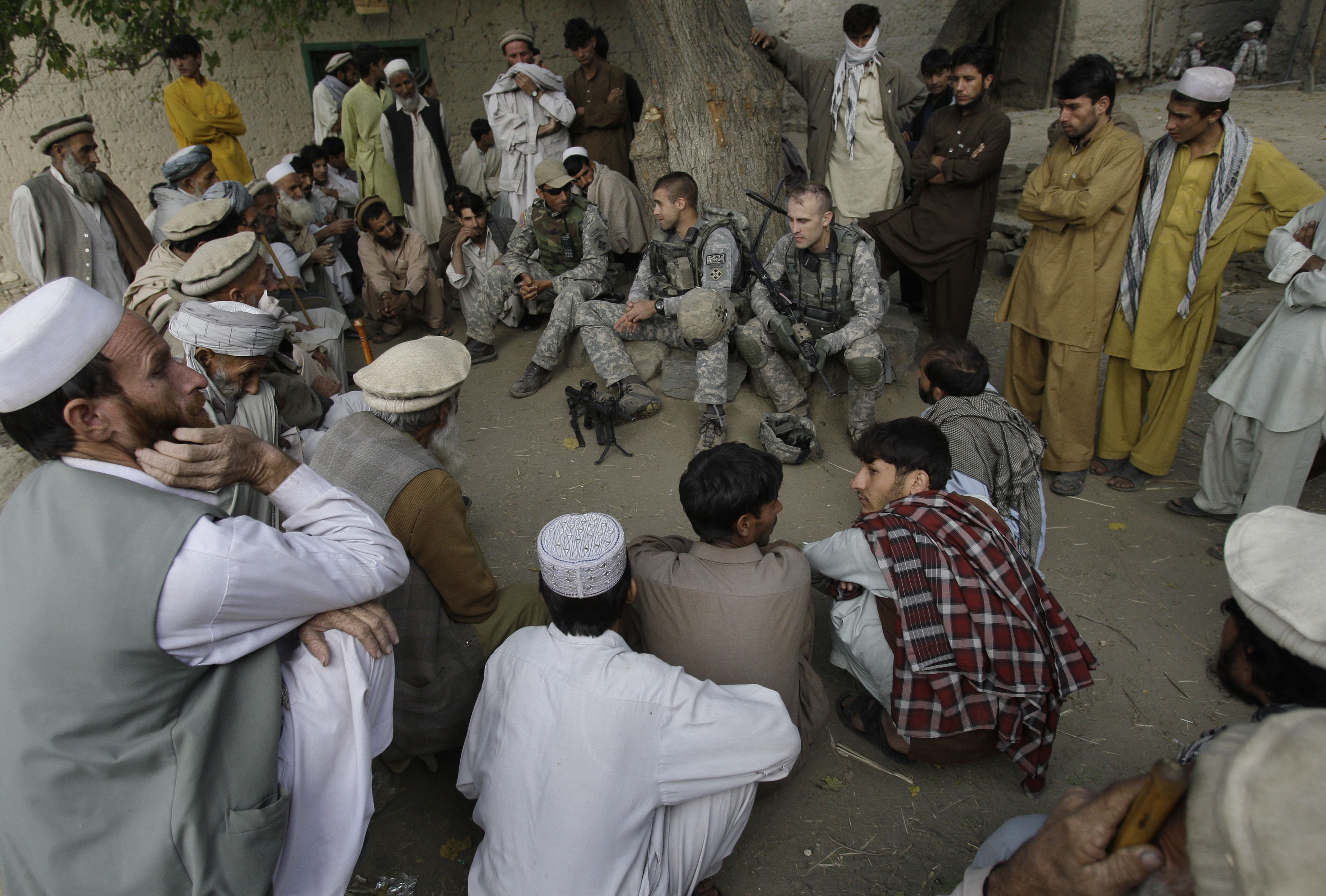
    After the suspension in November of a resettlement program for Afghans who helped U.S. soldiers and civilians, the Trump administration is now trying to send up to 1,100 of such Afghan refugees to the Democratic Republic of Congo. These include former interpreters for the U.S. military, former members of the Afghan Special Operations forces who worked alongside their U.S. counterparts, and families of U.S. service members — including about 400 children.

    These Afghans are trapped in limbo at a former U.S. military base in the Gulf emirate of Qatar (amidst the U.S.-Iran war), where they were taken in late 2024 for a short stay while they completed the resettlement process.

    Now, the U.S. Department of State wants to rid itself of the problem, and these refugees may soon be given a brutal choice between death and disaster.

    One option will be to return to Afghanistan, where many are on the Taliban death list for aiding Americans. The other choice would be the Democratic Republic of Congo (also known as the DRC), a country in central Africa enmeshed in bloody civil wars that have killed and displaced millions.

    Why would U.S. officials choose the DRC? A State Department spokesperson told the New York Times the focus is on “voluntary resettlement.” Refugee organizations beg to differ.

    “They have been trying to wash their hands of these Afghans,” I was told by Shawn Van Diver, president of the aid group AfghanEvac. “The DRC may be the only ones who will play ball with them. So the DRC is rising to the top.”

    Other refugee aid groups are equally horrified, as we all should be.

    “It is horrific and absurd to think of it as a viable option to send persecuted people to a country in the midst of active conflict and listed as Do Not Travel by the State Department,” said Jennifer Patota, deputy director of U.S. legal services at the International Refugee Assistance Program.

    “This is a complete betrayal of our promise to Afghans who stood by us. Any future partners will be watching,” she said.

    But concepts like honor and loyalty or even simple human decency don’t move the White House officials who devise U.S. refugee policy. They should, however, move every citizen and U.S. legislator who cares about the future safety of our military, and the immorality of U.S. leaders eager to sell out allies.

    This latest disgrace sent my mind racing back to President Joe Biden’s shameful and botched withdrawal from Afghanistan (following on Trump’s equally shameful first-term pullout accord with the Taliban). After many trips to Afghanistan, I tried, as did so many U.S. journalists, former U.S. military, and U.S. officials who had served there, to get friends and comrades out.

    One of those, whom I wrote about, was a judge who had worked with U.S. officials and had stellar recommendations for the special immigrant visa, known as an SIV, for those who helped Americans. After harrowing months hiding outside Kabul with the Taliban on his heels, and then waiting a year in Pakistan for an SIV, he finally had to return to with his ill wife to Afghanistan when their Pakistani visas expired. I can’t use the judge’s name because he is in hiding.

    Although he had completed essential parts of the application process, the Trumpers froze the program at the end of 2025. The supposed reason was a murder in Washington, D.C., by an Afghan refugee (not an SIV holder). Absolutely no excuse for rejecting Afghans who risked their lives to help U.S. personnel.

    I spoke about this latest Afghan tragedy to Najib Bakhshinda, a former journalist, who, with his human rights lawyer wife, now heads a nongovernmental organization (NGO) in Canada called GCARR-CANADA that works to help refugees facing danger. Along with their four sons, they made it from Kabul to Ottowa.

    I asked Bakhshinda what would happen if the Afghans in Doha returned to Afghanistan.

    “They will simply get killed,” he replied. “The Taliban have an official office in Doha, Qatar, and they know who is in Camp As Saylihah [where the Afghans are held]. They even visited the camp and tried to ask about the residents, but people don’t trust them.”

    So let me repeat: The White House wants our Afghan allies trapped in Doha to choose between terrible danger and likely death.

    What makes this story even darker is the Kafkaesque process that doomed many of these refugees after they reached Doha. “There had been pre-vetting before they reached the camp,” I was told by Andrew Sullivan, a military veteran who served in both Iraq and Afghanistan, and now heads No One Left Behind, an organization that helps Afghans resettle here.

    But many of the 1,100 couldn’t qualify for SIVs because of arcane regulations, so they had to apply as refugees.

    For example, Afghan Special Forces operators who fought side-by-side with and supported U.S. troops were disqualified if the Afghan government paid them rather than the U.S. military. Yet, the Taliban wants them dead just the same.

    There are cases where a child of an SIV applicant aged out at 21 while the family waited years for their visa, and thus was no longer eligible. Or interpreters for U.S. units — prime targets of the Taliban — who didn’t work the required 365 days.

    “Absolutely, exceptions should be made if they pass final security clearance,” insisted Sullivan, whose organization helped resettle 3,300 Afghan and Iraqi SIV holders. And, if the U.S. is still unwilling, said Sullivan, then officials should ensure they are going to a safe country where they can survive.

    Once upon a time, a bipartisan movement of veterans in Congress promoted laws to enable Afghans who helped us to get visas. But as time passed, and foreign policy crises multiplied, the issue faded from view.

    “There is still strong bipartisan support, but the issue has fallen out of sight,” Sullivan said. “Congress needs to act. It can change the law any time.” Or, I’d add, it can press to revive the SIV program the White House froze. Pressure can also be brought on the State Department to drop the two despicable options it is trying to impose on the Afghans in Doha.

    This is a refugee issue that all Americans should be able to unite behind.

  • White House rejection of Ukraine’s help to fight Iranian drones may cost U.S. military lives

    White House rejection of Ukraine’s help to fight Iranian drones may cost U.S. military lives

    Nothing so perfectly demonstrates Donald Trump’s reckless approach to waging war on Iran than his rebuff of Ukraine’s offer to share drone technology that could save U.S. military lives.

    Clearly, the president had little idea what he was getting into when he joined Israel in bombing Iran and killing its top leadership. This was a war of choice — the ugly Iranian regime posed no immediate threat to the U.S. — but Trump thought the effort would be easy.

    As his tsunami of Truth Social verbiage and endless stream of comments to reporters show, he expected a quick victory — either a popular uprising leading to regime change, or a Venezuela-type win in which the ouster of a dictator (or ayatollah) let him dominate the country and its oil.

    How any president could be so willfully blind is a question for psychiatrists, but Tehran ain’t Caracas. POTUS failed to foresee the obvious: that Iran would likely retaliate by closing the Strait of Hormuz to oil exports from the Persian Gulf for the very first time.

    Voila! U.S. gas is at over $4 a gallon, and the entire world economy is threatened if the strait isn’t reopened. Now, Trump faces only bad options in a war he clearly doesn’t understand.

    Despite his claims, indirect U.S. contacts with Tehran via Pakistan are likely going nowhere since the president is demanding total surrender, and Israel keeps wiping out potential Iranian negotiators.

    President Donald Trump arrives on Air Force One at Dover Air Force Base, Del., on March 18 to attend the casualty return for the six crew members of an Air Force refueling aircraft who died when their plane crashed in western Iraq while supporting operations against Iran.Julia Demaree Nikhinson

    Most scary, as POTUS keeps dispatching more troops to the Mideast, he seems oblivious to the nature of the war in which he has enmeshed our conventional forces. For the first time, the United States is facing the new style of hybrid warfare that Ukraine has been waging for four years against Russia.

    Neither the White House nor the Pentagon is ready. Yet, Trump keeps rejecting President Volodymyr Zelensky’s offers of vital help.

    The Iran war has exposed how unprepared the United States still is for modern conflicts in which large numbers of inexpensive unmanned drones and smaller, cheaper missiles can be used asymmetrically against pricey U.S. conventional weapons.

    Over the past four weeks, Gulf allies and U.S. forces have been downing Iranian Shaheds, drones that cost $20,000 to $50,000, with Patriot interceptors and other multimillion-dollar systems meant for targeting ballistic or cruise missiles.

    The U.S.-made Patriots are in increasingly short supply, as the demand for them mounts in Europe, including Ukraine, and Asia — as well as among Gulf allies whose infrastructure is now being attacked by Tehran.

    In the first four days of the Iran war, according to figures published by Philadelphia’s Foreign Policy Research Institute, the Gulf allies used up 618 Patriot PAC3 missiles, the equivalent of a whole year’s production by Lockheed Martin.

    In those first four days, the Pentagon likely fired about $5.7 billion worth of interceptors to shoot down Iranian ballistic missiles — and drones.

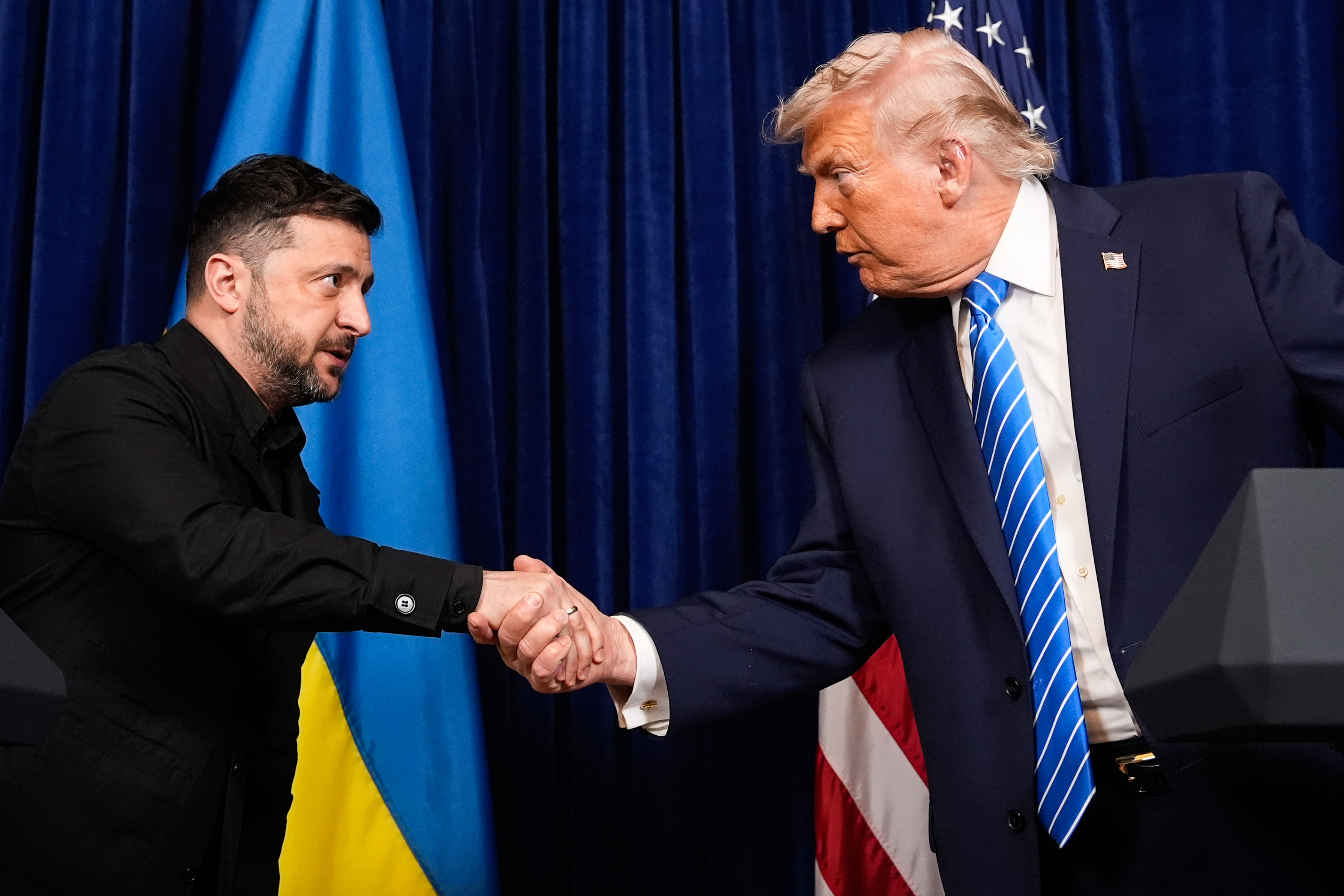
    President Donald Trump and Ukraine’s President Volodymyr Zelensky shake hands at the start of a joint news conference following a meeting at Trump’s Mar-a-Lago club in December.Alex Brandon

    It is infuriating, then, that Trump keeps rejecting help from the country that knows better than any other how to counter drone attacks, especially Iranian Shaheds.

    It was Iran that first sent Russia the Shahed drones Moscow has used relentlessly to attack Ukrainian soldiers and cities. Vladimir Putin, in turn, has upgraded those drones and is transferring drone technology and satellite intelligence to Tehran to help target U.S. soldiers in the region. (Yet, Trump still insists on giving Russia a pass.)

    Zelensky offered nearly a year ago to share Ukraine’s experience and technology, and to send drones and interceptors that have been tested and constantly updated on Ukraine’s front lines. In return, he requested U.S. air defense missiles that Europe would pay for.

    “Today, Ukraine has more experience than anywhere in the world to defend against drones,” I heard the Ukrainian president tell European leaders at the Munich Security Conference in February. “Iranian Shaheds are killing our people. Our world of drones is your world of drones. Our ability to stop this sabotage is yours.”

    But POTUS keeps turning the Ukrainian leader away.

    Sneering at Kyiv’s offer, Trump insisted in March that the U.S. military didn’t need Ukrainian expertise. “No, we don’t need their help. We know more about drones than anybody,” the president boasted in a Fox News interview. That simply isn’t true.

    If U.S. Marines and soldiers try to take Iran’s key oil depot on Kharg Island, or attempt an extremely risky effort to unearth buried stores of enriched uranium at Isfahan, they will provide rich targets for drone warfare. The island is only around 21 miles from the Iranian mainland, within easy reach of waves of Shaheds.

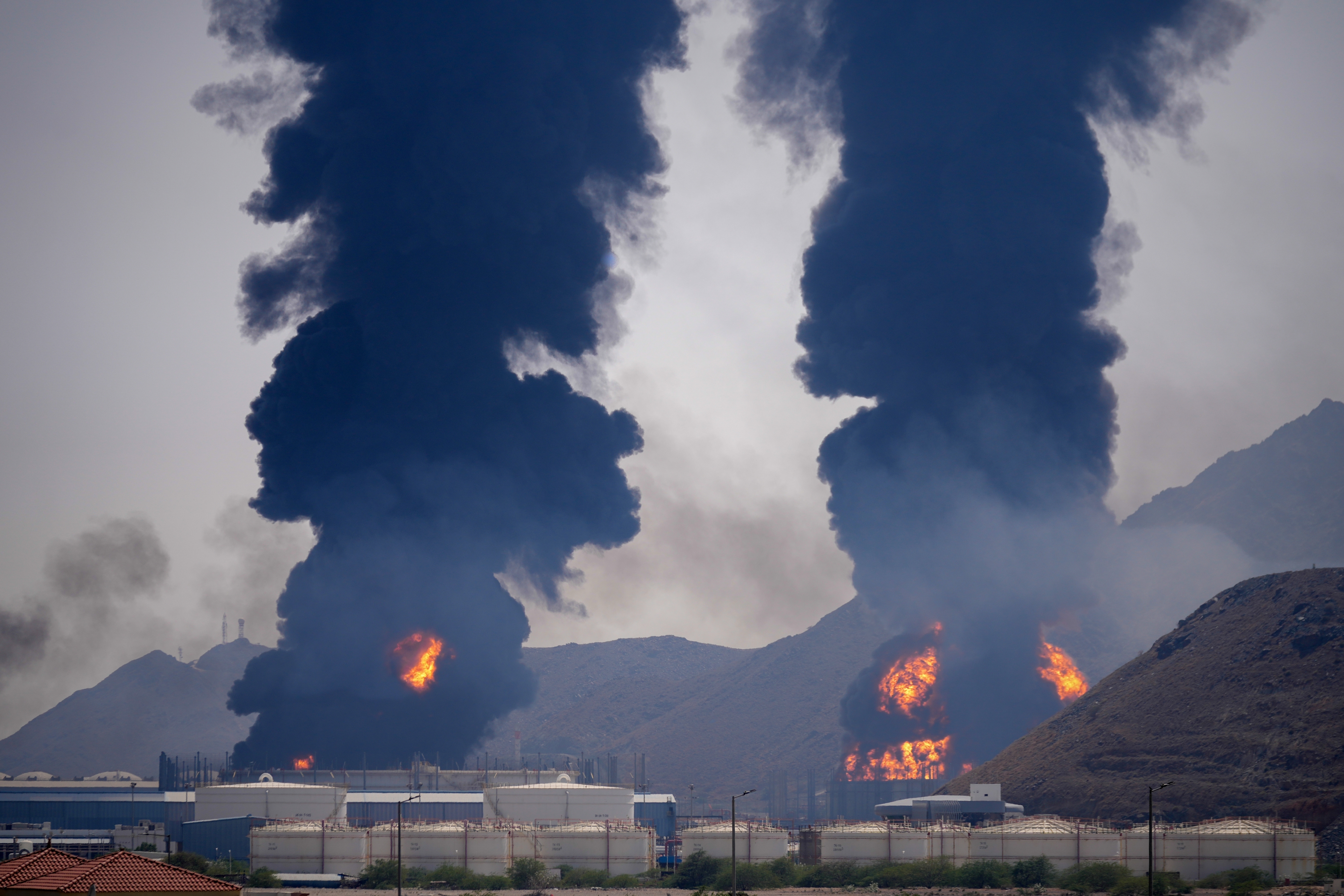
    Plumes of smoke and fire rise after debris from an intercepted Iranian drone struck an oil facility, according to authorities, in Fujairah, United Arab Emirates, March 14.Altaf Qadri

    Landing craft and vehicles make easy targets. And even though the U.S. has sunk Iran’s navy, its small boats can launch drones at American ships. Recall that Ukraine drove Russia’s Black Sea fleet out of its waters and back to home ports using unmanned sea drones, some of which could fire missiles.

    Iranian drones are now also targeting the infrastructure of Arab allies and U.S. bases in those countries. More than two dozen U.S. troops were injured by an Iranian missile and drone strikes at the Prince Sultan Air Base in Saudi Arabia on March 24, proving their reach. And the six U.S. Army Reserve soldiers who were killed in Kuwait on March 1 were victims of a drone attack.

    That is why those Gulf states, unlike Trump, have been eagerly courting help from Ukrainian drone experts. In mid-March, according to Zelensky, 201 drone defense specialists had been deployed to Qatar, the United Arab Emirates, Saudi Arabia, and Jordan, where the Ukrainians are setting up anti-Shahed defenses for a U.S. military base.

    It gives me chills to think of Trump sending U.S. troops to launch a ground war in Iran when he is so blinkered about his goals or the necessary means to achieve them. He enjoys using force, but wants easy wins, and is clearly uneasy with complex challenges. He is hinting he may quit this war without Iran regime change, or removing enriched uranium, or reopening the Strait of Hormuz, leaving the whole region in chaos and the global economy in peril as energy prices continue to soar.

    Honestly, I don’t know which would be worse: sending ground troops to Kharg or to the Iranian mainland, with a high likelihood of disaster and/or a quagmire, or the president pulling a TACO (Trump always chickens out) and leaving ill-equipped Arab and European allies to cope with a global economic mess.

    I do know that it is criminal to reject the help of Ukrainians who stand ready to aid U.S. troops against the asymmetrical warfare that a weakened Iran can still muster. If more U.S. troops die from Iranian drone strikes that Kyiv could have helped counter, then their blood will be on Trump’s hands.

  • Trump’s Iran quagmire distracts from Chinese threat to Taiwan

    Trump’s Iran quagmire distracts from Chinese threat to Taiwan

    KINMEN, Taiwan — From this tiny outer island of Taiwan, which lies less than two miles from the Chinese mainland, one can view the high-rise towers of the Chinese port city of Xiamen.

    Looking out over an extensive beach and through the mist at China, I realize Xiamen could probably be reached from where I stand by a good swimmer. From this vantage point, it’s easy to imagine Chinese leader Xi Jinping pursuing his obsession to “reunify” with the self-governing island democracy of Taiwan — whether by so-called peaceful means, by blockade of the Taiwan Strait, or using more direct force.

    I traveled to Taiwan because President Donald Trump was supposed to meet Xi in Beijing this week. POTUS had previously signaled he might weaken long-standing U.S. support for Taiwan out of his desire to cozy up to the Chinese leader and sign an advantageous trade deal. Moreover, the White House has frozen a deal Trump had already endorsed for Taiwan to purchase around $11 billion to $13 billion worth of U.S. defensive weapons, so as not to upset Xi before the visit.

    But Trump’s poorly planned war on Iran (he apparently never considered how Tehran would retaliate) has caused a postponement of the long-awaited trip until mid-May. As the erratic POTUS sinks into a potential Iran quagmire, lacking any cohesive strategy to thwart Tehran’s partial closure of the Strait of Hormuz, he is even less likely to focus strategically on the Taiwan issue.

    Yet, any potential Chinese blockade of the Taiwan Strait in the next few years could present an equal or even greater security threat to the United States than Iran’s blockage of the Strait of Hormuz, through which about 20% of the world’s oil trade flows.

    To understand why, it helps to know a bit about Kinmen’s history.

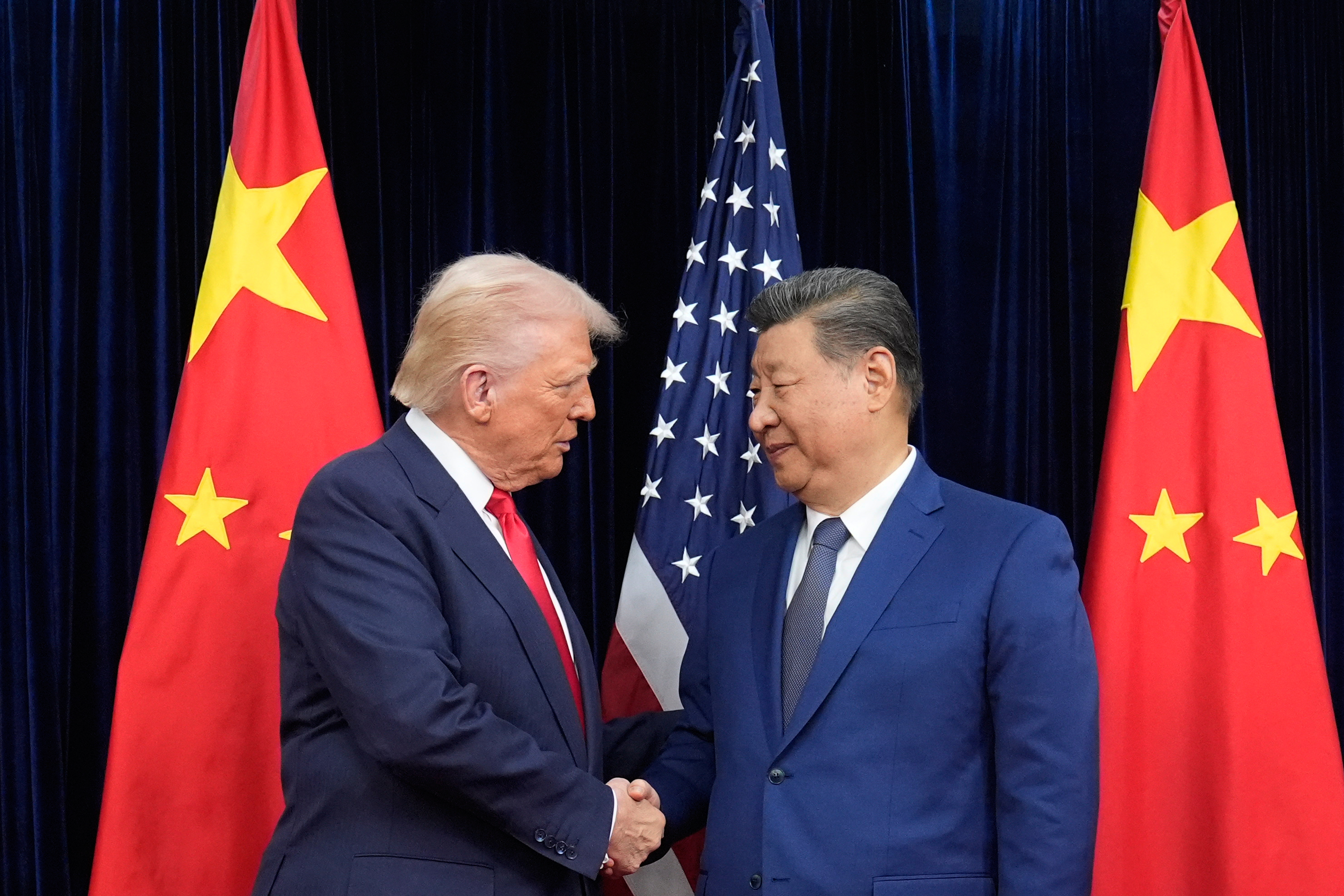
    President Donald Trump and Chinese President Xi Jinping shake hands before their meeting at Gimhae International Airport in Busan, South Korea, in October.Mark Schiefelbein

    Until 1993, Kinmen was off-limits to visitors because it was a closed military zone, and locals lived under martial law from 1956 to 1992. Most of the 120,000 Taiwanese troops have been withdrawn, although a small garrison remains.

    Yet, an endless row of rusty anti-landing spikes along the beach line stand as a reminder of the 1949 civil war Battle of Guningtou between the Communist People’s Liberation Army (PLA) and Chiang Kai-shek’s Nationalists, who were defeated on the mainland and had retreated to Taiwan. With U.S. backing, the Nationalists set up the Republic of China (ROC) government on Taiwan’s main island, roughly 110 miles from Kinmen, and held off the PLA.

    Those Americans who are old enough may recall the 1958 battle of Quemoy, as Kinmen was formerly known. During that battle, massive PLA shelling along with a Chinese blockade of the Taiwan Strait tested U.S. support for the ROC government. But President Dwight D. Eisenhower sent ships to break the blockade and repel the missiles. A local war museum displays huge photos of U.S. troops arriving on Kinmen.

    Since the U.S. formally recognized the Beijing government in 1979, and cut diplomatic ties with Taipei, Taiwan has existed in a diplomatic grey zone. China treats it as a renegade province and only a handful of countries recognize it as an independent country.

    But the U.S. insists that differences between Beijing and Taipei be settled peacefully, and is committed to providing Taiwan with defensive weapons. Moreover, U.S.-Taiwan relations are close: few Americans realize that Taiwan is America’s fourth largest trading partner, due to its technological prowess.

    As for Kinmen, these days China tempts its youth with the glitzy shopping malls of Xiamen, reachable by a 30-minute ferry ride, while a massive new international airport, built on a man-made island, cuts the sea distance between China and Kinmen to roughly one mile.

    Kinmen has become a tourist destination, with its beaches, war museums, and preservation of historic Qing dynasty homes. Mainland Chinese visitors pour into Kinmen, and the Beijing government heavily promotes the purported advantages of “reunification” to the Kinmen public — including jobs and entertainment sites — as part of its effort to win Taiwan citizens to its side.

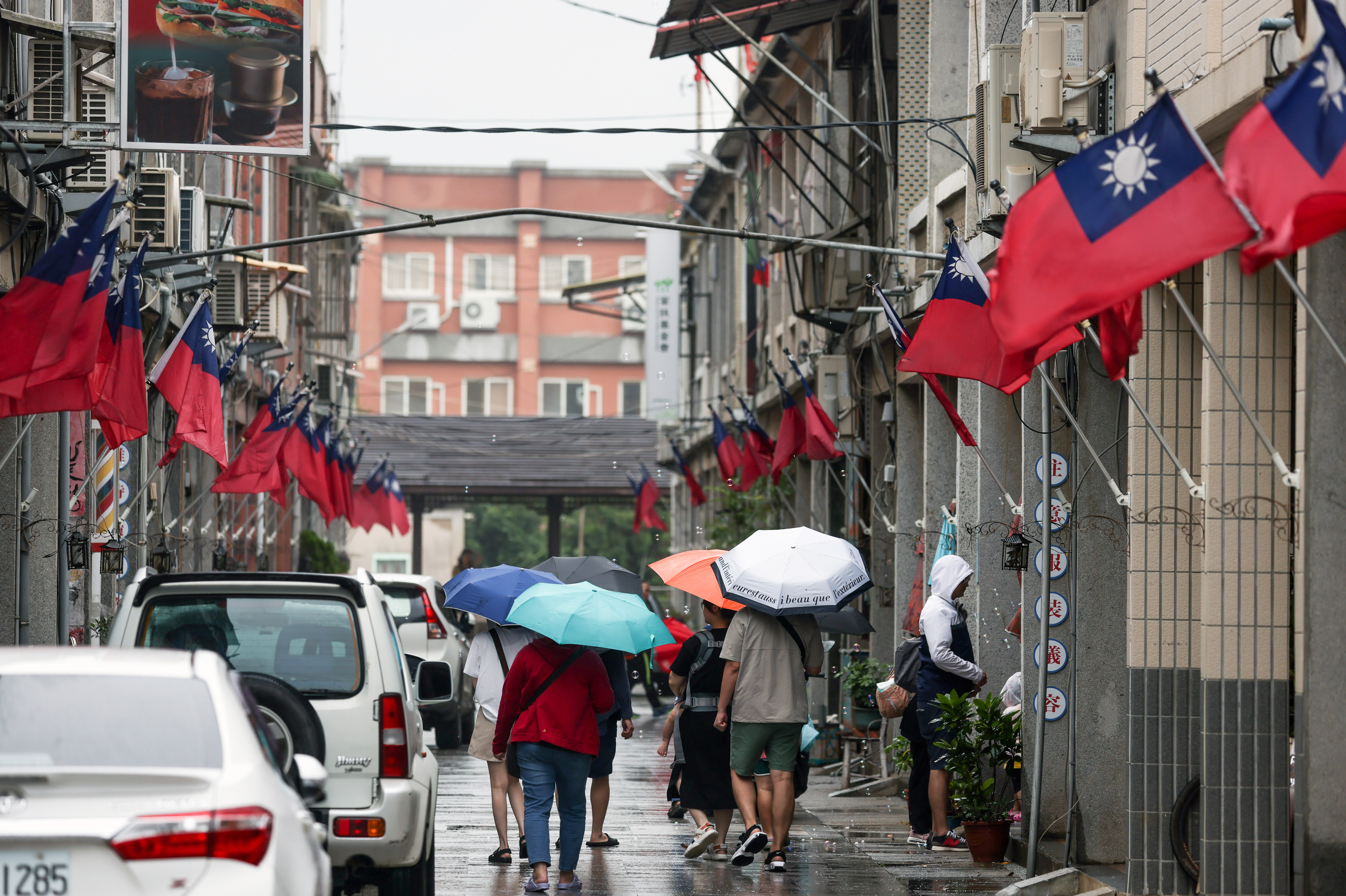
    Taiwanese flags in Kinmen, Taiwan, in 2024.I-Hwa Cheng

    So it’s not surprising that the Taiwanese government has blocked construction of a bridge that would connect the airport directly to Kinmen, presumably to prevent both the escalation of propaganda and the security threat of a direct link.

    “Kinmen is at the front line of geopolitical conflict,” said youthful local Councilor Tung Sen-pao, as he greeted visitors in a curio shop. “We are a small lens through which you can view a much larger conflict between the U.S. and China and Taiwan and China.” As he spoke, the sound of military target practice reverberated outside.

    Indeed, in recent months, China has been conducting the largest-ever live military fire drills all around Taiwan, and simulating a total blockade of its largest and smaller islands. An aggressive Xi refuses to rule out using force for “reunification.” Locals speculate what he might do by 2027, when he has ordered the PLA to be ready to invade (without making a commitment to do so).

    This month, the U.S. intelligence community’s 2026 Annual Threat Assessment report determined that China does not plan to invade Taiwan in 2027 (although the report is published by the Office of the Director of National Intelligence, Tulsi Gabbard, whose gutting of the intel community raises the question of whether its reports can be trusted).

    That trust factor becomes critical, as does American preparedness to respond if Xi does try to limit traffic or impose a full blockade of the Taiwan Strait, given its centrality to international trade.

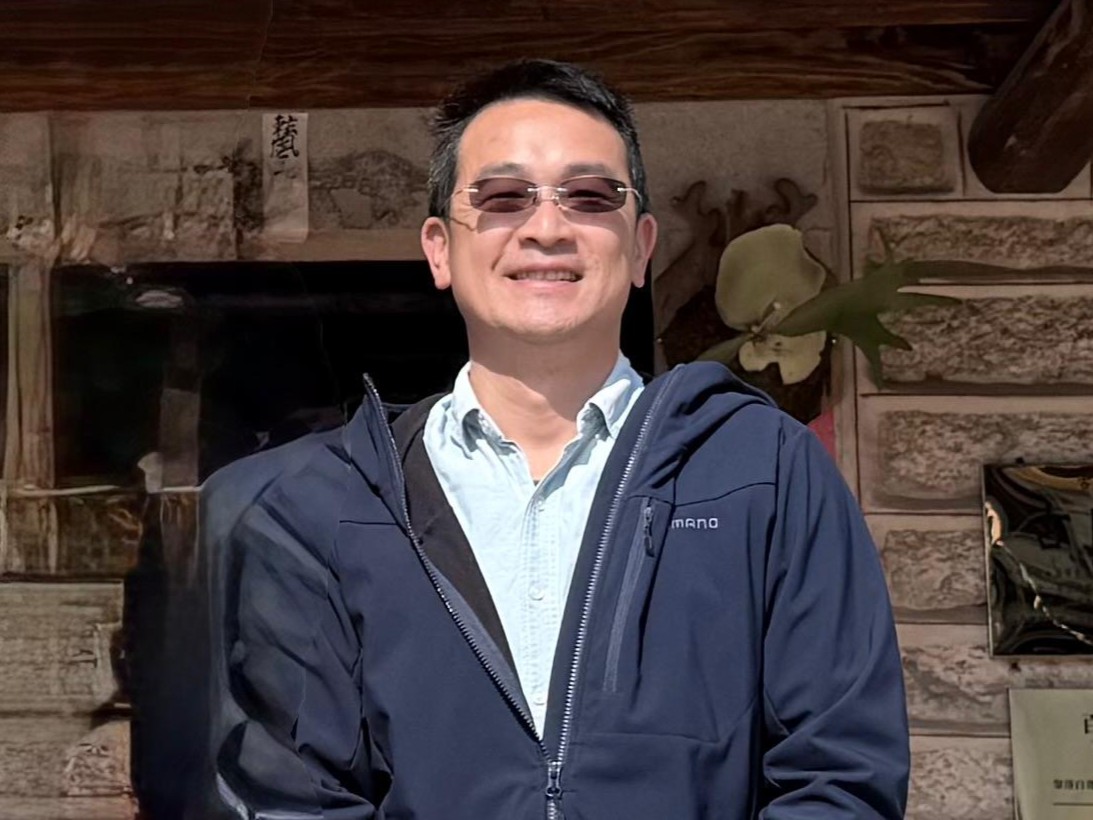
    Taiwanese Councilor Tung Sen-pao.Courtesy of Mark F. Nelson

    An estimated 20% of global maritime trade passes through the Taiwan Strait, and it is the main maritime route for technology and consumer goods from South Korea, Japan, and Taiwan to U.S. consumers.

    The United States has no treaty commitment to defend Taiwan, only a strategic necessity to prevent its forcible seizure by China. Little Taiwan, with 23 million people, produces 90% of the world’s most sophisticated semiconductor chips. If cut off, it could be disastrous for U.S. civilian and military needs.

    Moreover, if Taiwan falls, the security of U.S. allies in Seoul, Tokyo, and Manila, with whom America does have military commitments, would be at deep risk.

    Equally troubling, Trump’s Mideast war has drained missile interceptor stockpiles, including Patriot missile batteries and other weapons that are vital to dissuade Xi from taking rash steps. It is hard to believe a president who has acted so fecklessly on Iran strategy has any adequate plan for handling a meeting with China’s leader, except possibly to cave on supporting Taiwan.

    Meantime, Councilor Tung admits that Kinmen will have little say over its future. “We are a tiny island,” he said with a wry smile. “There is now no way for us to counter an attack if China tries to invade Kinmen.”

    However, he also believes “a direct attack on Taiwan in a conflict is more likely than targeting offshore islands such as Kinmen.”

    The 50,000 or so permanent residents of Kinmen just hope the status quo can endure for a few more years.