Author: Trudy Rubin

  • In his U.N. speech, Trump’s gushing self-praise could not disguise his foreign policy failures

    In his U.N. speech, Trump’s gushing self-praise could not disguise his foreign policy failures

    The scariest thing about President Donald Trump’s address to the United Nations General Assembly Tuesday was not the wild exaggerations, false claims, or disgusting slurs against (truthful) critics. That all has become par for the course and was to be expected.

    Far more terrifying was the distinct possibility that POTUS believed his delusional description of his alleged triumphs — in the Iran war, in bringing peace to the Middle East and the world, and in pursuit of victory in an unbounded artificial intelligence race with Beijing.

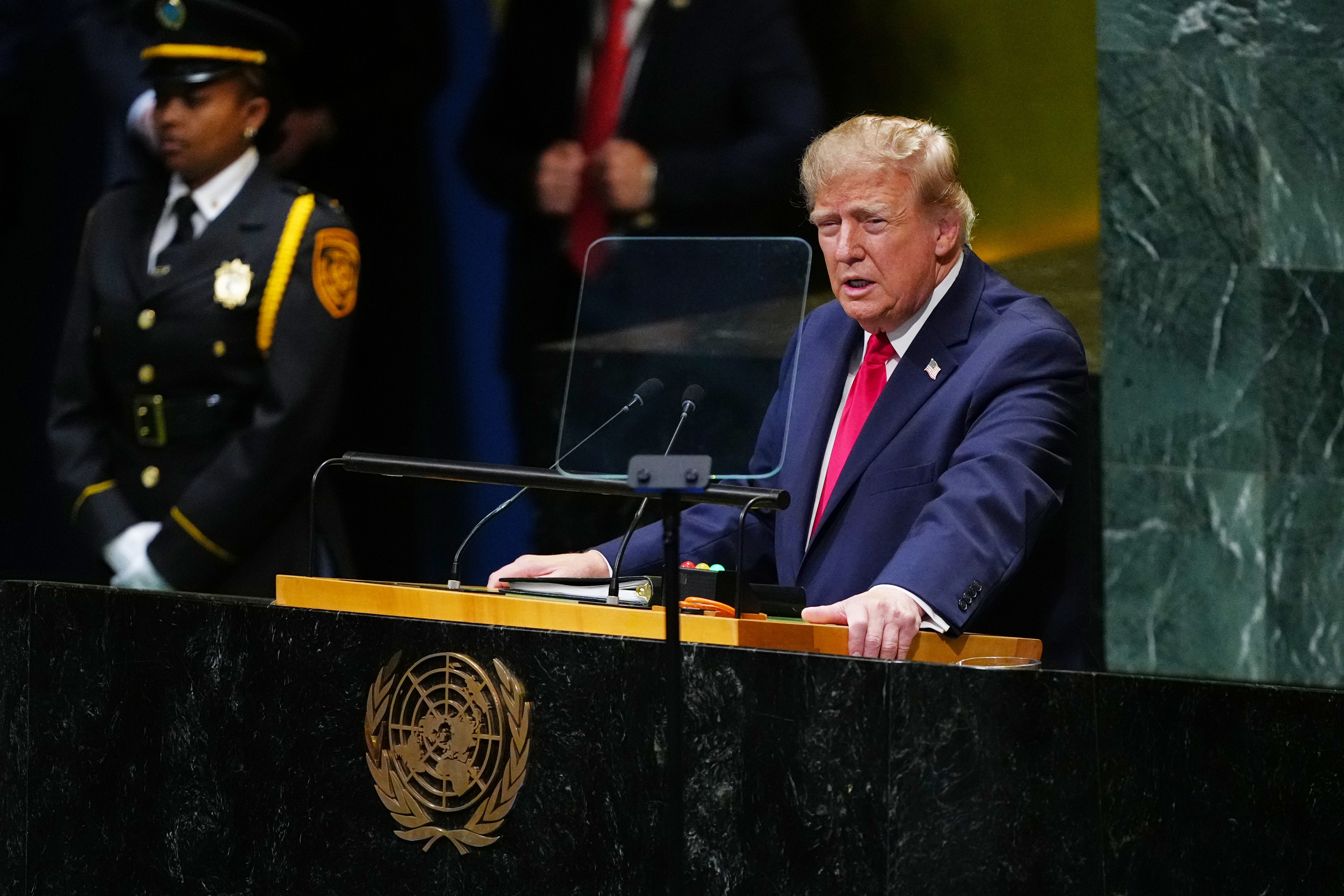
    Perhaps his 38 minutes of self-praise at the podium — to tepid applause at the beginning and end and mostly silence in between — were merely meant as a stump speech to rally midterm MAGA voters growing restless with his endless war. (Of course, most of his MAGA base will only see brief clips from the speech, since the president banned CNN, MS NOW, and Politico from the pool that normally covers such events, and the four other pool members — ABC, NBC, CBS, and Fox — stayed away in solidarity.)

    The greater danger is that, surrounded by sycophants, Trump truly believes his own hype. He showed no sign that he recognizes how Iran has out-strategized him, how Russia, China, and North Korea outmaneuvered him, and how he has alienated crucial European, Asian, and Mideast allies with his erratic and chaotic policies.

    On the U.N. podium, he appeared as a braggart touting triumphs his audience viewed as U.S. failures. Yes, he still represented the world’s most powerful country, but his puerile speech reflected his inability to translate that power into securing American interests or a more peaceful world.

    It is important for voters to fully grasp the self-delusion underlying Trump’s foreign policy. A new CNN poll shows only 29% of U.S. adults approve of POTUS’s handling of foreign affairs, with almost two-thirds saying the U.S. is not winning the Iran conflict. But domestic issues have become so paramount that many ordinary citizens can be excused for tuning out Trump’s overseas misadventures.

    Having just returned from the bracing realities of Ukraine, here is my brief guide to Trump’s delusions or deliberate deceptions — take your pick — about foreign policy issues he raised at the U.N.
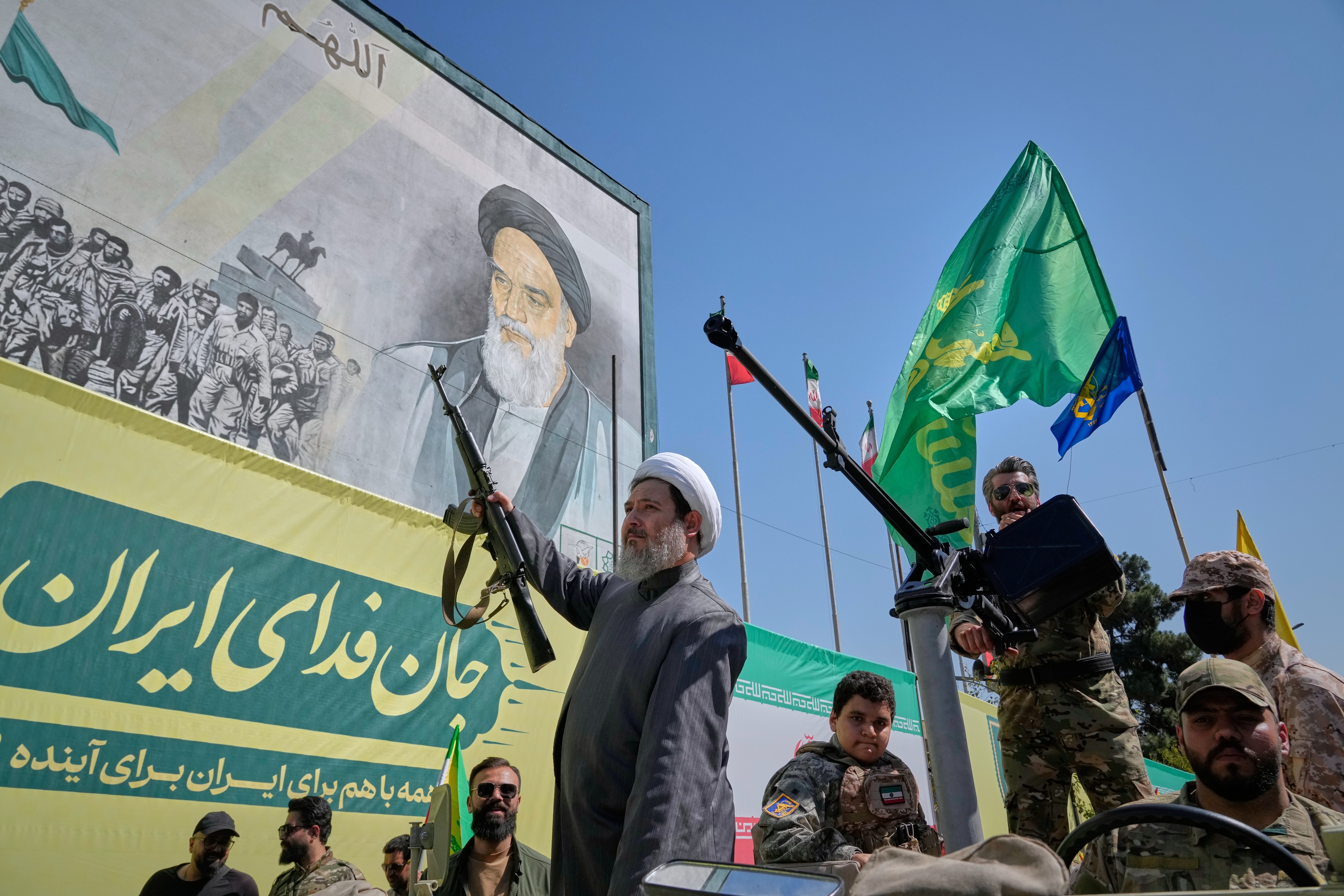
    An armed Shiite cleric rides aboard a military vehicle past a billboard depicting Ayatollah Ruhollah Khomeini, founder of the Islamic Republic, during the state-organized “Janfada,” or “Sacrifice for Iran,” military-style parade in Tehran, Iran, Friday.Vahid Salemi

    Iran

    Trump verbally attacked the “cowards and traitors who would like to say we are low on munitions in Iran. That’s not true.” If POTUS were Pinocchio, his nose would have grown 10 feet at that lie.

    In truth, it is Trump who is too cowardly to admit the truth to a public that is instinctively grasping it anyway. That truth, which has been laid out in reputable think tank studies and news reports, and by serving and ousted Pentagon officials, is that U.S. forces have consumed half to two-thirds of highly expensive missile interceptors in fending off cheap Iranian drones.

    The Pentagon was not prepared for a war in which drones played such a major part. Never mind that Ukraine and some U.S. commanders had sounded the alarm beforehand.

    Nor is Trump truthful when he brags that new munitions plants will soon replace any shortfalls, because, unlike rapid production cycles in Ukraine, rebuilding the most critical U.S. weapons stocks will take up to five years.

    On the U.N. stump, Trump also repeated his mantra that he will never allow Iran to have a nuclear weapon. Yes, in 2025, a “12-day war” by the U.S. and Israel badly damaged Iran’s nuclear program. Yet, the current war, ongoing since February, has done little to nothing to further diminish that nuclear prospect. It is focused on lowering oil prices by reopening the Strait of Hormuz, which was functioning normally before Trump joined Israel in attacking Tehran.

    Because of its diminished missile and interceptor stocks, the U.S. is in no position to reopen a kinetic war with Iran — let alone, to use Trump’s irresponsible threat, “annihilate” it. In real terms, Trump is stuck, with Tehran still able to control Hormuz and no way out of his self-inflicted trap, unless he makes concessions to Tehran. Meantime, the war is spreading to other Mideast countries and drawing in new players such as Yemeni Houthis.

    Trump advertises his weakness when he desperately tries to convince fed-up Americans, in front of a U.N. audience, that peace is on the way.
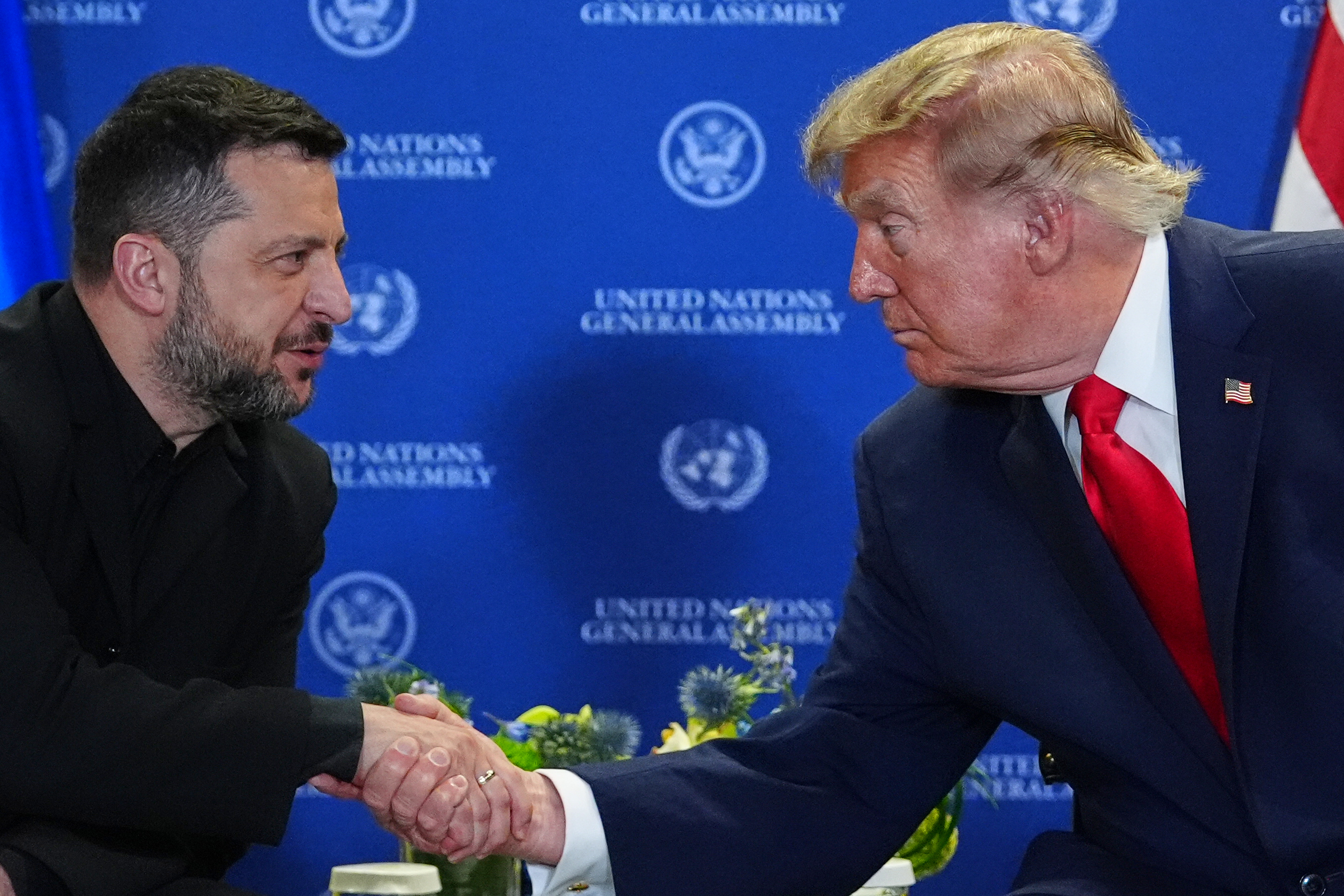
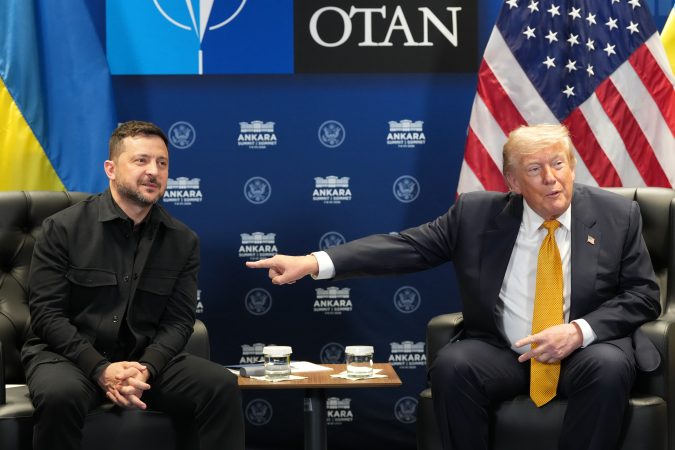
    President Donald Trump meets with Ukraine’s President Volodymyr Zelensky during the United Nations General Assembly, Tuesday.Julia Demaree Nikhinson

    The Ukraine war

    On the podium, Trump regurgitated his mantra that, regarding the war, “we will get that one done,” and that Russia and Ukraine have “had it.” But in truth, Trump’s refusal to pressure Moscow to stop destroying Ukraine’s civilian infrastructure, while demanding Kyiv stop targeting Russian oil exports, ensures there will be no ceasefire.

    Why should Vladimir Putin stop his campaign of destruction when Trump only leans on Ukraine, and fails even to critique Putin’s new drone campaign against European airports and the industry of NATO members? Ukrainian President Volodymyr Zelensky said after meeting Trump Tuesday that he would agree to a ceasefire on hitting energy targets — but both sides would have to take part. Not likely, so long as Trump bows to Putin.

    And don’t expect Trump to enforce the bipartisan sanctions bill newly passed in memory of U.S. Sen. Lindsay Graham. Repeat, POTUS refuses to pressure Putin, with whom his negotiating team is discussing “lucrative” business deals.
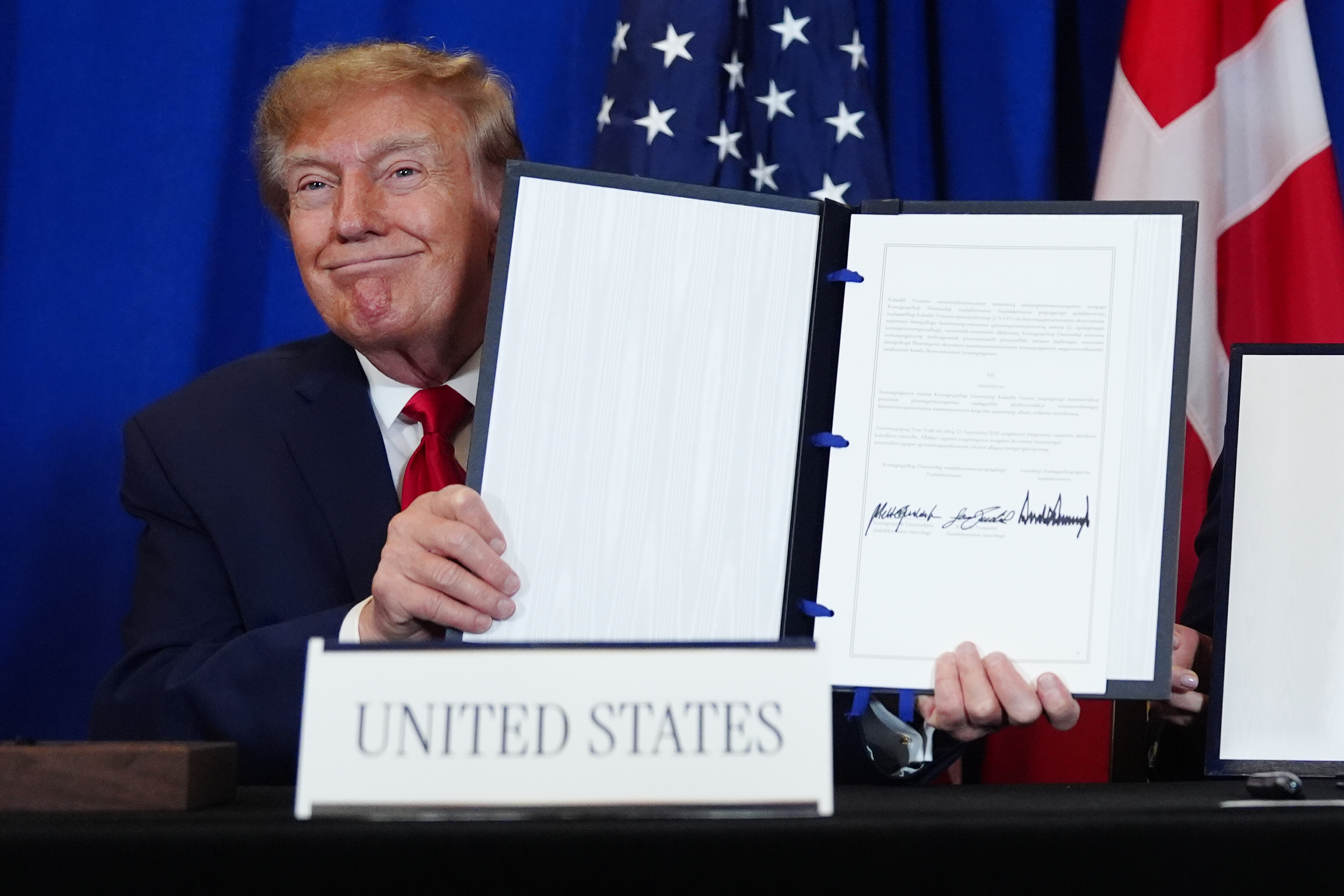
    President Donald Trump holds up the document after signing a security agreement with Denmark’s Prime Minister Mette Frederiksen and Greenland’s Prime Minister Jens-Frederik Nielsen during the United Nations General Assembly, Tuesday.Julia Demaree Nikhinson

    Trump as global peacemaker

    The president shamefully read verbatim a long list of compliments by world leaders trying to pacify him, and once again exaggerated the “peace deals” he’s achieved — even though most were temporary ceasefires or have already been broken.

    Trump praised his triumph in Venezuela — where, when talking about oil, he bluntly admitted that “to the victor belong the spoils.” He crowed that Cuba “will fall,” with no mention of the humanitarian disaster caused by the ongoing U.S. blockade.

    And he bloviated about the “unprecedented agreement” the U.S. just signed with Denmark and Greenland, even though everything in that accord could have been agreed to under the terms of a 1951 treaty with Copenhagen, without alienating NATO allies by threatening to seize Greenland by force.

    To sum up, Trump’s performance at the U.N. revealed a delusional leader who may still be feared by allies and small countries for his unpredictable and bizarre behavior that upsets the world economy, trade ties, and markets.

    But adversaries watching the president’s self-praise could only conclude that a weakened old man with no clear strategy except self-aggrandizement now leads the world’s most powerful country. Voters of all parties, be aware.
  • What I learned in Ukraine: Kyiv has the tech brilliance to force Russia to the table — if Trump would stop backing the Kremlin

    What I learned in Ukraine: Kyiv has the tech brilliance to force Russia to the table — if Trump would stop backing the Kremlin

    KYIV, Ukraine — It’s not easy to get to Ukraine, where the airports have long been closed and where Russia is now targeting the country’s essential railway network, hitting tracks and destroying hundreds of locomotives.

    On my sixth visit since 2022, I decided to fly to neighboring Moldova and taxi across the border, even though Moscow has been striking the crossings. Just after I entered the country, a Russian drone zeroed in on another international transit point just 30 minutes away, one which my driver had considered using.

    The drone incinerated three travelers sitting in a bus.

    In many ways, Ukraine has become a far more dangerous place since I was here in June 2025. During the last two months, a frustrated Vladimir Putin, whose army has been unable to advance on the ground, is trying to break the country’s morale from the air.

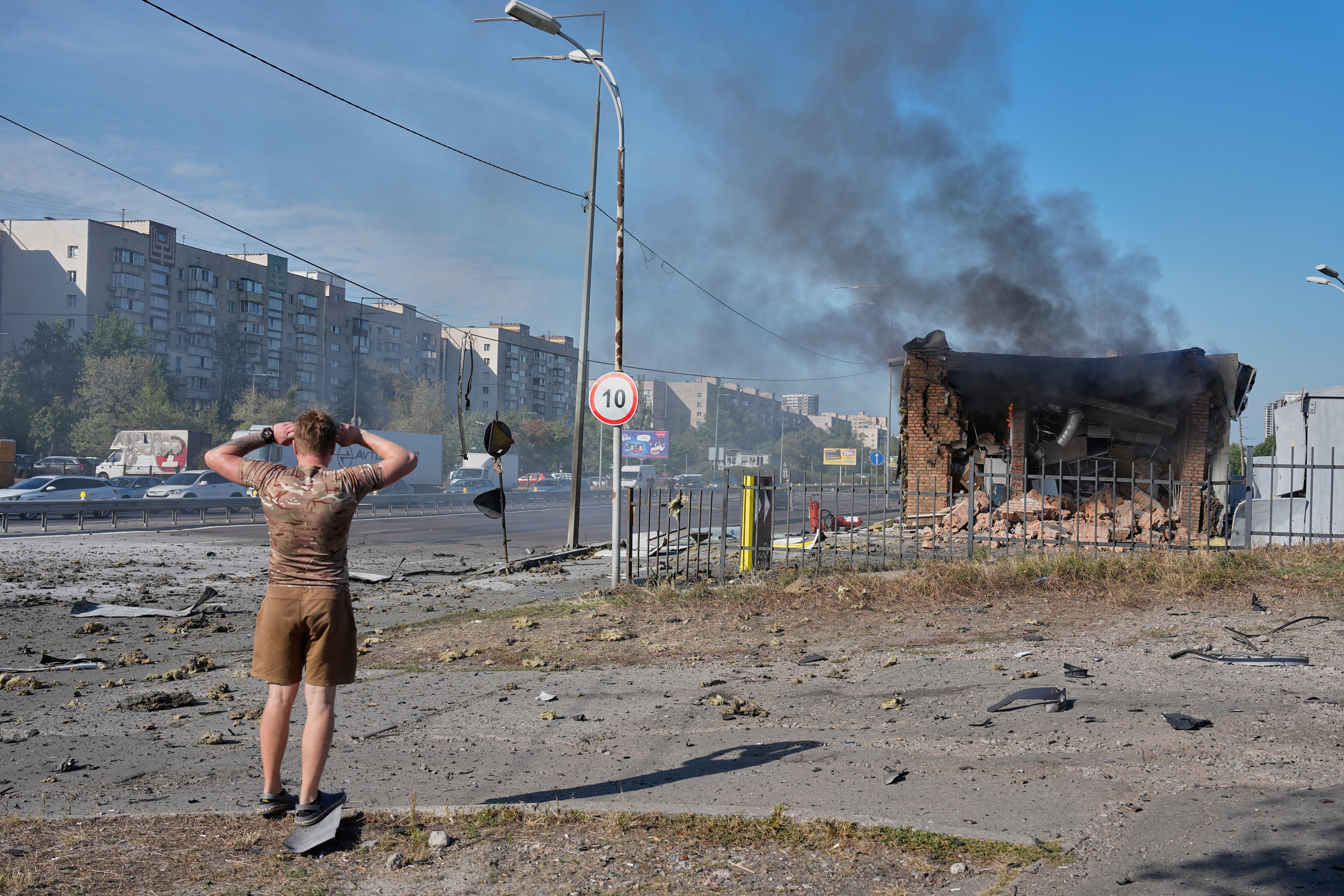
    I saw the results of an unending torrent of Russian drones, cruise missiles, and top-line ballistic missiles – targeting road travel, blowing up highway gas stations, wrecking the ports from which Ukraine exports grain to the world, and hitting civilian apartment blocks in waves in Kyiv and other major cities. By systematically destroying the country’s electricity grid, Putin hopes to freeze urban Ukrainians this winter into turning against their government.

    And yet, unlike many of the high-level U.S. and European invitees to the 22nd annual meeting of the Yalta European Strategy (YES) conference, held in Kyiv Sept. 11-12 and co-sponsored by the Viktor Pinchuk Foundation, I didn’t come away increasingly gloomy about Ukraine’s prospects.

    Instead, talking with Ukraine’s top military commanders, its brilliant engineers and tech innovators, who have made the country the world’s most inventive drone powerhouse, I came away totally furious.

    Furious because, despite Russia’s size and its mass production of Iranian Shahed drones souped-up with jet engines, I believe Ukraine’s deep strikes into Russia and even deeper smarts could ultimately force Putin to recognize that the war has become too costly.

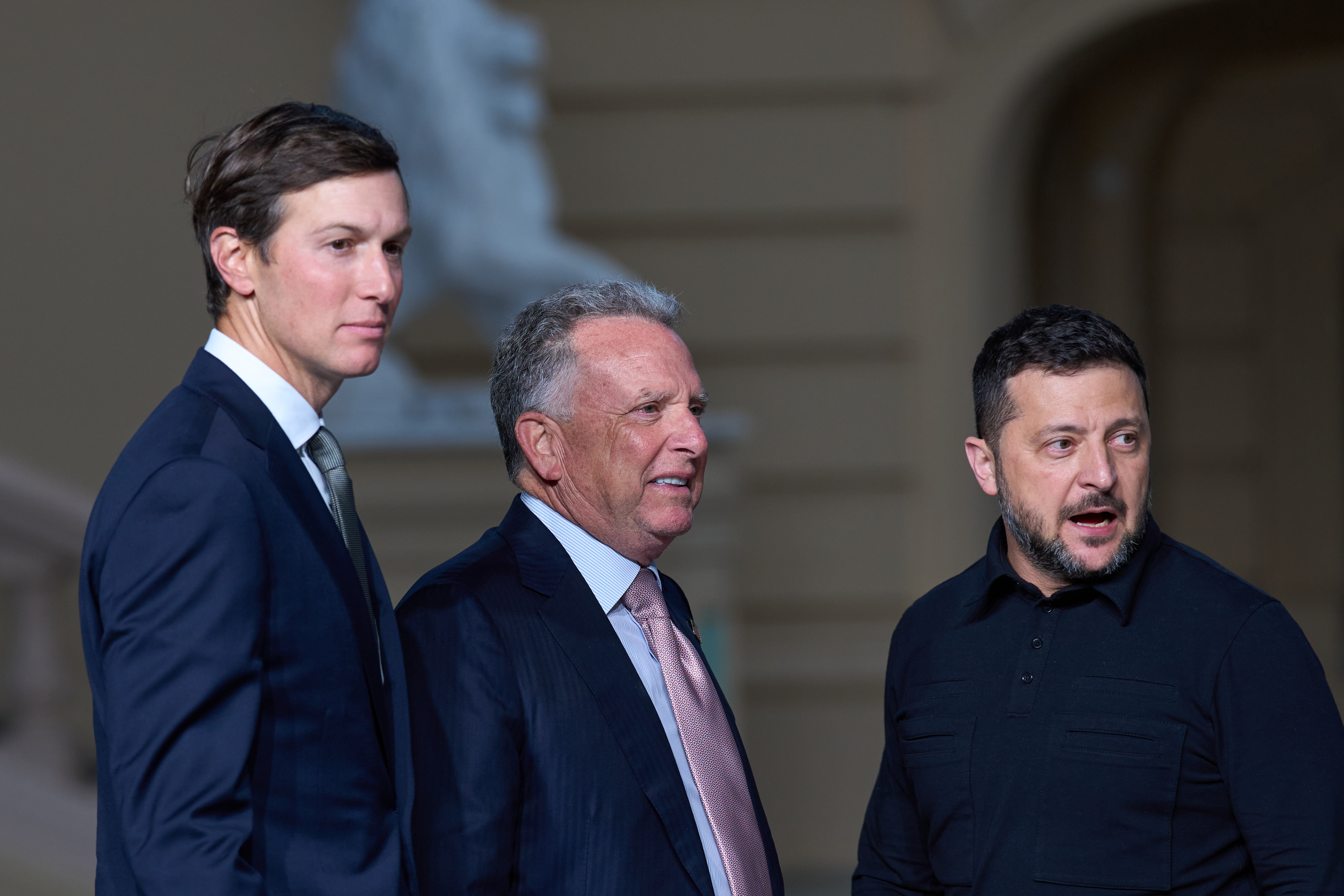
    Ukraine’s President Volodymyr Zelensky (right) stands with Steve Witkoff (center) and Jared Kushner, President Donald Trump’s envoys, at the end of their joint news conference in Kyiv, Ukraine, Sept. 6.Francisco Seco

    Only one element is lacking: the full backing of a U.S. leader with the brains to recognize there can be no “peace deal” with a Kremlin czar who aims to undermine America with the same intensity as he seeks to subjugate Ukraine.

    If the U.S. would only help Kyiv obtain enough Patriot interceptors to counter Russian ballistic missiles (the same interceptors Donald Trump has massively wasted in his war of choice with Iran), the Ukrainian David could outmaneuver the Russian Goliath. And, in so doing, America could also score a key strategic win.

    There are several reasons why.

    For starters, the resilience and inner strength I saw among ordinary Ukrainians is astonishing, even though they admit how frightened they are about the coming winter.

    Take gas station workers, who are at terrible risk from Russian drones. I visited the scorched shell of an Ukrnafta gas station in Kyiv’s Holosiivskyi district, hours after it was hit on Sept. 10. Workers had been evacuated to a shelter before the drone struck. Female attendants (who asked not to be named) had already returned with sausage and cheese to feed the cleanup crew. Would they return to their jobs? I asked. “Of course,” was the quick reply.

    Two days later, my translator and I visited an OKKO station, a roadside chain with an adjacent store and cafe that is popular for serving hot dogs and coffee free to anyone in uniform. OKKO has been a favorite target of Russian strikes, and while our tank was being filled, the workers got word that a Shahed might be approaching.

    As customers ran for their cars, one worker fleeing the store screamed at the cashier who was processing my card, “Get out to the shelter!” She finished her job, told me she would never leave Ukraine, then ran out the back door. I ran to our car, and we quickly pulled out to the road.

    I heard that same stoicism under fire expressed repeatedly as I traveled from Moldova to the Ukrainian port city of Odesa to Kyiv and back.

    In the frequently hit, middle-class Kyiv district of Lukianivka, where many high-rise apartment buildings are pocked with blackened holes where drones did their dirty business, I walked by the rubble of a destroyed supermarket and shopping mall.

    Shoppers visit open air stalls set up to replace a large covered market destroyed by Russia in the Lukianivka neighborhood of Kyiv, Ukraine.Trudy Rubin

    At a historic covered market that had taken a direct drone strike, women who had sold goat cheese, honey, fruit and vegetables, and clothing at indoor stalls had already relocated to tents outside the charred remains of the market.

    Over and over I heard the same message: “Yes, we are frightened, but we won’t give our country to Putin.” Several of these women had husbands in the military, and a couple told me they might leave their apartments for the winter, but they weren’t running away.

    A nearby McDonald’s, which has been struck several times by the Russians, had already been rebuilt and was full of young people buying Big Macs and fries.

    Still, civilian steadfastness alone can’t defeat ballistic missiles and drones, and ordinary civilians in Kyiv and Odesa are stressed and distressed.

    As my indomitable translator, Alla, told me, “A single mother, living in an eighth-floor apartment with two children and a mother who recently had a heart attack, is a full-time crisis manager.”

    Schools are closed because of constant air raid alerts, and parents must devise games for frightened youngsters during blackouts, when clothes and quilts are piled on to avoid freezing.

    Diners sit inside the rebuilt McDonald’s in the Lukianivka neighborhood in Kyiv, Ukraine.Trudy Rubin

    This is where we come to the critical race between Ukraine’s tech innovators and Russians playing catch-up, as Ukraine incorporates of artificial intelligence into its drone and missile systems in order to use unmanned robots and upgraded drones to compensate for its shortage of man power. And as Ukrainians rush to perfect weapons systems that can counter Russia’s ability to destroy the infrastructure that enables civilians to survive.

    I will write more about the progress in this area and my interviews with brilliant Ukrainian tech leaders in future columns. But let me sum up how they believe they can still force Putin to bend.

    These super innovators said at the conference, and told me in private interviews, that they expect to be able to produce an interceptor drone to counter Russian jet engine-driven Shahed drones within a few months.

    But there are two big caveats for real success. First, Ukraine still desperately needs more Patriot interceptors to counter Russian ballistic missiles. And second, Ukraine needs to massively scale up production of its anti-Shahed interceptors and other new drones in order to counter Russian numbers. This requires substantial foreign investment and joint production, most likely in Europe.

    If Trump and Defense Secretary Pete Hegseth had any grasp of the new way of war in the 21st century, the Pentagon would long since have been signing contracts to jointly produce drones with Ukrainian companies — all of which constantly update their technology based on lessons from the front line. Given the destruction of key U.S. bases in the Mideast, which were undefended against Iranian Shaheds, Hegseth should be begging for immediate Ukrainian help.

    When former Secretary of the Army Dan Driscoll — who understands Ukrainian drone warfare well but was recently pushed out by Trump — was asked at the strategy conference what the U.S. could learn from Ukraine, he replied: “We in the West have got to internalize these lessons [from Ukraine]. What you are doing here in a very scrappy, fast, iterative nature is what we must contort our systems to achieve at scale.

    “The speed and scale of AI and [computing] that is about to hit these weapon systems will be an amazing opportunity for Ukraine to outrun the Russians, out-innovate them and out-partner them. We are a couple of months away from new solutions changing the very nature of how warfare will occur.”

    Eric Schmidt, the former CEO and chairman of Google, who has been a pioneer in coproduction of drones with Ukraine, added: “Pretty much all of the traditional assumptions about war and particular devices are probably false now. Ships are big targets … These drones appear to be toys, but are extraordinarily powerful, especially when swarmed.”

    Schmidt concluded that “after four and a half years of war, Ukraine knows what it is doing. The country is organized to win this. What’s missing? Money, and the second is scaling.”

    Yet, as Schmidt knows well, and what remains a tragedy for the United States, Trump refuses to recognize how crucial a partnership with Ukraine is to helping the U.S. military in Iran, and to instilling the new Pentagon mentality required for wars of the future. Which, no matter what Hegseth believes, has little to do with the size of the average soldier’s waistline or testosterone levels.

    The main message of the YES conference was that the U.S. and Ukraine can both win — if the White House recognizes the need for partnership in the fight against the new axis of adversaries: Russia, China, North Korea, and Iran. What is maddening is Trump’s refusal to recognize the true win-win solution lies not between Kyiv and Moscow, but between the United States and Ukraine.

  • Trump disses 25th anniversary memorial for 9/11 while opening the door to more terrorism at home

    Trump disses 25th anniversary memorial for 9/11 while opening the door to more terrorism at home

    Who could have imagined, as we sat glued to the screen watching ash-covered victims frantically flee the falling World Trade Center towers, that the type of terrorism threatening us 25 years later would turn 9/11 on its head.

    On that terrible day, Americans stood united against the assault, political rhetoric cast aside in the horrific moment. New York Mayor Rudy Giuliani, later to become a MAGA mouthpiece, became “America’s mayor” as he projected a message of calm resolve in news conferences held amid the ruins.

    Nearly the entire world joined the United States in opposition to al-Qaeda, a multinational terrorist organization that murdered 3,000 men and women of many different nationalities in the twin towers attack. President George W. Bush, in perhaps his finest hour, reassured a shocked nation and built a multinational coalition to fight al-Qaeda.

    Our NATO allies immediately volunteered for a war in which many of their brave soldiers died — including Canadians and Danes, whose armies President Donald Trump so frequently now insults.

    That sense of unity, which impelled Americans to comfort strangers and inspired solidarity from allies and adversaries alike, has long since dissipated in the wake of forever wars and populist discontent. A divisive, America First president seems to delight in fomenting hatred between people of differing beliefs and ethnicities – and treating long-time allies like enemies.

    What the Trump administration is doing is opening the door to a new breed of lone wolf terrorists, inspired by the internet. Such radicalized individual acts have primarily been carried out by right-wing and jihadist attackers over the past years, according to detailed studies, although the low level of violent left-wing incidents has risen in 2025, in reaction to Trump policies.

    But the president and his team have worked hard to dismantle the very agencies and have fired the FBI agents and U.S. Department of Justice prosecutors that handle terrorism cases. Elite counterterrorism and counterintelligence units have been gutted by hundreds of firings and resignations. At the U.S. Department of Homeland Security alone, more than 1,300 counterterrorism specialists have been axed or reassigned to work on border enforcement and deportations, or to search for nonexistent voter fraud.

    What’s so stunning is that, just before the start of the current endless Iran war, with the White House still claiming Tehran is the leading sponsor of international terrorism, FBI Director Kash Patel specifically sacked about a dozen members of an elite Washington-based unit specializing in stemming threats from Iran within our country. Why? Because the agents had been involved in investigating Trump’s retention of classified documents at Mar-a-Lago after he ended his first term.

    When asked in March by the New York Times whether Americans needed to worry about possible terrorist reprisals by Iran inside the U.S., Trump retorted: “I guess. Some people will die.”

    Trump’s blindness is worse than the noncooperation between the FBI and the CIA in 2001 that led them to ignore clues to the monthslong presence of the 9/11 terrorists on U.S. soil. This is the willful blindness of our government to potential terror attacks by an Iranian regime that has every reason to strike in the near term.

    Add to that the president’s constant incitement of his followers against so-called leftist networks, declaring “antifa” to be a dangerous terror organization. Only problem: There is no such organization; antifa is a catch-all term for loose groups across the country who declare themselves to be anti-fascist.

    Compare that to the white supremacist massacre of 11 Jewish worshipers at the Tree of Life Synagogue in Pittsburgh during Trump’s first term, or the deadly truck attack by an Islamist on New Year’s Day 2025 in New Orleans. Yet Trump consistently, and determinedly defying statistics, declares domestic terrorism to be the work of the so-called left.

    Such incitement is a cover story for attacking political criticism from any front, and inspires potential right-wing terrorist attacks against Trump’s political opponents. Never forget that it was right-wing terrorists who called for the murder of Vice President Mike Pence when they attacked the U.S. Capitol, who murdered two Minnesota lawmakers, and who nearly killed Paul Pelosi, then-House Speaker Nancy Pelosi’s husband.

    Meantime, the president dispatches federal agents who could be thwarting real terrorism to instead threaten election officials and potentially midterm voters. Ditto for menacing noncriminal immigrants with violence and sometimes death.

    As for state-run terrorism, Trump’s self-declared friend, Vladimir Putin, has embarked on a campaign against NATO allies, including dropping drones near airports such as the one in Leipzig, Germany, recently.

    “We are the daily target of hybrid warfare,” said the German interior minister last month. The International Institute for Strategic Studies this summer tallied 144 drone incidents across 13 countries in less than two years, with Russia as the main culprit. And that doesn’t include the assassinations Moscow has conducted against former dissidents living in England and Germany and many arson and sabotage attacks across Europe.

    And while you may think you have read much about the deliberate Russian destruction of civilian markets, malls, schools, universities, and cathedrals in Ukraine, you are probably unaware of the worst.

    Just one example: In the city of Kherson, just across the river from Russian positions, Russian drone pilots play a game they call “human safari” and brag about it on their Telegram channels. It means getting a hapless vegetable seller in their sights, chasing him as he tries desperately to escape, and then finally killing him.

    This is not warfare. It is deliberate terror, Nazi-style, to try to demoralize Ukrainians into surrendering their sovereignty.

    And so, as we remember 9/11, as we repudiate the terrorist attackers, and recall the human error by U.S. officials that led to the deaths of 3,000 innocent souls, we should give serious thought to the Trump administration’s choices and rhetoric that open the door to more terrorist assaults.

    Trump has refused to attend the 9/11 ceremonies in New York City, reportedly because he wouldn’t be allowed to make a speech. Instead, he will bloviate at the Pentagon alongside his “Secretary of War” Pete Hegseth, who is contributing to the president’s security blindness that exposes Americans to potential harm.

    Shame on them for endangering the country by refusing to learn the lessons of that terrible day.

  • Trump’s Ukraine negotiators are too chicken to visit Kyiv and support its independence

    Trump’s Ukraine negotiators are too chicken to visit Kyiv and support its independence

    There were two noticeable no-shows as Western leaders gathered Monday to mark the 35th anniversary of Ukraine’s independence — and its five years of resistance to Vladimir Putin’s effort to re-subjugate the country to Russian rule.

    There were multiple news reports that President Donald Trump’s clueless peace envoys — son-in-law Jared Kushner and real estate magnate Steve Witkoff — might finally join European allies at anniversary ceremonies.

    I say “finally” because neither of these supposed peacemakers has ever deigned to visit Ukraine. Not once. Meantime, Witkoff has visited Moscow eight times, and gushed over Putin as he and Kushner (also a repeat visitor) discussed business deals with Russia.

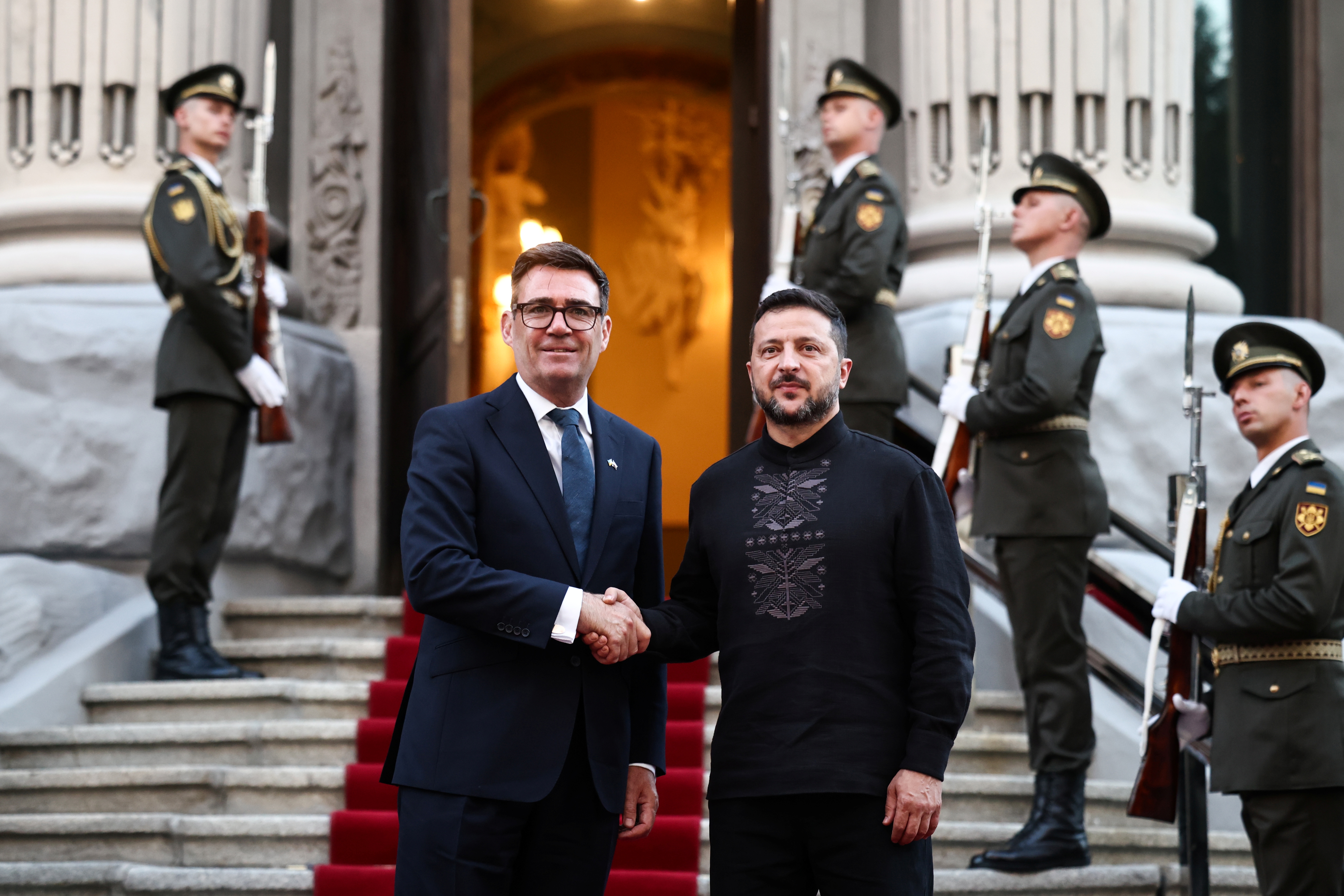
    It is no surprise, then, that Trump’s blinkered envoys postponed their trip, reportedly blaming their absence on intensified Russian missile and drone strikes. Never mind that former Vice President Mike Pence, British Prime Minister Andy Burnham, and other European leaders showed up.

    They recognized — as Trump and his envoys still do not — that Ukraine is fighting not just for its own freedom, but for the security of Europe and the United States.

    Burnham, who came to Kyiv on his first foreign trip as prime minister, understands the significance of Ukraine’s brave stand against the world’s second-largest army. A Russian military that is heavily aided by the dictators of China, North Korea, and Iran, all eager to undermine America and the democracies of the West.

    The U.K. leader rightly compared Ukraine’s resistance against Russian imperialism to Britain’s fight against Nazi Germany in the 1940s, telling Ukrainians, “My nation kept the flame of European freedom alive in the 20th century; you hold that flame in the 21st.”

    Burnham is right on the mark.

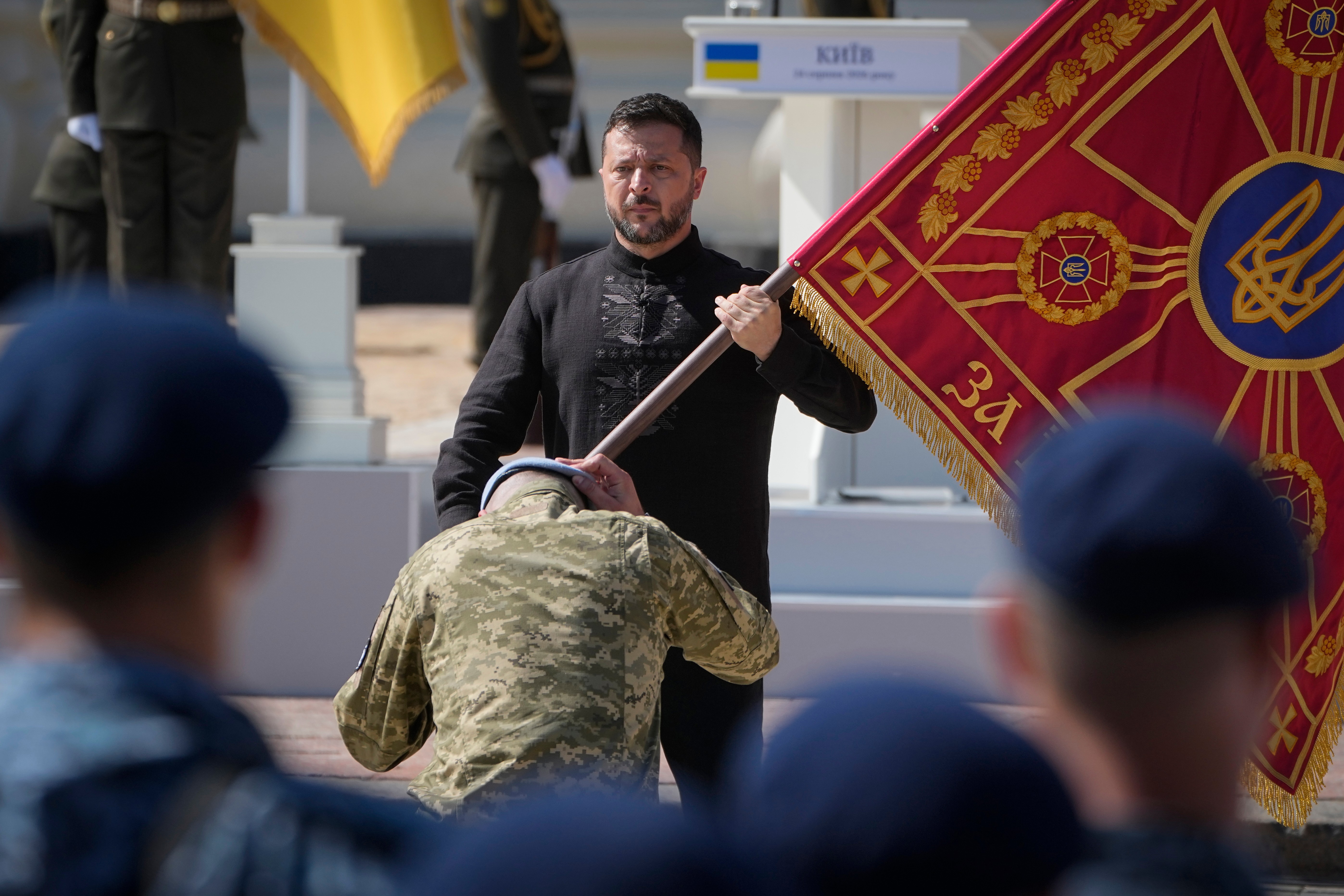
    Ukraine’s President Volodymyr Zelensky hands over the flag of a military unit during the ceremony to mark Ukraine Independence Day in Kyiv, Ukraine, Monday.Efrem Lukatsky

    The image of London firefighters bravely battling the blazes caused by the German Blitz, which rained rockets down on civilians in order to break their morale, comes right to mind when watching video of Ukrainian rescue workers pulling women and children out of the rubble of collapsed apartment towers that have been hit with Russian missiles or drones.

    Then-Prime Minister Winston Churchill understood that if Britain fell, the Nazis would take over Europe. The Battle of Britain in the summer and fall of 1940, in which incredibly courageous Royal Air Force pilots pushed back the Luftwaffe, forced Adolf Hitler to abandon his planned invasion of England. The courage and spirit of Britons under bombing gave the RAF the time to regroup and attack the Nazis in Europe. It gave President Franklin D. Roosevelt time to act on sending Lend-Lease war supplies to Britain.

    Burnham grasps that Putin is a stalking horse for an axis of adversaries – namely China, North Korea and Iran – that backs and finances Russia’s crimes.

    Ukraine’s battle of the skies is effectively the first round of World War III. And only one weapon can take down the ballistic missiles Russia is pouring down on Ukraine’s civilian infrastructure: U.S.-made Patriot interceptors.

    Yet, Trump has wasted much of America’s Patriot missile stock chasing cheap Iranian drones, and refuses to sell Kyiv a small percentage of what the U.S. retains. And after proposing joint production of Patriots with Ukrainian President Volodymyr Zelensky, the U.S. president immediately backed off.

    That is why Burnham announced Monday that the U.K. (along with France) will help Ukraine make its own version of a Anglo/French long-range cruise missile by sharing classified technical information. That will help Ukraine preempt Russian missiles by eliminating the firing sites.

    But setting up that production line will take months or years, and Ukraine desperately needs Patriots now.

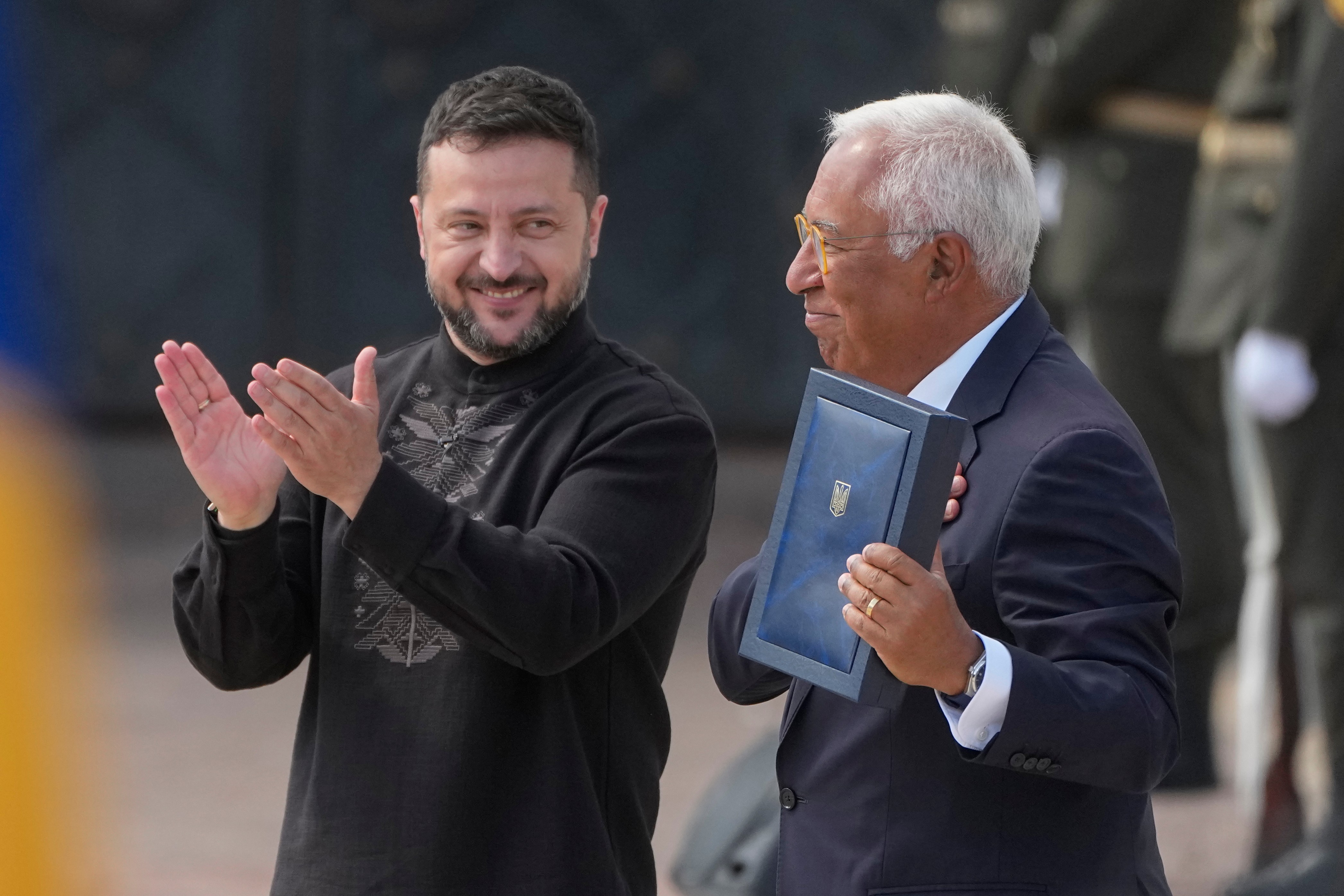
    Ukraine’s President Volodymyr Zelensky (left) hands over the Ukraine state award to European Council President António Costa during a commemorative ceremony in Kyiv, Ukraine, Monday, marking Ukraine’s 35th Independence Day.Efrem Lukatsky

    It is hard for many Americans to grasp how important Ukraine’s survival is to our future security. Few U.S. politicians consider Ukraine to be a critical campaign issue. Trump has communicated his disdain for Kyiv to his MAGA followers, and Vice President JD Vance boasts that his proudest moment was helping cut off aid to Ukraine. As for Democrats, they’d rather focus on cost of living and the endless Iran war.

    But Gen. Ben Hodges, former commander of U.S. Army Europe, nailed it when he told me recently that what’s been missing from the lack of U.S. attention “is the recognition that it’s in the U.S. interest for Ukraine to be successful.” President Joe Biden was too timid, he noted, and Trump is worse.

    America’s enemies are taking full notice.

    China is watching and learning from the drone, robot, and electronic warfare being fought in Ukraine, while sharing dual-use weapon parts and technology with Moscow. Every lesson is being fed into the hopper of Xi Jinping’s massive agglomeration of data used for prep to take back Taiwan and dominate South and East Asian neighbors and territorial waters.

    North Korea is earning hard currency by sending troops and missiles to aid Russia’s war on Ukraine. In return, it is accessing Russian technology to build up its nuclear arsenal. Iran sends Shahed drones to Russia and learns from Russian upgrades of those drones, which helps Tehran attack U.S. bases and threaten Gulf Arab states in the Middle East.

    Meantime, Trump is focused on his White House ballroom, car races, and starting a trade war with Canada, while Kushner and Witkoff chicken out of visiting Kyiv. They have no clue that the fate of the Ukraine war will overshadow everything they now think is important.

    Their trips to Moscow are feckless unless they recognize that Putin has no interest in peace. Any “peace process” is dead (irrespective of CIA Director John Radcliffe’s secret visit to Moscow last weekend) until the United States recognizes reality and joins Europeans in squeezing Putin until he fears the war is endangering his survival.

    I believe Ukraine will hold out via its tech brilliance and innovation, and its people’s determination not to surrender to the brutal domination of Russia. But the United States will pay a dear price for failing to step up when it could have blocked Putin and his allies — before their war on the West got much, much worse.

  • Trump ignores joint efforts by his favorite dictators to undermine U.S. security

    Trump ignores joint efforts by his favorite dictators to undermine U.S. security

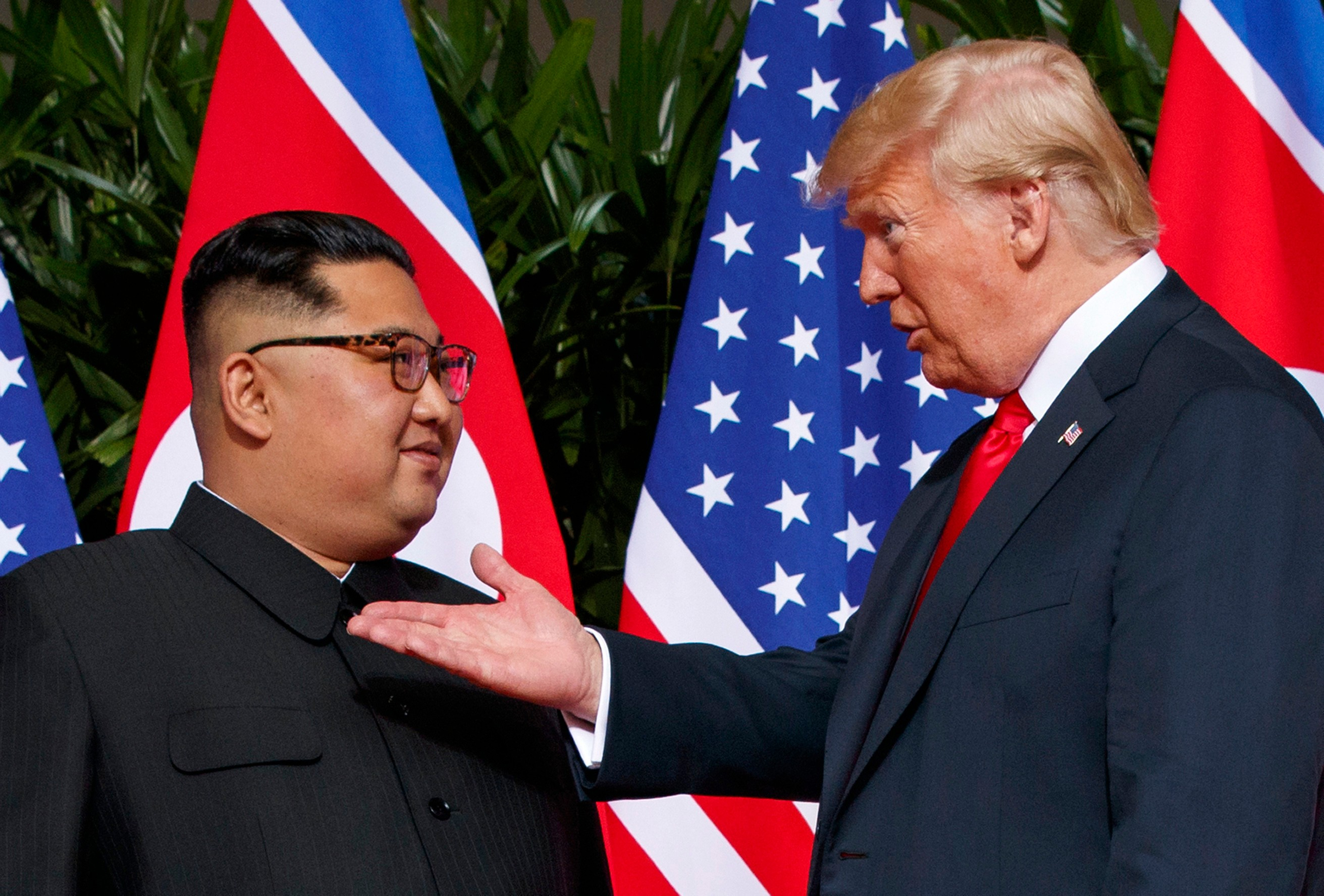
    He’s become world famous for embracing America’s enemies and backstabbing our allies. Yet, Donald Trump outdid himself Sunday — on the eve of joint military exercises with South Korea — when he announced the U.S. was scaling back participation to avoid offending his great friend, the nuclear-armed North Korean dictator Kim Jong Un.

    Perhaps this was just a frantic attempt to shift attention from the quagmire in Iran. Having failed to end Tehran’s nuclear program, the president is offering nuclear talks “without preconditions” to Kim. You will recall the two “fell in love” after Kim wrote Trump “beautiful letters” in 2018, and he responded in kind.

    The military exercises, Trump said, would be “inappropriate and hostile” to a country that “has been unthreatening and respectful” during his presidency.

    Unthreatening? Respectful? Anything but.

    Kim humiliated Trump after meetings in 2018 and 2019 by rejecting nuclear talks and massively increasing his stock of nuclear weapons and missiles. He’s made clear he wants U.S. recognition as a nuclear power, one that threatens South Korea, Japan, the Philippines, as well as U.S. bases and territory.

    Yet, Trump’s selective memory — remembering Kim’s love letters, but ignoring his rebuffs and insults — lays bare a terrible truth about our aging, raging president: his unshakeable belief that his “great” relations with Kim (and with Russia’s Vladimir Putin and China’s Xi Jinping) will ultimately convince them to do his bidding.

    The president’s megalomaniacal belief in his own brilliance blinds him to his repeated failures with all three dictators. He refuses to recognize that far from friendship, Kim, Putin, and Xi are bound together in an axis of adversaries who are helping a fourth member — Iran — stand up to the United States.

    Trump’s superman delusions aid all these adversaries, even as he dismisses allies who could help keep them in check.

    “To treat Kim Jong Un as a partner of some kind is absolutely illogical and counterproductive,” I was told by retired Rear Adm. Mark Montgomery, who served for more than three decades in the U.S. Navy, including in the Pacific.

    Montgomery, who is a recognized expert on cyber and technology policy, is now a senior fellow at the Foundation for Defense of Democracies, where he has coauthored an important book, Axis of Aggressors: Countering the Cooperation of China, Russia, Iran, and North Korea.

    Canceling the South Korea exercises, which Trump said he would have done if it wasn’t too late, decreases U.S. readiness, Montgomery told me, and puts U.S. troops at risk. About 28,500 are based in South Korea.

    “Kim is not going to give up his nuclear weapon nor is he going to make some kind of deal that will win a Nobel Prize,” he said.

    In fact, Montgomery added, Trump’s touted first term tête-à-têtes with Kim “made no impact whatsoever.” Kim increased his nuclear weapons yearly during Trump’s first and second term, and is now estimated to have around 50 to 60 nuclear warheads ready for use.

    Moreover, North Korea is the perfect example of the close ties and fraternal help that the axis powers provide to each other. “Russia has helped North Korea build more accurate intercontinental missiles which can reach much of U.S. territory,” Montgomery said. “This already puts us under threat.”

    Russia has also aided Pyongyang with advanced technology to improve its nuclear and missile programs, which decreases Kim’s willingness to negotiate.

    For his part, the North Korean leader has repaid Russia by sending artillery shells, missiles, and tens of thousands of troops to help Putin attack Ukraine. They also work in Russian drone factories, freeing up Russian soldiers to go to the front.

    Thus, the man Trump so admires contributes daily to Moscow’s slaughter of civilians in hospitals, schools, and apartment buildings in Ukraine.

    Moreover, Putin, the president’s other self-professed buddy, joins axis members in helping the Iranian regime survive and continue to threaten American troops. Iran initially provided Russia with deadly Shahed drones, which Moscow now manufactures and upgrades. Those now-upgraded Iranian drones have killed U.S. troops in Kuwait. Putin also shared intelligence with Tehran that helped the regime target U.S. bases.

    All this hasn’t even touched on the intensified partnership between Moscow and Beijing in which the two primary axis members share technology and intel to jointly undermine U.S. interests.

    “The axis has helped Iran. The conflict with Iran ties up the U.S. military and makes us less ready for China, and the Russian attack on Ukraine distracts Europe. And Trump doesn’t see that the threats from North Korea make us less able to defend Taiwan,” Montgomery said.

    Trump is incapable of connecting the dots. Like a sun god at the center of the world, he looks at each adversary through the lens of their relationship to him. He is blind to the links that bind them together.

    The president thinks his personal diplomacy and that of close friends, like fellow real estate tycoon Steve Witkoff and son-in-law Jared Kushner, are superior to normal diplomatic engagement. No expertise is necessary, Montgomery told me.

    “His first term didn’t prove that to be true. It hasn’t moved any of the four axis powers, and it hasn’t moved the Iranian Revolutionary Guards,” he noted. “It is an integrated task to fight the axis of aggressors. Especially if the president doesn’t recognize who the bad guys are.”

    And, I would add, if those who do recognize the bad guys — like Secretary of State Marco Rubio and many GOP senators — are more interested in pacifying POTUS than in the security of the United States.

  • The tale of Trump’s food cart escape in Ankara explains why he is losing in Iran

    The tale of Trump’s food cart escape in Ankara explains why he is losing in Iran

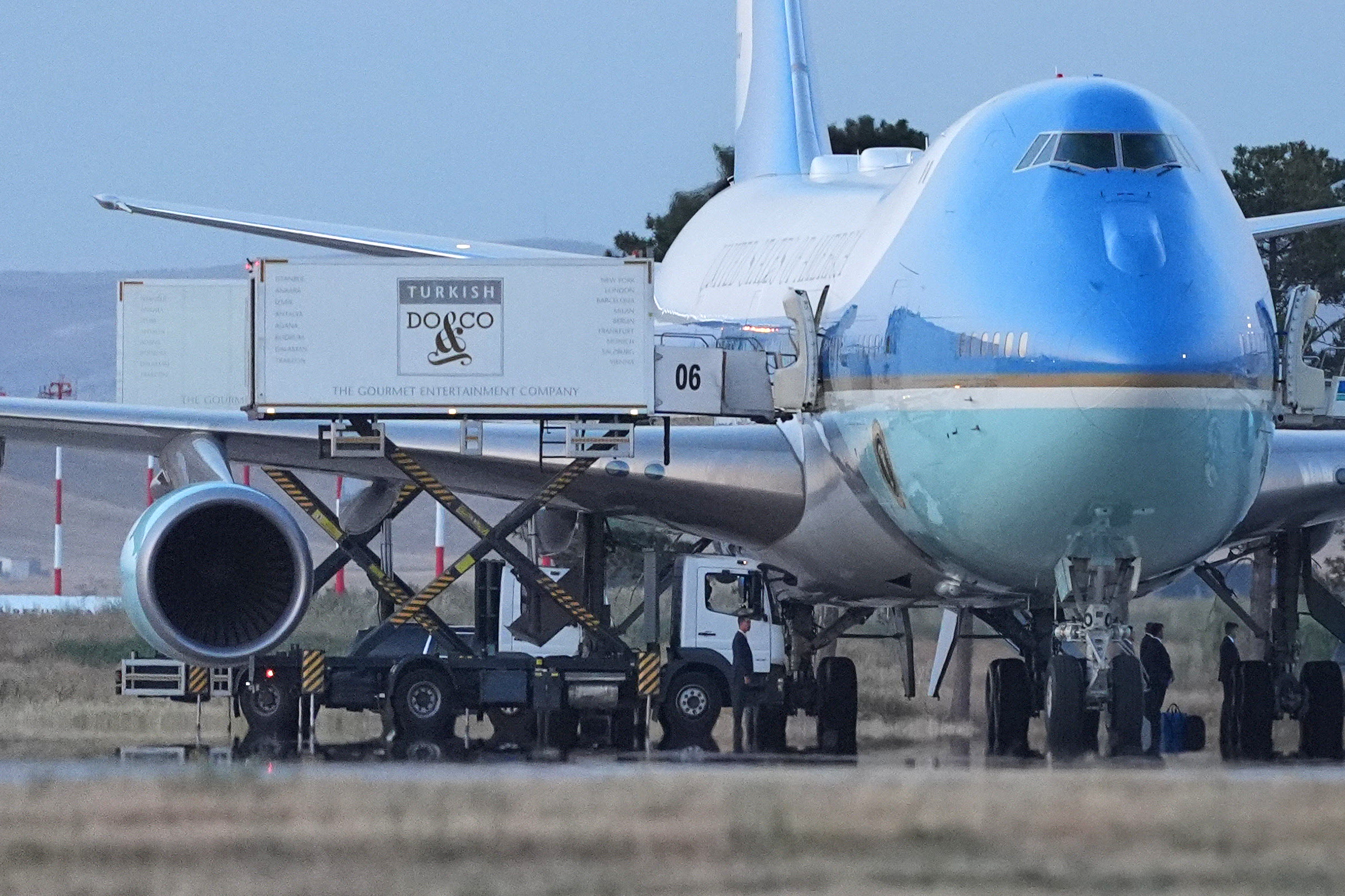
    The jokes about Donald Trump’s secret escape from Turkey last month via an airport catering truck are still flooding the internet. Typical mockery included AI-generated images of the president hunched inside the truck gorging himself on bags of McDonald’s fries, while making his furtive getaway.

    The jests about Trump’s transfer from Air Force One to a smaller plane via the truck — after Israeli intelligence warned a dubious CIA of a possible shoulder-fired missile attack by Iranians — may be funny. But Trump’s clandestine feint, even if it was more Maxwell Smart than James Bond, should be taken seriously.

    It serves as a chilling metaphor for why Trump’s misbegotten Iran war has gone so wrong.

    “If you’re hiding in a catering truck when you control the most powerful military in the world, you aren’t winning,” posted Ron Filipkowski, editor-in-chief of the progressive MeidasTouch Network, who wasn’t above making fun of Trump before nailing the bitter truth.

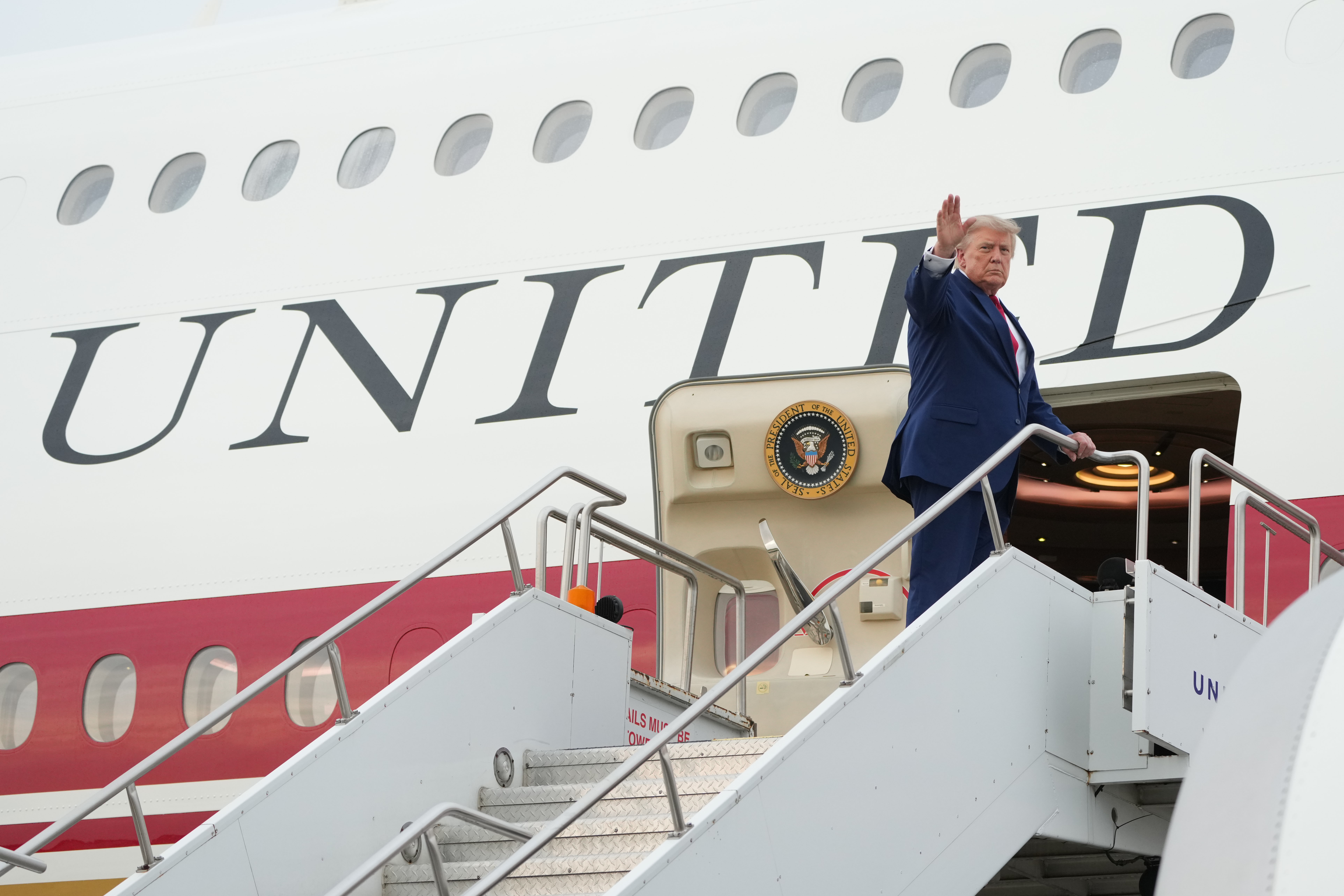
    It is mind-boggling that an American president, who flies in one of the most highly protected planes in the world, had to be smuggled onto a different aircraft because the U.S. military couldn’t guarantee his safety. It’s all the more astonishing since the old Air Force One, on which POTUS was originally departing Ankara, had a defensive system designed to defeat such heat-seeking missiles (which Trump’s preferred luxury plane gifted to him by Qatar still doesn’t).

    You may recall that it was ragged, barefoot Afghans who drove the then-mighty Soviet military out of Afghanistan in the 1980s by using shoulder-fired missiles — known as MANPADS — to take down powerful Russian attack helicopters. That’s called asymmetrical warfare, in which the weaker party uses unconventional means to offset the conventional might of the opponent.

    Ukraine is waging a complex version of asymmetrical war against Moscow, having pioneered a staggering array of drones that can destroy tanks, ships, air defenses, and military infrastructure deep inside Russia.

    Yet, Trump refuses to grasp how radically the nature of warfare has changed, enabling weaker countries to hold off stronger ones using robots, long-range air drones, and sea drones — or even updated shoulder-fired missiles.

    Trump and his secretary of defense, Pete Hegseth, seem to envision war either as a throwback to World War II, or through the blurred lens of the U.S. kidnapping of Venezuelan President Nicolás Maduro. Either you crush the enemy with massive air power, ships, and male troops brimming with testosterone, or you do a quick, one-off beheading of the enemy, bringing them under your heel.

    Neither model applies to the war on Iran.

    Trump’s original goal was supposedly to halt Iran’s nuclear program. In the 12-day Israel-U.S. war on Tehran in June 2025, Iran’s nuclear sites were hit heavily. After that, the U.S. could have tracked any rebuilding of those sites by satellite and taken necessary action while negotiating a nuclear deal. The Strait of Hormuz, then wide open to global shipping, was not an issue.

    Instead, the president abandoned promising nuclear negotiations to join a cockamamie regime change scheme proposed by Israeli Prime Minister Benjamin Netanyahu in February. Jerusalem assassinated Iran’s grand ayatollah and planned to swiftly replace him with a former Iranian president who had constantly called for the destruction of Israel.

    I once had the stamina-draining opportunity to listen up close in a small room as said former leader, Mahmoud Ahmadinejad, ranted for two hours. I can tell you that anyone who knew anything about Iran, or who listened to advisers who did, knew this plan was deeply delusional.

    Catering trucks are parked at Air Force One on the tarmac as the motorcade carrying U.S. President Donald Trump arrives to depart following the NATO summit at Ankara International Airport in Ankara, Turkey, on July 8.Alex Brandon

    Trump was clearly suffering from Maduro Derangement Syndrome, mistaking Iran for Venezuela. As Gen. Dan Caine, chairman of the Joint Chiefs of Staff, warned at the time, a prolonged Iran war risked swallowing the bulk of America’s long-range missile arsenal. Indeed, these weapons, which cost millions of dollars each, were wasted chasing cheap Iranian drones.

    Most dangerously, Russia, China, and North Korea have now seen that Trump’s manly U.S. Army is woefully unprepared for the wars of the future. His staggering request to Congress for a $1.5 trillion budget, an increase of 42% over the past year, doesn’t even include tens of billions in additional funding that he wants for the endless Iran war.

    Yet, that budget is clogged with massive funding of legacy items and vanity projects unsuited for future warfare but protected by members of Congress, defense companies, and Trump cronies who benefit from the projects.

    Prime among them is the 15-ship, Trump-class nuclear-powered battleship program, costing $275 billion over a 30-year span. Not only is Trump’s extravagance not needed by the Navy, but his “golden fleet” will be easy targets for the constantly evolving armada of unmanned anti-ship drones.

    You might think the painful Iran experience would have awakened Trump to the urgent need to prepare the army for drone warfare. He and his showman secretary of war talk a big game, but neither he nor the Pentagon has yet grasped the lessons of the Iran — or Ukraine — wars.

    Trump still rejects Kyiv’s offer to share drones and technology and to jointly produce the scarce Patriot interceptors. Private U.S. companies simply can’t gear up fast enough to meet the immediate need. Private U.S. investors are rushing to Ukraine to check out their innovations, but the Pentagon’s budget is still stuck in the past.

    The result is clear: As the Wall Street Journal just reported, in military exercises in Germany, Ukrainian drone units once more defeated U.S. troops and armored vehicles.

    The U.S. military knows about its continued vulnerability to drones, and how essential they are to modern warfare — and understands the value of pairing with Ukraine, the world’s leader in the technology. “You can’t get training like this in the United States,” NATO’s top military leader, Air Force Gen. Alexus Grynkewich, told the Journal.

    But Trump is still fixated on traditional military might as the road to quick victories — unlike U.S. adversaries in Tehran, Moscow, Beijing, and North Korea. Sharing technology with each other, they are advancing in the use of unmanned and unconventional weapons, leaving the U.S. behind.

    Even as he absconded in a food cart, Trump was still declaring victory in Iran, and claiming Wednesday that he has “total control over the Strait of Hormuz.” Wrong. Iran now controls that vital waterway via drone and missile attacks.

    Trump’s current “strategy” is to wait Iran out while blockading its ships, or those loading up at Iranian ports, from exiting Hormuz. Never mind the cost to the global economy or to U.S. military readiness or to American consumers at the pump.

    POTUS has few options. Lacking munitions, the U.S. can’t launch a ground war against Tehran (thank goodness). And renewed bombing will only cause Iran to bomb energy production sites in Arab Gulf states, which will drive oil prices to new heights.

    What a president with a coherent mind and any rational strategy would do is squeeze the Pentagon to reorient U.S. military production. That, however, would involve a new defense secretary and a full-court press to reorient spending toward the future. Most of all, it would require making the most of all the hard-won drone wisdom Ukraine is so willing to share.

    For that, the U.S. would need a very different person than the man in the White House. It would also require a Congress willing to challenge the president if he refused.

    And so, pending midterm elections, I believe that all the food cart jokes ricocheting around the world convey the sad reality. My favorite was one that asked, “What was the name of the operation that lured Trump into the catering truck?” The answer: “Operation Orange Chicken.”

    That’s a good punch line, but here’s the grim reality: Trump is unwilling to face the truth of his failures and incapable of devising a strategy that will keep Americans safe.

  • Violence by extremist Israeli settlers against Palestinian civilians on the West Bank threatens new Mideast flash point

    Violence by extremist Israeli settlers against Palestinian civilians on the West Bank threatens new Mideast flash point

    While the world is focused on the failures of Donald Trump’s warmongering in Iran and “peacemaking” in Gaza, too little attention is being paid to a potential new Mideast flash point sparked by messianic Israeli settlers on the occupied West Bank.

    Escalating settler violence against Palestinians — attacking their villages, farms, and even homes — is unchecked and often assisted by Israeli military forces. It is also chilling because it is fully supported by extremists in Prime Minister Benjamin Netanyahu’s government who have his full backing.

    I have witnessed such settler violence during reporting trips over the years, but it is reaching unprecedented heights (or depths) as Bibi courts right-wing votes before Israeli elections in October.

    Far-right extremists are even encouraging Jewish-Arab violence atop the Temple Mount, the most sacred site in Judaism and the third holiest in Islam, which could ignite anti-Israel religious violence and terrorism in the region.

    The extremists’ goal — as clearly spelled out in a “Decisive Plan” by current Finance Minister Bezalel Smotrich, who also oversees administration of the West Bank — is to present the Palestinians with three choices: legalized apartheid and repression, massive ethnic cleansing (labeled “voluntary emigration”) from the West Bank, or death if Palestinians resist.

    The plan’s goals have extended to Gaza.

    The quibble over language that feeds debate over Israel in the United States — as in whether to call what’s happening in Gaza “genocide” — only distracts from the central problem. When Palestinians are offered nothing — meaning no political future or rights — they have nothing to lose. Unfettered occupation and ethnic cleansing will provoke resistance and terror attacks. It will be untenable in the long run.

    What is more likely to happen is a third uprising on the West Bank, followed by massive bloodshed between Palestinians and settlers. It would guarantee a disastrous end to Trump’s Gaza project and to his Abraham Accords, which were meant to advance peace between Israel and Gulf Arab states. Yet, the president is clearly blind to how quickly his Mideast peace efforts are sliding toward disaster.

    In desperation, 600 retired Israel Defense Forces generals and colonels, as well as retired intelligence and foreign service officers, recently wrote to Trump urging him to press Bibi to halt the West Bank violence.

    I spoke to one of the group’s organizers, Nimrod Novik, a senior adviser to former Prime Minister Shimon Peres, a deeply experienced negotiator and distinguished fellow at the Israel Policy Forum, about his fears for the future if Israel’s policy toward Palestinians doesn’t change.

    “What we will see in the West Bank in the next 90 days [before the Israeli election], you haven’t seen ever,” he warned. “The whole ideological right-wing extremist group, helped by the government, fears this is their last opportunity [to advance Smotrich’s goals]. If the Netanyahu government is ousted, the next government would deal harshly with Jewish terrorism.”

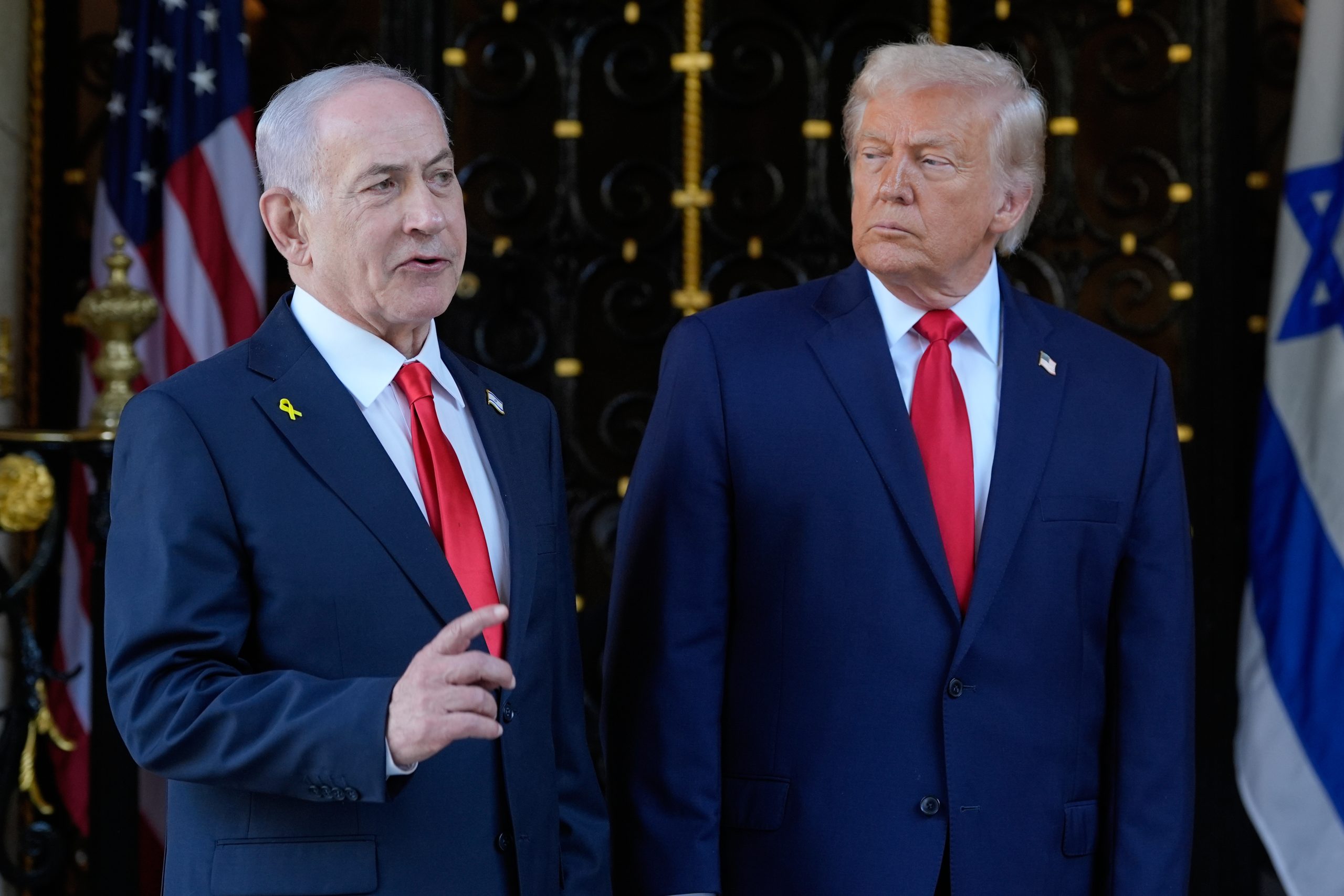
    President Donald Trump listens as Israel’s Prime Minister Benjamin Netanyahu speaks at President Donald Trump’s Mar-a-Lago club, Dec. 29, 2025, in Palm Beach, Fla.Alex Brandon

    I would add a caveat: It isn’t clear how much a coalition of opposition parties, even if they were able to push Bibi out, would change policy toward Palestinians. The two largest opposition parties are against any future Palestinian state alongside Israel. But a new Israeli prime minister would likely try to reassert Israeli army control over army reserve units that support extremist settlers who regularly attack Palestinian civilians. And he might have less patience with radical groups of settler youths who roam unchallenged and even attack Israeli soldiers who try to block their violence.

    Novik had a stark warning about what could happen if the violent settlers were allowed to continue their rampage. In certain security circles, he told me, “They think the settlers want to provoke a security crisis, and the West Bank might be the best opportunity.” He believes Jewish settler terrorism will produce revenge-seeking by Palestinians who are defending their families. Israeli security agencies, he added, are worried about a possible effort to provoke large-scale violence on the Temple Mount.

    I still recall how a 1982 plot by Jewish religious terrorists to blow up the third holiest mosque in Islam atop the Temple Mount was discovered only at the last minute. “Even if they don’t bomb the mosque,” Novik pointed out, violence could still explode. Only recently, “one thousand Israelis in one day violated the status quo by praying on the mount.”

    The status quo between Israel and Arab states, in place since the 1967 war, prohibits such praying, which is also banned by Israel’s rabbinate for religious reasons. Palestinians fear it indicates an imminent takeover of the holy site by Israeli Jews.

    Unless a new Israeli government reestablishes central military control over settler military units and armed extremist youths, unless it stops these youths from destroying Palestinian villages and homes, there is bound to be violence.

    And unless a newly elected leadership permits the rebuilding of the West Bank’s Palestinian Authority, the body which technically governed Palestinians, there is no authority to counter Hamas. Bibi did everything he could to destroy and bankrupt the Palestinian Authority. What would happen with a new government is unclear.

    What is clear is that Bibi’s tolerance of Jewish terror is leading to a clash in the West Bank, and is aimed at driving the population of Gaza out into the Sinai Desert by keeping two million Palestinians underfed, without schools or medicine, and living in tents.

    Even liberal Israelis are still traumatized by Hamas’ Oct. 7, 2023, slaughter, and a new government will still tilt rightward. But a recent Israeli survey by the Israeli Democracy Institute shows that the largest share of respondents — among left, center, and even center-right — said authorities treat violence by Jews against Palestinians in the West Bank too leniently, with perpetrators rarely arrested and hardly ever punished.

    Whether or not that poll hints at a particular voter response is also unclear.

    However, Trump has a chance to stop his being labeled a complete loser in the Mideast by backing the opposition to Bibi, which may still carry weight with many Israeli voters. Yet no one should rely on Trump’s awakening to reality.

    It will be up to Israeli voters to decide whether or not they accept Smotrich’s vision — and the consequences that are bound to follow if they do.

  • At Ankara summit, tantrums aside, Trump finally awakens to Ukraine’s tech brilliance

    At Ankara summit, tantrums aside, Trump finally awakens to Ukraine’s tech brilliance

    When dealing with President Donald Trump at a NATO summit, the European allies resemble desperate adults hovering around an unruly child who is clutching fireworks and matches.

    So it was a relief that, despite his usual juvenile tantrums and threats at this week’s Ankara, Turkey, gathering — and his erratic behavior toward Iran — the president mostly kept his powder dry.

    Indeed, POTUS had an unprecedented adult moment with Ukraine’s President Volodymyr Zelensky. Trump finally recognized Kyiv’s stunning technological prowess in the production of drones that can now reach deep into Russia (some adviser must finally have convinced him that Ukraine had winning cards the United States lacked).

    Trump actually heaped praise on Zelensky, in stark contrast to his shameful efforts in the past to humiliate the Ukrainian leader, saying he was “courageous” and had done “an amazing job” on the battlefield.

    The president finally granted Zelensky’s years-old request to let Kyiv produce American Patriot missiles — the only available Western weapons capable of stopping the ballistic missiles Russia is using against Ukraine.

    However, that’s the end of the good news.

    The U.S. president’s ill-informed, incompetent, and, frankly, juvenile behavior on foreign policy, combined with his visible aging, presents a clear and growing danger to U.S. security. With his garbled and error-filled speech, his omnipresent ego, and his constantly shifting positions, he has become a global embarrassment.

    Trump’s ineptitude helps our adversaries, from Tehran to Moscow to Beijing to Pyongyang.

    Nothing shows this more clearly than Trump’s belated shift on Ukraine. Mind you, I offer two cheers for the dawning light, but how can anyone count on follow-through when the president changes his positions like he changes shirts?

    Even if Trump keeps his word on the licensing of Patriot technology, setting up the complex production process is a lengthy operation that would probably take at least a couple of years (he hasn’t even bothered yet to notify the U.S. producers of Patriot interceptors, RTX and Lockheed Martin).

    Similar licensing of Patriot missiles was only granted before to Germany and Japan, and it has taken them each years to scale up. I am confident that savvy Ukrainian techies can do so faster. But they need those interceptors right now, when Vladimir Putin is raining down ballistic missiles on Ukrainian cities because he knows they have no defense.

    European allies, who need their own Patriots to defend against Russia, are willing to risk giving Kyiv more if the United States will pledge to backfill their needs quickly. Trump has made no such pledge, claiming they are in short supply in the U.S.

    That is true, but do you know why? The U.S. and Gulf allies have wasted years’ worth of U.S. production of Patriot interceptors during the Iran war. They used hundreds, possibly thousands, of Patriots that cost $2 million to $4 million each to shoot down $30,000 Iranian drones.

    Trump keeps hinting that the U.S. is interested in Ukrainian drone technology, but has still not taken up Zelensky’s offer to trade Ukrainian drone skills and wider joint production in return for Patriots.

    POTUS claimed in Ankara that U.S. drone producers are building new factories for interceptors that will be up and running quickly “in the not-too-distant future.”

    Bluster, bluster, bluster.

    Lockheed, which produces the most advanced interceptor, the PAC3, has publicly announced its goal of producing 2,000 of these marvels a year … by 2030. That is a tiny fraction of what is needed.

    Yet, this week, still short of drones and drone interceptors for the U.S. military, Trump announced at the Ankara summit that the ceasefire with Iran is ending. He appears to be plunging into a renewal of the Iran war. He is stuck in a trap of his own making because he relied only on his gut before entering the conflict.

    POTUS never imagined that Tehran would respond to his attack alongside Israel by closing the Strait of Hormuz, even though he was warned by his military and civilian advisers. Then he claimed, totally contrary to the facts, that he had concluded a “peace deal” and started paying off the ayatollahs with billions in advance by letting them sell oil again. Now he is threatening a new war, which he clearly doesn’t want and for which he doesn’t have the proper weapons.

    Trump knows he cannot win from the air. And, unless he is ready to invade Iran or occupy parts of that country indefinitely — which would be a disaster — he has trapped America into accepting some form of Iranian control over the strait.

    That is why, in Ankara, with the rage of a spoiled child, Trump cursed the Iranians (whom he had praised only weeks ago) and pouted: “I’m not sure I want to make a deal. Let’s just finish the job.” This is not the language of a leader. This is the insincere threat of a 6-year-old throwing food at the wall to see if it sticks.

    What is so terrifying about Trump is not his threats, which our allies and adversaries alike now tend to ignore, but his total incapacity to think in strategic terms. He talks big — “Iran cannot have a nuclear weapon” — but has no strategy on how to achieve this.

    And even when recognizing Ukraine’s achievements, he insisted that “President ​Putin wants [this war] to end. I will tell you that very strongly.” If he really believes this, at this late date, he definitely lives in an infantile fantasy world.

    As a result, there is a huge risk that he will drag America into an uglier quagmire in Iran.

    And he will throw away the chance that he, himself, helped create by pushing Europe to rearm: the opportunity to work with a stronger Europe and bolster NATO’s role positively to counter Russia, China, and Iran.

    Lost in fantasy, he drives America’s allies away.

    Ukraine will try to stay on his good side, but will proceed to revolutionize unmanned warfare in cooperation with Europe, and possibly, eventually, with Washington.

    And U.S. adversaries like Iran will choose whether to take advantage of Trump’s childishness or try to assassinate him in revenge, helped by his own fecklessness. Fear of that latter possibility was what made the Secret Service insist Trump fly back from Ankara on the original Air Force One, rather than use one of his vanity projects, the upgraded luxury gift plane from Qatar, which had not been secured sufficiently to protect against possible attack.

    Trump had insisted at first on luxury over security. Even when it came to his own safety, the child in him could not be curbed.

  • Holiday lessons about ‘patriotic values’ from Folarin Balogun, Pope Leo XIV, and JD Vance

    I never thought I’d be writing a column that led off with an analysis of soccer.

    I’d planned to write about the lessons our nation’s 250th birthday party provided for Americans about the real meaning of “patriotic values.” But as it turns out, an examination of the scandal that ensued after President Donald Trump’s shameful World Cup intervention provides the perfect example of what those values are and what they are not.

    Before getting to the game, it’s important to revisit what Thomas Jefferson meant in 1776 when he wrote in the Declaration of Independence that the Creator had endowed all men equally with “the right to life, liberty and the pursuit of happiness.” Although honored in the breach when it came to slavery and women’s rights, these ideals have been the goal toward which America has gradually, but consistently, aspired — until now.

    Many probably assume that “pursuit of happiness” means material success or personal pleasure. But for the Founding Fathers, educated in the philosophy of ancient Greece and Rome, the phrase reflected the classical emphasis on civic duty and character development. In other words, the concept of patriotism was tied to the pursuit of an honorable and civic-minded life.

    Now back to soccer.

    Until the July Fourth weekend, the World Cup matches had provided a brilliant exhibition of the best of America, with cities across the land and fans in every stadium effusively welcoming teams of every race and color. In an incredible burst of U.S. soft power, the global image of Trump’s America as overtly racist, corrupt, and violent gave way before the warmth of ordinary Americans.

    But Trump could not refrain from popping that wonderful bubble. After America’s star striker, Folarin Balogun, received a red penalty card during the team’s 2-0 win over Bosnia and Herzegovina — which would force him to sit out a critical match against Belgium — POTUS phoned FIFA’s president, Gianni Infantino.

    A Trump sycophant who had previously awarded him FIFA’s first medal of peace, Infantino gave the president what he wanted: a reversal of a red card ban during a World Cup game (for the first time since 1962).

    In one move — based on his philosophy that only winners count — Trump cast a pall over the World Cup. He reversed all the goodwill the matches had generated for America at a time when his erratic behavior had sunk global attitudes toward the U.S. to astonishing new lows.

    Yes, Balogun’s violation was accidental, and the red card undeserved, but how many times have we all witnessed wrong calls by referees or umpires that drove us insane? However, under FIFA rules, there is no appeal after a game is over. Imagine if every world leader copied Trump’s utter disdain for rules in sports as well as domestic and international laws, a disdain which is already causing global chaos.

    On Monday, the U.S. team lost 4-1 to Belgium. But Trump’s interference made that defeat more painful by precipitating a wave of global scorn that poured down on an undeserving team. Nor has Trump had one word of praise for this terrific team after their loss.

    However, the lesson from Trump’s soccer debacle is not all negative. Americans should take pride in the achievements of the U.S. team and be inspired by the overall atmosphere of the games before Trump’s ugly intervention.

    And the country should unite in praise for the patriotic virtue displayed by Balogun.

    A day after receiving his red card, the star striker told an interviewer: “It’s been surreal, to be honest. But for me, I think it was just important to stay calm. I never want to react out of anger and out of emotion.

    “There’s still lots of people we’re inspiring, little kids, boys and girls who are watching, and we have to show them the correct way to handle things, even when you think it’s unjust.”

    What a hero! And what an example of patriotic virtue by someone who, under Trump’s attack on birthright citizenship, wouldn’t even qualify to play for Team USA, being born in Brooklyn to Nigerian parents visiting from London.

    Furthermore, the president’s negative example over the holiday — turning the Semiquincentennial into a celebration of himself, even as news broke of the incredible billions POTUS and his family have raked in off his presidency, and even as he upped his efforts to rig the midterm elections — should goad us all to revisit the meaning of “pursuit of happiness” in civic terms.

    Two critiques of Trump over the weekend — one indirect, one powerfully direct — can serve as further inspiration.

    The first comes from Pope Leo XIV, in his powerful livestreamed speech on July 3 at Philadelphia’s National Constitution Center while accepting the prestigious Liberty Medal. “The principles that inspired America’s founders,” he said, “brought them together in … a common dream. Unity lent strength to that dream … E pluribus unum — out of many, one. In order for a nation to flourish, it must be truly united, not by goals bound to momentary endeavors, but by ideals that do not fade with the passing of time.”

    These words need to be taken to heart, to my thinking, especially by progressive Democrats. Their anger is understandable, but in the final instance, they must work together with all those who appreciate the need to curb Trump’s desecration of the founders’ values. That includes all Democrats as well as independents and moderate Republicans who appreciate the need for checks and balances on presidential power.

    As Benjamin Franklin famously said at the signing of the declaration, “We must all hang together, or assuredly we will all hang separately.”

    And finally, some inspiring words from Vice President JD Vance, written in 2016 for the Atlantic before he turned against the values of the founders, and republished by the site on July 4.

    The title of the essay: “Opioid of the Masses.”

    “What Trump offers is an easy escape from the pain,” he wrote. “To every complex problem, he promises a simple solution. He never offers details for how these plans will work, because he can’t. Trump’s promises are the needle in America’s collective vein.

    “The great tragedy is that many of the problems Trump identifies are real … Yet so long as people rely on that quick high … the nation delays a necessary reckoning. There is no self-reflection in the midst of a false euphoria.

    “Trump is cultural heroin. He makes some feel better for a bit. But he cannot fix what ails them, and one day they’ll realize it. And then, perhaps the nation will trade the quick high of ‘Make America Great Again’ for real medicine.”

    In memory of the Founding Fathers, who pursued their principles when the struggle seemed impossible, let us hope such a realization starts this fall.

  • Trump’s Great American State Fair reveals how he has turned the Semiquincentennial into a celebration of himself

    WASHINGTON — The Great American State Fair on the National Mall should have been the rousing centerpiece of America’s 250th birthday celebration. Instead, it is a perfect tribute to President Donald Trump.

    With its cheap, slapdash imagining of Trump’s America and its constant political homage to POTUS and MAGA, the exhibit has little to do with commemorating the Declaration of Independence, U.S. history, or American culture. The exhibits lack even the delicious, tacky, lively atmosphere of state fairs (the few visible animals I saw were all fake).

    With few exceptions, it is a vapid, empty insult to the best aspects of this nation.

    When I remember the Semiquincentennial, I will be thinking more about scenes of Brazilian soccer fans visiting Philadelphia’s Independence Hall and warm interactions between locals across the country and visiting World Cup tourists. These personal exchanges may offset some of the hostility so many countries feel about Trump’s foreign policy.

    And yet, I’m glad I visited the fair on Monday because it reminds me of how different the president’s vision is from the real America that is ignored in this tribute to Trump.

    A true celebration could have displayed the best of this country, what the United States has gotten right, while providing the moment for serious reflection on what has gone wrong — and what needs desperately to be remedied at home and in our foreign relations. No matter how uphill that struggle seems under Trump.

    Instead, the Great American State Fair mainly consists of several long, white, one-story buildings fronted by fake Greek columns and punctuated by closed doors. The structures extend on either side of large expanses of mall greenery which were almost empty, as the 88-degree heat sent the scant numbers of visitors inside in in search of air-conditioning.

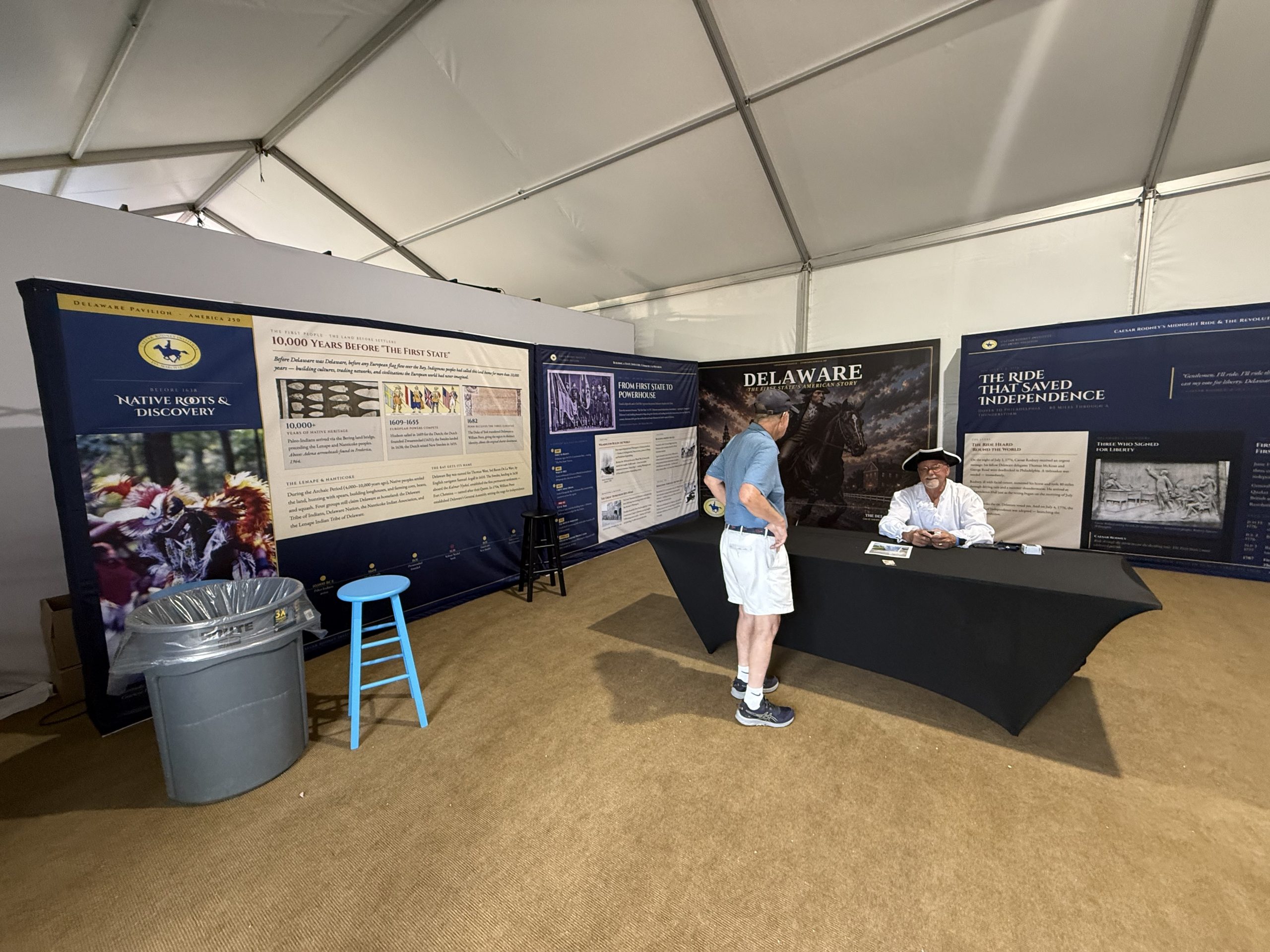
    The state of Delaware’s pavilion at the Great American State Fair Thursday in Washington, D.C.Sam Janesch / Staff

    Behind those doors are small exhibits by each state (11 of which, including Pennsylvania, opted out due to the politicization of the fair or cost concerns), or by U.S. government departments (including “WAR”) and agencies and religious groups. Most state exhibits are tourism displays with posters, literature, or videos, with a few exceptions like South Dakota, whose state historic commission mounted excellent posters about the vivid characters, including women and Sioux leaders, who settled its land.

    Towering over the few attendees out in the sun is a 110-foot Ferris wheel (which has been mostly stationary because of electrical problems) and a small mock-up of Trump’s planned and controversial Arch of Triumph topped by gold angels.

    The image portrayed is of a country isolated from its own people and the world.

    However, visitors can collect Trump literature from AMAC (the Association of Mature American Citizens), listen to a Bible lecture, and hear how “America shall be saved” from a group called “The Great Awakening.” They can bid for a $700 “marriage getaway,” sign up their children for a Trump savings account, or fill out a recruitment form for the U.S. military or U.S. Secret Service. They can also view a copy of the limited edition “Patriot Passport” with Trump’s photo on it inside a glass case at the U.S. Department of State exhibit and get a free paper copy.

    Trump, Trump, and more Trump. The Washington celebration of our 250th birthday wasn’t supposed to look this way.

    Congress started planning for this anniversary in 2016, when it created America250, a bipartisan commission that was supposed to program nonpartisan events for all Americans. The idea was to unify the country in celebration.

    Its original plans were focused on a parade through the capital with “diverse floats” and marching bands, along with an energetic festival of the nation’s cultural diversity on the mall organized by the Smithsonian.

    Anyone who has ever attended the annual Smithsonian Folklife Festival on the mall can imagine how wonderful this could have been. On one occasion when I was there, one side of the mall was celebrating the culture of India and the other Louisiana and Cajun culture, with bands of old-timers and their acolytes playing washboards, banjos, and accordions, while tents dished out Cajun food.

    This year, one side of the mall might have hosted cultures of the immigrants who have built America, and the other could have presented tributes to the Declaration of Independence, its impact around the world, and how its flaws regarding slavery and women were remediated by law.

    Instead, Trump squeezed out America250 by virtually replacing it with Freedom 250, which is partly funded with taxpayer money and partly by donors. The New York Times has detailed how donors were offered access to Trump for million-dollar contributions.

    Instead of funding projects connected to key moments in the fight for American independence, Trump’s group focused on his MAGA agenda, his love for spectacle, and his person. Thus, his vision of America’s 250th birthday celebration has centered on his arch, on a $60 million UFC match on the White House lawn, and on an IndyCar race through the capital scheduled for August. As for the fair on the mall, it has been focused on an opening (political) speech by Trump (after most planned musical acts withdrew due to the fair’s partisan nature), and another rally on July Fourth.

    Unity out. Division in. Who cares about celebrating our founding document and the aspirational values on which the country has been built, when Trump can have circuses that celebrate only him?

    And that is why I point to the World Cup games as a sign that Americans still know how to display their best qualities as a people. What particularly moved me was watching the huge kilted Scottish contingent break through sometimes insular Bostonians’ reserve when it belted out John Denver’s “Take Me Home, Country Roads” at Fenway Park.

    Americans are so much better than this sterile exhibition on the mall. In the warmth displayed across the country to World Cup visitors they have shown a welcoming nature still unsullied by Trump’s efforts to make people hate the other.

    Back in the states and cities, many celebrations of July Fourth will probably still capture that warmth. It still exists. In Philadelphia, history museums are doing a terrific job of commemorating the declaration.

    But you can certainly skip visiting Trump’s Great American State Fair, which reveals his total disdain for what this holiday really means.