America’s 250th birthday is finally here, and organizations throughout Philadelphia have planned a full itinerary of celebrations for the weekend.
For those seeking historical enrichment, live music from national headliners, or even a patriotic pet parade, look no further.
Here is a schedule of the activities and events happening in the city over the July Fourth weekend:
Friday, July 3
Free Museum Day: Fireman’s Hall Museum
In a renovated 1898 firehouse, the Fireman’s Hall visitors can learn about the history of firefighting in Philadelphia, the birthplace of volunteer fire companies.
10 a.m., 147 N. 2nd St.
Free Museum Day: Science History Institute
The museum will feature a new exhibition on fireworks, exploring the art, chemistry, and craft behind the colorful emblem of the holiday.
10 a.m., 315 Chestnut St.
38th annual Liberty Medal ceremony
In a public ceremony, the National Constitution Center will award the 38th annual Liberty Medal to Pope Leo XIV, who will deliver live acceptance remarks virtually from the Vatican.
10:45 a.m., 525 Arch St.
Free Museum Day: Historic St. George’s Museum and Archives
Celebrating traditional craftsmanship, the museum will offer hands-on workshops where participants can create their own wax seals and try out water marbling.
11 a.m., 235 N. 4th St.
Salute to Independence Semiquincentennial Parade
The largest professionally produced 250th celebration parade in the country, the event will feature 50 marching bands, 19 floats, and all 52 Miss America state and territory titleholders.
Noon, Independence Hall to Benjamin Franklin Parkway
Free Museum Day: Historic Waynesborough
Located in Paoli, this National Historic Landmark was once the home of Revolutionary War hero Gen. Anthony Wayne. Free tours of the Georgian-style property will be available for visitors.
Noon, 2049 Waynesborough Road, Paoli, Pa.
Pops on Independence
Enjoy a live orchestral show with the Philly Pops, headlined by Tony Award-winning performer Idina Menzel.
8 p.m., 599 Market St.
Saturday, July 4
Celebration of Freedom ceremony
The ceremony will honor America’s 250th anniversary in the heart of its historic center, with speeches, awards, and a performance by Grammy Award winner Yolanda Adams.
10 a.m., 525 Arch St.
Free Museum Day: Cliveden of the National Trust
Visitors can view exhibit panels in the Barn and participate in free tours of the house, which was built in 1767 and is the site of the Revolutionary War’s Battle of Germantown.
10 a.m., 6401 Germantown Ave.
Free Museum Day: Historical Society of Pennsylvania
The museum will offer the exhibition, “Paths to Independence: 1765-1787,” showcasing more than 140 items that represent the people and events involved in the American Revolution.
10 a.m., 1300 Locust St.
Betsy Ross House Patriotic Pet Parade
An annual pet parade will occur at the Betsy Ross House, where prizes will be awarded for the best and most patriotic costumes.
10:30 a.m., 239 Arch St.
Free Museum Day: Powel House
Owned by Philadelphia’s first mayor after American independence was secured, visitors can tour the 18th century house where President George Washington once danced.
11 a.m., 244 S 3rd St.
One Philly: Unity Concert for America
The free concert will be hosted by comedian Wanda Sykes and feature performances from headliners including Christina Aguilera, Jill Scott, The Roots, and Will Smith. Music begins at 5 p.m. and will be broadcast on NBC10.
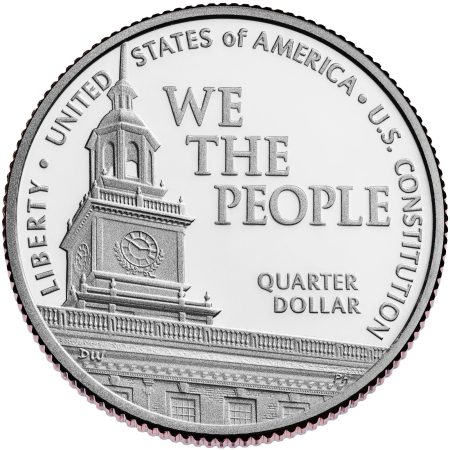
Check your change: You might have one of the U.S. Mint’s special-edition coins celebrating the nation’s 250th birthday.
For one year only, circulating nickels, dimes, quarters, and half-dollars will feature new historical designs. Part of the U.S. Mint’s Semiquincentennial program, many of the coins entered circulation at the beginning of the year.
“The program is the most significant redesign of the nation’s circulating coins in the past century,” said Jill Westeyn, acting chief of public affairs at the U.S. Mint. “These coins commemorate 250 years of American Liberty by reflecting our country’s founding principles and honoring our nation’s history.”
What’s on the coins
The quarter is a star of the program, boasting five different designs that highlight pivotal moments in American history.
The Mayflower Compact, signed in 1620 as one of the New World’s earliest documents establishing self-government, inspired one of the quarter’s designs, which features the iconic ship.
Motifs from the Declaration of Independence, the Revolutionary War, and the U.S. Constitution appear on three of the other quarters. Images include Philadelphia landmarks like the Liberty Bell and Independence Hall.
The fifth quarter honors President Abraham Lincoln’s Gettysburg Address. Meant to highlight the Civil War-era speech’s commitment to equality, the quarter depicts Lincoln on one side and clasped hands on the other.
The quarters are scheduled for circulation in separate intervals throughout the year. So far, the Mayflower Compact Quarter, the Revolutionary War Quarter, and the Declaration of Independence Quarter have been released. The remaining two designs will enter circulation later in the year.
The dime and half-dollar feature Liberty, an American allegorical figure of a mythical goddess. The dime includes her cap, a symbol of freedom in ancient Rome, and the half-dollar depicts Liberty gazing to her right, meant to convey looking toward the future.
The nickel may look familiar with its portrait of President Thomas Jefferson, but an addition of the dual date, “1776 ~ 2026,” updates the coin for the anniversary.
A collectible penny with the dual date is alsoavailable for purchase in annual sets sold on the mint’s website. The mint discontinued the copper cent in 2025 because it cost more to produce than it’s worth.
The bipartisan Citizens Coinage Advisory Committee had reportedly proposed designs for the 250th that will not see the light of day, including coins that would have commemorated the end of slavery, the women’s suffrage movement, and the civil rights movement. But Treasury Secretary Scott Bessent, tasked with making the final design choices, did not pick any of those.
Other coins
President Donald Trump’s 24-karat gold coins, which feature his portrait and were also intended to highlight the country’s 250th anniversary, are not among the program. The U.S. Commission of Fine Arts voted unanimously to approve the design in March, but the coins are not slated for production until after July 4.
The U.S. Mint has approximately 1,400 employees across four production facilities (one of which is in Philadelphia), a bullion depository, and its headquarters in Washington, D.C. It produced 8 billion coins during fiscal year 2025, per the organization’s annual report.
The Price Point compares homes listed for similar sale prices across the region to help readers set expectations about house hunting.
According to recent Zillow data, homes with “character” — visual distinction and a sense of history — are all the rage.
As the birthplace of the nation, the Philadelphia region has its fair share of drool-worthy older homes of all shapes, sizes, and price tags.
In May, the median sale price for homes in the Philadelphia metropolitan area was $405,000.
So, here are three pre-World War II homes in the Philadelphia region that about$405,000 can buy — all with ample “character.”
A Fairmount condo with a private patio
This second-floor condoboasts a desirable location, according to its listing agent, Jeniffer Benner with Home Sweet Home PHL.
It’s situated on a tree-lined street in the heart of the Art Museum neighborhood, with easy walkability to Center City, the Schuylkill River Trail, and Roberto Clemente Park just a block away.
Benner said a main draw is the property’s private rear patio, which is “tough to find in condo spaces.”
Built in 1920 with a major remodel in 2014, the home’s living room boasts modern features and touches of the past with its traditional red brick exterior. It has nine-foot ceilings, custom shutters, hardwood floors, recessed lighting, and crown molding. The built-in entertainment center has been a favorite of prospective buyers.
“A lot of people think that’s a really nice feature, rather than having a blank box like some of the newer construction condos,” Benner said. “They like that character.”
There are two bedrooms and two bathrooms, with the primary suite including two closets, one a walk-in.
Benner said the condo fee isminimal — $223 per month — because it only covers exterior maintenance and insurance for the townhouse’s three units. Compared to city condo fees that can reach upward of $1,000 a month, the cost is “very affordable.”
The property was listed for sale in March for $420,000. The listing price has since come down to $410,000.
A Tudor-style home in Drexel Hill
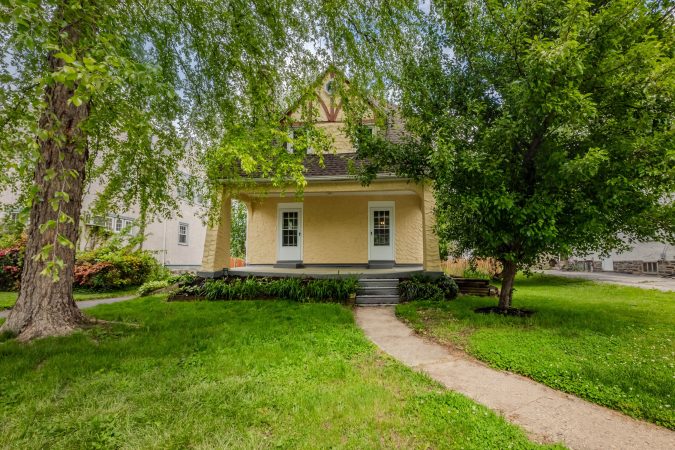
This Tudor-style home in Drexel Hill has an old-fashioned feel, as most of the neighborhood’s homes were built between 1925 and 1934, said listing agent Jason Cox with Long & Foster Real Estate.
“This is a throwback, and that’s one of the reasons people love it,” said Cox.
Two columns frame the property’s double-entry doors, which Cox said is an imprint of historical Drexel Hill homes. The kitchen’s mullioned glass-front cabinets and the bathroom’s checkered-tile accents further the home’s traditional aesthetic.
The front yard is shaded by a willow tree, and the backyard is spacious enough for a garden, play set, pool, or all of the above.
The three-story home has one full bathroom and five bedrooms — rare for its listing price. There are three larger bedrooms on the second floor, in addition to a smaller room that could double as an office, and a finished attic with skylights on the third floor.
The living room has a traditional brick fireplace, and the dining room features access to a deck that is a prime location for outdoor grilling. Recently repainted and carpeted, the home is move-in ready.
Cox, who lives a block away from the property, “can’t say enough about the neighborhood.” Ideal for families, the home is walking distance from the local elementary and middle schools, and is a five-minute drive from Upper Darby High School. In the neighborhood, some families have stayed for two or three generations.
Sitting on more than a half-acre, this home’s standout feature is its expansive backyard. About three years ago, the homeowners installed a patio and a gazebo with a mounted TV, transforming the empty space.
“It makes the outside feel like the inside, and it can be screened in,” said listing agent Aaron Wallace with KW Main Street. “It’s the best thing about this property.”
The four-bedroom, two-bath property was built in 1911 but underwent a major renovation in 2020. The contractor did everything “soup to nuts,” Wallace said, including the roof, windows, both bathrooms, and kitchen. “They left no stone unturned with this renovation.”
The bright and airy ground floor includes the mudroom, living room, dining room, kitchen, and full bathroom. Going up a level, there are three bedrooms and the second full bathroom. On the third floor, there’s a generously-sized carpeted room that can be utilized as a bedroom, office, or an alternative living space.
Another highlight is the living room’s fireplace, which is framed by a wooden chevron accent wall and serves as a focal point in the house.
Magnolia’s pre-K-8 school is within walking distance from the home, and there is a baseball field behind the house that hosts local games. Wallace said the homeowners enjoy watching games from their gazebo.
“It has a great small-town feel, and the big city is not too far away,” said Wallace.
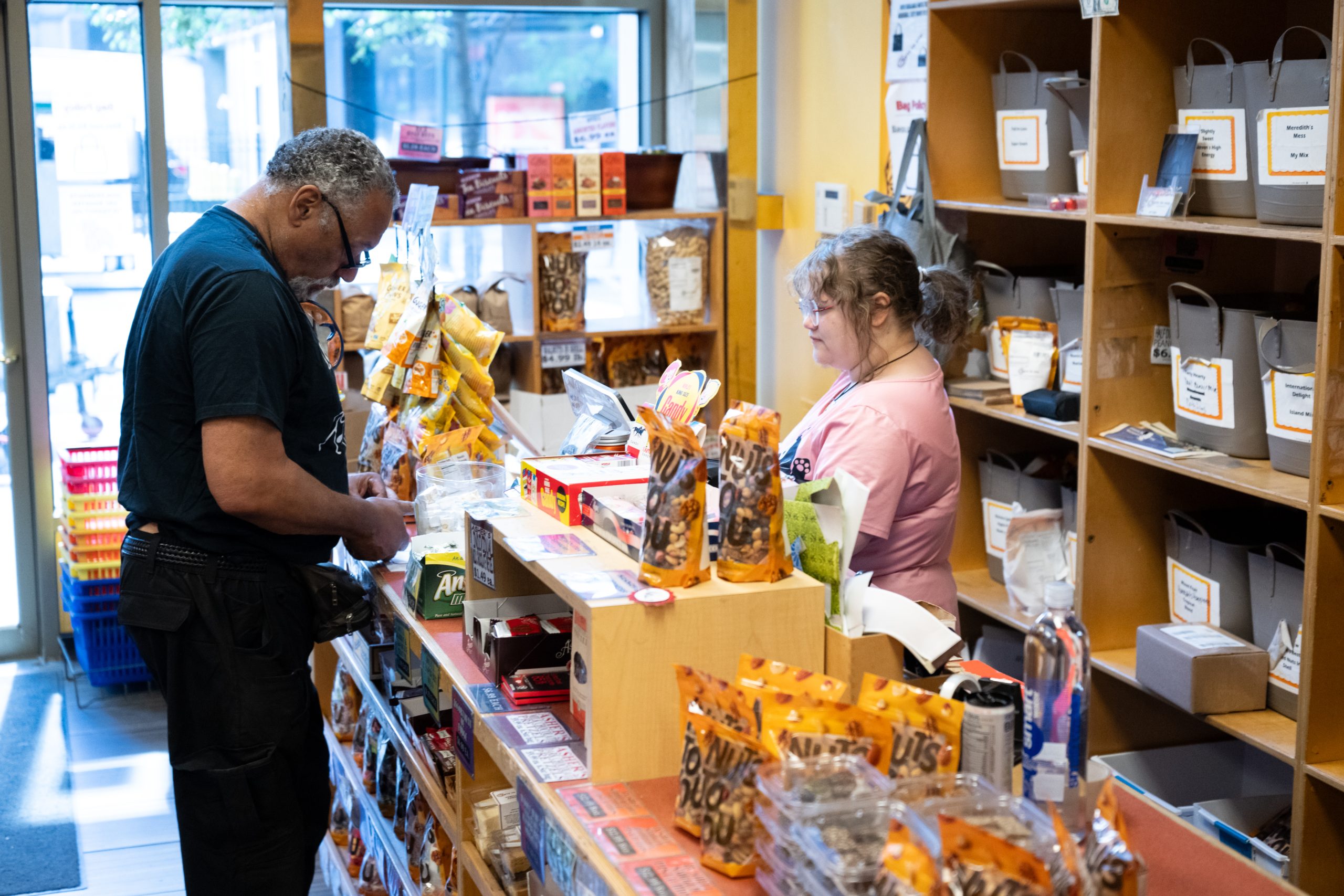
On 20th Street between Market and Chestnut, much has changed in the past 50 years. One tenant that hasn’t: Nuts To You. The snack shop, wrapped in yellow wallpaper speckled with walnuts, remains packed with shelves of nuts, candy, and dried fruit galore.
Nuts To You, a snack haven owned by the same family for three generations, is celebrating 50 years in Center City. Since its first location opened in 1976, Nuts To You has survived the rise of the internet, and the emptying of the business district in a post-pandemic Philadelphia, building decades-long customer relationships on the way.
Pulling off such a feat is “rare, and it’s really hard,” according to Erika Tapp Duran, director of Temple University’s Small Business Development Center.
Nuts To You freshly roasts their nut products at a warehouse in Frankford. Over the years they have broadened their inventory to include freshly popped popcorn (also made in-house), as well as chocolates, candy, dried fruit, and almost anything else one could find in a kitchen pantry.
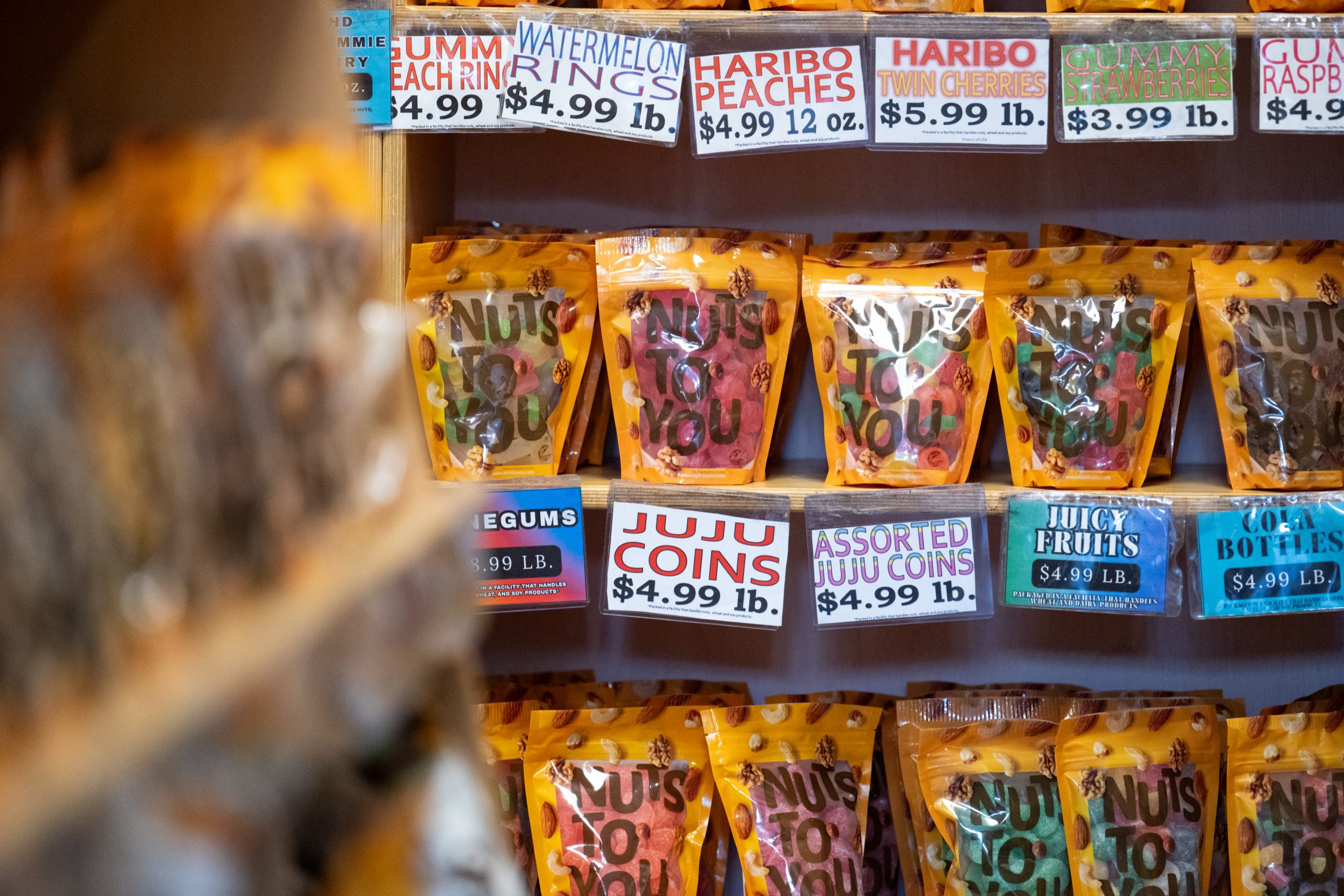
Gummy candies sold at Nuts To You, a family-owned and operated snack store.Erin Blewett / For The Inquirer
They sell those products out of three city storefronts: on 20th Street near Rittenhouse Square, 16th and Market Streets on the ground floor of Centre Square; and Seventh and Walnut Streets in Washington Square West.
But the brick-and-mortar business has changed. In 2018, Nuts To You had six physical stores, and its leaders were considering expanding into Washington, D.C.
“We used to have lines during lunch rush,” said Justin Bernstein, who co-owns the business with his father, Howard Bernstein. “That just doesn’t exist anymore.”
The location beneath Centre Square has a front-row seat to the evolution. At the end of 2025, the office building had the highest vacancy rate in Center City. Developers are now planning to convert it into a mixed-use complex with apartments and luxury hotel rooms. With three years left on that lease, Nuts To You is uncertain about the 16th and Market store’s future.
But for now, “We’re still here,” said Justin, who has spent most of his life as part of Nuts To You. “We’re still going.”
Fewer walk-ins and a digital pivot
James Troutman, 77, a regular at the Seventh and Walnut Street location, piled bags of rolled oats, cashews, peanuts, walnuts, and sunflower seeds into his gray backpack as he left the store on a Tuesday morning. He’ll later combine those ingredients into his daily homemade cereal, which he has been making from Nuts To You products for decades.
“That’s why I’m so young looking!” Troutman joked.
Employees said this location, the company’s most popular, draws an estimated 100 customers a day. But Nuts To You is not immune to the struggles facing brick-and-mortar businesses. In-person sales are down 30% to 40% from pre-pandemic levels, which the owners attribute to less foot traffic as more people have remote or hybrid work arrangements.
Anthony Feaster (left) makes a purchase with the help of employee Brianna Boyko at the 16th and Market Streets Nuts To You.Erin Blewett / For The Inquirer
The entry of big retail competitors into Center City has also changed the business.
“Fifty years ago, there was nobody selling this product,” said Howard. “CVS and all those drug stores didn’t have full lines of nuts and candy.”
For Nuts To You, the decline in foot traffic has been offset by an increase in online sales. The company launched its website in 2010, but was only making about $100 to $200 a day online before the pandemic. Within two days of COVID-19-related lockdowns taking effect, sales increased to $3,000 a day.
Now, 40% of Nuts To You’s sales come from its website, and the company has forayed into selling on TikTok. As of June, only about 1% of their sales come from TikTok Shop, but Justin said that’s already more than expected.
In lieu of the nuts and oats that traditional walk-in customers buy, online customers tend to purchase sugar-free products or nostalgic novelties like wax bottles or Sugar Daddies.
“Think about all the things that have changed for consumers in the last five or six years, and then multiply that out over 50 years,” said Temple’s Tapp Duran. “You have to be able to pivot.”
Howard says that Nuts To You’s popularity has stemmed from its business strategy, which he defines as “largest variety, lowest prices, highest quality.” This may have been true for many years. Though, with larger retailers’ entry into Center City — Justin cited Trader Joe’s in 2003 and Target in 2016 — it has been difficult to beat corporate giants on prices.
However, the owners say what they can still ensure is quality — “That’s what our customers expect,” Justin said. They source their walnuts and pistachios from small growers in California, with whom they’ve maintained yearslong connections.
“We don’t want to switch to another brand, even though I could save a dollar,” said Howard. “Most customers appreciate that.”
In addition to greater competition and a changing retail landscape, Nuts To You has faced challenges common among small businesses in 2026.
Within the past few months, they’ve joined the ranks of small businesses who were sued for violating the Americans With Disabilities Act, based on allegations that the Nuts To You website relied on a visual interface that was inaccessible to individuals who are blind or use screen readers. Another lawsuit came out of a Proposition 65 claim — a law that requires products sold in California to warn consumers for potential exposure to dangerous chemicals — leading Nuts To You to adopt a disclaimer on its website.
“You think you’re OK, we’re running smooth, we know our expenses, then all of a sudden you get served papers,” said Justin. “And it’s like, what?”
Generations of work
For years, Basheer Ali, 65, has been traveling from Southwest Philly to the Center City Nuts To You stores for his fresh nuts and candy. Employees there have helped him navigate a diabetic diet, introducing him to sugar-free chocolate pretzels.
“The people need these kinds of stores,” Ali said.
The company sees very little employee turnover, Justin said. At least half its 19 employees worked at the company for more than a decade.
Regina DeLeon, manager of the Washington Square West location, has been with the company for 26 years. When prompted by a customer, she recalled Nuts To You’s founder and first-generation owner, Manny Radbill.
Radbill predicted in 1975 that nuts were going to be the next health craze. He wasn’t wrong: In 1992, a study found an association between nut consumption and a lower risk of coronary heart disease, which kicked off decades of research on the health benefits of eating nuts.
With the help of Radbill’s daughter, Caryn, and her then-husband Howard, they opened that first store on South 20th Street, which is still in operation today.
Justin first entered the family business when he was 2 years old, pushing buttons on the cash register. Howard required him to gain outside experience first, but Justin said, “I always kind of knew this is what I wanted to do.”
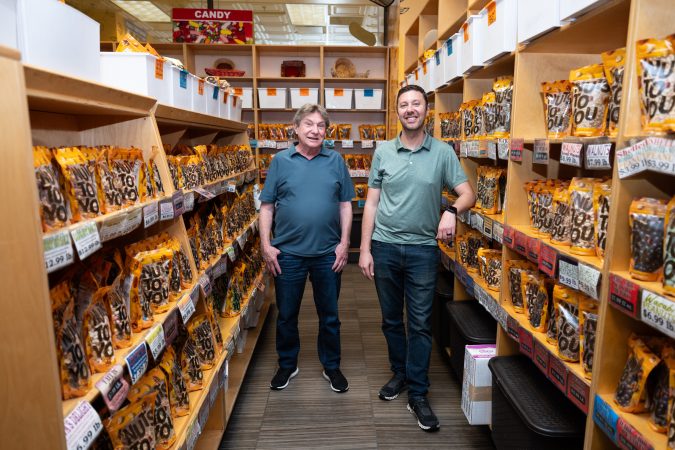
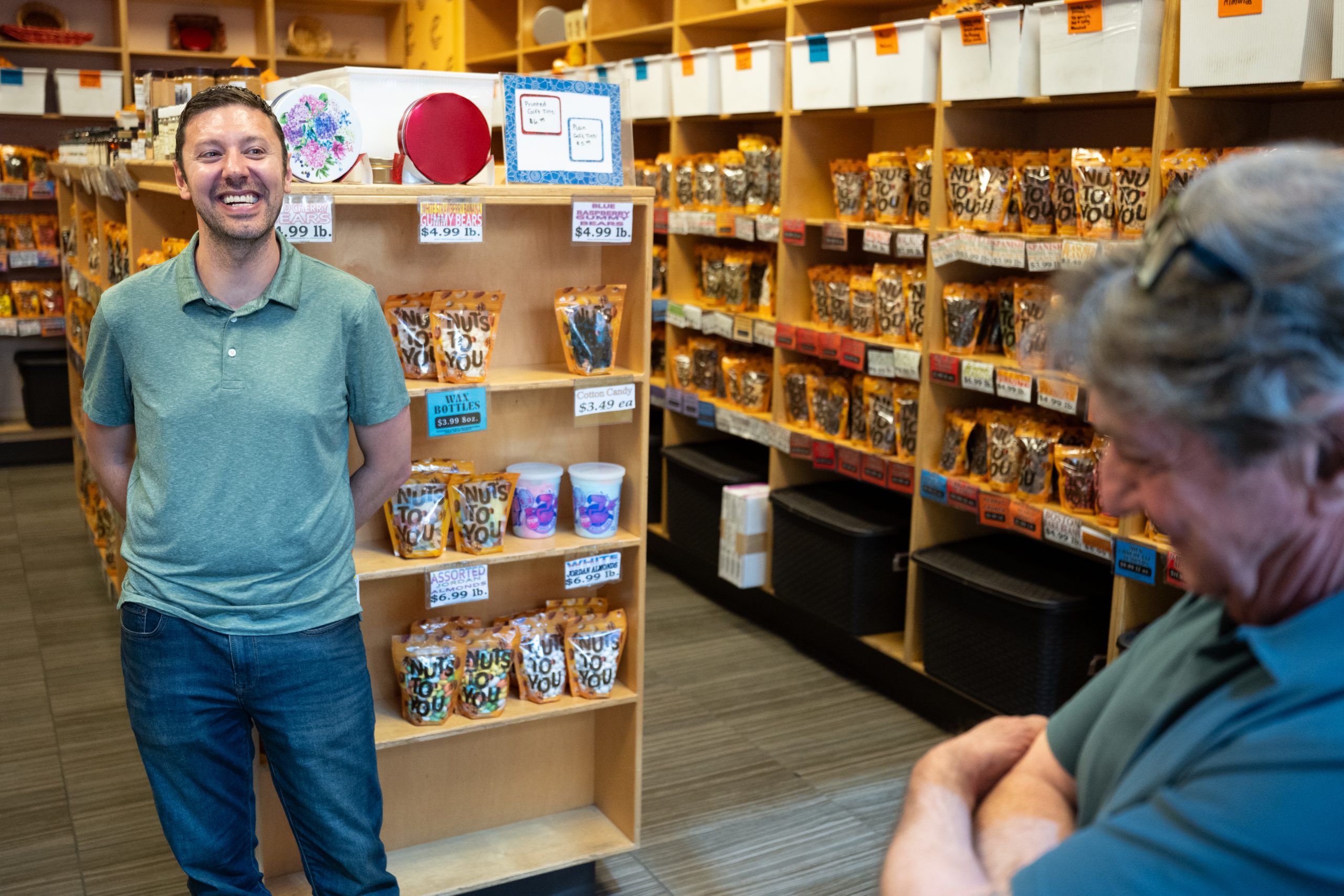
Justin Bernstein smiles at his father, Howard Bernstein, inside one of their three Center City Nuts To You stores.Erin Blewett / For The Inquirer
So, after his college graduation and a brief stint at Boscov’s, about 20 years ago Justin joined Nuts To You and has since become co-owner.
As iconic family businesses like Di Bruno Bros. have been acquired, buyers have approached the Bernsteins, but Howard and Justin decided against it. They entertained one offer, but the deal-breaker was a requirement to close all of the physical stores — the owners refused to put their staff out of jobs.
Over their 50 years in business, Justin said he is most proud of staying family owned.
“We’ll see what happens, what the future holds,” said Justin. “At least another 20 years, call it.”
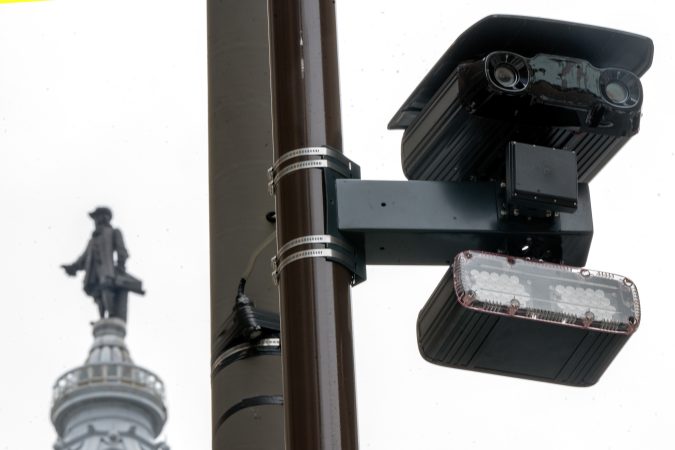
Starting Friday, drivers traveling 36 mph or faster on Frankford Avenue in Northeast Philadelphia will face a minimum $100 fine.
Tennew speed-enforcement cameras were activated on April 13, initiating a 60-day warning period which brought mailed warnings to violators of the road’s 25 mph speed limit.
“Speed cameras are a tremendous tool that helps save lives,” said Gabe Roberts, acting executive director of the Philadelphia Parking Authority, in an emailed statement.
There are three tiers of penalties for speeding on the 4.5-mile stretch of U.S. Route 13 that are now going into effect.
Fines are $100 for traveling 11-19 mph over the speed limit; $125 for going 20-29 mph over; and $150 for speeding by 30 or more mph.
Tickets are mailed to the registered owner of the vehicle speeding. No points — PennDOT’s method of recording driving violations — are added to the motorist’s driver’s license.
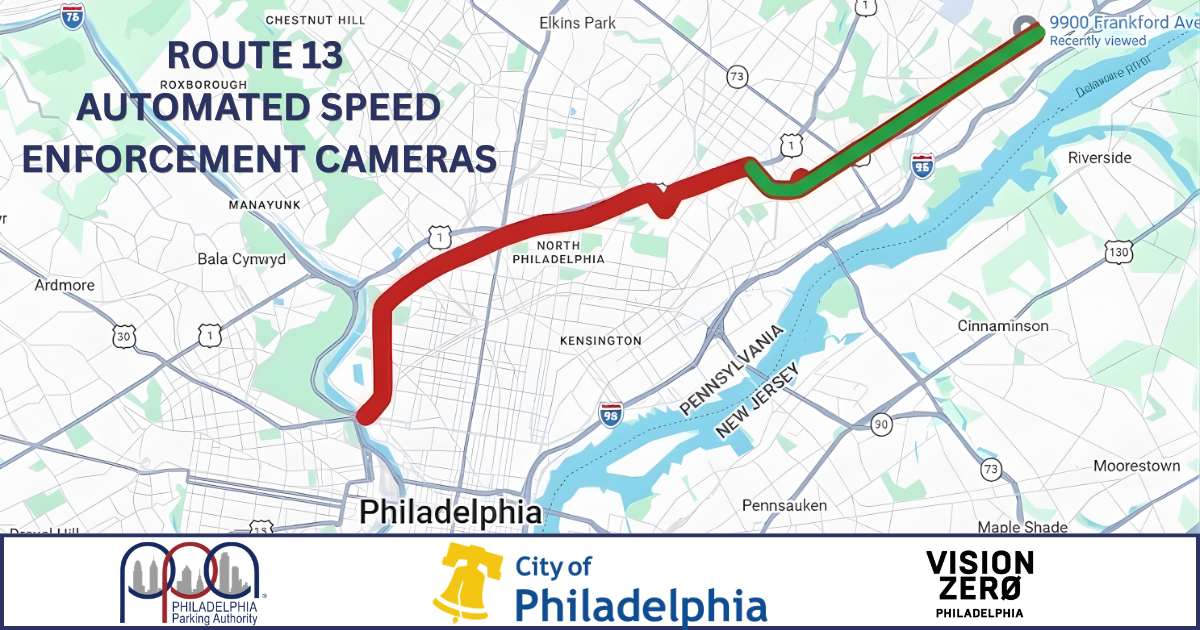
The cameras are placed at 9900 Frankford Ave.; 8300 Frankford Ave.; 7000 Frankford Ave.; 6400 Frankford Ave.; 3100 Levick St.; and 2100 Robbins St.
Automated speed enforcement cameras went live Monday April 13 on the portion of U.S. Route 13 shown in green. Philadelphia Parking Authority will install cameras on the rest of the corridor in July 2026.City of Philadelphia
Speed-enforcement cameras were first piloted in Philadelphia on Roosevelt Boulevard in June 2020, with 32 automated cameras placed along the highway previously considered the most dangerous road in the city.
According to the Philadelphia Parking Authority, speed violations have since decreased on the boulevard by more than 90%, and there has been a 50% reduction in pedestrian-involved crashes.
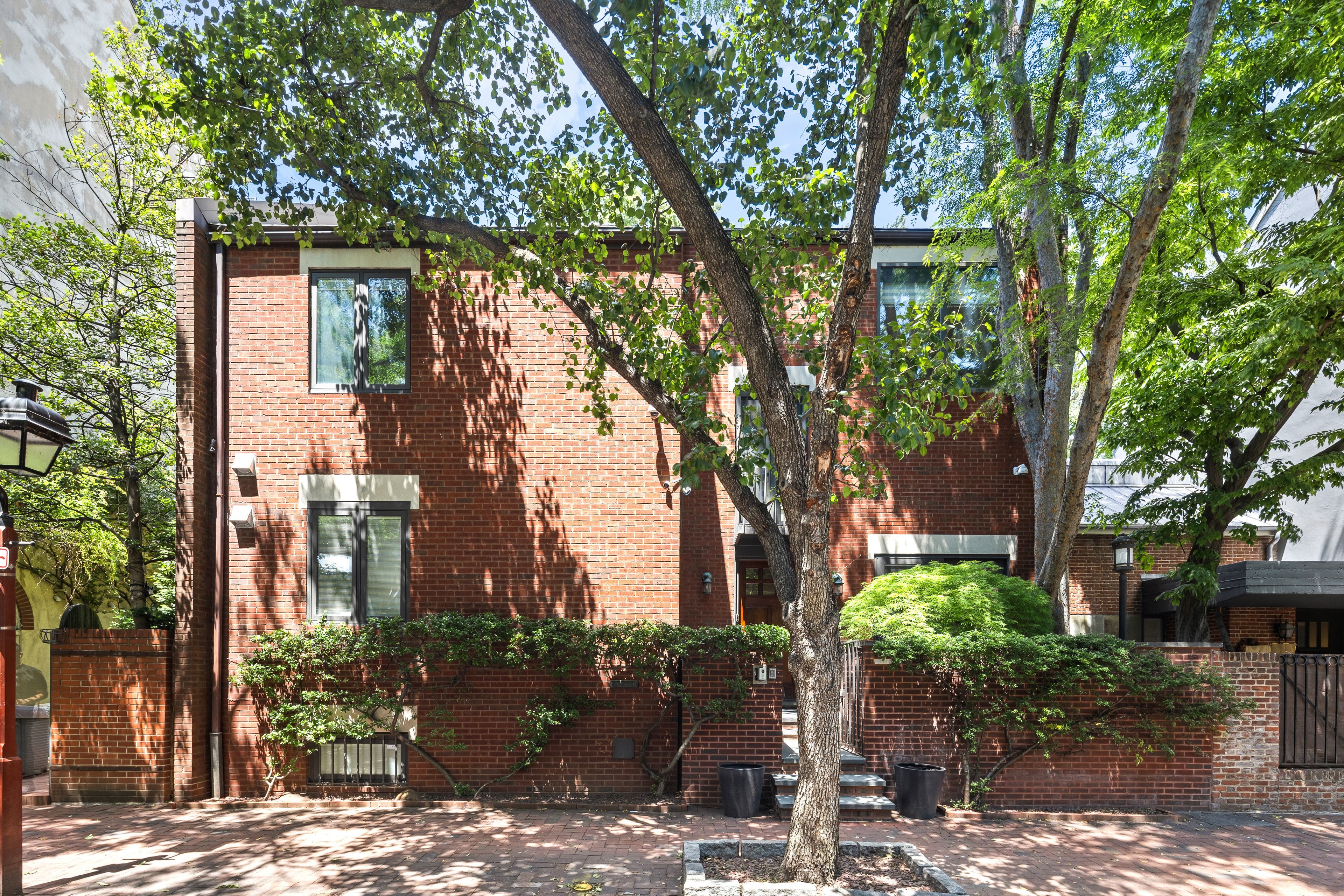
Society Hill is known for its historic 18th- and 19th-century brick townhouses — and the newly listed 113 Pine St. is no different. It’s designated on the Philadelphia Register of Historic Places.
Yet, this five-bedroom townhouse blends past and present with its contemporary design.
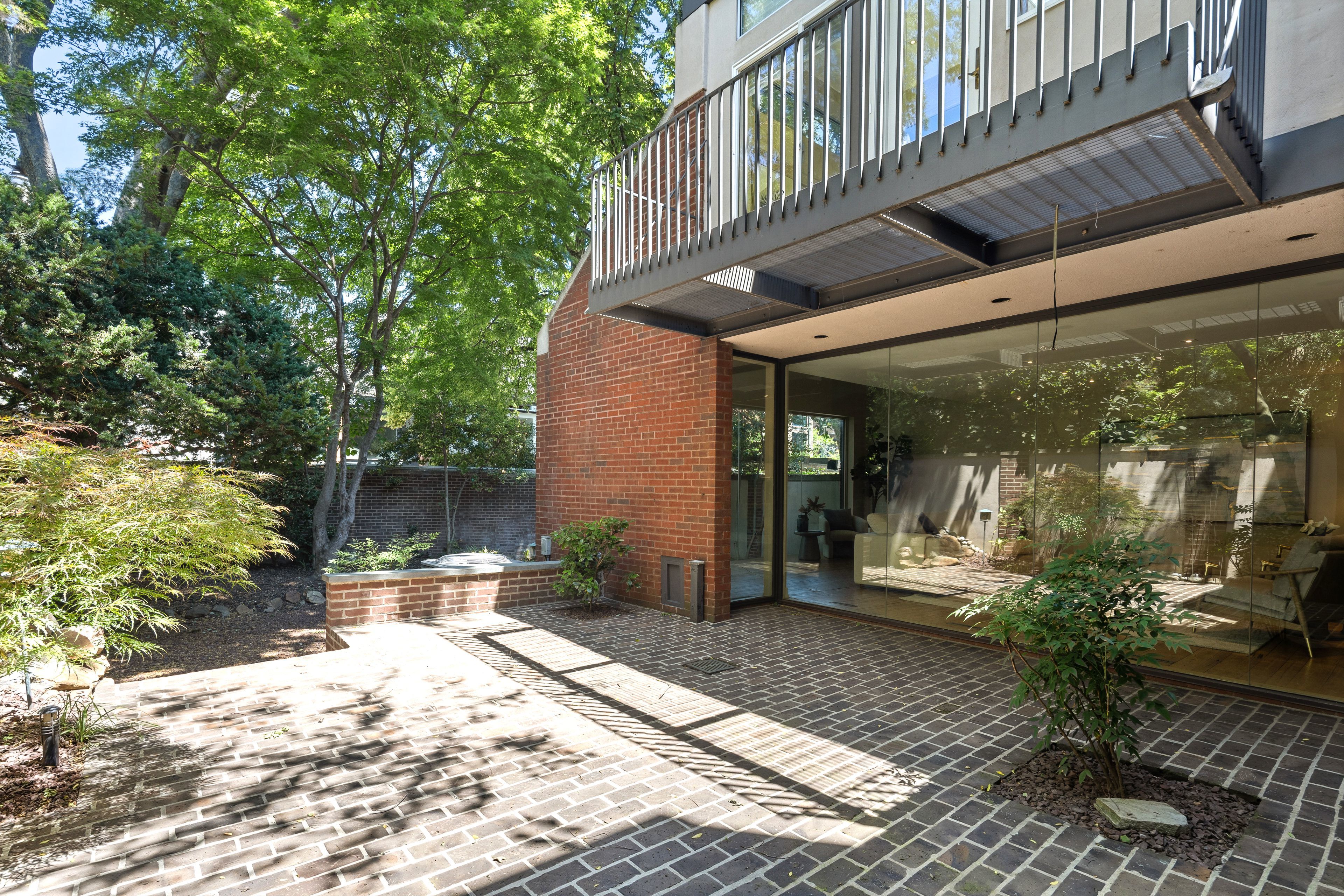
Listed for $2 million, the property sits on a double lot, which listing agent Rich DiNublia of CCL Real Estate said is hard to find. Featuring a walled-in manicured backyard, a spacious brick patio, and a gated-entry front courtyard, the home is made for indoor-outdoor living.
“What we’re hearing consistently is just the wow factor of the contemporary design, and having the privacy of the walled-in gardens,” DiNublia said.
The exterior of 113 Pine St. in Society Hill, featuring its private, gated-entry front courtyard.PLUSH Image Corporation
The 2,776-square-foot townhouse was built in 1960 with the outdoor area designed by renowned landscape architect Ian L. McHarg, a past chair of the University of Pennsylvania’s Department of Landscape Architecture. In 2019, Penn launched the McHarg Center for Urbanism and Ecology in his honor, establishing a research hub for landscape planning.
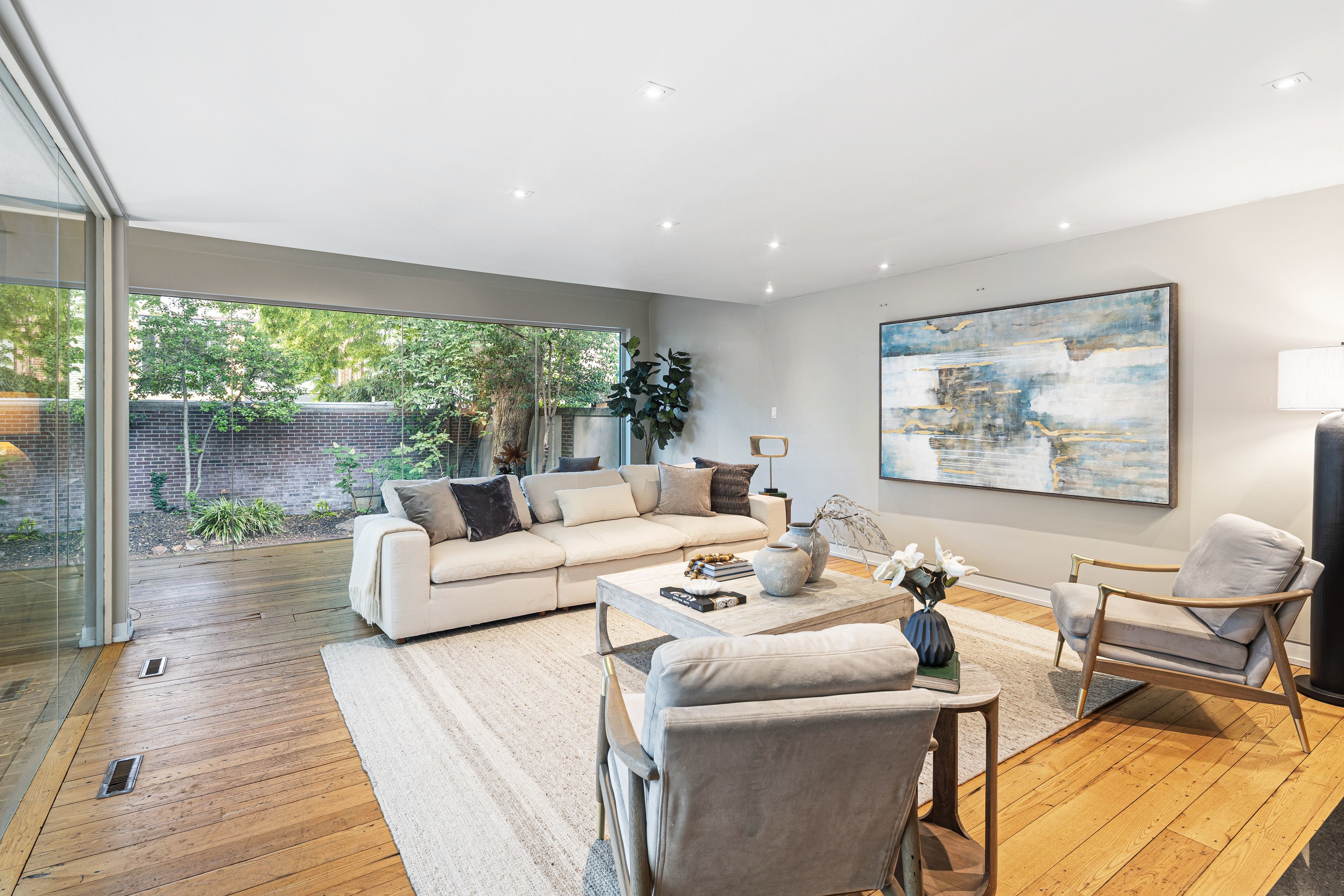
Glass exterior walls frame the townhouse’s living room, allowing for a complete view of the professionally landscaped backyard.
The townhouse’s living room, wrapped in glass exterior walls.PLUSH Image Corporation
The abundant windows filter natural light through the first-floor living space, reflecting off the townhouse’s reclaimed Amish farmhouse wood floors. Featuring not one, but two fireplaces, the home exudes warmth and sophistication.
The primary bedroom has high vaulted ceilings, broadening the feel of the room, and two balconies.
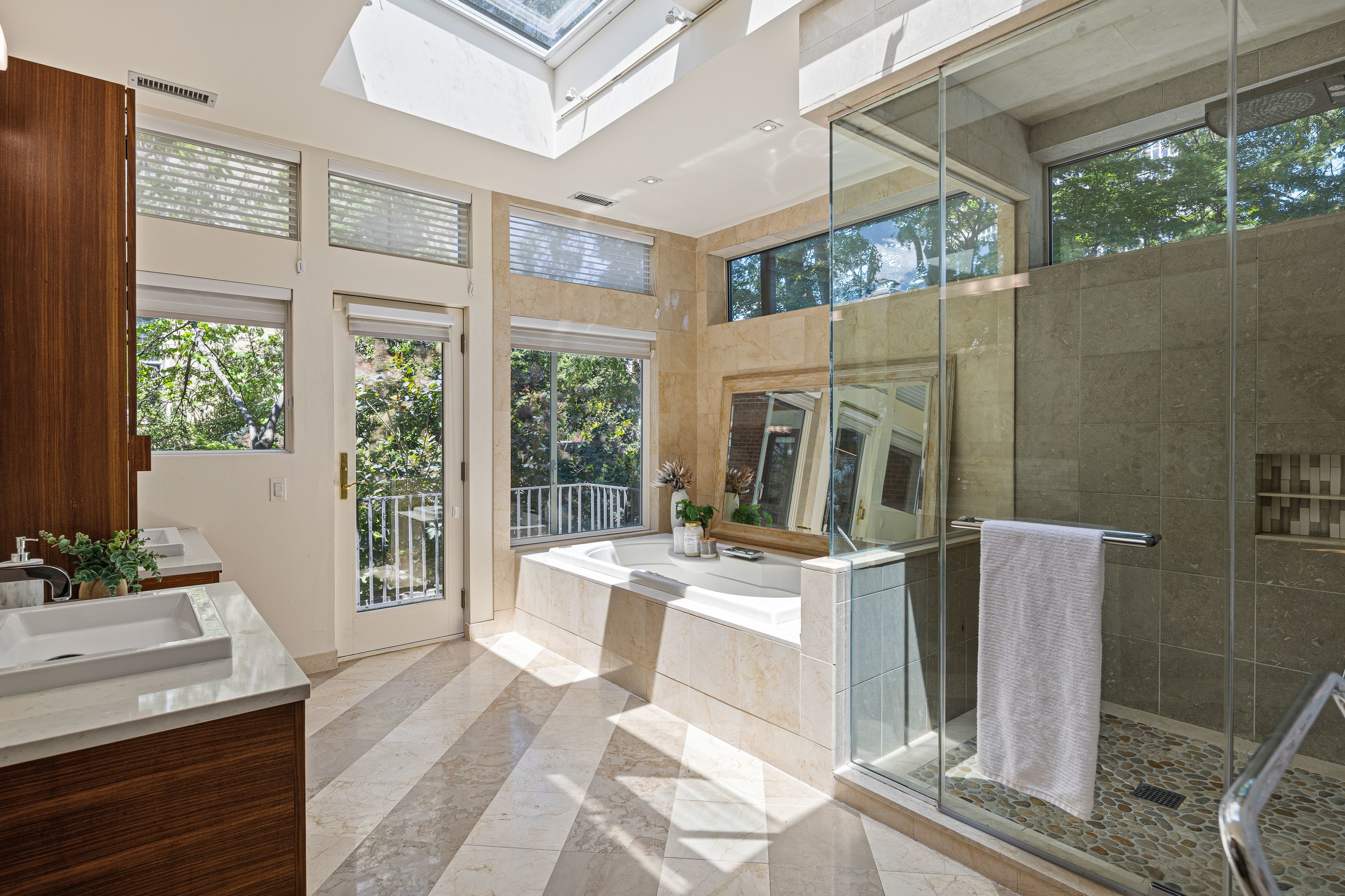
The en suite bathroom — one of three full and two half-baths — contains a steam shower and a custom walk-in closet.
The ensuite bathroom contains a steam shower and a custom walk-in closet.PLUSH Image Corporation
There are a fully finished basement and garage parking across the street.
A major draw of 113 Pine St. is its neighborhood, which DiNublia said has always been sought after.
Society Hill has easy access to the Headhouse Farmers Market, the riverfront, thoroughfares, and nearby neighborhoods such as Rittenhouse Square — making residents want to stay put.
“Homes don’t come on the market that often, certainly homes of this size,” DiNublia said.
The kitchen at 113 Pine St. in Society Hill.PLUSH Image Corporation
FloatLab, a public art feature that will offer an eye-level view of the Schuylkill, finished its voyage up the East Coast from North Carolina to Southwest Philly on Wednesday.
The 75-foot-wide floating structure arrived at its permanent home at Bartram’s Garden amid cheers from officials, who have been waiting 10 years for this project to come to fruition.
Expected to open in September, the semisubmersible structure was created through a partnership between Mural Arts Philadelphia, the nation’s largest public art program, and Bartram’s Garden, Kingsessing‘s 50-acre public park.
Without that partnership, “we couldn’t be here today making FloatLab a part of one of the most vibrant sections of riverfront in the city,” said Maitreyi Roy, executive director of Bartram’s Garden.
The project cost $5.5 million, funded by both public and private assistance from organizations such as the William Penn Foundation, the Pennsylvania Redevelopment Assistance Capital Program, the U.S. Department of Housing and Urban Development, and the City of Philadelphia, among others.
FloatLab represents a collaboration between ecology and art.
Bartram’s Garden’s more than 125,000 annual visitors will be able to participate in outdoor art programs, boating, fishing, and other riverfront activities. Additionally, officials anticipate the space serving as a classroom where students can learn about this section of the Schuylkill’s unique tidal wetland ecosystem.
FloatLab arrives at Bartram’s Gardens in Southwest Philadelphia.Aidan T. Gallo / Staff Photographer
“The possibilities are endless,” said Jane Golden, the founder of Mural Arts. “It’s really a platform where great things can happen — both that are educational, that are performative, and that are also just about the beauty that is all around us.”
Designed by artist J. Meejin Yoon and Höweler + Yoon Architecture, FloatLab is the country’s first tide-responsive public space, utilizing a ballast system to keep the structure at water level, with a portion submerged underwater. At FloatLab’s highest point, visitors will be positioned above the surface of the river as if they are standing on a dock; however, as they continue along the circular ramp, a declining sectional tilt brings visitors eye level with the Schuylkill.
Judy Hellman, the director of special projects at Mural Arts, said that at the structure’s lowest point, she can reach over the wall and touch the river. “It just totally changes one’s perception of the river and this landscape.”
As crews moored FloatLab to four steel columns on Wednesday, officials with Bartram’s Garden and Mural Arts hugged and shouted “finally!” — indicative of a long-awaited plan manifesting before their eyes. The project originated from a grant received from the William Penn Foundation for implementation in 2016. Then, Mural Arts entered into a contract with North Carolina-based East Coast Steel Fabrication, who oversaw the creation of FloatLab.
FloatLab departed from North Carolina on May 20, a decade after the first grant was obtained, and traveled north via a tugboat called the Island Trader and a barge. After a three-week journey, FloatLab arrived at its destination — the southernmost point of the Schuylkill — where Commerce Construction will complete the installation, which is expected to take approximately six weeks.
Roy emphasized that FloatLab will celebrate the efforts of those who have worked to make the river cleaner, and spark community engagement with the area’s natural environment.
“I firmly believe that people care for and will take care of things that they love,” Roy said. “So the more they have those relationships, the more they’ll speak up when bad things happen. They feel that they are truly stewards.”
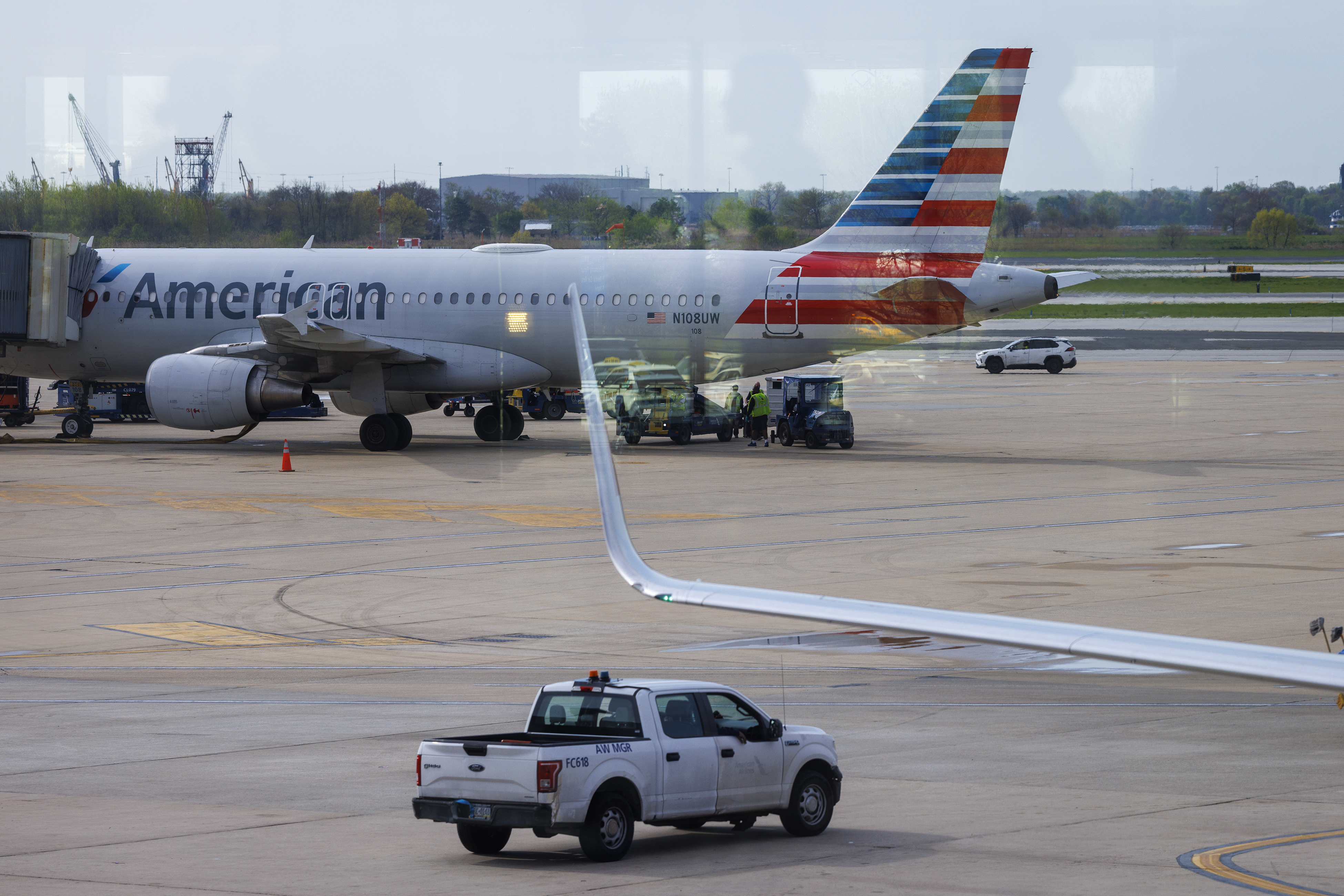
American Airlines permanently removed all future flights from Philadelphia to Doha, the capital of Qatar, from its schedule this week. The update follows a late February decision that suspended all Philadelphia-Doha flights until 2027, due to the flare in regional hostilities.
The airline’s flight to Doha held the title of the longest-ever flight departing from Philadelphia International Airport (PHL), 14½ hours that covered approximately 6,798 miles.
“As part of an optimization of our network and fleet, American has made the difficult decision to discontinue service to Doha, Qatar (DOH). We will proactively reach out to impacted customers to offer them alternate travel arrangements and apologize for any inconvenience,” American spokesperson Bri Harper said in a statement emailed to The Inquirer.
The Philadelphia-Doha route originated in 2023 as part of an expanded code-share agreement — a policy that allows airlines to sell seats on flights operated by other airlines — between American and Qatar Airways, the leading carrier in the Middle East.
The companies first partnered in 2013 when Qatar Airways joined the now 16-member Oneworld airline alliance, featuring participants such as British Airways and Iberia. In 2017, public disputes emerged between American Airlines and Qatar Airways. Since some Middle East airlines receive government subsidies, they can operate certain routes at a loss and encroach on U.S.-operated flight routes. Yet, in 2020 the companies reconciled by renewing their code share, and an expanded agreement two years later gave American’s customers the ability to book travel on Qatar flights via Doha to and from 16 new countries.
To fill the vacancy left by American’s exit, Qatar Airways is returning to PHL and will startdaily service to Doha beginning Aug. 1.
PHL chief commercial officer Kate Sullivan said flights from Philadelphia to Doha have been “an important economic generator” for the region.
“The PHL-DOH route also supports significant outbound and inbound business and tourism traffic — including visitors seeking advanced medical care — by bringing passengers from Doha and throughout Qatar Airway’s vast global network to our region.”
American anticipates flying 750,000 flights this summer. To meet Philadelphia’s demand, American recently launched nonstop service to additional cities in Europe, including Budapest, Hungary, and Prague, Czech Republic. For international flights, American’s PHL hub will offer nonstop service to 19 destinations across the Atlantic.
American is PHL’s largest air carrier, which conducts an average of 400 flights per day. It also ranks 10th in the city’s top employers, according to the Pennsylvania Department of Labor.
Editor’s note: This story has been edited to update news that Qatar Airlines is returning to Philadelphia.