Author: Olivia Prusky

  • Manayunk is embarking on another new era after decades of evolution

    Manayunk is embarking on another new era after decades of evolution

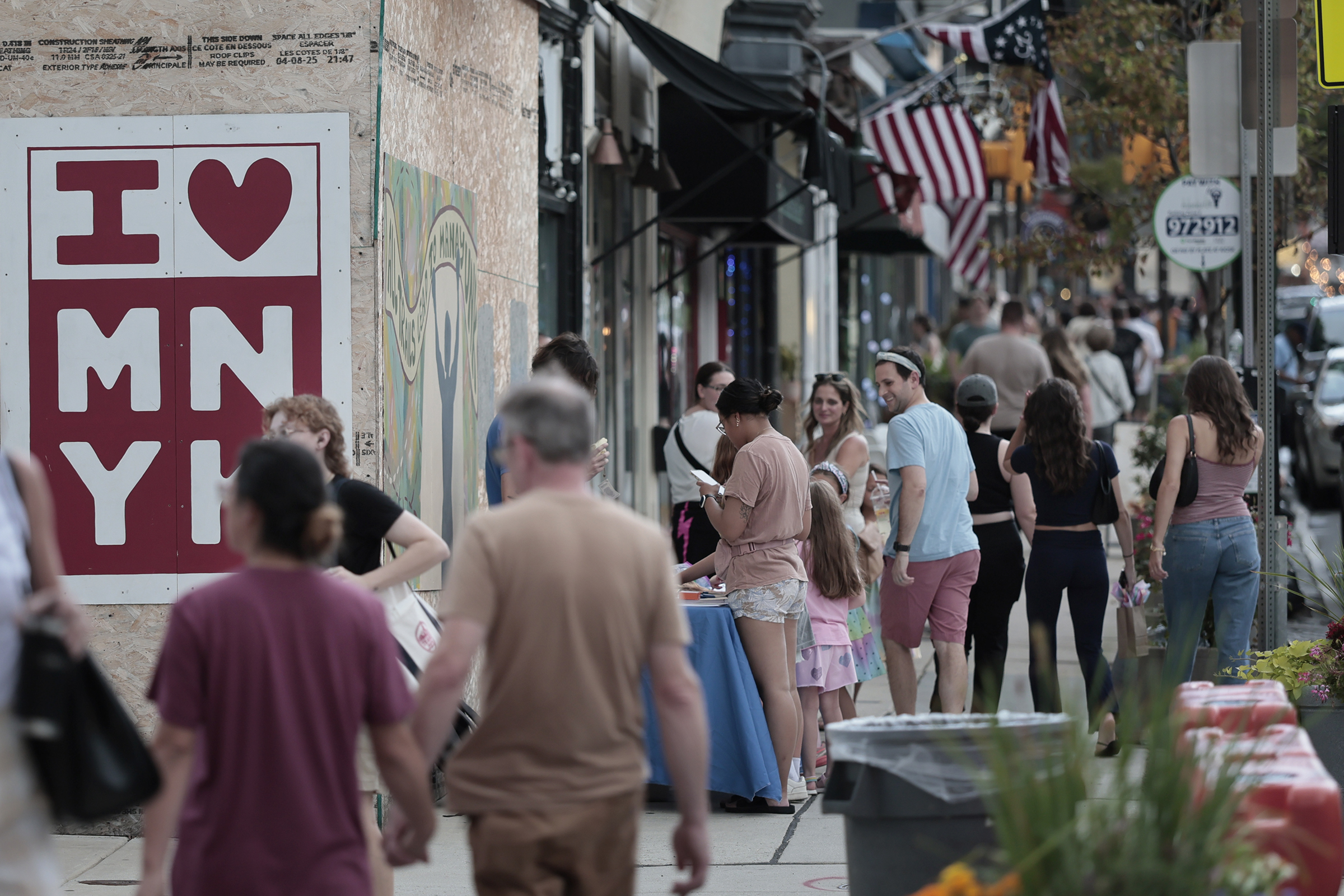
    On the last Thursday of July, during Manayunk’s summertime Stroll After Hours event, throngs of young families pushing strollers and couples walking dogs roamed the business corridor.

    Some stopped at art vendors with frames sprawled across the sidewalk, while others meandered down Grape Street to grab a bite from a food truck or claim a seat at the outdoor screening of Toy Story.

    On such an evening, Main Street Manayunk’s evolution is on full display.

    The riverside neighborhood in Northwest Philadelphia has seen many eras, from textile mills in the 19th century to chain retailers in the 1990s, to today’s collection of local upstarts.

    “It’s the best it’s ever been,” said Jen Wankoff, 51, of Roxborough, who turned out to Stroll After Hours with her friend, Jen Filip, 50.

    “It used to be a lot more commercial. There was a Banana Republic, a Pottery Barn, but then once one left, they all left,” said Filip, who has lived in Roxborough since the early 2000s. “Now it’s all small businesses.”

    More changes are coming to Manayunk. Even as apartment development has slowed in much of Philadelphia, over 1,800 new residential units are proposed along or adjacent to Main Street. All that additional population stokes neighborhood anxiety about traffic and parking, but retailers expect it will be good for business.
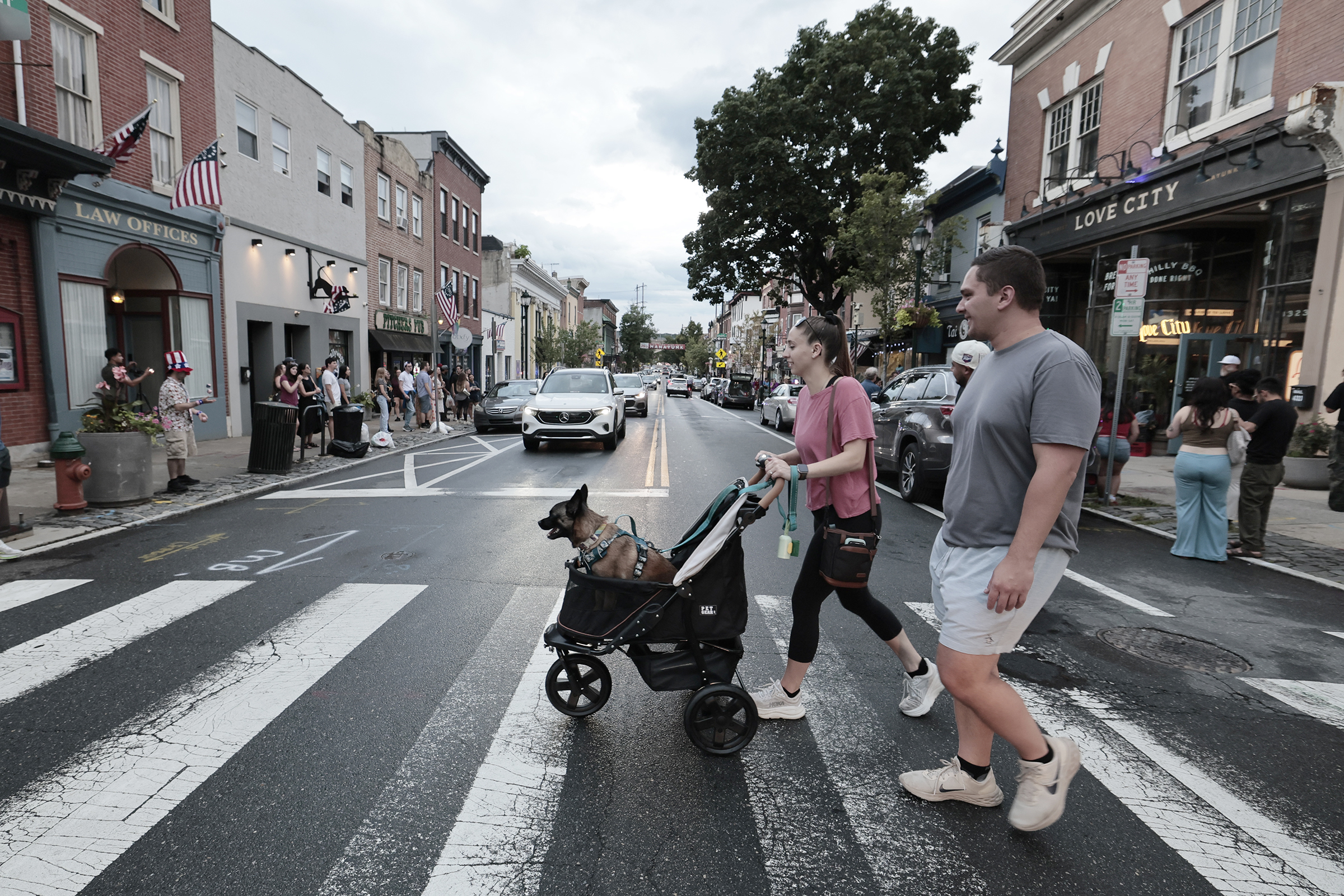
    Kim Albanowski of Philadelphia pushes her dog, Koda, across Main Street in “his chariot” as Jason Pepin looks on.Elizabeth Robertson / Staff Photographer

    “There’s probably going to be 1,600 new people living in those units, and they’re all going to come to Main Street to shop and eat,” said Dan Neducsin, 83, who has long been the largest property owner on Main Street and helped shape the identity of the corridor.

    “The restaurant scene has been strong [since the 1990s], and now I think it’s even going to get stronger,” said Neducsin, who has sold 12 of his properties in recent years to long-term tenants and small-business owners like Tim Spinner, owner of Taqueria Amor.

    “I just want to see the people who I have in there now do well, and my tenants have welcomed the opportunity,” said Neducsin, who emphasized that his company is not closing or selling all its holdings. But “it does make sense now for some new people to come in and take advantage of what’s here.”

    Manayunk’s Main Street appeal

    In the past two years, 12 new businesses opened along Main Street.

    One of them is Riptide Tavern, opened in June by Spinner, who also owns Taqueria Amor next door.

    Spinner said he wanted to open a neighborhood bar with creative cocktails and a cheap beer menu — much like a dream restaurant he conceived for a culinary school project years ago.

    “I wanted to be in the Caribbean or down the Shore, but along the Schuylkill River with the canal back there is close enough,” Spinner said.
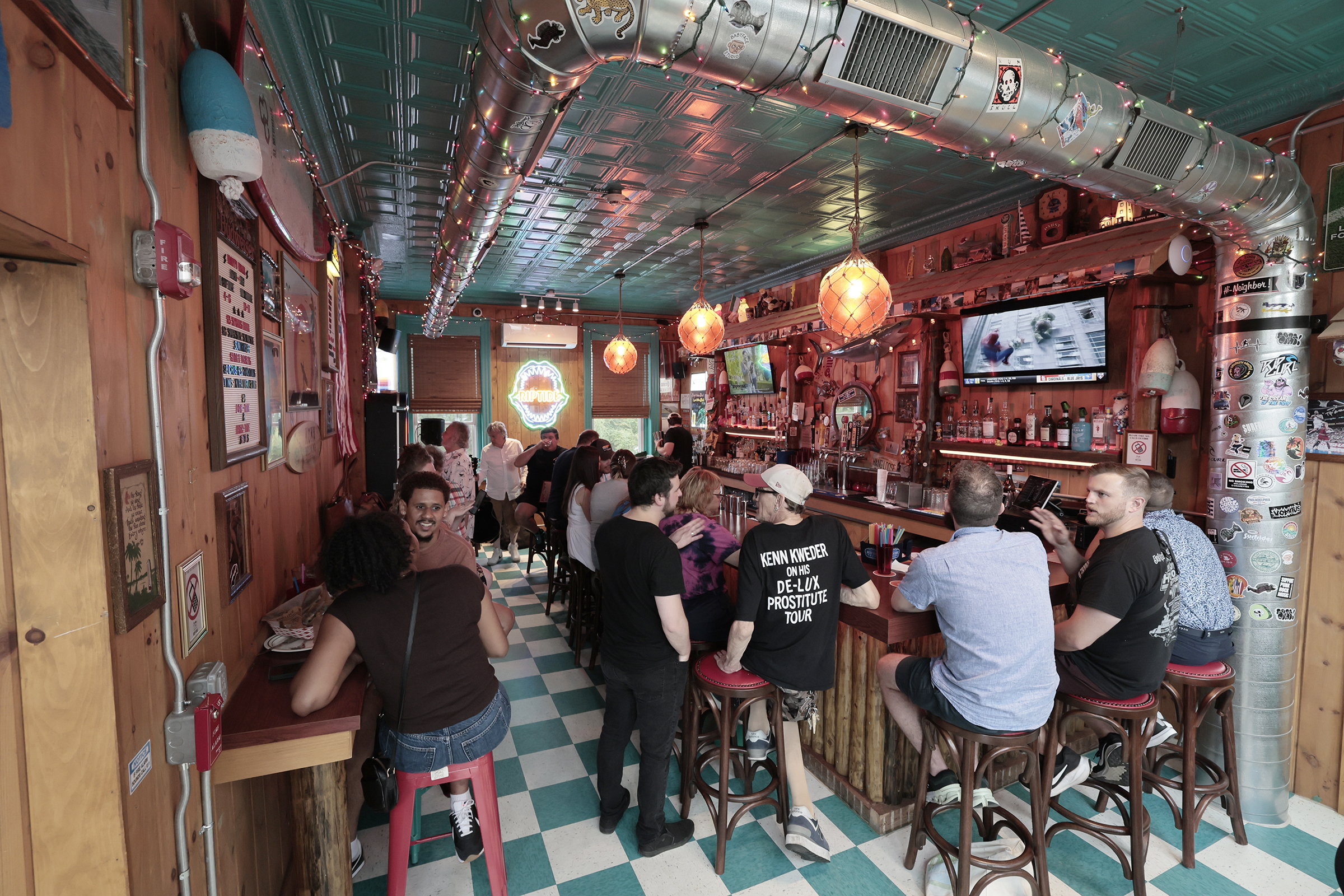
    The Riptide Tavern in Manayunk is packed on a Thursday during Stroll After Hours.Elizabeth Robertson / Staff Photographer

    Eleanor’s Consignment is set to open on Main Street in October. Owner Emily Mannix, a former paralegal who has lived in Manayunk for two years, named the consignment store after her late mother, who died in 2023. They shared a love of secondhand-shopping.

    “This has been something that has been on my mind for the past four years,” Mannix said. “Life is short, and I might as well jump in and try.”

    It’s not a bad place to do that. Realtor Christine Ertz notes that while rent is not low, it’s more affordable than in areas like South Street and Queen Village.

    “Manayunk has the demographic businesses want,” said Ertz. “It has the younger folks, but also the more mature folks that have expendable income, and we’ve got the 27-to-35-year-olds that really enjoy the niche, smaller stores.”

    The apartment boom in Manayunk promises to add even more. Many of the new developments have smaller units, which are likely to attract single people or younger couples. The price points of the new rentals, while lower than Center City or Northern Liberties, also suggest that tenants will have disposable income.

    Those changes haven’t been without controversy. The Manayunk Neighborhood Council has pushed back against development it deems as out of scale with the community, and that’s often lacking new commercial space, affordable housing, and parking while being weighted to small apartments.

    John Hunter, an architect and zoning chair of the Manayunk Neighborhood Council, says few of the new buildings have commercial space to add to the neighborhood’s daytime vitality. He disagrees with the idea that the apartment boom will boost local businesses.

    “We have heard that misrepresentation for years now — that new apartments will generate pedestrian traffic along Main Street,” Hunter said. “Fifteen years of those promises has proved that is not the case.”

    But some neighborhood observers see the development interest along Main Street as a concrete example of the area’s ability to attract people and investors.

    “We’re seeing a diverse group of experienced, well-regarded developers all making independent decisions to put their capital and time into Manayunk,” said Veronica Blum, a retail broker with MPN Realty who has been working with Neduscin on leasing and sales.

    “When that many smart people come to the same conclusion about a neighborhood, it says a lot,” said Blum. “It’s a real vote of confidence in Manayunk’s future, and I think we’re just beginning to see what’s possible.”
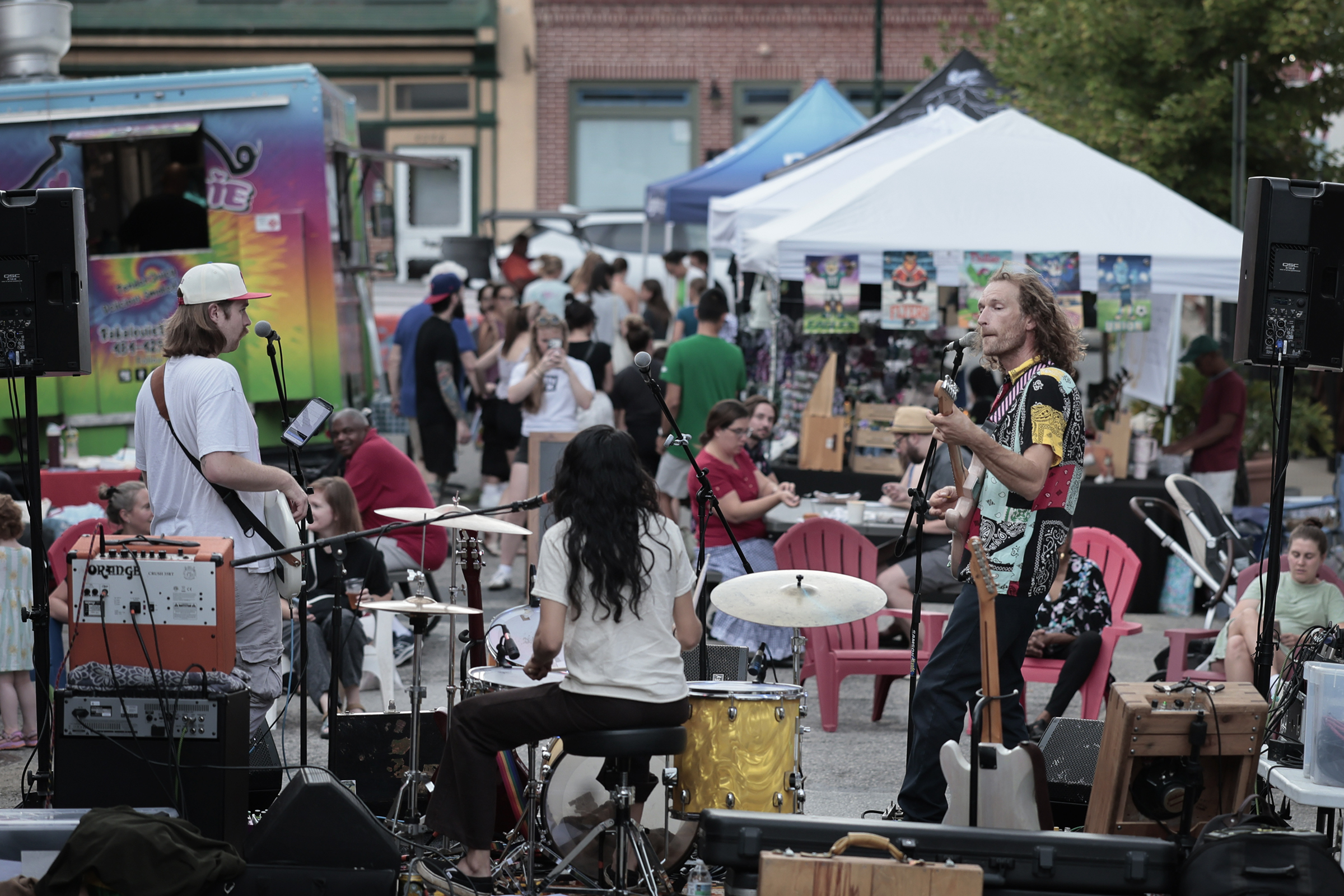
    Nervous Nikki and the Chill Pills perform during the Stroll After Hours event on July 30.Elizabeth Robertson / Staff Photographer

    The cost of staying open

    Still, the commercial corridor has seen turnover and closures.

    Pizza Jawn closed and Kismet Bagels came in its place — Pizza Jawn’s owner bought the former Manayunk Tavern down the street, which became Bar Jawn. Smiley’s closed and Blu Zone Cafe moved in; and Iron Works Fitness opened up in the former Kismet Cowork.

    A large restaurant space sat empty for months after Winnie’s closed last November. But, two Roxborough natives recently leased the space for a new “punk French” restaurant, planned to open in late fall.

    Joan Boroff Denenberg, who does marketing and retail strategy for the Manayunk Development Corp. (MDC), said a few storefronts remain empty because the property owners aren’t local and are backed up with other projects throughout the country.

    Neduscin says he isn’t struck by an unusual number of vacancies along Main Street. But maybe that’s because when he began buying properties there in the late 1980s, much of the commercial strip was vacant to the southeast of Cotton Street.

    “Anytime I saw a property that was available in Manayunk I ended up buying it because I thought if I owned enough properties, I could kind of set the direction of the street,” Neduscin said. “I got to handpick who my potential tenants would be. I tried to bring tenants that I thought would bring additional people here.”
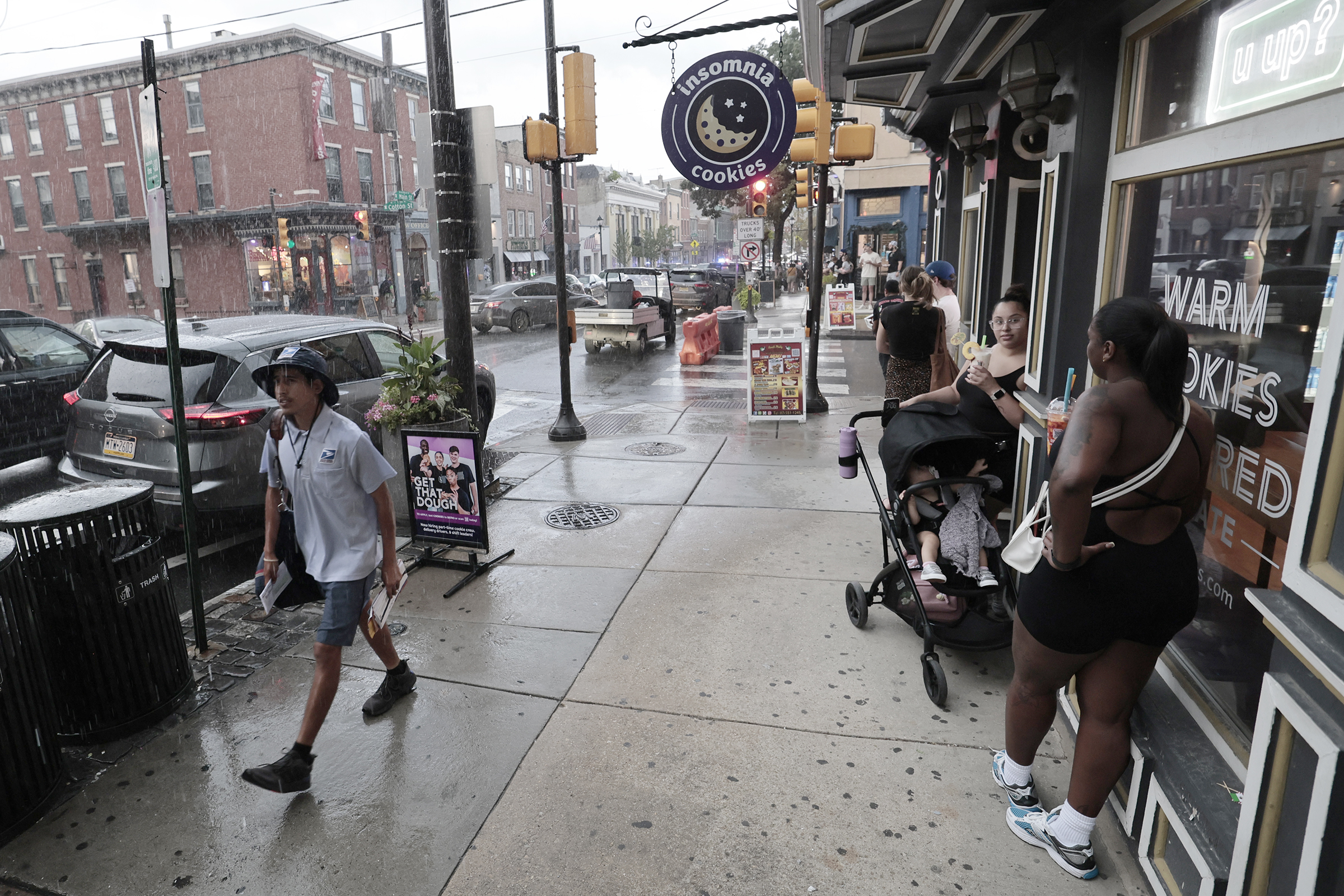
    Insomnia Cookies is one of the few remaining chains with a presence on Main Street in Manayunk.Elizabeth Robertson / Staff Photographer

    The bustle of Main Street now extends all the way down to Shurs Lane, roughly double its occupied length when he started.

    Neduscin also says he really tried to find independent entrepreneurs to lease to — “I didn’t want a McDonald’s on Main Street” — and those restaurateurs and small-business owners gave Main Street a unique identity.

    More than 30 years later, that’s why he wanted to sell some properties to one-time tenants like Spinner.

    Still, business owners say myriad challenges remain. The permitting process is notoriously slow, especially if a trip to the Zoning Board of Adjustment is necessitated. That can leave business owners paying rent without being able to open their doors as they wait for permission.

    “When it takes longer, you have to have deeper pockets, and I think that does scare some prospective businesses,” Neduscin said.

    Further, owners on Main Street face the macro challenges affecting small businesses throughout the region. Brandy Deieso, who opened the gift boutique the Little Apple in 2010, said the cost of goods has increased due to tariffs, shipping costs, and rising gas prices.

    “Being a street full of locally owned small businesses is great,” said Melissa Walter, co-owner of Love City Brewing, which just opened a second location in Manayunk. “But as we all know, running a small business is really hard.”

    Building a business community

    The bubblegum pink Cupid’s Bookshop storefront has built a following and even attracted customers from Baltimore and New York since opening last year. Now, it’s upgrading to a bigger location on Main Street.

    “The growth we’ve had, it’s been amazing,” said owner Tina Long.

    Cupid’s capitalized on the insatiable demand for bodice rippers and love stories, and Long says the bookshop benefited immensely from the MDC’s incubator program. Cupid’s was the first participant.

    The program allowed Long to lease a storefront at 106 Grape St., owned by the business association, for a below-market monthly rent of $1,000 for up to three years, and the MDC provided guidance and support. With her new storefront opening in August and a five-year lease, she’s graduating from the incubator space early.
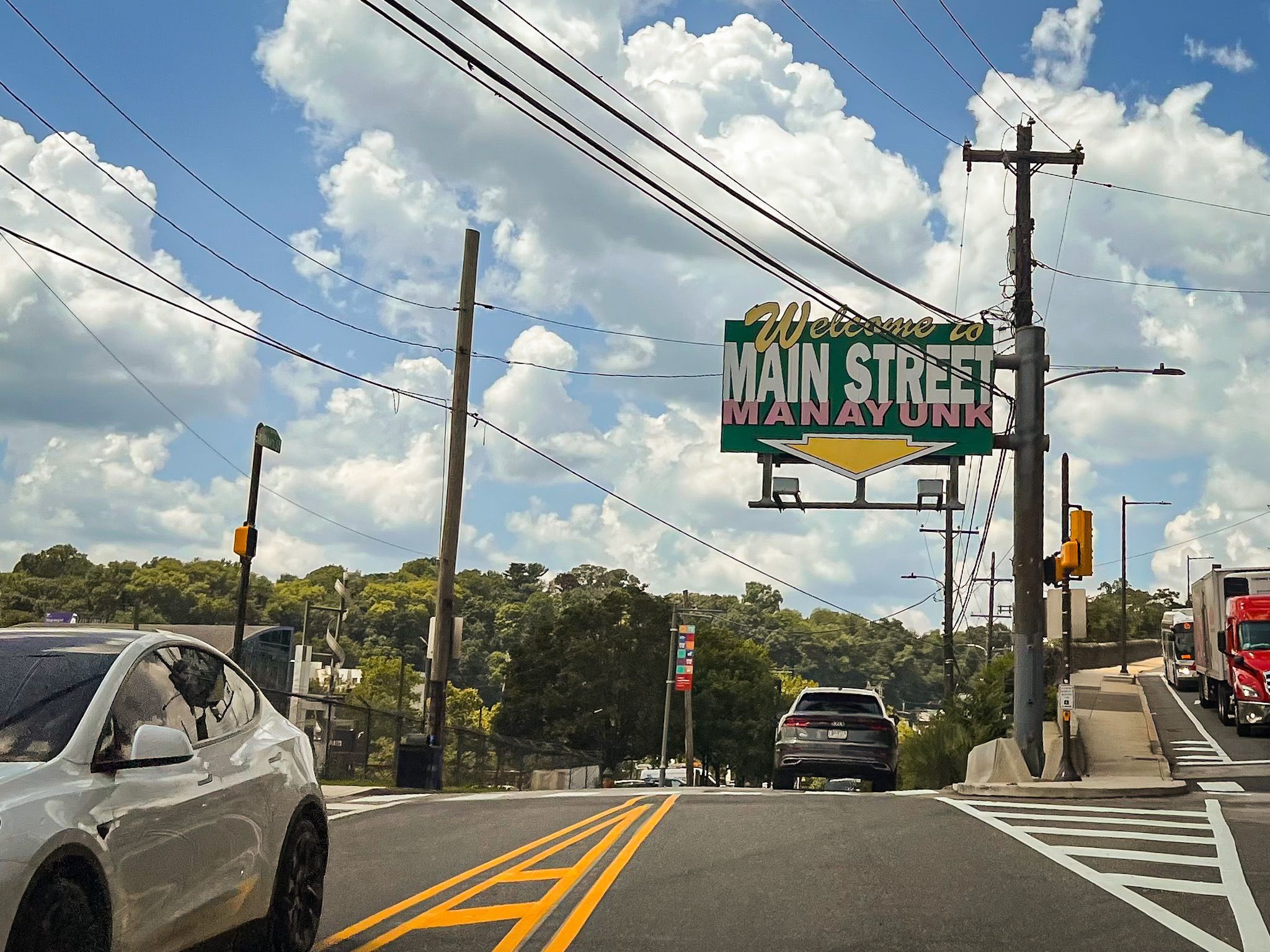
    The “Welcome to Main Street” sign hangs over Main Street at Ridge Avenue in Manayunk.Michael Klein / Staff

    “We loved the idea, but it turned out beyond our wildest dreams,” MDC executive director Gwen Mccauley said. “She’s now becoming part of the fabric of our district.”

    Baby Face Studio also ended up on Main Street in part because of the MDC.

    Artist and owner Kim Canefield in 2022 applied for the MDC’s emerging artist tent at the Manayunk Arts Festival, where she could set up shop for $100 instead of operating a $500 tent on Main Street. The festival draws over 300 artists and 150,000 visitors each June, McCauley said.

    She set up a full-time vendor tent at the next three Arts Festivals. Each time, she was stationed in front of an art gallery, not knowing that the same space would eventually become Baby Face Studio.

    “I just kept looking at it, and peeking through the window,” Canefield said. “The whole time I was staring at the future of what the studio was going to be.”

    Love City Brewing already has a foothold in Callowhill, but saw Manayunk as a place to grow. Its second spot opened in the former Fat Lady Brewing. When searching for a new location, co-owner Walter was attracted to Main Street’s critical mass of small, independent businesses.

    “Seeing them succeed, we thought: ‘Oh, we’re a small, local Philly business too,’” Walter said. “We can make it work there.”

  • Northwest Tool Library in Mount Airy aims to make home maintenance more accessible

    Northwest Tool Library in Mount Airy aims to make home maintenance more accessible

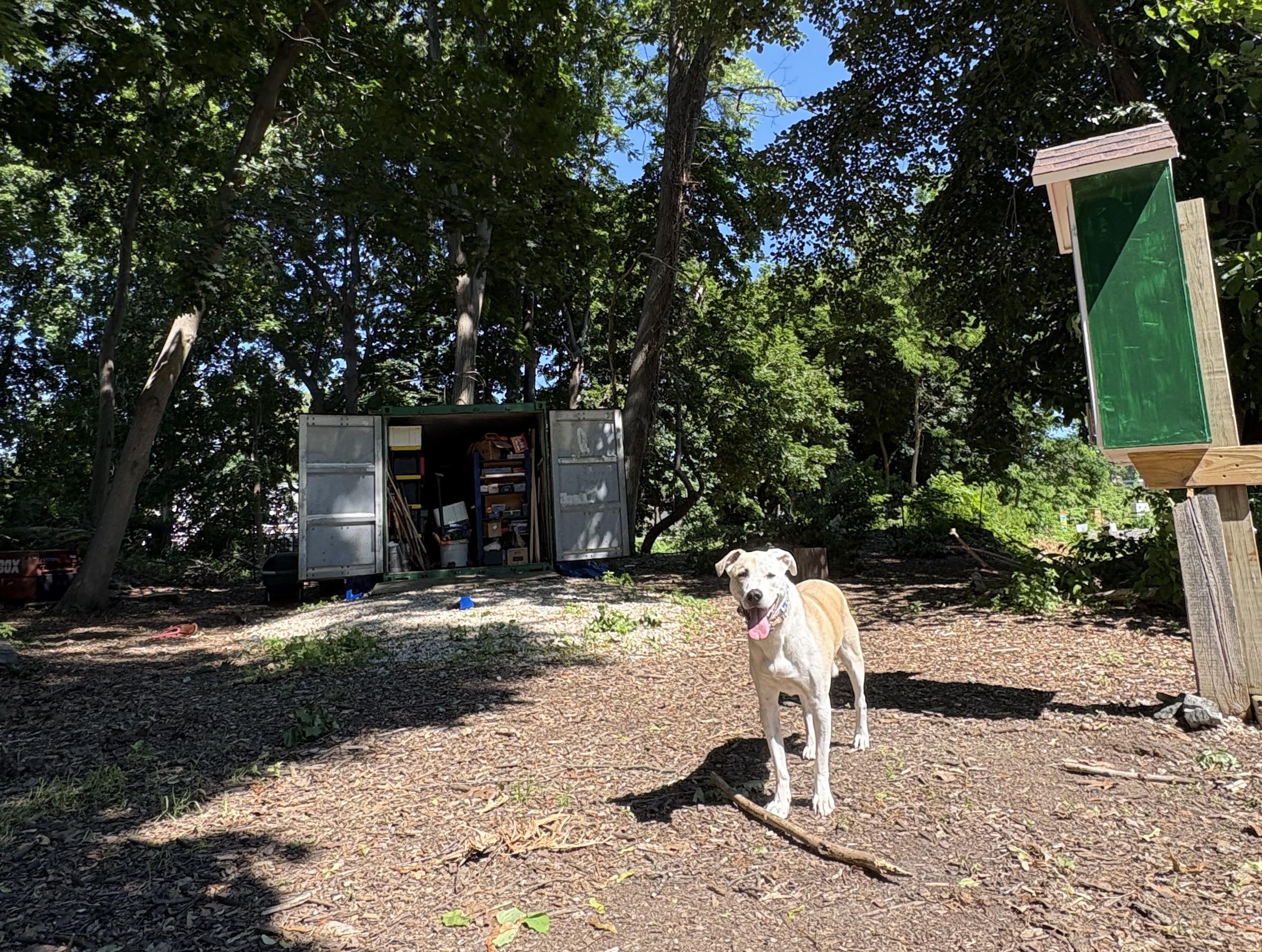
    Inside a shipping container on a lot beside SEPTA’s Carpenter train station in Mount Airy, thousands of old tools sit waiting, ready for a new life as part of the new Northwest Tool Library.

    Set to open on Sunday, the tool library will lend hand tools, power tools, ladders, and various other gadgets to members in an effort to make home maintenance more accessible.

    “We don’t all need to have leaf blowers,” said Jo Winter, executive director of West Mount Airy Neighbors (WMAN), the nonprofit civic group sponsoring the initiative. “If some of us have them in our shared space, it can be another effort to speak to the ethos of our community.”

    The idea for the project sparked a few years ago when a Mount Airy resident died and his wife donated his tools to WMAN, Winter said. The neighborhood organization runs EcoLab, a community project revitalizing green space in a once-neglected lot behind a nearby Regional Rail station, and stored the tools in a shipping container on the lot for tree tending.

    Mount Airy residents have long traded tools through the Facebook group Mount Airy Tool Exchange, especially as downsizing neighbors wanted to get rid of equipment they no longer had room for. But interest grew in having a designated tool library, as locals looked to the West Philly Tool Library as an example.

    Ash Fritzsche was one of those interested residents. As an electrician, she has taught classes at the West Philly Tool Library, but when she moved to Mount Airy, it became too far to frequent. So she got involved in bringing one northwest.

    Ultimately, WMAN realized the shipping container, which already housed landscaping tools, could also be used for “this other project everybody’s been talking about,” Fritzsche said.

    As a sponsor, WMAN provides organizational support for the library, while volunteers run the day-to-day operations.

    “It ticks all the boxes of something that would work in our community,” Winter said. “It’s mutual aid; it’s green; it’s this idea of sharing what you have, not throwing it into the trash.”

    Organizers ran tool drives to collect donations, and now the library has thousands of tools in its still-growing inventory. Once the tool library opens, volunteers will run two shifts a week on Wednesdays and Sundays when members can stop by and borrow tools.

    To join, members must pay an annual fee based on a sliding scale, so individuals contribute what they can afford. Fritzsche recommends removing three zeros from one’s annual income: If you make $50,000, pay $50 a year to support the library.

    The organizers dream bigger than a shipping container — which they have already maxed out with the size of their stock. They hope to move into a brick-and-mortar location and offer programming, such as home improvement and life skills classes.

    For example, Fritzsche believes everyone should know how to change a tire, change the oil, and know the basics of their plumbing and electrical systems, so they are empowered to be self-sufficient when something goes wrong.

    “Life is so cyber right now,” Fritzsche said. “I’m interested in any sort of simple crafts that can be taught so that people can engage with the real world.”

  • Was the World Cup good for Philly’s economy? The early signs are in

    Was the World Cup good for Philly’s economy? The early signs are in

    Prior to the kickoff of the World Cup, the organizers of the city’s events projected the soccer tournament would bring $770 million to Pennsylvania in gross revenue.

    Yet, George Diemer, a sports economist at Temple University, said those in his field tend to be skeptical of pre-event projections. Organizers “have an incentive to blow the numbers up,” he said.

    Midway through the tournament, the Economy League of Greater Philadelphia estimated that $30 million to $90 million would actually stay in the city. The economists factored in metrics such as leakage, when a share of money spent goes to national organizations instead of staying local. The current analysis, done after the tourists have left, leans “toward the lower end of that range,” said Saloni Tandon, director of research and analytics at the Economy League, the region’s independent civic think tank.

    “Even if it goes up, it feels like our estimation is likely to stay in the tens of millions, rather than cross into the range of hundreds of millions,” said Tandon.

    The cleat-kicked dirt is still settling, and Tandon said conclusions will continue to change as more data comes to light. The city is looking for a consultant to craft a postmortem analysis on the year’s largest events’ economic impact.

    Here is what we know so far.

    Hotels and short-term rentals made more money

    Center City hotels made out well, as almost 410,000 fans from more than 190 countries flocked to Philadelphia to watch the six matches at Lincoln Financial Field.

    The Philadelphia Convention & Visitors Bureau data say on the dates of the six soccer Philadelphia matches, hotels saw a 50.3% increase in revenue compared to those same dates in 2025.

    Using that data, however, Tandon calculated that Center City hotel occupancy on the game days increased around 3% — modest gains. Much of that revenue increase was thanks to higher per-night pricing by the hotels due to the special event.

    A 3% occupancy increase doesn’t validate “a massive spike in terms of tourism,” Tandon said.

    Ethan Conner-Ross, executive vice president of consultancy firm Econsult Solutions Inc., noted that hotels may have lost some business to short-term rentals, with “people finding a different way to stay based on their needs,” he said.

    An Airbnb spokesperson said the World Cup was the biggest hosting event in the company’s history in all host cities.

    For short-term rentals in Philadelphia, revenue reached $38.3 million over the tournament window — up 25% from the same period last year, according to AirDNA, a research company that tracks the short-term rental market.

    But that gain was almost purely pricing — with $7.5 million of the $7.8 million increase coming from higher rates. Translation: hosts drove revenue by increasing prices rather than filling more nights. Occupancy dropped in 12 out of 16 host cities compared to the same period last year, including Philadelphia, as supply outpaced demand.

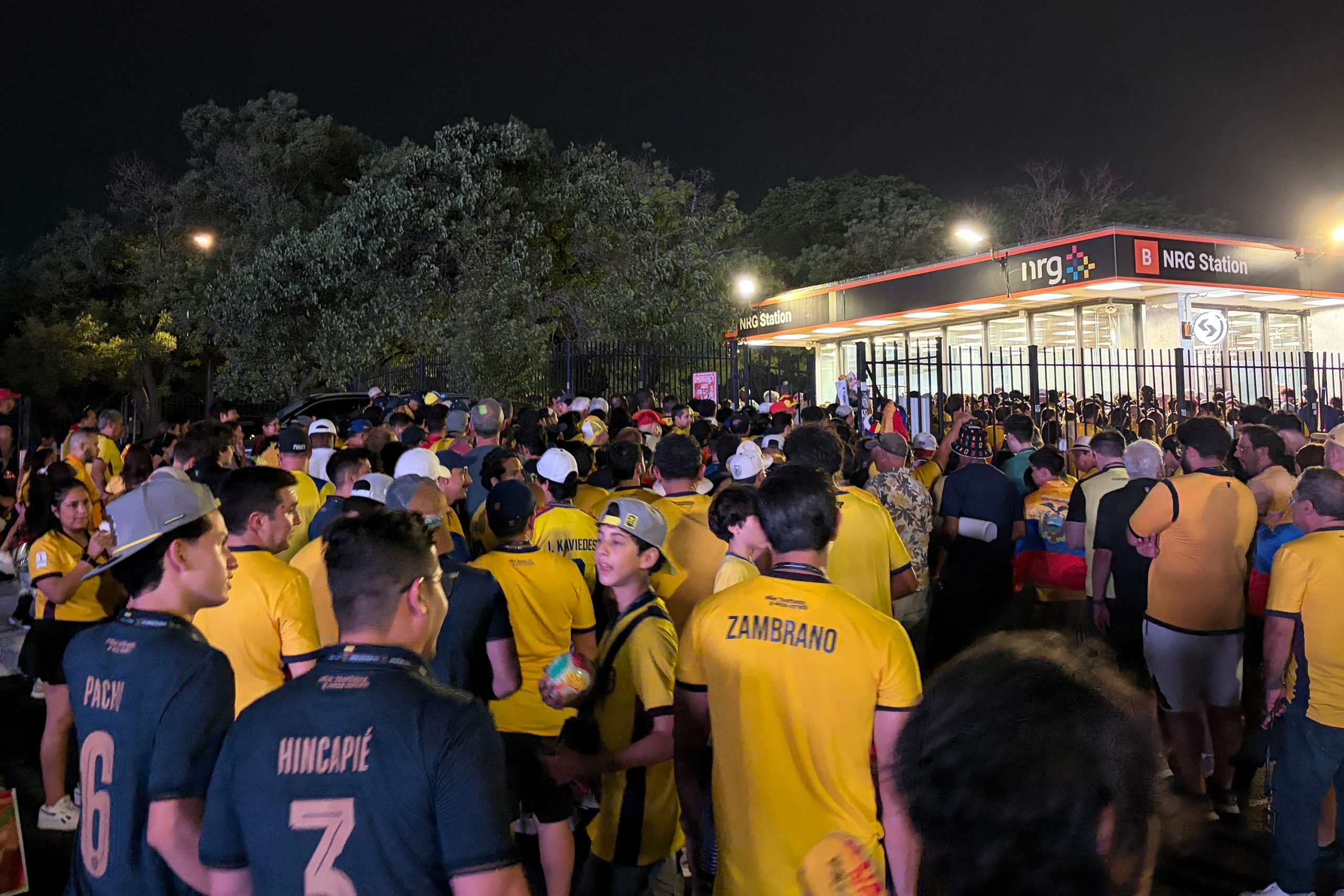
    Fans wait outside SEPTA’s NRG Station near the stadium following Ivory Coast’s victory over Ecuador on Sunday, June 14, 2026.Michelle Myers

    How SEPTA, PHL, and rideshare handled more travelers

    Hosting a large sports event can strain local infrastructure as tourists crowd public transit and other services, leaving high costs of building infrastructure or congestion for locals.

    Diemer pointed out that it took Montreal 30 years to pay off its debt from hosting the 1976 Olympics.

    Since the six World Cup matches in Philly were spaced out over June and July, Diemer said that helped diffuse the costs.

    “I think it was successful,” said Diemer of the decision to ”spread out the games so it won’t be overloading the local infrastructure.”

    SEPTA, for example, saw manageable bumps in ridership over the summer. On June 19, the day of the Brazil vs. Haiti match, SEPTA recorded the second-highest event ridership ever on the B line. (The first was after the Eagles won the NFC Championship in January 2025.)

    Travelers took advantage of public transit to get to and from the airport, as well. On the two days sandwiching a match, ridership on the Airport Regional Rail line typically increased at least 20%.

    At Philadelphia International Airport (PHL), international arrivals were up 8.3% in June year-over-year.

    Spokesperson Heather Redfern said that in a usual summer, PHL is typically a big outbound and connecting market to other destinations. This summer, there were more inbound passengers coming to Philadelphia from countries playing games in the city. In addition, many travelers, notably Scottish fans and Czech fans, took advantage of unique nonstop routes through PHL on the way to games in other cities.

    “We focused on delivering an experience for those passengers that made them fond of Philadelphia and want to come back and visit,” said Redfern, “From this perspective, we are very happy.”

    Despite some rideshare restrictions surrounding the FIFA Fan Festival in Lemon Hill, Uber drivers transported tens of thousands of fans to and from the festival and the stadium complex, according to Jazmin Kay, head of public affairs for Pennsylvania at Uber.

    Prior to the tournament, Uber onboarded more drivers and maximized earning opportunities for them: one way was creating an event-rider surcharge near venues, with 100% of those surcharges paid directly to drivers.

    For Lyft, on days when Philadelphia hosted a World Cup game, rides to bars increased by 18% compared to their typical average on the same day of the week. On June 19, rides to bars were 49% above average.

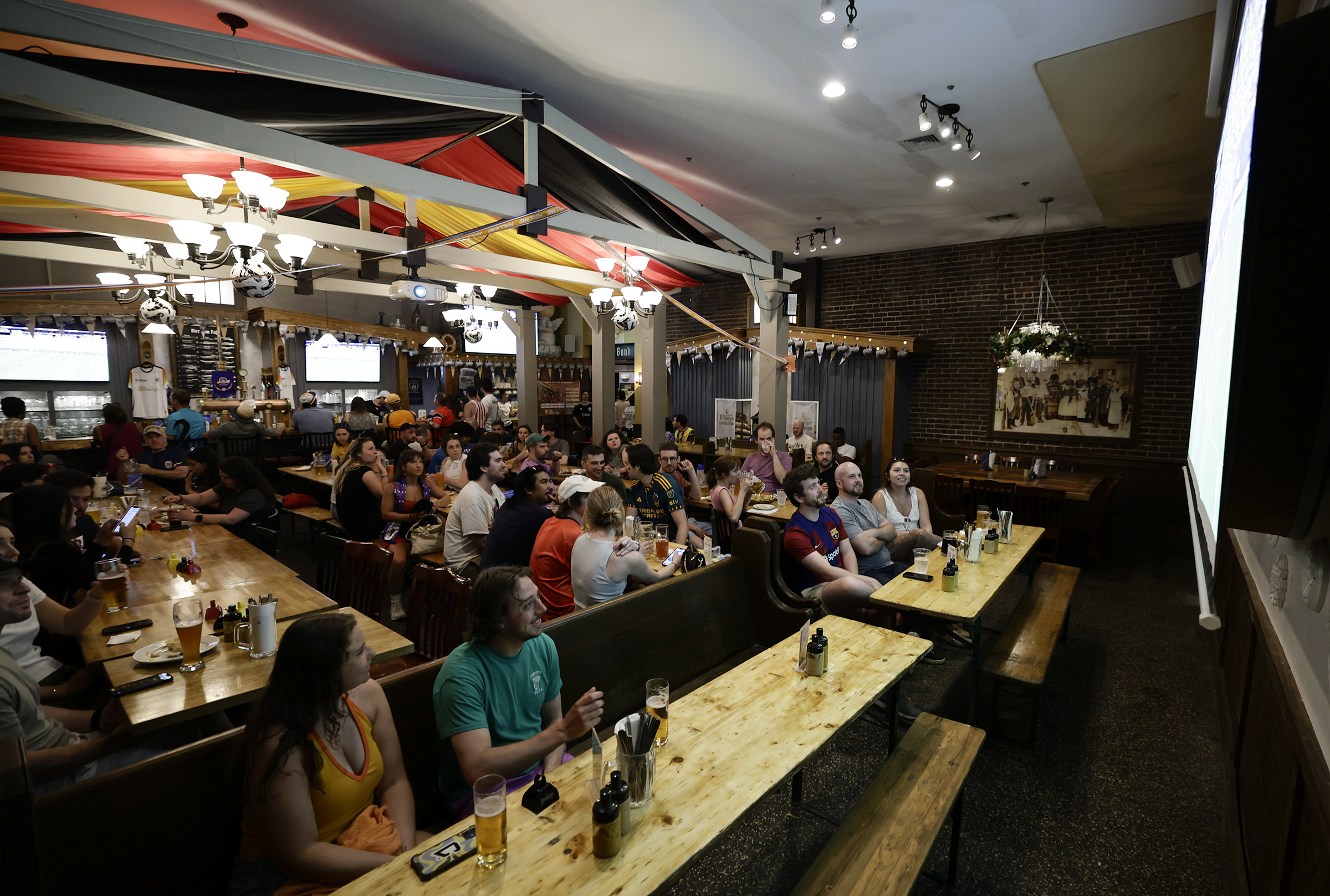
    Soccer fans watch Ecuador take on the Ivory Coast during a World Cup soccer watch party at Brauhaus Schmitz on Sunday, June 14, 2026.Yong Kim / Staff Photographer

    Where soccer fans ate and drank

    Philly’s fan festival saw 575,304 attendees, and bars nearby, like the Black Taxi, saw greater foot traffic and a boost in sales.

    For other Philadelphia restaurants, outcomes seem more mixed.

    On four of the six World Cup game dates, local restaurants that use reservation site OpenTable saw an increase in seated diners, according to OpenTable data. The biggest gain was 22% on June 25, and of the two dates when reservations decreased, June 14 was the worst with a 44% decline.

    At Reading Terminal Market, soccer fans helped drive a 13% year-over-year increase in June foot traffic. On June 19, the market saw more than 30,000 customers, setting a five-year record for Friday visitation.

    “Our prepared food merchants — especially if you are in the pretzel, cheesesteak, pizza, or burger business — had a great month,” said Annie Allman, CEO of Reading Terminal Market.

    Still, Allman noted that there was a drop in the number of loyal local customers that shopped at the market’s butchers, fishmongers, and grocers, “as they chose to stay home to avoid the crowds.”

    A longer-term reputation boost for Philly?

    It’s tricky to untangle the effects of the World Cup from tourism spending driven by other coinciding large events, such as the July Fourth celebrations for America’s 250th birthday.

    Additionally, not all impacts will be observed within the short period of the tournament. Some benefits, like an improvement of Philly’s reputation or publicity on an international stage, could be realized later on.

    “But it’s definitely in a mix of assets that affect how people think about Philadelphia,” Conner-Ross said, “and that contributes to those decisions that happen down the line.”

  • Moving in the city is a stressful puzzle. These Philly pros make it look easy.

    Moving in the city is a stressful puzzle. These Philly pros make it look easy.

    On a humid Wednesday morning in Manayunk, movers in sweat-soaked T-shirts hauled three movie chairs, each at least 100 pounds, up two flights of a spiral staircase in a three-story home about to welcome its new owner.

    Kevin Boras, a recent Temple University graduate working at Gentle Giant Moving Co. for the summer, has learned some tricks of the trade. As he tilted the widest chair on its side to squeeze through the entrance and over the railing, he explained, “Sometimes you gotta puzzle-piece it up the stairs.”

    After the unwieldy seats were handled, the movers looked to the next item — a thin floor lamp.

    Boras grabbed and huffed his way up the stairs, joking, “I don’t know if I’m gonna make it!”

    For most homeowners and renters, moves are stressful — once ranked more stressful than getting a divorce — but for the city’s professional movers, it’s just another day at work. Between parking troubles on tight South Philly streets and narrow doorways in historical trinity homes, these crews encounter and overcome Philly-specific challenges daily.

    But, as Sultans of Schlep owner Tom Brouillette said, most of the city’s biggest moving obstacles can be overcome.

    “Not everything is possible, but most things are,” Brouillette said.

    Old homes, big furniture

    Half of Philadelphia’s housing units were built before 1950, and movers say older homes tend to have smaller doorways, hallways, and staircases.

    So, larger, modern furniture is often a mismatch in these older homes, according to Jay Leone, a managing partner at EverSafe Moving Co. Sometimes, it’s unrealistic for a Samsung refrigerator to fit inside the entrance of a trinity.

    “There’s only so much you can do in terms of disassembling something to buy yourself an extra inch of space,” Leone said.

    An aged setting isn’t helped by the sizable items many Philadelphians own. James Dawkins, a regional manager at Two Men and a Truck, said his movers have faced retro pinball machines, pianos, and gun safes weighing more than 600 pounds. “People have a lot of fun toys in their house,” he said.

    One time a customer had Two Men and a Truck movers transport a casket inside a residential home. Once they confirmed it was empty, no further questions were asked.

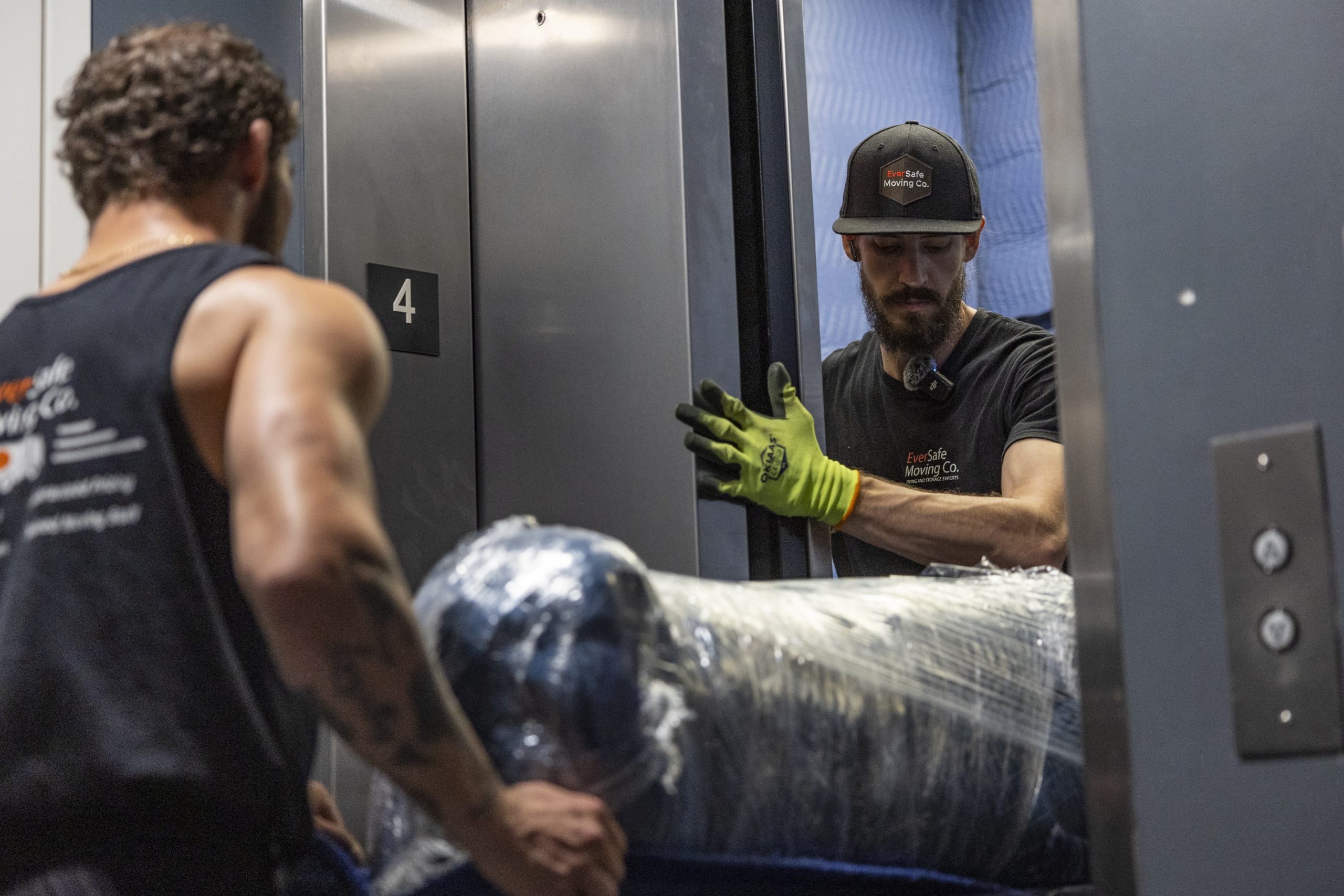
    Fred Meder (right) holds the elevator door while John Wulffen loads in furniture during a July move in the city.Aidan T. Gallo / Staff Photographer

    Often, the solution to small entrances can be hoisting larger items through a balcony or window. Sometimes, it’s more complicated.

    Fred Meder of EverSafe recalls an especially tricky move into a four-story South Philly home. Since its tiny staircases couldn’t accommodate the customer’s bulky furniture, Meder hoisted it in pieces up to the third and fourth stories through literal holes in the floor — the home had been designed with 5-by-5-foot trap door-esque openings in the floorboards of each level.

    “That was an interesting and tough scenario that I’m glad we don’t run into very often,” Meder said.

    Devin Latimore, owner of No Stress Movers, said older, mid-rise apartment buildings present additional challenges. While these buildings have elevators, the elevator shafts were typically built first, Latimore said, and the building was constructed around it “with no mind for modern, bigger furniture.” The elevators also tend to be manually operated, slowing down the moving process.

    “If the operator has to go to the bathroom, we’re stuck,” he said. “We have to wait for him to come back in order to do anything.”

    Still, stairs are not always the preferred option. Latimore once carried a 350-pound office printer up 184 stairs and said it was one of the hardest jobs he’s ever accomplished.

    “It feels like gravity gets stronger the higher you go,” he said. “We were trying not to drop it, and not die at the same time.”

    Parking troubles

    Parking in Philadelphia can be difficult for any driver on a regular day. It’s a nightmare for professional movers.

    South Philly’s narrow streets were not designed for big trucks — “You could lay across the street and touch both curbs,” Lattimore said — and one must be an experienced truck driver to navigate the area.

    For a recent South Philly move, Dawkins’ team had to park at the end of the block because they couldn’t get their truck to the house. The farther the truck is parked from the house, the longer and more strenuous the move.

    Manayunk is another challenging neighborhood for parking: “The worst of both worlds,” according to Latimore. Not only does it have tight streets, but traffic comes from both directions.

    For the Gentle Giants recent move in Manayunk, the moving truck was parked across the street, but the home was at a busy three-way intersection. The movers rolled furniture on top of dollies on the crosswalks, avoiding oncoming traffic like a game of Crossy Road.

    To reserve a parking zone, movers can obtain temporary permits from the city’s Department of Streets that bar other vehicles from parking in a specific area. But these permits aren’t foolproof.

    “It’s almost a 50-50 shot in Philly as far as whether the locals will abide by those parking permits, or even notice them,” Leone said. “We’re hoping nobody takes our spot before we get there.”

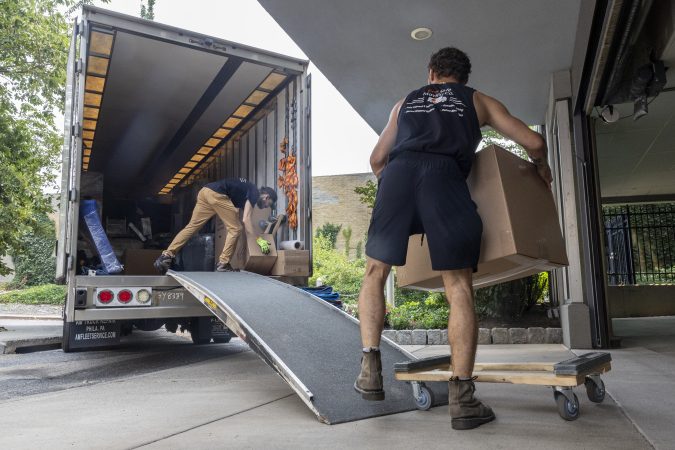
    Tom Martin of EverSafe Moving Co. moves furniture into his company truck for a Philly customer in July.Aidan T. Gallo / Staff Photographer

    Moving tips

    For a seamless move, Latimore emphasized the importance of hiring movers early. He said a majority of customers reach out only two weeks before a move and are quickly surprised and stressed by pricing and availability.

    “Start earlier than you think,” Latimore said. He recommended collecting estimates up to six months before a move, as costs increase closer to the moving date.

    Nearby parades, road closures, and block parties also are a factor to consider when choosing a moving date, as they can make a movers’ job near impossible.

    “You have so much happening in the city, and everyone is always celebrating something,” Dawkins said. “Sometimes it can throw a wrench in your plans.”

    When creating an estimate, movers will want to discuss a home’s challenges so the company can allot the correct amount of time and muscle. It’s important to be straightforward about all potential roadblocks.

    “Moving is one of the most challenging things; no one’s excited for it,” Dawkins said. “We try to make it as easy as possible.”

  • High-protein soft pretzels and soups are on the menu as Philly’s iconic food brands compete for GLP-1 consumers

    High-protein soft pretzels and soups are on the menu as Philly’s iconic food brands compete for GLP-1 consumers

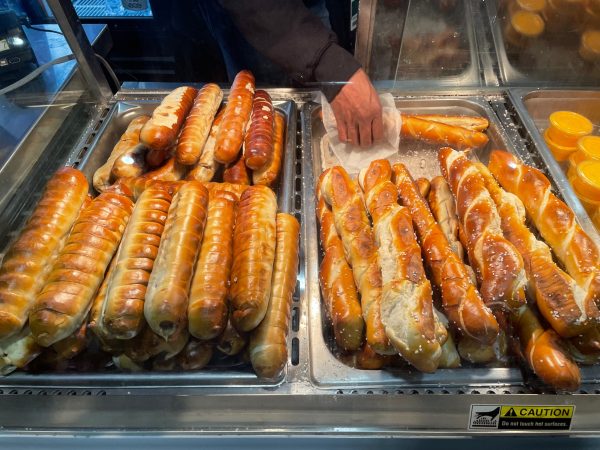
    A soft pretzel from Philly Pretzel Factory currently has about 12 grams of protein.

    But sometime soon, you will be able to buy one with much more.

    The company says it is in the early stages of developing a high-protein pretzel, one of several new products it hopes will attract consumers concerned about weight loss.

    “Obviously, the trend is protein,” said company president Marty Ferrill. “Even people who are on GLP-1s, they’re looking for more protein-rich foods.”

    Philly Pretzel Factory is just one of the area companies changing their products to accommodate consumers who are eating less and “protein-maxxing.” The viral nutrition trend refers to an increasing obsession with eating more protein based on the idea that it builds muscle.

    A recent Gallup survey reported approximately one in eight U.S. adults are taking appetite-suppressing GLP-1 medications.

    GLP-1 drugs such as Ozempic and Wegovy were initially created to treat individuals with type 2 diabetes by regulating blood sugar levels, but their hunger-suppressing effects have spurred wider adoption for weight loss. A JPMorgan report estimates that by 2030, up to 30 million Americans may be using GLP-1 medications, especially as pill formats become available.

    As the medications rise in popularity and appetites shrink, the food industry could face headwinds. A recent study found that within six months of starting a GLP-1 medication, households with at least one GLP-user reduce their annual grocery spending by $390 on average.

    But this isn’t the industry’s first rodeo.

    The low-fat craze of the 1980s and the carb-phobic diets of the 2000s also forced food brands to rethink their products.

    “Until there’s a magic pill where you just don’t have to eat, period, the food industry will respond,” said Ernest Baskin, chair of St. Joseph’s University’s Food, Pharma, and Healthcare Department. “They’re going to change their product to appeal to the next generation of consumers.”

    Making every bite count

    Philly Pretzel Factory’s protein-enriched pretzels are an example of functional foods, which are foods that have been formulated to contain added nutrients and health-enhancing substances.

    Functional foods can be especially important for GLP-1 users, who eat smaller portions but still require their necessary vitamins and minerals.

    “In a world where you’re not eating as much, you want everything to count,” said Baskin.

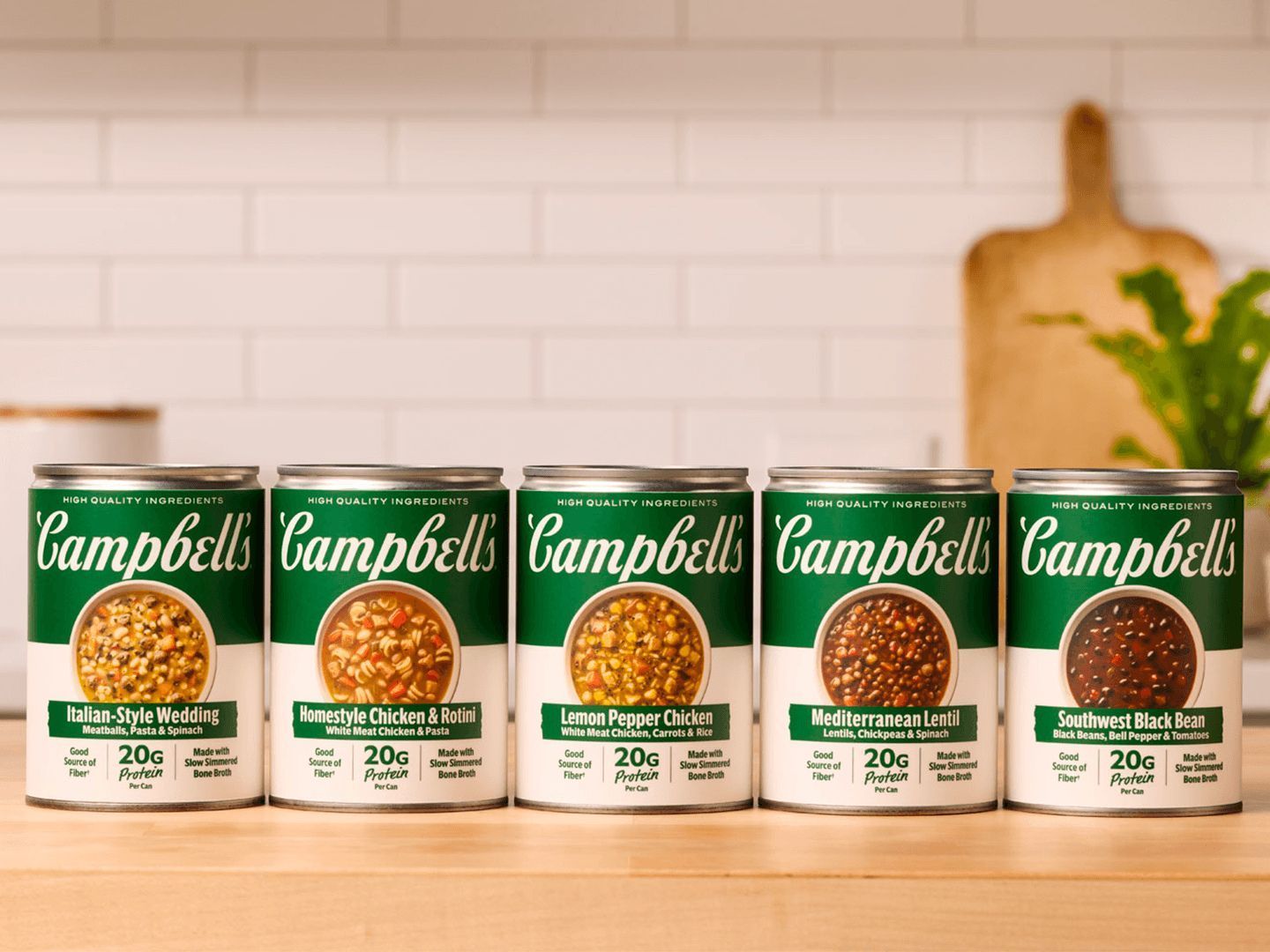
    Campbell’s, the Camden-based food and snack giant, has ventured into the functional foods market with a recent launch of five protein soups that offer 20 grams of protein per can.

    The Campbell’s Company launched five new protein soups with 20 grams of protein per can.The Campbell's Company

    The company also released a new protein-fortified snack option with Snyder’s of Hanover’s harvest wheat pretzel sticks, which offer 6 grams of protein per serving. (As opposed to 3 grams for a standard pretzel stick serving.)

    The options “give consumers choices that fit their nutritional goals and lifestyles while helping get more out of every bite,” says Dave Chalk, Campbell’s vice president of enterprise insights and analytics.

    The recipes of popular Philly foods are changing too, as consumers prioritize better-for-you ingredients. In addition to the protein pretzel at Philly Pretzel Factory, their regular pretzels are undergoing a “clean label” reformulation.

    Ferrill said the company is ensuring consistent taste while changing some components: using unbleached flour instead of bleached, removing the additive potassium bromate, and replacing whey protein with a plant-based substitute. That means the franchise’s iconic pretzels will become vegan this year.

    “The urgency is [greater] now than it was three years ago,” said Ferrill, noting that the company has been developing the clean-label pretzel for years.

    Greater control over meals and portions

    At Honeygrow, a fast-casual chain that offers salads and stir-fries, customization is another option for GLP-1 users, said Todd Miller, senior vice president of marketing.

    More Honeygrow customers are choosing whole-wheat noodles — which offer 17 grams of fiber and 13 grams of protein — for their stir-fries, or crafting more vegetable-forward meals, said Miller.

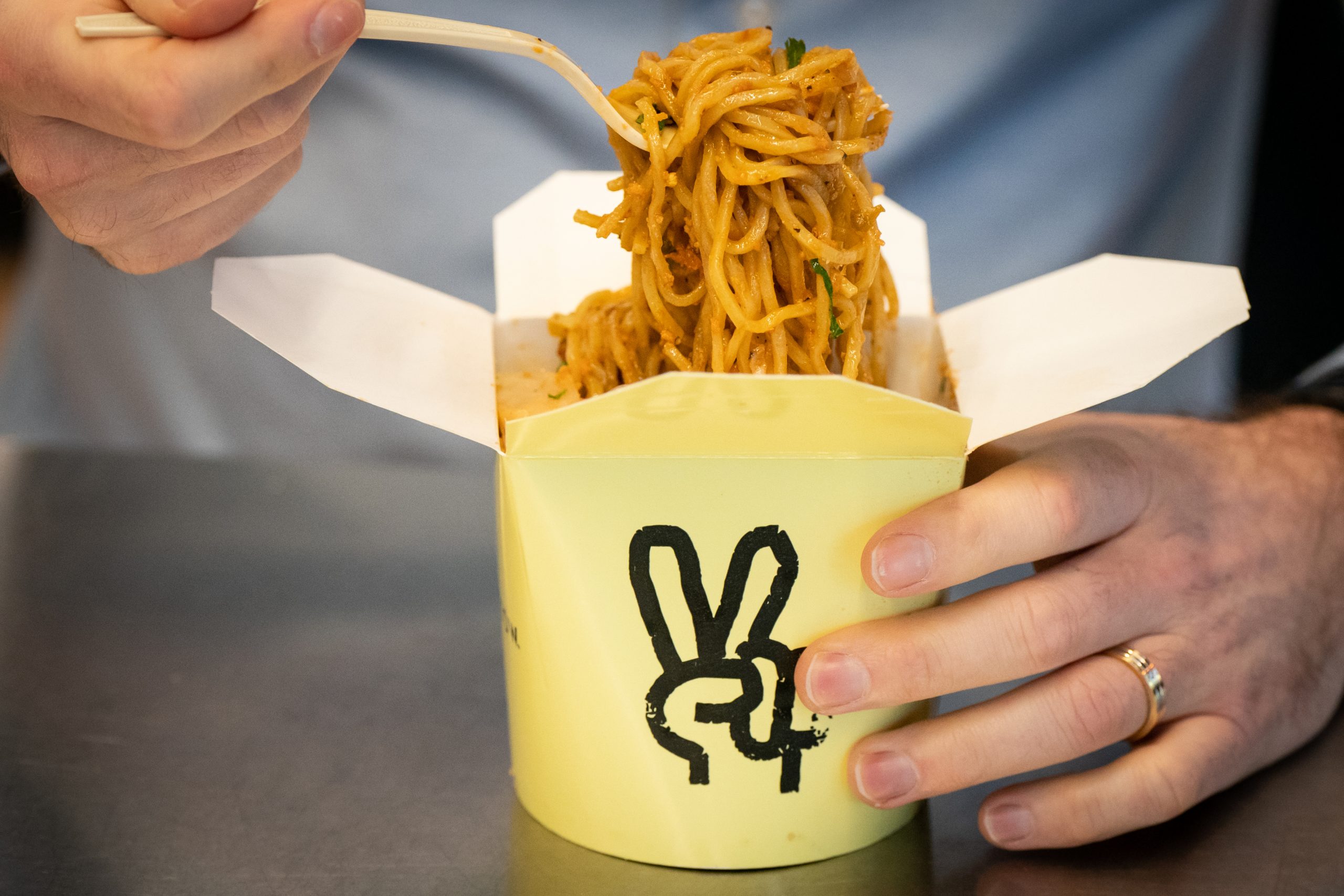
    A chicken parm stir-fry at Honeygrow is at the 11th Street location in Philadelphia in 2024.Jessica Griffin / Staff Photographer

    “What is becoming increasingly important is the ability to personalize a meal around the nutrients and portions that matter to each customer,” Miller said.

    Campbell’s is banking on similar personalization preferences. Some research shows GLP-1 users are dining out less to control portion sizes and ingredients. With brands like Pacific Foods, Swanson, and Rao’s under the Campbell’s umbrella, the company’s cooking essentials business is benefiting.

    “The biggest opportunity within Campbell’s portfolio is the confidence consumers have gained with cooking at home,” Chalk said.

    People still want good food

    Despite moving toward healthier choices, many food companies are serious about not compromising flavor.

    For Honeygrow, that means continually introducing limited-time offers and keeping up to date with new ingredients to attract customers. Currently, Honeygrow’s seasonal summer menu includes a ginger scallion stir-fry and a pomegranate acai salad.

    “Even though you’re on a GLP-1, that doesn’t mean that you don’t want delicious food,” said Miller.

    Taste matters. When choosing what to eat, people are looking for enjoyment, comfort, and connection, said Ami Lawson, managing director of food and beverage marketing agency Quench.

    “The brands that will win aren’t the ones chasing the GLP-1 trend, they’re the ones delivering foods that people genuinely feel are worth eating,” said Lawson.

    Nostalgia and memory also play a significant role in food choice. Take soft pretzels, a Philly food staple.

    “If you grew up eating pretzels, you’re probably going to give up other things before you give up your pretzels,” Ferrill, of Philly Pretzel Factory, said.

  • Philly is minting the new Trump gold coins

    Philly is minting the new Trump gold coins

    The U.S. Mint will soon begin producing $1 gold-hued coins, featuring the face of President Donald Trump, Treasury Secretary Scott Bessent announced this week.

    The coins will be created at the Mint’s Philadelphia production facility on Independence Mall, the nation’s first and oldest mint. A Treasury Department spokesperson said the coins will be available in the fall, and there’s “no gold in this coin but [it] has a gold-like finish.”

    The designs boast a direct-gaze portrait of President Trump, with the phrase “In God We Trust” written next to his face. This side of the coin also includes the dual date, “1776 ~ 2026,” which is the same motif featured on the dimes, nickels, quarters, and half-dollars in the U.S. Mint’s Semiquincentennial program released at the start of the year.

    On the reverse side, the $1 coin shows a variation of the Great Seal, an insignia of an eagle that is only used by the U.S. Department of State to impress upon official documents and treaties. The version on the coin includes the same eagle holding an olive branch and arrows in its talons. Its shield, however, includes the number “250,” commemorating the 250th anniversary of the signing of the Declaration of Independence.

    In his announcement on X, Bessent said the coin “celebrates the strength of American values, and the promise of a nation dedicated to preserving freedom for all.”

    The coin’s production has faced obstacles, as U.S. code states that “only the portrait of a deceased individual may appear on United States currency.” Critics say the move violates federal law.

    In response, Bessent has cited a 2020 law that allows the Treasury to mint $1 coins with “designs emblematic of the U.S. semiquincentennial.” However, the same law reaffirms that no head-and-shoulders portrait of any person, “living or dead,” may be included on the coins.

    Bessent pointed to historical precedent. “During the 150th, there was a Calvin Coolidge coin, so we can put living presidents’ images on a coin,” he told Fox News in an interview.

  • Campbell’s jumps on the protein-maxxing trend with 5 new soups

    Campbell’s jumps on the protein-maxxing trend with 5 new soups

    Campbell’s has hopped on the protein trend with a new soup lineup boasting 20 grams of protein per can.

    With enhanced macronutrient profiles on five soups, the Camden-based soup and snack brand has joined the ranks of food companies that recently launched protein-forward products. Chipotle debuted a high-protein menu in December, and Starbucks now offers protein coffee, matcha, and cold foam.

    “As consumers increasingly seek foods that offer both great taste and meaningful nutrition, this innovative product line will bring excitement and drive consumers to the soup category,” Benjamin Crook, senior vice president of soup and broth, said in a news release.

    In 2025, 70% of Americans reported trying to consume more protein, according to a survey by the nonprofit International Food Information Council.

    Campbell’s new soup line includes Italian-style wedding, homestyle chicken and rotini, lemon pepper chicken, Mediterranean lentil, and southwest black bean flavors.

    The updated soups contain more protein than the company’s original iterations. The existing homestyle Italian wedding soup has 7 grams of protein, and the basic chicken noodle has 3 grams.

    The protein soup line is Campbell’s second release of the summer designed to appeal to “better-for-you” consumer preferences. In June, Campbell’s partnered with Banza to introduce its first gluten-free chicken noodle soup. Banza makes chickpea pasta, which has 50% more protein and three times as much fiber as traditional pasta.

    In addition to soups, Campbell’s has a vast food and snack portfolio. Under its umbrella is Pepperidge Farm, the baking company that produces Goldfish and Milano cookies, and Snyder’s-Lance, which owns Cape Cod Potato Chips, Kettle Brand, and Late July. In 2024, Campbell’s acquired the parent company of sauce brand Rao’s.

    The company reported in June that net sales decreased 4% in the third quarter of the 2026 fiscal year. In the meals and beverages segment, sales decreased primarily due to declines in U.S. soup, Prego pasta sauces, and V-8 beverages, but those were partially offset by gains in Rao’s.

    Campbell’s had 13,700 employees in 2025, per the company’s annual report. In 2023, the company launched a $50 million upgrade of its Camden headquarters. The expansion was anticipated to be completed over three years, bringing 330 additional positions to Campbell’s Camden offices.

  • Historical Jericho Farm estate in Bucks County is on the market for $18.8 million

    Historical Jericho Farm estate in Bucks County is on the market for $18.8 million

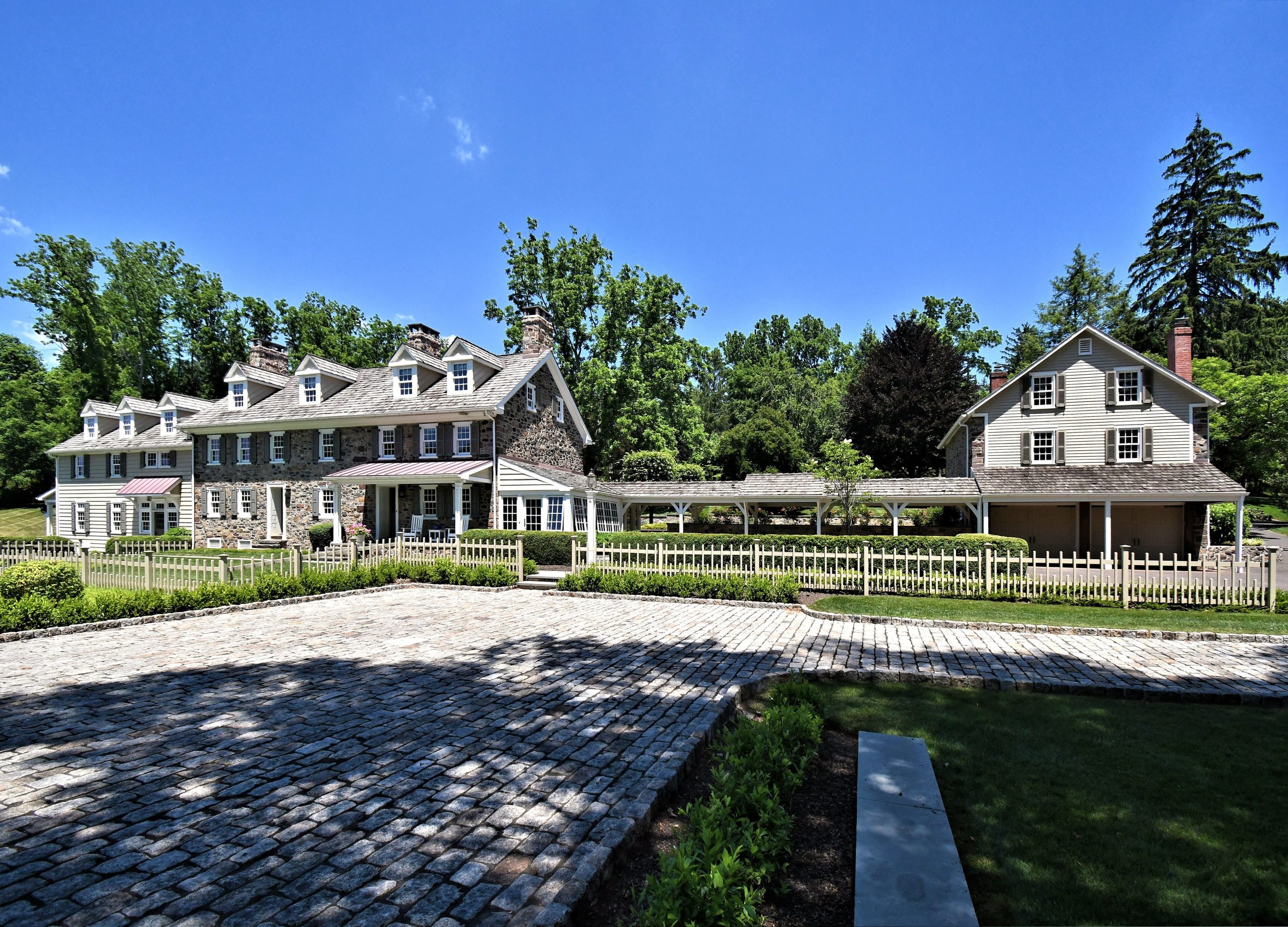
    The 147-acre Jericho Farm estate in Upper Makefield is listed for sale for $18.8 million. The primary residence on the property was built in 1765 but underwent a complete renovation when purchased by former Du Pont de Nemours CEO and current executive chairman Edward Breen in 2012.

    Located at 465 Pineville Rd., this secluded estate features its original stone exterior and exposed wooden beams.

    There are a total of 11 structures on the property.Jerry Biggans

    Subsequent additions to the estate have resulted in a total of 11 structures, including three dwelling units: a 7,800-square-foot main house; a three-bedroom, two-bath cottage; and a complete one-bedroom apartment as a guest house.

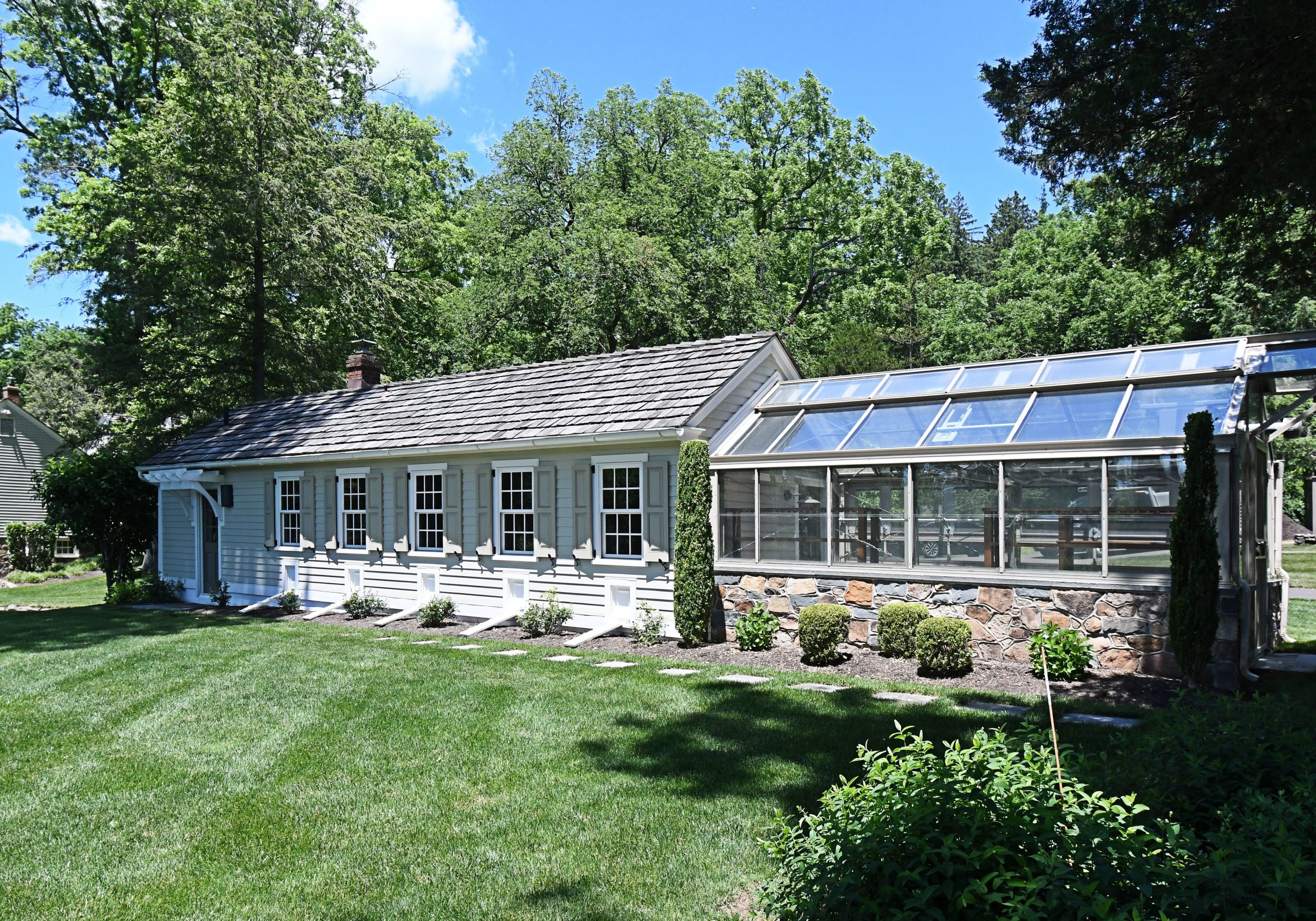
    There’s also a pool house, multiple outdoor patios, a two-level office with a gym, a greenhouse, an eight-stall horse barn, and a chicken coop.

    The greenhouse, which is attached to a lounge area.Jerry Biggans

    “This is the most exclusive property,” said listing agent Jack Lacey of Berkshire Hathaway HomeServices Fox & Roach, who listed the property alongside Perry Epstein. “I don’t even have enough adjectives to describe it.”

    Breen and his wife, Lynn, purchased the estate for $4.2 million in 2012. Before moving in, they embarked on a four-year renovation with architect Paul Kiss of OSK Designs and master builder Tim Sager of Ferman Lex Custom Homes.

    Every structure on the estate was updated “bottom to top,” said Lacey.

    The estate’s lot is about 30% manicured grounds and 70% woodlands, with walking trails throughout the forest leading to the top of Jericho Mountain.

    The 147-acre estate has forested trails leading to the top of Jericho Mountain.Jerry Biggans

    “You could hike on your property every day and be in the best shape of your life if you wanted to,” said Epstein.

    The main house has three levels, boasting four bedrooms, four full bathrooms, and two half-baths. A glass-enclosed conservatory with its components imported from England is a highlight of the main floor, along with an office, sunroom, living room, and kitchen with an 18-foot island and custom cabinetry.

    The two-level living room in the main house.Jerry Biggans

    The two other dwelling units — named the cottage and the guest house — are outfitted with bedrooms, bathrooms, and kitchen utilities, allowing for multigenerational living. “If this were a family compound,” Epstein said, “everybody would have their own space.”

    Epstein said Upper Makefield is the most sought-after township in Bucks County. It has the seventh-highest median income of all Pennsylvania municipalities, according to 2024 American Community Survey data. The estate is about a 15-minute drive to Newtown, 12 minutes to New Hope, and 20 minutes to cross over the Delaware River to New Jersey.

    “It’s not like you’re out in the sticks here,” Epstein said. “But you do have the ultimate privacy for your location.”

    The pool and pool house.Jerry Biggans
  • Dot cake went from TikTok trend to Philly bakeries. Here’s how 3 small businesses jumped on the bandwagon.

    Dot cake went from TikTok trend to Philly bakeries. Here’s how 3 small businesses jumped on the bandwagon.

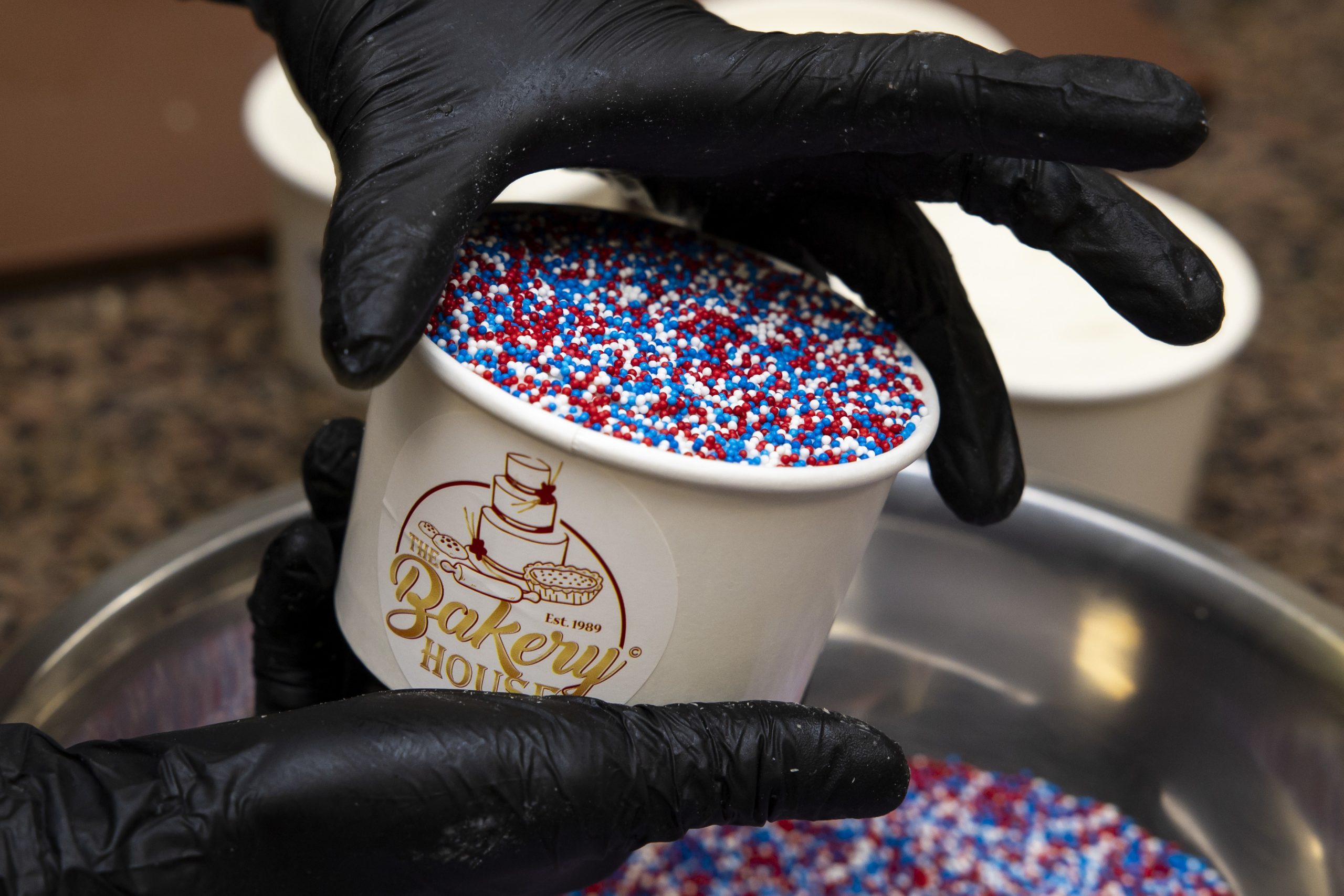
    Michael Ibrahim, general manager of the Bakery House in Bryn Mawr, said custom orders for dot cakes, the latest viral TikTok food trend, started trickling in at the end of May. By June 1, the Bakery House posted the new menu addition on Instagram and Facebook.

    Within 15 minutes, they were sold out.

    “We ordered more material, made more the next week, and then we made sure to never run out of it again,” Ibrahim said.

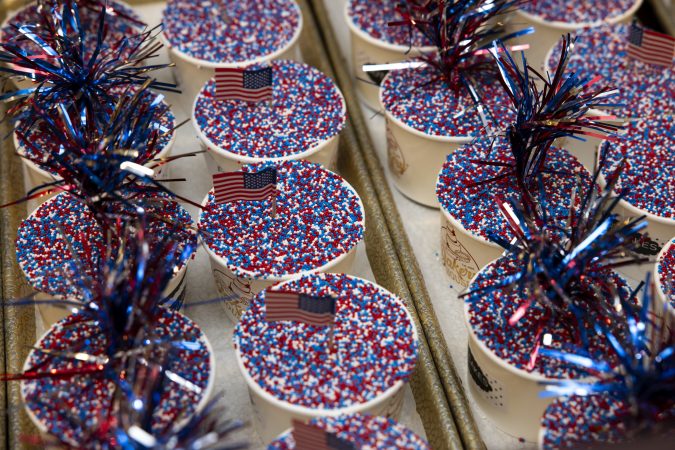
    The dessert — a layered cake in a cup coated in nonpareil sprinkles — was created in 2017 by mother-daughter duo Alex and Sondra Posner of the Dot Cakes in Roslyn, N.Y. It reached national audiences this past May when influencers began reviewing the bakery’s dot cakes sold in New York City’s Butterfield Market. In June, the New York Times Style section reported people standing in line at 6 a.m. for a taste of the sweet treat.

    Elizabeth Aversa, owner of the Margate location of Aversa’s Italian Bakery, said her shop is now regarded as “cool” after introducing dot cakes.

    “I’m getting these new, trendy people that we were never getting before,” Aversa said. “Before, we were just like a mom-and-pop, old-school store … but now they come to us.”

    With viral trends appearing and fading almost as fast as they arrive — remember crookies and butter boards? — deciding which fad to hop on can be a challenge for small businesses.

    Ray Sheehan, founder of Old City Media, said businesses have to identify when viral trends will stick around long enough to be worth the investment. That most often occurs when they cut across several consumer demographics.

    “When things take off like this, it’s almost like pop music,” Sheehan said. “It just speaks to so many different people.”

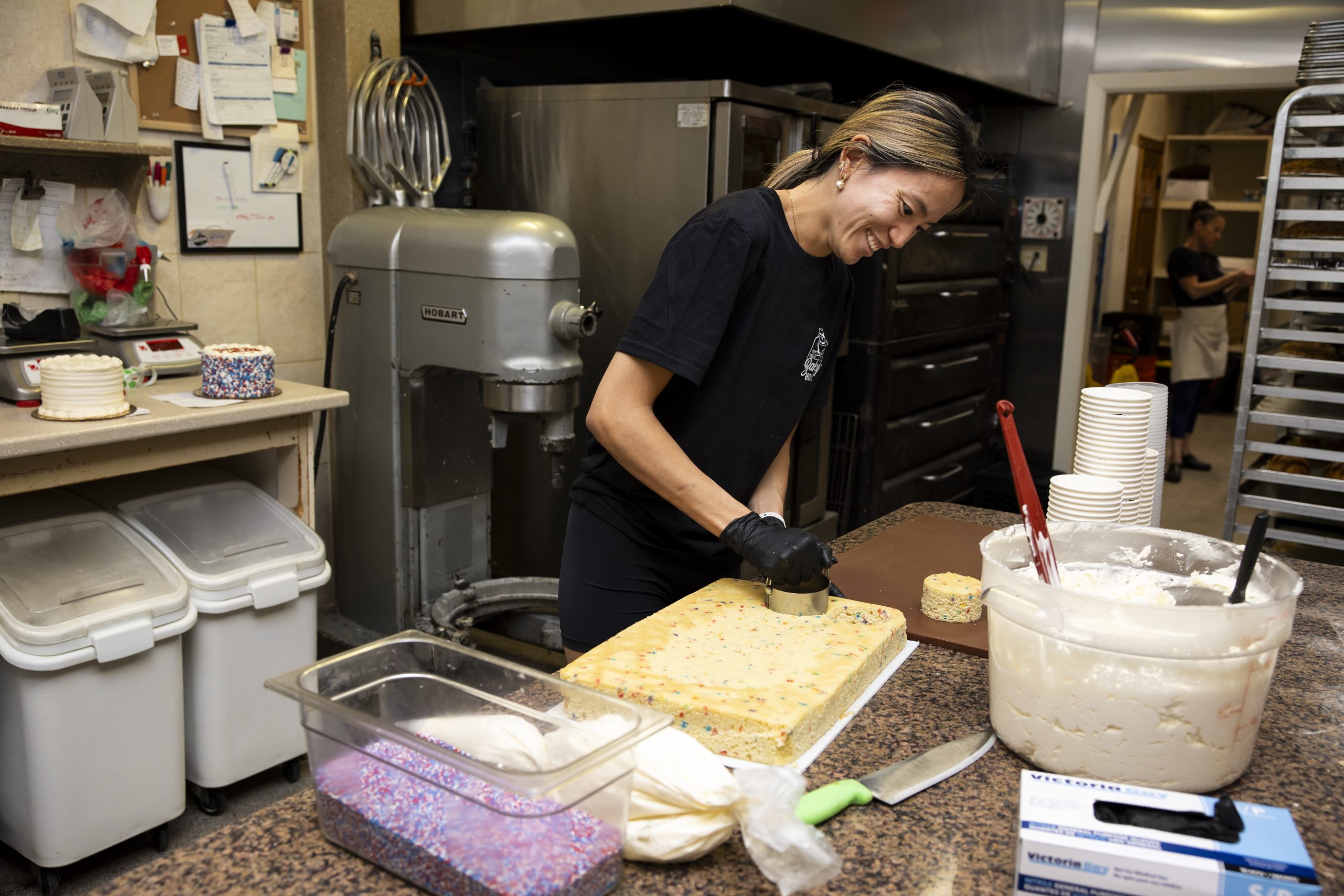
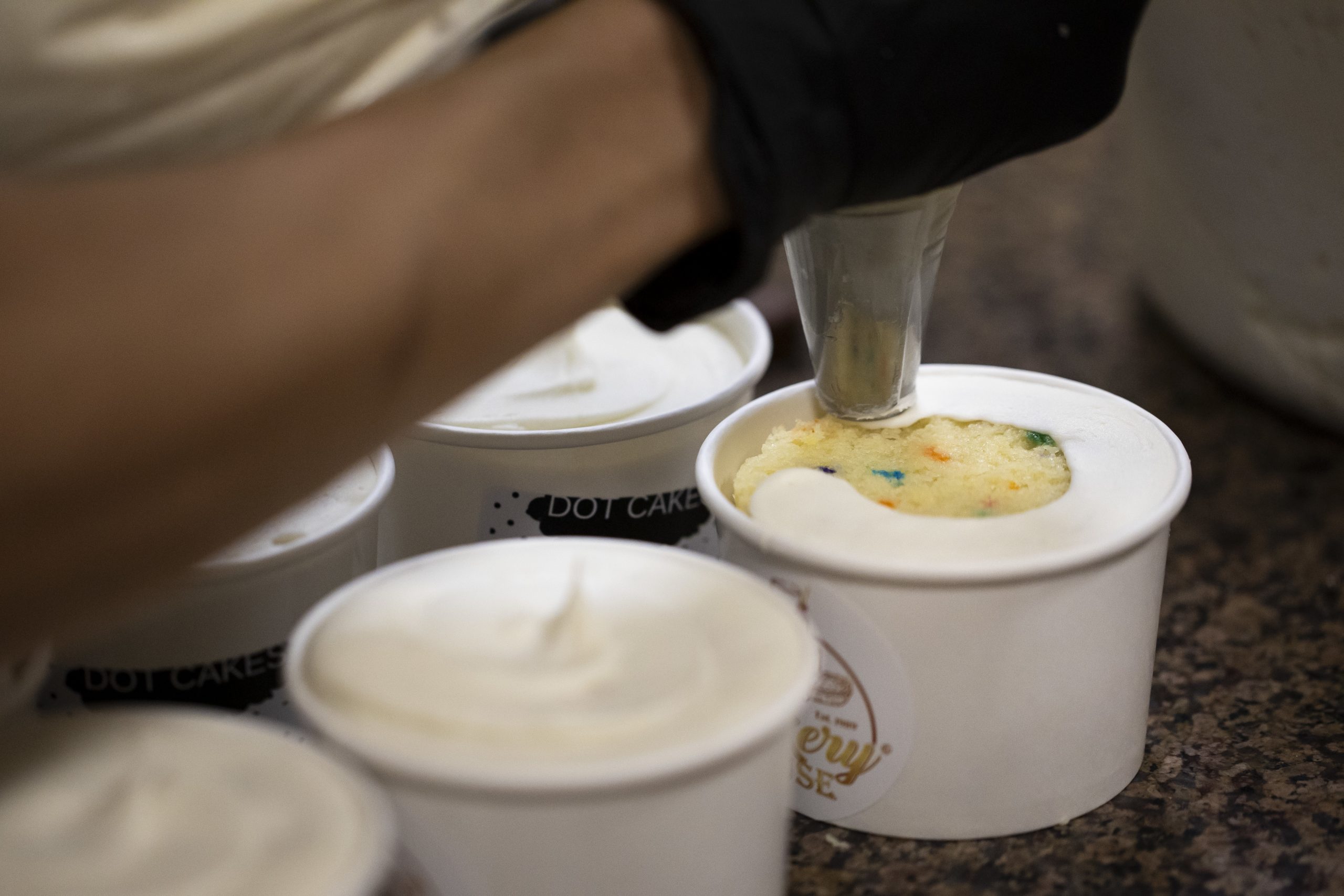
    Lily Diebold assembles dot cakes at the Bakery House. Monica Herndon / Staff Photographer

    ‘Everybody started calling’

    When the Bakery House got its first order for dot cake, Ibrahim thought it was an easy request. The bakery already had everything needed to prepare the dessert: cake ingredients, frosting, and nonpareil sprinkles

    “Then, the customers told each other, and then everybody started calling,” Ibrahim said. “All of a sudden, we had about 60 custom orders for dot cake.”

    Ibrahim said that the team usually avoids bending to the whims of social media trends — notably, they skipped the “crookie” despite offering both croissants and cookies on their menu.

    “We didn’t do it in the store because we didn’t feel that anybody was asking for it,” Ibrahim said.

    Dot cake, however, was so popular among customers that the Bakery House decided to put it on the menu permanently.

    According to Sheehan, adapting to a viral trend is one of the best ways for businesses to show consumers that they are relevant.

    “If I’m a customer, it feels like this bakery is in tune and that they’re talking to me,” Sheehan said. “I’m resonating with their brand because they understand me, and that this thing is so popular.”

    Dot cakes have been around for years, but only recently became popular nationwide due to TikTok. Monica Herndon / Staff Photographer

    Ibrahim said the bakery now has two employees dedicated to making dot cakes all day, and the fervent demand has caused a dip in sales for traditional cupcakes.

    Though, he says, it’s a net gain. Ibrahim estimated that for every loss of 100 cupcakes, 200 dot cakes are sold. On top of that, dot cakes are priced about $5 more than the bakery’s most basic cupcake, generating greater revenue.

    A middle schooler’s suggestion

    At Aversa’s bakery, the decision to start making dot cakes was a family affair.

    Aversa’s 14-year-old son, Ralph, saw the viral dessert on TikTok and he asked his mother to make dot cakes for a school party.

    It was a popular choice: ”He was a rock star at the party,” Aversa said.

    Ralph wanted to bring dot cakes to the bakery. His mother let him go for it, thinking it would be a fun summer activity.

    Then they flew off the shelves.

    “We put 20 out; they sold out. Then 40, then 50,” Aversa said. “Now we’re selling almost 100 a day.”

    Aversa said that dot cake sales are not replacing regular items but rather bringing in new customers. The younger demographic, drawn in by the dot cakes, may bring their parents, who then come across Aversa’s chicken salad or Caesar salad wraps.

    “Some people maybe never would have come to Aversa’s if it wasn’t for the dot cakes,” she said.

    Dot cakes get a layer of icing and then a crunchy topping of nonpareil sprinkles. Monica Herndon / Staff Photographer

    Influencer tips

    At Sweet Box Bakery on South 13th Street, owner Gretchen Fantini said a well-known social media personality who frequents the shop tipped her off to dot cakes.

    Destiny Deniz, a Philly-based creator with nearly 177,000 followers on TikTok, told Fantini that the dessert was blowing up in New York, and Sweet Box should hop on the trend. At first Fantini was reluctant, but then she started seeing it all over her feed.

    “We have everything here,” Fantini said she thought at the time. “We should just do this.”

    Since the business — and local influencers — started advertising Sweet Box’s dot cakes, Fantini said their Instagram has grown by almost 1,000 followers.

    Sweet Box’s feed features collaborative posts with local food Instagrammers showcasing the viral dot cakes, including @josheatsphilly (197,000 followers), @phlfoodstagram (42,900 followers), and @phillyfoodies (135,000 followers).

    Fantini said the bakery’s influencer relationships are built organically. Creators may pop into the shop, and she’ll give them a taste of her baked goods for free, but she has not done a paid partnership so far.

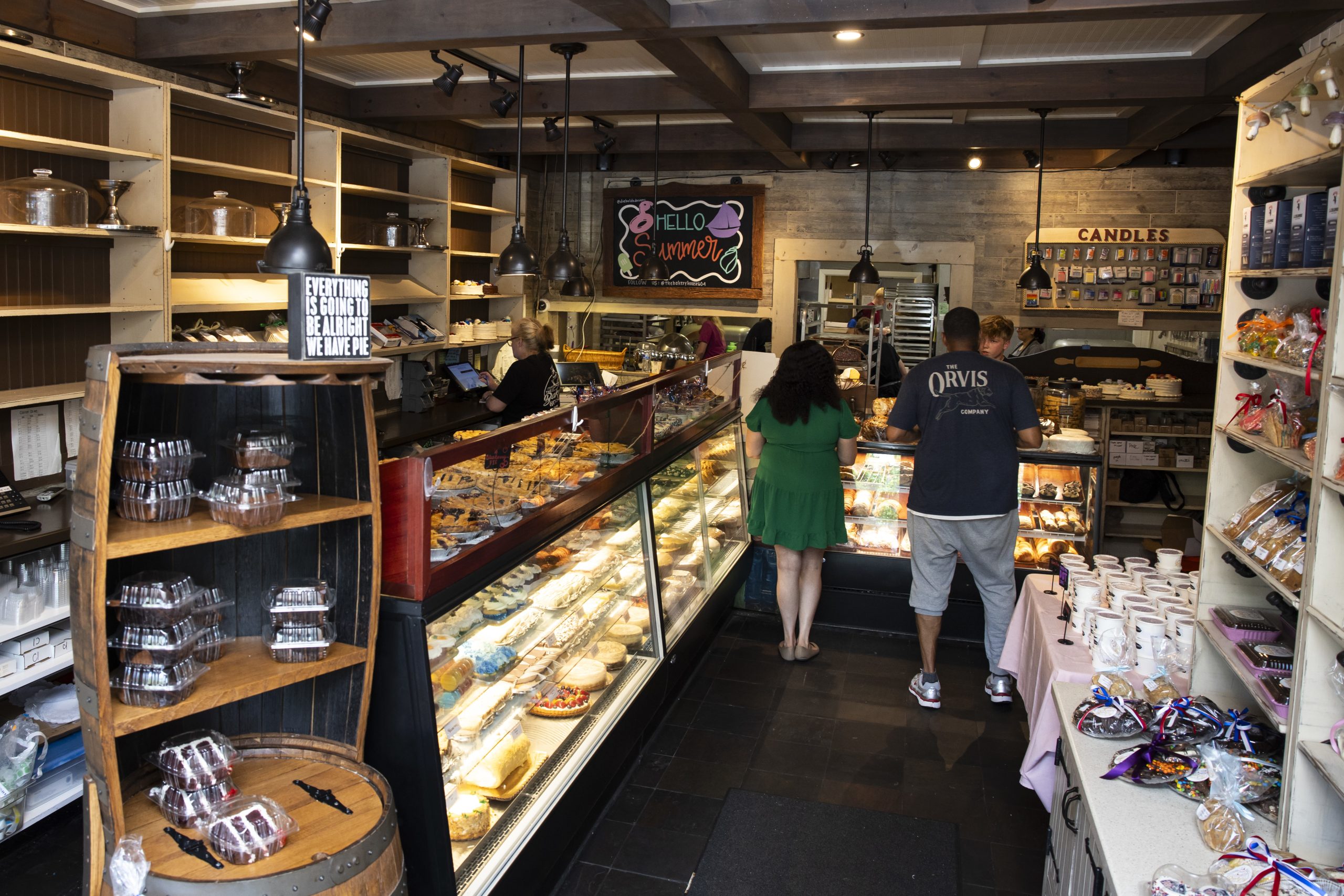
    Customers line up at the Bakery House in Bryn Mawr, which recently starting selling more dot cakes than cupcakes each day.Monica Herndon / Staff Photographer

    “I’m Italian, so if you come into my bakery and I’m baking something, I’m going to give it to you to try,” Fantini said.

    Dot cakes are hit at Sweet Box, but so far sales have not surpassed cupcakes, the bakery’s specialty. On a day where the bakery sells 500 cupcakes, Fantini said they typically sell about 250 dot cakes.

    This isn’t the first time Sweet Box has adopted social media-fueled food trends. In 2017, the bakery introduced edible cookie dough, which was a breakout dessert of the year.

    “I want to make my customers happy,” Fantini said. “If I can stay true to what I’m making, and if it’s something that they want, I’m going to make it.”

  • Business owners near the FIFA Fan Festival prepared for crowds. Not all saw them.

    Business owners near the FIFA Fan Festival prepared for crowds. Not all saw them.

    Yolanda Welch, owner of All Day Hoagies, walked down West Girard Avenue to grab lunch. It was just a couple hours before the start of another World Cup match in Philly, but near the FIFA Fan Festival, Brewerytown’s main drag was nearly empty.

    “Normally, I’m not able to do this,” Welch said, as the lunchtime rush usually keeps her too busy to leave her post.

    She had free time on Thursday, she said, because the regular midday crowd had thinned ever since the FIFA Fan Festival arrived at Lemon Hill, about a half-mile away.

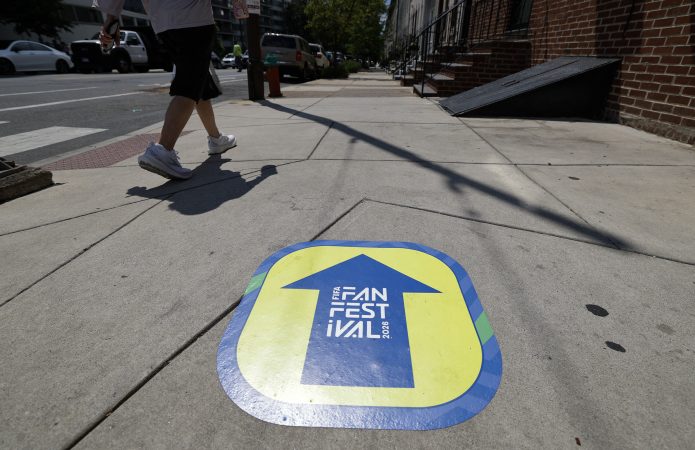
    City officials have estimated that hundreds of thousands of people have flocked to the monthlong World Cup watch party, which started in mid-June and is set to run through mid-July. But last week some Brewerytown business owners said they had yet to reap the benefits.

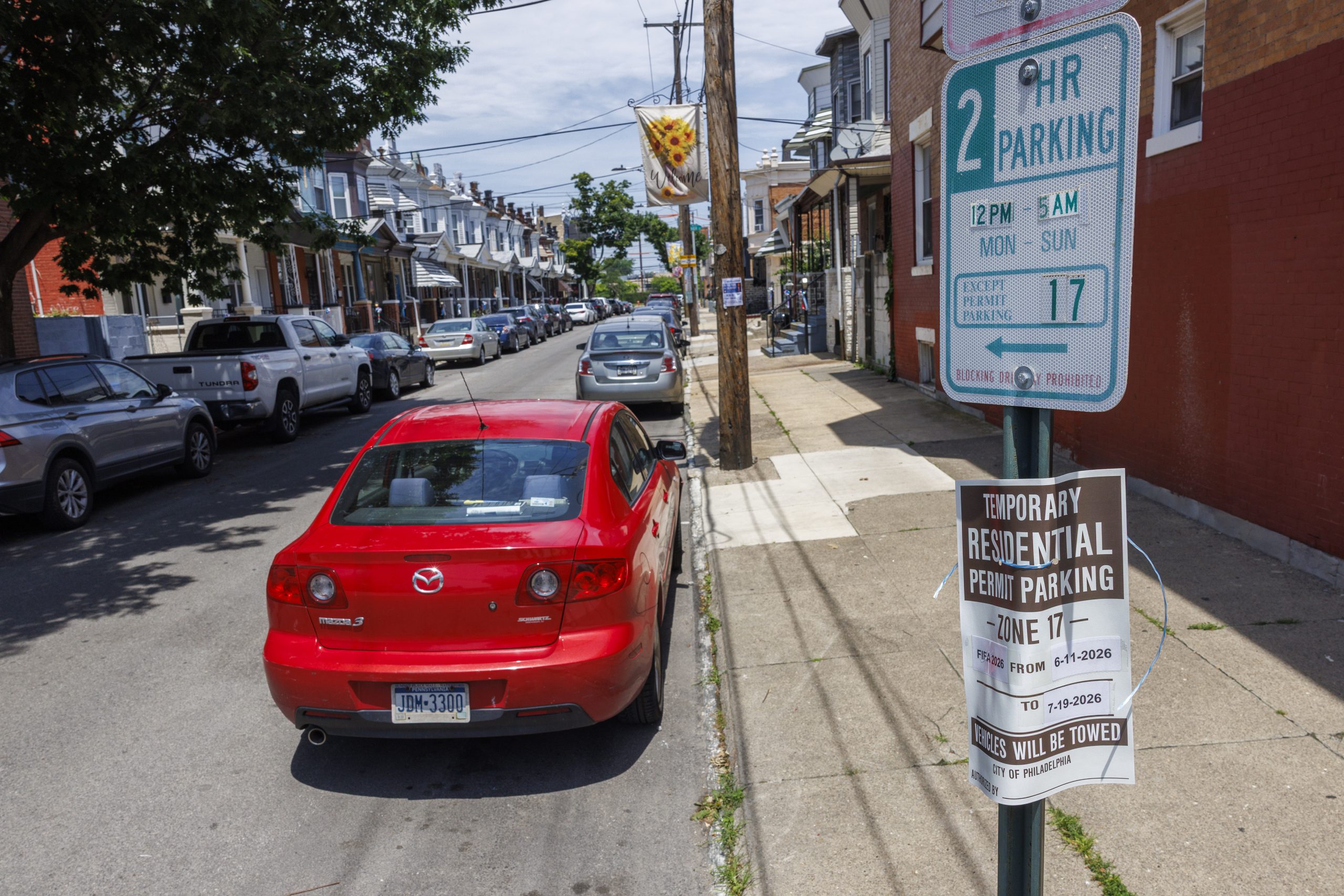
    In nearby Fairmount, some bar managers said they had seen a soccer-fueled boost in business. But several other neighborhood shop owners said they were only breaking even, with the slight increase in tourist traffic offset by a sharp drop in regular customers. Parking restrictions and street closures have kept many locals away, business owners said.

    Temporary parking restrictions near the FIFA Fan Festival are keeping some customers away, said local business owners.Alejandro A. Alvarez / Staff Photographer

    A World Cup let-down for some in Brewerytown

    Many Philadelphia business owners said they had high expectations for the World Cup: Some near the Fan Festival stocked up on inventory and even hired extra staff.

    “I ordered all kinds of soccer stuff to put in ice cream,” said Welch, who owns the hoagie shop and I Scream for Ice Cream. “I bought a whole [World Cup] banner.”

    As of Thursday, Welch said she hadn’t seen enough soccer fans to justify putting out the merchandise or unfurling the banner, which still sat in her car.

    Business is down precipitously at All Day Hoagies, which usually goes through 200 rolls a day. Since the World Cup began, the number has dropped to 125 or fewer.

    Across the street, AJ Kim, front-of-house manager at Baby’s Kusina + Market, hired two extra employees to run food ahead of the festival.

    “We were prepared for a huge crowd,” Kim said. “But it wasn’t much at all.”

    Like other business owners, Kim said the temporary parking rules have confused regular customers, and stories of residents being ticketed and towed are scaring many patrons away. According to Kim, a Baby’s chef was among those erroneously ticketed by the Philadelphia Parking Authority, despite displaying the required temporary permits.

    Every night, a handful of people cancel their Baby’s reservations, saying they are worried about parking, Kim said. Staff has tried to dispel misinformation on social media, and lends temporary parking passes to diners, but uncertainty remains.

    Some spots see steady business

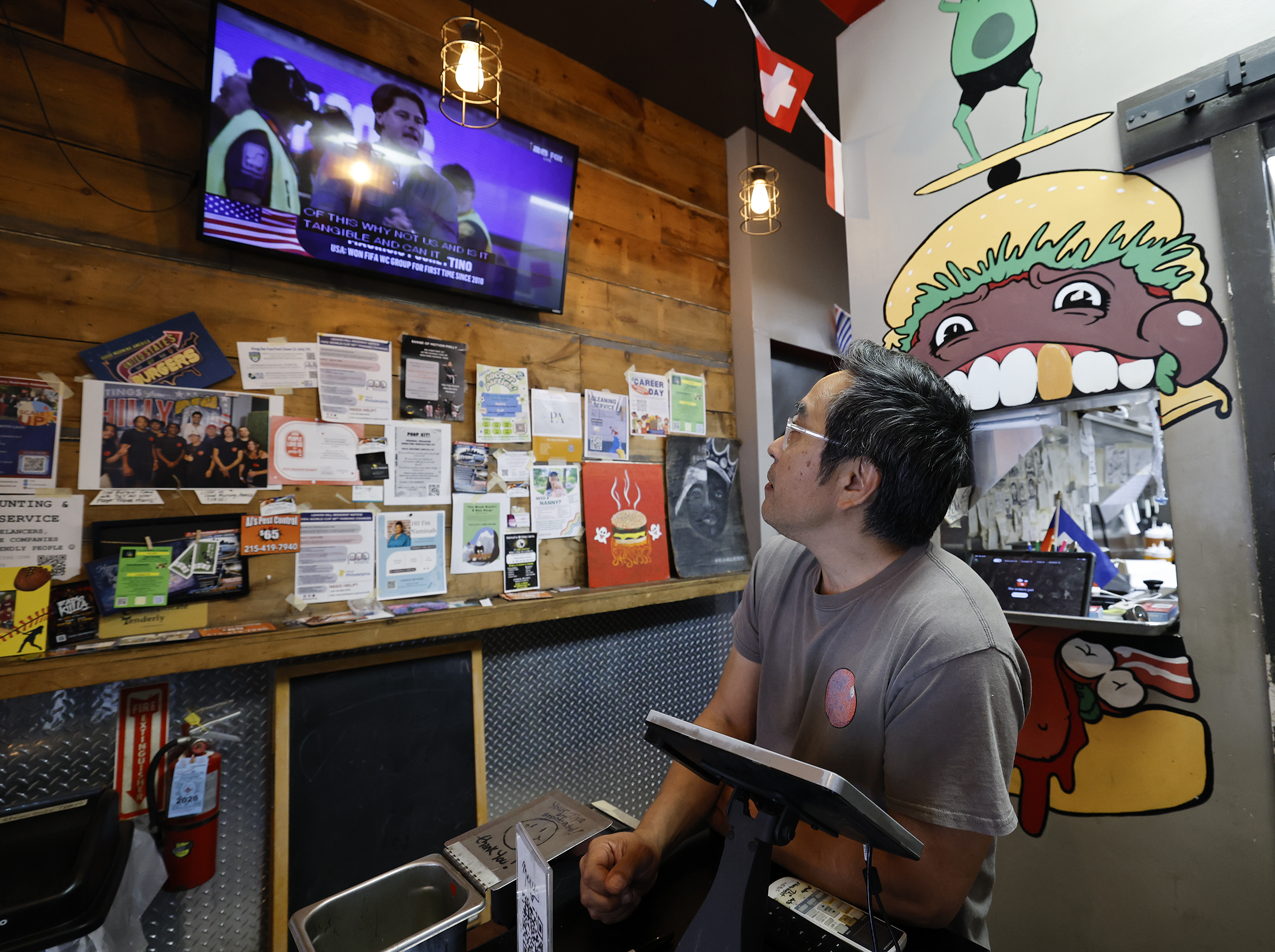
    Josh Kim, owner of Spot Gourmet Burgers, watches World Cup programming from his Brewerytown burger joint. Yong Kim / Staff Photographer

    Some businesses are faring better than others, even if they aren’t seeing crowds of soccer fans every day.

    Josh Kim, owner of Spot Gourmet Burgers in Brewerytown, said international tourists have made special trips to his restaurant for one thing: American cuisine.

    “When people go to Italy, they want pasta and pizza,” Josh Kim said. “When they come to America, they want burgers.”

    June 19 was a particularly busy day for him: After the Brazil-Haiti match in South Philly, Spot’s sold 200 burgers in less than an hour, he said.

    But no other recent days have been as lucrative, and Josh Kim said he worries it could take a while for regular customers to return to Girard Avenue once the World Cup games — and the restrictions — are over.

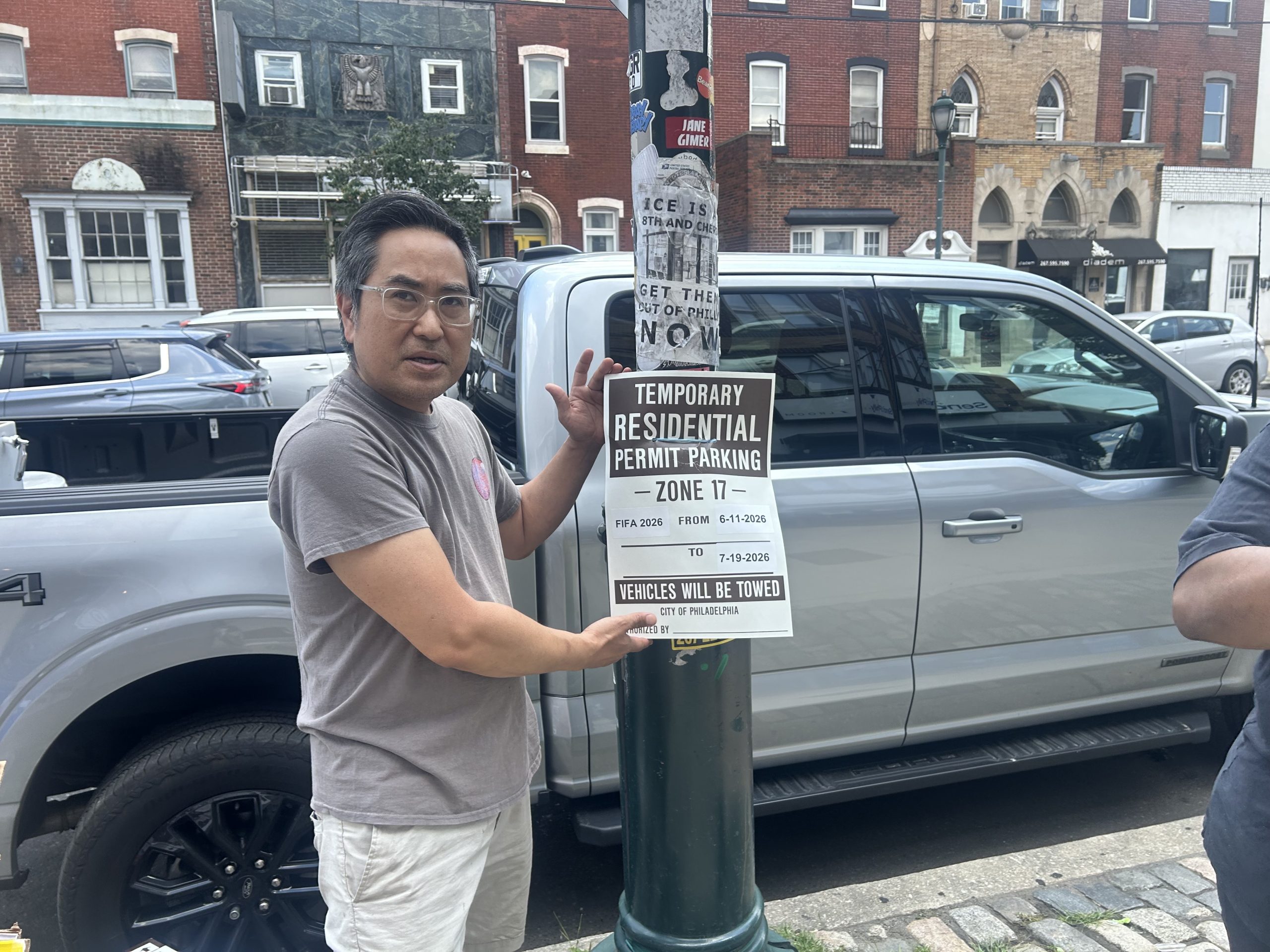
    Josh Kim, owner of Spot Gourmet Burgers, points out a temporary residential parking permit sign on Girard Avenue. He said parking confusion has hurt business in the neighborhood during the FIFA Fan Festival.Erin McCarthy/Staff

    “Consumers are habitual,” Josh Kim said. “If [they] break that habit, they no longer think about going to Girard Avenue. … They’ll go up Ridge.”

    On Boathouse Row, across the street from the Fan Festival, Cosmic Café and Ciderhouse has seen steady business, manager Sachael Sciarretta said. About 30% of the cafe’s regulars drive there, and he said he hasn’t seen them since the festival began. But business from soccer fans has made up for the loss.

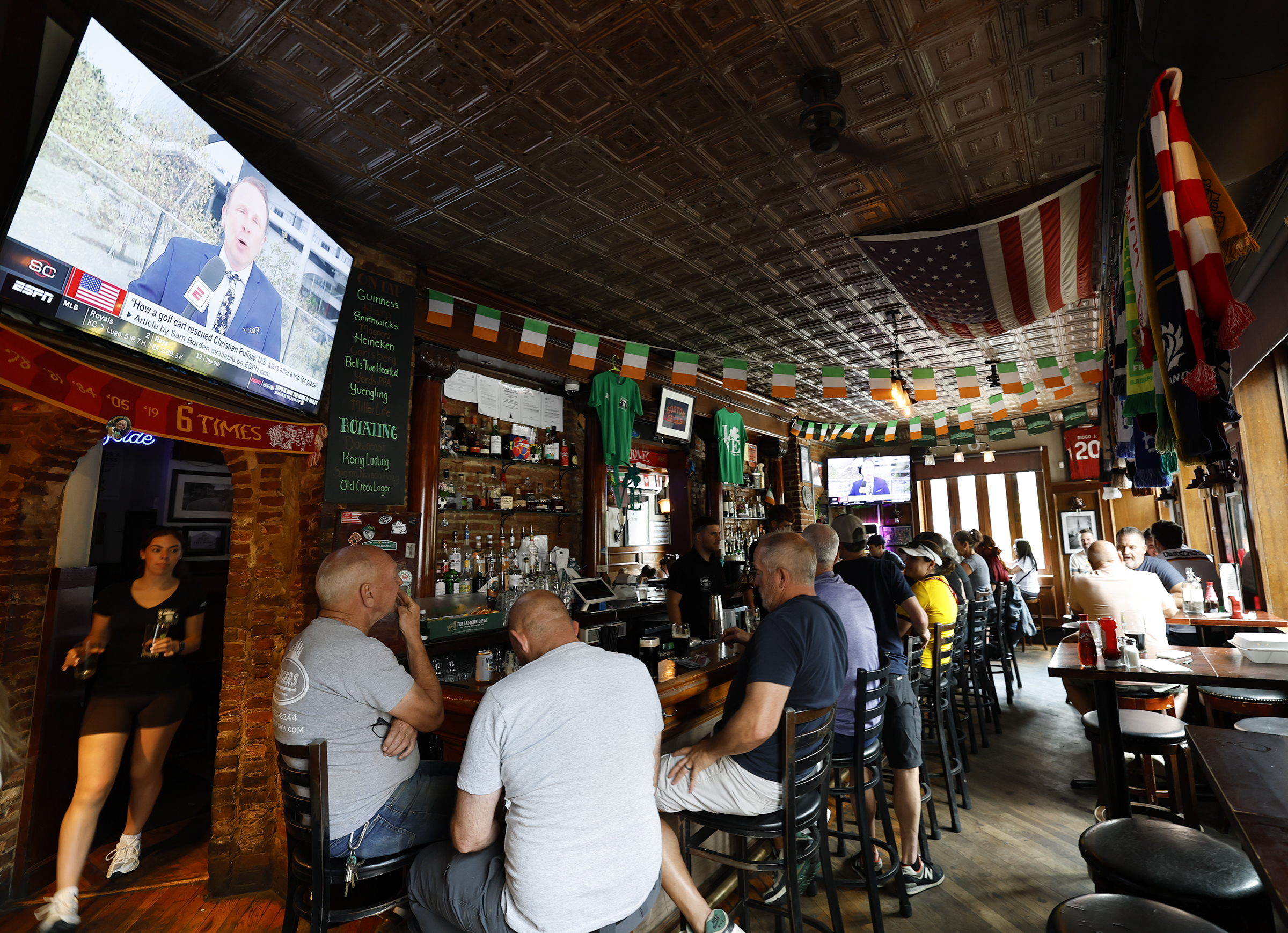
    Fairmount bars and restaurants seem to have been among the biggest World Cup winners. On Thursday afternoon at the Black Taxi, an Irish pub a few blocks from the festival, almost every seat was filled — several by customers donning soccer jerseys.

    Regulars and soccer fans eat and drink at the Black Taxi Irish Pub in Fairmount on Thursday, June 25.Yong Kim / Staff Photographer

    “Foot traffic has been great, and the neighborhood is buzzing,” said manager Neil McKernan, who estimated that sales are up 30%.

    In the dining room, the Trainor family enjoyed a meal before walking to the Fan Festival to watch the 4 p.m. match between Curacao and Ivory Coast.

    It was the first time that Kelly Trainor, 42, of Glenside, had been to the Fairmount watering hole, and she brought along her three young children.

    “We can’t afford tickets to the game,” Trainor said. “So this is the next best thing.”

    The Trainor family, of Glenside, enjoyed refreshments at the Black Taxi before attending the FIFA Fan Festival.Yong Kim / Staff Photographer

    Back in Brewerytown, where the business corridor was quiet, some owners said they wished they could have been more involved in the festivities. Josh Kim, of Spot Gourmet Burgers, said perhaps organizers could have allowed local restaurateurs to sell from food trucks outside the fan entrance.

    “If we were able to activate this corridor, it would have been a lot different,” Kim said.

    “Why didn’t they work with the local businesses so we could make the money?” added Welch, of All Day Hoagies. “Because we ain’t making none.”