Author: Daniel Pearson

  • Krasner misses a chance to send a message against violence on SEPTA | Shackamaxon

    Welcome to Shackamaxon, a weekly politics column focused on what’s happening at City Hall and in Harrisburg. It is named for the place where the Lenape chiefs would meet to conduct the people’s business, which is now known as Penn Treaty Park.

    This week’s edition questions a plea deal, looks at Center City’s efforts to bring back daytime foot traffic, and examines the legacy of the Philadelphia wage tax.
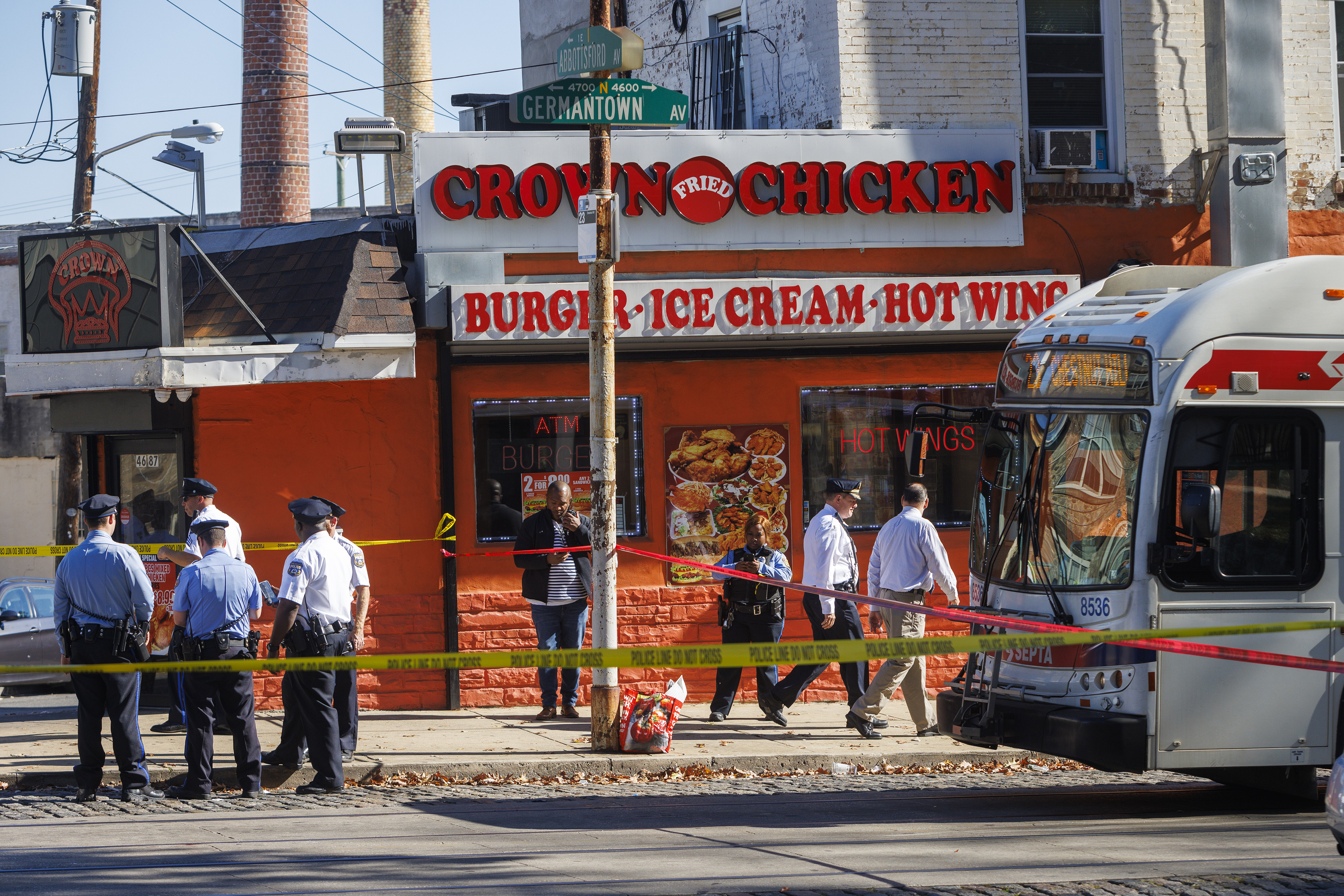
    SEPTA Transit and Philadelphia Police at the scene of the fatal shooting of SEPTA bus driver Bernard Gribbin in Germantown in October 2023.Alejandro A. Alvarez / Staff Photographer

    Deterrence desired

    On Oct. 26, 2023, Bernard Gribbin became the first city transit operator to die by gunfire while on the job. Family members called him “the best of the best,” and described the 48-year-old Army veteran as a man who loved Philadelphia, who proudly took out-of-town relatives on tours of the city when they came to visit, and who served the public by working as a bus operator — a demanding, underpaid, and utterly essential job.

    Gribbin’s murder sent shock waves through the city’s transit agency. His colleagues were left angry and afraid.

    Around that time, reporting from Mensah Dean at the Trace identified a spate of attacks against public employees. During the next contract negotiations, the Transport Workers Union demanded SEPTA install bulletproof glass to protect drivers. Operators report that management, which has long emphasized de-escalation, became even more strict about the kinds of interactions bus drivers and train conductors are permitted to have with unruly passengers. For many, this undermined their sense of stewardship of their vehicles.

    The death of Gribbin seemed like a case in which prosecutors could send a message that violence against SEPTA workers will be met with serious consequences. Instead, District Attorney Larry Krasner opted to accept a plea bargain.

    Gribbin’s killer, Zhontay Capers, was able to secure a conviction for third-degree murder this week, rather than first, which was her original charge. Pennsylvania law defines first-degree murder as a willful, deliberate, and premeditated killing. Given Capers shot six times and that surveillance video showed her with a firearm shortly before the shooting, there would seem to be a strong case.

    Of course, there could be complications I don’t know about. Perhaps another passenger was armed, a witness recanted, or Capers stood a good chance of being declared incompetent to stand trial. Prosecutors often accept plea deals in cases in which going to court presents too much risk.

    Yet, Krasner’s office refused to comment on any of these possibilities when asked. Instead, they called it an example of individual justice. Capers now faces up to 40 years in prison, rather than a life sentence. Unlike Gribbin, she may one day again enjoy the unfettered company of friends and family.

    Of course, individual justice is important. And if the circumstances of a particular case merit a third-degree charge, then so be it. But Krasner has not provided any additional information or shed any light on his office’s decision-making.

    Every killing is a tragedy that deserves justice, but Gribbin’s death had a magnified impact. Capers’ actions also caused public servants to be fearful of coming into work, and resulted in millions of dollars’ worth of unplanned spending in installing the protective glass.

    The public deserves a fuller account of why the plea deal happened.
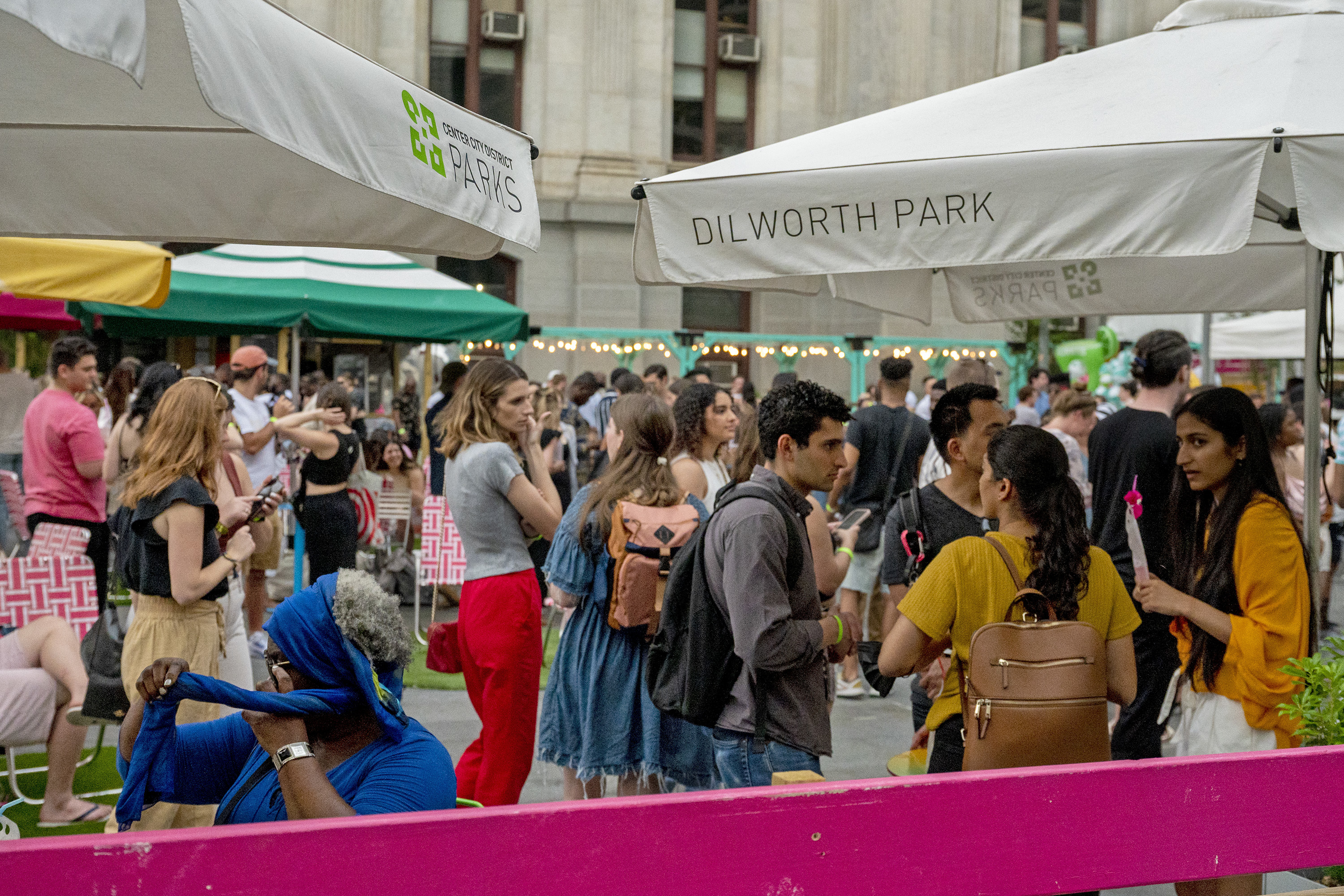
    Happy Hour at the Air Grille Garden at Dilworth Park in 202, part of the midweek Center City District Sips after-work events.TOM GRALISH / Staff Photographer

    Eventful days

    Like most big city downtowns, Center City is a major employment hub. More than 300,000 people work there, representing around 42% of jobs in Philadelphia.

    According to Clint Randall, the vice president for economic development at the Center City District, the amount of downtown office space has remained relatively stable for decades. That’s despite the rise of residential conversions and remote and hybrid work arrangements. Still, people are coming to the office less often, and momentum on bringing workers downtown on a more regular basis has stalled.

    Thankfully, Randall and his colleagues have a plan to ensure the city’s commercial core remains as essential as it can be by leveraging its status as a regional host, with events seen as both a short- and long-term way to make Center City more vibrant.

    Randall cited Center City Sips as a way to bring more people into town on Wednesday evenings during the summer. Philadelphia Open Streets, the FIFA World Cup, festivities around the MLB All-Star Game, and other smaller events have proved a major boon. They’ve brought out not just those who live and work in Center City, but also people from around the region and the world who may not otherwise have had a reason to come.

    I asked Randall about the potential for event fatigue among locals. With Center City adding thousands of new residents each year, would this create pressure to draw down on hosting? Randall said that vibrancy is what brings many people to live downtown in the first place. As inconvenient as it can be to live next to major festivals, it is also a major amenity.

    My own experience bears this out. I may not have made it to the Eagles’ Super Bowl parades if they hadn’t marched down Broad Street, not far from my South Philly home. Our friends and family also enjoyed the convenience of having a place to sit down and use a nonportable restroom.
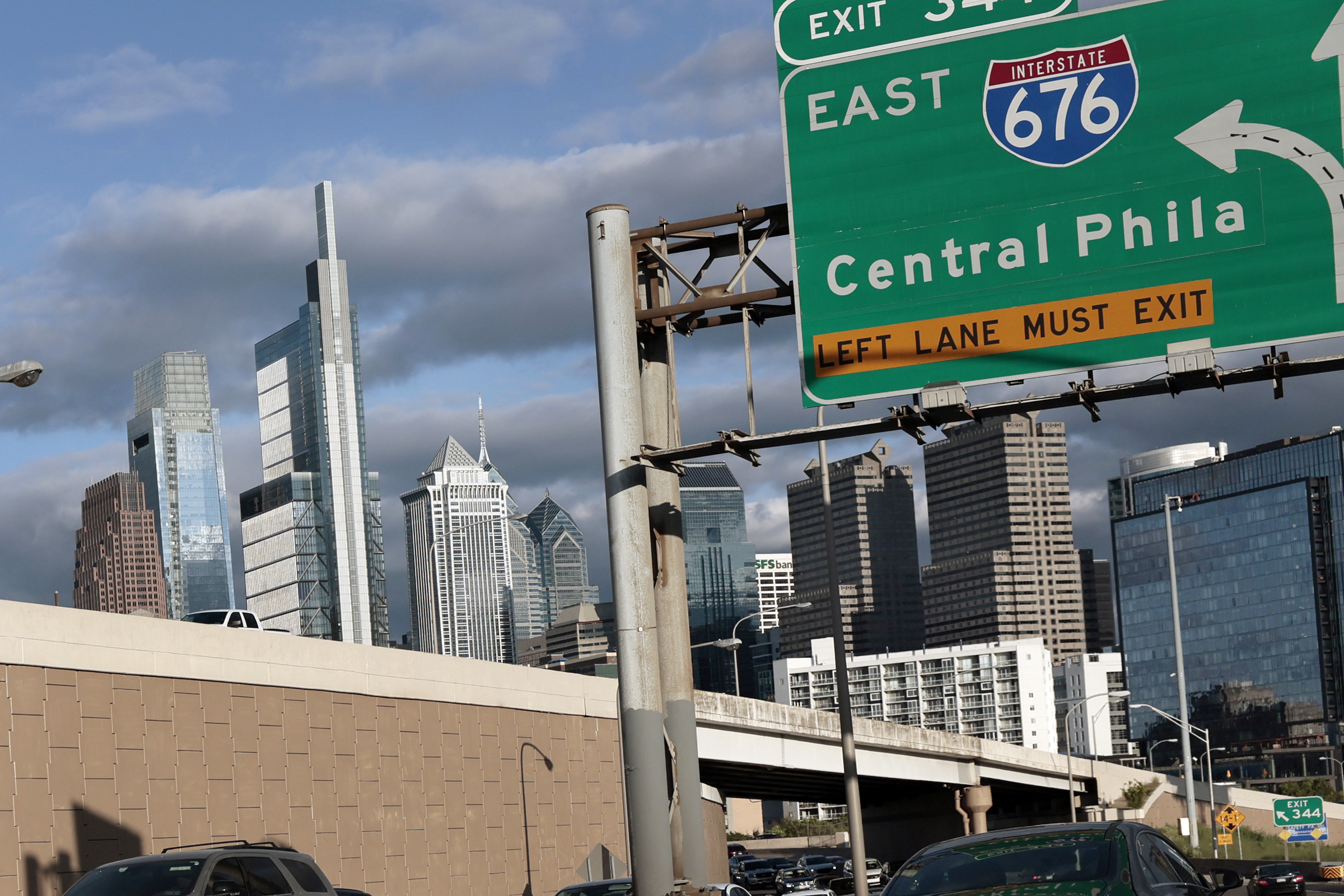
    A view of the Center City skyline as seen from the Schuylkill Expressway, where it intersects with the Vine Street Expessway, in May.Elizabeth Robertson / Staff Photographer

    Tax switch

    When Philadelphia became the first American city to institute a wage tax all the way back in 1940, the idea seemed like a no-brainer. After all, where else were people supposed to work? Suburban rail stations were packed to the brim with commuters, the Interstate Highway System did not yet exist, and anyone who wanted access to skilled workers had little choice but to open offices in Center City.

    Today, however, the region looks different.

    While Center City remains a major regional hub, Philadelphia has lost tens of thousands of jobs to suburban office parks. Most Delaware Valley residents drive themselves to work, and hundreds of thousands of people have moved to the suburbs. This has left us with an important policy question: How much of this shift is simply due to national cultural trends, and how much of it was caused by public policy?

    A new study from René Livas and Matthew Jacob at Harvard University, working with the Progress and Poverty Institute, attempts to answer this question. They say there is a clear link.

    As the wage tax rate rose between 1940 and 1976, jobs fled to the suburbs. Since City Hall began decreasing the tax in 1995, jobs have started to flow back into Philadelphia. In fact, the city recently overtook Montgomery County as the top host for office jobs in the region.

    The researchers’ proposal for replacing the wage tax is based around switching to a land value tax, an idea that is popular among economists. Separate tax rates for land and property are already legal in Pennsylvania, and the city already splits the two in its own property assessments.

    The idea, however, may be politically fraught. Homeowners already resent the chaos of the city’s regular assessments. Additionally, determining how much of a property’s value is inherent to its location may be easier said than done. While an 80/20 split between structural and land value is often cited as standard, levying the two individually would require significantly more research from the city’s Office of Property Assessment.

    In an email, Livas suggested phasing in the switch, which would help avoid big increases. He also said that the city’s existing programs, like the homestead exemption and Longtime Owner Occupants Program, should help alleviate the burden on homeowners.

    The data suggests the city could add around 26,000 jobs if this reform is pursued.
  • I’ve caught real voter fraud. What Trump’s saying about New Jersey doesn’t come close.

    I’ve caught real voter fraud. What Trump’s saying about New Jersey doesn’t come close.

    When I heard that roughly 6,600 people who were not American citizens were registered to vote in New Jersey ahead of the 2024 election because of a software glitch, I felt a familiar sense of dread.

    It wasn’t just because having ineligible voters on the rolls is concerning and never should have happened. It’s because despite what President Donald Trump would have you believe — with his unfounded claims of mass voter fraud — there is absolutely no evidence that these kinds of irregularities are the result of any organized effort to influence our election results.

    For Trump, this was not a coding error. It was evidence that America’s elections have been corrupted and the only way forward is to pass the SAVE America Act, a measure that would make it more difficult for many people to vote and which would represent the biggest ever federal intrusion into state control over elections.

    “These are just the ones that got caught,” the president wrote — again, without any evidence — in a social media post urging passage of the measure. “The real numbers will prove to be many times this amount.”

    That kind of rhetoric is the exact opposite of what our electoral system needs. Election fraud, administrative mistakes, and other voting irregularities deserve careful investigation, not fearmongering. I know this firsthand.

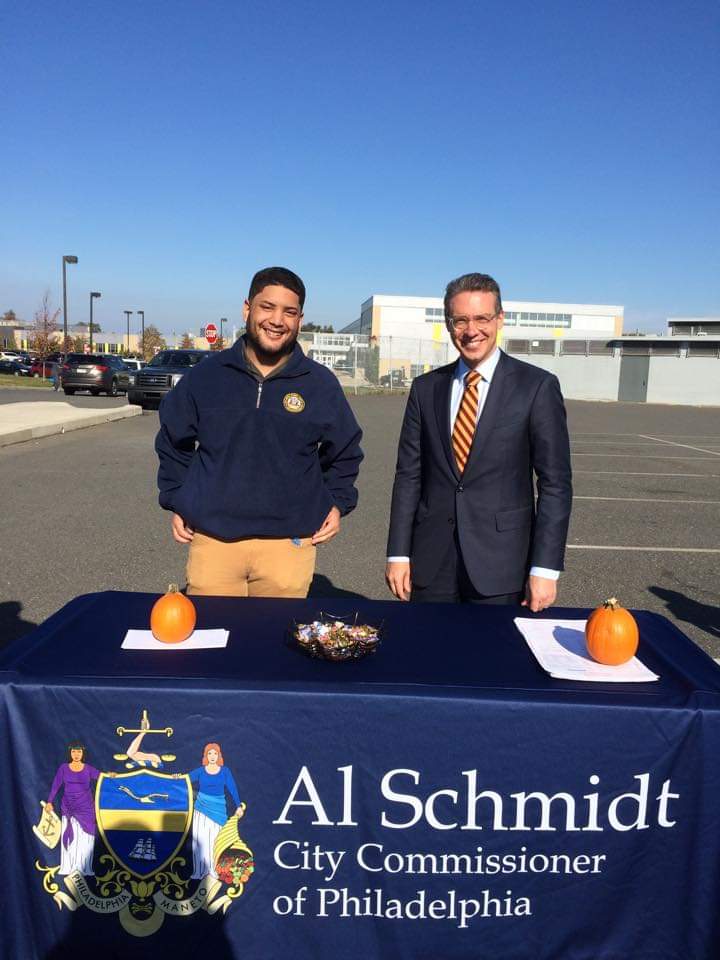
    Before joining The Inquirer, I worked at the Philadelphia City Commissioners where I investigated and identified real examples of voter fraud.

    What I saw when I worked in the system — and what my reporting has shown in the years since I’ve left it — is that electoral fraud is exceedingly rare; that the public officials I worked with didn’t hide or ignore any problems; and that when mistakes are made, they are found, fixed, and handled transparently.

    That last is exactly what New Jersey Gov. Mikie Sherrill did on July 21 when she explained that because of an error at the state’s Motor Vehicle Commission, a computer system erroneously registered people who were not eligible. Officials said that the 400 or so people from that pool who voted lived throughout the state, were registered in both political parties, and there was no evidence that any election results were swayed by their participation.

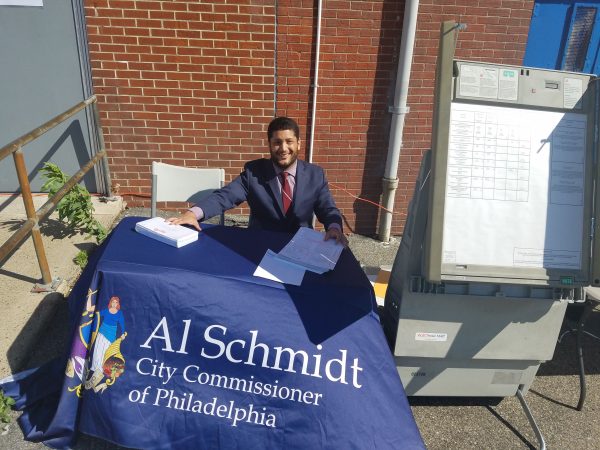
    Daniel Pearson and then-City Commissioner Al Schmidt in 2015.Courtesy of Daniel Pearson

    For those who diligently follow election administration news here in Philadelphia, this story might have felt like a distant echo. That’s because nine years ago, something similar occurred here.

    In 2017, Al Schmidt, who now leads voting statewide, was a Republican city commissioner in charge of voting in Philadelphia when he announced that an investigation had uncovered 220 people who were not American citizens on the city’s voting rolls.

    As with the situation recently in New Jersey, the source of the problems back then was also traced to a computer glitch connected to the driver’s license process. Even though they were ineligible, the system still asked the affected people whether they wanted to register to vote.

    Schmidt publicly stated what had happened without inflaming the situation, and pledged to protect people whose immigration status was now threatened by mistakes made by others. (He went as far as attending immigration hearings on behalf of some of those affected.)

    That style of leadership — clear, non-alarmist, focused on solutions — mirrors what Sherrill is doing in New Jersey now.

    It’s also worth noting that the Garden State is hardly alone in owning up to its errors. Earlier this year, Republican Auditor General Tim DeFoor released an audit of Pennsylvania’s system. Out of the 210,000 records his office examined, just one included an ineligible voter — a lapse blamed on human error, rather than any broader issue.

    In Pennsylvania, the system worked. A mistake was found, identified, and corrected. Sherrill seems on the path to doing the same.

    Unfortunately, the president wants to try to use New Jersey’s stumble for his own political gain — a cynical approach that makes it harder to be taken seriously when actual irregularities and malfeasance are discovered.

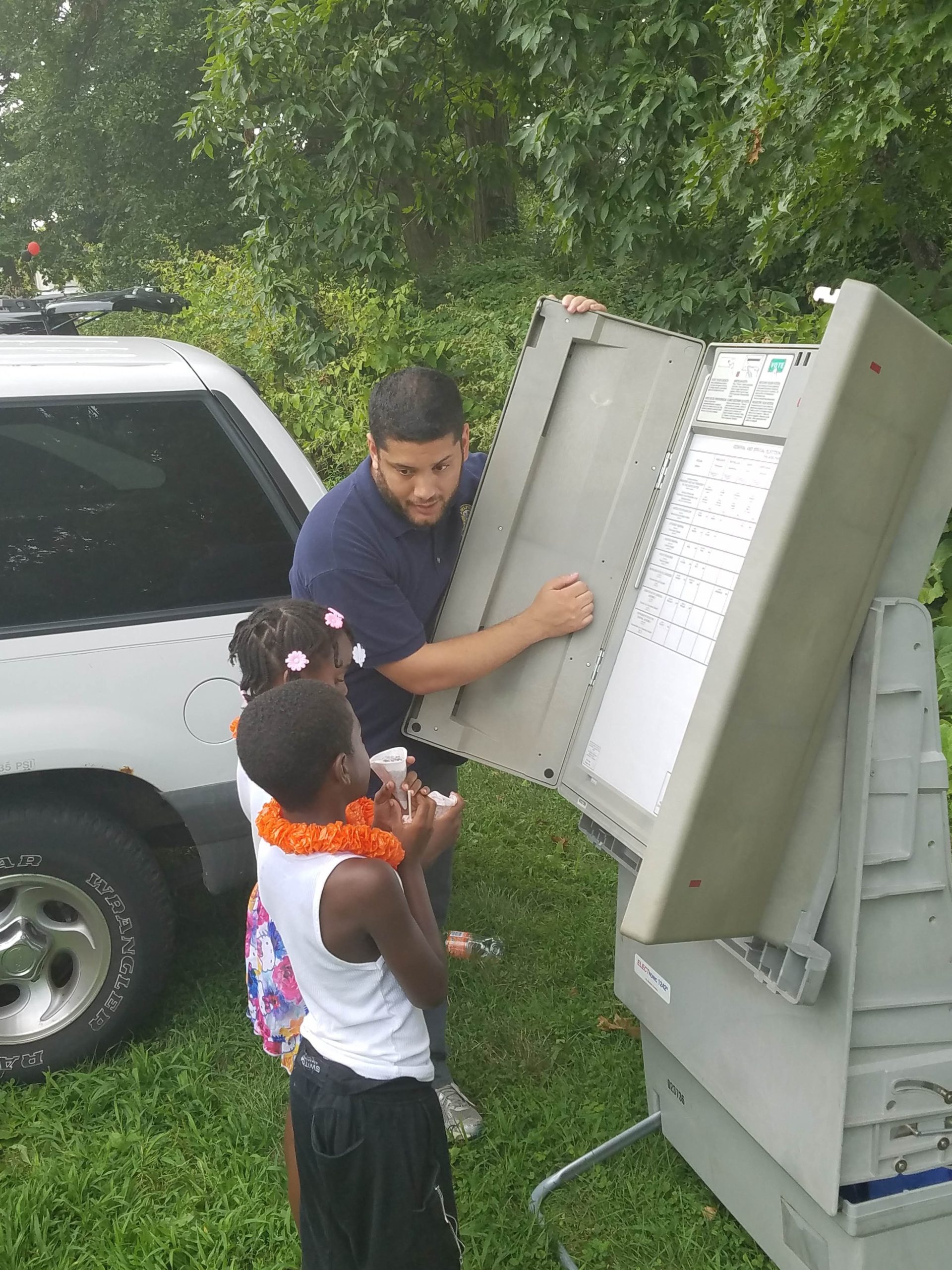
    Daniel Pearson explains how a voting machine works as part of a voter information event at Fisher Park in 2016.Courtesy of Daniel Pearson

    Disorganized crime

    After he was released from federal prison in 1985, convicted over bribery charges stemming from the Abscam investigation, former U.S. Rep. Michael “Ozzie” Myers became a political consultant and adviser. Over the years, business began to flag, so Myers and his allies came up with a scheme in the mid-2010s.

    Once the polls closed, poll workers would go into the booth and vote again, and again and again and again. Typically, these votes were for candidates running for positions at the very end of the ballot, like judges.

    Schmidt became my boss in 2014 when I joined the City Commissioners Office. Initially, my job was preparing street lists (names and addresses of registered electors) and voter files for campaigns. I attended community events and meetings on behalf of the office, and compiled data and information for voter guides.

    In retrospect, it would have been impossible to predict just how much interest people would soon have in elections. Back then, I could barely give away the guides.

    In time, I began helping with investigations into voting irregularities. When my colleagues and I started investigating the source of the overvotes, it pointed to one man, Dom DeMuro, a South Philadelphia poll worker.

    We compiled the evidence and referred the case to law enforcement. The FBI confronted DeMuro, who turned on Myers. Eventually, Myers, DeMuro, and another poll worker pleaded guilty to federal charges.

    Found, identified, and corrected.

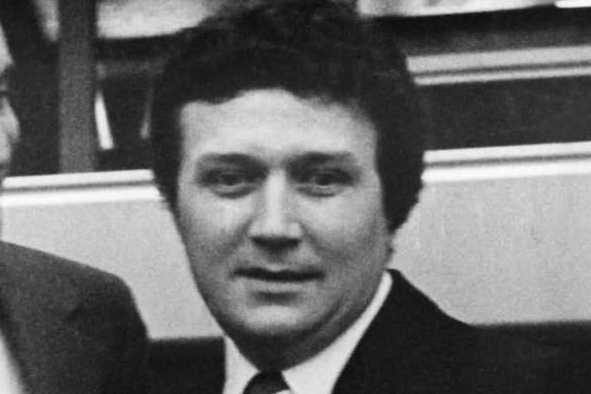
    Michael “Ozzie” Myers in 1976.MICHAEL MERCANTI / Staff file photo

    Small-time ruses like Myers’ are the face of “organized” voter fraud in this country, a few people trying to make an easy buck. There’s absolutely nothing in the SAVE America Act that could have stopped them.

    Looking back, I shudder to think of what 2020 may have been like without the groundwork Schmidt laid over a decade. How Philadelphia could have melted under the spotlight as Trump hurled accusations of fraud and the eyes of the world turned to vote counters inside the Pennsylvania Convention Center.

    For me, it was an unforgettable lesson in the grind that goes into making democracy work and also how difficult — and how rewarding — making positive change really is.

    To ensure election security and that voting remains easy and accessible, our country needs more leaders like Schmidt and Sherrill — and fewer bomb throwers.

    We don’t need any more false data points and baseless conspiracy theories. And we certainly don’t need the SAVE America Act, which would only increase the burden on ordinary voters — and wouldn’t fix a thing.

  • Despite good intentions from the city, Philly’s streets remain deadlier than those in New York and Chicago | Shackamaxon

    This week, a couple of big names leave City Hall, Philadelphia’s Vision Zero struggles, SEPTA’s biggest woe, and LeBron James comes to town.

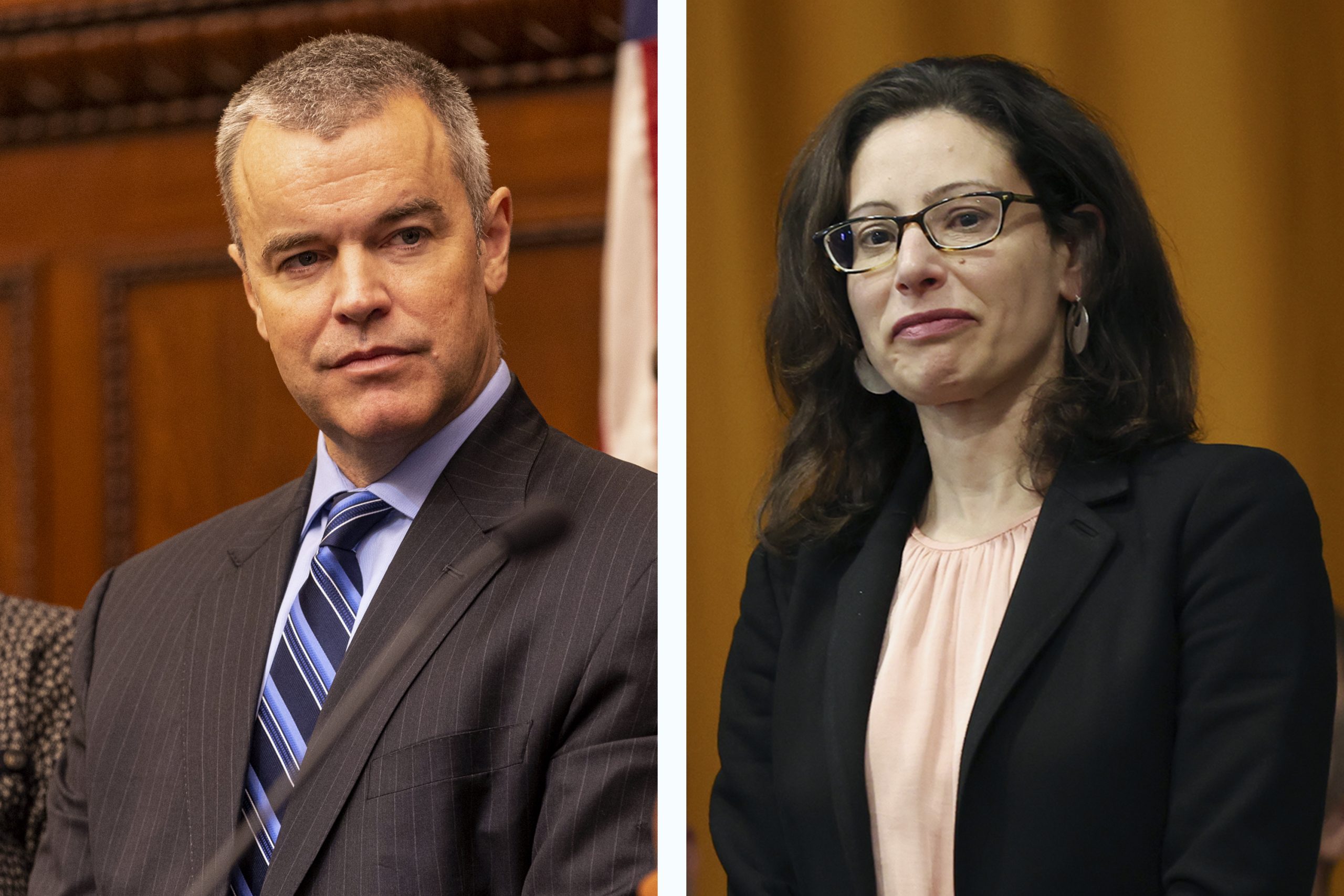
    Managing Director Adam Thiel and City Solicitor Renee Garcia are leaving.Tyger Williams/Heather Khalifa

    Topline turnover

    Philadelphia Mayor Cherelle L. Parker has experienced some turnover during her first term, but this week saw the biggest personnel changes yet. Managing Director Adam Thiel and City Solicitor Renee Garcia are both leaving city government. They’ll be replaced by Carlton Williams and Monique Galloway.

    While Thiel hasn’t answered questions about his departure, it also isn’t very surprising.

    As Inquirer reporters have thoroughly documented, Thiel’s attention has been pulled in multiple directions. In addition to his job with the city, he also serves in the Army Reserve and works as a consultant. In fact, he made more money working outside of city government than he did in it.

    Thiel always claimed that his extra jobs did not create a conflict with city work, but this was harder to believe as time went on. He missed five months of work last year because of his Army duties alone. His absence during events like the month of snowcrete was conspicuous. Indeed, it was Williams who seemed to step into the role of coordinator.

    Garcia’s departure is a little more surprising, especially given her central role in defending the administration’s toughest calls.

    When Parker endorsed the proposed and then canceled Sixers arena on Market Street, Garcia spent hours testifying about the deal at City Council. It also fell to Garcia to defend Parker’s cautious approach to the Trump administration, including the choice to allow some of Council’s “ICE Out” agenda to become law without the mayor’s signature. She’s absorbed a lot of political arrows on Parker’s behalf.

    A sign of how important these roles are to Parker’s success? Both were replaced immediately. Meanwhile, the city still lacks a permanent commerce director over a year after Alba Martinez left the role.

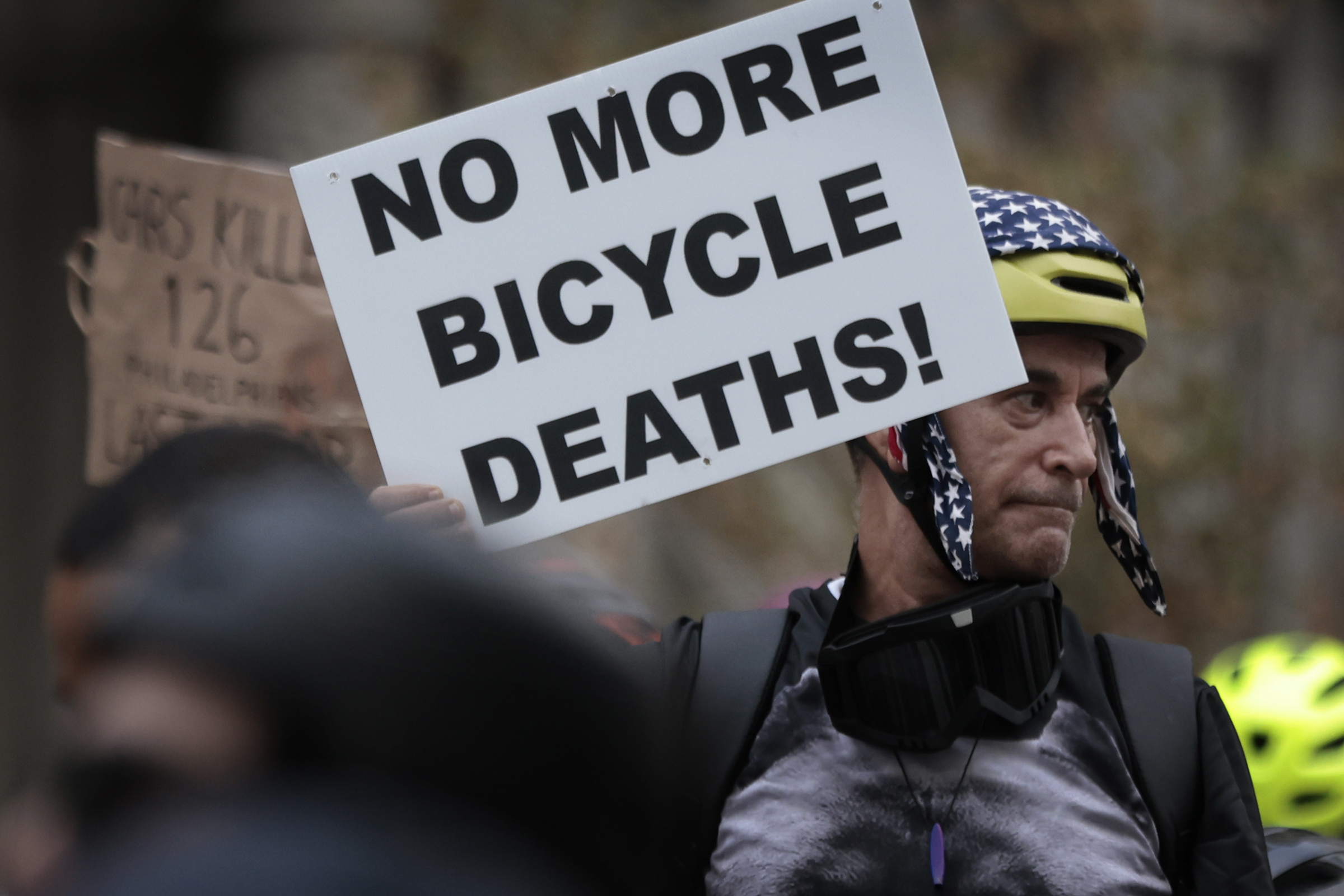
    Robert Tomas of Philadelphia was part of a group that biked from the Art Museum to City Hall to protest what they see as a lack of commitment to traffic safety from the mayor in 2024.Elizabeth Robertson / Staff Photographer

    Blurred vision

    Philadelphia’s roadways remain overly dangerous. In fact, according to a report compiled by City Controller Christy Brady, the city’s fatalities outpace our peers.

    Our traffic fatality rate of 9.04 deaths per 100,000 residents is triple New York’s 2.86 and roughly double Washington’s 4.73. The next closest city, Chicago, came in at 7.15. This means that Philadelphia’s streets are significantly more dangerous than comparable communities.

    To be clear, City Hall is trying to bring these numbers down. Alongside the Philadelphia Parking Authority, city officials have blanketed the roads with speed cameras, which have successfully reduced crashes and fatalities along corridors like Roosevelt Boulevard.

    The city is also working to lower speed limits. While 25 mph may feel slow behind the wheel of a car, research quantifies just how much danger pedestrians face because of a vehicle’s speed. At 20 mph, pedestrians have a 10% chance of death and a 25% chance of serious injury. At 30 mph, this jumps up to a roughly 25% chance of death and a 50% chance of severe injury. At 40 mph-plus, there’s a 50% chance of death, and severe injury is nearly a guarantee.

    This explains why speed limits on roads like Broad Street are set to 25 mph. Given the cameras only give out tickets once a driver is 11 mph over, setting them higher would leave pedestrians exposed to dangerous conditions.

    It is easy for opponents of speed cameras, street redesigns, or concrete protections for cyclists to complain about the supposedly all-powerful and nefarious “bike lobby,” but the data are quite clear. Philadelphia needs to do much more to protect its most vulnerable road users.

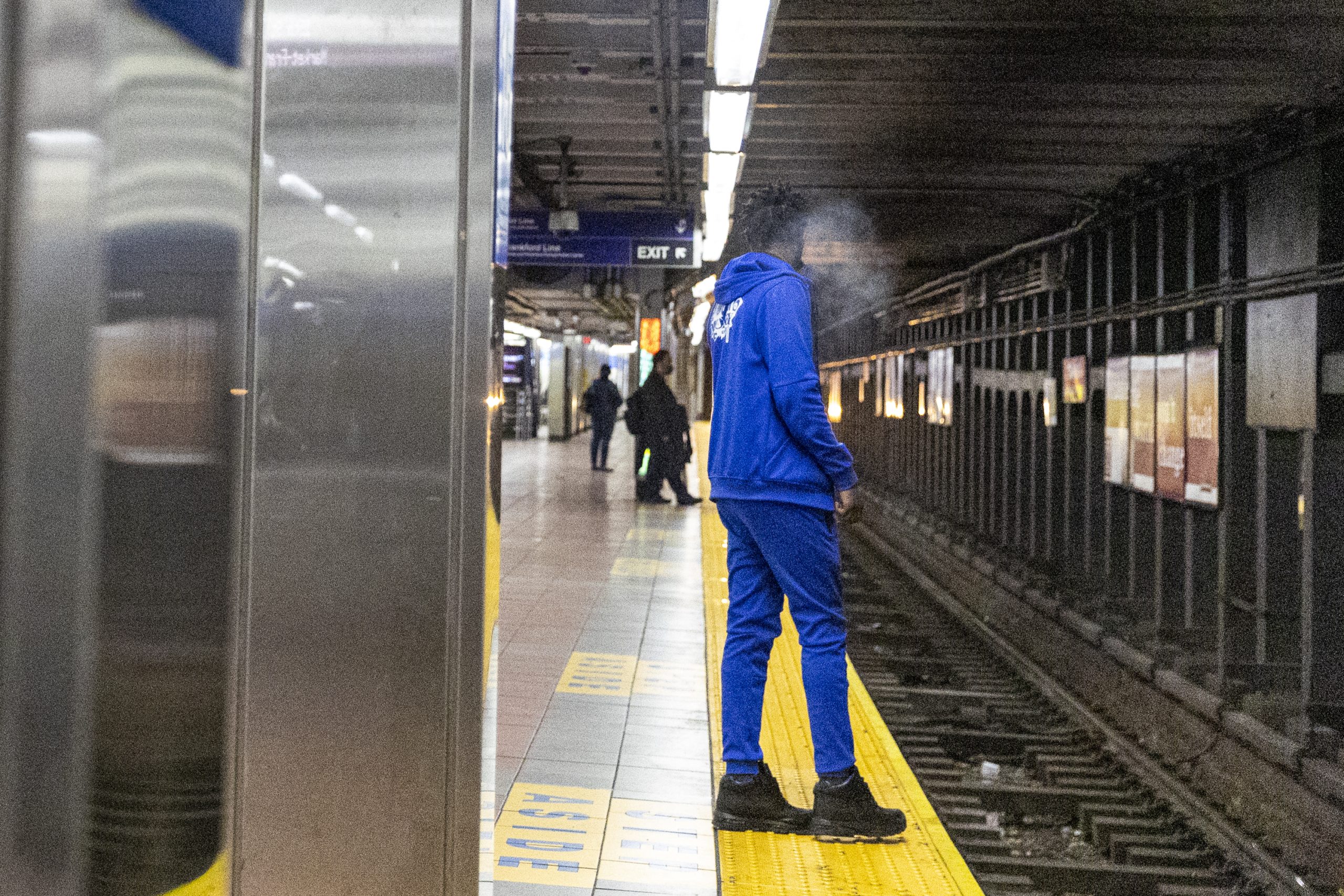
    A person smoking at the inside one of the SEPTA stops in Philadelphia.Tyger Williams / Staff Photographer

    Up in smoke

    After yet another year without a funding deal from Harrisburg, mass transit advocates and their supporters decided to raise awareness by embarking on a 24-hour public transportation marathon. They were joined, at least for part of the journey, by a plethora of elected officials.

    Raising awareness is important because SEPTA won’t survive without sustainable funding from the General Assembly. Still, a trip down to Washington this week reminded me of a problem that can’t be blamed on Harrisburg: the behavior of some of SEPTA’s riders.

    To be clear, the Washington Metropolitan Area Transit Authority system struggles with behavioral issues as well. Fare evasion, especially on bus routes, is out of control. Smoking on the metro, however, seems to be far less common.

    On SEPTA, however, it is ubiquitous.

    More than one person I’ve confronted over it has claimed, “I didn’t know you weren’t allowed to smoke down here.”

    It would be unfair to compound the frustration of riders who already deal with this phenomenon by failing to fund adequate service. At the same time, the constant smell of cigarettes and marijuana must be addressed. Even if SEPTA secures sustainable funding in next year’s budget, it won’t fulfill its potential until quality of ridership issues like smoking have been addressed.

    There’s no question in my mind that this behavior keeps people from riding the system. Beyond the discomfort of secondhand smoke, it also sends a message that the stations and vehicles are out of control. This makes them feel dangerous, even if SEPTA has posted record declines in serious crime.

    Every rider who doesn’t take the subway because of the dive bar atmosphere costs the system money. Some people have even resorted to taking buses, which are slower (and are more expensive for SEPTA to operate), just to avoid showing up at work smelling like a music festival.

    I’ve spent plenty of time in bars that allow smoking and I support the legalization of recreational marijuana. But it is one thing to engage in these behaviors in your own home or at a place of business where it is welcomed. It should never happen on public transit.

    Everyone’s excited about the King coming to town.Courtesy of Giphy.com

    The King’s landing

    When Philadelphia was first mooted as a potential landing spot for LeBron James’ swan song, I was a bit skeptical. After all, how often do good things happen for the Sixers?

    That changed when I heard about a conversation between Gov. Josh Shapiro and the Akron, Ohio native. It isn’t that Shapiro has superpowers when it comes to persuasion. In fact, my guess was that LeBron was most of the way toward choosing Philadelphia when that interaction happened. If the discussion hadn’t gone well, I doubt Shapiro would have ever mentioned it.

    After all, if Shapiro had publicly lobbied LeBron, only for the legend to land elsewhere, he’d have looked inept and desperate. Now, he looks savvy.

    Although there are reports that James may live in New York City while playing for the Sixers, his decision to take his talents to South Philadelphia is another corrective to the old and tired narratives about our city.

    Like a lot of Philadelphians, I can’t wait for the Xfinity Mobile Arena to become the court of King James.

  • From bike lanes to historic districts, Philadelphians hash it out in court | Shackamaxon

    With City Hall taking their summer break and Harrisburg finally passing a budget, this week’s edition of Shackamaxon looks at what’s going on in the courts.

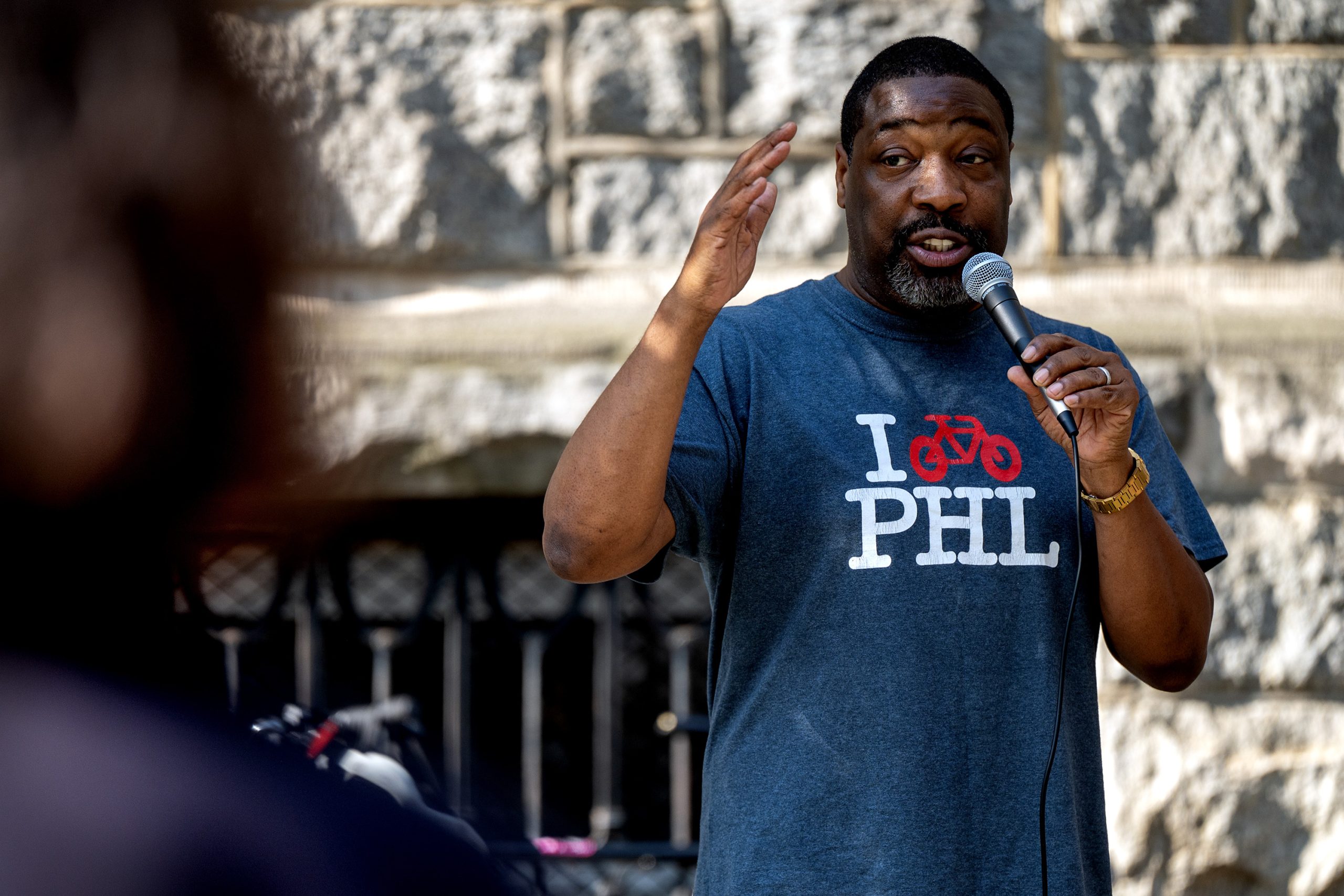
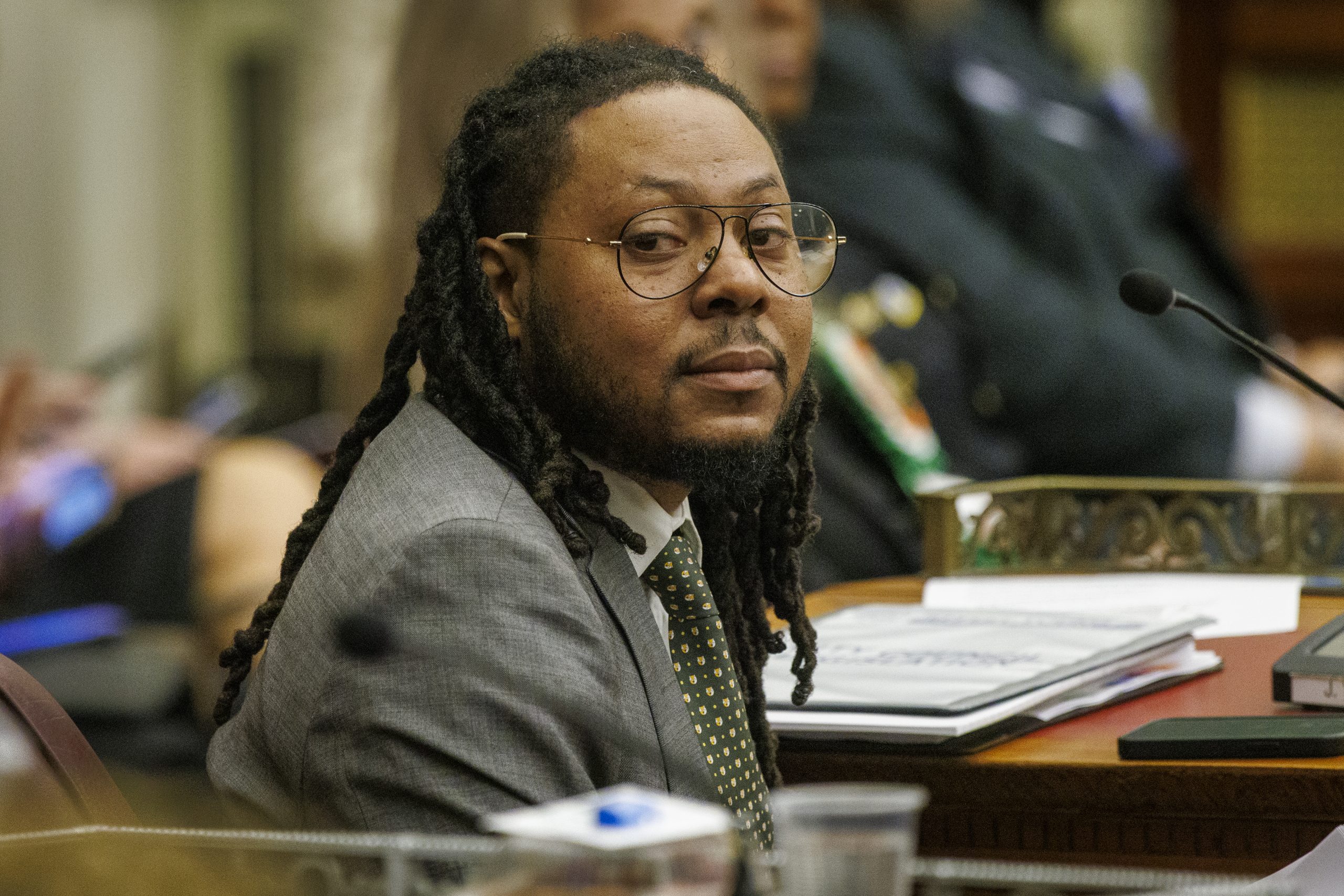
    City Council President Kenyatta Johnson speaks as friends, family, and Philly Bike Action members gather at a memorial for Barbara Friedes at 18th and Spruce streets on Sunday.Tom Gralish / Staff Photographer

    Street fight

    It has been two years since Barbara Friedes, 30, a physician specializing in children’s cancer, was killed riding her bicycle in Rittenhouse Square. The man who struck her, Michael Vahey, was driving at 50 mph, twice the speed limit, and his blood alcohol level was measured at .16, double the limit for intoxication.

    According to a prosecutor, Vahey, 69, could have easily chosen to walk home from the bar that night. Instead, he was impaired when he impatiently veered into the bike lane. Vahey was convicted last year and is now serving a six- to 20-year sentence.

    But the story did not end with Vahey’s imprisonment. For once, city officials took decisive action.

    City Council, led by Council President Kenyatta Johnson, passed the “no stopping in the bike lane bill.” Mayor Cherelle L. Parker pledged to add protection to the route, which could have prevented the kind of reckless maneuver that led to Friedes’ death. Yet, two years later, nothing has happened.

    The blame for the holdup, however, does not lie with City Hall. In fact, Johnson made an appearance at a vigil for Friedes hosted by her loved ones and Philly Bike Action this week.

    Instead, it has been the courts that have stymied the proposal. After a group called Friends of Pine and Spruce sued to stop the plan, a Common Pleas Court judge issued an injunction requiring the city to pass legislation codifying the administration’s right to install loading zones. City Council passed the legislation, only for another Common Pleas Court judge to decline to lift the injunction while the case proceeds.

    Frankly, things should never have gotten this far. Issuing loading zones is the exact kind of decision the Streets Department exists for, and having City Council pass a law for every loading zone in the city is a fool’s errand.

    It is certainly understandable that some neighbors would prefer to keep the status quo. The right venue to advocate for this position, however, is not the courts, but City Council. If the Court of Common Pleas fails to return control of city streets to city officials, the ruling must be appealed to the Commonwealth Court. Streets belong to everyone, not just the people who live alongside them.

    If residents want to stop bike lanes, they can do what cyclists have done. They can form advocacy groups, lobby elected officials, build a coalition, and pass legislation.

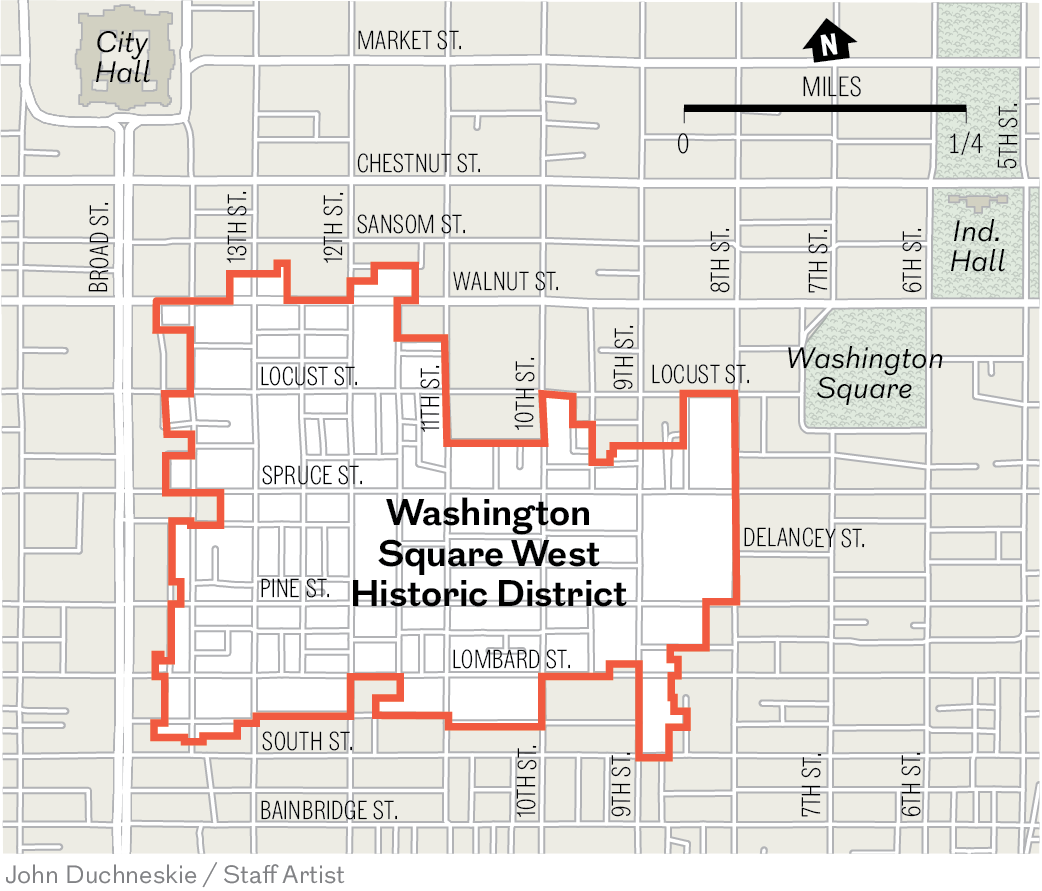
    Map of the Washington Square West Historic District. Some property owners are working to eliminate or curtail the district.John Duchneskie / Staff

    Historic challenge

    For some Center City residents, the Spruce and Pine saga contains a bitter irony. While some of their neighbors are suing to stop the city from designing public streets, they are suing to maintain the right to design their own homes.

    No one questions that the Washington Square West Historic District contains some of the city’s best architecture and links the present day to the city’s past. What’s been contentious throughout this process is how broad and restrictive the plan has been. While most districts cover a relatively small area, and typically pay homage to a specific era, style, or even architect, this district covers nearly all of Philadelphia’s history, from colonial times to the postwar era. More than 1,400 properties are listed as contributing, many of them fairly unremarkable.

    As a result, property owners like Jonathan Hessney have been working to eliminate or curtail the district. Most submissions to the Philadelphia Historical Commission were in opposition to the plan, with many citing both the personal financial burden and the fact that many of the most significant properties already have individual protections.

    Hessney also pointed out that Emily Cooperman, who is a member of the commission, helped draft the proposal. To some, this made the whole process feel like a foregone conclusion.

    Hessney and his neighbors sued. They won an early victory when Common Pleas Court Judge Christopher Hall overturned the designation. This was appealed by the city, keeping the district in place pending an appeal. The Preservation Alliance has filed its own brief in support of the district.

    Of course, the city could make everything easier by declining to pursue this suit further.

    Councilmember Jeffery “Jay” Young Jr. listens during the mayors budget address at City Hall in March.Alejandro A. Alvarez / Staff Photographer

    Senseless prerogative

    In another legal case concerning City Hall, the Commonwealth Court has ruled against Councilmember Jeffery “Jay” Young’s efforts to block a series of housing projects in North Philadelphia. Going forward, Young and his colleagues will have to secure the mayor’s signature before granting themselves standing to oppose zoning decisions.

    Young is one of Council’s most prolific users of what’s known as councilmanic prerogative, a tradition that gives district Council members final say on transportation and land-use decisions within their districts. While Council often defends this tradition as a way to ensure communities have a say, Young’s tactics usually attract the ire of his constituents, rather than representing their input.

    I talked to Ruth Birchett, a lifelong resident of North Philadelphia. Birchett has worked with both of Young’s immediate predecessors, supporting them at times and holding them accountable when needed. As the founder of Heritage Community Development Corp., she’s helped build affordable housing and fought against Temple’s efforts to build a football stadium. She told me that the way Young does business is very different. He does not seek input from her or other community leaders. He goes it alone.

    In particular, Birchett is upset over Young’s decision to block an affordable senior housing proposal. She took him to task in person. This situation is similar to Young’s opposition to renovations at the Cecil B. Moore Library branch. He came in at the very last minute to scuttle a shovel-ready project that had taken years of work to put together, and which had already secured funding.

    Birchett told me that the development was a “no-brainer.” Many seniors, herself included, live in homes that are much larger than their current needs. Philadelphia has a shortage of affordable senior housing. If seniors like Birchett can move into new housing in their own neighborhoods, this also helps younger residents access the city’s stock of sizable homes. That’s the housing circle of life.

    Instead of continuing to waste city resources by reauthorizing the appeal, Young should just let the project move forward.

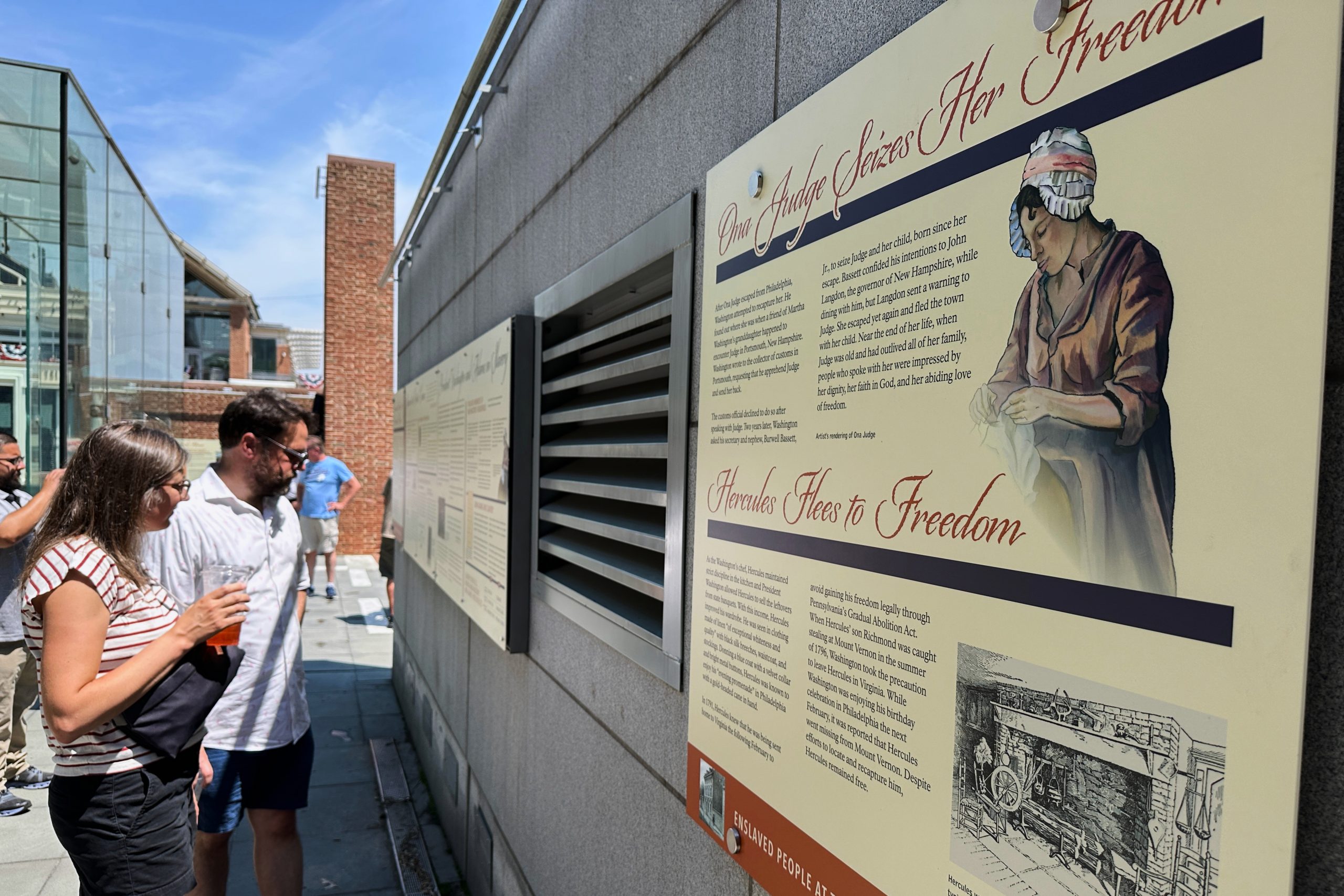
    Visitors view the recently reinstalled educational panels about slavery at the site of President George Washington’s home in Philadelphia.Tassanee Vejpongsa

    Washington whitewash

    For now, it seems the Trump administration has won the battle for the President’s House at Independence National Historical Park. After initial victories for the city, federal courts have affirmed the White House’s right to remove panels that were first installed roughly 20 years ago and replace them with new versions that advocates say minimize George Washington’s participation in America’s original sin of slavery. Mayor Parker has vowed to restore the originals.

    While some Founding Fathers, like Philadelphia’s Benjamin Franklin, realized the hypocrisy of calling for liberty while enslaving human beings, Washington showed he had no similar qualms. While living in Philadelphia, he acted with intent to evade Pennsylvania law, which stated that any enslaved person brought into the commonwealth would be emancipated after six months of continuous residence.

    The former panels ensured the stories of all Americans are heard, including those who were not given the rights of liberty during their own time. They also serve as a reminder that even the greatest heroes are still human.

    Washington deserves immense credit for helping secure America’s independence, and his decision to forgo the crown many assumed he’d take when he left office peacefully after two presidential terms — a precedent all but one of his successors (so far) has held to. He also deserves to be known as a man who failed to live up to the ideals he fought for.

  • Progressive candidates line up to challenge Council incumbents | Shackamaxon

    Progressive candidates line up to challenge Council incumbents | Shackamaxon

    This week’s column looks at next year’s races for City Council, self-driving cars, and Philadelphia’s success as a host city for major events like the MLB All-Star Game.

    Council challenge

    State Rep. Chris Rabb’s success in the 3rd Congressional District’s Democratic primary has galvanized local progressives. According to Inquirer reporting, which aligns with the chatter I’ve heard, the plan is to challenge for more seats on City Council. Specifically, those of 8th District Councilmember Cindy Bass and 1st District Councilmember Mark Squilla. Jeffery “Jay” Young, who represents the 5th District, is also likely to be challenged, although none of those candidates are explicitly aligned with the city’s progressive movement.

    As someone who closely follows City Council, I have mixed feelings about this news.

    I’ve strongly criticized Bass for her handling of land use in her district, which is often perplexing. Many iconic buildings have been left vacant under her watch, and her determination to serve as the decision-maker has frustrated community groups and constituents who have their own ideas for their neighborhoods. However, her likely progressive opponent did not impress me at all during the last election. At candidate forums, on questionnaires, and in his endorsement meeting with my colleagues on the Editorial Board, Seth Anderson-Oberman had admirable passion, but nowhere near Bass’ deep understanding of city government.

    Young has not served his constituents well in his first term. From senior housing in Strawberry Mansion to the renovation of the Cecil B. Moore Library, he’s consistently made baffling decisions. The only thing that could possibly save his reelection is if the vote is diluted by the number of challengers he’s expected to face — Jalon Alexander, Curtis Wilkerson (who ran but failed to secure enough signatures in 2023), Dustin Dove, and Max Tuttleman are all rumored candidates. Perhaps the petition process will shrink the field.

    In the 1st District, why change? I don’t always agree with Squilla, but I can say that he shows up consistently. He answers emails himself, usually promptly. He tries to balance everyone’s input and find a fair way forward. He asks reasonable questions at hearings and doesn’t scapegoat city staff to score easy points.

    Another issue with any progressive takeover is the lack of vision.

    It is good to see the local establishment Democrats forced to campaign and defend their records, but what do progressives plan to do with their power once they get it? Some of the ideas progressives frequently campaign on, like a wealth tax or rent control, are unlikely to pass constitutional muster in Pennsylvania’s courts. Policy ideas that have been implemented, like inclusionary zoning, have failed to deliver.

    It is easy to decry the state of Philadelphia’s schools and services, but where would a progressive Council majority find revenue to invest in them? How would they grow our anemic business sector?

    When progressives have won upset victories, it has been because they have something tangible to offer. Larry Krasner became district attorney because he really could prosecute police officers for misconduct, overturn wrongful convictions, and change the department’s culture if elected. New York’s Zohran Mamdani might not be able to convince the MTA that free buses are a good idea, but he is making them faster, and he has implemented the promised freeze for the city’s rent-stabilized apartments.

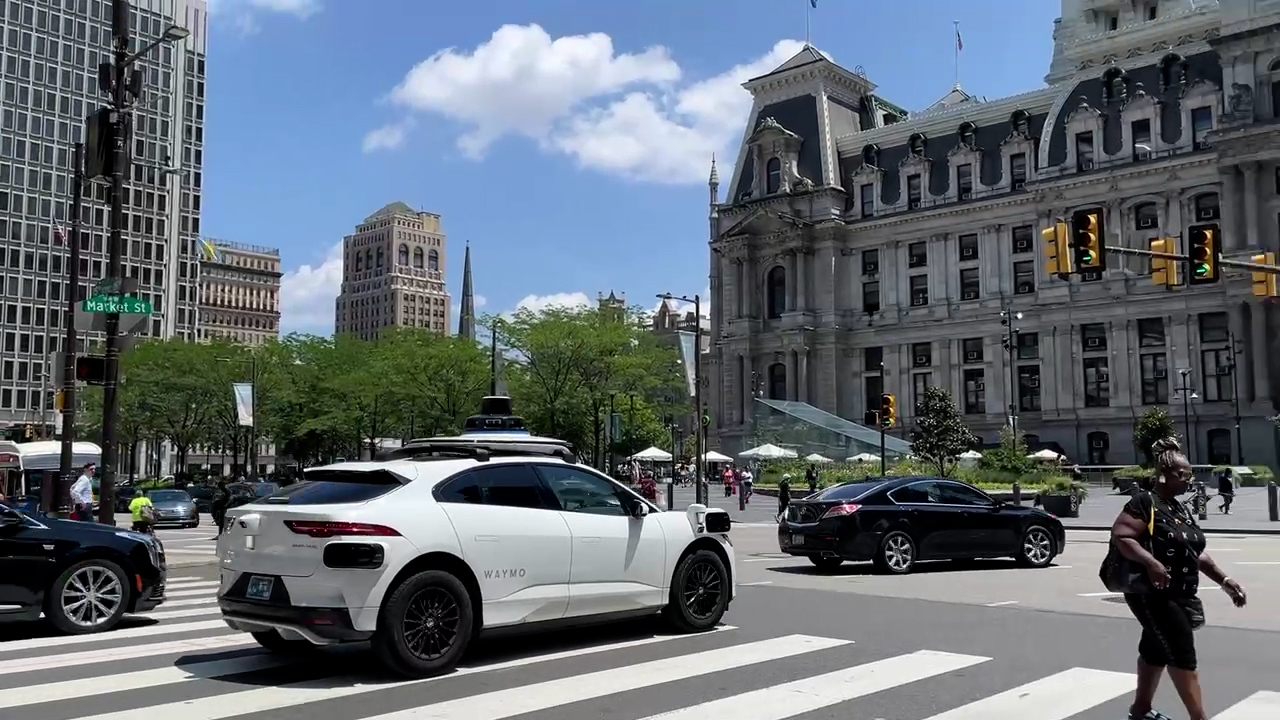
    A Waymo car drives down Market Street.Alejandro A. Alvarez / Staff Photographer

    Driver’s seat

    It seems like every week I see more Waymo vehicles around the city. The autonomous cars are regulated by Harrisburg, not City Hall. At a March City Council hearing, lawmakers were told explicitly: Philadelphia is entirely preempted on this issue.

    At the time, I talked to some opponents of the new technology. They are pushing for a yearslong delay. At a rally before the hearing, speakers referenced both safety concerns and worries about job losses.

    While a couple of speakers referred to admittedly jarring incidents, it does seem like the computers do a better job of driving safely overall. A study done by Swiss Re, an insurance company, found that Waymos are less likely to damage both people and property. Looking at 25 million miles of operations, the Waymo cars recorded nine cases of property damage and two cases of bodily injury. The typical result for human drivers over a stretch like this would be 78 cases of property damage and 26 bodily injury claims. This is a serious and positive shift when it comes to road safety for all users.

    I certainly can understand worrying about losing your job to new technology. At the same time, human drivers have not disappeared from the cities where Waymo already operates, even as rideshare apps keep more and more of the fare for themselves.

    Another argument is that Waymos represent more cars at a time when cities are moving away from auto-oriented policymaking. It is no secret that I am a strong supporter of this shift, but cars aren’t going away anytime soon. Just one in 10 Americans rarely or never drive a car. In much of the country, getting around without a vehicle is arduous, if not outright impossible.

    If Waymo can provide safer and cheaper access to mobility for people who can’t drive themselves, it may be a net positive.

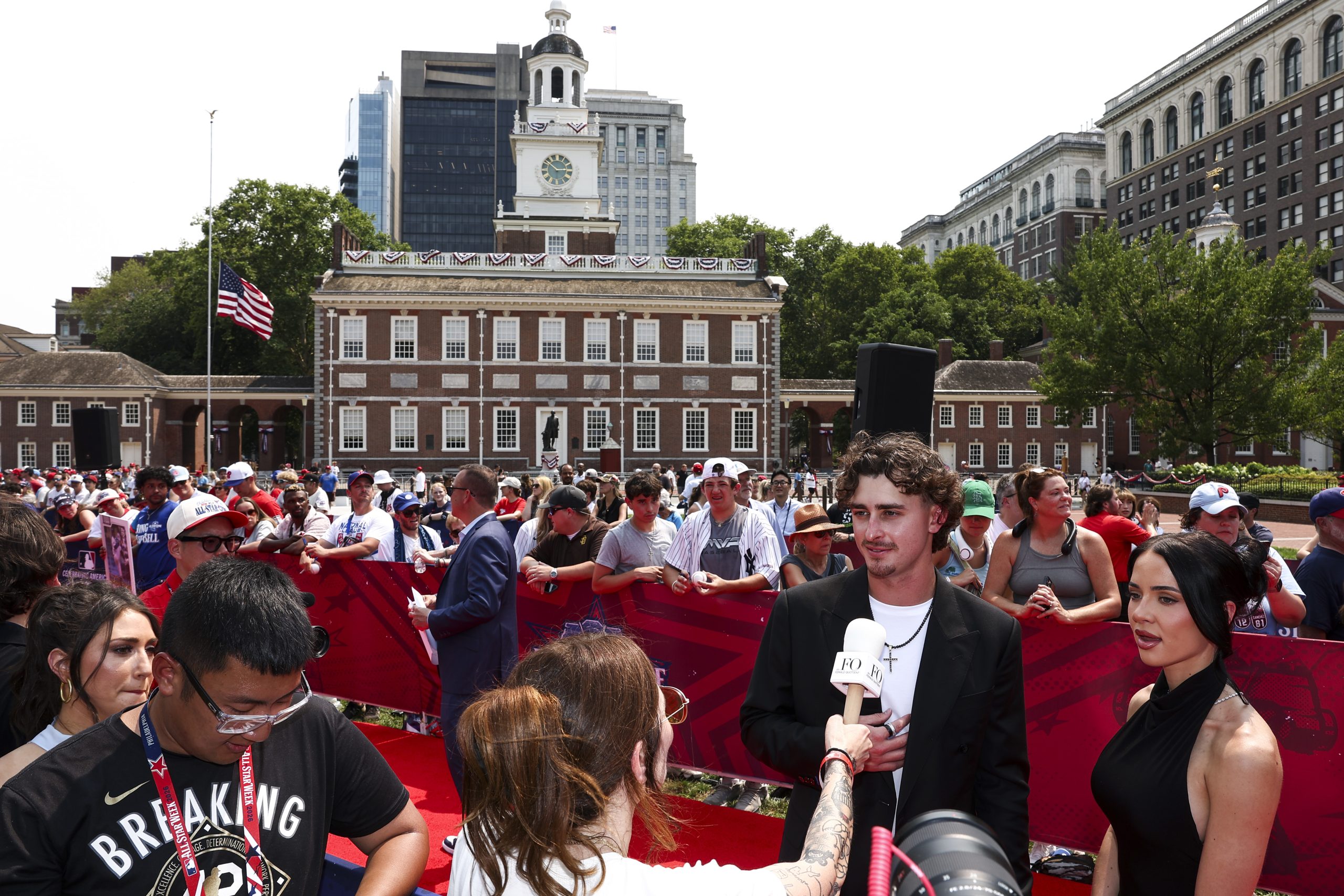
    All-Star players and their families walk the MLB All-Star Game Red Carpet at Independence National Historical Park on Tuesday.Monica Herndon / Staff Photographer

    Hopping host

    The biggest festivities of America’s 250th birthday may be over, but Philadelphia continues to shine as a host. Baseball fans and commentators mostly praised the city’s efforts, and Independence Mall might have been the most historic setting ever for the All-Star Game’s red carpet show. MLB’s tribute to The Sandlot took us to city neighborhoods, the Home Run Derby was enlivened by the antics of our fans, and the fourth annual Swingman Classic gave HBCU athletes the opportunity to play in a big-league ballpark.

    I finally got up to the FIFA Fan Festival in Fairmount Park, which also showcased the city’s strengths as a host. It was genuinely impressive to see the range of options for food and activities, and how short the lines typically were despite the thousands of people who came to visit every day.

    While changing a city’s perception takes time, there are undoubtedly many visitors who are going back home and telling folks that Philadelphia is so much nicer than they expected.

  • Nobody likes property tax hikes, but the city already protects lower-income homeowners | Shackamaxon

    Nobody likes property tax hikes, but the city already protects lower-income homeowners | Shackamaxon

    This week’s Shackamaxon covers property tax assessments, state budget negotiations, and Pennsylvania’s gambling dependence.

    Assessment anger

    Philadelphia property owners have by now received one of the least anticipated pieces of snail mail of the year: our assessment notifications. My own home’s value went up by around $30,000, meaning my family will have to fork over another $400 a year to the city and school district.

    Ever since Mayor Michael A. Nutter instituted the Actual Value Initiative in 2013, property taxes in Philadelphia have become an increasingly contentious issue. In the past, valuations stuck around for years — whether or not they matched the overall economic climate.

    This meant some property owners were stuck paying more than they should, while others were getting a significant break. By switching to AVI, Nutter hoped to create a system that would be fairer. It also ensured city coffers would benefit from investments in neighborhoods.

    This being Philadelphia, however, nothing is so simple.

    While many of the underassessed properties were owned by people of significant means, like landlords or vacant-land speculators, the city also has one of the largest concentrations of low-income homeowners in the country. While no one wants to pay an additional $400 a year, this kind of increase is much harder to manage for the nearly 100,000 Philadelphia homeowners who earn less than $50,000.

    That is why City Council often feels pressure to provide relief. Sometimes, however, the conversation on this topic would lead one to believe the city currently does nothing for longtime, low-income residents who are struggling with higher bills. Fortunately, this is not the case.

    The biggest program on offer is the Homestead Exemption, which allows resident homeowners to deduct roughly $1,400 from their property tax bill. For those whose home is worth less than $200,000, they are getting more than half of their bill eliminated. There’s also the Longtime Owner Occupants Program and the senior tax freeze.

    City Hall is also helping homeowners keep up with the costs of repairs. Mayor Cherelle L. Parker’s H.O.M.E. Initiative offers $10,000 to help fix problems like leaky roofs, and the Adaptive Modifications Program ensures residents can age in place or adapt to unexpected physical limitations.

    Between those programs, the city is spending hundreds of millions of dollars each year on protecting homeowners. That’s more than the combined receipts for the proposed rideshare tax, the soda tax, and the liquor-by-the-drink tax. Renters, who tend to be poorer and more cost-burdened than homeowners, get comparably little support from City Hall.

    When City Council returns this fall and considers how to react to rising assessments, the conversation must reflect how much Philadelphia already does to help struggling homeowners.

    Gov. Josh Shapiro delivers his third budget address to a joint session of the state House and Senate at the state Capitol in 2025.Tom Gralish / Staff Photographer

    Budget funding

    Even though state senators have been called back for budget votes, there’s still no official word on what will be in the document.

    Last year, the commonwealth spent just over $50 billion, while bringing in just under $49 billion in revenue. This meant using money from the state’s reserves — although the Rainy Day Fund, which has around $8 billion, was not touched. Instead, state leaders cannibalized other sources, like the Public Transportation Trust Fund, to pay for services without raising taxes.

    The plan Gov. Josh Shapiro unveiled in February proposed around $53 billion in spending. Absent new sources of revenue, this would require tapping into the Rainy Day Fund. It remains to be seen whether Harrisburg will finally act on so-called games of skill. Taxing the machines could bring in around $1 billion per year, which would significantly close the gap between projected revenue and the governor’s proposal.

    Still, no one expects the Republican-controlled Senate to approve the full proposal. In the past, they’ve objected to any increase in funding for public transit agencies, for which Shapiro has proposed an additional $300 million. There’s also another $565 million in funding for schools, meant to address a structural imbalance that the courts have ordered rectified. Given the emphasis from Mayor Parker, Council President Kenyatta Johnson, and the city’s legislative delegation on education funding, it’d be a surprise if the final deal did not include a significant increase in support for schools.

    Philadelphia Phillies first baseman and star hitter Bryce Harper appears in a custom-made video for the betting site FanDual.Obtained by The Inquirer

    Aiding in betting

    The biggest reason not to tax skill games is that Pennsylvania is already too dependent on gambling to pay the bills.

    Between brick-and-mortar casinos and online betting outlets, the commonwealth generated more than $270 million in revenue in just May of this year. The sports betting platform FanDuel even subsidized SEPTA service for the Eagles’ playoff run. While this money does help avoid unpopular service cuts and tax increases, it comes with its own costs. Research says that problem gambling is on the rise, with the ease of betting on your phone a key component.

    While gambling has long been a part of human society, the legal online gambling platforms that dominate the scene today are unprecedented. Inquirer reporter David Gambacorta managed to locate one local man who wagered $18.5 million on sports. Along the way, he was offered multiple perks to keep him in the game. Casinos have long sought to keep big spenders happy through meal vouchers, free drinks, and comped accommodations. FanDuel went a step further: It secured a personalized video from Phillies star Bryce Harper.

    Part of the justification for legalizing gambling was to clean things up. Legitimate businesses don’t break kneecaps or organize “bust outs.” They had to operate with the kind of regulatory guardrails that simply didn’t apply to illegal bookies who dominated the trade not so long ago.

    Stories like these complicate that logic. The more lawmakers in the Keystone State rely on gambling to pay our bills, the more complicit we are in the industry’s misdeeds.

  • For the World Cup or the Fourth of July, Philadelphia shows it’s the place to be | Shackamaxon

    Welcome to Shackamaxon, a weekly politics column focused on what’s happening at City Hall and in Harrisburg. It is named for the place where the Lenape chiefs would meet to conduct the people’s business, which is now known as Penn Treaty Park. This week’s edition looks at the ways Philadelphia has changed for the better since the Bicentennial — and the ways things have stayed the same.

    D.C. dud

    My fellow columnists Trudy Rubin and Jenice Armstrong have both pointed out how disappointing Washington’s celebrations for America’s 250th anniversary have been. My advice? Skip the city that didn’t even exist in 1776 and visit Philadelphia instead. Skip Boston, the small town with the tall tales, as well. If you are healthy and hydrated enough to withstand the brutal heat wave, the City of Brotherly Love and Sisterly Affection is the best place to celebrate the Fourth.

    Philadelphia embodies the story of America. Our city was founded by William Penn, a Quaker idealist who staunchly defended religious liberty. It was fostered by Ben Franklin, a writer and inventor who embodies our nation’s ingenuity and ambition. Octavius V. Catto, himself a Black man born free, fought for the rights of the enslaved, both before and after the passage of the 13th Amendment.

    A century before the Rev. Dr. Martin Luther King Jr., Catto became a martyr when he was shot and killed on Election Day in 1871 as part of a broader campaign of political violence against Black voters. Catto’s fiancée, Caroline LeCount, desegregated this city’s streetcars long before Rosa Parks did the same for buses across the country. Siegmund Lubin started one of the first movie empires, right here in the city. The iconic Stetson hat, long associated with cowboys and the Wild West? Another product from the city known as the “Workshop of the World.”

    There’s a case to be made that not only did America start here, but our city is the most American of them all. Everything that our country is known for, both for good and for bad, has happened here, as well.

    Ecuadorian soccer fans attend a flag waving event at the Philadelphia Museum of Art steps along the Benjamin Franklin Parkway, ahead of their first round World Cup match against the Ivory Coast, on June 13.Yong Kim / Staff Photographer

    New narrative

    It always bothered me that our city’s greatest draw seems to be Rocky Balboa, the fictional boxer from the eponymous film. Beyond the fact that this city is where America began, Rocky also memorializes a very specific era of our city’s history, one of decline. The first movie was released in 1976, during a decade when Philadelphia lost over a quarter million residents. Crime, trash, and disorder dominated the city’s streets.

    It’s also worth noting that the film was released in the year of America’s Bicentennial. The celebrations that year were largely a misfire. Then-Mayor Frank Rizzo scared many potential visitors away, and there was an outbreak of Legionnaires’ disease.

    That’s not to say Rocky, or the city he inhabited, was without charm. Despite the challenges, Philadelphians were still full of heart and grit, qualities Sylvester Stallone’s creation exemplified well. But the place shown in the movie doesn’t capture the full spectrum of what Philadelphia had to offer, even during the tumultuous ’70s. Rocky may have run up the Art Museum steps, but he never stepped inside.

    Today’s Philadelphia is a dramatically different city. While the white working-class communities Rocky represented remain an important part of the city, they no longer dominate it. Rizzo would garner very few votes if he were on the ballot today. Philadelphia is now a multicultural, multiracial city on the rise. Rather than repelling visitors and residents, the city welcomes them.

    According to Sports Business Journal, the city’s FIFA Fan Festival is a pacesetter, leading the 13 other public World Cup viewing areas in North America in both single-day and overall attendance. Social media feeds are filled with international visitors praising the city’s culture and cuisine. Some Brazilian fans called it the most beautiful city they have ever seen.

    Throughout the year, city officials have expressed confidence in Philadelphia’s ability to recoup the investment made in hosting the World Cup and other events. The state tourism office has told The Inquirer that early indicators are positive, with flight bookings, Amtrak arrivals, and Airbnb rentals exceeding expectations. While the initial projections were for 500,000 World Cup visitors, we may end up seeing closer to 800,000.

    Beyond the number-crunching, however, there’s a more important goal at stake: changing people’s perceptions of our city.

    That’s something impossible to set a price tag on.

    Councilmember Curtis Jones Jr. and his wife, Jazelle Jones. The couple stand to collect up to $752,000 in combined retirement payouts while keeping their six-figure jobs.Tom Gralish / Staff Photographer

    Same old problems

    So far, one of the biggest reasons to be skeptical about Philadelphia’s future is City Hall. The city’s leaders too often serve their own interests, rather than those of the public.

    Take Curtis Jones Jr., who represents the 4th District on City Council. Jones is certainly capable of being an insightful public official. Since his colleagues passed him over as Council president, however, he’s displayed increasingly questionable behavior.

    Earlier this year, Jones asked Streets Department officials to consider delaying crucial bridge repairs until after his reelection, citing concerns that the public might blame him for their inconvenience.

    Jones, however, ignored the impact of public opinion when it came to his own personal finances. Both he and his wife, Jazelle Jones, who serves as city representative, are planning to take payments through DROP, a retirement program that was never meant to accommodate elected officials. The pair stands to collect up to $750,000 by retiring for a day — and then returning to their six-figure jobs. This may be a rounding error in a city that is planning to spend $7.1 billion in the next fiscal year, but it is also more than 10 times Philadelphia’s median household income.

    Asked about Jazelle Jones’ retention, Mayor Cherelle L. Parker cited the need to stay the course as a factor in making an exception for the city representative. Left unspoken was the fact that if Parker had blocked this payday, it would have likely complicated her relationship with Curtis Jones — one of the mayor’s most reliable supporters on City Council.

    This kind of cronyism only reinforces negative perceptions of the city. Anyone looking for evidence that Philadelphia is the same old parochial, self-dealing city it was known for being in the past has only to try to keep up with the Joneses.

    The Pennsylvania State Capitol on Commonwealth Avenue in Harrisburg. Another year, another blown budget deadline by state legislators.Tom Gralish / Staff Photographer

    Harrisburg holdups

    To be fair, City Hall isn’t the only place that seems like it’s having a hard time getting its act together. Harrisburg has yet again missed its budget deadline.

    While local governments, school districts, and SEPTA are expected to submit their own spending plans in a timely manner, legislators have apparently decided that deadlines don’t apply to them. The Pennsylvania Senate went home early rather than finish negotiations that its own leaders have said are productive.

    Last year, the impasse went on into the fall, forcing some state services to grind to a halt and schools to take out loans in order to pay their bills. The commonwealth simply can’t afford to do that again.

    This year, rising revenues from existing taxes and a potential influx of money from so-called skill games have made the process easier. Still, it is July, and there’s no budget deal.

    What we need is a way to hold legislators accountable for failing to do their jobs. In the past, withholding pay was suggested as a leverage point. State Rep. Natalie Mihalek, a Republican from Western Pennsylvania, has said that failing to pass a budget should lead to a special election, a nod to the concept of “confidence votes” in Westminster parliaments.

    Maybe that will get the General Assembly to take its job seriously.

  • Shining the spotlight on America’s Black Revolutionary Era icons | Shackamaxon

    This Juneteenth edition of Shackamaxon looks at the housing debate in Harrisburg, the recent state Supreme Court decision on skill games, and some Revolutionary Era stories you might not have heard before.

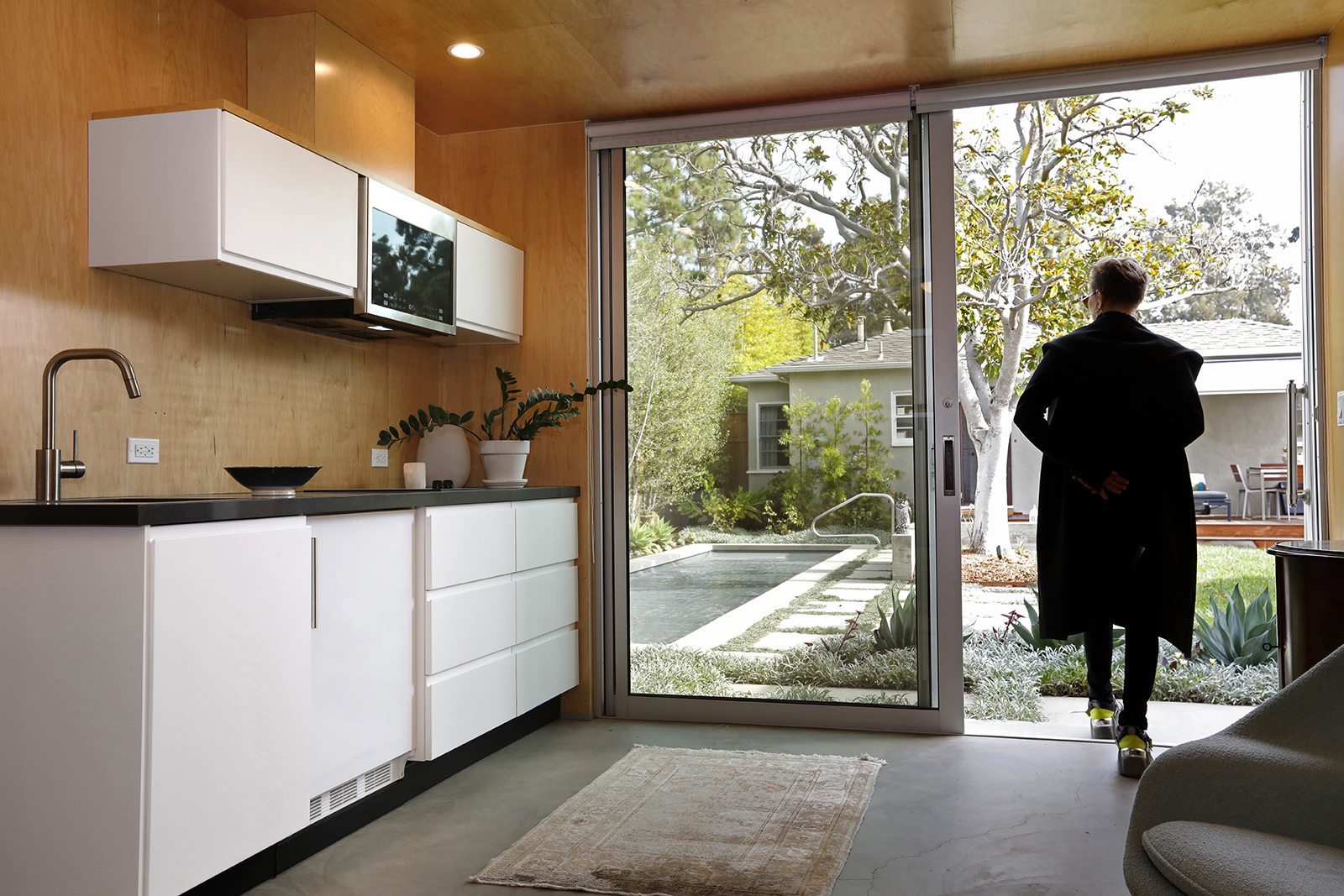
    Erla Dögg Ingjaldsdóttir exits a Santa Monica, Calif., accessory dwelling unit in 2022. Carolyn Cole / MCT

    Preemption the key

    It is increasingly clear that legislators in Harrisburg want to do something about housing affordability in Pennsylvania. What’s less clear is whether they’re willing to take the most necessary step: preempting local governments.

    The recent push to legalize accessory dwelling units, or ADUs, is a classic example of this tension. For the wide coalition of supporters, ADUs — think a backyard apartment — represent an obvious fix to the housing crisis. They allow families to live close to one another without the awkwardness of sharing a kitchen, while empty nesters can monetize their homes without moving and typically rent at affordable rates. There’s also significant demand for them.

    Mario Mascioli, from Acorn Built Homes, says his company gets between 200 and 300 inquiries a month. A recently passed bill in the state House would allow property owners to build one unit per lot and restricts the ability of local authorities to regulate them out of existence.

    It is now up to the state Senate to pass the bill. The Senate’s housing committee has met just twice so far this year. Some Republicans have been reluctant to embrace housing reform, citing a desire to avoid infringing on local control of zoning.

    While the input of local communities will always be part of development politics, housing affordability is a regional issue. Acting as a commonwealth ensures that all of our cities, townships, and boroughs do their share when it comes to new housing — and that no municipality can sabotage ADU construction.

    Additionally, some conservative organizations like Americans for Prosperity have backed the bill. For these groups, property rights and economic opportunity make embracing preemption worthwhile.

    In fact, the coalition to reform housing rules is refreshingly broad. From right-leaning groups like Americans for Prosperity to self-described socialists like State Sen. Nikil Saval, there is a growing understanding that change is essential. This need is underlined by the rapidly increasing costs to purchase a home. In Villanova, even the most affordable options now cost $1 million.

    Unregulated gaming devices known as “skill games” in a barber shop in Hazelton in August.Tom Gralish / Staff Photographer

    Same old slots

    For the entirety of Josh Shapiro’s first term as governor, one question has dominated the revenue side of state budget proceedings. Will Pennsylvania regulate and tax so-called games of skill, and at what rate, and under what authority?

    Proponents of the games argued they are distinct from slot machines and should pay a lower rate. They also want the devices to avoid being placed under the state Gambling Control Board. Critics say otherwise. Some want the machines to be gone altogether, citing their negative impact on communities. Others want them restricted and taxed like slot machines, which can only operate at licensed casinos and hand over most of their revenue to the commonwealth. Efforts by local governments, like Philadelphia’s, to ban the machines have been stymied by the courts.

    At least until this week.

    After years of debate, the state Supreme Court ruled that the devices are actually slots after all, reversing an earlier Commonwealth Court ruling that had maintained there is a difference. This new ruling aligns with my own experience testing the machines. You put in cash, press a button, and hope the symbols align.

    Given this fact, which is now the legal opinion of Pennsylvania, it doesn’t make much sense to tax the machines at a different rate than existing slots. Neither does allowing them to proliferate in every gas station, corner store, and bar that wants them. Like slots, skill games should be limited to operating in designated areas, and access must be controlled by age. They should also be controlled by the same regulators as other gaming devices. While the commonwealth absolutely could use the revenue boost legalizing the machines will bring, the priority should be on mitigating their impact.

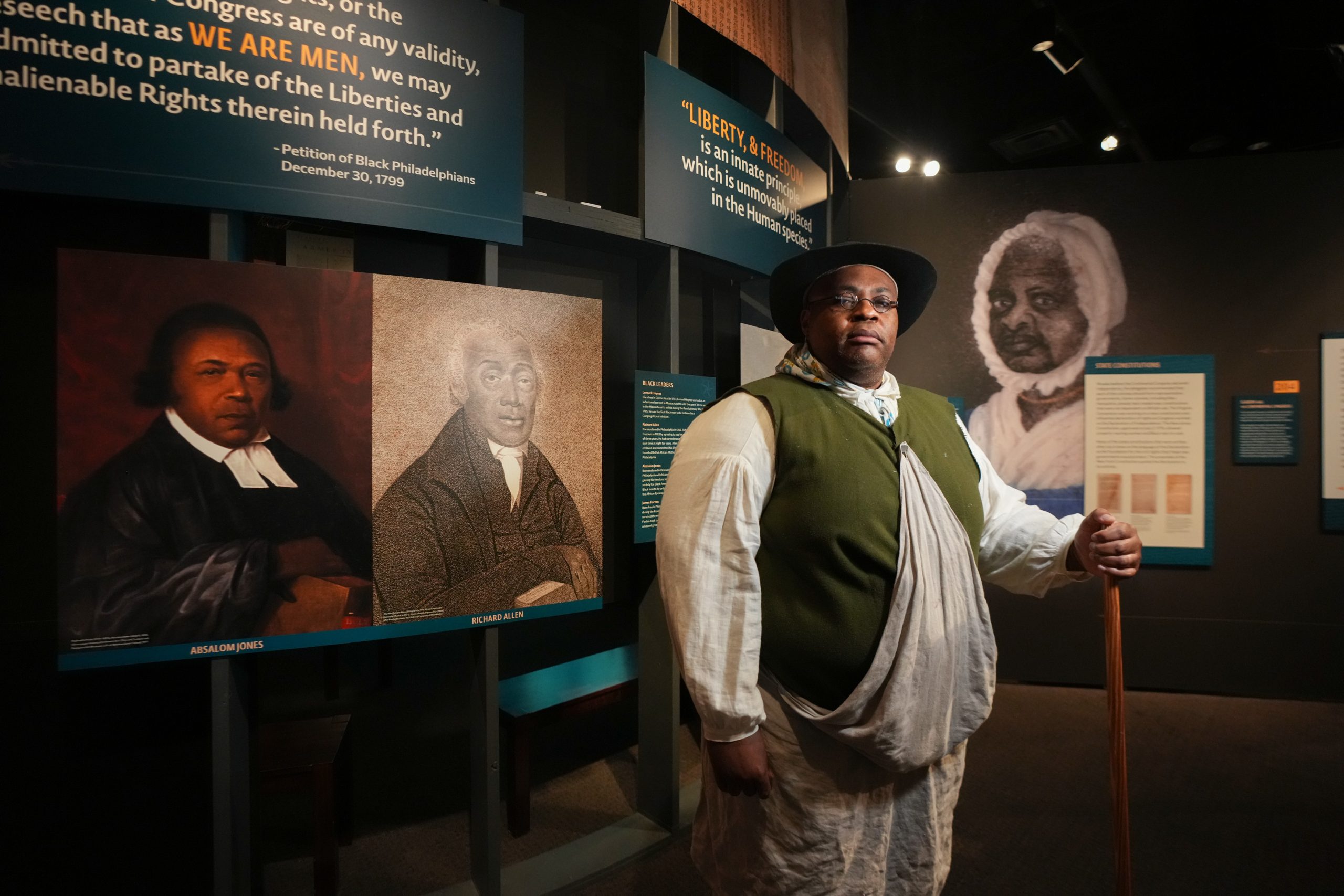
    The historian Michael Idriss dressed as Cyrus Bustill, an 18th-century baker who supplied George Washington’s troops at Valley Forge.Jessica Griffin / Staff Photographer

    Remembering revolutionaries

    Philadelphia has been known as the home of Ben Franklin and Betsy Ross for centuries and boasts several professional reenactors who bring these Revolutionary Era leaders to life. While both Franklin and Ross have earned their public profiles, they are far from the only local figures worth memorializing.

    Michael Idriss, a former classmate of mine at Temple University who now manages the Museum of the American Revolution’s African American Interpretive Program, has brought another name to light: Cyrus Bustill, an enslaved baker who freed himself, supplied George Washington’s troops at Valley Forge, and helped found the Free African Society of Philadelphia.

    Idriss also helped set up the museum’s Black Founders exhibit, which focused on James Forten, a Black patriot and business owner who funded abolitionist causes.

    Idriss refers to himself as an interpreter rather than a re-enactor and has brought to light a pivotal but until now under-appreciated Founding Father. Bustill’s work has even qualified his descendants, like Joyce Mosley, for membership in the Daughters of the American Revolution, an elite service organization.

    An elder statesman to figures like Forten, Absalom Jones, and Richard Allen, Bustill represents the lesser-known stories of the Free Philadelphians of African descent before, during, and after the revolution. By 1838, there were 20,000 free Black Philadelphians.

    In many ways, their story should sound familiar. After the revolution, many felt that America should live up to its lofty ideals. Pennsylvania passed a law ensuring gradual emancipation, and many people of all races became abolitionists. Then came the backlash. A populist and crass president had come to power and Black stories were buried. It sounds sadly familiar, doesn’t it?

  • ‘The dinosaur’ stumbles as Philly’s Dem machine loses ground in ward elections | Shackamaxon

    ‘The dinosaur’ stumbles as Philly’s Dem machine loses ground in ward elections | Shackamaxon

    Welcome to Shackamaxon, a weekly politics column focused on what’s happening at City Hall and in Harrisburg. It is named for the place where the Lenape chiefs would meet to conduct the people’s business, which is now known as Penn Treaty Park. This week’s column covers ward leader elections, efforts to make community events affordable, and a U-turn on some painful cuts at the Philadelphia School District.

    Council member Cindy Bass has been widely condemned for declaring herself the winner of a controversial election for the leadership of the 22nd Ward.Alejandro A. Alvarez / Staff Photographer

    The dinosaur groans

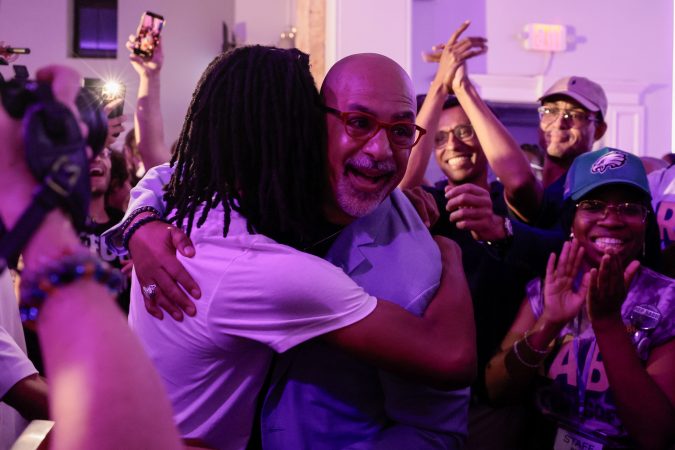
    After the primary elections three years ago, Philadelphia Democratic Party Chairman Bob Brady was in a celebratory mood. In an open letter posted on social media, Brady boasted that the “dinosaur roared,” a playful, self-deprecating reference to the party establishment’s wins over progressive and reformist alternatives. During this week’s ward elections, however, establishment candidates had little to brag about. Wards That Work, a coalition of left-leaning groups, announced that candidates they supported had won six of the city’s 69 ward leadership positions. While the party’s old guard still holds a significant lead in the total number of ward leader positions, it is clear where the energy and enthusiasm of the party are headed. The insurgent wards, and the wards they’ve contested but haven’t yet prevailed in, are filled with committeepeople. The machine-dominated wards are filled with vacancies.

    In the 22nd Ward, one of the most hotly contested races of the cycle, the incumbents are facing questions about whether they skirted the party’s rules to retain their hold on power.

    Fred Dedrick, an elected committeeperson, told me that current ward leader and 8th District Councilmember Cindy Bass had initially told folks to show up by 7:15 p.m. if they wanted to participate in the reorganization vote. After the meeting finally began at 8 p.m., she quickly called for a voice vote, declared herself the winner, ignored requests for a roll-call vote, and sent everyone home.

    Under the party’s own rules, Brady told The Inquirer’s Sean Collins Walsh, a roll-call vote must be taken if it is requested.

    Bass’ tactics drew widespread condemnation. Even U.S. Rep. Brendan Boyle, who usually stays out of local governmental issues, said he was “absolutely disgusted” by what he saw in a video of the vote, and made a direct comparison to President Donald Trump’s repeated efforts to “obstruct our democracy.”

    The Philadelphia Democratic City Committee, for its part, is planning to host a revote between Bass and her challenger, Octavius Price.

    This is far from Bass’ first controversy. Her tenure on City Council has been characterized by high-profile disputes with some community organizers. Bass’ critics cite what they describe as a lack of consistency, particularly on issues of development: When Bass opposes a project, like the proposed reuse of the Ada Lewis Middle School property, she cites a lack of popular support. When she’s behind an effort — like the decision to grant development rights at the former Germantown YWCA — the community’s viewpoint isn’t taken into account.

    That kind of vacillation could be part of why Bass won her most recent primary election in 2023 by just over 400 votes, despite her opponent having little in the way of name recognition.

    Former City Council member (and prominent real estate developer) Allan Domb cautioned his colleagues in city government to move slowly before they acquired the former Inquirer building. They probably should have listened to his advice.Tom Gralish / Staff Photographer

    Avoidable boondoggle

    In 2016, then-Councilmember Allan Domb raised concerns about then-Mayor Jim Kenney’s plan to turn the former Inquirer building on North Broad Street into the new police department headquarters. Domb’s objection was basic common sense. If the city is going to spend a quarter of a billion dollars, shouldn’t we at least get an appraisal first? Especially given that a developer had spent just $22.7 million — a fraction of its expected price tag — to acquire it in the first place.

    An Inquirer analysis suggested that the city had, in fact, overbid. The city ended up paying around $90 per square foot, which is higher than the $71 per square foot paid for a comparable property, the former GlaxoSmithKline headquarters that sold three years before. Since 2018, the value of commercial real estate in Center City has declined. The sprawling Centre Square complex near City Hall sold for under $60 per square foot.

    In fact, in addition to buying the building without an appraisal, the city also agreed to a yearslong leasing agreement, which allowed the owner, developer Bart Blatstein, to utilize historic tax credits.

    Now the bill has come due, with city officials forced to either buy the building outright at its inflated price or pay double in rent payments while searching for a new location, which would also likely cost hundreds of millions of dollars to get up to standards.

    While buying the building may be the least bad option at this point, the entire situation is a frustrating reminder of how defensive and parochial city government can be. Despite having a bona fide real estate expert in Domb available to assist their decision-making, city officials embarked on the plan without asking for his input ahead of time.

    A report by City Controller Christy Brady found that Philadelphia’s cumbersome rules for event planning are getting in the way of some long-standing civic traditions.Tom Gralish / Staff Photographer

    Haphazard hosting

    With the World Cup having kicked off and America preparing to celebrate its 250th birthday, you might think the city would be filled with local events, festivals, block parties, and other revelry spreading to all corners of the cradle of liberty. Thanks to the city’s stringent regulations and a stated lack of resources, there will be fewer events than many Philadelphians might have hoped for.

    Hosting events in Philadelphia is a slog during the best of times. City Controller Christy Brady issued a report earlier this year that reiterates findings reported in The Inquirer: The high cost of security and convoluted permitting process is shrinking, pushing out, and eliminating many long-standing civic traditions.

    This year was supposed to be different, thanks to the Neighborhood Celebrations Grant Fund. But organizers told Inquirer reporters that they are running into unforeseen obstacles, including blackout dates that extend from June 11 to July 18. This means neighborhoods are being restricted at the same time when demand is highest. While security concerns are a legitimate issue, giving people an option to celebrate closer to home could be the key to avoiding the traffic, parking, and crowding concerns that inspire caution in the first place.

    Schools switch

    After weeks of debate over the proposed rideshare tax and the insistence that a failure to pass it would result in the elimination of 340 positions in the Philadelphia School District, officials have backpedaled. Apparently, there will be no cuts after all.

    The district’s revenue needs are what they are, but the way city officials handled the situation fostered confusion and cynicism. Threatening to make cuts without additional revenue, only to cancel the cuts despite failing to secure new money, makes everyone look opportunistic. What was the fight all about in the first place?

    The compromise, however, required sacrifices elsewhere. The city had to raid its capital budget and cut some of the Commerce Department’s budget for contracted services, per a statement from City Council President Kenyatta Johnson’s office. More painful cuts could be on the horizon for next year’s budget if a new revenue source isn’t found.